
Bold blackwork often outlives the tiny, hyper-detailed pieces that rake in likes on the first day. What holds up over time is about placement, spacing, and honest line weight, not just the moodiness of the photo. If you want a Medusa across your back that stays legible and reads as deliberate art in year five, start by thinking about scale and how the design moves with your shoulder blades. The first idea below shows a clean, classic way to make that happen.
1. Classic Greek Bust Between the Shoulder Blades
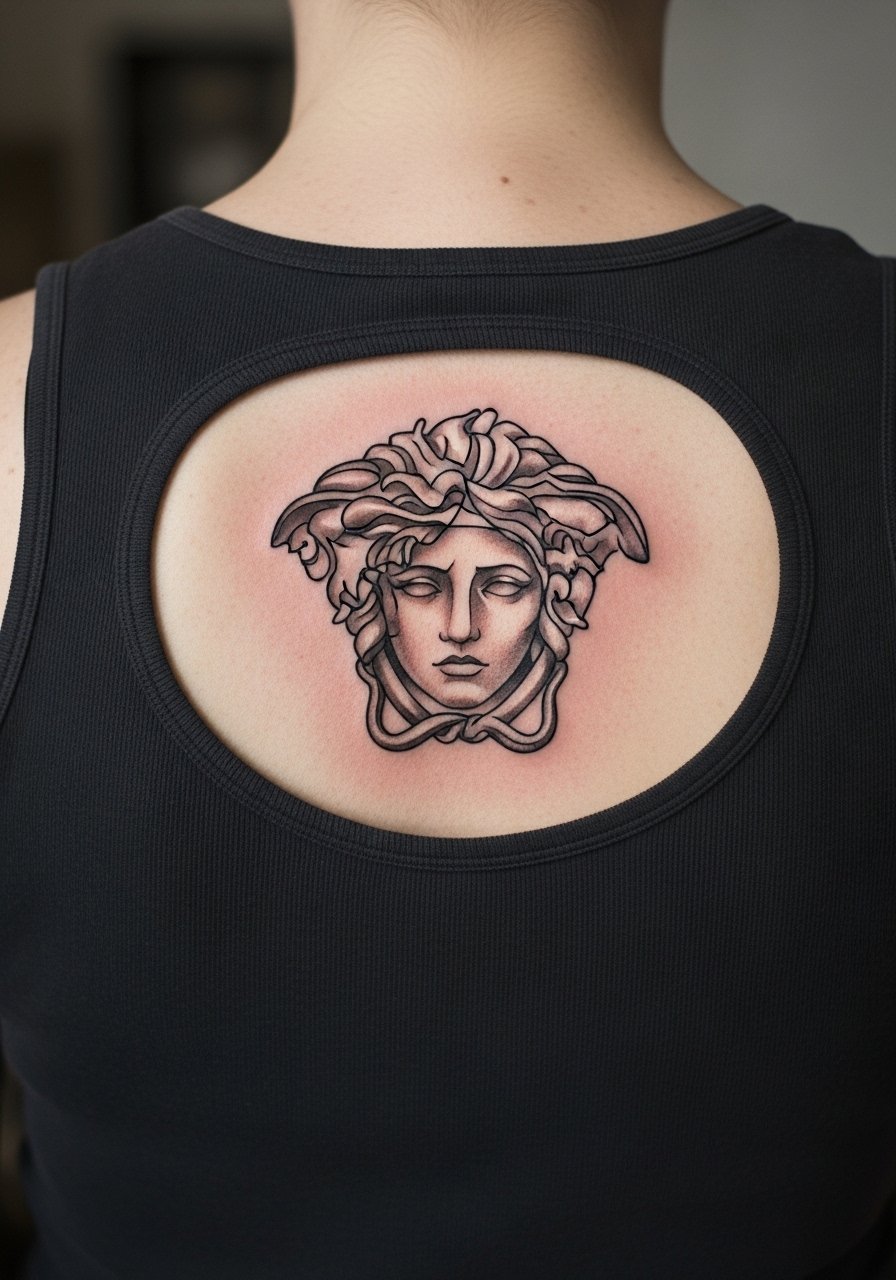
A Greek-style bust in the upper back reads like a framed portrait on skin. I recommend going slightly larger than you think so the snakes keep negative space between them. Tell your artist you want confident linework with stipple shading behind the face to suggest marble texture. The session feels like medium pain because the blade sits over muscle and bone, but it usually wraps in one long appointment or two shorter ones. Common mistake is crowding the snakes too tightly. Overcrowding leads to early saturation and potential blowout along the shoulder blades. For showing this off, an open-back midi dress frames the area without hiding the silhouette.
2. Full-Back Medusa in Micro-Realism Blackwork
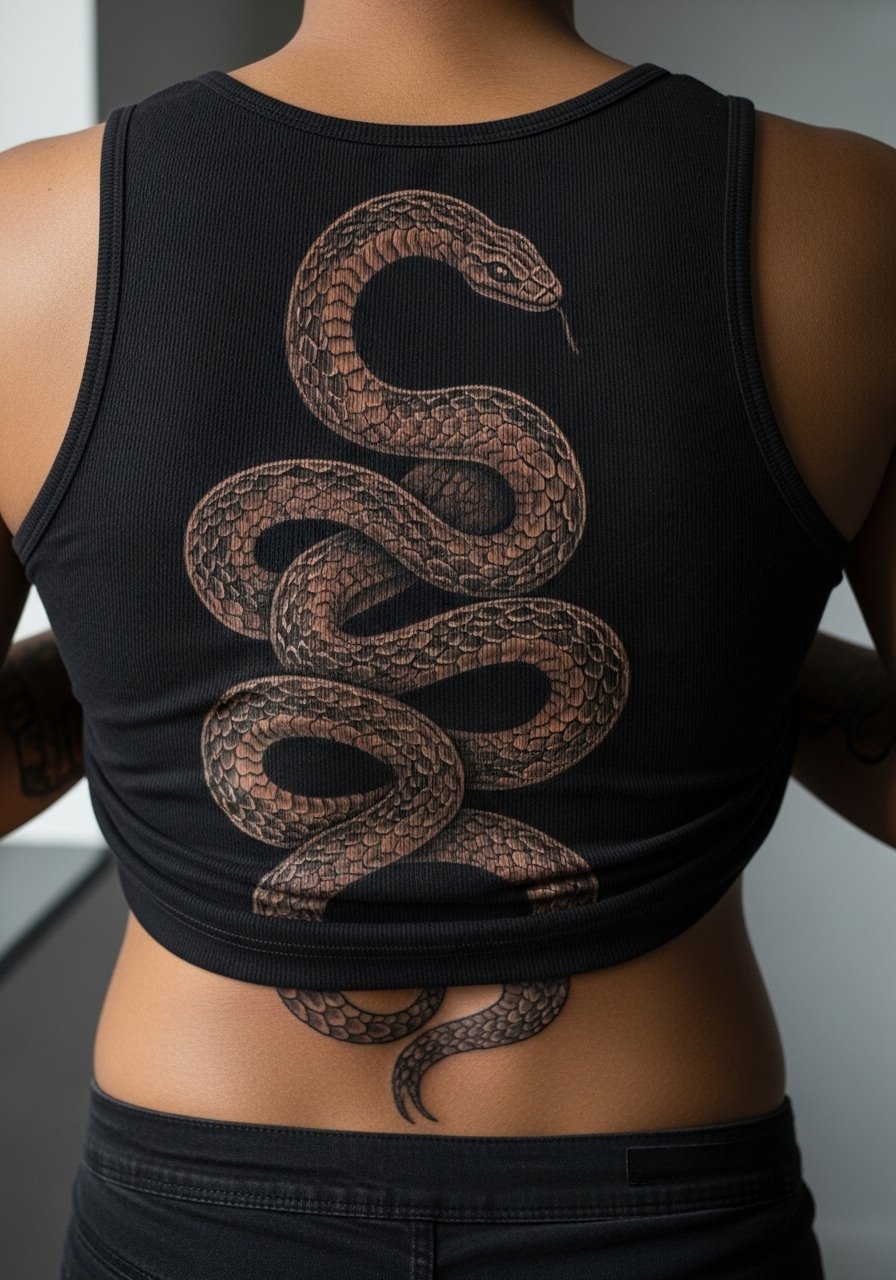
A full-back micro-realism Medusa uses fine stipple and soft gradients to create depth across the entire canvas of the back. I tell clients this feels like a commitment because the artist will layer saturation to keep depth without muddying lines. The session time can be multiple long sessions. The main aging risk is overly fine detail near the edges that will soften. Ask for heavier anchor lines where the silhouette meets the negative space so the portrait keeps its shape at two and five years. A frequent error is asking for photo-level texture at too small a scale. If your work needs to survive sun exposure, plan for touch-ups around year three.
3. Spine-Focused Medusa That Runs Down the Vertebrae
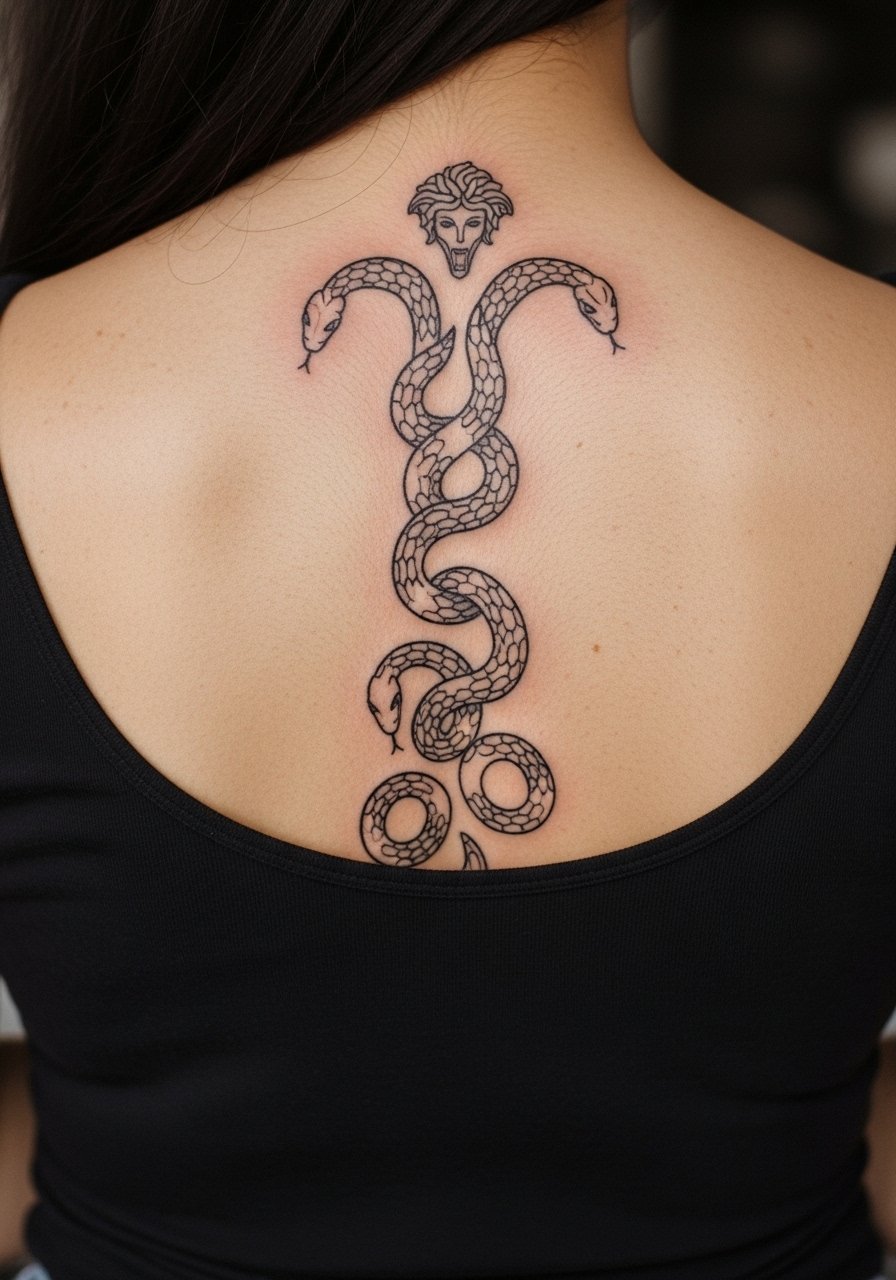
Fair warning, spine placements have a higher sensitivity rating, and sessions can feel sharp near vertebrae. The vertical composition makes sense here because the spine gives natural symmetry. Ask your artist to balance thin contour linework with small areas of saturation at the eyes and jaw so the piece reads from a distance. Artists split on whether very fine line along the spine holds up. One camp says fine line on the spine blurs within two years because of motion. The other camp argues that deliberate depth and spacing keep lines intact. Ask where your artist stands before booking. Expect at least two sessions and a touch-up timeline around year three for micro details.
4. Mirrored Medusa Pair on Each Scapula
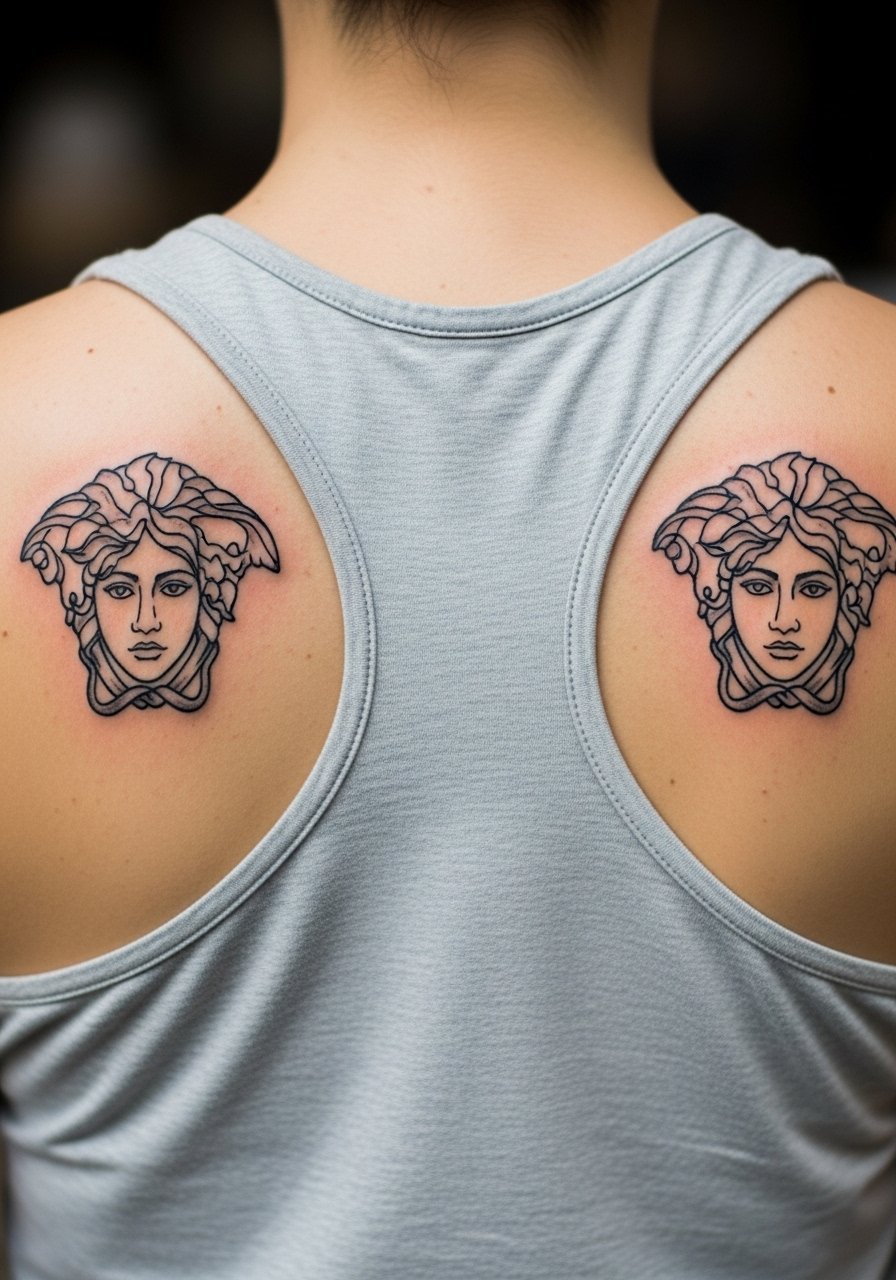
Mirrored pieces work well if you want symmetry without a single heavy centerpiece. The shoulders move a lot when you carry weight or reach, so spacing is key to avoid merging lines over time. When consulting, bring mirrored references and ask for slightly heavier outer contours so each face keeps separation as the skin shifts. Sessions are shorter per side but may be booked together. A common mistake is making each face too small in hopes of detail. That shrinks the visual impact after healing. For daytime wear, throw on a racerback tank top to reveal just enough without overexposing the area.
5. Neo-Traditional Medusa with Floral Wreath
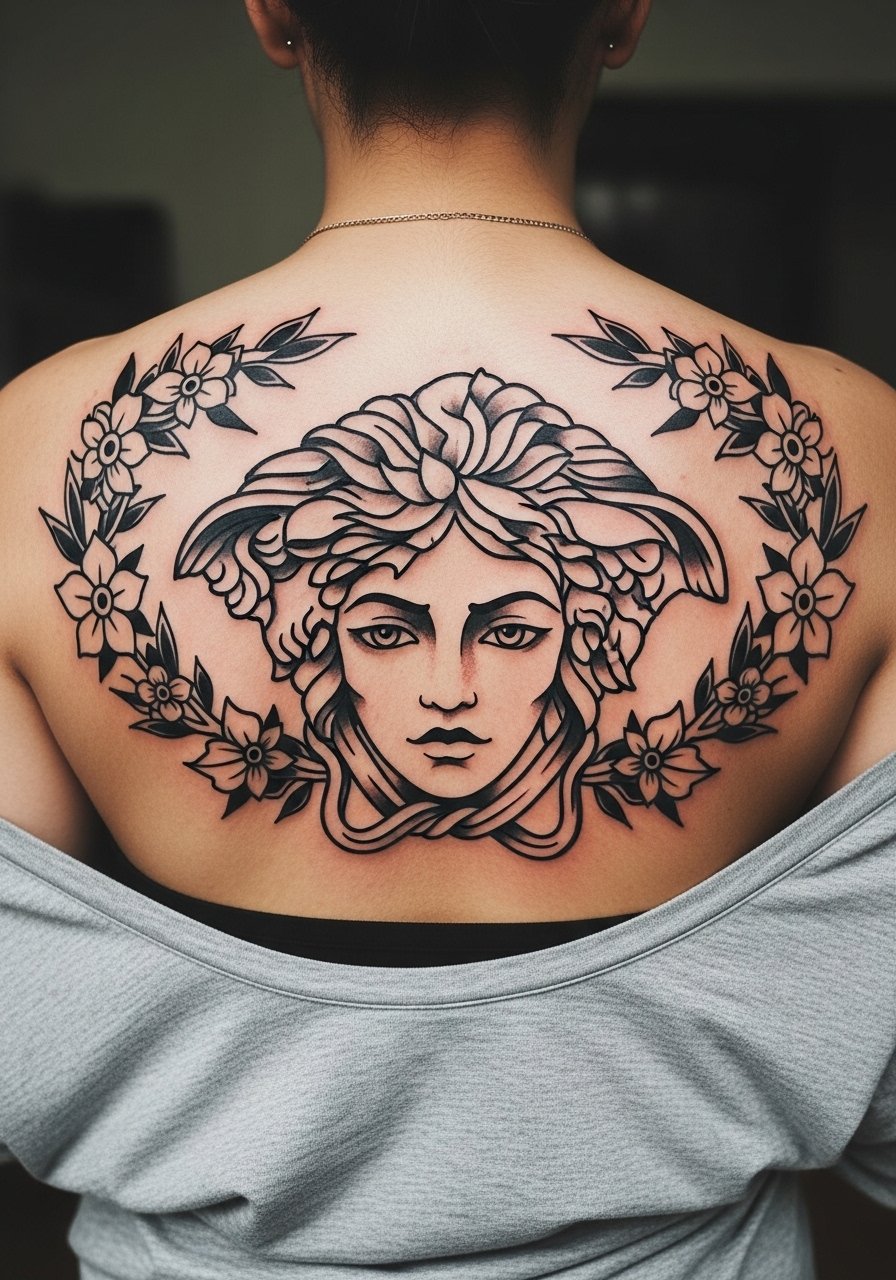
Neo-traditional treatment gives Medusa bold linework and saturated fills that age predictably. The floral elements help frame the portrait and add contrast to snake texture. When you sit with an artist, request heavier black anchors around the portrait and layered color saturation for the flowers. The biggest mistake is asking for faint color washes that vanish under UV exposure. Expect a medium pain level and one to two sessions depending on color. Over time the bold outlines soften gracefully, and colors need less frequent top-ups than fine colorwork. Pair this with a low-back loose button-down shirt so you can show the wreath without friction from straps.
6. Geometric Medusa with Mandala Halo
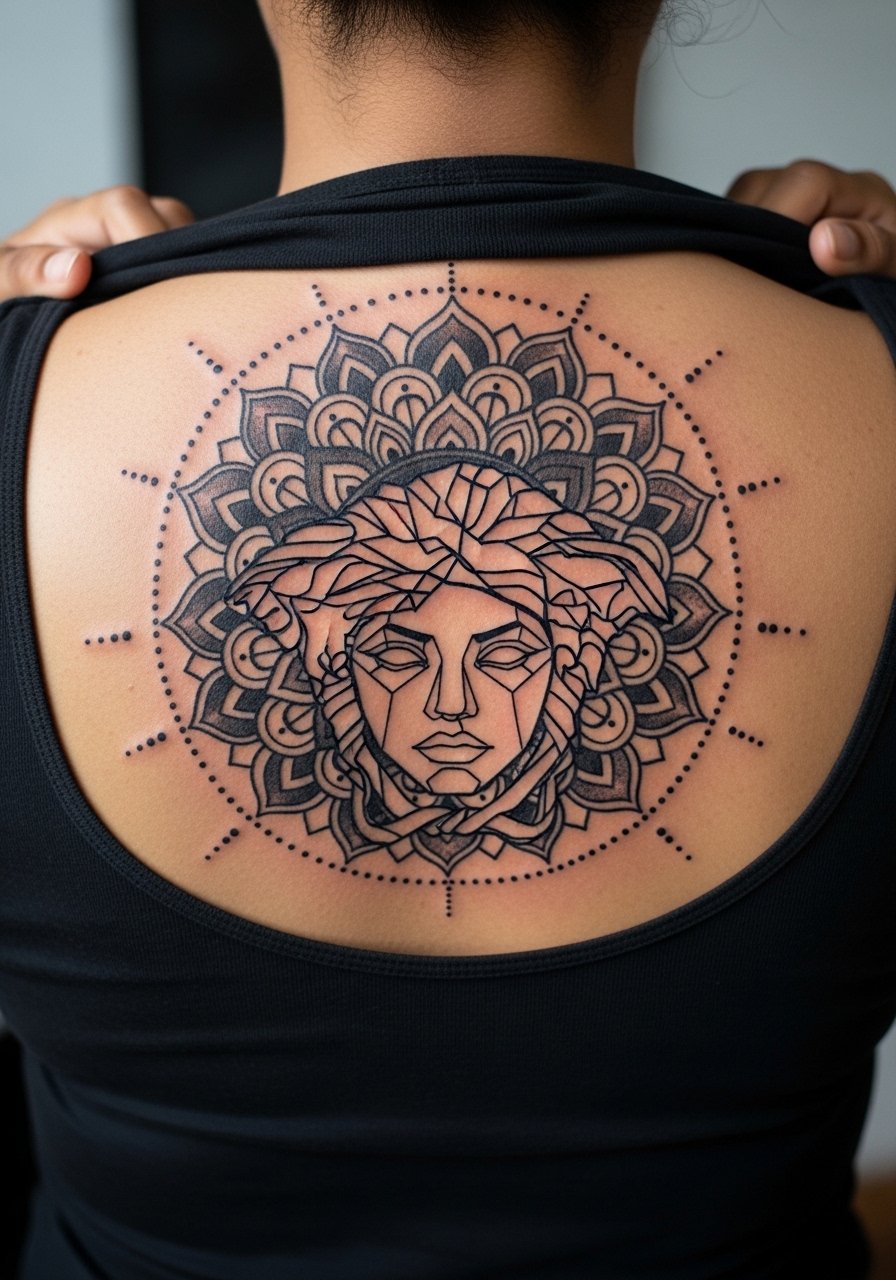
Geometric motifs around Medusa can ground the portrait and make placement read like a singular emblem on the back. I recommend using negative space inside the mandala to prevent dense linework from merging as it heals. Tell your artist you want stipple shading and whip shading in the background, with bold anchor lines on the mandala's outer ring. The session is technique-heavy and may take two sessions to balance both portrait realism and geometric crispness. A common error is packing too many mandala layers which leads to premature blurring. For showing this off, a simple thin chain pendant necklace sits above the top of the halo without competing with the composition.
Studio Day Picks
The upper- and mid-back approaches above need slightly different prep compared with lower-back pieces. These five items smooth the appointment and the first week for the designs in ideas 1 through 6.
-
Stencil transfer paper kit. Lets you preview how the portrait and mandala will sit on your back before the needle touches skin, which is handy for symmetry checks.
-
Topical numbing cream. Applied as instructed 45 minutes beforehand it eases sharp spinal sensations during long sessions without masking the artist's feedback.
-
Thin protective film roll. Keeps the central back area clean from friction with clothing during the initial healing window.
-
Fragrance-free body wash. Cleanses the surrounded skin gently so the saturations used in neo-traditional pieces are not irritated.
-
Aquaphor healing ointment. A thin layer during the first few days helps maintain moisture for dense blackwork without suffocating needle channels.
7. Watercolor Medusa with Splash Effects on Lower Back
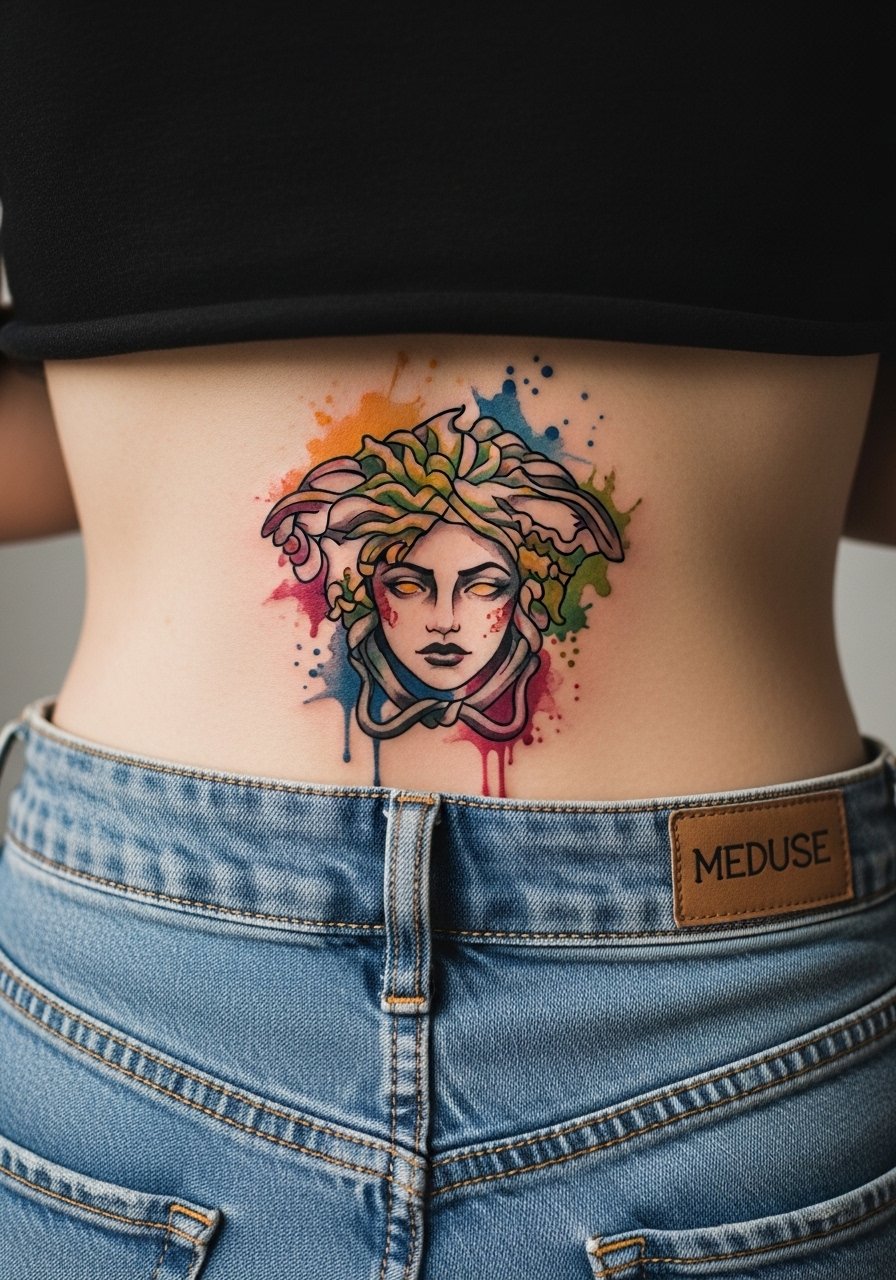
Watercolor approaches give Medusa a painterly energy, but they behave differently on the lower back where friction and clothing rub are constant. For session wear, pick loose high-waisted bottoms so the artist can access the area without tugging. Ask your artist to use stronger edge lines at focal points, and soft washes elsewhere. The common mistake is tiny watercolor details placed where pants waistband will rub during healing. That accelerates fading and patchy loss of pigment. Sessions often require touch-ups at two to three years. For nights out, a backless or low-rise silhouette is dramatic, or pair the piece with high-waisted separates to avoid rubbing.
8. Minimalist Line Medusa Nape Accent
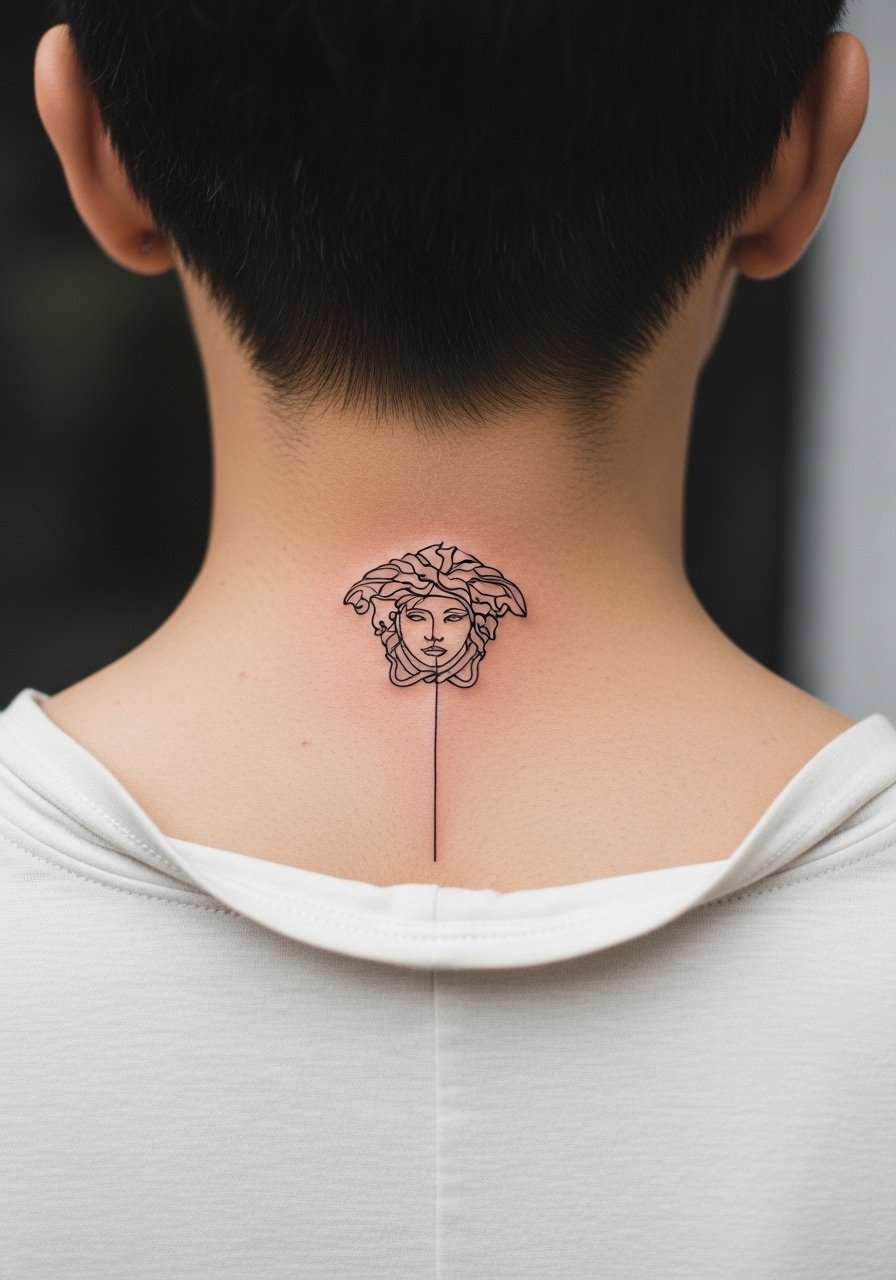
A minimalist line treatment at the nape reads delicate and modern, and it fits clients who want a subtle nod to Medusa without a full portrait. The nape is less exposed to sun than the lower back, but small thin lines risk softening. Tell your artist you prefer slightly bolder single-line anchors so the shape stays crisp. Sessions are short and often done in one sitting. A mistake I see is choosing ultra-fine closed loops for snake hair, which blur together by year two. Expect a touch-up window earlier than with bold blackwork.
9. Bas-Relief Sculpture Medusa Across the Mid-Back
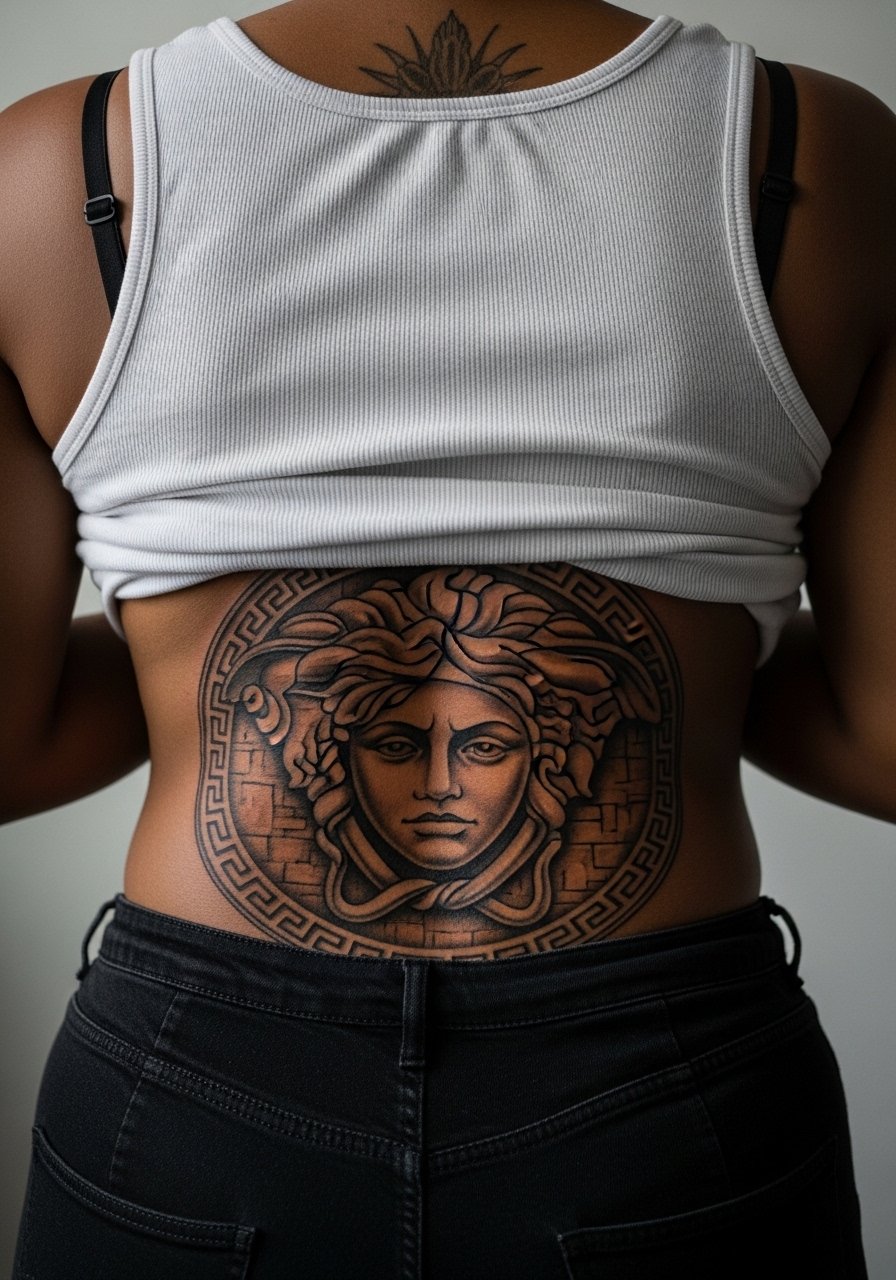
Rendering Medusa like carved stone plays with light and shadow to create a convincing bas-relief effect. When you consult, ask for layered stippling and selective saturation to suggest depth without overcrowding with tiny texture. The mid-back gives a stable surface for this approach, and it ages better than ultra-fine portraiture. The session feels medium and often splits into two days for contrast work. A common misstep is asking for the same level of tiny chip details used in studio photography. Those vanish after healing. For evenings when you want to reveal the effect, an open-back midi dress highlights the illusion without covering the carved edges.
10. Biomechanical Medusa Blending Snakes and Machinery on the Shoulder Blade
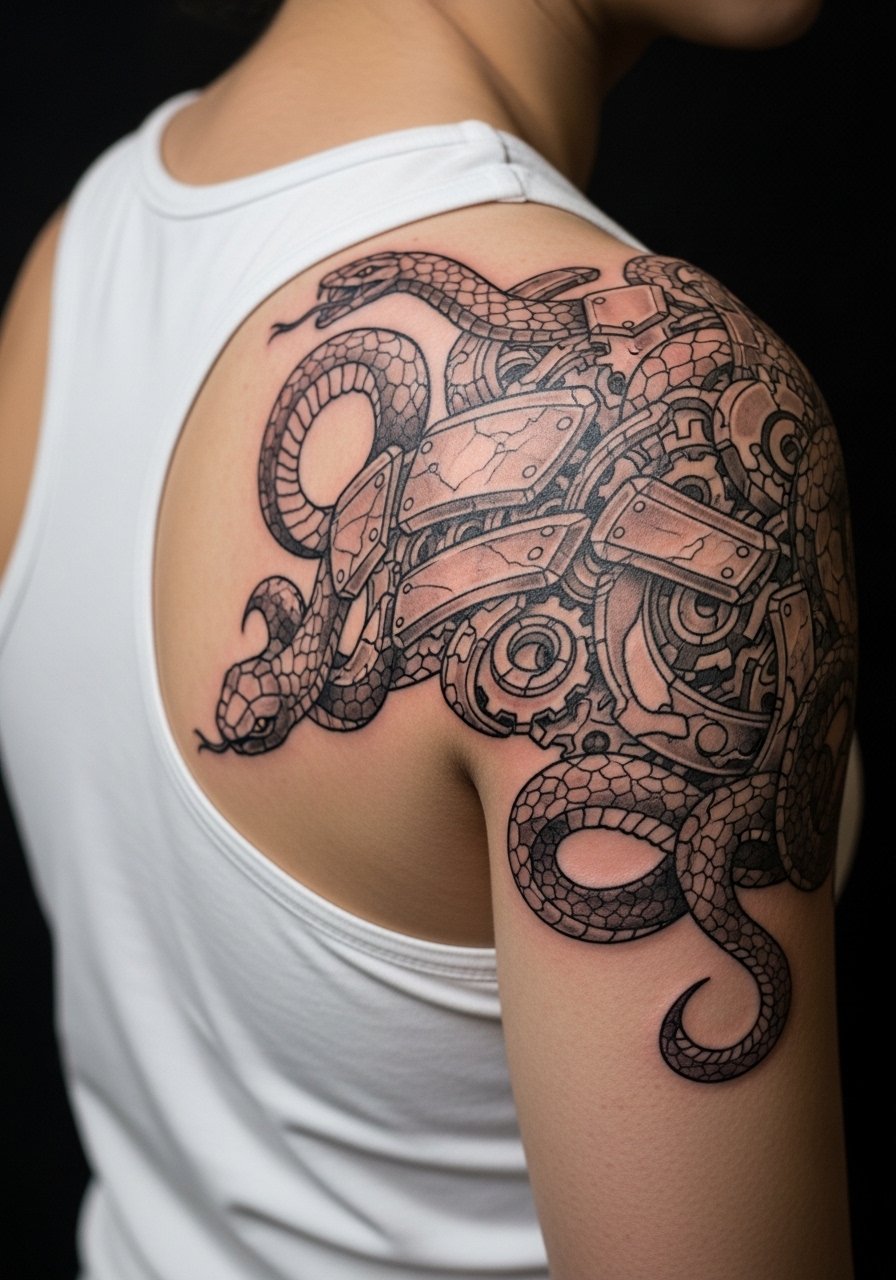
Combining biomechanical elements with Medusa brings an industrial edge that reads well across a shoulder blade. The anatomy there gives room for layered plates and visible snake coils. Tell your artist you want varied saturation and contrast so the metal reads separate from organic snake texture. Pain is moderate and sessions vary depending on metallic shading. People often make the mistake of packing too many small mechanical parts into a small area, causing visual muddiness as it settles. Pair this with a loose drawstring linen pant when sitting post-session to avoid pressure on the working side.
11. Medusa with Skull Motif Across the Lower Back
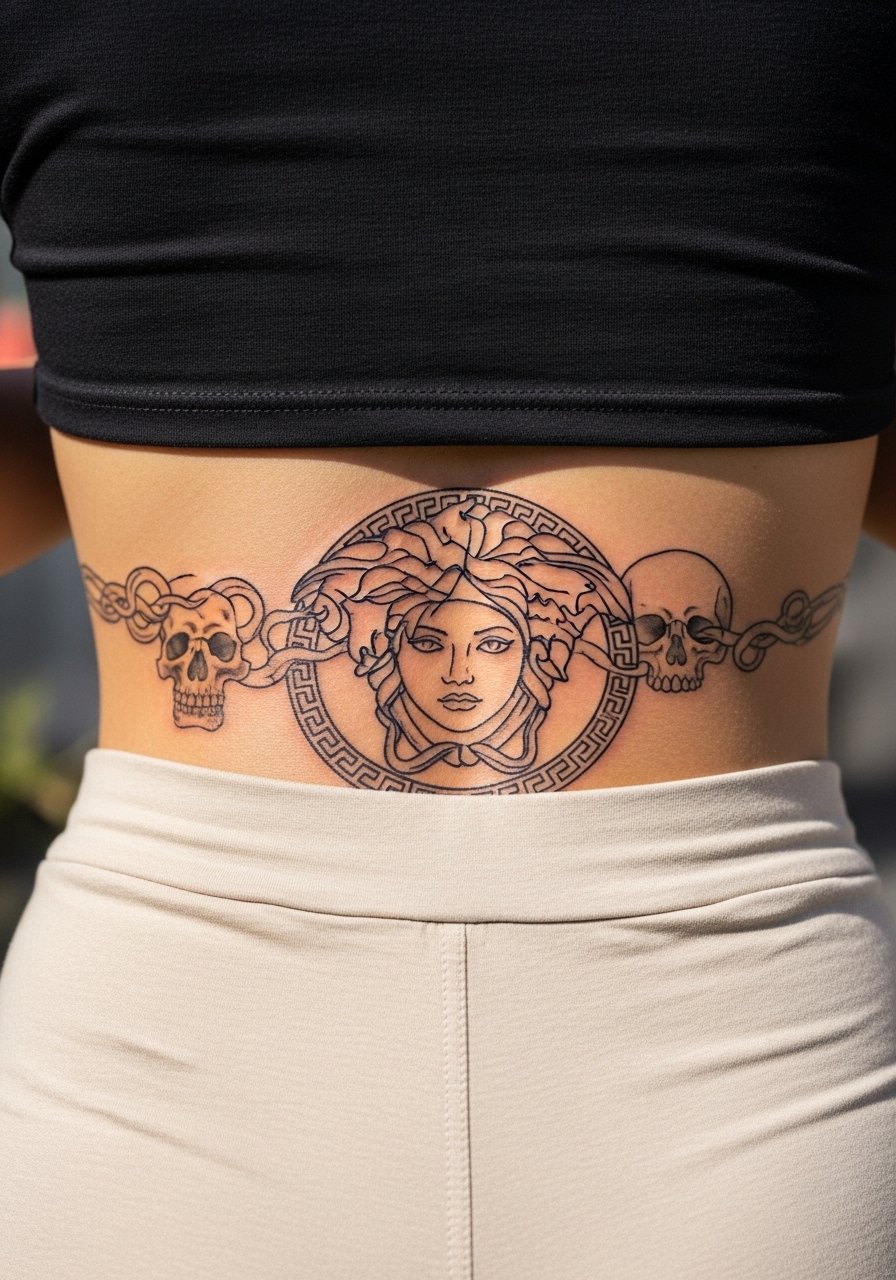
Skull motifs add an edge that plays well against snake hair and can pull negative space into the composition. The lower back sees friction from waistbands and carries risk of early fading in the lowest bands of the design. Ask your artist to place the most detailed elements above the waistband line. There is a cultural debate about portraying Medusa as a villainous monster versus reclaiming her image as a wronged figure. One group warns that monstrous depictions reinforce harmful tropes. The other group says reinterpreting Medusa as a strong symbol reclaims agency. Both viewpoints are valid, and your choice should reflect what the design means to you.
12. Shattered-Glass Realism: Medusa Emerging from Fractures
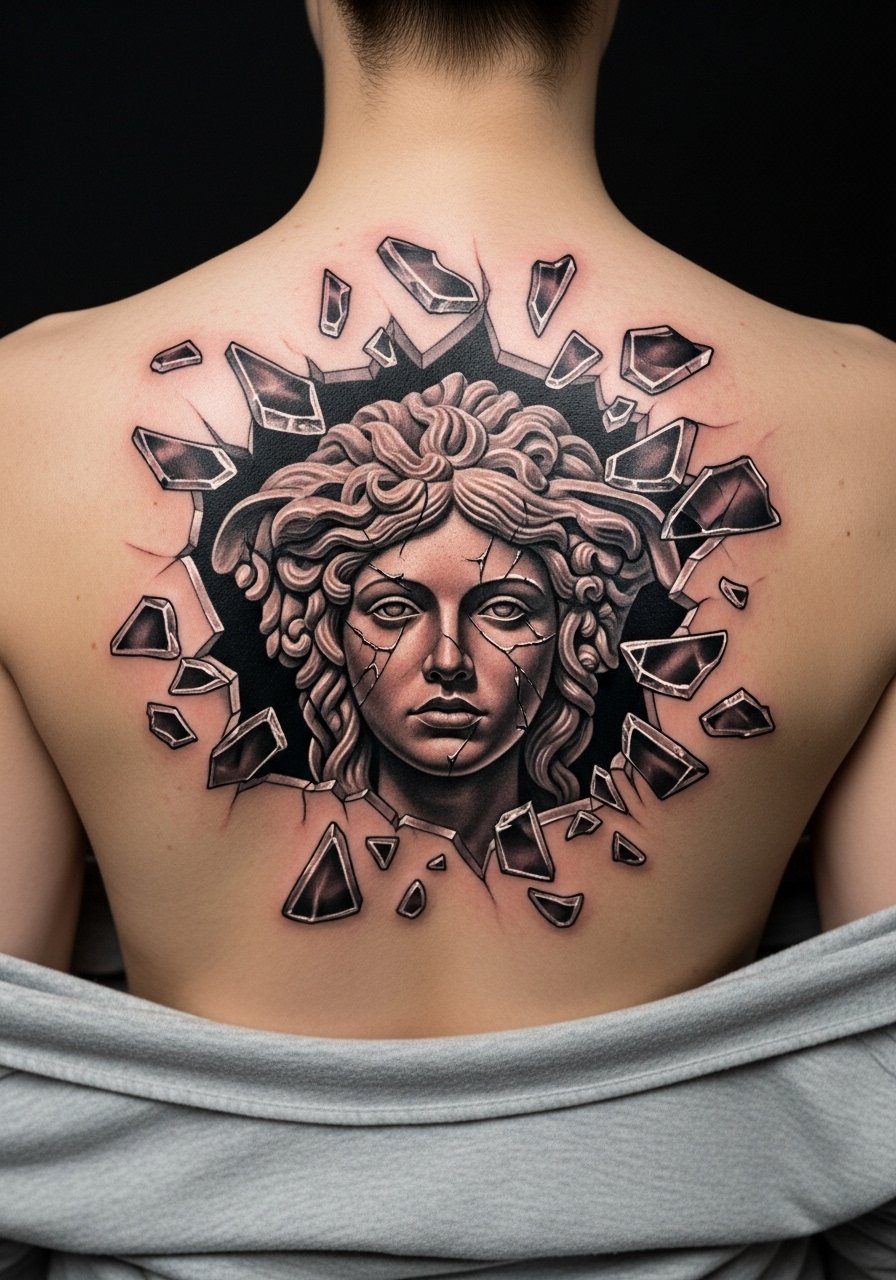
A shattered-glass treatment gives motion to the portrait and looks dramatic on the back because the fracturing lines guide the eye. For longevity, instruct your artist to keep the fracture lines bold enough to survive softening. The healing pattern is similar to micro-realism, with fine textural areas needing touch-ups earlier. People often request extreme micro-shards that blur into gray patches later. Sessions are long and may require layering. Wear a loose button-up to the appointment so the artist can access the area without rubbing the fresh work afterward. This approach photographs very well but requires careful spacing to age cleanly.
13. Small Scaled Medusa Vignette on a Single Scapula
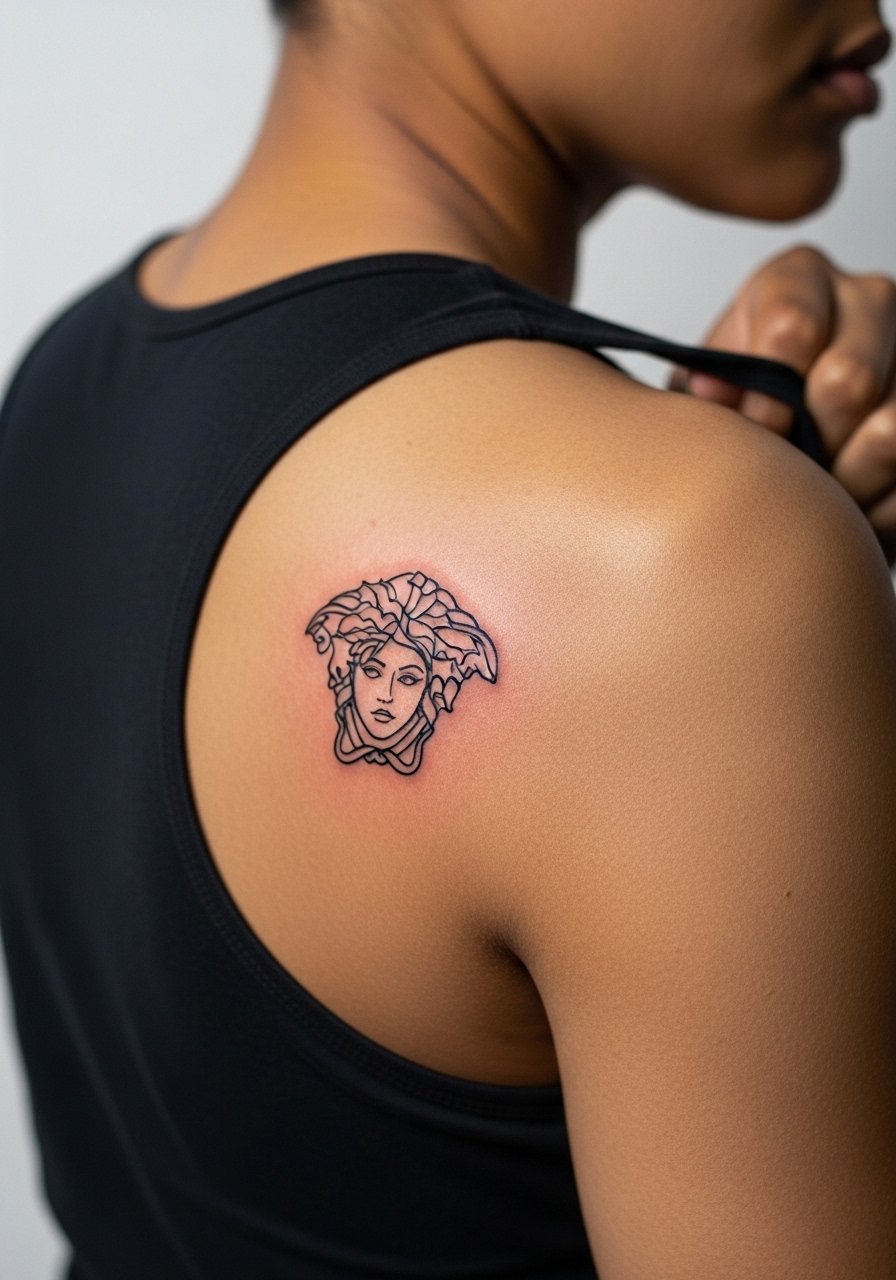
A single-scapula vignette is a low-commitment way to carry Medusa without a full-back statement. The scapula shifts with shoulder motion so keep the vignette at a readable scale. Mention during consultation that you want slightly heavier outlines and selective stipple shading rather than dense fill. Many people underestimate how quickly tiny features merge when placed on moving anatomy. Session time is short and most artists can complete it in a single appointment. Hand tattoos can have career implications, and while this is on the back, think about how often parts will be exposed.
14. Medusa with Lunar Phases Down the Spine
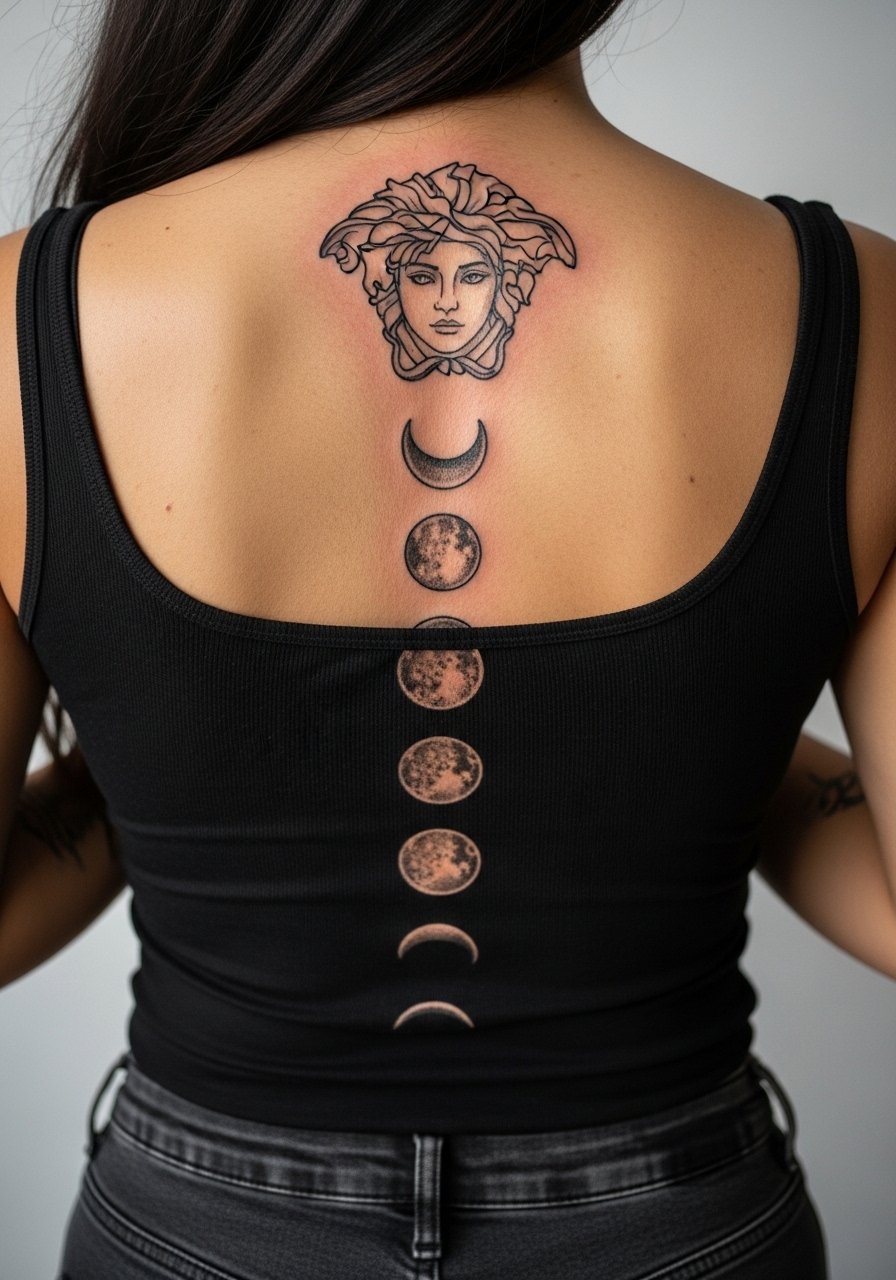
Mapping moon phases down the spine creates a narrative that reads with body movement. The spine placement enhances symmetry, but the moon crescents must have breathing room so they don't blur into the central portrait. I tell clients the area feels sharp in places and the session can be split. A common error is placing crescents too close to the vertebrae where motion causes early softening. For nights when you want to reveal the column, a strapless bandeau top or a backless dress will keep the work visible without straps crossing over the moons.
15. Mosaic Dot-Work Medusa Spanning Lower to Mid-Back
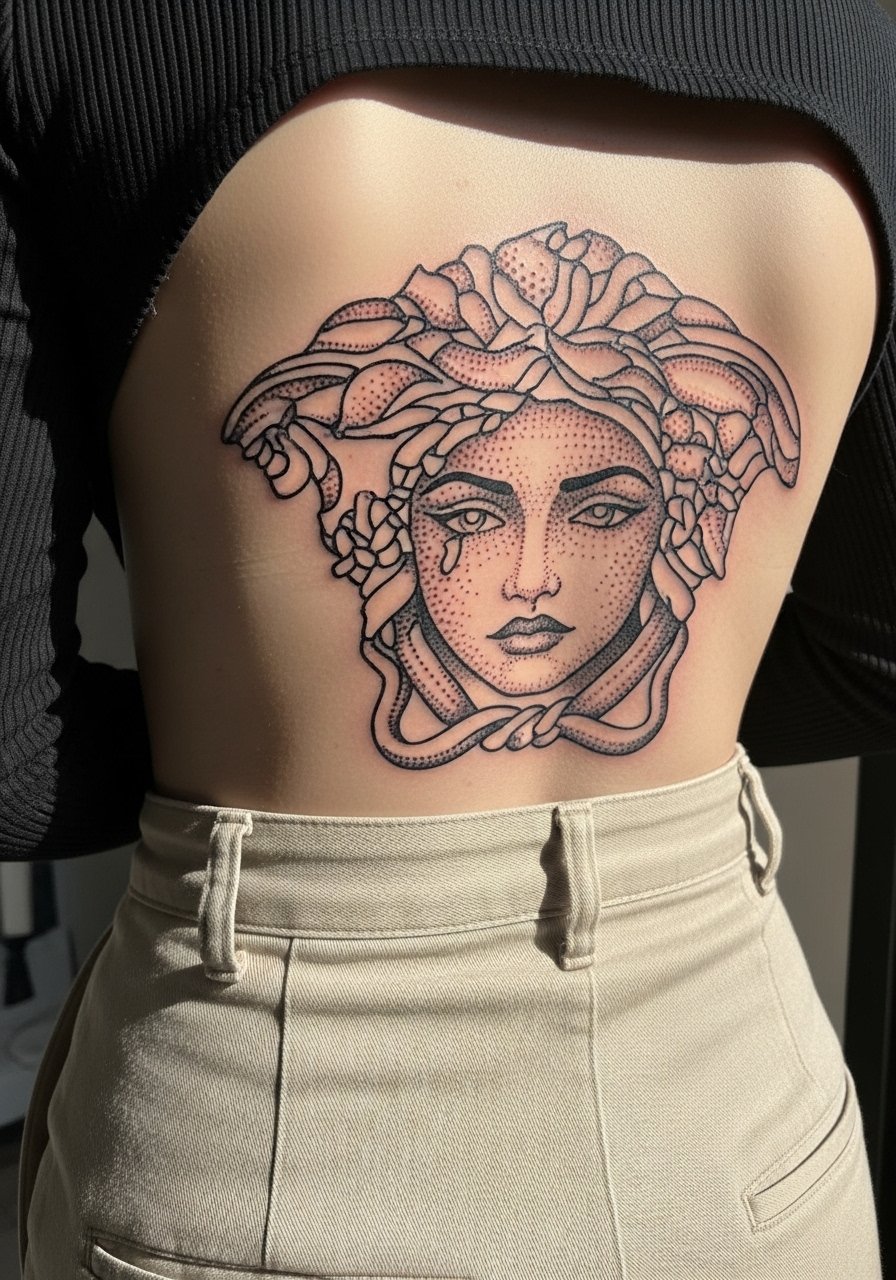
Dot work or pointillism gives Medusa a textured mosaic look that reads well at distance and ages predictably if the dots are spaced. Ask for a mix of larger stipple clusters and open negative space to avoid dense patches that merge. These sessions are time-consuming because stippling takes patience from both artist and client. The lower-to-mid back is a good canvas because it allows scale and breath. The biggest mistake is requesting ultra-tight dot clusters across a large area, which causes unwanted saturation. Expect to return for minor touch-ups at multi-year intervals.
16. Baroque Frame Medusa Across the Upper Back
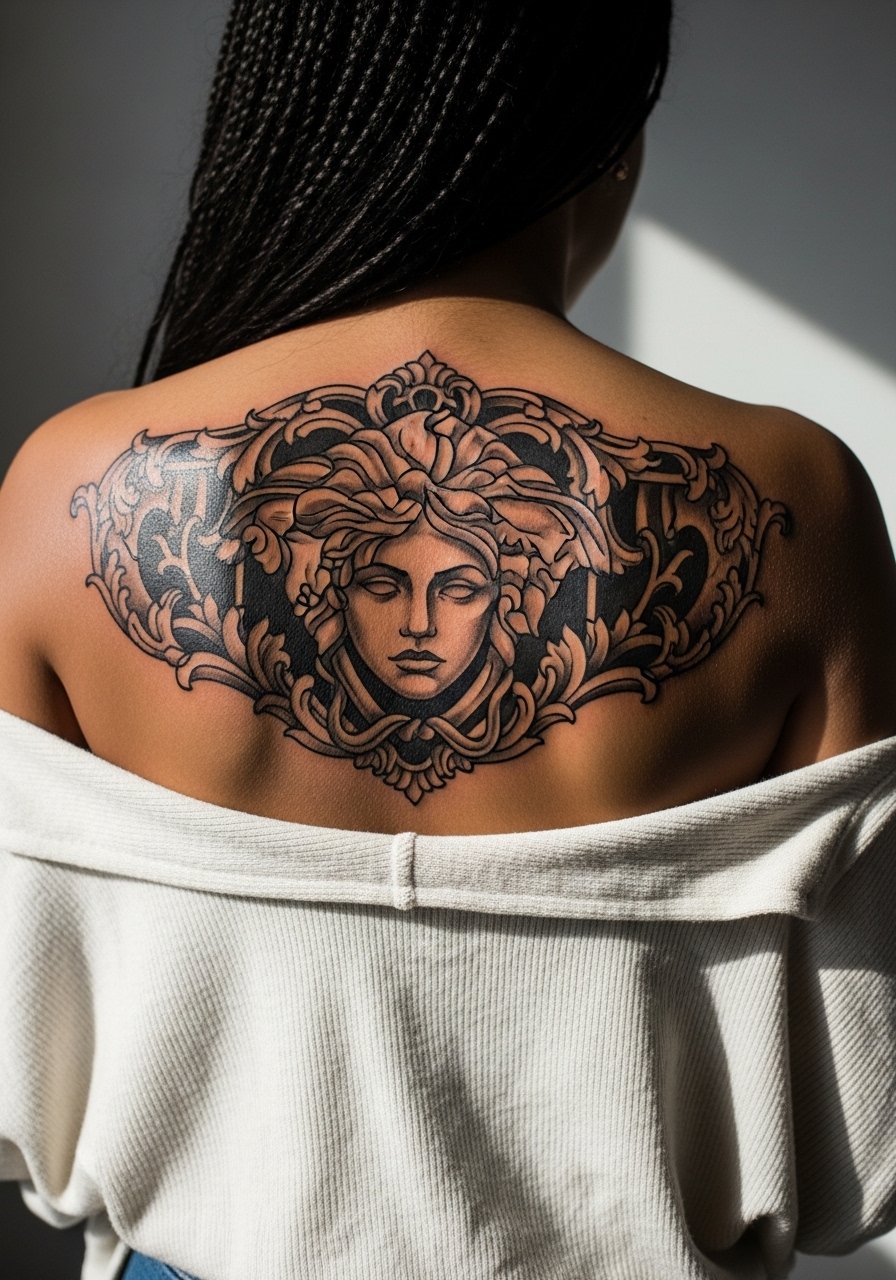
Framing Medusa in a baroque border gives the piece a gallery-like presence on the upper back. The frame helps preserve the interior portrait by creating a clear edge that resists visual drift. Tell your artist you want the frame lines crisp and slightly heavier than interior shading, and ask for stipple gradients that recede rather than dense texture that competes. Mistakes include overworking the frame with tiny flourishes that vanish later. Sessions are medium to long, and the result photographs like a portrait. For event wear, an open-back dress shows the frame without straps crossing the composition.
17. Negative-Space Silhouette Medusa with Snake Outlines on Lower Back
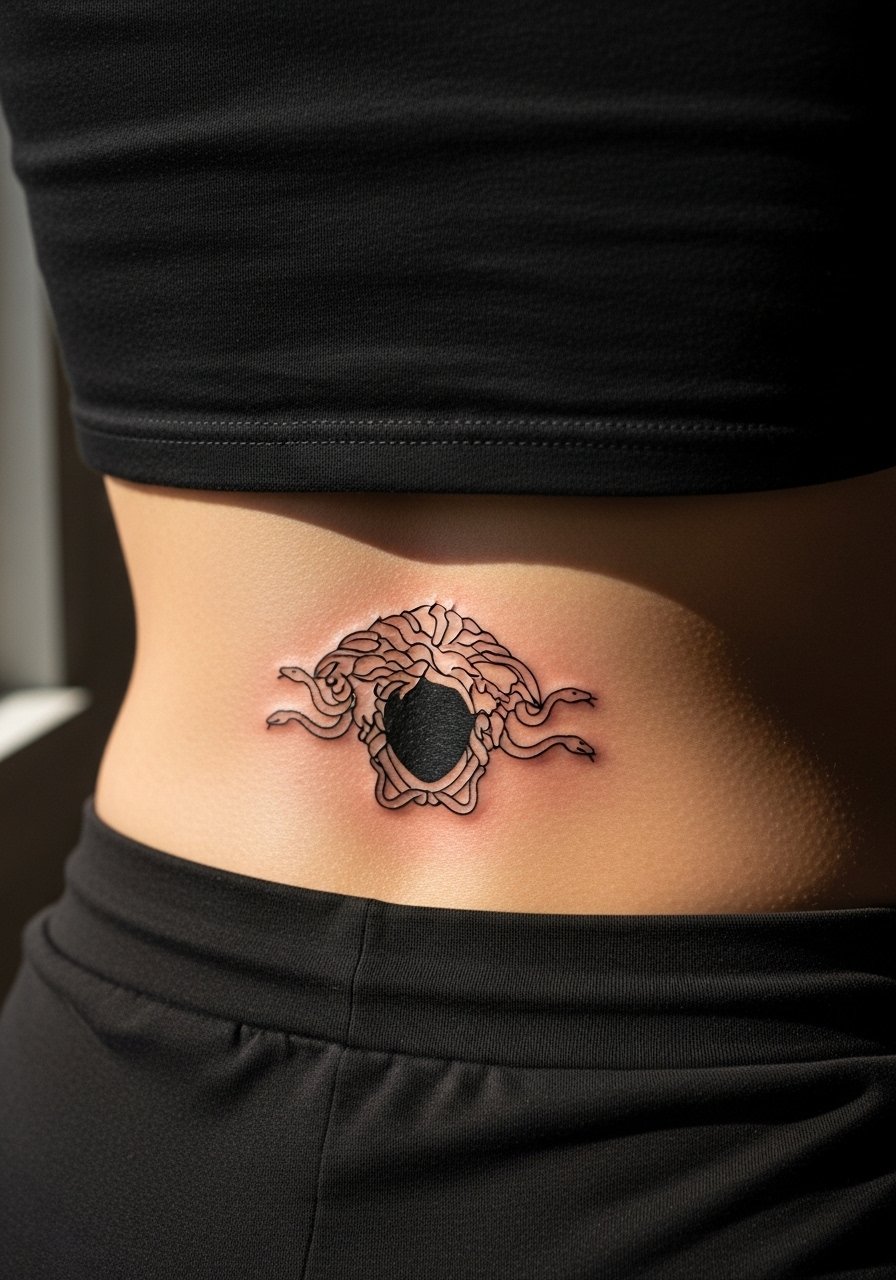
Negative-space treatments let the skin be part of the design, and on the lower back they create a modern, graphic look. This approach relies on clean contrast between inked areas and untouched skin, so ask for deliberate spacing and bold surrounding anchors. The main aging risk is loss of crispness where the silhouette meets ink, so heavier borders help. Sessions are usually quicker than full portrait work but demand precision. A frequent client mistake is wanting too many tiny interior details inside a negative silhouette. Those disappear as the skin ages, leaving a less readable shape.
Frequently Asked Questions
Q: Will a full-back Medusa require touch-ups more often than a single-scapula vignette?
A: Yes, larger, denser portraits with micro-realism often need touch-ups to restore fine shading, especially if they sit in friction zones. Small, bold pieces usually hold their silhouettes longer and can go longer between touch-ups. The exact interval depends on sun exposure, skin type, and how bold the original linework is.
Q: Is blackwork safer than color for longevity on the lower back?
A: In my experience, dense blackwork tends to age more predictably than soft color washes in high-friction lower-back areas. Colors can patch out under waistbands faster. If you want color, ask for solid anchors in black to preserve the composition and plan for color refreshes at multi-year intervals.
Q: How do I find an artist who understands both portrait realism and geometric mandala work without naming specific shops?
A: Use discovery pathways like specialized conventions, portfolio-searching within directories, hashtag deep dives, and local tattoo collectives. Look for portfolios that show healed photos of both portraiture and geometric pieces. Ask to see healed work close to the same scale you want.
Q: Does the mythological controversy around Medusa affect whether I should humanize her or make her monstrous?
A: There are two clear camps. One camp prefers monstrous depictions to stay true to classical portrayals. The other prefers humanized or reclaimed images that emphasize agency. Both are valid. Pick the narrative you relate to and discuss symbolism with your artist so the visual choices align with that meaning.
Q: What should I wear to a session for a spine-centered Medusa if I want easy access and modesty?
A: I suggest a low-back tank top you can pull down slightly to expose the work area while keeping the rest covered. Loose, high-waisted bottoms help the artist access the lower sections without constant wardrobe adjustment.
Q: Are there aesthetics or cultural concerns I should be aware of when choosing motifs like serpent hair or classical ornamentation?
A: Yes. Some motifs trace back to specific cultural or religious traditions. One respectful approach is to alter direct replicas and work with your artist on informed adaptations. If a symbol has sacred meaning, consider a variation that acknowledges origin without direct replication.