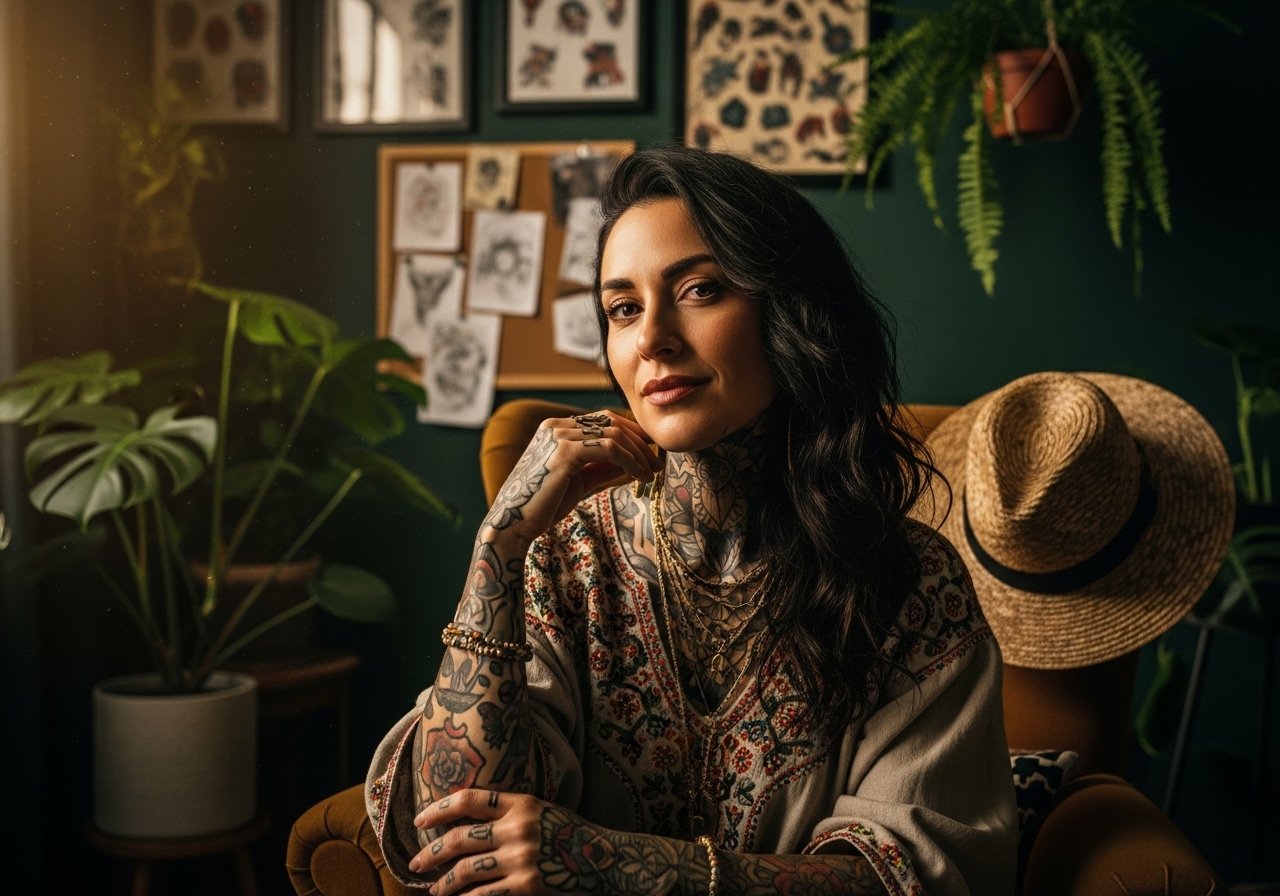
Fine line wraps look gorgeous on day one and then reveal their true ledger over time, so plan for that. Artist cancellations and deposit drama are real and they reshuffle timelines fast. Body changes like weight fluctuation will warp a wrap that hugs the outer arm. Keep those realities in mind and you will pick a wrap that still reads right after motion tests and a couple of seasons outdoors.
1. Fine Line Floral Inner Forearm Wrap

I recommend this when you want a wrap that reads like a thread of ink rather than a heavy band. Bring references that show exact line weight and ask the artist to test the stencil with your arm bent and straight. The biggest mistake is asking for lines that are too thin for wrist and outer-forearm sun exposure, which leads to early fading and patchy touch-ups. Expect a single session under two hours for a small to medium wrap and mild forearm pain. For showing it off, try a linen rolled cuff blouse in ivory so the vine contrasts without loud colors.
2. Neo-Traditional Rose Upper Arm Wrap

When you want romantic shapes that still have structural longevity, neo-traditional roses are a safe bet. In consults, specify solid black outlines and mid-weight shading so the petals do not bleed into one another over time. The common failure is packing too many tiny color touches in tight spaces, which ages into muddiness after a few sun-exposed years. Sessions typically run longer, expect multiple sittings for a half-sleeve and moderate shoulder pain during shading. If you like a softer reveal, pair the piece with a sheer kimono jacket over a cami to frame the bloom.
3. Blackwork Mandala Armband on Mid-Bicep

I see mandalas chosen for symmetry and that hypnotic circular read. Tell your artist you want spacing between dense dots and thick bands so the pattern keeps its shape as skin moves. A common error is making the mandala too small and too dense, which leads to merging lines after a year. Expect two short sessions and a firmer bicep sensation during saturation. For everyday styling, a fitted black fitted tank women lets the armband read like jewelry without competing accessories.
4. Watercolor Butterfly Outer Forearm Wrap

Watercolor wraps look like movement but they are the hardest to age well on arms because motion and sweat can thin soft fills early. Ask for slightly stronger outlines or micro-dots around color edges to hold pigments in place. The mistake most people make is choosing bright wet-wash gradients without considering gym sweat the first week. This design usually heals visibly soft by six months and may need color correction by year two. Session time is moderate and the outer forearm is fairly tolerant for most people.
5. Minimalist Vine Wrist Cuff

This is a first-timer favorite if you want a low-commitment cuff that can expand later. Tell the artist you want 2mm line thickness on the outermost strokes so sun and washing do not eat the lines. The usual error is making the vine too tight around the wrist, which swells and distorts during healing. Expect a short session and sharp tenderness where the cuff meets bone. For showing it off, a off shoulder blouse green frames the wrist nicely while keeping the opposite arm simple.
6. Ornamental Geometric Bracelet Tattoo

This solves the accessory itch without metal. Demand spacing that allows each repeat to breathe and ask the artist to stencil and photograph the wrap while you move your wrist. Small repeat patterns that are too close together blur first. Expect an hour-long session for a band and light but frequent touch sensitivity at the wrist. Complement with a thin silver chain bracelet on the opposite wrist so the tattoo reads like part of a stack rather than all the jewelry.
Studio Day Picks
The first six wraps above include wrists and forearms that face frequent washing and sun exposure, so bring products that help during the session and the first week.
-
Badger Tattoo Balm. A non-greasy option that users report sits lighter on active skin, helpful for the wrist and forearm pieces that rub against sleeves.
-
Ink Fixx Aftercare Salve. Lighter than heavy petroleum balms, this one is handy when fine line work looks shiny under bright lights during the first week.
-
Organic Tattoo Salve. For sensitive skin on inner arms, a plant-based salve can reduce clogging while keeping moisture at a level that supports thin line retention.
-
Second Skin Protective Film Roll. Useful for short-term protection on areas that meet friction, like wrist cuffs and outer forearms during the first couple of days.
-
Hustle Butter Deluxe. Thinner than heavy ointments and preferred by many for warmer months, it can help keep a wrap breathable when sweating might otherwise trap grease.
7. Micro-Realism Shoulder Cap Portrait

Portrait wraps on the shoulder read intimate and personal. Ask the artist to map facial features across the curve before starting so the face does not warp when the arm moves. A common mistake is compressing the reference into too small a patch, which loses facial detail as it ages. Sessions are lengthy and shading over the shoulder can be tender. For styling and showing it off, an off shoulder sweater cream draws attention to the cap without overwhelming the piece. Note that highly detailed portraits will often need a touch-up at year two to maintain crispness.
8. Traditional Anchor and Rose Half-Sleeve

Classic Americana wrapping the arm still ages predictably because it leans on heavier linework and strong saturation. When booking, say you want the anchor as the bold focal point and let the roses carry supporting color. The typical mistake is overloading the band with extraneous small elements that compete with the main motif. Expect multiple sessions and a series of touch-ups if you add color blends later. Outer-arm work will take more sun protection early on than inner placements.
9. Ignorant Style Elbow Wrap Waves

Elbow wraps need a bend test before ink hits the skin because the joint changes shape dramatically. Artists split on placement here for good reason. One camp says elbow work is fine if the design accounts for crease lines. The other camp warns that constant motion and gym wear wash out crude strokes faster. The easy mistake is letting a reference that looks flat translate without motion testing. Expect a two-session plan and a raw sensitivity during the actual elbow lining. For an edge, pair with fishnet elbow gloves for photos or nights out.
10. Fine Line Celestial Full Forearm Sleeve

Celestial wraps rely on micro dots and small stars that can merge if placed too close. In consultation, ask for spacing and ask the artist to recommend which elements stay bold and which can be faded into negative space. The common failing is compressing the design in hopes of a crowded look, which ages into blotchy clusters. Sessions will run several hours and the forearm is a forgiving spot for shading. A sheer kimono jacket over a simple cami frames the sleeve for evenings without hiding the artwork.
11. Birthstone Accent Color Pop Wrap

Adding birthstone pops gives you a personal color cue without committing to full color saturation. Tell the artist the exact gem tones and how much saturation you want so tiny colored dots do not bleed into surrounding black lines. A common error is using too many color dots close together, which reads as muddiness in photos and in person after a year. Session time is short but color touch-ups are likely at year three. Place these accents on inner forearm if you want them to last longer and avoid direct sun.
12. UV Ink Hidden Wrap Under Blacklight

UV wraps are a playful secret for nights out but they are not a fix for day visibility. Ask your artist to balance regular pigment with UV highlights so the design reads even without blacklight. The mistake is packing UV ink where the artist cannot test saturation properly, which leads to inconsistent glow. Expect low to moderate pain and plan for a color check under blacklight before leaving the shop. UV pigments can fade differently, so a follow-up session at year two is common.
13. Patchwork Wrap Sleeve Built Over Years

Building a wrap gradually is practical if you want to collect elements across time. Start by asking the artist to create connectors and negative space that future pieces can anchor to. A frequent oversight is treating each add-on as a standalone flash, which leads to visual clutter when stitched together. Sessions are staggered and the pain profile changes with each placement. For shows and social outings, a strappy taupe tank keeps the arm visible while complementing varied motifs.
14. Geometric Ornamental Bicep Band

Geometric bicep bands read like architecture on skin, but they need breathing room. Tell the artist you want larger repeats with negative spacing that will tolerate minor blowout. The common error is tiny tessellations that merge after a few years. Expect two sessions and firm sensation during solid black fills. Biceps also respond well to bold linework if you want long-term clarity.
15. Micro-Realism Inner Bicep Portrait

Inner bicep portraits can look crisp when the artist maps the piece across the curved surface. Ask for staged stencils and motion tests during consult so the portrait does not stretch when you move. The mistake is choosing too small a portrait and expecting it to hold minute detail. Sessions will be longer and the inner bicep can be tender, so plan accordingly. Because the area is sensitive, consider brief topical numbing if recommended by the shop, and schedule a calm day afterwards.
16. Minimalist Chain-Link Forearm Wrap

Chain-link wraps read like jewelry and are versatile for expansion. Ask the artist to space each link slightly wider than your initial mockup so light does not cause early merge. One common mistake is requesting ultra-thin lines that disappear under daily wear. This piece takes a short session and mild pain on the outer forearm. For a complementary look wear a thin gold bangle single on the opposite wrist to balance shine.
17. Celestial Dot-Work Armband for Dark Skin

Dark skin tones can make fine dot work read differently in photos, which is worth discussing up front. Ask for higher opacity dots and deliberate negative space so constellations maintain contrast in real life and in filtered images. A typical misstep is asking for faint dots that lose definition on richer skin tones. Expect good longevity if the artist compensates with slightly bolder placement and plans for a touch-up window around year two.
Frequently Asked Questions
Q: Will fine line wraps fade faster on outer forearms than inner forearms?
A: From what I have seen, outer forearms take more sun and friction so fine line pieces there often need touch-ups sooner. Inner forearms enjoy more sheltered healing and usually keep linework longer. Ask for slightly heavier line weight if you want outer forearm longevity.
Q: What should I do if an artist cancels a guest spot after I paid a deposit?
A: Insist on written cancellation policy or book through platforms that hold deposit rules. If a spot is canceled, ask for alternatives like the next available guest date, a partial refund, or a transfer to a local artist who can meet your timing. Keeping records and photos of your agreement helps if there is a dispute.
Q: Do I need different aftercare for watercolor and blackwork wraps?
A: Yes. Watercolor relies on delicate pigment placement and benefits from gentler moisture control and strict sun avoidance early on. Blackwork is more forgiving because saturation holds in denser pigment. That said, avoid heavy greases across the board and follow the studio's recommended timeline for exposing the area to sun.
Q: How much will a patchwork wrap cost if I build it over several visits?
A: It depends on the size and complexity you choose each session. Expect each add-on to be priced like a small custom piece. In practice, build a written plan with hourly estimates and account for a buffer for unexpected blending or connector work.
Q: Should I use Saniderm or dry healing for a forearm wrap?
A: Artists split into two camps. One group favors protective films for short-term cleanliness and faster initial healing. The other group prefers dry healing for breathability, especially for fine line work. It often comes down to how your skin reacts and the style. Ask your artist which method they use for similar work and follow their timeline, and be ready to adapt if your skin shows excess moisture or irritation.