Fine line wolf faces are everywhere on saved boards right now, but they do not all age the same. Some approaches hold crisp contour for years, while others soften into an indistinct shadow. If you want a wolf face that reads like a portrait after healing, the secret is in placement, spacing, and honest consultation. Start here for designs that balance impact and staying power.
1. Micro-Realism Wolf Face on Inner Forearm
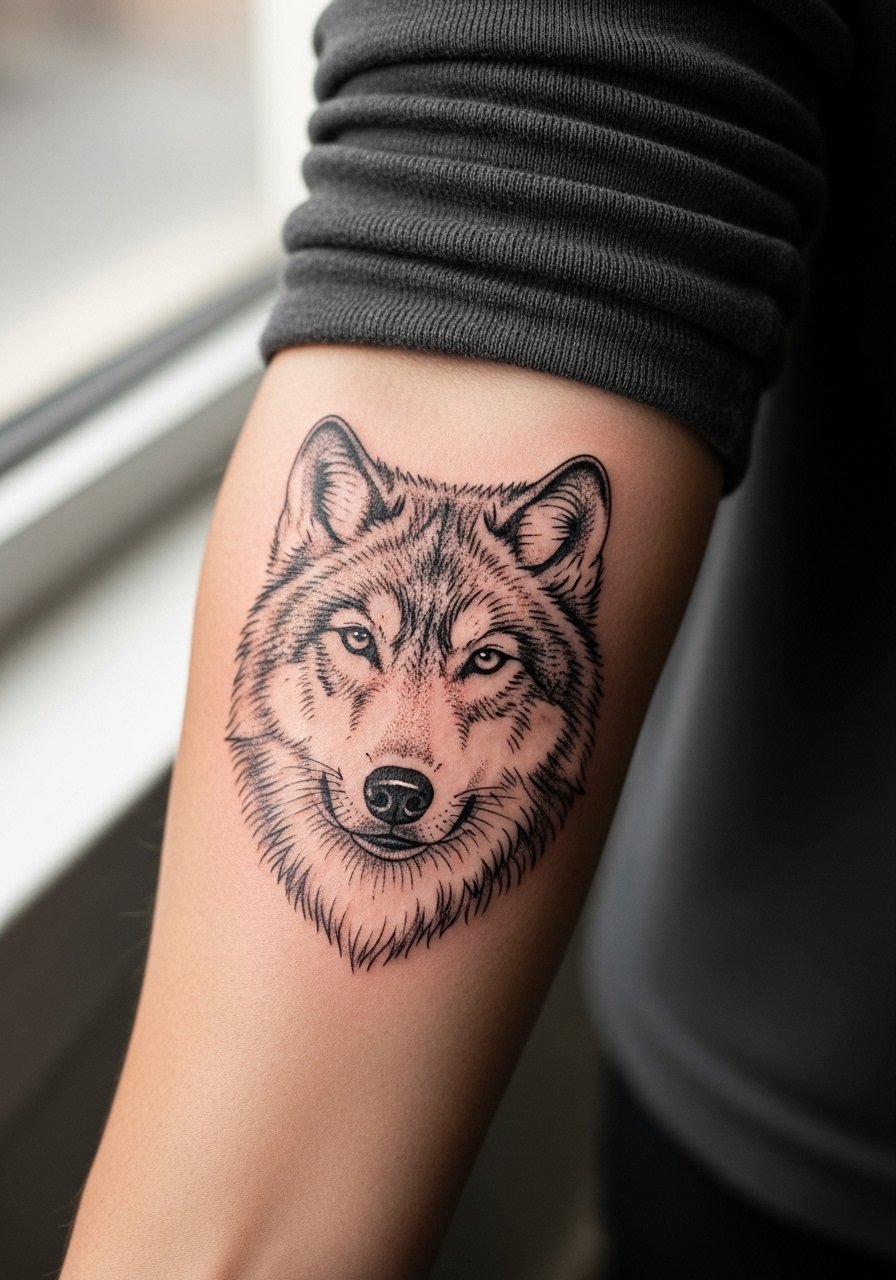
I have seen micro-realism wolf faces look like small portraits on the inner forearm, and they read beautifully from close range. Tell your artist you want clear contrast between fur texture and the eyes, and show close-up photo references of fur, not stylized drawings. Fair warning, the inner forearm is lower on the pain scale but needs slightly bolder linework than you might assume to avoid early blurring. For the session, wear a loose button-down shirt so the artist can roll the sleeve without tugging. Expect a touch-up around year three for tiny highlights and eye clarity.
2. Bold Blackwork Wolf Mask on Upper Back
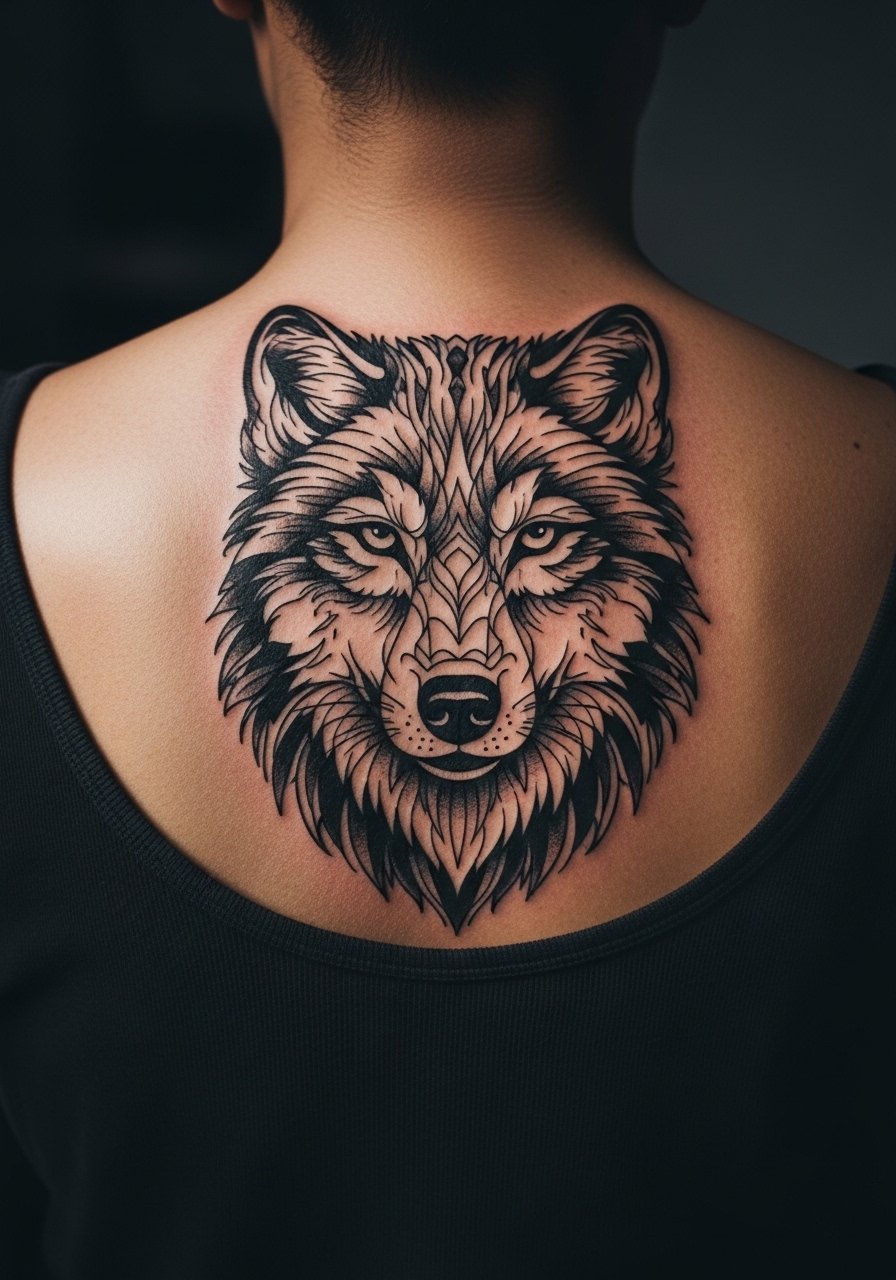
Most people choose heavy blackwork for a wolf mask when they want graphic impact from a distance. The upper back gives a flat canvas for saturated black and negative-space teeth or eyes. Pain is moderate and sessions run longer because saturation takes time. Artists split into two camps on this approach. One camp says blocky saturation will outlast fine detail. The other camp argues micro-contrast keeps realism intact. Ask your artist where they stand and how they stage sessions to protect saturation. This placement pairs well with open-back tops, so consider open-back tops for showing it off.
3. Geometric Wolf Face with Dot Work on Sternum
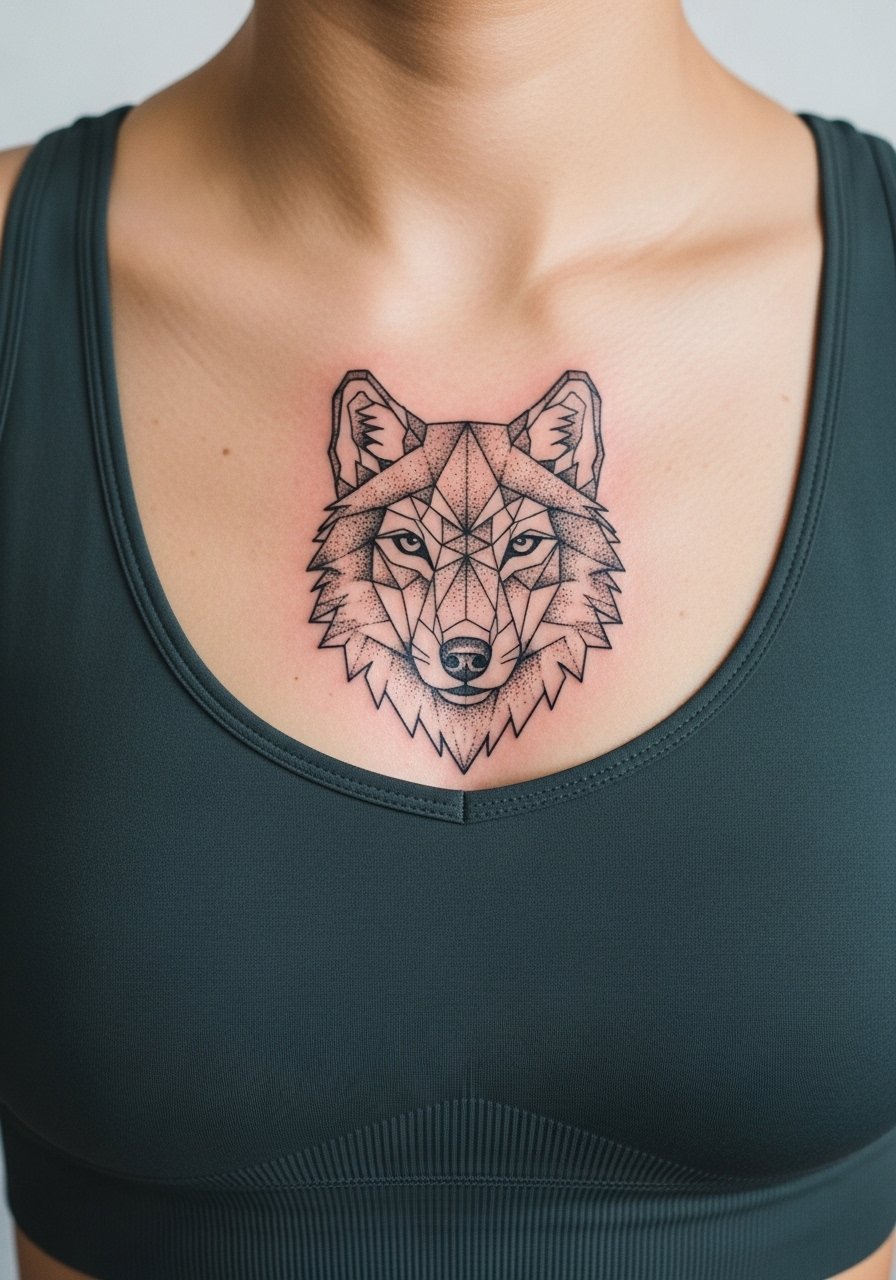
Fair warning, the sternum is sensitive and session time can feel intense for some. Geometric wolf faces with stipple shading read best when the central mask has breathing room from surrounding shapes. Ask your artist to space the geometry so stippling does not become a dense blur as it heals. A common mistake is crowding tiny triangles into narrow bands near bone. For the session, wear a fitted sports bra or bandeau to give access without exposing more than necessary. Expect touch-up potential at the high-contrast edges within two to four years.
4. Neo-Traditional Wolf Portrait on Upper Arm
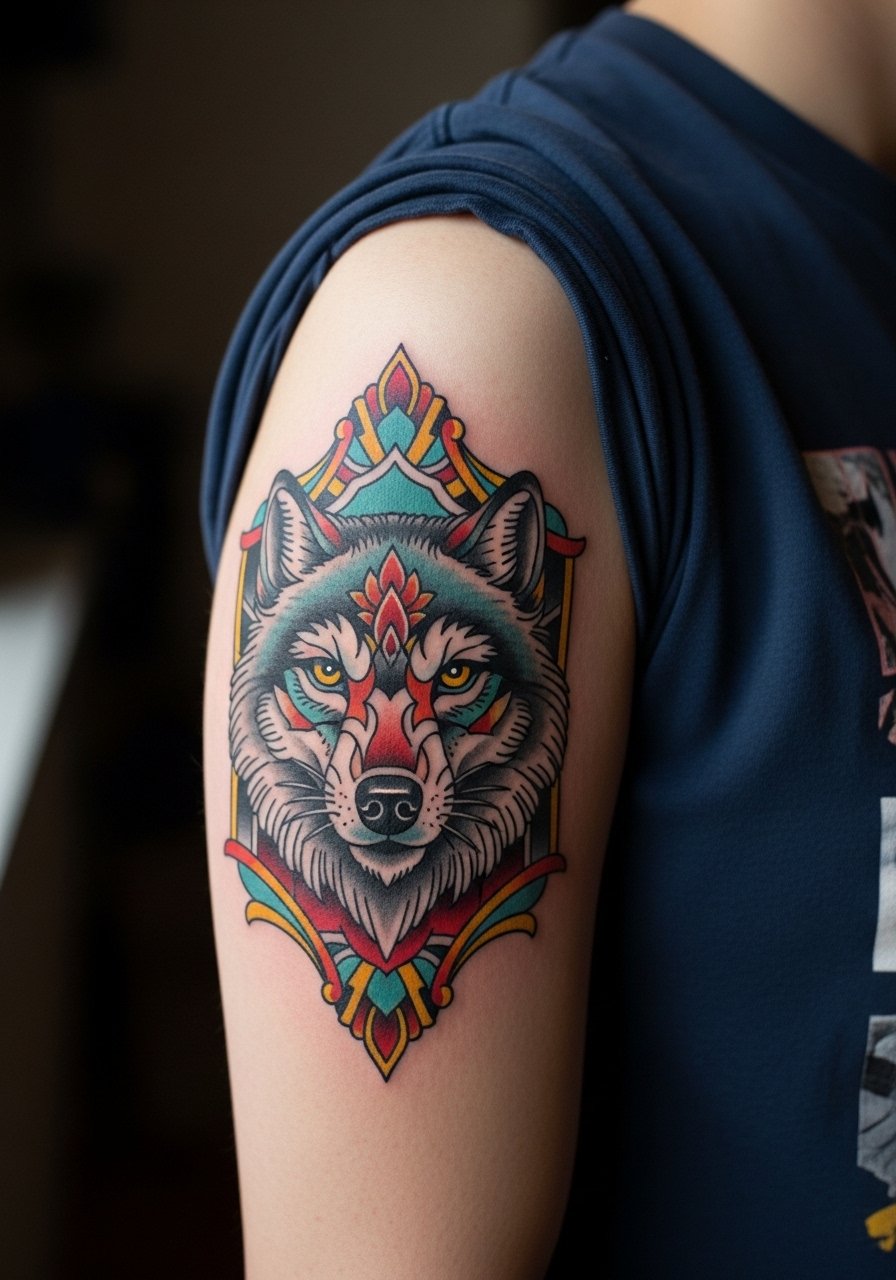
There is a reason neo-traditional work shows up often on the upper arm. The rounded canvas holds bold outlines and saturated fills that age predictably. During the consult, specify which color palette you want for the fur highlights and the decorative elements around the face. A frequent error is asking for ultra-fine detail inside a heavy outline, which defeats the style and complicates touch-ups. The upper arm is a moderate pain zone and the session usually takes one to three hours. Pair this with rolled-up sleeves or a short-sleeve henley when you want it visible.
5. Minimalist Single-Line Wolf Face on Wrist
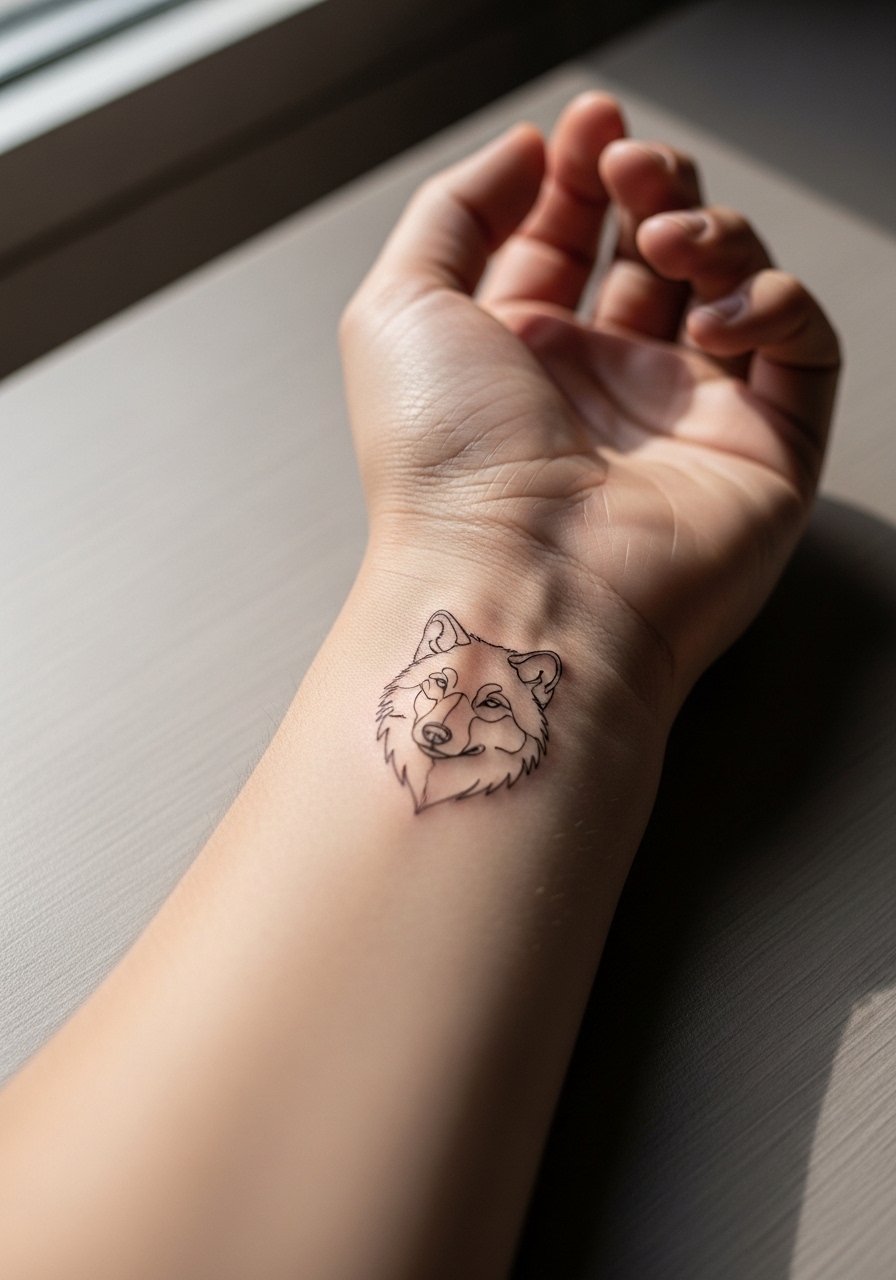
The wrist is a high-friction zone, and minimalist single-line wolf faces can blur if placed too close to the edge of the wrist. When you ask for this, say you want slightly increased line weight for longevity and fewer overlapping curves. Sessions are quick but expect quicker fading and a potential touch-up within two years. For showing it off, a thin chain bracelet or a minimalist watch frames the design without overwhelming it. Think about daily friction from sleeves and hand washing when you pick placement.
6. Surreal Half-Wolf, Half-Geom on Calf
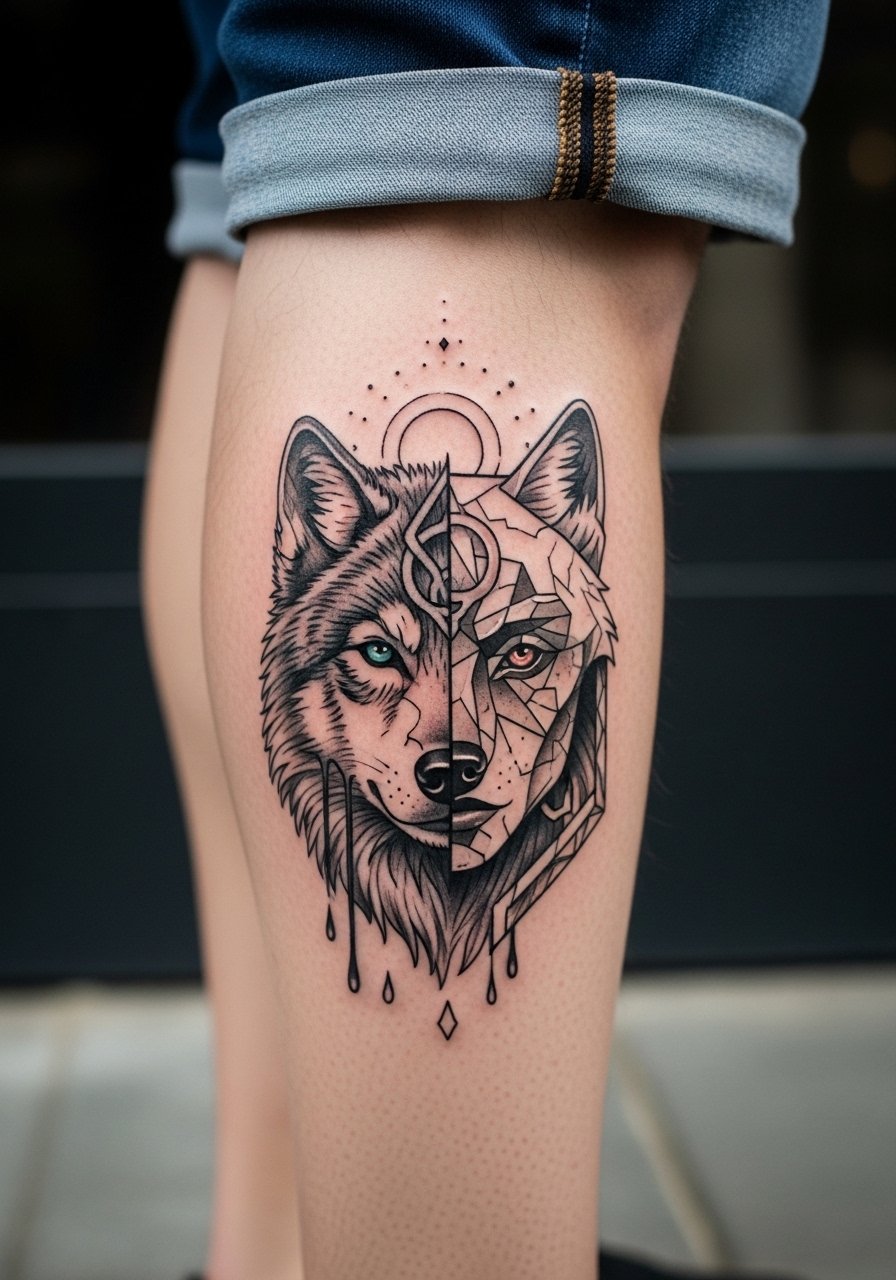
The calf gives vertical space for a split composition where one half is realistic and the other half is geometric. I have seen this layout age well because the calf gets less sun than forearms and heals with stable saturation. Tell your artist during the consult how to balance line weight across the two halves so the geometric side does not overpower the portrait side. Sessions are moderate and usually feel less painful than ribs. For evenings out, a midi skirt with side slit lets the calf peek without forcing you to wear shorts.
Studio Day Picks
The inner forearm, wrist, and calf pieces above each demand different session prep and immediate healing care, so a few targeted items smooth the day and the first week.
-
Stencil transfer paper kit. Lets you preview the wolf face placement and fine-tune eye alignment before needles hit skin.
-
Topical numbing cream. Applied as directed before a wrist or sternum session eases the first hour without affecting linework.
-
Thin protective film roll. Helpful for wrist and hand tattoos that face constant friction from clothes and washing.
-
Fragrance-free gentle body wash. Cleans the area during showering without stripping pigment from fine line work.
-
Aquaphor healing ointment. Thin layers in the first three days lock in moisture for detailed wolf faces without suffocating the skin.
7. Full Chest Wolf Face with Background Sky
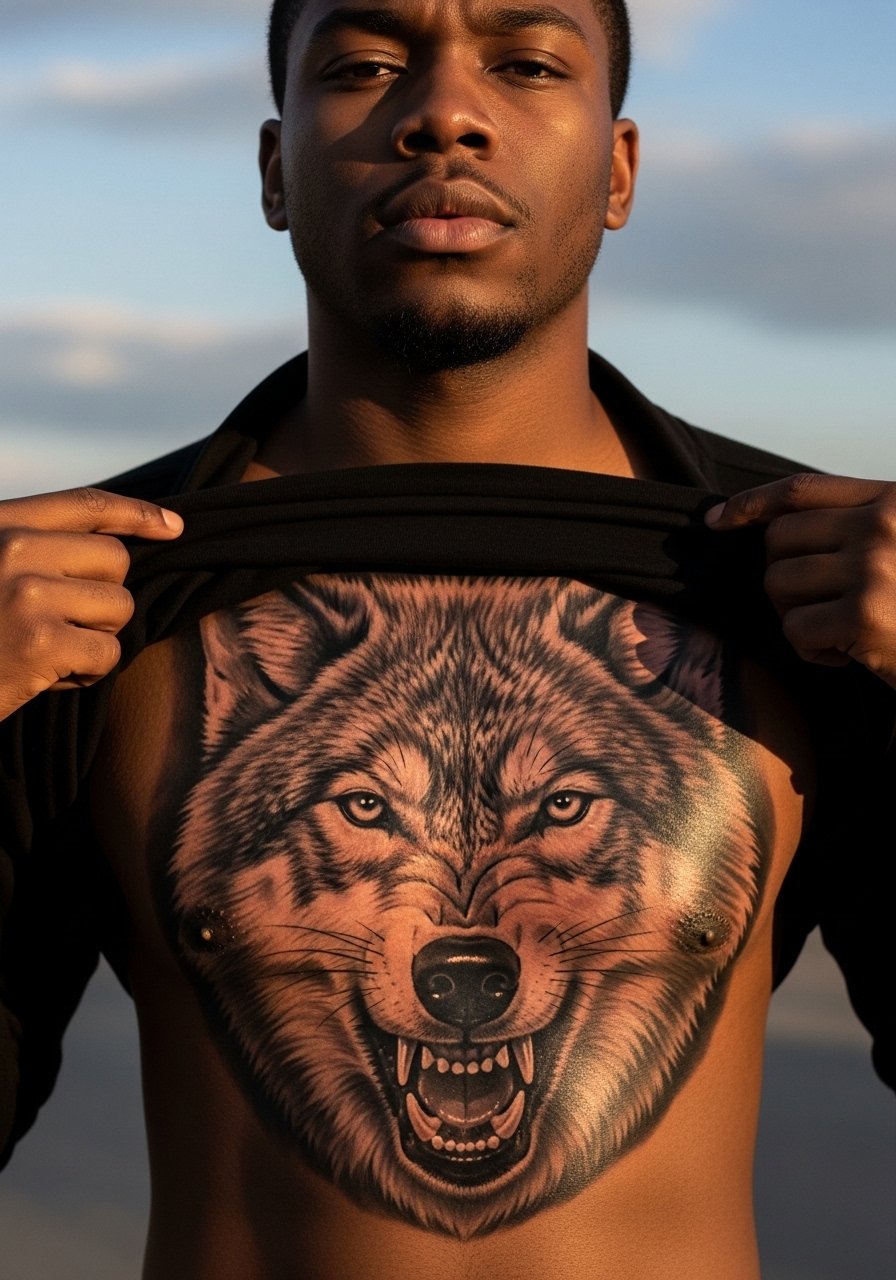
Sitting for a full chest wolf face can feel intense near the sternum and ribs. Many clients break this into two sessions to protect saturation and avoid overworking sensitive skin. When you consult, mention you want the eyes to remain the focal point with softer washes in the sky background. One common mistake is requesting detailed background texture too close to the face, which causes the portrait to lose focus as it heals. For showing this piece, an open collar or wide-neck sweater frames the top of the design.
8. Tiny Wolf Face Behind the Ear
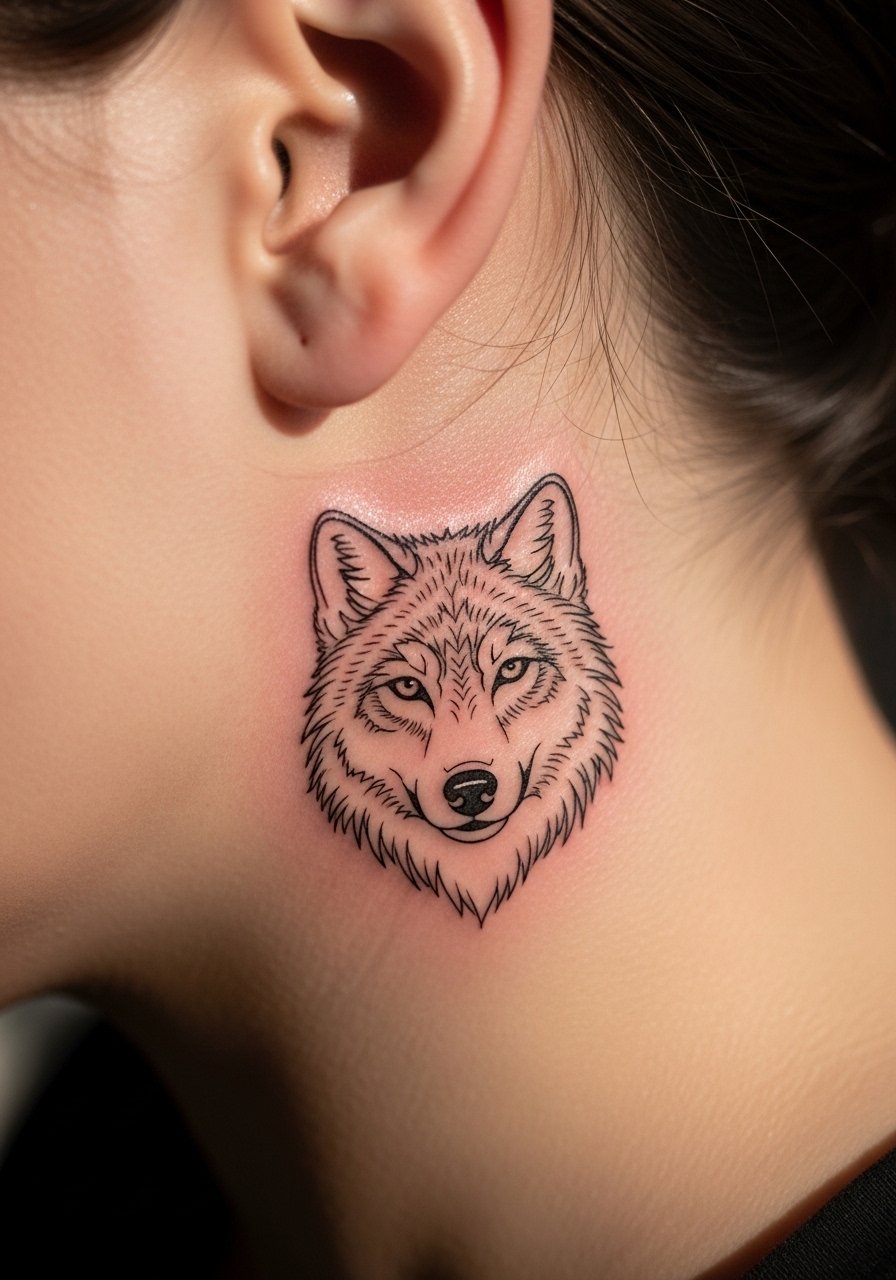
Behind-the-ear pieces require a specific framing in the stencil stage so the features do not sit on the hairline. Artists split into two camps here. One says tiny portrait detail will blur and recommends larger scale. The other says careful needle depth keeps small detail intact. Ask your artist how they handle mobility and hair growth near the spot. This area heals quickly but can need touch-ups because of daily hair brushing. For the appointment, pull your hair back or wear a high ponytail clip so the artist has clear access.
9. Linework Wolf Face on Thigh with Floral Frame
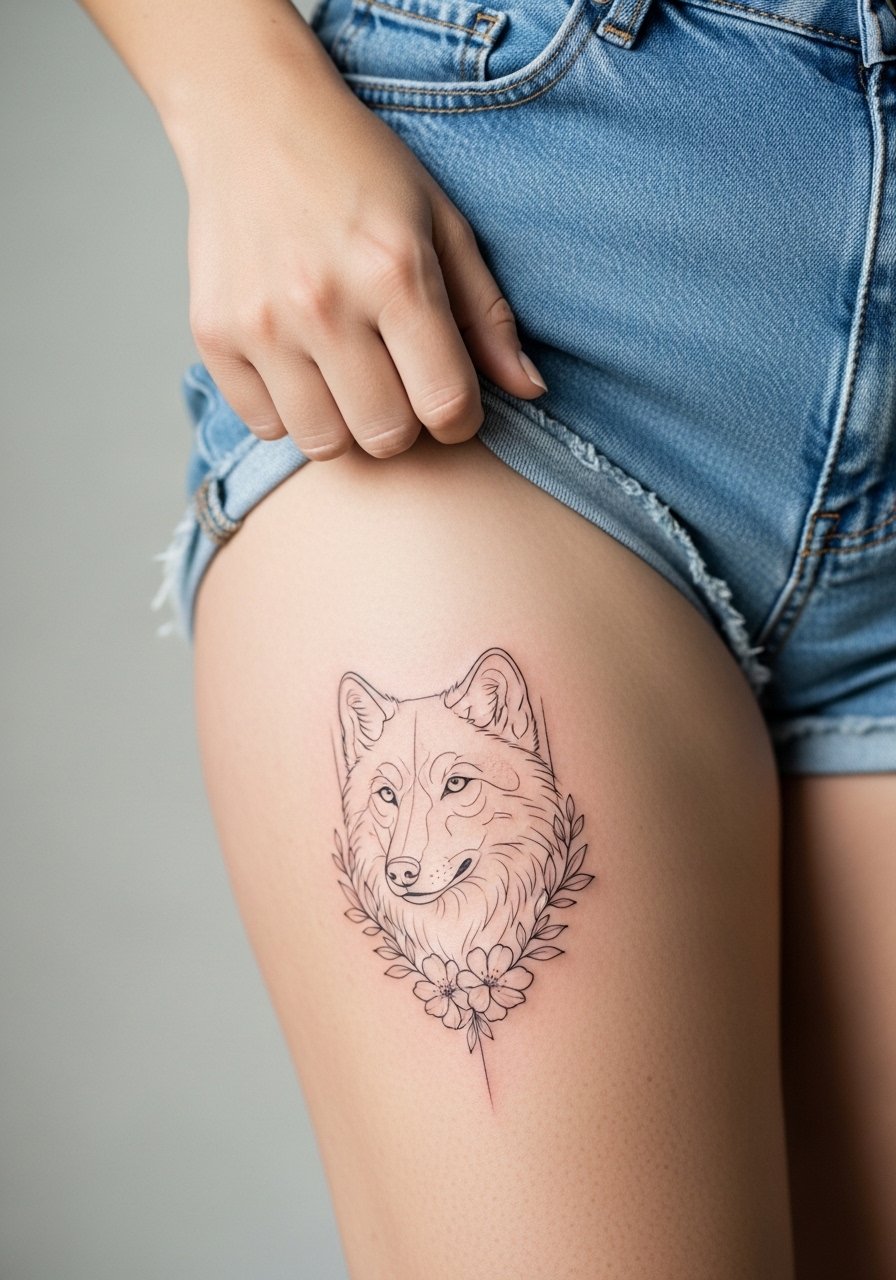
The upper thigh is a forgiving canvas for fine line wolf faces because it sees less sun and friction. If you want a floral frame, tell your artist to keep petals looser and avoid tiny overlapping leaves that merge with body movement. A common mistake is asking for hair-fine detail that will compact over time. For the session wear, bring or wear high-waisted shorts that you can shift easily. Touch-up needs tend to be lower here than on wrists.
10. Half-Sleeve Wolf Face with Forest Scene
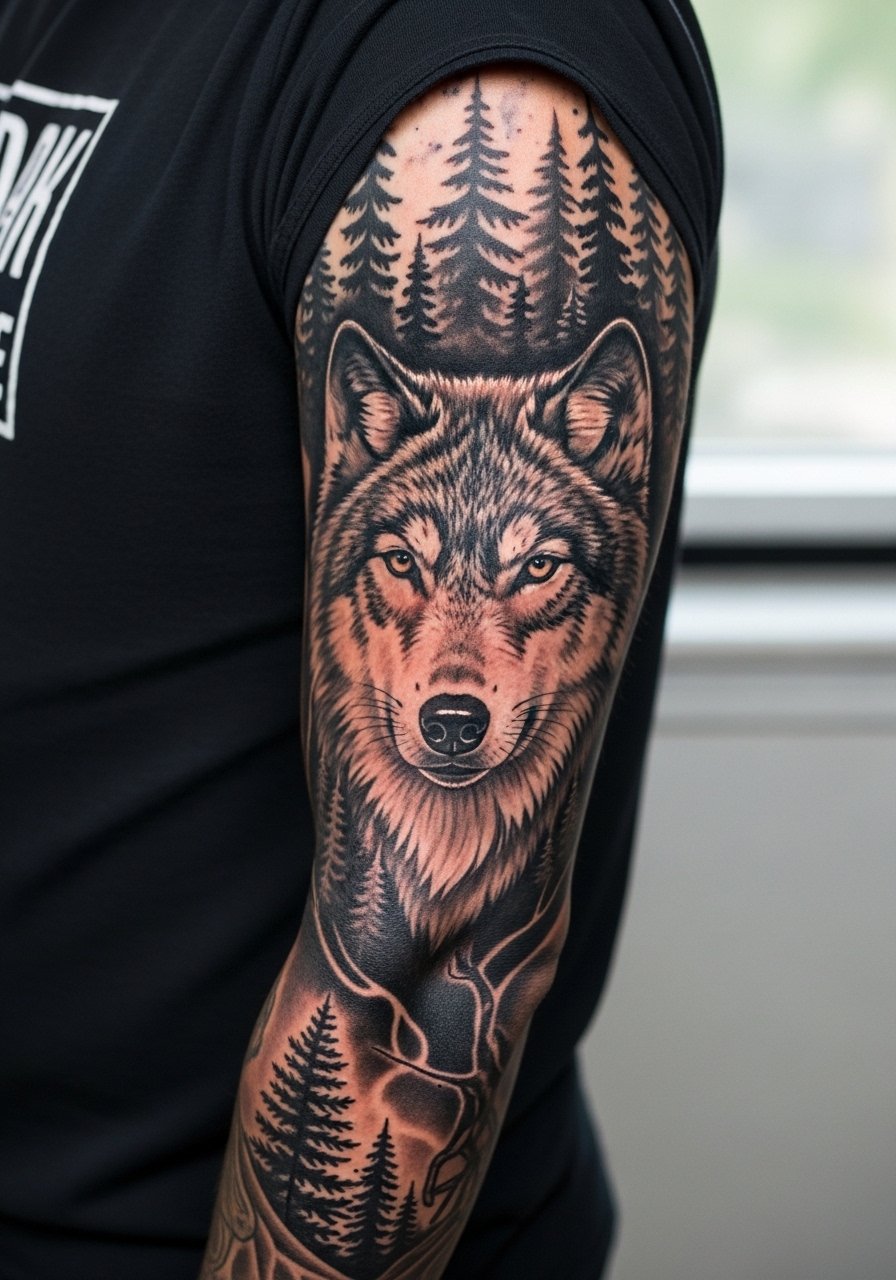
There is visual satisfaction in a wolf face emerging from a forest band. When you describe this in consultation, specify how much negative space you want between trees and fur so contrast holds over time. The arm tolerates longer sessions but be ready for multiple visits for saturation and layering. A common error is packing too much fine foliage into a narrow sleeve band which blurs with age. Pairing the piece with rolled-up sleeves or a casual blazer keeps the narrative readable when you want it seen.
11. Finger Tip Mini Wolf Icon
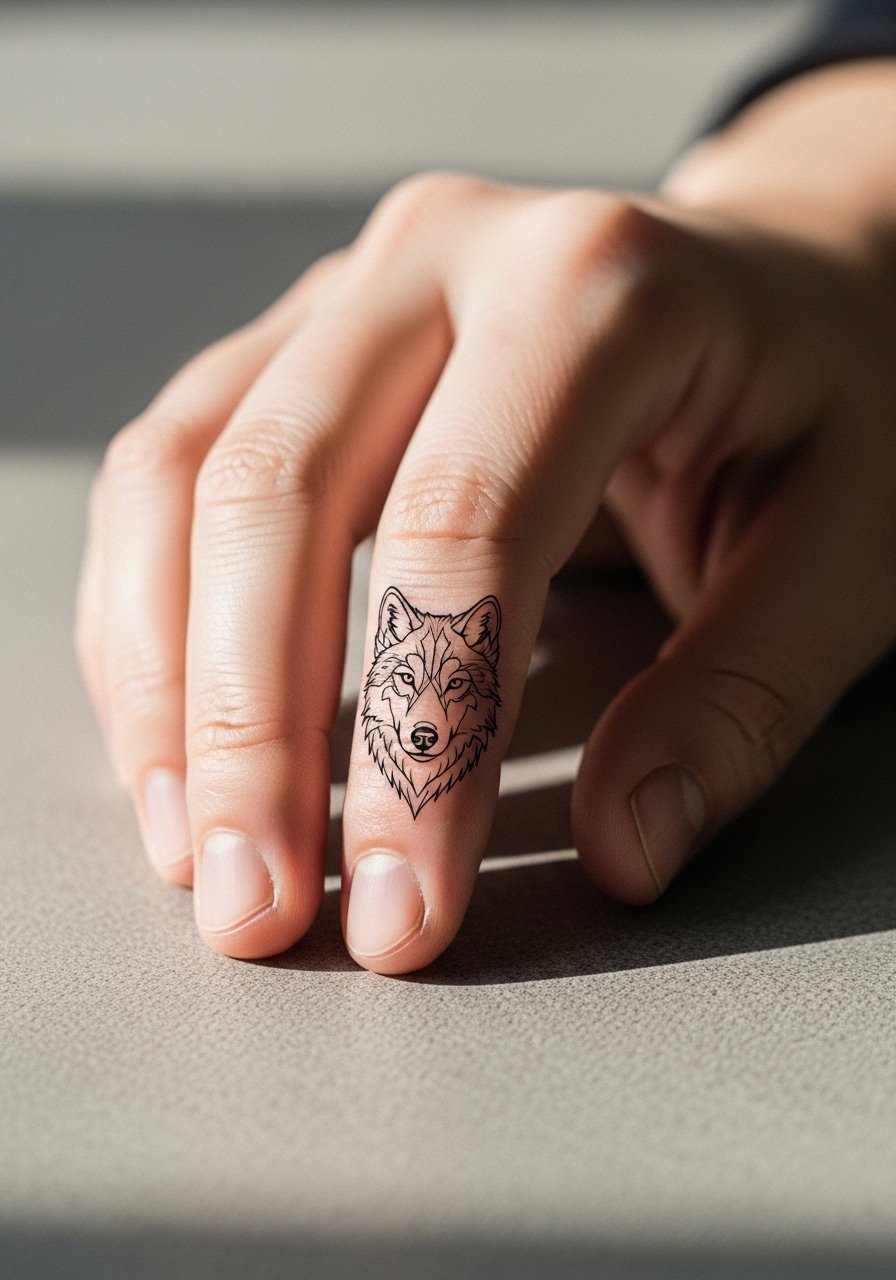
Finger tattoos are high risk for fading and blowout because of constant use and thin skin. A tiny wolf face here reads best as a simplified icon with bold, minimal lines rather than micro-detail. The session is quick but expect touch-ups sooner than other placements. For those who work with their hands, this placement is a frequent regret for readers who do not plan around wear. If you want it visible but protected, consider placement on the side of the finger closer to the knuckle rather than the pad.
12. Watercolor Wolf Face on Ribcage
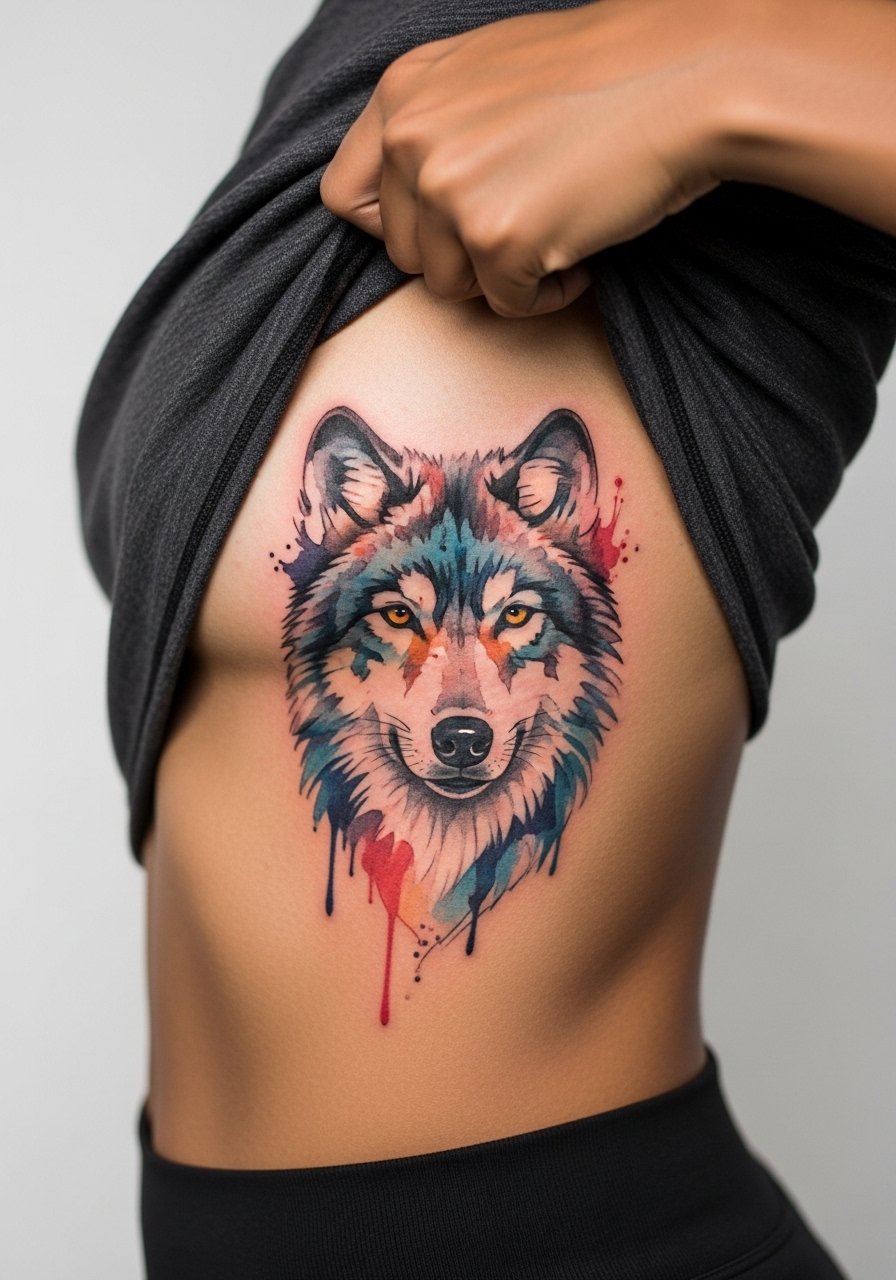
Ribcage placements are famously painful and watercolor effects can behave unpredictably as they heal. Some artists say the skin stretch there will cause washes to bleed into each other, while others have techniques to compartmentalize color. Name the camp you prefer and ask for staged color layers rather than a single saturated pass. A session on ribs often needs breaks, so plan for longer chair time. For the appointment, a cropped top makes access simple without overexposure.
13. Geometric Wolf Mandala at the Nape
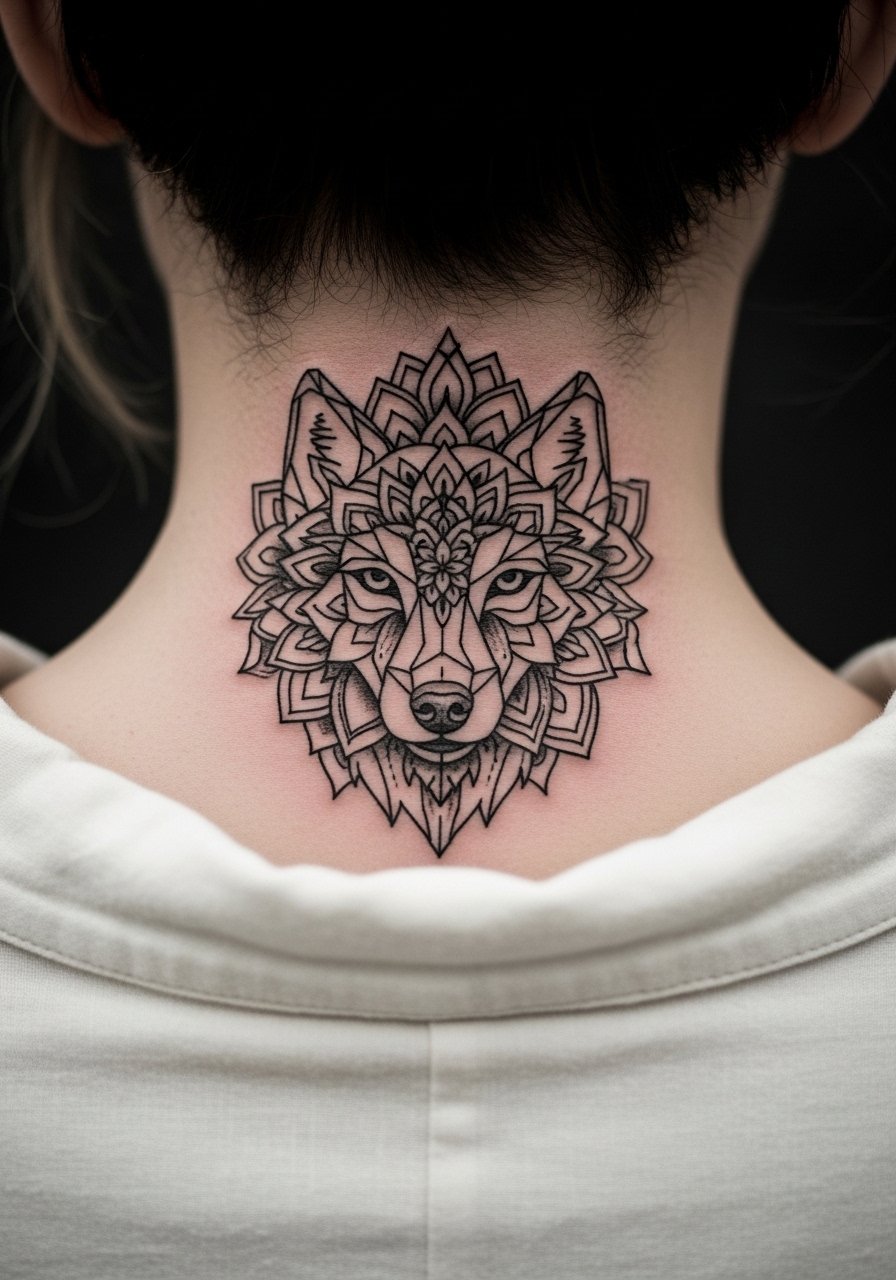
Neck placements need an artist comfortable with close-line spacing and curved surfaces. For a mandala-wolf hybrid, ask the artist to increase spacing near the nape so the mandala rings do not compress into a dark band. The nape moves with head motion and hair friction, so expect touch-ups sooner than on flat skin. This placement pairs well with crew-neck sweaters or wide-neck tops for controlled reveal. If your workplace is strict about visible ink, consider how often you want to expose this area.
14. Negative Space Wolf Face on Sternum Bar
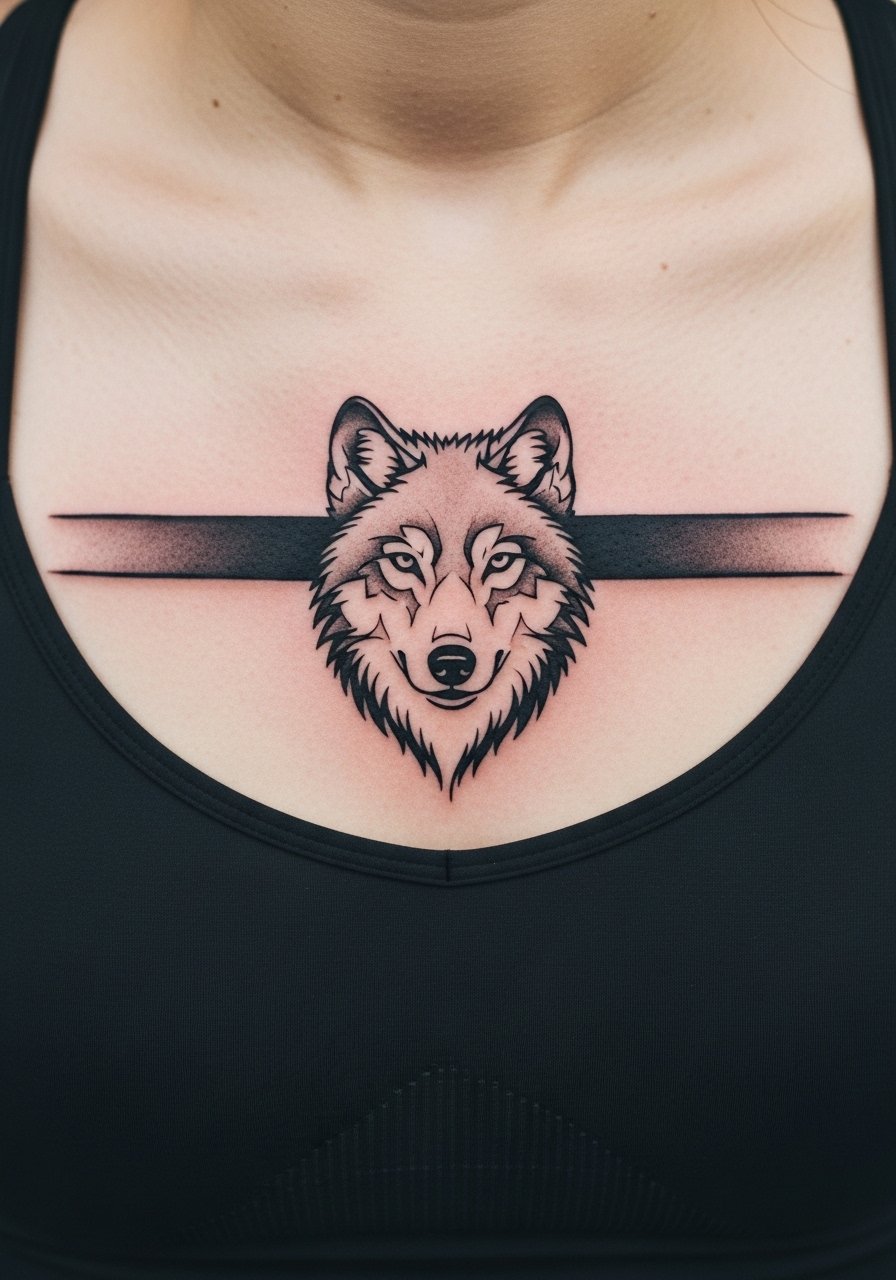
Negative space techniques can make a wolf face pop without dense linework, but the sternum requires precise staging so skin tension does not distort the negative areas. A common mistake is asking for too narrow negative channels that fill in as skin settles. Talk about how the artist will maintain crisp edges and where they plan to leave breathing room. Expect sensitivity near bone and plan breaks. For session wear, a strapless or fitted sports bra creates access without full exposure.
15. Portrait Wolf Face with Jewelry Frame on Collarbone
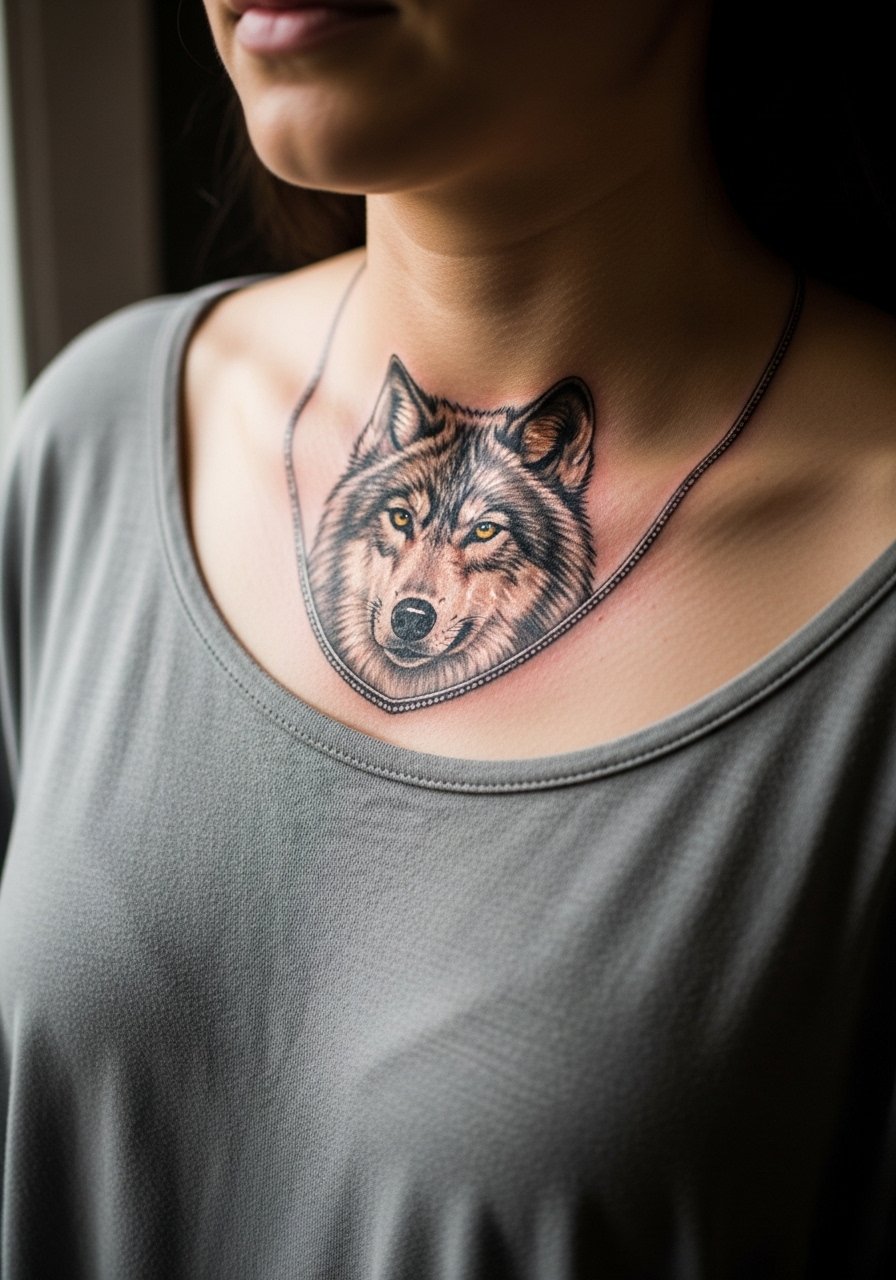
Collarbone placements are visible and photograph well. If you want a jewelry-like frame around the wolf face, request clear separation between chain elements and fur to prevent visual merging. The collarbone can be sensitive, but small portraits settle nicely here with proper depth. For showing it off, a thin chain pendant or a delicate choker sits above the piece and complements it. Expect a minor touch-up for edge definition after healing.
16. Black and Gray Wolf Face on Thigh Side
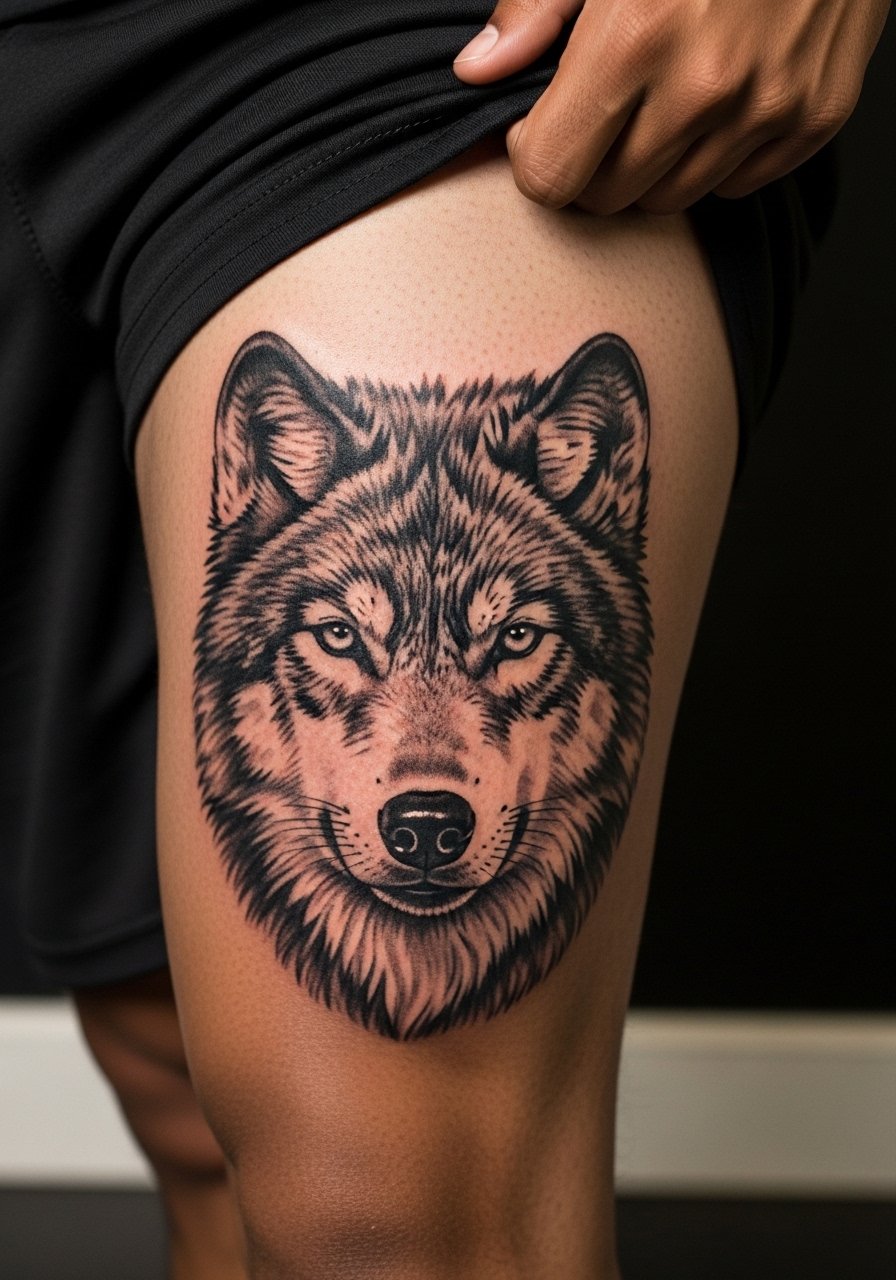
Black and gray portraits on the thigh age well due to lower sun exposure and thicker skin. When booking, ask about session pacing for tonal layering so highlights are not overworked into shadow. Avoid requesting ultra-fine whisker lines right up against dense shading because those lines can disappear. For the session, wear loose bottoms that can be shifted easily. Touch-ups are less frequent here than on hands or wrists.
17. Stylized Linework Wolf with Script Below on Rib Side
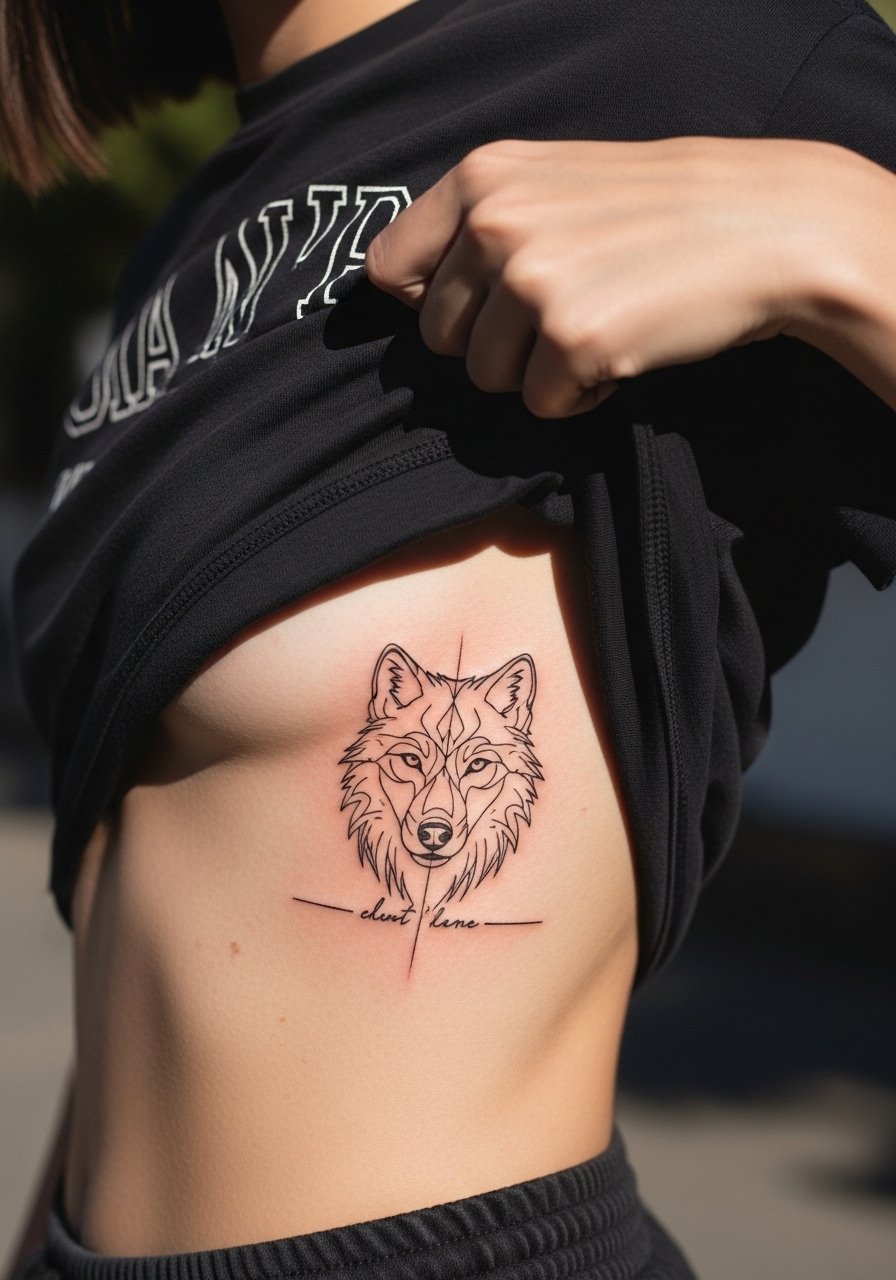
Rib-side scripts combined with linework portraits highlight the need for correct spacing between elements. The controversy around fine line here is clear. One camp says the natural stretch of the torso will blur slender script within two years. The other camp claims careful depth and spacing preserves script. Ask how the artist plans to anchor the letters and where they recommend scaling the wolf face to keep both elements readable. Sessions are often broken into two for comfort.
18. Traditional-Inspired Wolf Head on Shoulder Cap
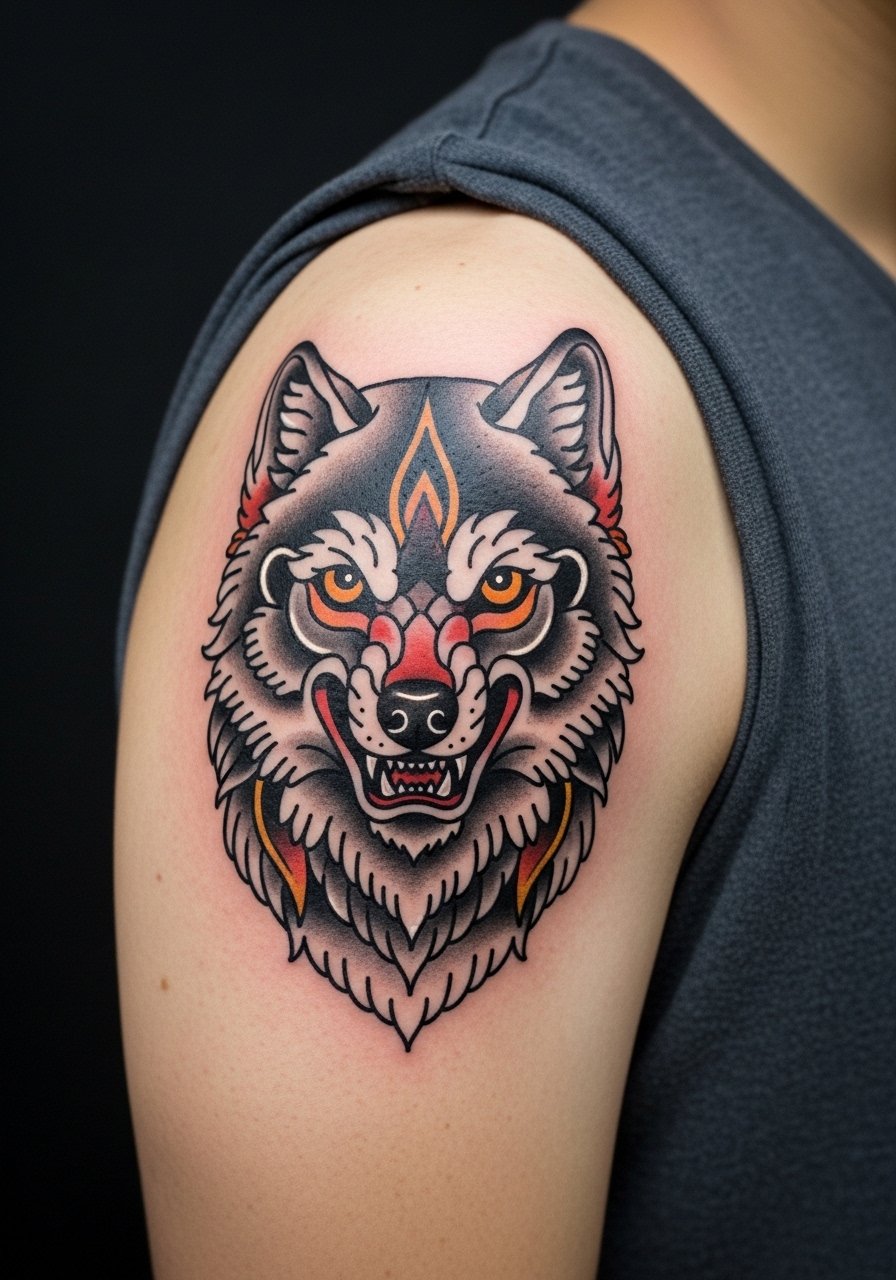
The shoulder cap is a classic for bold, traditional wolf heads because the curve lets the face sit naturally without distortion. Demand clear, confident outlines in your consult and avoid crowding fine interior detail. Pain is moderate and sessions are often completed in a single visit. This style tends to age predictably with minimal touch-ups if saturation is spot on. Roll sleeves up and wear a tank top for easy access on chair day.
19. Surreal Collage Wolf Face Across Sternum and Upper Abdomen
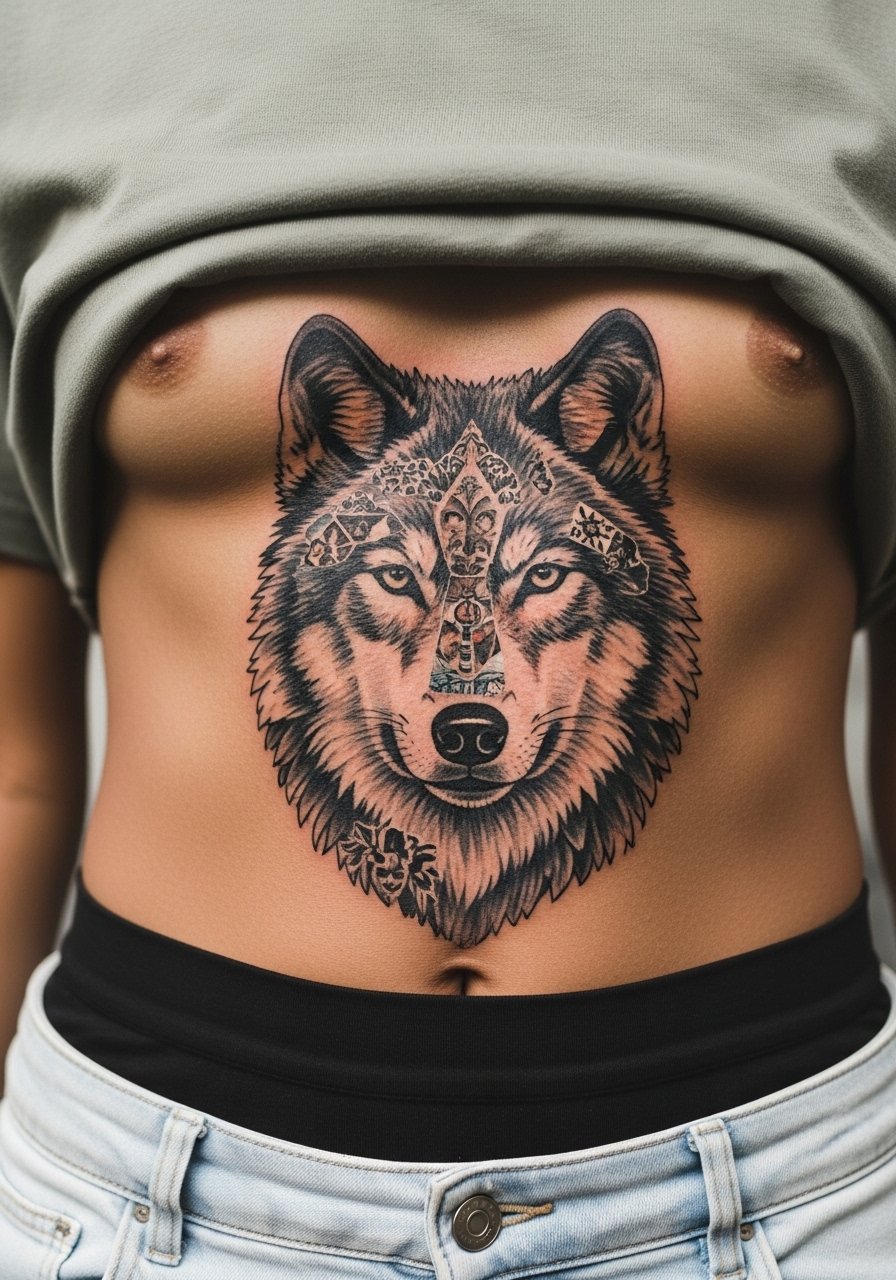
Large collage pieces that cross the sternum into the upper abdomen demand staged planning so no single feature loses priority. The area is sensitive near the sternum and looser on the abdomen, so shifting skin tension can change how eyes align. A mistake I see often is not checking alignment while the client moves. During consultation, ask to see a numbered stencil on the body so you both confirm positioning. For session wear, high-waisted bottoms and a cropped tee make staged access simple.
20. Finger Base Wolf Face with Dot Accents on Knuckle
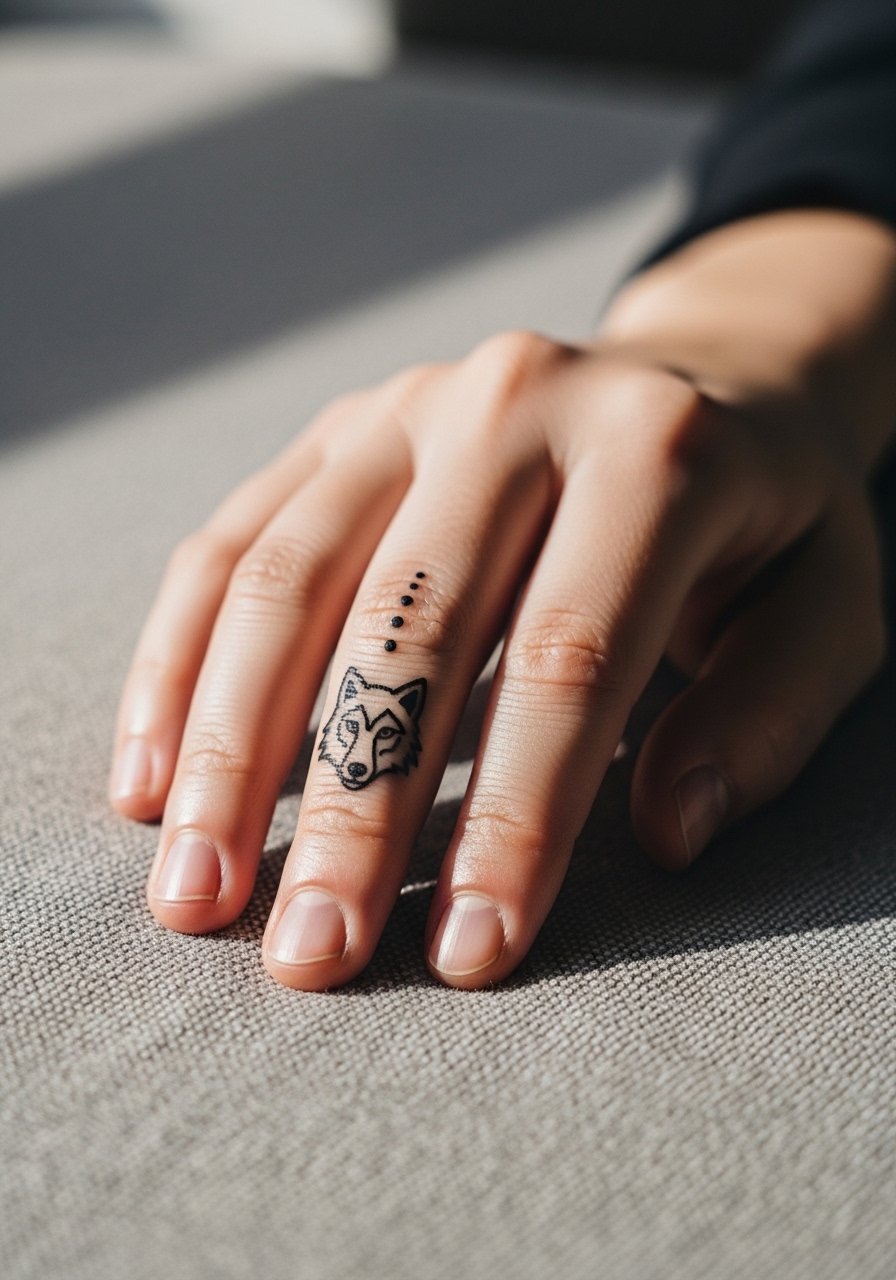
Knuckle and base-of-finger work is high contact and sparse skin means pigment shifts more easily. Keep the design as a bold icon rather than a micro-portrait. The session is short but plan for a likely touch-up. A common regret is choosing packed detail that will not survive daily wear. Consider placement just below the knuckle where skin is slightly less abrasive.
21. Half-Face Wolf with Floral Neck Flow
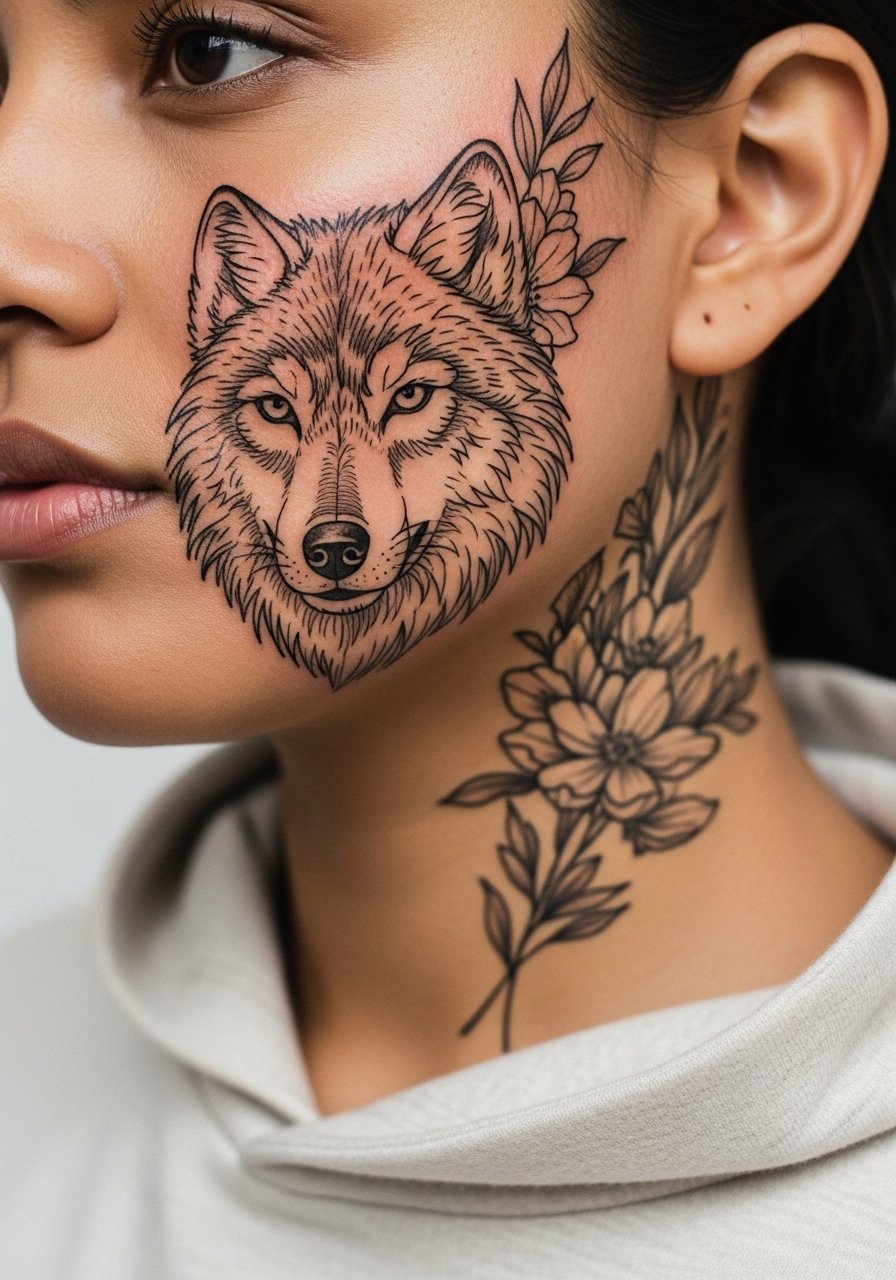
Flowing designs that wrap from cheek or jawline toward the neck need an artist experienced in curved anatomy. Sensitive placements near the neck and jaw can show movement with smiling and chewing, so request a movement test in the consult to ensure eyes stay aligned during expression. For reveal, a wide-neck shirt lets you control how much shows. Expect touch-ups along the thin lines near the neck more often than mid-face areas.
22. Tribal-Influenced Wolf Face on Upper Thigh
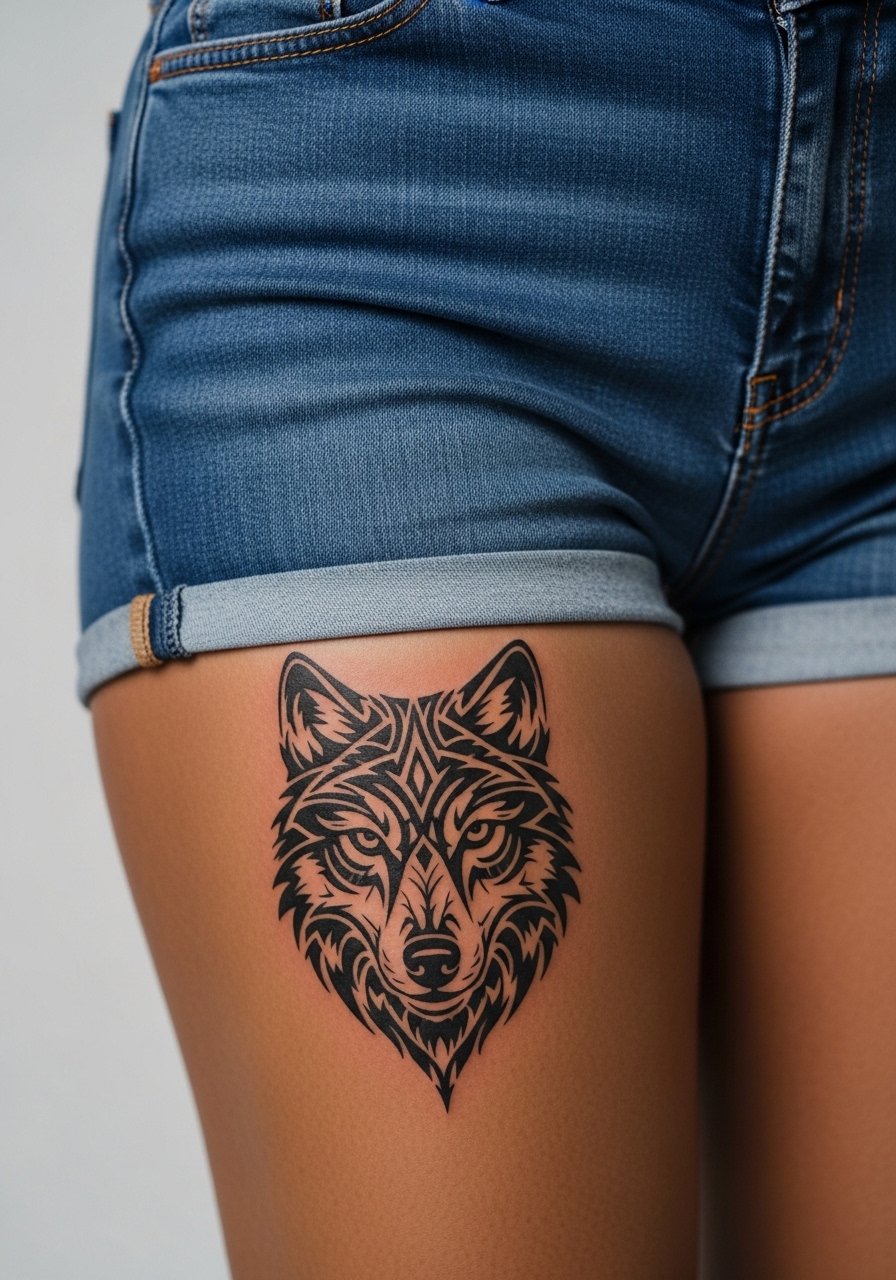
When you choose tribal-influenced motifs, be mindful of the design origin and avoid direct cultural appropriation. Many people prefer adapted motifs that honorlines without copying sacred patterns. The thigh accepts bold blackwork well and heals with stable saturation. Tell your artist whether you want reference to a particular tradition or an original composition inspired by those lines. For session wear, high-cut shorts make access consistent.
23. Portrait-Scale Wolf Eye Close-Up on Forearm
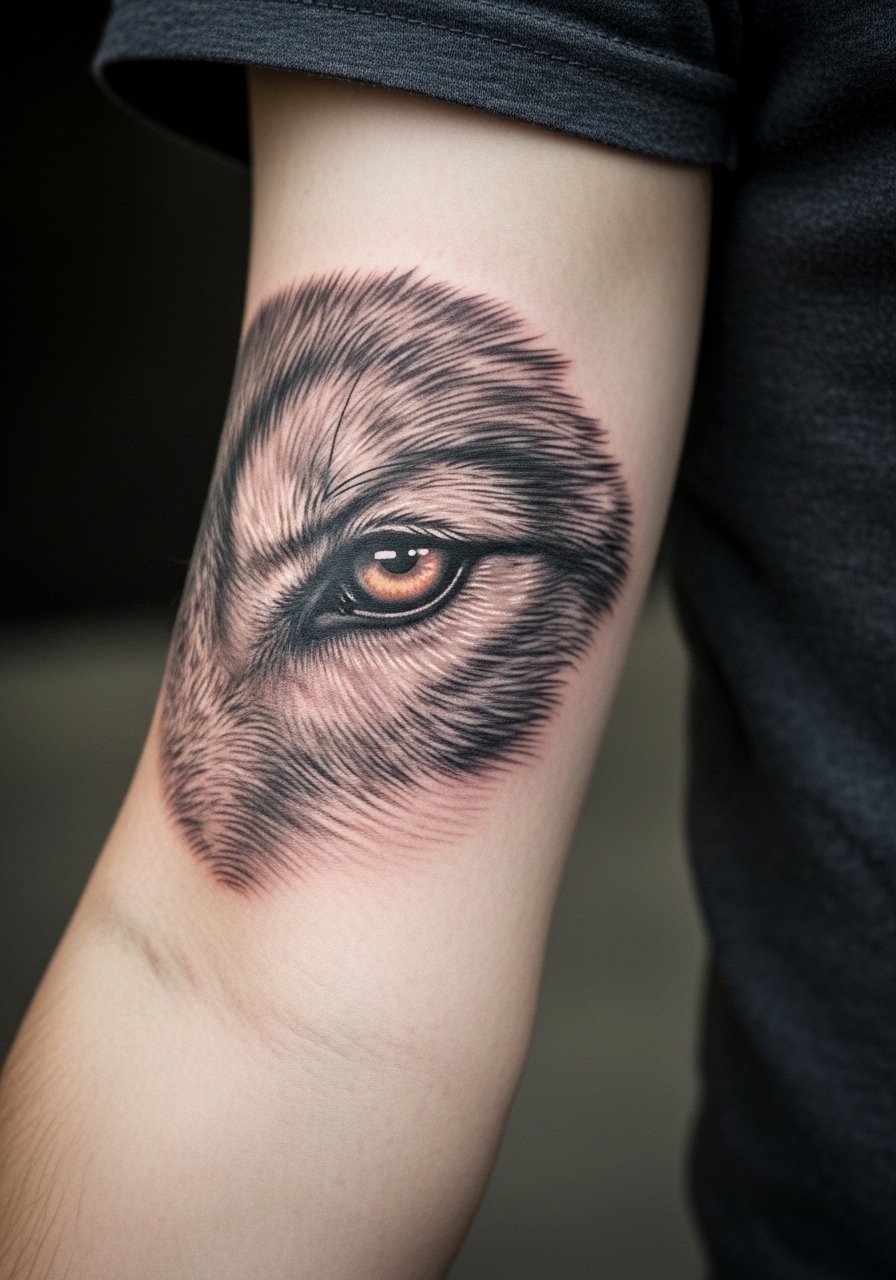
A single wolf eye as a portrait-scale study reads like a statement and avoids the blowout risk of full faces at small scale. The forearm is a forgiving area and the eye detail can stay crisp when the artist uses slightly heavier contrast in the iris. During consultation request high-contrast highlights rather than ultra-thin white lines which can fade. Session time varies by size but plan for one solid visit. Pair this with rolled-up sleeves or a short-sleeve tee for casual visibility.
24. Small Geometric Wolf on Ankle
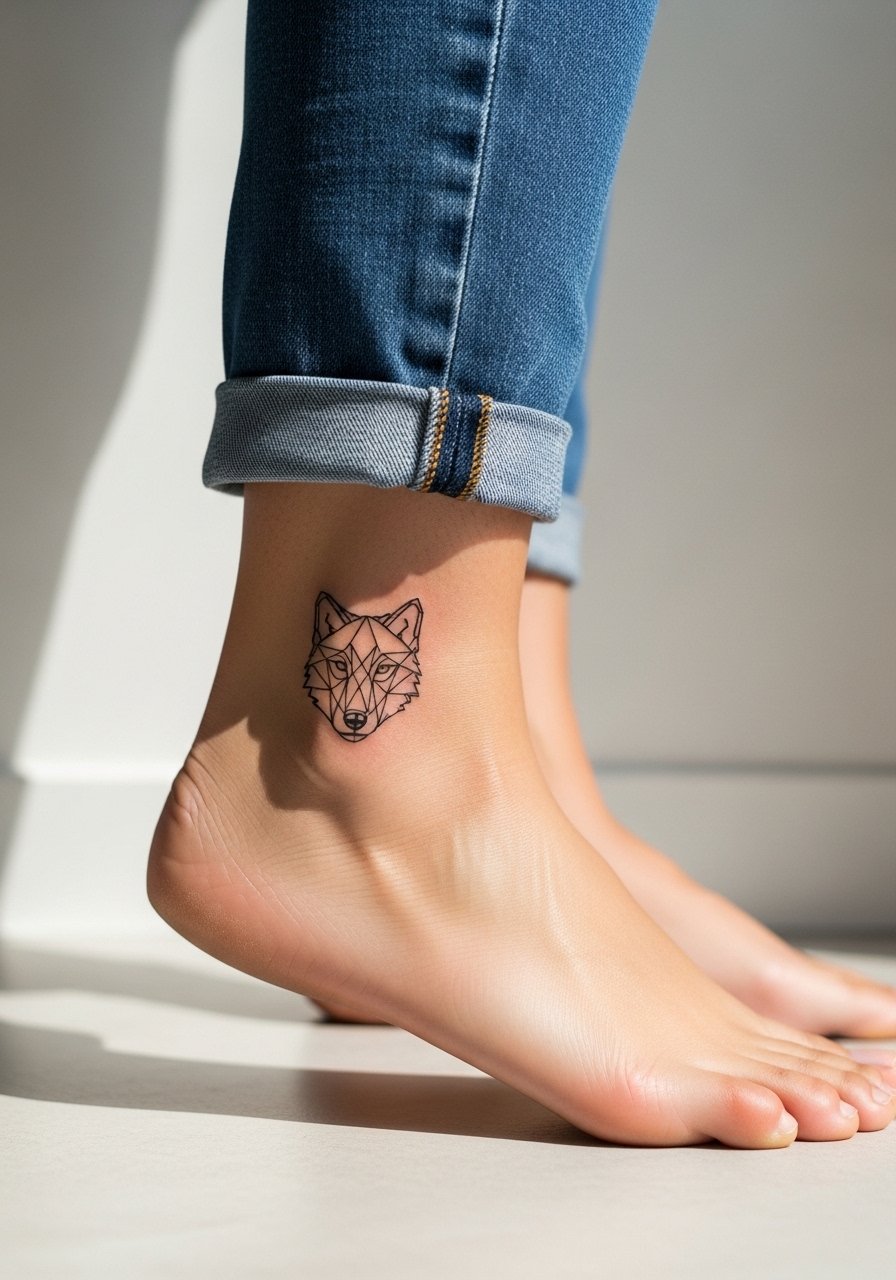
Ankle tattoos survive surprisingly well if scaled properly and set away from the skin crease at the shoe line. Keep geometry bold and avoid fine inner angles that trap pigment near footwear friction. Sessions are short but boots and socks can rub the area during healing. Consider a pair of slide sandals and jeans you can roll up on session day. Expect touch-ups around the edges if you wear closed shoes often.
25. Ink Sketch Wolf Face on Inner Bicep
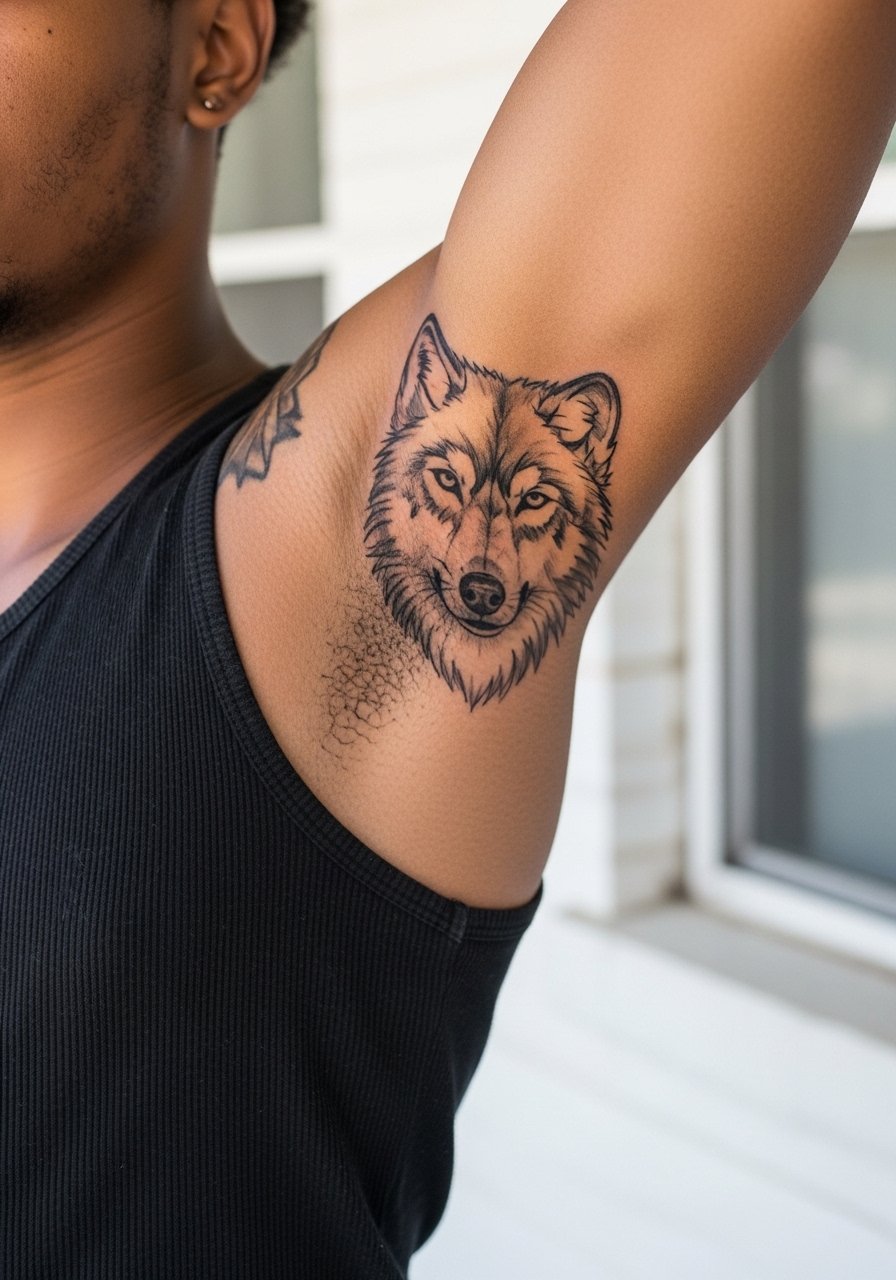
Inner bicep placements can be tender but hide well under clothing. Sketch-style wolves with loose strokes work because the motion of the marks complements muscle curves. The mistake people make is asking for ultra-fine sketch lines that sit too close together and compress. Ask for deliberate spacing in the consult and plan for a touch-up if the lines soften after activity. Wear a tank top on chair day so the artist can access the area easily.
26. Fine Line Wolf with Crescent Moon on Wrist Wrap
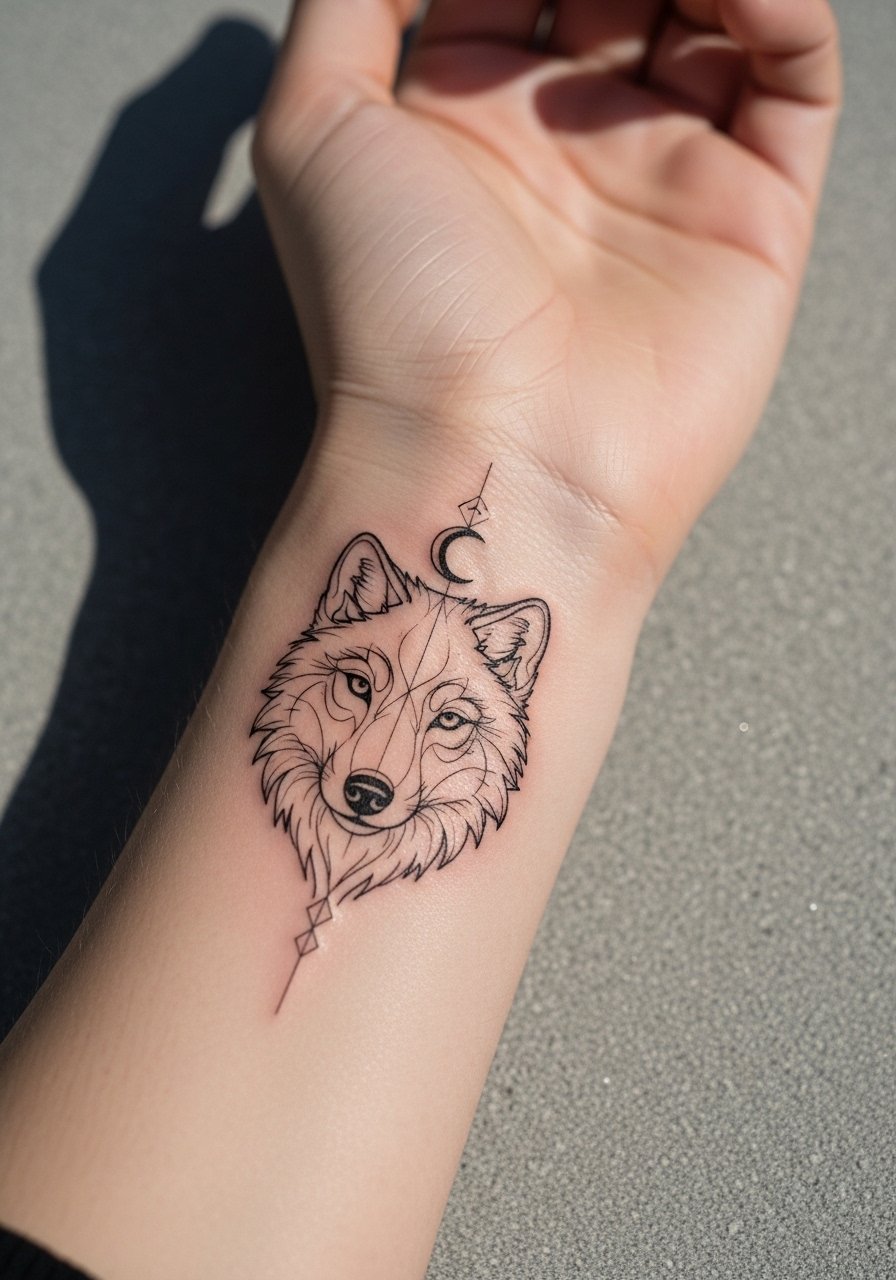
Wrist wraps that include small celestial motifs add context to a wolf face and can make the piece feel more composed when scaled down. Because wrists face friction and environmental exposure, ask for slightly increased line weight on crescents and key contours. Sessions are quick but plan for a possible touch-up at year two. A thin bracelet layered above or below the design can create a framed look when you want to style it.
27. Large Back Plate Wolf Face with Symmetric Foliage
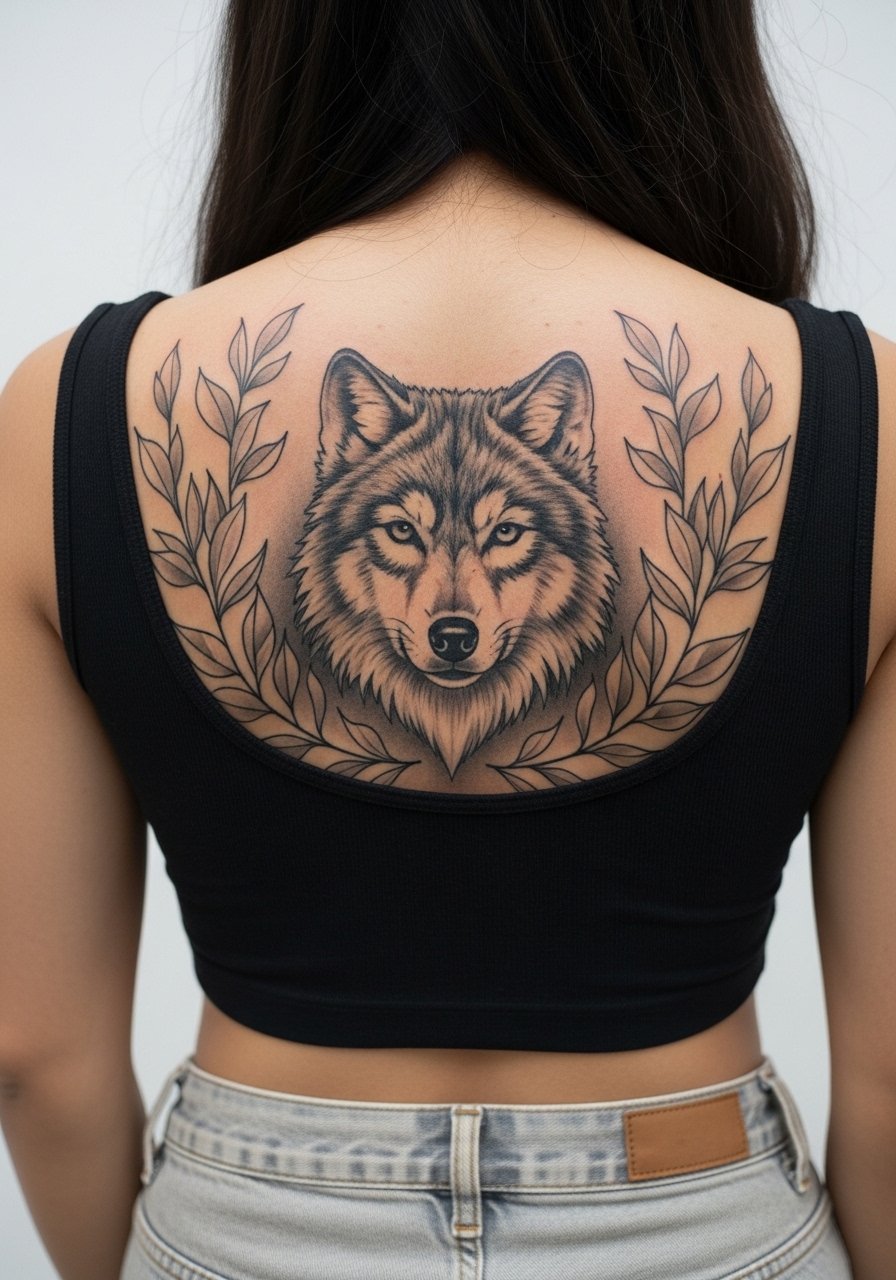
Full-back wolf plates are immersive and hold a lot of detail without crowding. For a symmetric foliage frame, ask the artist to sketch mirror points on the body while you stand so the composition reads evenly with posture. Sessions will be long and likely split across multiple visits to protect saturation. The back heals predictably but keep sun exposure low during the first year. Opt for loose tops during healing for airflow and comfort.
Frequently Asked Questions
Q: Will a fine line wolf face blur faster than a blackwork portrait?
A: From what I have seen, fine line work does blur sooner than dense blackwork because the ink sits in smaller channels. Placement matters more than style, so a fine line on the thigh can outlast a delicate forearm piece. If longevity is the priority, ask your artist to increase line weight slightly and plan for a touch-up in two to four years.
Q: How should I dress for a chest or sternum wolf session?
A: Wear a wide-neck shirt or a fitted sports bra you can shift without exposing more than the artist needs. That keeps things hygienic and simple during breaks. A fitted sports bra gives access while keeping you comfortable.
Q: Are wolf face designs suitable for people with darker skin tones?
A: Yes, wolf faces work across skin tones. Artists adjust contrast and saturation to ensure highlights and eyes read clearly. For darker skin tones, stronger negative space and bolder contrast often make key features hold up better over time.
Q: How painful is a sternum wolf face compared with a thigh placement?
A: Sternum sessions commonly feel sharper because of proximity to bone, while the thigh is generally less painful due to thicker tissue. Individual tolerance varies, so break sessions into manageable blocks if you are worried about endurance.
Q: Should I worry about workplace visibility for neck or hand wolf faces?
A: Hand and neck tattoos still affect hiring in some industries, so think about career impacts before committing. If you want visibility without permanent exposure, consider placements like the upper arm or thigh that you can cover when needed.