
Fine line watercolor looks incredible fresh and soft, but the reality is it asks more from placement and aftercare than bolder styles. Artists and clients split over how small a wolf face can be and still keep its features after a few years. Read these ideas with an eye on placement, how it heals, and what to wear the day of the session so your watercolor wolf stays readable as it settles.
1. Delicate Inner Forearm Wolf Face with Washed Color
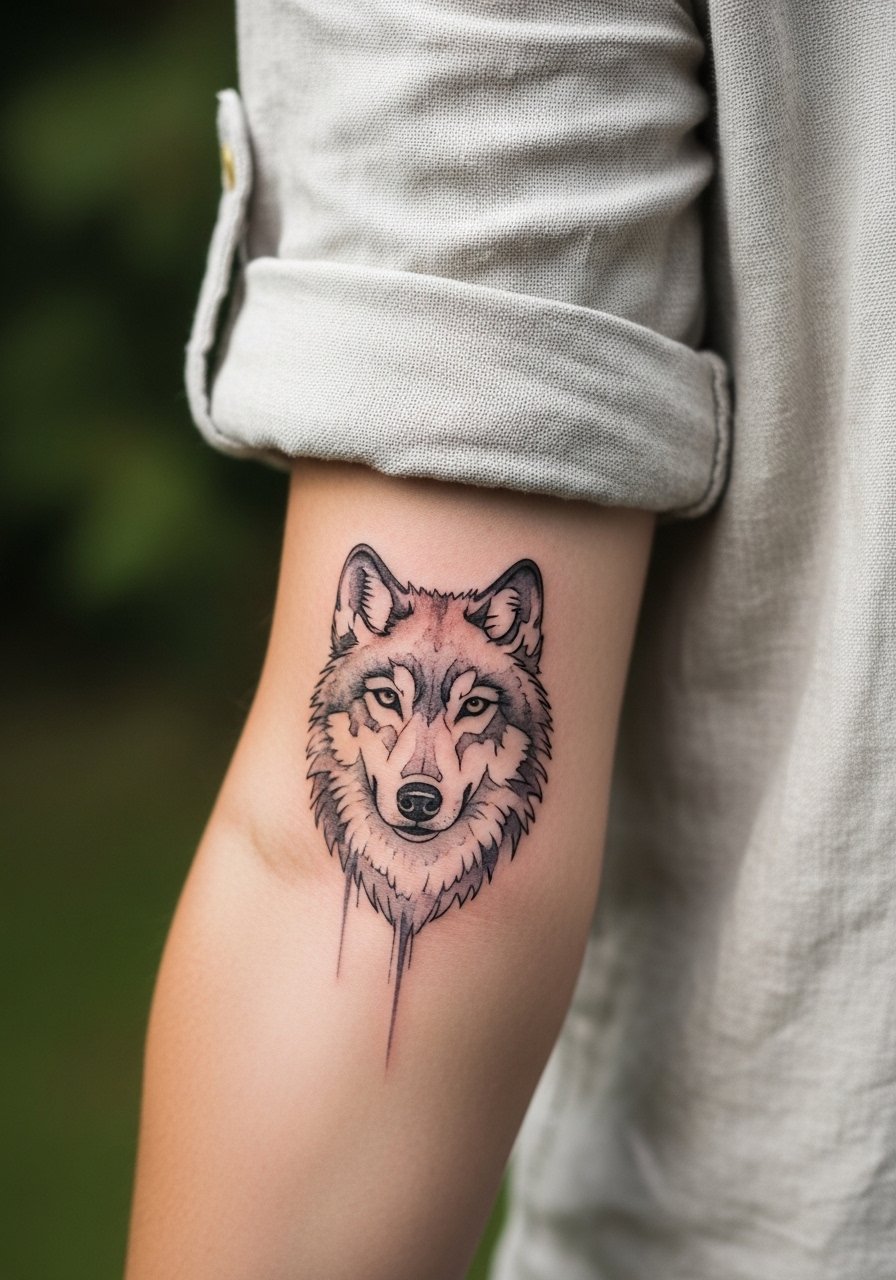
I've seen this placement hold detail the longest when the linework is slightly bolder than a typical ultra-fine approach. Fair warning, the inner forearm gets sun exposure from casual sleeves, so ask your artist for medium-weight linework to keep facial features readable at year two. The session feels like steady buzzing and is usually a two-hour block. Bring reference photos that show the exact eye shape and fur direction you want. For the appointment wear a loose button-down shirt you can pull aside without tugging the area. A common mistake is asking for micro-detail that the forearm cannot maintain with everyday sunlight and friction.
2. Tiny Wrist Wolf Face with Subtle Splash
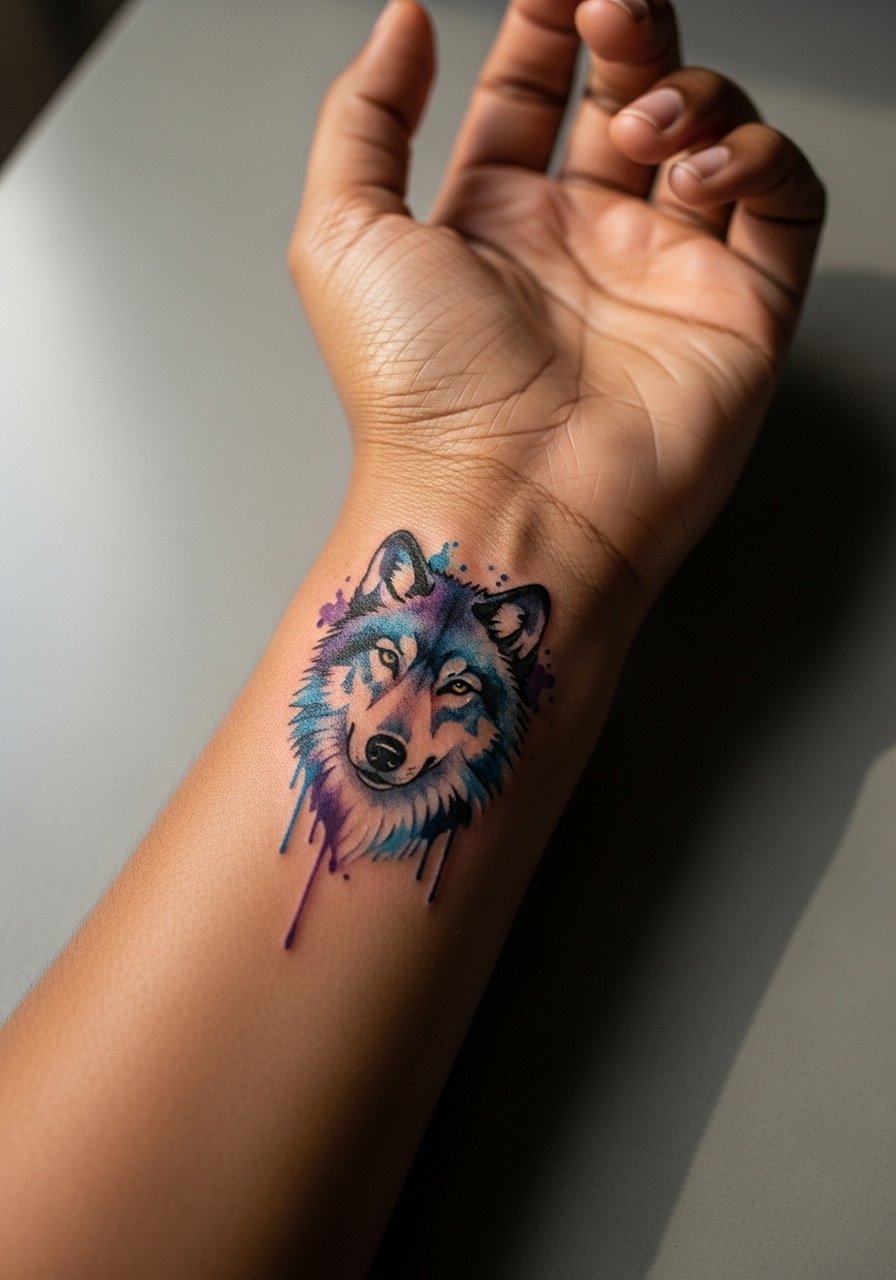
The wrist is a high-friction spot. Expect the color wash to mute faster than on the arm. Pain is mild but the touch-up timeline is tighter, often at year two for crisp edges. In consultation say you want the face scaled to match your wrist width and not just a shrunken full-face. For showing it off pair the design with a thin chain pendant necklace that draws the eye upward and keeps the wrist from feeling visually crowded. The common mistake is squeezing too much detail into a coin-sized tattoo. Ask for negative space around the muzzle so shadows do not merge as the ink settles.
3. Chest Center Wolf Face, Soft Color Pool
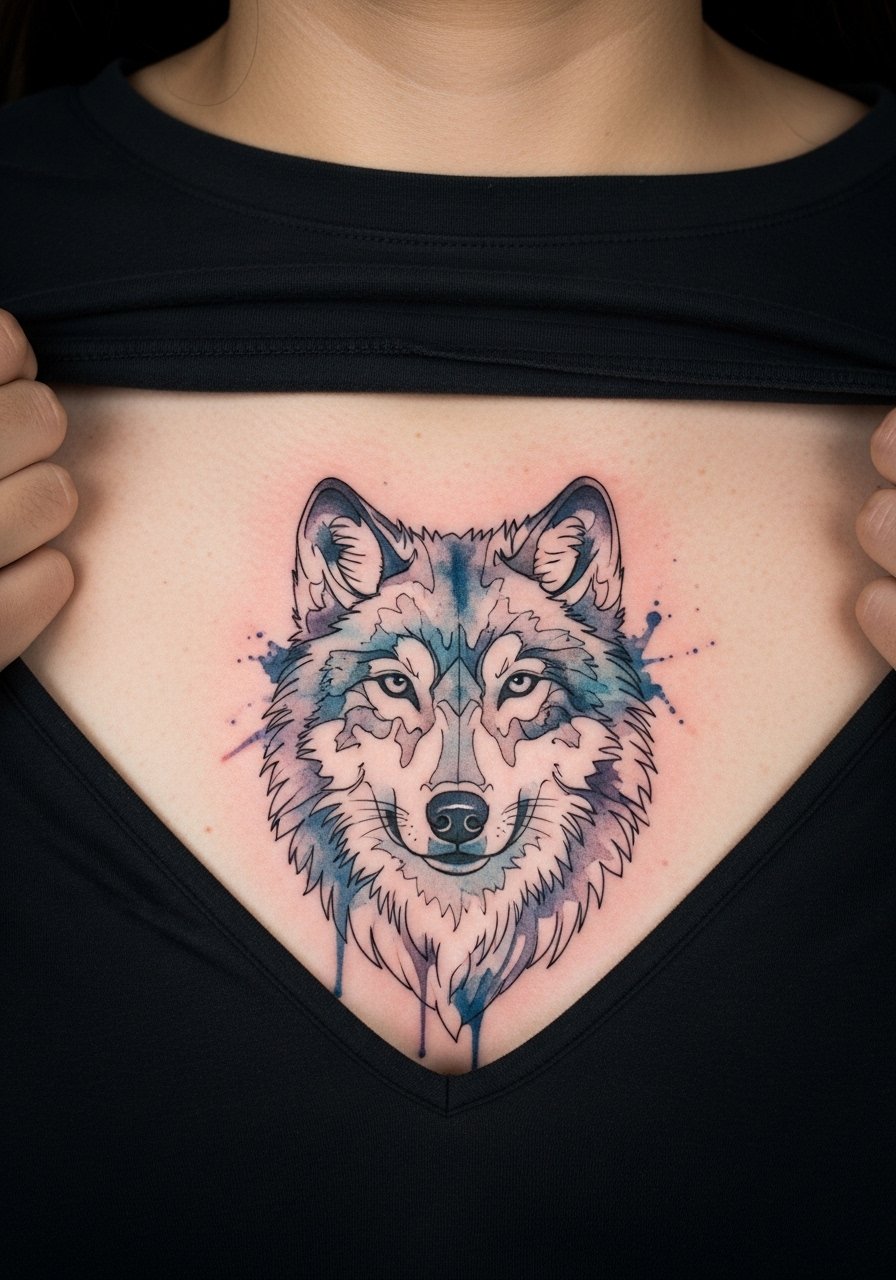
Most sternum or upper chest pieces look best when they breathe a little. The session can be uncomfortable for some because of the bone proximity. Artists split on fine detail here. One camp says the skin stretch and motion blurs lines within a couple of years. The other camp argues that with correct needle depth and spacing the lines settle and hold. Ask your artist which side they fall on and why. For the session wear a wide-neck shirt you can easily move aside so the artist has clear access. Plan for a slightly longer appointment and expect touch-ups if you choose delicate facial features.
4. Outer Shoulder Wolf Face with Saturated Washes
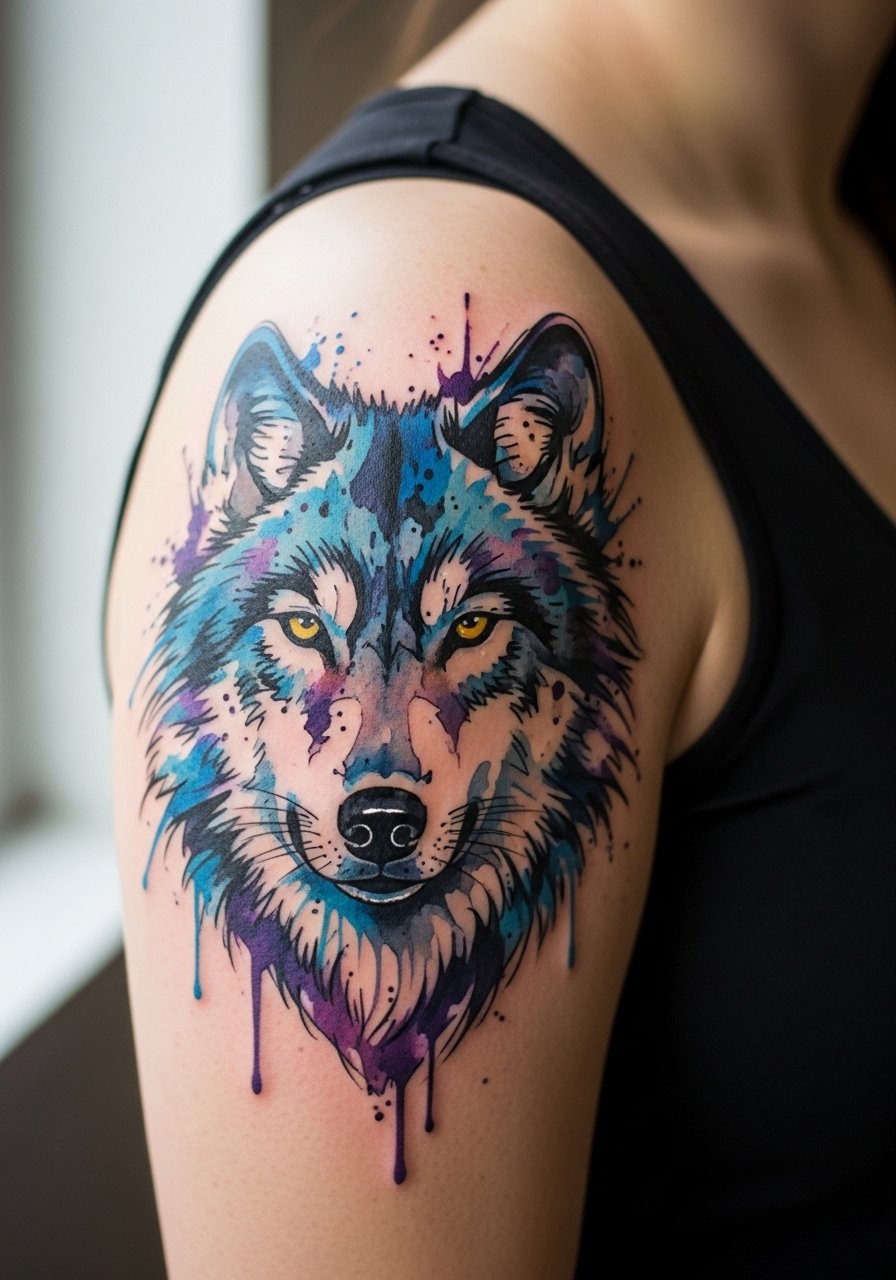
There's something about shoulder placement that keeps washes readable because the canvas is broad and moves less than the chest. Expect a moderate pain level and a one to two hour session depending on saturation. In consultation ask for a balance of saturated color pools with stronger linework around key facial features so the eyes and snout stay defined as the color softens over time. For the session wear a tank top so the artist has full access without you getting chilled. A mistake I often see is too much color detail near the edge of the shoulder where shirts rub nightly.
5. Ankle Wolf Face with Subtle Tail of Ink
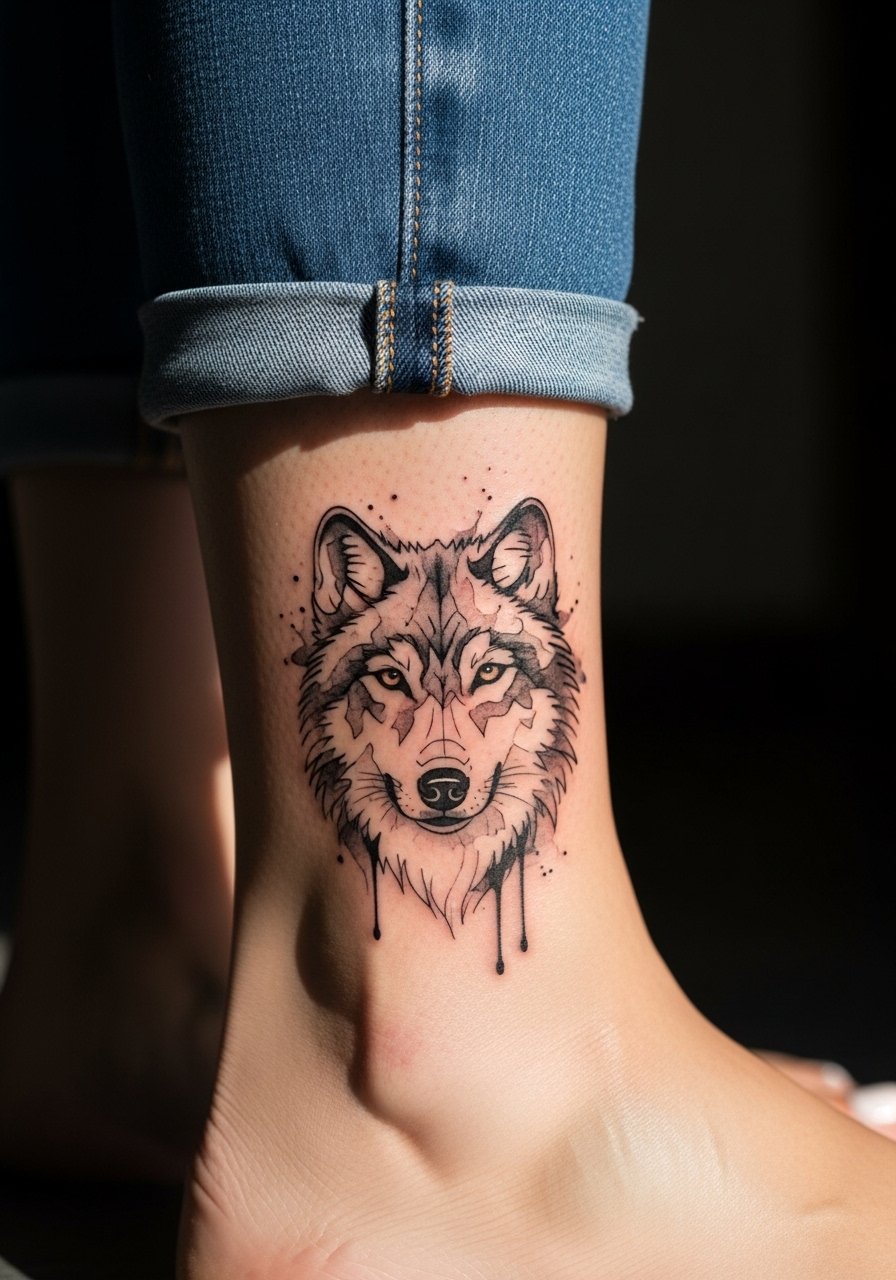
Ankle pieces face constant friction from socks and shoes. The touch-up timeline leans sooner than for arm work. When you talk to your artist ask for slightly simplified facial shading and a soft trailing wash that reads even when it fades. The session is quick but the first week is the critical window for avoiding scab disturbance. Show-off pairing works well with low-cut sneakers or sandals and a minimalist ankle chain to frame the piece. A real mistake is insisting on multi-layered saturation right at the skin fold which invites patchy healing.
6. Collarbone Wolf Face with Watercolor Halo
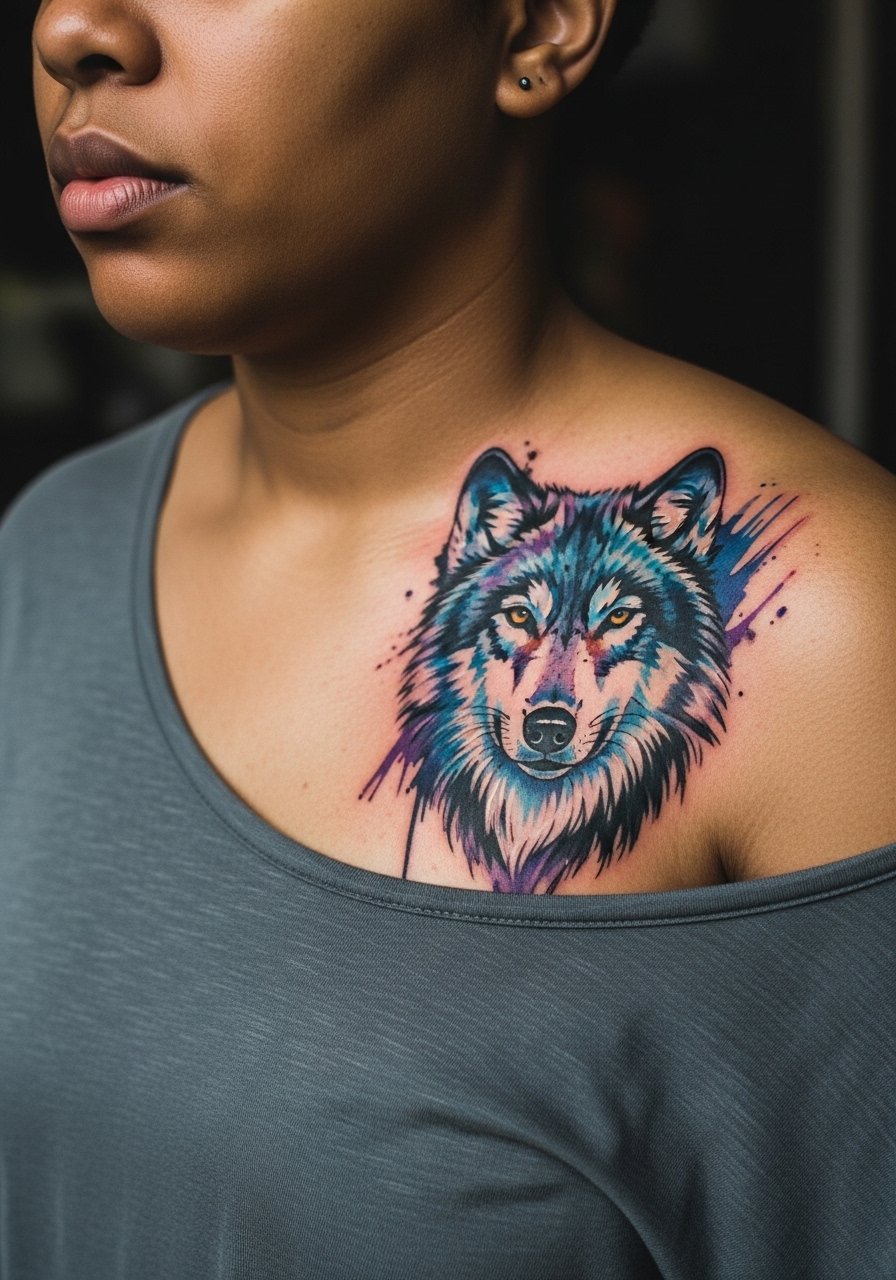
The collarbone exposes the design frequently and reacts to movement and clothing. Expect a moderate pain level and a session that can include touch-ups if the halo wash sits too close to the bone. In consultation specify the exact distance you want from the collarbone so the linework avoids the highest friction zone from necklaces. For showing it off try an open-back midi dress or a wide-neck shirt for evenings when you want the tattoo visible. A common mistake is pushing the watercolor wash too close to the bone where it can blur into a single faded patch.
Studio Day Picks
The shoulder, ankle, and collarbone pieces above have different session needs, so these items smooth the day and the first week.
-
Stencil transfer paper kit. Lets you and the artist see exact placement on the skin before the first needle, which matters for small wolf faces on the wrist and ankle.
-
Topical numbing cream. Applied as directed before the session eases edge pain on collarbone and sternum work without interfering with the artist's visibility.
-
Thin protective film roll. Useful for low-floating areas like the ankle where shoes and socks create constant friction in the first days.
-
Unscented gentle body wash. Mild cleansers keep delicate watercolor washes from drying out and forming uneven scabs.
-
Aquaphor healing ointment. A thin layer during the initial 48 hours helps keep fine line edges from crusting too hard, which matters for the inner forearm and wrist designs.
7. Watercolor Wolf Face Sleeve Accent, Partial Forearm
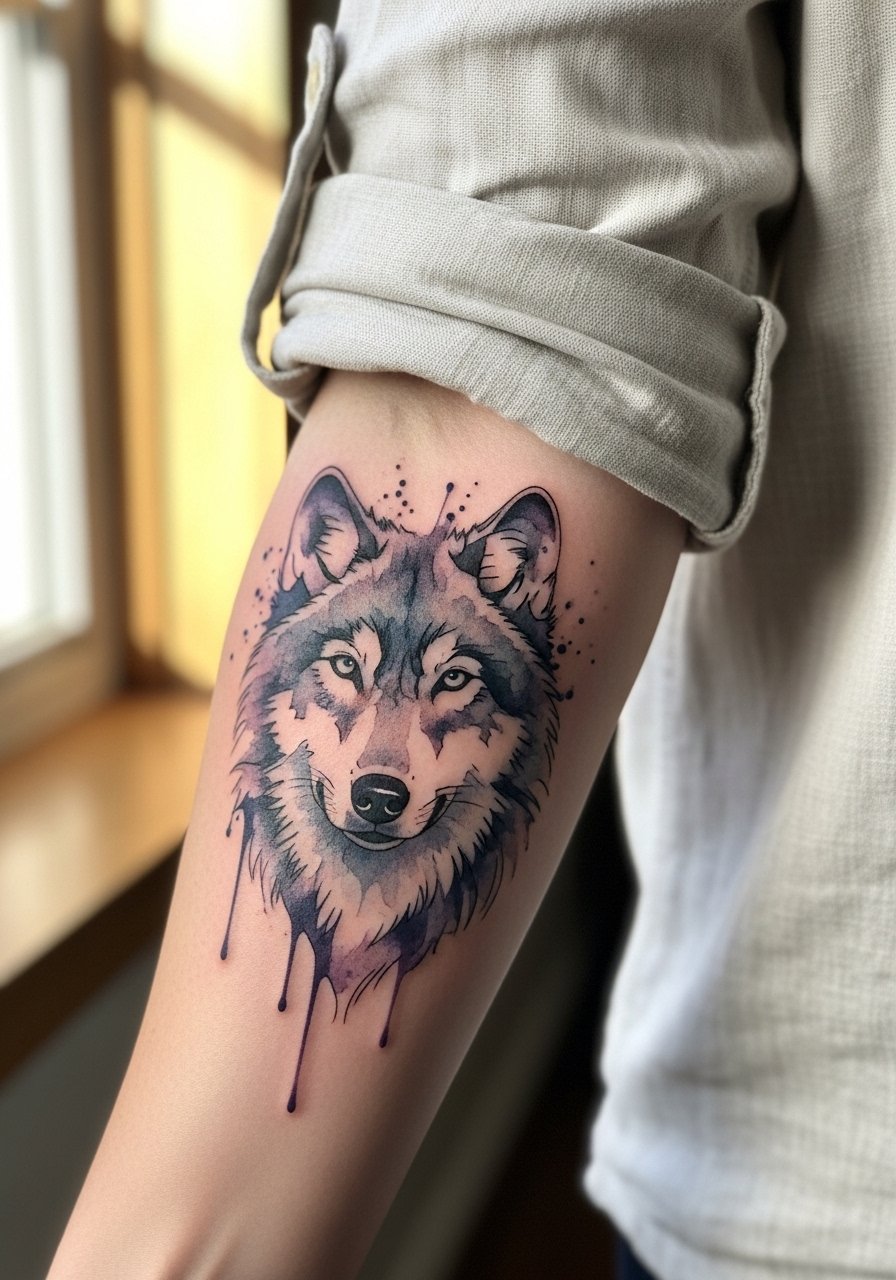
I've seen this work best when the wolf face sits as a focal with surrounding washes and botanical elements to carry the color. For a sleeve accent expect multiple sessions and planned spacing so the washes do not collide later. Tell your artist in the consultation which elements are focal and which should be faded background. For the session wear a loose drawstring linen pant if the work extends toward the wrist so you can stay comfortable and keep the area still. A common mistake is overcrowding the area with too many micro details that age into muddiness.
8. Micro-Realism Wolf Face Behind the Ear, Toned Wash
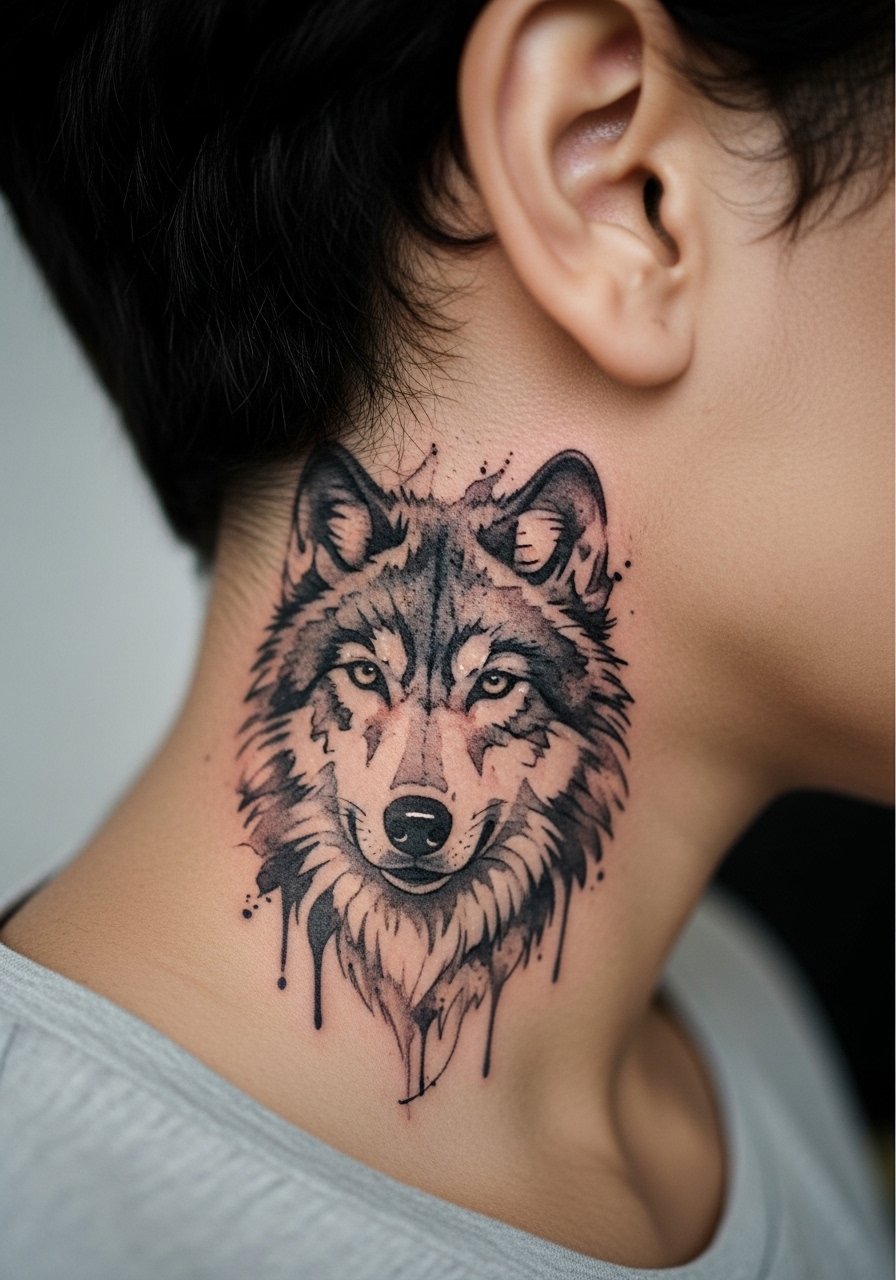
Behind-ear tattoos require a steady hand and discrete scale. The area is sensitive and the session is short but twitchy for some clients. Because of the small canvas, avoid expecting photographic detail. Ask for simplified eyes and a light wash to suggest fur. This placement needs a specialized touch and may not be suitable for every artist's portfolio. Hand over reference photos that match the small scale. Note that hair growth and daily shampooing affect how colors fade.
9. Ribcage Wolf Face with Long Watercolor Tails
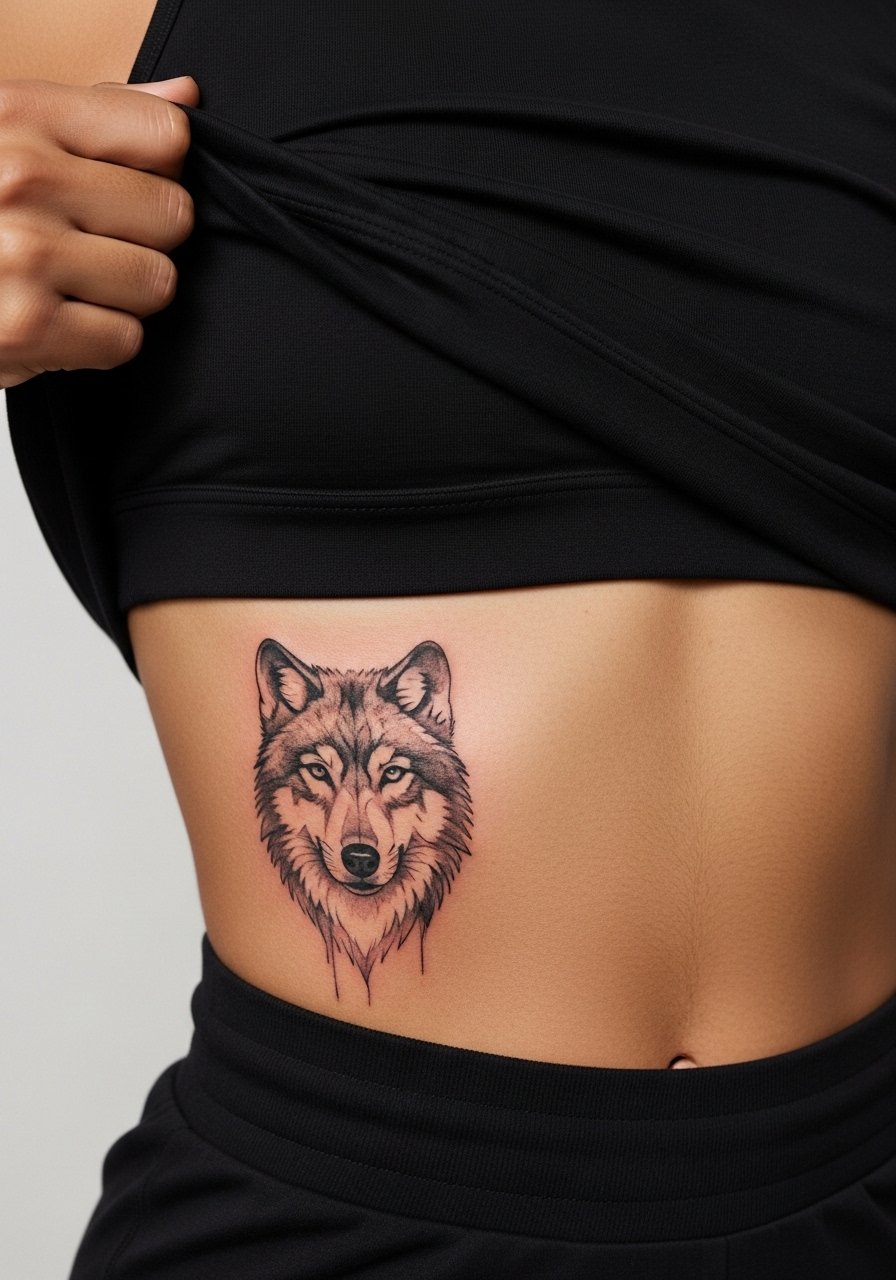
Fair warning, the ribcage is a high-pain zone and the skin stretches with breathing. Artists are split on fine detail here. One camp says the stretch blurs lines into a soft shadow within a couple of years. The other camp believes correct needle depth and spacing let fine features hold. Ask your artist where they stand and how many touch-ups they expect. For the session wear a cropped athletic top you can lift without exposing more than the side torso. The biggest mistake is pushing photographic detail into a moving canvas that will soften as you age.
10. Calf Wolf Face with Vertical Watercolor Flow
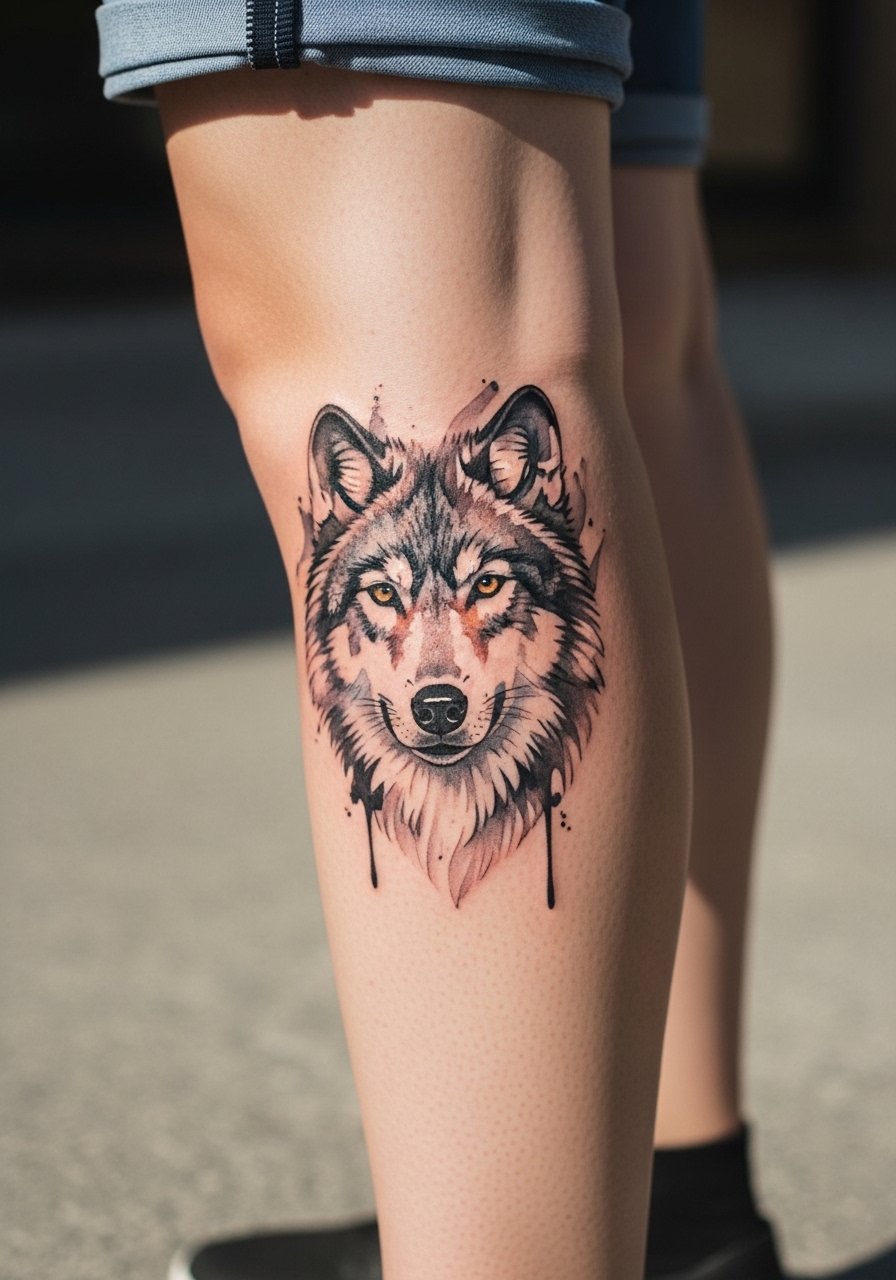
The calf is a forgiving canvas for vertical compositions. The session is moderately comfortable and healing is straightforward because the area sees less friction. If you want the face to read from a distance ask for stronger contrast in the eyes and snout and softer washes for the mane. This placement ages well with minimal touch-ups. A common mistake is crowding the vertical flow with too many spots of saturated color that create a patchy look after healing.
11. Thigh Pocket Wolf Face with Gentle Washes
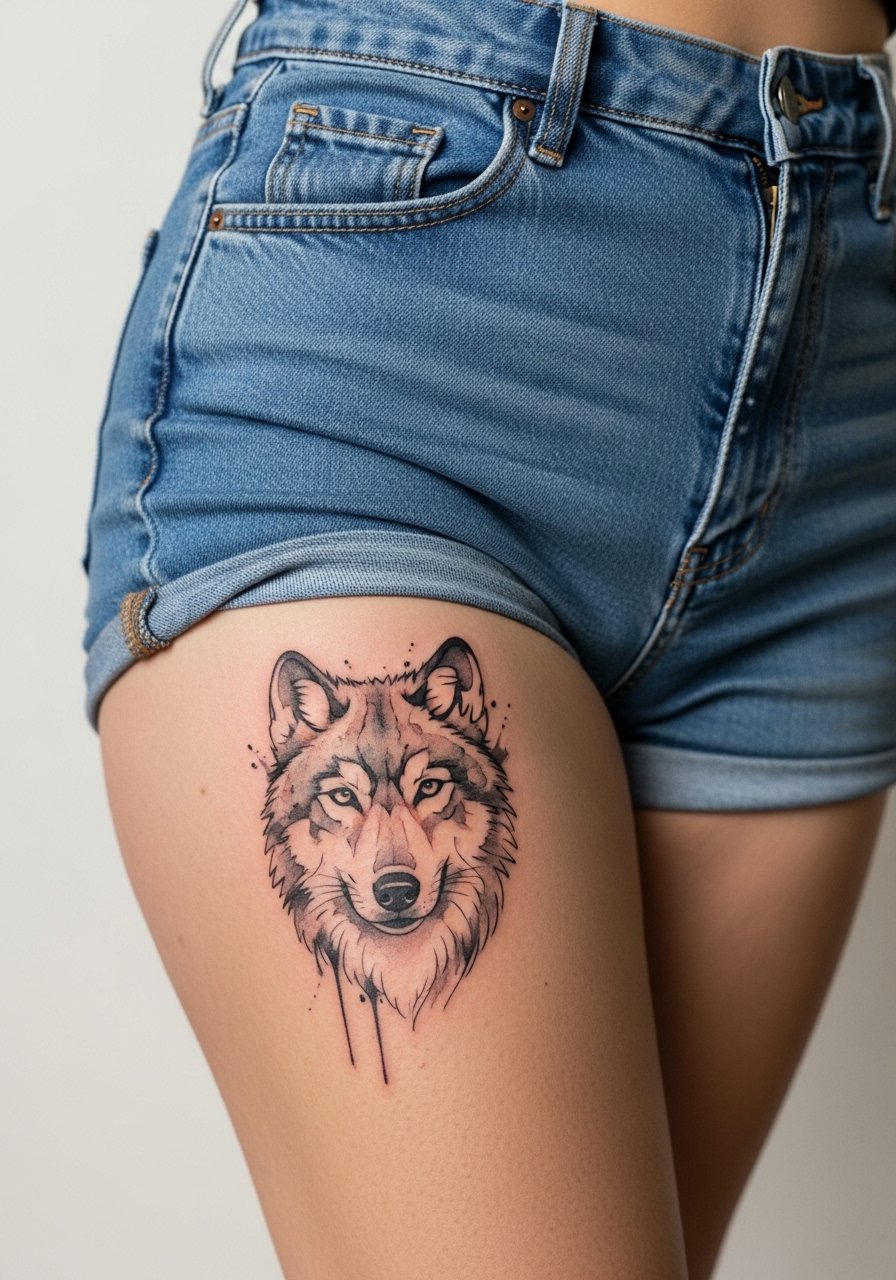
The upper thigh gives room for larger watercolor pools and retains saturation nicely because the area is less exposed to sun. In consultation say whether you want the piece visible with swimwear or kept private. For the session wear high-waisted bottoms or a loose skirt so the artist can access the upper thigh without tugging the fabric. The session can be longer but the healing is usually smooth. A mistake is letting too much color ride into the crease where friction creates uneven fade.
12. Back-of-Neck Wolf Face, Lean Watercolor Accent
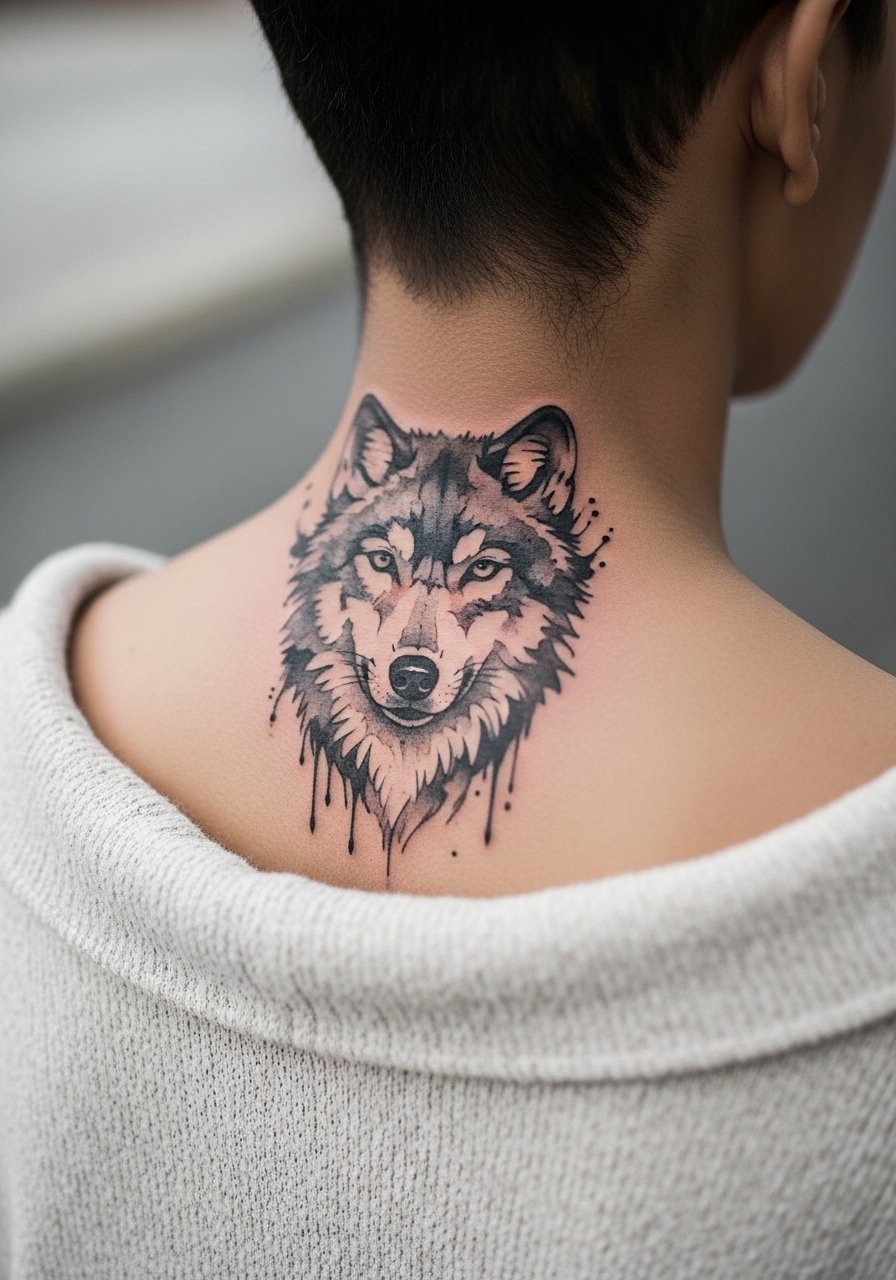
Neck placement reads boldly because the area is often visible. Expect moderate pain and a need to think about career visibility. Bring photos that show the exact scale you want because small changes make a big difference on the neck. A common mistake is oversaturating the watercolor halo which then looks like a bruise as it fades. For nights out pair the piece with high collars or low buns so you choose when it shows.
13. Hand-Side Wolf Face with Fluid Color
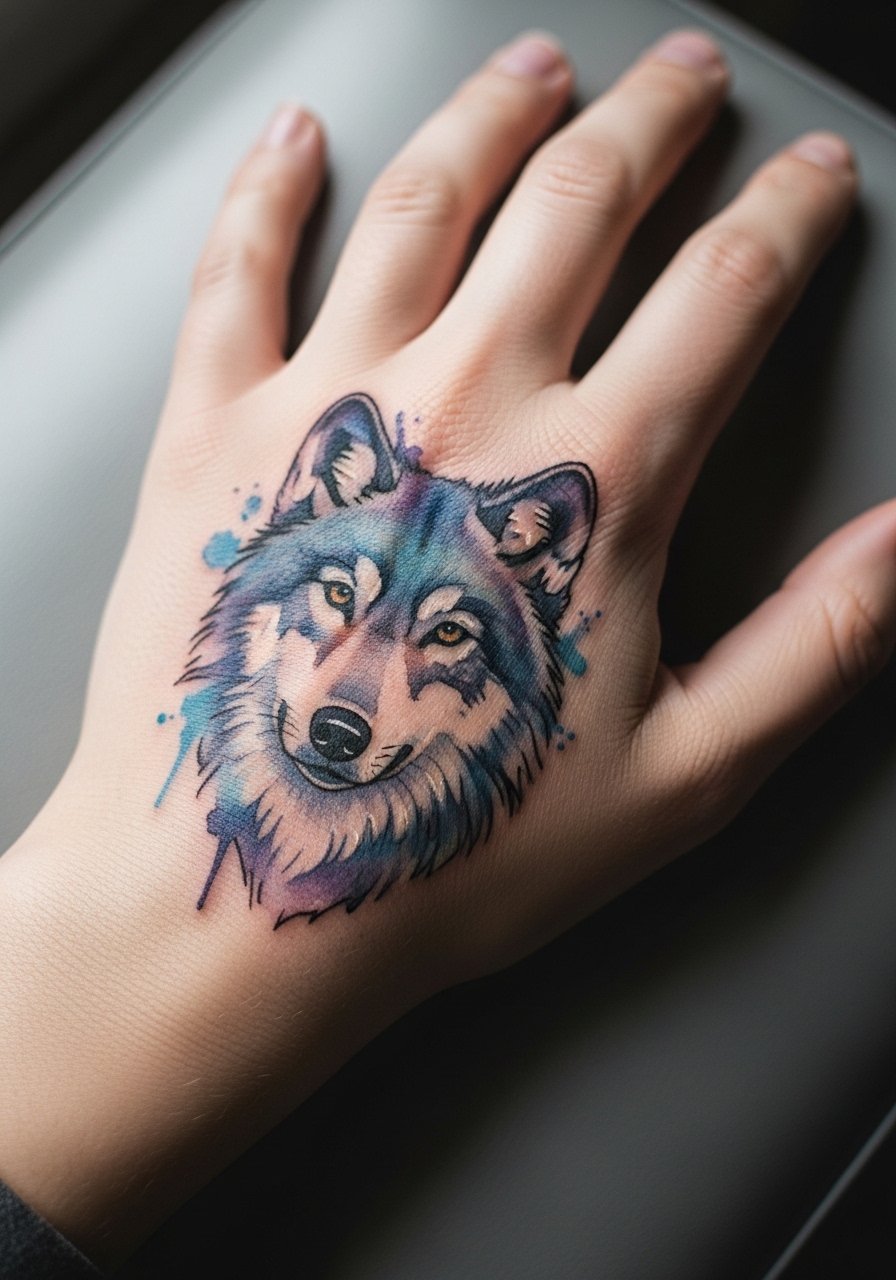
Hand tattoos remain visible and experience constant washing and contact. Expect quicker fading and earlier touch-ups. When talking to an artist ask for reinforced linework on key facial features and accept that washes will mute. For showing it off stack thin bracelets or wear a minimalist bracelet set so the hand reads styled without covering the design. A common error is asking for delicate washes that the hand cannot preserve under daily use.
14. Sternum Wolf Face, Centered Watercolor Embrace
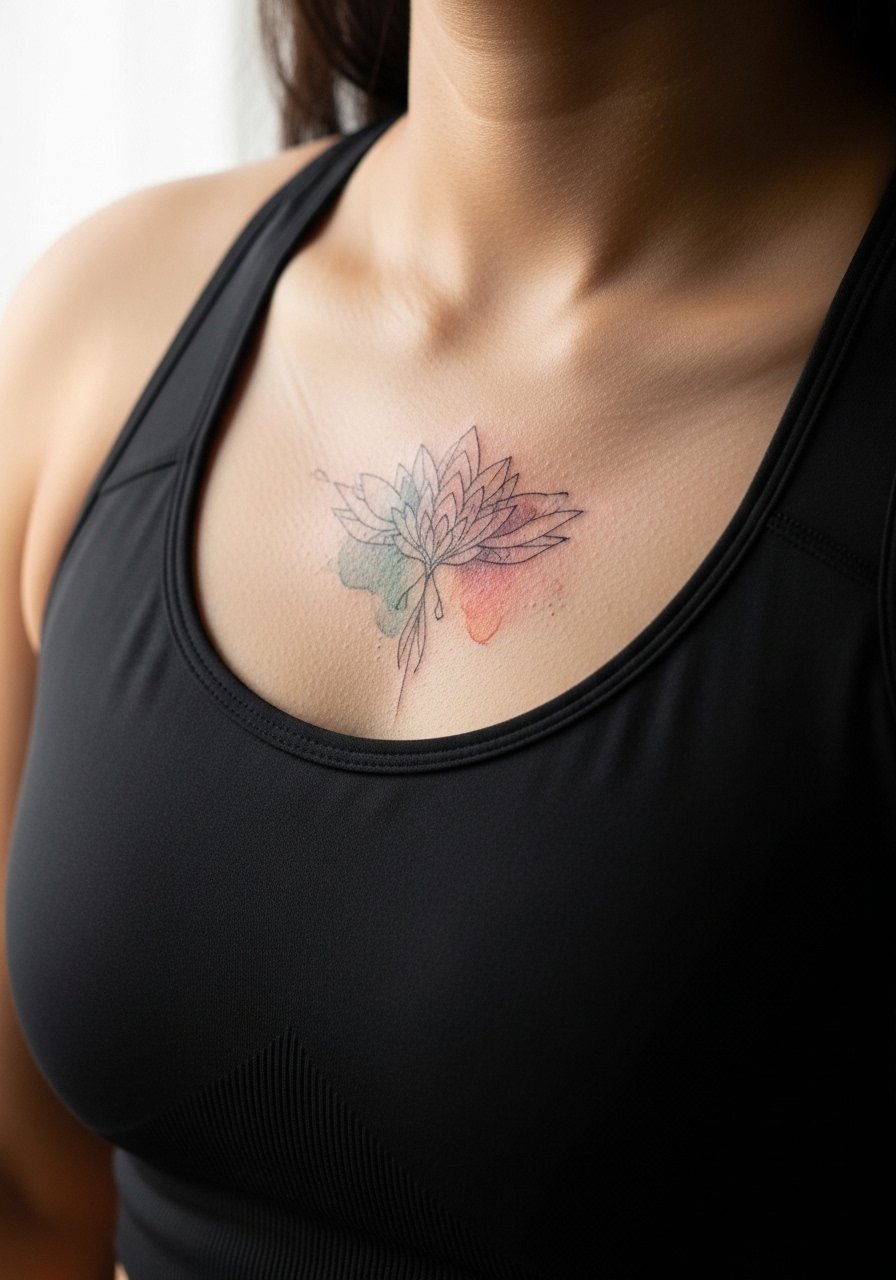
Sternum work can be intimate and requires a calm consult. The area moves with breathing and clothing, so plan for touch-ups and talk to your artist about spacing. For the session wear a fitted sports bra you do not mind adjusting so the artist can work without full exposure. A mistake I see is asking for ultra-fine facial lines right over bone where the ink can scatter slightly during healing.
15. Upper Back Wolf Face with Watercolor Gradient
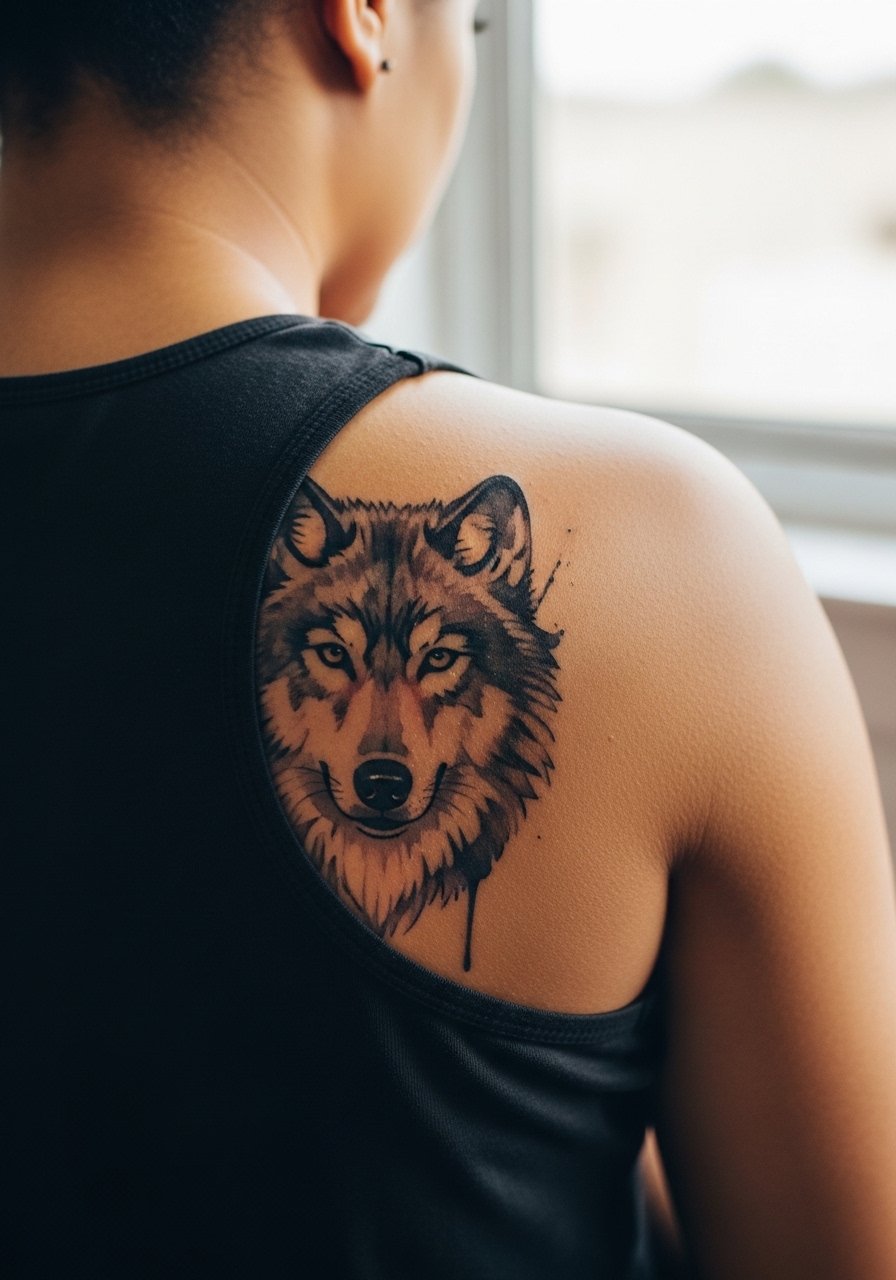
Upper back placement handles larger gradients and age-friendly spreads well because it is less sun-exposed. Expect a longer session and plan out where the wash tapers so it does not meet shoulder seams. For showing it off choose open-back styles like an open-back dress when you want to showcase the wider composition. The common mistake is neglecting the seam area of clothing which can abrade fresh ink during the first week.
16. Tattooed Neckline Wolf Face, Subtle Color Hints
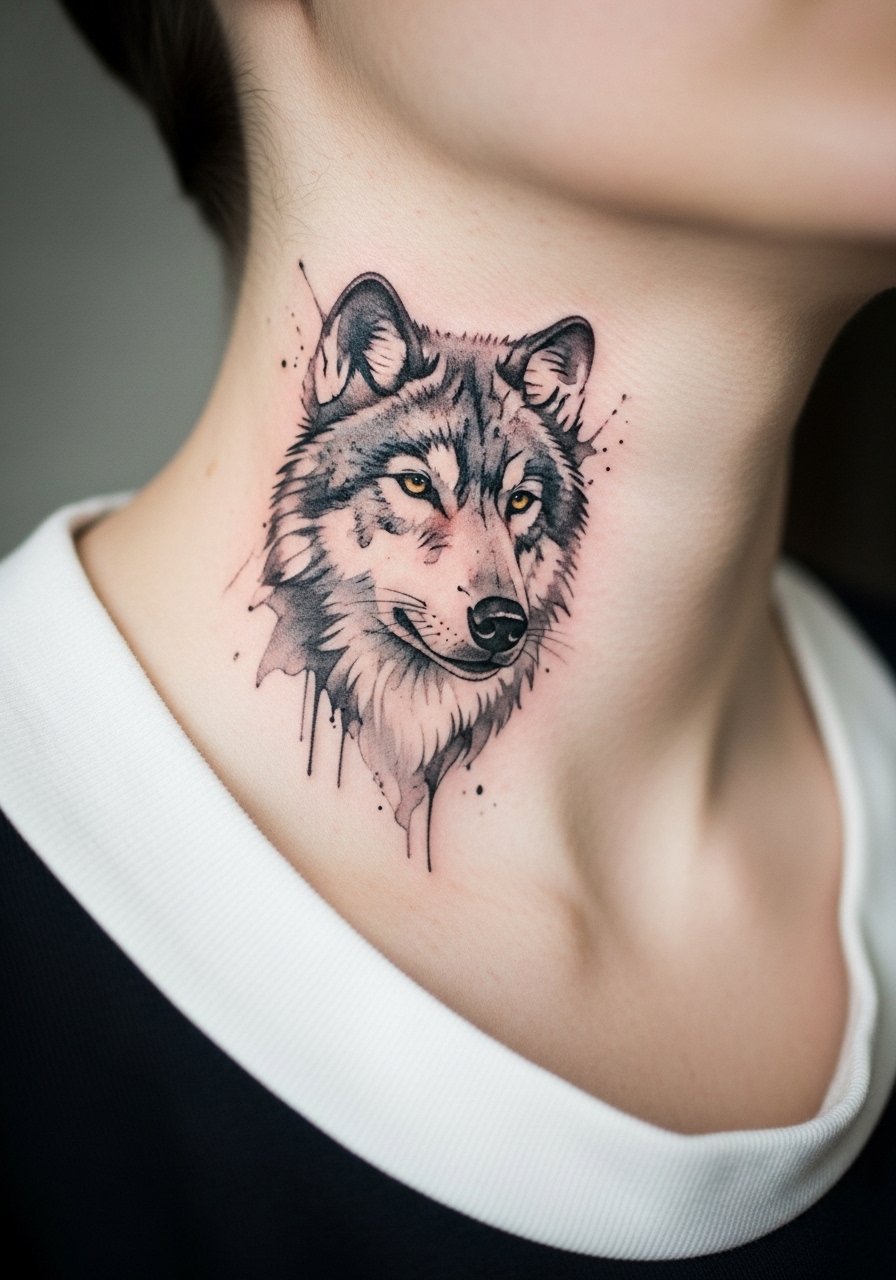
Side neck tattoos read clearly when the artist uses calculated lineweight for facial anchors and soft washes around them. The area is sensitive and visible in professional settings, so discuss visibility in your consult. The session is shorter but needs careful aftercare because of frequent motion. Avoid asking for high-saturation fills that look patchy after showering and sun exposure.
17. Throat-to-Chest Gradient Wolf Face, Dramatic Watercolor Flow
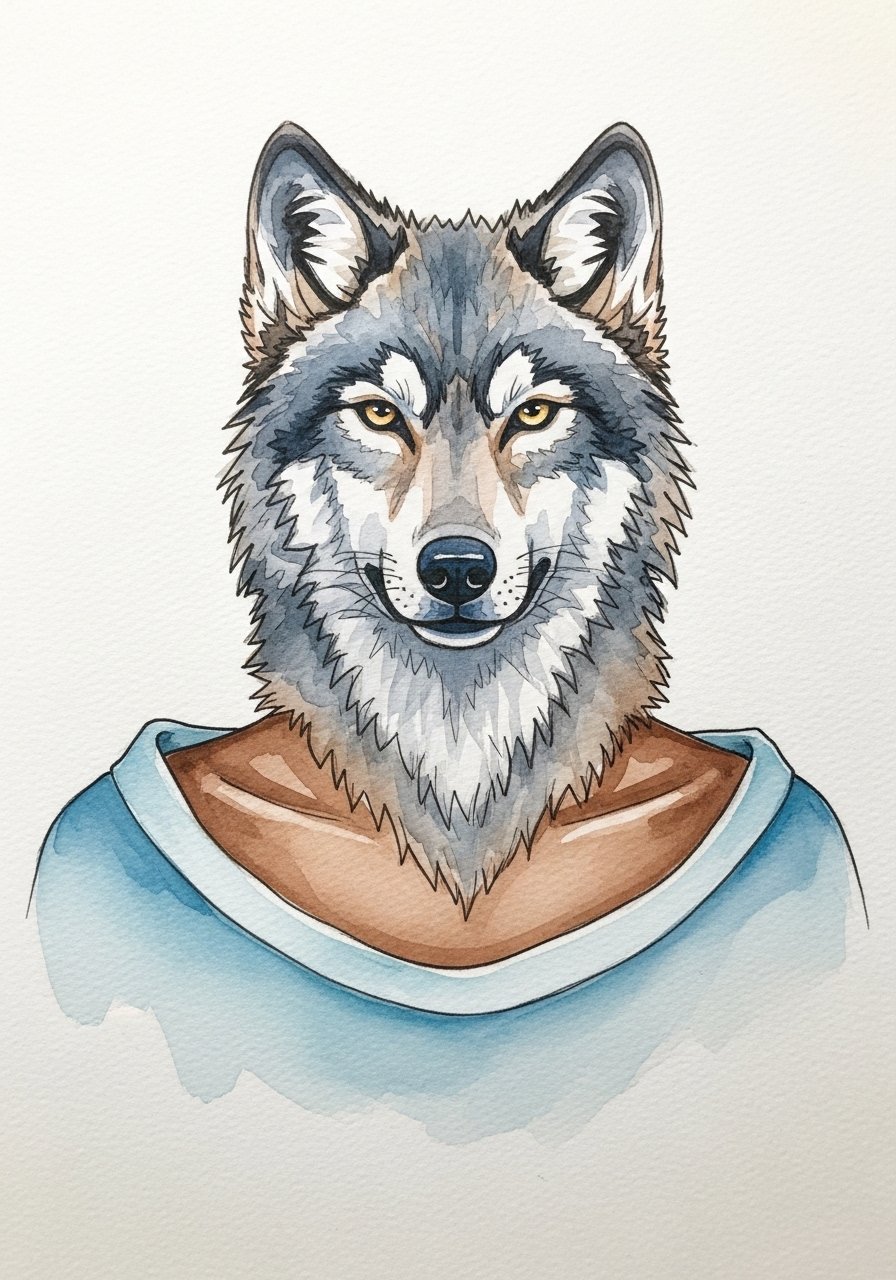
Large vertical gradients that start at the throat and move down the chest need careful planning. Pain varies across the zones and the session is often split into two visits. When you consult, map out how the watercolor tails will sit against collars and necklaces. For the session wear a strapless or wide-neck top so the artist can access both throat and chest without exposing anything else. A mistake is compressing too many color transitions into a single visit which can stress skin and result in uneven saturation.
Frequently Asked Questions
Q: Will watercolor wolf face tattoos fade faster than traditional styles on the forearm?
A: In my experience watercolor tends to mute sooner because it relies on diluted saturation and soft edges. On the forearm expect the washes to soften with sun exposure, and plan for touch-ups around year two or three depending on lifestyle and sun protection choices.
Q: Can a tiny wolf face on the wrist still show facial features after five years?
A: It depends on initial line weight and how much negative space you leave. Tiny faces that start with slightly stronger anchors around eyes and snout hold recognition longer. Ask for those anchor lines in your consult and accept that the wash will diffuse more than the lines.
Q: Do ribcage watercolor pieces require different session prep than ankle work?
A: Yes. Ribcage sessions need breathing practice and tighter timing because the canvas moves. Wear a cropped top that lifts easily. Ankle work benefits from sock and shoe planning for the first week. Both need clear placement discussions beforehand.
Q: How should I choose clothing for the appointment if I want a sternum piece done?
A: Pick a fitted sports bra or bandeau that the artist can shift slightly without exposing the rest of your torso. That keeps you covered and gives the artist access to the immediate area. Comfort matters during longer sessions.
Q: Are hand and finger watercolor wolf faces a good idea for longevity?
A: Hands are high-traffic and show earlier fading, especially for washes. If you want a hand piece, prioritize bolder line anchors and accept touch-ups as likely. Consider placing the wash where fewer daily contacts happen, such as the side of the hand.
Q: What should I ask an artist about watercolor techniques for a wolf face?
A: Ask how they balance line anchors with diluted color, what needle grouping they use for soft pools, and how they plan spacing to prevent color merging as it heals. Those specifics show they know how watercolor behaves across placements.
Q: Any wardrobe tips for showing off a collarbone or upper back wolf face?
A: For collarbone pieces try wide-neck shirts or open-back tops so you can choose visibility. For upper back work, open-back dresses and halter tops let the gradient read without interference. A small racerback tank can also keep the area accessible and styled.