
Fine line is ruling Pinterest and small trishul flashes get saved a lot, but what holds up on skin is not always what looks best fresh. Bold, intentionally aged linework and restrained color often read stronger after a few years. Pick a version that accounts for placement, skin tone, and how you want it to age, and the next sections will show 17 vintage trishul routes plus exactly what to ask for in consultation.
1. Vintage Trishul with Om Symbol Outline on the Forearm
I've seen forearm trishuls keep a strong presence because the surface tolerates bold linework and touch-ups without awkward distortion. Ask your artist to plot the Om as a thin outline above the trident so the negative space breathes. The biggest mistake is shrinking the piece to two inches and expecting detailed shading to survive. At six months the black and gray will look crisp, and at two to five years a good saturation holds while delicate crosshatching softens. For the session, wear a loose short-sleeve button-up you can roll back; for showing it off later, rolled cuffs and chambray highlight the retro vibe and keep attention on the forearm.

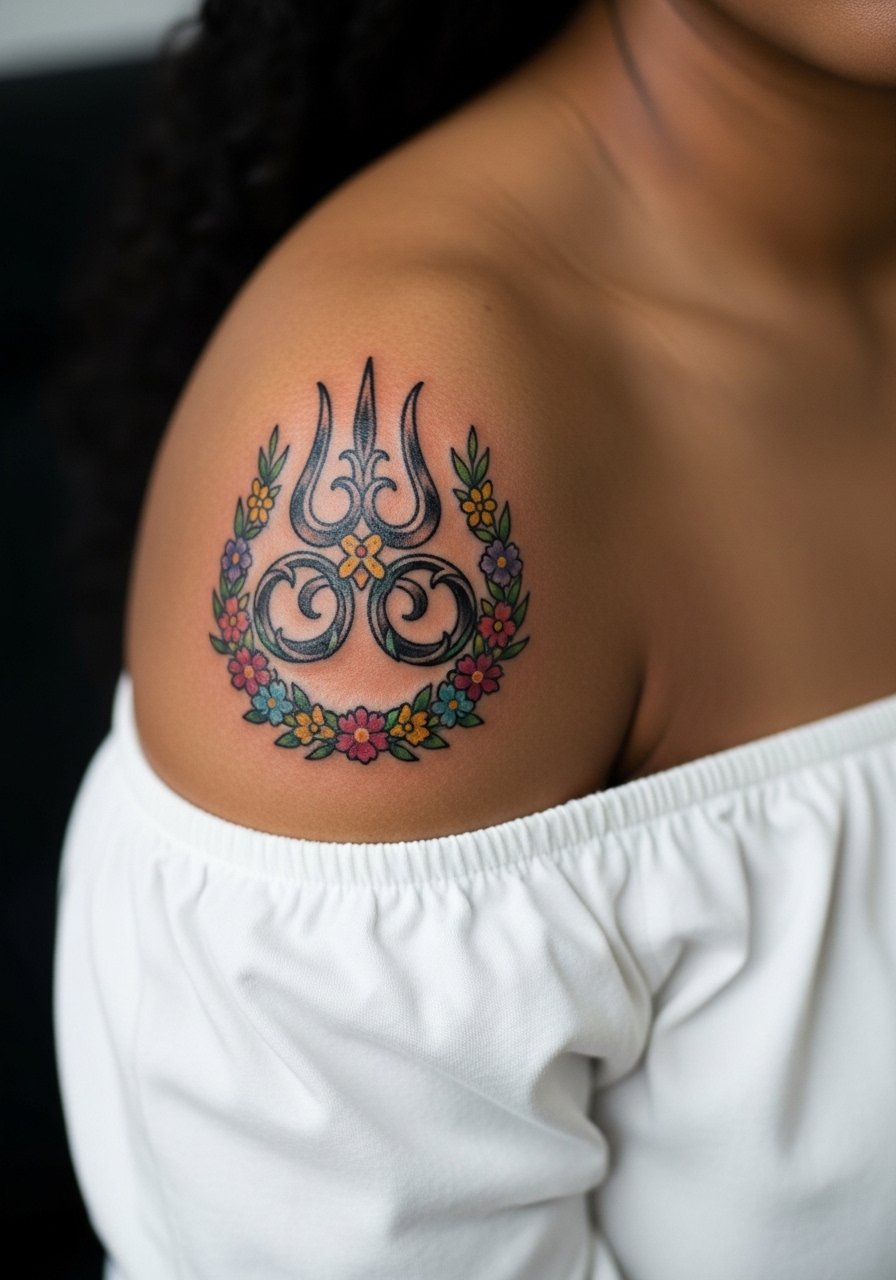
2. Trishul Spear with Floral Garland Wrap on the Shoulder
Fair warning: shoulders bruise easily during sessions but settle beautifully. This version borrows 1950s flash florals wrapped around a black trishul for a feminine vintage feel. Tell the artist you want solid black outlines on the trident and softer color saturation on the garland to avoid patchy fading. The common error is over-saturating the flowers with thin shading that migrates; keep color blocks deliberate. For the appointment, bring an off-shoulder top or sleeveless button shirt so the artist has clean access. Paired later with vintage cotton or deep red tops, the shoulder reads retro without looking costume.
3. Bold Trishul Trident on the Ribcage
Fair warning: the ribcage is a 7 out of 10 on most pain scales, but the reward is a dramatic, private statement. Go big here, with a single-session bold outline four to six inches tall and minimal internal detail. The mistake people make is asking for tiny filigree on moving skin. At six months the outline should have settled; at two years the shape reads clean so long as the line weight was generous from the start. For the session, wear a cropped tank or liftable top so the artist can reach the side without tugging. If you plan future cover-up work, this placement makes blending old ink into a vintage trident smoother than working over faded chest pieces.

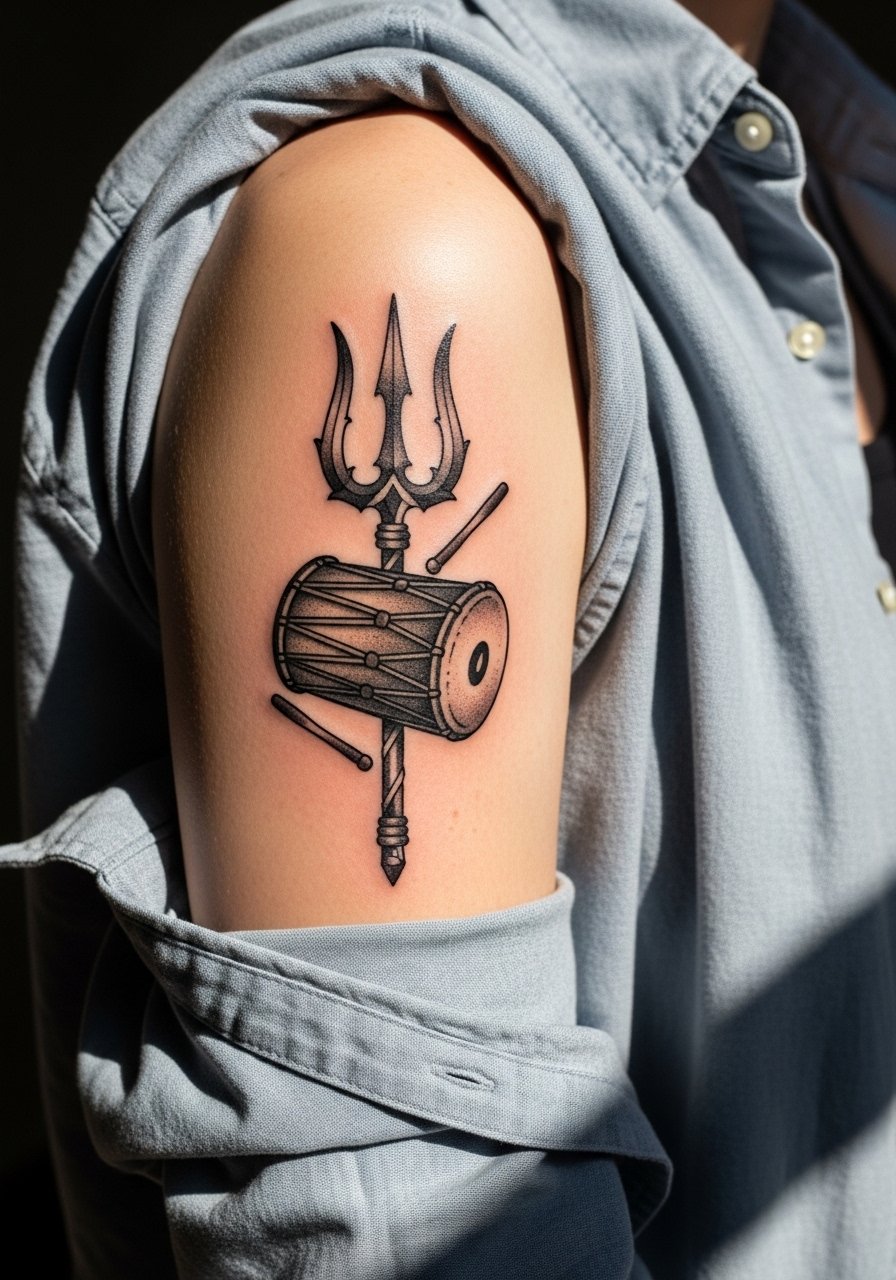
4. Vintage Trishul with Damaru Drum Integration on the Upper Arm
I've noticed upper-arm blackwork reads like a classic engraving for years when the shading is geometric and the drums are kept graphic. Request stipple shading around the damaru instead of soft gradients to preserve contrast. A common version that ages poorly is tight gray washes that become muddy; the stipple approach holds separation. The session feels approachable because the upper arm is forgiving, usually a two-session piece if you want deep saturation. For easy access on appointment day wear a loose button-down shirt you can pull aside. The result pairs with rolled sleeves and mid-century silhouettes if you want a cohesive retro wardrobe.
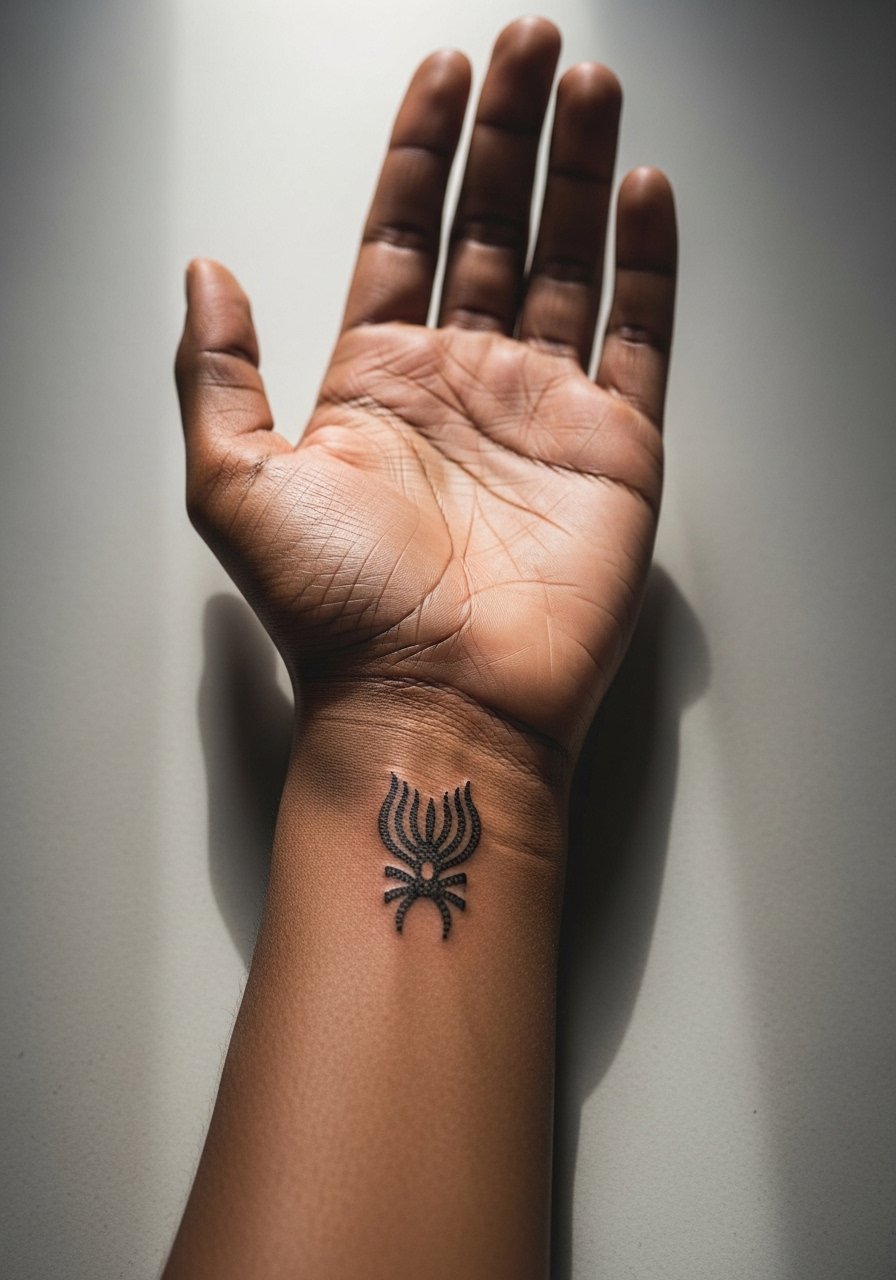
5. Minimal Trishul Silhouette with Dots on the Wrist
Artists split on wrist fine line longevity. One camp says thin linework blurs fast on high-motion wrists. The other camp argues that at the right depth and with spacing, dot work preserves the silhouette. Name both camps during consultation and ask where your artist stands. The safest option is a slightly thicker outline with dot shading spaced to avoid early merging. Expect touch-ups in the third year for pure fine line versions. For the session, pull on a sleeveless tank so the wrist is fully accessible. A thin leather cuff on the opposite wrist complements the minimal trishul without crowding the area.
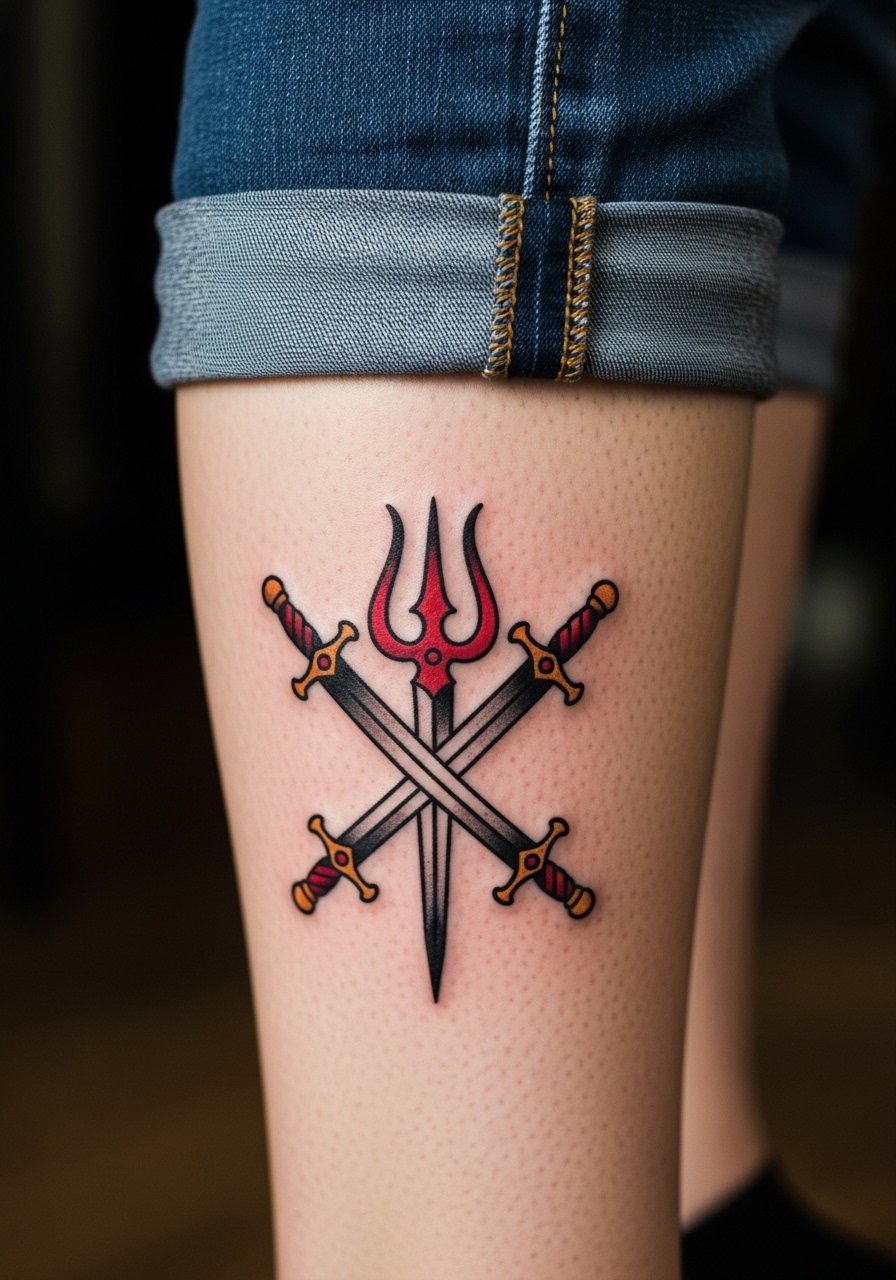
6. Retro Trishul Crossed with Swords on the Calf
The calf is friendly to wider compositions and one-session bold pieces tend to age well here because muscle and skin move predictably. Ask for thick outlines and selective red accents so the swords read as vintage sailor flash without looking candy-colored. A frequent mistake is cramming too much fine detail into a calf piece meant to be visible from a distance. At two years the bold outlines maintain shape while small highlights soften. For the appointment wear loose joggers you can pull up or choose slim-fit chinos you can roll up later for showing the design. Boots or rolled cuffs frame the calf perfectly for a retro look.
Studio Day Picks
The wrist, shoulder, and ribcage pieces above each need slightly different prep, so a few targeted items make the session and first week smoother.
-
Stencil transfer paper kit. Lets you preview the exact placement and scale on skin before the needle hits, which matters for forearm and chest pieces.
-
Topical numbing cream. Applied as directed about 45 minutes before the session eases wrist and rib sensitivity without changing how the artist works.
-
Thin protective film roll. Useful for ankle and calf work during the first days to reduce friction from socks and shoes.
-
Fragrance-free gentle body wash. Keeps healing lines clean without stripping the delicate dot work used on minimal wrist pieces.
-
Aquaphor healing ointment. A thin layer for the initial phase locks in moisture, which helps fine line and blackwork settle evenly.
7. Ornate Trishul with Snake Coiling on the Upper Back
There is a mythological logic to the snake motif in trishul pieces, and when rendered in engraving-style shading on the upper back it reads like a vintage print. For large back work, discuss symmetry and negative space so the coils do not read as clutter when you move. One practical mistake is ordering dense realism without planning sessions; oversized black and gray often needs staged appointments. Expect two to three sessions depending on size. For cultural sensitivity, acknowledge the motif's origins and ask the artist how they interpret the imagery rather than requesting direct religious replicas. The upper back lets you hide the piece easily and reveal it with open-back tops.

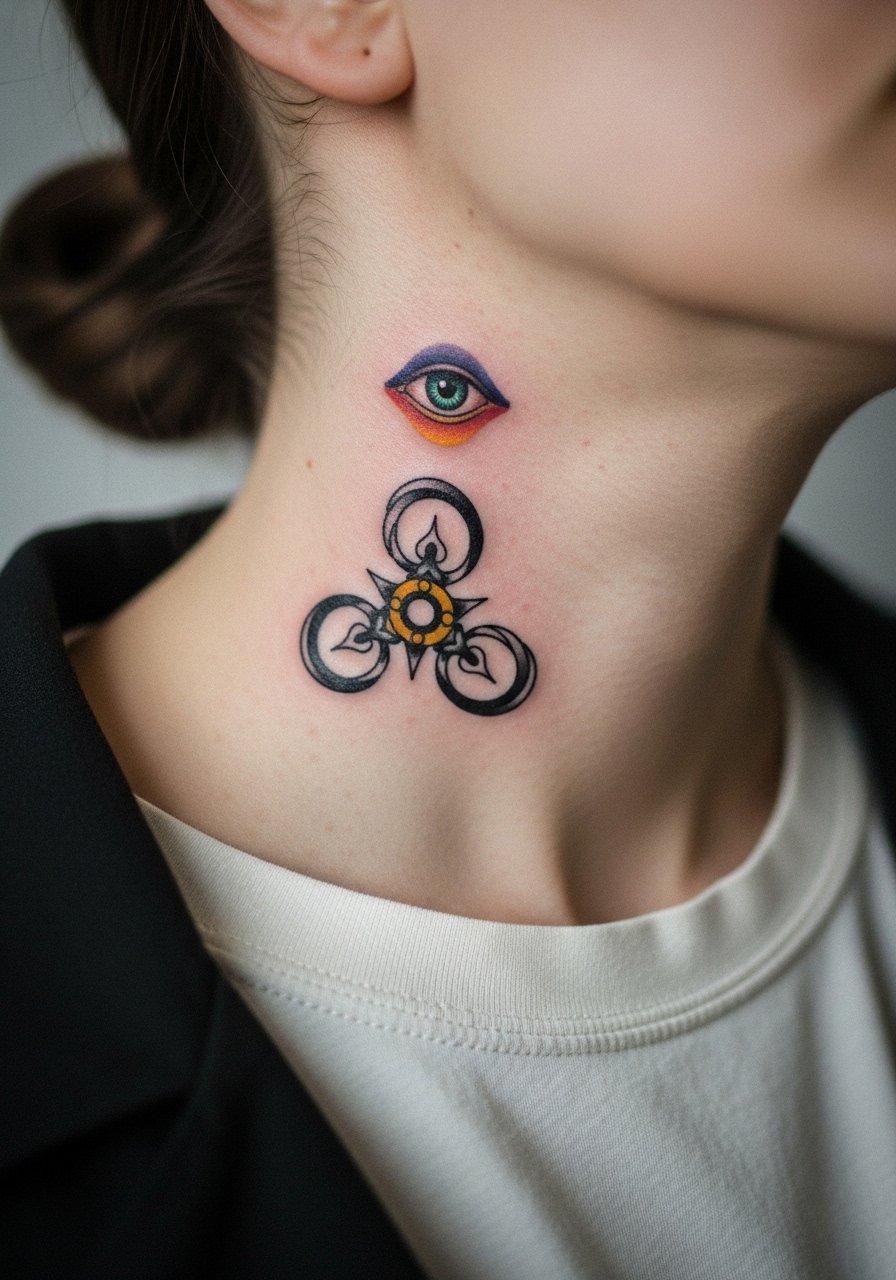
8. Trishul with Third Eye Above on the Side Neck
Neck placements require an artist comfortable with tight curves and placement shifts. This compact neo-traditional look places a small third eye just above the trident for a poster-era vibe. Ask for a small color pop in the eye and solid black on the trident for contrast. Be aware of visibility in professional settings and possible faster fading due to sun and friction from collars. For showing it off, a v-neck tee or open collar shirt in white frames the piece without overwhelming it. Neck pieces settle differently on different skin types so confirm touch-up expectations with the artist.
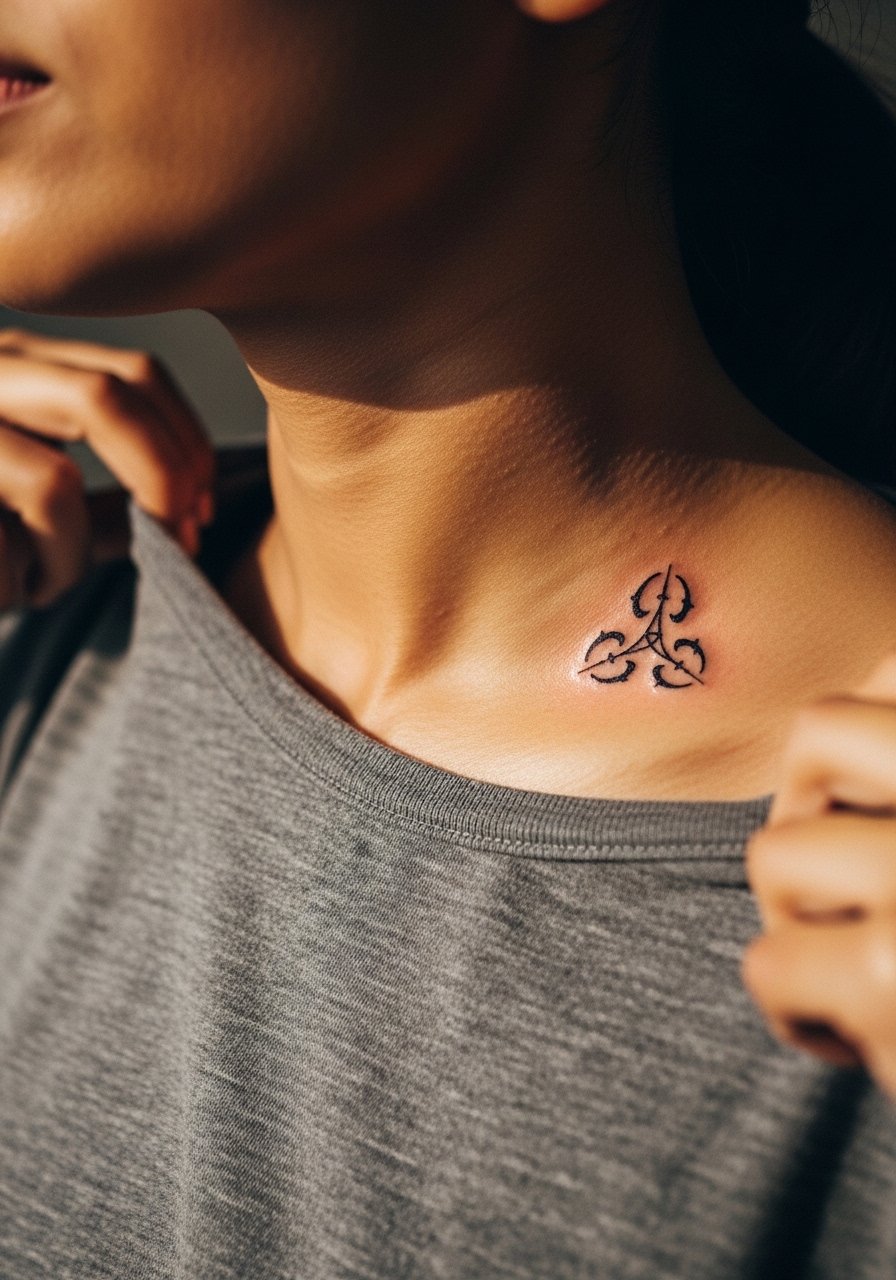
9. Collarbone Trishul That Pairs with Jewelry
There's a quiet power to a collarbone trishul when sized to sit just above a necklace line. Tell the artist you want the bottom of the trident to stop just above where a thin pendant would rest so the jewelry and ink play together. A common mistake is placing it too low and creating visual competition with straps and necklaces. At two years a well-placed collarbone piece maintains its shape if the linework was given room. For the session wear a wide-neck shirt you can pull aside; afterward a thin chain pendant or minimalist choker complements the layout without crowding it.
10. Small Trishul on the Ankle with Dot Work Accents
Ankle pieces face daily friction from socks and shoes so plan for thicker outlines and conservative dot accents. The ankle tolerates smaller art if you accept that dots may need reworking at year two. A frequent error is requesting ultra-fine dots without discussing footwear during healing. For the session, roll up jeans or wear sandals so the artist can access the area. For show, a minimal ankle tattoo pairs well with sandals or cropped trousers. Consider a protective film for the first week and follow recommended footwear adjustments to avoid scabbing problems.

11. Ornamental Trishul Sleeve Accent for Darker Skin Tones
For darker skin tones, thicker outlines and higher contrast areas help the trishul read clearly from a distance. When incorporated as an accent in a sleeve, make the trident the focal point with surrounding stipple or dot work rather than faint gray washes. A common mistake is matching needle depth to a sample on lighter skin. Ask the artist about contrast testing on an inconspicuous area first. Over five years a well-contrasted sleeve holds better than one relying on subtle gradients. If career considerations arise, sleeve coverage is reversible with clothing choices more easily than neck or hand placements.

12. Micro-Realism Trishul on the Inner Bicep
The inner bicep is forgiving for detail and tends to hurt less than the ribcage. Micro-realism works here if you increase spacing and avoid ultra-thin contour lines. One error is insisting on tiny type or micro filigree that later merges. For the session wear a tank top with the arm raised slightly to reveal the inner bicep. This placement ages well at two years because movement is limited, but expect touch-ups sooner if you sunbathe the area. Pair the finished piece with rolled sleeves or layered short-sleeve shirts to keep it visible without overexposing it to sun.

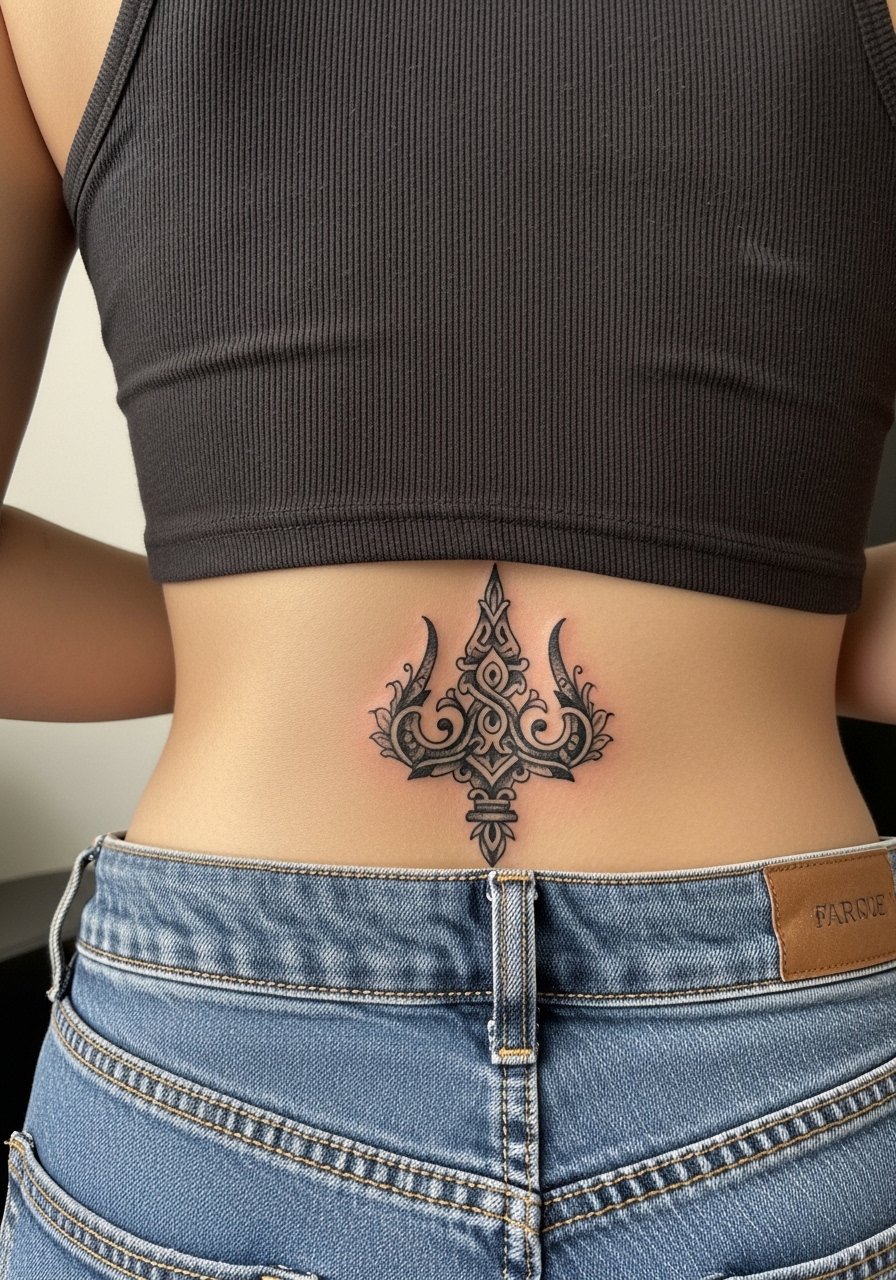
13. Cover-Up Friendly Aged-In Trishul on the Lower Back
Using a vintage trishul as a cover-up element can be elegant when the artist uses dense blackwork and ornamental edges to mask older ink. The lower back gives room to reshape and hide colors that defeated a prior flash piece. The biggest mistake is trying to preserve old linework instead of blending it into a new composition. Ask for rough mockups showing how much coverage is possible. Healing on the lower back is straightforward as long as clothing friction is managed. Frame the tattoo with clothing choices like high-waisted bottoms pulled slightly low to reveal the design selectively.
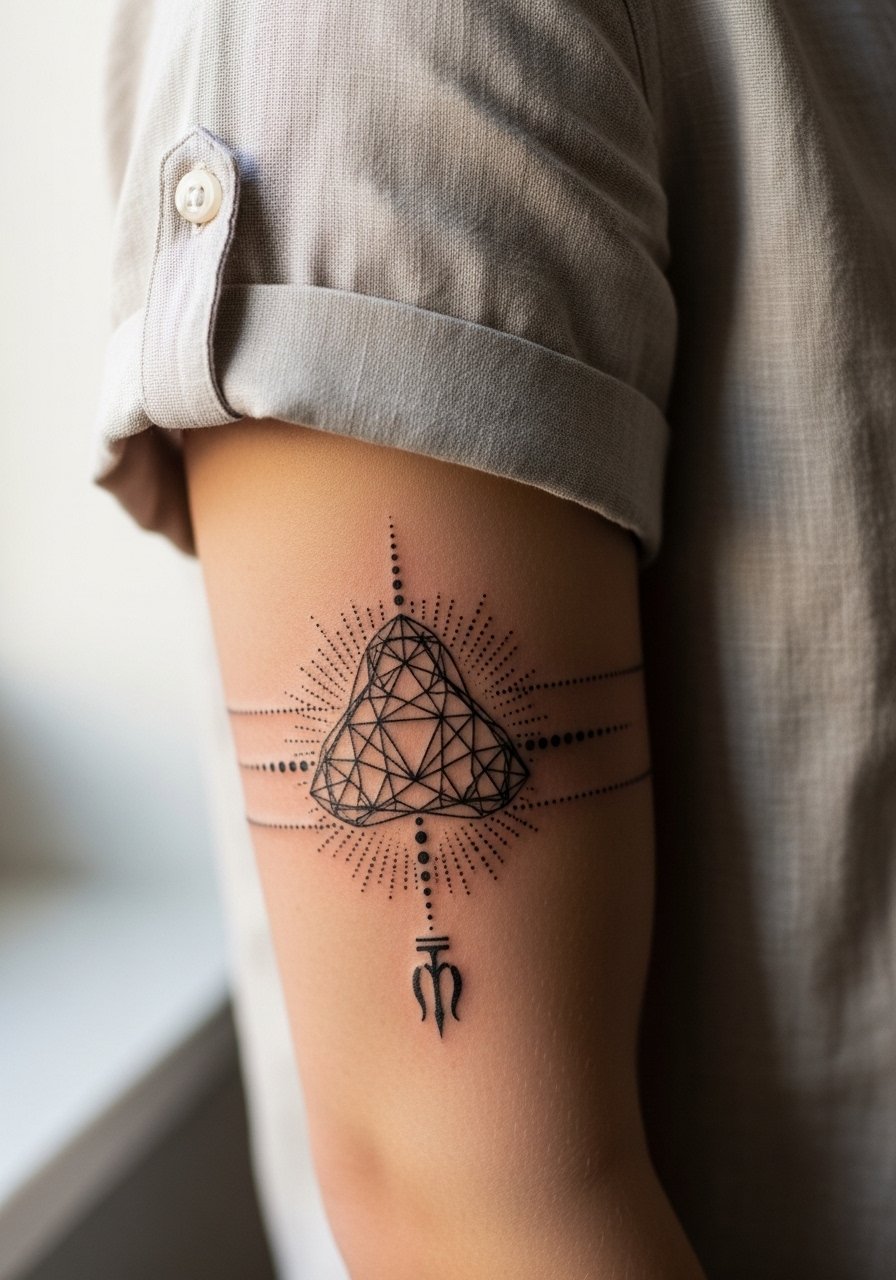
14. Geometric Trishul with Dotwork Halo on the Forearm Band
Geometric treatments give a vintage engraving feel when executed with stipple and whip shading around the trident. For a forearm band, ask the artist to scale the halo so negative space remains at six months and two years. A common mistake is compressing the pattern which leads to merging lines as the skin moves. For the session, choose a loose short-sleeve button-up that lets the artist see wrap points. Pairing this with rolled-up linen shirts keeps the geometry readable and stylish without looking overly busy.
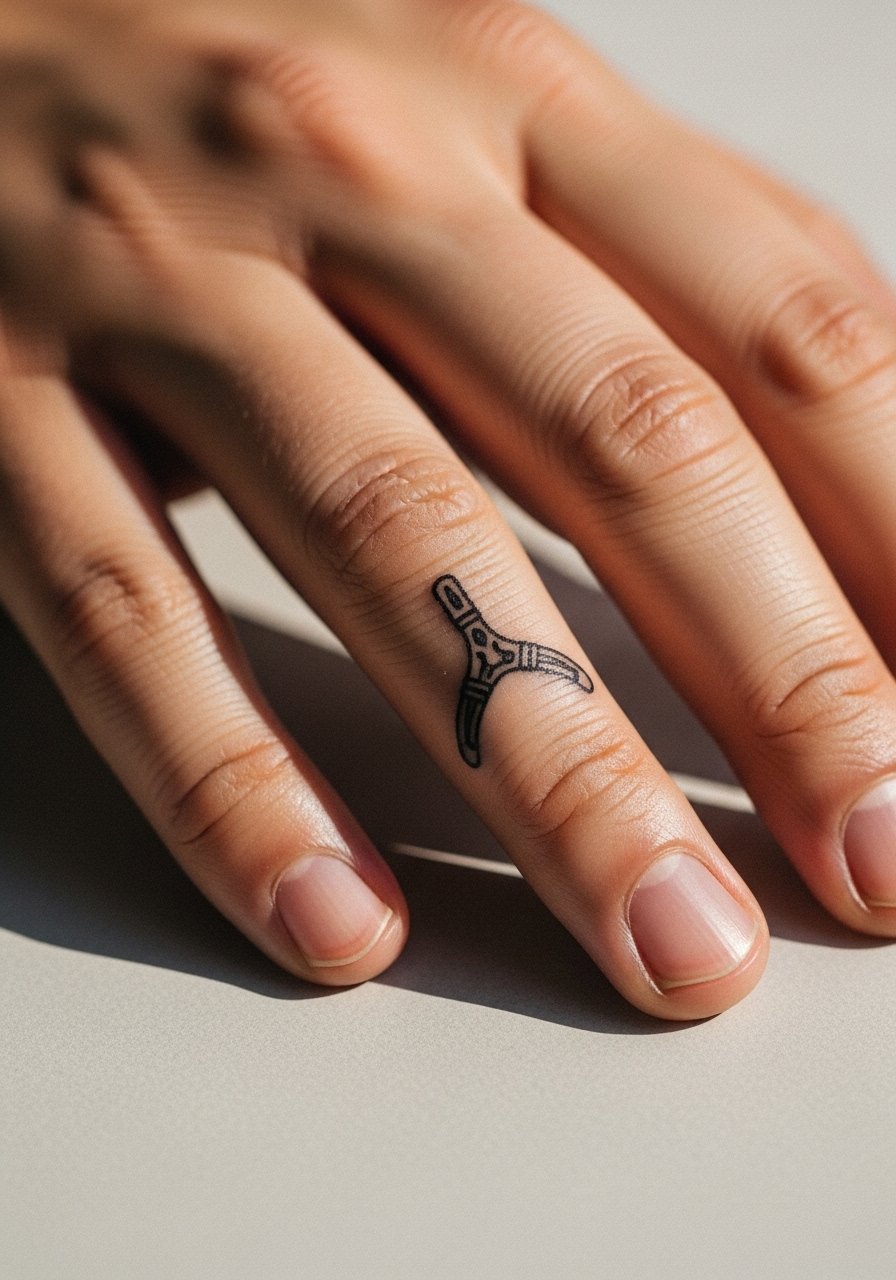
15. Small Trishul on the Finger as a Tiny Retro Flash
Finger placements are high-risk for fading and blowout, so the vintage flash approach here needs bold simplified shapes and acceptance of touch-ups. Expect touch-ups by year two in most cases because skin on fingers regenerates faster. The mistake is asking for tiny filigree on the finger; keep the trident iconographic and compact. For the session, rest the hand flat on a neutral surface to minimize movement. Styling-wise, thin stackable rings or a minimal leather cuff on the opposite wrist balance the hand without competing with the tiny trident.
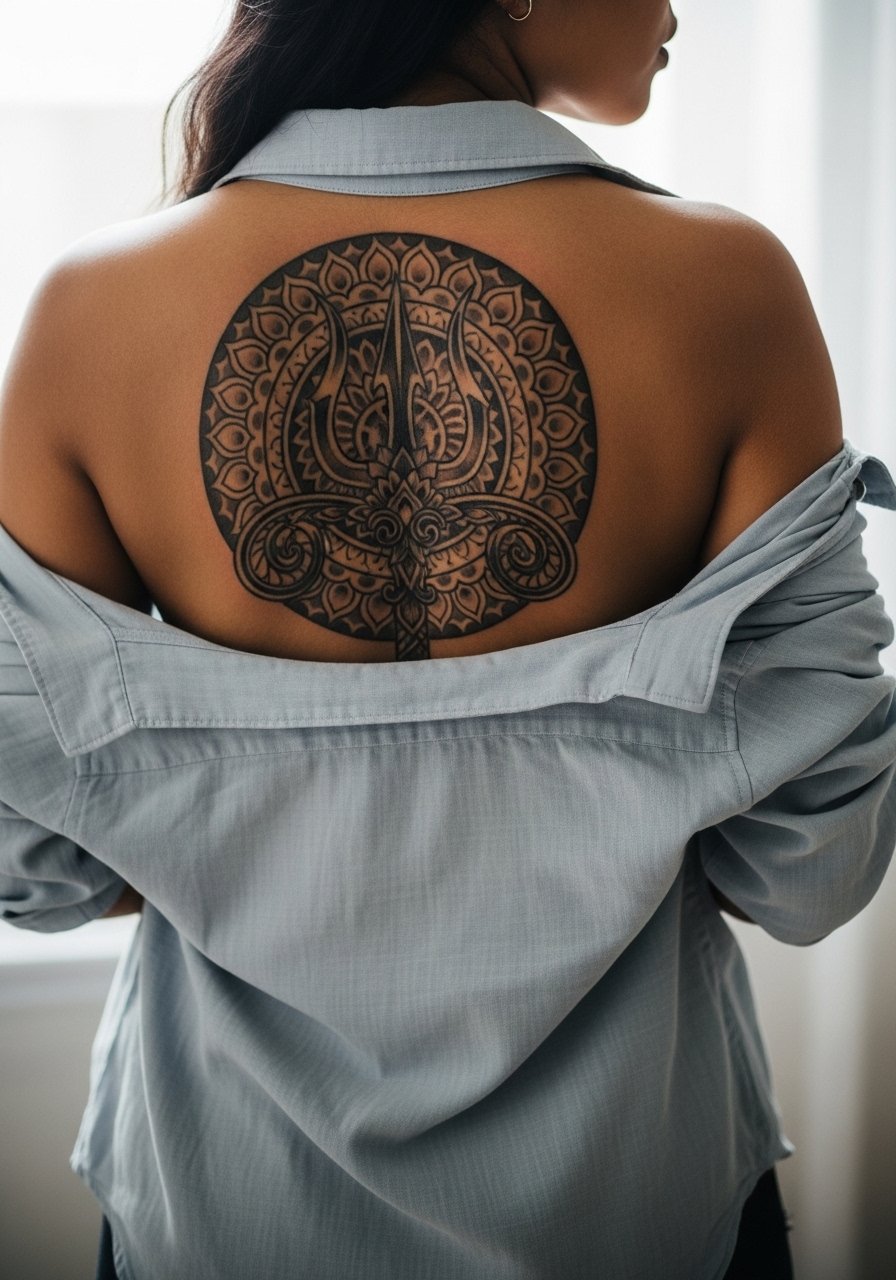
16. Large Back Piece: Ornate Trishul with Mandala Backdrop
A full back composition lets you pair a central trishul with mandala geometry for a vintage engraved poster feel. Expect two to three sessions for shading and symmetry checks. The session pacing matters here; one-session marathons increase swelling and slow healing. A common misstep is trying to compress a large idea into a single sitting. For the appointment, wear a loose button-down or a tank top you can easily slide aside between sets. On healed skin the mandala background frames the trident like old print work and holds detail well when spacing is respected.
17. Subtle Sternum Trishul with Fine Line Anchoring
Sternum placements are intimate and need a precise hand. Choose a compact anchor with slightly thicker contour lines and delicate interior dot work to avoid long-term smudging. For the session, wear a fitted sports bra or bandeau that can be adjusted to show just the sternum area. Artists split on how fine the lines should be in this spot, so name both camps during the consultation and agree on a compromise. When healed a correctly spaced sternum trishul reads like vintage jewelry, especially when paired with low-profile necklaces or bandeau tops.

Frequently Asked Questions
Q: Will a fine line wrist trishul need touch-ups more often than a bold forearm piece?
A: Expect fine line work on wrists to require touch-ups sooner than bold forearm pieces. The wrist moves and sees more washing and friction, so plan for a possible retouch around year two to three, especially if the original was ultra-fine. Ask your artist about their touch-up policy during the consultation.
Q: How do I talk to an artist about cultural sensitivity when using mythological motifs like a snake with the trishul?
A: Be direct and respectful. Say you appreciate the symbolism and ask how the artist interprets the motif, or request small stylistic adjustments that honor the source without replicating sacred imagery exactly. Most artists welcome that conversation and can suggest tasteful adaptations.
Q: For a ribcage trident, which opens better, bold black outlines or a detailed fine-line approach?
A: Bold outlines usually win for rib placement because skin stretch and movement can blur fine detail over time. If you prefer detail, plan for larger spacing and discuss a staged build across two sessions so the artist can refine depth without overworking the skin.
Q: What should I wear to a calf or ankle session to minimize discomfort and protect the area afterward?
A: Wear loose pants or shorts that you can roll up and that do not rub on fresh work. For ankles, sandals are easiest during healing. For calf sessions consider slip-on shoes so you do not tug a laced shoe over swollen areas.
Q: Are collarbone and sternum trishuls appropriate for people who need to hide tattoos for work?
A: Collarbone pieces can be hidden by high-neck shirts and scarves, and sternum tattoos remain covered by most tops. If concealment matters, choose placements and sizes that fit within clothing options you already wear.
Q: Where can I find references and local artists who specialize in vintage or neo-traditional trishul work?
A: Search hashtags like #TrishulTattoo and #VintageTattoo on social platforms, check directories for "neo traditional tattoo [city]" on booking sites, and browse r/tattoos for local recommendations. Bring a few different references to your consultation to show scale and line weight preferences.