
The tattoos that still read clean at year ten are often the bold, simple pieces people skipped while saving ultra-detailed photos. Heavy saturation and clear linework age into readable marks, while delicate, busy work can blur sooner than you expect. Across these 17 vintage sun moon and stars tattoo ideas I focus on designs that look great fresh and keep character as they age, with specific placement, style, and wardrobe tips to help you decide.
1. Neo-Traditional Sun Over Crescent Moon with Radiating Stars on Forearm
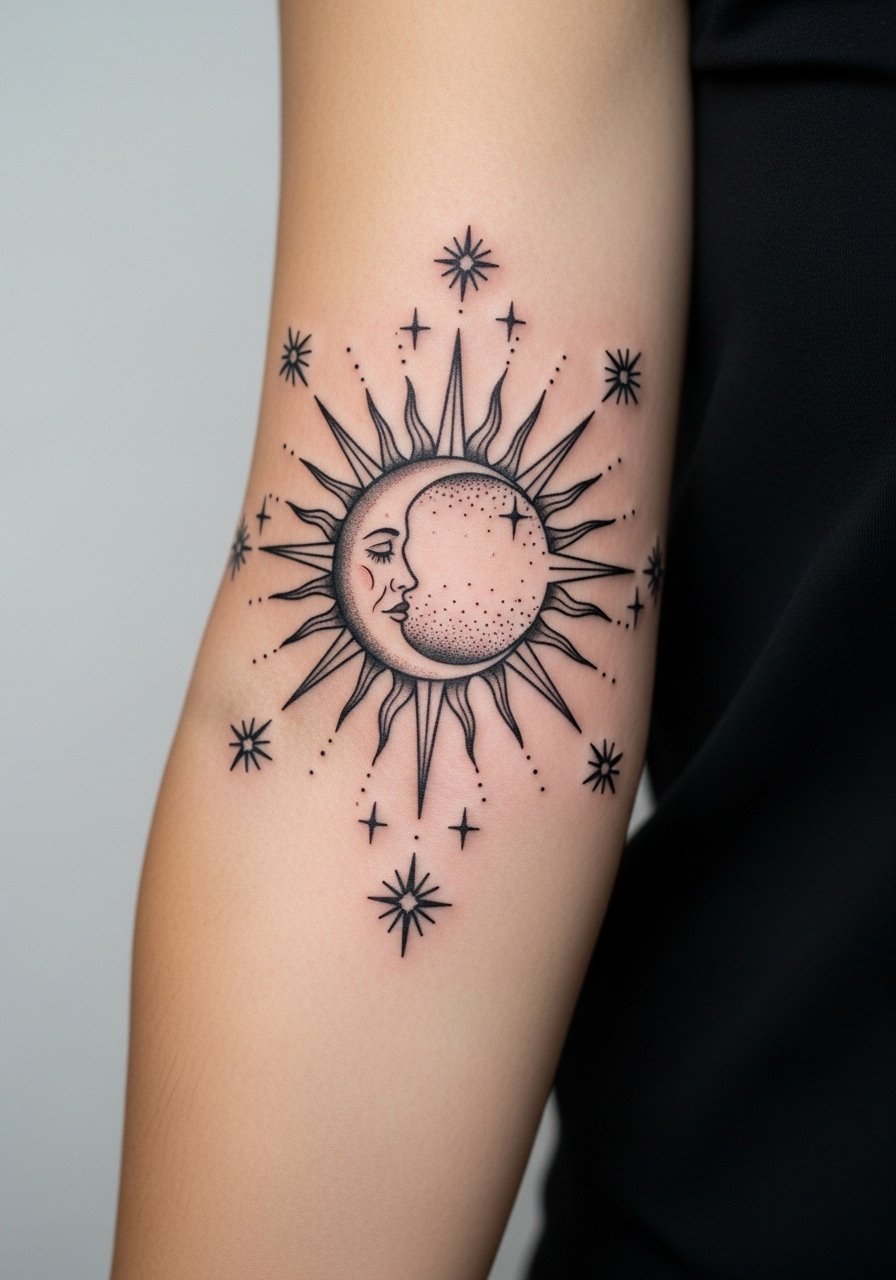
I recommend this when you want color that still reads from across a room. For forearm work the session is friendly, about 1 to 2 hours depending on size, and the pain is manageable for most people. Tell your artist you want slightly thicker linework around the rays and a soft gray wash behind the moon so the colors hold as saturation settles. A common mistake is asking for ultra-fine rays too close together, which merge after a couple of years. Expect a touch-up around year two to refresh the yellow and orange highlights. For showing it off, rolled sleeves work well, try a rolled sleeve chambray shirt or a thin leather cuff bracelet to frame the forearm without competing with the work.
2. Minimalist Line Art Sun, Moon, and Dot Stars on the Wrist
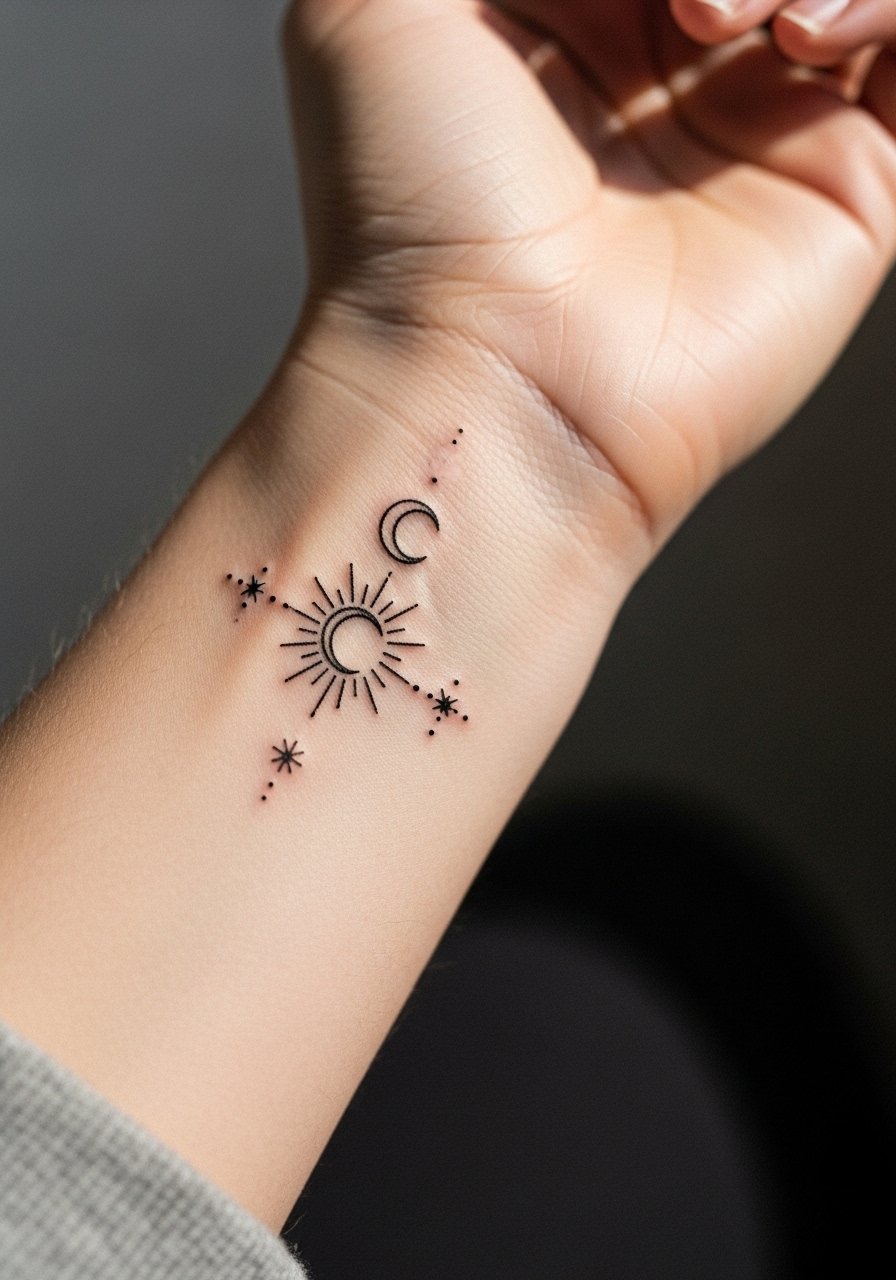
This is the go-to for a first-time small piece. The wrist is sensitive so expect a sharper sting for 20 to 40 minutes. Ask for slightly spaced dots and a single-needle line for the moon so the design reads clean at six months. The biggest mistake is crowding the elements into a two-inch area. That invites blurring and early touch-ups. At six months the lines should be crisp, by two years expect slight softening, and a simple touch-up will restore contrast. For session comfort and display, wear a sleeveless tank top so the artist can position your arm easily, and pair the healed piece with a thin silver bangle stack on the opposite wrist to balance attention.
3. Blackwork Geometric Sun, Moon, Stars Mandala on Upper Arm
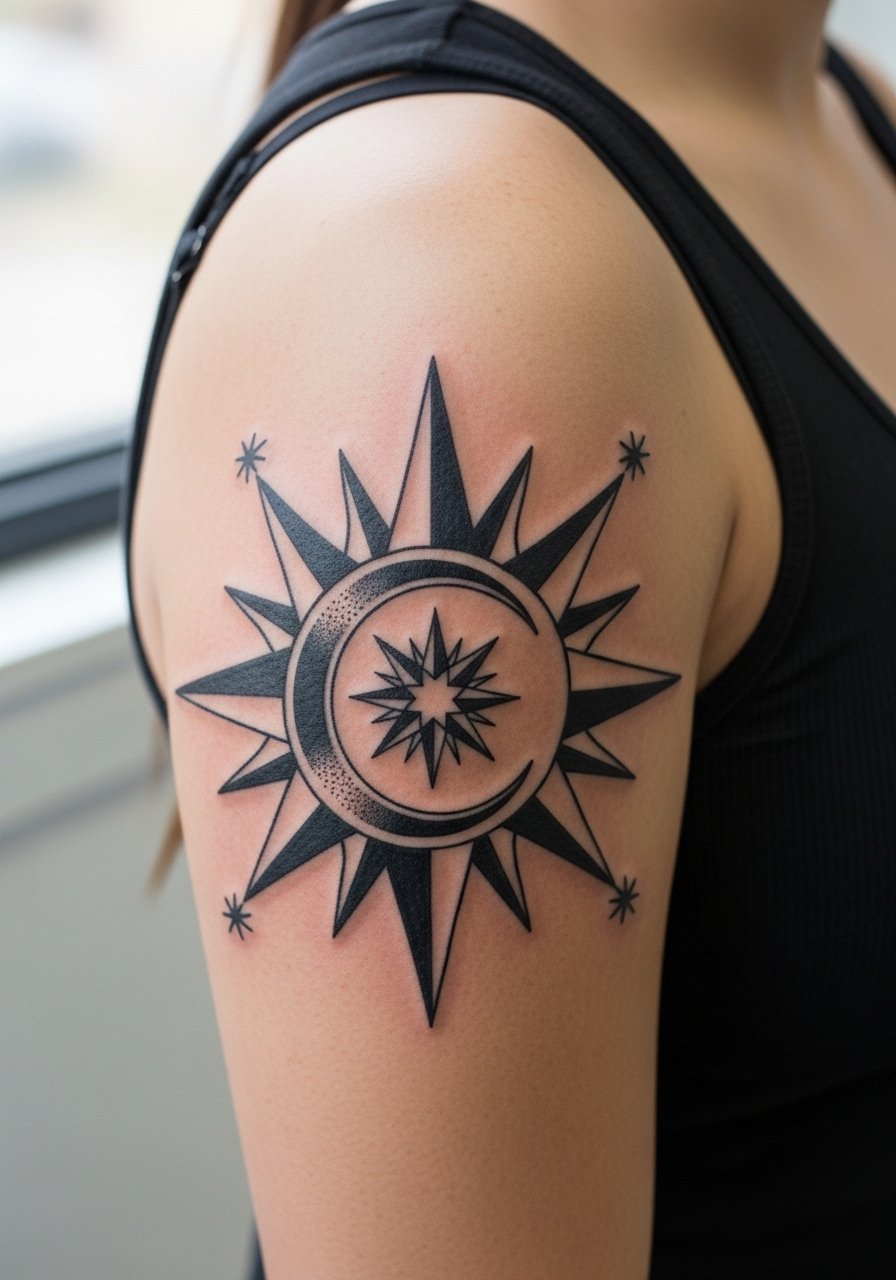
There's something about dense black fills and crisp negative space that holds up over time. Upper arm placement lets you go larger without the same blowout risk as the inner wrist. Start the consultation by asking the artist for clear spacing between heavy fills and radial lines so stipple shading doesn't merge into the black blocks. The common error is packing too many fine details into the central medallion. Pain is moderate and sessions usually run two hours. Expect this kind of blackwork to look stable at year five with minimal touch-up. If you plan to show it off, an off shoulder cotton top frames the bold contrasts nicely while keeping the rest of your outfit understated.
4. Watercolor Sun Burst Behind Phase Moon with Scattered Stars on the Thigh
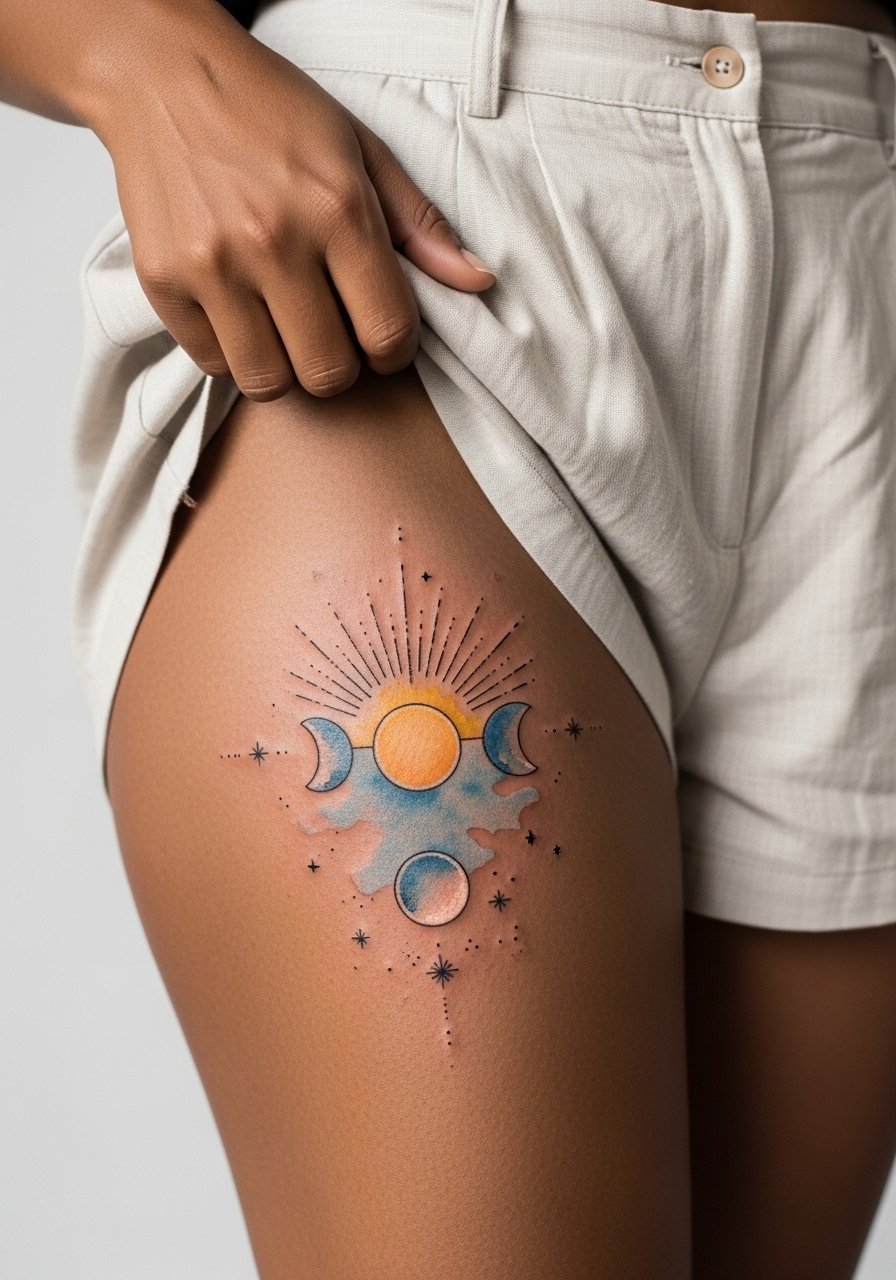
Fair warning, watercolor techniques fade differently across skin tones and placements. Thighs tolerate soft gradients well because the skin is thicker and less exposed to friction than ankles. Tell your artist you want color saturation anchored by a soft black outline under the moon so the wash has a structure to age into. The mistake is relying on thin, purely watercolor fills with no linework. That can feather into a washed patch at two to three years. Sessions take longer, usually two to three sessions for a six-inch piece, and touch-ups are common after year one to keep the color lively. For showing it off in summer, pair with high waisted linen shorts so the fade and soft gradients read against breathable fabrics.
5. Black and Gray Realism Sun Eclipse with Star Field on the Chest
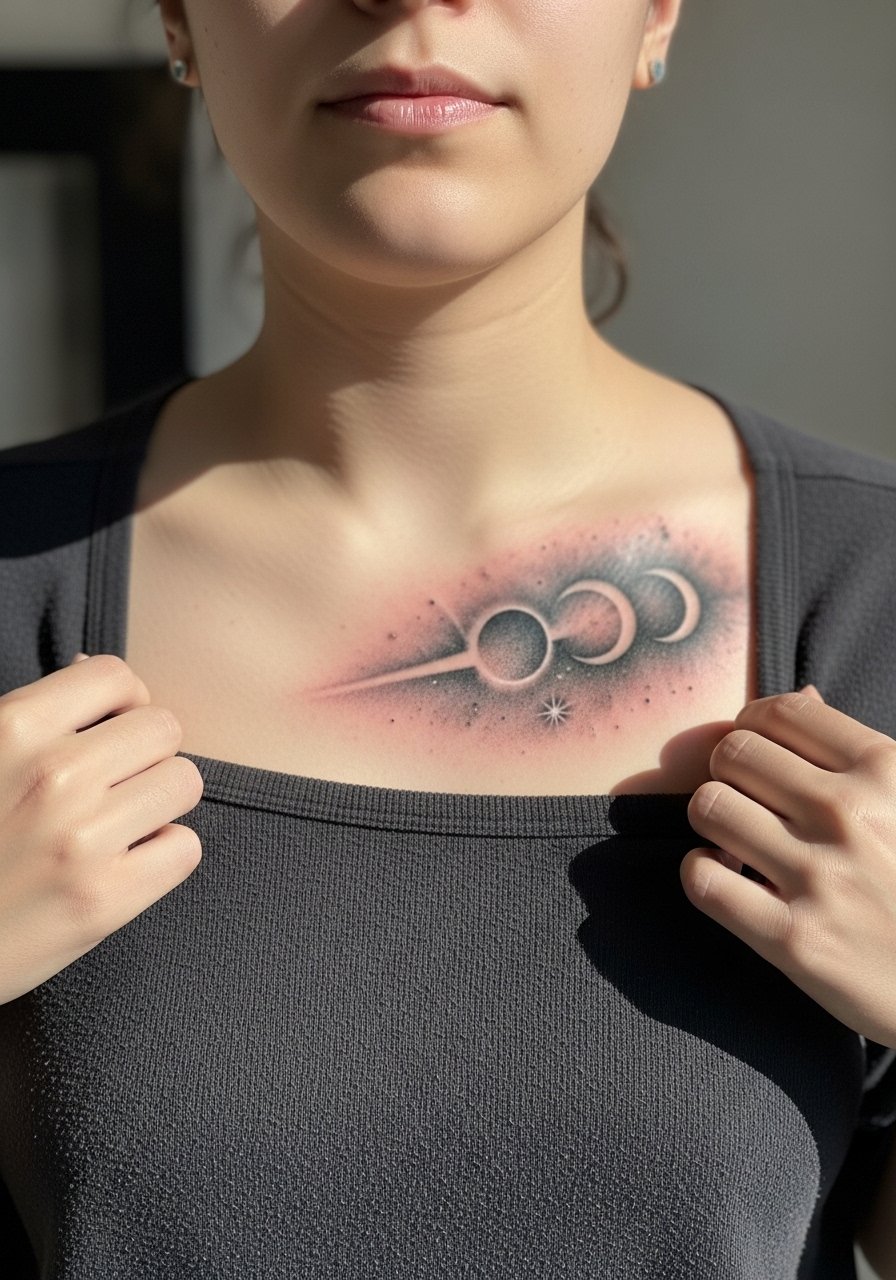
Most people underestimate chest sessions. The sternum and upper chest are a higher pain zone but they offer a broad canvas for realistic shading. For realism ask for graduated stipple and soft whip shading rather than single dense fills so the gradation keeps depth as it heals. One common error is packing photorealism too small near the sternum. That loses detail with natural movement. Expect three to four sessions for an eight-inch composition. Because of the breathing motion, minor softening can appear at year two and a targeted touch-up refreshes grayscale depth. For the appointment, wear a wide-neck shirt you can shift aside so the artist has clean access while you remain covered.
6. Ornamental Vintage Sun-Moon Interlock with Star Vines on the Collarbone
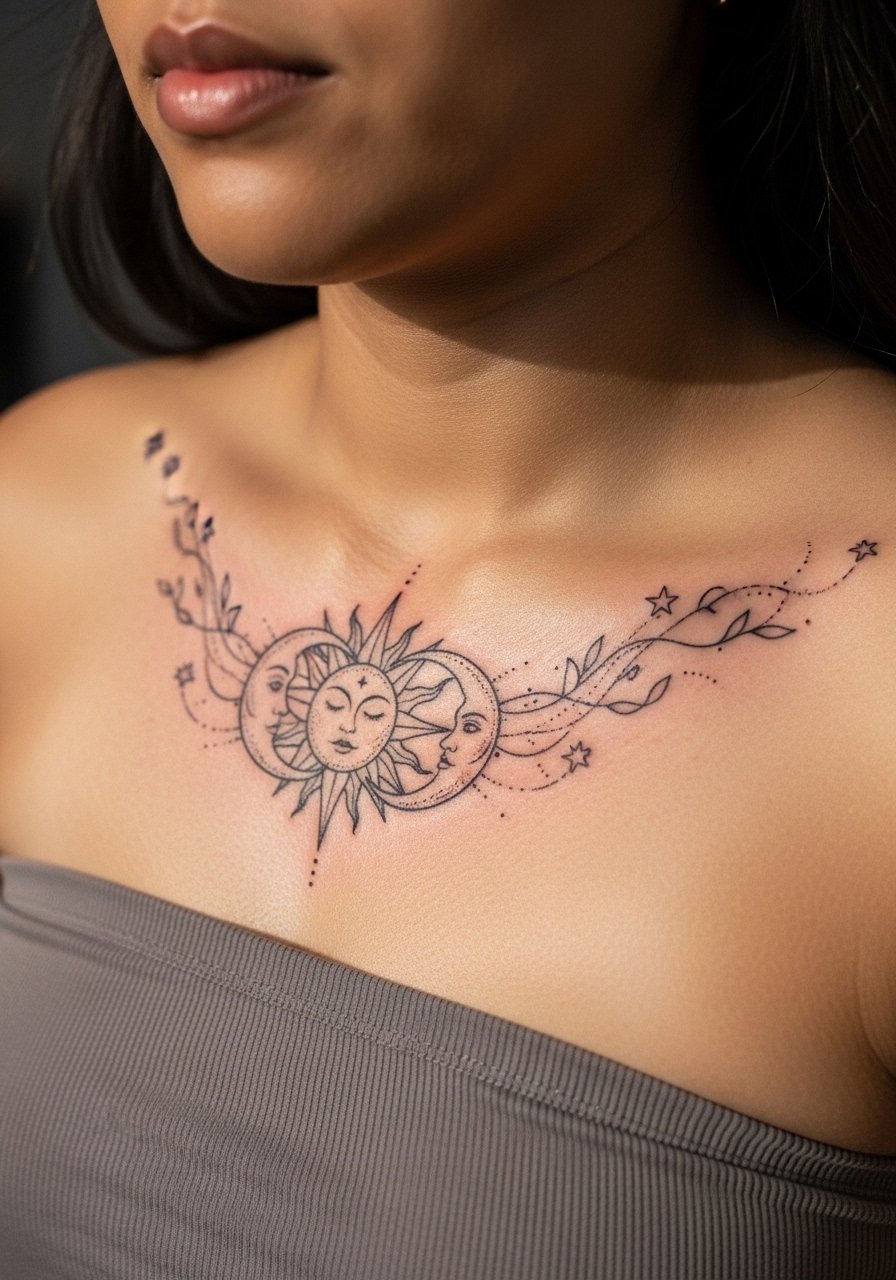
Collarbone filigree reads as bridal and retro at the same time. The area is bony so expect a sharp sensation during a 1 to 2 hour session. Tell your artist you want the filigree scaled so it avoids the mobile skin over the clavicle. The mistake is letting the scrollwork go too tight to the bone, which flakes awkwardly while healing and softens over time. This style ages well if lines are slightly bolder near high-friction edges and a light gray wash is used sparingly. For showing it off, choose a strapless tube top or a low wide-neck blouse that keeps attention on the filigree.
Pre-Session Essentials
The wrist, forearm, and chest pieces above ask for different prep. These items smooth session logistics and the first week of healing for the small and exposed designs in ideas 1 through 6.
-
Stencil transfer paper kit. Lets you preview exact line placement before the needle hits skin, which matters for the fine forearm and collarbone linework above.
-
Topical numbing cream. Applied per instructions about 45 minutes before the appointment it eases sensitivity on the wrist and sternum without affecting the artist's contouring.
-
Thin protective film roll. Useful for small areas like the wrist and finger where friction from clothing and washing needs a breathable barrier in the first 24 hours.
-
Fragrance-free body wash. Gentle cleansing keeps delicate linework like inner wrist or collarbone pieces from becoming irritated during showers.
-
Aquaphor healing ointment. A thin layer in the earliest days helps retain moisture for fine-line work without suffocating needle channels.
7. Fine Line Sun Face Above Crescent Moon with Tiny Stars on the Inner Wrist
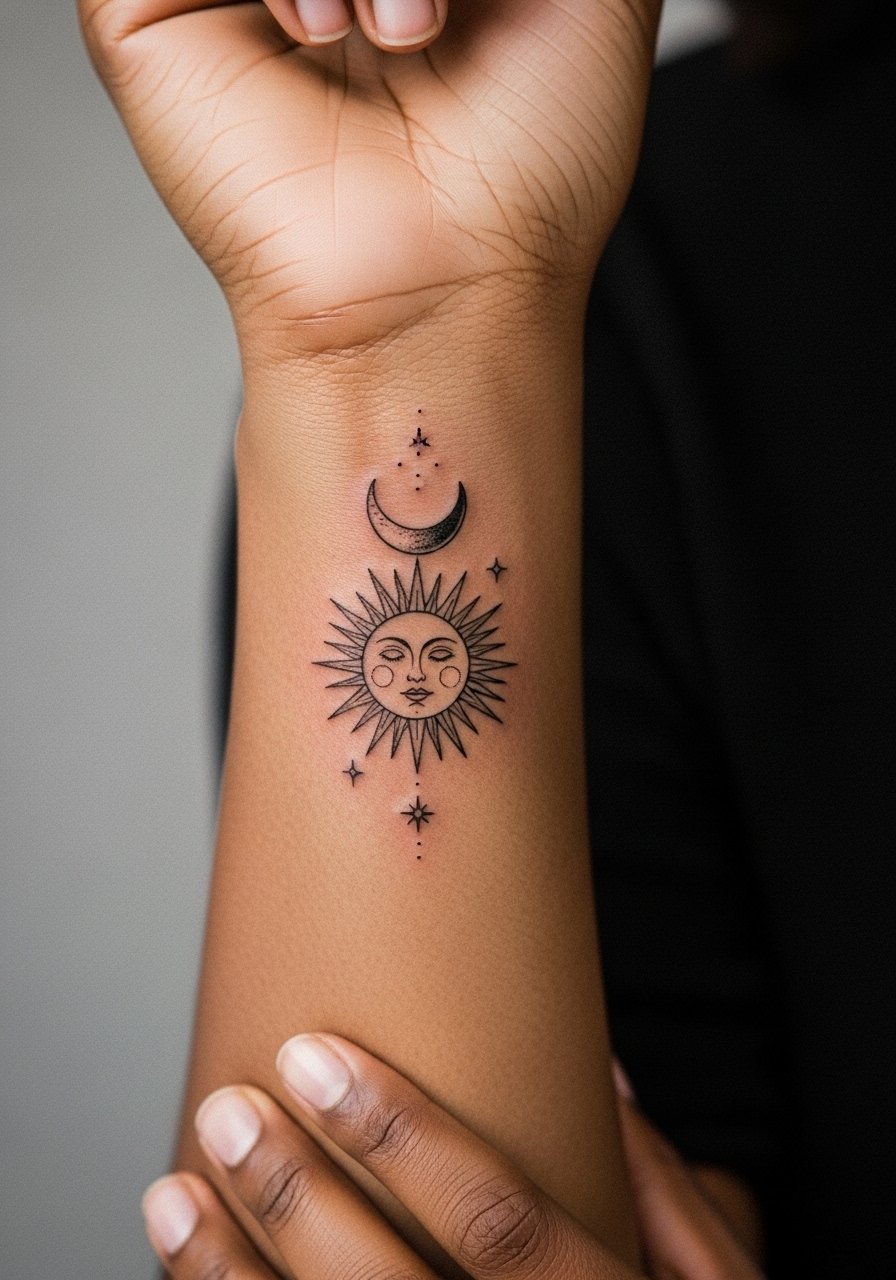
The inner wrist is a classic spot for tiny faces and symbols, but it is unforgiving if the linework is too light. Pain is noticeable but brief. When consulting, ask for slightly increased lineweight on facial features and a minimal gray anchor behind the moon so the expression remains legible after one to two years. A typical mistake is insisting on ultra-delicate single-needle shadings without compensating for the wrist's thin skin. A touch-up at year two may be needed for crispness. For the session, wear a sleeveless top you can move easily so the artist can position your arm without jewelry.
8. Neo-Traditional Moon with Sun Rays and Shooting Stars on Outer Forearm

There is visual payoff with a larger neo-traditional forearm piece. The outer forearm handles saturation well which means the oranges and yellows will hold longer than on thinner skin. Start your notes for the artist with preferred palette swatches and a clear instruction for heavier outlines on the rays to prevent early feathering. The common error is overloading the composition with tiny internal details. Expect one or two sessions and a likely touch-up at year two to refresh highlights. For daily wear, rolled sleeves or short-sleeved shirts that you can cuff frame the artwork without covering the main panel.
9. Micro-Realism Cluster of Sun, Moon, Stars on the Horizon Line Behind the Ear
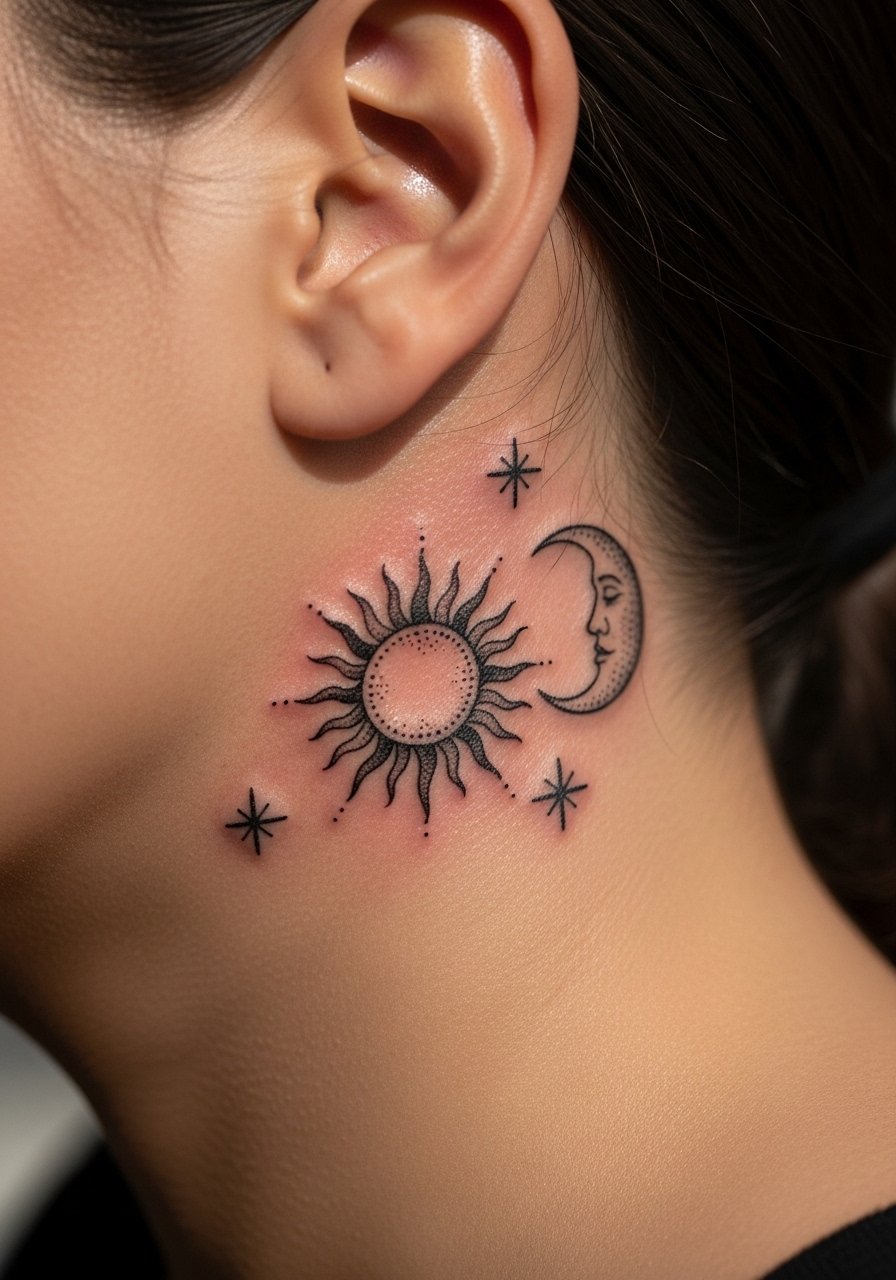
Behind-the-ear placements require a careful sizing decision. The area is discreet and the skin moves with hair and collars. Artists split on fine line in this exact zone. One camp says the thin skin and hairline motion blur delicate work within a year. The other camp contends that with proper depth and spacing fine micro-realism can hold up. Ask where your artist stands and request conservative spacing between dots. Sessions are short but the healing period needs attention because hair and collars rub the spot. For the appointment, keep hair up and wear a wide-neck shirt so the area is exposed without shifting clothing over it.
10. Vintage Illustrated Sun Moon Stars with Cloud Frames on the Shoulder Blade
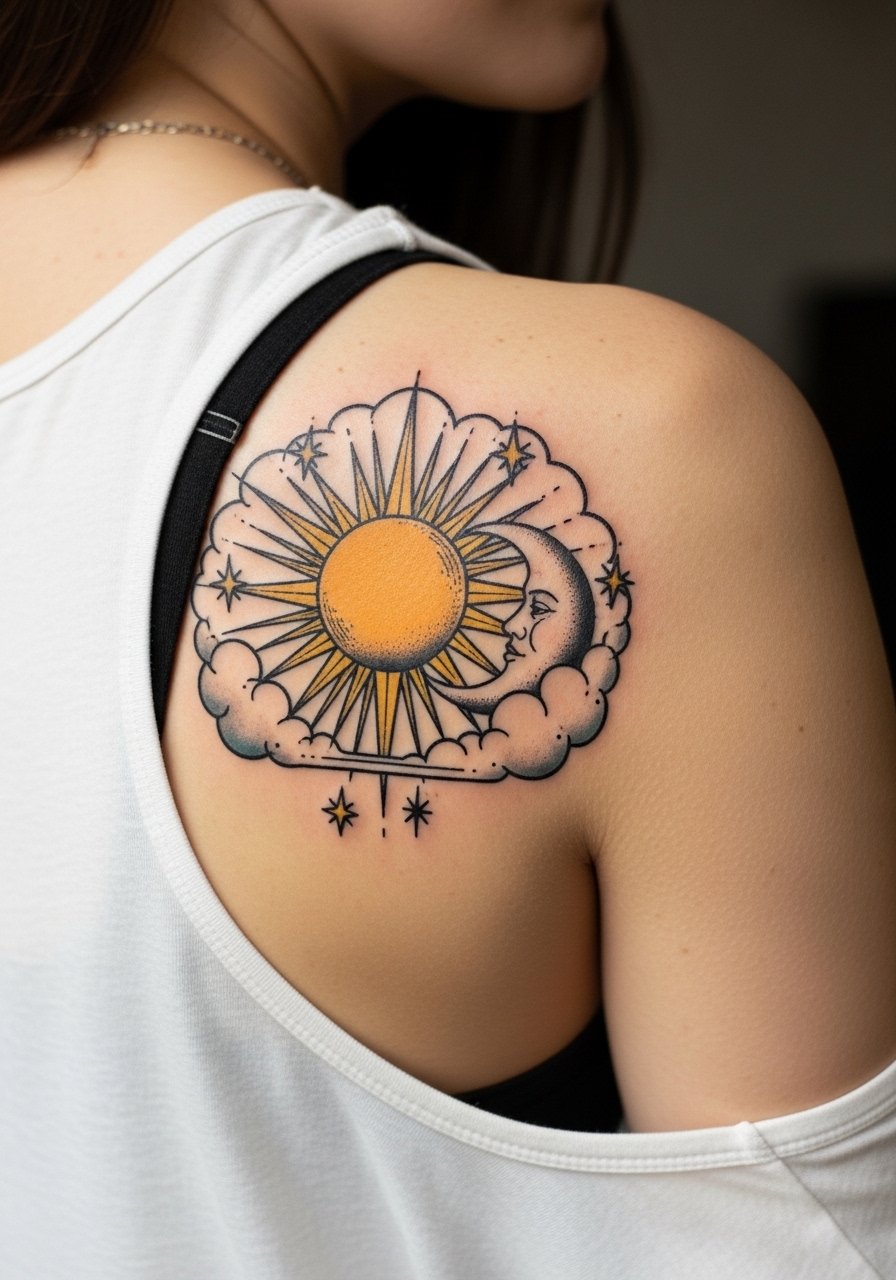
Shoulder blade work gives you room for illustrative composition that ages gracefully when spaced properly. Pain is mild and sessions are comfortable because the area is broad and sits flat while you lie on the table. Tell the artist you want the cloud frames to create breathing room around the faces so no fine cloud lines sit directly against heavy color blocks. The common mistake is compressing the clouds and faces into a small panel which causes early softening. Expect two sessions for a six-inch piece and a touch-up in a couple of years to restore primary color pop. For casual show-off, a loose tank top that dips in back will highlight the shoulder blade without exposing the rest of the back.
11. Geometric Blackwork Sun Enclosing Moon with Star Points on the Calf
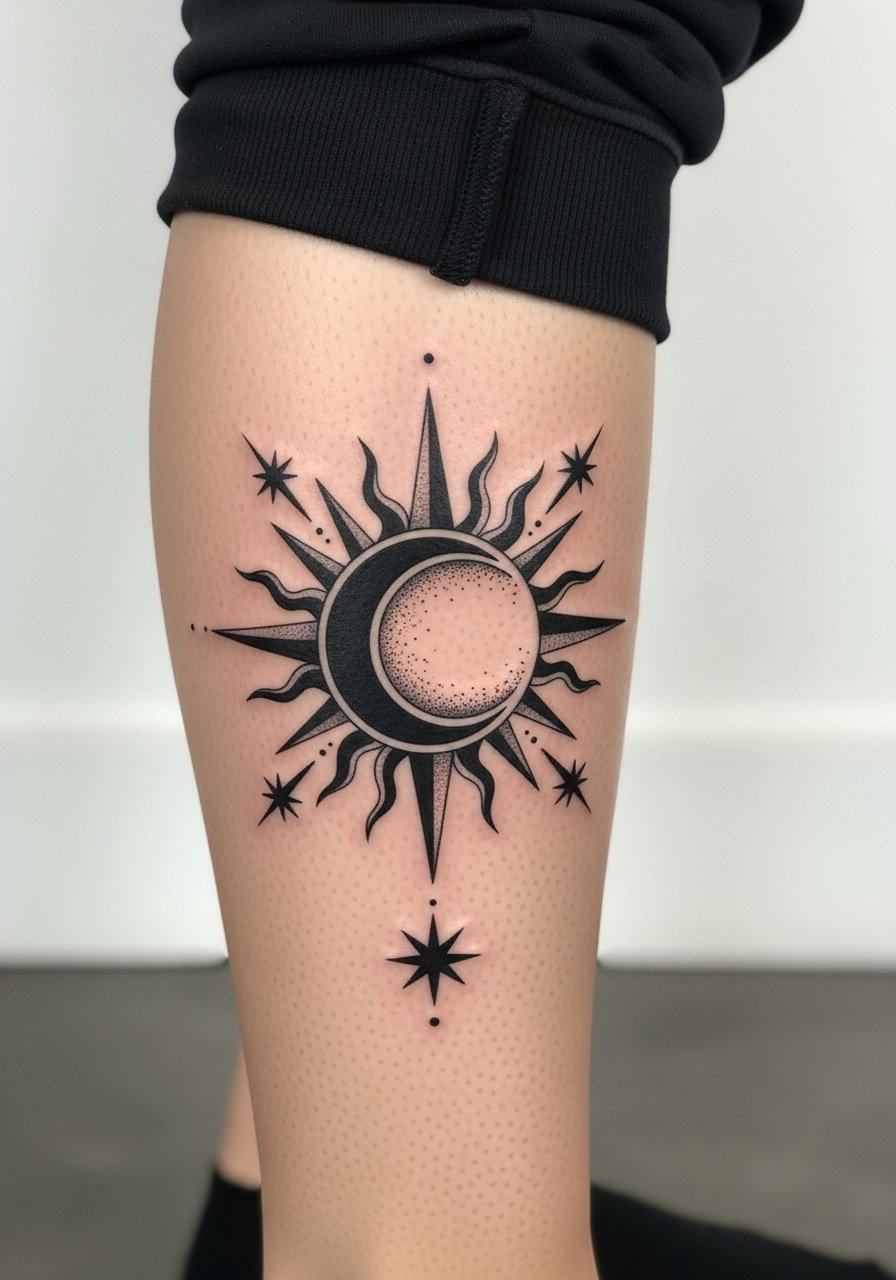
The calf tolerates dense blackwork well and stands up to long-term wear because it sees less daily abrasion than ankles. When you consult, ask for clear negative gaps between radial lines and star points so the geometry doesn’t merge when the skin settles. The usual mistake is making the pattern too tight for the ripples of muscular movement. Sessions are usually one or two sittings. Blackwork like this often looks strong at year five with minimal touch. For seasonal showing, try cropped jogger pants or rolled ankle jeans so the clean geometry reads against solid fabric.
12. Ignorant Style Chunky Sun Moon Stars Outline on the Hand
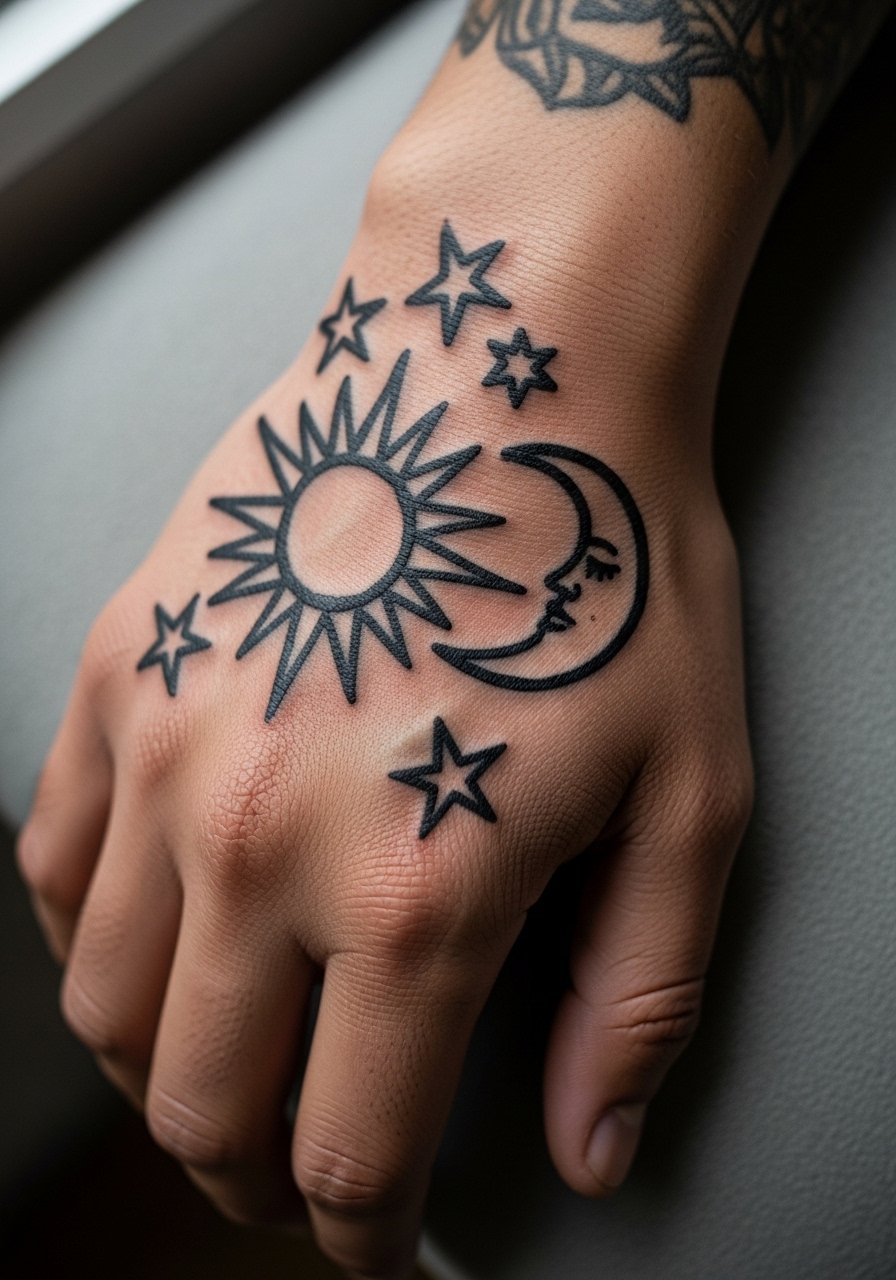
Hand tattoos carry a high risk for early fading and need frequent touch-ups because of washing and friction. The ignorant style is forgiving because it relies on bold outlines that still look intentional as they soften. Tell the artist you want exaggerated, slightly uneven lines rather than precise micro-detail, which will hold better. A common regret is treating a hand piece like an extension of sleeve work. Hands age differently so expect a touch-up every one to three years depending on use. If your job tolerates visible hand art, this style works well, but plan for maintenance.
13. Micro-Realism Horizon Cluster on the Ankle
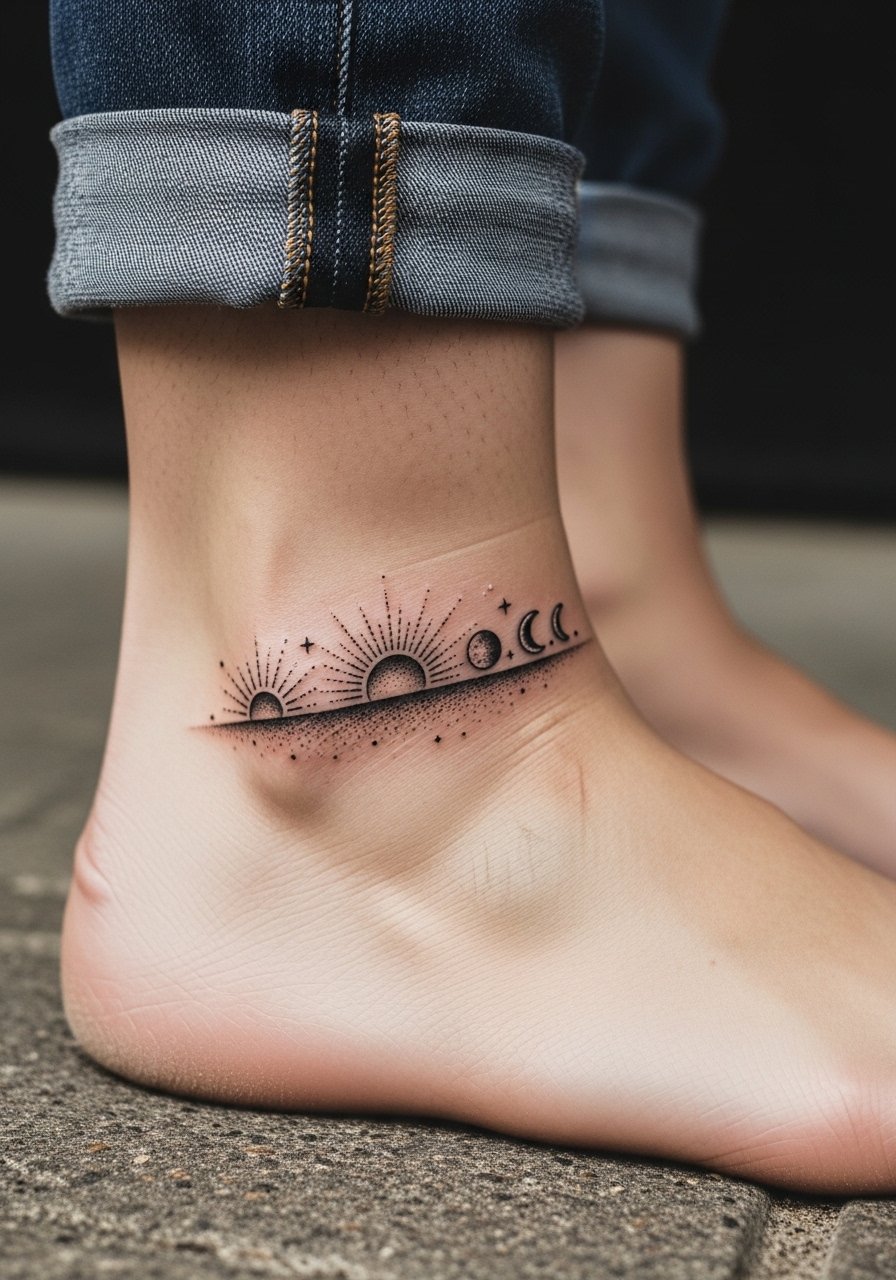
Ankle placements show tiny scenes well but suffer from friction with shoes and socks. Pain is higher near bone and sessions are short. Ask for slightly bolder contrast in the central horizon line so the micro elements remain legible after the first year. The mistake is packing too many tiny stars in a cramped band. Expect a touch-up within one to three years because of shoe friction and repeated washing. For display, roll your jeans or wear sandals so the horizon reads against bare skin.
14. Geometric Sun with Star Points Framing a Crescent on the Thigh
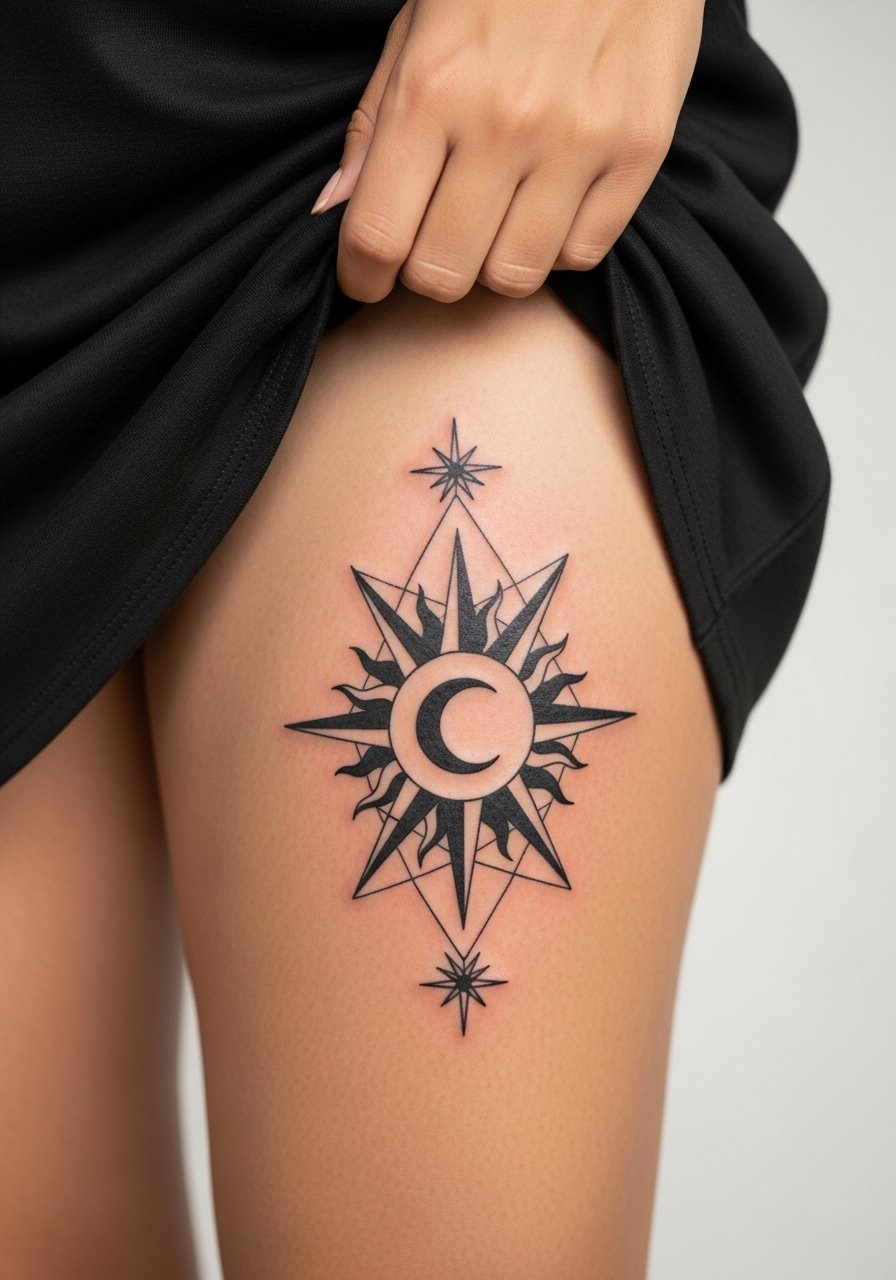
Thigh placements let you go large while maintaining line clarity. The skin is forgiving so blowout risk is lower than on the forearm or wrist. In consultation, emphasize spacing and bold anchor points that let the pattern breathe as the skin stretches with movement. A common mistake is allowing too many intersecting thin lines near muscle curves. Sessions run one to two hours for a medium panel, and the piece often needs only occasional touch-ups at year three or later. For summer visibility, a flowy maxi skirt or high-waisted shorts frames the outer thigh without competing with the geometry.
15. Ornamental Vintage Sun-Moon with Star Vines on the Inner Bicep
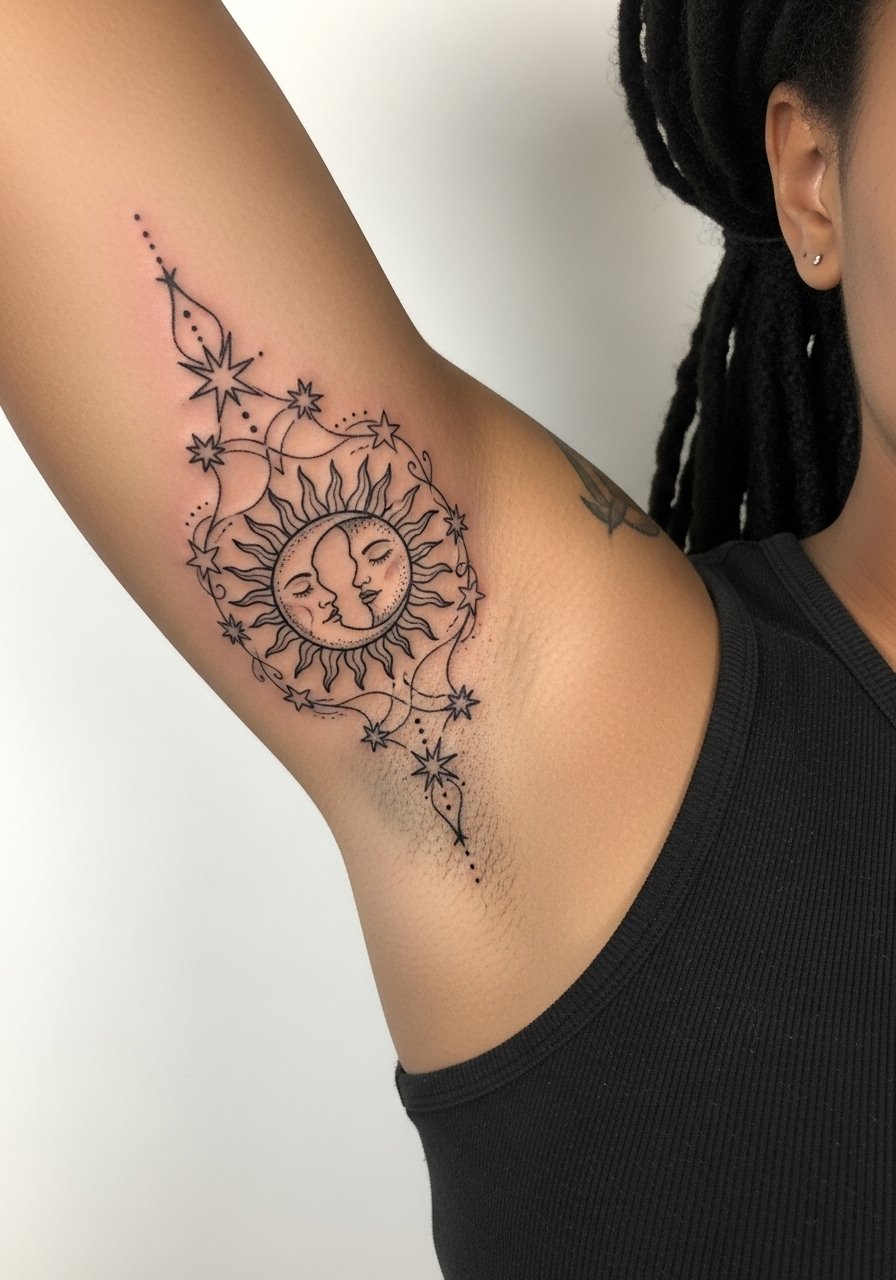
Inner bicep placements are intimate and require an artist comfortable with curved surfaces. The area is sensitive but rewards careful linework because it sits out of daily abrasion. When you book, request that decorative vines are spaced away from the crease so they do not compress during healing. The common error is wrapping too many fine elements into the fold, which invites scabbing and early fading. Sessions are moderate in length and a touch-up at year two keeps the filigree crisp. For the appointment, wear a tank top you can lift so the artist has full access without shifting fabric.
16. Micro-Realism Tiny Cluster Behind Ear and Nape Line
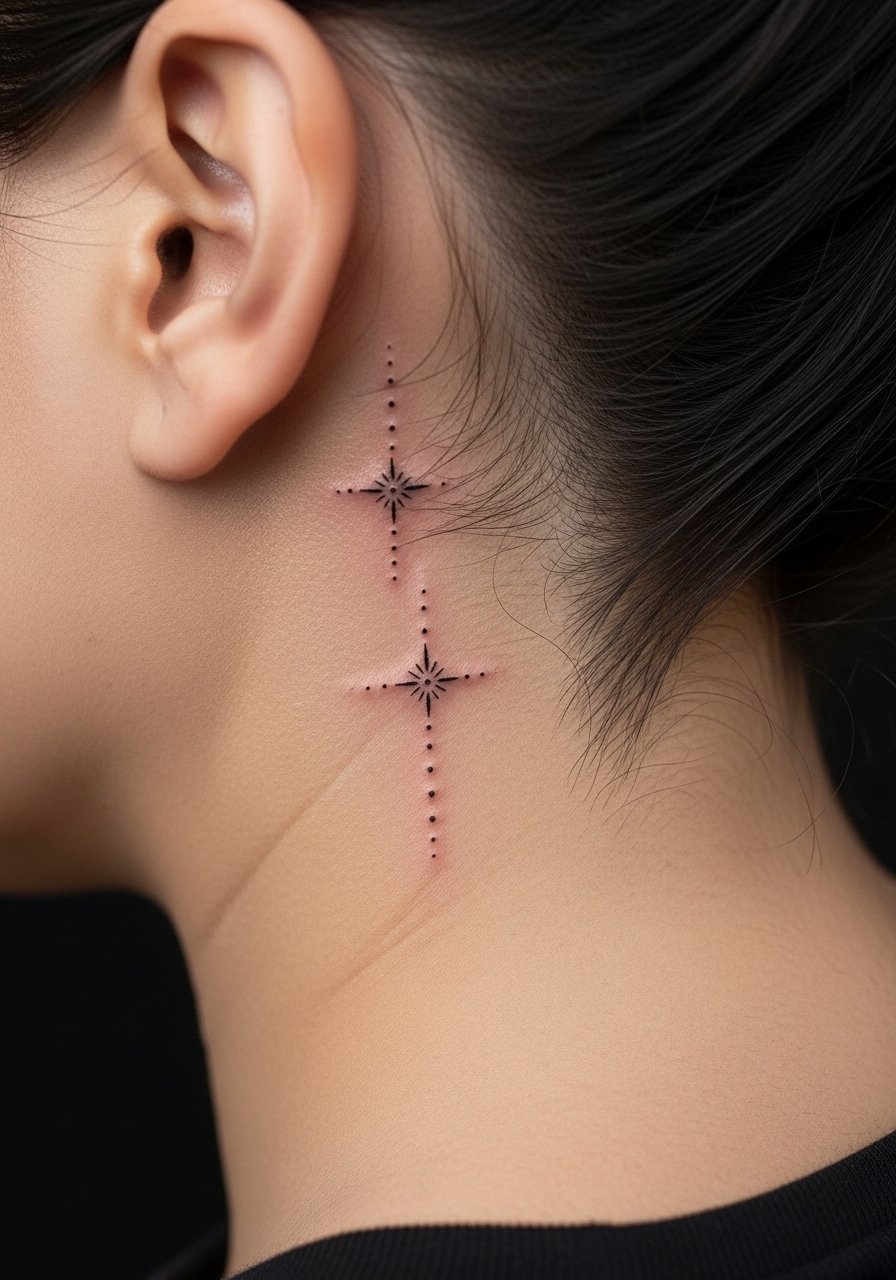
Small clusters along the nape are discreet and photograph beautifully when the hair is up. The area moves and rubs against collars, so spacing and depth are crucial. Tell your artist you prefer slightly darker anchors for core dots so the cluster does not blur into a smudge with regular washing. A common mistake is insisting on hairline-thin dots without asking about collar friction. Sessions are brief and touch-ups may be needed within two years. For care during the appointment, put your hair up and wear a wide-neck shirt so the artist can work without tugging at collars.
17. Vintage Illustrated Sun Moon Stars with Cloud and Constellation Frame on the Shoulder
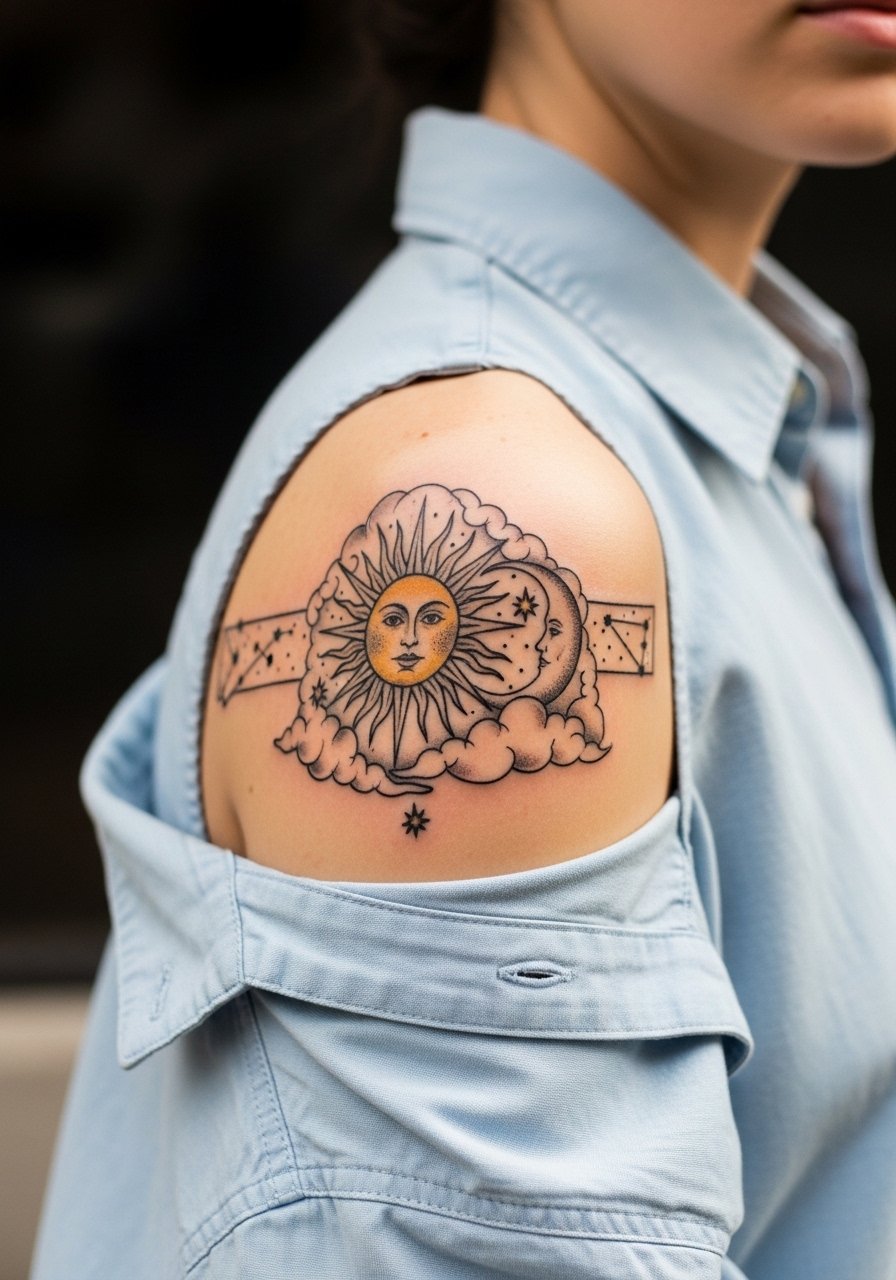
This final shoulder idea leans into nostalgic sailor-jersey aesthetics updated with layered cloud framing and a personalized constellation band. The shoulder tolerates layered layouts so you can combine portrait faces with cloud negative space without overcrowding. During consultation, specify which stars in the band are meaningful so the artist can scale each dot for longevity. A common mistake is adding text or numbers too small within cloud lines, which then fades into a blur. Sessions run one to two hours and touch-ups are rarely needed more than every few years if spacing is correct. For the session wear a loose button-down shirt you can pull aside to expose the shoulder cleanly.
Frequently Asked Questions
Q: Will a fine line sun and moon tattoo on the ribs blur faster than on the forearm?
A: Ribs are a higher-movement and higher-pain area so fine line work there can soften faster than the forearm. One group of artists prefers avoiding ultra-fine single-needle pieces on ribs because the skin stretches and lines can merge. Another group says with deliberate spacing and slightly stronger lineweights it can hold up. Ask your artist which approach they use and plan for a touch-up around year two if you choose ribs.
Q: How should I dress for a thigh watercolor session to make the artist's job easier?
A: Wear loose shorts or a skirt you can pull up without tugging the skin. A simple high waisted linen short or a skirt with an elastic waist is ideal. You want clothing that won’t press on the area immediately after the session and that lets the artist position your leg for clean shading.
Q: Do blackwork geometric designs need larger spacing to avoid blowout on curved areas like the calf?
A: Yes. Geometric blackwork requires deliberate negative gaps, especially around muscle curves. Too-tight geometry invites blowout as the skin shifts. Ask the artist to stencil the piece and move while you flex so the spacing reads correctly in motion. That reduces the chance of merged black blocks as it heals.
Q: Are hand and finger tattoos worth it if they need frequent touch-ups?
A: They are worth it for many people who accept ongoing maintenance. Hands face constant washing and abrasion, so expect touch-ups every one to three years. Choose bold, simple shapes or chunky outlines for better longevity, and discuss realistic maintenance with your artist before committing.
Q: Can I personalize a star cluster to reflect birth dates without cultural issues?
A: Yes, personal star clusters are generally safe personalizations. If you plan to blend in motifs from specific cultural traditions consider slight variation rather than direct copying. Mention the origin in your consultation so the artist can adapt respectfully while keeping the design meaningful.