Fine line snakes dominate saved boards and they look gorgeous fresh, but reality bites when small details meet real skin. Faded thin work, surprise wrist pain, and sticker shock at checkout are common. I want to cut straight to what holds up and what to ask in the chair so your vintage small snake tattoo reads as intended for years. Start with a design that suits the placement and expect a clear plan for touch-ups.
1. Coiled rattlesnake head on the forearm

I see this forearm staple in shop portfolios and it ages well when kept around two to three inches. Tell your artist you want thick single-needle contour for readable scales and avoid tiny internal dots that blur over time. Expect moderate pain and a single session of about 45 to 90 minutes depending on color. Common mistakes are trying to cram in too many tiny details. For showing it off, roll up a chambray shirt cuff so the forearm reads clean during summer outings.
2. Old-school cobra with flared hood on the wrist

Wrist placement is unforgiving for tiny linework. I recommend a compact cobra of one to two inches with clear negative space around the hood so the design breathes as it heals. Pain runs higher here than on the forearm. Sessions are short, typically under an hour, but expect touch-up discussions since wrist skin takes more friction. A common regret is insisting on micro scales. For showing it off, layer a thin leather cord bracelet on the opposite wrist and skip heavy metal during the first week.
3. Curved snake wrapped around a dagger, scaled down for the ankle
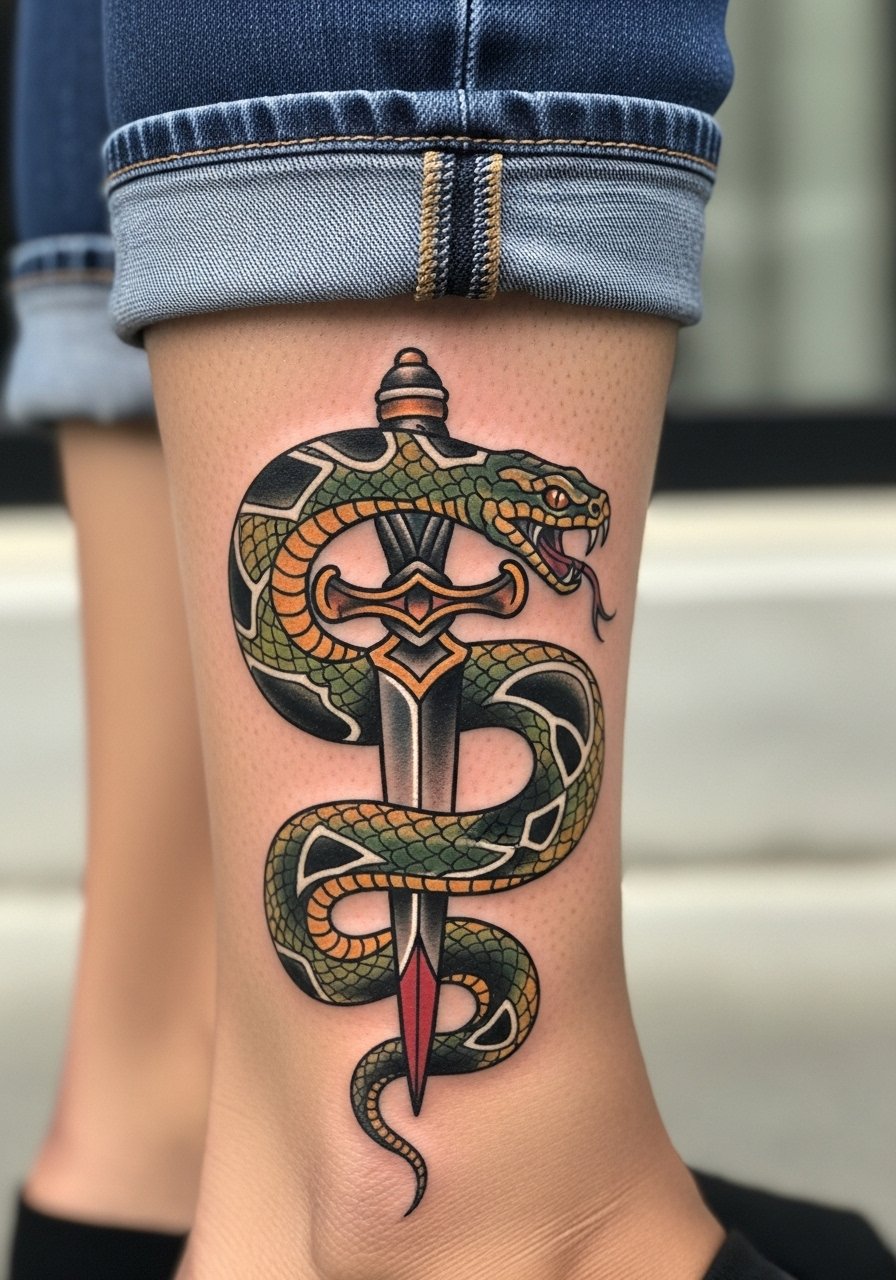
Ankle wraps carry distortion risk with weight change and swelling so I keep these three inches or smaller and centered on the bone. Tell the artist to favor simple scale suggestion over dense shading to avoid muddying. The session is usually 45 to 75 minutes and the area can be tender for the first few days. A top mistake is placing the coil exactly at the joint. For summer wear, cuffed slim chinos frame the wrap nicely and let sandals reveal the work. Try pairing with cuffed chino pants when you want the design visible without rubbing.
4. Minimalist vintage snake silhouette on the inner wrist

This one is popular for first tattoos because it reads discreet and tidy. My warning is fine line silhouettes on the inner wrist blur faster than thicker contours. Ask for a slightly firmer single-needle depth and a hair more spacing between curves so the linework has room to settle. Pain is sharp but brief. Expect a 30 to 50 minute session and possible touch-up at year two. For session wear, bring a sleeveless tank so the artist has clear access without jewelry.
5. Shedding-skin motif at the collarbone
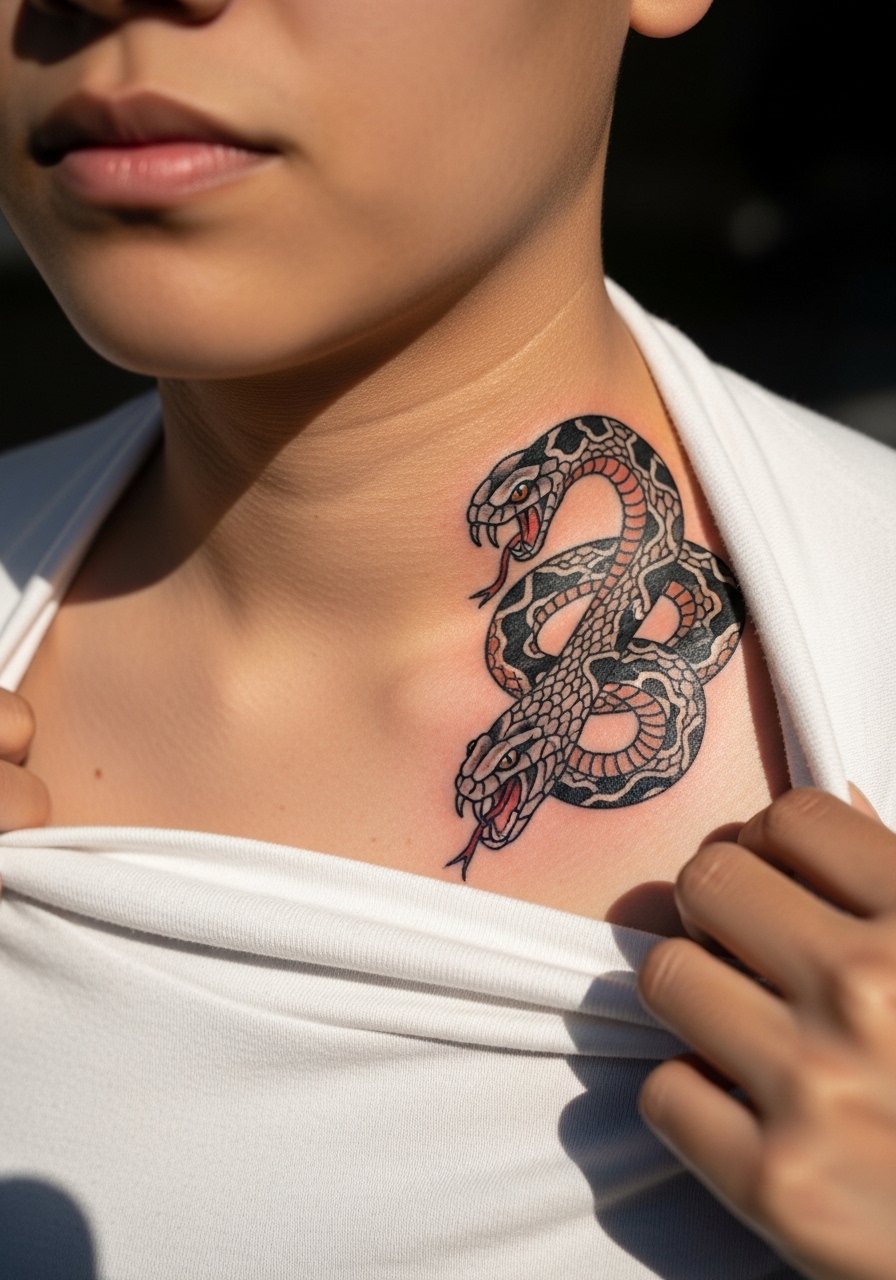
Collarbone pieces show detail beautifully if kept around two inches. I suggest cracked texture hints rather than dense stipple so the shedding effect ages as subtle texture instead of a smudge. This placement is sensitive but tolerable and sessions run 45 minutes on average. A mistake I see is over-shading the crack lines which merge on healing. For showing it off, pair with a v neck cotton tee or an off-shoulder blouse so the neckline frames the piece without covering it.
6. Coiled viper with a heart-shaped head, retro flash on the upper arm

Upper arm work tolerates saturation and stands up well over years when the diameter is around two to three inches. I tell people to ask for solid color fills and clear negative space between the coils for longevity. Pain is low to moderate and sessions usually finish in one sitting. A common error is shrinking the motif too much for an upper arm, losing the flash punch. For casual showing, a fitted tank top keeps the bicep profile visible and clean.
Studio Day Picks
Those first six designs include several wrists and an ankle which demand different prep than full arm work. A few compact items smooth the session and the first week.
- Stencil transfer paper kit. Use this to preview exact placement on skin before the needle hits, especially handy for the collarbone and wrist stencils above.
- Topical numbing cream. Applied per the product instructions it takes the edge off sensitive wrist sessions without changing how the artist works.
- Thin protective film roll. Useful for ankle and finger work that sees a lot of friction from shoes and socks in the first week.
- Fragrance-free gentle body wash. Cleanses healing areas without irritating fine line work on wrists or collarbones.
- Aquaphor healing ointment. A thin layer in the initial days can help protect small, single-needle linework while the skin repairs.
7. Small snake entwined with rose thorns on the ribcage
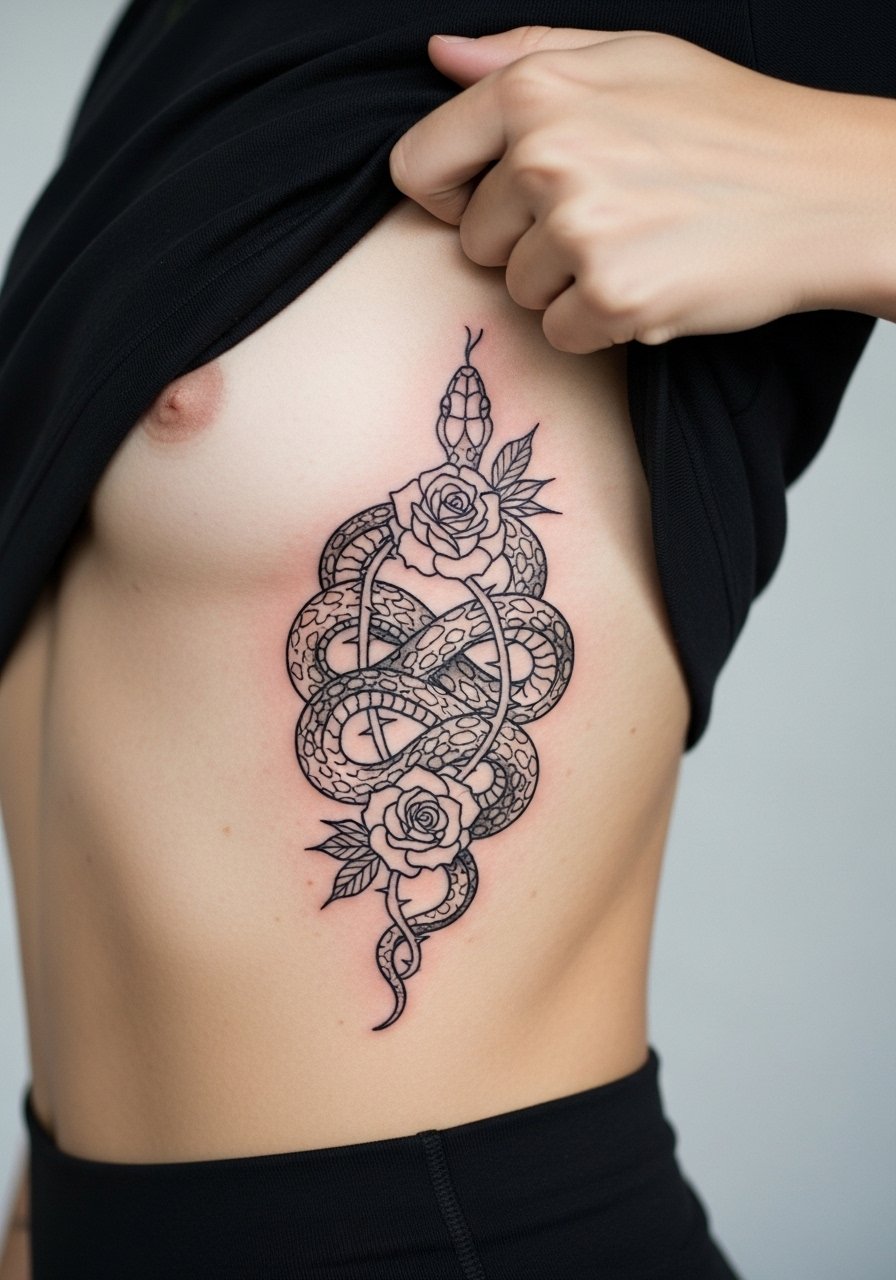
Ribcage tattoos carry higher pain and a real risk of lines blurring if the artist goes too fine. I usually advise simplified thorn lines and slightly larger negative spaces so the snake and roses remain readable. Sessions can feel taxing and may need breaks. A common mistake is asking for heavy stipple shading across the ribs which can merge with movement. This placement often needs a touch-up opportunity discussed at booking because skin stretch changes over time.
8. Rattlesnake tail segment in blackwork on the calf
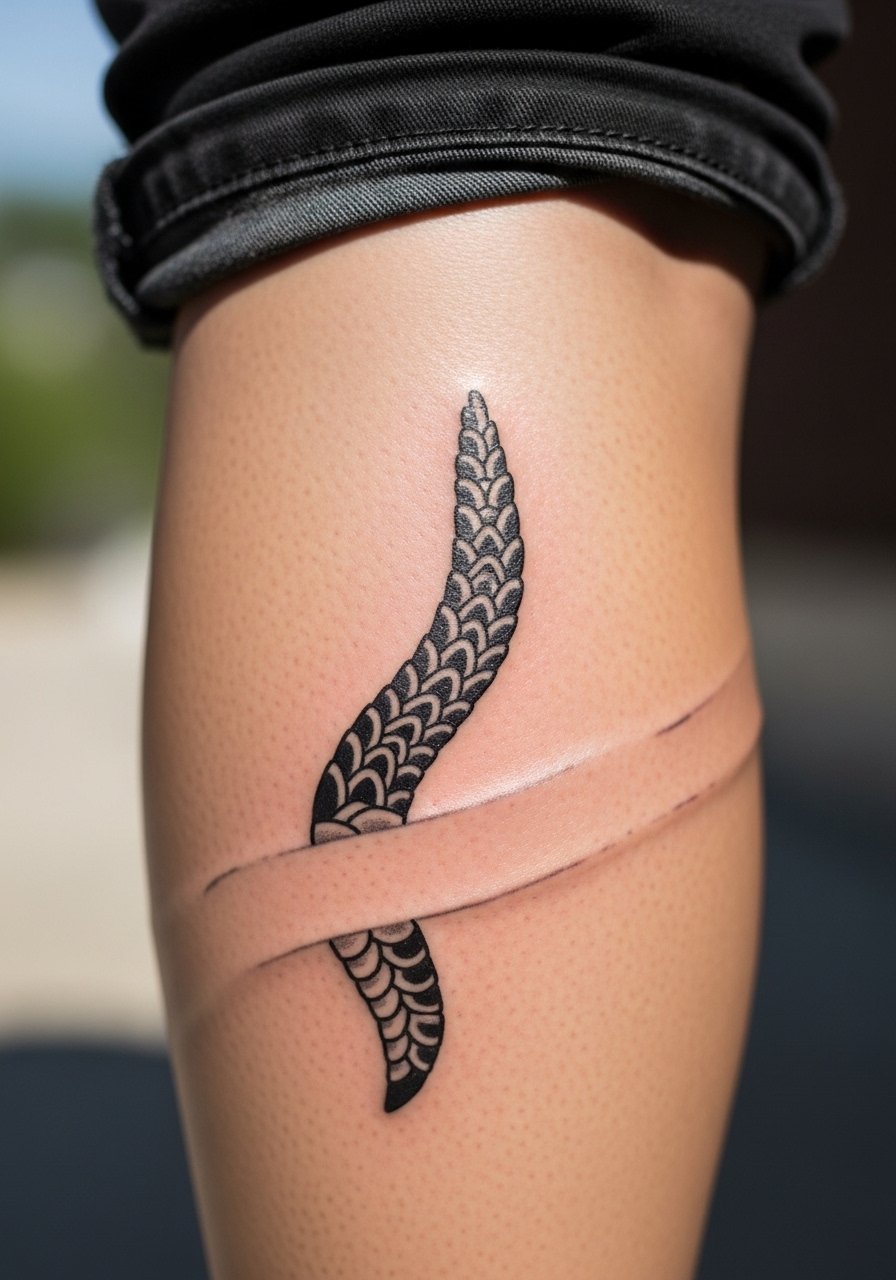
Calf skin takes blackwork well and the long canvas suits a three-inch segmented rattle. I recommend dense saturation and clean negative gaps between segments to avoid a blocky look later. Pain is moderate and sessions are comfortable if you can sit with the leg extended. A common error is compressing the rattle too tightly which reads crowded after healing. For casual wear, rolled joggers or olive jogger pants show the pattern without cutting the silhouette.
9. Tiny garden snake with an apple bite behind the ear
Behind the ear looks discreet when kept around one inch and with heavy outlines rather than micro detail. Expect brief but sharp pain. Session time is short, under 30 minutes, but the area can be finicky while sleeping or wearing collars. The typical mistake is insisting on miniature color fades which wash out on darker skin. Because this sits near the hairline, test placement with a temporary stencil before committing.
10. Old-school python loop with exaggerated jaw on the thigh
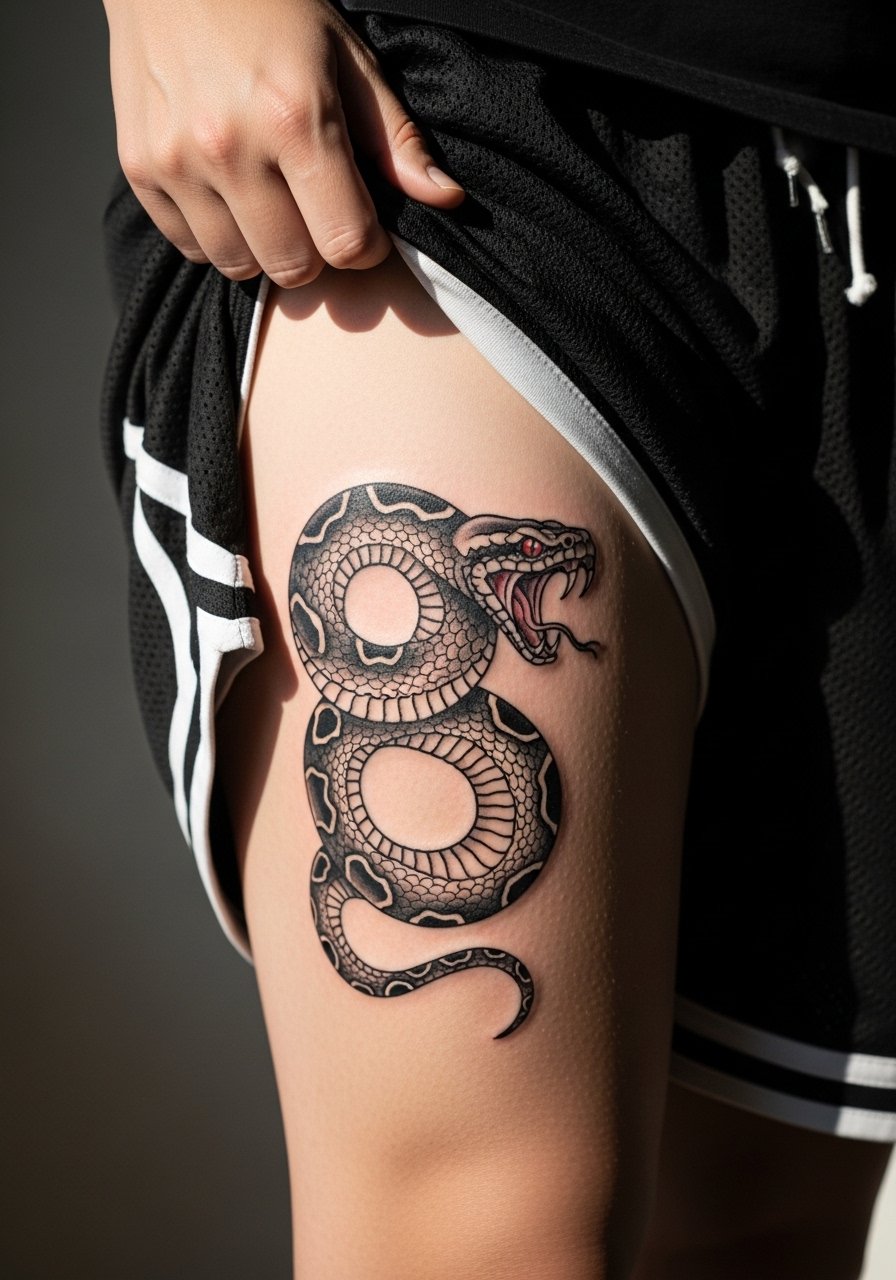
Thigh placements are forgiving for punchy vintage color and dramatic jaws. I tell clients to expect a lower pain rating than ribs and a single session that can stretch past an hour for scale work. The common mistake is compressing the jaw into too small a circle which loses personality. For gym or summer wear, a high waist athletic shorts silhouette keeps the thigh visible and flat during stretches.
11. Fine line vintage snake with geometric scale pattern on the finger

Finger tattoos require real caution because skin there is thin and ink migrates. I advise a single-scale suggestion rather than dense geometry and to plan for touch-ups in the first two years. Expect sharp, short pain and a very short session. A mistake I see is clients asking for micro lettering and tiny scales on the finger together. Those elements often blur. Consider this placement for a bold silhouette rather than intricate geometry.
12. Small coiled asp with a crown-like head on the neck
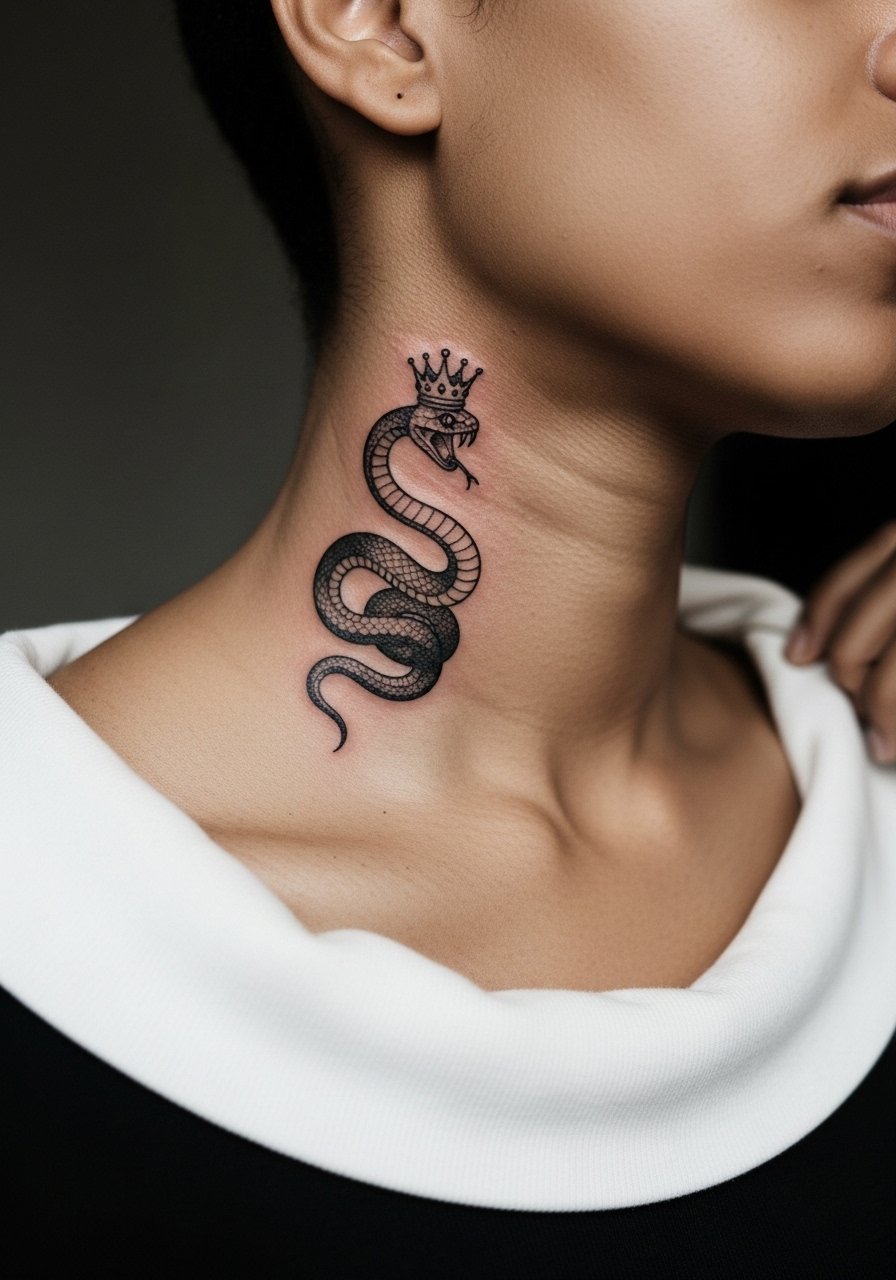
Neck tattoos age differently and sometimes affect professional options so think through visibility. Pain is higher and sessions are short but intense. Ask your artist about needle depth for neck skin because too shallow leaves patchy saturation. The common regret is choosing too much fine texture here. If you want the crowned asp effect, keep the crown simple and ask for contrast between crown and coil.
13. Micro ouroboros wrist loop
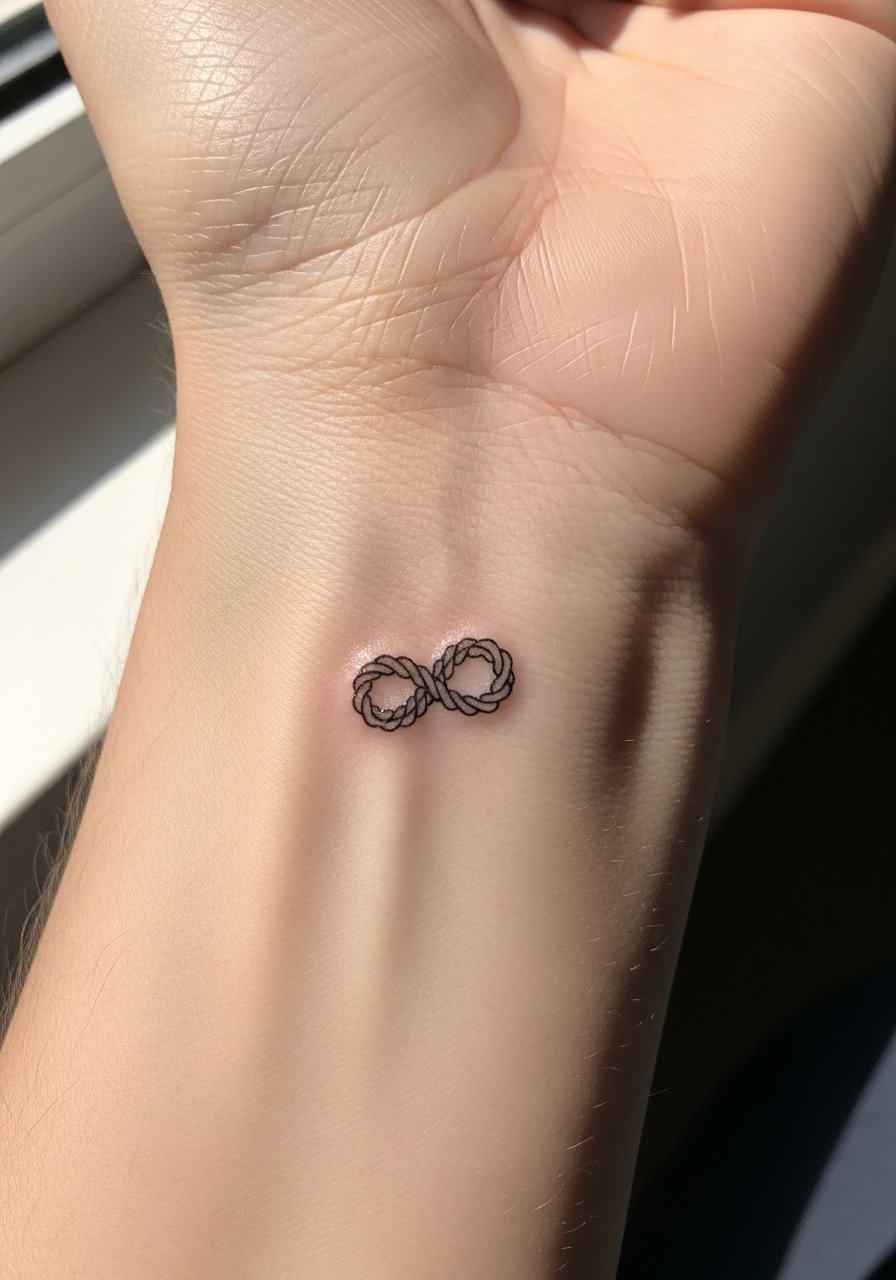
The ouroboros is compact and symbolic but the inner wrist is a friction zone. I have seen these last best when the line is slightly heavier and the circle kept at one inch or more. Sessions are brief and manageable but expect a higher chance of early touch-up. A frequent mistake is going under one inch. For showing and session comfort, swap tight bracelets for a quick thin leather cord bracelet so the area can breathe while still looking styled.
14. Tiny crowned snake on the outer upper arm
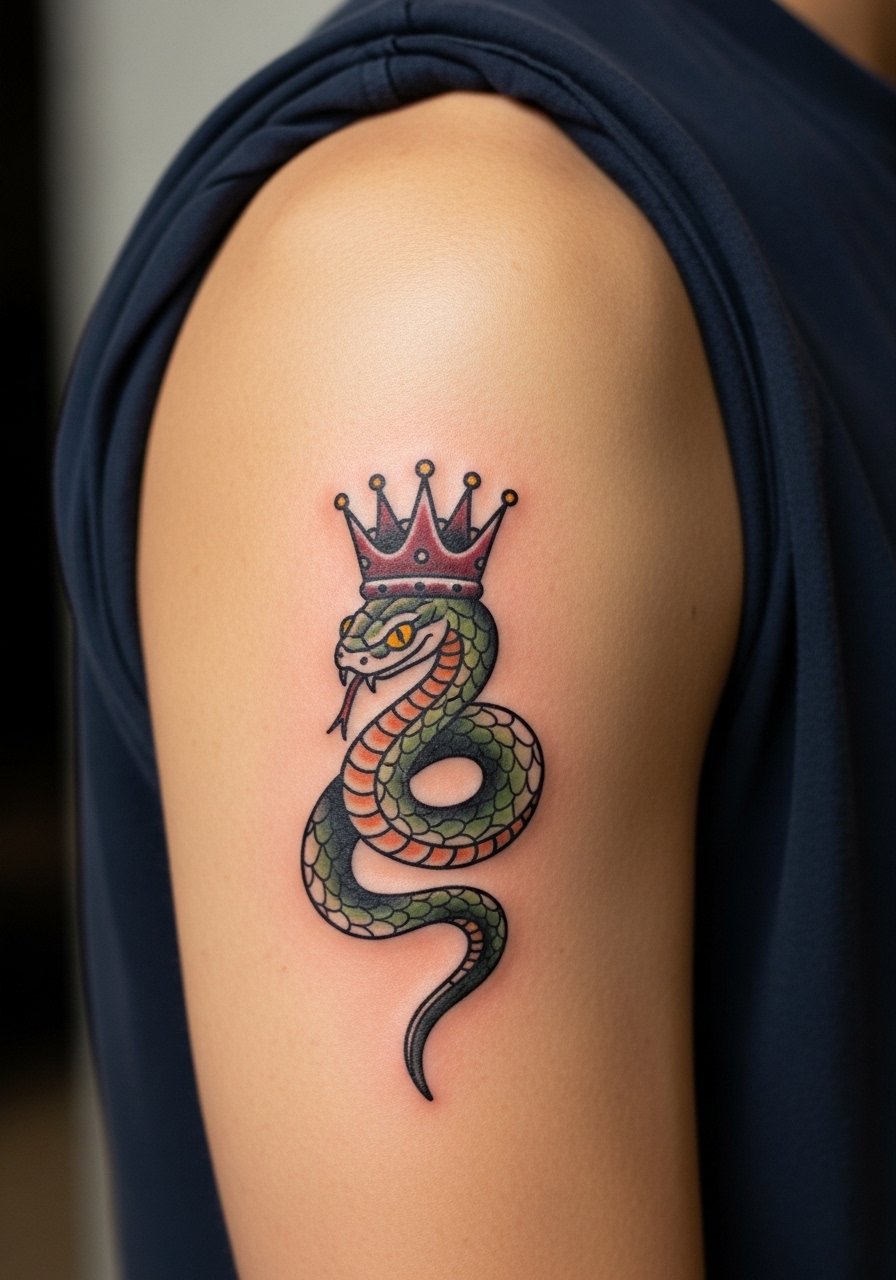
Outer upper arm is low pain and forgiving for small crowned motifs. Keep the crown geometry simple to avoid line fusion later. Sessions are short and usually done in a single visit. A mistake is packing micro dots into the crown which can look mottled after healing. For daytime wear, a fitted tank top frames the outer arm without hiding the detail.
15. Tiny shed-scale hand tattoo over the knuckle
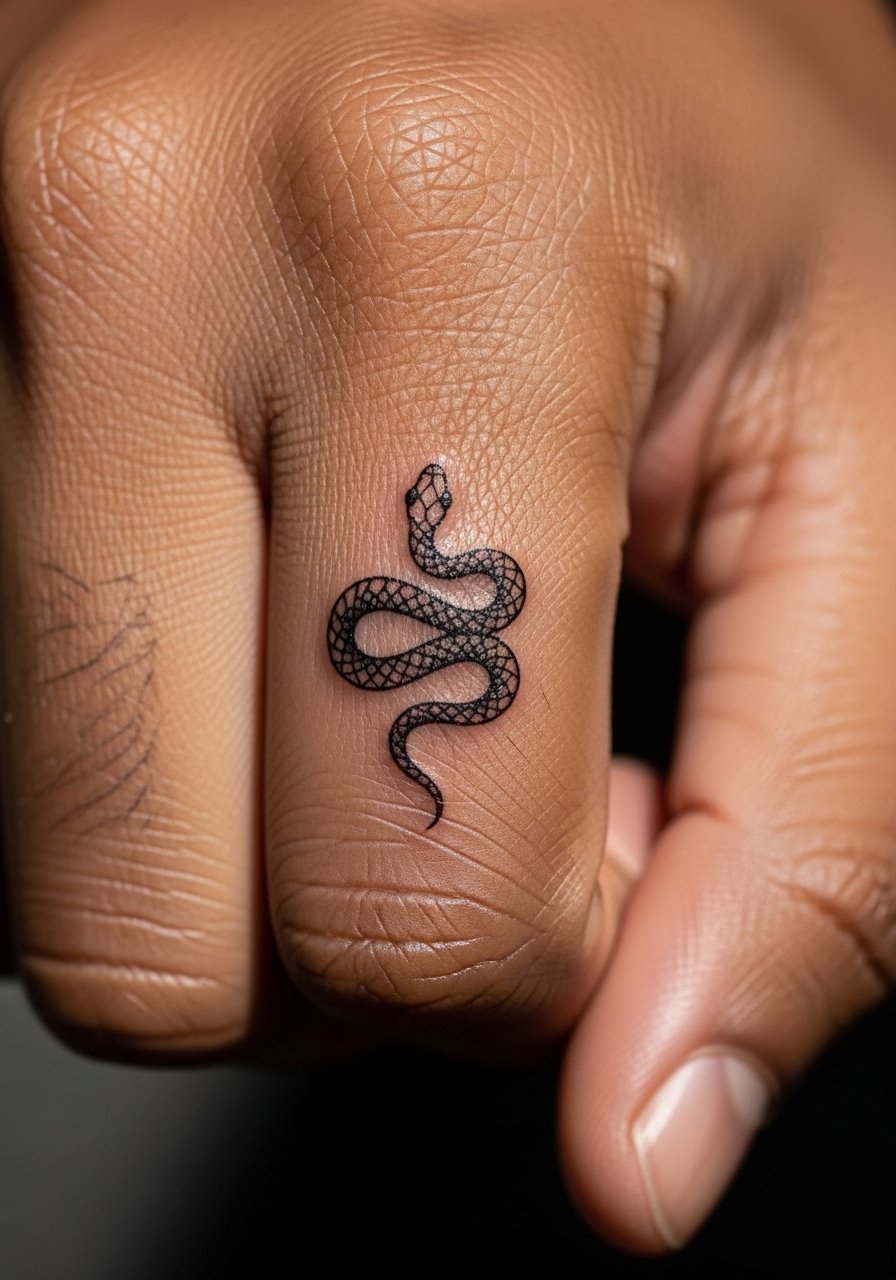
Hand and knuckle tattoos are exposed to frequent washing and sun. I caution that small detail fades fastest here and to expect touch-ups sooner. Pain is high and sessions are quick. The common error is asking for micro shading across the knuckle. For knuckle work, stark black contour and open negative space read longer.
16. Coiled vintage viper with stars on the forearm
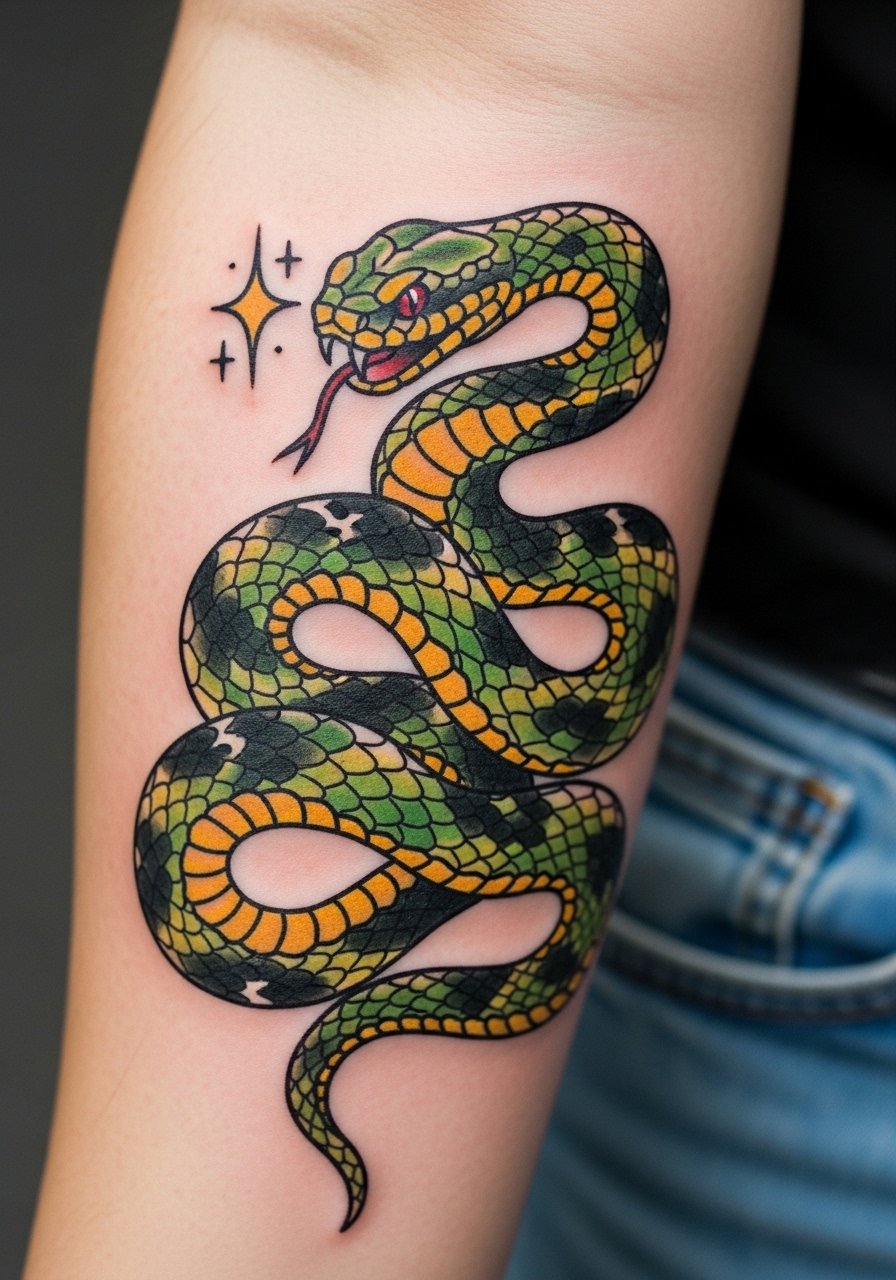
When I see star flash paired with a coiled viper the combo ages well because the stars offer breathing room. Ask your artist to keep the viper around two inches so color saturates evenly. Pain is moderate and you can expect a single session. A mistake is adding too many tiny stars which compete with the coil. For streetwear looks, roll sleeves or wear a chambray shirt so the forearm stays framed without overexposure.
17. Small snake around a vintage key on the ankle

This compact narrative piece works best with simplified key lines and a single clear coil path. Ankle friction is a factor so avoid micro shading inside the key. Sessions are under an hour but be ready for swelling after a long day. A typical mistake is asking for excessive color inside tight areas which then looks blotchy. Cuffed pants or shorts pair well so try cuffed chino pants for showing the ankle without rubbing.
18. Sternum-centered snake with moon phases

Sternum work reads dramatic when framed by a tight vertical design but it can hurt more than expected. I recommend clean negative space between moons and minimal interior shading to prevent pooling. Sessions can feel intense and may need breaks. The common regret is trying to cram too many moons into a narrow band. Discuss touch-up expectations ahead of time since the sternum moves a lot.
19. Micro garden snake peeking from behind the ear
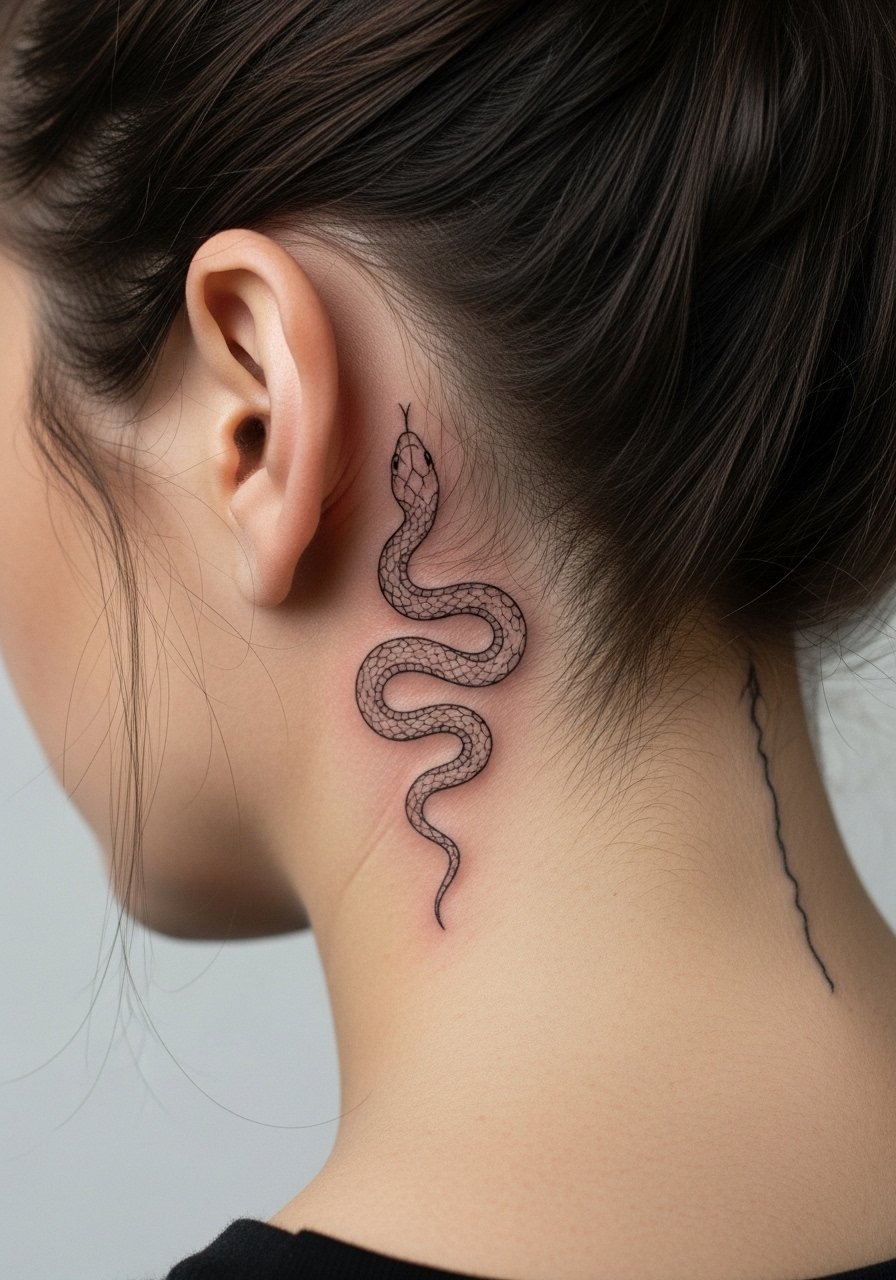
This discreet placement is easy to hide and shows subtly with certain hair styles. Keep the design under an inch and favor a single clear silhouette. Pain is brief and shallow. A mistake is asking for color gradients near the hairline which can look patchy. Because of hair coverage, test a temporary stencil to see if it reads the same in daily life.
20. Rattlesnake band around the calf with segmented rattle
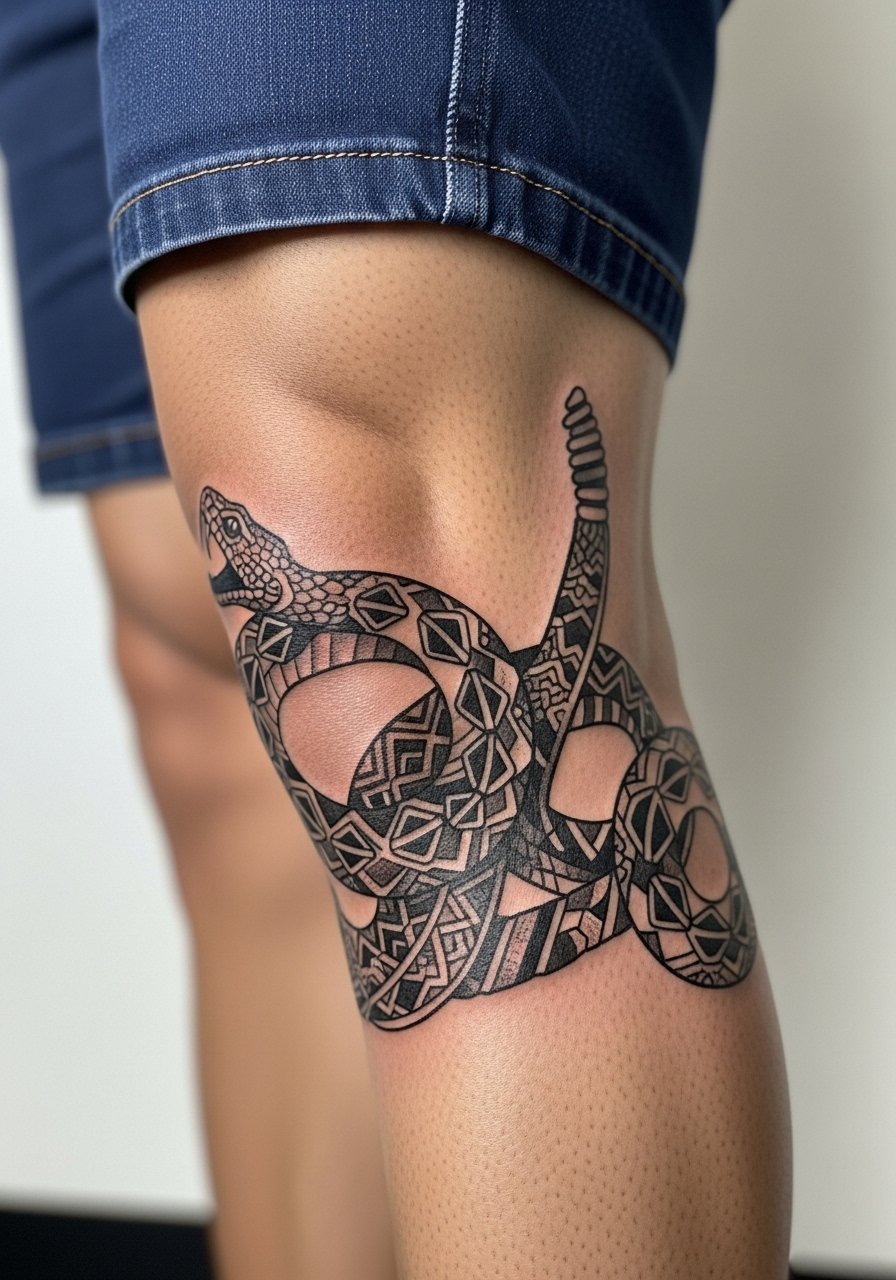
Full calf bands suit denser blackwork and hold up well because the skin moves little. I recommend strong contrast between each rattle segment and spaced negative lines to avoid the band reading as a solid block. Pain is moderate and sessions can run an hour. The common mistake is trying to cram scales into a narrow band. For casual looks, rolled joggers and olive jogger pants keep the calf visible without pressure on fresh work.
21. Tiny ring snake that curls around the finger base
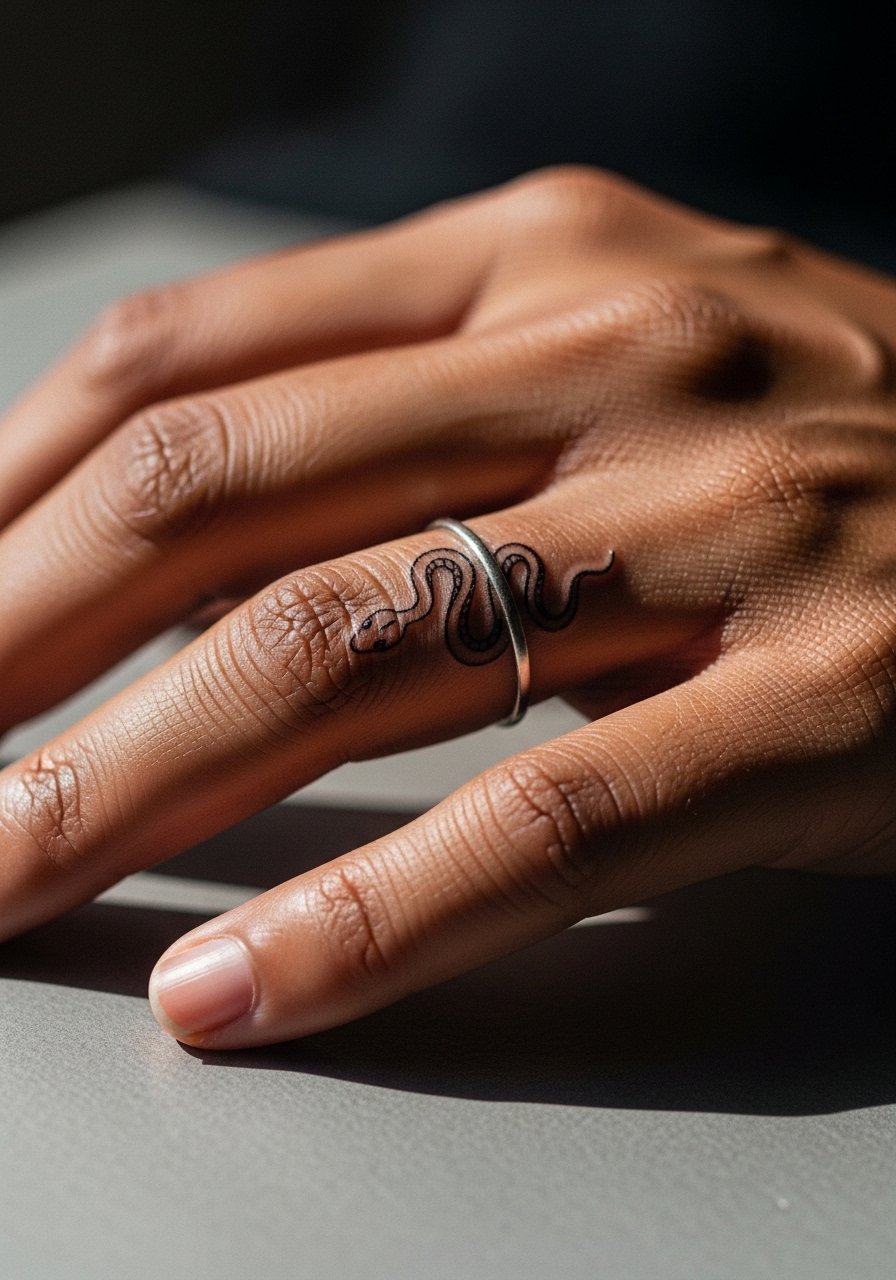
Finger-band snakes look charming but they demand maintenance because rings and washing accelerate fading. I suggest a slightly thicker lineweight for longevity and expect touch-ups in one to three years. Sessions are quick and sharp. A mistake is adding interior texture that the finger cannot hold. Consider wearing a thin ring that is not snug until the work heals fully.
22. Shoulder blade vintage snake loop

Shoulder blade tattoos have good longevity because they sit on stable skin. I advise a two to three inch loop with deliberate spacing so scales keep their form over time. Pain is low to moderate and sessions are pleasant for most people. A common error is compressing the loop into a small area that later looks tight when the shoulder moves. For sessions, wear a loose button-down shirt you can pull aside for clear access.
23. Small snake entwined with a tiny key near the collarbone

This collarbone vignette works when the key is simplified and the snake wraps once for balance. Keep lines clean to prevent the tiny key interior from clogging. Pain is moderate and sessions are short. A mistake is asking for filigree inside the key which vanishes on healing. For wear, a v neck cotton tee frames the piece without obscuring it.
24. Micro coiled ankle snake, barely there
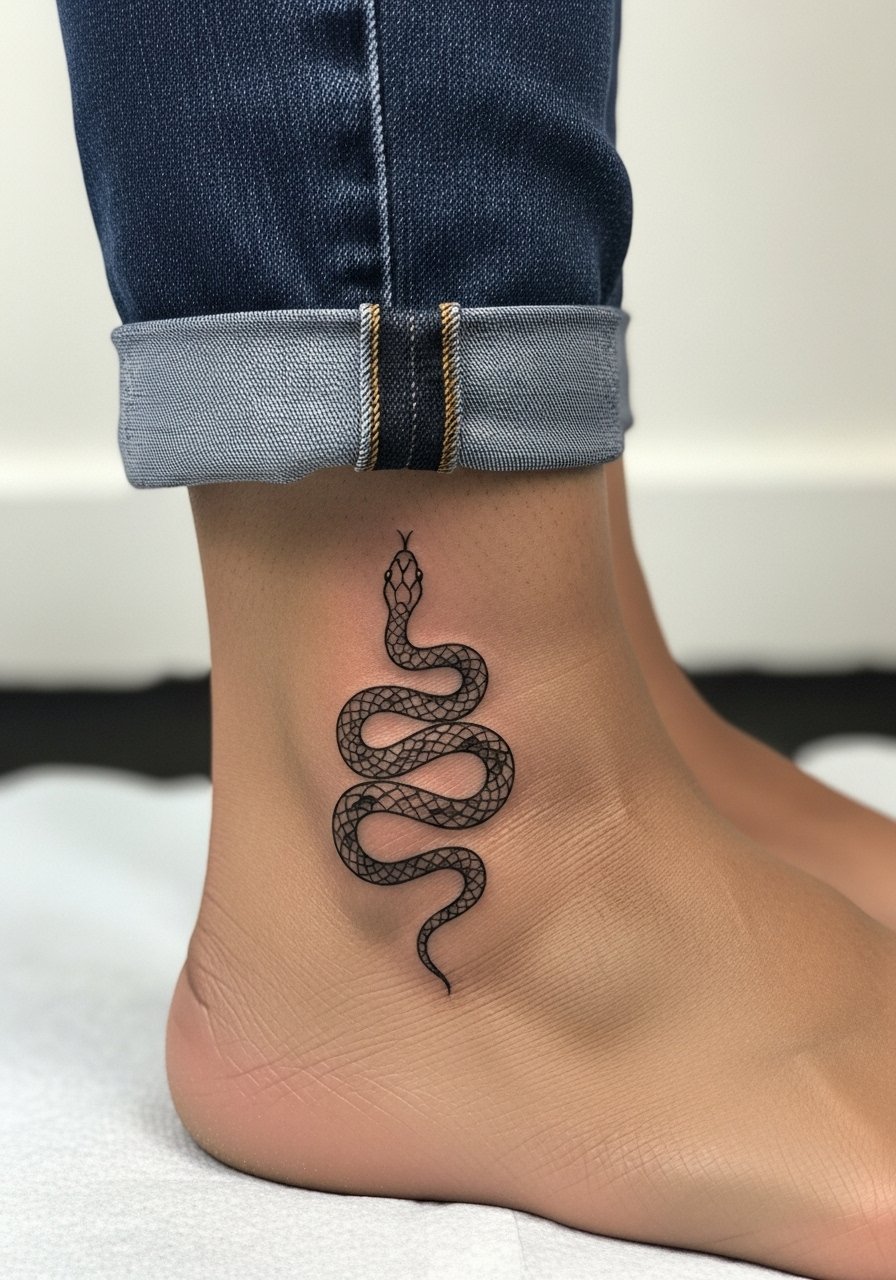
Micro ankle coils are subtle but live in a high-friction zone. I suggest a slightly heavier contour so the circle stays defined and to avoid interior stipple. Expect brief pain and a short session. The usual regret is making it so small it vanishes in a year. For styling, sandals and cropped pants show the coil nicely. Try cuffed chino pants when you want a neat reveal.
25. Mini cobra hood crest on the outer upper arm

Outer upper arm cobras are a classic that tolerate modest shading if kept at two inches. Ask for open highlights in the hood so the shape keeps reading over time. Pain is low and sessions are quick. A common mistake is asking for too much stipple inside the hood which can look grainy later. For showing off, a fitted tank top keeps the shape clean and visible.
26. Slender throat-side snake in monochrome
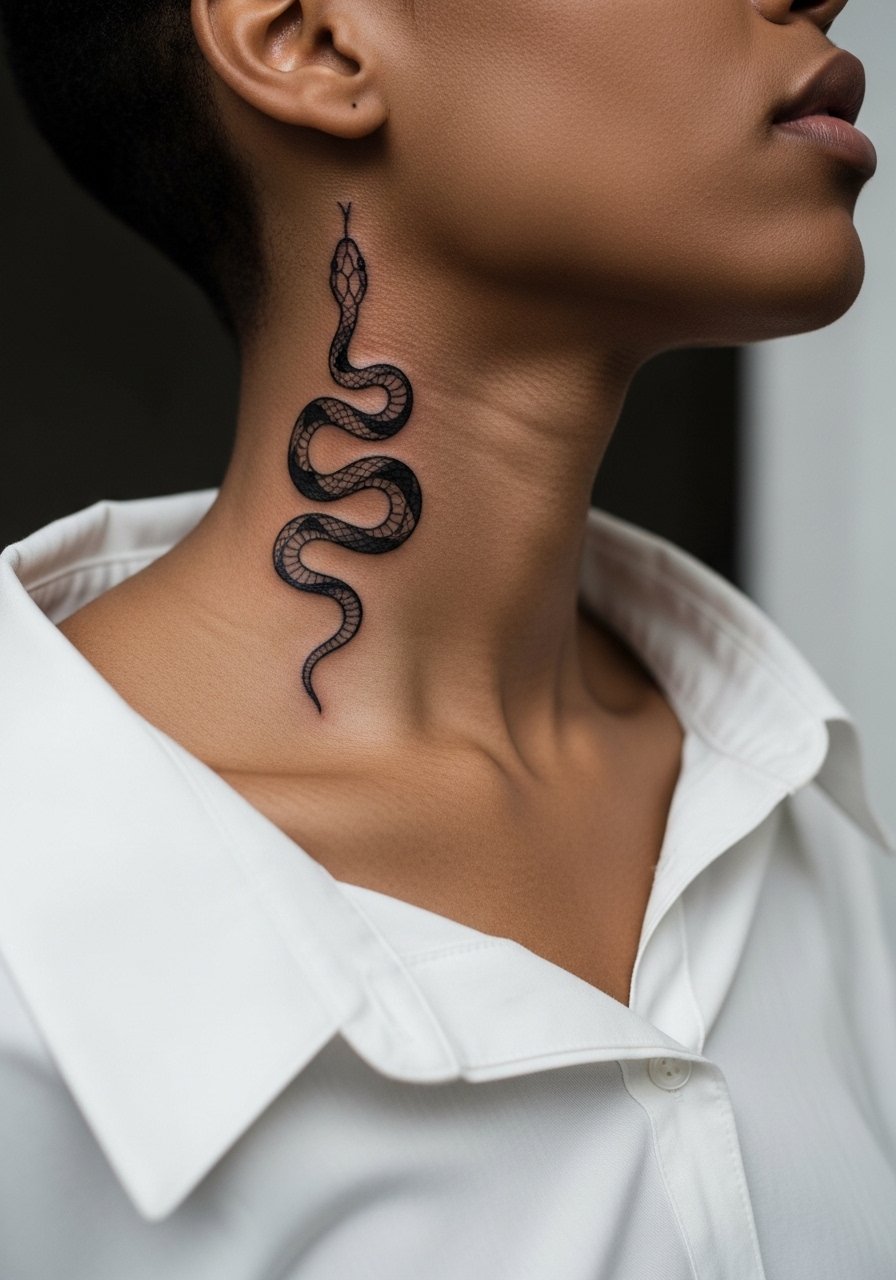
Side-neck placement reads bold and immediate, and it can affect job perceptions so consider visibility. Pain is higher and sessions can feel intense. I advise a simple monochrome approach and to avoid micro detail that will blur. The mistake is packing texture into the throat-side coil. If you pick this spot, talk to the artist about exact depth and a realistic touch-up timeline.
27. Vintage python loop with floral accents on the thigh
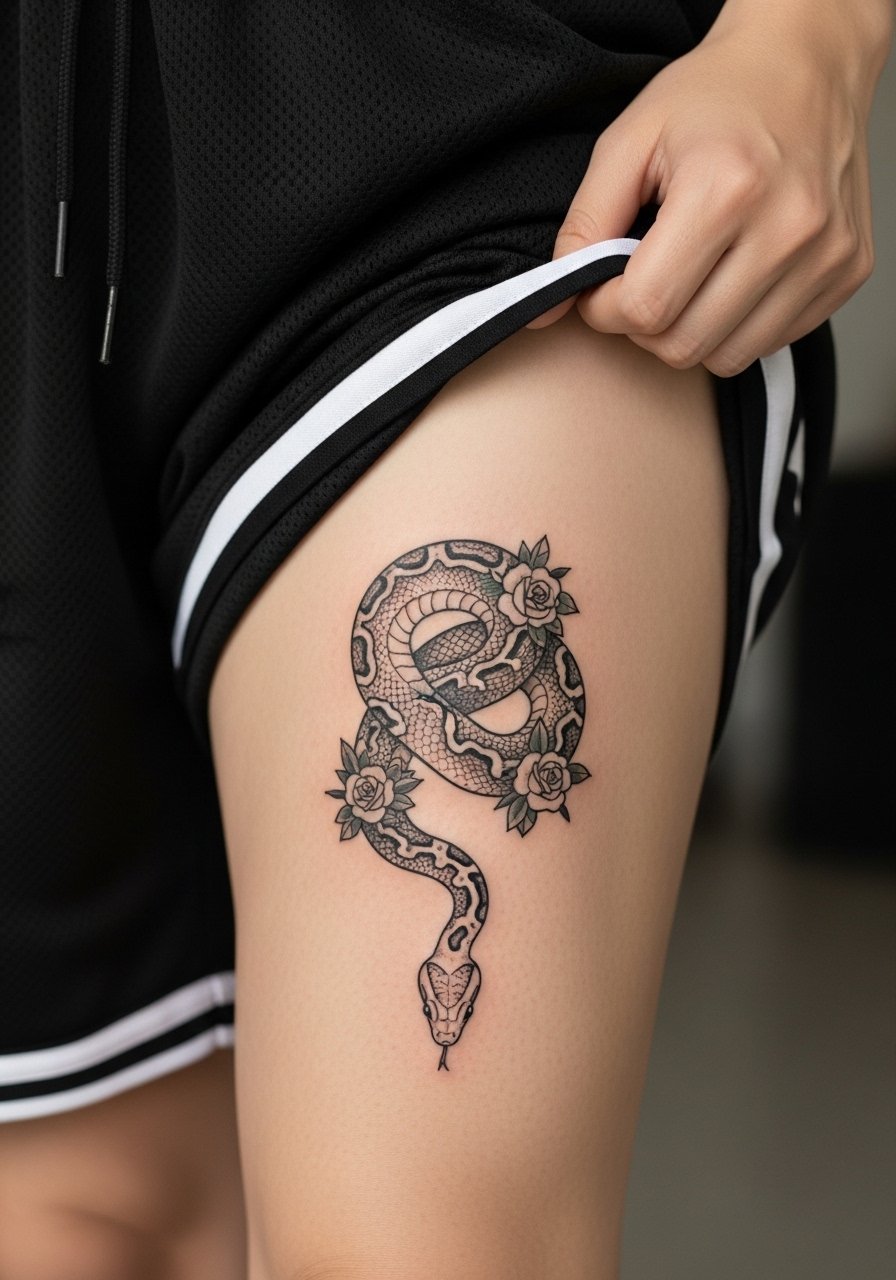
Thigh loops allow for playful vintage accents and they age well because the skin stretches less dynamically than joints. I recommend keeping roses simple and leaving negative space between scales. Pain is moderate and sessions usually finish in one sitting for small pieces. A common error is over-shading the floral elements which can overwhelm the python loop. For casual display, high-waisted shorts in black highlight the thigh area and keep the design visible during warm months.
Frequently Asked Questions
Q: Will fine line vintage snakes fade faster than old-school saturated snakes on darker skin tones?
A: From what I have seen, single-needle fine line work tends to show loss sooner on darker skin if the artist uses very thin strokes. Thicker single-needle depth and simplified shapes help. For darker skin consider slightly heavier contour and reduced interior dotting so the design stays legible.
Q: How much should I budget for a small vintage snake and possible touch-ups?
A: Small pieces vary by studio and city, but expect a short session cost and budget for a touch-up within two to three years if the work is fine line. If pricing feels high, look for reputable guest spots or apprentices who work under supervision for lower rates without sacrificing care.
Q: How does ankle placement change with weight gain or seasonality?
A: The ankle is prone to appearance shifts with swelling or weight changes because it sits over bony and flexible areas. I recommend designs with clear negative space and limitations on intricate shading. If you plan body changes, pick forearm or thigh placements that flex more gracefully.
Q: Artists disagree about Saniderm versus dry healing. Which camp is better for small snakes?
A: Both camps have arguments. One side prefers Saniderm for a protected, clean early phase. The other side favors dry healing for scab development that preserves thick linework. For small snakes I recommend talking to your artist about the product they know best and following their specific timeline since technique matters more than the brand.
Q: Is numbing cream okay for wrist tattoos or does it affect the result?
A: Numbing takes the edge off sharp wrist pain and many clients use it with no issues. Some old-school artists dislike numbing because it changes sensation feedback. Tell your artist if you plan to use it so they can adjust timing and check how the skin accepts ink during the session.
Q: Should I test a vintage snake with a temporary before booking?
A: Yes, testing placement with a temporary stencil or custom temporary tattoo helps you see scale and movement in real life. It is especially useful for collarbone, wrist, and behind-ear placements where the size reads differently in photos than on skin.