
Fine line jasmine designs look delicate on the stencil and fragile after a few years unless the placement and spacing are planned. Expect soreness on rib and sternum pieces, confusion about aftercare for tiny linework, and questions about whether a delicate piece will need touch-ups in a few years. These ideas skip the trending-only options and focus on versions that heal and still read as jasmine over time.
1. Fine Line Jasmine Sprig on Inner Forearm
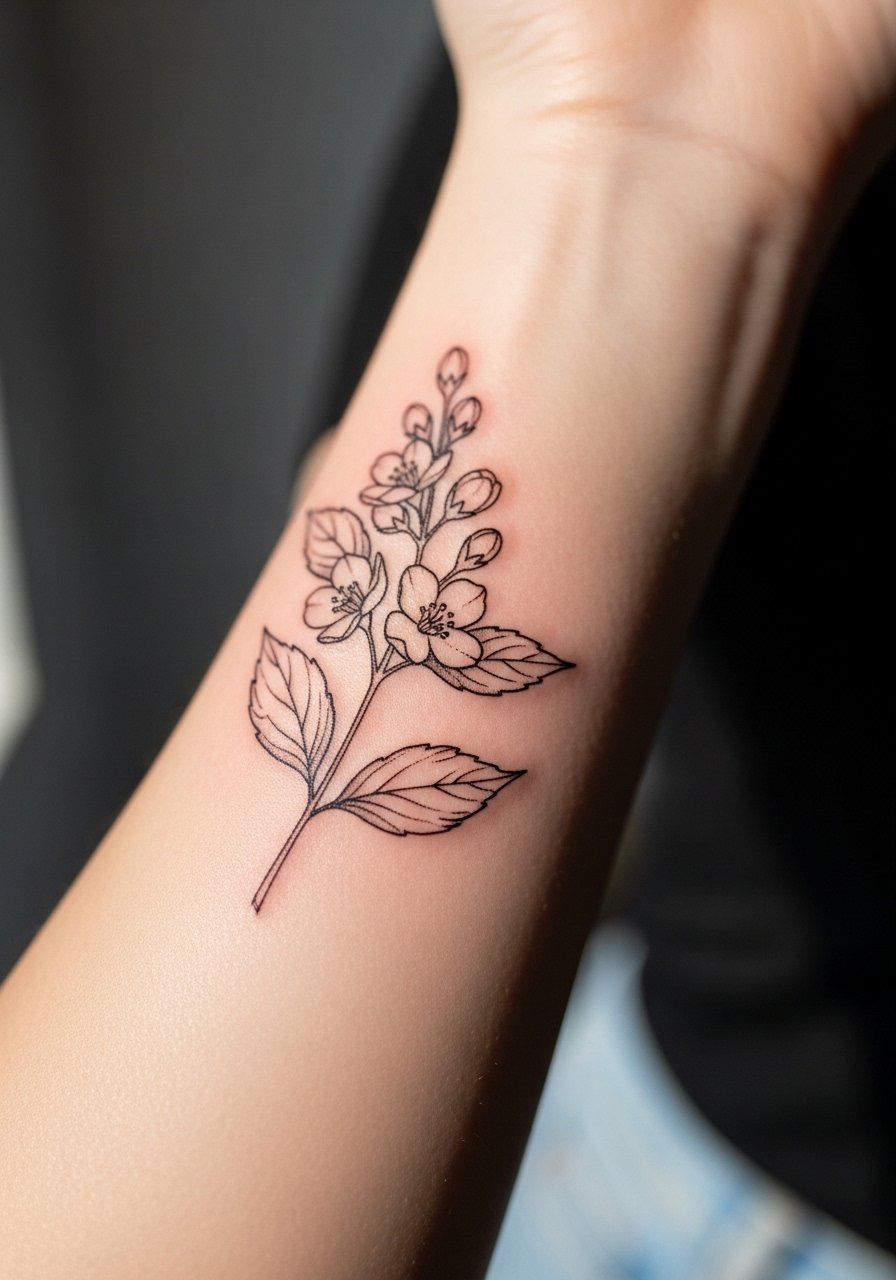
This is the go-to for first timers who want botanical detail without heavy saturation. I recommend a single sprig with slightly increased spacing between leaves so the linework does not merge over time. Tell your artist you want softer needle depth and a sketch showing the exact stem curve. Expect a 3 to 4 out of 10 on pain and a one-hour session for a small sprig. Common mistakes are asking for ultra-thin single lines that disappear after two years. For showing it off, roll sleeves and pair with a racerback tank to keep the forearm visible.
2. Tiny Jasmine Cluster Behind the Ear
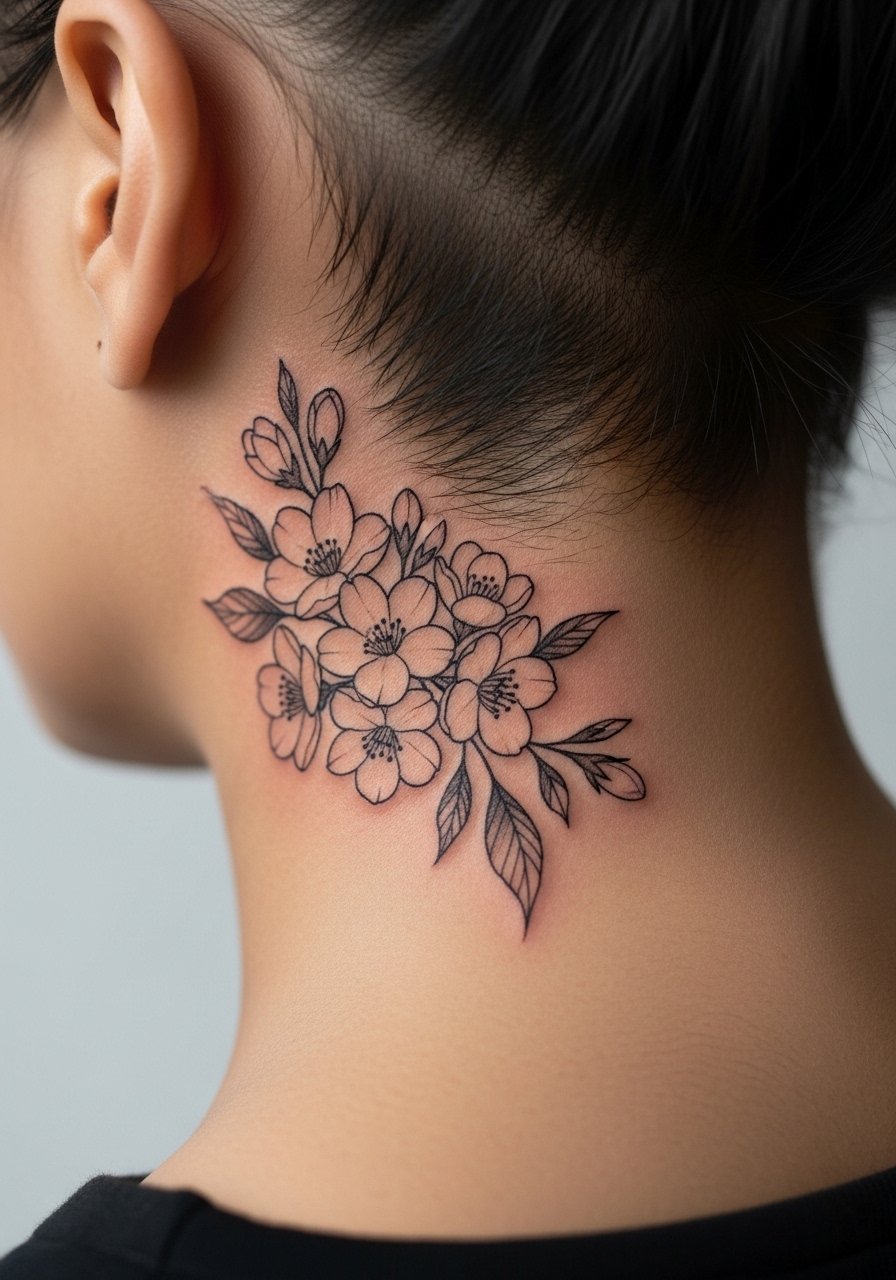
A behind-the-ear cluster reads like jewelry when placed right. This location needs a precise stencil because hair movement can hide small flaws. Pain is low but the area is fiddly during application, so expect quick breaks. Artists debate whether fine detail lasts here. One camp says hair oils and friction blur detail in under two years. The other camp says careful placement and modest spacing keep it readable. Mention both concerns in consultation. For the session, tuck hair behind the ear and wear a wide-neck shirt so the artist can access the spot.
3. Micro-Realism Jasmine on the Collarbone
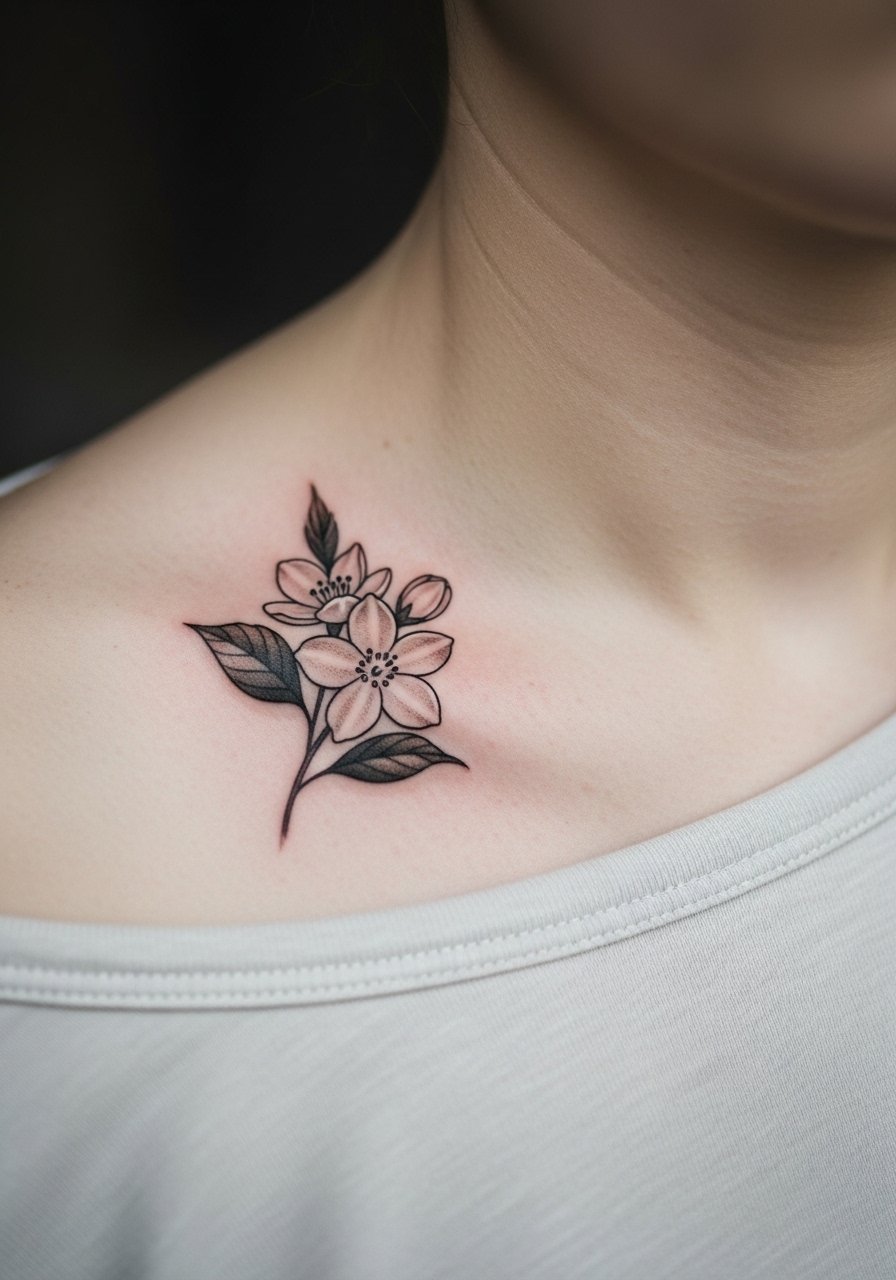
Micro-realism captures petal texture but asks for a calm artist who has healed examples. This placement is visible and ages with sun exposure, so plan for sunscreen. A common mistake is compressing too much detail into a tiny area. Ask for a slightly larger bloom and a reference showing healed micro-realism. Session time is often 1.5 hours and pain is moderate because the collarbone is bony. Pair this with open-neck tops and a thin chain pendant necklace that sits just above the flower.
4. Minimalist Outline Jasmine on the Wrist
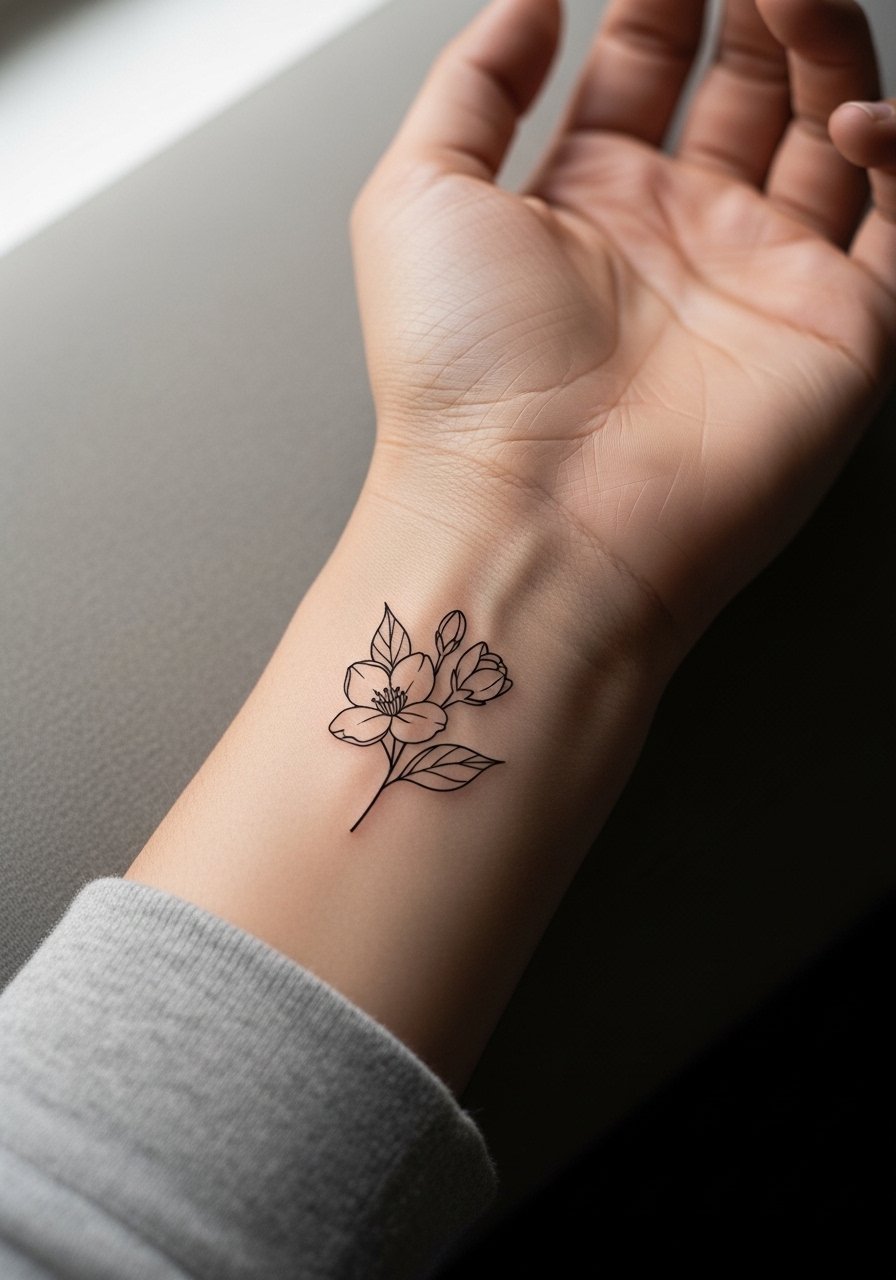
Wrist pieces are show-off tattoos and they face constant washing and abrasion, which speeds fading. For wrists, ask the artist to use slightly bolder linework than you think you need. Common errors are asking for wispy single hairs of line that blur into a smudge within a year. Expect a short session under an hour and a 4 to 5 pain rating from the thin skin. Styling pairs well with stacked bracelets or a minimalist watch that does not sit directly over the design.
5. Watercolor Jasmine Cluster on the Shoulder Blade
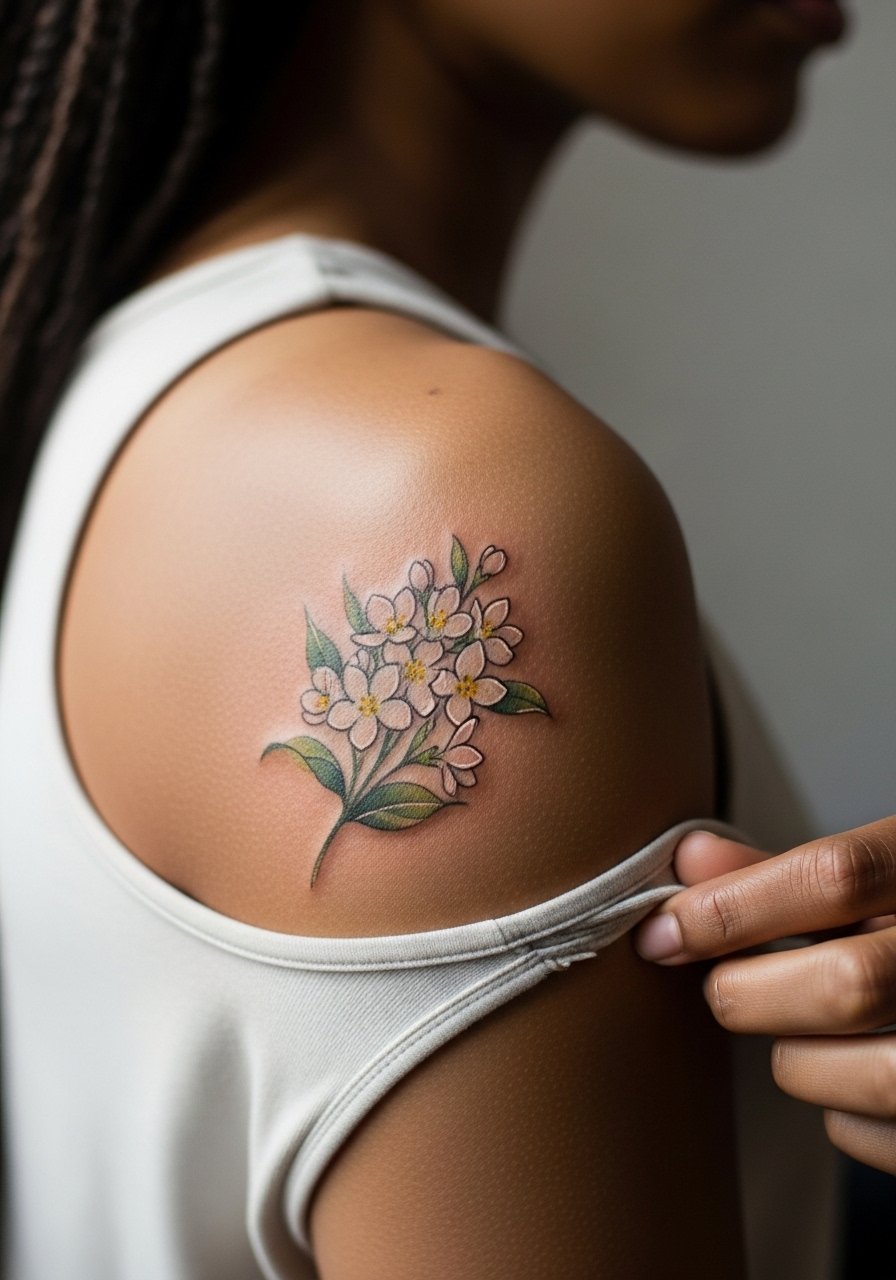
Watercolor gives floating color without harsh outlines but tends to fade unevenly if overblended. For shoulder blades, ask for a faint outline to anchor the color so the petals stay readable as they heal. Sessions often run 2 hours for clusters and pain is mild to moderate. A common mistake is asking for sprawling washes with no anchor points. For the session wear a loose tank so the artist can move your shoulder freely and consider open-back dresses to show it off with a open-back midi dress.
6. Geometric Jasmine Mandala Along the Spine
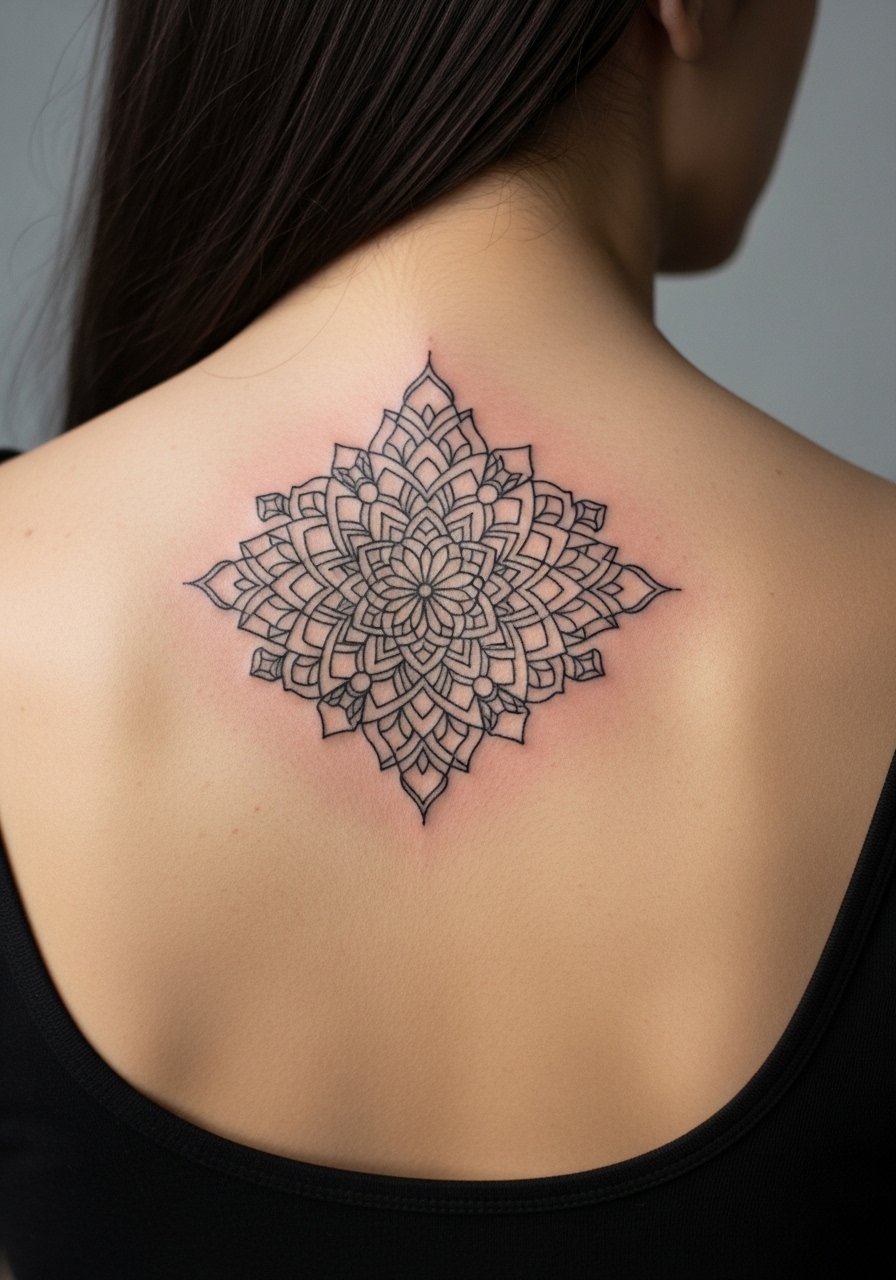
A mandala that incorporates jasmine petals balances organic and geometric shape, which helps the design age. Spine pieces are sensitive so expect longer breaks. The big debate here is whether dense geometry should sit close to the spine where skin movement causes line merging. One group warns dense geometry there becomes muddy after a few years. The other group says increased spacing and varied line weight prevent that. Tell your artist you want breathing room between petals and allow for a two to three hour session. Pair with tops that show the upper back and a low racerback top for evenings out.
Studio Day Picks
The first six ideas include wrist, collarbone, spine, and shoulder placements that demand different prep, so pack items that make the session smoother and the first week easier.
-
Stencil transfer paper kit. Lets you preview exact placement and line spacing on skin, which is useful for the fine line and micro-realism options above.
-
Topical numbing cream. Applied as directed before a session helps with sensitive rib and sternum pieces without changing linework when used properly.
-
Thin protective film roll. Protects small wrist and finger tattoos from friction during the first few days of heavy hand use.
-
Fragrance-free body wash. Gentle cleansing protects delicate jasmine linework during daily showers.
-
Aquaphor healing ointment. A thin layer helps lock in moisture for tight linework while you wait for scabbing to settle.
7. Single Jasmine Bud on the Finger Side
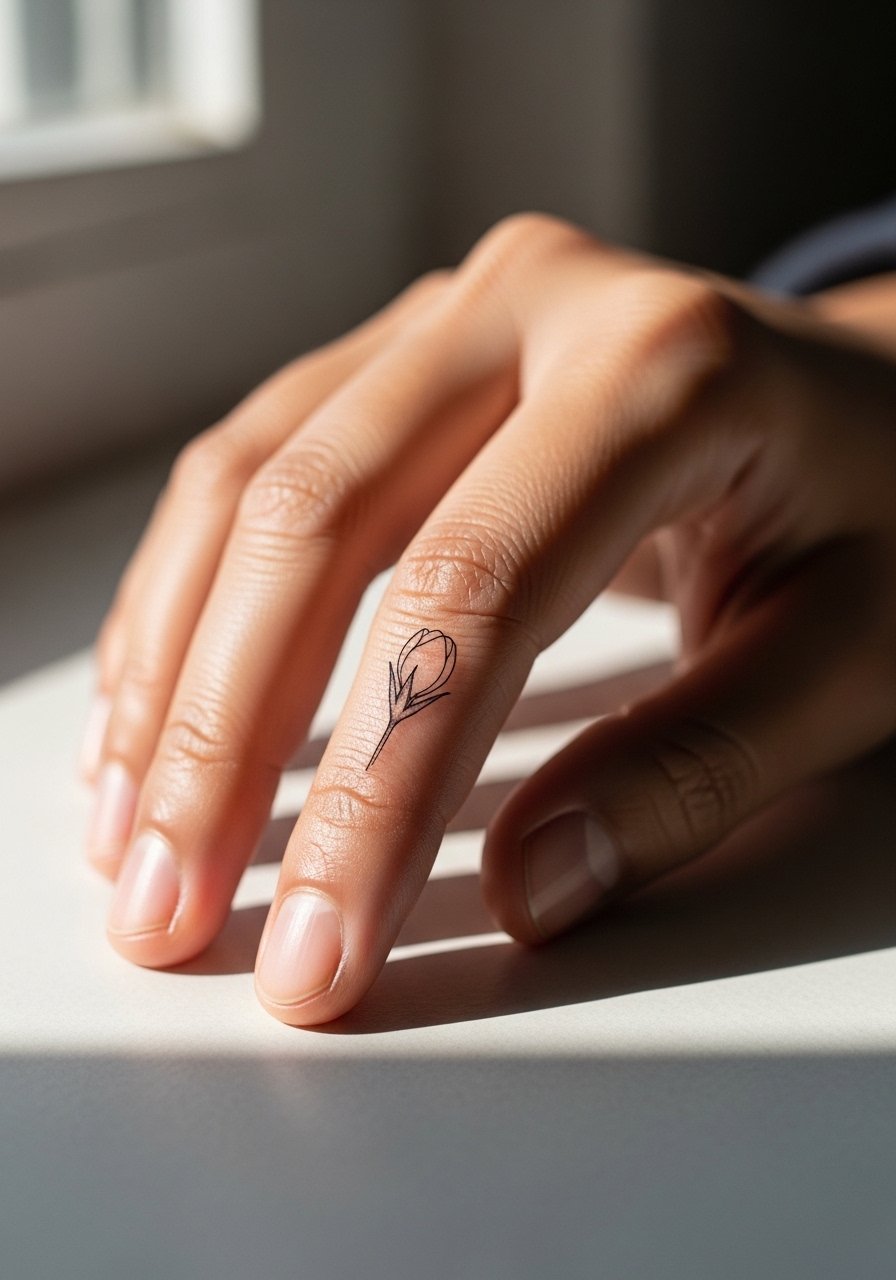
Finger tattoos take heavy wear from hand washing and objects, so they fade faster than other spots. For a finger jasmine, request slightly thicker outline and minimal interior detail. Common mistakes are asking for micro detail that disappears after the first year. Sessions are quick but often require touch-ups at year one or two. Pain ticks higher because of bone proximity. Style with stacked rings that sit away from the tattoo rather than directly on top to avoid rubbing, and consider a thin band ring set to complement the bud.
8. Full Jasmine Sleeve Accent Along the Forearm
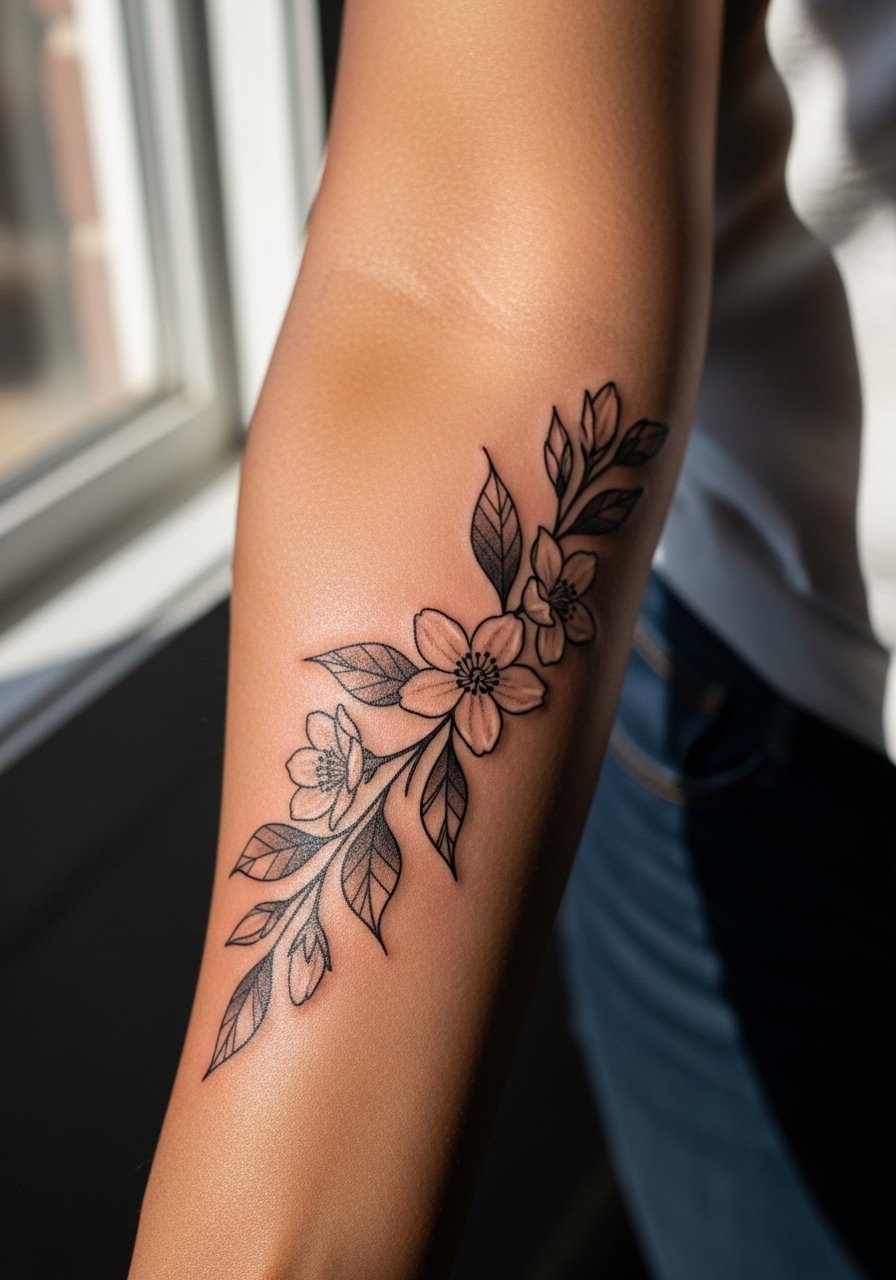
A sleeve accent uses jasmine vines as filler between larger motifs and it wears well because of scaled spacing. When booking, clarify session pacing and request a mockup that shows healed spacing. The session time spans multiple appointments and pain is steady but tolerable on the forearm. A frequent error is overcrowding with tiny overlaps that age into blotches. Tell your artist you want negative space between sprays. For show-off outfits, roll sleeves and wear a loose linen button-down to frame the artwork.
9. Jasmine Wristband Tattoo That Circles the Wrist
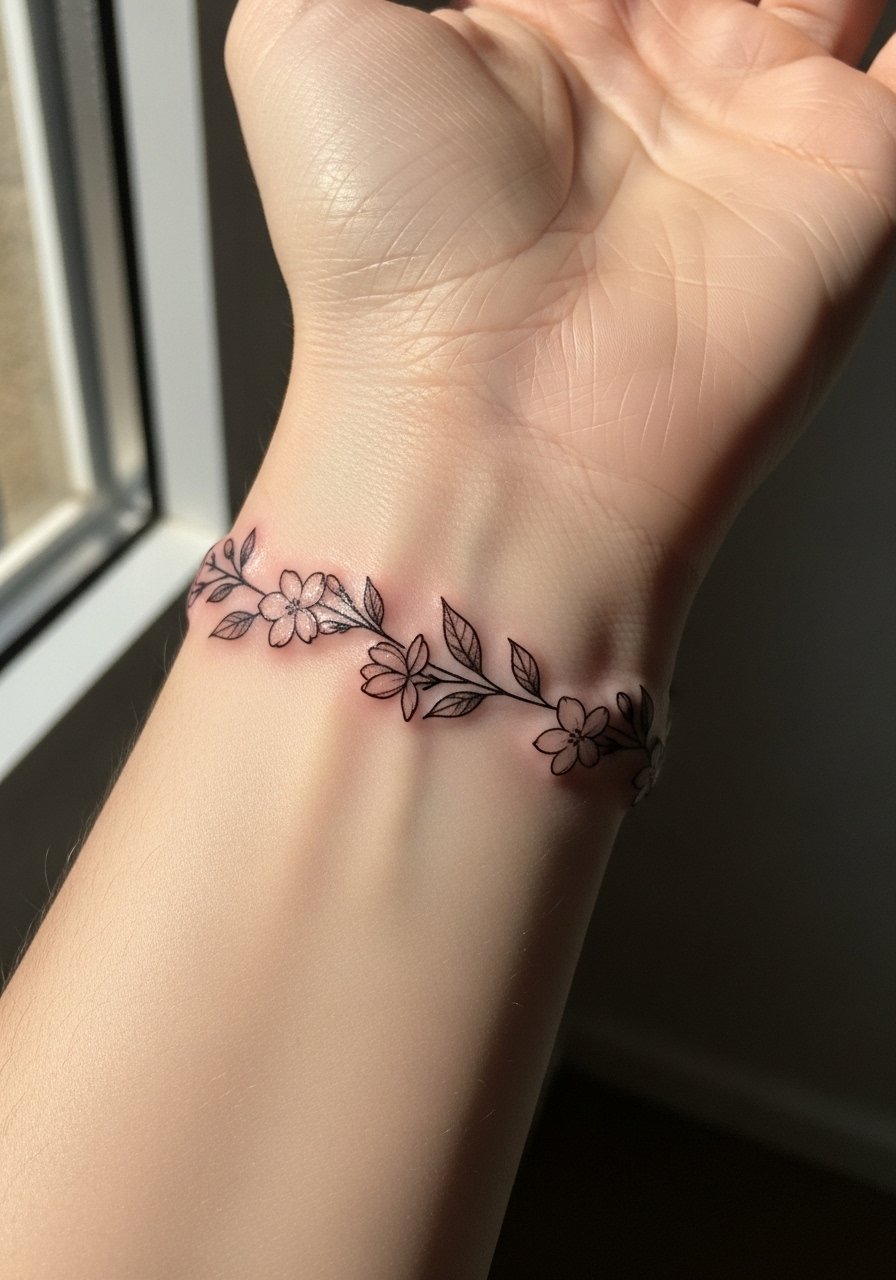
A wristband gives a bracelet effect without adding jewelry every day. Expect more touch-ups because the wrist rubs clothing and accessories. Tell your artist you want slightly bolder outline on the inner edge to prevent early break-in. A common mistake is making petals too small around the curve which causes blurring. Sessions are under an hour and pain is moderate. Pair with minimal bracelets that sit adjacent rather than over the band and try a minimalist bracelet set to highlight the design.
10. Single Jasmine Bloom on the Ankle
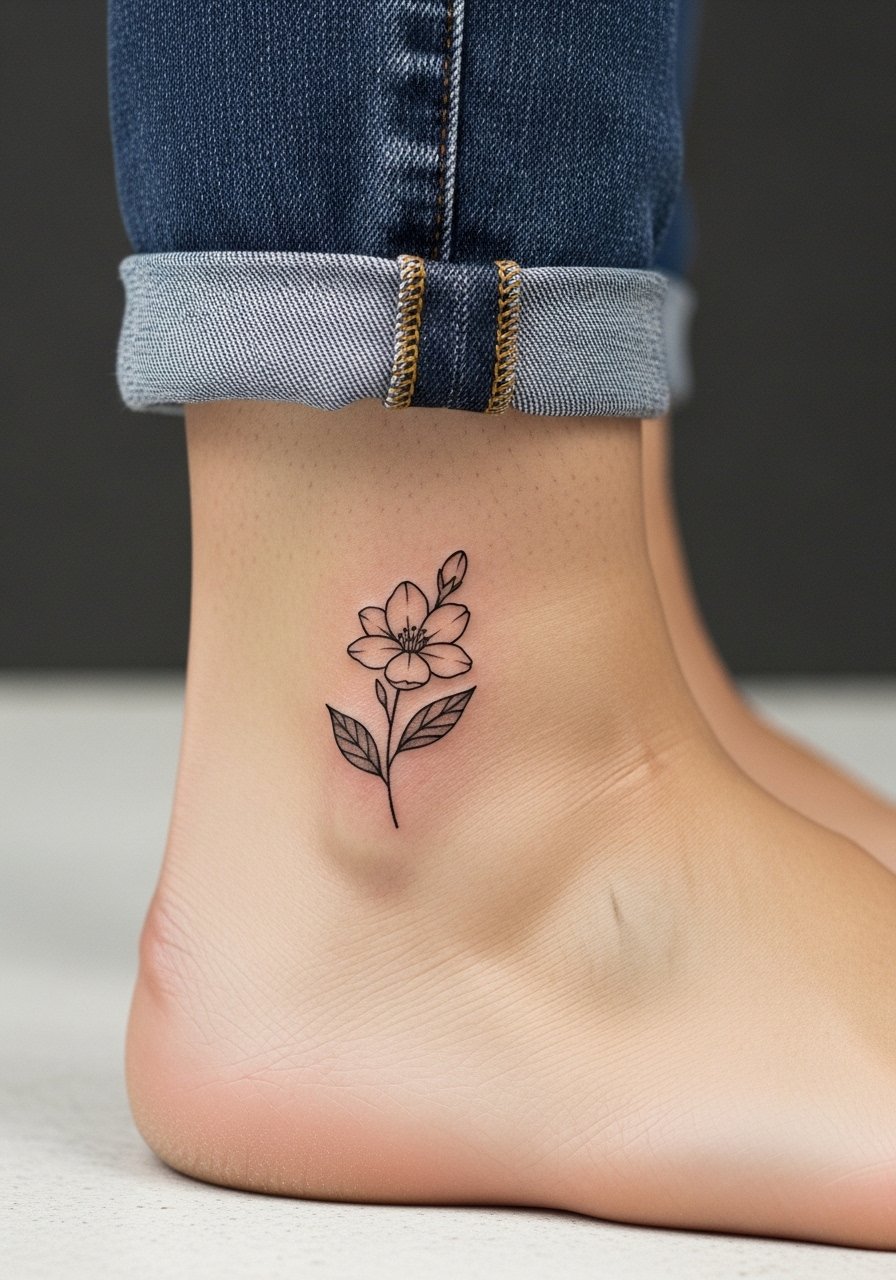
Ankle tattoos are charming but face friction from shoes and socks which speeds fading. For ankle blooms, request the artist leave a small margin of negative space so the petals retain shape as they fade. Sessions are short and pain can spike where bone is shallow. The common error is packing too much shading into a small ankle piece. Show it off with cropped pants or a skirt and a pair of slide sandals.
11. Delicate Jasmine Script Along the Ribcage
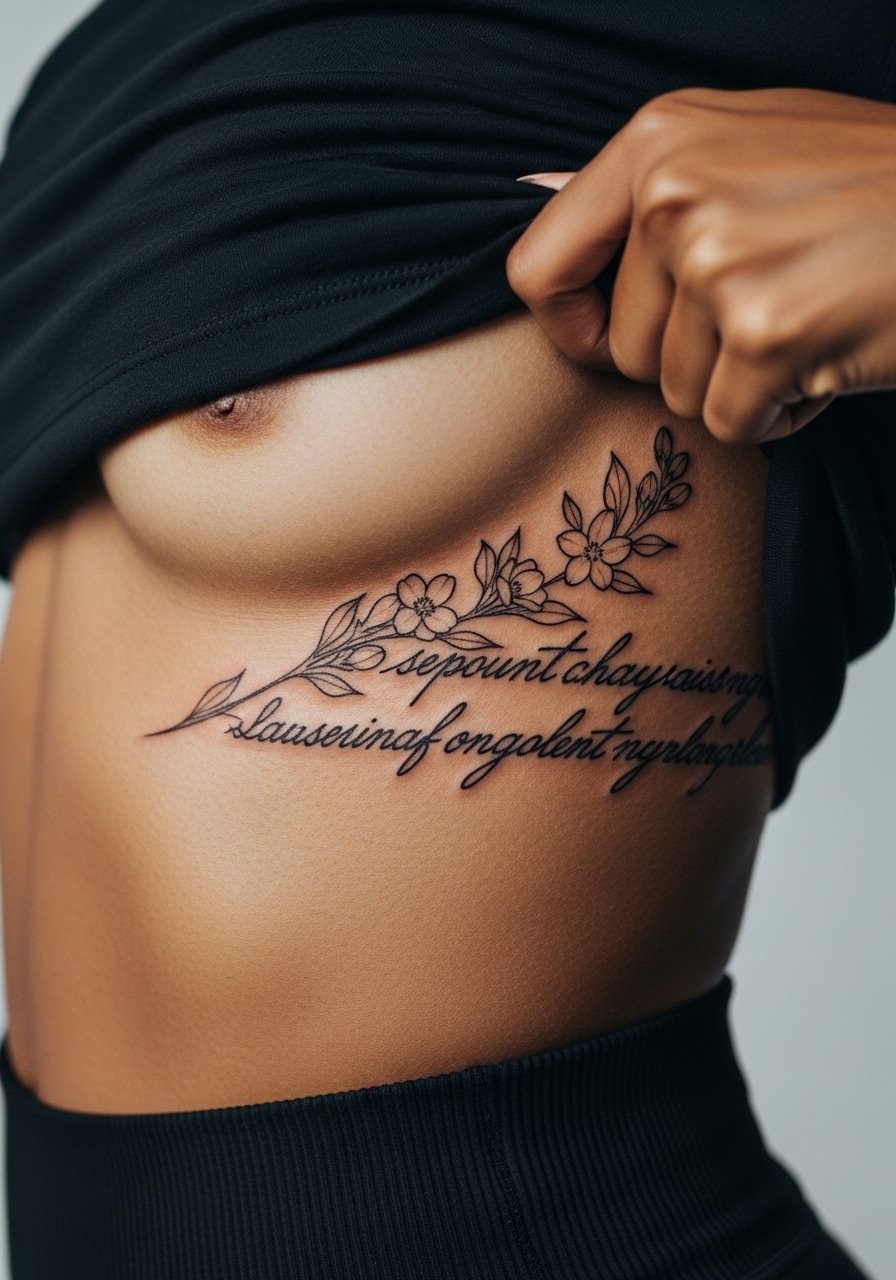
Ribcage tattoos are vivid but painful and they stretch with body movement, which is why artists split into camps. One camp warns that fine line on ribs blurs within two years due to skin stretch. The other camp argues that careful needle depth and spacing keep lines crisp. If you choose this location, ask which approach the artist uses and request touch-up expectations. Sessions are long and pain is significant for most people. Wear a loose sports bra for the session and plan for a recovery day.
12. Tiny Jasmine on the Back of the Hand
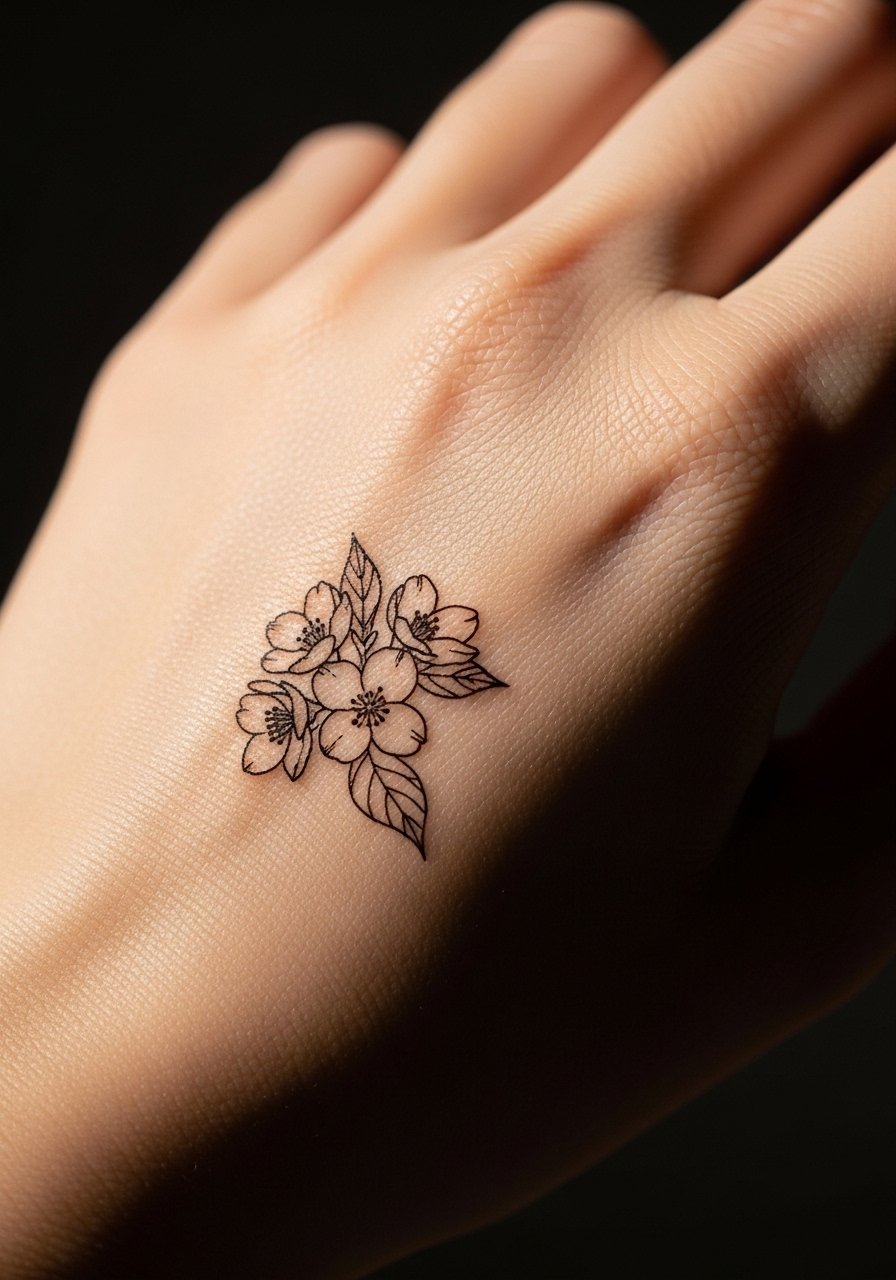
Hand tattoos still affect some workplaces so think about career implications before committing. They also face heavy abrasion which often means frequent touch-ups. For a back-of-hand jasmine, ask for bolder outer lines and minimal inner detail so the design holds. Sessions are short but sometimes need a touch-up at year one. A common mistake is expecting the same lifespan as a forearm piece. Style with bracelets or a ring on the opposite hand to balance attention.
13. Jasmine Sprig Over the Shoulder Cap
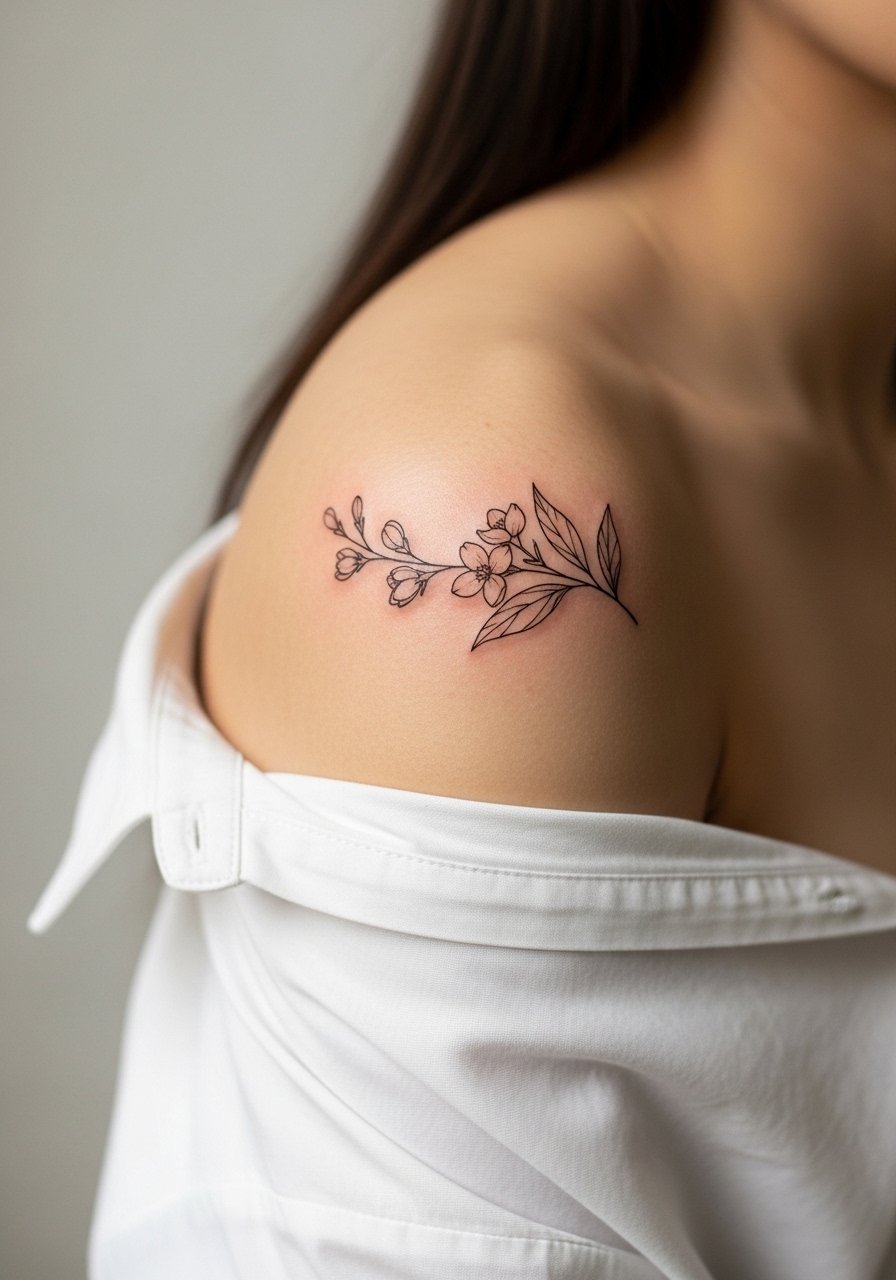
The shoulder cap gives the jasmine sprig room to breathe and it tends to age well because there is less friction than the wrist or hands. Ask for slightly firmer linework on the outer edge and softer inner strokes to add depth without extra saturation. Sessions are comfortable and usually one to two hours depending on size. A common mistake is crowding the sprig with other motifs too soon. For the appointment, wear a loose button-down shirt you can slide off one shoulder easily.
14. Mirror-Image Jasmine Anklet on Both Ankles
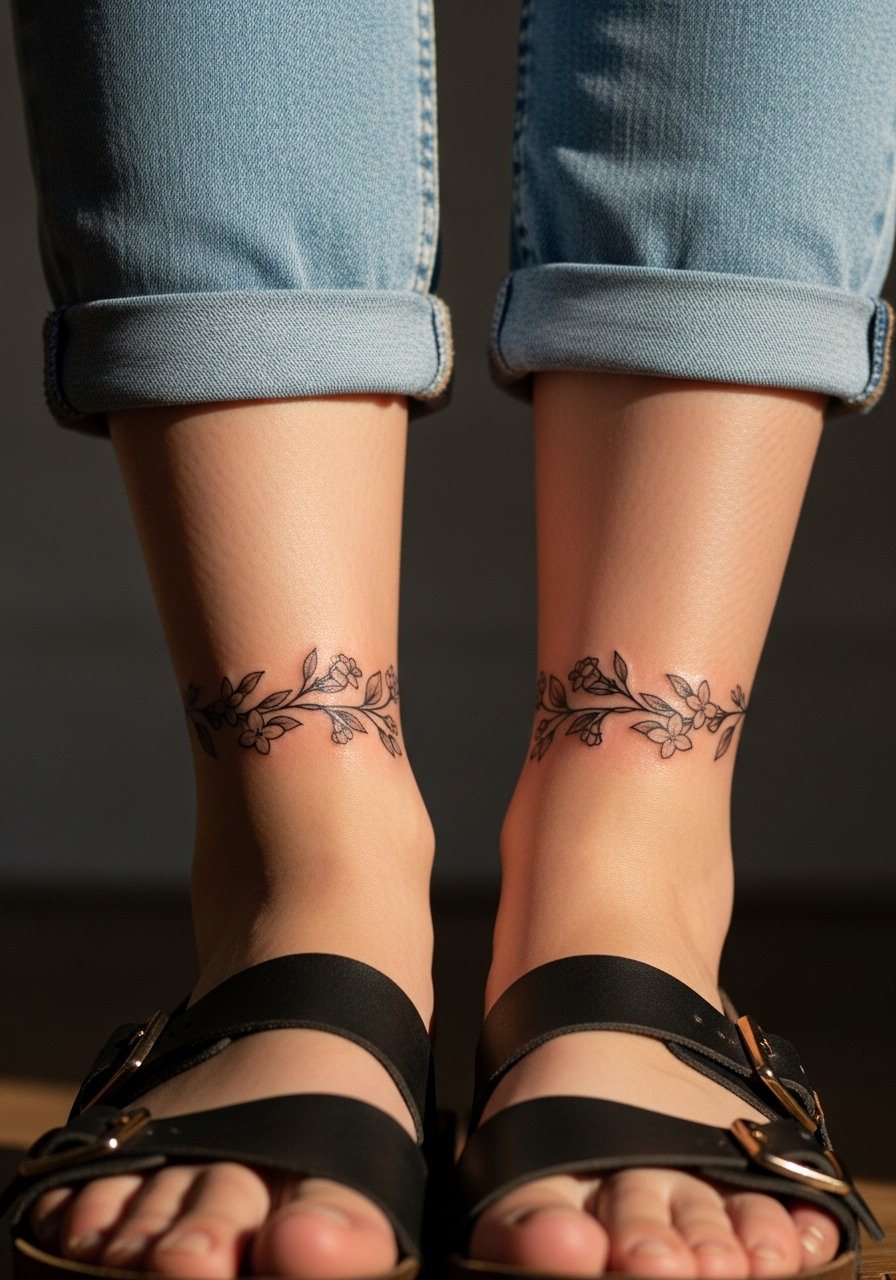
Symmetry across both ankles looks intentional and reads like jewelry. Expect similar wear patterns on both sides and plan for symmetric touch-ups if one side fades faster. Tell your artist you want mirrored stencils to ensure precise matching. Sessions are short per ankle and pain is variable near bone. A mistake is expecting perfect mirror symmetry without a careful stencil check. Show them off with sandals and cropped jeans and consider a pair of slide sandals.
15. Bold Blackwork Jasmine on the Calf
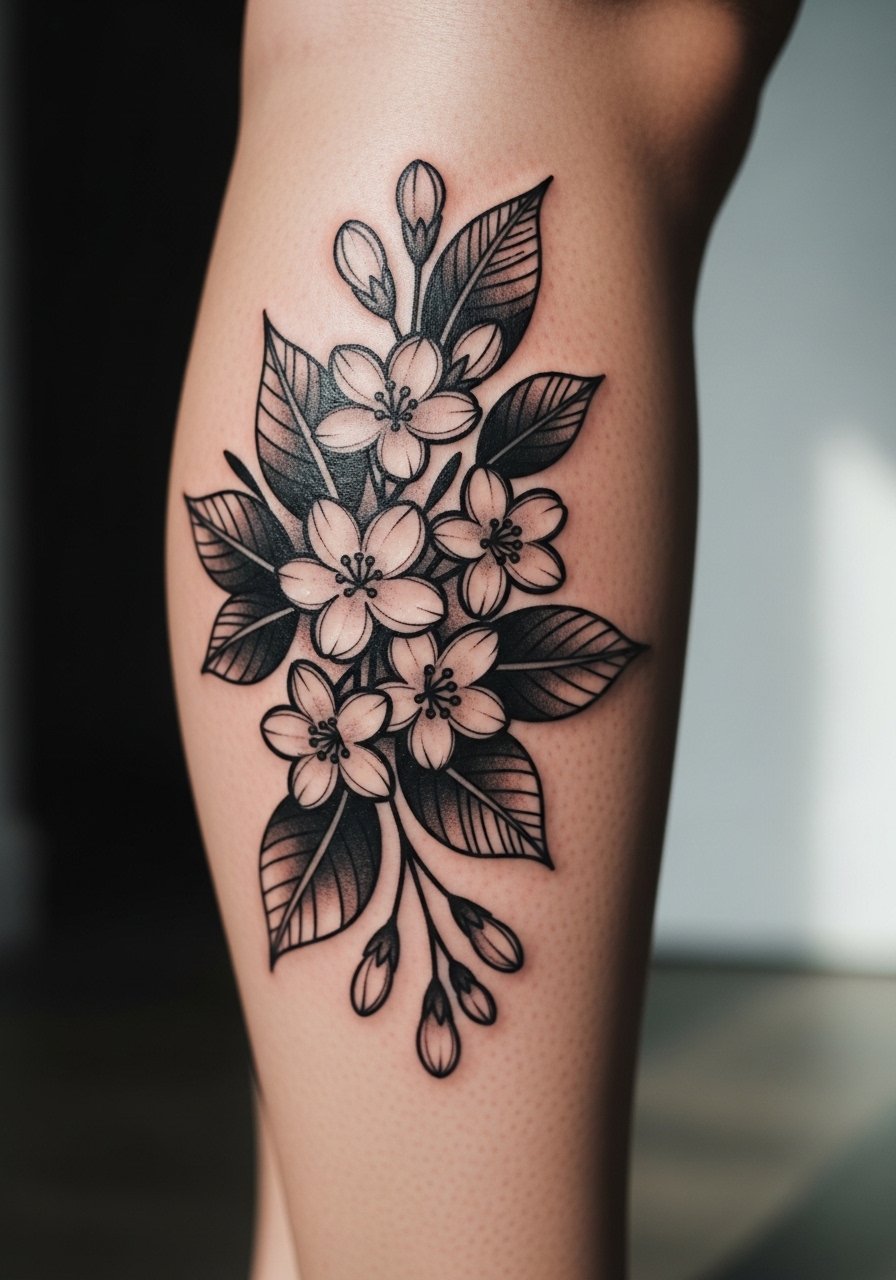
Blackwork saturation holds up well on the calf because of thicker skin and less daily abrasion. If you want contrast with small buds, ask for heavy outer fills and lighter inner textures. Sessions run longer for saturated pieces and pain is typically manageable on the calf. A common error is mixing tiny details into heavy black fields that then age inconsistently. Pair with skirts or shorts and a high-waisted denim skirt to frame the work.
16. Jasmine Stem Winding Around the Thigh
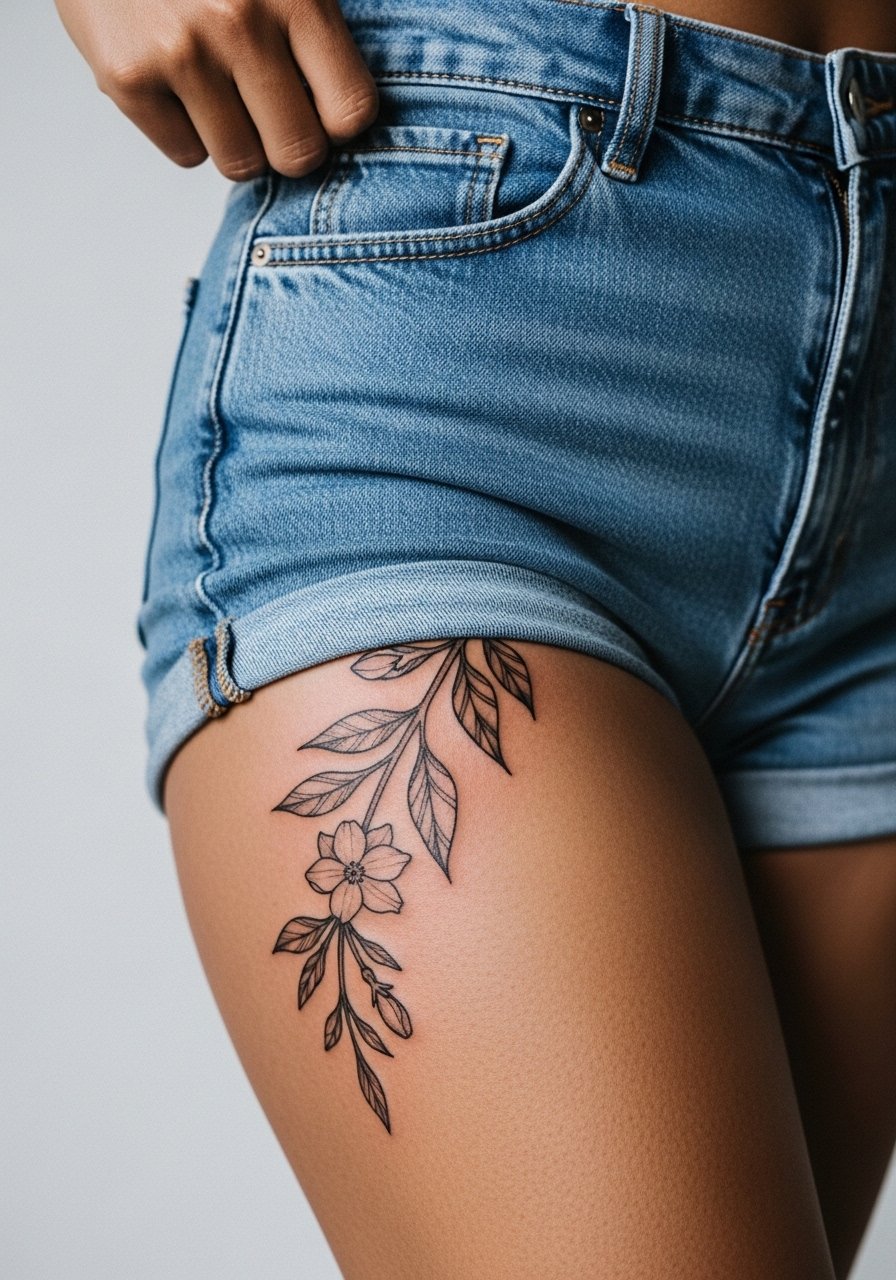
Upper thigh work stays protected under clothing which helps slow fading. Thighs allow more size and detail, so request graded line weights to avoid a flat look as it heals. Sessions are comfortable and tend to take longer for complex vines. Avoid the mistake of over-detailing tiny petals that become indistinct as the body moves. For the session wear high-waisted shorts you can shift easily and plan to show the piece with a flowy midi skirt when healed.
17. Mini Jasmine Tattoo on the Ear Lobe Area
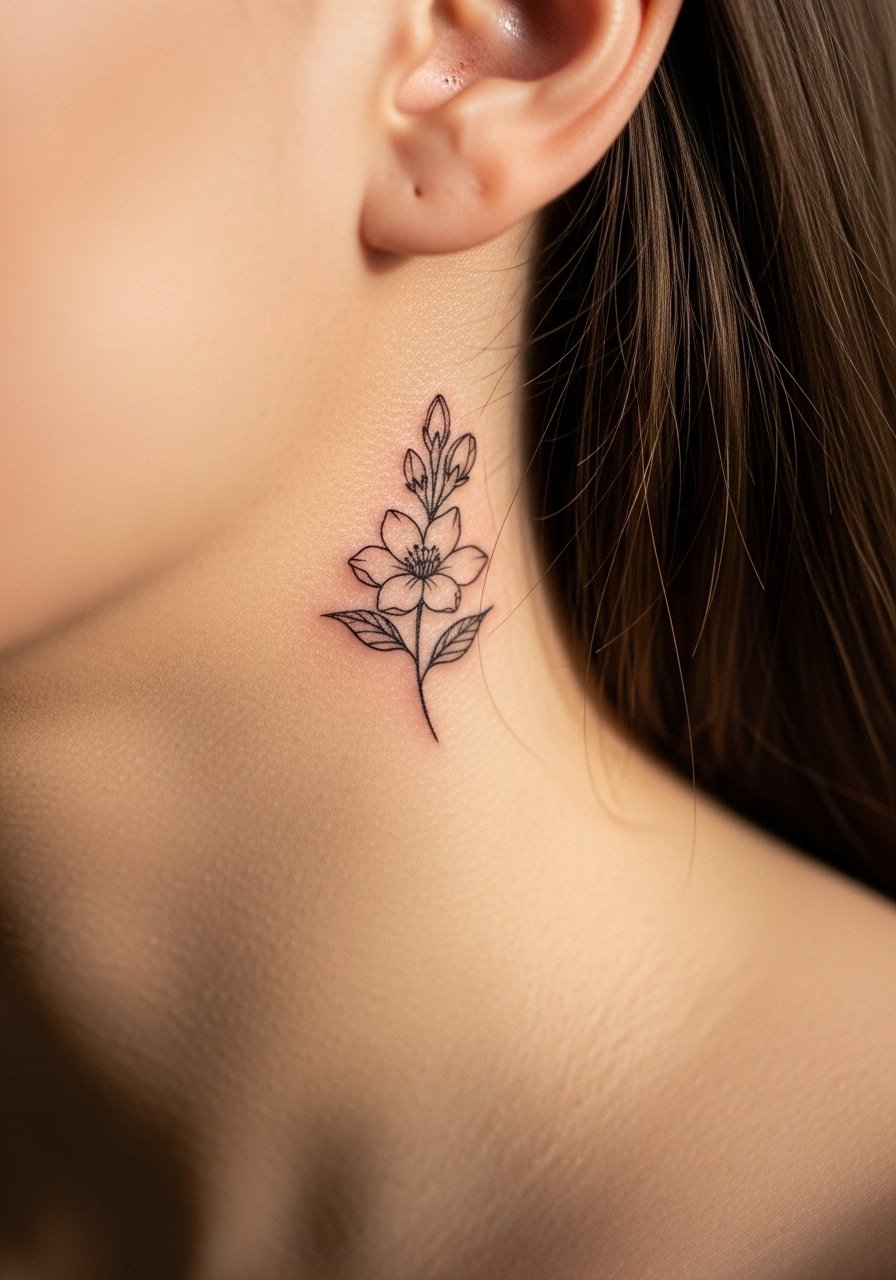
Tiny ear-area tattoos act like permanent jewelry and need precise positioning. Because of oils and hair contact, avoid ultra-fine internal detailing. A short session and low pain make this option accessible. Common mistakes include requesting shading that will not hold in such a small spot. Wear hair clipped up and a wide-neck shirt so the artist can reach the area easily.
18. Jasmine Garland Over the Chest Near the Sternum
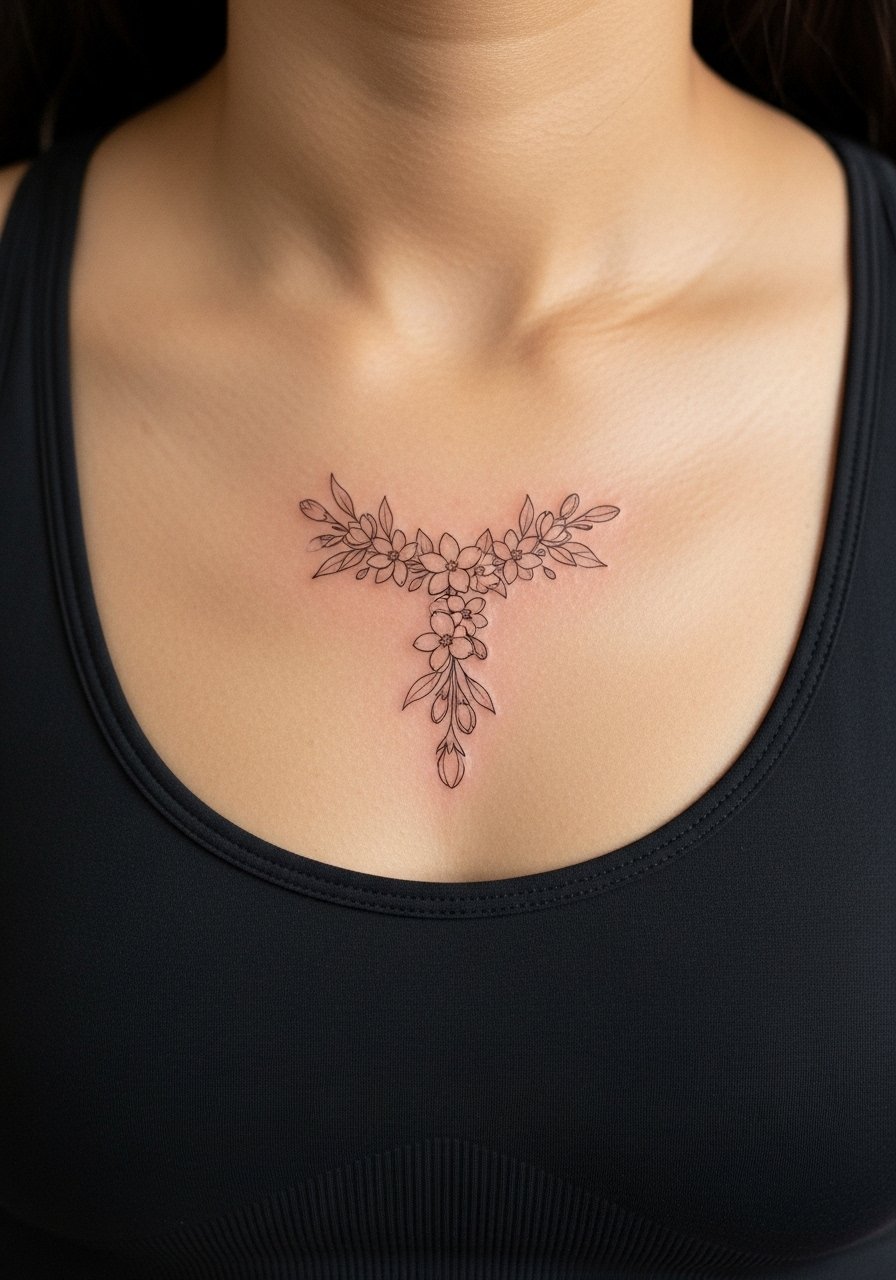
Sternum pieces can be striking and the area requires precise depth management. Artists split into two camps on sternum detail and healing. One camp says dense linework there is prone to distorting as the skin moves. The other camp maintains that with correct spacing and experience the piece holds. If choosing this area, ask about their sternum portfolio and realistic touch-up timelines. Sessions are often longer and pain is high. Wear a fitted sports bra for access.
19. Jasmine and Script Curve Along the Side of the Neck
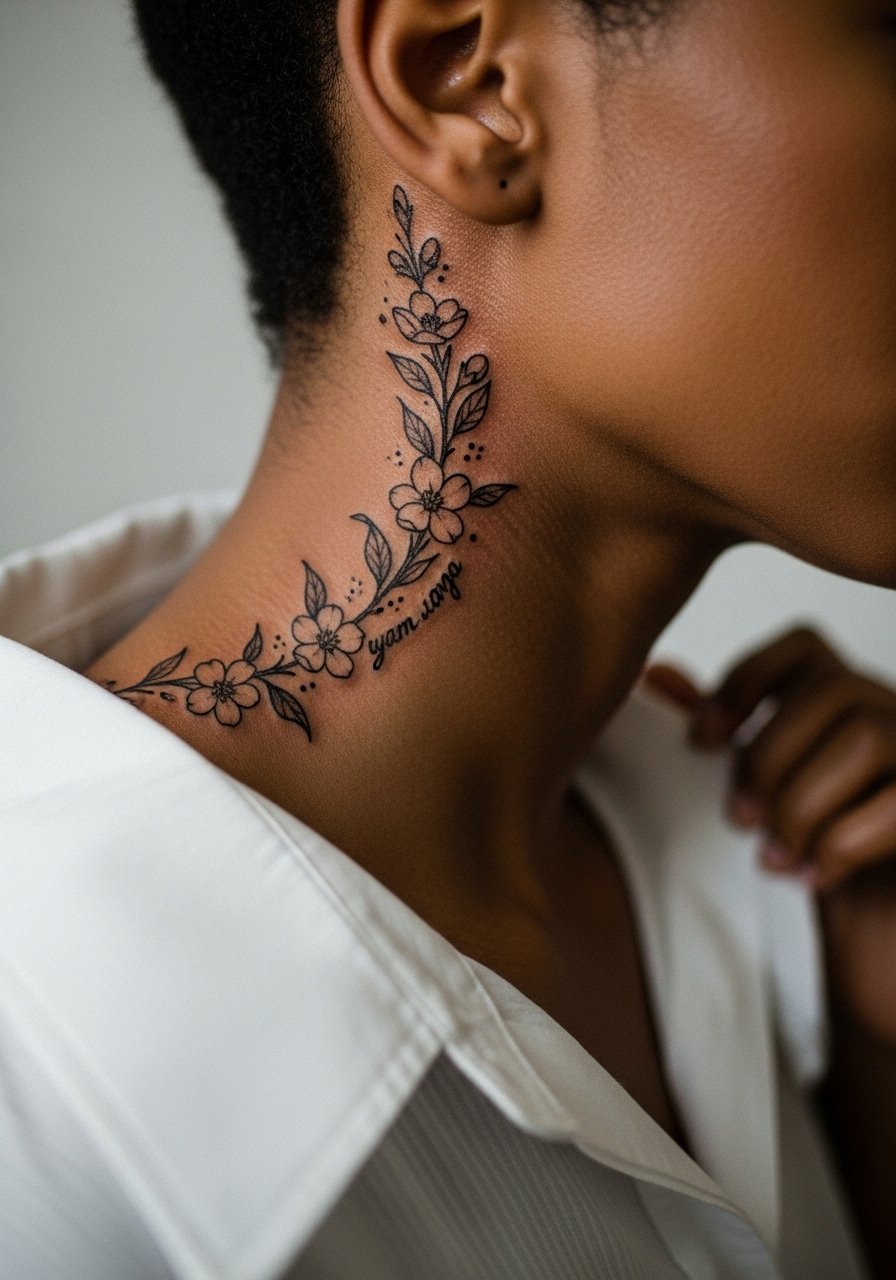
Neck work is visible and career sensitive for some people. Keep the jasmine and lettering modest in scale and ask for slightly bolder letters to avoid them blurring. Pain is moderate to high and sessions are short but intense. A common error is combining tiny script with too fine floral detail. Pair with open collars or wide-neck tops and consider a wide-neck sweater for cooler weather.
20. White Ink Jasmine Highlights on Darker Skin
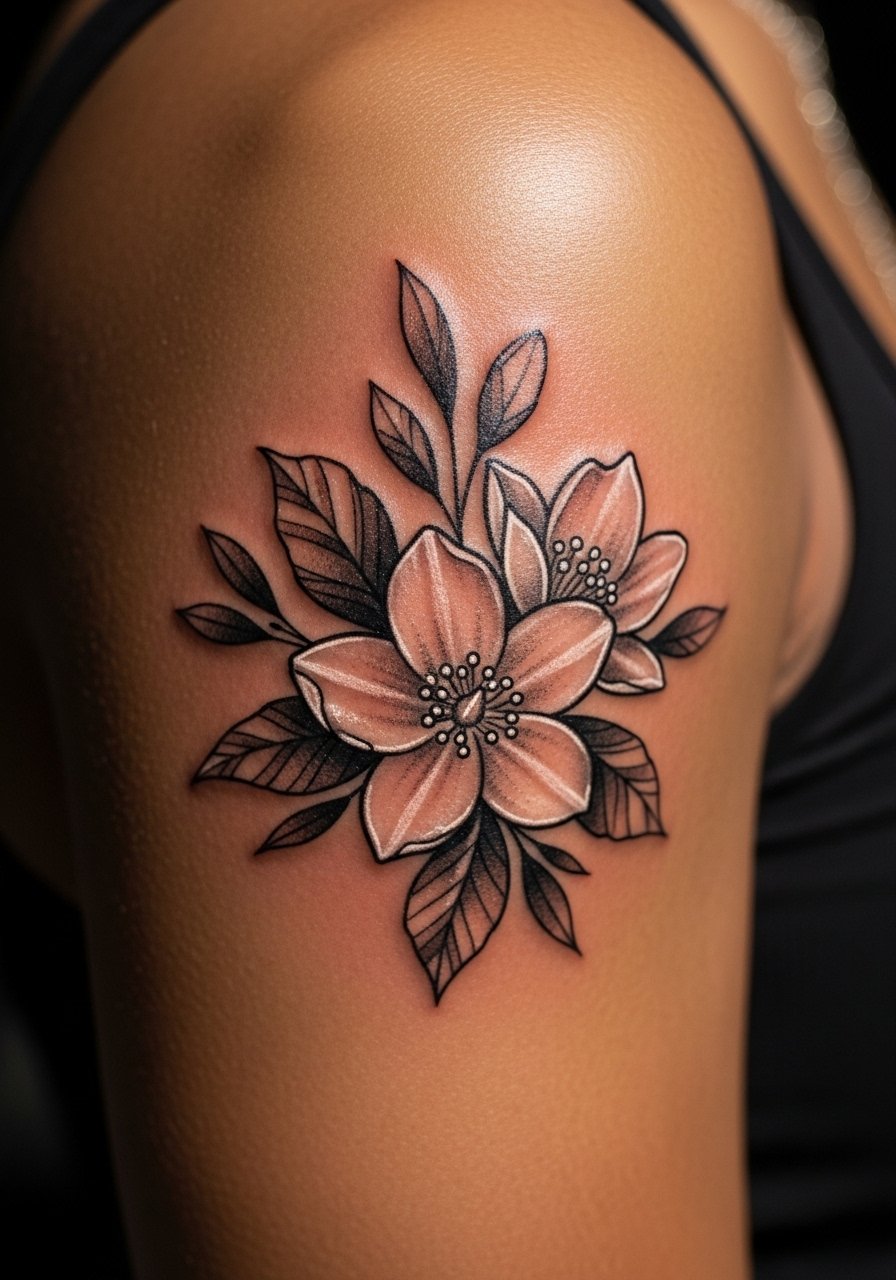
White ink adds shimmer on darker skin tones but it can fade faster and sometimes appears raised initially. For darker skin, ask for contrast through negative space and darker outlines alongside white highlights. This reduces the chance of the whole piece losing definition. Sessions need careful ink placement and the artist should show healed examples on similar skin. Avoid expecting pure white like paint. For showing off, sleeveless tops work well and a sleeveless blouse frames the arm.
21. Single Stem Behind the Knee
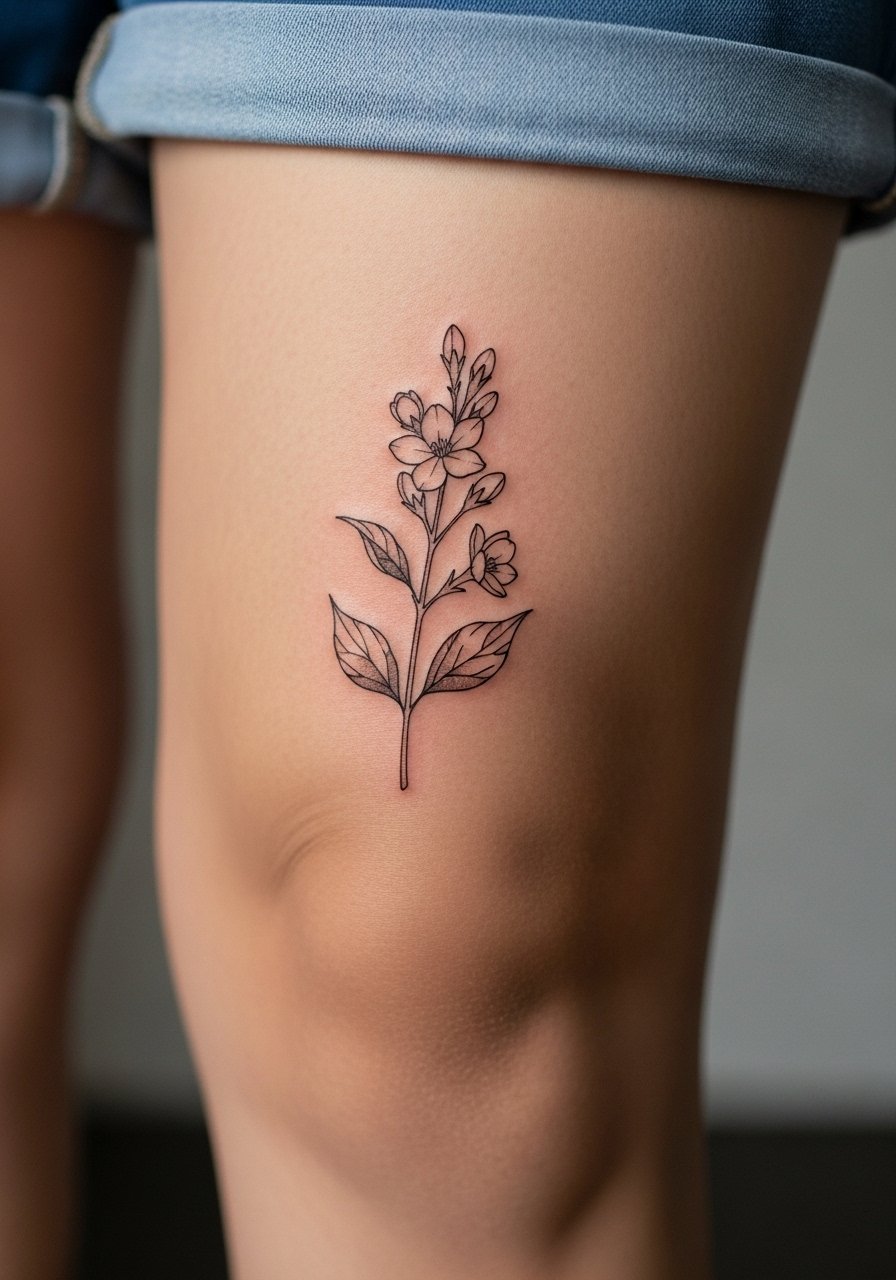
Behind-the-knee tattoos move a lot with walking and sitting, which affects healing. For stems there, ask for relaxed spacing and avoid dense cross-hatching. Pain is moderate and sessions are a bit awkward because of positioning. A mistake is choosing tiny interlocking details that the joint motion blurs. Wear loose shorts to the session and plan for a few days of restricted movement.
22. Jasmine Cluster Framing a Shoulder Blade Scar
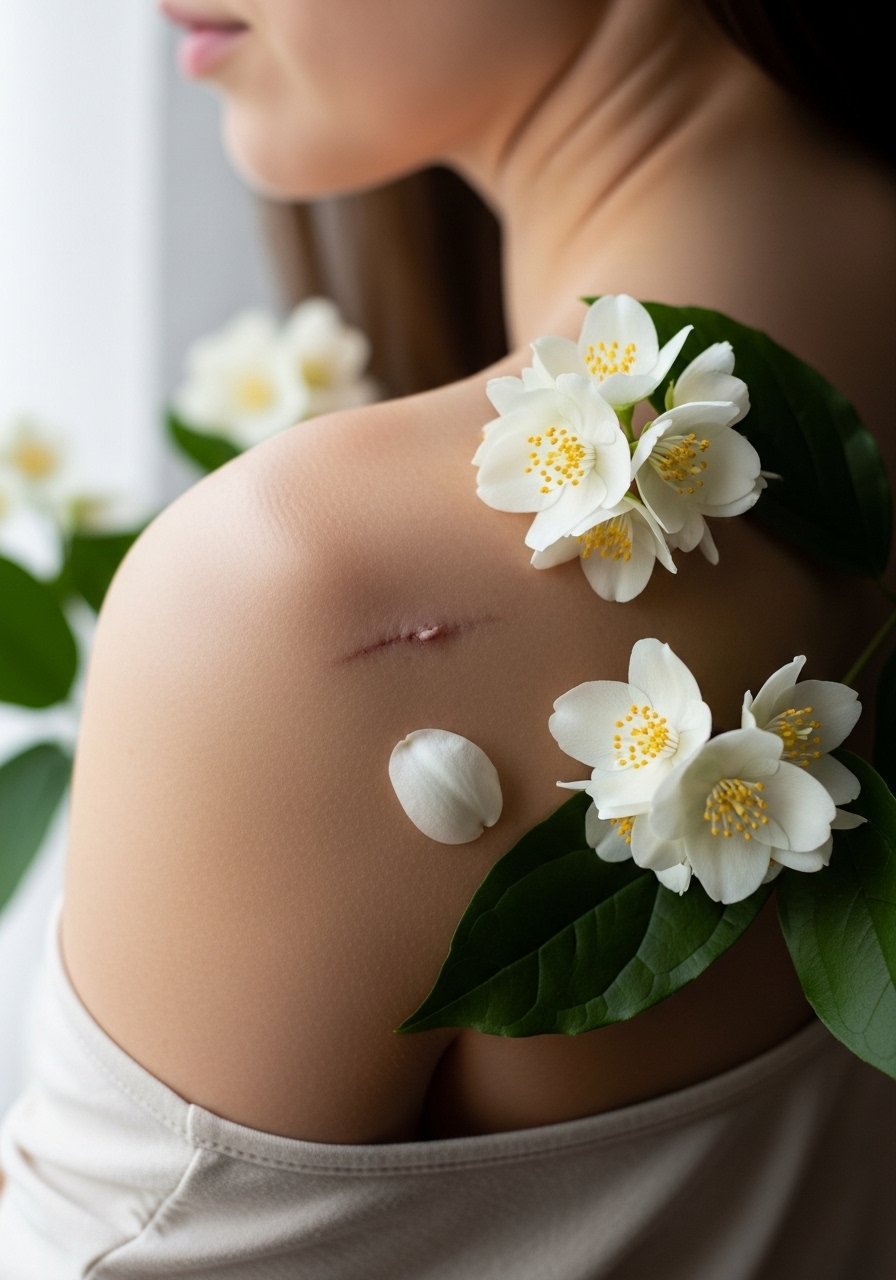
Using jasmine to incorporate or mask a healed scar can look elegant if the artist maps around the texture rather than overworking it. Ask for a design that acknowledges the scar with negative space. Sessions can be shorter depending on scar sensitivity and pain may be increased over scar tissue. The common mistake is pushing heavy saturation directly into scar tissue which can heal unpredictably. Choose breathable tops for the appointment and consider a loose tank top.
23. Tiny Jasmine Accent on the Finger Webbing
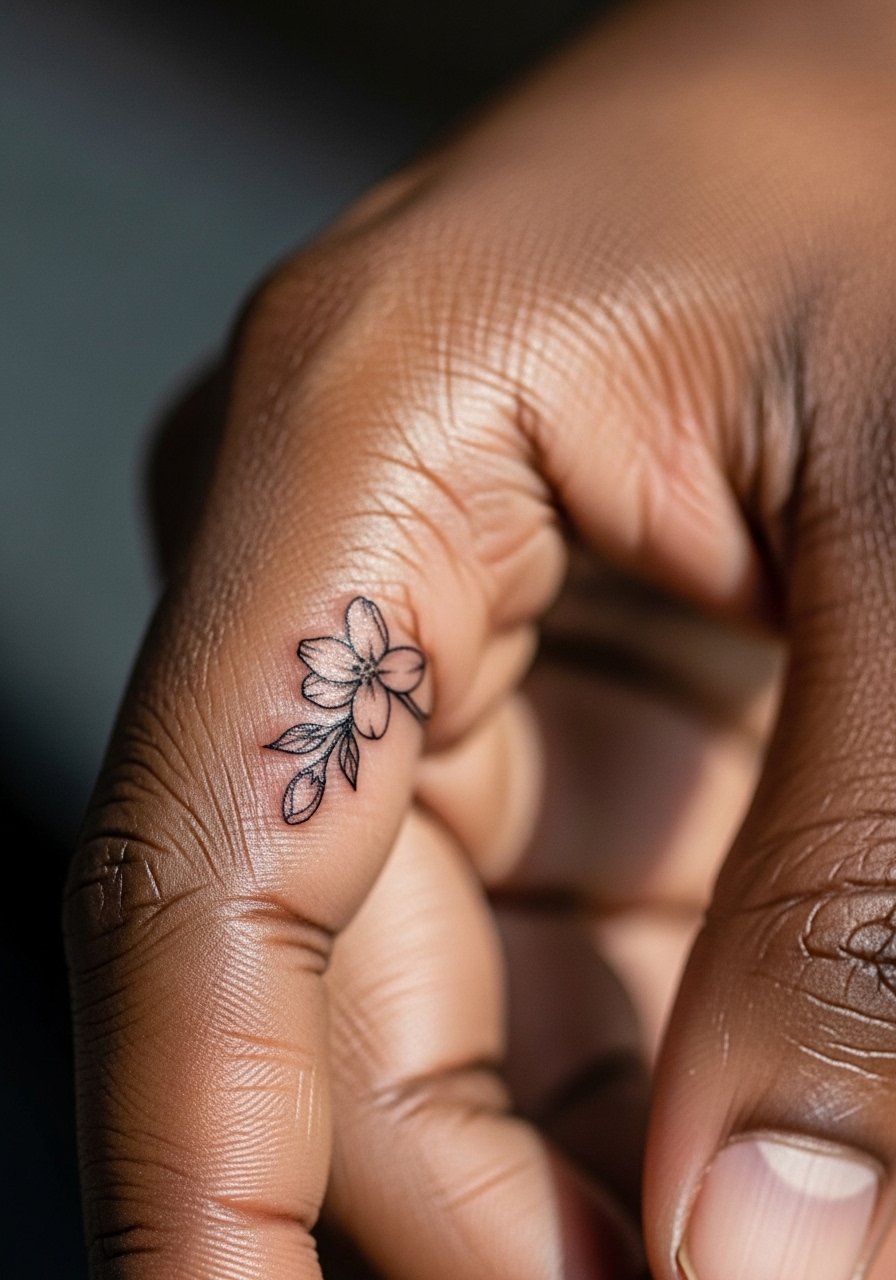
Webbing tattoos are unconventional and need a precise stencil because the skin there moves a lot. Expect faster fading and possible early touch-ups. Tell your artist you want bold anchors rather than fragile interior detail. Sessions are quick and pain spikes because of nerves. A typical mistake is assuming fingertip-like lifespan. Style the hand with rings that avoid rubbing the webbing to reduce friction.
24. Jasmine Cluster on the Lower Back
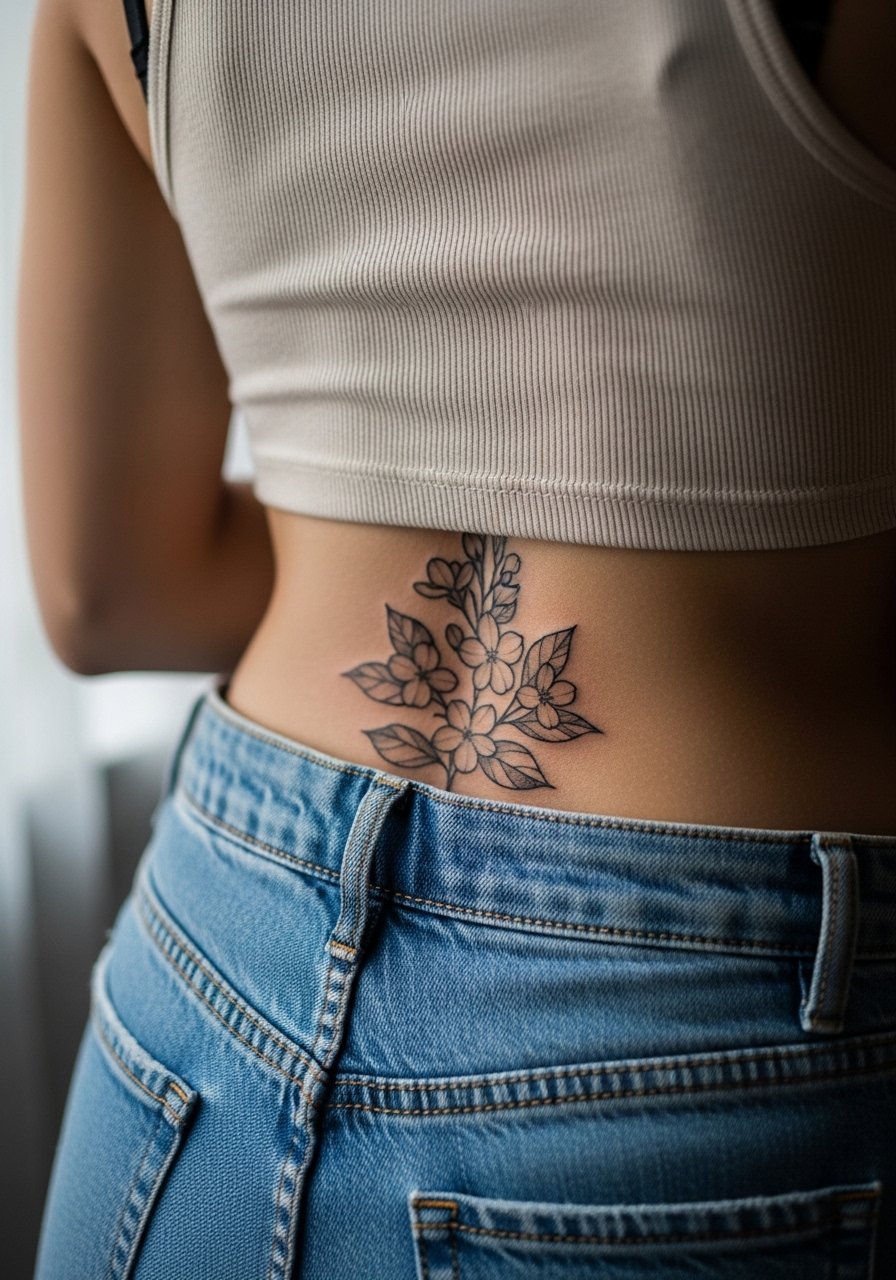
Lower back pieces have good longevity because of limited sun exposure and friction when sitting. For clusters here, ask for layered petal depth and avoid packing everything into a flat plane. Sessions can be moderately long and pain is low to moderate. A common error is centering the piece too low where jeans rub constantly. Show it off with high-cut waistlines and a cropped tee.
25. Jasmine Sprig Along the Clavicle
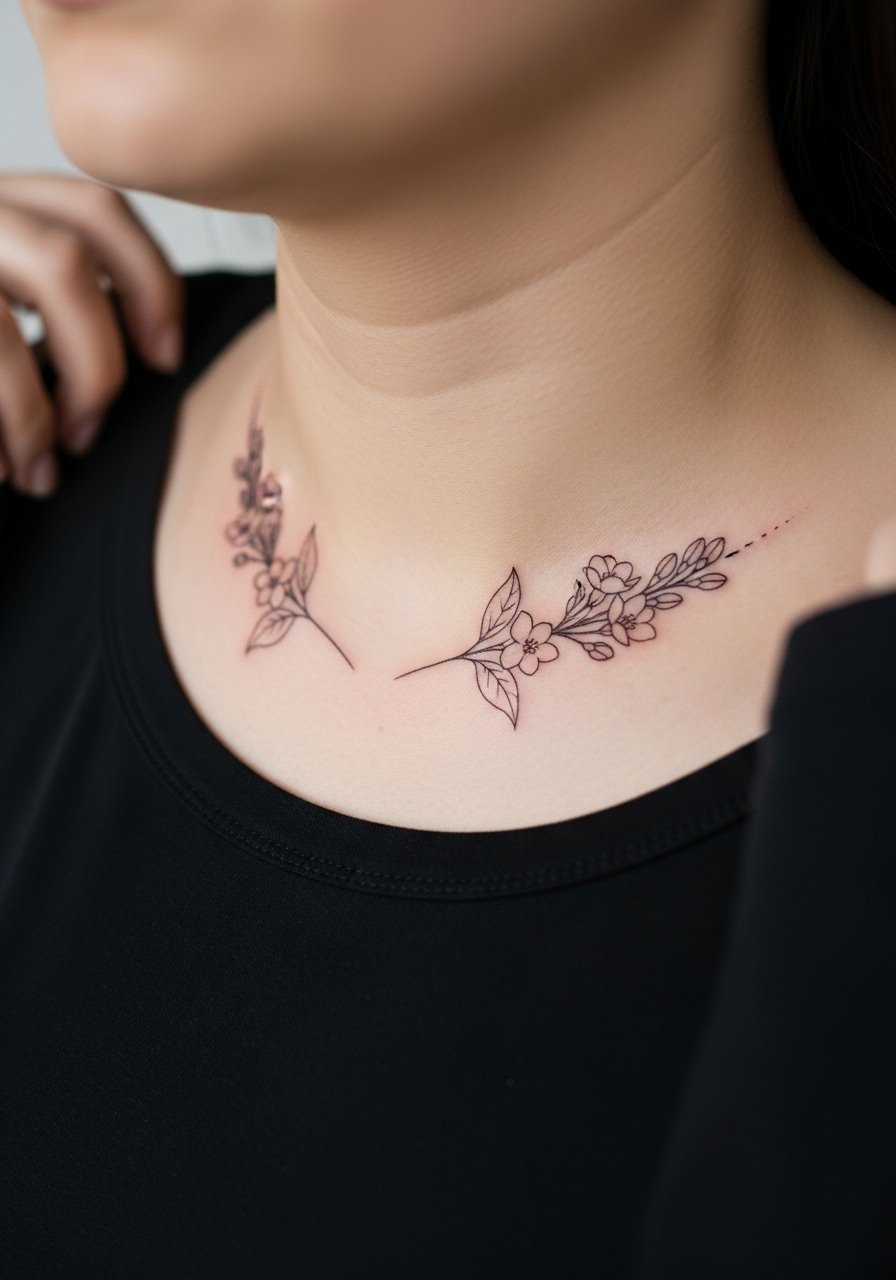
Clavicle tattoos read well with jewelry and clothing, but the area is bony and sensitive. Ask for an artist to demonstrate healed clavicle work so you can judge line longevity. Sessions are short but may sting near bone. A common mistake is insisting on ultra-thin single lines that fade. Pair with open-neck tops and a thin chain pendant that sits above the sprig.
26. Jasmine and Moon Phases Along the Rib Line
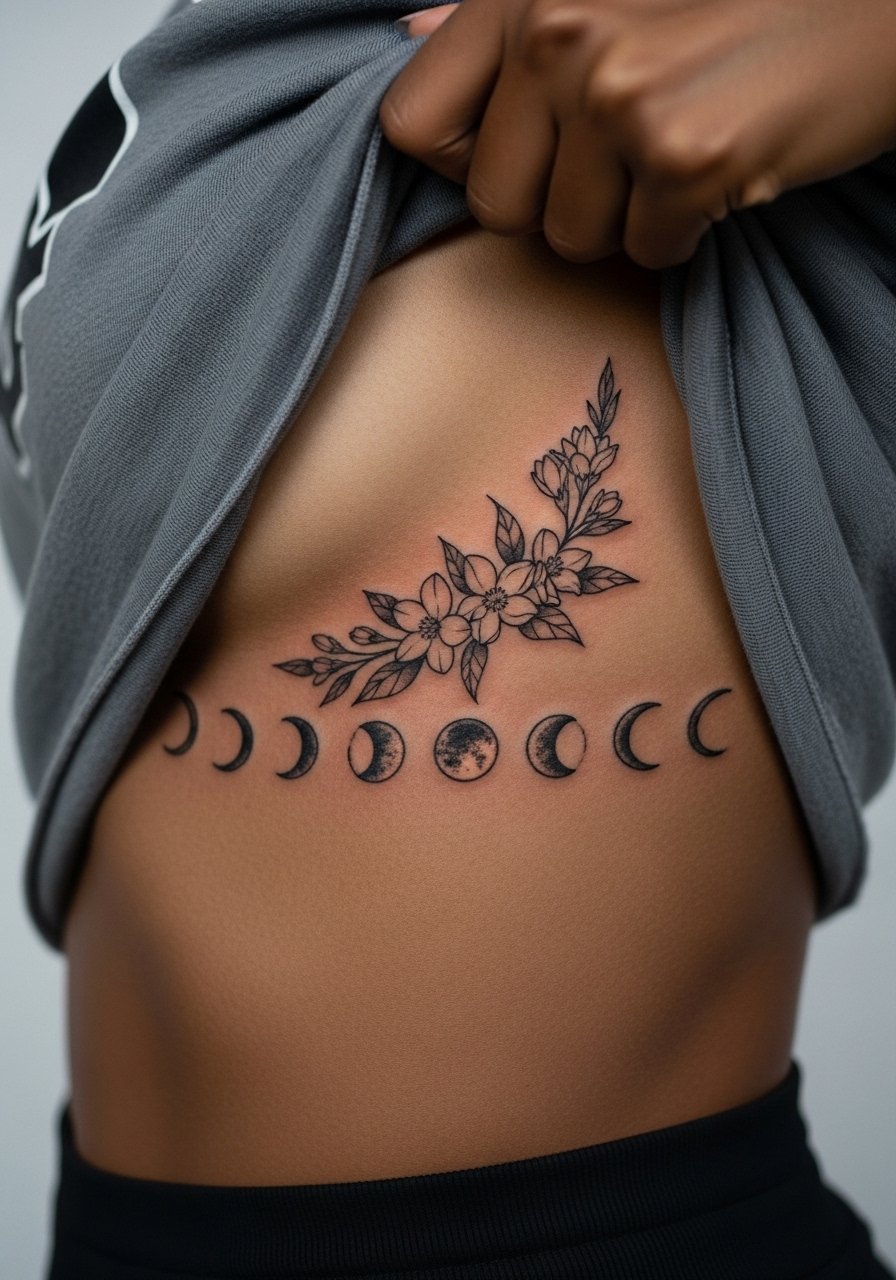
Combining botanicals with small icons gives the design narrative and the rib side allows for a flowing composition. The rib area hurts more and requires breathing breaks. Artists split on whether dense iconography fares well there. One camp suggests spacing icons out to avoid merging. The other says careful line weight keeps them distinct. Tell your artist which side they prefer and expect a longer session. Wear easily adjustable clothing for access during the appointment.
27. Jasmine and Geometric Accent on the Inner Bicep
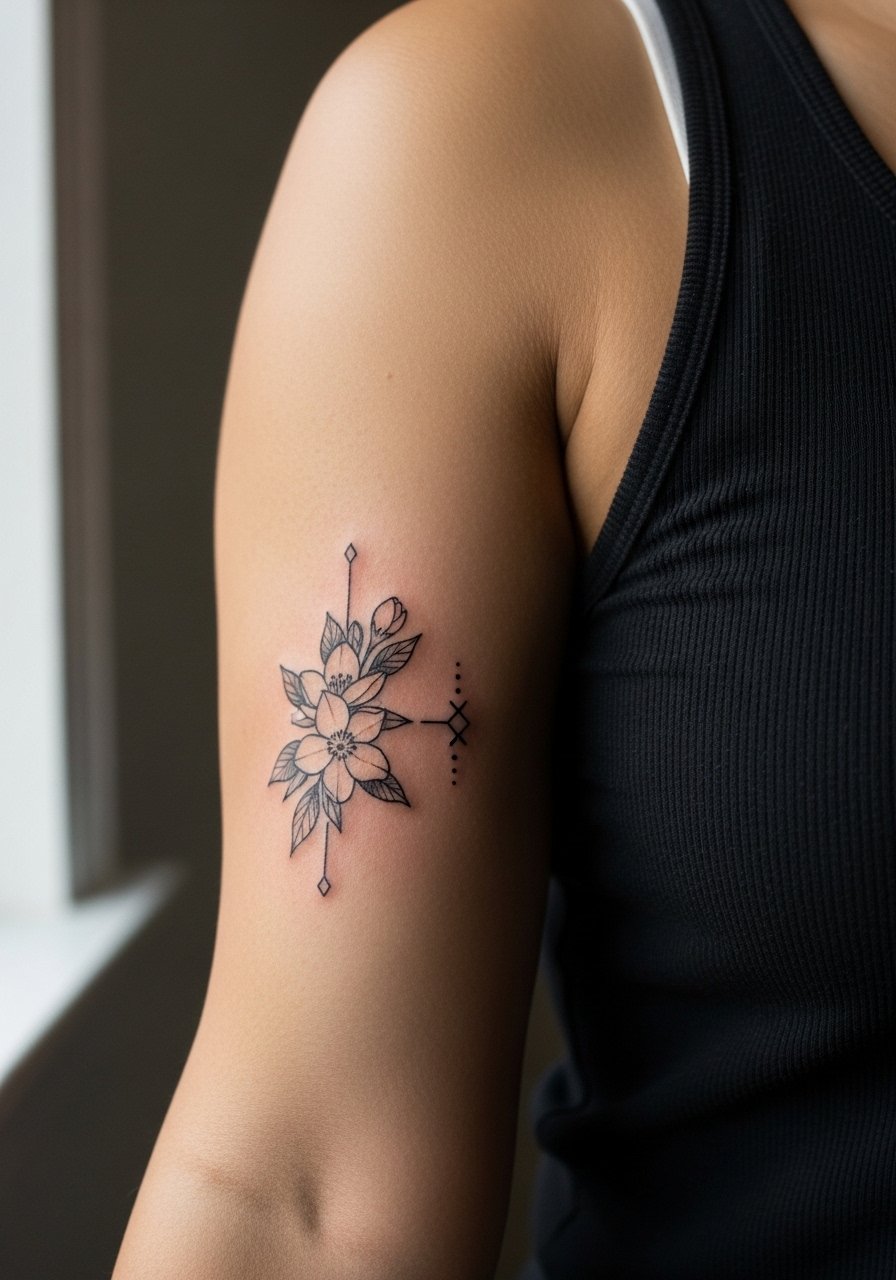
Inner bicep tattoos are intimate and can look sharp if the design accounts for muscle movement. Request a test stencil with the arm both relaxed and flexed to see how the jasmine sits. Pain is moderate and sessions are often shorter. A common mistake is placing too much dense geometry there which creases when the arm moves. For the session wear a sleeveless top you can raise easily and plan to show the healed piece with a sleeveless blouse.
Frequently Asked Questions
Q: Will fine line jasmine tattoos blur quickly on my skin type?
A: It depends on placement and how dense the lines are. Fine line pieces on wrists, fingers, and ribs blur faster because of friction and skin movement. Ask for slightly thicker outer lines and more negative space so the design keeps shape longer.
Q: What should I wear to a shoulder or back jasmine session?
A: Loose, easy-to-move clothing that exposes only the area the artist needs is best. For shoulder and back work bring a loose tank top you can pull aside, and avoid tight fabrics right after the session.
Q: How often will a tiny finger or hand jasmine need touch-ups?
A: Expect touch-ups earlier than for arm or leg work, often within a year or two, because hands see more abrasion and washing. Plan on a consult about realistic timelines with the artist during booking.
Q: Are white ink highlights worth it on darker skin tones?
A: White highlights can add subtle contrast but they rarely stay pure white long term. On darker skin, use white sparingly and rely on negative space and darker outlines to create contrast that lasts.
Q: How do I find an artist who has experience with jasmine micro-realism or fine line work?
A: Use discovery pathways like local shop directories, tattoo convention portfolios, and community forums to see healed photos on similar skin tones. Ask to see healed examples in person or in recent portfolios before booking.
Q: Should I expect longer sessions for jasmine pieces that include blackwork or watercolor?
A: Yes, saturated blackwork and layered watercolor require longer sessions and often multiple appointments. Plan recovery time and check with the artist about how they stage larger pieces so each session complements the last.