
Fine line Trishul designs are dominating feeds right now, and the surprising part is how often they need touch-ups sooner than people expect. What holds up on a forearm will not behave the same way on the knuckles or under constant hand washing. Read on for 17 hand-focused Trishul tattoo ideas, how each one ages, what to tell your artist at the chair, and exactly what to wear the day of your session.
1. Minimalist Trishul Outline on Back of Hand
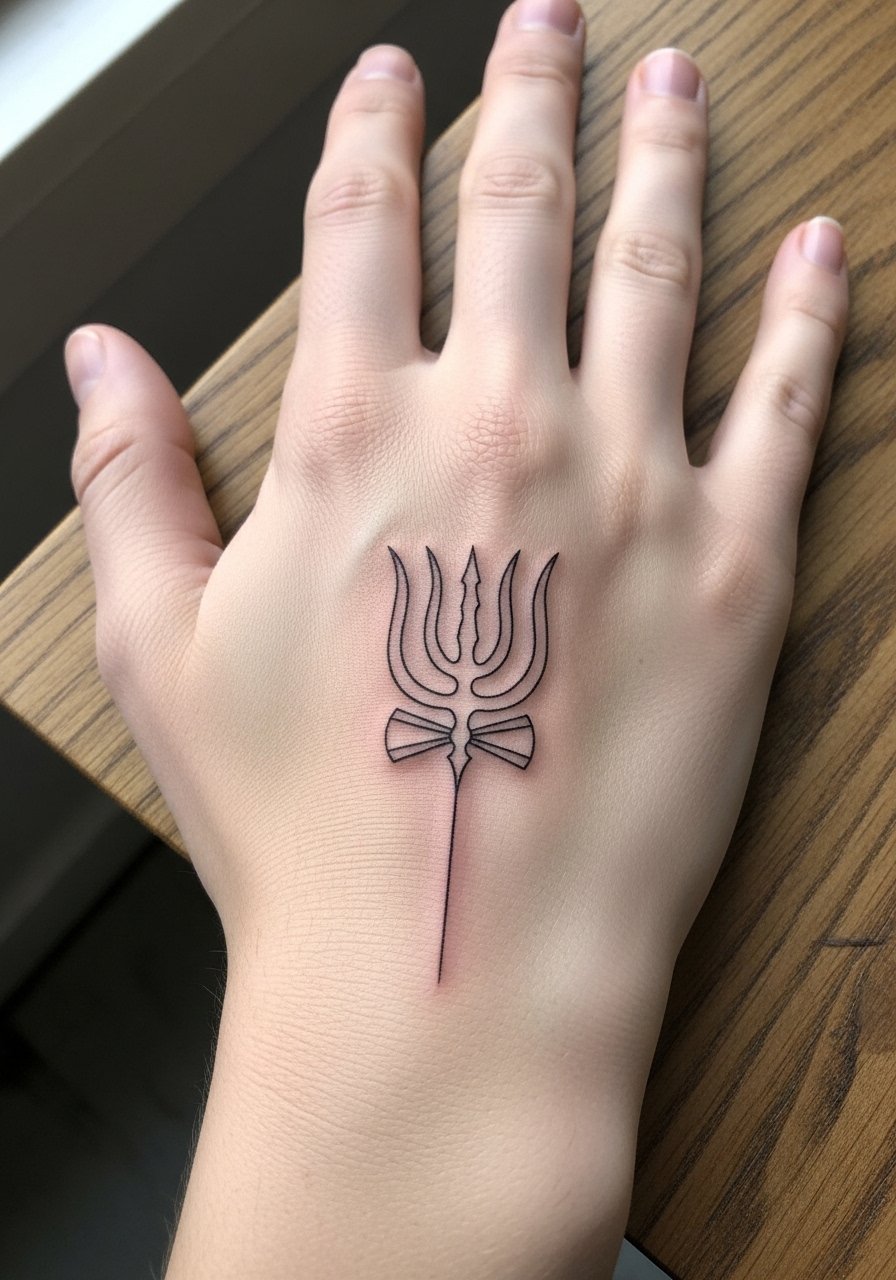
I recommend this if you want a discreet devotional mark that still reads when you move your hand. Tell your artist you want a one to two inch design with slightly heavier lineweight than ultra-fine flash. The common mistake is asking for the same needle density used on forearms, which blurs faster on hands. Expect the session to be short but sharp around the bones. For showing it off, pair with chunky silver signet rings on the fingers you do not tattoo, and wear a fitted black crewneck tee for clean contrast the first few weeks. Plan a touch-up at year 12 to 18 months depending on wear.
2. Trishul with Om Symbol on Inner Wrist

Fine line lovers will pick this for balance and discreet placement. Fair warning about the fine line debate. One group argues fine line on wrists ages gracefully if done with spacing and shallow depth. The other group says hands blur fast and recommends bolder linework for longevity. When you book, ask the artist which camp they sit in and show wrist photos on skin tones similar to yours. For the session wear a linen button up shirt you can roll to the elbow. Expect moderate pain near the bone and a likely touch-up in 12 to 24 months.
3. Bold Trishul with Flames on Top of Hand
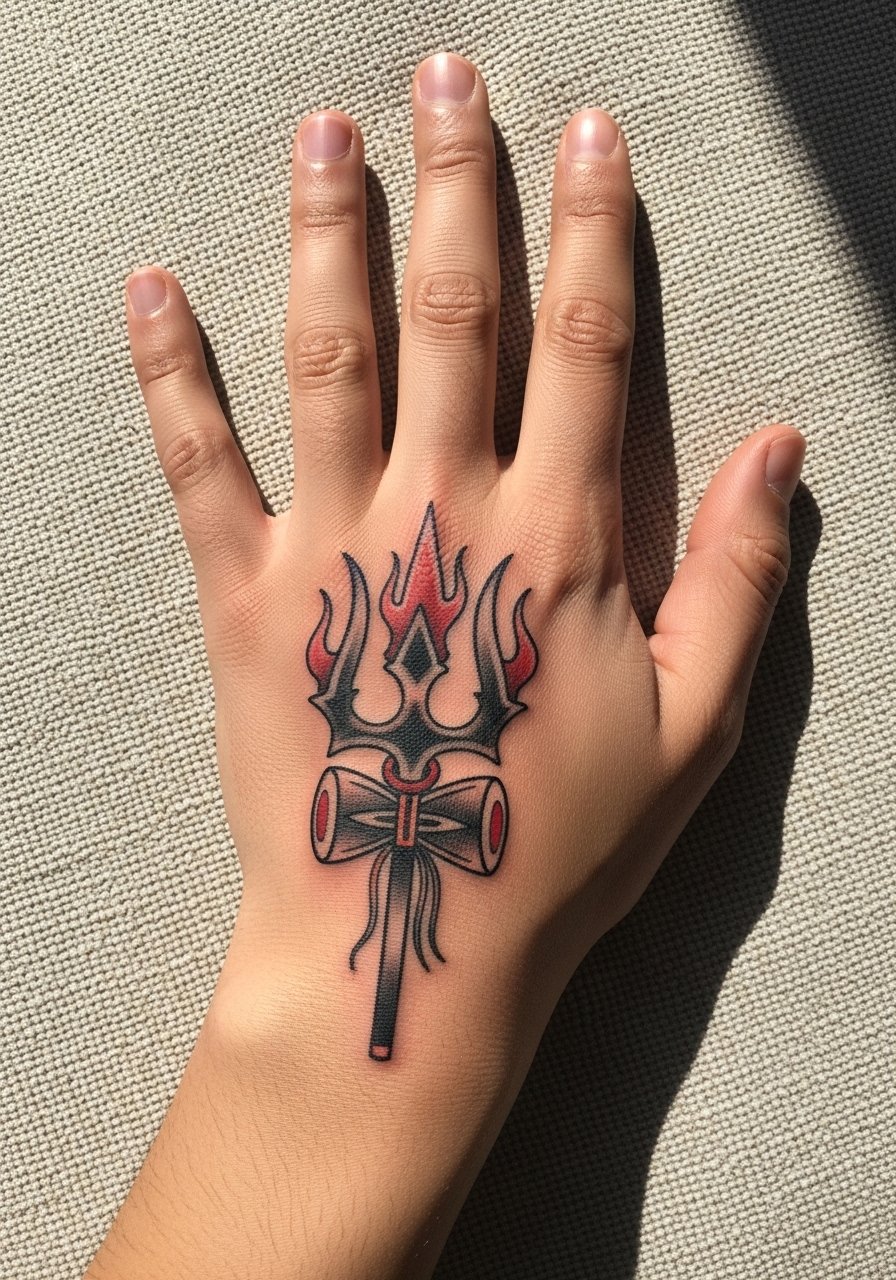
This is for anyone who wants a visible piece that holds visual weight despite daily washing. The trick is saturated black outlines with small color accents for the flames rather than watercolor fills. Tell the artist to keep flame color sparing so sun and soap do not create patchy fades. Pain rides higher when needles cross knuckles and bone, so expect discomfort. The frequent mistake is shrinking the design too small to “keep it subtle” which makes the color block fade into blotches. Plan on more aggressive linework and a touch-up after the first year if you live outdoors or wash hands a lot.
4. Trishul and Damaru Drum on Forearm Hand Extension
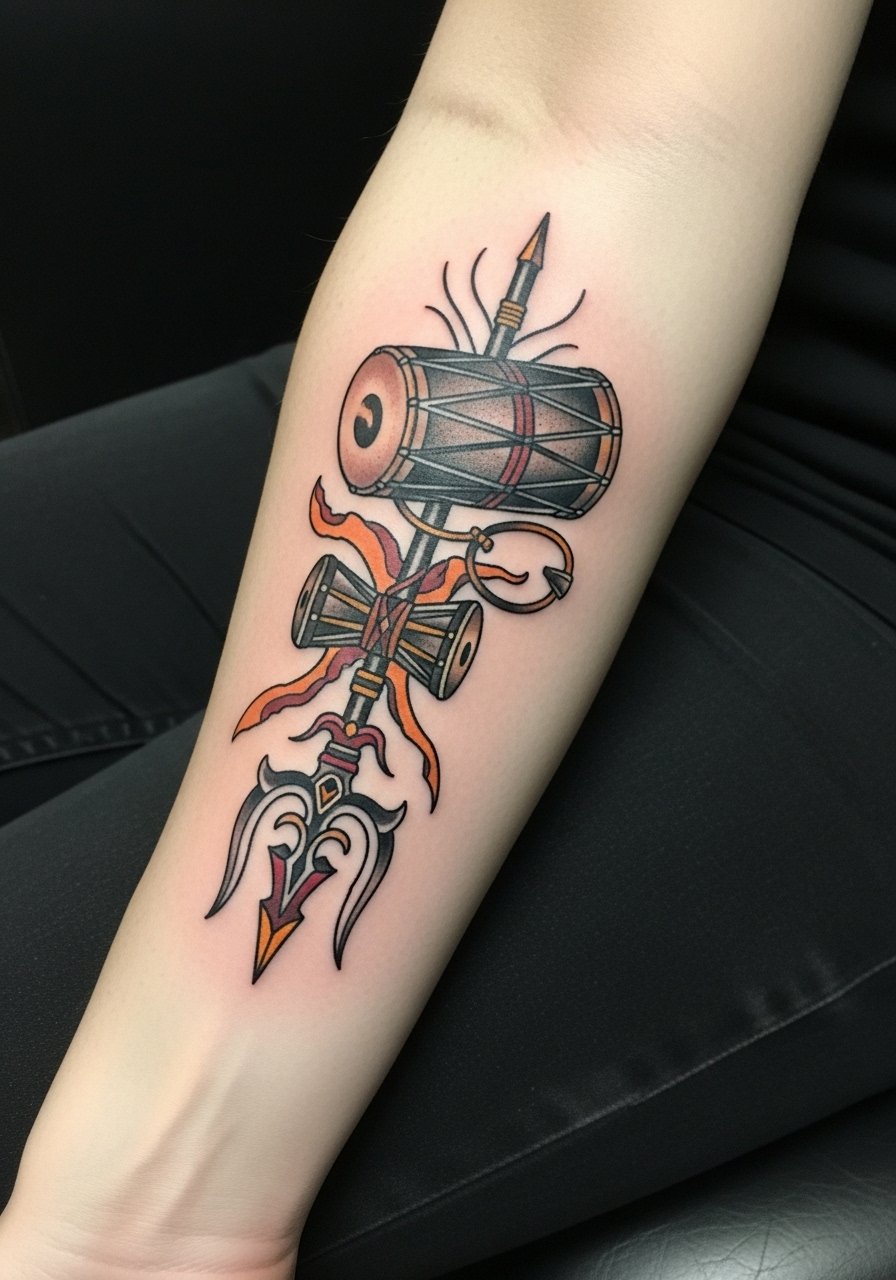
This extension piece gives room for narrative and holds up better than small wrist tattoos because it avoids constant friction. When you consult, bring rhythm or music-related images if you want the damaru to read as part of your story. The common aging mistake is overcrowding the drum details into too small a space. For the session wear a sleeveless hoodie or tank so the artist can access your forearm comfortably. Expect two sessions for full color saturation and plan touch-ups in two to three years depending on sun exposure.
5. Micro Trishul on Side of Finger
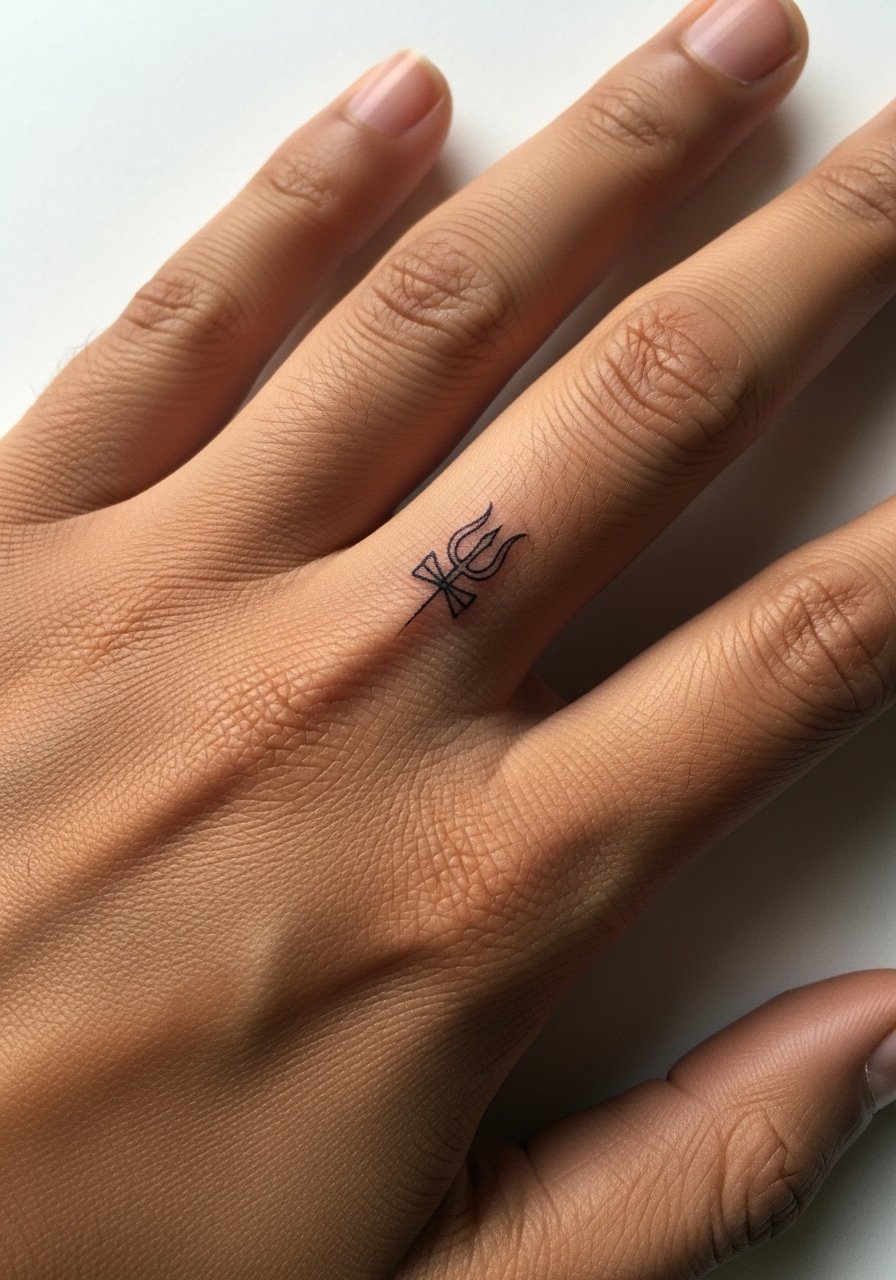
Finger placements heal fast but live rough. This micro design is ideal for first-timers who want a low-commitment mark. The biggest mistake is selecting ultra-thin linework that disappears under constant hand washing. Ask your artist for a slightly reinforced outline and expect touch-ups more frequently. Pain is sharp and immediate near the fingertip bone, and blowout risk is higher if the needle sits too deep. For session wear keep hands jewelry-free and clean. Tiny finger tattoos can look crisp for 12 to 24 months before softening, and some clients accept regular touch-ups as part of the plan.
6. Ornamental Trishul Mandala on Palm Side
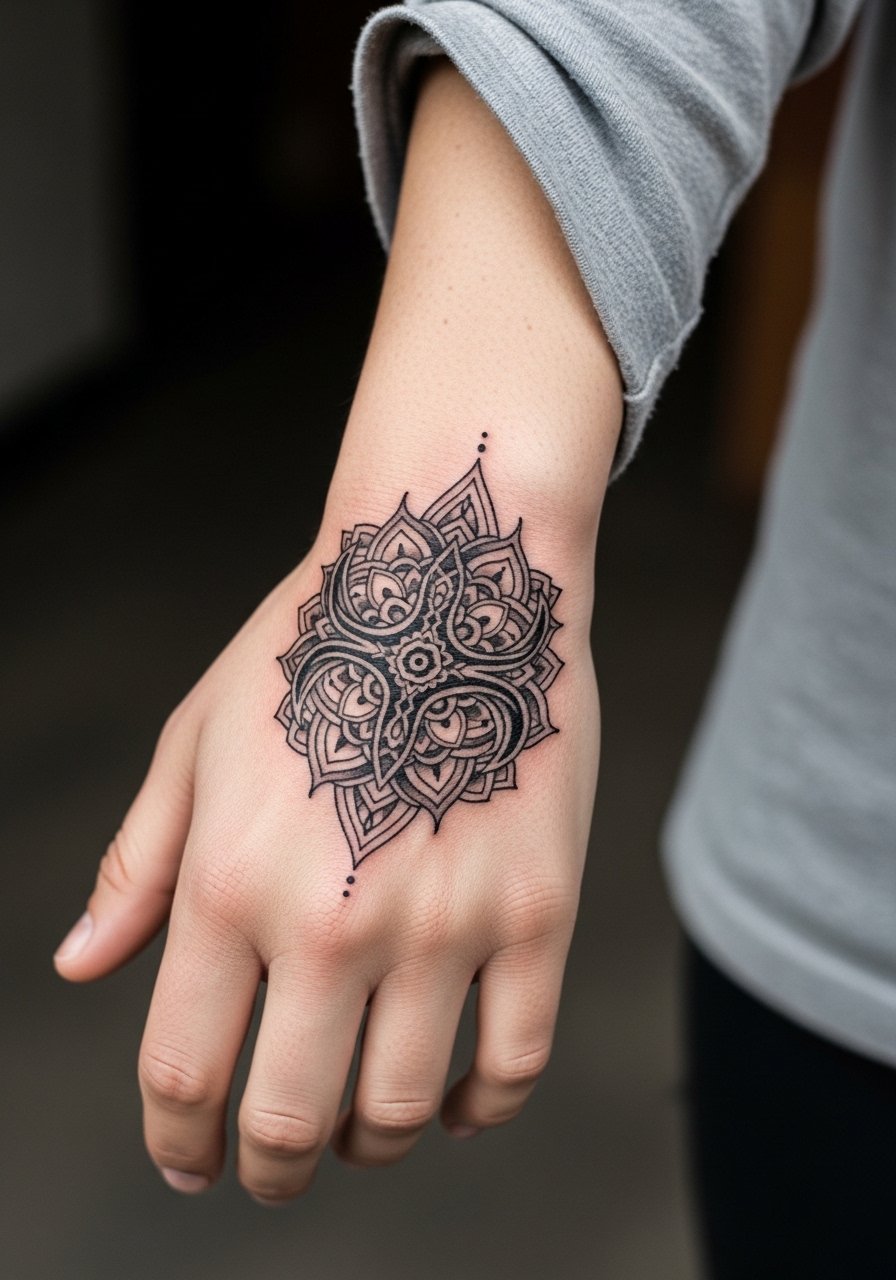
Palm-adjacent ornamental work reads meditative and can be scaled to cover flex points thoughtfully. Palm and inner hand skin behave differently, so ask for simplified geometry where creases cross the design. One common error is packing too many tiny dots into the palm edge; those spots often vanish as the skin sheds. Healing here is fussy, and you will want an artist comfortable with palm-area touch-ups. For session wear bring a loose long-sleeve that you can pull up so the artist avoids rubbing rings. Expect touch-ups within the first year and again depending on how often the area gets wet.
Pre-Session Essentials
The wrist and finger pieces above have unique healing needs, so pack a few targeted items for the session and the first week.
-
Indie Butter Balm. A thinner non-petroleum option that redditors say manages hand sweat better while keeping fine line areas moisturized during the peel.
-
Tea Tree Ink Fix. A light antifungal balm mentioned in humid-region forums to reduce irritation where palms and creases stay damp.
-
After Inked Balm. Recommended by guest-spot threads for non-clogging moisture on tricky palm and finger spots.
-
Japanese Rice Bran Salve. A low-shine salve for delicate fine line work that performers and festivalgoers appreciate for minimal glare.
-
Aquaphor Healing Ointment. A thin protective layer for the first days when you need moisture without excessive greasiness for small hand pieces.
7. Trishul with Snake Coiling on Back Hand

This blackwork option reads high contrast on darker skin when saturation is strong. The design benefits from large, simple shadow areas rather than tiny stipple that melts into blotches. A mistake I see is over-detailing the snake scales for a small two-inch layout. Tell your artist to prioritize silhouette and negative space for the coils. Expect higher pain across the knuckle ridge. For longevity, heavy black saturation tends to hold better than tiny gray washes on back-of-hand pieces. Touch-up is common between year one and year three if you are outdoors a lot.
8. Fine Line Trishul with Lotus on Wrist
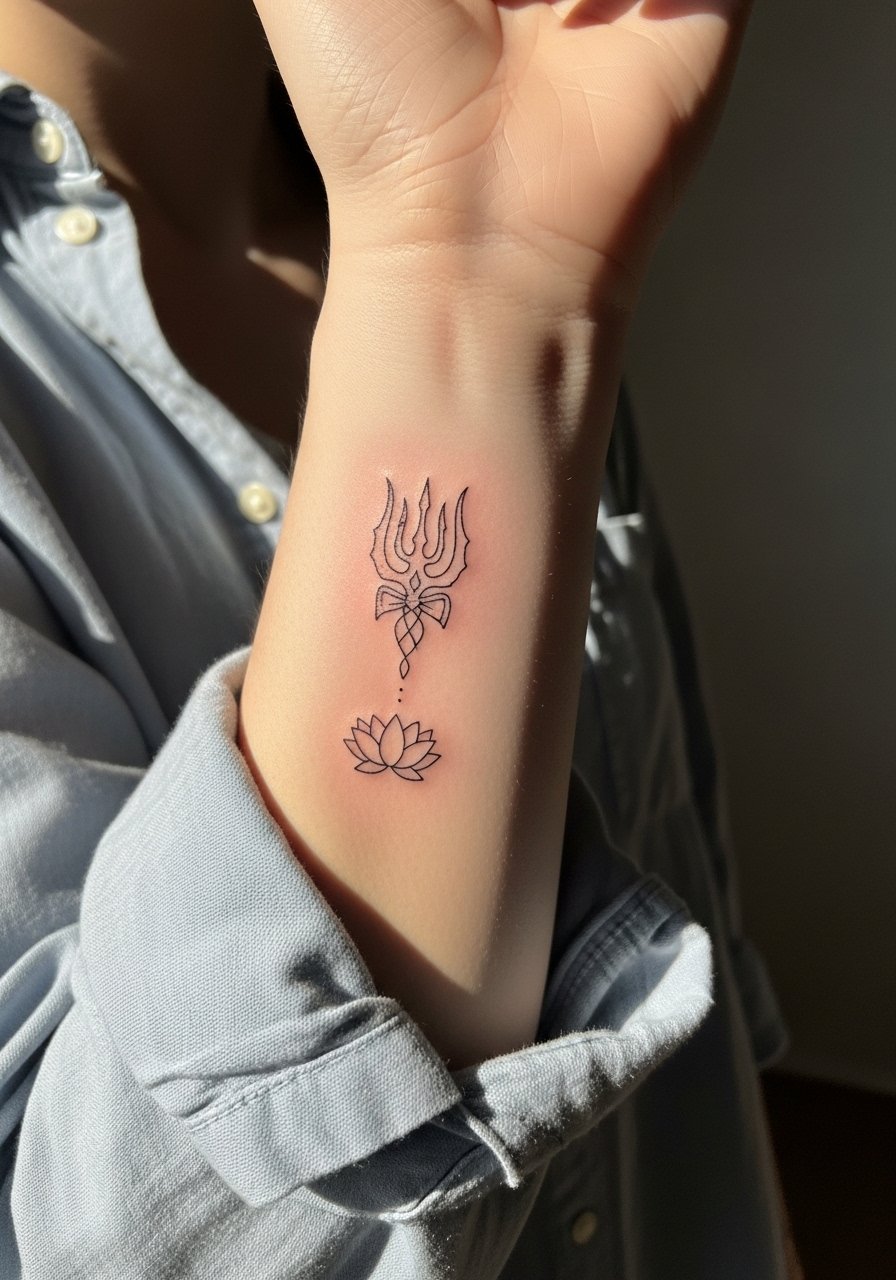
This is a softer, more feminine read for wrist wearers who want elegance without bulk. The controversy over fine line on hands is relevant here. One camp trusts expert artists to space and depth the lines so they age at two to three years. The other camp argues wrists are highly exposed and fine line will need touch-ups much sooner. In practice, ask to see healed wrist photos on skin tones like yours and expect to schedule a touch-up between 12 and 24 months. For showing it off, add a thin leather bracelet on the opposite wrist to frame the piece.
9. Realistic Trishul Weapon on Knuckle Area
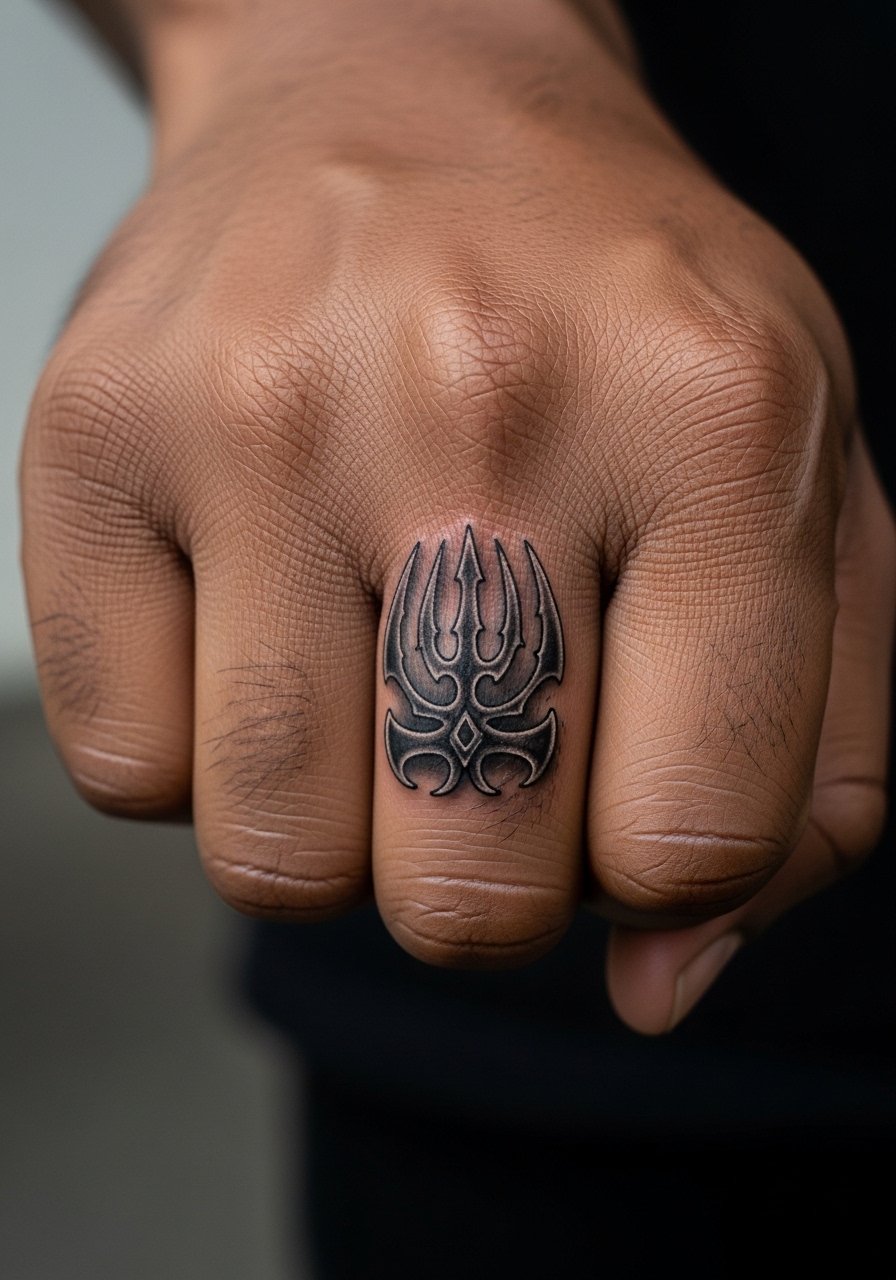
Knuckle work is bold but unforgiving. Micro-realism that mimics metal requires confident shading in tiny zones. Expect intense pain and limited session time because the area swells quickly. The biggest rookie move is trying to cram too much realism into one small knuckle span. Tell the artist you want contrast like weathered metal rather than photoreal chrome, which reads cleaner over time. For the session skip rings and wear a loose tee. Knuckle tattoos often need touch-ups at year one when lines thin from continuous movement.
10. Tribal Trishul Band Around Wrist
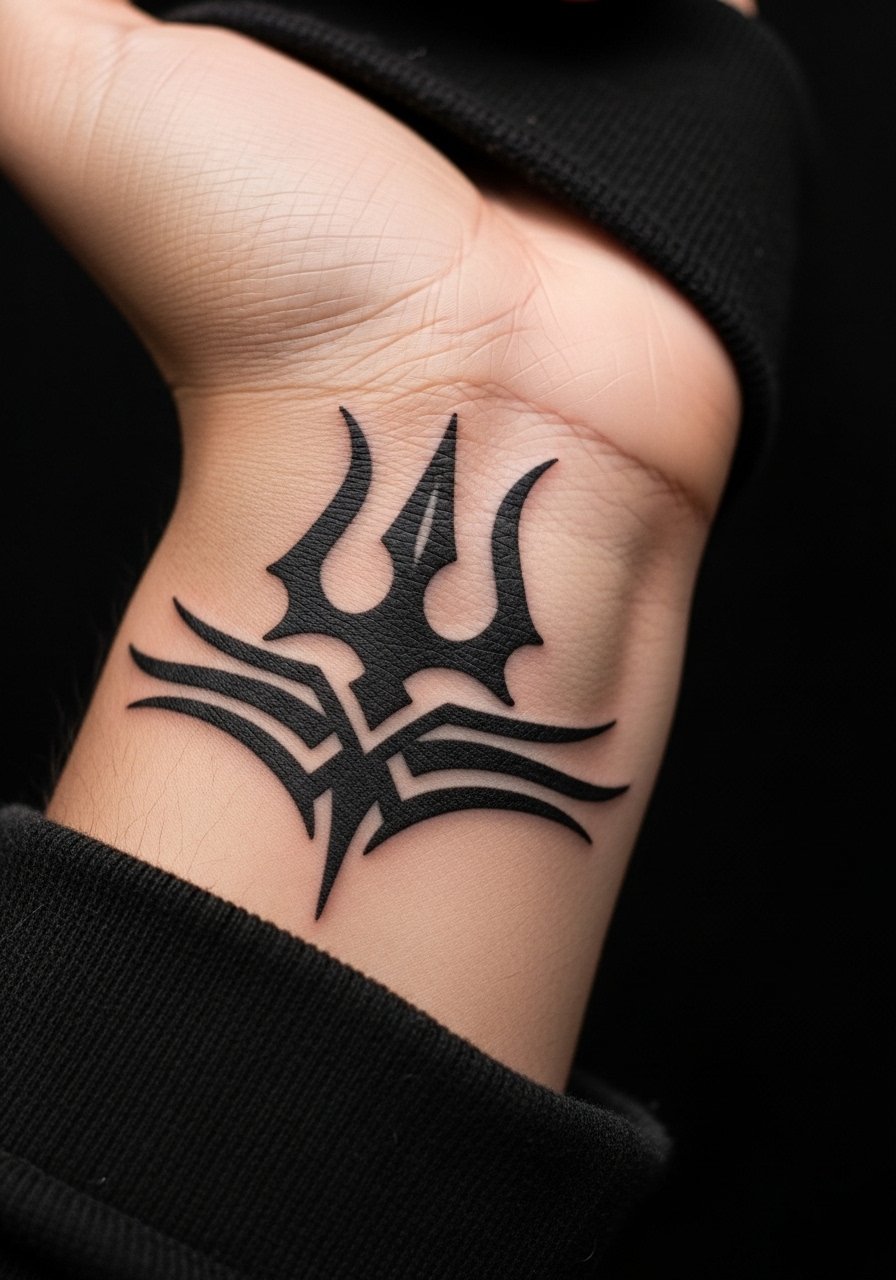
Wrist bands are versatile because they play well with other jewelry and tend to age more predictably than inner-wrist micro work. The common mistake is making the band too narrow. Give the artist one inch or slightly more to avoid lines merging in the first year. For showing it off pair with a thin chain bracelet or watch on the opposing wrist. Expect the session to be quick and the touch-up timeline to hover around 18 months depending on friction from clothing and watches.
11. Trishul with Gada Mace on Hand Dorsum
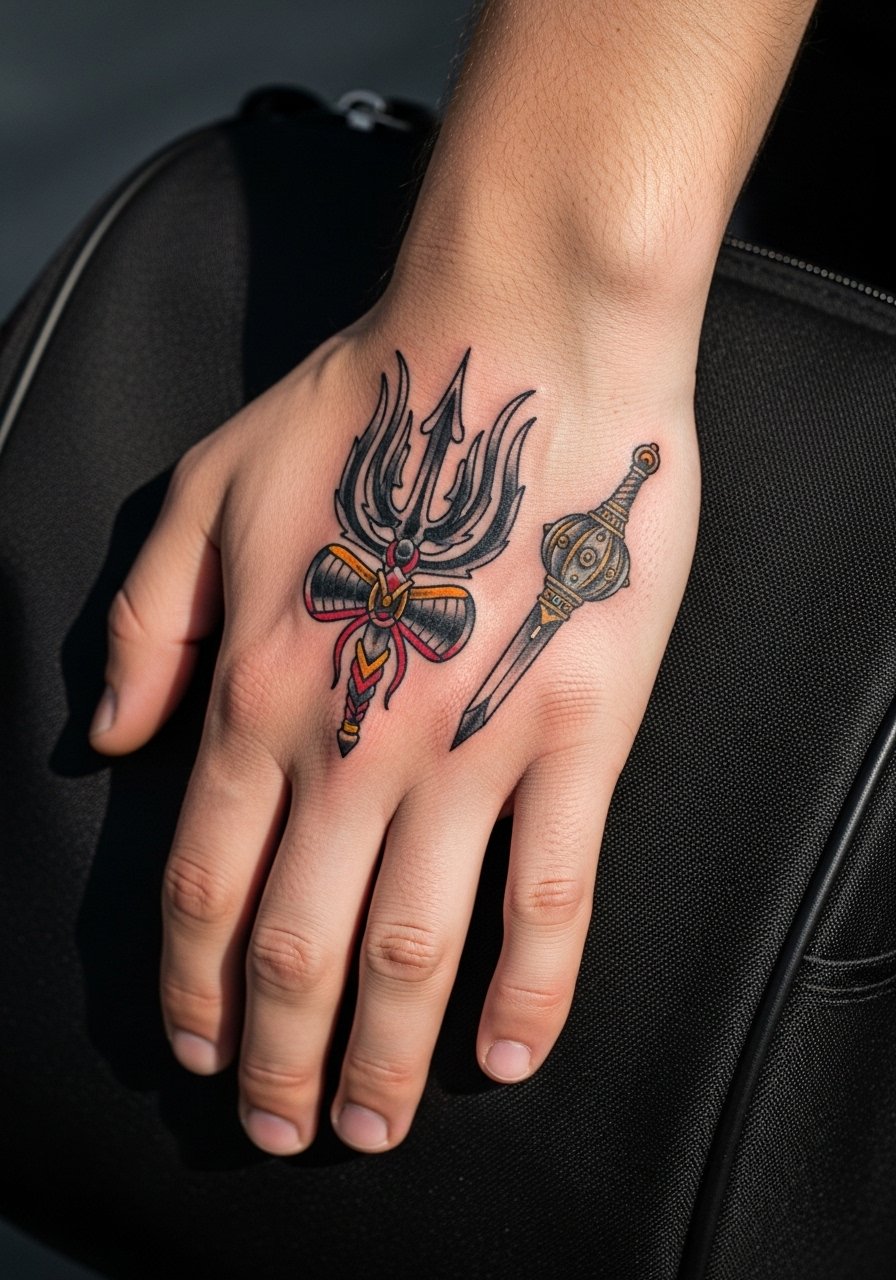
This pairing reads well for fitness-focused clients who want mythological references that still look modern. When you consult, show photos of mace proportions you like because a long haft can look cramped on a two to three inch hand canvas. The usual error is packing both symbols too close which makes each read unclear after a year. For session wear bring a loose short-sleeve tee so the artist can access your hand and wrist easily. Expect two sessions if you want saturated color and plan for a touch-up in 12 to 24 months.
12. Dotwork Trishul Geometry on Inner Hand
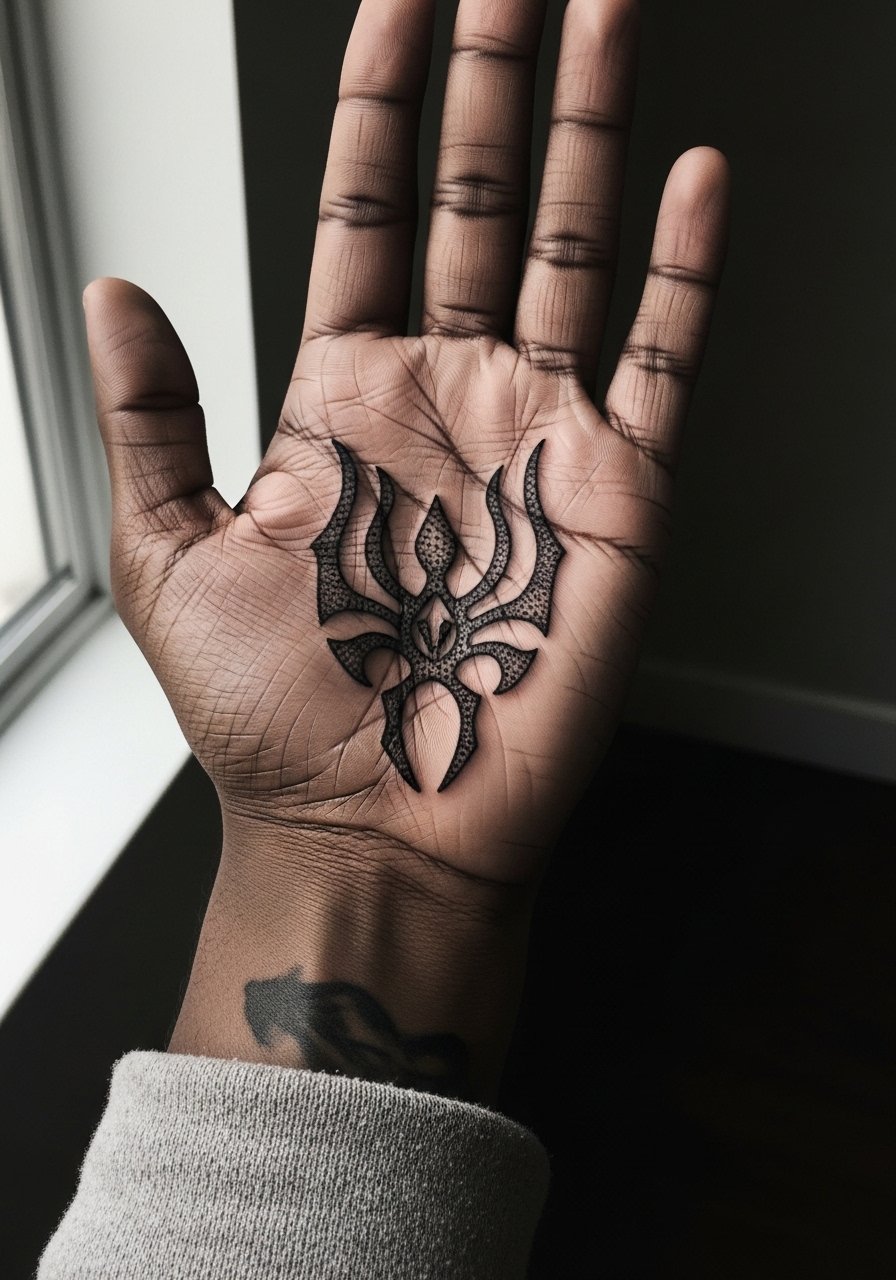
Dotwork on inner hands looks hypnotic when the spacing is right, but dense dot clusters can merge into a gray blotch as skin renews. There is also the Saniderm versus dry-heal debate for areas like this. One camp uses protective film to reduce contamination and friction during early healing. The other camp favors a dry scab to let the skin form a natural barrier. Be explicit in your consultation about which approach your artist prefers and follow their plan. Dotwork pieces often need a careful first touch-up at six to twelve months to restore crisp geometry.
13. Left- vs Right-Hand Adapted Trishul Design
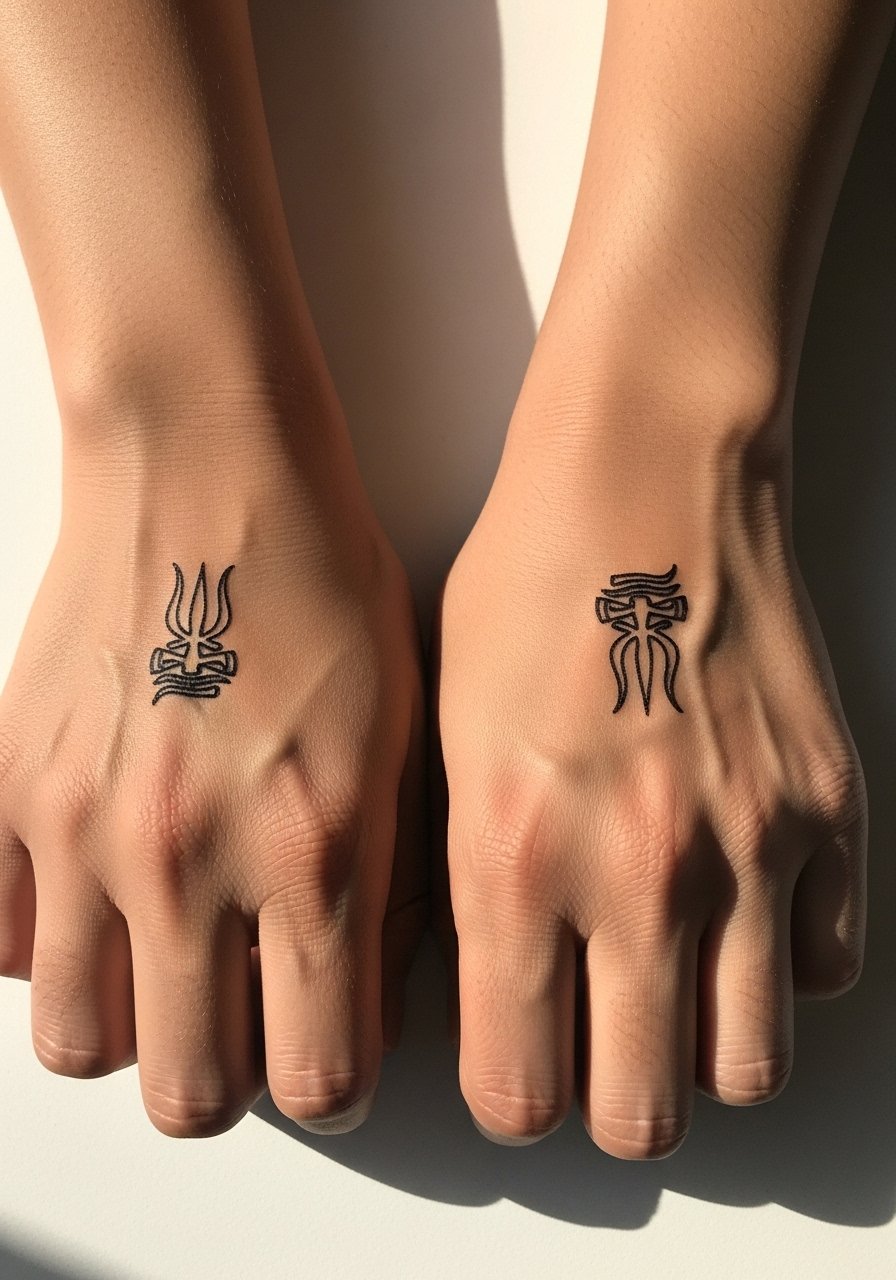
Daily hand dominance changes how ink wears. If you type with one hand or do heavier work with the right, consider a slightly thicker lineweight on that side or shift the prong spacing for durability. The real-life mistake is copying a reference from the opposite hand without mirroring it, which makes the prongs look off when you make a fist. Tell the artist you want asymmetry accounted for by placement and cleaning habits. This adaptation is especially useful for festival-goers and musicians who favor hand use and want their Trishul to last longer between touch-ups.
14. Palm-Side Trishul Hidden Under Rings
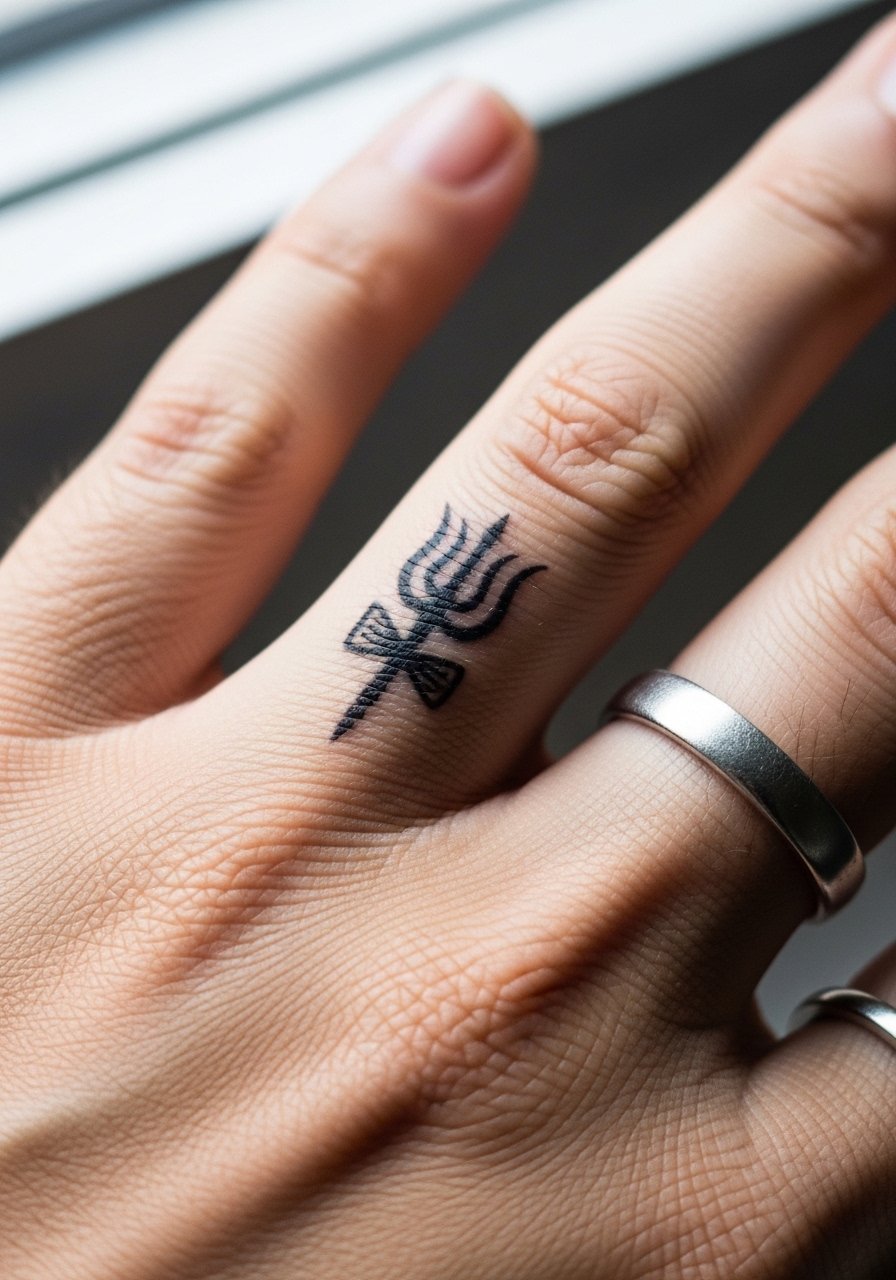
This is a discreet option for professional settings where visible hand ink could be sensitive. The trade-off is heavier abrasion from rings and friction, which speeds fading. The mistake is placing the design where a ring constantly rubs the ink. Instead, position the Trishul just beneath ring edges so it is sheltered while still revealable. Healing can be trickier because of moisture and contact, so expect earlier touch-ups. For booking, mention you want the piece placed with ring wear in mind so the artist can stencil and test position.
15. Trishul Scaled for Glove-Like Hand Coverage
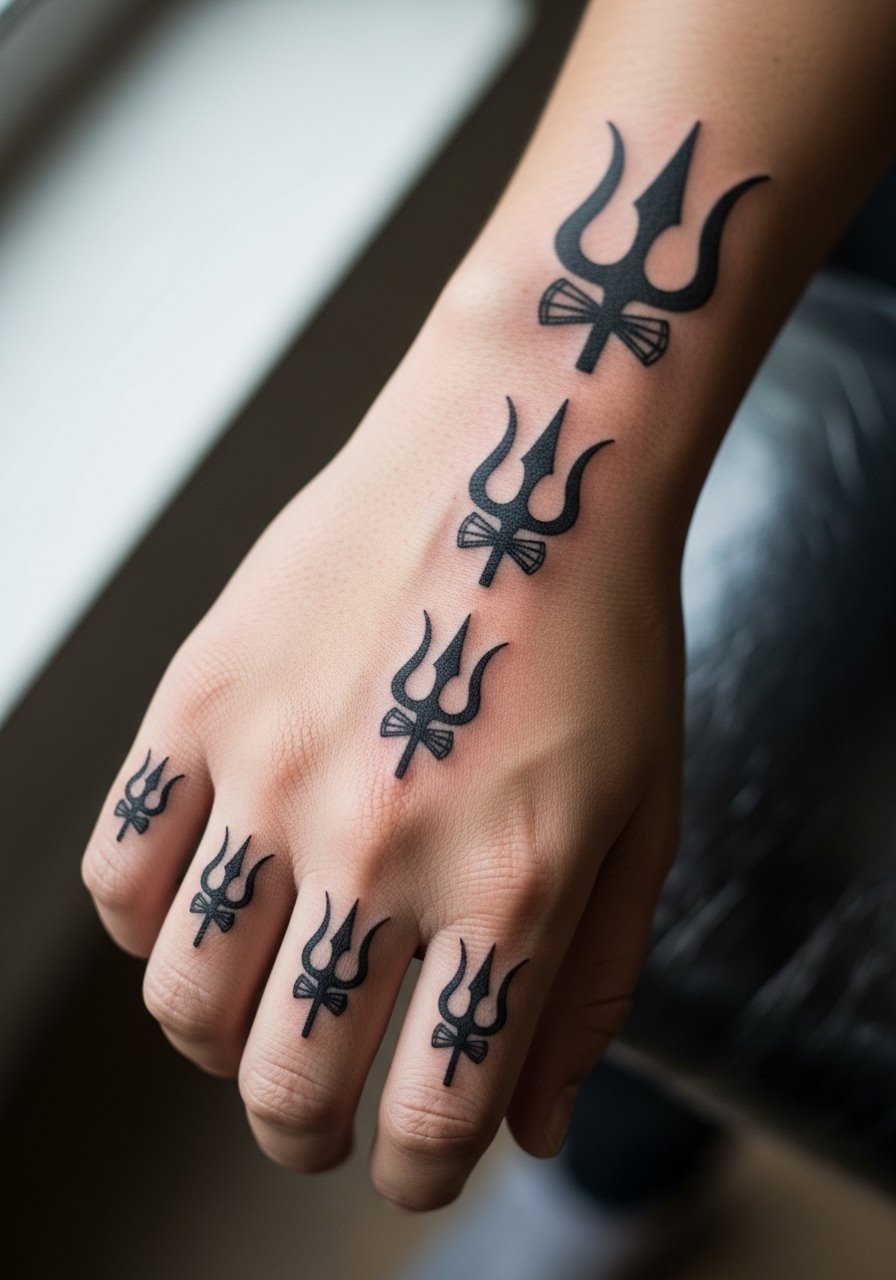
Some people build a glove-like coverage in phases to avoid long single sessions. The advantage is you can evaluate how each phase ages before committing to the next. The usual mistake is rushing to full coverage in one visit and creating overly dense saturation that heals patchy. Discuss a staged plan with your artist and book guest-spot touch-ups instead of forcing a marathon session. Each phase should be spaced months apart so you can see how daily life affects the part you finished.
16. Trishul with Embedded Birthdate in Dotwork
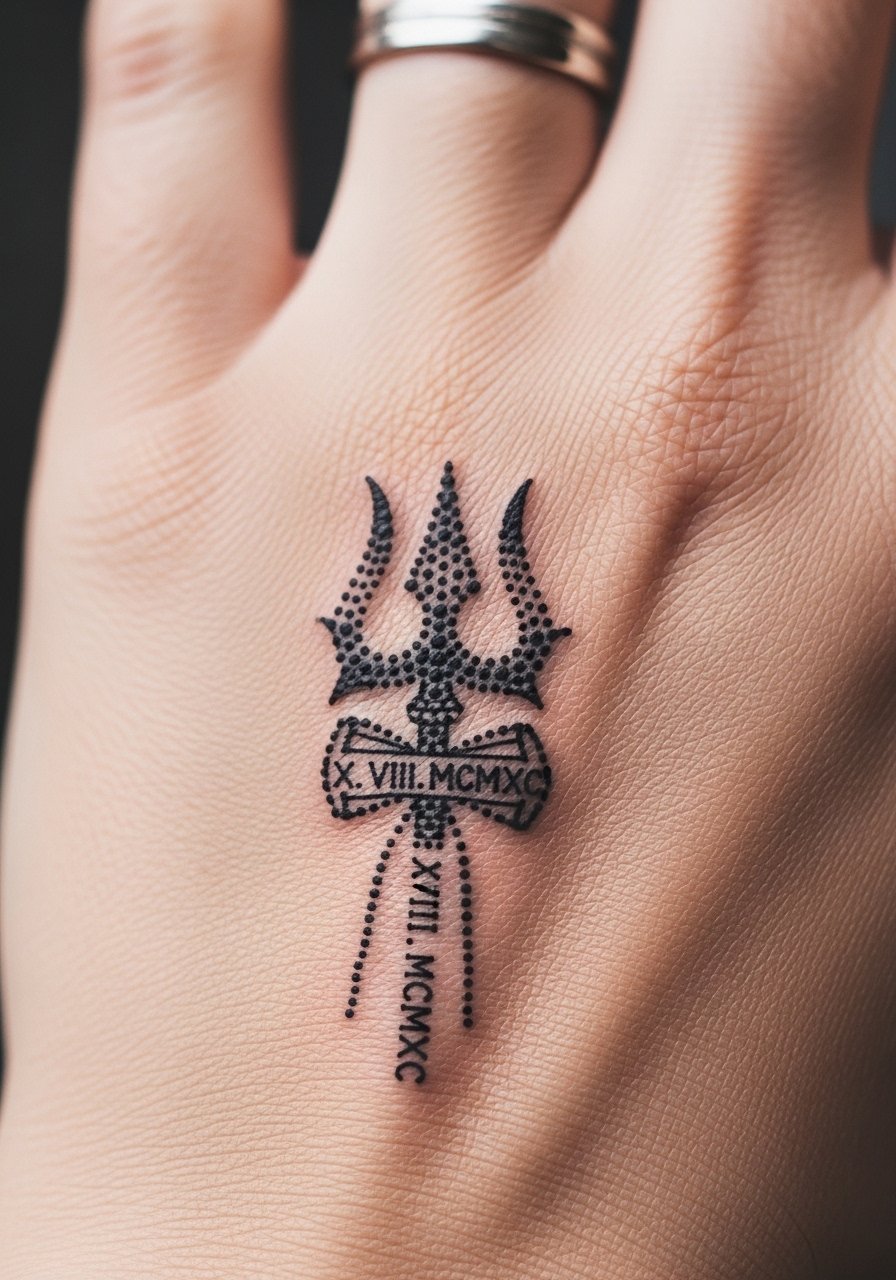
Embedding a date into dotwork can personalize a classic without altering the silhouette. The challenge is balancing legibility and ornamental density. A common mistake is cramming full numerals into a narrow shaft which read as noise later. Tell your artist which numbers to prioritize and ask for enlarged spacing around them. This design ages more predictably when the date is kept minimal, such as a two-digit year or a small Roman numeral. Expect a light touch-up to keep the numerals crisp after the first year.
17. Trishul on Webbing Between Fingers
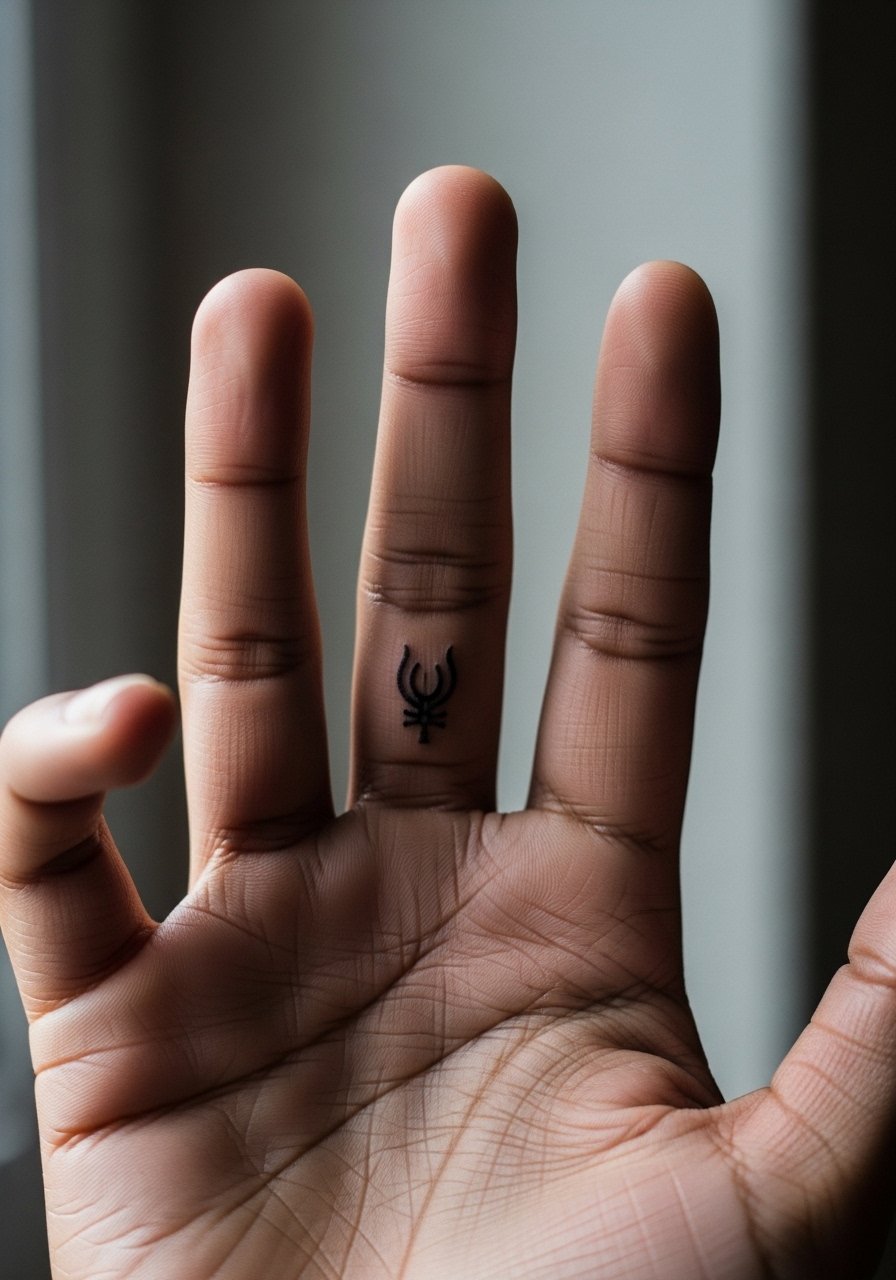
Webbing placements are extremely private and heal fast if you avoid stretching the area. The most common error is placing the design where the crease opens and closes, which makes the ink break prematurely. Ask your artist to position the Trishul on the flatter part of the webbing and to expect a short, sharp session. This spot suits someone who wants a hidden devotion without a visible hand piece. Touch-ups are normal and can be bite-sized to minimize pain.
Frequently Asked Questions
Q: How much faster do hand Trishul tattoos need touch-ups compared to forearm pieces?
A: From what I see, hand placements usually need touch-ups roughly twice as often as forearm work, especially if you wash your hands frequently or work outdoors. Lineweight and saturation choices change that timeline, so plan on a touch-up window between 12 and 24 months for most small hand Trishul pieces.
Q: Should I choose fine line or blackwork for darker skin tones to keep the Trishul crisp?
A: For medium and dark tones, high-contrast blackwork often reads clearer over time than ultra-fine lines. If you love fine line, ask to test a healed example from the artist’s portfolio on similar skin. A compromise is slightly heavier fine line with bold negative space to maintain clarity.
Q: What should I ask my artist about healing methods like Saniderm versus dry healing for hands?
A: Name both camps and ask where the artist stands. One camp prefers protective film for hands to reduce maceration from frequent washing. The other prefers a dry scab for better scab formation. Ask about their success rate on hand pieces and follow the plan they outline for that specific placement.
Q: How do I find an artist who specializes in Trishul work without contacting individuals directly?
A: Search for #TrishulTattoo and #HandTrishul on Instagram and filter for location. Use Tattoodo or Booksy with the keywords "trishul" and "hand placement" and sort by recent reviews. Check r/tattoos and r/tattooadvice for guest-spot recs in your area.
Q: What do I wear to the appointment for a back-of-hand or wrist Trishul?
A: Wear clothing that gives the artist clean access, like a loose button-down shirt you can pull aside for wrists and a short-sleeve or rolled cuff tee for back-of-hand work. Comfortable, loose clothing makes the session easier on both you and the artist.
Q: Will a tiny Trishul on the finger ruin my job prospects in conservative fields?
A: Hand tattoos can still affect hiring in some industries. If that is a concern, consider a palm-side or webbing placement that stays hidden in professional settings. Planning with concealment in mind lets you keep the mark while managing visibility at work.