
Fine line trio tattoos are everywhere on mood boards right now, and the reality is they do not all age the same. People worry a trio will look dated, or pick a size that reads wrong on the shoulder, or wonder how a design will heal on darker skin. Read these 17 shoulder trio ideas with practical notes on sizing, aging, and what to tell your artist so the set still feels intentional years from now.
1. Three matching minimalist symbols across both shoulders
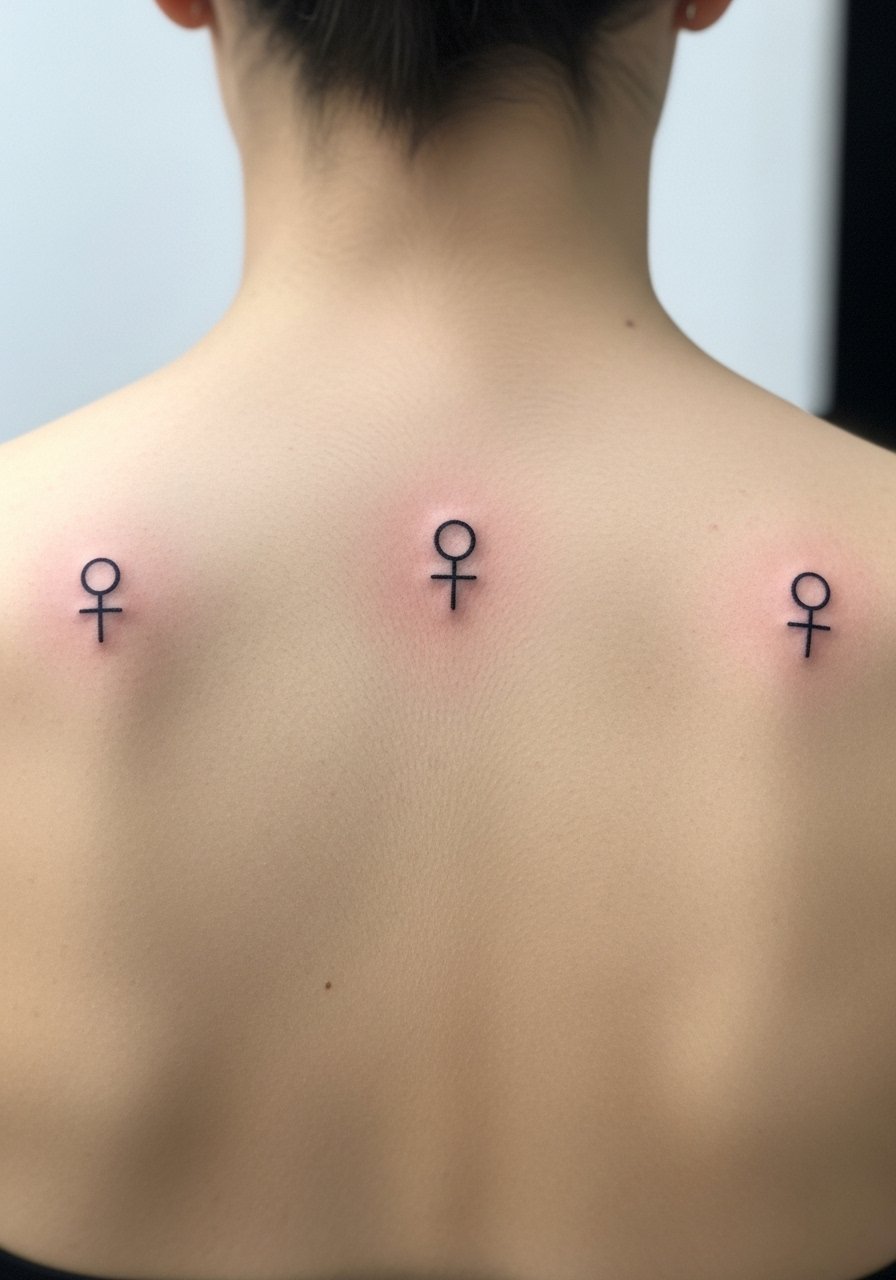
This split approach gives each person one clear symbol on the outer shoulder while the third piece sits between the shoulder blades. I recommend simple shapes like triangles or arrows when you want a trio that works alone or together. Tell your artist you want consistent negative space so each symbol functions as its own composition. Common mistakes are making the symbols too small or placing them too close to the joint, which increases blowout risk. For first-timers, expect low pain and a single short session. Pair the look with sleeveless tops to show the trio. Try a loose button-down shirt you can pull aside at the studio and later roll the sleeves to show the matching placement.
2. Sun, moon, and mountain single-shoulder vignette
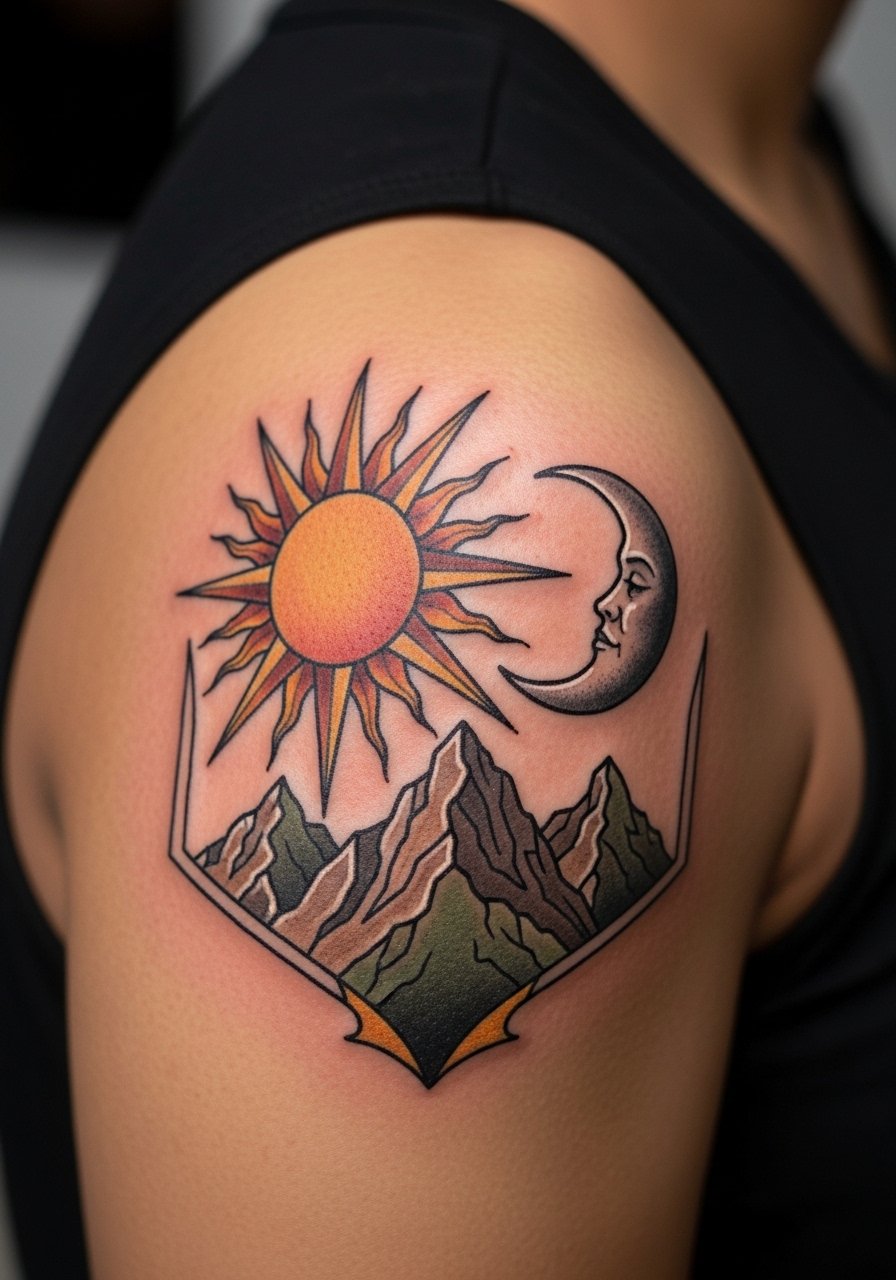
This composition reads like a small landscape. Ask for bold outlines with selective saturation so the dark skin tone keeps shape over time. The shoulder cap holds color well when saturation is even. A common aging issue is patchy color if the artist packs unevenly. During consultation, request reference photos of healed color on similar skin tones and ask about touch-up plans. Sessions feel like medium intensity with occasional pressure on the shoulder. For show-off outfits, the trio pairs with tank tops or one-shoulder tops that reveal the cap. Consider a racerback tank for both the appointment and afterward.
3. Three tiny celestial orbs in a triangle
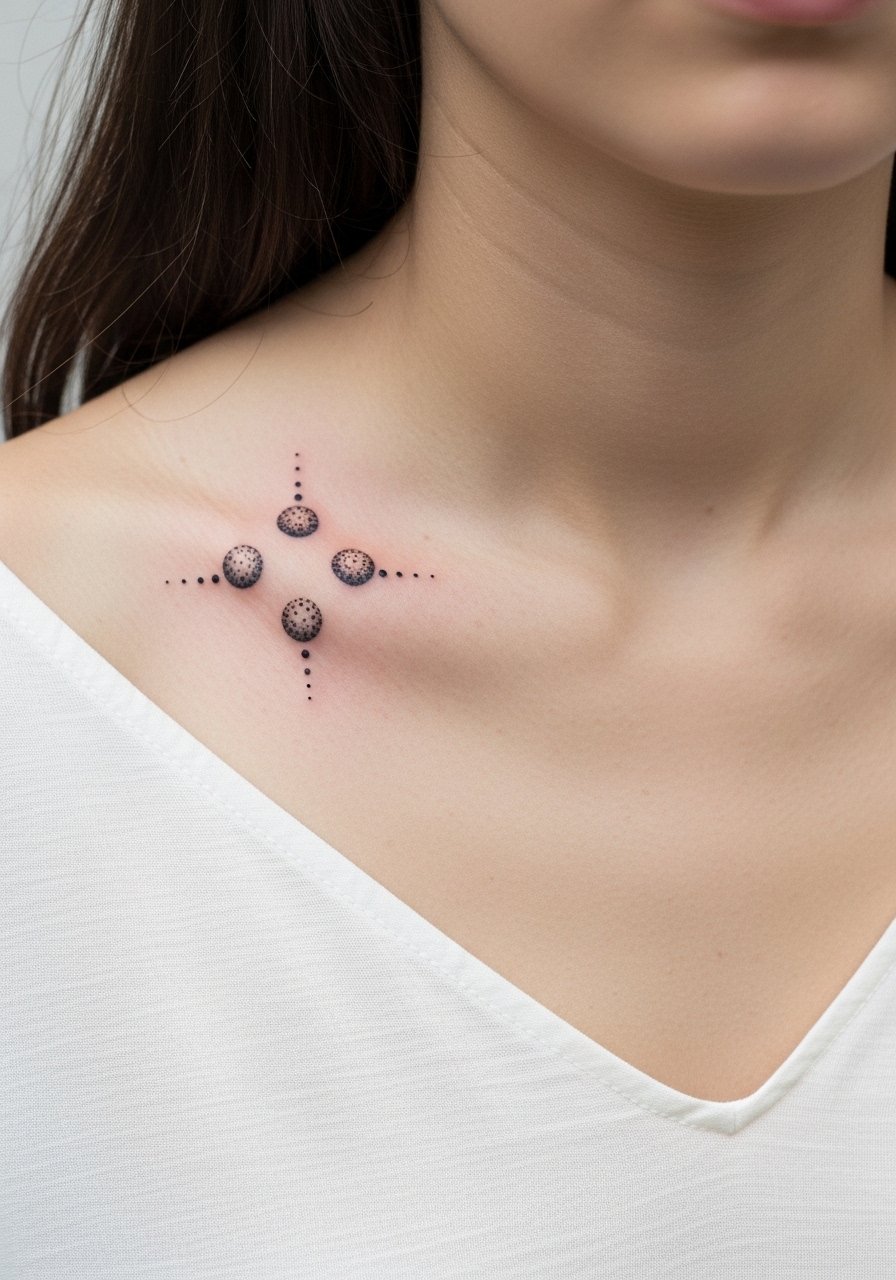
Micro-dot orbs are subtle but deliberate. The trick is size. Too small and the dots merge with time. Ask the artist to leave slightly more space between dots than you think you need. Fine dot work on shoulders tends to soften at year two to three more than bold work. Expect light pain and a very short session. One real mistake is asking for perfectly identical dots; human skin texture makes slight variation natural. If you want to show them off, pair with open-neck tees or a thin chain pendant necklace that sits above the trio so the dots read against bare skin.
4. Three floral heads in a compact triangle
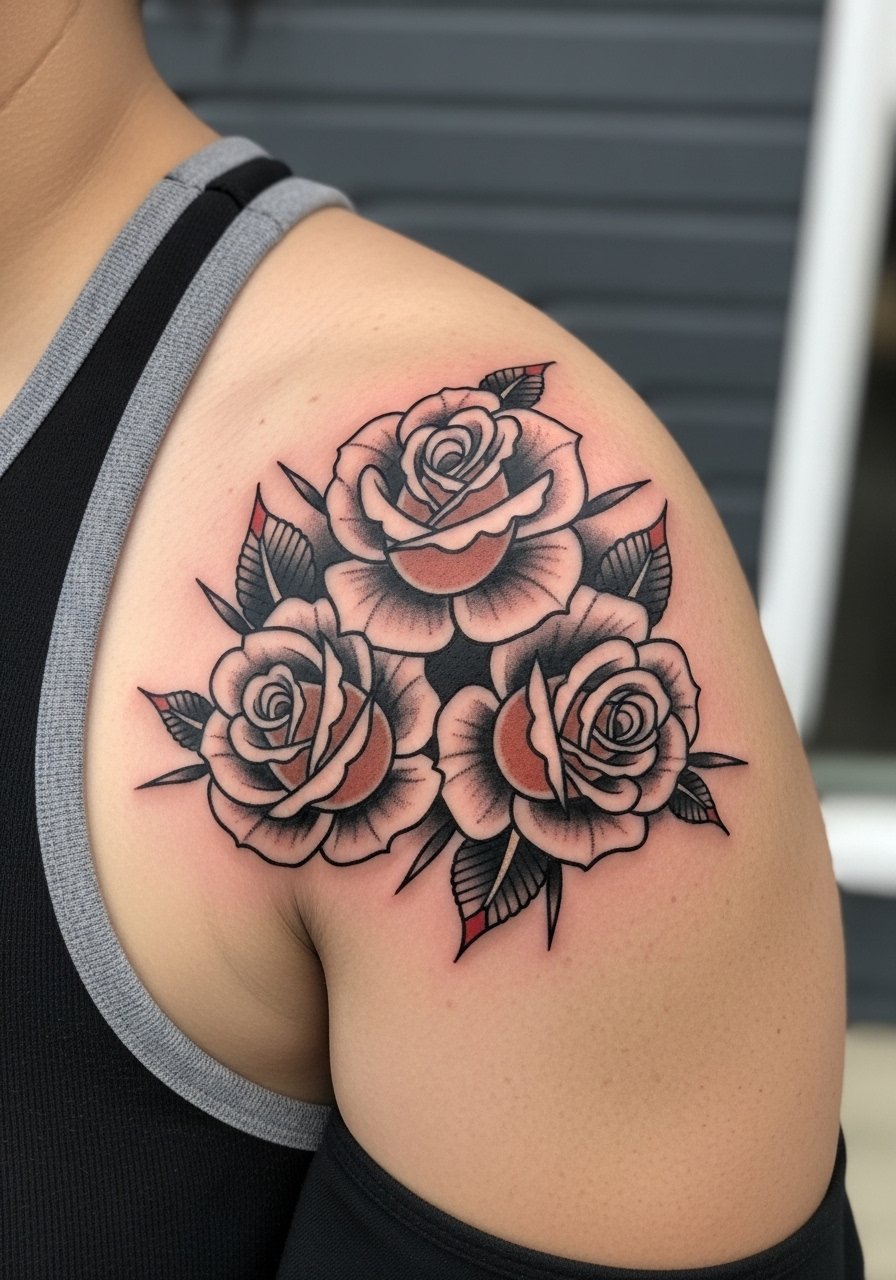
Small floral clusters work well when each bloom is allowed breathing room. Tell your artist to avoid ultra-fine detail in the petals that will fill in over time. A healthy alternative is to use bolder contours and stipple shading. The shoulder moves but does not compress like the ribcage, so touch-ups are usually at year three or four for color refresh. The session is moderate in any color work. For appointment day, wear a loose button-down shirt you can pull aside so the artist has clear access to the front shoulder.
5. Three-phase moon crescents wrapped around the shoulder
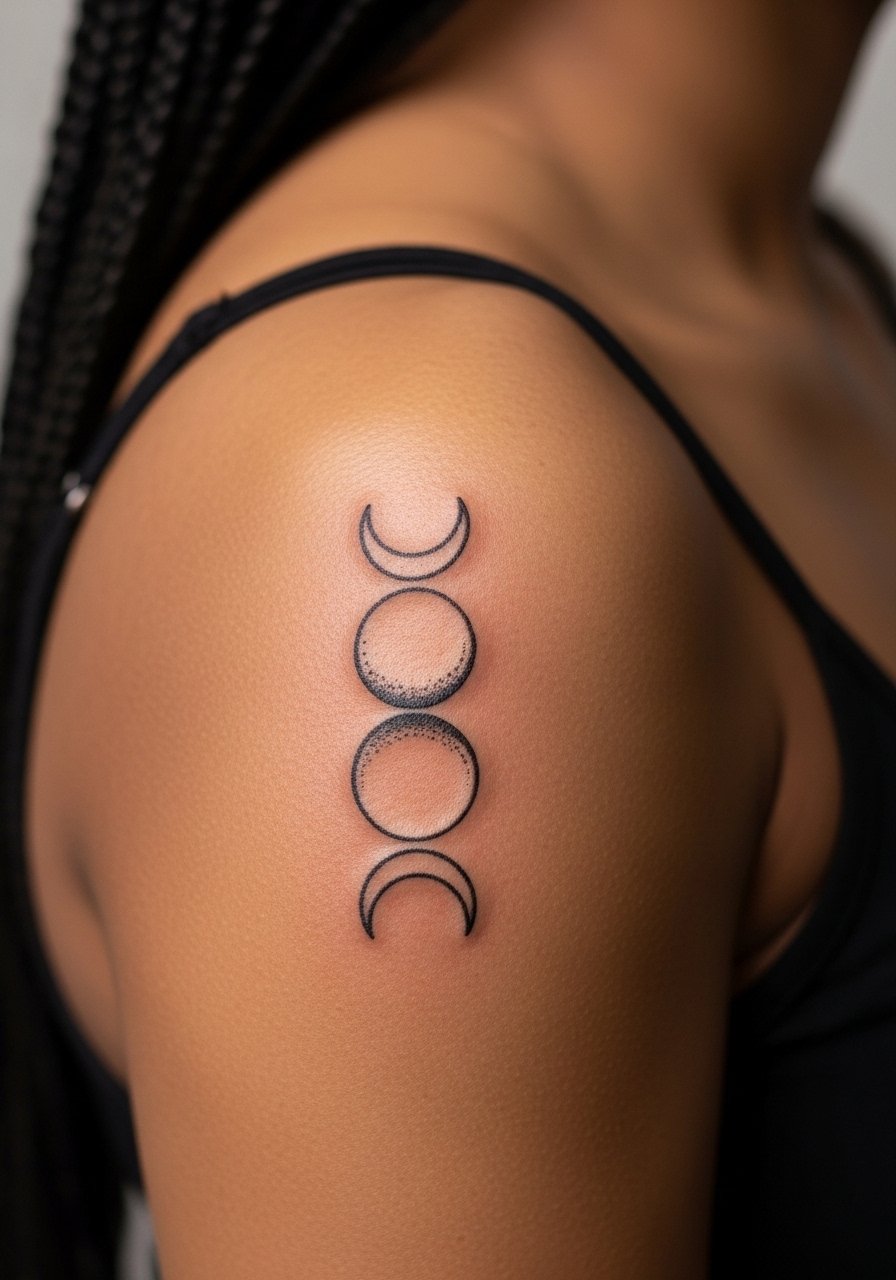
Phase crescents read as a narrative of change and age elegantly when spaced correctly. The controversy here is whether fine line holds on moving skin. One camp warns fine line blurs faster in curved zones. The other camp says with correct needle depth and spacing it settles fine. Be explicit in consultation about desired line thickness and ask for healed photos from the artist. Small crescents need touch-ups at year two to three more often than heavier black lines. Wear a loose tank top to the appointment so the artist can access the wrap without tugging at fabric.
6. Three identical rune symbols split across both shoulders and upper back
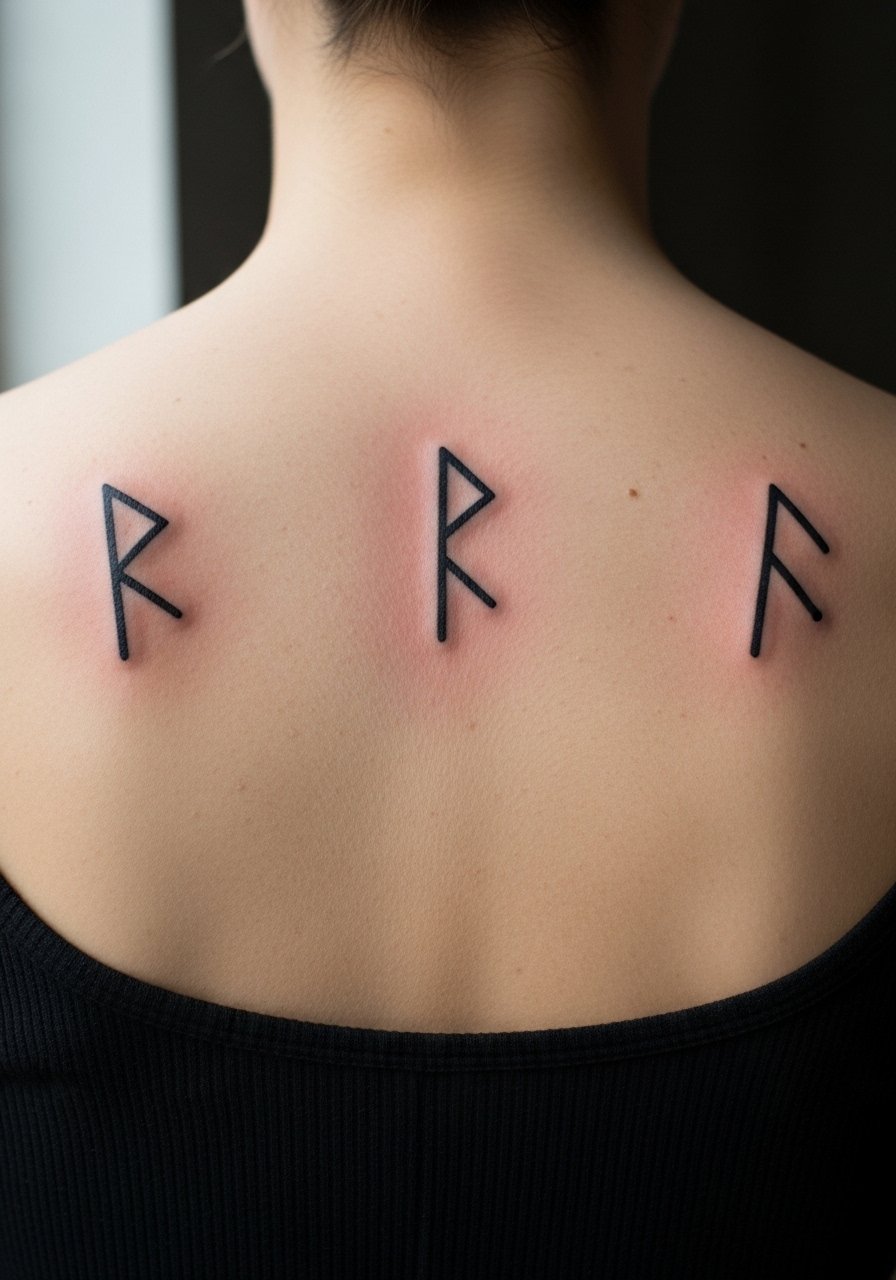
Matching runes give a ritual feel without forcing identical placement. Tell your artist you want consistent scale and spacing so each rune stands alone. A common mistake is overcomplicating rune strokes. Simpler bold strokes age better. Sessions are brief for each symbol but commit to seeing the whole set for symmetry. If the group might drift over time, design each rune so it can be covered or extended without awkward negative space. For finding artists, search local shop directories, convention guest lists, and relevant hashtags rather than following a single influencer.
Studio Day Picks
These shoulder cap and upper-back pieces above often need similar prep and a few healing essentials for short sessions and fine line detail.
-
Stencil transfer paper kit. Lets you test the exact placement and scale on skin before any needle touches the shoulder, which is crucial for symmetrical trio work.
-
Topical numbing cream. Applied as directed before a sensitive shoulder session eases the sting for first-timers without changing line quality.
-
Thin protective film roll. Useful for shoulder caps that rub against straps during the first few days, reducing friction while you heal.
-
Fragrance-free gentle body wash. Cleans the area without irritants that can cause scabbing on fine line pieces.
-
Aquaphor healing ointment. A thin layer during the initial 48 hours can protect delicate linework on small shoulder motifs.
7. Three bird silhouettes migrating across the shoulder cap
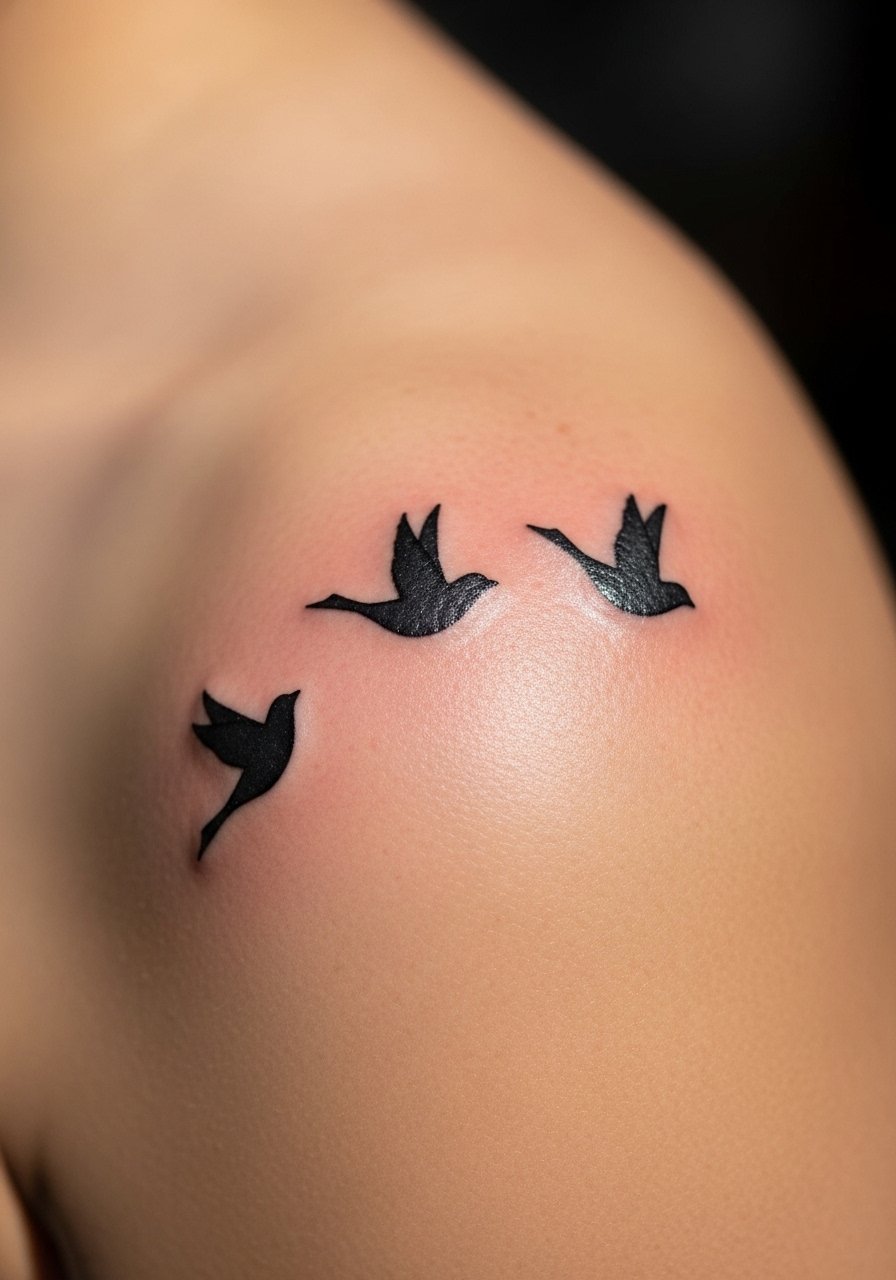
Silhouette trios feel graphic and bold. Request strong negative space so the birds read at a distance. A typical mistake is sketching birds too detailed for the size, which ages into visual noise. For darker skin, solid black silhouettes usually retain crisp edges better than fine stippling. Expect a short session and medium pain on the cap. For showing off the motif, a one-shoulder top or a sleeveless dress frames the migration without competing with the silhouette.
8. Three-color stripe band around the shoulder cap
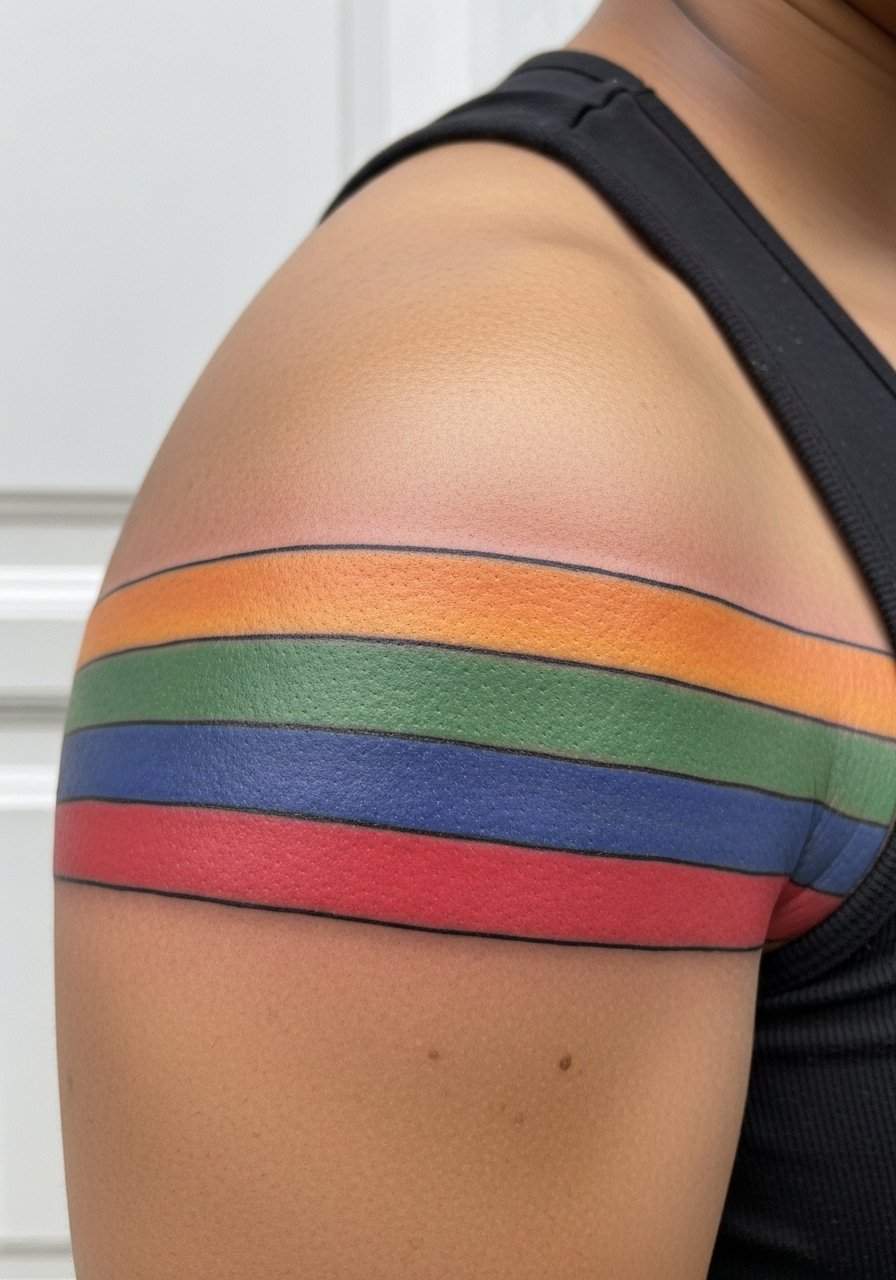
Color bands are modern and non-literal. Tell your artist you want clean color blocking with even saturation and crisp edges. A common issue is bleeding between colors if the artist lines are not sealed properly. Color on darker skin needs denser packing for visible contrast, so expect a slightly longer session for even coverage. This look pairs well with sporty tops that reveal the cap, but save aftercare questions for your artist since color retention differs by pigment.
9. Three small planets arranged in a constellation line
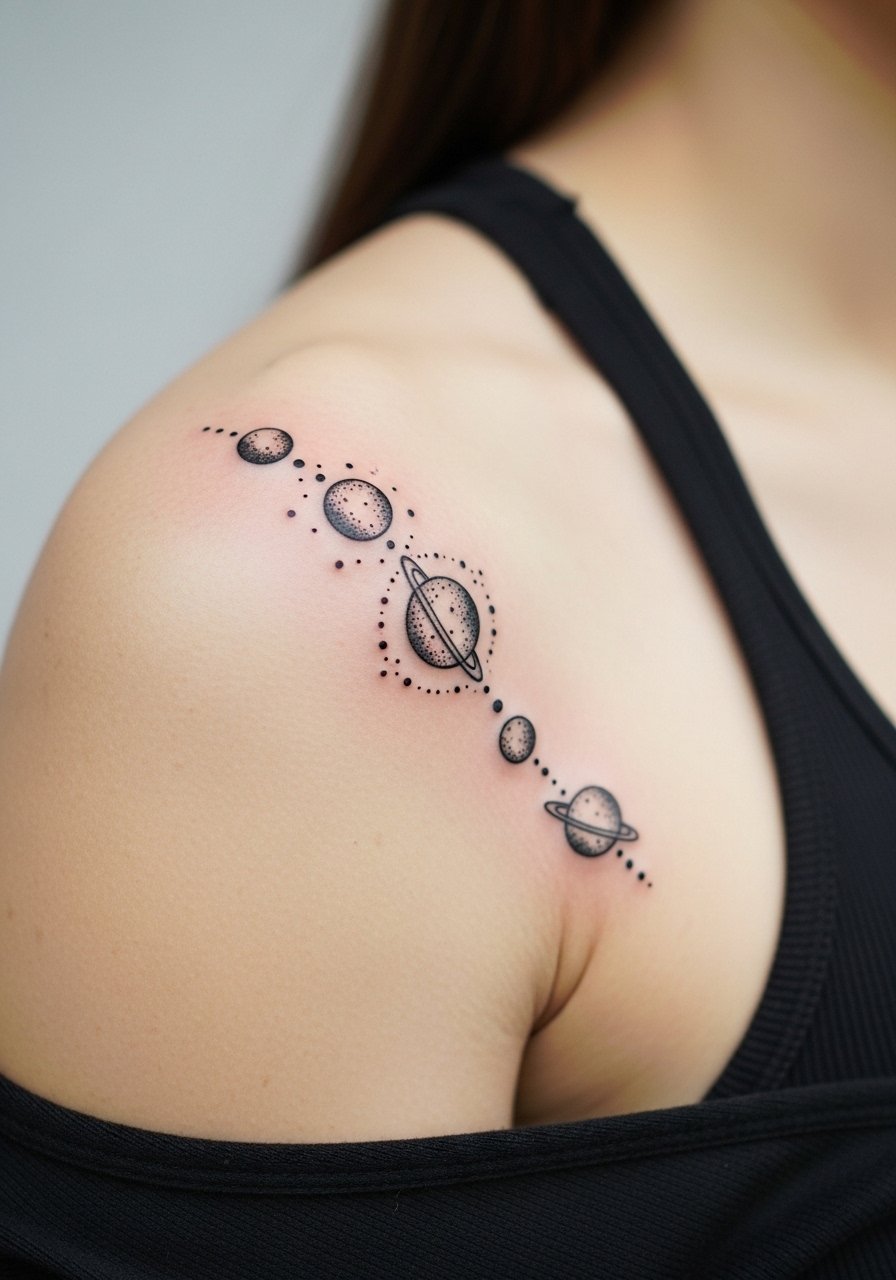
Planet trios are an easy modular choice. The size should be large enough to avoid merging at the seams. I usually tell people to pick 1.5 to 2 times the size they think they need for micro-dot stability. The outer shoulder tolerates micro-dot work better than inner joints. For showing the piece, short-sleeve tees or rolled-up sleeves keep attention on the line. Plan for a touch-up at year two if you want the orbs to stay crisp.
10. Three-letter cartouche in a triangular layout
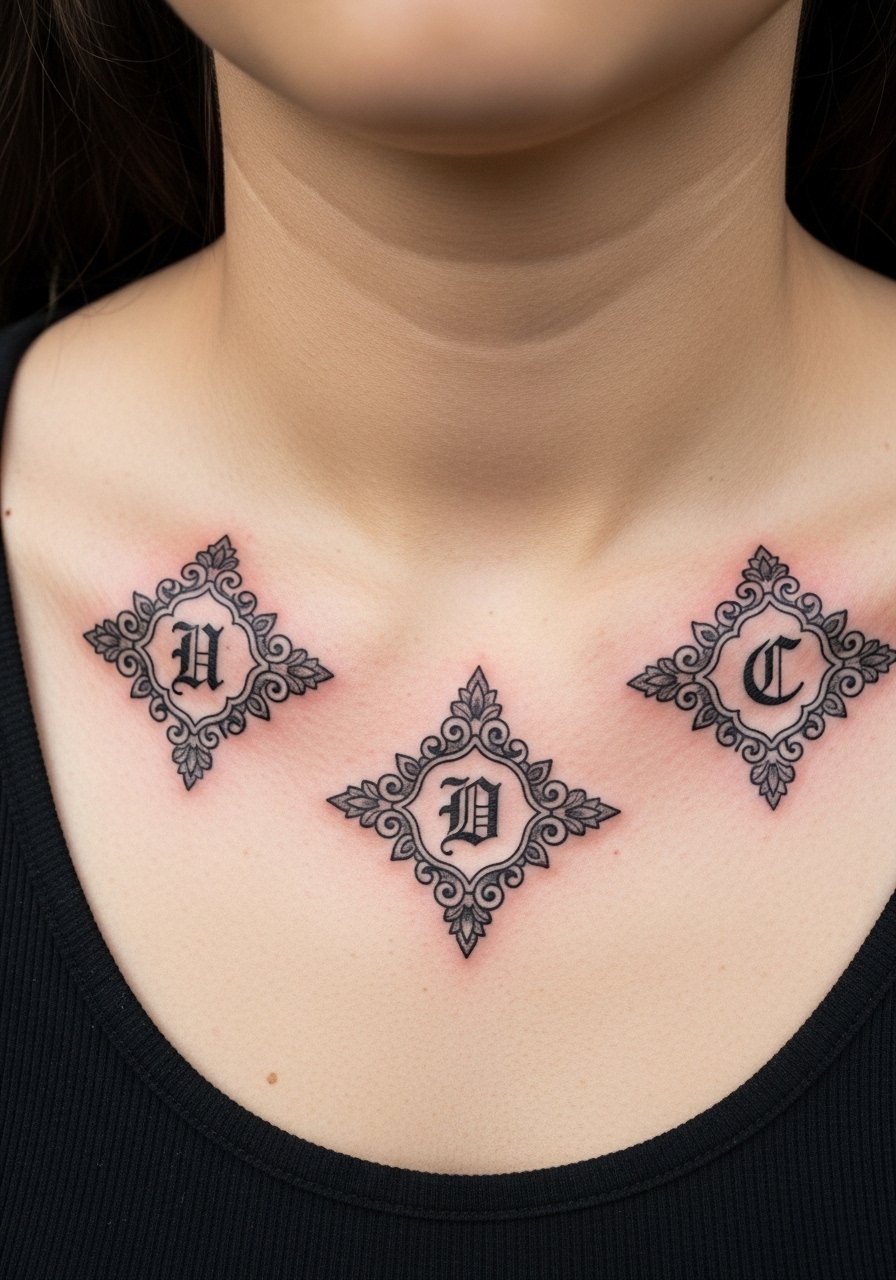
Initials in small frames feel commemorative without being showy. Ask for slightly bolder frames rather than ultra-fine filigree so the letters stay legible as the ink settles. A typical mistake is choosing an ornate script that blurs into the frame. The session is short and the area is low pain. This layout is good when each person wants a discrete token that also composes when the trio stands together.
11. Three musical icons clustered near the shoulder joint
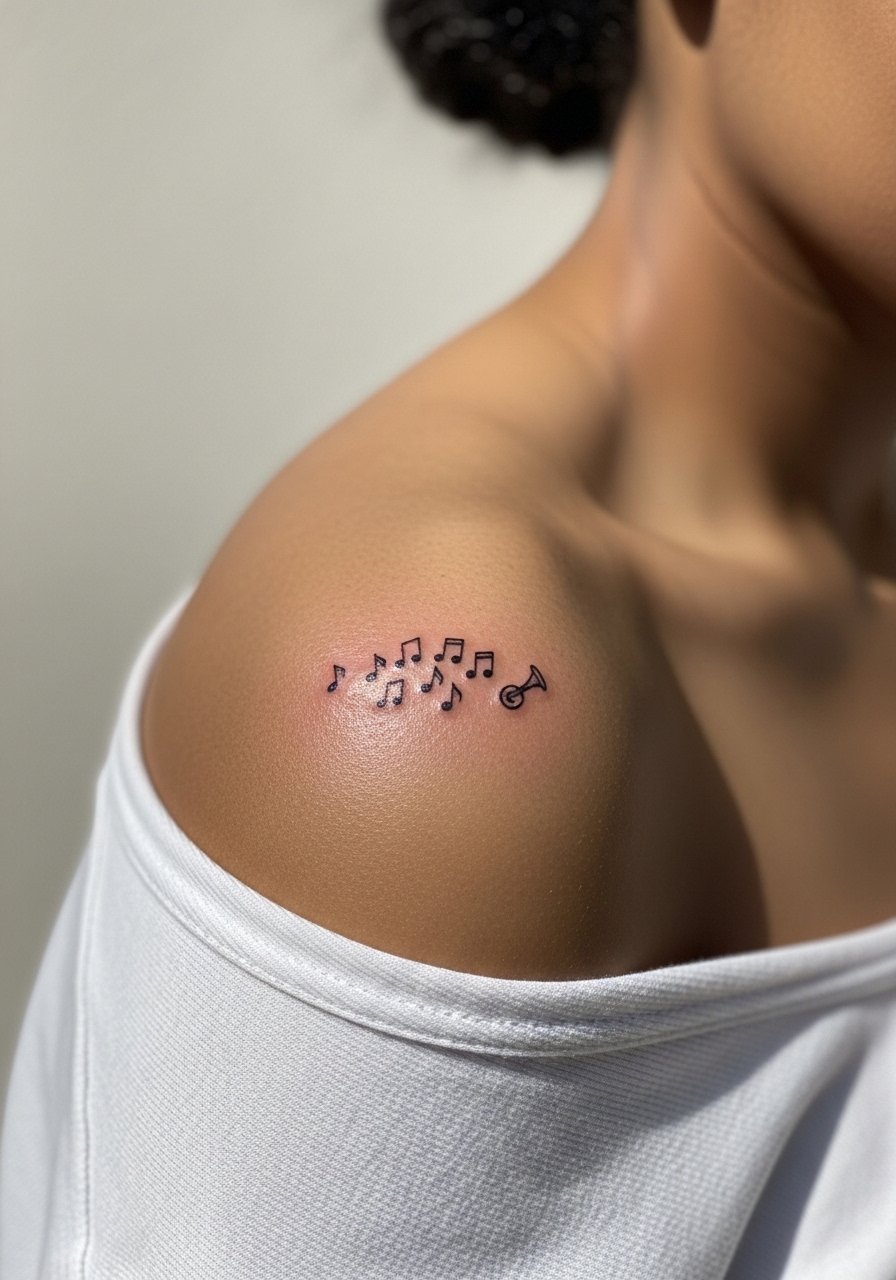
Band-mate trios are personal and fun. For musicians who want symbols that last, suggest simplified silhouettes over tiny realistic instruments. A common error is cramming too many details into a very small icon. The shoulder joint can be slightly more painful than the cap. To display the trio, pair with a scoop-neck tee or a tank so the icons sit against bare skin. Ask your artist about touch-up timing if you expect heavy sun exposure.
12. Three-wave or mountain silhouettes across the top of the shoulder
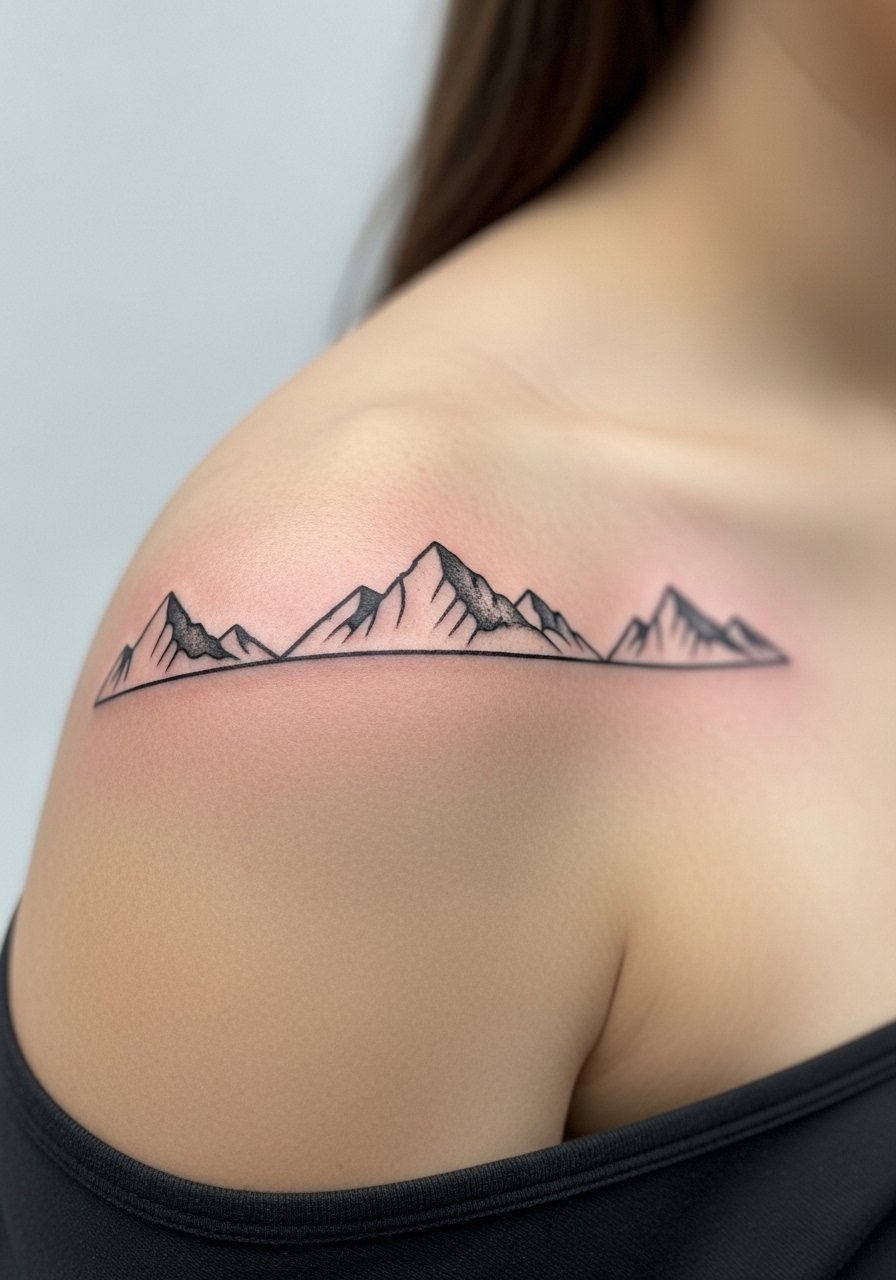
Linear landscape trios read well on the shoulder band because the natural curve becomes part of the composition. Tell the artist you want consistent horizon lines and negative space between peaks. A common mistake is making peaks too detailed for a narrow band. The top-of-shoulder band handles bold blackwork well and usually needs minor touch-ups at year three. For session wear, a loose tank top works so the artist can roll the strap down without causing pressure.
13. Three elemental glyphs inside a central shoulder circle
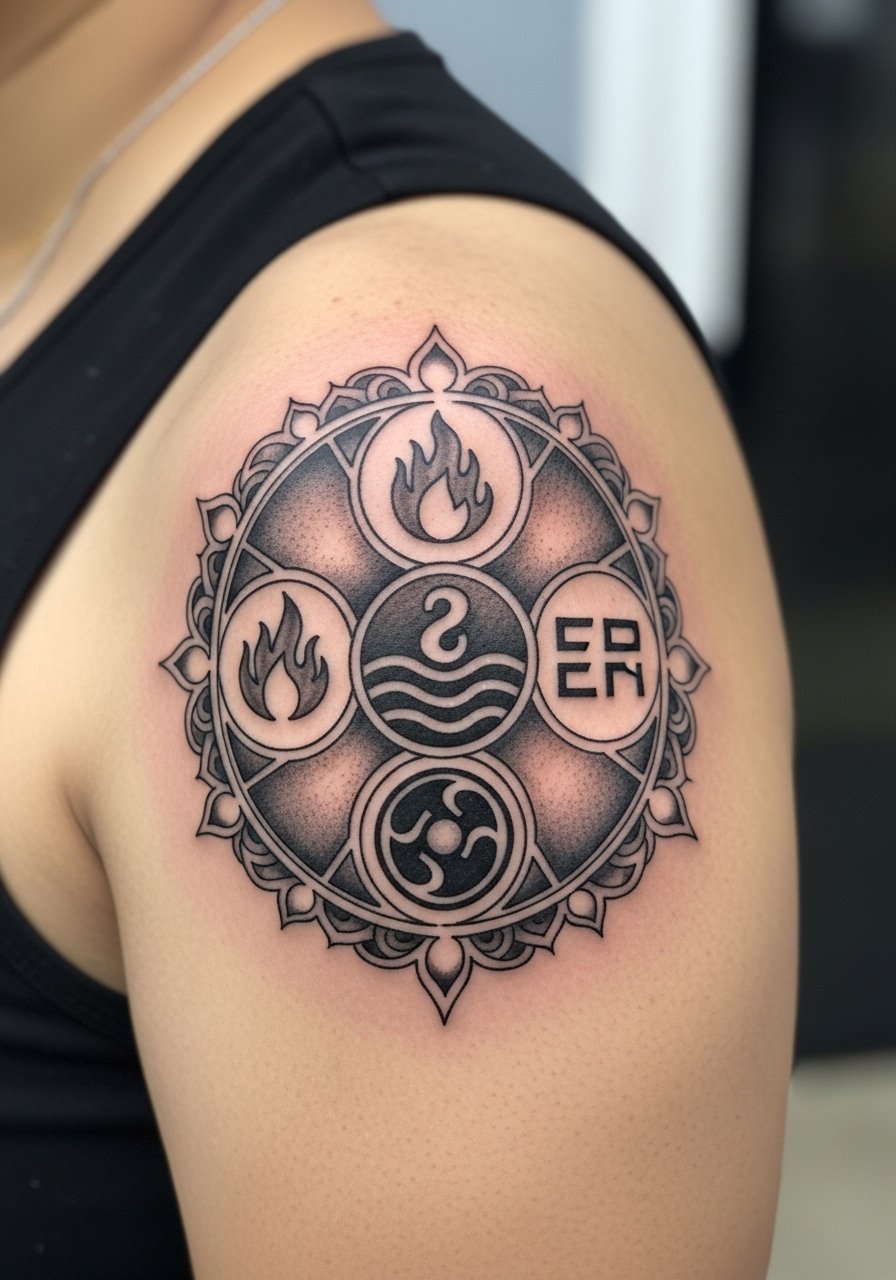
A central circle unifies symbolic trios. Ask for slightly larger glyphs within the circle to avoid line crowding over time. The mistake to avoid is filling decorative borders with dense detail that compacts as it heals. The session is moderate depending on shading. If any part of the design references a cultural or religious symbol, ask about respectful variations rather than exact replicas. This layout looks strong with off-the-shoulder tops or open-back midi dresses for evenings out.
14. Three minimalist arrows fanned on the shoulder cap
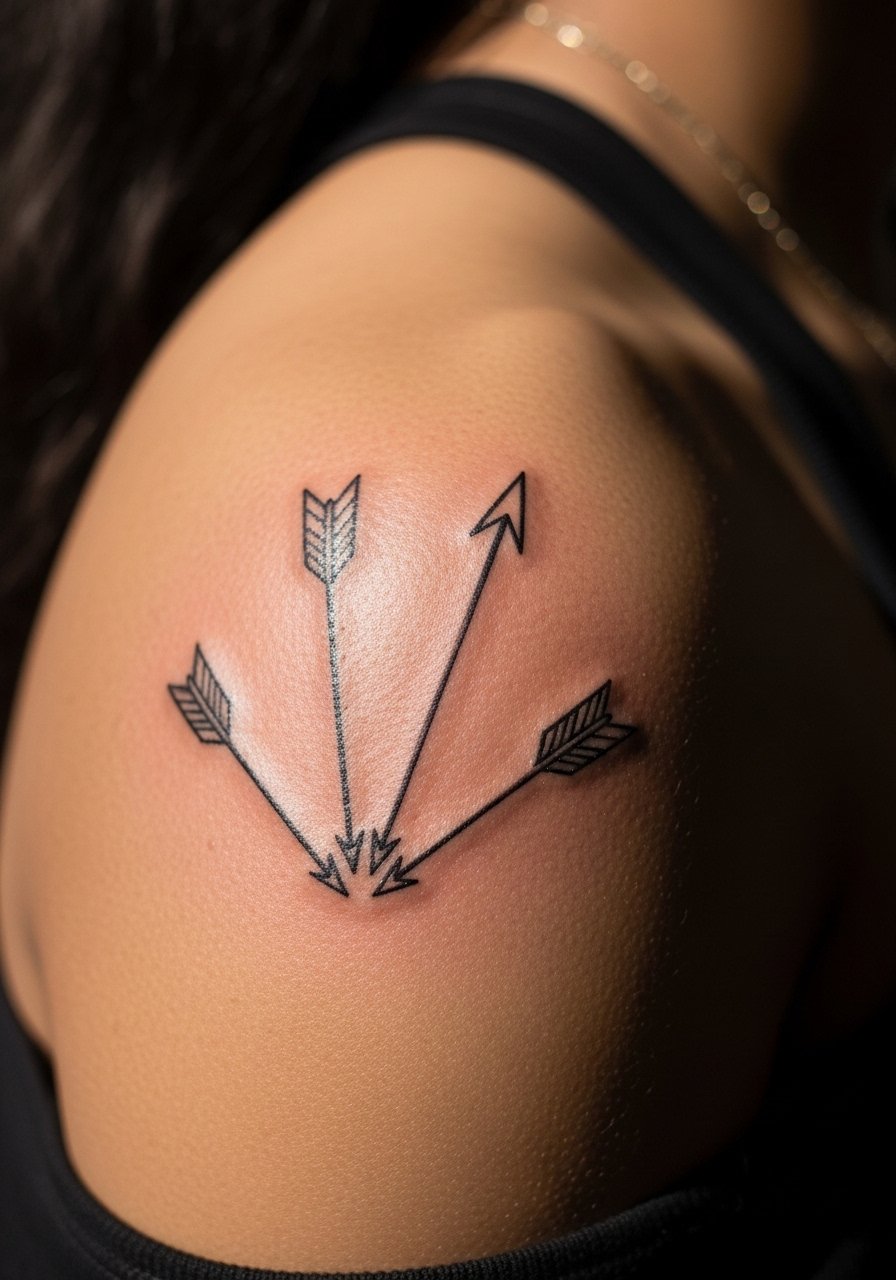
Arrows are classic and graphic. Tell the artist you want slightly heavier shafts than the thinnest fine line to avoid early softening. One camp of artists thinks arrows can be razor-thin and still last. The other camp recommends slightly bolder strokes for moving areas like the shoulder. Ask where the artist stands and view healed examples. The session is brief and more comfortable than chest work. Pair the arrows with a one-shoulder top to highlight the fanning motion.
15. Three pendant or charm designs clustered near the collarbone
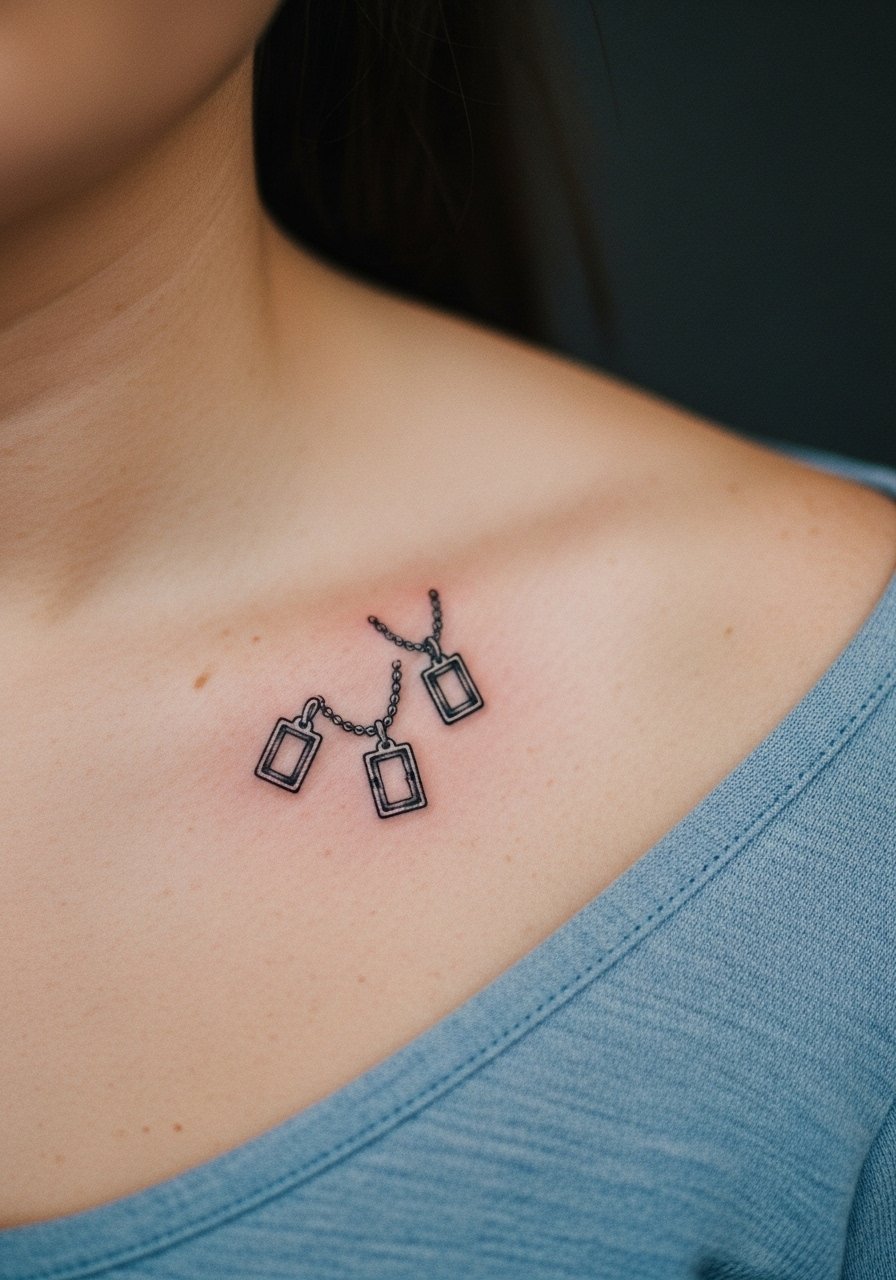
Charm trios feel like jewelry on the body. Ask the artist to design small negative space for the chain impressions so the charms do not blur into a solid block. A mistake is overcomplicating charm detail in a small scale. The front shoulder near the collarbone is visible and ages predictably. On session day wear a wide-neck shirt that you can pull aside or unbutton for clean access and modest coverage.
16. Three color-dot ombré across the shoulder cap
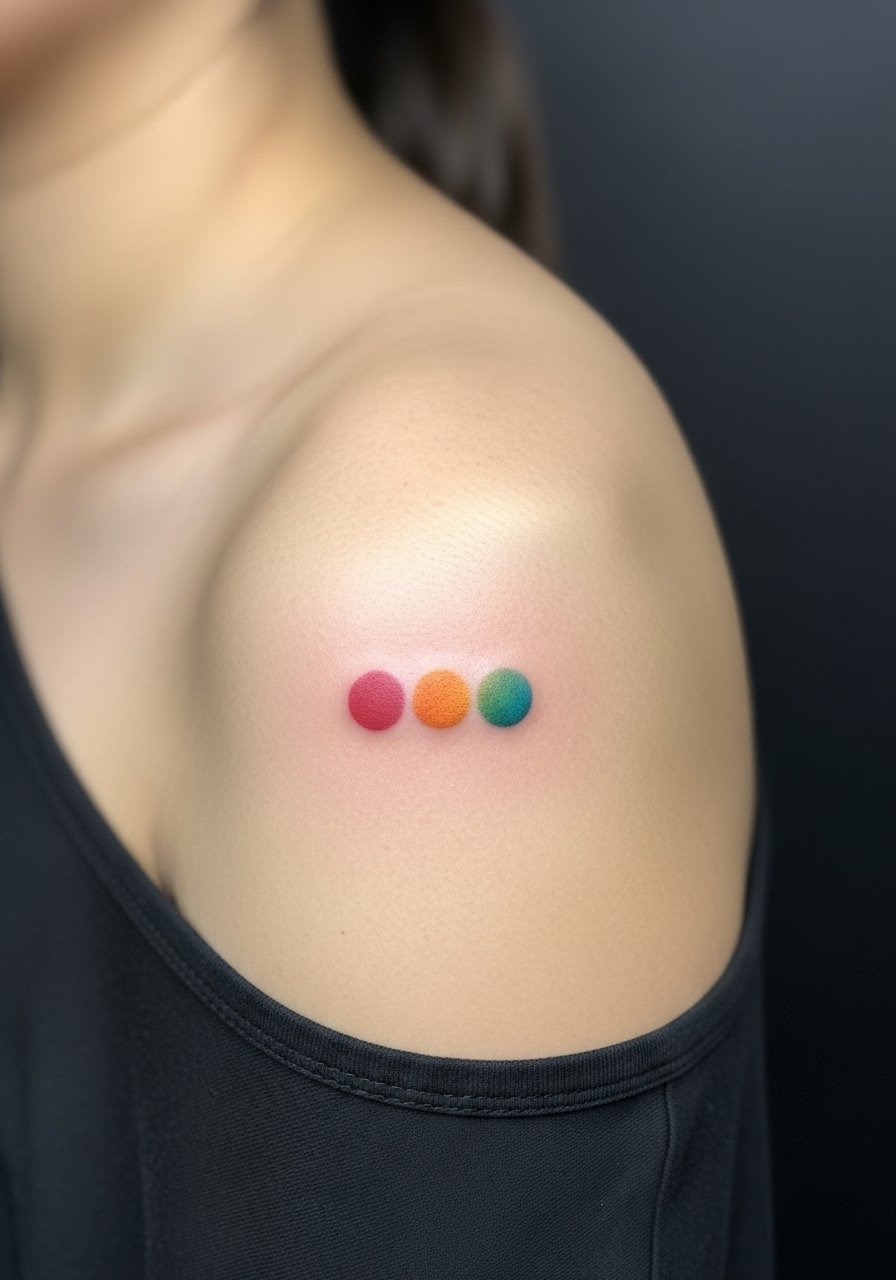
Color-dot trios are modern and playful. Color choices matter more than complexity. For darker skin tones, ask for denser packing and strong contrast colors to keep the dots visible. A common problem is picking pastel tones that disappear. Expect a slightly longer session for color work and a touch-up at one year if you want vibrancy maintained. This design pairs well with athletic tanks and cropped tops. For the appointment bring a loose drawstring linen pant that is comfortable while you sit.
17. Modular trio where each piece stands alone
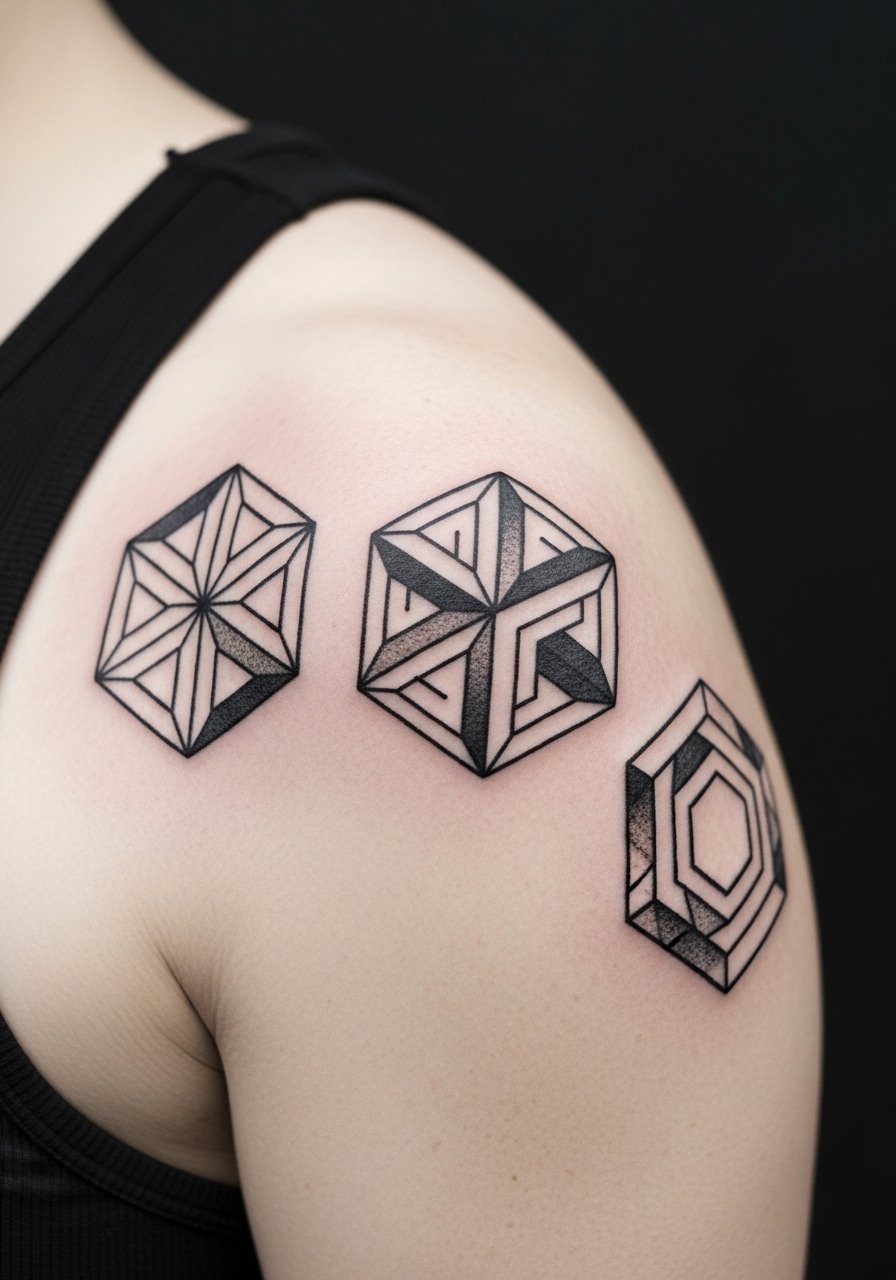
This is a practical choice when the friendship dynamic is uncertain. Each person gets a piece that completes a whole when together but works on its own if you later need a cover. Tell your artist you want shared visual language rather than identical copies. A frequent mistake is over-linking elements so a cover-up would be awkward. Plan for touch-ups to keep edges crisp. For studio comfort, wear a loose tank top so the artist can access the cap easily and you remain comfortable during the session.
Frequently Asked Questions
Q: Will fine line trio pieces on the shoulder blur faster than bolder work?
A: Fine line does tend to soften sooner, especially on moving or curved parts of the shoulder, but it is not a universal rule. Some artists can make fine line last with deliberate spacing and correct needle depth. Ask to see healed photos from the artist that match your skin tone and the exact placement before you book.
Q: How should I plan sizing so the trio still reads in five years?
A: Choose scale with breathing room between elements and avoid ultra-tight detail. As a rule of thumb pick slightly larger than what feels "delicate" now. Discuss a touch-up timeline with your artist and expect micro pieces may need touch-ups at year two to three.
Q: Is Saniderm-style second skin better than dry healing for shoulder tattoos?
A: Artists and wearers split into two camps. One group likes second-skin for protection and convenience. The other group prefers dry healing to avoid adhesive irritation and clogged pores. The safest bet is to follow the studio protocol and ask about red-flag symptoms like extreme itching or swelling if you feel stuck.
Q: How do trio tattoos look on darker skin tones and what styles age best?
A: Bold blackwork and simplified silhouettes usually hold up most consistently on darker skin tones. Tiny, ultra-fine dot work can still look great but may need more space and slightly bolder contrast. Ask to see healed examples on similar skin tones to set realistic expectations.
Q: What should I wear to the studio for a shoulder cap session?
A: Wear something loose and easy to remove or shift so the artist can access your shoulder without you being uncomfortable. A loose tank top you do not mind pulling aside or a button-down are both practical choices.