
Bold, saturated traditional sea turtle tattoos age like a promise kept, not a trend that fades. Heavy outlines and packed color sit in the skin and simplify beautifully as years pass. The trick is choosing scale, placement, and a version of classic linework that matches how you move and dress. Start with these 27 takes on the traditional sea turtle so you can picture how each one will look at six months, two years, and beyond.
1. Classic Forearm Shell with Bold Outlines
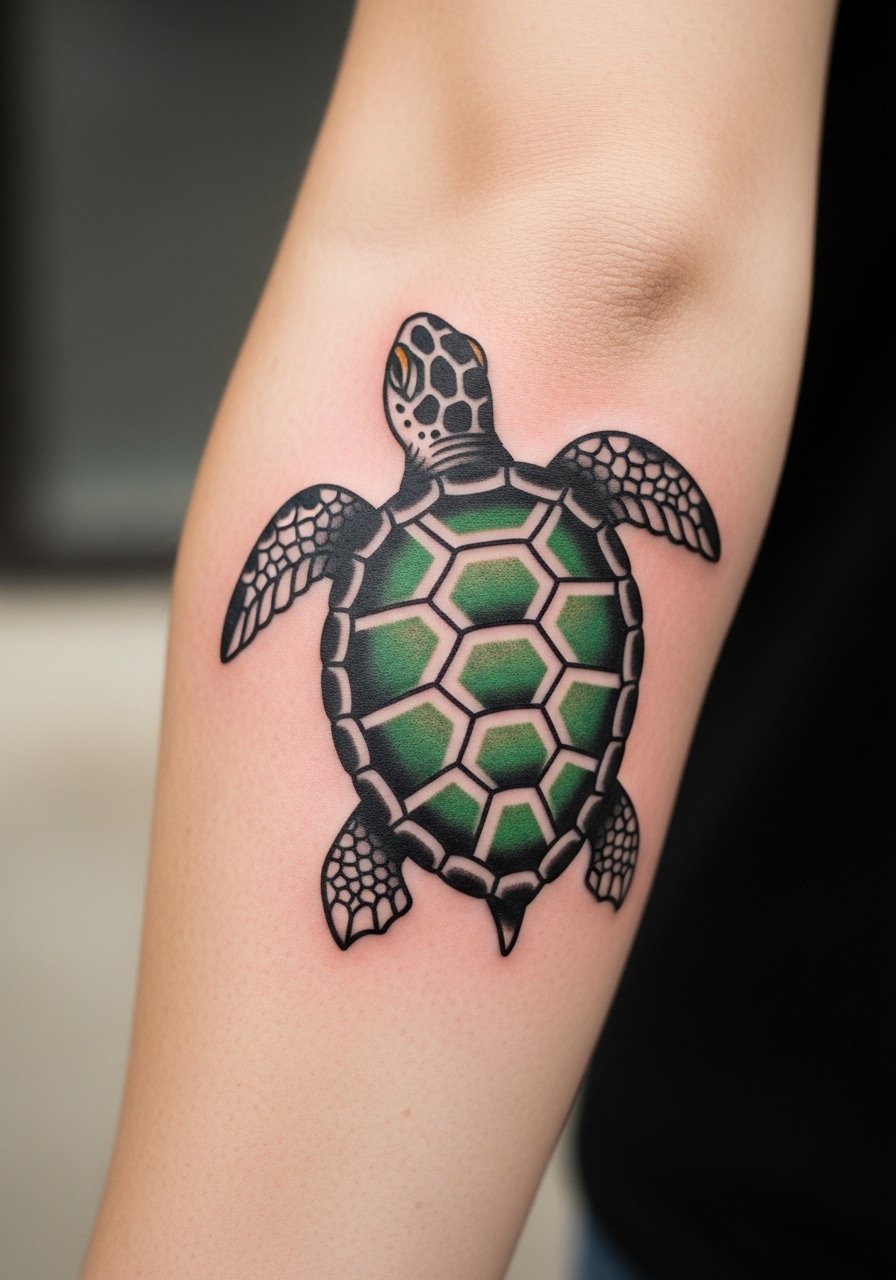
I recommend this for first-timers who want a turtle that still reads at five years. The forearm gives the artist room for a confident outline and solid saturation, which resists early blurring. Tell your artist you want slightly thicker outer lines and tighter stipple shading in the shell so the dots hold instead of turning into flat gray. Fair warning, forearm pieces see a lot of sun and friction from sleeves, so expect a touch-up around year three if you go heavy on color. For the session wear a loose button-down shirt you can pull aside easily.
2. Shoulder Cap Turtle with Wave Banner
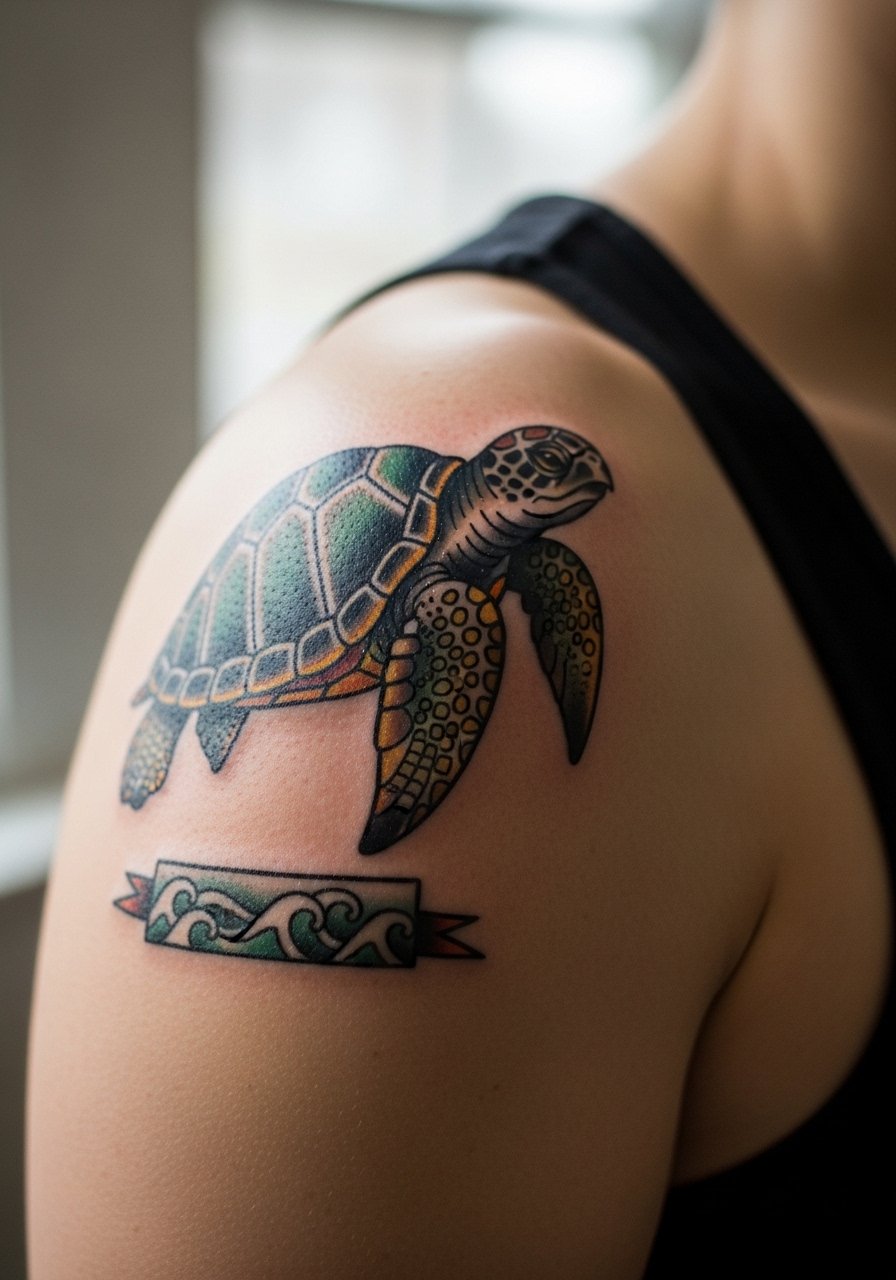
This placement reads strong from a distance and still tucks under sleeves when needed. Pain is moderate for most people. Ask for a circular shell pattern that follows the shoulder curve so the image does not distort when you raise your arm. Artists often make the mistake of shrinking the shell details to fit the cap. If the shell is too fussy it will blur into a smudge by year four. Sessions run short, often under two hours. Pair the look with rolled sleeves or a short sleeve linen shirt to show off the cap without overexposing the area.
3. Calf Traditional Turtle with Nautical Stars
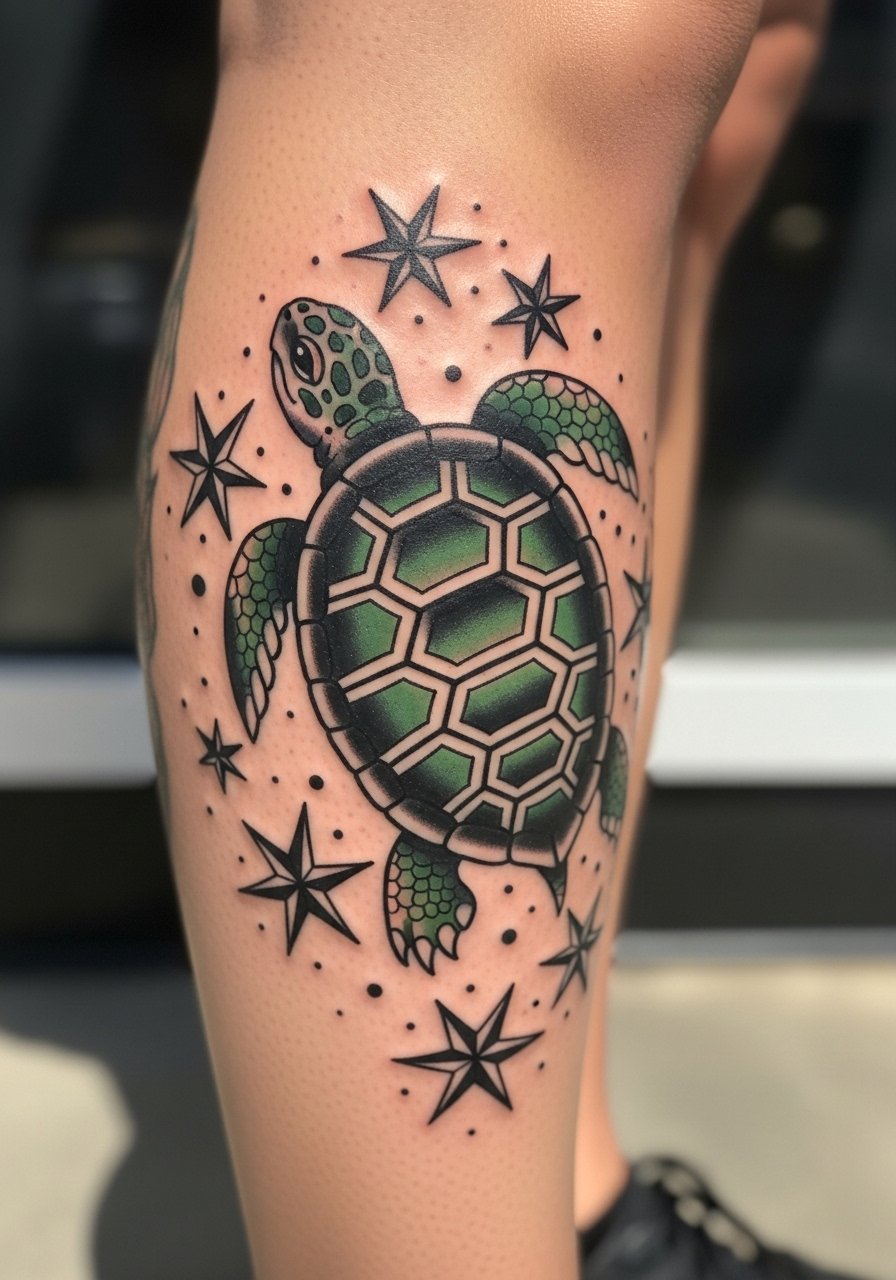
The calf is forgiving of bigger compositions and it takes saturation well. Expect a mid-level pain that most clients call manageable. The trick is designing a shell scale that flows with the calf muscle so the turtle keeps its shape when you walk. A common mistake is compressing the design to fit too small; that causes premature loss of internal shell texture. For show-off outfits, a pair of rolled jeans or cropped trousers spotlights the calf turtle without overdoing it.
4. Ribcage Micro-Traditional Turtle with Dot Shading

Fair warning, ribs are one of the more painful spots, often a 7 out of 10. Artists split on fine detail here. One camp says dense fine line and stippling blur as the skin stretches and heals. The other camp says with correct needle depth and spacing, micro-traditional holds up fine on ribs. Name that debate in the consultation and ask where your artist stands. Expect a two-hour session and a likely touch-up at year two for any interior dot work that softens. For the session wear a cropped top you can lift, like a cropped athletic top.
5. Tiny Wrist Turtle in Classic Flash Style
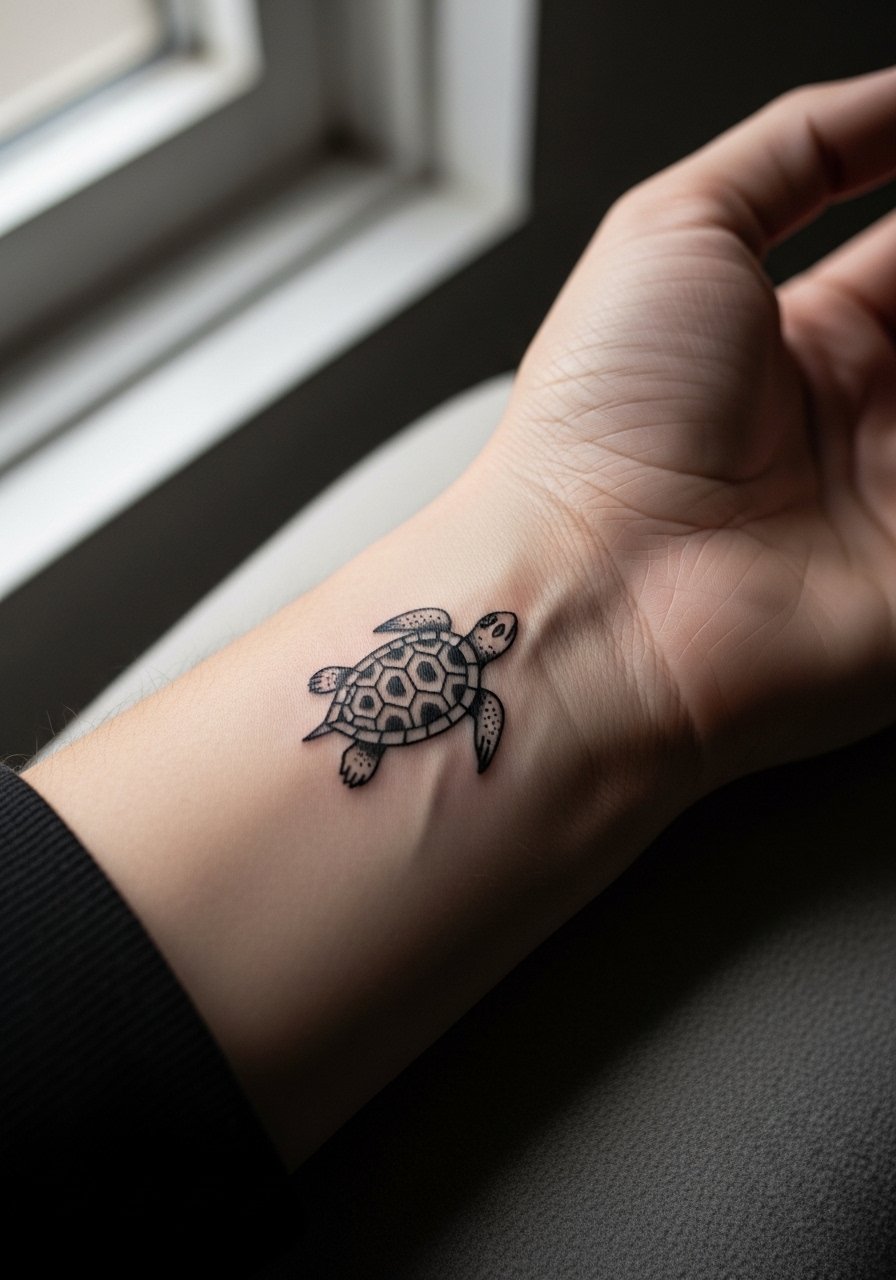
Wrist tattoos read intimate and need confident outlines to avoid blowout. The biggest mistake is asking for lots of tiny shell detail on a small wrist piece. That detail disappears faster than you expect. Tell the artist to favor thicker linework and compact color blocks. Pain is lower but the area gets frequent washing, so first-week care matters. During the session wear a racerback tank or a sleeve you can roll up without tugging the stencil.
6. Scapula Turtle with Traditional Roses

Upper back pieces let the artist scale the shell larger and include classic floral framing. The pain is moderate and sessions can be longer if you add roses. A common error is uneven symmetry when artists copy a photo without adjusting to shoulder blades. Ask for the turtle to be mapped to your bone structure. For after-session comfort, wear a loose tank top you can change into without stretching the area.
Studio Day Picks
The forearm, wrist, and ribcage pieces above all need slightly different prep, and these small items smooth the session and the first week.
-
Stencil transfer paper kit. Lets you test placement on skin before the needle touches, especially useful for the forearm and shoulder cap pieces above.
-
Topical numbing cream. Applied per instructions 45 minutes before can soften ribcage sensitivity without affecting linework during shorter wrist sessions.
-
Thin protective film roll. Keeps small areas like wrist and finger tattoos clean during the first week of washing and typing.
-
Fragrance-free gentle body wash. Cleanses healing areas without irritating fresh linework on the forearm and calf.
-
Aquaphor healing ointment. A thin layer in the initial days helps keep tattooed skin supple while fine outlines settle.
7. Ankle Turtle with Coral Accent
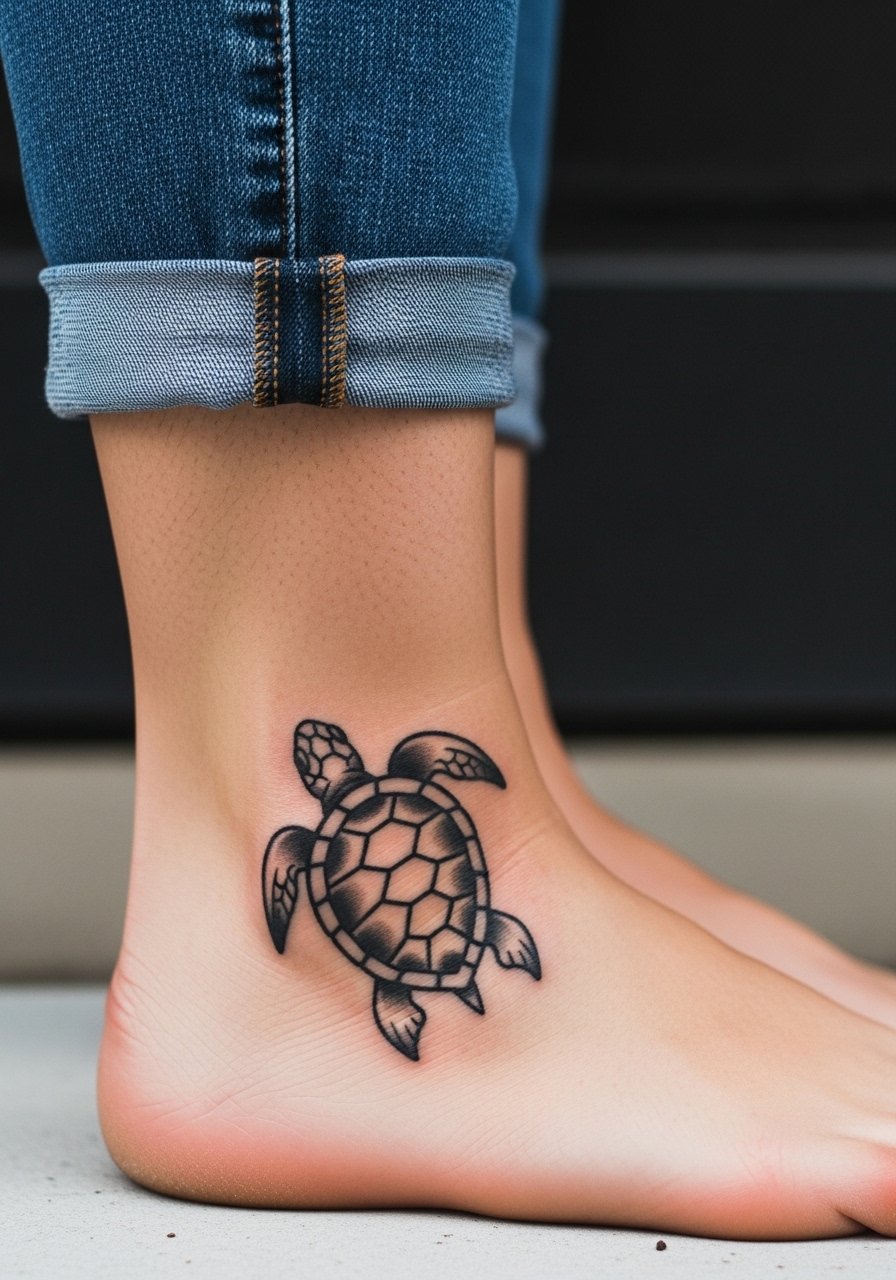
Ankle tattoos face constant friction from shoes and socks. Expect a higher rate of color fade if you wear closed shoes daily. During the consultation ask for deeper saturation near the shell edges and slightly reduced internal detail so the design keeps shape through walking. The session is short but healing can feel tight when you walk a lot. For show-off looks, sandals or cropped pants work best, try a pair of sandals that expose the ankle.
8. Thigh-Facing Turtle with Bold Shell Pattern
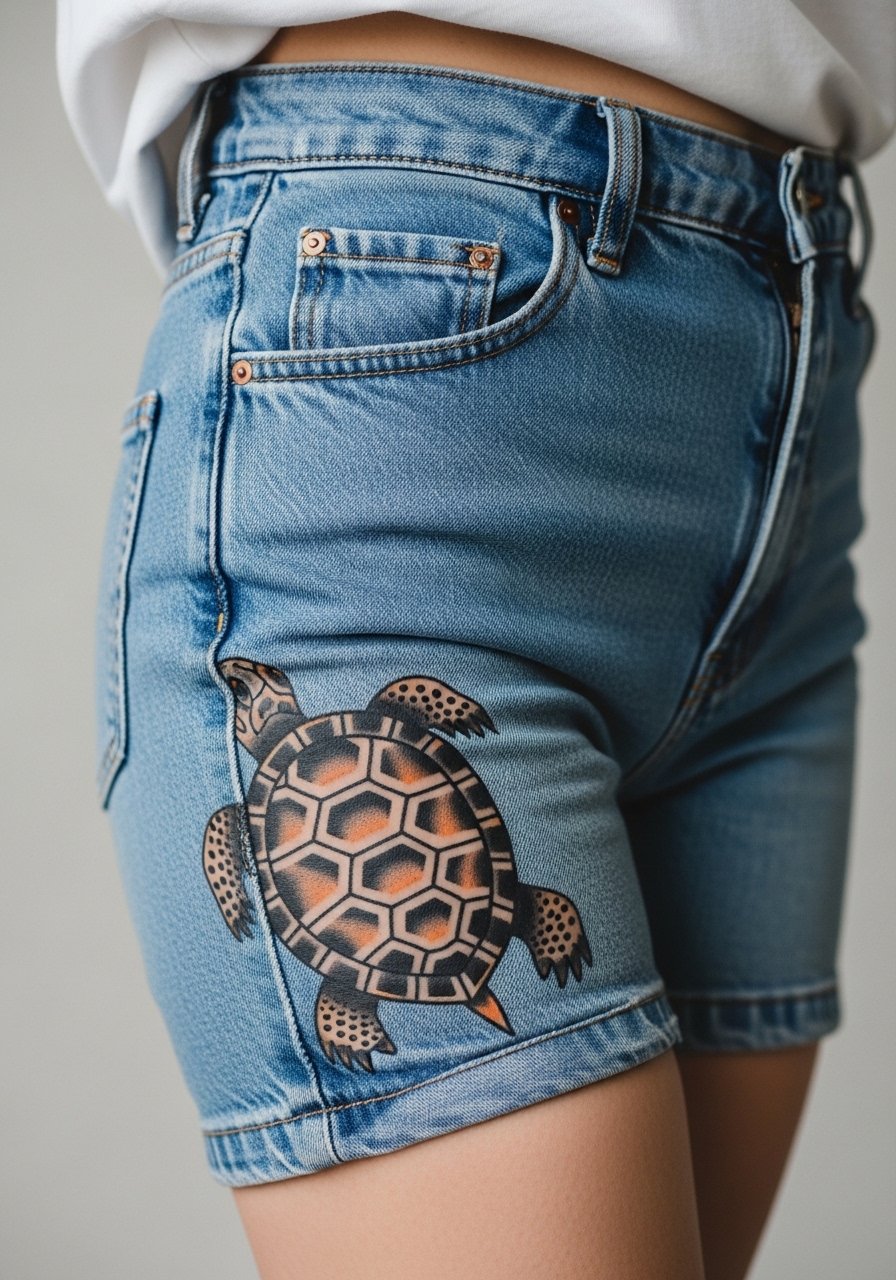
Thigh is forgiving for big traditional pieces and holds heavy color well. Pain is lower than ribs and wrists. The common mistake is trying to cram sailor-style text around the shell, which can age poorly when the thigh flexes. Ask for the shell to echo the thigh curve and for negative space that breathes. Sessions can be longer, so expect breaks. For session comfort wear loose shorts or a pair of loose linen shorts so the artist can access the area without exposure.
9. Hand Border Turtle in Traditional Blackwork
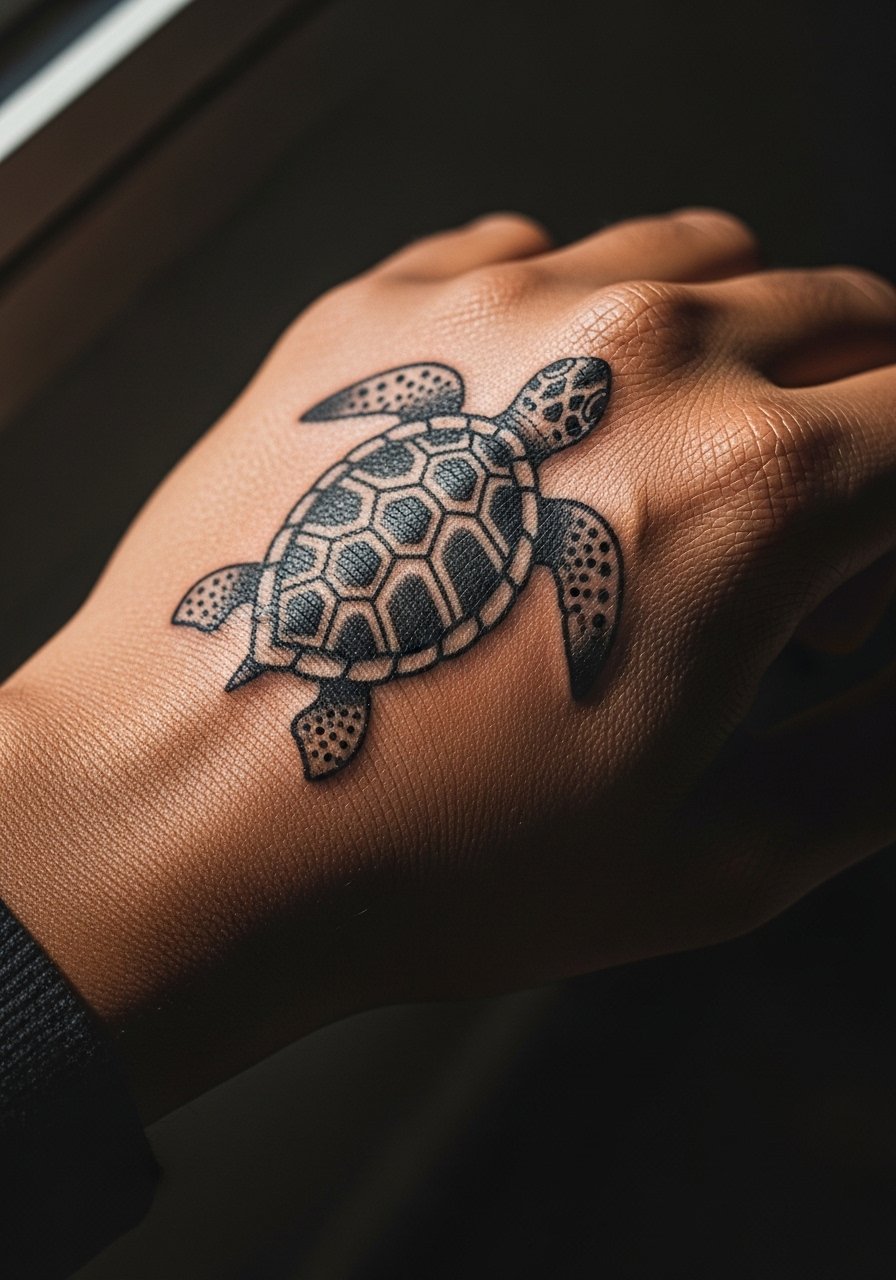
Hand pieces are high wear and may not last as long as arm or leg work. Employers still judge hands in some industries, so think career impact. The biggest technical issue is blowout from shallow work on thin skin. If you want a durable hand turtle, ask for slightly bolder outer lines and minimal interior shading. Touch-ups are common by year two. For a styling note, a simple thin chain bracelet can frame the wrist area without masking the hand piece.
10. Hip Turtle with Nautical Rope Frame
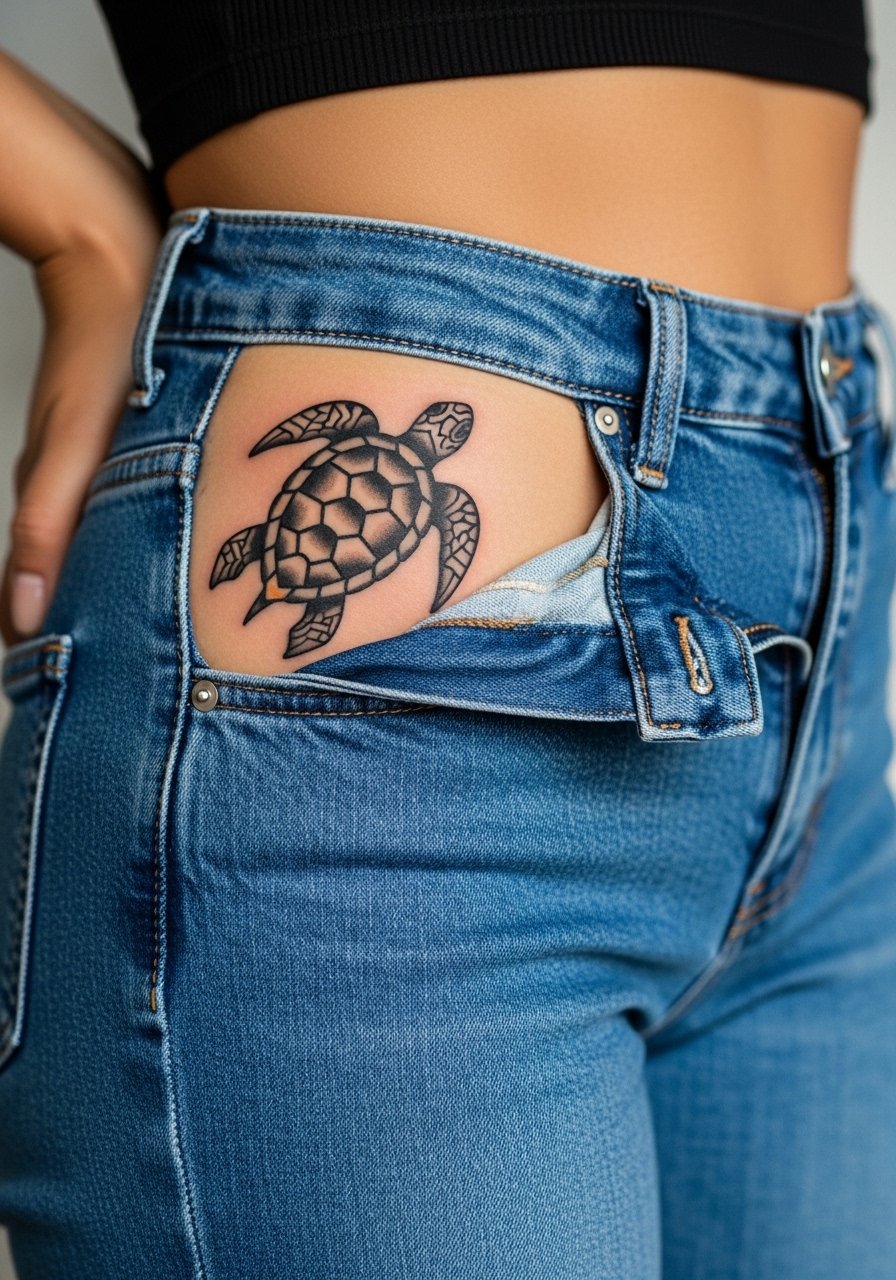
Hip pieces sit near clothing edges and see friction from waistbands. That causes edge fading faster than central areas. Ask for the rope frame to be slightly inset from the hip bone so it does not ride along seams. Pain varies but most people rate hip work as a moderate session. For appointment day wear high-waisted bottoms you can lower without removing them, like high-waisted jeans.
11. Lower Back Turtle with Sunburst
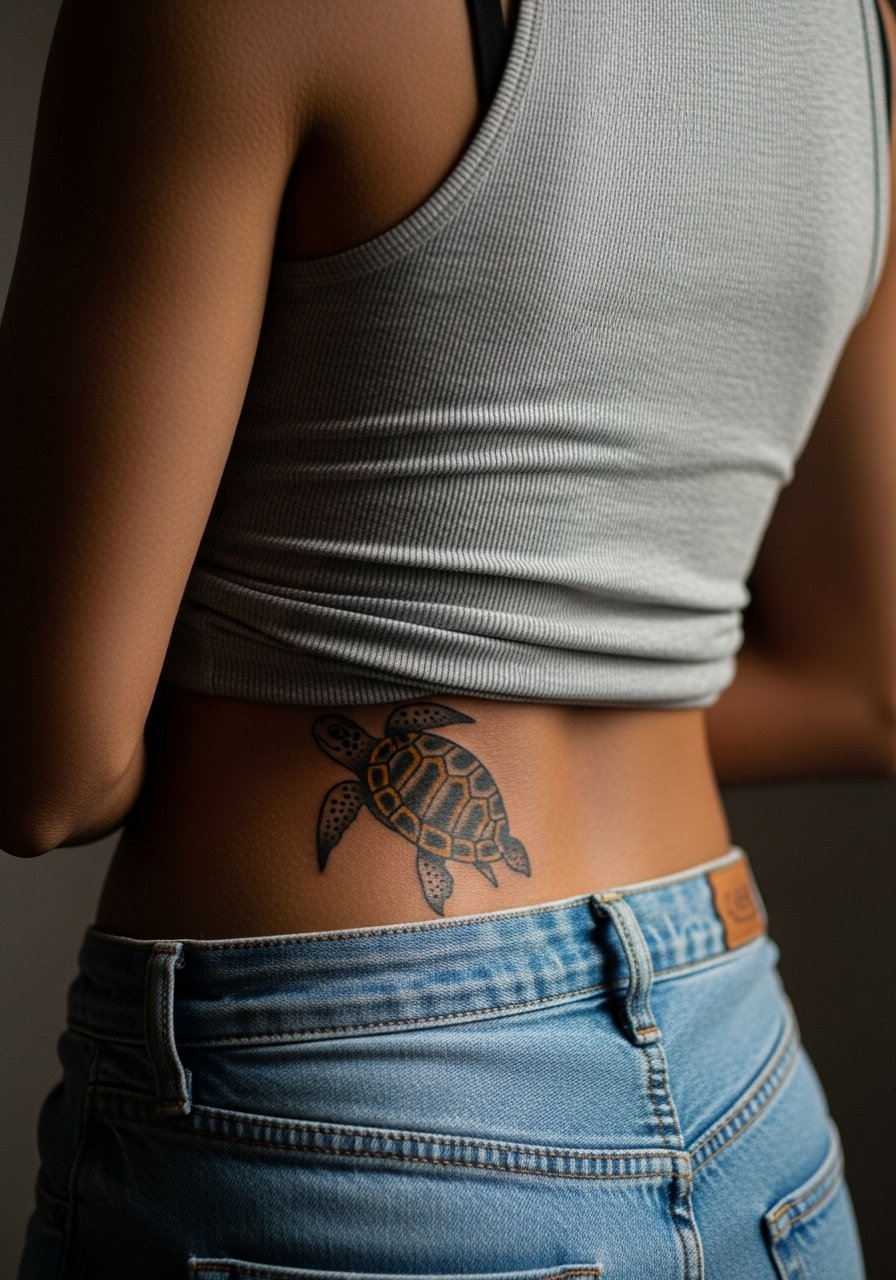
Lower back pieces work well with symmetrical shell work and radiating linework. They absorb color fine but beware of belt lines that abrade the edges. One mistake I see is placing too low where waistband rubs constantly. Ask the artist to map the design with you standing and seated so you can see where it lands. Sessions can be one to two hours. A tank top that you can change into keeps the area clean for the artist.
12. Polynesian-Inspired Turtle with Motif Panels

This design touches on cultural origin. Some people argue for strict cultural ownership and say these motifs should be done by artists from those communities. Others say respectful adaptation with clear credit is valid. Name both camps in your consultation. If you choose this route, discuss specific motifs and request subtle original elements rather than a direct copy. The upper arm holds bold blackwork well. Expect a touch-up for dense black fill in year two depending on sun exposure. Show it with rolled sleeves or a short sleeve cotton tee.
13. Collarbone Turtle with Script Tag

Collarbone tattoos are visible and delicate. When script sits close to imagery, spacing is everything. Tell the artist the exact word and font size you want so the lettering remains legible as the turtle ages. Pain is a bit sharper on the collarbone. The common mistake is placing text too small. For evening wear, an open-neck top or a thin chain pendant necklace complements the placement without competing.
14. Inner Bicep Turtle in Micro-Traditional Style

The inner bicep is a delicate canvas and gets less sun, which helps longevity. Pain can spike when the artist works near the armpit. The frequent error is asking for ultra-fine detail in a small inner arm piece. Instead, favor confident linework with light stipple shading to keep contrast. Expect a touch-up window at year three if you want crisp internal lines. For the session, a tank top with easy arm mobility makes life easier for both of you.
15. Sternum Turtle with Floral Frame

Sternum sessions are sensitive and require care around placement. Pain levels are high for many people, but the result is a striking center piece. The main mistake is cramming too much tiny shell detail into a narrow sternum area. Ask for the shell to be slightly larger and for fewer interior lines to preserve clarity as it settles. Dress for the appointment in a strapless or fitted sports bra you can remove without twisting. A fitted sports bra works for both modesty and access.
16. Back of Neck Mini Turtle in Bold Outline
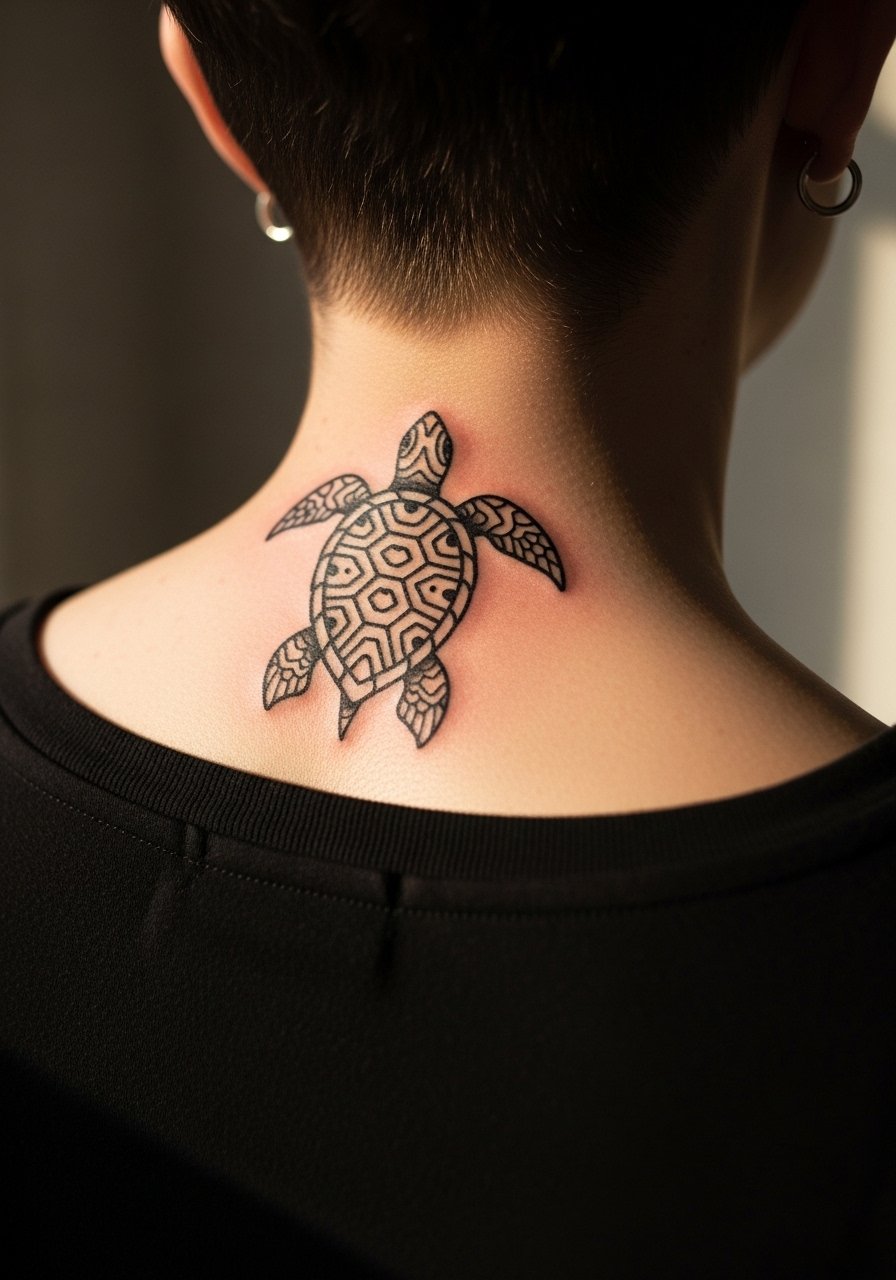
Neck tattoos are very visible and have social consequences in some fields. The back of neck, near hairline, heals differently than the face. Ask for confident outlines and minimal tiny shell texture so the piece keeps a read as it ages. The session is short but be ready for some tightness during healing. For discreet days, a wide-neck shirt hides the area while preserving the design when you want to show it.
17. Mini Finger Turtle in Traditional Dot Accent
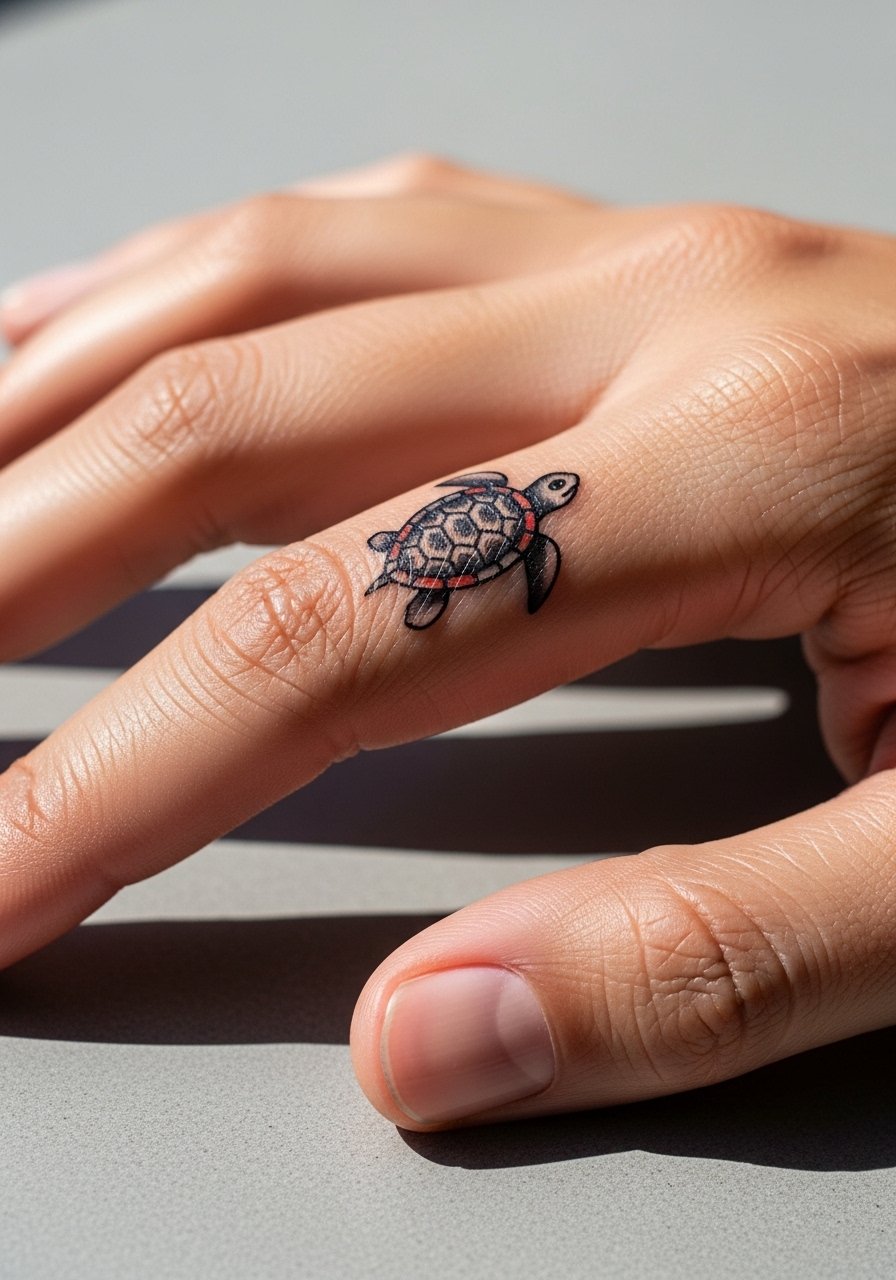
Finger tattoos are high maintenance because of constant hand washing and friction. The most common regret is asking for intricate shell work on a space that will inevitably lose detail. Opt for a silhouette or bold outline with a dotted accent instead. Expect touch-ups sooner, often in the first 12 to 24 months. For the session keep your hand relaxed and wear clothing that does not require you to pull sleeves over swollen fingers. A thin chain bracelet can frame a wrist tattoo without interfering with finger work.
18. Ancestral Shell Mosaic on the Upper Arm

This is a statement piece that borrows pattern work from different traditions. If motifs come from specific cultures, have an open conversation about origin and intent. The upper arm accepts dense blackwork and heavy saturation. Avoid over-detailing the shell segments for small-scale pieces. The session is comfortable for most people and the piece tends to hold well if you protect it from sun. Show the design with sleeveless shirts or a short sleeve linen shirt.
19. Minimal Line Turtle on the Ankle Strap
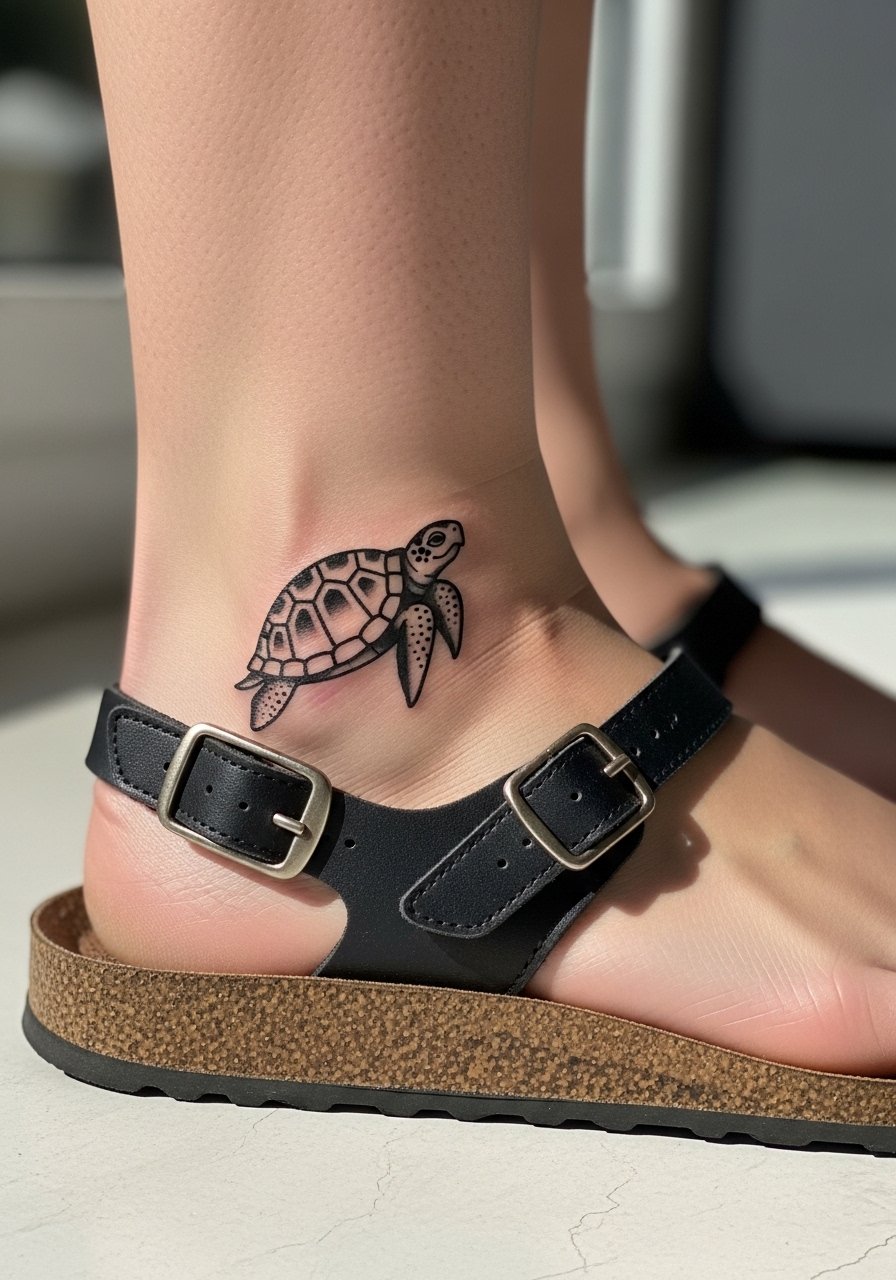
A slim ankle strap turtle reads delicate but benefits from a sturdy outer line. The mistake is asking for delicate internal lines that vanish after months of walking. Ask for bolder counters and reduced interior detail. Pain is lower, but healing is affected by socks. For the session choose footwear that avoids rubbing, like open sandals.
20. Full-Shoulder Panel Turtle with Ocean Scene
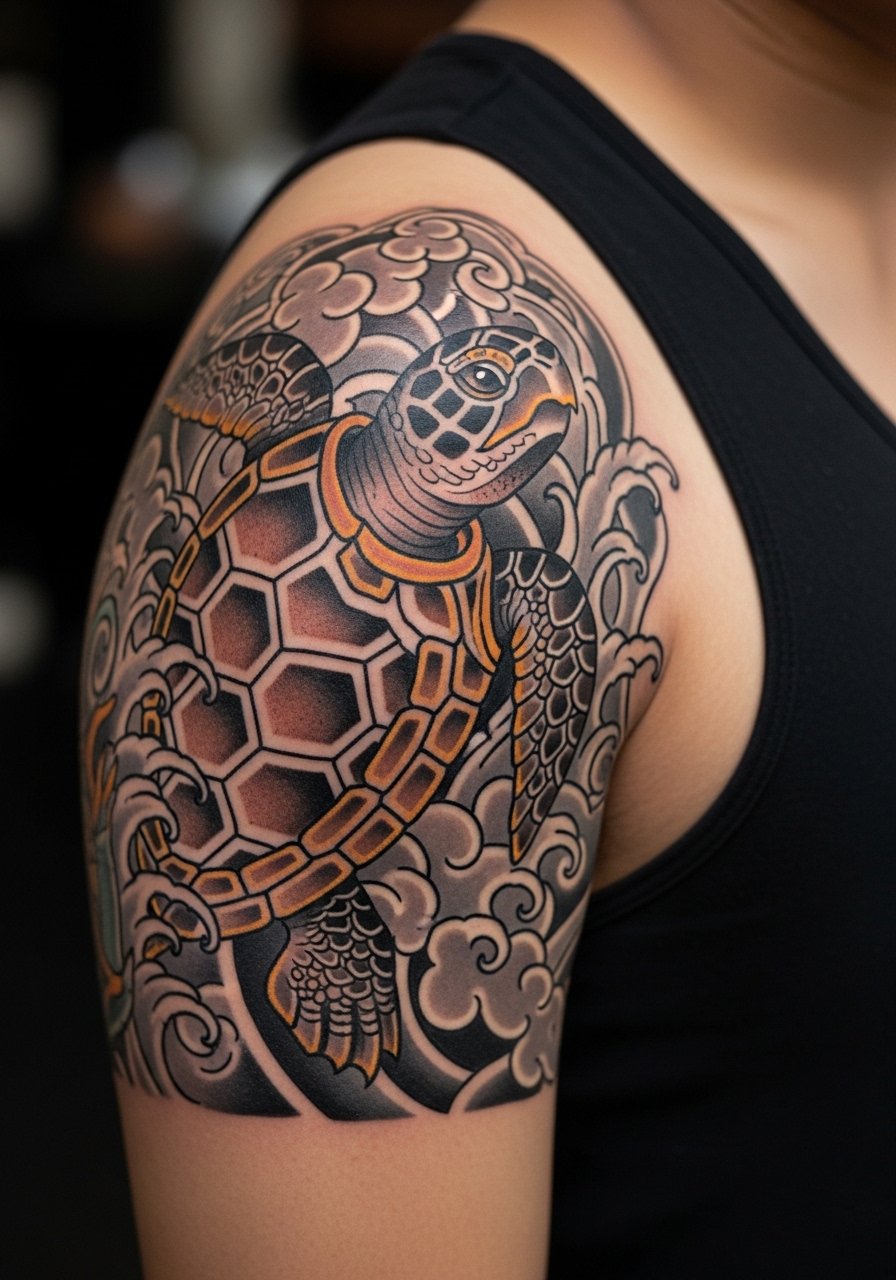
This option plays well as a half-sleeve that reads as a scene from across a room. Expect multiple sessions for color saturation and to layer shading. The common misstep is treating the turtle as an isolated flash instead of composing it with flow lines so it sits well as you move. Ask the artist to sketch the placement on your skin in motion. Larger shoulder pieces usually need a touch-up at the two to five year mark depending on sun exposure. Pair with rolled sleeves or a loose button-down shirt to frame the panel.
21. Foot Arch Turtle with Tiny Shell Motif
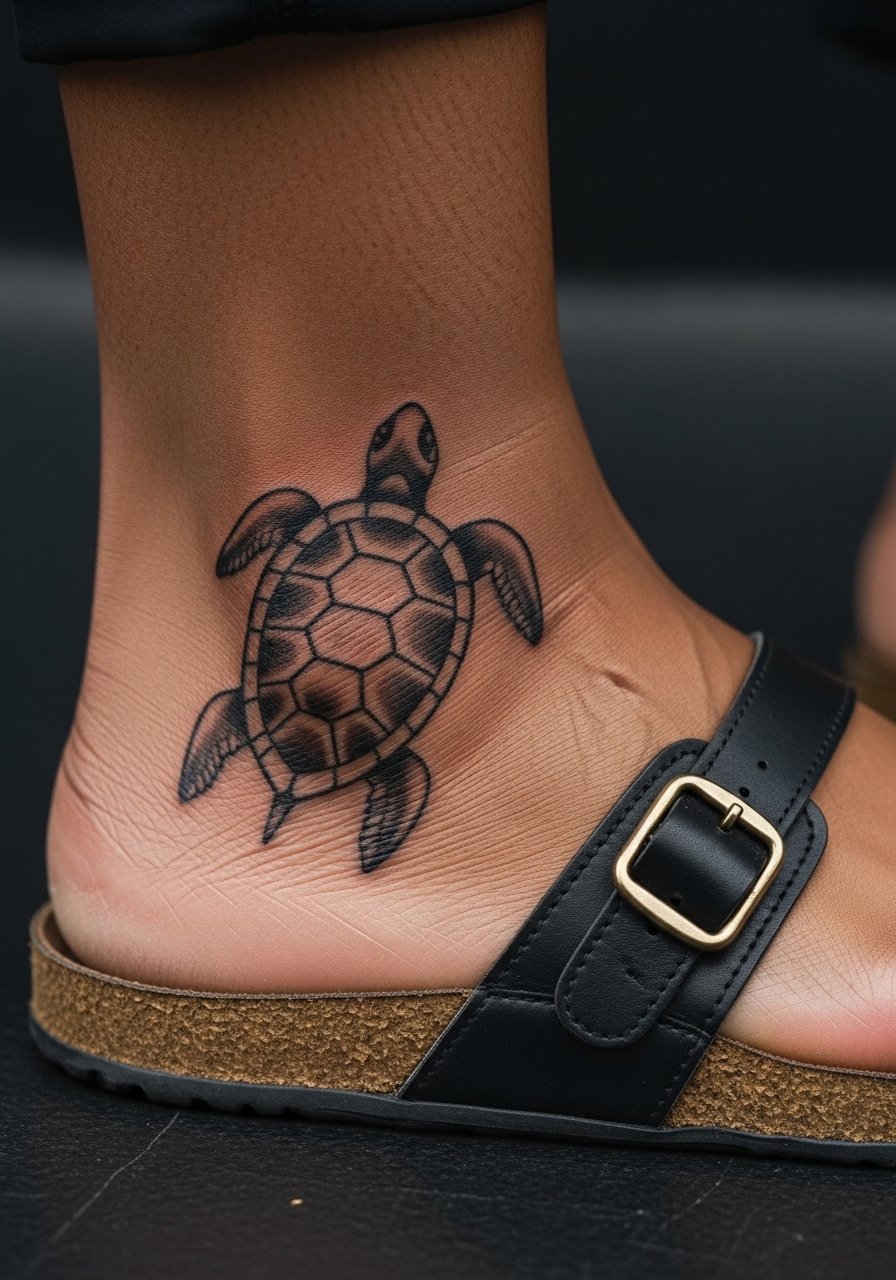
Foot tattoos have high touch and low longevity unless you keep them out of constant shoe pressure. The shell should avoid tiny interior lines. An honest conversation with your artist will set realistic expectations about fading. Pain on the foot can be sharp for many people. For post-session comfort wear slip-on shoes or sandals and plan lighter walking. A pair of slip-on sandals is helpful after an arch session.
22. Vintage Sailor Flash Turtle on the Chest

Chest pieces that borrow sailors' flash language age into a familiar vintage look. They work best with bold outlines and limited small interior lines. One common mistake is packing the chest with competing elements that clash when you move. Ask for a central turtle with negative space around it so the image keeps its identity at distance. Sessions can be longer if you add lettering. For sessions wear a wide-neck shirt you can move aside, like a wide-neck tee.
23. Throat-Side Turtle with Subtle Shading

Neck-side tattoos are very visible and can impact professional interactions. The side neck skin heals differently and can be finicky for ultra-fine detail. Artists debate how much texture to put near the throat. Ask for bold contouring and minimal interior shading to keep longevity. The session is quick but sensitive. For discretion a collared shirt can hide the piece when needed.
24. Hip Bowl Turtle with Soft Stipple Shell

Hip bowl tattoos flex with body movement and clothing. Stipple shading looks beautiful there but needs space to work without crowding. The mistake is compressing stipple into a tiny area. For a durable result, ask for larger dot spacing and heavier outer lines. Expect a moderate session and keep waistbands loose during healing. For the appointment choose bottoms you can lower slightly without undressing, like high-waisted shorts.
25. Retro Badge Turtle on the Upper Thigh
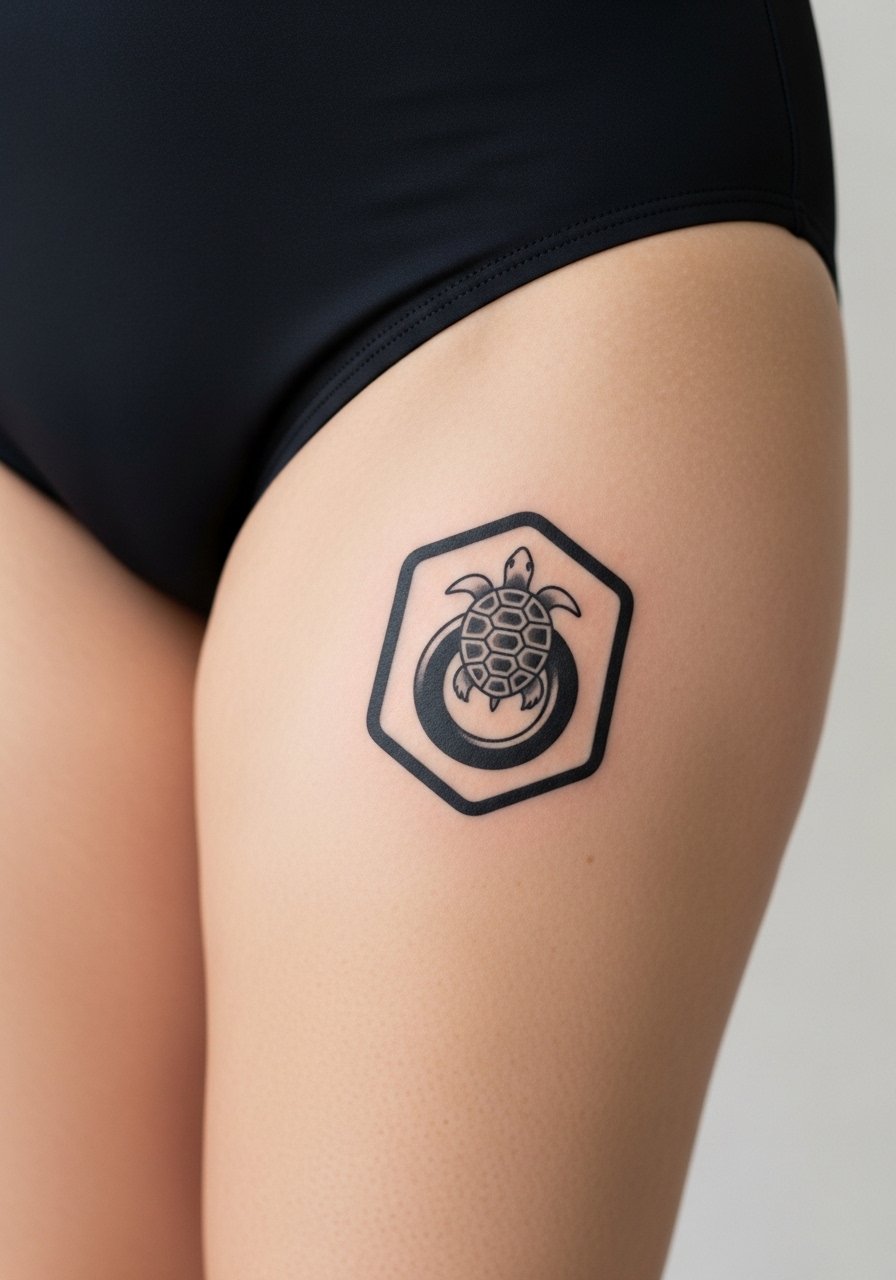
Upper-thigh badge pieces take saturation well and can be wrapped with graphic borders for a vintage feel. The usual error is detailed script inside a small badge. Keep text minimal or omit it to preserve clarity. Thigh sessions are comfortable and healing is usually straightforward. For showing it off, consider a swimsuit or a high-cut swimsuit bottom that frames the piece.
26. Shell Crest Turtle Across the Sternum and Upper Abdomen
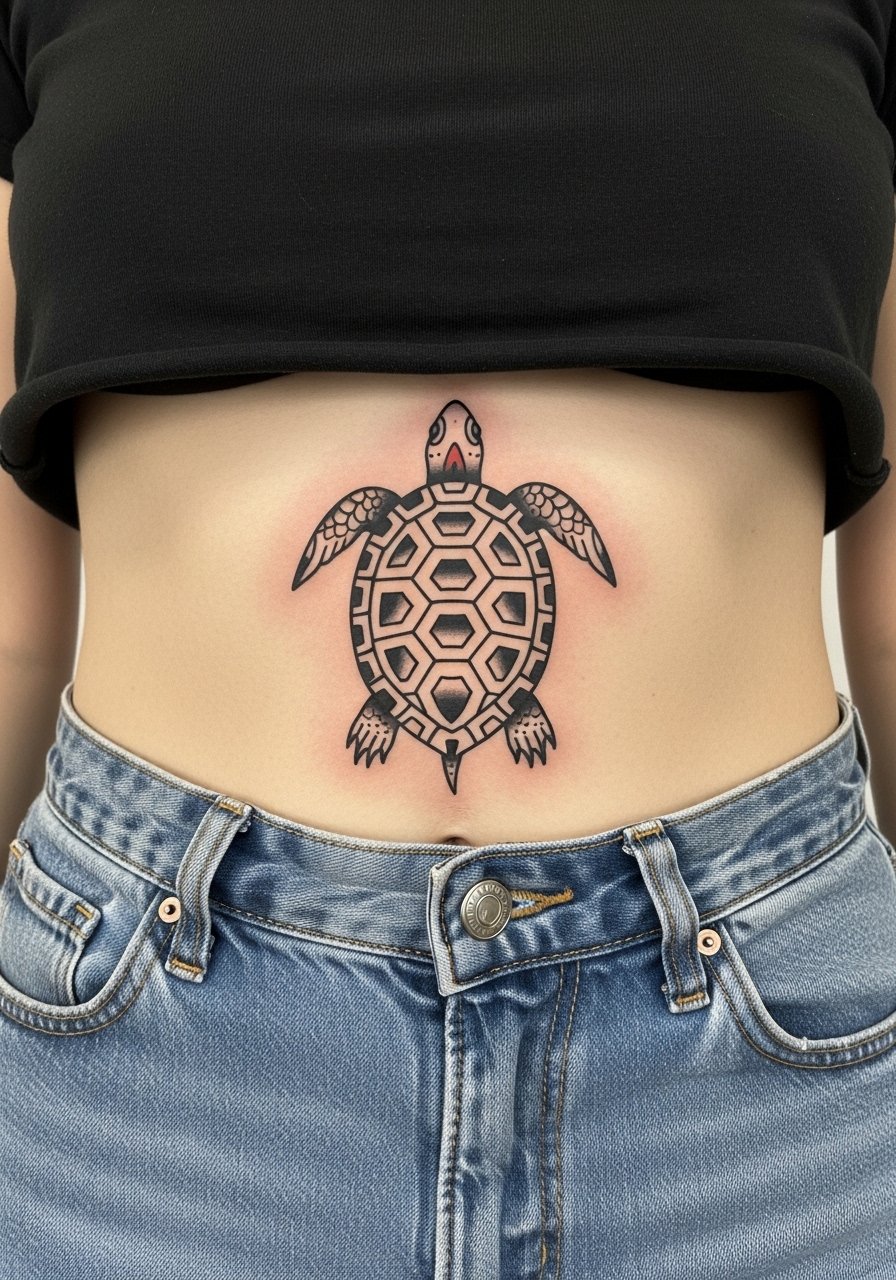
This expands the sternum idea into a larger crest. It reads dramatic but requires careful mapping so the shell does not warp with breathing. Expect higher sensitivity and a multi-hour session. A common mistake is trying to cram too much texture close to the sternum. Ask for bold contours and open negative space in the shell panels. Dress in a cropped tee for the session so the artist can access the area without you removing clothing entirely. A cropped tee works well.
27. Behind-the-Ear Tiny Turtle Accent
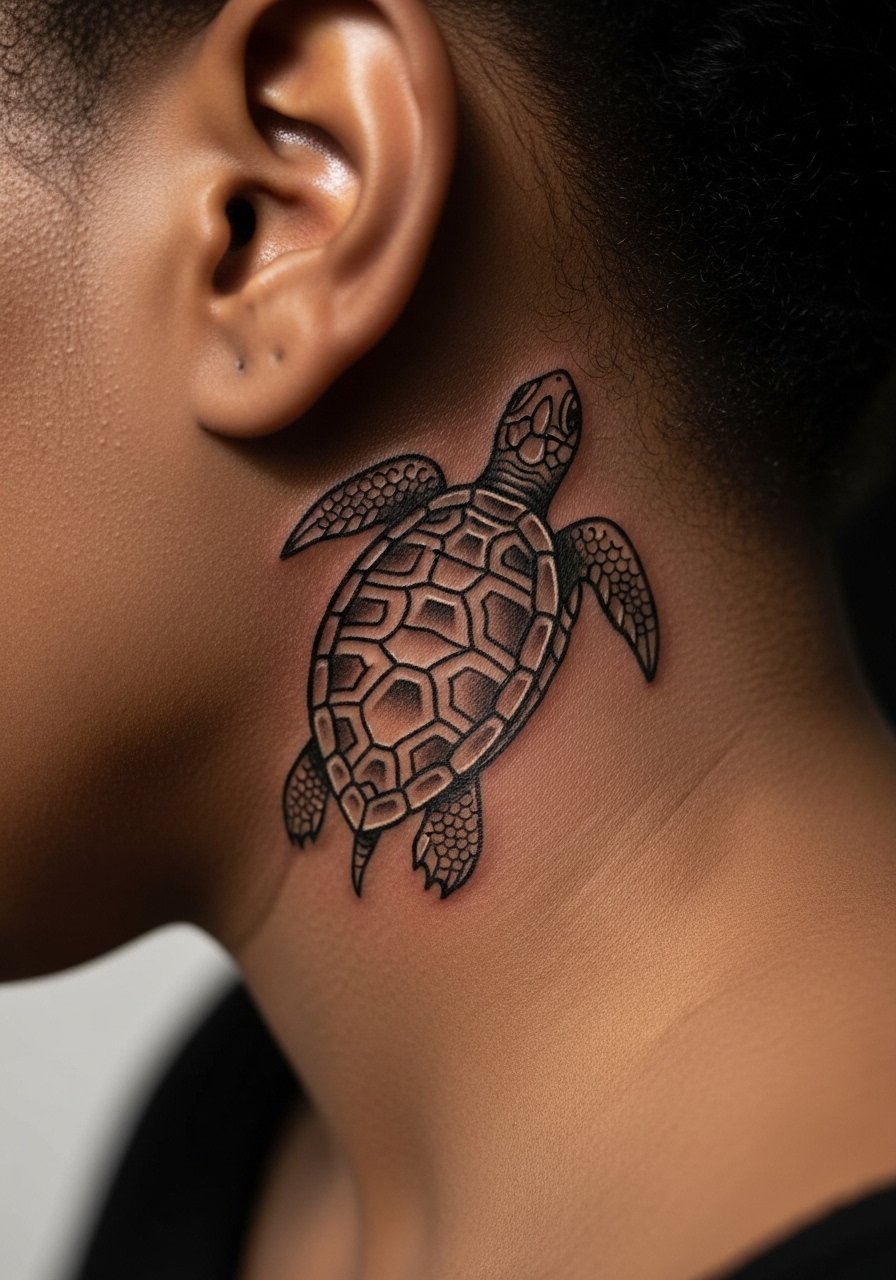
Behind-the-ear placements are subtle and seen mainly in close conversation. The space is tiny so avoid interior shell detail. One professional consideration is visibility when you wear hair up. The session is short and the area heals quickly. For a clean appointment, have hair pinned up so the artist can work without interference. A simple note on hiring sensitivity is useful; some workplaces still react to visible neck and ear ink.
Frequently Asked Questions
Q: How long will a traditional sea turtle tattoo keep its shell detail on the forearm?
A: From what I have seen, bold outlines and solid color blocks on the forearm generally keep shell detail readable for three to five years before a touch-up becomes desirable. Sun exposure and frequent friction shorten that window. Discuss thicker outer lines and denser saturation during your consultation to extend the clarity.
Q: Are Polynesian-style turtle tattoos cultural appropriation or acceptable with modification?
A: There are two clear camps on this. One argues that specific cultural motifs should be left to artists and communities from that culture. The other accepts respectful adaptation that credits origin and avoids direct copying. If you go that route, have an open conversation with the artist about which motifs are meaningful and whether subtle original elements are appropriate.
Q: Will a small turtle on the ribs blur faster than one on the upper arm?
A: Ribs tend to stretch with breathing and can soften fine details sooner than the upper arm. That does not mean avoid ribs, but expect a higher chance of interior detail blurring and a possible touch-up in two to three years depending on spacing and line weight.
Q: What should I wear to my scapula or upper-back session so the artist has access?
A: I recommend a loose tank top or a button-down you can pull aside without stretching the area. A loose tank top is usually the easiest option because you can change into it on-site and it gives the artist clear access.
Q: How do hand and finger turtles affect day-to-day life compared with ankle or calf placements?
A: Hands and fingers are exposed to constant washing and friction, so they need more frequent touch-ups. Ankle and calf placements typically last longer with fewer interventions, but they can suffer from shoe and sock abrasion. Pick placement with your lifestyle and footwear in mind.