
Fine line eagles look gorgeous on a saved board, but the reality at year two can be different. I see three recurring headaches in tiny eagle work: fine line fades fast on wrists, prices for precise micro-realism keep climbing, and placements that move with muscle will warp small anatomy details. Read these carefully picked tiny eagle ideas and you will get options that look sharp fresh and stay readable down the line.
1. Micro-Realistic Eagle Head on the Inner Forearm
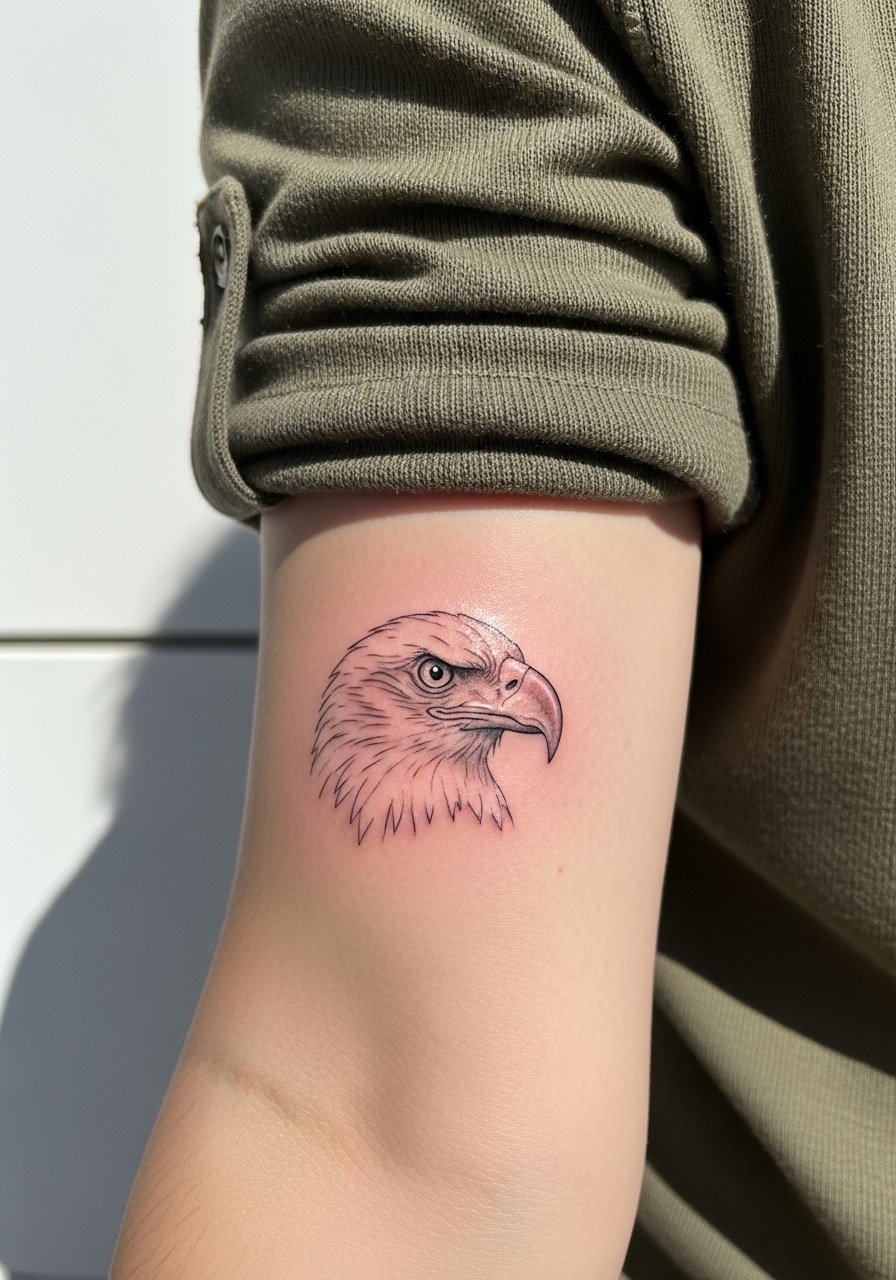
I recommend the micro-realistic head when you want intense detail in a small patch that still reads at arm length. Tell your artist you want feather texture shown through tight stipple shading and a slightly bolder outline so the tiny feather tips do not blur in year two. Expect a one-session sit of 45 to 90 minutes and medium pain for the inner forearm because the skin there is thin but forgiving. Common mistakes are asking for hyper-fine whisker lines that vanish after a few months, and placing the piece too close to the wrist crease where movement speeds fading. For showing it off, push a fitted olive henley shirt to the elbow so the tattoo sits framed and visible during casual wear.
2. Fine Line Eagle Silhouette on the Wrist
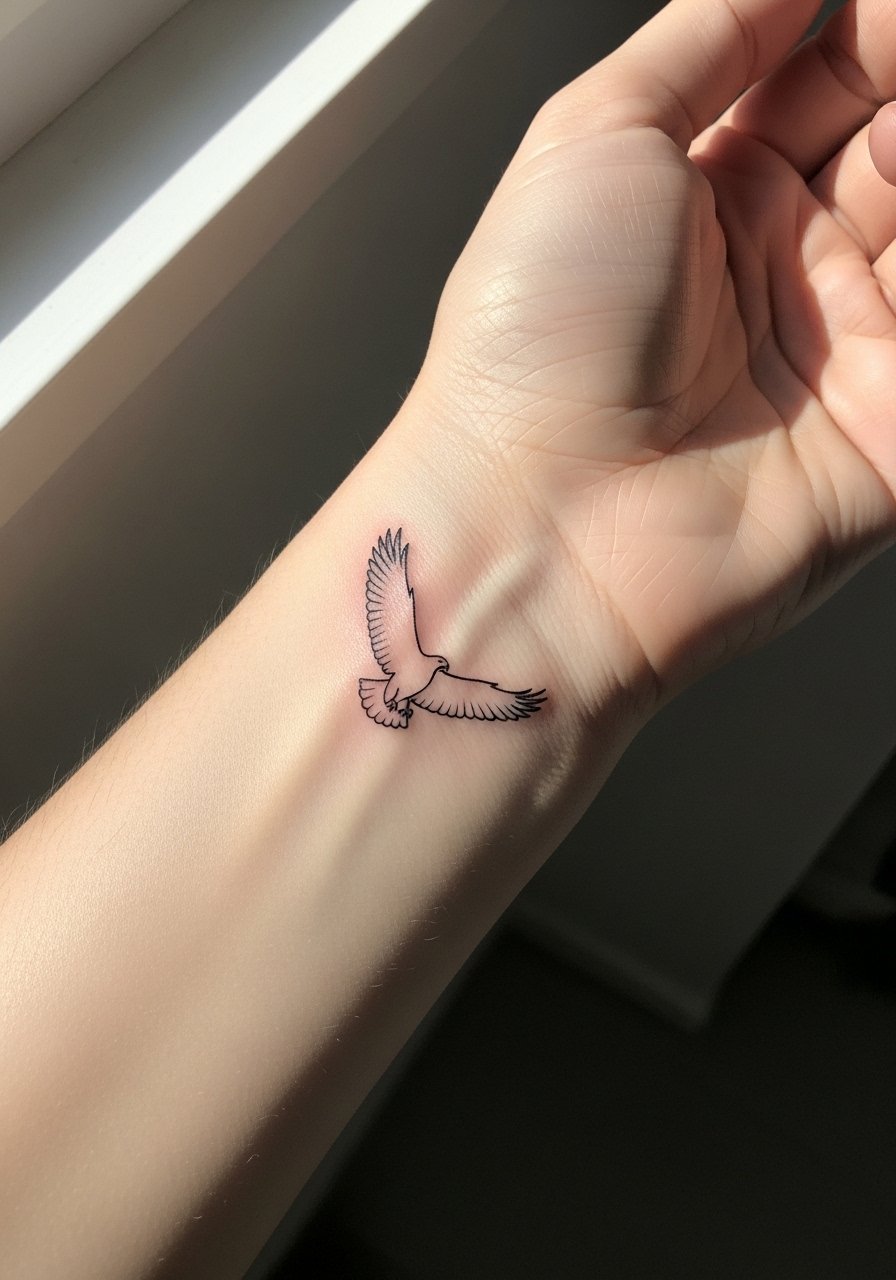
Fair warning: the wrist is one of the most visible places and a trouble spot for fine line. One camp argues fine line on the wrist ages gracefully if done slightly deeper. The other camp insists bolder linework holds its form longer. My take is to ask for a thin but not hairline outline and to plan a free touch-up at 4 to 8 weeks. Session time is short, usually under 30 minutes, and the pain is mild to moderate. The biggest rookie move is requesting feather-level filigree that the wrist cannot hold. For wardrobe, rolled cuffs pair well, try a rolled cuff chambray shirt when you want it visible without overdoing accessories.
3. Geometric Eagle Emblem on the Upper Arm
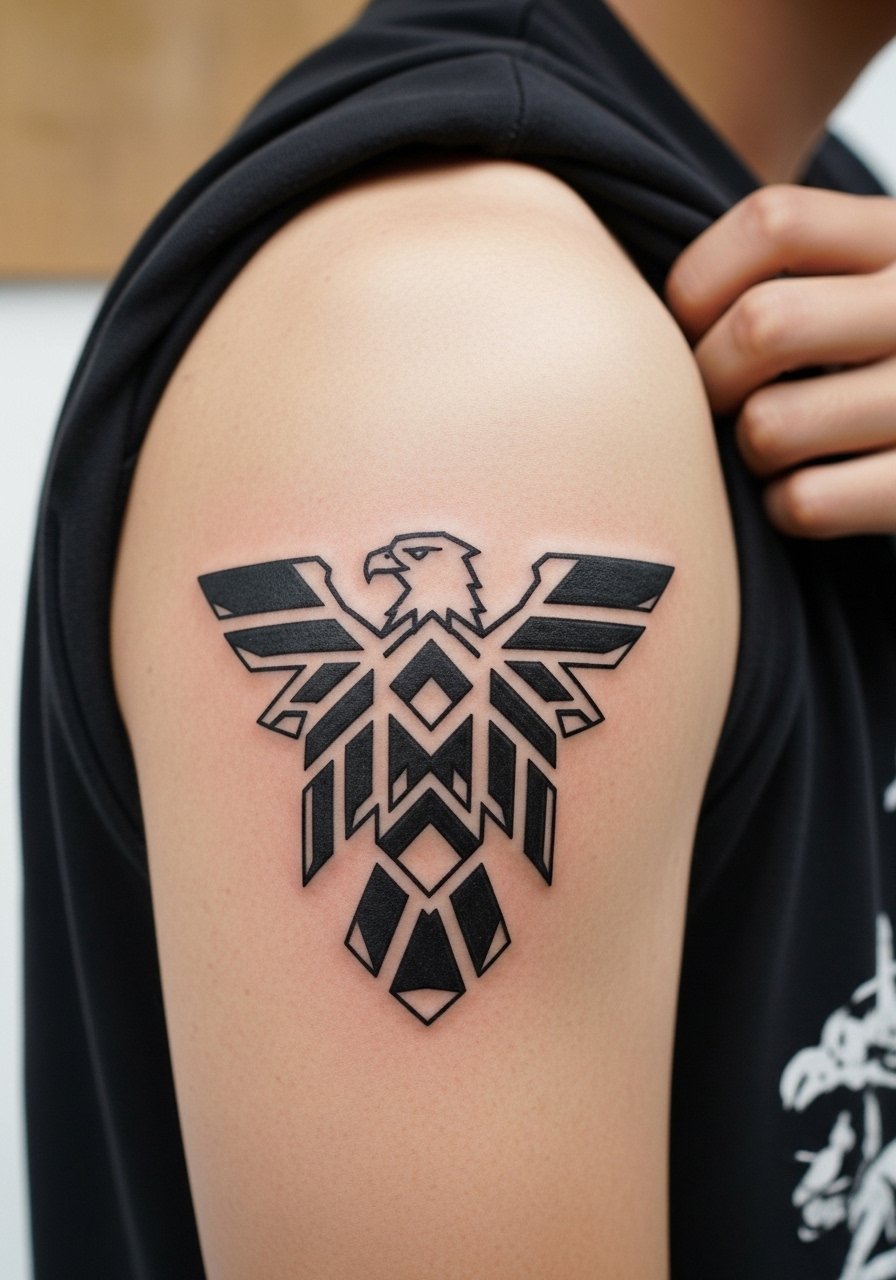
Geometric emblems wear well on the upper arm because the muscle gives the lines some distance from constant friction. Tell the artist you want consistent negative-space panels and slightly increased spacing between parallel strokes so the angles do not merge after a few years. Expect one session around an hour and typical shoulder prick pain. A mistake I see is making the geometry too dense in a 1.5 to 2 inch scale. If you want to display this look, a sleeveless muscle tee keeps the emblem framed and easy to show without stretching the area.
4. Minimalist Line-Drawn Soaring Wings Across the Collarbone
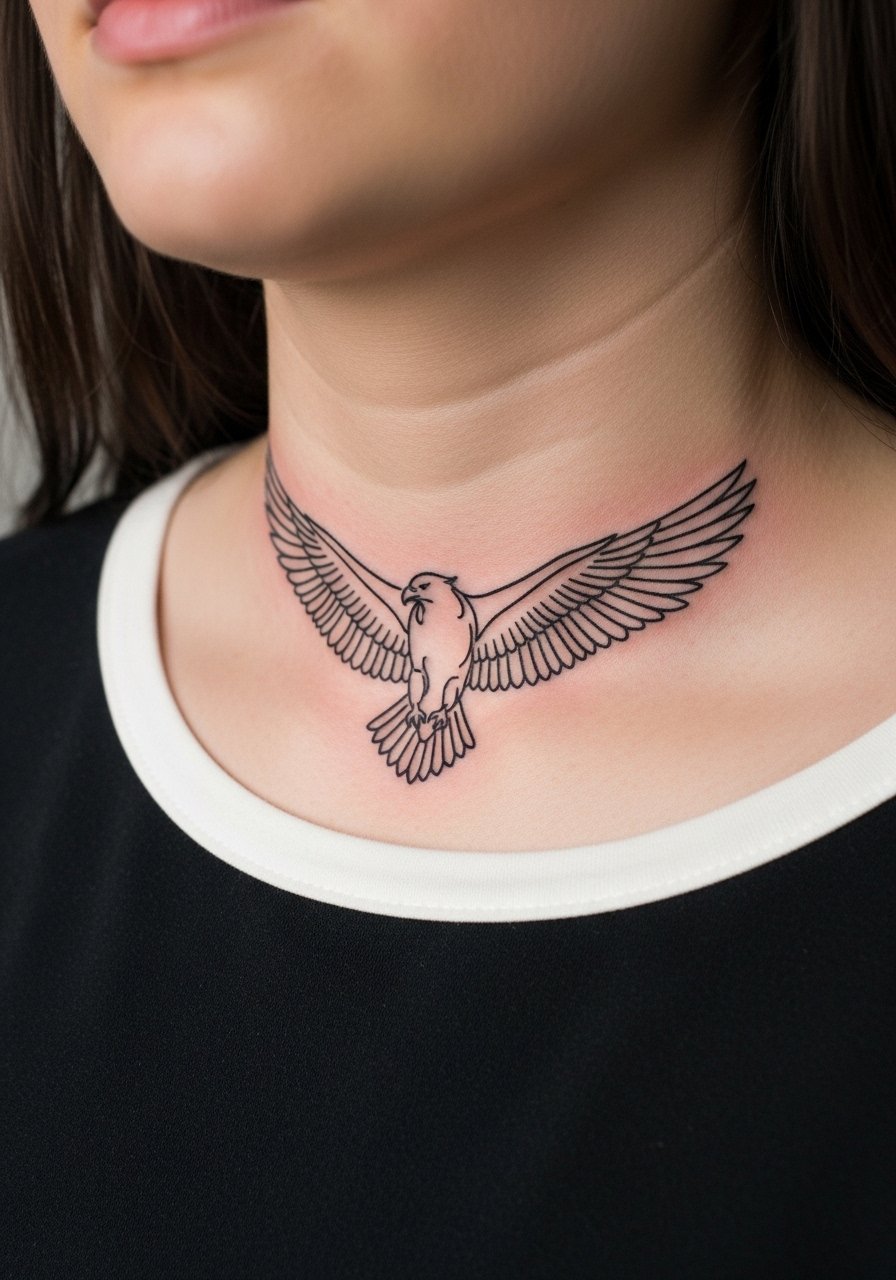
Collarbone wings read elegant because the horizontal line follows the bone. Book a short session and ask your artist to preserve negative space between wing feathers by increasing the line spacing slightly compared with a large piece. Pain here jumps depending on how close to bone the needle goes. A common error is forcing too much detail into a 1.5 inch span. For evening looks or casual wear, a v neck polo shirt or a thin chain necklace will frame the wings and keep attention where you want it.
5. Black and White Stripped Eagle Skeleton on the Outer Forearm
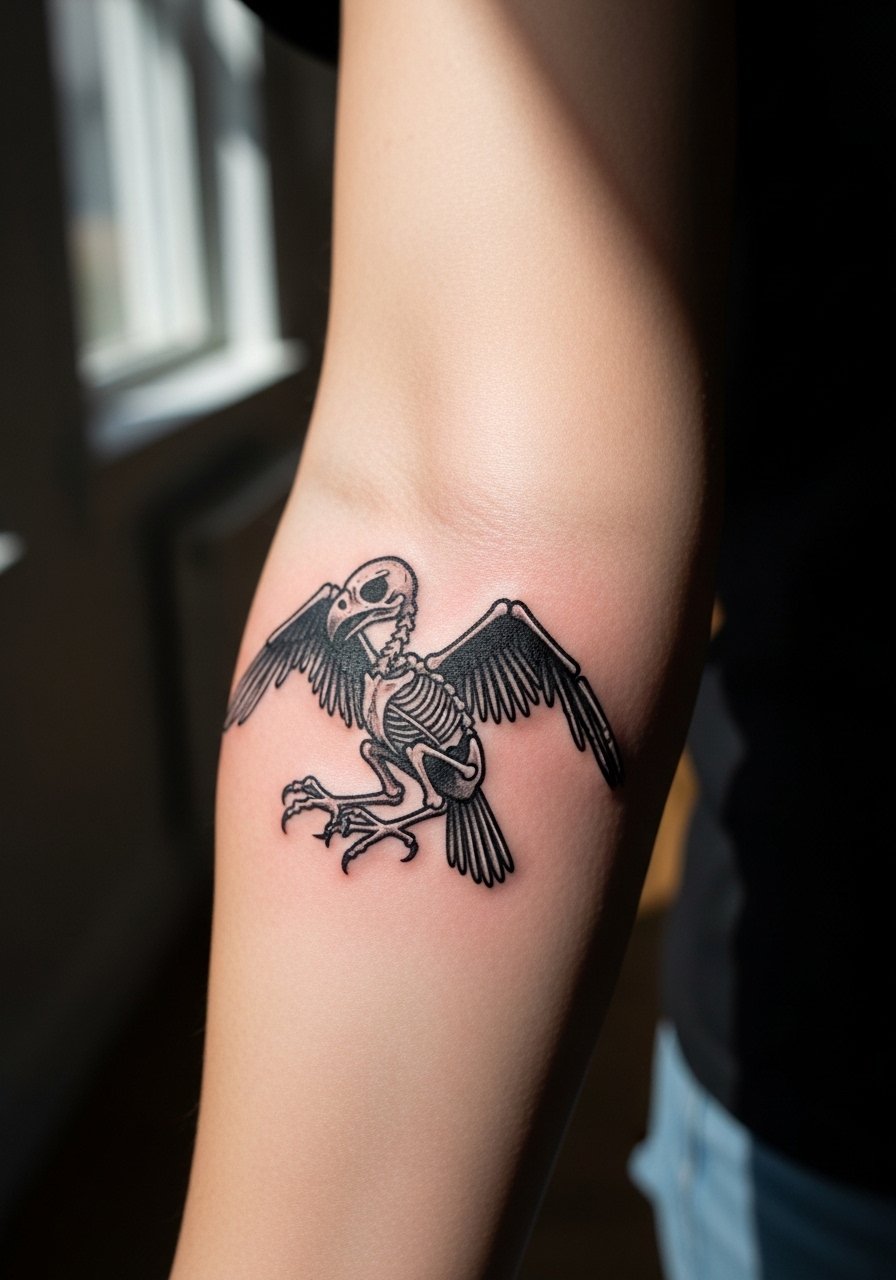
This is an edgier take that uses bold blackwork to keep shapes readable over time. The outer forearm gets less flex than the inner side so heavy blacks settle predictably. Ask for broad anchor lines and controlled saturation instead of tiny hatchwork, because dense detail can look muddy on darker skin tones. Expect a single session of around an hour and moderate pain. A common blunder is asking for feather-thin ribs in the skeleton that fill in. If you are worried about contrast on deeper tones, schedule a mock-up patch or request extra shading passes in consultation.
6. White Ink Tiny Eagle on the Calf
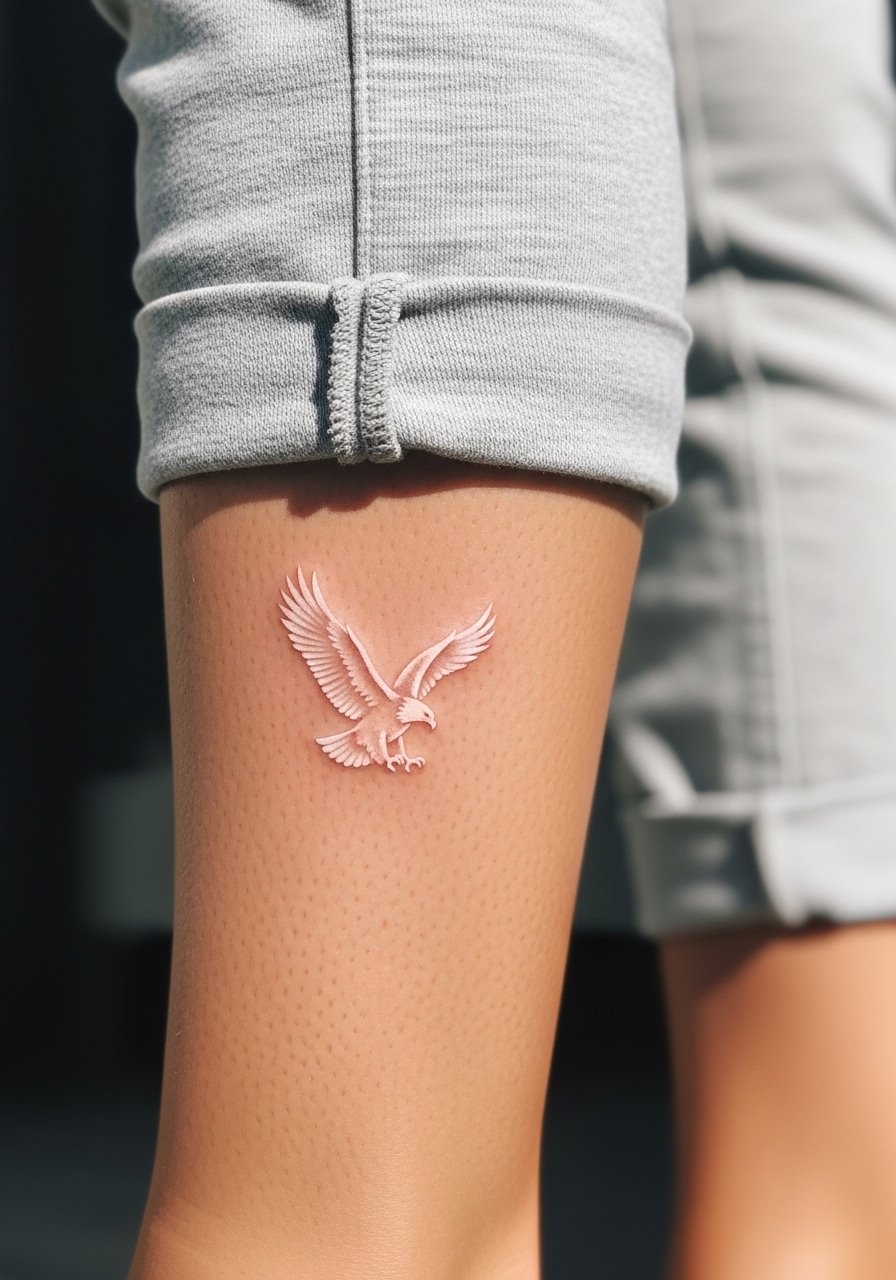
White ink gives a ghostly look but it needs special handling. Avoid this if you want low-maintenance work. I have seen white ink pieces look crisp for a year and then fade unevenly, and they often demand touch-ups sooner than black or gray. For best results ask your artist to place the white against a small, soft gray background so it reads as high contrast rather than relying on pure white alone. Pain on the calf is mild. For sessions wear cuffed shorts or pull up a pair of cuffed joggers so the artist can access the area without pinching fabric against fresh ink.
Studio Day Picks
The wrist and forearm examples above heal differently from calf and shoulder pieces, so these items smooth the session and the first week.
- Tattoo Goo colorless balm. A non-greasy balm many people prefer for quick-absorbing hydration on tiny wrist pieces that can otherwise look gummy.
- Frida Healing Gel. A thinner gel that breathes better than heavy ointments for fine line work and for darker skin tones where white cast is a concern.
- Ink-Eeze spray. Handy for itch control on small placements without leaving residue that blurs micro-realism edges.
- H2Ocean tattoo wipes. Gentle saline wipes that clean delicate detail work without over-scrubbing and disturbing fresh dot work.
- Aquaphor healing ointment. Thin layers in the first 48 hours help lock in moisture on tight needle channels, useful on wrists and inner forearms that see a lot of movement.
7. Tiny Geometric Eagle Behind the Ear
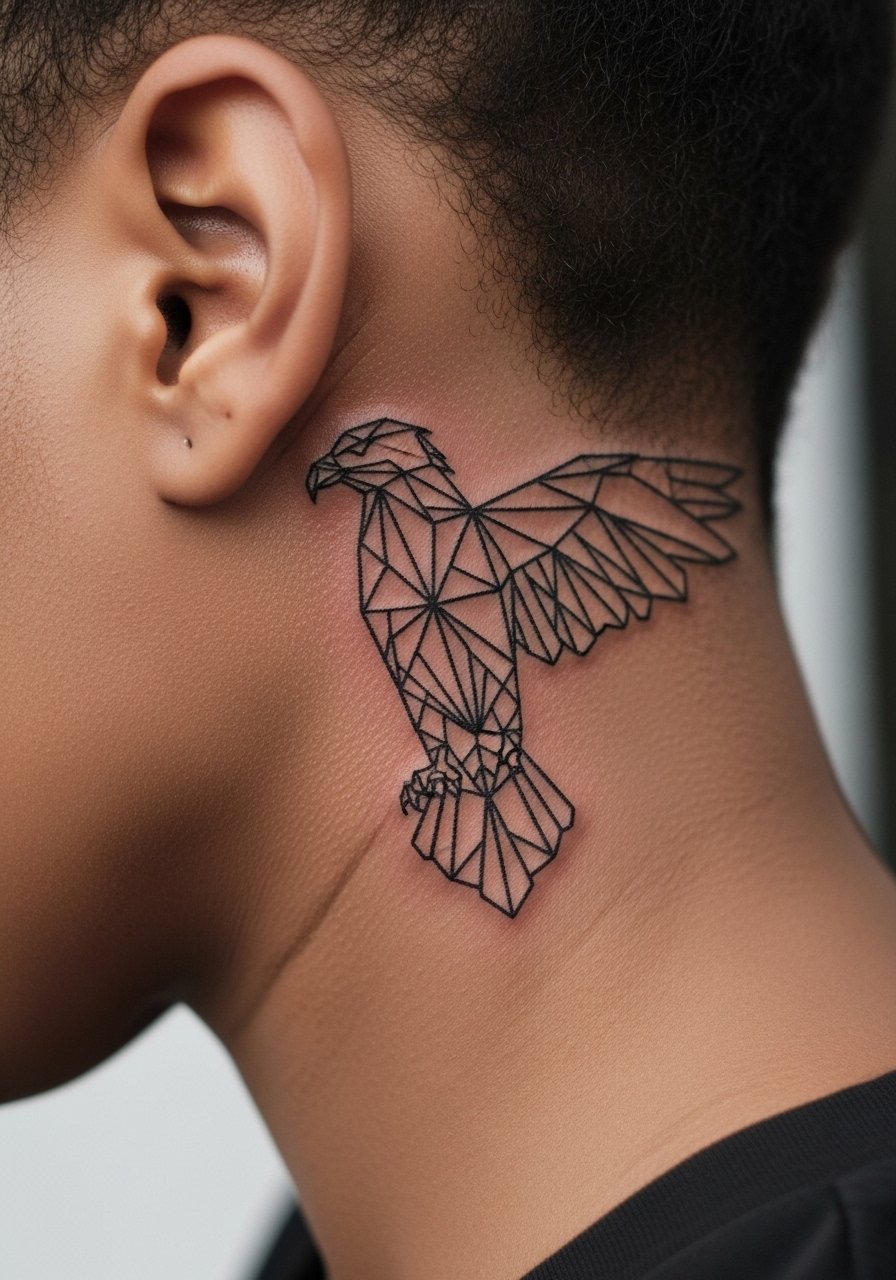
This placement is subtle and surprising when paired with short hair. Behind-the-ear work reads small and clean if you keep the geometry open. Ask your artist to avoid cramped triangles and keep negative space around the beak so the shape does not blur into the hairline. The pain is low and sessions are fast. Remember that visibility is conditional on hair length, so a crewneck tee and a short fade hairstyle make the area pop without overexposing it. Because the area is small, confirm touch-up policy before booking.
8. Micro-Realistic Eagle Eye Close-Up on the Ankle
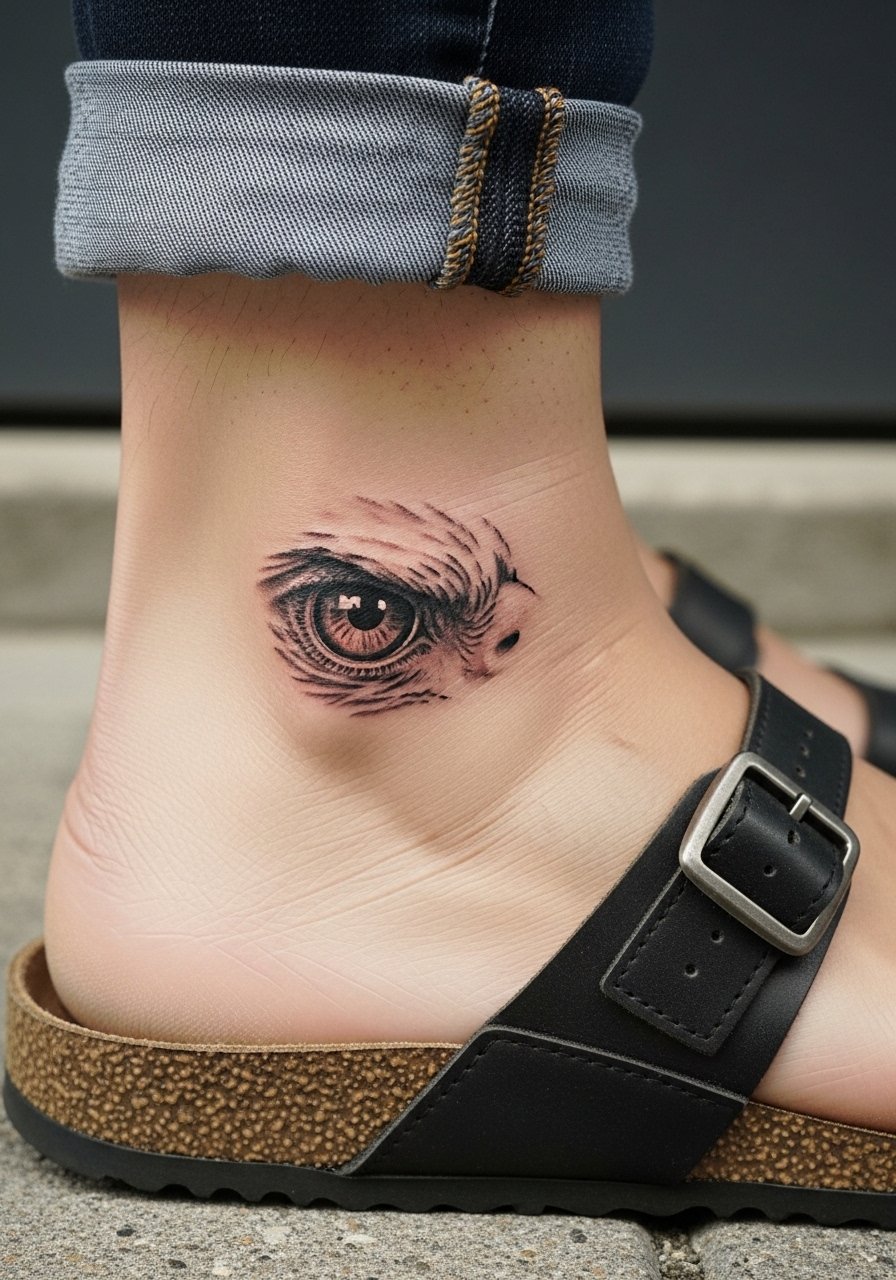
A tiny eye is a high-impact micro-realism piece that reads like intention. The ankle is a high-friction zone so expect some early softening where socks or shoe collars rub. Tell your artist you want a slightly higher contrast in the iris and a crisp, short outer line to prevent early feathering. Session time is brief, around 30 to 45 minutes, but aftercare must avoid tight socks for the first week. Common mistakes include asking for too many hairline highlights that vanish after the first healing cycle.
9. Neo-Traditional Eagle Head on the Bicep
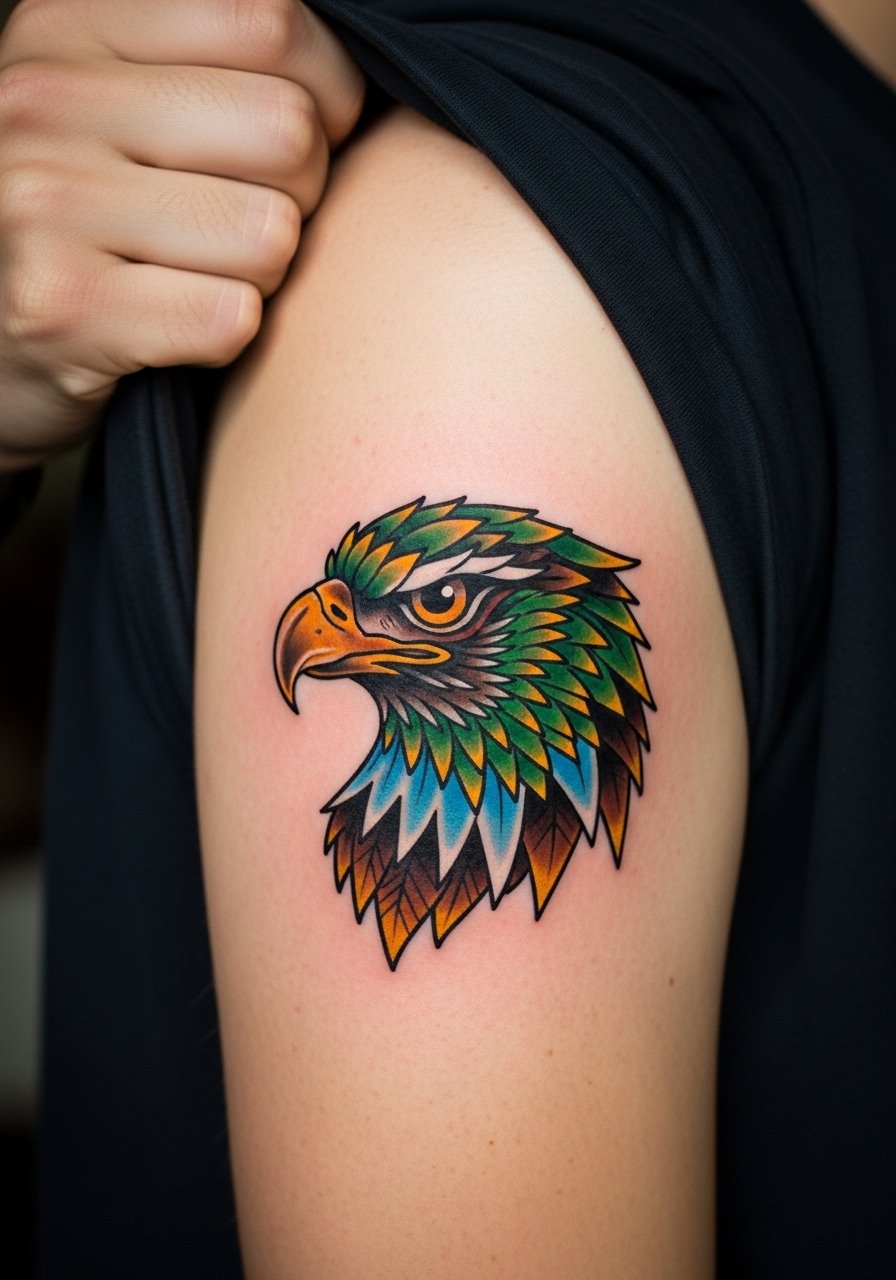
Neo-traditional brings color accents without overwhelming the small scale. If you want red or muted gold touches, request restrained fill and ask the artist to keep outlines bold to frame color that will lose saturation faster than black over several years. The bicep hides well under shirts and stretches less than the forearm when you bulk, but if you are planning major muscle gain talk to your artist about placement a bit closer to the shoulder. Expect two shorter sessions if color layering is involved. The typical misstep is asking for painterly wash at this scale, which flattens into blotches.
10. Tiny Eagle Integrated into Watch-Gear Motifs on the Wrist
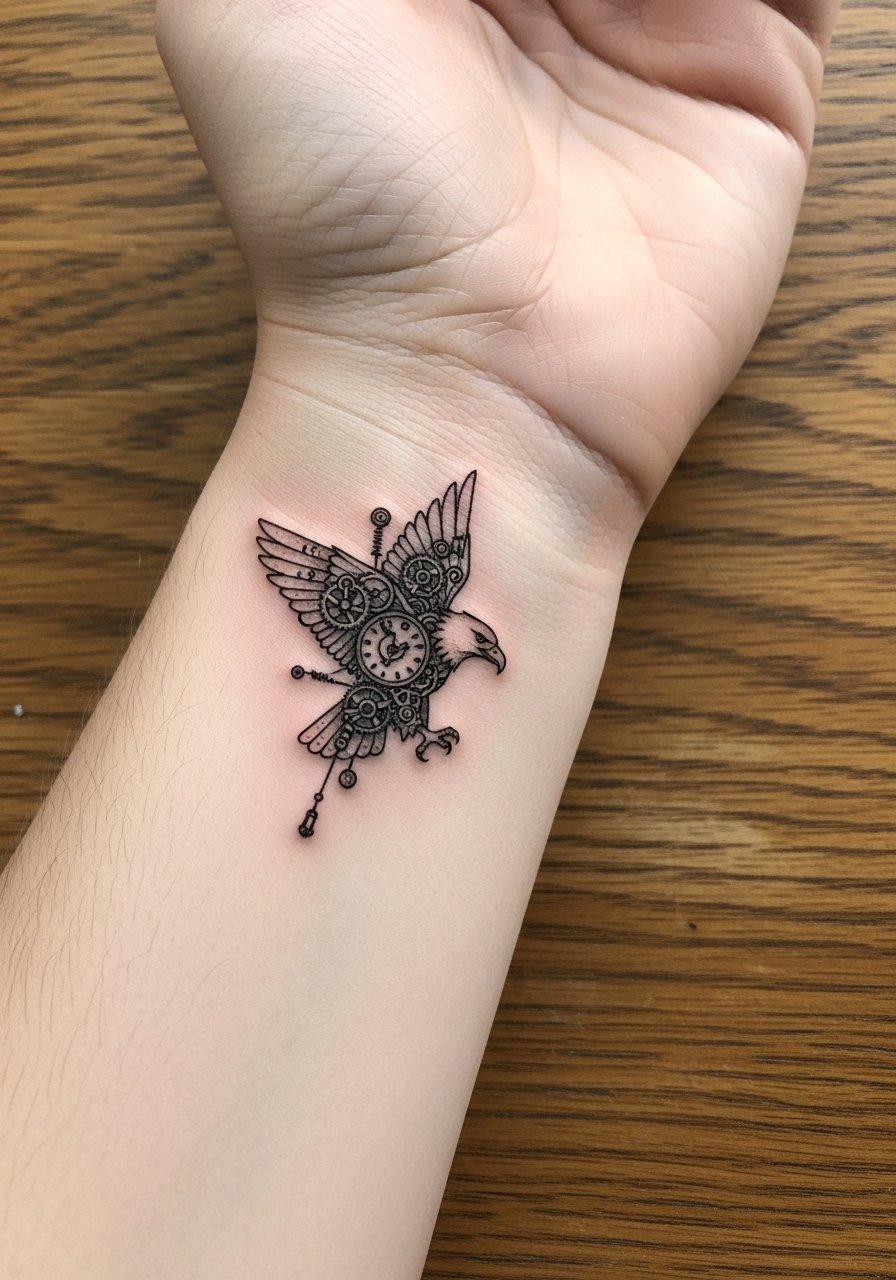
This unique combo uses negative space to suggest gears around a compact eagle silhouette. On the wrist you must balance detail with longevity, so ask for simplified teeth in the gears and slightly thicker engraving lines. The session runs under an hour but the area will need gentle motion for several days. For an outfit that frames this look without covering it, roll a sleeve or wear a thin bracelet opposite the tattoo and consider a thin leather wrap bracelet on the other wrist.
11. Micro-Realistic Tiny Eagle on the Inner Forearm (Compact Variant)
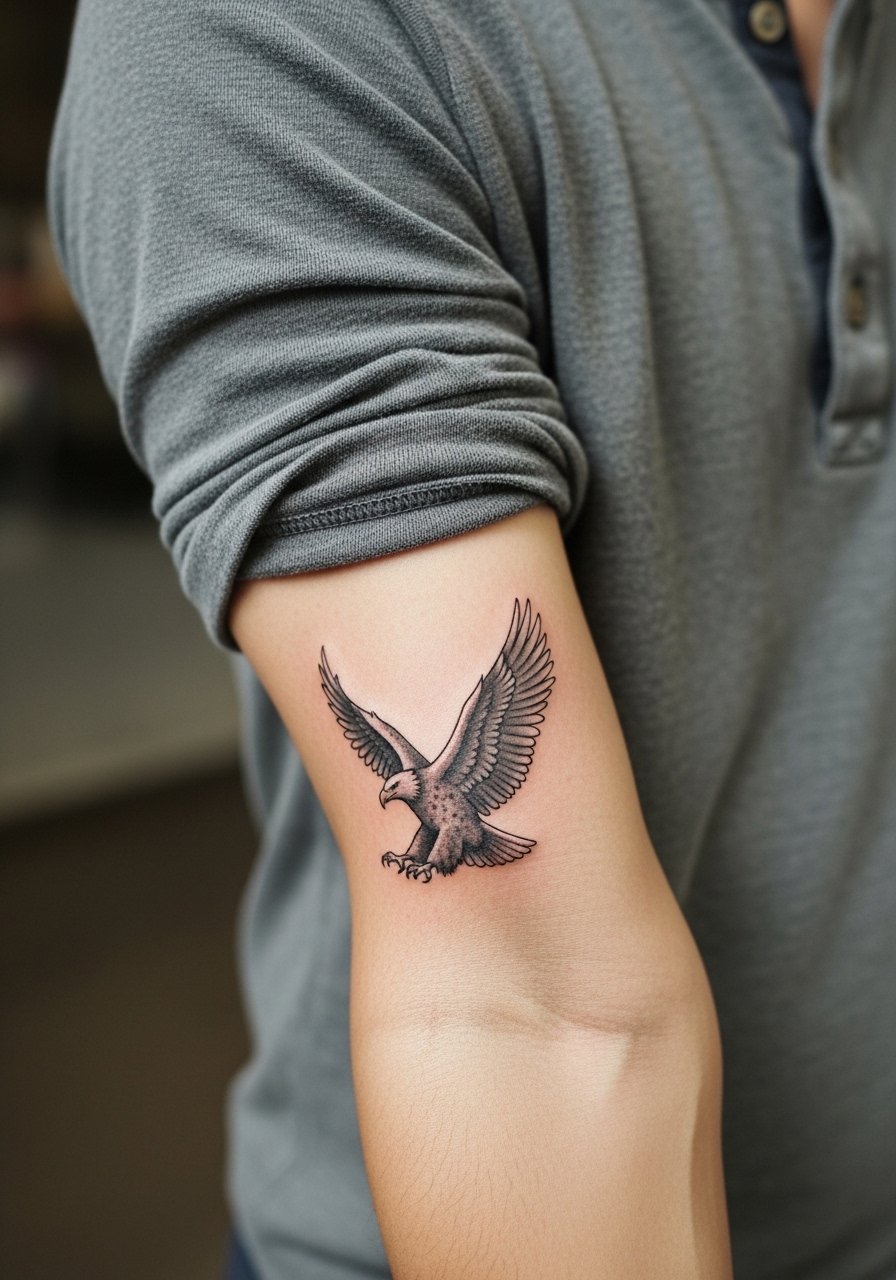
This compact inner forearm piece keeps the same micro-realism language but scales elements to hold at 1 to 1.5 inches. When consulting, show the artist photos at actual size printed or taped to your arm so you both agree on legibility. The inner forearm's motion is gentler than the wrist, so this spot ages better. Expect a single longer session if the shading is dense. Mistakes to avoid include insisting on microscopic feather filigree. For the appointment wear a olive henley shirt men or a short sleeve that pulls easily so the artist has room to work.
12. Tiny Eagle Skeleton Knuckle Outlines
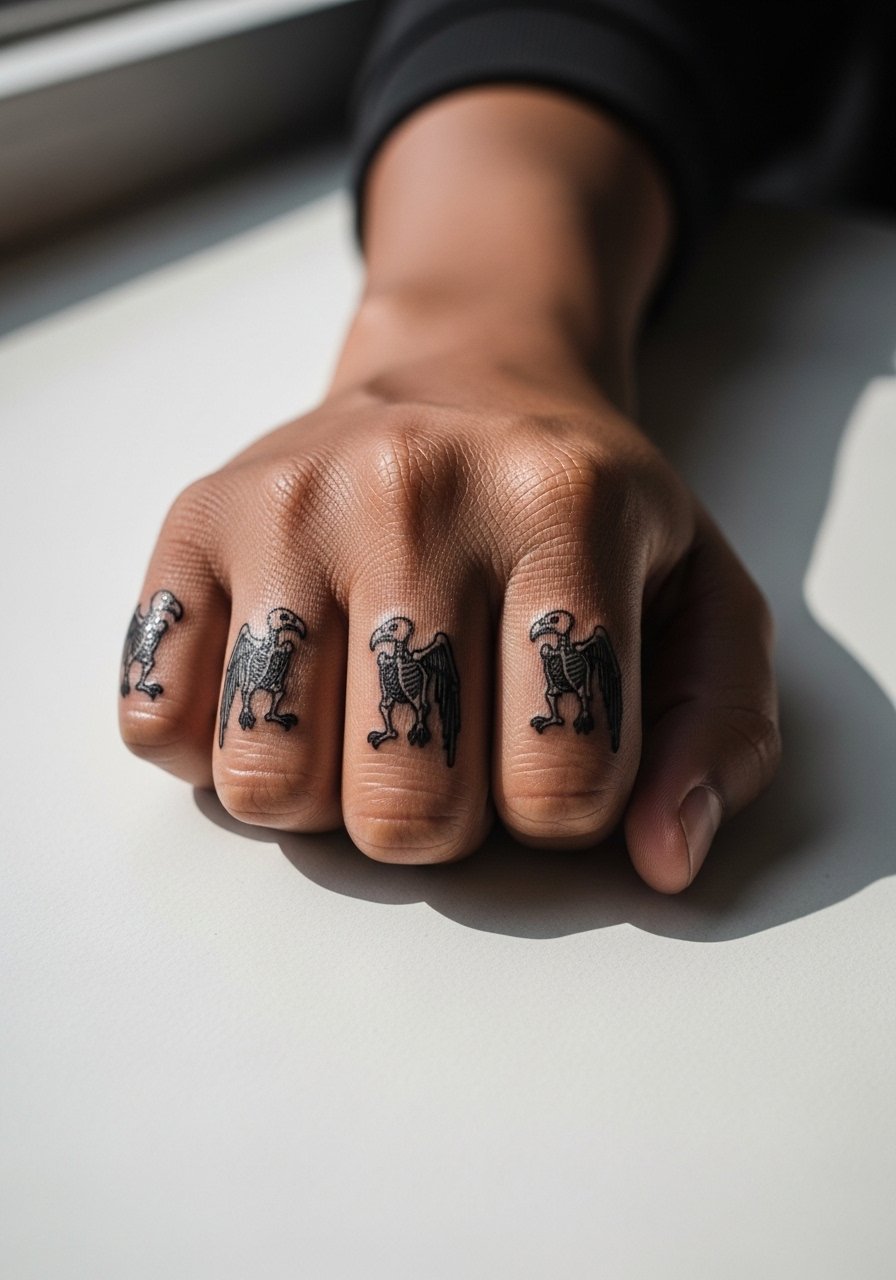
Knuckle tattoos read bold even when small because each letter or motif gets its own space. For an eagle skeleton idea use minimal lines per knuckle and accept that touch-ups are common because knuckle skin heals differently and sees constant friction. Pain is higher and sessions are split across multiple short appointments. A frequent error is trying to pack an entire animal onto two or three knuckles. Keep the concept reduced to a motif per digit and plan on a color-boost touch-up at the six to twelve month mark.
13. Scaled Geometric Eagle for a Prosthetic Limb Accent
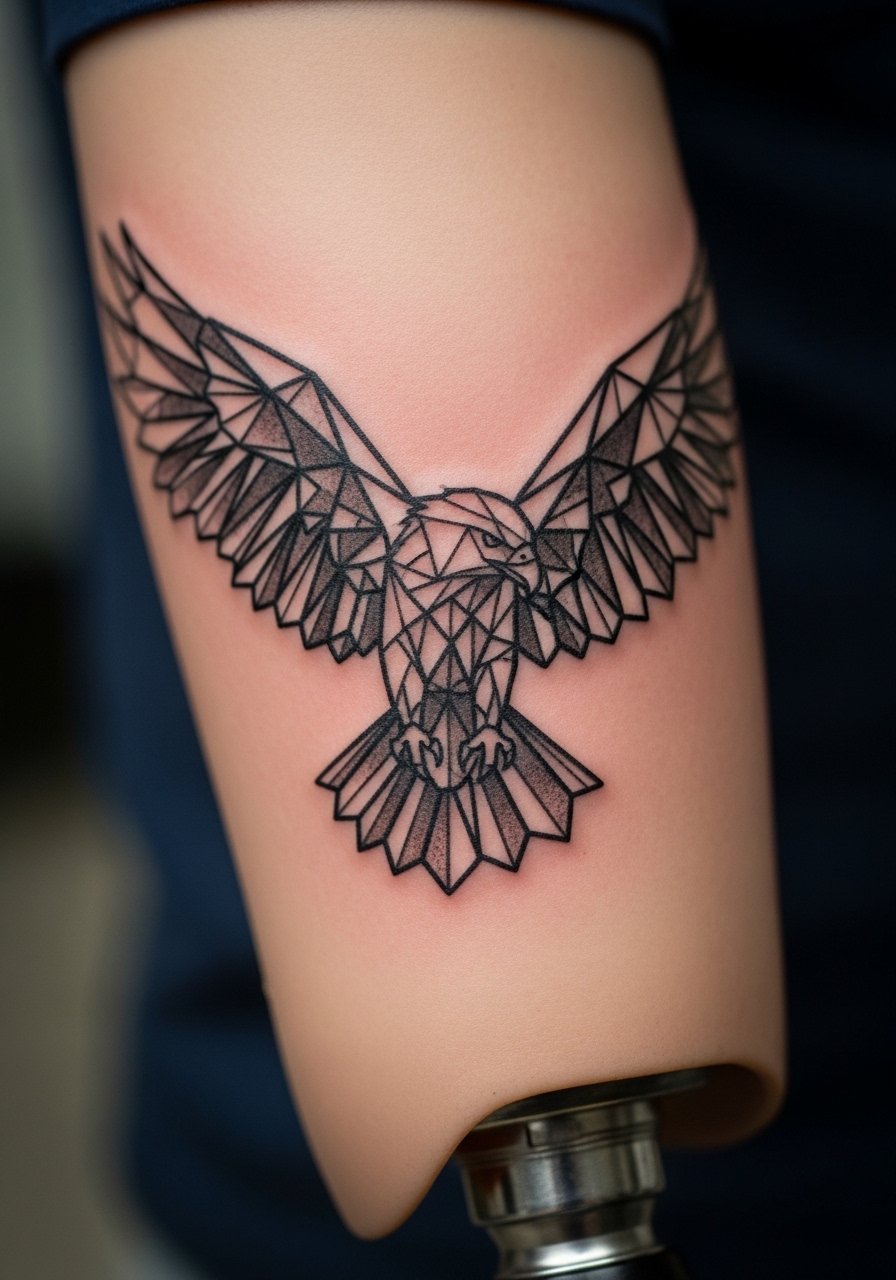
This is an under-covered adaptation that respects mobility and surface differences. When working with prosthetics, designers often scale shapes to the available panel and avoid dense stippling that can read poorly on synthetic materials. The consultation should include a mock stencil on the prosthetic surface so you can test visibility. The piece is purely decorative in placement but can carry meaning for veterans and active prosthetic users. Because this is specialized, allow time for a test transfer and minor adjustments.
14. Tiny Soaring Eagle Wing on the Collarbone Edge
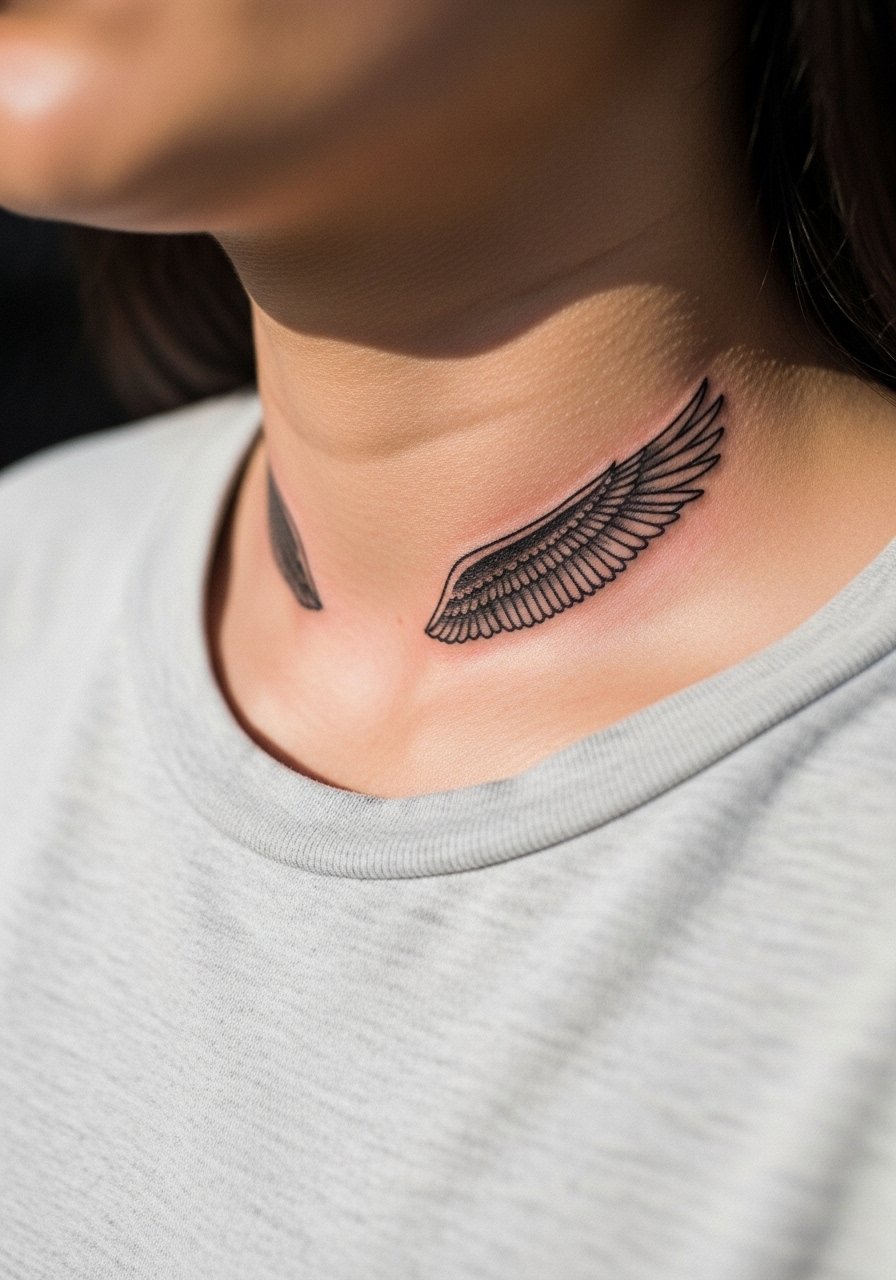
A narrow wing along the collarbone edge sits nicely with jewelry and shirts that open at the throat. Ask for a mix of single-line flow and small breaks between feather strokes so the wing keeps shape as it ages. Pain varies by how close the needle hits bone. Common mistakes are crowding the wing into a tiny area. Keep it airy at first and plan a touch-up later if you want to increase density.
15. Tiny Eagle on the Back of the Hand
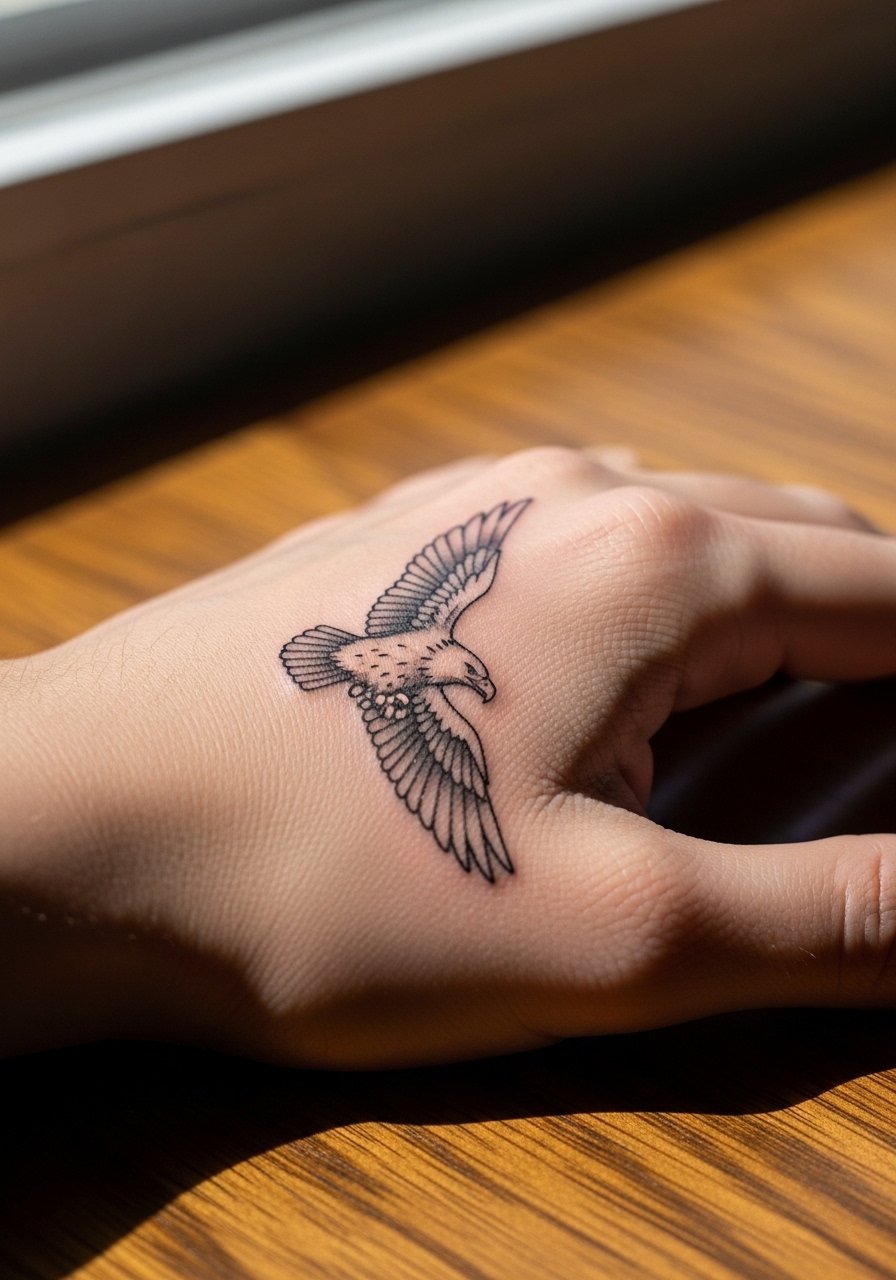
Hand tattoos remain controversial in workplaces but they are bold and visible. The skin on the hand has a fast turnover so expect touch-ups and some early fade where soap and ring friction occur. Ask your artist to set slightly stronger outlines and expect a more frequent follow-up schedule. For casual coverage when needed, long sleeves help, but when you want to show it off during summer, a simple bracelet or rolled sleeve frames the area. If you want a pop of contrast on warm days, a lightweight linen button-down works well.
16. Tiny Eagle Crest on the Ankle Bone
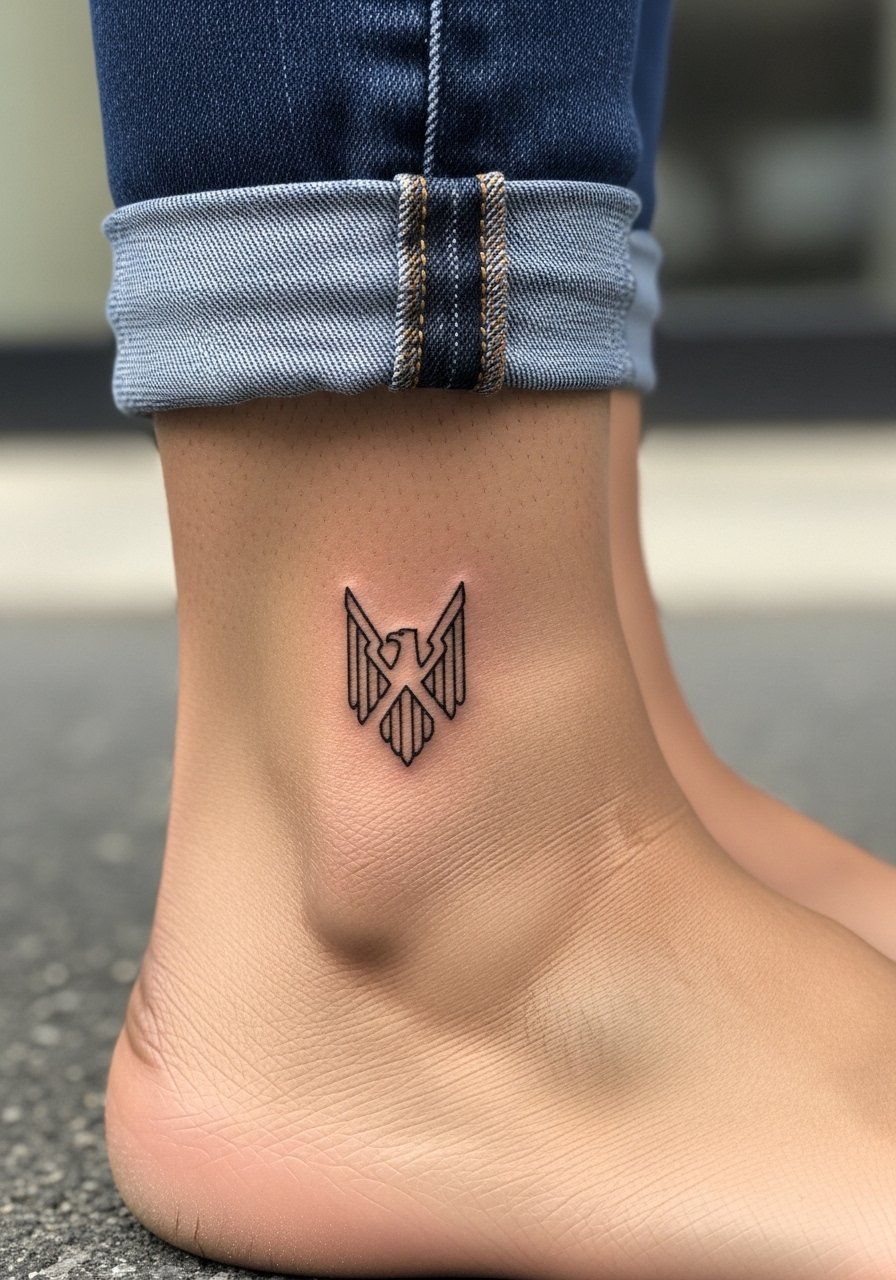
Ankle crests look neat and sit in a low-friction zone compared with the front of the foot. Keep the crest compact with strong outer lines and restrained interior detail. The main mistake I see is trying to cram heraldic ornament into a size that simply cannot hold it. Expect short sessions and mild pain. Avoid tight sock cuffs for the first ten days to let the scab form and come off naturally.
17. White Ink Eagle Accent Above the Calf Muscle
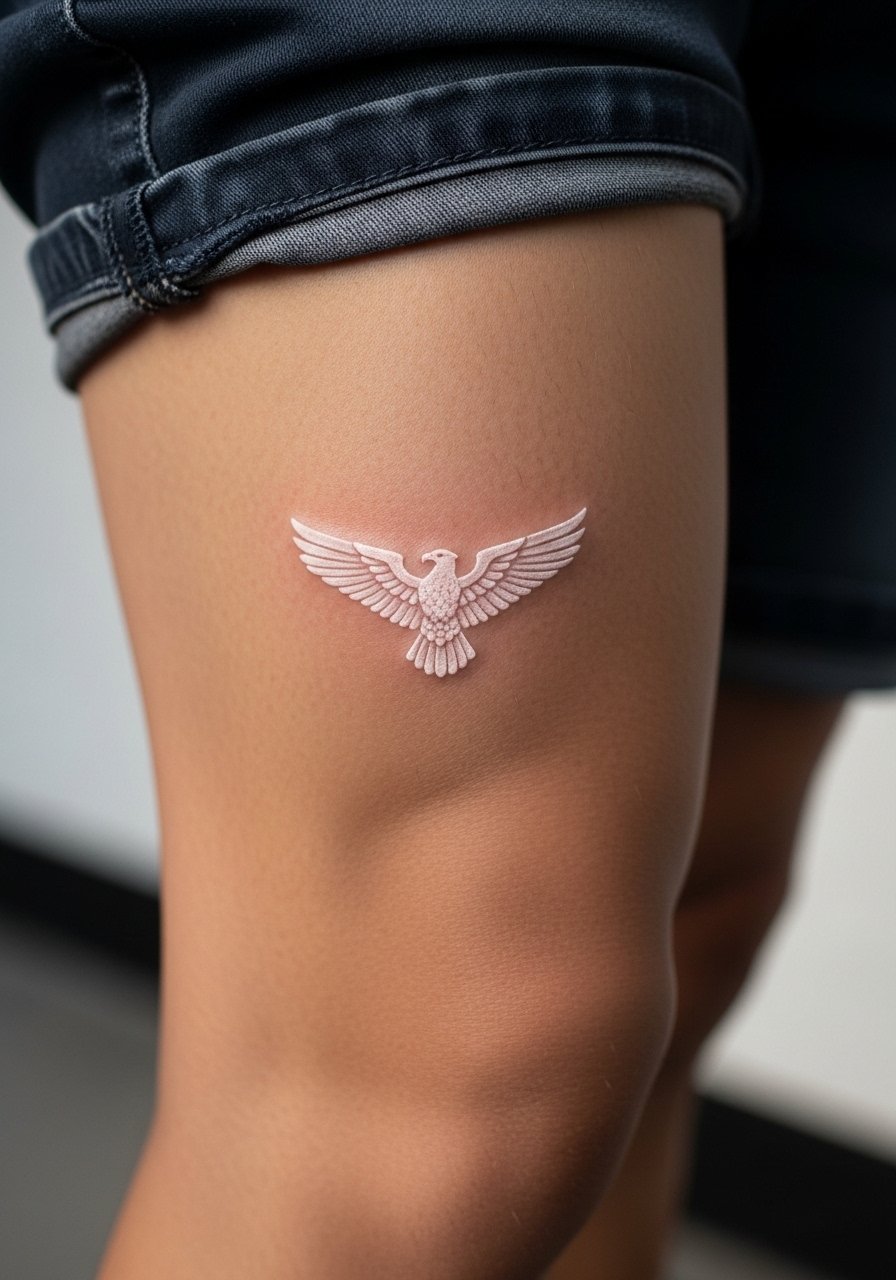
A white accent above the calf can be subtle and almost sculptural. For longevity, ask for a faint gray wash under the white to provide longevity and contrast, and expect the piece to need annual refreshes if you plan to keep the brightness. Pain on the upper calf is tolerable and sessions are short. Avoid sun exposure during the early healing window to reduce uneven fading.
Frequently Asked Questions
Q: Will a tiny fine line eagle on my wrist likely need a touch-up within a year?
A: It depends on placement and daily wear. Wrist pieces see constant movement and washing so fine line silhouettes often need a touch-up within 6 to 12 months. Ask your artist to do slightly bolder anchor lines and schedule the complementary touch-up at the 4 to 8 week follow-up.
Q: How should I pick between white ink and black/gray for a tiny calf eagle?
A: White ink reads differently across skin tones and tends to need more maintenance. If you want subtlety and can commit to yearly refreshes, white ink works. If you prefer lower upkeep and longer legibility, black and gray with a light background wash will behave more predictably.
Q: Which placements survive gym bulking best for small eagles?
A: Areas with less direct muscle expansion like the inner forearm or the upper calf shift less with major gains. The outer forearm and bicep can stretch when you bulk, so tell your artist about upcoming body changes and consider moving a design slightly toward a joint or flatter surface.
Q: There are differing opinions on Saniderm versus dry healing. Which is safer for tiny detailed eagles?
A: Both camps make valid points. One group uses protective film to limit scabbing and reduce infection risk. The other argues that film can trap moisture and blur tiny detail if applied too long. A middle path is short-term film for the first 24 to 48 hours, then gentle cleaning and thin hydration while monitoring for irritation. Ask the shop what they usually recommend for micro-realism.
Q: How do I find artists who specialize in tiny micro-realistic eagles without using Instagram handles?
A: Search hashtags like #TinyEagleTattoo and #MicroRealismEagle on Instagram and TikTok, use local filters on apps like Tattoodo or Booksy, and read recent r/tattoos threads for peer recommendations. Guest-artist calendars on convention sites also list specialists if you want someone who travels specifically for micro work.
Q: What should I wear to an appointment for a collarbone or shoulder eagle so the artist has easy access?
A: For collarbone work wear a v neck polo shirt or a wide-neck top you can pull aside. For shoulders a loose tank or sleeveless shirt that the artist can move without stretching the skin works best.