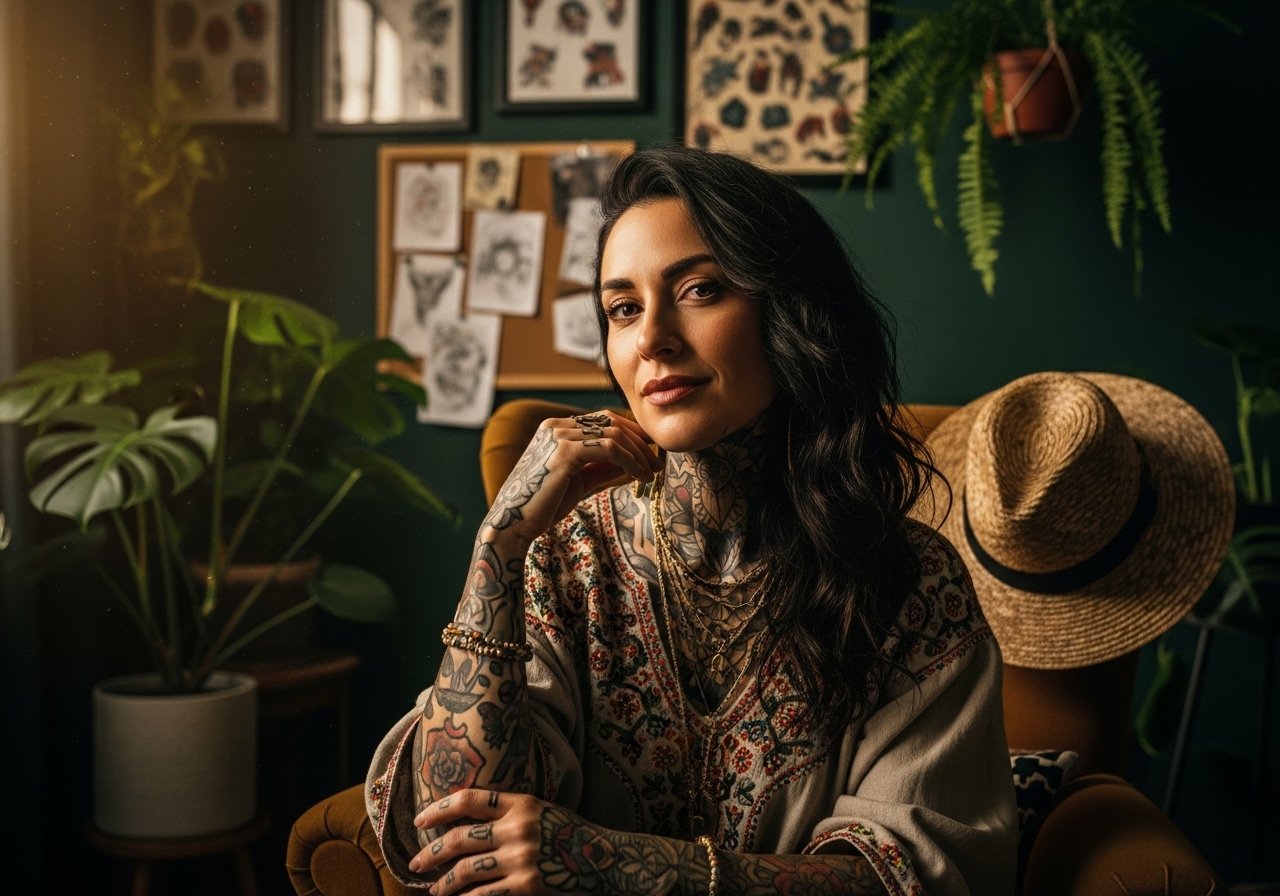
Fine line sun moon work looks stunning fresh and then asks for decisions most people skip. I've seen fine line pieces blur sooner than expected, brown skin versions lose presence without contrast, and deposit drama ruin a planned forearm slot. These designs can feel low-commitment and personal when done right. Below are 17 subtle sun moon tattoo ideas with notes on placement, how they age, what to tell your artist, and wardrobe tips that actually help the ink read well.
1. Minimalist Sun and Moon Outline on the Inner Forearm
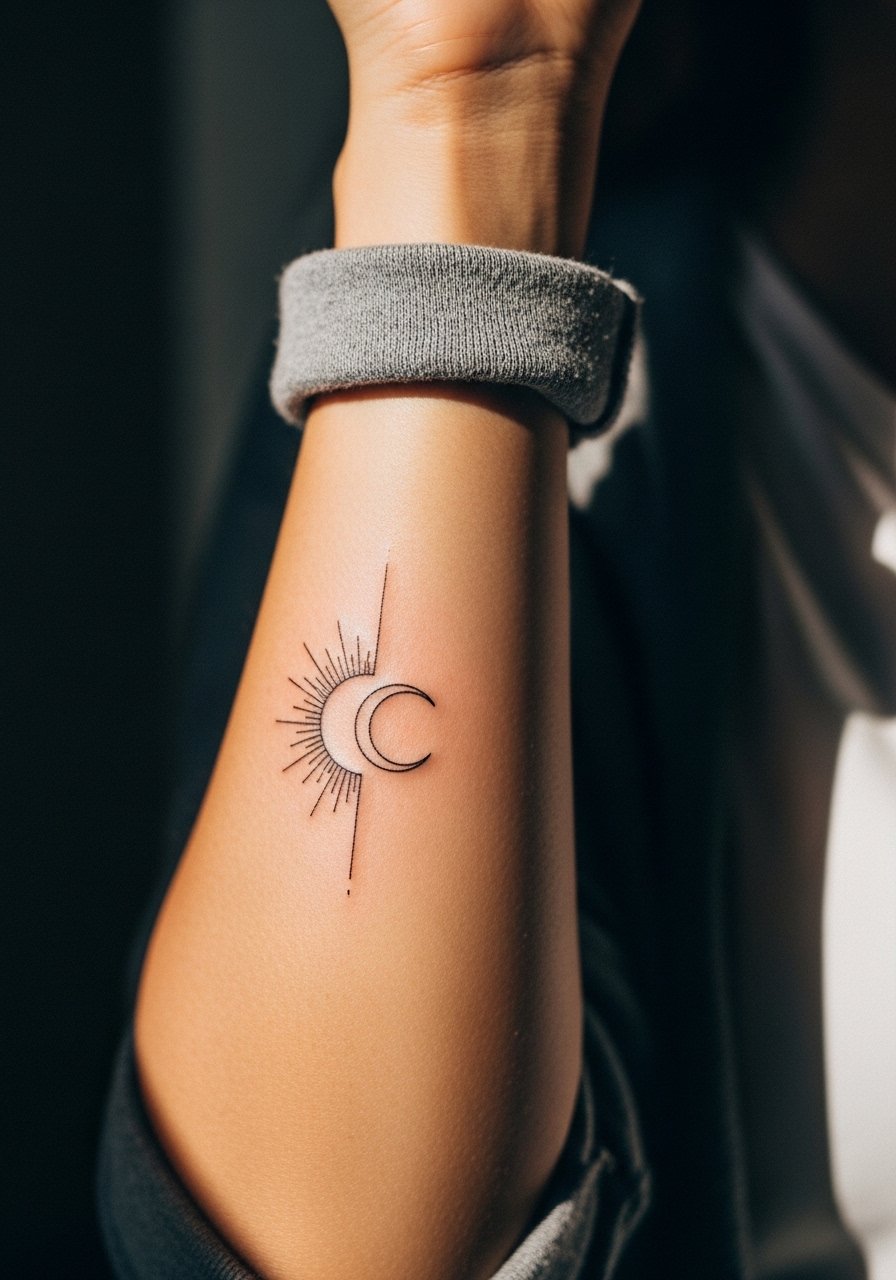
I recommend this for first-timers who want a readable symbol without heavy commitment. I've noticed the inner forearm shows linework clearly for two years when the lines are slightly bolder than the ultra-thin trend. Tell your artist you want clean single-pass linework with a tiny bit of weight so touch-ups are optional at year two rather than mandatory. Pain is low to moderate and the session usually finishes in under an hour. Common mistakes are asking for overly complex rays in a one-inch piece and expecting it to stay crisp. For showing it off, roll a sleeve and pair with a rolled cuff chambray shirt for casual framing during summer.
2. Fine Line Crescent Moon with Sun Rays on the Collarbone
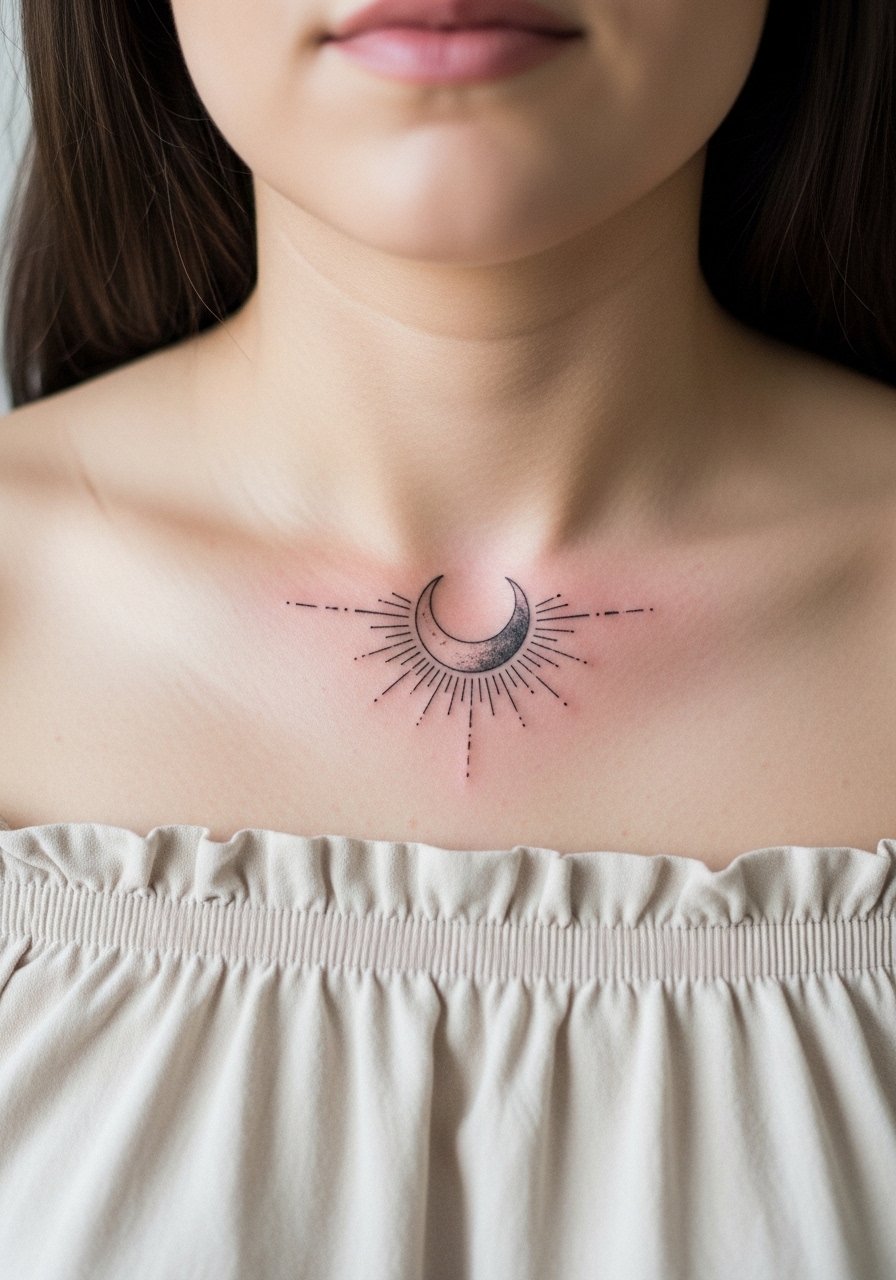
Fair warning, collarbone is a spot people choose for visibility and it can feel sore while healing. This style reads elegant when sized around 2 to 3 inches and when rays are spaced enough to avoid merging. Artists split on fine line longevity on collarbones. One camp says thin rays blur with movement and touch-ups are needed. The other camp says proper depth and spacing keep rays separate for years. Ask your artist which approach they use and ask to see healed portfolio shots on similar placements. For sessions wear a strapless bralette or a button-front top for clean access.
3. Dotwork Sun and Moon Mandala on the Upper Arm
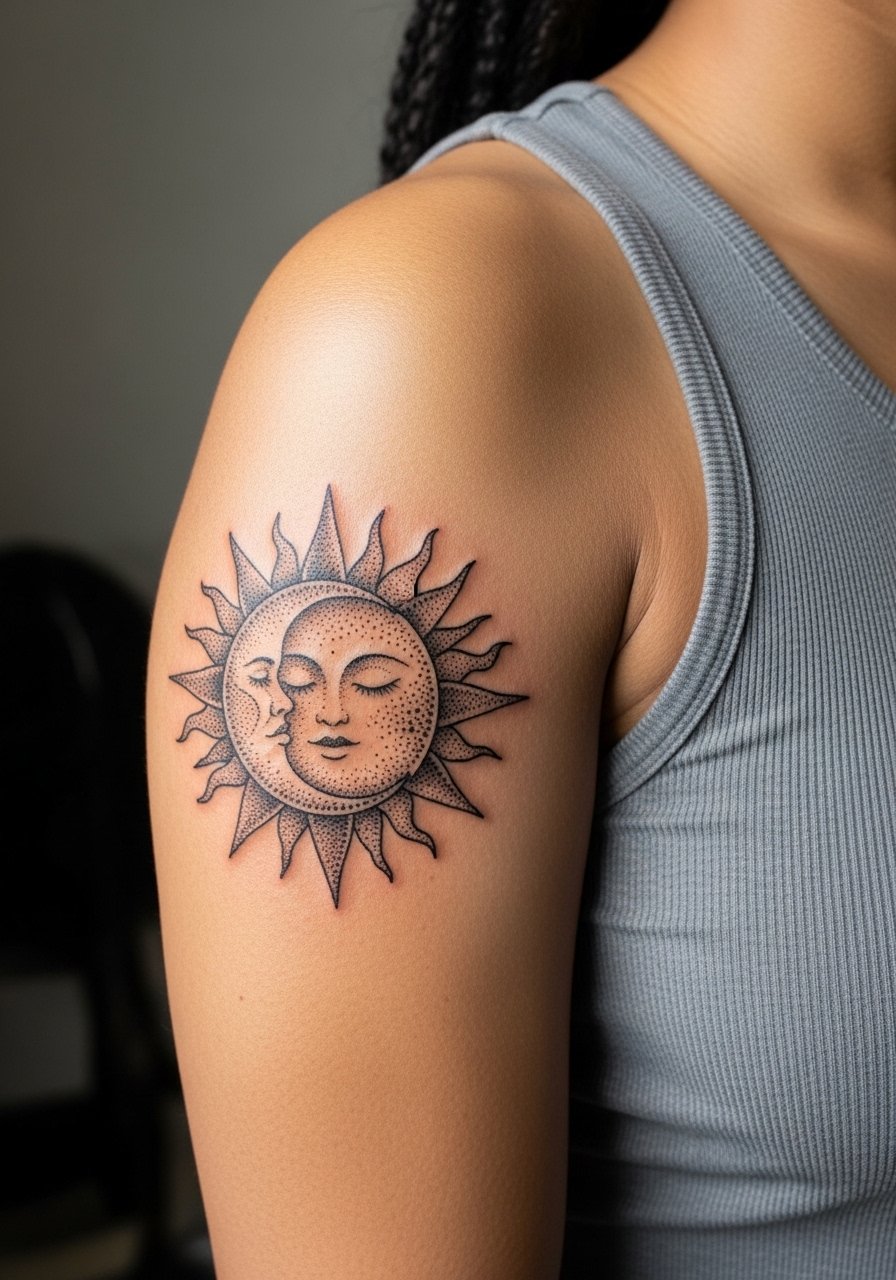
This design is good if you want meditative symmetry without heavy color. Stipple shading ages predictably because dots hold better than tiny hairlines in dense areas. In consultation ask for scaled spacing between stipples so the center does not fill in over time. The session runs longer than a simple outline because dotwork takes time, expect two sessions for a three-inch piece. A real mistake is compressing the mandala too tightly for the size. Pair this with a fitted muscle tank to show the curve of the design when you wear short sleeves.
4. Watercolor Sun Burst and Moon Fade on the Shoulder Blade
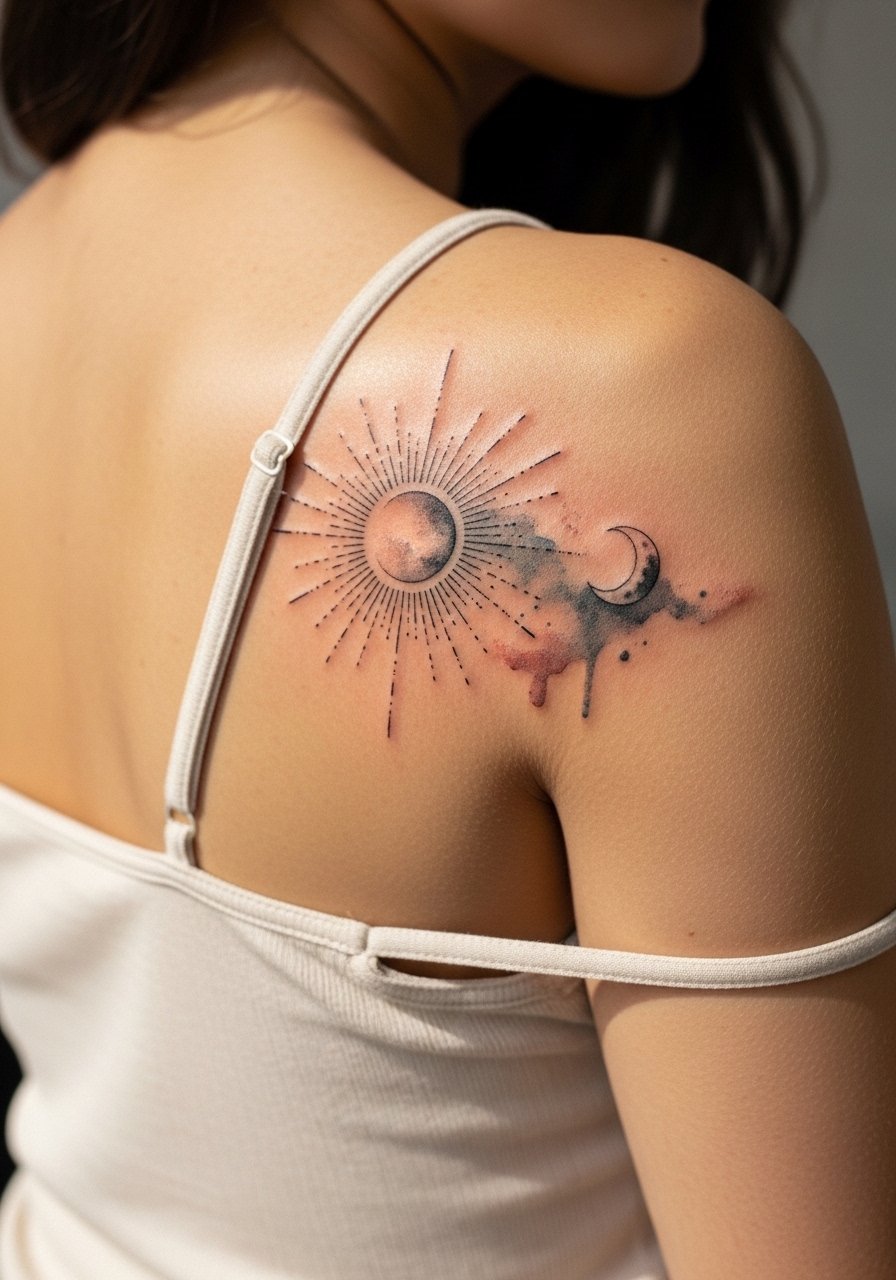
Watercolor looks dreamy but can soften faster than black linework. Most watercolor pieces need thoughtful placement and slightly darker anchor lines if you want longevity. The shoulder blade gives room for a 4-inch composition and lets color breathe without constant UV exposure. Tell your artist you want muted washes rather than saturated blobs and plan for two sessions. Mistakes include asking for tiny watercolor at ankle where abrasion and sun will erase detail. If you plan to show this off, try an off shoulder blouse in pastel tones so the faded edges blend with clothing color.
5. Geometric Sun Moon Overlap on the Forearm
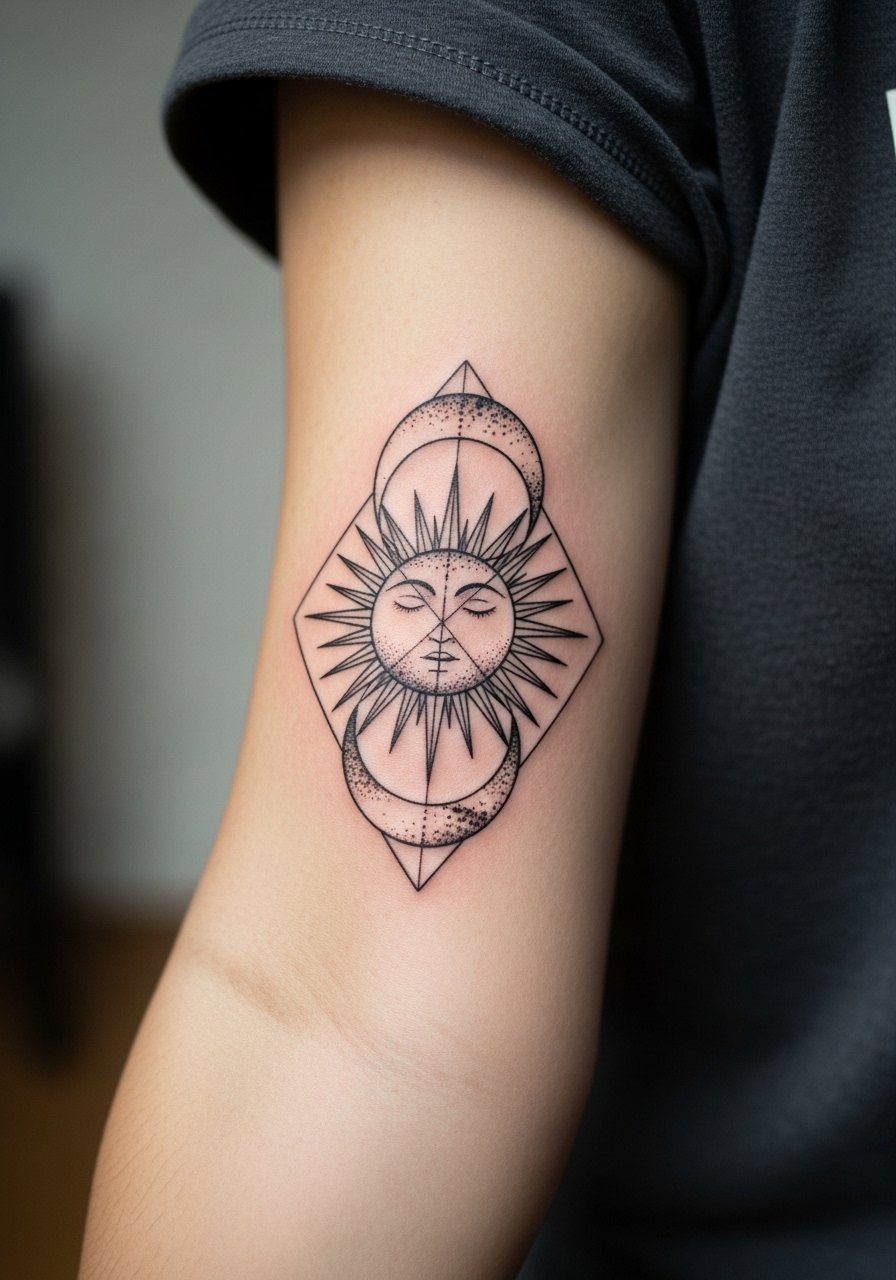
There's a practical reason geometric overlaps live on forearms. Curved areas can warp circles and overlapping planes solve that by working with the anatomy. The biggest mistake is going too small. Space the shapes so negative space reads as part of the design. Expect a single longer session for a 2.5-inch piece. For consultation ask the artist how the design maps to motion lines on the arm. For casual wear pair with a loose fit short sleeve tee and roll the cuff to show the placement cleanly.
6. Neo-Traditional Sun with Moon Face on the Chest
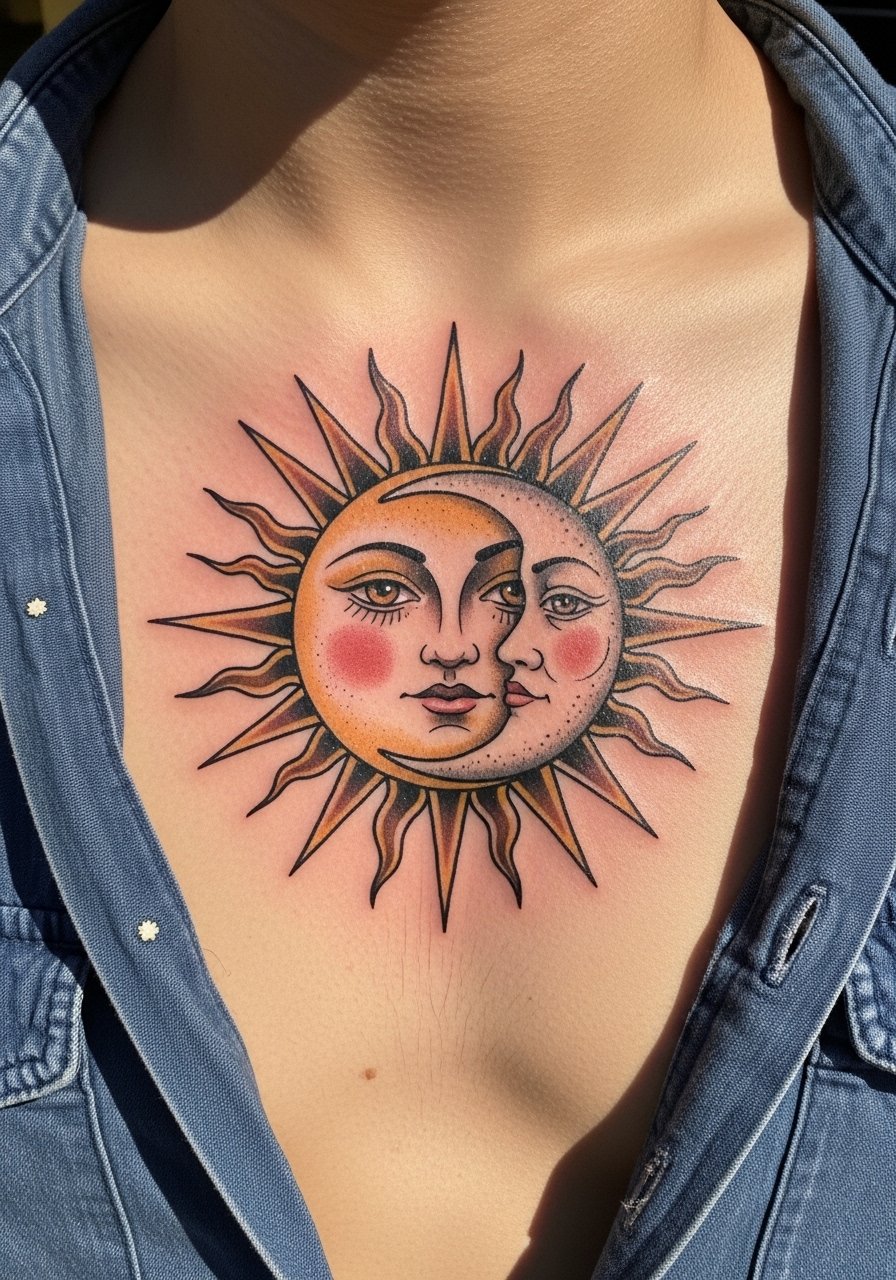
Chest pieces bring personality but also more session time and deeper soreness. Neo-traditional allows heavier saturation that ages into a solid visual over years. Expect multiple sessions for color and shading. A common mistake is compressing too much detail into a chest piece under four inches. For booking day wear a front-open button shirt so the artist has clear access and you avoid awkward undressing at the chair. Consider career implications before choosing very visible chest work.
Pre-Session Essentials
The wrist, collarbone, and forearm pieces above ask for specific prep so a few targeted items smooth the appointment and the first week.
- Stencil transfer paper kit. Lets you preview the exact placement on skin before committing, useful for inner forearm and collarbone stencils.
- Topical numbing cream. Applied under guidance about 45 minutes before helps with wrist and collarbone sensitivity.
- Thin protective film roll. Protects ankle and forearm pieces from friction during the first days of healing.
- Fragrance free gentle body wash. Cleans without irritating delicate linework for dotwork and fine line areas.
- Aquaphor healing ointment. Thin layers during the first few days help retain moisture for fine line pieces without heavy buildup.
7. Micro Sun and Moon Silhouettes at the Ankle

Micro silhouettes are the safest first-timer option because they heal quickly and keep sessions short. Ankle can be fussy during healing due to shoe friction so session wear should include sandals or shoes that are easy to remove. A mistake I see is placing too many tiny rays which get lost in a one-inch format. If you want summer visibility choose the outer ankle and pair with cuffed straight leg jeans or espadrilles for seasonal peeks. Expect a single quick session and a touch-up at 12 to 18 months if the lines soften.
8. Ornamental Sun Moon Frame on the Upper Back
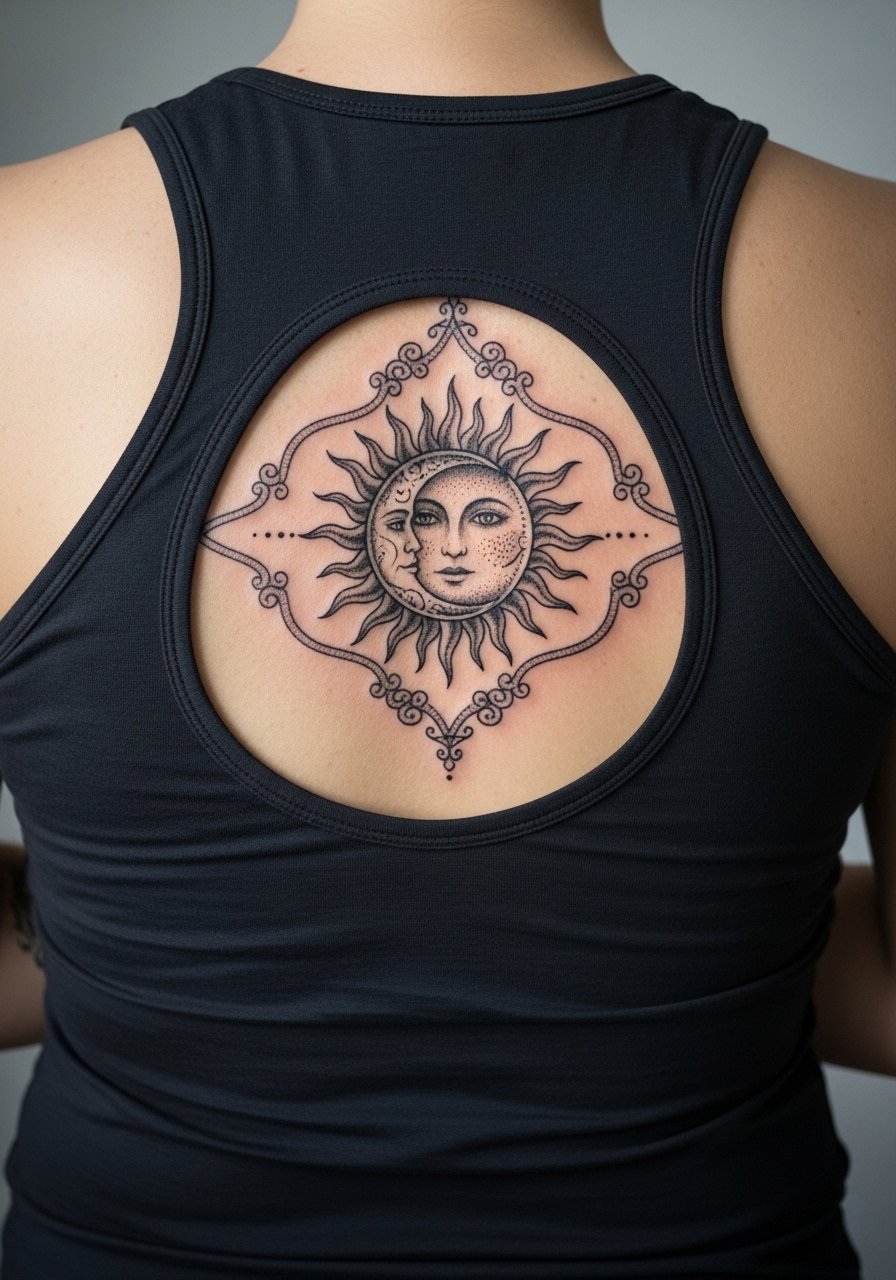
Upper back gives room for ornamental frames that elegantly border a small quote or coordinate. Most people prefer a three-inch layout so the frame breathes. The session is moderate in discomfort and often split into two visits for shading and linework. Common mistakes include starting with text too small inside the frame. For show-off outfits, choose a racerback tank or strappy camisoles to reveal the shape naturally. If you plan additions later, leave negative space for patchwork.
9. Blackwork Sun Eclipse with Moon on the Thigh
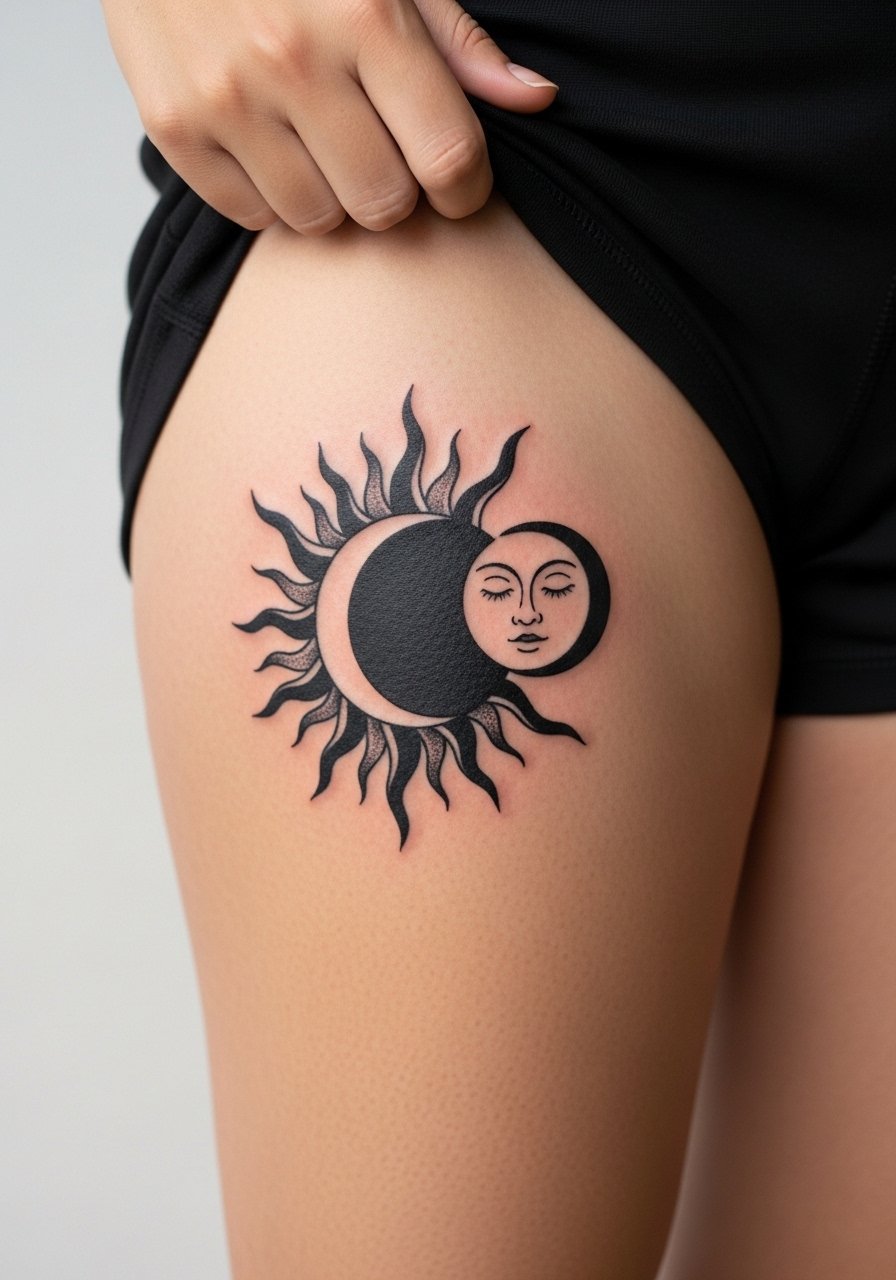
Thighs handle big blackwork well because the canvas is large and skin movement is less of an issue. Healing is often easier since pants can be adjusted to reduce friction. Expect two to three sessions for a four-inch blackwork eclipse. A common misstep is packing too much detail into a heavy black field which can look muddy as it settles. For summer reveal pair with high waist denim shorts or skirts with side slits. If you are considering a bold black field know that touch-ups may keep edges crisp for several years.
10. Line Art Sun Moon Yin-Style on the Ribcage

Fair warning, the ribcage rates high on the pain scale for most people. The aesthetic payoff is strong because it can be hidden or revealed. Artists disagree about fine line on ribs. One camp says thin work blurs quickly due to stretch and movement. The other camp says if the lines have the right depth and spacing they settle well. Ask to see healed photos of ribcage pieces in the artist's portfolio and consider a slightly larger scale if you want longevity. For the session wear a cropped top you can pull aside easily. Expect a single longer session and a likely touch-up at year two.
11. Ignorant Style Chunky Sun Moon on the Calf
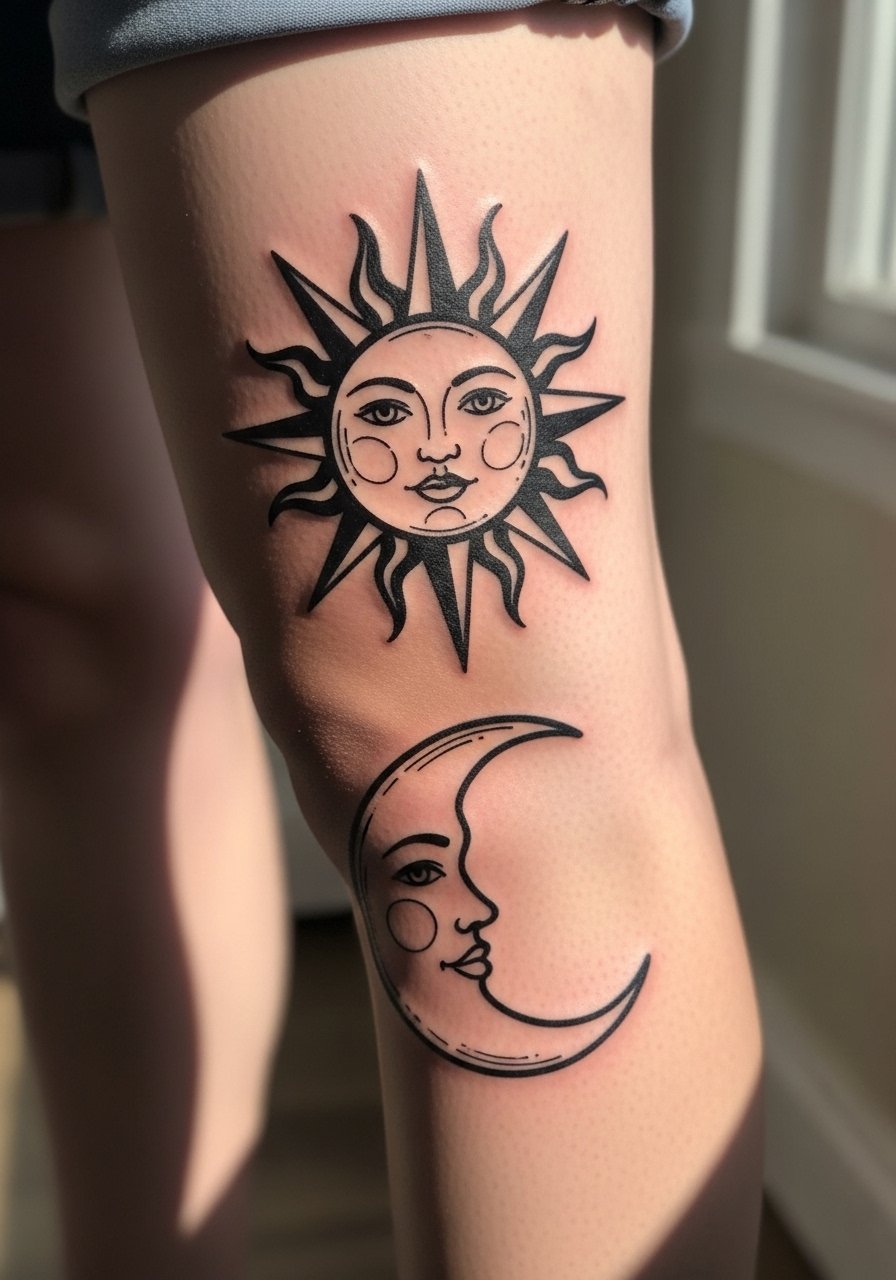
Ignorant style embraces bold, childlike lines and large negative space which makes the design readable from a distance. The calf is a forgiving spot for scale and texture. This piece heals well because the skin is thicker and abrasion is minimal. A mistake is making the piece too small, which loses the naive charm. Session time is moderate and often split into two if you want fill work. Pair with mid-length shorts to show it off and plan for seasonal reveals rather than constant display.
12. Patchwork Sun Moon with Stars Across the Upper Back
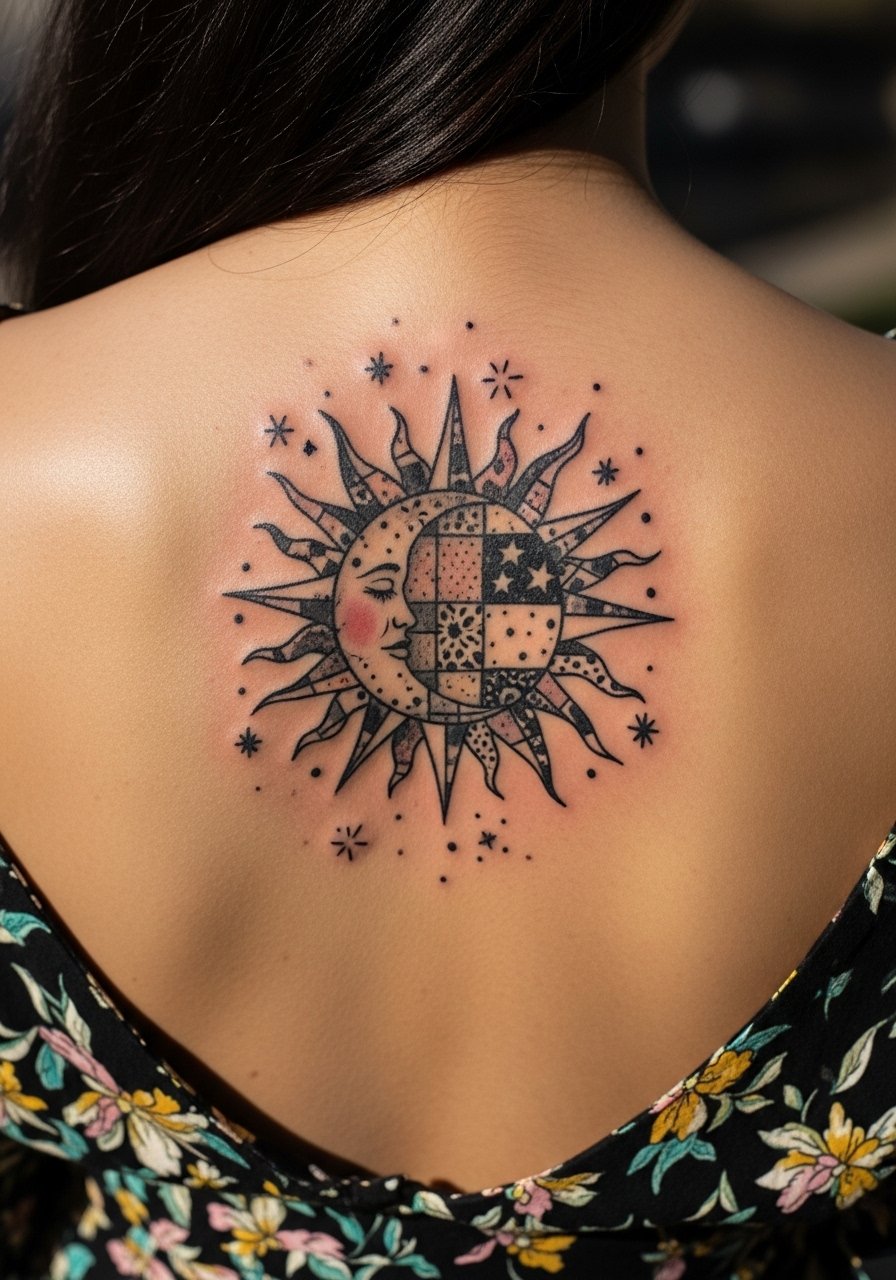
Patchwork works well if you plan to expand into a cosmic sleeve or back piece over time. The trick is to leave visual breathing room so future additions slot in cleanly. A common error is making the first motif too central and crowded. Sessions depend on scale, expect multiple visits for a five-inch composition. For show-off pairing choose an open-back top or strappy camisole so the pattern reads when worn. This approach solves the collector problem of adding elements later without reworking existing ink.
13. Micro-Realism Sun and Moon Silhouettes Behind the Ear

Behind-ear micro pieces are whisper-quiet statements you can hide with hair. The area is sensitive and needs precision. When you consult, ask for shallow passes and expect touch-ups if lines are hairline-thin. A common mistake is placing text or tiny rays that the small canvas cannot hold. Session time is short but the stencil needs to be spot-on. Because the area is delicate, check for healed photos from artists who specialize in micro realism. Keep in mind hair and glasses can rub during early healing.
14. Ornamental Line Sun and Moon on the Inner Bicep

Inner bicep placement is intimate and heals with less UV exposure. Pain varies because the skin is thinner and movement stretches the area. The ornamental line version benefits from spacing and lighter stipple shading to avoid blowout. Speak to your artist about spacing and needle depth. For the session wear a loose tank top that lets you raise your arm without tugging. Expect a medium-length session and a touch-up window at about a year if lines soften with friction.
15. Neo-Minimal Blackwork Eclipse on the Wrist

Wrist pieces are visible and prone to abrasion from bracelets and watches. For a blackwork eclipse use a bold negative space crescent to keep the moon readable across skin tones. Warn the artist if you wear jewelry daily so they can place the piece slightly off the area where a watch band sits. The session is short but healing needs attention to friction zones. For show-off styling choose a thin leather cuff bracelet on the opposite wrist to avoid rubbing freshly inked skin.
16. Stippled Sun and Moon Mandala on the Shoulder
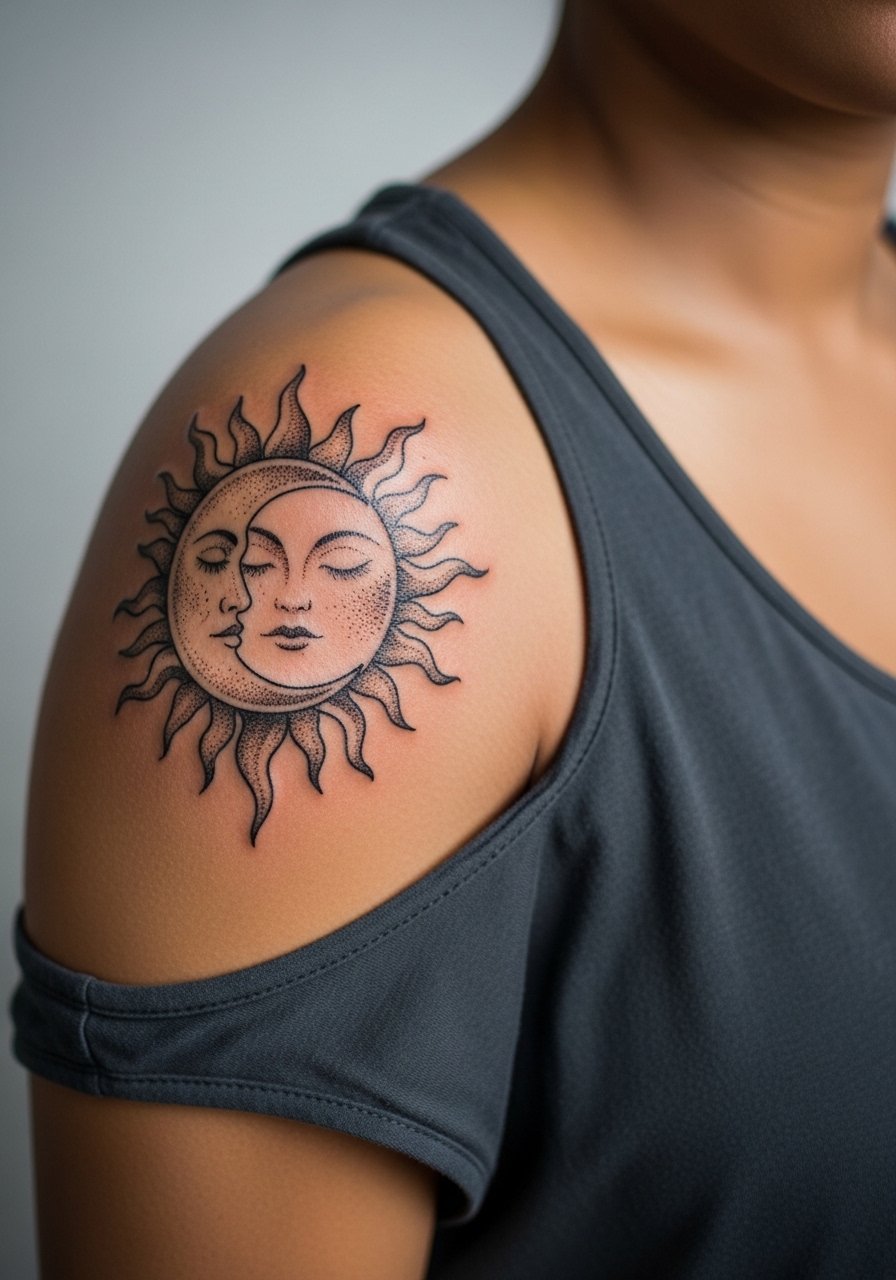
Shoulder work sits nicely under clothing and yields low friction while healing. Stipple techniques add texture that holds better than continuous fine shading in small pieces. A typical mistake is over-detailing tiny mandalas which lose crispness after a year. Ask for scaled stippling and leave space for future linking pieces on the upper arm or back. Wear a loose tank to the session so the artist can access the area easily. Expect one to two sessions depending on size.
17. Patch-Ready Sun Moon with Nature Elements on the Thigh
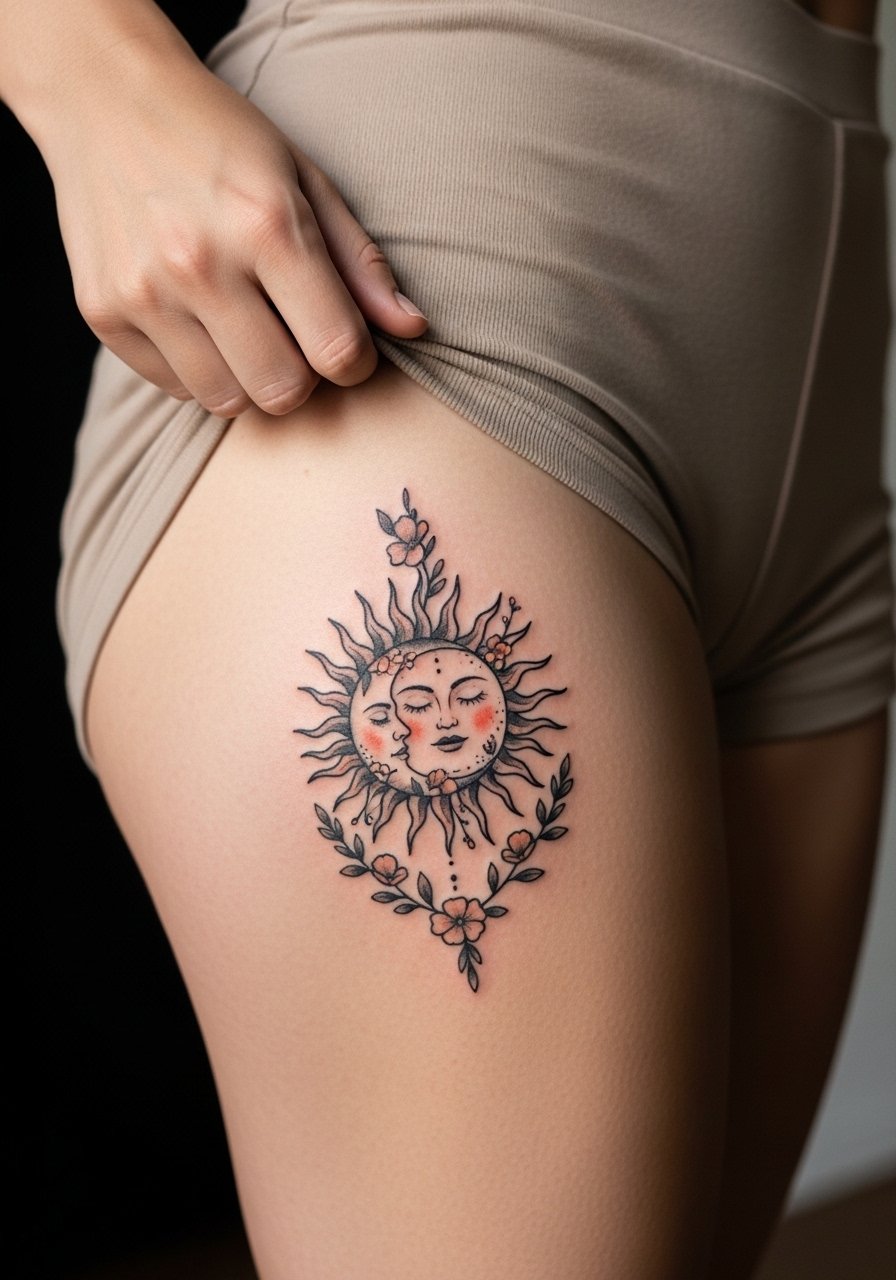
Thigh placements are forgiving for expansion and concealment during healing. This patch-ready layout leaves negative spaces for future stars, vines, or a sleeve extension. Common mistakes include locking the first patch in too small a zone which prevents a cohesive later build. During consultation specify how you might want it to connect with future work. For the session wear loose shorts that can be shifted without pressure on the area. Thigh healing is often comfortable and touch-ups are typically cosmetic rather than structural.
Frequently Asked Questions
Q: Will fine line sun moon tattoos blur faster on wrists and forearms?
A: From what I've seen fine line tends to soften sooner on high-friction areas like wrists. Forearms usually hold detail a bit longer if the line weight is slightly bolder. Ask for thicker single-pass lines and plan a touch-up at 12 to 18 months if you want crisp edges.
Q: How can I make a subtle sun moon read well on medium or dark skin tones?
A: Use high-contrast approaches such as blackwork fields, negative space, or stipple shading to keep motifs visible across tones. If you plan color, ask for muted, saturated accents rather than pale washes so the design keeps presence against skin.
Q: Should I use Saniderm or dry healing for a fine line collarbone piece?
A: Artists split into two camps. One favours Saniderm for less mess and faster seal. The other prefers dry healing to let the ink settle naturally. Both approaches work when applied correctly. Pick the method your artist recommends and follow their schedule for dressing changes.
Q: What should I wear to a collarbone or shoulder blade session so the artist has access?
A: Bring tops you can shift or remove easily. For collarbone choose a strapless bralette or an off-shoulder shirt. For shoulder blade pick a strappy camisole you can pull aside. Comfort makes the session shorter and cleaner.
Q: How do I avoid lost deposits if an artist cancels my forearm slot?
A: Use booking platforms with clear cancellation policies and ask for refund terms before you pay. If you book a guest spot get written confirmation of dates and deposit return windows so expectations are documented.
Q: When do I need to plan a touch-up for watercolor versus blackwork sun moon pieces?
A: Watercolor edges can fade into soft washes within two to three years, so expect earlier color refreshes. Blackwork and bold fields often need only occasional edge touch-ups and can look solid for longer when properly saturated.