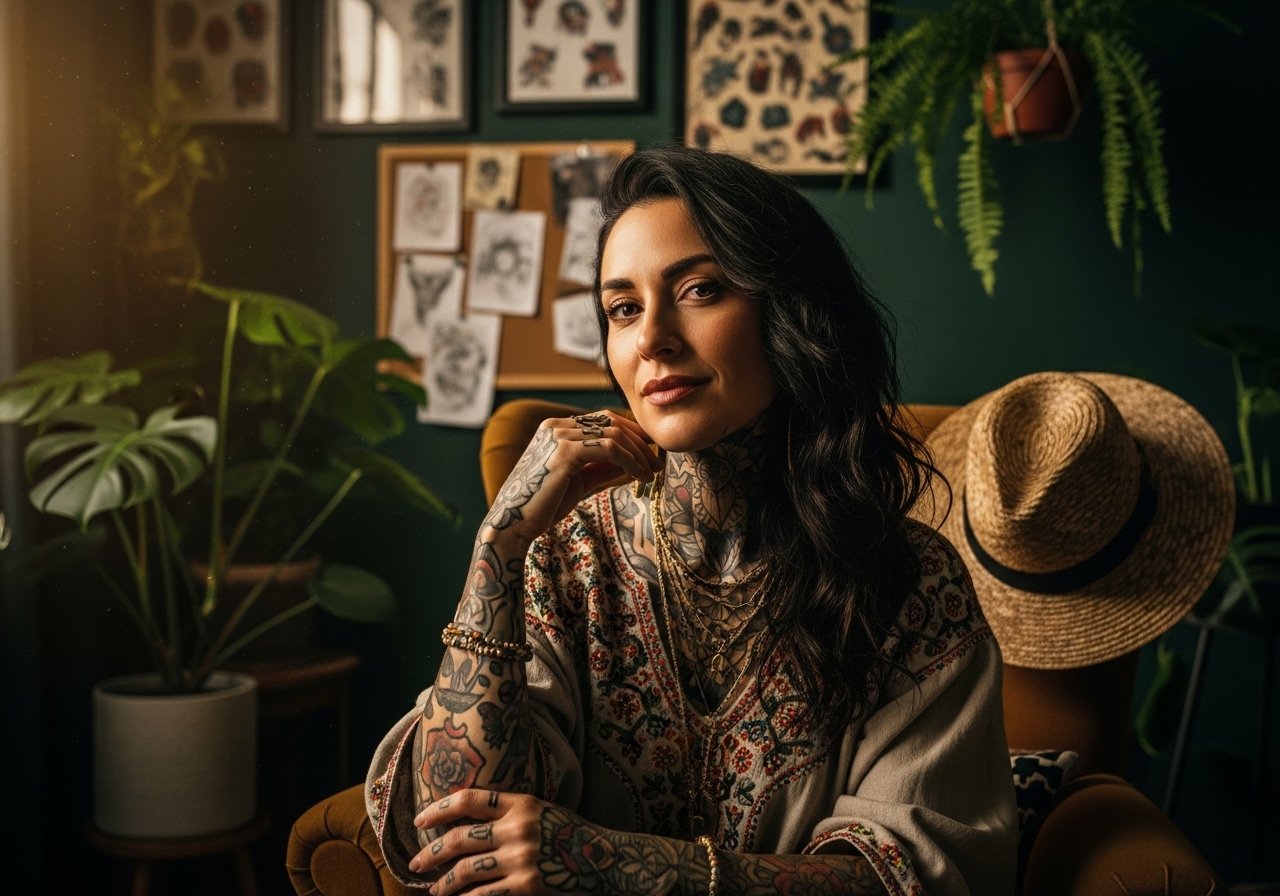
Fine line looks gorgeous on a mood board, but real skin has its own plans, and you should know the trade-offs before booking. I've seen tiny wrist and finger pokes fade fast, artists cancel guest spots at the last minute, and dark skin tones sometimes need bolder blackwork to read well in photos. Read on for 21 soft stick and poke tattoo ideas that balance trend and longevity, plus what to ask at the chair.
1. Dotwork Mandala on the Inner Wrist
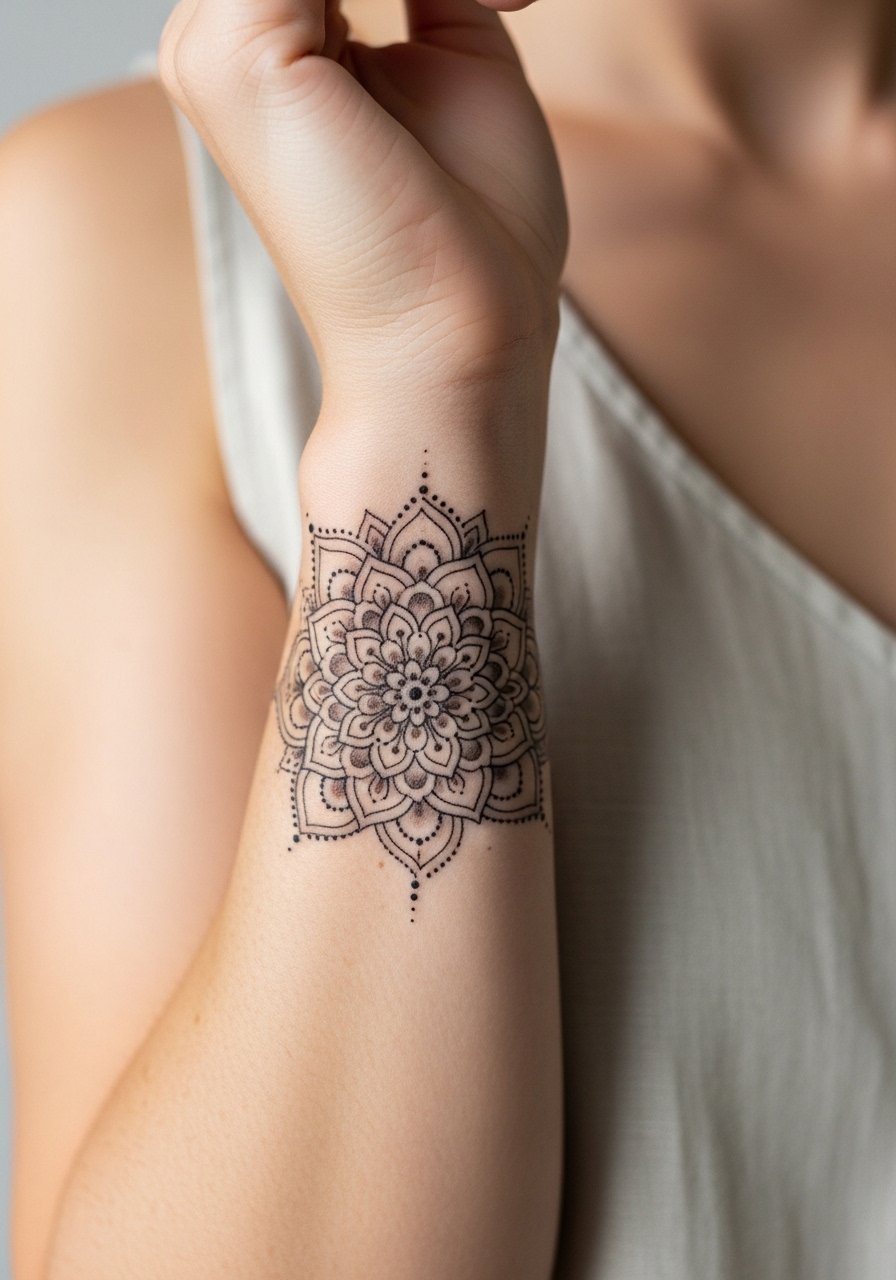
I recommend this for anyone who likes meditative geometry and wants something you can glance at daily. Tell your artist you want more spacing between concentric dot rings and slightly thicker outer linework so the dense centers do not merge after a few years. The biggest mistake is asking for a 1-inch micro mandala stacked with ultra-fine dots. That version looks amazing fresh and then softens into a gray blur on wrists. Expect a one-session poke of about 45 minutes and a touch-up window at 6 to 12 months on wrists with heavy friction. For showing it off, roll the cuff of a rolled cuff chambray shirt and layer a thin silver chain bracelet on the opposite wrist.
2. Fine Line Celestial Cluster on Outer Forearm
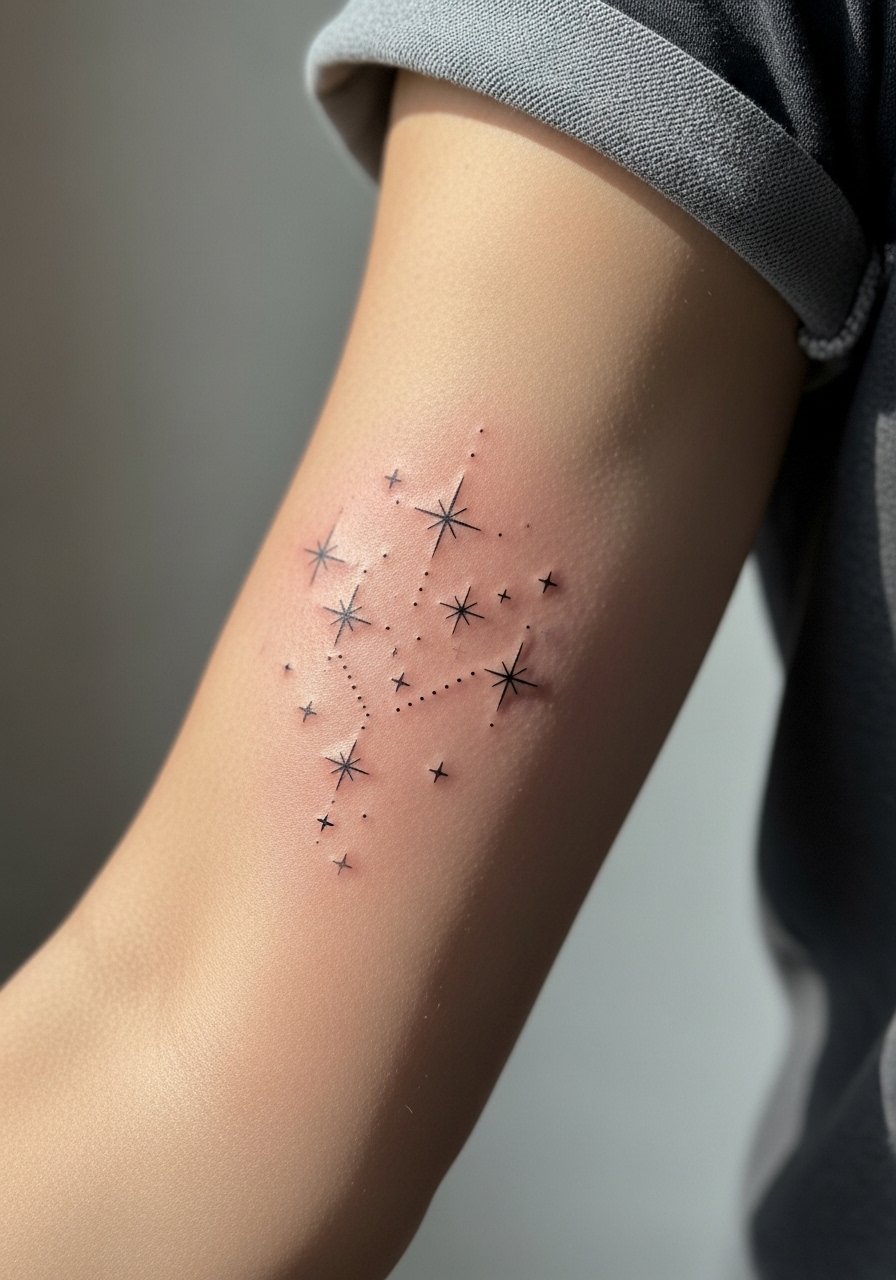
This one reads like an understated tattoo that still looks good in photos when placed on the outer forearm. When you consult, ask for slightly bolder star points and more negative space between elements so each star keeps its identity as it heals. Some artists say fine line here holds up, while others prefer a dot work approach for longevity. Name both camps aloud during consultation and ask which approach they recommend for your skin. Session time is usually under an hour and pain is mild. Pair it with a fitted olive henley shirt rolled to show the forearm.
3. Geometric Pointillism Triangle on the Ankle
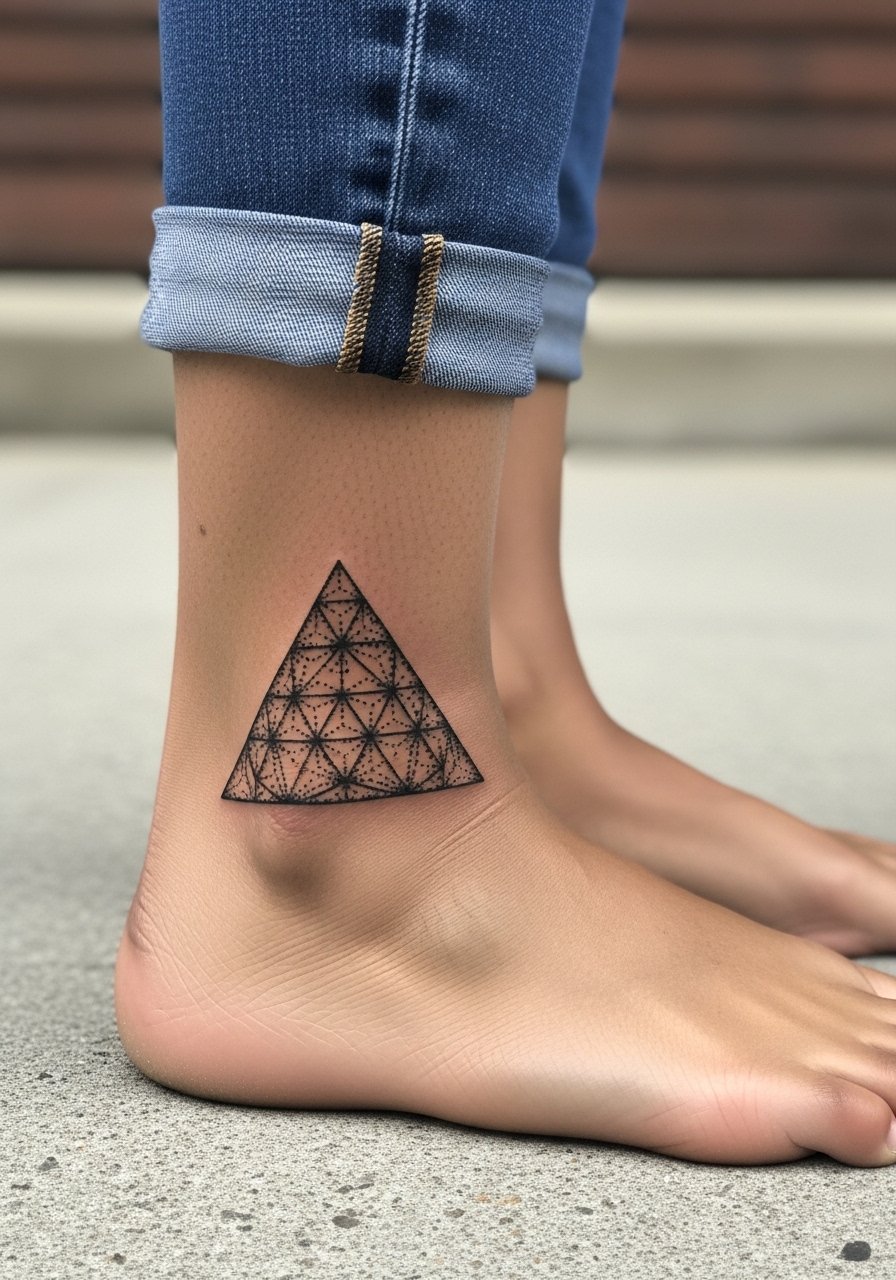
Ankle placements are low on the pain chart for many people, and a 2-inch pointillist triangle ages well if you avoid ultra-dense packing near the edges. Tell your artist to keep the outer triangle lines slightly separated from inner dot fields. A common mistake is compressing too many dots into a tiny area, which pulls together after six months. Session time is short, often under 30 minutes. Because sandals and cropped jeans show this area, complement the design with a cuffed ankle jeans look and a delicate gold ankle chain for summer.
4. Ornamental Floral Vine Along the Collarbone
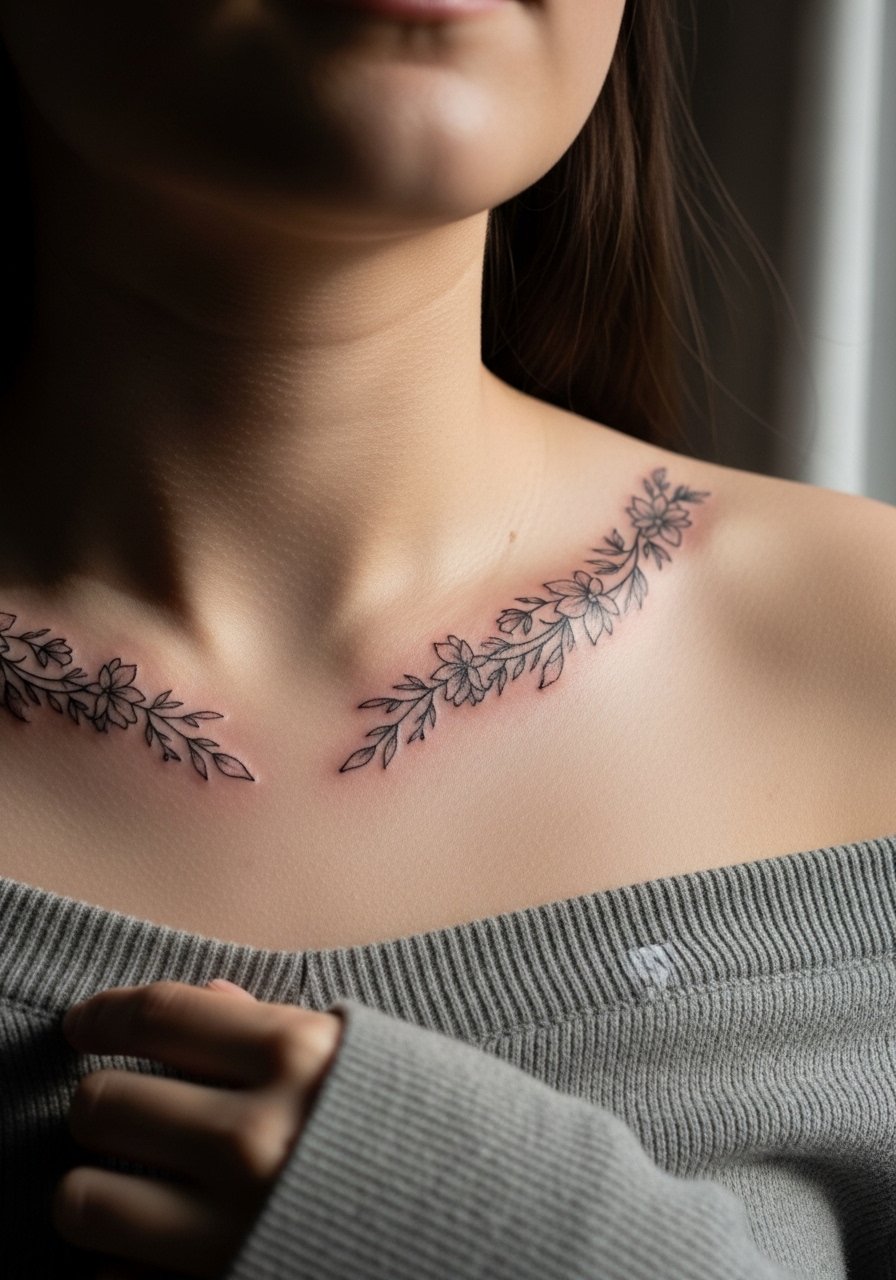
Collarbones are beautiful for flowy vines because the bones give the design a natural arc. Ask for directional stems that follow the clavicle instead of forcing symmetric mirroring. The usual aging issue is spacing that hugs the bone too tightly and then distorts with posture changes. If you plan strapless dresses, request a composition that balances left and right so necklaces sit without overlapping the work. Sessions can run 1 to 1.5 hours. For after the session and for show-off days, layer a layered delicate necklace and wear an off shoulder sweater for evening looks.
5. Micro-Realism Portrait Eye on the Shoulder Blade
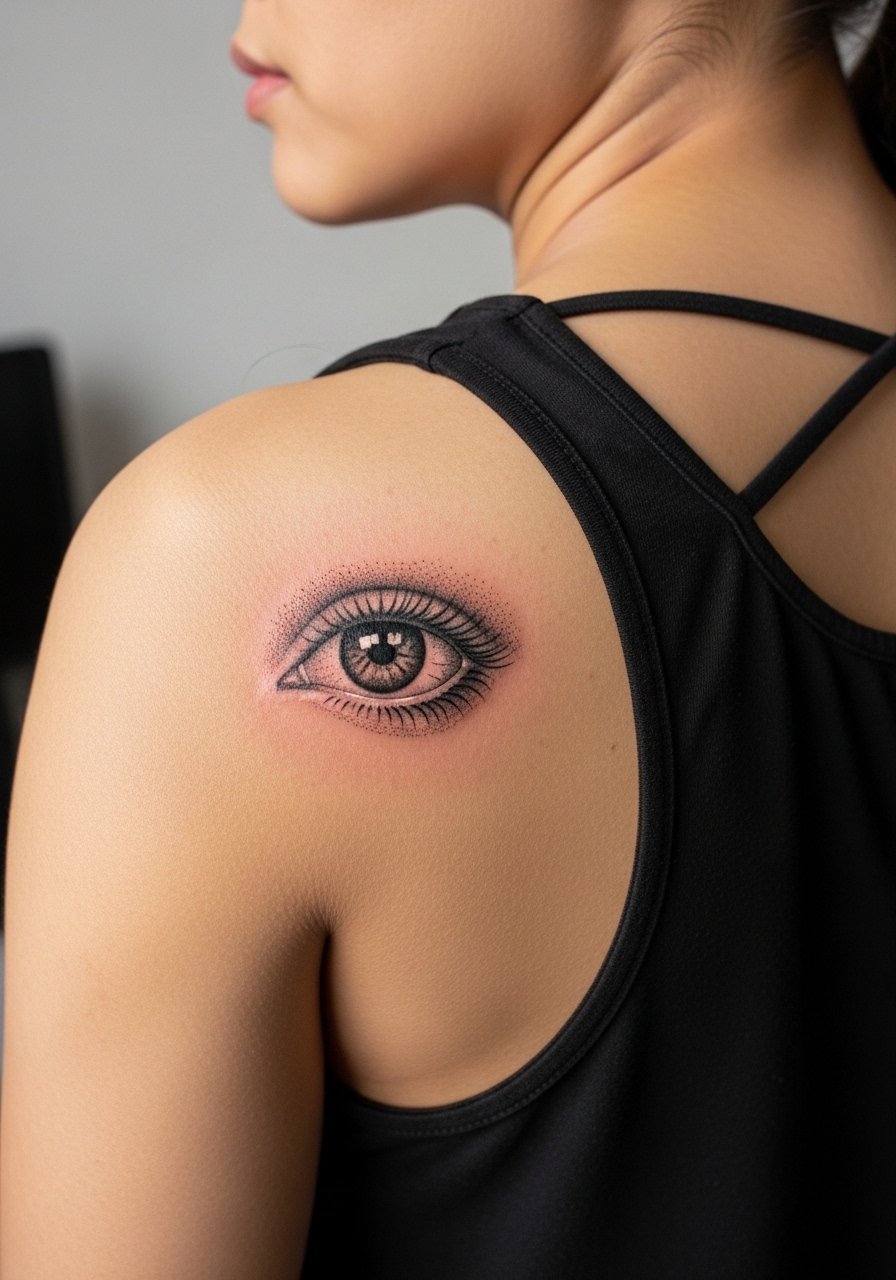
Micro-realism via poke is a niche that surprises people with how intimate the detail can be at small scale. This placement helps the artist work with broader stretches of skin and steady posture, which benefits detail. Ask for stipple shading rather than continuous gray packing to keep each dot visible over time. The session may take two shorter sittings depending on the detail, and the pain level is moderate. If you want to show it off in summer, pair it with a backless strappy tank so the design sits solo.
6. Ignorant-Style Cartoon Heart on the Ribcage
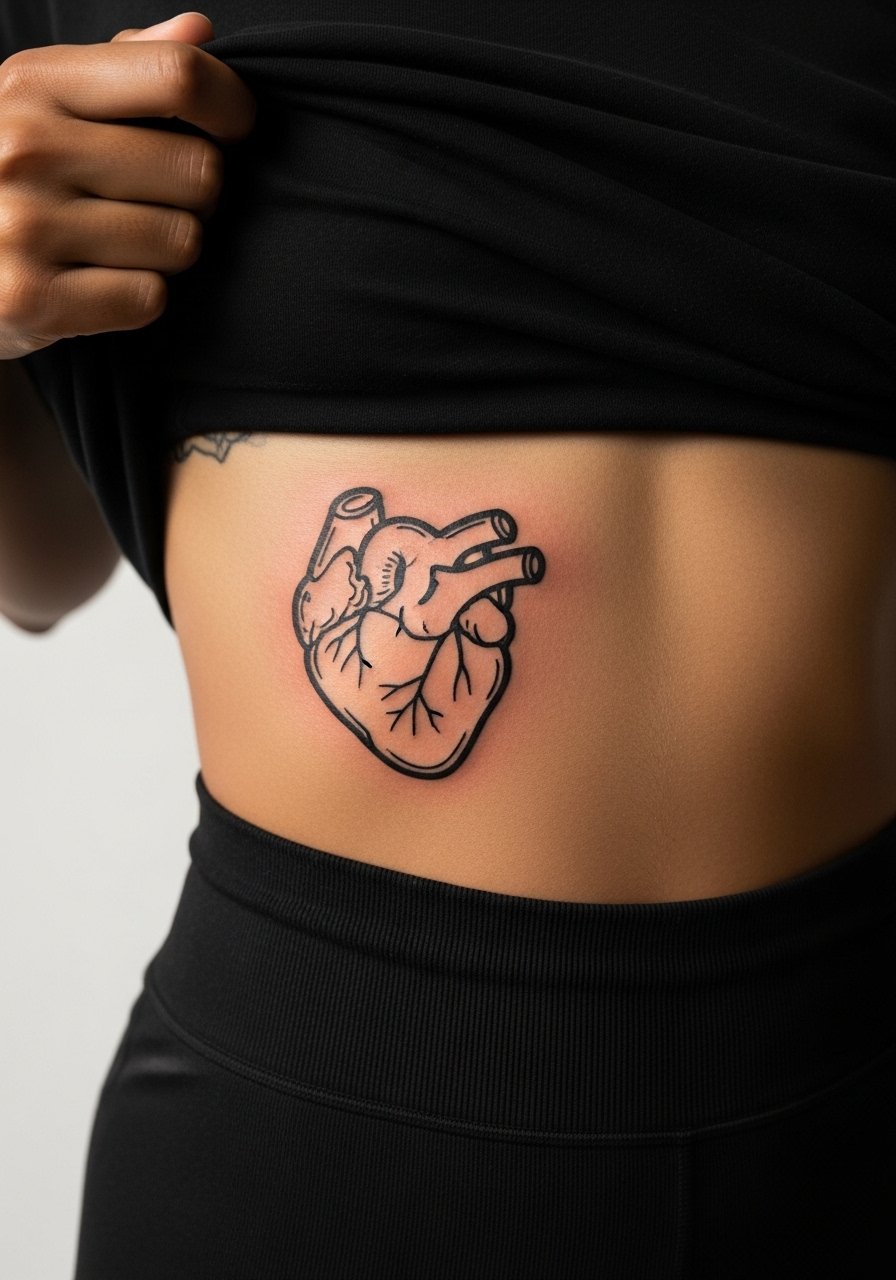
Fair warning, the ribcage is high on the pain chart for most people. That raw, imperfect ignorant heart thrives on imperfect lines, so ask for confident single-stroke outlines rather than micro-precision. The controversy here is fine line versus packed black. One camp says ribs stretch and fine lines blur fast. The other camp argues that bold outline work and deeper dot packing settle better. Ask how the artist adapts their depth for rib skin before committing. Expect a single session of around an hour to an hour and a half, and plan for slow but even healing.
Pre-Session Essentials
The pieces above include wrists, ribs, and lower limbs, and those placements ask for slightly different prep and first-week supplies.
-
Friction-free poke balm. Thinner than standard ointments and favored for dotwork because it helps prevent ink from spreading under the skin when applied lightly after scabbing starts.
-
Indie black ink pots. Small artist-style pots let your artist test tone and saturation for blackwork that needs higher contrast on medium to dark skin tones.
-
Bamboo charcoal salve. Absorbs faster than heavy greases in humid climates, which helps thigh and calf pieces where sweat can be an issue.
-
Needle grip tape. Keeps a hand-poke tool steady during longer sessions, which helps micro-realism and dense dotwork sessions on thigh or back.
-
Aquaphor healing ointment. A thin initial layer in the first 48 hours can protect fine line work on wrists while you follow your studio's recommended aftercare routine.
7. Blackwork Mandala on the Outer Thigh
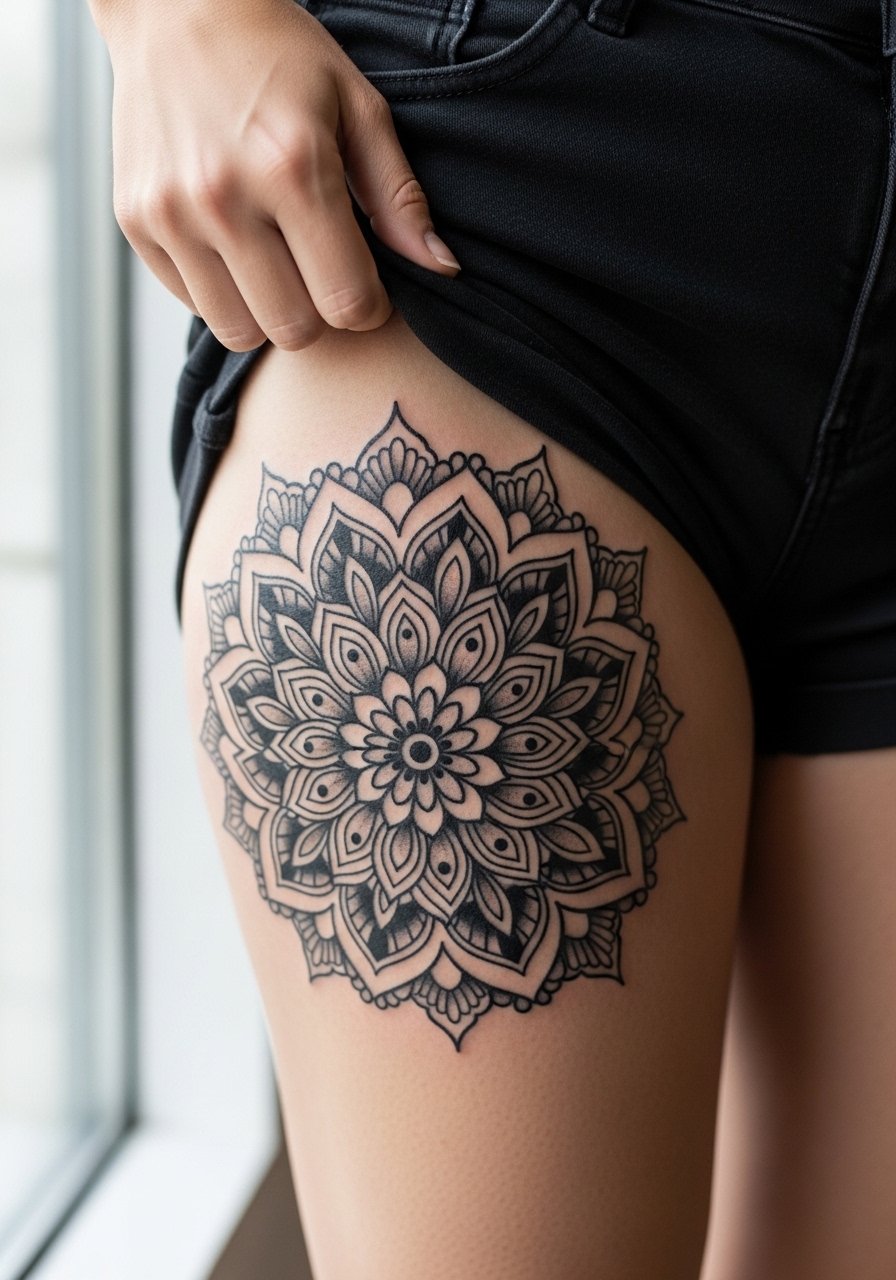
Outer thigh is generous real estate, and a 4-inch blackwork mandala feels bold without being jarring. Ask your artist to build optical gaps so petals do not visually merge with heat and movement. People often request too many tiny petal loops that end up muddy when packed. Sessions can take multiple sittings for dense blackwork, and healing in summer is manageable if you avoid tight shorts for a week. Show it off with high waist shorts that sit above the piece, which draws attention to the mandala without putting pressure on fresh skin.
8. Minimalist Wave Line on the Side Neck
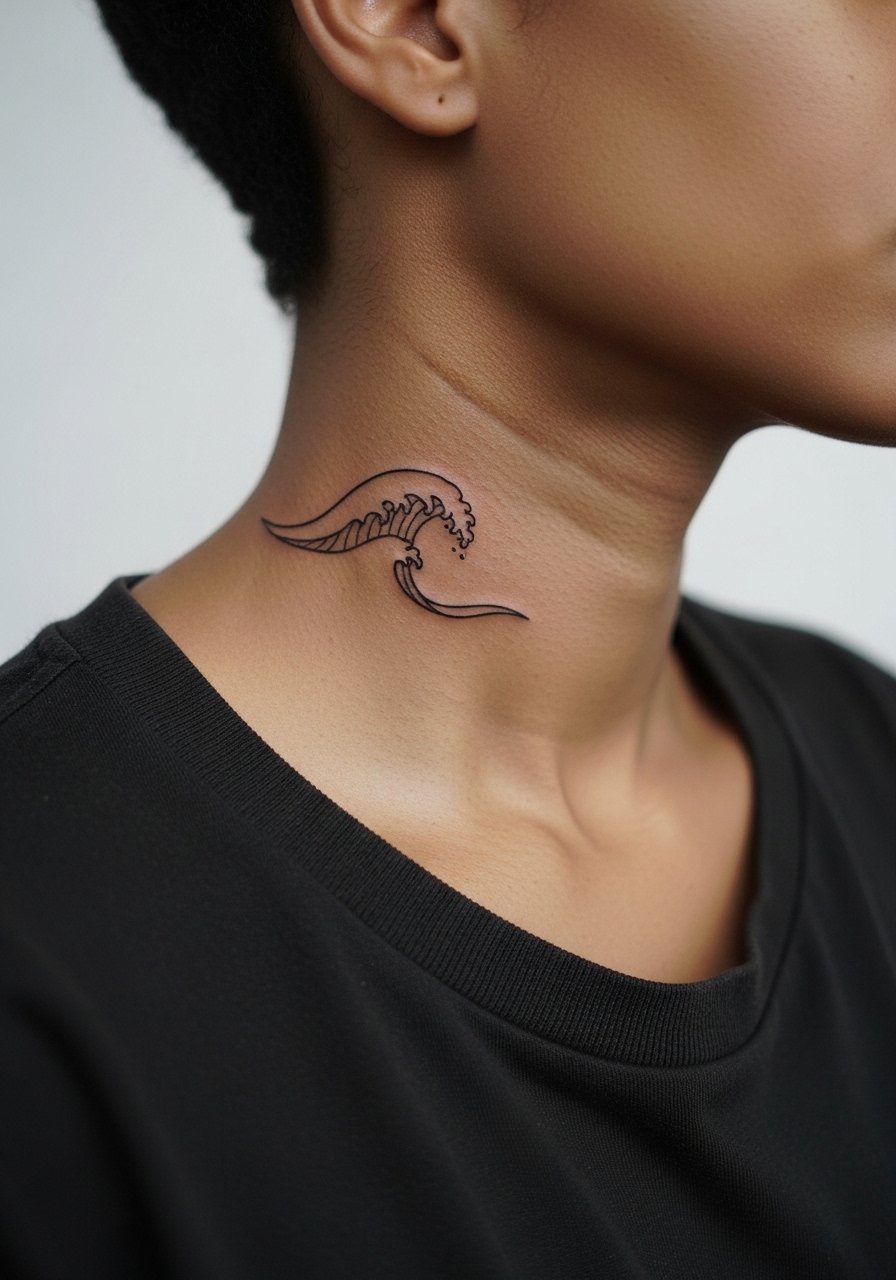
Side neck work is exposed and visible, and a tiny 2-inch wave reads like a design choice rather than a statement. Tell your artist you want the line depth slightly stronger than a micro-dot so the wave keeps contrast in photos. This placement involves more aftercare considerations and possible workplace visibility concerns. Session time is short but the pain can be sharper than on flat areas. For show-off outfits, try a high neck crop top or a wide-neck shirt for subtle framing.
9. Pointillist Botanical Leaf on the Calf
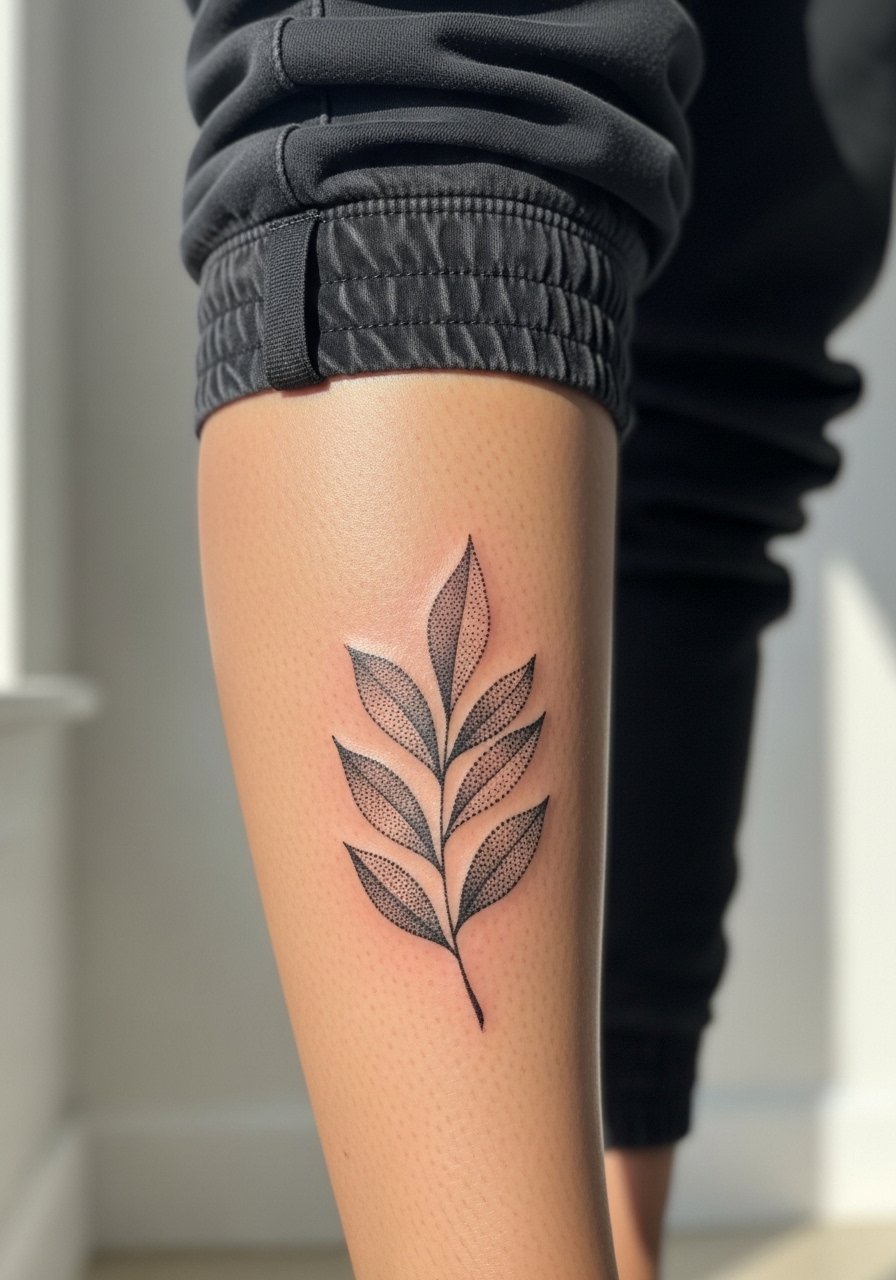
Calf pieces age predictably well because movement is less constant than on wrists. Request stipple shading that follows muscle contours so the leaf reads dimensional rather than flat. A common misstep is loading too many dark dots into shadow zones, which becomes a dark patch after healing. Sessions are usually a single sitting under an hour. For activewear and summer, a pair of calf strap sandals or rolled jogger pants keeps the tattoo visible without irritation.
10. Calligraphy Quote on the Inner Bicep
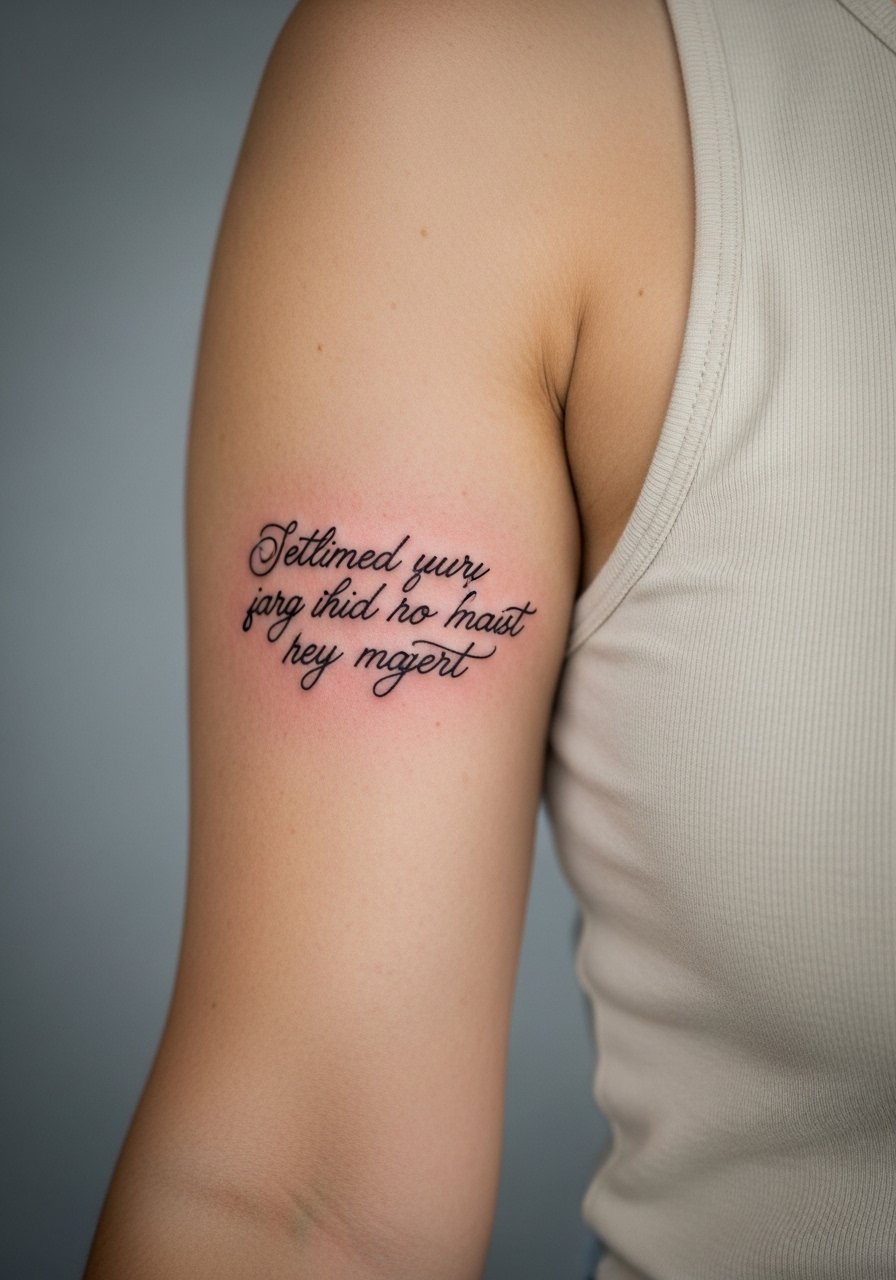
Inner biceps are intimate and move with the arm, so script needs slightly more letter spacing than you expect. Tell your artist the exact phrase and show examples of the letter spacing you prefer. Mistakes include choosing ultra-fine stroke widths for long quotes which can turn into blurred ribbons after a few years. Expect moderate pain when the chair reaches the armpit edge. Session time depends on length, often 30 to 60 minutes. This placement is best for phrases you want mostly private.
11. Vertical Dotwork Moon Phases Along the Spine
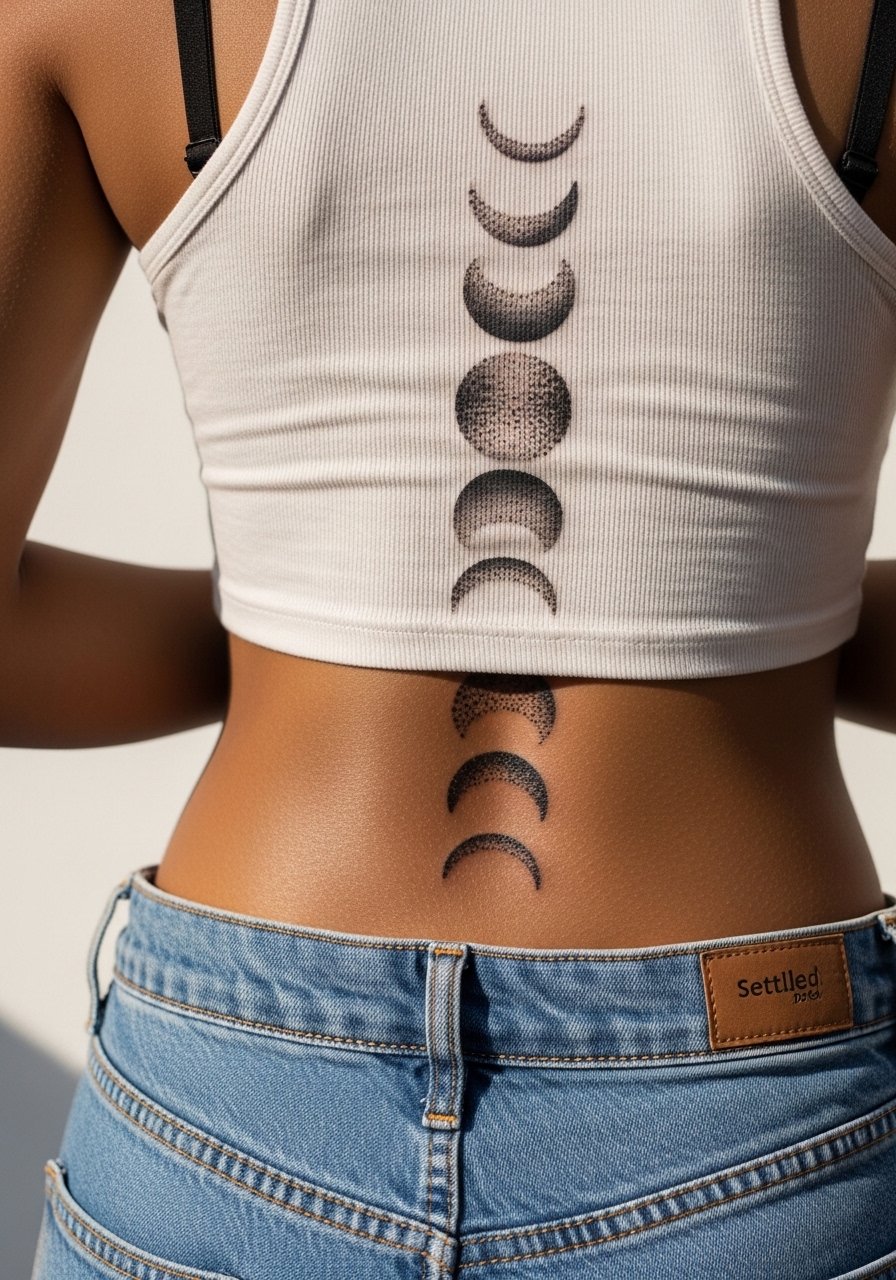
A spine stack reads like a personal progression and looks great with pointillist shading between phases. Ask for slightly larger crescents than you might request on the forearm so the edges stay crisp as the skin stretches. People sometimes go too small in hopes of subtlety and then regret the legibility loss. Pain is variable along the spine but moderate for most. For show-off summer looks, tank tops and low-rise bottoms that reveal the lower back frame this design nicely.
12. Neo-Traditional Anchor with Dots on the Back of Hand
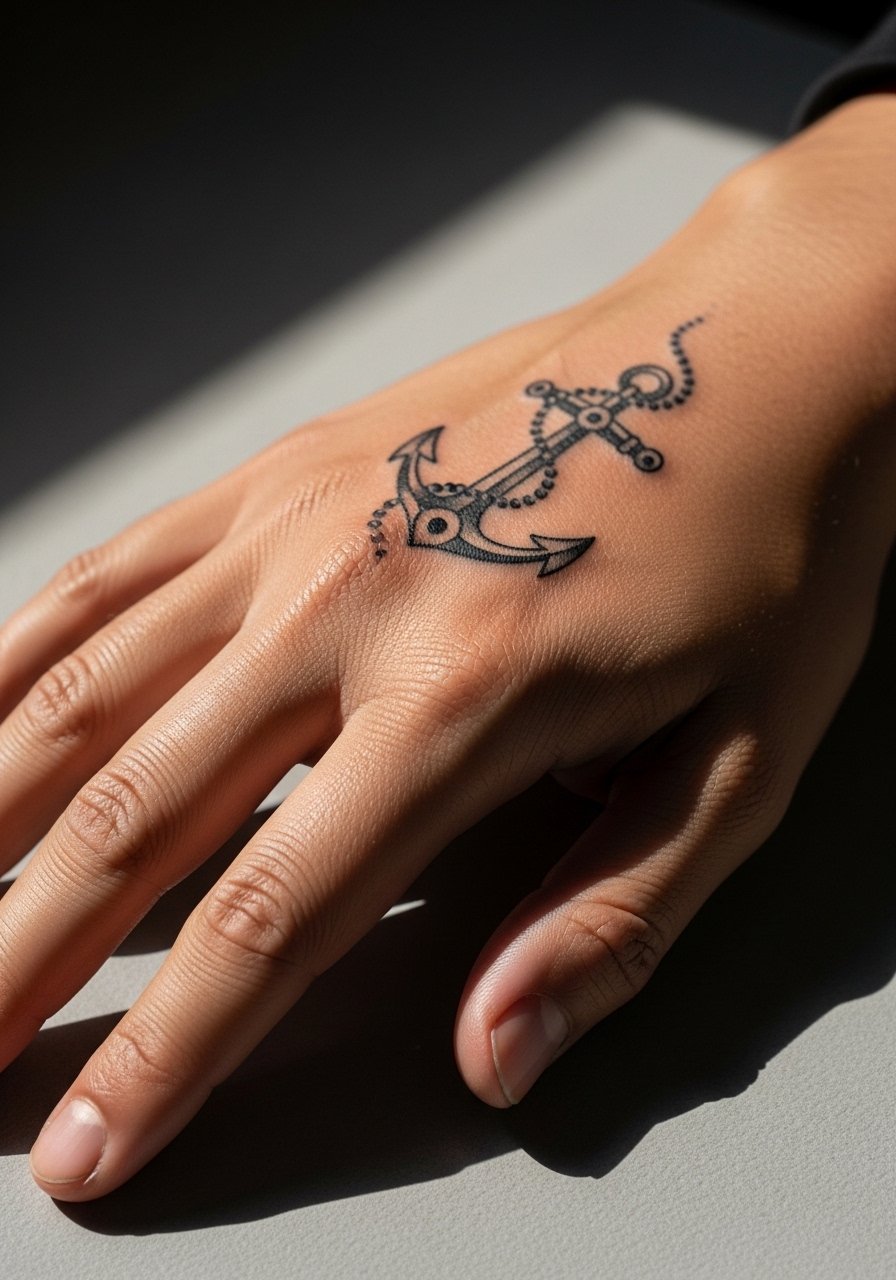
Hand tattoos read loud and require honest planning. If you want visibility, go for bold black packing and dot shading rather than ultra-fine script or micro details that melt under constant use. Tell your artist you want confident linework and expect touch-ups at 6 to 12 months for constant-exposure spots. Hands heal with scabs that can flake unevenly, so follow studio aftercare closely. Be aware that some workplaces still react to visible hand tattoos, so consider the social cost before committing.
13. Tiny Ear Lobe Dots Like Jewelry
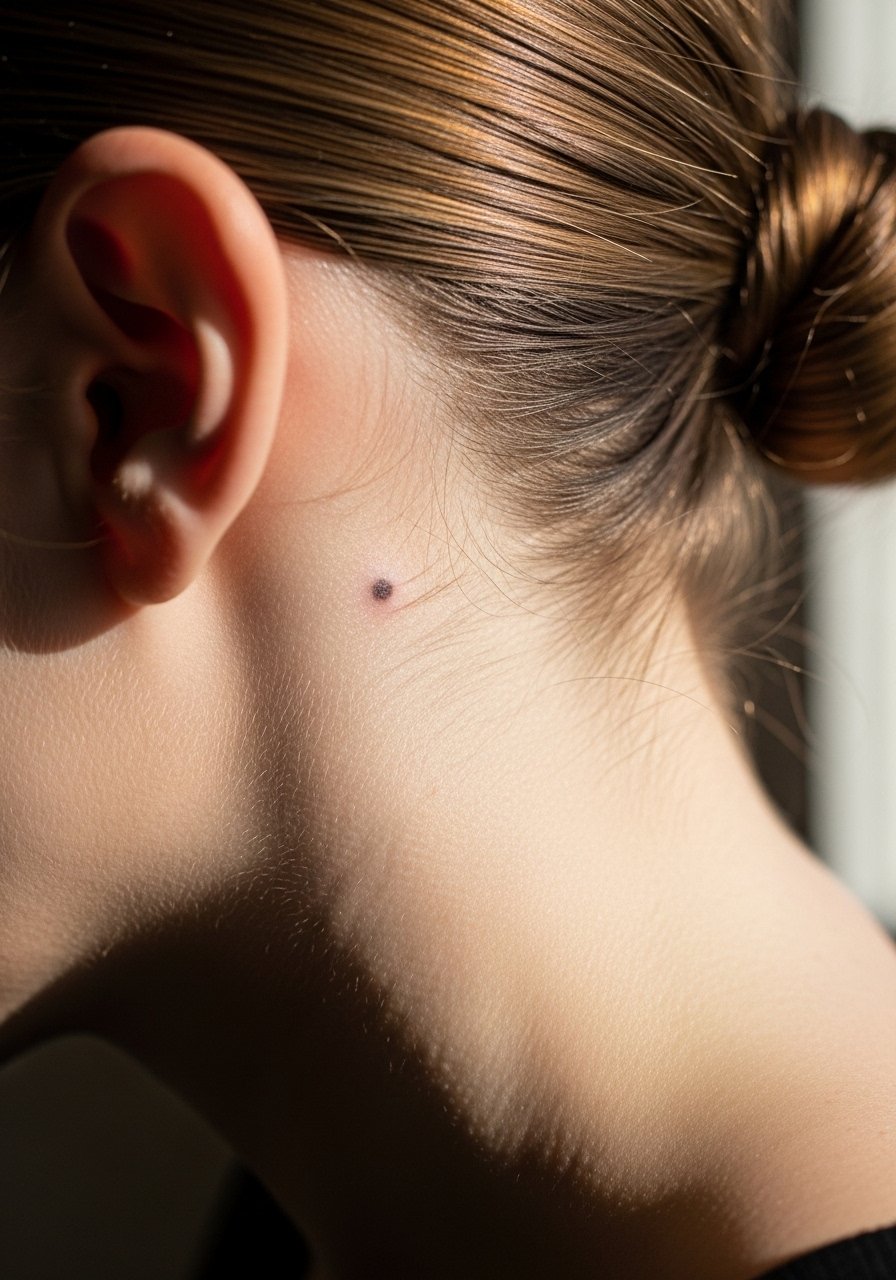
Ear lobe or behind-ear micro dots feel like jewelry and often heal quickly because movement and friction are minimal. Request a single dot that uses slightly heavier depth for pigment retention. A common error is placing too many small adjacent dots that blur into a smudge after sleeping on the area. Sessions are minutes long and aftercare is usually straightforward. This is a subtle personalization that reads like a permanent earring.
14. Asymmetric Mandala That Follows Hip Curve
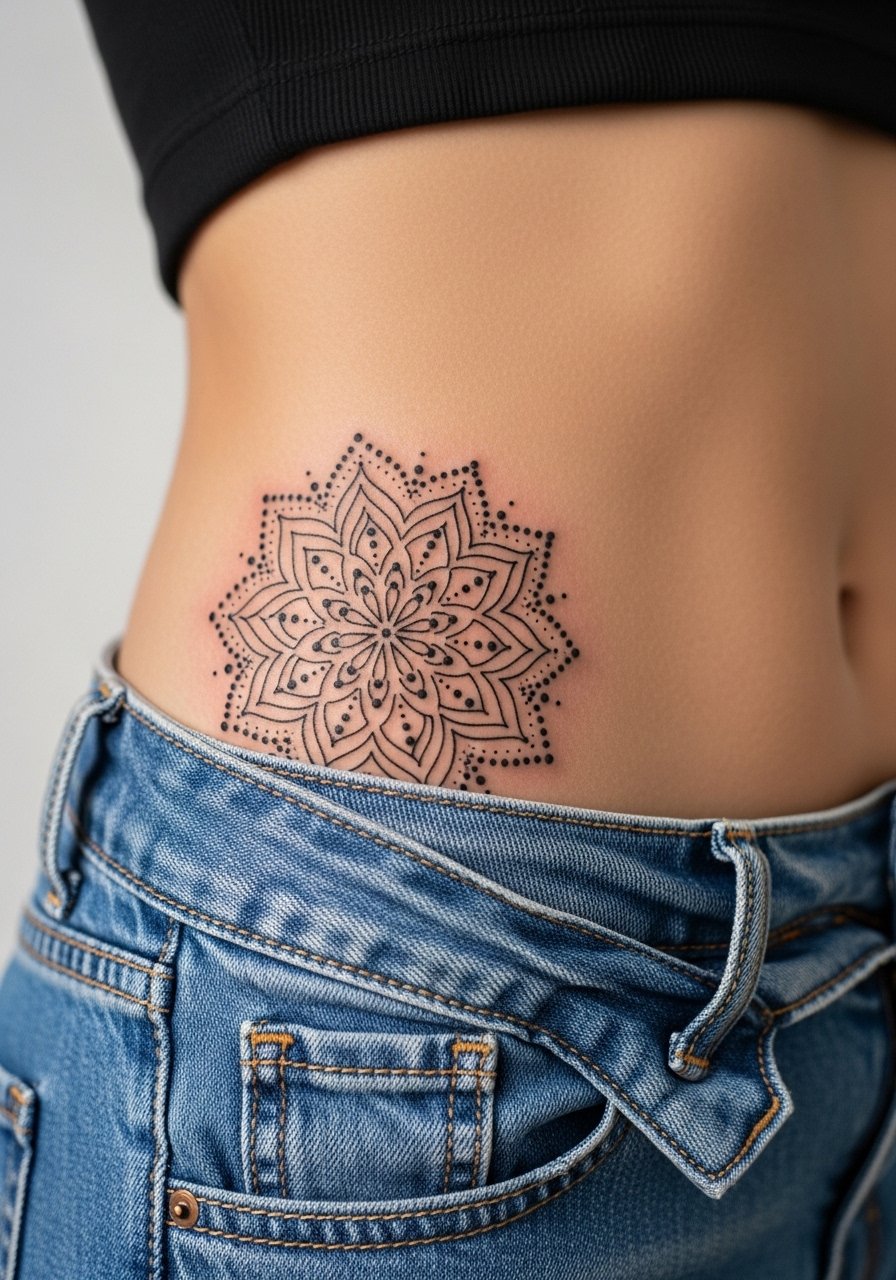
Asymmetric mandalas that trace the hip curve accommodate natural body shifts and weight changes. Ask your artist to map the design while you stand so contours line up with your natural sway. Many people ask for perfectly symmetrical mandalas that then distort as the body moves. This version embraces asymmetry to avoid that problem. Sessions can be single or split depending on size. For wardrobe, high-waisted denim and a side chain accentuate the curve.
15. Pointillism Around Scars for Seamless Blending
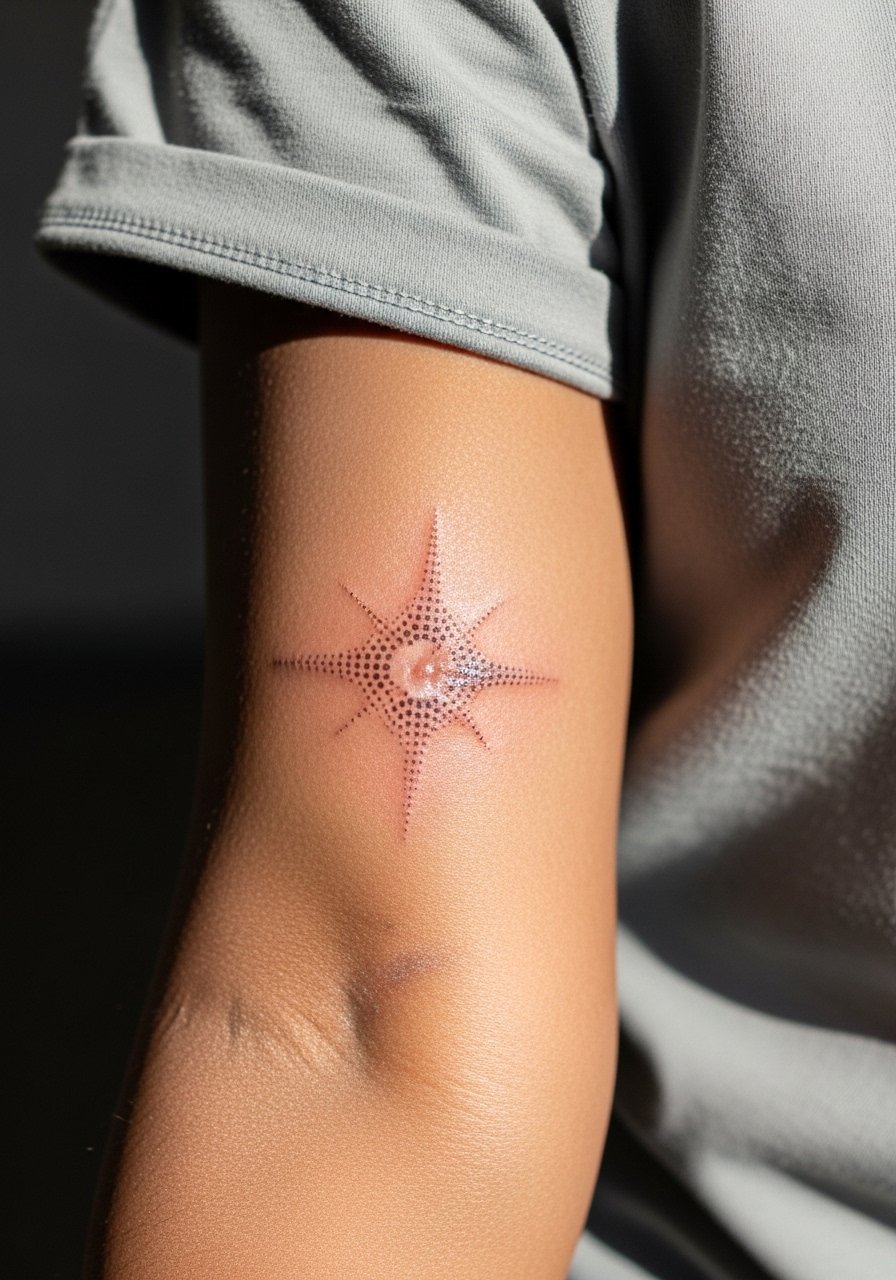
Using pointillism to work around scars avoids machine vibration and can create a seamless look by echoing texture rather than covering it with solid color. Tell your artist exactly where the scar tissue sits and ask them to test a small patch first if the scar is recent. The common mistake is ignoring scar orientation and then forcing a symmetrical motif over asymmetrical tissue. Sessions are often longer because the artist works carefully around different skin densities. Expect slightly different healing on scarred skin, and plan touch-ups once the area settles.
16. Micro-Realism Mini Portrait on the Upper Back
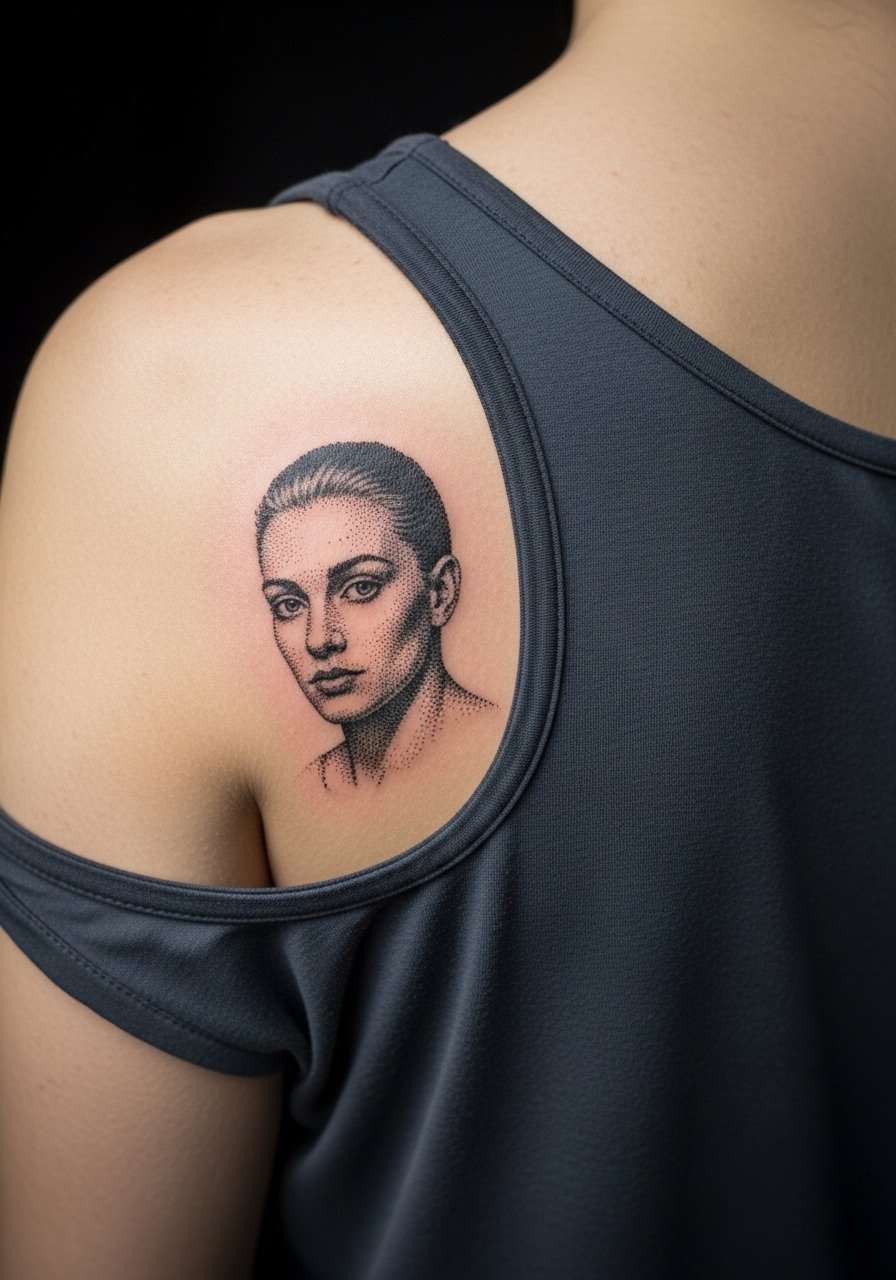
Mini portraits are surprisingly achievable with hand-poke stippling if the reference is cropped tight and the contrast is high. Ask for a single facial feature focus rather than a full small head, which keeps the piece readable at 1.5 inches. The mistake is insisting on extreme detail at tiny sizes. Sessions may take two sittings and the artist will likely test tones on a scrap patch first. For summer framing and to avoid rubbing, wear a loose muscle tank the day of your appointment.
17. Minimal Finger Symbols That Play Nice with Rings
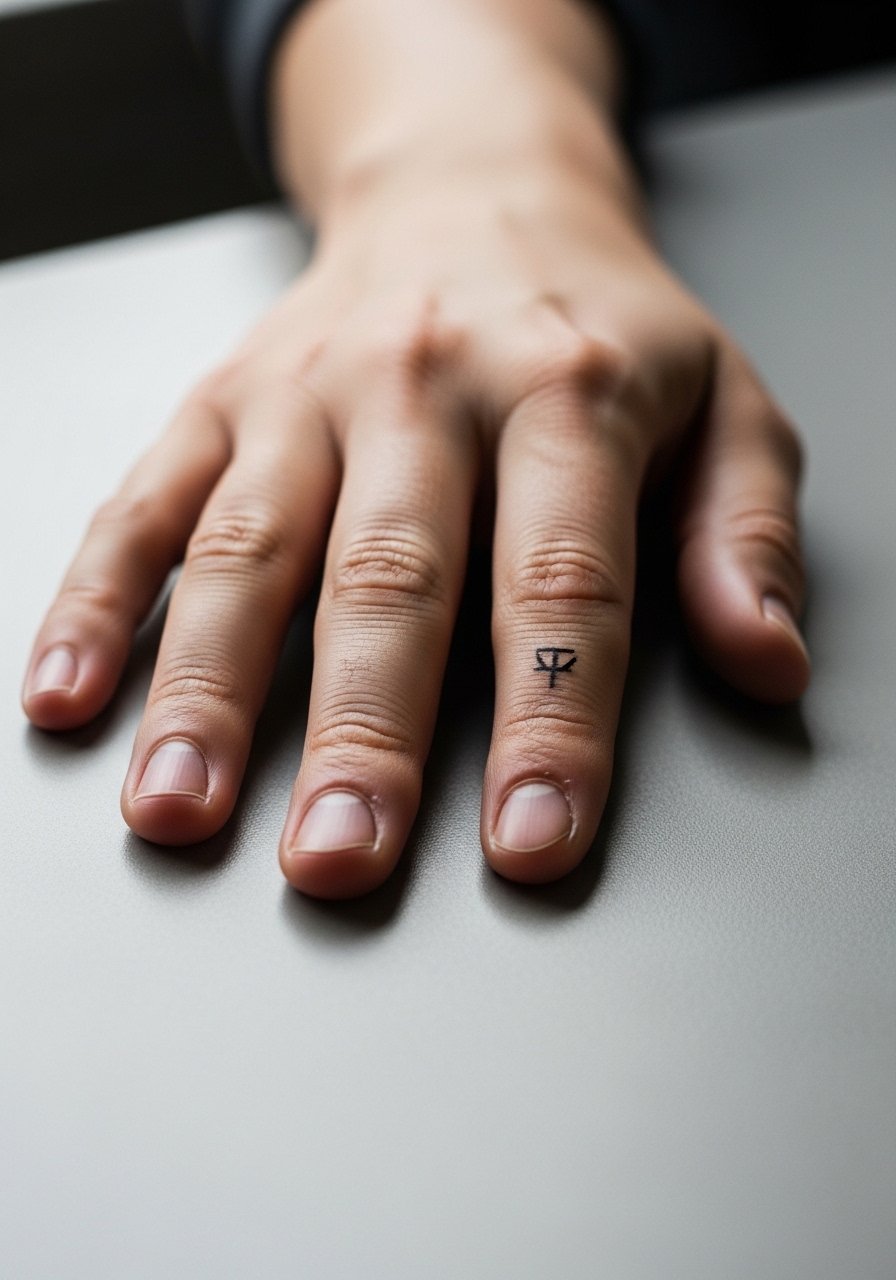
Finger tattoos are intimate but notorious for fast fading because of constant washing and skin turnover. If you want longevity, ask for bold, slightly thicker marks rather than whisper-thin lines. A common regret is combining multiple tiny symbols across adjacent fingers that blur together after frequent motion. Expect touch-ups at 6 to 12 months. If you wear rings, plan the symbol placement so a band does not sit directly over fresh ink.
18. Tiny Botanical on the Ear Helix
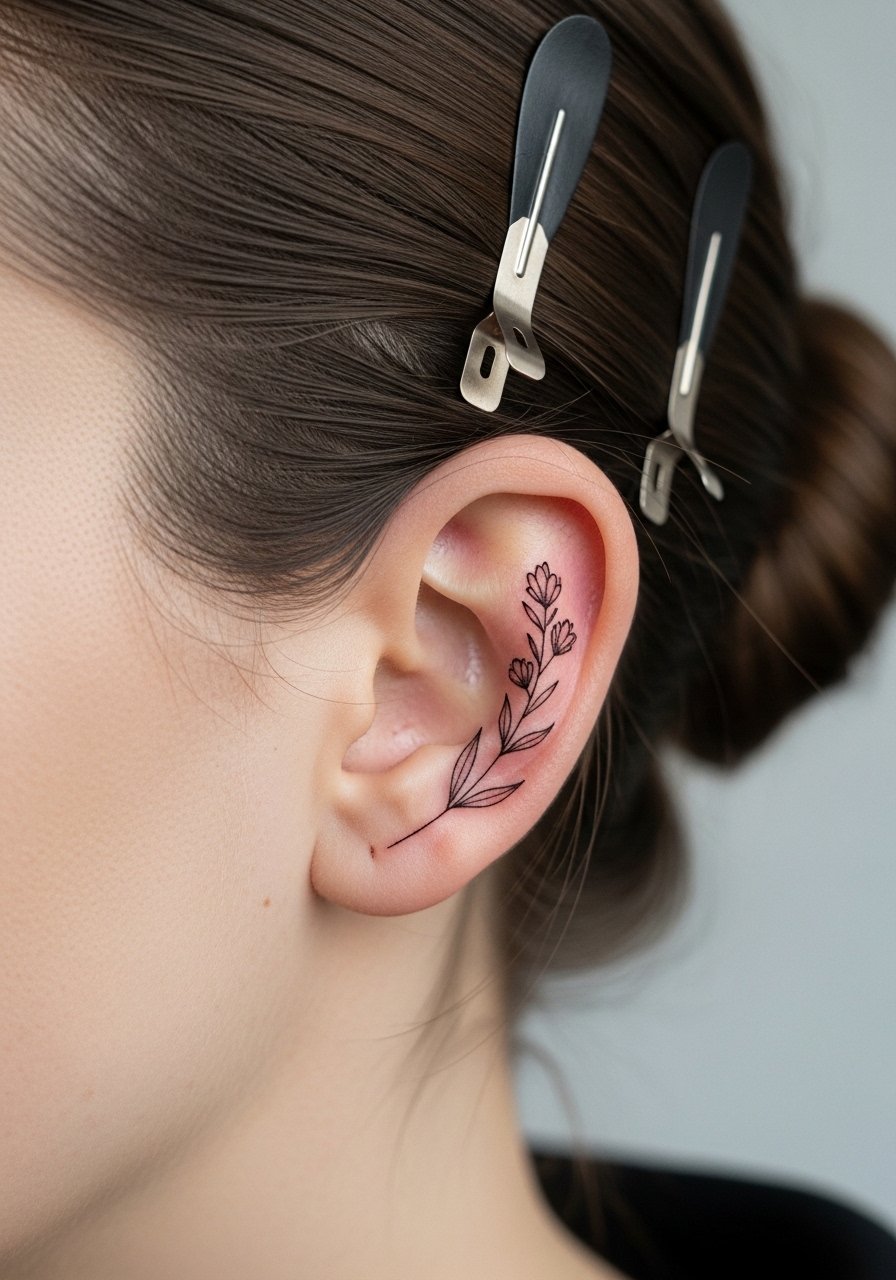
Helix tattoos are petite and can mimic jewelry when small sprigs or leaves are used. Request simplified line shapes and slightly heavier contrast in stems so the design reads against cartilage texture. The error people make is asking for intricate shading that machine-free techniques cannot hold in such small, curved space. Sessions are brief and painful near cartilage, but healing is usually quick if you avoid sleeping on the ear.
19. Minimalist Ankle Constellation That Moves with Shoes
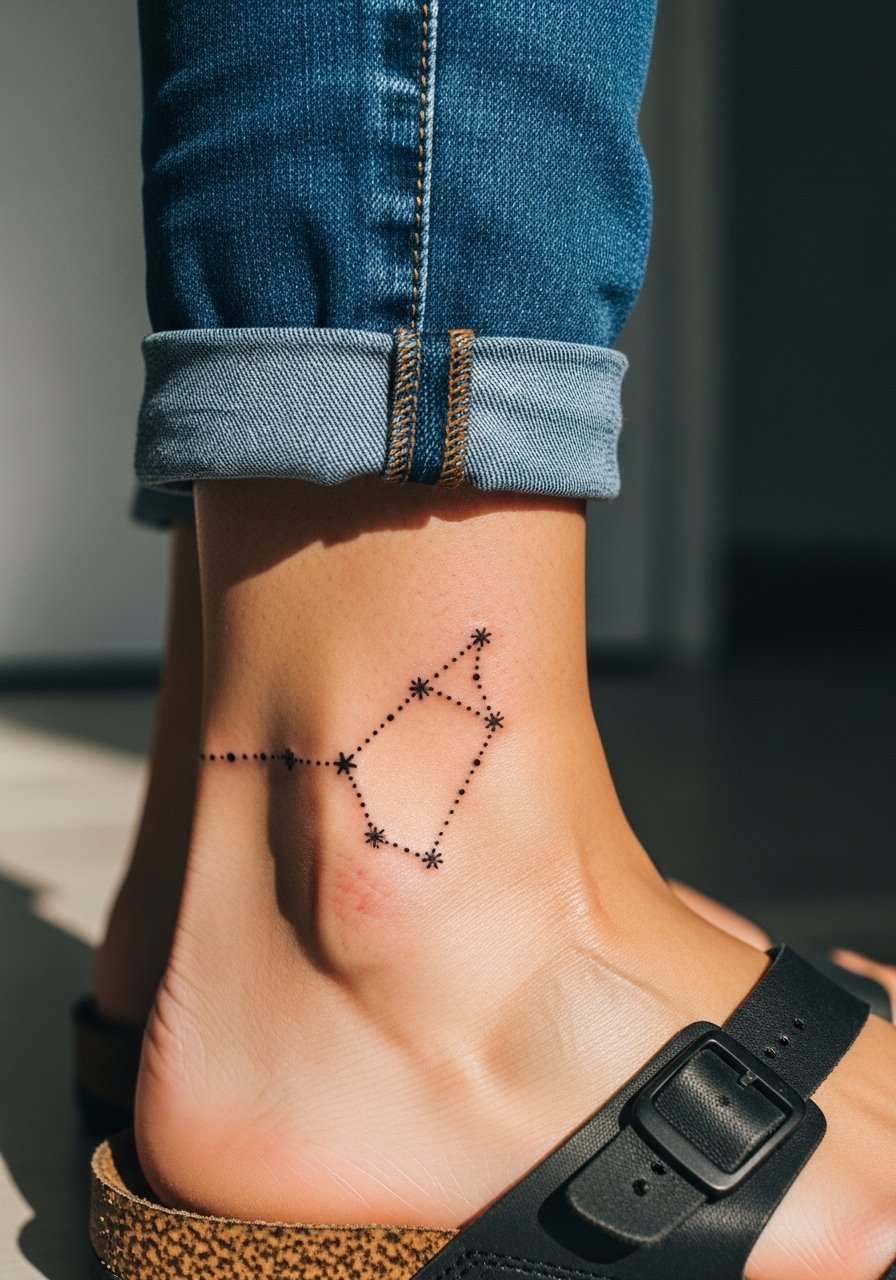
Ankle constellations are low commitment and show off in sandals. Ask the artist to place the cluster so it is visible when you sit and walk, not hidden under a shoe strap. Too often people request tight clusters that suffer from friction and constant sock rubbing. Session time is short and pain is manageable. For warm weather, cuff your jeans and slip on sandals to highlight the piece.
20. Subtle Rib-Side Script Near the Bra Line
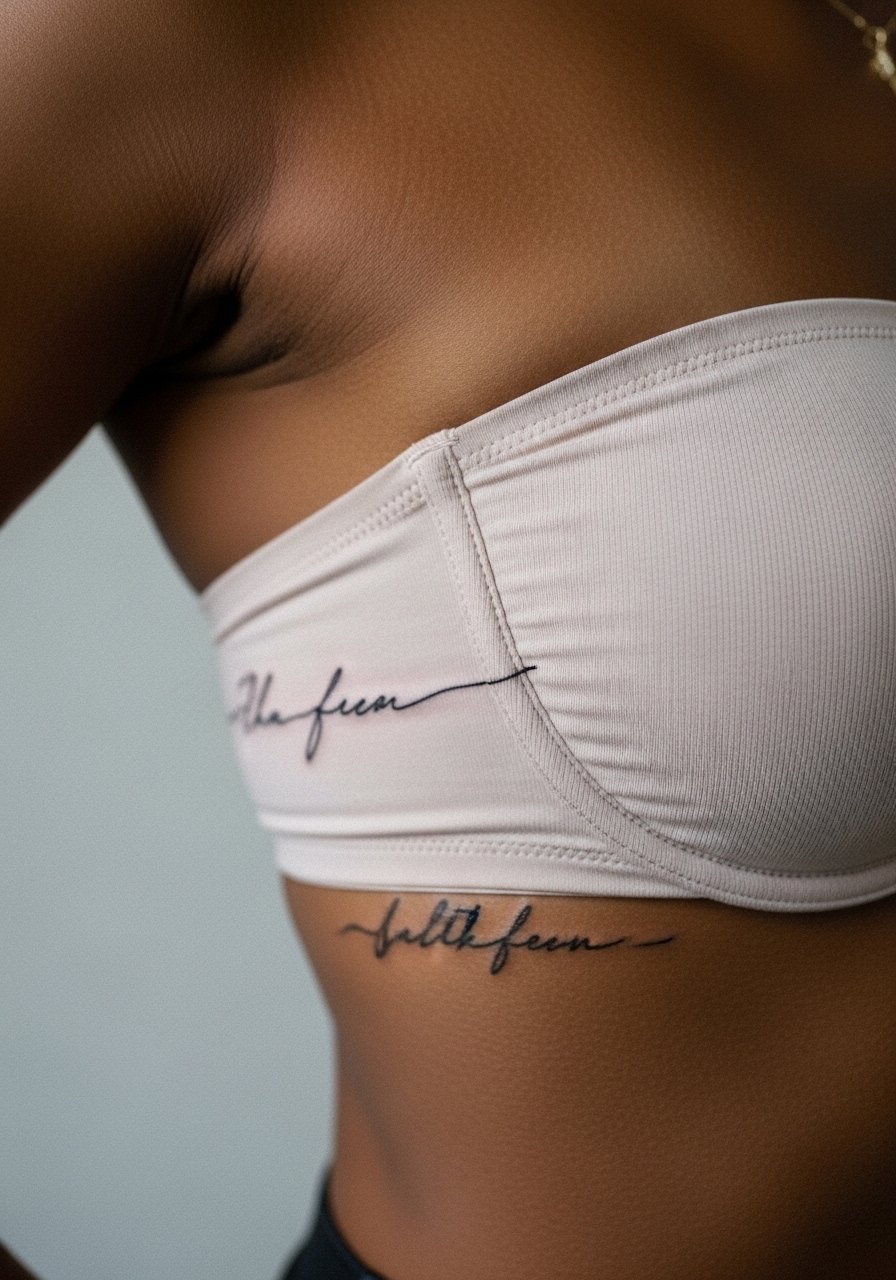
Sternum or rib-side text can be private and sensual, but script here needs breathing room. Ask for slightly taller letterforms with more spacing and request a mockup while standing. The controversy about fine line on ribs applies here. Some artists say skin movement blurs text fast. Others say careful depth and spacing keeps script legible for years. Plan for moderate pain and a possible touch-up at year two depending on wear and friction from clothing.
21. Small Back-of-Neck Script That Peeks from Hair
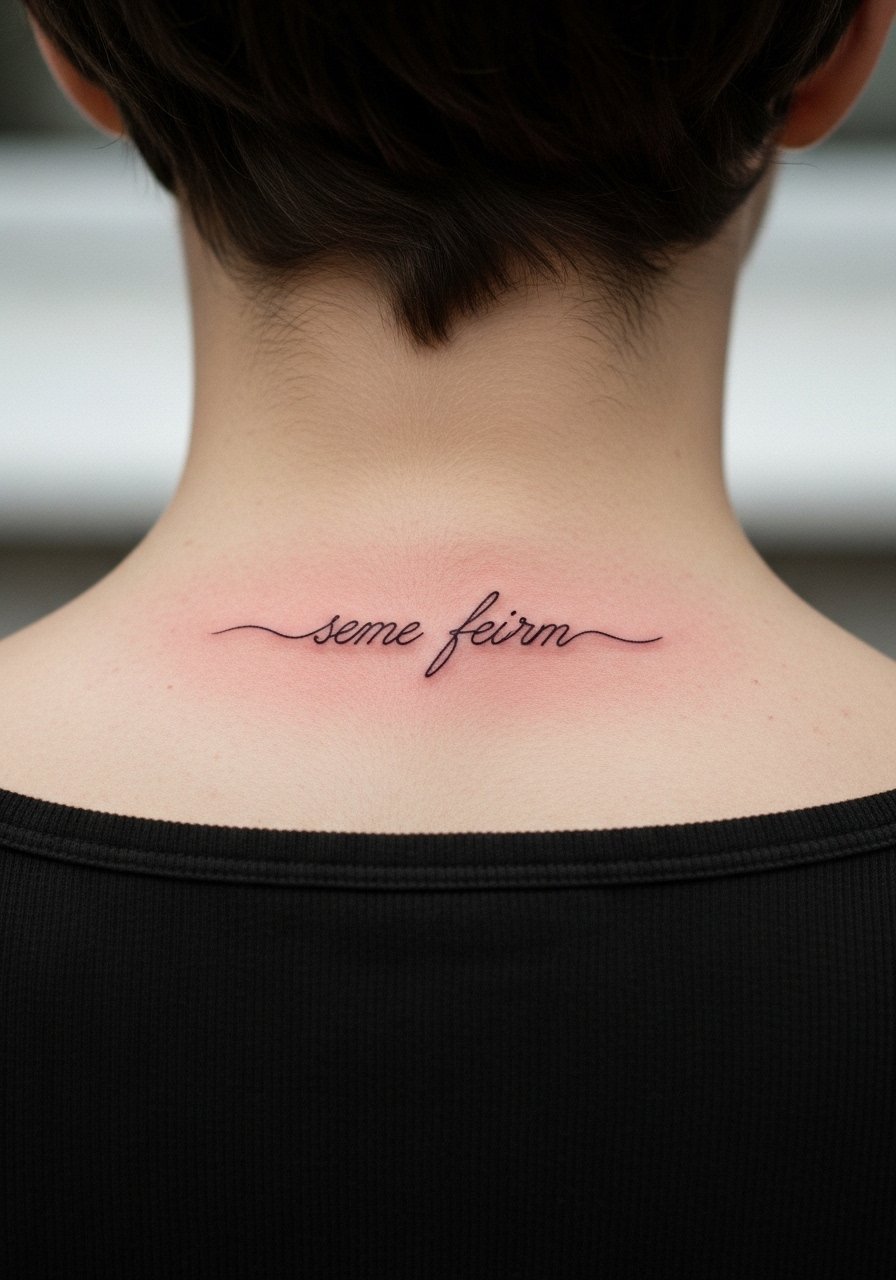
A tiny script behind the neck is discreet and plays well with hair up styles. For placement, ask for the bottom of the letters to sit just above the neckline so collars do not rub the fresh work. The common mistake is choosing ultra-thin strokes for letters that then disappear in two to three years. Expect a quick session and keep hair tied back during early healing to avoid tangles on fresh scabs.
Frequently Asked Questions
Q: My wrist poke faded in months. Should I have gone bolder or picked a different spot?
A: For high-friction areas like the wrist and fingers, I've seen bolder dot packing and slightly thicker outer lines hold up far better than ultra-fine single-needle work. If visibility matters, pick a meatier spot such as the outer forearm or thigh, or plan a touch-up at 6 to 12 months.
Q: I have dark skin. Which soft stick and poke styles photograph best?
A: From what I've gathered, blackwork and high-contrast dotwork generally read strongest on medium to dark skin tones. Fine line pieces can still work if your artist uses slightly heavier depth and increased negative space so edges remain crisp.
Q: What's the deal with Saniderm versus dry healing for hand-poke work?
A: Artists split into two camps. One camp prefers Saniderm and similar films because they keep things cleaner and reduce scabbing. The other camp favors dry healing or thin balms, arguing the skin breathes and ink settles with fewer clogged channels. I recommend asking your artist which approach they use and why, then follow their plan for the first week.
Q: How should I dress for a shoulder blade or back tattoo session?
A: Wear a loose tank or a button-down you can pull aside to give the artist clear access. For shoulder blade sessions, a backless strappy tank or a loose muscle tank is ideal because it keeps fabric off the fresh piece and makes positioning easier.
Q: My artist cancelled a guest spot and I lost travel money. Any booking tips?
A: Book local artists first when possible and confirm deposit and cancellation policies. Platforms that show verified bookings and reviews help, and a clear text or email confirmation reduces surprises. If you travel for a guest spot, budget time and money for an extra backup appointment just in case.
Q: Do poke sessions hurt less than machines, and is numbing okay?
A: Many people report less sustained vibration and a different sensation with poking that some find gentler. Numbing creams are debated. Some forum regulars say it robs the meditative rhythm, while first-timers appreciate the comfort. If you plan to use numbing cream, tell the artist so they can account for saturation and drying time.