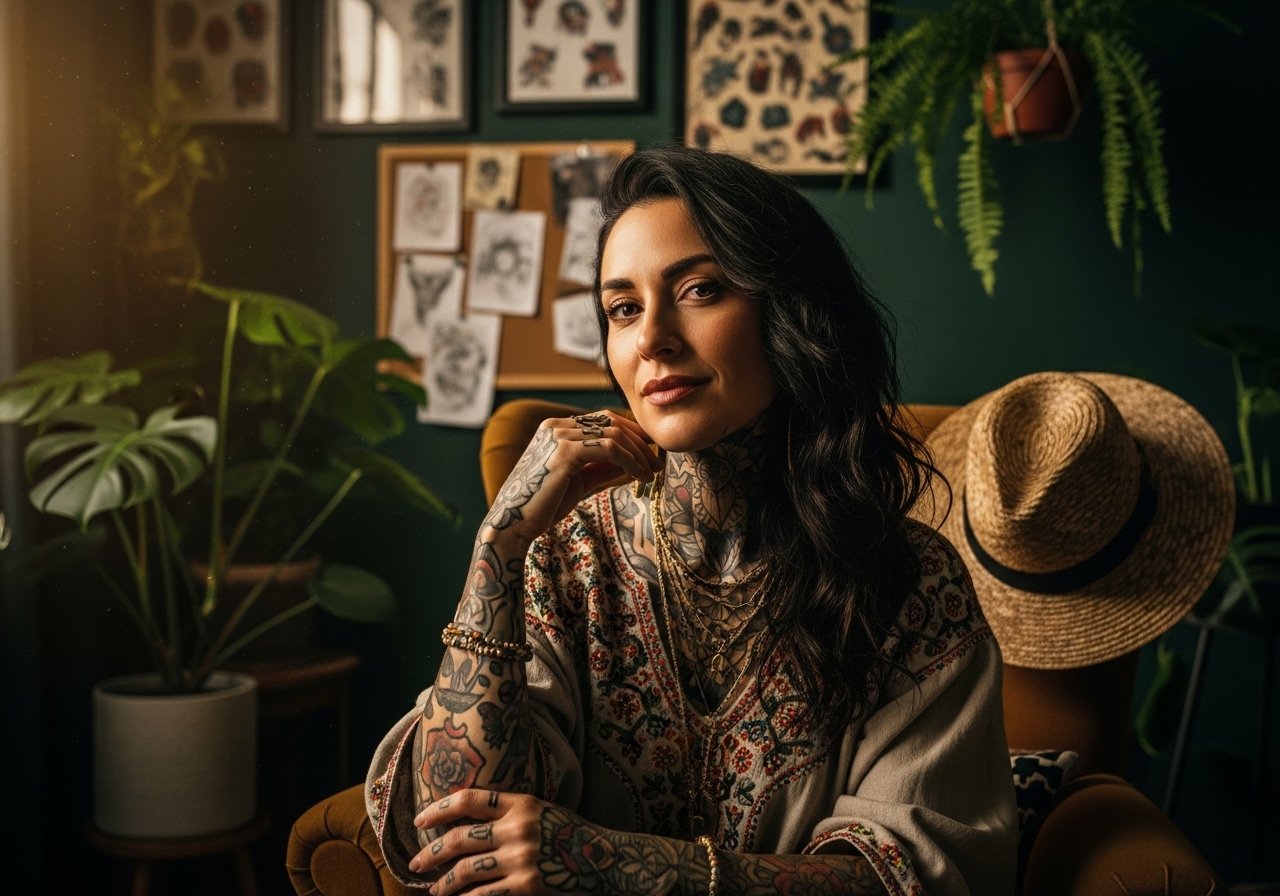
Fine line snakes rule feeds and saved boards, but the versions that still read clean five years from now are usually the quieter choices. Bold blackwork and sensible spacing hold contrast. That gap between what trends and what lasts is why I pulled these small snake tattoo art ideas, with practical notes on how they heal, what to ask in consults, and a few outfit tips to show them off right away.
1. Minimalist single-line snake coiling around a finger
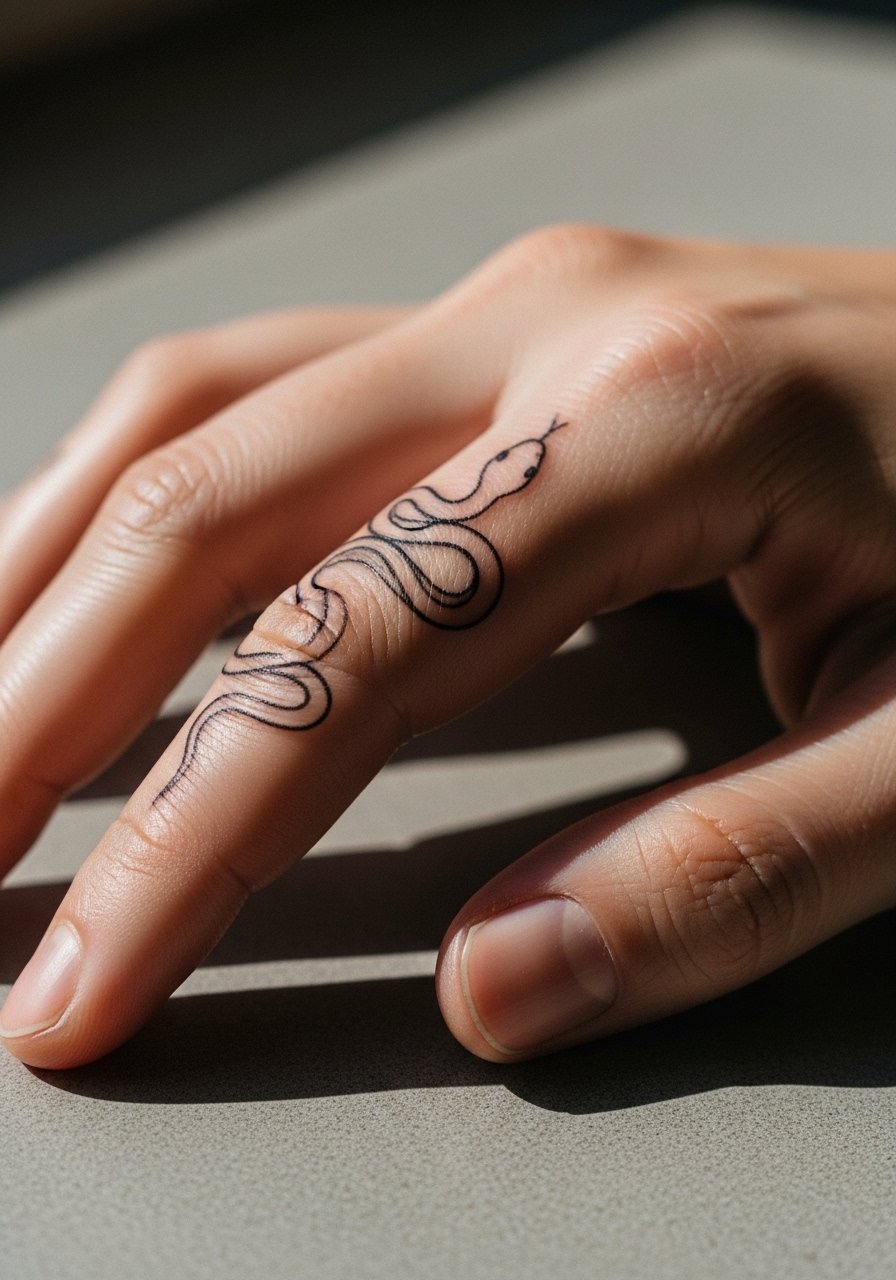
I recommend this when you want a micro statement that reads like jewelry. Ask your artist for clean, continuous linework with slightly more spacing between coils so the tiny loops do not merge as the tattoo settles. Fair warning on finger pieces, they fade faster due to constant washing and friction, so plan for a touch-up around year one to two. The session is short but it stings more because the skin is thin. For the appointment, wear something you can roll up easily and keep your hands warm so circulation stays steady.
2. Fine line snake with subtle scale texture on inner wrist
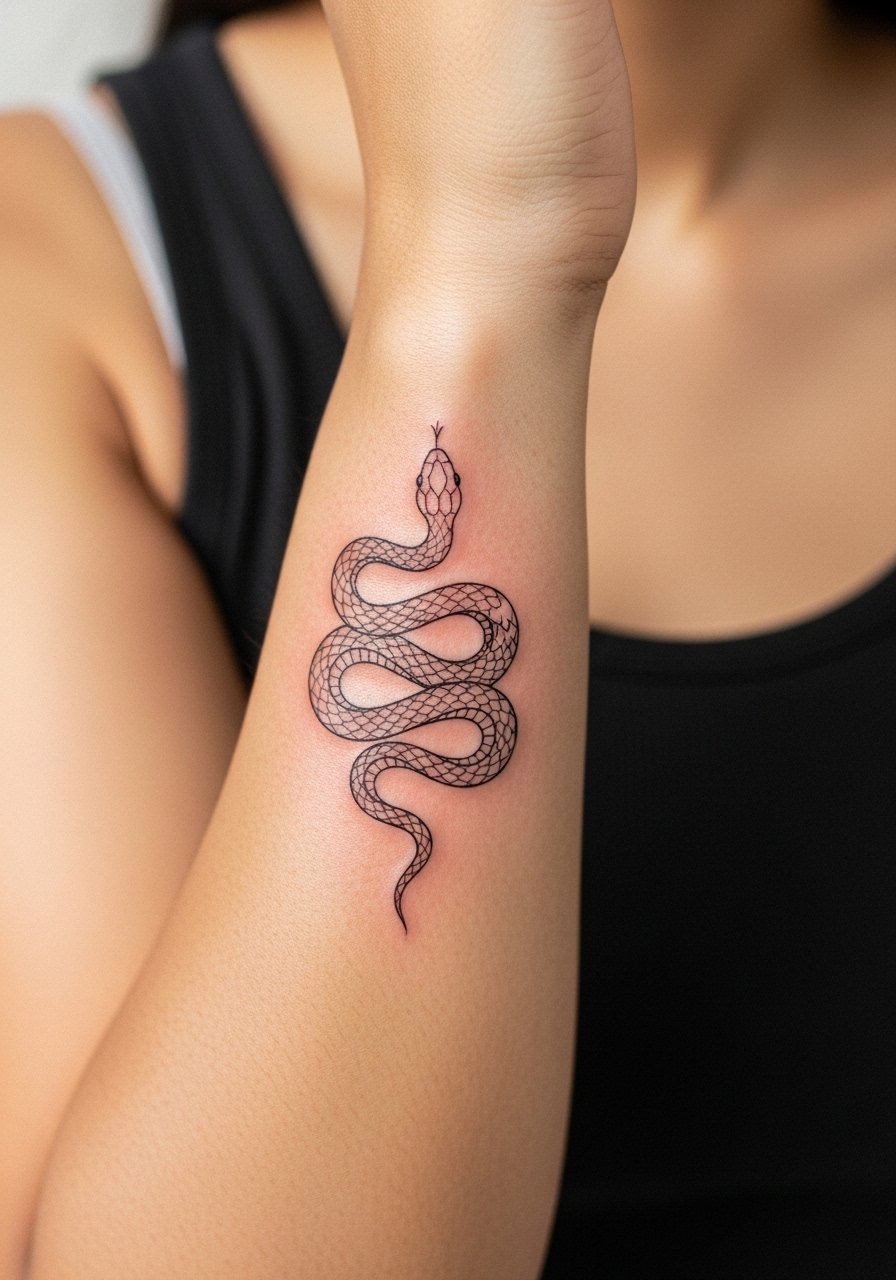
Most people pick this for a first visible piece. In consultation, specify the scale detail as tiny stipple shading rather than solid shading to avoid the dense areas blurring. Artists disagree about fine line on wrists. One camp warns it blurs faster on high-movement areas, and the other camp says that with precise depth and spacing fine line holds up. Ask your artist where they stand and show healed examples. Expect the session to be under an hour and mildly uncomfortable over bone. Pair this with a rolled cuff chambray shirt when you want to show it off.
3. Black and gray realistic viper head on forearm
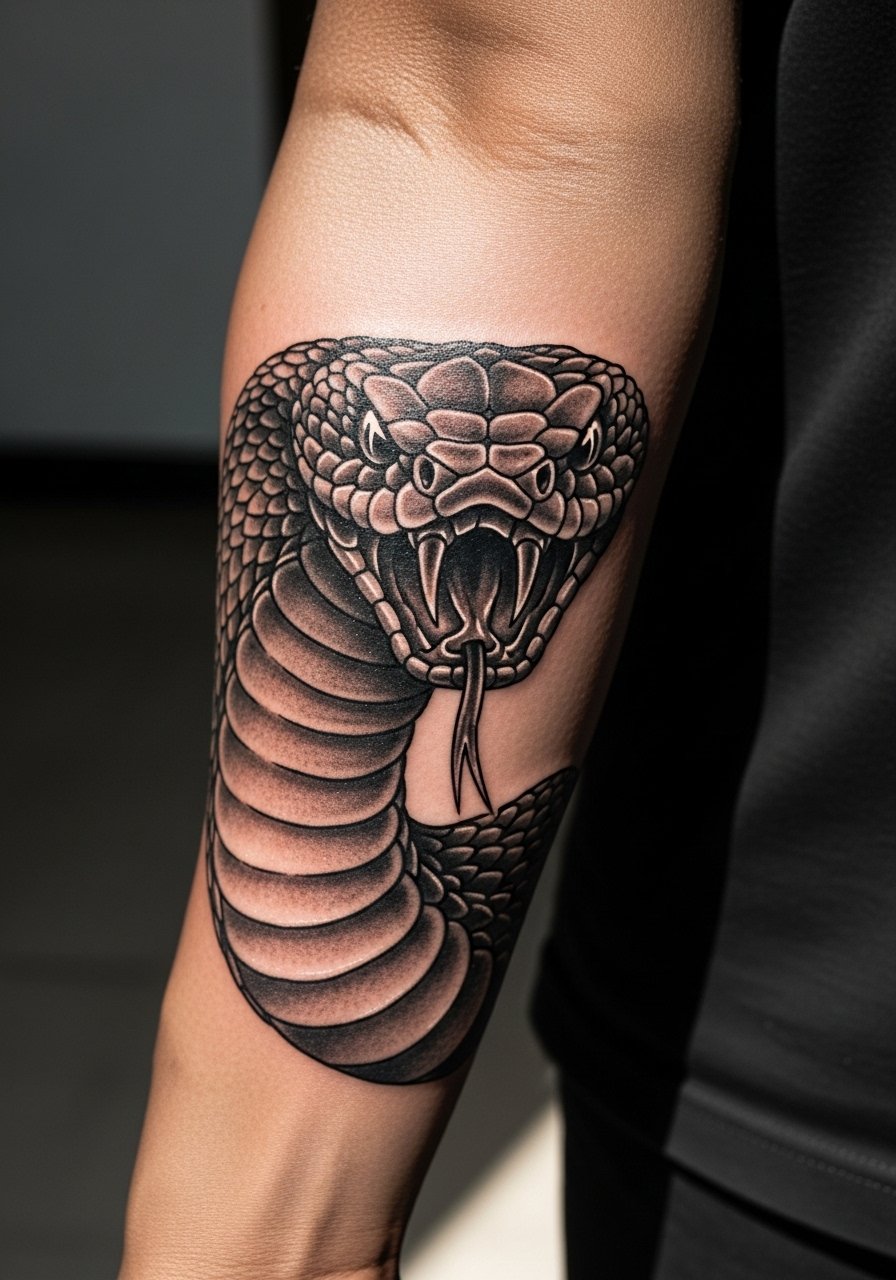
If you want depth in a small area go realistic, but choose a 2.5 to 3 inch reference so the eye detail survives. Tell the artist to keep the pupil and jaw edges crisp while using soft whip shading for scales. The common mistake is over-detailing too small, which turns into mud after healing. On the forearm this style usually needs one longer session and a light touch-up at year two if you want peak contrast. For showing it off, push sleeves up into a neat cuff like a light blue short sleeve button down and wear a minimal bracelet on the opposite arm.
4. Watercolor snake emerging from color splash on ankle
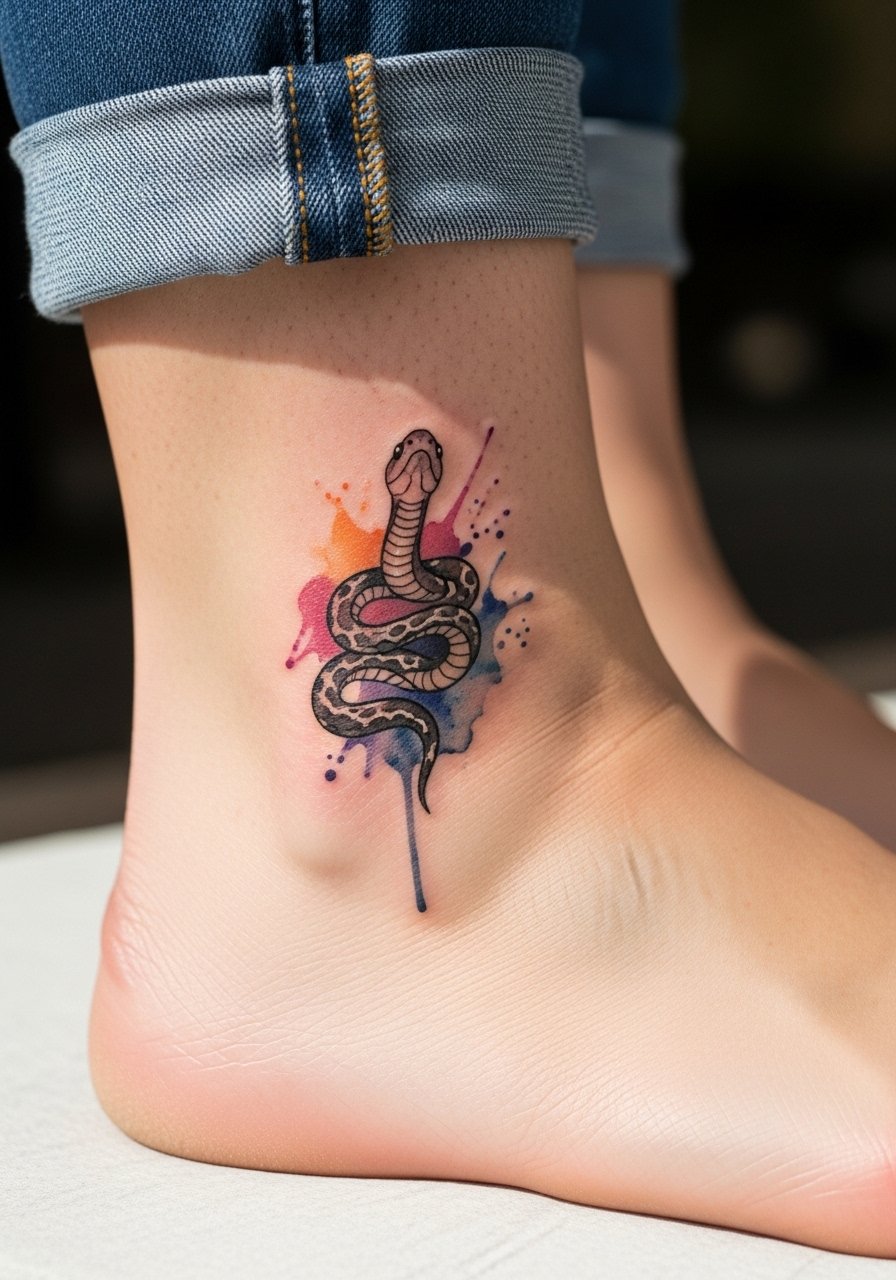
Watercolor gives a painterly edge but tends to bleed over time unless the color is anchored with a light outline. Ask for a thin black base line and soft color washes instead of unlined splotches. There is debate about watercolor longevity. One side says it creates dreamy effects despite fade, and the other side warns that without outlines the color blurs. If longevity matters choose darker pigments and expect a two-session setup. Ankle sessions are short but the bone can be sensitive. Show it off with cropped ankle pants and strappy flat sandals in summer.
5. Neo-traditional coiled serpent with bold outlines on shoulder
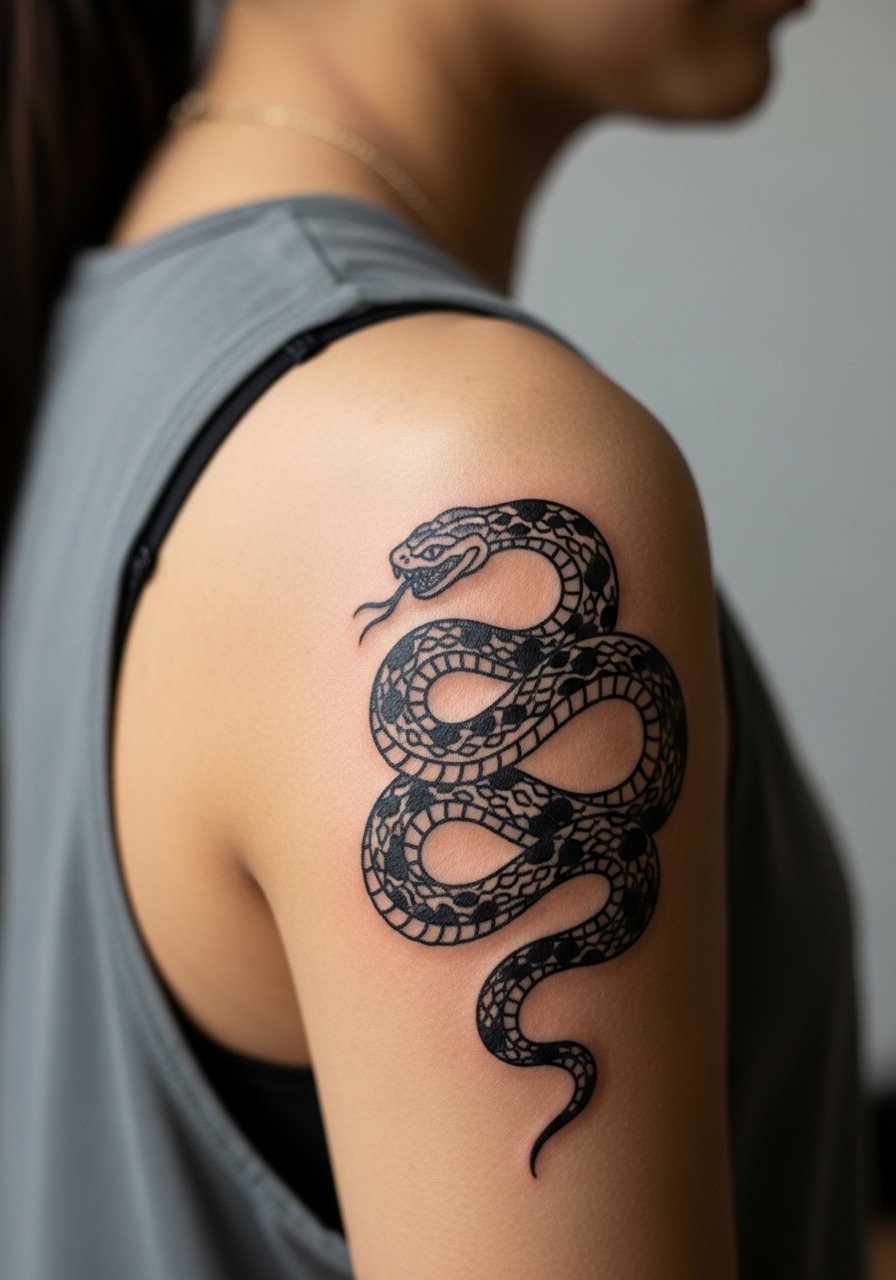
This is for people who like classic flash energy with modern color sensibility. Tell your artist to use clear black outlines and keep color fills solid but limited so the small piece does not become busy. Shoulders handle saturation well and age into strong silhouettes. Sessions are comfortable because you can lie or sit with easy access. For evenings out, pair it with an off shoulder top or throw on a leather moto jacket when you want edge.
6. Traditional American snake with roses on collarbone
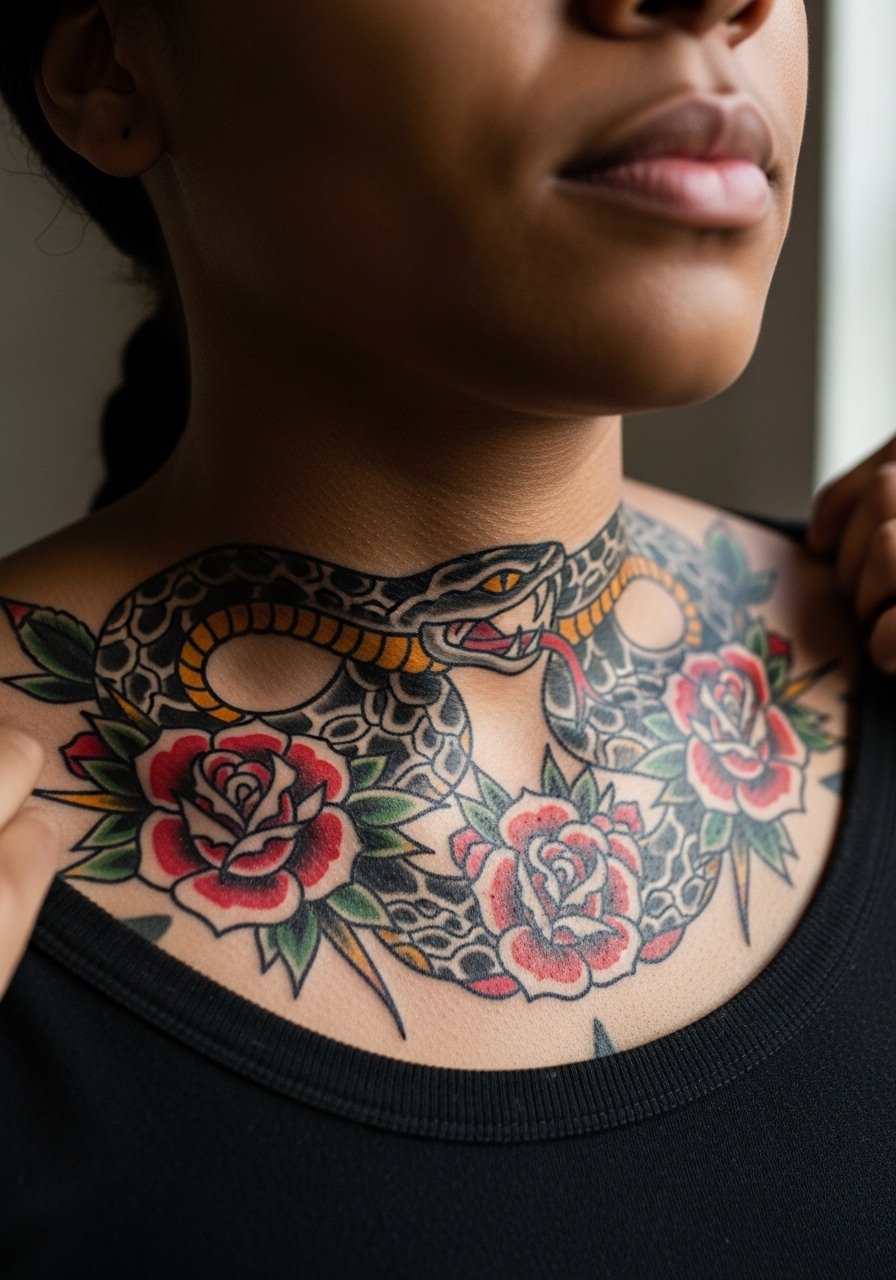
Collarbone pieces read boldly even when small because of the bone contrast. Ask for slightly thicker linework around the petals so the reds and greens stay anchored. A common mistake is compressing too many elements into a tiny space. Expect mild discomfort over the bone and a session under two hours for a 3 inch piece. When you want it visible, wear a v neck silk blouse or a low pendant that frames rather than competes.
Pre-Session Essentials
The wrist and finger pieces above heal differently from larger work, so a few small items smooth out the session and the first week.
-
Stencil transfer paper kit. Lets you preview line placement on skin before the needle, which helps with the tiny finger and wrist loops in ideas 1 and 2.
-
Topical numbing cream. Apply as directed about 30 to 45 minutes before takes the edge off sensitive ankle and collarbone sessions.
-
Thin protective film roll. Keeps finger and wrist tattoos cleaner during the first week of hand washing and friction.
-
Fragrance free gentle body wash. Cleanses healing areas without irritating the delicate linework that fine line wrist pieces depend on.
-
Aquaphor healing ointment. Thin layer for the initial days keeps small channels moist without clogging the fine needle work.
7. Blackwork geometric snake pattern on ribcage
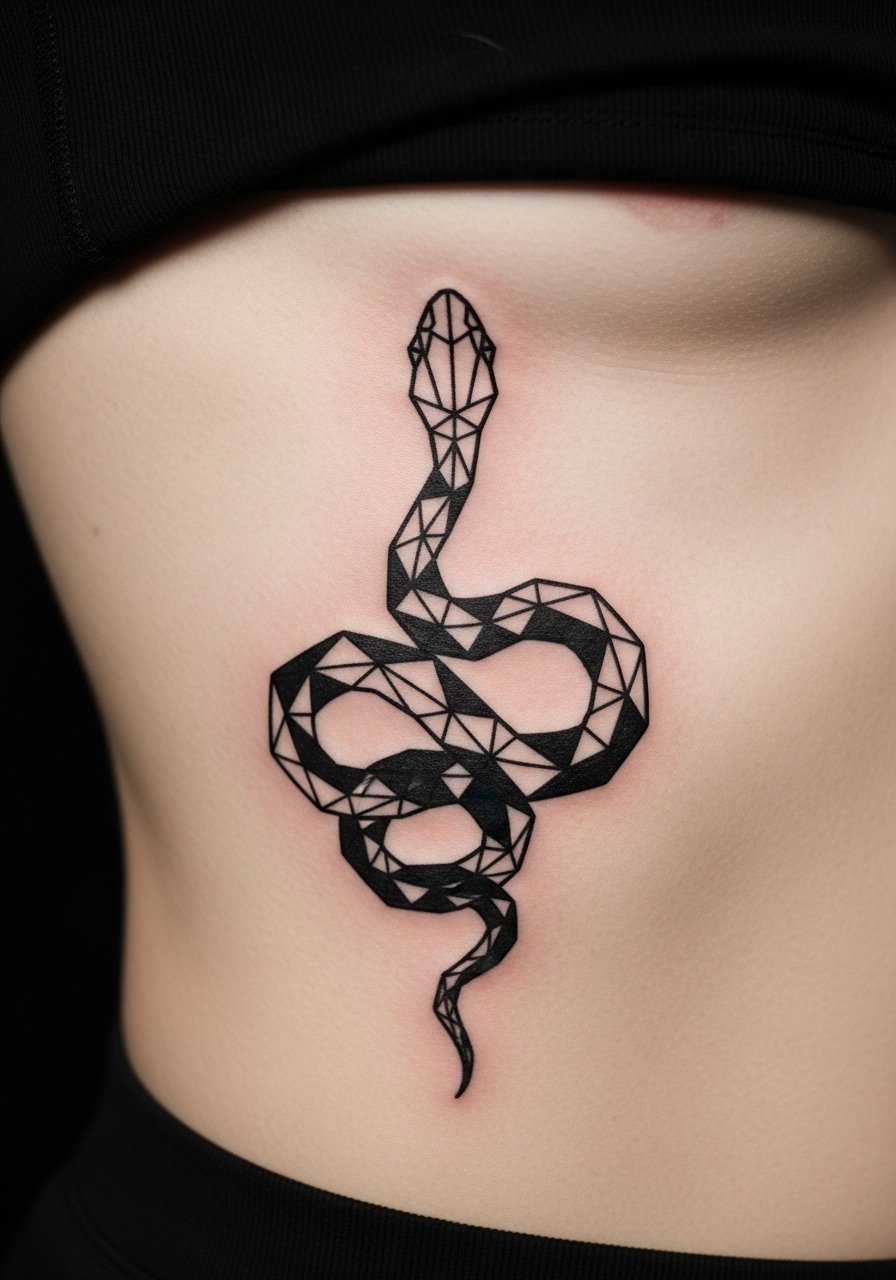
Fair warning the ribcage is a high-movement, high-pain zone. Blackwork is ideal here because large solid fills read well on curved skin and resist blurring. When consulting, ask for simplified geometry and larger negative spaces so the shapes do not merge as the skin stretches. The common aging issue is over-detailing. Sessions usually take longer and may be split into two visits. Note on artist selection, look for portfolios showing healed blackwork on ribs and ask about touch-up timelines.
8. Tribal snake outline with negative space on calf

Calf tattoos are forgiving because the skin moves less than on hands. A bold tribal outline with intentional negative space keeps the symbol clear as it matures. Tell the artist you want solid outlines with room between curves so the pattern holds at small scale. Sessions are quick and moderately uncomfortable depending on placement near the shin. For summer show-off pair this with slim fit chinos rolled at the hem and leather loafers removed briefly for photos.
9. Ornamental snake with dotwork scales on inner thigh
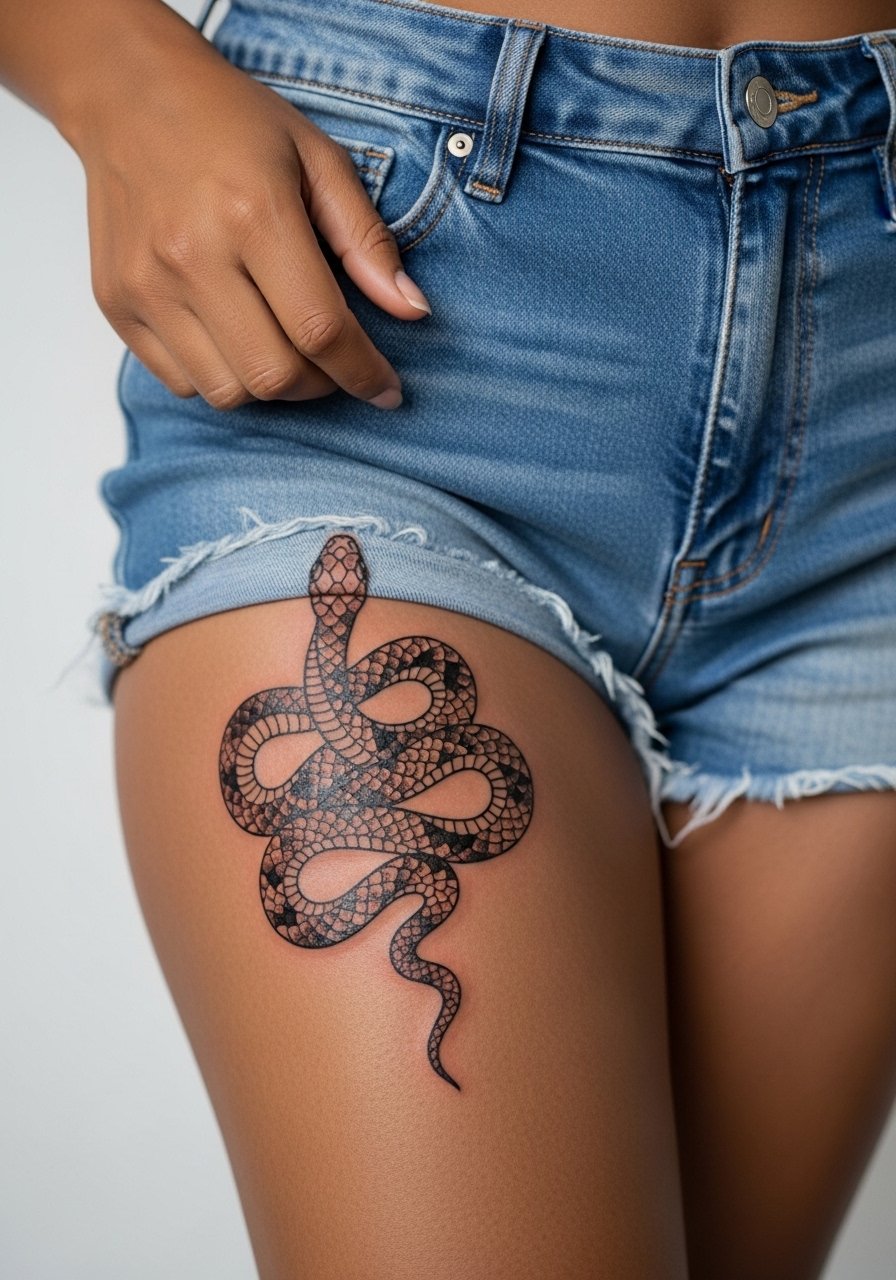
Inner thigh work allows for more detail because the canvas is flat and protected. Ask for dotwork scale texture which gives a meditative look and breathes over time. The mistake to avoid is cramming too many tiny dots without spacing, which can blur into patchy shading. Sessions may be longer and require more privacy, so wear loose shorts or a wrap during the appointment. Be aware this is intimate placement and some artists require portfolio review before booking.
10. Snake ring using negative space scales on a knuckle
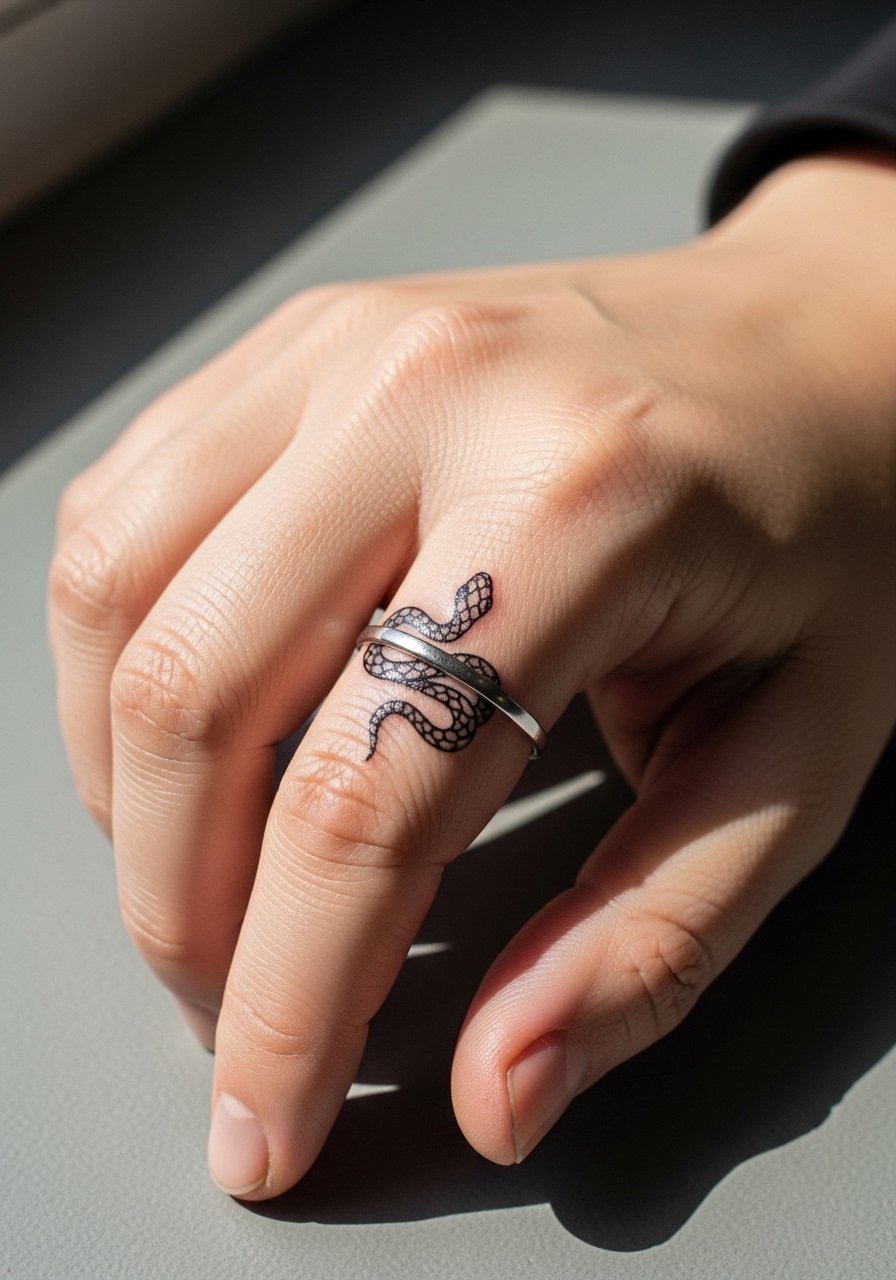
This micro ring idea looks like jewelry and works when you specify negative space scales instead of dense fills. Tell your artist to keep the band thin but consistent to avoid early bleed. Knuckle skin takes touch-ups more often because of constant movement. The session is brief but sharp in pain. The biggest mistake is overcomplicating the pattern; simplify and accept annual touch-ups for long-term clarity.
11. Hybrid snake and flower ornamental on the outer forearm
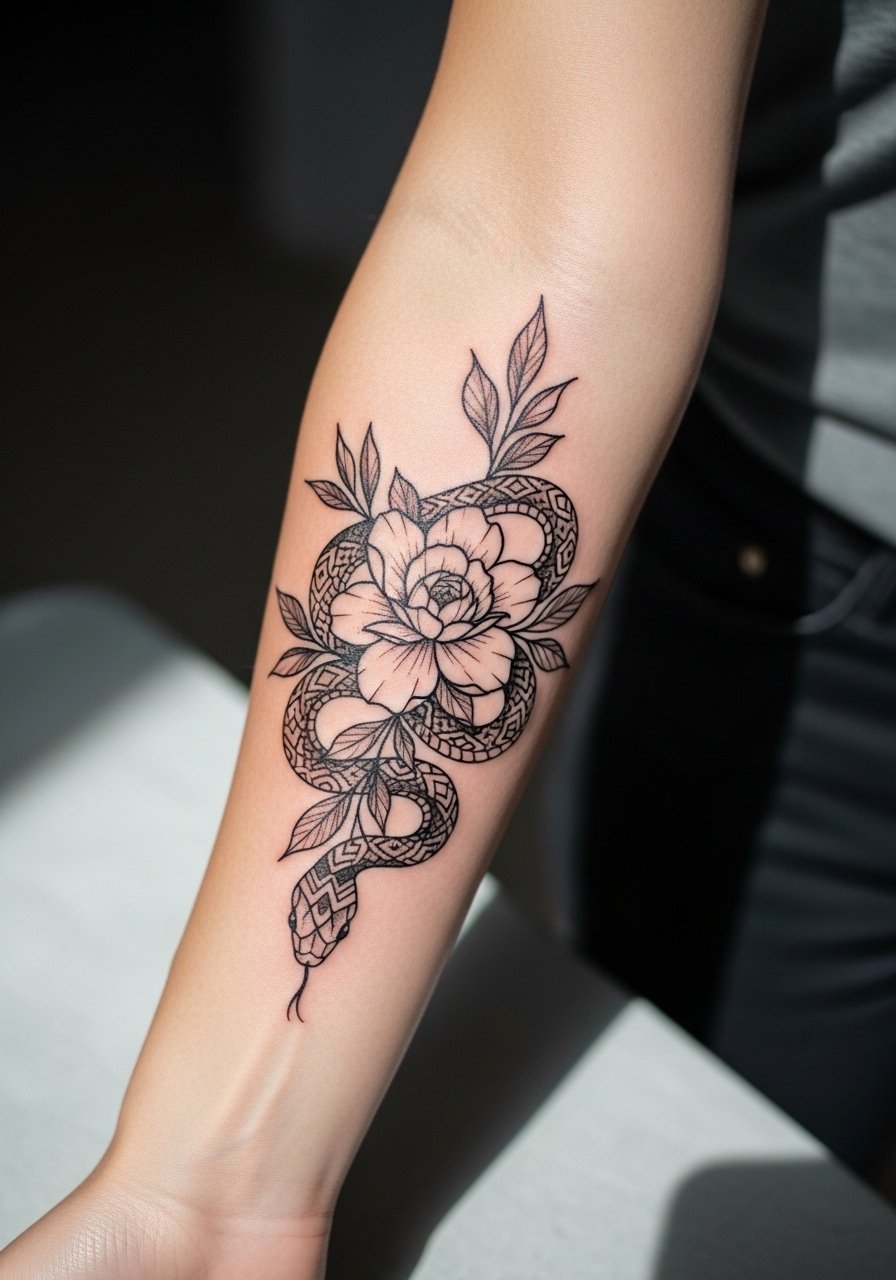
Combining serpent coils with blooms softens the edge while keeping an edgy silhouette. In consults, say you want the snake to weave under the petals rather than sit on top so the composition breathes. Forearms work well and are visible, so choose slightly bolder lineweight than a delicate wrist piece. For the session, wear a oxford button up shirt you can push the sleeve up, and for showing off roll sleeves into a neat cuff.
12. Tiny ouroboros at the nape of the neck
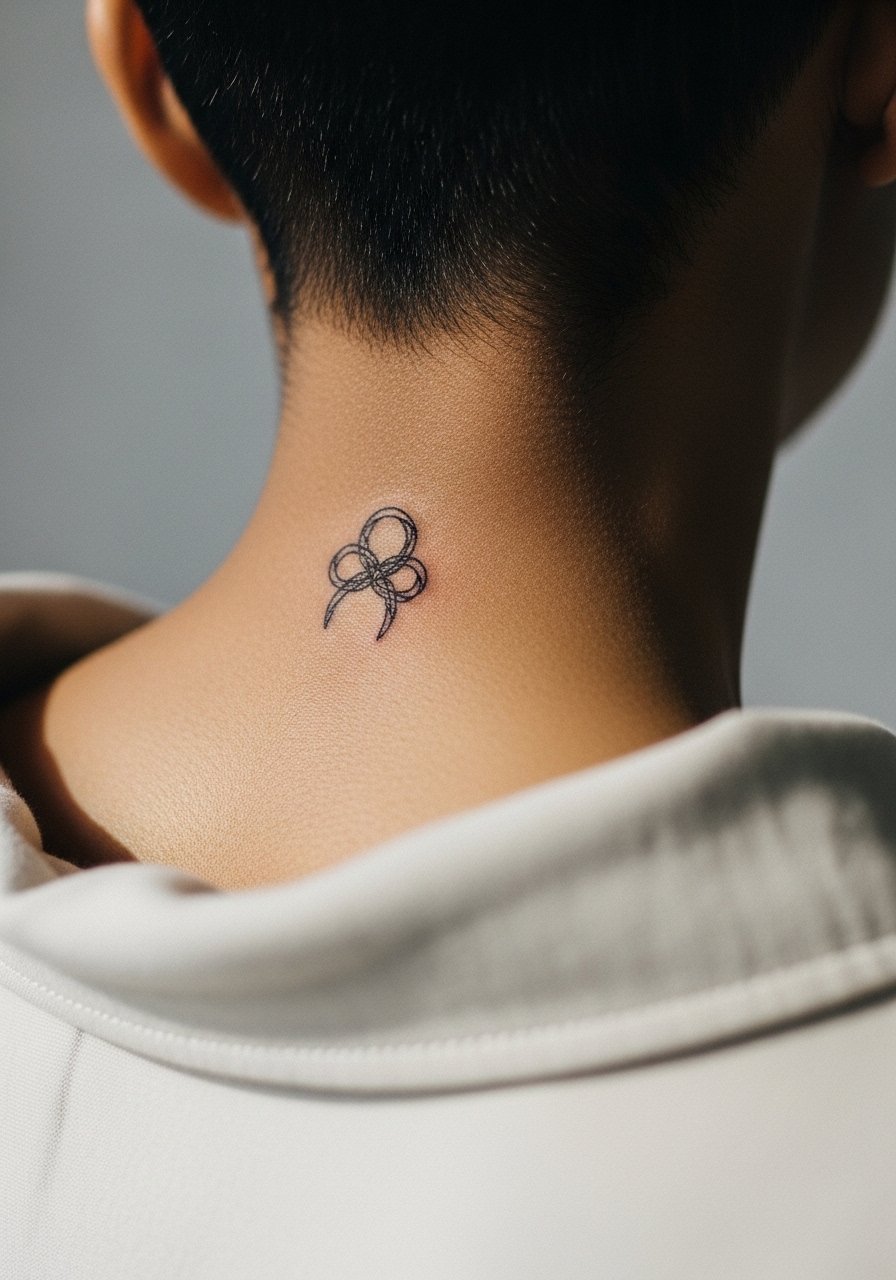
An ouroboros works as a compact idea for continuity and rebirth. Ask for a simple circle with modest line thickness so the shape keeps roundness as it heals. This is a placement that can peek out under hair or a collar, so consider career visibility. The session is quick and mildly sensitive. If you want a more discreet version, place it lower where hair can cover it.
13. Micro-dotwork tail flick on the ankle
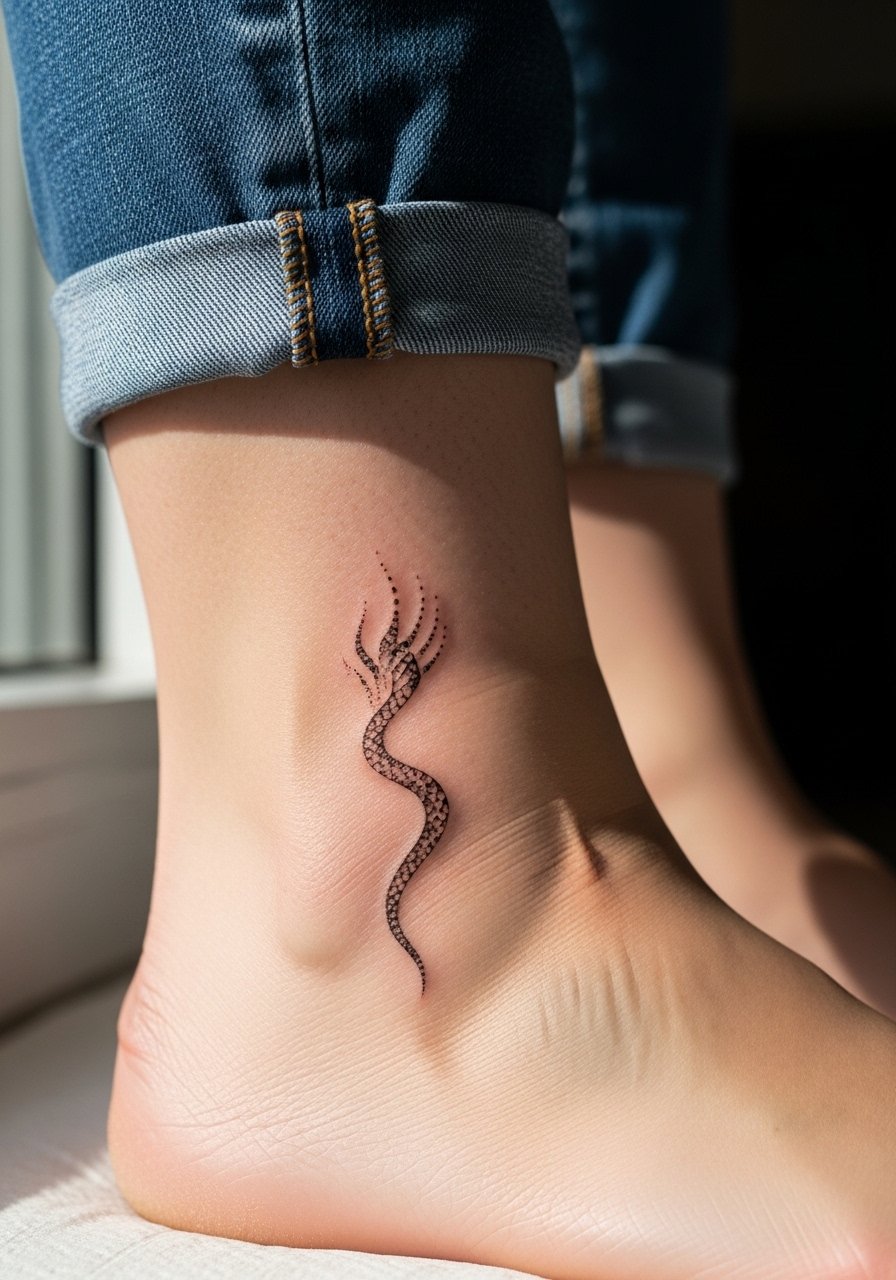
A tiny tail mark can be playful and subtle. Ask your artist for stipple shading that tapers cleanly into negative space so the small scale reads as texture rather than a smudge. Ankles are subject to friction from socks and shoes, so expect some initial fading and a likely touch-up after a year. Wearing khaki cropped pants or sandals for photos lifts focus to the piece.
14. Subtle snake tucked behind the ear, below the hairline
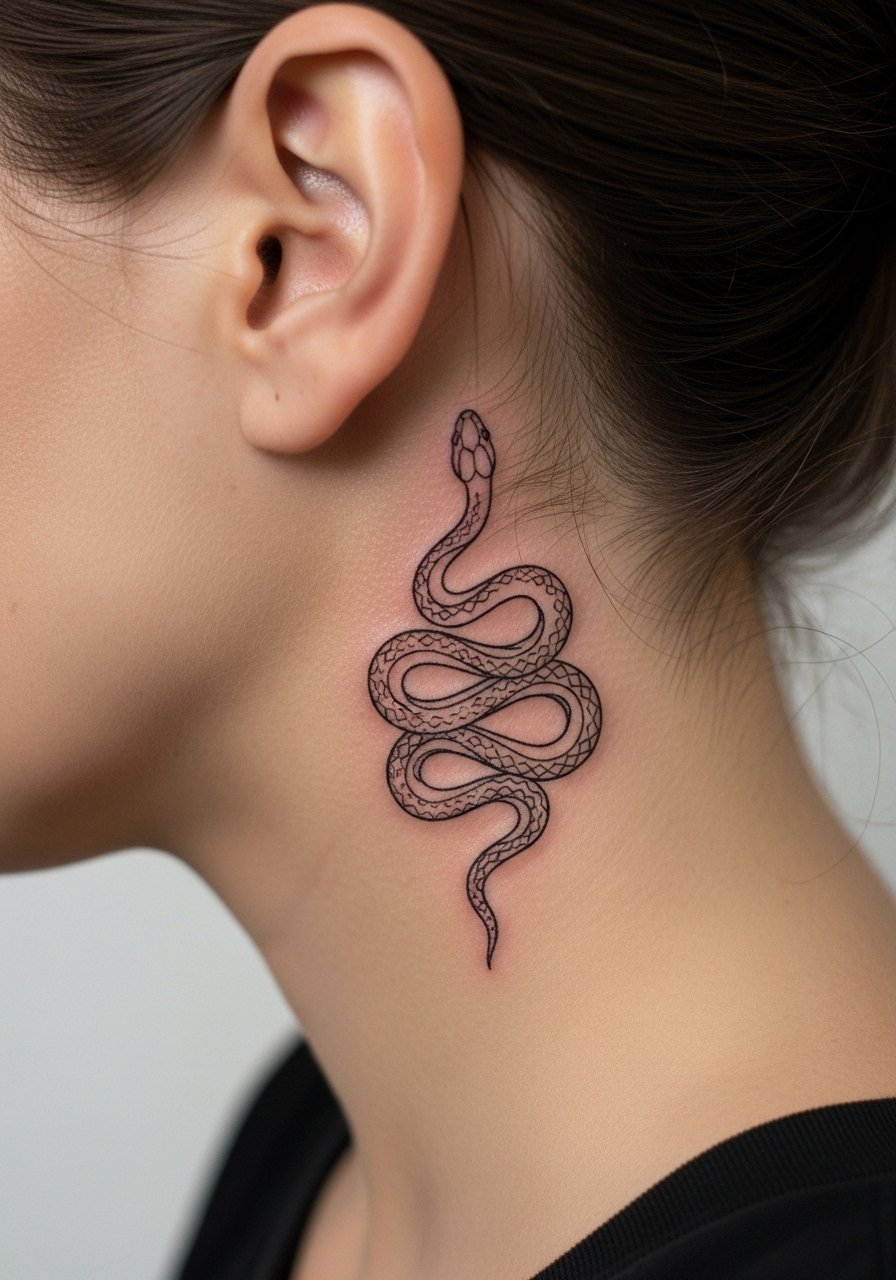
Behind the ear requires a sensitive approach. Ask for very shallow linework and expect the artist to request a portfolio showing similar healed work. This area heals quickly but is exposed in ways that can affect career settings, so think about visibility. The one-sentence professional note is that some shops require advanced booking for head and neck placements. Sessions are short and surprisingly tender.
15. Tiny snake wrapping a knuckle joint
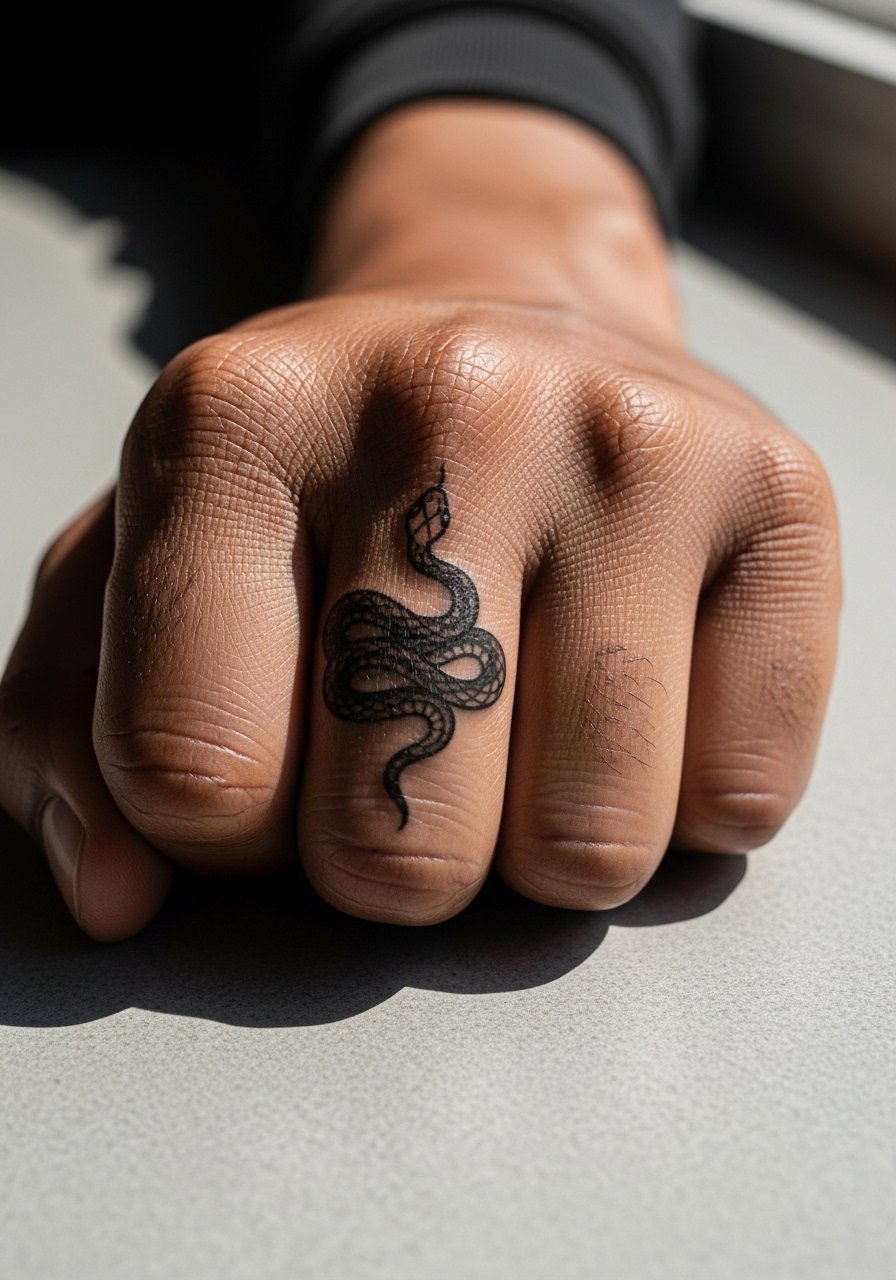
Knuckle wraps look crisp initially but the continuous motion makes them high maintenance. Ask the artist to place the snake so the majority of linework sits on the top of the knuckle rather than the creases. The error people make is going too thin in lineweight. Expect a one-off quick session and a touch-up at year one. For the appointment wear a layer you can slide off to keep the hand accessible.
16. Japanese irezumi-style mini serpent on the outer upper arm
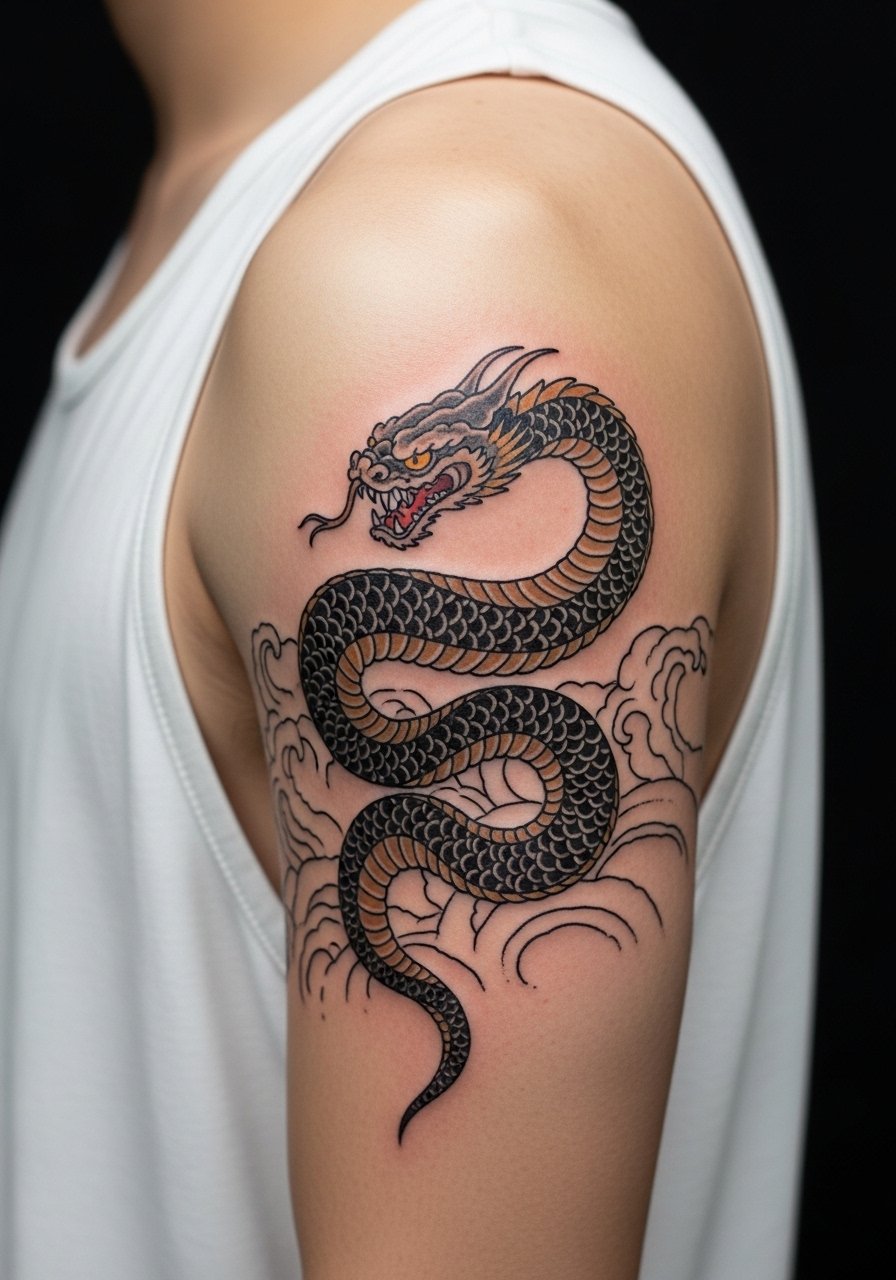
Irezumi influences bring flowing movement even at small scale, but cultural context matters. Mention you want an inspired piece rather than a traditional motif copied directly. The artist should keep the background waves minimal to avoid overpowering the small serpent. Sessions can take two short visits if color is involved. For showing the arm, wear a loose tank top so the artist has full access and you can reveal the piece easily.
17. Minimalist chain-like snake encircling the wrist
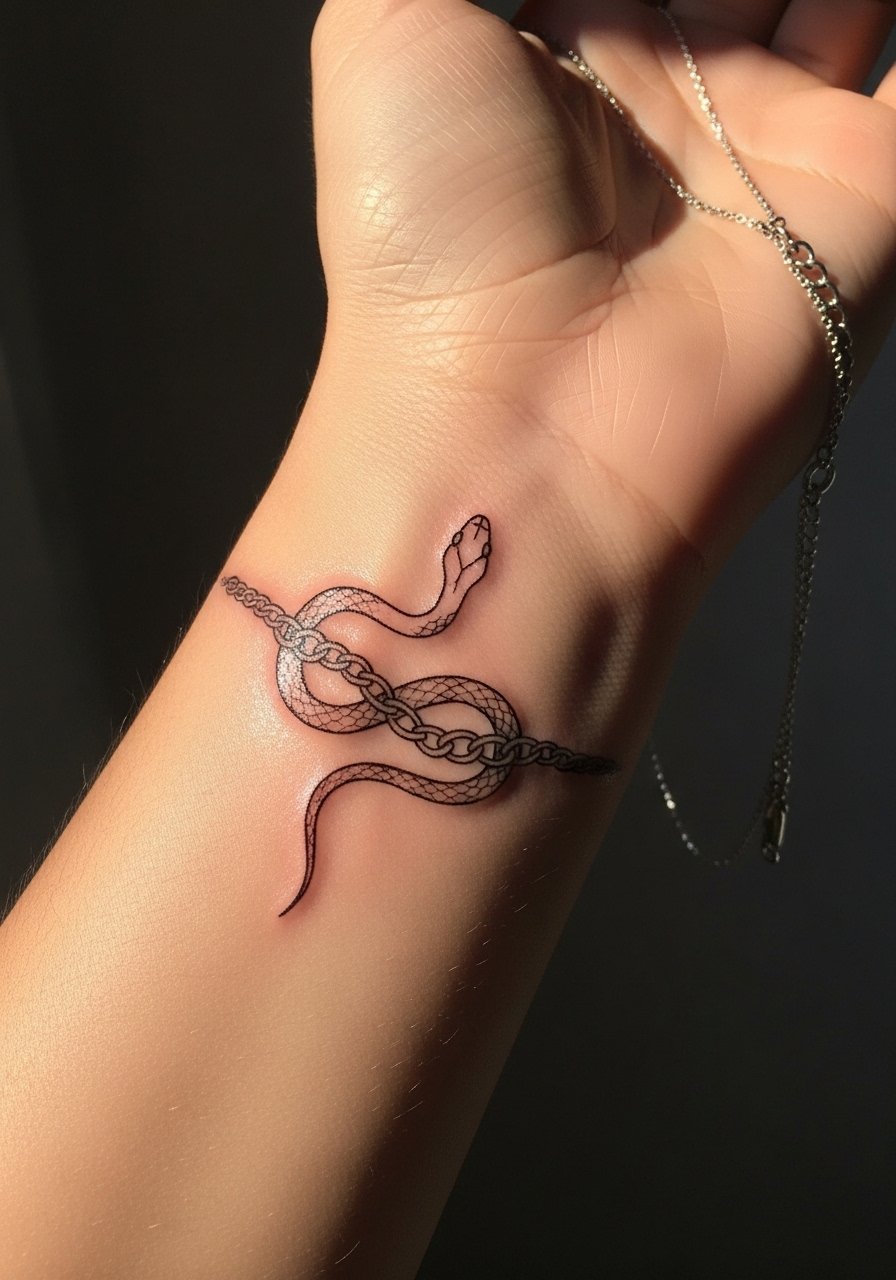
This reads like a bracelet and is great for low-commitment visibility. Tell the artist to keep the links open and the negative space consistent so it does not look like a solid band once healed. Wrist skin moves a lot so expect a touch-up around year one. For framing, pair it with a thin silver chain bracelet on the opposite wrist to balance the look.
18. Thick-lined scale pattern for dark skin contrast
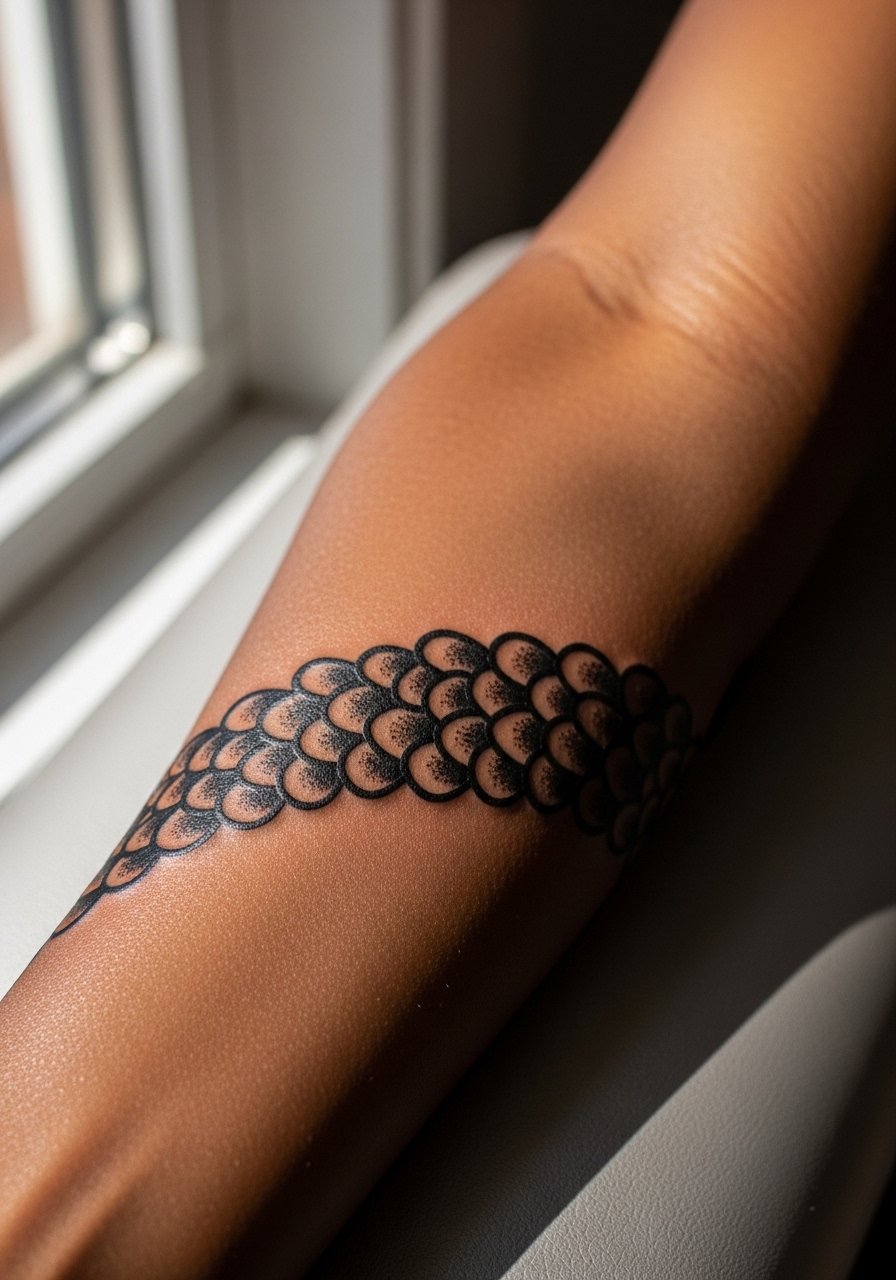
On deeper tones, thin fine line details can disappear in photos. A good adaptation is thicker outlines and high-contrast black fills to preserve definition. In consults, ask to test a temporary marker on your skin to preview contrast. This approach reduces the risk of the image softening in years. Sessions are similar time to fine line work but ask about pigment choice to ensure long-term visibility.
19. Tiny viper fang motif on the inner wrist
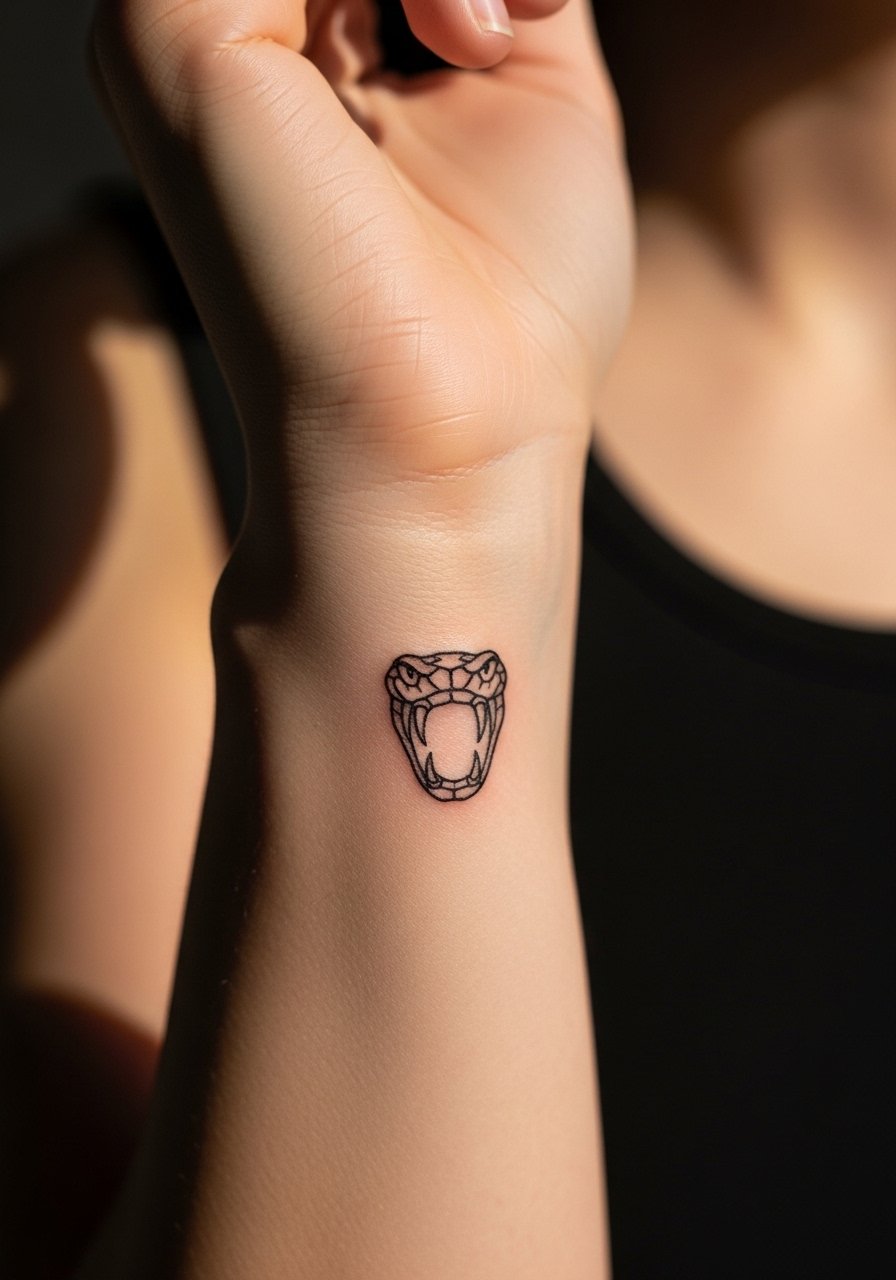
A minimal fang can be sharp and discreet. Tell the artist you want a single pointed element and avoid additional shading that crowds the small motif. Inner wrist pain varies but is often more noticeable over the tendon. Expect under an hour for the session and a likely touch-up if you wash hands frequently. For appointments wear a sleeveless tank so the artist can reach the area without constraints.
20. Geometric blackwork serpent on the upper chest near the collarbone
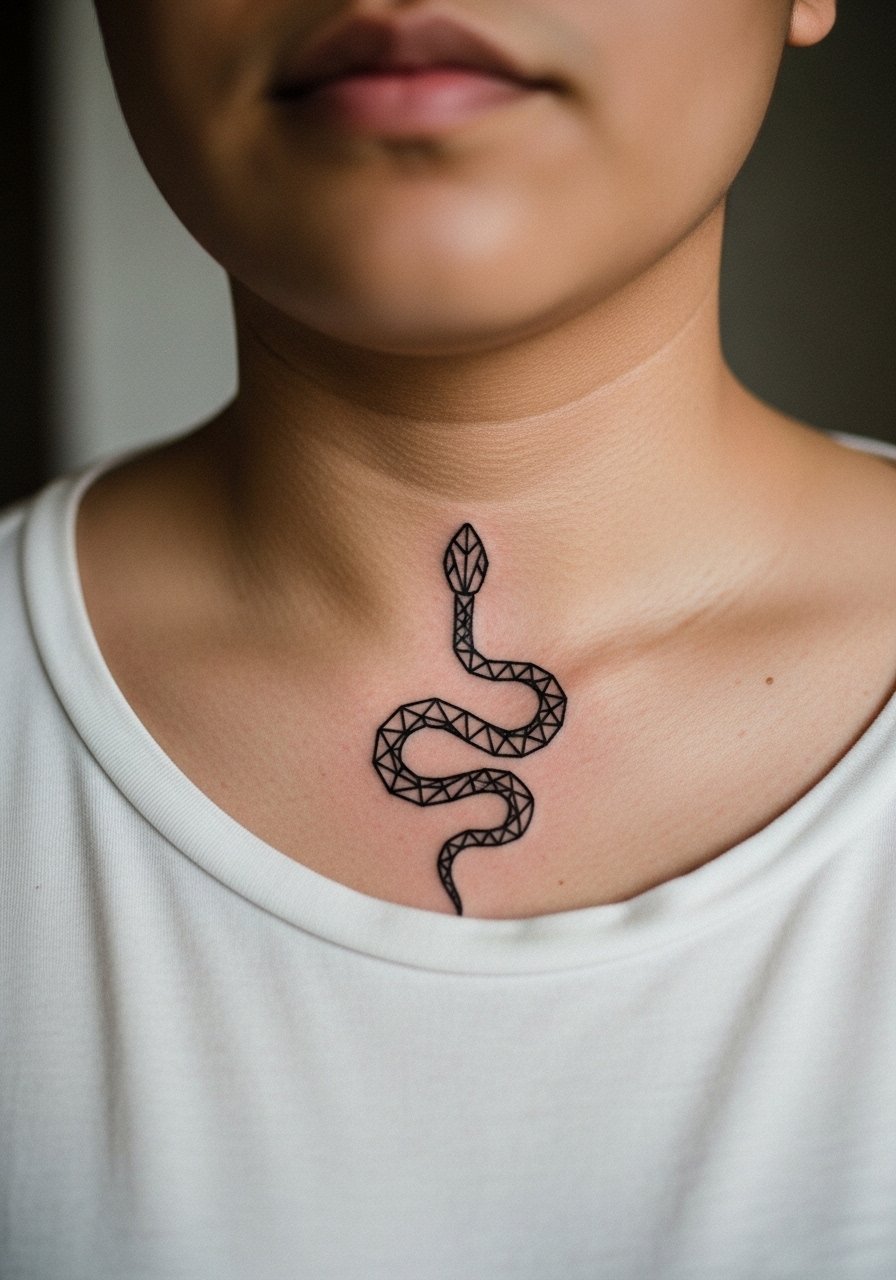
Upper chest holds geometric blackwork well because the shapes sit against bone and muscle for strong contrast. Specify larger polygonal scales and intentional negative space to prevent detail fusion. This placement can be visible in some workplaces, so consider location. Sessions can be quick but expect tenderness over the bone. Pair with a simple pendant necklace that sits above the design for evenings out.
21. Watercolor serpent accent on the outer calf
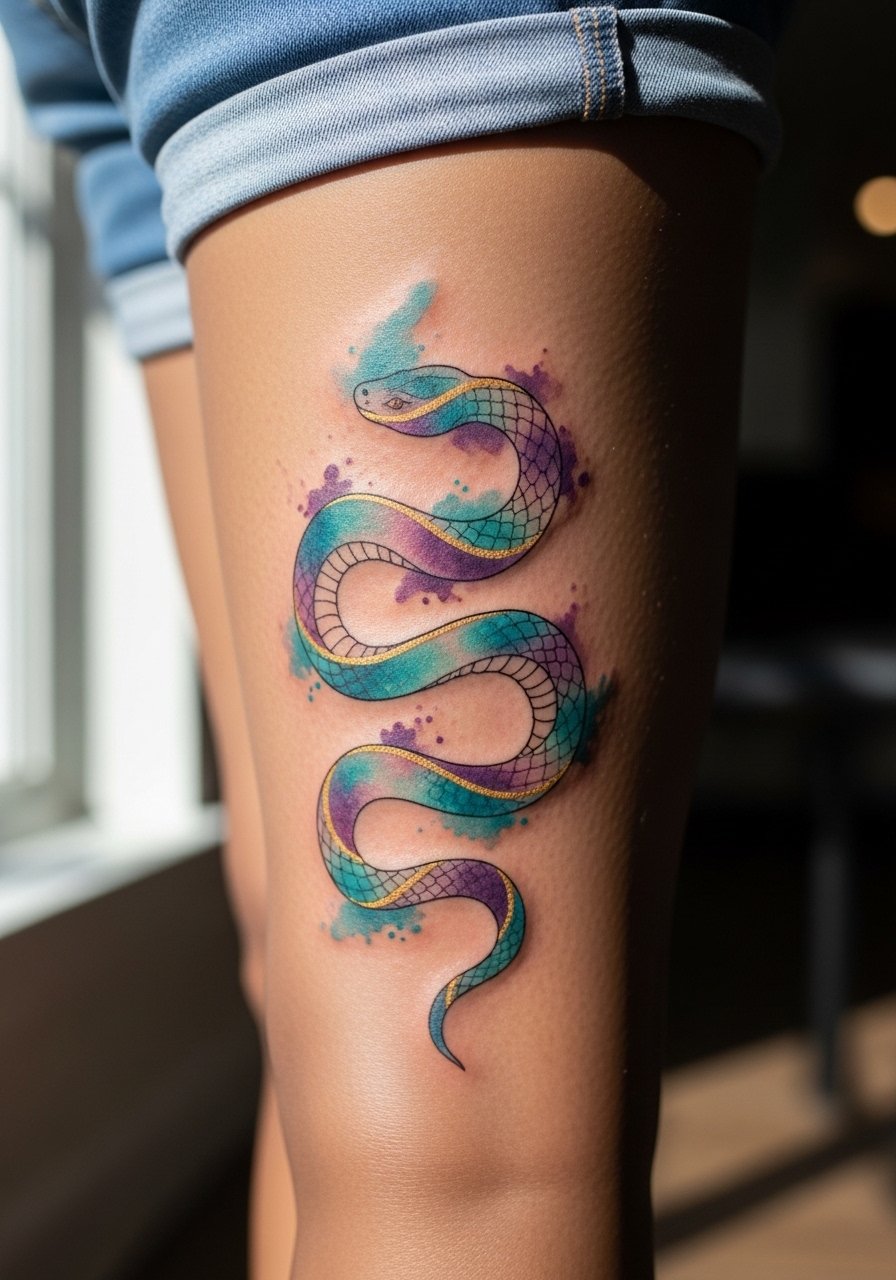
Calf placements are lower friction areas and can hold soft color better than ankles. For watercolor, ask for color anchored with light outlines or stipple shading to keep edges from migrating. The debate about watercolor longevity comes up again here because color can scatter, and some artists prefer blackwork for lifespan. If you choose watercolor, plan for a two-session approach and expect a touch-up at year two. For showing it off wear high waisted denim shorts.
22. Neo-traditional snake pierced by a dagger on the forearm
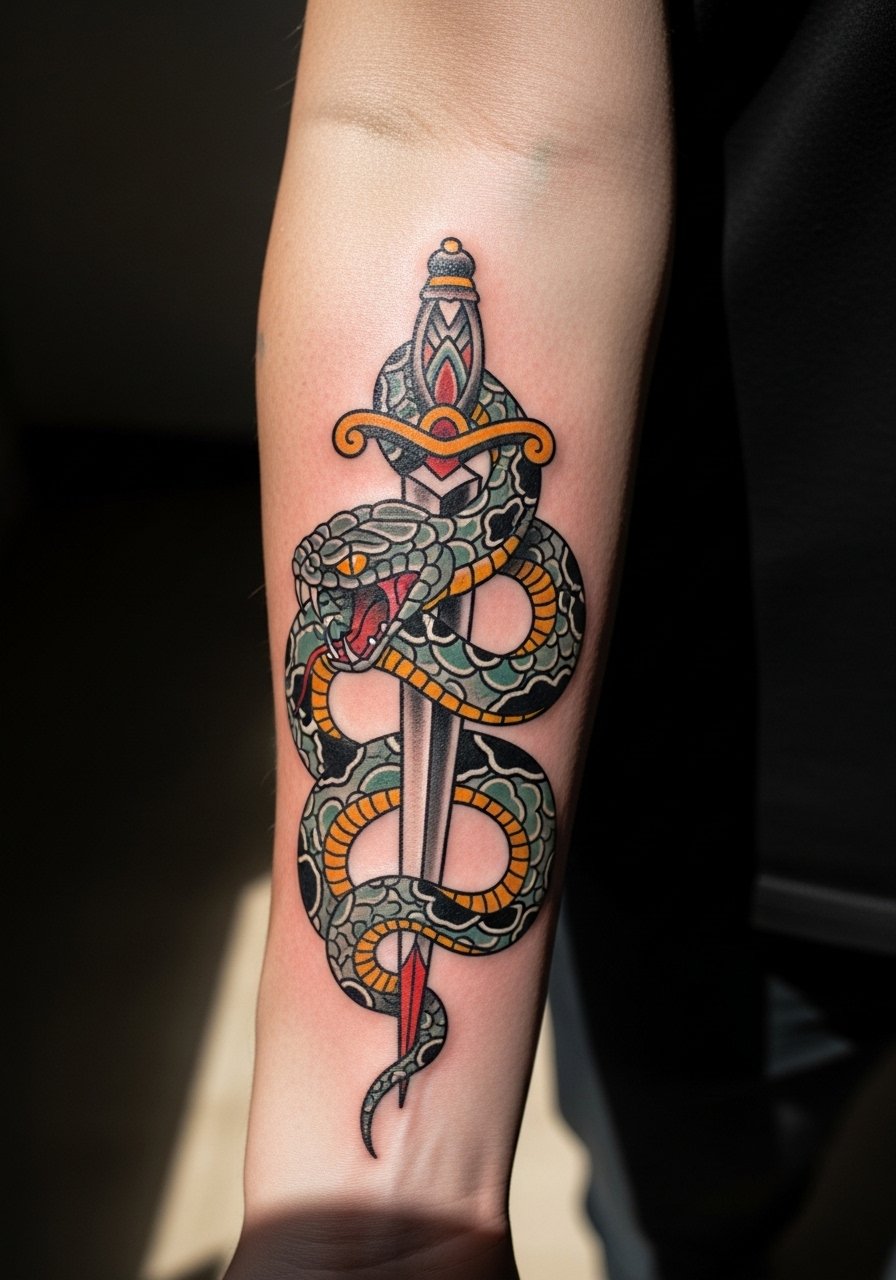
This classic motif carries tension and narrative in a compact size. Tell the artist to keep the dagger simple and the snake curves open so small details do not muddle. Forearm work allows for clear linework and usually ages into a readable silhouette. Sessions are comfortable and often done in one sitting for a small piece. For day-of wear a push up sleeve shirt you can move out of the way.
23. Single-line spine base snake that hugs the lower back
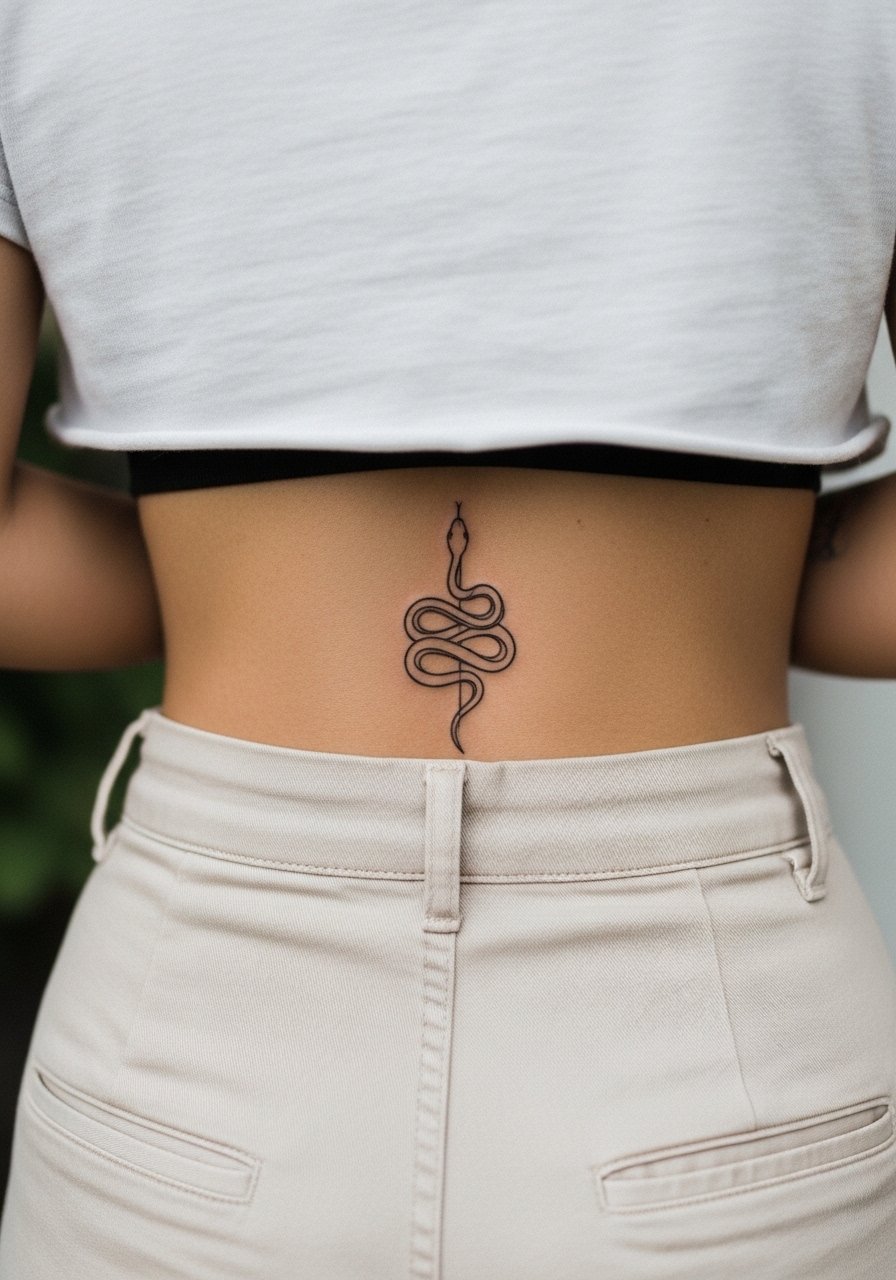
A single-line spine accent works when you want an elongated visual. Request a steady continuous line with slightly heavier weight at points where the spine curves to stop the line from breaking into patchy segments. Lower back skin is resilient, but this area can be subject to clothing friction during healing. Session length is moderate and the artist may recommend a specific sleeping position for the first night. Consider exposure when choosing placement.
24. Ornamental thigh-side serpent woven with mandala details
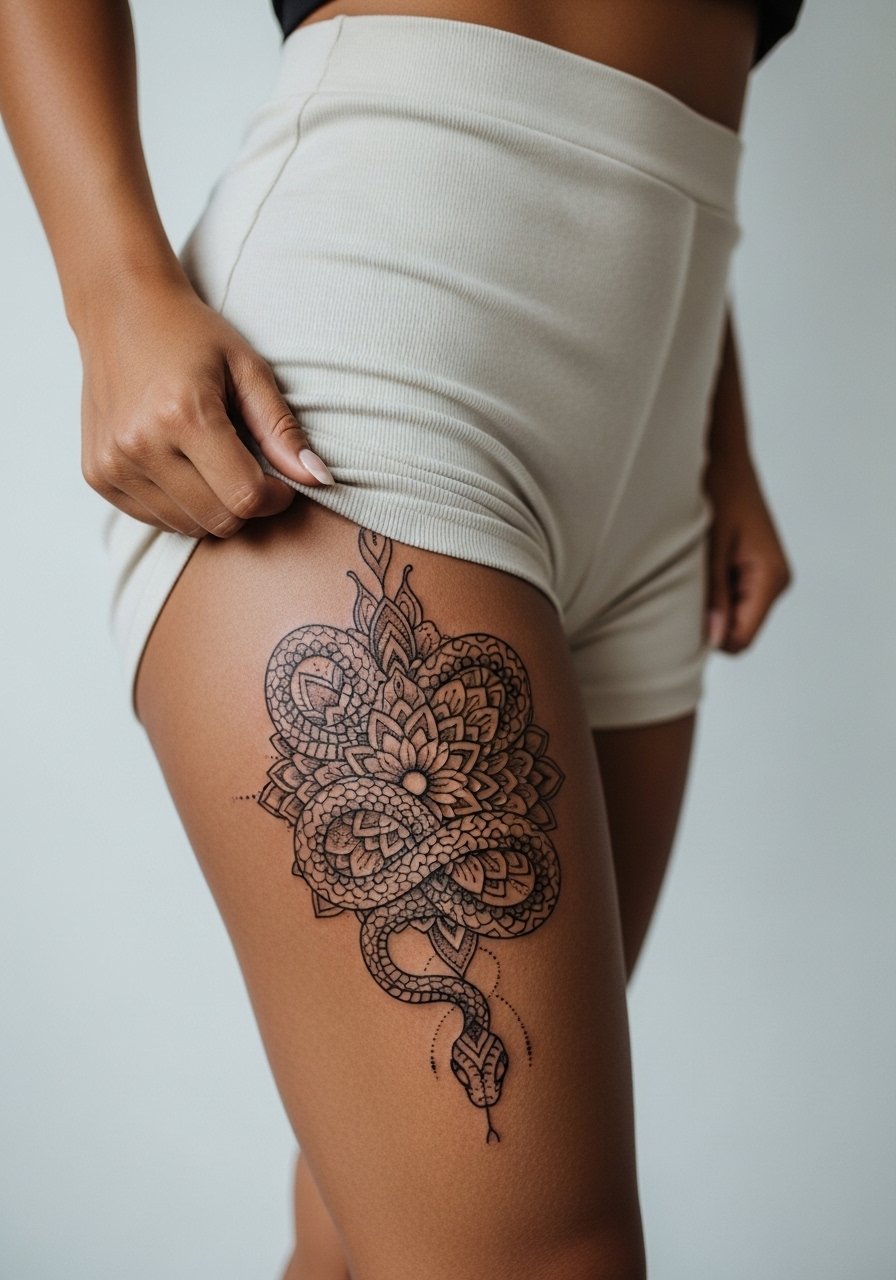
Thighs are forgiving for detail and for people who want occasional show-off moments. Ask for the serpent to weave through mandala rings with clear spacing between motifs to avoid blending during movement. The common mistake is overcomplicating the mandala scale. Sessions can be long so plan comfortable clothing like loose athletic shorts to wear to the appointment. Some artists prefer to see healed dotwork in portfolios before tackling dense mandala elements.
25. Midline sternum micro snake under a bandeau line
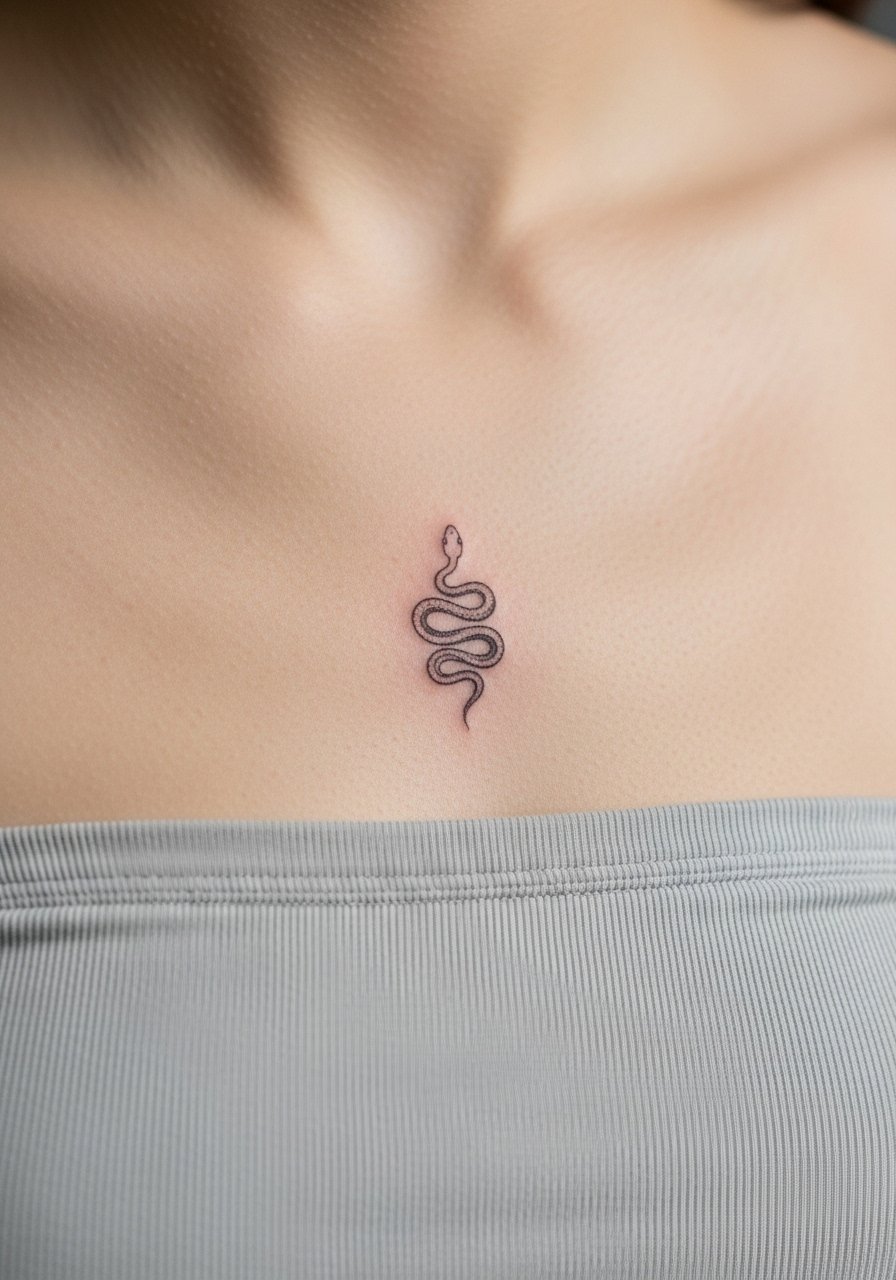
Sternum pieces are intimate and often require an artist experienced with chest anatomy. Request a design that sits just above the fabric line so it can be shown or concealed. The sternum is tender so sessions are slower and sometimes spread over more than one visit. The one-sentence note is that many shops will review portfolios for sternum work. For the appointment wear a fitted sports bra you can easily adjust.
26. Micro-realism inner bicep serpent coil
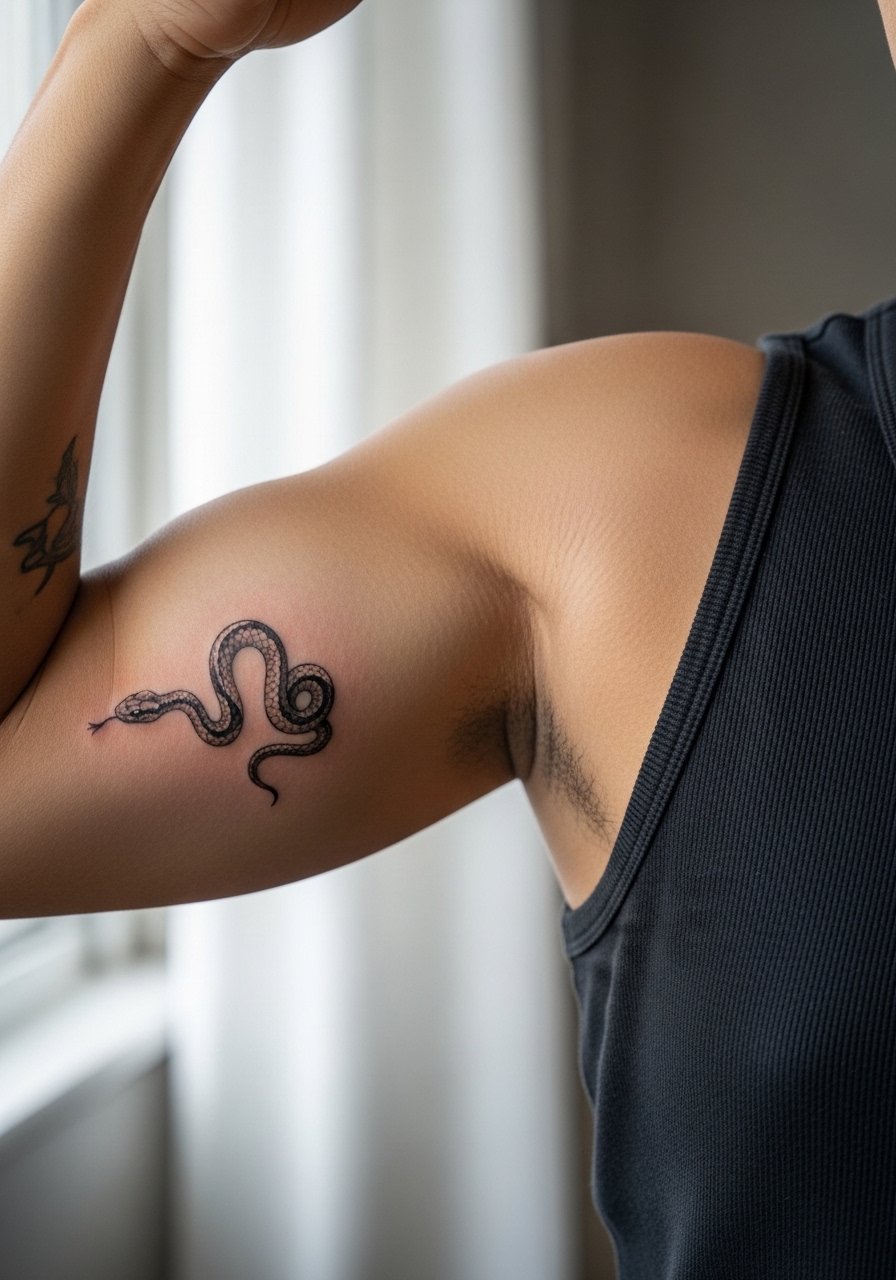
Inner bicep holds fine detail but is a sensitive spot for movement and sweat. Ask for micro-realism that uses crisp contrasts and small-scale stipple rather than heavy shading. Artists split on fine line in flexible areas, with one camp cautioning about blur and the other saying careful depth saves detail. Expect moderate pain and a session that may be interrupted for comfort. For the appointment a loose tank top keeps access easy.
27. Calf traditional mini snake that rides the curve
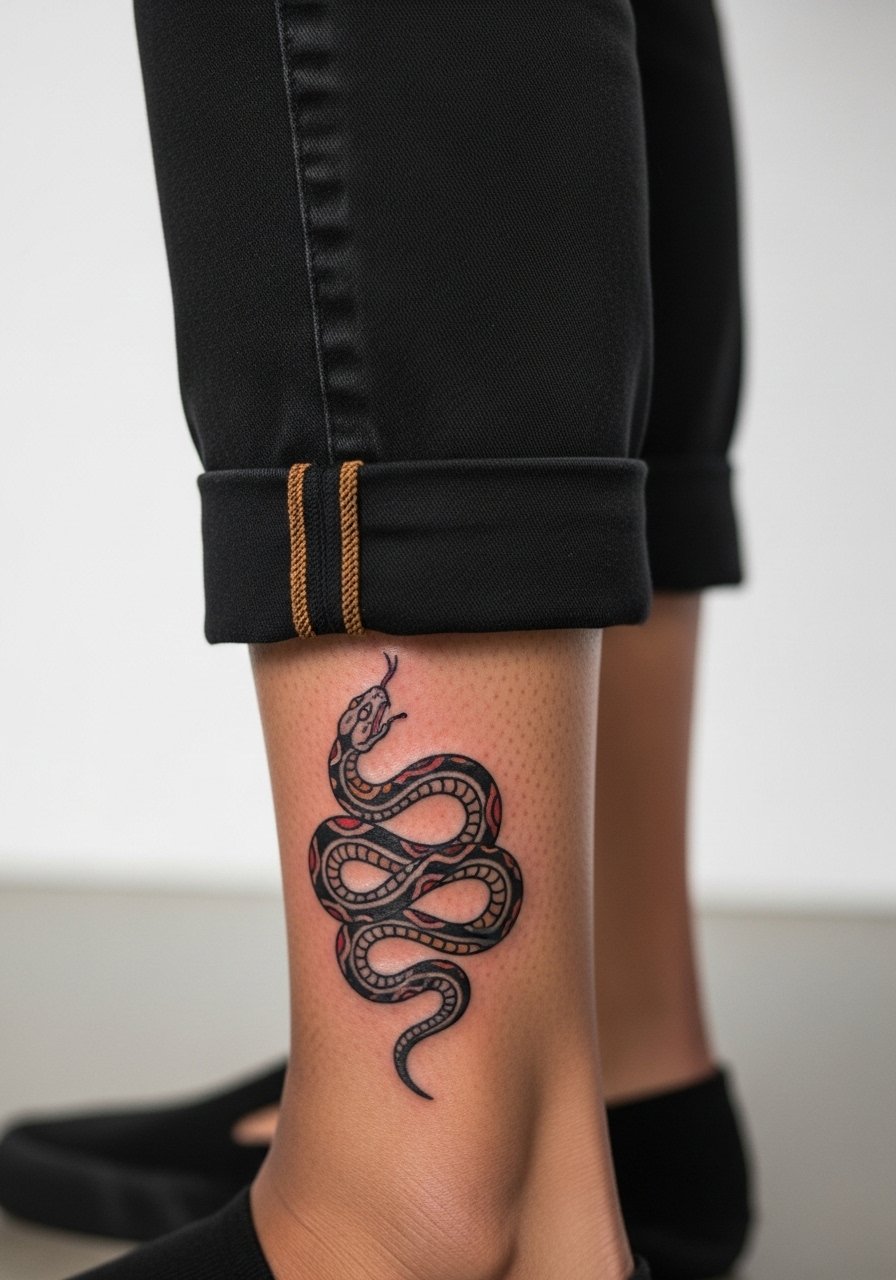
The calf is one of the most durable spots for small traditional work. Ask your artist to follow the muscle curve so the piece moves naturally with walking. The main error is packing too many colors into a tiny canvas. Sessions are straightforward and healing is usually uneventful. For casual display roll chinos at the hem or slip into summer shoes to let the piece speak.
Frequently Asked Questions
Q: Will a fine line snake on my wrist blur faster than a bold blackwork version?
A: Fine line on wrists tends to soften sooner because of constant movement and washing. Some artists say careful depth and spacing keeps fine line readable for years, while others recommend slightly thicker lineweight for wrists. If long-term clarity matters choose a modestly bolder line or accept a touch-up at year one to two.
Q: How should I prepare clothing-wise for an ankle watercolor session?
A: Wear loose bottoms you can roll up like khaki cropped pants and bring sandals that do not rub the area. Lightweight layers help you keep the ankle exposed without irritating the fresh ink.
Q: Are blackwork geometric small snakes better for darker skin tones?
A: Blackwork often reads stronger on deeper tones because the contrast stays visible in photos and at distance. Thick outlines and solid fills work well. You can ask your artist to test a temporary marker to preview contrast on your skin before booking.
Q: How long does a touch-up typically take for a small finger or knuckle snake?
A: Touch-ups for fingers and knuckles are usually short appointments, often under 30 minutes, but frequency can be higher. Plan on at least one touch-up within the first year if you use your hands a lot.
Q: Is there a controversy about watercolor versus blackwork for small tattoos I should know?
A: Yes, there are two clear camps. Watercolor advocates prioritize the painterly look and accept fade, while durability advocates prefer blackwork for longevity. Decide whether you want the initial aesthetic or the maintenance schedule, and ask the artist which approach they recommend for your placement.
Q: Where can I find artists and reference feeds for small snake tattoo art?
A: Search tags such as #SnakeTattoo and #FineLineSnake on social platforms, browse tattoo directories by style, and check local forum threads for recent work. Look for healed photos and portfolios showing the exact placement you want before booking.