Fine line tattoos are all over feeds right now, and people are surprised when a small wrist turtle looks like a smudge a year later. Price creep during session-build is another common gripe, and forearm pieces can warp with flexing if you skip healed mockups. Keep those problems in mind as you scroll these 21 sea turtle tattoo ideas, each paired with what to ask your artist and how the design will age so you can pick the one that holds up.
1. Realistic Sea Turtle on the Outer Forearm
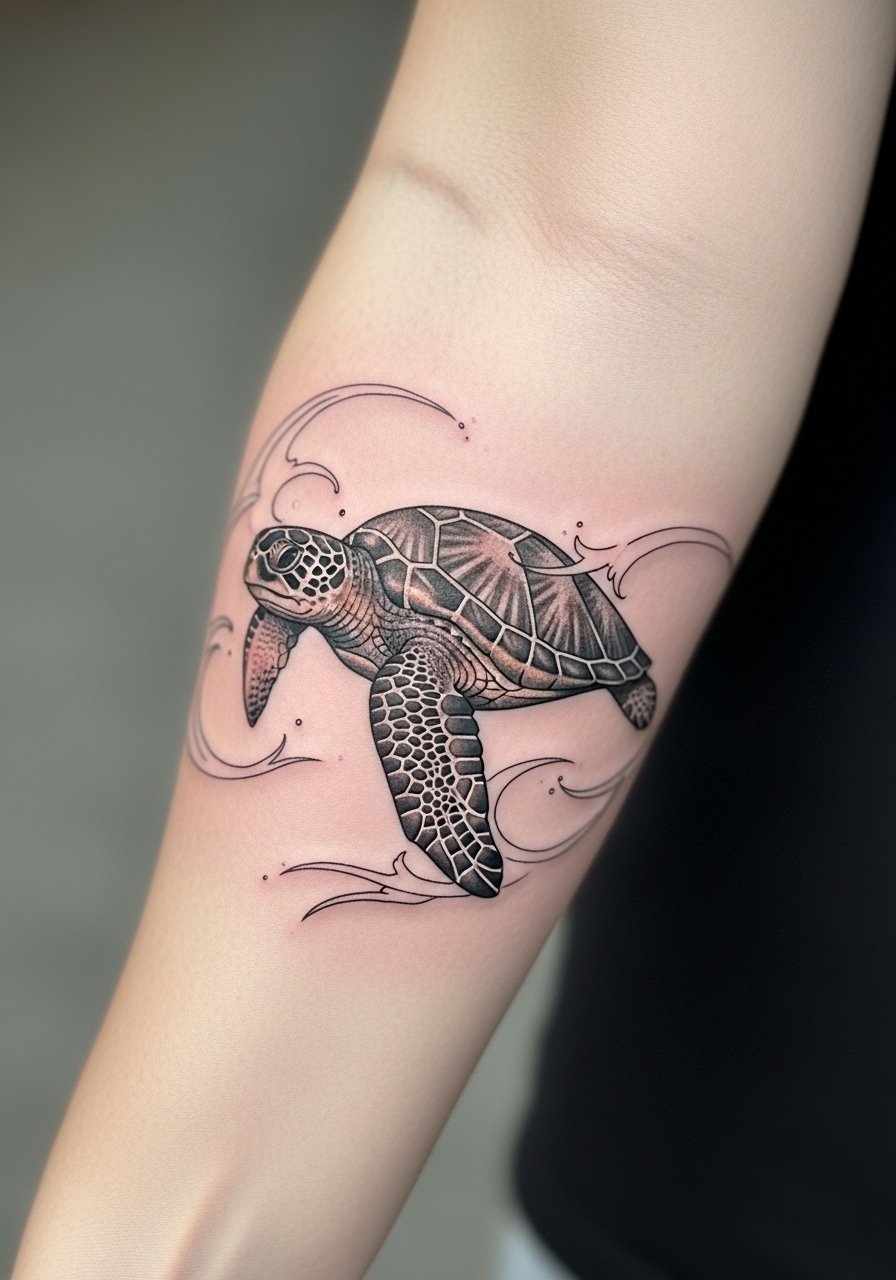
I’ve seen forearm turtles last longer when artists leave slightly more negative space around the flippers. Ask your artist for black and gray saturation that reads from a few feet away and for the stencil to be previewed while you flex the arm. Fair warning, the forearm flexes when you rotate your wrist and that can slightly warp very tight detail. Expect a one to two session process and a possible touch-up at year two for crisp edges. For showing it off, roll the sleeve on a navy chambray button-up so the linework stands out without clashing.
2. Tribal Sea Turtle Shoulder Outline
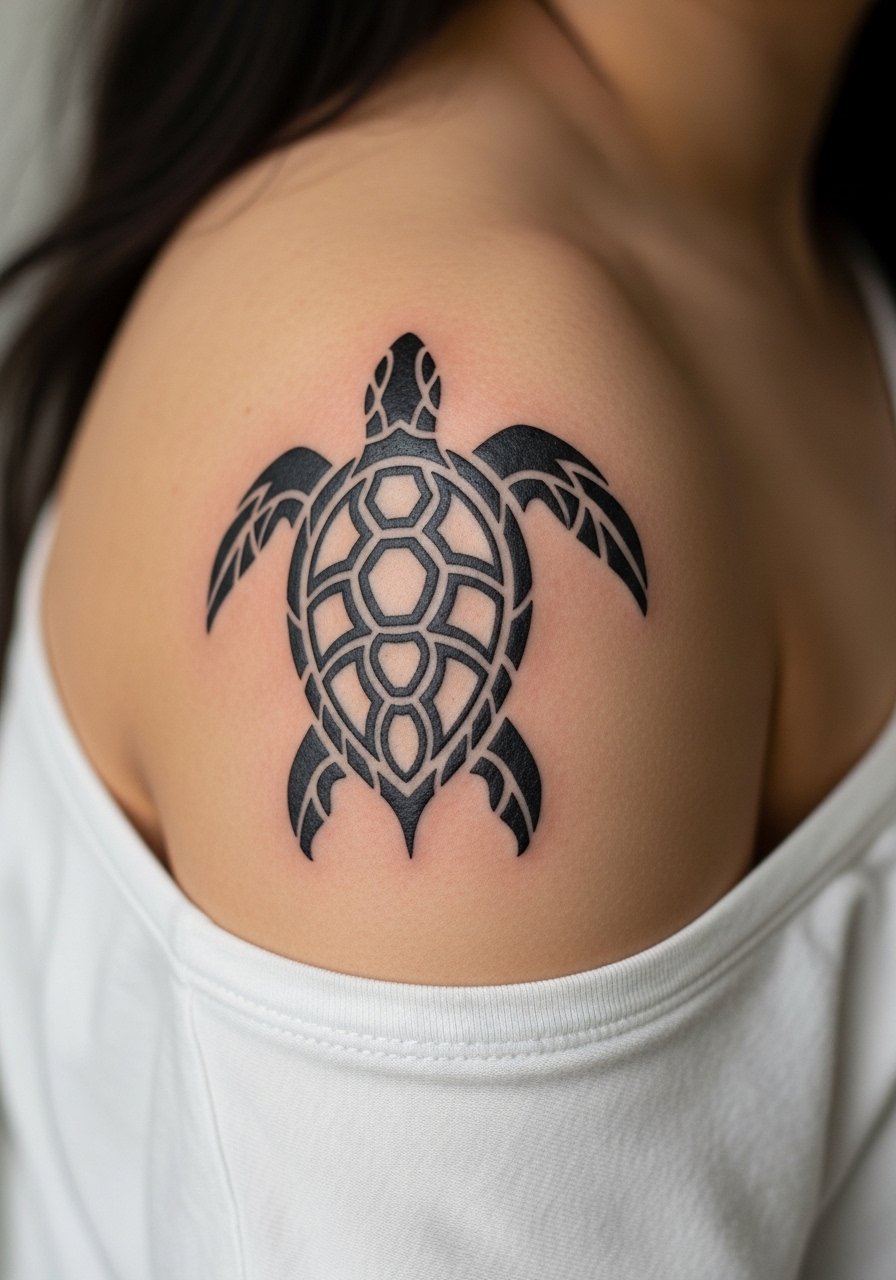
When people choose Polynesian-style linework they usually want the protective symbolism behind the motif. Tell your artist which cultural elements you want emphasized and ask how they will adapt motifs rather than copy a sacred pattern directly. The shoulder is forgiving for solid blackwork and it ages into a strong silhouette. Session wear is simple, so plan to come in a sage tank or off-shoulder cotton top you can slide for access. Common mistake is squeezing too many micro-patterns into a small shoulder piece. Leave the bold lines room to breathe.
3. Minimalist Turtle Wrist Silhouette
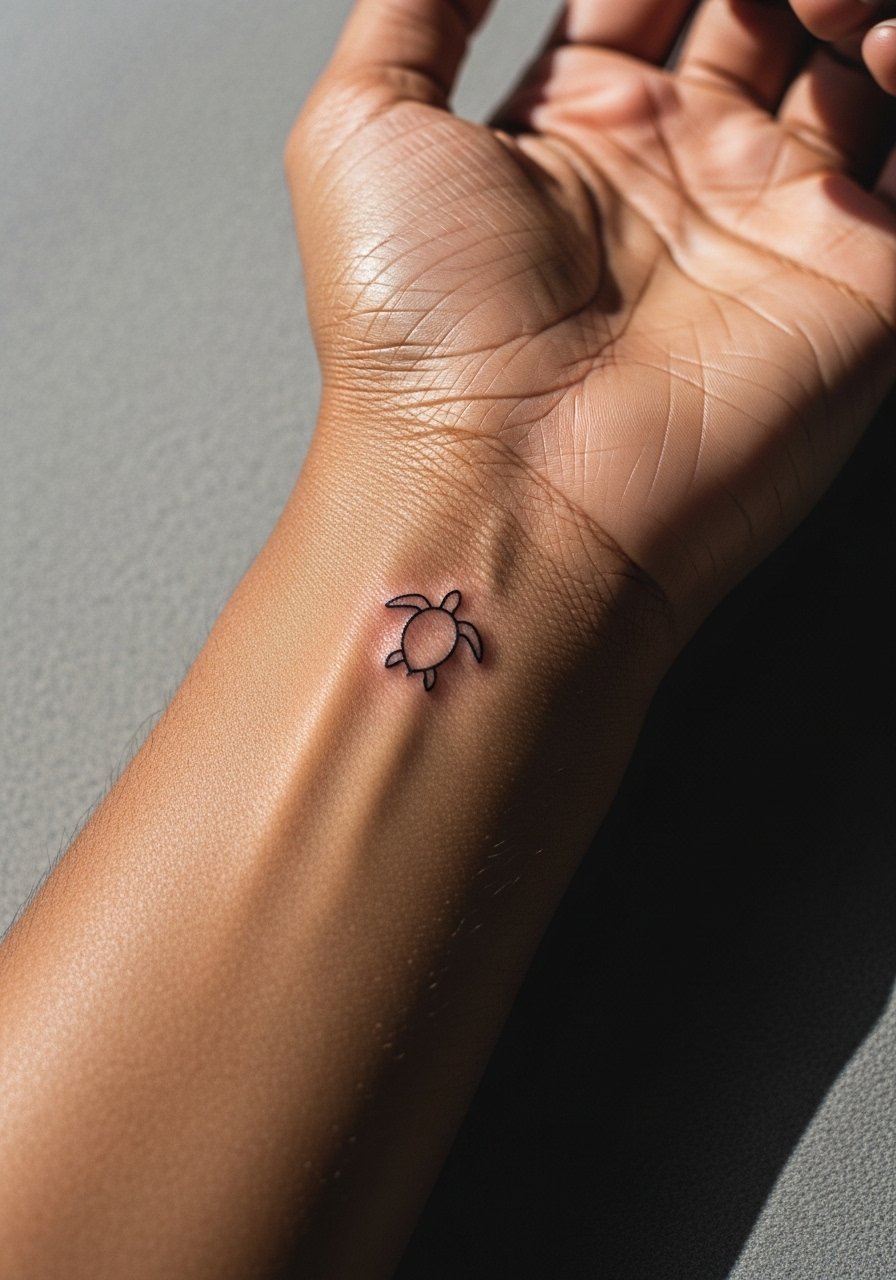
Fair warning, fine line at the wrist triggers the long-running debate in tattoo circles. One camp says fine line fades fast on wrists and hands. The other camp says with proper line weight and touch-up planning it can settle well. I recommend slightly bolder single-needle work than the thinnest flash to avoid the smudge problem. The session is quick and the pain is low to moderate. For showing it off, pair the piece with a thin silver bangle set on the opposite wrist so the turtle reads cleanly without being crowded.
4. Black-and-Gray Turtle Across the Upper Back
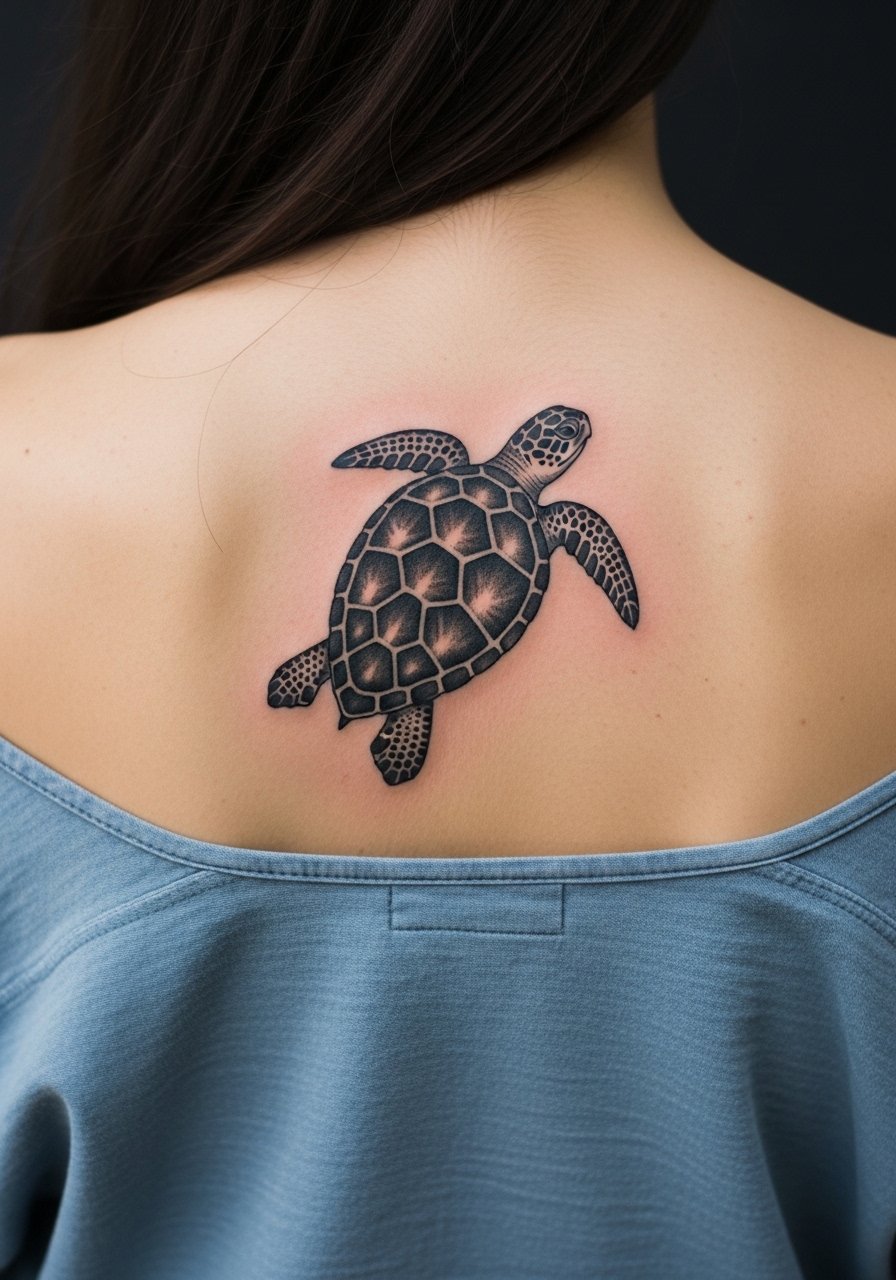
Black-and-gray shell shading gives a sculptural feel and tends to age more predictably than saturated color. If you want depth, ask for stipple shading and varied saturation rather than flat fills. The upper back gives enough canvas for a five to eight inch composition and two sessions if you want heavy texture. A common misstep is packing tiny details into an area that will stretch with shoulder movement. For session day, a low-back crop top or loose tank makes it easy to lie face down and keeps clothing off the fresh work.
5. Watercolor Sea Turtle Swimming on the Thigh
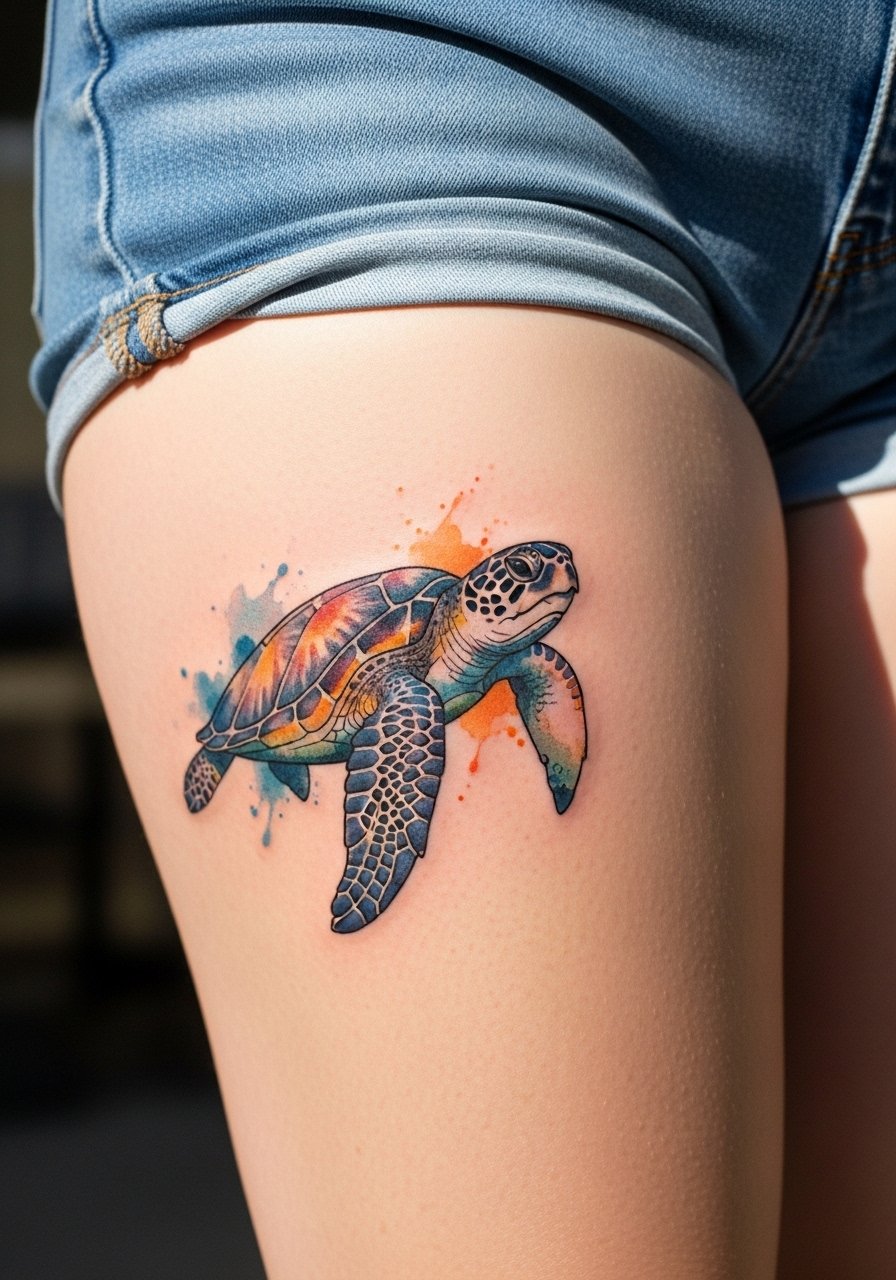
Color lovers split into two camps on watercolor. One side loves the airy washes and bold palettes. The other argues that black-and-gray retains more depth over time. If you pick watercolor, ask your artist to anchor washes with subtle black linework so the shape holds as color fades. Thigh placements take multiple sessions for layered color and are easier to protect during healing. For summer shows, pair the piece with high waisted denim shorts so the color pops against simple denim.
6. Neo-Traditional Turtle with Coral on the Calf
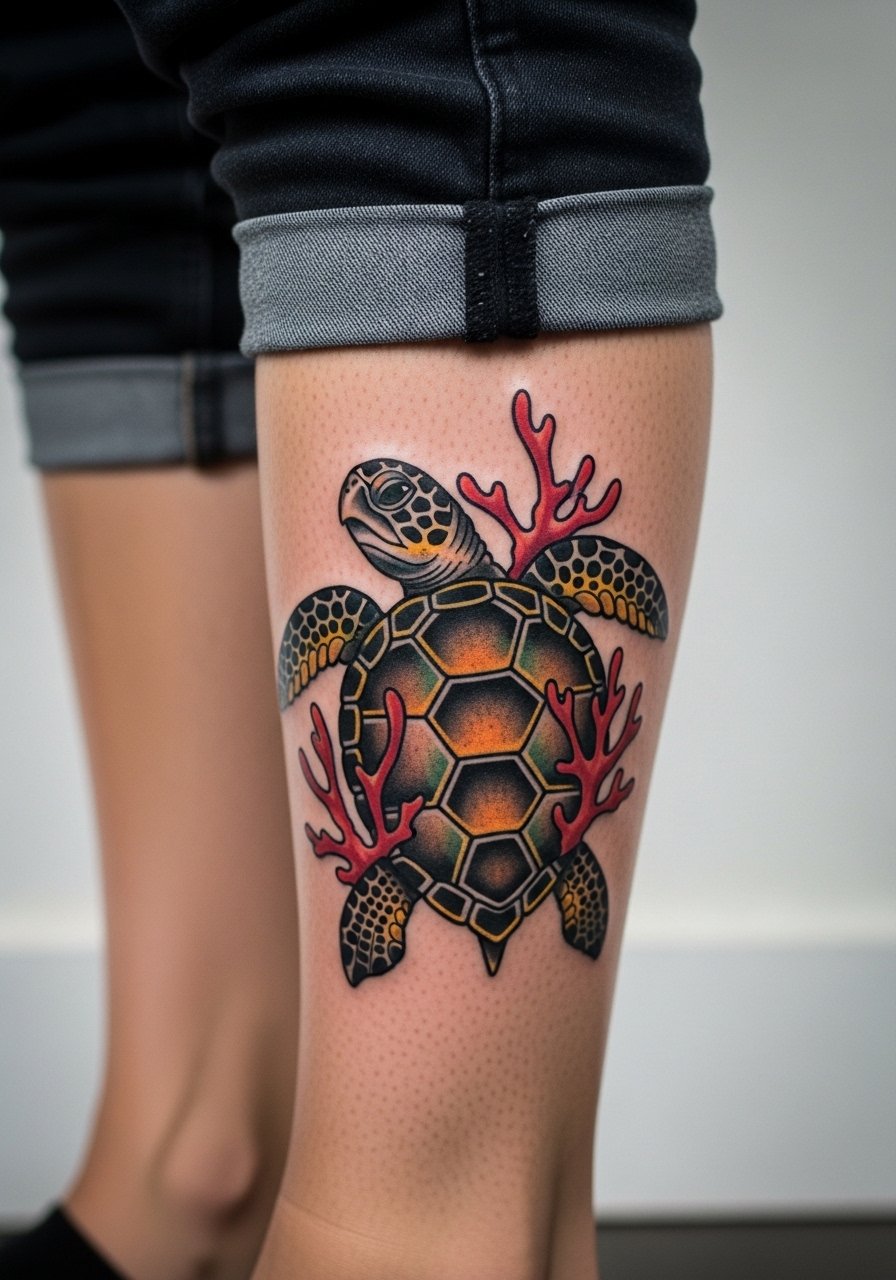
Neo-traditional brings color and playful elements like coral or barnacles without losing strong linework. The calf is great for a six inch piece and it moves well with muscle motion. Expect two to four sessions for layered color. For showing off, cropped joggers or rolled ankle pants in olive provide a complementary frame, so try a pair like cropped jogger pants when you want the tattoo visible. A common mistake is asking for tiny details in areas that see friction from socks and shoes.
7. Fine-Line Turtle with Wave Accent on the Inner Arm
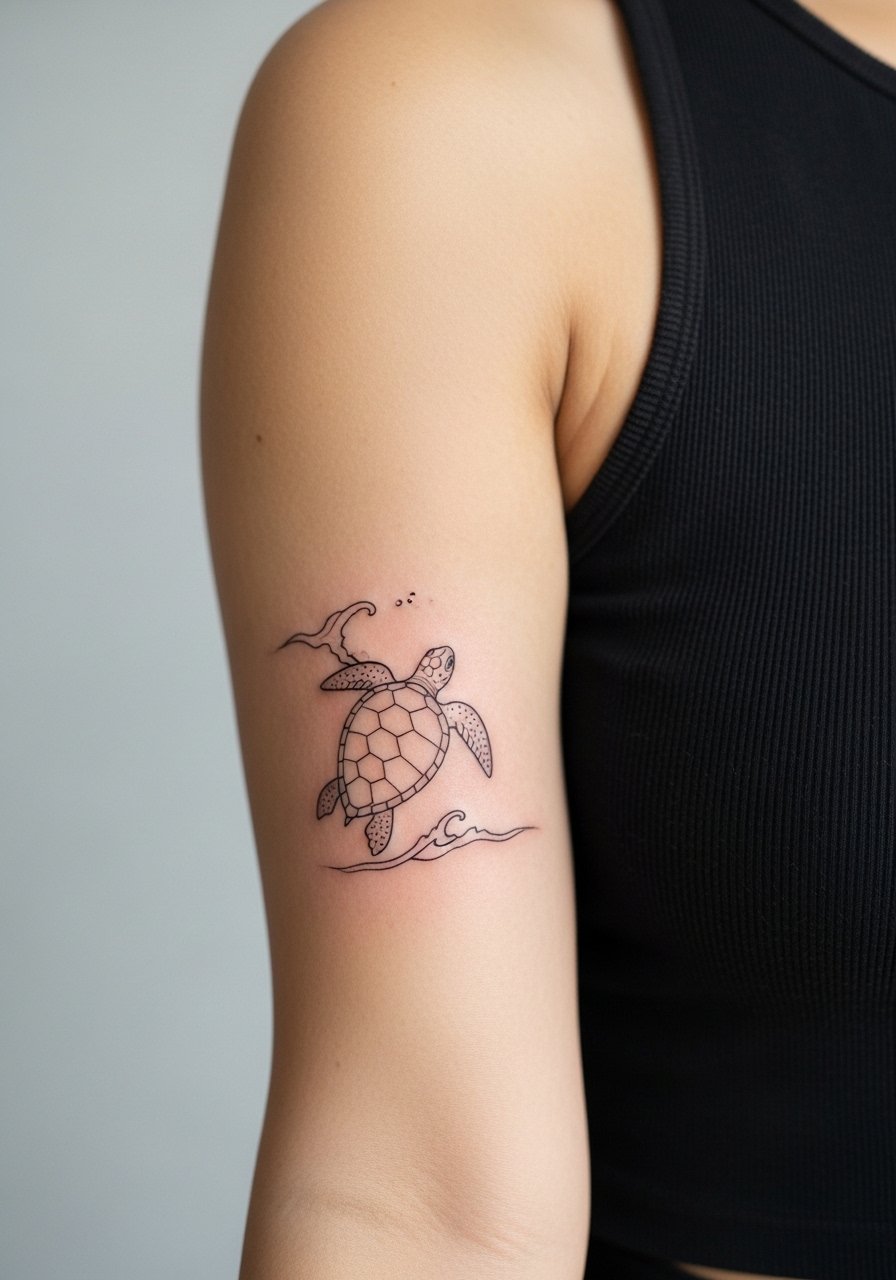
I’ve seen inner arm placements hold detail nicely if the line weight is not too feather-thin. Ask your artist to show healed examples of fine-line work on inner biceps, because skin here can be softer than the outer arm. The session feels like a mid-level discomfort spot due to sensitivity. Expect a single session for a three inch piece and plan a touch-up at 18 to 24 months if you want lines to remain crisp. Avoid packing dense stipple into tiny shapes or the texture will merge.
8. Ornamental Turtle Mandala on the Upper Arm
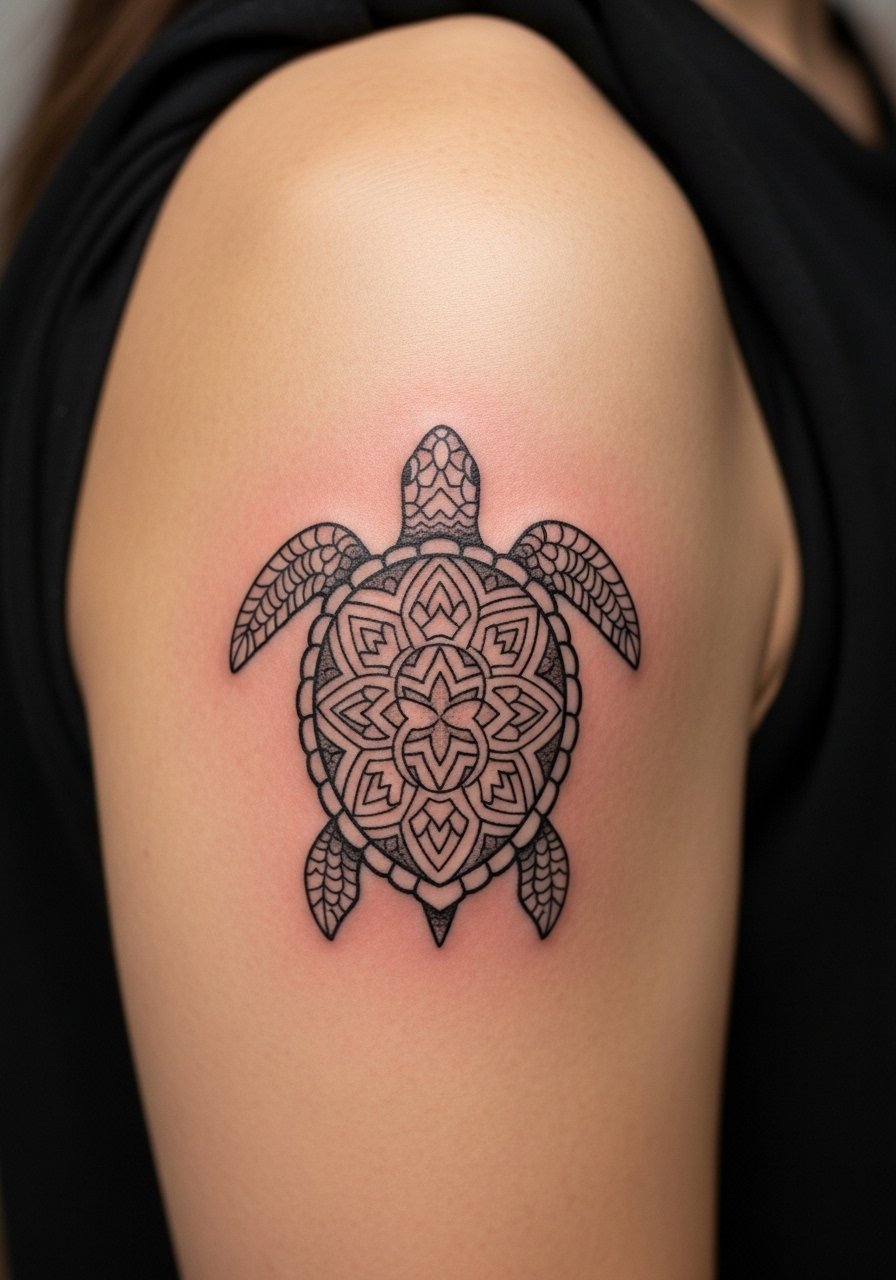
When ornamental geometry meets the turtle shell, the result reads spiritual and structured without copying sacred iconography. Mention to your artist which motifs you want adapted rather than copied so you respect origins. The upper arm heals well and lets the mandala keep its negative space. For session wear, slide into a sleeveless button-down or tank you can lift without rubbing the fresh ink. A mistake I see is shrinking the mandala too much; give complex geometry room to breathe or it will blur at year three.
9. Ignorant-Style Turtle Scribble at the Ankle
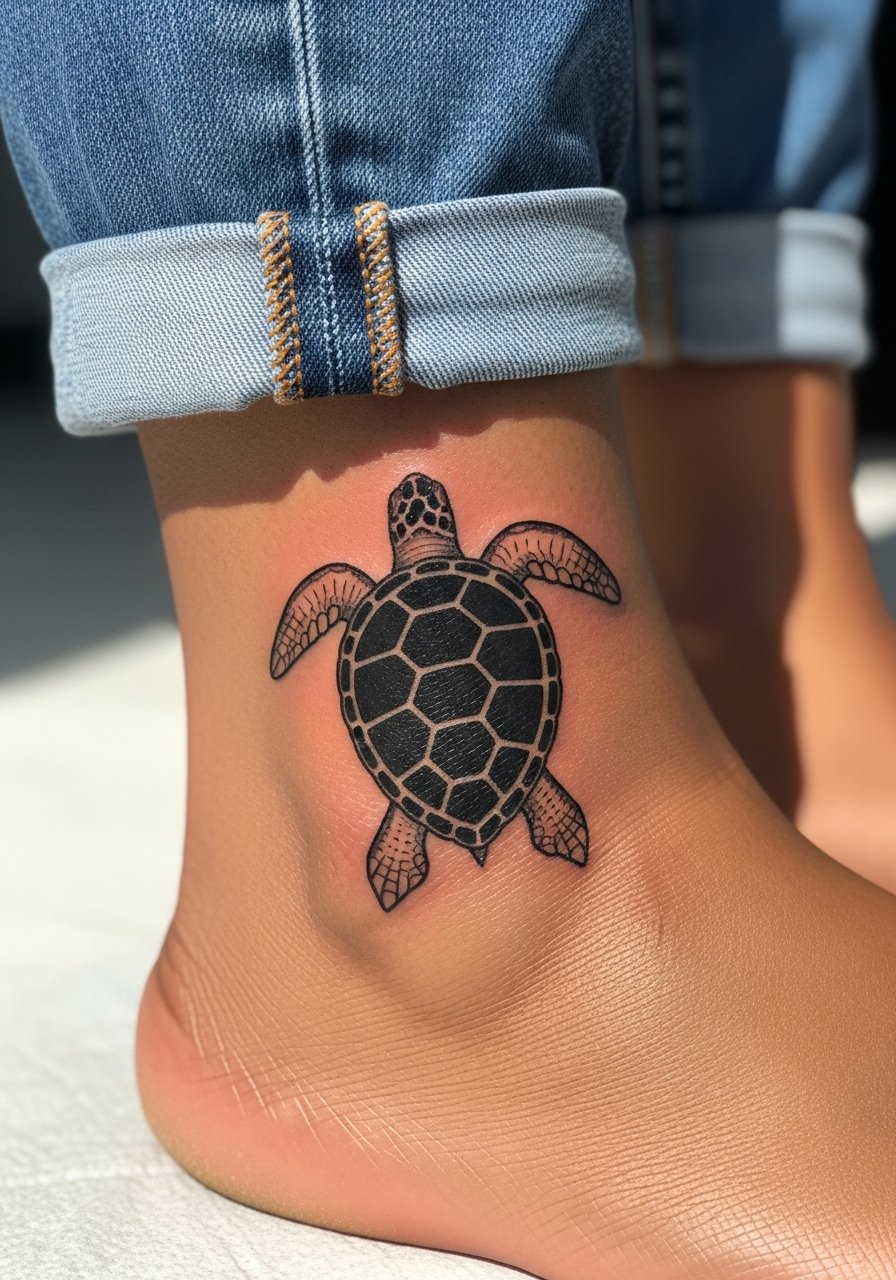
Ignorant style embraces raw, hand-drawn marks and looks intentional when the linework is loose. The ankle endures daily friction, so expect some fading where socks or shoes rub. Tell your artist you want confident, sketchy strokes and not hesitant dotted lines. Session time is usually short. Common mistake is requesting tiny illegible scribbles that lose their charm when healed. If you plan to show it often, roll your jeans or pick sandals during warm months so it gets air and attention.
10. Micro-Realism Tiny Turtle on the Side of the Foot

Micro-realism on the foot reads delicate but carries higher risk of fading because feet get a lot of friction. I recommend slightly increasing contrast in the shell and scheduling a touch-up at the one year mark. The foot is sensitive, so pain is moderate to high and sessions are brief. Avoid asking for ultra-fine stippling at this size. For session comfort, wear loose shoes that slide on easily and avoid tight socks right after the appointment.
11. Stipple-Shaded Turtle on the Ribcage
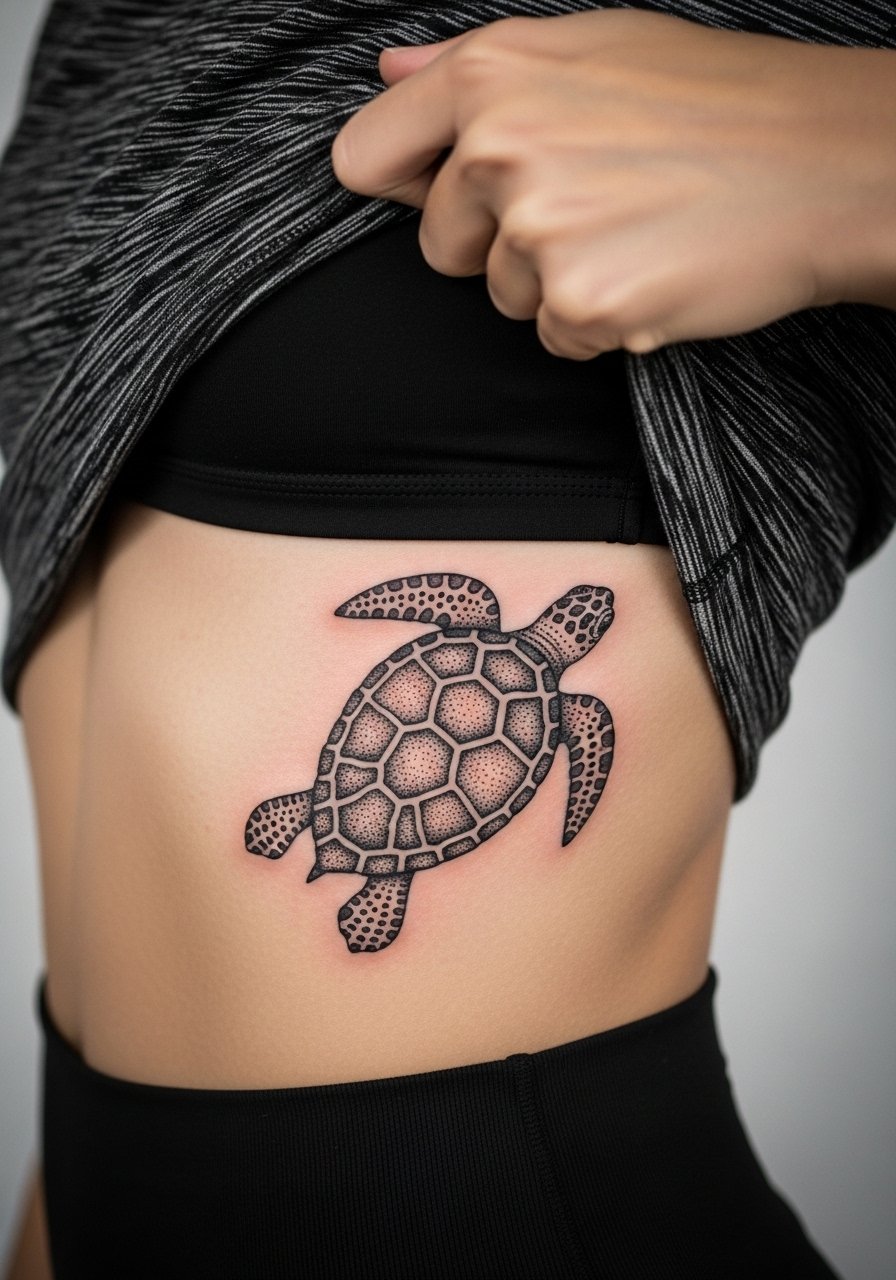
Fair warning, ribcage placements are where opinions split on fine detail. One group says the skin stretch blurs dense dot work fast. The other group says with correct spacing and depth, stipple holds. I tell clients the difference comes down to the artist’s spacing choices. Ribcage work tends to be painful and may require breaks. A common error is asking for tightly packed dots in a small area. If you want the look without the pain, consider a slightly larger stencil so dots can be spaced safely.
12. Tiny Turtle Behind the Ear, Below the Hairline
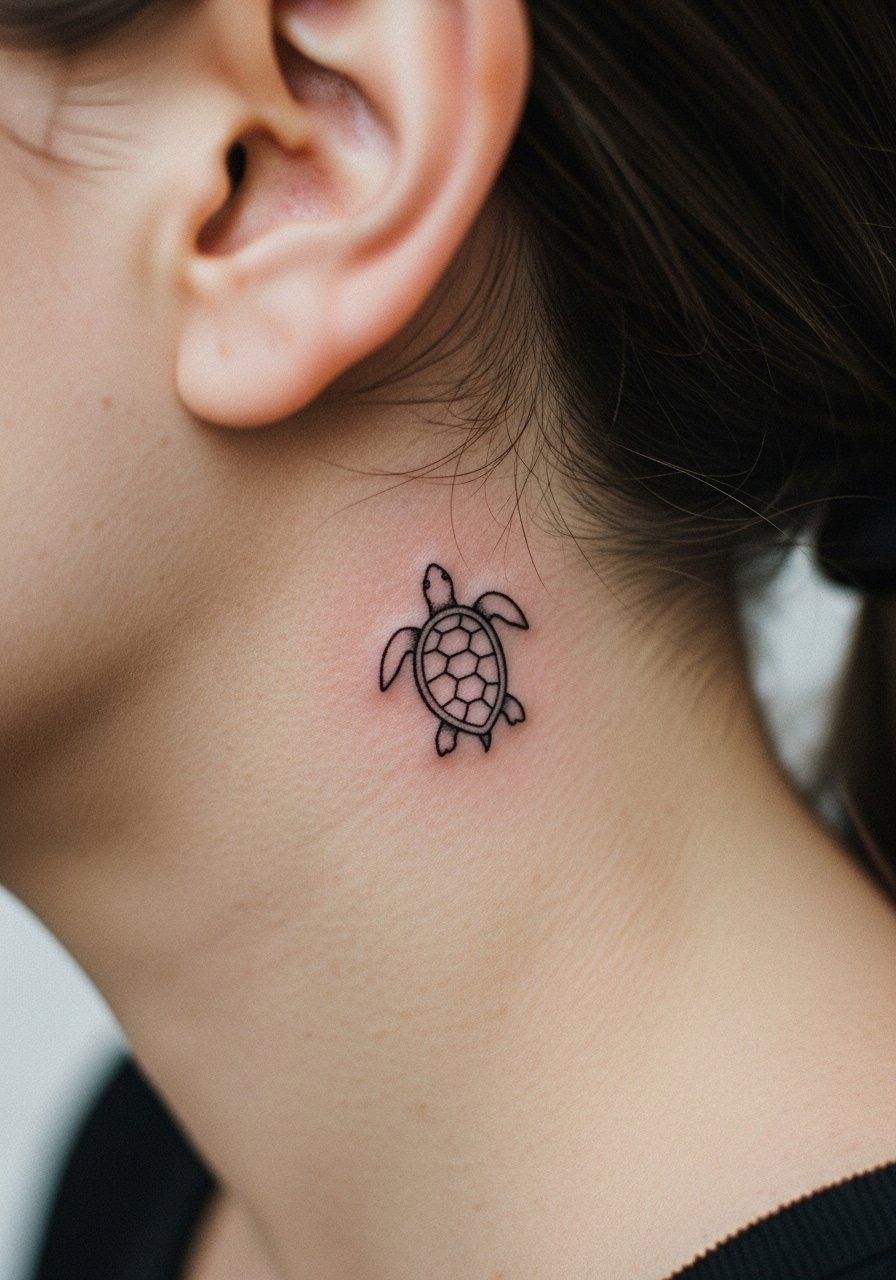
Behind-the-ear turtles are discreet and surprising when visible. The area is small and sensitive, so keep linework simple and ask for a slightly bolder silhouette than the thinnest micro-line to avoid early fading. Session time is quick but the proximity to hair means you should plan simple hair styling during healing. A mistake is wanting too much detail in a tiny spot. If your job requires a conservative look at times, this placement stays easy to conceal.
13. Geometric Turtle Shell at the Collarbone
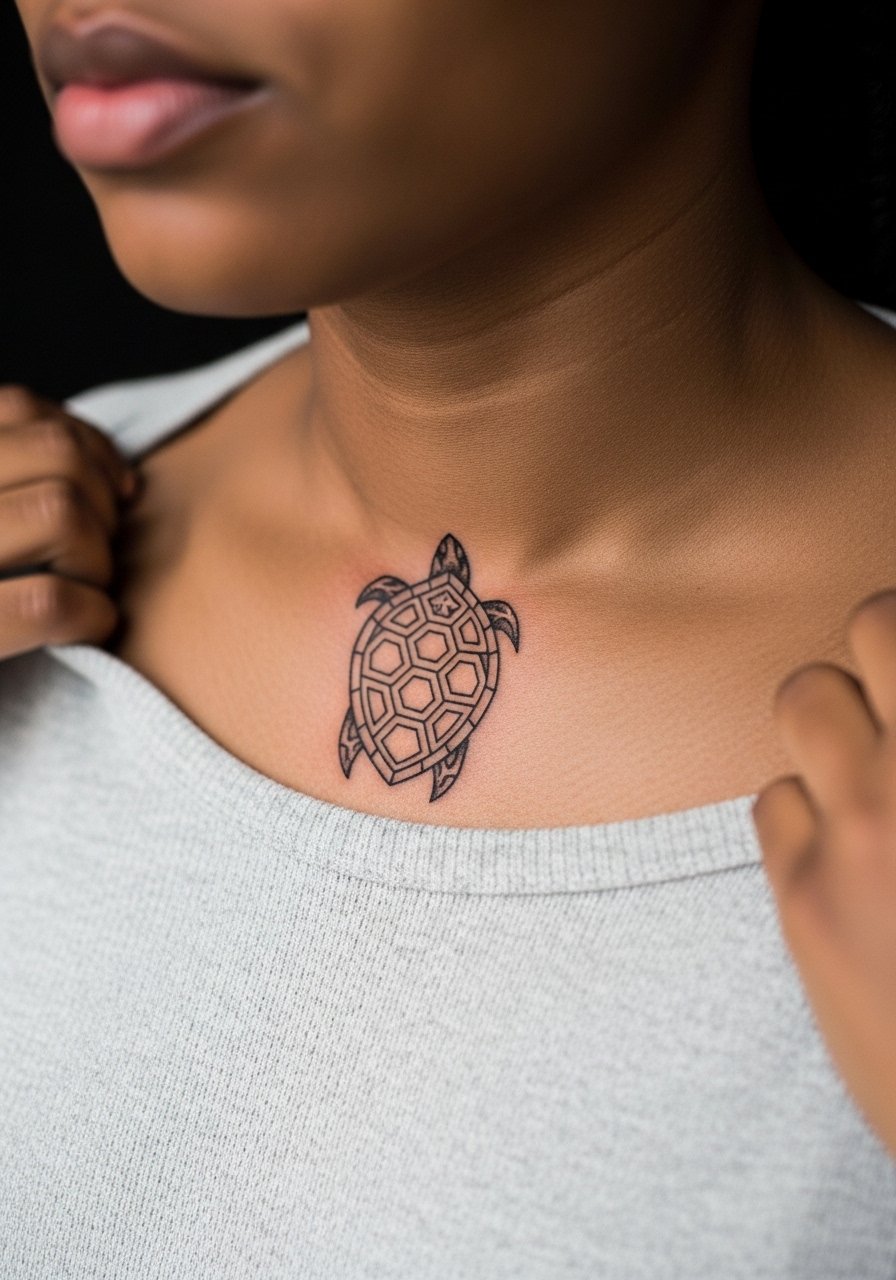
Collarbone and upper chest are great for geometric shells that play with negative space. Ask for slightly thicker primary lines so the geometry retains structure as it ages. The area is moderate on the pain chart and often needs only one session for a compact design. A common mistake is compressing too many lines into the narrow collarbone plane. For session day, a wide-neck shirt you can shift aside keeps access clean without exposing your torso.
14. Forearm Turtle with Compass Accent
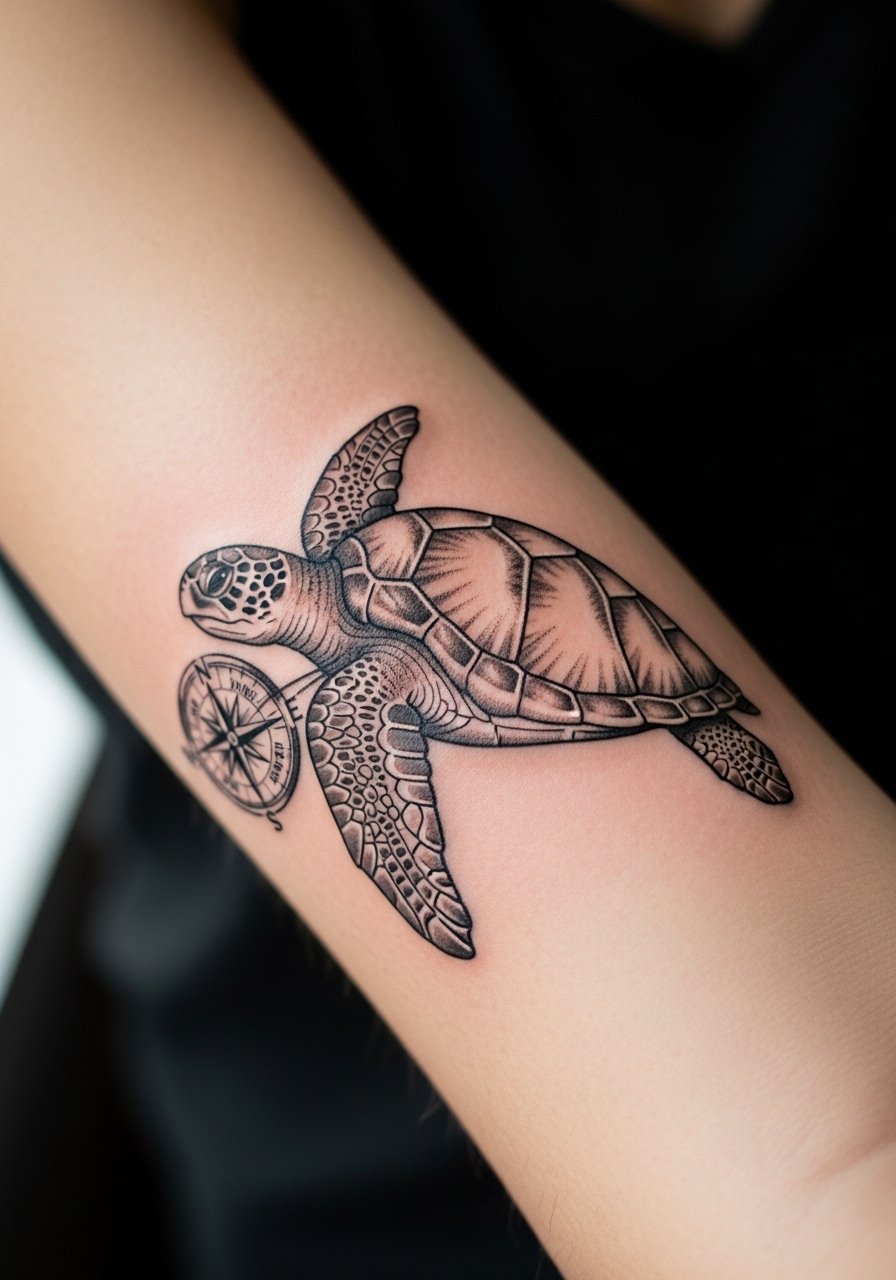
When a turtle pairs with a compass the narrative tilts toward travel and guidance without heavy ornament. During consultation, specify how dominant you want the compass relative to the turtle so one element does not overpower the other. Forearm motion can affect tiny directional lines, so ask for bolder compass points. The session is usually a single to two hour block. For outfits that show it off, try a rolled sleeve on a navy chambray button-up so both details read clearly.
15. Matching Small Turtle Wrist for Partners
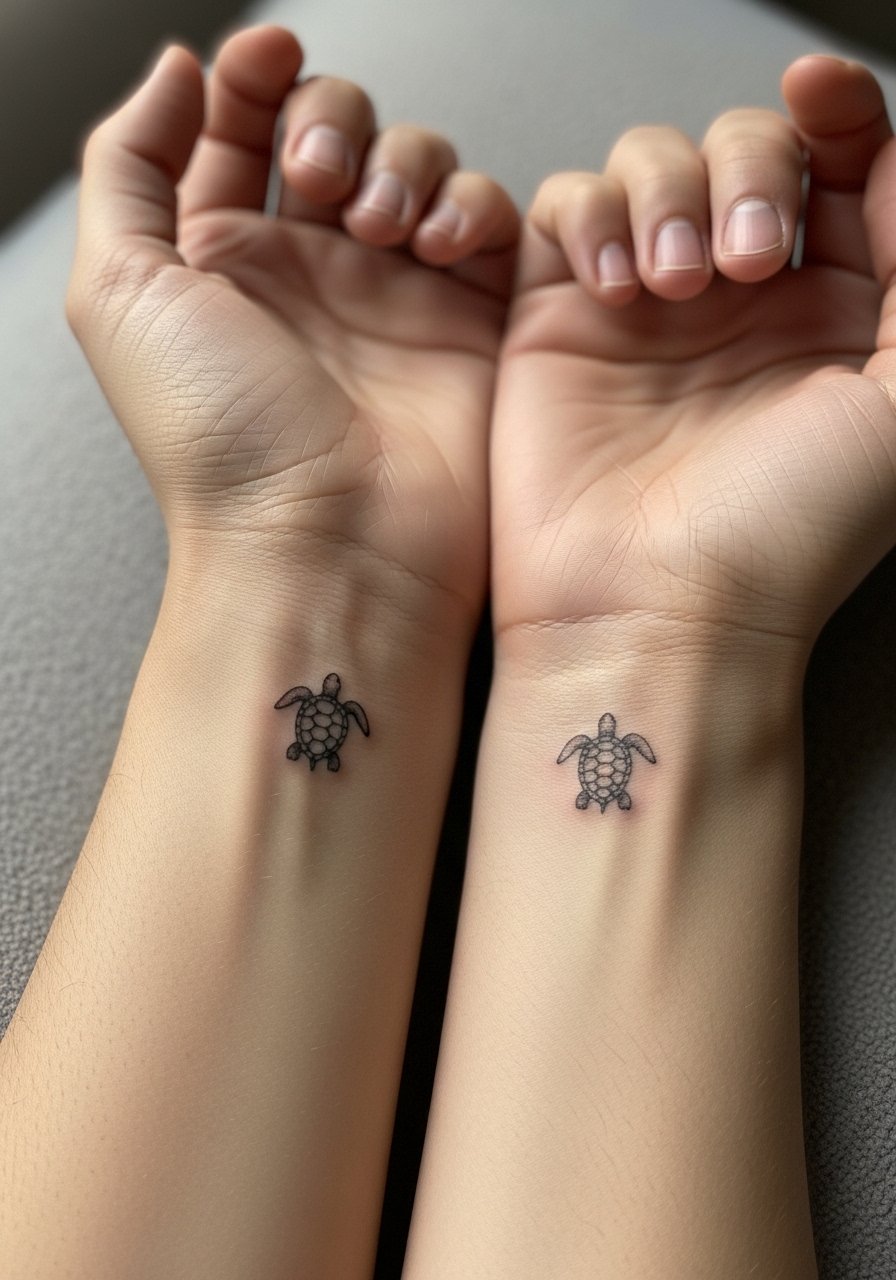
Matching wrist pieces are discreet and social by design. If you go this route with someone else, decide beforehand whether you want identical line weight or mirrored orientation. The wrist is a high-motion area so ask for slightly stronger lines than a hairline. Sessions are short and touch-ups may be needed at year two. For showing it off, a dainty stack of bracelets can complement the turtles, or keep the opposite wrist free to avoid competing elements. Consider a thin silver bangle set to balance the look.
16. Hand-Poked Minimalist Turtle on the Inner Thigh
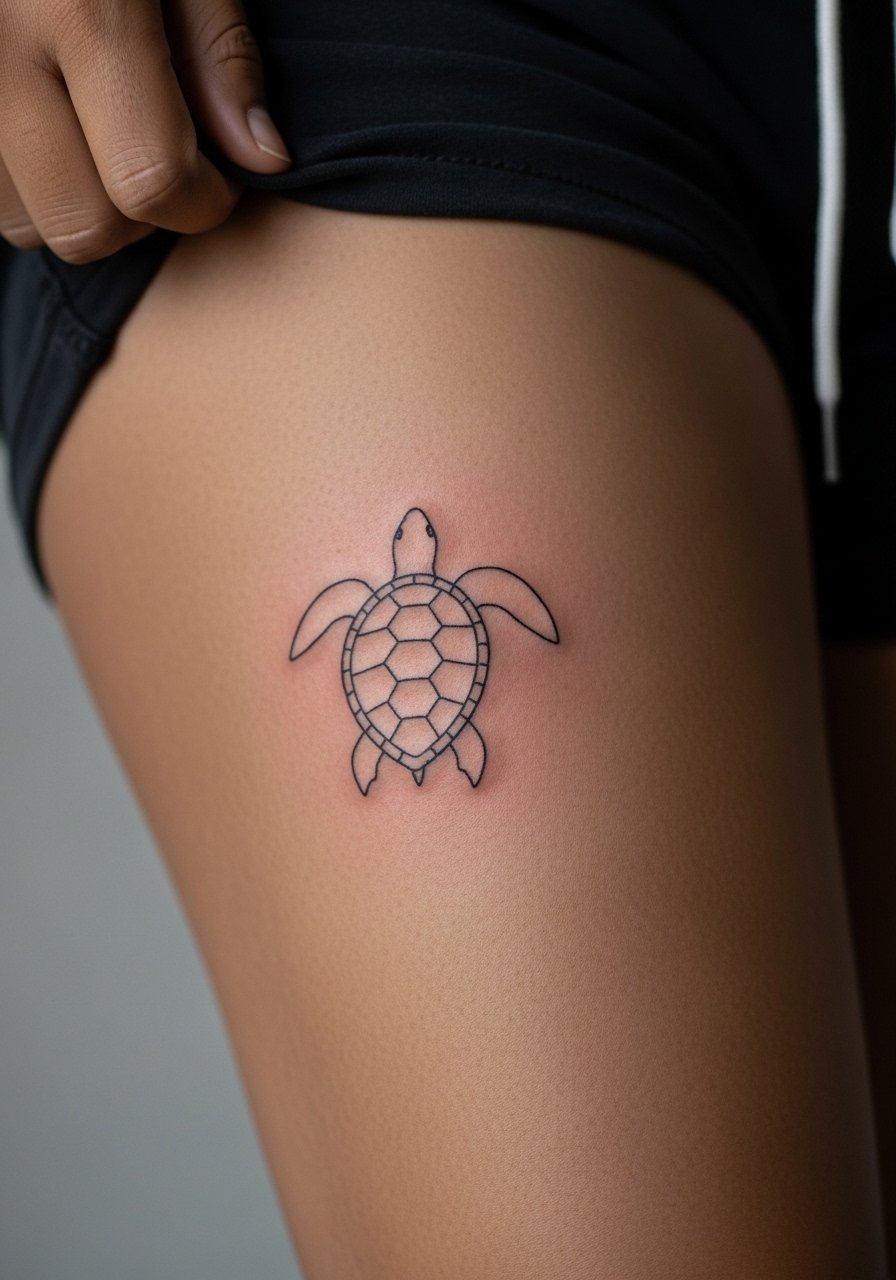
Hand-poked work feels different from machine sessions and creates a softer, sometimes more organic line. The inner thigh is forgiving and private, which makes it a good test spot for hand-poked motifs. Be aware that the technique can involve more surface trauma so healing times may be longer. A mistake is expecting machine-level uniformity from hand-poked dots. For session wear, slip into loose shorts so the artist can access the area without pinching fabric against the skin.
17. Turtle Patch at the Lower Back
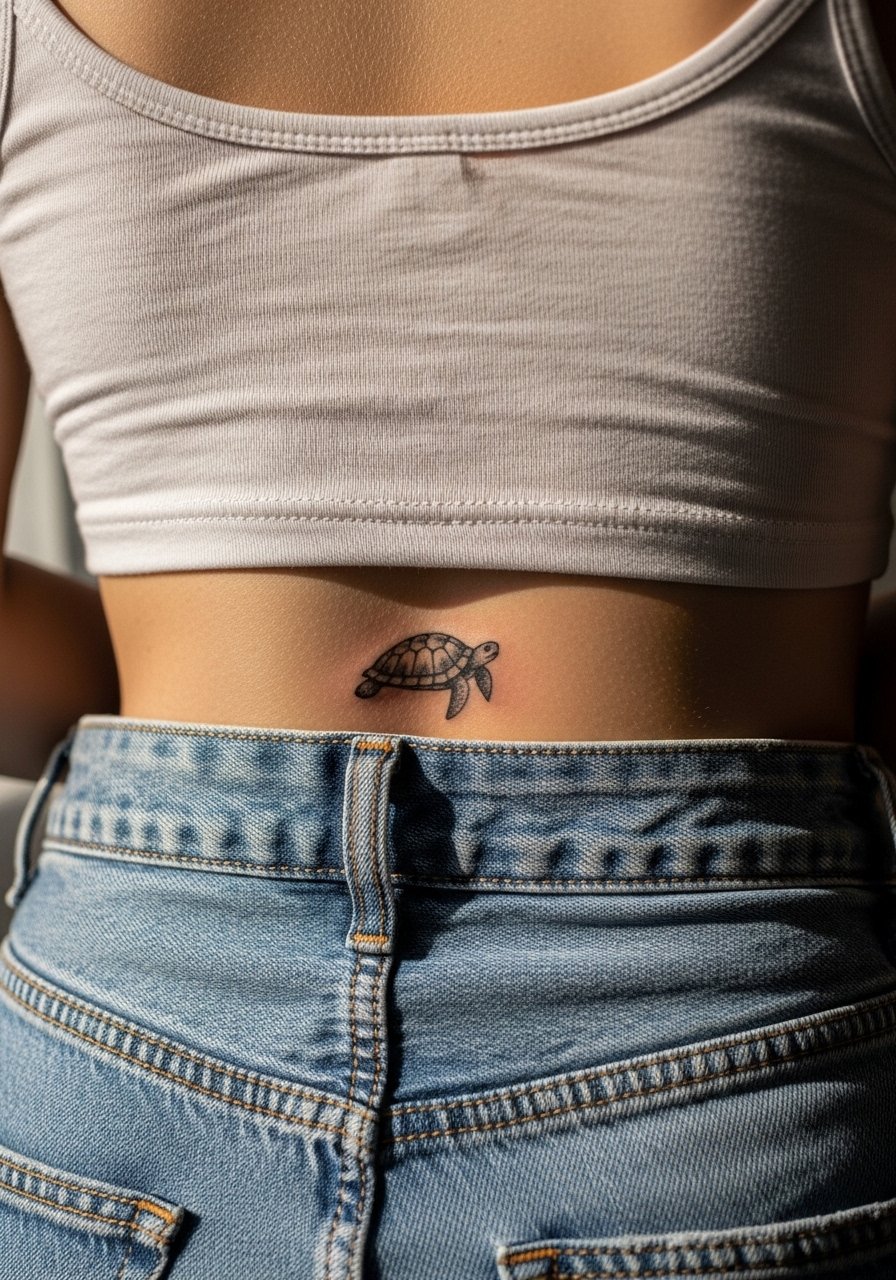
Lower back pieces sit in a zone that sees clothing friction but also lies flat for studio work. For a black-and-gray patch, ask for slightly more contrast so it does not disappear under waistbands. The area is moderate in pain and typically heals well when you avoid tight belts during the first two weeks. For styling, low-back crop tops or halter tanks let the piece show cleanly, so try a low back crop top when you want to highlight it. Avoid dense micro-detail placed directly where jeans hit.
18. Blackwork Turtle Accent on the Bicep
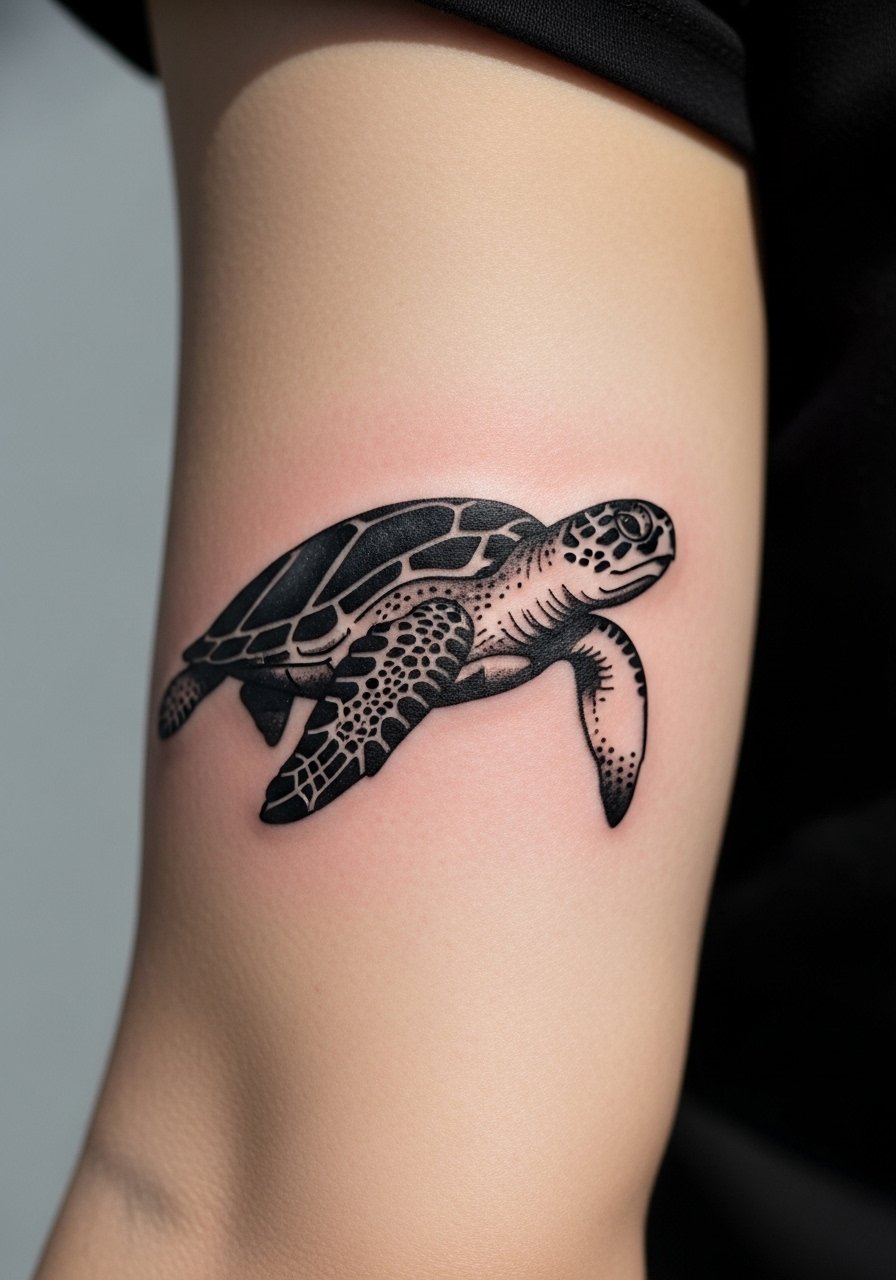
Strong blackwork reads well from a distance and holds up through years of sun exposure if you protect it. The bicep gives room for a five inch composition and is lower on the pain scale. When you consult, discuss saturation and whether the turtle will sit alone or be part of a larger arm piece later. A common mistake is leaving too much tiny negative space inside a black fill, which can look patchy as it heals. Ask for healed examples of high-saturation fills on similar skin tones.
19. Watercolor Accent with Dot Work on the Calf
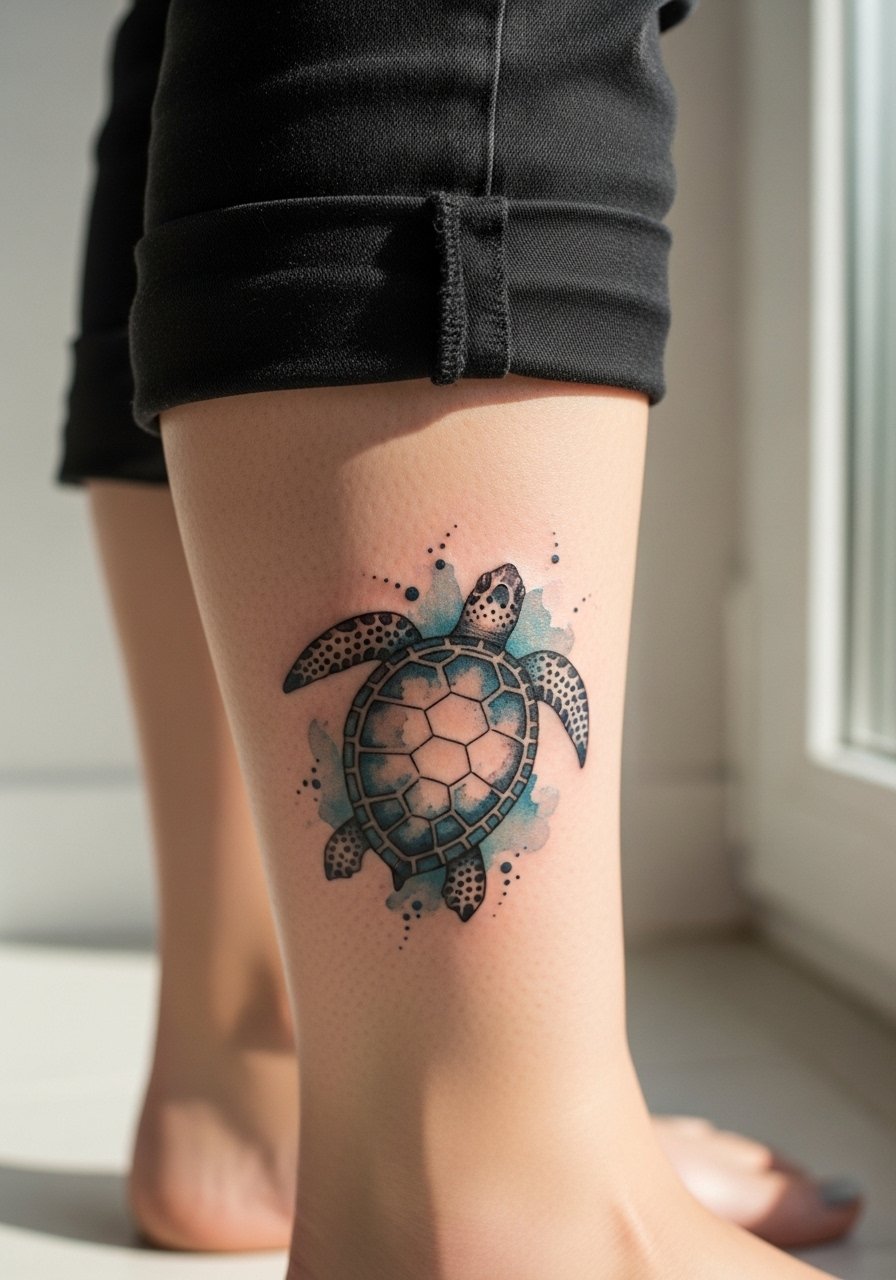
Combining watercolor washes with dot work gives color and texture while relying on the calf’s thicker skin to keep pigment in place. If you lean toward this hybrid, request color layering that allows touch-ups without losing the dot-work definition. Calf sessions can be longer and may need two sittings for saturation. For showcasing, rolled ankle pants or cropped joggers help, so try styling with rolled ankle pants to frame the piece. Avoid tiny watercolor droplets that blur into each other over time.
20. Tiny Constellation Turtle at the Ankle
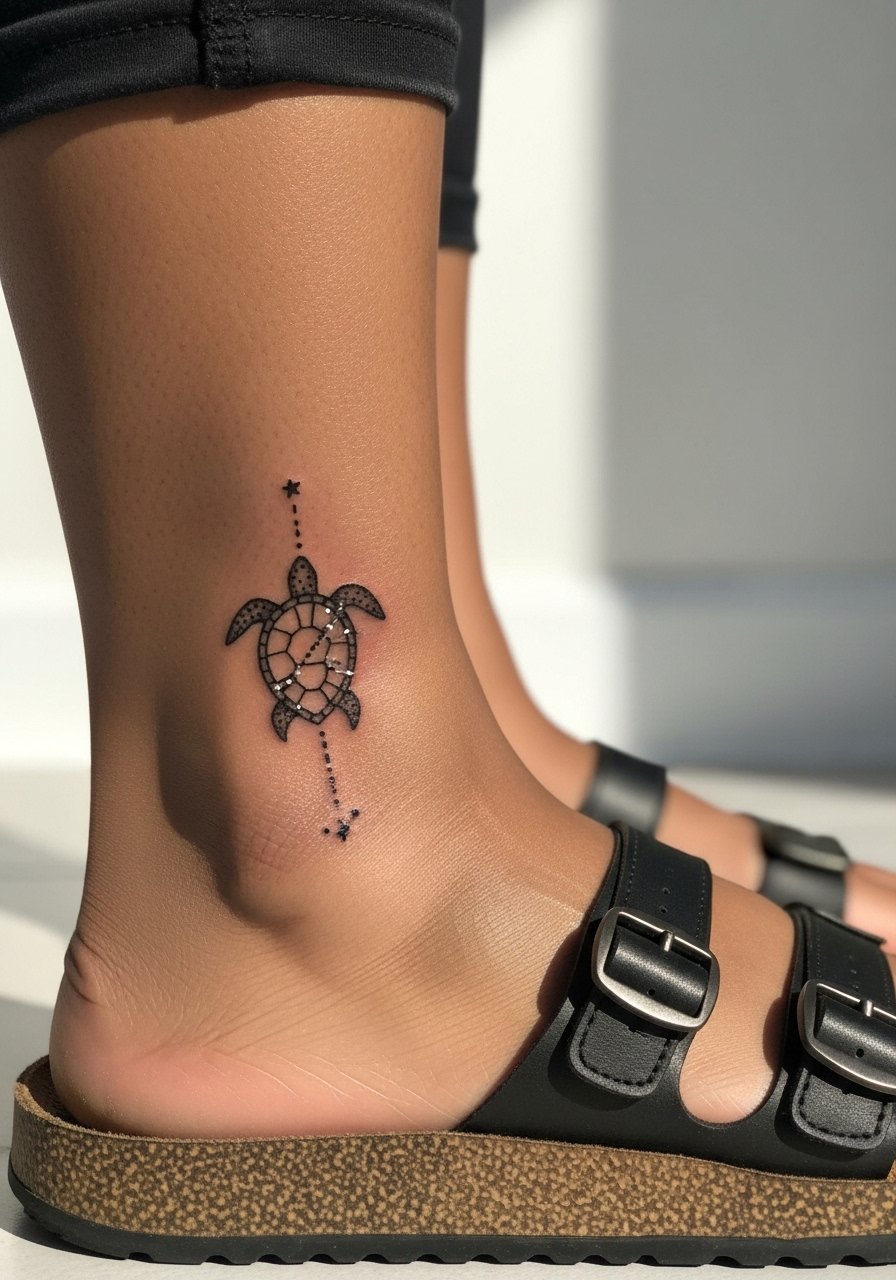
Constellation-style turtles are minimal and modern. The ankle sees a lot of abrasion so I recommend slightly stronger primary anchor lines and sparse dot accents rather than many tiny stars. The session is brief and pain is mild to moderate. A common mistake is requesting dense dot clusters that blend with socks or shoe seams. Keep footwear loose during the first week and plan a possible touch-up at year one.
21. Ornamental Turtle Sternum Accent
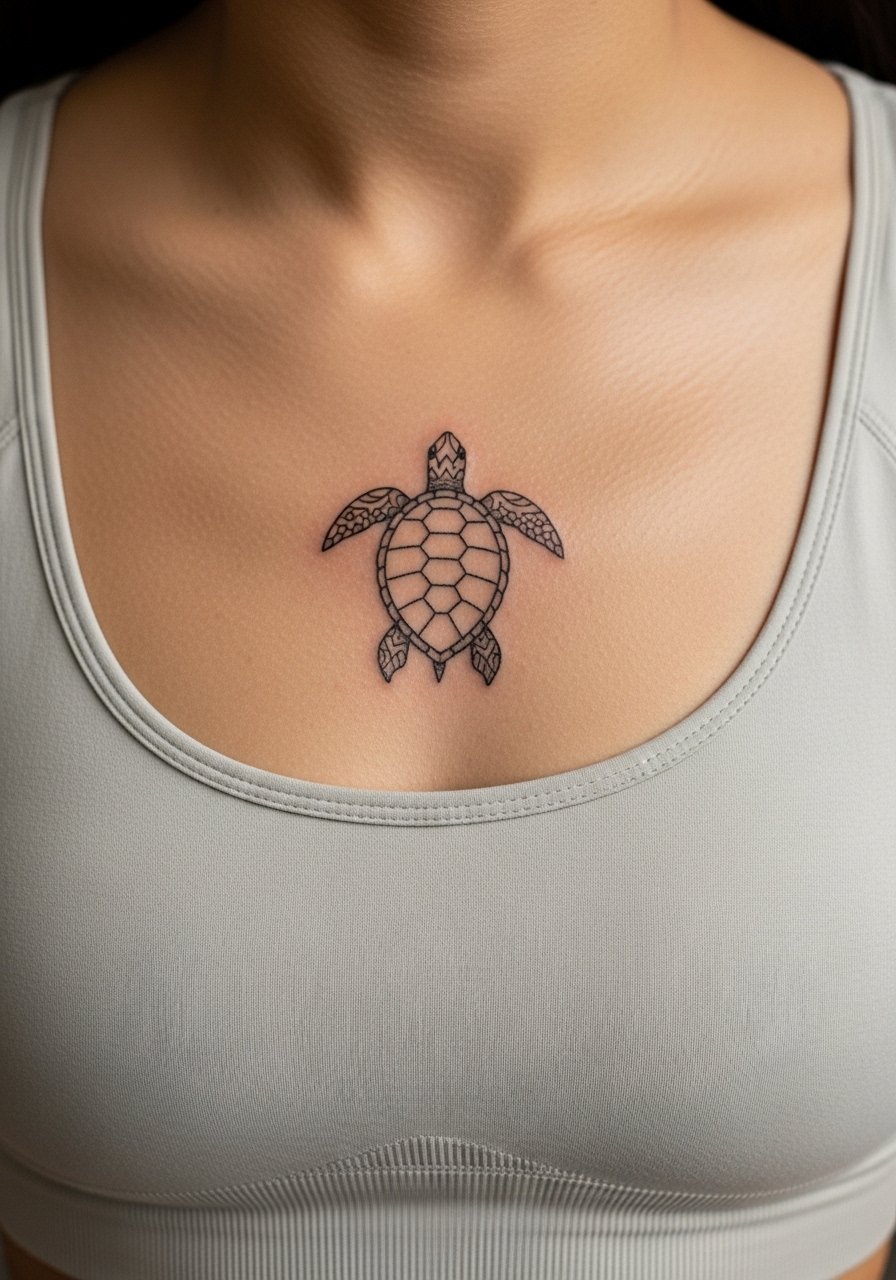
Sternum work reads intimate and symmetrical. Because the area moves with breathing, ask your artist how they will space lines to accommodate expansion without crowding. Sessions here can be painful and may require breaks. One mistake is compressing dense patterning into the narrow sternum zone and then wondering why it blurs. For wardrobe, a fitted sports bra or bandeau during the session helps you stay comfortable and gives the artist clear access.
Studio Day Picks
The forearm, ankle, thigh, shoulder, back and calf pieces above each ask for slightly different prep and first-week care so pack a few targeted items for the session and the first days of healing.
-
Stencil transfer paper kit. Lets you preview the scale and placement on skin before the needle starts, which is especially helpful for forearm and collarbone layouts.
-
Topical numbing cream. Applied as directed 30 to 45 minutes before can ease the sting on ribcage and sternum appointments without altering linework.
-
Thin protective film roll. Keeps ankle and foot tattoos clean during the first days when friction from socks and shoes is highest.
-
Fragrance-free gentle body wash. Use this on shower days to avoid irritating fresh ink, particularly for thigh and calf pieces.
-
Aquaphor healing ointment. A thin application in the first 48 hours helps maintain moisture for fine-line and black-and-gray work without clogging pores.
Frequently Asked Questions
Q: Will a fine-line turtle on my wrist blur faster than a larger forearm piece?
A: Yes, wrists and hands are high-motion and high-friction zones so ultra-thin lines tend to fade quicker there than on forearms. If you want the wrist look, ask for slightly bolder single-needle weight and plan a touch-up around year two.
Q: Do watercolor sea turtle tattoos need different aftercare than black-and-gray pieces?
A: The basic aftercare is the same but watercolor relies on layered pigment so protect color from sun exposure once healed. Keep the area covered or use sunscreen after the initial healing window to slow color loss.
Q: How should I test a placement to avoid the "it warps when I flex" problem mentioned above?
A: Use a temporary transfer or sticker and wear it for a day while you do normal activities. That tells you how the placement reads during movement and helps you adjust size or location before committing.
Q: How do I find an artist who has experience with sea turtles without naming specific shops?
A: Search tags like #SeaTurtleTattoo or #RealisticTattoo on social platforms and filter portfolios in apps like Tattoodo or Booksy. Also check community threads on r/tattoos for healed photos from similar skin tones.
Q: My skin tone is dark. Will black-and-gray turtles blend too much?
A: On darker tones, high-contrast linework and strong saturation help the turtle pop. Ask to see healed examples on similar skin and favor bolder outlines over the palest single-needle hairlines.
Q: What should I wear to a thigh or back session to make life easier during the appointment?
A: For thigh work bring loose shorts or a skirt that you can shift, and for back pieces wear a loose tank or a button-down you can pull aside. Both choices let the artist work without fabric bunching on the fresh tattoo.