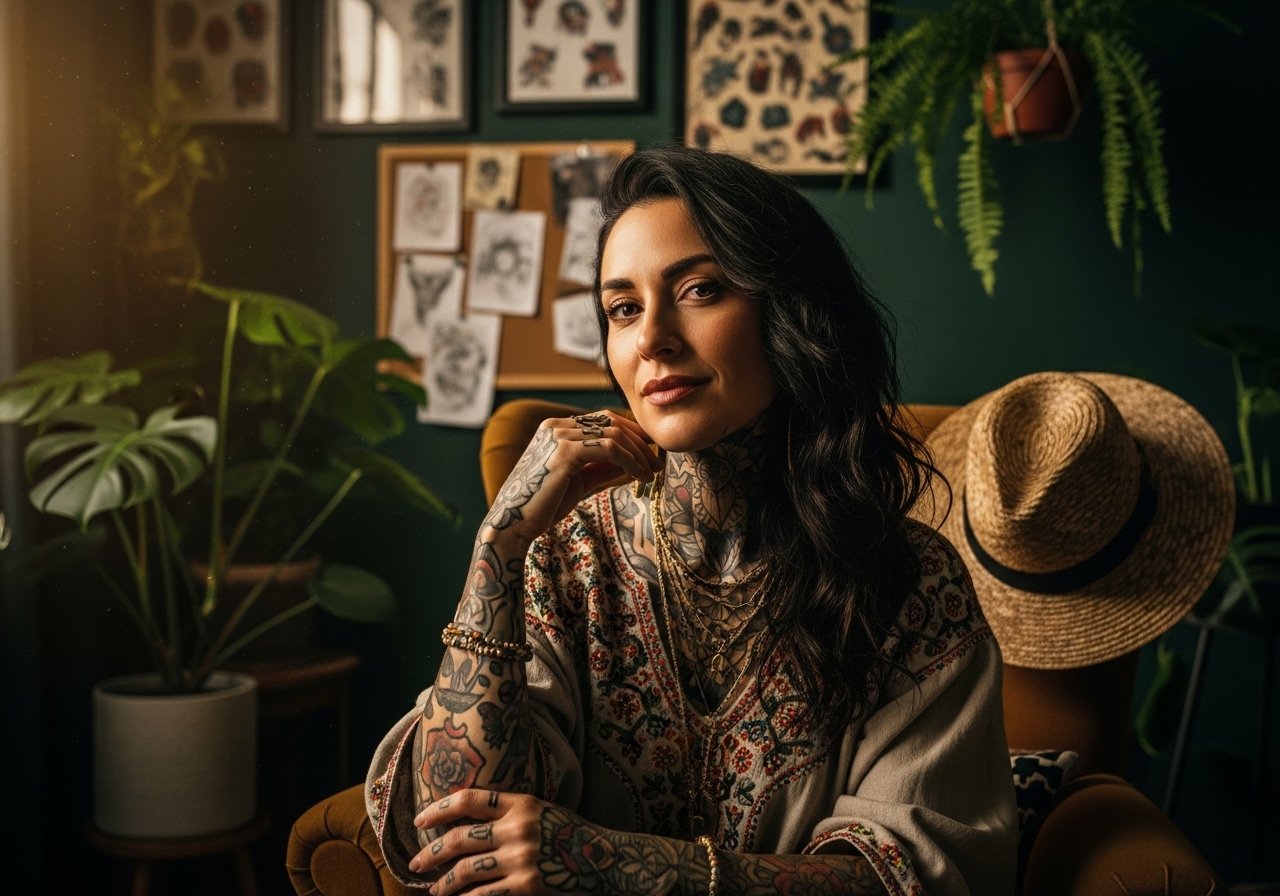
Fine line semicolons are everywhere on saved boards, and the cold truth is that the freshest-looking pieces are not always the ones that age best. Fading, last-minute artist cancellations, and visibility issues on darker skin are the trio of headaches I hear most from people booking their first realistic semicolon tattoo. Read on for design choices that balance detail with longevity and what to ask for at the consult so your semicolon still reads clean years from now.
1. Realistic Semicolon Butterfly Wings on the Wrist
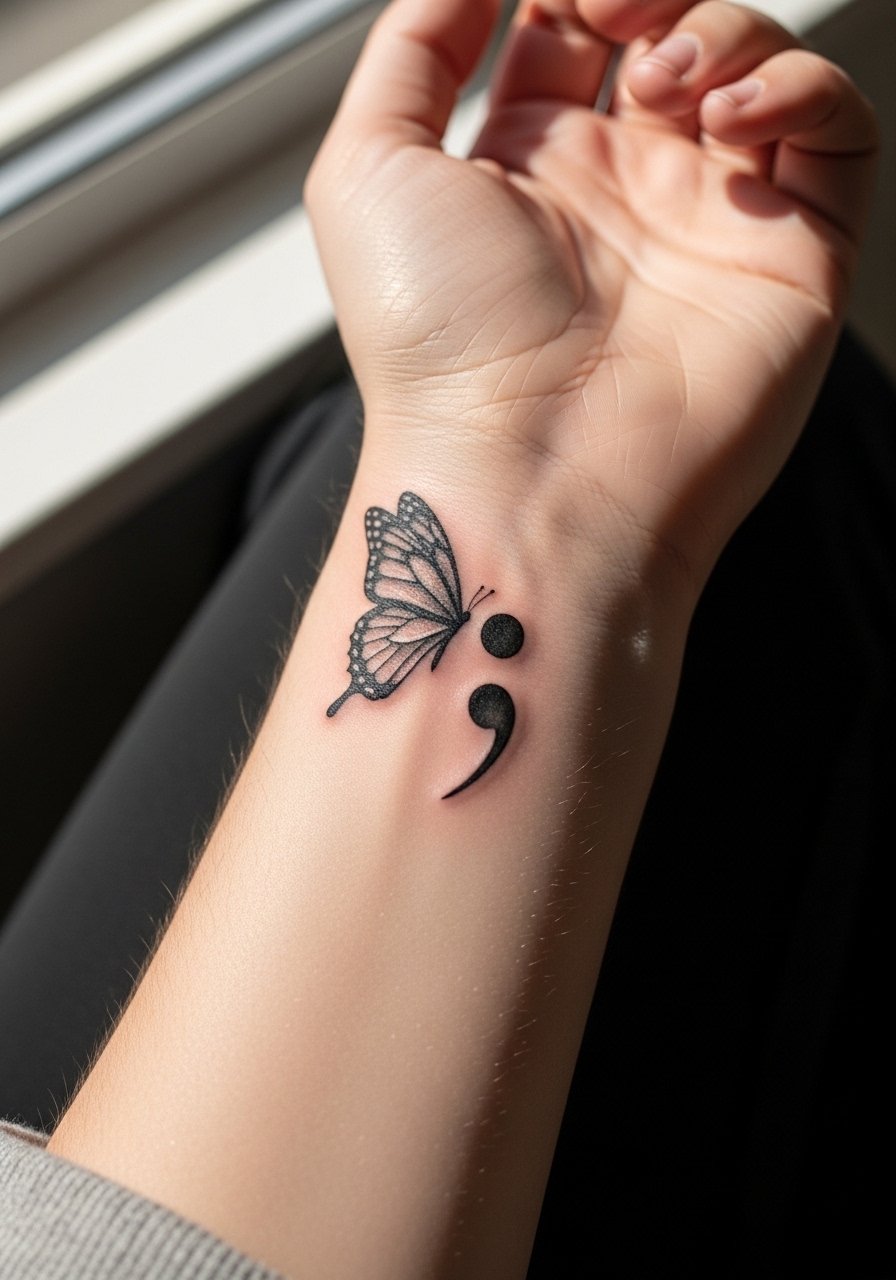
I’ve seen this one on wrists that get the most daily attention and when done right it reads like a tiny sculpture. Pain is low to moderate for most people and a single 60-minute session often does the trick for a one- to two-inch piece. Tell your artist you want saturated micro-realism shading rather than a faint outline. A common mistake is requesting ultra-fine veins in the wings that vanish after healing. Expect touch-up at six to twelve months if the wing tips thin. For showing it off try a matte silver cuff bracelet on the opposite wrist and roll sheer sleeves up to mid-forearm for contrast.
2. Geometric Semicolon Frame on the Inner Forearm
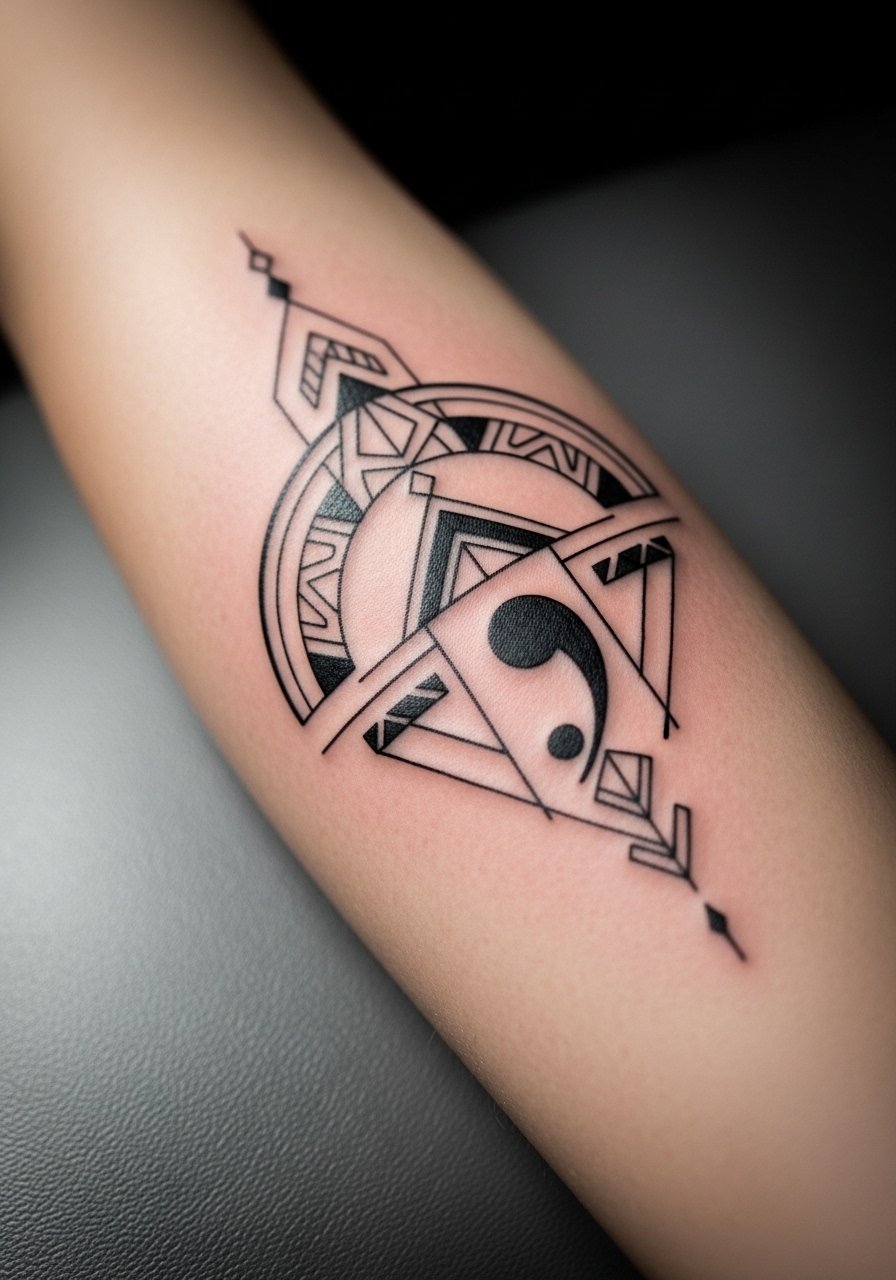
Fair warning, the inner forearm and tight geometry demand spacing. Pain is moderate and expect a 90 to 120-minute appointment for crisp linework and solid saturation. During consultation ask for slightly wider line weights and airy negative space so your mandala or frame does not merge over time. There is an active debate among artists about fine line versus bold line here. One camp says micro-fine geometry ages gracefully with careful spacing. The other camp insists heavier blackwork beats fading. Ask the artist where they land and why. For session comfort slip into a fitted crewneck tee you can roll to the elbow.
3. Botanical Semicolon Vines around the Ankle
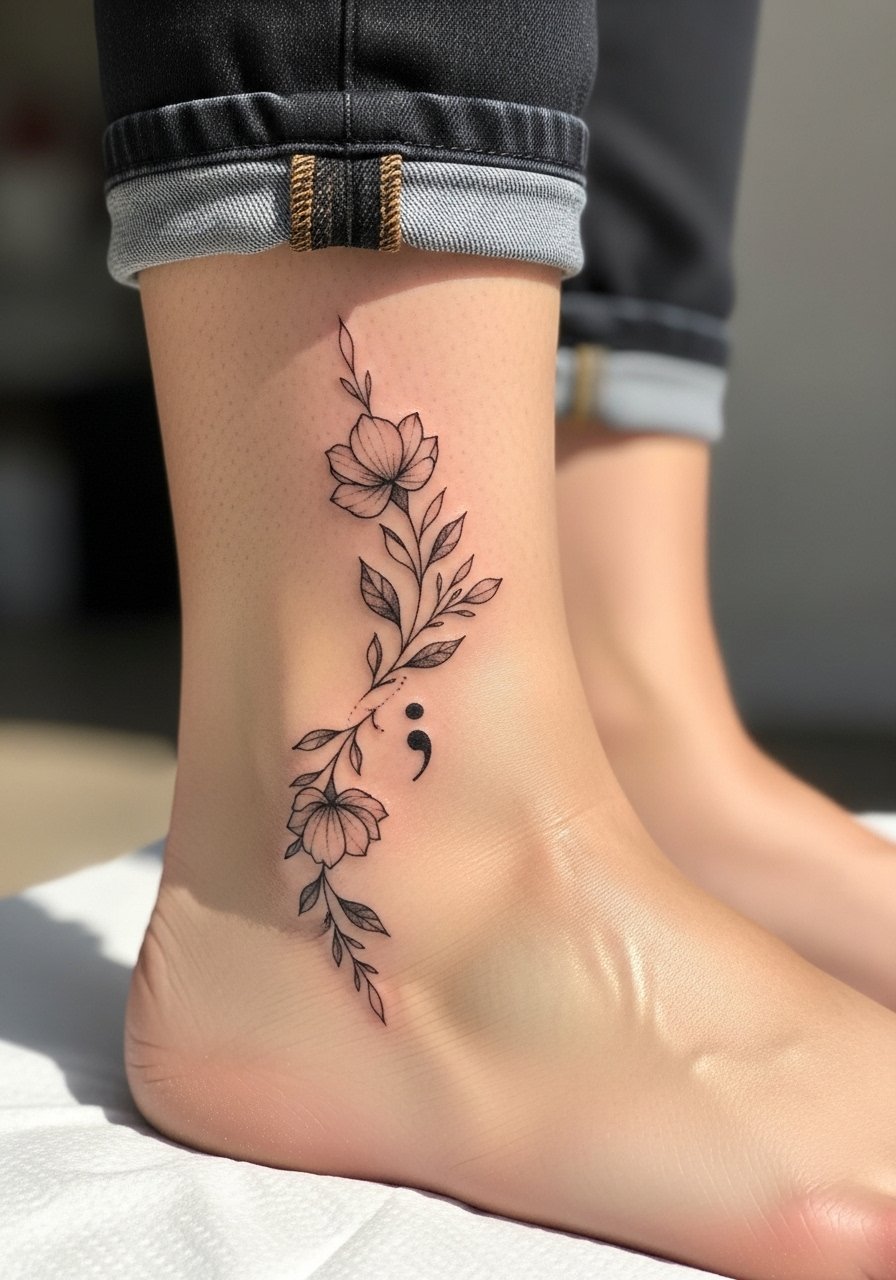
Ankle work feels delicate but friction and shoes cause the most trouble during healing. Expect low to moderate pain and a 60-minute session for a 1.5-inch wrap. Tell the artist you want layered foliage with subtle stipple shading for depth rather than a single continuous fine stem. Common mistakes include placing too close to seams where socks rub, which can thin lines by six months. For summer showing try strappy sandals and a dainty chain anklet so the vines read without visual clutter.
4. Galactic Semicolon Nebula on the Shoulder
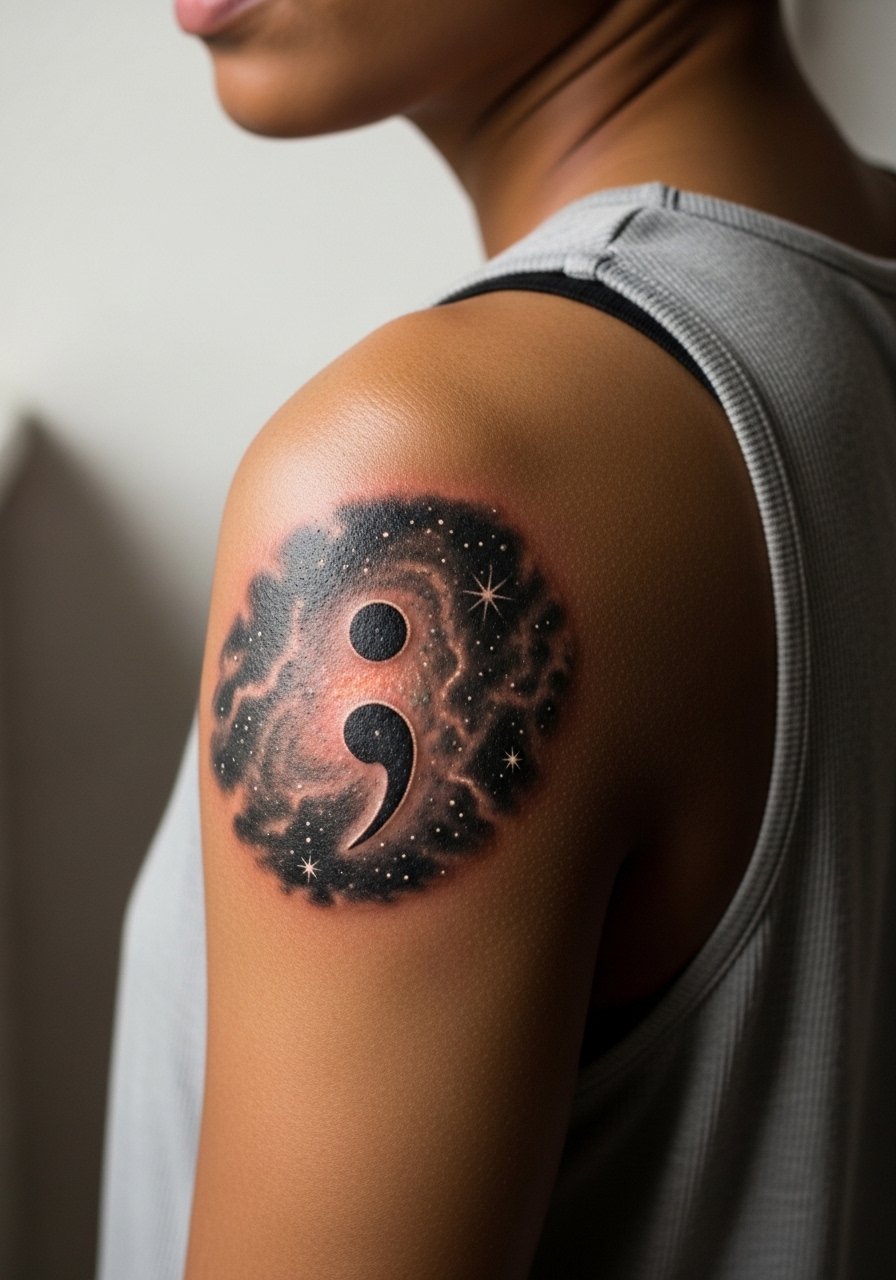
Shoulder pieces give space to breathe, which suits watercolor-like nebula blends. Pain is mild and sessions run 90 to 150 minutes depending on color layering. Ask for muted color accents rather than neon saturation so the piece keeps depth without rapid color migration. A common error is overpacking tiny stars that blur together when healed. Over two to five years expect some softening of tiny highlights. For consultations mention UV-reactive ink only if you want the night-glow effect, since that requires different inks and touch-up expectations.
5. Tree Root Semicolon on the Calf
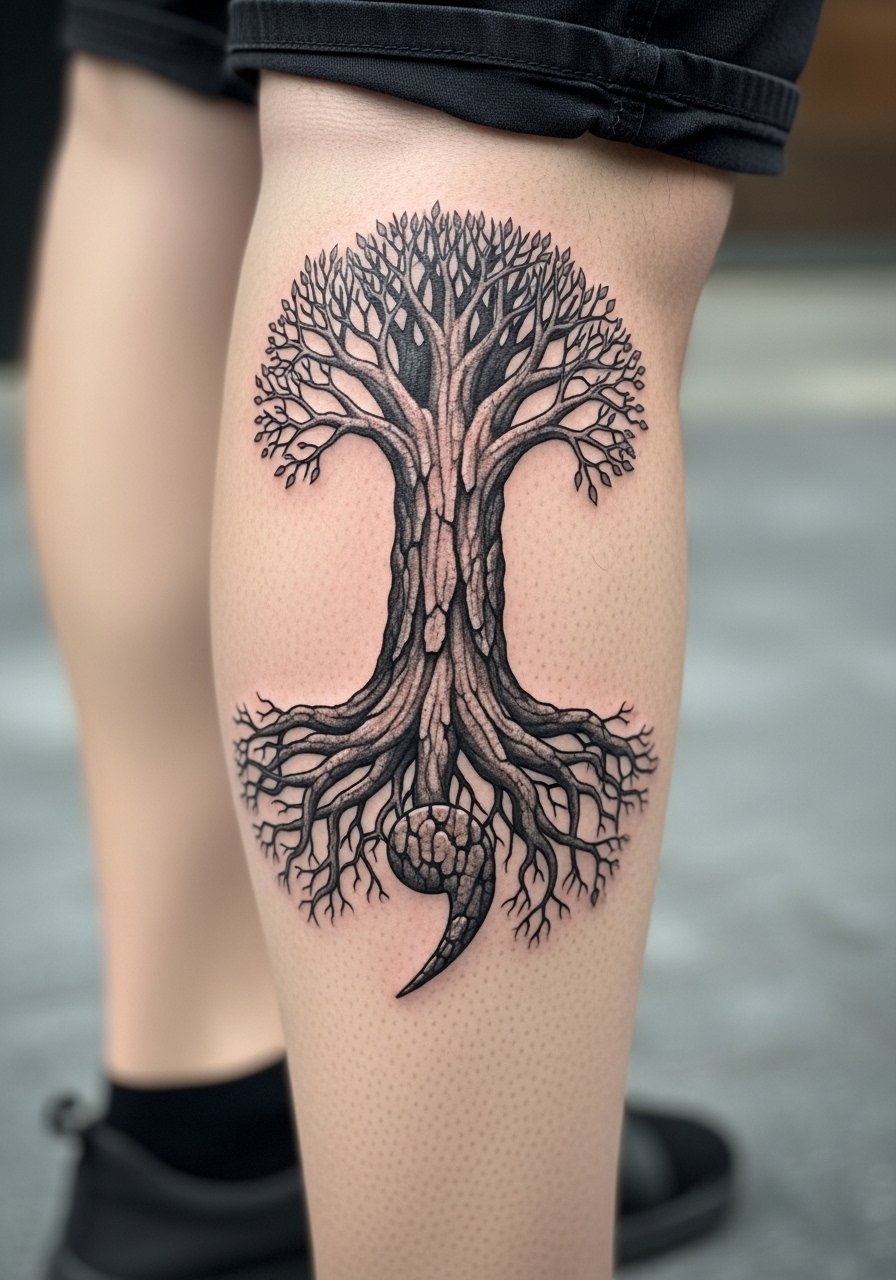
Calf placements are forgiving for size and detail and they take shading well. Expect moderate pain lying down and a two-session build if you want heavy texture over a three-inch area. Tell your artist you want deep stipple shading and defined root edges to preserve contrast as the piece ages. The usual misstep is compressing too much detail into a tiny space, which leads to muddy texture after a few years. Boots and rolled joggers show it off well while protecting the area during early healing.
6. Semicolon Cat Portrait on the Inner Bicep
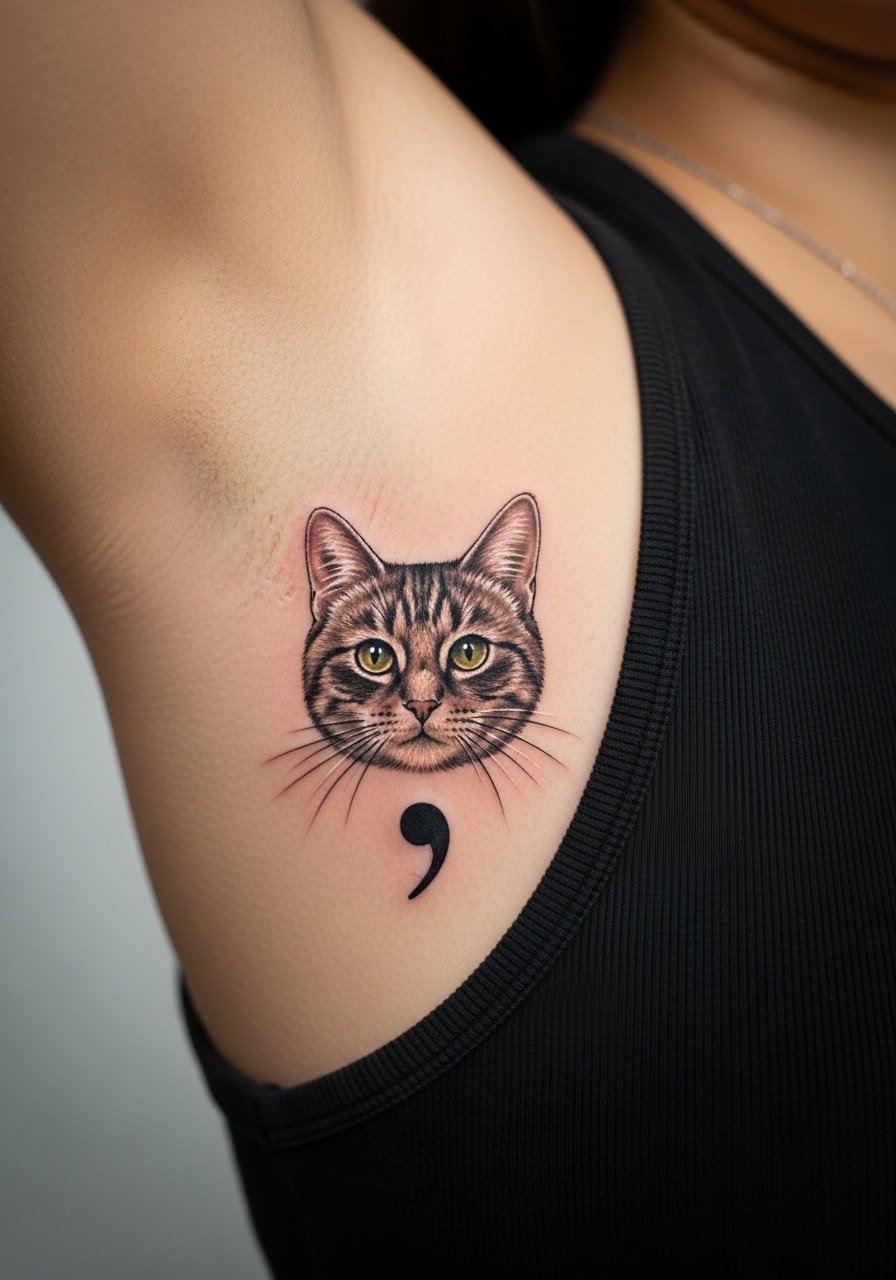
Inner bicep portraits sit where flesh can swell during healing, so pain feels moderate and the session usually runs 60 to 90 minutes. Bring clear reference photos showing fur direction and eye catchlights. Artists often warn against pushing hyper-detail into a two-inch portrait, because whisker points can soften into gray blobs. Ask for denser saturation and stipple shading to hold detail. For the session wear a sleeveless hoodie so your arm is easy to access without fabric rubbing.
Pre-Session Essentials
The wrist, ankle, and inner bicep pieces above behave differently during the first week, so a few targeted items make the process less fussy.
-
Badger Tattoo Balm. A lighter, zinc-rich balm that forum users say works well on ankle pieces during dry winter air without feeling greasy.
-
InkSafe protective film. Breathable film that helps wrist and finger tattoos avoid rolling and stays put during sleep.
-
CeraVe healing ointment. Travel-friendly, fragrance-free option artists recommend when a traditional ointment feels too thick for forearm realism.
-
Japanese Hada Labo lotion travel size. Lightweight moisturizer to use after initial film removal to keep fine shading from turning dry and flaky.
-
Saniderm adhesive bandage roll. Useful for the first 24 to 72 hours on high-friction zones like the wrist, but note some people prefer dry healing while others swear by film.
7. Heart Semicolon Fusion on the Collarbone

Collarbone pieces look intimate and sit where clothing can rub during healing. Pain tends toward moderate because of thin skin, and a single session of 45 to 90 minutes suits a one- to two-inch piece. Ask for subtle vein and pulsing detail with controlled saturation so the reds do not migrate. A common mistake is asking for too bright a red without considering fading on sun-exposed chest. For showing it off, an off-shoulder linen top or a V neck tank pulls attention to the area without competing with necklaces.
8. Sunflower Semicolon Bloom on the Forearm
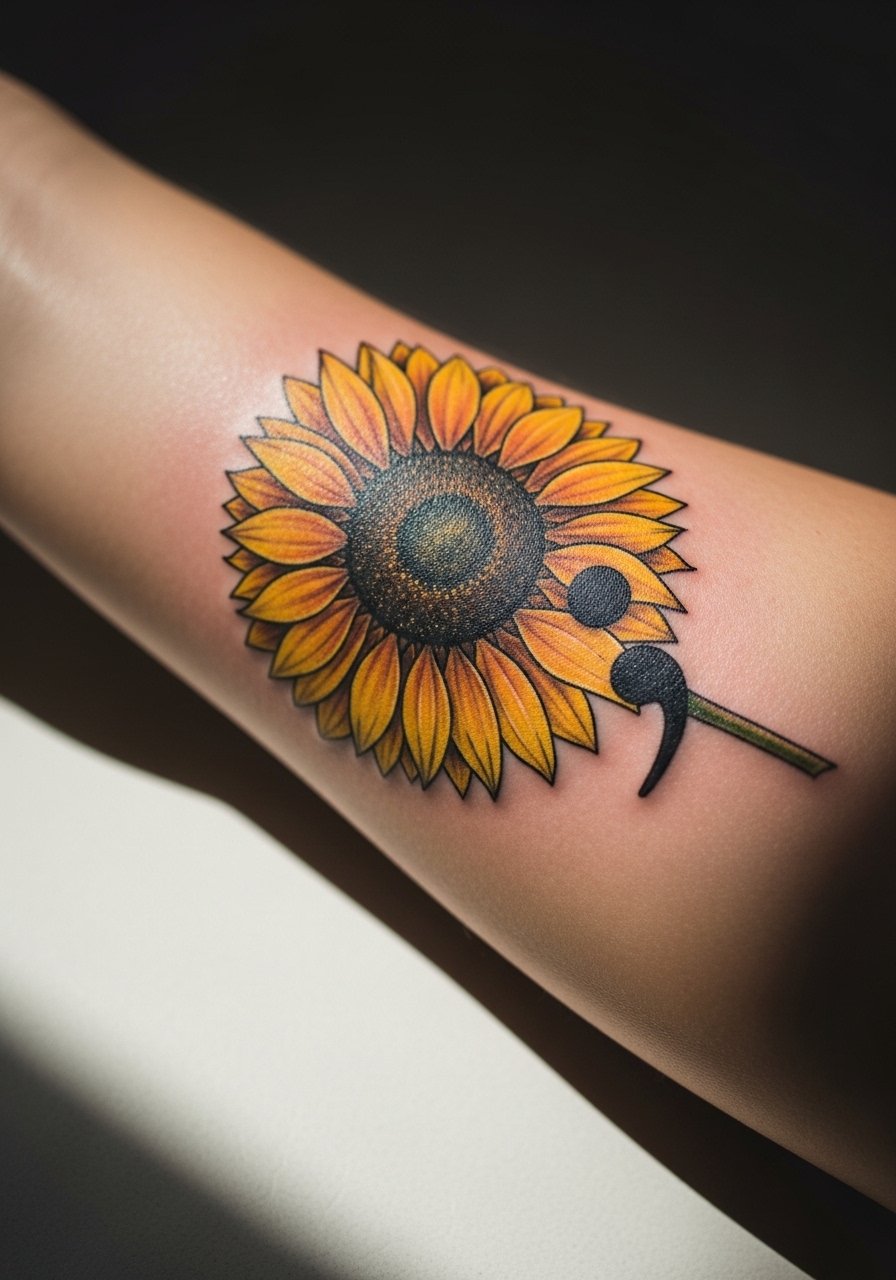
Forearm botanical pieces are low to moderate on the pain chart and usually finish in 60 to 120 minutes depending on color. Tell your artist you want layered petals with subtle stipple for depth rather than flat color fields. Freshly done sunflowers can bleed slightly if the shading is overpacked, so plan for a touch-up if edges soften at six months. For an everyday look pair the piece with rolled-up linen shirts and a thin leather wrap bracelet on the opposite arm to frame the bloom.
9. Dragonfly Semicolon Wings on the Shoulder Blade
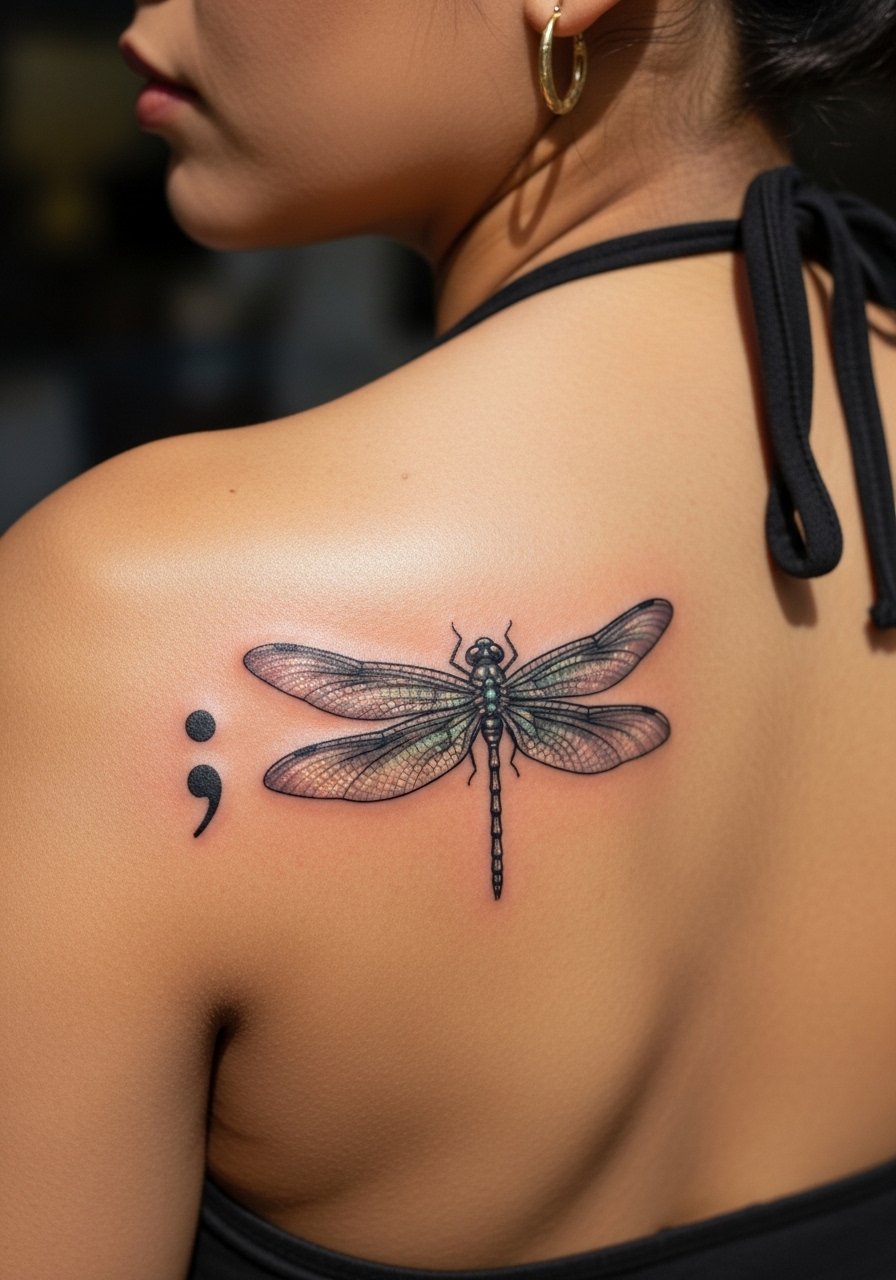
Shoulder blade placements give the artist a canvas for iridescent detail without daily friction. Pain is typically mild and a single session up to two hours often covers a 1.5- to 3-inch piece. A frequent client error is insisting on extremely thin cross-hatching in wing veins that later merges. Ask for selective highlights and whip shading to retain dimensionality. If you want the look to pop, a halter dress or sleeveless muscle tank keeps the iridescence visible during warm months.
10. Warrior Semicolon Helmet on the Upper Arm
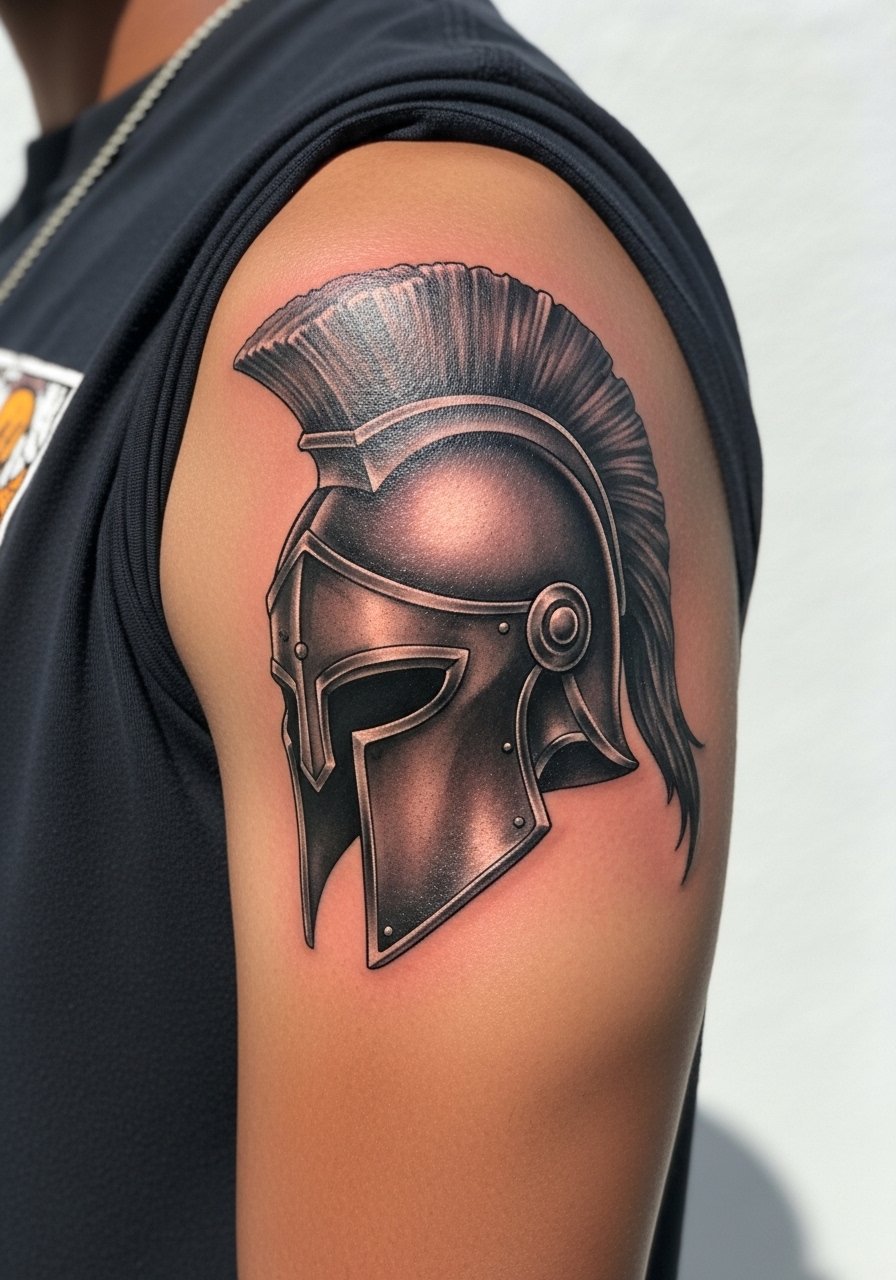
Upper arm pieces can handle bold shading and larger scale, so they suit metallic realism well. Pain is moderate and expect two to three sessions for four-inch detailed work. Ask for crisp highlights and deep black saturation to maintain contrast as metallic textures age. A mistake is attempting tiny engraved runes inside a small semicolon; keep engravings legible by enlarging them slightly. For sessions wear a loose short-sleeve tee you can pull up easily.
11. Small Realistic Semicolon Dot Behind the Ear
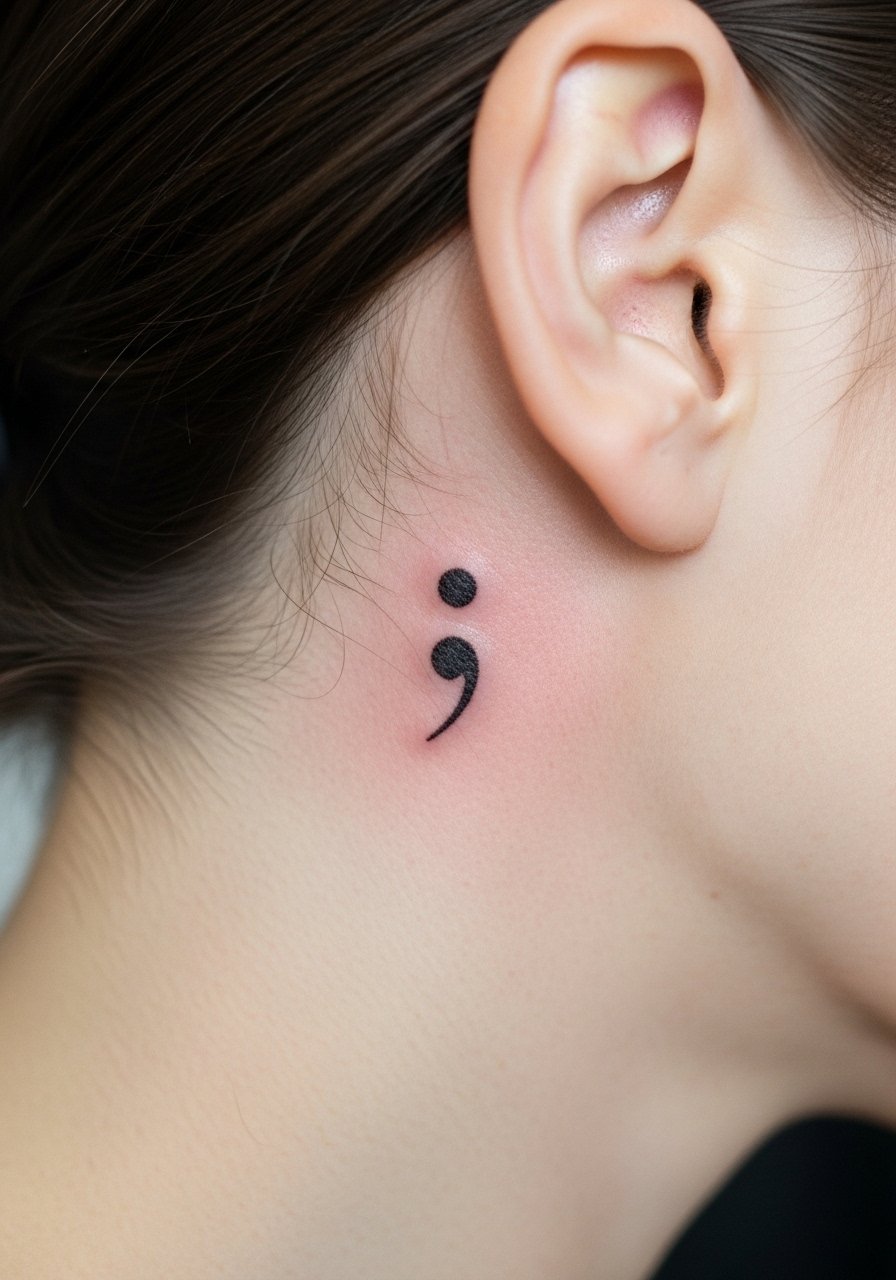
Behind-the-ear pieces are discreet and low in session time, usually 20 to 30 minutes, but they demand a steady hand. Pain is mild to moderate for most. The main risk is visibility on darker tones or after aggressive hair growth. Avoid requesting an ultra-thin dot if you want longevity. Also note that behind-ear work needs precise placement just below the hairline to avoid fading into hair coverage. For professional considerations keep the size conservative.
12. Locket Semicolon Frame on the Chest
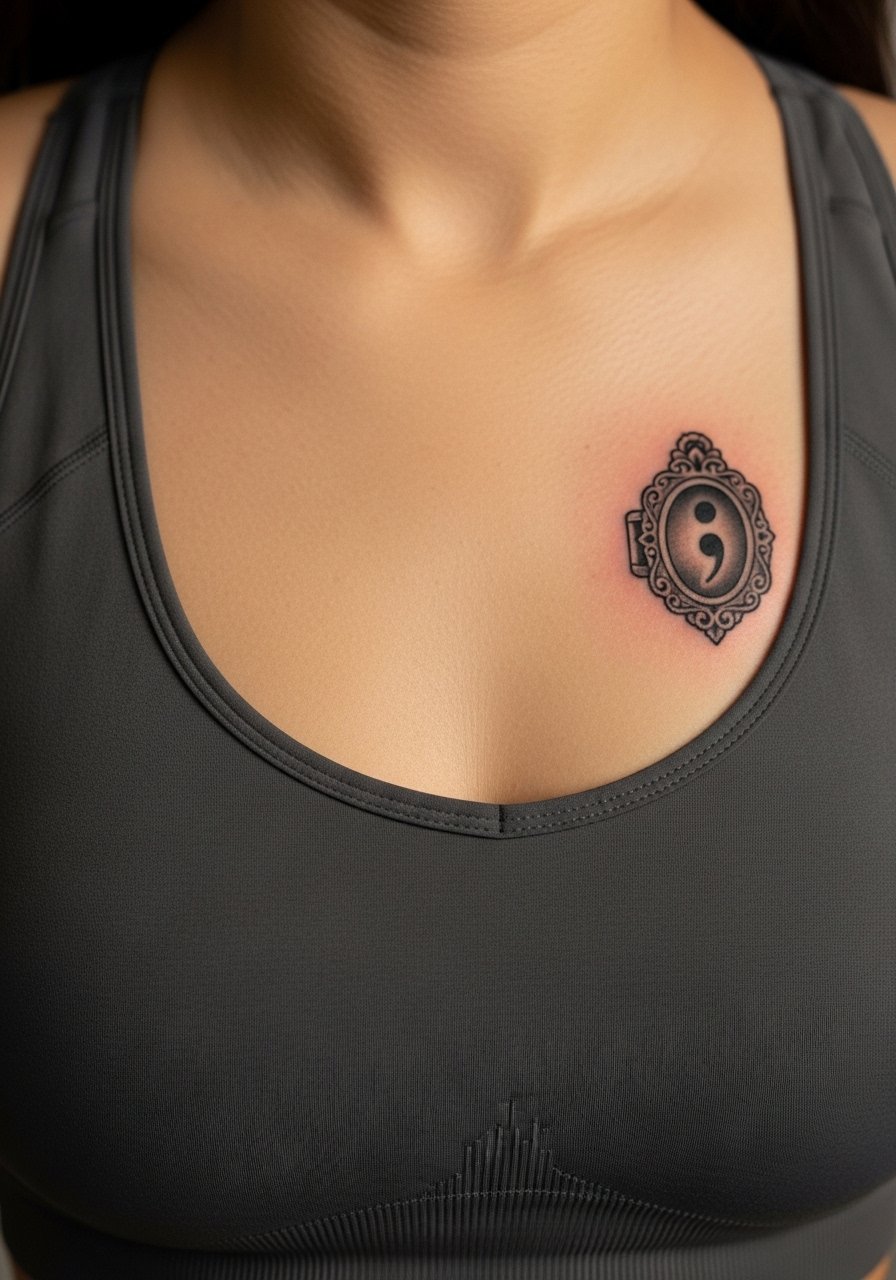
Chest locket pieces read like a small portrait in a frame and suit slightly larger scale. Expect moderate pain and a two-session process if you want filigree depth. Tell the artist the filigree should have distinct negative space so tiny curls do not blur together after healing. A frequent error is asking for ultra-intricate scrollwork in a two-inch lock, which ages into muddled gray. Pair the design with off-shoulder tops or a thin layered necklace that sits below the frame so the locket remains the focal point.
13. Scar-Integrated Semicolon on Healed Tissue
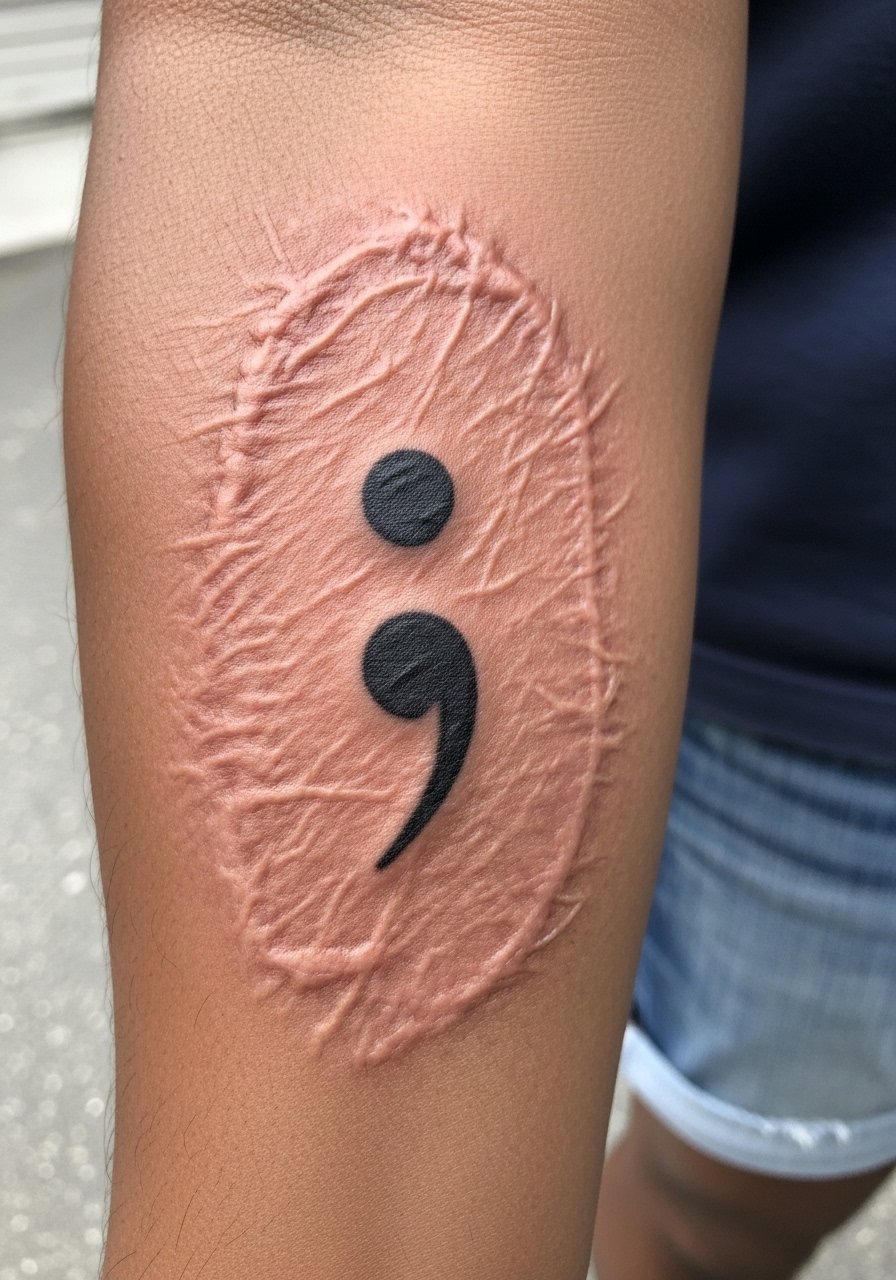
Integrating a semicolon into scar tissue needs a careful consult. Pain varies and sessions can be longer because scarred skin accepts ink differently. Tell your artist about the scar age and texture; some older scars accept color predictably while newer scars should be avoided. A common misstep is assuming a standard needle depth will behave the same over scar tissue. Touch-ups are often needed after initial healing to even out saturation. Search local forums and tag searches to find micro-realism artists who post healed scar work.
14. UV-Reactive Galactic Semicolon for Night Glow on the Shoulder
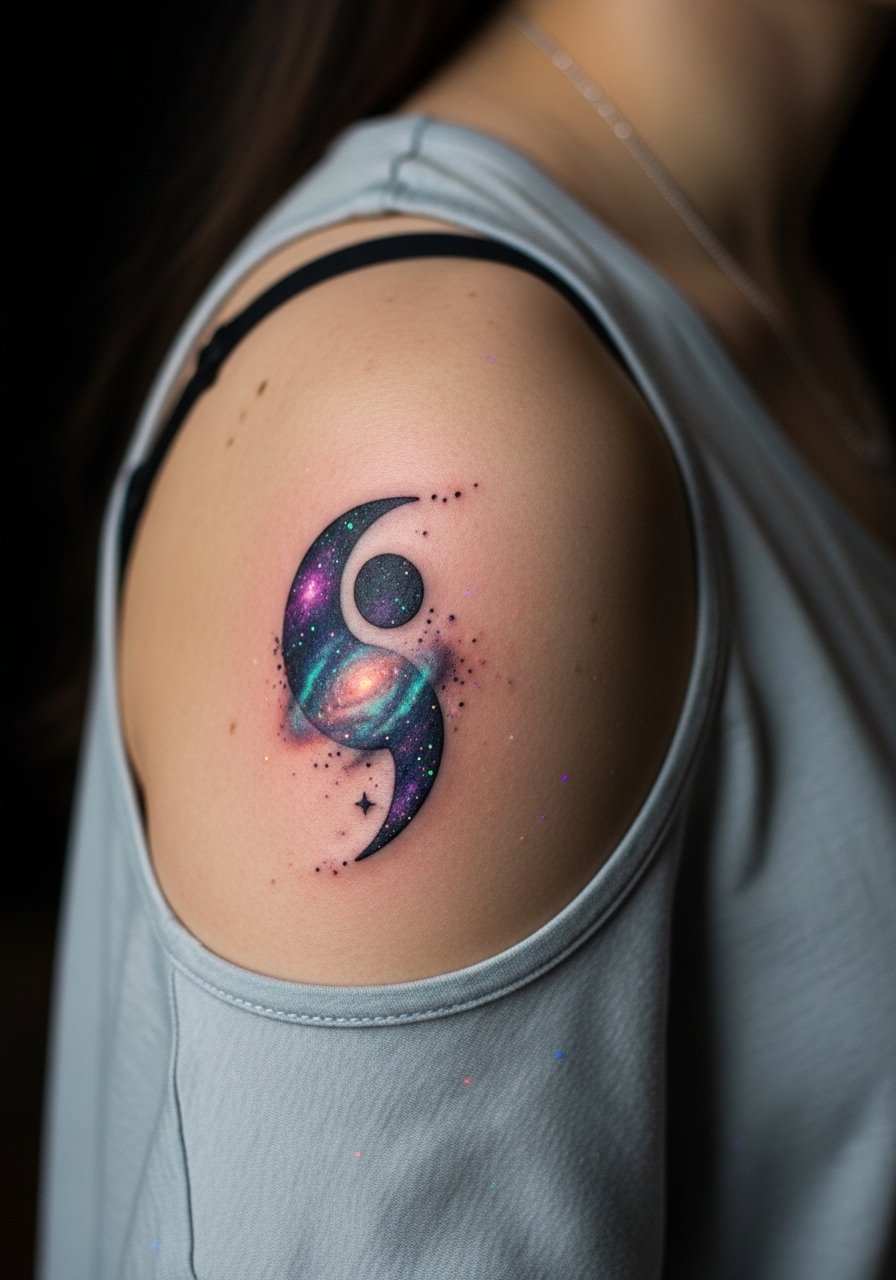
If you want a piece that reads subtle by day and glows under blacklight you must plan for different ink longevity. Shoulder placement minimizes daily UV exposure and eases healing. Sessions run 90 to 150 minutes. Discuss with your artist which pigments they will use and what touch-up schedule they recommend, since glow pigments sometimes lose intensity faster. A mistake is using UV ink for the main outlines instead of accents. For evening events, sleeveless muscle tanks keep the glow unexpected without overexposure.
15. Knuckle Semicolon Cat Portrait for Daily Flex
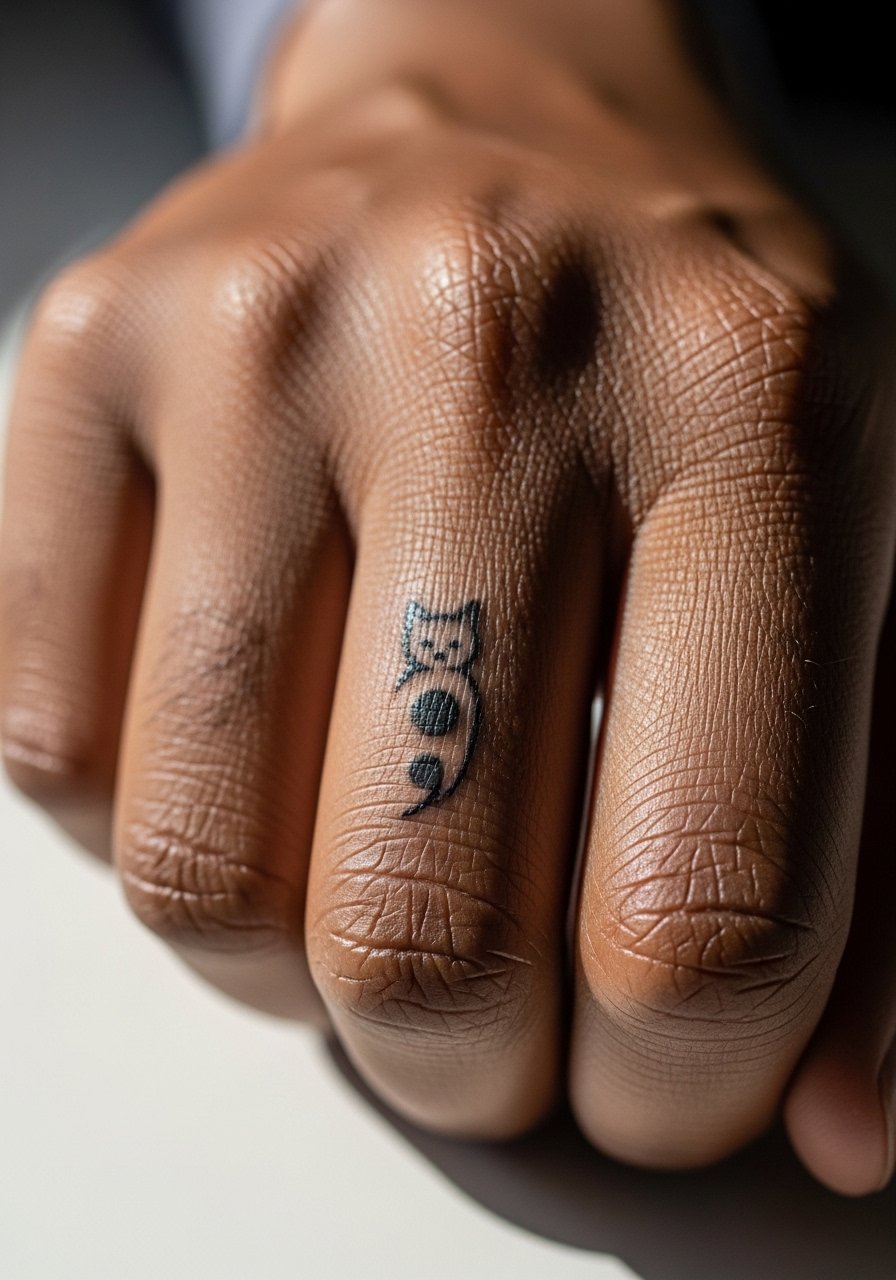
Knuckle work is high-friction and requires sacrifice. Expect frequent fades and touch-ups because hands wash a lot and skin is constantly moving. Sessions are short but plan for more frequent maintenance. Ask your artist about bold outline anchors around delicate portrait areas so the face still reads after months. Missteps include trying to cram a detailed portrait into a single knuckle panel. If you want daily visibility, accept that touch-ups are part of the plan.
16. Vertical Tree Root Semicolon Along the Spine
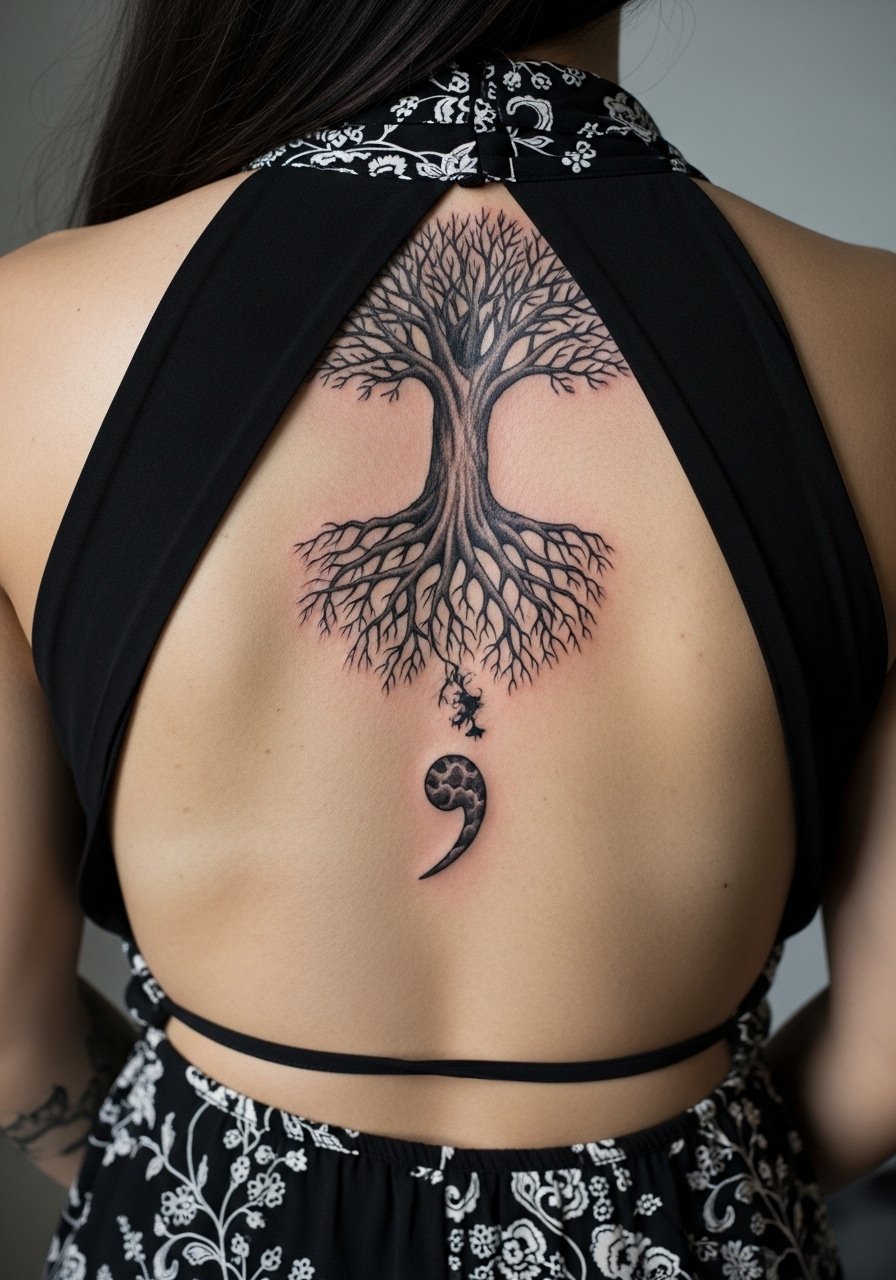
Spine work carries more pain and often requires multiple short sessions. Expect higher sensitivity and healing that benefits from minimal pressure clothing. Tell the artist you want vertical root tapering with open negative space to avoid dense black blocks that can look heavy later. A mistake is packing so much detail that the lower sections lose definition. For showing it off, open-back dresses or halter tops focus attention without compressing the area during recovery.
17. Small Realistic Semicolon Dot on the Ankle
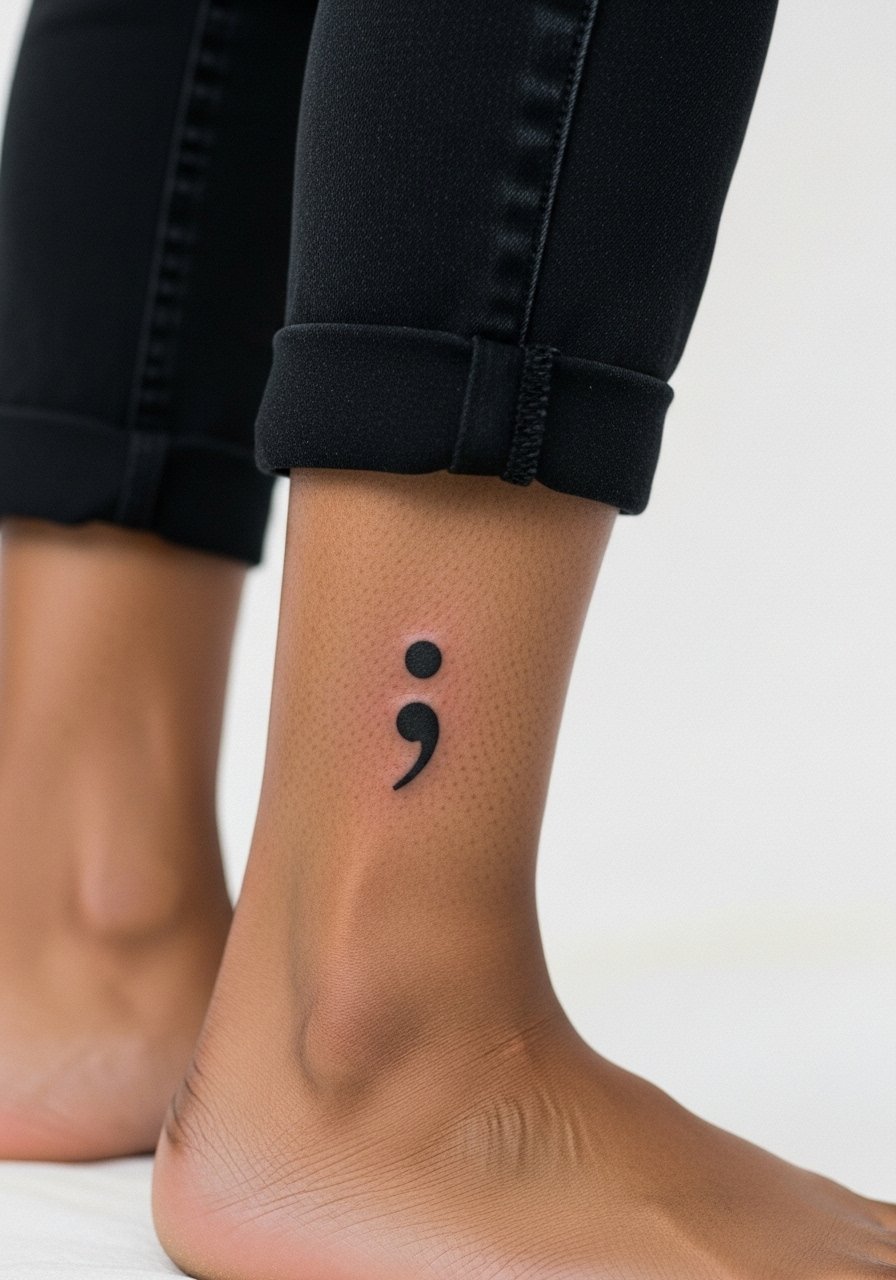
Tiny ankle dots are quick sessions and low pain, but they live in a friction zone with socks and shoes. Ask for a slightly bolder dot than what looks perfect fresh so it holds after rubbing. The common error is insisting on paper-thin punctuation that fades into a gray smudge. Plan for a touch-up at the one-year mark if needed. For summer showing, cropped ankle pants and sandals highlight the placement without rubbing.
Frequently Asked Questions
Q: Which semicolon styles fade fastest and how can I avoid that?
A: Fine line pieces and dense micro-detail in tiny spaces tend to soften fastest. Choose slightly heavier linework or stipple shading for micro-realism and book a touch-up at six to twelve months. Placement matters too; wrists and knuckles face more wash and friction so expect more fading there.
Q: Should I use protective film or dry healing for a wrist semicolon?
A: Artists split on this. One camp says short-term protective film keeps scabbing minimal and reduces itching. The other camp says dry healing lets the tattoo breathe and lowers ink lift risk. My advice is to ask the artist which method they use and why, and follow a plan that includes a follow-up check at two weeks.
Q: How should I prepare for an inner bicep cat portrait session?
A: Bring clear directional fur references and wear a sleeveless top so your arm is easy to access. Expect about 60 to 90 minutes and plan light activity afterward because the area can swell. Clarify touch-up policy with the artist before booking.
Q: I have dark skin. Which semicolon designs will show best in photos?
A: Blackwork and micro-realism with bolder outlines or denser saturation tend to read better on darker tones. Avoid ultra-fine single hairlines if you want visible contrast in photography. Test healed examples from artists and ask for healed photos on similar skin tones.
Q: Does placement change the session pain and time for a small semicolon?
A: Yes. Ankles and knuckles often hurt more and may need more careful aftercare, while shoulder and calf sessions are easier on most people. Small semicolon dots are quick but may require touch-ups sooner on high-friction sites.
Q: How do I handle artist cancellations and deposit issues?
A: Use booking platforms with clear cancellation policies or confirm guest spots well in advance. If an artist ghosts, ask for written confirmation of deposit terms and consider booking with studios that handle deposits centrally to reduce risk.