
Sitting in the chair with the stencil centered between the collarbones is the moment most people feel the weight of the decision. That narrow strip of skin reads larger on your body than it does on the phone screen. A small change to scale or curve at that moment saves years of regret. These 17 realistic chest pieces give options that hold up, and what to ask before the needle goes down.
1. Micro-Realism Rose Over the Sternum
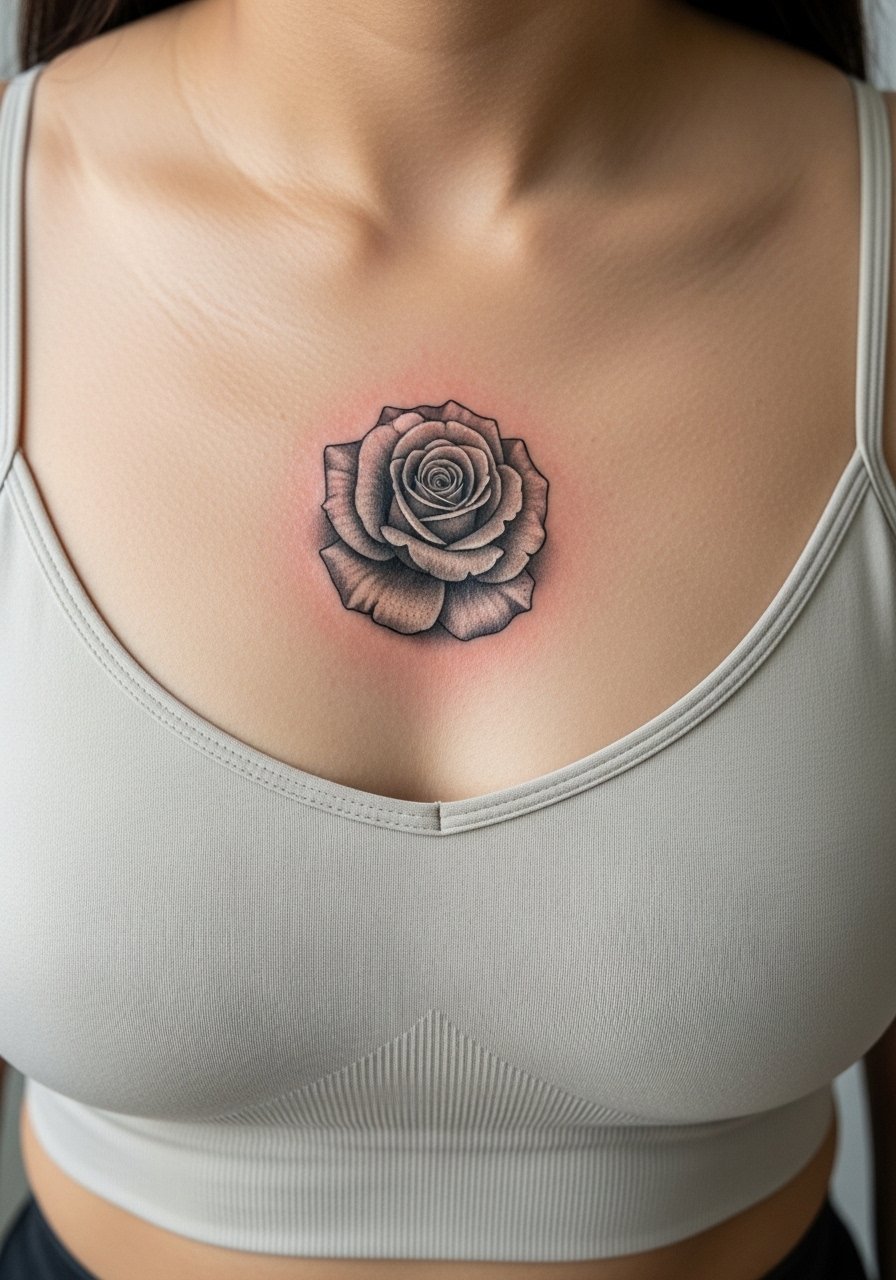
When you want a portrait-like flower between the breasts, ask for micro-realism with clean stipple shading instead of heavy saturation. I've seen this approach at five shops across Brooklyn and the extra space in the petals helps the piece age more gracefully. Expect moderate pain, shorter sessions of 60 to 90 minutes for a tightly scaled design, and a likely touch-up window around year two to refresh delicate highlights. Common mistakes include asking for too many tiny petals that merge as the skin moves. For the session wear, slip on a fitted sports bra so the artist has access while you stay comfortable.
2. Single-Needle Script Curve on the Upper Chest
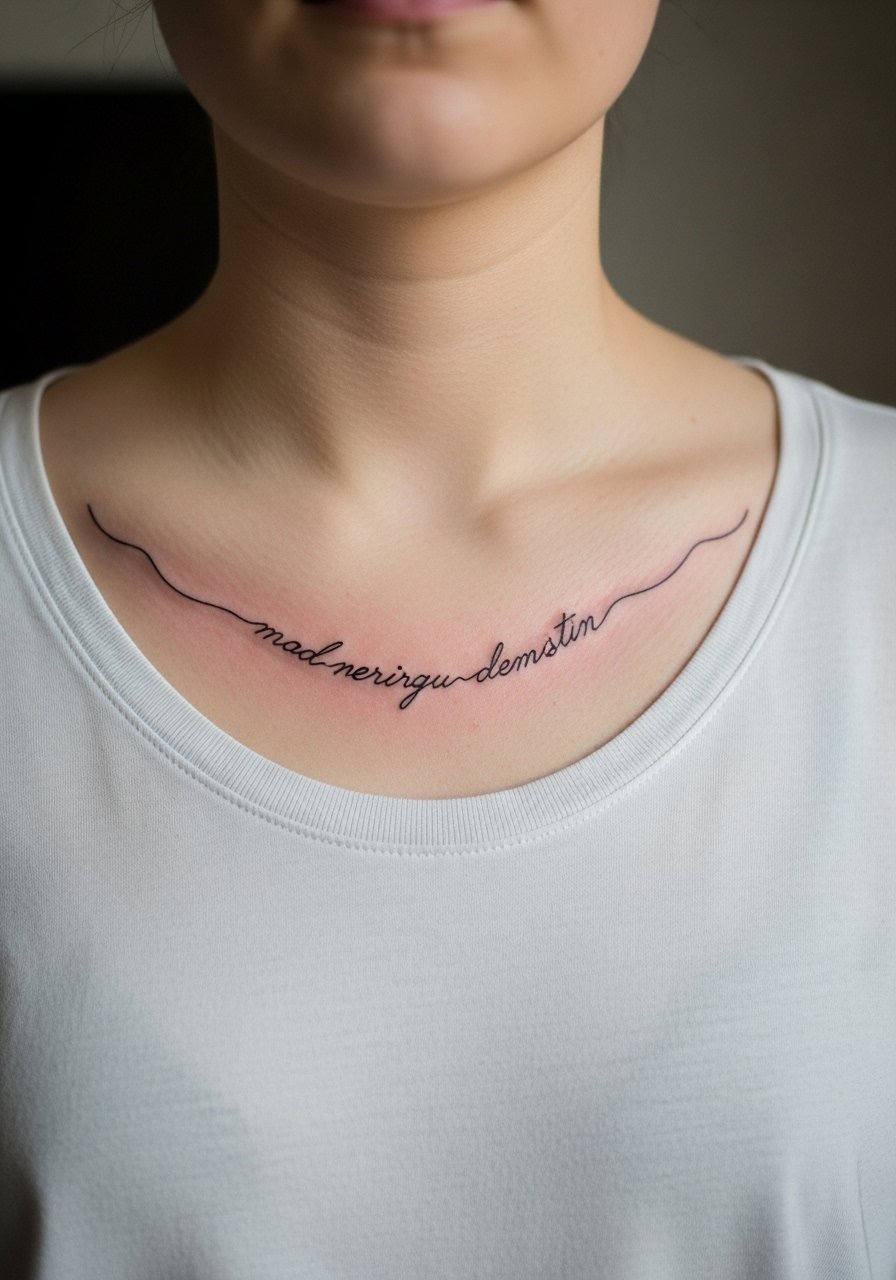
Fine single-needle script reads intimate and keeps attention focused at the center. Fair warning, fine scripts on chest move with respiration and can blur faster than bold lettering, so request slightly heavier lineweight than you would for a wrist piece. Tell your artist the exact letter spacing you want and have them stencil it large enough to maintain legibility at year three. Pain is often rated moderate since the chest area has thinner soft tissue. A common mistake is wanting hairline lines that are too dense; leave breathing room between letters. For showing it off, a thin chain pendant necklace sits just above the script without competing.
3. Photorealistic Moth Anchored at the Sternum
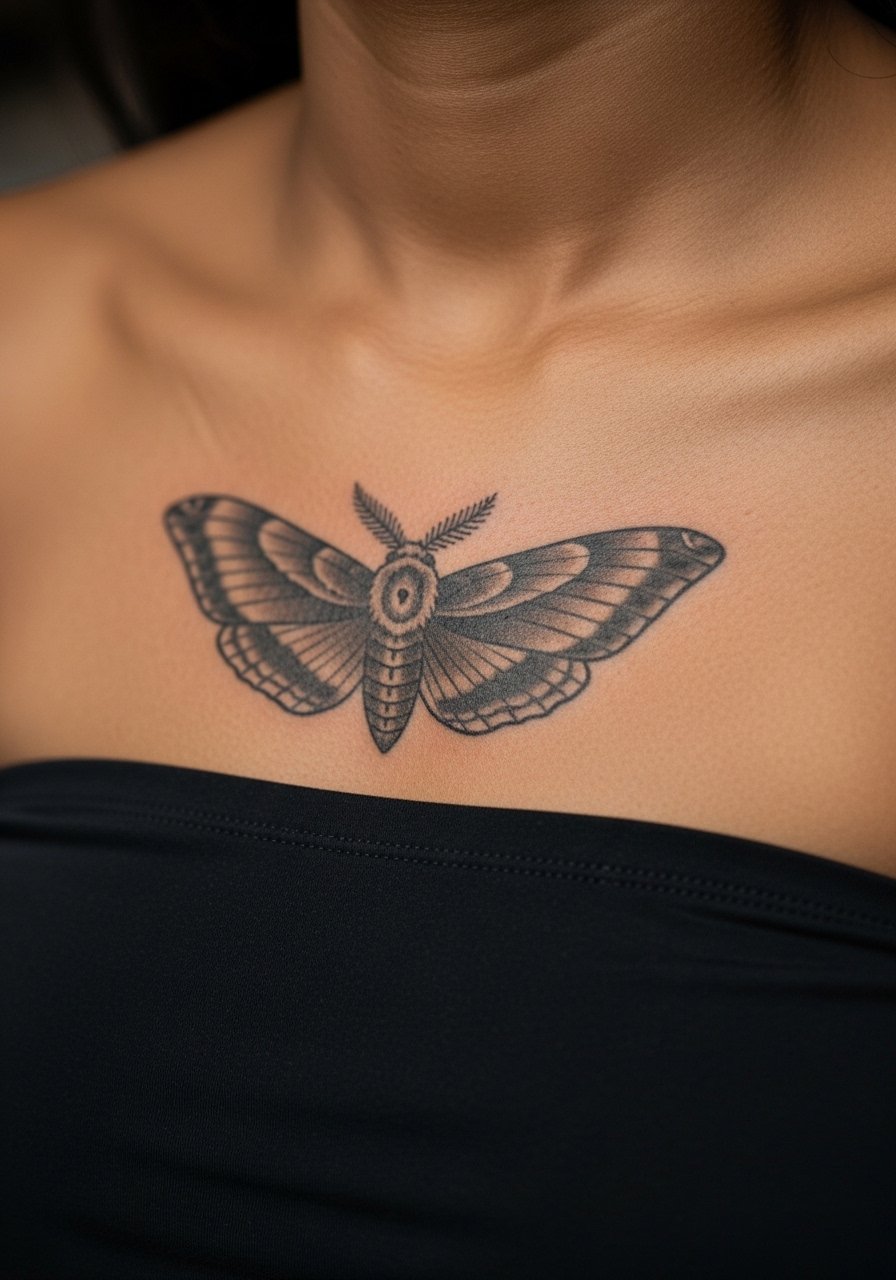
There is a lot of impact in a moth rendered with soft gray wash and micro-shading. In my experience, this style works best when the artist balances contrast so the wings read from a short distance but do not rely on ultra-fine stippling that disappears. During consultation, show photos of healed moth pieces rather than fresh ones so the artist knows you want long-term readability. Session times vary between 90 minutes and three hours depending on size, and the sternum feels sharp for short bursts between breaks. Avoid pushing for extreme tiny textures across a wide wing span as they often soften into indistinct gray over time. Pair this design with an open-back midi dress for nights out so the center chest remains the focal point.
4. Minimal Anatomical Heart, Slightly Off-Center
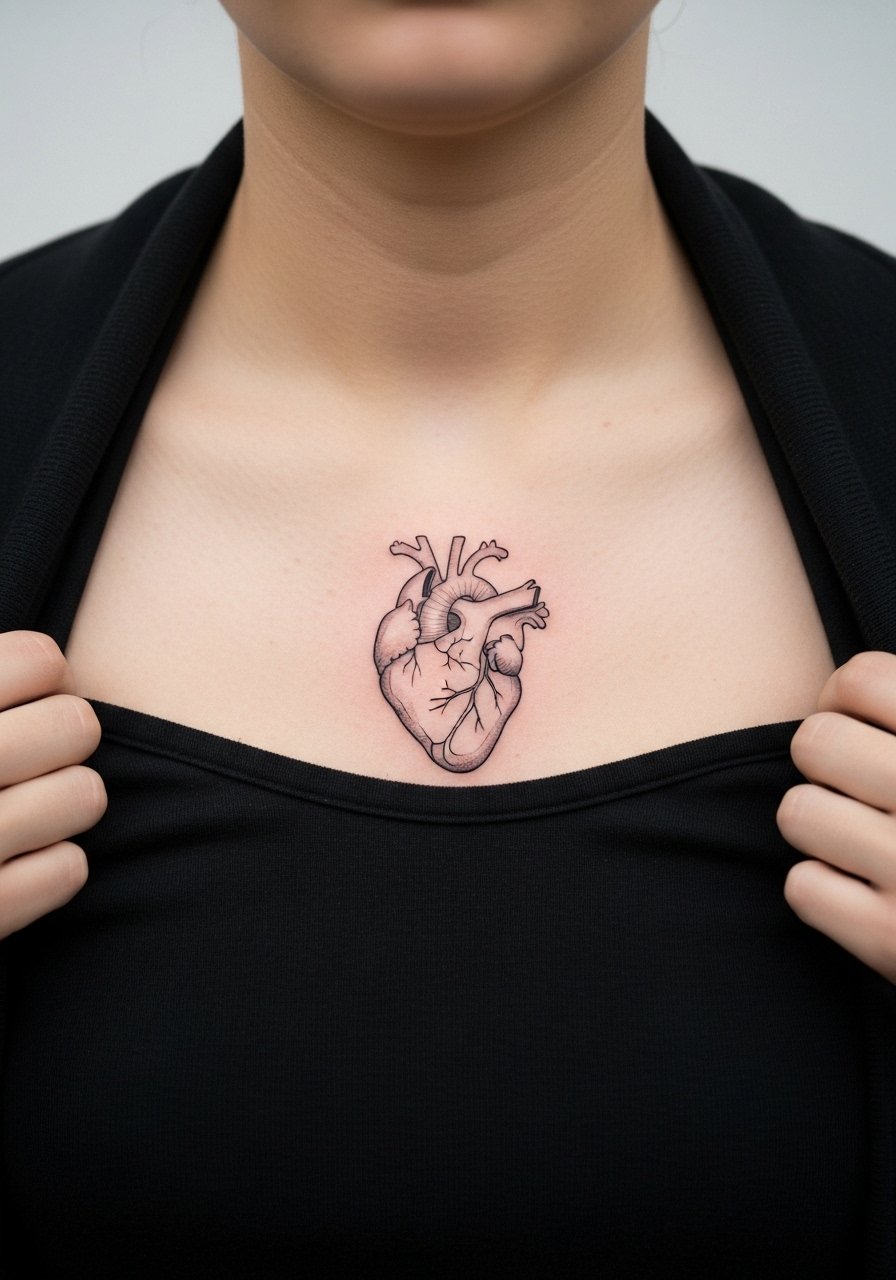
The anatomical heart feels personal and reads like a quiet statement when kept small and slightly off-center. The biggest mistake is scaling it too small and packing in interior detail. Ask your artist for bolder contour lines around the heart and softer internal shading for longevity. It hurts more near the bone, so expect short breaks and a session under 90 minutes for a compact placement. Over time, thin cross hatching tends to blur, so schedule a touch-up around year three if you want crisp interior detail. For the appointment, a loose button-down shirt you can pull aside keeps you modest while giving access.
5. Central Compass with Subtle Shadowing
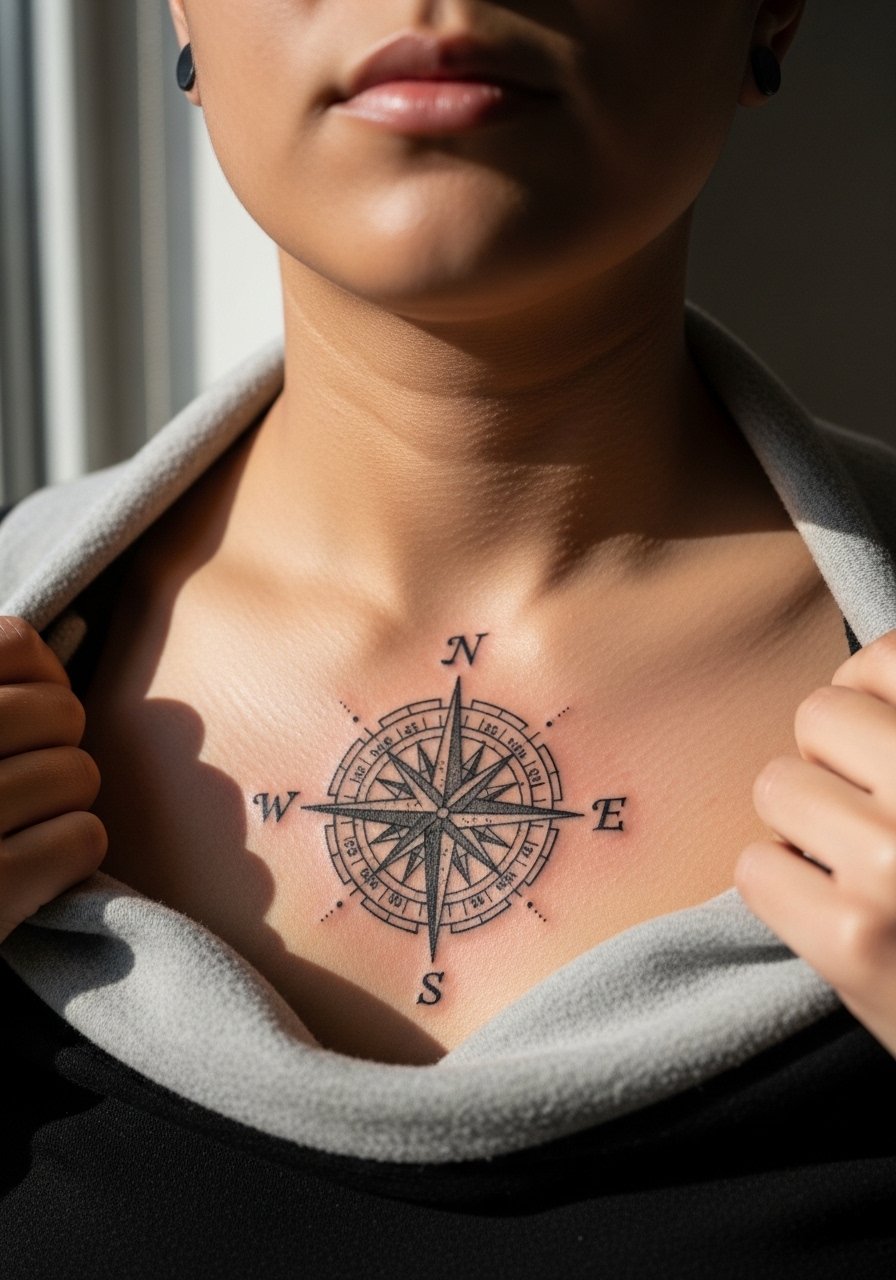
Fine line compass work splits artists into two camps. One camp argues the chest skin is too mobile for tight directional lines and that the spokes blur within two years. The other camp says with proper depth and slight spacing the compass settles fine and stays readable. Ask the artist which camp they fall into and how they adjust line weight for chest placement. A common mistake is requesting all compass points at hairline thickness. Plan for a 60 to 120 minute session and expect moderate soreness in the first week. This design looks great framed by a thin chain pendant necklace when worn low.
6. Micro-Realistic Dove with Feather Detail
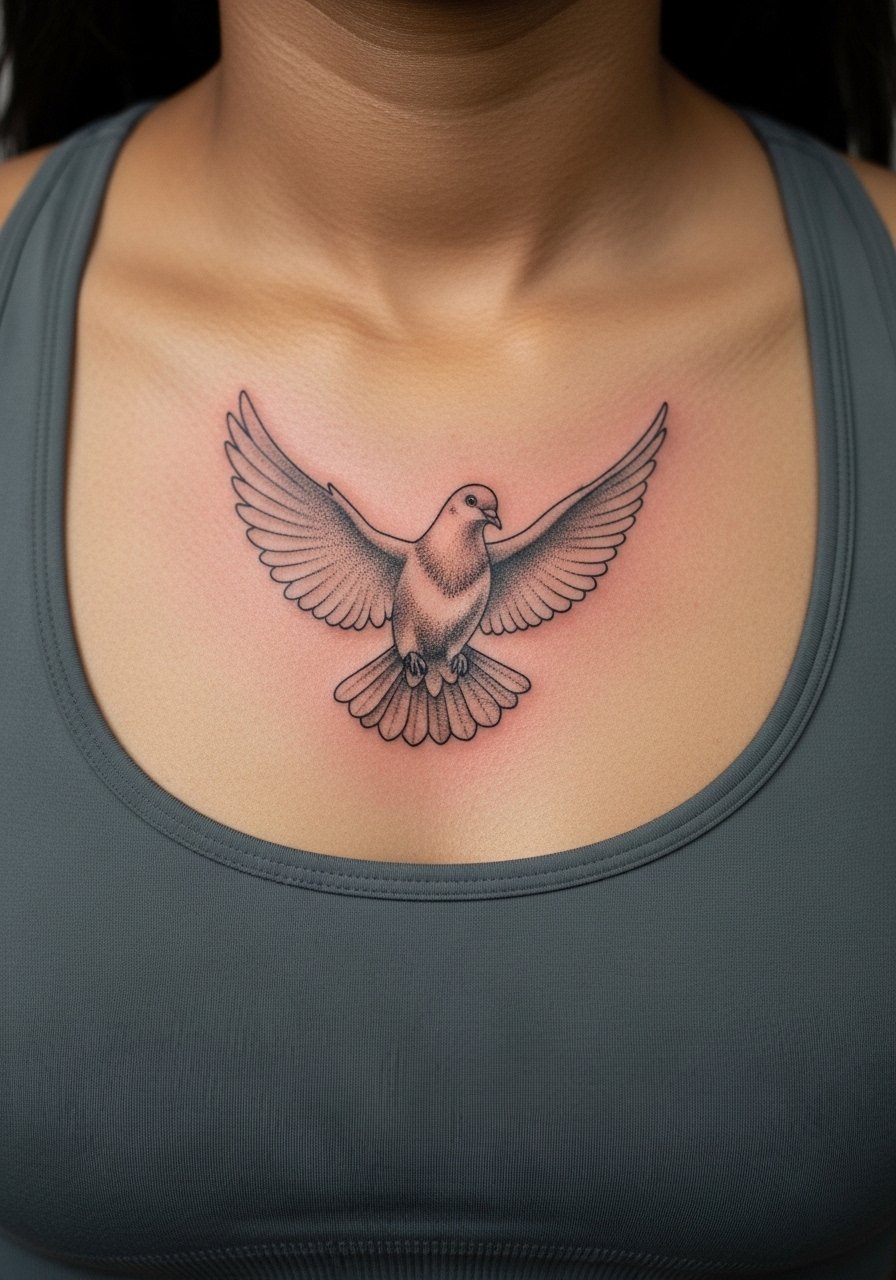
This gentle bird reads like a centerpiece when executed with dot work and light stipple shading. For the session, tell the artist to leave subtle negative space between feathers so the texture does not merge as the skin stretches. The sternum can be more painful than the upper chest, but short, focused sessions keep the needle time manageable. Expect touch-up conversation at year two to refresh fine feather highlights. For showing the piece off, pair it with a racerback tank that exposes the upper chest cleanly.
Studio Day Picks
The designs above center on the sternum or upper chest and those placements need different prep than shoulder or forearm work.
-
Stencil transfer paper kit. Lets you preview exact placement and curve on the chest so the design sits where you expect it relative to your collarbones.
-
Topical numbing cream. Applied according to instructions it helps during short, sensitive sternum bursts without changing how the ink lines settle.
-
Thin adhesive protective film roll. Keeps center-chest pieces clean under bras or camis during the first days when friction is highest.
-
Fragrance-free gentle body wash. Cleanses the area after light scabbing without stripping the fine linework or causing irritation.
-
Aquaphor healing ointment. Thin layers help lock in moisture on the sternum where fabric rub can dry out delicate shading.
7. Baroque Filigree Panel Anchoring the Center
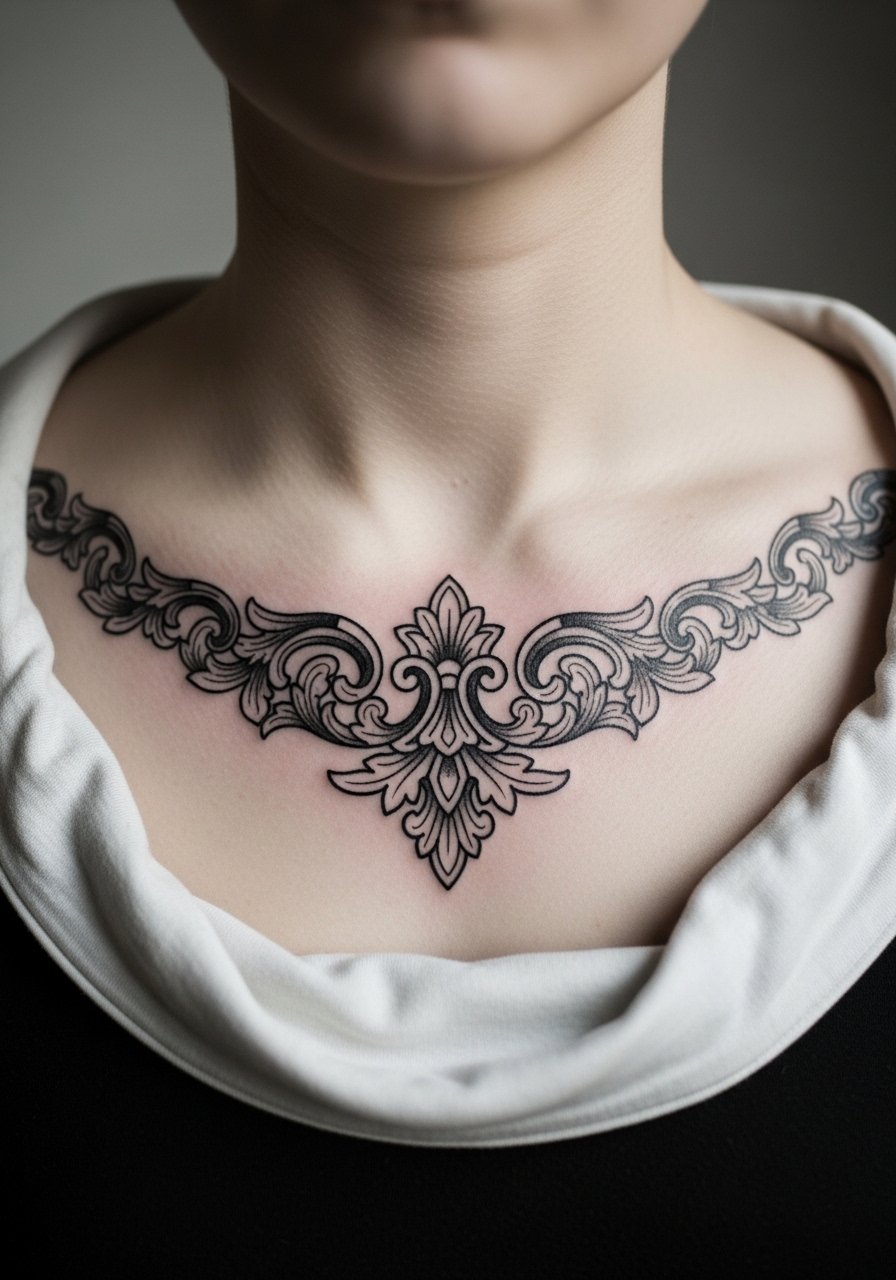
There is something formal about a small filigree panel that sits perfectly in the in-between chest. Realistically scaled filigree should have open negative spaces so tiny curls do not smudge together. Tell your artist to prioritize clean contour lines for the outer edges and softer internal shading. Pain is moderate because the needle crosses thin soft tissue near bone. Expect a session of 90 to 150 minutes for medium detail and plan for a touch-up at year three if you want those fine inner curls crisp. Keep in mind this style reads well with a thin chain pendant necklace that does not sit on the ink.
8. Small Cross with Realistic Wood Grain
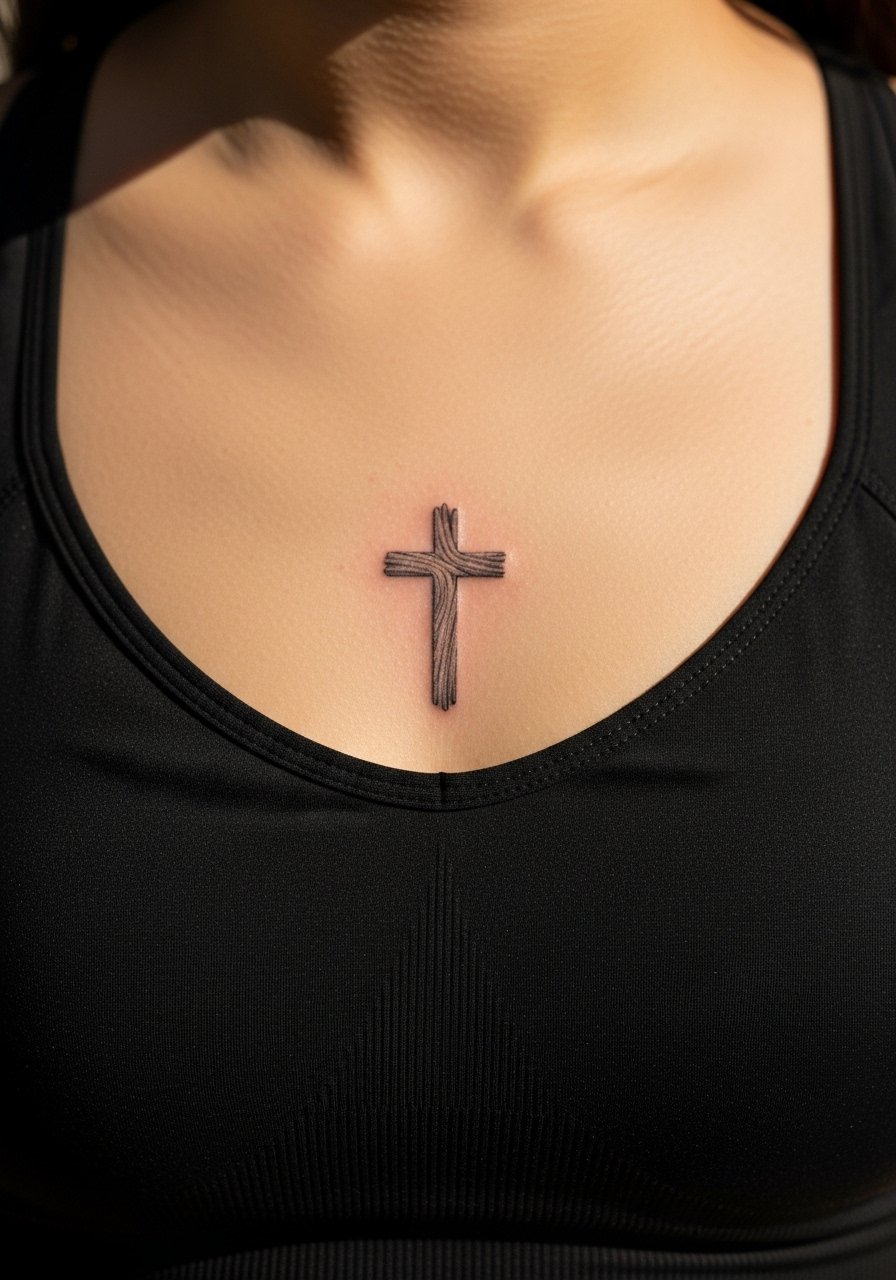
A small cross with wood grain looks like an object resting on the chest when shaded right. The key is contrast in the grain, not tiny scratches that disappear with time. Mention during consultation that you want solid outer edges and gentle interior texture. The sternum placement amplifies tactile sensitivity so sessions should be short. Watch for a common error where people demand ultra-fine interior strokes that lose definition; ask for slightly bolder grain at the corners. For the appointment, wear a fitted sports bra to let the artist work without worry of fabric movement.
9. Botanical Wreath Nesting the Centerpiece

A circular botanical wreath frames any center chest motif and gives a classical look that still reads modern. Ask the artist to space leaves and stems so they breathe instead of packing too much texture into a small ring. The chest expands and contracts with breathing so give the wreath a bit of gap at the top and bottom for longevity. Sessions range from 90 minutes for a small ring to multiple sittings for a broader wreath. A common mistake is compressing too many leaf veins into a small curve which leads to muddiness at year two. Pair with an open-back midi dress for evening wear where the wreath becomes part of the outfit.
10. Minimalist Arrow Pointing Down the Sternum
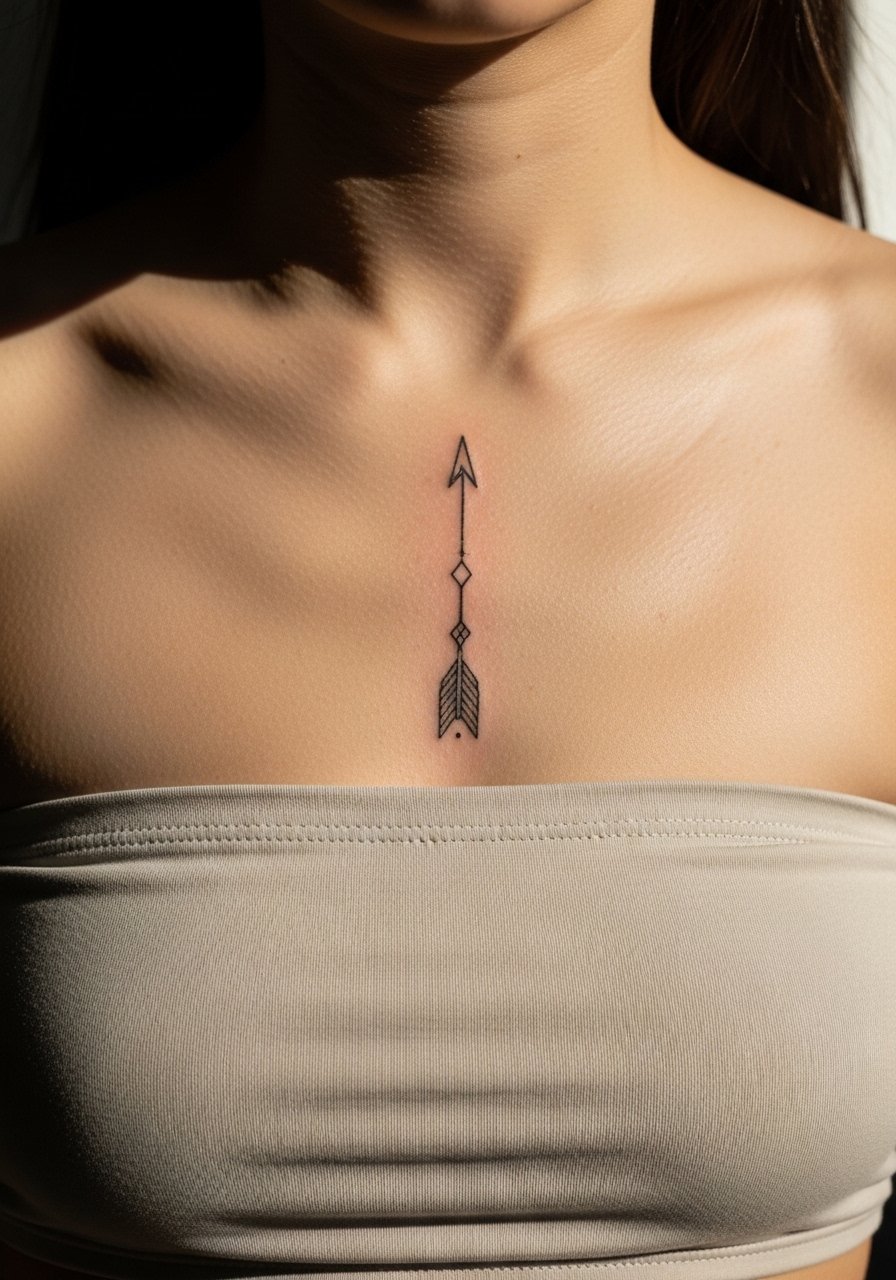
There is real elegance in a simple arrow aligned with the sternum when the linework has confident weight. The chest is not the best place for hairline arrows intended for wrists, so ask for a slightly thicker shaft and simple fletching. People often request ultra-thin arrows and then book touch-ups when the lines soften. Pain is higher near the bone so short sessions keep the experience manageable. Expect a touch-up conversation at year two for line refresh. For session comfort, a loose button-down shirt that you can pull aside works well.
11. Realistic Moon Phases Stacked Vertically
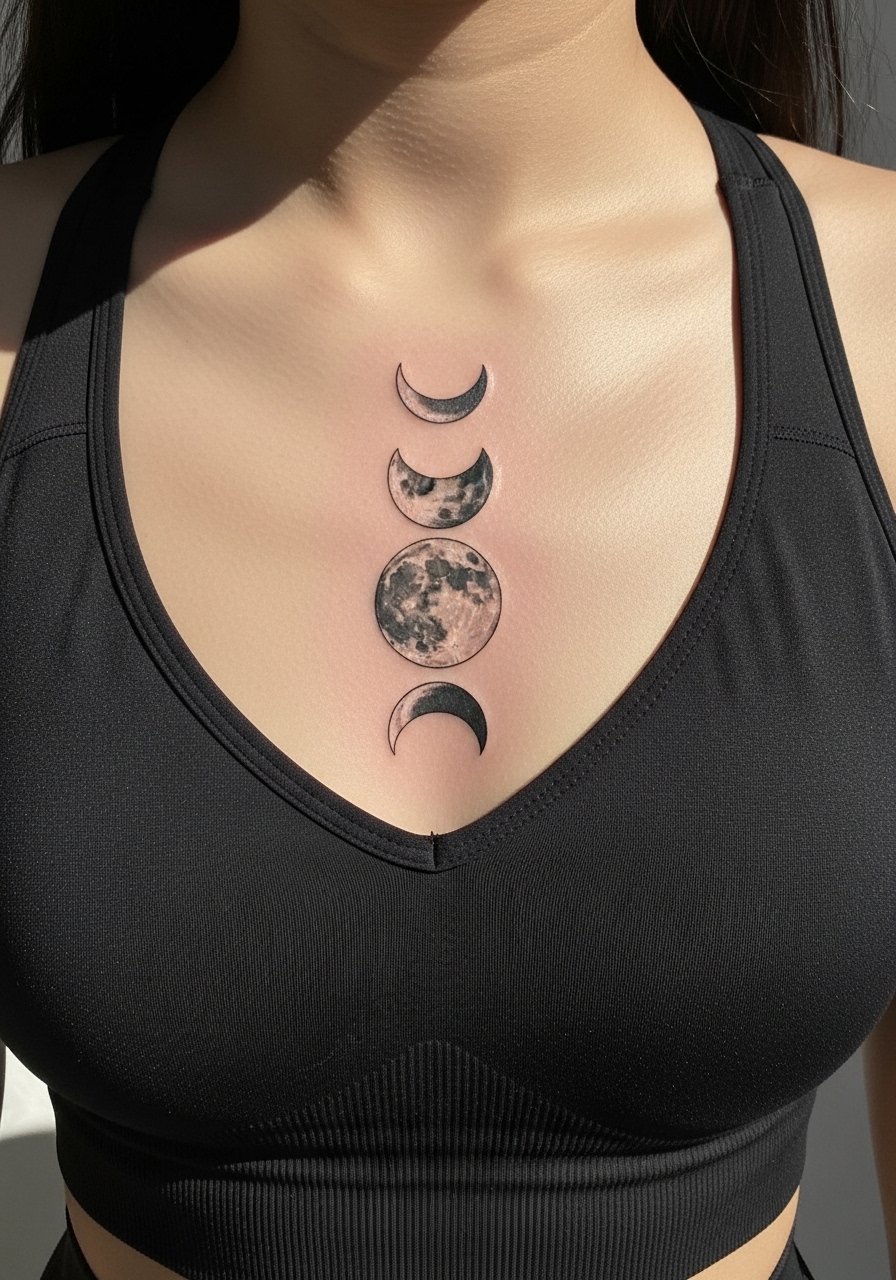
Moon phases in realistic grayscale can lead to debate in the community. One camp says high-contrast shading ages well on the chest and keeps each phase distinct. The other camp warns that soft gradients blend with time especially on thin chest skin. During your consult ask whether the artist prefers deeper contrast or soft blends and how they plan touch-ups. Sessions for a small stack take around 60 to 120 minutes. A typical mistake is compressing too many tiny phases into a short vertical strip. For nights when you want to show it, a low-cut scoop top or a thin chain pendant necklace keeps the composition clean.
12. Micro-Realism Portrait Fragment at the Center
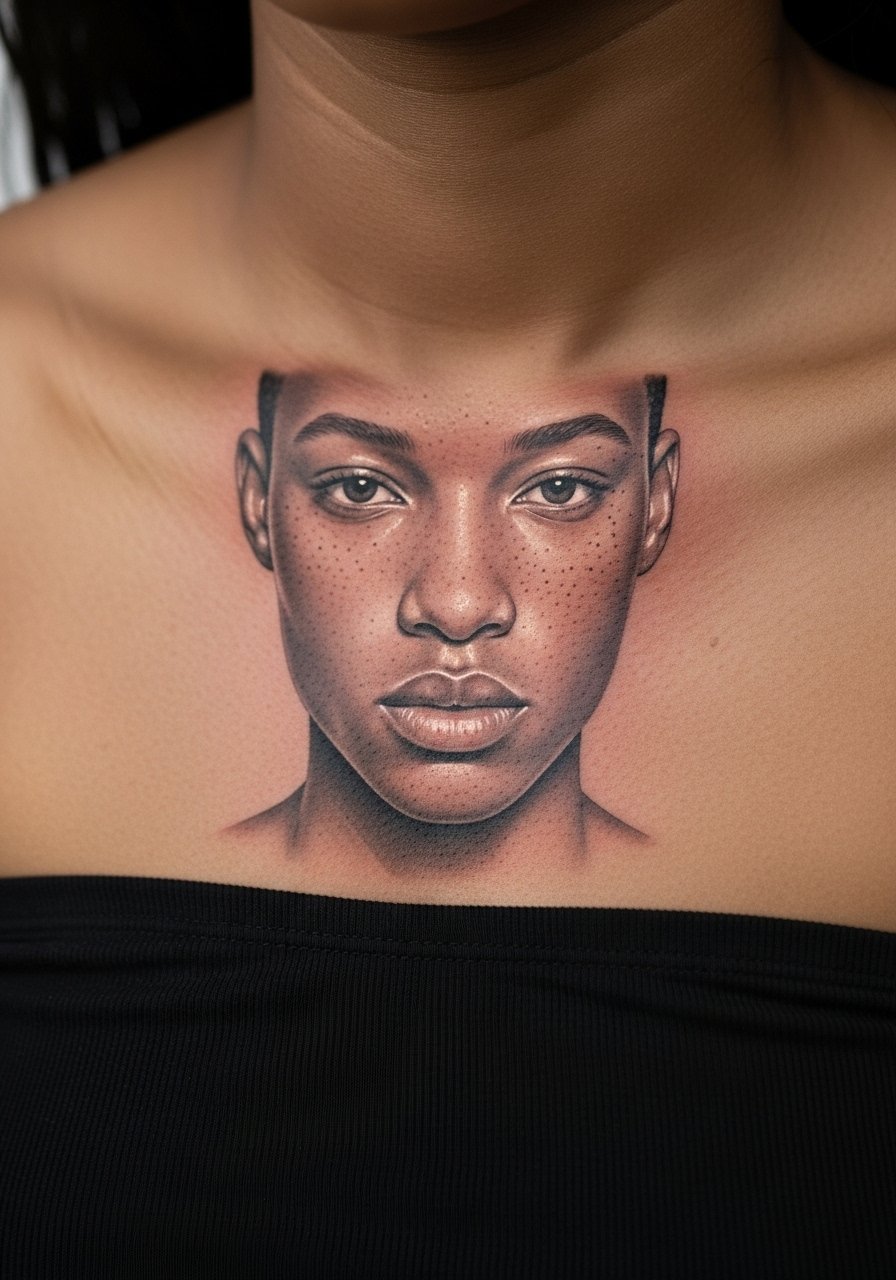
Portrait fragments work as a subtle tribute when kept compact and focused on a small facial plane or eye. Tell your artist you want reference of healed fragments rather than fresh photos so they design for longevity. Expect a longer session if the fragment requires realistic eyes or skin texture. A common error is making the piece too small for portrait detail which leads to blurring of facial features. Plan a touch-up at year two to preserve tiny highlights. For session day, a fitted sports bra keeps the area exposed but modest.
13. Ornamental Keyhole with Tiny Lock Details
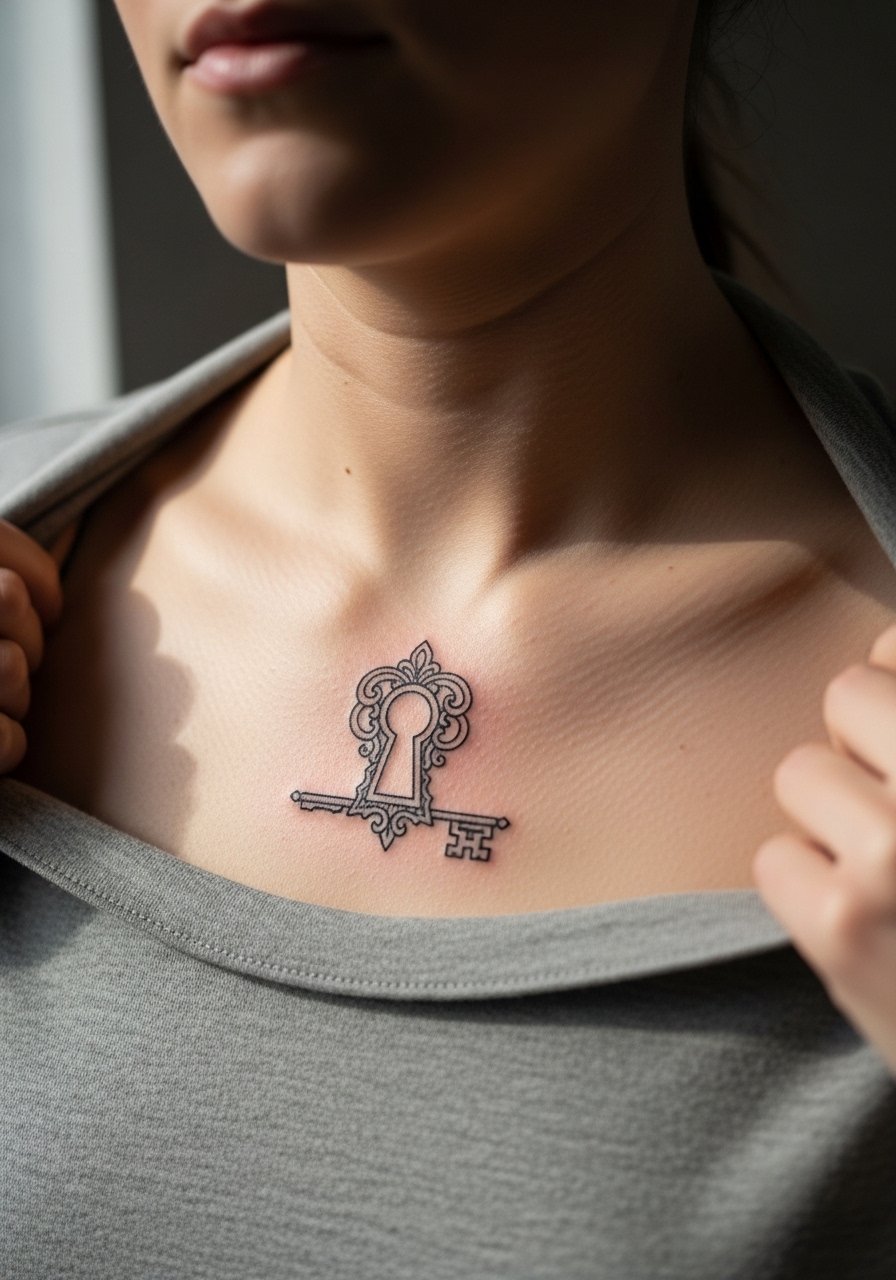
A keyhole motif reads architectural and pairs well with jewelry that frames the chest. The trick is avoiding microscopic interior filigree that the chest will soften. Ask for a clear outer silhouette and simplified inner tooling for durability. The chest feels sharper over the sternum so short sessions of 45 to 90 minutes work best. Common mistakes include wanting hyper-detail at a tiny scale which reduces legibility over time. When you show it off, a thin chain pendant necklace highlights the negative space nicely.
14. Fine Line Mandala Slice Centered at the Sternum
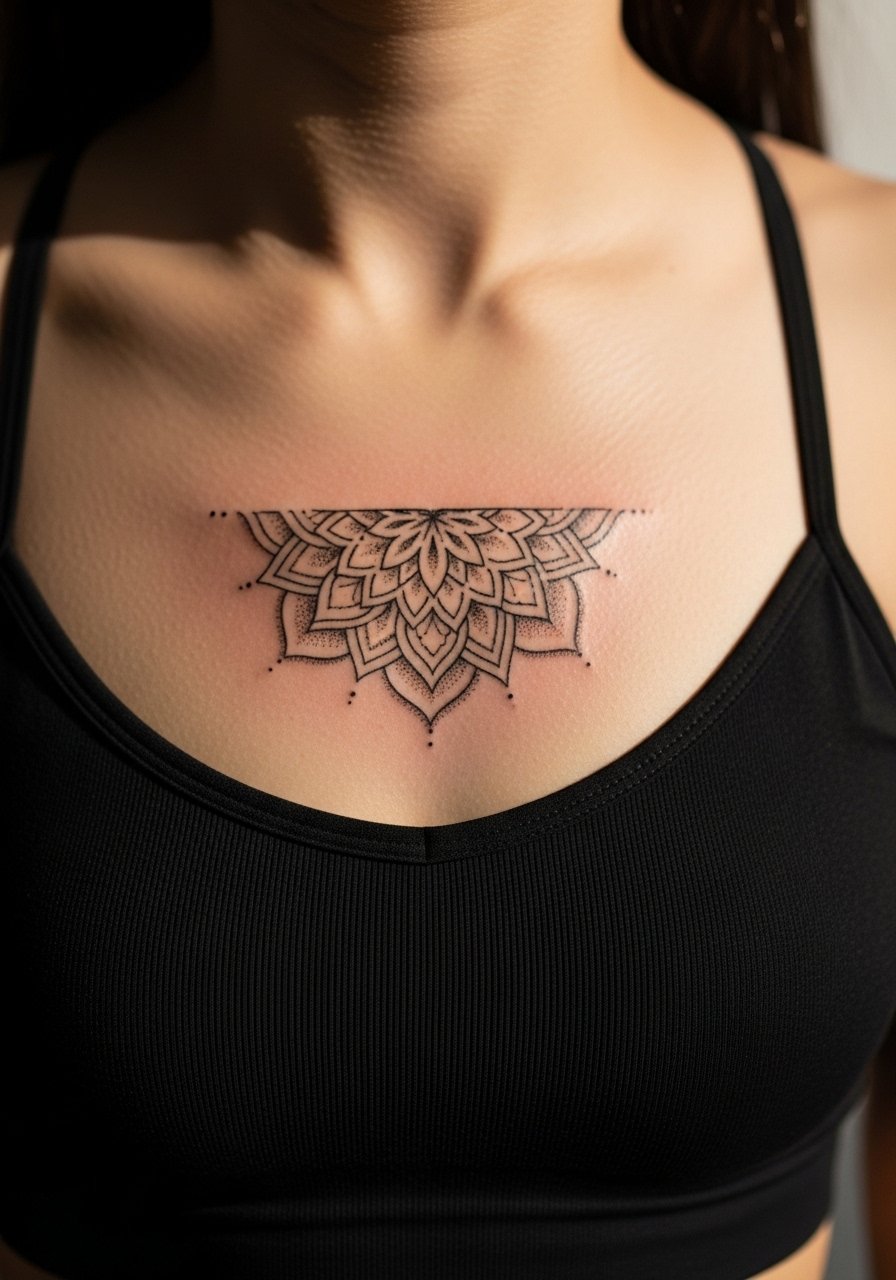
Mandala work on the chest requires space for radial elements to breathe or the inner lines will congeal. The controversy here is clear. One group of artists prefers larger, spaced mandalas to protect radial symmetry over time. The other group uses slightly bolder radial lines and tighter negative space to keep the pattern readable at smaller sizes. Ask where your artist stands and if they will scale the mandala to your chest anatomy. Sessions can range from one to several hours depending on diameter. Avoid forcing a full small mandala into a narrow sternum strip. For appointment ease, wear a loose drawstring linen pant so you are comfortable during longer sittings.
15. Tiny Constellation Mapped Across the Upper Chest
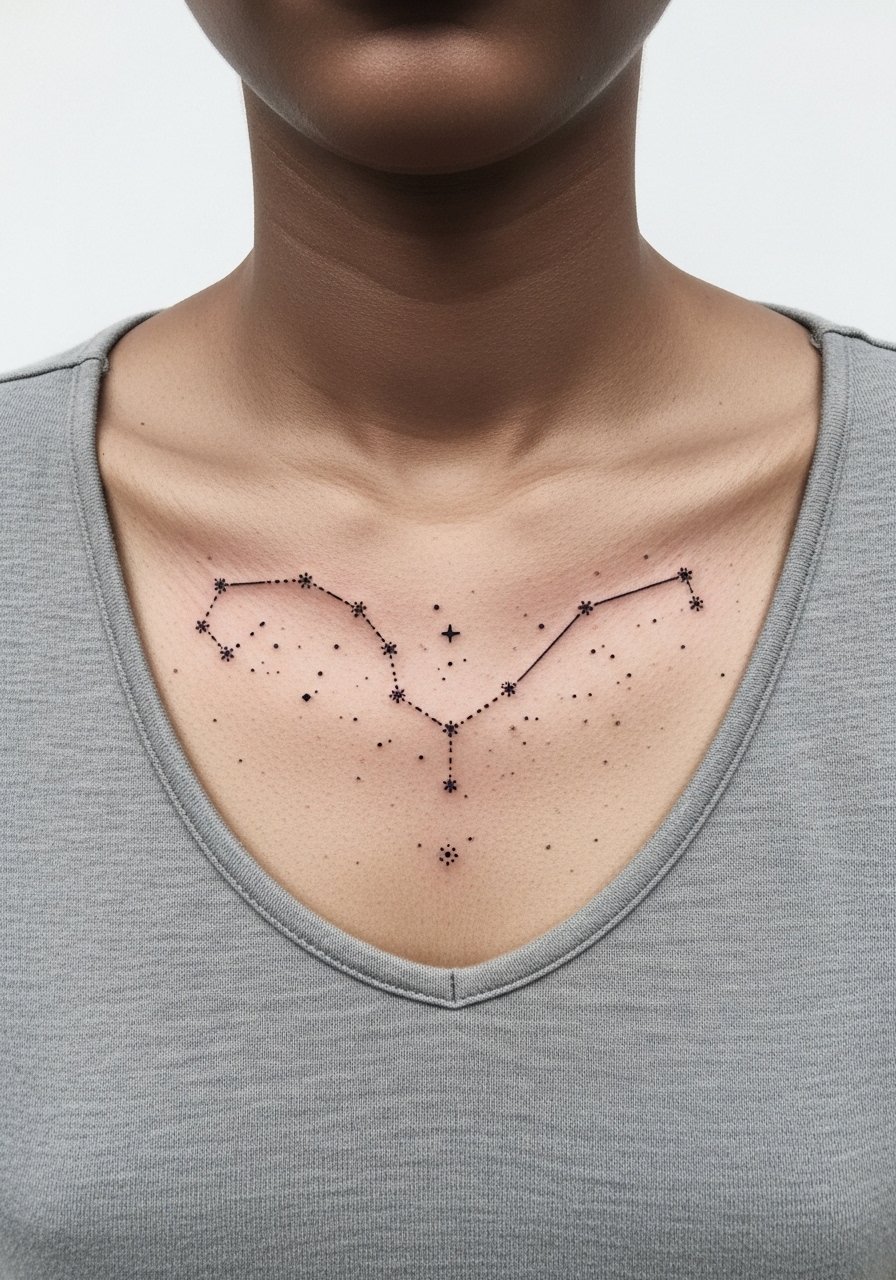
Constellations feel personal and work well when dots are spaced for long-term clarity. Visual impact at six months is crisp, and at two to five years the thin connection lines will need refreshing if they were drawn too delicate. Tell your artist which stars must remain prominent and which can be faint. Expect a short session and minimal swelling. A common mistake is placing too many tiny stars tightly which creates a blur over time. Pair with a thin chain pendant necklace that aligns with the mapped stars.
16. Small Skull with Subtle Floral Accents

A small skull balanced with flowers reads like a study in contrast when the skull has solid contour and the flowers are airy. Tell the artist to prioritize an outer contour that keeps the skull readable against the floral negative space. The sternum placement can feel sharp but sessions are short. One mistake is packing tiny petal veins inside the flowers that later unify into gray; ask for simpler petal shapes. For showing it off on cooler days, a loose button-down shirt pulled aside frames the piece without smothering the art.
17. Centered Abstract Brushstroke in Blackwork
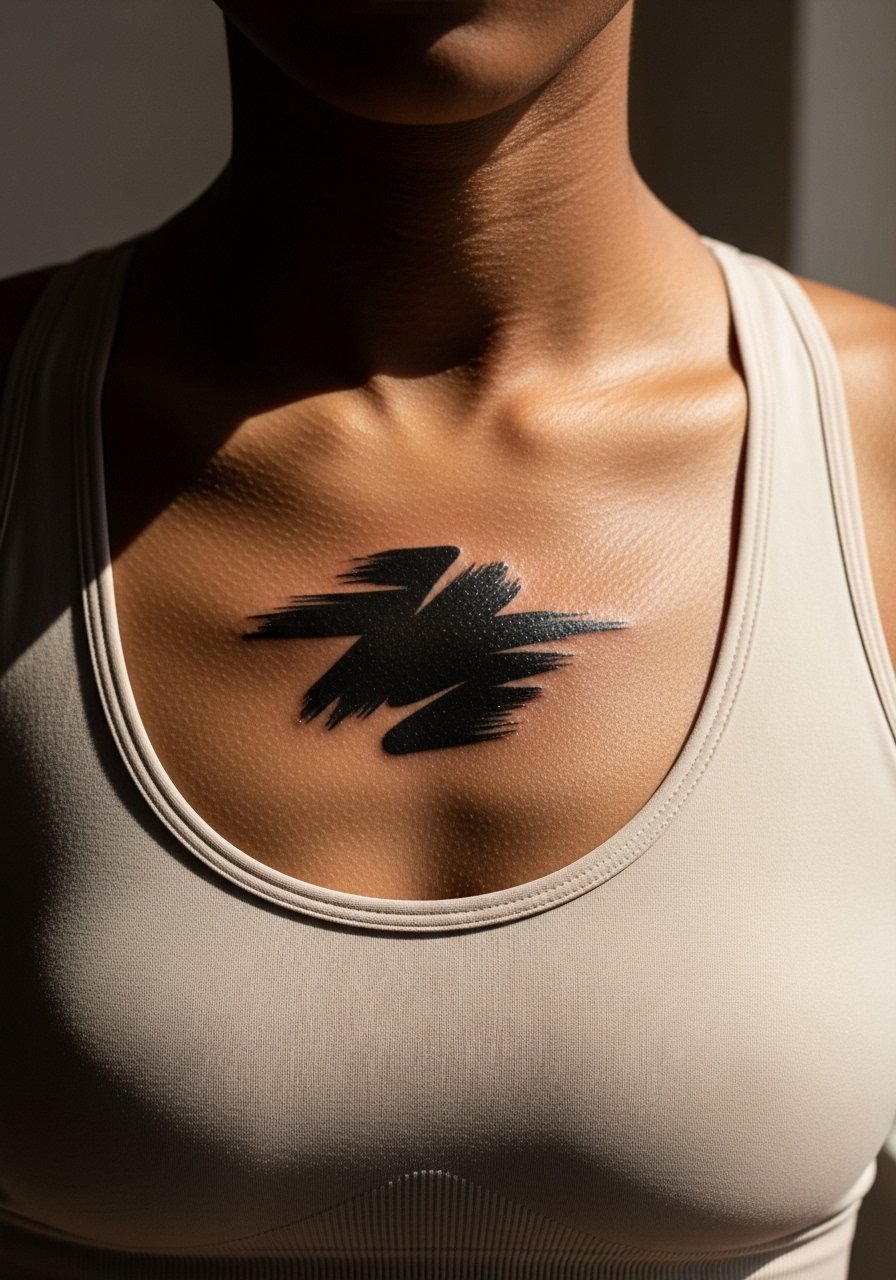
Bold black brushstroke work makes a strong statement and ages differently than fine work. Saturated black holds better on chest skin and often requires fewer touch-ups than ultra-fine pieces. During consult ask about the saturation strategy and how the artist ensures even ink density to avoid patchy healing. Expect more immediate redness with solid black but a simpler long-term maintenance plan. A common mistake is requesting a brushstroke with too many thin offshoots which soften quickly. Pair with a racerback tank when you want to display the bold center stripe.
Frequently Asked Questions
Q: Will a fine line script between the collarbones blur faster than a bold script?
A: Fine line scripts do tend to soften sooner on chest skin because the area moves with breathing and has thinner soft tissue. Choosing slightly heavier lineweight and spacing letters a bit more gives better longevity. Many artists recommend a touch-up around year two or three for crispness.
Q: How should I prepare clothing-wise for a sternum session?
A: Wear something that exposes only the tattoo zone while keeping you comfortable, such as a fitted sports bra or a wide-neck shirt you can pull aside. Loose lower garments also help if the session runs long so you can relax during breaks.
Q: Is it safe to get a photorealistic design on the sternum if I want tiny detail?
A: You can get fine detail, but keep it slightly larger than you might for a forearm piece. Tiny textures on the sternum tend to blur faster. Discuss expected touch-up timelines with your artist and look at healed photos of similar pieces.
Q: Do central chest tattoos affect necklines for formal wear?
A: Yes, the placement interacts with certain necklines. High scoops and open-back dresses showcase center chest work differently than crew necks. Think about the outfits you wear most when planning scale and placement.
Q: How often do sternum tattoos need touch-ups compared with forearm tattoos?
A: Sternum tattoos often need touch-ups sooner because of movement and friction from clothing. Expect touch-up conversations earlier than for arm work, commonly in the two to four year range depending on design density and sun exposure.