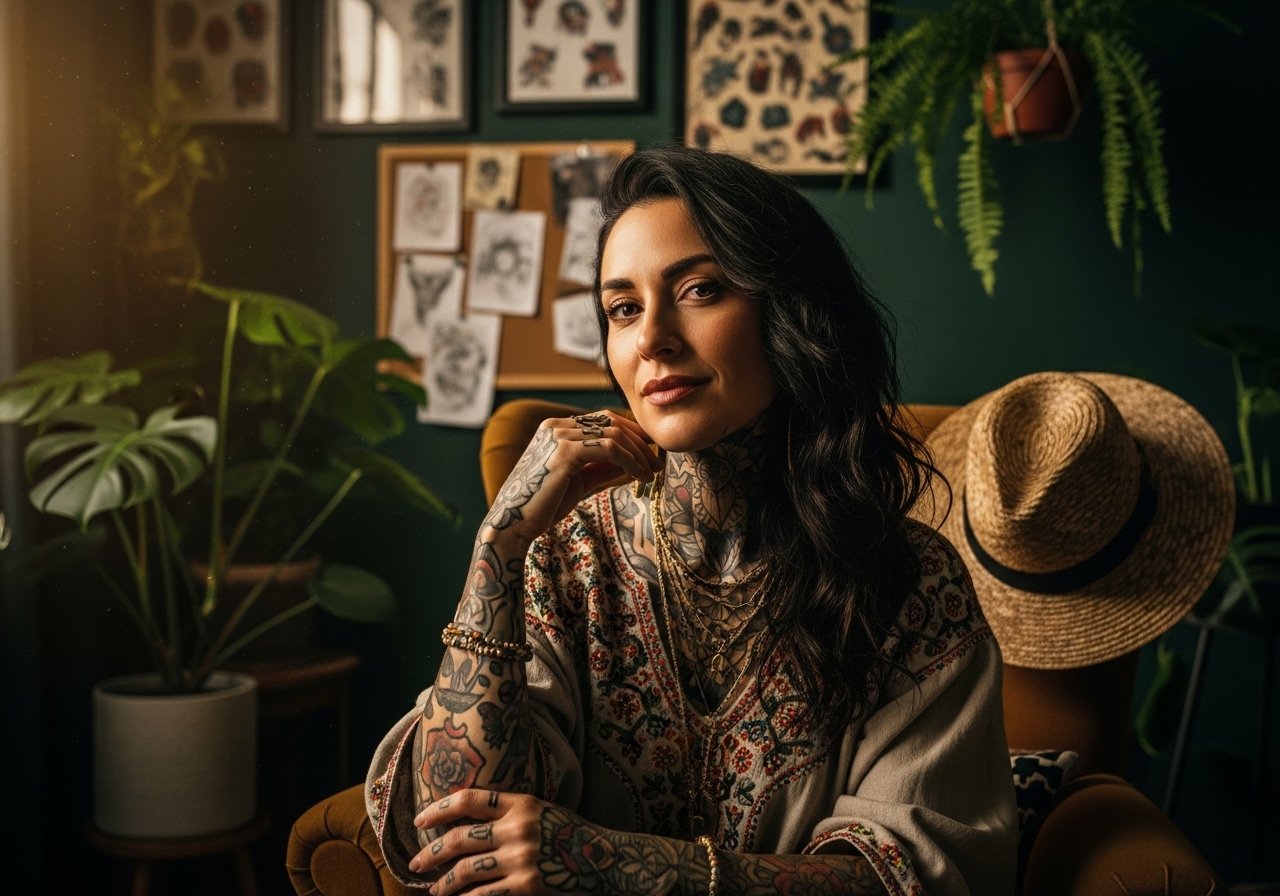
The neo traditional take on Silent Hill lets you keep the series' atmosphere while leaning into bold linework, saturated color, and illustrative shading that still reads after years of healing. Expect designs that look cinematic up close and readable across a room. Start with placement and spacing in mind, and the next sections unpack 27 ways to translate the town's dread into wearable art that lasts.
1. Pyramid Helmet Chest Plate, Saturated Reds and Rust
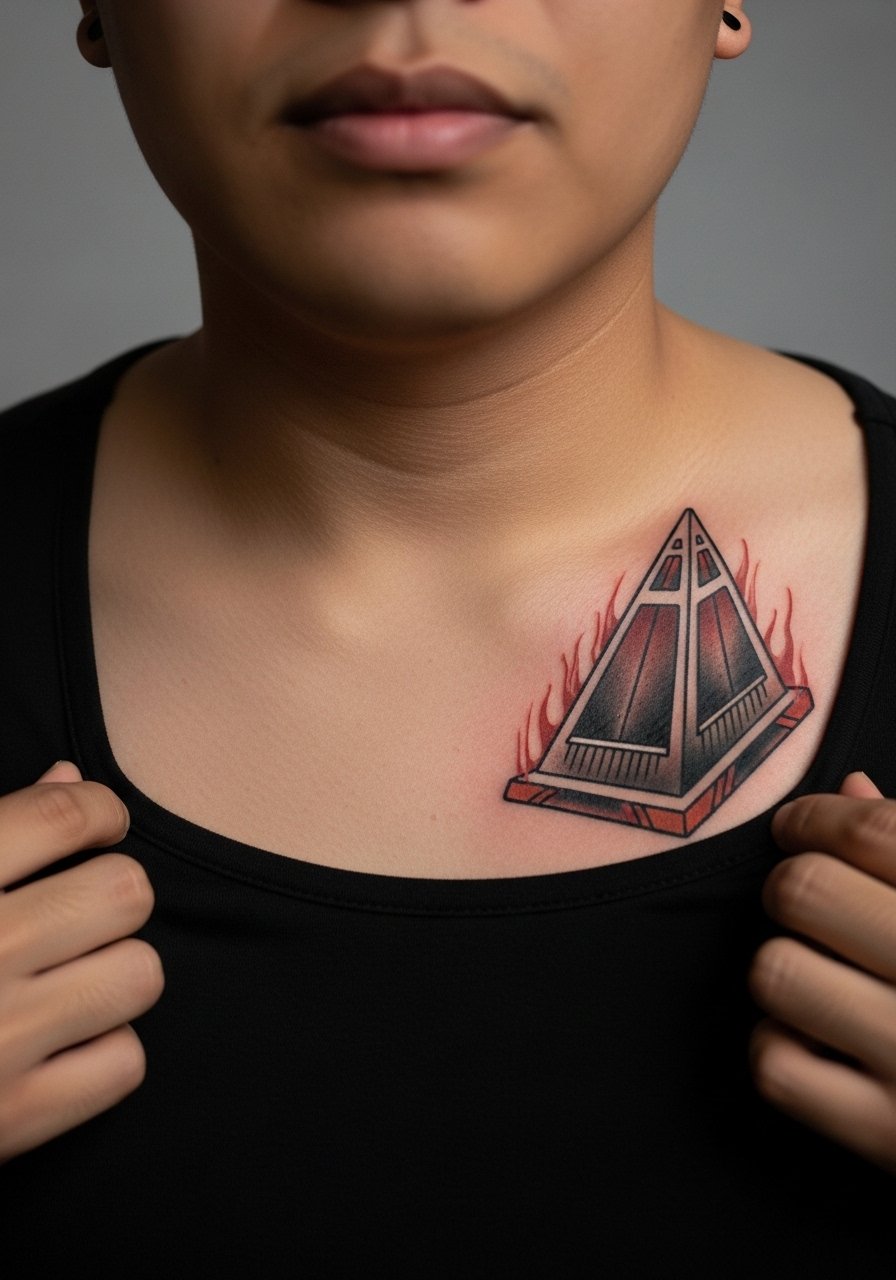
A chest-centered Pyramid Helmet gives the neo traditional palette room to breathe, and chest skin accepts saturation well. Fair warning, chest sessions can feel sharp at first but usually finish in one long session or two medium sessions. Tell your artist you want heavy outlines and layered color washes, not micro detail, so the shapes hold as the skin ages. The common mistake is packing tiny metal texture into a small chest patch, which blurs by year three. For consultations, bring front-facing references and agree on spacing from the sternum and collarbone so the piece reads both on and off camera.
2. Rusted Pyramid on Sternum, Dark Florals Framing
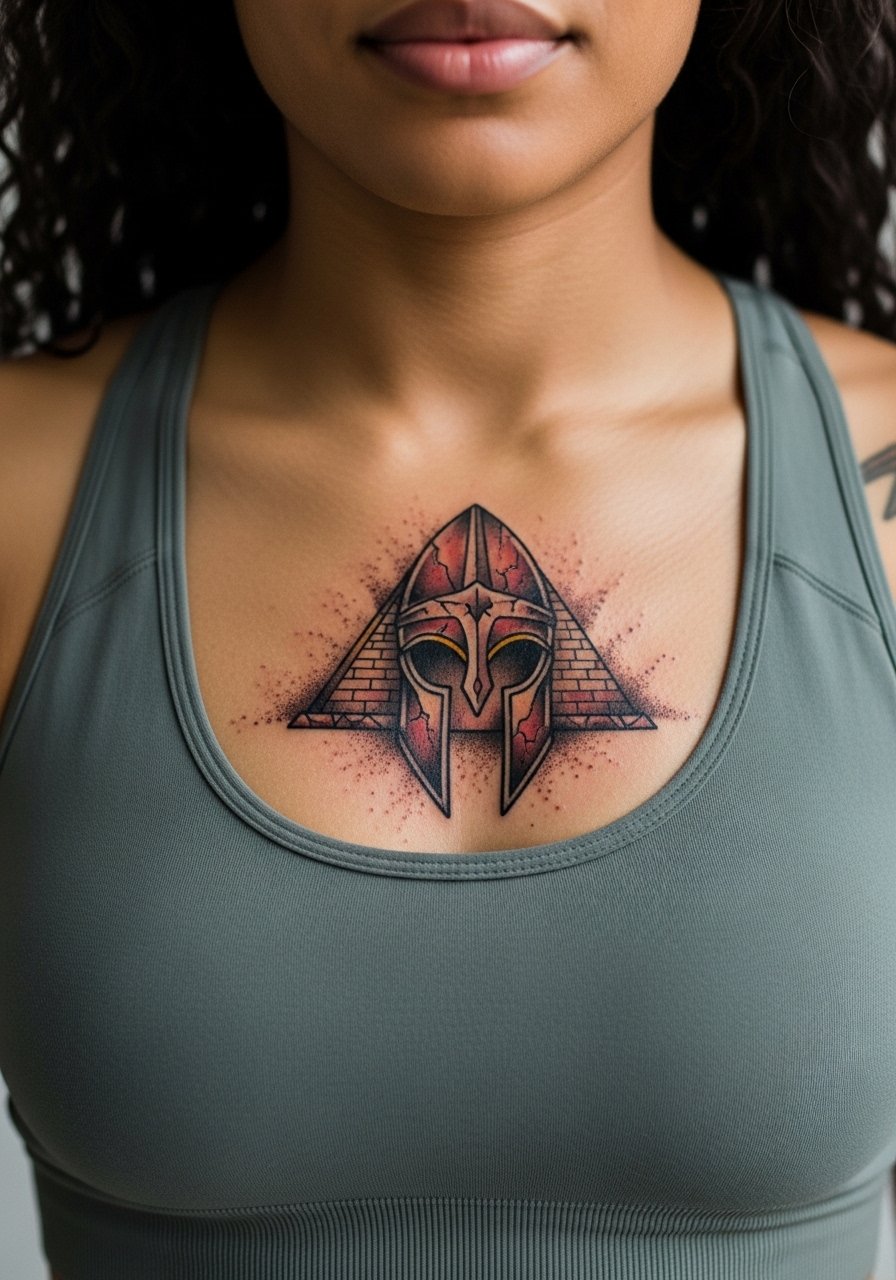
Sternum placement feeds that claustrophobic Silent Hill energy, but the area heals differently than the chest. Sessions feel more intense here, and smaller details can fade faster because of skin movement. Ask for bolder outlines and slightly simplified florals to frame the helmet so color saturation is the visual anchor. The biggest mistake is asking for ultra-fine texture right over the sternum. If visibility is a concern, plan touch-ups at year two to refresh saturation. Consider the session wardrobe, like a strapless top or zip-up that you can pull aside to give the artist clear access while staying comfortable.
3. Nurse Portrait Thigh Piece, Bold Color Palette
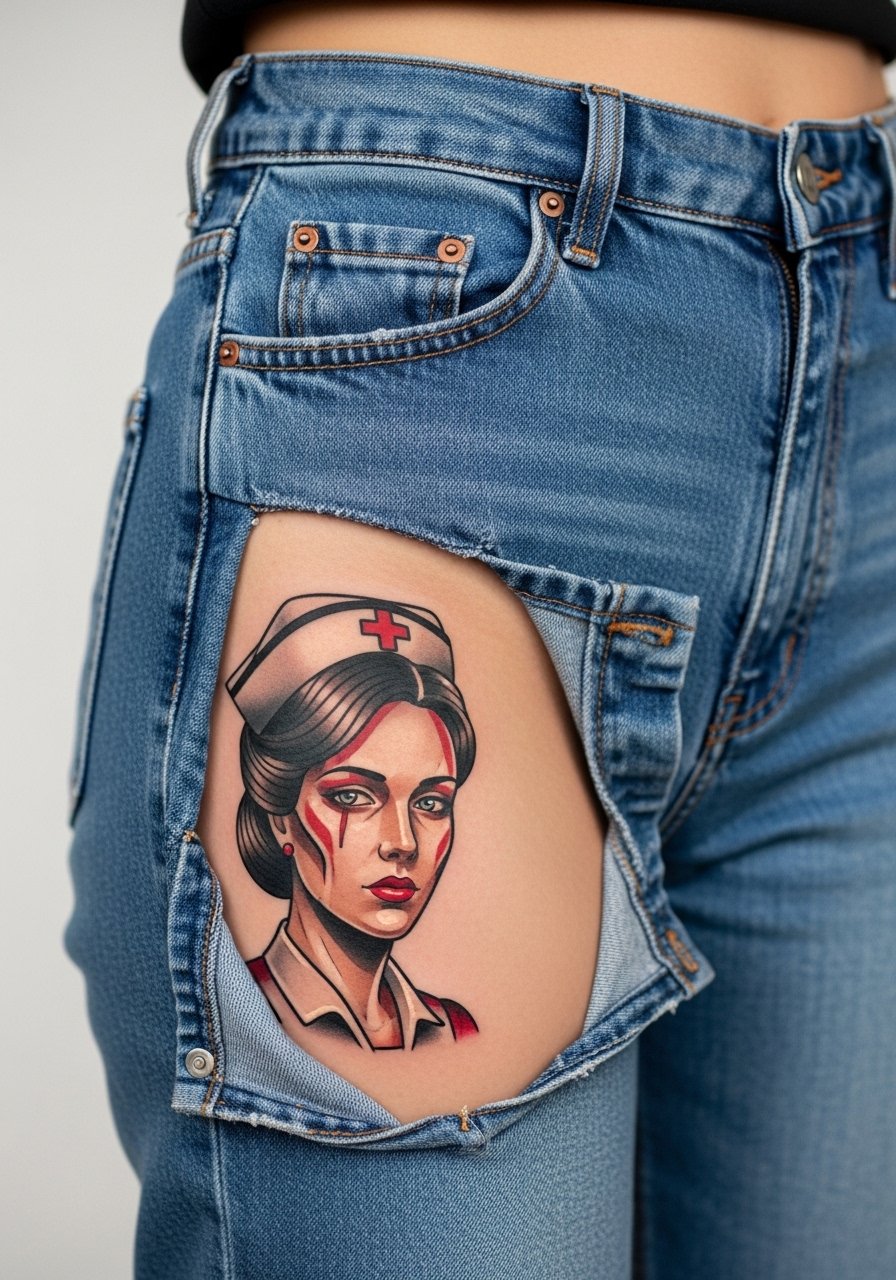
A thigh portrait lets the artist use sweeping color fills and strong linework, and the thigh is forgiving for saturation. Session time is moderate to long depending on size. Tell the artist you want neo traditional brush strokes and stipple shading rather than hyper-realistic facial detail so the nurse keeps character without turning into a soft photo over time. Common mistakes include packing high-contrast highlights into fleshy spots, which can read patchy at six months. For the session, wear loose shorts so the artist can move the fabric without tugging at the tattoo site. If you plan to show it off, a high-slit skirt frames a thigh piece nicely in the evening wear. high+slit+skirt
4. Foggy Town Skyline Sleeve Accent, Muted Palette
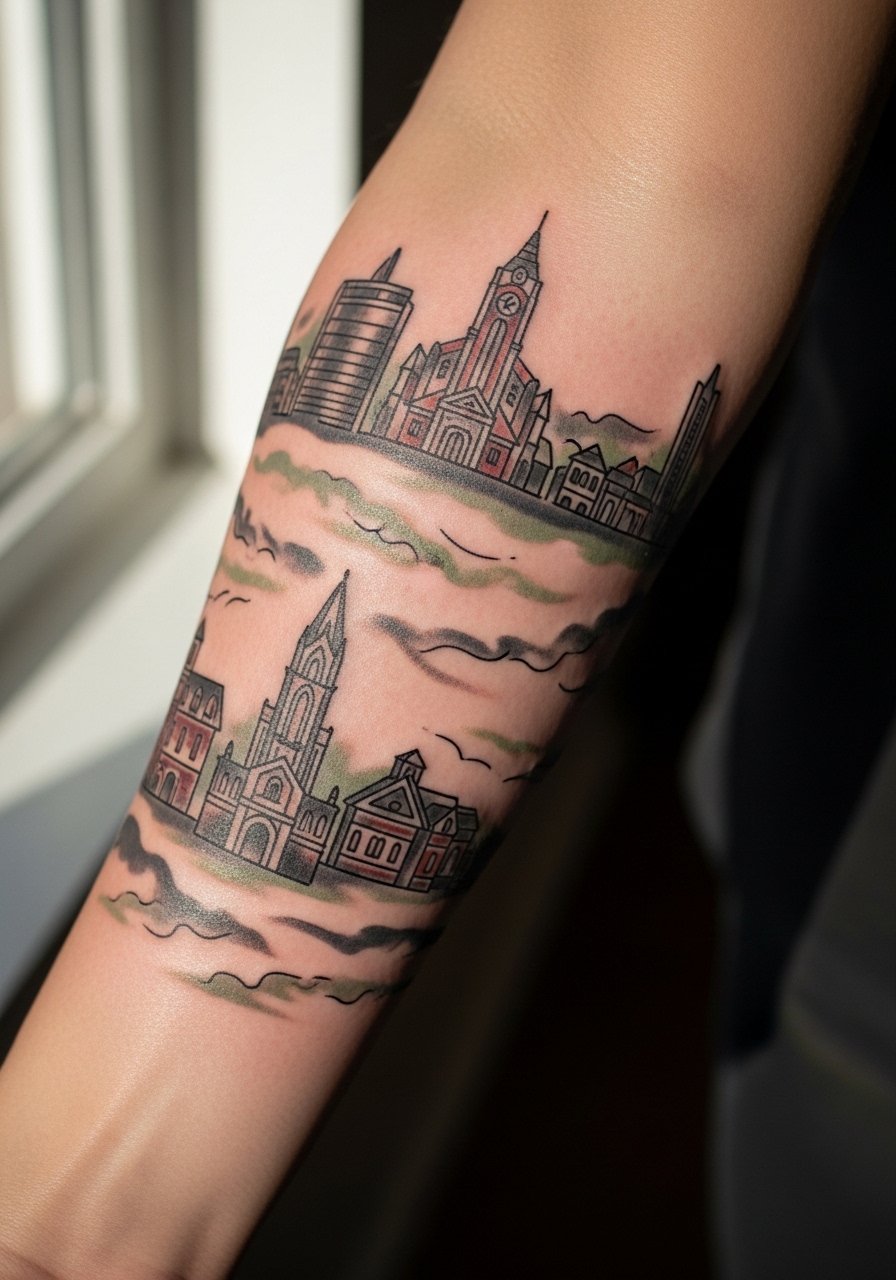
A forearm skyline reads well from a distance, which is ideal for neo traditional balance between linework and color. Pain is manageable and sessions are usually done in one or two sittings depending on coverage. The trick is to plan negative space so the fog reads as atmosphere and not lost color. A common error is overfilling the fog with gray wash that merges into nearby dark elements. At six months the contrast is still there if saturation was layered properly. For showing off a forearm wrap, roll up a sleeve or pick short-sleeve shirts in neutral tones so the skyline remains the focal point. short+sleeve+button+shirt+women
5. Radio Static Heart, Micro Dot Shading on Inner Forearm
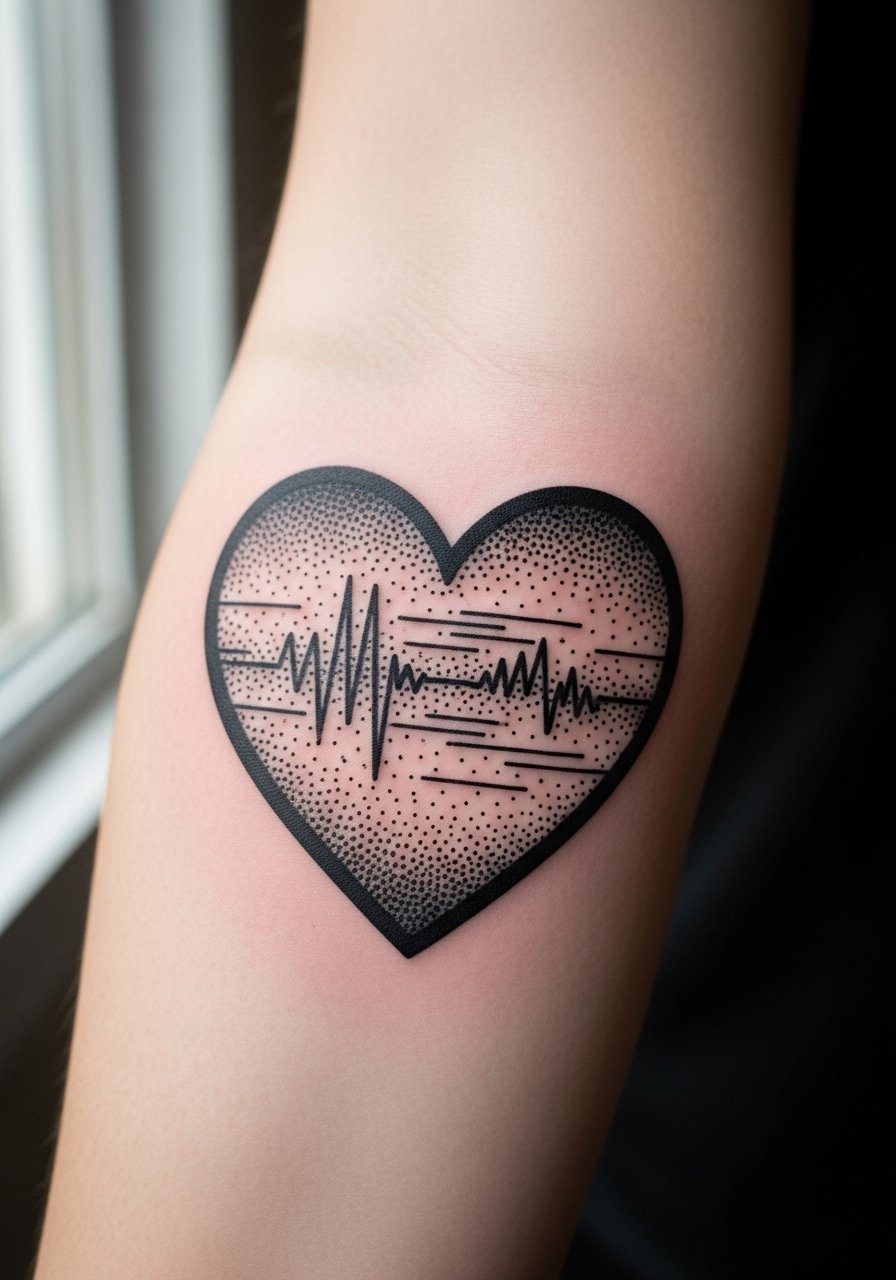
Placing a static heart on the inner forearm keeps it visible and tactile. Expect a short session and moderate pain. Tell your artist you want stipple shading for the static rather than continuous gray fills so the texture holds without smudging. Many people ask for tiny dot work with too-tight spacing, and that is what tends to blur first. At year two stipple holds best when dots were spaced for the skin to settle. For the appointment, wear a loose button-down so you can pull the sleeve up easily. loose+button+down+shirt+mens
6. Broken Radio with Wire Wrap, Wrist Accent
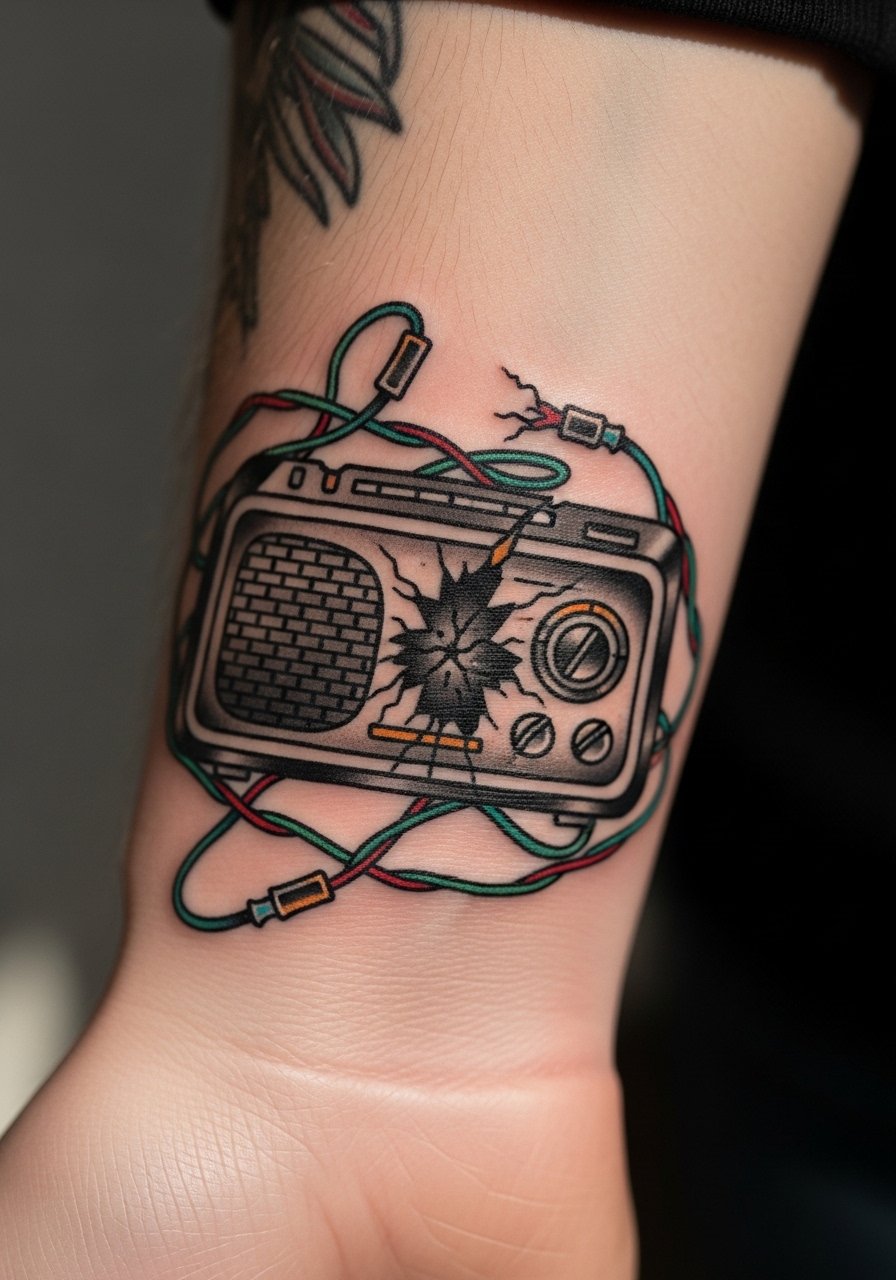
Wrist work reads intimate and bold at the same time, but the wrist is a high-friction area. Session times are short and pain is moderate. Ask for a slightly thicker outer line and dense color hits to prevent early fading from sunlight and washing. The common mistake is pushing too many tiny details into the wrist band where daily use causes abrasion. Expect to book a touch-up around year two if you want the wire twist to stay crisp. Pair this piece with a thin chain bracelet or minimalist watch to frame the wrist without crowding the art. thin+chain+bracelet
Studio Day Picks
The wrist and forearm pieces above face different wear than thigh and chest work, so a few practical items make the session and first week smoother.
-
Stencil transfer paper kit. Lets you preview line placement on skin before the needle touches down, which is useful for small wrist and forearm pieces.
-
Topical numbing cream. Applied before a short wrist or sternum session it eases the initial sting without interfering with pigmentation.
-
Thin protective film roll. Keeps high-friction areas like the wrist and fingers protected during the first few days of healing.
-
Fragrance-free gentle body wash. Cleanses healing ink without irritating fine linework or saturated fills.
-
Aquaphor healing ointment. A thin layer in the first 48 hours locks in moisture for small detailed pieces without clogging the skin.
7. Nurse Duo Upper Arm, Mirrored Composition

Mirrored upper-arm nurses make for a balanced look when you want symmetry. Upper arm skin holds saturation well and sessions are comfortable sitting. Tell the artist you want each nurse to have different color accents so the duo reads as two moods instead of repeats. A frequent error is trying to force tiny facial detail at arm scale. At two years the pieces still read clearly if the linework was bold and color fields were layered. For the session, wear a sleeveless top you can keep on to maintain modesty while the artist works. A stacked set of thin bangles pairs well when showing both arms. stacked+thin+bangles
8. Siren Collarbone Script with Subtle Bloom
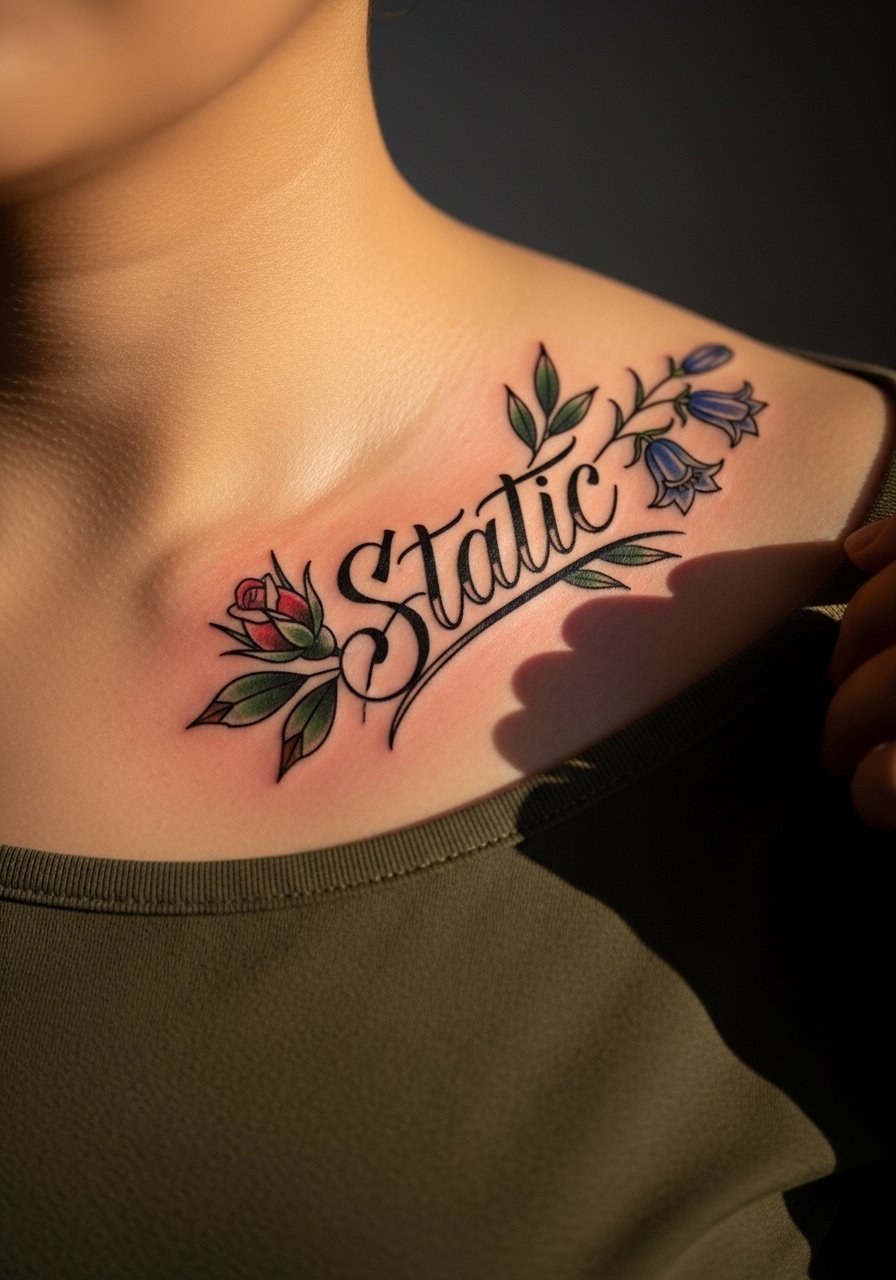
A collarbone script paired with a bloom brings a lyrical angle to the Silent Hill siren idea. Collarbone sessions can be tingly and feel brief. Ask for slightly thicker script than you might on paper because collarbone skin shifts and thinner scripts can fragment. One camp argues thin script is fine on the collarbone if the artist tattoos shallow, and the other camp insists thicker strokes are safer. Name both perspectives and ask where your artist stands. When showing it off, wide-neck shirts or thin chain necklaces frame the script without covering the lettering. thin+chain+necklace
9. Fog-Encased Radio on Back, Large Panel Work
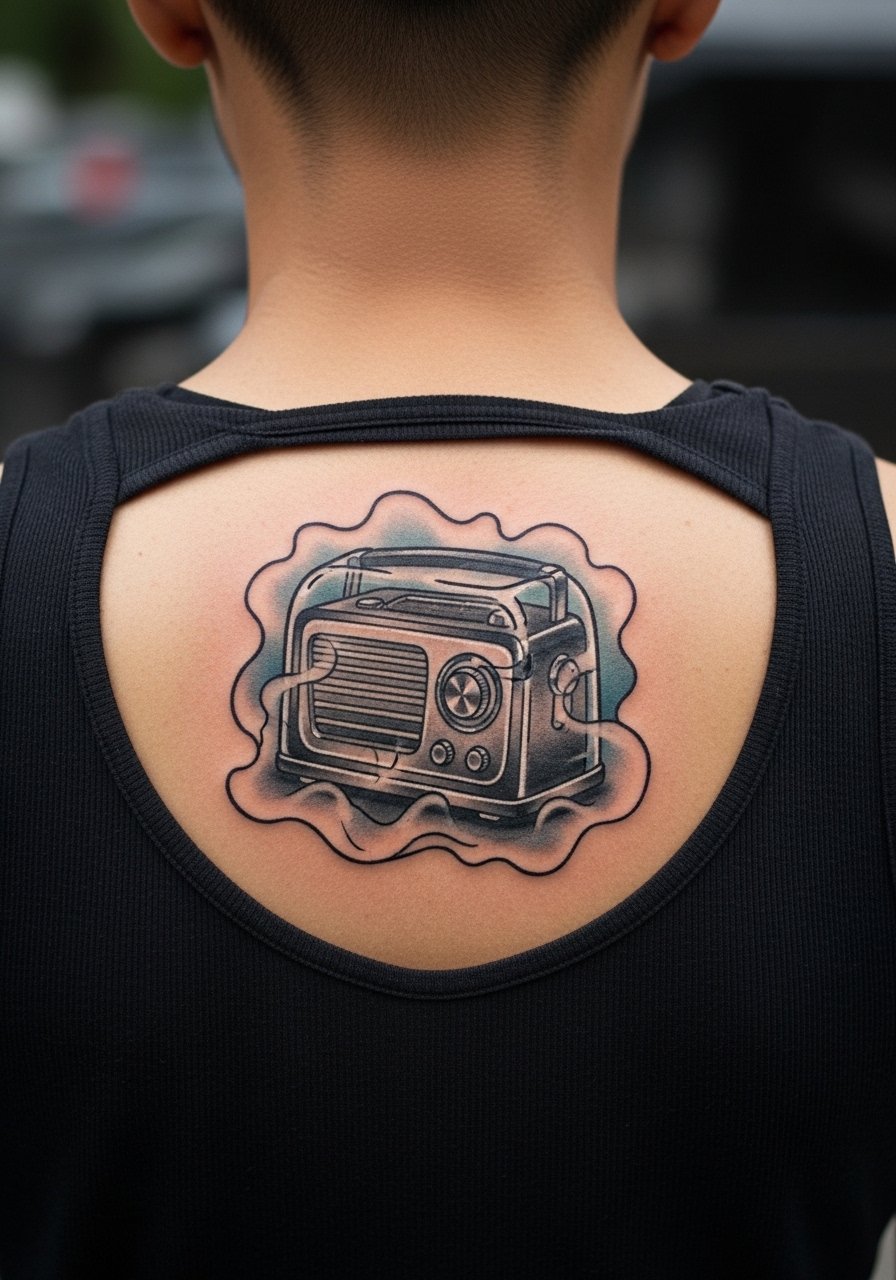
Upper-back panels let you build a scene with foreground and background, which fits neo traditional storytelling. Sessions are long and often split into multiple appointments. Tell your artist you want layered fog washes that step back in value so the radio feels foregrounded. A mistake is crowding every square inch with detail rather than using negative space. For the session, wear a button-up or tank you can take off and put back on without dragging fabric across healing ink.
10. Pyramid Head Shoulder Cap with Geometric Frame
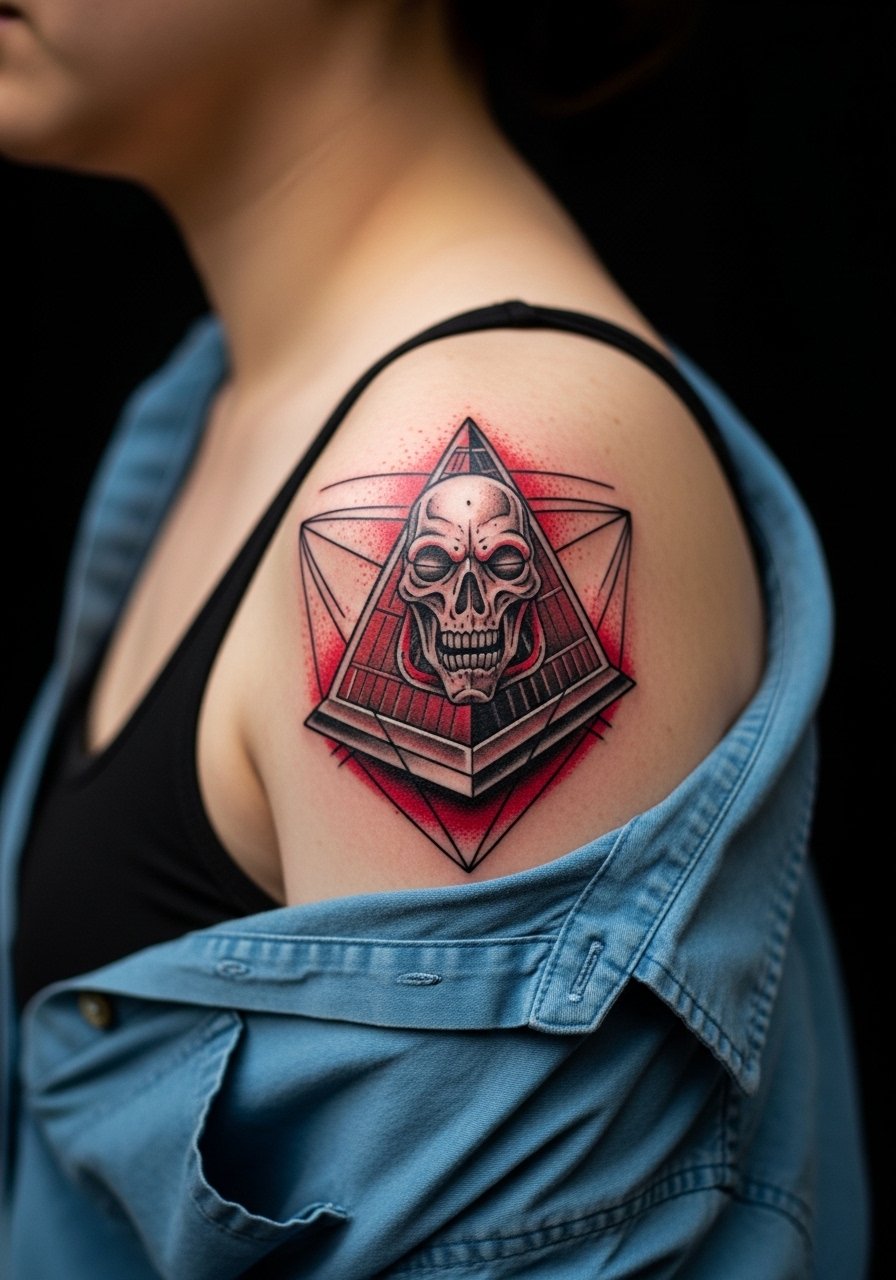
A shoulder cap gives movement when you wear sleeveless tops, and shoulders tolerate saturated blocks. Pain is low to moderate and the session can be completed in one or two sittings. Ask for a strong outer line and simplified geometry to encase the helmet shape so it stays readable as the shoulder skin thins with time. Common mistakes include tiny internal metal textures that get lost once healed. For showing the cap, a loose button-down or tank top that can be pulled slightly aside makes the piece visible without looking forced. loose+button+down+shirt+mens
11. Fog Line Ankle Tattoo, Minimal Composition
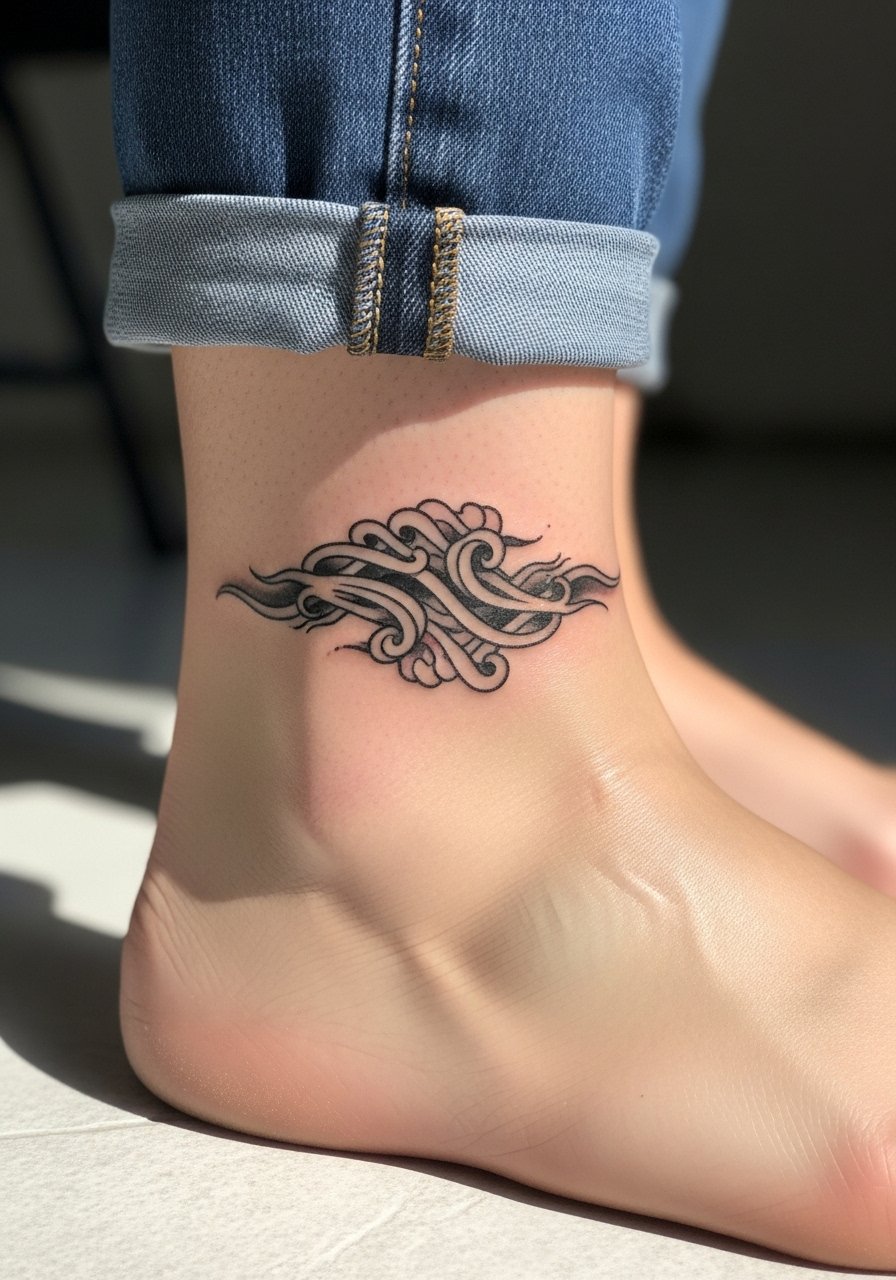
Ankle fog work is small and atmospheric, and it fades faster because of socks and shoes rubbing the area. Sessions are short and the pain is low. Ask for slightly denser pigment than you think you need and a simple composition to avoid smudging. The biggest mistake is requesting micro textures in a zone that gets constant abrasion. For the appointment, wear pants you can roll up easily and slip-on shoes to avoid pressure on the fresh tattoo. Pair with minimalist sandals when showing it off. minimalist+sandals
12. Radio Dial Ribcage, Stipple Background
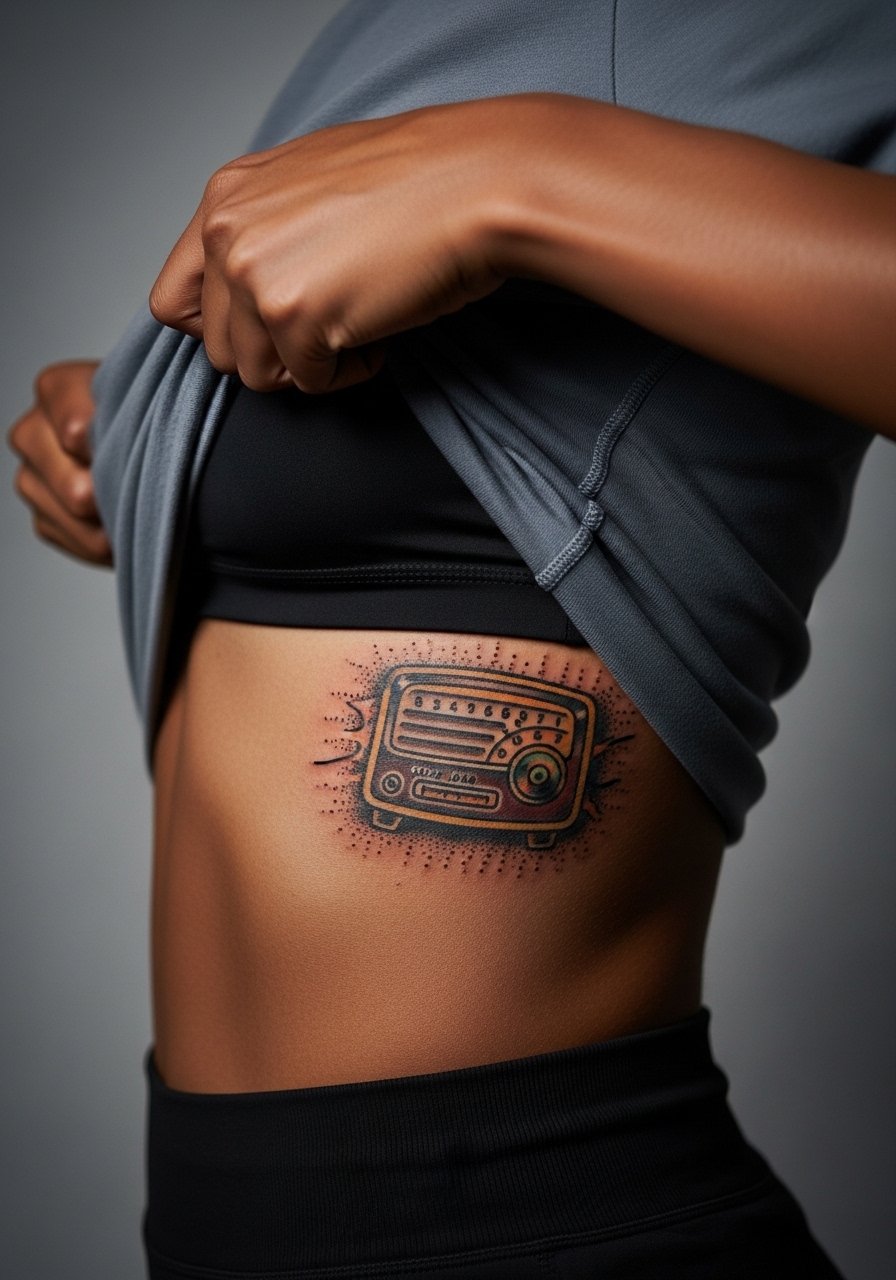
Ribcage pieces carry a reputation for being painful and for moving more as the body breathes. Expect a longer session and plan for breaks. Artists are split about fine line on ribs. One group says the skin stretches and blurs lines within two years. The other group says with proper needle depth and spacing, fine line settles fine on ribs. Ask your artist which side they are on and why. For rib layouts, ask for stipple backgrounds rather than continuous gray wash so texture keeps its shape as the body heals. Wear a cropped top to the appointment so the artist has clear access without you feeling exposed.
13. Rusted Key and Chain on Inner Bicep
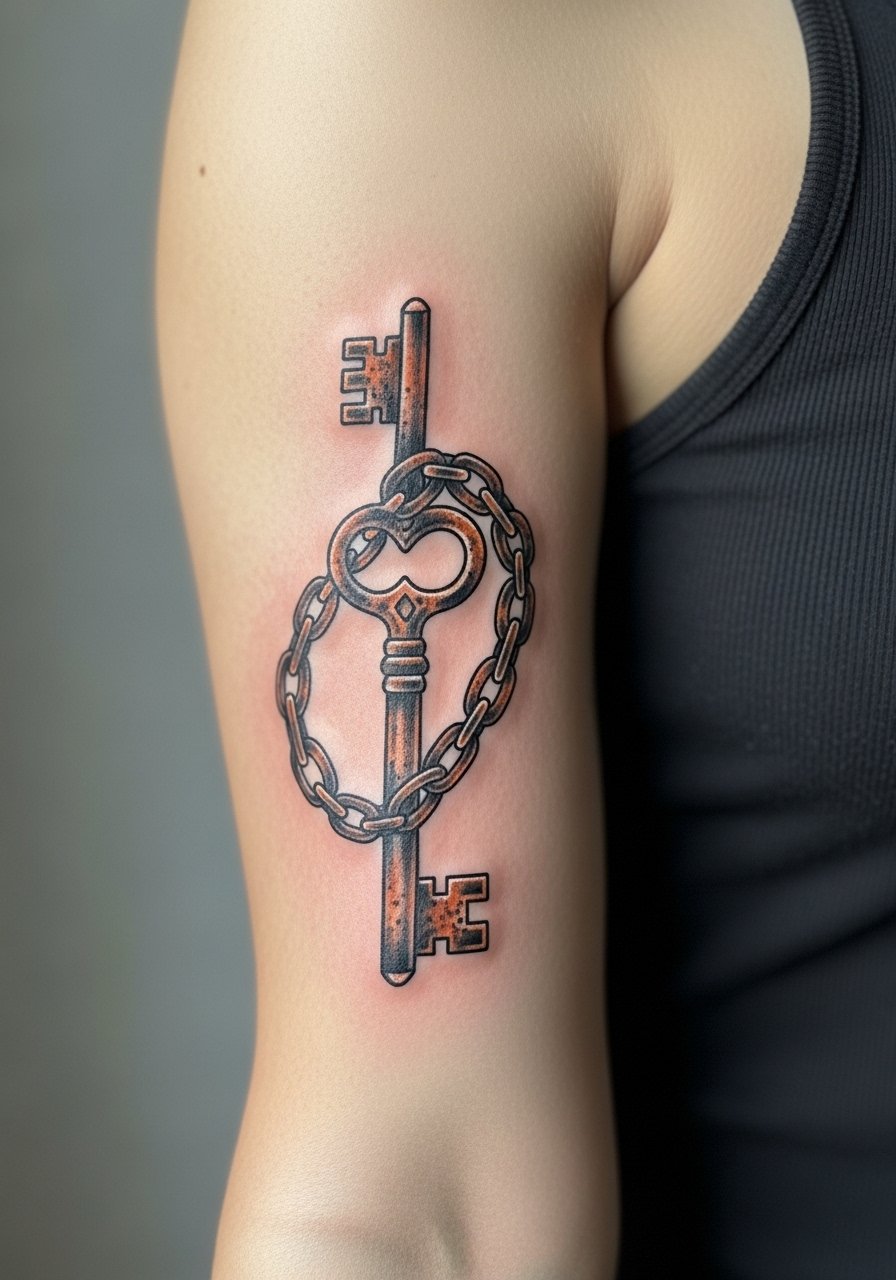
Inner bicep skin can be softer and more sensitive. Sessions are usually short and you should expect to shift positions a few times. I recommend a slightly bolder outline for the key and fewer internal micro details so the shape holds. A common mistake is overworking the chain links with tiny shading that blurs when the arm rests against fabric. For the session, wear a tank top so the artist can access the area while you remain comfortable. If you want to show the piece, a rolled sleeve or sleeveless top frames the inner bicep without competition.
14. Hospital Corridor Back-of-Knee Panel
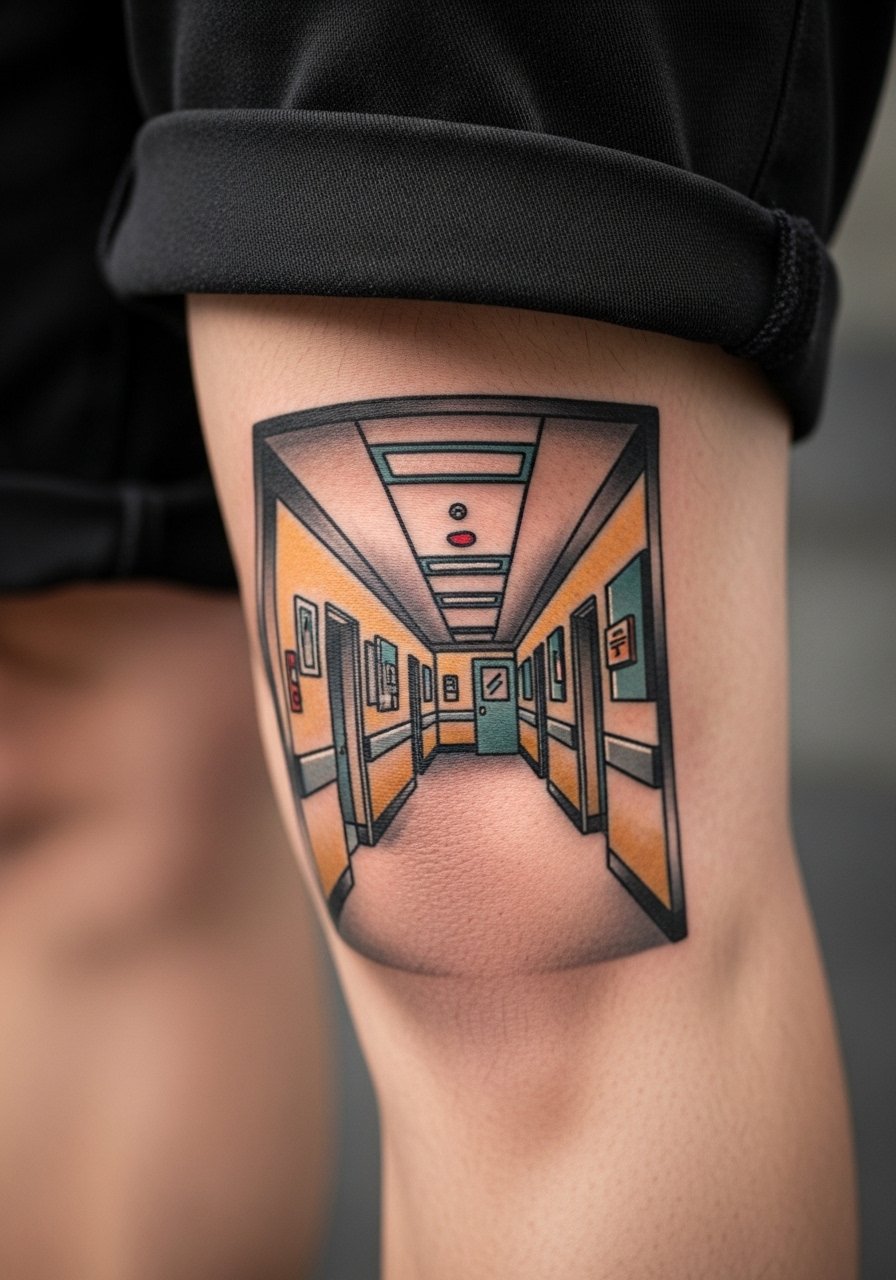
The back of the knee is a tricky place for long-term clarity because of constant motion and skin folding. Sessions can feel strange due to movement. Tell the artist you want bold separations between the corridor halftones and the figure so the contrast survives stretching. The usual error is requesting too much tiny linework in the joint fold. Expect a touch-up timeline sooner than for static skin. For the appointment, wear loose shorts that allow the artist to work without stretching the skin.
15. Silent Hill Town Sign Thigh Band
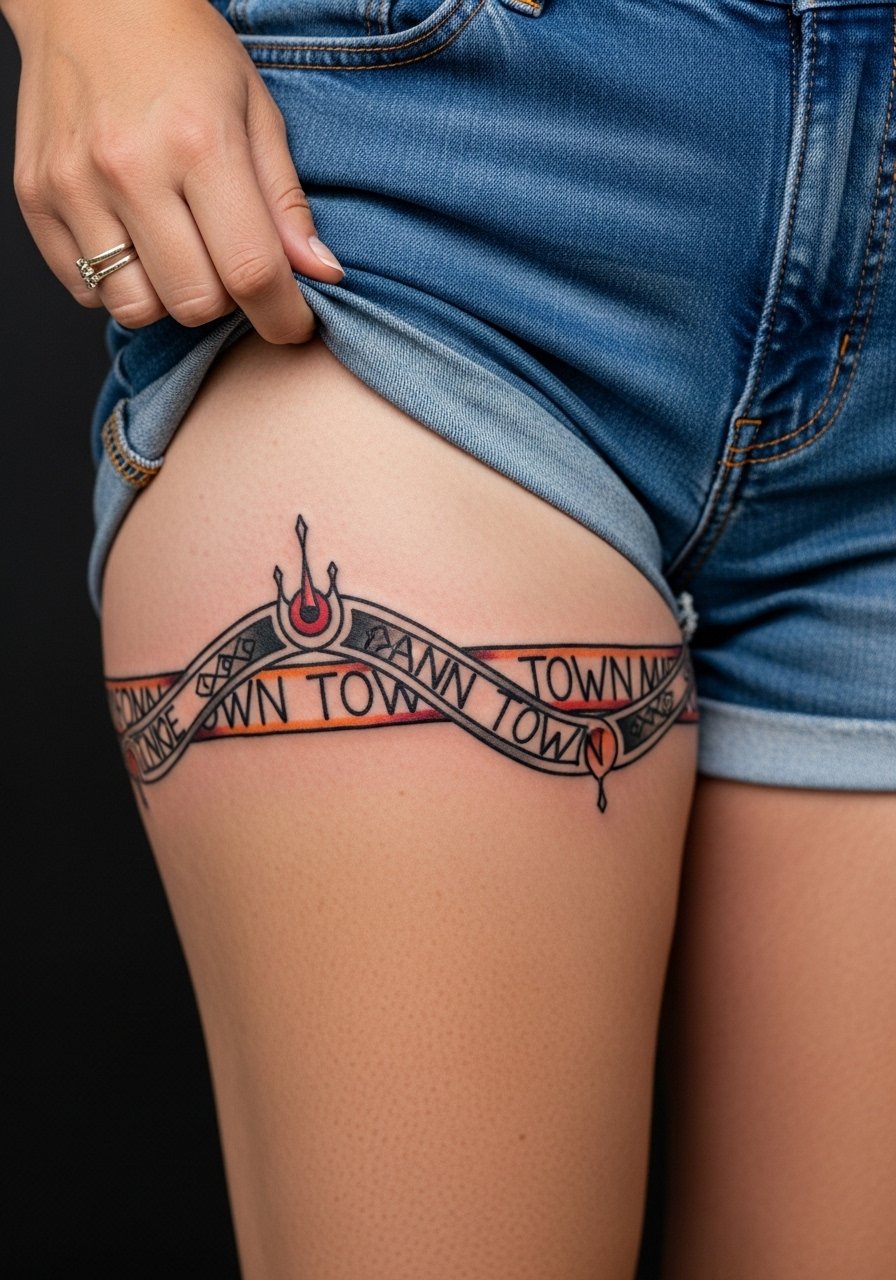
A thigh band reads like a wearable panel and takes saturation well. Sessions vary by width but the thighs are generally comfortable. Tell your artist you want the sign text to be slightly enlarged for read clarity from a distance. A common mistake is squeezing too many ornamental details into the band. For the session, wear shorts that the artist can adjust without disturbing the freshly inked area. When showing it off, high-slit skirts or swimwear pairs well with the band. high+slit+skirt
16. Static-Tinged Teddy Bear Calf Portrait
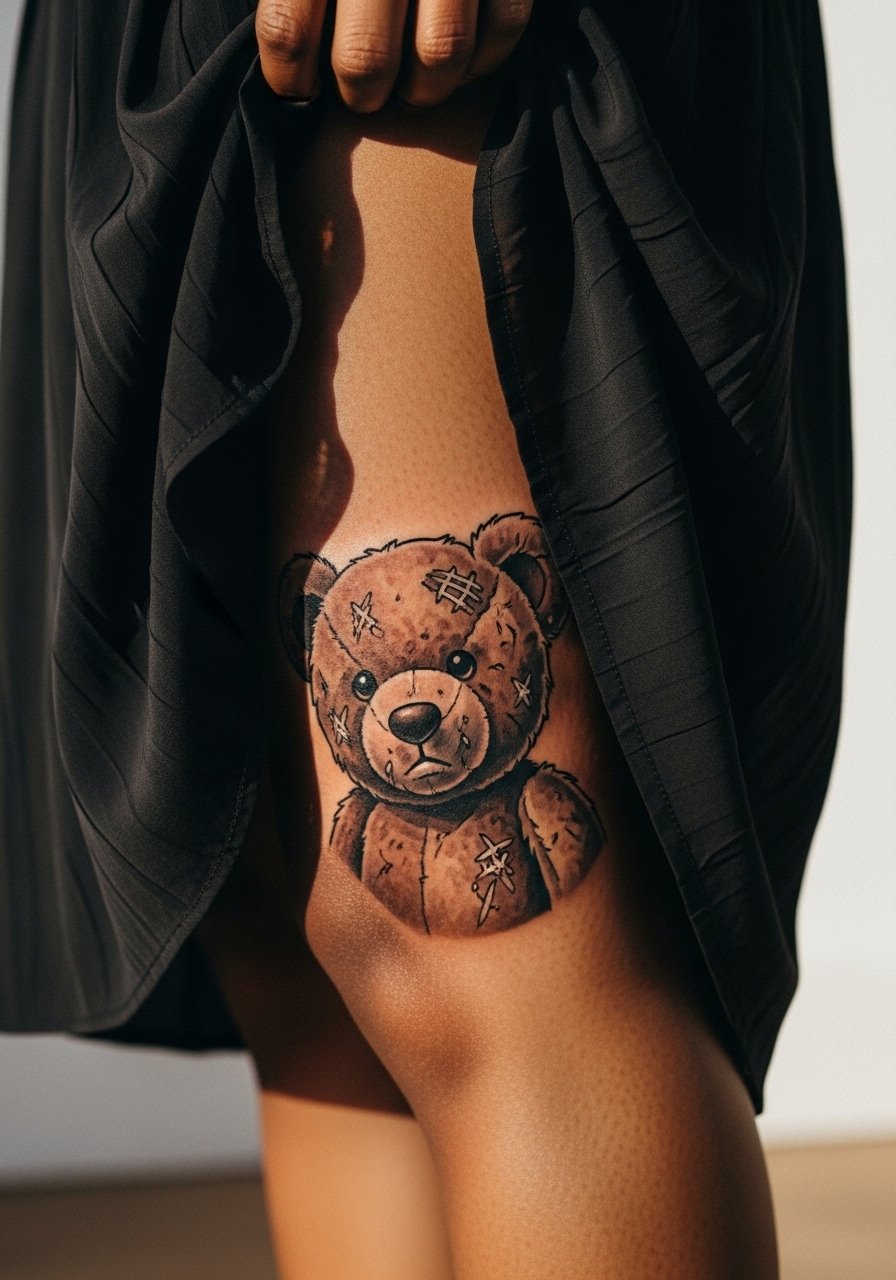
A calf portrait gives volume and nice viewing from the back. Pain is modest and sessions are comfortable sitting. Ask for textured brush strokes and controlled highlights so the bear reads like an object not a photo. Many people push for ultra-fine facial texture and then find it softens quickly with calf muscle movement. For the session wear a skirt or shorts that avoid rubbing during the first few days. Pair the piece with ankle boots or mid-calf boots when dressing to keep the focus on the calf panel. ankle+boots+womens
17. Fog Circle Nape, Subtle Halo
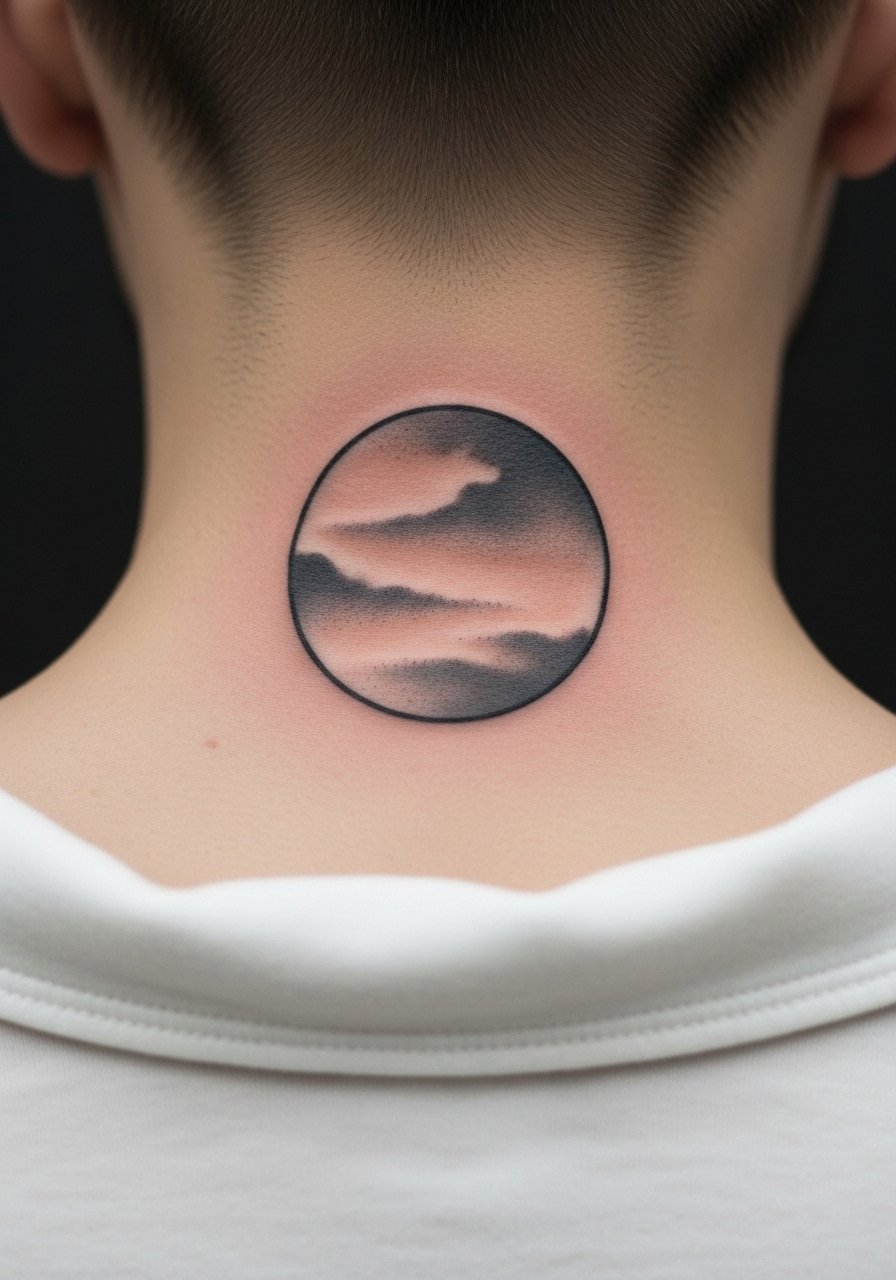
The nape is visible and delicate. Show up with a wide-neck top that can be shifted without pulling. Ask for a haloed fog edge with no tight micro details so the piece keeps a soft presence as the neck moves. The common error is overcomplicated texture near the hairline which can look messy once hair grows back. This placement sometimes affects job policy decisions, so consider your career needs when booking.
18. Silent Hill Map Ribband, Simplified Icons
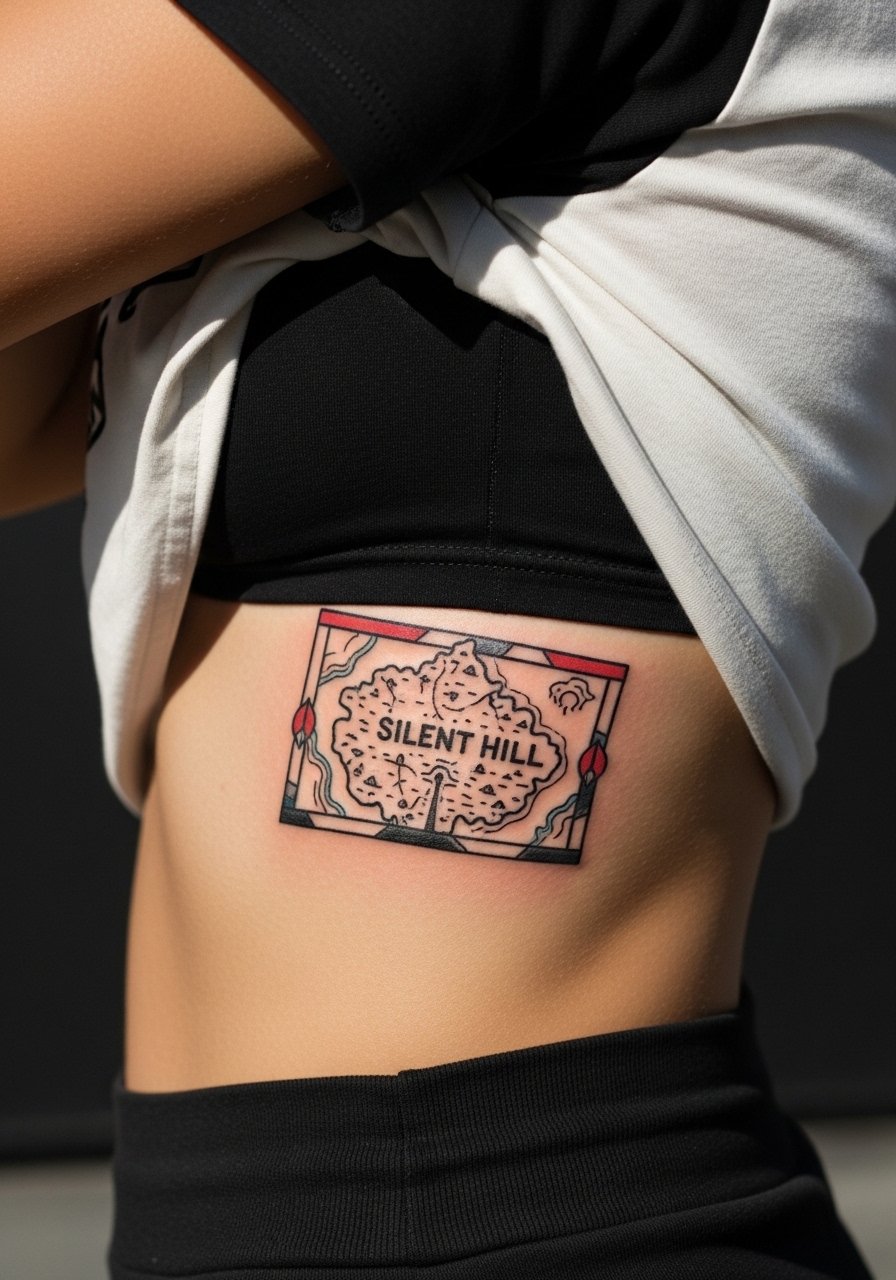
Map bands on the side torso look striking when icons are bold and spaced. Pain is high and sessions usually need multiple breaks. Tell the artist to prioritize negative space between icons and to avoid tiny legend text. A typical mistake is cramming micro-icons into a small band and then being disappointed when they blur. For the session, choose high-waisted bottoms and a cropped top so the artist can access the area comfortably. Consider touch-ups at year two for thin icon borders.
19. Nurse Mask Micro on Finger, Tiny Bold Outline
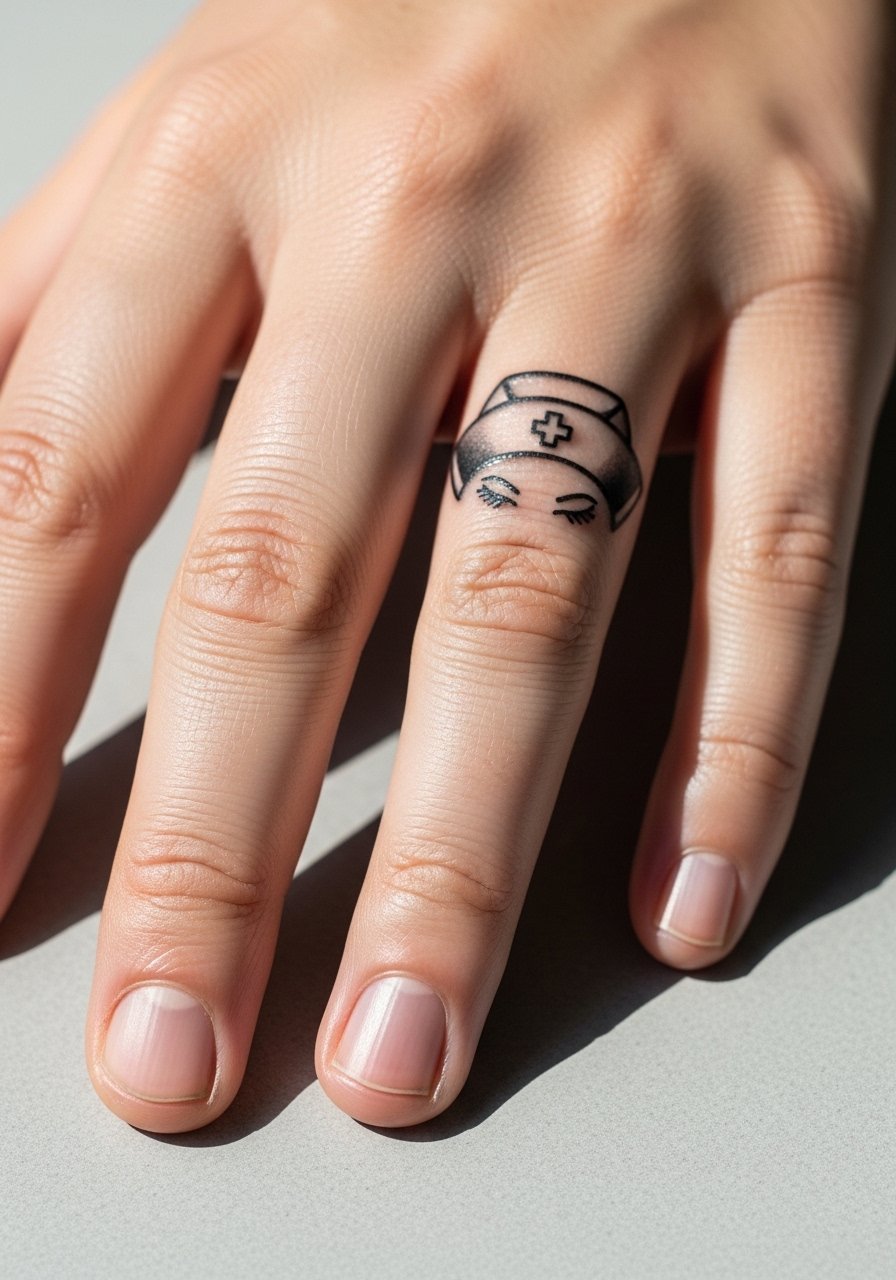
Finger tattoos are notoriously high-maintenance. The skin here sheds and regenerates quickly and touch-ups are common. For a micro nurse mask, ask for a slightly thicker outline and simplified fill so the shape stays legible. Many ask for too many tiny internal strokes which fade within months. Expect to schedule an annual touch-up if you want longevity. For the appointment, choose easy-on shoes and short sleeves so you can keep the hand clean during travel.
20. Pyramid Head Thigh Sleeve with Floral Contrast
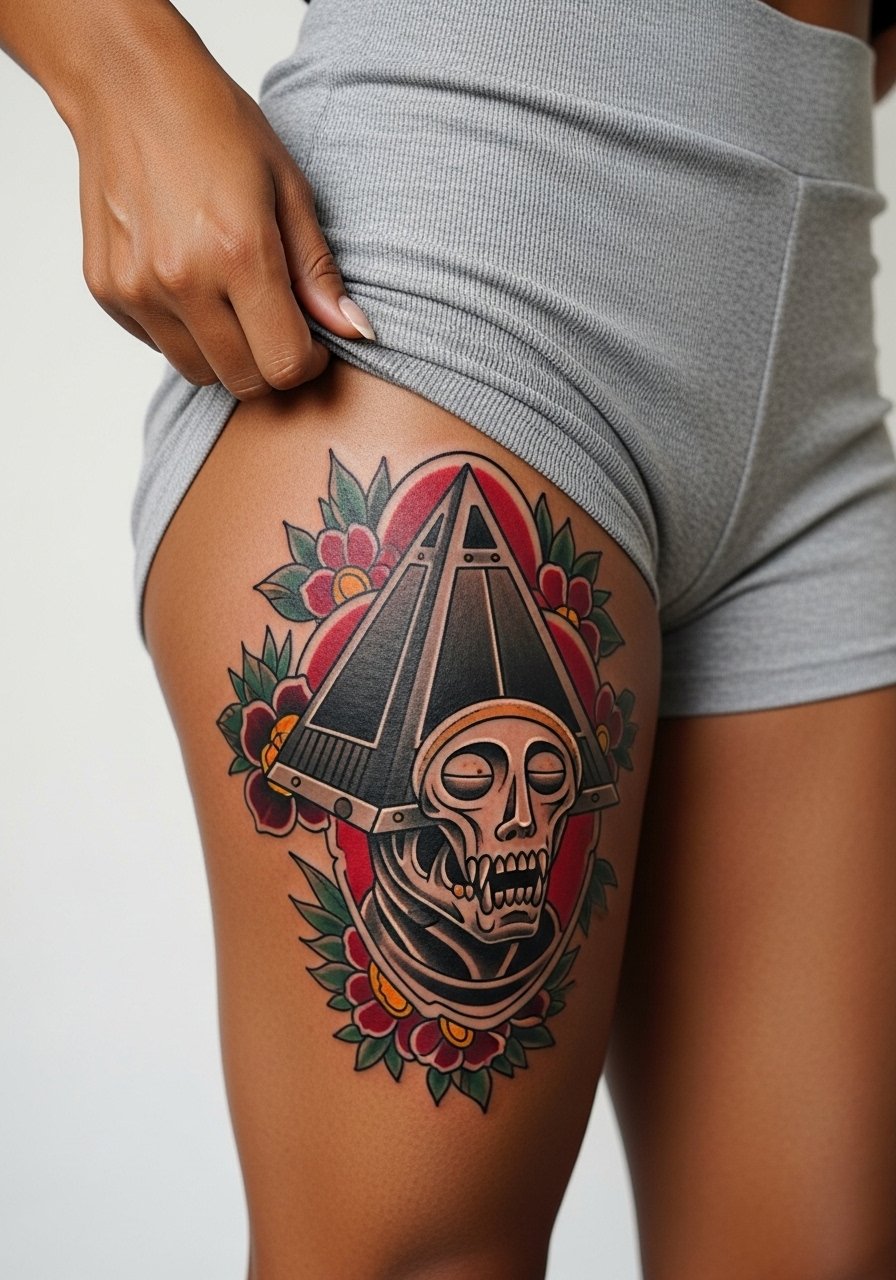
A full thigh sleeve allows storytelling across negative space and figure. Sessions run long and will be split across days. Ask for strong color blocks and layered saturation to prevent mid-range muddiness as the leg moves. A typical misstep is overcrowding with small textures that lose form when seated. For the session pick shorts that let the artist work comfortably and avoid tight waistbands pressing on the fresh ink.
21. Siren Ear Slice Accent, Subtle Curve
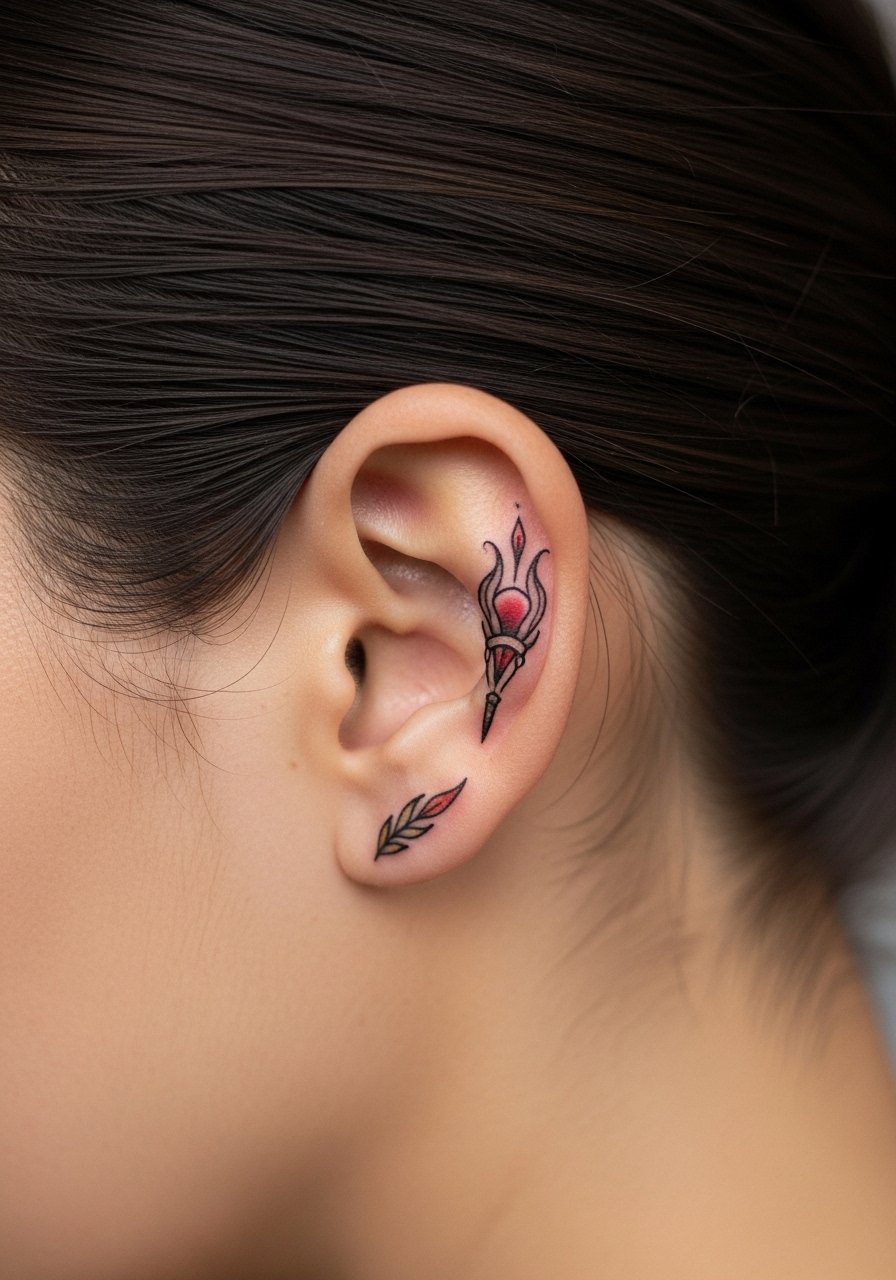
Behind-the-ear accents must be described as on the skin below the hairline to avoid misplacement. Sessions are quick but the area is sensitive. Ask for a discreet size and thicker lines to prevent early blur. People sometimes ask for tiny script back here, and that tends to become illegible with hair regrowth. For appointments tuck hair away or bring a hair tie so the artist can work without interference.
22. Static Skull Collarbone Pairing with Chain
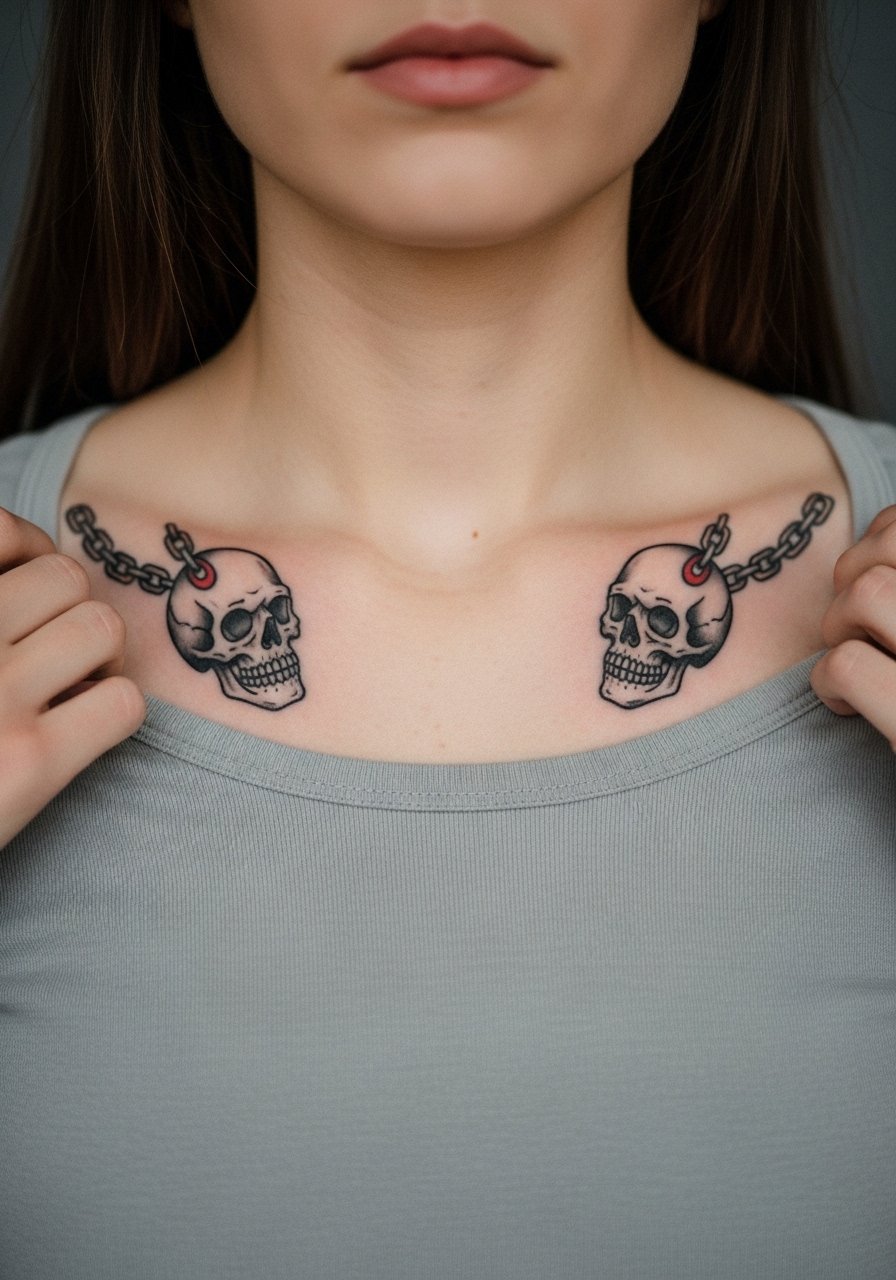
Paired collarbone skulls read balanced when spacing is planned. Expect a prickly sensation near bone and short session time. Tell the artist you want chain links to be bold and not too thin so they remain clear. The error is wanting filigree that blends into collarbone creases. For showing both sides, wide-neck tops or strappy dresses let the pair read as a deliberate set. strappy+dress
23. Hospital Doorway Back Panel with Negative Space
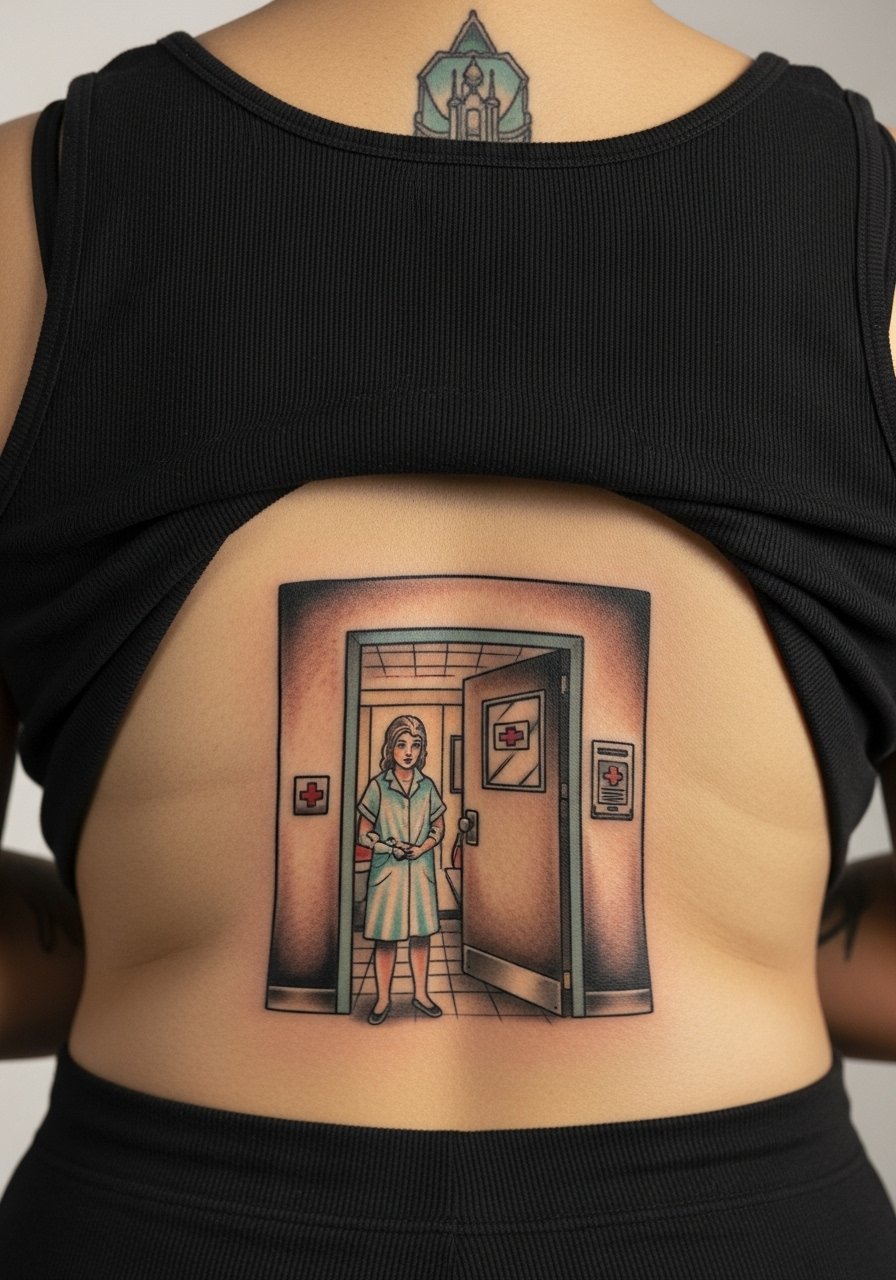
Mid-back panels let you use negative space as a compositional tool. Sessions are long and usually require multiple visits. Tell the artist you want distinct darks and lights in the doorway to keep depth after healing. Artists sometimes overcrowd with small midground details that disappear after a few years. For the session wear a tank that you can take off and put back on without rubbing the tattoo. When showing, open-back tops or low-back dresses let the panel breathe.
24. Radio Antenna Calf Band with Distressed Texture
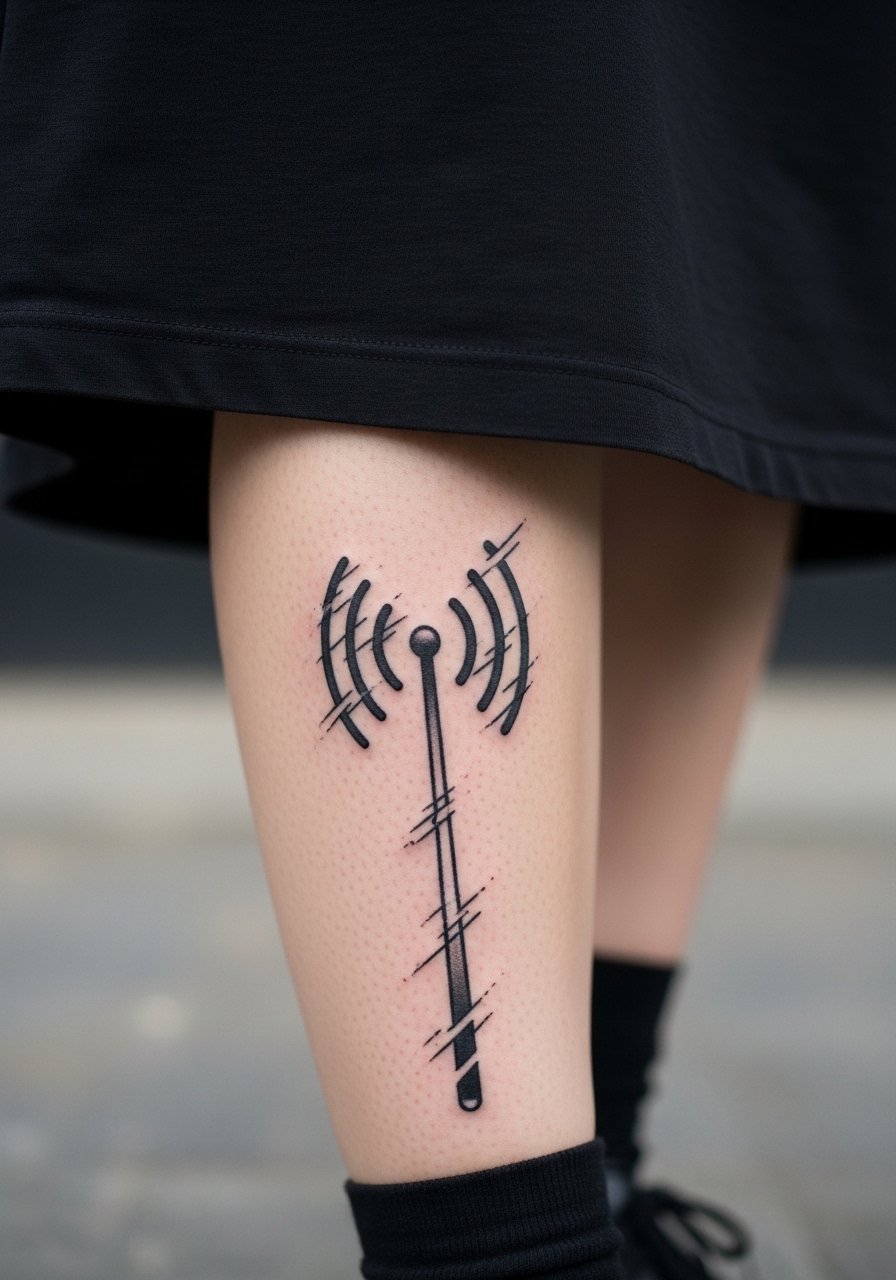
Calf bands can be designed to look worn and industrial, which suits Silent Hill themes. The calf tolerates saturation well and sessions are comfortable. Ask for rough texture through dot work rather than tiny hatch lines to keep the distressed feel readable. A mistake is packing continuous fine hatching that blurs with muscle movement. For the appointment, wear a skirt or shorts and choose boots or sandals to display the band afterward. midi+skirt
25. Fog Line Lower Back with Floral Anchors
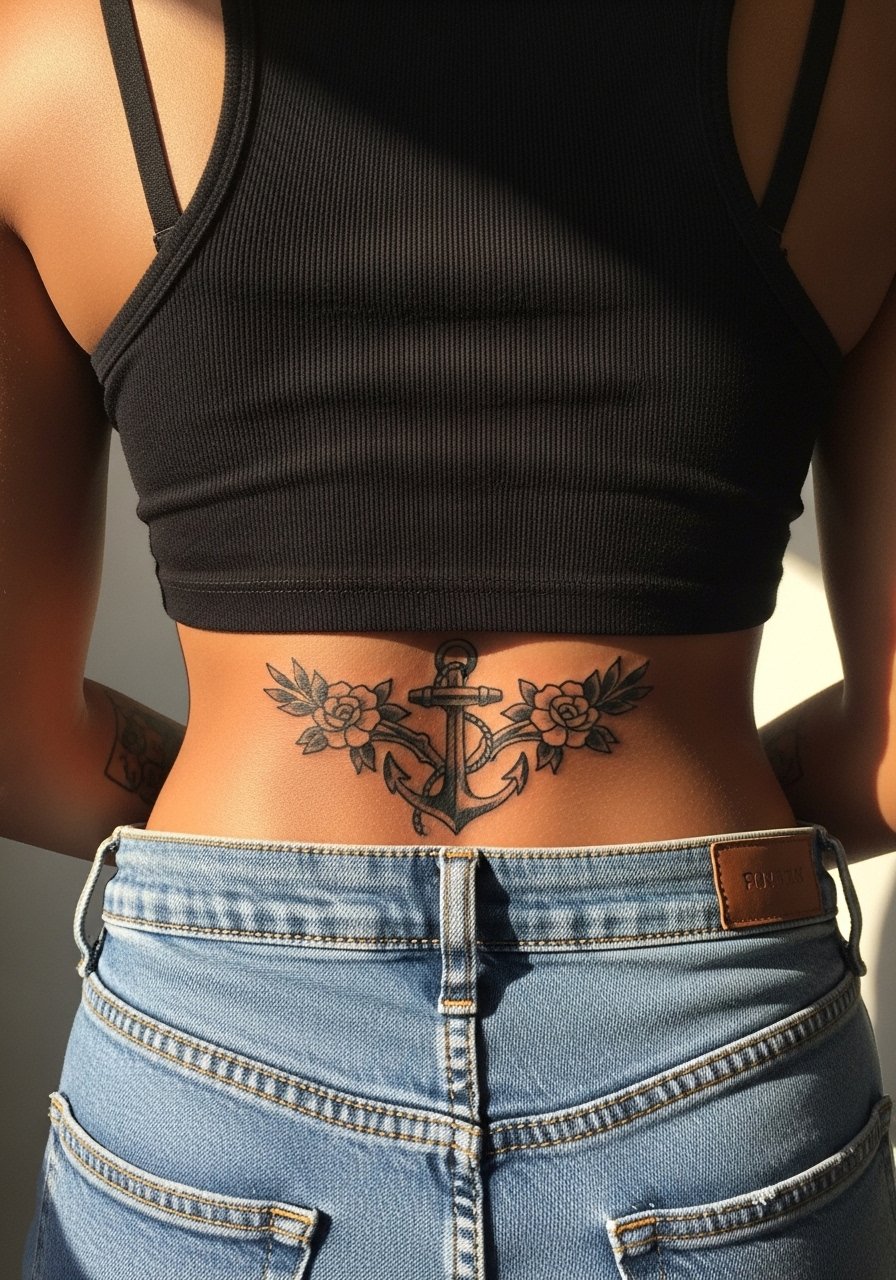
Lower-back pieces need careful placement to avoid distortion from daily movement. Sessions are moderate length and healing is straightforward if you avoid tight waistbands. Tell your artist to keep the fog soft and the florals bold so the anchor points remain stable. The common error is too much micro shading in the center which can become a blurred patch. For the session, pick pants with a comfortable waistband you can lower slightly without discomfort.
26. Silent Hill Compass Wristlet, Tiny Bold Dots
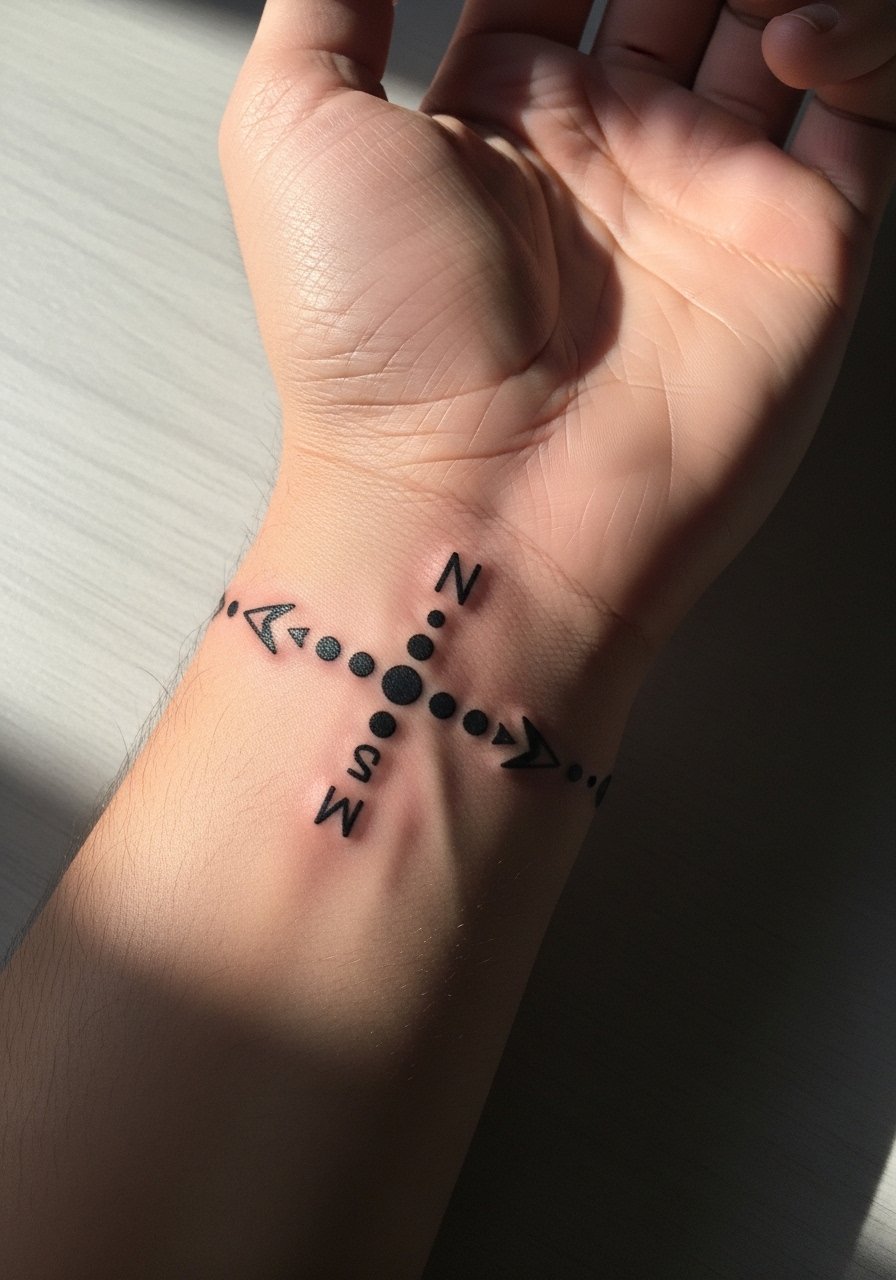
Wristlet pieces wrap the wrist and need simple geometry to survive heavy use. Sessions are short but expect earlier fading because of washing. Ask for slightly thicker dots and clear negative space between points. A typical mistake is asking for ultra-fine compass tick marks which soften within months. Wear a minimalist watch when showing the wristlet or stack with slim bracelets that do not rub the ink. minimalist+watch
27. Static Tangle Half Sleeve, Bold Silhouettes

A half sleeve offers a chance to combine multiple Silent Hill motifs into a unified neo traditional narrative. Sessions are long and likely split across several appointments. Tell the artist which visual anchors you want to remain prominent when the piece is viewed from the street. A common error is trying to include every small reference from the game, which leaves the overall silhouette messy. Plan negative space and bold silhouettes so the sleeve still reads at a glance as well as up close.
Frequently Asked Questions
Q: Will neo traditional color stay vibrant on areas like the forearm and thigh?
A: In my experience the forearm and thigh accept saturation well, but they age differently. Forearms see more UV and washing, so expect touch-ups sooner. Thighs hold color longer because of lower sun exposure. Ask your artist about layering saturation during sessions and plan a refresh at year two to keep the colors vivid.
Q: Are fine details like nurse facial features a bad idea on ribs or hands?
A: Fine facial detail is risky on ribs and hands because the skin moves and sheds more in those places. One camp says careful depth makes fine detail work on ribs; the other camp prefers simplified shapes for longevity. I lean toward simplified neo traditional faces on moving skin and recommend a test stencil to preview scale before booking.
Q: How should I dress for a sternum or chest session to stay comfortable?
A: For chest or sternum work wear a sports bra or wide-neck top that you can shift without exposing more than needed. Loose zip-up hoodies are also useful for travel to and from the studio so the fresh ink does not rub on tight fabrics. Bring a comfy layer for breaks because sessions can get chilly.
Q: Do finger and wrist tattoos require different aftercare than thigh or back pieces?
A: Aftercare basics are the same, but fingers and wrists need extra attention because of constant use and washing. Protective film and light moisturizing during the first week help, and you should plan on more frequent touch-ups for hands and fingers. The product block above lists a thin protective film that helps with these concerns.
Q: How do I find an artist who understands neo traditional Silent Hill work without naming anyone?
A: Search local directories and hashtag threads, preview portfolios for saturated color and bold linework, and visit conventions to see live books. Look for work with clear silhouettes and layered color fills rather than photo-real faces. Ask artists about their experience with illustrative color packing during the consultation.
Q: If I want a sleeve that combines several Silent Hill motifs, how do I brief the artist?
A: Bring a prioritized list of motifs and explain the visual hierarchy you want, for example Pyramid Head as focal point and fog as background. Say which elements must remain readable from a distance and which can be more detailed up close. Discuss session pacing so you know how many sittings to expect and what to plan around in your schedule.