
Fine line name tattoos behind the ear are everywhere on saved boards, and the reason is simple: the placement is small, intimate, and surprisingly versatile. What the trend photos do not always show is how choice of script, spacing, and surrounding marks determine whether the piece still reads crisp two years from now. Read on for 27 tiny name concepts that work with the skin there and what to say in the consultation.
1. Single-Name Micro Script on the Skin Just Behind the Ear, Below the Hairline on the Neck
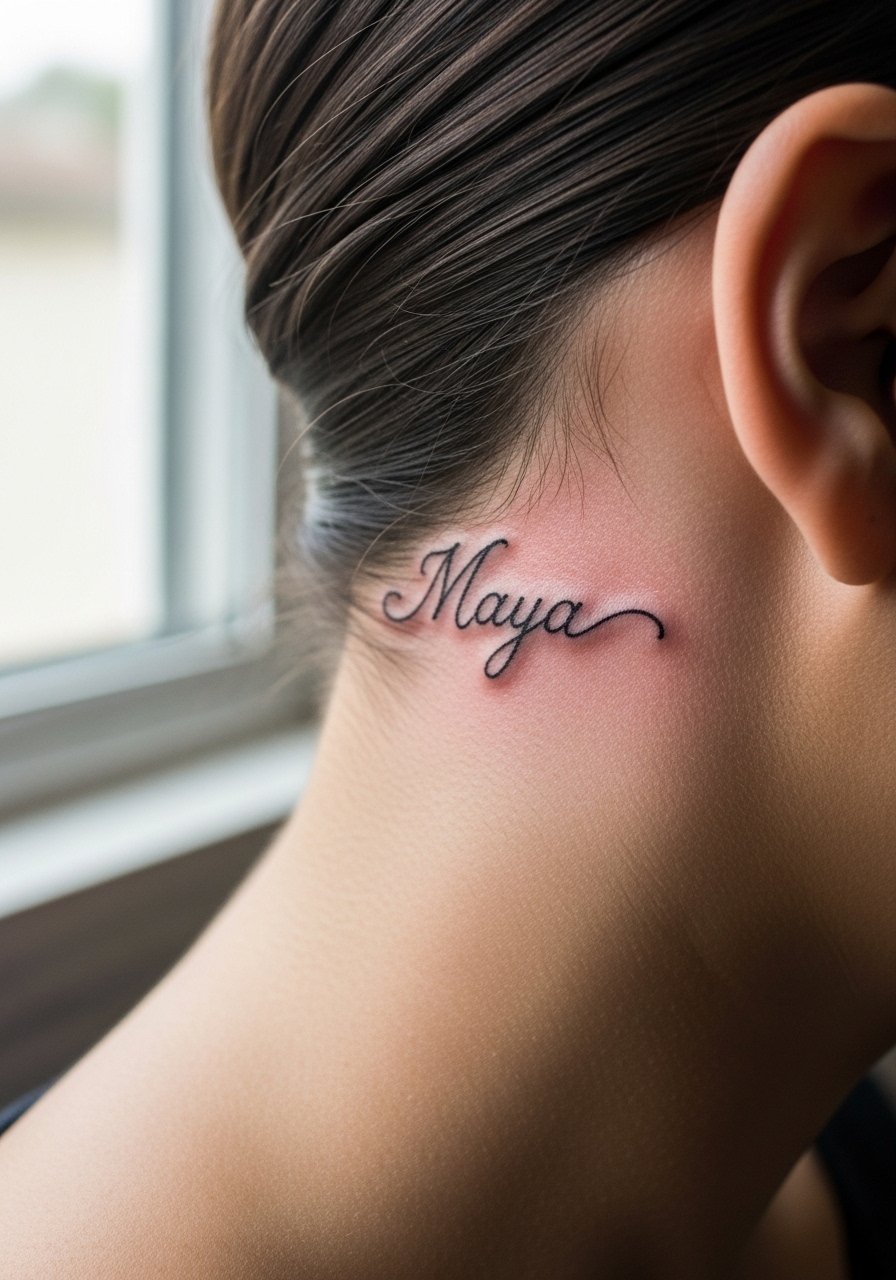
A tiny single-name in micro script reads like a secret whisper tucked behind the ear. Expect a quick session under 20 minutes with low but noticeable sensitivity because the skin there is thin. Tell your artist you want hairline-thin linework and ample letter spacing so the loops do not merge as the tattoo heals. A common mistake is asking for ultra-tiny connected cursive without spacing, which can blur into an unreadable smudge in a few years. For the session wear your hair up in a low bun and bring a silk scrunchie so the area is easy to access without tugging.
2. Initial with Tiny Dot Accent on the Skin Just Behind the Ear, Below the Hairline on the Neck

Initial-only pieces are perfect if you want a name hint without the full word. They take under 10 minutes and the pain is usually mild. Ask the artist for slightly heavier linework on the initial stem so it keeps shape as the skin settles. The dot next to the letter should be sized deliberately, not pinprick small, or it will disappear with time. If you plan to show it off at events, a thin chain pendant necklace sits above the script and frames the area without covering the ink.
3. Micro Typewriter Font Name on the Skin Just Behind the Ear, Below the Hairline on the Neck
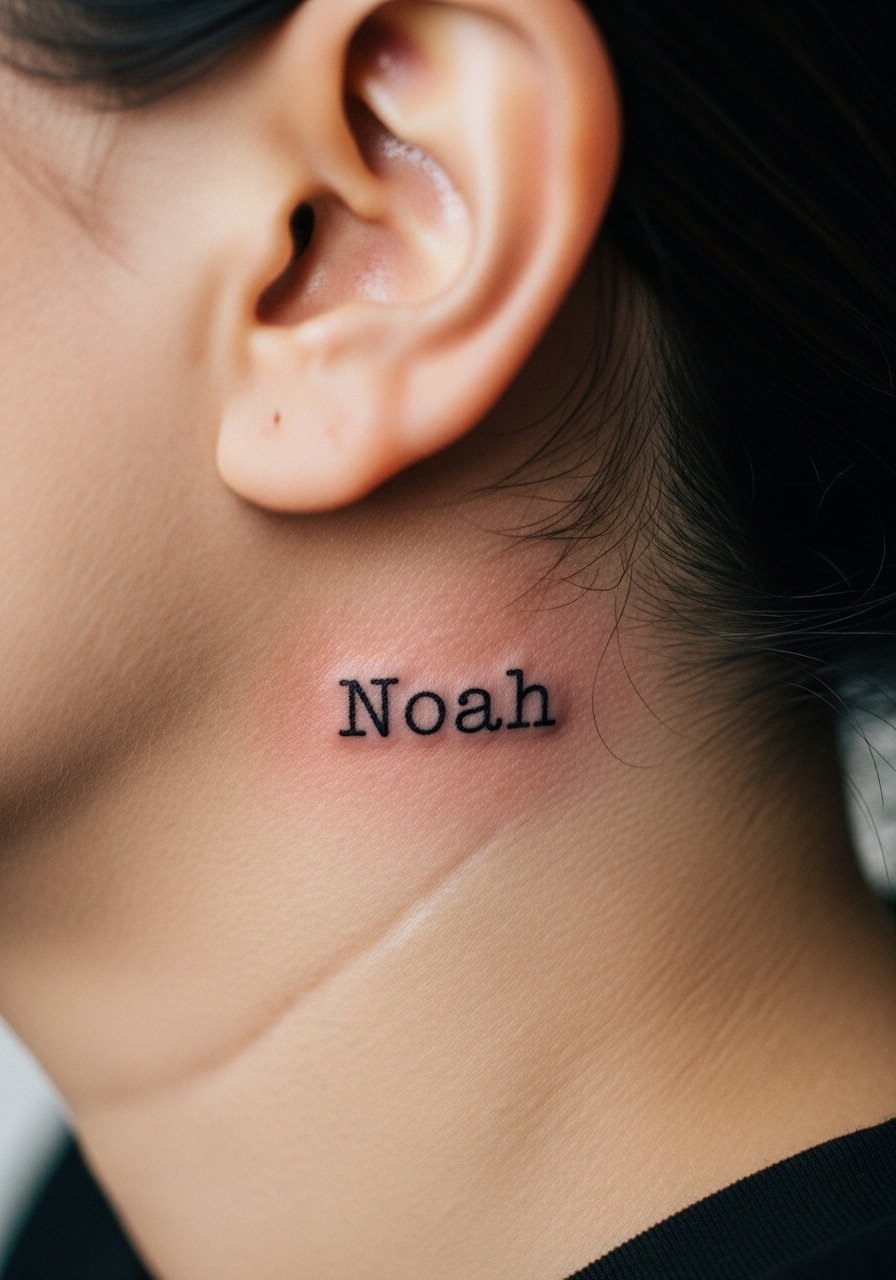
A typewriter font gives a mechanical, timeless feel and tends to age predictably because each character is separated by whitespace. Session time is short and the area may be more sensitive near the bone. Tell your artist you want equal kerning between letters rather than cramped tracking. The mistake is shrinking the font so letters touch. If you wear collared shirts with a slightly lowered neck, the name peeks out; try a wide-neck tee for a casual reveal.
4. Tiny Script Name with a Micro Heart on the Skin Just Behind the Ear, Below the Hairline on the Neck
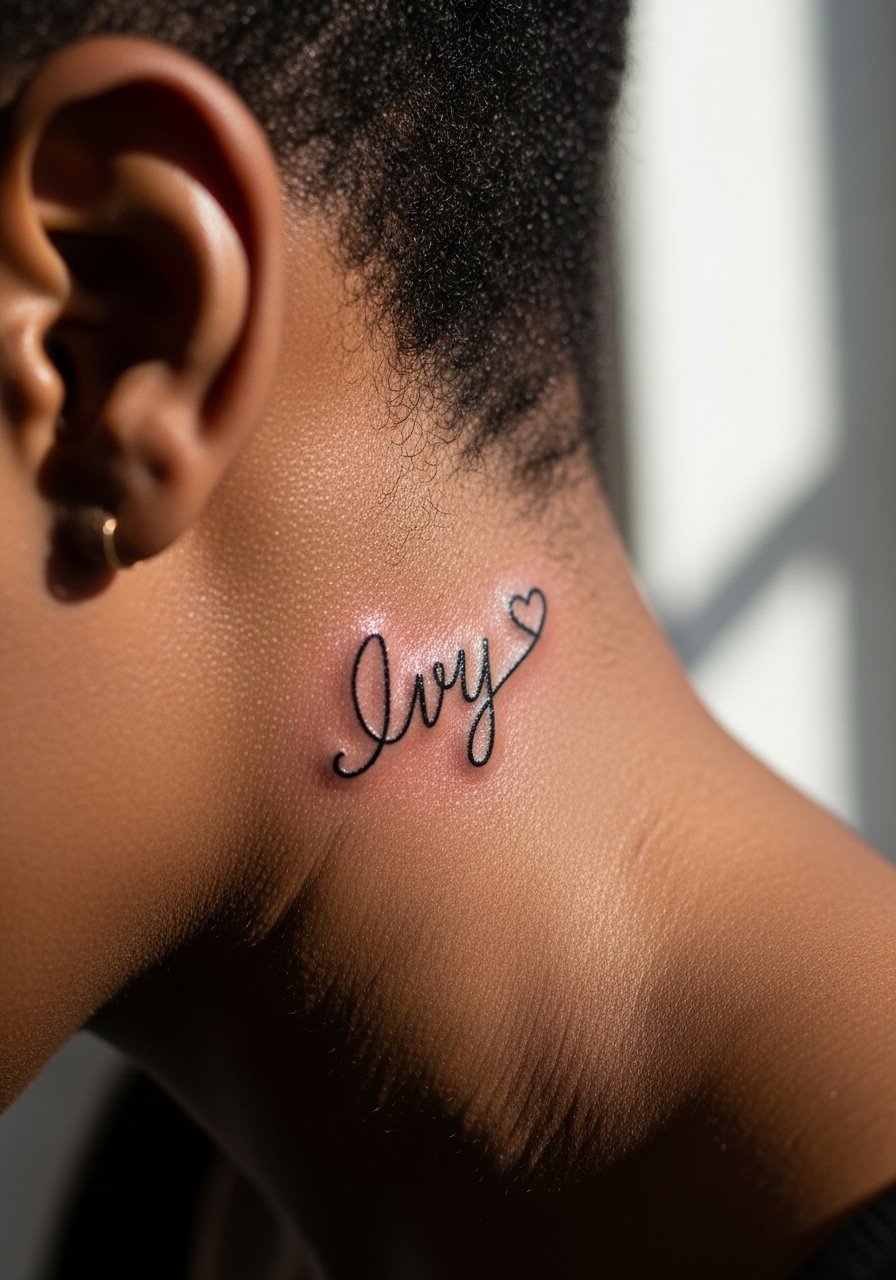
Adding a micro heart or similar glyph gives a personal flourish while keeping the design compact. This version works best with slightly bolder script to ensure the heart stays defined. Pain is mild but the tiny filled heart requires a steady hand to avoid over-saturation. Artists sometimes overfill micro hearts which leads to ink lumping under skin, so ask for a crisp outline or a single-needle dot heart instead. For the appointment, put your hair up and bring a velvet hair clip to hold stray strands away from the area.
5. Name in Lowercase Minimalist Block Letters on the Skin Just Behind the Ear, Below the Hairline on the Neck
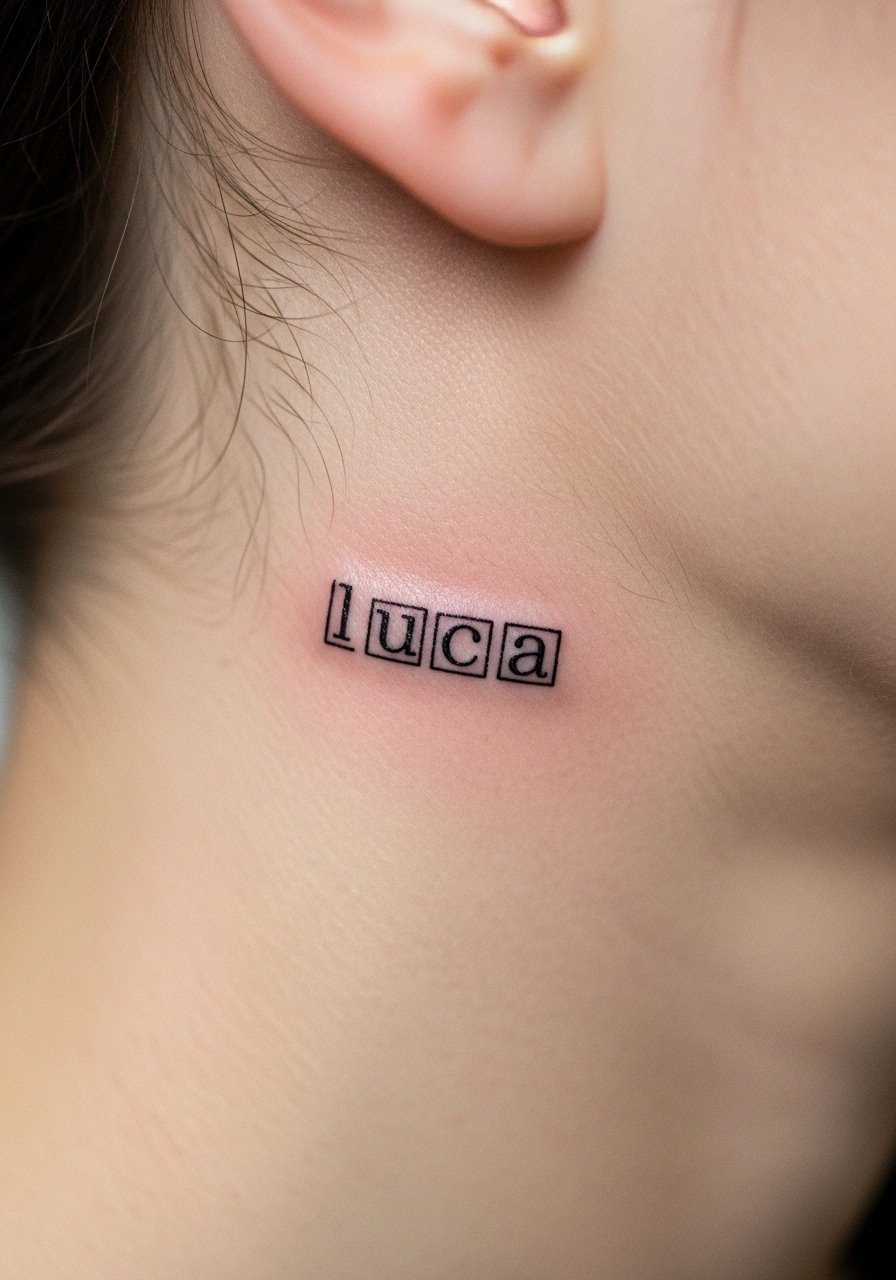
Lowercase block lettering reads modern and deliberate. It's a good choice if you want clarity over flourish. The session is straightforward and healing usually keeps the crisp edge if line weight is consistent. A common error is choosing a single hair-thin line that looks fragile; ask for a slightly stronger monoline so the letters do not vanish over time. This look pairs cleanly with short haircuts or pulled-back styles; a simple racerback tank keeps the area visible at casual outings.
6. Mirrored Tiny Name Pair on Opposite Sides of the Hairline on the Neck
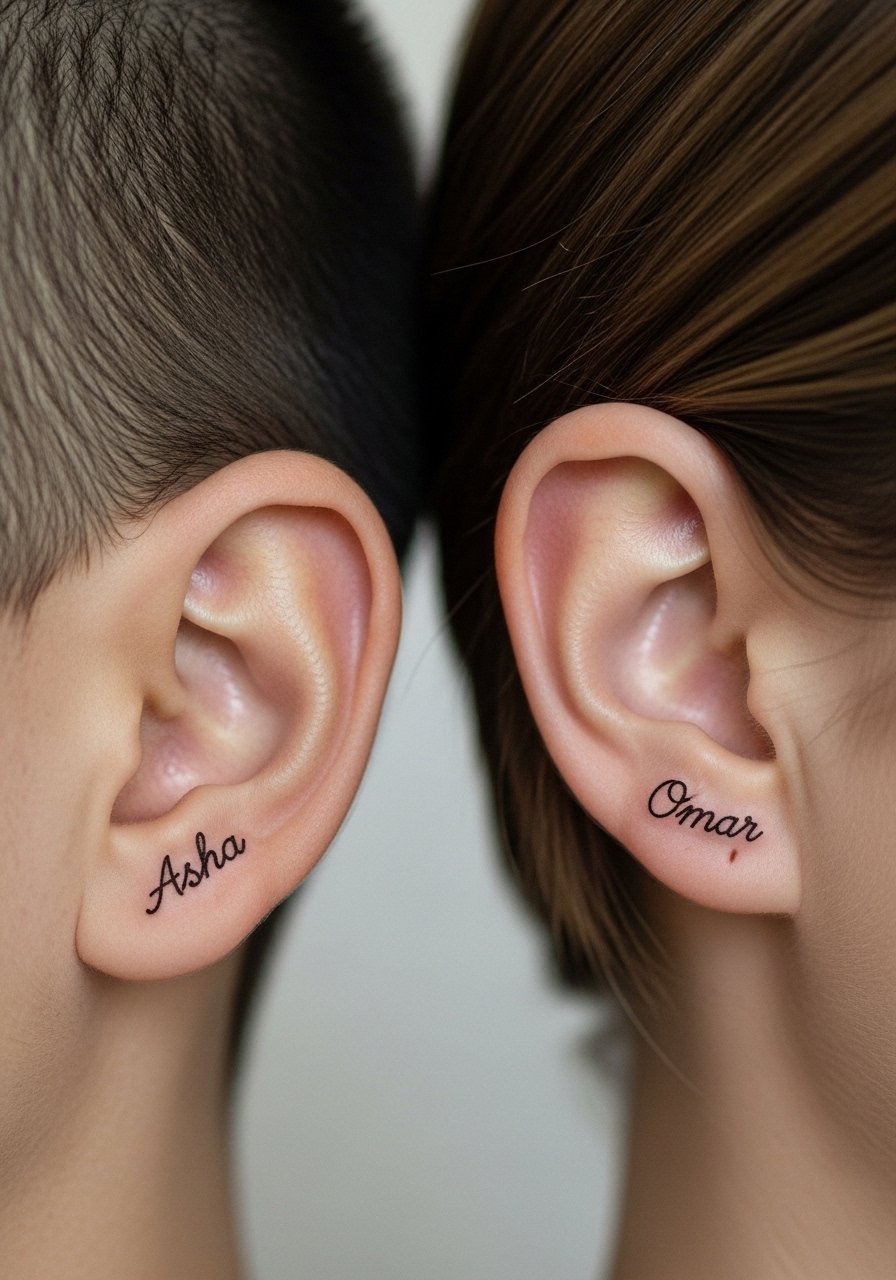
Mirrored names behind each ear create a symmetrical, intentional look that plays well for couples or twin tributes. Expect two short sessions or one slightly longer session if done together. Alignment is crucial, so request stencils and try them on in sitting position to check symmetry. The controversy here is about permanence; one camp says matching tiny scripts last if spaced and weighted correctly, the other warns that mirrored pieces attract uneven fading because of hair and pillow friction. Ask the artist which approach they prefer and why. For showing both pieces, a low bun or silk headscarf keeps hair away and frames the ink.
Studio Day Picks
These tiny behind-ear pieces heal differently from larger neck work, so a few compact items smooth the session and the first week.
-
Stencil transfer paper kit. Lets you preview exact letter placement on the skin before the needle, which is essential for mirrored and asymmetrical name placements.
-
Topical numbing cream. Applied per the product notes, it can ease the thin-skin sensitivity behind the ear during short sessions.
-
Thin protective film roll. Small strips are handy to cover a behind-ear tattoo that rubs against collars or hair in the first 48 hours.
-
Fragrance-free gentle body wash. A mild cleanser removes sweat and oils without irritating delicate linework in close-to-hair placements.
-
Aquaphor healing ointment. A thin layer for the earliest stage helps keep fine script hydrated without suffocating the small needle channels.
7. Tiny Name with Micro Star Trail on the Skin Just Behind the Ear, Below the Hairline on the Neck
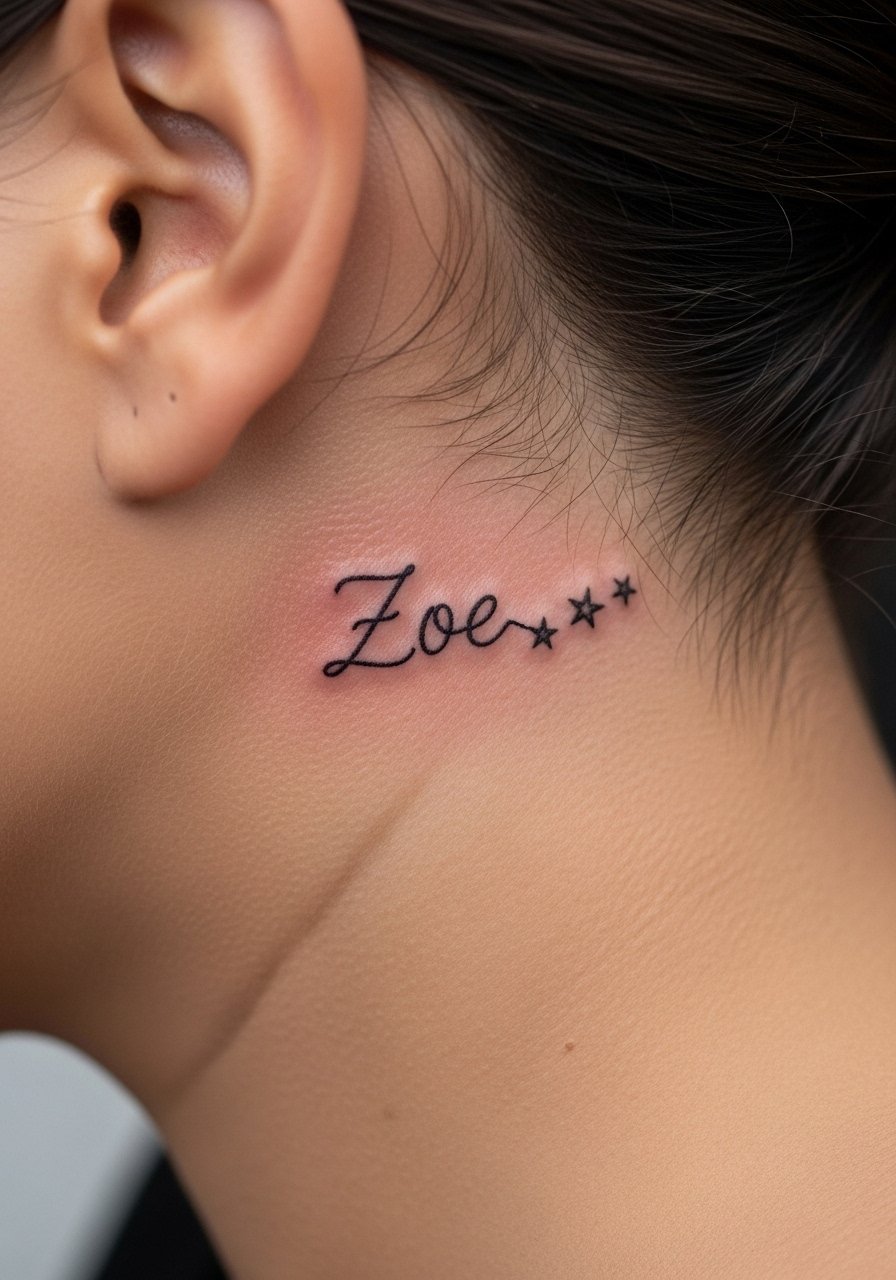
A name with a micro star trail adds motion to a static script and masks slight shifting as the skin changes. This takes a touch longer than a single-name script but still stays under 30 minutes. Ask for consistent spacing between the stars and the letters so the composition reads cleanly at a glance. A mistake is making the stars too close or too filled, which turns them into blobs. For evening outfits, a simple updo highlights the trail; pair with a thin drop earring to complement the area without covering the ink.
8. Tiny Name with Underline Swash on the Skin Just Behind the Ear, Below the Hairline on the Neck
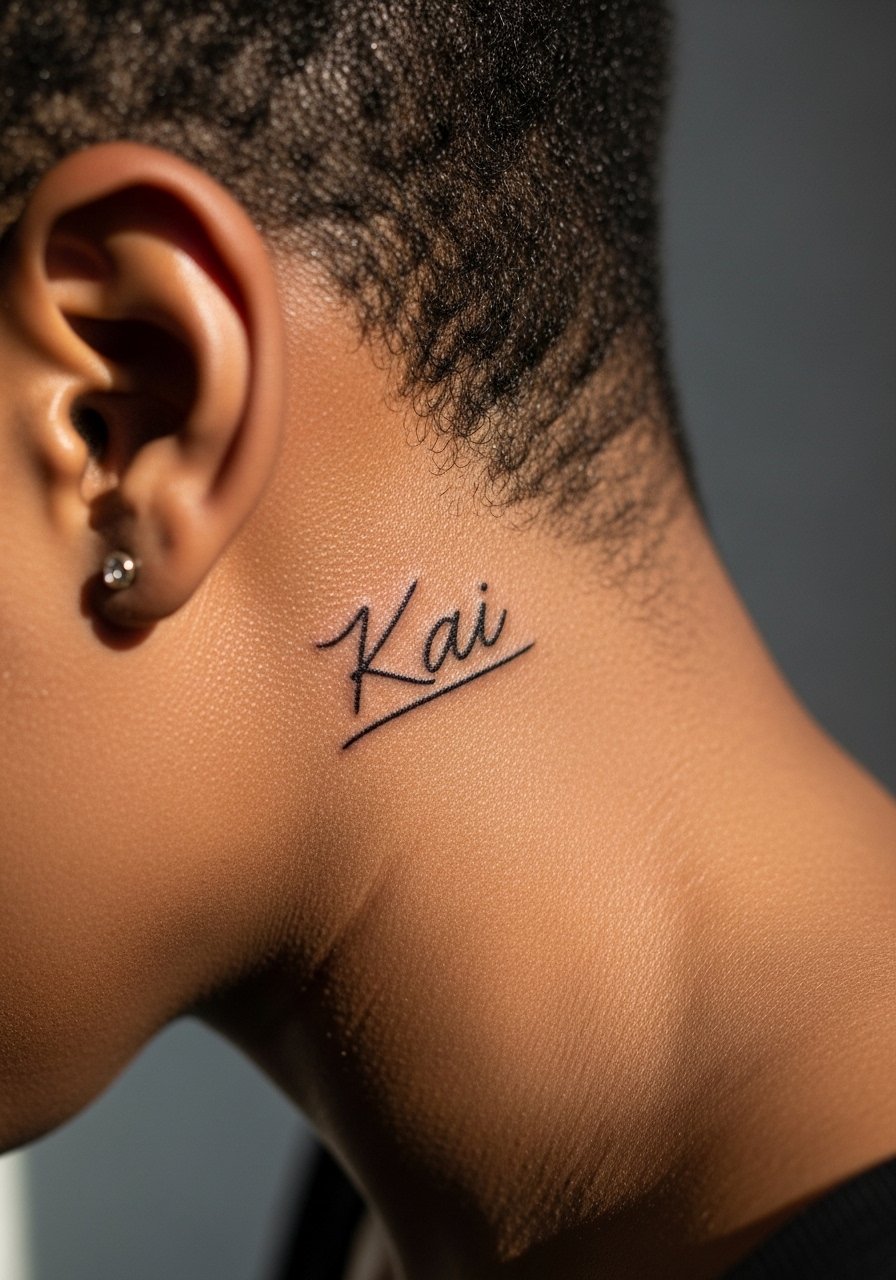
An underline swash beneath a tiny name creates a finishing touch that reads intentional. It adds a fraction of session time and can introduce slight extra sensitivity if the swash crosses uneven skin. Tell your artist you want the swash shallow in saturation so it does not pool and dull the linework. The common mistake is a blunt heavy swash under an ultra-fine script that overpowers the name. For days when you want the ink visible, pull hair back and wear a low-slung crewneck sweater.
9. Tiny Name with Micro Leaf Accent on the Skin Just Behind the Ear, Below the Hairline on the Neck
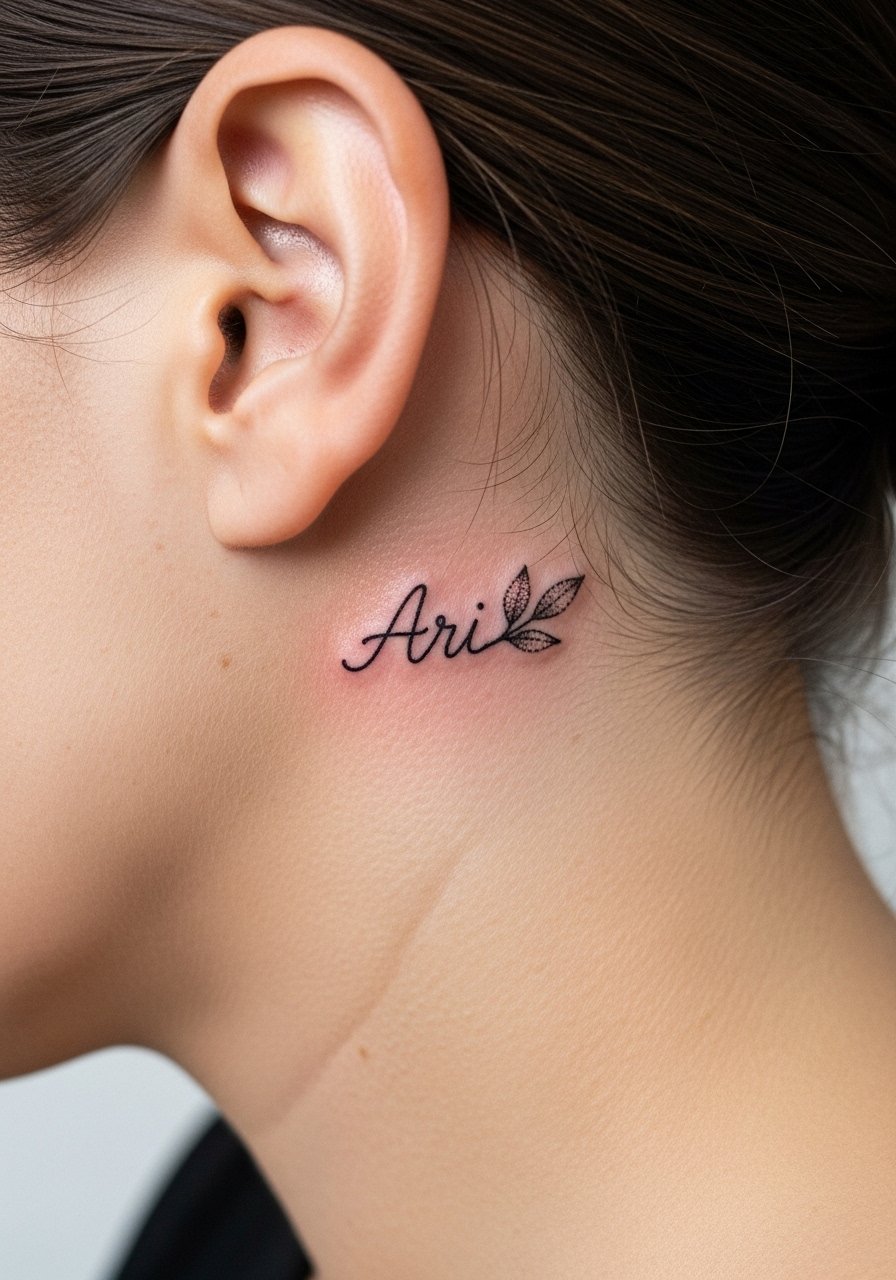
Adding a micro leaf or botanical motif gives a soft organic partner to the name and introduces stipple shading that ages differently than straight lines. A realistic stipple node can last if the dots are spaced properly. The session may involve slightly more needle passes for the stipple effect, so expect a modest increase in session time. A common version that ages poorly is dense stipple placed too close to thin script. Keep the leaf small and separate. For a casual reveal, a loose button-down shirt pulled aside shows the spot without fuss.
10. Tiny Name in Script with a Tiny Arrow Accent on the Skin Just Behind the Ear, Below the Hairline on the Neck
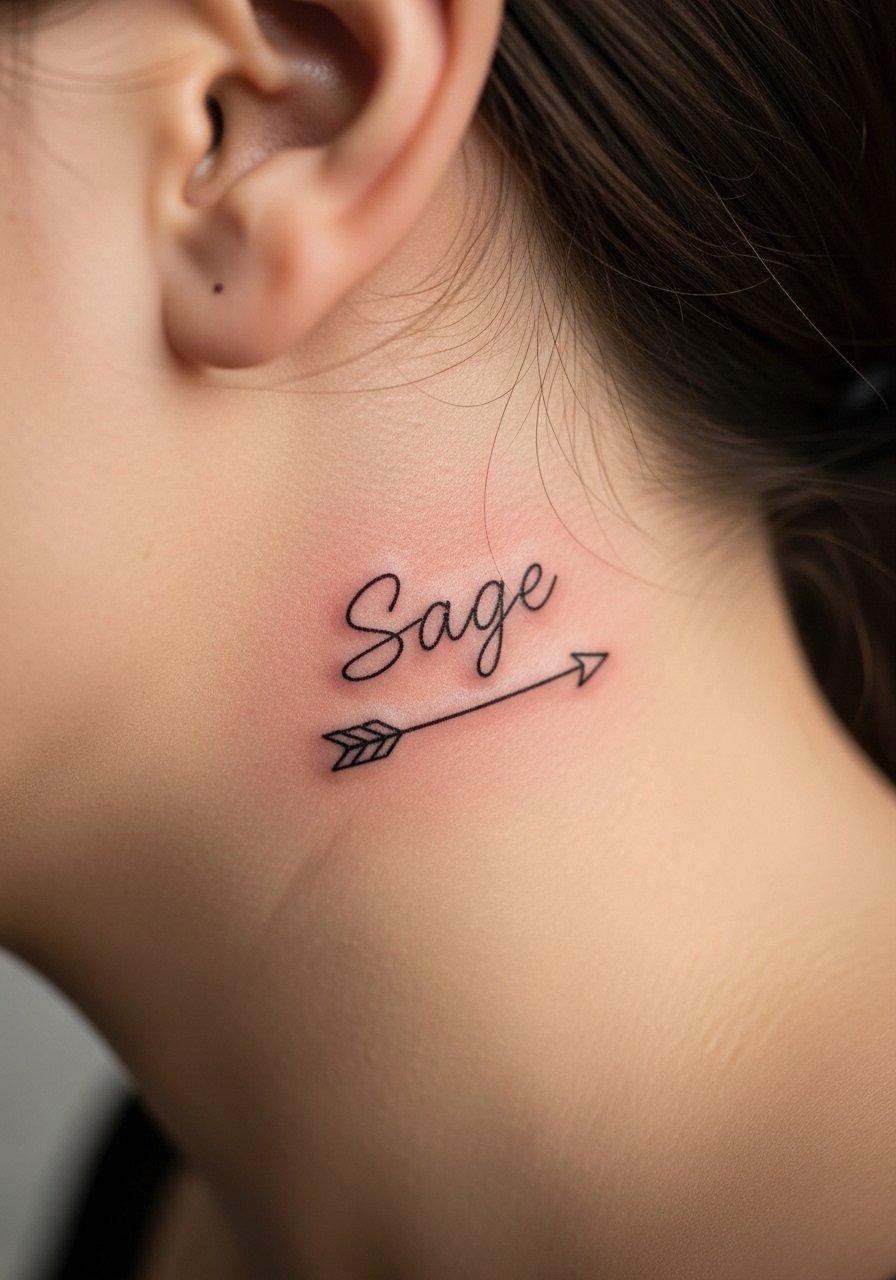
A miniature arrow pairs well with names that reference movement or direction. The arrow should be proportionate and not overly dense, or it can look out of scale with the script. Tell your artist you want a single-needle shaft and a light triangular head so the arrow stays delicate. One mistake people make is requesting a blocky arrow with thin script, which creates mismatch and uneven aging. For session comfort, wear hair secured with a no-slip hair tie rather than clips that pull.
11. Tiny Name with Roman Numeral Accent on the Skin Just Behind the Ear, Below the Hairline on the Neck
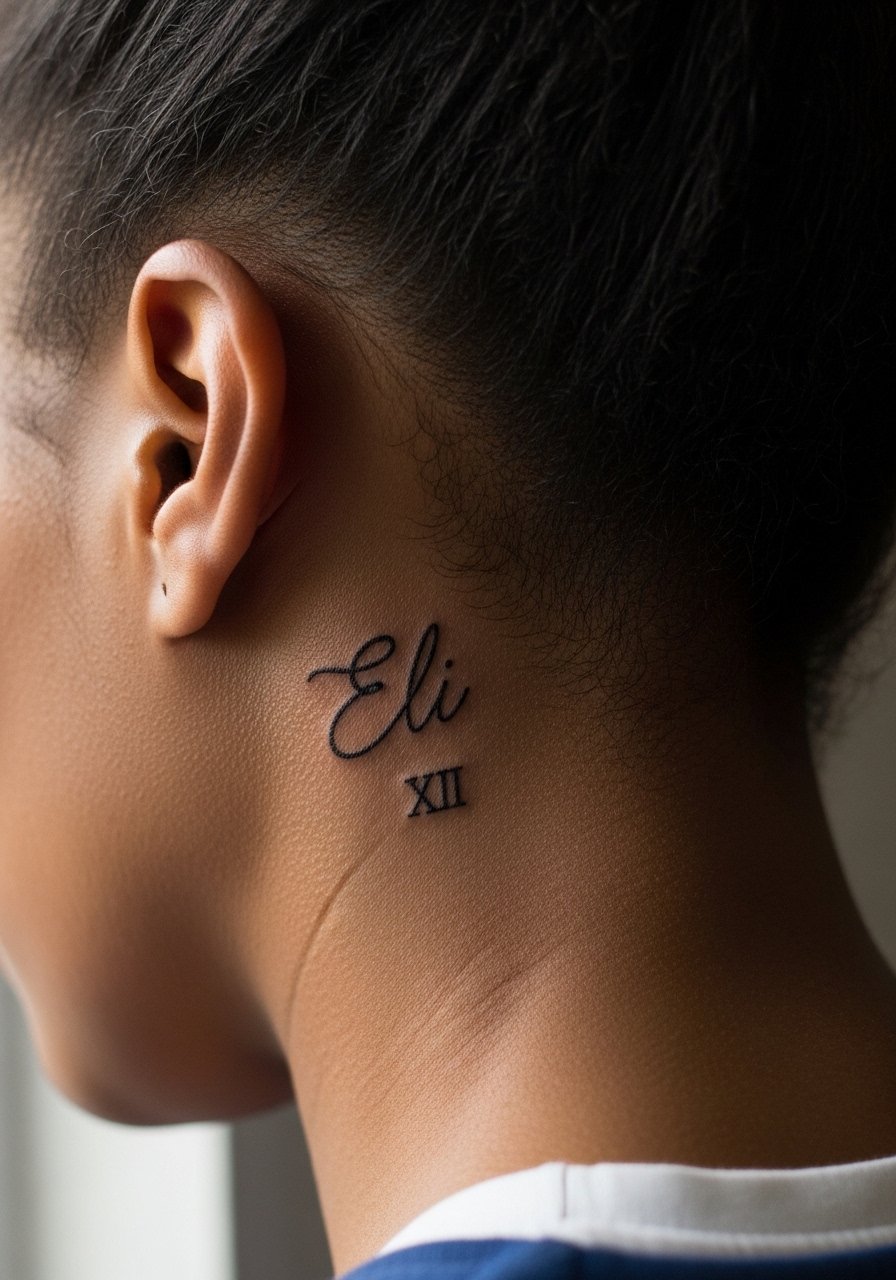
Pairing a name with a tiny date in Roman numerals adds a discreet memorial or milestone. Precision in character size matters more than you expect, because numerals can blur if packed too tightly. Ask for slightly wider spacing between numerals and name. The piece generally heals clean but may require a touch-up at year three if the numerals are very thin. If you like a layered jewelry look, a thin chain choker sits above the ink without obscuring it.
12. Tiny Name in Typewriter Uppercase on the Skin Just Behind the Ear, Below the Hairline on the Neck
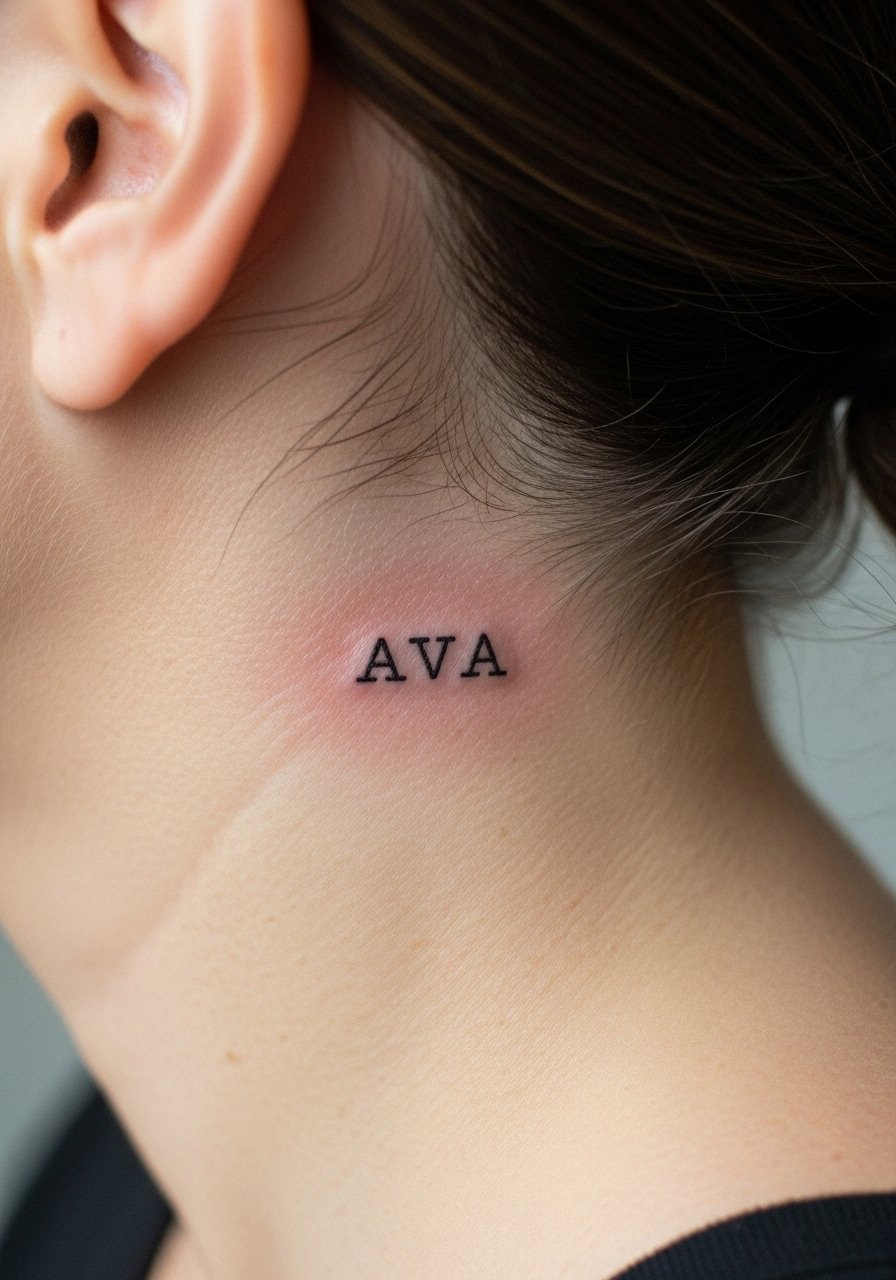
Uppercase typewriter style reads bold even at small scale because of uniform letterforms. The key consultation point is how much space you want between letters. Too tight and characters touch; too loose and the name reads disjointed. A typical session is under 15 minutes and pain is mild. Overly thin uppercase can fade faster, so request a slightly stronger monoline. For daytime wear, a crewneck tee keeps attention above the collarline and frames the ink.
13. Tiny Name with Micro Wave Underline on the Skin Just Behind the Ear, Below the Hairline on the Neck
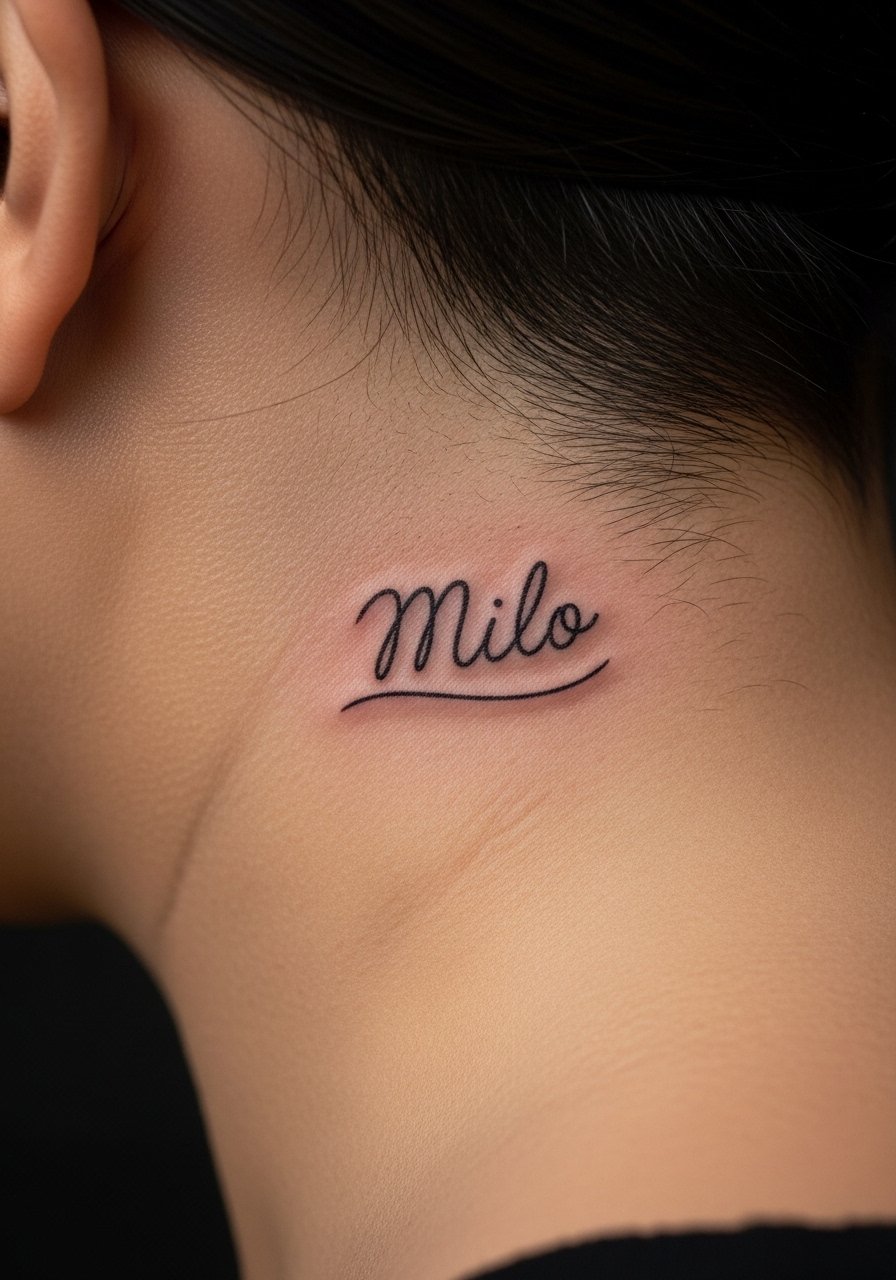
A tiny wavy underline softens a name without adding heavy saturation, and it can hide slight line drift over time. Tell the artist you want low saturation in the wave so it layers behind the main script visually. A mistake is making the wave as dark as the name which competes rather than complements. The session feel is quick and tolerable. For social outings when you want the tattoo visible, wear your hair in a side part and a button-up blouse with an open collar.
14. Tiny Name in Micro Serif on the Skin Just Behind the Ear, Below the Hairline on the Neck
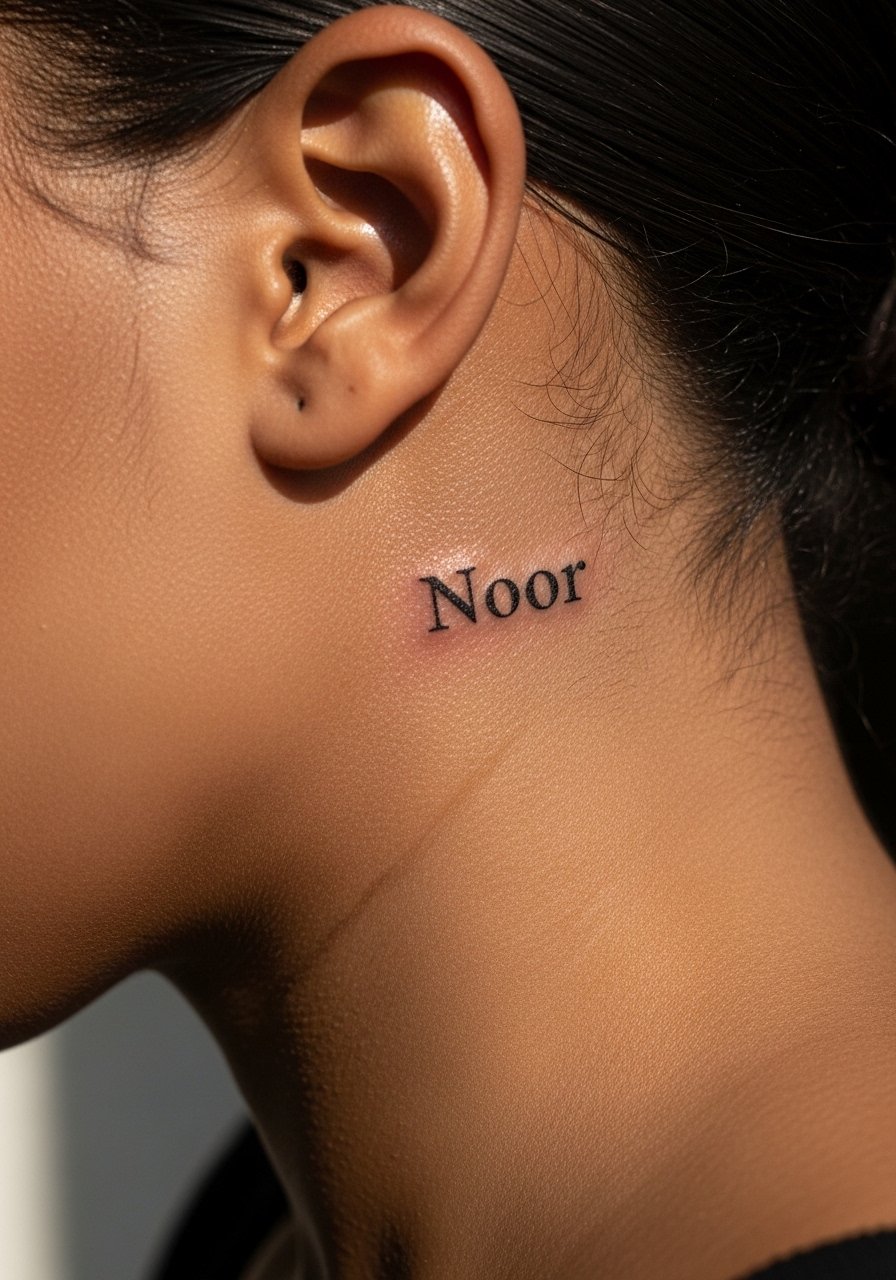
Micro serif lettering gives a slightly formal, vintage touch. The tiny serifs require crisp single-needle work so they do not blur into the letter stems. Expect a careful, slightly slower pass for each serif. A common mistake is asking for ornate serifs that are too fine for such a small plane. For a refined look, pair with a thin chain pendant necklace that sits just above the script.
15. Tiny Name with Minimal Dot-Line Frame on the Skin Just Behind the Ear, Below the Hairline on the Neck
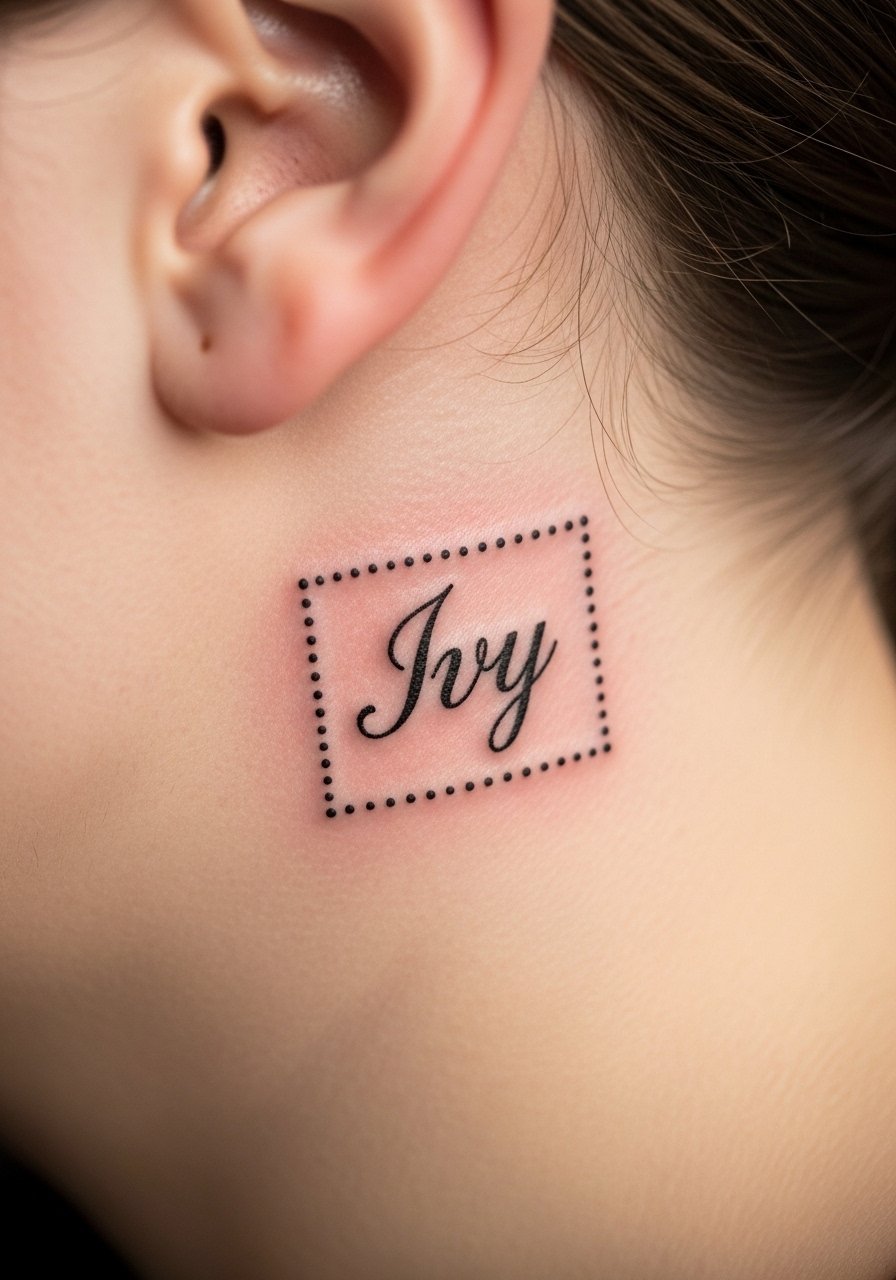
A dot-line frame creates a pocket for the name and adds visual separation from hair and clothing. Stipple or dot work used for the frame must be spaced to avoid merging into a gray patch over time. Tell your artist you want open spacing between dots and the script itself. The extra dot work adds a few minutes to the session but raises the design's clarity. For sessions, wear a high ponytail-friendly scrunchie to keep the area unobstructed.
16. Tiny Name with Micro Crescent Moon Accent on the Skin Just Behind the Ear, Below the Hairline on the Neck
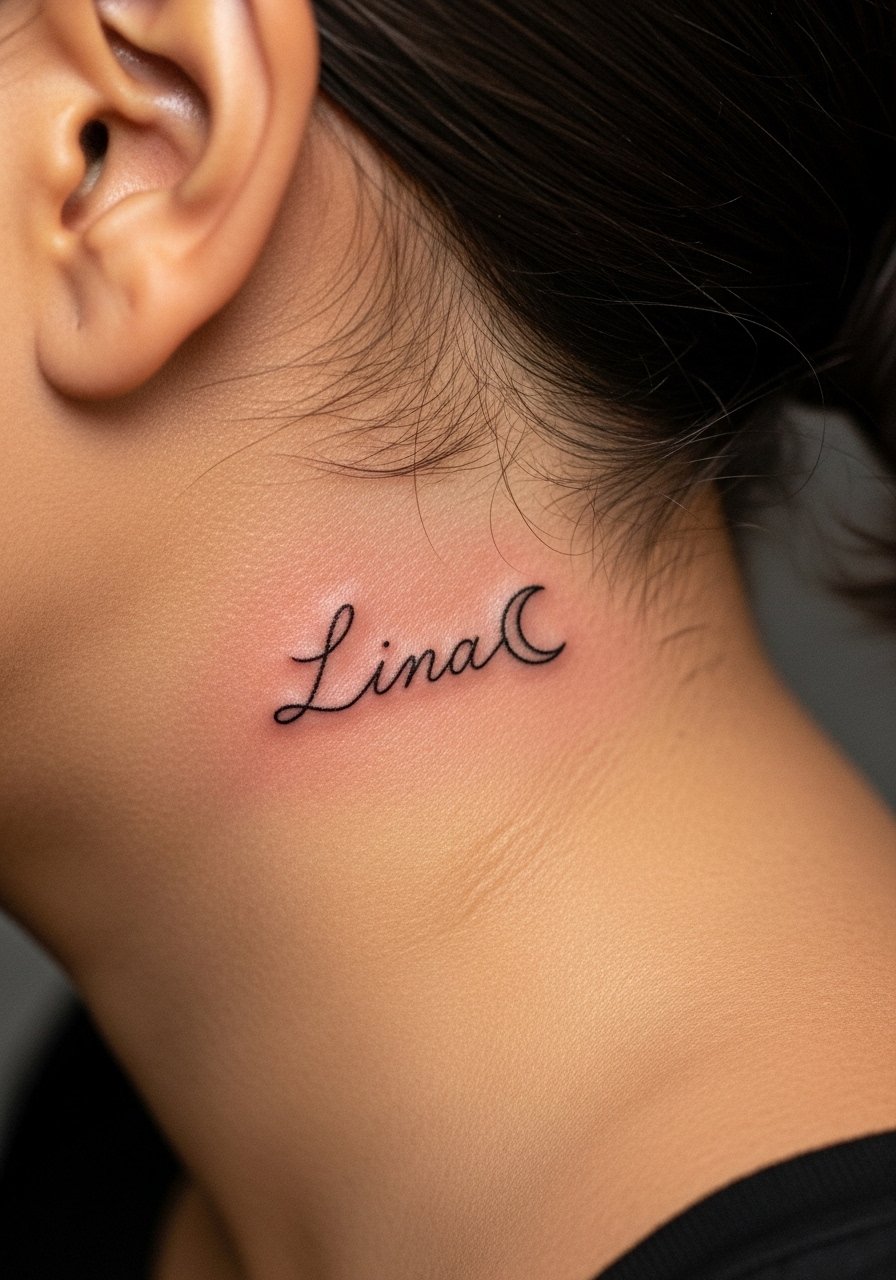
A small celestial accent gives a soft signifier next to a name and ages predictably when the moon is minimally filled. Ask for a shallow fill or single-needle outline for the crescent to prevent saturation. The main risk is overfilling the moon which blurs into the script. For show-off moments, pull your hair into a low knot and add a dainty ear cuff that draws attention to the area.
17. Tiny Name in Script with a Micro Arrow Through the First Letter on the Skin Just Behind the Ear, Below the Hairline on the Neck
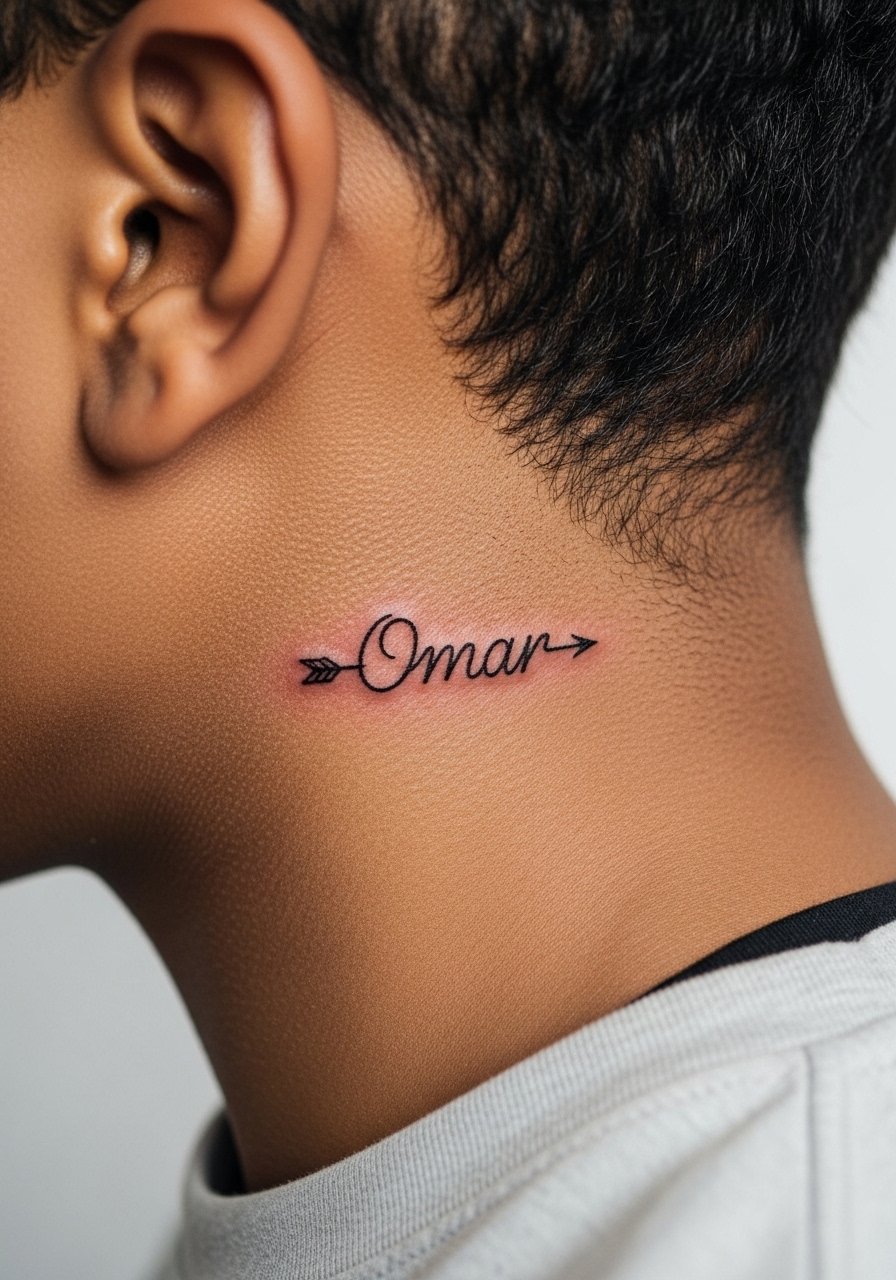
Threading an arrow through a letter needs precise stencil placement so the arrow aligns with the glyph shape. That alignment can add a few extra minutes in the chair. The mistake is trying to force complex geometry into such a small space which then reads cramped. If you prefer subtlety, ask for the arrow shaft to be thin and the head minimal. For a quick session, wear a cotton headband to keep hair back without pins.
18. Tiny Name with Micro Floral Sprig on the Skin Just Behind the Ear, Below the Hairline on the Neck
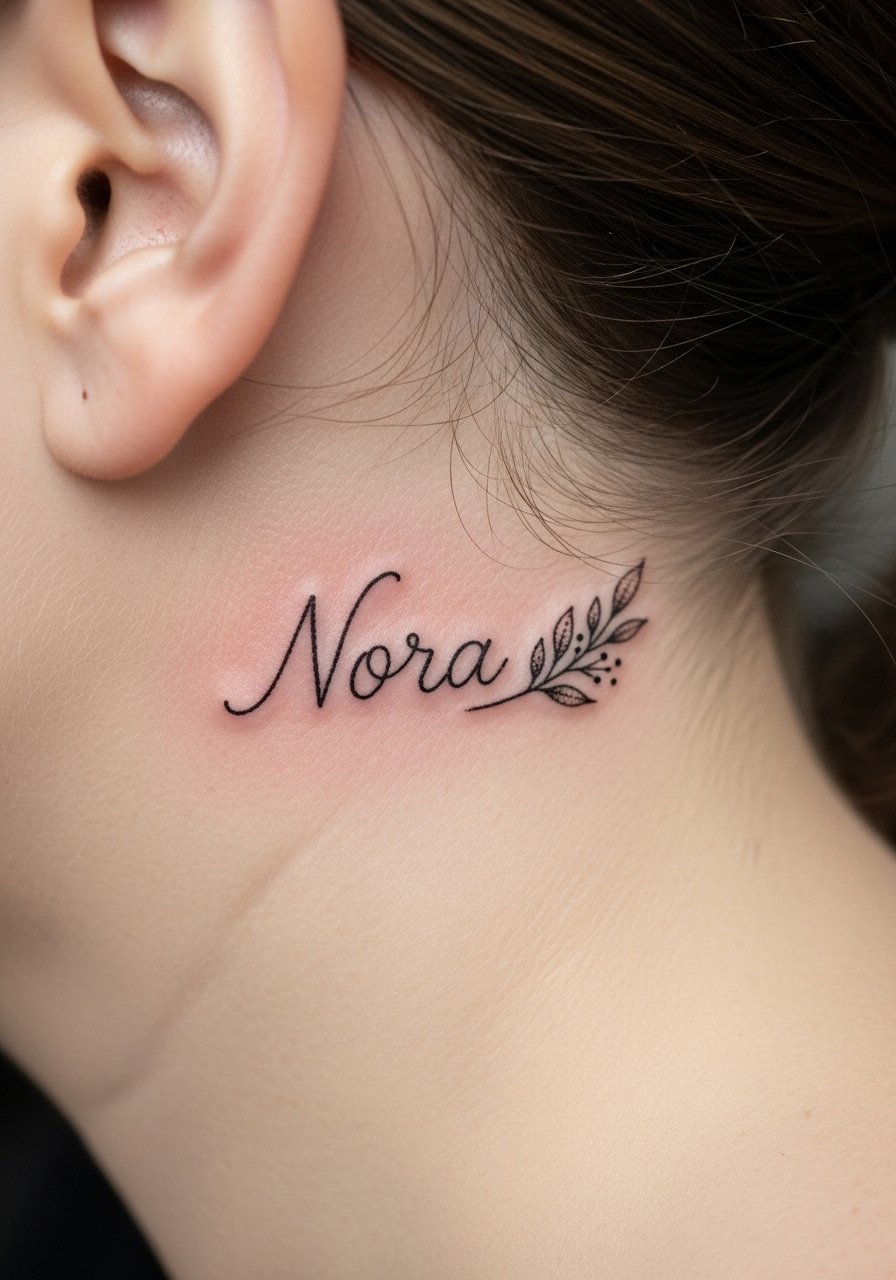
A floral sprig pairs well with feminine scripts and offers texture without heavy saturation. The stipple leaves in the sprig should be spaced so they do not coalesce into a gray area as the piece heals. Sessions are slightly longer than a simple script because of the shading passes. The common error is adding oversized petals that dominate the name. For wardrobe, a thin strap camisole keeps hair and collars from hiding the sprig while framing the area.
19. Tiny Name in Calligraphic Script with a Single Flourish Tail on the Skin Just Behind the Ear, Below the Hairline on the Neck
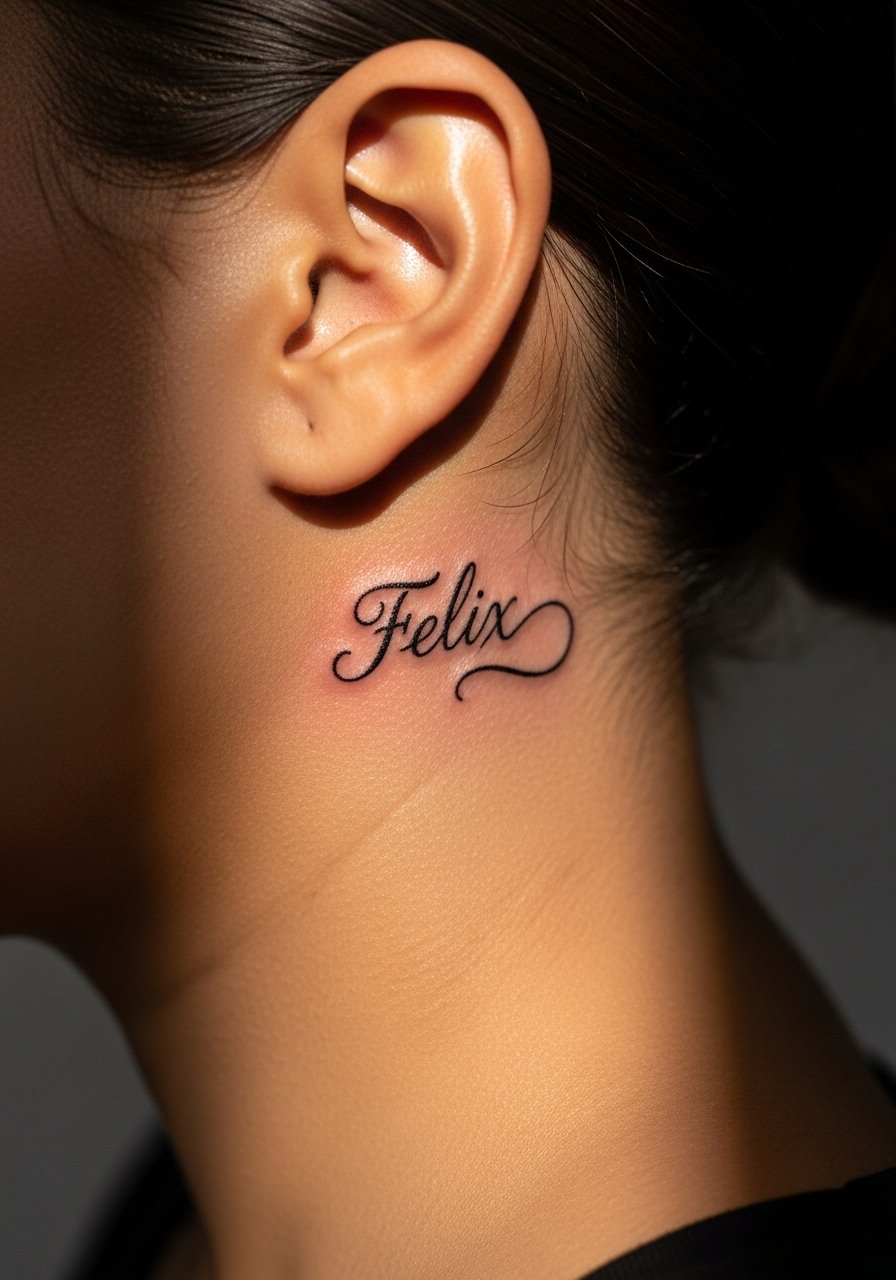
Calligraphic script with one controlled flourish reads high-end when executed at the right scale. Keep flourish length restrained so it does not cross hairline or rub against collars. The session may require a steady, slow hand to avoid ink pooling on the long tail. A frequent mistake is over-extending the flourish beyond the safe skin area, which increases blowout risk. For polished outings, a low bun barrette keeps the hair off and the tail visible.
20. Tiny Name in Stippled Dot Work on the Skin Just Behind the Ear, Below the Hairline on the Neck
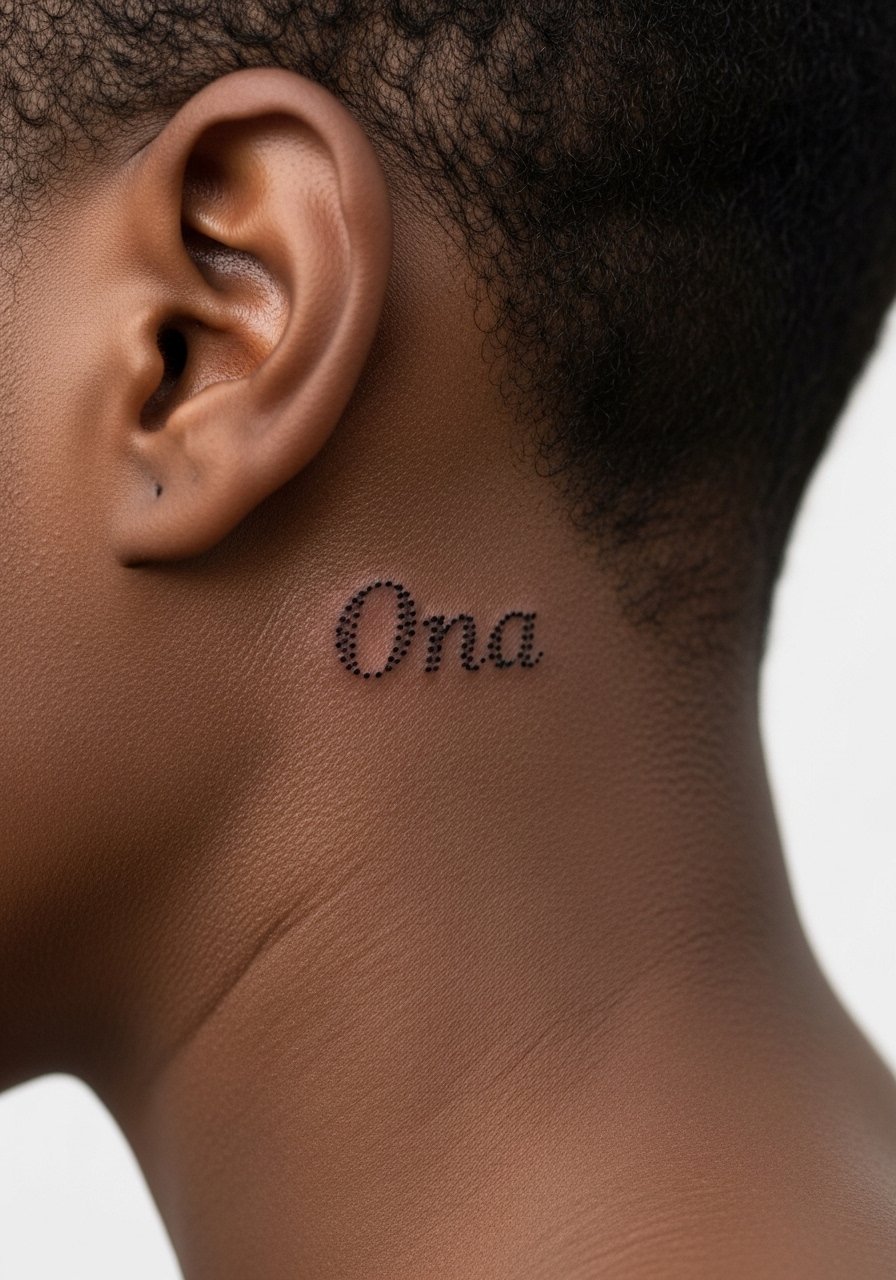
Creating a name with stipple dot work is a graphic choice that can age softly if dots are spaced. It requires more passes and therefore slightly more time. The hazard is placing dots too close together which merges into a gray patch. Request generous spacing and light saturation. For a casual look, a soft knit beanie pulled back shows the stipple without hiding it.
21. Tiny Name with Micro Wave of Dots Above It on the Skin Just Behind the Ear, Below the Hairline on the Neck
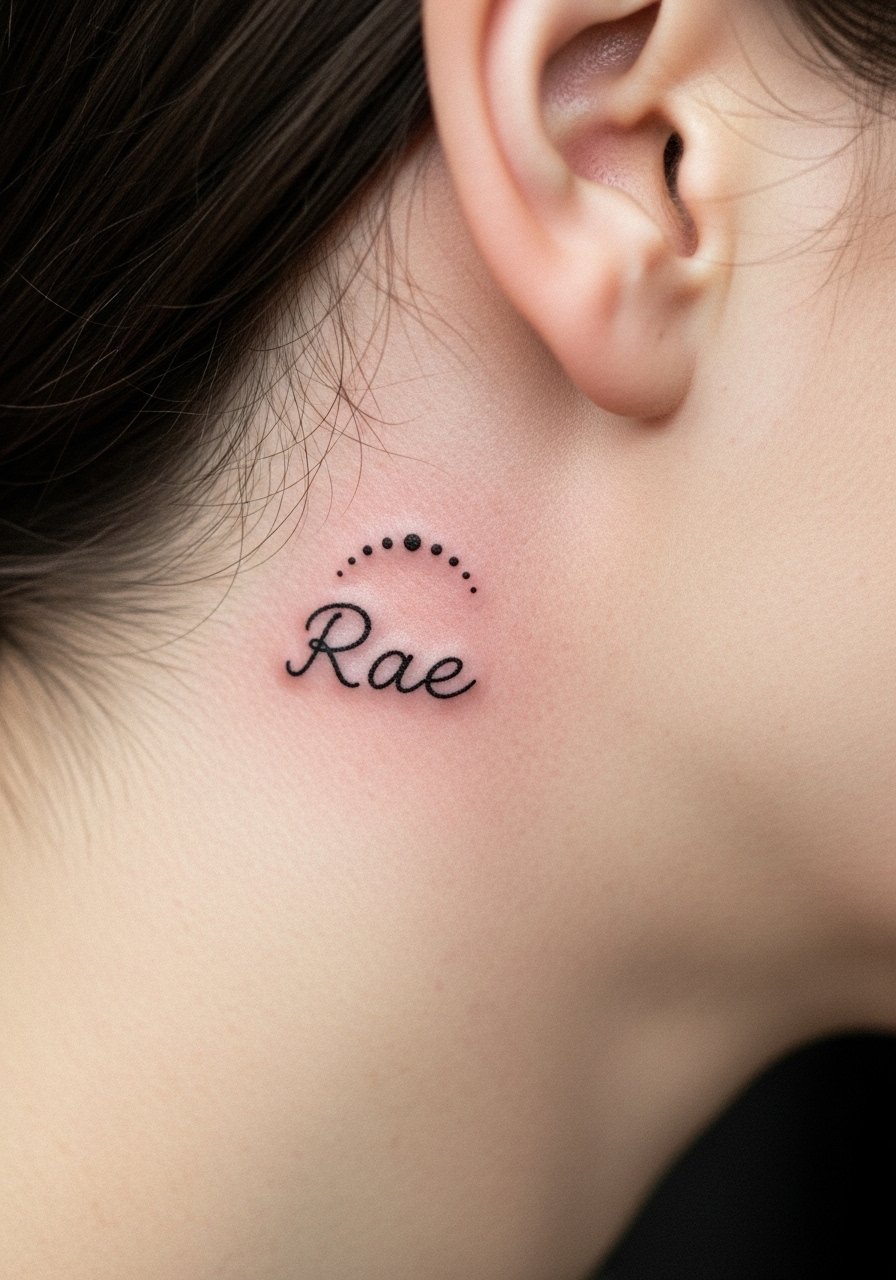
A dotted halo above a name creates contrast and can soften visual weight near the hairline. Ask your artist to keep the arc light so it appears decorative rather than dense. This adds a few minutes but can hide minor shifts in hairline coverage later. Avoid tight clustering of dots. To frame the piece, a low ponytail clip keeps hair off without tugging.
22. Tiny Name in Micro Blackletter Accent on the Skin Just Behind the Ear, Below the Hairline on the Neck
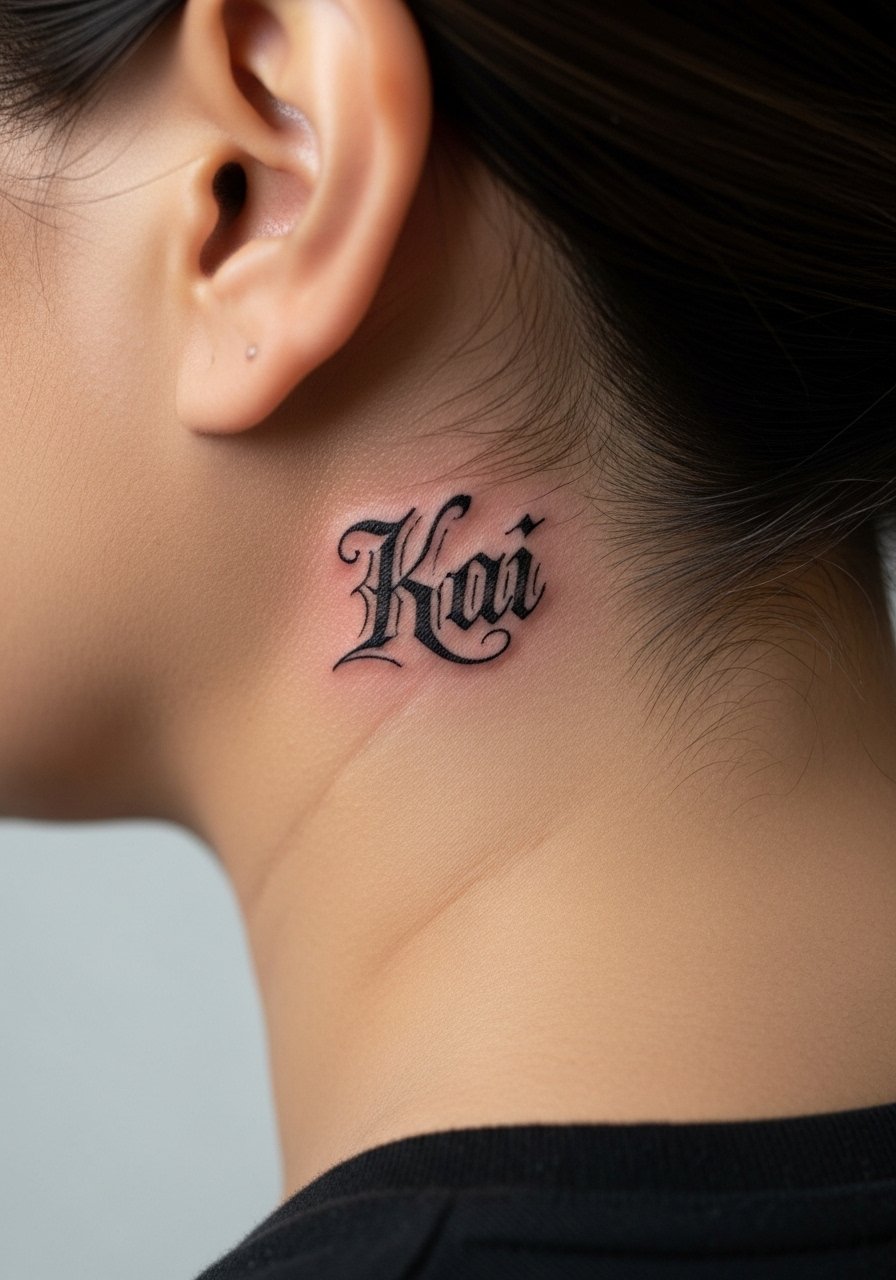
Blackletter at micro scale has an edgy presence but demands deliberate weight in each stroke so letters remain legible. Ask your artist which blackletter glyphs translate well at tiny size because not every ornamental character reduces cleanly. The session feels precise and deliberate. The main mistake is choosing ornate blackletter that collapses when shrunk. For a balanced look, wear a structured leather jacket that complements the design without covering the neck.
23. Tiny Name with a Micro Arrow Loop Around It on the Skin Just Behind the Ear, Below the Hairline on the Neck
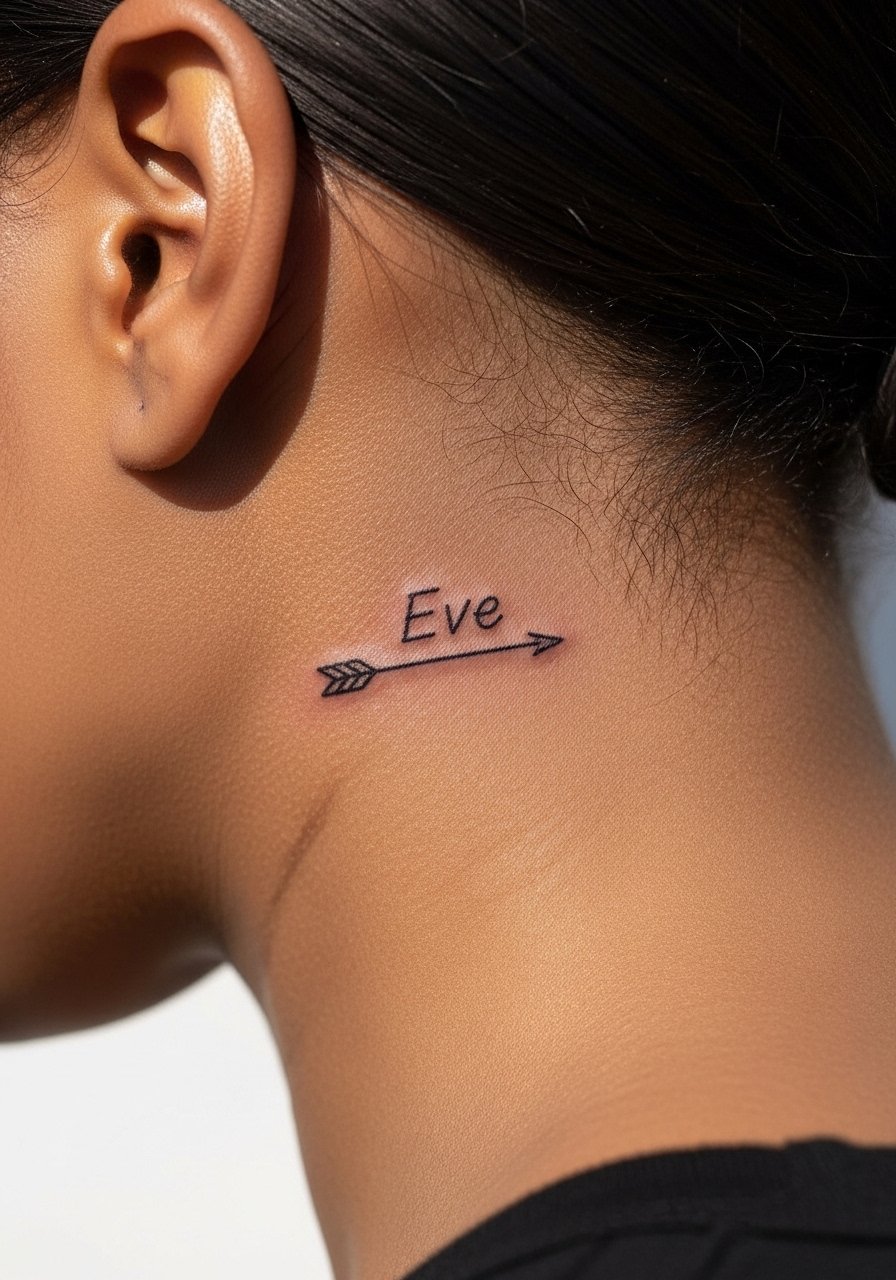
Wrapping an arrow subtly around a name creates a pocketed composition and increases visual interest. This needs careful stencil layout so the loop does not hit hairline or collar edges. Expect a few extra minutes for placement checks. A mistake is making the loop too tight which crowds the lettering. For a casual reveal, a lightweight scarf can be styled to show the area when desired.
24. Tiny Name with Micro Geometric Dot Cluster on the Skin Just Behind the Ear, Below the Hairline on the Neck
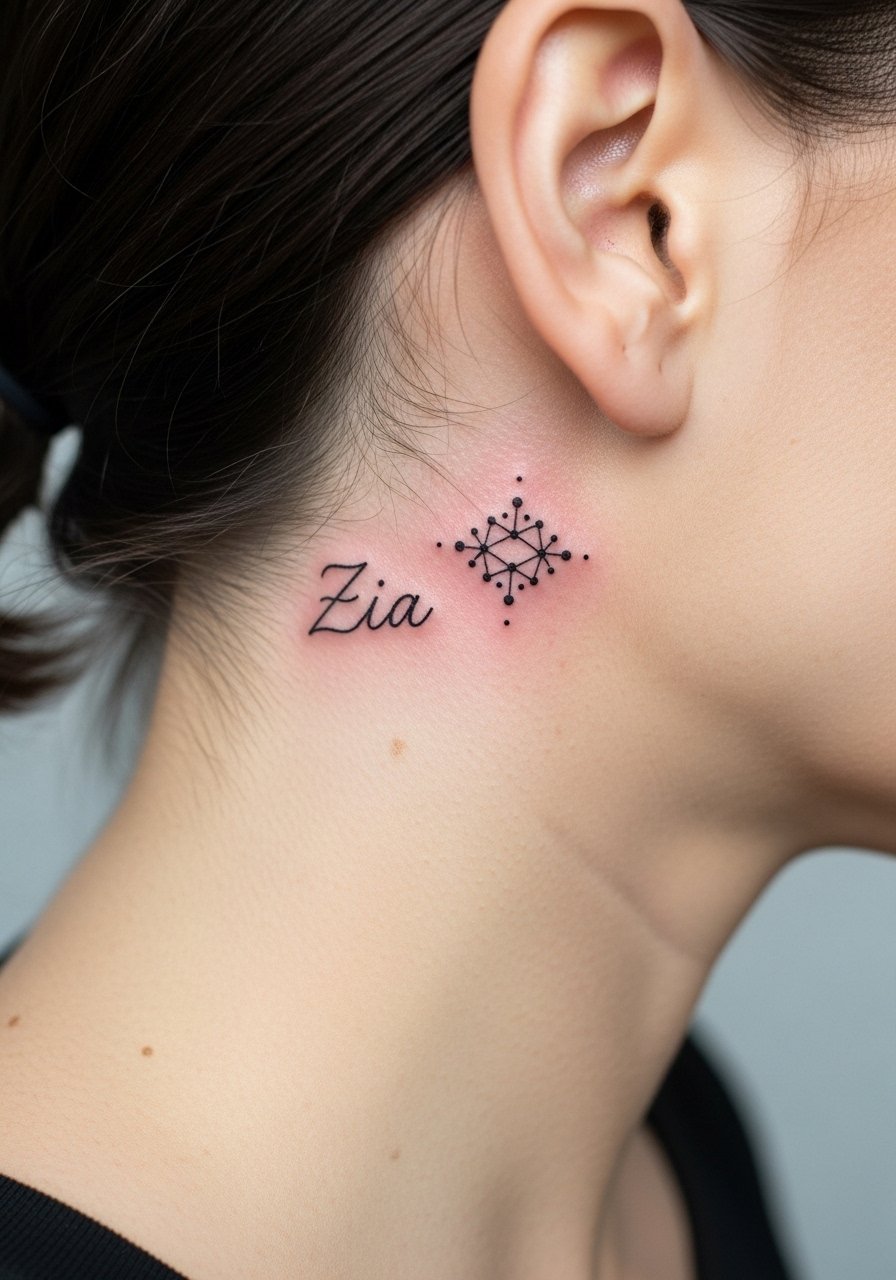
A small geometric cluster beside a name gives a contemporary counterpoint and helps anchor the text visually. The dot cluster must be tested in stencil form to confirm spacing reads well at scale. If the cluster is too dense it will merge into a mass over time. Sessions run slightly longer for placement checks. For daytime looks, a soft blazer with hair tucked behind the ear frames the area neatly.
25. Tiny Name in Micro Script with a Single Tiny Gem Dot Accent on the Skin Just Behind the Ear, Below the Hairline on the Neck
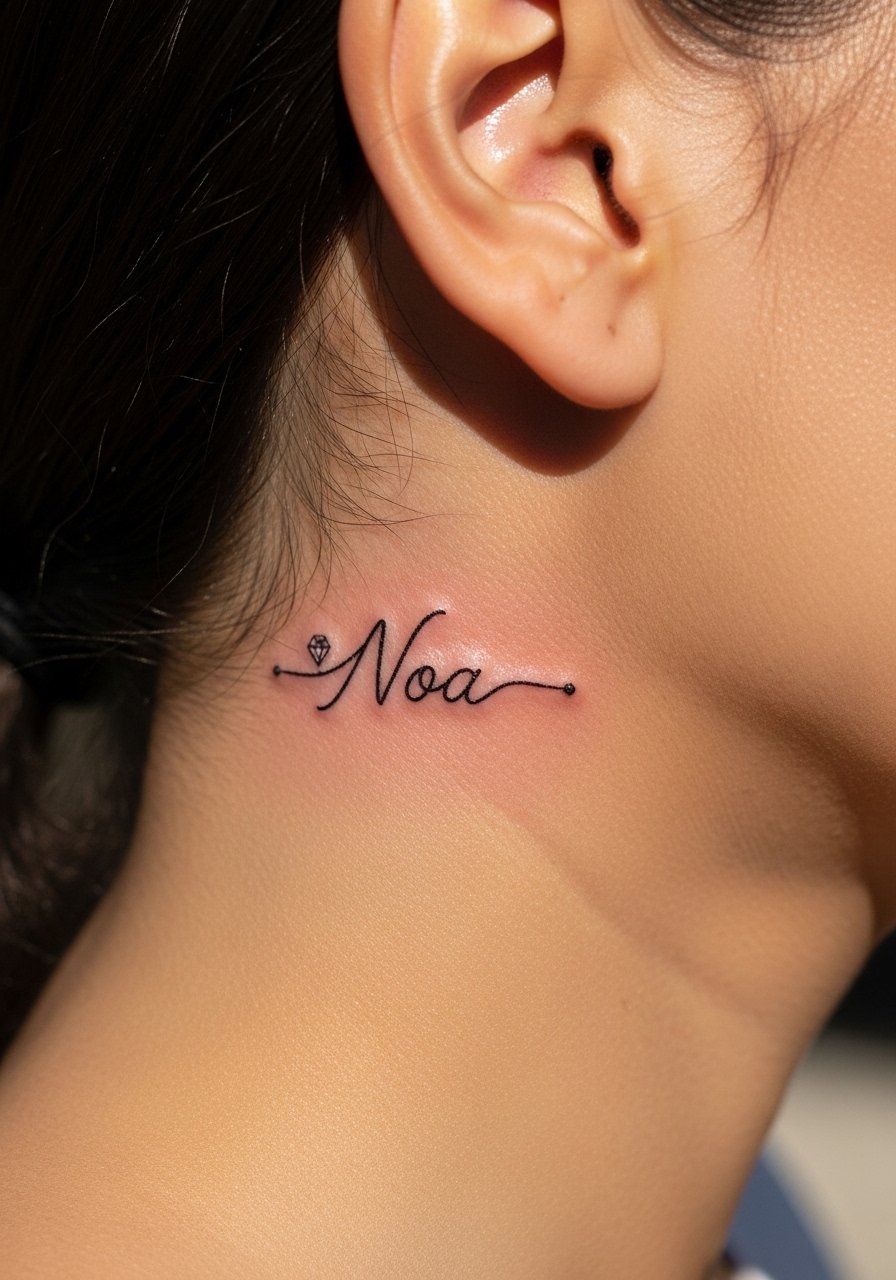
A gem-like dot at the name's beginning reads like a punctuation mark that elevates the script. Keep the dot size deliberate so it remains visible but does not overpower the name. Artists sometimes overfill such dots which causes a noticeable blur. Sessions are quick, and the area heals predictably if you keep hair off during the early days. For nights out, a pair of subtle stud earrings draws attention without hiding the tattoo.
26. Tiny Name in Micro Script with a Tiny Wave Above It on the Skin Just Behind the Ear, Below the Hairline on the Neck
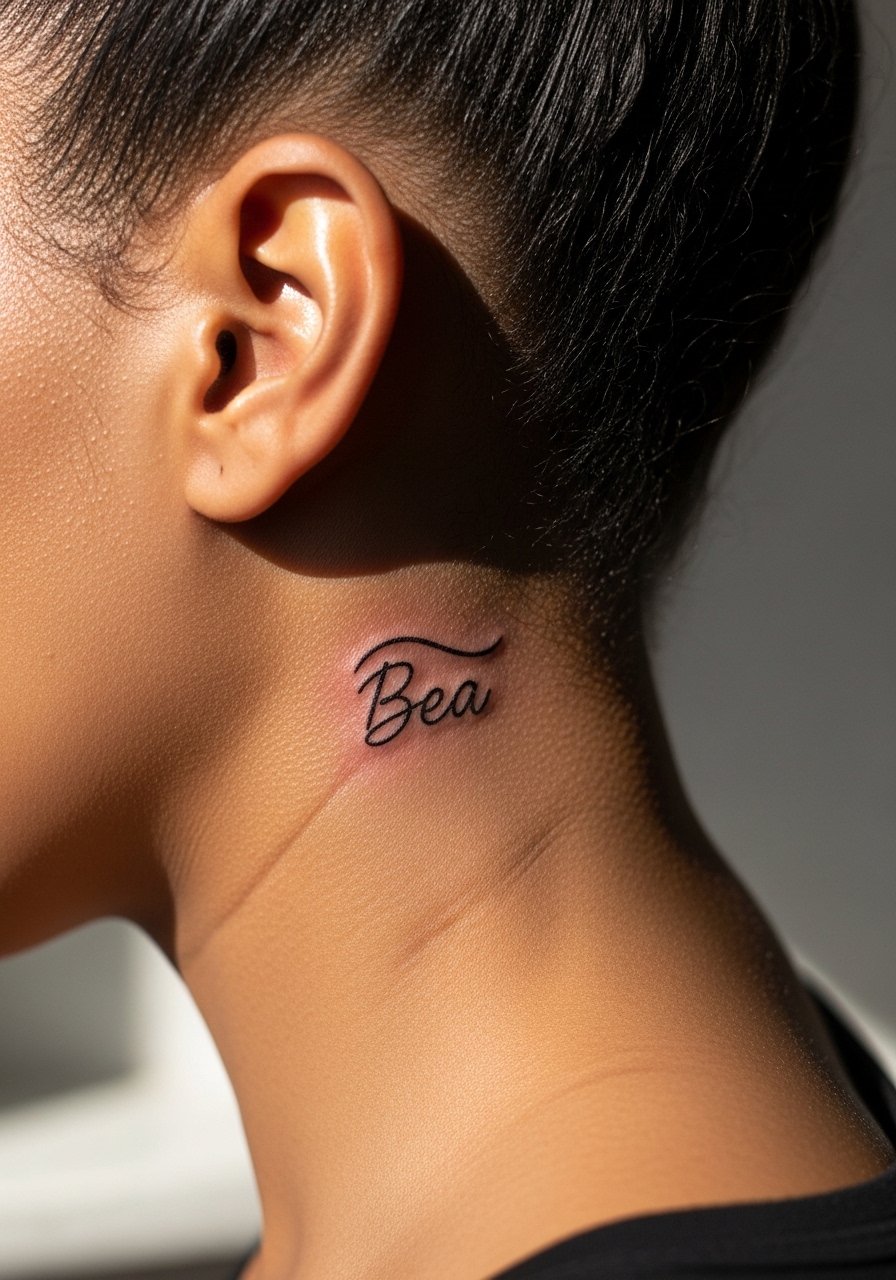
A wave accent above a name is a quiet decorative choice that helps separate the script from hair or neckline shadows. Ask for a light, airy line for the wave rather than a saturated band. This adds a minute or two to the appointment. The error to avoid is matching the wave's weight to the name exactly, which makes the two elements compete. For a relaxed reveal, a loose knit sweater with a wide neck keeps the area visible and comfortable.
27. Tiny Name Styled as a Micro Monogram on the Skin Just Behind the Ear, Below the Hairline on the Neck
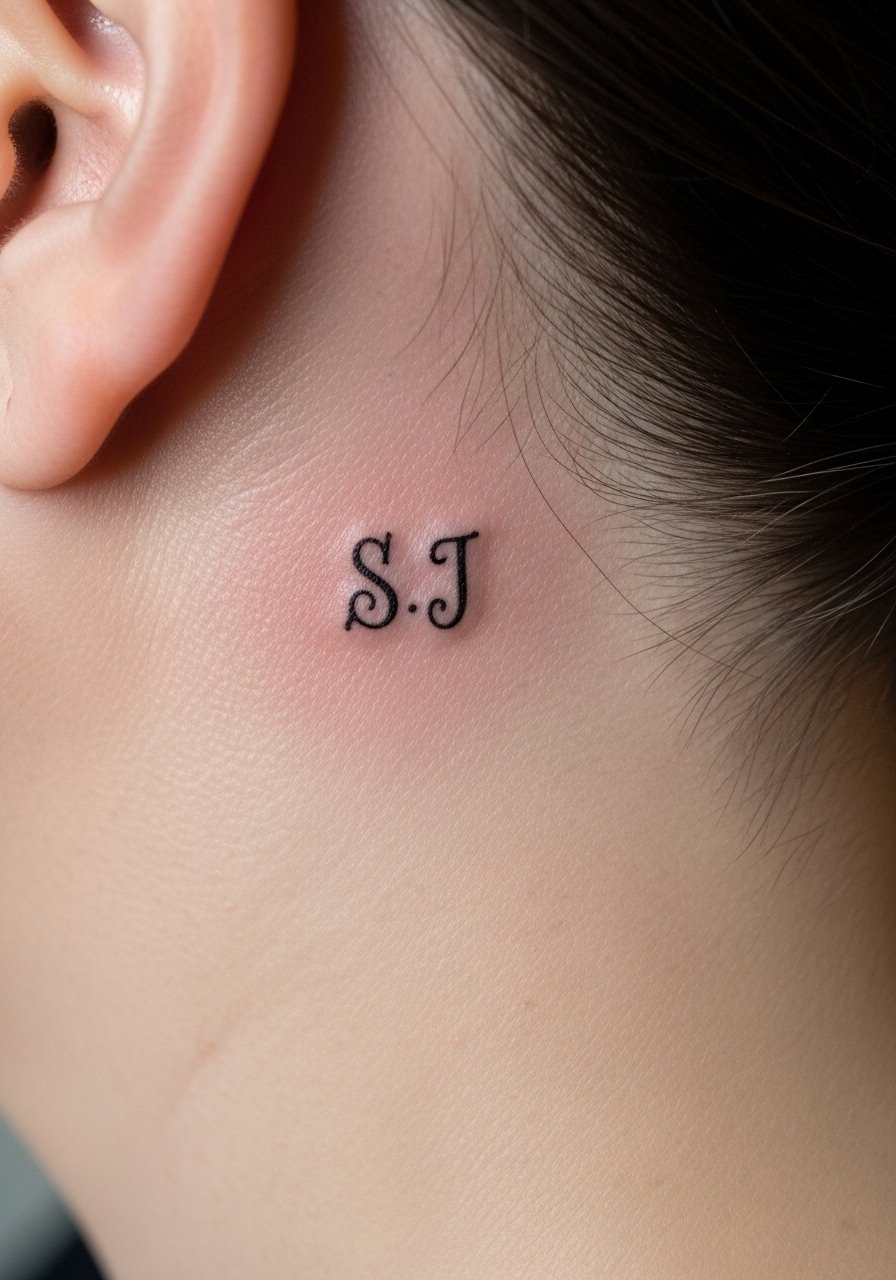
A monogram compresses names into a compact emblem and suits behind-ear scale well if the letters are legible. Stencil checks are important to ensure the interlock reads at small size. The session can be a bit slower because the artist must verify spacing repeatedly. One common mistake is overcomplicating the monogram which then becomes indistinct; keep it simple. For discreet elegance, wear a soft collared shirt with the collar slightly open so the monogram shows in movement.
Frequently Asked Questions
Q: Will a tiny name behind the ear blur faster than the same name on my forearm?
A: In my experience, small names behind the ear can blur faster than forearm pieces because the skin there is thin and often rubs against hair or collars. Proper spacing and slightly stronger line weight help, and a touch-up at year two or three is common for ultra-fine scripts.
Q: Should I pick cursive or typewriter for a name behind the ear if I want it to stay readable?
A: Typewriter and clean block lettering tend to hold legibility better at tiny sizes because the letters are separate. If you prefer cursive, ask for wider letter spacing and a modest line weight so the loops do not merge as healing progresses.
Q: Are there style or career considerations for a name behind the ear?
A: Yes. Although behind-ear tattoos are small, some workplaces notice them depending on hair length and dress code. If you have concerns, consider an inside-the-hairline placement or discuss an even more discreet initial-only option during consultation.
Q: How should I prepare for a behind-ear name session in terms of clothing and hair?
A: Wear your hair up in a low bun or bring a headscarf so the artist can work cleanly. Loose, button-down tops that you can slip off easily help avoid tugging. Bring a small hair tie or scrunchie so stylistic adjustments are quick.
Q: If I want a delicate flourish or dot near the name, how do I know it will age well?
A: Ask your artist to show healed examples at that scale and to explain spacing choices. The two camps are clear about tiny flourishes. One says minimal accents age fine with proper spacing. The other warns that any dense fill near fine script will blur. A careful artist will choose open spacing and light saturation.