
Fine line "trust no one" tattoos are everywhere online right now, but the trend has a few hidden catches. Fine script on the wrist can blur faster than people expect, booked artists cancel or reschedule more than you think, and bony spots like the wrist will sting. Read on for 17 minimal line takes that balance aesthetics, longevity, and how to show them off without future regret.
1. Minimalist "Trust No One" Script on the Inner Forearm
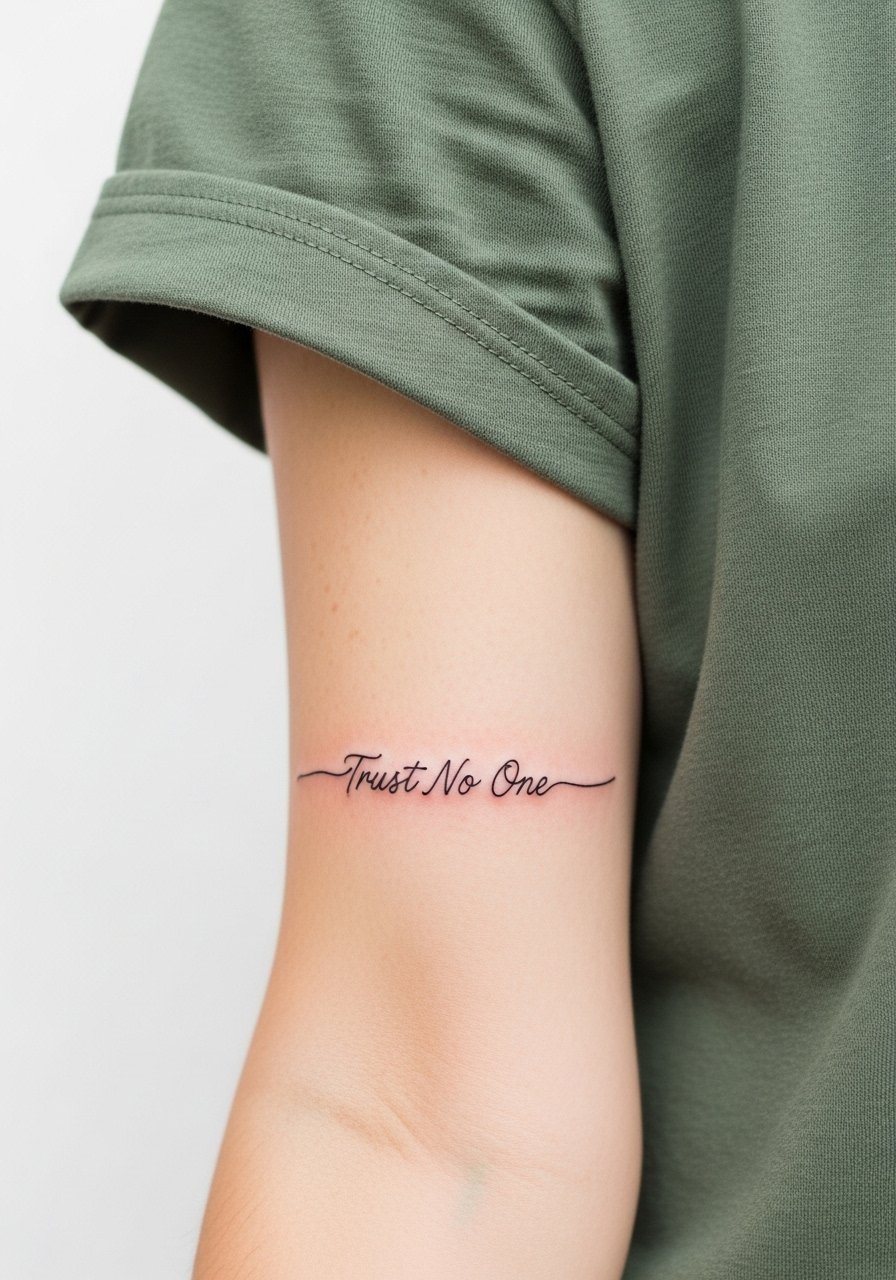
I recommend this when you want a daily reminder but prefer a low-key look. Fair warning, inner-forearm fine line lives or dies by spacing and needle depth. Artists split on the fine line longevity debate. One camp says fine lines age beautifully when placed away from constant friction. The other camp says thin script on soft skin blurs sooner than bold work. Tell your artist you want slightly heavier lineweight than a micro script and ask for one-pass linework so the line settles instead of being overworked. Pain is mild. Session time is short. For the appointment wear a rolled cuff chambray shirt so you can pull the sleeve back cleanly without stretching the area.
2. Fine Line "Trust No One" with Small Eye Motif on the Collarbone
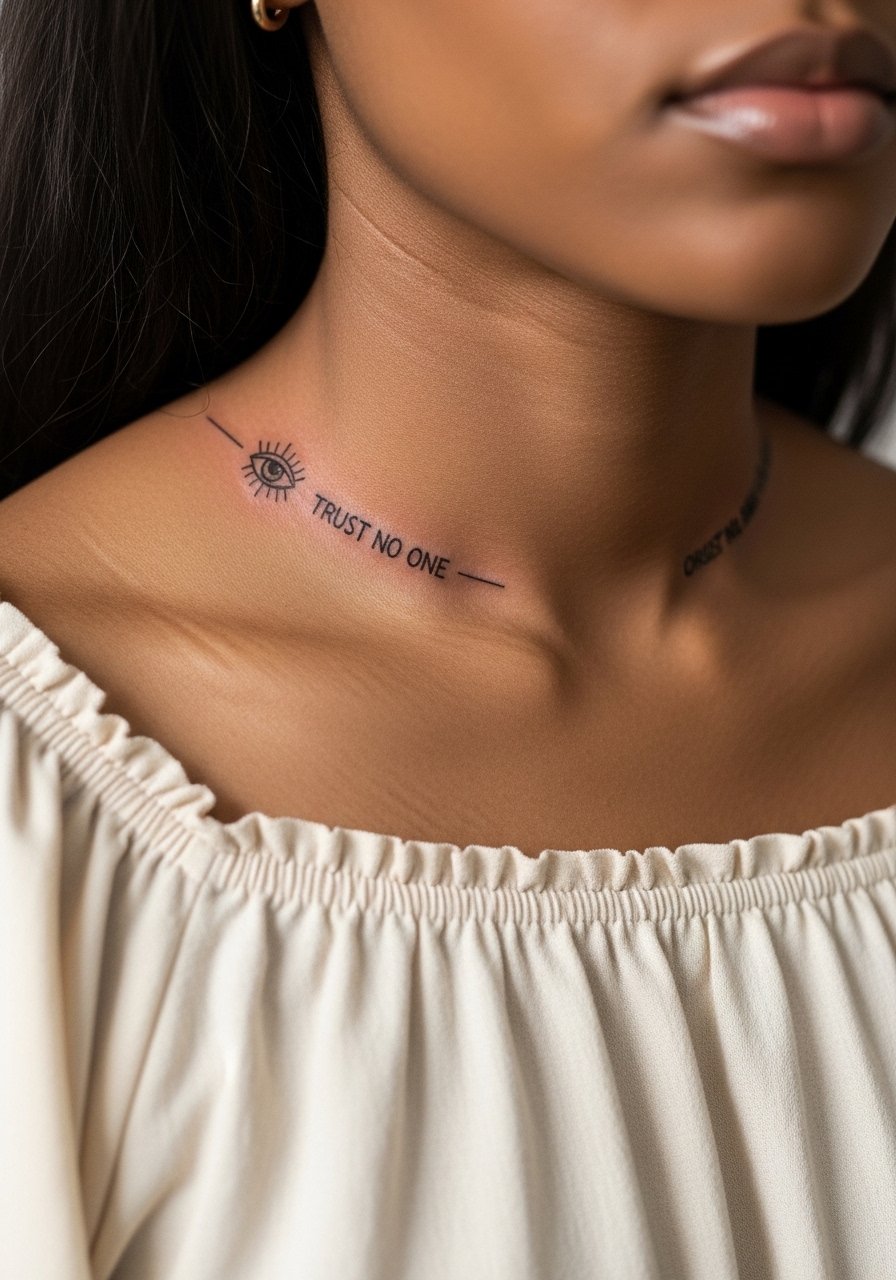
This placement reads vigilantly without shouting. The collarbone gives a natural curve for an eye motif that follows bone contour. Pain is moderate because the area is bony but session time stays brief. In consultation say you want the eye slightly tilted for a watching effect and request single-needle outline with a tiny dot-shade pupil. A common mistake is crowding the text into the eye, which smudges visually as it heals. For showing it off, pair the piece with an off shoulder blouse cream and a delicate chain necklace that rests above the word.
3. Blackwork Geometric "Trust No One" Band on the Inner Wrist
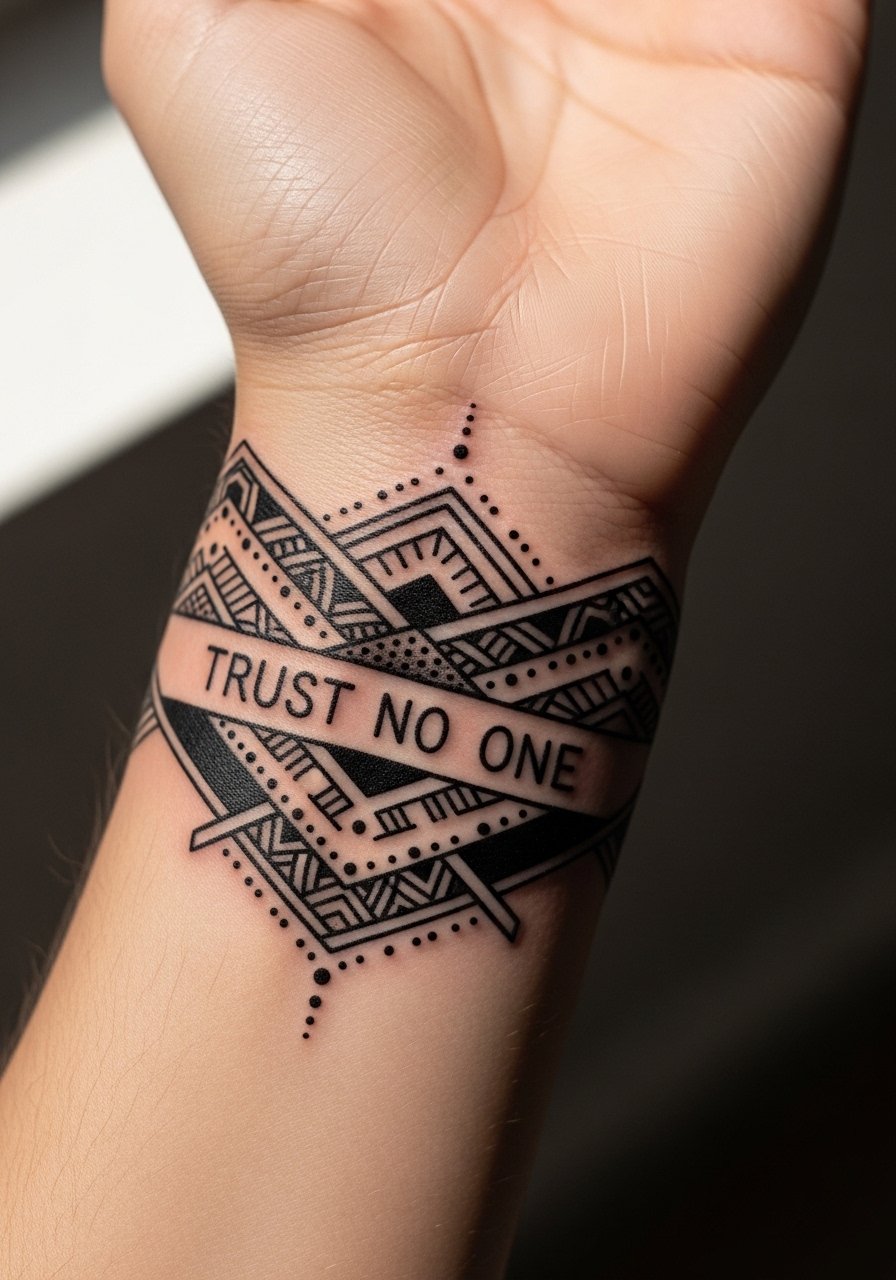
Fair warning: the wrist is a high-friction, high-visibility zone. Fine line fans love it, but many find their scripts blur there. The longevity debate is explicit here. One side favors fine line for the minimal look, while the other suggests blackwork bands because saturated fills hold up longer. If you want the minimal feel but better staying power, ask for a bold band outline with negative-space letters or solid geometric fills around micro script. The session is quick but the area is sensitive. For wear after the session keep the opposite wrist accessorized, and consider a thin bangle bracelet set to balance attention away from swelling.
4. Neo-Traditional Snake Bite with Small "Trust No One" on the Back of the Hand
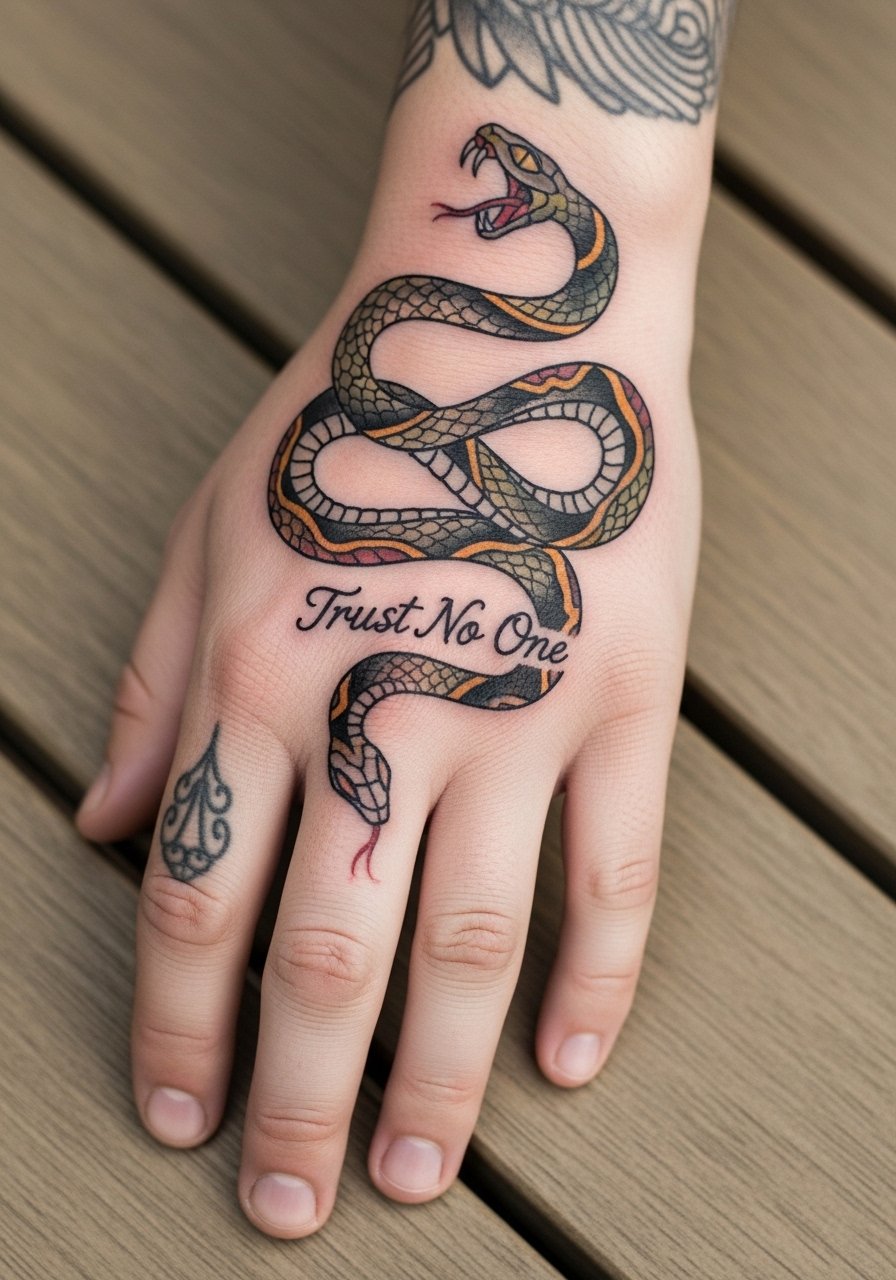
Hand work ages differently than arm pieces and needs bold approaches. Expect a sharper look initially and more diffusion by year two if lines stay thin. The biggest mistake is choosing tiny script on the hand. Ask for bold outlines and touch-ups planned at year one. This placement is more painful because of thin tissue over knuckles and bone. For outfit pairing, vintage leather jackets and fingerless gloves can complement the aesthetic. Try a fingerless leather gloves option when showing it off for a seasonally cohesive look.
5. Black and Gray Realism Chains with "Trust No One" on the Shoulder
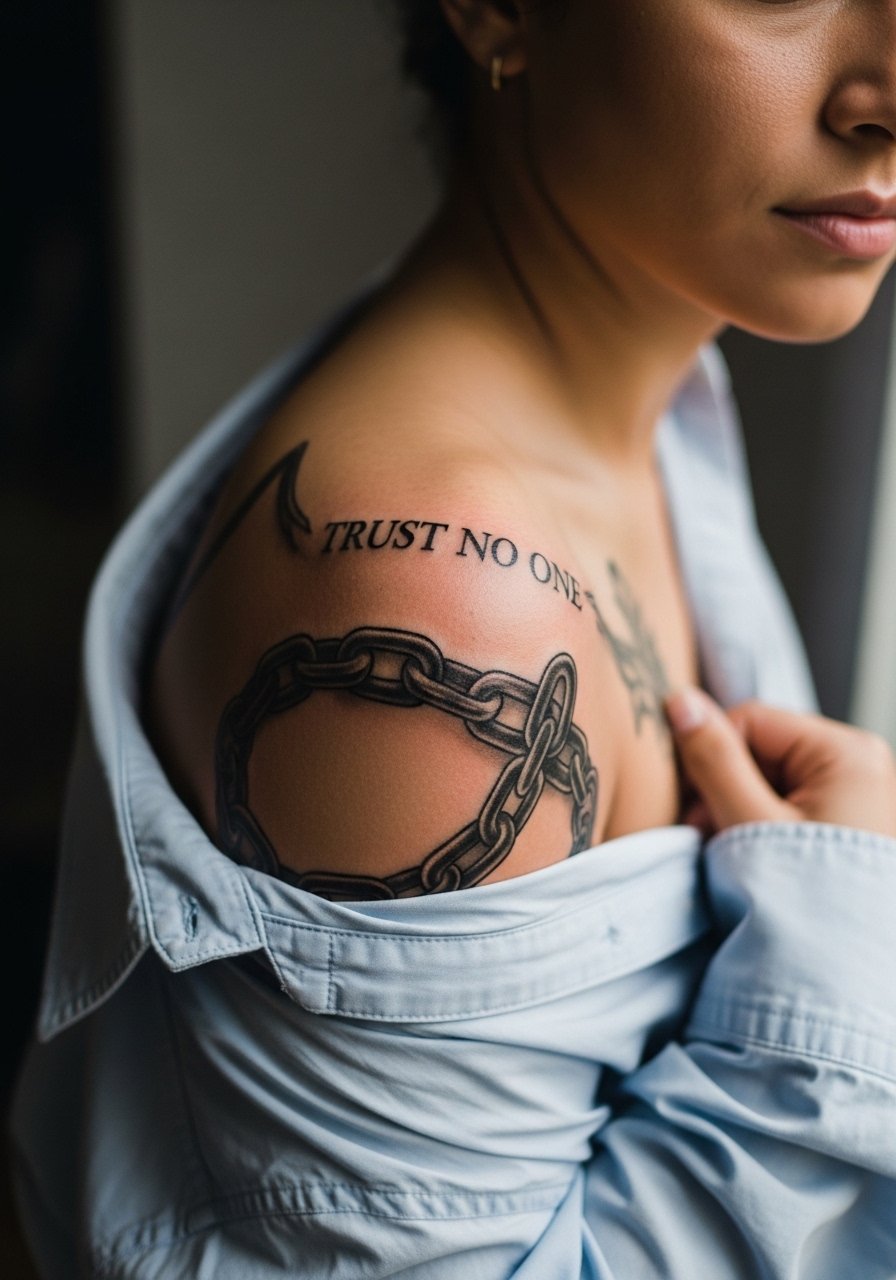
There is a heft to shoulder pieces that makes realism pop without dominating daily wear. Pain is low to moderate. The common error is compressing too many chain links into a small area. Ask the artist to space links and use soft stipple shading so the piece breathes and the negative space reads at six months. For the session wear a loose button-down shirt you can pull aside without fuss. Sleeveless tees in olive or white are an easy showing option after it heals.
6. Minimal Line Skull with "Trust No One" on the Ankle
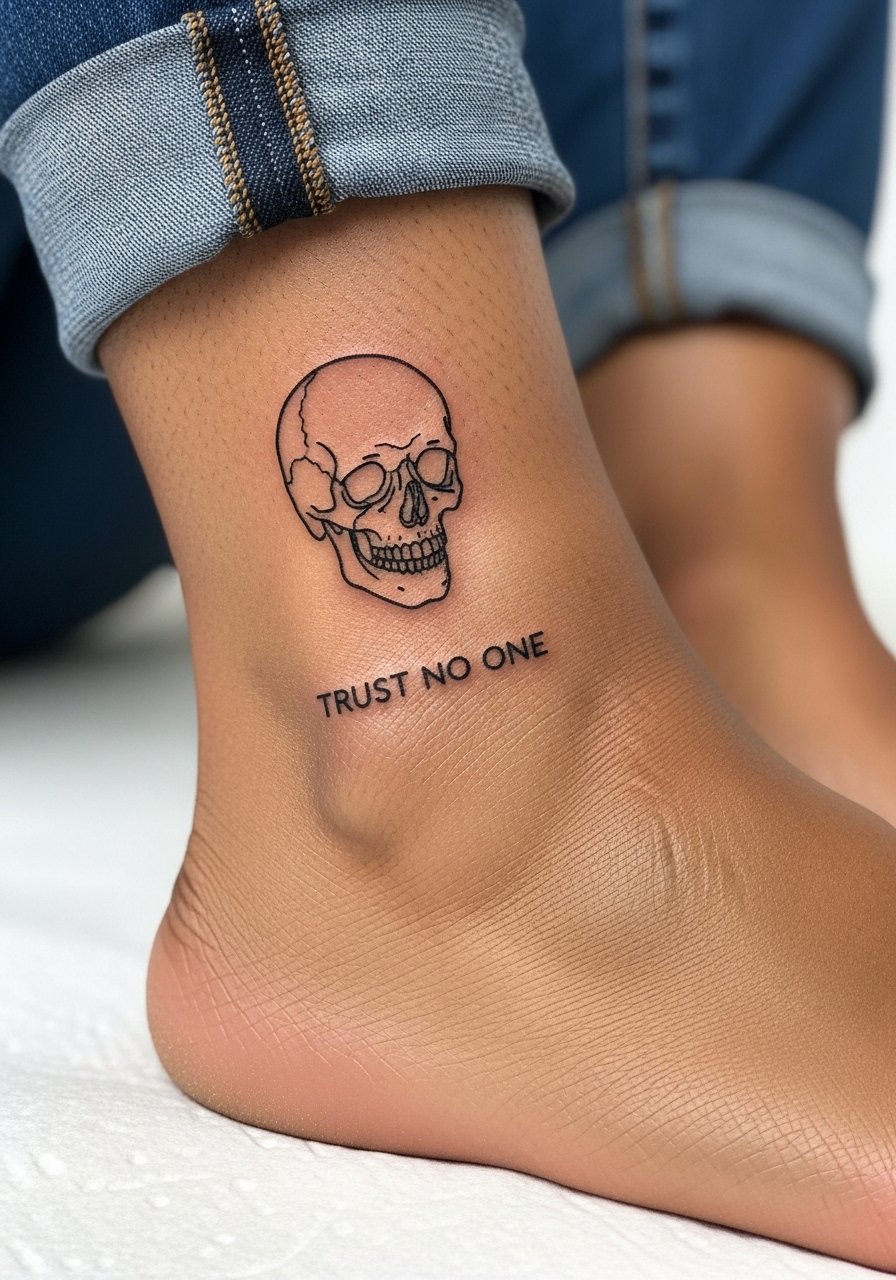
Ankle pieces are discrete and work well for hidden mantras. The ankle can sting due to limited padding. Expect a short session but some tenderness when wearing shoes the first week. People often make the mistake of sizing skulls too small on the ankle, which turns into an unreadable smudge. Request clean single-pass outlines and a slightly larger scale so the skull keeps its shape at two years. For showing it off, cuffed slim jeans or bare ankles with a dainty anklet look great. Try a cuffed slim ankle jeans option the day you want to display the work.
Studio Day Picks
The wrist, hand, and ankle pieces above heal differently from upper-arm and shoulder work, so a few smart items smooth the session and the first week.
-
Stencil transfer paper kit. Lets you preview the line placement on skin before the needle hits, which is handy for script and geometric pieces in the first six ideas.
-
Topical numbing cream. Applied per instructions it eases wrist and ankle sensitivity without compromising linework if you follow the artist's prep.
-
Thin protective film roll. Good for small, high-friction spots like the wrist and hand so the area avoids rubbing from clothing in the first two days.
-
Fragrance free gentle body wash. Use this during showers to clean delicate fine line work without irritating it, especially on areas that brush against fabric.
-
Aquaphor healing ointment. A thin layer in the initial healing window keeps tiny needle channels supple for script and dot work without suffocating the skin.
7. Old School Bold "Trust No One" with an Eyeball on the Outer Forearm
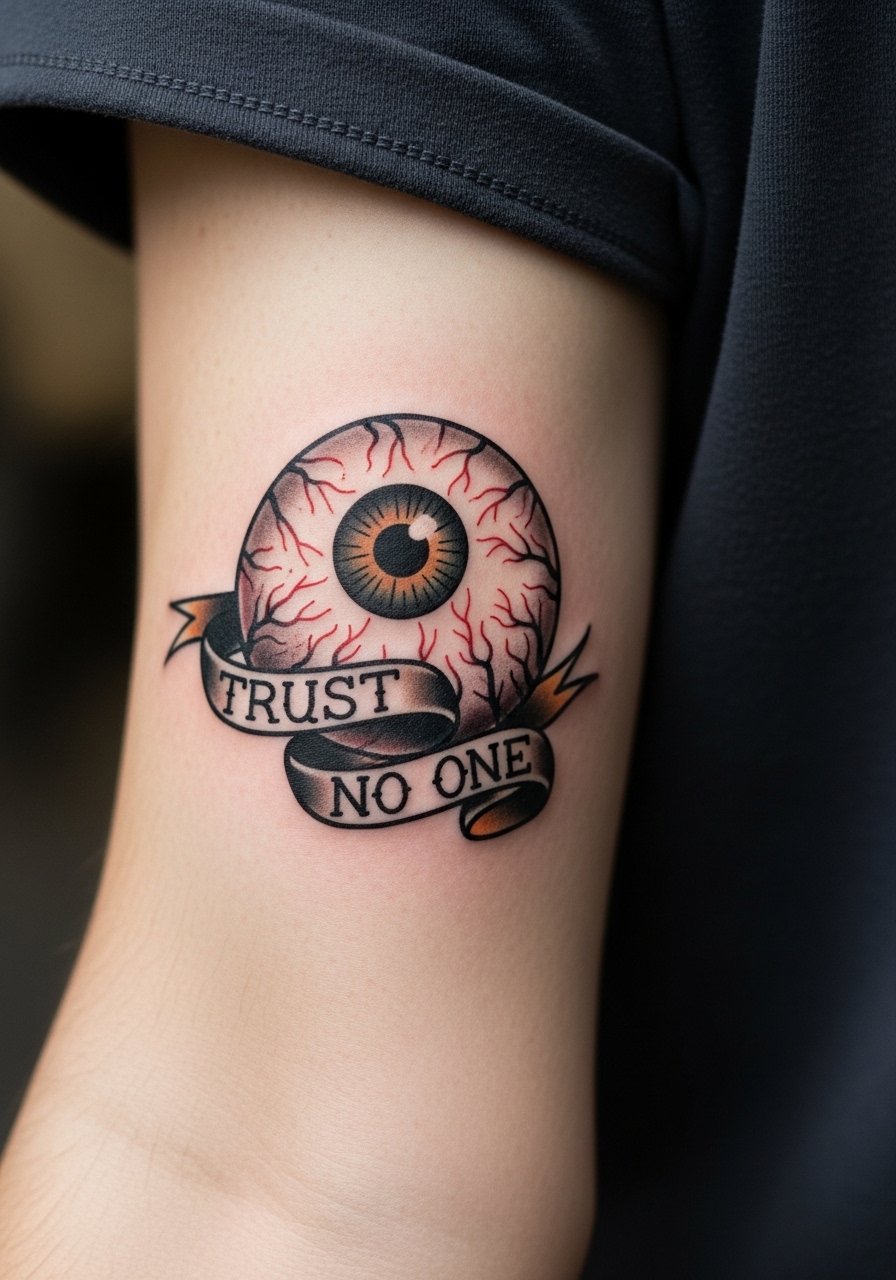
Outer forearm is forgiving and shows well across seasons. Pain is moderate and the session can be one to two hours depending on color. The common mistake is under-saturating color in the first pass, which forces more passes and adds scar risk. Ask for clear bold outlines and saturated fills in one sitting. For a retro vibe pair with rolled-up sleeves or a loose fit short sleeve tee on session day so the artist has unobstructed access.
8. Geometric "Trust No One" Column Down the Spine
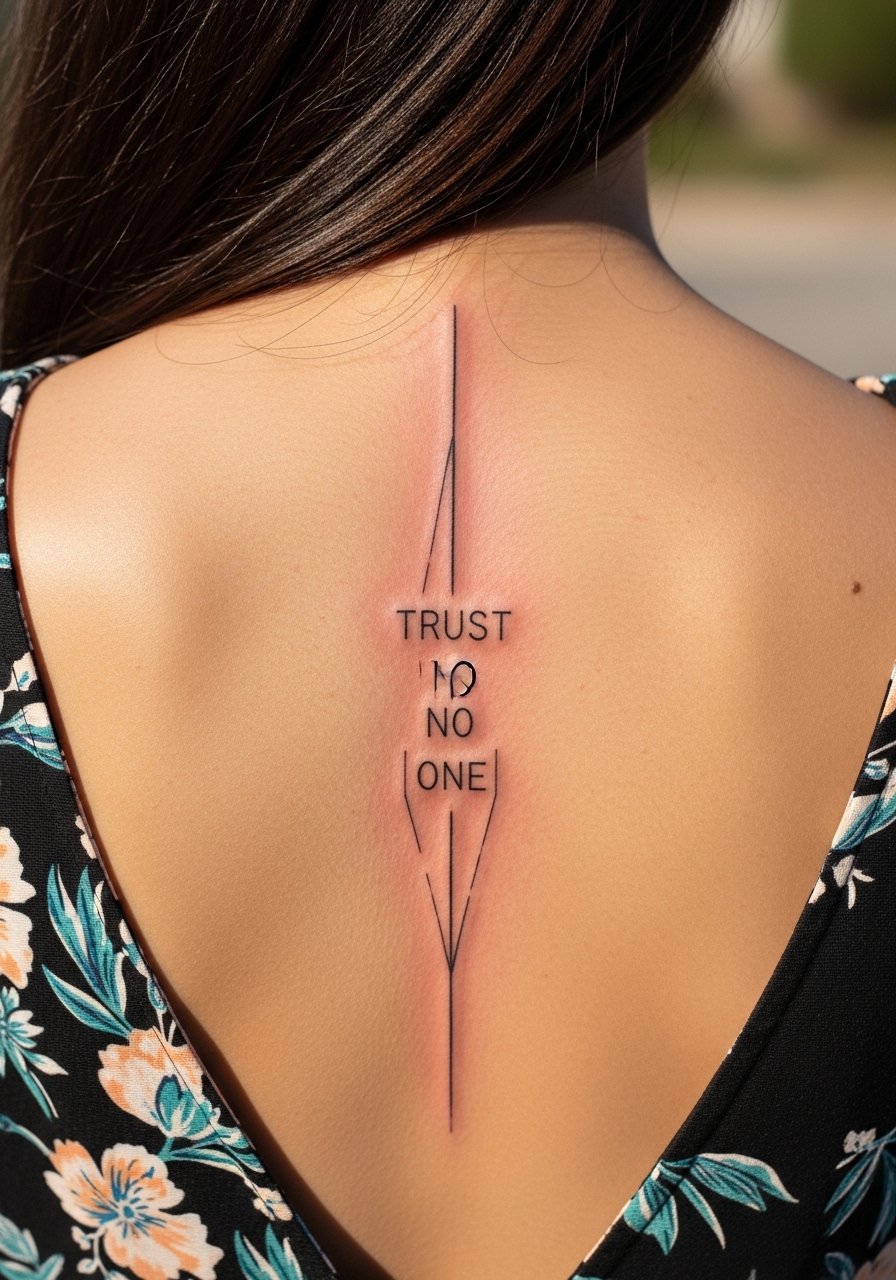
Spine work has a high visual payoff because of the vertical flow. Pain ranges higher near bone and in narrow spots. The biggest mistake is compressing complex geometry into a short vertical space. Tell your artist you want spacing between elements so the geometry reads at one year and five years. Session time is one to two sessions for precision. For showing, open-back tops or halter dresses accentuate the column without crowding.
9. Fine Line Chains Linking "Trust No One" on the Ribcage
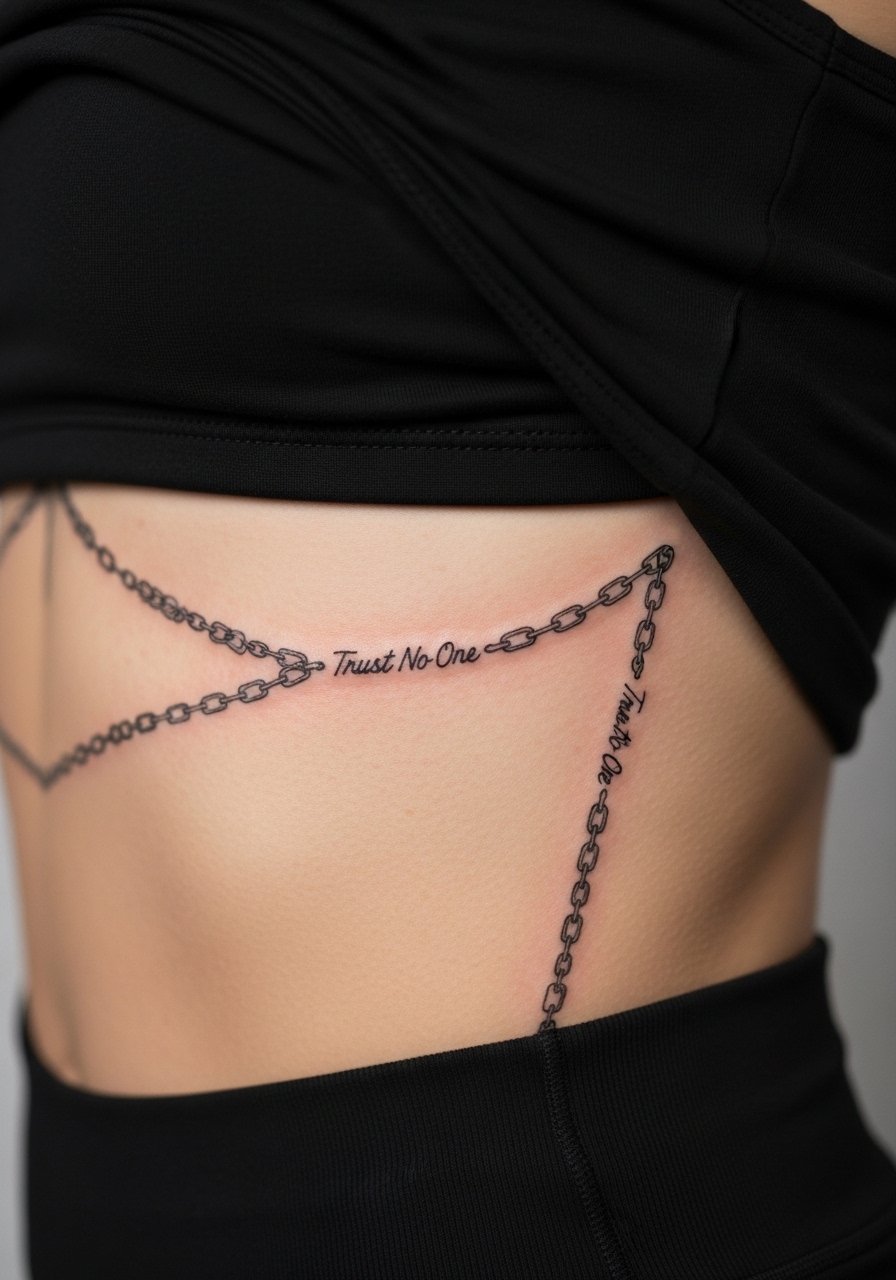
Fair warning: ribcage is a high-pain zone and the skin there moves a lot. Artists split over fine line on ribs. One group says the stretch blurs lines in two years. The other group says controlled depth and spacing keep fine lines intact. If you favor subtle chains, ask for slightly thicker outlines and spaced links. Expect a single session that is intense but fairly quick. For the appointment wear a strapless bralette or a top you can lift easily to give the artist access and stay comfortable.
10. Micro "Trust No One" Behind the Ear
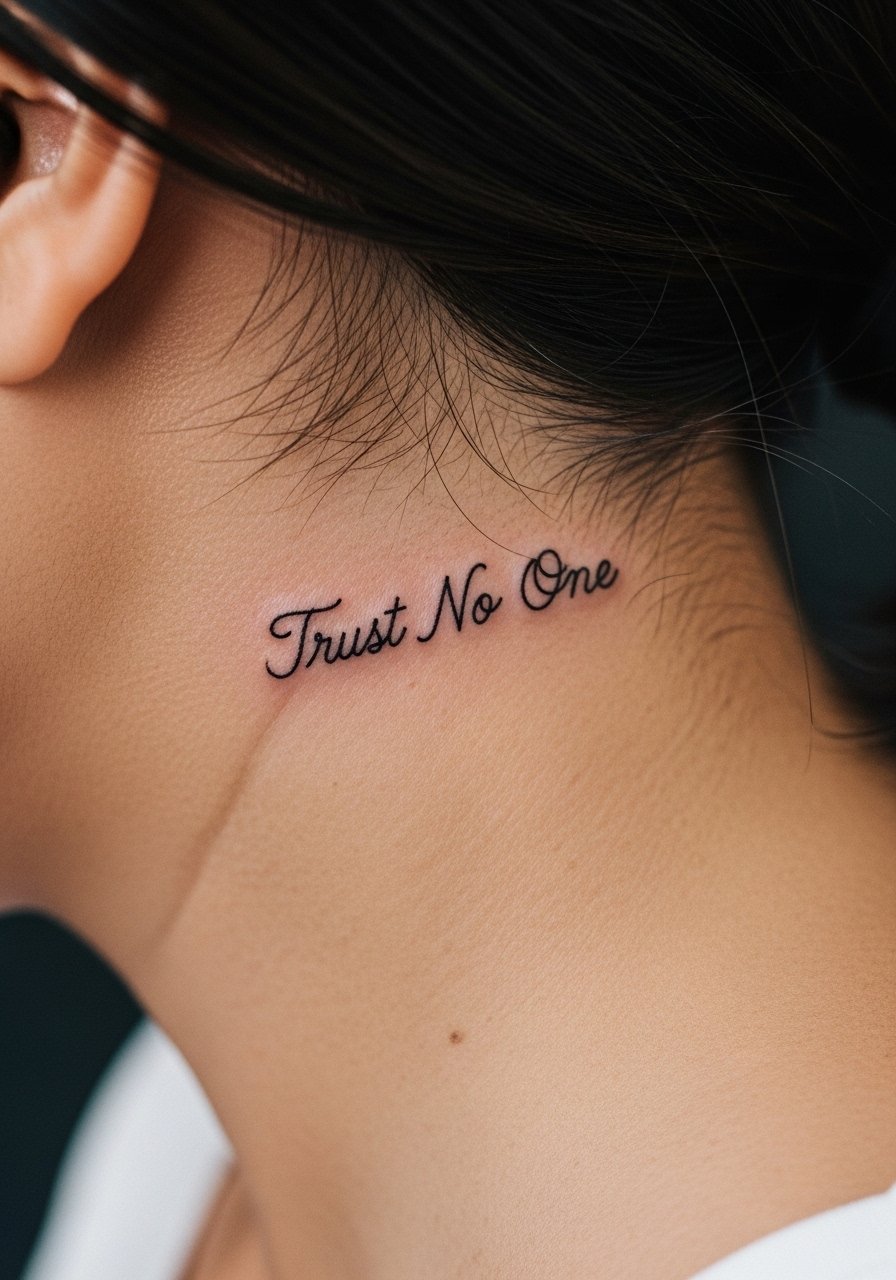
This is ultra-subtle and personal. Pain is low but proximity to hairline means healing needs care. The common amateur move is asking for text too long in that small zone. Keep it to a single short phrase or initials. Tell your artist you want minimal kerning and to use a fine, single-pass script. Session time is minimal, one pass only. For the session pin hair back and wear an open-collar shirt so the artist can access the area without tugging.
11. Blackwork Skull and "Trust No One" on the Outer Thigh
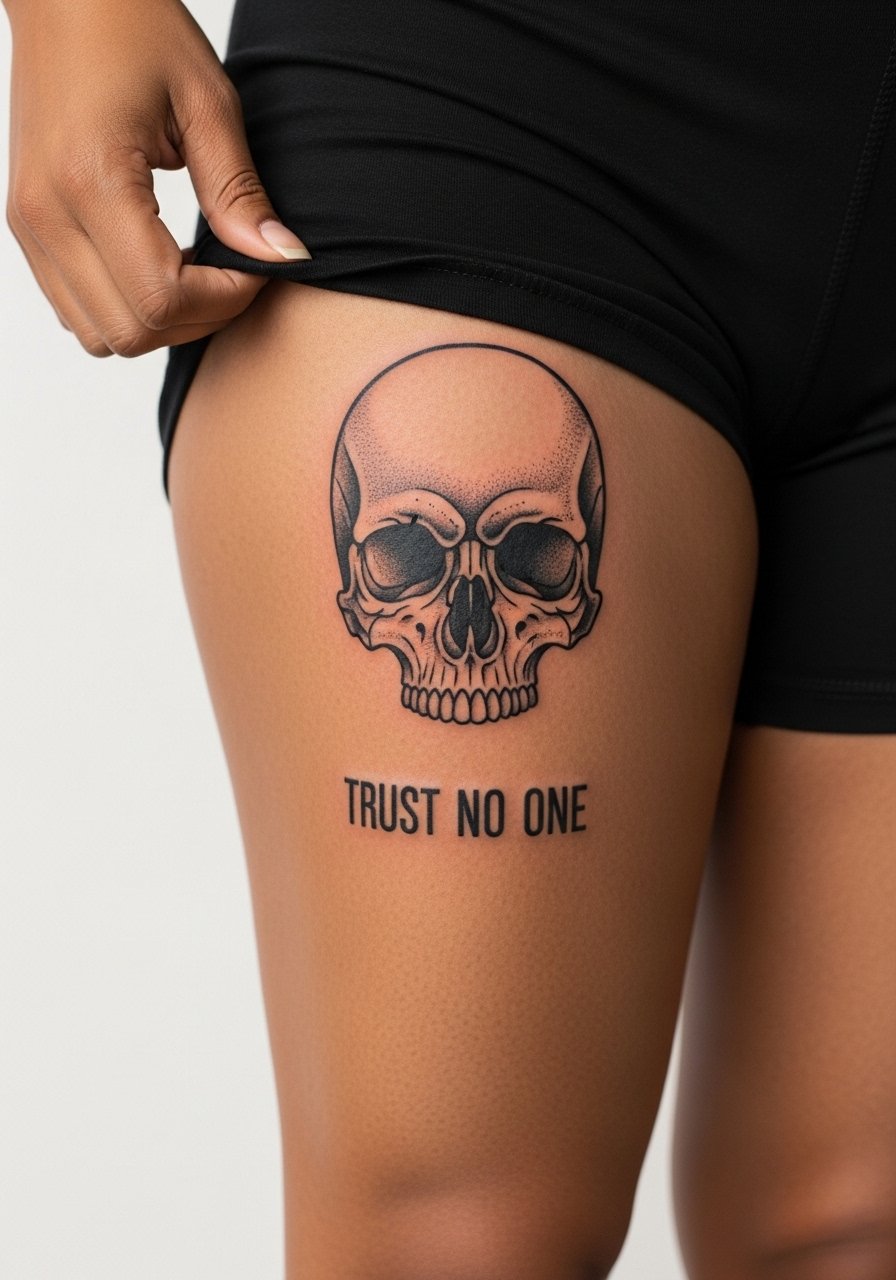
Thigh pieces are forgiving for scale and detail. Pain is low to moderate depending on how close to bone you get. The error is cramming too many tiny details into a block that should read bold at a glance. For blackwork ask for strong negative space and solid fills that age into a solid silhouette. Session time can be longer for saturation. For showing it off choose high waist black shorts or thigh-high socks that frame the artwork without covering it.
12. Watercolor "Trust No One" Wash Over Fine Script on the Upper Arm
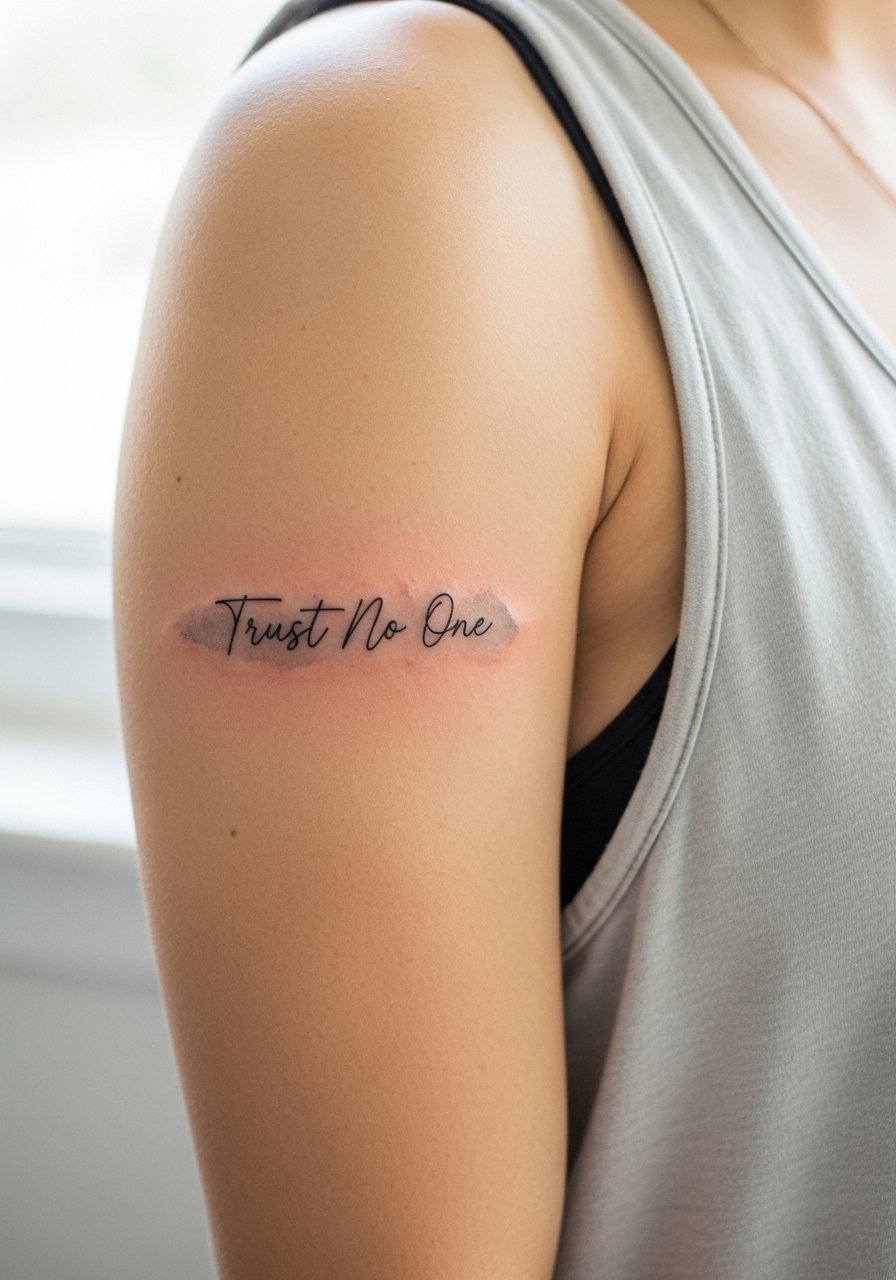
Watercolor over text softens the mantra and gives an artistic edge. Aging is the trade-off. Watercolor areas can fade unevenly and need touch-ups earlier than solid black. If you want this, request color placement that does not intersect the main strokes of the letters so the script remains legible at year two. Pain is moderate and session time can be one to two hours. For the appointment wear a loose fit short sleeve tee so the artist can reach the upper arm easily.
13. Micro-Realism Tiny Skull with Script on the Ankle Side
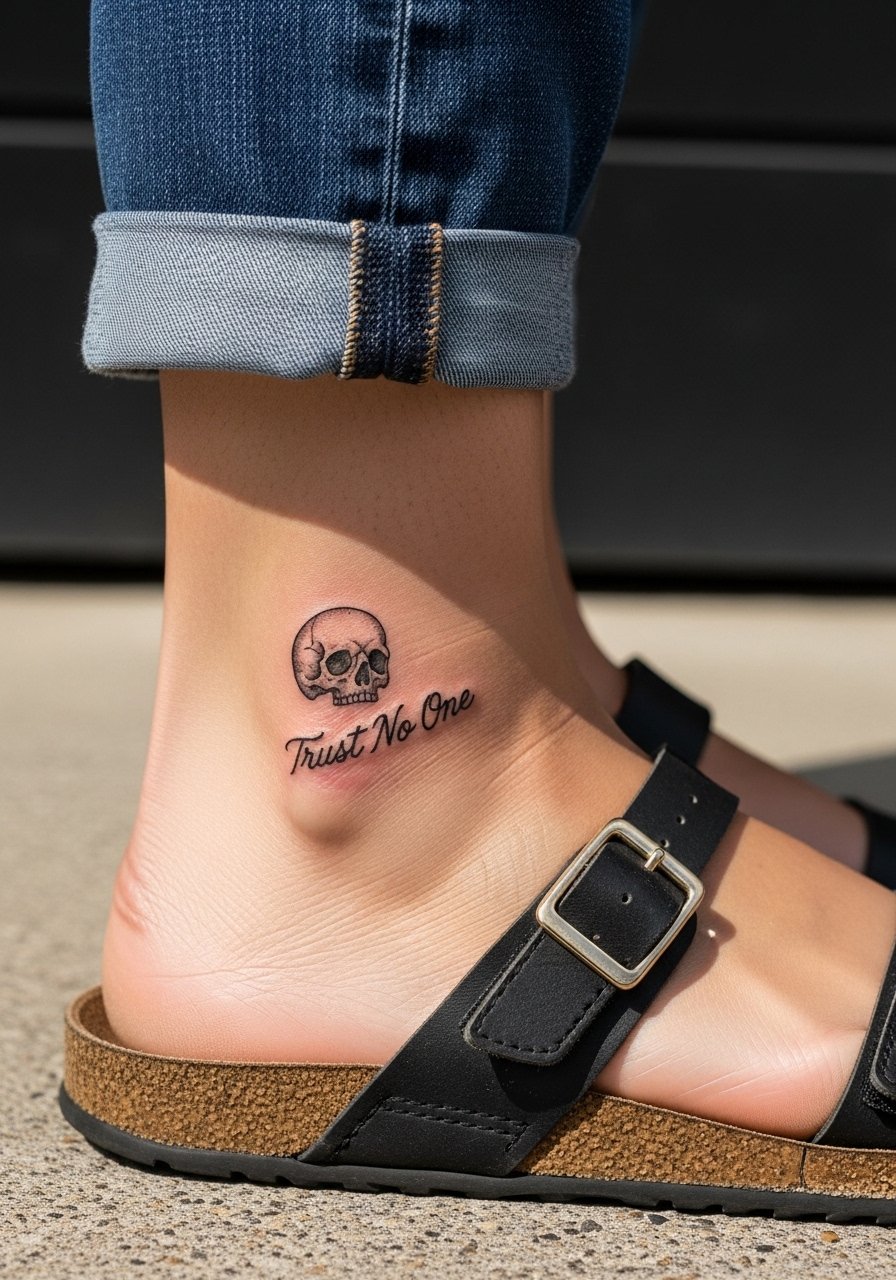
Micro-realism on the ankle is a delicate look that demands readable scale. Pain can be sharp in spots with little fat. People often ask for ultra-fine detail at too small a scale, which becomes a gray blotch after a year. Ask your artist to prioritize silhouette and contrast over tiny interior details. Session time is short. For after-session style a pair of sandals or low ankle boots keeps rubbing minimal while the area settles.
14. Geometric Chain Links Wrapped Around a Short Spine Text
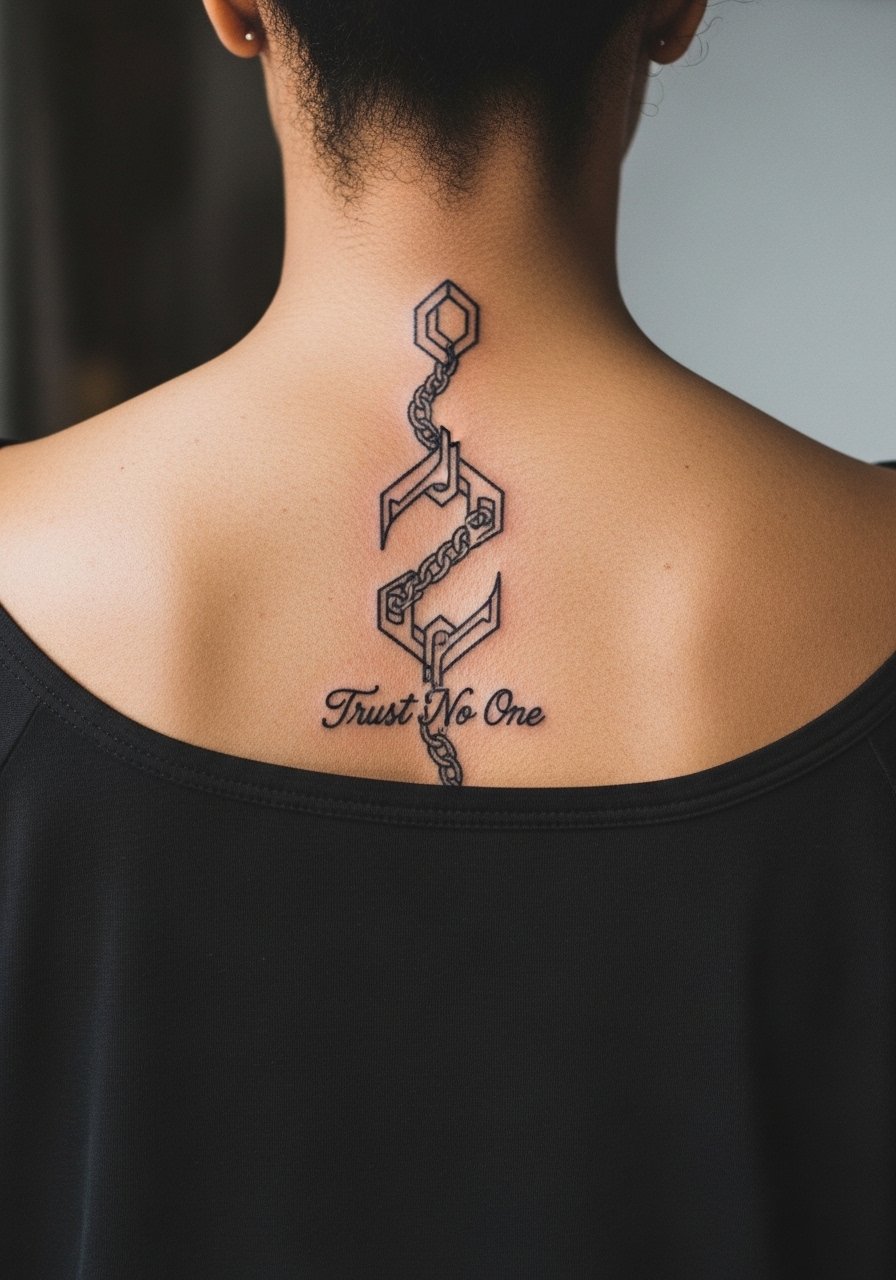
This abstract approach balances philosophy and form. The error is overcomplicating the chain so the rhythm is lost when the wearer moves. Request clear negative space between links and a script scale that reads from a short distance. Pain is higher near the vertebrae but tolerable. Expect one to two sessions. For showing, open-back tops keep the column visible without straining the skin.
15. Tiny Script "Trust No One" Inside the Bicep Fold
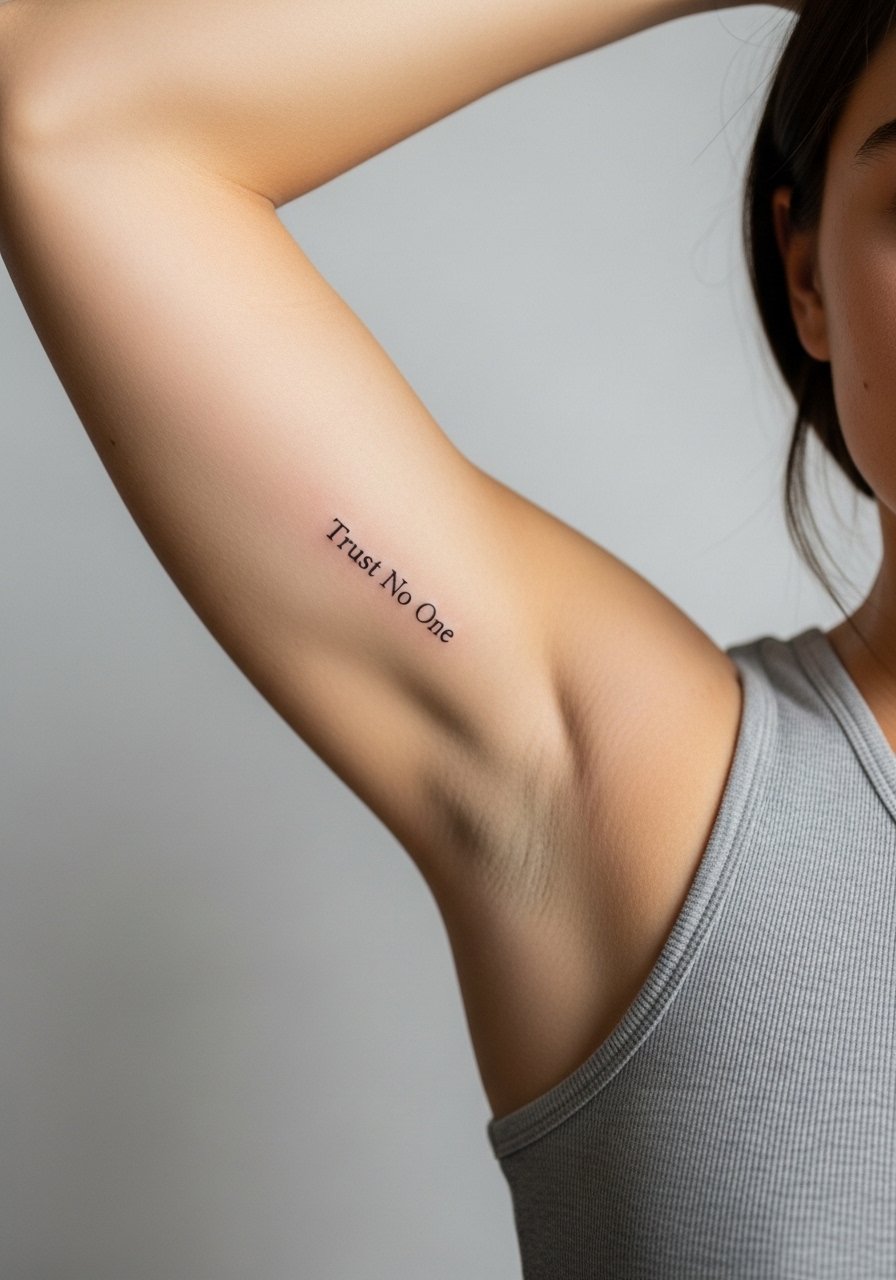
Inner bicep pieces are intimate and move with the arm, which affects aging. This spot is moderately painful because the skin is tender. The common mistake is picking a cursive that needs too much space. Ask for a compact sans-serif micro script and expect touch-up at year two if you want it razor-thin. For the session wear a loose tank top so the artist can access the area without compressing it.
16. Old School Matchbox-Style "Trust No One" on the Chest Edge
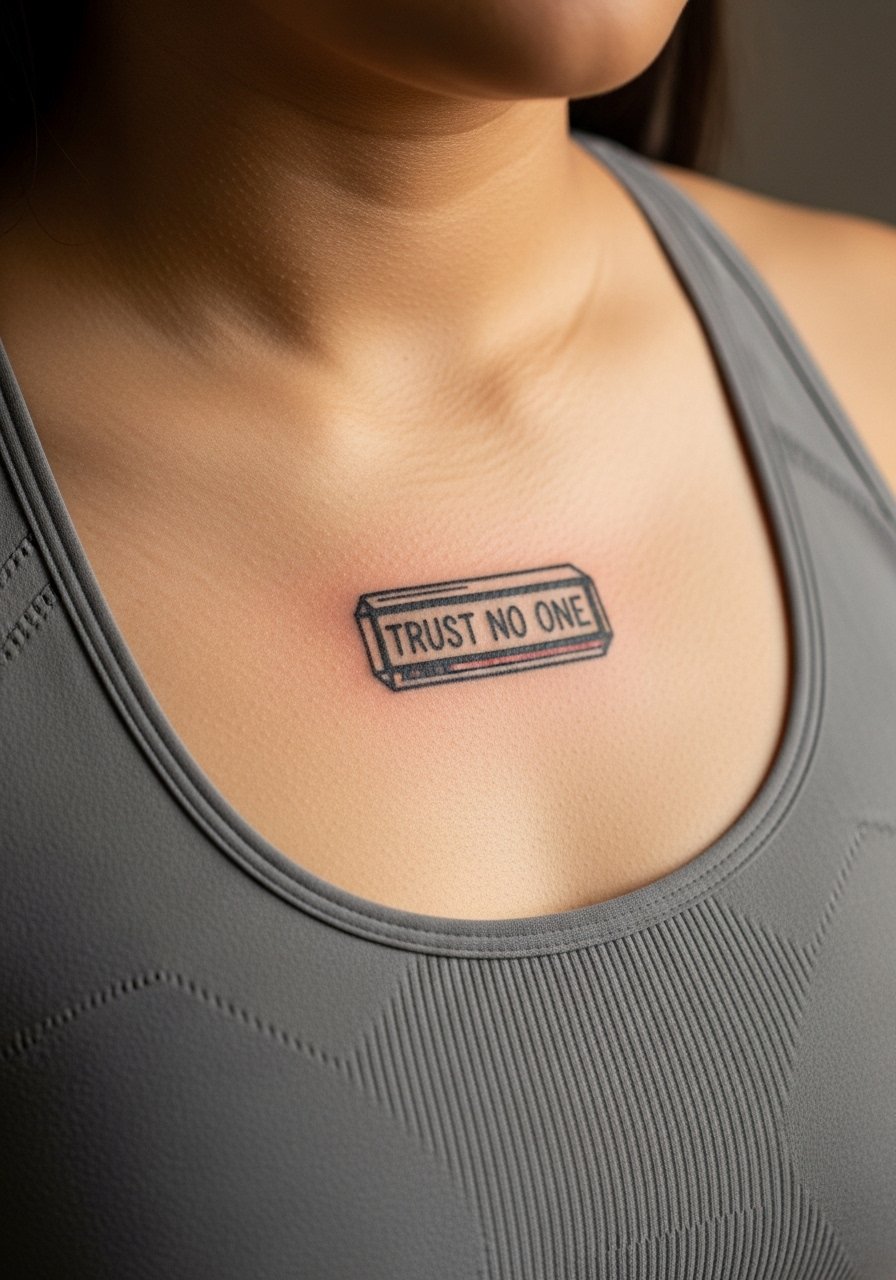
Chest-edge pieces sit between visibility and privacy. Pain is moderate and the area requires careful stencil placement. The mistake is centering too close to the sternum where lines cross the curve badly. Ask to place the rectangle along the chest edge and to test the stencil sitting up and lying down so you like how it sits with movement. For the session wear a fitted sports bra or bandeau that the artist can work around cleanly.
17. Script Inside a Minimal Line Hourglass on the Thigh
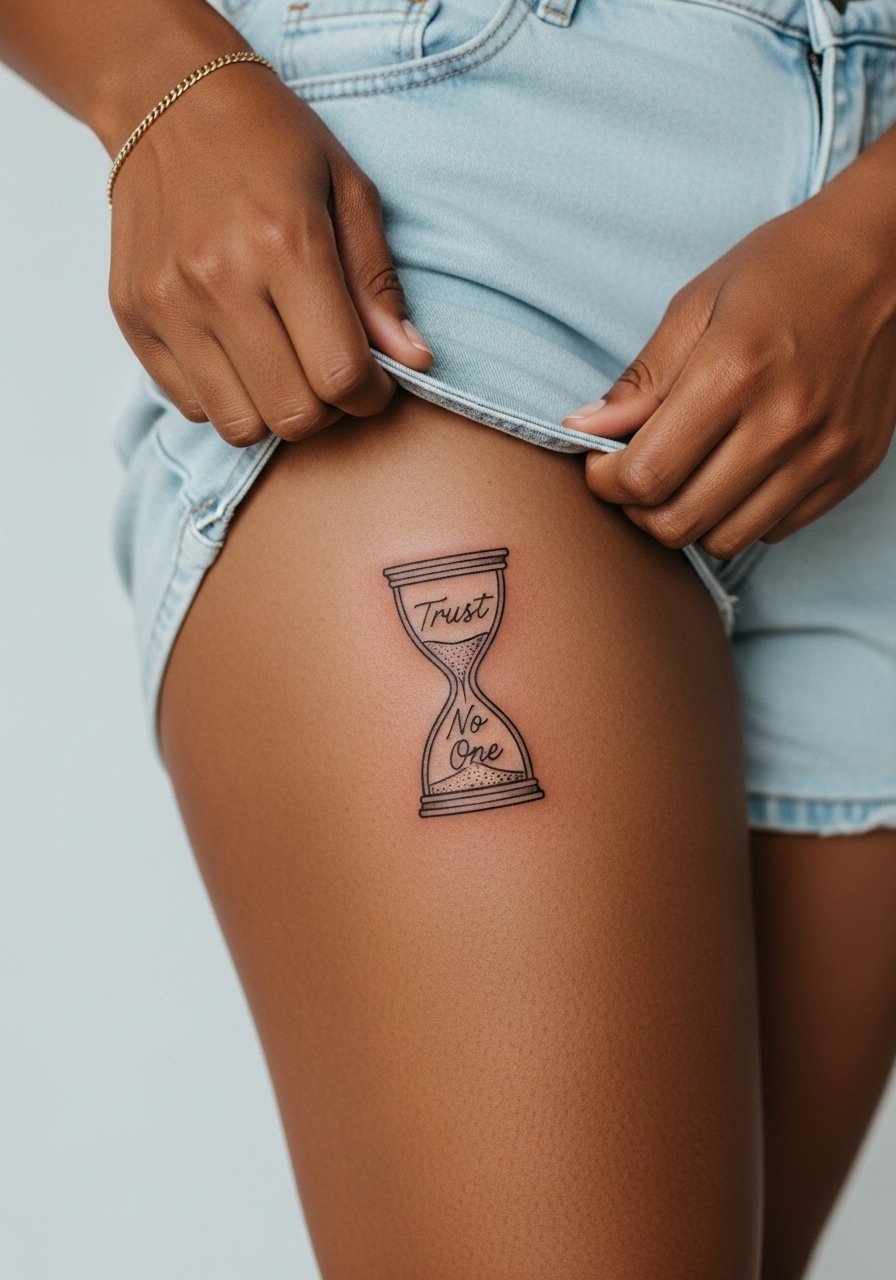
Upper-thigh pieces let you go bolder while staying private. Pain is low to moderate and long sessions are possible. The most common error is tight detailing that the thigh movement blurs. Ask for an hourglass outline that frames the text with breathing room and request a touch-up plan for the first year. For showing, high-waist shorts and skirts frame the piece in summer.
Frequently Asked Questions
Q: How often will a minimal line forearm script need touch-ups?
A: It depends on placement, skin type, and sun exposure. For an inner forearm fine script expect the possibility of a touch-up around year two to three if you want to maintain razor-thin clarity. Ask your artist about planned touch-up timing during the consultation.
Q: Is a hand or wrist "Trust No One" better as fine line or bold blackwork?
A: Artists are split. Fine line gives a whisper effect but often requires earlier touch-ups because of friction. Bold blackwork sacrifices some delicacy for staying power and resists blowout longer on hands and wrists. Discuss both options and ask your artist which approach fits your lifestyle.
Q: What should I wear to a collarbone or upper-chest session for easy access?
A: Wear a wide-neck shirt or a fitted sports bra you can pull slightly aside so the artist can work without you needing to undress fully. A strapless bralette works well for collarbone sessions when you want modest coverage and clean access.
Q: If I have darker skin, will fine line script still show?
A: Fine line can read differently on darker tones. Sometimes slightly bolder lineweight or blackwork provides better contrast in photos and at a distance. Talk to your artist about contrast and consider test stencils before committing.
Q: Are ribcage fine line pieces worth the pain for a subtle look?
A: Ribcage pieces can be stunning and discreet, but they are painful and the skin there moves a lot. If you want a subtle chain or script, ask for spaced elements and consider a slightly bolder outline to protect legibility over time.
Q: How does aftercare differ for ankle versus thigh pieces?
A: Ankle work faces more friction from shoes and socks, so short-term protection and low-impact footwear matter. Thigh pieces rarely rub and tolerate movement better. For ankle sessions prioritize minimal rubbing and consider footwear that reduces pressure in the first week.