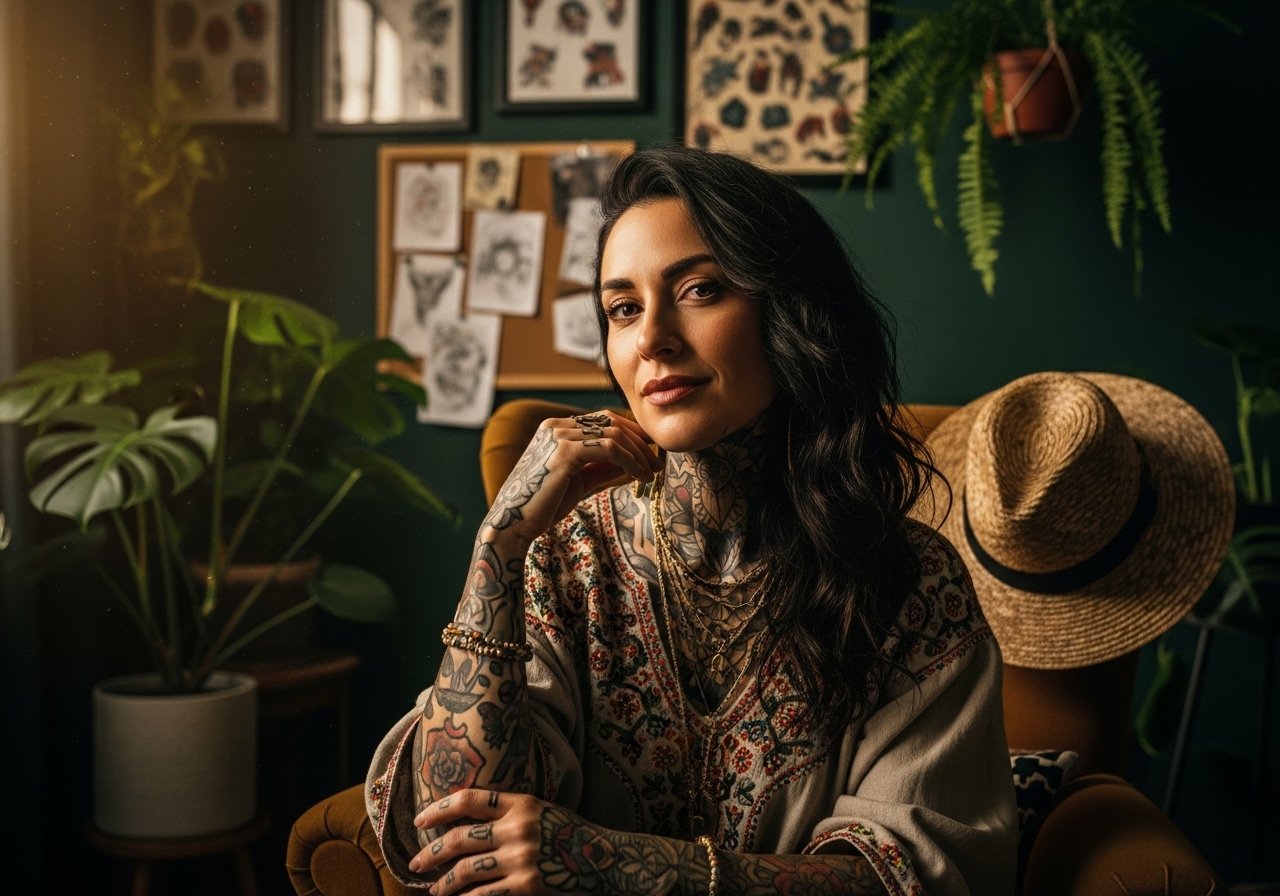
Fine line violets dominate feeds, but the way they age is often different from the hype. Fading, surprise touch-up bills, and color that reads muddy on darker skin are the three complaints I hear most from people who got a mini last year. This list focuses on small February florals that look great fresh and hold up better, with placement and styling notes that cut through the trend noise.
1. Mini Fine Line Violet Outline on the Inner Wrist
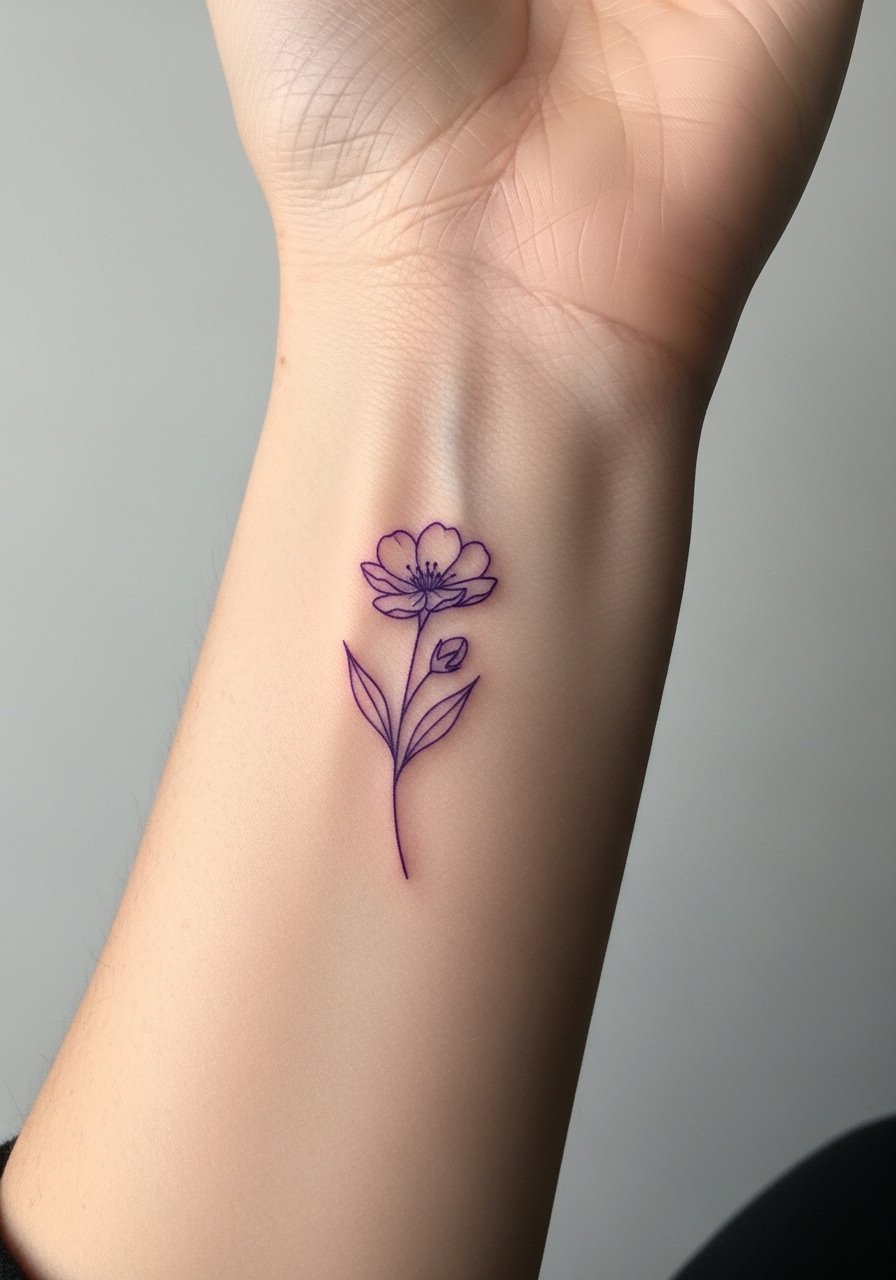
I recommend the inner wrist when you want a tiny nod to February that still reads in a year. Tell your artist you want single-needle linework with slightly heavier anchor points at stem joins so lines do not feather. Expect light soreness and plenty of movement while healing because the wrist rubs on clothing. The common mistake is asking for hairline lines everywhere. Ask for 0.5 to 0.8 millimeter visible line weight and a discreet space between leaf strokes so the piece can have a touch-up window at year two. For the appointment wear a sleeveless tank top so the artist can position your arm without bunching.
2. Watercolor Primrose Cluster on the Inner Forearm
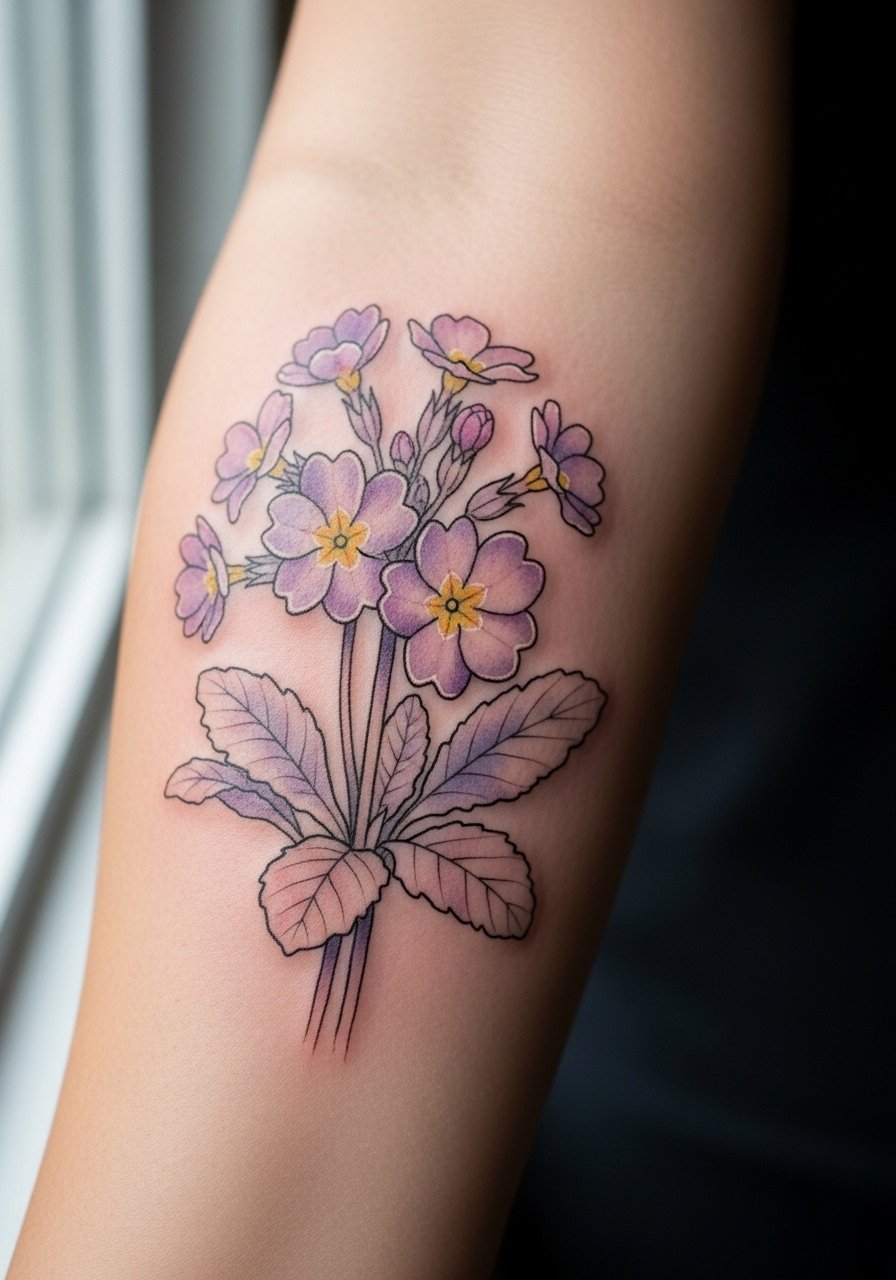
This version keeps the watercolor wash soft but focused in a 3 to 4 centimeter area. In consultation say you want layered washes rather than a single saturated fill and request crisp outline points where the petals meet the stem so the shape remains readable. The inner forearm is forgiving for color work, though sun exposure will fade pastels faster. A common fail is too much feathered wash for a small scale which turns into a pastel puddle. Book a two-session plan for spacing and a possible six-month top-up. Pair it with a rolled sleeve linen button shirt when you want to show it off.
3. Blackwork Violet with Stem on the Collarbone
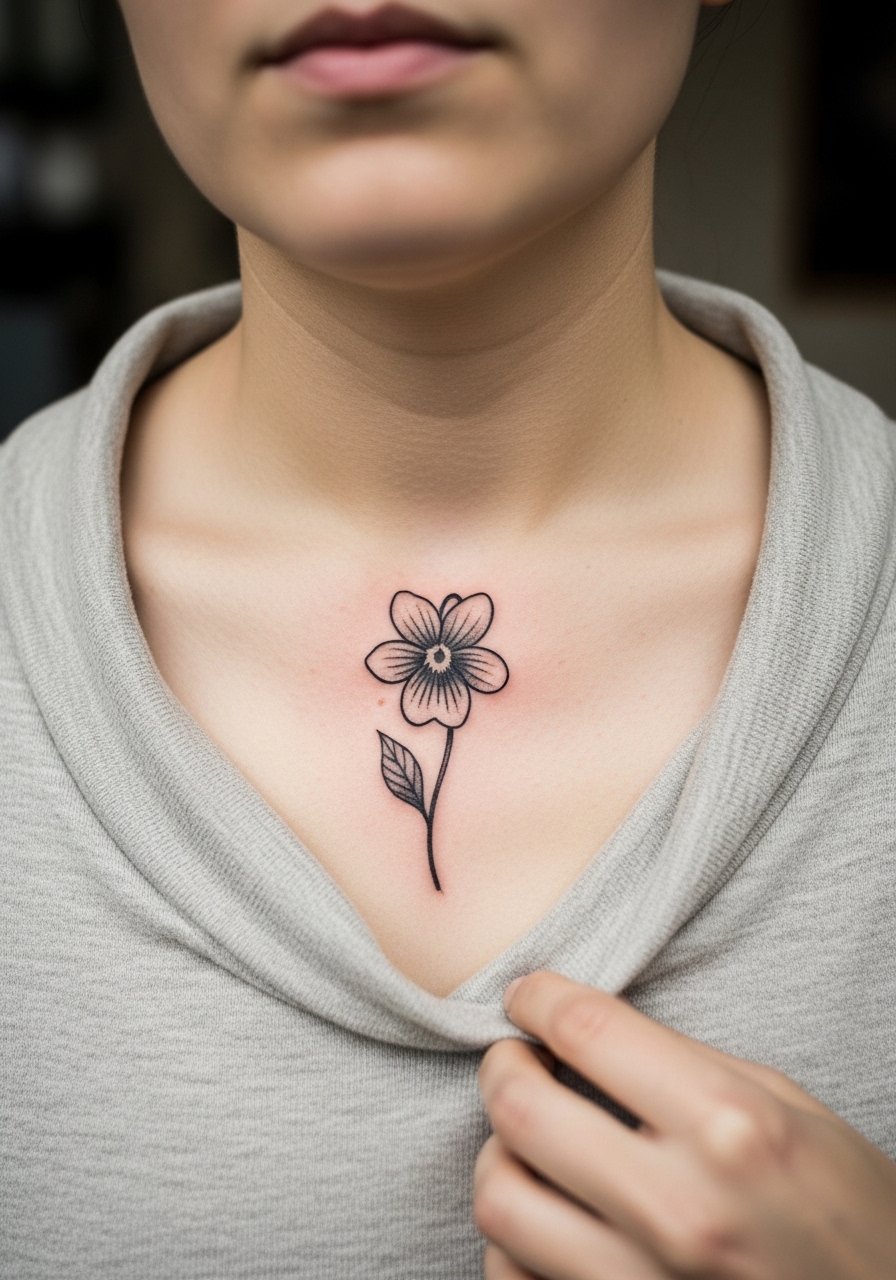
Blackwork is chosen here to solve visibility and longevity problems on small color pieces. For the collarbone ask for denser linework along the stem and a slightly bolder petal contour so saturation holds longer against sun and friction. Pain is a 6 out of 10 for most people because the bone is close to skin. The error I see is trying to watercolor this exact placement at micro scale. That usually fades into an indistinct wash. For the session wear an off-shoulder top you can pull aside so the artist has full access and you stay comfortable.
4. Micro-Realism Primrose Bud Behind the Ear
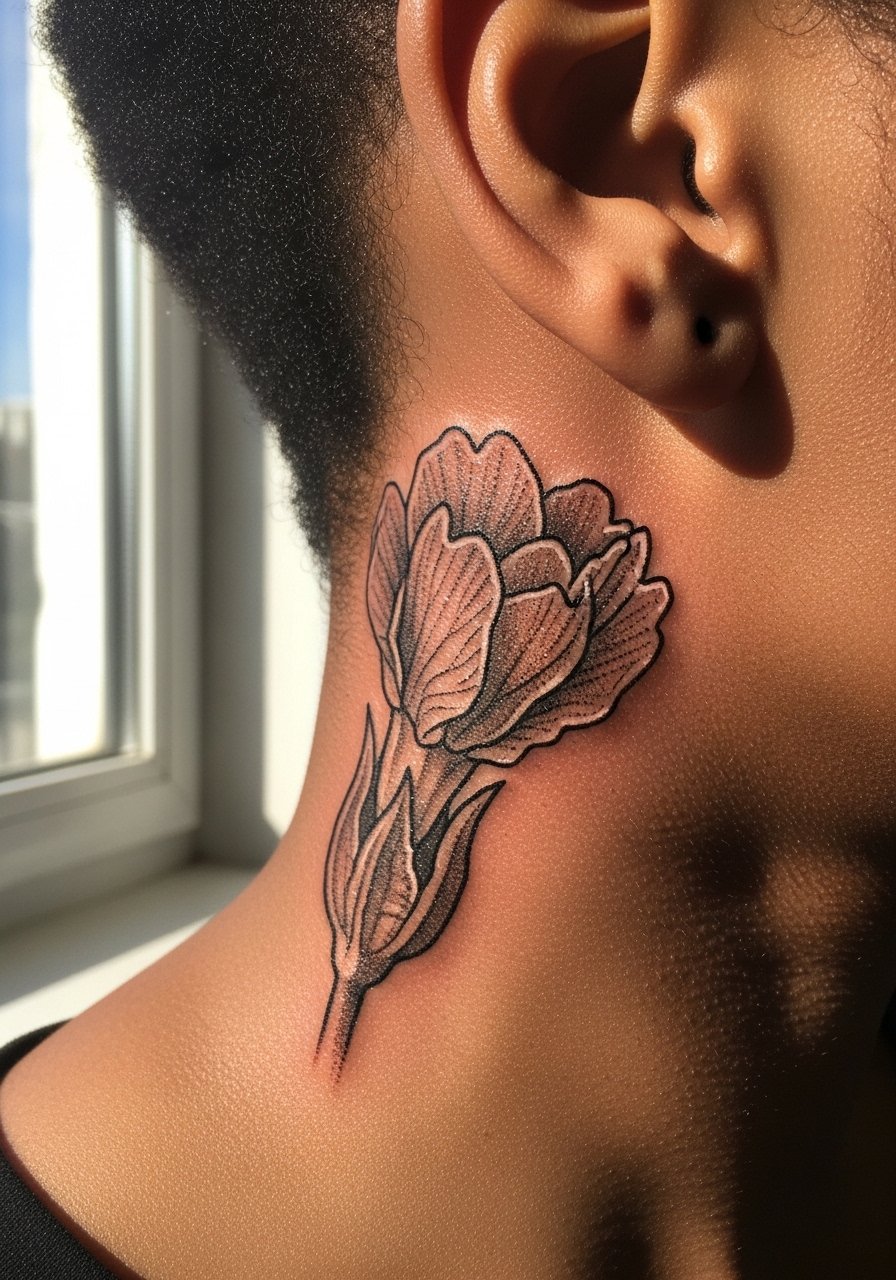
A behind-ear micro-realism needs a steady hand and a compact stencil. Tell the artist you want black and gray tonal shifts rather than pastel hints; tiny color can get lost in that spot. Expect a quick session under 30 minutes and low pain for most people, though the proximity to bone can feel sharp in short bursts. The common mistake is asking for multiple colors at 1 centimeter scale. That usually blurs. For showing it off, style with a high ponytail so the area is visible and won’t get rubbed by collars during healing.
5. Neo-Traditional Iris Petal on the Outer Forearm
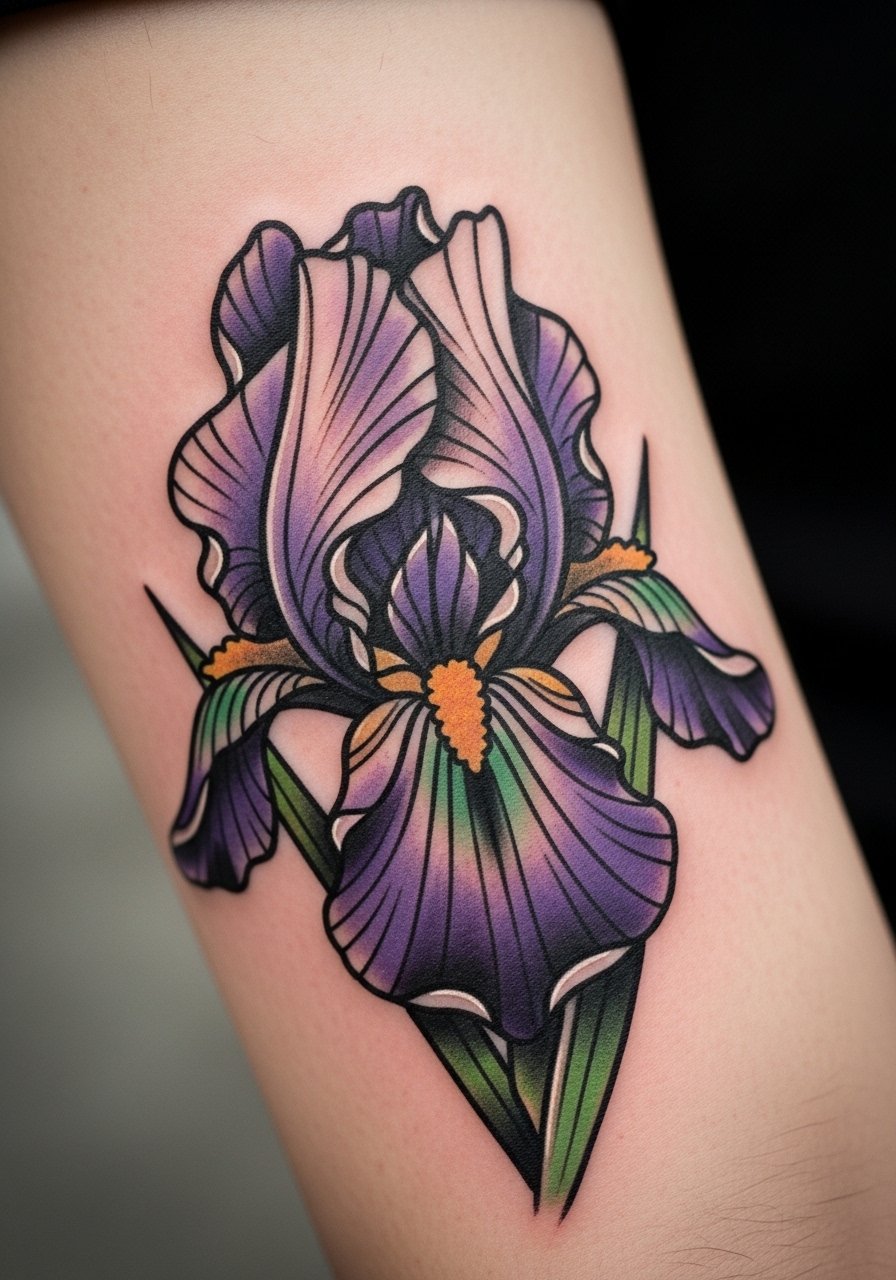
Neo-traditional at a slightly larger mini size gives you saturated color and strong outlines that age more predictably than tiny watercolor. In consultation be explicit about bold contouring and ask for flatter color blocks rather than painterly blends. The outer forearm handles saturation well and is low on blowout risk compared to the inner wrist. A mistake is squeezing neo-trad detail into a 2 centimeter space. For session wear a short-sleeve button-down you can roll without creasing the area. Expect two sessions if the color needs layering.
6. Minimalist Violet Heart Petal on the Finger
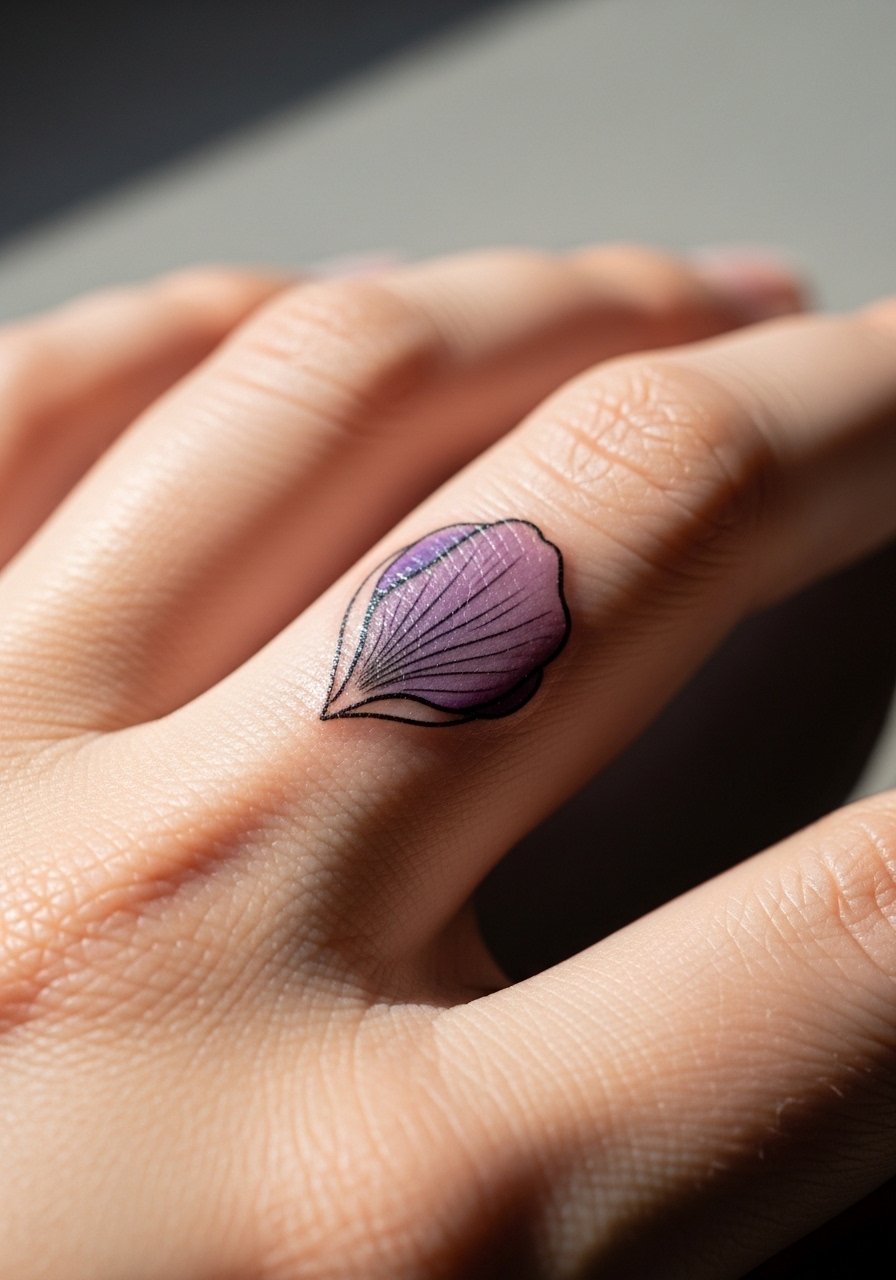
Finger minis give serious visibility but come with friction problems that force touch-ups. Ask your artist for slightly thicker single-line weight where the design meets the fingertip to reduce early fading. The usual mistake is insisting on hairline curves that disappear after six months. Expect higher touch-up frequency and day-to-day scabbing quirks. For the session, keep your hand clean and wear clothing that does not brush the fingers. When showing it off, thin silver bands balance a small design.
Pre-Session Essentials
The wrist, collarbone, and finger pieces above all have different session needs, and a few specific items smooth the chair day and the first week.
-
Tattoo Goo breathable balm. A thinner, less greasy balm many people favor for ankle and wrist minis because it soaks in without smothering the tiny channels.
-
Green Sheep second skin patches. Thin protective film that adheres well in humid conditions and keeps small forearm and ankle tattoos clean while you move.
-
BV Balm travel tin. Mentioned by collectors for better purple retention on small floral spots, useful when you want a compact option for touch-up weekends.
-
Japanese rice bran oil moisturizer. Lightweight, non-shiny oil alternative for fine line healing that absorbs quickly and avoids pore-clogging on small pieces.
-
Fragrance-free Cetaphil lotion. Thin lotion for weeks two to four that keeps color from drying into scabs while avoiding the greasiness that clogs fine line work.
7. Line Art Primrose Pair for Matching Ankles
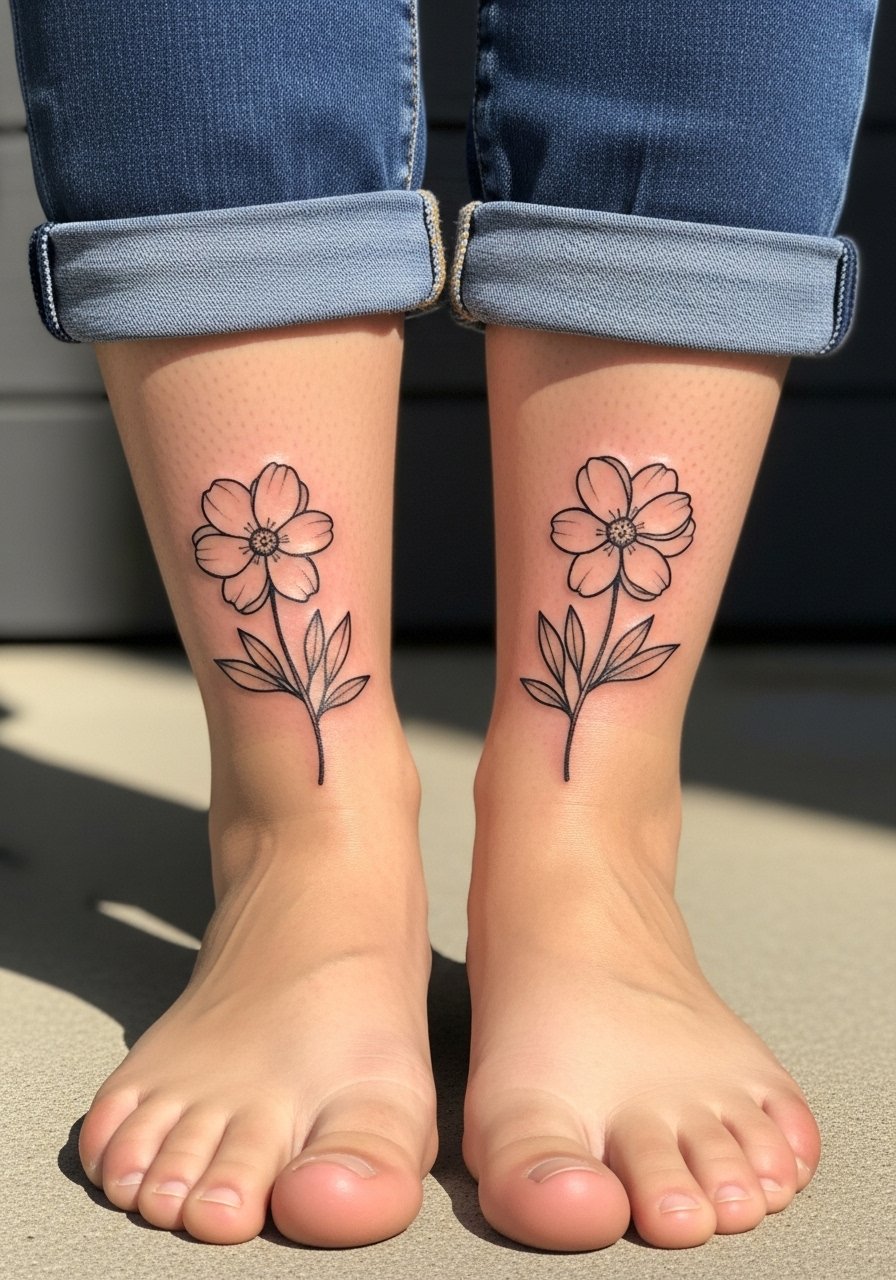
Matching ankle sets work well for couples or siblings and read clearly at 2 to 3 centimeters. Ask for negative space between the pair so each bloom ages independently and does not merge under skin movement. A common fail is asking for identical mirrored shading that becomes indistinguishable once healed. The ankle sees friction from socks and shoes, so expect a touch-up window around year one if you wear closed shoes often. For the session bring loose joggers or a midi skirt you can roll up to make the area accessible.
8. Ornamental Violet Mandala on the Shoulder Blade
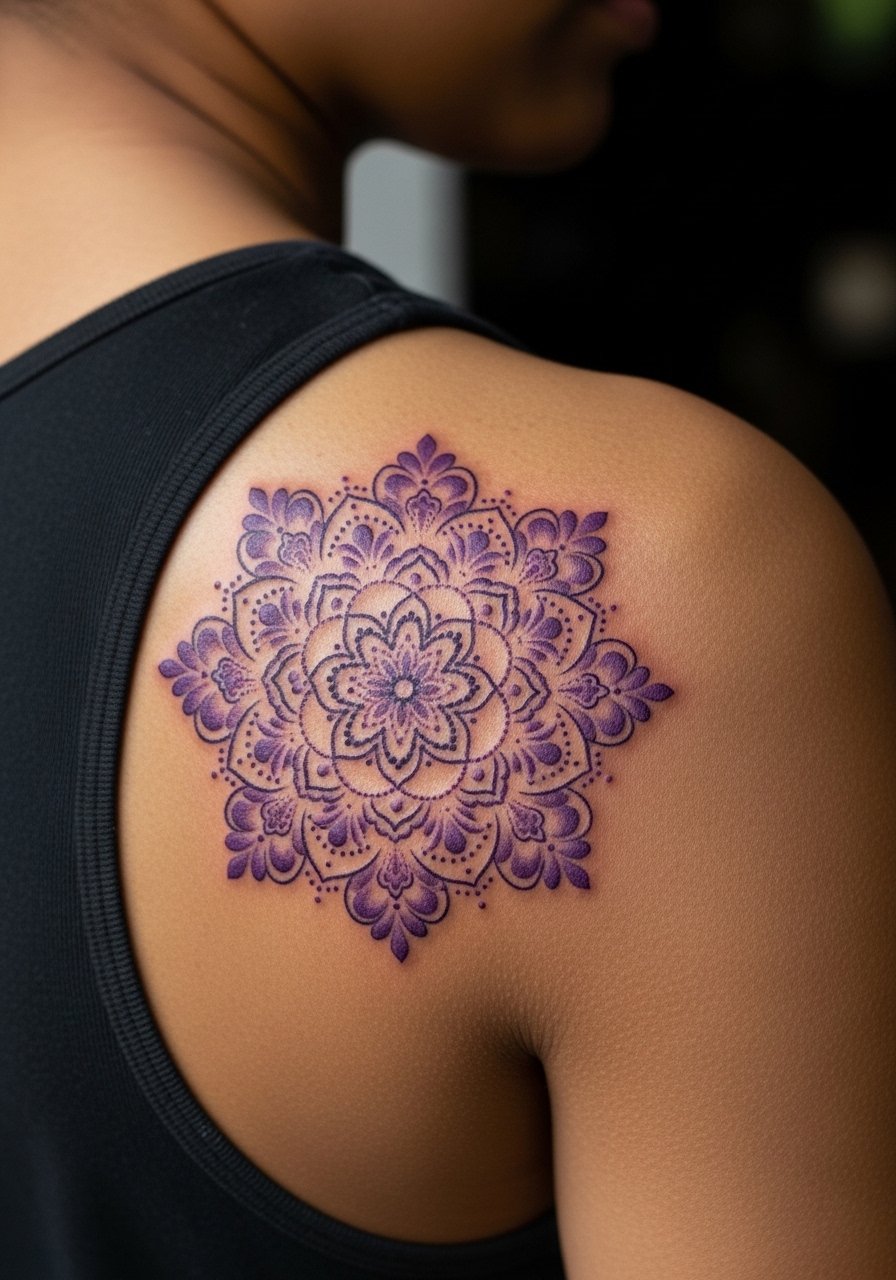
Ornamental designs let you combine violet motifs into geometry for layered meaning and better aging because lines have space between them. In consultation say you want larger open areas between motifs to prevent merging. Shoulder blades are forgiving and take shading well, but remember that dense dotwork in small circles can soften over five years if placed too tight. The mistake here is compressing a large mandala into a mini. Wear a tank top for the session so the artist can access the blade without strain.
9. Dotwork Iris Bloom on the Calf
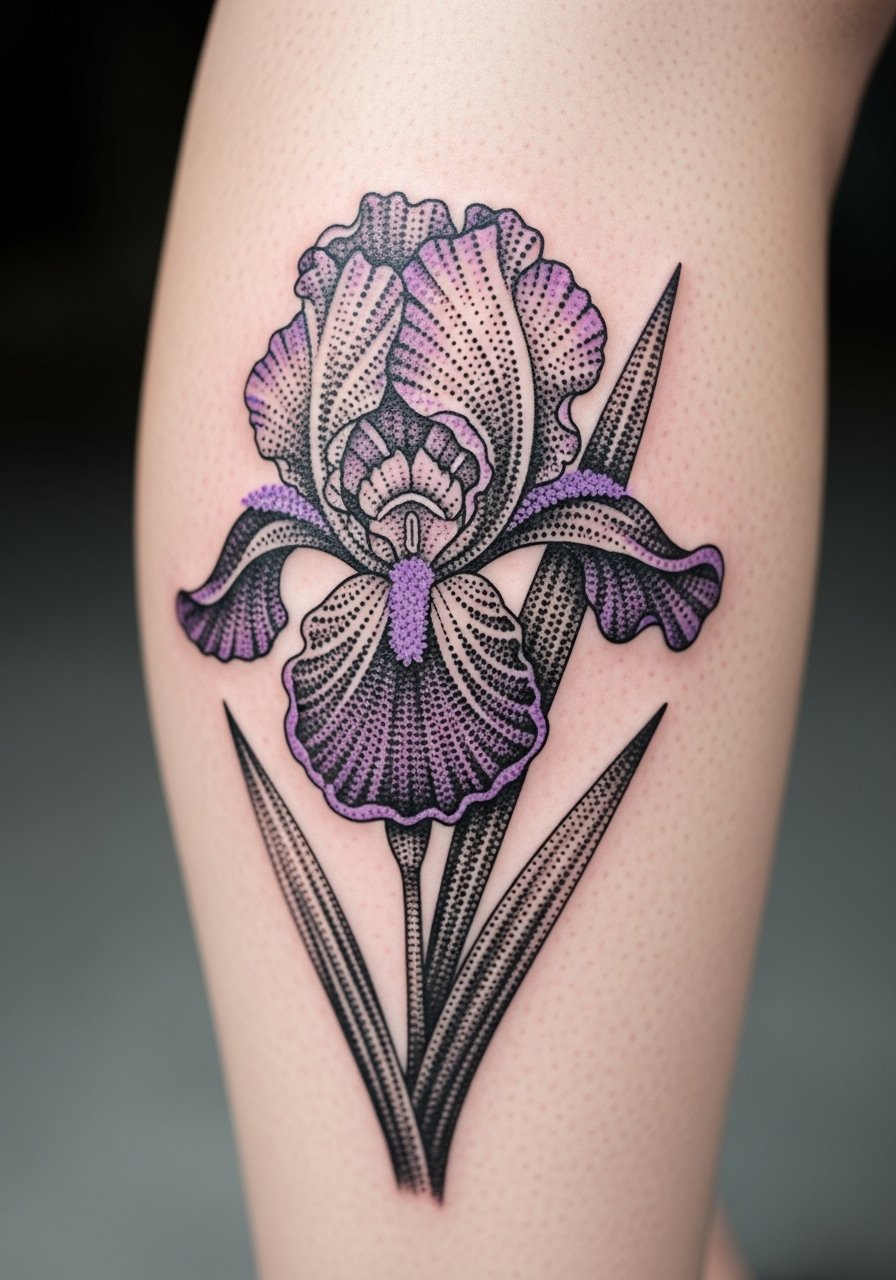
Dotwork adds texture and meditative depth that can hold better than blended color at small scales. The calf tolerates dot shading well and is low on blowout risk, but a dot-heavy iris at under 3.5 centimeters can lose contrast if dots are packed too tightly. Tell the artist you want spacing that preserves negative space. The session is longer than a single-line mini but generally tolerable for most. For show-off pairings try cuffed bootcut pants or shorts to keep the calf visible.
10. Ignorant Style Primrose Outline on the Forearm
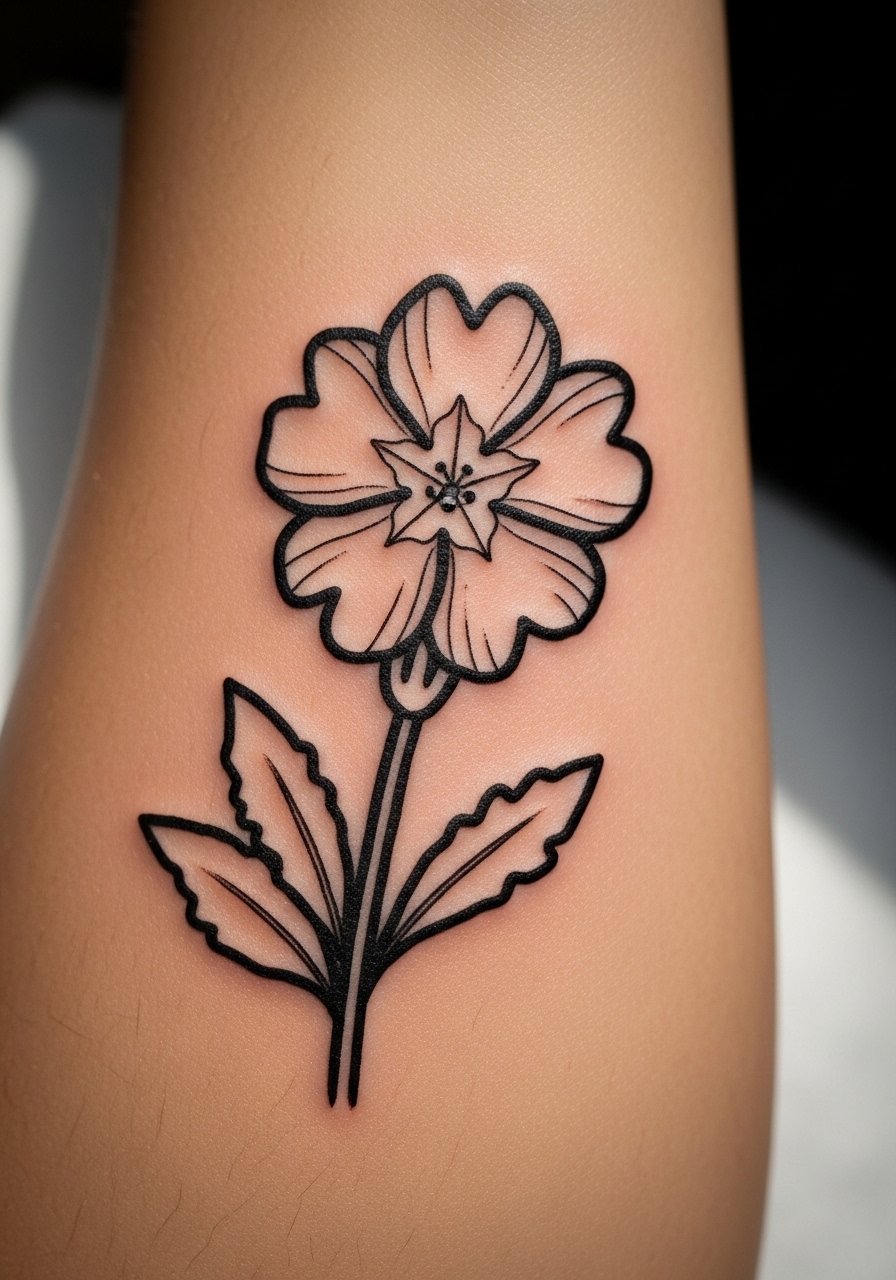
Ignorant style embraces imperfect lines and gives a casual vibe that ages into character rather than clinical fading. Ask for intentional unevenness rather than shaky execution so the artist plans where to thicken lines for longevity. Forearm placement is visible and easy to protect from sun, but the common mistake is requesting too many micro-details within the playful lines which undermines the aesthetic. Session wear should be a short-sleeve top and a linen oxford shirt ready to roll up.
11. Fine Line Violet and Primrose Combo on the Inner Bicep
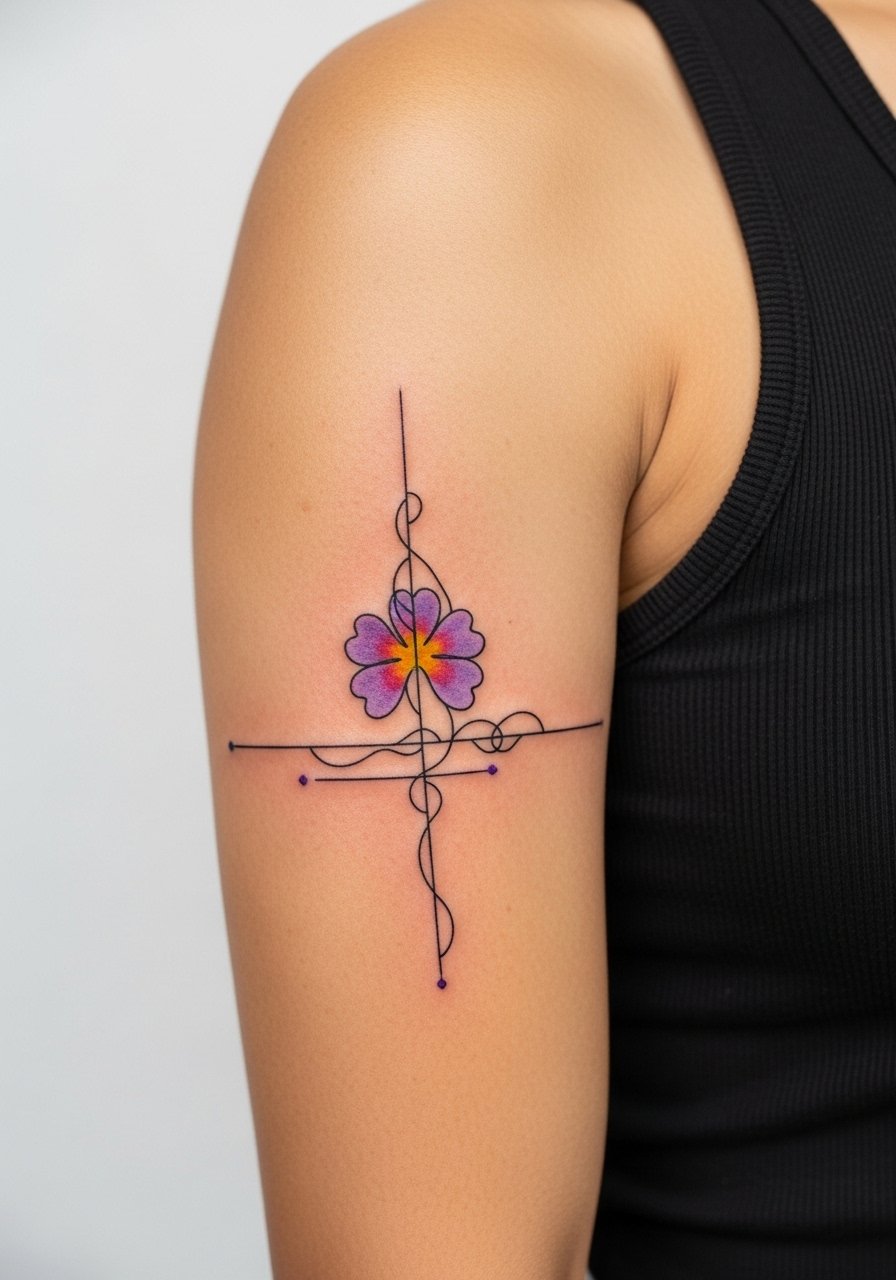
Combining the two February blooms gives month-round symbolism without getting busy. The inner bicep is a forgiving canvas for fine line work as long as the artist spaces lines to account for skin stretch. A common error is cramming both motifs into a tiny disk. Instead ask for a 3.5 to 4 centimeter vertical layout with breathing room. Expect moderate pain when the arm is tucked during session. Wear a tank top you can lift slightly so the artist has clean access.
12. Pastel Watercolor Violet Single Behind the Ear
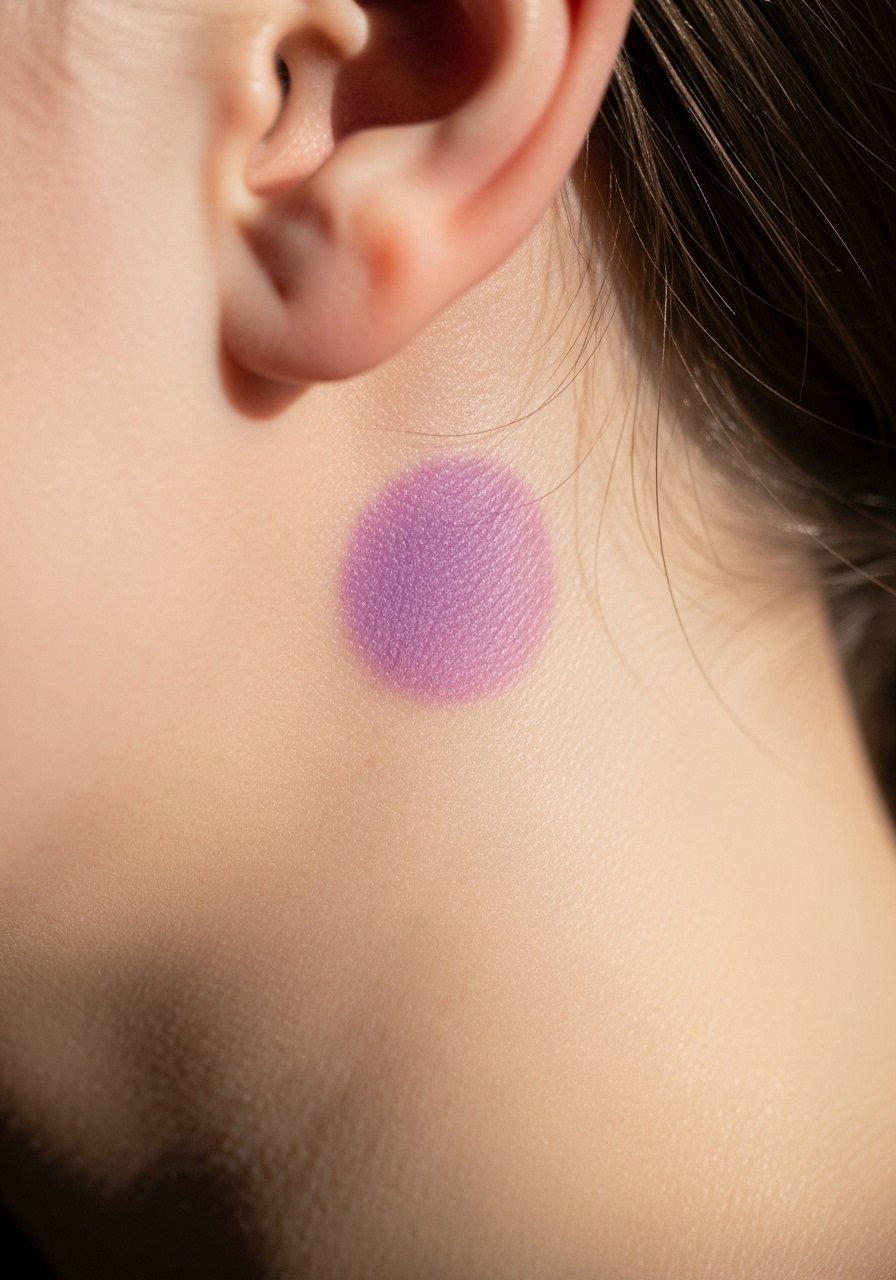
Pastel watercolor works beautifully behind the ear if kept sparse and intentional. Ask for a defined edge or tiny anchor point so the wash has a place to stop. Color in that area can blur into surrounding skin if overworked, which is the usual mistake. For dark tones the color can read differently, so consider subtle black outline accents if you want strong contrast. Session time is short and pain is low. Style with a dainty stud earring and a half-up hairdo to keep the tattoo visible.
13. Black and Gray Realism Mini Primrose on the Shoulder
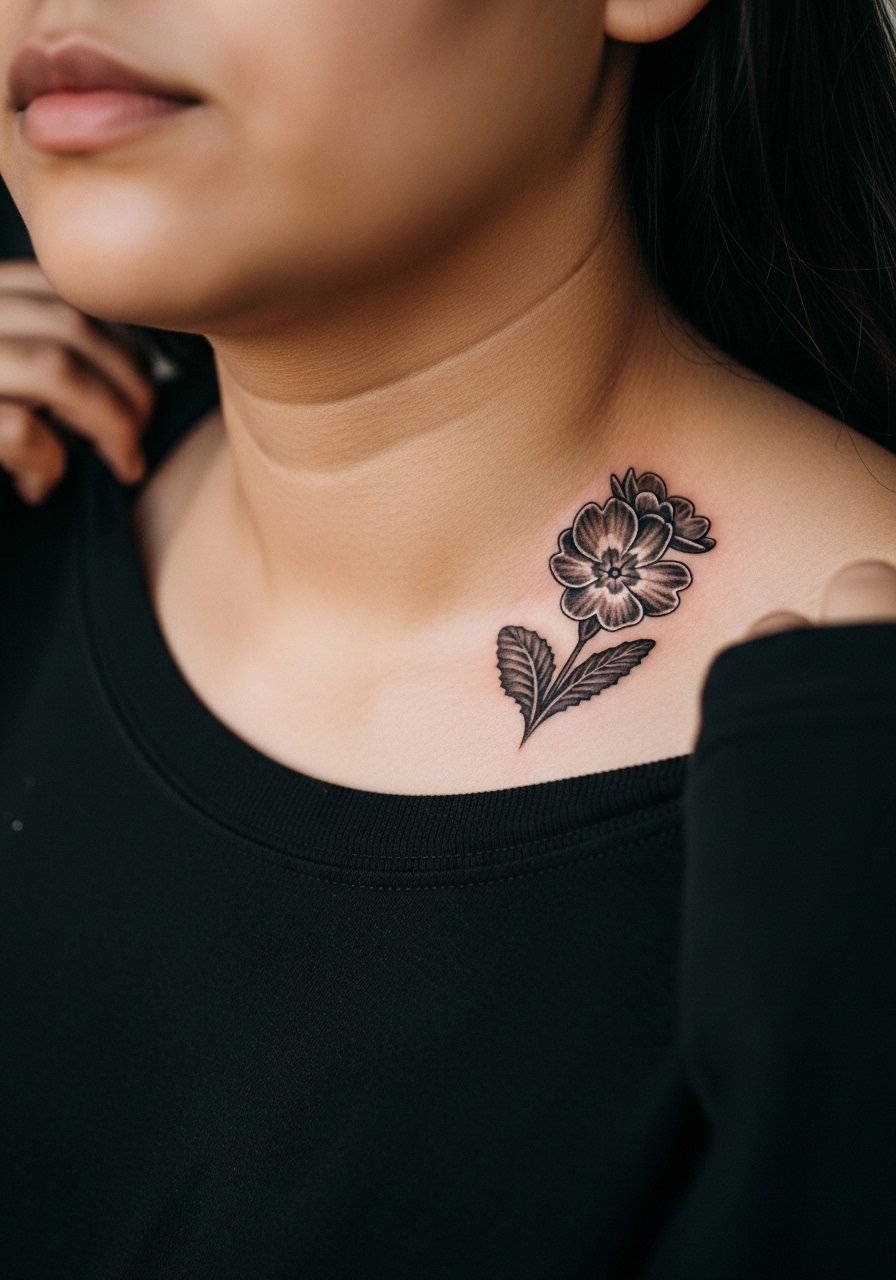
Micro black and gray realism at 3 to 4 centimeters gives photoreal depth without color variables. On top of the shoulder the piece avoids too much friction and keeps shading crisp longer. Ask the artist for stipple transitions rather than heavy gradient fills when the scale is small. The mistake is asking for extreme hyper-detail that tiny needles cannot hold in motion areas. For session wear a strapless bralette or wide-neck shirt you can pull aside to give the artist room.
14. Violet Enhanced with Iris Accents on the Ribcage
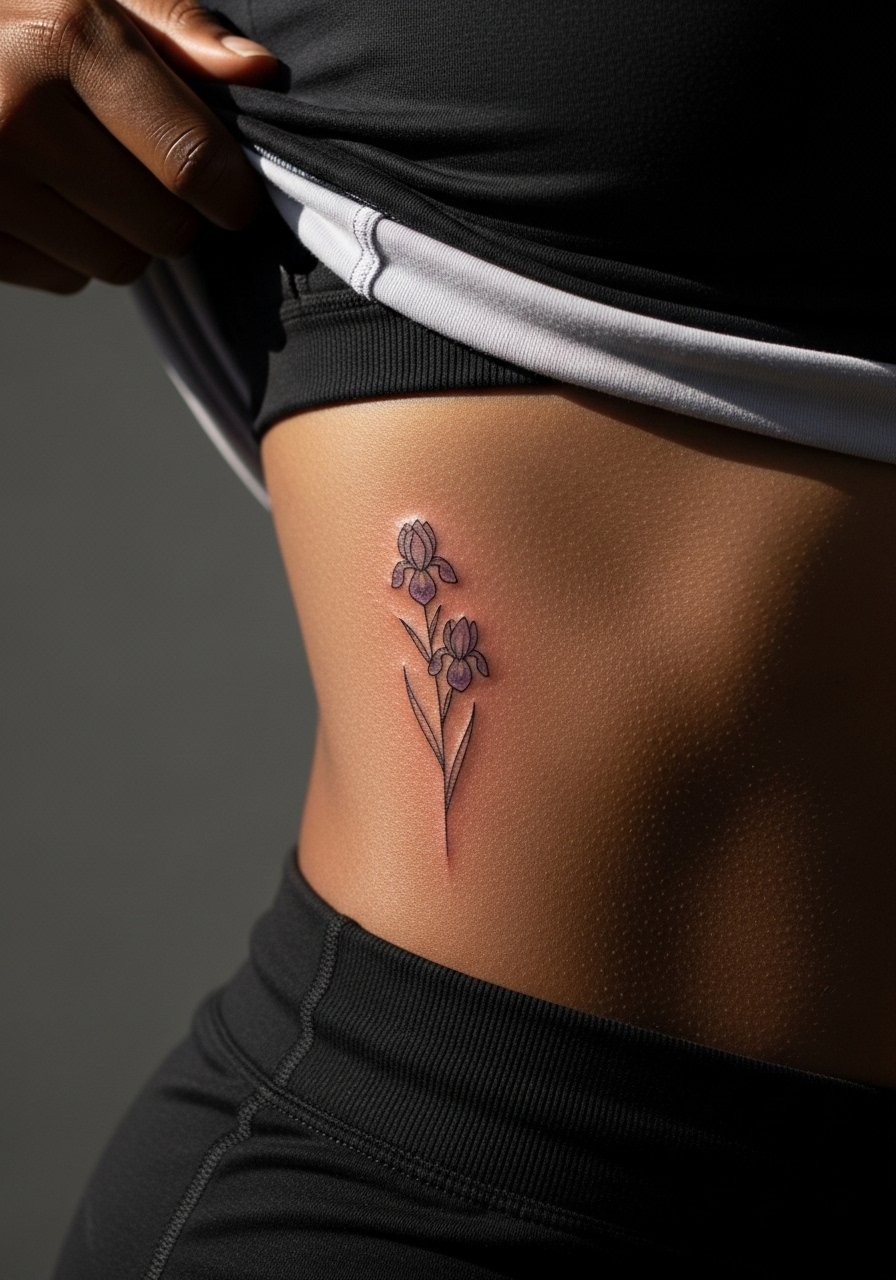
Pairing violet and iris accents is a less-common combo that layers fertility and hope into one compact piece. Ribs are a higher pain area and skin stretch changes with body movement. Artists disagree about fine line on ribs. One camp says the skin stretch blurs lines within two years. The other camp argues that with proper depth and spacing, fine line can settle well on ribs. Ask your artist which camp they belong to and request slightly larger spacing between lines if they lean toward more conservative placement. Expect the session to require breaks and a possible touch-up at year two.
15. Primrose with Negative Space Stem on the Collarbone
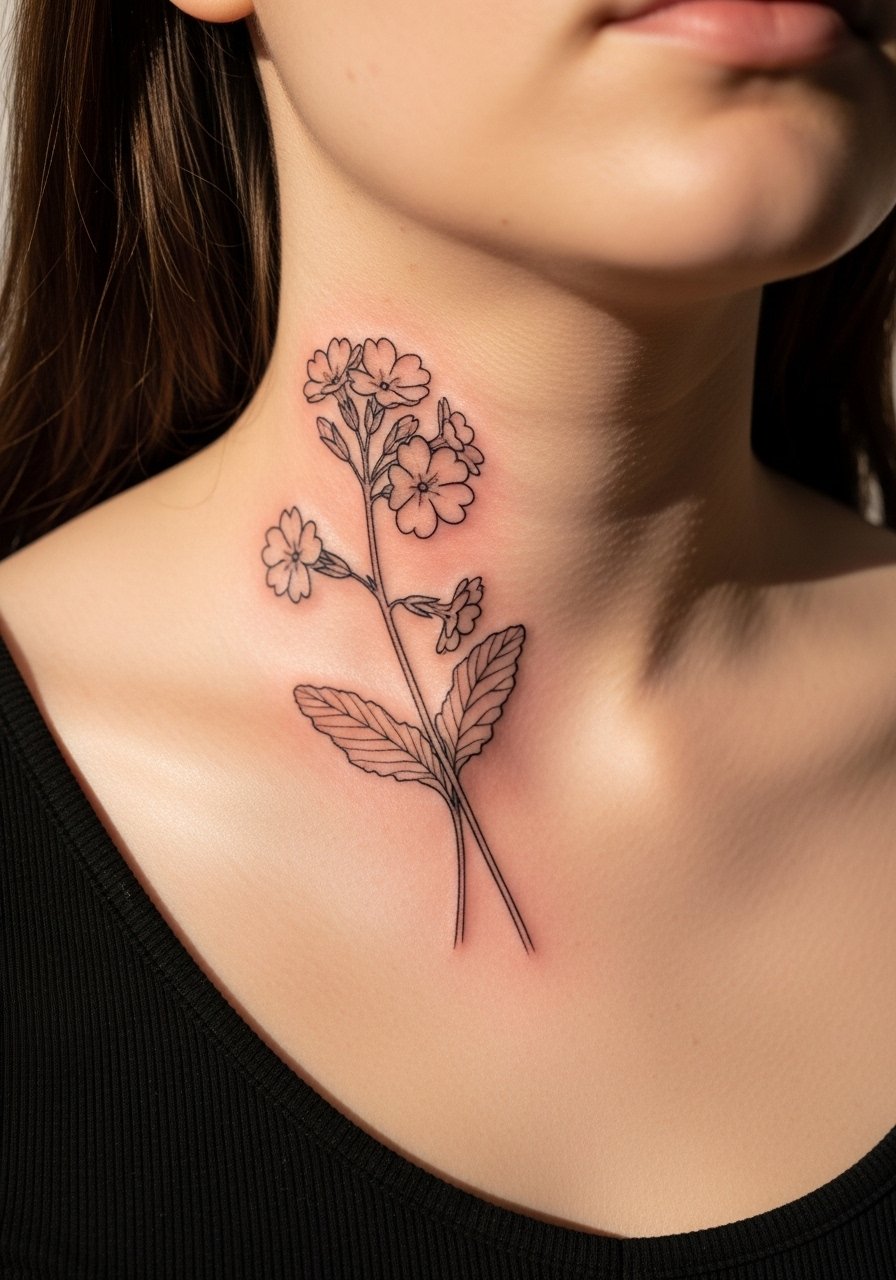
Negative space stems create an illusion of movement and age more gracefully than full saturated stems on thin scales. On the collarbone request that your artist map the negative areas on skin first so the flow sits with your clavicle. The mistake is plotting too many tiny cutouts that heal into awkward crumbs. Pain is moderate. Pair this with a delicate chain necklace for a frame that does not fight the lines during summer dressing.
16. Indigo-Toned Violet for Darker Skin on the Ankle
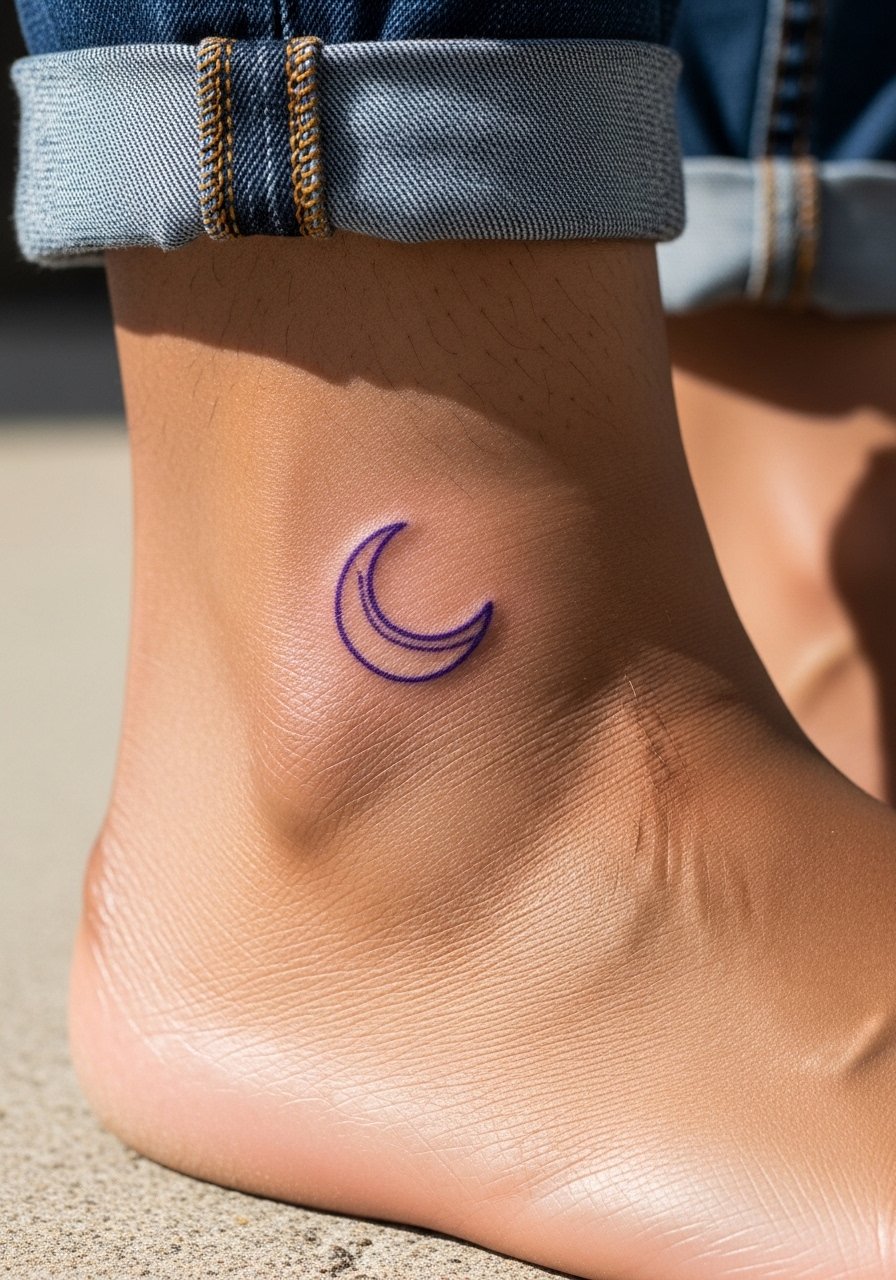
For darker skin tones an indigo lean can read truer than some bright purples that turn gray. Tell your artist you prefer a cool indigo shade and strong black outlines to preserve contrast. The ankle is visible in summer and gets rubbed by shoes, so expect a touch-up window at year one if you wear closed shoes much. A common mistake is choosing pastel purple that disappears. For the session wear cuffed straight-leg jeans so the artist can prop the leg and you can step straight back into your outfit.
17. Tiny Flash Sheet Violet for Previews and Sizing
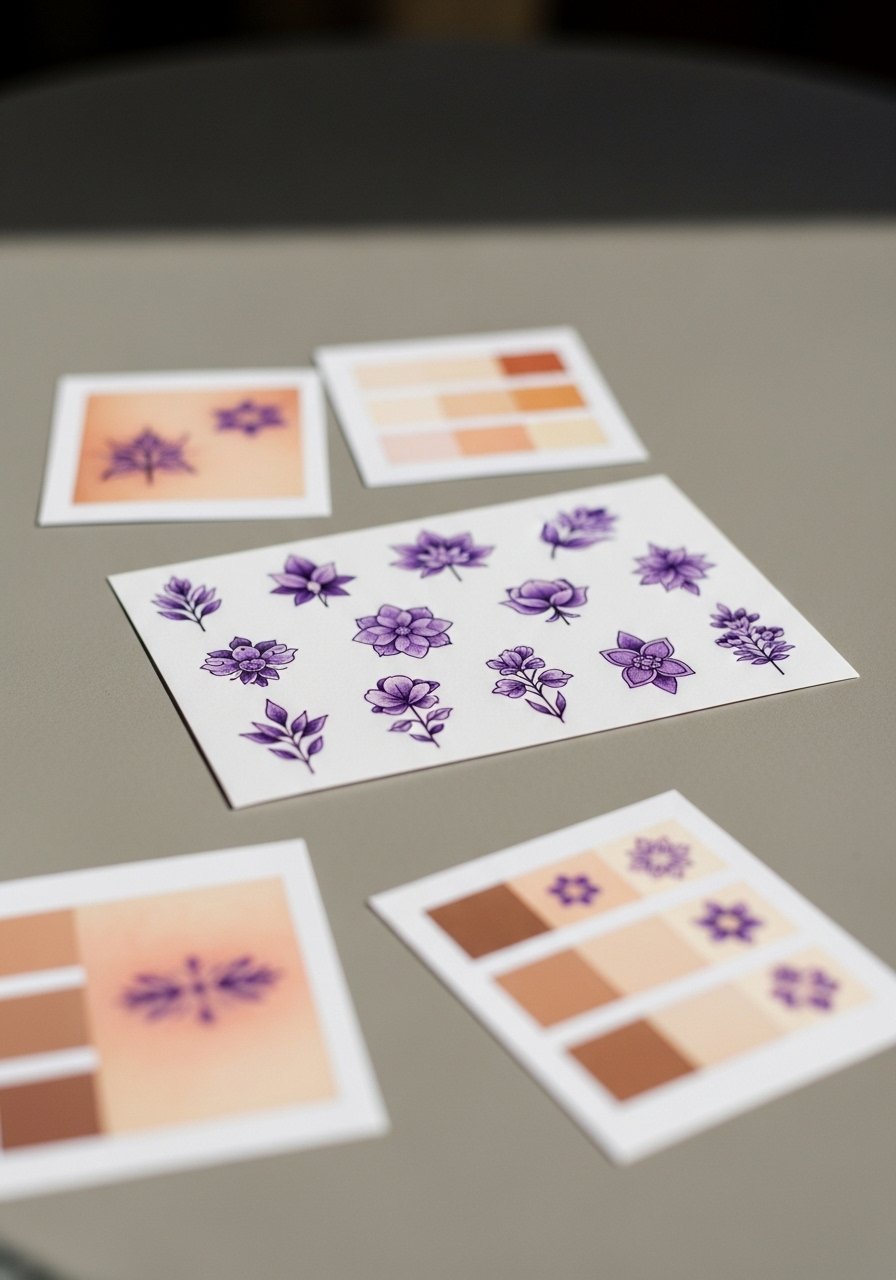
Ordering a custom tiny flash sheet before committing solves a lot of first-tattoo regrets because you can test scale and composition on paper or skin. Etsy-style flash lets you preview exact sizing and request artist tweaks to scale down with confidence. The mistake is assuming a digital mockup at screen size translates directly to skin. Use the sheet to stencil test placement and ask for one or two scale variations. For booking, bring a loose button-down you can pull aside if the chosen placement is shoulder or ribs.
Frequently Asked Questions
Q: How often should I expect touch-ups for fine line violets on the wrist or finger?
A: Expect touch-ups sooner on high-friction spots. Wrist pieces often need attention around year one to two, and finger lines commonly require a refresh every 12 to 18 months depending on sun exposure and hand use. Planning a small touch-up in the first two years is realistic for most fine line minis.
Q: Which healing method is better for minis, second skin or dry healing?
A: Artists split into two camps. One camp prefers protective film for active lifestyles because it keeps the area clean and reduces mess. The other camp favors dry healing for floral pieces because it encourages a natural scab and clearer line retention. Your choice should reflect your daily routine and the artist’s healed portfolio examples.
Q: I have dark skin; will purple violets look muddy?
A: Purple can read differently on darker tones. Many people find indigo-leaning pigments and stronger black outlines give truer contrast over time. Ask to see healed examples on skin tones similar to yours and consider a blackwork or indigo-first approach.
Q: Are watercolor primroses a bad idea if I want longevity?
A: Watercolor looks soft but often needs more frequent touch-ups at small scales. If longevity matters, ask an artist to incorporate defined edges or tiny anchor lines to stop washes from bleeding. Choosing slightly larger scale also helps.
Q: What should I wear to my session for a collarbone or ribcage mini?
A: For collarbone pieces wear a wide-neck shirt you can pull aside. For ribcage pieces choose a cropped athletic top or a shirt you can lift so the artist has a tight, clean field. Comfort and easy access make the session faster.
Q: How can I avoid getting ghosted after paying a deposit?
A: Use booking platforms with cancellation policies or confirm appointments 48 hours ahead. If a guest spot is involved ask for a secondary contact and keep a direct line for the artist’s studio so you can confirm logistics quickly.