
Fine line pieces are everywhere online, but they do not always age the same way in real life. I have seen delicate lotus tattoos that looked incredible at week one and soft into a blur by year three. The designs below focus on versions that hold up, placements that suit longevity, and what to ask your artist in the consult so the result still reads after a few summers of sun and daily wear.
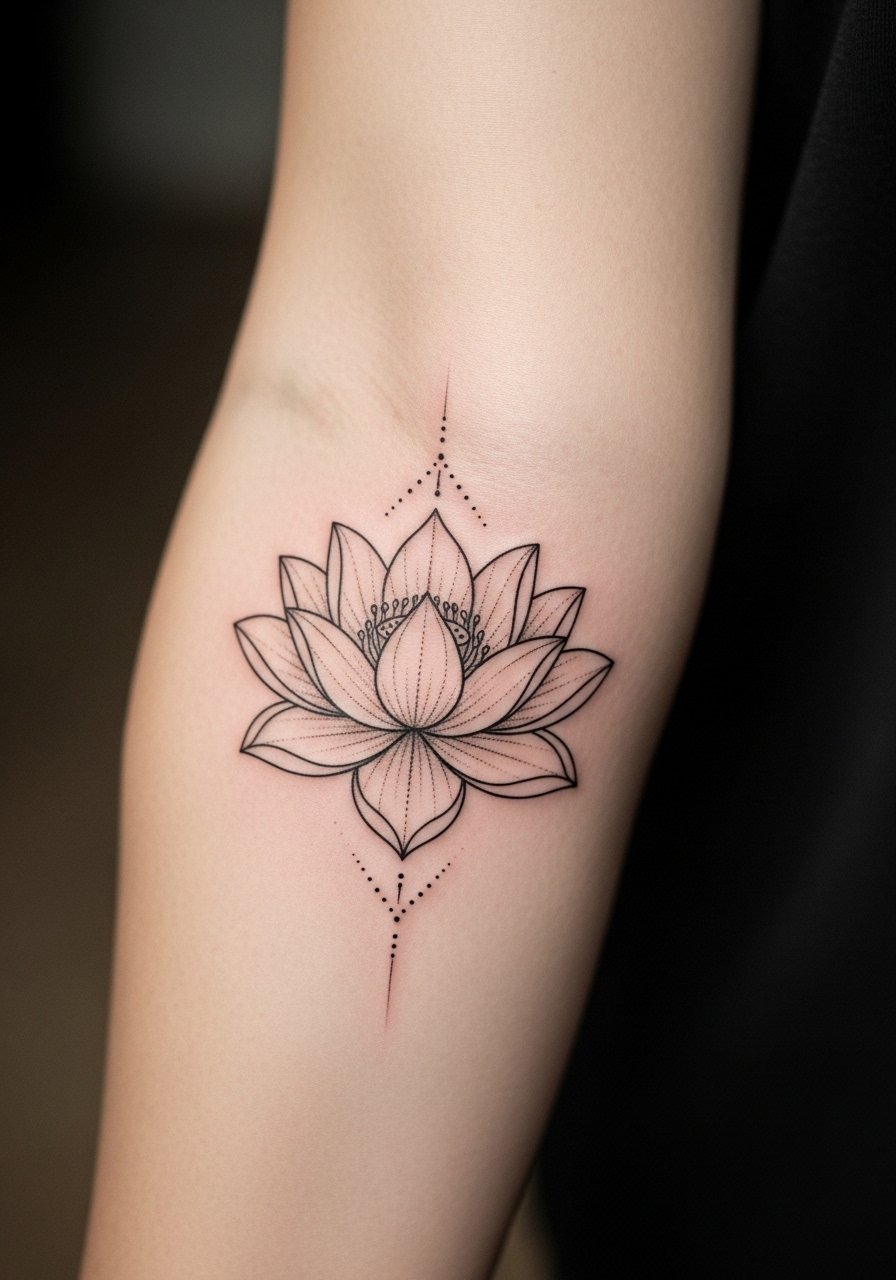
1. Fine Line Lotus on Inner Forearm
I've seen this placement on friends for years and it stays surprisingly crisp when you plan spacing and ask for slightly bolder primary stems. The inner forearm offers a flat canvas so linework sits evenly and touch-ups are usually minor after two years. Fair warning, tiny overlapping petals packed too close will blur, so tell your artist to keep negative space between clustered details. Session feel is steady with low-to-moderate pain and most artists finish a small forearm piece in under an hour. This design looks great with rolled sleeves and lightweight shirts, try a rolled-up linen shirt to frame the work without hiding it.
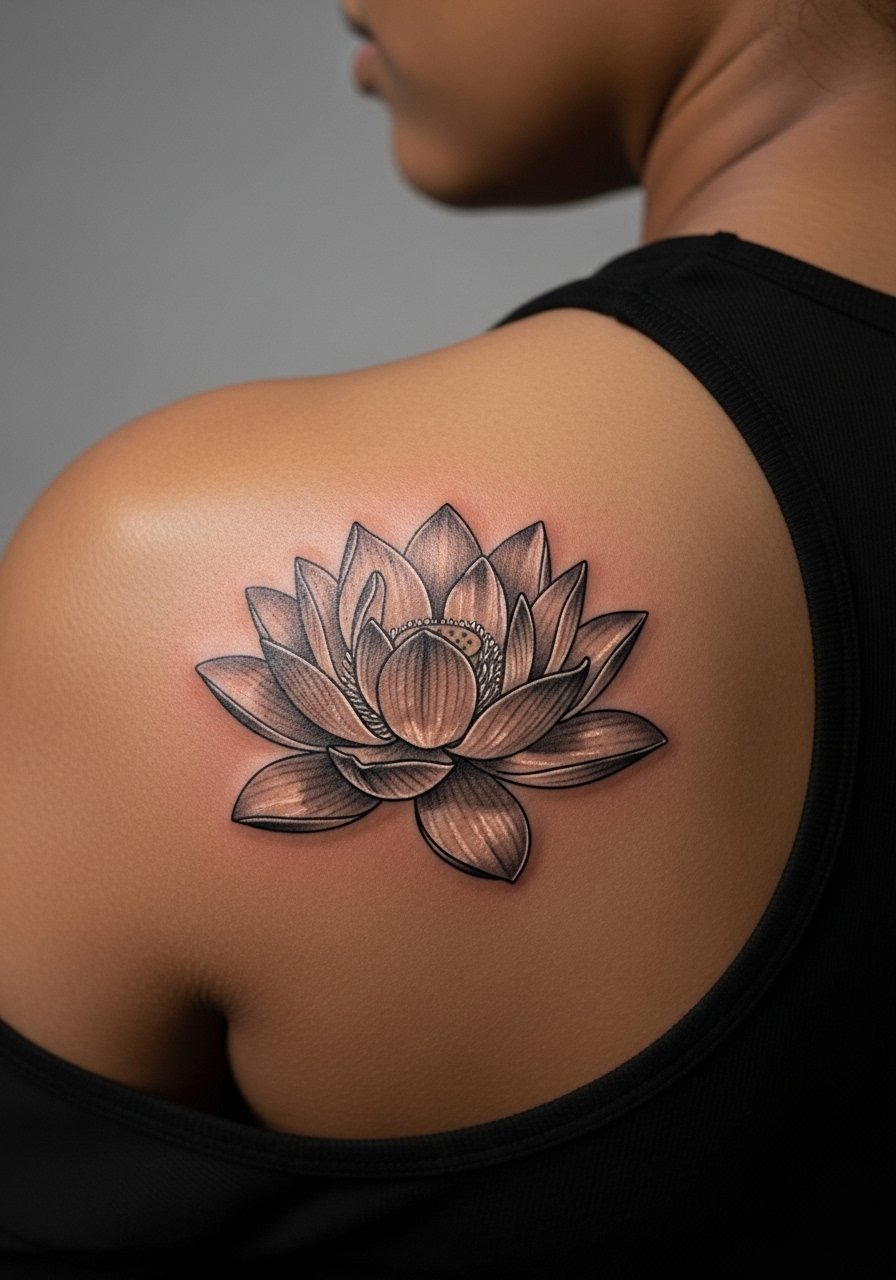
2. Micro-Realism Lotus on Shoulder Blade
Visual impact matters here because the shoulder blade holds ink cleanly and the contours add depth to tiny shading. Expect a two-hour session for a micro-realistic lotus with soft stipple shading and subtle highlights. Pain is moderate when you brush the scapula. A common mistake is asking for extreme tiny petal detail without considering the movement of the shoulder; that detail micro-blurs if placed across a seam. For session access wear a loose button-down shirt you can pull to the side, and plan touch-ups at year three if you want dense tonal work. The healed look is soft edges with preserved contrast when saturation is controlled.
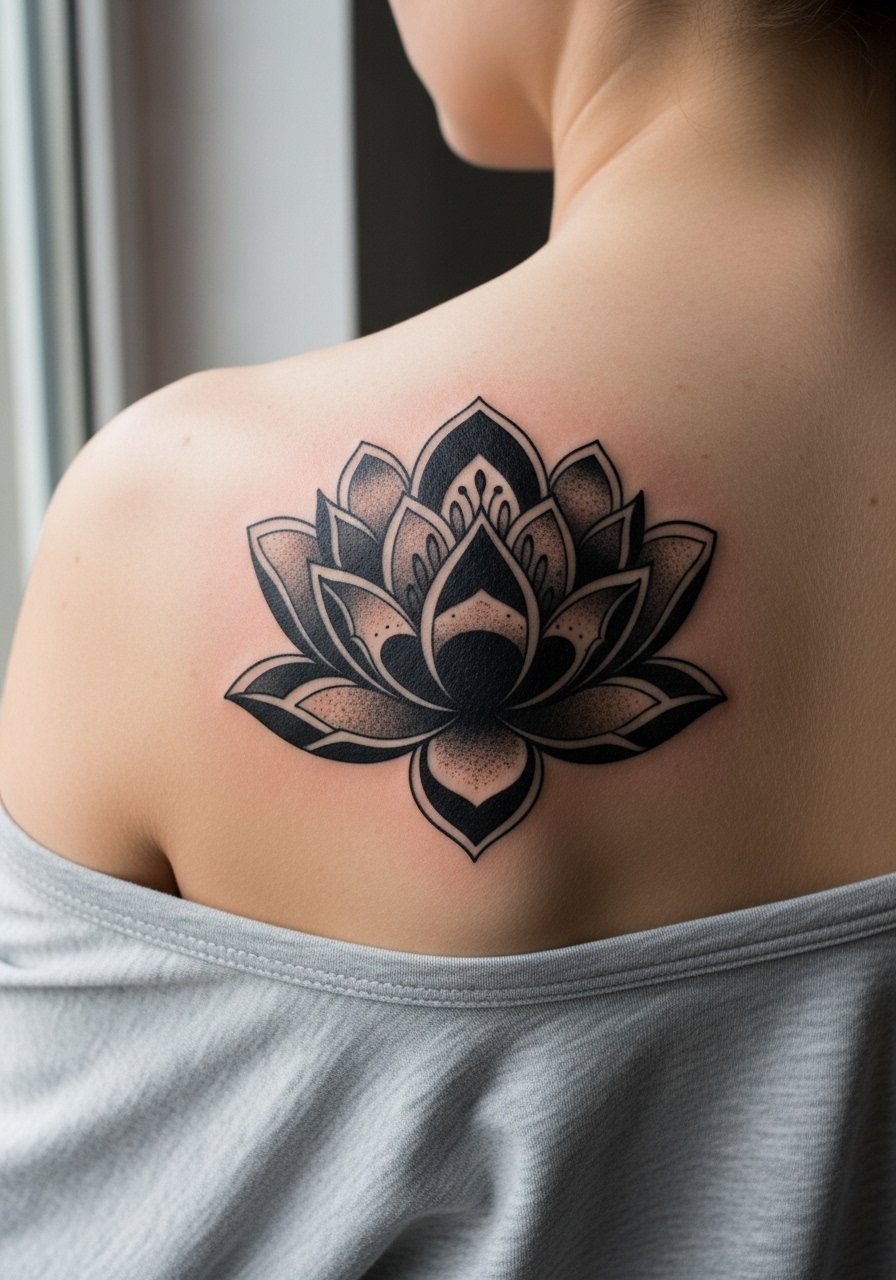
3. Bold Blackwork Lotus on Upper Back
There is something about solid black saturation on the upper back that holds across seasons. The thicker linework and heavier fills age into a readable graphic that still reads at distance. Plan for a longer session and expect moderate pain along the spine-adjacent areas. The biggest rookie move is over-detailing the center with tiny lines that compete with the bold outline. Tell your artist you want clean negative space and heavy saturation in the petals. For showing it off, pair the piece with open-back midi dresses that reveal the top of the work without pulling fabric across the tattoo. Healed contrast tends to hold longer than color work.
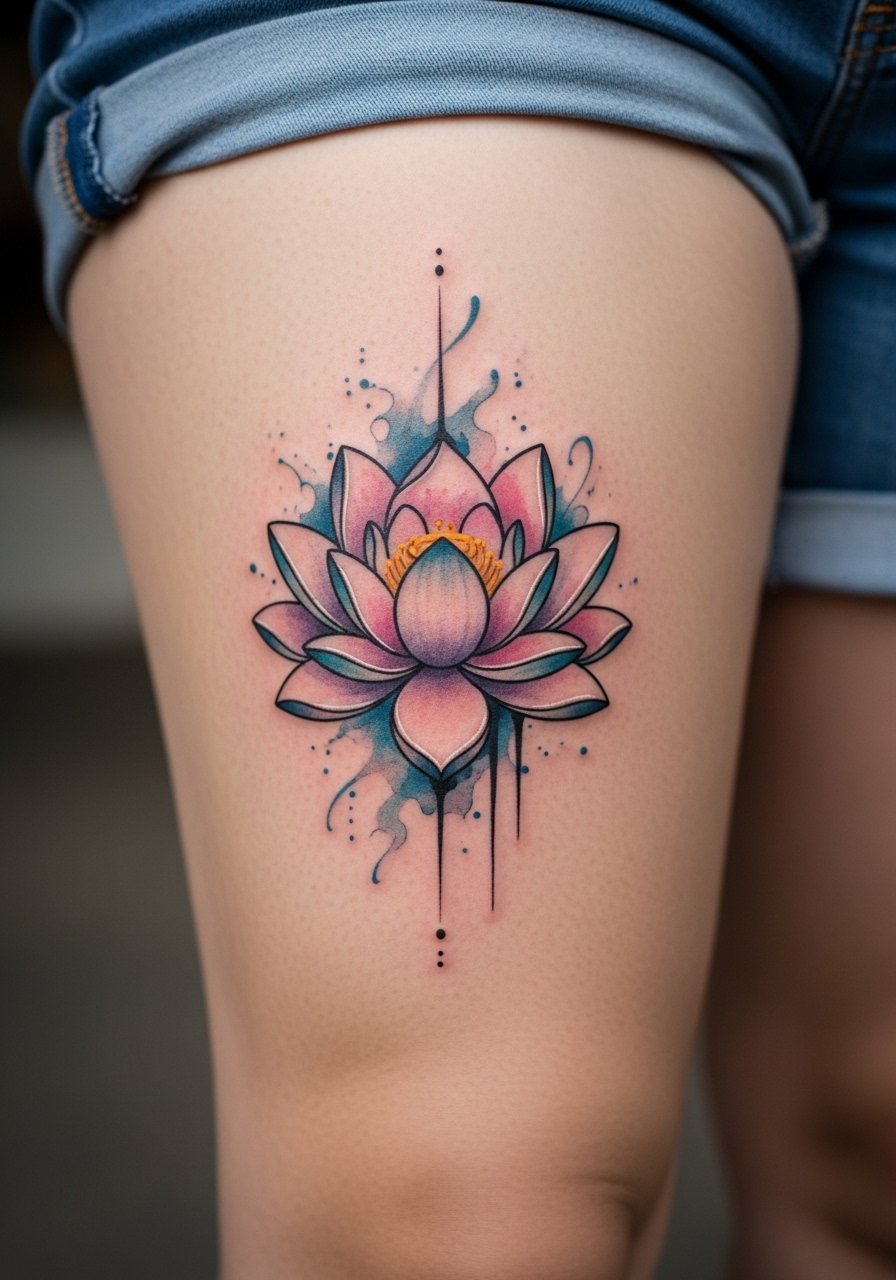
4. Watercolor Lotus on Upper Thigh
Most watercolor styles lose punch faster than line-focused work, but the upper thigh is forgiving because it gets less UV and friction. The thigh is a great place for soft washes and translucent color, and sessions feel long but tolerable for most people. The mistake I see is asking for super-faint washes without solid anchors in the sketch. Ask your artist for a few denser anchor strokes near the center so the color has a frame as it heals. For the appointment wear loose drawstring shorts so they can shift fabric without rubbing the area. At six months the color softens, and at two to five years expect the washes to mellow while the anchors remain.
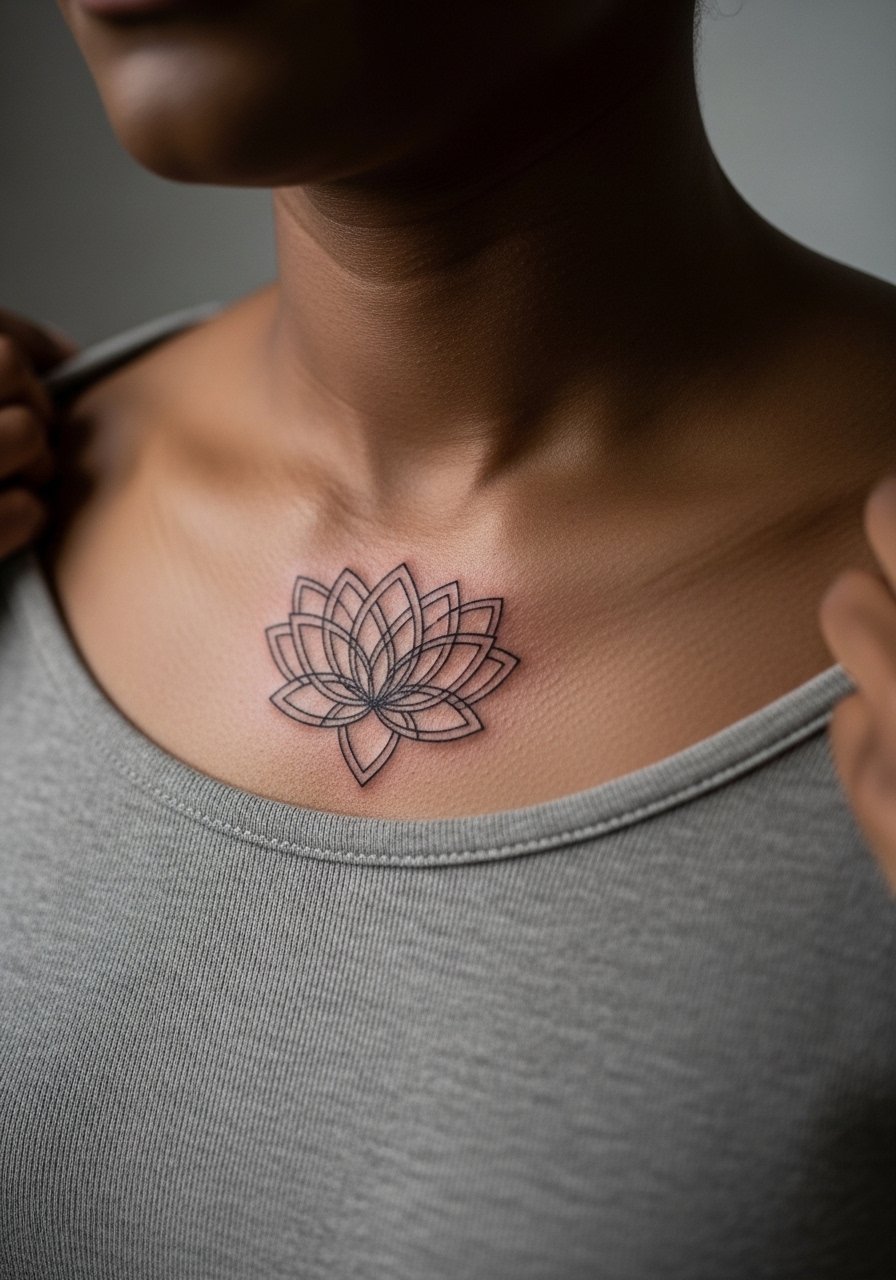
5. Geometric Lotus Mandala at the Collarbone
When you center a mandala at the collarbone, symmetry matters and spacing is the longevity secret. The collarbone has thin skin and subtle movement, so pain is higher than an arm piece. Ask your artist during consultation to map the center point on your bone and step back to confirm alignment with posture. A common aging problem is packing lines too tightly near the bone which can merge over time. This placement sits beautifully with a thin chain pendant necklace that rests just above the design and draws the eye without competing. Expect a touch-up at year two to sharpen the dense points if you want crisp geometry long term.
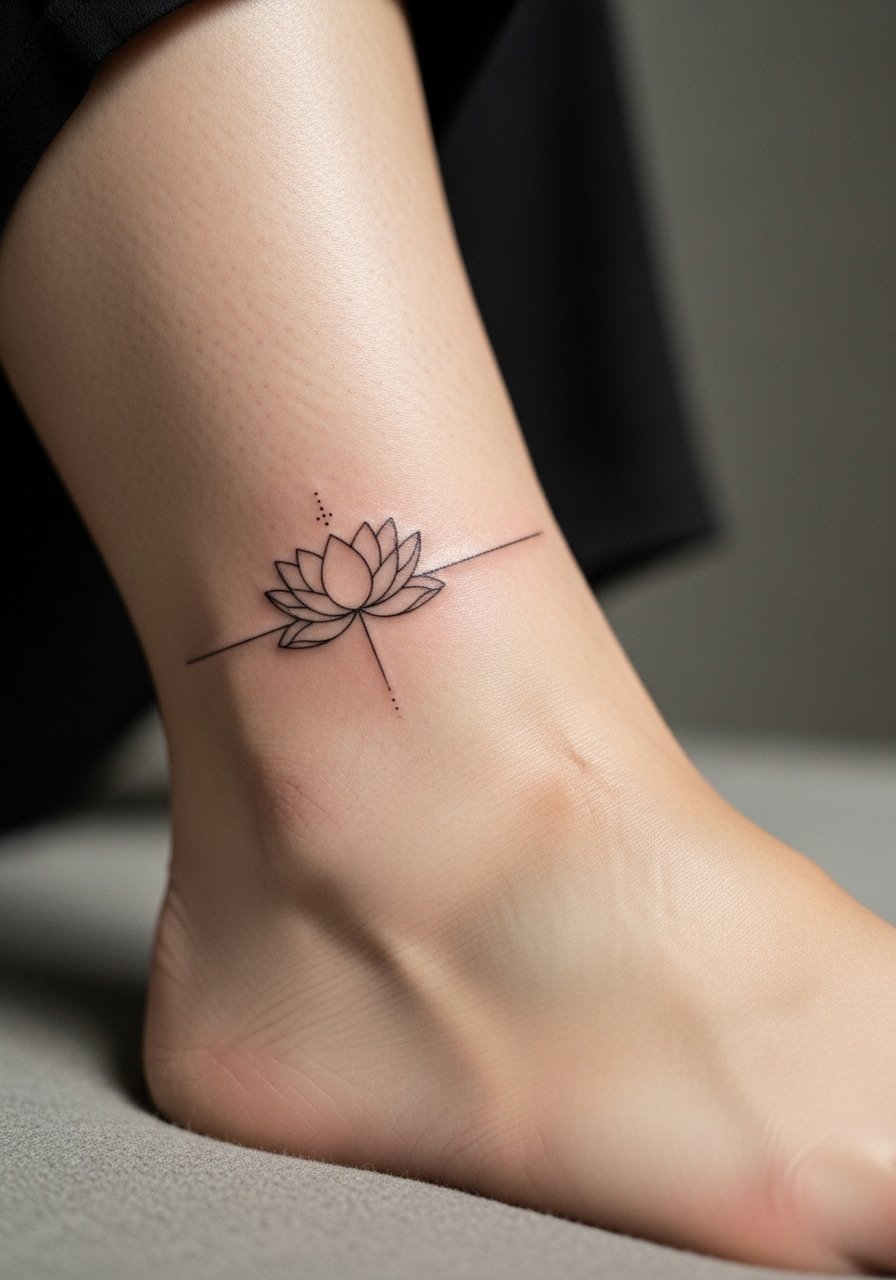
6. Minimalist Tiny Lotus at the Ankle
There is real charm in a tiny ankle lotus that reads minimal but intentional. Pain on the ankle is moderate because of close-to-bone placement, and blowout risk rises if the lines are too thin. My go-to advice is to scale the primary outline up by 10 to 20 percent from the reference photo. That leaves room for subtle blurring without losing shape. For session day wear sandals or pants you can roll up easily. A single short session can finish it, and touch-ups are usually minor if you avoid heavy rubbing from tight shoes during the first week.
Studio Day Picks
The wrist, ankle, and collarbone pieces above need different prep than larger back or thigh work, so a few targeted items make the session and first week easier.
-
Stencil transfer paper kit. Lets you preview placement on tricky areas like the collarbone and ankle before the needle touches skin.
-
Topical numbing cream. Applied per the product instructions 30 to 45 minutes before can soften the bite on bony spots like the ankle and collarbone.
-
Thin protective film roll. Useful for low-friction areas after the first cleaning, especially on wrists and fingers that meet constant contact.
-
Fragrance-free gentle body wash. Cleanses healing areas without stripping delicate linework on small pieces.
-
Aquaphor healing ointment. A thin layer in the first few days helps keep fine line sections from drying into heavy flakes that pull on the ink.
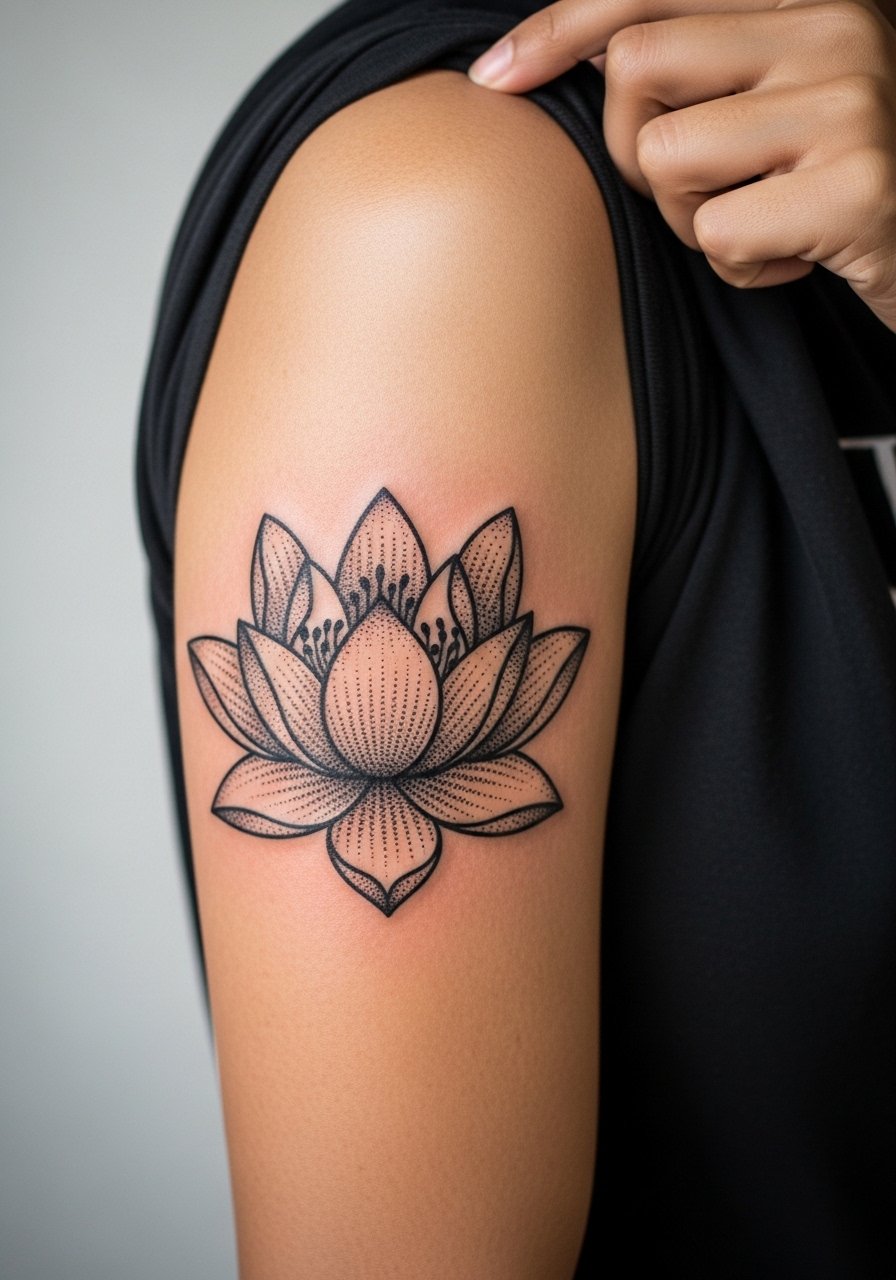
7. Stipple-Shaded Lotus Sleeve Accent on Upper Arm
Personal observation says stipple and dot work age well when left with breathing room. A lotus sleeve accent that uses stipple shading instead of solid blocks reads as texture at distance and holds detail because the dots settle slightly instead of merging into a flat patch. Expect several hours across two sessions for spacing and saturation. The main mistake is over-packing dots in one sitting which creates too much trauma. For showing it off, roll your sleeves or wear a short-sleeve linen shirt that frames the upper arm without covering the work. Touch-ups are typical at year three for denser shaded areas.
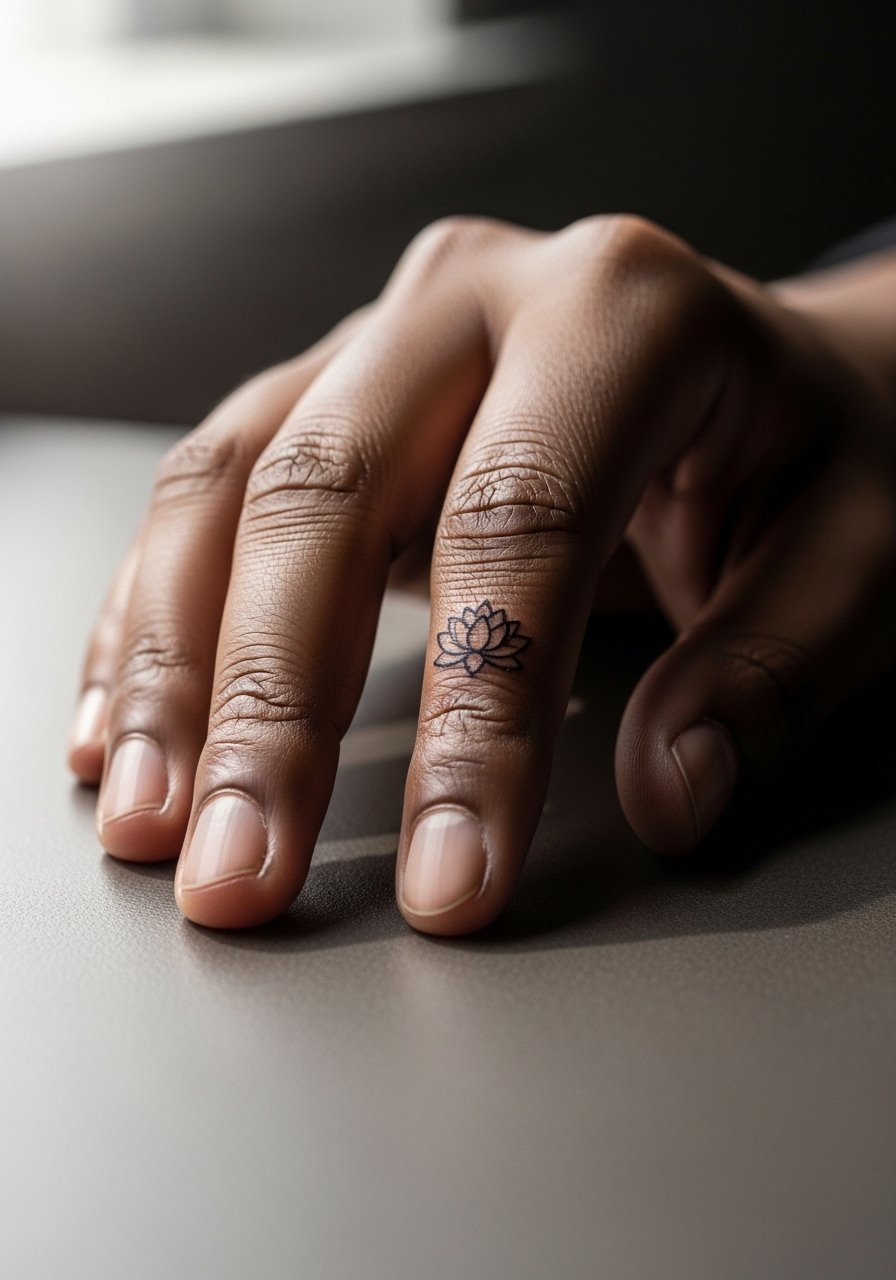
8. Micro Lotus on the Side of a Finger
Fair warning, side-of-finger tattoos are one of the highest touch-up bets you can take. The skin there regenerates quickly and friction from daily tasks fades thin ink fast. Artists split into two camps on tiny finger work. One camp avoids the side and says it softens within a year. The other will do it but warns that yearly touch-ups may be necessary. Ask your artist how often they rework fingers before booking. For jewelry that complements tiny finger work choose slim stacking rings like dainty stacking rings that highlight the piece without scraping it. Expect a short session but plan touch-ups.
9. Center-Back Lotus with Mandala Expansion
When you build a lotus into a larger mandala on the center of the back, symmetry and negative space planning are everything. Big pieces like this need multiple sessions and patient layering. The consultation should include a mock stencil photo of how the mandala sits with your spine and shoulder blades. A common long-term issue is carrying too much detail into areas that rub against straps or bags. For evenings out, an open-back dress showcases the work without constant fabric abrasion. Healed texture on the back preserves the mandala well when spacing is generous.
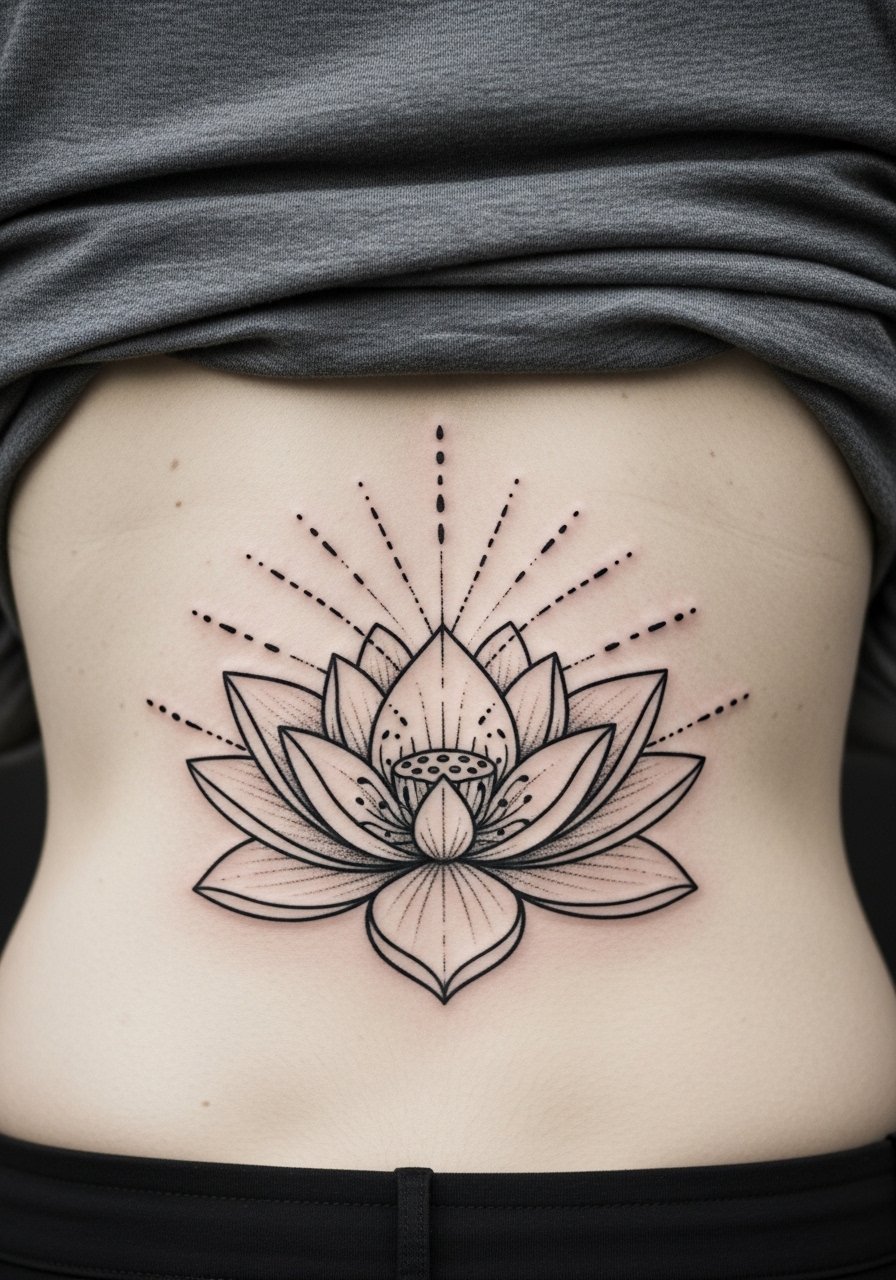
10. Fine Line Lotus on the Ribcage
Artists are split on fine line on the ribcage. One group argues the skin stretch and frequent movement blur thin lines within two years. The other group says careful depth and slightly enlarged line weights keep the design readable. For a ribcage lotus be explicit in the consult. Ask which camp your artist belongs to and request a version with slightly bolder primary contours if longevity matters. Sessions on the ribs are higher on most pain scales and take longer per unit area. For the appointment wear a cropped top you can lift easily so only the rib area is exposed. Expect touch-ups at year two or three depending on your activity and sun exposure.
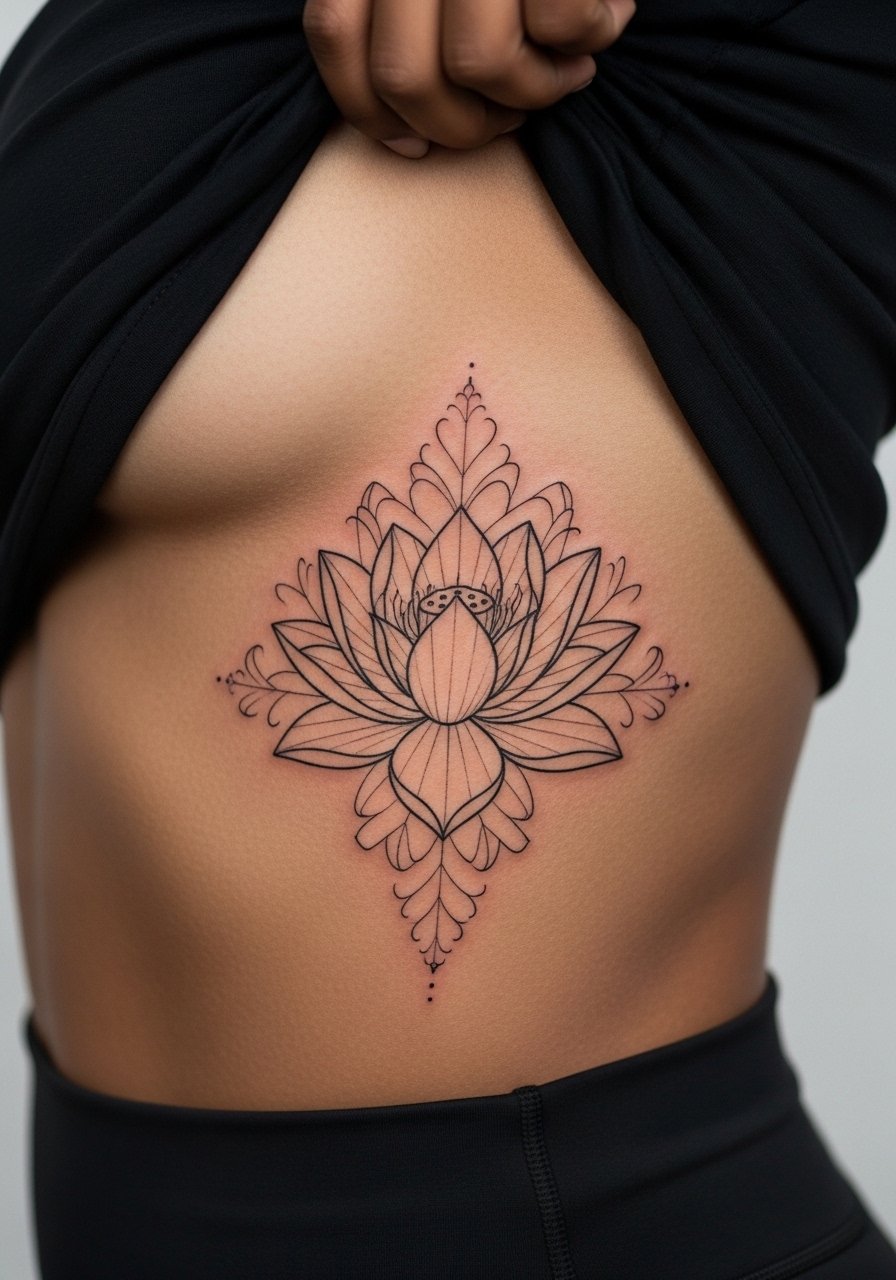
11. Color-Saturated Lotus on the Calf
The calf is a forgiving, visible spot for saturated color because it rarely gets constant abrasion and it sees moderate sun. Saturated color looks vivid at six months and then softens into a rich tone by two years if you keep up sun protection. The session usually sits in the moderate pain range and lasts a couple of hours for a medium-sized piece. A common mistake is asking for ultra-thin outlines with heavy fills, which can create a ring of fading around the edges. Pair the calf piece with rolled jeans or minimalist sandals to show off the lower leg in summer. Touch-ups vary by pigment choice.
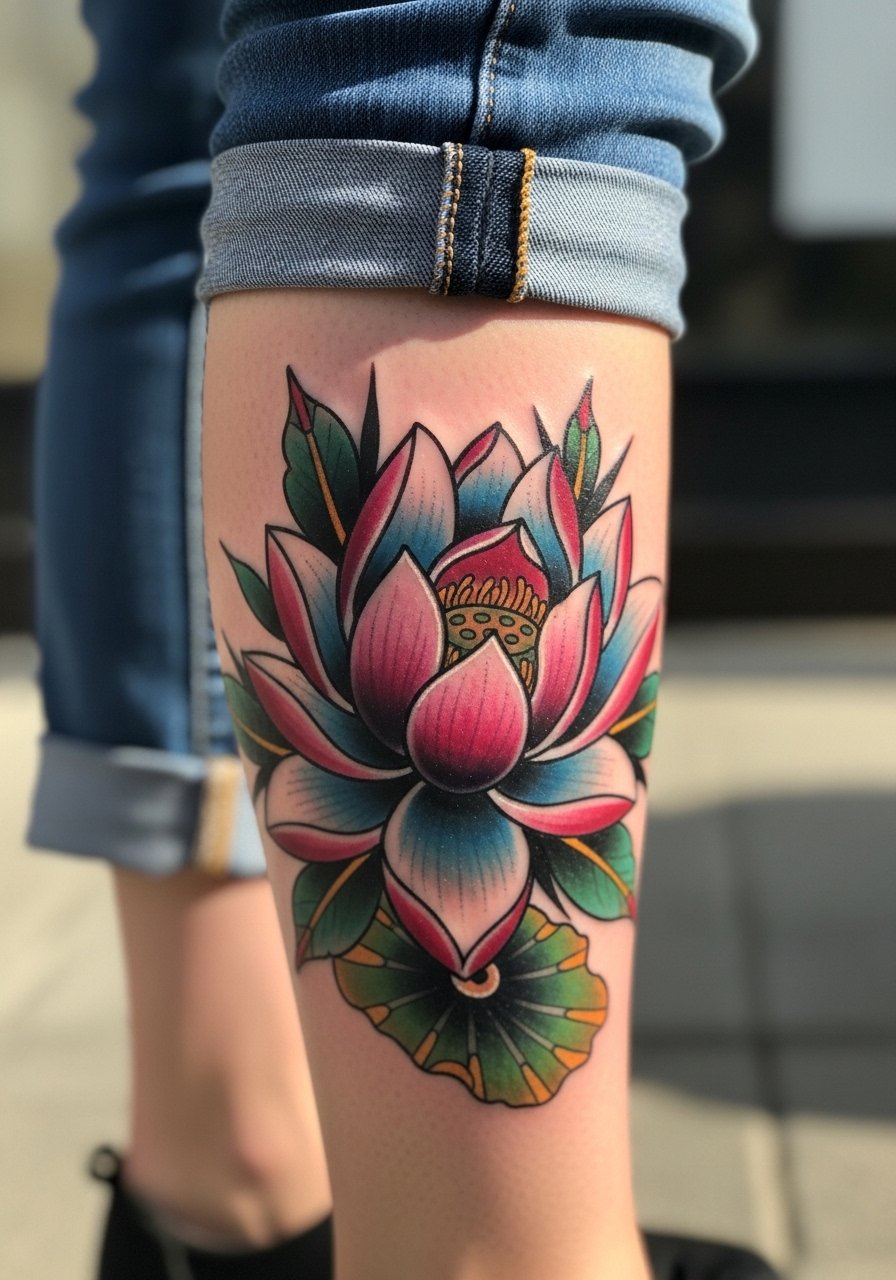
12. Tiny Lotus Behind the Ear
Styling lead. This is one of my favorite small placements for a subtle signal that shows with short hair or a tucked style. Keep the design tiny and avoid dense detail because the area is compact and can lose clarity. For image safety the tattoo sits on the skin just behind the ear below the hairline on the neck. The session is quick and the pain is sharp but brief. For show-off moments use small hair clips to tuck hair behind the ear. Try a small metal hair clip to reveal the spot when you want it visible. Expect light fading over a couple of years and plan a touch-up if the outline softens.
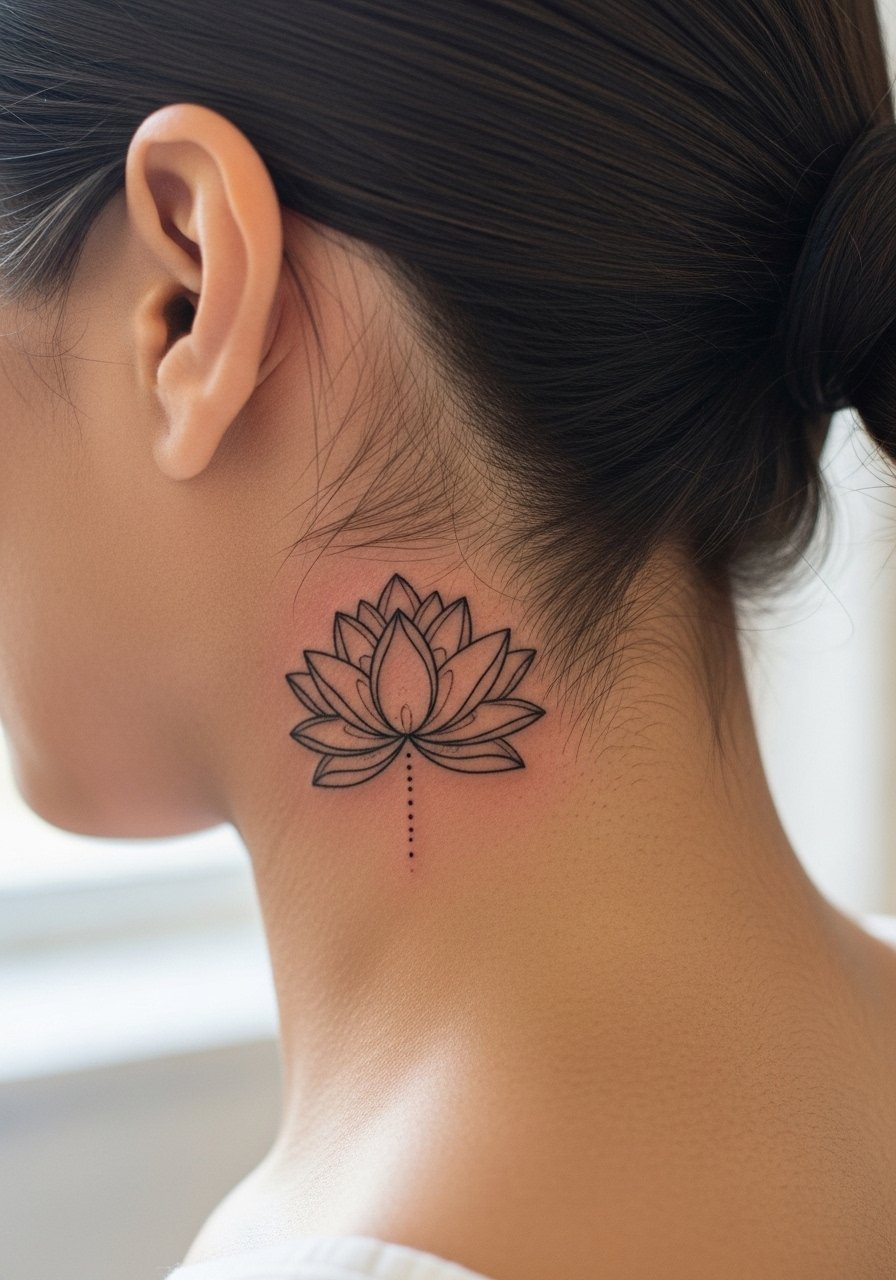
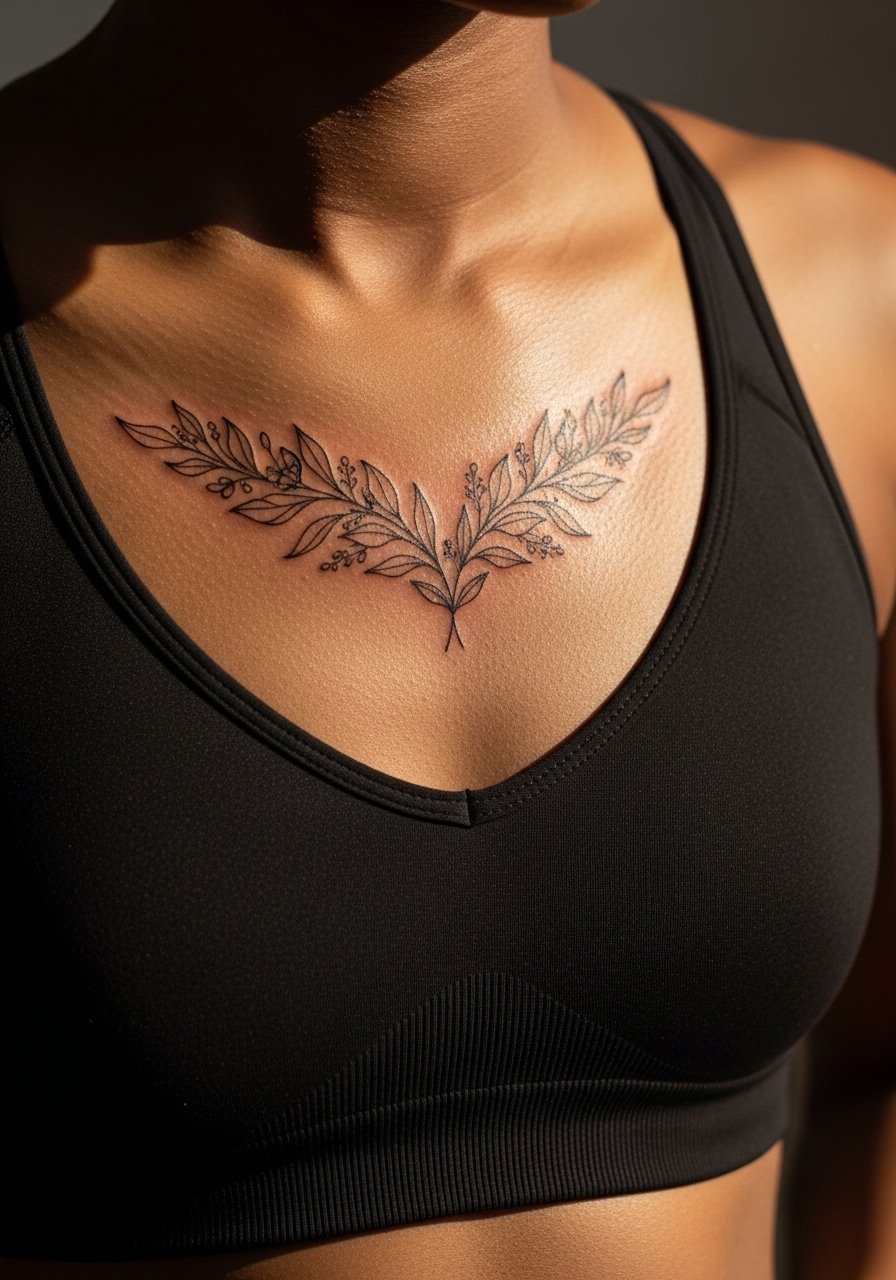
13. Delicate Dot-Work Lotus on the Sternum
Pain warning. Sternum work is higher on most pain scales because the area sits over bone and breath amplifies sensation. Dot-work and fine stipple can create an elegant sternum lotus that reads like jewelry when framed correctly. For safety include a fitted sports bra in the consult photo so the artist can judge how the design sits near fabric lines. The main mistake is extending too far outward where constant friction from clothing will erode fine dots. Sessions require short breaks and focus on breath control. Many artists advise one or two touch-ups in the first two years for symmetry and density balance.
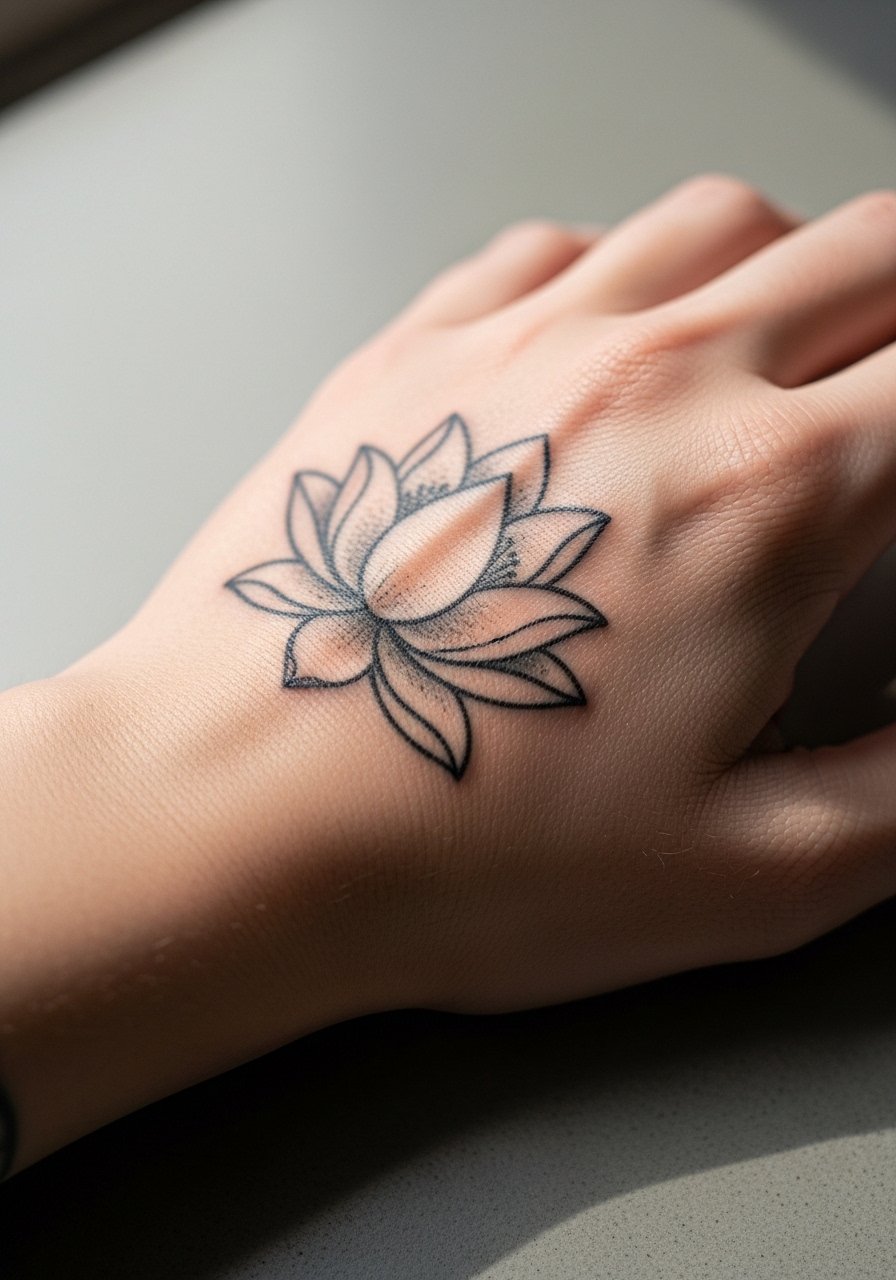
14. Bold Lotus on the Back of the Hand
Visual impact comes quickly with hand placement, and that is also why hand tattoos spark debate. One camp warns that back-of-hand tattoos affect hiring and remain visible in many professional settings. The other camp points out that acceptance is growing and that well-placed small pieces can be discrete when needed. If you choose the hand, plan for faster fading and more frequent touch-ups because hands wash and scrub constantly. Keep linework bold rather than ultra-fine and expect a short session with relatively high discomfort. Style this with slim bracelets or a minimalist watch like a minimalist watch that frames the wrist without covering the hand. Think about the long-term visibility before booking.
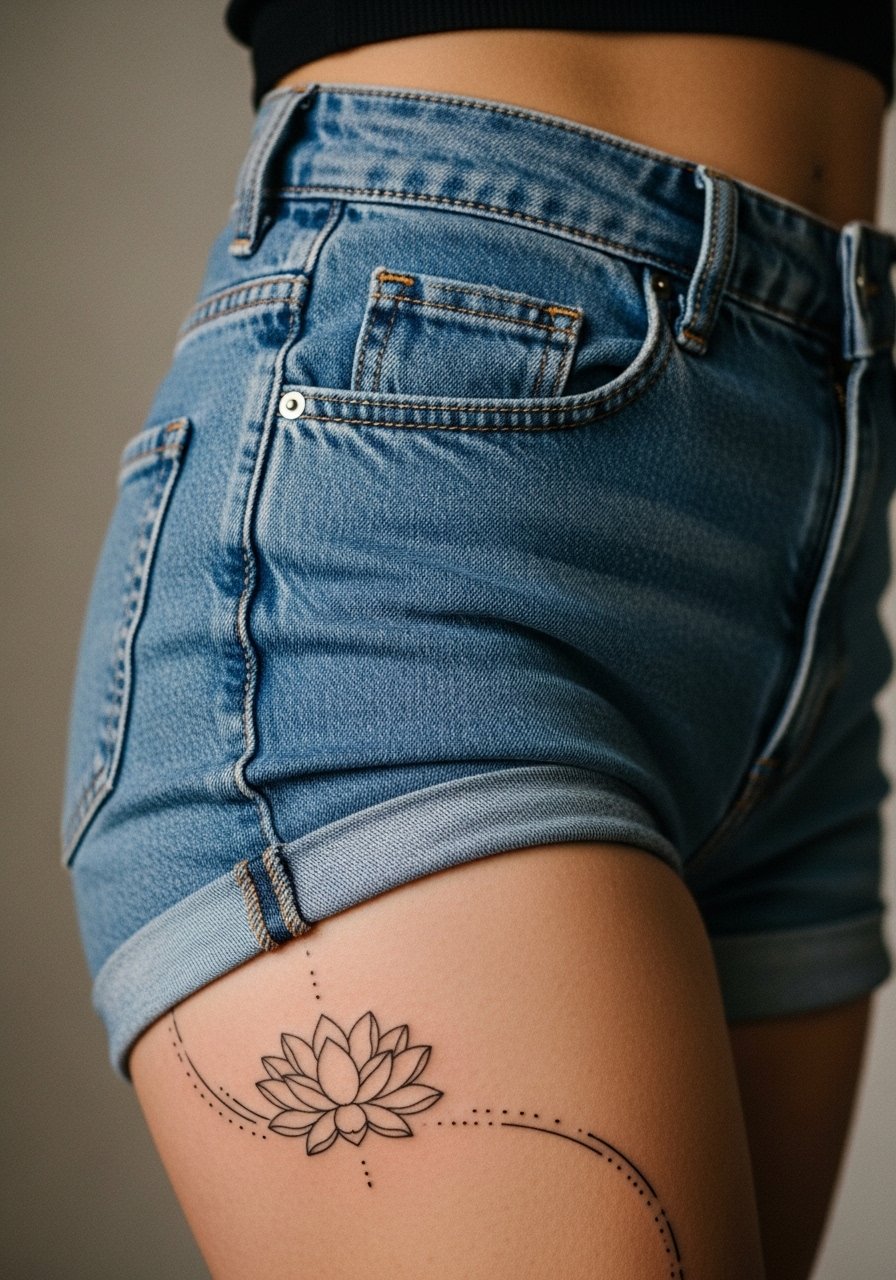
15. Curved Hip Lotus That Flows to the Upper Thigh
Consultation lead. Hip placement is great for organic lotus shapes that follow the body curve. When you sit down for consults, bring photos of the exact swimwear or waistlines you wear most so the artist can position the lotus where it will sit with clothing. The session feels moderate and you will want loose bottoms for the day of. For showing the piece, try high-waisted denim or a high-waisted jean that sits just under the motif. The main aging consideration is friction from waistbands. Keep primary outlines slightly bolder near the waistband to preserve the silhouette.
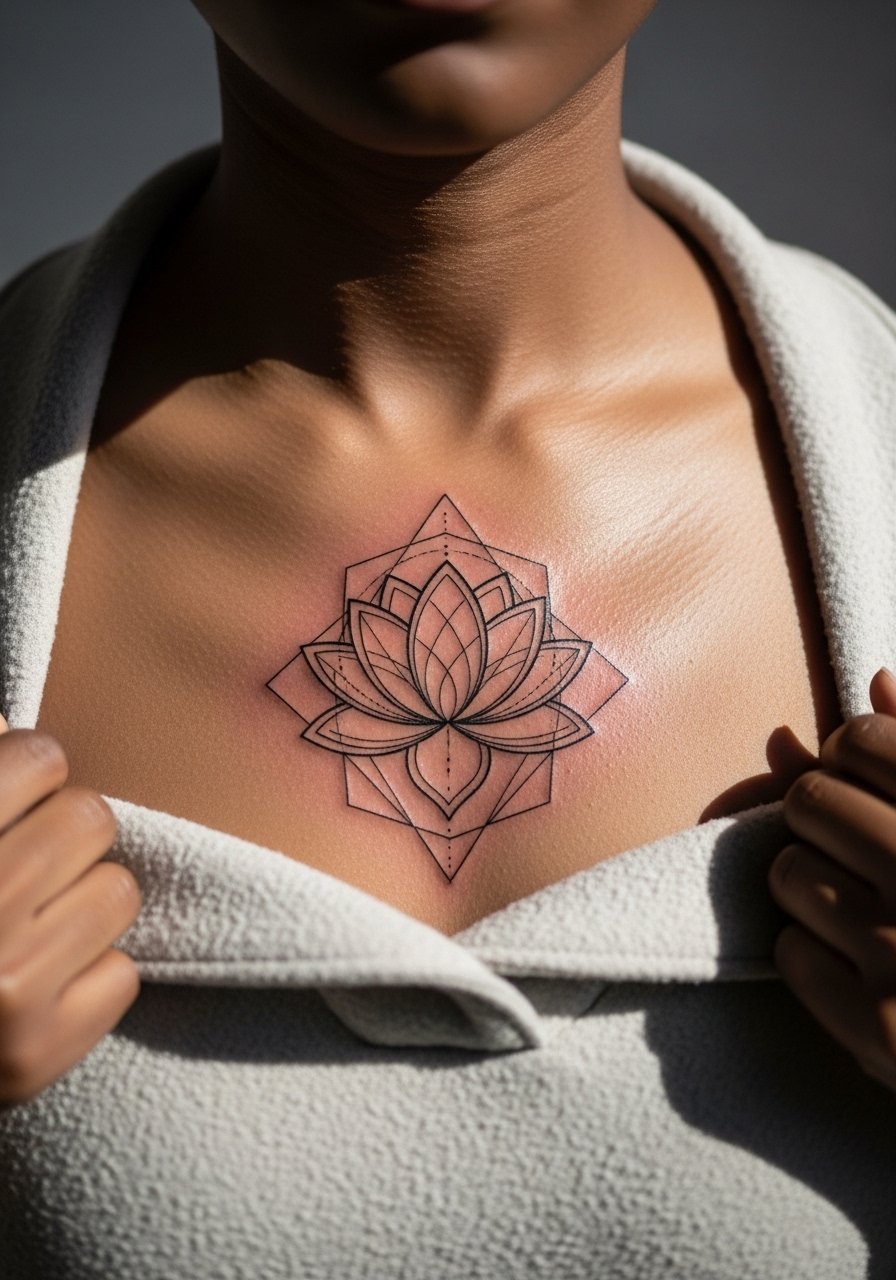
16. Framed Lotus Near the Upper Chest
Aging and placement lead. The upper chest is visible and the skin there can be thinner, so heavy framing with clean linework helps the lotus stay legible. Plan for a session that includes breaks and time to confirm mirror alignment. A common mistake is making the frame too tight to the petals which leaves no room for subtle settling. For the session wear a wide-neck shirt you can pull aside easily. To style after healing try a wide-neck blouse that shows the top edge of the work without forcing fabric across it. Expect touch-ups for dense frames at year three.
17. Shoulder-to-Sleeve Transition Lotus Cluster
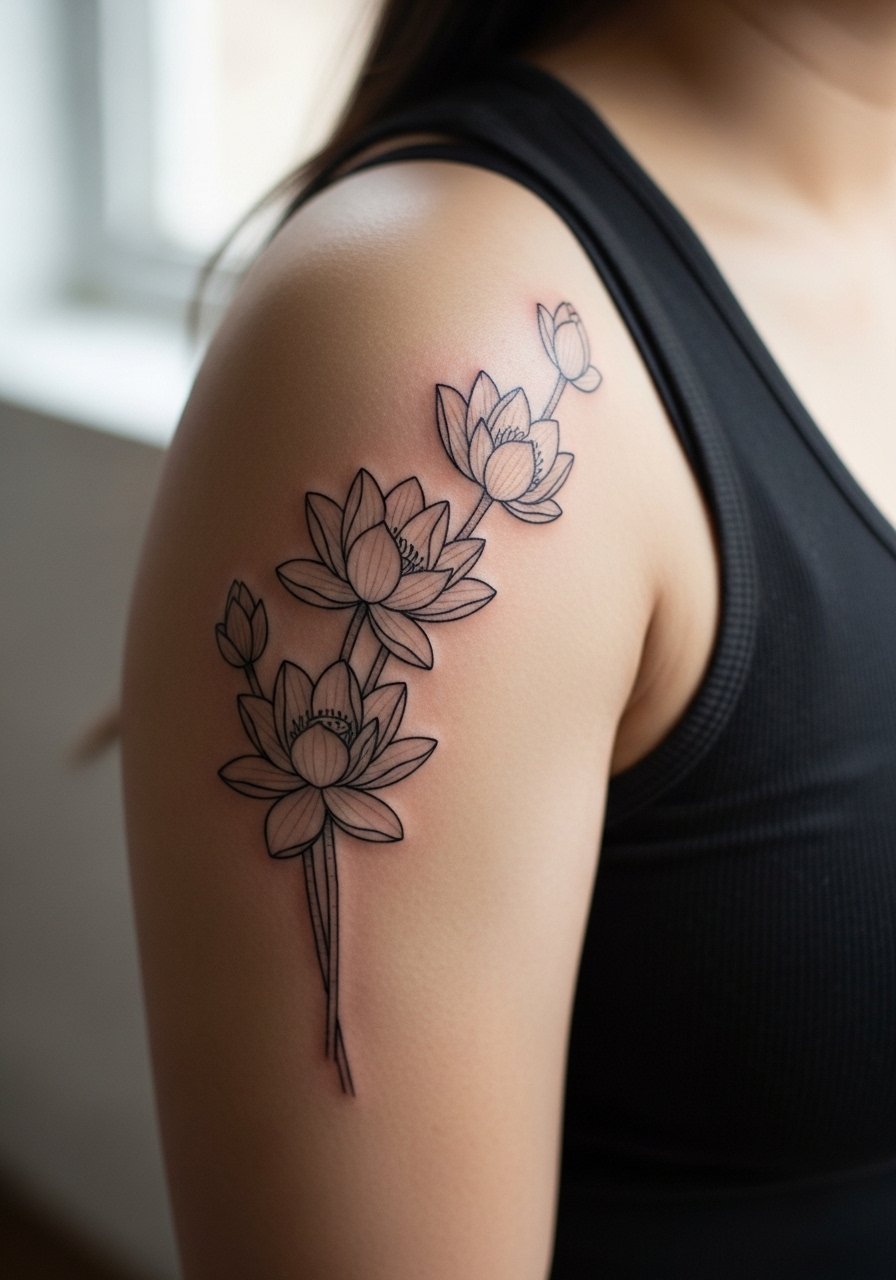
Consultation lead again because this multi-part build needs a mapped plan across sessions. A shoulder cluster that flows into the arm makes a cohesive statement and lets you expand later. The shoulder surface is forgiving for line and dot work, but plan for a few sessions and tell the artist how visible you want the final sleeve to be at a distance. A lightweight tank or linen tank top works well for the appointment and for showing the early progress between sessions. Expect touch-ups along transition points where two sessions meet so the texture reads uniform over time.
Frequently Asked Questions
Q: Will a fine line lotus on my forearm blur faster than a bold lotus?
A: Fine line on the forearm tends to soften faster than bold black linework. From what I have seen, asking your artist for slightly bolder primary strokes and keeping spacing between petals helps the piece read longer. Plan for possible touch-ups at year two to maintain crispness.
Q: Are lotus mandalas on the ribcage worth it given the skin movement?
A: It depends. Some artists avoid tight fine-line mandalas on the ribs because stretch and motion can blur the detail. Others will accept the work if you increase primary line weights and allow more negative space. Ask your artist which approach they use and consider a slightly scaled-up version for longevity.
Q: How should I dress for a shoulder or back lotus session?
A: Wear something loose that you can pull aside without exposing more than the work area. A loose button-down shirt or a tank top works for most shoulder and back sessions. The goal is easy access and comfort during multi-hour sittings.
Q: Do colored lotus tattoos need different care than black and grey?
A: Color can fade differently based on pigment and placement. From experience, saturated pigments tend to mellow over time and may need a touch-up earlier than black. Sun protection and avoiding abrasive clothing on the area are the practical steps that make the biggest difference.
Q: How long should I expect a hip or thigh lotus session to last?
A: A small hip or upper-thigh lotus often finishes within one to two hours. Larger flowing pieces across the hip and thigh can run multiple sessions. Session length varies with detail level and shading technique, so confirm a time estimate with your artist during the consult.
Q: If I want a minimal lotus behind the ear, how visible will it be year-to-year?
A: Behind-the-ear pieces are subtle and can stay faint unless you keep hair short or styled to reveal it. The area heals well but may need a touch-up if you prefer a brighter look after a couple of years. Simple shapes and minimal detail hold up best.