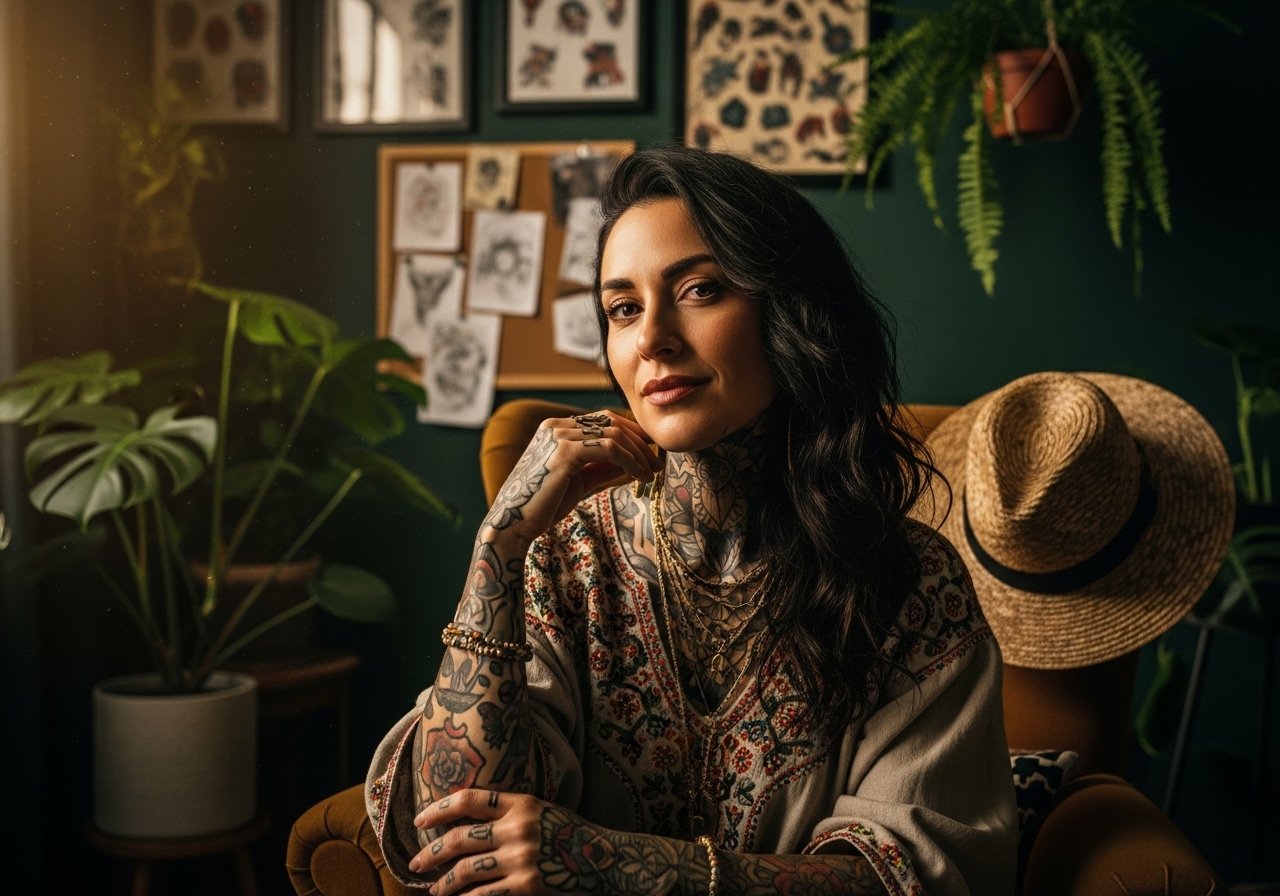
Fine line jasmine tattoos look effortless on feed, yet what holds up five years later often reads differently in real life. Trends push whisper-thin lines and watercolor washes, and the hard part is matching the aesthetic you want with the placement that will actually age well. Read these carefully chosen jasmine flower tattoo ideas and the practical notes you need to take into your consultation.
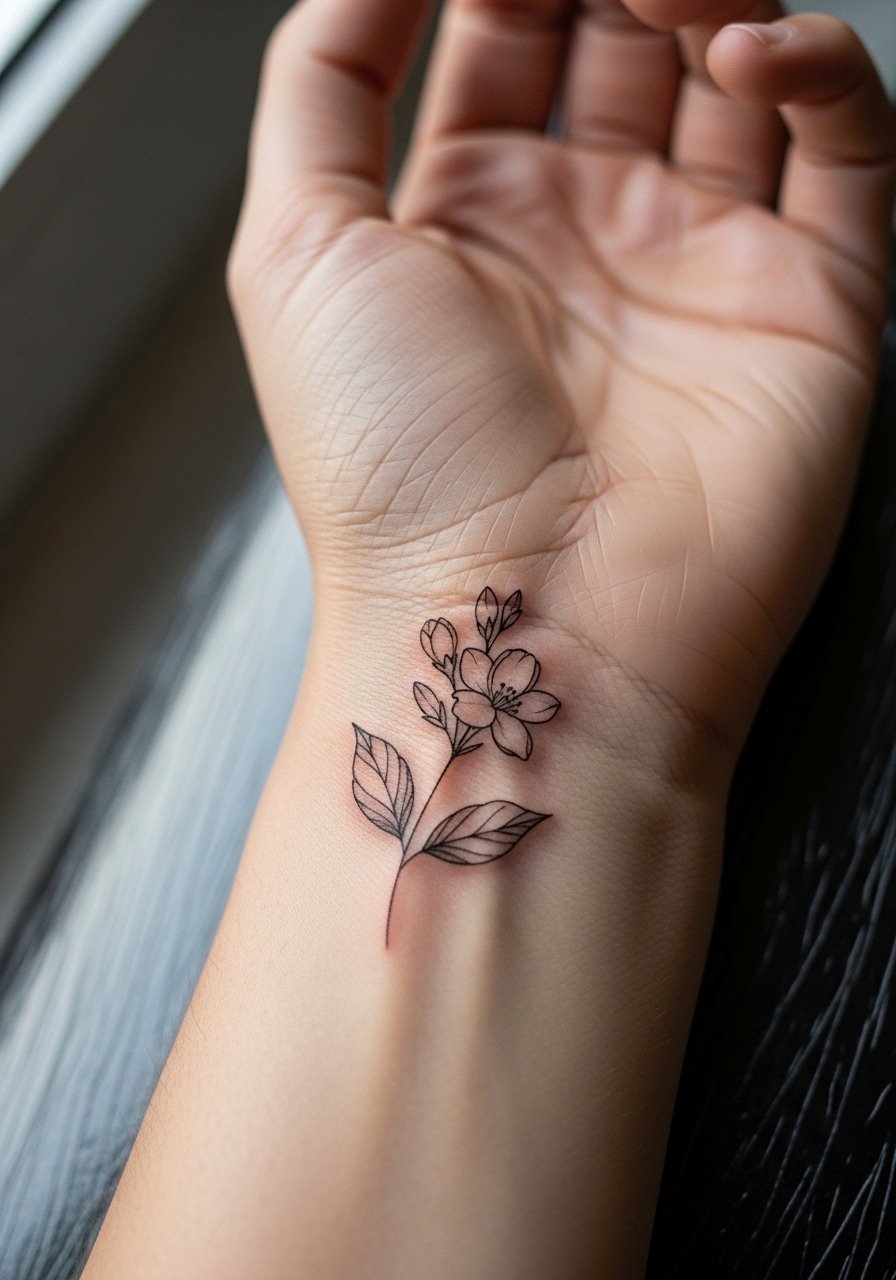
1. Single-needle jasmine bloom on the inner wrist
I've seen this one on first-timers more than any other jasmine design. It works when you want a tiny, readable bloom that also reads like jewelry. Ask your artist for single-needle linework, slightly bolder anchor lines where the petals meet, and minimal spacing between petals so the flower keeps shape as it settles. Fair warning, the wrist sees a lot of washing and bracelets, so expect a light touch-up around year two to preserve crisp edges. For the session wear and to show it off later, pair the piece with a thin silver cuff bracelet and arrive bracelet-free so the area is clear.
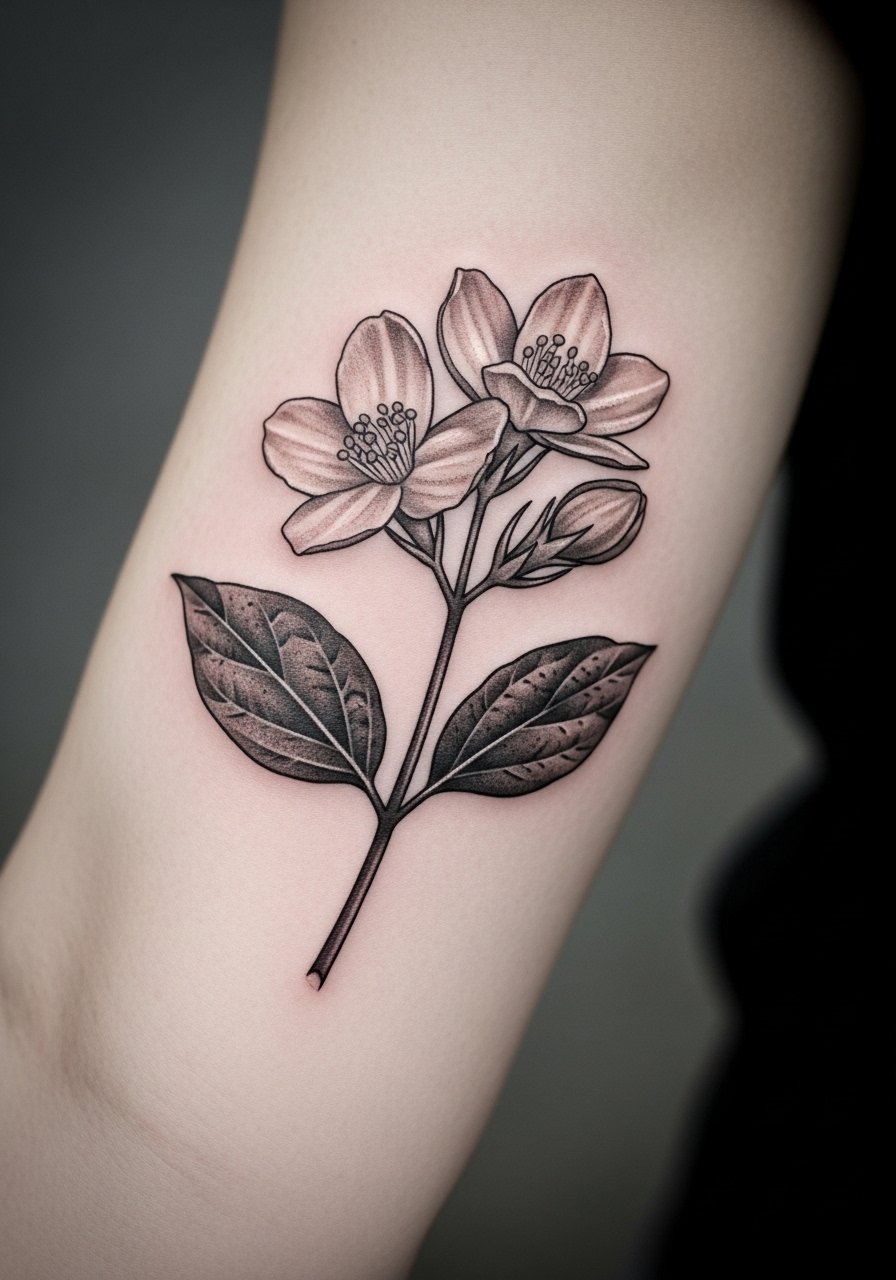
2. Realistic jasmine stem along the outer forearm
Personal observation: collectors choose this when they want botanical realism that reads from arm length. Ask for micro-realism shading with delicate stipple for texture and a stem that follows the arm's natural curve so it reads like it belongs there. The session feels steady and slightly long because of the tiny tonal shifts, expect two to three sessions. At six months the gray wash will look soft, at two years the edges gain character, and at five years you may want a touch-up in shaded areas. Show it off with rolled sleeves by wearing a rolled sleeve linen blouse and come to the appointment in a loose short-sleeve tee for easy access.
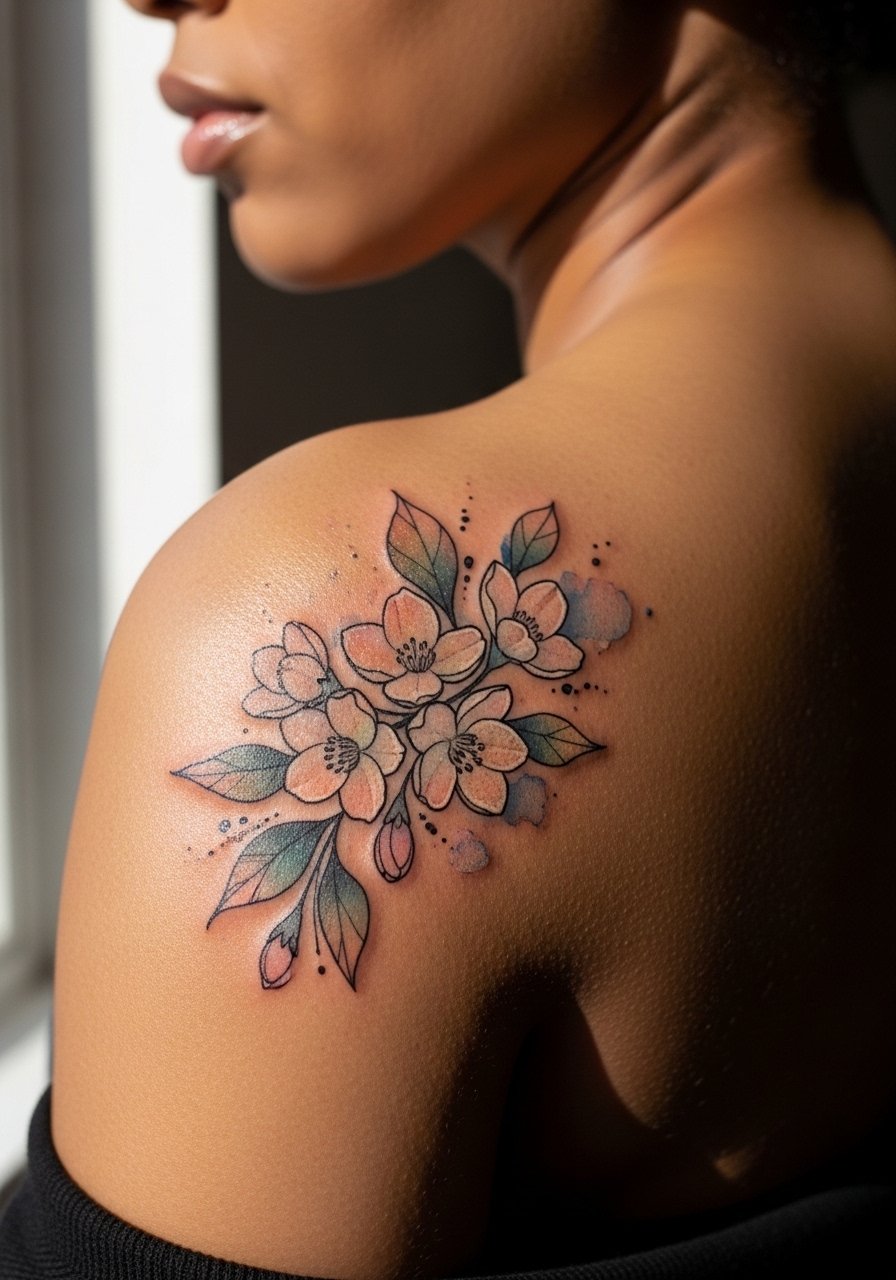
3. Watercolor jasmine cluster on the shoulder blade
Most watercolor floral pieces look soft from across the room and fragile up close. For a shoulder cluster ask the artist to anchor watercolor patches with light linework around the petals so color has defined edges and does not bleed into a bruise-like wash. This placement usually needs two sessions, and you will notice the color softens significantly by year two, requiring brighter refreshes if you want longevity. For showing it off, off-shoulder tops are ideal, try an off shoulder linen top. For the session, bring a strapless or wide-strap top so the artist can work without snagging fabric.
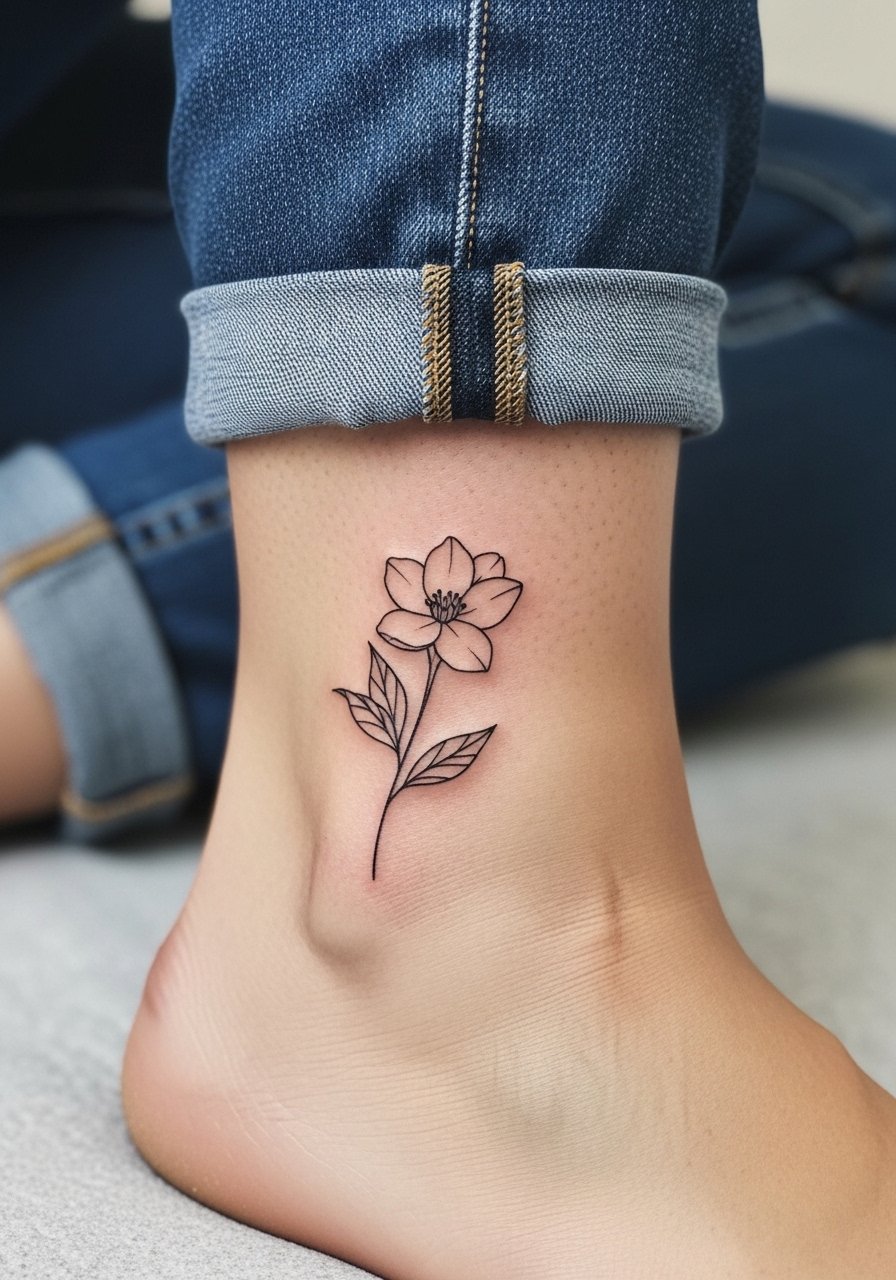
4. Minimalist outline jasmine on the inner ankle
The ankle is great for a low-commitment, discreet bloom. The biggest error is asking for lines that are too fine against the ankle's thin skin and curvature, which increases blowout risk. Instead request slightly firmer line weight and a tiny open space between petals to let the ink age without merging. The session is short and sharp because the area has bone close to surface. For summer shows pair it with strappy flat sandals women. Wear loose pants rolled up or shorts to your appointment so the artist can access the ankle without tugging.
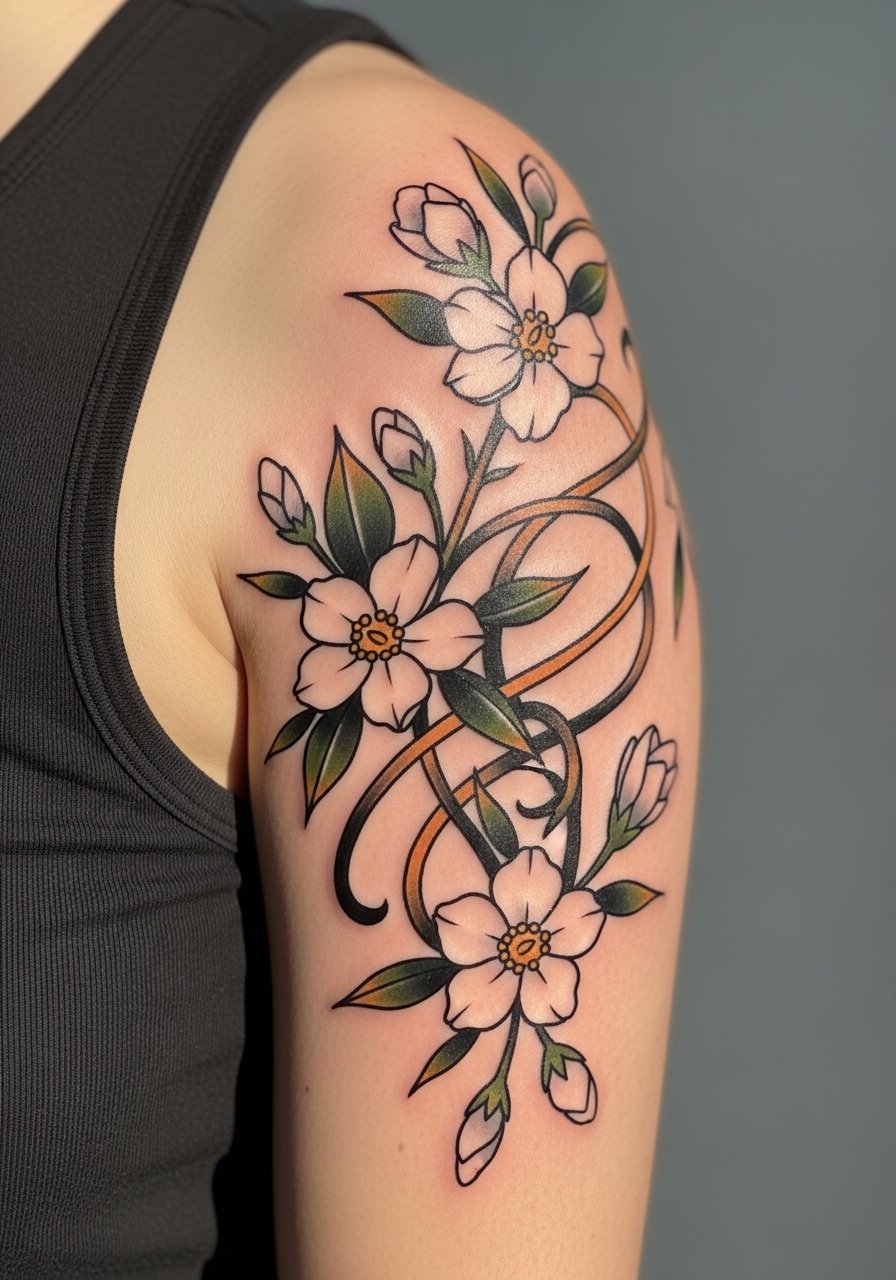
5. Neo-traditional jasmine with vines on the upper arm
Visual impact lead: bold outlines and saturated color make a neo-traditional jasmine read like a badge on the upper arm. This is a good starter for people who want a piece that can grow into a sleeve. Ask your artist to plan negative space between the vine curls so the pattern does not become a solid mass over time. Expect three sessions and heavier saturation, which tends to last longer than hairline work. For evenings and casual looks, pair with a sleeveless muscle tank. During the appointment wear a loose tank you can pull aside without stretching the skin.
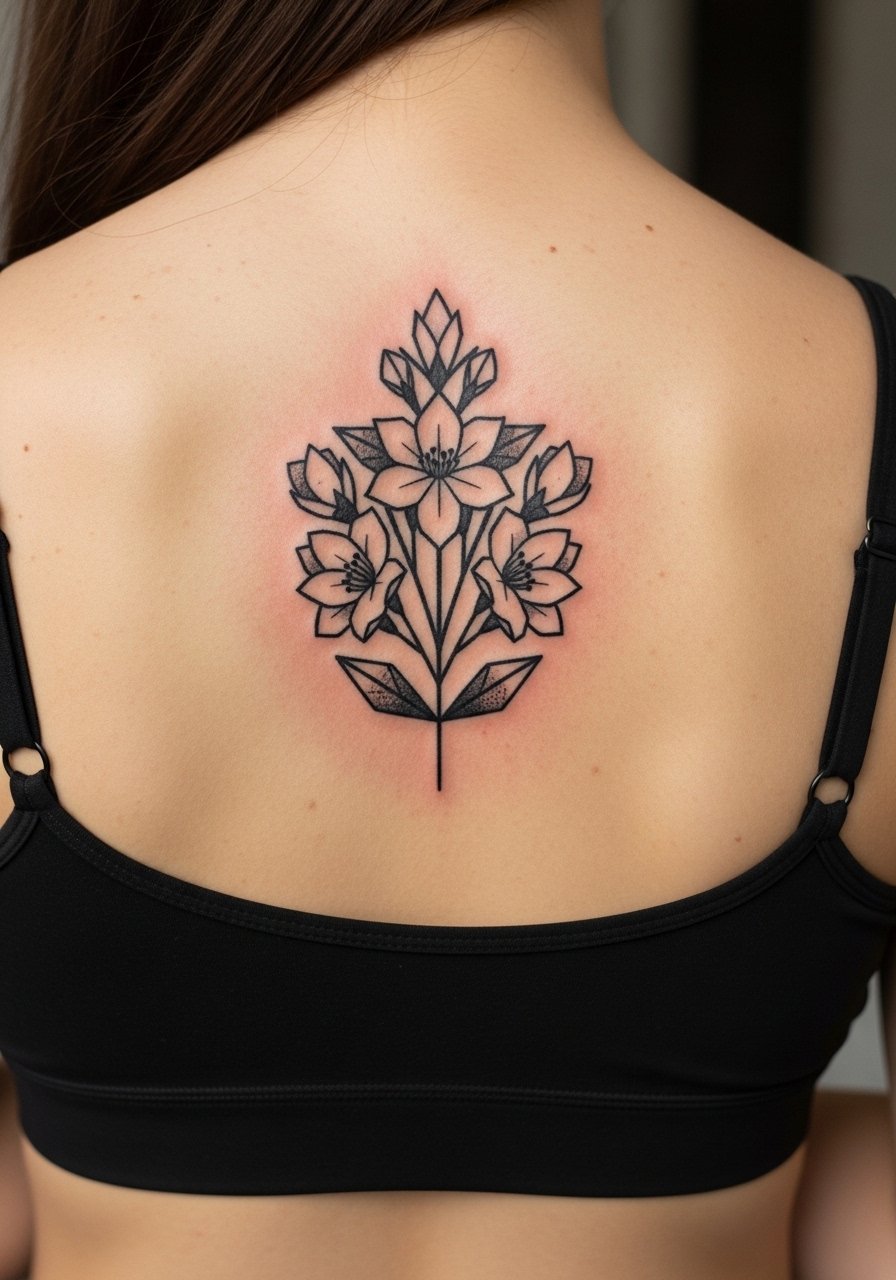
6. Blackwork geometric jasmine across the upper back
Visual impact lead: large black shapes and precise negative space create a modern take that reads from a distance. The downside is long sessions and careful positioning to keep symmetry. For this size expect multiple longer visits and planning sketches that consider spine alignment. Blackwork tends to age well if spacing is generous. For showing it off, low-back dresses work best, try a low back dress black. For the session, wear a front-opening shirt or sports bra so the artist can work with you lying face down comfortably.
Studio Day Picks
The wrist, forearm, shoulder, ankle, upper arm and back pieces above ask for different prep and a few small items smooth out the session and the first week.
-
Stencil transfer paper kit. Lets you preview line placement on skin, which is useful for the small wrist and ankle references in ideas 1 and 4.
-
Topical numbing cream. Applied before the session reduces the sharp edge on sensitive areas like the ankle and inner wrist without changing linework when used as directed.
-
Thin protective film roll. Keeps delicate fine line areas clean through the first days of movement for forearm and hand pieces.
-
Fragrance-free gentle body wash. Cleans the healing area without stripping the subtle washes that watercolor and micro-realism rely on.
-
Aquaphor healing ointment. A thin layer during the first days helps maintain moisture for fine line work without clogging the tiny needle channels.
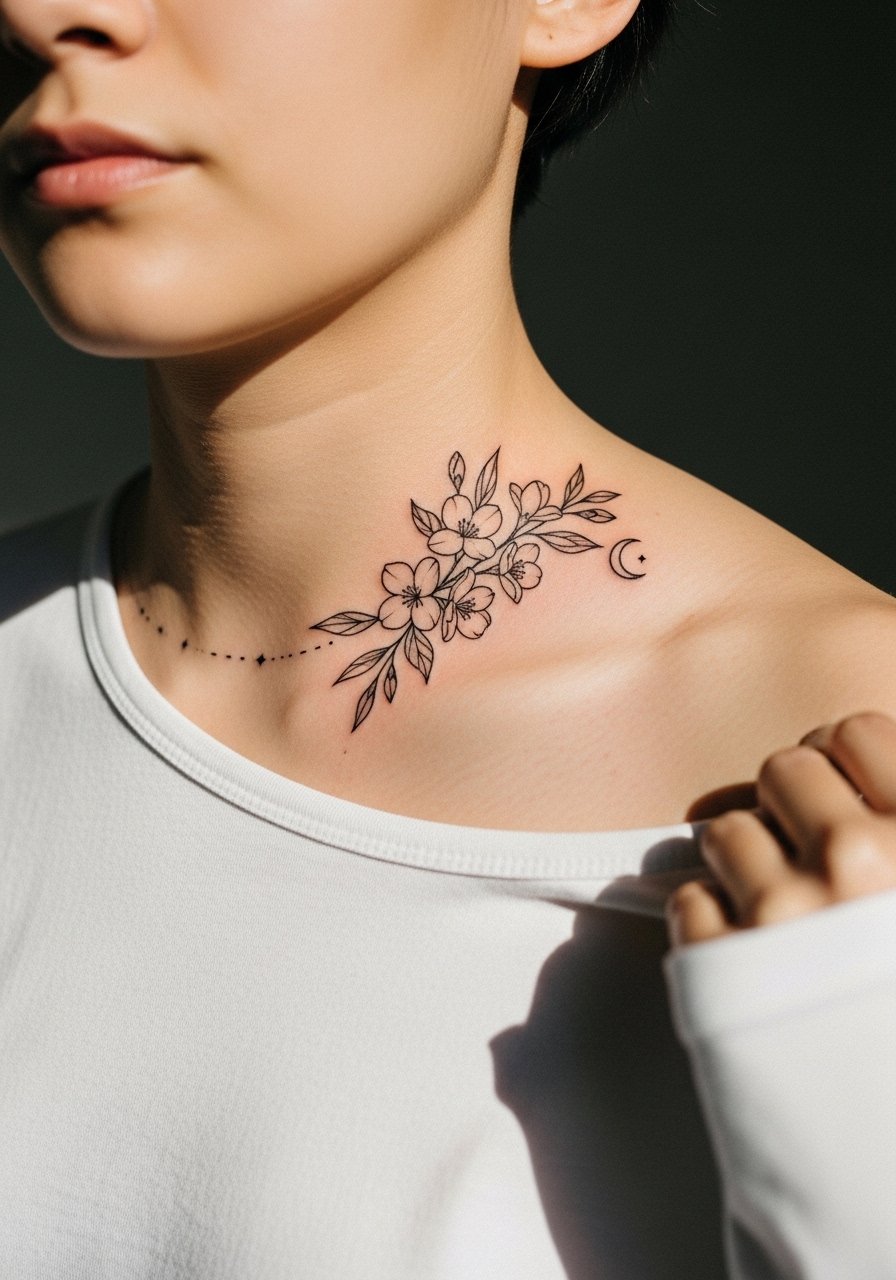
7. Fine line jasmine with crescent moon on the collarbone
Consultation lead: talk about scale and the moon's placement relative to the clavicle so the composition feels natural when you move. Collarbone work picks up light and shadow differently, and thin lines there may need slightly more space between petals to remain crisp. Expect one to two sessions and moderate soreness while the area is worked. For evening wear, a v-neck or gold choker complements this placement, try a gold choker necklace for styling. For the appointment wear a wide-neck shirt or strapless bra so the collarbone is accessible without fabric bunching.
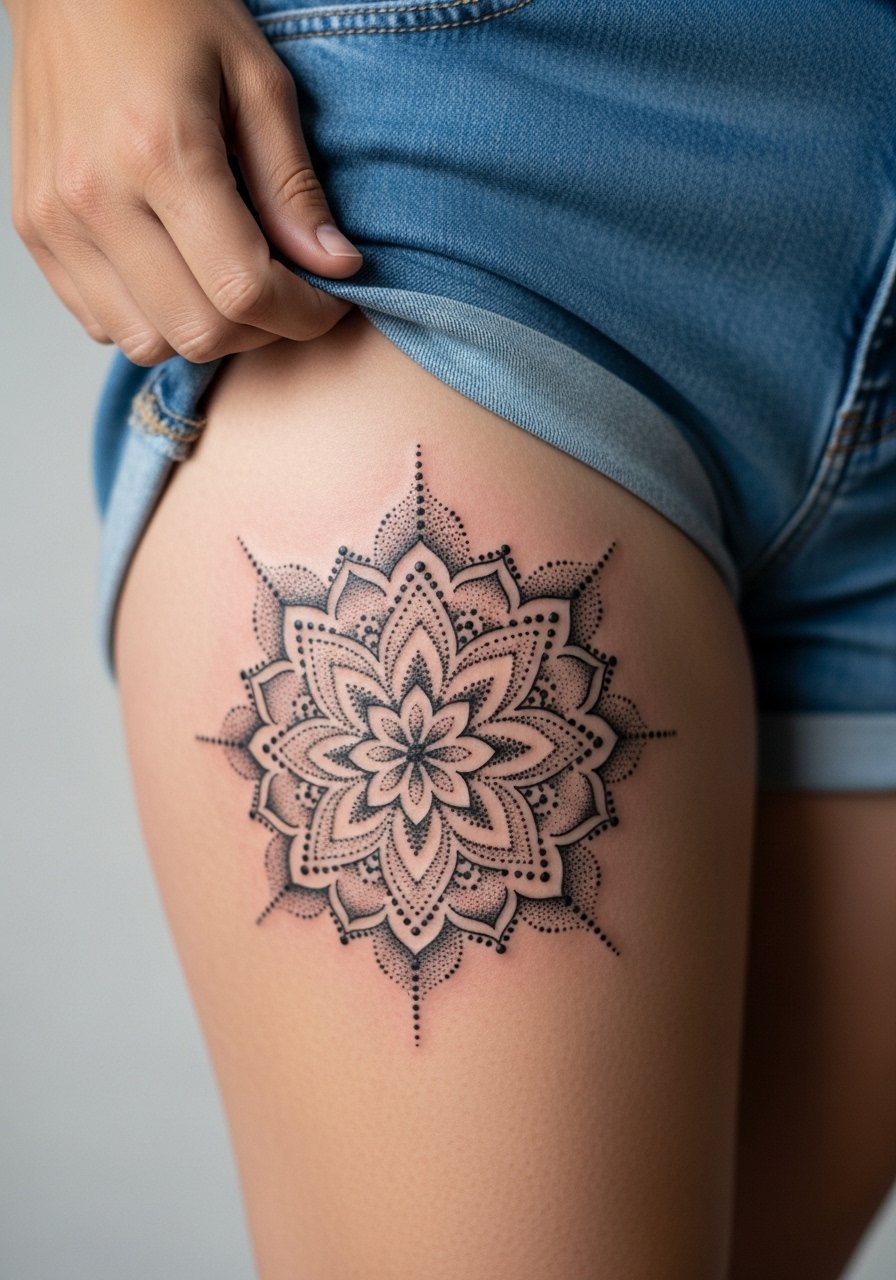
8. Ornamental jasmine mandala on the outer thigh
Personal observation: thigh pieces let you go big with pattern and detail without daily visibility concerns. Mandala layouts work here because the thigh provides a broad canvas for dot work and stipple shading. The biggest mistake is overfilling the center with tight detail, which can blur over years. Space the motifs and plan for multiple sessions. High-slit skirts show off the pattern, so pair the piece with a high slit maxi skirt when you want it visible. Bring loose shorts to the appointment to allow the artist to access the area without pressure.
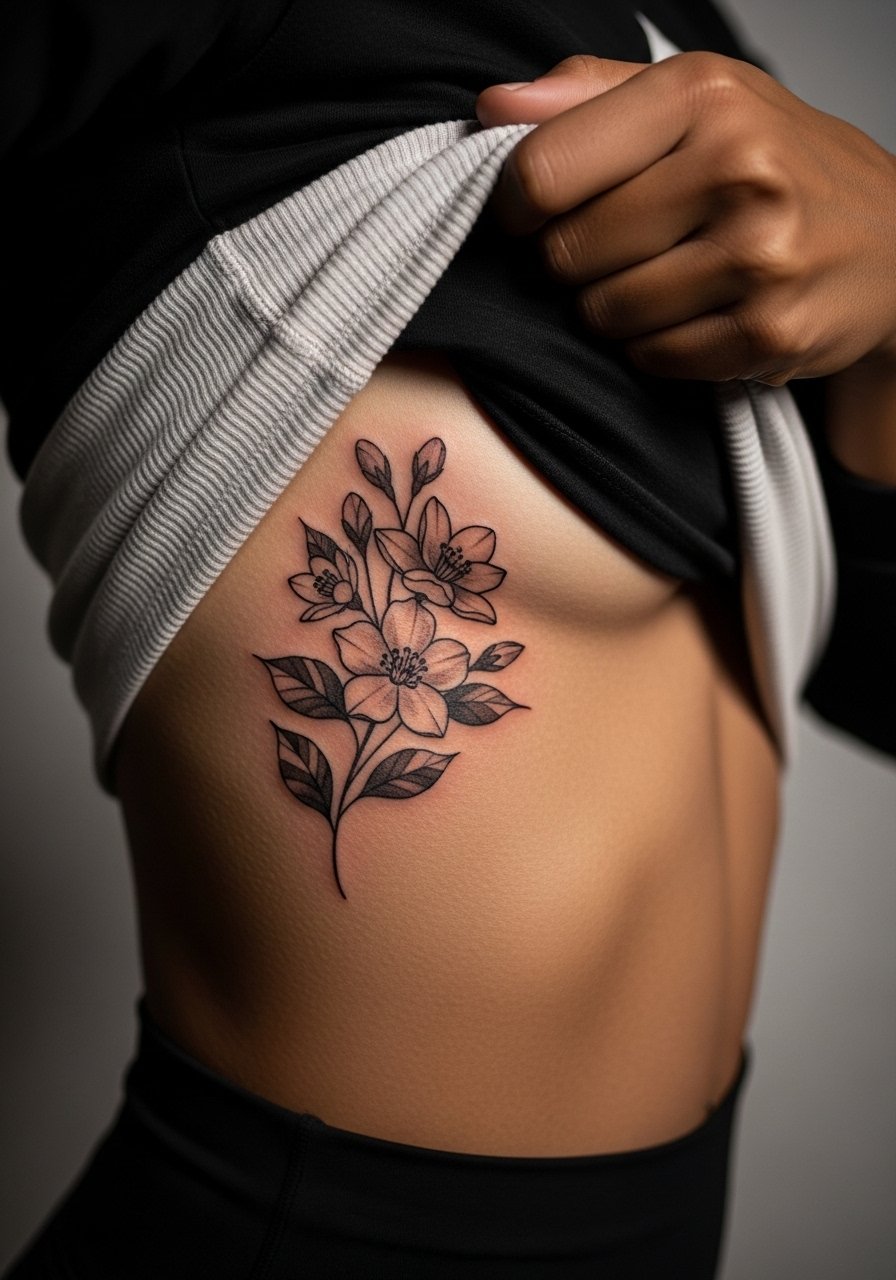
9. Delicate black and gray jasmine bouquet on the ribcage
Controversy lead: fine line on ribs splits artists into two camps. One camp warns that the skin stretch and movement blur lines quickly. The other camp says that with controlled needle depth and spacing, fine line settles fine. Ask your artist which side they fall on and why before booking. Expect a higher pain rating and 2 to 3 sessions for a detailed bouquet. Keep in mind healed contrast at six months will be soft and by year three you may need targeted touch-ups for the shaded areas. For the session wear a cropped athletic top lifted just enough for access.
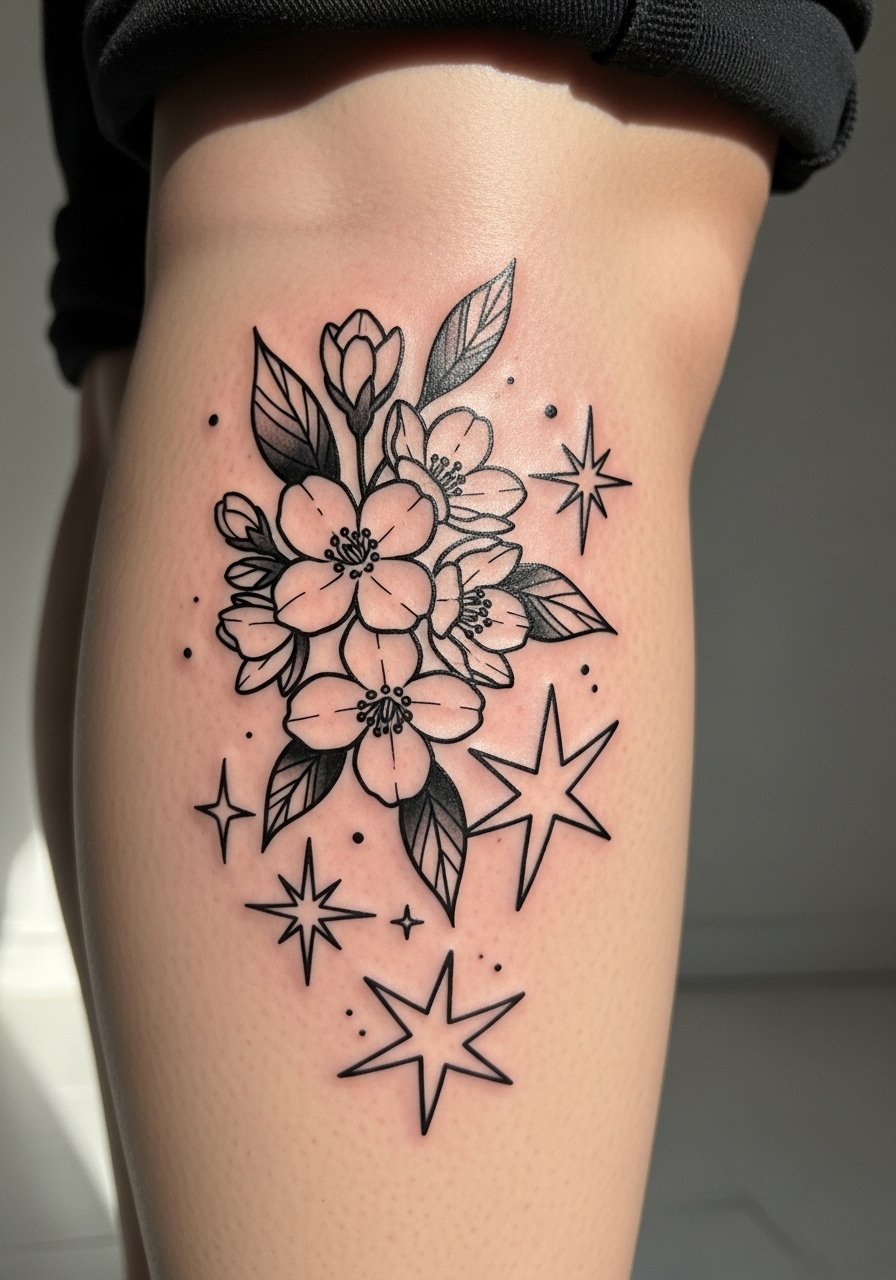
10. Playful ignorant-style jasmine with stars on the calf
Mistake lead: asking for tiny, sketchy lines without intentional hand placement can read like sloppy flash. The ignorant style profits from deliberate imbalance, bold black lines, and overscaled stars that look purposeful. Calf work is comfortable and tolerable for most clients and usually fits in two sessions. Over time the bold blacks hold up better than micro detail on the same area. For casual wear, short athletic shorts pair well, try athletic bike shorts. Wear loose shorts to the session so the artist can roll the leg without fabric tension.
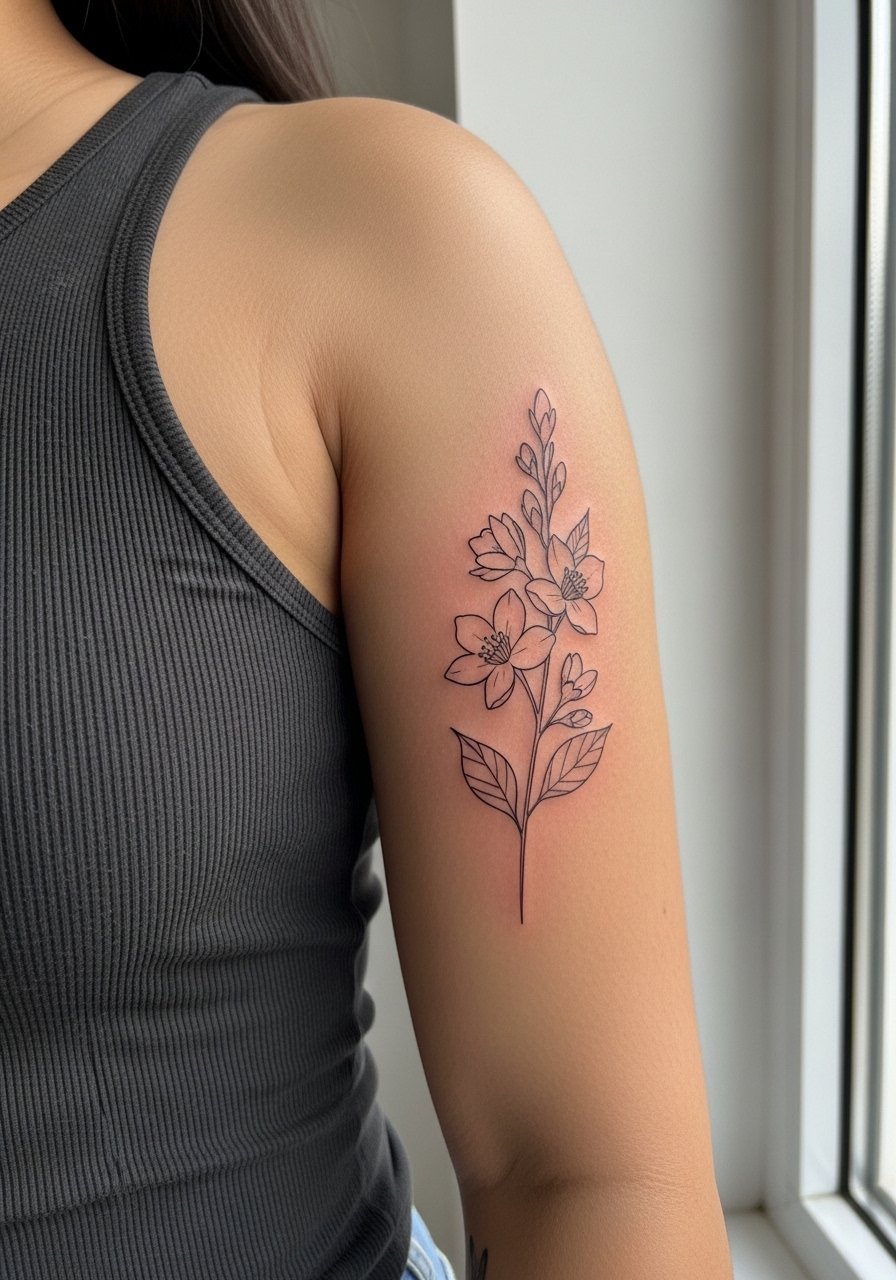
11. Botanical fine-line sleeve starter on the inner arm
Consultation lead: this is a piece meant to grow, so plan negative space now for future connectors. Inner arm single-needle work requires steady depth and will age differently on varied skin textures. Expect multiple sessions and a longer touch-up timeline as it expands. A common mistake is cramming too many tiny leaves; allow room so stipple and whip shading can breathe. For session comfort wear a fitted racerback tank you can lift without stretching the ribcage. The area is forgiving for fine detail but needs careful planning.
12. Small jasmine sprig behind the ear, below the hairline
Styling lead: tiny behind-the-ear placements read as a secret accent and need hair that can be tucked to reveal them. For the prompt, always describe the area as "on the skin behind the ear, below the hairline on the neck" so placement is clear. These pieces heal well with minimal sessions but can be affected by hair oils and product use so ask about aftercare. Choose a simple sprig design with sturdy anchor lines to avoid blur. For showing it off, a low bun or tucked hair does the trick. The appointment is quick and the area is forgiving with the right spacing.
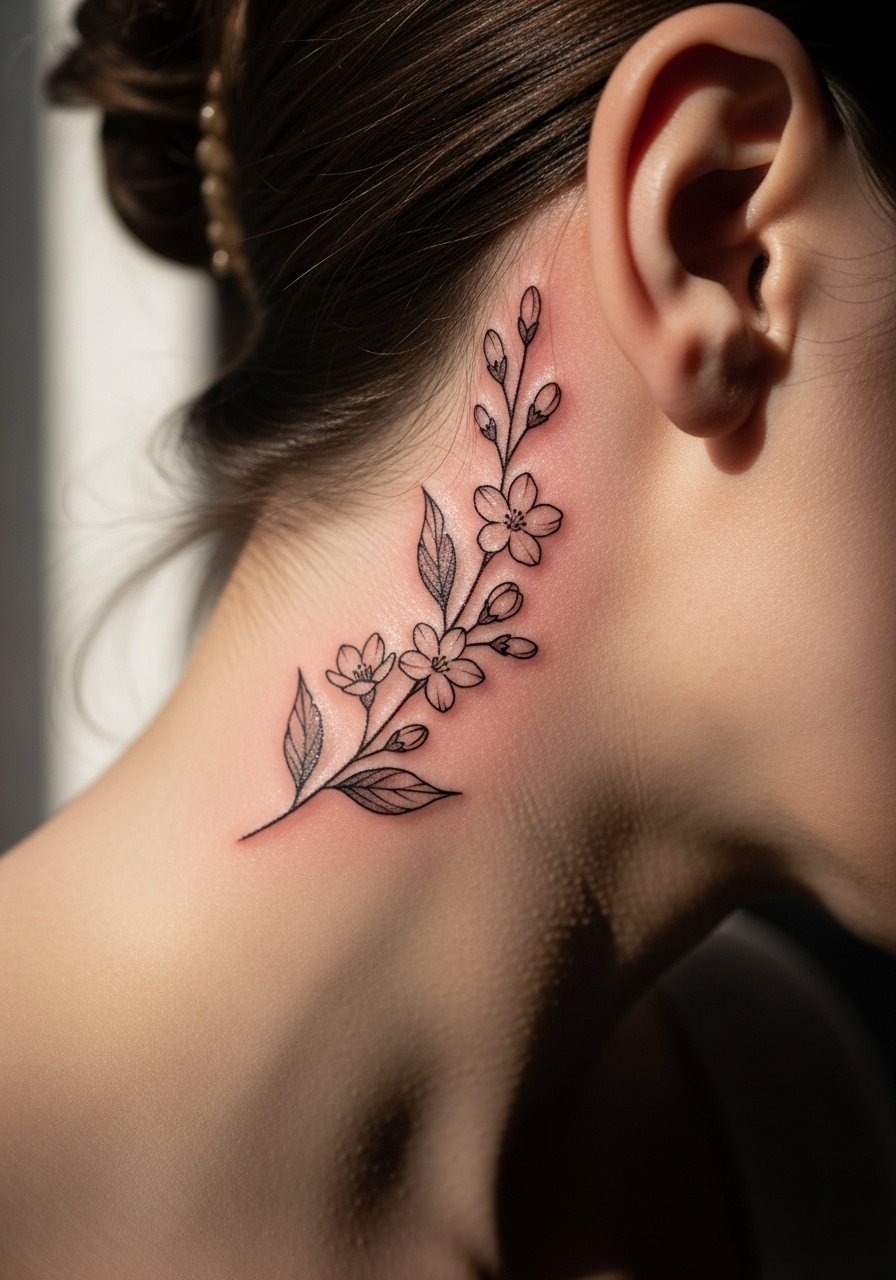
13. Tiny script and jasmine on the side of the neck
Mistake lead: neck tattoos need exact scale so the script does not compete with the floral element. Ask for the exact lettering and position relative to the jawline to avoid distortion when you turn your head. Neck work demands a specialist and may affect job considerations, so discuss placement with care. Expect short sessions but real tenderness during and after. For showing it off, wide-neck shirts or collars pulled aside present the area subtly, try a wide neck shirt when you want to spotlight it. The image should be framed only on the neck to stay modest.
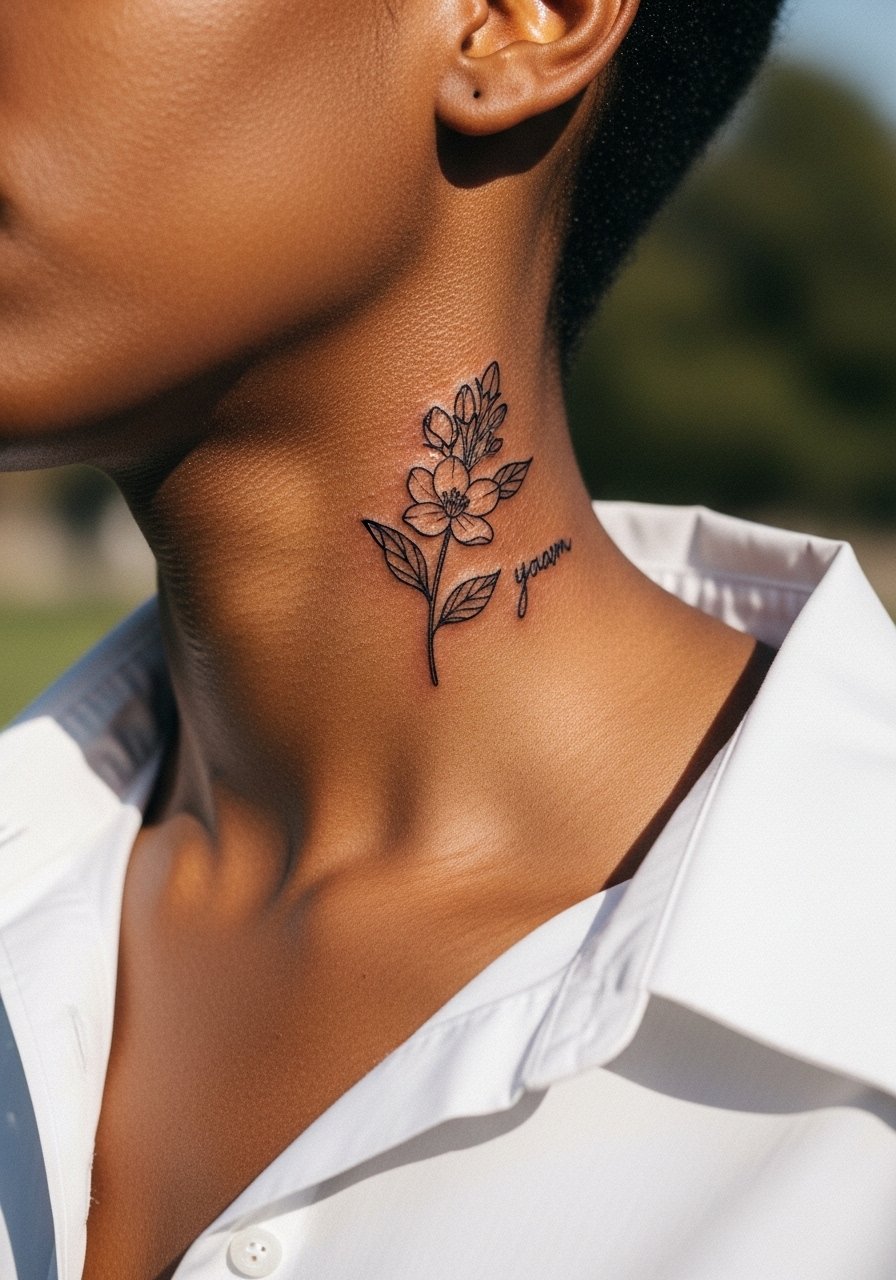
14. Jasmine bouquet on the sternum above a sports bra line
Pain warning lead: the sternum can be sensitive, but the area gives a central, symmetrical canvas for small bouquets. For safety, the subject must wear a fitted sports bra so the image frames only the upper chest. Ask for line anchors between petals and conservative spacing so the design keeps its shape. Expect moderate to high soreness and two sessions for shading. Many people prefer to have the piece hidden under tops, and the sports bra line makes this discreet for daily life.
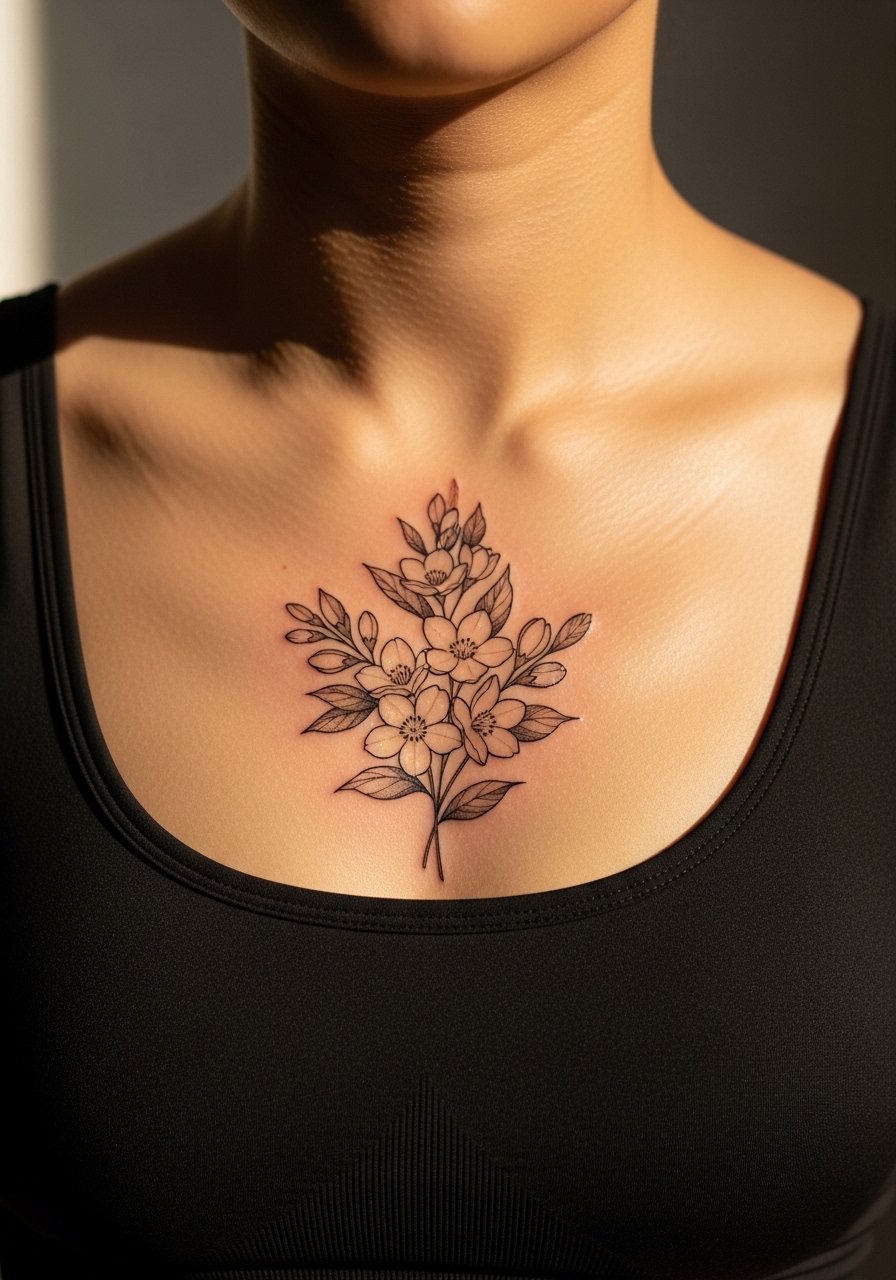
15. Crescent vine jasmine wrapping the ankle
Visual impact lead: a wraparound vine makes the ankle read like jewelry. The trick is avoiding lines that circle too tightly which increases the chance of ink migration in a high-movement area. Plan slight gaps and allow the vine to breathe with negative space. The session is short and the result photographs well with sandals, try pairing it with ankle strap heels for nights out. Wear shorts or pants you can roll up easily to the appointment.
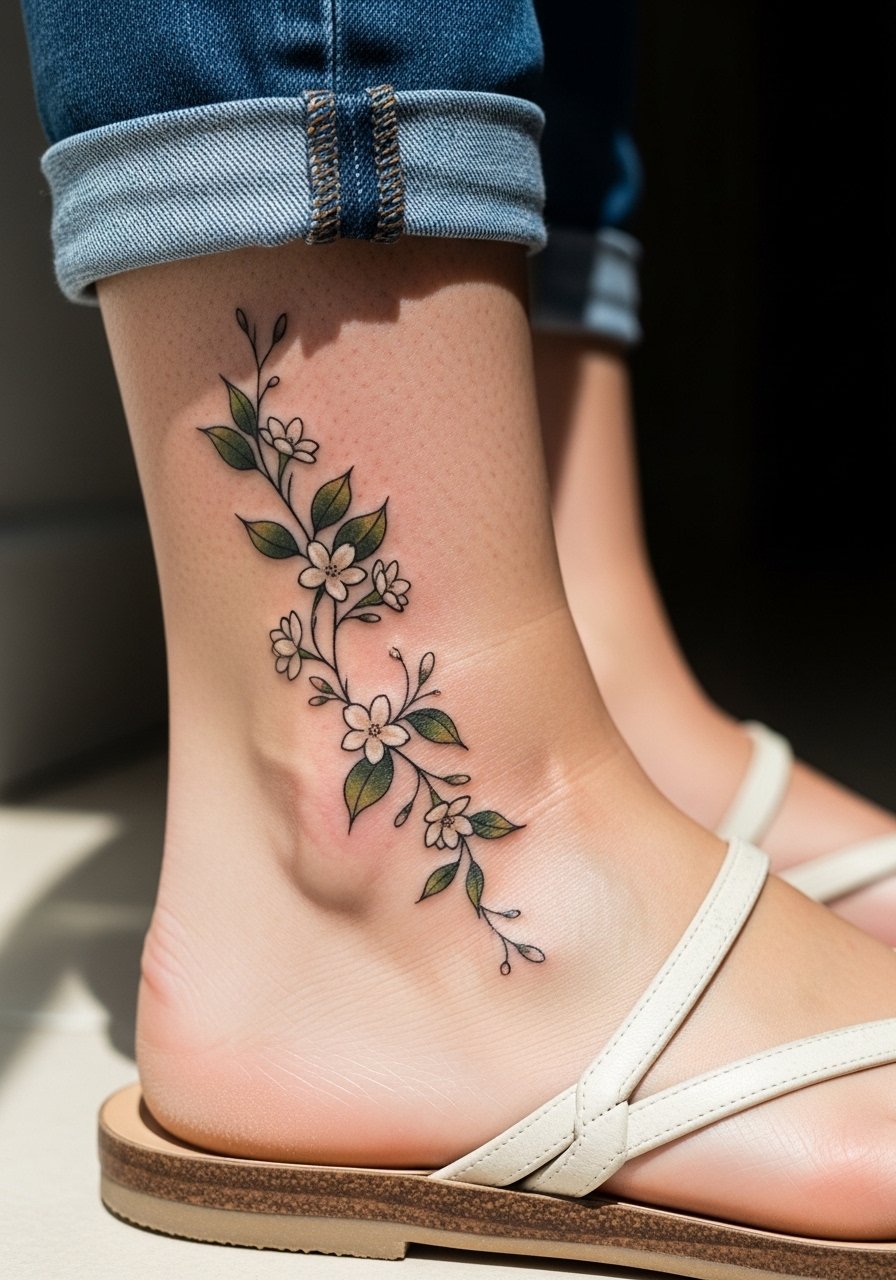
16. Jasmine constellation finger cluster
Consultation lead: fingers are notoriously mobile and background friction is constant, so ask for bolder outlines and slight spacing between elements. The common mistake is pushing too much micro detail into a tiny zone. Expect touch-ups more often than with arm work. For showing this off, stacked dainty rings sit well with a small finger cluster. For the session the artist will stencil precisely and may advise short breaks to steady your hand.
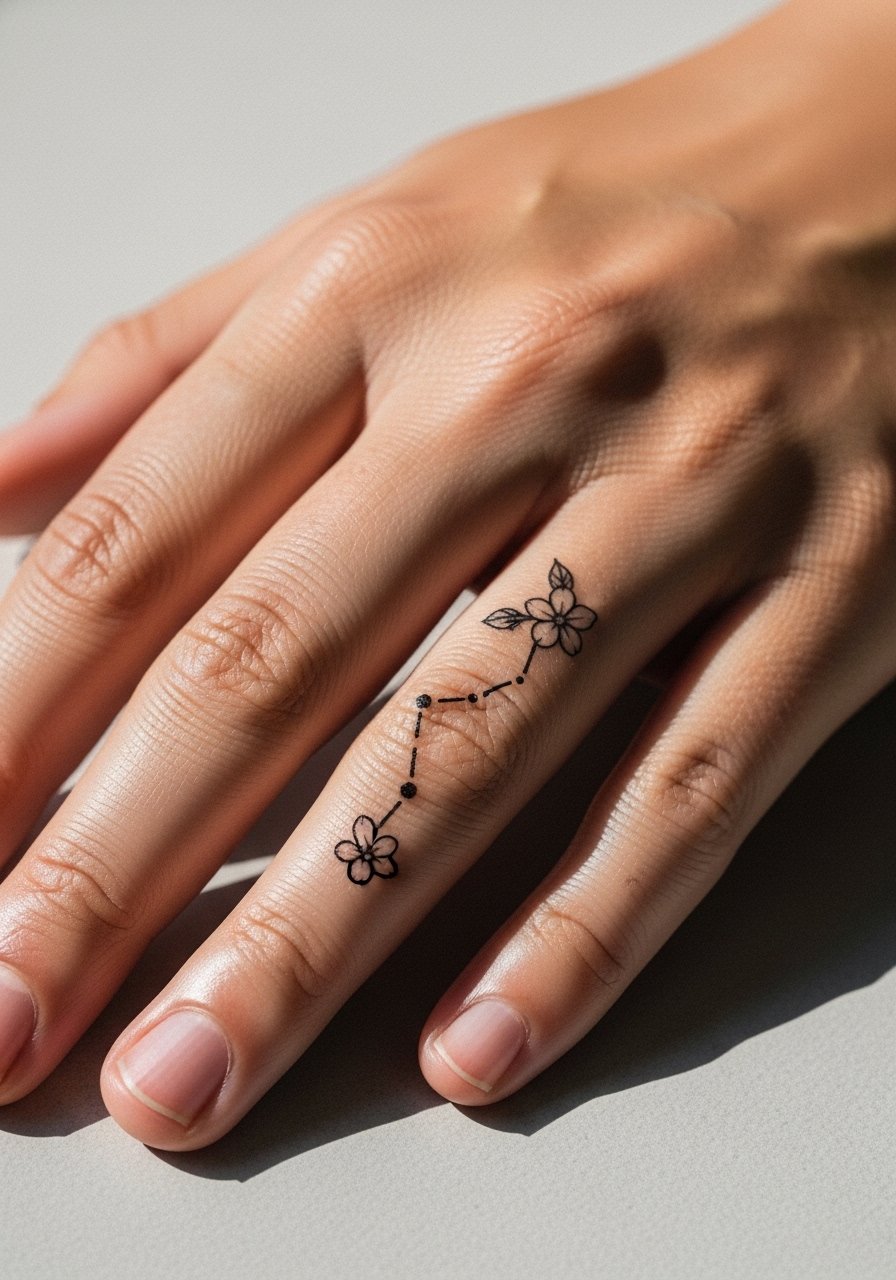
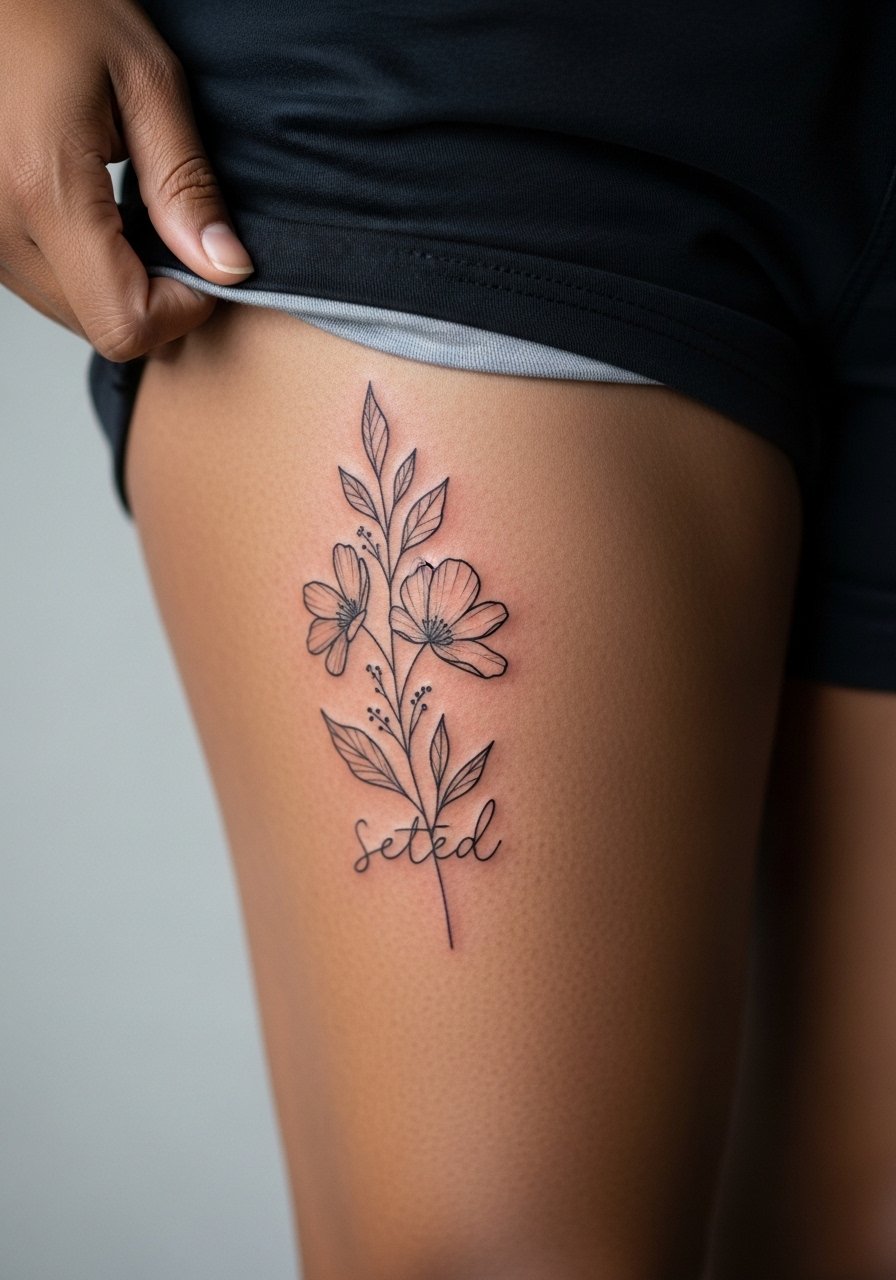
17. Inner thigh jasmine sprig in fine line
Aging lead: inner thigh skin changes with weight and movement, so keep shapes slightly larger and avoid ultra-fine hairline detail that can blur. This placement offers privacy and scale, and it is comfortable for longer sessions if you wear loose shorts or a swimsuit bottom for access. Expect one to two sessions depending on complexity. For showing off selectively, high-waisted bottoms or a swimsuit pairs well. The artist should confirm how the piece stretches when you sit and stand.
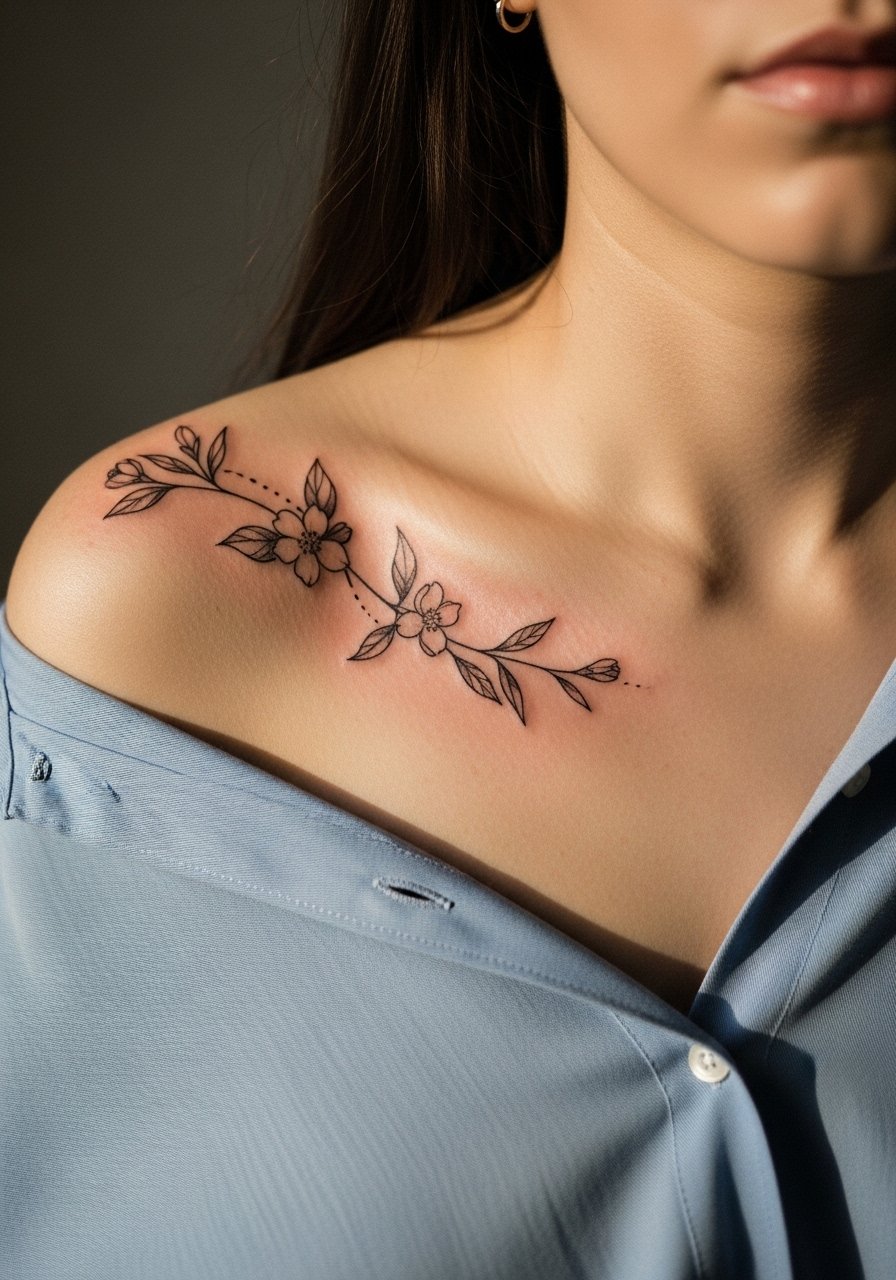
18. Shoulder-to-collarbone jasmine flow piece
Visual impact lead: flowing vines that travel from the shoulder to collarbone make for movement-based compositions that look different with each outfit. The common error is forcing symmetry where the body is asymmetrical. Ask your artist to map the flow while you hold typical posture. Expect two sessions and plan for touch-ups at year three if you want high contrast. For show-off pairing try a strappy camisole. Wear a button-down shirt you can pull aside for the session.
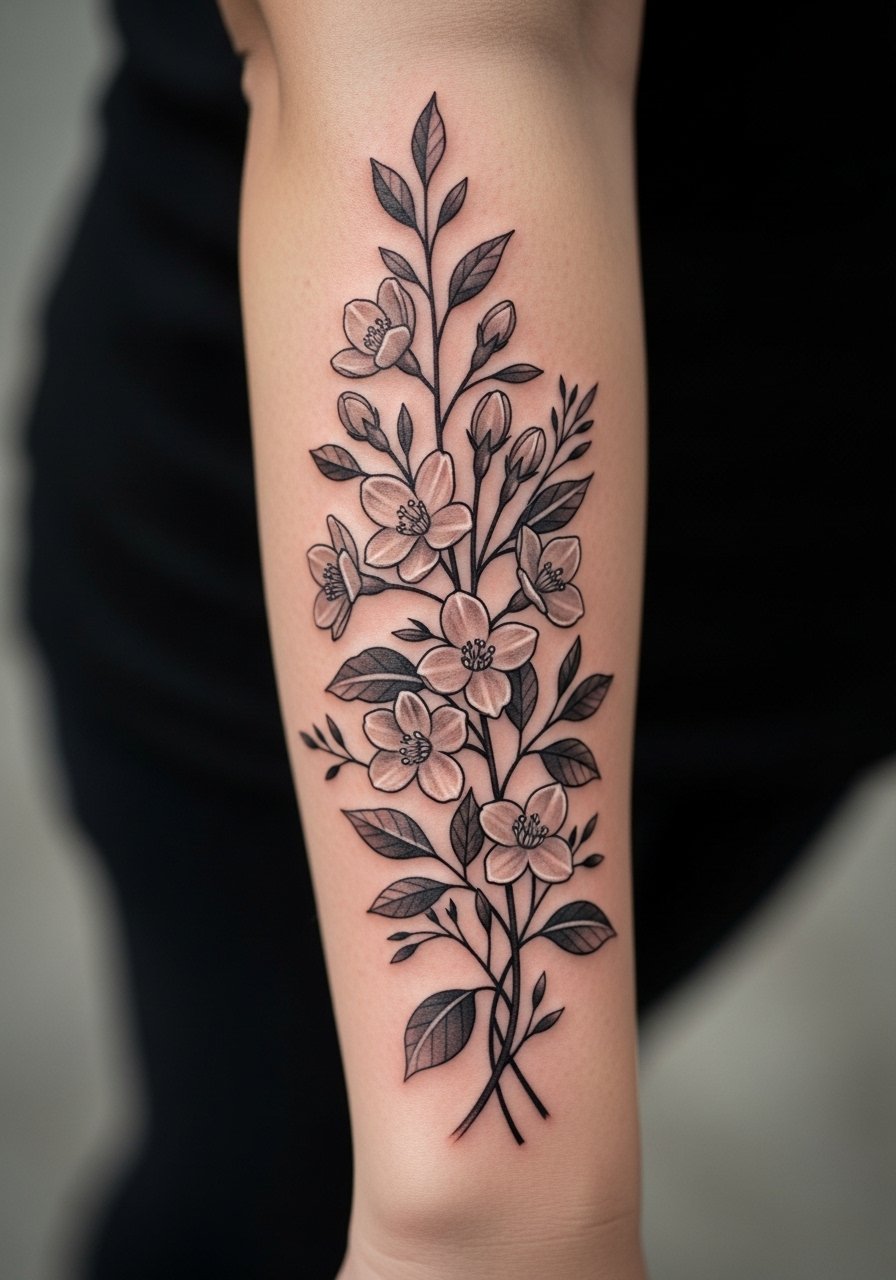
19. Micro-realism jasmine bouquet on the upper forearm
Consultation lead: micro-realism needs photographic reference and patience in shading so the tiny petal textures read as depth rather than grain. Expect two to three sessions and precise shading notes during the consult. A common mistake is asking for too small a size for the desired realism. For showing it off keep sleeves rolled up in a light gray short sleeve shirt. Arrive in a loose tee to make access easy and comfortable.
20. Single blossom behind the knee for a hidden pop
Personal observation: behind-knee tattoos are rarely visible in daily life and make a nice private detail. The skin there moves a lot and the area tolerates medium line weights better than hairline strokes. Sessions are short but expect occasional touch-ups as skin creases. For session wear choose loose shorts that let the leg lay flat without tension. This placement is subtle and works well when you want a design that stays personal.
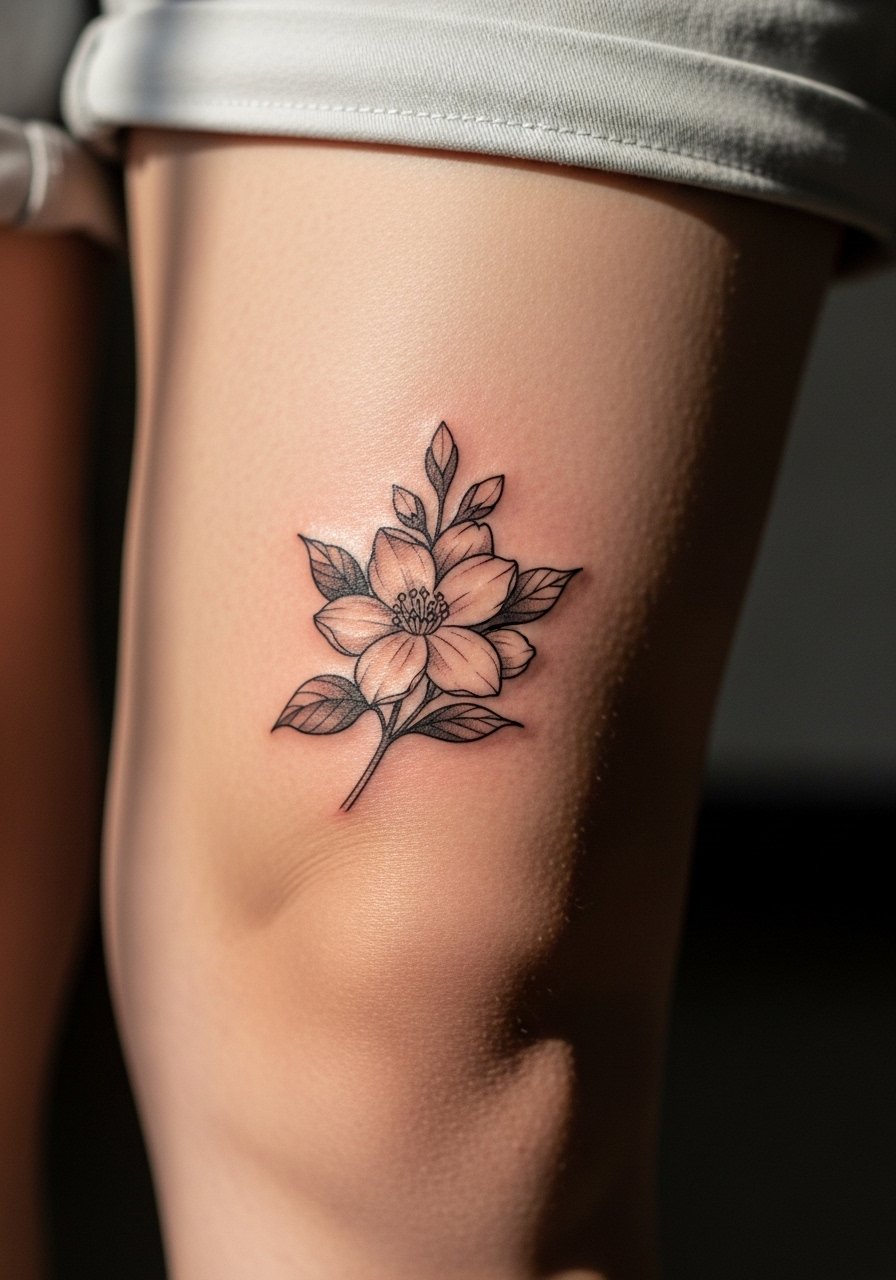
21. Half-sleeve jasmine with mixed techniques
Mistake lead: combining micro-realism, stipple shading and linework requires a clear plan so the transitions read intentional. The biggest regret I see is patching in styles mid-process without a compositional map. Expect multiple sessions and a staged timeline. This approach is best for someone building a cohesive arm story and willing to budget a multi-session plan. For session comfort wear a loose button-down you can push up to the needed height.
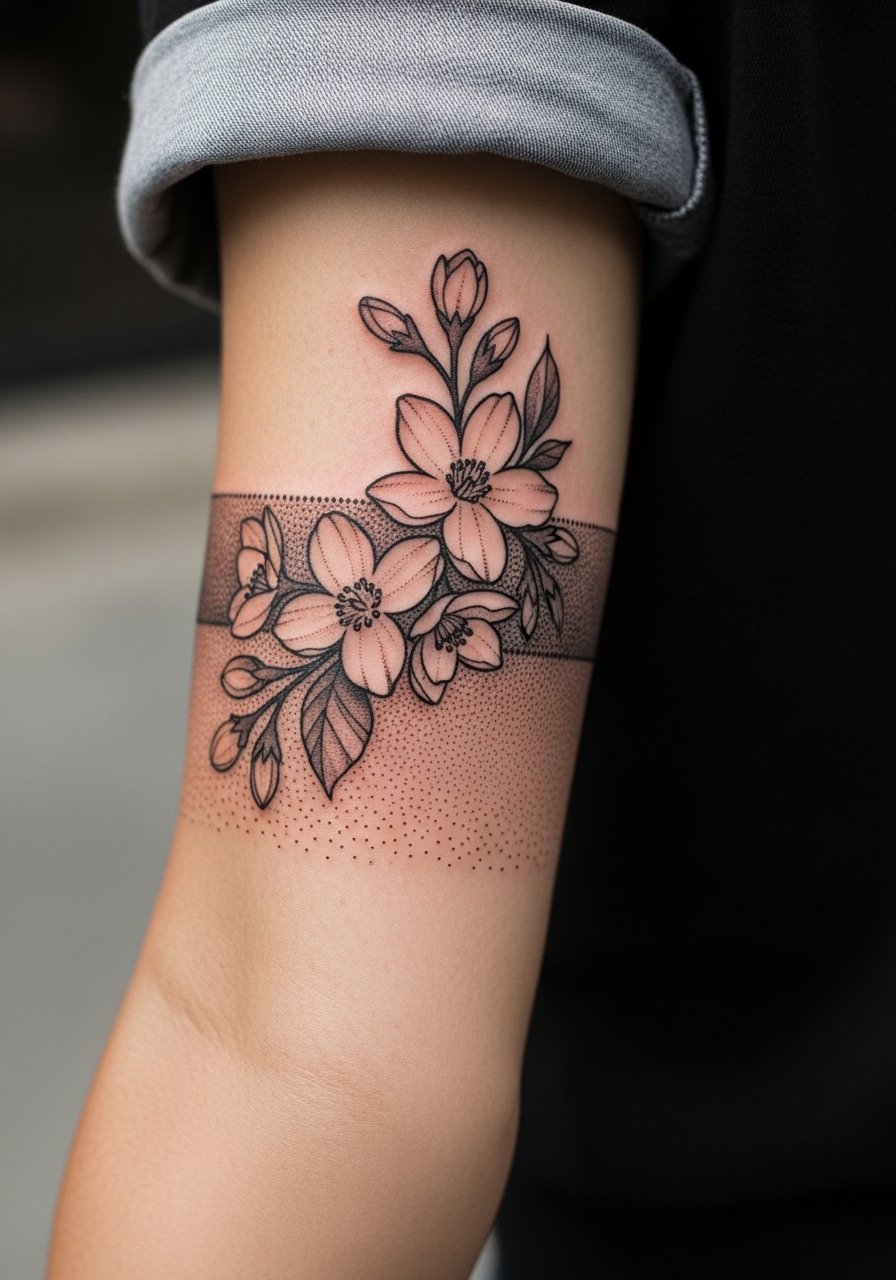
22. Geometric jasmine framed on the lower back
Visual impact lead: the lower back gives you horizontal space for symmetrical geometry layered with jasmine motifs. For safety the subject should wear a tank top with high-waisted pants pulled slightly low to reveal only the tattoo area. Plan solid black anchors and breathing room in the geometric pattern so the piece reads for years. Expect three to four sessions for the larger blackwork areas. For evenings an open-back top highlights the design.
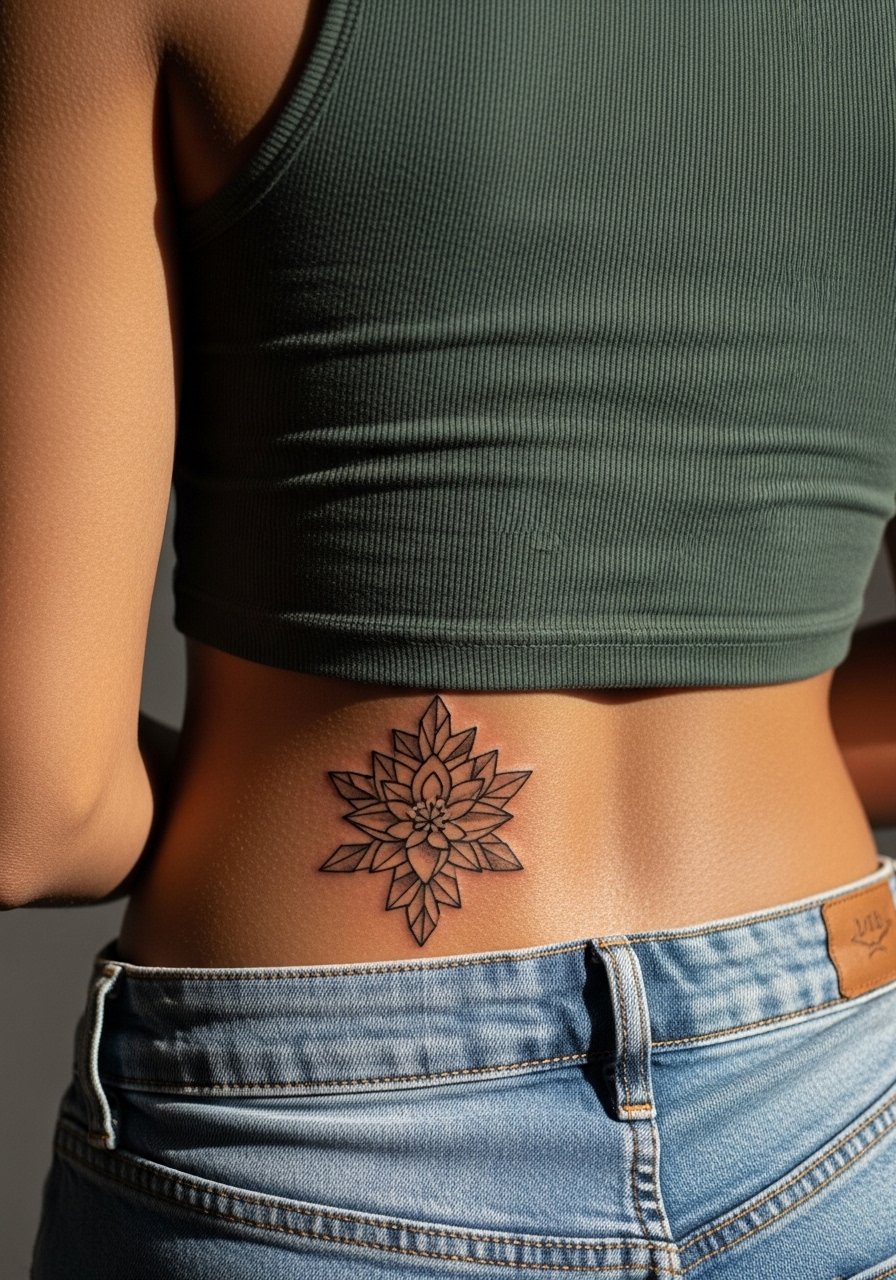
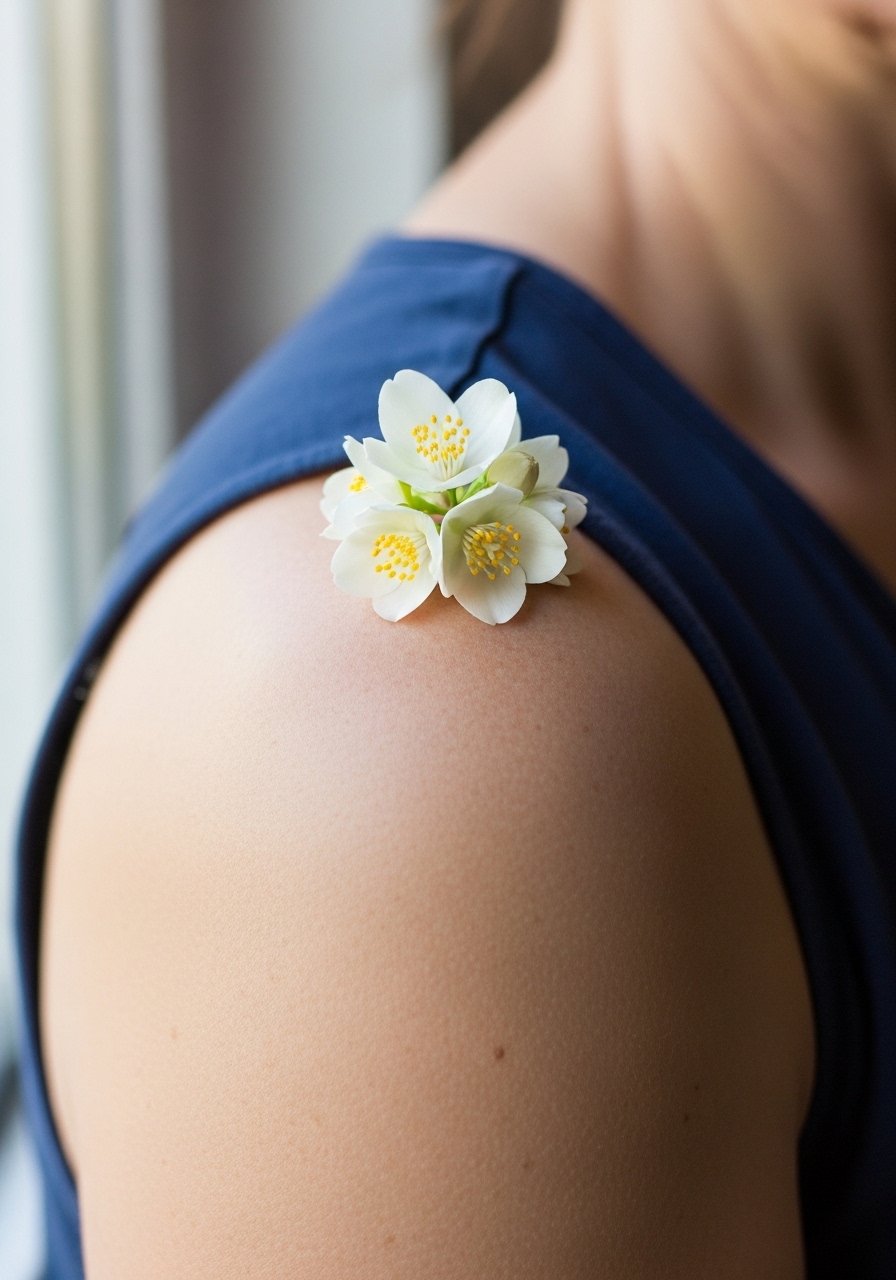
23. Tiny jasmine cluster on the shoulder cap
Personal observation: the shoulder cap is forgiving for small clusters and handles fine line detail better than the inner shoulder. The session is quick, and healing is straightforward because fabric rarely rubs the area if you choose looser tops. For showing off wear an off shoulder linen top or sleeveless blouse. Tell your artist if you plan to expand into a shoulder piece so they leave room for connectors.
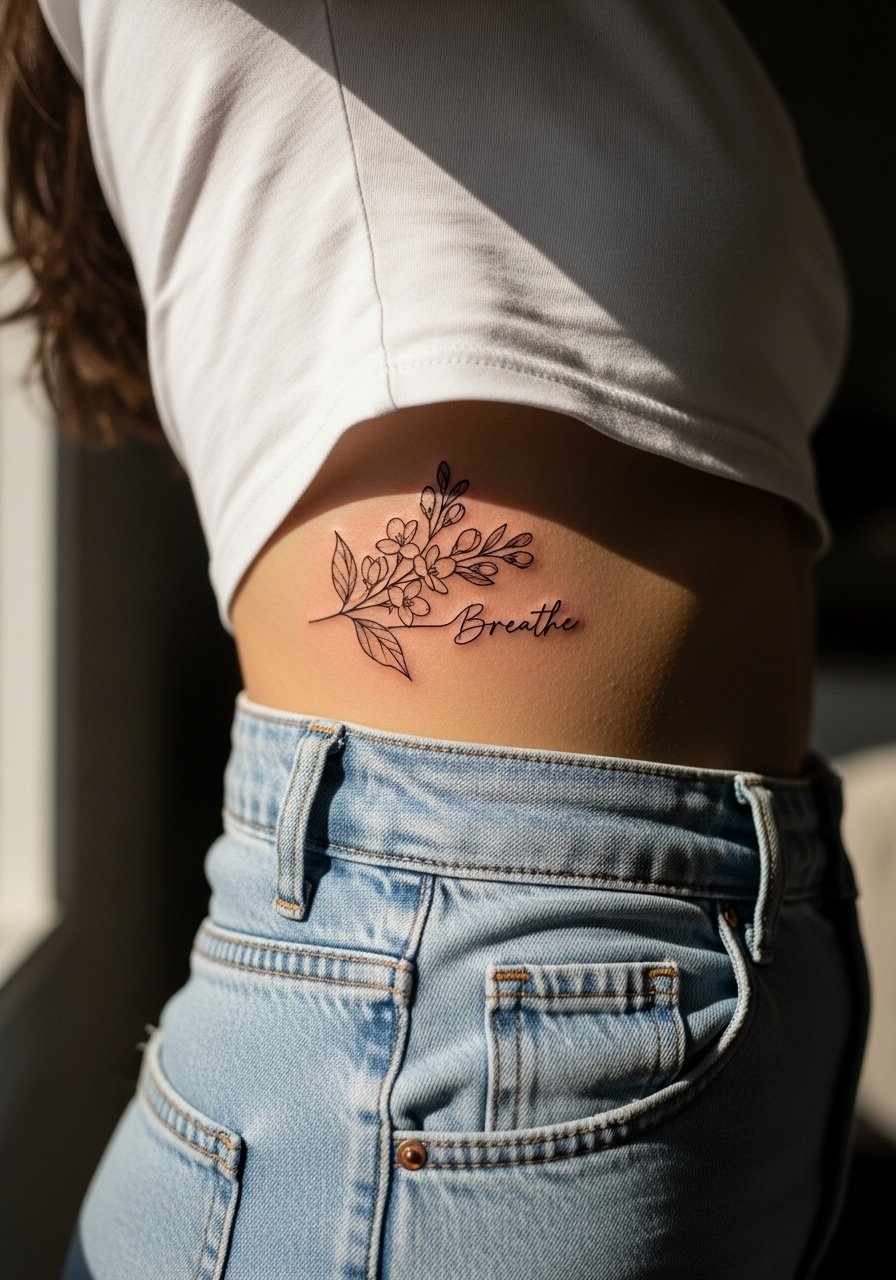
24. Jasmine sprig paired with a small script on the rib-side
Consultation lead: pairing script with a floral sprig reads personal and intimate, but spacing is critical to avoid overlapping when the body moves. The rib-side is tender and often needs breaks during the session. Expect a higher pain level and a two-session timeline for shading plus lettering. For the appointment wear a cropped tee and high-waisted bottoms so only a narrow strip of abdomen is revealed. Ask the artist to place the script where the skin sits naturally when you breathe.
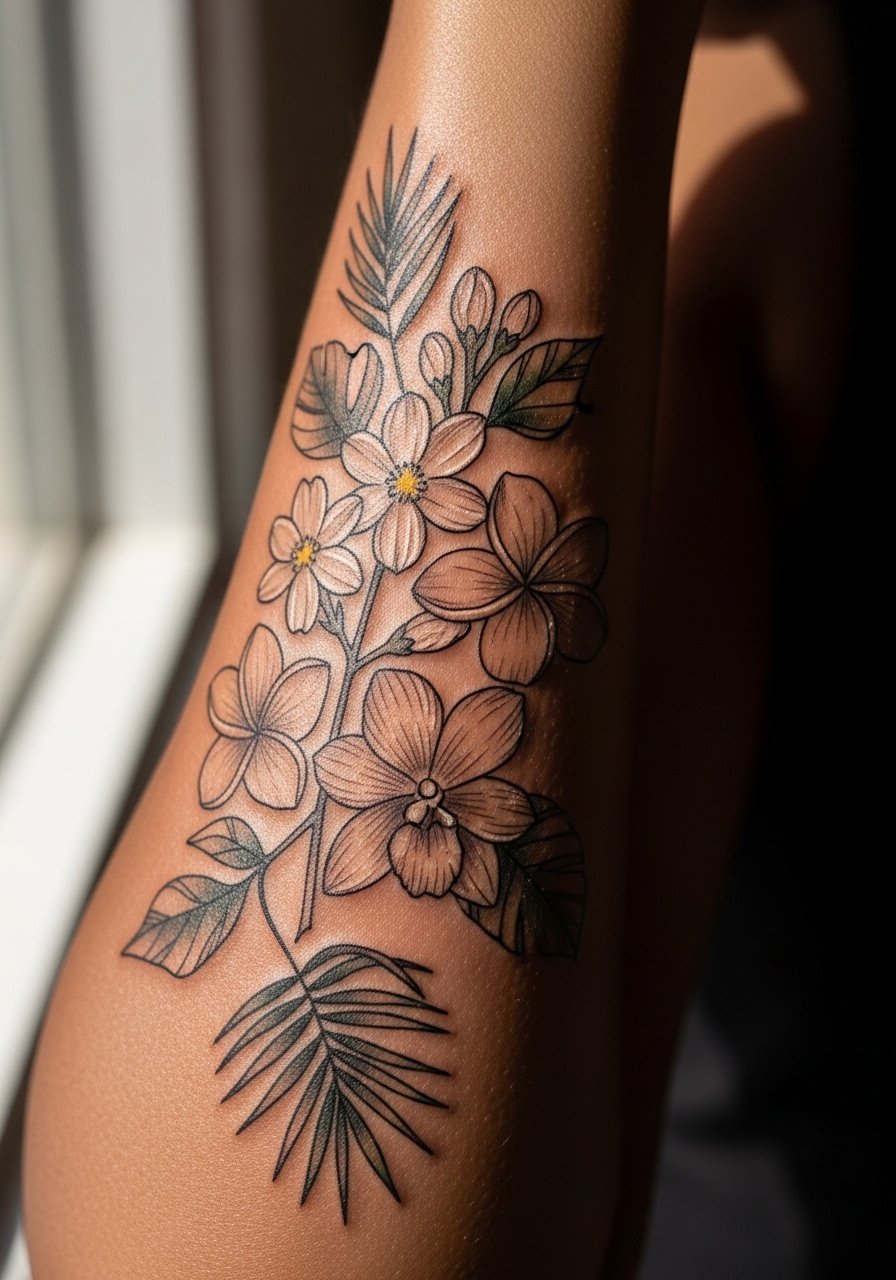
25. Jasmine and native Southeast Asian flora combo
Unique-angle lead: mixing jasmine with region-specific species gives the piece cultural specificity that generic florals lack. Discuss botanical references with your artist and be explicit about which native shapes you want included so the silhouettes read accurate. This approach works well on the forearm or shoulder and often requires two sessions. For show-off styling, choose a simple rolled sleeve cotton button-up in white to let the mixed silhouettes breathe, try a cotton button down shirt men. Consider cultural respect and tweak motifs rather than copying ceremonial patterns exactly.
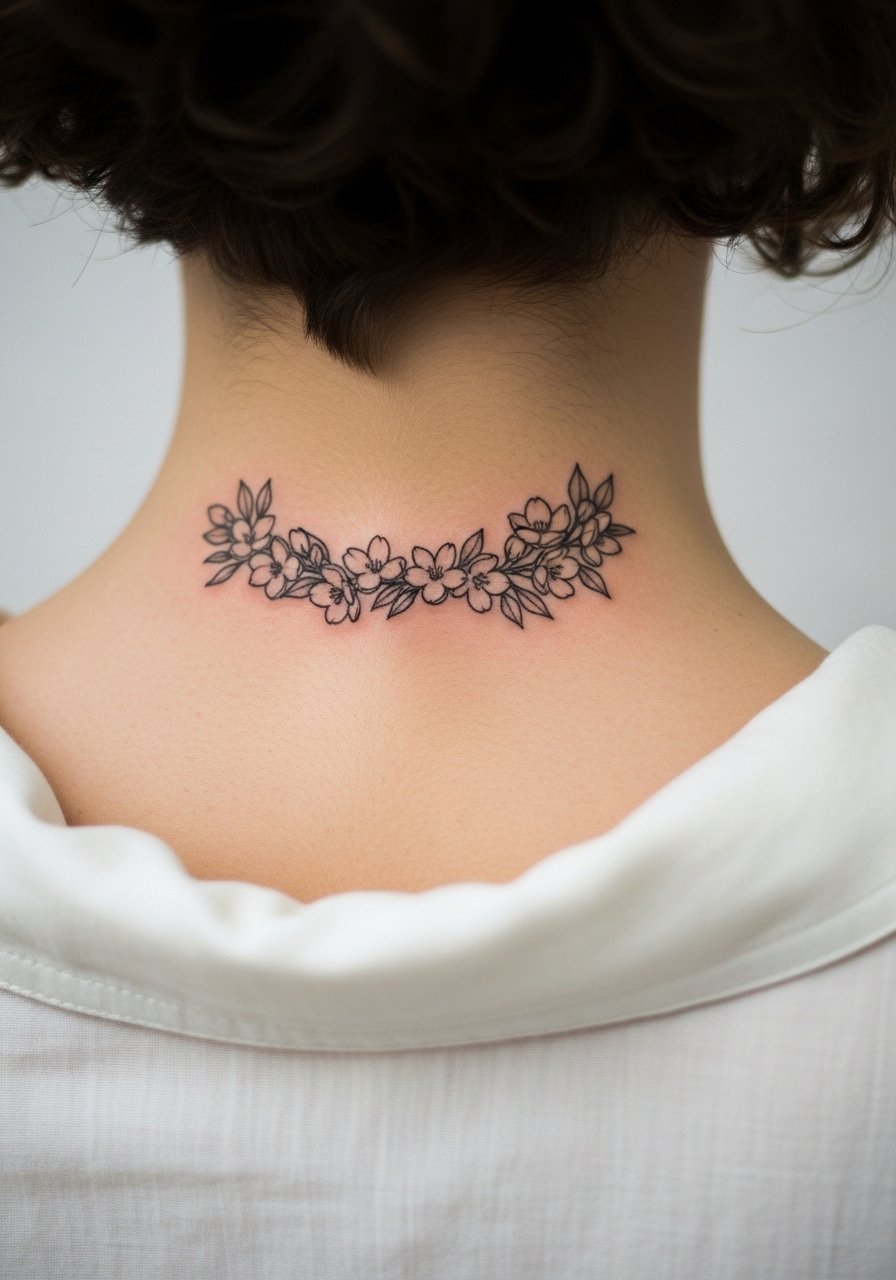
26. Jasmine crown circling the nape of the neck
Styling lead: nape placements are subtle and peek out with low buns or collared jackets. The area needs a specialist who plans for hairline growth and product exposure. Ask for slightly firmer line weight so the motif remains legible as hair moves over it. For discreet showing try a cropped hoodie unisex or a wide-neck sweater. The session is quick and heals well with simple care.
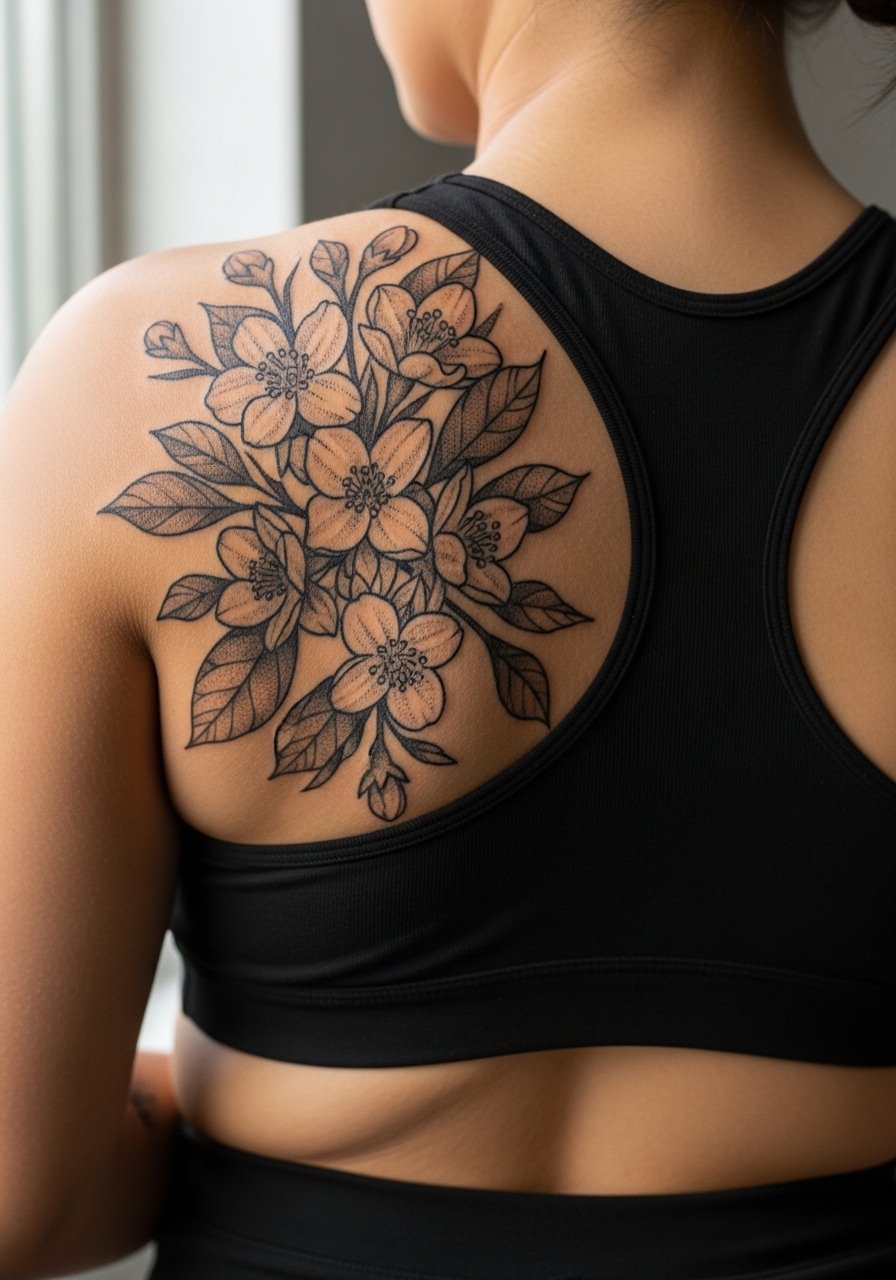
27. Large back panel jasmine composition with mixed shading
Decision-pressure lead: committing to a full back panel is when composition planning matters most. The artist should sketch the flow across the scapulae, spine, and lower back so the piece moves with your body. Sessions are long and staged, and you should plan recovery time between visits. A common mistake is neglecting the negative space plan which makes the final piece read congested. For session day wear a front-opening shirt you can remove or a sports bra for easy access without exposing the whole torso.
Frequently Asked Questions
Q: How much does a fine line jasmine tattoo cost for a small wrist or ankle piece?
A: For small fine line pieces expect a general range of $100 to $400 depending on studio minimums and your city. Size, line complexity, and touch-up expectations influence the final price, so get an estimate after a short consult.
Q: Will watercolor jasmine need different aftercare than black and gray pieces?
A: Watercolor washes can fade faster because they rely on subtle pigments, so the practical difference is sun protection and gentle cleansing. The basic routine is similar but if you want color longevity plan for less sun exposure and ask your artist about annual refreshes.
Q: Do ribcage and sternum jasmine tattoos blur faster than forearm pieces?
A: It depends on skin type and placement movement. Ribs and sternum move with breathing and tend to be higher on the pain scale, and that movement can affect very fine lines more than forearms. Ask your artist about spacing and depth so you know which camp they favor before booking.
Q: How often do fine line jasmine pieces need touch-ups?
A: Expect a potential touch-up at year two to three for very fine single-needle work, especially on hands, fingers, and ankles. Larger or bolder pieces usually hold longer, but everyone’s skin reacts differently so plan touch-ups based on how the piece looks after the first year.
Q: What are good discovery paths for finding an artist who does jasmine florals without naming specific shops?
A: Look up style-specific hashtags like #jasmineflowertattoo and check location tags such as "jasmine tattoo [city]" on social platforms. Tattoo directories and community boards also help narrow down artists who specialize in fine line, micro-realism, or watercolor florals.
Q: Can I plan outfits around a new jasmine tattoo for the first week?
A: Yes. Pick clothes that give easy access and avoid friction over the fresh tattoo. For shoulders and collarbones choose strapless or wide-neck tops, for thighs and ribs wear loose shorts or cropped tees, and for ankles pull up pants or wear sandals so the area stays exposed and ventilated while healing.