
Fine line chest pieces are everywhere on saved boards right now, but the version that still looks intentional after three years is rarely the flashiest one. What holds up is considered decisions about scale, spacing, and placement relative to natural curves. Read on for 27 centered, wearable ideas that respect anatomy, travel well with time, and come with concrete consultation notes so you leave the chair with a design that still reads years from now.
1. Delicate Sternum Line Bouquet
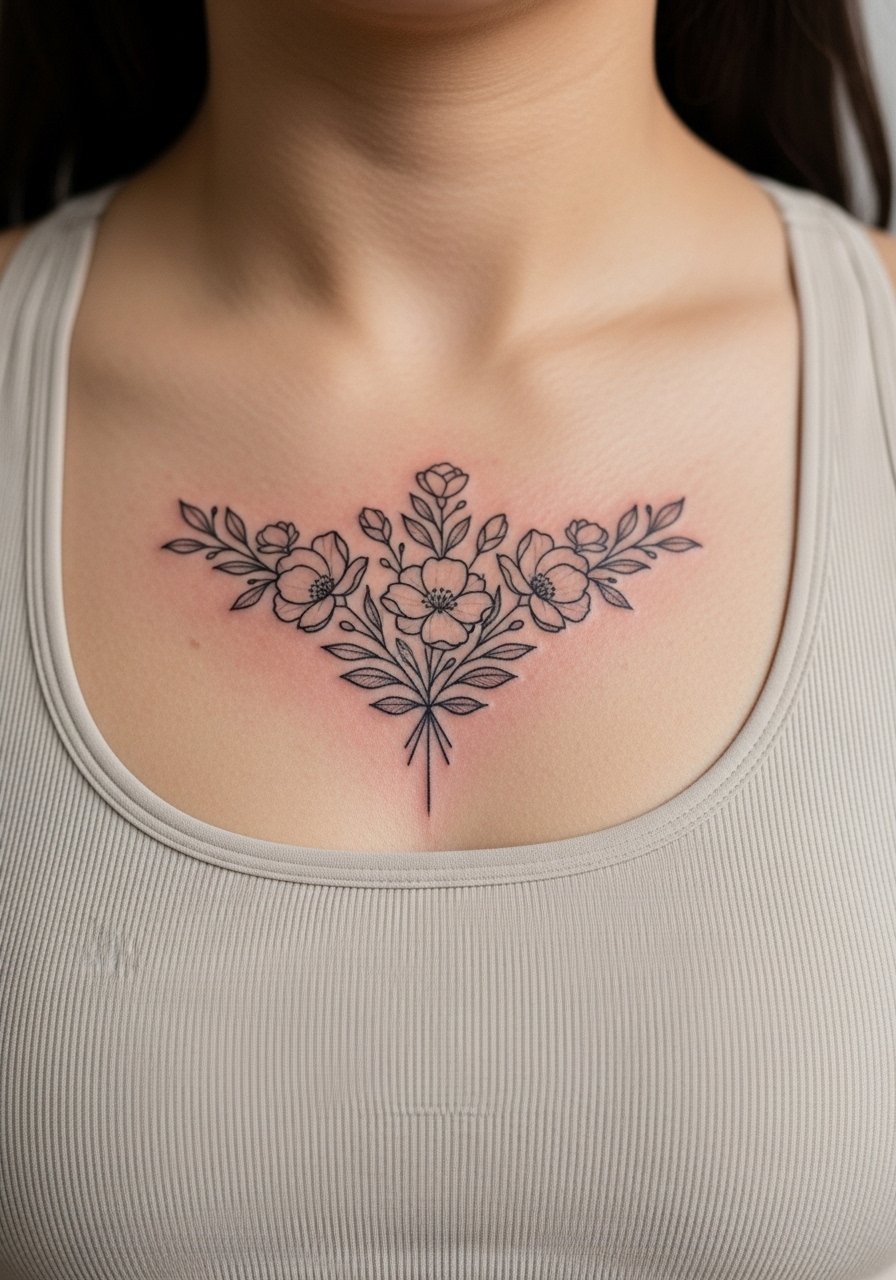
Most people want a tiny bouquet but forget the sternum moves a lot with breathing. Ask for slightly increased spacing between floral stems and a midweight line so the petals do not blur together over time. Expect a session that stings in short pulses as the needle crosses bone closer to the center, and plan for about one to two hours depending on detail. Common mistake is asking for micro lettering mixed into the blooms, which reads as smudge after two years. For showing it off, an open-back midi dress or a thin chain pendant necklace keeps attention on the central motif without competing.
2. Symmetric Dot Work Compass
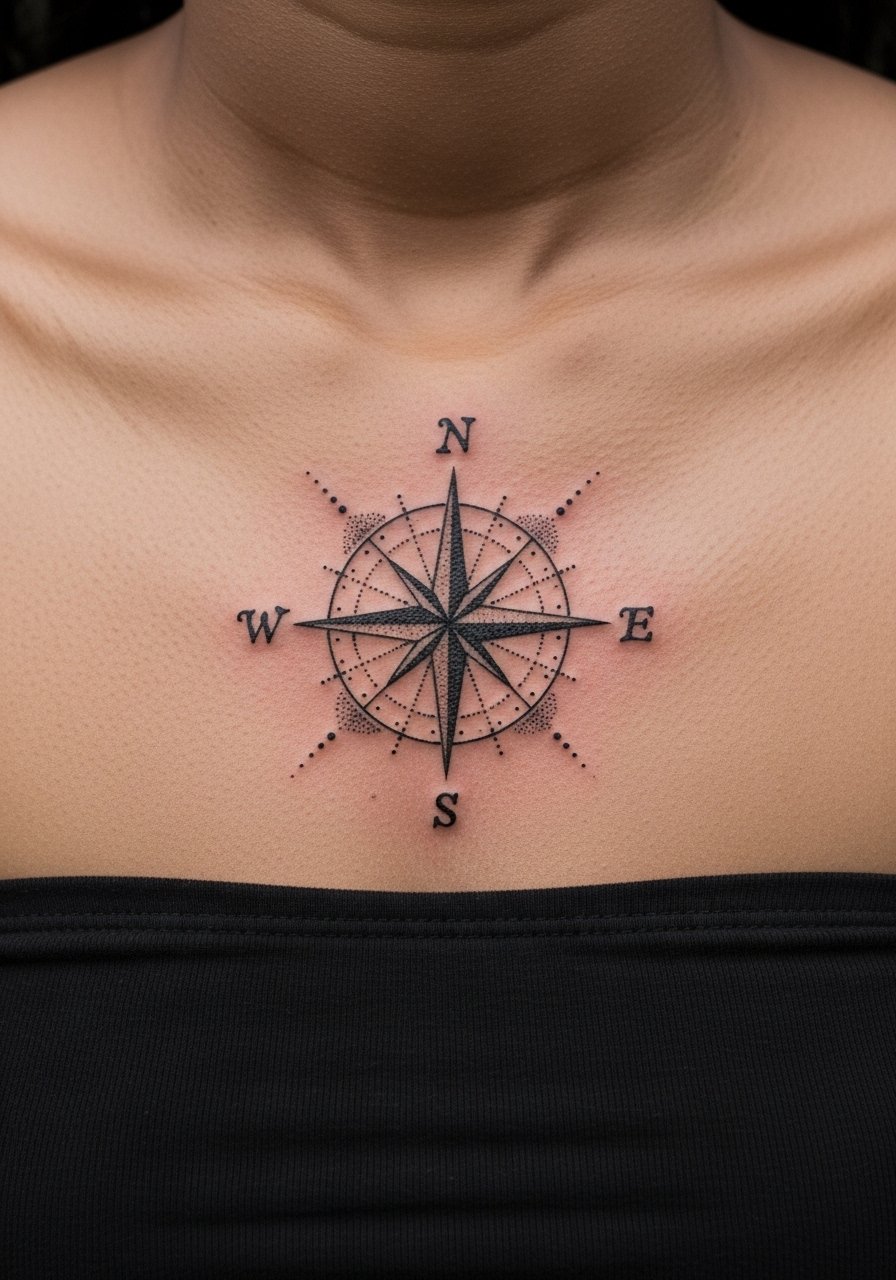
Dot work centers and compasses age well when the artist spaces dots to avoid filling in. In consultation, request stipple shading rather than solid fills and ask to see healed examples on similar skin tones. Danger sign is asking for ultra-fine stippling packed too tight, which can look muddy at year three. The session time is moderate because stipple is slower than whip shading, and pain is higher over the middle sternum. If you want to reveal it, pair with a bandeau top for evenings out.
3. Mirror Script Curve
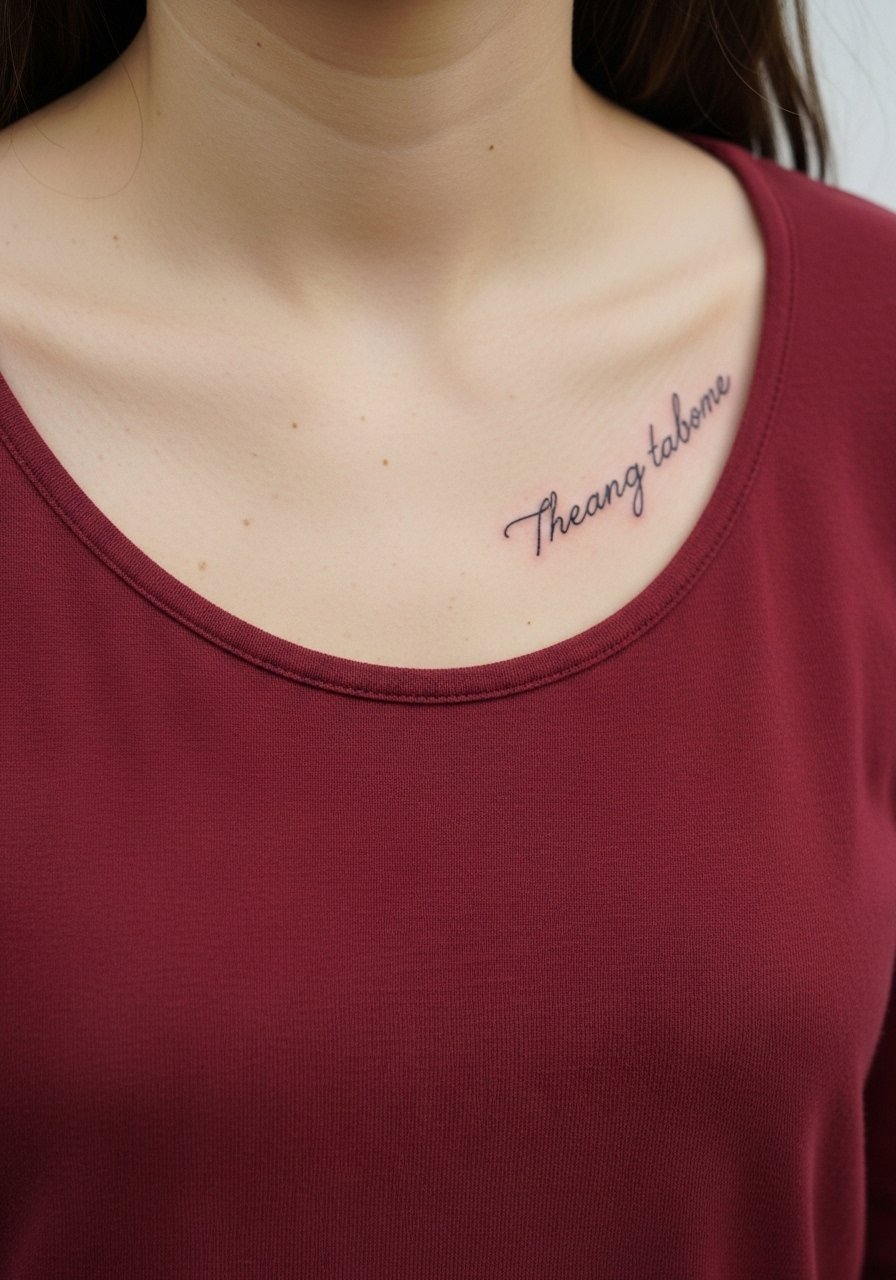
Lettering across the in-between-chest area demands exact placement. Bring the exact phrase and preferred font in both printed and real-size stencil form so the artist can size it to your collarbone width. Fine script on the sternum splits artists into two camps. One camp says tiny cursive blurs fast. The other says properly spaced script with a slightly heavier line will keep form. Name both camps in your consultation and ask where your artist stands. This piece feels sharp during the session and is ideal for someone who wants a hidden personal line.
4. Crescent Moon and Star Ladder
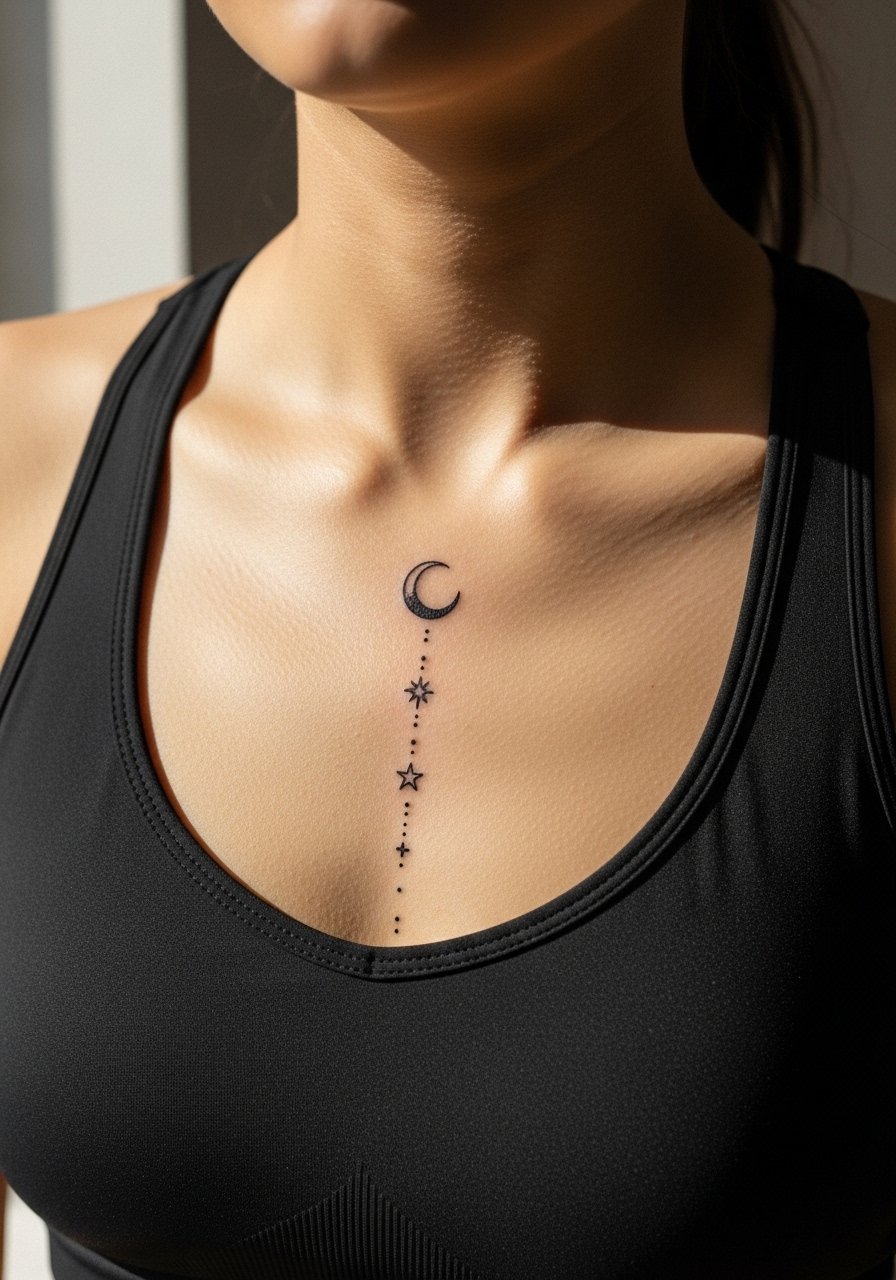
This stacked, vertical design flatters the natural center line and reads well under low-cut tops. The key is keeping star details simple so lines do not merge. Tell your artist you want the moon slightly above the nipple line so the whole ladder moves with the torso instead of getting lost in skin folds. The pain is moderate in the center and softer near the upper chest. A great session outfit is a racerback tank you can slip off without tugging at the area.
5. Geometric Spine of the Chest
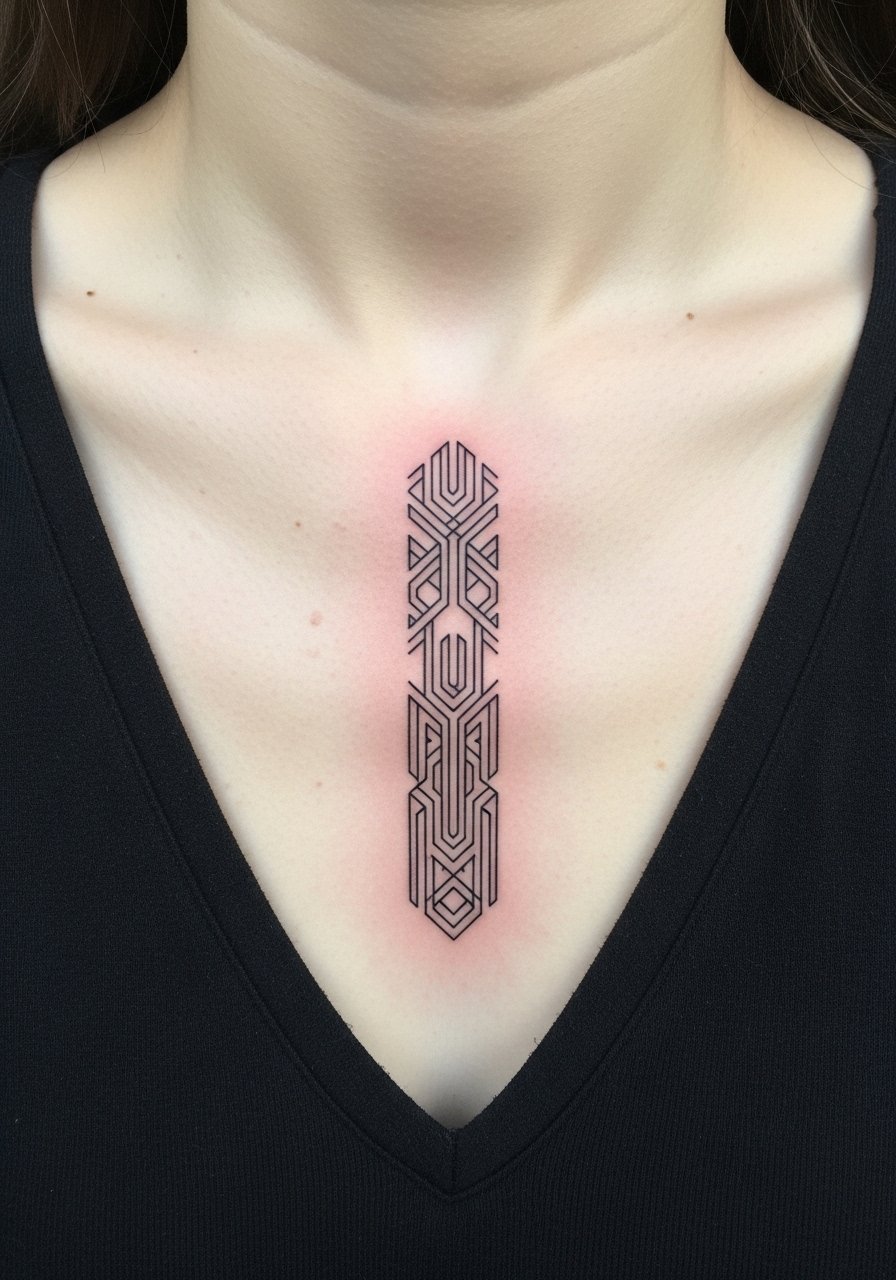
Geometric negative space looks crisp when shapes have breathing room. Ask for decisive spacing and slightly bolder outlines in the densest points to prevent early loss of definition. Mistake people make is requesting too many tiny triangles stacked tightly. Those can coalesce into a grey block after a few years. Expect a one to two hour session and a low touch-up likelihood if spacing is respected. For nights out, an open-back blouse lets the geometry read from behind.
6. Whispered Botanical Garland
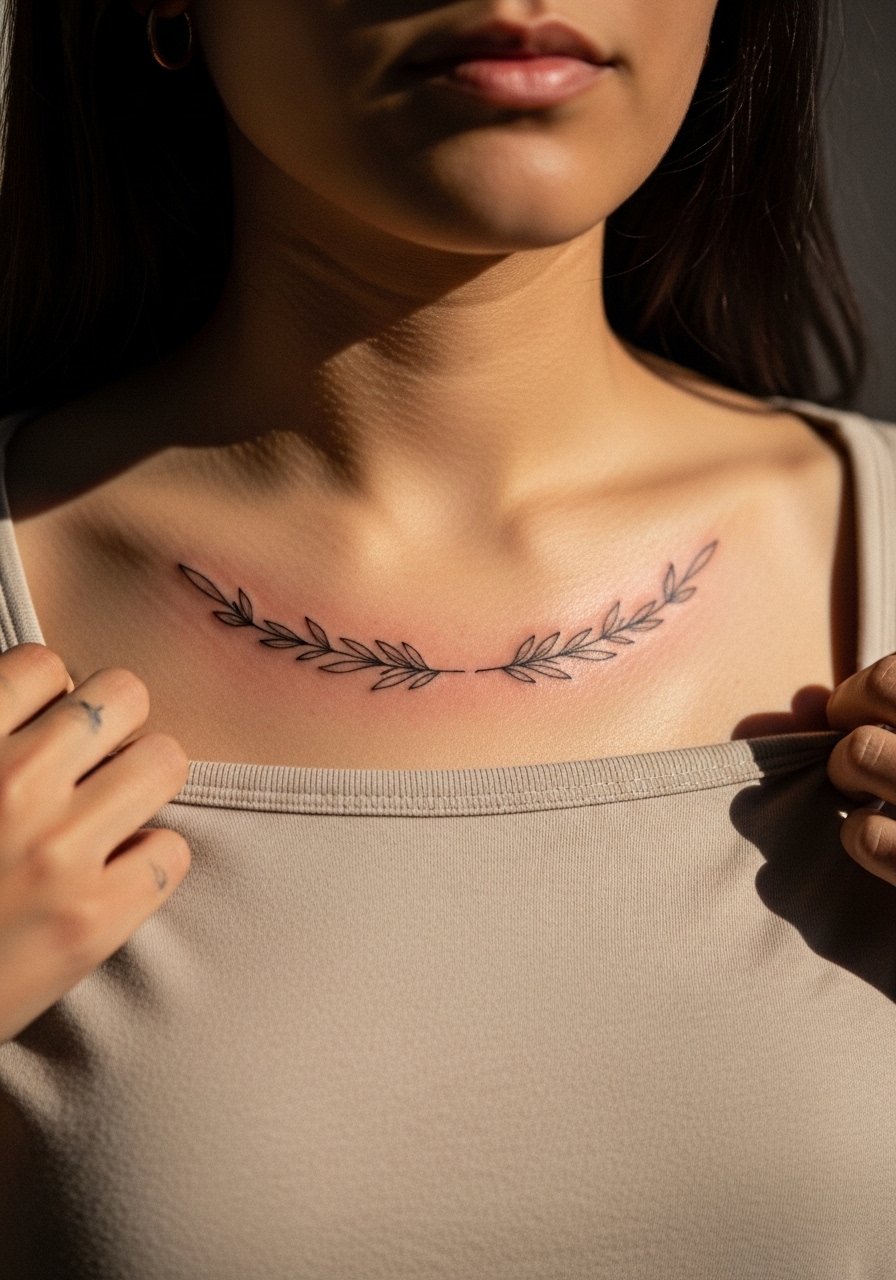
A garland follows the collarbone curve best when it stops short of the sternum, leaving negative space in the center. In the consult, point out the exact collarbone ridge you want the chain to follow. A typical mistake is asking for continuous tiny leaves with zero spacing. That style can blur like a shadow at year three. The sensation is brisk rubbing along bone at inner points, so short breaks help. Pair this with a thin chain pendant necklace to mirror the arch without crowding.
Studio Day Picks
The central and upper-chest pieces above need clean access and different prep than a forearm session, so these small items smooth the appointment and the first week.
-
Stencil transfer paper kit. Lets you check the exact placement and curve on your sternum before the needle touches skin, which is crucial for symmetric designs.
-
Topical numbing cream. Applied per instructions about 45 minutes before can reduce sharp bone-adjacent sensitivity without dulling the artist's linework when used properly.
-
Thin protective film roll. Useful for the first night on chest work where friction from clothing can rub new ink.
-
Fragrance-free gentle body wash. Cleans the area during showers without stripping delicate fine line ink.
-
Aquaphor healing ointment. Thin layers in the first days help keep skin supple over raised sternum areas and reduce scabbing that can pull on fine work.
7. Minimalist Anchor Centerpiece
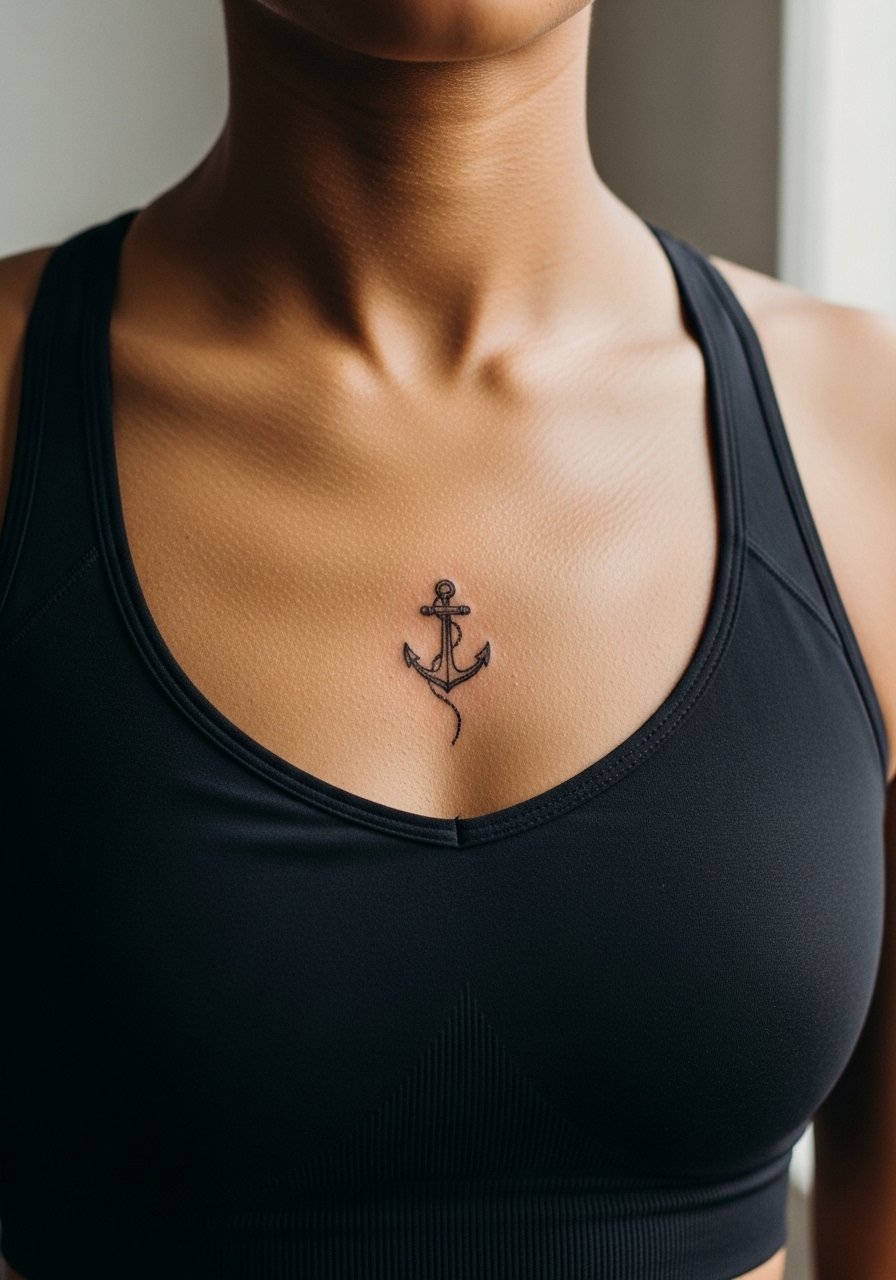
An anchor is a classic, but in the sternum it benefits from slightly heavier linework than wrist anchors. Tell the artist you want bold contour with clean interior negative space so the shape keeps reading as a symbol. The common mistake is requesting a hairline outline that disappears into a shadowed area with time. This placement is higher on pain near bone and is often a short session under an hour. For showing it off, a thin chain pendant necklace sits above without crowding the anchor.
8. Art Nouveau Center Fan
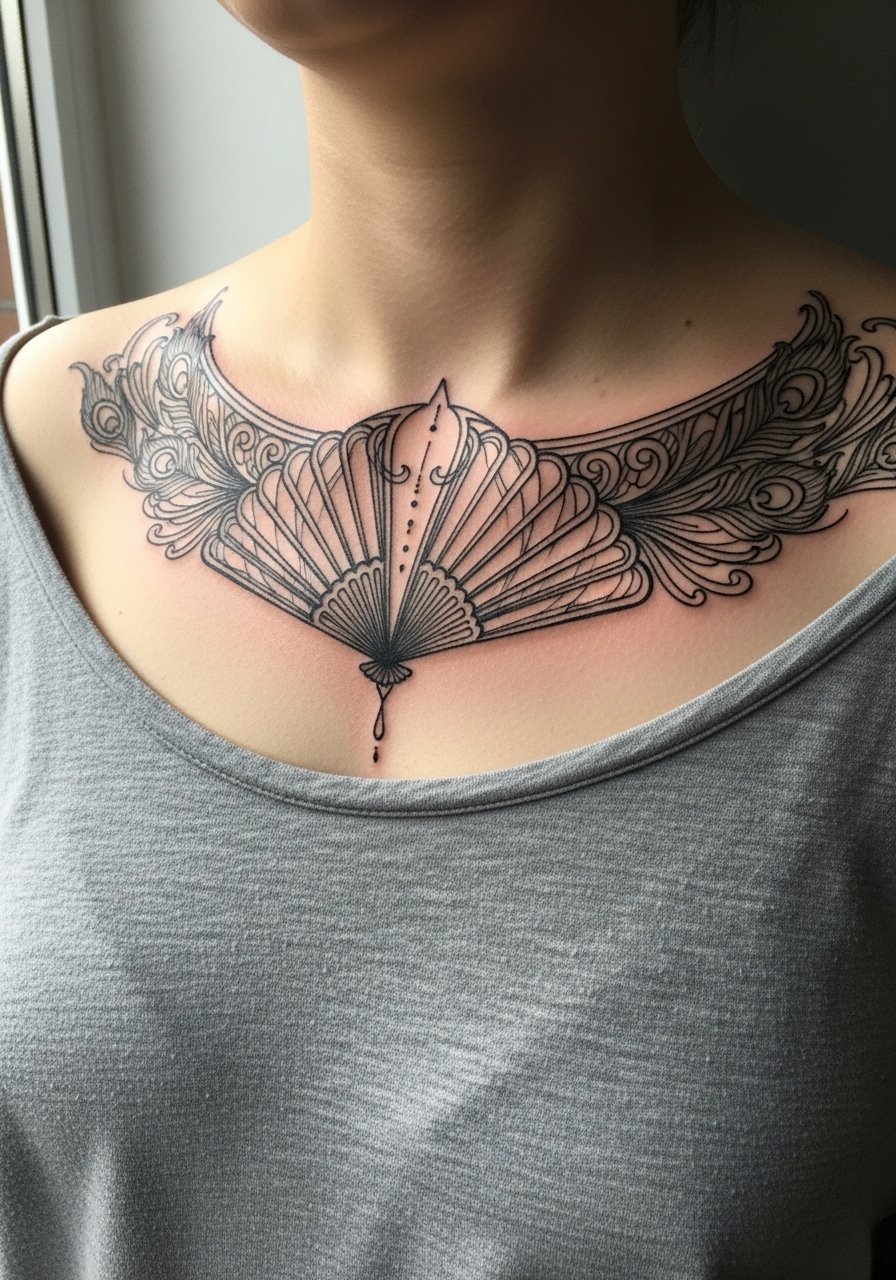
Flowing Art Nouveau lines play with the chest curvature and are forgiving if designed with intentional negative space. In the consult, ask for reference images showing how lines interact with collarbone anatomy so the design does not sit awkwardly when you move. The session can be longer because of curved linework, and touch-ups might be needed after a year if lines are ultra-fine. A v-neck blouse frames the fan without hiding its subtleties.
9. Tiny Sword Through Heart Center
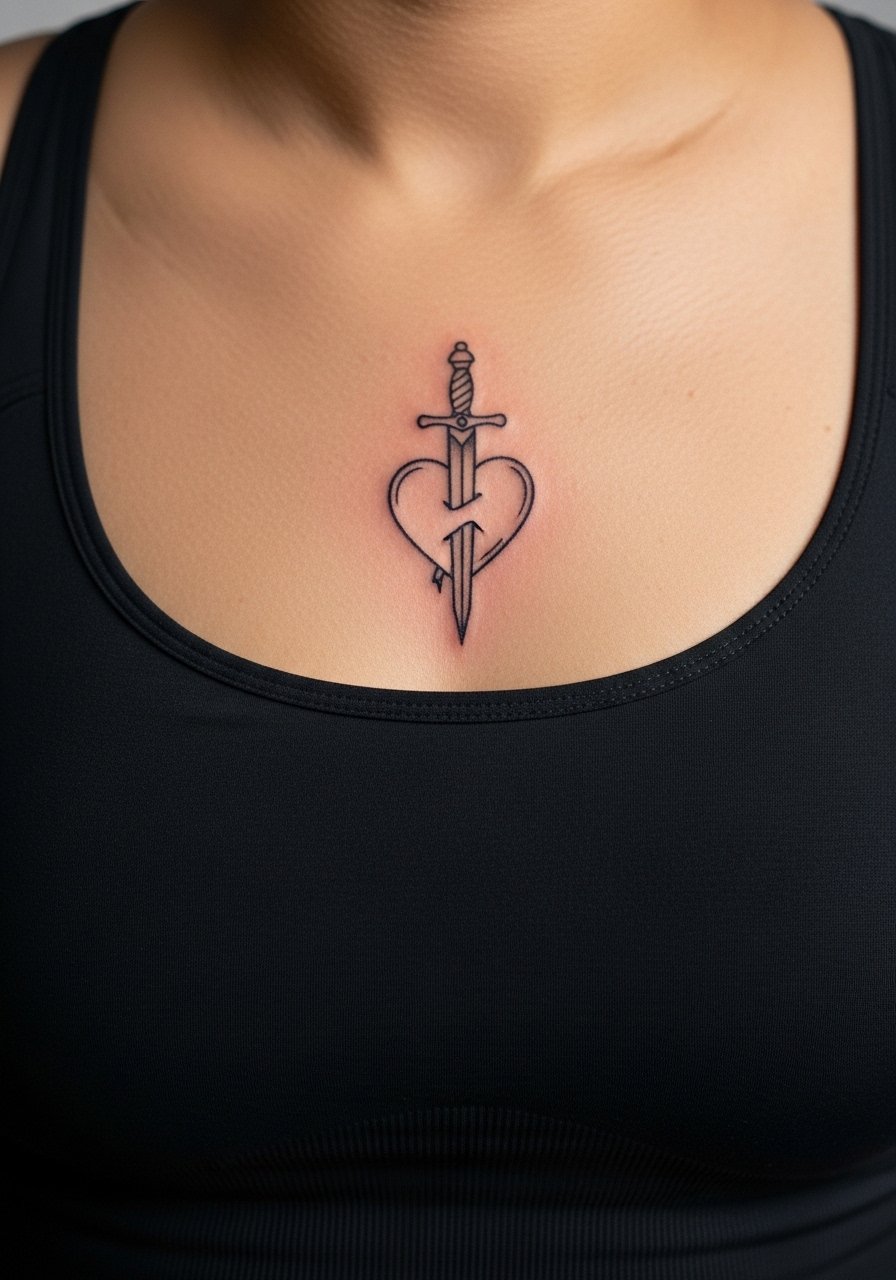
Symbolic pieces like a sword-through-heart carry emotional readings. One common interpretation links the motif to heartbreak, while others treat it as resilience. Artists split on whether too much tiny detail around the point of the sword will hold. Ask your artist about edge thickness and keep the hilt simple to prevent blurring. The session is short and sharp near bone. A bandeau top makes it easy to show when you want.
10. Micro-Realism Eye
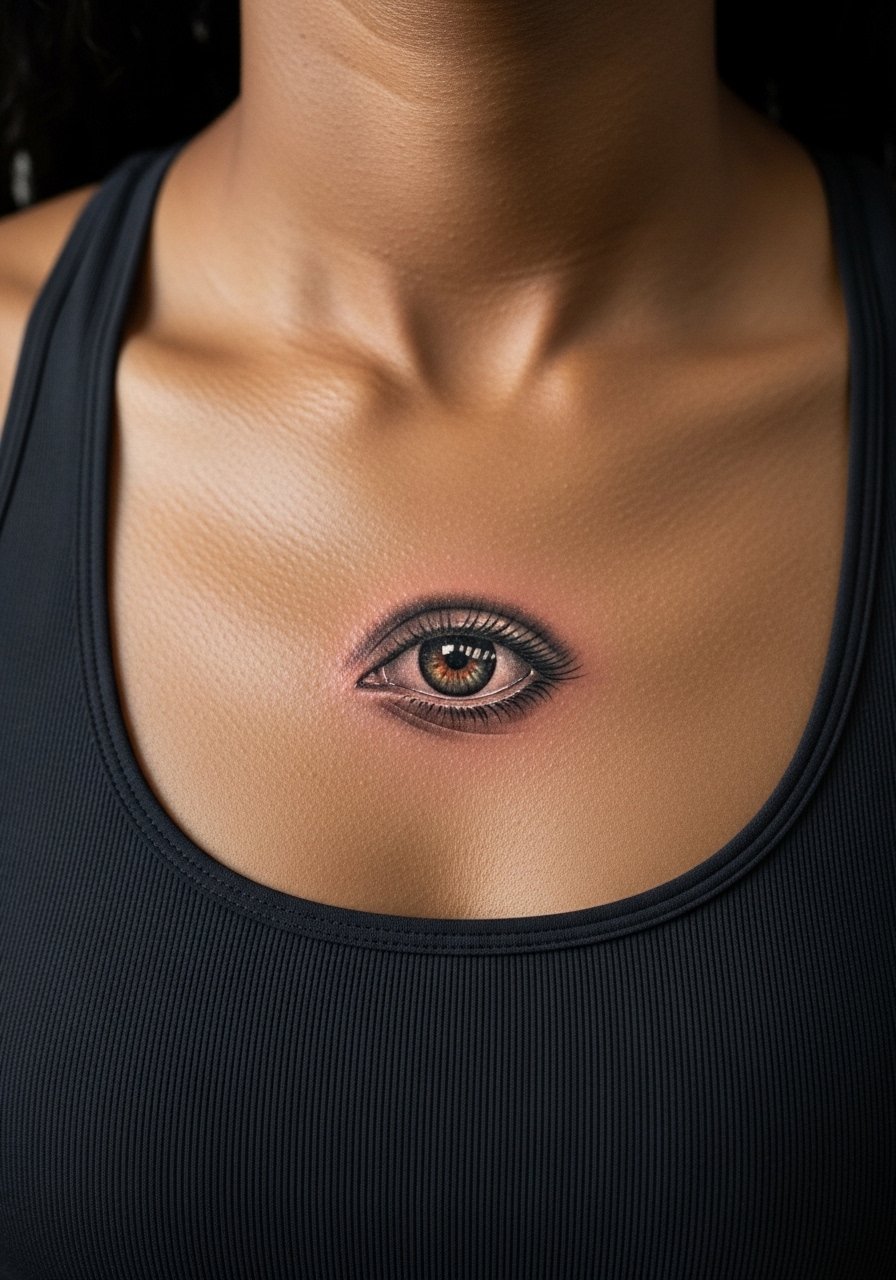
Micro-realism on the chest is ambitious because shading densities must be controlled to avoid blotching. Tell the artist you want subtle contrast rather than dense black shading. A common mistake is asking for hyperreal detail in too-small space. Expect a longer session and a realistic touch-up timeline at year two. For sessions wear, choose a loose button-down shirt you can shift aside without tugging.
11. Symmetrical Lace Motif
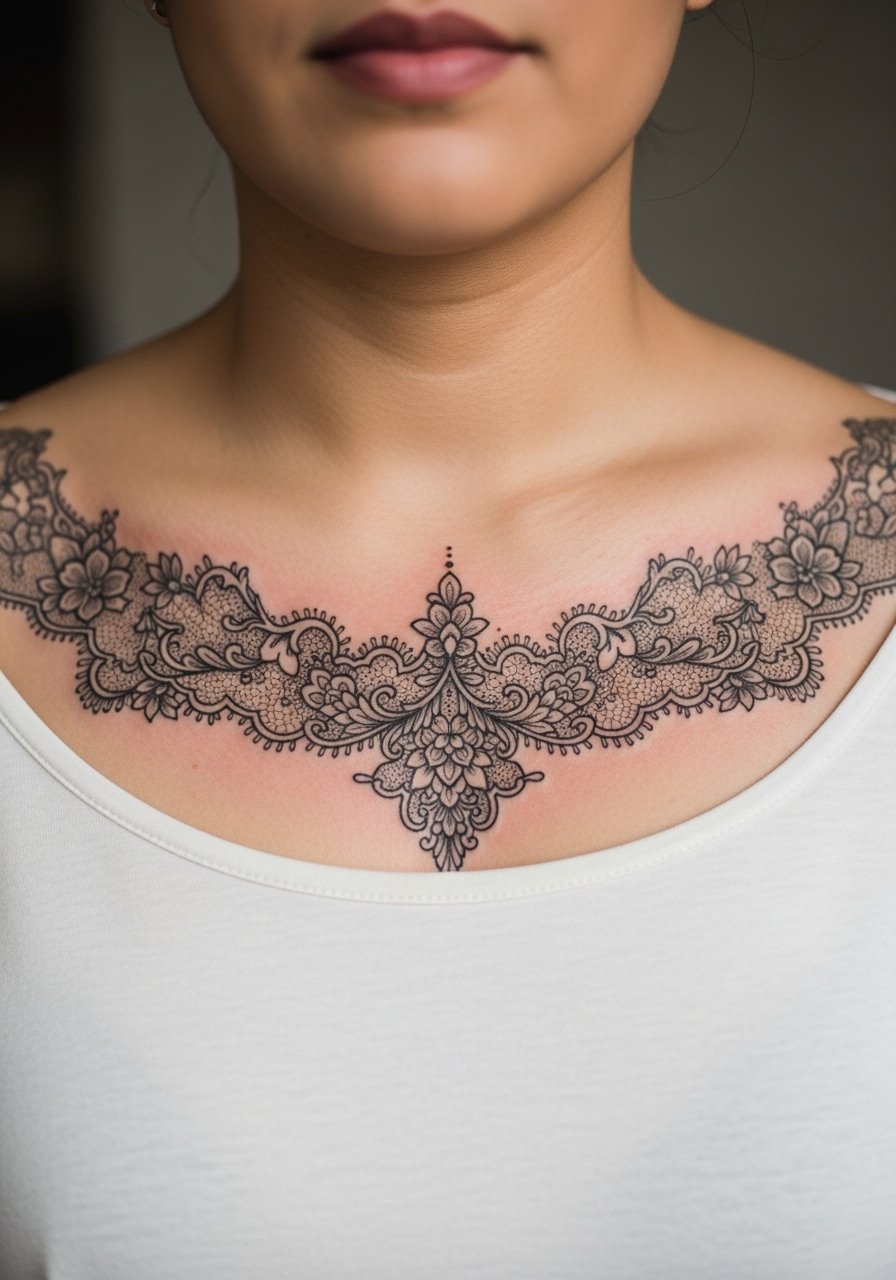
Lace needs rhythm and repeating negative space to stay readable. In the consult, request sample panels scaled to your chest so the pattern does not become a single grey band. The mistake is packing lace motifs too densely in a narrow vertical strip. Pain varies across sections with bony intersections being more sensitive. Pair this with an open-back midi dress that frames the lace at the neckline.
12. Crescent Flower Solar
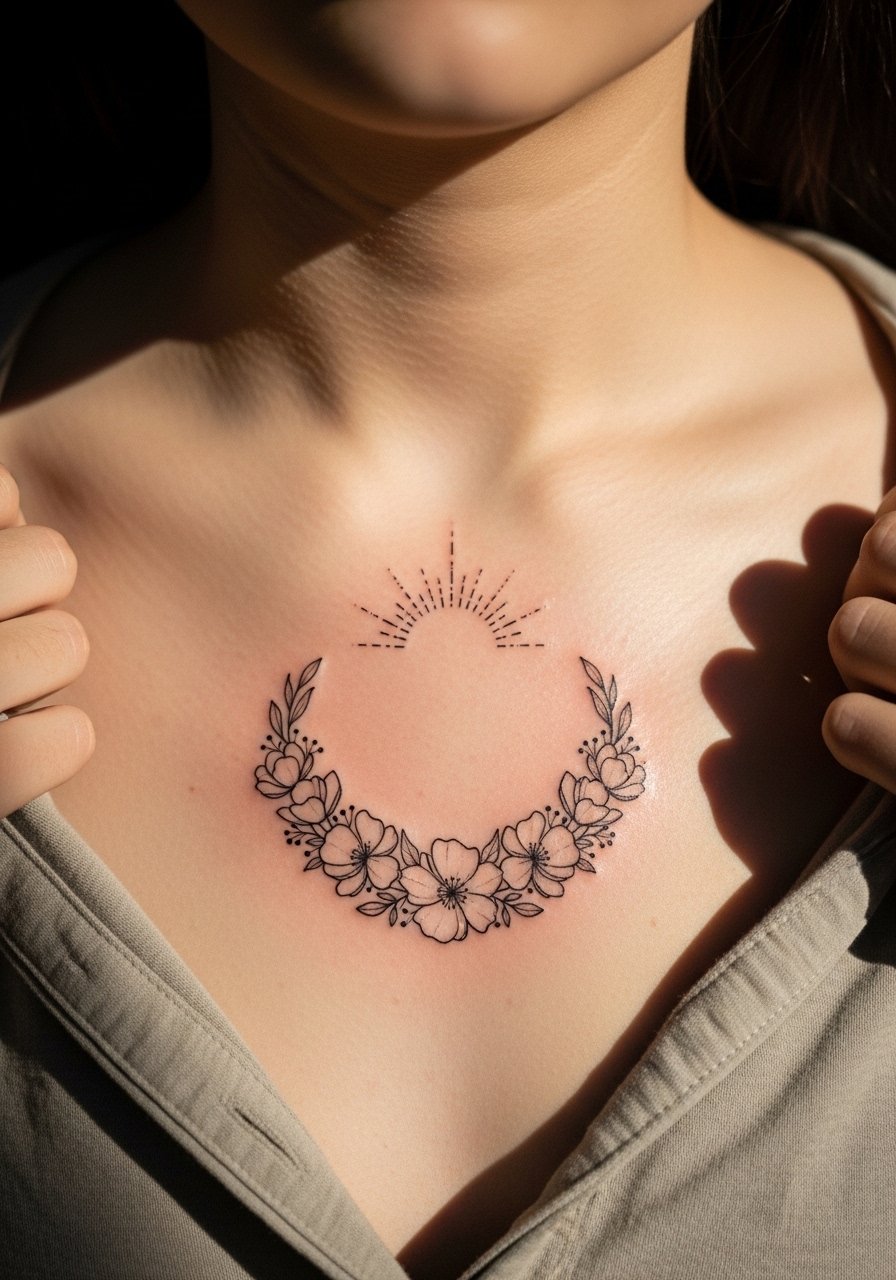
Combining floral and sun motifs works if the sunburst is minimal. Ask for a softer dot-shaded sun rather than heavy rays, which keep the composition airy. The typical mistake is requesting dense rays that age into a shadow. This design feels brisk during the session and suits someone after a symbol that reads as intimate but visible in low necklines.
13. Anchor Chain Necklace Illusion
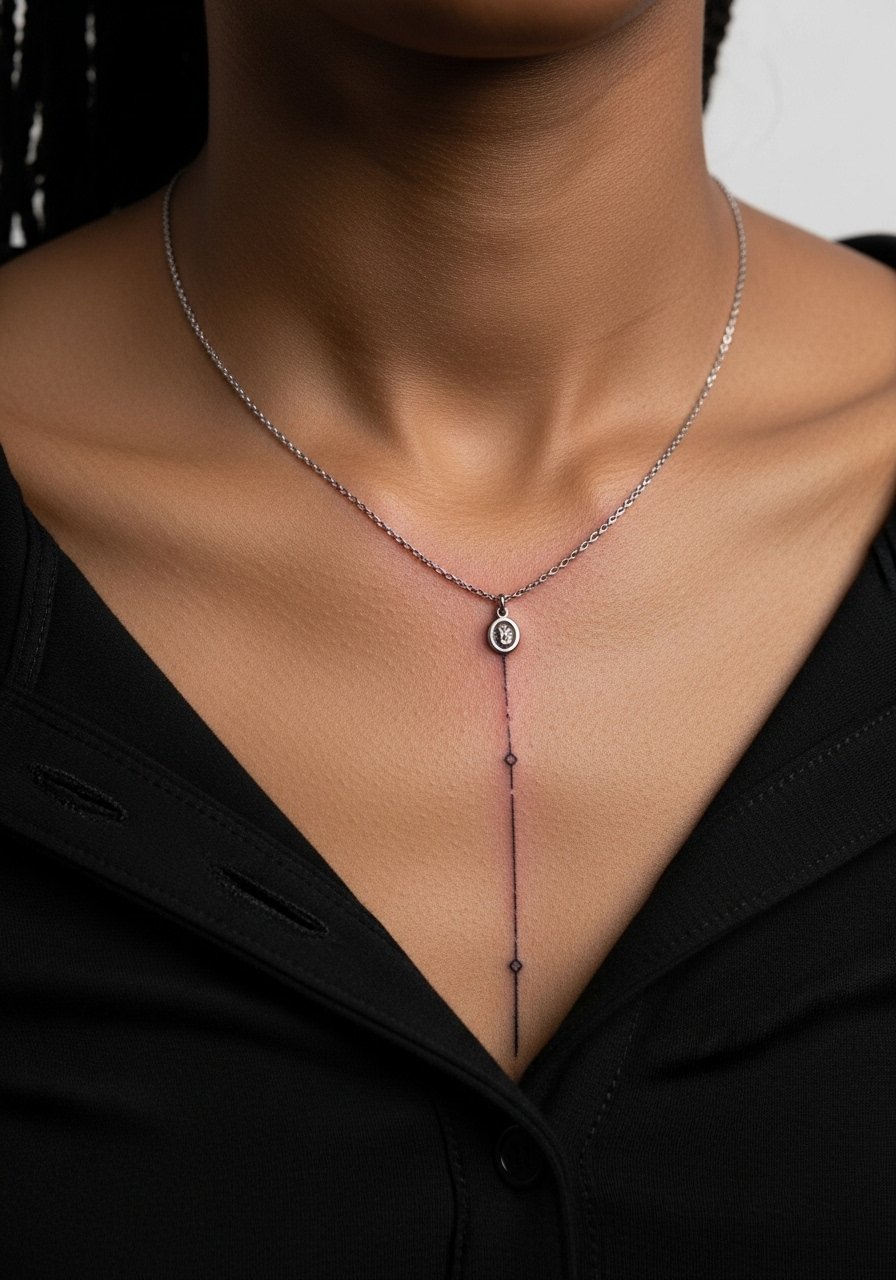
This illusionary necklace benefits from a slightly heavier chain line to prevent the links from softening with time. Tell the artist you want the charm to be the focal point and the chain to fade into the collarbone shadows. If the chain is too thin it can disappear at year three. A thin chain pendant necklace layered above the tattoo gives a balanced mixed-media look.
14. Minimal Geometric Sunburst
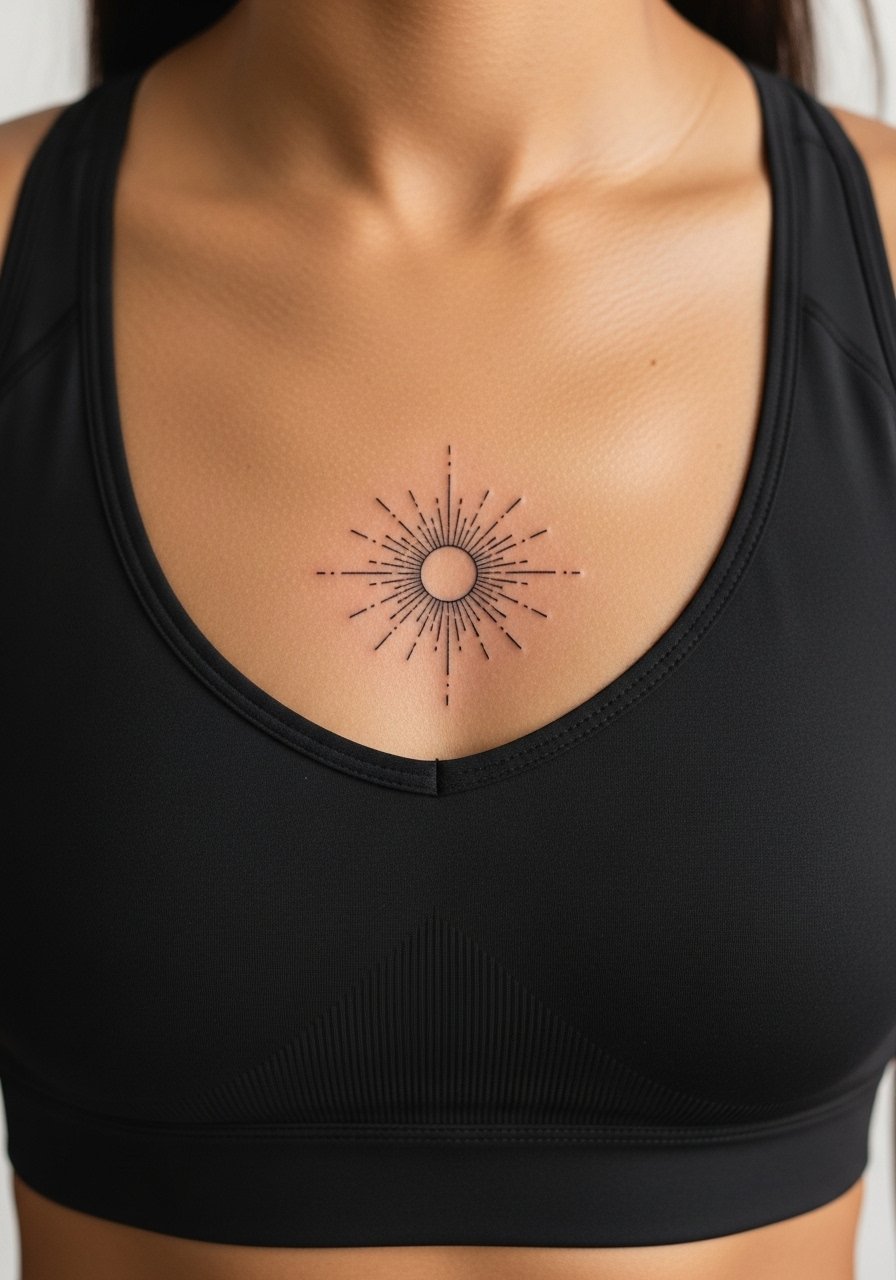
Geometric sunbursts keep clarity when lines are spaced and radiate with deliberate rhythm. In consultation, request slightly thicker outer rays and less density near the center. The mistake is requesting many micro rays that merge into blur. Pain is higher at the center and lighter at the outer rays. For styling, an open-neck blouse or a simple pendant keeps the focus on the burst without crowding.
15. Wave Crest Vertical
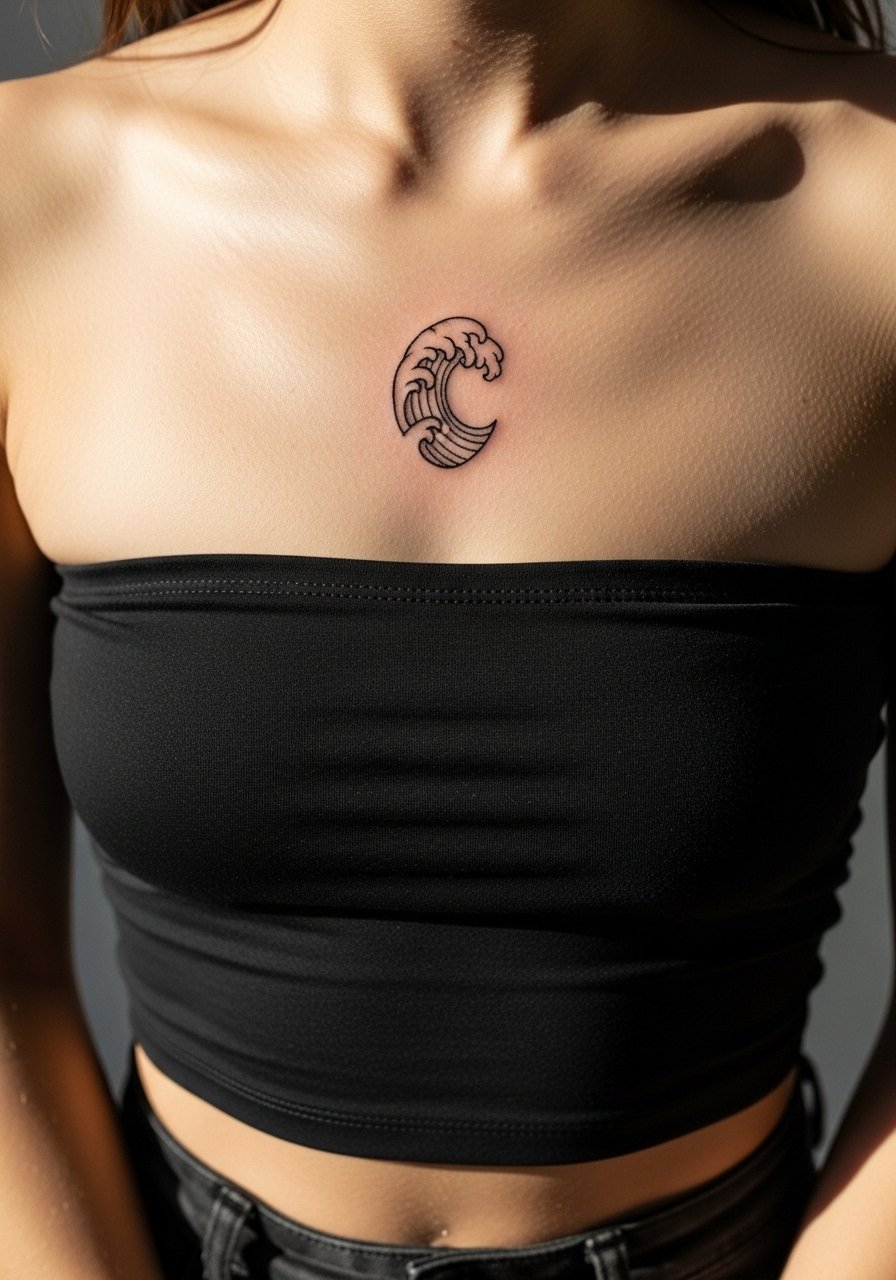
A vertical wave reads well with the torso motion and stays legible when lines are slightly bolder than a wrist piece. Tell your artist you want clean negative space inside the crest to keep the shape. Common mistake is too many tiny internal lines that fill in after healing. The session is short and the piece often needs only one quick touch-up within two years.
16. Tiny Architectural Column
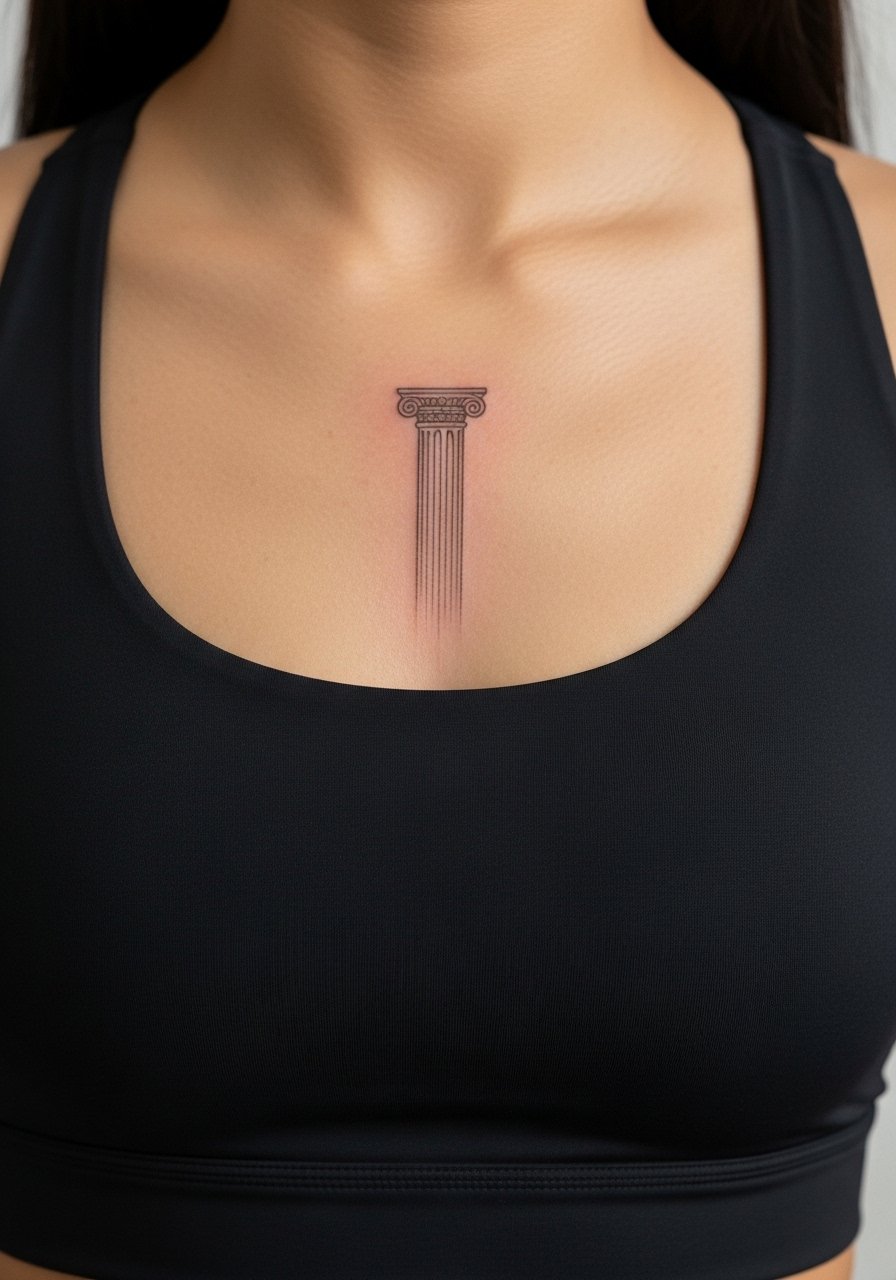
Architectural motifs look strong when given room. Ask for a slight increase in scale if you want the shaft to remain defined from a distance. Expect staccato pain as the needle crosses the sternum center. A mistake is keeping the column too narrow which can cause the edges to blur under natural movement. For sessions wear, a loose button-down shirt makes access easy without stretching the area.
17. Constellation Centerpiece
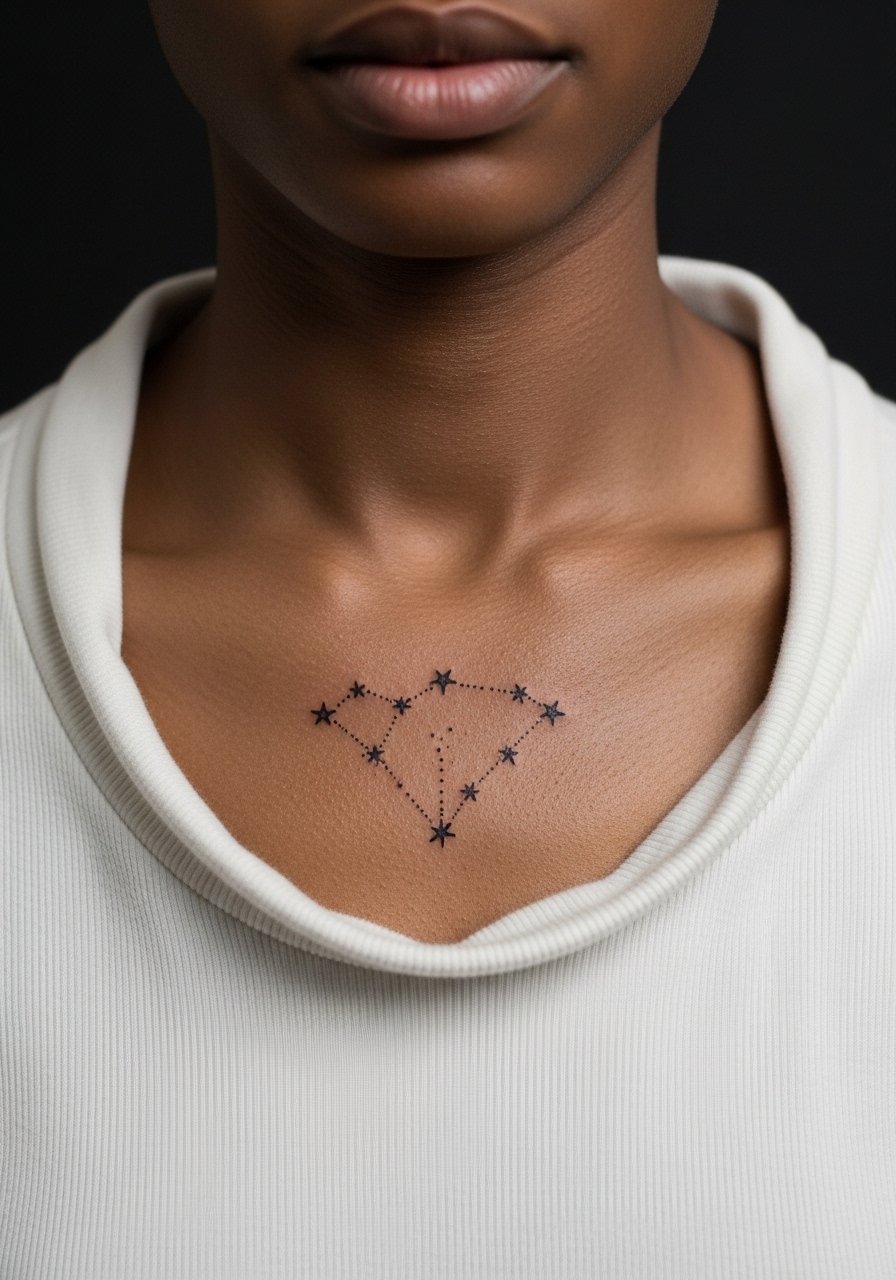
Constellations need intentional spacing so dots do not run into each other. Ask for slightly increased gap between stars and for connectors to be delicate but visible. The common mistake is tight clusters that form a gray patch as they age. This is a low-pain, low-session-time option and pairs easily with layered necklaces or a thin chain pendant necklace.
18. Small Heraldic Shield
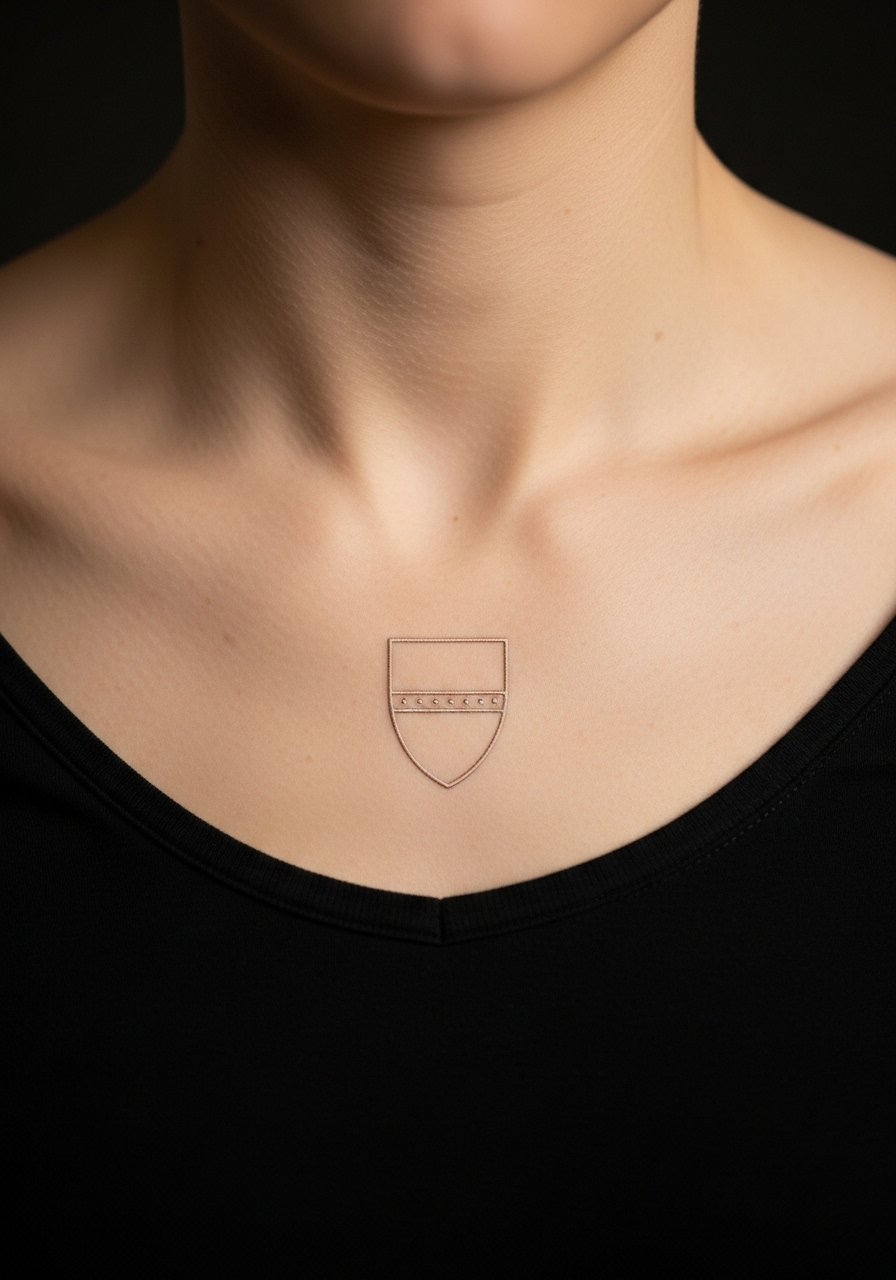
Heraldic motifs require clean contouring to hold as a symbol. During the consult, bring simplified versions so the artist can adapt details to scale. Overcomplicating the interior invites blurring. The session is short but near-bone placement increases sensitivity. For nights out, a v-neck blouse frames the shield nicely.
19. Tiny Botanical Mandala
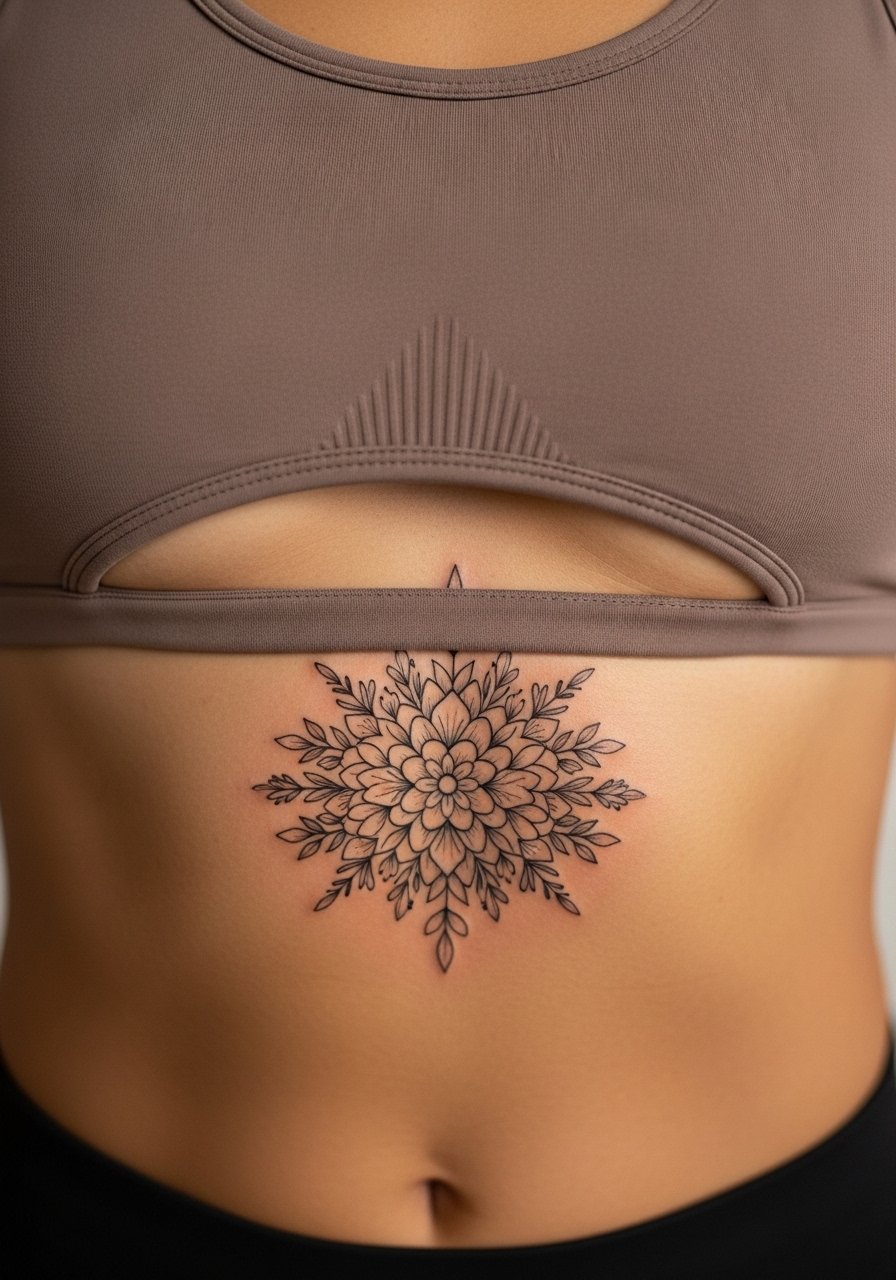
Mandala pieces benefit from modular spacing and areas of negative space. Ask for leaf motifs rather than dense petal packing to avoid blur. Artists disagree on how small a mandala can be and still age. Name both camps in your talk and request a slightly larger diameter if you want longevity. The session can be longer because of symmetry checks. Pair with an open-back dress for evenings.
20. Scripted Date Band
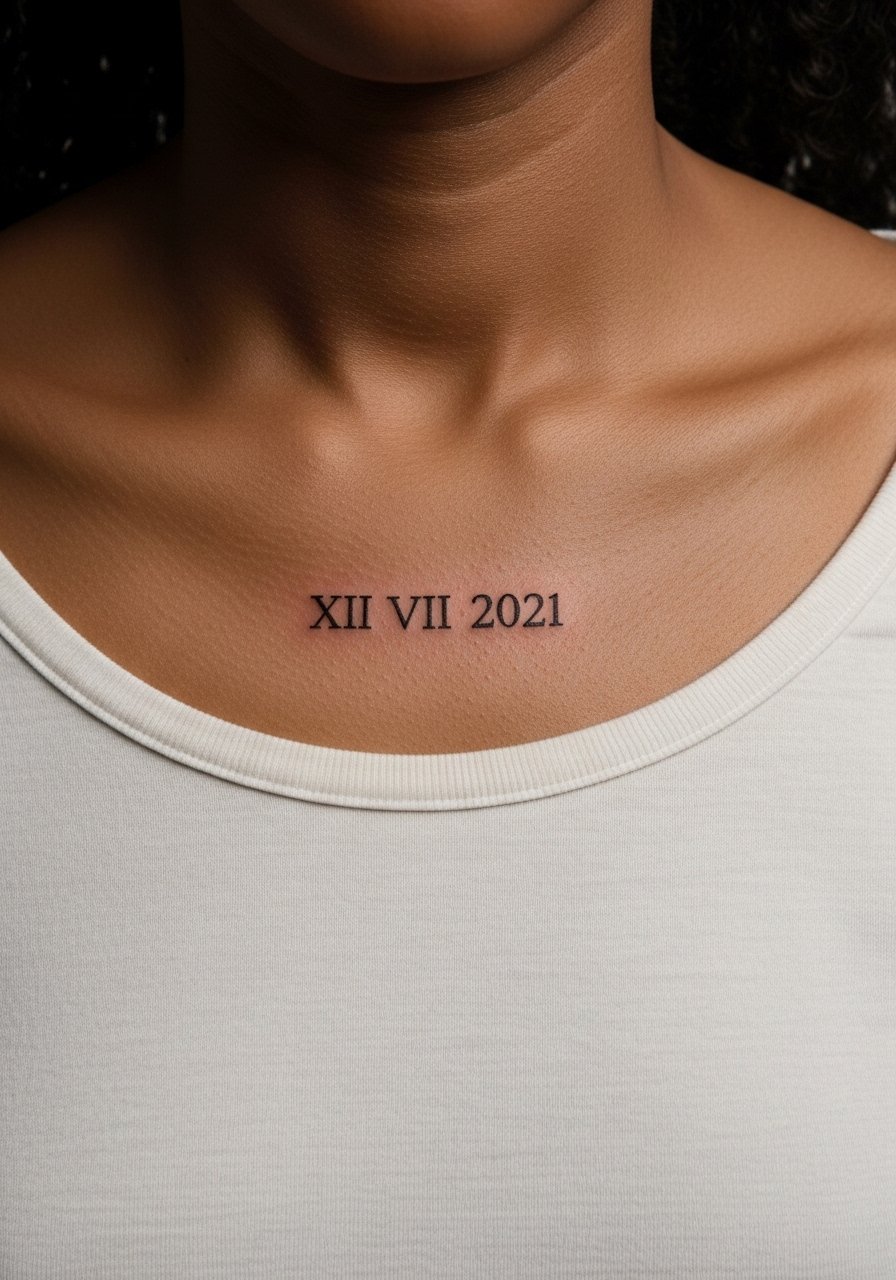
Dates in Roman numerals avoid cursive blur but need generous letter spacing. Ask for the exact numerals in stencil form and confirm spacing in a standing mirror. The common mistake is compressing more information than the available width allows. This is a short session and the piece is ideal for someone who wants a discreet, meaningful mark.
21. Small Animal Silhouette
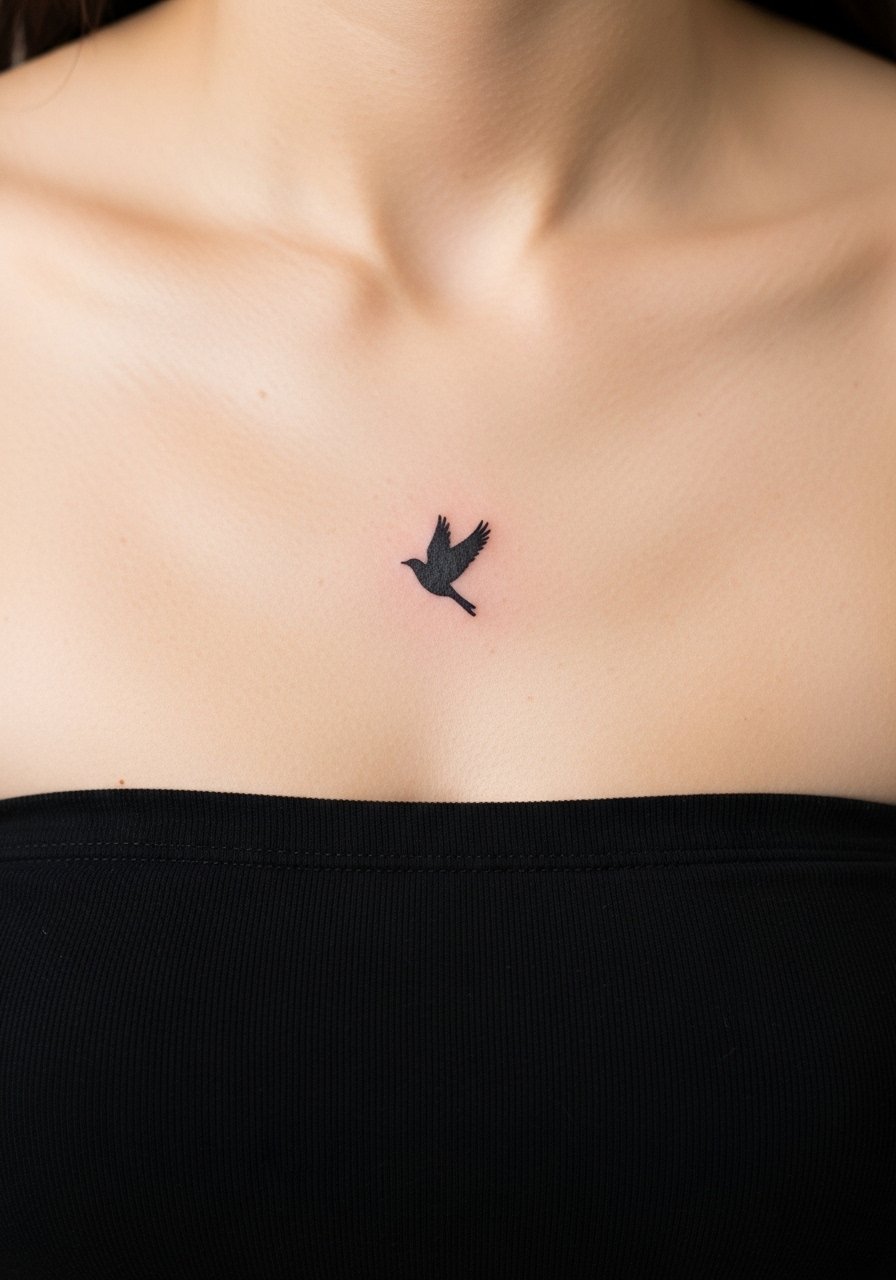
Silhouettes need crisp negative space to keep their shape. Tell the artist you prefer a slightly larger silhouette so quirks reduce over time. The mistake is tiny silhouettes with thin lines that lose definition. This session is quick and low to moderate on pain. For showing it off, a thin chain pendant necklace complements without competing.
22. Centered Minimal Anchor with Rope
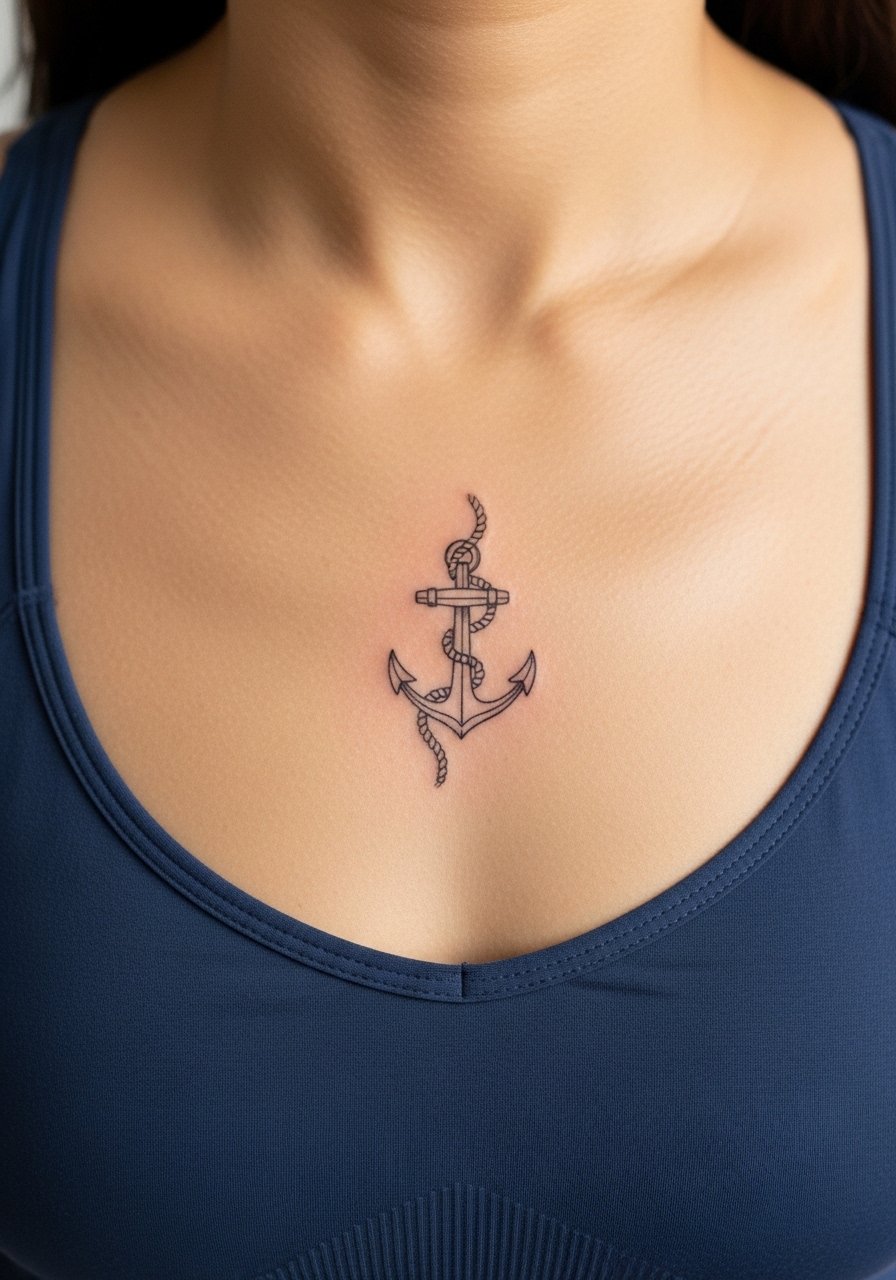
Rope detail needs simplified loops to avoid muddiness. During consultation, ask for one clear knot rather than multiple tiny twists. The session feels sharp near the bone and is best in a focused single block of time. Avoid asking for ultra-fine rope texture that will compress into an indistinct mass later.
23. Crescent Lace Collar
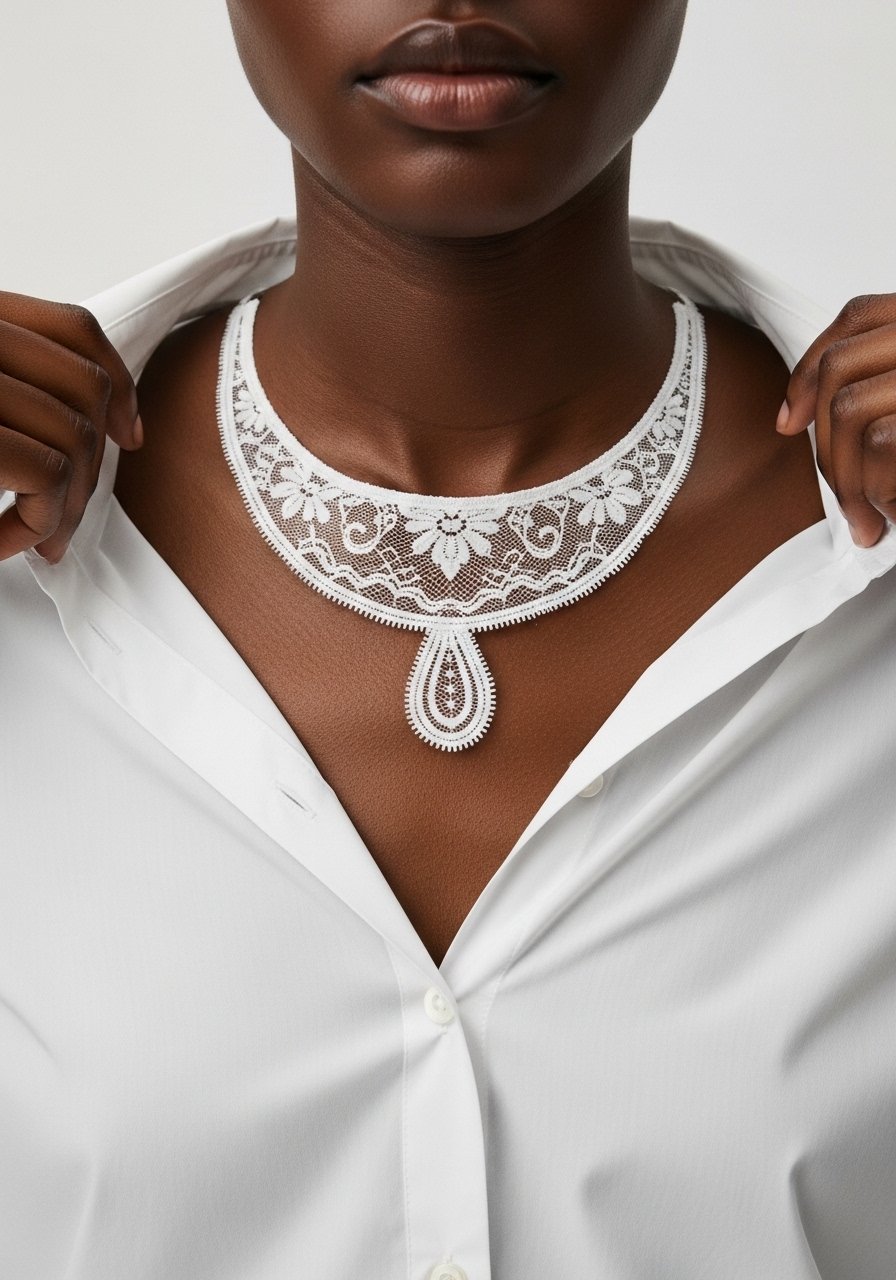
Collar-like crescents work if the center drop is slightly reduced in detail to avoid a heavy focal point. Request bold outer lace edges and airy interior patterns. A common mistake is equal density across the whole crescent which can look heavy at distance. Pain is variable with focus near the center drop. Pair with an open-back blouse or a low-neck top to show the crescent elegantly.
24. Tiny Globe with Coordinates
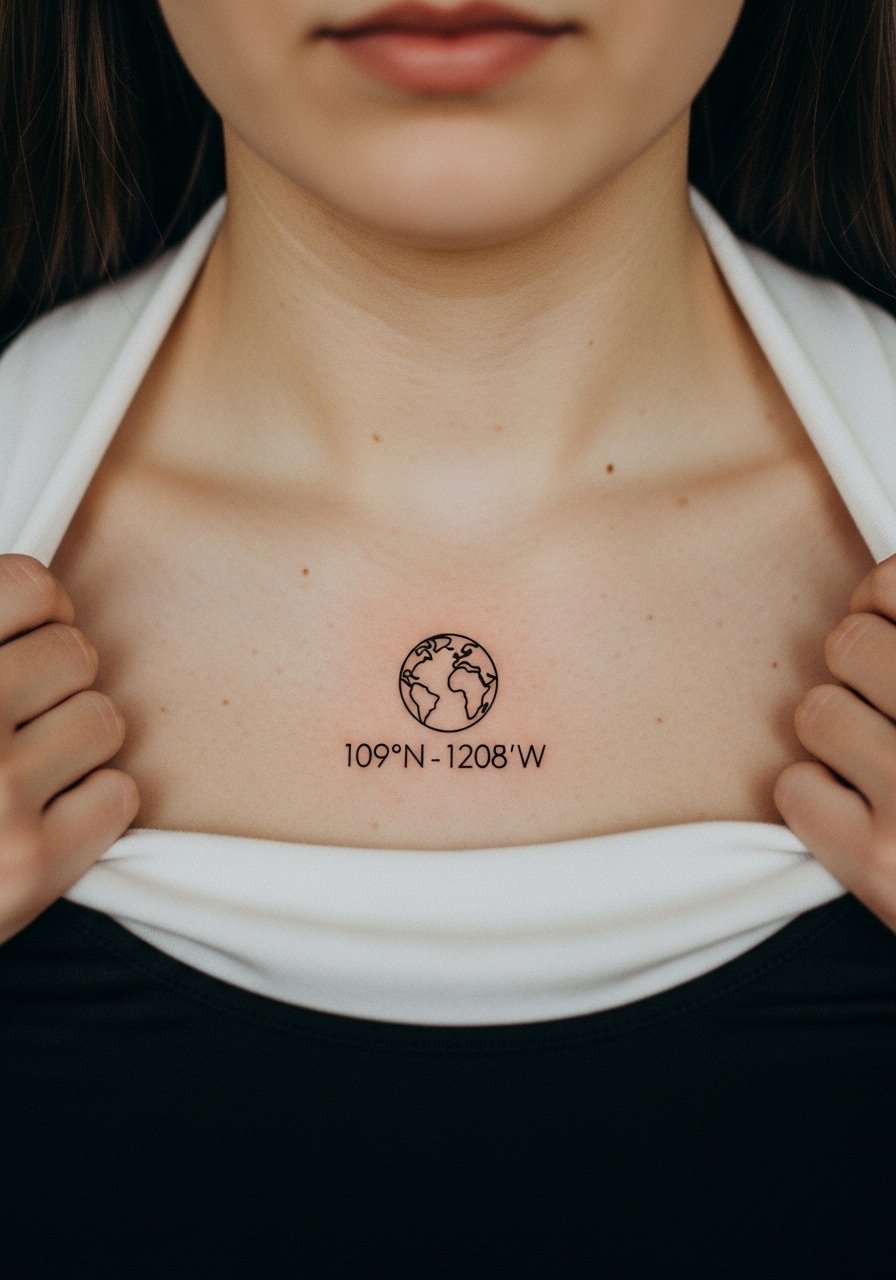
Coordinates must be provided exactly in the consult to avoid gibberish. When combined with a tiny globe, keep both elements simple so numbers remain legible. The mistake is tiny numerals packed too tight. This is a short session and ideal for someone who wants a discreet travel marker.
25. Heartline Wave
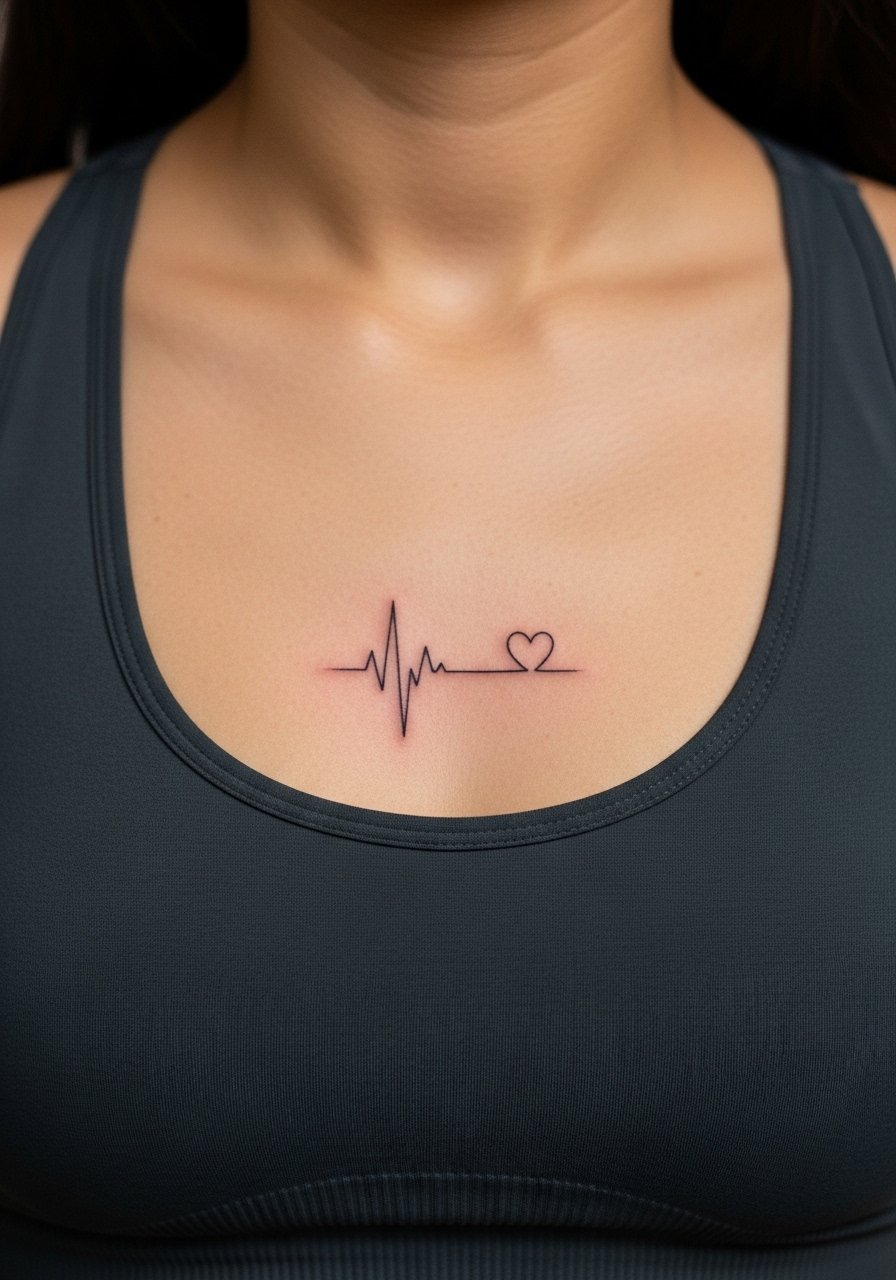
Heartbeat motifs ride the contours and read best when the central heart is slightly larger than the line to preserve shape. Ask for a gentle thickening at the heart point during the consult. A common misstep is an ultra-thin continuous line that fades into the skin over time. The session is brief with localized sensitivity.
26. Small Shielded Sun and Moon
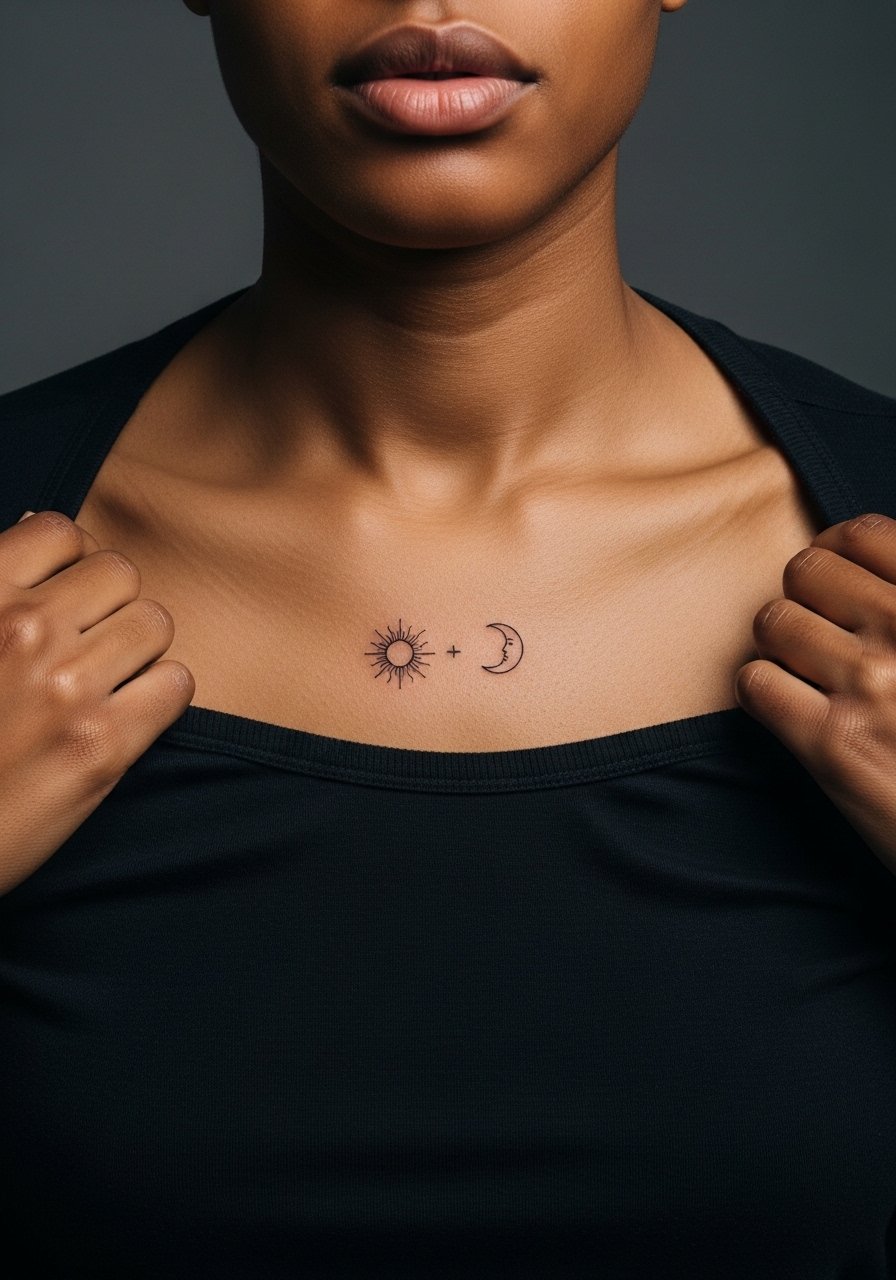
Paired celestial motifs work when each symbol has its own small halo of negative space to avoid visual blending. Tell the artist you want the moon slightly smaller to balance composition. The mistake is putting both at identical scale which can become a single indistinct mark with time. This is a short session and shows well with layered pendant necklaces.
27. Single Petal Drop
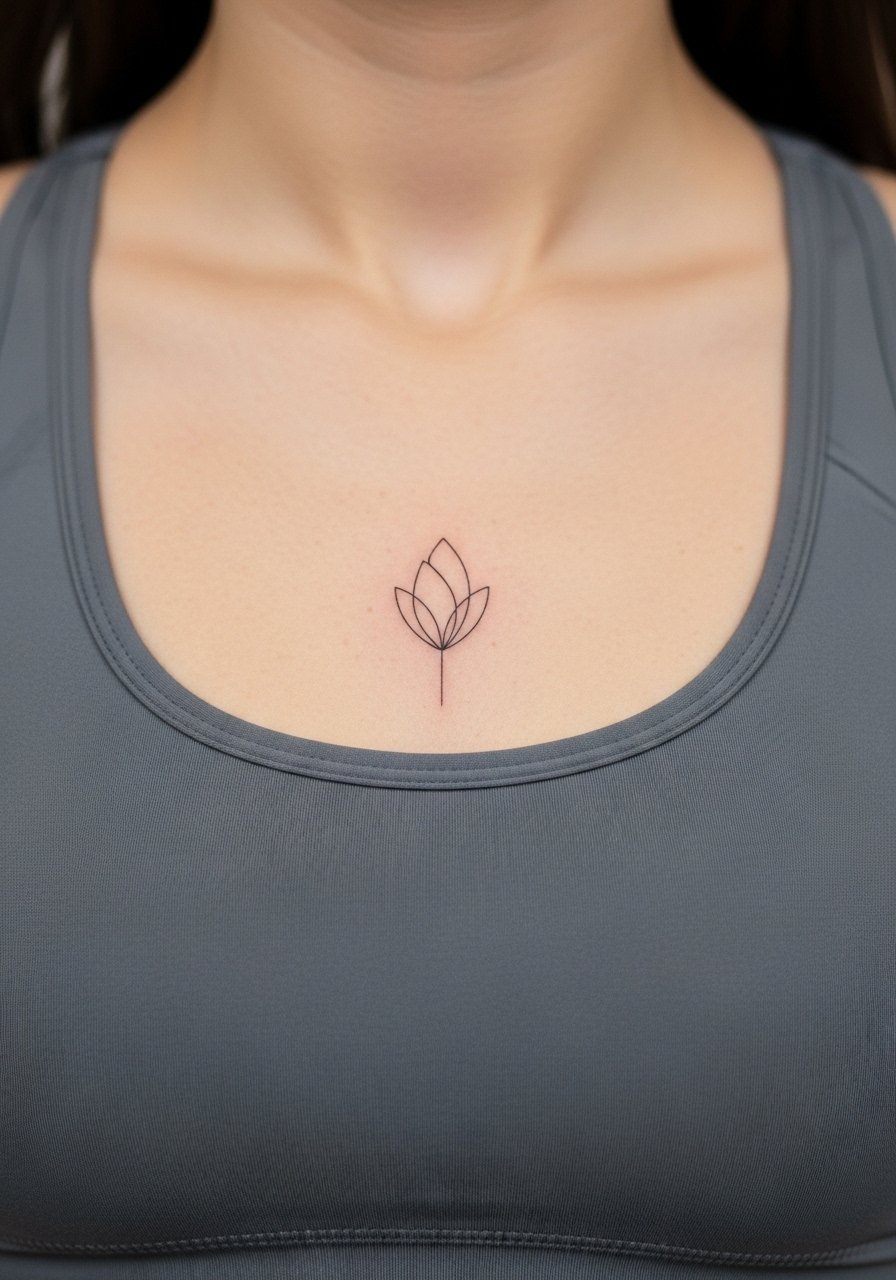
A single petal is deceptively simple and needs confident placement to look intentional. Ask for a slightly increased height rather than ultra-tiny width so the form reads at a glance. The most frequent error is shrinking the petal so small it loses character. This is one of the least painful chest options and suits a first chest-focused piece.
Frequently Asked Questions
Q: Will a fine line sternum tattoo blur faster than a bolder design?
A: Fine line tends to need more careful spacing because tiny details have less margin for skin movement. In my experience, slightly increasing line weight and leaving breathing room avoids early blurring. If longevity is a priority, mention you would prefer a midweight line during the consultation.
Q: How should I dress for a sternum or upper-chest appointment?
A: Wear clothing that gives the artist clear access without tugging on the area. I suggest a fitted sports bra or a loose button-down you can shift aside. That way the artist can work without you having to disrobe or adjust repeatedly.
Q: Do chest-centered designs need different touch-up timelines than forearm pieces?
A: Yes, areas near bone and where skin moves with breathing can need touch-ups sooner, often around year two to three for finer work. Designs with intentional negative space and slightly heavier contour lines tend to hold up longer.
Q: Is there controversy about placing fine detail on the sternum I should know when choosing a design?
A: Artists split into two camps. One group warns that very fine detail near the sternum blurs quickly because of skin movement. The other group says with correct depth and spacing it can settle fine. Ask potential artists where they fall and request healed photos on similar skin tones before booking.
Q: Can I combine a chest center tattoo with a collarbone piece later?
A: You can, but plan composition in advance so future additions do not crowd the original. During the consult, ask the artist about future expansion and get measurements or mockups. That makes later sessions more cohesive and reduces the risk of compressing details into small zones.