Fine line geometric lotuses are viral on reels, and the same posts that rack up saves sometimes hide the reality of wear. Small, crisp lines can look incredible fresh and then soften faster than people expect on high-movement areas or darker skin. If you want a lotus that stays legible, the trick is spacing, contrast, and placement. Below are 27 geometric lotus tattoo ideas with practical consultation notes, how they age, and outfit tips to help the design read its best.
1. Fine Line Lotus Outline on Inner Forearm
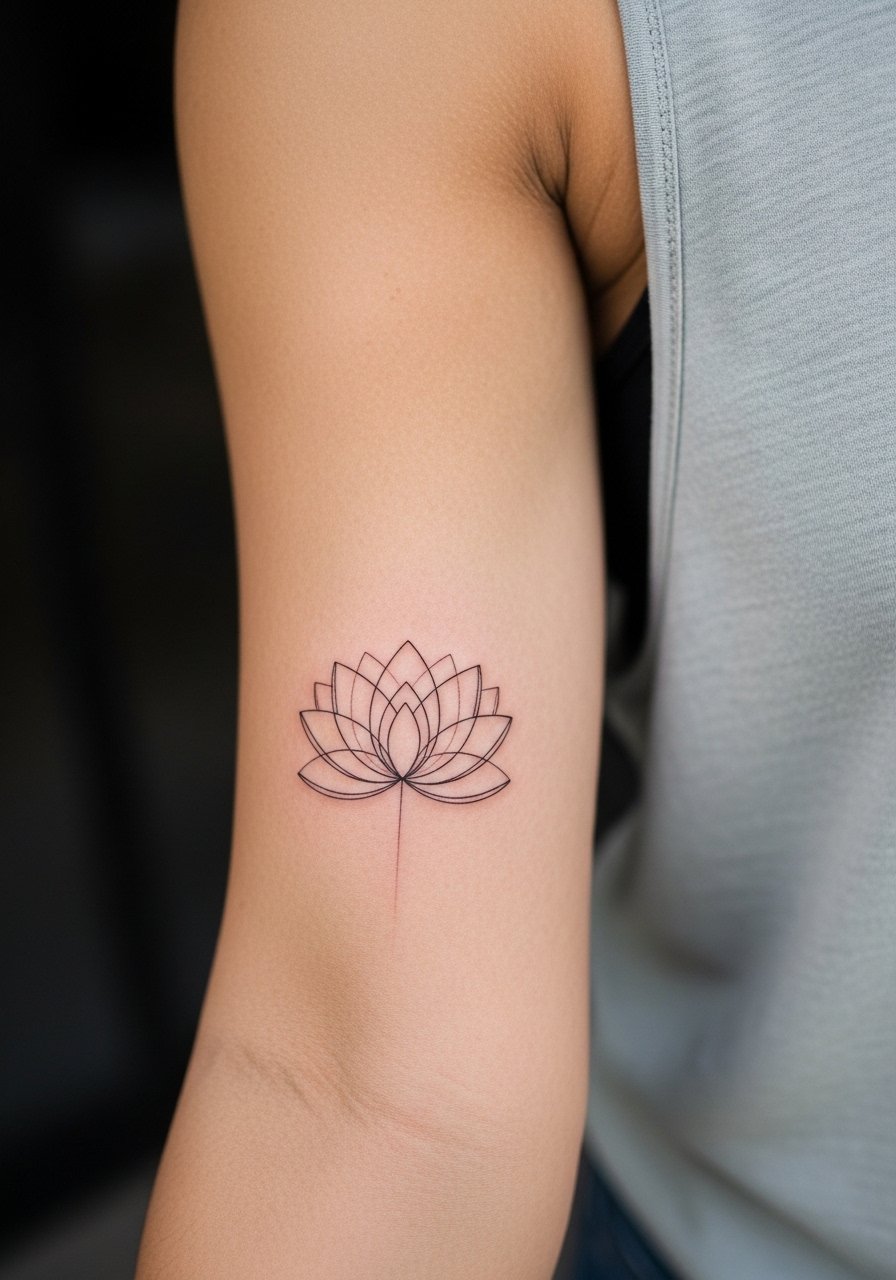
I see this one in consultations a lot because it reads modern and neat. Ask your artist for slightly thicker primary outlines and single-needle inner details so the main shape keeps contrast as the micro lines soften. The inner forearm stretches less than the wrist, so aging is kinder. Expect a one- to two-hour session with moderate discomfort that feels more like a constant buzz than sharp jolts. Common mistake is requesting ultra-tiny spacing. Give petals room to breathe and bring a rolled cuff chambray shirt to wear afterward for a composed reveal.
2. Mandala-Infused Lotus Across the Upper Shoulder
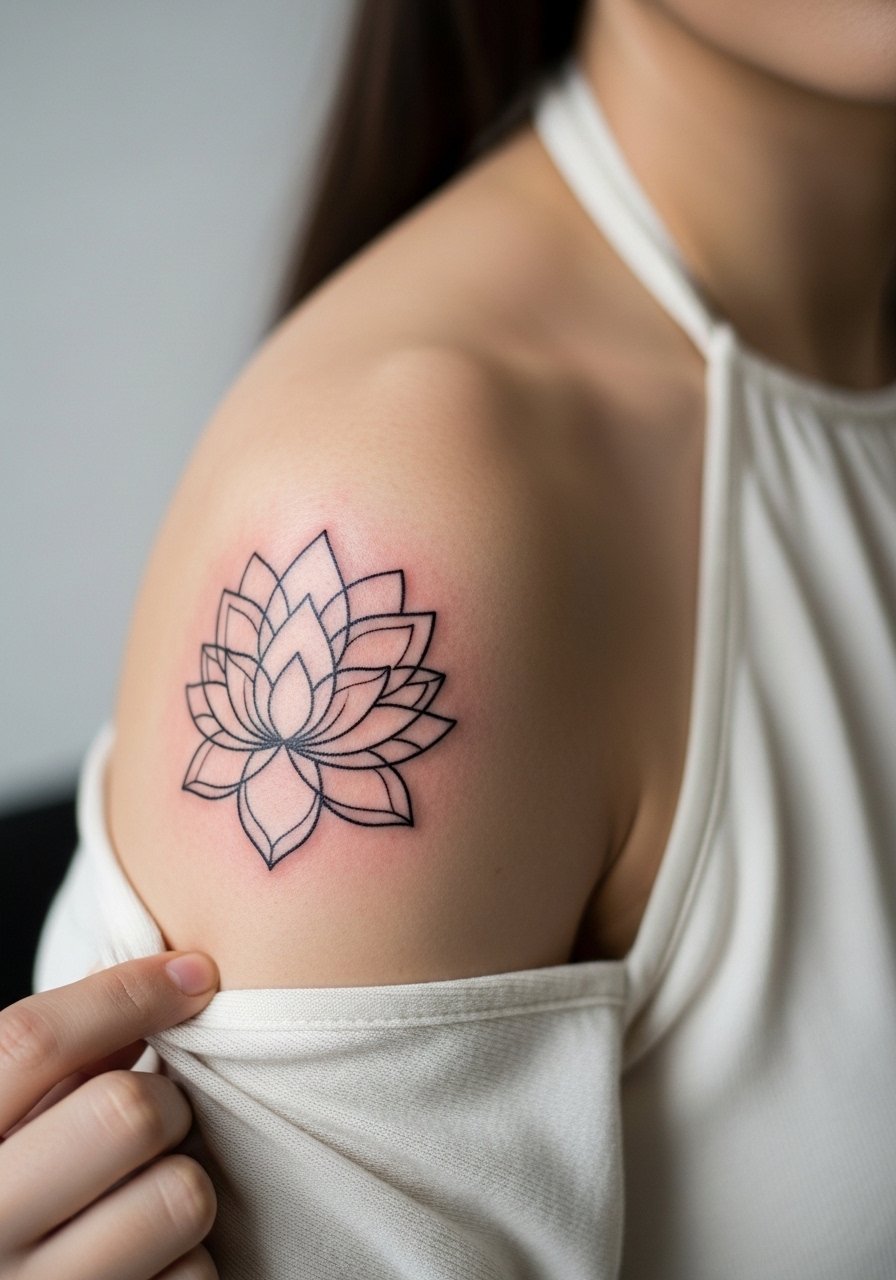
This ornamental mandala-lotus balances symmetry and scale so it works well as a standalone shoulder piece or the start of a back yoke. Tell your artist you want measured radial spacing and stipple shading rather than dense crosshatching. Sessions run two to three hours and pain sits in the mild-to-moderate range. One common error is compressing too many rings into a small area. If you plan summer outfits, pair the finished piece with a sleeveless halter top to let the symmetry breathe without competing necklines.
3. Dotwork Geometric Lotus Petals on Inner Bicep
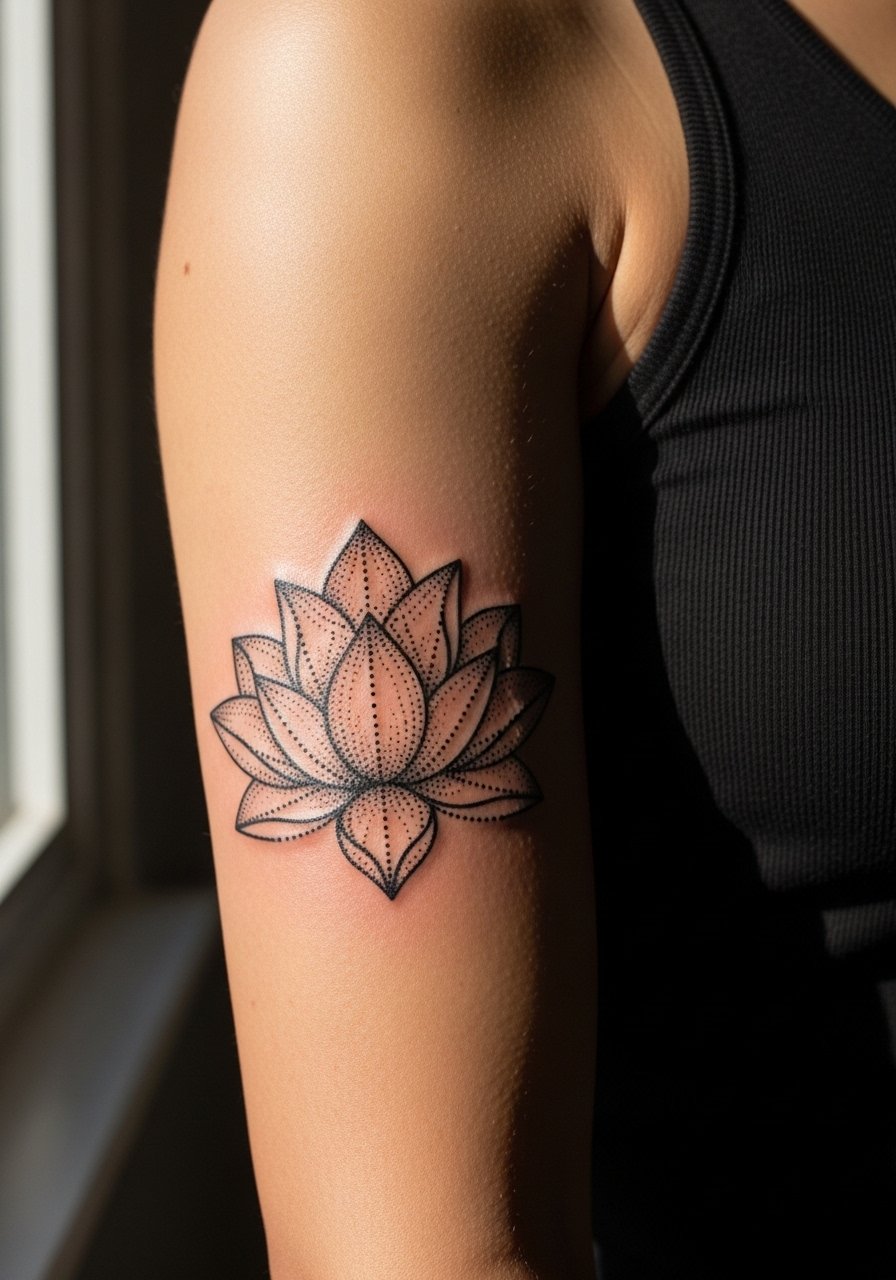
Dotwork gives a hypnotic texture that ages well when spaced correctly. Inner bicep skin can be softer and prone to migration, so the dot density should be lighter near edges. Sessions are usually one to two hours and the spot is a higher pain threshold for some people. A frequent mistake is packing dots too close near the outline. For the session, wear a loose tank or button-up shirt so the artist has clear access and you stay comfortable.
4. Minimal Geometric Lotus at the Collarbone
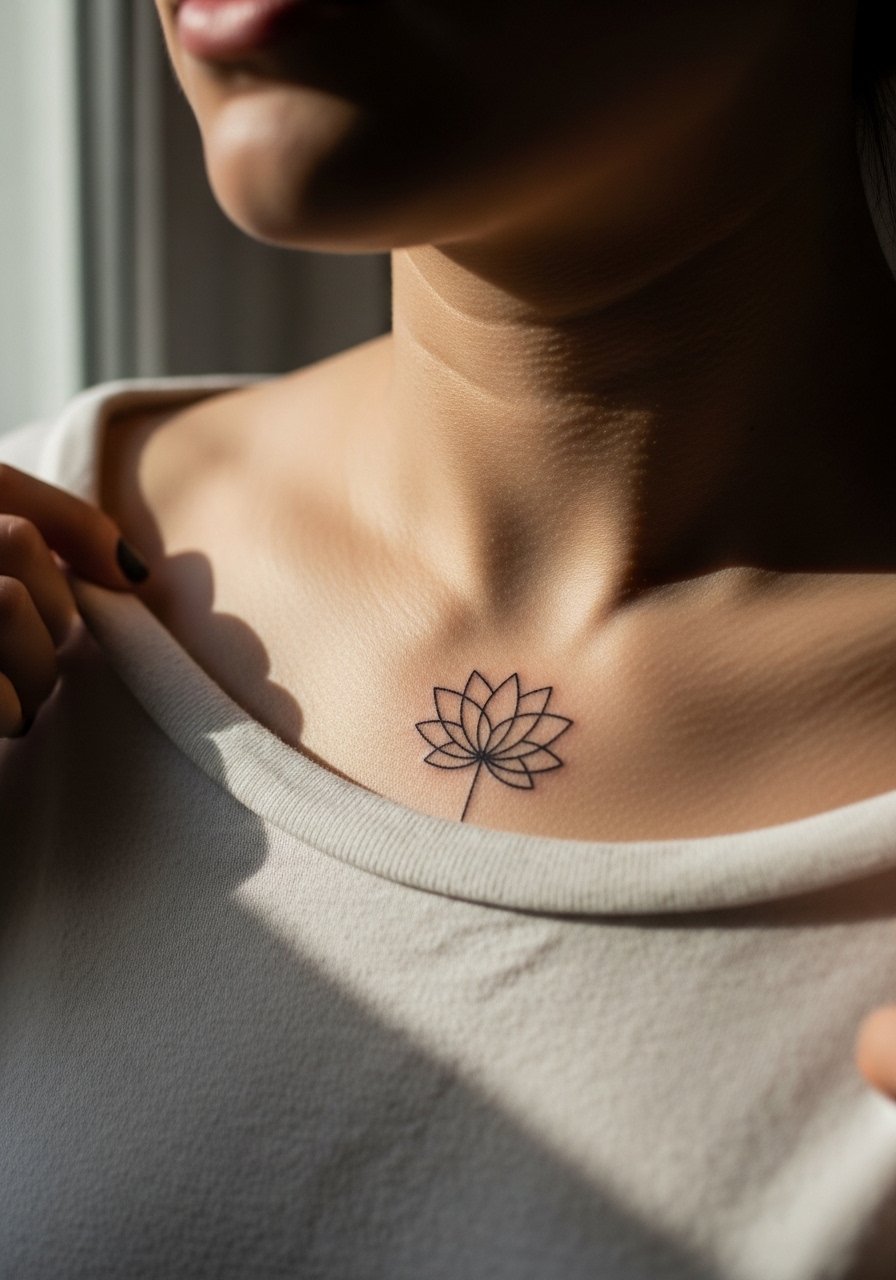
Collarbone work photographs elegantly with wider spacing and single-line geometry. The rib-adjacent skin moves when you reach or twist, so avoid cramming tiny details into the narrow strip. Pain is noticeable because of bone proximity, but sessions are short, often under an hour. Newbies often ask for micro spacing that blurs after healing. If you want this spot for an evening look, an off-shoulder blouse shows off the symmetry without competing straps.
5. Layered Geometric Lotus Bloom for Thigh Placement
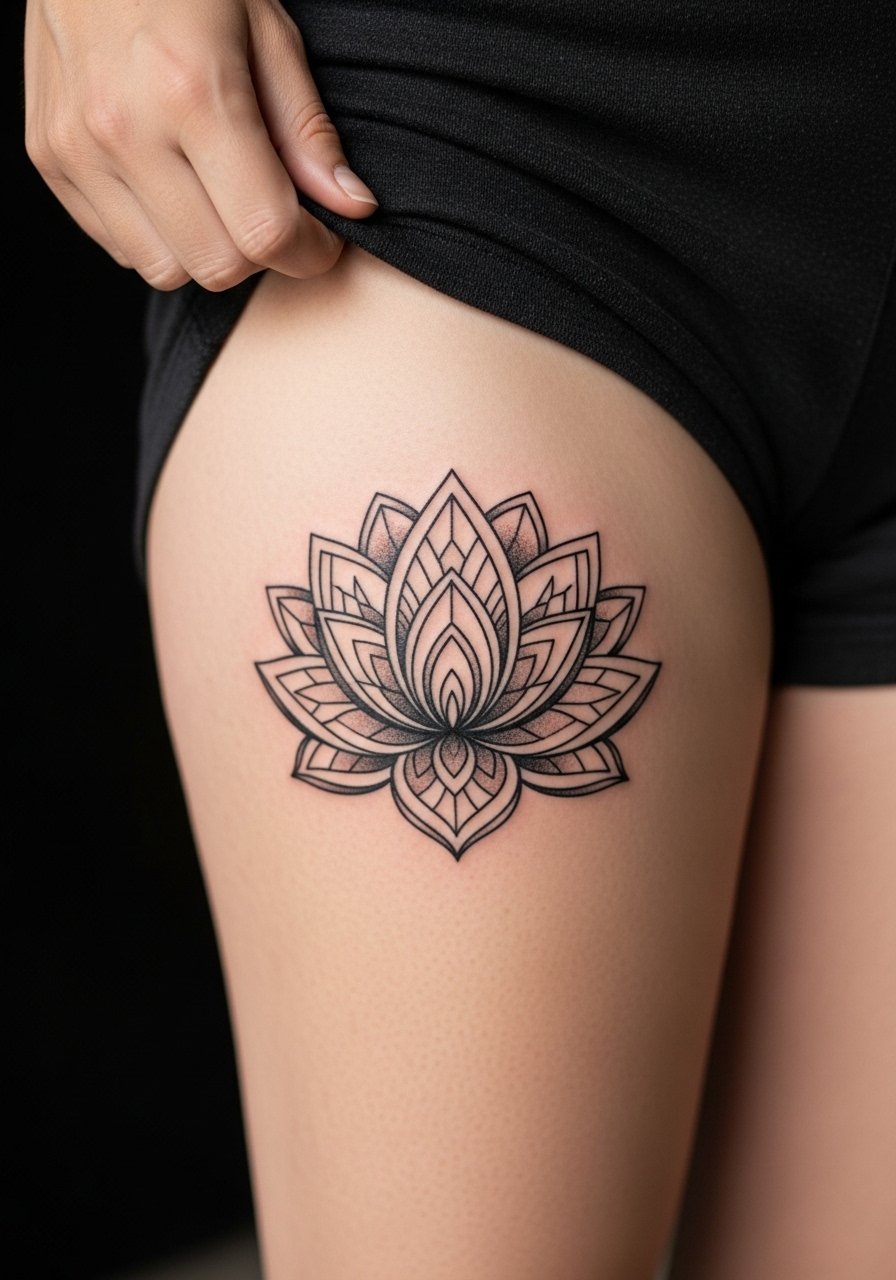
The thigh is great for collectors who plan to expand into larger work. Layered geometry absorbs size increases and keeps negative space for breathing room. Sessions here can stretch into multiple sittings, with moderate pain and long-wrap healing. Avoid going too dense too fast because weight change and muscle tone will affect how rings settle. For summer reveals, pair the tattoo with high-waisted shorts or skirts with slits to show the bloom without tugging fabric across the design.
6. Symmetrical Polygon Lotus on the Calf
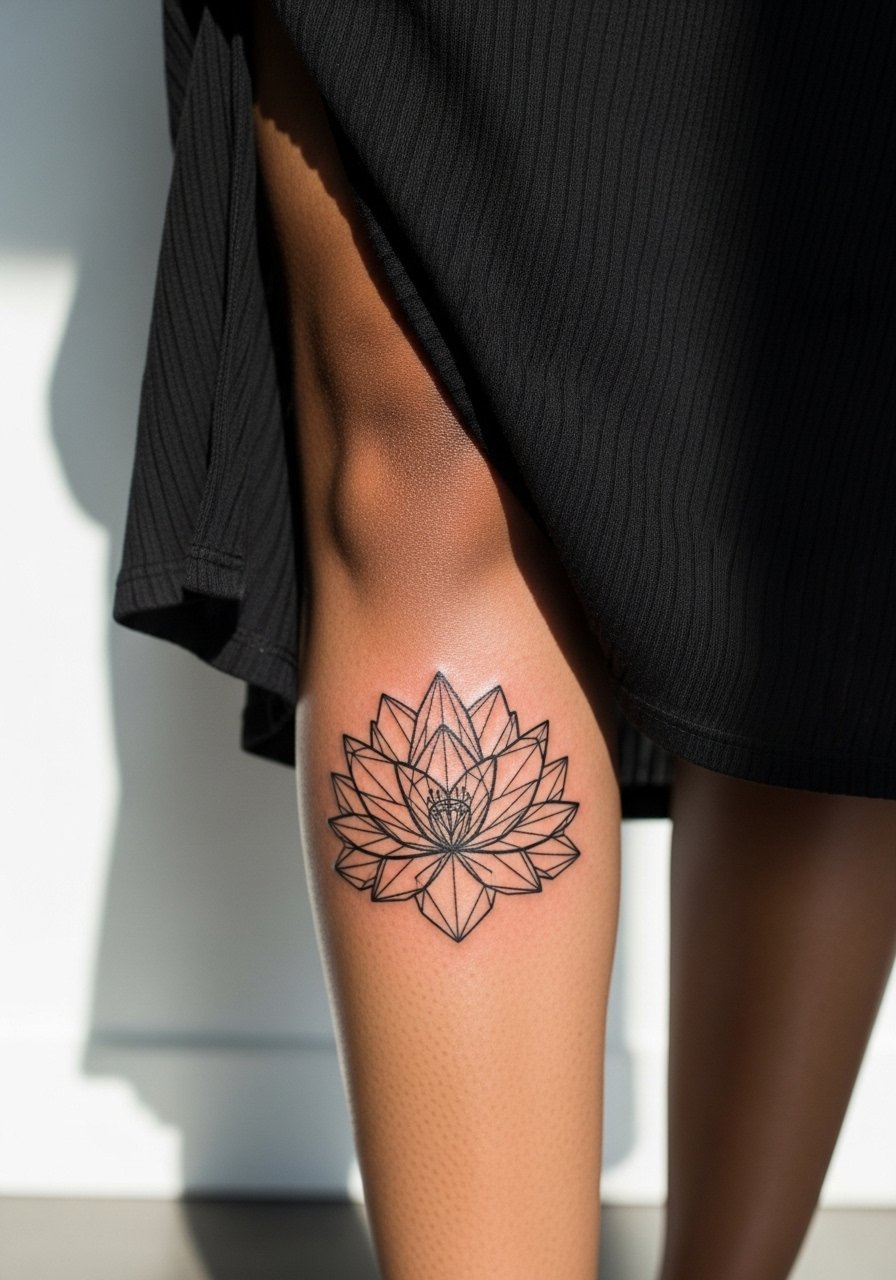
Calf placement is one of the lower-stretch options and photographs sharply with bold polygon outlines. It takes two sessions if you want heavier saturation and inner fills. Runners find this area holds up well compared with inner thigh or ribs. The main mistake is making the polygons too small for the distance from viewer to tattoo. For everyday showing, roll up your jeans or select a midi skirt so the geometry reads cleanly from a normal distance.
Pre-Session Essentials
The shoulder, thigh, and calf pieces above require different prep than wrist work, so a few targeted items make the session and the first week easier.
- Tea tree salve. A lighter option during the oily-skin phase that some people prefer over heavier balms for geometric line clarity.
- Australian lanolin balm. Hydrates without a shiny finish, useful for matte blackwork on thighs and calves.
- Japanese rice bran oil serum. Non-greasy for the first 48 hours on wrist and collarbone pieces where shine hides detail.
- Indie mushroom extract cream. Anti-inflammatory for dotwork irritation and sensitive skin areas.
- Second Skin protective film. Works well for fine line pieces that need a steady, breathable barrier during the initial days.
7. Fineline Lotus with Geometric Core on the Ribcage
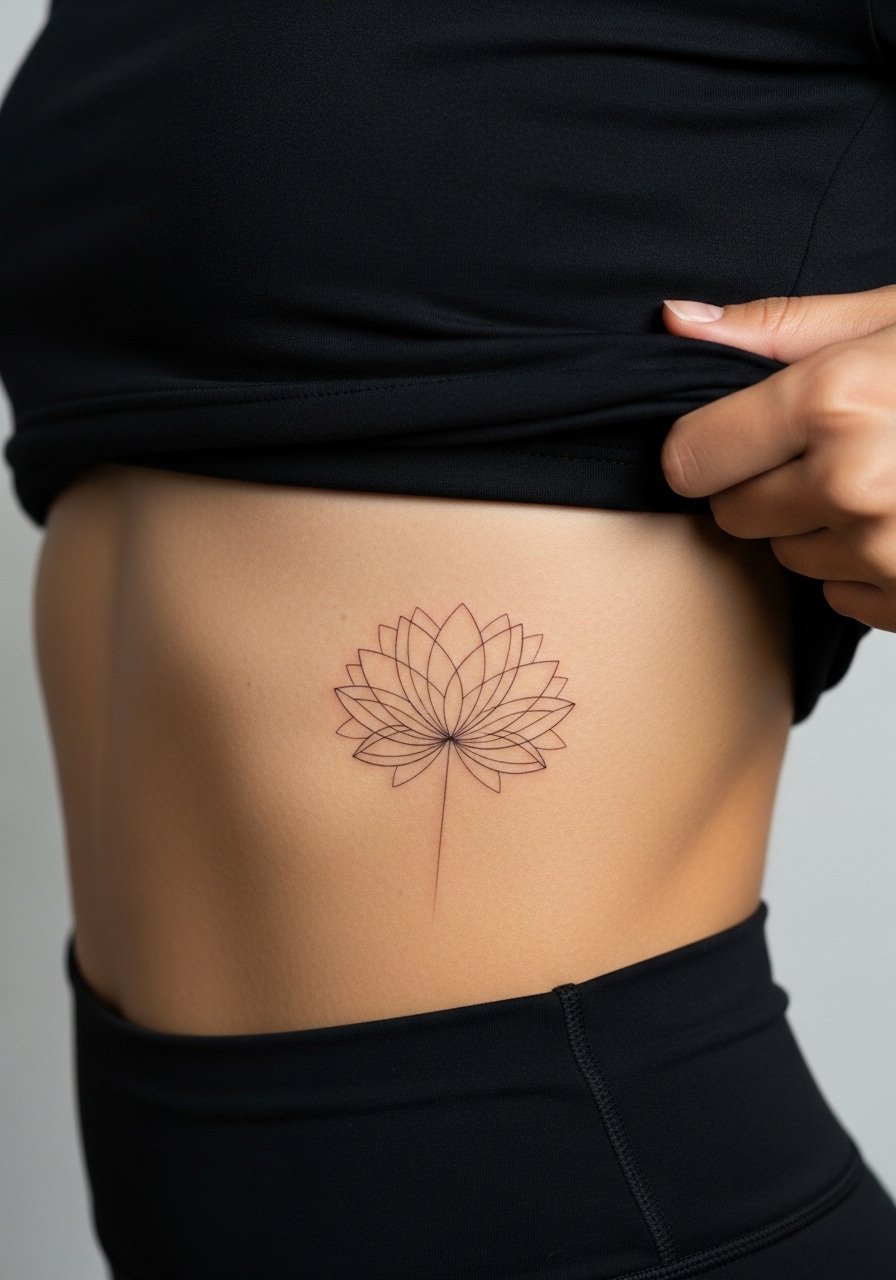
Fair warning: ribs rate high for pain and for migration risk if lines are too fine. Artists are split on whether fineline holds on ribs. One camp warns that stretch and movement blur tiny lines within a couple of years. The other camp says careful needle depth and spacing make it hold. My advice is to ask where your artist stands and to plan slightly bolder primary lines with delicate interior work. Sessions are often broken into short sittings. Hand a friend your fitted sports bra for comfort during the appointment.
8. Hexagon-Framed Lotus Mandala on Upper Back
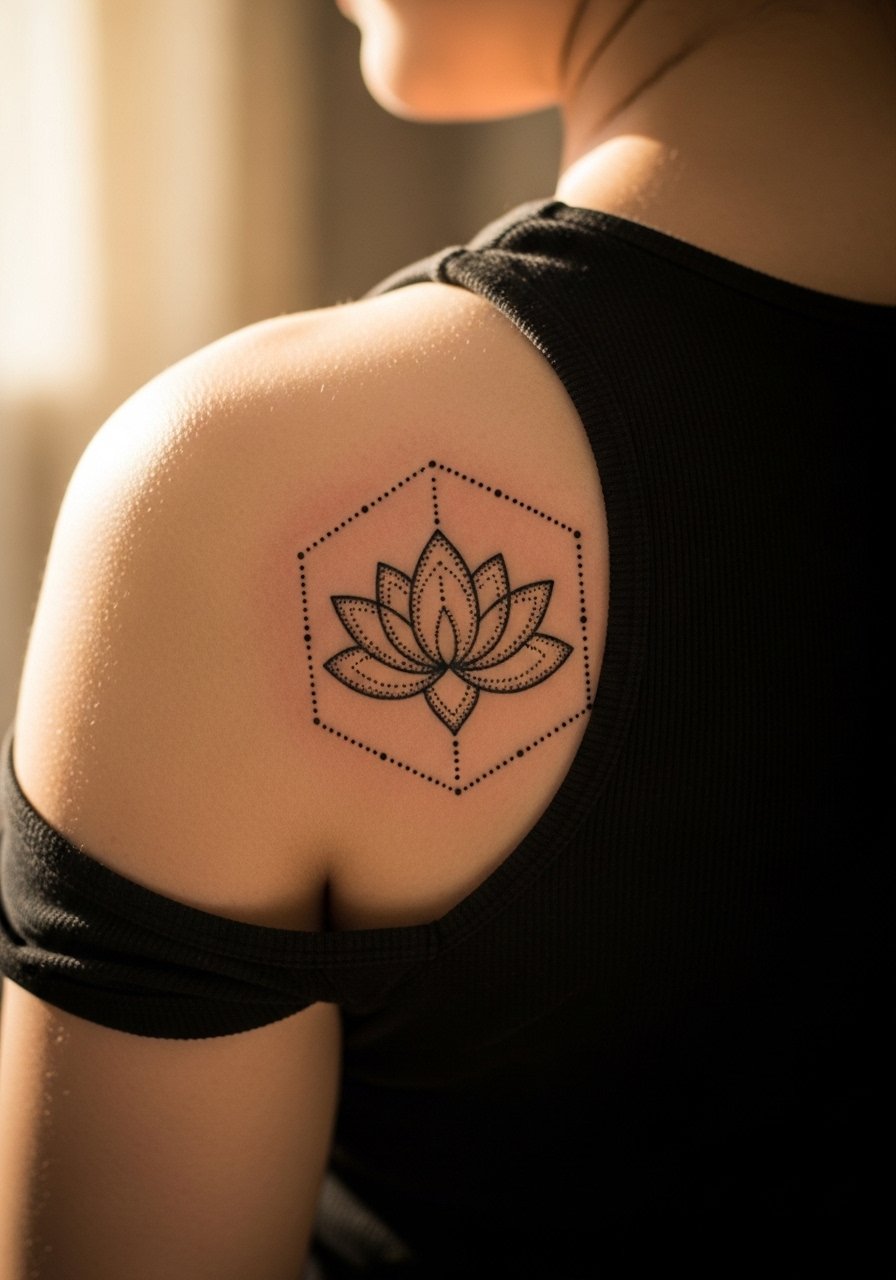
Upper back mandalas photograph in a bold way and scale well when planned as a future full-back piece. Ask for hexagon spacing that leaves negative gaps between petals to prevent heavy areas from merging with age. Sessions can be two to four hours depending on dotwork. A typical mistake is compressing too many inner rings into a medium circle. For evenings, an open-back dress highlights the radial symmetry without straps cutting the frame.
9. Abstract Geometric Lotus Silhouette at the Ankle
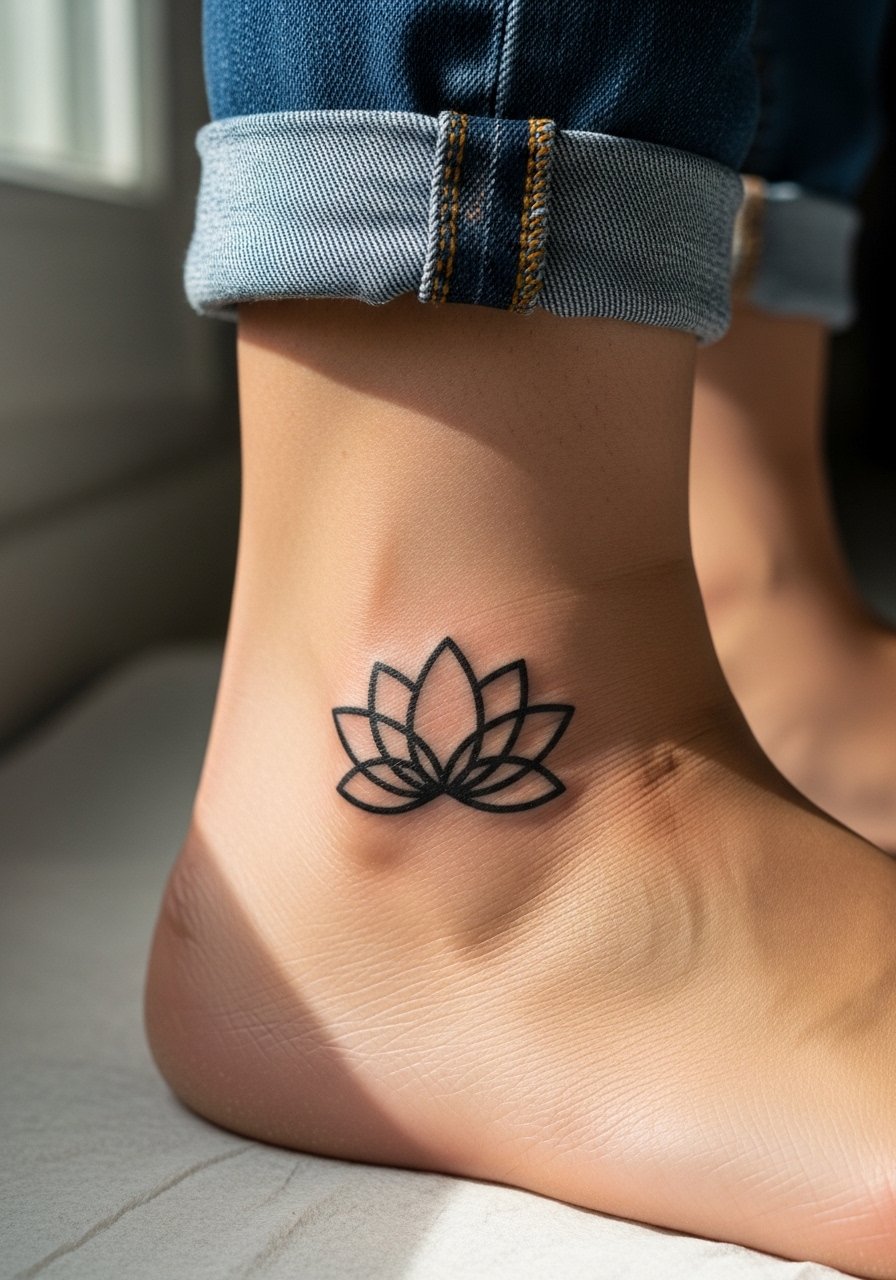
On dark or medium skin tones, solid silhouettes keep contrast where fine line fails to read in photos. Ankle work faces friction from socks and shoes during the first weeks, so clear guidance on footwear is vital. Sessions are short and pain varies with ankle bone prominence. Common errors include tiny details that vanish under shoe rubbing. For showing off, cuff wide-leg linen pants or wear strappy flats to let the silhouette sit cleanly.
10. Interlocking Geometric Petals on the Inner Forearm
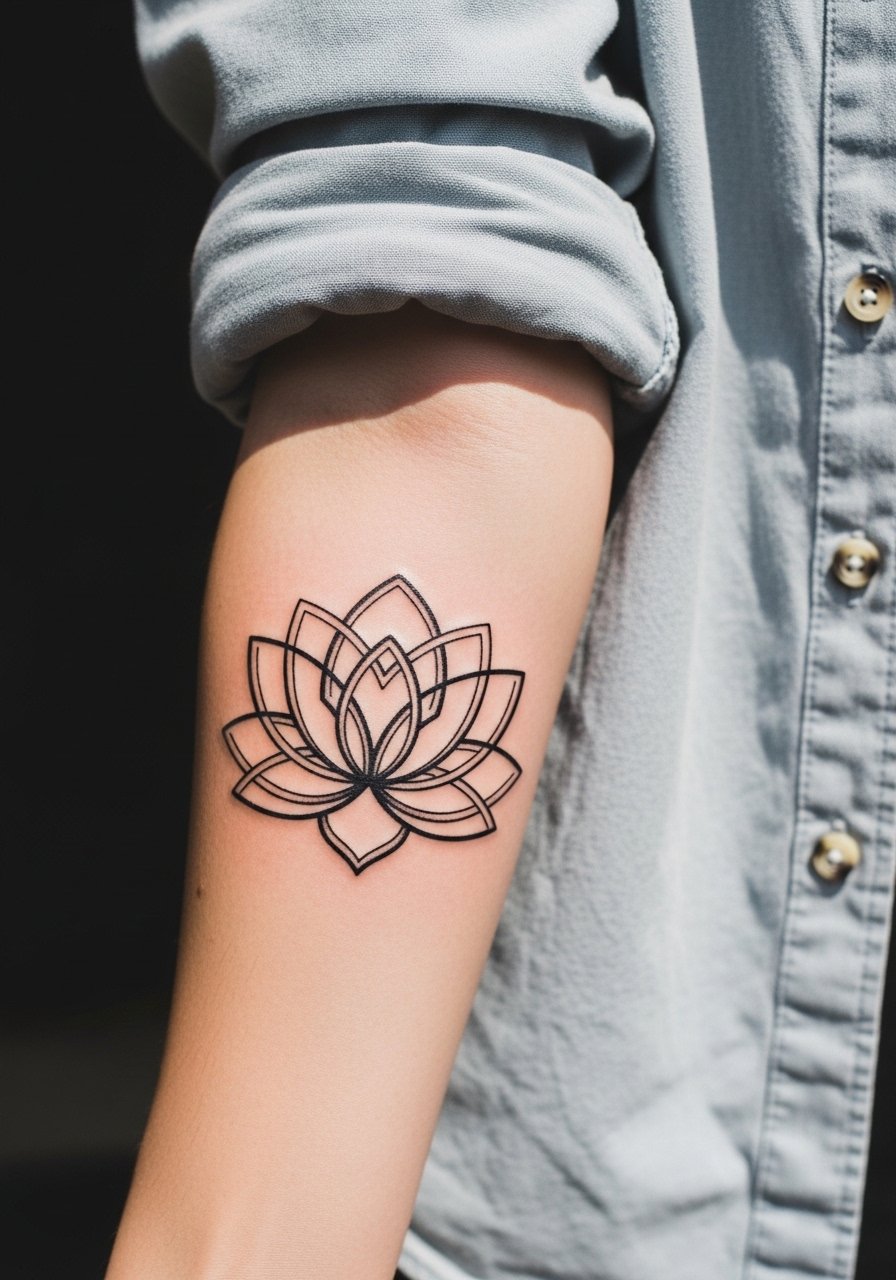
Interlocking petals give a puzzle-like visual that looks smart when executed with even spacing. Inner forearm placement shows movement well and ages predictably. Tell your artist you want alternating line weight so overlapping petals keep their individual edges over time. Sessions take one to two hours and the pain sits in a comfortable range. A mistake I often see is identical thin lines for both foreground and background. Wear a loose button-down shirt to the appointment so the artist has room to work without stretching the skin.
11. Radiating Line Lotus on the Shoulder Blade
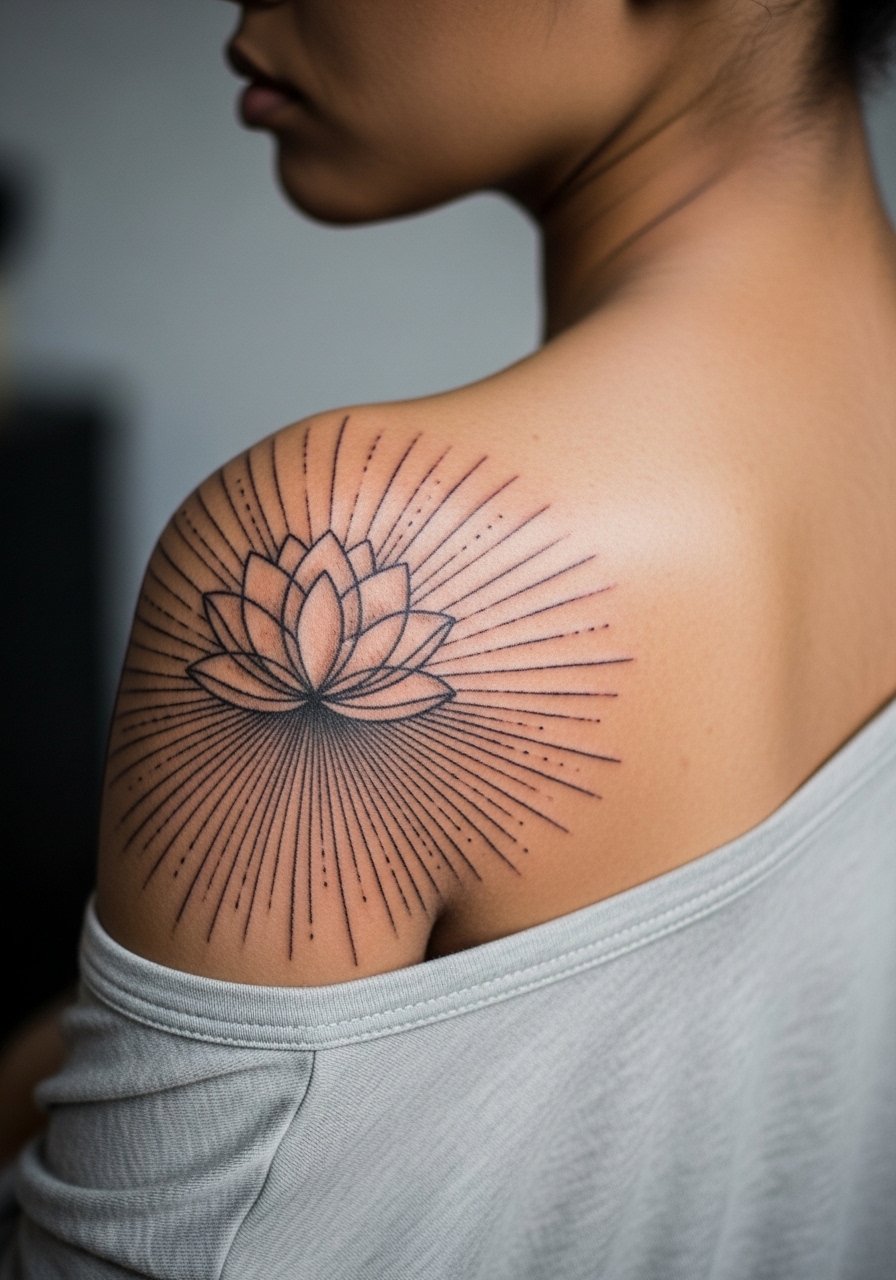
Radiating lines create a sunburst effect that frames the shoulder blade nicely. The area handles dot and line transitions well when rays are spaced to avoid heavy concentration at the center. Sessions are moderate in length and pain is mild to moderate. People sometimes ask for ultra-dense rays close to the center, which blurs into a dark patch with time. For low-key evenings, pair with a light shawl to cover or reveal the burst on demand.
12. Micro Geometric Lotus Pod on the Wrist
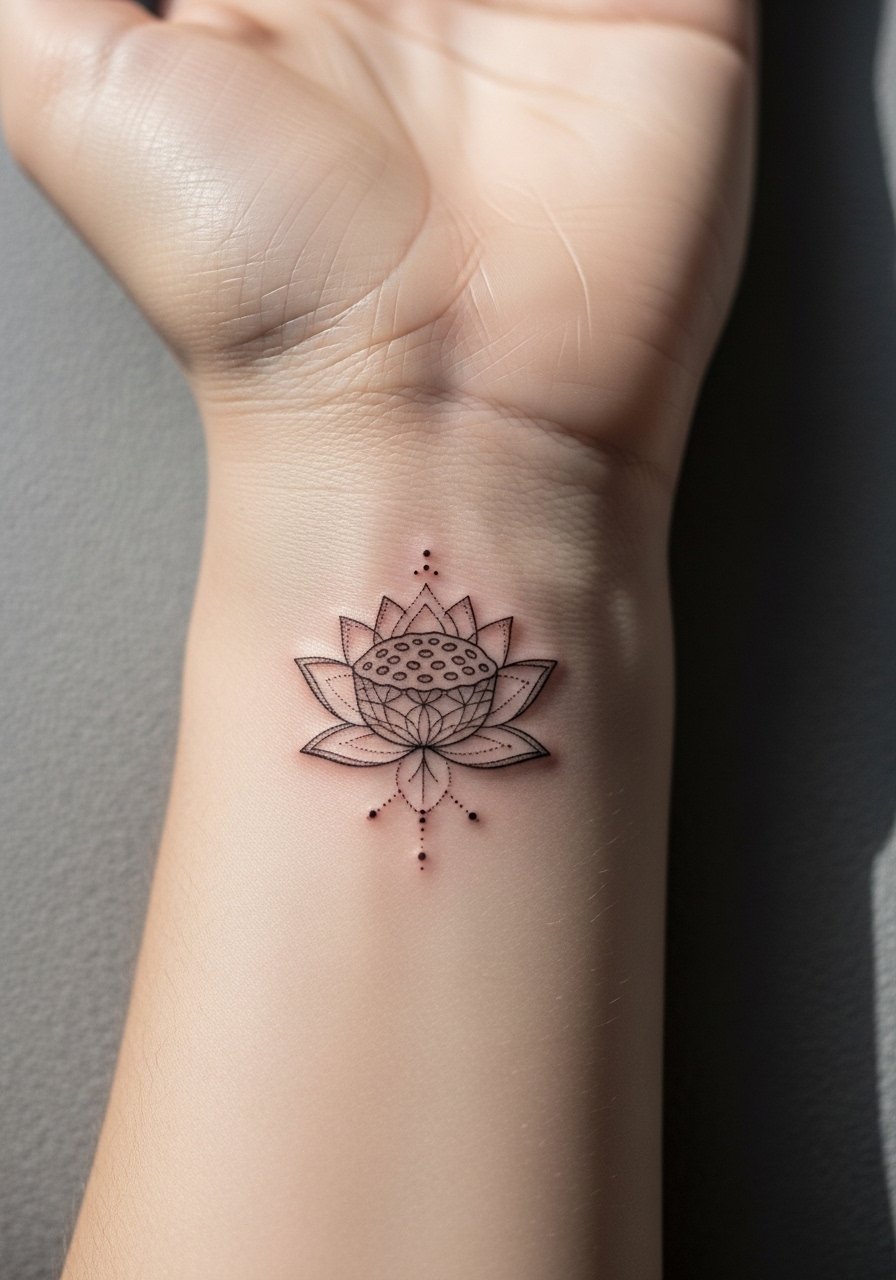
Wrist tattoos are compact and visible, but they live under daily washing and sun exposure. Fine micro pods look crisp at first but they soften faster on this high-contact spot. Budget realistic touch-up time and ask for a slightly thicker anchor line. Sessions are quick and the pain is higher near bone. A frequent regret is going ultra-micro where lines are less than ideal. For immediate showing, wear a slim leather wrist cuff on the opposite arm so the wrist with the tattoo stays the focus.
13. Blackwork Lotus with Bold Petals on the Calf Side
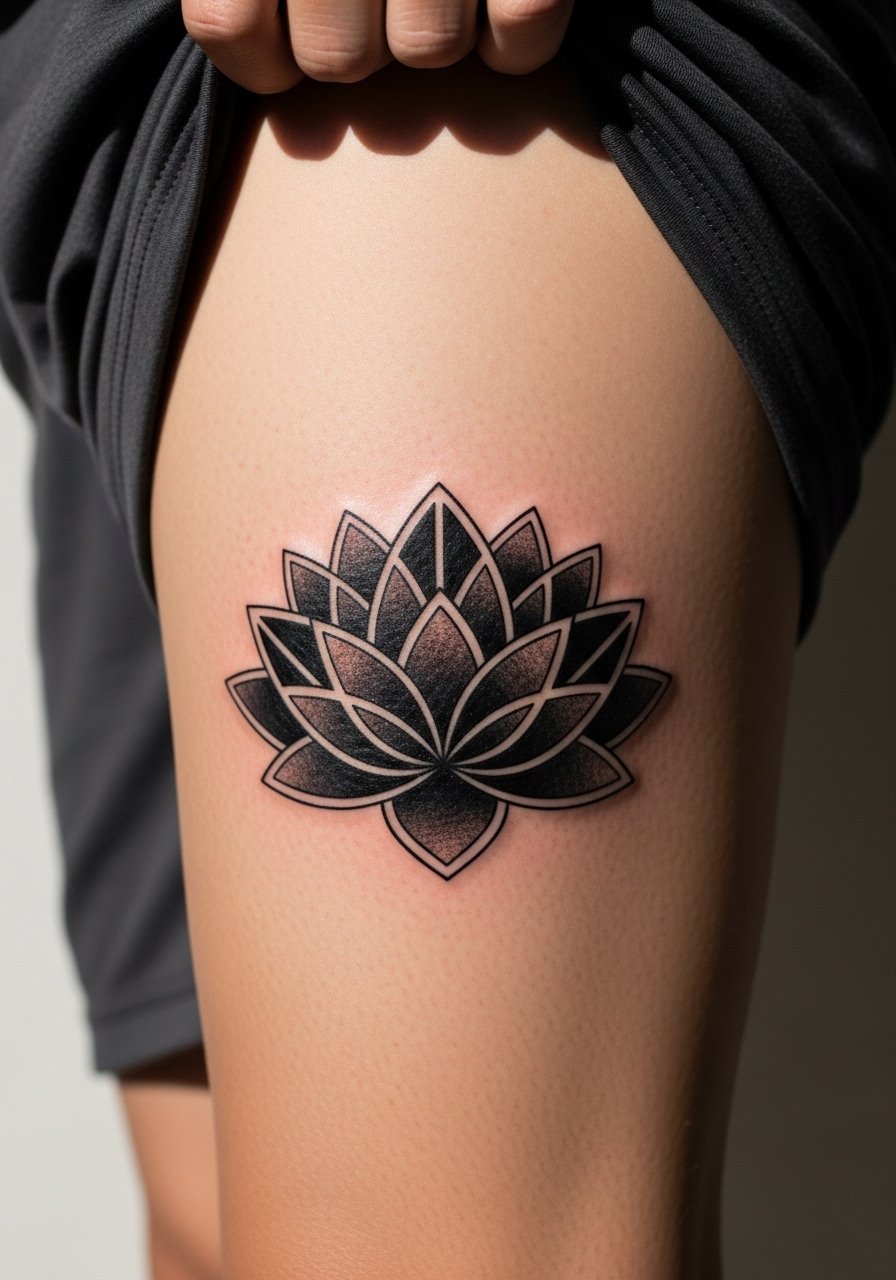
When you want longevity, bold blackwork wins over very fine detail. The outer calf tolerates heavier saturation and looks cohesive from a distance. Sessions for bold fills can be longer and some people schedule two sittings. A common mistake is switching between fine and heavy within a tight space which reads inconsistent after healing. Runners and athletes like this area because it moves less. For showing off, choose rolled bootcut jeans or mid-length skirts so the bold petals make an impact.
14. Geometric Lotus Spine Starter Pod
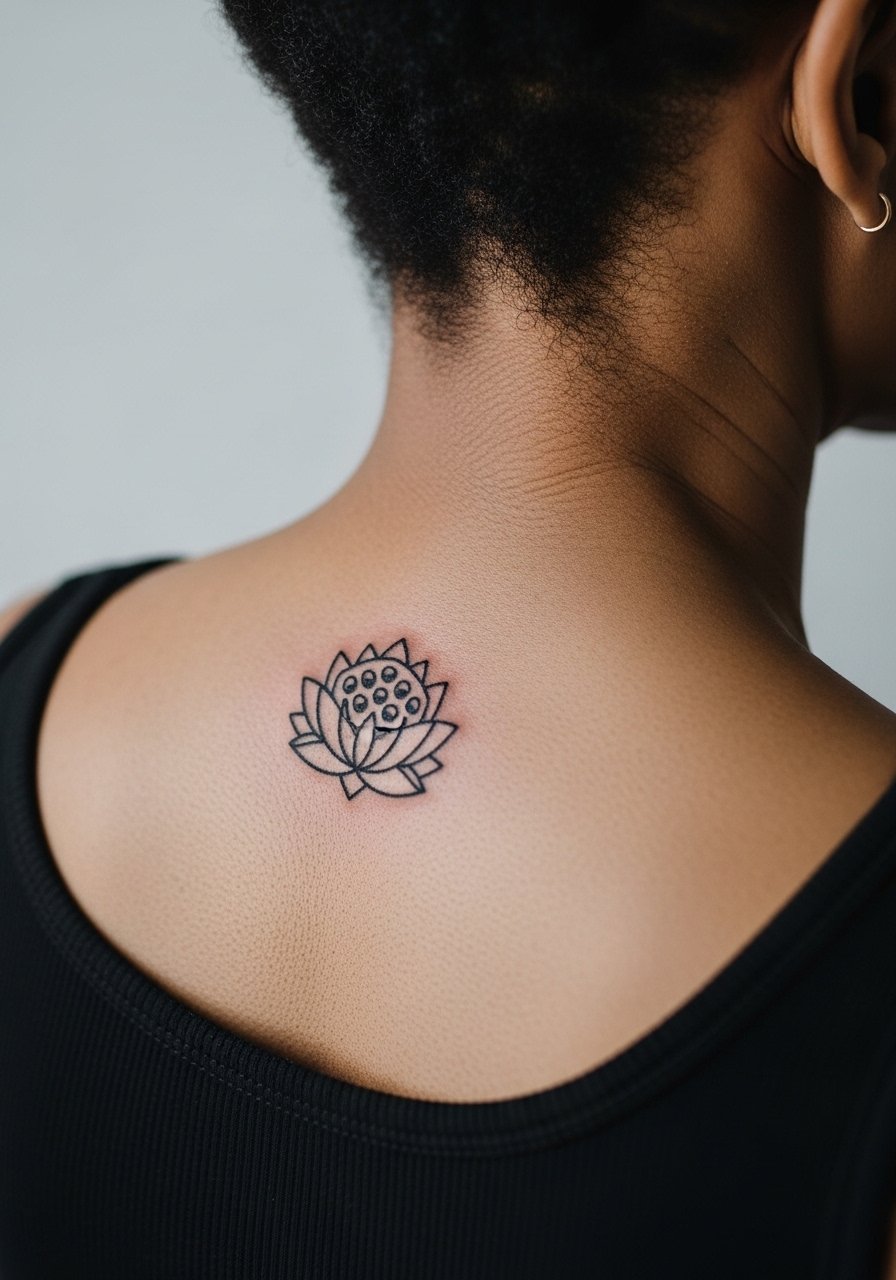
A micro spine pod is a clever starter if you plan an expandable spine mandala. The vertical axis reads well and allows future rings to be added without fighting proportions. Spine skin moves with posture and with weight shifts, so avoid ultra-fine internal filigree in the first pass. Sessions are short but keep in mind the area can be tender. A mistake is starting too wide for a future mandala. For session comfort, wear a loose button-down that you can pull aside.
15. Polygon Lotus Wristband Wrap
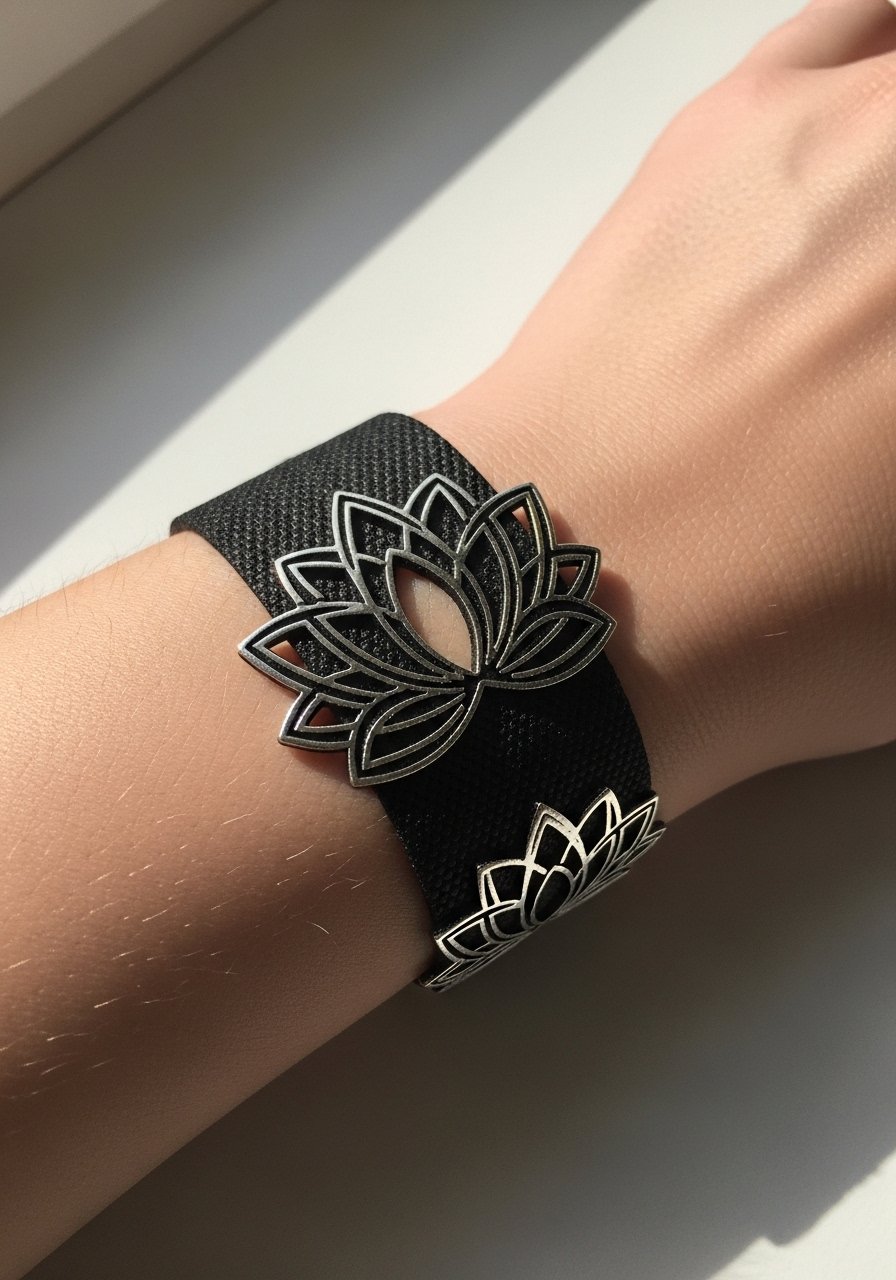
Wristband wraps need continuous rhythm in polygon edges so the repeat looks intentional rather than chopped. They are exposed to friction, so fill and outline need a bit of boldness. One pitfall is making the pattern too tight which causes early loss of definition. Sessions take about an hour. Expect yearly touch-ups if you work with your hands a lot. Keep a neutral manicure to frame the piece without competing for attention.
16. Abstract Negative-Space Lotus on the Ankle
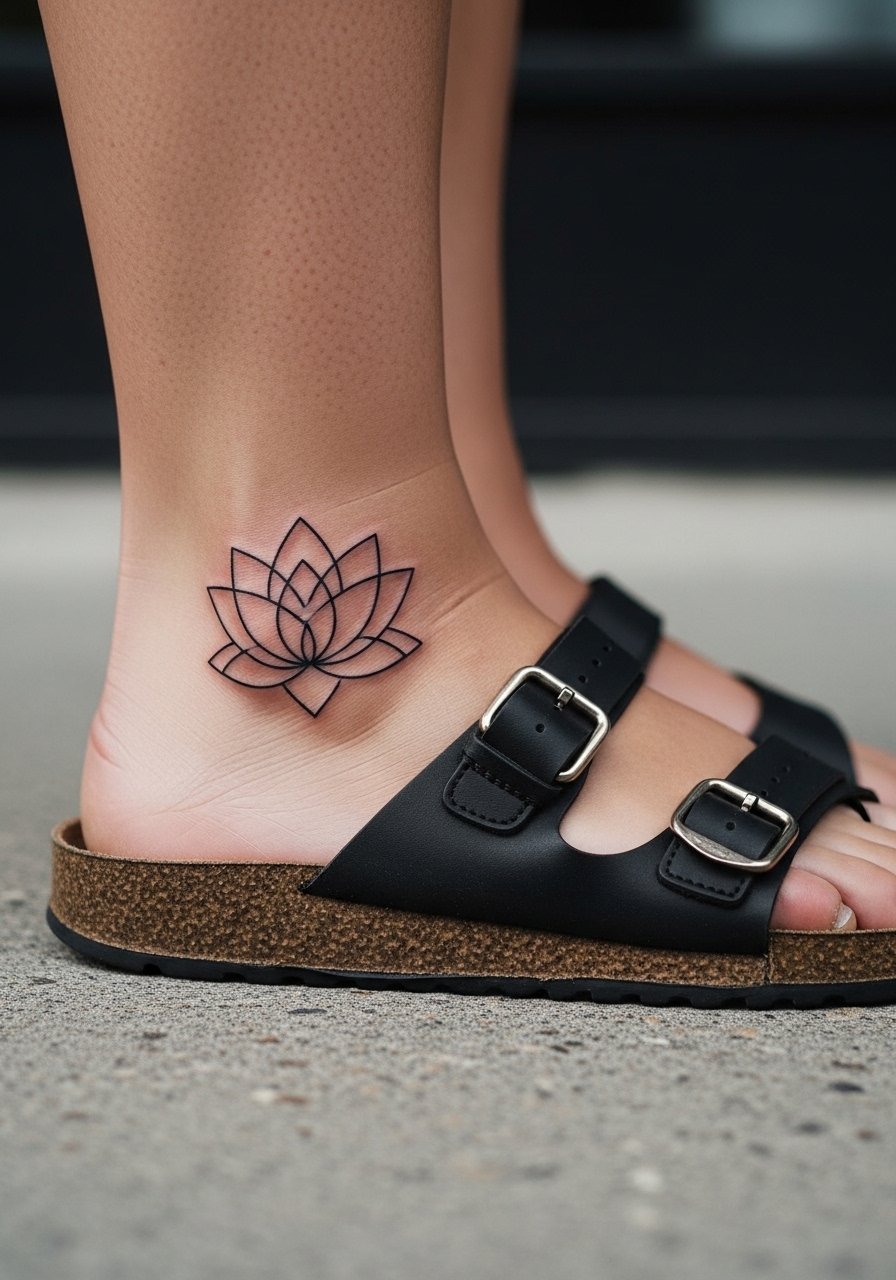
Negative-space designs can solve contrast issues on darker skin by using bold surrounding shapes. On the ankle, the key is clean edges because rubbing from footwear bites into the healed look. Sessions are short and pain is variable. A common mistake is relying on micro cutouts that wear into indistinct blobs. Pair this with cuffed pants or strappy flat sandals in summer so the negative space reads clearly.
17. Concentric Lotus Mandala at the Nape
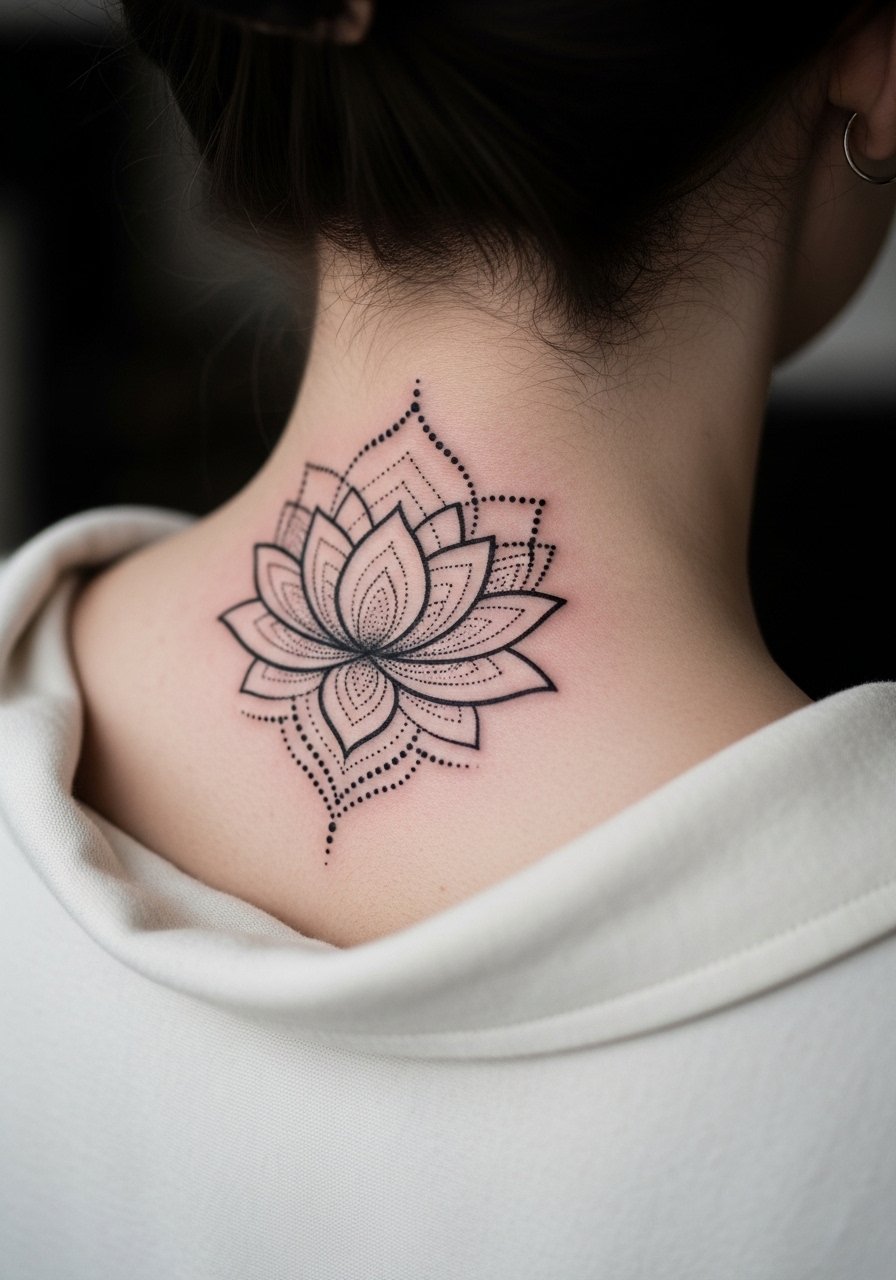
The nape is a discreet spot that works with crop shirts and updos. Concentric mandalas here need radial balance and slightly thicker outer rings to survive hairline rubbing. Expect mild pain and a one- to two-hour session. A slipped-in mistake is too many inner rings that blur under hair movement. For after-session cover, wear a wide-neck shirt so the tattoo can breathe without catching on collars.
18. Stylized Geometric Lotus Over the Sternum
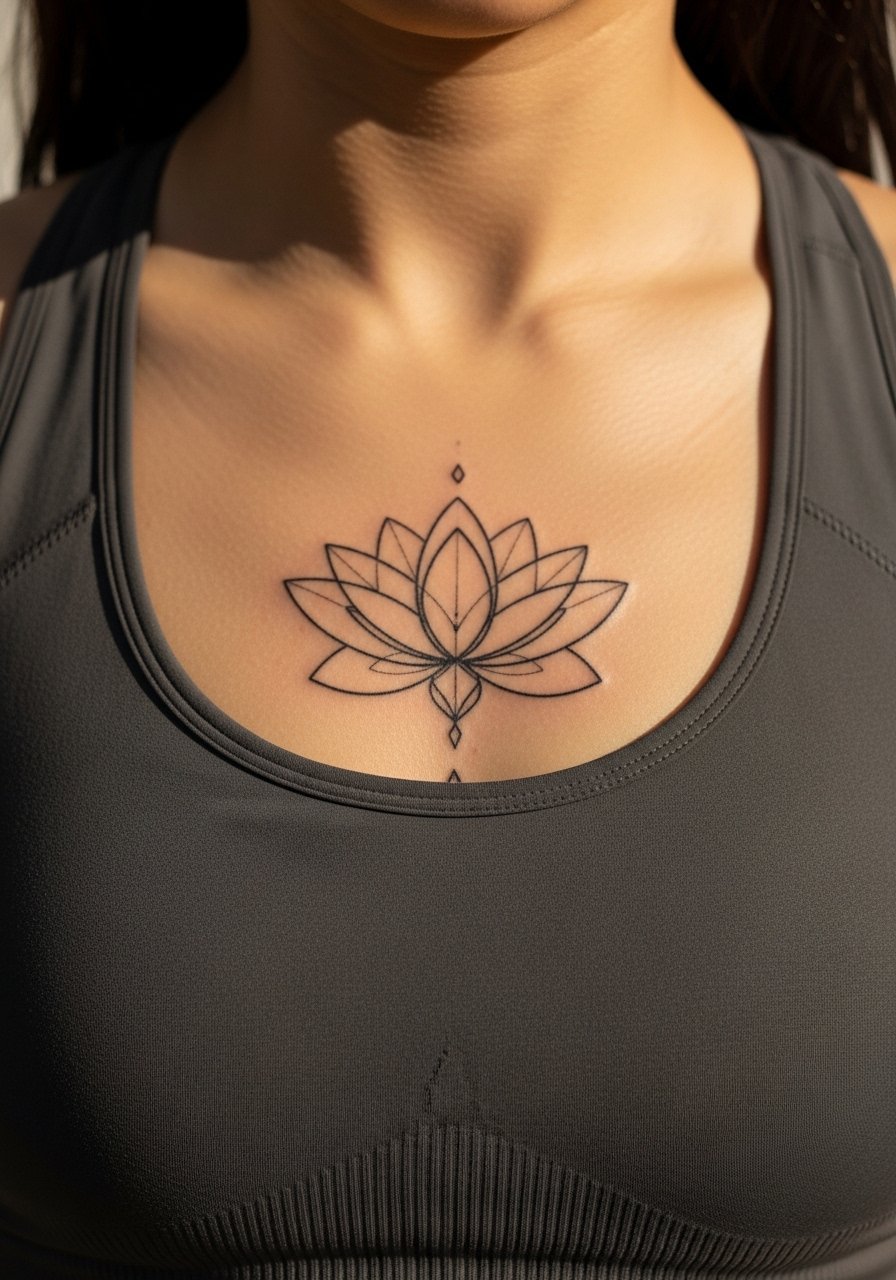
Sternum placements are intimate and often more tender. For geometric work here, plan for bolder anchors with airy interior geometry. Artists debate dry healing versus protective film for chest pieces. One camp trusts a breathable film for the first days, while the other prefers letting the skin scab and dry. Both approaches have advocates. Session length varies and pain can be high. Bring a strapless or fitted top like a fitted sports bra so the artist can access the area with minimal shifting.
19. Healed-Ready Lotus for Mature Skin on the Hip
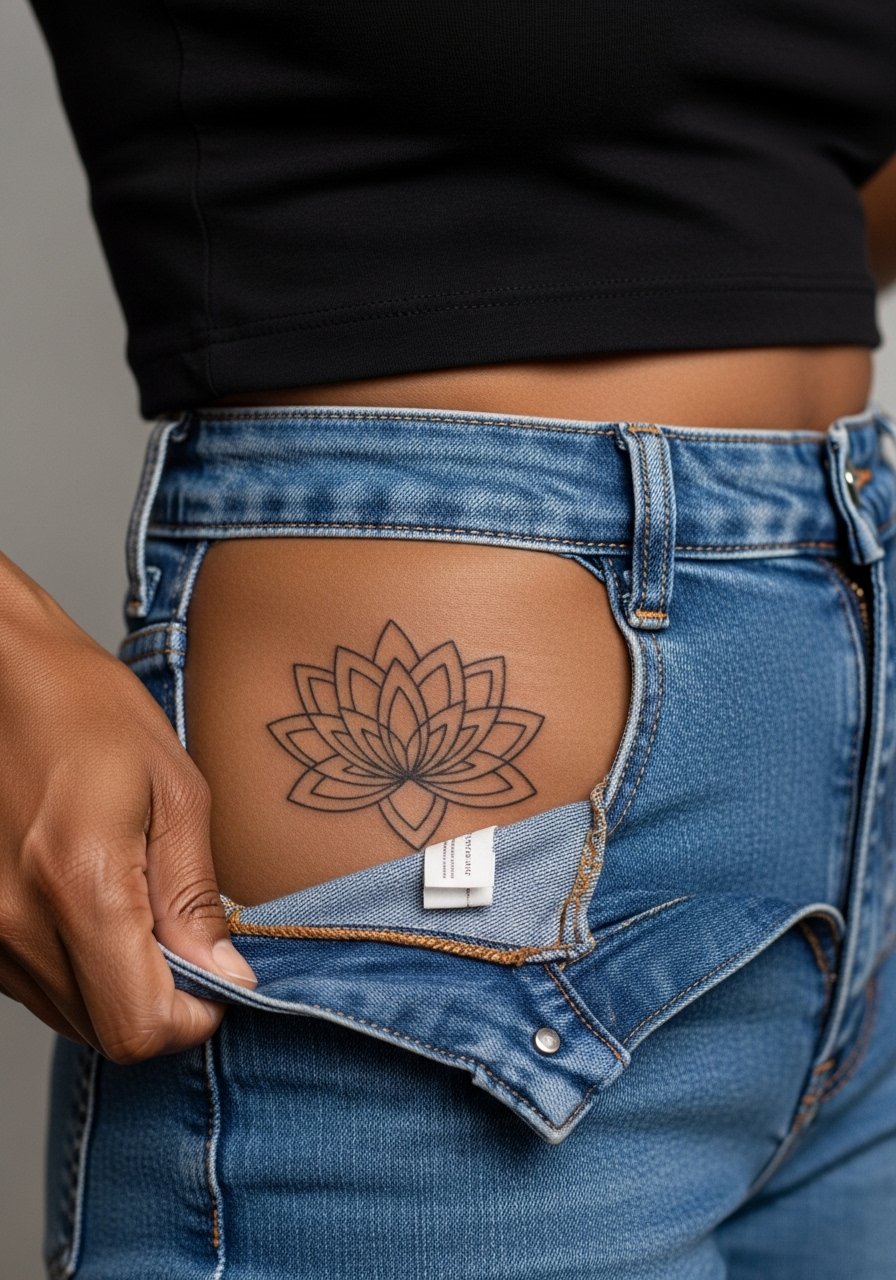
On mature skin the texture changes how geometry reads. Wrinkling can add character but it also softens fine internal detail. For older skin, ask for higher contrast shapes and avoid ultra-tiny filigree. Sessions may be slightly longer because the artist adjusts pressure and depth. A common error is using single-needle detail that melts into texture with time. For wardrobe, high-waisted cuts and neutral solids keep attention on the art and avoid fabric rubbing the new ink.
20. Spine-And-Mandala Growth Starter
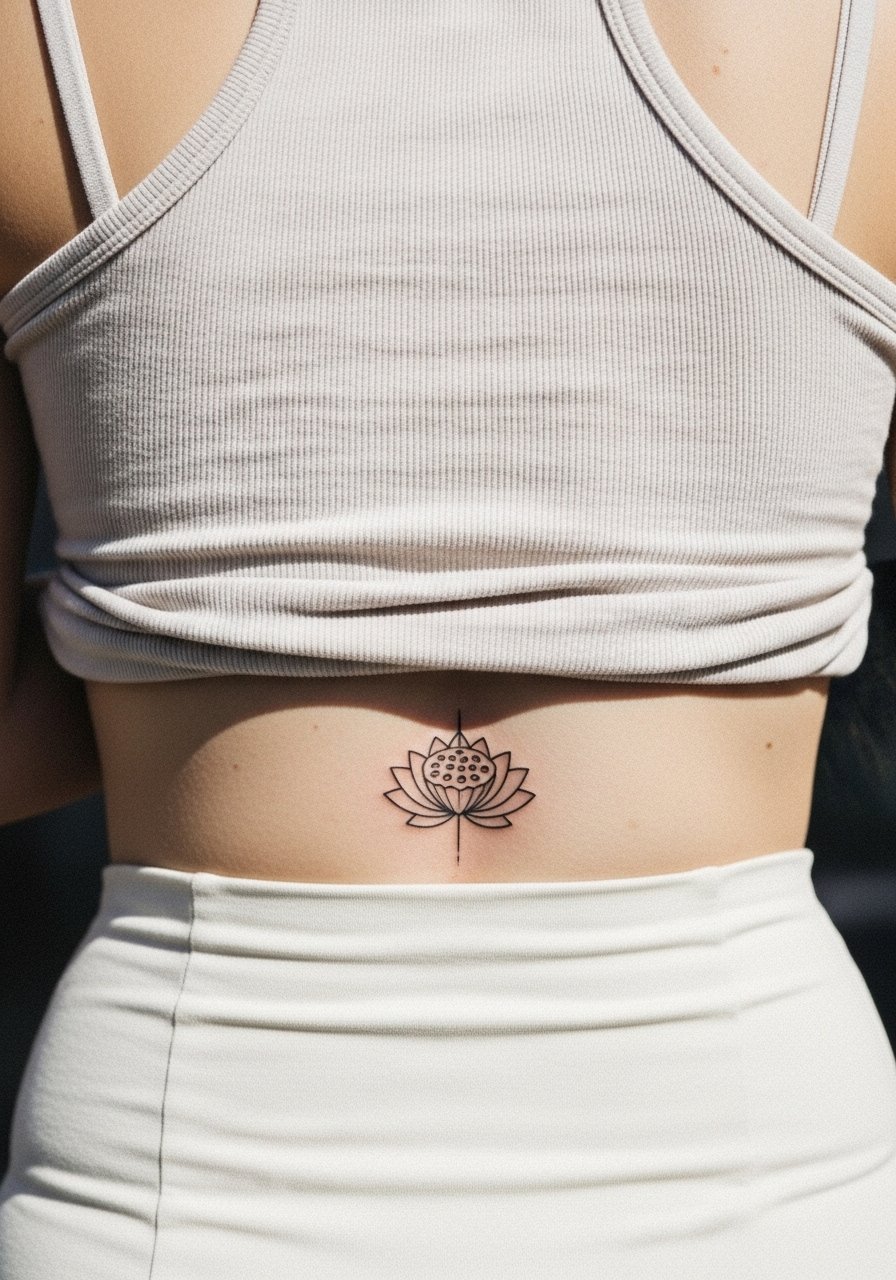
Starting a spine piece with a micro lotus pod gives you a controlled anchor for future mandala growth. The lower back is less stretchy than torso flanks so rings expand cleanly. Sessions are often short at the start and pain varies by depth. A mistake is starting too large which makes later symmetry awkward. For session day, wear a tank top you can pull up or down so the artist only exposes the tattoo area.
21. Layered Dotwork Lotus on the Thigh Inner Side
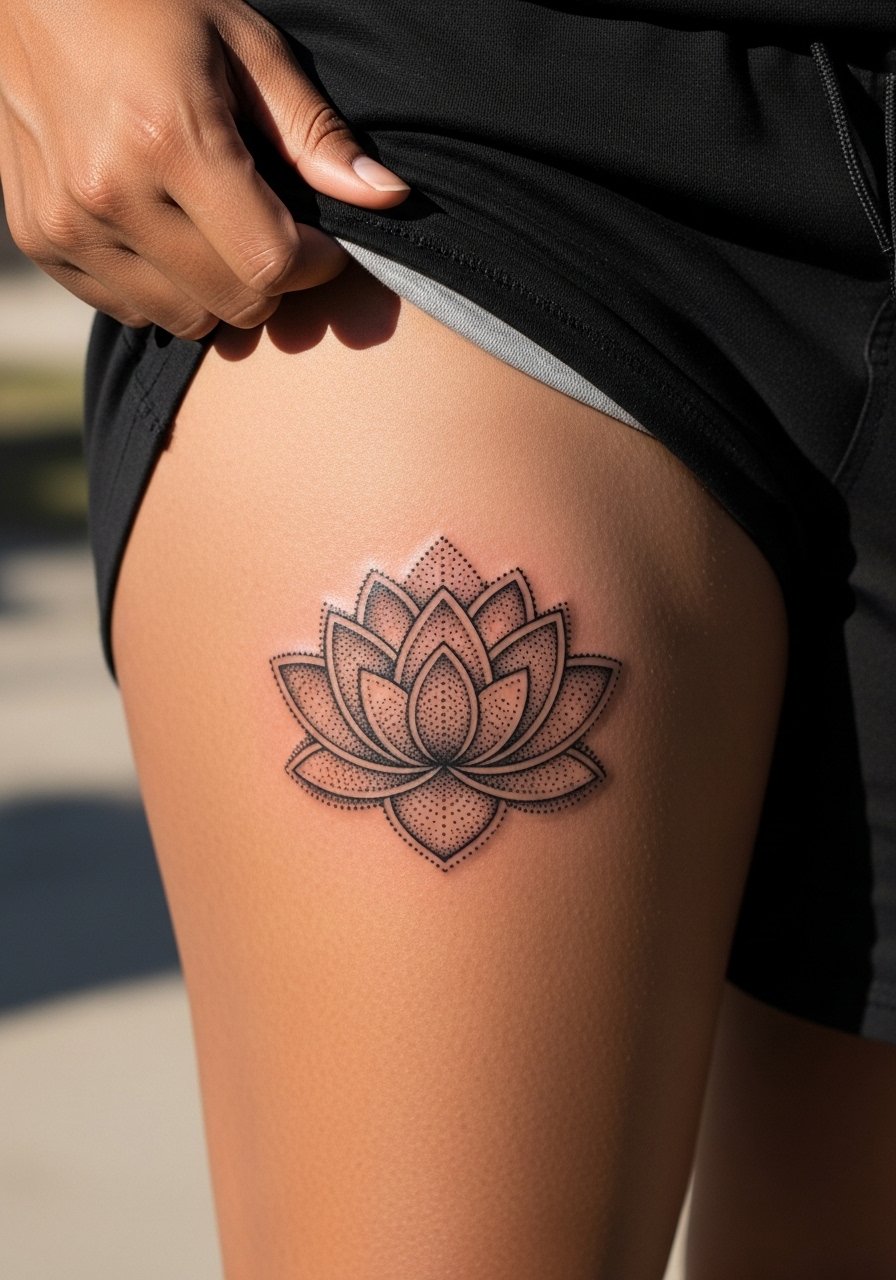
Inner thigh holds dotwork beautifully because it sees less sun and less abrasion. This spot does require care during healing due to friction from clothing. Dot density should be adjusted to avoid heavy black patches. Sessions can be long and the area can be tender. The usual mistake is underestimating clothing friction in daily life. For recovery wear loose shorts or a wrap skirt to reduce rubbing and keep the new work pristine.
22. Geometric Lotus Sleeve Start on the Outer Arm
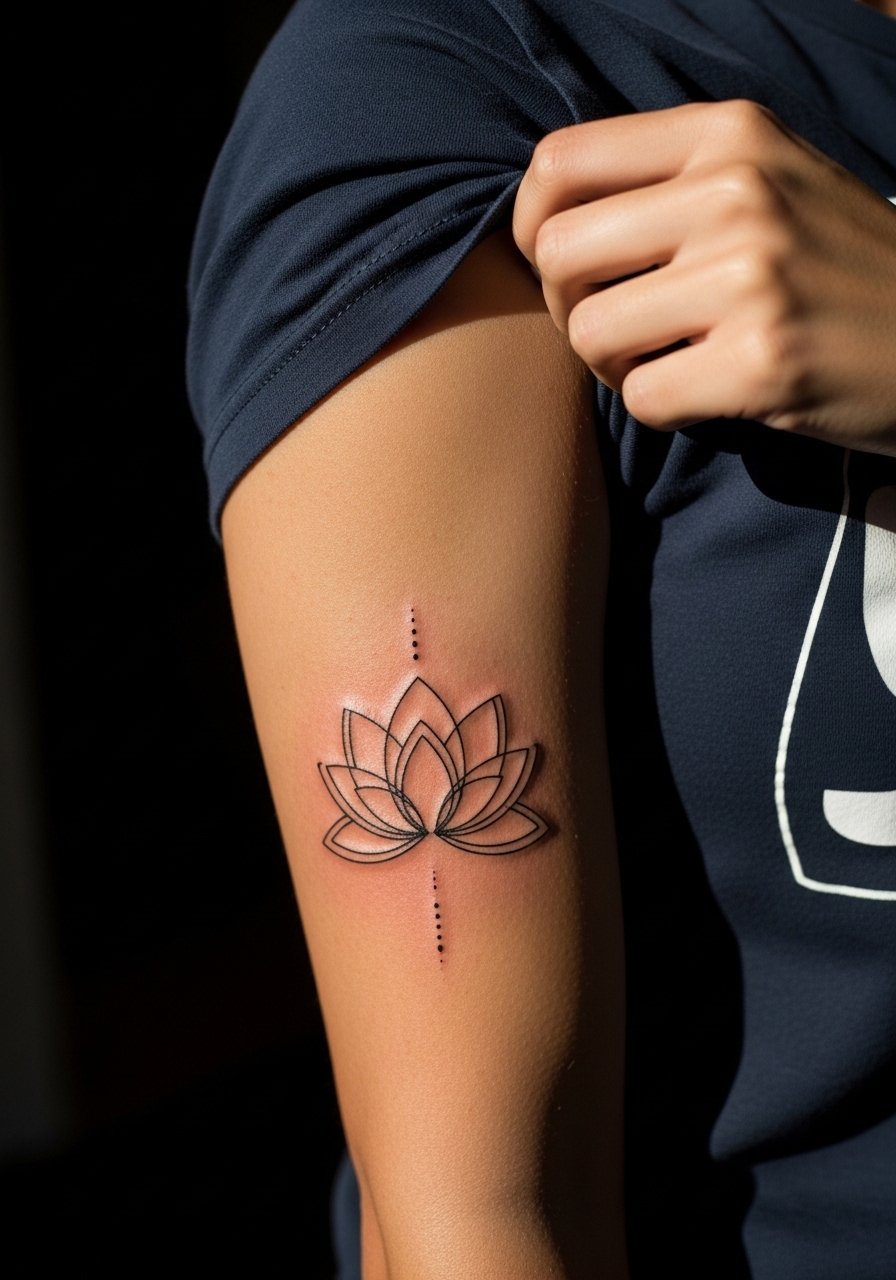
If you want to build a sleeve from geometric lotuses, begin with a clear primary motif and leave connector space. I have seen sleeves go wrong when artists try to fill every inch from the first session. Spread the work into stages and ask for anchor points so new panels line up. Sessions will be multiple and pain is moderate. One error is mismatched line weight between early and later appointments. Wear a loose button-down that gives the artist full access without stretching the skin.
23. High-Contrast Geometric Lotus for Darker Skin
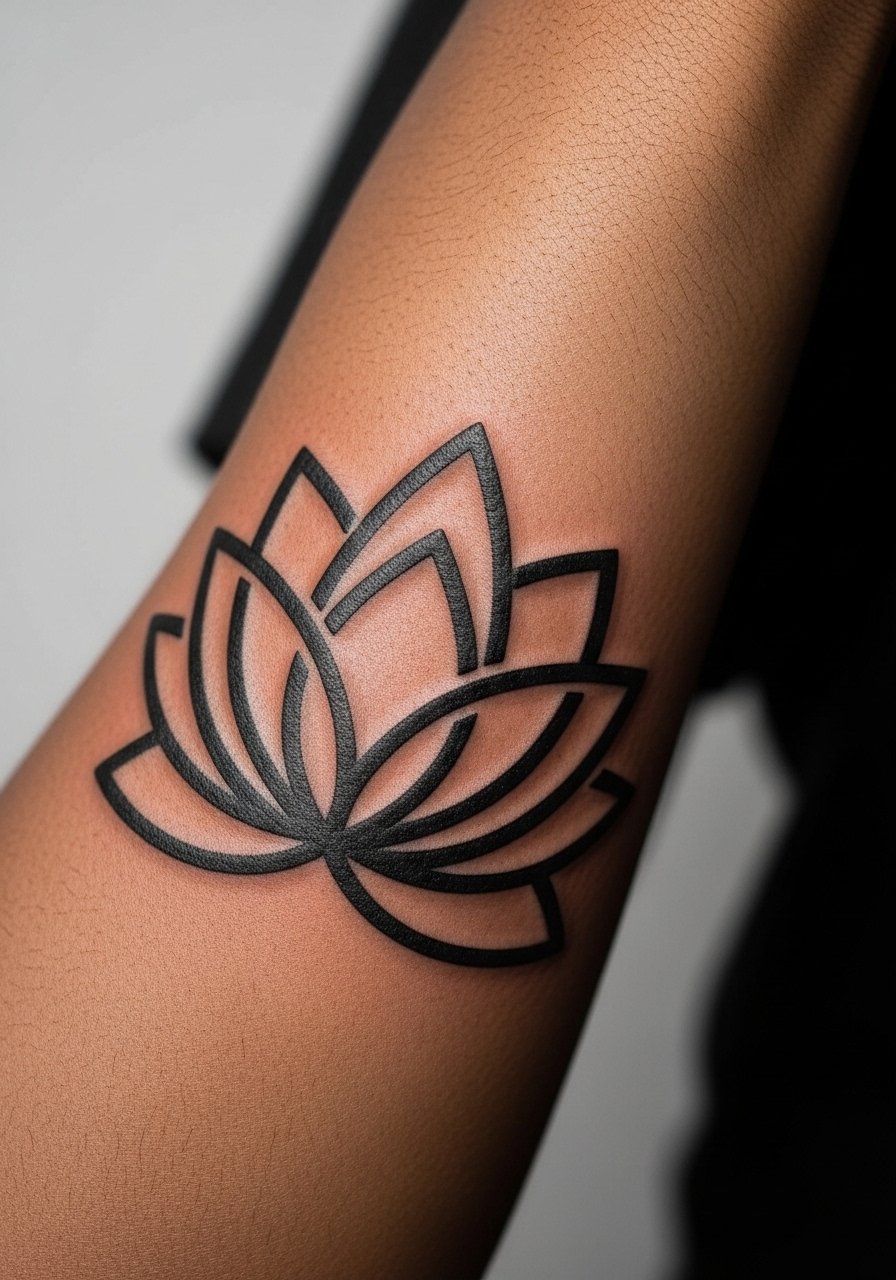
On darker skin tones, fine single-needle detail can fade into the skin tone photographically. Ask for bold anchors and contrasting negative space to keep the design legible. I have seen healed results where small filigree disappears, so plan for thicker outlines. Sessions are similar in time but plan for photos under different light. A typical mistake is assuming the same line weight will read the same across all skin tones. Use outfits with contrast, like a slim leather bracelet opposite the piece to draw the eye.
24. Interwoven Polygon Lotus Over the Chest Side
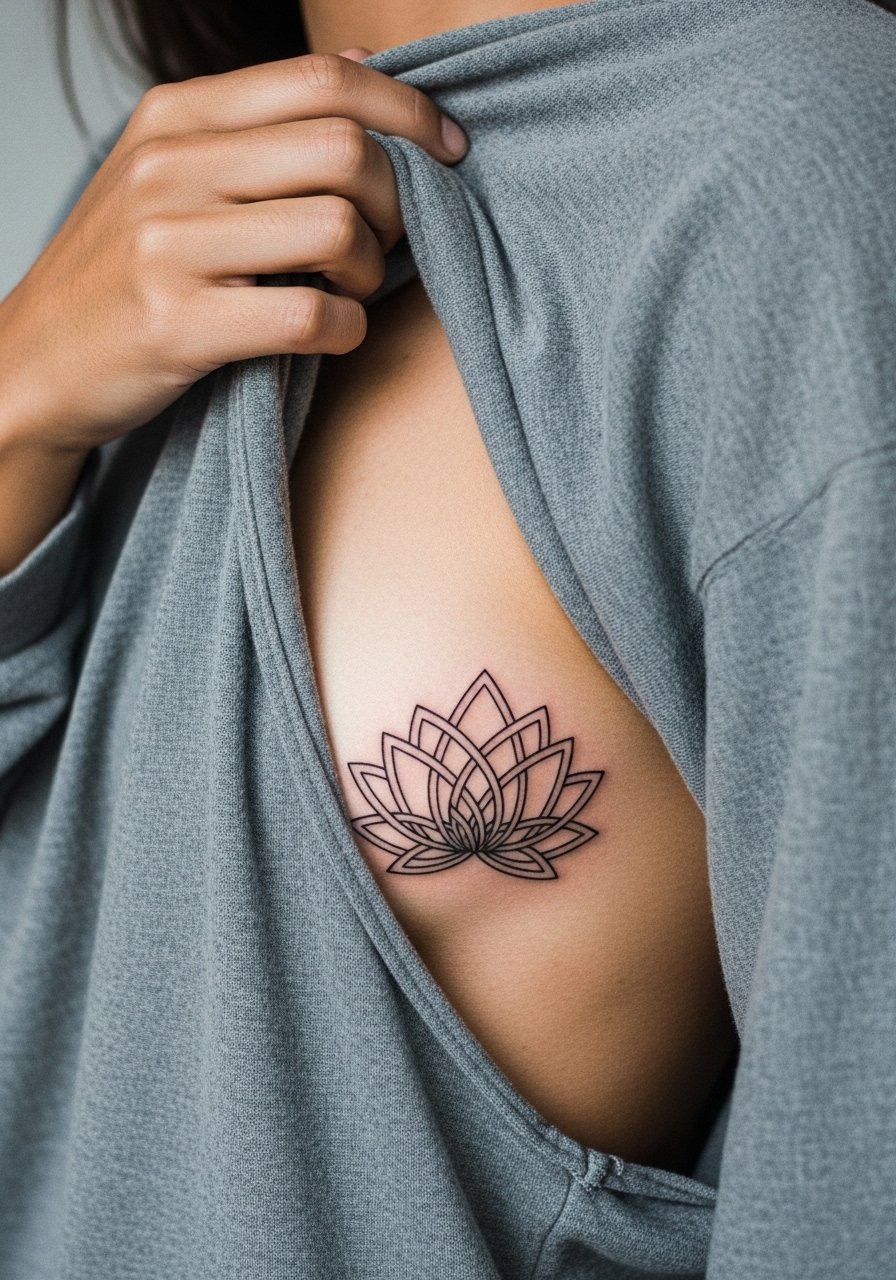
Side-chest geometry needs breathing room for the lines to hold as the torso expands and contracts. Tell the artist you want interlocking polygons with clear spacing and bolder corner anchors. Pain can be moderate to high and sessions might be split. A common mistake is stacking polygons without negative breaks which makes the pattern muddle. For styling, an off-shoulder blouse frames the edges without pressing fabric into the tattoo.
25. Tiny Micro Lotus Pod Behind the Ear
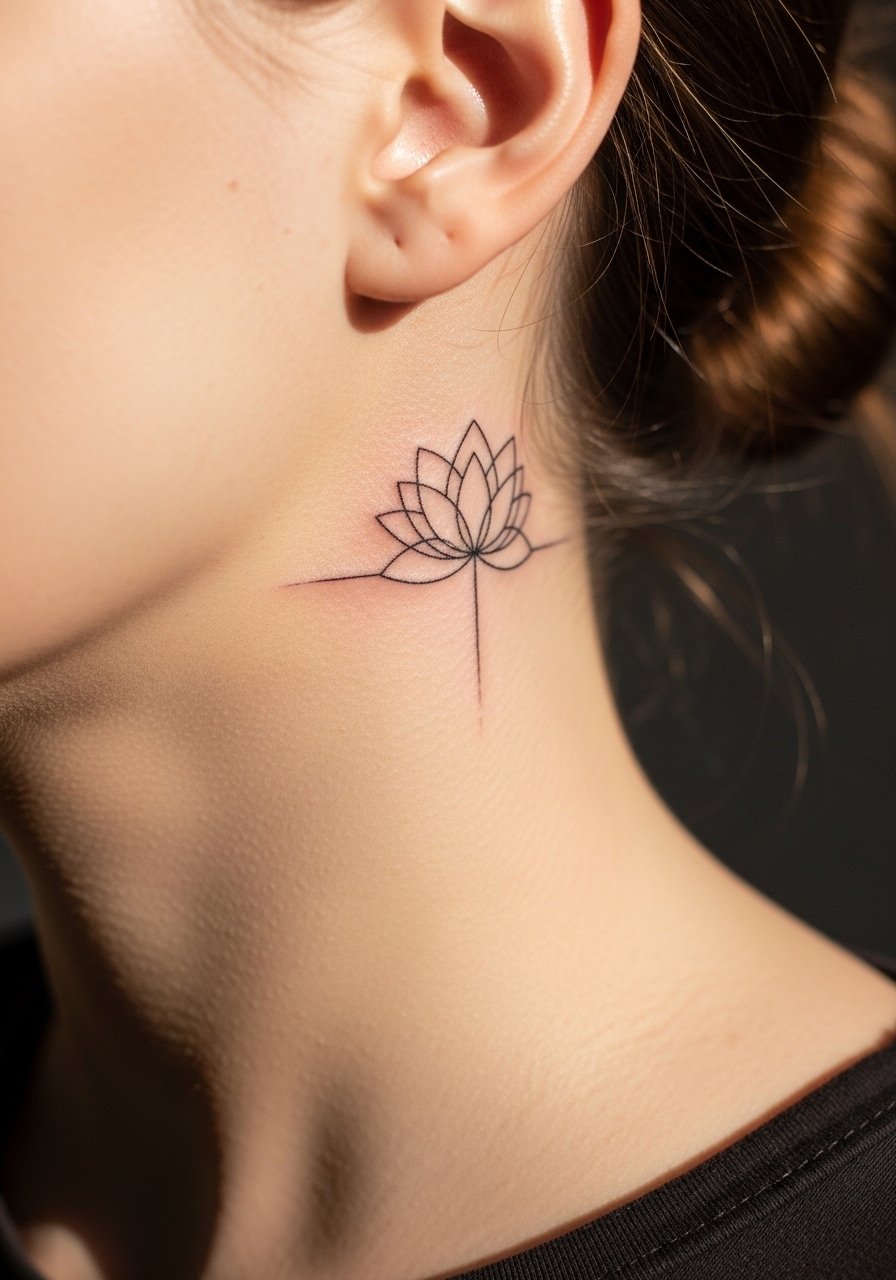
Behind-the-ear micro work is discreet and delicate. The area is sensitive and the hairline can catch scabs, so ask for solid anchor lines and keep interior detail minimal. Sessions are quick but the spot can sting. Many people regret ultra-fine detail because hair and daily washing mask it. For visibility when you want it, style hair up or choose short cuts. The placement calls for an experienced hand because of the skin curvature and tattoo longevity.
26. Calf Petal Cluster with Bold Outlines
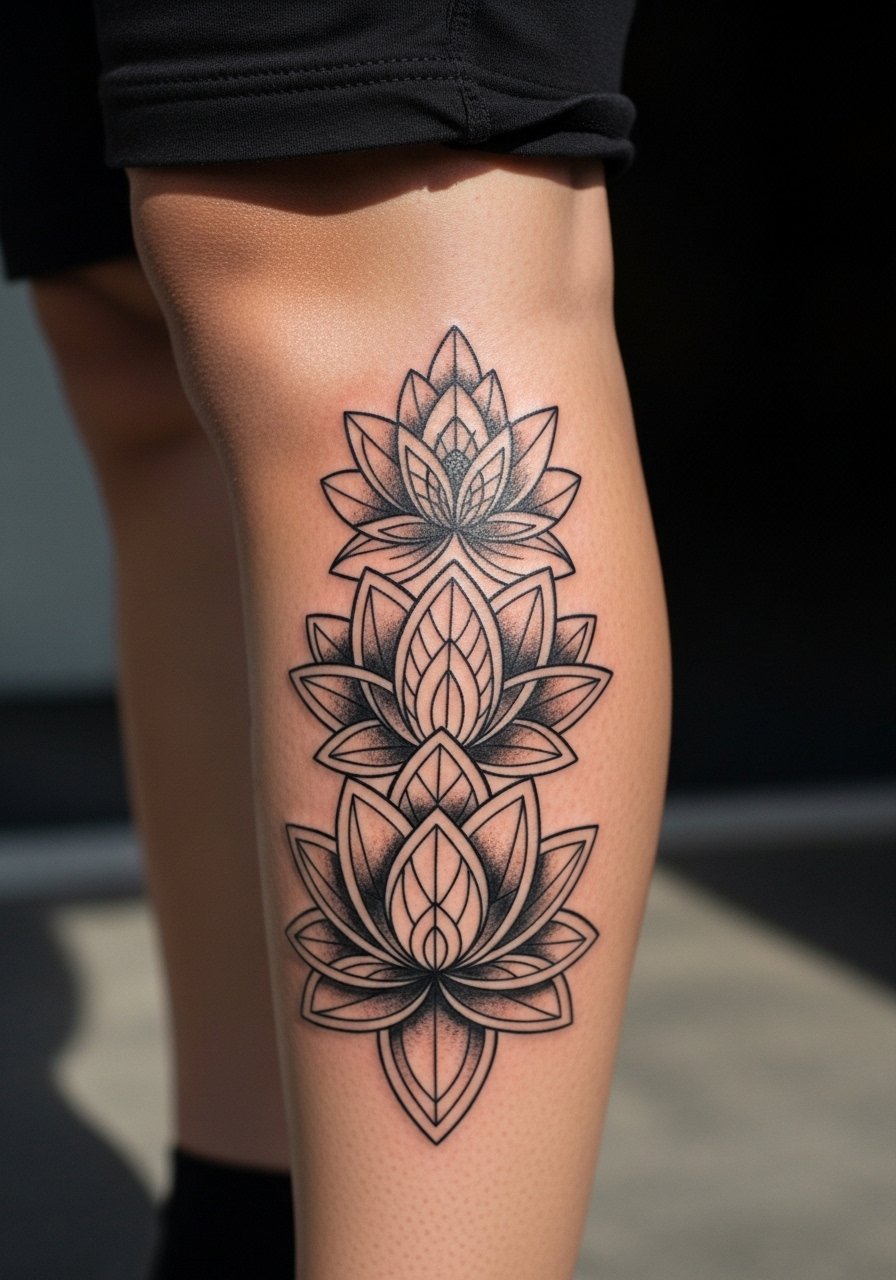
A clustered petal layout on the calf benefits from bold outlines to survive sweat, movement, and sun. The area tolerates saturation well, making it a low-maintenance choice. Sessions may be broken into two if you want shading. The common mistake is relying on tiny interior linework which fades faster than bold outer petals. For runners or gym-goers pick breathable shorts that do not rub the design while healing.
27. Expandable Spine-to-Back Geometric Lotus Mandala
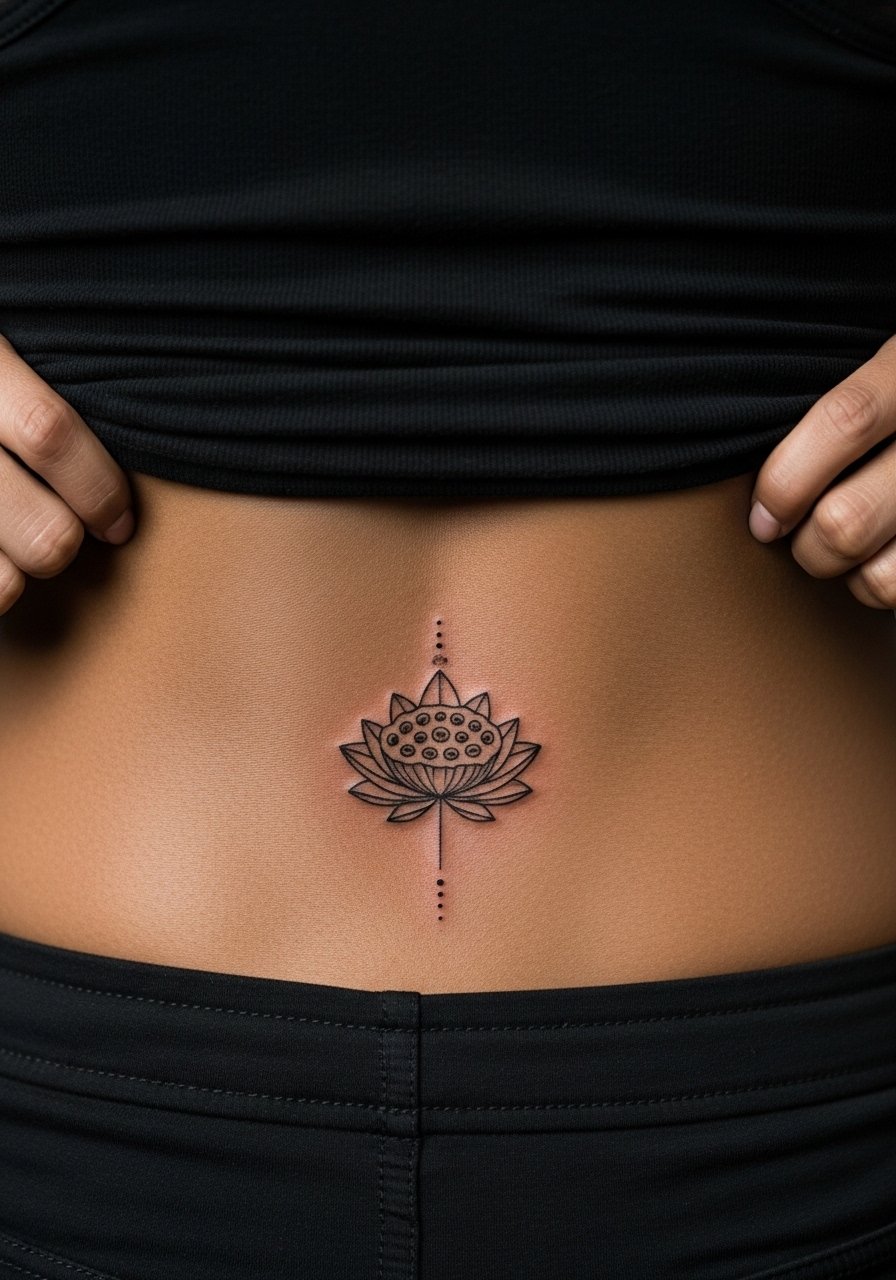
This starter piece is all about future planning. A narrow, well-centered pod gives a precise origin for a full back mandala later. Ask your artist for a measured grid so any future expansion keeps symmetry. Sessions are short for the starter and more involved later as rings are added. A mistake is starting with a shape too wide for a future central axis. Wear a tank top you can adjust easily during the session.
Frequently Asked Questions
Q: Will fine line geometric lotuses show up on darker skin tones, or do I need bold blackwork?
A: Fine line can be visible on darker skin, but it often reads better when paired with bolder anchor lines or strategic negative space. If you prefer a micro look, ask your artist for slightly thicker primary contours and for healed examples on similar skin tones.
Q: How should I plan for touch-ups with geometric pieces that are mostly fine line and dotwork?
A: Expect touch-ups sooner than for heavy blackwork. Many people plan a check at six months to a year. Ask during consultation if the artist offers discounted touch-up rates and what their typical timeline has been for similar pieces.
Q: Is Saniderm better than dry healing for fine line lotus tattoos?
A: Artists and collectors split into camps. Some find protective film reduces scabbing and preserves line clarity in the first week. Others prefer dry healing to let scabs form naturally. Ask your artist which method they use most and why, and follow the single approach for the initial healing window.
Q: What should I wear to a shoulder or collarbone appointment to make the session smoother?
A: Wear clothing you can pull aside without stretching the area. For collarbone and shoulder work, a loose button-down shirt or a wide-neck top gives the artist full access and keeps you comfortable.
Q: Why do some geometric lotuses blur faster than others after two years?
A: Placement, line spacing, and contrast matter most. High-movement areas and tiny internal filigree are the usual culprits. Also expect different aging on different skin tones. Planning larger primary shapes and allowing negative space helps designs stay legible longer.