
Fine line trends look effortless, but they demand planning. Geometric work that nods to Frank Ocean motifs can read modern and personal when scaled and placed with care. Expect pieces that age differently depending on spacing, skin type, and daily friction. Read these ideas with an eye for placement and outfit pairing so the tattoo you get at the chair still reads like you in five years.
1. Micro Mandala on Inner Forearm
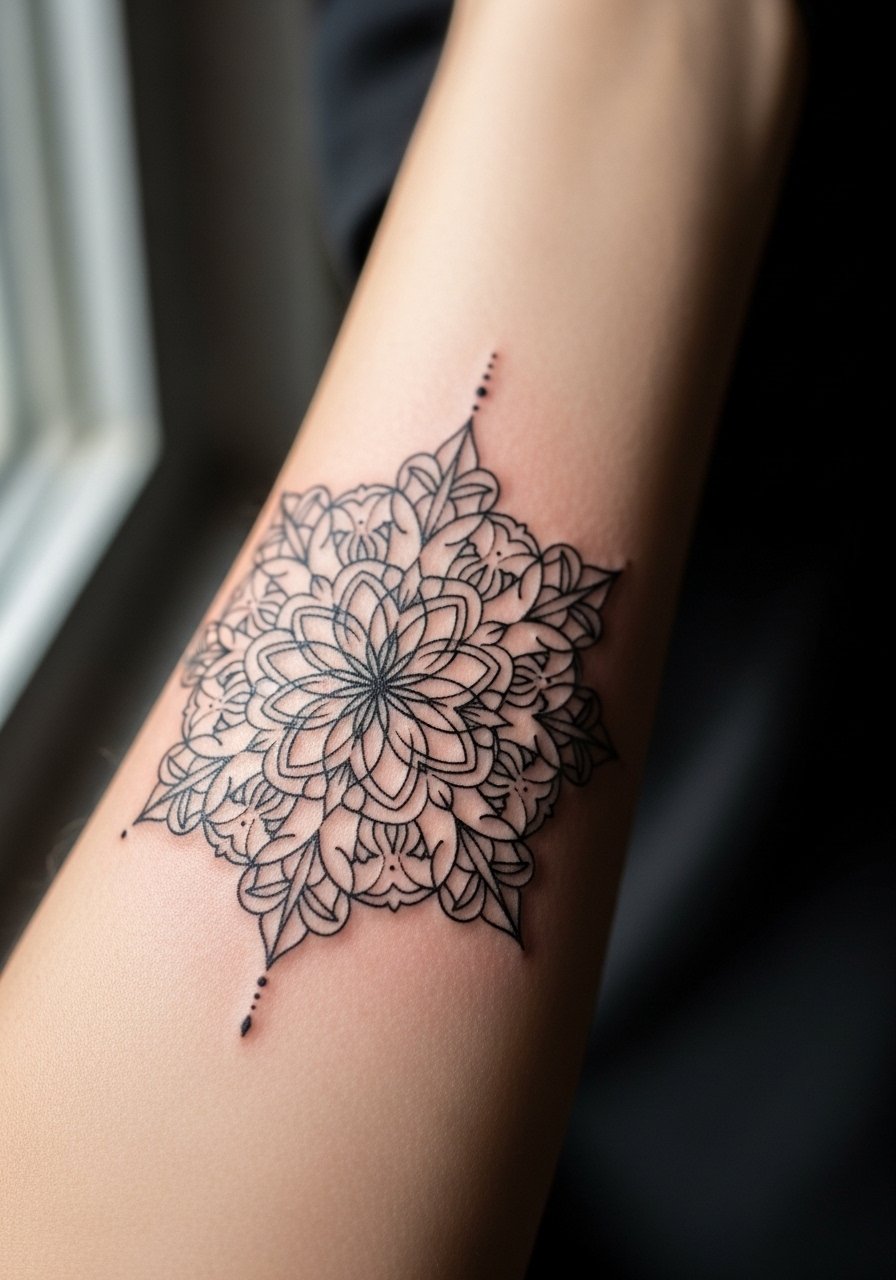
I've seen this exact placement hold up because the forearm provides flat real estate. Ask your artist to space the mandala generously, and request slightly heavier linework toward the outer rings so the pattern keeps definition as it softens. Fair warning: tiny, dense dots in the center often merge over years, so avoid packing too many elements. Session time is usually short and the pain is mild. For show-off wear, roll up a linen sleeve shirt to frame the piece without crowding it.
2. Minimalist Triangle Cluster on the Wrist
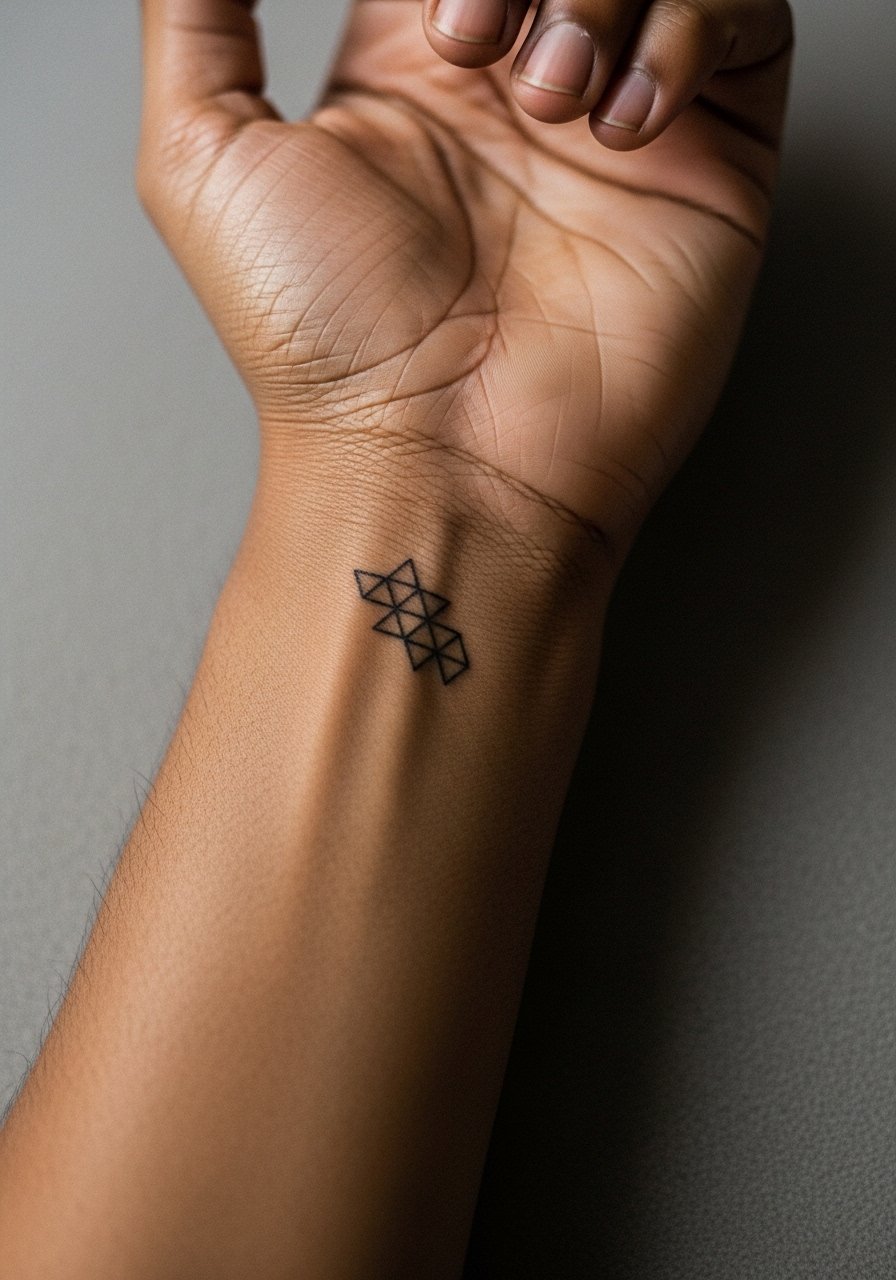
Fair warning, the wrist is a high-motion area that sees a lot of washing and typing. The biggest mistake is asking for lines that are too thin and too close together. I suggest asking for a slightly bolder outline with more negative space between shapes so the cluster keeps its readable geometry at year two. Expect a 45- to 90-minute session and a touch-up window around year two to three for many people. Pair with a minimalist watch band that sits below the design so the tattoo stays visible.
3. Negative Space Compass on Collarbone
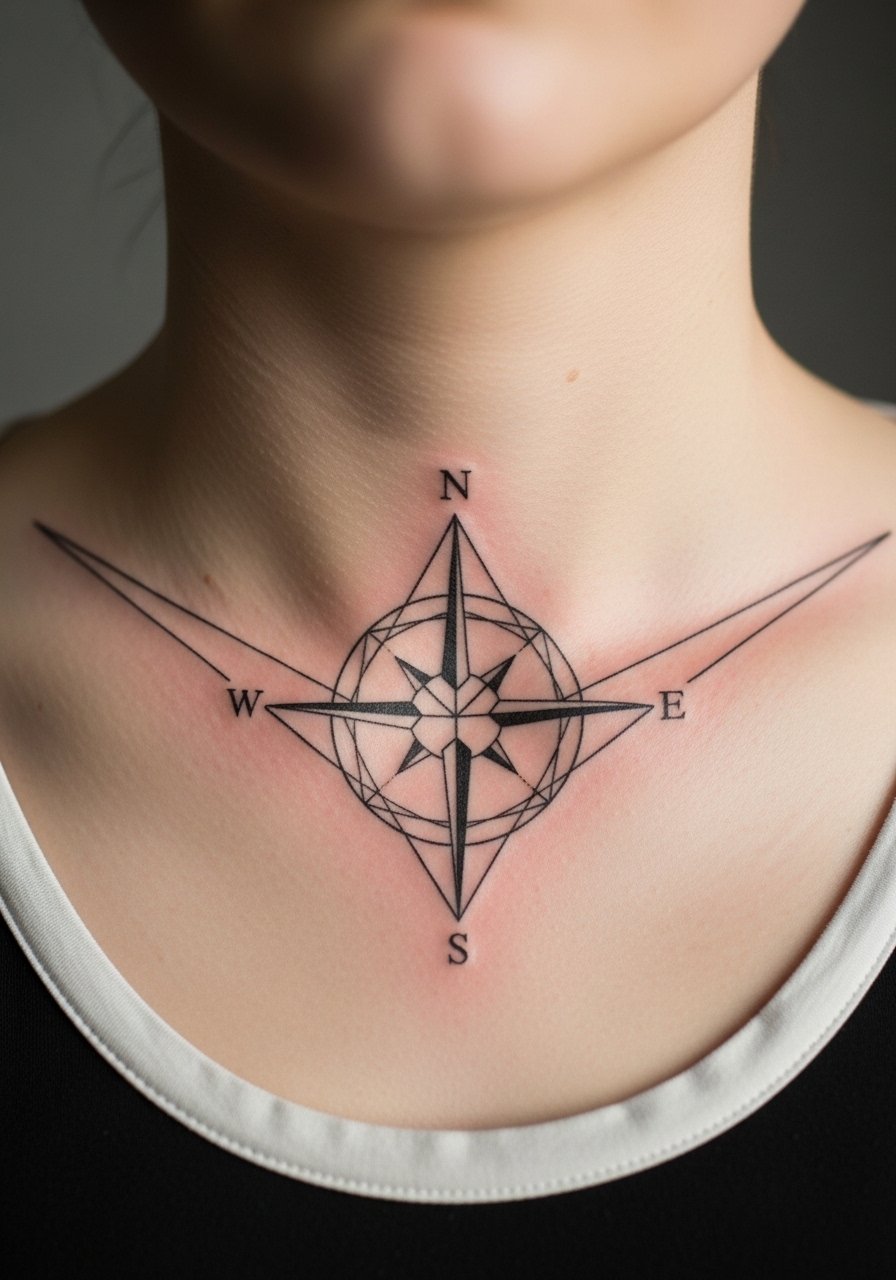
There are two camps about collarbone geometry. One camp says tight detail looks sharp and lasts because the area gets little friction. The other camp cautions that bone proximity can make lines scar if the needle goes too deep. I recommend asking about depth in consultation and requesting a simple negative-space approach that reads well over time. The session feels brisk but bony contact stings more than muscle. For evenings, an open-back dress frames the collarbone without covering the compass.
4. Constellation Grid Behind the Ear

This placement is intimate and subtle. The skin there is thin, so the risk is slight migration if lines are too heavy. Tell your artist you want a delicate grid with clear spacing between nodes so each dot and line keeps definition. Sessions are short but the aftercare matters because hair and shampoo contact are constant. For the appointment, wear your hair up and something like a zip-up hoodie you can pull aside to give the artist access without disrobing.
5. Geometric Ribcage Echo
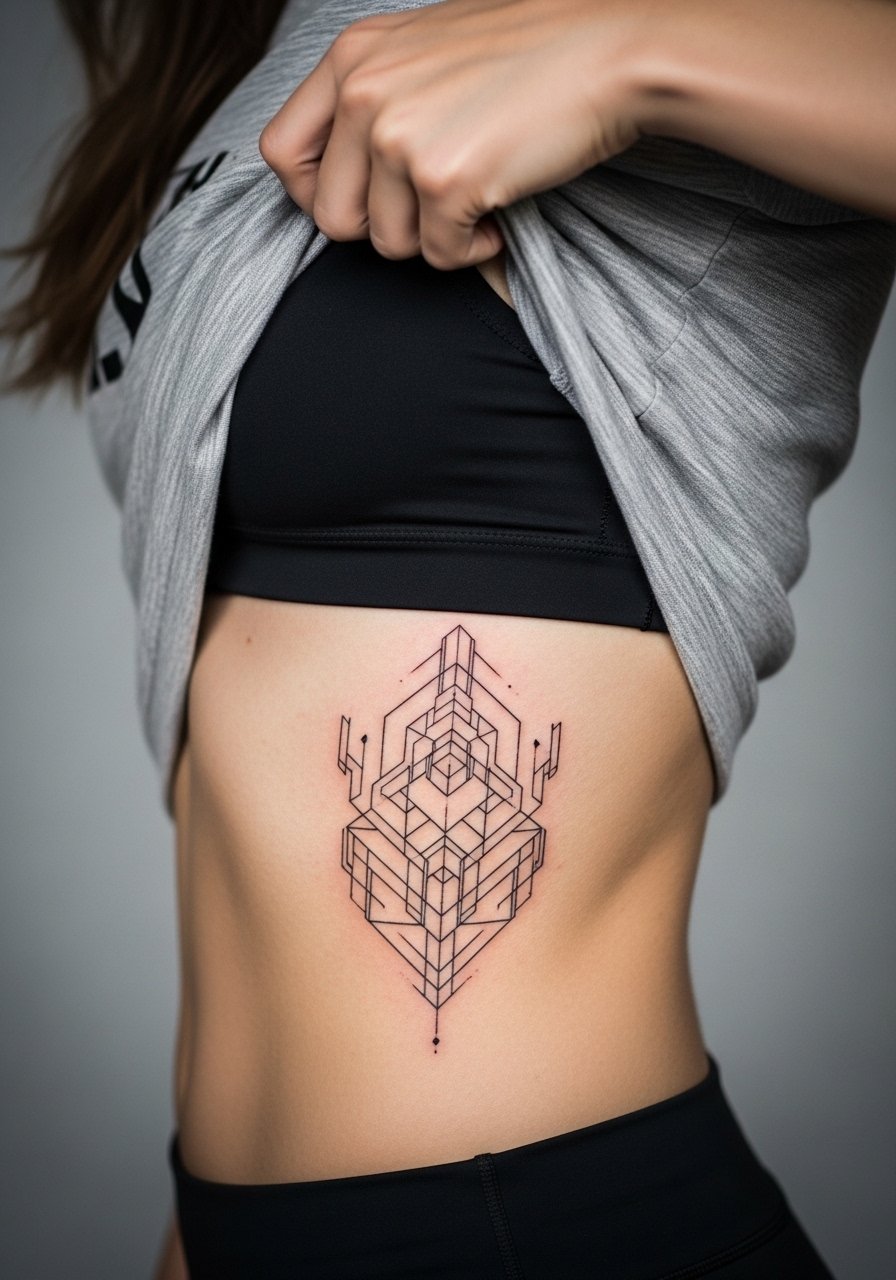
Fair warning, the ribcage is a high-pain zone and a high-stretch zone. Artists split on fine line there. One camp says the skin shifts too much and tight geometry blurs in a few years. The other camp argues spacing and consistent needle depth preserve the pattern. My advice is to size up the spacing and keep central motifs slightly larger. Sessions are longer and the session day outfit matters. Wear a cropped athletic top so the artist can work without you being uncomfortable.
6. Fragmented Geometric Sleeve Accent
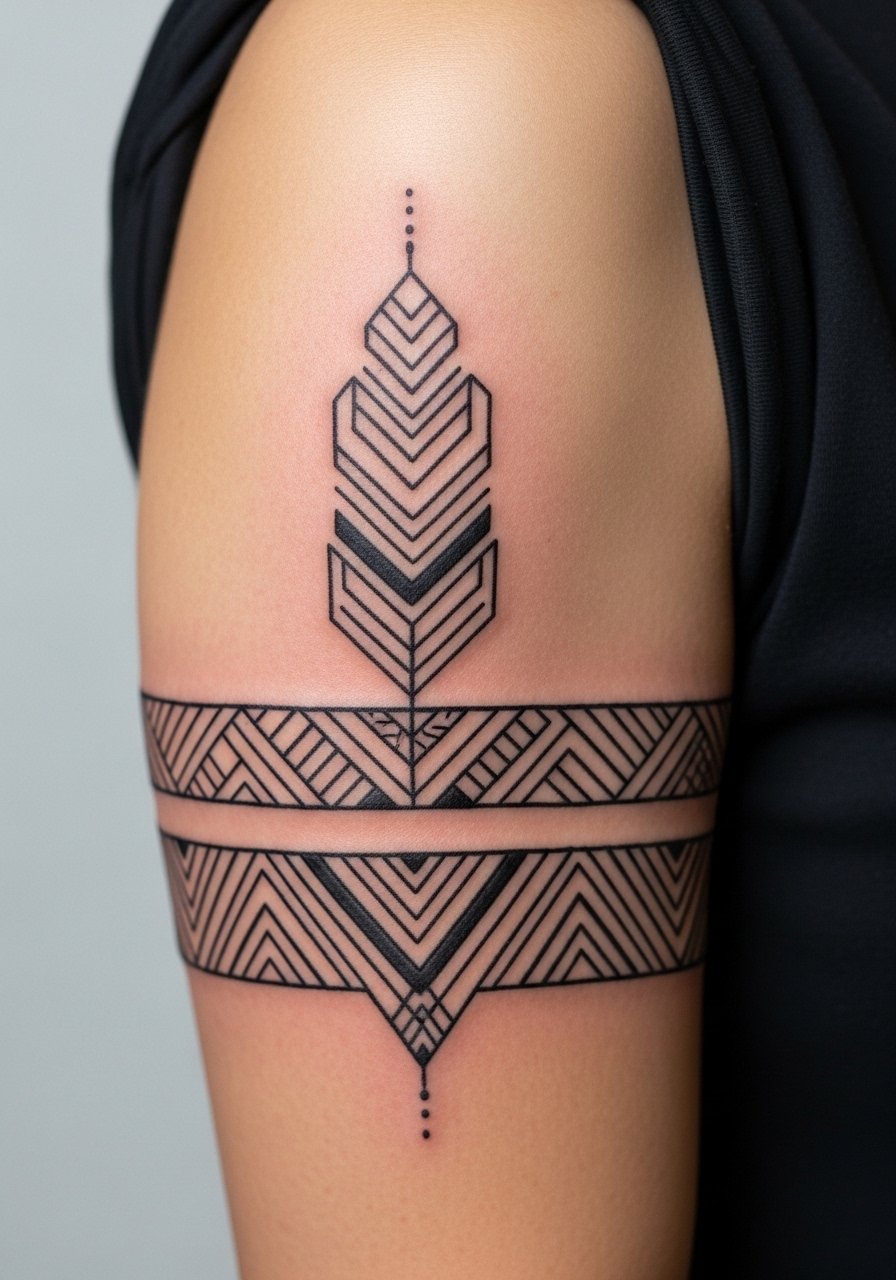
When you want geometric elements as part of a sleeve, plan the negative space early. A common mistake is improvising small pieces later that clash with line weight. Tell your artist which parts you want to sit flat and which should wrap. Expect multiple sessions and occasional touch-ups where the arm bends most. For the day, wear a loose button-down shirt you can pull aside so the artist has clear access to the upper arm.
Studio Day Picks
These first six pieces include high-motion zones and sensitive areas, so a few practical items smooth the session and the first week.
- Stencil transfer paper kit. Lets you preview line placement on skin, which is especially useful for the inner forearm mandala and wrist cluster above.
- Topical numbing cream. Applied about 45 minutes before the session it eases ribcage and inner bicep discomfort without affecting the linework when used as directed.
- Thin protective film roll. Keeps wrist and finger pieces cleaner during the early days of heavy hand use and showering.
- Fragrance-free gentle body wash. Cleanses delicate areas like the collarbone and behind-the-ear zones without irritating fresh linework.
- Aquaphor healing ointment. Thin layers in the first days lock in moisture for fine line work without clogging the healing channels.
7. Staggered Triangle Spine Line
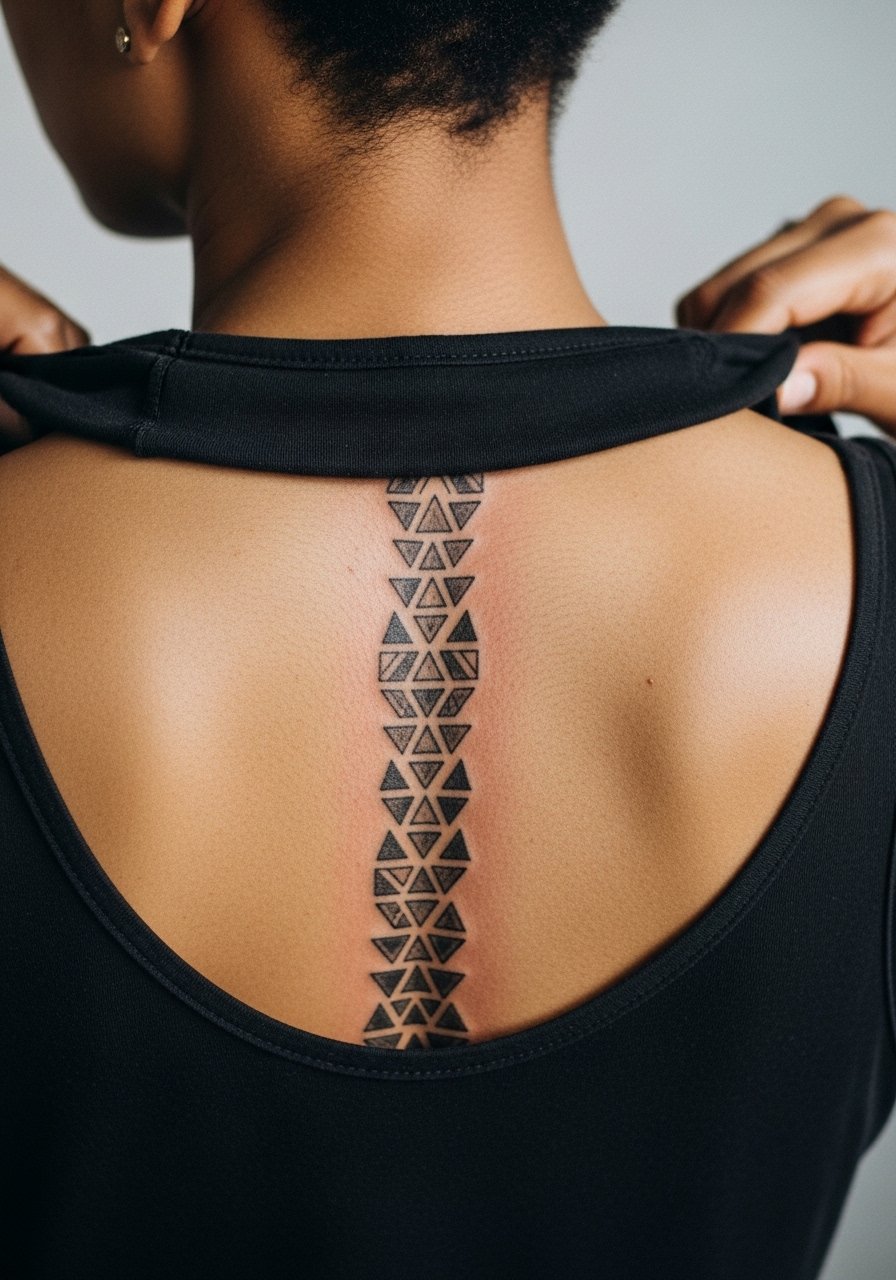
There is a visual payoff to linear geometry down the spine. The trade-off is that spinal curves and movement mean you should avoid cramming tiny triangles together. I suggest letting the largest triangles breathe and asking for subtle weighting that follows the line of the vertebrae so it reads straight when you stand. The session can get awkward because you spend time face down. For showing it off, open-back tops work well, and a halter top frames the vertical line without covering it.
8. Micro Polygon on the Finger

Fingers are notorious for fade and migration because skin there regenerates differently and sees constant friction. The most common mistake is making the design too detailed. For a polygon, request thicker bordering and simpler interior geometry. Expect annual touch-ups if you want it to remain crisp. Session time is short but slightly uncomfortable. Consider placement on the side of the finger rather than the pad for better longevity. Think about job dress codes when choosing finger work.
9. Symmetric Mandala Sternum Accent
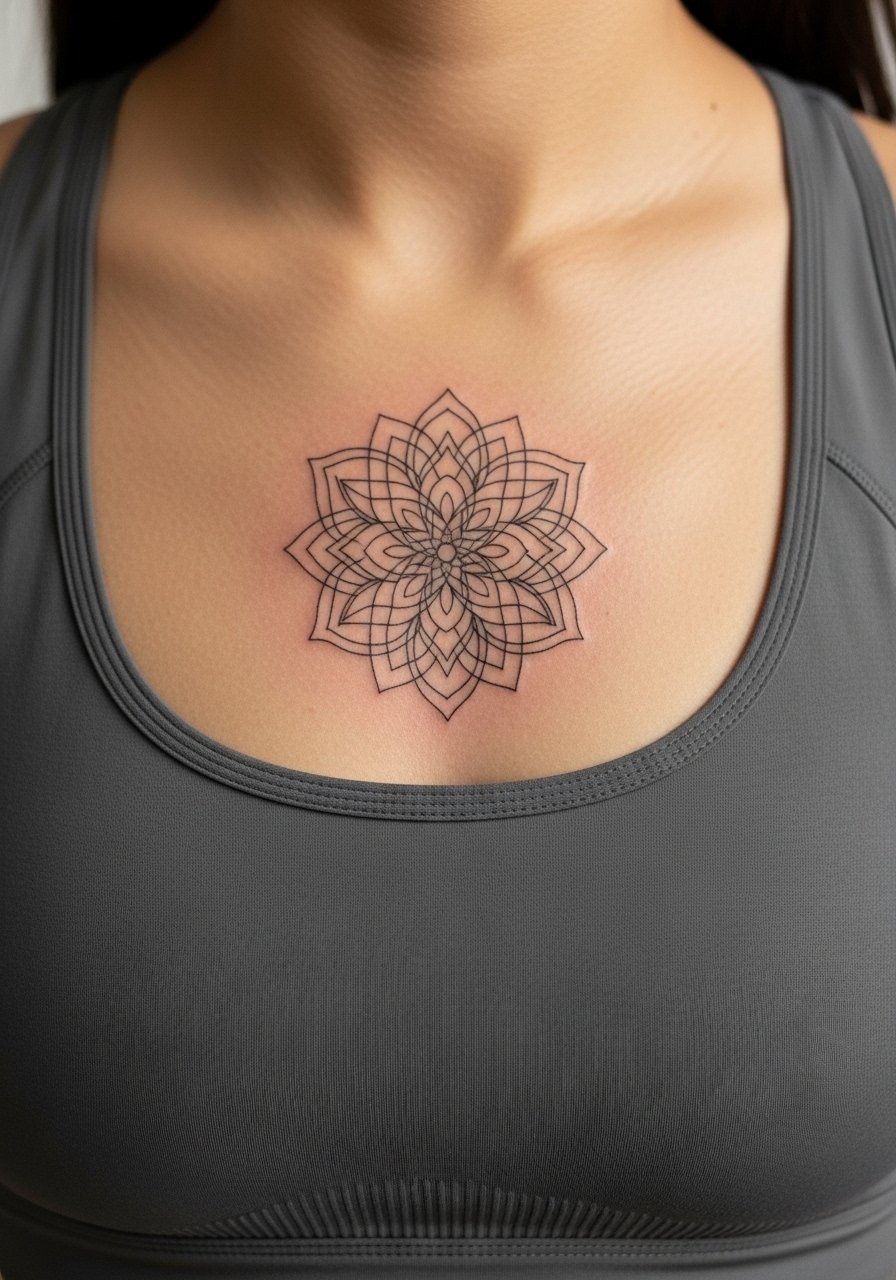
Sternum geometry can be stunning, but the area moves with breathing and cleavage lines. A common aging issue is central density turning muddy if rings are too tight. Tell your artist you want open spacing toward the center and slightly thicker outer ringwork. Session pain varies by person and the area takes longer to rest between shading passes. For the appointment, choose a fitted sports bra so you can reveal the area without fully undressing.
10. Interlocking Hex on the Calf
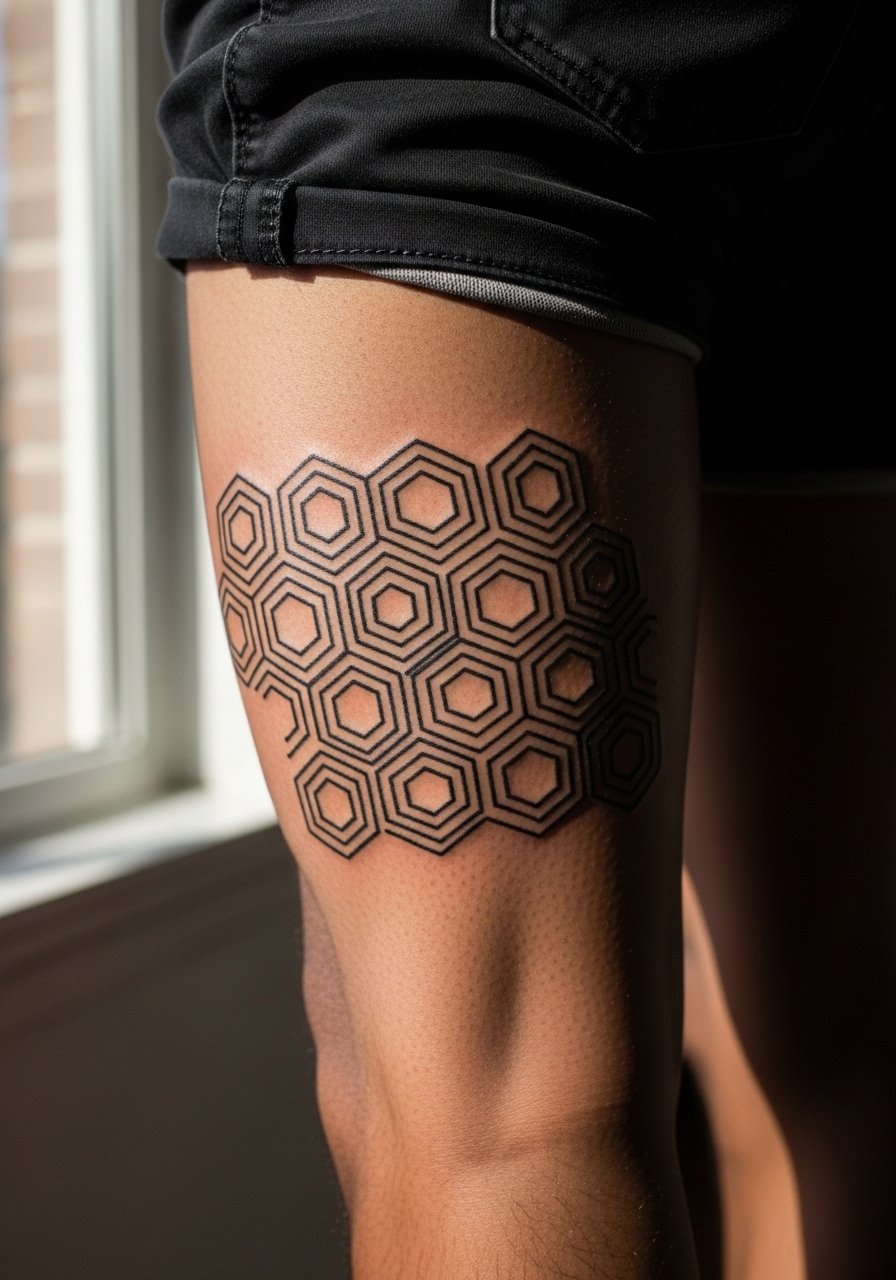
Calf placements age well because they get little direct friction and have thicker skin. The biggest mistake is mapping the pattern without considering muscle curves. Ask for mockups that bend with standing and flexing so the hexes maintain their grid when you move. Sessions can run longer if you want full saturation. For daily wear, cropped pants or athletic shorts show off the geometry without overexposing the area.
11. Geometric Arrow Across the Hand
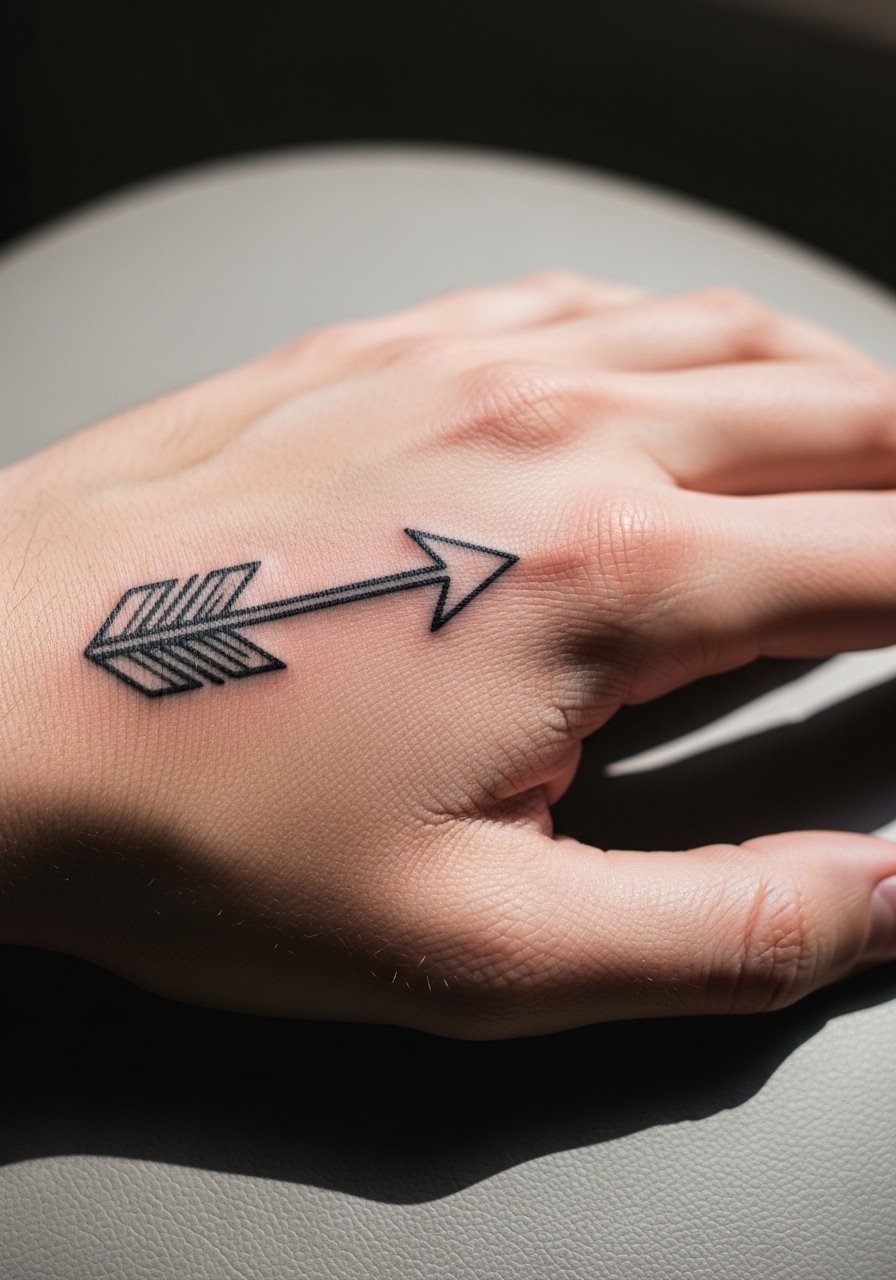
Hand tattoos still affect some industries, so think about career trajectory before committing. Hands see constant sun and washing, which accelerates fading. For geometric arrows, avoid hairline detail and ask for confident, slightly bolder linework. Sessions hurt more here and touch-ups are common. For a session, keep your hand relaxed on a flat surface. A slim stackable bracelet can complement the arrow without covering it.
12. Tessellated Thigh Panel
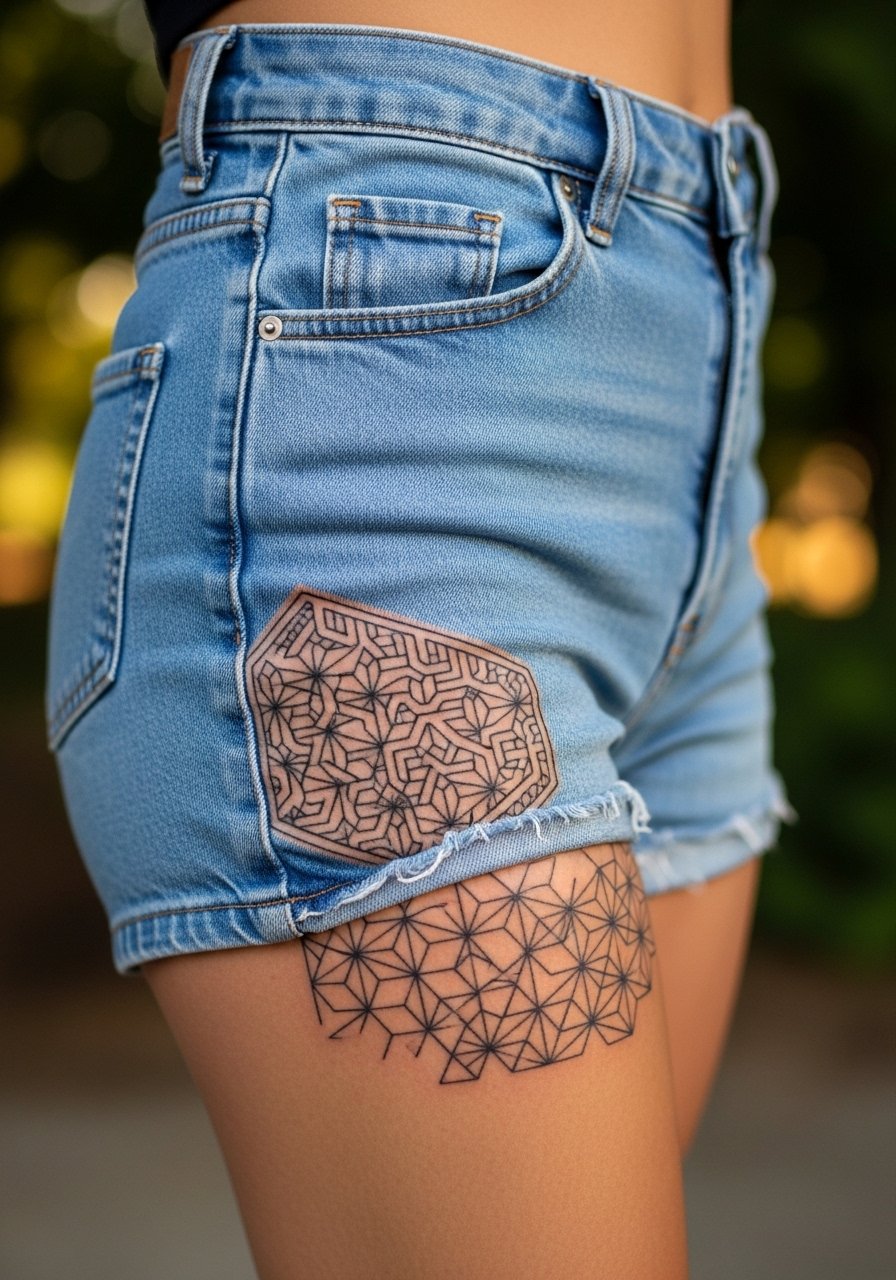
Thighs tolerate bold geometry because the skin is stable and the area sees less abrasion. A frequent misstep is crowding tessellation patterns toward the groin where stretching and movement are greatest. I recommend mapping the panel across the outer thigh and leaving a clean margin near crease lines. Sessions are comfortable for most and can be done in a single long session. For showing it off, high-waisted shorts or skirts work, consider a high-waisted denim skirt.
13. Polygonal Collar Piece Near Shoulder
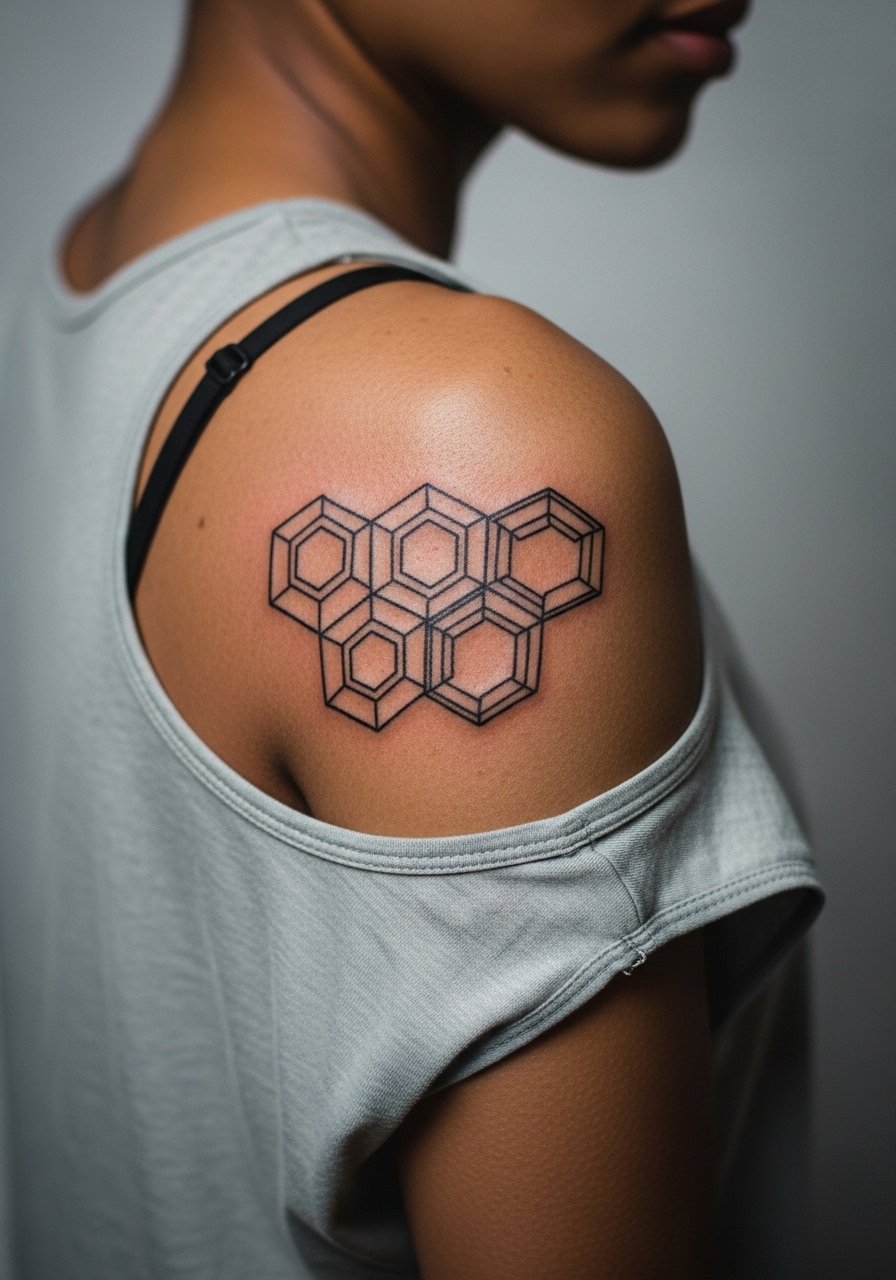
When geometry wraps toward the shoulder, consider how clothing will obscure or reveal edges. A common mistake is a sharp corner that hits a seam on shirts and reads awkward when covered. Ask for a design that tapers naturally into the shoulder so the visible section stays balanced. Session pain is moderate. For the appointment, wear a loose tank top you can pull aside without fuss.
14. Dot Work Orb on the Ankle

Ankle pieces face friction from shoes and socks that can wear detail down. The biggest mistake is expecting dense stippling to last without touch-ups. For a dot work orb, ask for contrast via negative space and coarser outer dots that maintain shape. The session is short but the area can be tender. For showing it off, rolled jeans or sandals work, try pairing with a simple anklet that does not rub the tattoo directly.
15. Mirrored Geometric Chest Panels
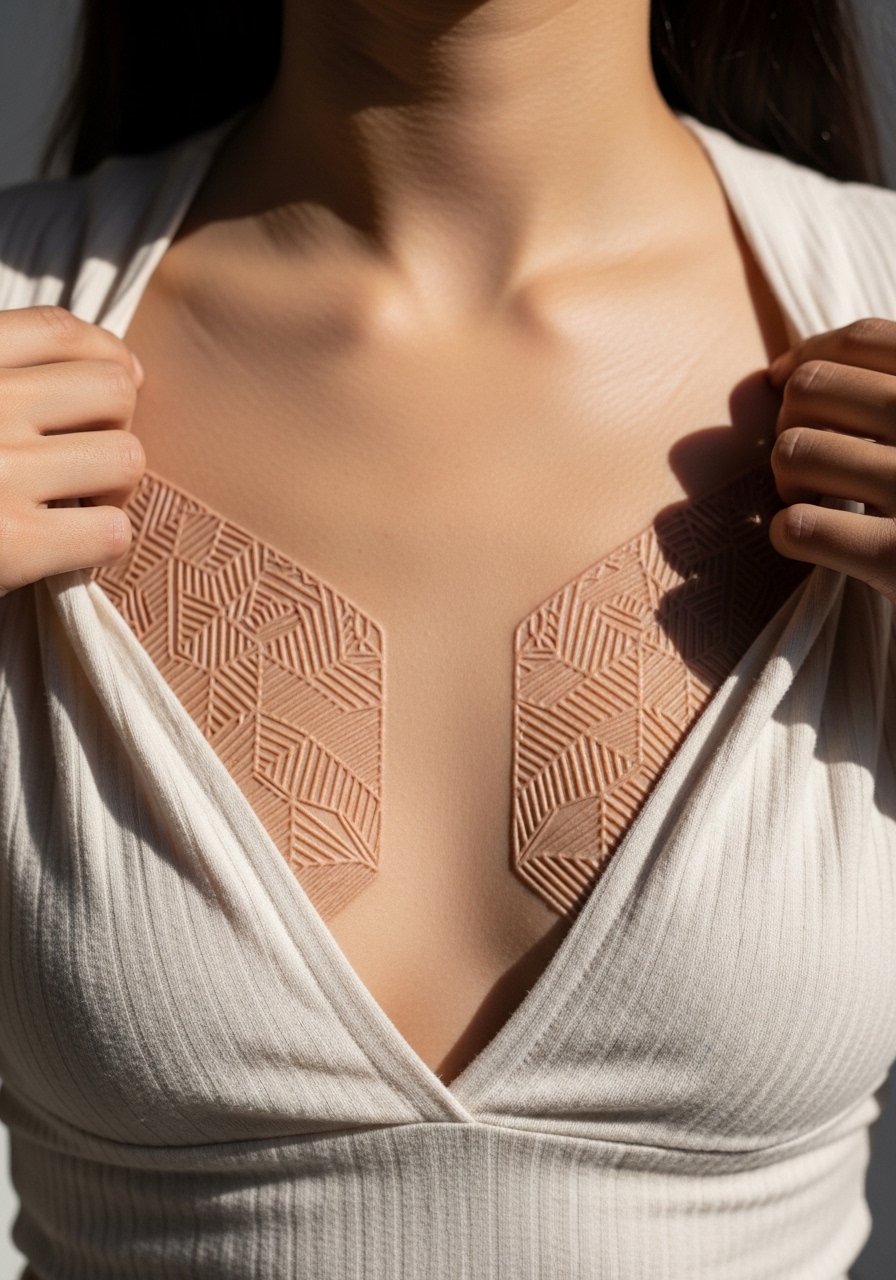
Chest panels age differently depending on body changes like weight fluctuations. The common error is centering too close to the sternum when symmetry across the chest is the goal. Plan the layout with the artist standing back from different angles. Sessions are longer and may require breaks. If you have chest hair, consider how shaving or growth will affect visual balance. For the session, a wide-neck shirt keeps access simple.
16. Geometric Crescent Behind the Knee
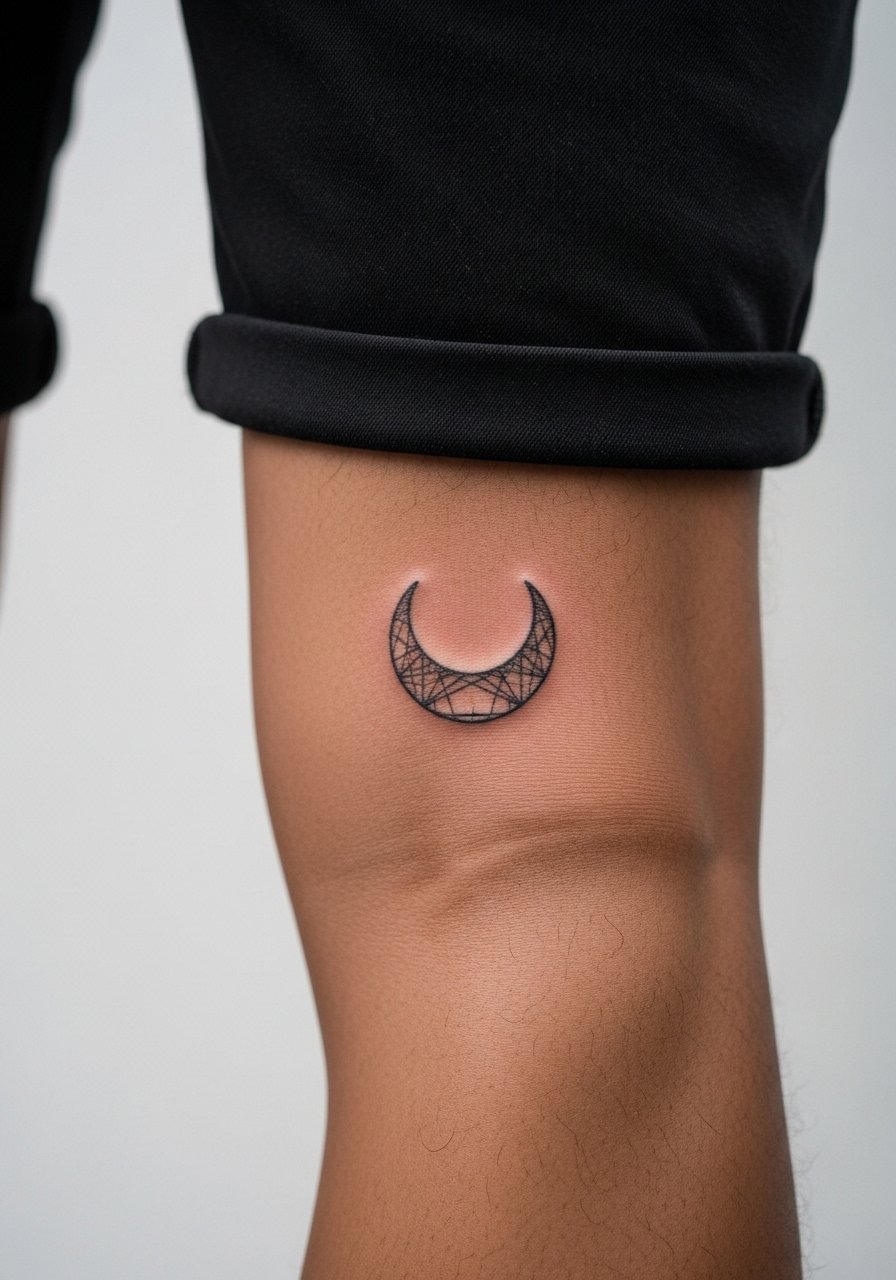
Behind-the-knee placements crease and flex a lot, which risks blurring if elements are too close. A visual impact lead helps here. The design should be larger than you think and avoid hairline connections. The session feels unusual because the position may require leg bending. Recovery can be tricky due to walking and bending. For comfort during the session, wear loose drawstring pants so you can roll them without pressure on the area.
17. Fractured Circle on the Inner Bicep
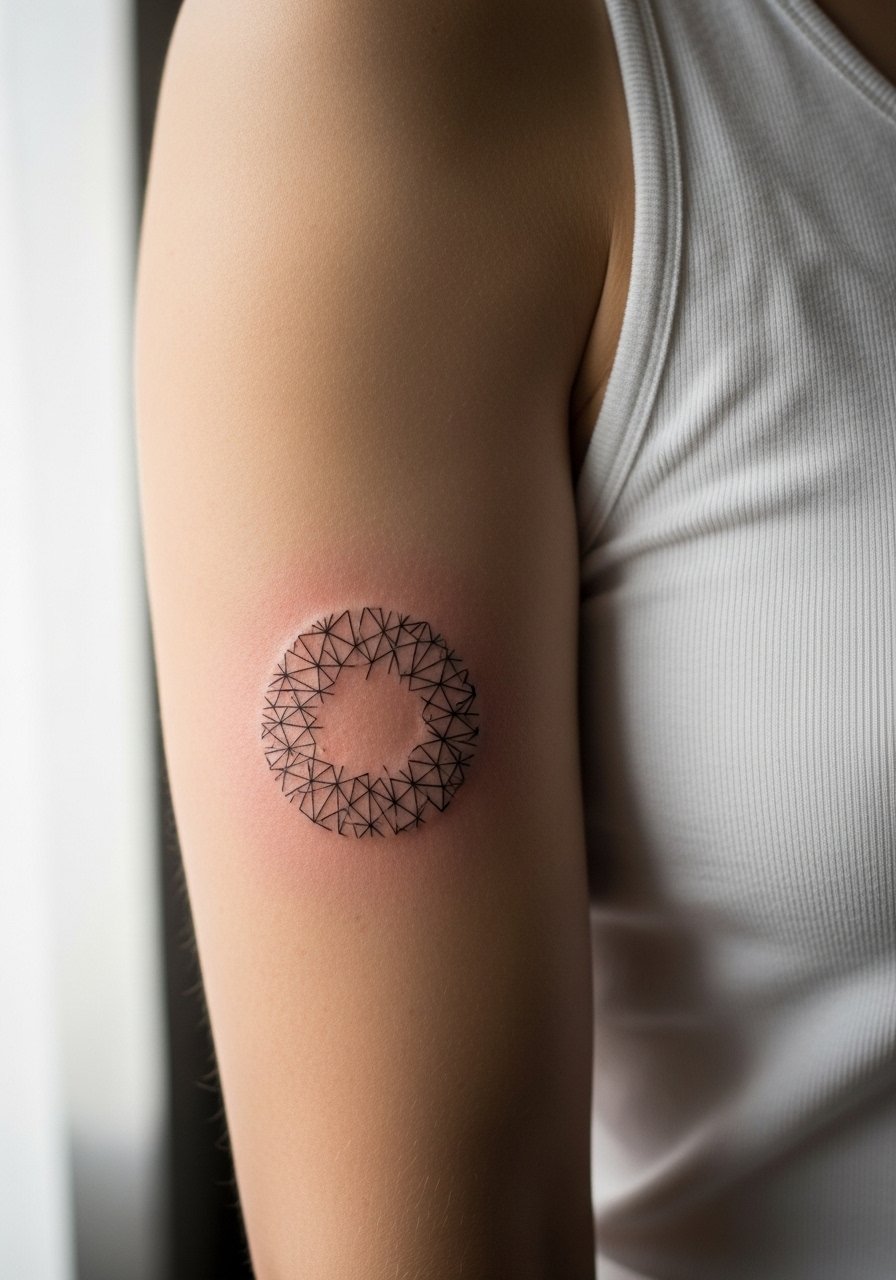
Pain warning, the inner bicep can be sensitive and takes ink differently than outer arm skin. Artists differ on whether fine detail stays crisp there. The safe route is to space elements and keep negative space generous. Sessions are moderate in length and you will feel buzzing more than deep pressure. For the appointment, a tank top lets the artist access the area without shifting fabric repeatedly.
18. Angular Caliper on the Back of the Neck
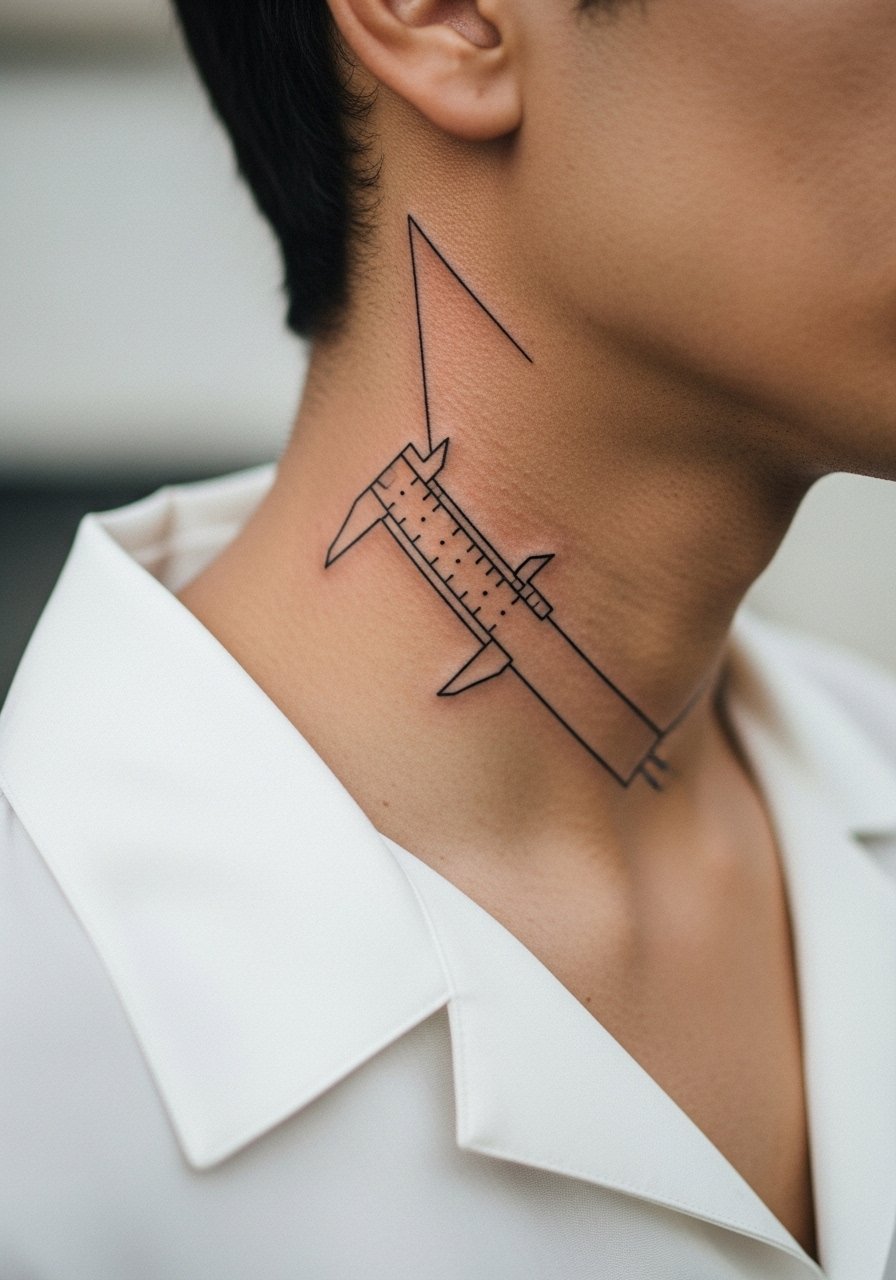
Neck pieces are visible and can influence first impressions. A personal observation lead fits here. The skin can be thin and reacts differently to needle depth. Ask for a subtle scale-up from reference art so the lines retain clarity at year two. Sessions are short but the visibility makes placement decisions vital. For the day, wear a wide-neck shirt so the artist can work without you removing layers.
19. Intersecting Lines on the Calf Sleeve Edge
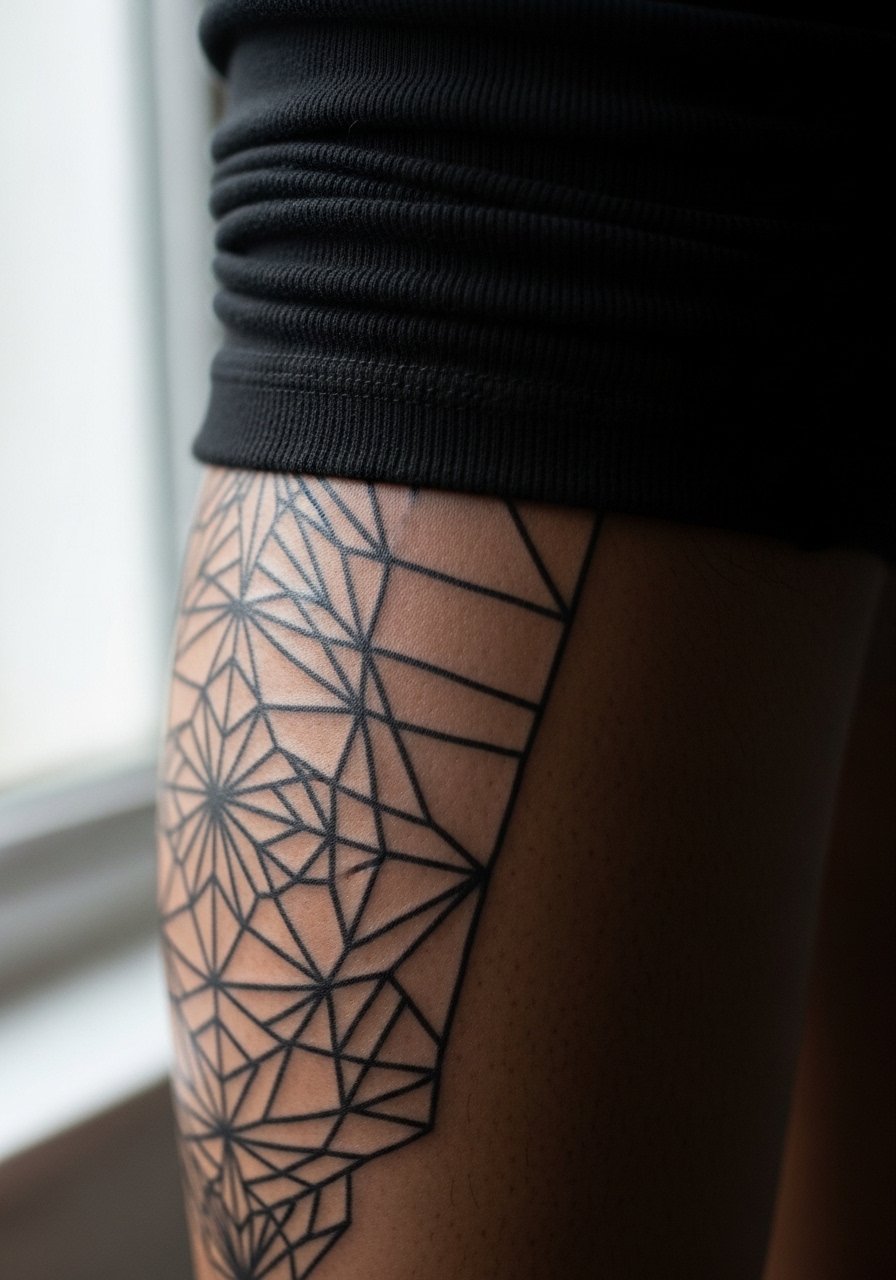
Visual impact is immediate when lines intersect cleanly at sleeve edges. The common mistake is not thinking about how socks and cuffs will partially hide the top rows. Ask your artist to test the design while you stand to see where clothing will sit. Sessions may be split across two bookings to manage time. For showing it off, mid-calf boots or cropped trousers highlight the geometry, consider cropped trousers.
20. Geometric Script Frame on the Ribcage
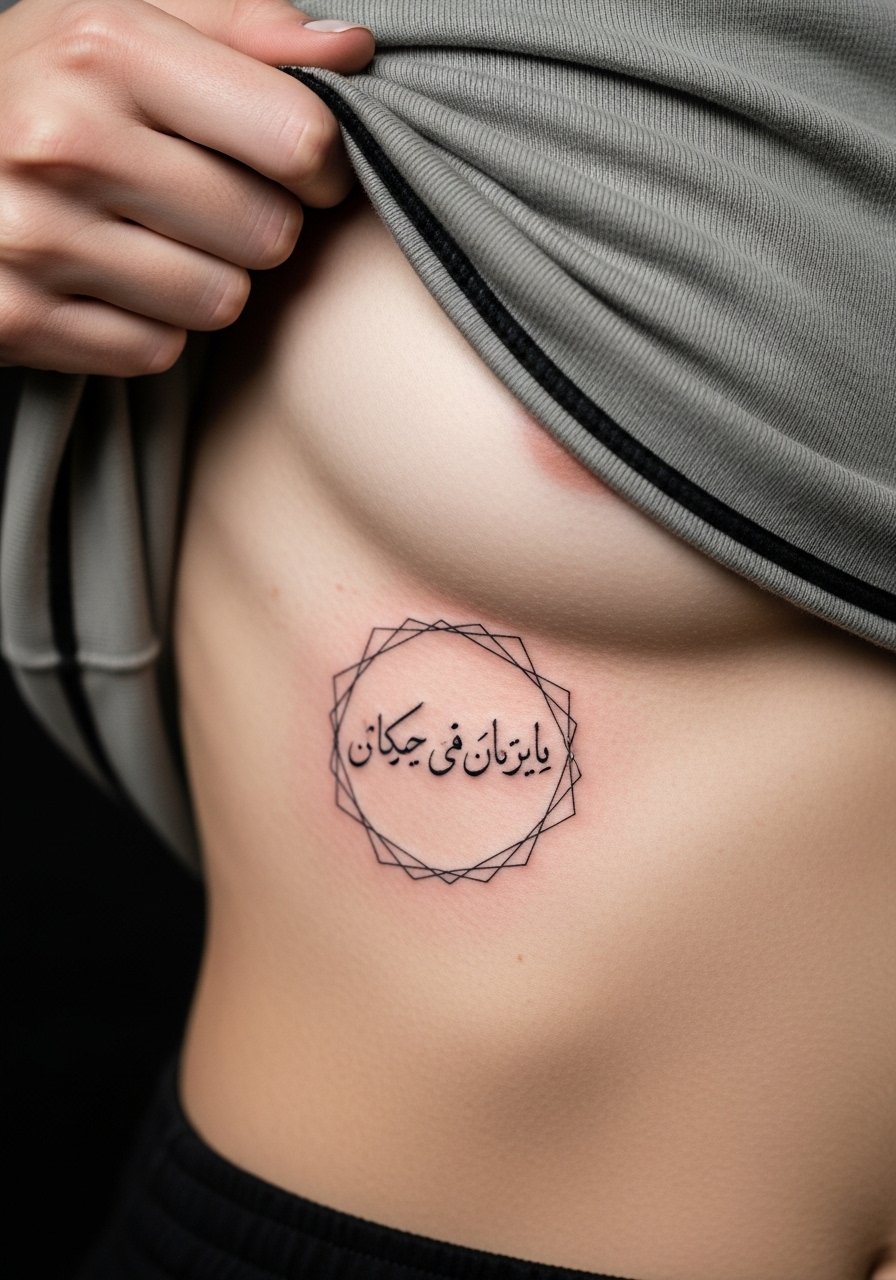
Controversies pop up when tattoos use a public figure's lyrics or name. One camp thinks lyric tattoos are a meaningful homage. The other camp argues words connected to a living artist should be chosen with care because meanings shift. If you plan to include a lyric or name, be explicit in consultation about sizing and negative space. Ribcage movement means thinner script may blur, so favor slightly larger letterforms. For the session, a cropped top gives access without full undress.
21. Modular Geo on the Shoulder Cap
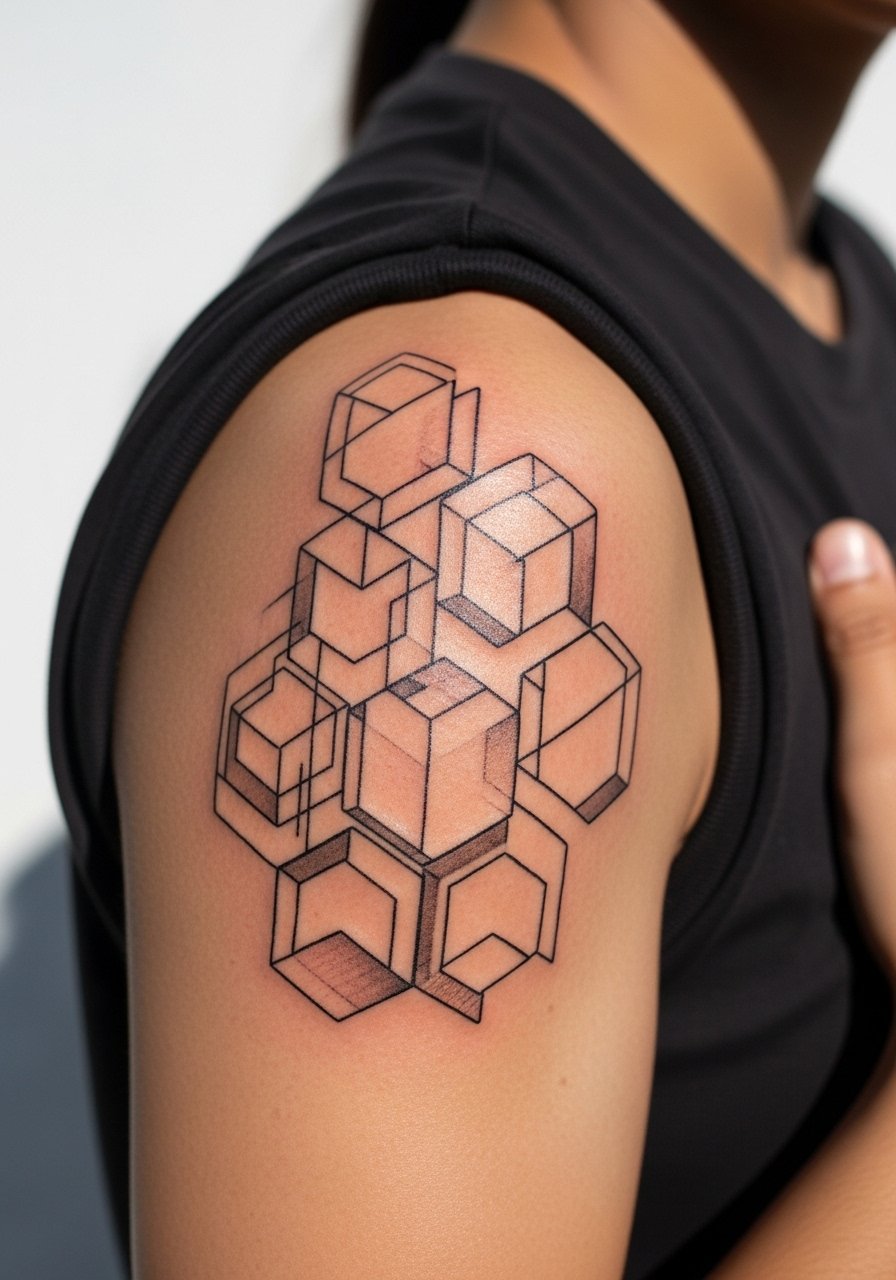
Most people underestimate how shoulder curvature affects geometry. The mistake is treating the shoulder as a flat canvas. Ask your artist to mock up the pattern on your shoulder from multiple angles. Sessions are comfortable and usually quick. The area tans unevenly, so consider how the shapes will read in summer. For the appointment, a sleeveless top keeps access easy.
22. Nested Squares on the Upper Thigh
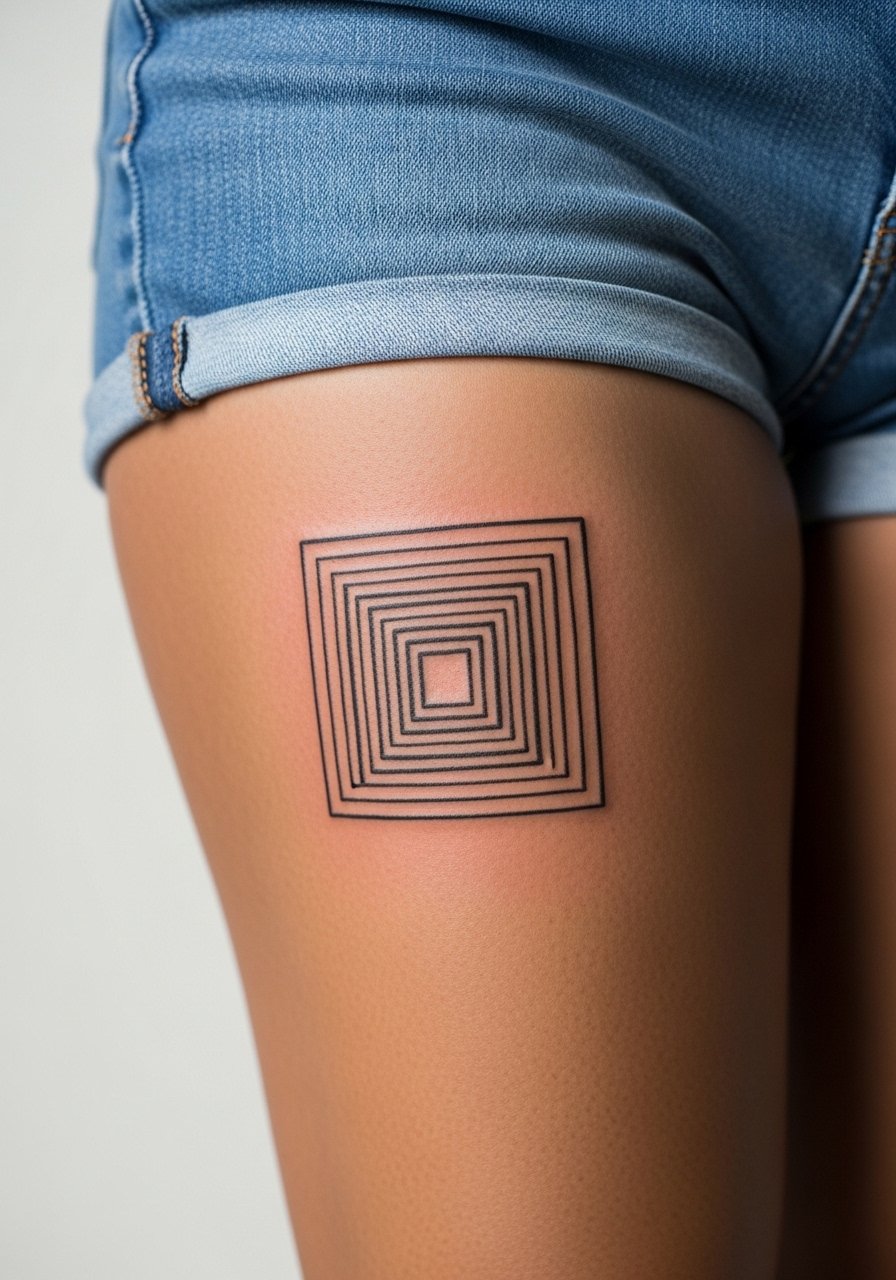
When geometry gets nested, spacing determines longevity more than line weight. The wrong call is stacking too many nested rings that look great fresh but merge later. Pick fewer, bolder squares with deliberate gaps. The session is comfortable and often done in a single block. For the appointment, wear high-waisted shorts so the artist can reveal just the area they need.
23. Asymmetric Geo Over the Elbow
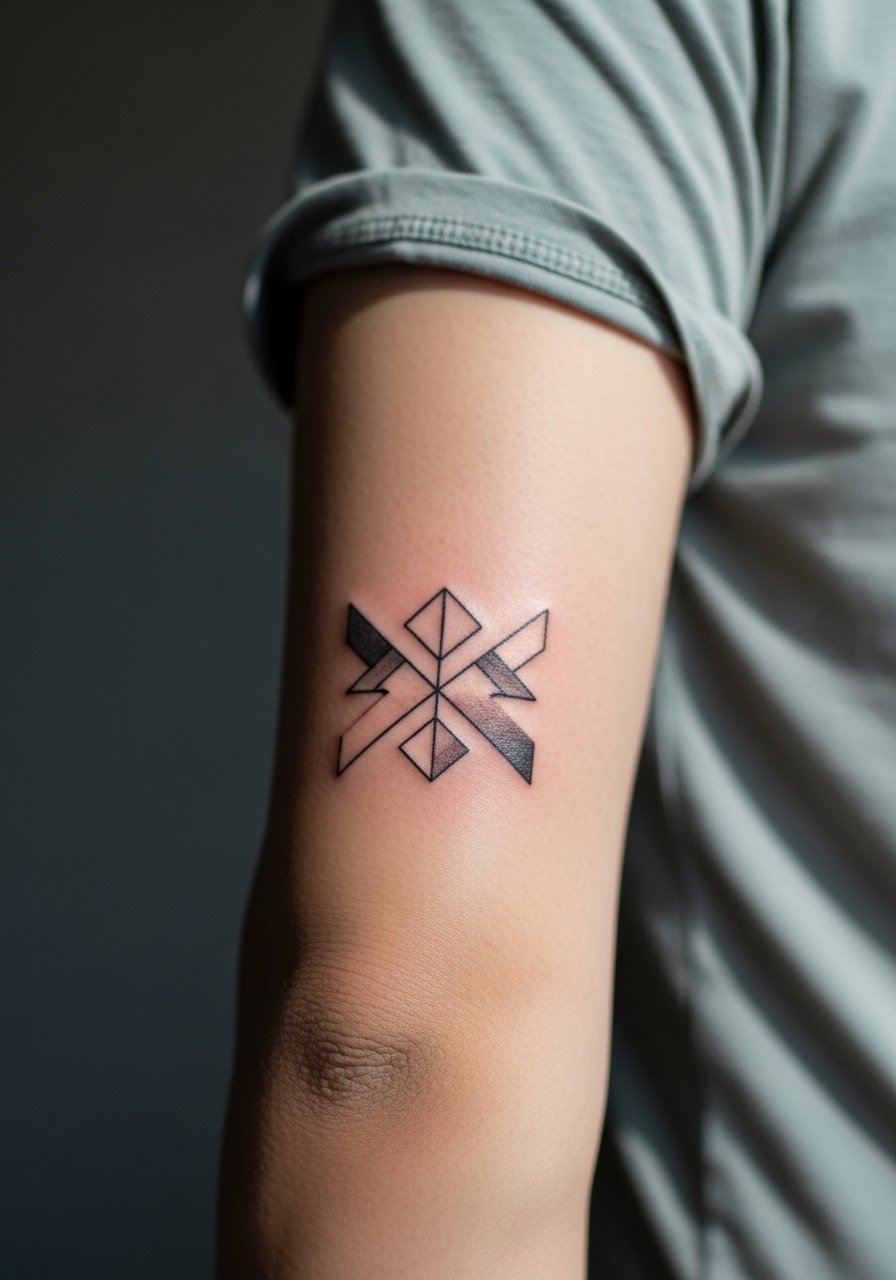
Elbow-adjacent work needs extra thought because the crease forces motion and distortion. The biggest mistake is placing tight geometry across the actual crease. Keep the focal geometry above or below the joint and leave the crease as negative space. The session can sting near bone. For comfort on chair day, choose a short sleeve tee so the artist can reach the area easily.
24. Spiral Geo on the Lower Back
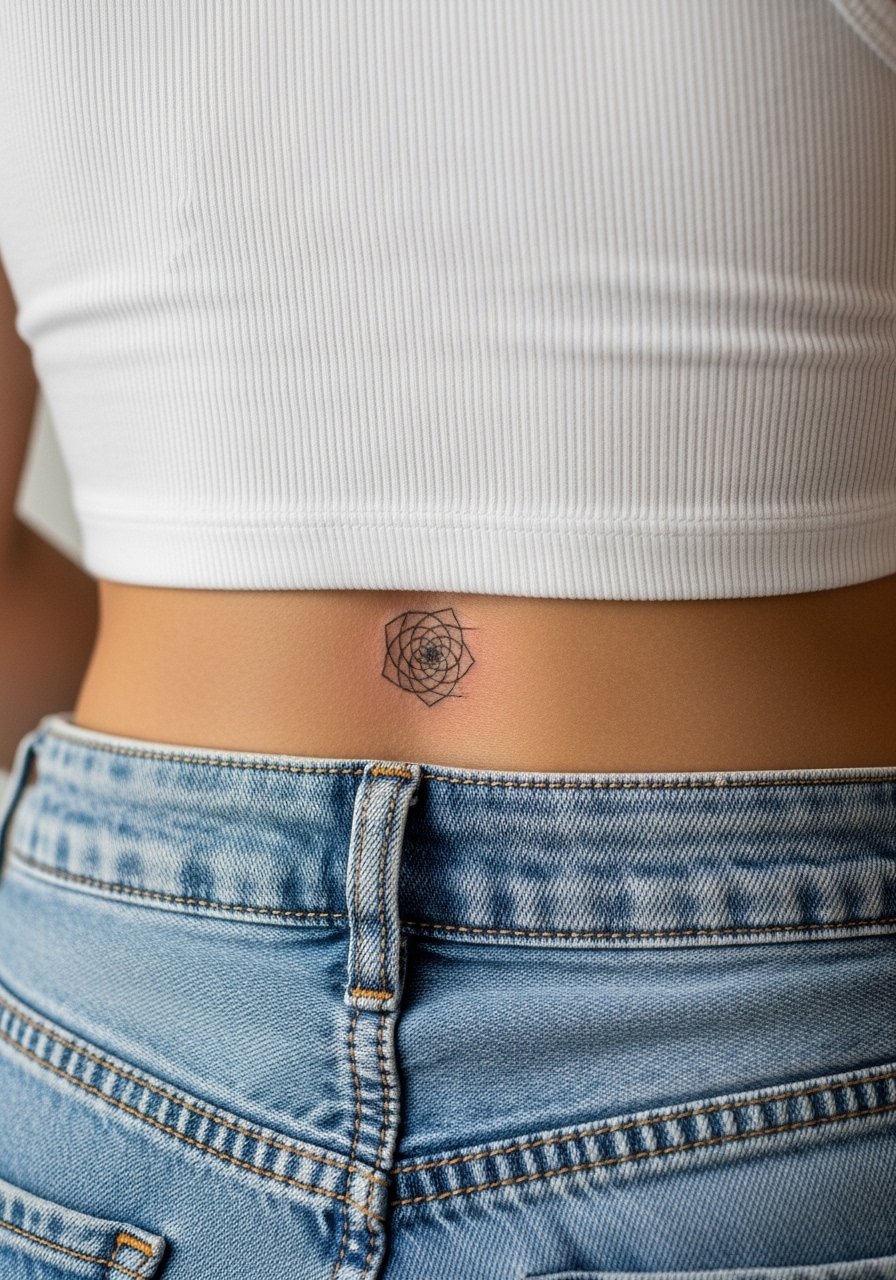
Lower back geometry used to be a trend that aged in odd ways because waistbands and belts rub patterns. This placement reads best with off-center spirals and deliberate margins away from typical belt lines. The session is moderate and healing is straightforward when covered at night. When you want to show it off, low-rise or high-waisted pairings both work, try a crop top with high-waisted denim to balance exposure.
25. Fractal Dot Column on the Side Stomach
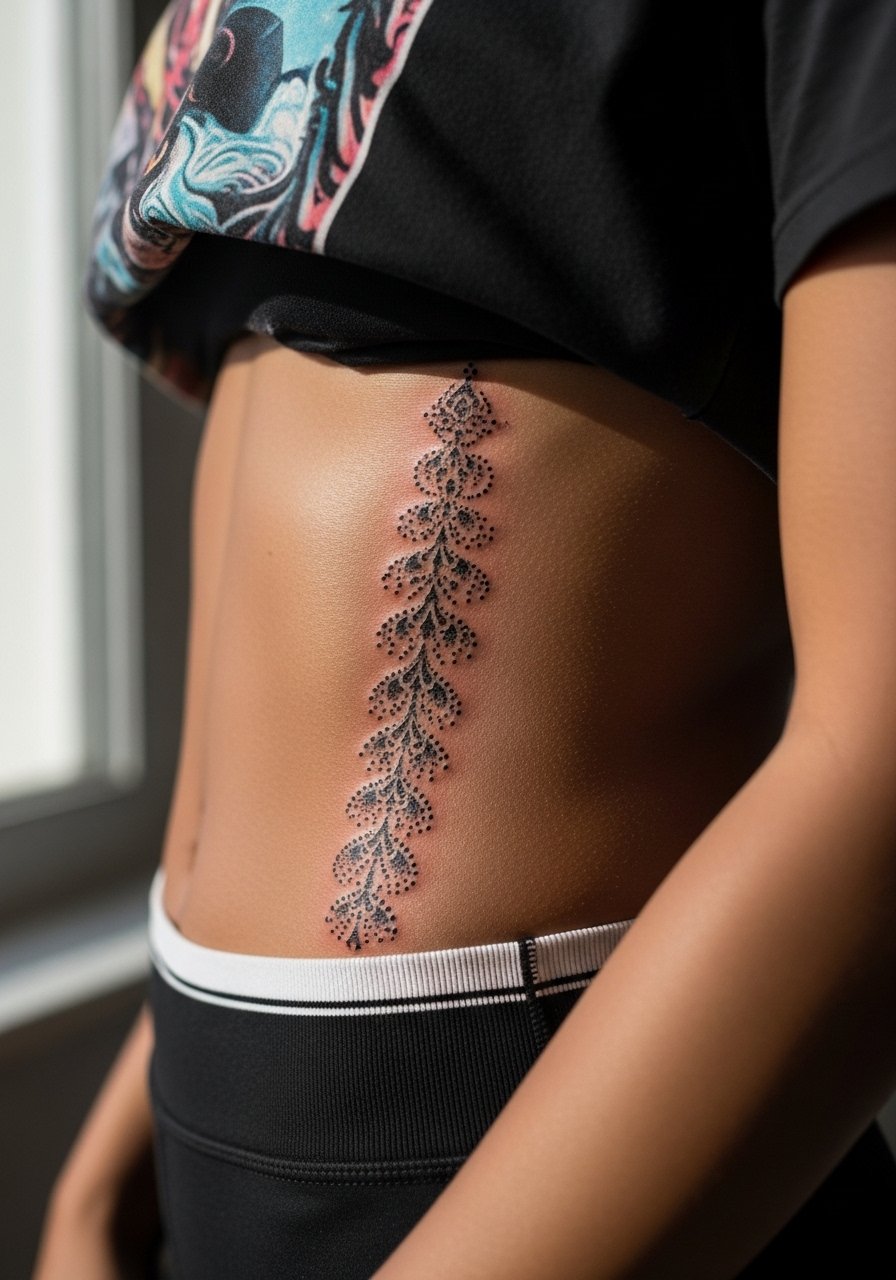
Side stomach pieces breathe with eating and exercise so the pattern can stretch. The mistake is placing dense stippling in areas that expand. I recommend a vertical column with negative margins and stronger outer dots. Sessions may require breaks. For the appointment, wear high-waisted leggings that you can shift down slightly without fuss.
26. Micro Geometry Under the Clavicle
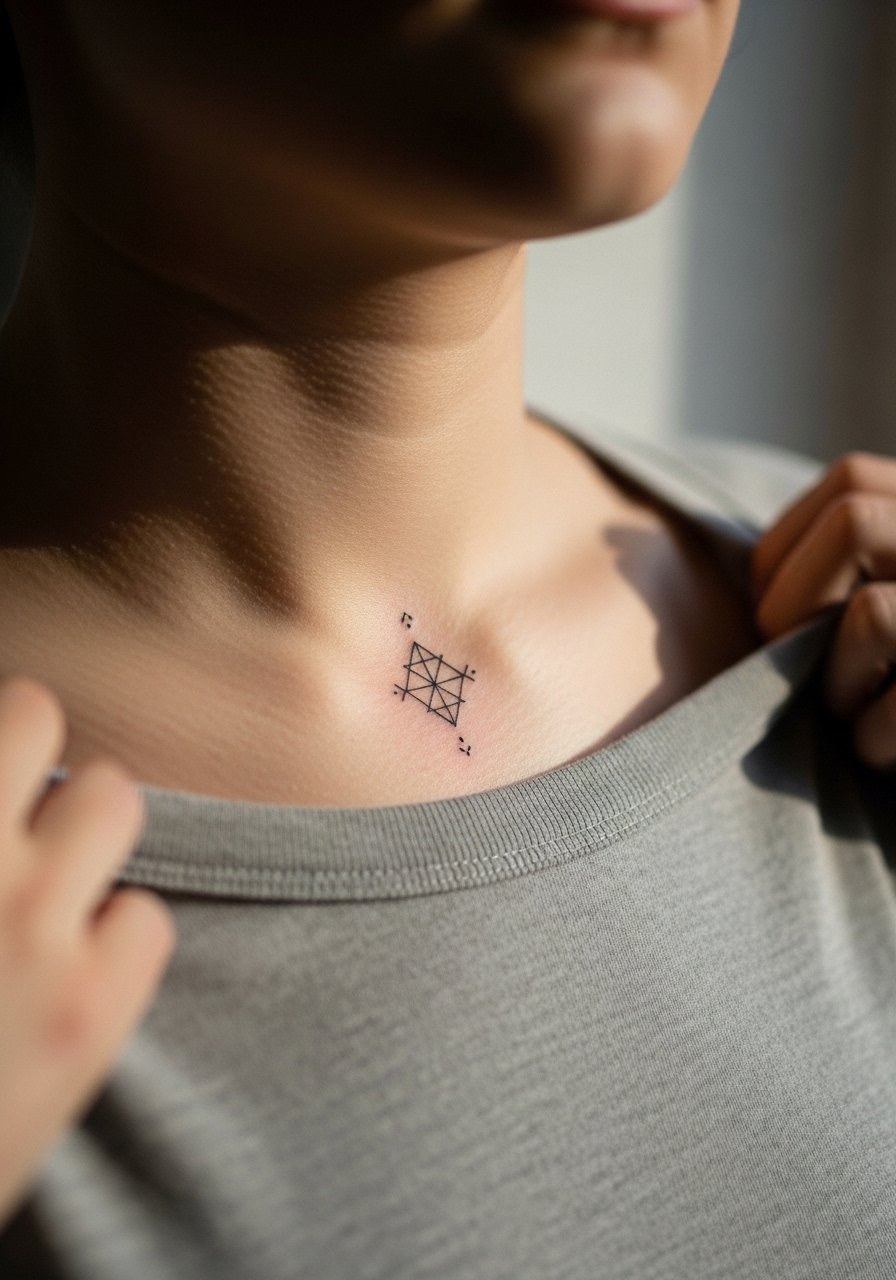
Aging-reality lead matters here. Tiny pieces under the clavicle can read faint at year three if lines are fragile. The fix is to ask for slightly bolder single lines and a clear margin from the bone. Sessions are quick and the area is visible in many outfit choices. For the session, a racerback tank gives access while keeping you comfortable.
27. Geometric Chest Band That Nods to Frank Ocean
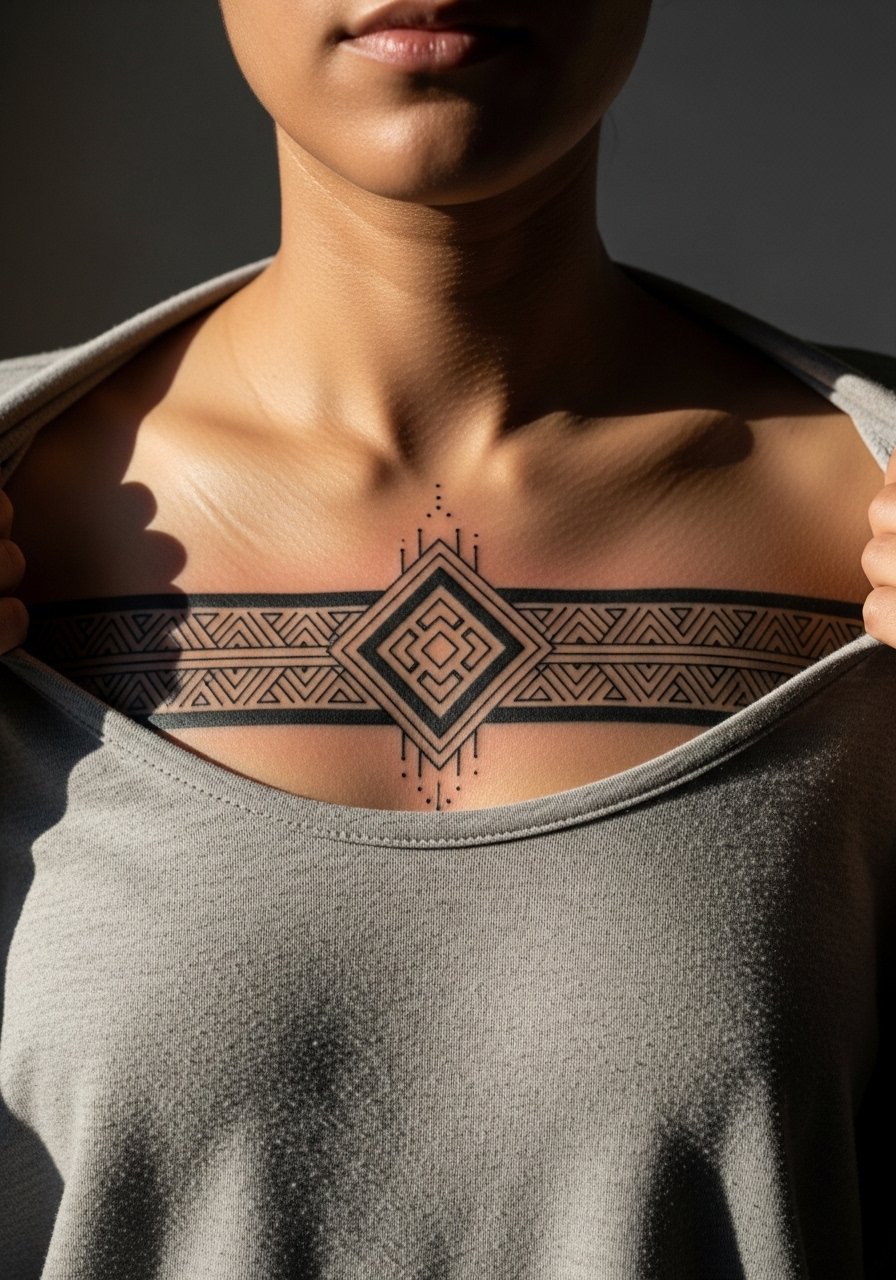
There is a debate among fans about literal references to a living artist. One group sees symbolic nods as a personal shrine. The other group worries about literal name or lyric tattoos tying an evolving artist to a fixed memory. If you want a piece that nods to Frank Ocean, keep the geometry symbolic and avoid exact quotes. Chest bands need breathing room near the sternum, so size it for long-term clarity. Sessions often involve sitting then standing to check symmetry. Consider a wide-neck shirt for uncomplicated access on the day.
Frequently Asked Questions
Q: Will fine line geometric tattoos fade faster than bolder blackwork on my forearm or calf?
A: From what I have seen, fine line pieces on high-motion or thin-skin zones tend to lose crispness sooner than bold blackwork. On the forearm and calf, where skin is thicker and movement is moderate, fine line can hold up well if the artist spaces the design and uses slightly heavier outer lines. Expect touch-ups around year two to four depending on exposure and care.
Q: If I want to reference a Frank Ocean lyric, should I include exact words or keep it symbolic?
A: Both camps exist. Some fans prefer exact lyrics as a clear homage. Others prefer symbolic geometry that captures the mood without literal text for flexibility as meanings shift. If you choose words, size them larger than you think and leave negative space so the lettering does not blur on ribcage or sternum placements.
Q: How should I dress for a ribcage or sternum geometric session to make the artist's access easy?
A: Wear a fitted sports bra or a cropped top that you can lift slightly so only the tattooed area is exposed. For ribcage sessions a cropped athletic top is practical. For sternum work a fitted sports bra keeps you comfortable and preserves modesty while giving the artist room.
Q: Do geometric hand and finger tattoos require different aftercare than chest or thigh pieces?
A: Hands and fingers need more attention because they face constant washing, sun, and friction. The linework there benefits from thinner initial coverage and more frequent, small touch-ups later. Chest and thigh pieces tend to retain contrast better and require less frequent tweaking.
Q: Is it better to get a geometric design in one session or split it across multiple sessions for a sleeve or large chest band?
A: It depends on the design complexity and your tolerance. Large geometric work that needs perfect symmetry often benefits from staged sessions so you can evaluate healing and symmetry between appointments. If the artist can complete it in one block without sacrificing precision, a single session can work, but expect longer chair time and the need for recovery breaks.