
Fine line trends look flawless on a feed, but hand tattoos live under different rules. Hands see constant washing, sunlight, and friction, so tiny geometric petals can fade or blur faster than people expect. Pain, visible aging, and jobs that still screen hands are the main headaches to plan for. Below are 17 geometric flower hand tattoo ideas, with sizing, consultation notes, and wardrobe tips to help the design age as well as it photographs.
1. Minimal Geometric Bloom on Back of Hand
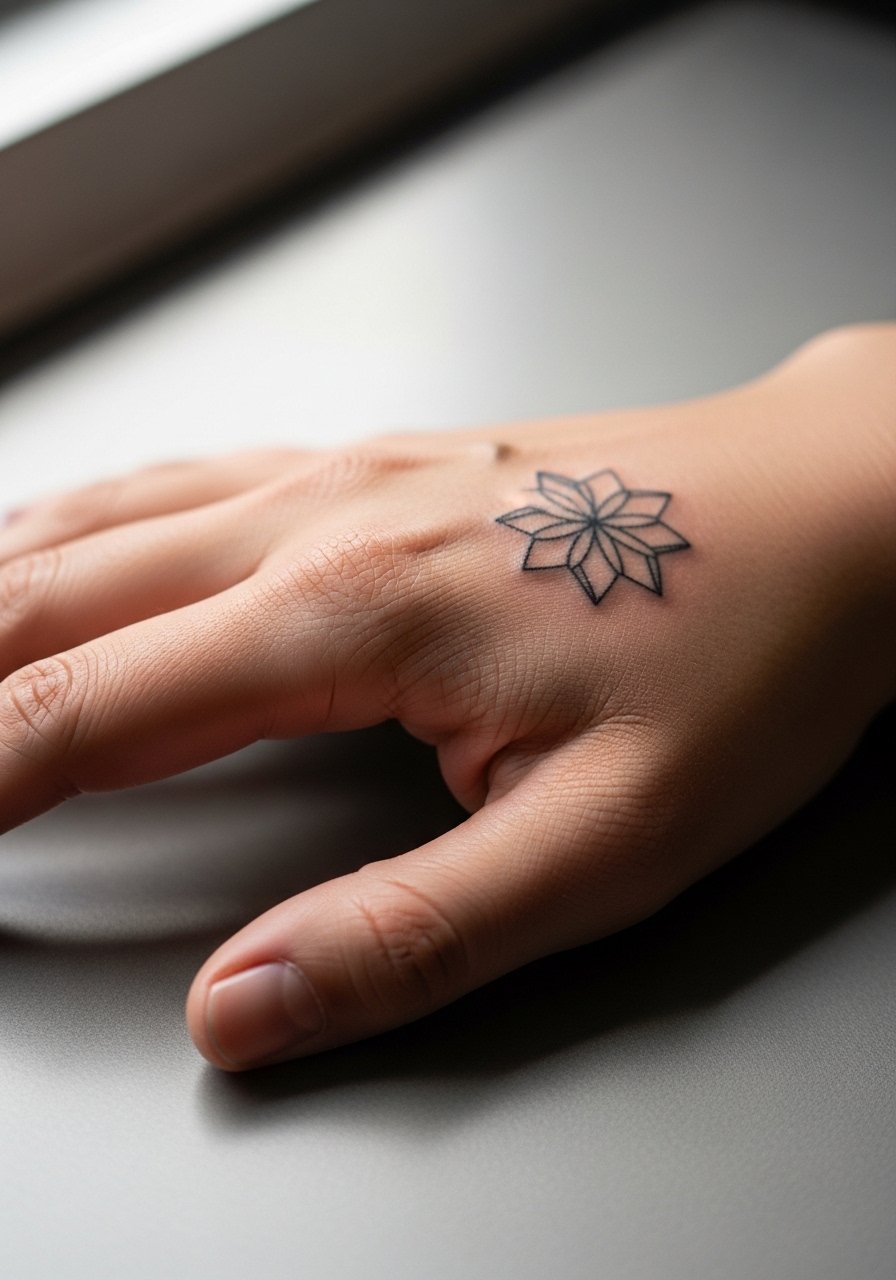
I recommend a slightly larger toothpick-sized bloom on the back of the hand rather than a microscopic dot version. Hand skin moves and the knuckle area sees friction, so letting each petal have 2 to 3 millimeters of breathing room reduces early blurring. Tell your artist you want evenly spaced linework and ask them to show a stencil on the actual hand before needle down. Expect a sharp look at six months, some softening by two years, and a likely touch-up around year three. Pain is higher on the hand than on the forearm, but sessions are short, often under 30 minutes. For showing it off, pair with a thin chain pendant necklace that draws the eye up from the wrist without crowding the back of the hand.
2. Geometric Chrysanthemum on Side of Index Finger

Fair warning about finger work. The side of the index finger sees repeated contact while typing and gripping, which speeds fading. I tell people to accept touch-ups as part of the plan and to consider slightly bolder line weights than they expect if they want longer life. Sessions are quick, often under 20 minutes, but expect tender skin and more bleeding than a flat surface. The common mistake is asking for ultra-fine petals that merge within a year. If your job is strict on visible ink, re-evaluate placement or choose a design that can be covered by a ring or glove when needed.
3. Stacked Geo Blossoms Along the Knuckles
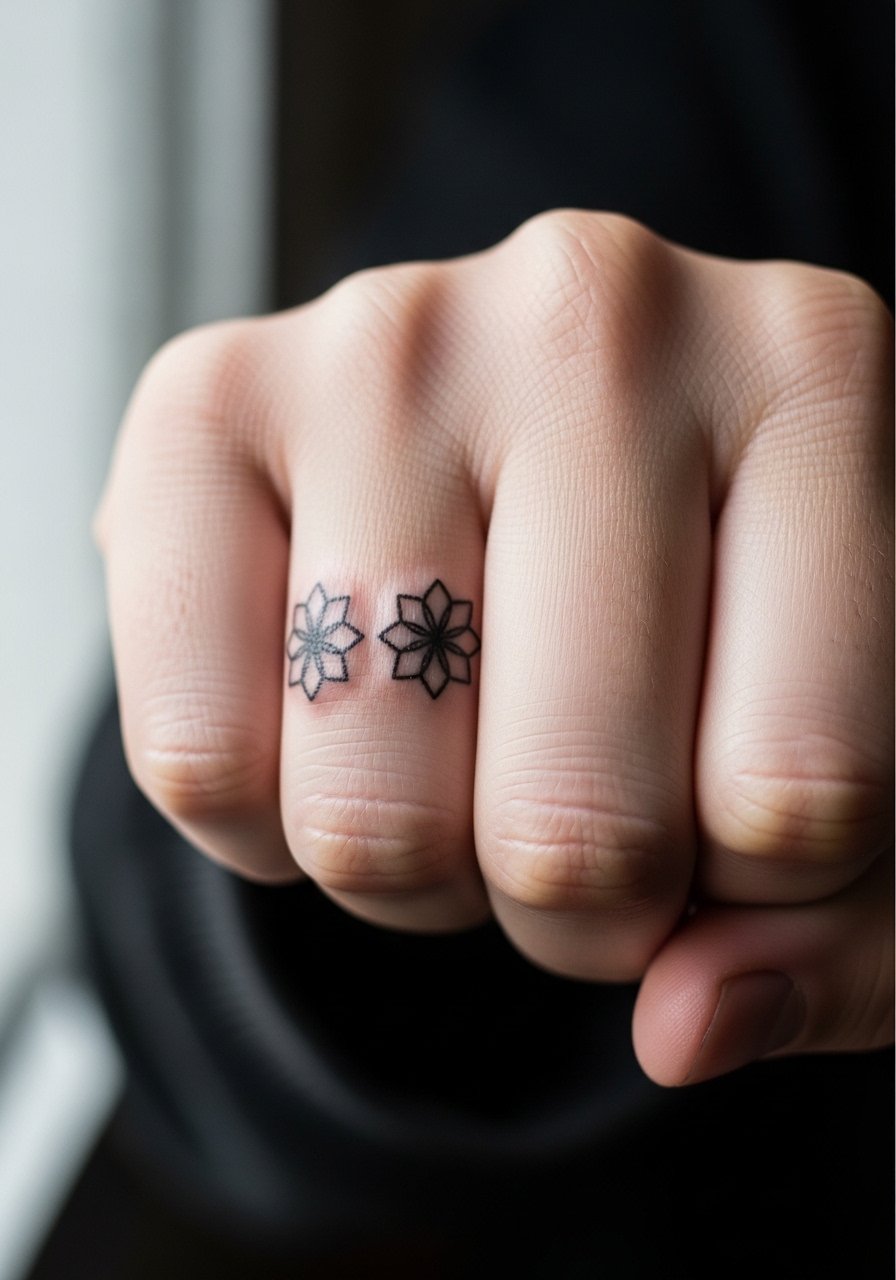
There is a visual rhythm to small geometric blooms spaced across the knuckles that reads like jewelry. When you consult, ask for consistent negative space between each motif and discuss line weight so the shapes do not bleed into one another. Pain is sharp but brief over the knuckles, and touch-ups are almost guaranteed by year two. A common version that ages poorly uses too many tiny internal details. Instead, pick clean silhouettes and ask for dot work sparingly. Pair this layout with stacked rings and a minimalist watch to frame the hand without covering the knuckle art.
4. Mandala Blossom Centered on the Back of Hand
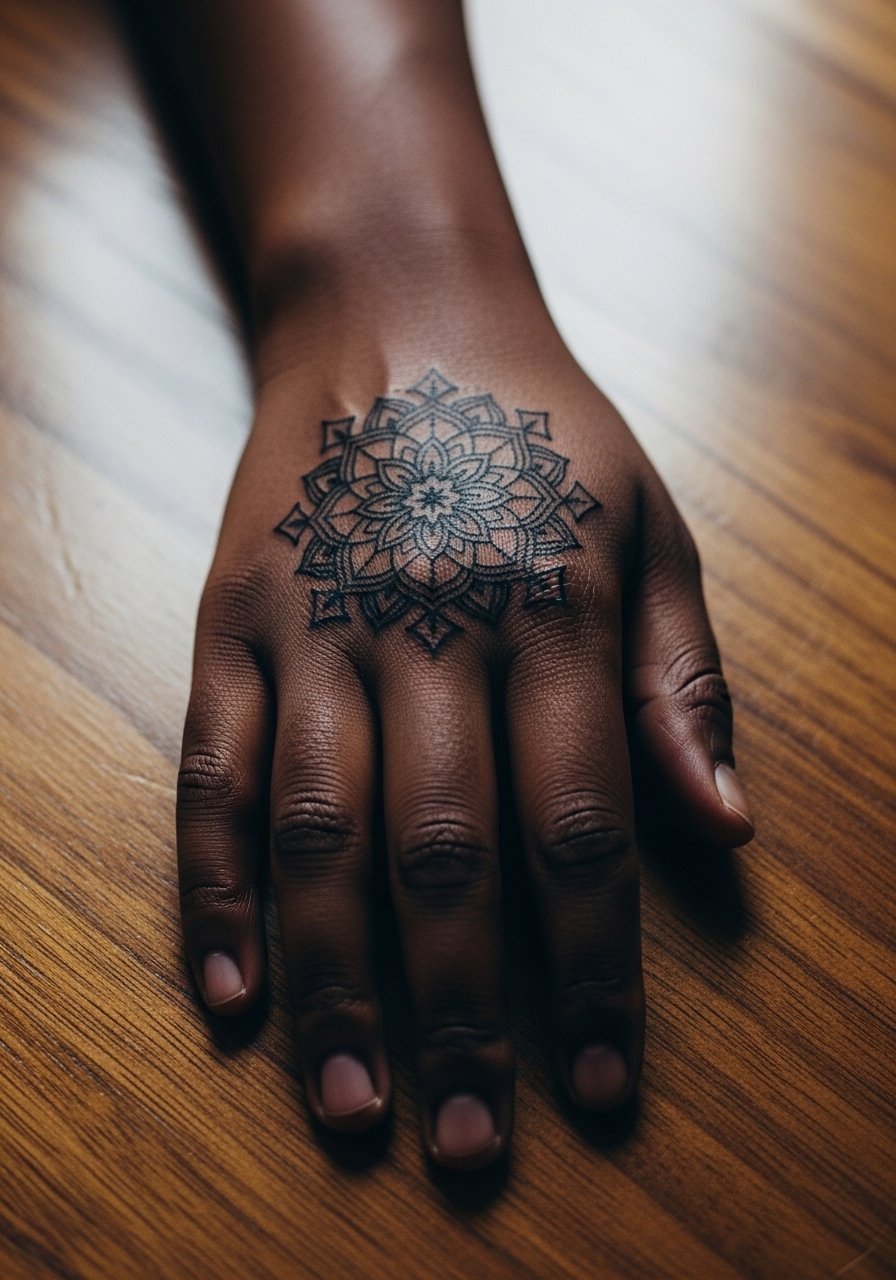
Artists split on dense mandalas on hands. One camp says dense detail on hand skin will blur within two years because of surface movement and thinner dermis. The other camp argues careful spacing and slightly heavier outer lines keep the mandala readable long term. I tell clients to pick the camp whose portfolio shows long-term photos and to plan a touch-up in year two. This design looks striking fresh, and with the right spacing it reads well at six months. The session can be 45 minutes if there is moderate shading. For the appointment, wear a loose button-down shirt you can pull aside so the artist has clean access to the hand and wrist area.
5. Negative Space Lotus Over the Thumb Webbing

Thumb webbing is a high-motion zone. I usually recommend negative space work here because it relies on the skin showing through as a design element, so when some blurring occurs the composition still reads. Explain to your artist you want the white space to form part of the petals, and ask for preview stencils in multiple hand positions. Sessions are quick but uncomfortable, with frequent twitching if you clench. The biggest mistake is asking for dense stippling in this spot. For showing the piece without covering it, roll up sleeves or wear a racerback tank that keeps the hand visible while you work or style it out.
6. Single Line Geometric Bloom on the Side of the Wrist
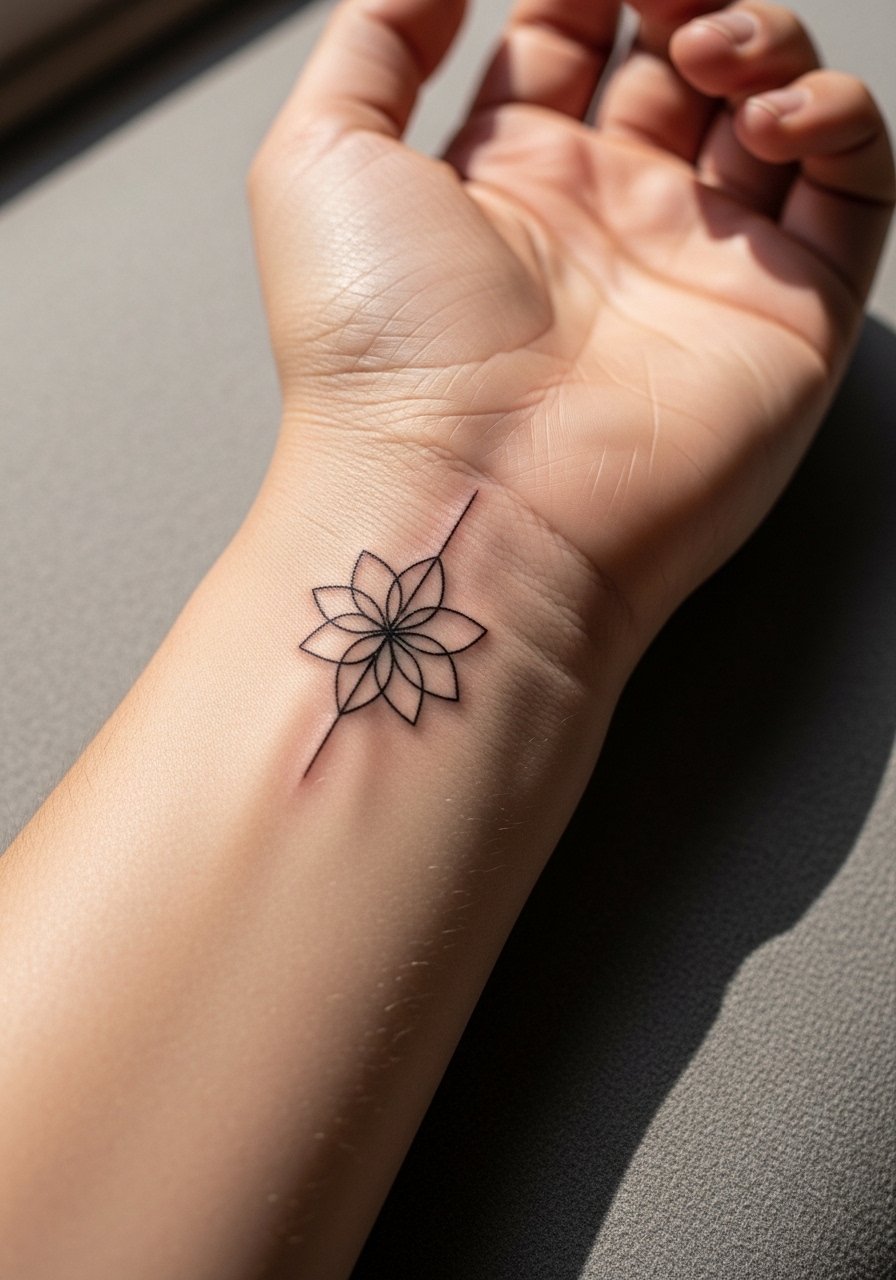
The wrist is forgiving visually but unforgiving for fine line density. Most failures come from packing too many inner petals into a tiny space. Ask for slightly heavier contour lines and spaced inner geometry. Pain is moderate, and sessions commonly take 20 to 40 minutes. At six months the piece should look crisp, at two years slight softening is normal, and a touch-up at year three keeps it crisp. For the session, wear a loose button-down shirt or a short-sleeve top you can push up without rubbing the fresh ink.
Studio Day Picks
The small hand and wrist pieces above need different prep than larger forearm work, and a few targeted items smooth the session and early healing.
- Stencil transfer paper kit. Lets you preview the exact placement on the hand, which is essential when the design must line up with knuckles or joints.
- Topical numbing cream. Applied as directed about 45 minutes before the session eases sharp knuckle and thumb webbing pain without altering the artist's work.
- Thin protective film roll. Helps shield tiny hand tattoos from soap and friction in the first days when washing is frequent.
- Fragrance-free body wash. Cleanses without irritating new linework, which matters for fine geometric petals on hands.
- Aquaphor healing ointment. A thin layer during the initial 48 hours keeps the skin moist so tight linework has a better chance to settle.
7. Micro Dot Flower Over the Base of Fingers
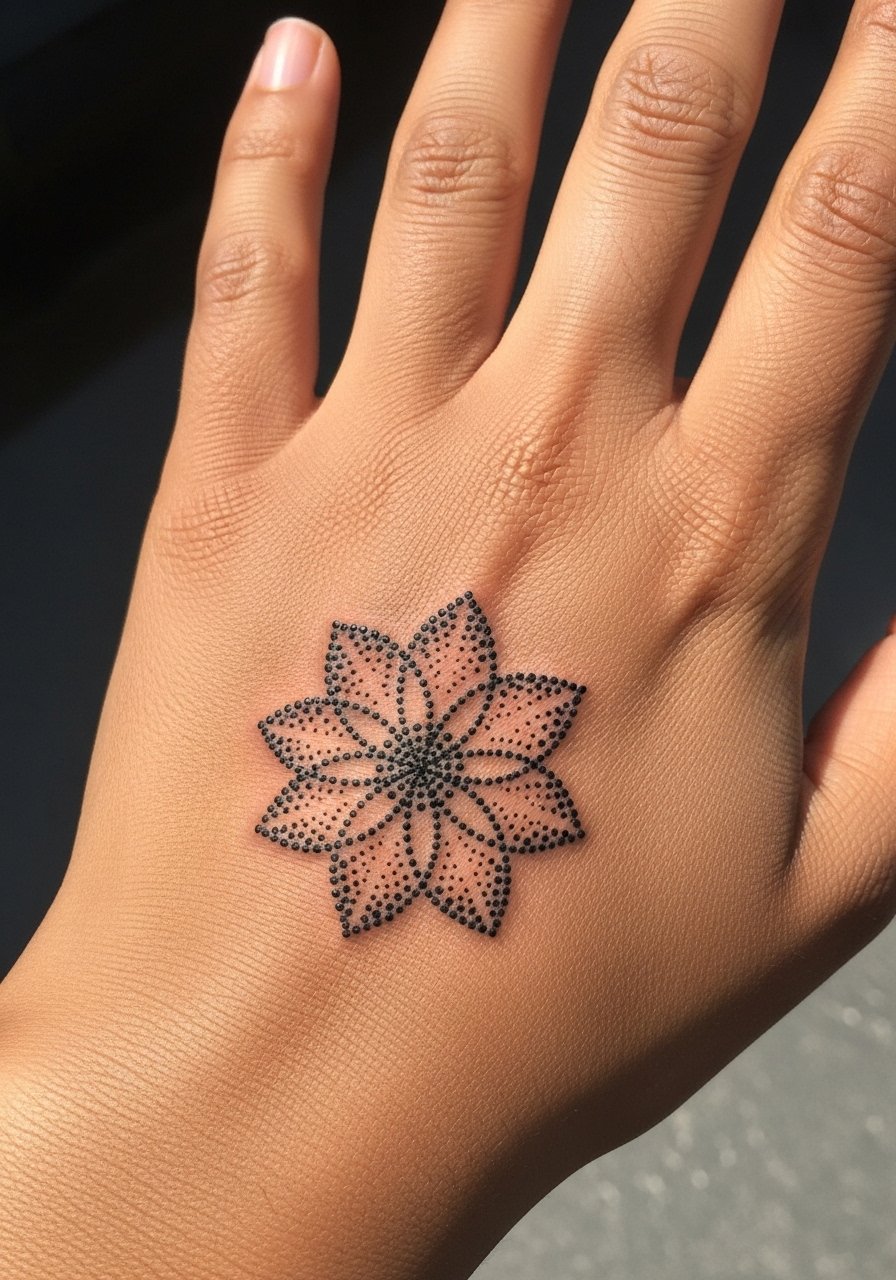
Dot work can look remarkably crisp on hand skin when spaced correctly. The trick is to ask for stipple shading that fades out before the knuckle lines. If dots sit too close they fill in. Expect more session time than a simple line tattoo because dot work takes patience. Pain is concentrated and sharp, but the visual payoff is fine-grained texture that lasts better than tiny continuous shading. Wear stacked rings to frame the area when showing it off, or try a minimalist signet ring that complements the geometry without covering the motif.
8. Clustered Geo Peonies Around the Thumb Base
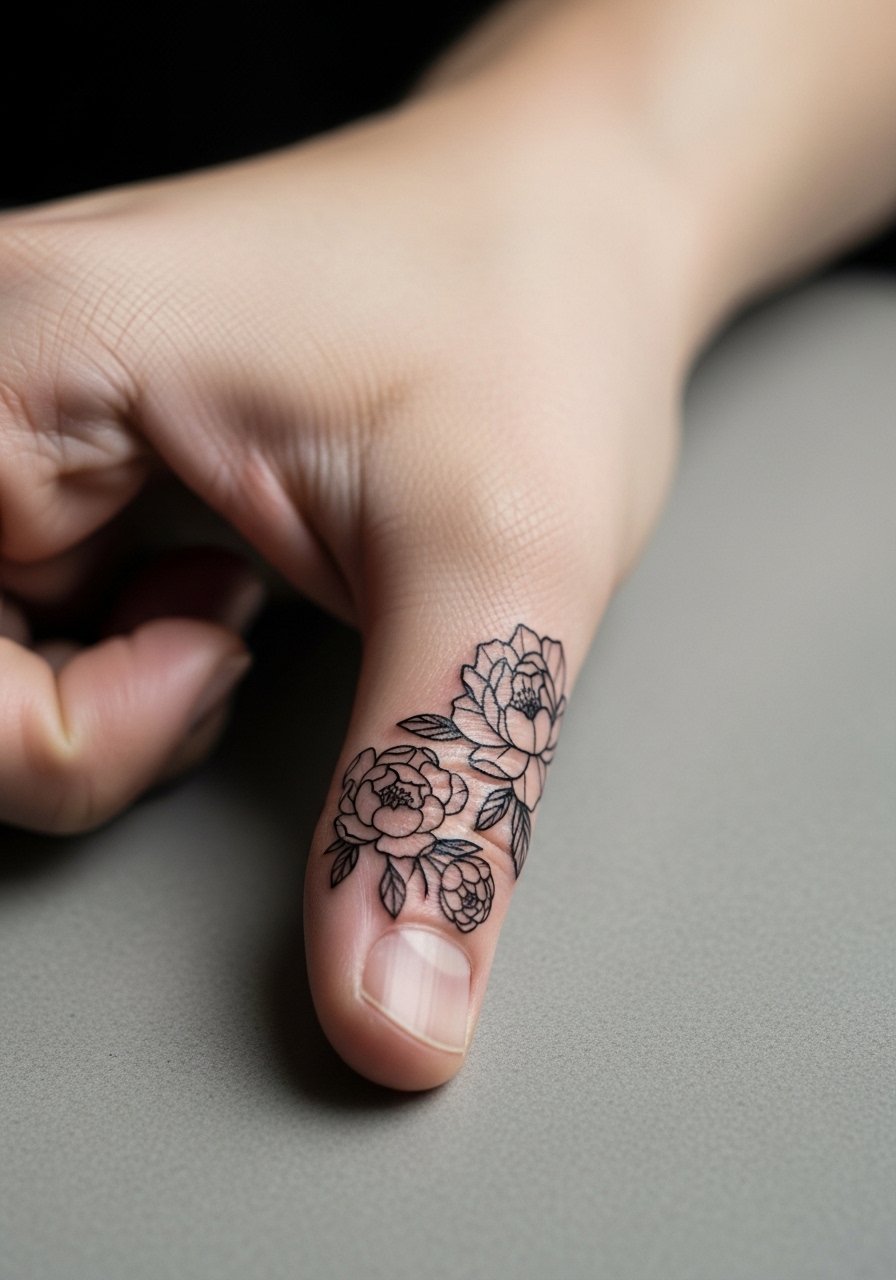
Thumb-base clusters sit where hands flex most, so spacing is essential. Ask your artist to map the design with the hand both relaxed and gripping to ensure petals do not compress into each other. Sessions often run 30 to 50 minutes depending on cluster size. A common mistake is wanting a sleeve-style cluster scaled down to a thumbnail area. If you want that depth, accept a larger footprint or choose simplified geometry. Expect touch-ups around year two, especially on the edges where wear is highest.
9. Asymmetric Geo Flower That Wraps the Side of the Hand
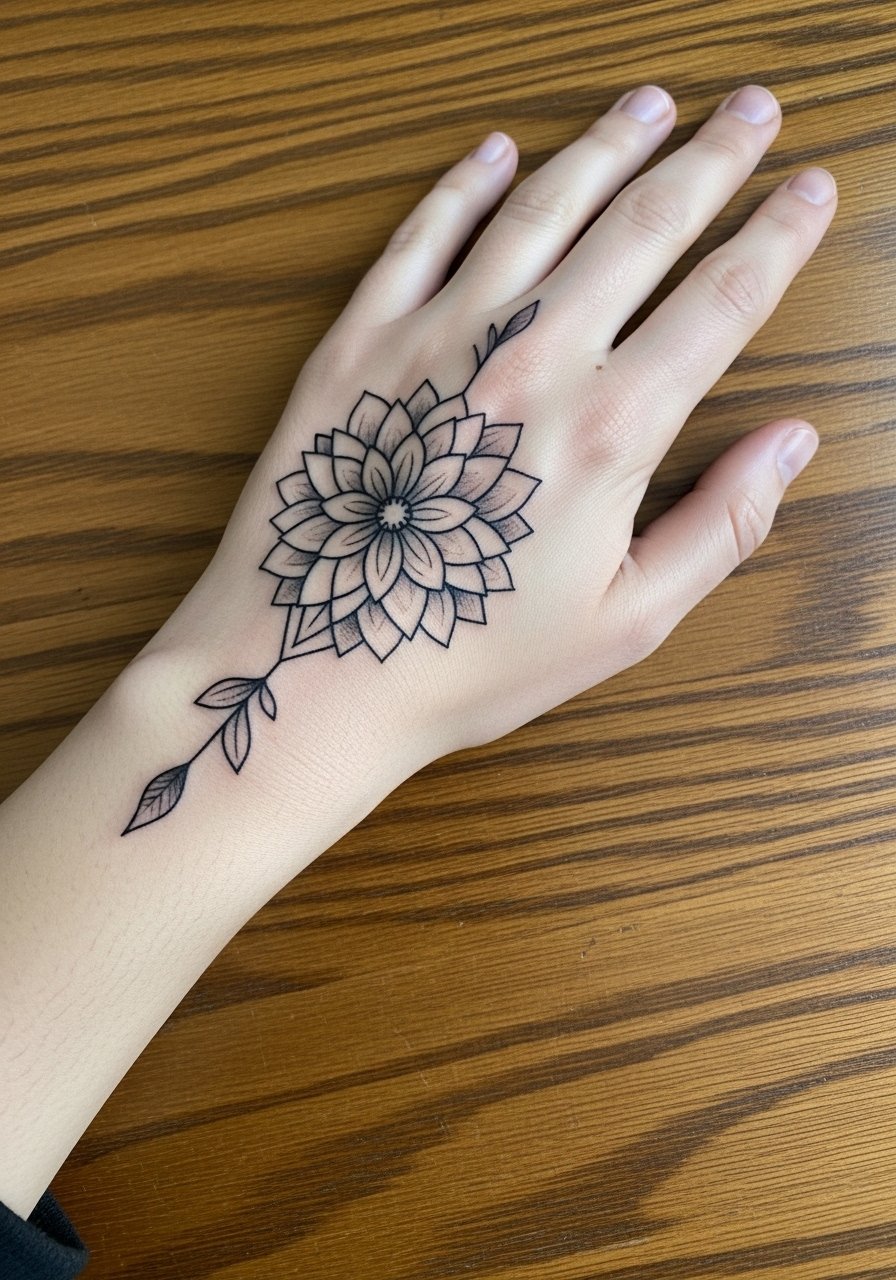
Asymmetric pieces use the hand's shape to create motion. Tell your artist you want the stems or geometry to follow tendons and natural creases so the design breathes with movement. This is a higher session-time piece, often 45 minutes to an hour, and it can be more painful where it approaches the webbing. Avoid asking for mirrored symmetry on both hands in the same session. If you plan to show this design at events, pair it with open-back midi dresses or a racerback tank to let the hand art be visible without distraction.
10. Tiny Geo Rose on the Finger Pad Edge
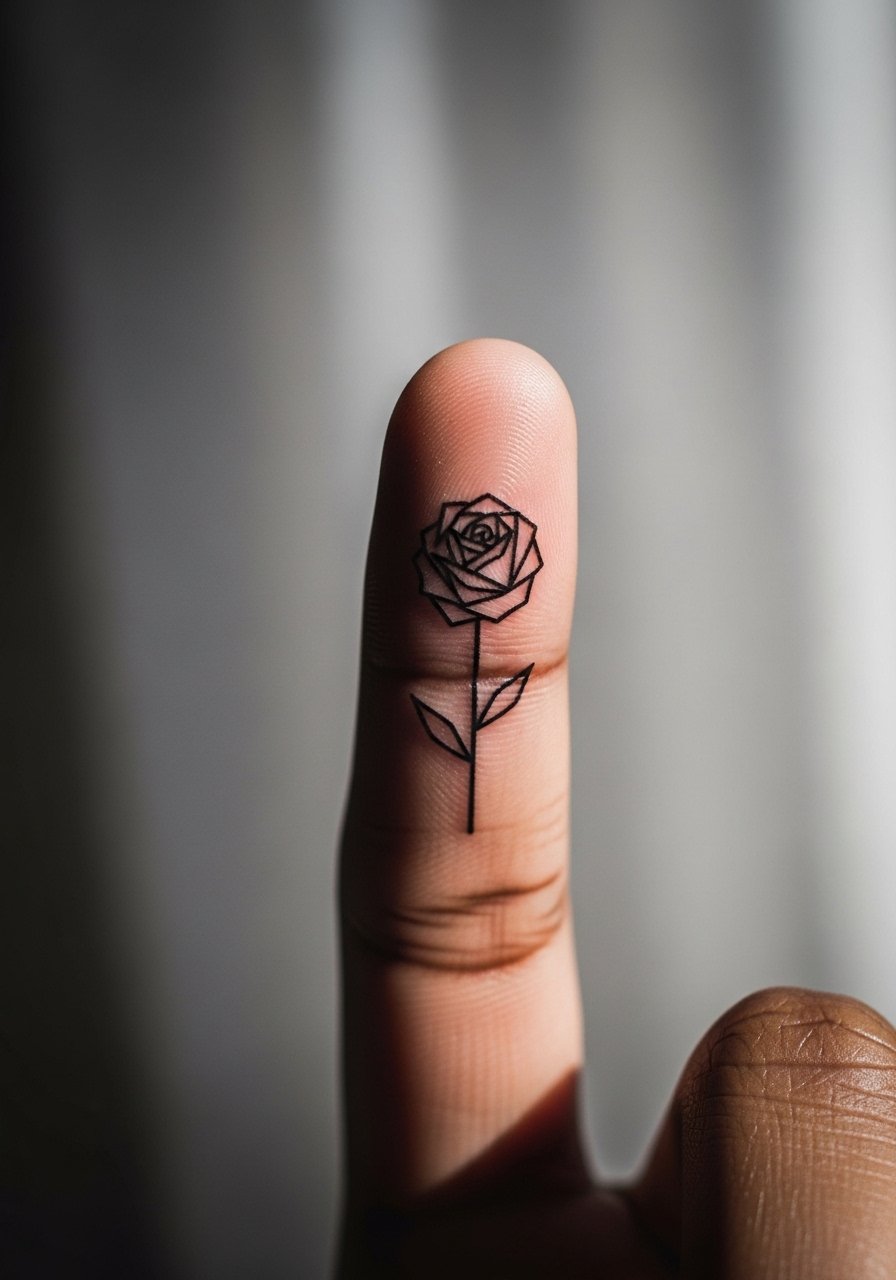
Finger pad edges wear quickly because of constant contact. I usually advise a bolder outline and acceptance of regular fading. Sessions are under 20 minutes but sensation is intense. The design reads bold at six months and softens fast, so plan touch-ups. The mistake is wanting intricate internal petal detail in a space that cannot hold it. If you need low maintenance, move the design slightly toward the side of the finger where skin is a bit more stable.
11. Geometric Sunflower Across the Back of Two Fingers
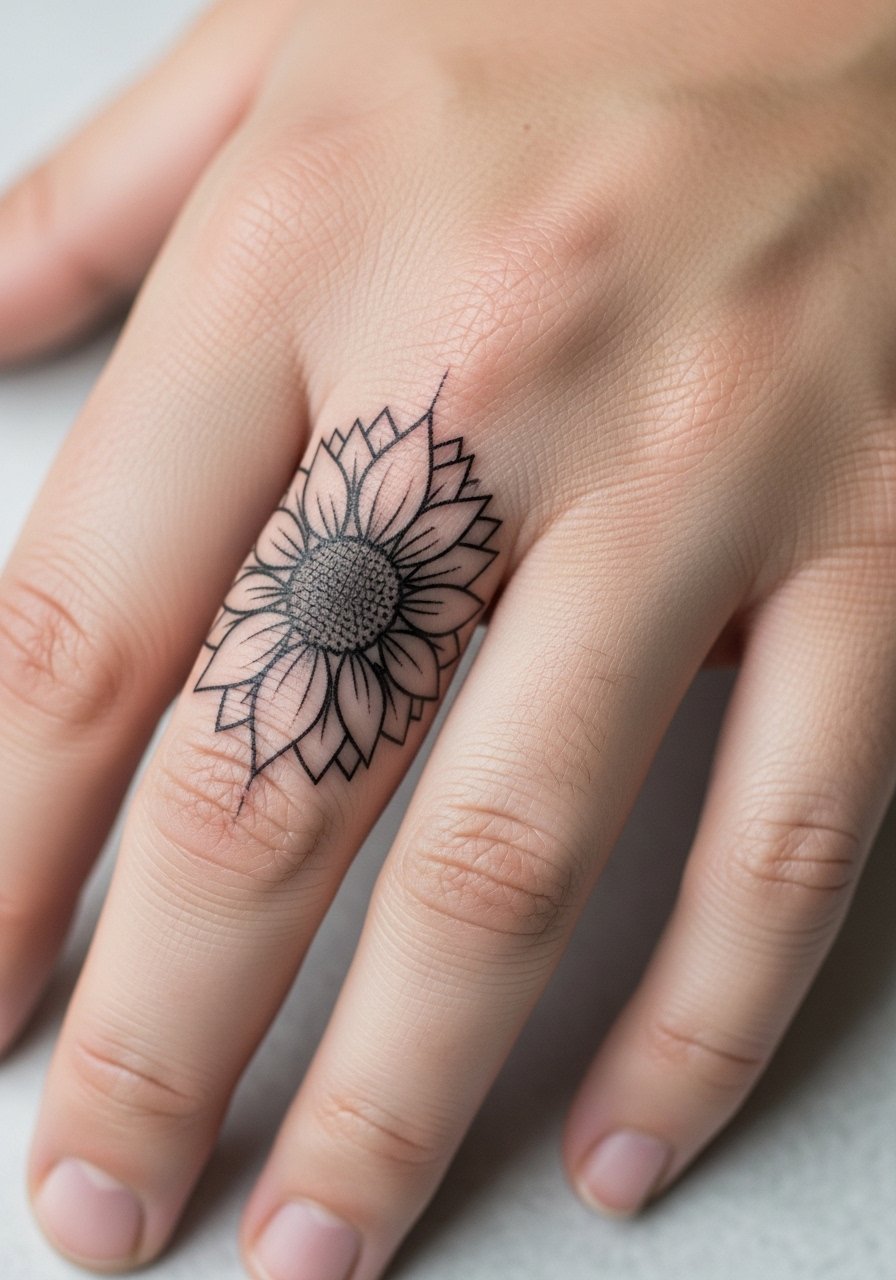
Spanning two fingers creates a small narrative when your hand is relaxed. I recommend asking for clear separation along the joint lines to avoid petals collapsing into each other as the fingers bend. The session feels like a quick burn across both digits and often stays under 30 minutes. Expect touch-ups in year two. For styling, wear stacked bracelets and a minimalist watch so the wrist accessories frame but do not crowd the finger art.
12. Bold Geo Peony with Stipple Shading Near the Wrist
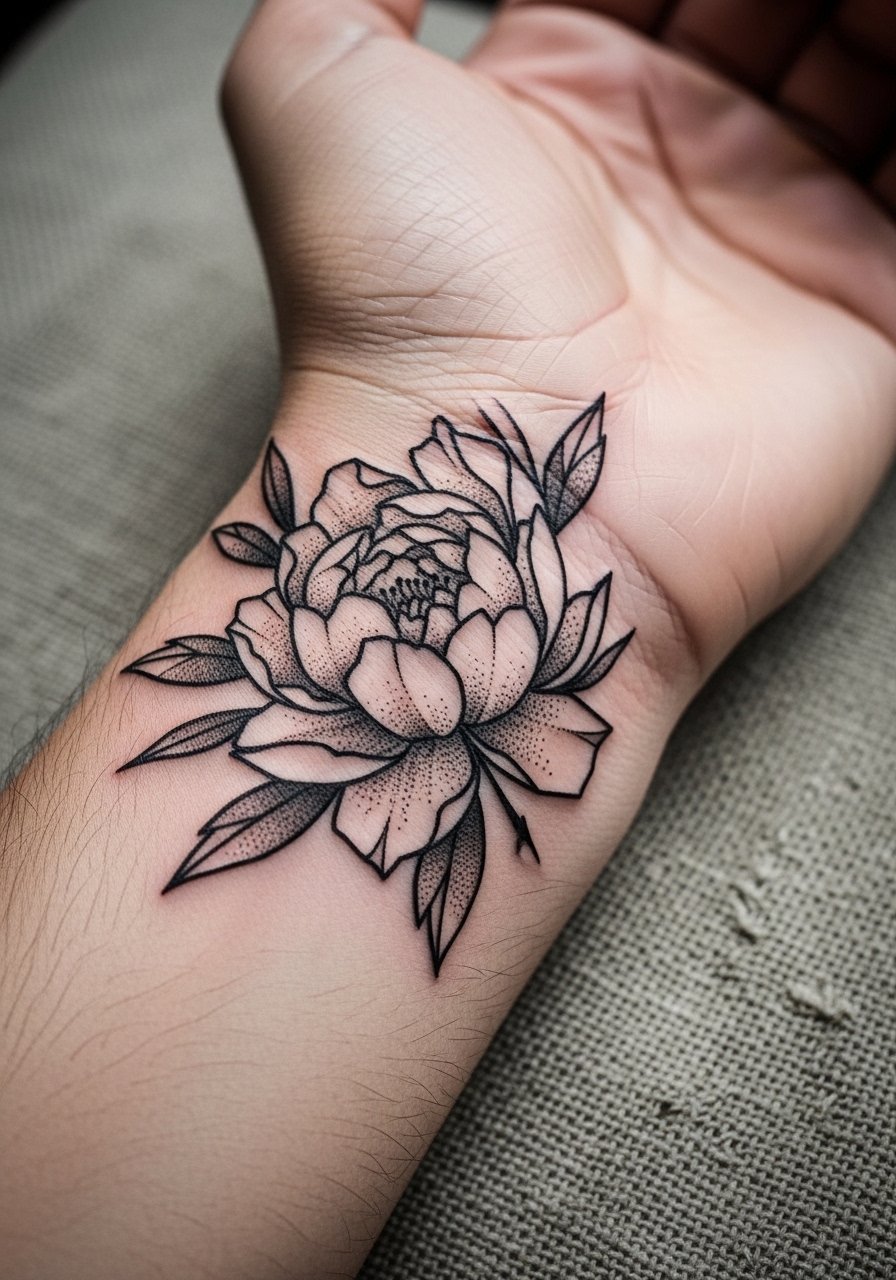
There is a debate in the community about stipple shading on low-motion versus high-motion zones. One group says stippling preserves texture and fades more gracefully than smooth shading. The other group warns stipple contrast can disappear quickly on thin skin near joints. My practical advice is to ask your artist for a test patch or to see healed photos of stipple in similar placements. This design can last nicely if dots are spaced to allow skin migration. Sessions are longer due to dot work, and the wrist location means the piece sees frequent sunlight, so plan sunscreen once fully healed.
13. Geometric Floral Band Around the Palm Base
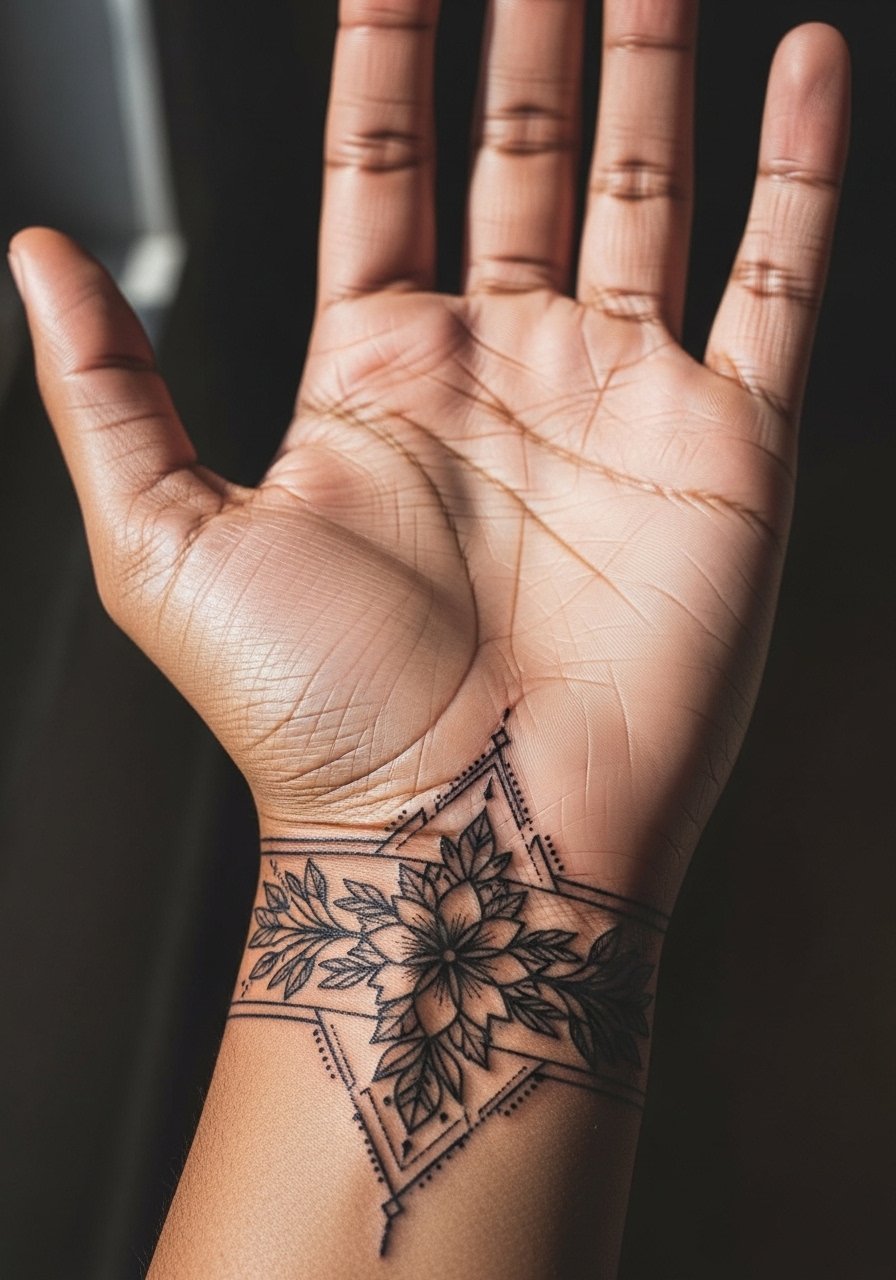
A band around the palm base reads like a permanent bracelet. The downside is heavy friction from palms and pockets. I suggest bold outer lines and simplified internal geometry to help the design read longer. This placement is more prone to early fading and may need touch-ups every couple of years. When you sit with your artist, ask them to show stencil placement while you make common hand motions. For showing this piece subtly, cuff a sleeve or wear a minimal leather bracelet that sits above the band without rubbing it.
14. Geo Hibiscus on the Outer Edge of the Hand
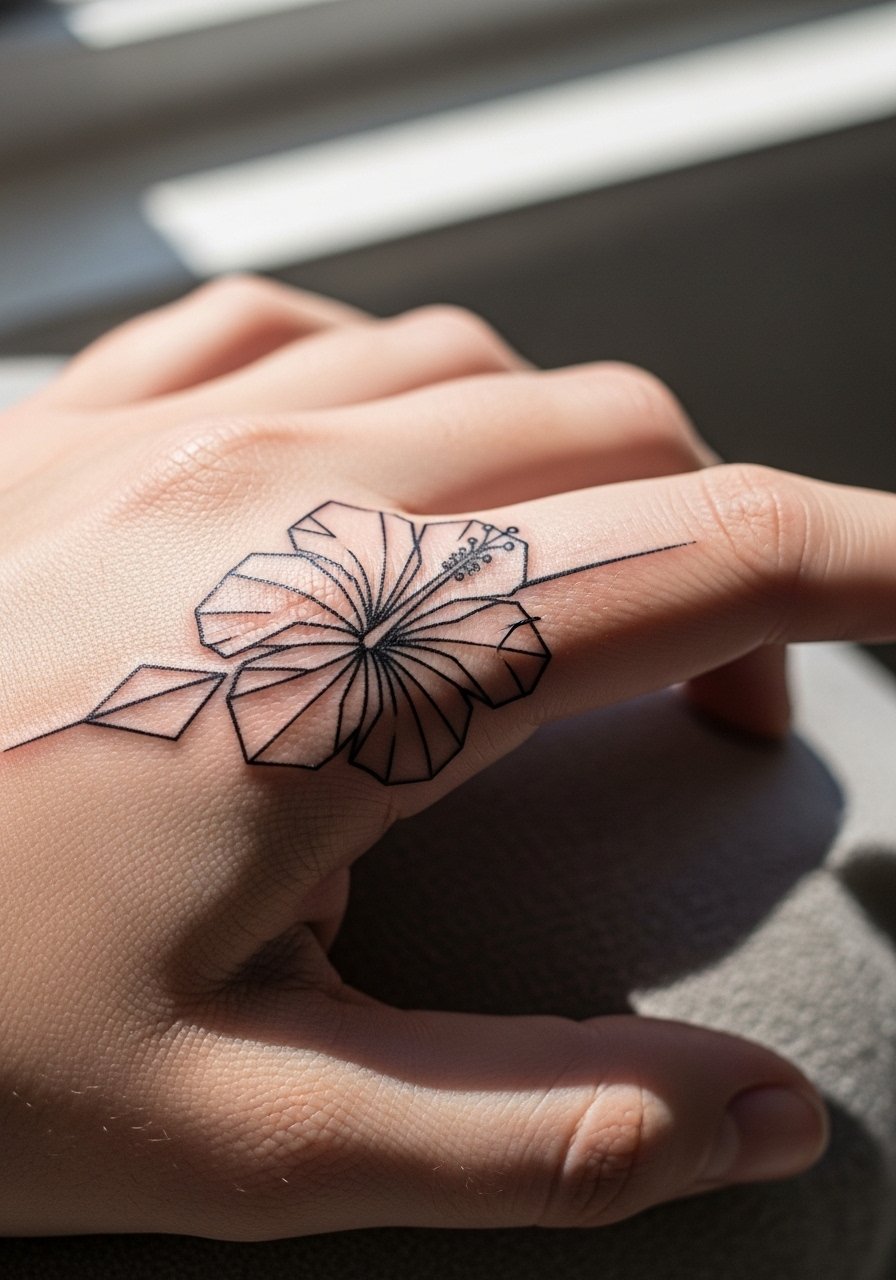
Outer-edge placements often fare a bit better because they avoid the highest friction zones. I tell people to allow a slightly larger flower than they think they need. The session is usually brief and tolerable, and the design can keep a readable shape longer than central knuckle pieces. A typical mistake is insisting on dense inner shading. Simplify the interior and lean on strong contours. For the appointment, roll up sleeves or wear a loose blouse with short sleeves so the artist can access the outer hand without fabric getting in the way.
15. Geometric Vine That Climbs from Wrist to Hand
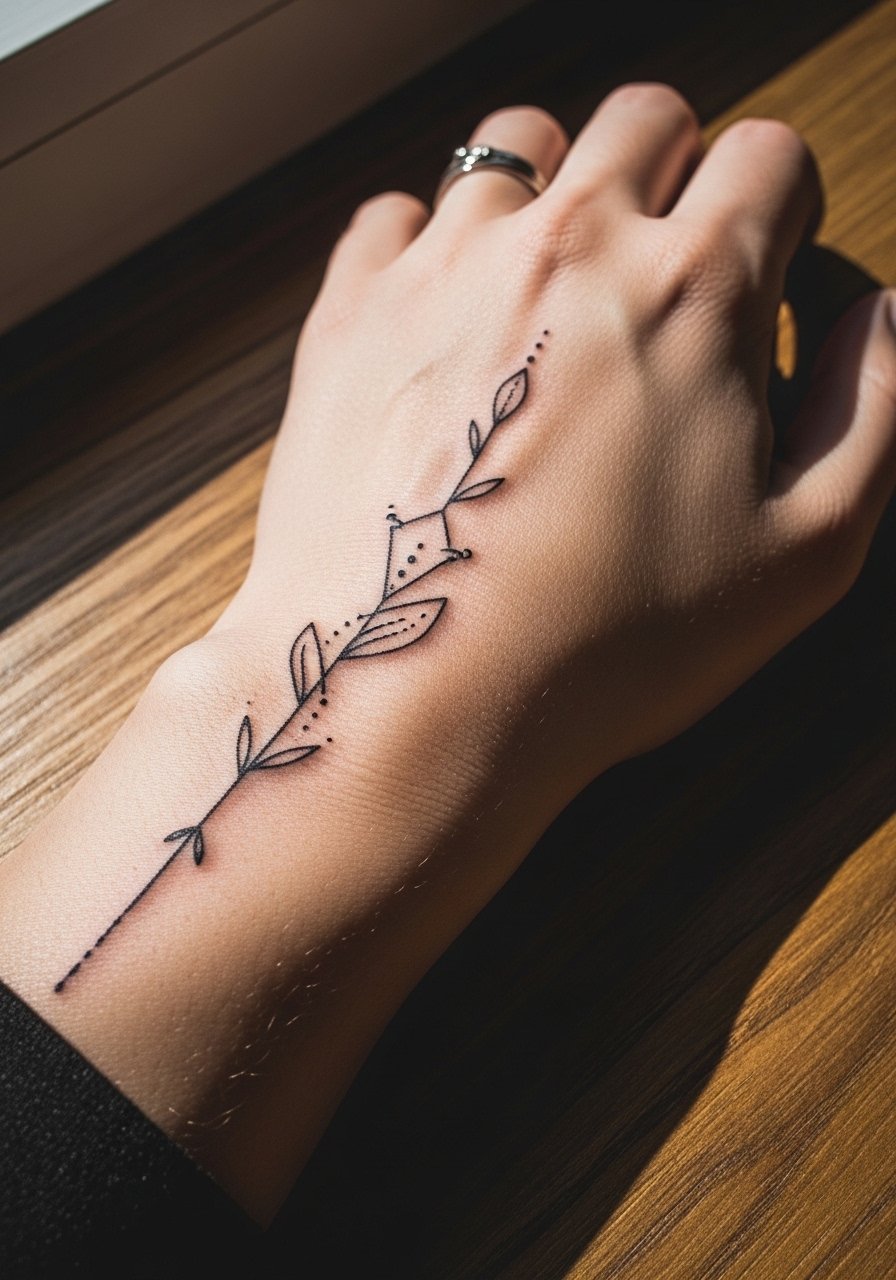
A climbing vine uses negative space to create motion. Ask your artist to place key intersections over soft tissue instead of joints where possible. Sessions vary depending on length, but small climbs take 30 to 60 minutes. The big mistake is compressing too many leaf elements into a short span. If you want it to age openly, give the vine nodes a little extra room. This placement looks great with rolled-up sleeves or short cuffed shirts, and I like pairing it with a loose drawstring linen pant on relaxed days when hands are visible.
16. Geometric Daisy Cluster at the Wrist Crease
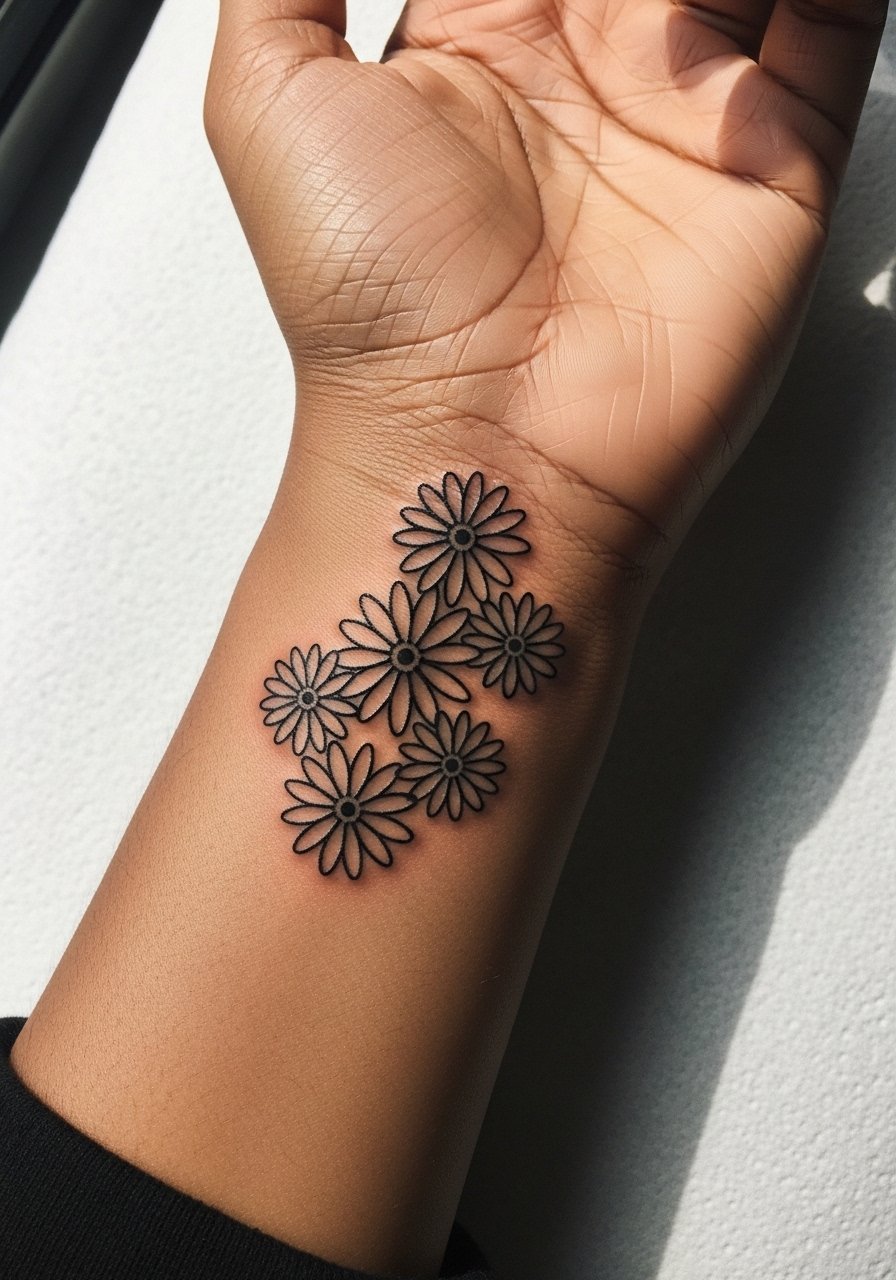
Wrist crease pieces see repeated folding. The key is to keep the daisies slightly offset from the central fold so they do not warp directly along the crease. I advise clients to expect moderate discomfort and a session time of 20 to 45 minutes depending on cluster size. A common error is insisting on mirrored symmetry on both wrists in the same session. That increases fatigue and can affect line consistency. Expect a touch-up window at year two for fine adjustments.
17. Geometric Floral Accent on the Thumb Side of the Hand
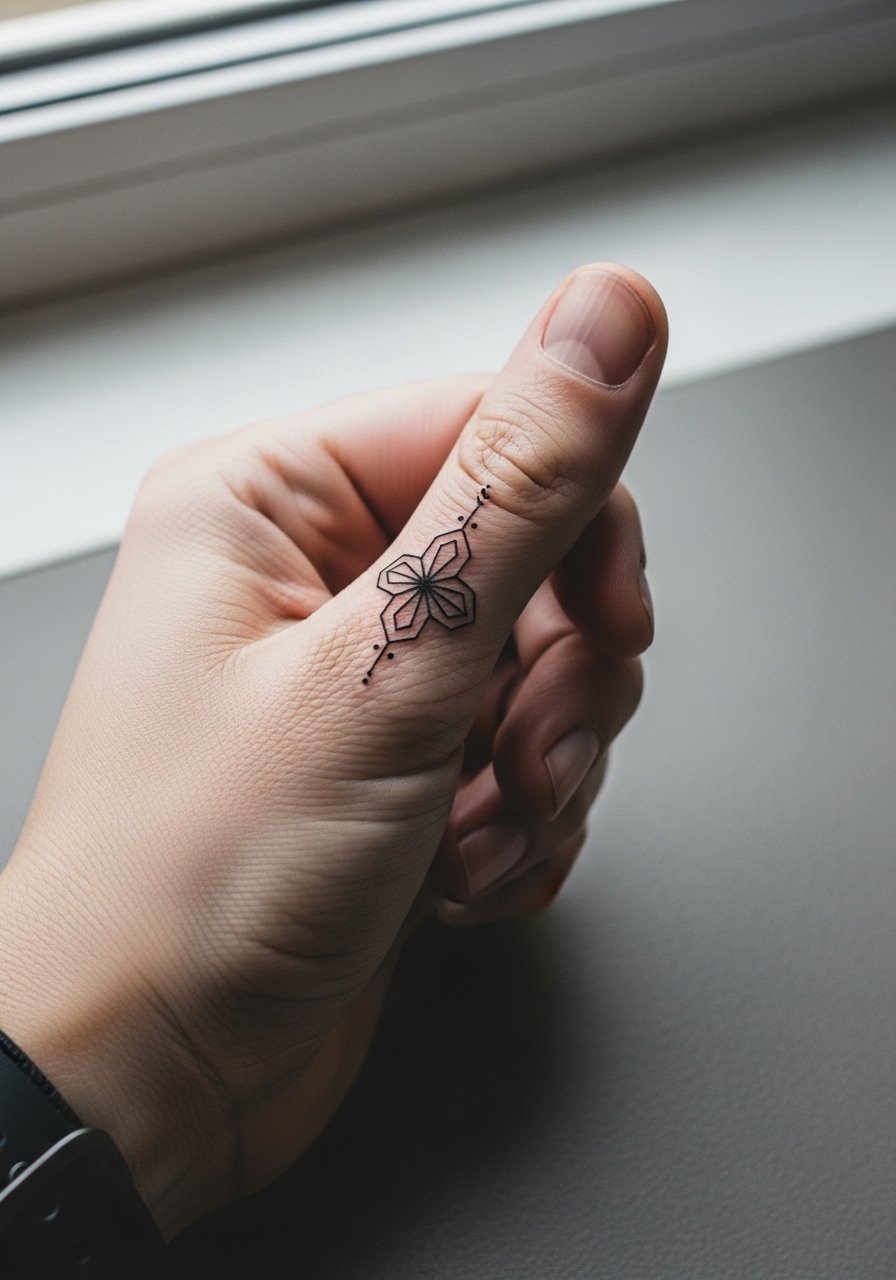
This spot reads intimate but is visible with everyday gestures. I suggest simple petal geometry and clear negative space so the flower keeps its shape as the hand moves. Sessions are short and sharp, and the healing phase needs care with soap and drying. The common mistake is asking for too many internal lines. If you want to minimize follow-up, request slightly bolder contours and plan a small touch-up in year two. For showing this accent, a thin chain pendant necklace or subtle rings keeps the focus on the hand without competing visually.
Frequently Asked Questions
Q: How long before a hand geometric flower needs a touch-up?
A: It depends on placement and lifestyle. Most people with high-wear hand tattoos plan for a touch-up around year two to three. Fingers and knuckles usually need it sooner because of constant rubbing, while outer-edge and thumb-side pieces sometimes hold longer.
Q: Will fine geometric linework blur faster on darker skin tones?
A: Skin tone does not determine blur as much as skin thickness, sun exposure, and placement. On darker tones, contrast choices matter. Ask your artist to show healed photos on similar skin tones so you can see how line weight and saturation translate.
Q: What should I wear to a hand tattoo session to make access easy?
A: Wear clothing that keeps arms free and does not stick to fresh ink. A loose button-down shirt or a short-sleeve top that pushes up without rubbing is ideal. If you need a specific option, try a loose button-down shirt you can move aside without pulling across the hand.
Q: Are geometric flowers a good choice if I want something low maintenance?
A: Geometric flowers can be low maintenance if sized correctly and placed away from high-friction zones. Bigger negative space and bolder contours lower maintenance. Fingers and knuckles will never be as low maintenance as the outer hand or wrist.
Q: Do hand tattoos affect employability?
A: Opinions vary by industry and region. Some employers remain strict about hand visibility. If you work in a conservative setting, consider placements that can be covered by sleeves, rings, or gloves. If job flexibility is important, plan placement accordingly.
Q: How should I test an artist for hand geometric work?
A: Look for healed photos of similar placements and ask about their long-term touch-up policy. Ask them how they approach spacing for moving skin. From my experience, artists who show multi-year healed photos give the most realistic expectations.