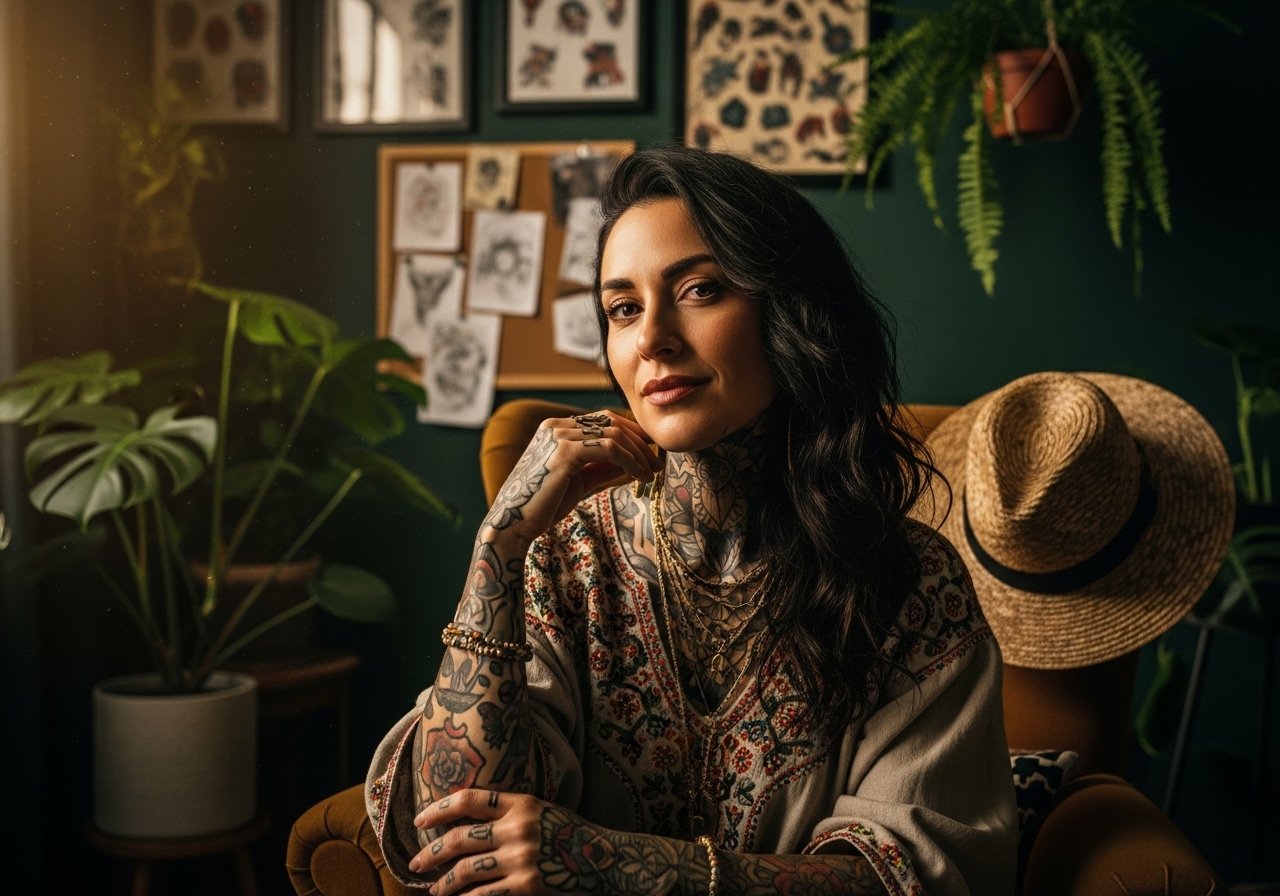
Fine line geometry looks flawless on a screen, but what holds up long term is often the opposite of the viral shots. Solid black shapes, careful spacing, and intentional negative space keep a design legible as skin moves and fades. Below are 21 geometric fear god tattoo concepts that balance bold structure with readable text, plus notes to help you book the right session.
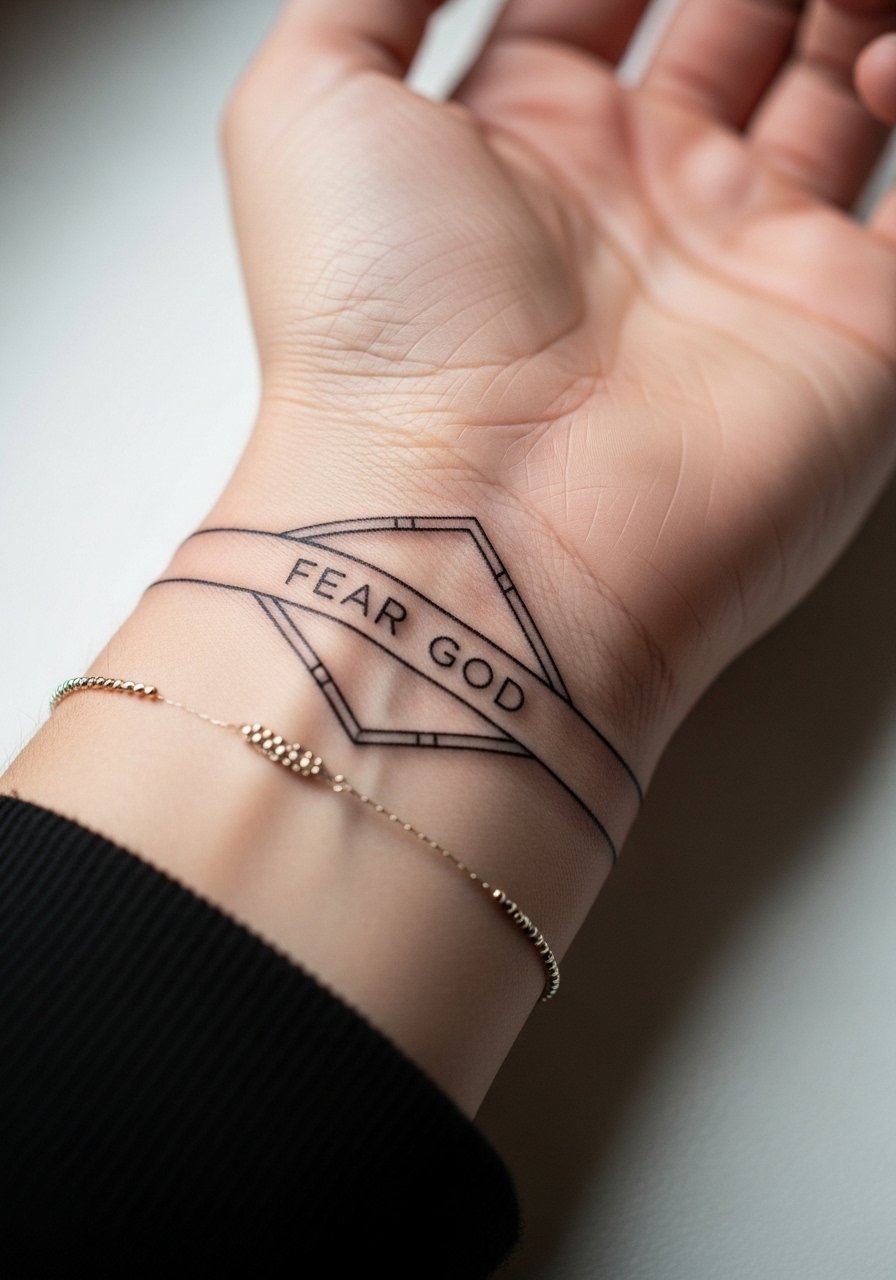
1. Tiny "Fear God" Wrist Band with Micro Geometry
I've seen tiny wrist script softened by daily washing, so this version pairs the words with a spaced geometric band to protect the letters. Ask for slightly thicker linework around the text and more open negative space in the patterned band. Pain is low for most people and session time is short, but expect a touch-up at year two for the script. The biggest mistake is asking for script too small. For showing it off, roll sleeves up and wear a minimalist watch or stacked thin bracelets that frame the wrist without covering the ink.
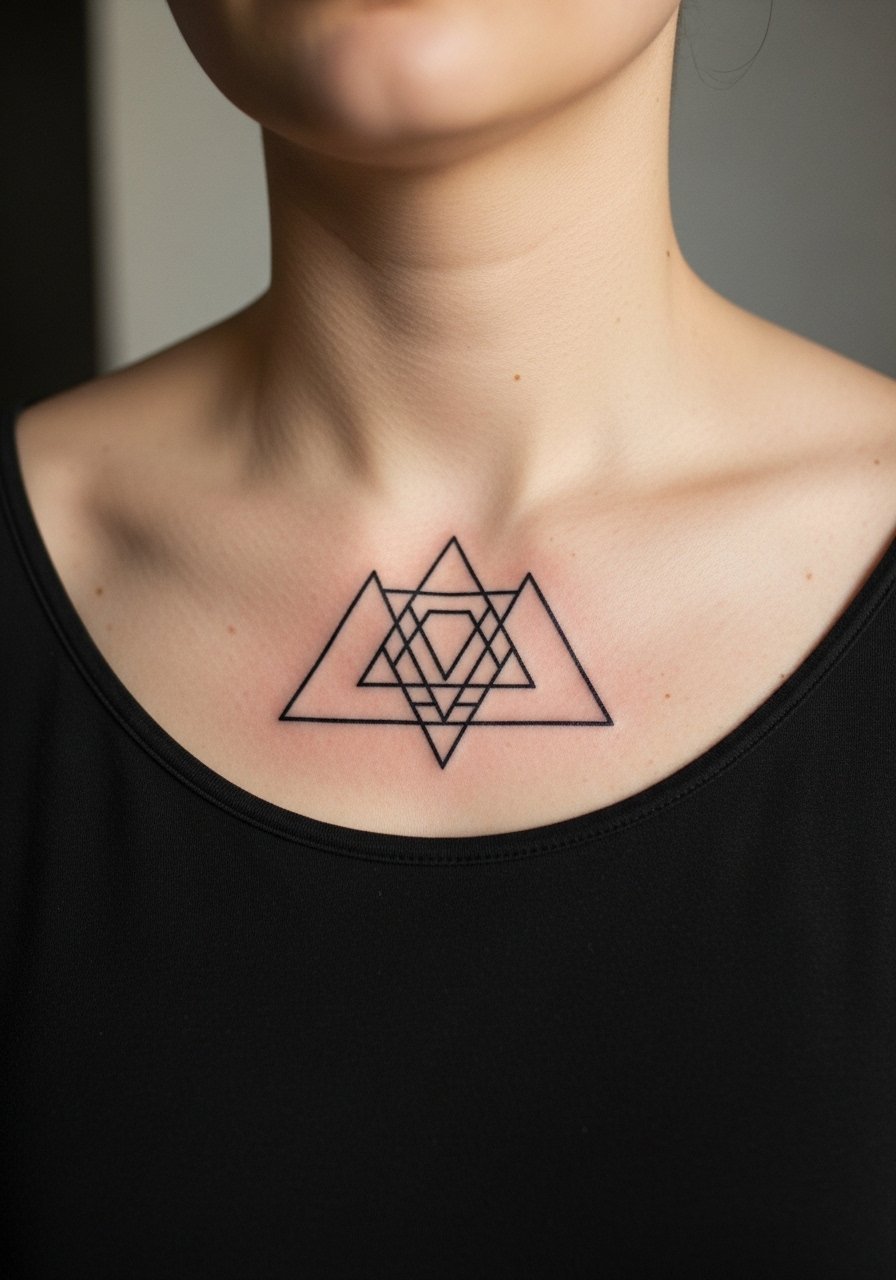
2. Interlocking Triangles Over the Collarbone with Text Accent
Fair warning: collarbone skin moves differently than flat chest areas. The geometry here sits above the collarbone with the phrase tucked into the negative space so the letters do not compete with the angles. Tell your artist you want bold contour lines and open interior spacing. Session feels like quick, sharp passes where bone is close to the needle and pain can spike. For nightwear and evenings out try an open-collar shirt or a wide-neck tee to reveal the piece without overexposing the chest.
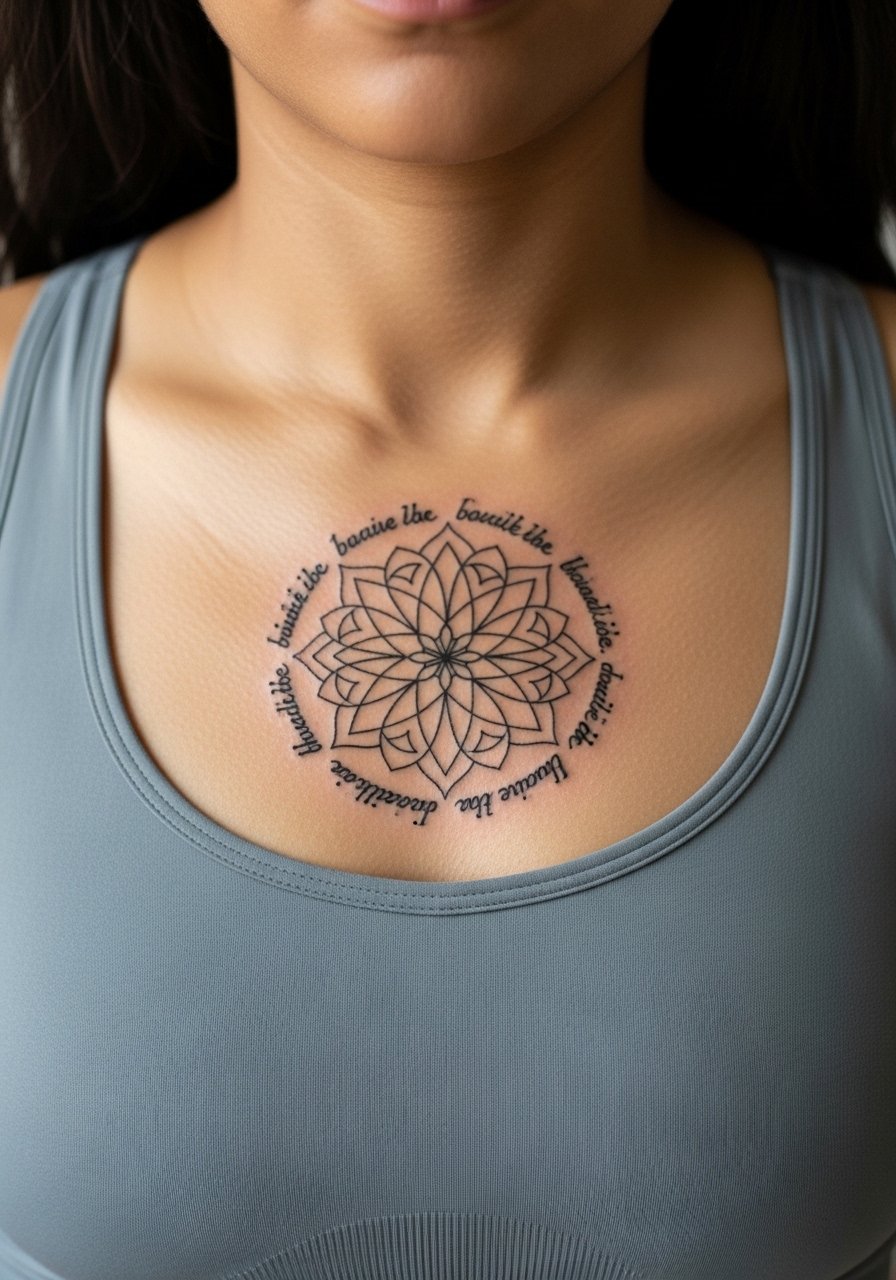
3. Mandala Sunburst Over the Sternum with Small Script
Most people underestimate how the sternum shifts with deep breaths. This mandala places "Fear God" recessed into the outer ring rather than the center to preserve legibility. Session is medium intensity and takes longer because shading and symmetry need careful checks. The common mistake is packing text tight into the center. For the session wear a fitted sports bra or a zip-up hoodie you can open so the artist has clean access. Consider pairing the visible edge with a thin chain pendant necklace that sits above the design.
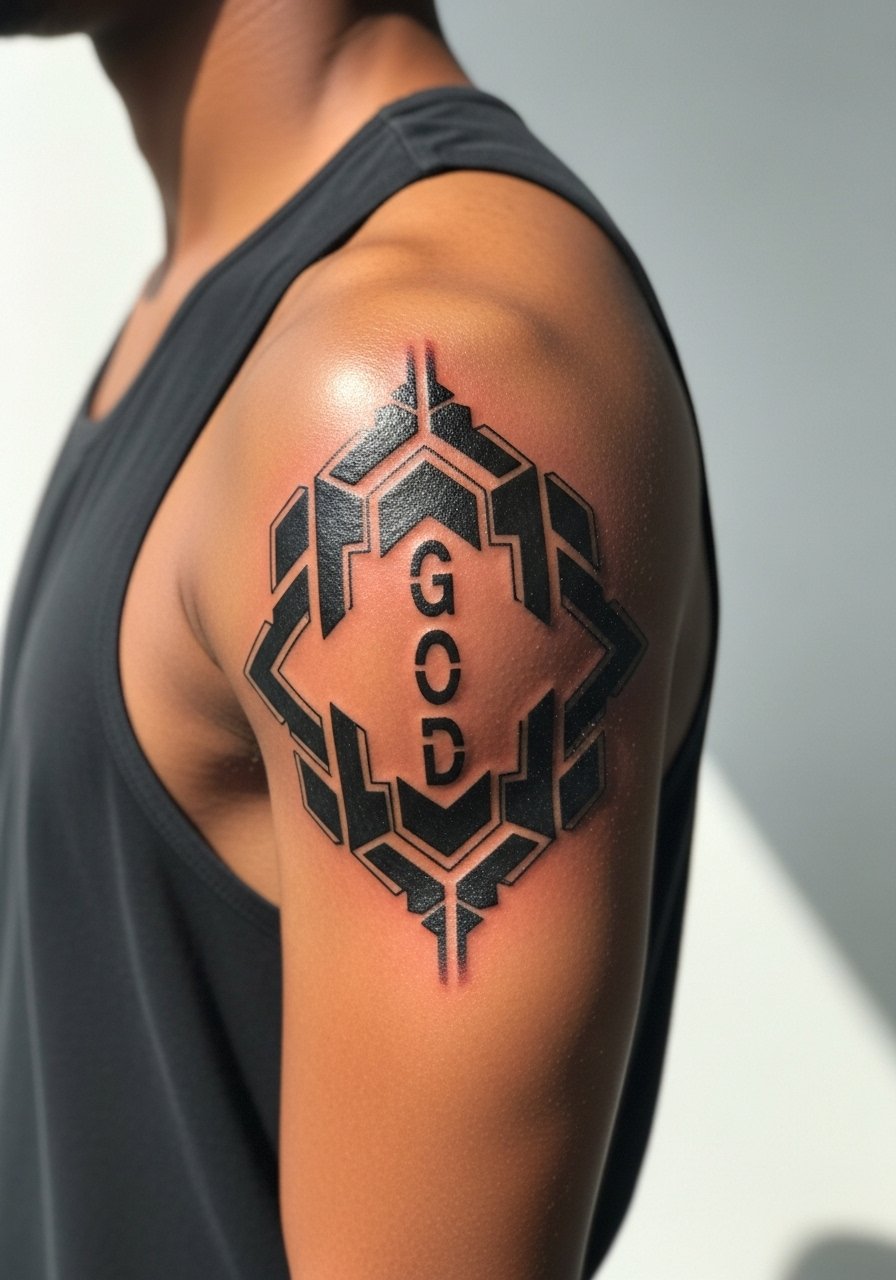
4. Angular Sleeve Accent with Negative Space God Motif
There is something about bold black outlines and negative space that reads from across a room. This half-sleeve uses repeated angular motifs and reserves a vertical channel where the word "God" sits as negative space. Bring references showing exact line weight and ask for stipple shading instead of packed gray. Expect multiple sessions for saturation and about three years before a likely touch-up. For daily wear, rolled-up sleeves on a linen button-down show off the upper arm without crowding the pattern.
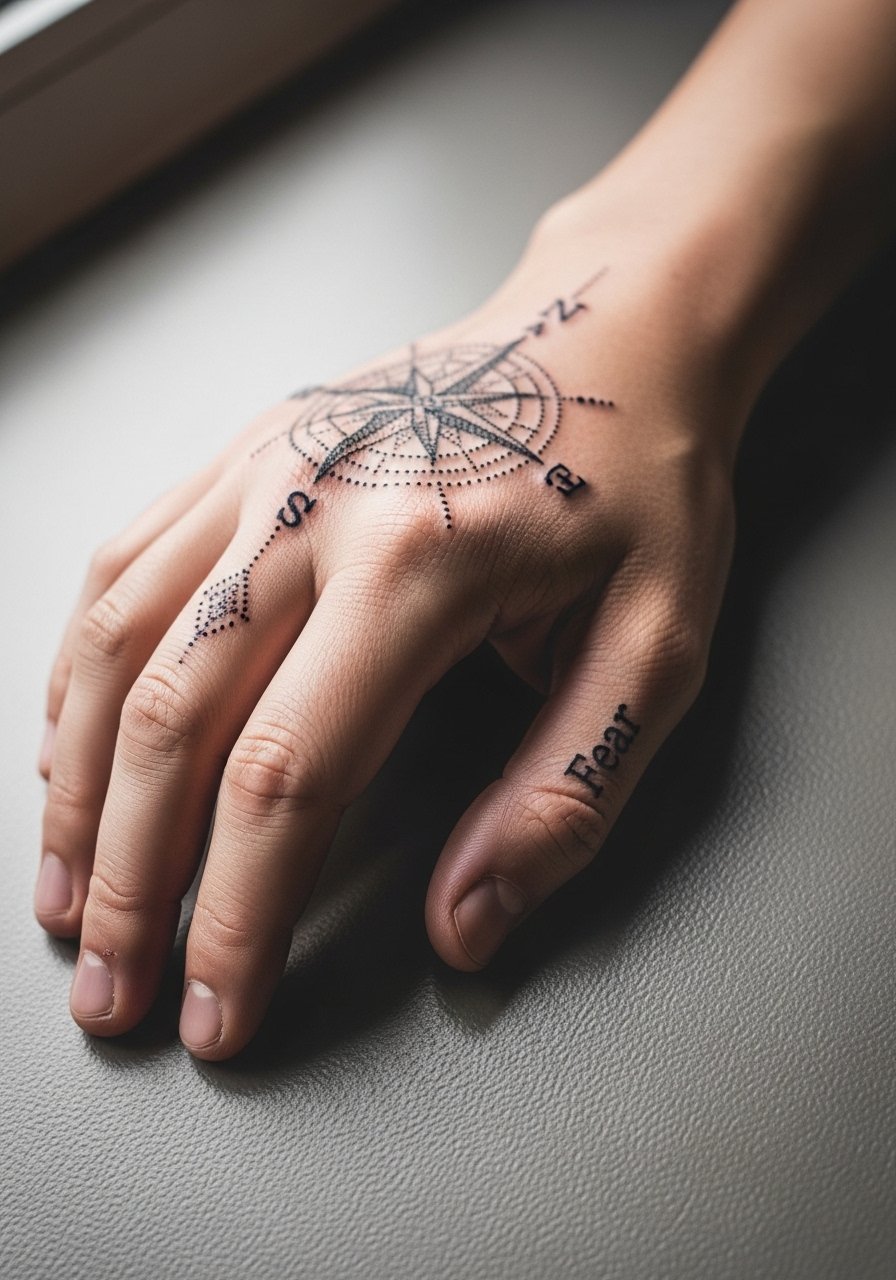
5. Micro Dot Work Compass with "Fear" on the Thumb Side
The thumb and outer hand area face heavy friction and frequent washing. A micro dot compass with the word "Fear" tucked along the thumb side keeps the lettering away from high-wear zones. Pain is moderate near the thumb pad and session time is short but precise. Ask for slightly bolder dots near edges to prevent early blur. The typical error is trying to cram too much detail into a small surface. Wear a loose short-sleeve shirt to your appointment so the artist can access the hand without fabric tugging.
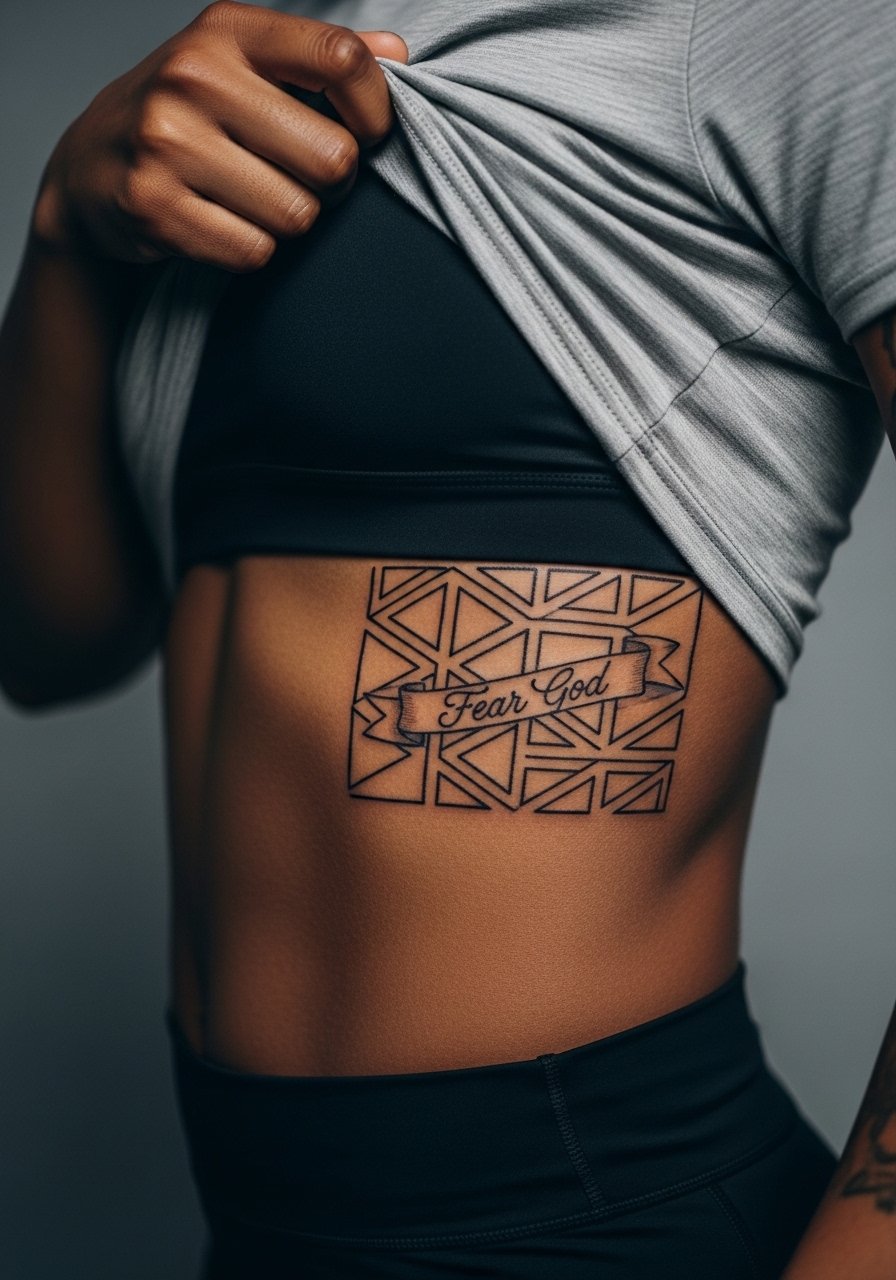
6. Geometric Ribcage Panel with Script Ribbon
Artists split on ribs for fine line work. One camp says the skin there stretches and blurs delicate lines within two years. The other camp argues that with deeper line weight and more spacing, fine line settles fine on ribs. Ask your artist which side they fall on and plan spacing accordingly. Expect higher pain and a longer session for the rib panel. A common mistake is choosing dense detail in too-small a footprint. For the session wear a cropped athletic top you can lift slightly so only the rib area is exposed.
Studio Day Picks
The rib, hand, and sternum pieces above demand different prep and the right supplies make the first week smoother.
- Stencil transfer paper kit. Lets you preview position and text placement on skin before the needle hits, which is especially helpful for the wrist band and collarbone pieces.
- Topical numbing cream. Applied per instructions it can reduce the sharp sting on the ribs and inner arm without changing linework much.
- Thin protective film roll. Useful for hand and wrist pieces that face constant friction during the first week.
- Fragrance free gentle body wash. Cleans healing areas like the sternum and rib panel without irritating the thin linework.
- Aquaphor healing ointment. A thin layer in the first few days locks in moisture for small text and fine geometry without over-suffocating the tattoo.
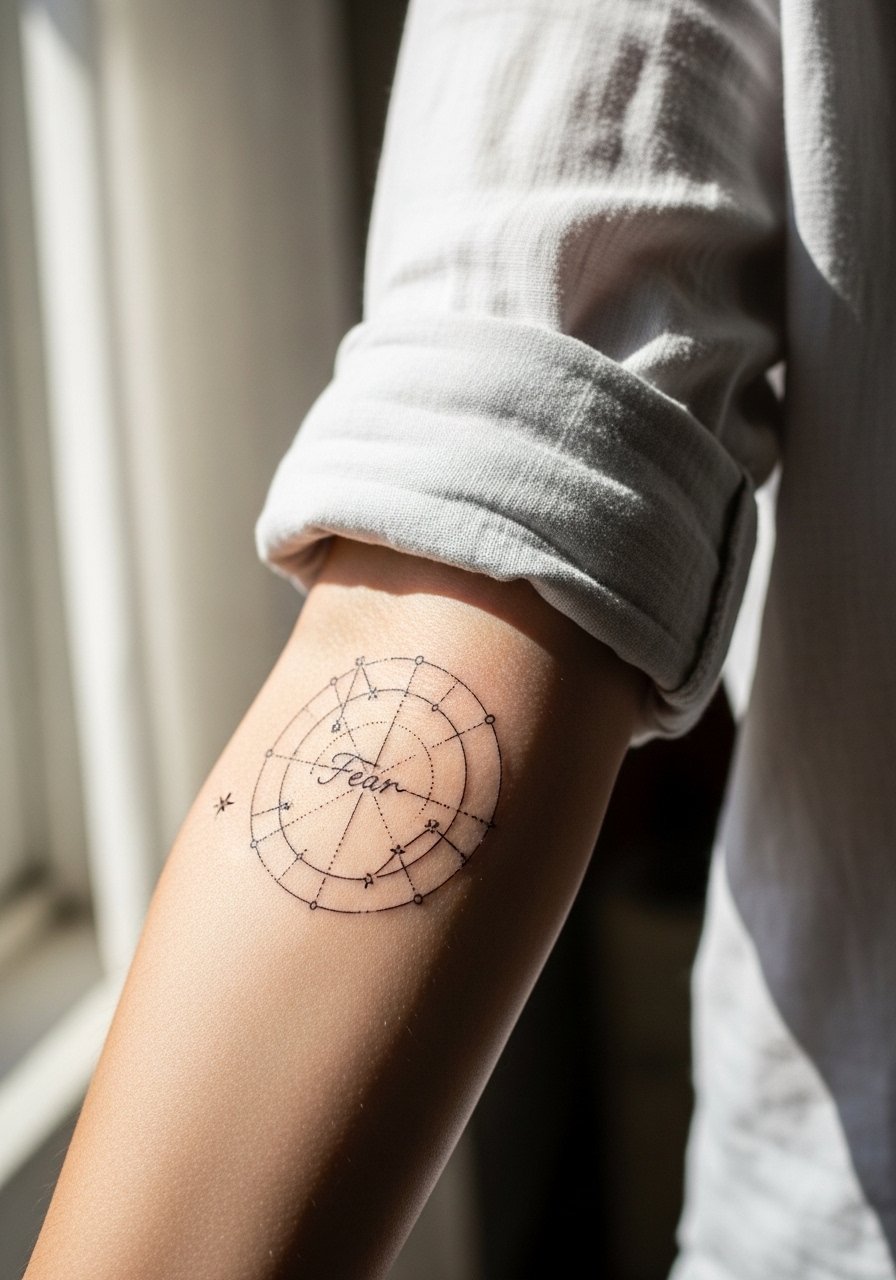
7. Constellation Grid Across the Forearm with tiny "Fear"
I've seen forearm grids hold very well when spacing is generous. This layout places tiny "Fear" letters at select nodes inside a geometric constellation. Tell the artist to prioritize contrast between nodes and bars so letters sit on solid anchors. Pain is moderate and the session usually fits into a single appointment. Common mistakes are over-detailing and tiny script that needs a touch-up quickly. For daily wear, rolled sleeves and a casual linen shirt frame the forearm without stealing attention from the piece.
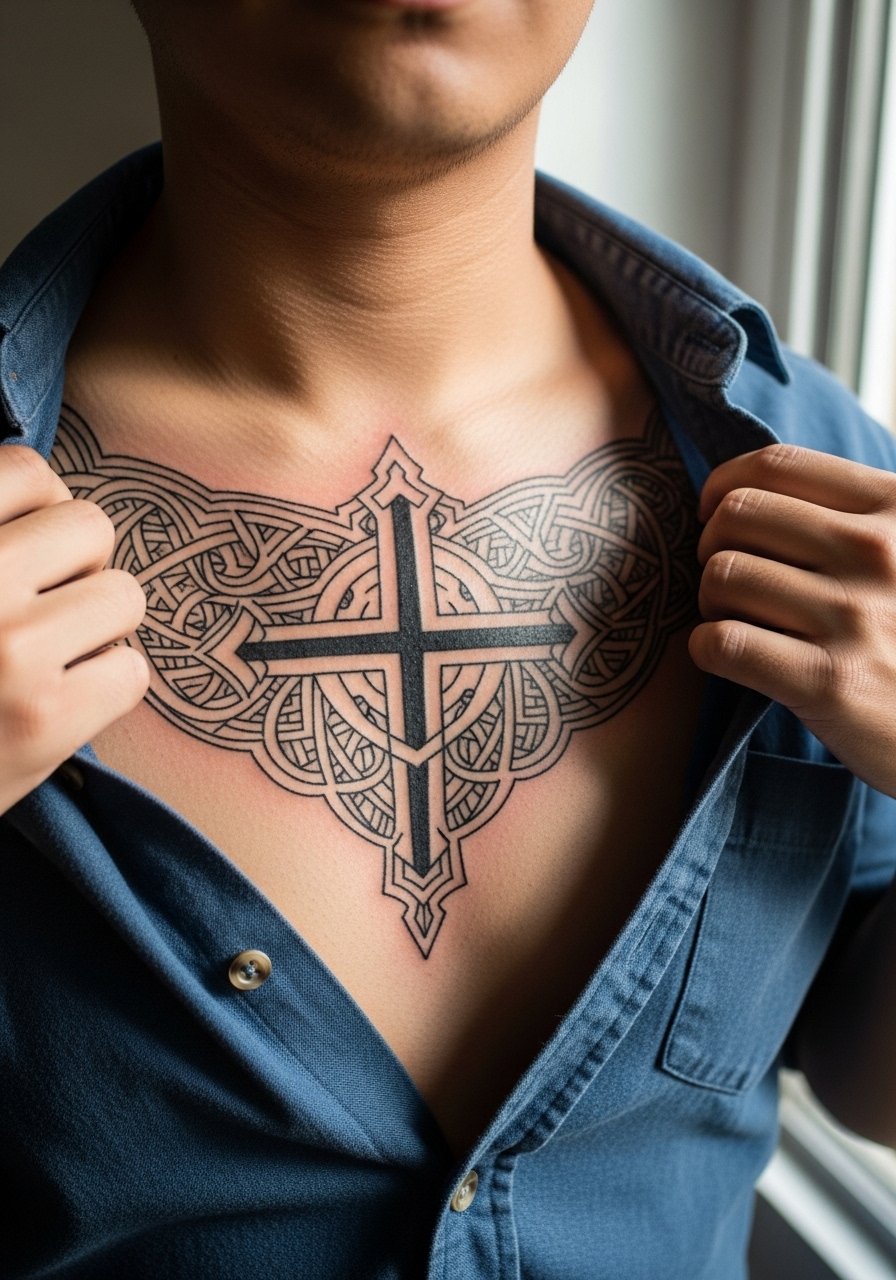
8. Sacred Geometry Chest Panel with Central Glyph
Most chest panels look best when they breathe. This sacred geometry piece leaves a central negative-space glyph that reads as a subtle "God" emblem. During consultation say you want heavier outer lines and softer inner dot shading so the glyph does not vanish over time. Session time is long and pain varies by proximity to bone. A common error is forcing text into the densest intersection. For showing off, pull a [button-down shirt] (https://www.amazon.com/s?k=button+down+shirt+mens&tag=inkfemme-20) open slightly to reveal the upper chest without overexposing the torso.
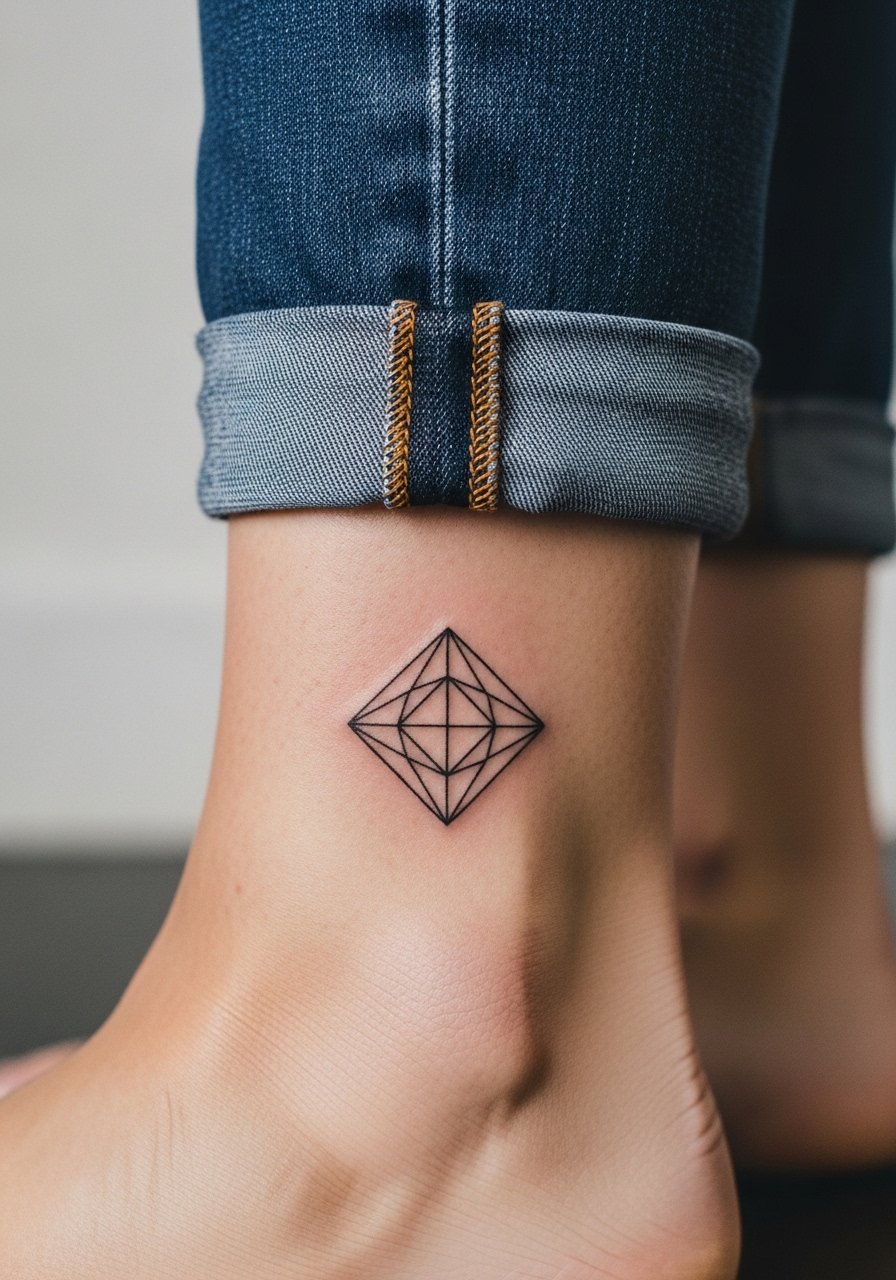
9. Minimalist Ankle Glyph with Geometric Frame
Ankle pieces live near shoes and socks so abrasion is the main enemy. This minimalist glyph sits slightly above the bony ankle in a small geometric frame to reduce wear. Pain is low to moderate and sessions are brief, but expect fading from footwear friction. The frequent mistake is placing the design too low on the foot. For the appointment wear jeans rolled up or loose drawstring linen pants so the artist can access the ankle without fabric rubbing.
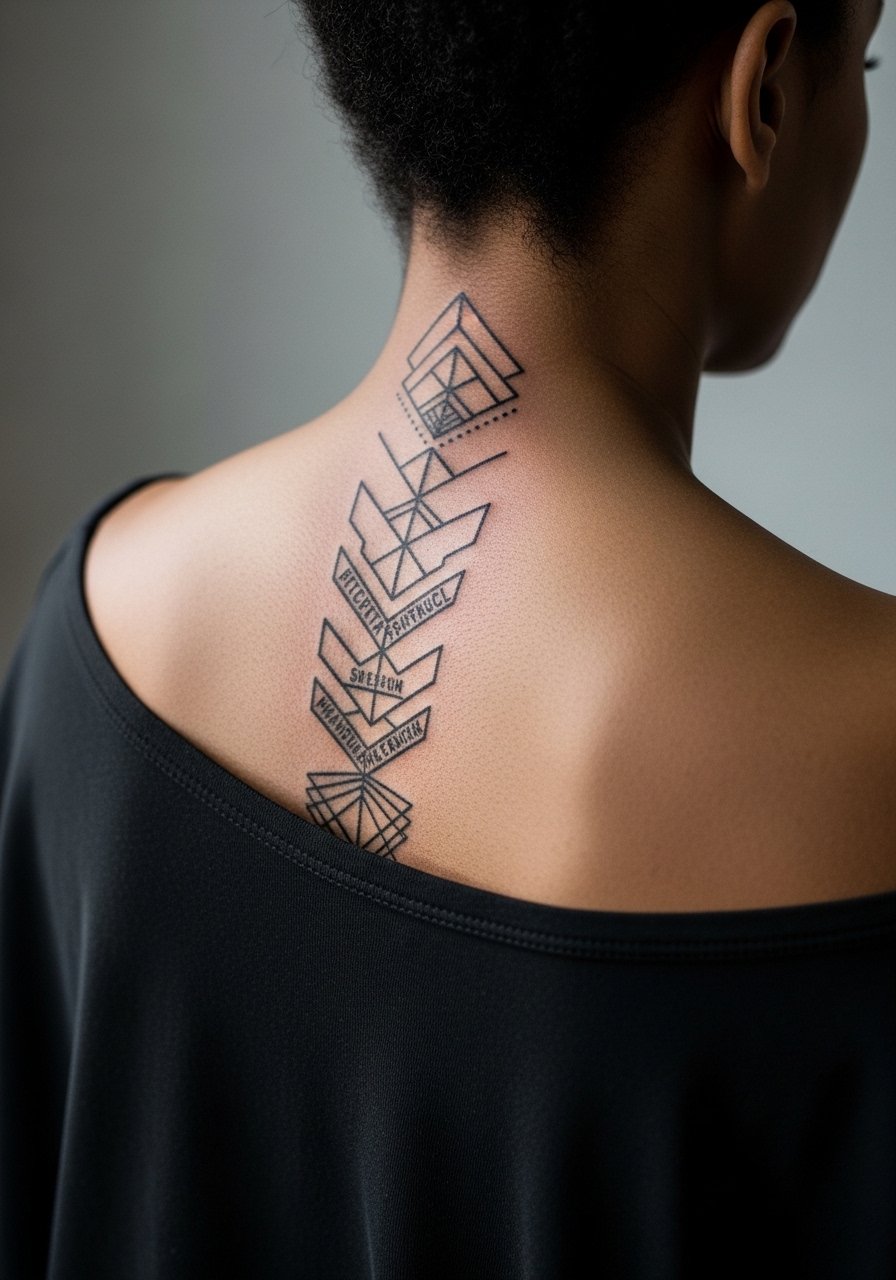
10. Chevron Spine Column with Hidden "Fear God" Text
There is something visceral about a vertical column of chevrons down the spine. This design hides "Fear God" within alternating negative spaces so the message reveals itself only up close. The spine is sensitive and the session can be intense. Ask for moderate line weight and avoid tiny internal script. The mistake is compressing too many chevrons onto a short spine segment. For showing off at night, open-back shirts and halter tops work well.
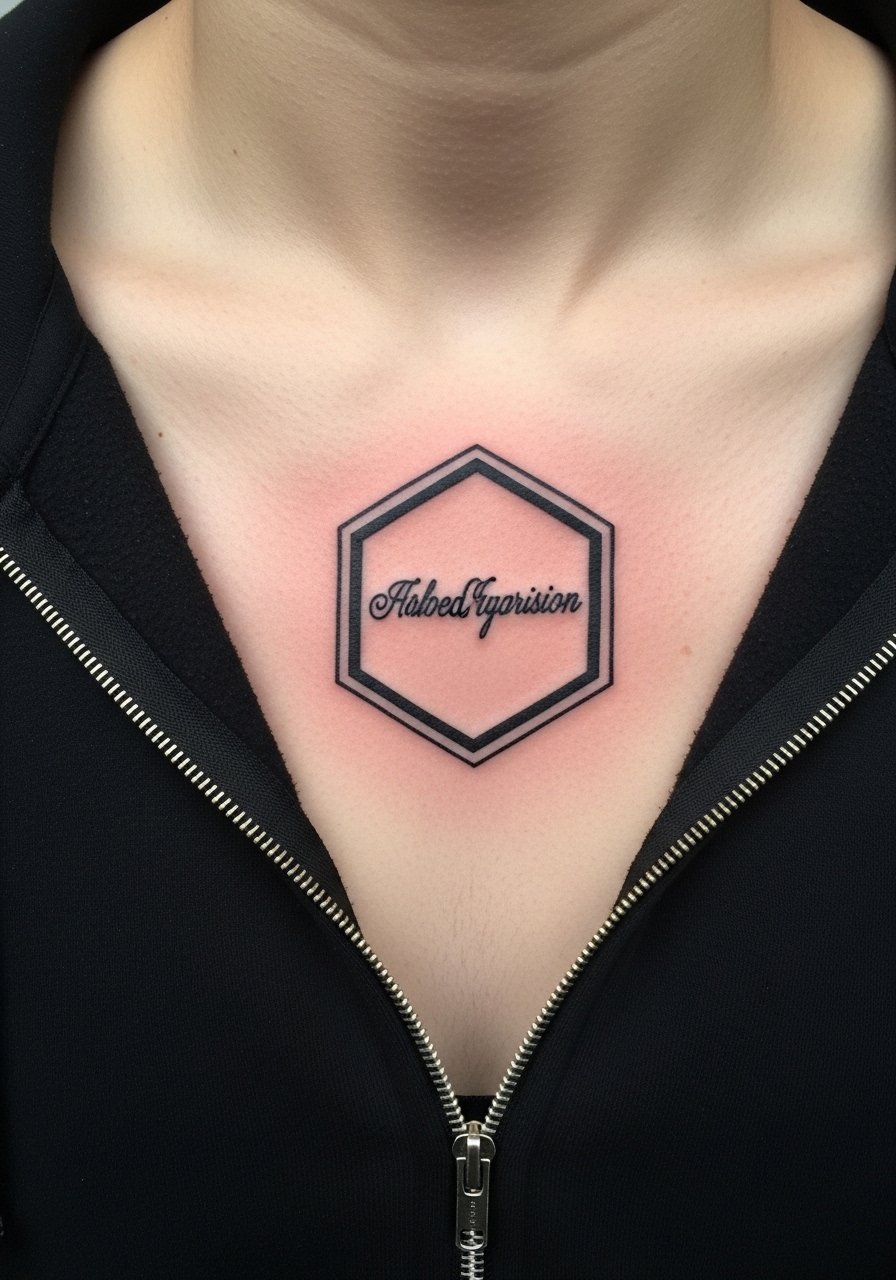
11. Hexagonal Chest Badge with Bold Outline and Small Script
Visual impact lead: bold outlines age better than hairline script. This hex badge pairs a saturated outer ring with small "Fear God" lettering suspended inside a band of negative space. Session time is medium and saturation is the priority. The common mistake is making the inner text too fine. For the session wear a shirt you can pull aside like a zip-front hoodie so the artist has clear access without constant readjusting.
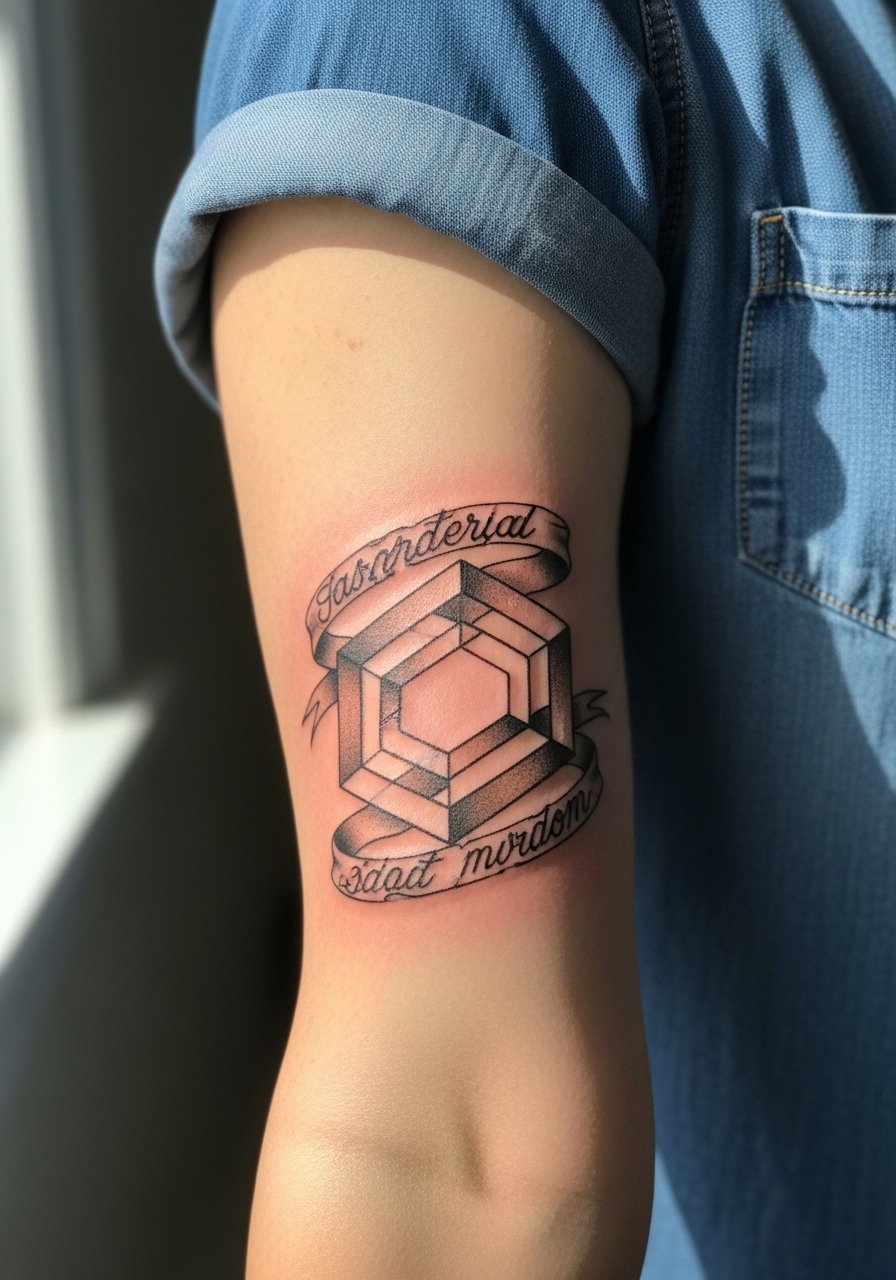
12. Interlaced Cubes on the Bicep with Script Wrap
Personal observation lead: cubic geometry looks more solid on the bicep because the curved surface helps read the 3-D illusion. The "Fear God" ribbon wraps around the outer bicep in a single pass. Pain is low to moderate and this usually finishes in one session. Tell the artist to keep the ribbon width consistent so the text does not distort as muscles flex. A common misstep is putting too much tiny detail into the ribbon itself. Pair this with short sleeves or a rolled-up chambray shirt to show the bicep without competing patterns.
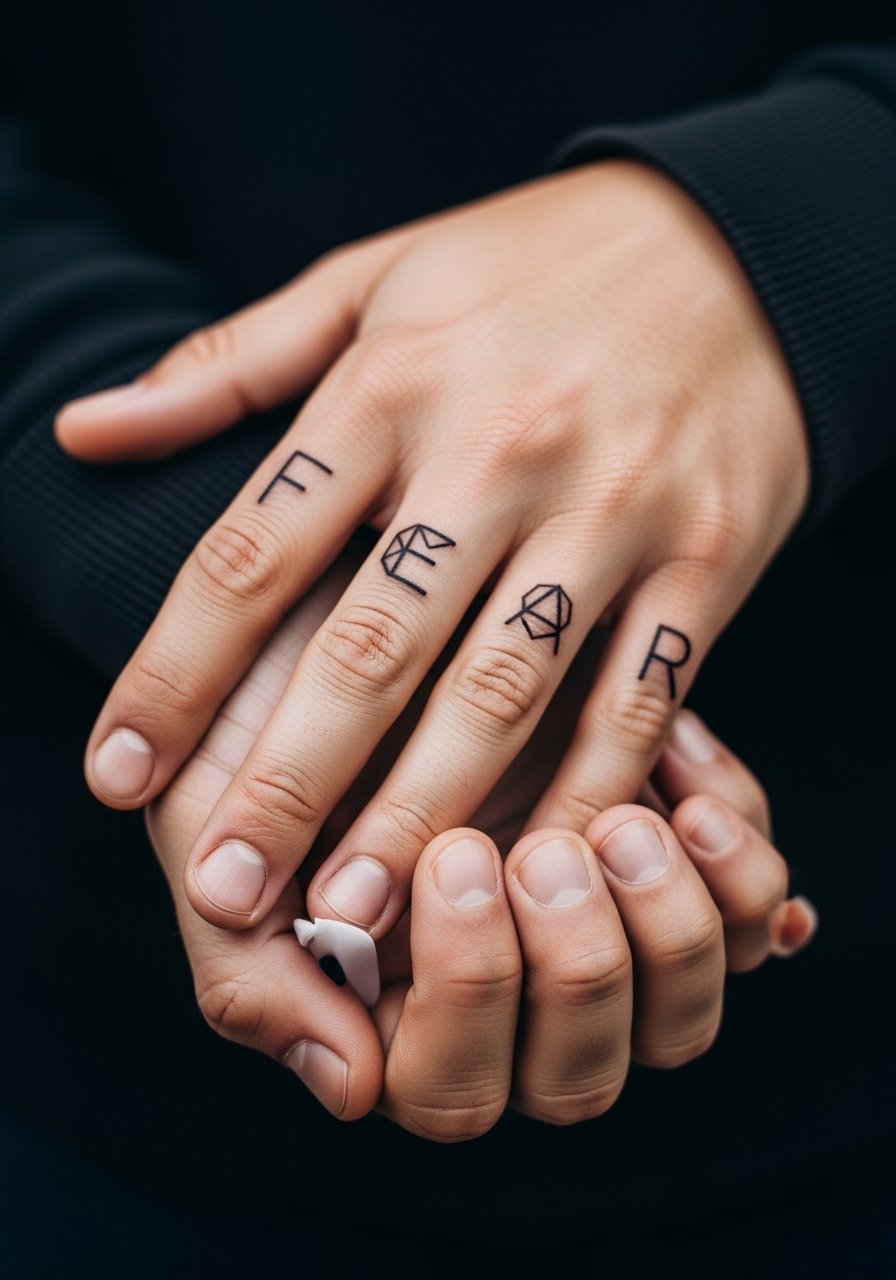
13. Micro-Geometric Finger Stamps Spelling Fear
Mistake lead: fingers are high-maintenance. These micro geometric stamps place one character per finger so the full word reads when fingers align. Expect faster fading and touch-ups likely after one year. Tell your artist to use slightly heavier outlines for letters and keep interior detail minimal. For the appointment wear a short-sleeve top so the hand and wrist are free, and for style try small rings that draw attention to each stamped finger.
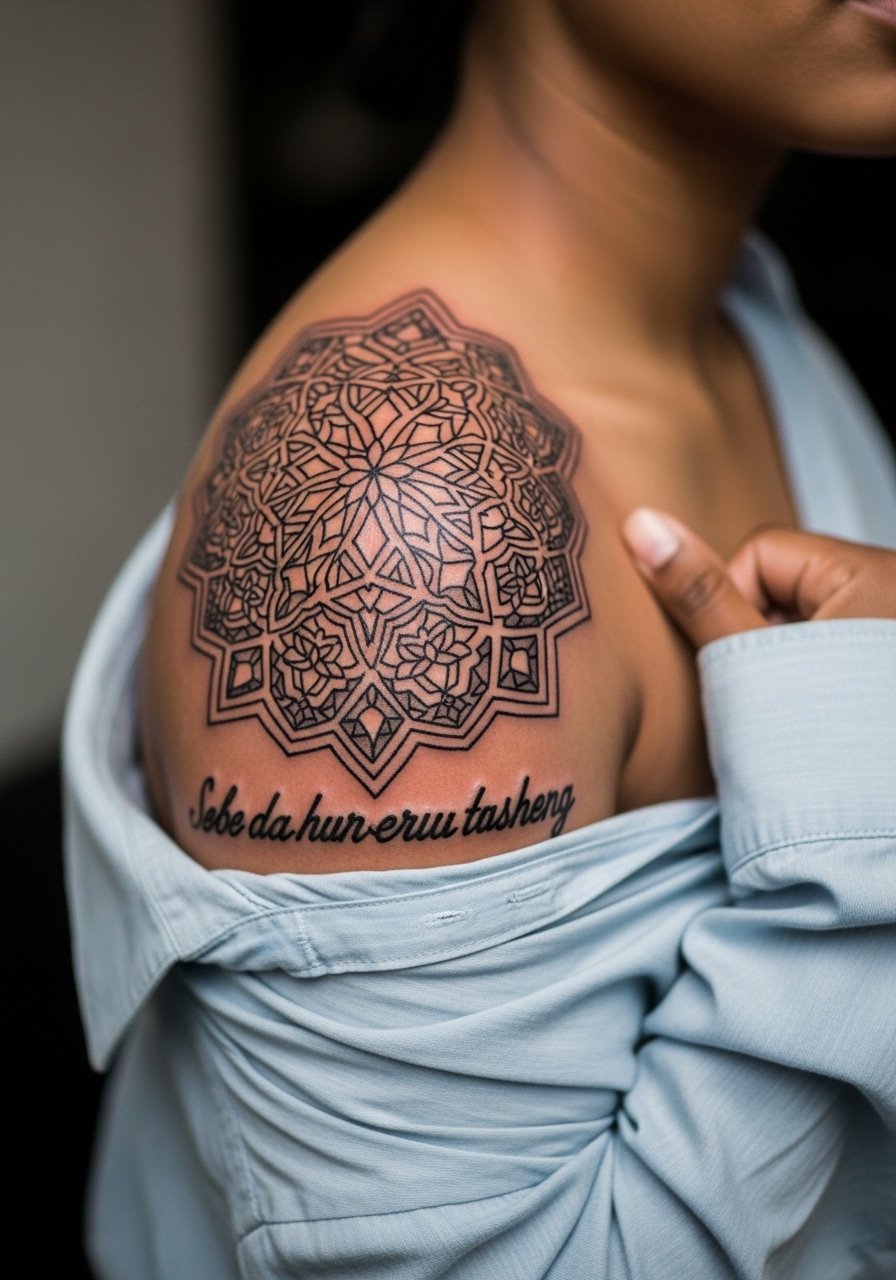
14. Fractal Shoulder Cap with Embedded Text Line
Mistake lead: shoulder caps can look busy fast. This fractal cap keeps a single clean text line along the lower edge reading "Fear God" in a bold condensed type. Ask for broad outer strokes and open inner details. Pain is mild for most and the session feels like longer, steady passes. For the session wear a loose button-down shirt you can pull aside for clear shoulder access.
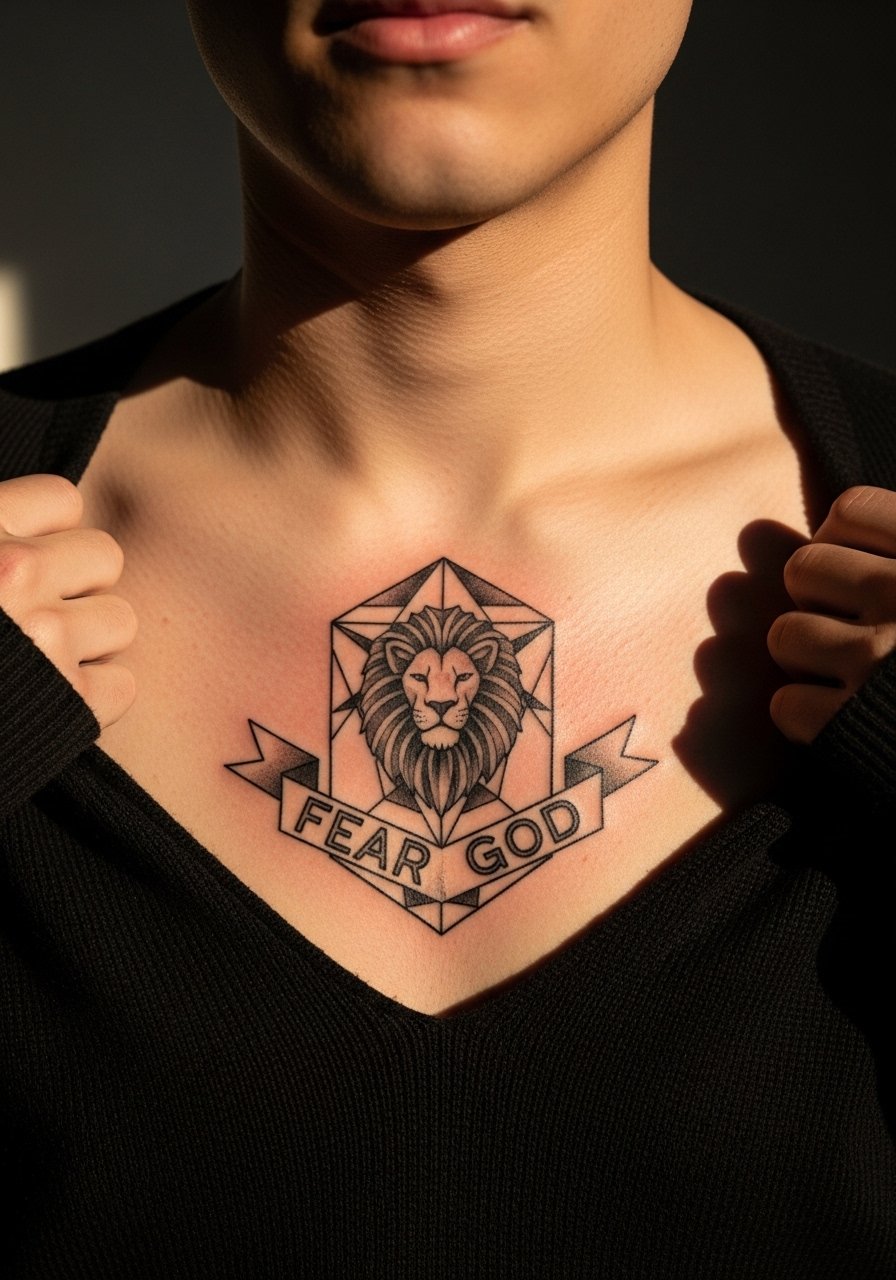
15. Geometric Lion Crest on the Chest with "Fear God" Banner
Visual impact lead: a structured crest makes a statement without tiny script. The lion is built from vector geometry and the banner below carries the phrase in clear, blocky letters. Tell your artist you want high saturation in the crest and slightly raised spacing for the banner to keep the letters legible over time. Sessions can be long and may require multiple passes. For evening looks a crewneck sweater with a slightly lower collar frames the chest without hiding the crest.
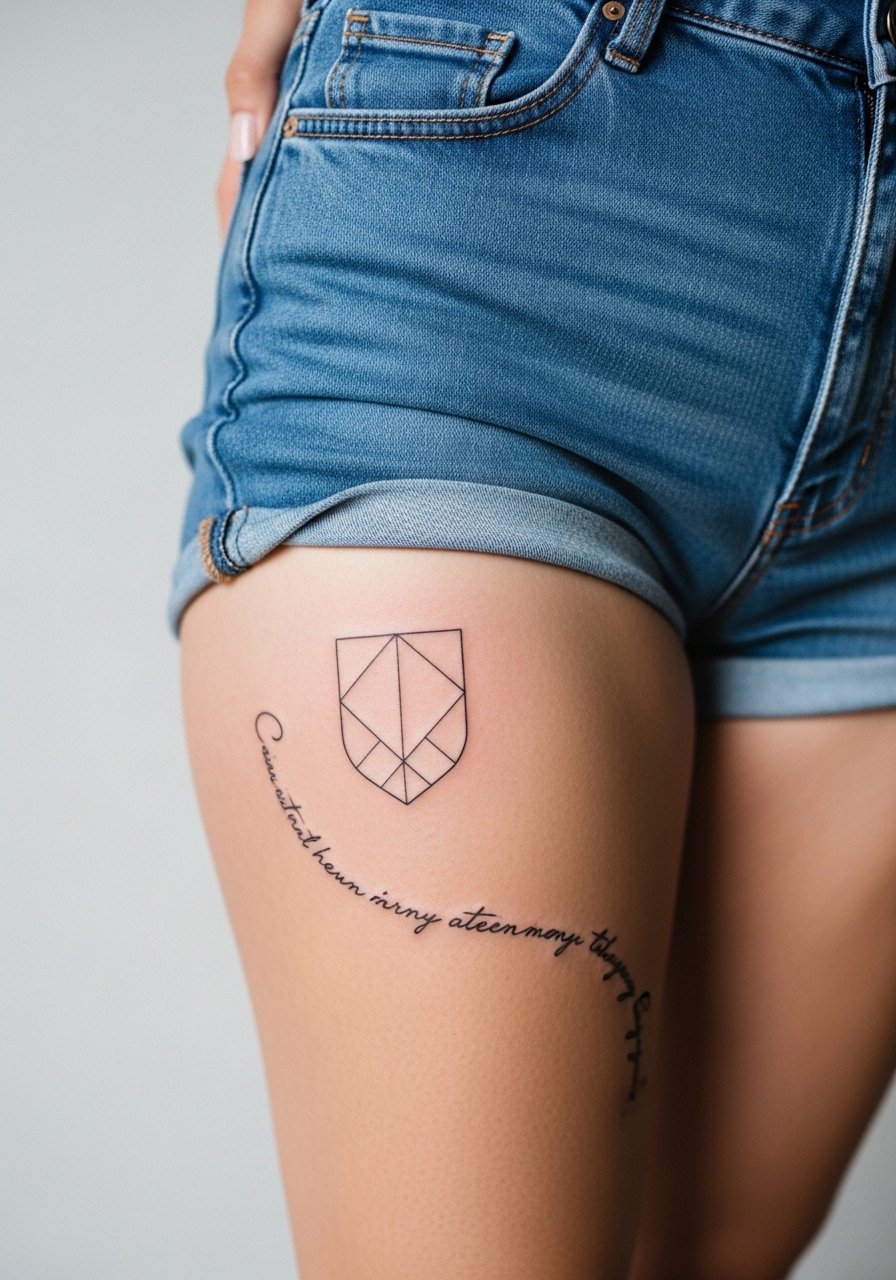
16. Minimalist Geometric Thigh Shield with Subtle Script
Pain warning lead: inner thigh is more sensitive and requires careful session planning. This shield sits on the outer upper thigh with "Fear God" along the curve, and it avoids the inner crease to reduce rubbing. Ask for clean edges and ask how they recommend aftercare for leg placement. Sessions usually take moderate time and swelling can occur more than with arm work. For the appointment wear high-waisted shorts or a wrap skirt so the artist can access the area without crowding.
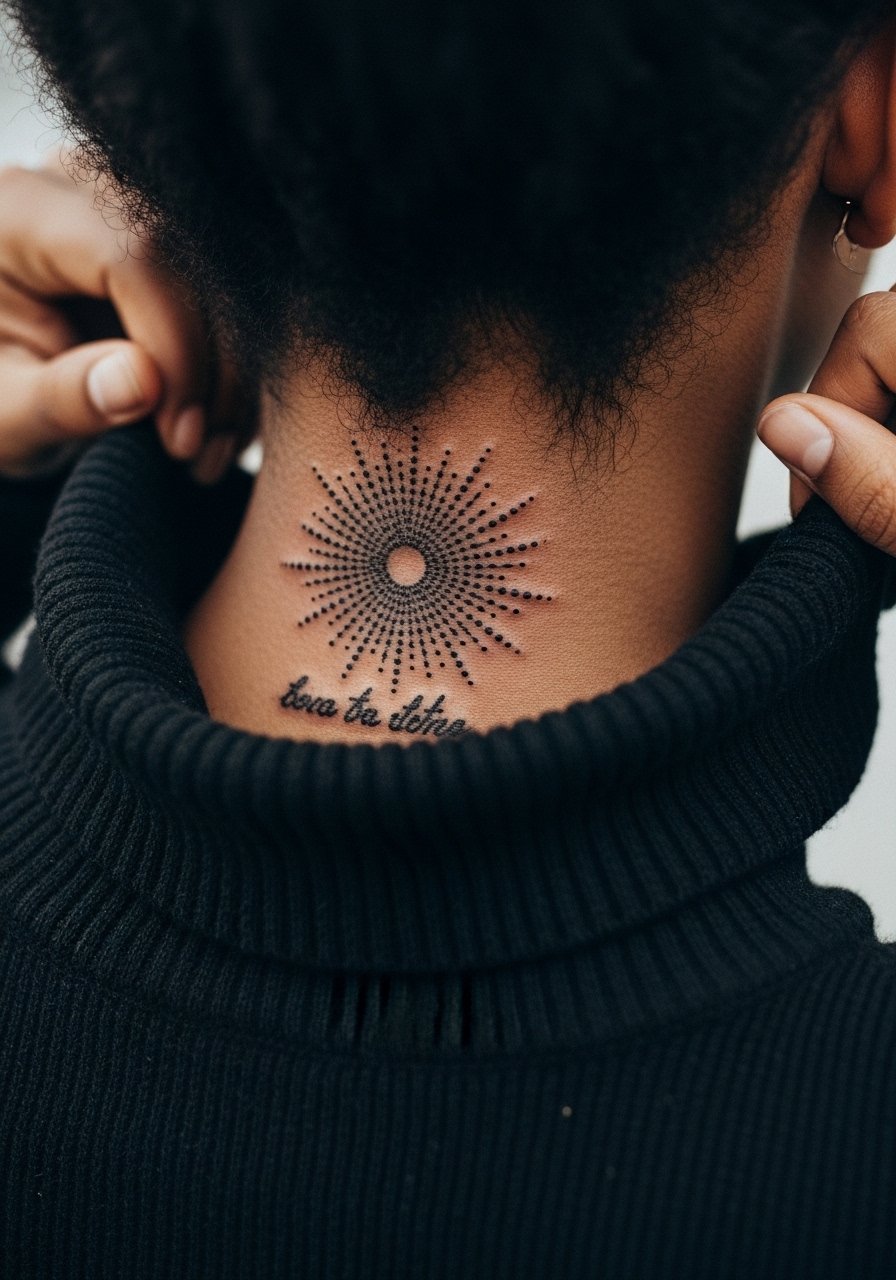
17. Radial Dot Work Halo on the Nape with Tiny Lettering
Consultation lead: the back of the neck needs clear discussion about visibility. This radial halo uses dot work and tiny lettering tucked at the base so the phrase is discreet. Pain is variable and sessions near the hairline can sting more. The common mistake is placing text too close to the hairline where touch-ups are harder. For discreet coverage on cold days, a turtleneck or a wide-collar shirt pulled slightly down helps avoid unwanted exposure.
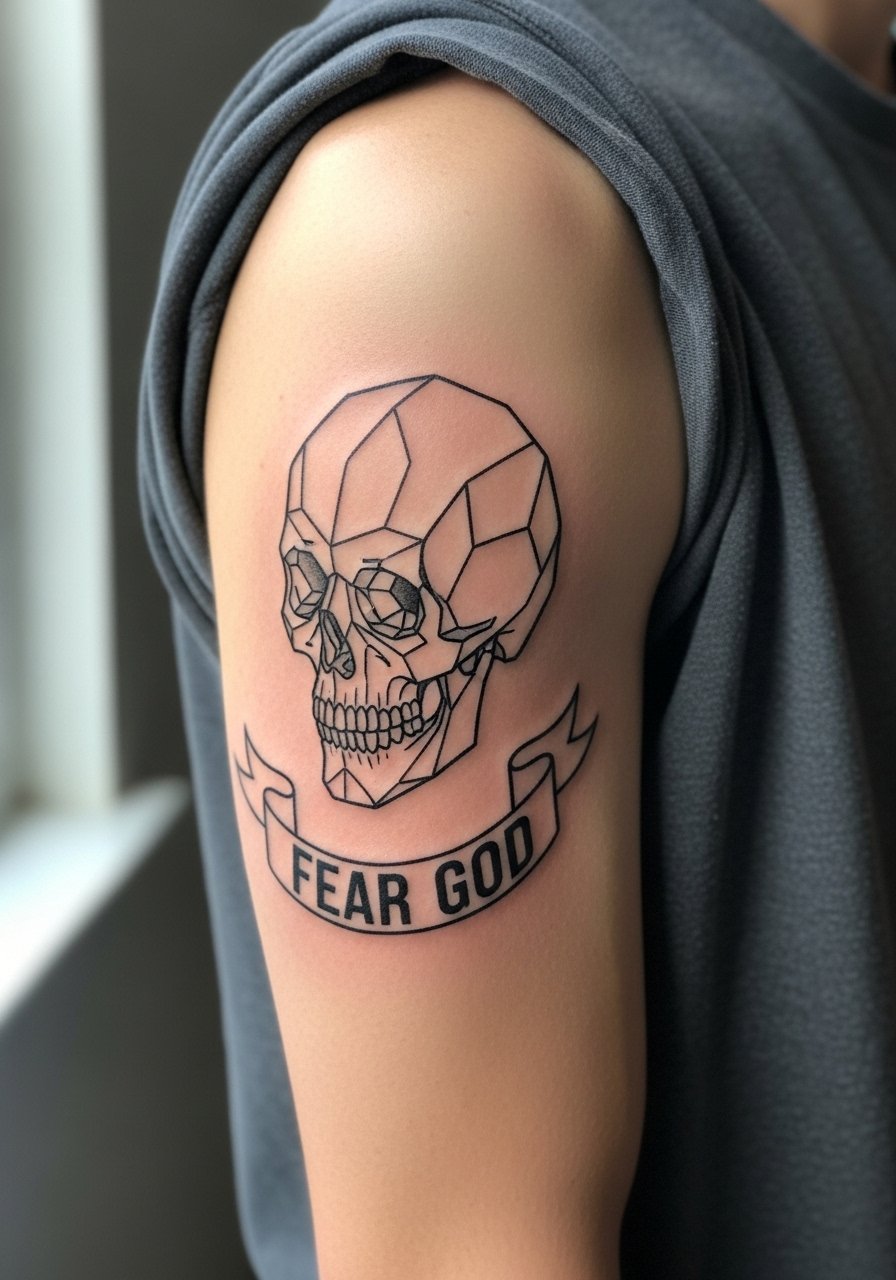
18. Isometric Skull Geometry on the Upper Arm with Banner
Mistake lead: skulls and geometry can fight each other. This isometric skull uses clean volumetric lines with a curved banner that reads "Fear God" in bold caps beneath the jaw. Ask for the banner to be raised and the skull contours to avoid tiny shading traps. Session time is medium and touch-ups are typical after a few years. For showing it off, short sleeves or a rolled-up tee work best.
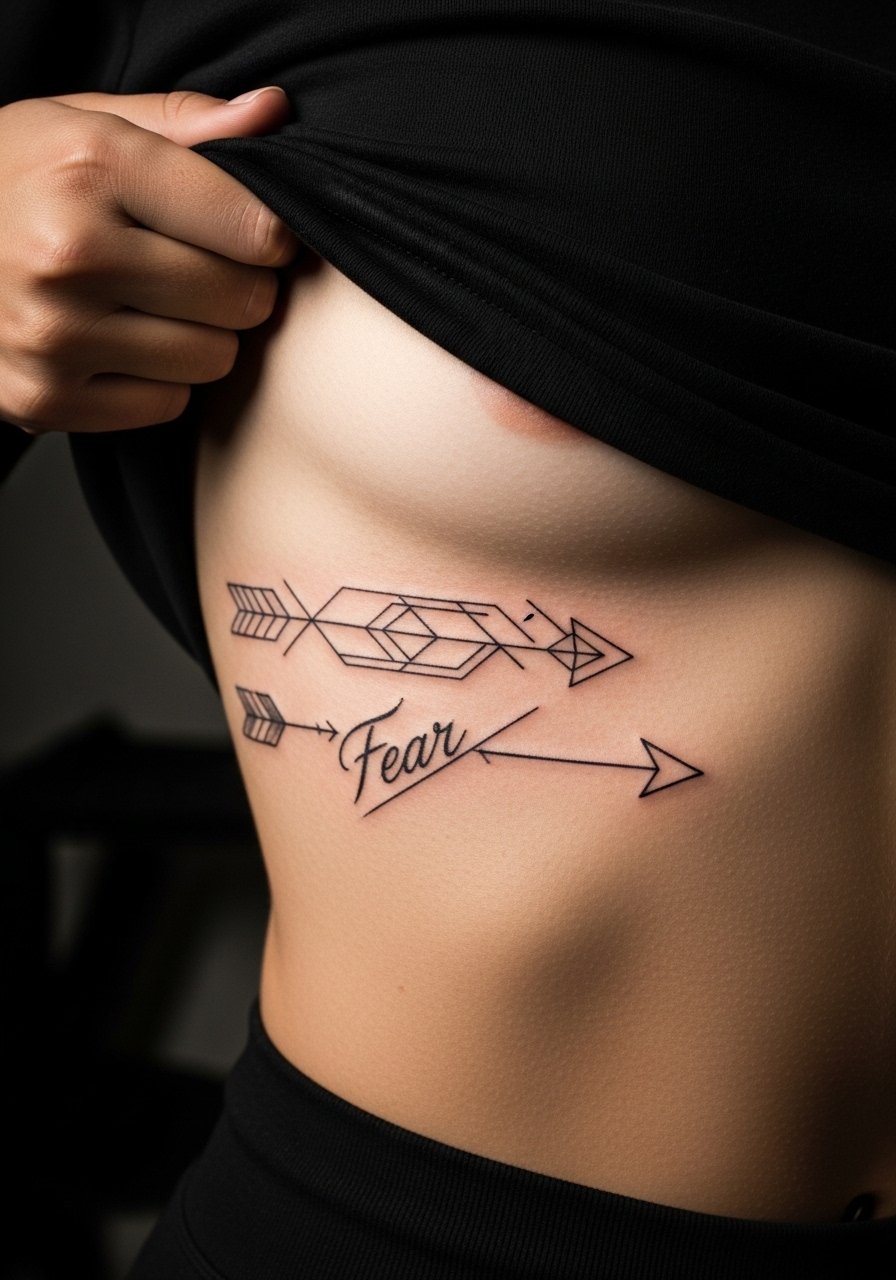
19. Linear Arrow Series Along the Rib with Script Slash
Aging lead: linear arrow series on ribs needs spacing to avoid merging as the skin ages. This design staggers arrows with a diagonal script slash that reads "Fear" between shafts. Expect pronounced pain and a session that requires breaks. The typical error is tight arrow spacing. For the session wear a cropped top that can be lifted slightly, and plan recovery around limited physical activity for a week.
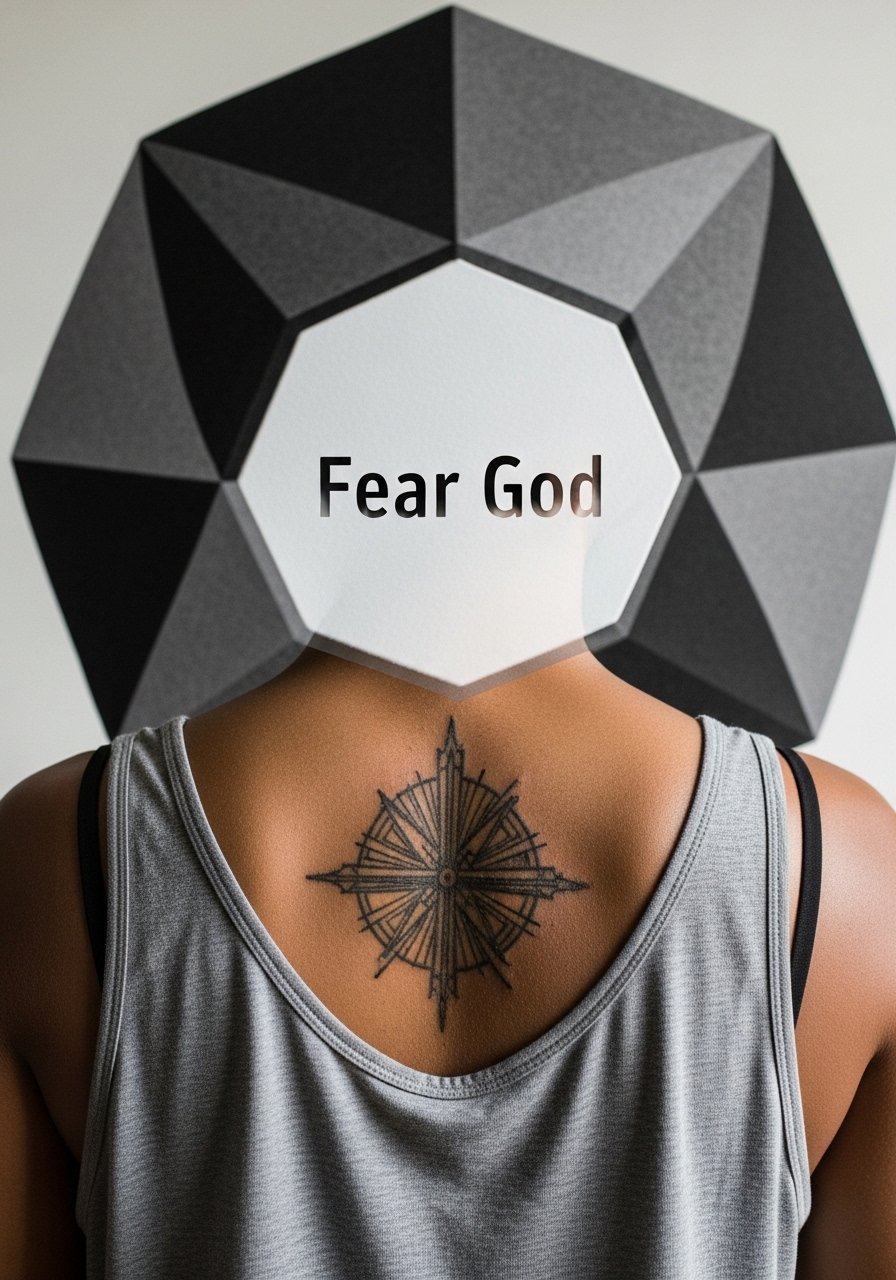
20. Monochrome Geometric Back Panel with Centered Text Plate
Visual impact lead: a large monochrome back panel reads as a single graphic and survives sun exposure better when angles are strong. The centered text plate holds "Fear God" in a negative-space rectangle so the letters are protected from busy shading. Sessions are long and often split over several dates. The biggest mistake is trying to cram multiple distinct motifs into one panel. For back sessions wear a loose tank top or a button-down shirt you can take off and put back on without rubbing the area.
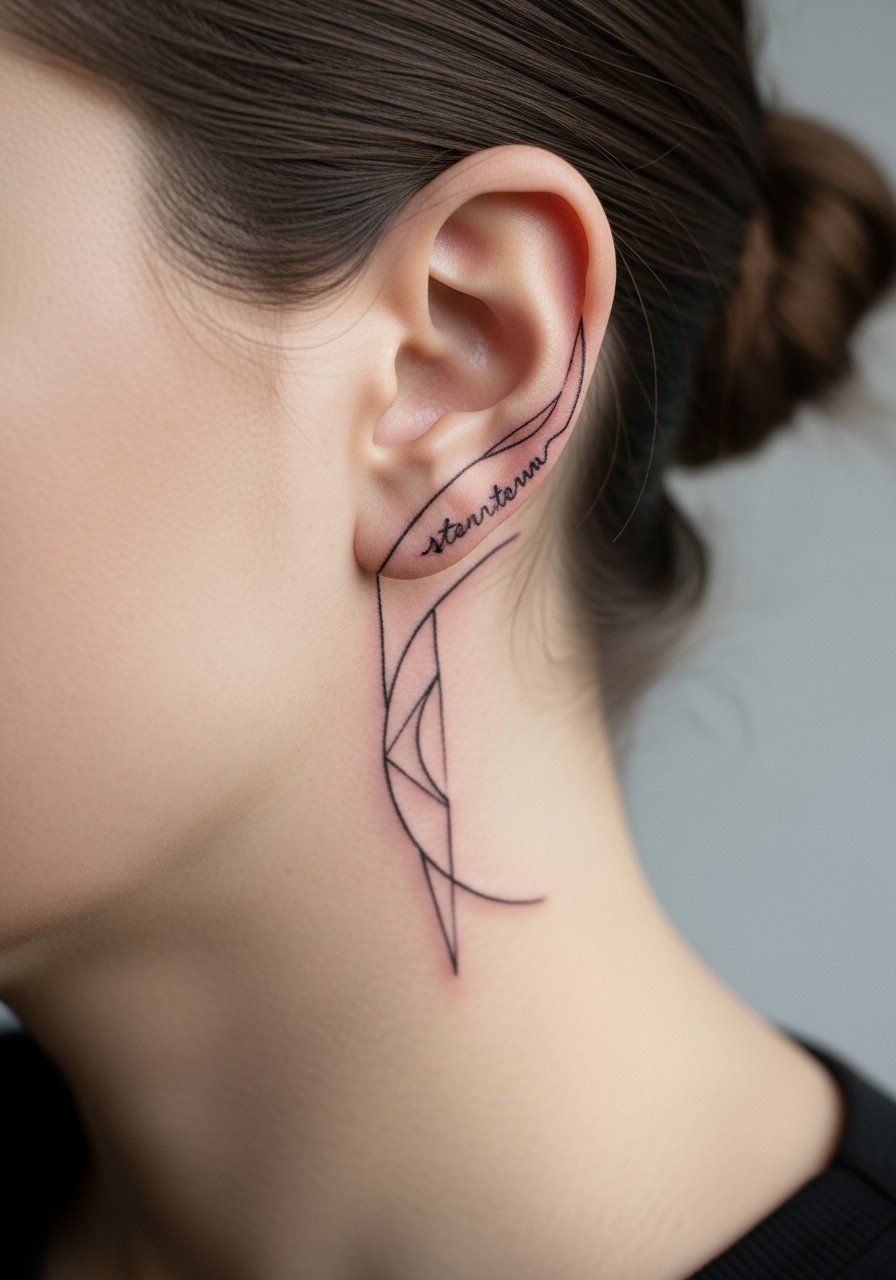
21. Subtle Geometric Ear-Wrap with Micro Script Near Hairline
Consultation lead: behind-the-ear and near-hairline placements need exact conversation about visibility and hair styling. This ear-wrap is placed on the skin just behind the ear, below the hairline on the neck, and carries tiny script tucked into a curve so it reads only when hair is swept. Pain is low to moderate. The usual mistake is asking for too much micro detail in such a small area. For styling keep hair short at the sides or use product to sweep it up and reveal the piece.
Frequently Asked Questions
Q: Will geometric text blur faster on ribs than on the forearm?
A: It depends on spacing and line weight. Ribs have more stretch when you breathe and move, so tiny script tends to blur sooner there. For ribs ask for increased spacing, slightly heavier contour lines, and plan for a touch-up around year two or three if you want the text crisp.
Q: Can I have "Fear God" integrated into a mandala without cultural mishap?
A: Yes, but be mindful. Mandala forms have roots in certain spiritual traditions and some people prefer subtle variation rather than direct replication. Discuss respectful adaptation with your artist and say you want an original geometric interpretation rather than a direct cultural copy.
Q: How soon will hand and finger geometry need touch-ups?
A: Hand and finger work usually needs touch-ups sooner than arm or chest pieces because of constant washing and friction. Expect a likely touch-up within the first one to two years for small text and micro geometry. Choosing stronger outlines helps extend the interval.
Q: Is it risky to mix fine line lettering with dense blackwork in one piece?
A: Mixing styles is fine if you plan the transitions. The risk comes when fine letters sit next to heavy saturation. Ask the artist to give letters negative space buffers and avoid packing tiny details next to dense fills. That planning reduces the chance of early merging.
Q: What should I wear to a sternum or chest session?
A: Wear a fitted sports bra or a wide-neck shirt you can pull to one side so only the tattoo zone is exposed. That keeps the rest of your torso covered and helps the artist work cleanly. A zip or button front top is also useful for quick breaks.
Q: Where do I find an artist who understands both geometry and lettering without named references?
A: Use local studio directories, niche geometric tattoo hashtags, and convention lineups to discover talent. Browse portfolios looking for healed work images of both geometry and text on real skin. Reach out with clear references and ask for healed photos rather than only fresh shots.