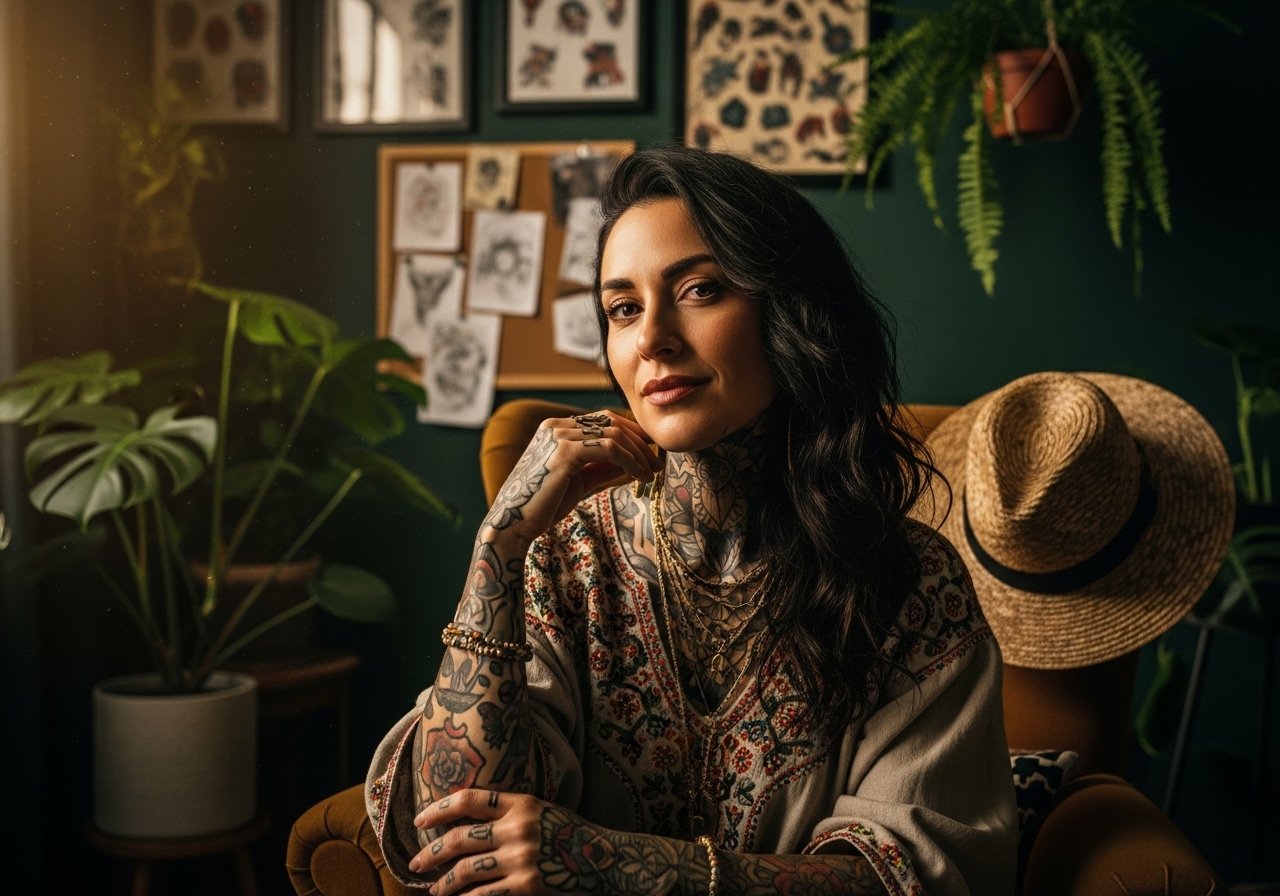
Fine line botanicals are everywhere online, but what looks perfect fresh does not always age the same on real skin. I have seen forearm bouquets blur faster than thigh realism, and I have watched collarbone blackwork hold crisp lines for years. Read these 27 bouquet ideas with honest notes on pain, longevity, and wardrobe so you can pick a design that still looks intentional after several touch-ups.
1. Fine Line Wildflower Bouquet on Inner Forearm
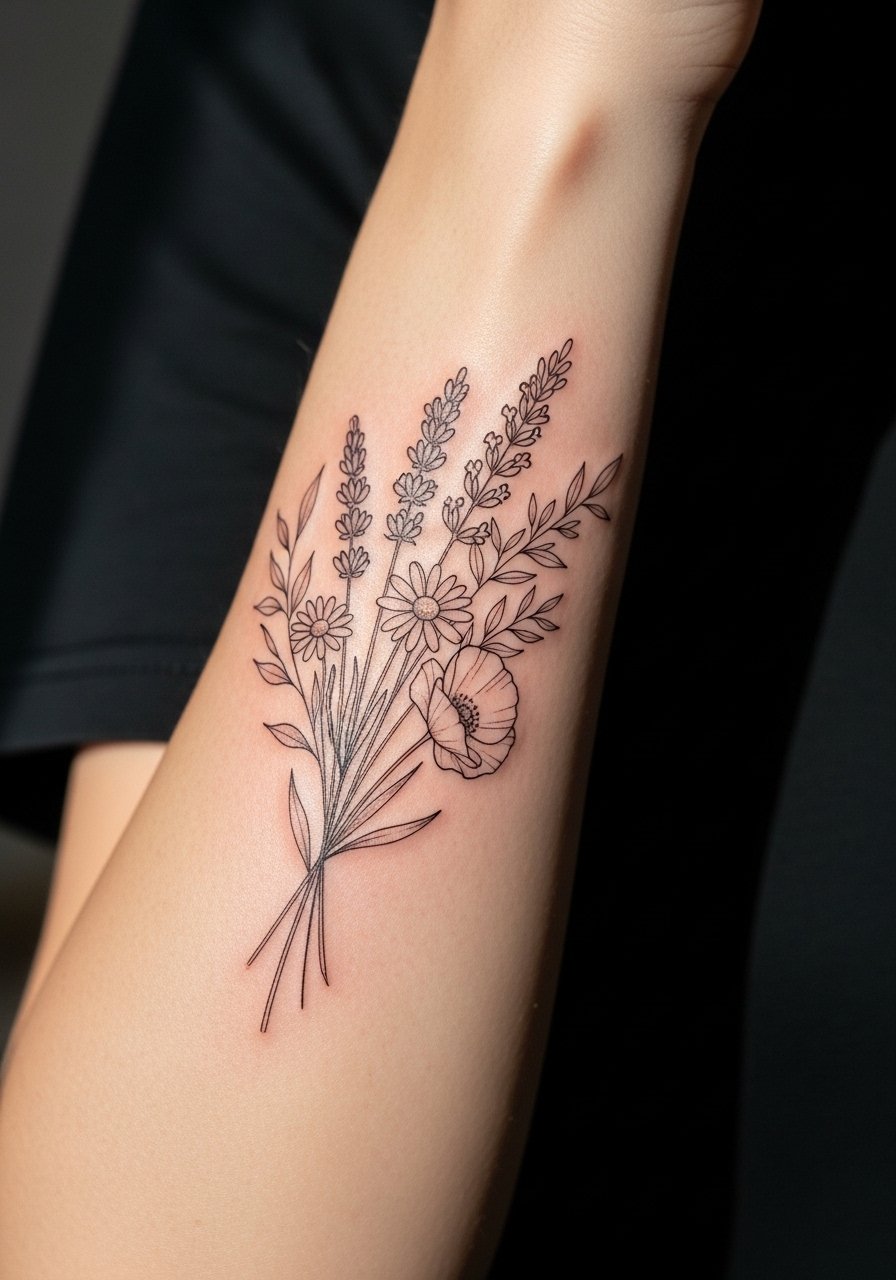
I recommend this one when you want everyday visibility with low bulk. Pain is mild to moderate on the inner forearm and most sessions finish in a single hour. Tell the artist you want slightly heavier anchor lines at stem bases so the piece keeps shape as fine lines soften over time. A common mistake is asking for hairline-only lines across the whole bouquet, which often fades into a gray smudge by year two. Expect a touch-up around year one to restore contrast if you wear sunscreen intermittently. For showing it off, try a rolled cuff chambray shirt with a thin silver cuff bracelet so the forearm reads as a designed panel.
2. Neo-Traditional Rose Bouquet Sleeve on Outer Arm
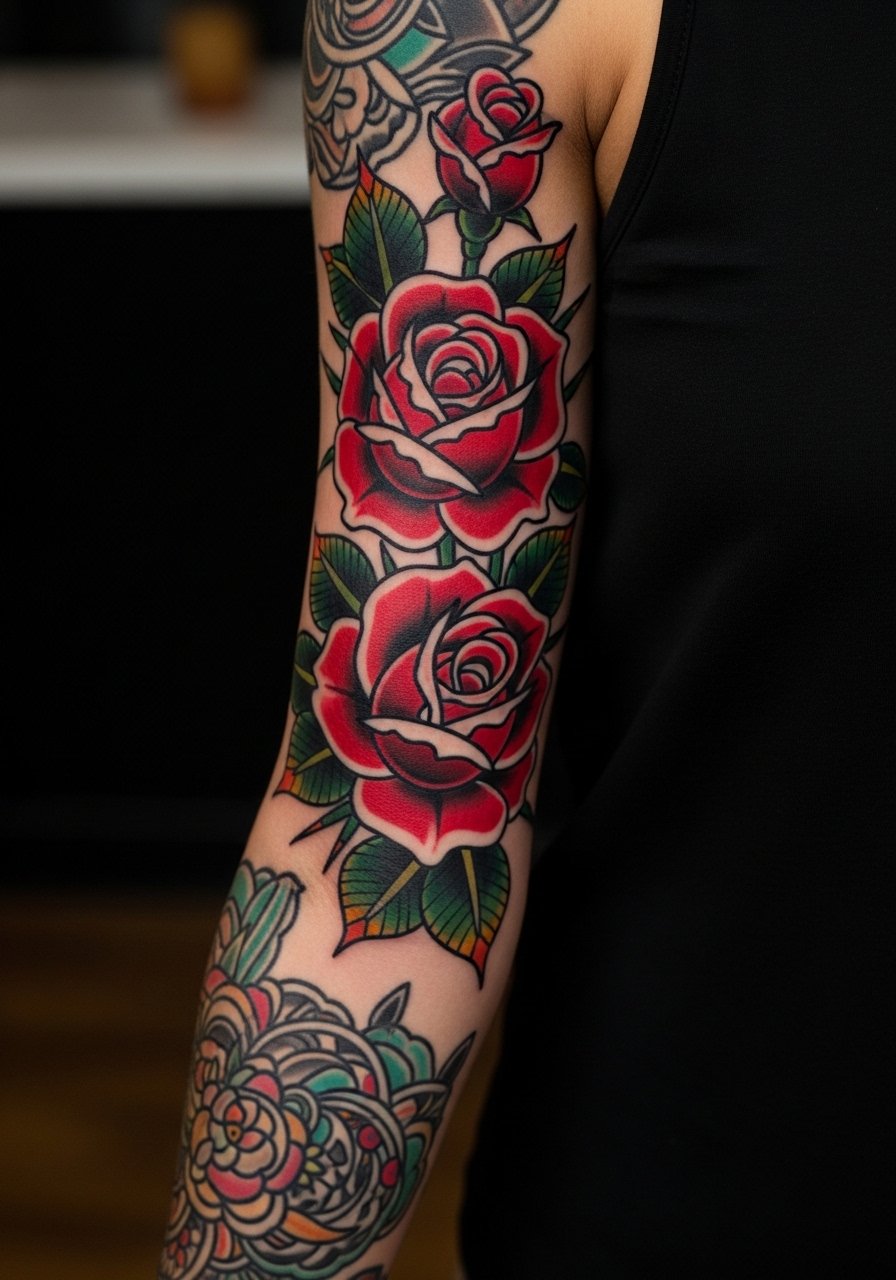
This is a commitment that rewards patience. Expect multiple sessions across weeks and noticeable soreness after each sitting, especially where the artist stacks color. Say you want saturated color blocks with strong saturation rather than delicate painterly shading, and ask about session spacing so color heals evenly. The design ages well when saturation is maintained and touch-ups are scheduled; rushed packing of color in one long session can cause patchy healing. If you lift weights often, mention that to avoid placement over the peak of a muscle belly. For session day wear, a loose tank top or button-down that offers full arm access works best.
3. Watercolor Peony Bouquet on Ribcage
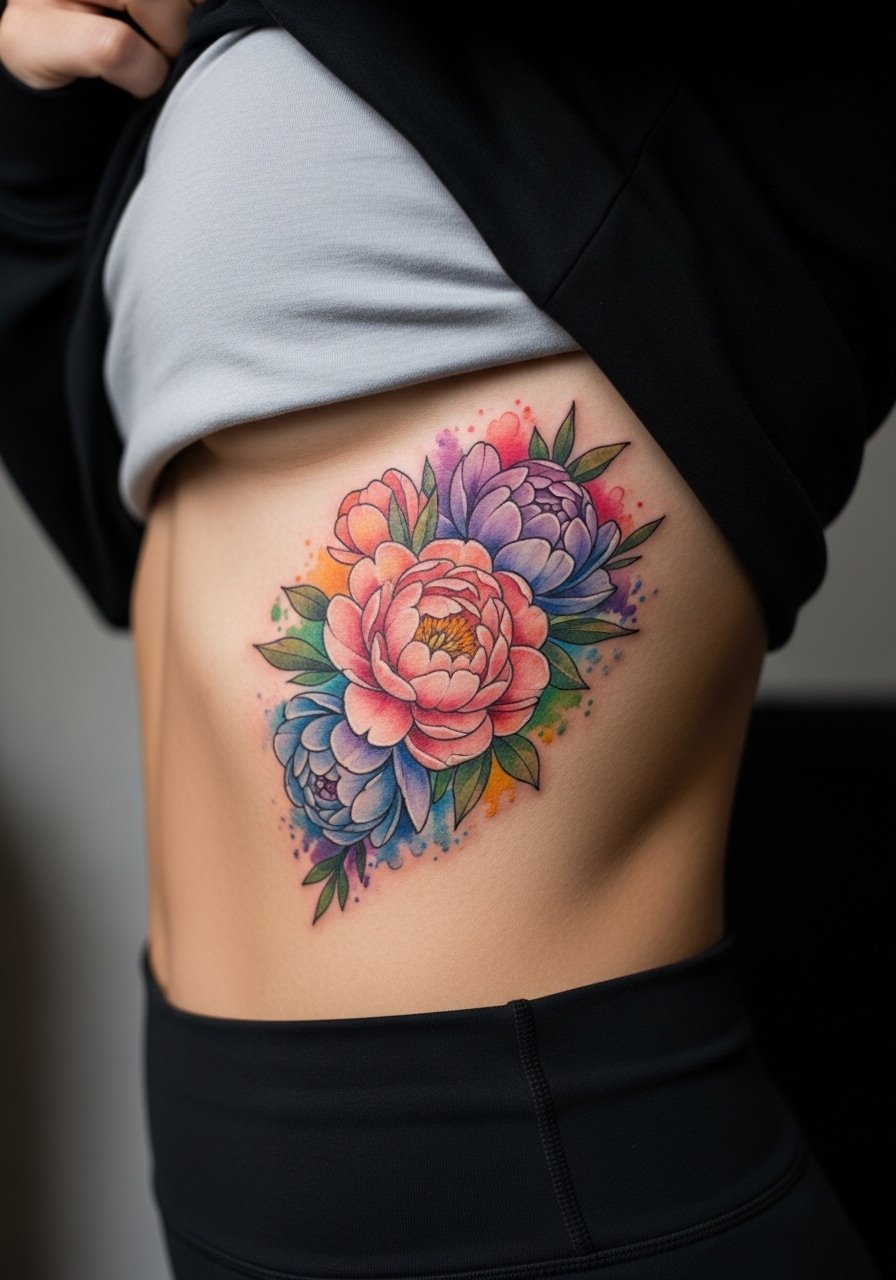
Fair warning, the ribcage is one of the more painful spots on most pain charts. Many people choose watercolor here for the painterly movement, but the style can blur if pigments sit too shallow. In the artist conversation, ask for slightly bolder edges around the peony to protect the washes as they age. There is an ongoing split about healing methods for rib work. One camp prefers protective film like Saniderm to limit friction while the other promotes dry healing to avoid over-moisturizing that might soften pigment. Tell your artist which approach you prefer and follow the plan they are most practiced with. For summer sessions, bring a loose cropped top you can shift easily.
4. Black and Gray Realistic Lily Bouquet on Outer Thigh
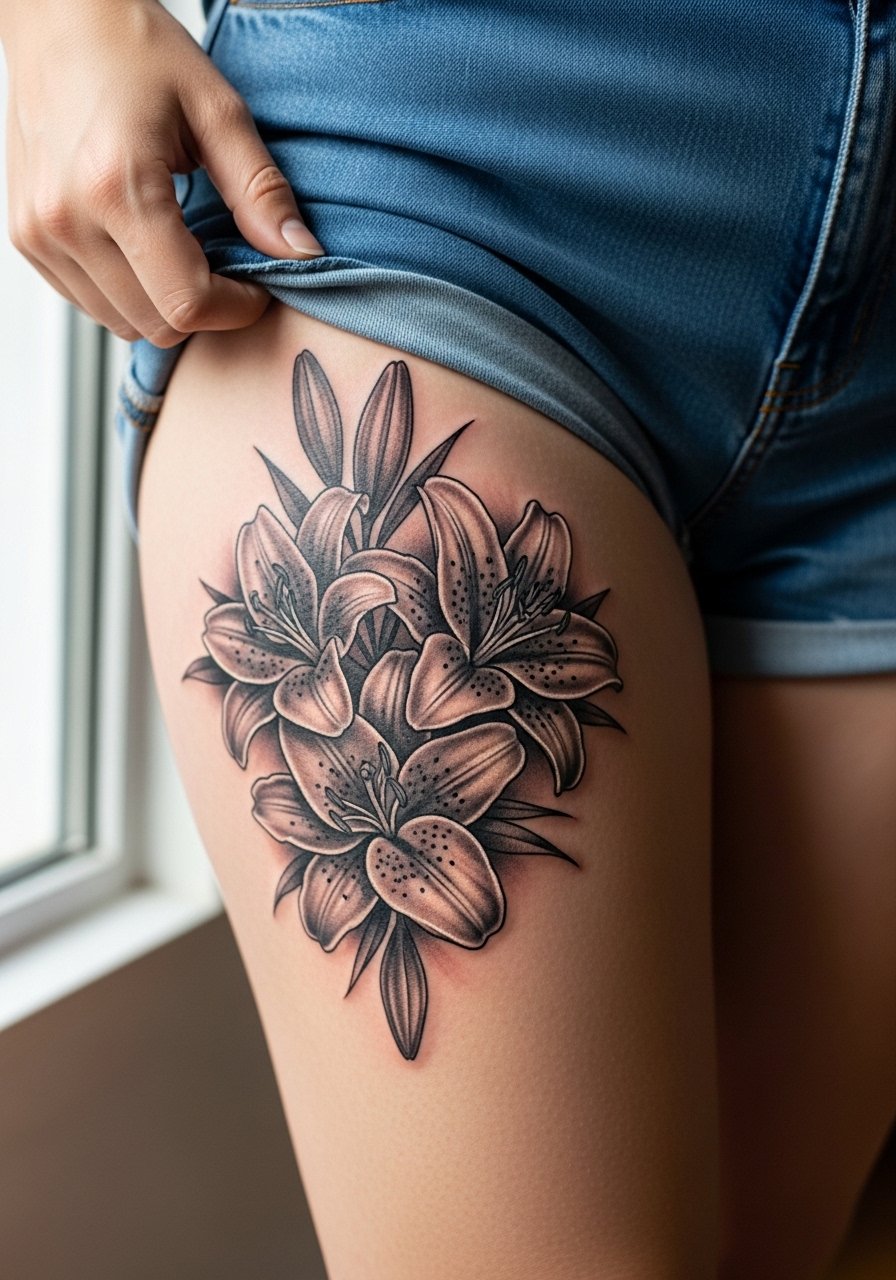
This style is a collector favorite for longevity because dense black and gray shading holds contrast as color fades. Sessions are moderate in pain and often split across two to three sittings for a 6-8 inch piece. Tell the artist you want deep stipple shading and crisp petal edges so the highlights read clean in photography. A real mistake is asking for too-small realism; micrometric details need space to avoid merging. Expect the piece to look nearly identical at six months and two years if it receives sun protection, and plan a touch-up around year three for any subtle loss of contrast. For showing it off, high-waist shorts or a slit maxi skirt frame the thigh without covering the work.
5. Minimalist Daisy Bouquet on Wrist
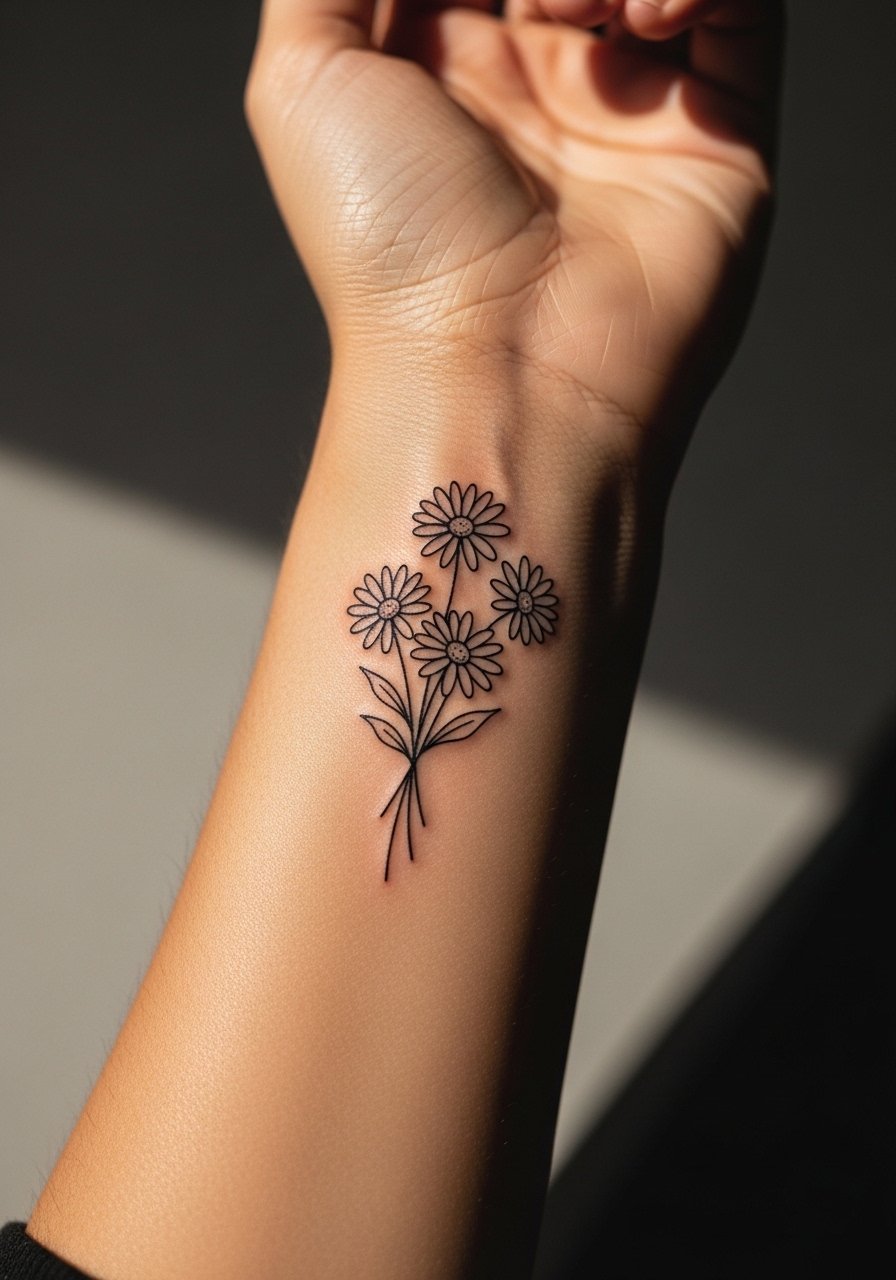
Wrist tattoos sit where sunlight and washing take a toll, so fine single-needle work needs careful execution. The session itself is short and can be surprisingly tingly because the area has thin skin. Ask your artist for a slightly heavier stem line and fewer super-fine interior details to prevent early blurring. Many people regret insisting on the absolute tiniest size; in practice, scaling up by a few millimeters gives the design breathing room. Plan on a touch-up within 12 to 18 months if you wear watches or bracelets that rub the area. For outfits, pair the wrist bouquet with a minimalist leather bracelet and push back silk blouse cuffs to frame the work.
6. Ornamental Dotwork Sunflower Bouquet on Shoulder
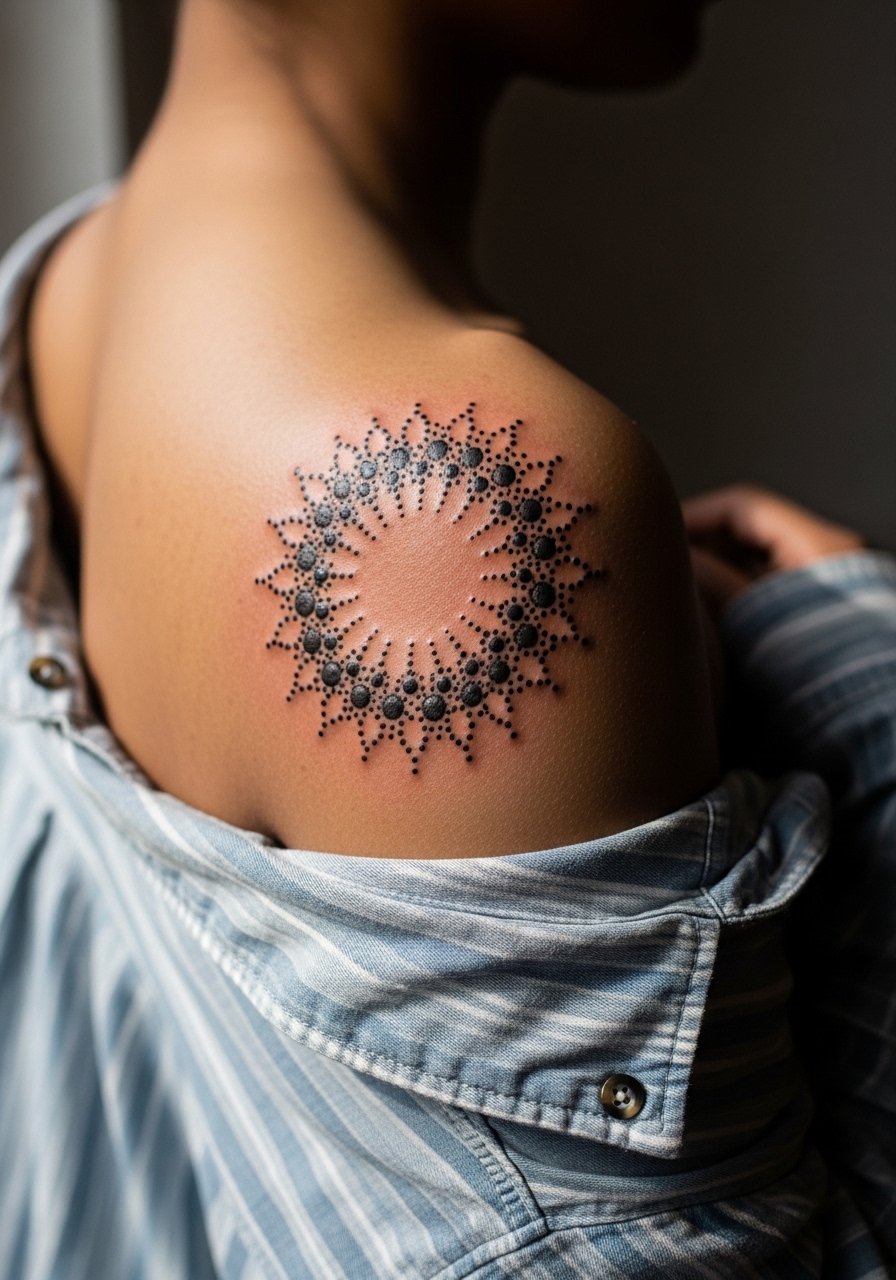
Shoulder work is forgiving because it sits on a broad, flat canvas and avoids constant abrasion. Dotwork uses many tiny dots to build form, which means sessions are steady and can feel like long tapping. During consultation, mention that you want dot spacing that leaves intentional negative space, which preserves circle geometry as dots soften. A mistake is packing dots too tightly in dense areas, which creates muddiness after healing. Expect this style to age well if you avoid heavy sun exposure and plan for a light touch-up after a few years. For the session wear, bring a loose button-down shirt you can slide aside.
Studio Day Picks
The inner forearm, wrist, and shoulder pieces above need different prep than rib or thigh sessions, so a few targeted items smooth the day and protect fresh lines.
-
Frida Kahlo Ink Balm. A thinner formula that users say layers without clogging, useful for color zones like neo-traditional roses where you want pigment to breathe during healing.
-
Australian Tea Tree Ink Fix. Handy in dry climates for rib and thigh work to prevent overly hard scabs while still drying out moisture quickly.
-
Cetraben Cream. A gentle, non-occlusive option for sensitive neck or collarbone skin that avoids the white cast some creams leave.
-
Hada Labo Lotion. A light hydrator to use after removing protective film or when your artist recommends a thin, breathable layer during healing.
-
Aquaphor Healing Ointment. A thin initial layer for small fine line areas like the wrist that many people still use for the first two days before switching to a lighter balm.
7. Micro-Realism Lavender Bouquet on Ankle
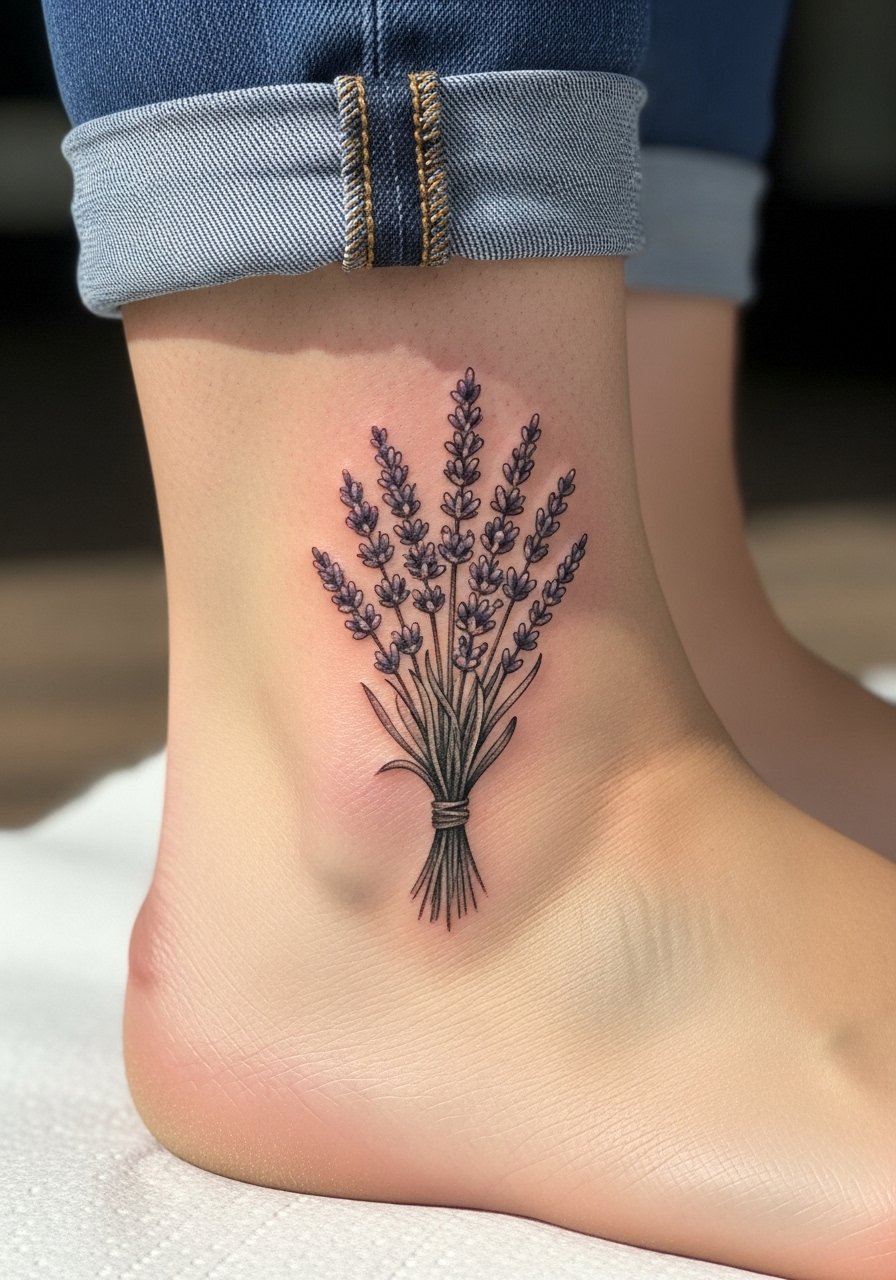
Ankle placements see lots of friction from shoes and socks, so micro-realism needs an artist who specializes in tiny shading. Sessions are short but can be painful near bone. Ask for slightly simplified clusters rather than dozens of stems so the tiny shading keeps separation over time. A common error is insisting on extreme micro-detail when everyday wear will blur it. Expect a one-to-two year touch-up cycle for ankle micro-realism if you wear low-cut shoes often. For showing it off in summer, pair with strappy heeled sandals and cropped straight-leg jeans rolled once.
8. Traditional Poppy Bouquet on Calf
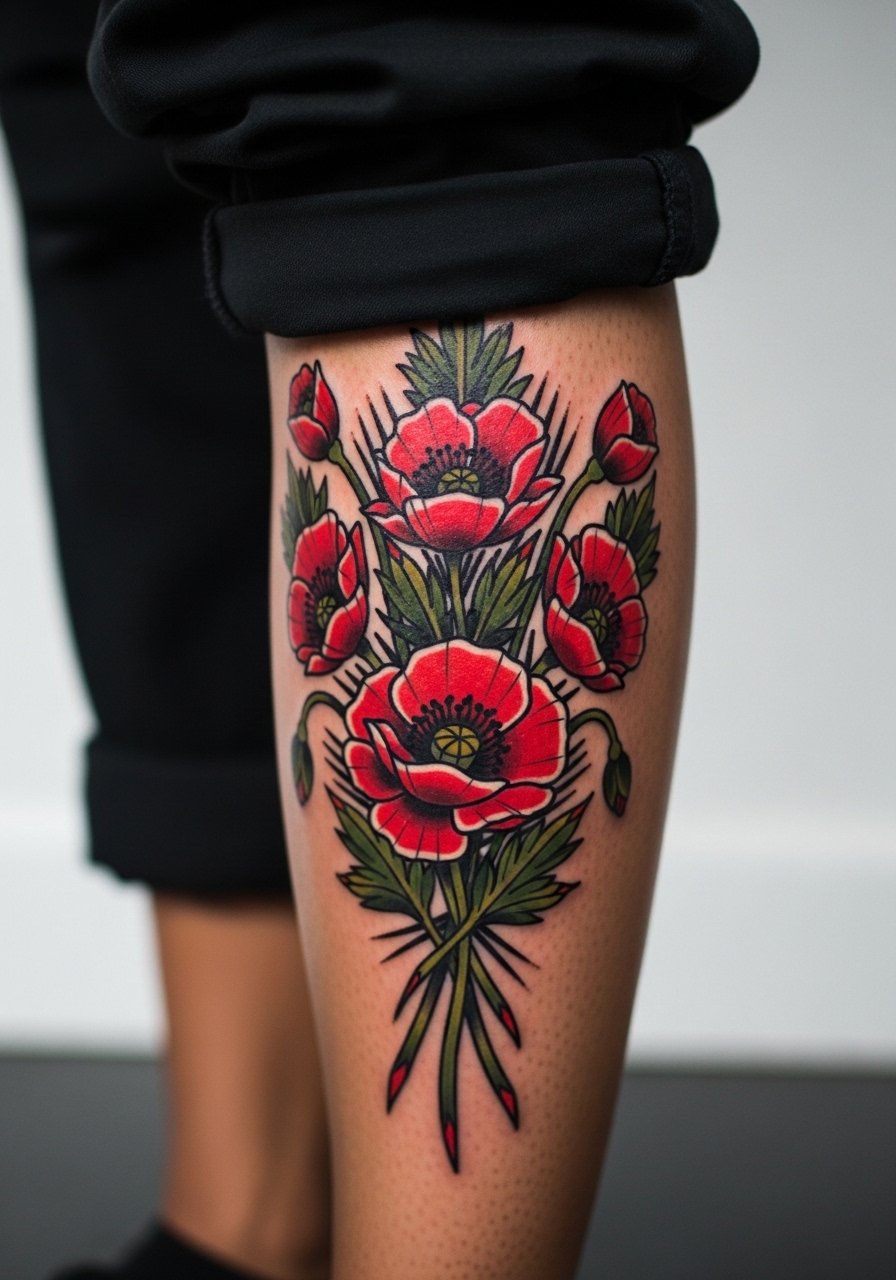
Calf tattoos sit on thicker skin and move with muscle, which suits traditional bold lines. Sessions are comfortable for most people and often finish within an hour or two for a mid-sized piece. When booking, request classic bold outlines and strong color saturation to resist decade-scale fading. A mistake is asking for too many tiny details that work against the style. Calf pieces tolerate gym work but avoid tight leggings immediately after to reduce rubbing. For style, wide boots or midi skirts highlight the muscle shape and the poppy silhouette.
9. Blackwork Geometric Orchid Bouquet on Collarbone
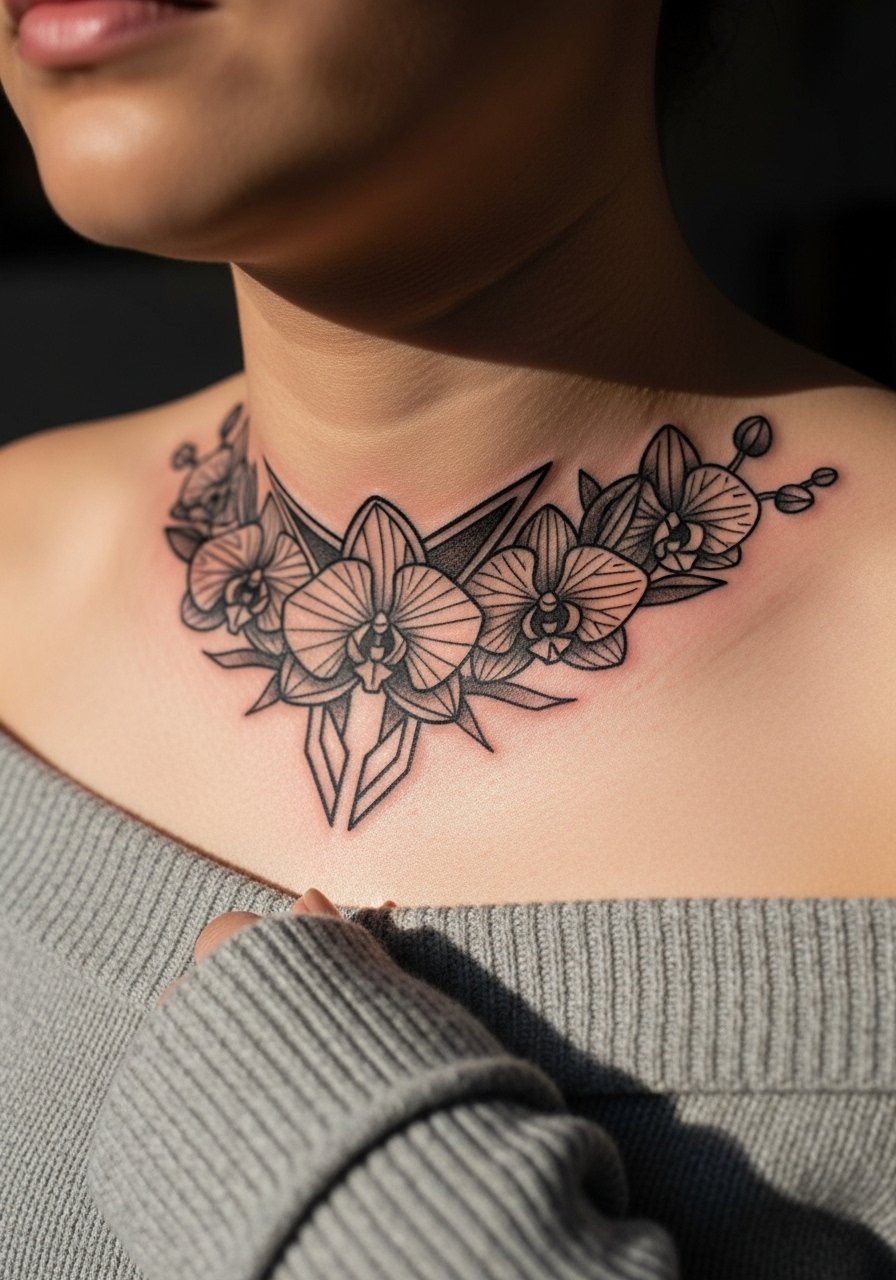
Collarbone tattoos are highly visible and can read as jewelry with the right placement. Pain is moderate because the bone is near the surface, and sessions may be short but precise. Ask for intentional negative space and crisp edge transitions so the black fills do not creep toward the bone. Some artists caution against very heavy solid fills on thin collarbone skin because they can feel harsh in tight clothing. Expect minimal change at six months and stable readings at two years when you protect the area from sun. Pair the piece with an off shoulder sweater or layered thin chains to echo the geometry.
10. Ignorant Style Cherry Blossom Bouquet on Upper Back
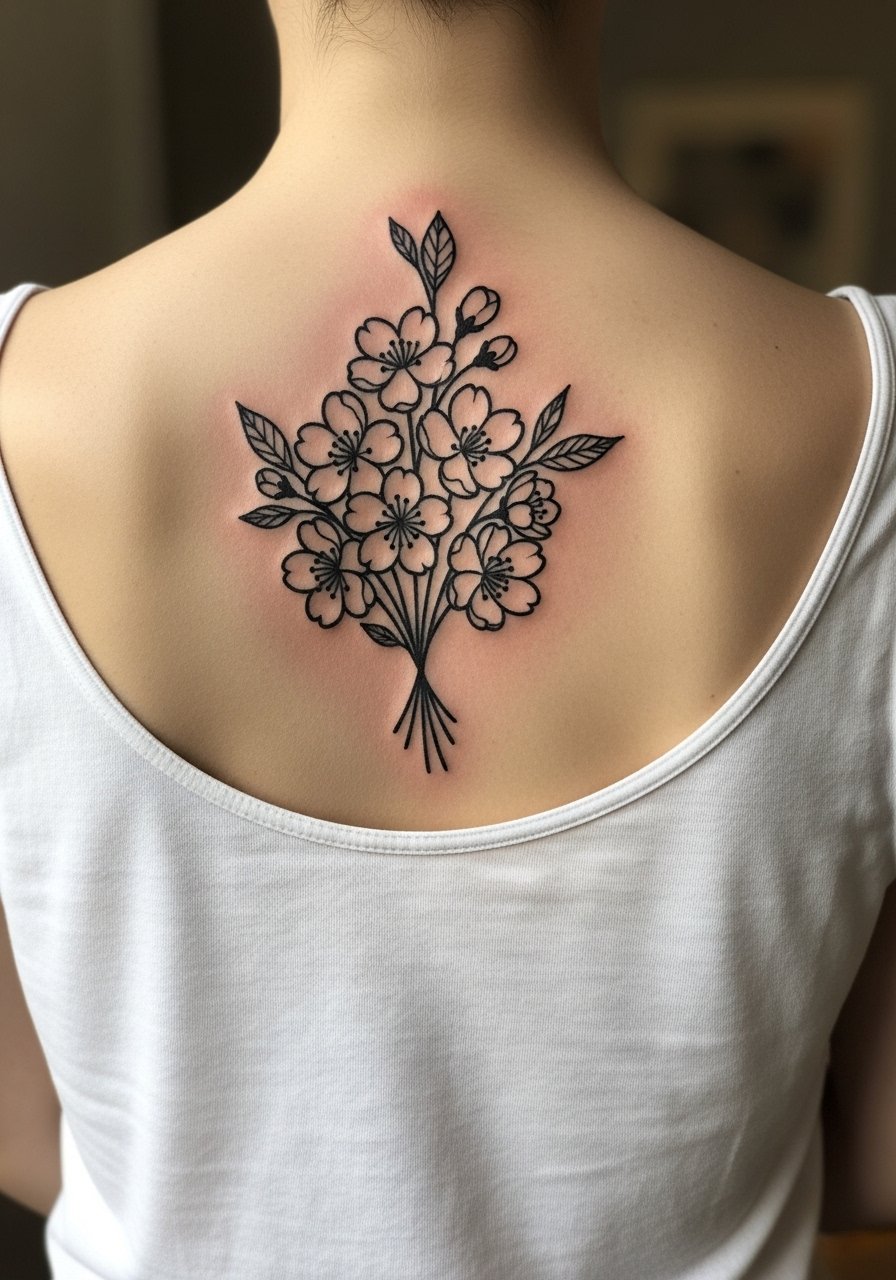
Upper back work gives room for composition and is a forgiving spot for slightly rougher linework. People pick ignorant style here for its hand-drawn charm, but the style is intentionally imperfect so discuss spacing to avoid accidental crowding. Mistakes happen when clients ask for maximal coverage in the first session; this style benefits from staged additions so each element reads. Pain is low compared to ribs and collarbone, and touch-ups for outline clarity can be scheduled at year two if needed. For session wear, a button-down worn backwards or a tank top makes access easy.
11. Fine Line Chrysanthemum Bouquet on Side Neck
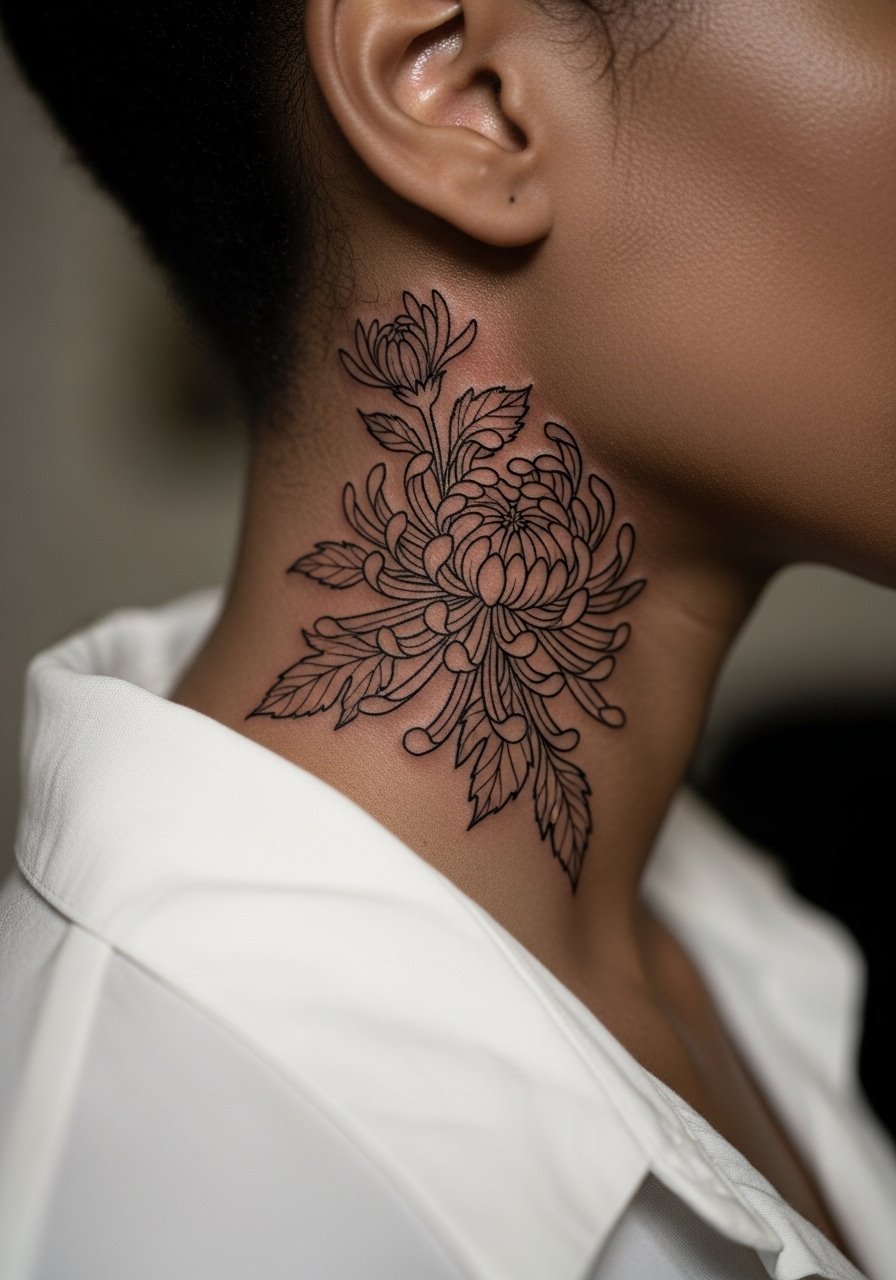
Side neck placements are visible and demand conversation about workplace norms before booking. Pain is higher than forearm but lower than sternum for many people. Ask for single-needle work with slightly thicker outer contours so the chrysanthemum keeps petal separation as lines soften. A common issue is going too tiny or too dense near the jawline, which dulls the flower silhouette over time. Plan for a touch-up at 18 months if you expose the area frequently to sun or necklaces. Choose a wide-neck top on session day to let the artist work without fabric tugging.
12. Hybrid Fine Line with Gold Leaf Accents on Upper Arm
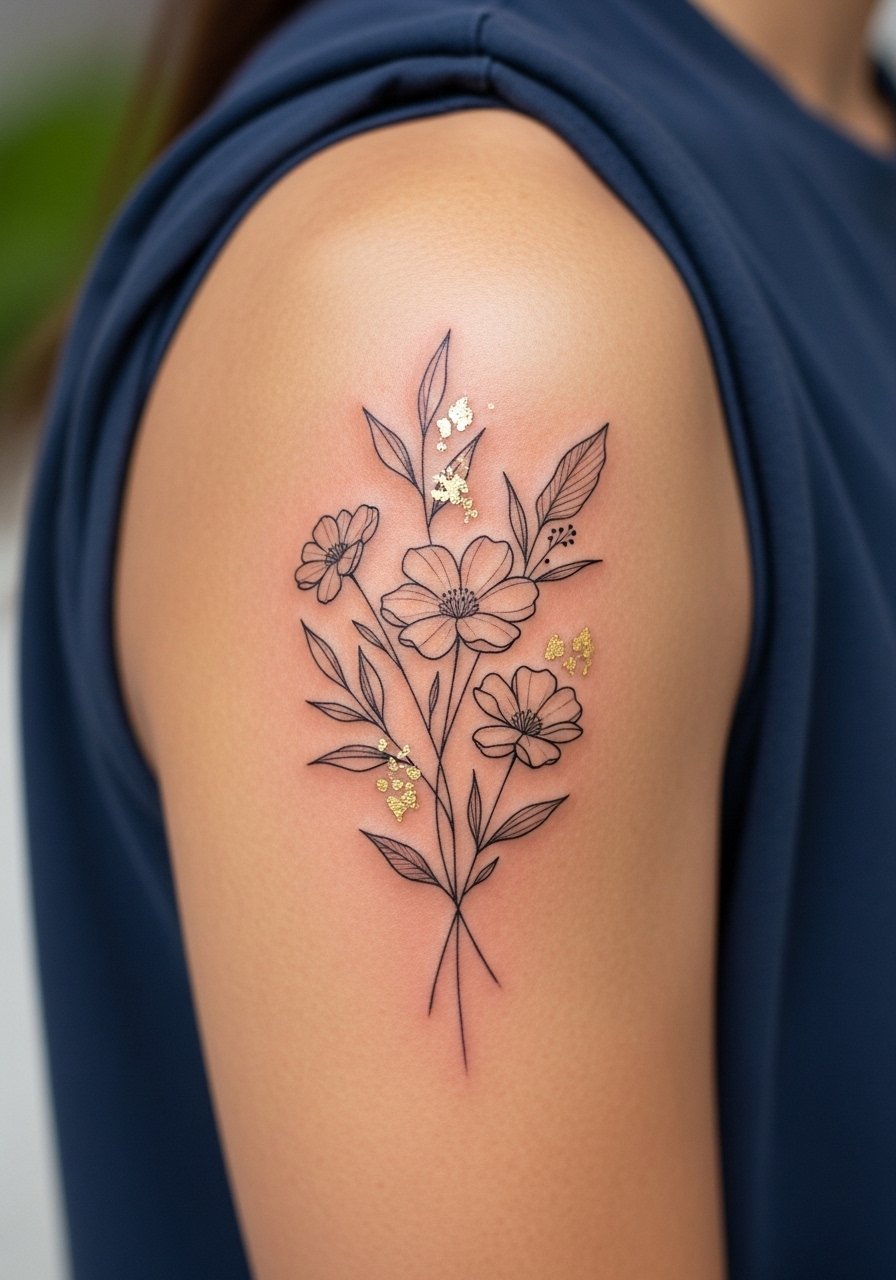
A newer twist combines single-needle florals with tiny metallic-style accents that are painted in during the session or suggested in healed sheen via light shading. This works well on the upper arm where movement is gentle and the surface is broad. In consults, clarify that "gold leaf" will be interpreted as warm tones in color work rather than literal metal. The session will take longer than a simple fine line due to layering. A mistake is expecting a high-gloss gold finish; real results are subtle warmth in healed color. For showing off, a sleeveless linen tunic keeps the arm visible and relaxed.
13. Negative Space Bouquet That Grows with Touch-Ups on Ribcage
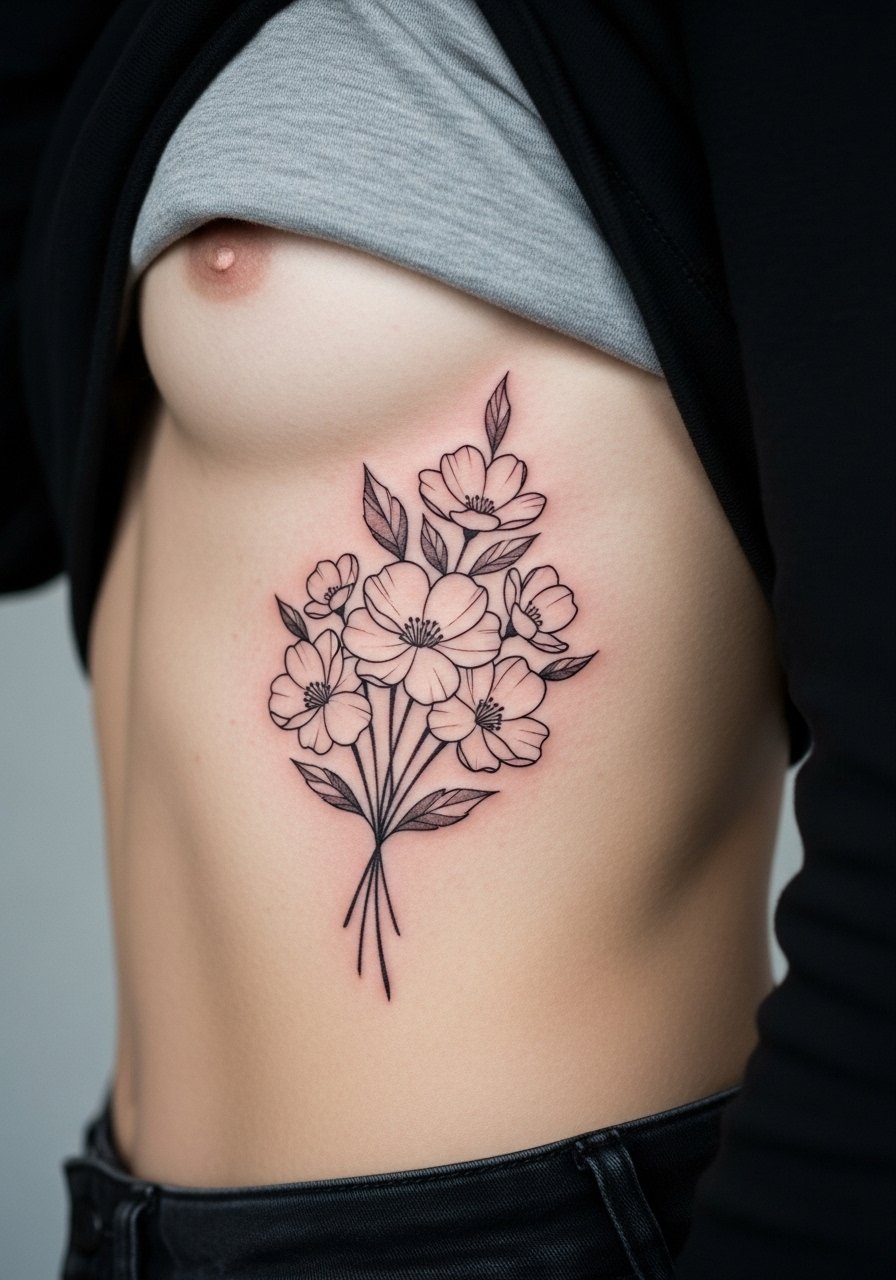
This concept plans space and scheduled touch-ups to let the bouquet "grow" visually over years by filling in selective areas. It suits the ribcage because the broad canvas allows staged layers. Pain is on the higher side, so most clients split sessions. Tell your artist you want planned touch-ups at year one and year three to build depth gradually. A clear mistake is expecting complete coverage in the first visit; staged work preserves crisp negative space. Discuss Saniderm versus dry healing before you commit, since artists differ on which approach protects delicate negative zones.
14. Knuckle Bouquet for Low-Profile Hand Gardens
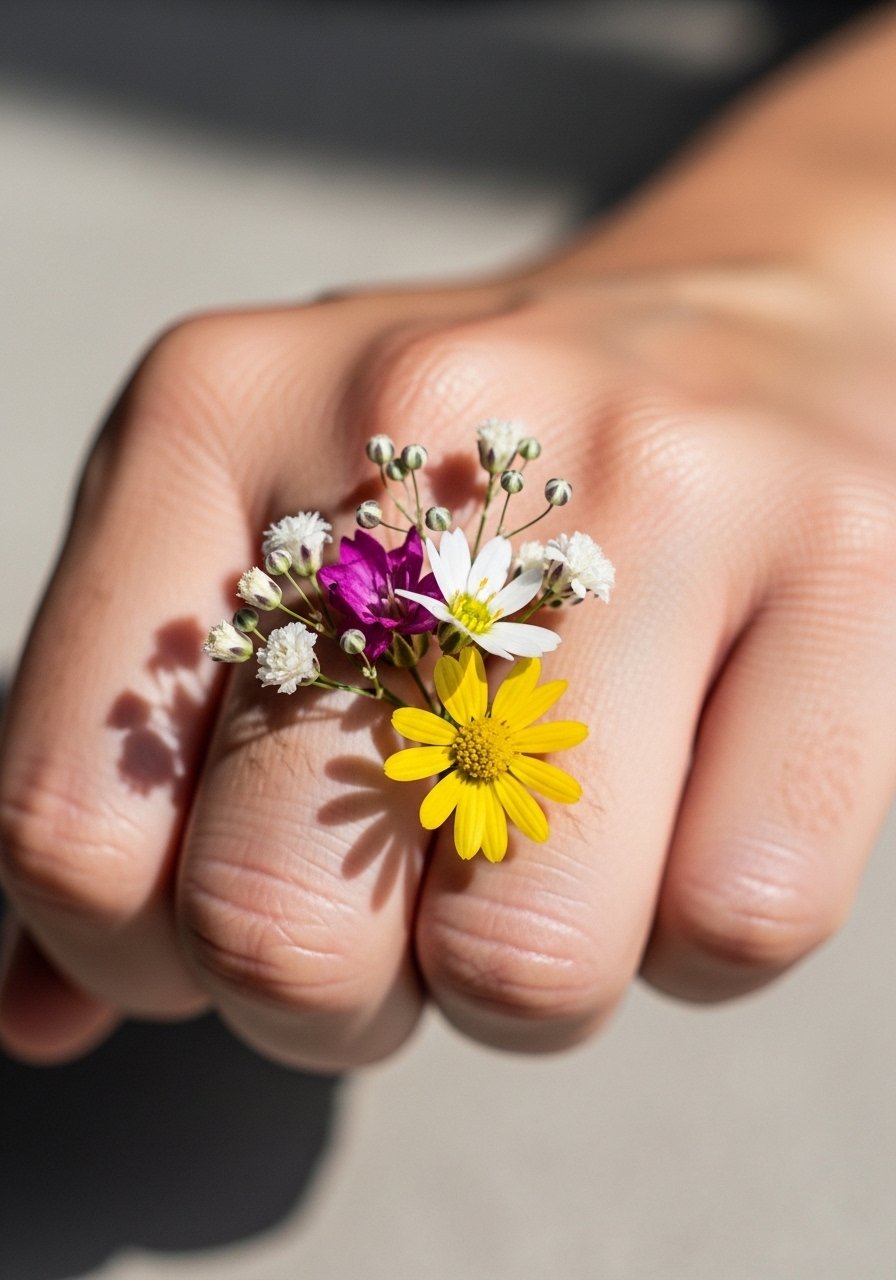
Knuckle tattoos bend and flex constantly, so choose bold simplified forms rather than intricate petals. Sessions are short but intense near joints and tendon areas. Ask for thicker contour lines and fewer internal details so the design survives daily motion. A frequent regret is forcing too many tiny elements onto a tiny canvas, which leads to rapid merging. Expect touch-ups at year one due to constant hand washing and friction. Keep in mind that some industries still judge visible hand ink, so think about career implications before booking.
15. Sleeve Rose Builds with Session Spacing Focus
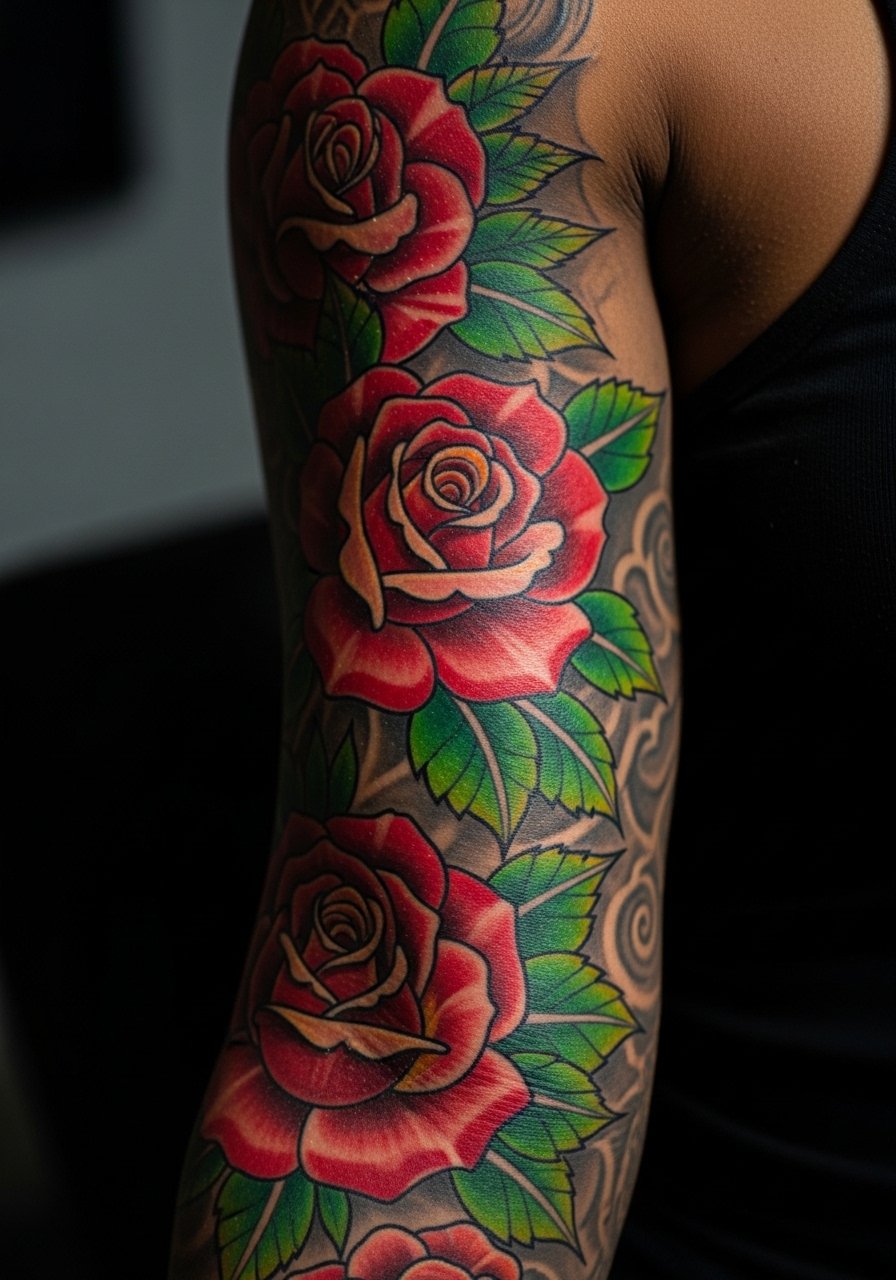
When building a sleeve, session pacing is as important as design. Artists often recommend spreading color work across multiple visits so swelling and saturation are consistent. In consultation, ask for a session plan that spaces big color fills apart by several weeks. A mistake is trying to cram a full sleeve into minimal visits, which risks uneven saturation and extended healing complications. Over five years, a well-paced sleeve shows balanced saturation with fewer patchy touch-ups. Wear a loose button-down on appointment days so the artist can work in stages without tugging fabric.
16. Micro Bouquet on Inner Bicep
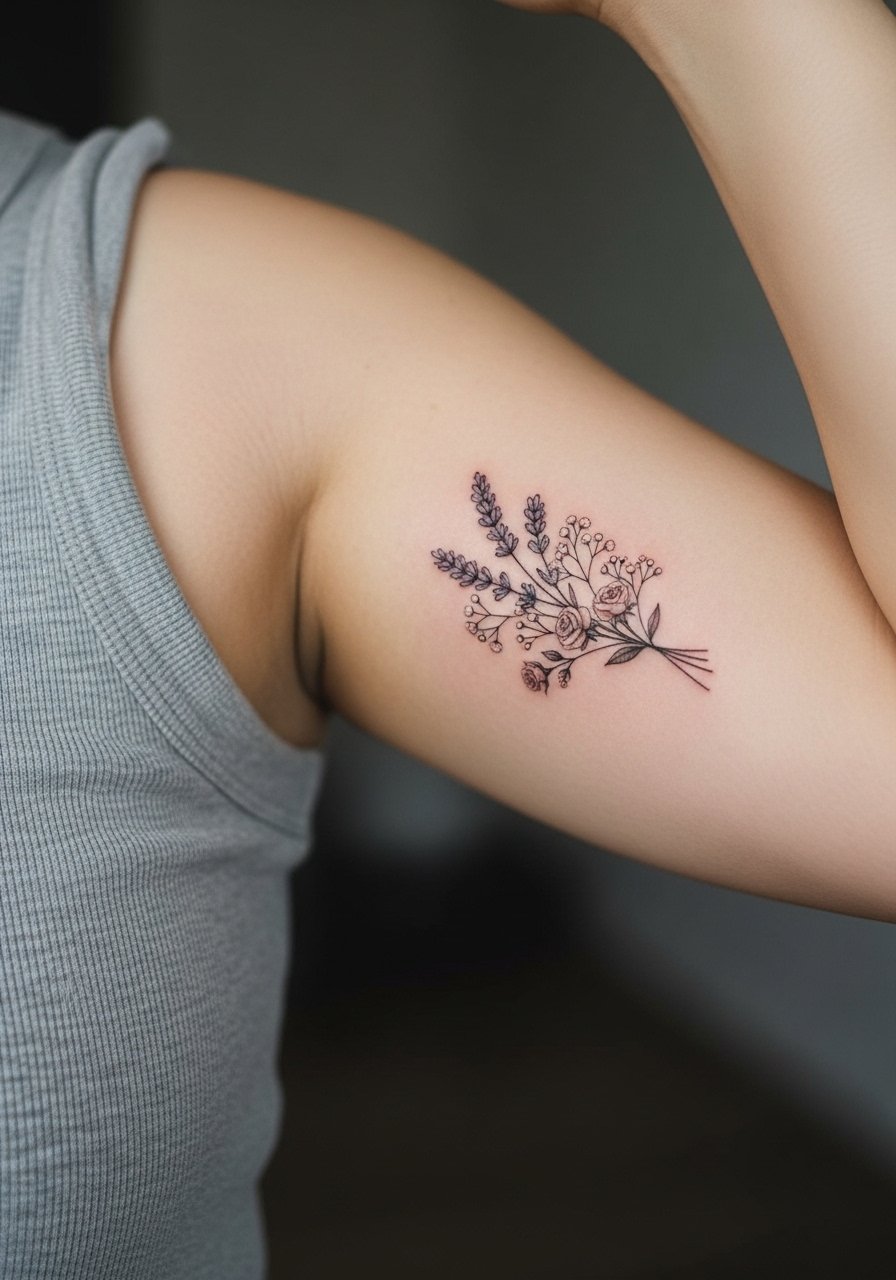
The inner bicep has softer healing because it sees less sun and friction. Sessions feel tender when the arm is raised and muscles twitch, but most people tolerate short sittings. Recommend simple clusters instead of dense scenes to keep clarity. People often misjudge how personal this spot feels because it is usually covered. If you want a subtle reveal, this placement is ideal. Expect a touch-up at year two if you expose the area frequently during summer months. For session wear, a sleeveless top with easy arm mobility is best.
17. Black and White Peony Collar Piece That Photos Well
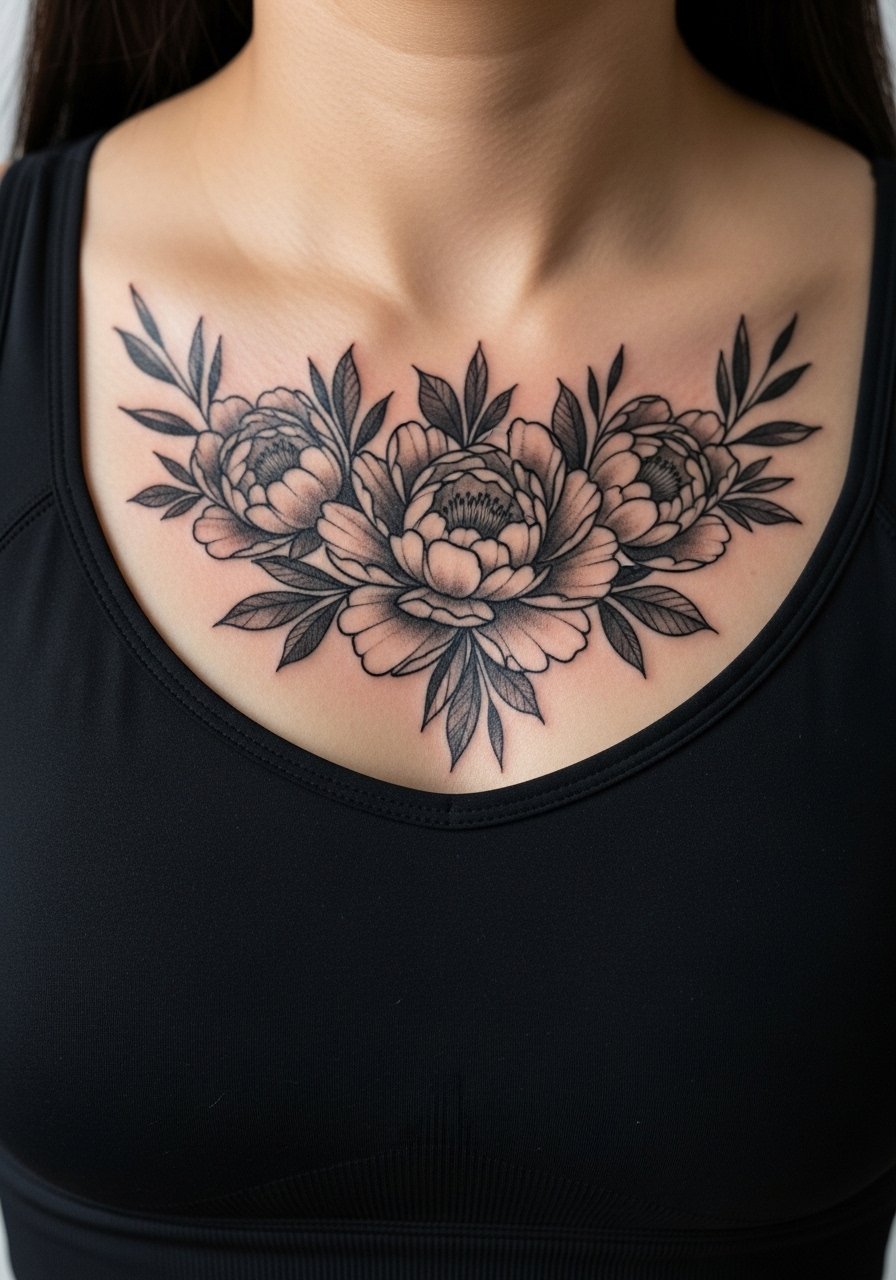
Sternum and upper chest pieces are intimate and photograph well when done with clear contrasts. Pain is moderate to high, so plan breaks and hydration. Ask for crisp shadowing in the lower petals so the piece reads in photos when you wear open-neck garments. A common mistake is overworking the center too densely, which bruises more and slows healing. Expect the piece to look notably better at six months once swelling and early scabs have smoothed. For session day, bring a fitted sports bra you can adjust so the artist has clean access.
18. Ornamental Mandala Bouquet at the Shoulder Cap
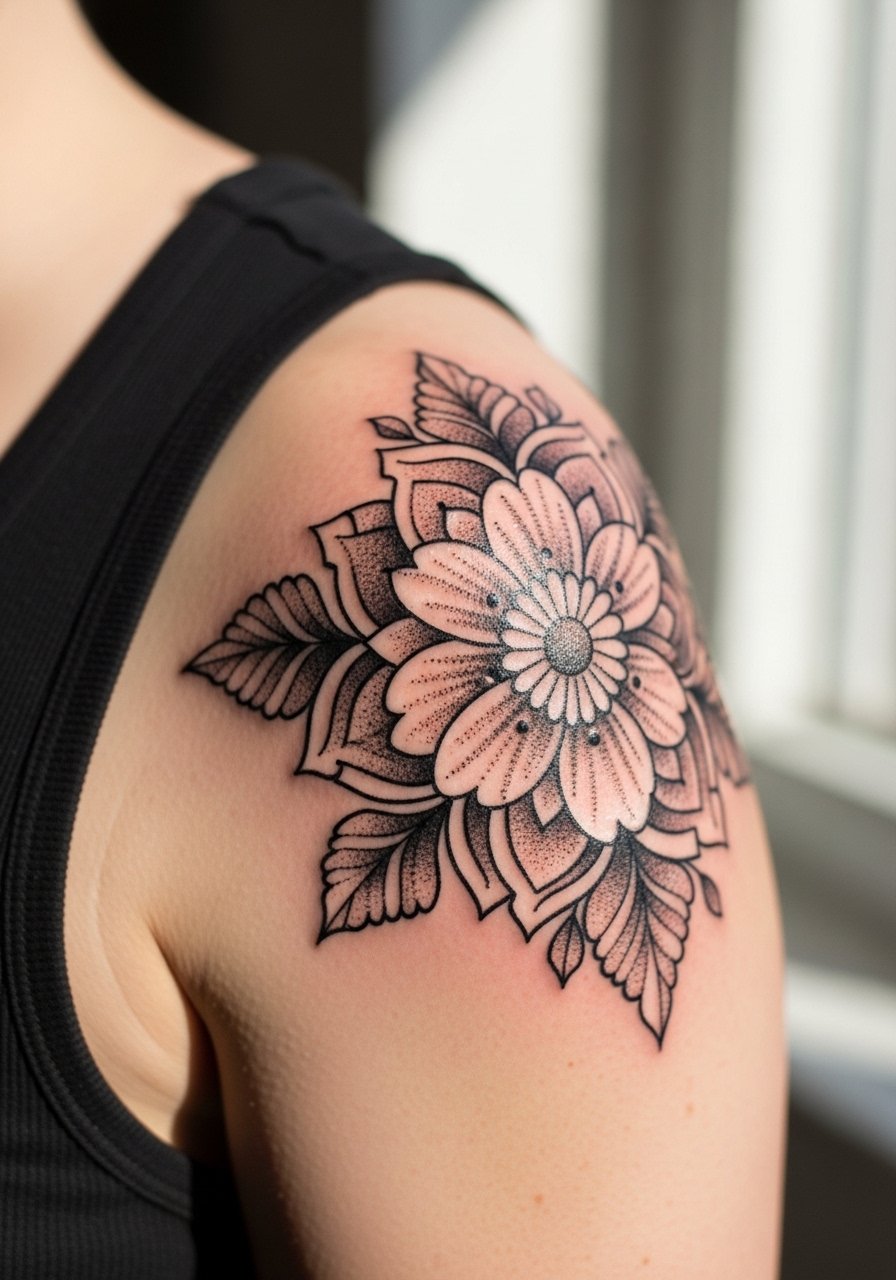
The shoulder cap is a strong site for circular ornamental compositions because it offers curvature that reads well from multiple angles. Sessions involve consistent dotwork rhythm and can take multiple hours. Tell the artist you want spacing that keeps the mandala airy rather than overly dense. A mistake is compressing too many small elements into the center, which fills in over time. Healed results often remain legible for years when protected from sun. For the session, a loose tank top or button-front shirt makes positioning easy.
19. Calf Wrap Bouquet That Survives Gym Time
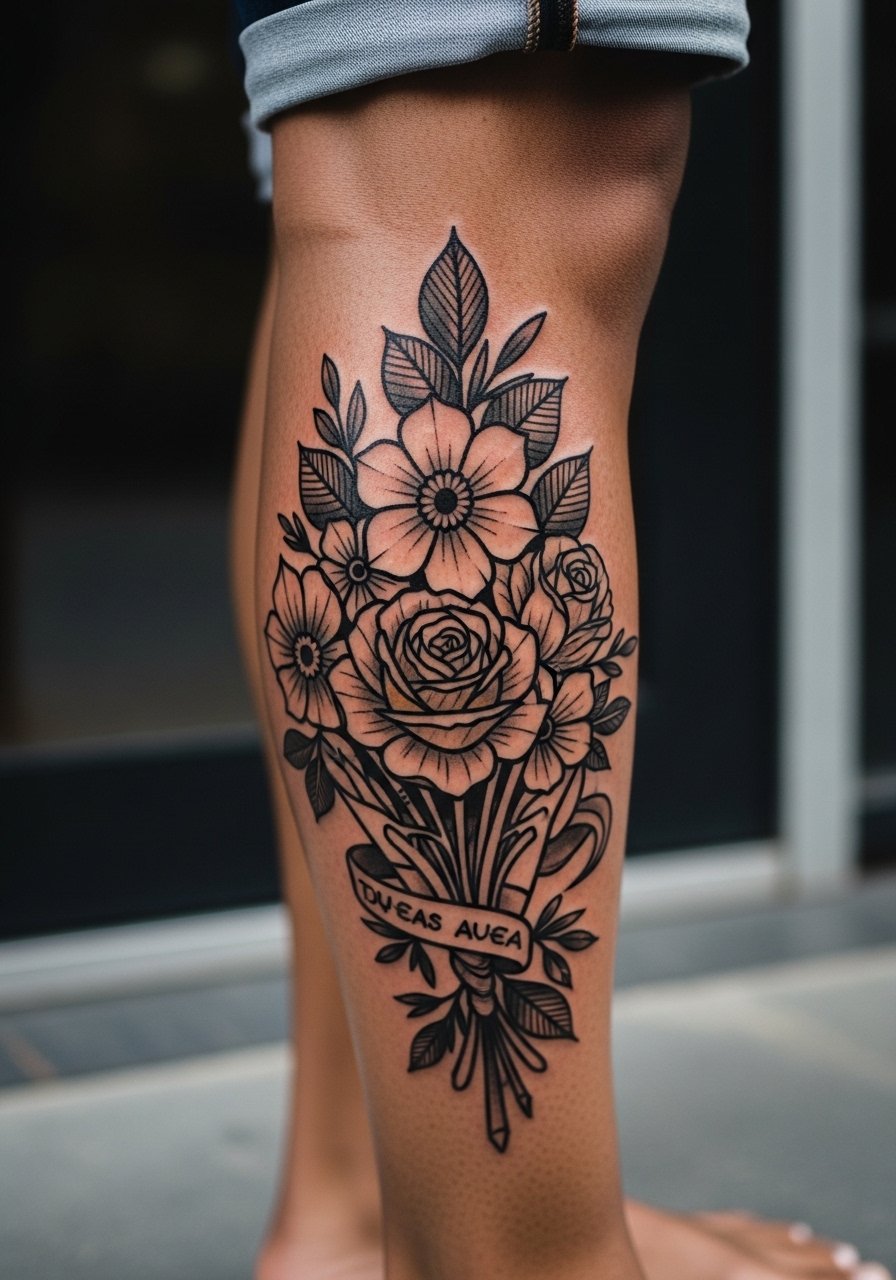
Designing a wraparound bouquet for the calf requires thinking about muscle movement and clothing friction. Sessions feel comfortable and the site tolerates saturated color well. Ask for slightly thicker outlines that align with the muscle curve to avoid distortion as the calf flexes. A typical mistake is placing overly delicate tendrils across the back of the leg where socks and shoe collars rub. Expect the piece to hold color for years as long as boots and tight cuffs are avoided during initial healing. For styling, bootcut jeans or midi skirts showcase the wrap.
20. Ankle Chain Bouquet for Subtle Movement
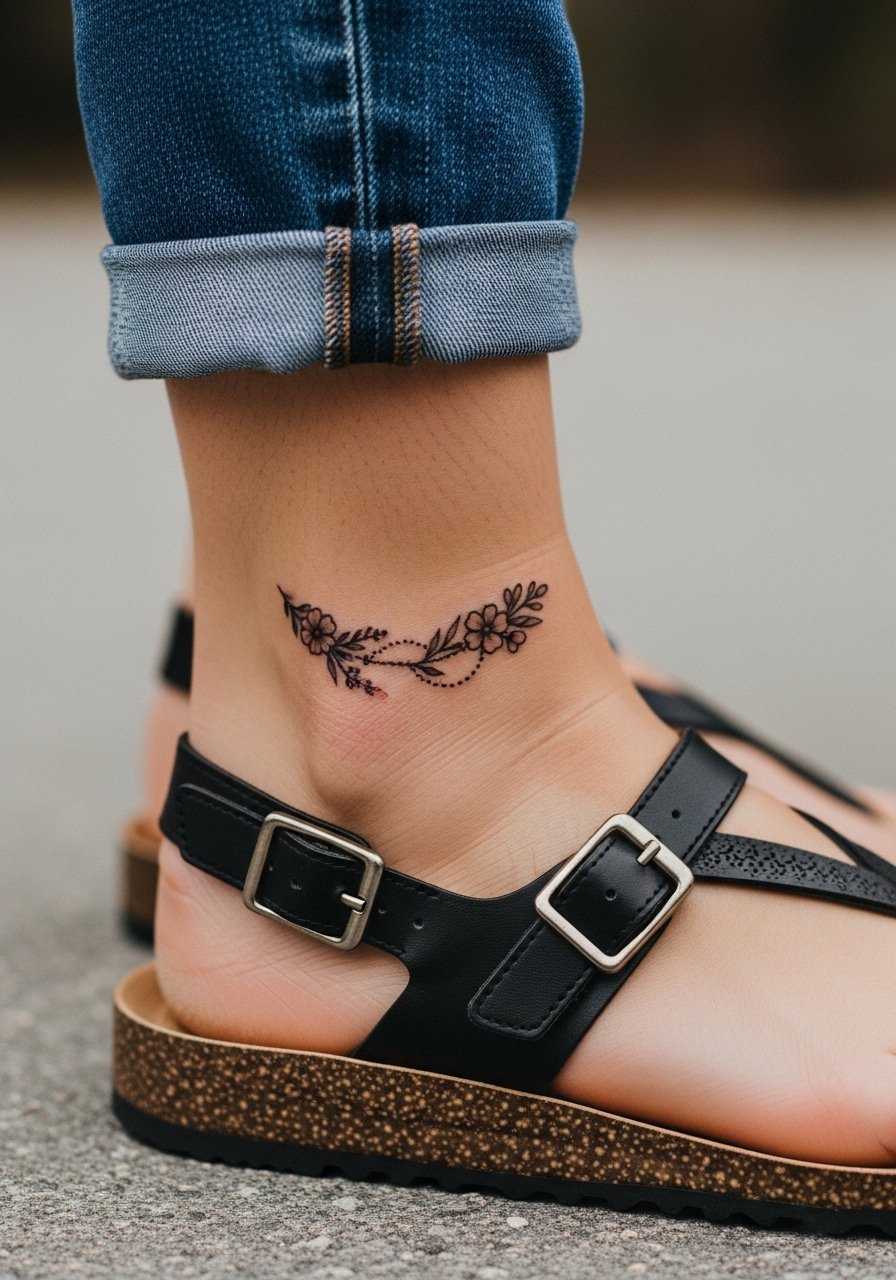
Ring-like anklet tattoos depend on simple motifs that still read when the skin flexes. Pain near the ankle bone can be sharp but sessions are quick. Request slightly bolder link points between flowers to avoid early gaps. A common oversight is wrapping too tight near bony areas, which makes healing rougher. Plan a touch-up within a year if you wear tight shoes often. In summer, pair with strappy heeled sandals or a cropped pant to let the work peek out.
21. Micro-Realism Bouquet on the Outer Shoulder
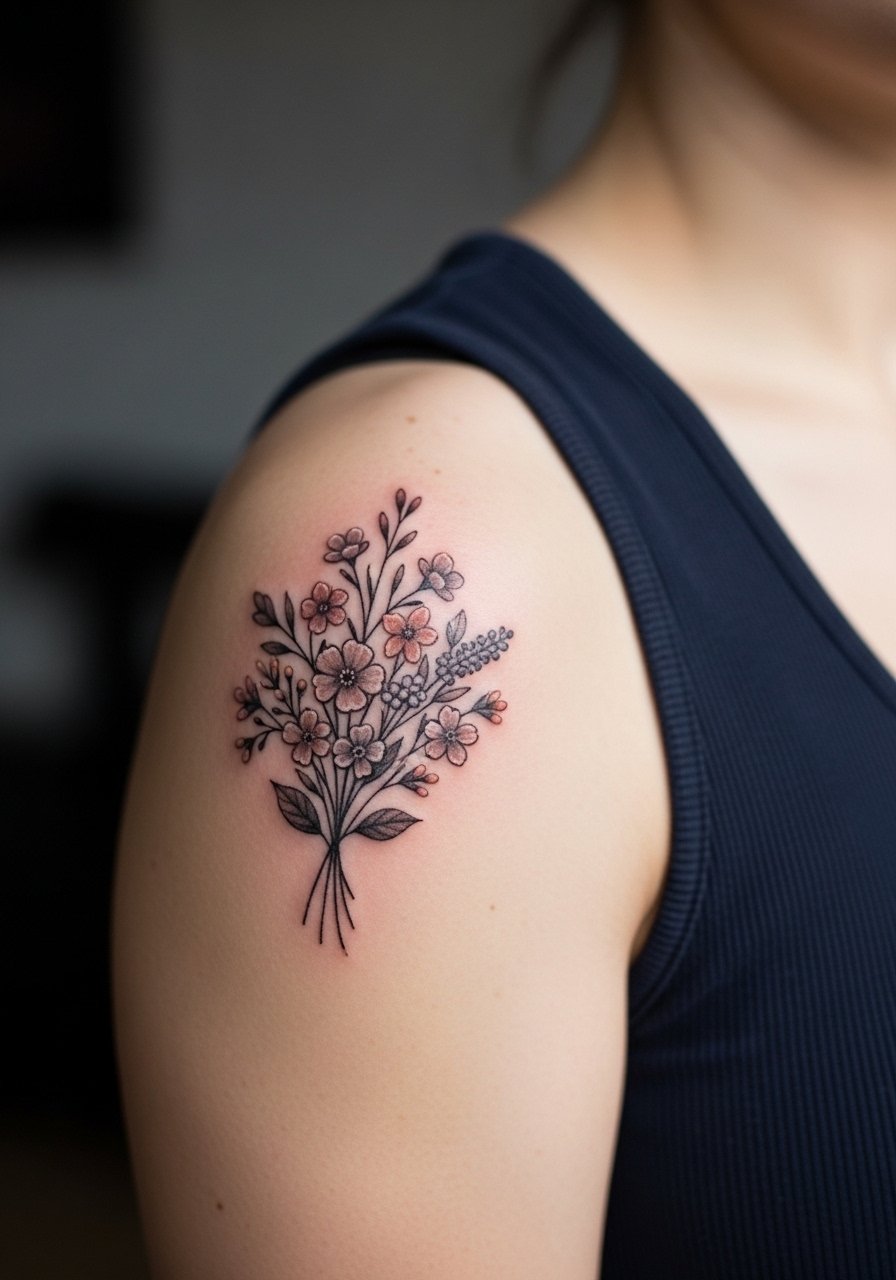
The outer shoulder gives micro-realism room without constant abrasion, and the curvature helps small shading read as three-dimensional. Sessions require patience since tiny shading takes time. Tell the artist you want simple arrays with open space so each bloom holds. A frequent mistake is cramming many miniature blooms in a single patch, which merges. This placement often ages well and may only need minimal touch-ups after several years if kept out of prolonged sun. Session wear that avoids fabric tugging is a loose tank top.
22. Blackwork Tulip Cluster Along the Collarbone Curve
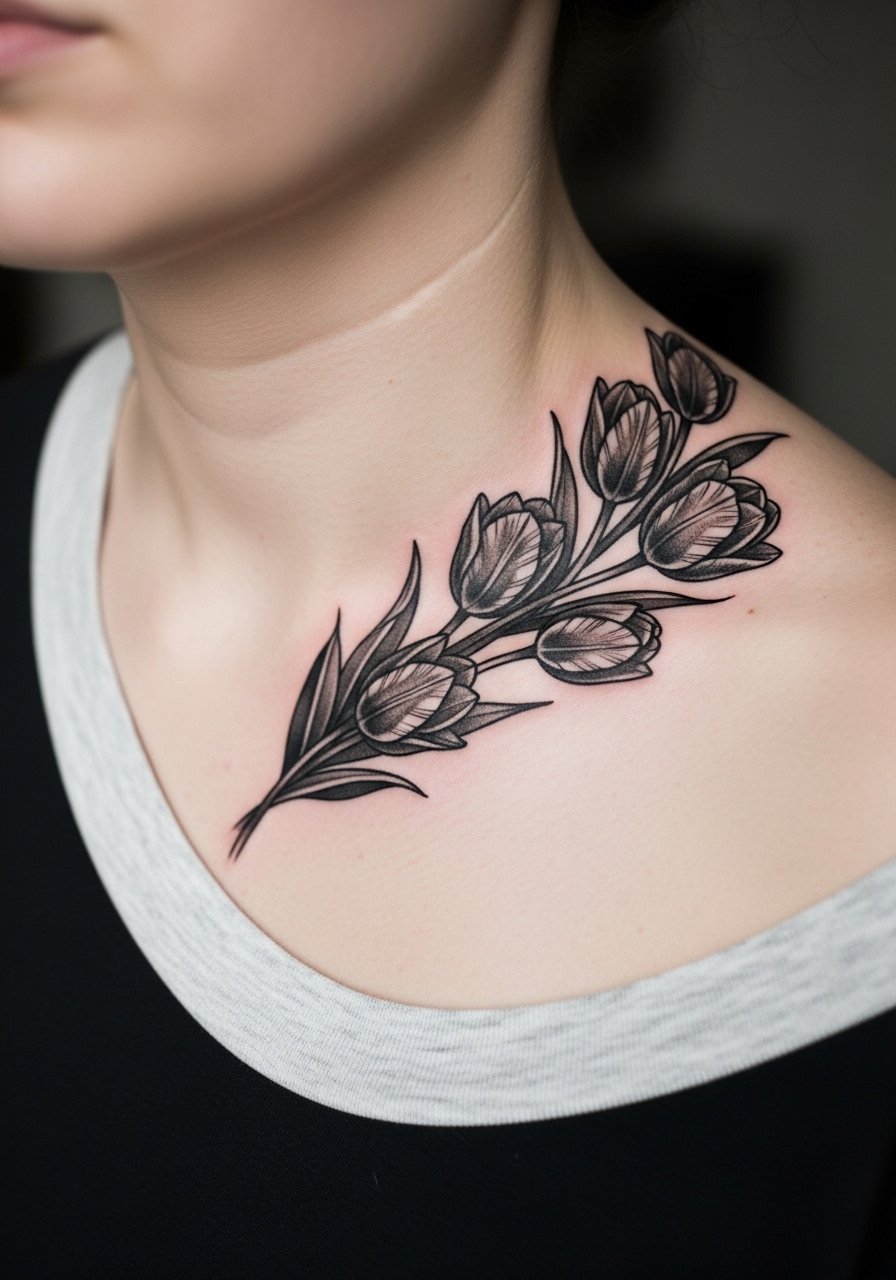
Using black fills along the collarbone creates a modern statement that reads like jewelry. Expect moderate pain and short, focused sessions. Ask your artist to keep edges crisp and to plan placements that follow bone contours. A mistake is crowding the clavicle gap with too much black, which can feel heavy when paired with delicate necklaces. Keep sun exposure low to maintain contrast and consider layered thin necklaces for everyday styling. Pulling a wide-neck shirt aside on session day gives the best access.
23. Ribcage Bouquet Designed Upside-Down for Mirror Viewing
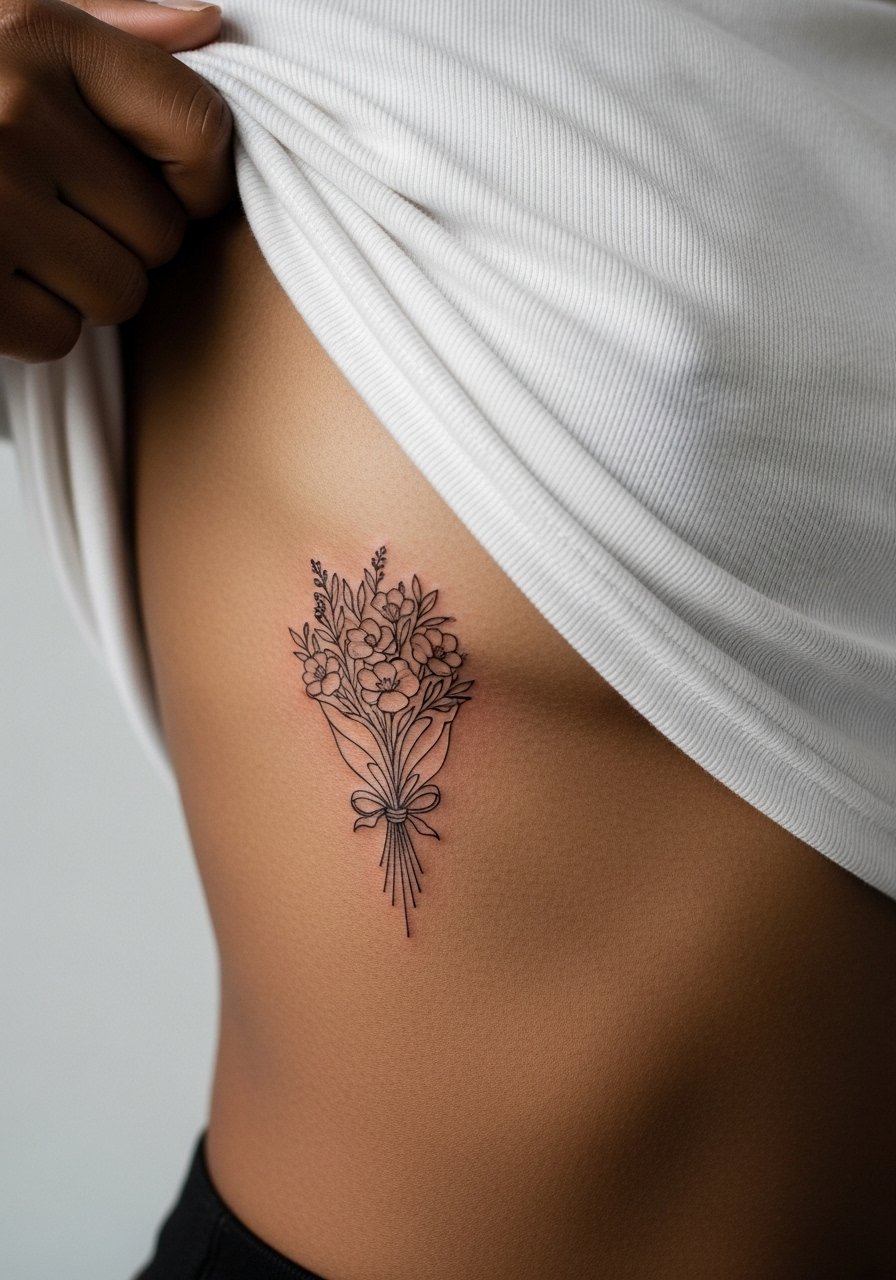
Flipping a ribcage design so it reads in a mirror is a clever visual trick, but it changes how you view the piece on your body. Pain is higher and sessions should be planned with breaks. Tell the artist you want the composition reversed for mirror orientation, and ask to preview a stencil while standing. A mistake is not testing the mirror view with clothing on; wear the garments you plan to show off the tattoo in so placement is exact. Expect touch-ups if you frequently sleep on that side or wear tight bras during healing.
24. Hip Bouquet That Peeks from Swimwear
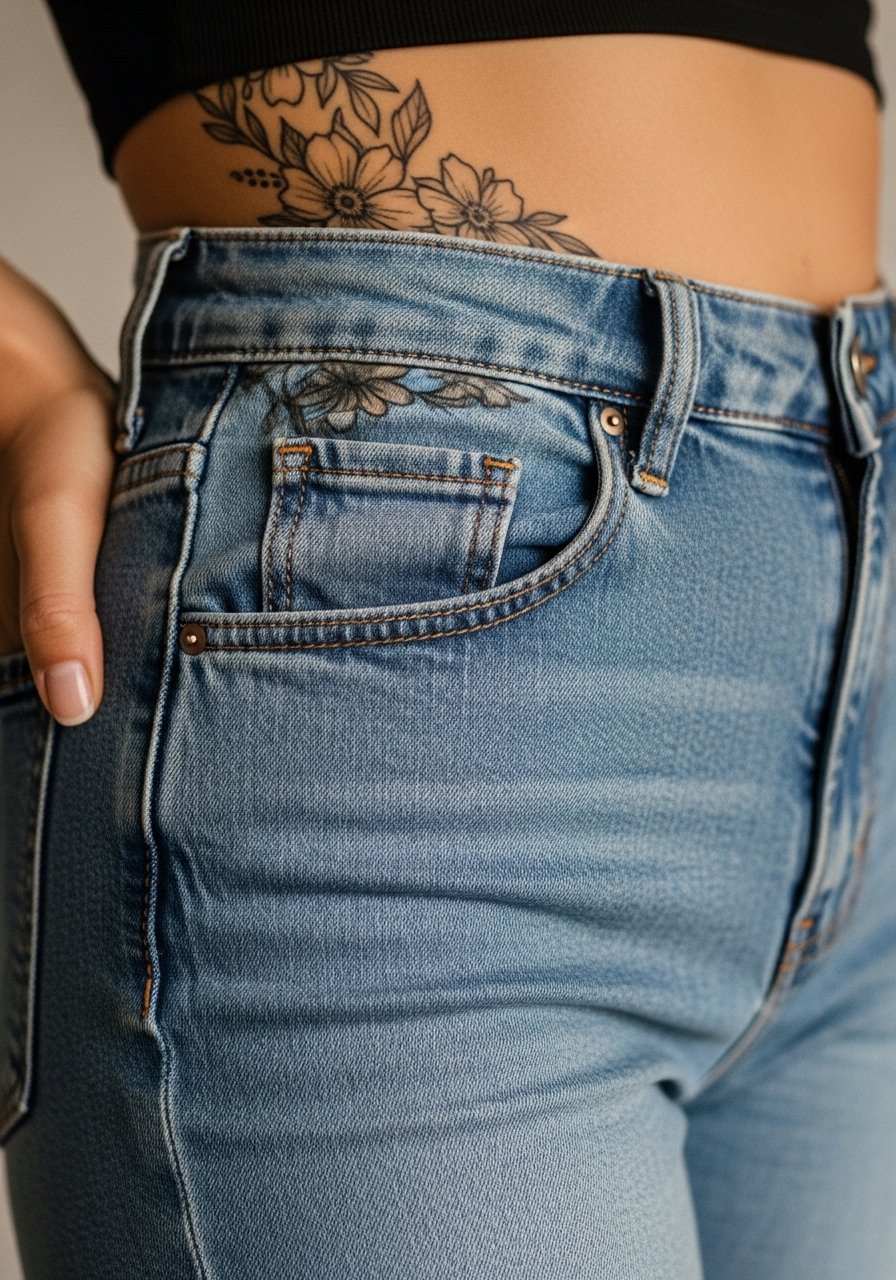
Hip tattoos sit where clothing can either hide or highlight them, so think about dresses and swimwear during placement decisions. Pain is moderate and can be more intense near the hip bone. Ask for a placement test with your favorite swimsuits so the bouquet sits where you want it to peek out. A common error is choosing a composition that lands too close to underwear seams, which causes rubbing. For session wear, high-cut shorts or swim bottoms that you can move slightly are ideal.
25. Inner Thigh Bouquet for a Quiet Reveal
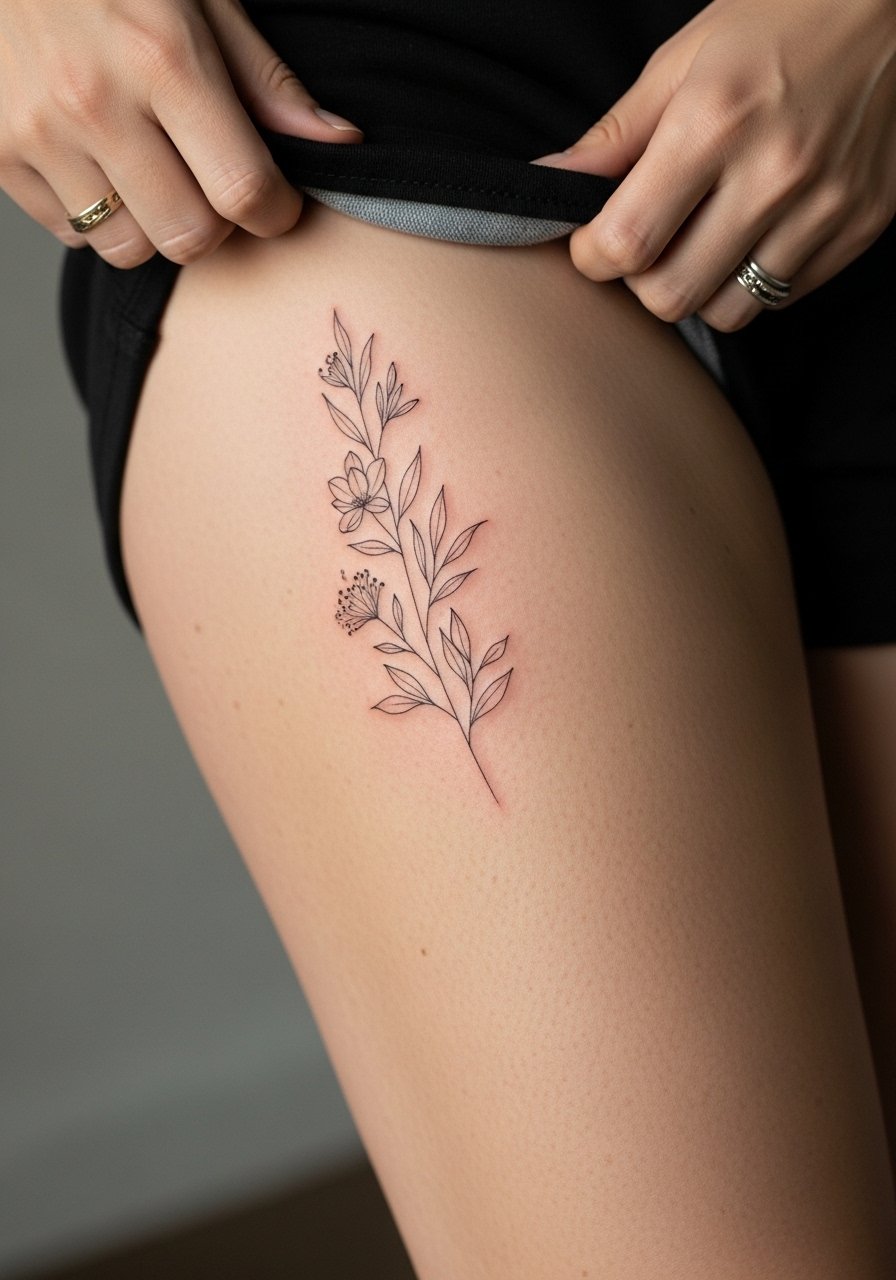
The inner thigh is intimate and low friction, which helps fine line work hold. Sessions can be sensitive due to thin skin near the crease, so plan comfort measures like breaks and padding. Tell your artist you want petal spacing that keeps motion from collapsing adjacent lines. A mistake is asking for super-fine crosshatching in a place that bends and stretches often. Expect the piece to remain stable with occasional touch-ups if weight fluctuations occur. Bring loose shorts for the session so the artist can access the area without constriction.
26. Back Spine Bouquet with Vertical Flow
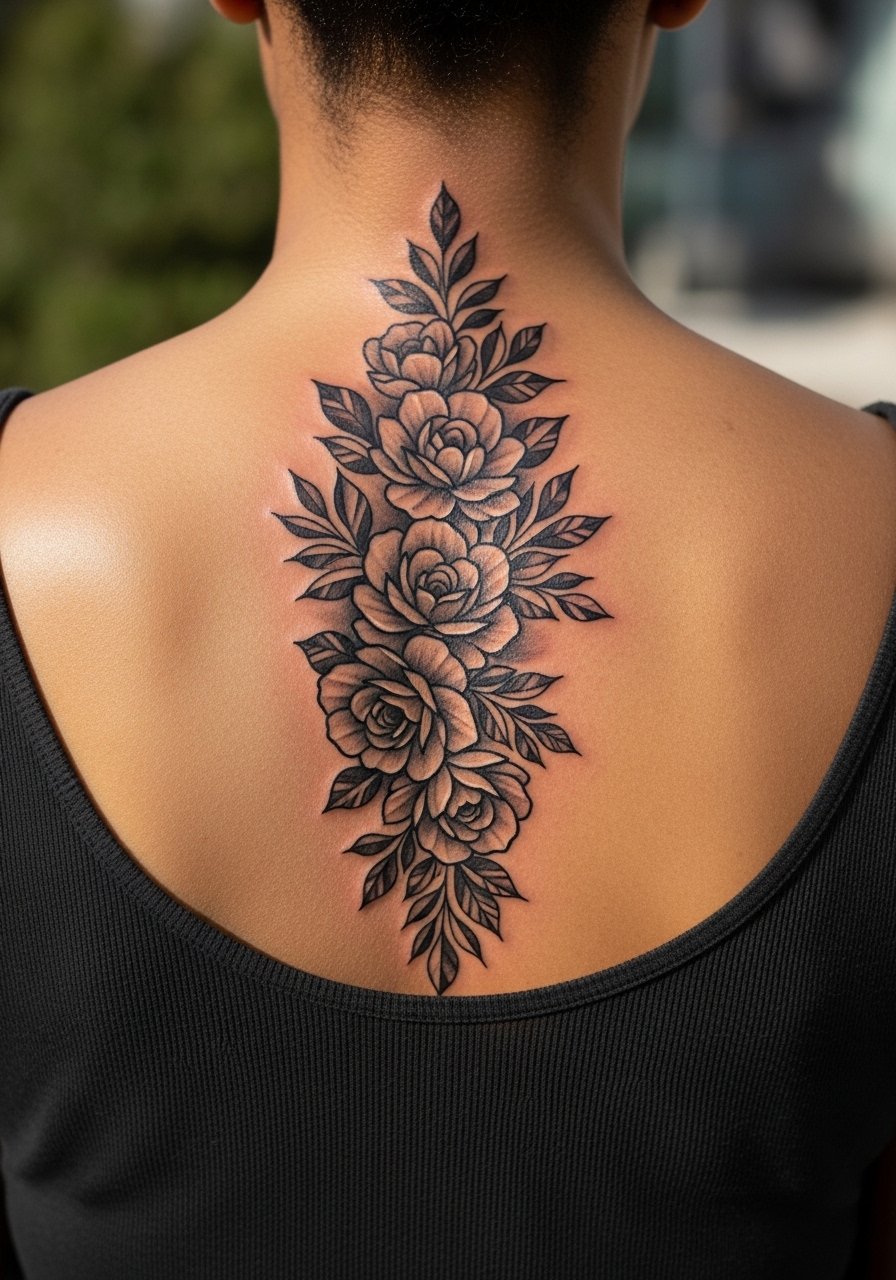
Spine pieces offer dramatic vertical flow and photograph well with open-back garments. Pain varies greatly based on proximity to bone, and many clients schedule a few short sittings. When you consult, agree on a rhythm to the bouquet so each bloom reads as part of a spine lane rather than disconnected elements. A mistake is asking for identical blooms stacked tightly, which reads repetitive once healed. Plan for touch-ups after a couple of years if you plan to expose the area often in sun.
27. Collarbone to Sternum Bouquet for Layered Necklines
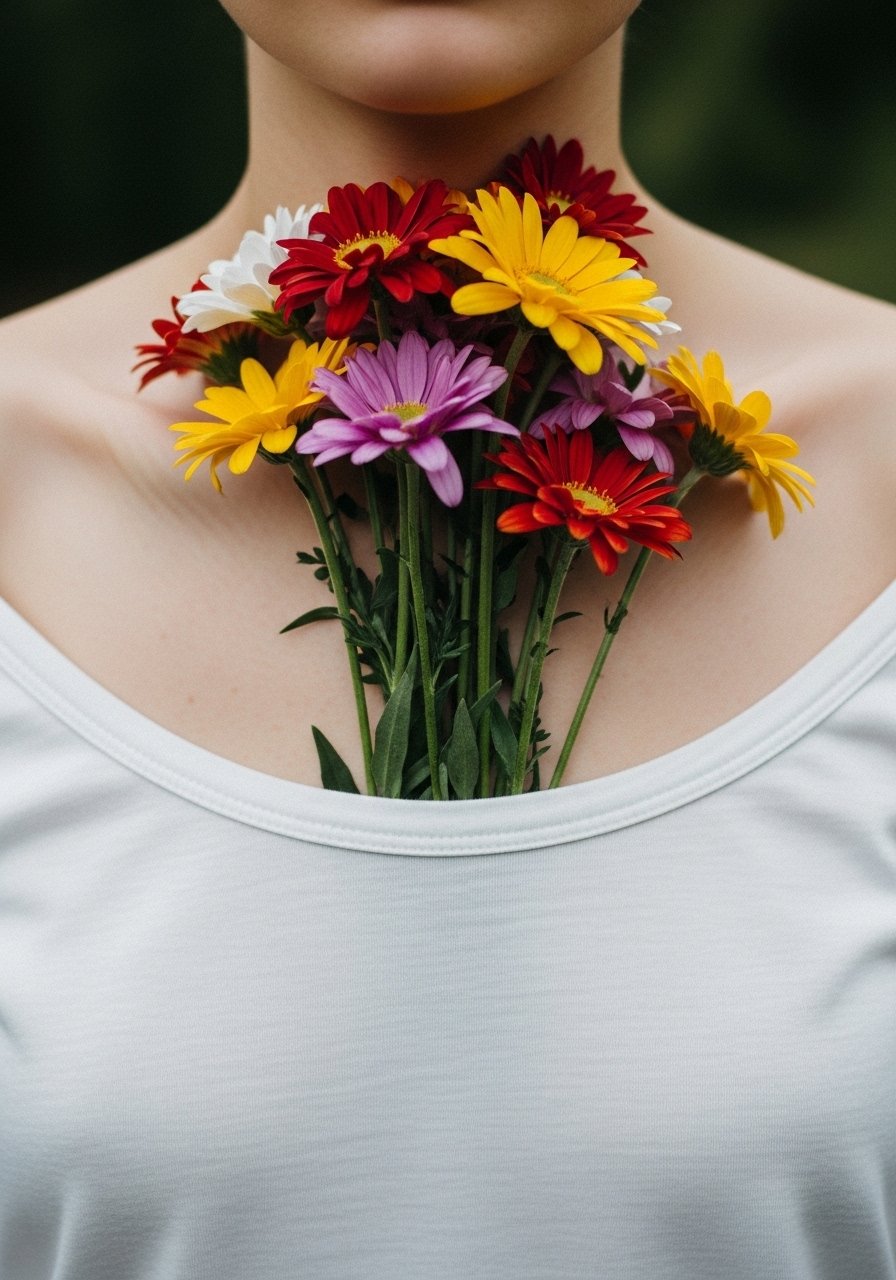
This bridging placement works well when you want a design visible with layered necklines. Pain is moderate and the session will require careful positioning. Ask the artist to map the centers so the bouquet follows natural curves between collarbone and sternum. A common mistake is letting the central cluster sit too low or too high relative to favorite necklines. Expect minimal change at six months and plan for sun protection to keep the black lines sharp. A thin chain pendant often sits nicely above the top petal.
Frequently Asked Questions
Q: Why do fine line flower tattoos blur faster on forearms, and what can I do about it?
A: From what I've seen, forearms face constant sun exposure, friction from clothes, and daily washing, all of which speed up softening. Ask for slightly bolder anchor lines and space between stems during consultation. Plan a light touch-up at year one or two and commit to sunscreen on that area when outside.
Q: How do I avoid hidden shop minimums or surprise pricing for a small bouquet?
A: Ask for a full written breakdown before booking that lists hourly rate, estimated hours, deposit, and any studio minimum. Compare quotes from three local studios via platforms that display portfolios, and mention upfront that you need a line-item estimate so there are no surprises on the day.
Q: Should I choose watercolor on the ribs or switch to realism for longevity?
A: Watercolor can look gorgeous fresh but tends to soften on high-movement or high-friction spots like ribs unless the artist plans stronger edges. Realism or black and gray often holds contrast longer. If you want washes, insist on anchored outlines and plan for touch-ups.
Q: What is the Saniderm versus dry healing debate and which should I pick after a bouquet tattoo?
A: Two camps exist. One group favors Saniderm or protective film to limit friction and keep the area sterile. The other group prefers dry healing because they say over-moisturizing can trap bacteria and soften lines. The best choice depends on your artist's experience and the specific placement, so ask which approach they use most and why.
Q: Will skin tone affect how floral color shows up in photos, and what are my options?
A: Darker skin sometimes reads color differently in photos, so if you care about vibrancy choose high-contrast approaches like blackwork or strong black outlines with warm fills. Talk to artists who show healed work on a range of skin tones and ask to see healed photos rather than fresh shots.
Q: How much will a realistic thigh bouquet hurt compared to a ribcage peony?
A: Thigh outer placements are generally less painful because there is more flesh, and sessions can be longer comfortably. Ribs are higher on the pain chart for many people. Plan breaks and hydration for ribs and expect thigh sessions to be more tolerable for extended sittings.
Q: I want to show off an ankle bouquet in summer. What footwear and clothes work best?
A: Strappy sandals and cropped straight-leg jeans rolled once are perfect because they keep attention on the ankle without rubbing the area during the day. Consider shoes you can put on and remove easily during healing, and avoid tight socks for the first week.