
Fine line trishul tattoos are flooding saved boards, and the ones that still look crisp a few years later are rarely the tiniest, most crowded versions. Longevity comes from smart spacing, shallow-but-consistent depth, and placement that avoids constant friction. Read these 21 fine line trishul tattoo designs, each with what to ask your artist, how they age, and how to wear them so the symbol reads clearly over time.
1. Minimal Inner Wrist Trishul for Everyday Visibility
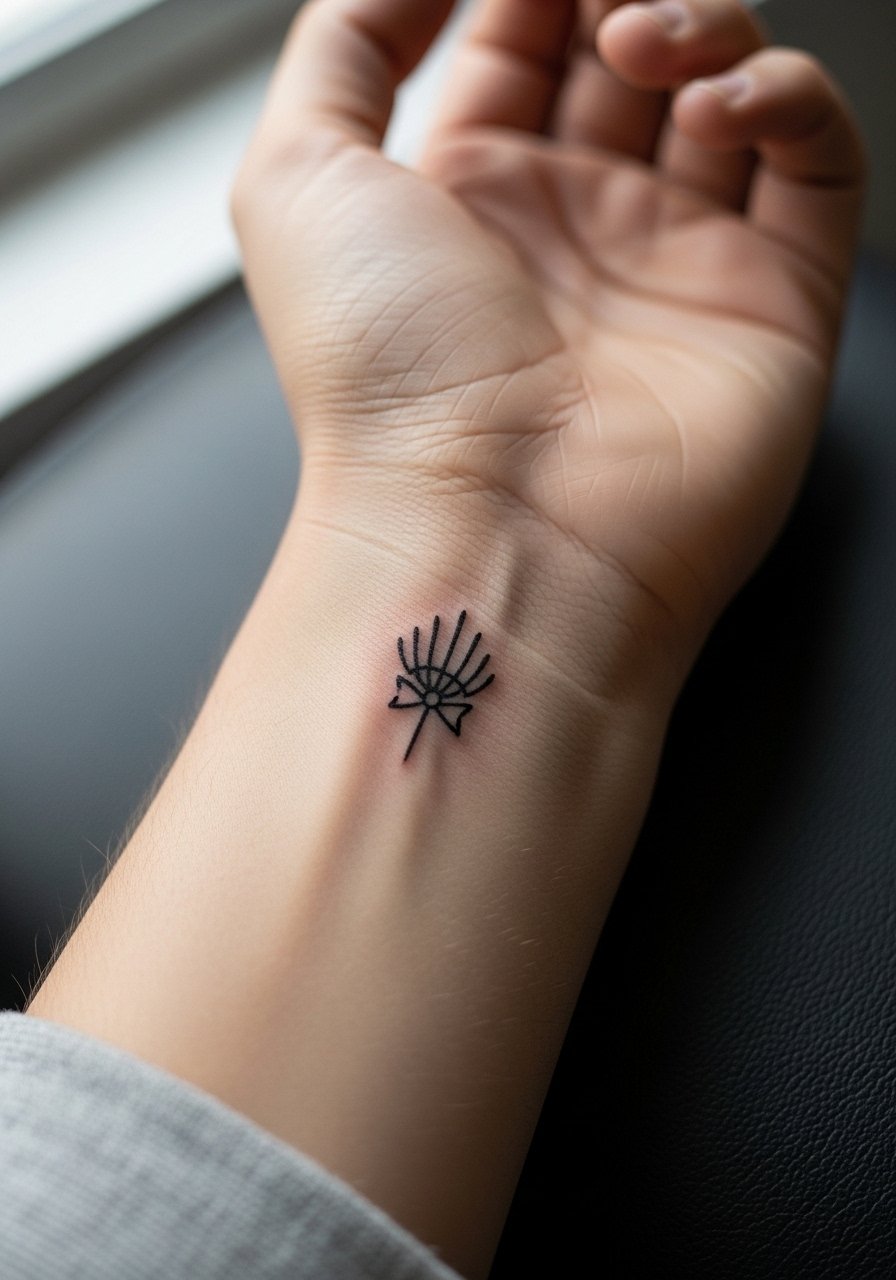
I've seen tiny wrist Trishuls read like jewelry when the artist leaves micro breathing room inside the prongs. Fair warning, the wrist is a high-friction zone and fine line there often needs a touch-up by year two. In consultation say you want light, single-needle linework with slightly increased spacing between the tines to avoid merging. Session feels quick and sharp, about 30 to 60 minutes. For the appointment wear a racerback tank top so the artist can stabilize the wrist. A common mistake is asking for the thinnest possible lines without accounting for daily friction from watches and bracelets.
2. Side Rib Trishul with Gentle Stipple Shading
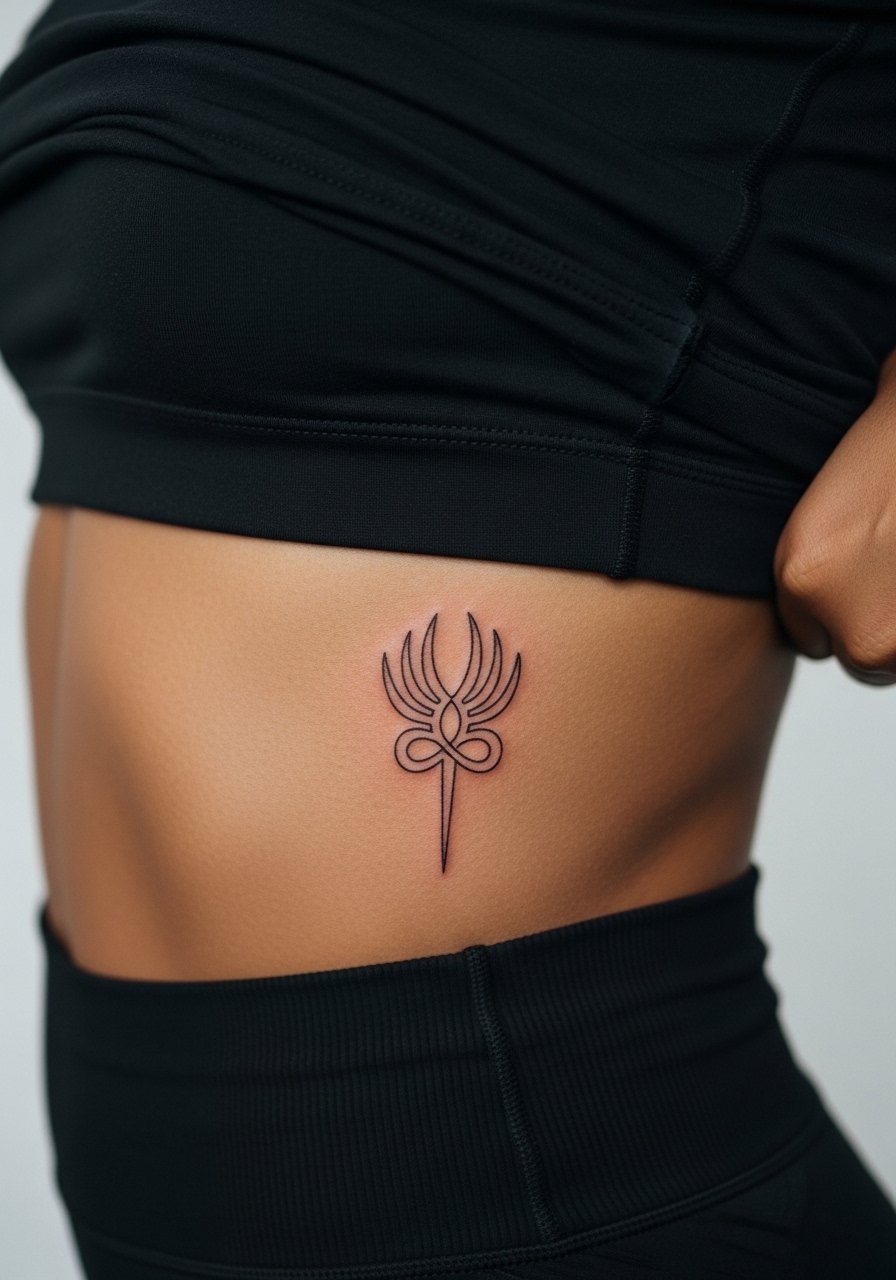
The ribcage stretches and compresses, so most artists split into two camps about fine line there. One camp warns that tight linework blurs within two years. The other says with proper needle depth and spacing fine line can settle well. Tell your artist you want stipple shading around the base rather than dense fill to keep contrast as it ages. Pain is higher on ribs, expect multiple short breaks during a 60 to 120 minute session. For the studio day wear a zip-up hoodie that you can lift on one side. If you plan this for religious reasons, consider slight stylistic variations rather than an exact replica out of respect.
3. Sternum Centerpiece Trishul with Symmetric Dot Work
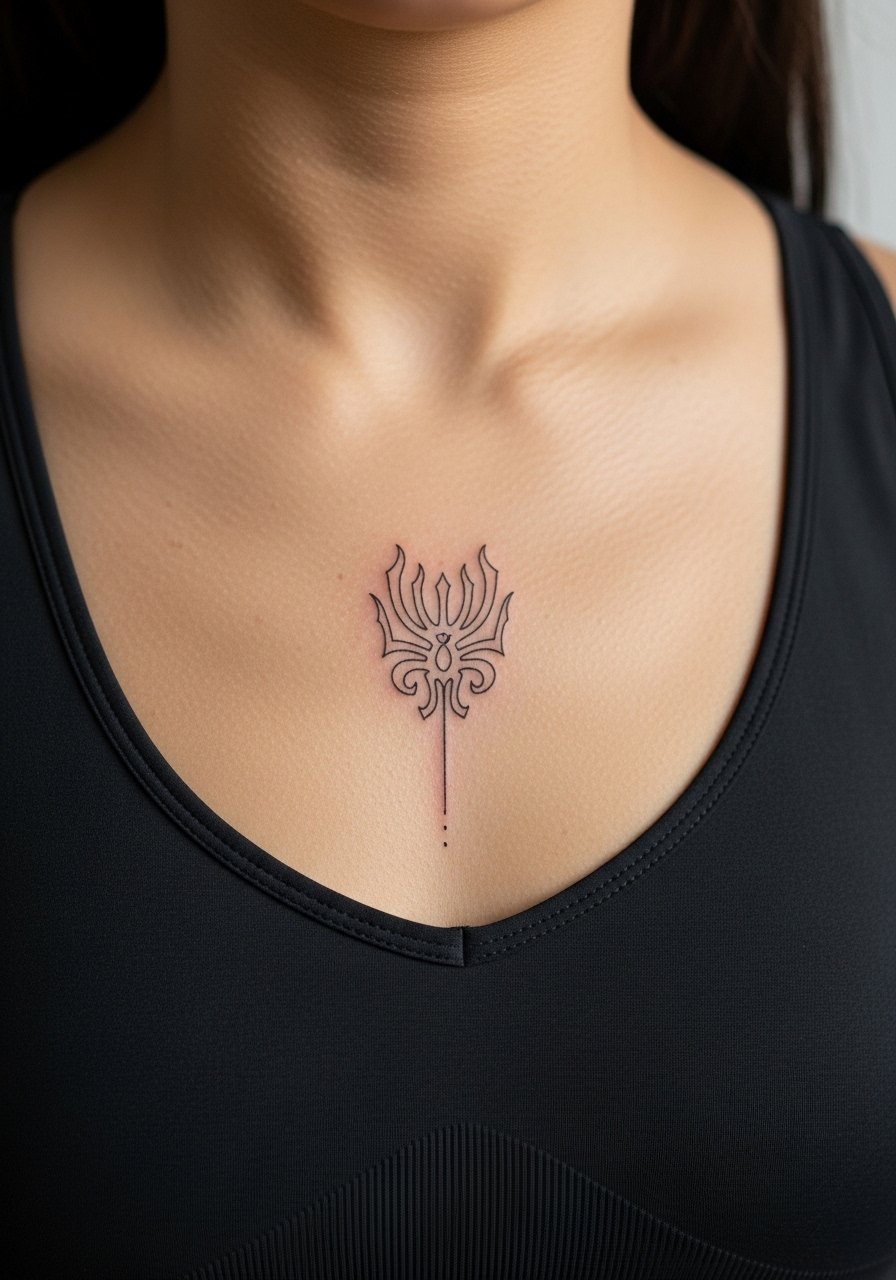
Sternum placements reward symmetry but punish overcrowding. I recommend symmetric dot work around the shaft to suggest depth without heavy saturation that might blur. Tell the artist to map the vertical axis on you while seated and standing so the Trishul reads centered with movement. Sternum sessions are moderately painful and usually require a single 60 to 90 minute appointment. For session day wear a bandeau or sports bra you can easily lift. Some people debate religious iconography as body art; one group treats sacred symbols as off-limits, the other sees personal devotion through tattoos. Consider community norms and your own relationship to the symbol before booking.
4. Inner Forearm Linear Trishul with Micro-Detail
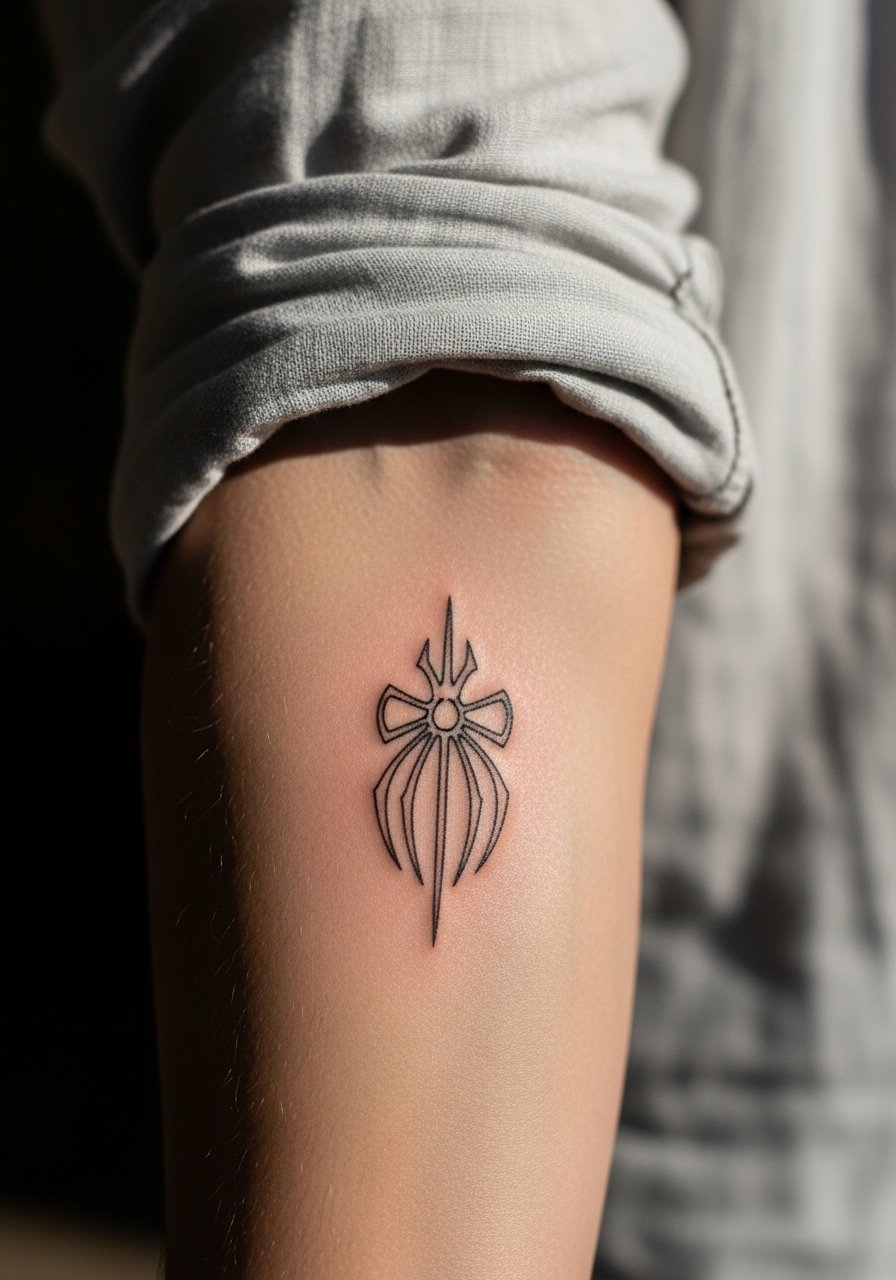
I've seen inner forearm Trishuls age gracefully when artists use slightly bolder anchor lines and keep micro details sparse. This placement is great if you want the symbol visible without constant rubbing. Ask for a small baseline thickness for the main shaft, with micro stippling on the crossguard. The session feels tolerable and typically runs 45 to 75 minutes. For showing it off, pair with a rolled-up linen shirt to keep attention on the linework. A common error is insisting on extreme needle fineness that disappears after a year.
5. Ankle-Side Trishul That Reads at Street Level
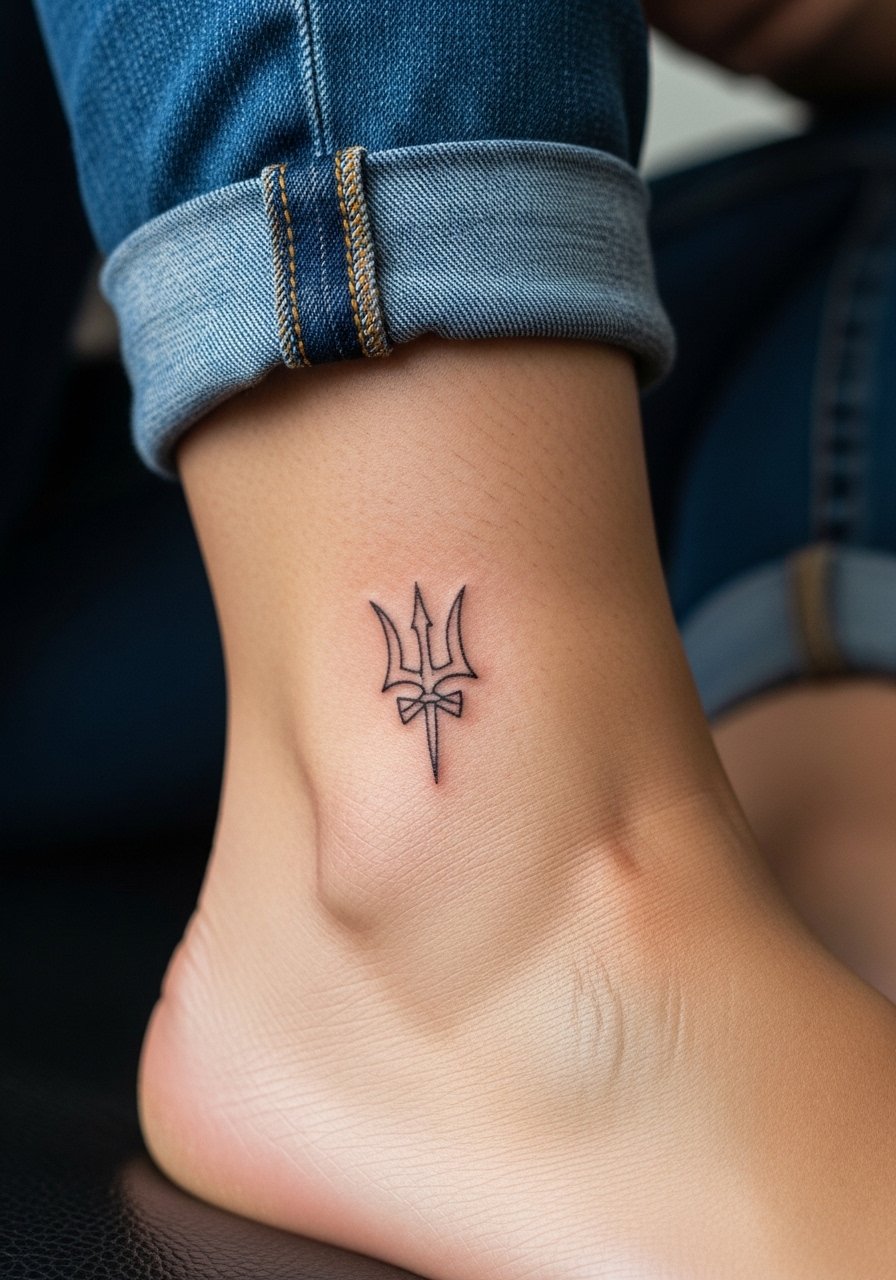
Ankle placements for fine line Trishuls look elegant but take a beating from shoes and socks. Visual impact lead: an ankle Trishul reads as a deliberate, subtle mark when the shaft is vertical and not too thin. Tell the artist you want slightly thicker base lines and ask about touch-up timelines for the outer ankle. Sessions are short, usually under an hour, but expect some soreness when walking for a few days. For session wear choose slip-on shoes and loose drawstring pants so your artist can access the area without pressure.
6. Collarbone Trishul with Sparse Linework
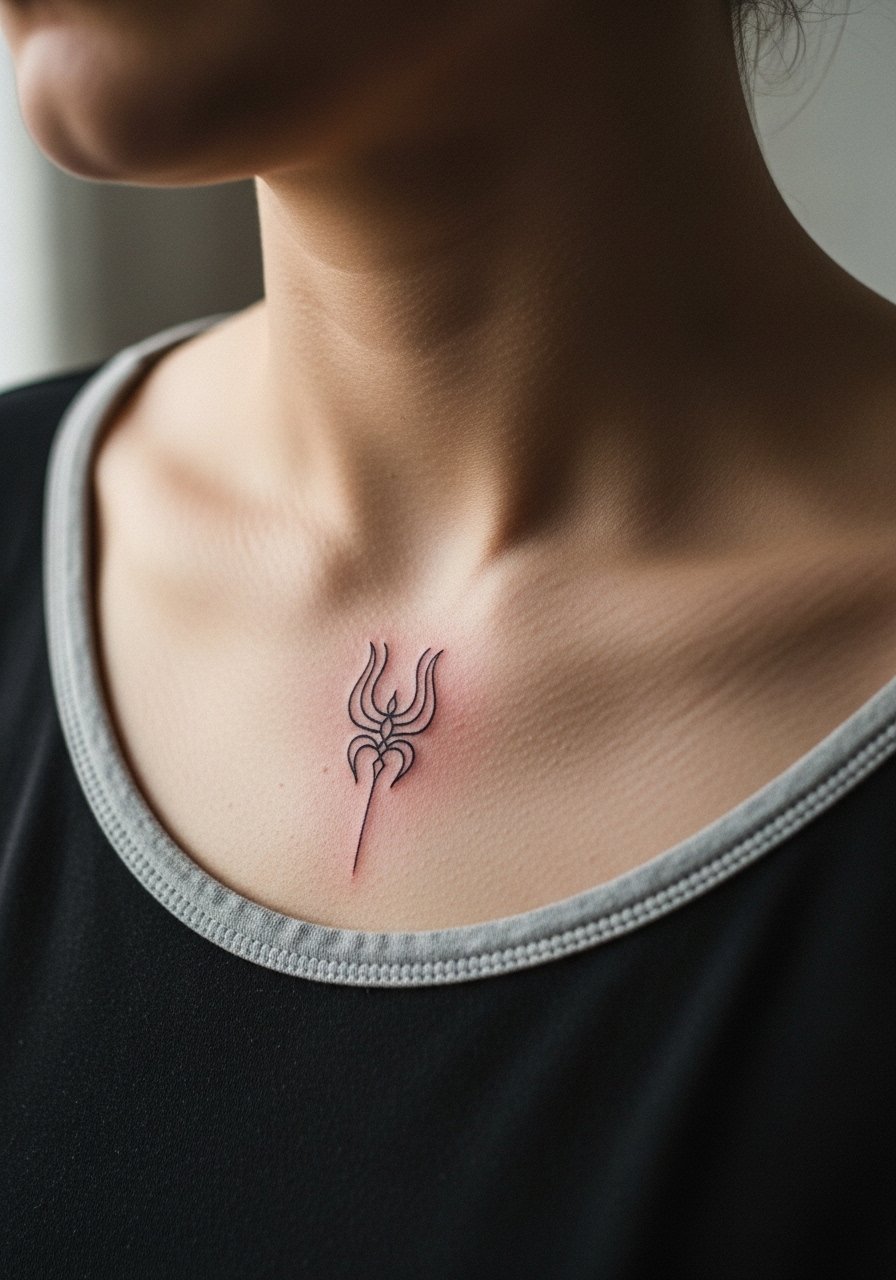
There is a clear visual payoff when a collarbone Trishul sits just above the bone with negative space around the tines. Most mistakes here come from crowding the area with other small symbols, which makes the Trishul lose presence. For consultation, ask the artist to place the shaft parallel to the clavicle and to keep negative space around each prong. Sessions are short and moderately painful when the needle crosses bone. For showing it off try a wide-neck blouse. Respect for the symbol matters if it serves religious meaning to you or your family.
Studio Day Picks
The wrist, ankle, and collarbone Trishuls above need different prep from larger chest pieces, and a few focused items smooth the session and first week.
-
Stencil transfer paper kit. Lets you preview the Trishul placement on curved spots like the ankle and collarbone before the needle touches skin.
-
Thin protective film roll. Useful for finger or wrist Trishuls that face frequent hand washing and friction.
-
Comfort grip arm rest pad. Keeps the forearm and wrist stable during single-needle sessions where steady positioning matters.
-
Cooling gel sheet pack. Helps reduce surface heat and swelling after longer sternum or ribcage appointments.
-
Aquaphor healing ointment. A thin layer in the first 48 hours locks in moisture for fine line work without suffocating the area.
7. Tiny Finger Trishul with Strategic Negative Space
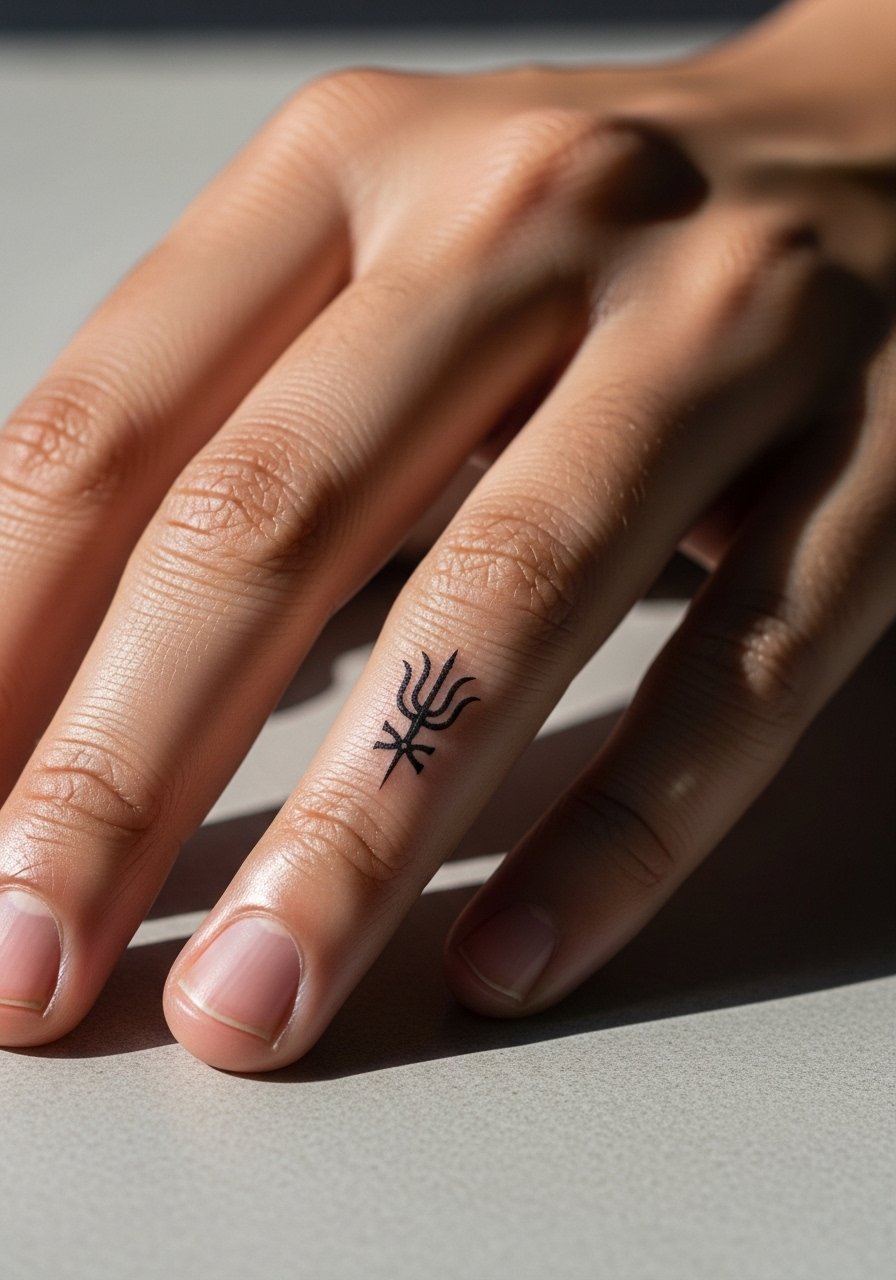
Mistake lead: the biggest mistake with finger Trishuls is making them too dense. Lines need negative space to survive constant washing and motion. When you consult, ask for simplified prongs and slightly thicker anchor points so the symbol keeps its shape. Fingers are high blowout risk and often need touch-ups by year one or two. The session is quick but painful and involves short breaks. For showing this off, consider thin-stack bracelets or a minimalist ring set that frames the finger without rubbing the ink.
8. Small Back-of-Neck Trishul for Hidden Meaning
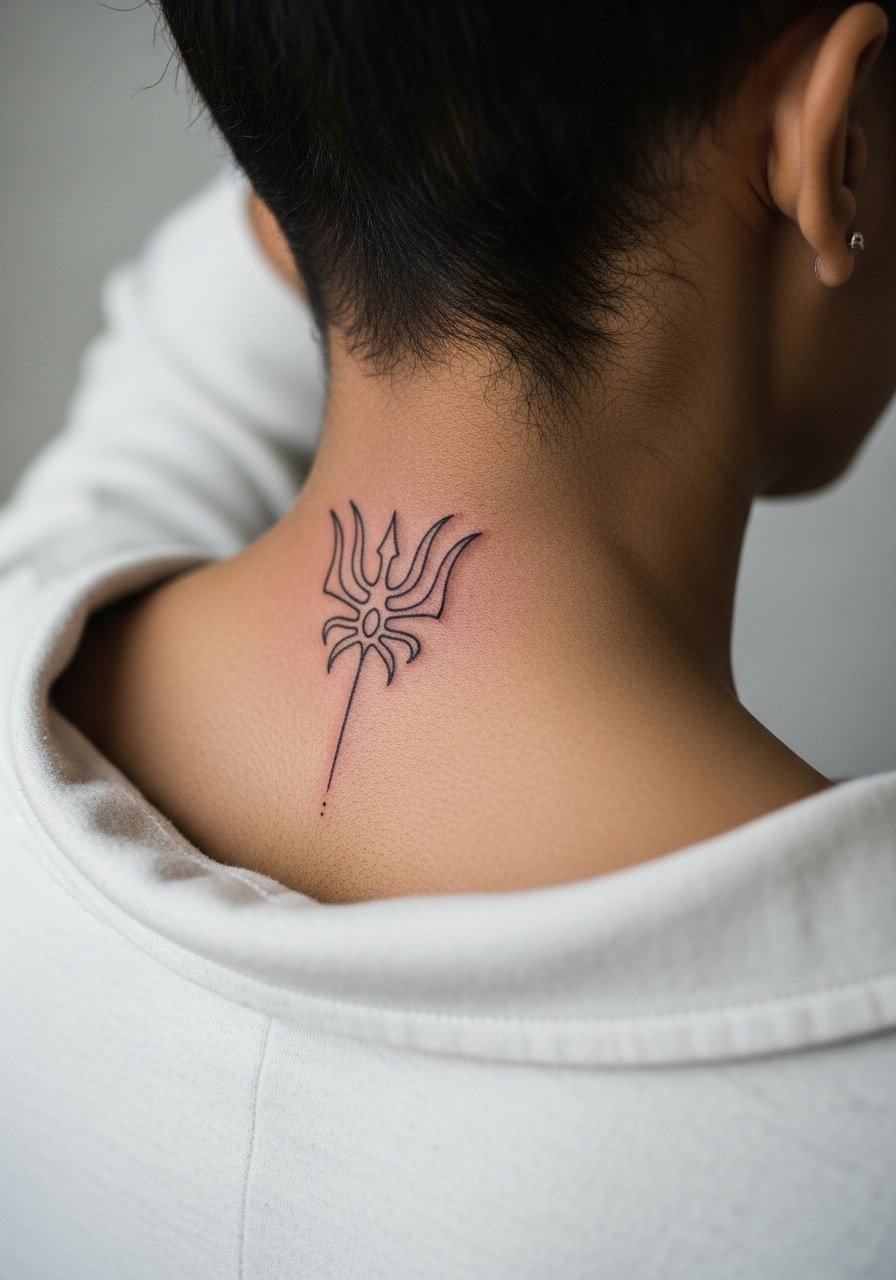
Consultation lead: tell the artist you want the shaft short so it stays clear beneath clothing collars. Neck skin moves with posture and can blur if lines are too close. The session causes moderate discomfort and usually runs 30 to 60 minutes. If you're concerned about workplace visibility, remember neck tattoos remain more visible than wrist pieces. For session clothing, wear a button-down shirt that you can slip off easily without rubbing the fresh ink. Respect for cultural symbols is worth a quick conversation with your artist so the final design feels intentional.
9. Calf Trishul with Extended Vertical Composition
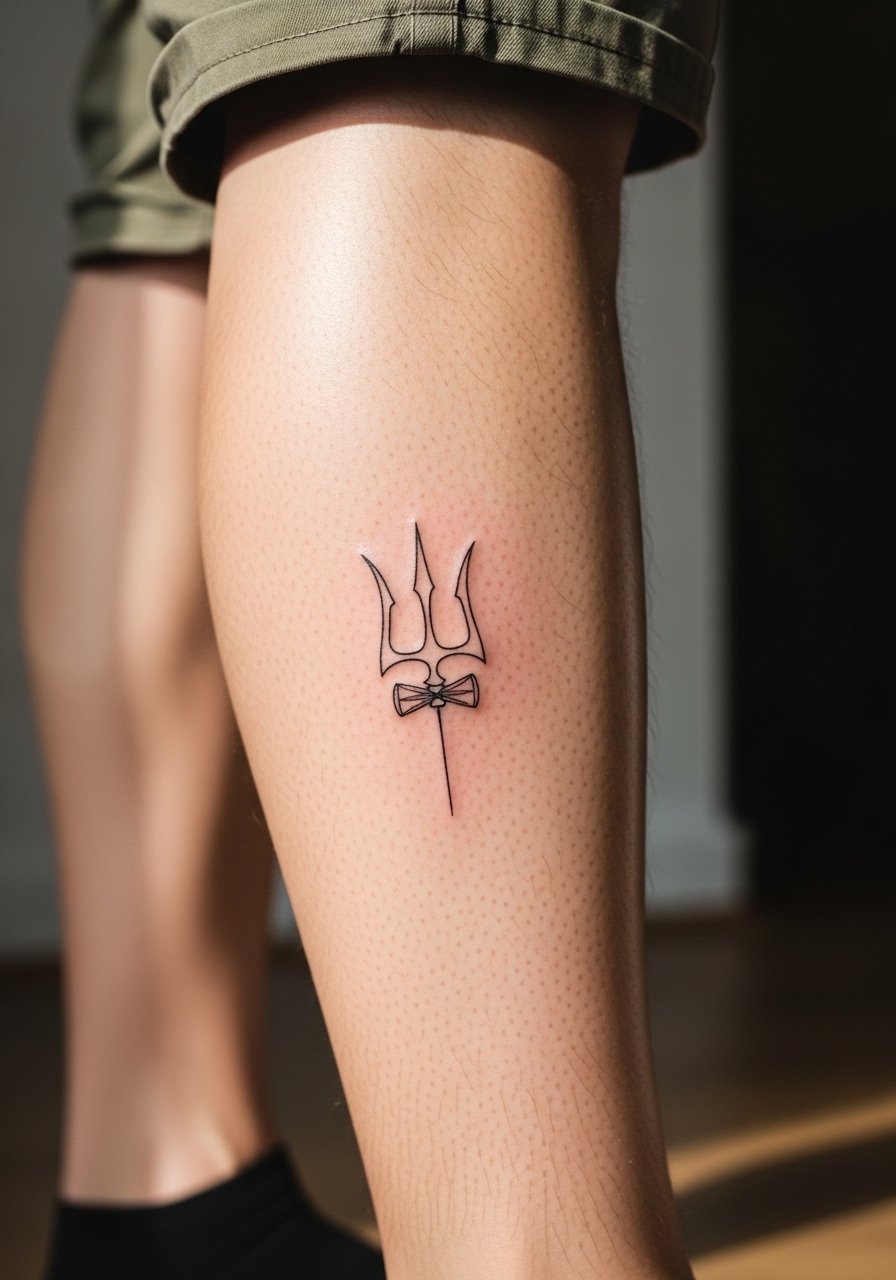
Visual impact lead: the calf allows an elongated Trishul design that keeps individual line elements large enough to hold. Tell your artist you want the shaft to read from a standing distance, not just up close. Sessions are moderate, often 60 to 90 minutes depending on length. For the appointment wear loose drawstring shorts so the artist can move the fabric without pressure. Calf pieces age well thanks to lower friction, but if you swim regularly pick ink placement away from areas that sit under tight wetsuits.
10. Small Shoulder Blade Trishul That Peeks with Movement
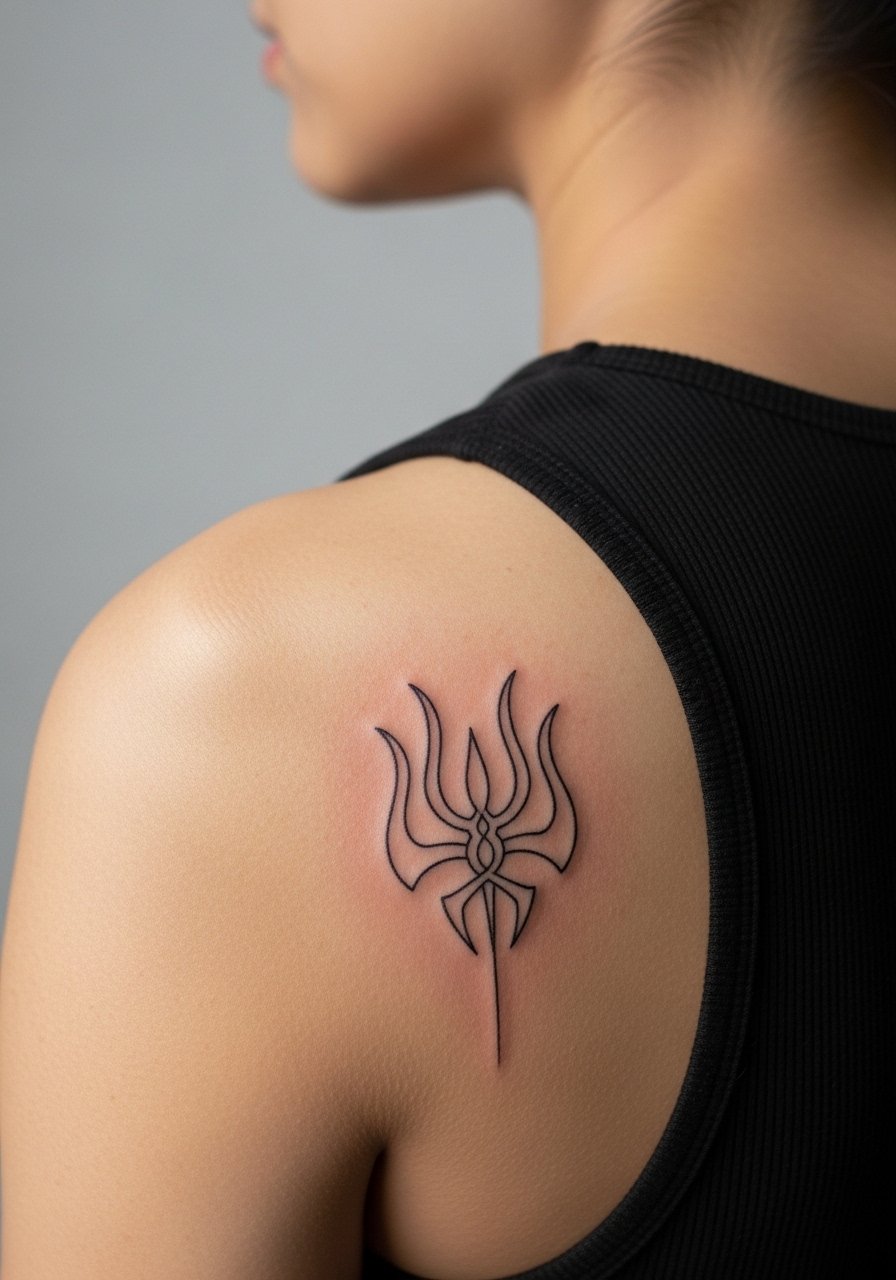
Mistake lead: squeezing too much detail onto a shoulder blade kills readability when the arm moves. Ask for the design to be scaled so each prong is distinct even when the shoulder rotates. Sessions are moderate and can be split into two shorter sittings if needed. For session day wear a loose tank top that allows the artist to access the area without stretching fabric over the ink.
11. Wrist Wrap Trishul Combined with Dot Work Accents
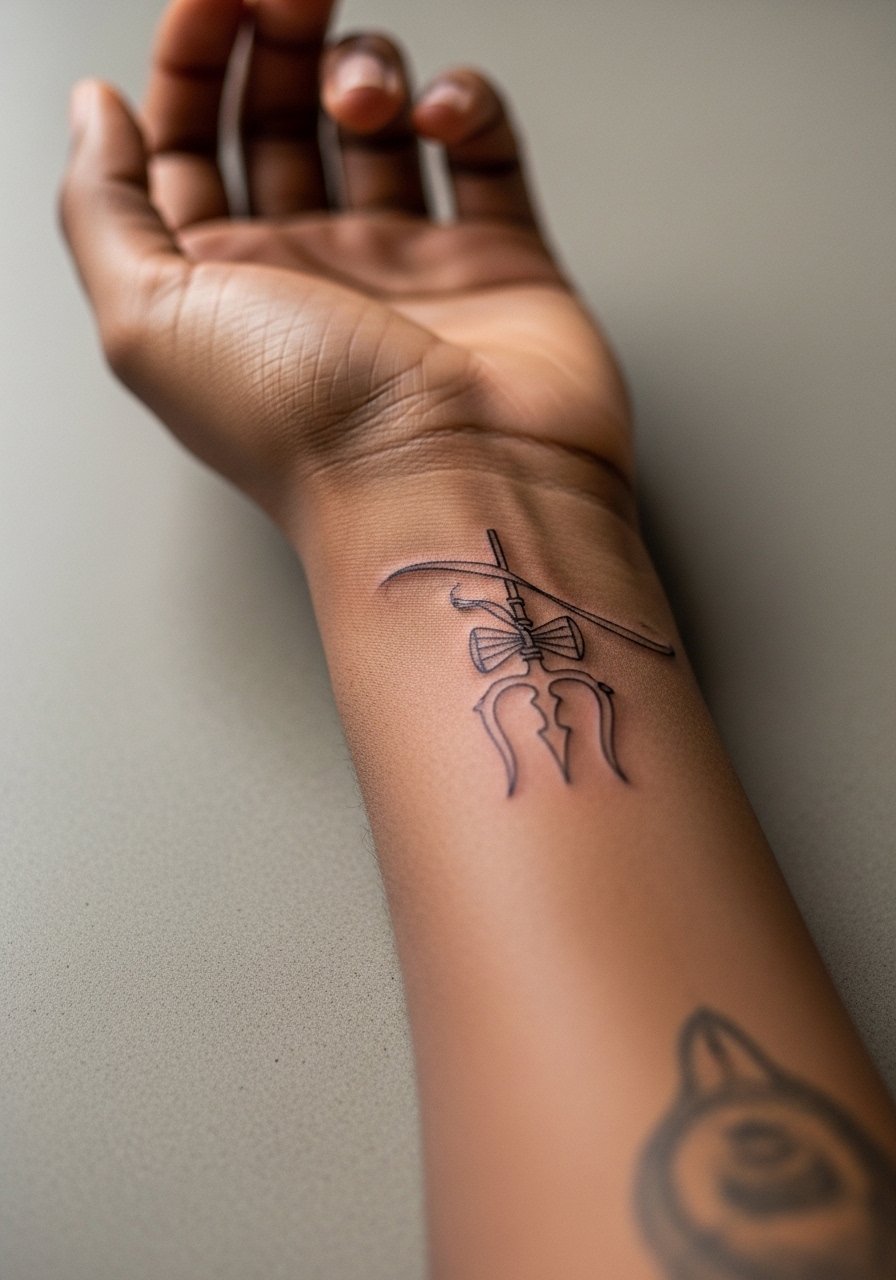
Personal observation lead: wrist wraps with dot accents look deliberate when the dots are spaced to avoid crowding the shaft. Ask your artist to map the wrap on your hand and wrist while you flex so it won't distort with motion. Sessions are under 90 minutes but expect sensitivity where the wrist meets the hand. For showing this off, stack a thin chain bracelet that sits above the wrap rather than rubbing it. Expect touch-ups around year two because of constant hand use.
12. Upper Arm Trishul with Whip Shading Base
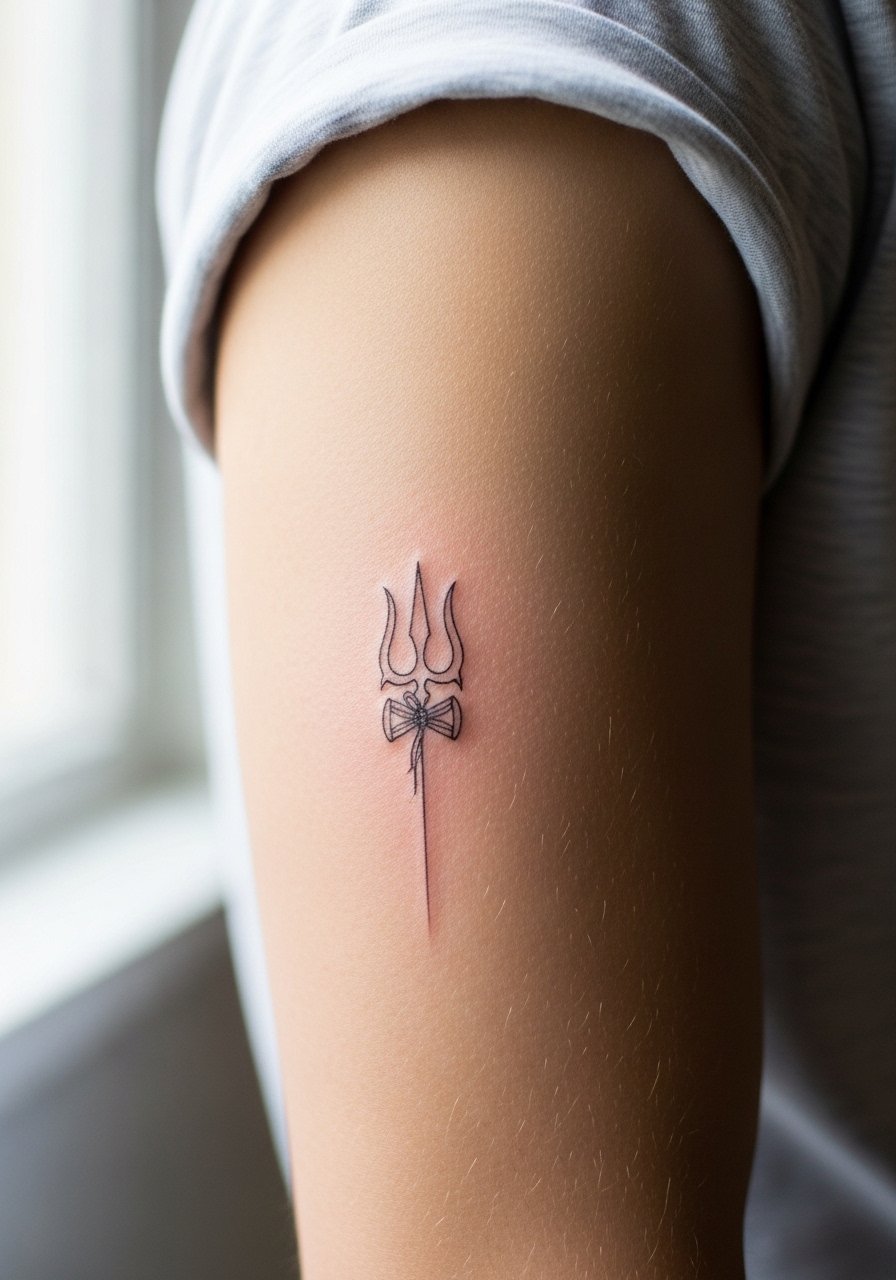
Aging lead: whip shading under the shaft can provide contrast for fine line Trishuls without heavy saturation that might merge. Tell the artist you want light directional whip shading rather than packed color. Sessions are comfortable and often 60 minutes. Upper arm placements are forgiving and usually preserve fine line longer than hands or feet. For showing it off, a short-sleeve linen shirt frames the piece well.
13. Thigh-Side Trishul for a Larger, Personal Mark
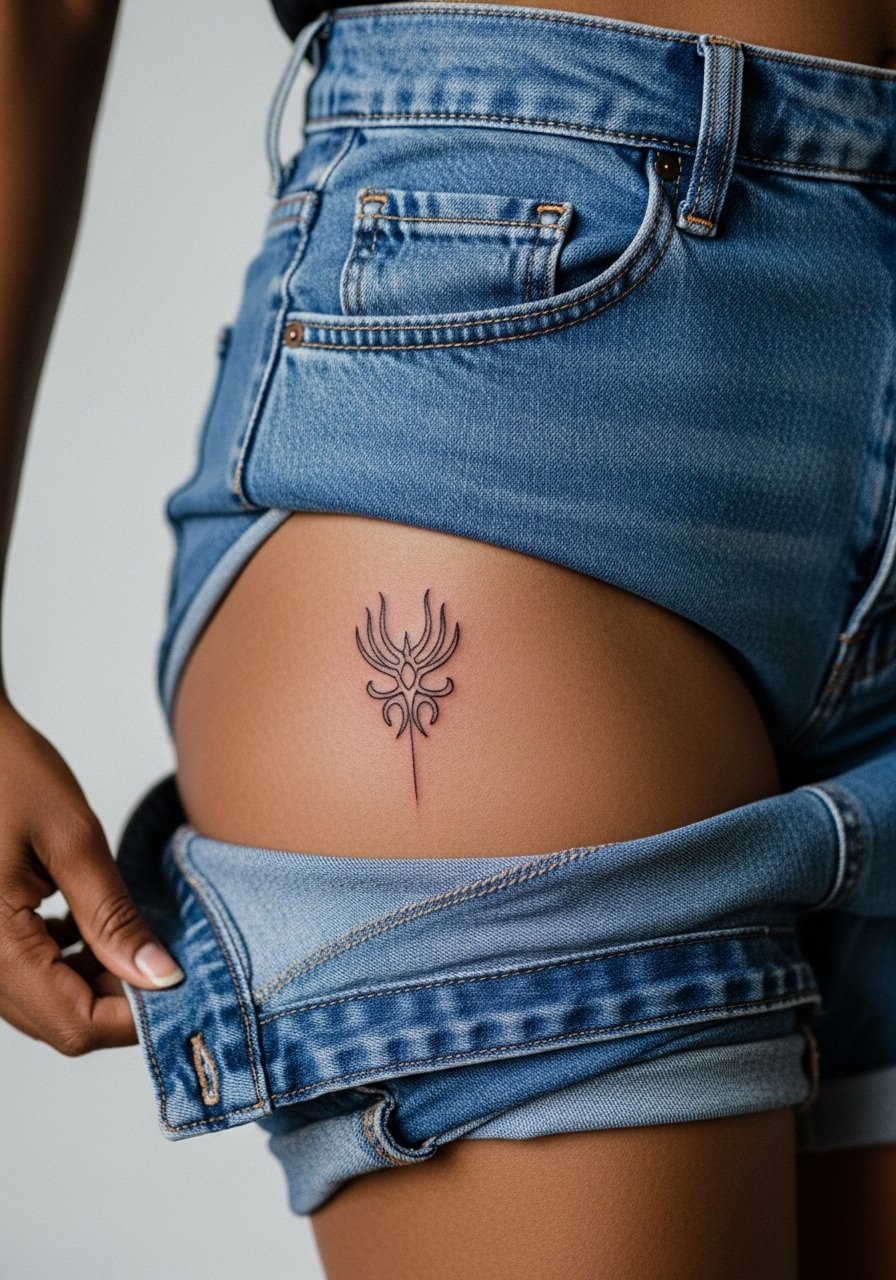
Consultation lead: thigh skin takes ink well so you can scale up details, but the biggest mistake is over-detailing small prongs. Ask for a slightly larger scale to maintain definition. Sessions are longer and may go 90 to 150 minutes depending on size. For the appointment wear high-waisted shorts so the artist can access the area easily. Thigh placements hide well and keep linework protected from constant abrasion.
14. Micro-Realism Trishul with Faint Shadowing
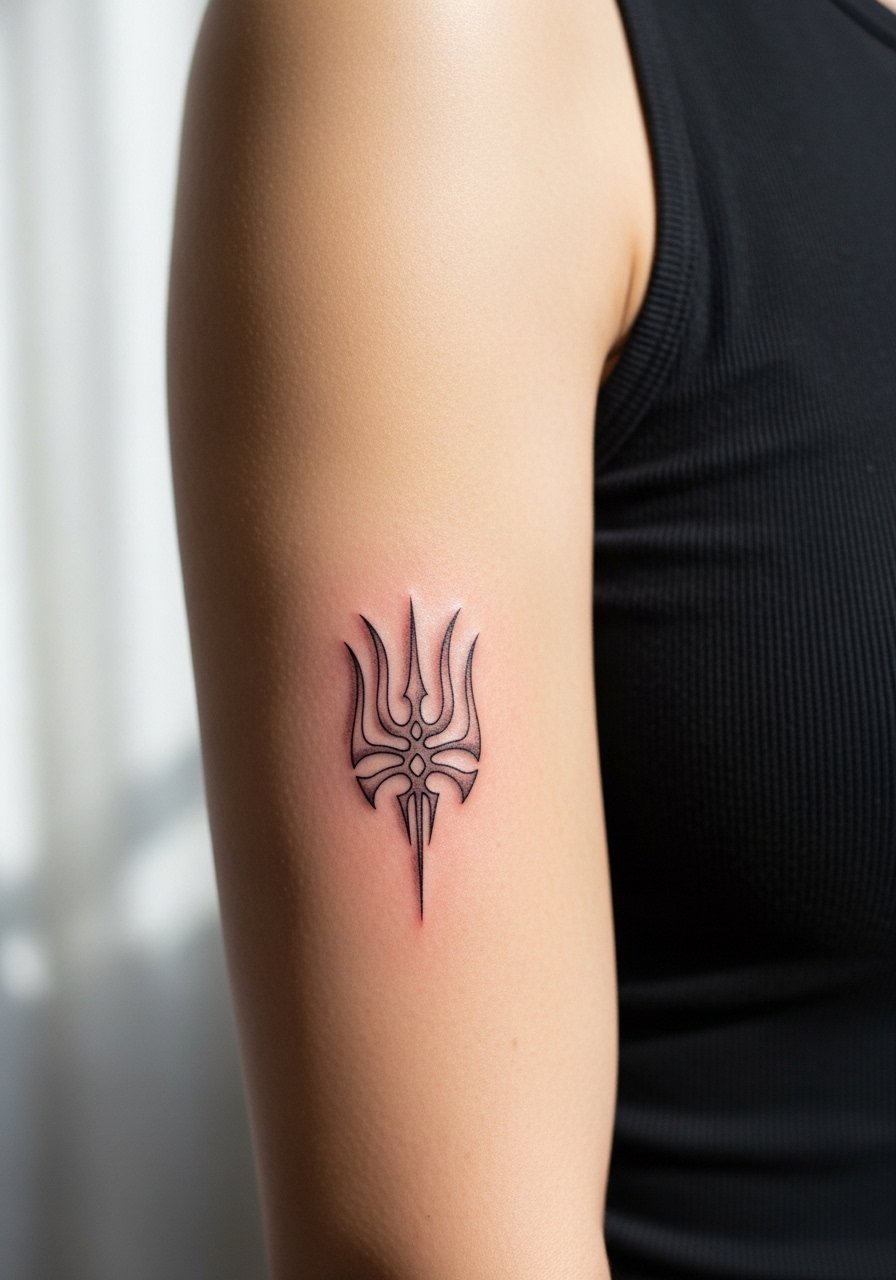
Visual impact lead: micro-realism on a Trishul means subtle shadowing under the shaft rather than heavy fill. Tell your artist you want a faint drop shadow to lift the piece off the skin. Sessions are detail-focused and may take 75 to 120 minutes. Outer bicep has lower friction and holds fine detail well. Pair with casual sleeves or a sleeveless cotton top when you want it visible.
15. Small Foot Arch Trishul for Concealed Symbolism
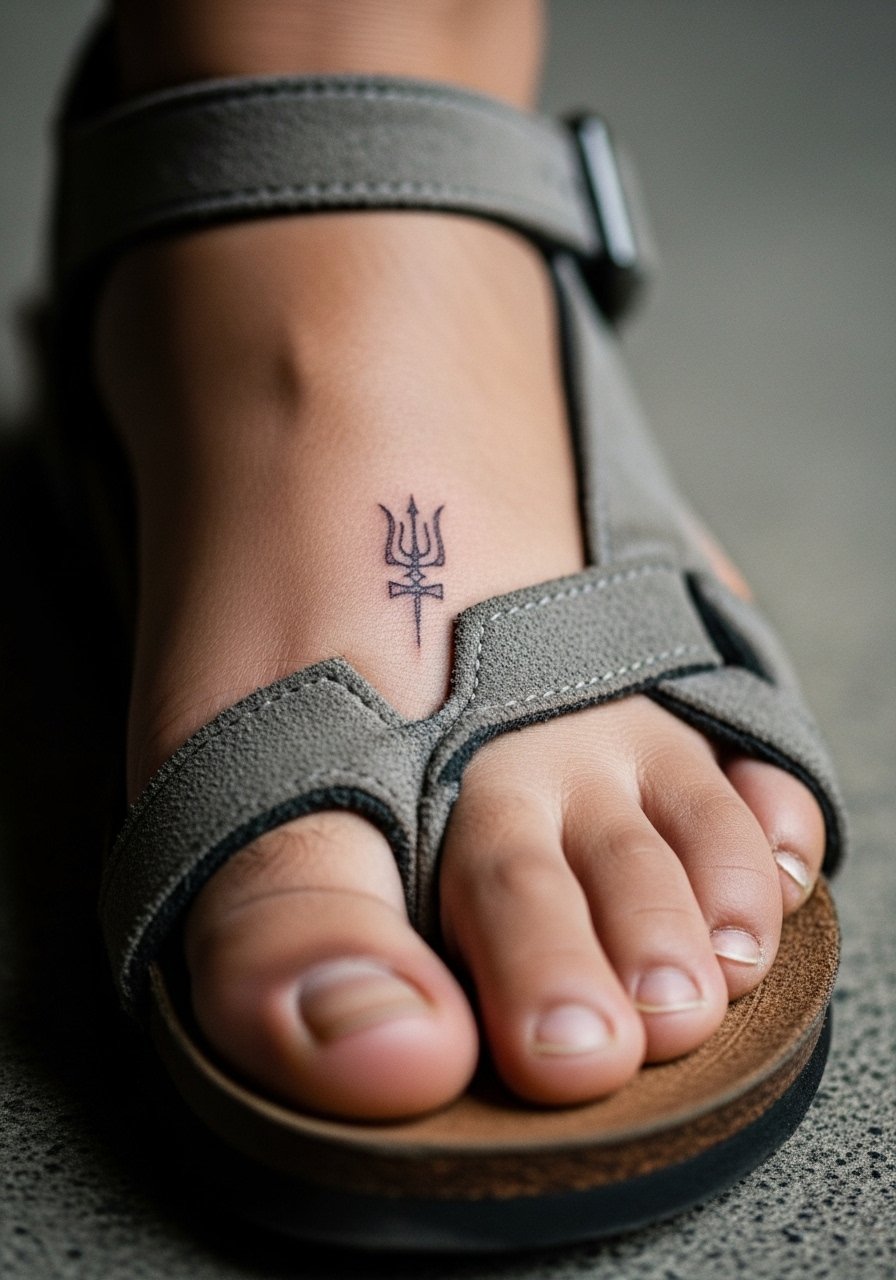
Pain warning lead: the foot arch is sensitive and the skin moves under pressure, so plan for touch-ups. Ask your artist for slightly bolder anchor lines and minimal internal detail. Sessions are short but can feel intense. For the studio day wear slip-on sandals and low-cut socks you can remove easily. Foot Trishuls often need touch-ups by year two if you wear closed shoes daily.
16. Small Upper Back Trishul Framed by Fine Lines
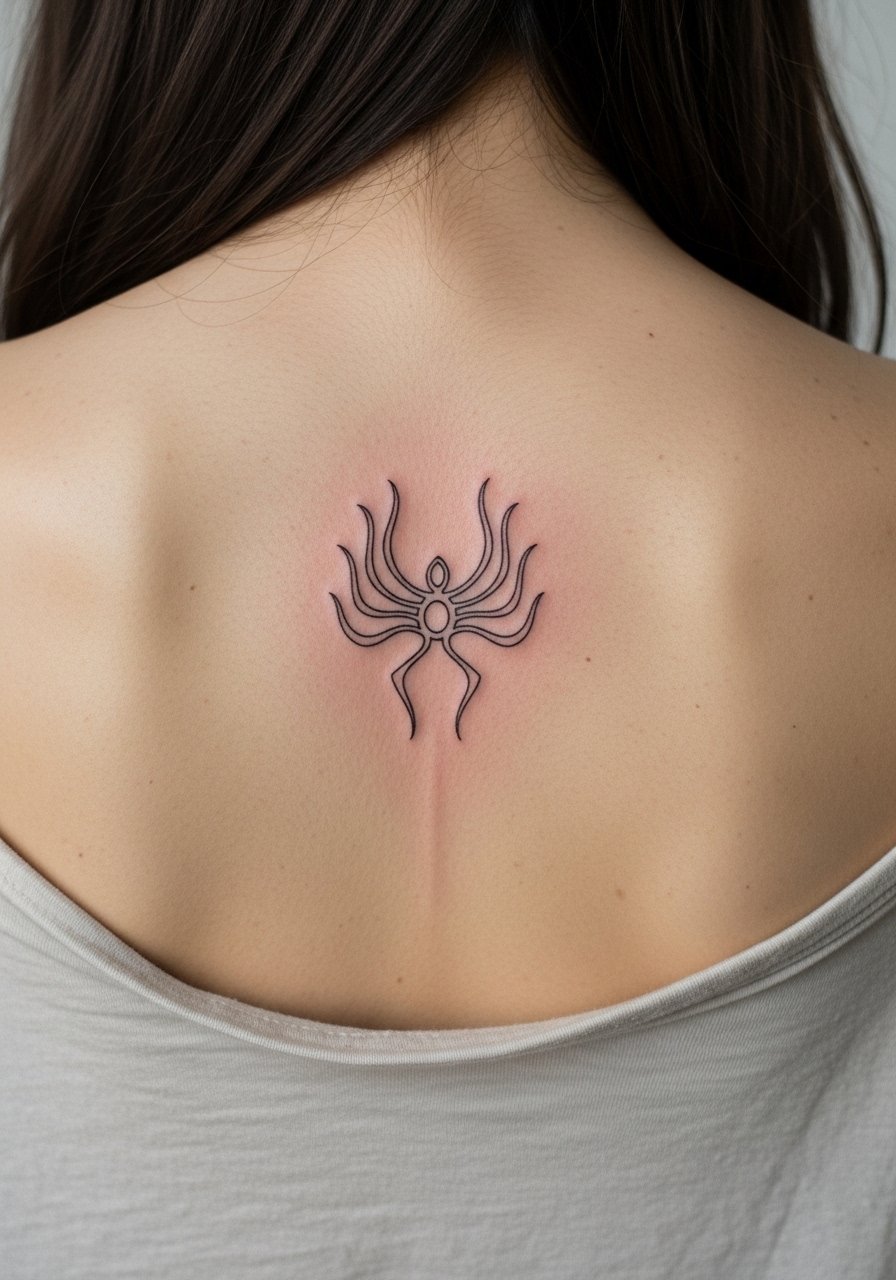
Mistake lead: adding too many framing lines around an upper back Trishul can create visual noise when the garment moves. Ask for a single thin frame line and avoid compound symbols too close to the Trishul. Sessions are low to moderate pain and run 60 to 90 minutes. For the session wear a button-down shirt you can take off so the artist can access the area without rubbing the new ink.
17. Forefinger Top Trishul for Quiet Detail
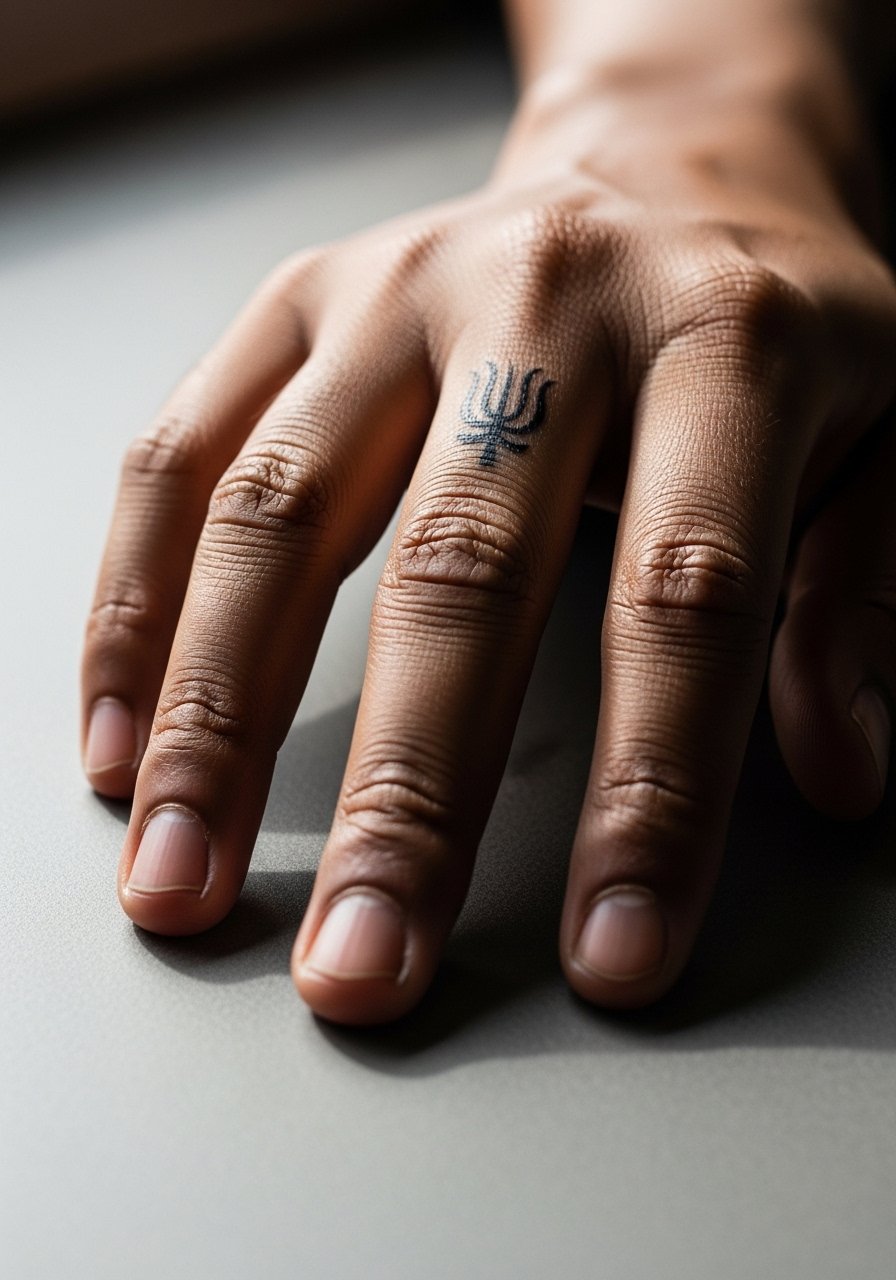
Pain warning lead: top-of-finger tattoos face constant contact and pressure which drives early fading. If you go for it, ask for slightly bolder anchor points and accept touch-ups in the first year. The session is fast but sharp. For showing this off pair it with a thin chain bracelet on the same wrist rather than stacked rings that rub the area. Fingers remain one of the highest fade-risk spots for fine line work.
18. Center Back Trishul as a Vertical Statement
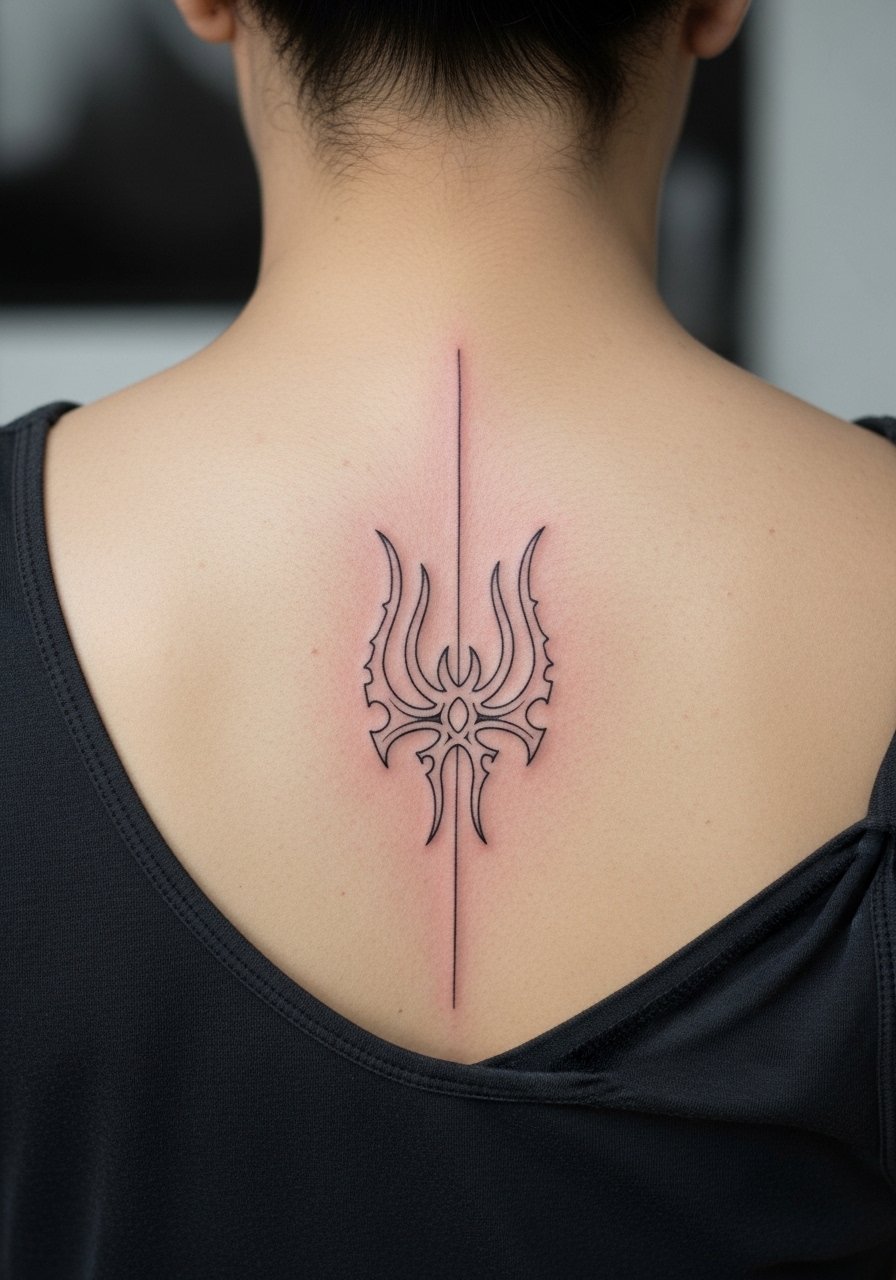
Personal observation lead: center-back Trishuls read like a vertical statement when the artist keeps the shaft straight and the prongs proportionate. Tell your artist you want the top anchor to align with your shoulder blades when standing. Sessions are longer and can be split into two sittings for comfort. For the appointment wear a loose tank top you can remove easily so the artist can reach the area without rubbing the fresh ink.
19. Small Hip Trishul with Clean Negative Space
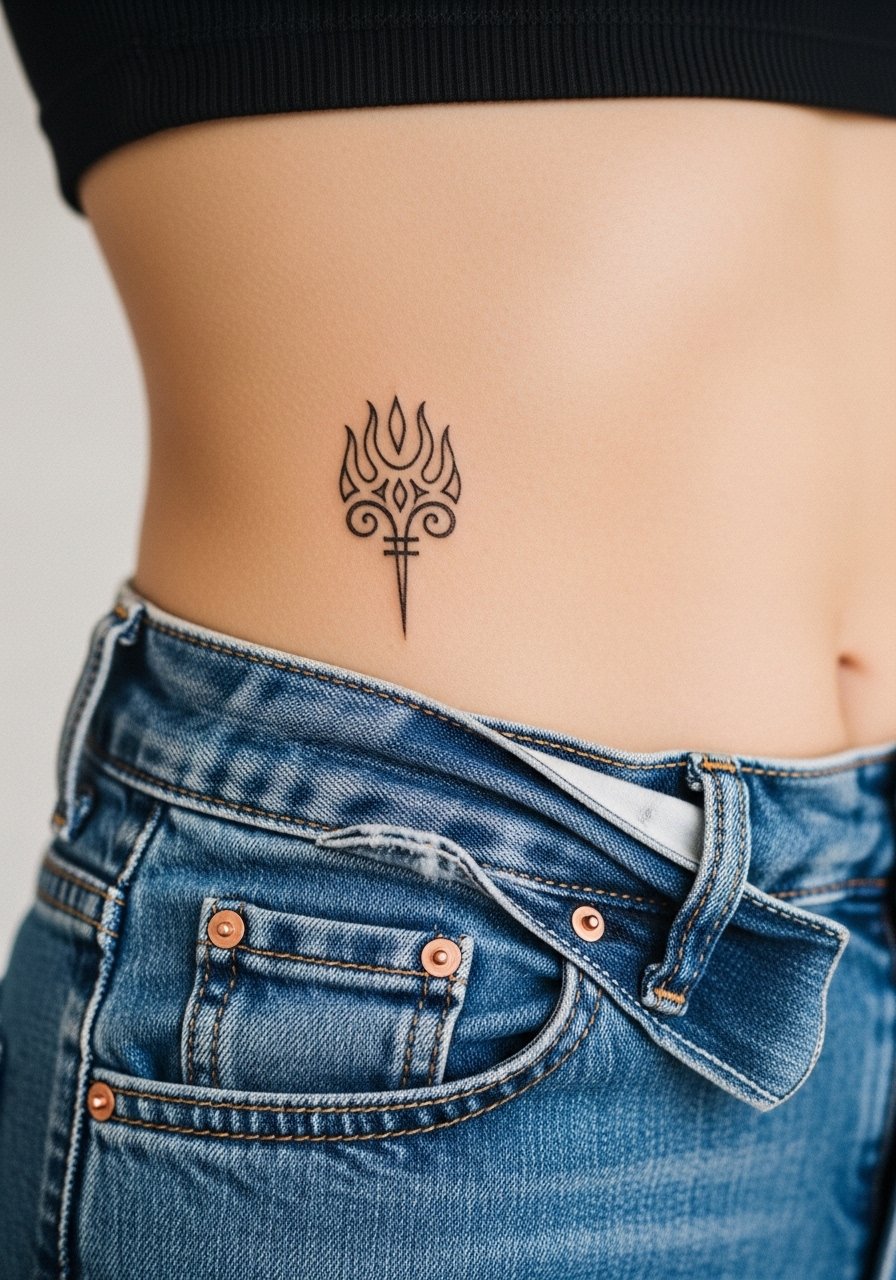
Consultation lead: hips work well for slightly curved Trishuls that follow body lines, but the common error is crowding the design into a small patch. Ask your artist to sketch the piece on you while standing so you can see how natural movement affects it. Sessions are comfortable and usually under 90 minutes. For the day of wear high-waisted jeans that can be shifted briefly without pinching the area.
20. Micro-Script Trishul Pairing with a Small Mantra
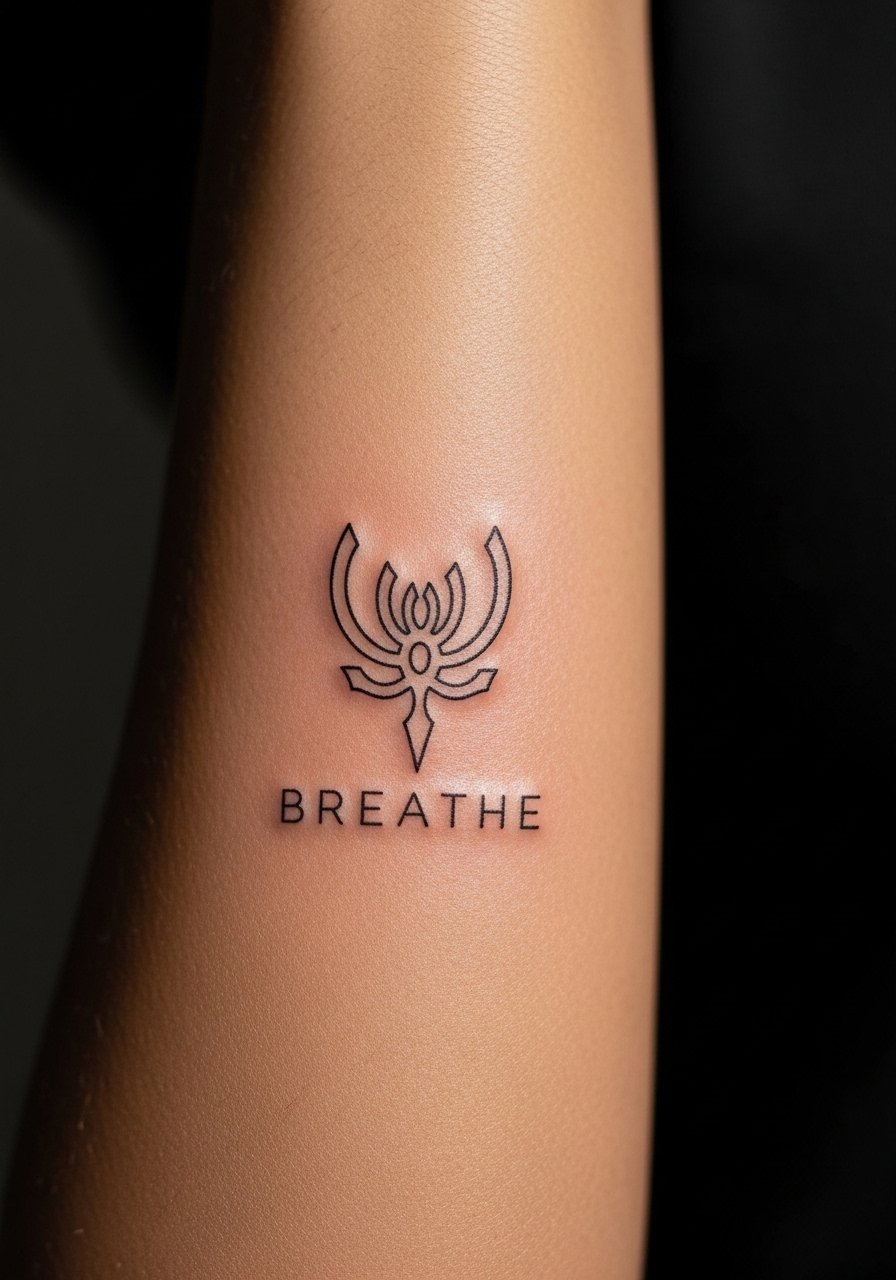
Consultation lead: when combining a Trishul with script, specify exact wording and font. Text in image prompts must be precise to avoid gibberish, so provide the exact word or phrase. Ask the artist to set text slightly below the Trishul with consistent spacing. Sessions are detail-focused and usually 60 to 90 minutes. For showing it off pair with a thin chain pendant necklace that sits above the script without competing. One of the mistakes is mixing heavy script with delicate Trishul lines which creates imbalance.
21. Tiny Behind-the-Ear Trishul for Subtle Placement
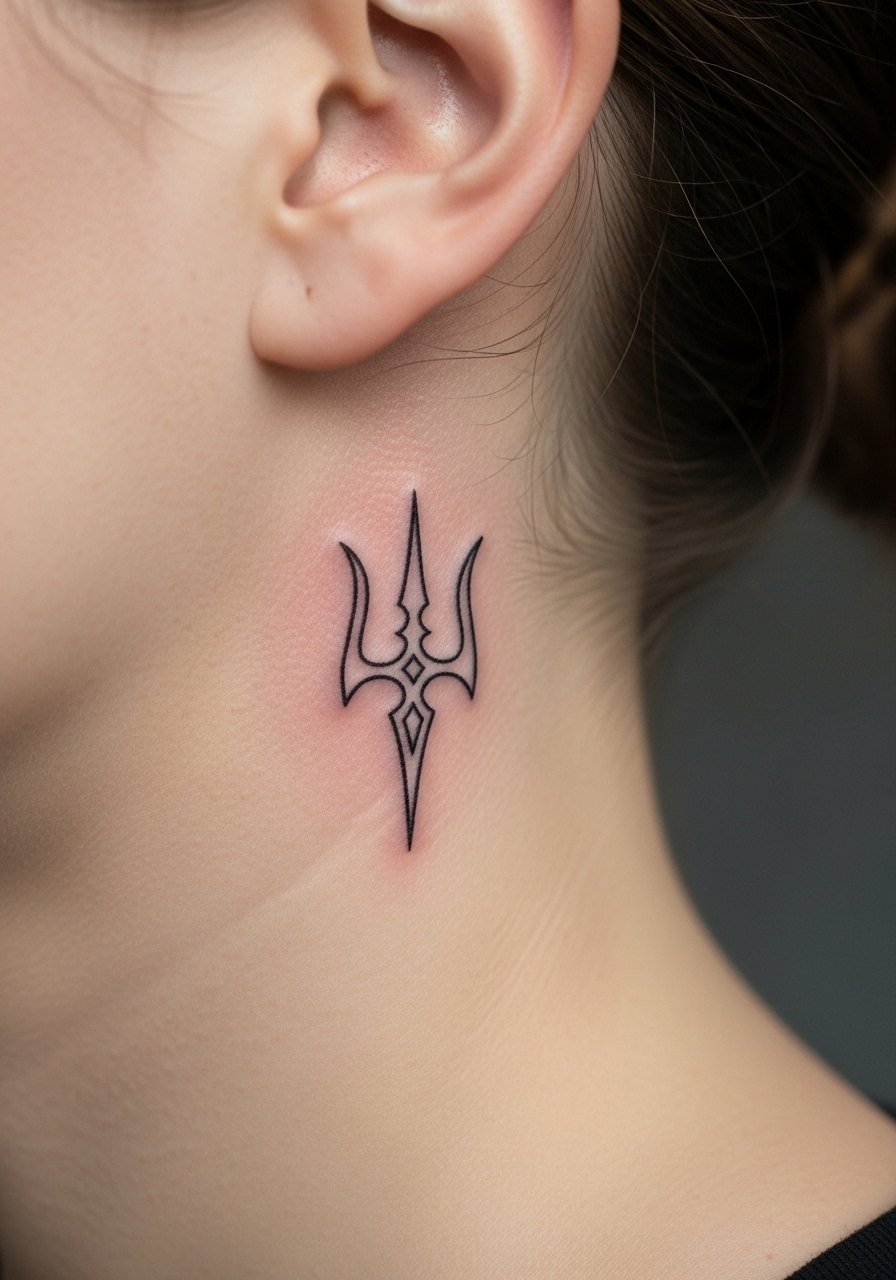
Decision-pressure lead: behind-the-ear Trishuls read best when kept small and placed just below the hairline on the neck, not on the ear itself. Tell the artist to avoid the cartilage edge and to keep the shaft compact. Sessions are quick and surprisingly sharp. For the appointment wear hair up and a wide-neck shirt so the artist can access the area without tugging. Be aware some workplaces still react to visible neck tattoos and think ahead about visibility.
Frequently Asked Questions
Q: Will a fine line Trishul on the ribs blur faster than one on the forearm?
A: Short answer, yes ribs are higher risk because the skin stretches and moves with breathing. The forearm has less constant stretch and friction, so fine line there tends to hold better. If you want ribs, ask for increased spacing between prongs and accept that a touch-up around year two or three is normal.
Q: Is it disrespectful to get a Trishul tattoo if I am not from the originating culture?
A: People split into two camps on religious imagery. One camp treats certain symbols as private and prefers they remain within practicing communities. The other sees tattoos as personal expression. Consider why you want the symbol, listen to perspectives from the community, and opt for respectful design choices rather than direct replicas if you are unsure.
Q: How do I pick size for a wrist Trishul so it does not fade quickly?
A: Pick a size with slightly thicker anchor lines and allow negative space between the tines. If you want it visible without early blur, scale up modestly from the smallest reference you like. Talk to your artist about realistic line thickness for your skin type.
Q: Can I combine a Trishul with script and have both elements age well?
A: Yes if you set clear spacing between the symbol and text and choose a simple, legible font. Ask the artist to map the placement while you move the area. For a subtle pairing try a thin chain pendant necklace to frame the script without crowding it.
Q: How often should I plan on touch-ups for fine line Trishuls in high-friction spots like fingers and wrists?
A: Expect touch-ups sooner in high-friction spots, often within one to three years. Fingers and wrists face constant washing and movement which accelerates fading. Plan for a realistic maintenance timeline with your artist during the consultation.