Fine line tattoos are everywhere online, and a lot of people pick them because the reference photo looks fragile and perfect on a screen. The reality is different. Placement, line weight, and skin tone decide how a design ages far more than the trend itself. Below are 27 father son tattoo aesthetic ideas with what actually works at year one, three, and five, and what to say in the consultation to get a piece that still reads like you.
1. Intertwined Silhouettes Holding Hands, Inner Forearm

I see these silhouettes on forearms a lot because they say the moment with a single clean silhouette. For longevity ask your artist for slightly heavier linework around the outer contour and soft stipple shading inside so the form keeps its edge at year three. Pain is mild on the inner forearm and a single session usually does it for a 4-6 inch piece. For showing it off, pair with a rolled sleeve chambray work shirt in navy or gray, which frames the forearm without stealing attention. Common mistake is making the negative space too tight, which causes the shapes to blur as the ink settles.
2. Tree of Life With Roots Forming Initials, Upper Arm
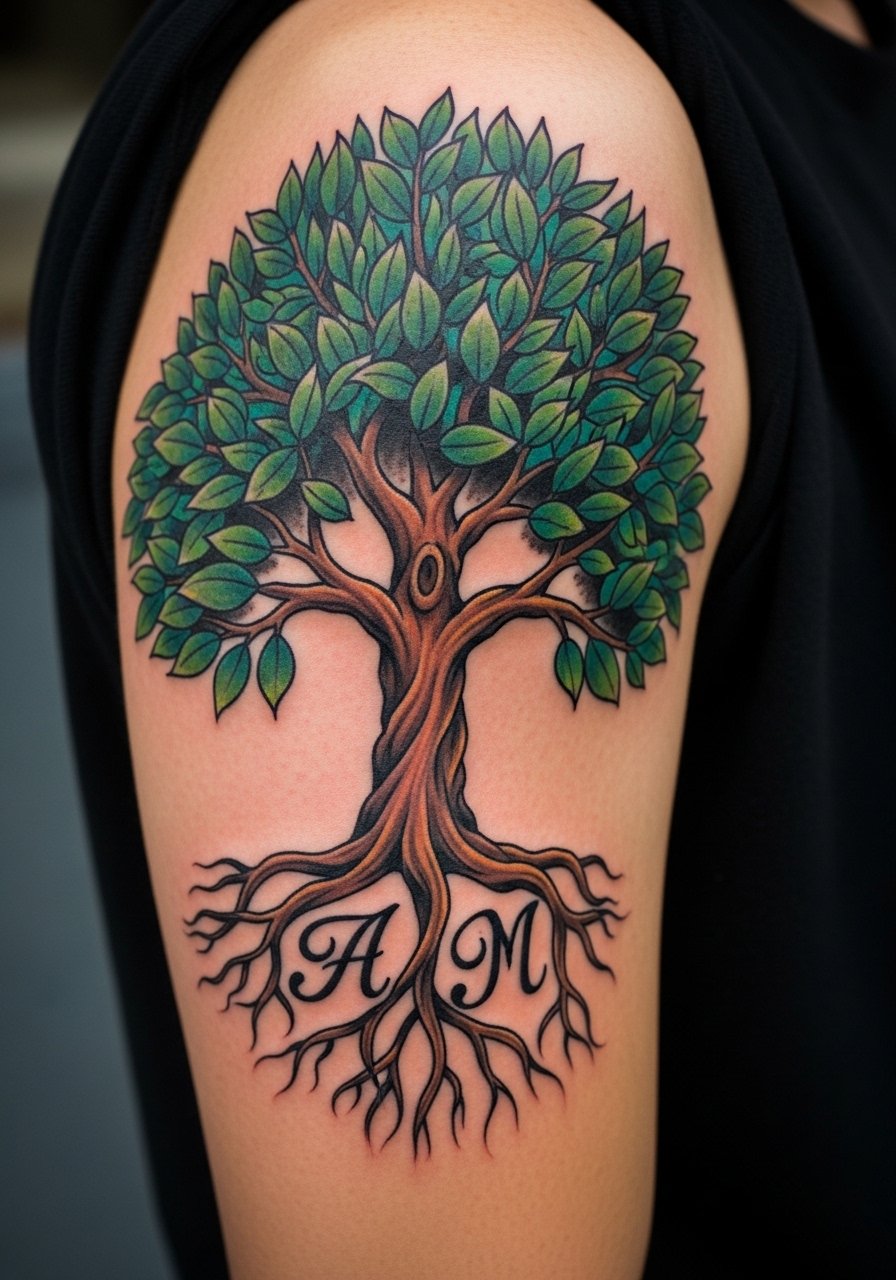
Neo-traditional trees work well on the upper arm because the bicep holds detail and resists dramatic stretch. Tell your artist you want bold outline for the trunk and softer color accents on the leaves so the piece keeps contrast after sun exposure. Session time is two sittings if you want color highlights. Wear a button front shirt loose on session day so the artist can move the sleeve without rubbing the fresh work. Avoid tiny initials hidden in dense roots, they often blur into the shading over a few years.
3. Father Carrying Son on Shoulders Outline, Inner Forearm
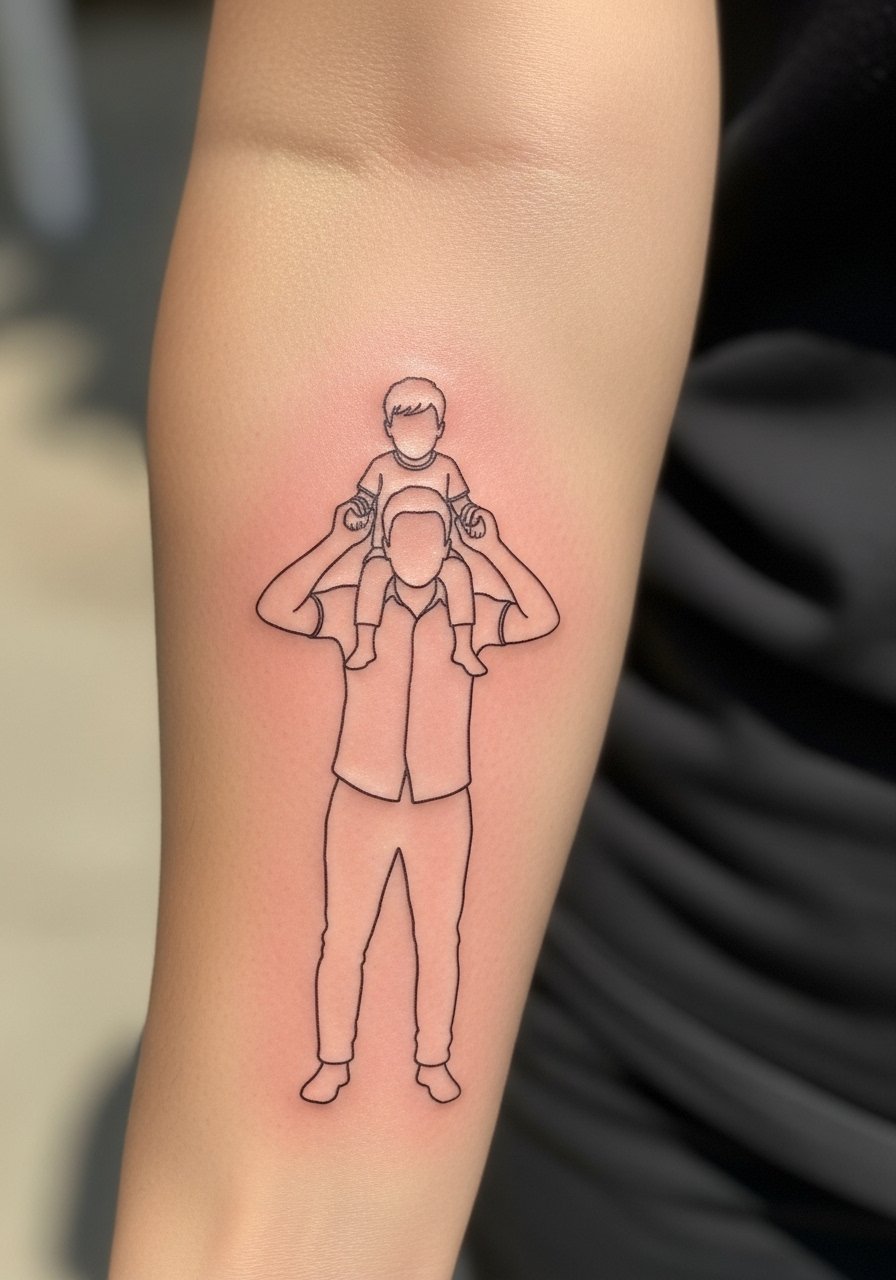
Minimalist outlines read emotionally because of the pose, but they demand correct line weight from the start. Ask for a slightly bolder single line than the reference so touch-ups are less likely after year one. This is a straightforward single-session piece, low pain, and great for matching sets where one person wants forearm and the other wants wrist. For session wear go with a rolled sleeve henley so the arm is easy to access. A common regret is asking for ultra-tiny lines that disappear under sunscreen and daily wear.
4. Micro-Realism Portrait of Father and Son Fishing, Chest Over Heart
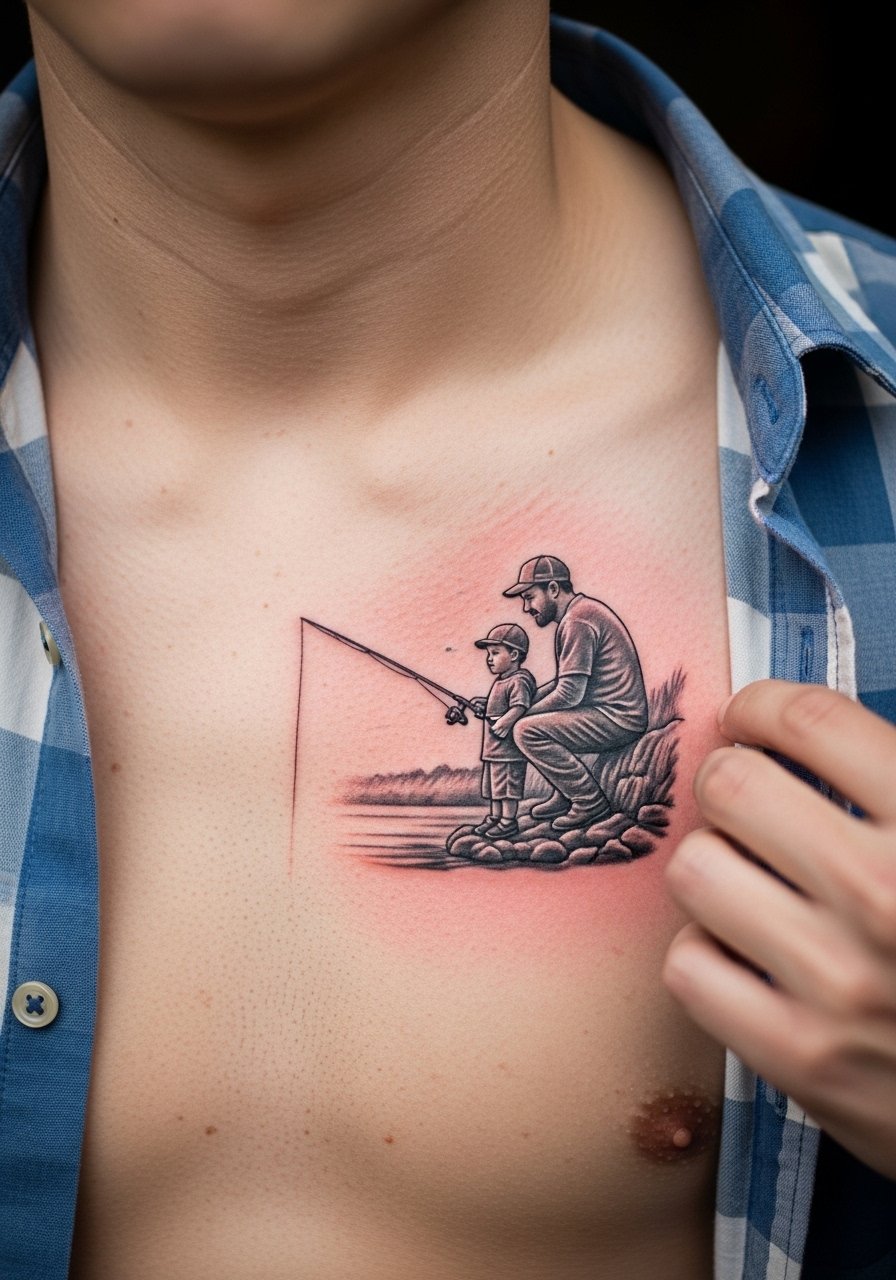
Portraits on the chest are intimate and hold private detail that looks great under an open shirt. Expect multiple sessions for lifelike depth and plan for touch-ups at year three for black and gray saturation. There is a debate in aftercare circles about Saniderm versus dry healing. One camp says Saniderm speeds clean healing and reduces scabbing. The other camp worries about trapped moisture on humid skin. Decide with the artist based on your climate and skin type. For showing it off, a deep v neck tee men or an unbuttoned oxford draws the eye without overexposing the area. Make sure to ask how chest expansion with weight changes could affect the portrait over time.
5. Lion and Cub Mane Interlocking With Family Dates, Shoulder
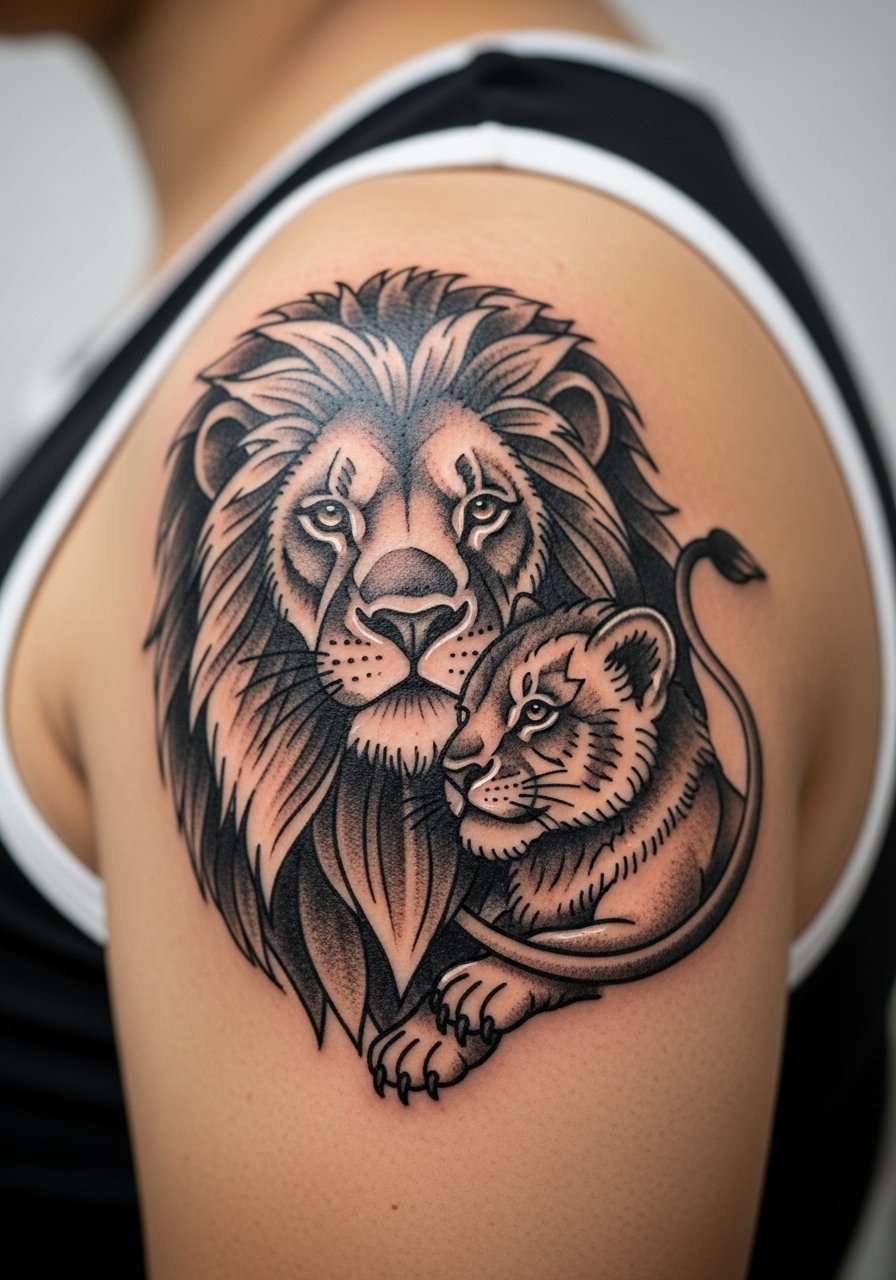
Solid blackwork animals like a lion and cub age into a graphic patch that still reads at five years. Shoulder placement resists stretch and holds saturation well. Ask for clean negative space in the mane so the dates stay legible long term. Session feel is moderate, usually one or two sittings depending on size. Pair the finished piece with a sleeveless muscle tank men in olive or black for casual reveals. A common error is packing too many micro-details into the mane, which lose definition as saturation softens.
6. Script Quote "My first hero" With Son Footprint, Wrist or Ribcage
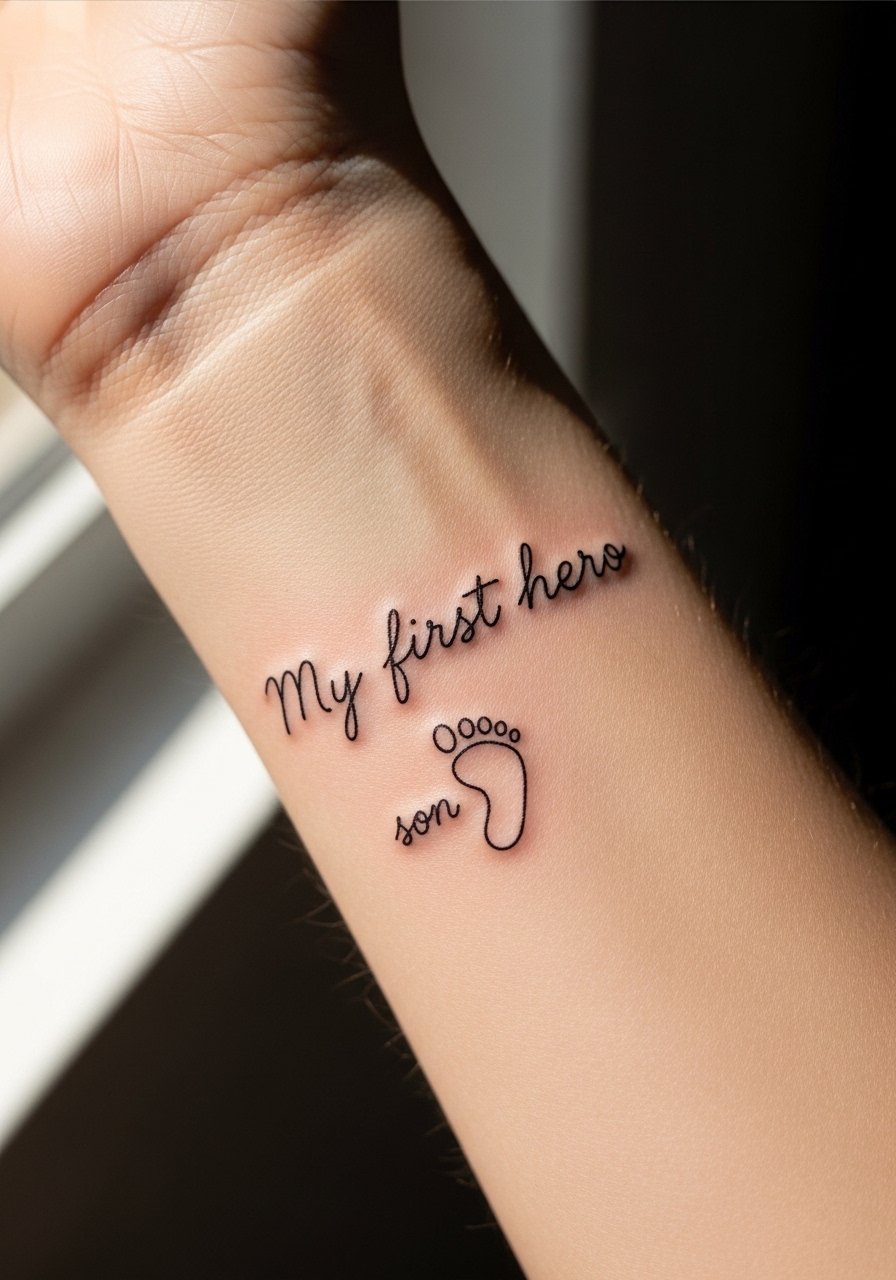
Fine line script reads delicate and sentimental, but it splits artists into two camps. One group says thin single-pass lines hold fine when placed on low-friction areas and done with perfect depth. The other group warns that thin script on wrists or ribs fades and blurs within a couple of years and recommends bolder line weights. Ask the artist which camp they fall into and why, then agree on a compromise line weight. Wrist pieces heal faster and hurt less than ribcage sessions, though rib placements may be more private. For showing a wrist quote, a thin leather watch strap on the opposite wrist complements without crowding the script. Expect a touch-up at year two if you keep the weight light.
Studio Day Picks
The wrist, forearm, and chest ideas above each demand slightly different prep, and a few targeted items smooth the session and first-week healing.
- Hush Anesthesia Spray. For sensitive wrist or rib sessions, this spray eases pain without deep numbing that can make lines waver.
- Indie Butter Tattoo Balm. A thinner balm option that many prefer for humid heals on small matching pieces.
- Tea Tree Tattoo Balm UK style. Gentle anti-itch properties without the heavy clogging feel for blackwork areas.
- Japanese Rice Bran Lotion. Locks in moisture for winter portrait heals without a greasy layer.
- Aquaphor Healing Ointment. Thin application for the immediate post-session window helps protect fine line work during the first few days.
7. Arrow Piercing Through Father-Son Profiles, Outer Forearm
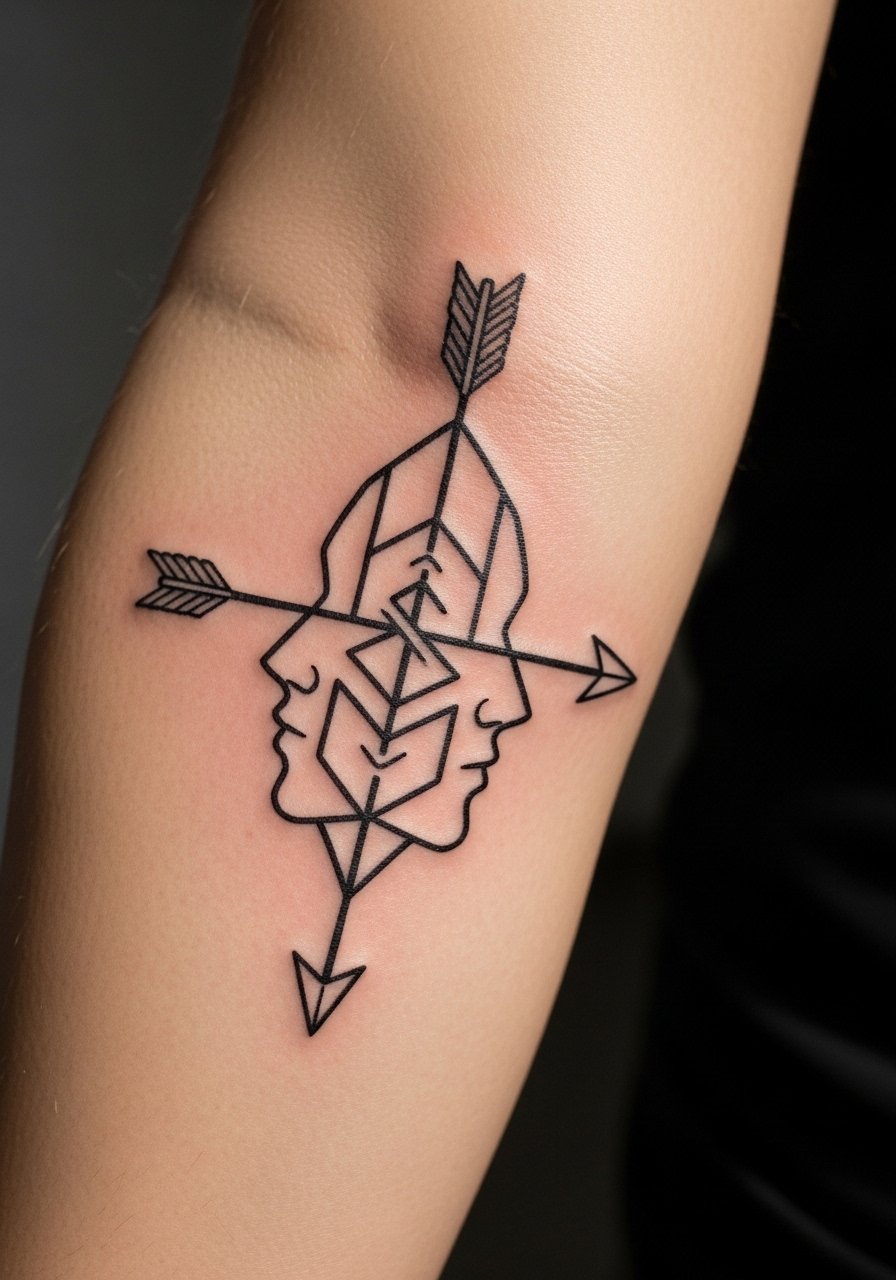
Geometric profiles with an arrow read modern and directional, and the outer forearm gives the artist room to space lines properly. The main mistake is making the arrow too thin. Ask for a tapered but confident shaft with slightly increased spacing between facial features so the profiles do not merge as the piece softens. This is a one-session tattoo for a 4-6 inch composition and feels like moderate vibration with brief sharp moments. Pair it with a casual rolled sleeve henley for easy reveal. Expect a small touch-up at year two if the arrow receives a lot of sun.
8. Compass Rose With Father-Son Coordinates, Calf
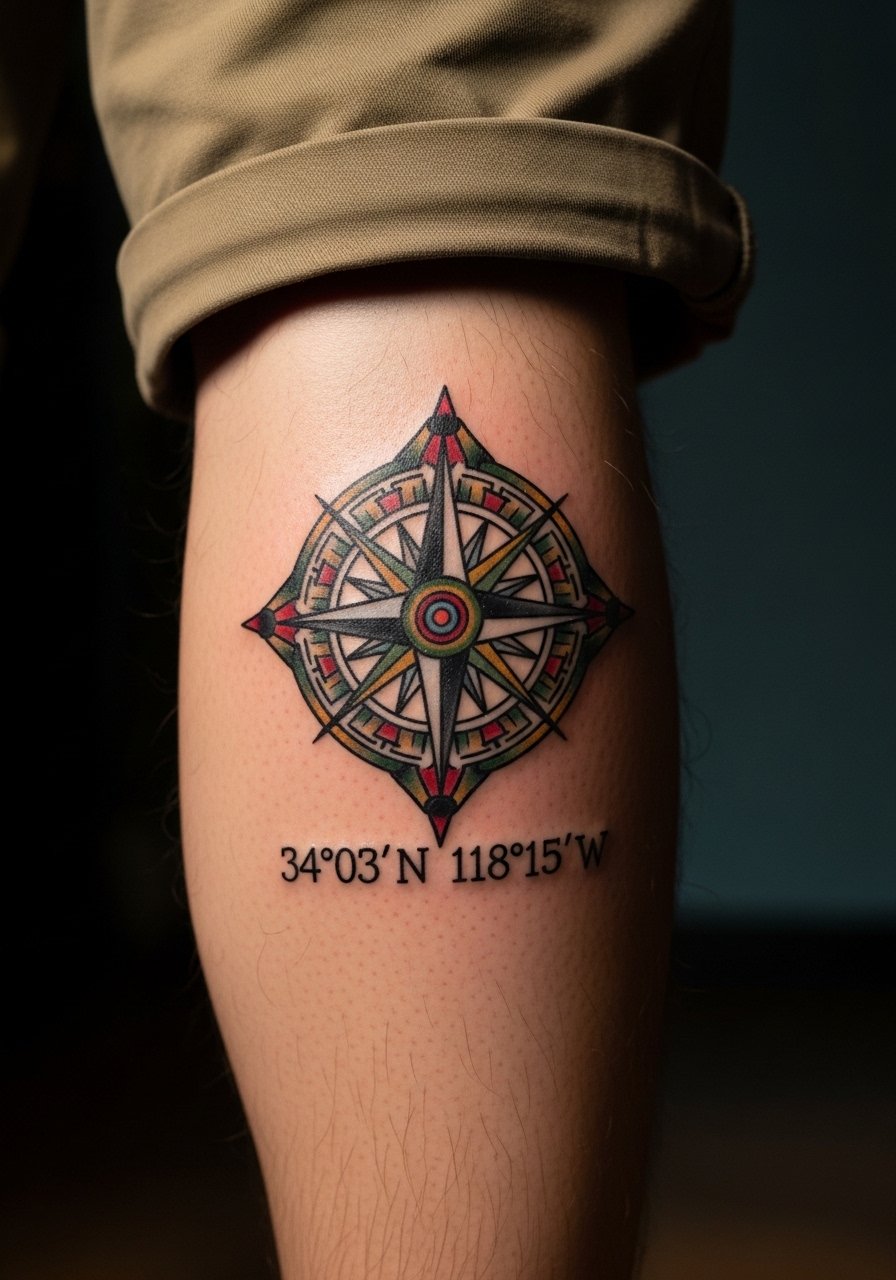
Calf pieces sit well for travel-minded duos because they show on shorter pants and hold detail without frequent friction. Ask to have the coordinates engraved in a slightly heavier typeface and the compass shaded in black and gray with a single red accent so the compass still reads under varied light. Wear slim jogger pants men rolled to mid-calf during warm days to reveal the work. The session is comfortable with the leg propped, and touch-ups are uncommon unless you expose the calf to heavy sun without protection.
9. Handshake With Embedded Heartbeat Lines, Forearm Matching Set
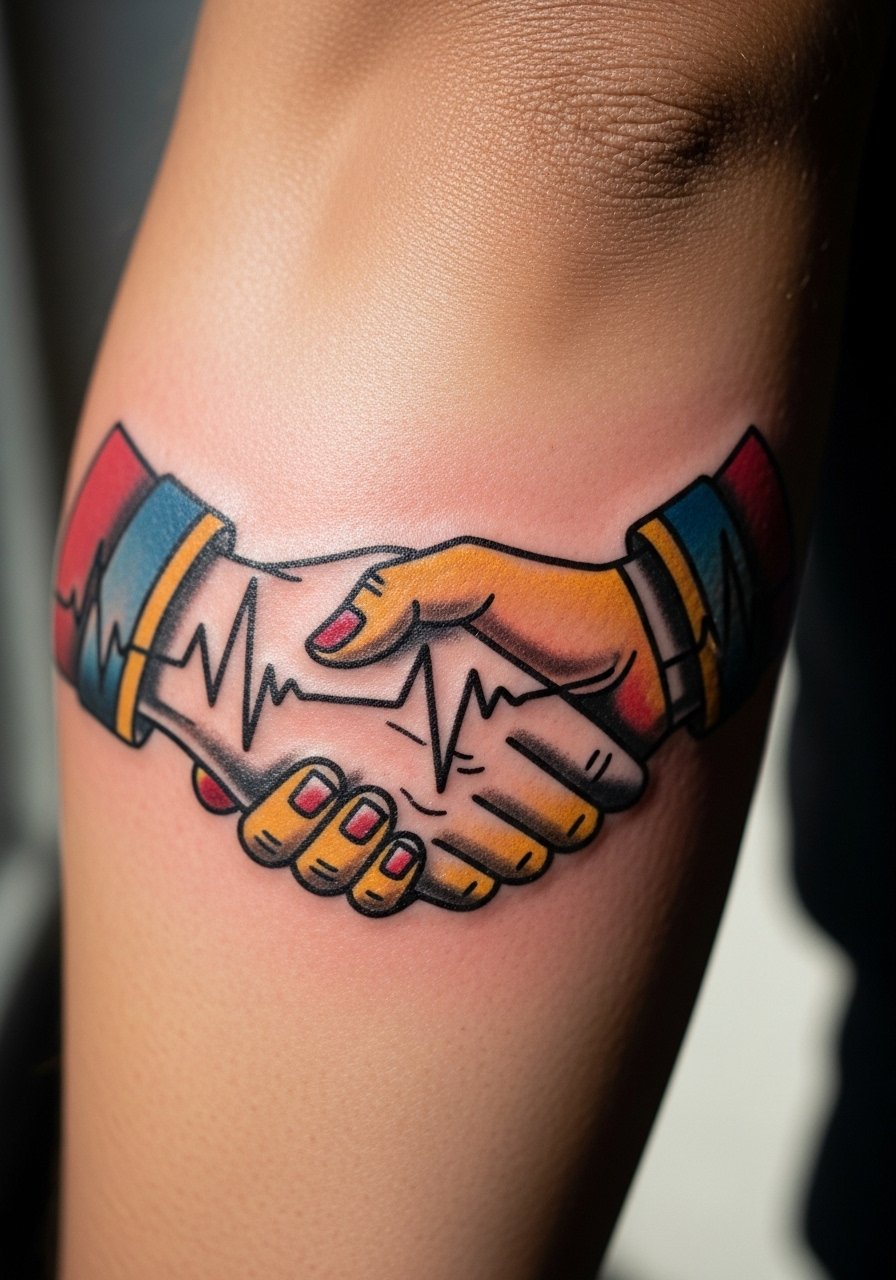
Handshake imagery reads like a handshake pact and works well for adult matching sets. Bold outlines and open negative space help this one age predictably. Plan for a single session for a small-medium forearm piece and ask for solid black anchors around the handshake to prevent early blurring. For showing it off, a leather cuff bracelet on the opposite wrist adds balance without covering the tattoo. A mistake people make is asking for too many thin cross-hatches inside the hands, which tend to settle into muddied shading.
10. Wolf Pack Silhouette Father Leading Pups, Upper Back
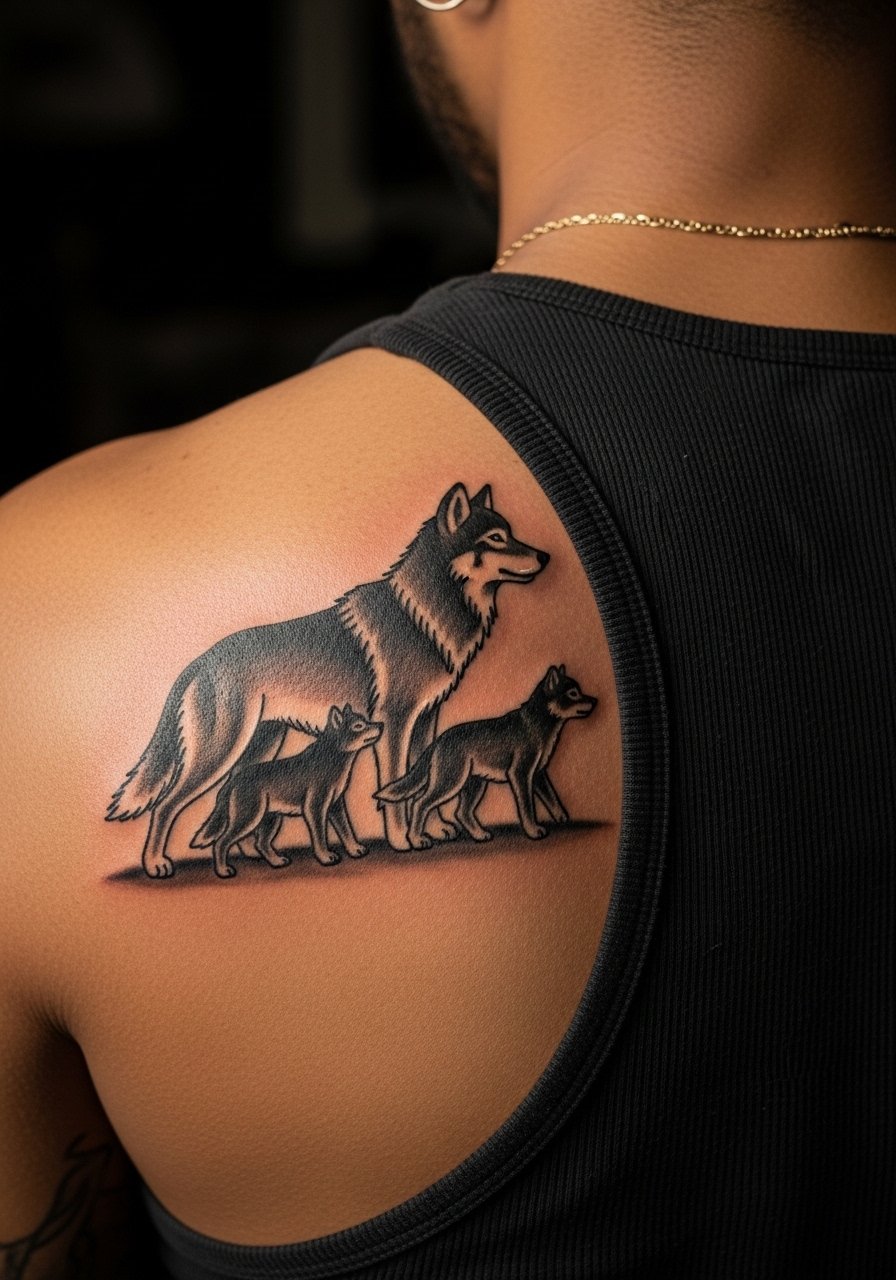
Upper back black and gray silhouettes create a narrative across the shoulder blades and age well under clothing most days. This placement needs an open-back tank or a hoodie half-zip for the session so the artist can access the area. Ask for layered silhouettes with clear spacing to retain pack composition at year five. Sessions are usually two sittings for larger pieces. Think about how a hoodie or sleeveless muscle tank will frame the piece for casual reveals. Handing the artist a reference showing negative-space separation helps prevent the common mistake of packing silhouettes too close.
11. Anchor With Son’s Name in Rope Work, Inner Bicep
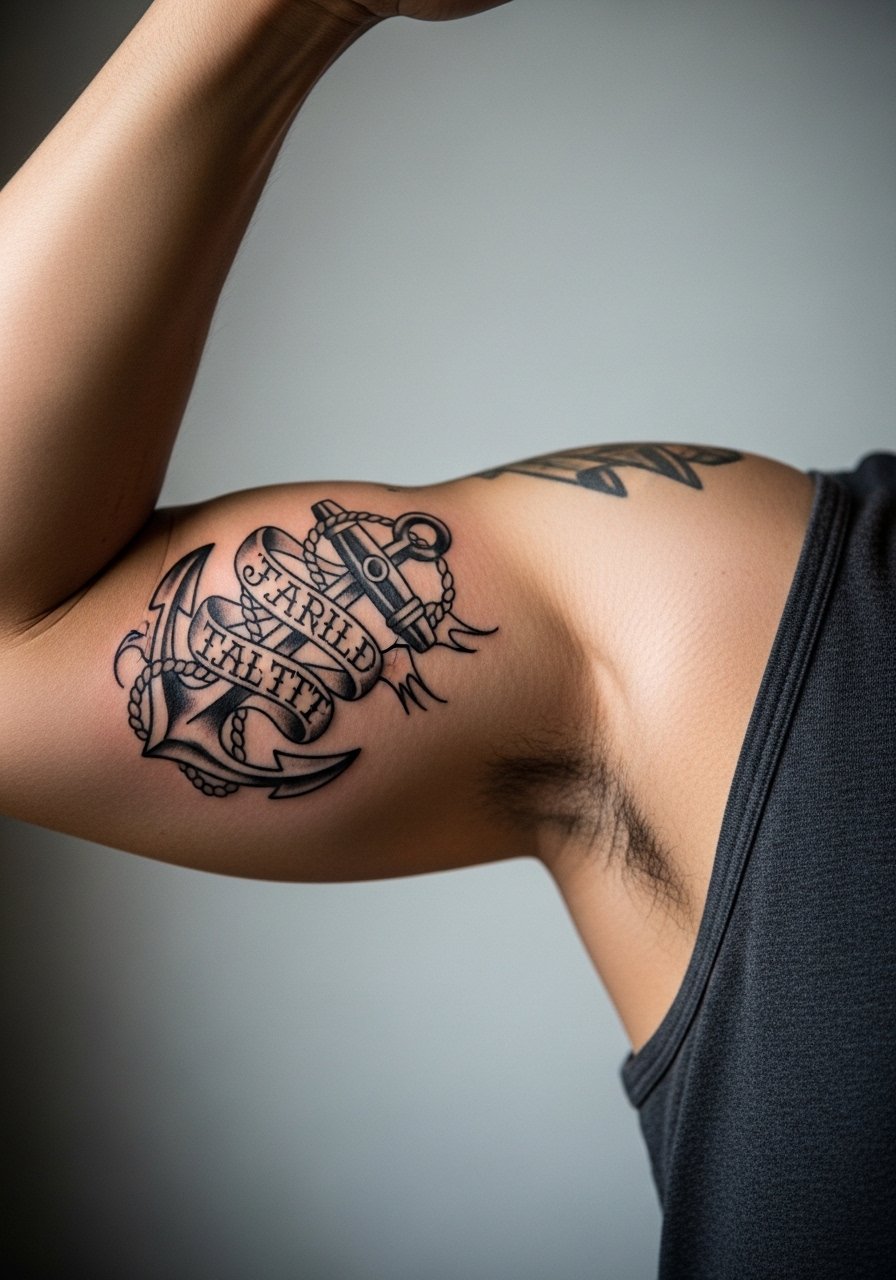
Inner bicep tattoos take a bit more care because the skin is softer and sessions require the arm to be positioned awkwardly. Ask for a clear rope outline and a slightly larger name font so the letters stay readable after healing. Pain is moderate and single-session pieces under 3 inches are common. For session comfort wear a loose tank top you can raise without fabric rubbing the needle area. The common regret is packing script too small into curved rope, which skews after healing.
12. Puzzle Pieces That Fit Across Two Forearms, Chest Expansion Ready
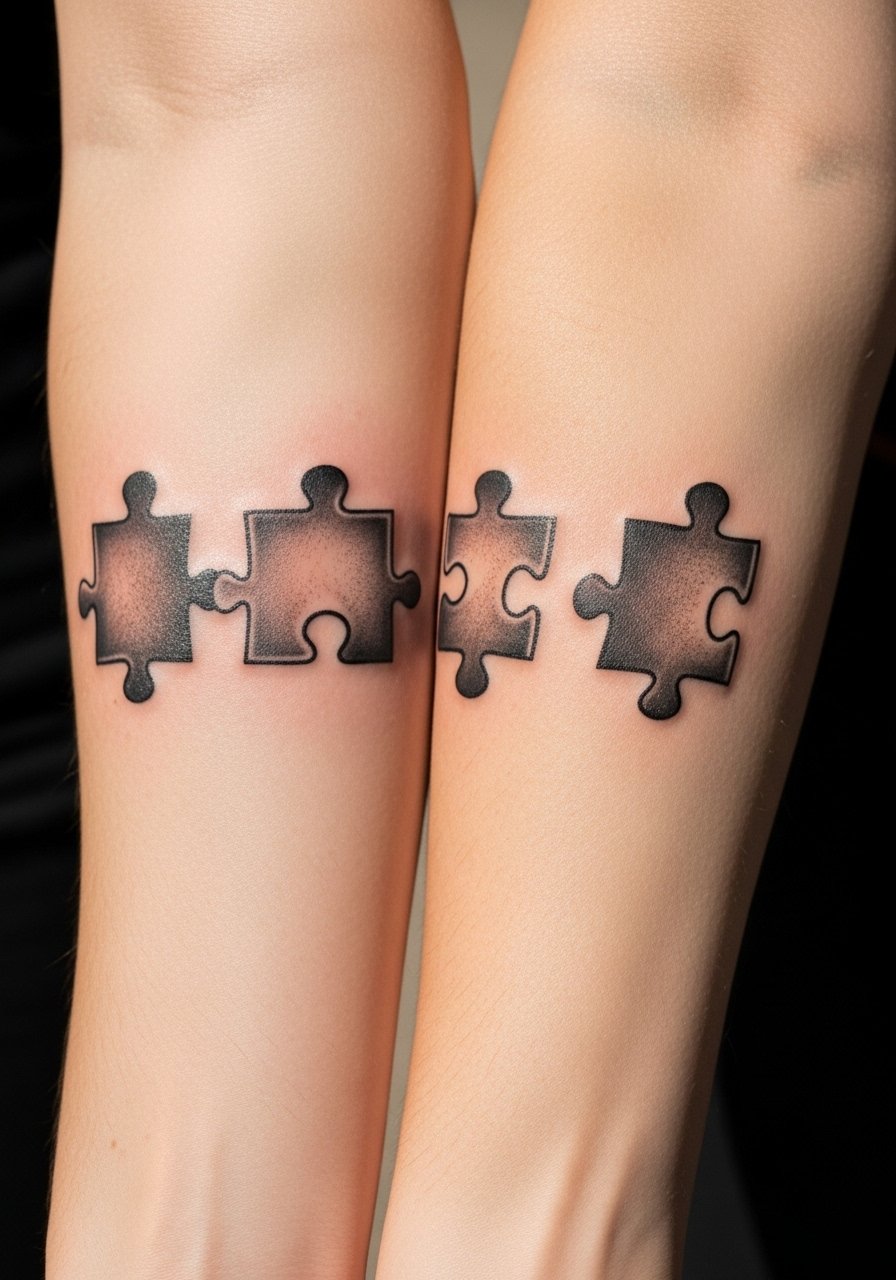
Modular puzzle pieces are great for fathers and sons who plan to add onto the motif over time. Make sure the interlock edges are drawn with slight breathing room so future additions do not crowd the join. For the session, forearms are low pain and easy to photograph for matching. Pair with a rolled sleeve chambray work shirt to show how the pieces align when arms are down. A mistake is designing receiving edges too small to accept later attachments, which limits sleeve expansion.
13. Birth Coordinates Hidden in a Compass, Calf or Bicep Option
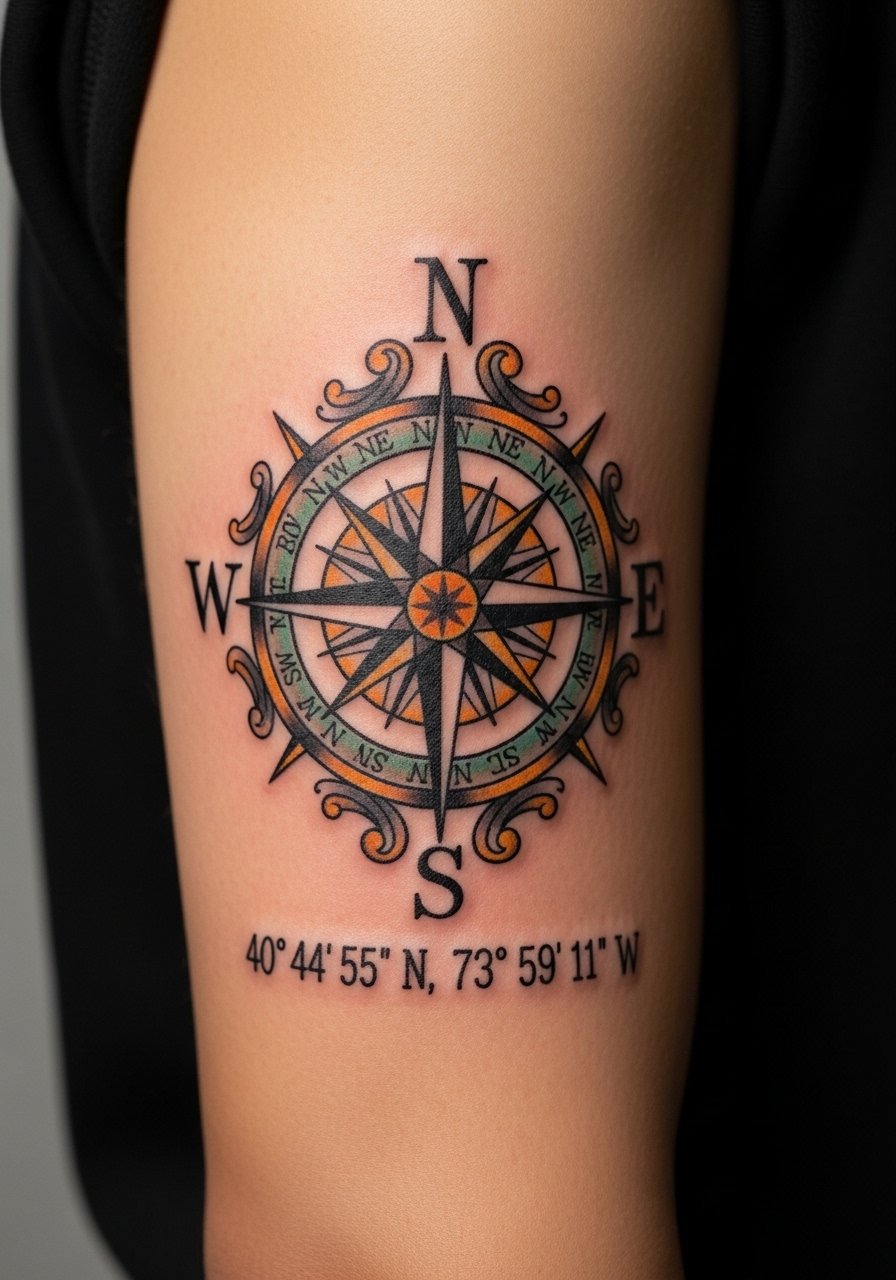
Coordinates are a quiet way to mark a shared place. If you plan visibility choose the bicep, which holds detail but also allows concealment. Request the coordinates in a monospace type with slightly increased letter spacing so numbers remain legible at year three. For calf placement, pair with boat shoes leather or shorts in summer to show off the work. Avoid tiny digits tucked into heavily shaded areas because they can lose form as saturation evens out.
14. Realism Fishing Scene on Thigh, Private Keepsake
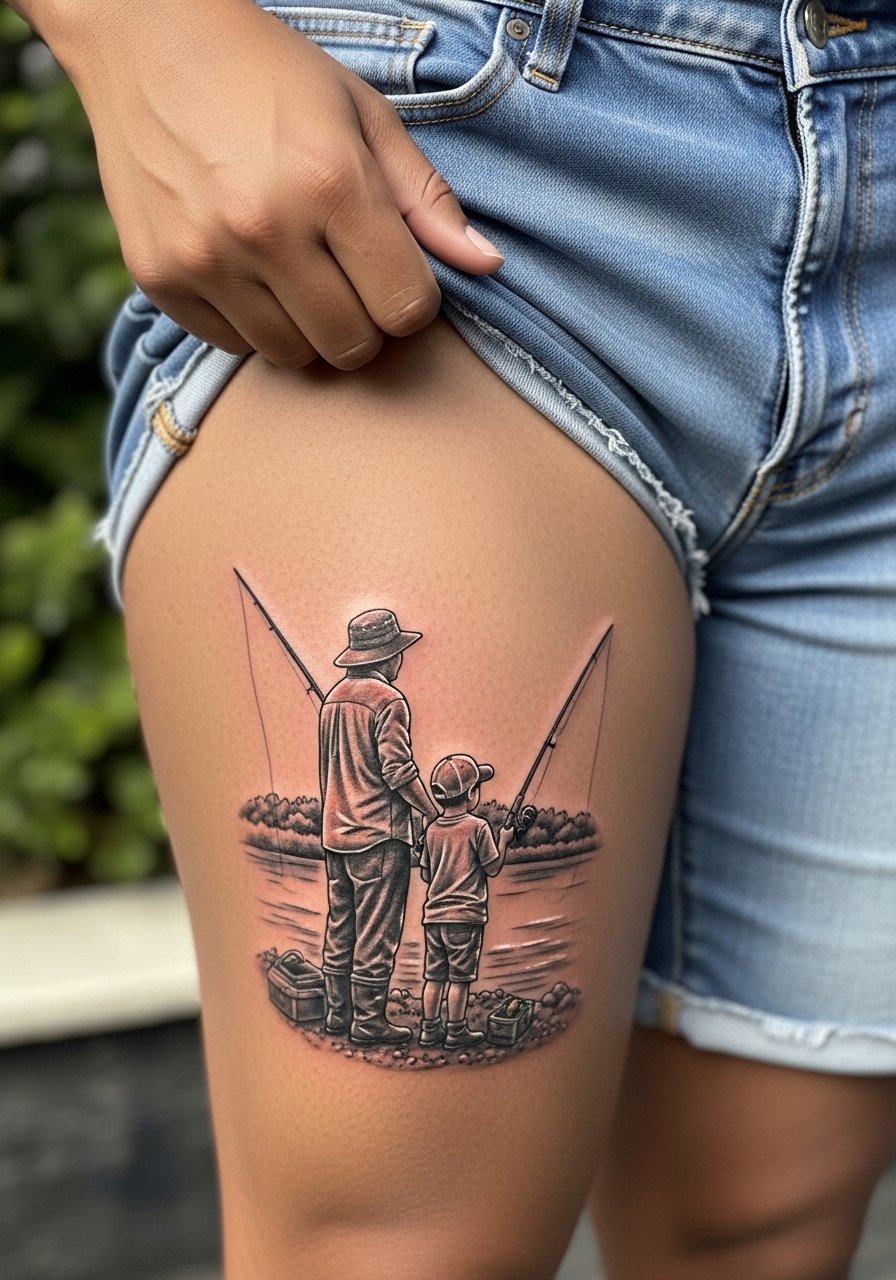
Thigh portraits are private and often age better because they stay under clothing most of the time. Realism here can be detailed since the area resists constant sun. Expect two sessions and plan wardrobe for the appointment, such as high-waisted shorts you can shift without exposing more than the artist needs. There is a debate among artists over numbing for sensitive areas. One side says numbing creams make long sessions bearable and prevent movement. The other side argues numbing can alter how the skin takes ink. Discuss pain management preferences with your artist before booking. A common mistake is compressing the scene into too small a panel, which loses cinematic depth.
15. Geometric Arrow-Through-Profiles, Outer Forearm Minimalism
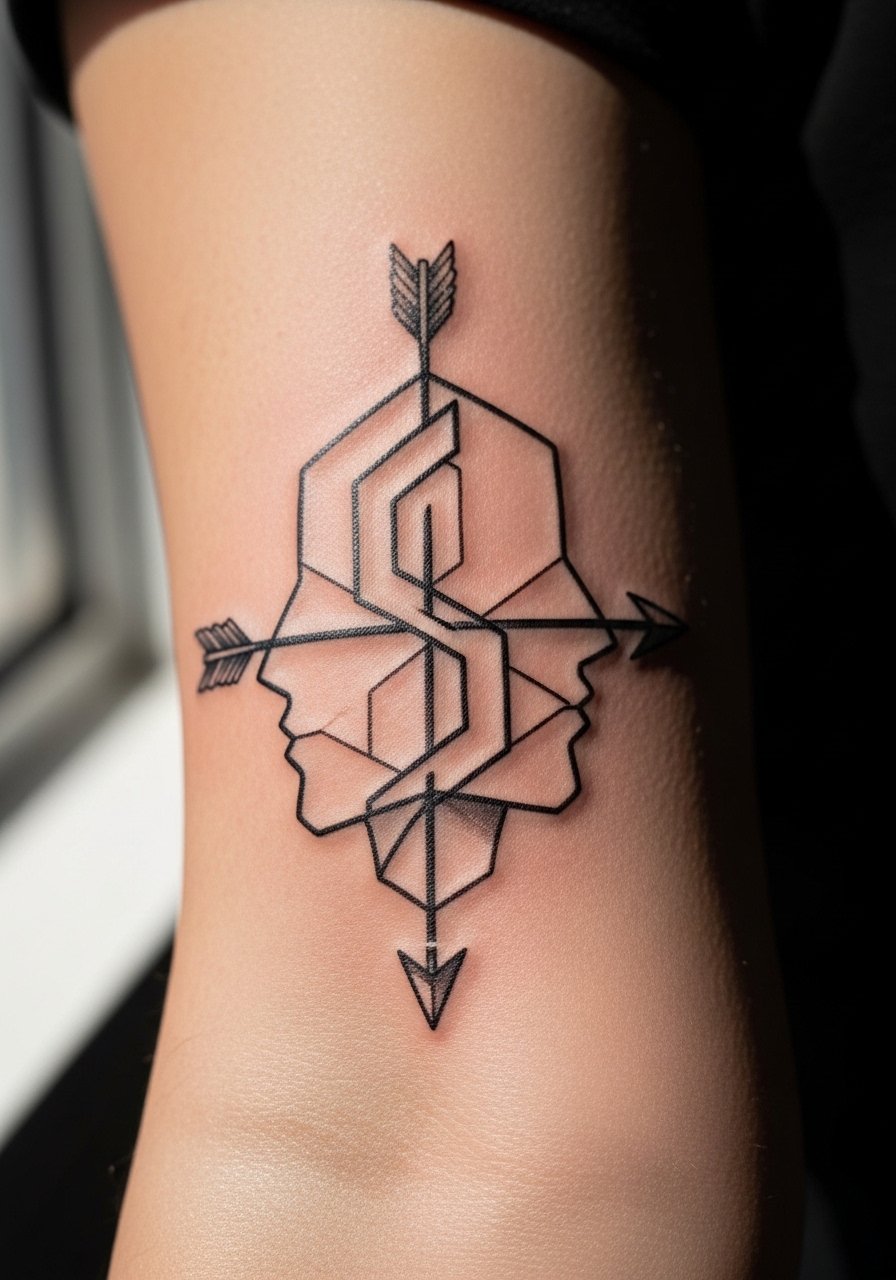
Geometric treatments modernize classic silhouettes and look sharp with strong spacing. The outer forearm is forgiving, and a single session usually handles a 4-6 inch layout. When you consult, bring references that show the exact angle and spacing you want so the faces do not collapse into each other as they age. For showing this off, a rolled sleeve henley complements the linear aesthetic. Avoid tiny facial features inside the profiles, which get lost in the geometry over time.
16. Matching Minimalist Coordinates on Wrists, Subtle Pair
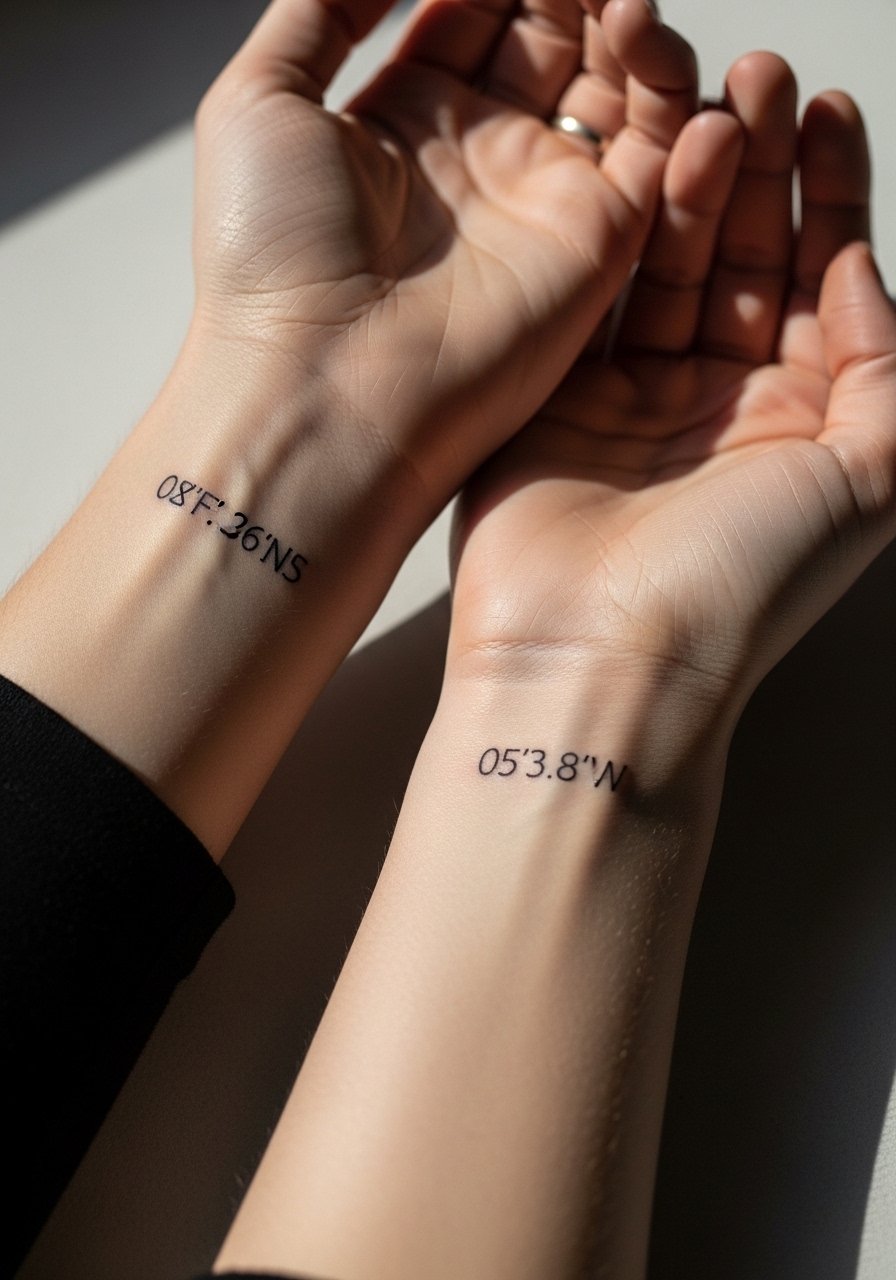
Wrist coordinates win on sentiment and low session time, but fine lines here will need touch-ups sooner than biceps. If you want match durability, ask for a slightly bolder script and plan on a touch-up at year two. Wrist tattoos see more washing and friction, so gentle aftercare is important. Pair wrist work with a minimalist thin ring on the opposite hand to balance jewelry without covering the ink. The main error is making the numerals too compact, which speeds fading.
17. Wolf Pack With Father Leading on Upper Back, Expanded Composition
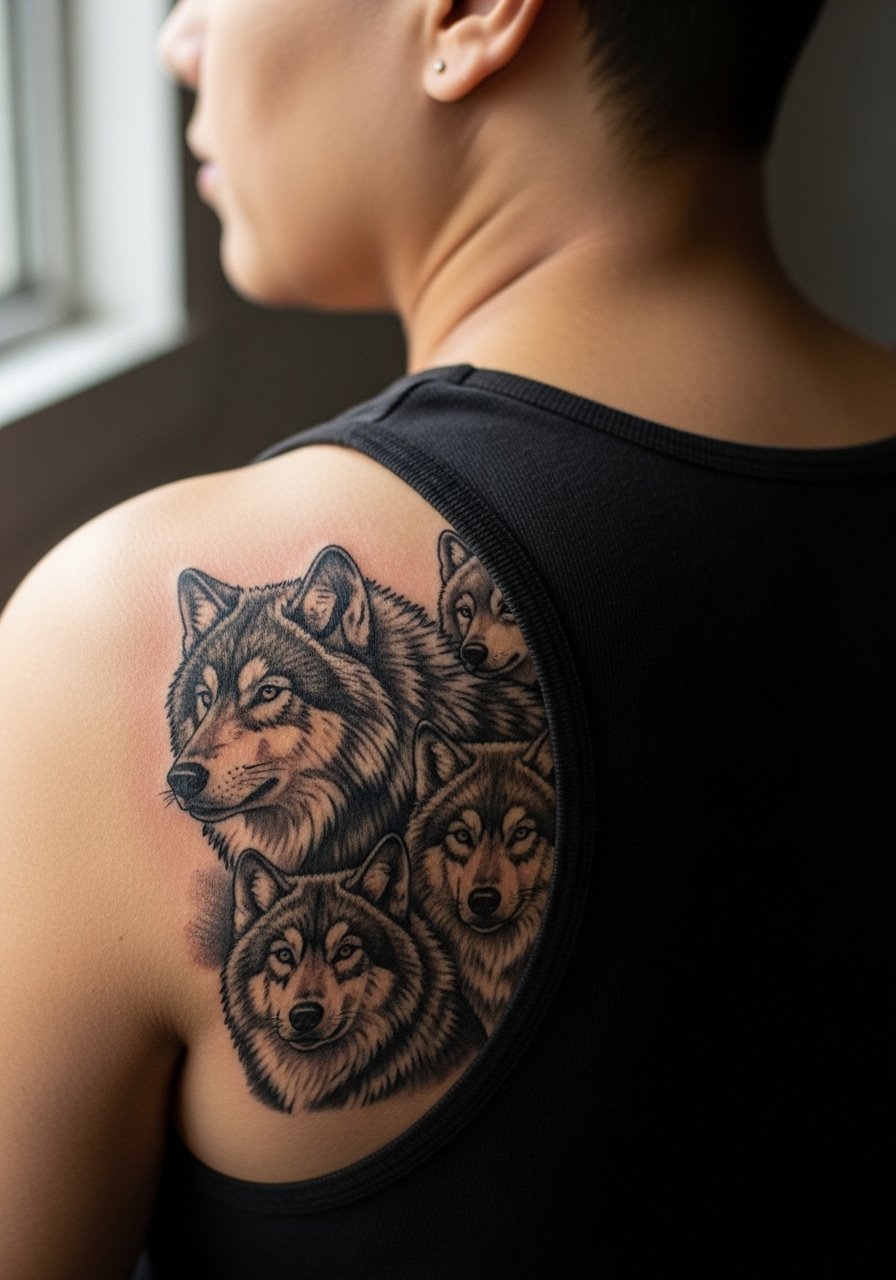
An upper back wolf pack offers a cinematic sweep that looks great when you wear open or sleeveless tops. Ask for layered contrast so the lead wolf retains visual priority over the pups at year five. Sessions are typically two sittings and the area heals well when you avoid tight belts or straps. For casual reveals, a half zip hoodie lightweight or muscle tank works. Avoid crowding the silhouettes with excessive dot work that can bleed together as the skin settles.
18. Puzzle Piece Interlocks That Expand Into Sleeves Over Years, Chest to Arm
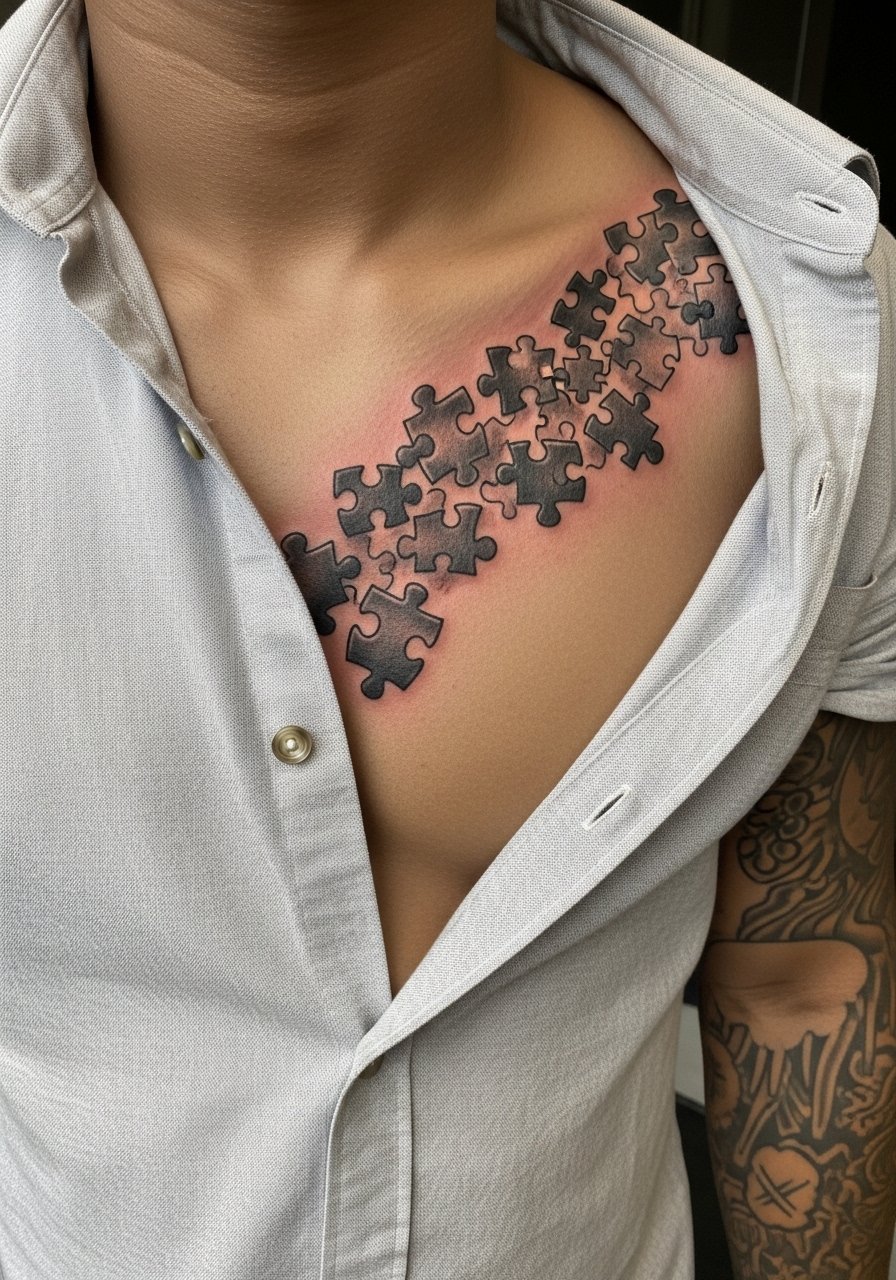
Designs meant to grow into sleeves need forward planning. Start with clear lock edges on chest pieces so future sleeve work has anchors to connect to. Mention your sleeve plan during consultation and ask for slightly heavier outer lines at the joins. Chest placement is sensitive to weight fluctuation, so avoid thin script inside the pieces. For session comfort wear a button front shirt loose you can open during the appointment. A common oversight is not designing negative space for future elements, which makes later expansion messy.
19. Compass With Birth Coordinates, Calf Variation for Travelers
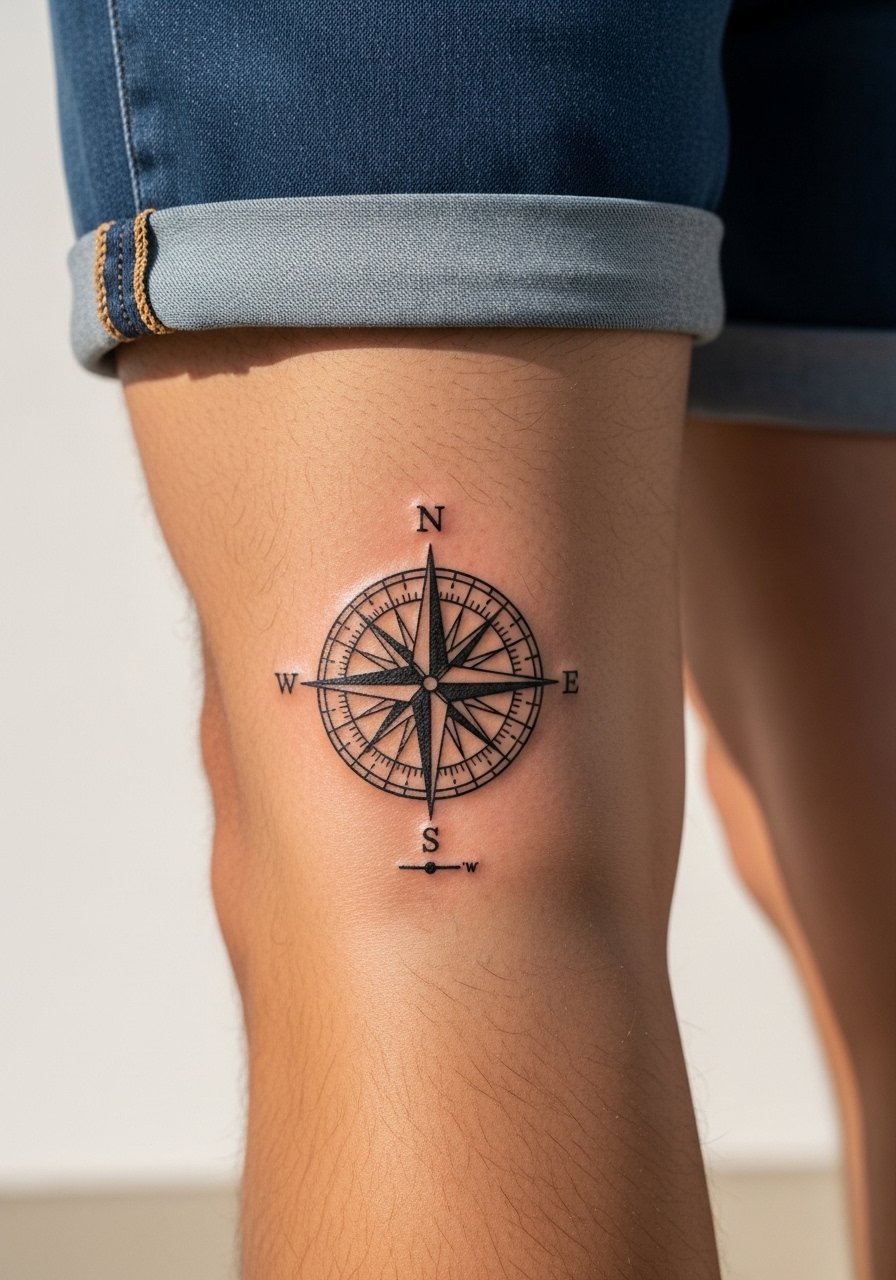
Calf compasses are practical for travelers who want a visible reminder without chest exposure. Ask for a balanced compass rose with clear north markers and monospaced numbers for coordinates so they age legibly. Calf sessions are comfortable when the leg is propped and one session usually covers a 4-5 inch piece. Pair with ankle crew socks or rolled joggers to show the work in summer. Avoid adding too many tiny ornaments around the compass that create visual noise as the ink spreads slightly over time.
20. Tiny Footprint Pairing, Inner Wrist or Side of Rib
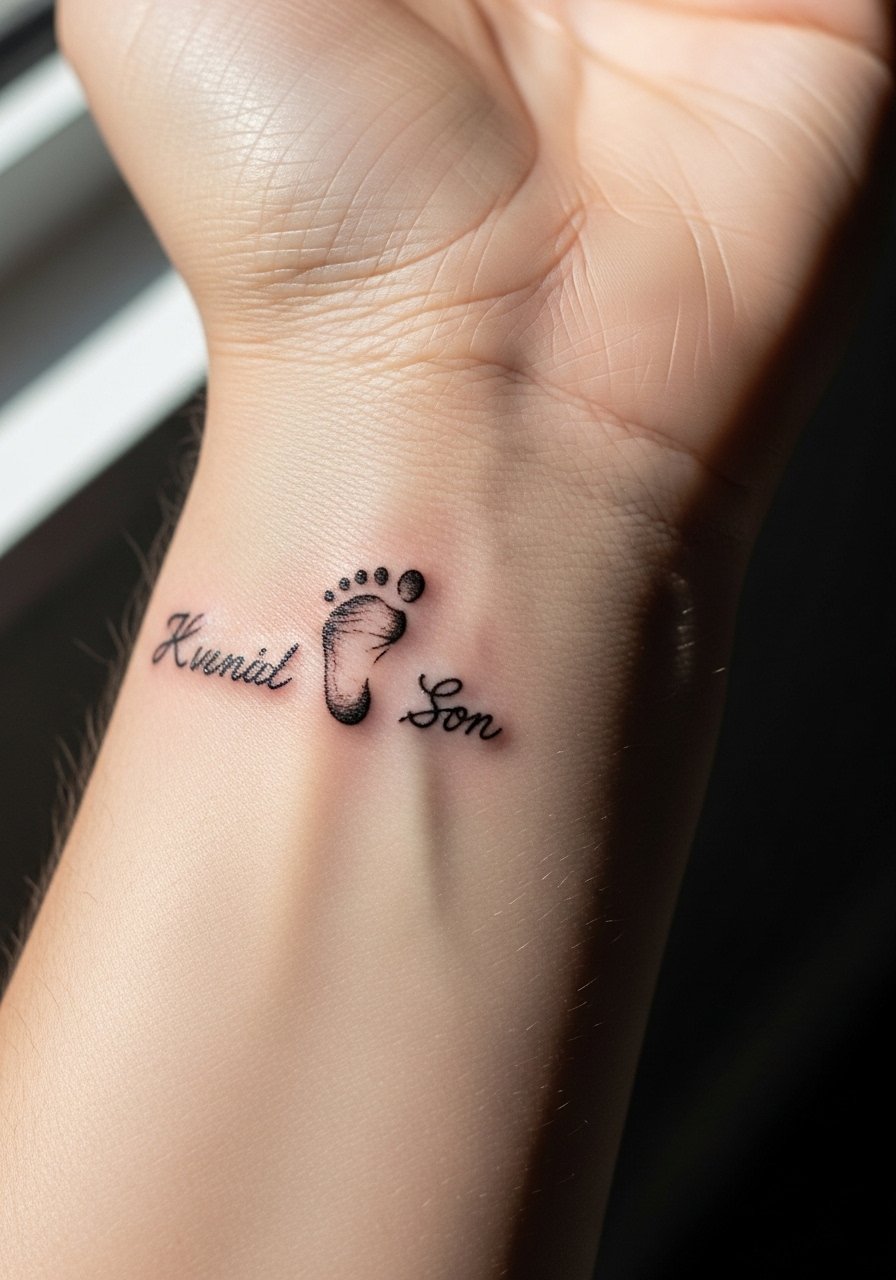
Tiny footprints are adorable for first tattoos and great for matching sets, though they age differently by placement. The inner wrist sees more sun and washing, so you may need a touch-up by year two. The rib offers privacy but more pain and possible stretching with weight change. For wrist sessions avoid bracelets on the same wrist and consider a rolled cuff dress shirt style for easy exposure. Common mistake is asking for the footprint to include too much internal detail, which blurs into a smudge.
21. Hand-Drawn Style Sketch of Dad Teaching, Forearm or Shoulder
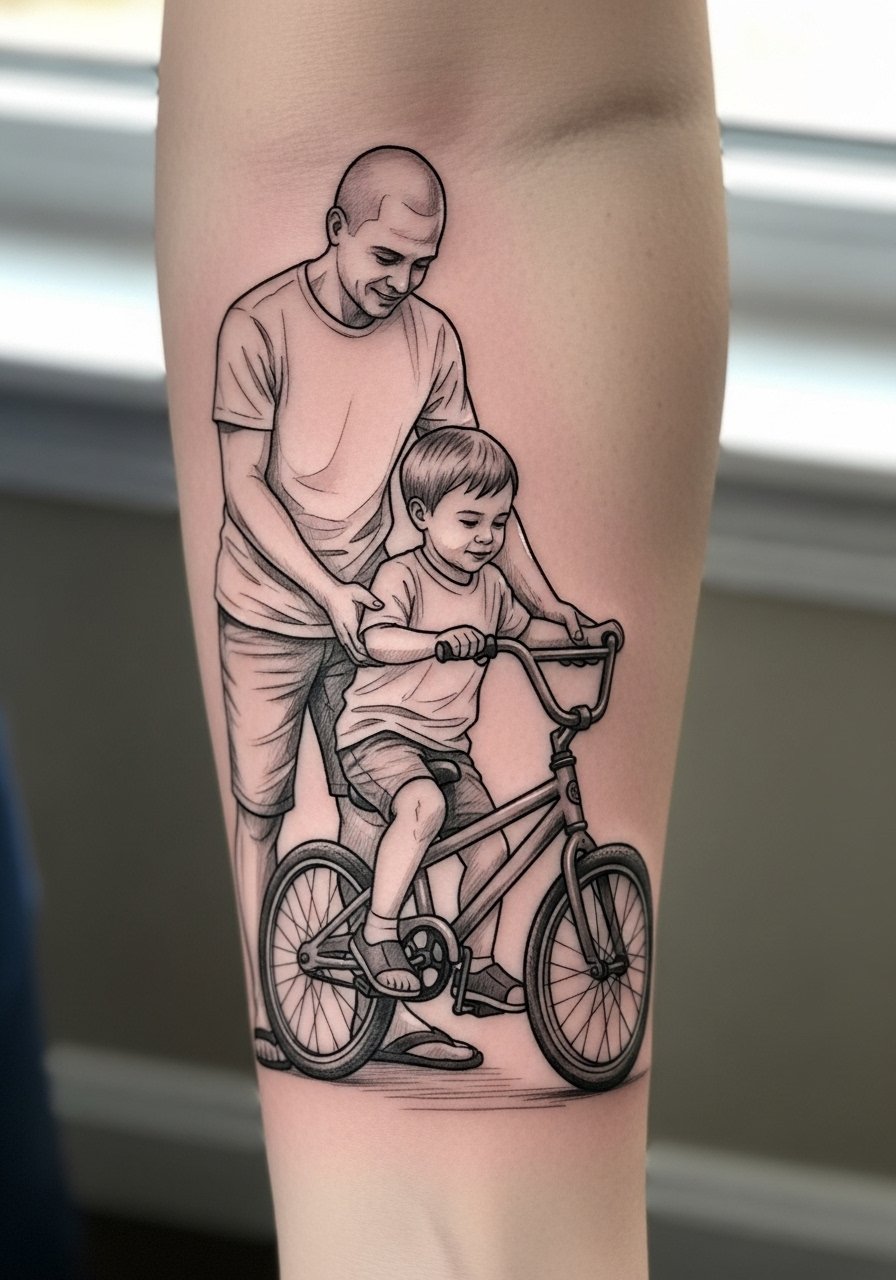
Sketch-style pieces keep a raw, hand-drawn feel and age into an interesting texture that still tells a story. Forearm placement shows the narrative, and shoulder placements add scale for larger scenes. Ask for preserved negative space around key figures so the primary action remains clear after a few years. Session time varies with composition and may require two sittings for complex scenes. For a casual reveal, rolled sleeves or a chambray work shirt men keep the focus on the sketch. Over-detailing shadow strokes is the usual mistake and can muddy the sketch over time.
22. Minimalist Mountain Range That Ages Well, Forearm Wrap
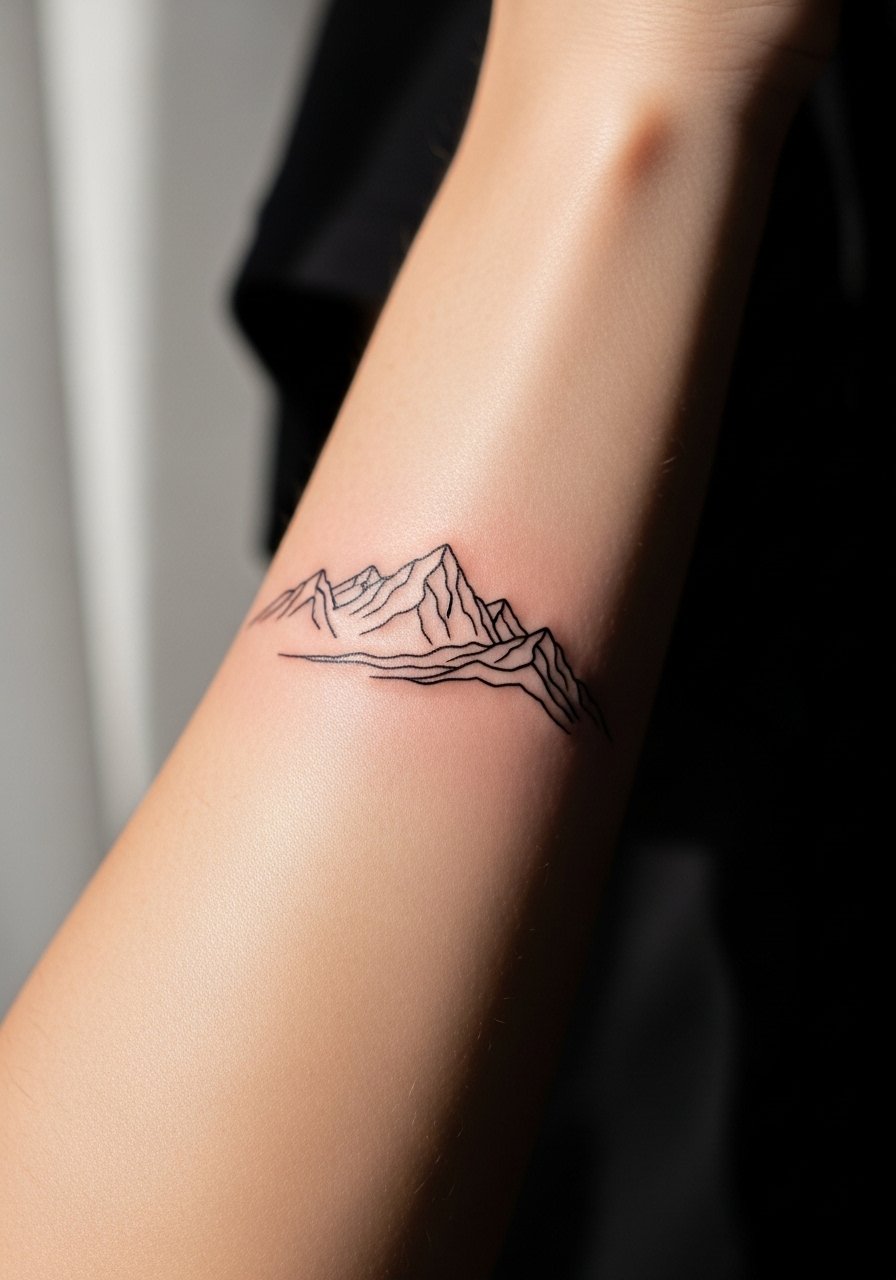
Minimal mountain ranges are low commitment and translate well into matching pieces. To avoid early softening, ask for a slightly stronger outer contour and thin inner accents rather than ultra-fine twin lines. The forearm location keeps visibility high and pain low. Pair the piece with a rolled sleeve henley or short-sleeve button-up to display the wrap. A mistake is overcomplicating the range with micro ridges that blur within a year.
23. Lion Cub Paw Print With Dad’s Paw Outline, Shoulder Cap
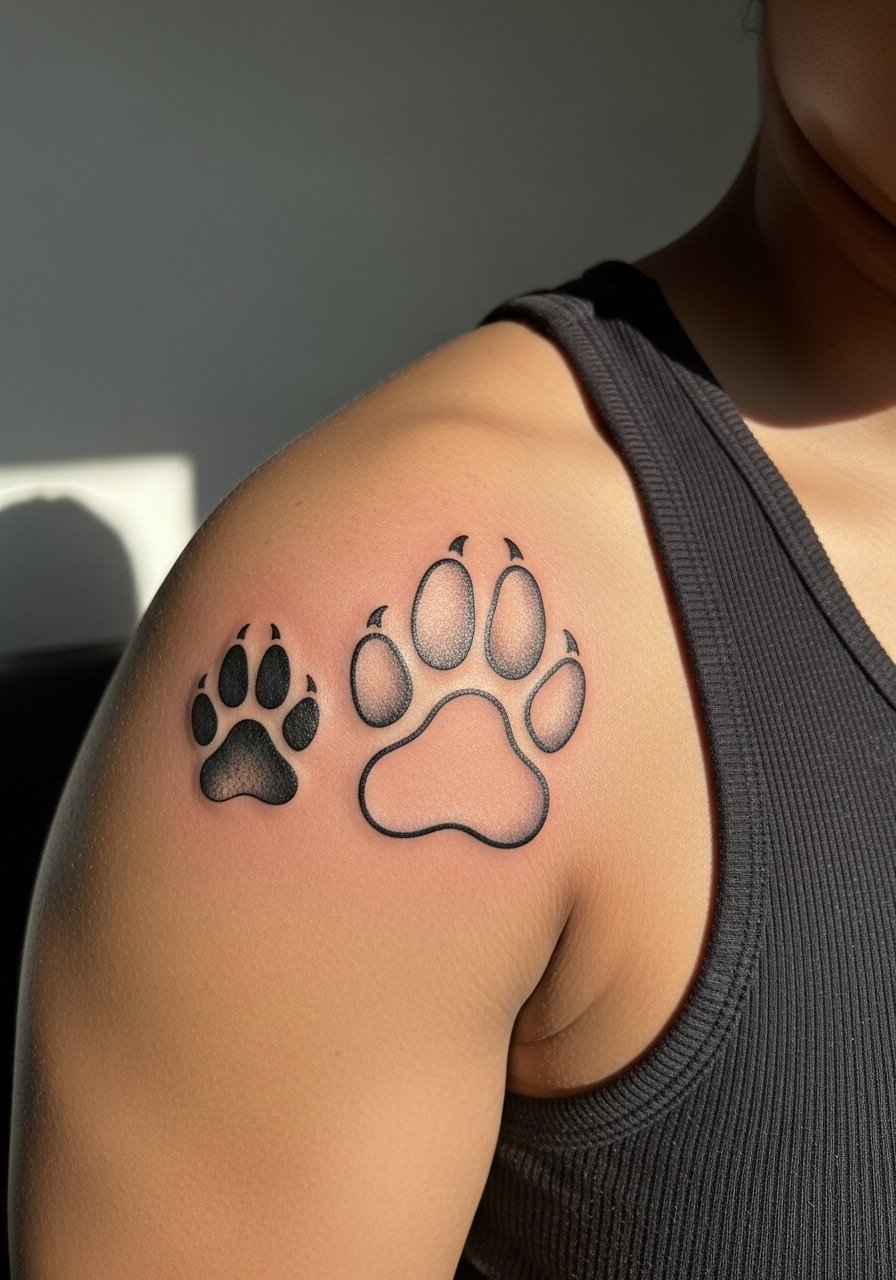
Bold paw motifs read like family heraldry and shoulder caps are forgiving for saturation. Request crisp negative shapes around the pads so the two prints never look like a single blob after healing. Sessions are typically short if the pieces are small. For casual reveal, a sleeveless muscle tank men frames the shoulder well. Avoid layering text over the paw pads, which competes with the silhouette and ages poorly.
24. Anchor With Subtle Nautical Elements, Inner Bicep or Forearm
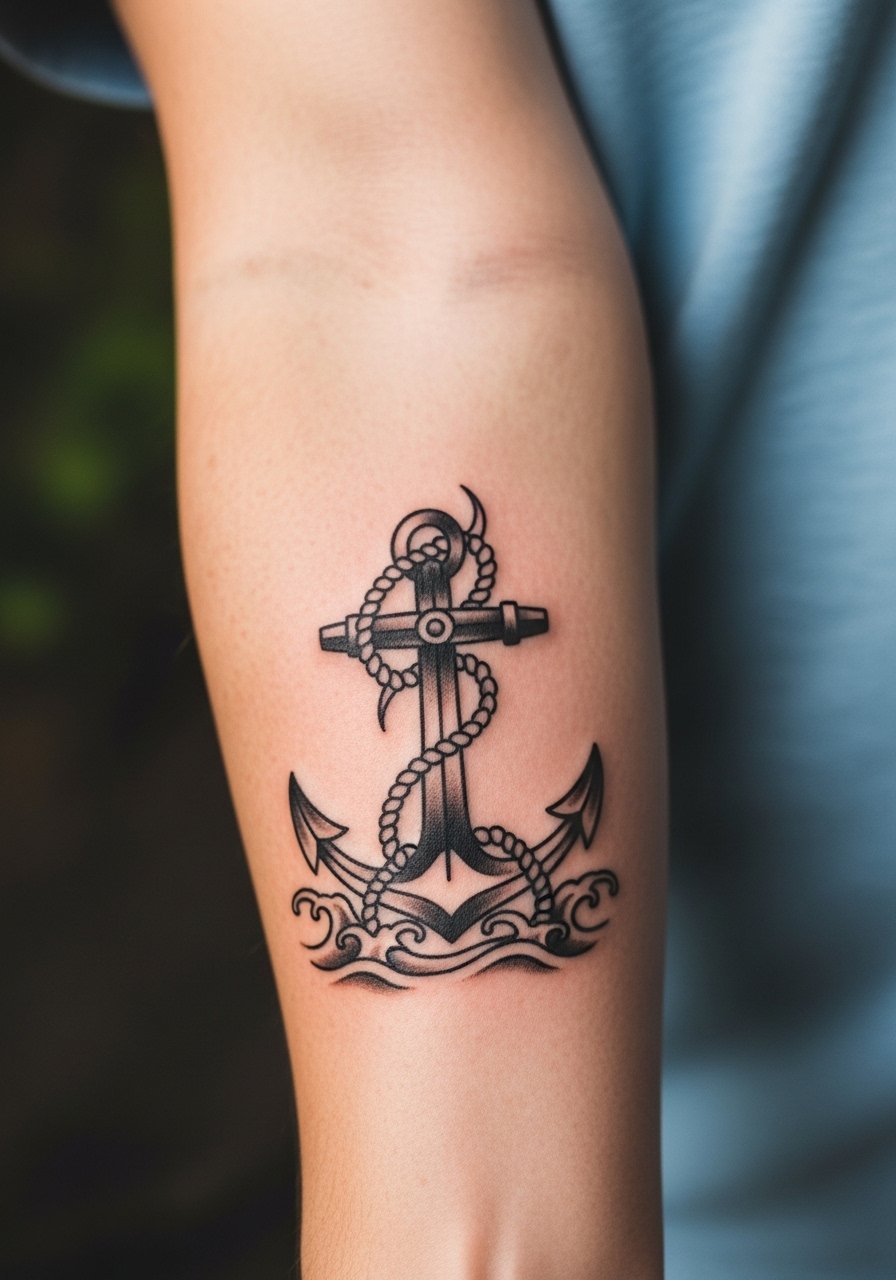
Nautical anchors are a classic nod to stability and work in compact formats. On the inner bicep, keep the rope open and avoid tight cross-hatching that can turn into blocky shading. If you want the inner bicep, wear a loose tank top to the appointment. The main user mistake is insisting on micro-detail in the rope that loses clarity under movement and time.
25. Interlocking Tree Roots Forming Initials, Upper Arm or Chest
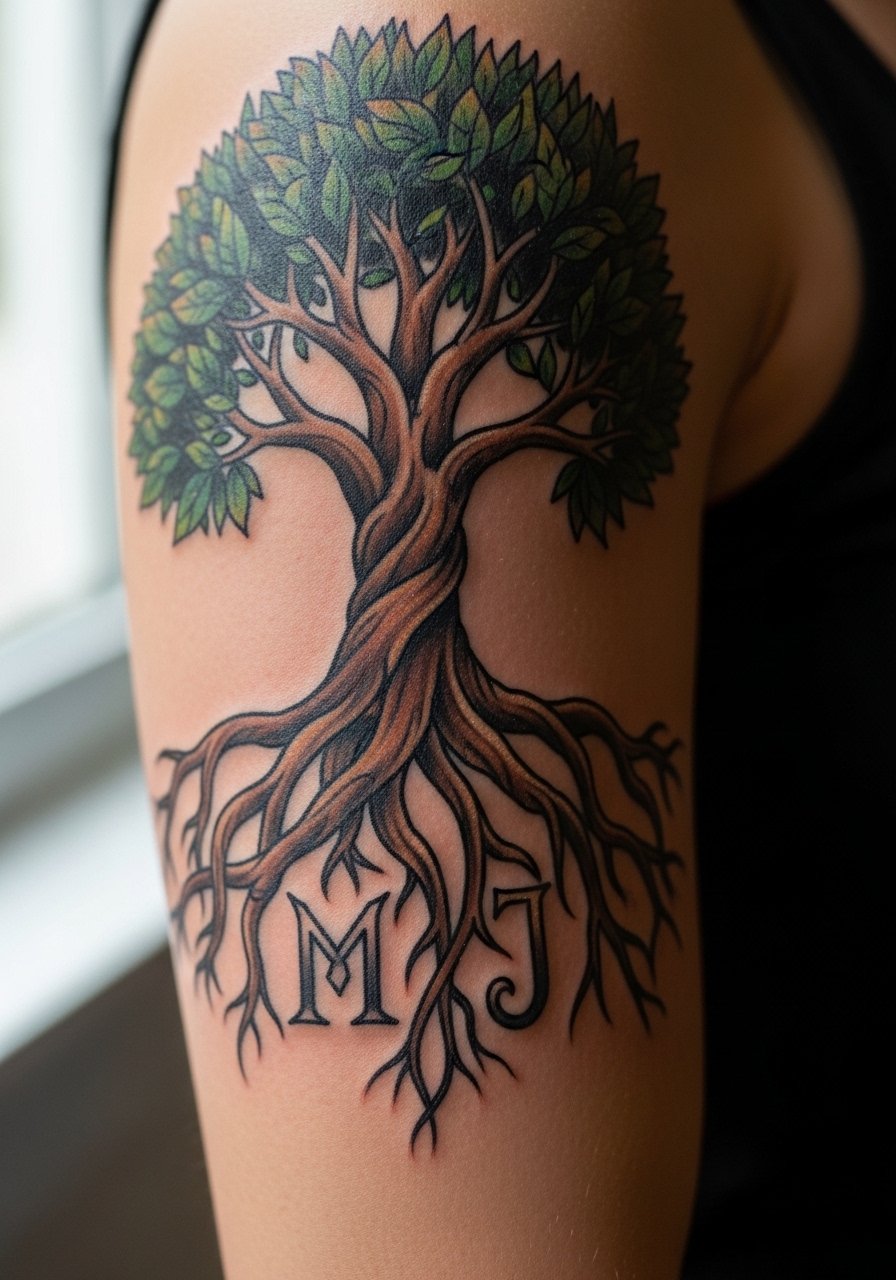
Initials hidden in roots are tactile and evolve with the tattoo. Upper arm placement preserves detail better than sternum or ribs for people with fluctuating body weight. Specify the initials as part of the negative space and ask for extra outline definition at the letter edges so they remain readable after a few years. Pair with a casual button front shirt loose for staged reveals. Avoid overly elaborate root tangles that swallow the letters.
26. Matching Micro-Realism Hands Holding, Small Chest or Wrist Options
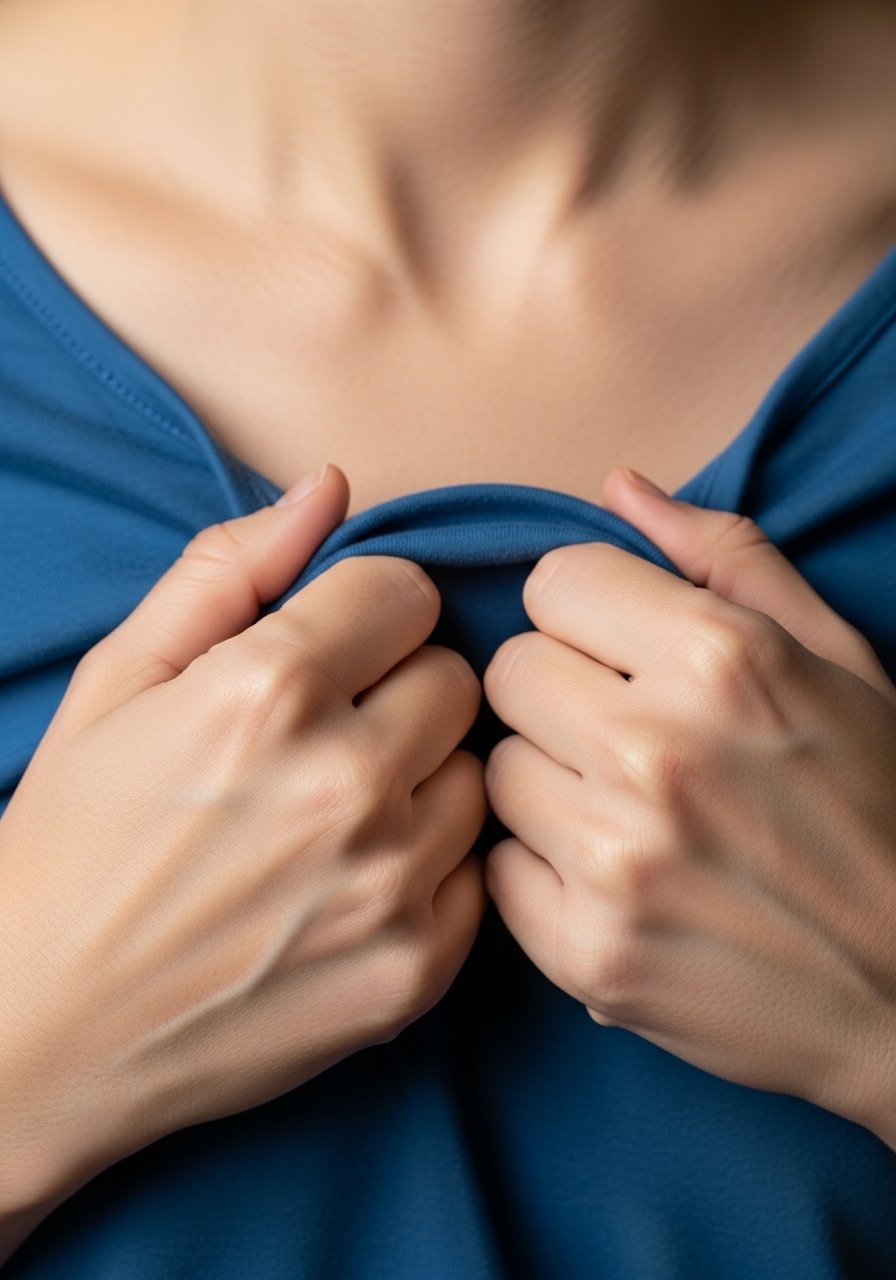
Micro-realism hands capture emotion in a compact frame but require perfect depth control. Chest placement keeps the piece intimate while the wrist option remains visible. For chest work, wear a wide-neck shirt you can pull aside for the session. The common mistake is shrinking hands too small for realistic detail, which loses the interplay of fingers as the shading settles.
27. Coordinates and Small Motifs Combined Into a Single Wrist Line, Minimal Set
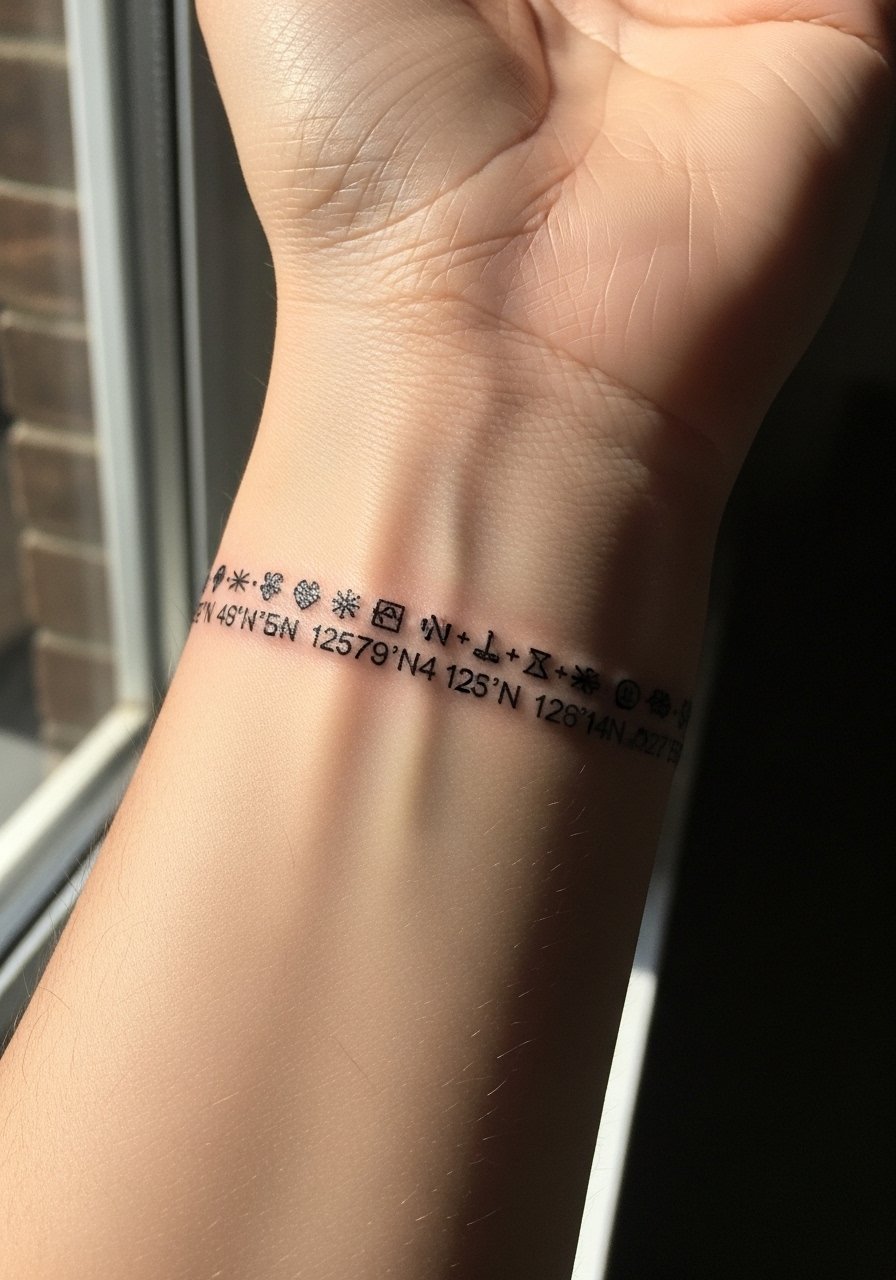
A linear wrist band combining coordinates and tiny symbols gives a cohesive micro statement and reads well when designed with breathing room. Ask for slightly increased spacing between each motif so each element remains distinct as the ink ages. This is a low-pain, single session piece and pairs well with a thin leather watch strap on the opposite wrist for balance. Avoid cramming too many icons into a narrow band because the whole line can blur into an indistinct ribbon.
Frequently Asked Questions
Q: Will fine line wrist tattoos blur faster than forearm pieces?
A: Fine line on the wrist typically takes more visible wear because wrists see more washing and friction. In practice a slightly heavier contour or scheduled touch-up at year two keeps the design readable. If you want a one-and-done look, move the design to the forearm where lines settle more predictably.
Q: How should I prep for a chest portrait session versus a forearm silhouette?
A: For chest portraits plan for multiple sessions, hydrate well the week before, and wear a front-open shirt so the artist can access the pec without rubbing fresh ink. Forearm silhouettes are usually single sessions and you can wear a loose short-sleeve or a button front shirt loose to the appointment for easy exposure.
Q: What do artists mean by "blackwork ages better" for father-son pieces?
A: Blackwork uses solid fills and bold outlines that retain contrast over years. Healed color fades tend to desaturate unevenly, while saturated black maintains shape and reads from a distance. If you want an heirloom look, prioritize clean black saturation with negative space support.
Q: Saniderm or dry healing for a freshly inked wrist match set, which side should I pick?
A: The answer depends on climate and skin reaction. One camp praises Saniderm for protecting fine line work and reducing scabs. The other camp prefers dry healing in humid areas to avoid trapped moisture. Ask your artist about local climate and their aftercare track record, and follow the method they use in their portfolio pieces.
Q: How do I find artists who actually do father-son matching sets without ghosting after a deposit?
A: Use discovery paths like searching hashtags #FatherSonTattoo or #NeoTradFamily on Instagram, filter TikTok for local creators, and check booking platforms like Booksy or Tattoodo for verified guest spots. Read recent client comments in forums rather than relying on a single glowing post, and confirm cancellation policies before paying deposits.