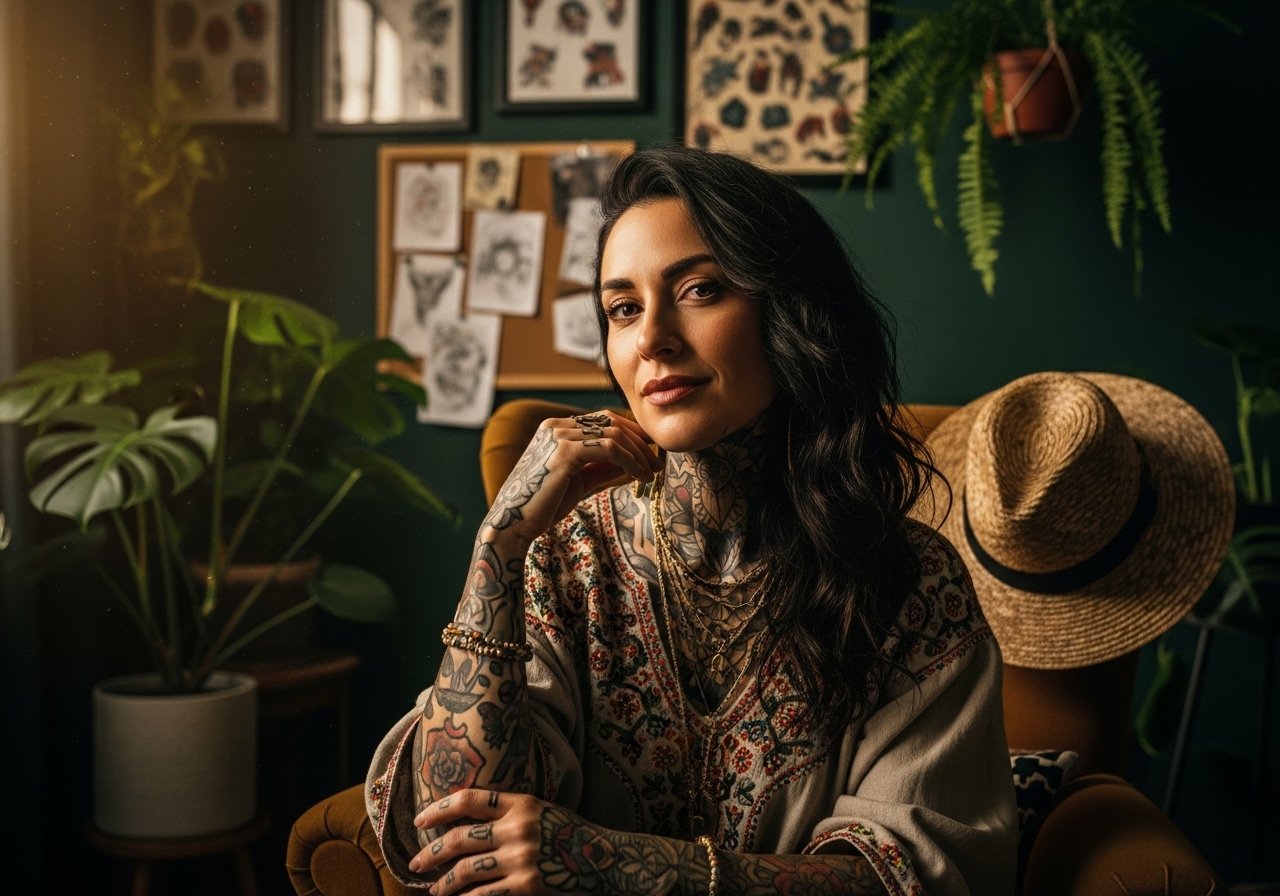
Fine line sacred heart pieces are trending on feeds, but trends and longevity do not always match. The pieces that keep shape over years tend to prioritize spacing, needle depth, and placement over flash detail. These 21 sacred heart designs focus on choices that age better, with notes on what to ask your artist, what to wear to the session, and how each design will likely look healed at one year and five years.
1. Tiny Sacred Heart at the Collarbone, Fine Line
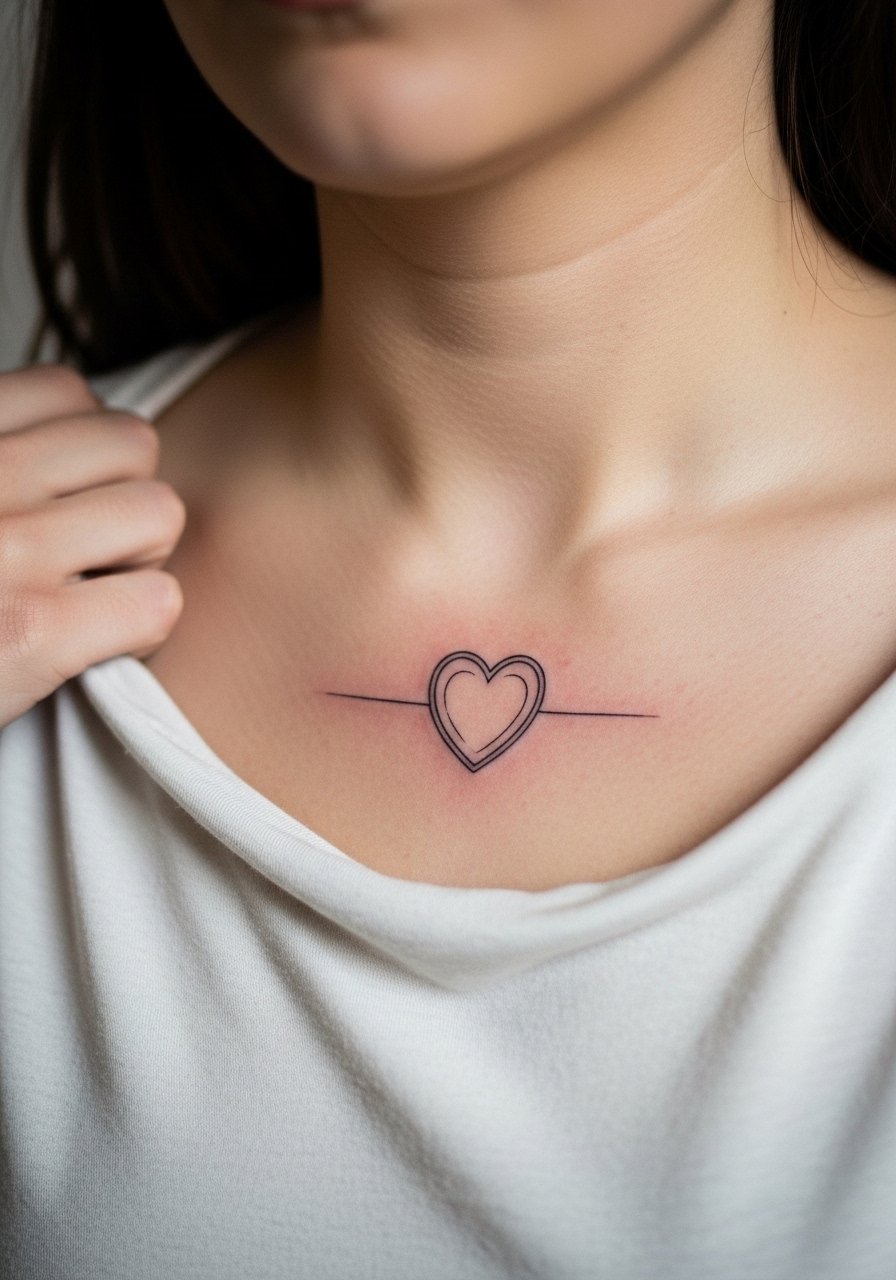
This placement reads elegant because the collarbone gives a natural frame. Fair warning, the upper chest moves with breathing and clothing, so expect a moderate pain level and a short session of under an hour. Tell your artist you want slightly heavier linework than micro-gauge to avoid early softening, and ask for two to three millimeters of spacing around dense elements like flames or thorns. A common mistake is asking for ultra-fine detail too close to the bone, which tends to blur by year three. For showing it off, pair with an open-neck blouse or a thin chain pendant that sits above the heart.
2. Mini Sacred Heart on the Inner Forearm, Linework Focus

I have seen inner forearm hearts keep their character the longest when they use clean linework with modest negative space. For this placement expect low to moderate pain and a single-session appointment under two hours. During consultation ask the artist for slightly bolder contour lines and lighter interior detailing so the shape stays readable after a few years. Blowout risk is low on the forearm, but avoid cramming tiny motifs inside the heart. At six months the linework should still read crisp, and at five years you may see softening where the arm creases. Roll sleeves up to show this piece and wear a linen button-down to frame the tattoo.
3. Wrist Sacred Heart, Micro Line with Rose Accent
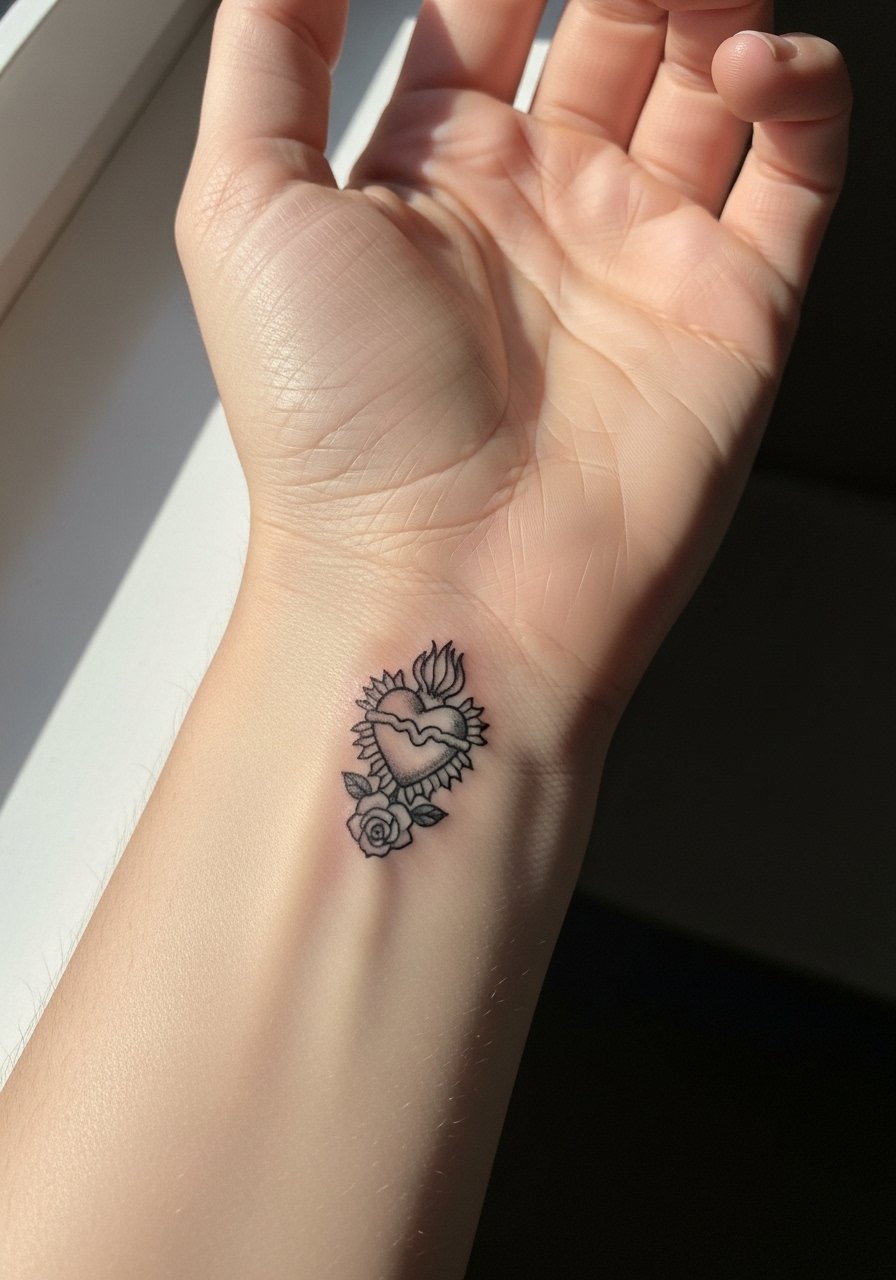
The wrist is a visible spot that also sees a lot of washing and friction. Most sessions run thirty to sixty minutes and the pain is usually moderate. A common mistake is asking for ultra-dense shading on the wrist, which fades unevenly with hand use. Instead, request open negative space inside the heart and crisp contour linework so the form remains legible. Expect touch-up around year two for very fine details. For the appointment wear a short-sleeve tee you can push up easily and show off the healed piece with a minimalist watch.
4. Classic Sacred Heart on the Ankle with Dot Shading
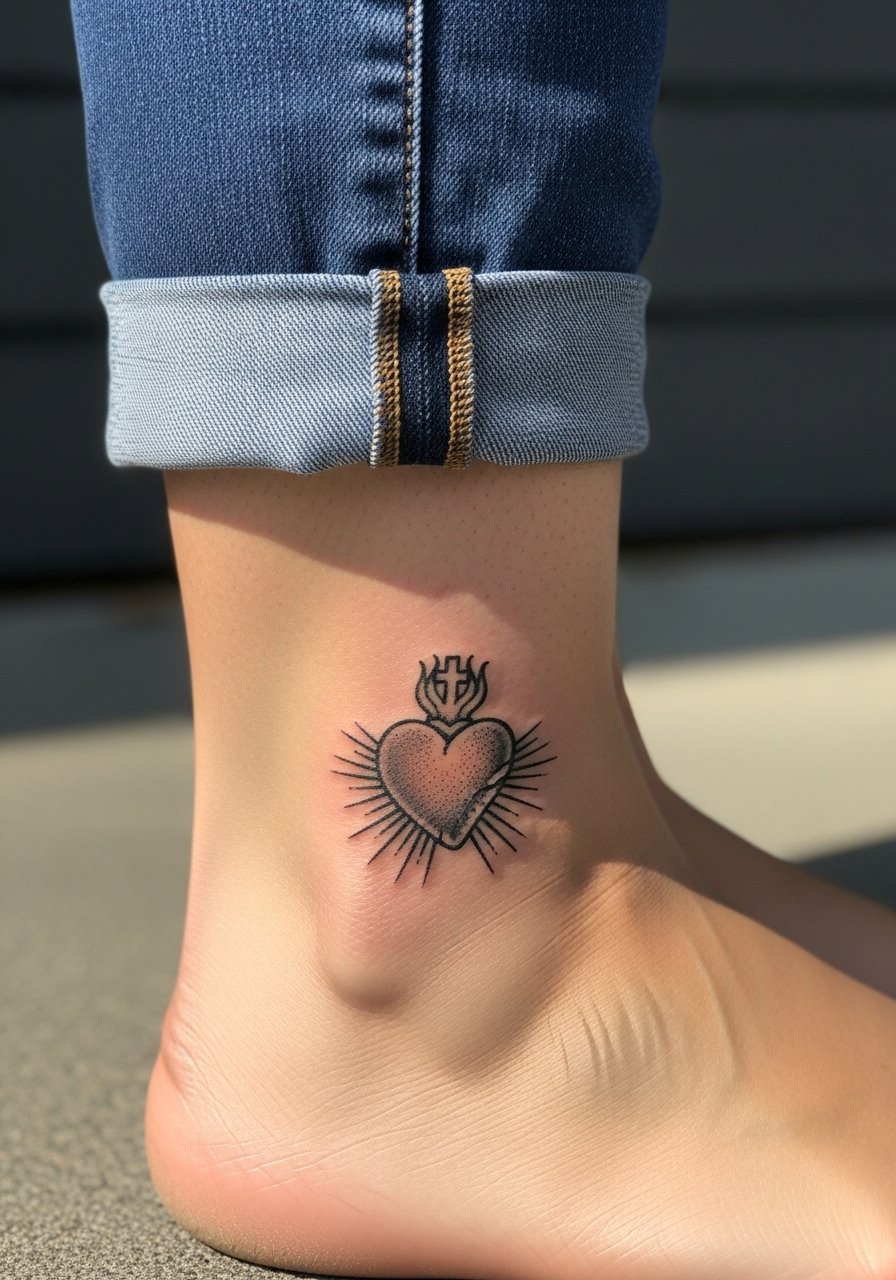
Ankle tattoos age differently because shoes and socks cause friction during the first weeks. Expect a shorter session under ninety minutes and a moderate pain level near the bone. Ask your artist for stipple shading rather than heavy saturation to keep the heart readable after repeated rubbing. A typical mistake is asking for saturated color on the ankle, which tends to fade faster. For the first two weeks plan to wear low-profile shoes and loosened socks so the area can breathe. When you want to show it off, rolled jeans or a lace-up sandal keep focus on the ankle motif.
5. Small Sacred Heart Behind the Ear with Subtle Flame
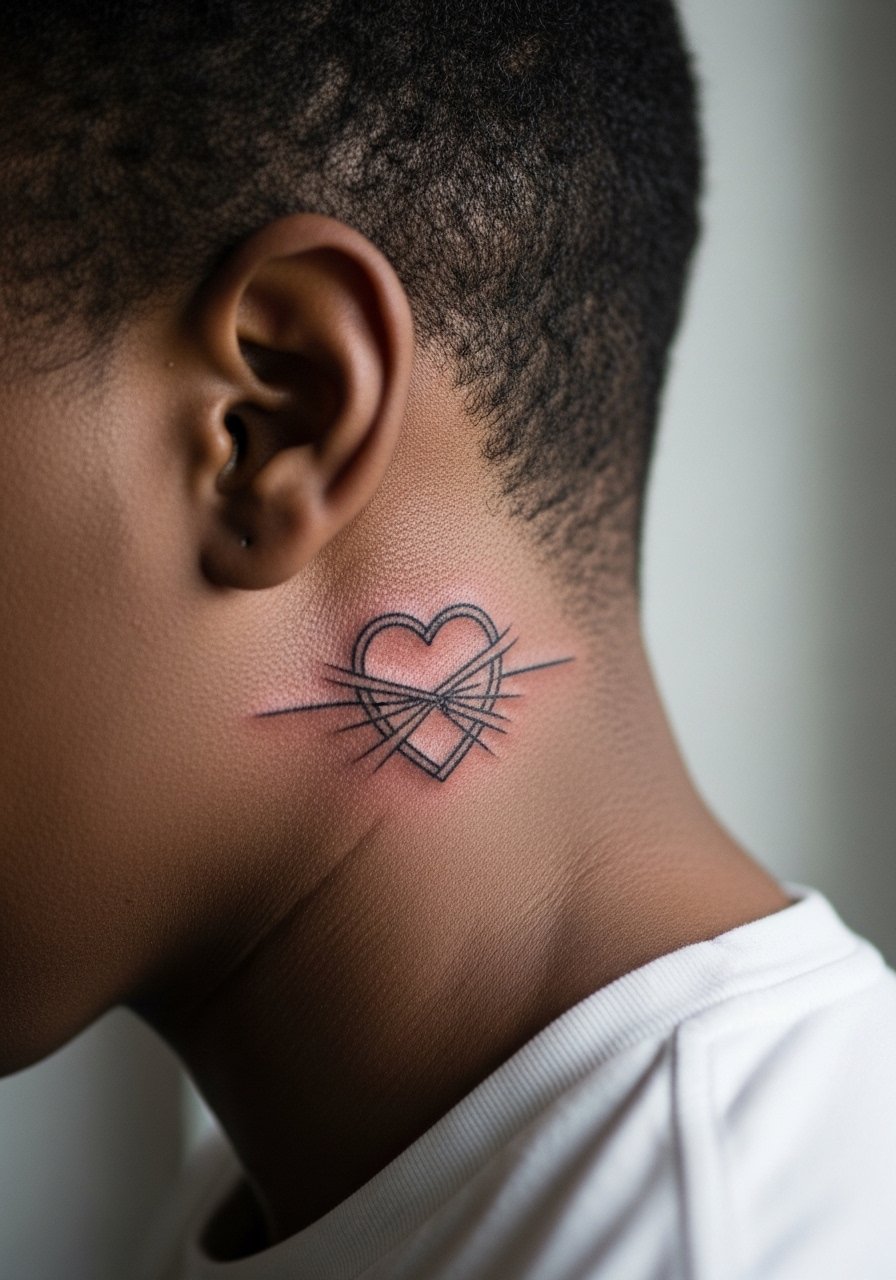
Behind-the-ear placements look discreet and intimate, and they require a very specific technique. The session is quick but the area is sensitive, so expect sharp but short bursts of pain. The biggest mistake is asking for dense detail where skin mobility and limited real estate will blur lines. For durability request simplified contours and minimal interior detail. Be aware that hair growth and frequent shampooing affect healing. If your work requires a crisp outline at year three, you may need a small touch-up. Note that behind-the-ear tattoos are subtle and may be covered by hair when desired.
6. Sacred Heart Sternum with Floral Wreath, Fine Line

This sternum placement can be striking but it tests line stability because the skin there shifts with breathing. Expect a longer session around two to three hours and a pain level in the higher range. Artists split into two camps on fine line here. One group says the skin moves too much and thin lines blur within a couple of years. The other group argues that with correct depth and spacing the lines settle well. Name both concerns during your consultation and ask where the artist stands. For the session wear a sports bra you can easily pull down or a zip-up top so the artist has clear access.
Studio Day Picks
The chest, forearm, ankle, and behind-the-ear pieces above all need different prep and first-week protection, so a few targeted items make the session and early healing easier.
-
Stencil transfer paper kit. Lets you and the artist preview placement on skin, which is helpful for collarbone and sternum designs.
-
Topical numbing cream. Applied before session for tricky areas like the sternum or behind the ear to reduce sharp sensitivity.
-
Thin protective film roll. Keeps ankle and wrist tattoos cleaner when shoes and clothing rub against them.
-
Fragrance free gentle body wash. Gentle cleansing for all placements without irritating fresh linework.
-
Aquaphor healing ointment. Thin layer in the first days helps retain moisture for delicate linework on the wrist and forearm.
7. Bold Blackwork Sacred Heart on the Upper Arm

There is something about saturated blackwork that ages predictably because the contrast stays readable. Visual impact lead works here because bold contours hide minor blurring. Expect moderate pain and a one to two hour session for a medium-sized piece. Tell your artist you want solid fill with crisp negative space around thorns so the heart silhouette stays strong. A mistake is adding tiny internal detail that disappears as the fill softens. At two years this will still read solid, and touch-ups are usually sporadic. For day-of wear a loose tank top the artist can easily move aside.
8. Neo-Traditional Sacred Heart with Dagger, Upper Thigh Placement

Most thigh work heals with less friction than ankles or hands and accepts more saturation. A session of one to three hours is common depending on size, and pain varies by person. For consultation ask for layered shading and modest spacing around the dagger to avoid merging over time. A common error is asking for tight crosshatching near the dagger tip, which creates a blurring patch later. During the appointment wear high-waisted shorts you can slide down slightly and choose loose bottoms afterward to reduce rubbing. To show the piece, a high-cut swimsuit bottom frames the area nicely.
9. Tiny Sacred Heart Finger Tattoo, Single-Line
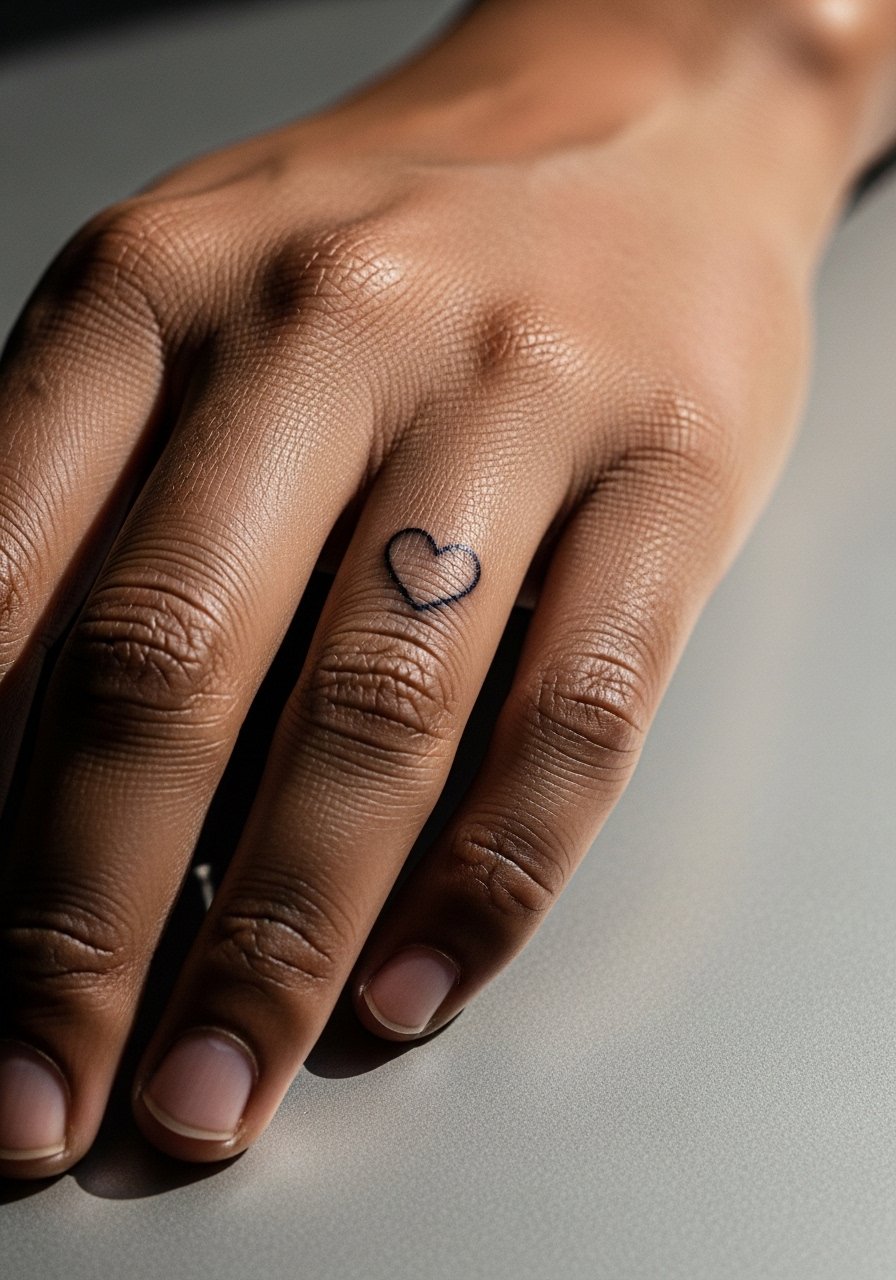
Finger tattoos are high-maintenance because friction, washing, and thin skin make ink fade faster. Pain is sharp and brief, and sessions are short. The biggest mistake is expecting fine detail to last on a finger. Ask for bolder contour lines and plan for a touch-up at year one or two. Expect a higher likelihood of partial fading where rings or typing rub. For the session keep nails tidy and wear a button-down shirt you can move easily away from the hand. Consider placement on the side of a finger rather than the pad for slightly better longevity.
10. Sacred Heart with Thorn Wreath, Upper Back
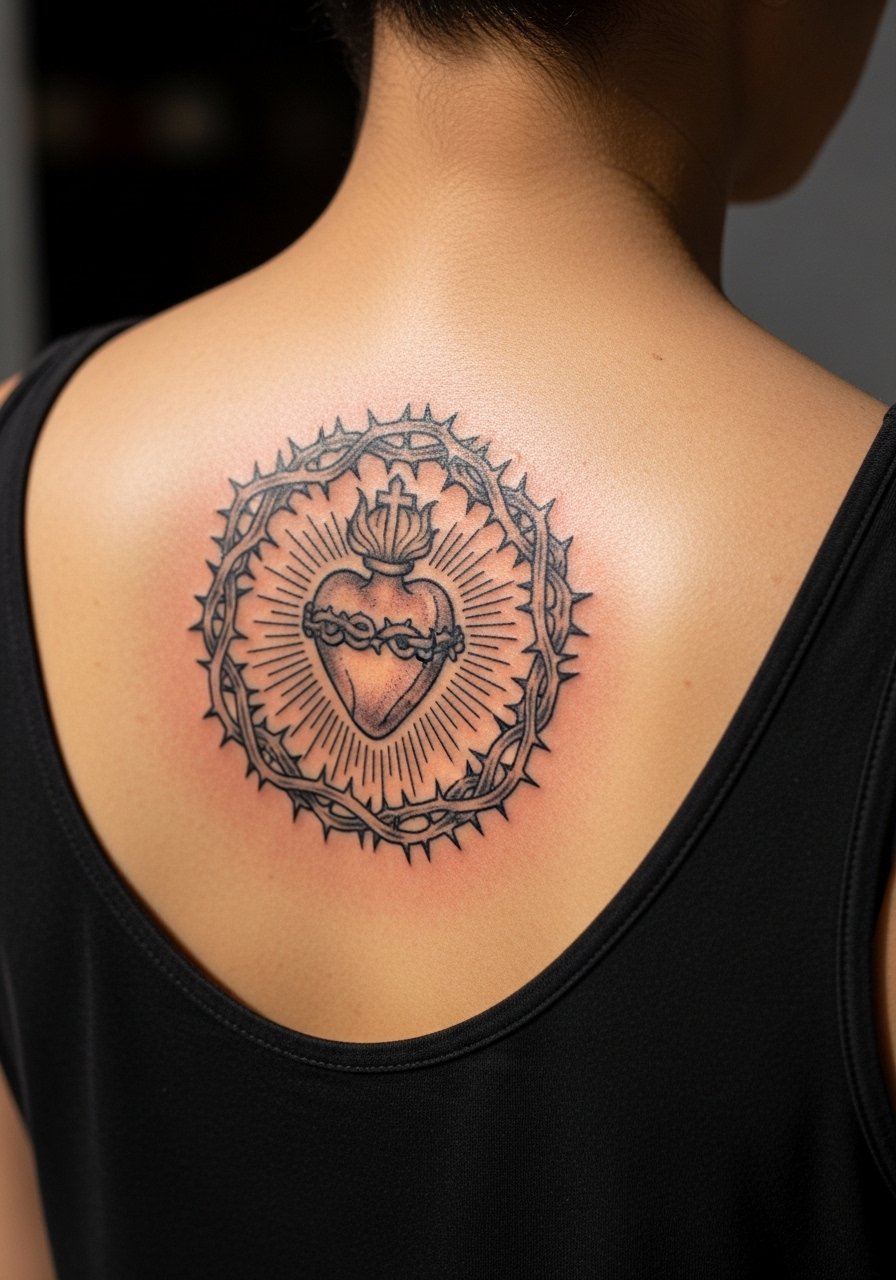
The upper back accepts larger compositions and heavier shading with low blowout risk in the right hands. Pain is low to moderate and sessions vary from one to several hours. When you consult, describe the overall silhouette and ask the artist to leave breathing room between the thorns and the heart body for future clarity. A common aging issue is packed interior detail that becomes muddy as the piece spans years. For the session wear a button or zip garment you can easily shift and later show the healed work with an open-back dress.
11. Watercolor-Inspired Sacred Heart, Ribcage
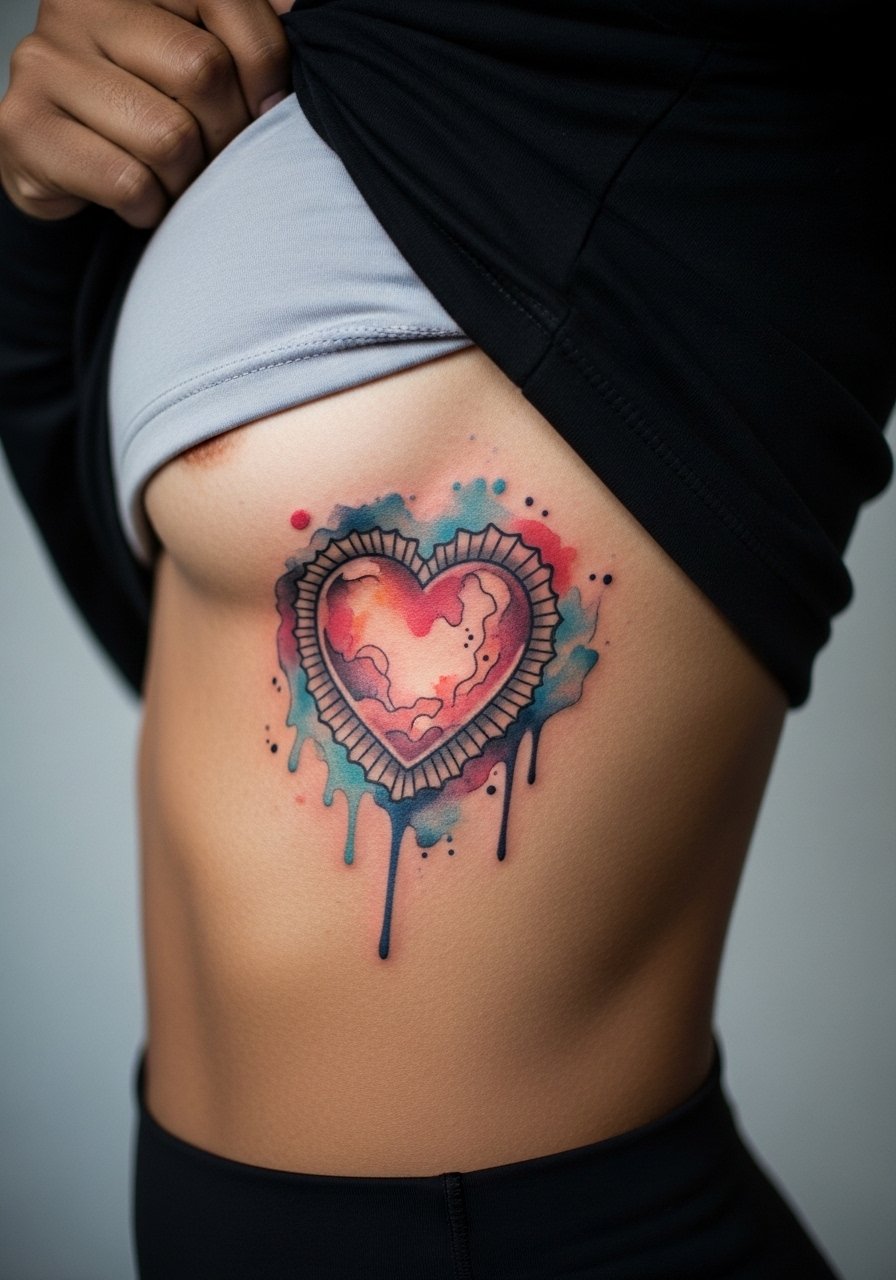
The ribs are notorious for both pain and longevity concerns, and artists are split on fine color there. Controversy lead applies. One camp warns that the skin flexes and small watercolor washes can migrate or fade quickly. The other camp says careful layering and conservative saturation can keep color readable longer. For this design ask about ink density and avoid overloaded color patches. Pain will be high for many people and sessions can stretch. Expect touch-ups sooner than on a forearm. For the appointment wear a top you can lift comfortably and rest in a position that reduces rib movement.
12. Sacred Heart with Stippling and Cross, Calf
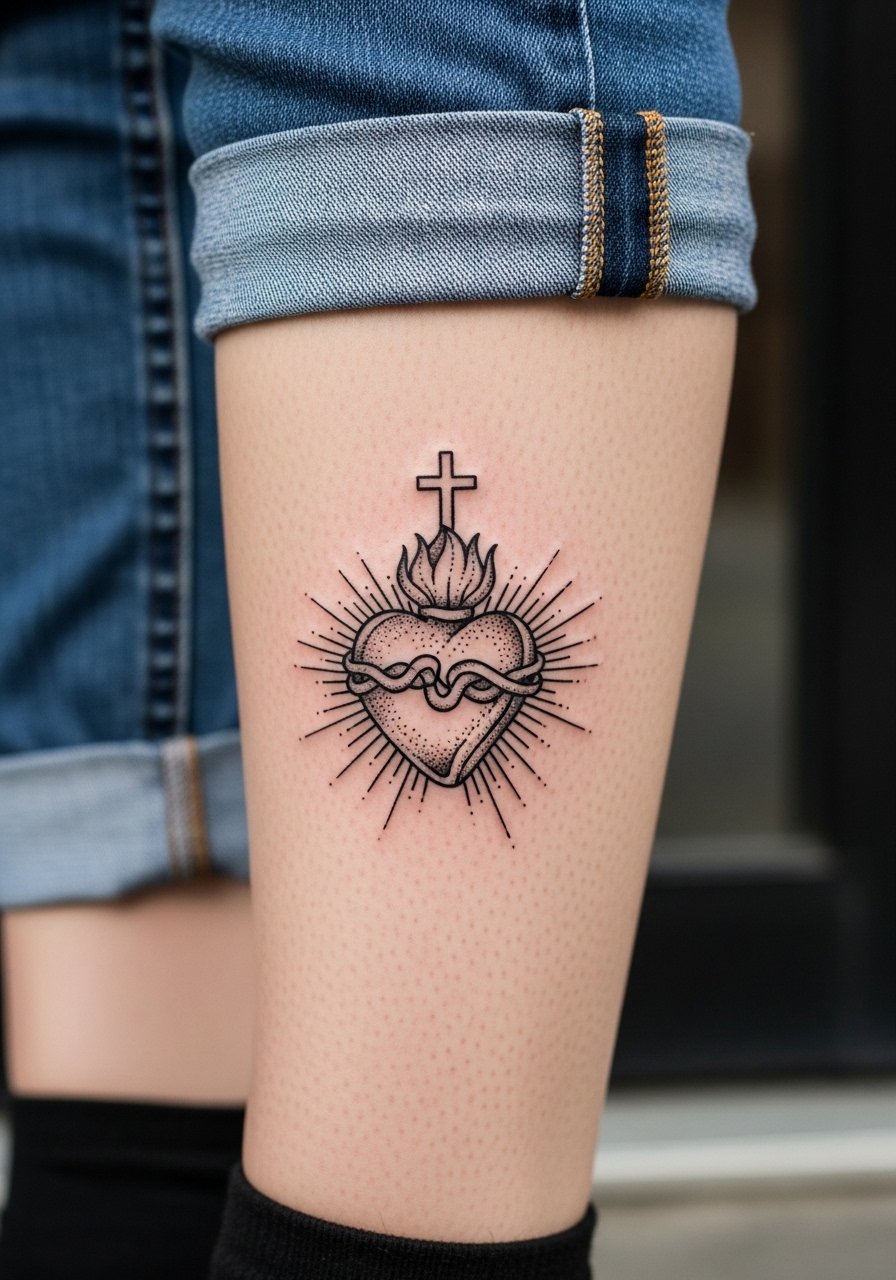
Calf tattoos sit well under clothing and handle larger stipple work gracefully. The session is moderate in length and pain is usually manageable. Ask the artist for gradual stippling rather than dense gray washes to preserve texture over time. A routine mistake is asking for tight dot clusters that blur into a flat tone later. At six months the stippling should still show dimension, and at five years you may only need light touch-ups. For showing this off wear cropped trousers or a drawstring short that frames the calf without constricting it during healing.
13. Minimal Sacred Heart on the Nape, Tiny Script Accent
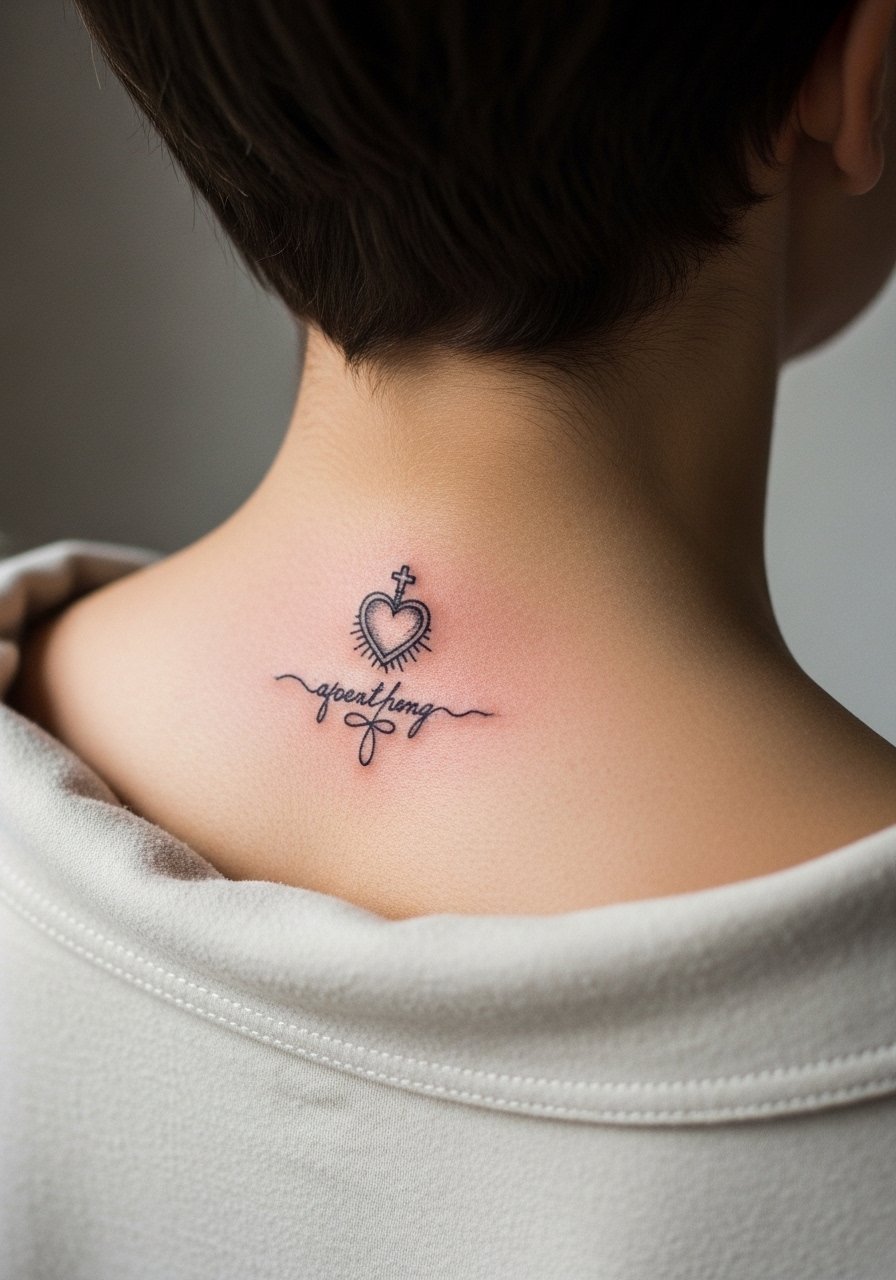
Nape placements are discreet but visible with certain hair styles. The session is quick and the pain is low to moderate. A common mistake is squeezing text too close to a small heart, which causes the script to blur into an unreadable line. Ask for extra spacing between glyphs and the heart outline. For the appointment wear a shirt you can shift and consider a haircut that frames the healed piece well. For showing it off, a wide-neck sweater or an updo puts the nape on display.
14. Sacred Heart with Flame and Rosary, Shoulder Blade
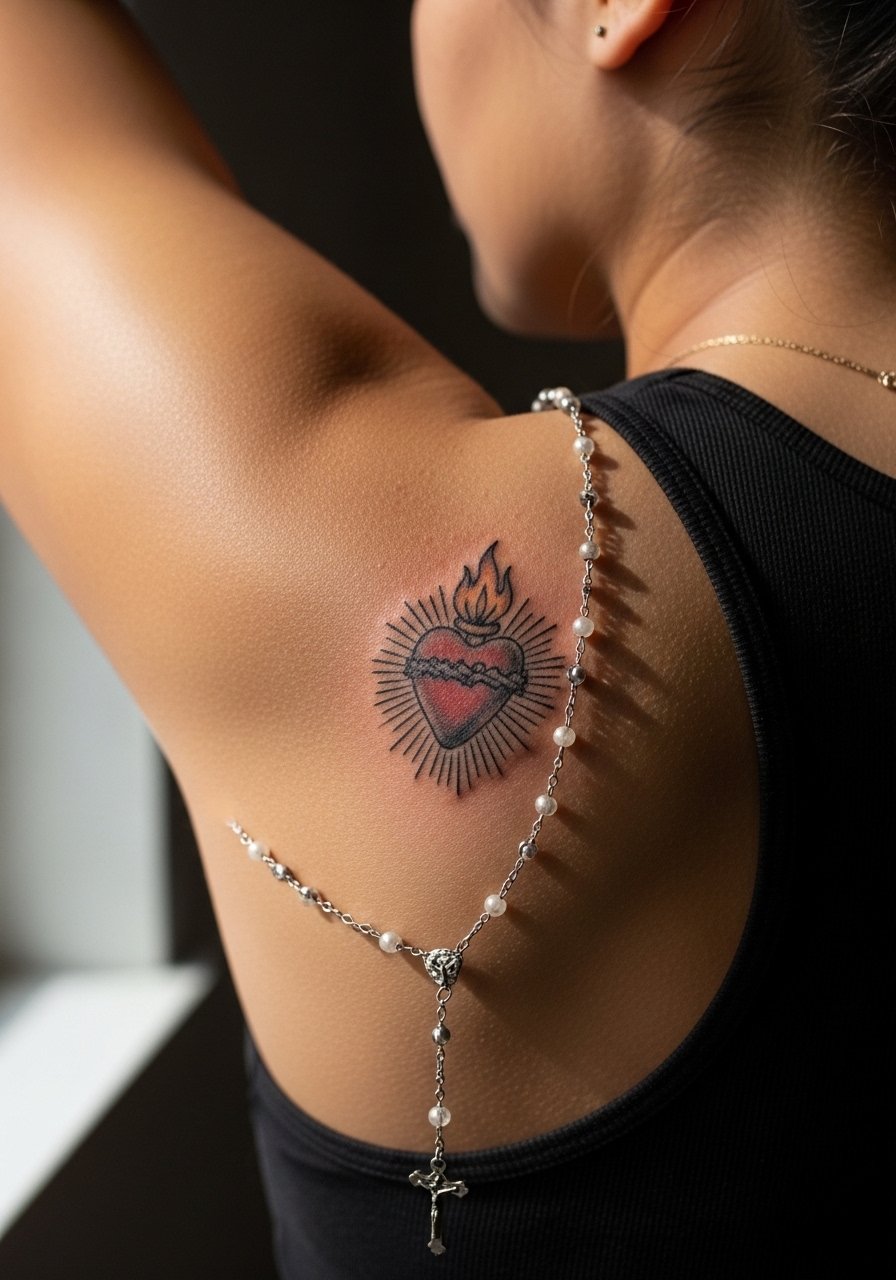
The shoulder blade works well for medium-sized motifs and tolerates fine detail if spaced properly. Pain is low to moderate and sessions vary. During consultation, ask the artist to map the rosary beads with enough negative space so individual beads remain visible after a few years. A mistake is making the bead spacing too tight, which becomes a muddle as the piece ages. For the session wear a sleeveless top and after healing consider pairing the piece with an off-the-shoulder top or a camisole dress that highlights the area.
15. Sacred Heart Pocket Tattoo, Near the Sternum but Small
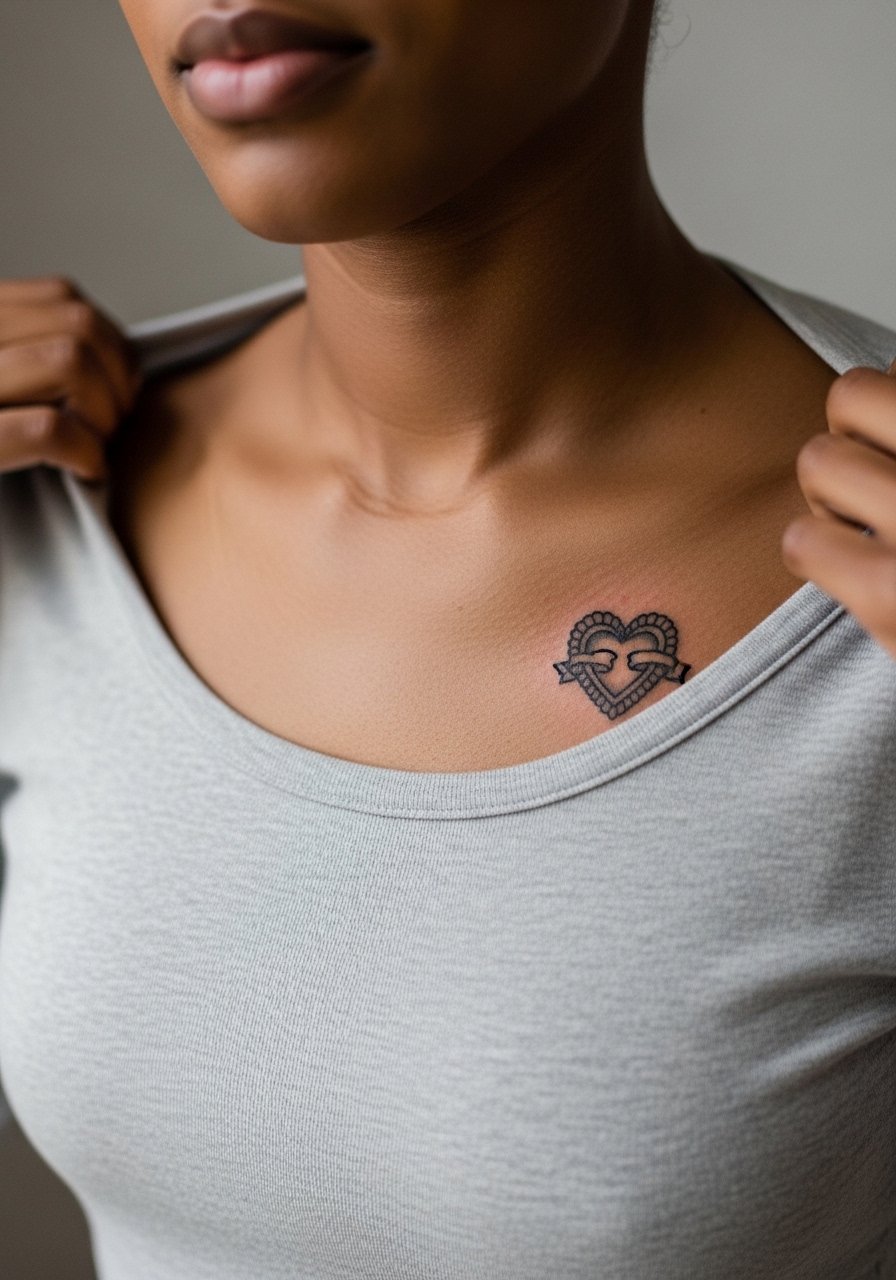
A small pocket placement near the sternum shares the pros and cons of central chest work but with less surface area. Expect sharper sensitivity and a brief session. An aging concern is having too much interior detail in a tiny space. Ask for simplified internal elements and modest contour thickness. Many people underestimate how the chest moves with breathing and how that affects line stability. For the session choose a supportive but adjustable top and prepare for a gentle pressure sensation during work. This placement reads intimate when paired with layered necklaces.
16. Sacred Heart Sleeve Filler, Micro-Realism Accent
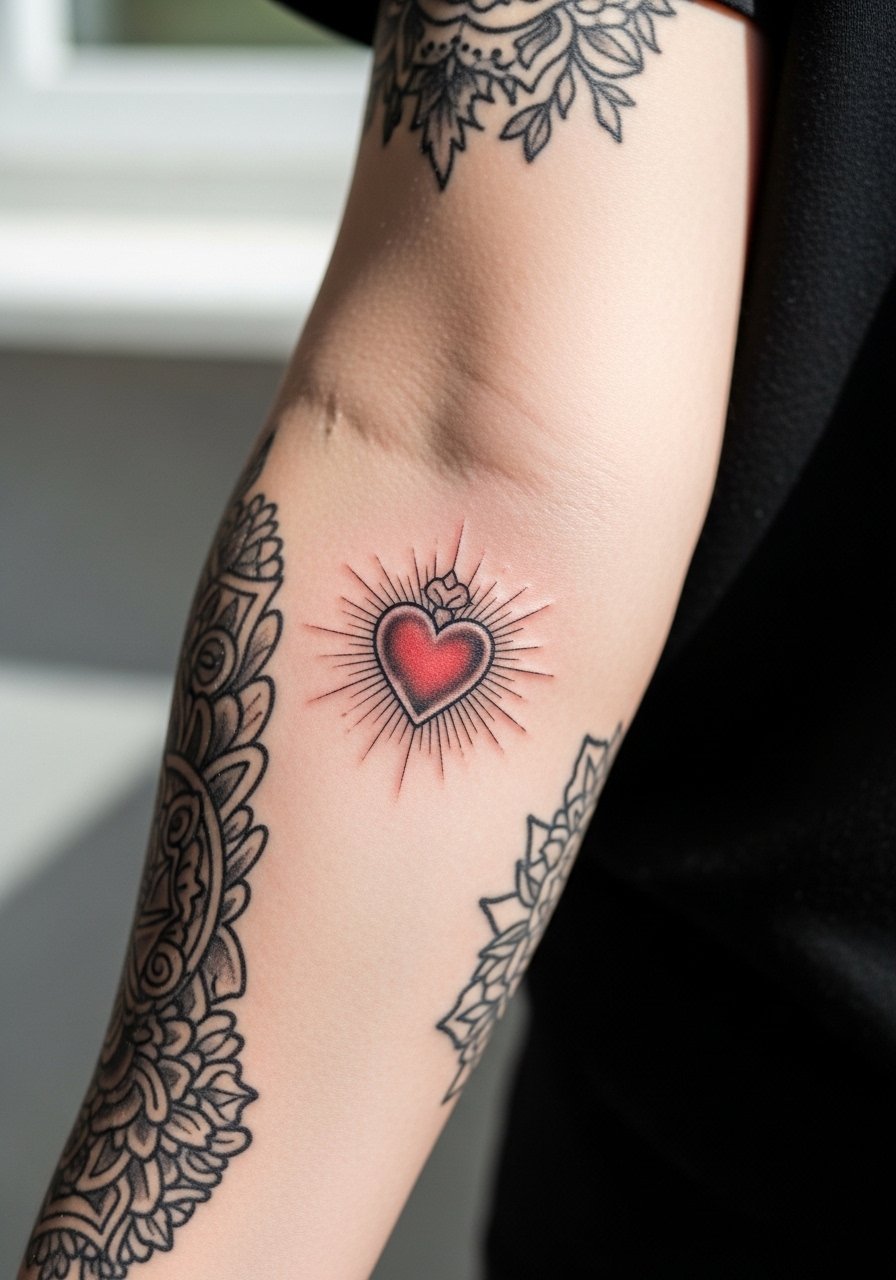
Visual impact lead fits sleeve work because pieces must hold up next to other motifs. Session times vary and pain depends on placement. A frequent mistake is having a tiny sacred heart that competes visually with larger elements. During planning, ask your artist for relative scale guidance so the heart reads as intended in the full sleeve. Expect that micro-realism accents require conservative contrast to avoid washing out beside bold blackwork. For the day wear a long-sleeve button-down you can roll so the artist has clean access without rubbing the surrounding work later.
17. Sacred Heart Mandala Fusion, Side Rib Panel

Rib panels allow ornate frames like mandalas, but they magnify the debate about fine line durability on flexible skin. Aging lead applies because dense mandala nodes can merge if spacing is insufficient. Tell your artist to plan radial spacing and heavier primary outlines so motifs keep separation as skin shifts. Sessions are long and pain is high for many people. A common error is trying to cram too much density into a narrow rib zone. For the appointment wear a garment that lifts without sliding, and rest between passes to manage discomfort.
18. Tiny Sacred Heart over the Heart, Subtle Bleeding Detail
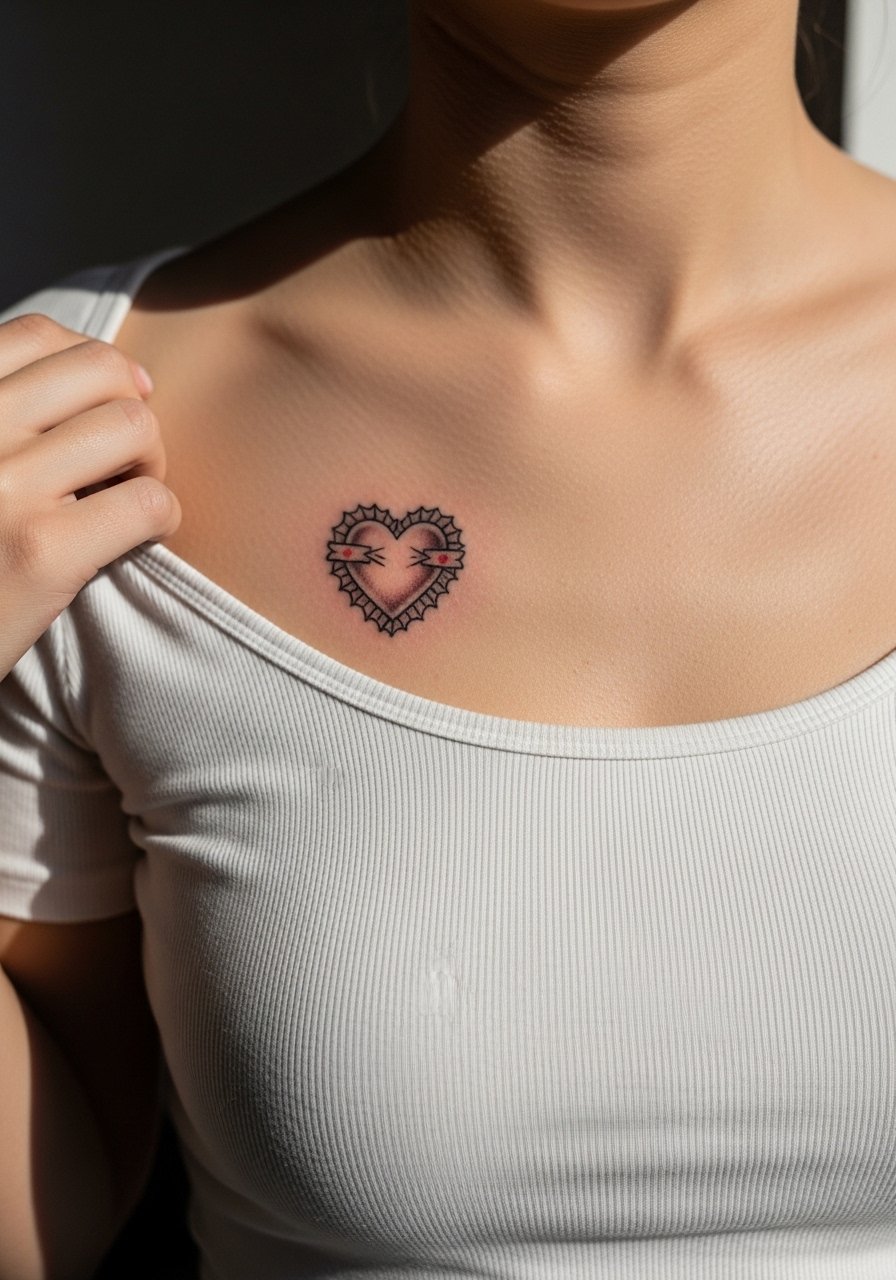
Placing a design close to the anatomical heart is symbolic and it demands careful sizing. Pain is moderate to high depending on chest anatomy and session length is short to moderate. The main mistake is asking for heavy red saturation in a small area, which can fade unevenly and look patchy. Ask for a delicate wash of color or stippling to mimic bleeding without excess pigment. For the session wear a top you can easily shift and think about how sunlight will affect the red tones over time.
19. Sacred Heart Anklet, Tiny Chain Motif Surround

Ankle-adjacent decorative designs need attention to friction and footwear. Sessions are usually short and pain moderate near bone. A common mistake is adding too much micro-detail in the chain links which blurs under continual rubbing. Ask the artist for simplified link shapes and slightly bolder contour lines to preserve the chain effect. During healing plan for low-cut shoes or sandals to limit pressure, and wear socks loosely if necessary. A pair of strappy sandals showcases the anklet without trapping moisture against the skin.
20. Sacred Heart Pocket on the Rib Edge, Small and Simplified
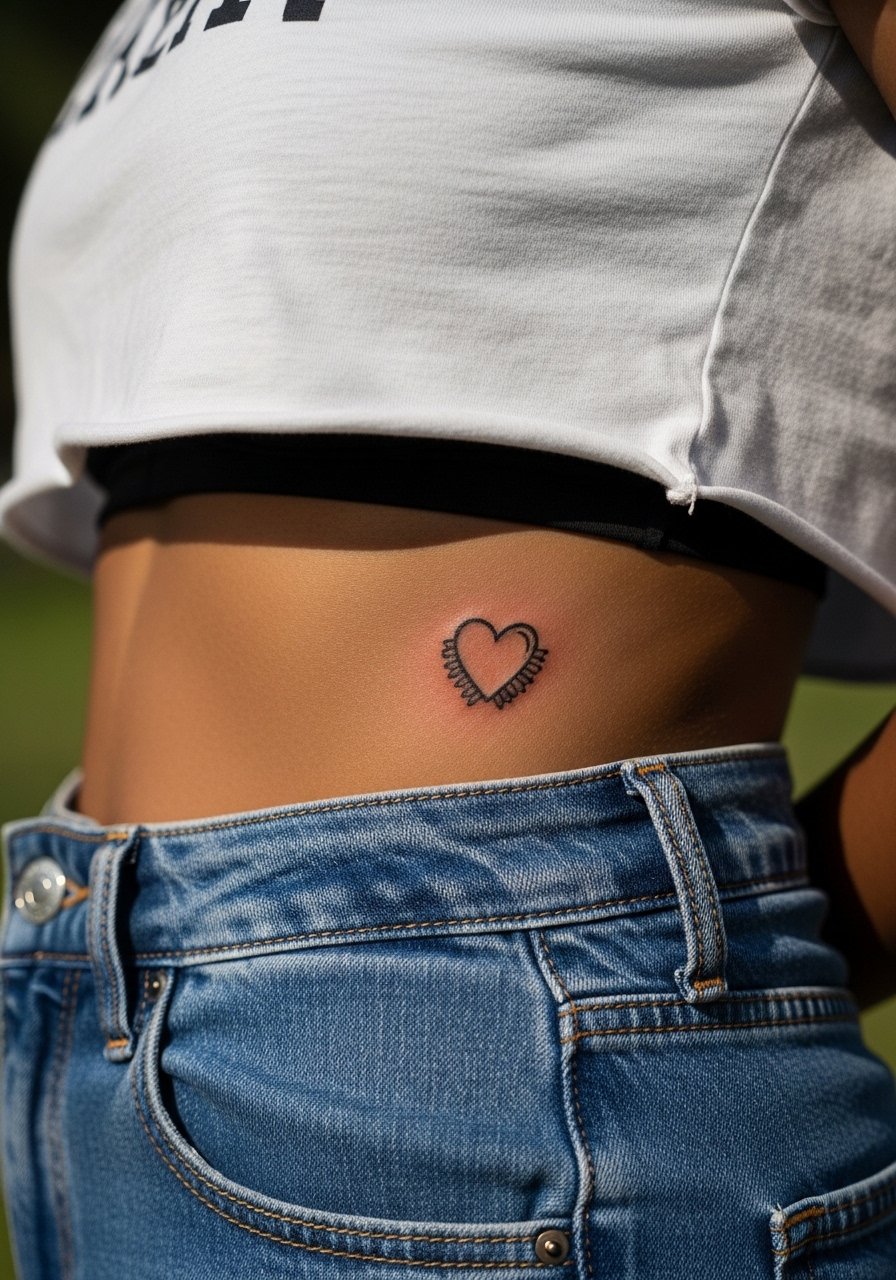
This lower rib edge spot reads discreet and personal, and it benefits from minimal detail. Pain can be high and sessions short. The biggest mistake is requesting tiny interior filigree that the rib skin cannot hold. Tell the artist you prefer a slightly stronger outline and open interior so the heart keeps form. Plan for loose bottoms for the first week to reduce rubbing. Because this placement sits near clothing hems consider wearing low-rise or adjustable waistbands during healing.
21. Sacred Heart Thigh Band, Horizontal Composition
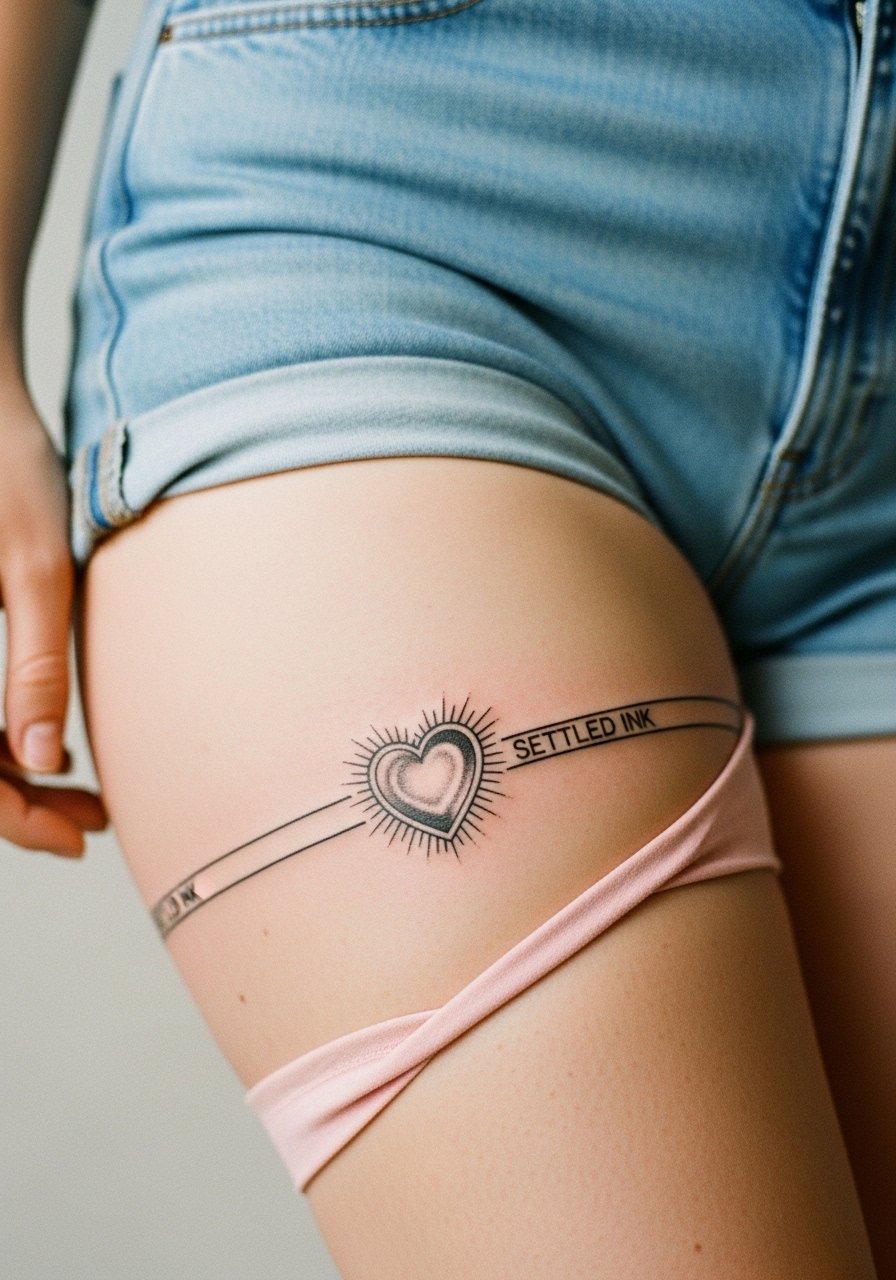
Thigh bands take well to horizontal compositions and allow for readable detail due to more stable skin. The session is moderate in length and pain is generally manageable. A frequent error is compressing too many extras into the band which creates visual clutter over time. Ask for clear negative space and a strong outer contour. At two years the band should remain coherent with only minor softening that a touch-up can address. For the session choose loose bottoms and later show the band with a high-waisted short.
Frequently Asked Questions
Q: Will a fine line sacred heart on the ribs blur faster than on the forearm?
A: It depends on the exact placement and spacing. Ribs move more with breathing and can lead to fine lines merging if the artist packs detail too tightly. On the forearm you can usually use slightly finer interior elements with less risk. Ask the artist about line weight and spacing during the consultation.
Q: How often do tiny finger or wrist sacred hearts need touch-ups?
A: Fingers and wrists experience more friction and washing, so plan for touch-ups sooner than larger pieces. Many people expect a touch-up around year one or two for finger work, and wrist pieces often need minor refreshes around year two to three depending on lifestyle.
Q: Are there wardrobe pieces that help show off a collarbone or sternum sacred heart?
A: Yes. For collarbone placements a wide-neck or open-neck blouse helps frame the area. For sternum work a fitted wide-neck top or a bandeau for private occasions highlights the design without excessive exposure. Try an open-neck blouse for everyday styling.
Q: Do sacred heart designs with heavy blackwork age better than watercolor variations?
A: In general, solid blackwork tends to retain legibility longer because contrast remains even as lines soften. Watercolor and loose washes can look amazing fresh but often need more conservative placement and denser layering to last. Discuss longevity with the artist for the style you prefer.
Q: Should I avoid getting a sacred heart near my job-restricted areas like hands or visible neck spots?
A: Consider your workplace policies and future plans. Hand and visible neck tattoos still affect hiring in some fields. If career flexibility matters, choose placements you can conceal easily or ask about alternatives that sit nearby but are less exposed.
Q: How do I find an artist who handles sacred heart work sensitively without naming them?
A: Look for portfolios with healed photos showing similar placements, spent time in community forums, and use studio directories or convention listings. Search tags focused on the style you want and examine healed shots rather than fresh photos. Trust your instincts about consistent healed results.