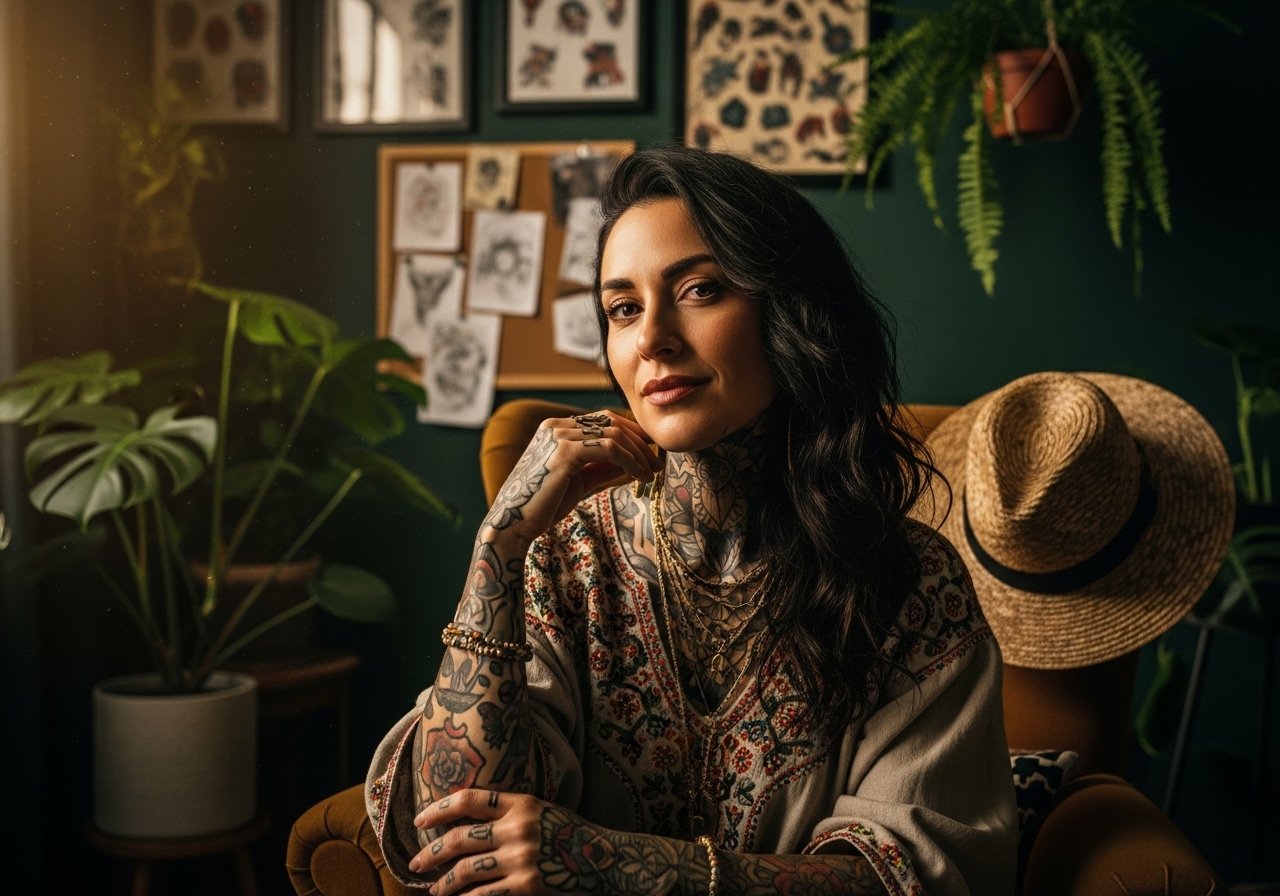
Fine line trends look great on boards, but shins play by different rules. They hurt more because the tibia sits under thin skin, they can warp if your weight or muscle changes, and hair and friction make blackwork behave differently on darker tones. Plan for positioning, pick line weight that survives rubbing, and sort hair or shave strategy before you book so your stencil actually reads right when the needle goes down.
1. Tribal Shin Wraparound
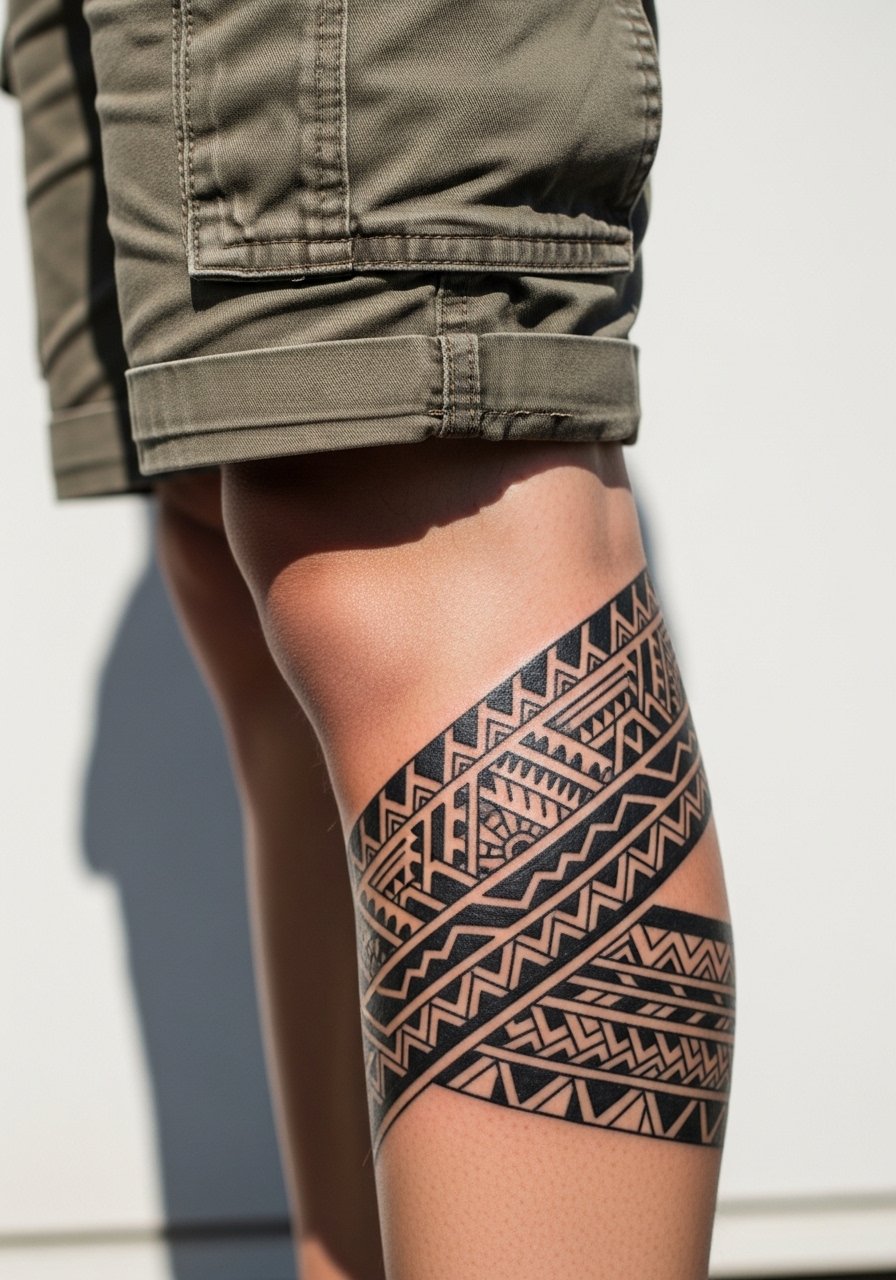
Tribal wraps read huge when they are saturated and thick, which is why they are a go-to for hiding stencil softness over time. If you want something that still looks deliberate at year three, tell your artist to keep at least 3 mm between the major bands so negative space ages with the design. This placement is painful near the bone and sessions usually run one to three hours depending on wrap completeness. Common mistake is asking for too many tiny spikes, which blur into a single dark mass once the hair grows back. For showing it off wear olive cargo shorts and combat boots black, both pull attention to the lower leg.
2. Skull with Flames on Shin Bone

This design uses the tibia ridge to make the jawline feel more protruding, which adds menace without giant scale. Pain on the bone is higher, so expect short breaks and a session around two hours for a five-inch piece. Tell your artist to anchor the skull with heavy outlines and keep color in the flames as accents only, otherwise the color will look patchy as it heals under hair. A frequent error is shrinking the skull to fit a photo reference that was taken on a thigh. The right scale here reads from across a room. For session comfort wear sweatpants with wide leg openings so the artist can roll your pant leg without pressure.
3. Dragon Coiling Down the Shin
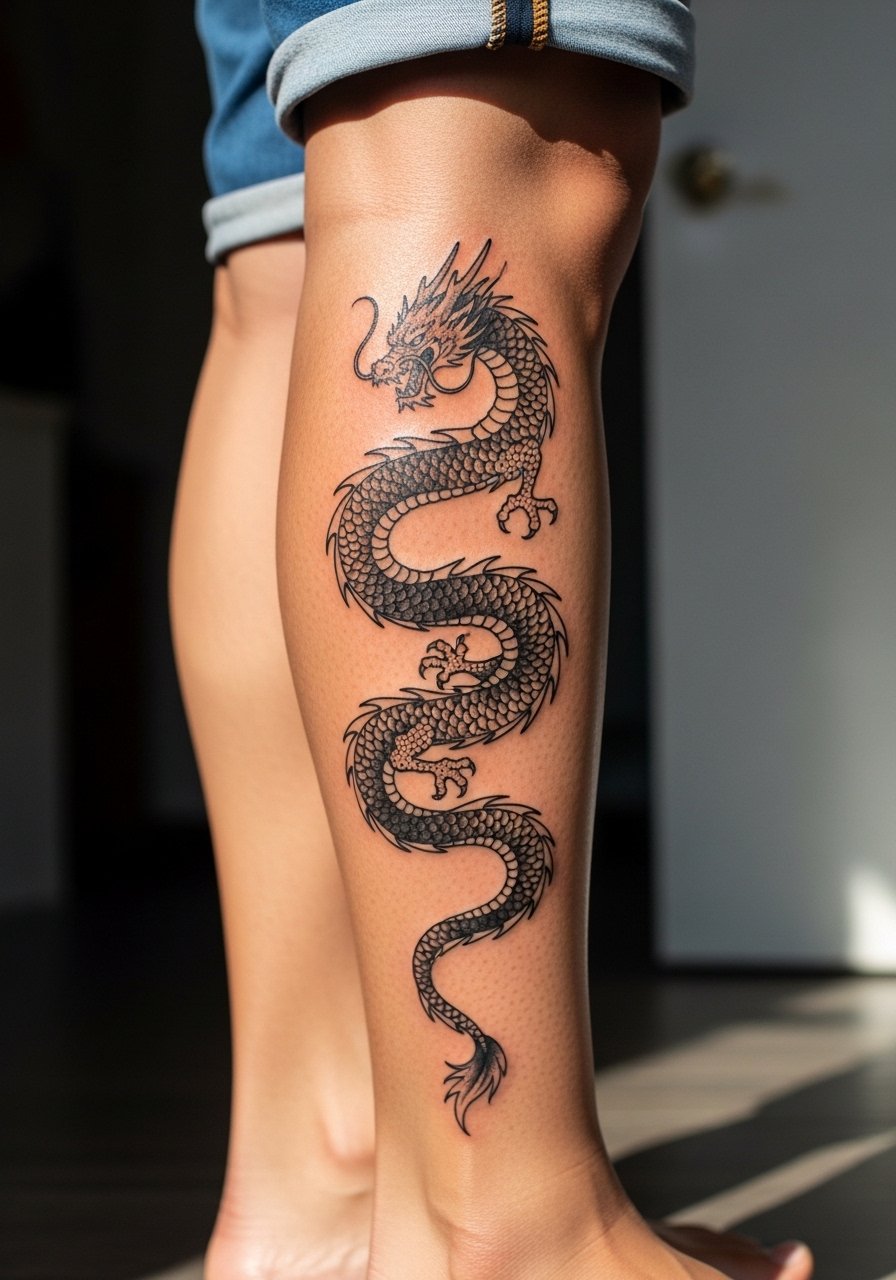
A vertical dragon follows natural leg movement and stretches well if you keep the body elongated. For muscle or athletic legs, ask for flow lines that run with the shin instead of across it to avoid distortion during squats. Sessions for an 8-10 inch piece run multiple sittings, so plan for touch-ups as the leg heals. Common mistake is packing too much tiny detail into the scales. That looks great in a thumbnail but goes muddy by year two. Pair this with rolled cuff bootcut jeans men and leather work boots to lean into the rugged aesthetic.
4. Geometric Wolf Head Vertical
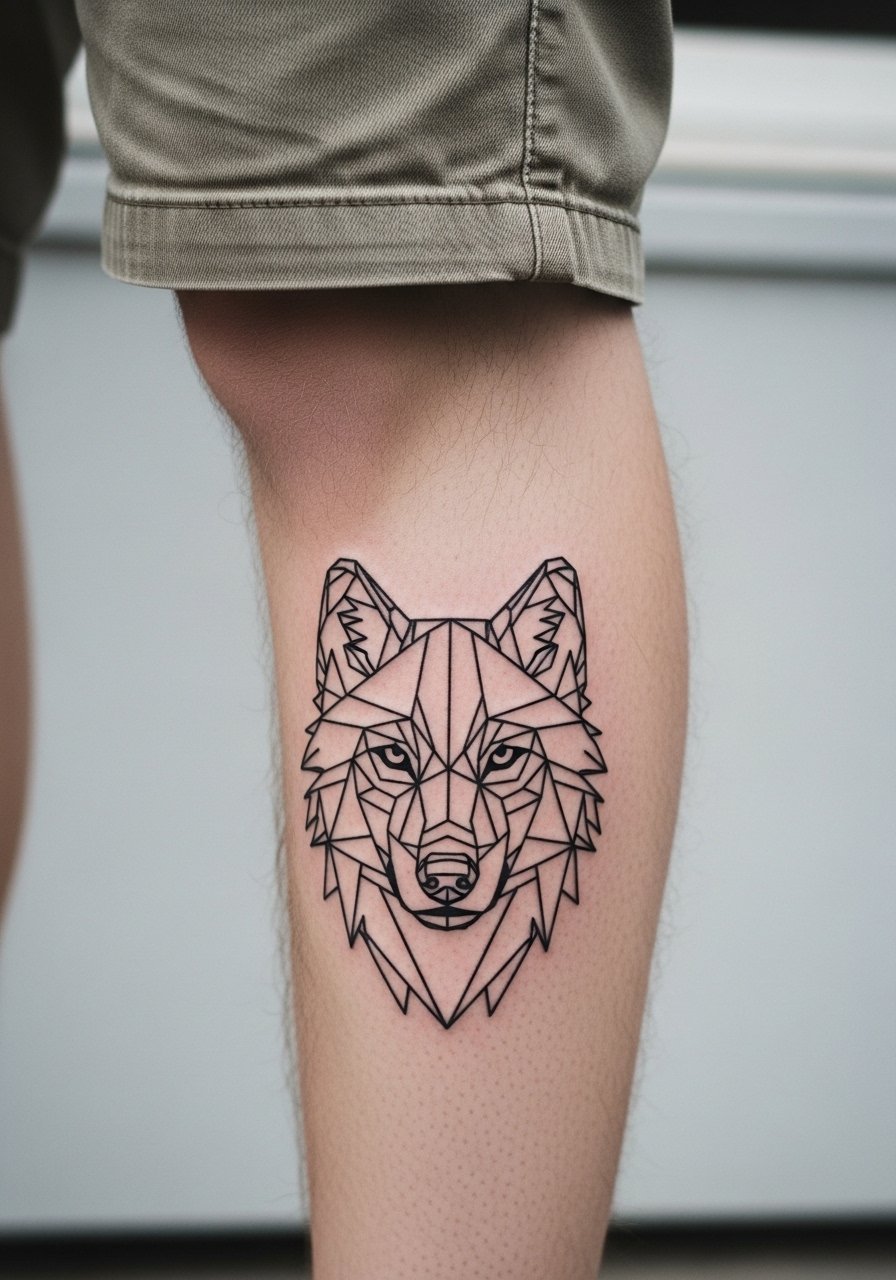
This minimalist approach reads sharp on a muscular shin because the planes of bone emphasize angles. Session time is short, often under two hours, but tiny gaps matter here. Tell the artist you want at least 2 mm of breathing space between intersecting lines so the pattern does not merge as it settles. Fine line advocates will push single-needle execution. Bold line fans argue thicker outlines last longer on shins. Name where your priorities lie at consult. For showing it off, cuff chino shorts slim and wear ankle socks athletic.
5. Traditional Dagger Piercing the Shin
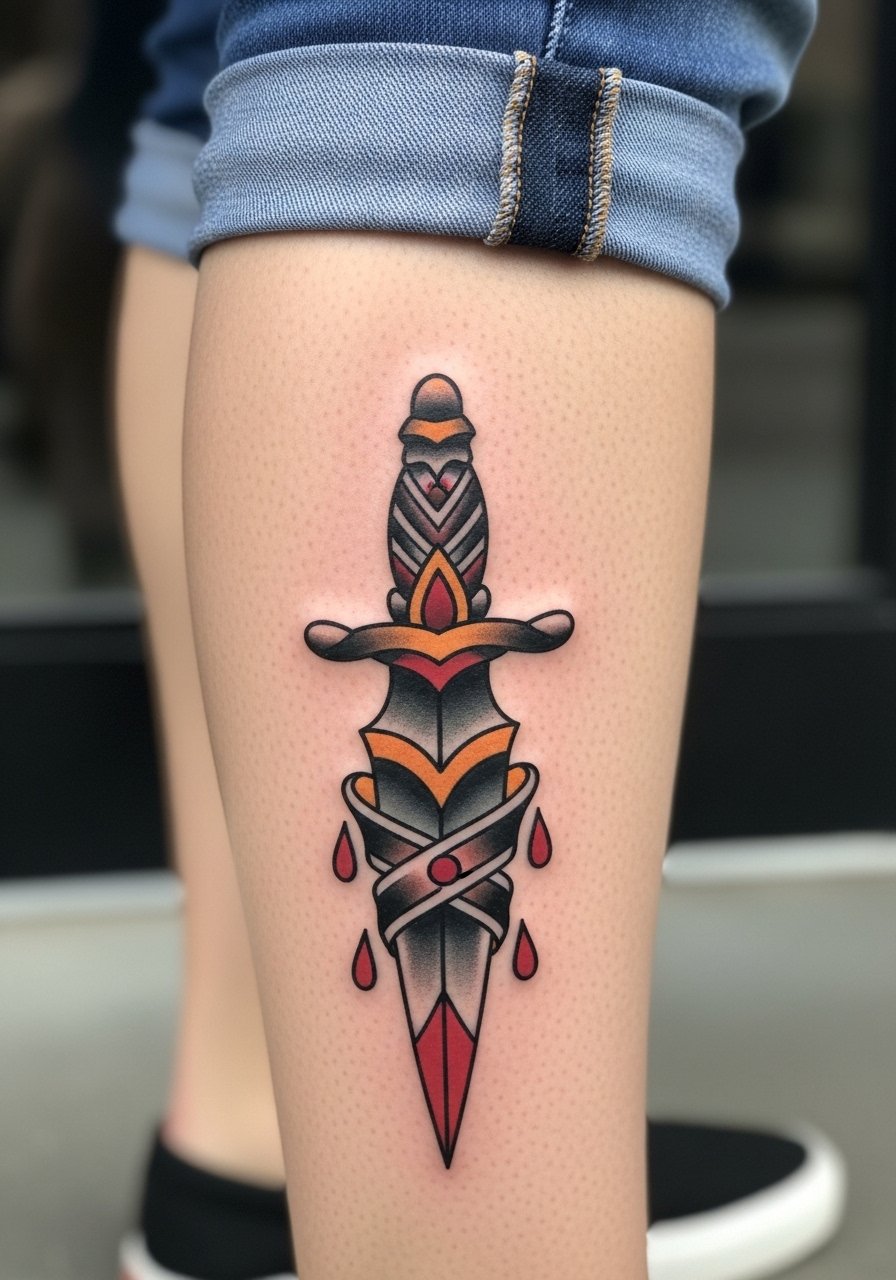
Dagger motifs hold well because classic flash uses heavy outlines and saturation that age predictably. The outer shin is slightly less brutal on pain rankings than the bone center, so two sessions often finish color and outline cleanly. Mistake to avoid is tiny illustrative blood drips. Keep them bold so they do not disappear into stubble. This design handles leg hair better than fine line options. For the weekend look pair it with denim cutoffs men and canvas sneakers low top.
6. Abstract Biomechanical Gears
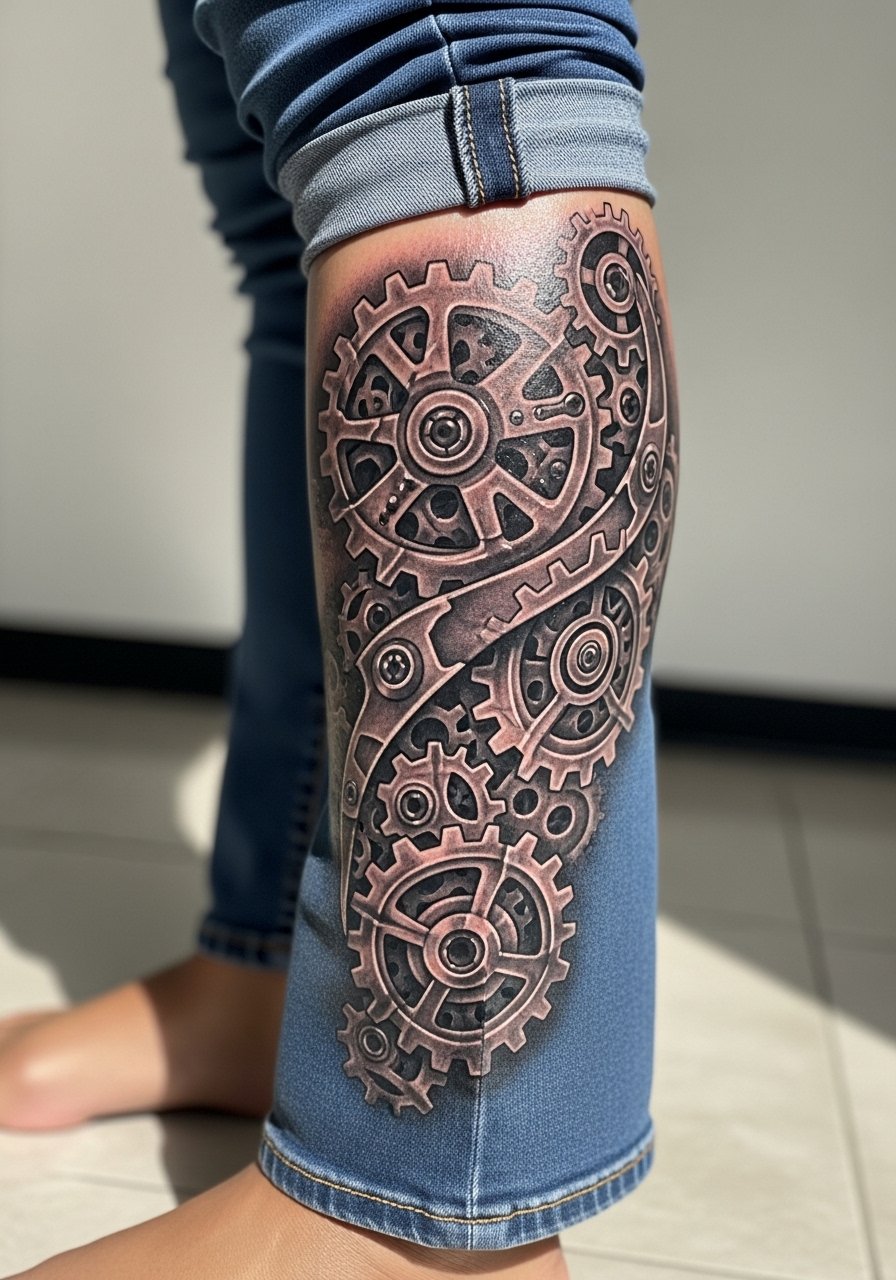
Biomechanical wraps thrive as multi-angle pieces that use shadow to suggest depth over the bone. Sessions are long and may take four or more hours over multiple sittings because realism needs saturation and layering. A common session-day pitfall is wearing tight pants that press the fresh ink. Come in boxer briefs or shorts to give the artist full access. This style ages well if contrast and stipple shading are prioritized over micro detail. For a staged reveal try cuffing rolled cuff jeans with leather work boots.
Heal Smart
Those first six ideas include bone-centric work and wraparounds that rub against socks and boots, so a few products smooth the session and the first week.
-
Badger Tattoo Balm. A non-greasy balm many collectors prefer over heavy ointments for shin areas where hair and friction make greasy products trap dirt.
-
Oz Ink Aftercare Spray. An alcohol-free mist that helps a no-touch routine for shins that sit near sweaty socks and boots.
-
Resurrect Tattoo Serum. Lightweight peptide formula that forum users mention for faster settling without a glossy residue that traps lint.
-
InkSafe Barrier Film. Breathable protective film option for those who work active jobs and cannot keep a dry dressing intact.
-
Saniderm Tattoo Bandage. Seals sweaty lower-leg zones for a short window, though some people still prefer dry healing after the first removal.
7. Lion Mane Burst Lower Shin
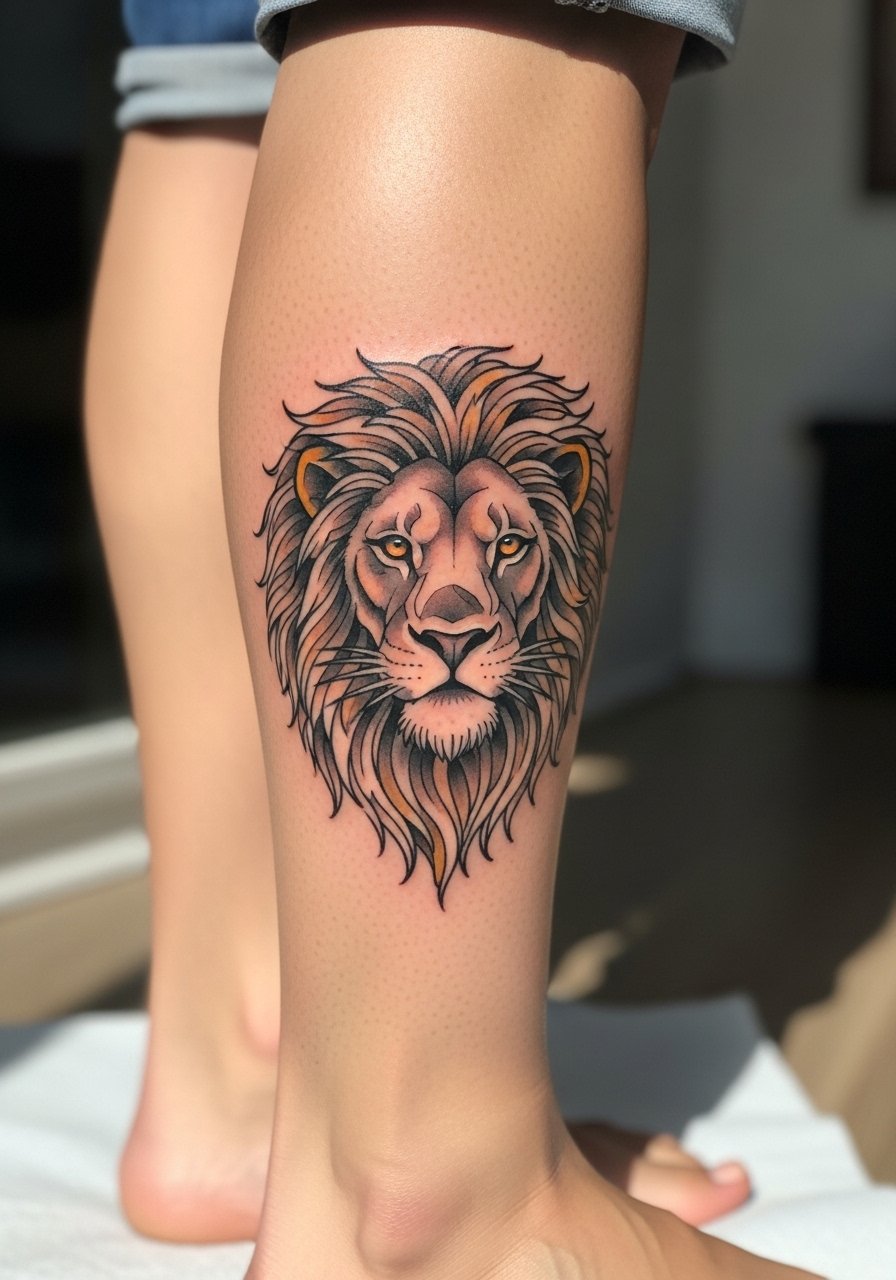
A lion mane focused on the lower shin elongates the leg visually and stands up well to summer exposure. This style uses flowy linework and color accents, so expect two to three sessions for saturation. The lower shin sees more sock friction, so talk to your artist about leaving slightly extra negative space at the ankle edge to prevent chafe migration. A failure mode is over-detailing the mane in tiny strokes that disappear under regrowth. For summer showing pair with high top sneakers black and slim chino shorts slim.
8. Ignorant Style Arrow Through Bone
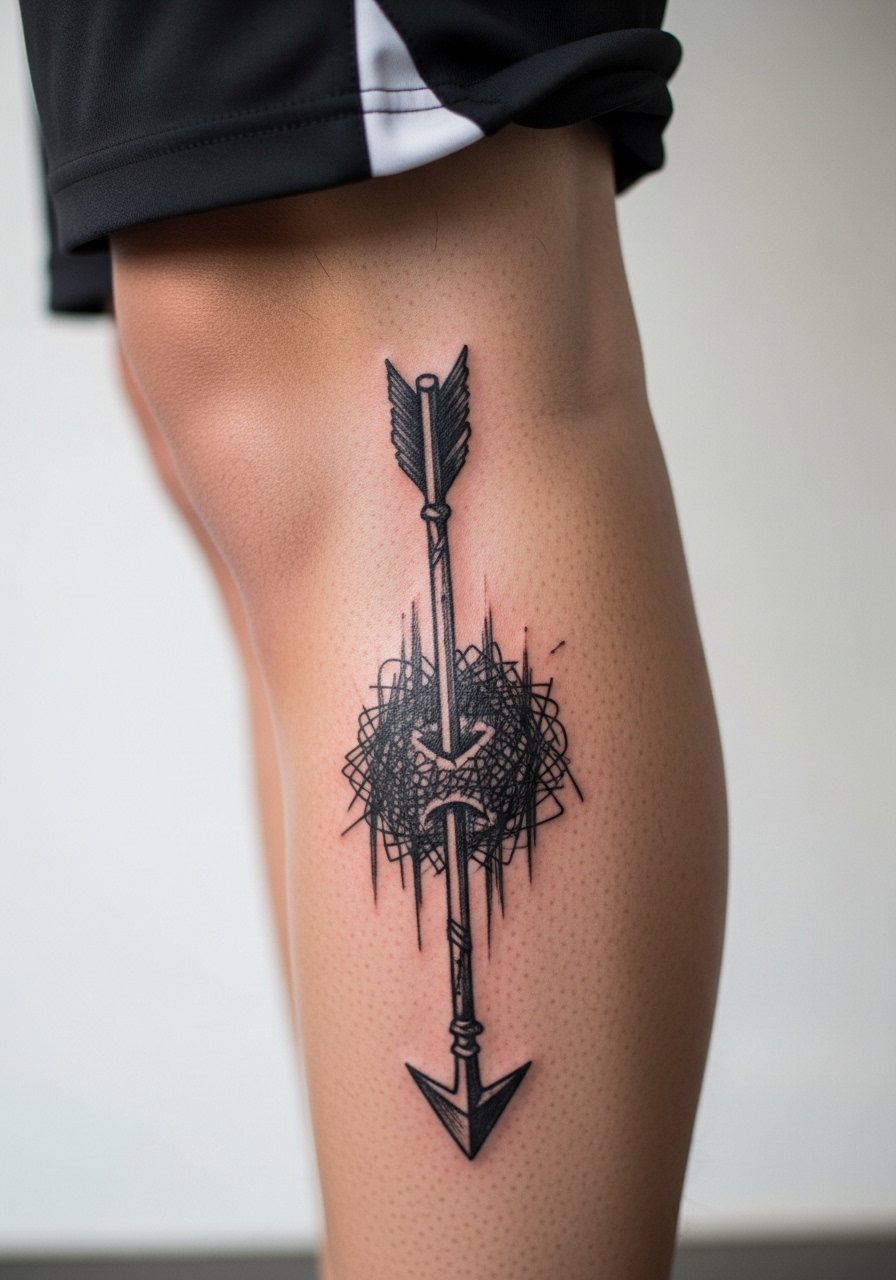
Ignorant style profits from deliberate roughness, so the healing process actually reinforces the aesthetic. This single-session option is short and sharp on the bone, but you must accept imperfect edges as part of the appeal. A common mistake is asking to "clean it up" after the fact, which erases the raw texture. Pain is high on the central tibia area, so numbing discussion is valid before booking, though some traditionalists oppose it. For the look keep it visible with gray athletic shorts men and no-show socks.
9. Ornamental Skull Web
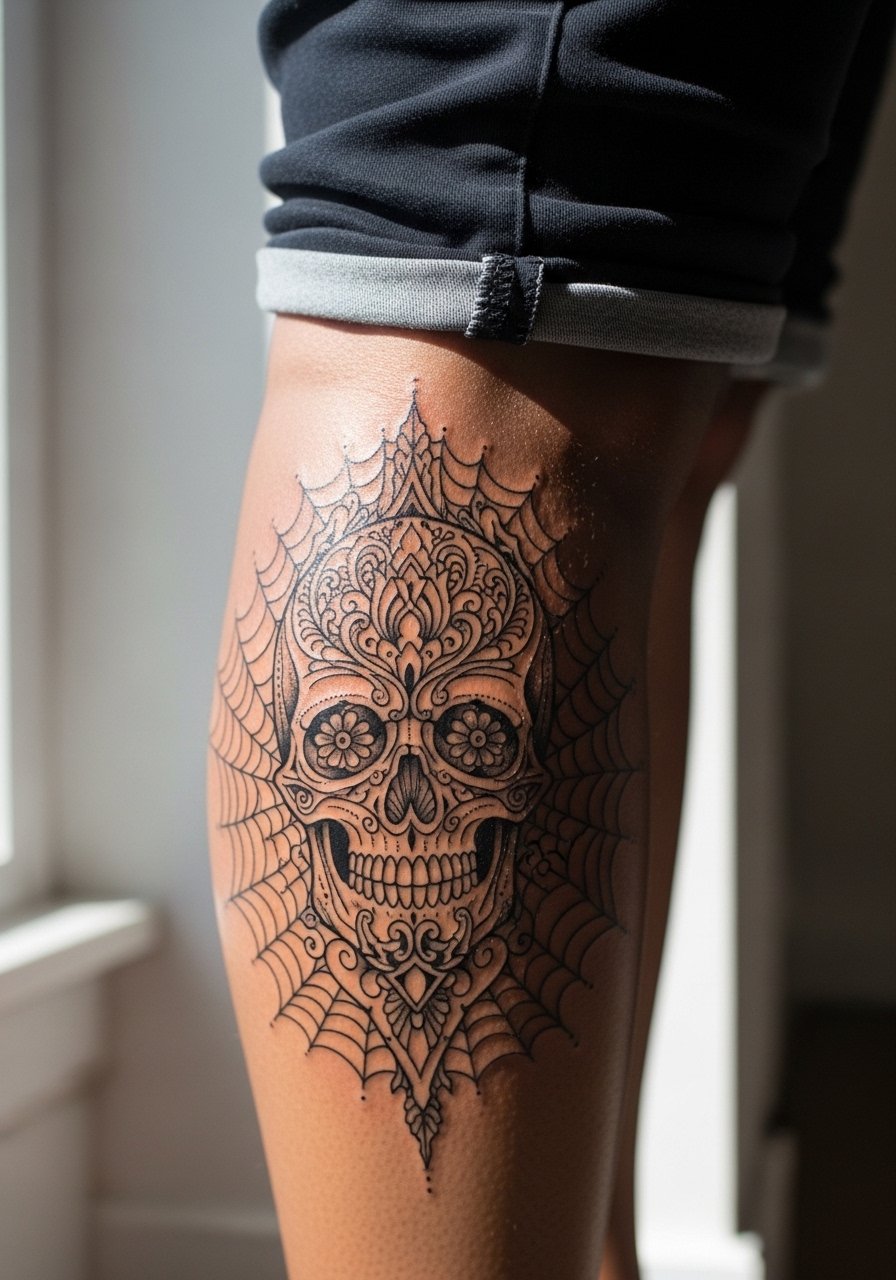
Ornamental blackwork fills shin space without overwhelming because the negative space keeps the skull readable. Tell your artist to avoid ultra-fine filigree close to the bone, since those lines can blur if the area gets scuffed. This placement benefits from heavy anchor lines around the skull to preserve the design as smaller inner details soften. A practical tip is to shave the leg before the session so the needle sees smooth skin. For a street look pair with denim cutoffs men and low canvas kicks.
10. Micro-Realism Bullet Wound
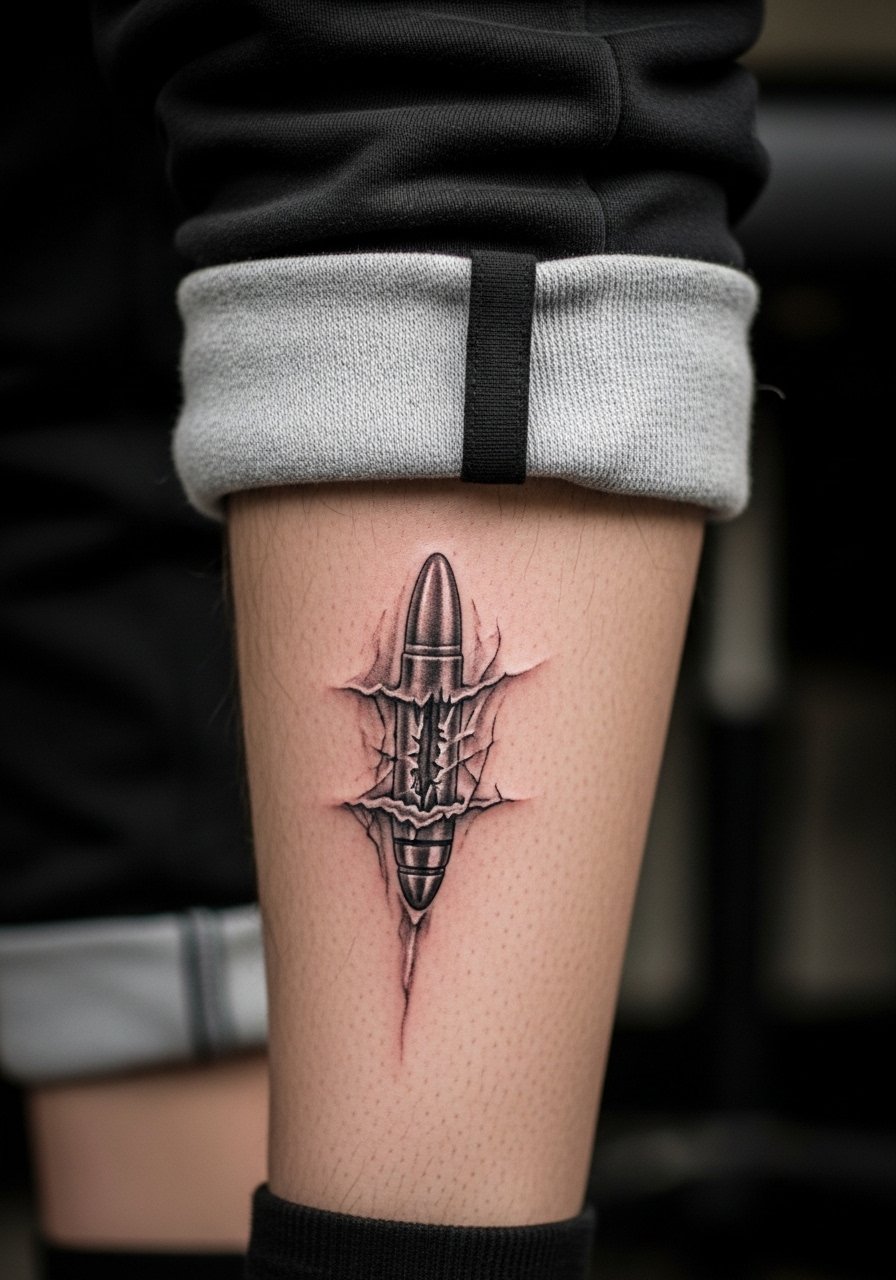
Micro-realism demands perfect stencil placement on the tibia to sell the illusion. Session time is short but intense and the pain is high. The real trap is picking at scabs during healing which ruins texture and can create scar tissue. Ask for a healed reference during consult and a small touch-up included in the booking if you want photographic realism to last. For session access wear sweatpants with wide leg openings so the artist can roll without constriction.
11. Patchwork Shin Sleeve Starter
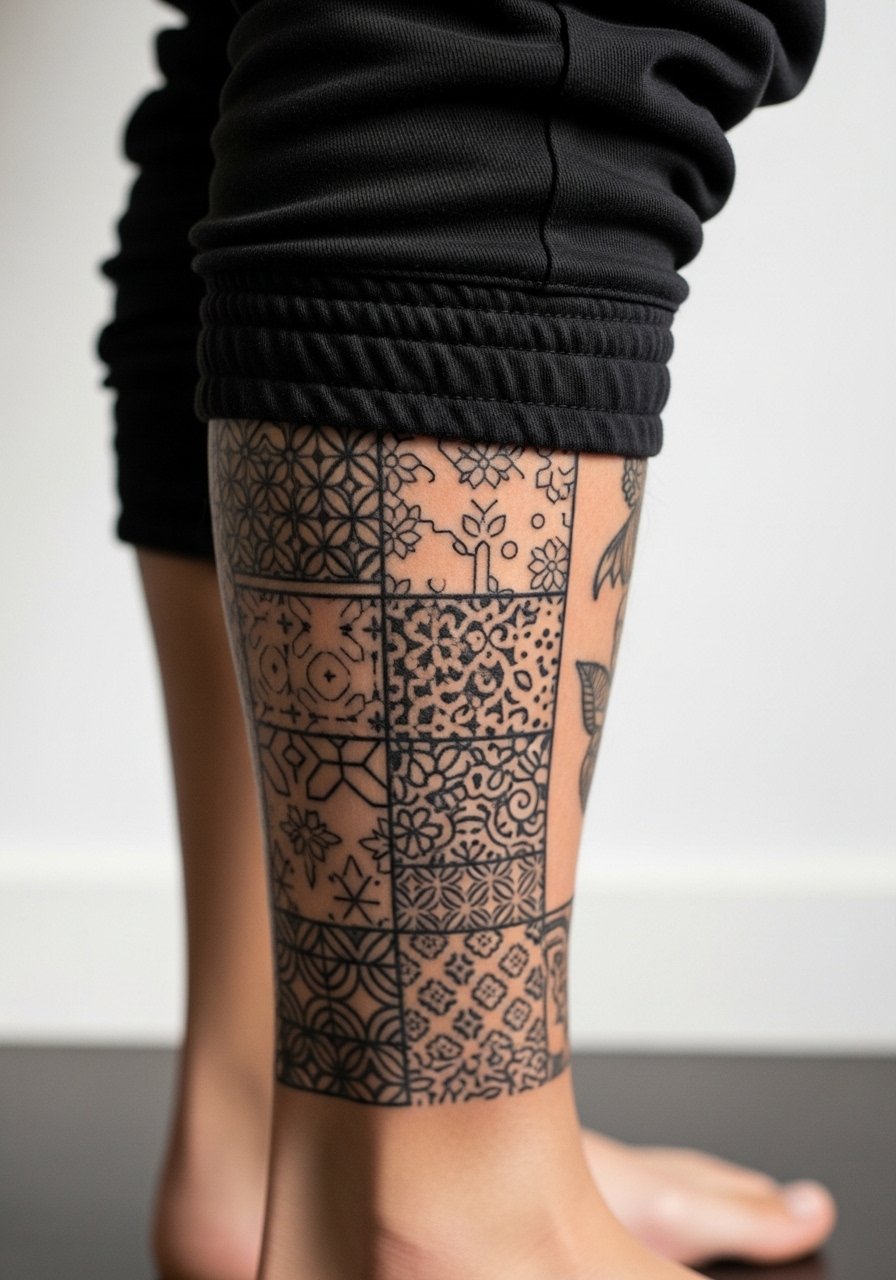
This approach treats the shin as the first chapter of a leg narrative, designed to accept future inserts. Book multiple shorter sessions and request a map or mockup of future pieces during consult so spacing is deliberate. One mistake is letting small fill-in patches lock you into a grid that later prevents larger motifs. Expect touch-ups yearly to keep linework bold as adjacent pieces land. For comfortable sessions wear bike shorts so the artist can bend your knee without fabric bunching.
12. Japanese Irezumi Demon Mask
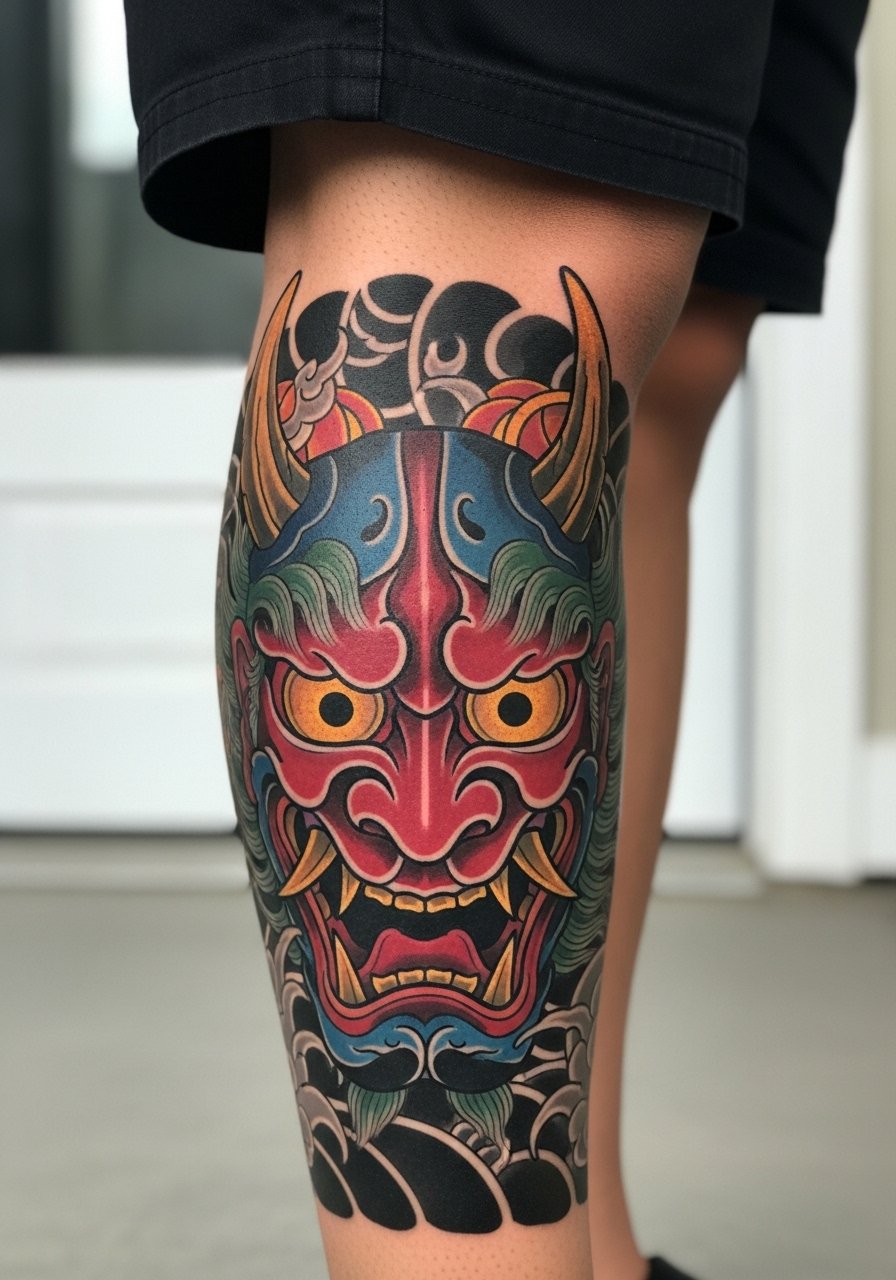
Irezumi on the shin uses bold outlines and saturations that stand up to time when executed at scale. Respect cultural origins and consider variations or permissions when using traditional masks. Sessions are substantial and often require 3 to 5 sittings for full color and shading. A mistake is shrinking a chest irezumi onto the shin without adjusting flows and waves for the leg contour. Expect more time on the stencil placement because curvature alters how the demon's face reads when you bend the knee.
13. Fine Line Mechanical Gears

Fine line gears can look like precision etching on the shin, but artists are split on longevity. One camp says the shin's rubbing blurs single-needle work within two years. The other camp counters that with proper spacing and shallow depth a single-needle hold is possible. Name this debate in your consult and ask for portfolio examples of healed work on shins. Sessions are typically quick. For a refined outfit pair with linen pants slim men cuffed narrow and loafers.
14. Shin Bone Contour Skull
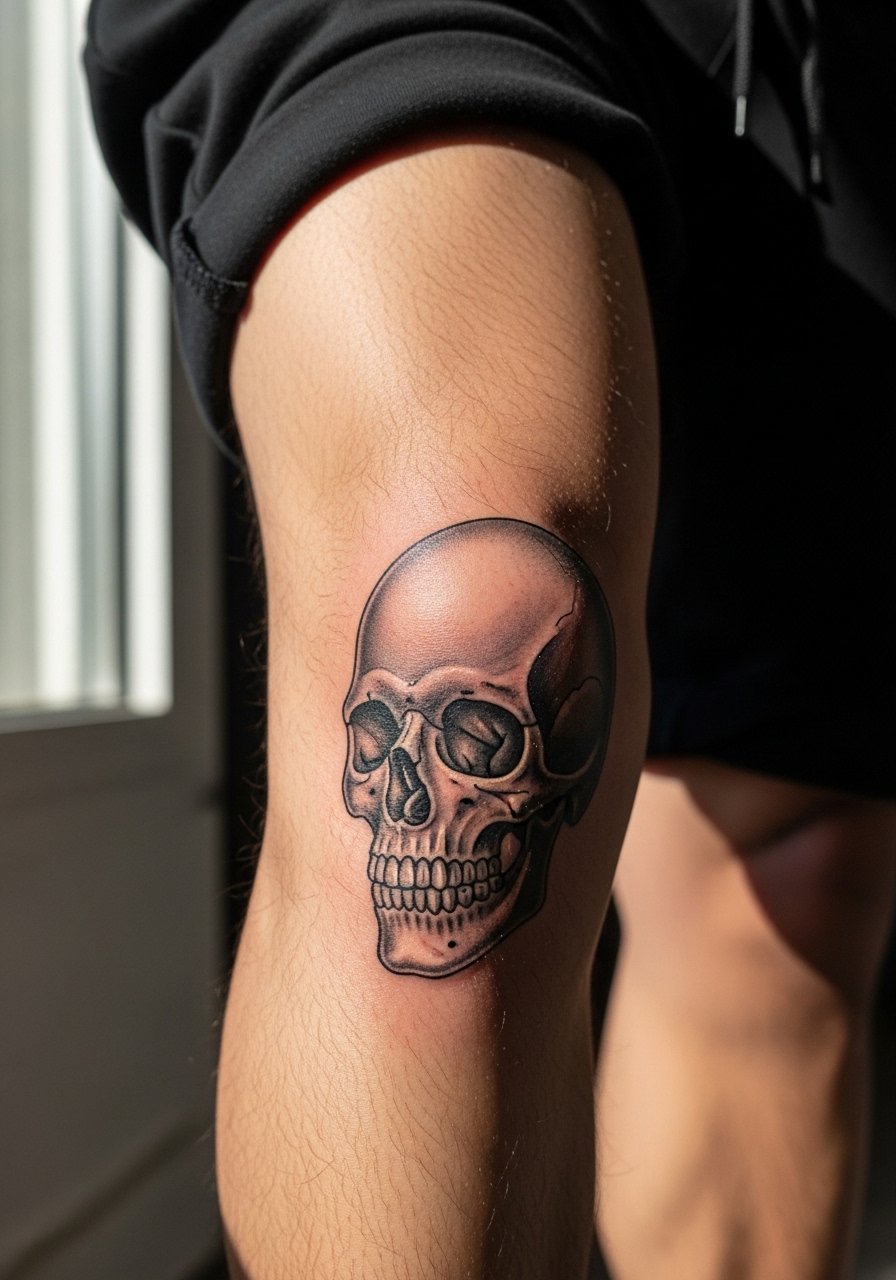
Contour work leverages the bone ridge to sell three-dimensional forms, but stencil placement on a flexed leg is critical. The trick artists use is applying the stencil with the leg flexed so the skull reads correctly when you stand and move. Expect a one to two hour session depending on shading. Common mistakes are applying stencils on relaxed legs and being surprised by warp when squatting. Mention weight changes if you anticipate body composition shifts.
15. Symmetrical Dual-Shin Matching

Split narratives across both shins look dramatic when you stand and even more so when you flex. Coordinate placement carefully and insist on seeing both stencils applied simultaneously to ensure symmetry. Scheduling two bookings back-to-back with the same artist is ideal because minor variances show up across legs otherwise. Wear shorts that let the artist move freely, and plan touch-ups per leg individually. For a matched look wear rolled cuff jeans or cargo shorts for reveal.
16. Leg Hair Integration Blackwork
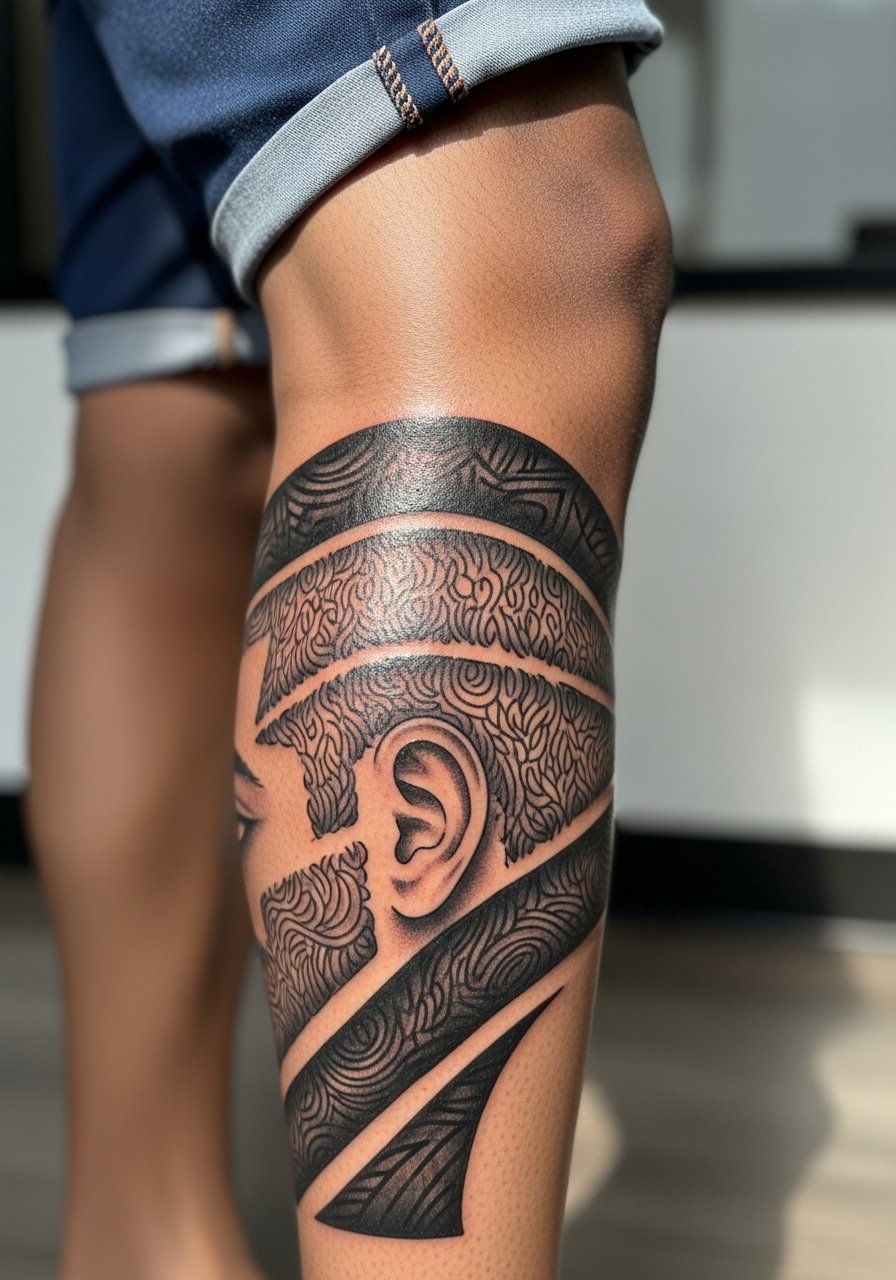
This under-covered idea plays with natural hair to create texture inside bold fills. If you go this route, discuss maintenance because the effect needs regular shaving or trimmed patterns to stay coherent. The design tolerates thicker linework and benefits from negative-space choreography. Expect some fading where hair follicles are dense. A typical mistake is forgetting to plan hair regrowth patterns after the first year. For the edgy reveal consider combat boots black and olive cargo shorts men.
17. Shin-to-Ankle Gradient Shading
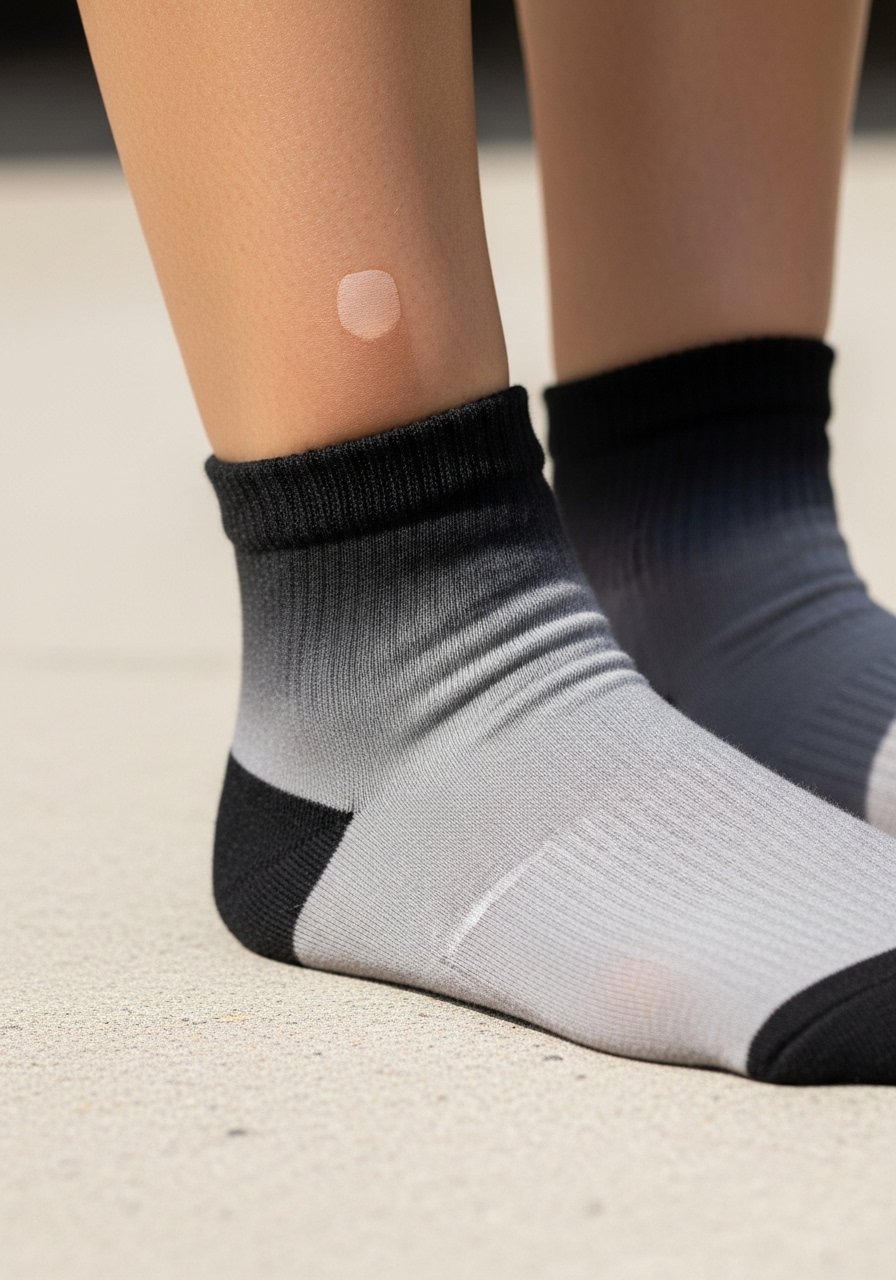
A gradient piece is subtle when walking and reveals its full depth when sitting or in shorts. This layout is friendly for short-sleeve reveals and uses shading that transitions with the leg curve. Sessions usually require blending passes and a mindful touch-up timeline. Avoid tight ankle cuffs in the first week because friction kills crisp gradation. For show-off days pair with ankle socks athletic and high-top sneakers.
18. Stipple Shaded Mandala Band
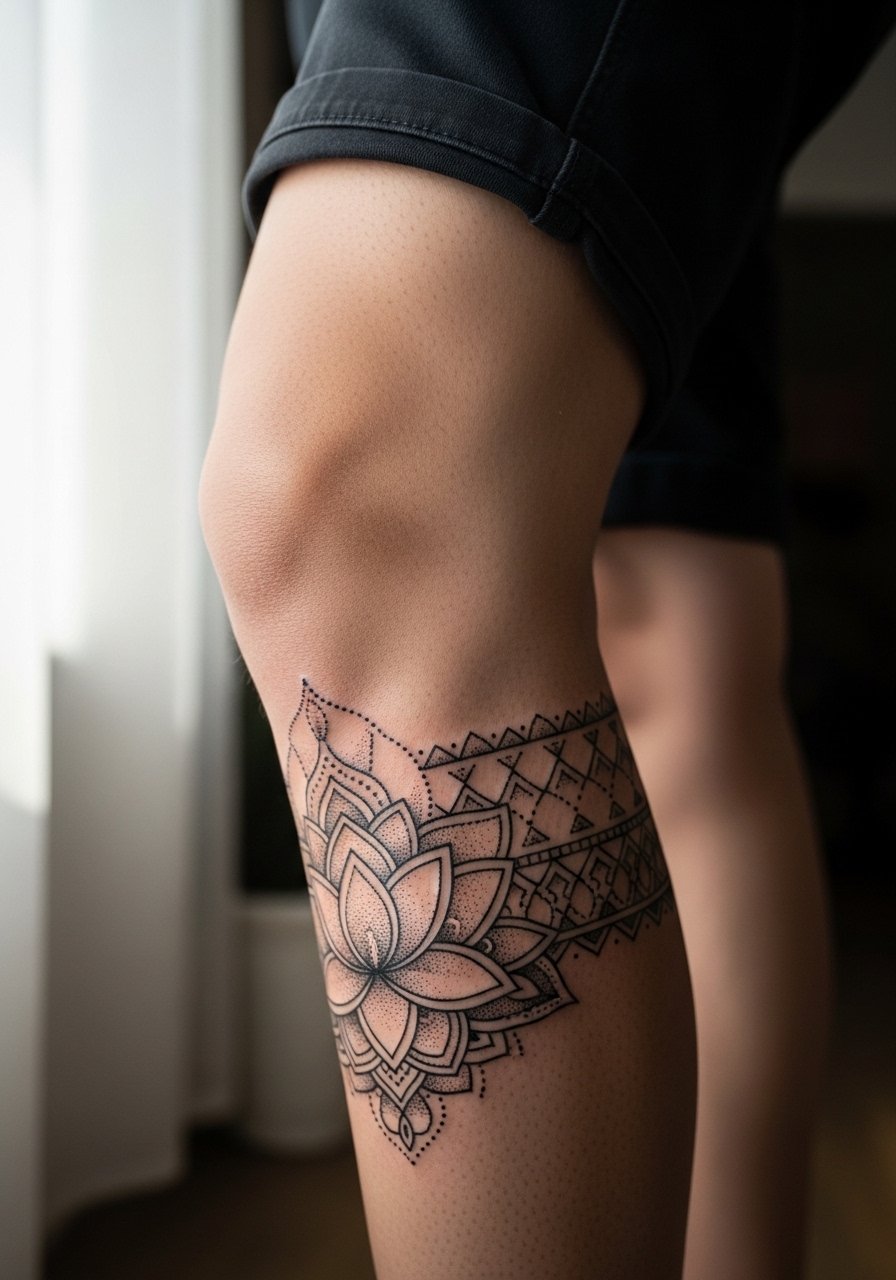
Dot work mandalas age into subtle texture if the stipple density is balanced. The pitfall is overpacking dots close to the bone where blowout risk is higher. Ask for a healed portfolio so you can see how dot gradations settle on the shin. Sessions are patient work and often feel like a slow burr as the machine builds tone. For a refined pairing go sockless with high top sneakers black and chino shorts.
19. Barbed Wire Spiral
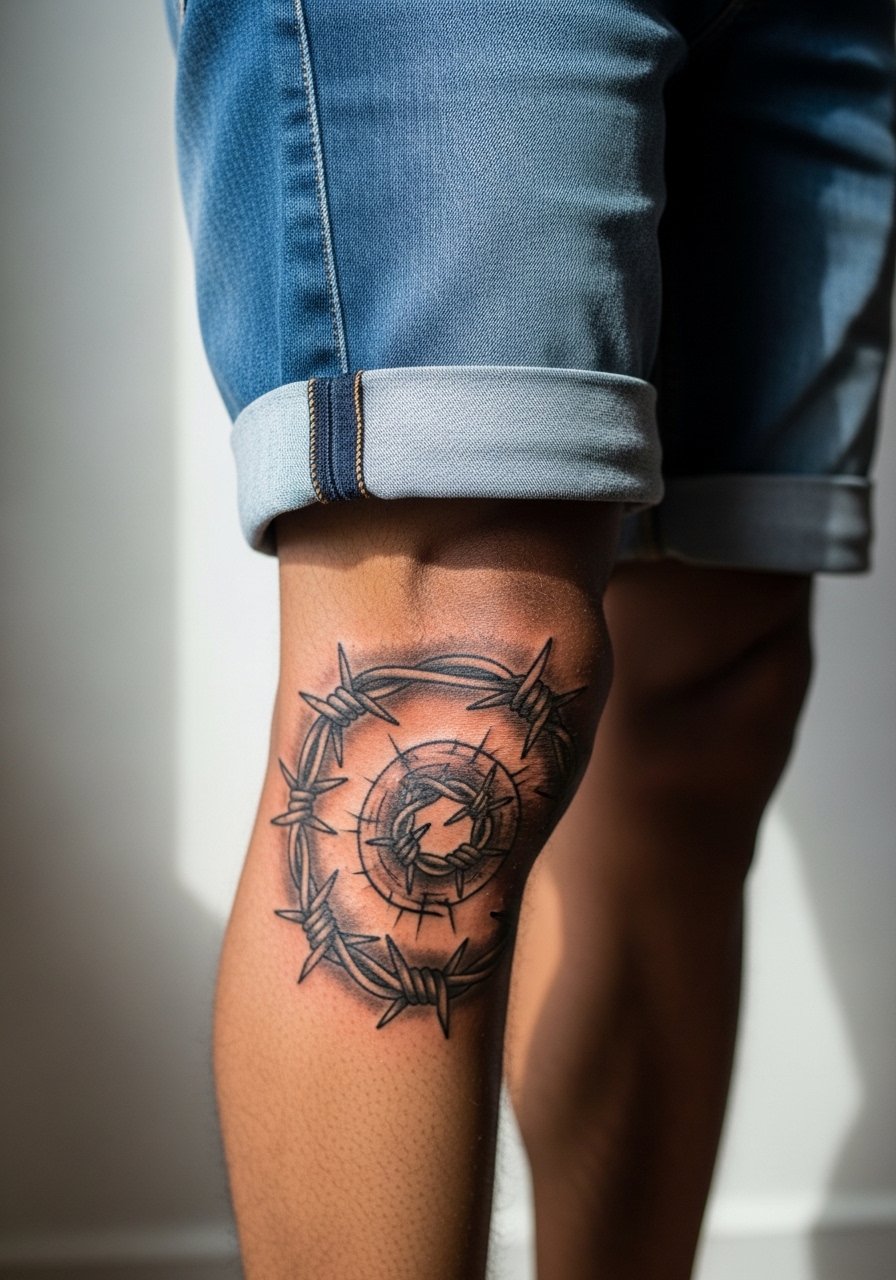
Simple motifs like barbed wire sell the idea of edge without relying on huge scale. That makes them quick sessions but not without risk, since thin wraps can blur if placed too tightly. Tell the artist you want breathing space between loops and prefer fewer twists over micro-detail for longevity. For leg days keep pants loose before and after to avoid pressure on the fresh lines. Pair with frayed jean shorts and canvas sneakers for a retro vibe.
20. Broken Glass Shard Cluster

Shards of glass rely on crisp negative edges to sell the break. If the design uses jagged micro-lines the shin's rubbing can soften the edges quickly. Insist on wider negative spaces between shard tips. This one feels sharp visually and often needs a small follow-up within a year to re-crisp the tips. For session comfort wear loose joggers or basketball shorts pulled high so the artist can access the full area.
21. Script Band with Roman Numerals
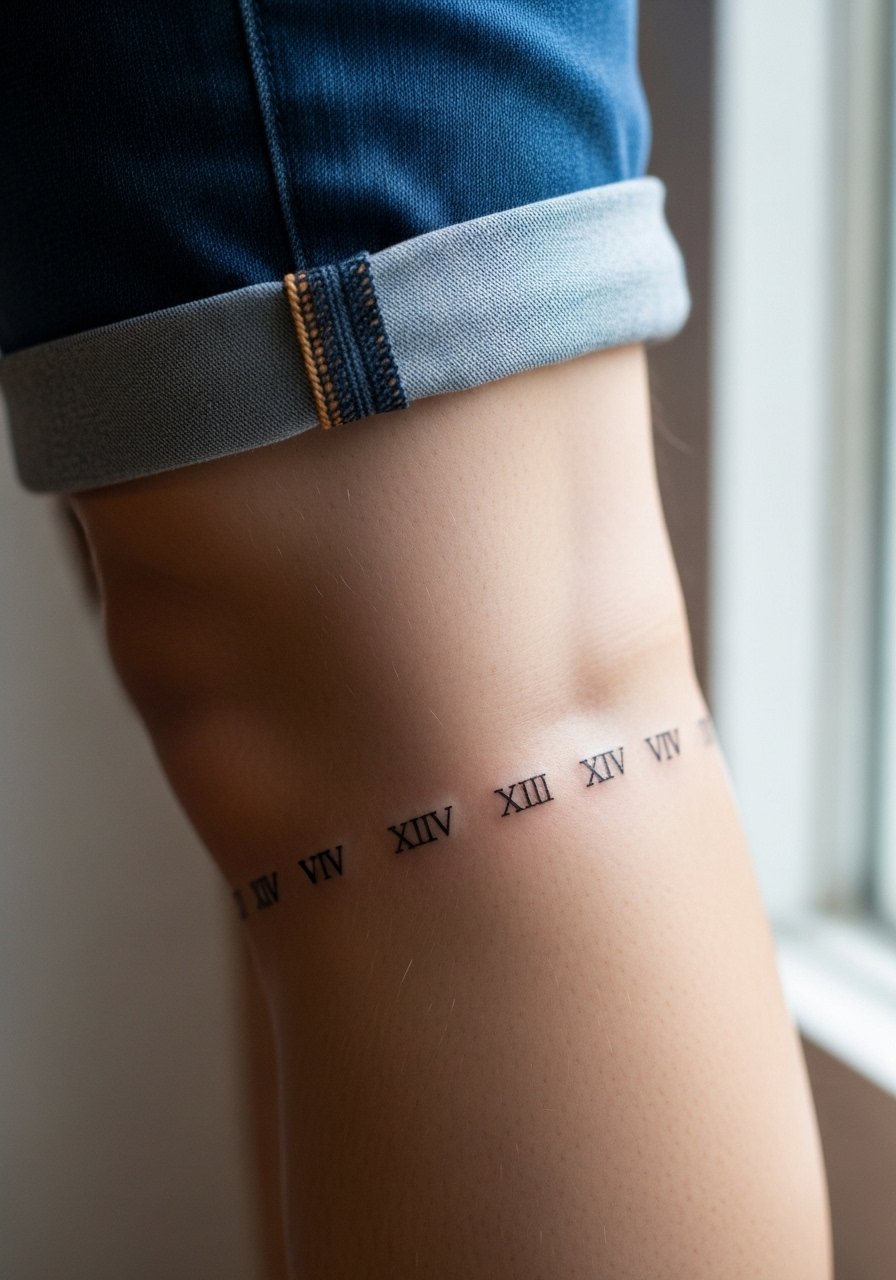
Text on the shin reads differently when bent, so always preview the exact lettering on a flexed leg. Lettering that looks neat on a flat photo can warp when you walk. Ask for slightly thicker letterforms and space between characters to account for swelling and movement. Session time is short, but placement is everything. For an editorial look pair with cuffed linen trousers or tailored shorts.
22. Weightlifter High Shin Placement

Athletes need art that survives range-of-motion and mass changes. For weightlifters, choose higher placements and designs with vertical flow so squats and flexes do not compress the motif. The common mistake is scaling a piece for a slim leg then gaining muscle and finding the imagery stretched. Bring photos of your usual training posture to your consult and ask for stencils applied in that posture.
23. Patchy Dotwork Horror Eye

A single eye can be unnerving and effective when executed with dot gradients instead of heavy outlines. Dotwork here needs spaced stippling to avoid merging into gray masses. If you want the textured look long term, plan for touch-ups in the first two years. The session feels like a slow build and the bone-centered area will sting more than fleshier spots. For showing off pair with slim athletic shorts and no-show socks.
24. Minimalist Arrow Band
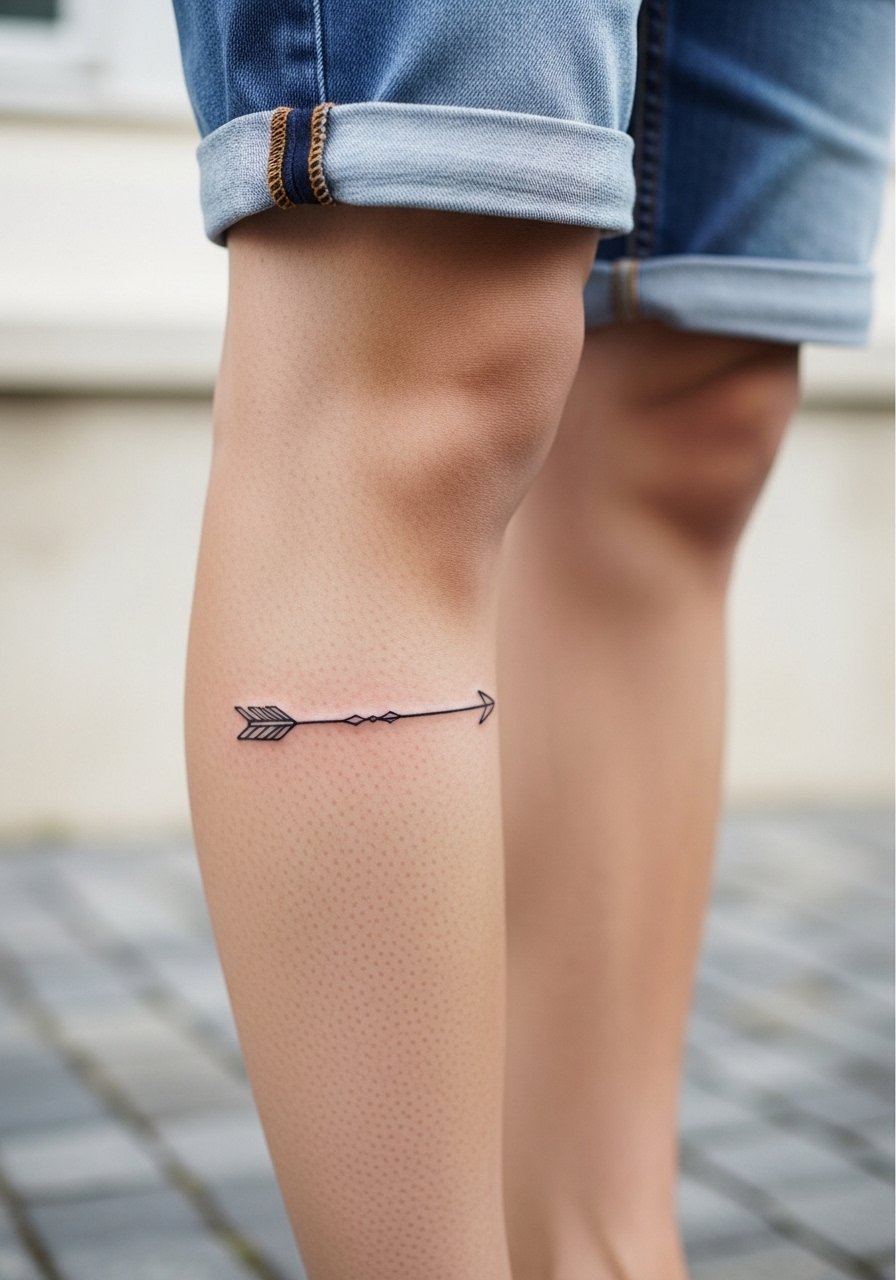
Minimal bands are deceptively tricky because the surface tension of the skin on the shin makes continuous lines prone to slight waviness. Keep the band modest in width and ask for a slightly bolder line than you think you need. Expect a single session and likely one touch-up within a year. Mistakes happen when clients demand ultra-thin strokes that become uneven with regrowth.
25. Aztec-Inspired Geometric Panel
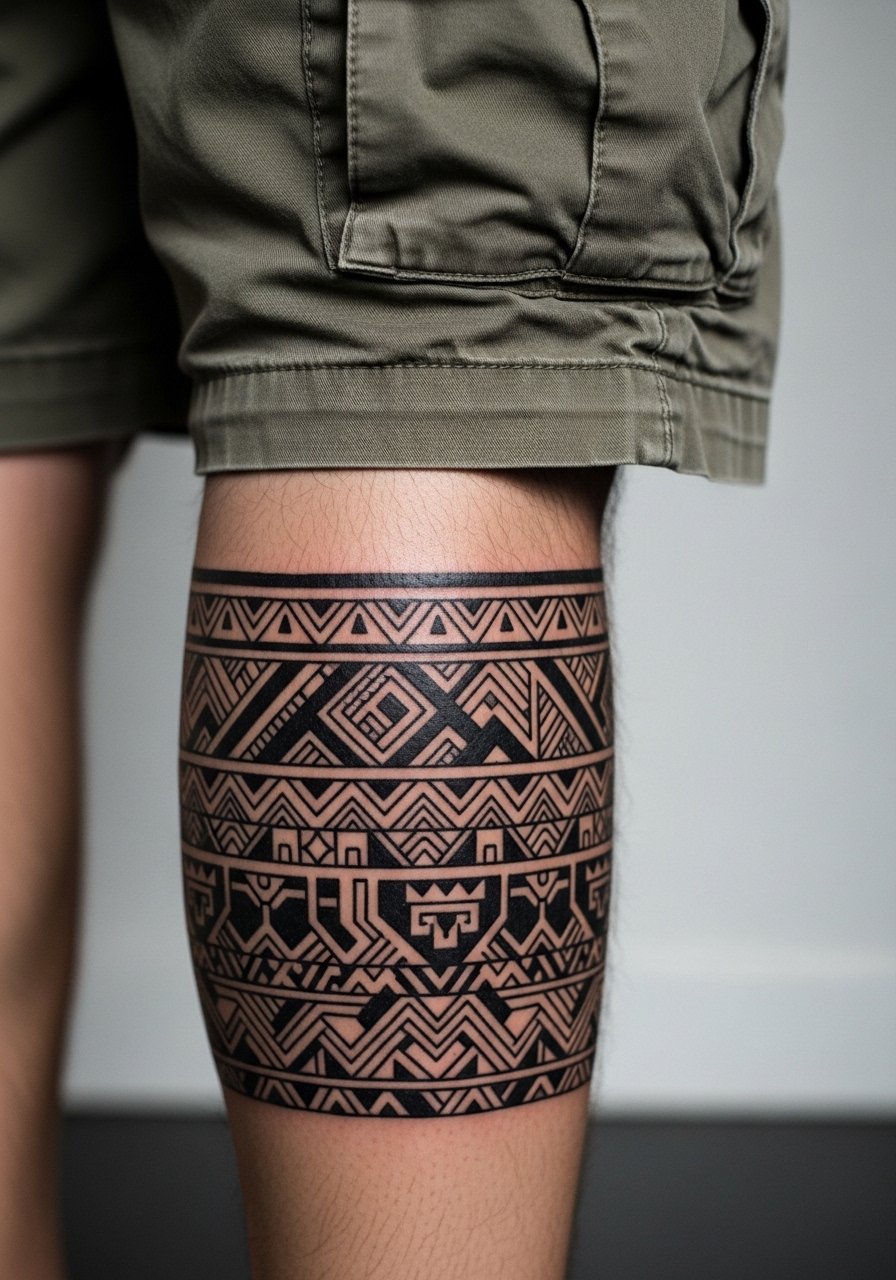
When borrowing indigenous motifs, consider respectful adaptation rather than a direct copy. A geometric panel can read like a modern echo of traditional patterns while staying original. The design looks best with strong anchors and moderate spacing to avoid fusion. This placement ages robustly if you prioritize contrast and negative space. For a rugged look pair with olive cargo shorts men and mid-height hiking boots.
26. Circuit Board Linework

Tech motifs are growing in popularity as subtle nods to industrial design. Keep circuits spaced and avoid absolute micro-line density on the shin. Ask your artist how similar healed pieces on legs have held up in two to three years. This style pairs well with monochrome streetwear and looks intentional when you keep contrast simple. For session ease wear slim fit gym shorts so the artist can work without fabric tug.
27. Anchor-to-Ankle Nautical Wrap
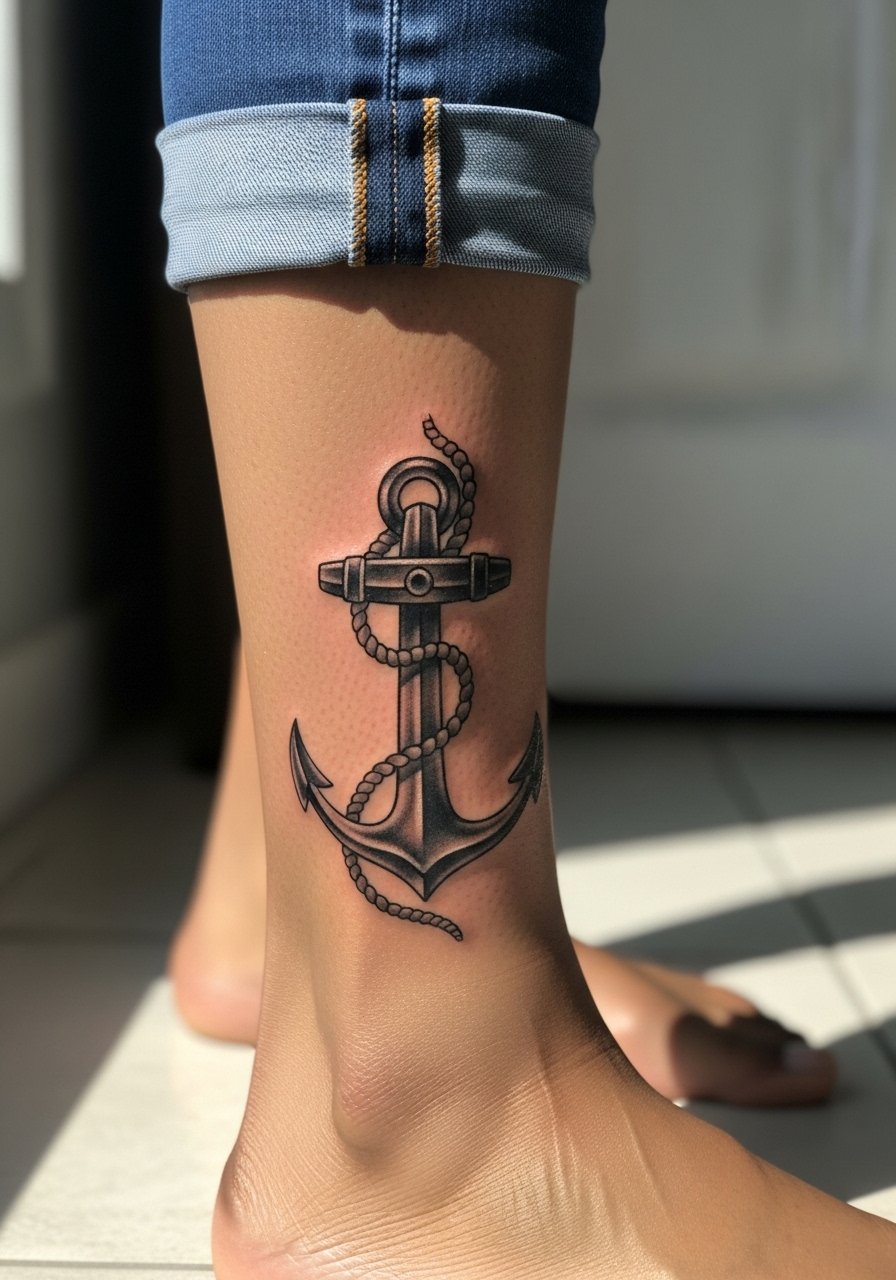
A vertical anchor motif finishes near the ankle for a classic sailor vibe. It balances chest and arm work if you have naval-themed pieces. The main issue is sock abrasion at the ankle in the early weeks. Ask for slightly higher placement or protective dressing advice for the first week. For showing it off roll your jeans to the shin or wear bootcut jeans men that can be cuffed cleanly.
Frequently Asked Questions
Q: Will fine line shin tattoos blur faster than bold blackwork?
A: Expect single-needle work to soften sooner on the shin than heavier blackwork. There are two camps on this. One says fine line blurs within a couple of years because of constant rubbing and thinner skin. The other says with careful spacing and shallow depth it can hold. Ask to see healed examples on shins and plan for touch-ups if longevity is a priority.
Q: How painful is a shin session compared with a calf session?
A: Shin sessions typically score higher on pain charts because the needle vibrates over bone with less soft tissue cushioning. Calf work feels softer and more forgiving. If pain is a major concern discuss numbing options, test patches, and shorter session splits during your consult.
Q: Should I shave my shin before a blackwork session on darker skin?
A: Many collectors with darker skin report better contrast when the area is clean shaven for the stencil and session. Shaving reduces hair trapping and helps saturation. If you plan to use a hair pattern as part of the design, coordinate timing and maintenance with your artist.
Q: Do Saniderm and dry healing camps both have a point for shin tattoos?
A: Yes, they do. One group favors Saniderm for sealing sweat and reducing scab friction during the busiest healing days. The other group prefers short dry windows to let microscopic scabs form naturally without moisture maceration. Your choice depends on job demands and how much rubbing the area will see.
Q: What should I wear to my shin appointment for maximum access and comfort?
A: Wear loose shorts or joggers you can pull up easily so the artist can position the leg with a bent knee. For wrap work consider boxer briefs only under pants to avoid fabric pressure. If you want ideas for session-day clothing try a pair of loose drawstring linen pants that roll up cleanly.
Q: Will my shin tattoo warp if I gain 10 to 15 pounds?
A: It can, especially with pieces that sit across joints or high on muscular areas. Designs with bold outlines and intentional negative space cope better with size shifts than densely detailed miniatures. If you expect body changes plan placement and scale accordingly or accept touch-ups after the fact.