
Fine dotwork lily tattoos look fragile on a phone screen, but their longevity depends on spacing, needle rhythm, and placement more than the initial photo. If you want a lily that still reads as a lily five years from now, think contrast, deliberate gaps in the dot shading, and placement that avoids constant friction. Below are 21 dotwork lily directions to inspire consultation notes and outfit choices that actually show the work.
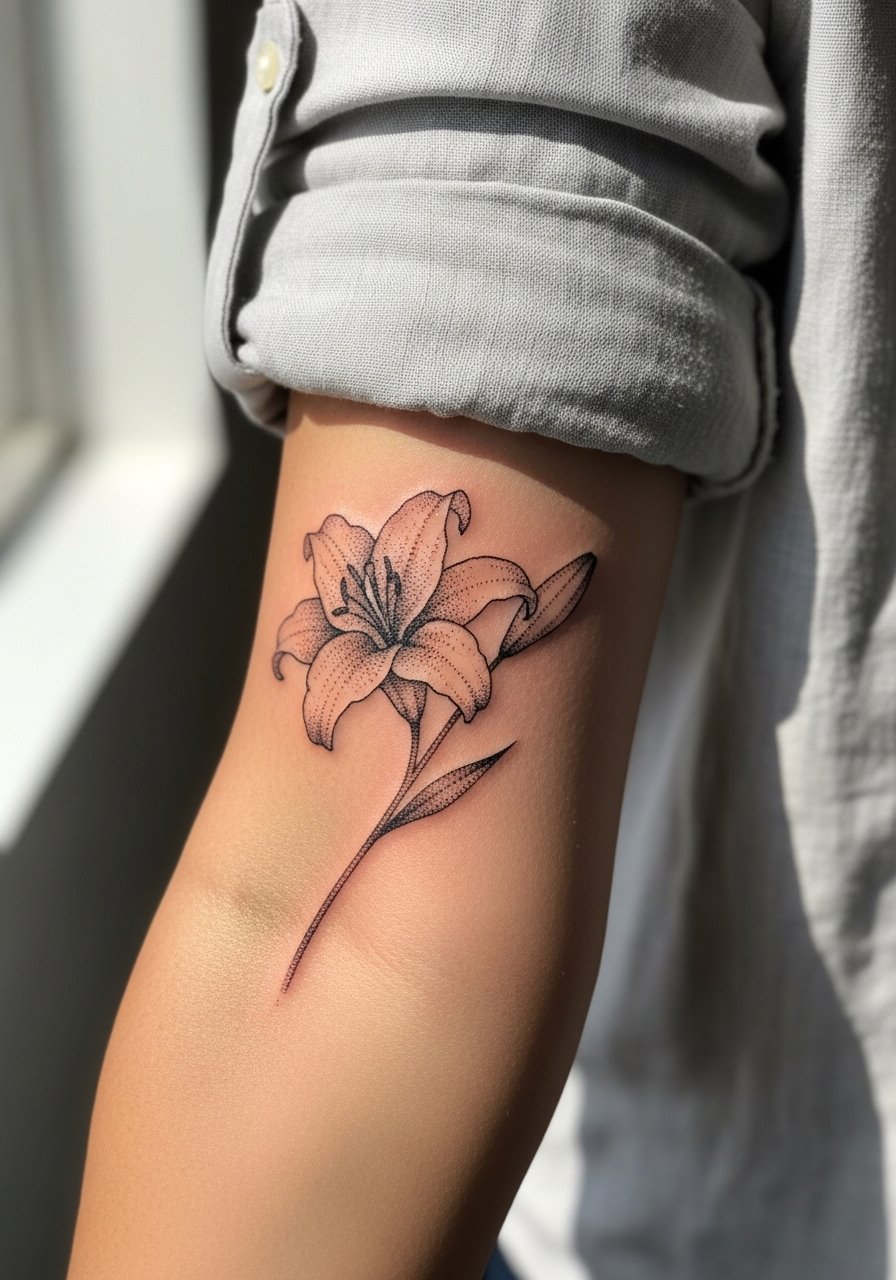
1. Delicate Dotwork Lily on Inner Forearm
I've seen this placement hold detail best when artists give the dots room to breathe and avoid packing them too densely near the stem. Ask your artist for stipple shading with graduated density so the petals keep definition at year two. Fair warning, the inner forearm can be a moderate pain area, but sessions often finish in under two hours for a single lily. A common mistake is asking for micro-dense dots that blur after sun exposure. For showing it off, rolled sleeves work well with this placement. Pair with a rolled linen shirt that keeps attention on the forearm while letting the dot texture read in daylight.
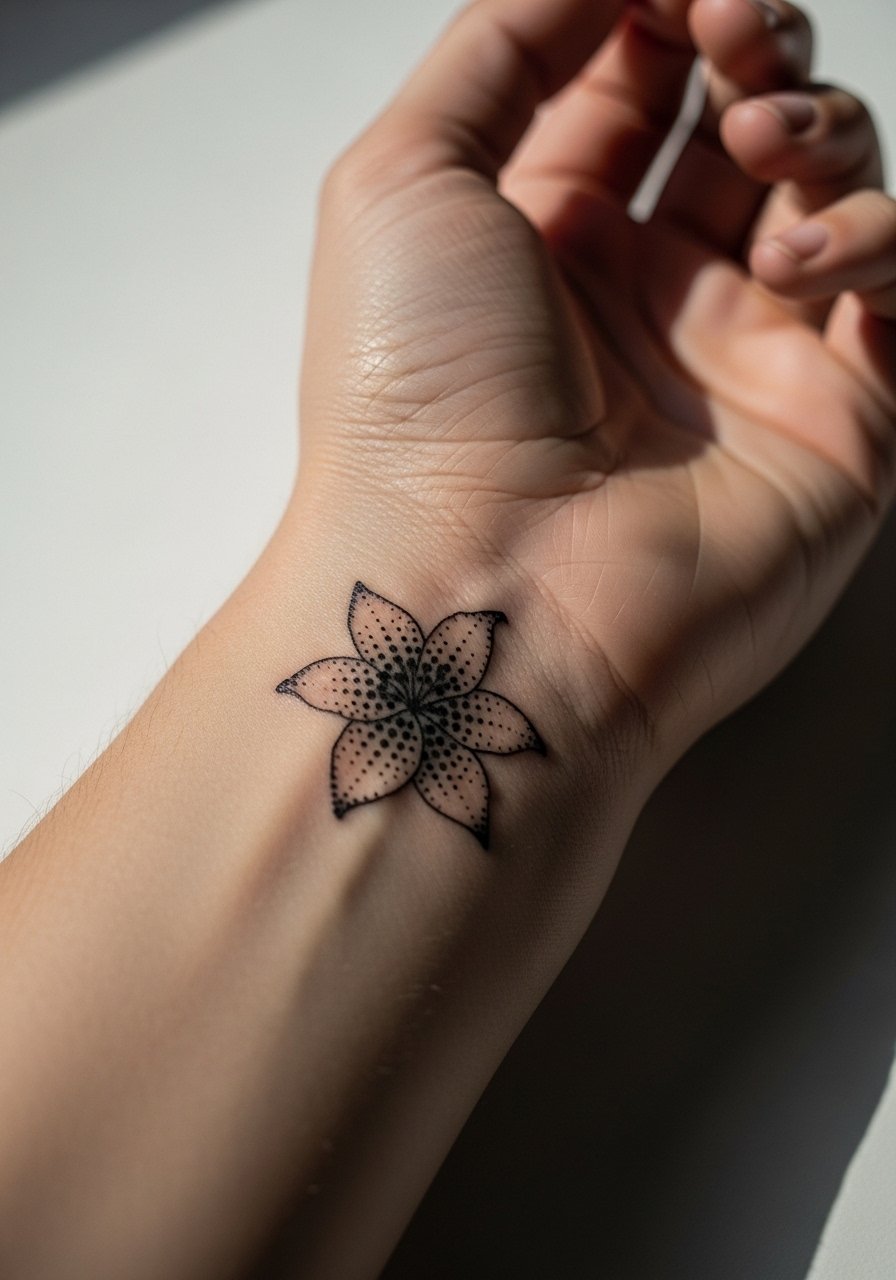
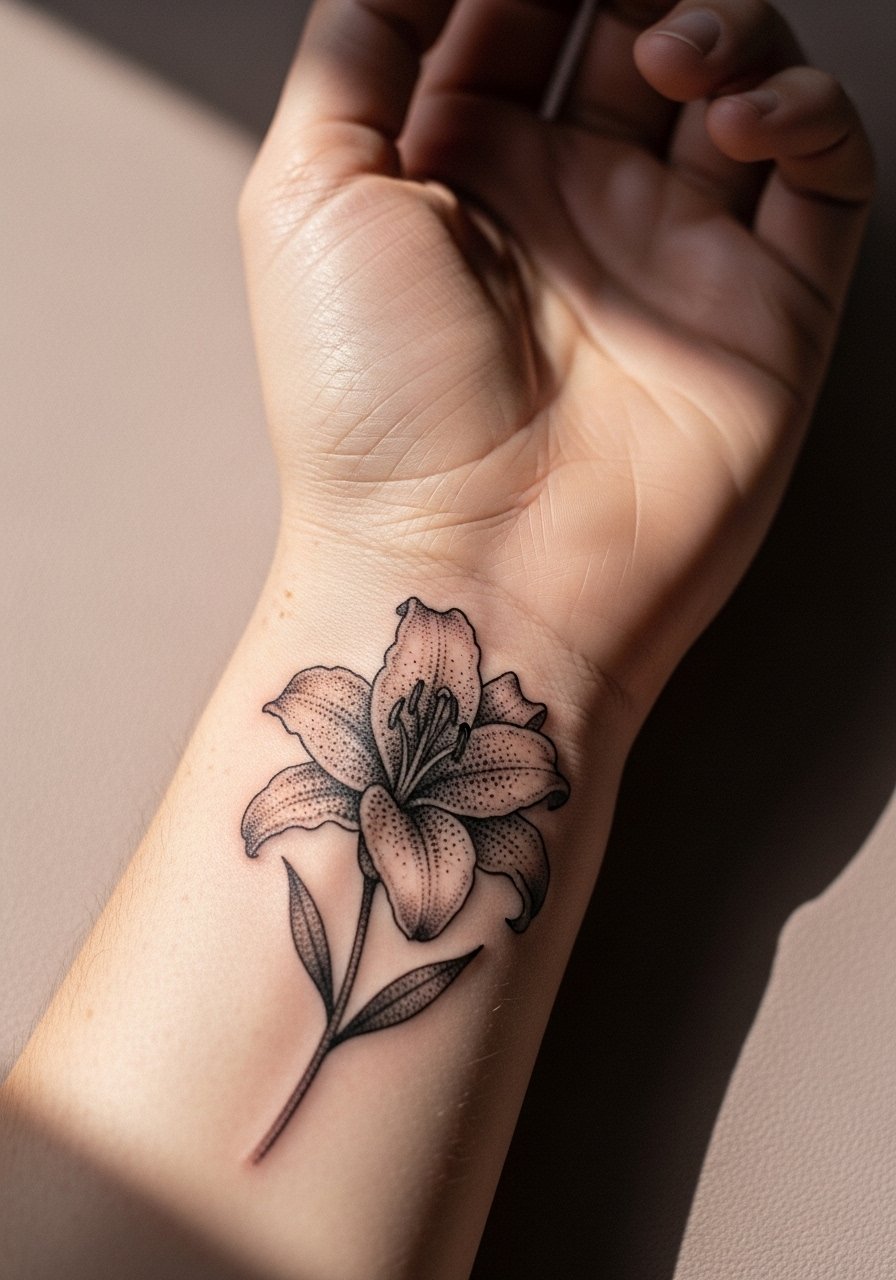
2. Tiny Dot Lily on the Side of the Wrist
Tiny botanical pieces on the wrist look fragile but can last if the dots avoid the edge where skin folds. Keep the design compact and ask for slightly bolder outer linework so the silhouette survives frequent hand washing. Session time is usually short, twenty to forty minutes, but expect touch-ups earlier than larger pieces. The biggest mistake is putting the dense stippling close to the wrist crease, where blowout and fading accelerate. This placement pairs nicely with minimalist jewelry. Try a thin chain bracelet that frames the wrist without rubbing the new ink.
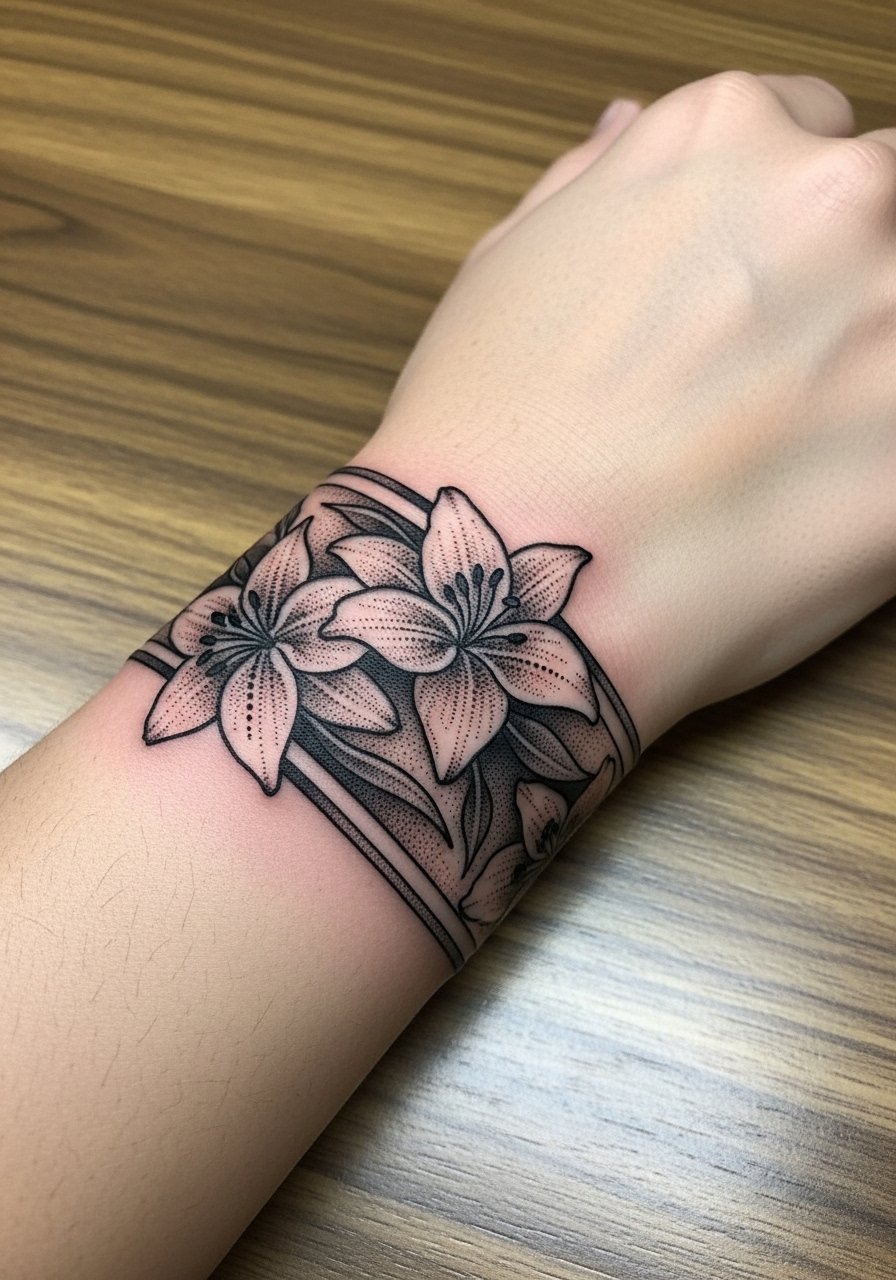
3. Wrist Wrap Lily Band in Dotwork
A continuous lily band around the wrist relies on even spacing to avoid the lines merging over time. When you consult, request slightly larger gaps between petal dots where the band curves. Expect a one-hour session and moderate discomfort from being so close to bone. Artists split on wrist wraps. One camp says the constant movement and hand washing mean touch-ups at year two. The other camp says strategic spacing and mid-depth placement hold up fine. Ask your artist which approach they use and why. For outfits, stacked short-sleeve tees with a minimalist watch let the band sit front and center without busy patterns.
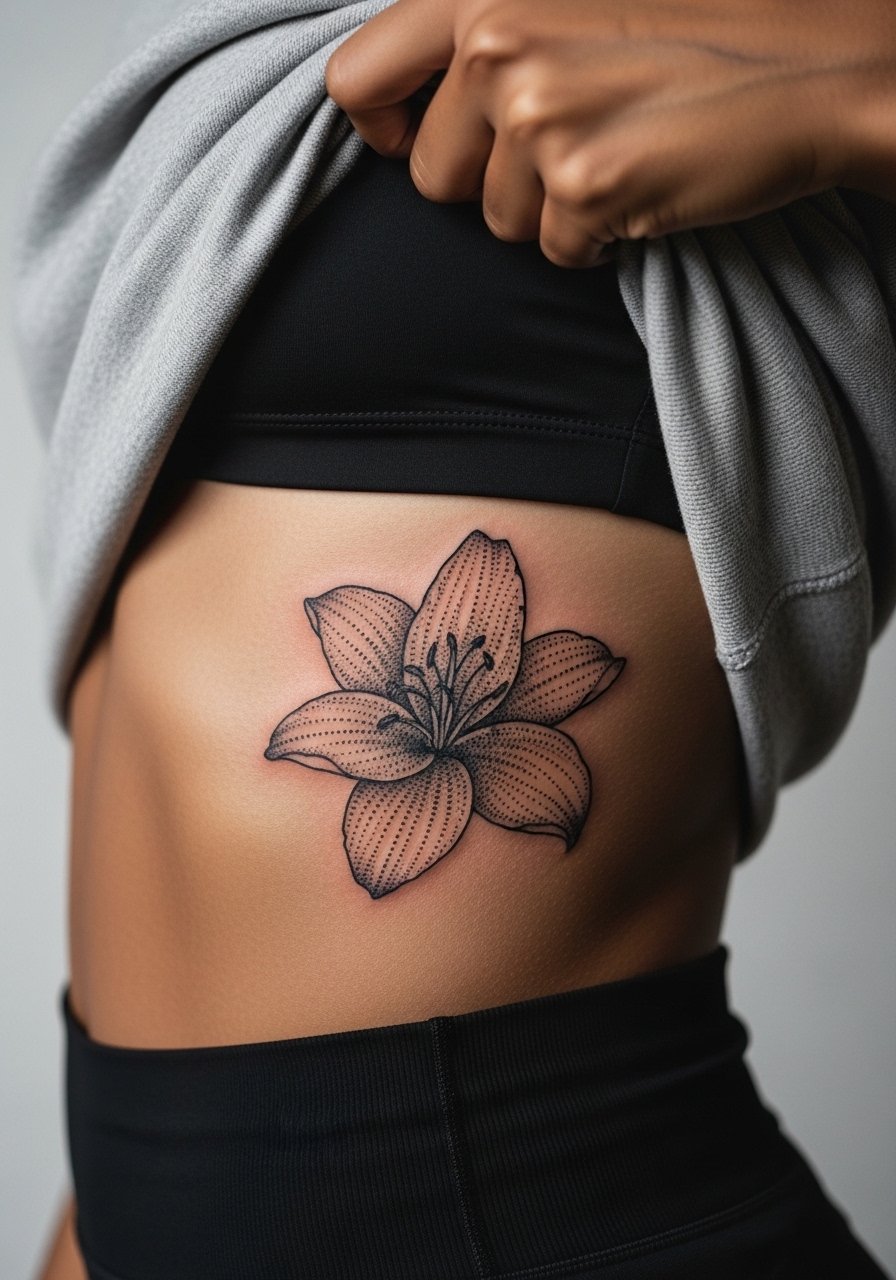
4. Single Stem Lily Along the Ribcage
Fair warning, the ribcage is a higher pain area, but the vertical stretch of ribs suits elongated dotwork lilies. Ask for a vertical composition with negative space between clustered dots so the petals do not blur when the skin moves. Session time depends on size, often two hours for a medium piece. Artists are divided about fine line on the ribs. One camp argues the skin stretch blurs detail within two years. The other camp says proper needle depth and spacing make fine dotwork settle well. Name the camp you prefer during consultation. For session wear, plan a cropped athletic top you can lift slightly so only the rib area is exposed without full torso exposure.
5. Chest-Centered Single Lily Over Sternum
Sternum placements read organic when the lily sits just above the fabric line. Ask for a slightly wider petal spread so the dotwork keeps its shape as chest movement occurs. Expect moderate to high discomfort and a session around ninety minutes for a medium-sized design. A common mistake is packing dense dots close to the cleavage line which can cause muddy healing. For showing it off, a wide-neck top or bandeau works well. Try a thin chain pendant necklace that sits above the lily so the piece stays visible without fabric competing.
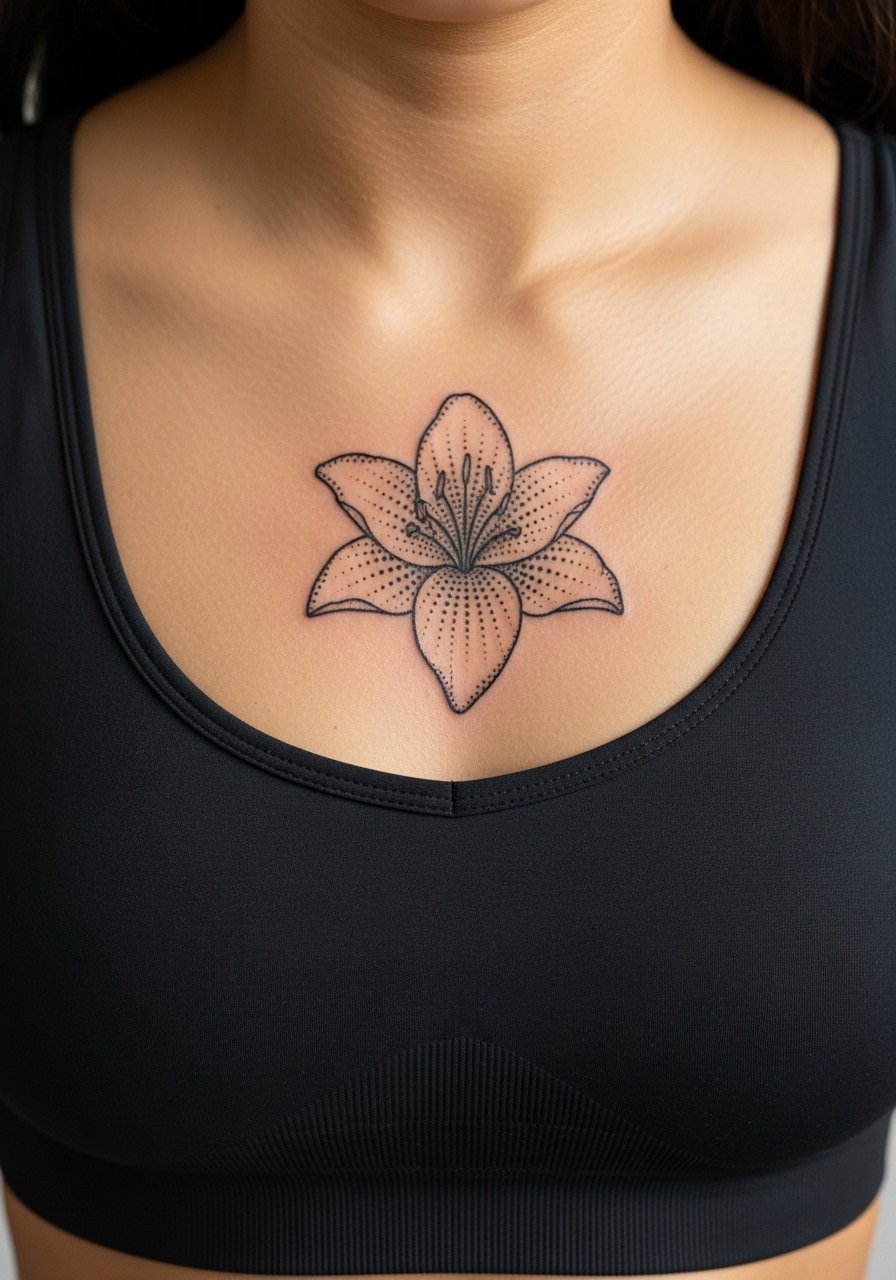
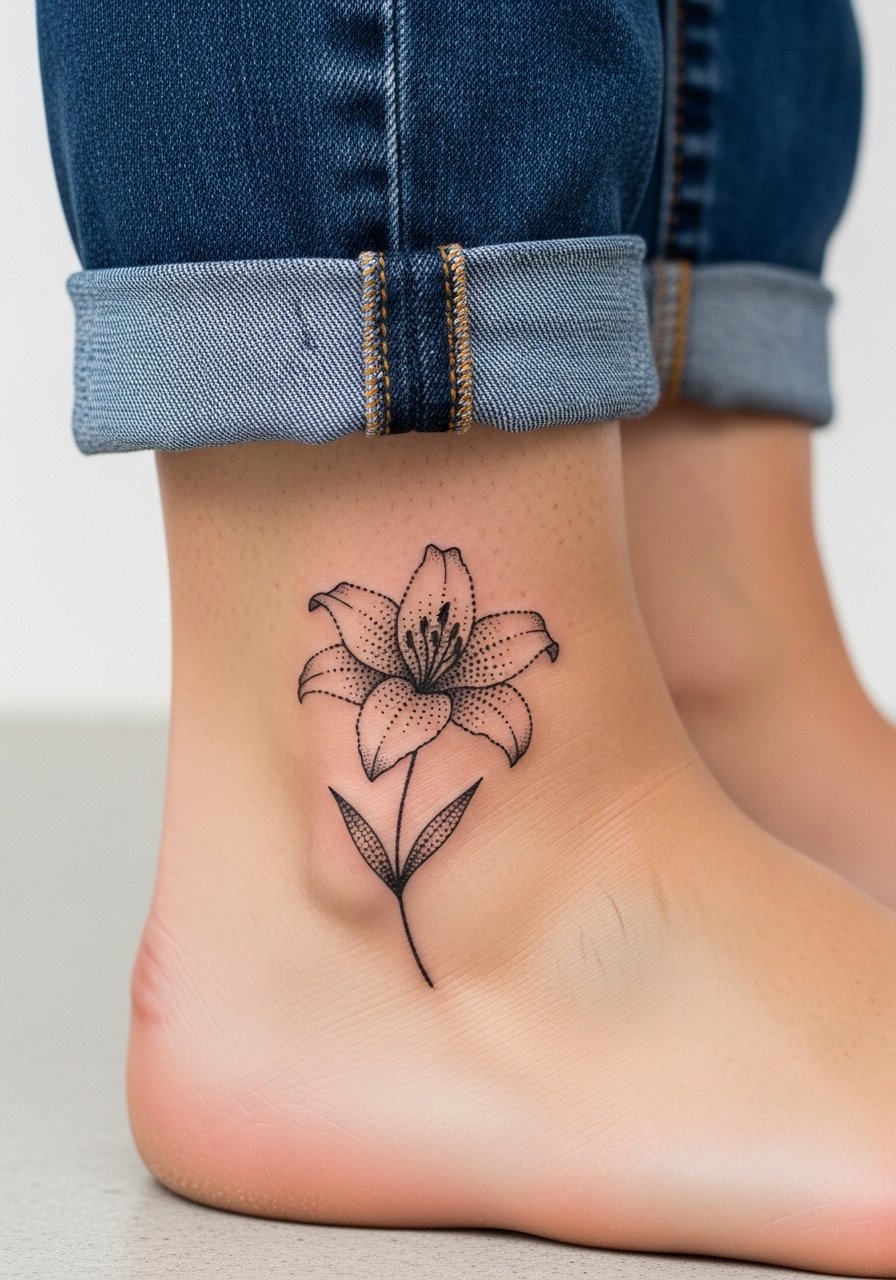
6. Ankle Accent Lily in Dotwork
Ankle tattoos face constant friction from socks and shoes, so spacing and higher contrast are crucial. Ask your artist to reserve bolder anchor dots along the stem and keep stipple shading lighter toward the petals. Sessions for a single ankle lily take under an hour, but expect touch-ups sooner than for arm work. For showing it off, roll up jeans or wear sandals. A pair of leather sandals that expose the ankle provides the low-key framing this small piece needs.
Studio Day Picks
Those forearm, wrist, and sternum lilies above all ask for small practical items that smooth the session and early healing window.
-
Disposable stencil transfer paper kit. Lets you check placement on curved areas like the ribcage and wrist before the first line is drawn.
-
Medical grade adhesive bandage rolls. Useful for non-compressive coverage on ankle and wrist tattoos that rub against clothing.
-
Thin protective film roll. Keeps small ankle and wrist pieces clean during the active first days when friction is highest.
-
Fragrance-free gentle body wash. Cleanses healing dotwork without stripping the skin, especially important for finer stipple areas.
-
Aquaphor healing ointment. Thin layers help keep delicate dot channels moisturized in the first week without smothering the linework.
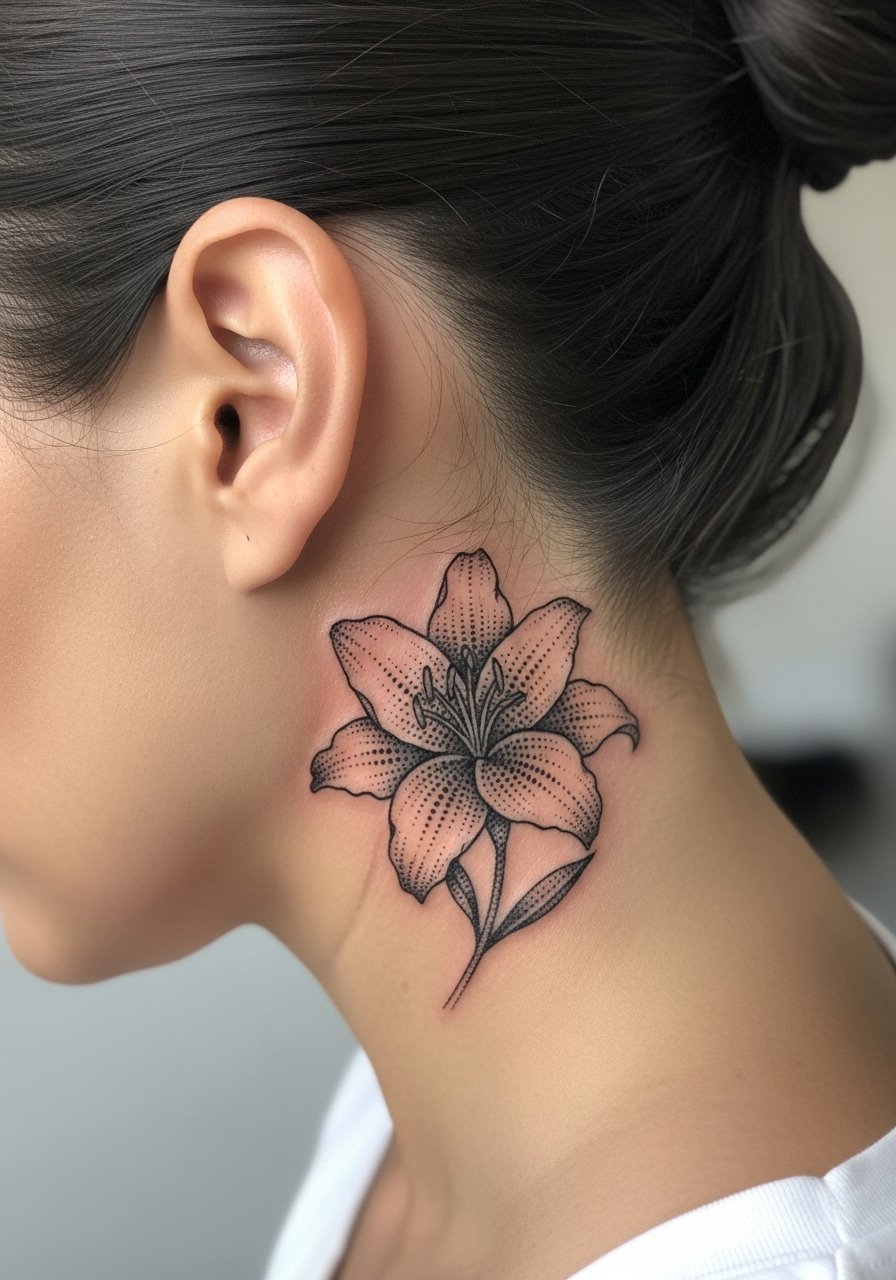
7. Micro Dot Lily Behind the Ear
Fine dotwork behind the ear reads intimate when framed by hair. For safety, specify the skin just behind the ear below the hairline in your consult. Sessions are quick but the spot needs an experienced hand because the area is thin. The main mistake is assuming you can hide this completely; hair shifts and short styles will reveal it. For session dressing, show up with hair clipped up so the artist has clear access without full ear exposure. Note on professional considerations: some workplaces still react to visible neck and ear tattoos, so test how often your hair will cover the area.
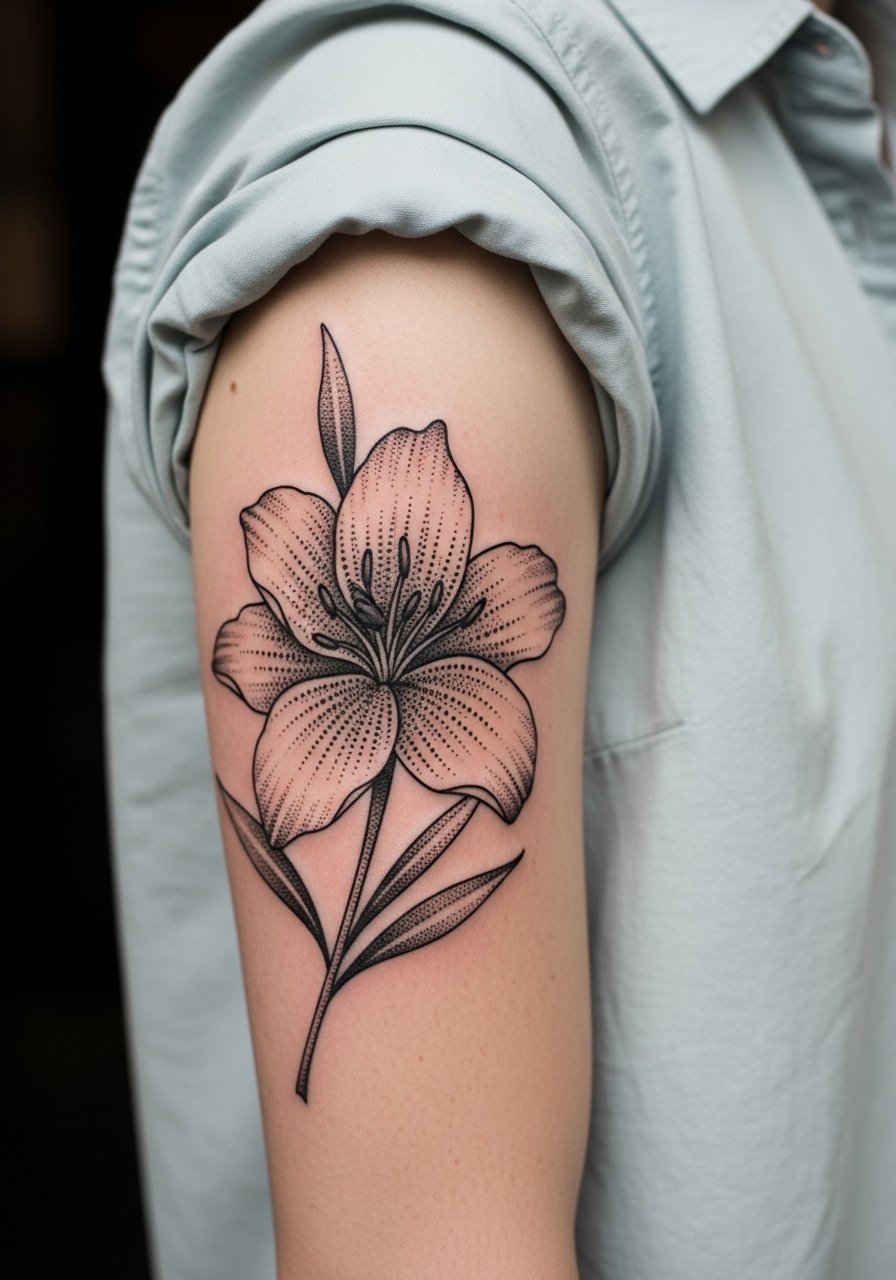
8. Full Petaled Lily on Upper Arm with Stipple Shading
Upper arm flesh takes stippling well and offers space for a lily with layered petals. For longevity, ask for contrast near the petal edges and slightly looser stipple clusters in the center. Expect moderate discomfort and one to two hour sessions depending on scale. The common misstep is asking for extreme microdot density, which can look flat after sunlight exposure. For showing off the piece, a loose button-down shirt with sleeves rolled up shows the upper arm without crowded patterns competing with the dot texture.
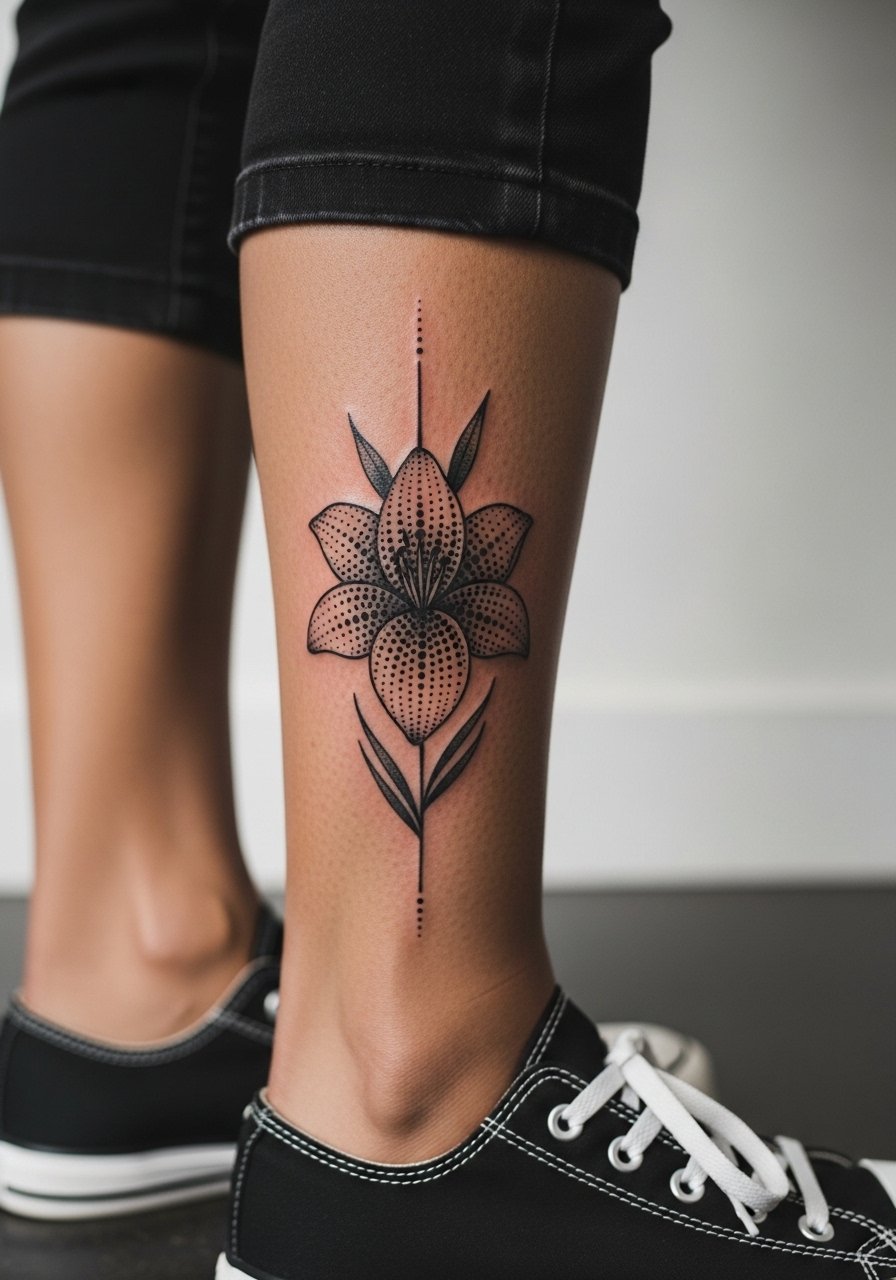
9. Calf Lily Bloom in Dotwork
Calf placements let the dotwork breathe and keep detail longer than wrists or hands. Ask for vertical composition that follows the muscle line so movement does not compress the shading. Sessions can run one to two hours based on size, and pain is usually low to moderate. A common mistake is placing the densest dots on the inner calf where friction from pants erodes the detail. For casual show-off, pair with a pair of canvas sneakers and cropped pants so the tattoo reads in motion.
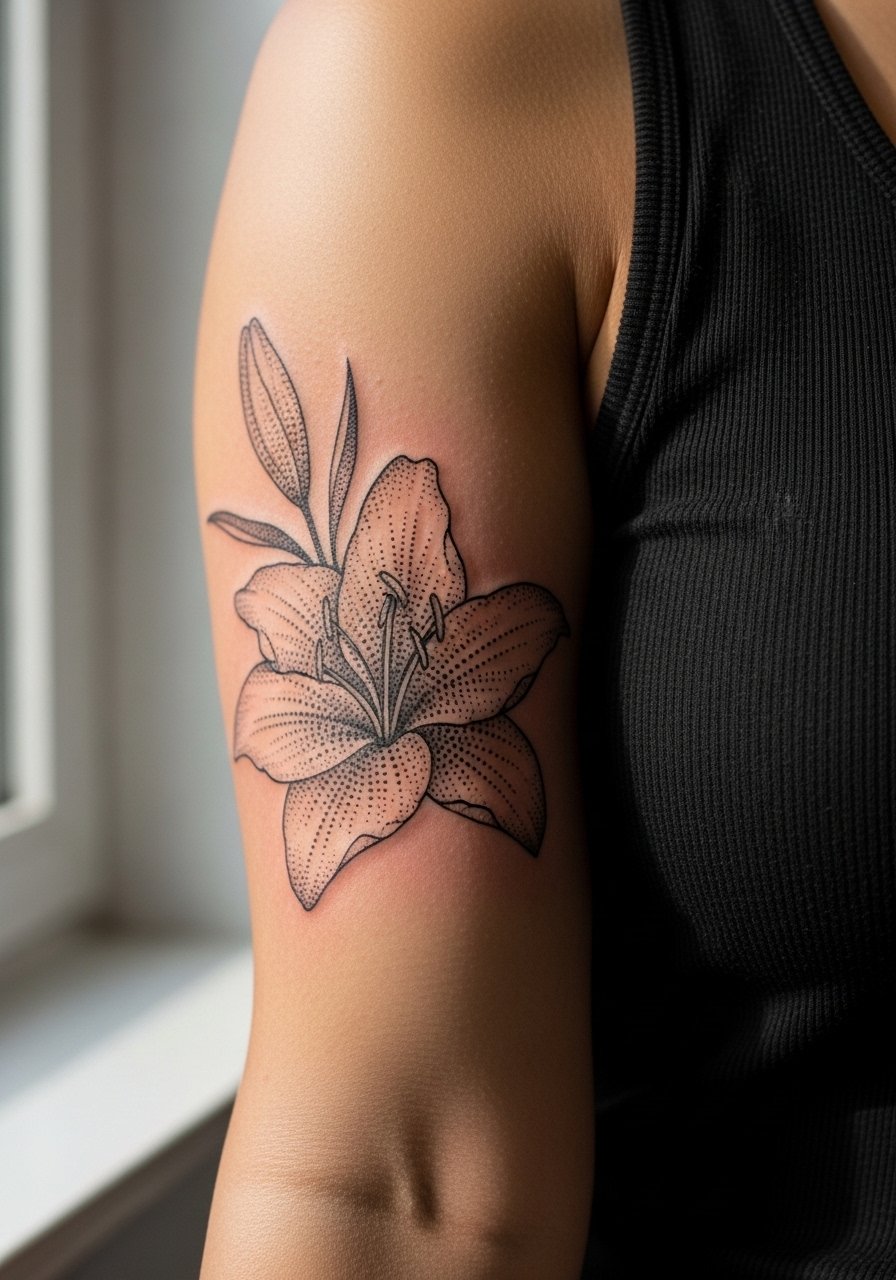
10. Inner Bicep Lily with Fine Stipple
The inner bicep holds fine dotwork nicely because the skin is softer and less sun-exposed. Fair warning: the area can be tender and requires the arm to be positioned for access, so wear a loose tank for the session. Tell your artist you want light stippling near the petal tips and denser anchors by the stem so the silhouette remains clear after healing. Expect a moderate session length and a likely touch-up at two to three years if you sunbathe frequently. For professional sensitivity, inner bicep pieces are easy to hide under shirts.
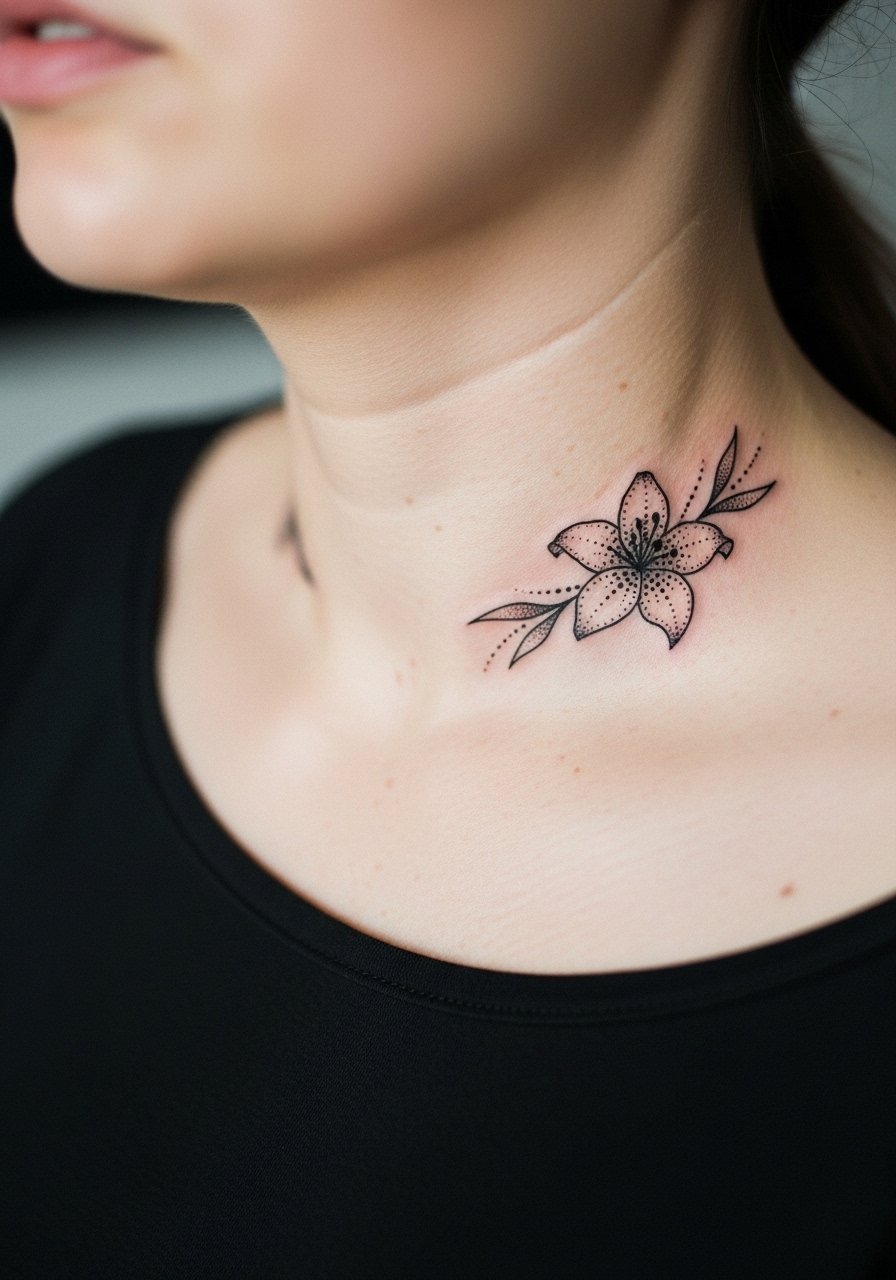
11. Minimalist Lily at the Collarbone
A small collarbone lily reads refined if the dots avoid the highest-contrast edge near the bone. Ask for a light touch on top petals and slightly bolder anchor dots along the lower petal base. Sessions are quick and the area is moderate in pain. The common mistake is placing too much fine stippling right on the collarbone where movement and clothing rub cause early fading. For showing it off, a wide-neck top pulled slightly aside frames the piece elegantly. Consider a delicate v-neck blouse so the lily sits in the neckline.
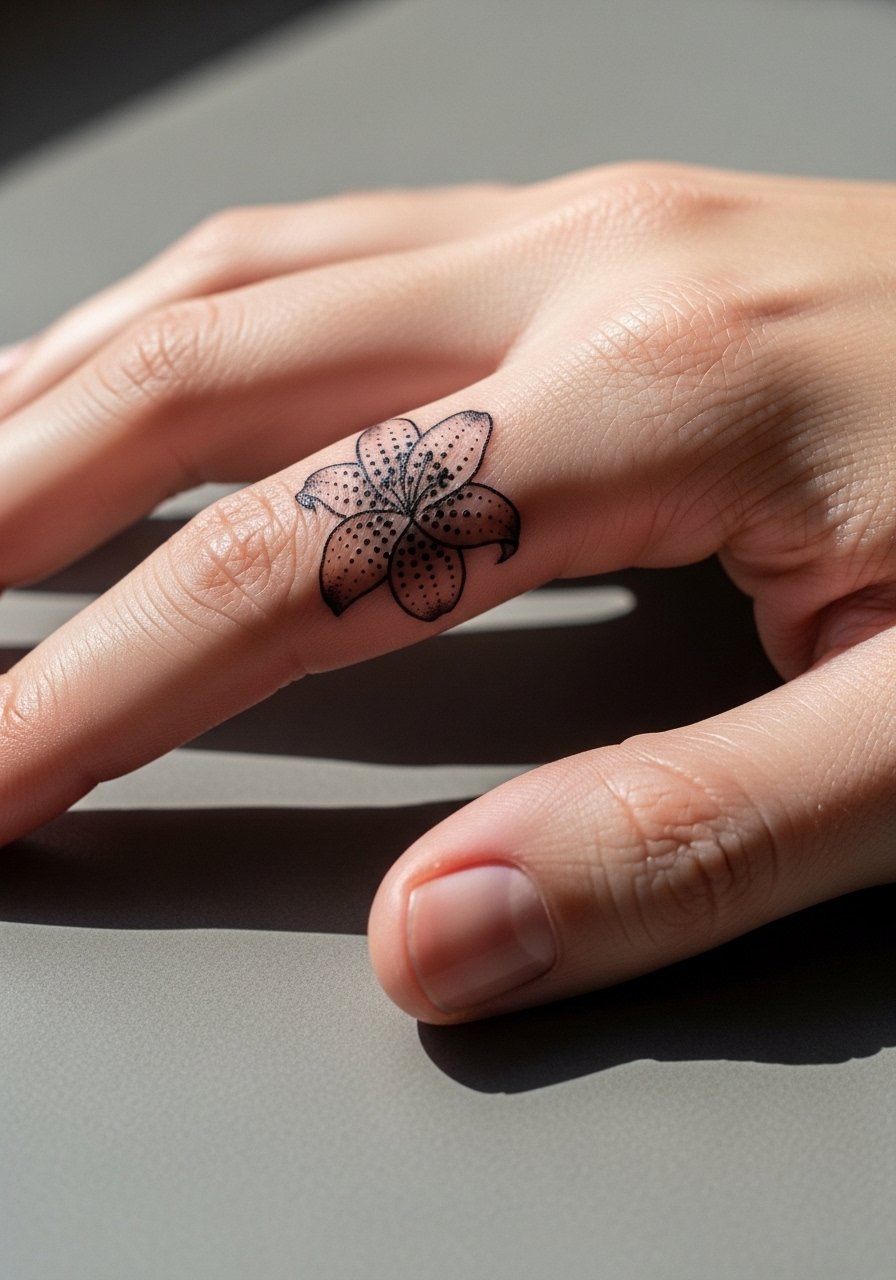
12. Tiny Finger Lily in Dotwork
Finger tattoos are charming but notorious for early fading because of constant use and washing. If you want a finger lily, ask the artist to place the dots slightly farther apart and consider a small outline to protect the silhouette. Sessions are short and can sting because of thin skin over bone. Expect a realistic touch-up timeline at year one or two. A frequent mistake is requesting dense stipple that the skin cannot hold. For jewelry pairing, thin rings that do not sit directly over the tattoo keep the piece readable.
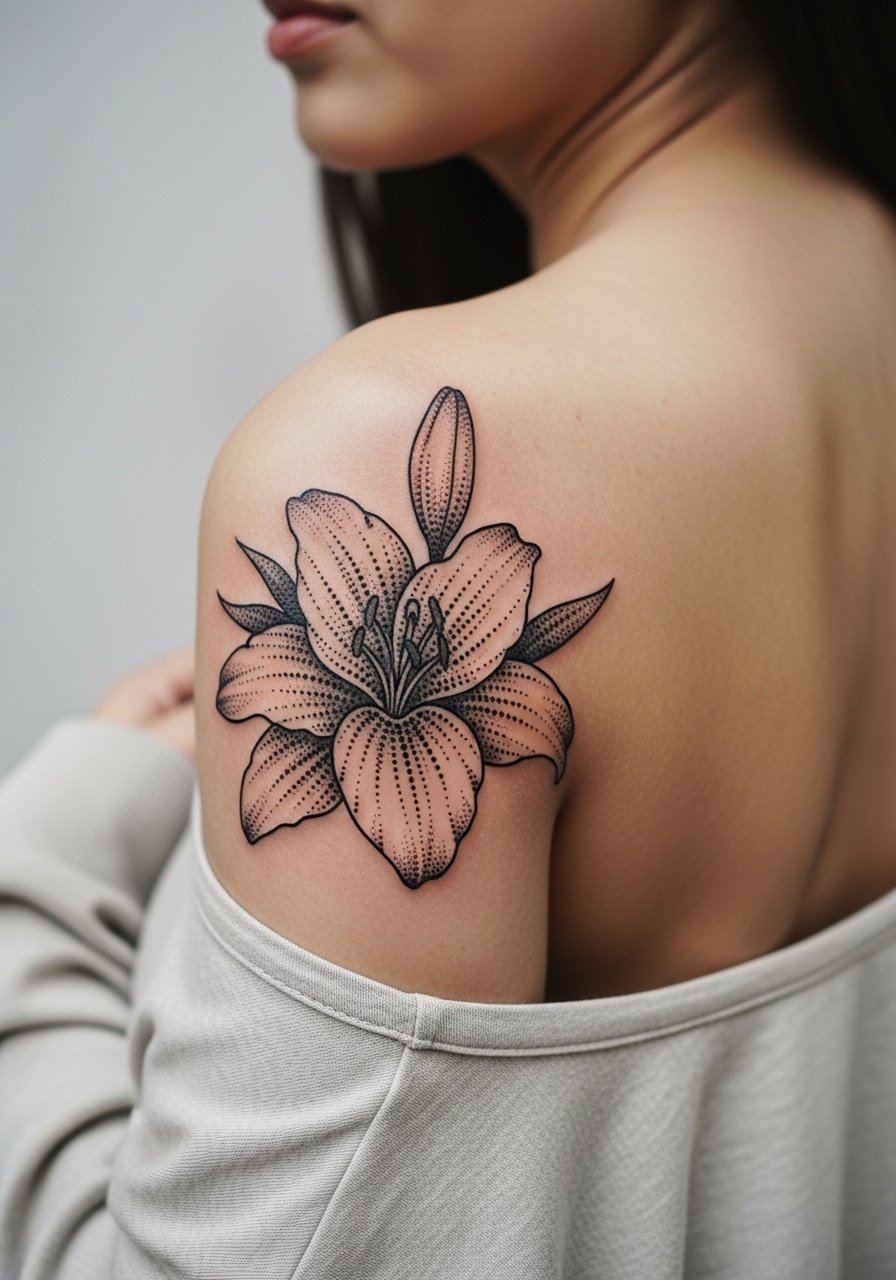
13. Back-of-Shoulder Lily with Stipple Gradient
The back of the shoulder allows a lily to curve with the shoulder blade and keep its dot gradation intact. Ask for a stipple gradient that fades outward so the center keeps focus. Sessions vary with size but often sit around ninety minutes. The mistake I see is packing detail too close to the shoulder seam where bras or straps rub. For session comfort, wear a loose button-back top you can pull aside without removing clothing. A loose drawstring linen pant keeps lower-body comfort during longer shoulder sessions.
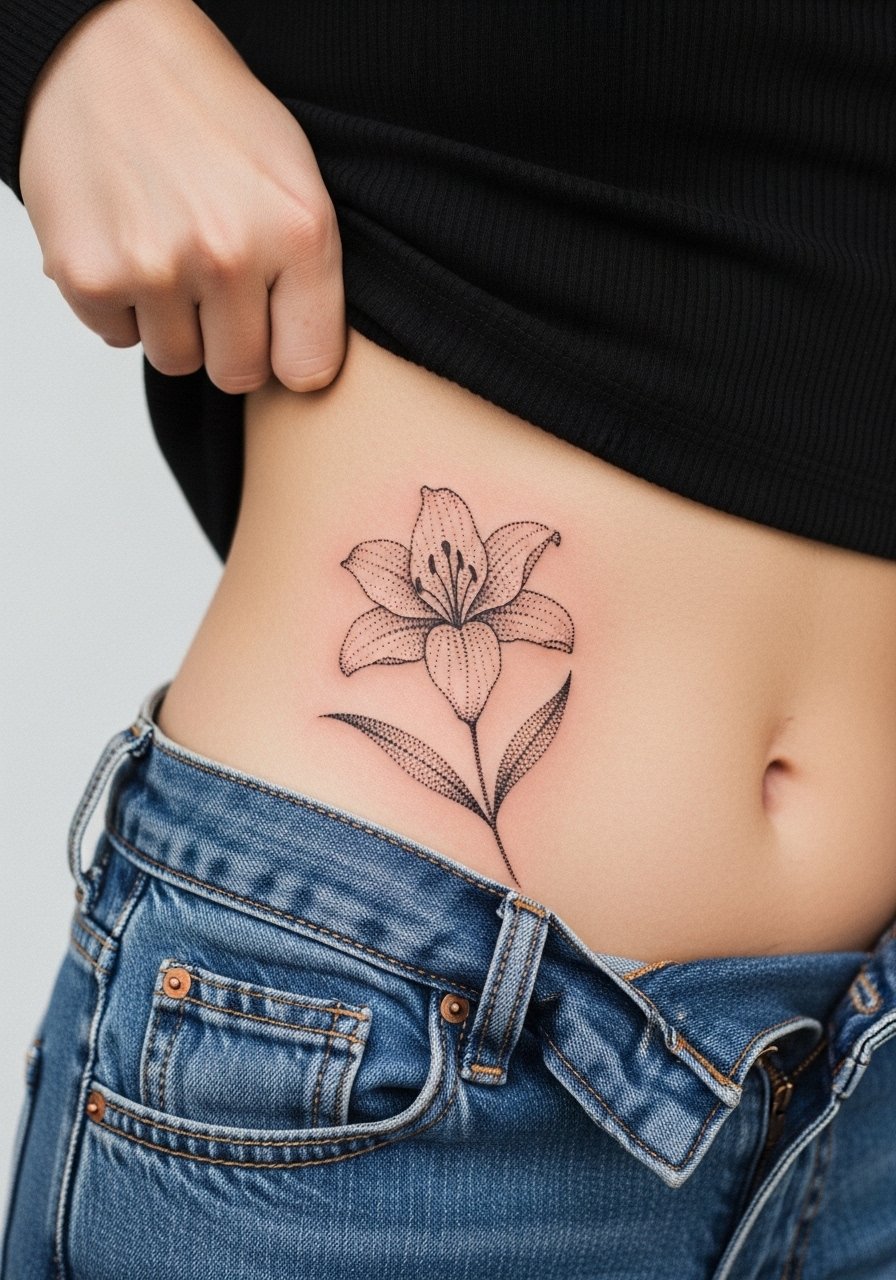
14. Hip Lily Accent with Negative Space
Hip tattoos need intentional negative space so dotwork does not blend under clothing pressure. Ask the artist to leave petal edges airy and avoid dense stippling where jeans sit. Session time is often under two hours, and the area can be quite tender. For session wear, plan on high-waisted bottoms you can lower slightly to expose only the hip without full undressing. For evenings out, a pair of high-waisted denim shorts shows the design while keeping the rest of the body covered.
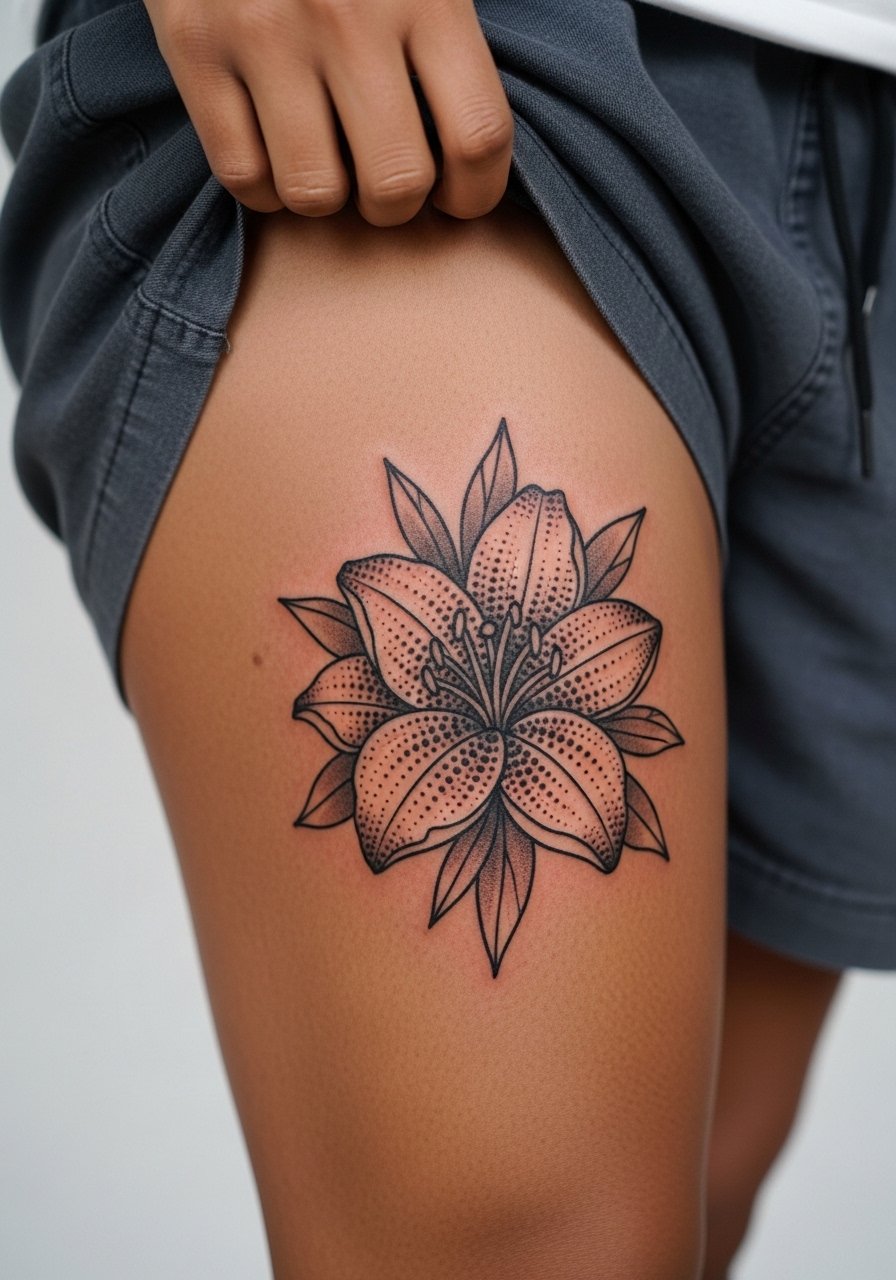
15. Side Thigh Lily with Layered Dots
Inner and side thigh placements handle dense dotwork better because of thicker tissue and reduced sun. Ask for layered stipple with a lighter outer halo so the lily maintains depth at year five. Sessions can be longer, often up to two hours for a medium composition. The mistake is putting extremely fine dots at the outer edges, where friction from clothing causes early loss. For the appointment wear, choose loose shorts so the artist can expose the area without discomfort and you leave with easy coverage.
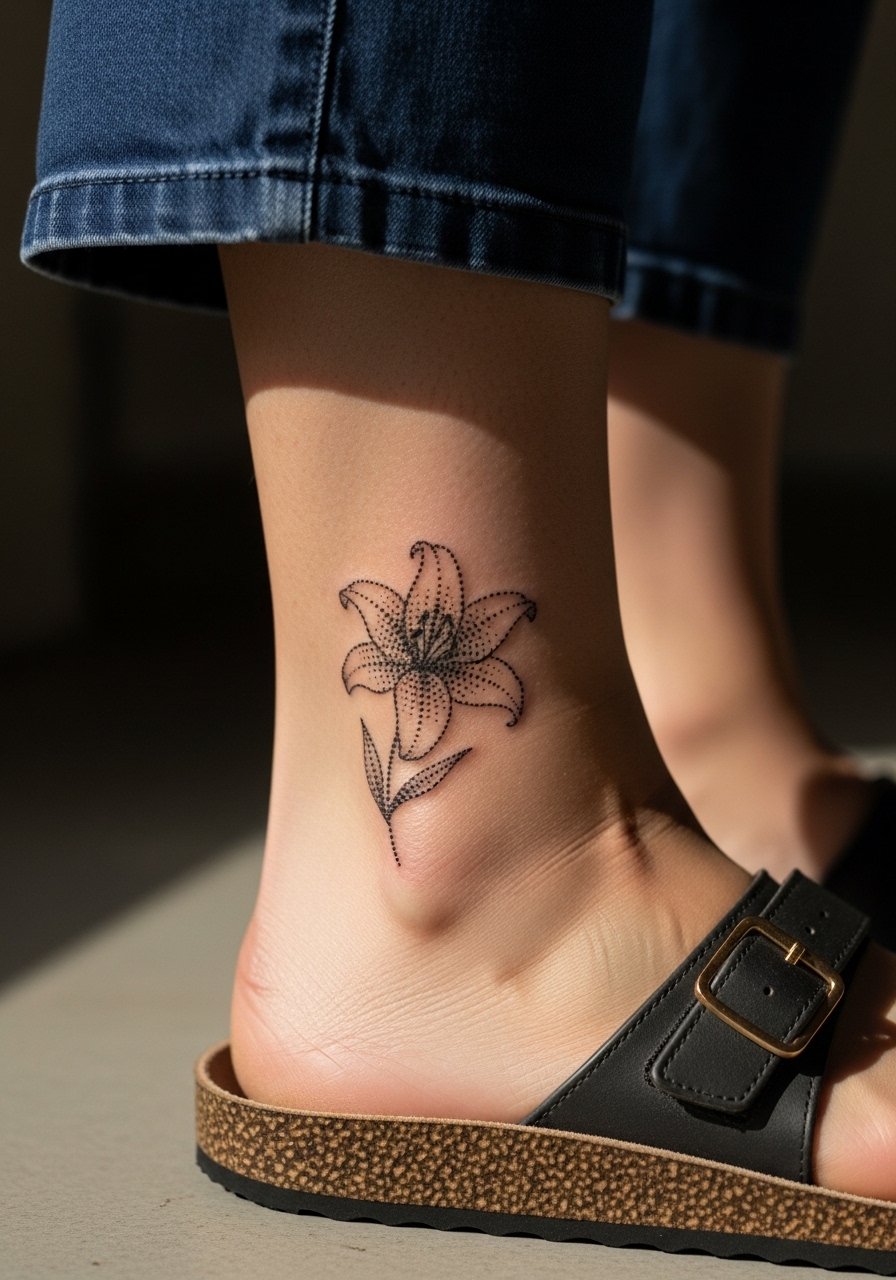
16. Tiny Ankle Lily Behind the Achilles
Placing a tiny lily close to the Achilles tendon increases friction risk from shoes. If you want this spot, have the artist use bolder anchor dots and minimal stipple near the heel. Sessions are quick and pain is variable. The common error is underestimating shoe friction and not planning footwear changes during healing. For showing it off post-heal, sandals that do not rub the area are best. Consider a pair of slip-on sandals that keep the ankle exposed.
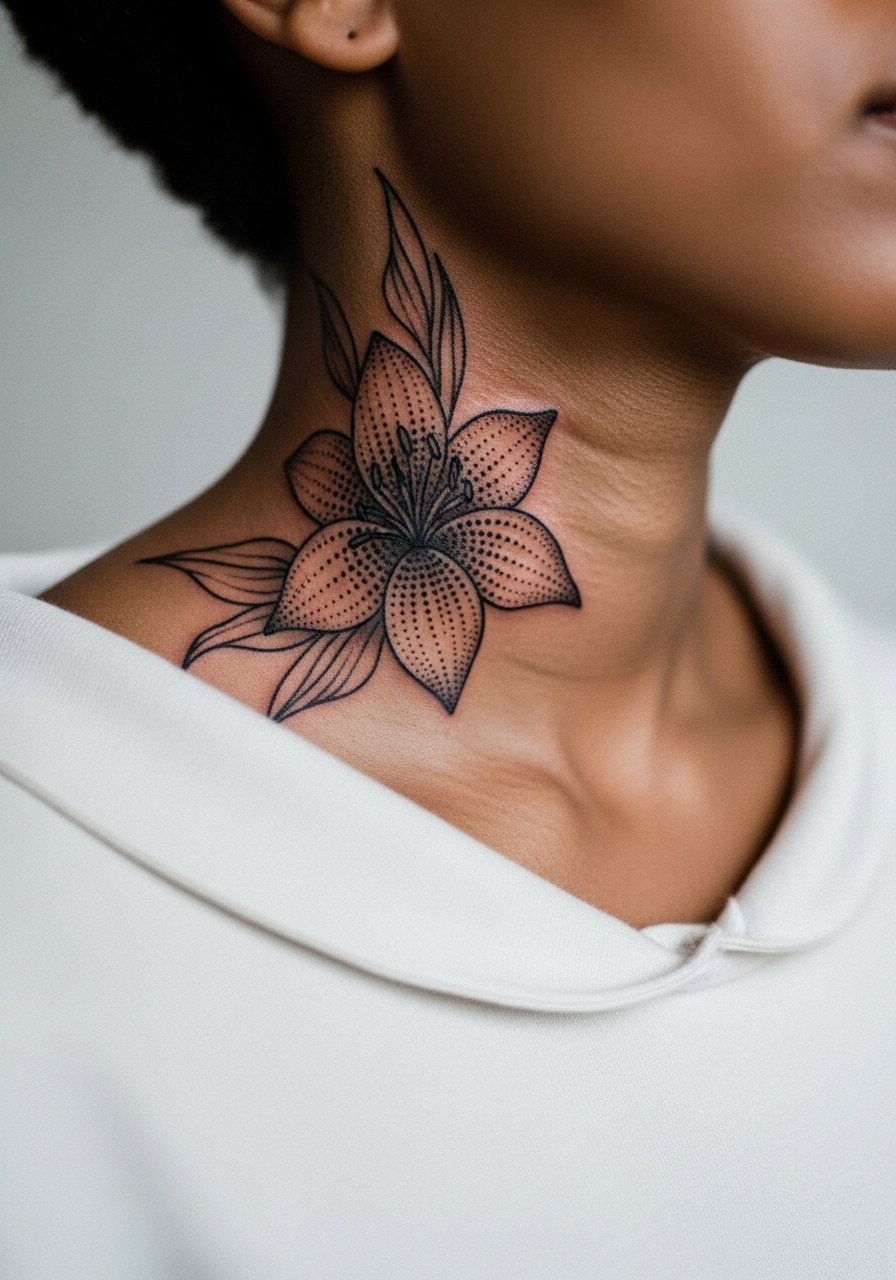
17. Neck Side Lily Under a Wide Collar
Side neck pieces demand clear conversation about visibility and career effect. If you go there, request stippling that follows skin grain and keep the design compact to avoid rapid blur. The area is sensitive and can take under an hour for a small lily. Some clients worry about hiring consequences and the debate is real. One camp says neck tattoos still affect job prospects. The other camp says acceptance is broadening and small discrete pieces are less of an issue. Think practically about how often your collar will cover the tattoo. For outfits, a wide-neck sweater pulled slightly to one side shows the design without full exposure.
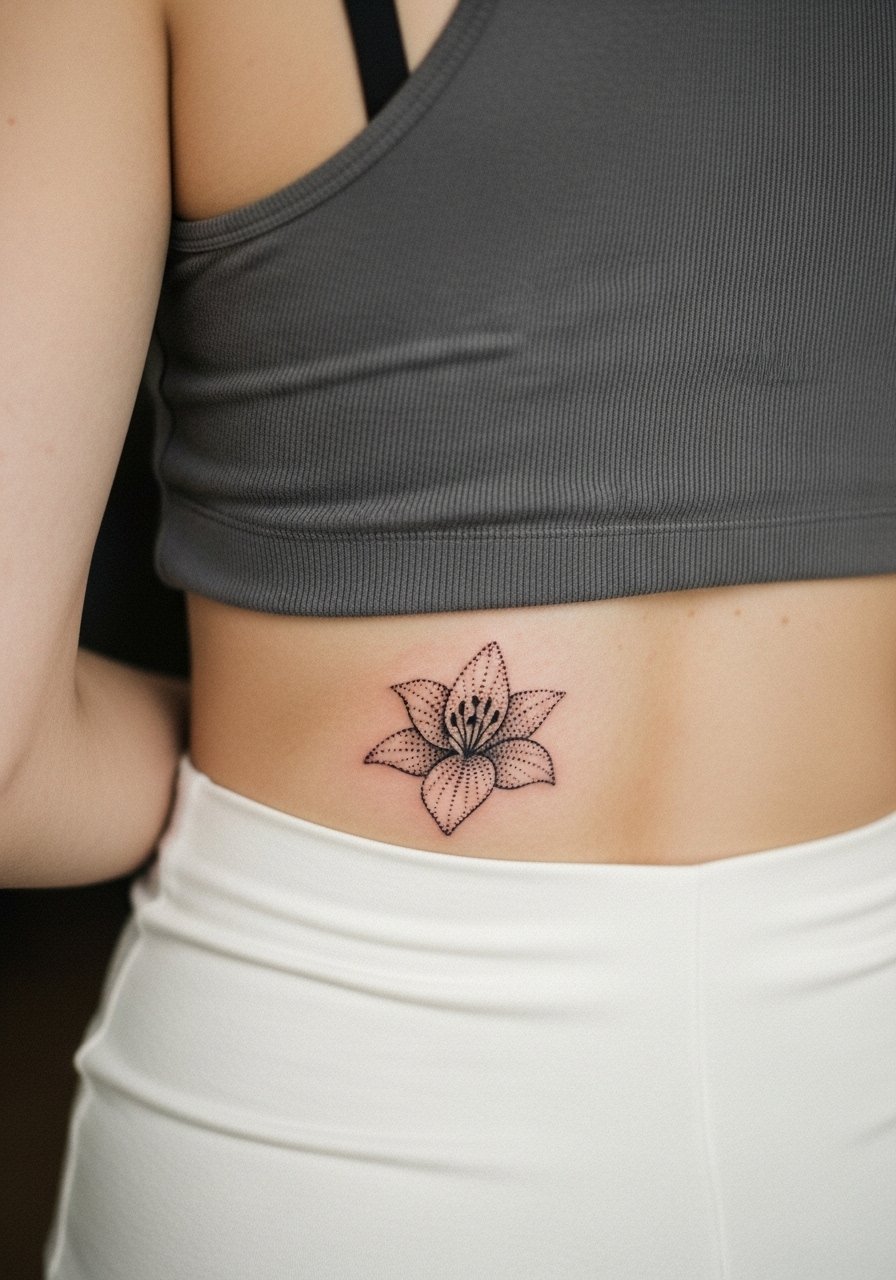
18. Small Back-Center Lily Above Lower Back
Lower back lilies need negative space so the dot texture does not get lost under waistbands. Ask for a compact composition centered above the lower back with airy stipple at the edges. Sessions are moderate in length and the area tolerates stippling well. A common mistake is putting dense shading where belts or waistbands press. For showing it off at swim season, high-waisted swim bottoms work best. Try a high-waisted swimsuit bottom that reveals the piece without exposing the full back.
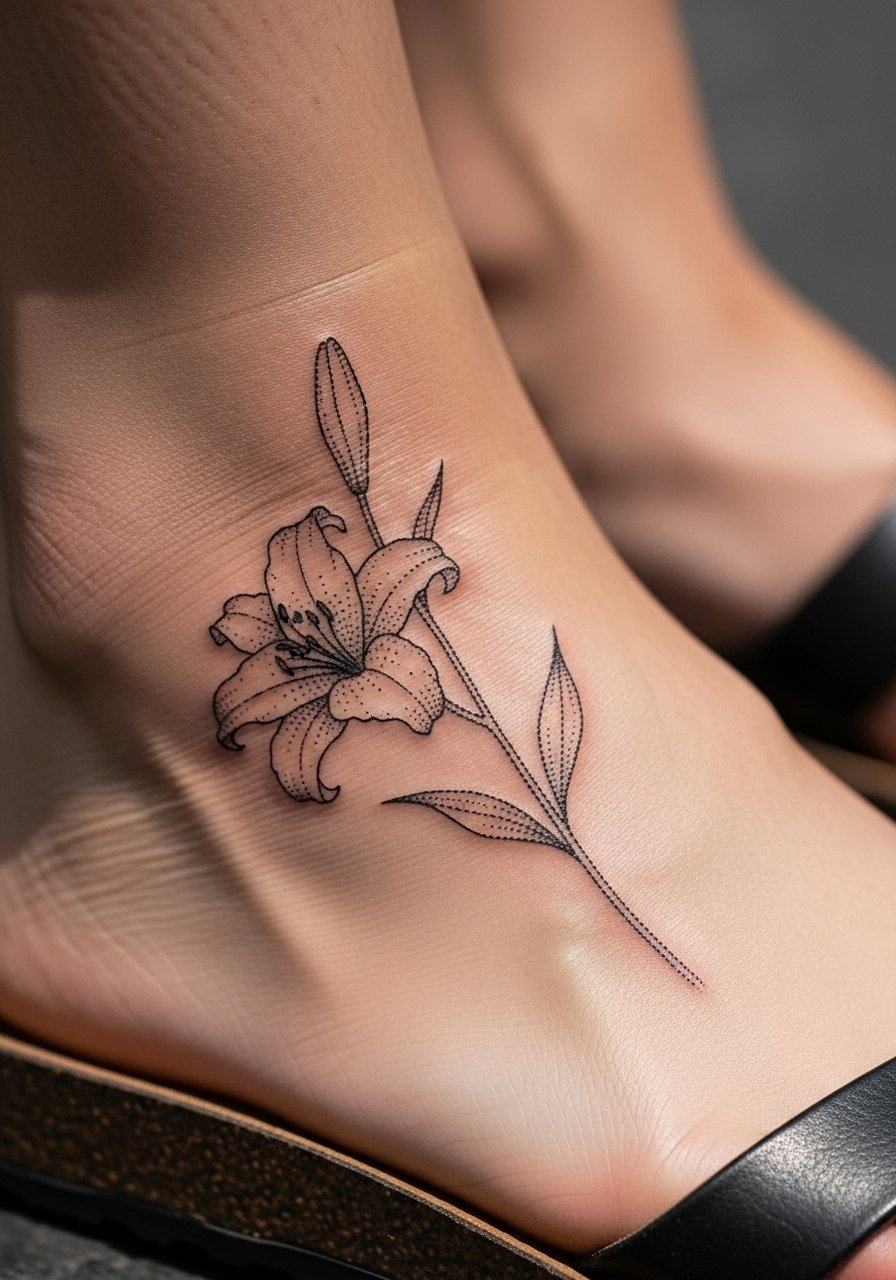
19. Tiny Foot Lily Near the Arch
Foot tattoos face quick fading because of constant contact and moisture. If you choose the arch or instep, request bolder anchor dots and avoid dense stippling along the sole. Sessions are brief but healing can be fussy. A common error is selecting extremely fine dot textures that the foot cannot hold. For footwear after healing, low-profile sandals or flats that do not rub the area help preserve detail. A simple pair of ballet flats keeps the arch visible and protected.
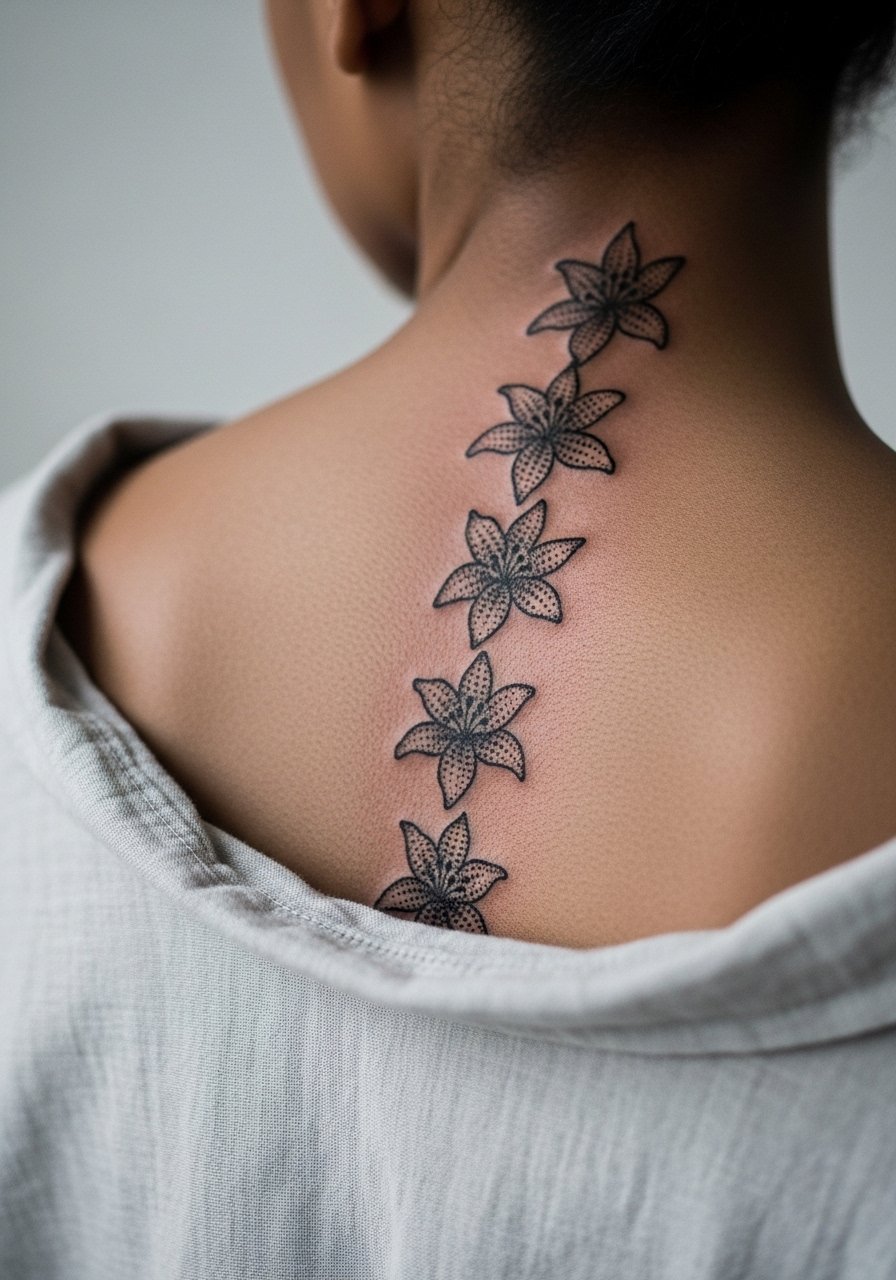
20. Cluster of Small Lilies Along the Spine
A stacked spine composition uses dot gradients to create motion up the back. Ask for decreased density near vertebrae and slightly larger gaps where the skin flexes most. Sessions are longer and can be split across visits. The common mistake is trying to cram many tiny lilies too close together, which makes the whole cluster blur. For session comfort, plan loose tops you can lift so the artist accesses the spine without full disrobing. A loose button-down shirt you can pull aside is discreet and effective.
21. Micro Realism Lily on the Lower Wrist Side
Micro realism in dotwork can create a tiny photographic feeling, but it requires space and contrast. If you want this at the lower wrist side, ask for slightly bolder outline anchors and open stipple fields so the tiny realism reads after healing. The area is exposed to frequent motion and water, so plan for touch-ups at year one. A common mistake is expecting full micro detail in an area that naturally wears fast. For jewelry pairing, dainty bracelets that sit above the piece avoid rubbing the tattoo. Consider a delicate beaded bracelet that complements but does not cover the lower wrist.
Frequently Asked Questions
Q: Will dotwork lilies need touch-ups sooner than traditional shading on exposed spots like hands and wrists?
A: In my experience, exposed spots like hands and wrists do need touch-ups earlier because friction and frequent washing break down dot fidelity. Ask your artist about slightly bolder anchor dots and plan a realistic touch-up at year one to keep the silhouette sharp.
Q: How should I describe dot density to the artist so the lily does not blur on the ribs?
A: Use concrete language in consultation. Say you want "lighter stipple at the petal tips, denser anchors at the stem, with visible negative space between clusters." If the artist hesitates, ask to see healed photos of rib work they have done.
Q: Are there outfit choices to avoid during the first two weeks of healing for ankle and foot lilies?
A: Avoid tight socks and closed shoes that rub the area during the first week. Pack loose sandals or slip-ons for the healing window. A pair of slip-on sandals that do not press on the tattoo helps keep friction low.
Q: Can dotwork replicate small color transitions or is black-and-grey the safer route?
A: Dotwork can suggest tonal shifts but black-and-grey stippling is the safer choice for longevity. Color in dense dot fields often fades unevenly, so for fine lilies I recommend black-and-grey stipple if you want the detail to last.
Q: Should I expect more pain with stipple shading on the inner bicep than with linework?
A: Stipple shading can feel different because the artist typically works the same area repeatedly. On the inner bicep the sensation is moderate and manageable, but be prepared for longer cumulative sensation if the piece uses heavy stippling.