
Fine line North Star pieces are everywhere on mood boards right now, and a lot of them read delicate and ethereal at first glance. The reality is that a tiny star needs precise spacing and the right placement to stay crisp for years. Below are 21 delicate North Star tattoo ideas, each with practical notes on aging, consultation tips, session wear, and how to style the finished piece so it reads like it belongs to you.
1. Classic Single North Star on Inner Wrist
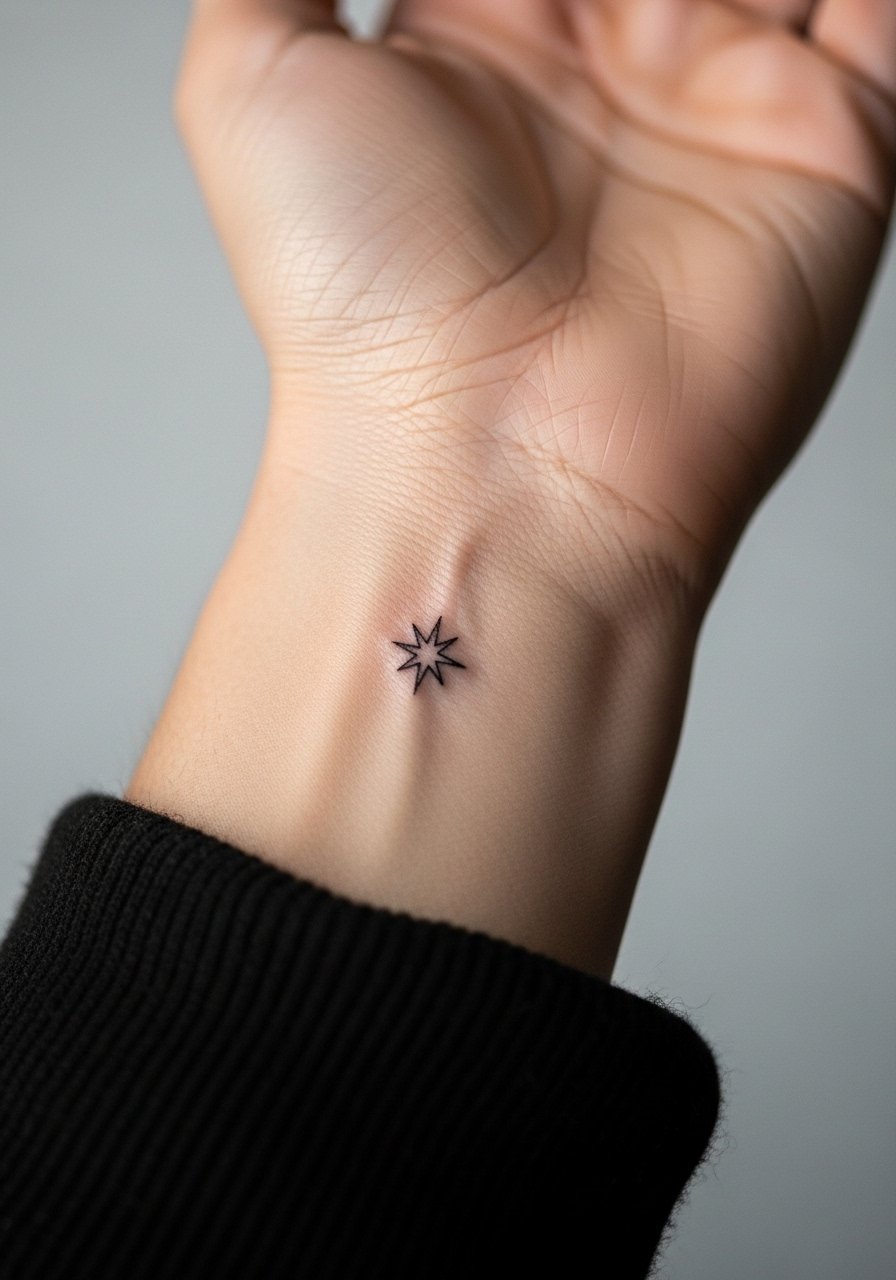
I open with the inner wrist because it is the go-to for delicate North Star work. Fair warning, the wrist is a high-motion area and fine line can soften faster than on the forearm. For a result that holds, ask your artist for slightly heavier linework than what you see in tiny Instagram snaps. The session feels quick, roughly 20 to 30 minutes, and the pain is usually low to moderate. Common mistakes are going too small and expecting crisp points after two years. To show this off, pair it with a thin chain bracelet or a minimalist watch so the star sits between jewelry without competing.
2. Tiny North Star Behind the Ear
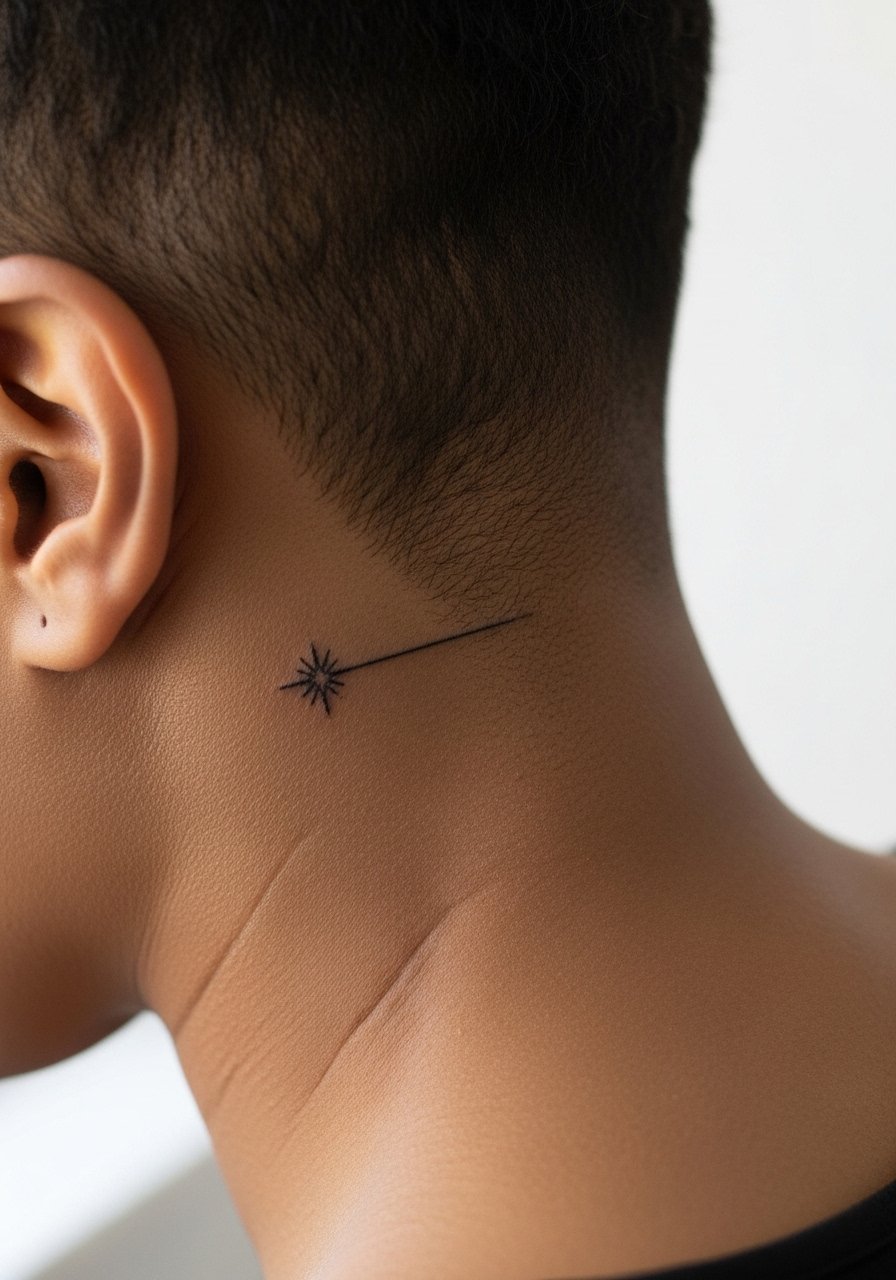
This placement reads discreet and personal. The behind-the-ear area settles well if the artist avoids ultra-shallow lines. Expect a short session under 30 minutes and a stinging pain that is brief. A common error is requesting a hairline-thin star that vanishes as it heals. During consult, ask to preview the stencil so you can judge scale against your hairline. For after-session wear, bring a wide-neck top you can pull slightly aside to give the artist clean access. This site is low friction, so touch-ups are usually only needed around year three.
3. Micro Constellation Along the Collarbone
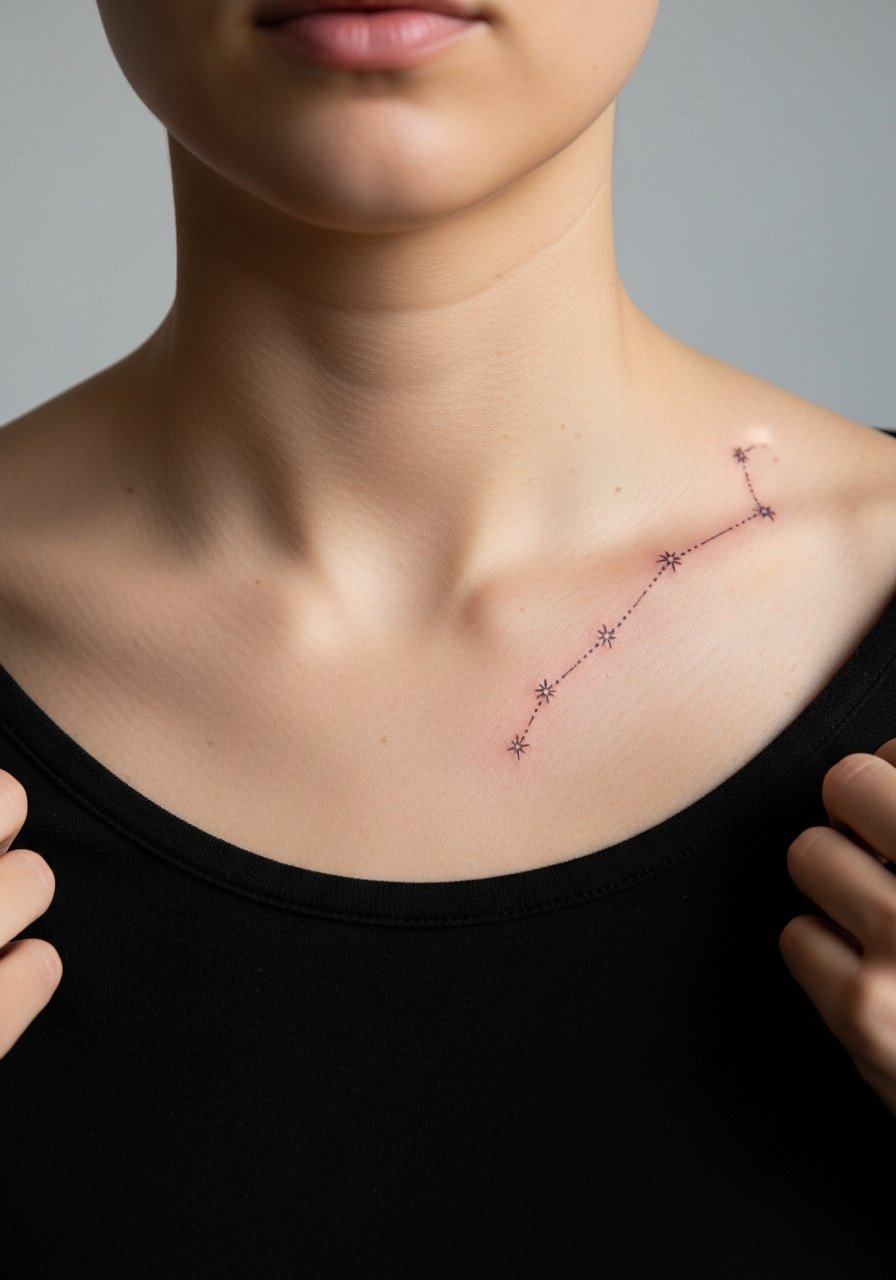
A tiny constellation across the collarbone reads like jewelry. The upper chest moves less than the inner wrist, so fine detail ages a bit better here. The session runs 30 to 60 minutes depending on the number of stars. Be specific in consultation about spacing between stars and the exact curvature you want along the bone. A common mistake is packing stars too closely. For outfits, an open-neck linen blouse or a thin chain pendant highlights the line without covering it. If you work in a conservative office, remember this area can peek out depending on collars.
4. North Star + Tiny Crescent on the Ribcage
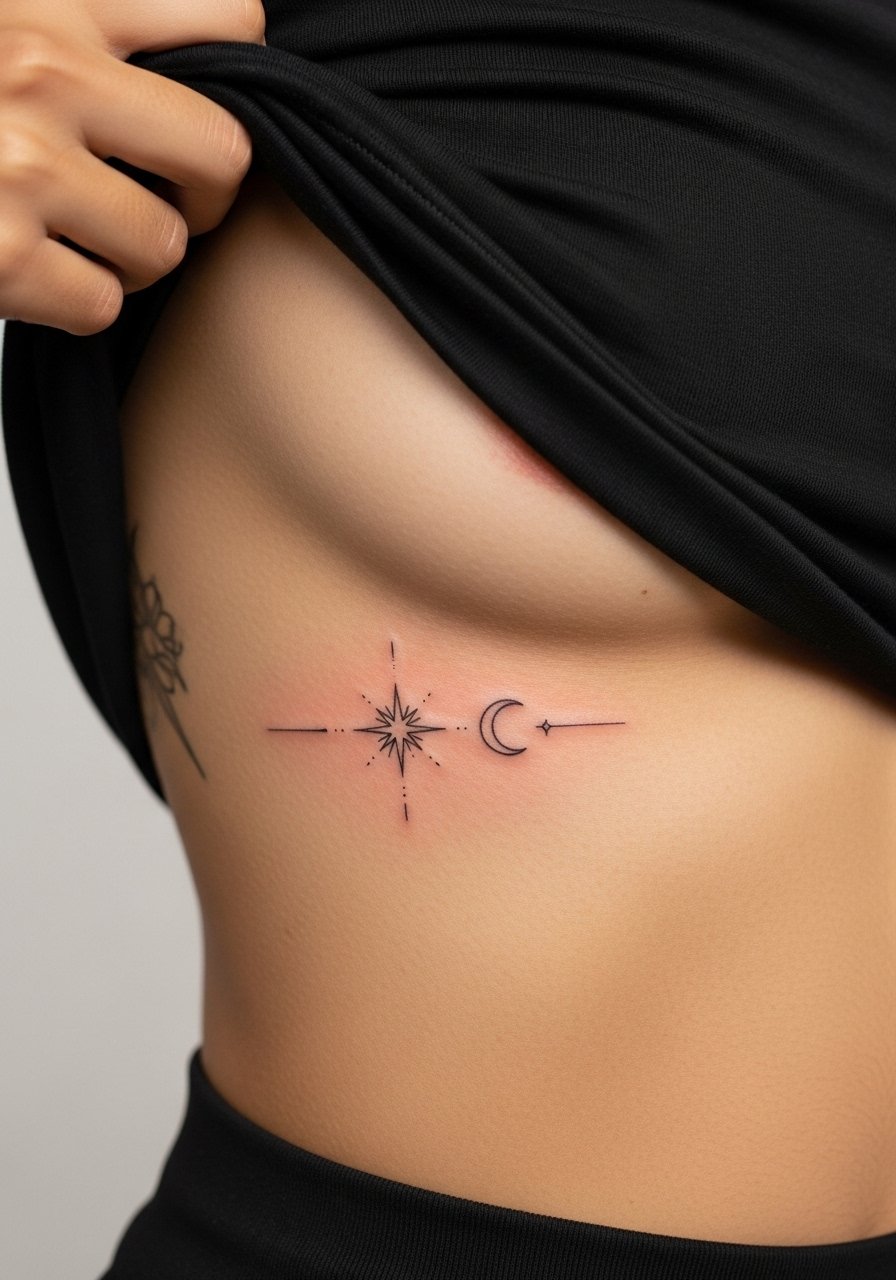
Fair warning, ribs are a high-pain zone, usually 7 out of 10 on most scales. The combination of fine line star and crescent can be gorgeous, but artists split on whether ribs are right for ultra-fine work. One camp says the skin stretch and movement blur fine lines within two years. The other camp argues that with precise needle depth and spacing, fine line settles fine on ribs. Ask the artist where they stand and request a slightly bolder outline if they lean conservative. Sessions can take 45 to 90 minutes. Wear a cropped top for easy access. Expect touch-ups at year two to three for very fine points.
5. Tiny North Star on the Side of a Finger
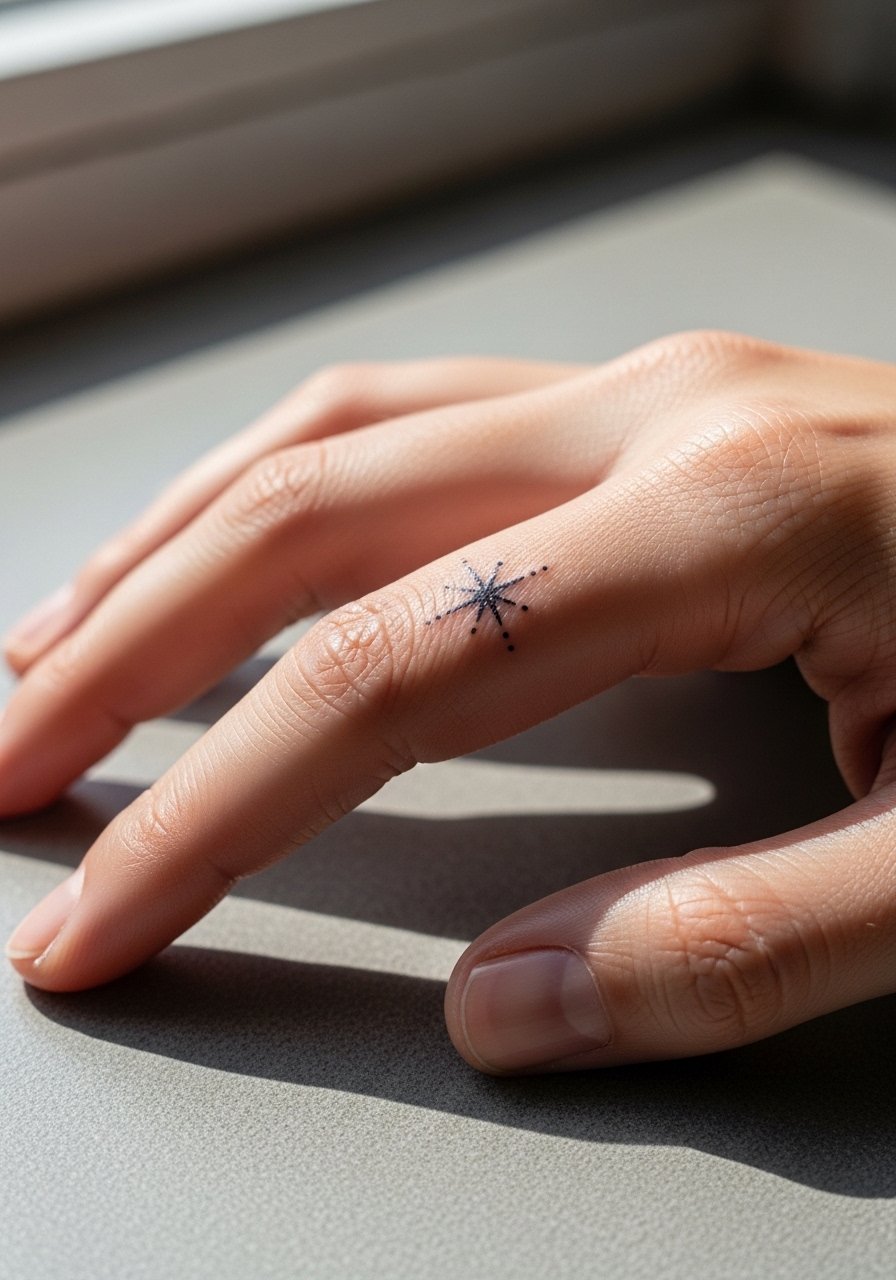
Finger work is notoriously tricky. The skin regenerates quickly and friction from daily use wears fine points down. If you want a finger star, plan for touch-ups as a normal part of ownership, often every 1 to 3 years. The session is brief and the pain is sharp but short. Tell your artist you prefer slightly thicker linework and higher contrast so the star survives hand-washing and rings. Avoid placing the star on the very tip of the finger where blowout risk is highest. For showing it off, try simple stacking rings that sit next to, not over, the ink.
6. Tiny North Star on the Outer Ankle
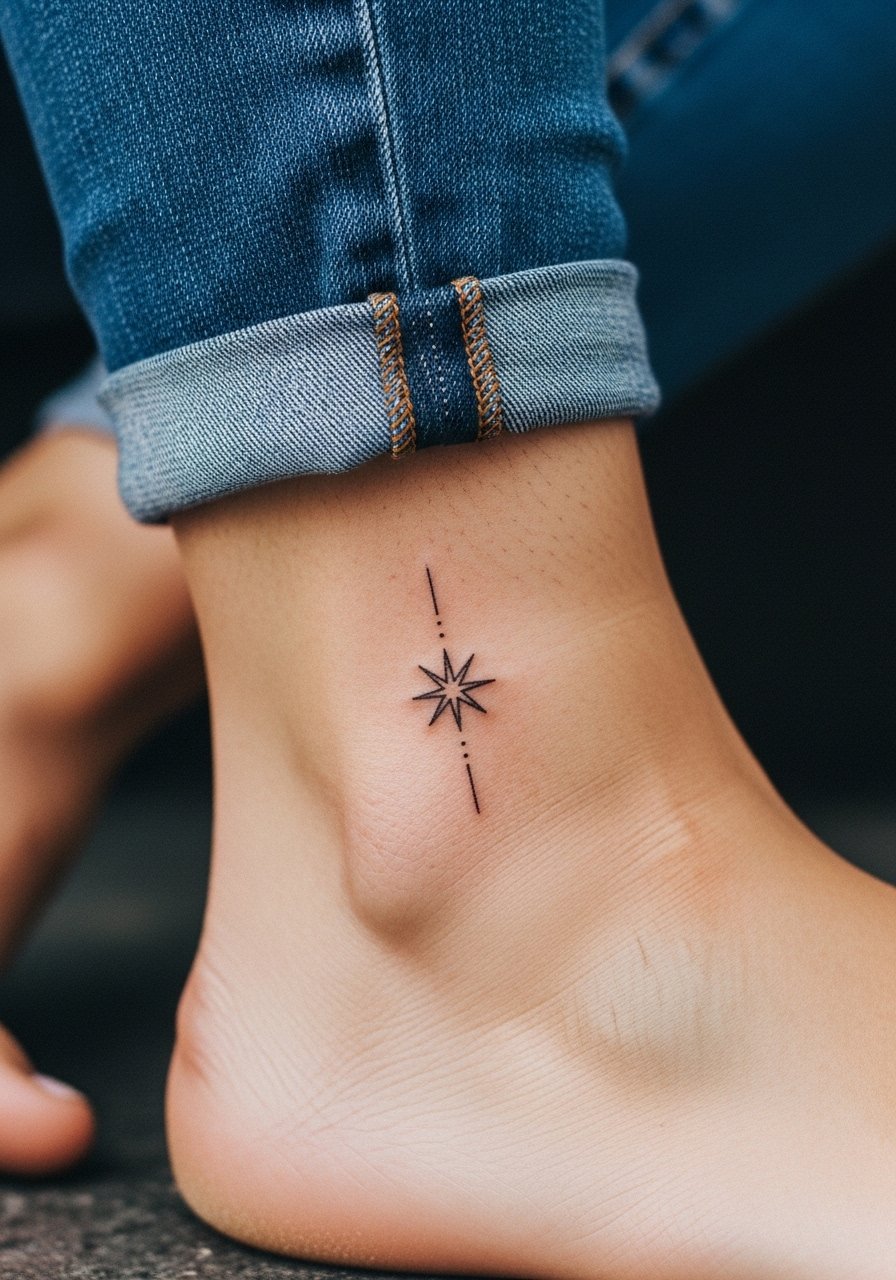
The ankle is a sweet spot for a delicate star that can be both visible and concealable. It ages reasonably provided the star is not ultra-tiny and not placed where shoes rub constantly. Sessions are short and discomfort is low to moderate. The usual mistake is placing the star at the exact point where socks rub. For show-off pairing, wear low-cut sandals or rolled jeans so the piece sits in the visual gap. Expect a touch-up in a couple of years if you live in humid climates with a lot of barefoot activity.
Studio Day Picks
The wrist and ankle pieces above have different prep needs than chest work, so a few targeted items make the session and the first healing week easier.
-
Stencil transfer paper kit. Lets you preview scale and placement on the skin, which is essential for tiny North Star placements like fingers and wrists.
-
Topical numbing cream. Applied per instructions before a ribcage or sternum session, it reduces the edge of pain for those more sensitive spots.
-
Thin protective film roll. Helpful for ankle and finger work where friction from socks and shoes can irritate during the first days.
-
Fragrance-free gentle body wash. A mild wash cleans healing fine line tattoos without stripping moisture or irritating the area.
-
Aquaphor healing ointment. A thin layer in the initial days protects delicate linework on wrists and ankles while the skin seals.
7. Tiny North Star on the Side of the Neck
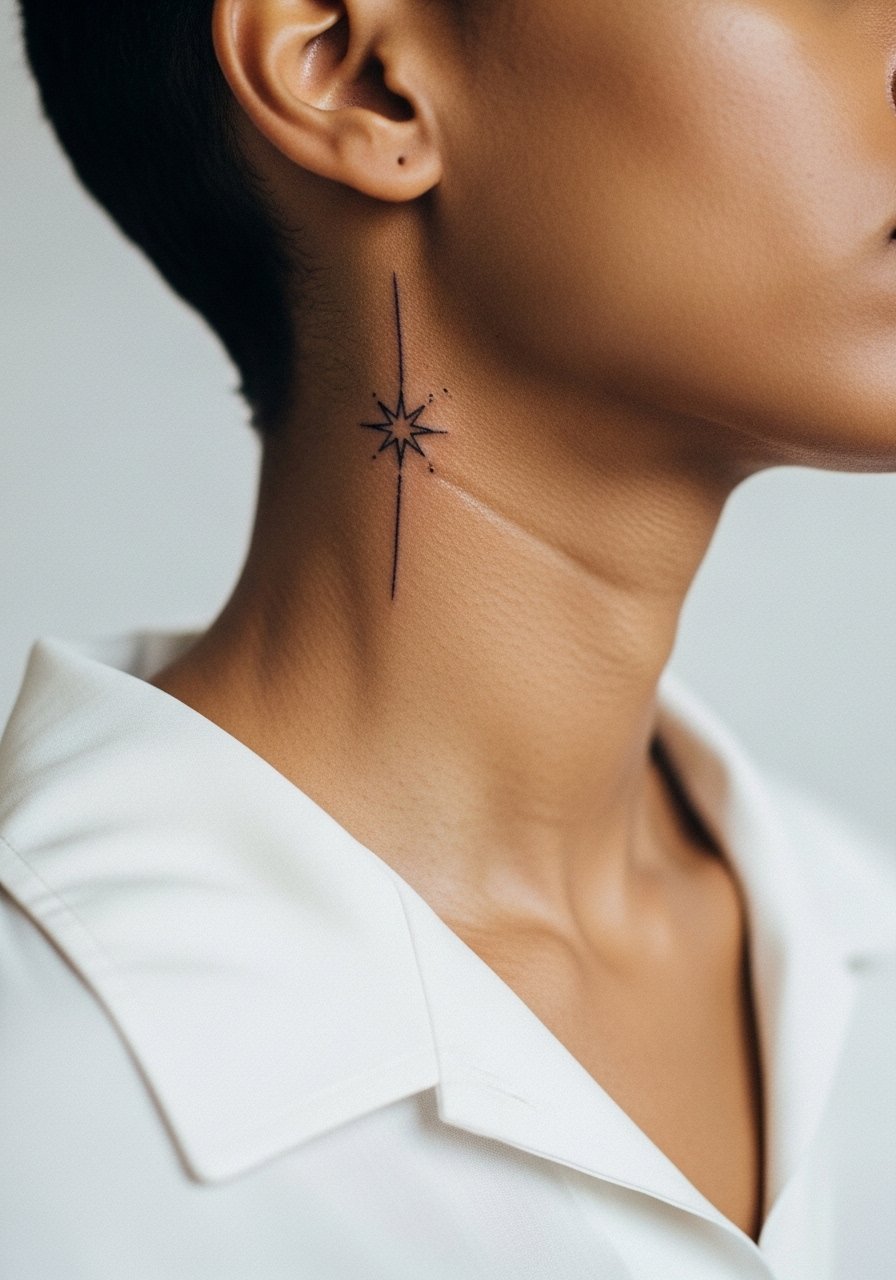
Neck work reads intentional and delicate when executed with restraint. The side neck holds detail fairly well because the skin does not see constant abrasion, though sun exposure can fade lines faster. Expect moderate pain and sessions under an hour. Common mistakes are asking for hairline lines that the sun will fade. For photos and daily wear, a thin chain necklace that sits above the star frames it without covering it. If your workplace is conservative, consider how often the star will be visible.
8. Micro North Star Cluster on the Upper Back
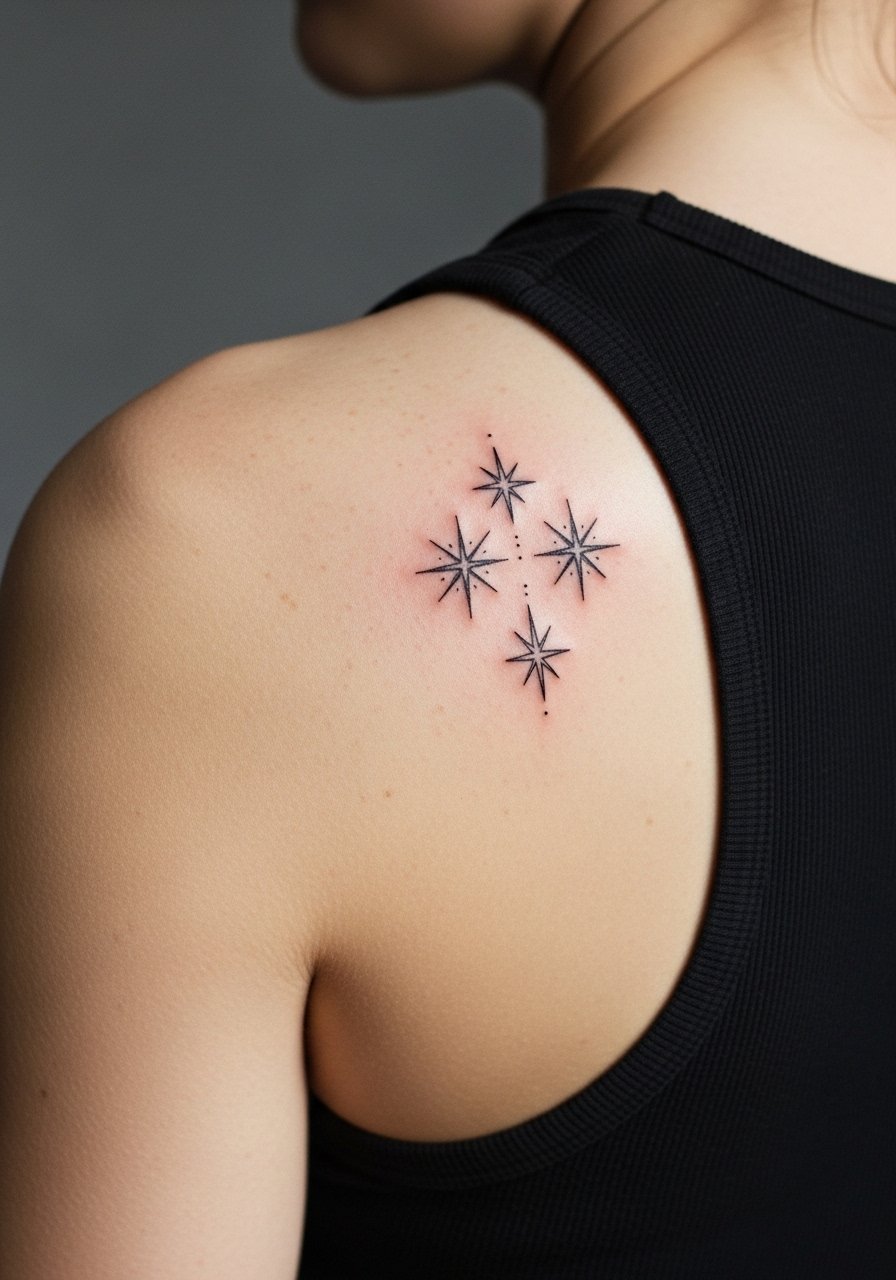
Upper back placement gives room for spacing so tiny stars do not merge. I have seen micro clusters last longer here than on wrists or fingers because movement is less constant. Sessions can range from 30 to 90 minutes based on cluster size. Tell your artist you want breathing space between stars and avoid tight groupings that age into a blur. For showing off, open-backed tops or a strappy tank work well. The area is easy to hide under work clothes when needed.
9. Single North Star on the Collarbone Knot
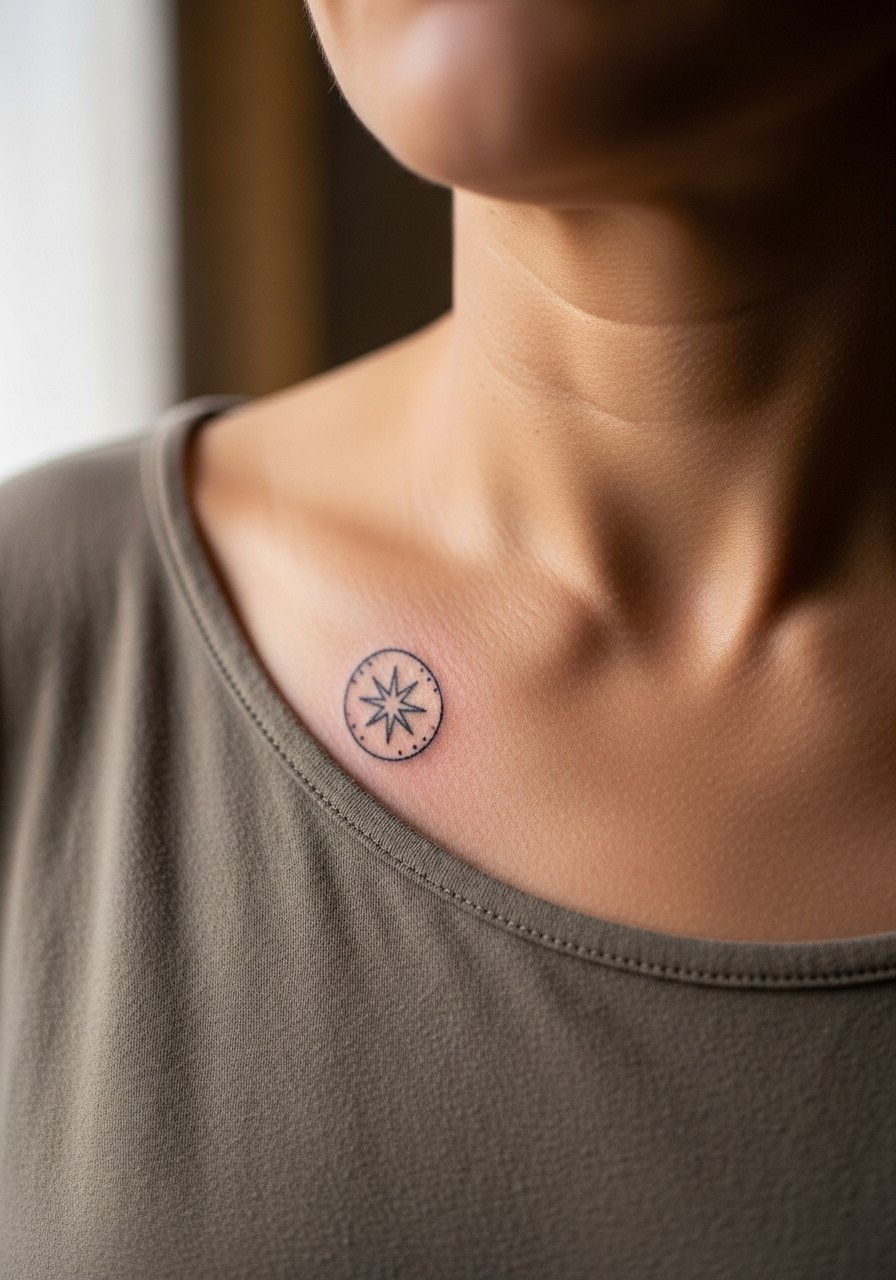
A single star at the collarbone knot sits where jewelry often rests. The skin here is relatively stable, so lines can retain sharpness for longer. The session is short and pain is low to moderate. The mistake I see most is asking for micro detail that disappears under necklace chains. For showing off, try a thin chain pendant that sits above rather than over the ink. If you plan to sunbathe frequently, protect the area because UV is a fast ink killer.
10. Tiny North Star Inside the Ankle Crease
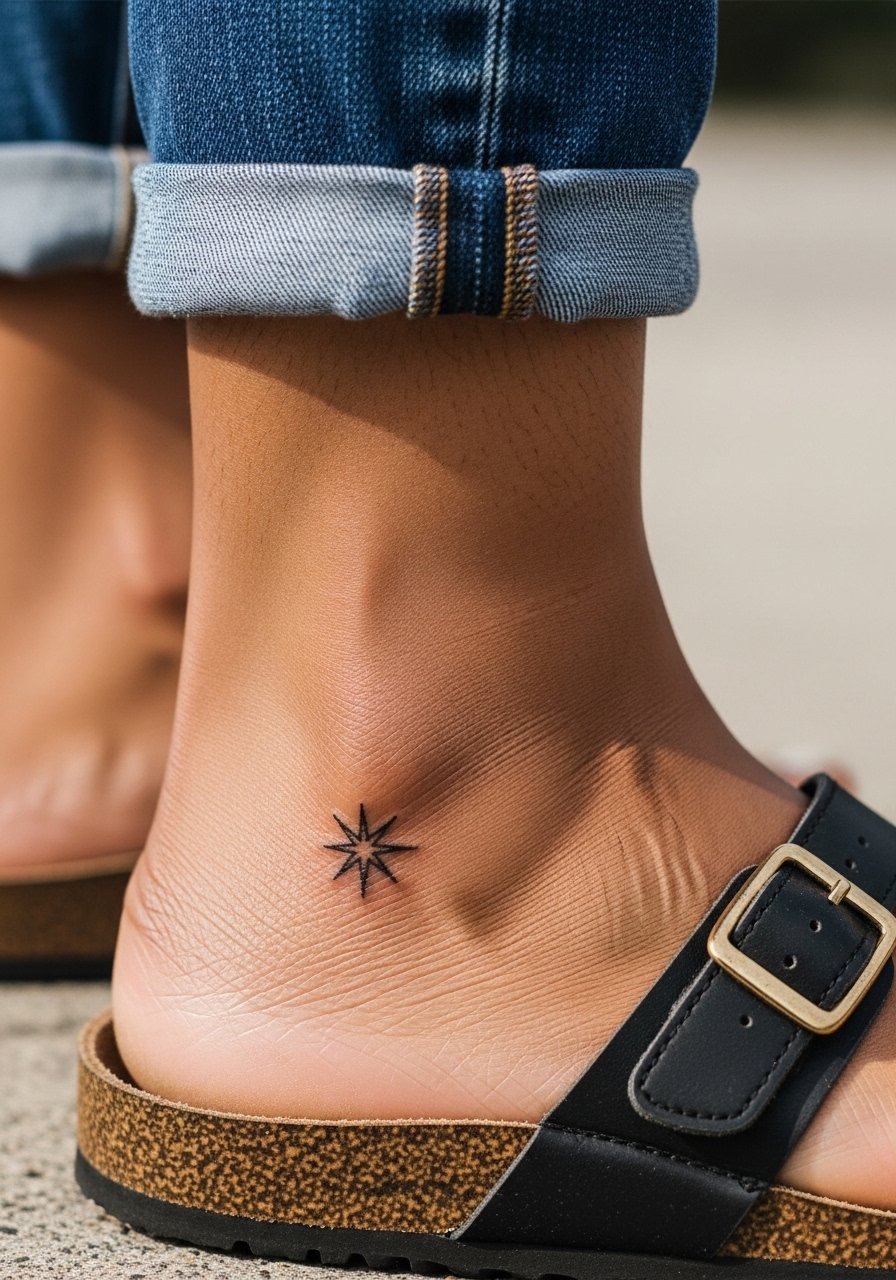
Inside the ankle crease hides beautifully but can rub against shoes. The key is placement slightly above the area where socks or shoes sit. Sessions are brief and pain ranges from low to moderate. A frequent error is placing the design too low where footwear friction erodes the ink. For footwear pairing, slip into low-profile sandals or cropped trousers that frame the design. If you expect a lot of running or hiking, anticipate a touch-up sooner rather than later.
11. Tiny North Star on the Side of the Ribcage
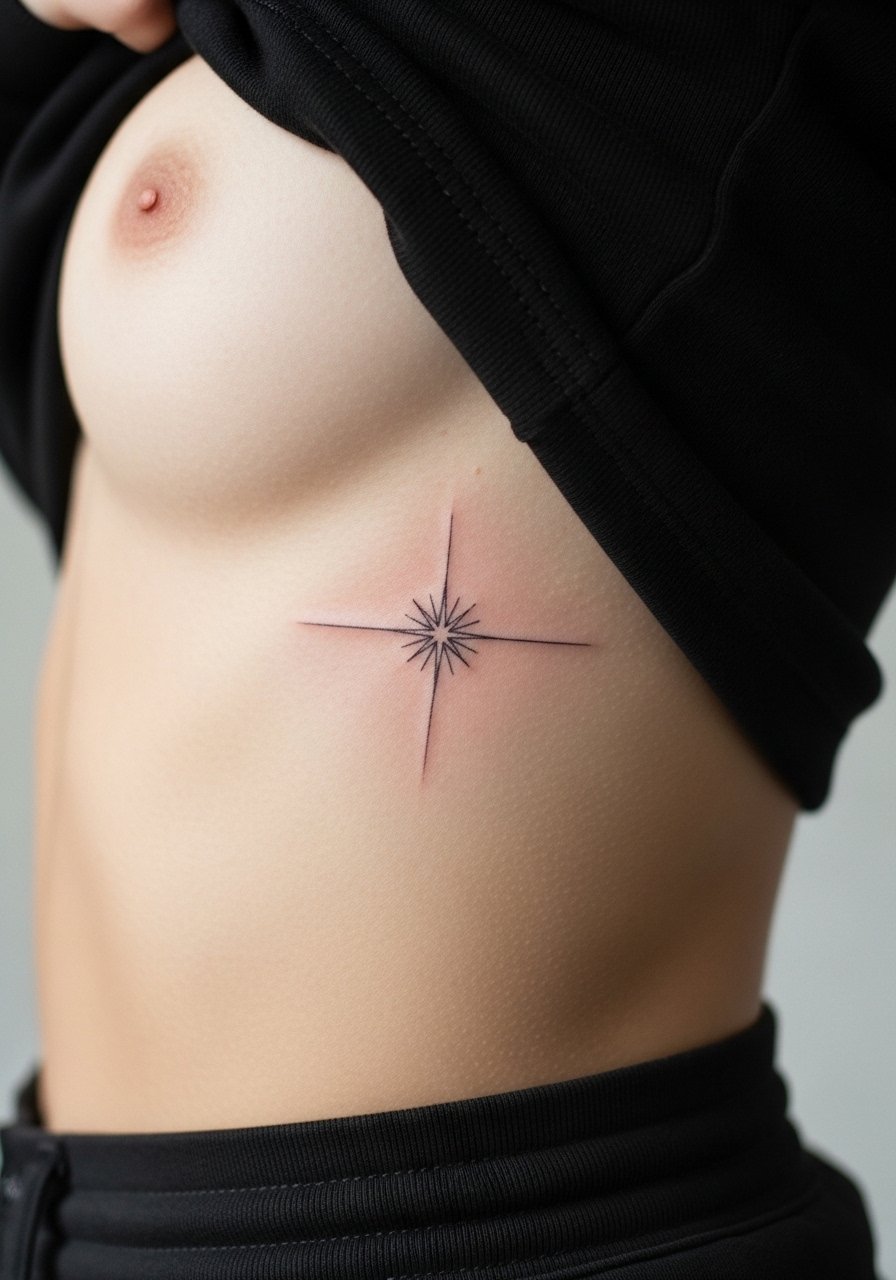
Rib placement is romantic but difficult. Pain is high and healing can be tricky in this moving zone. As I mentioned earlier, artists split on whether fine line fares well on ribs. If you choose this, ask for more spacing and a slightly bolder outline to compensate for stretch. The session is usually longer and you should wear a cropped top that gives the artist room. A common mistake is asking for densely packed detail. Expect the possibility of a touch-up at year two. This area often looks great under low-cut tops for evenings out.
12. North Star Accent Above the Nape
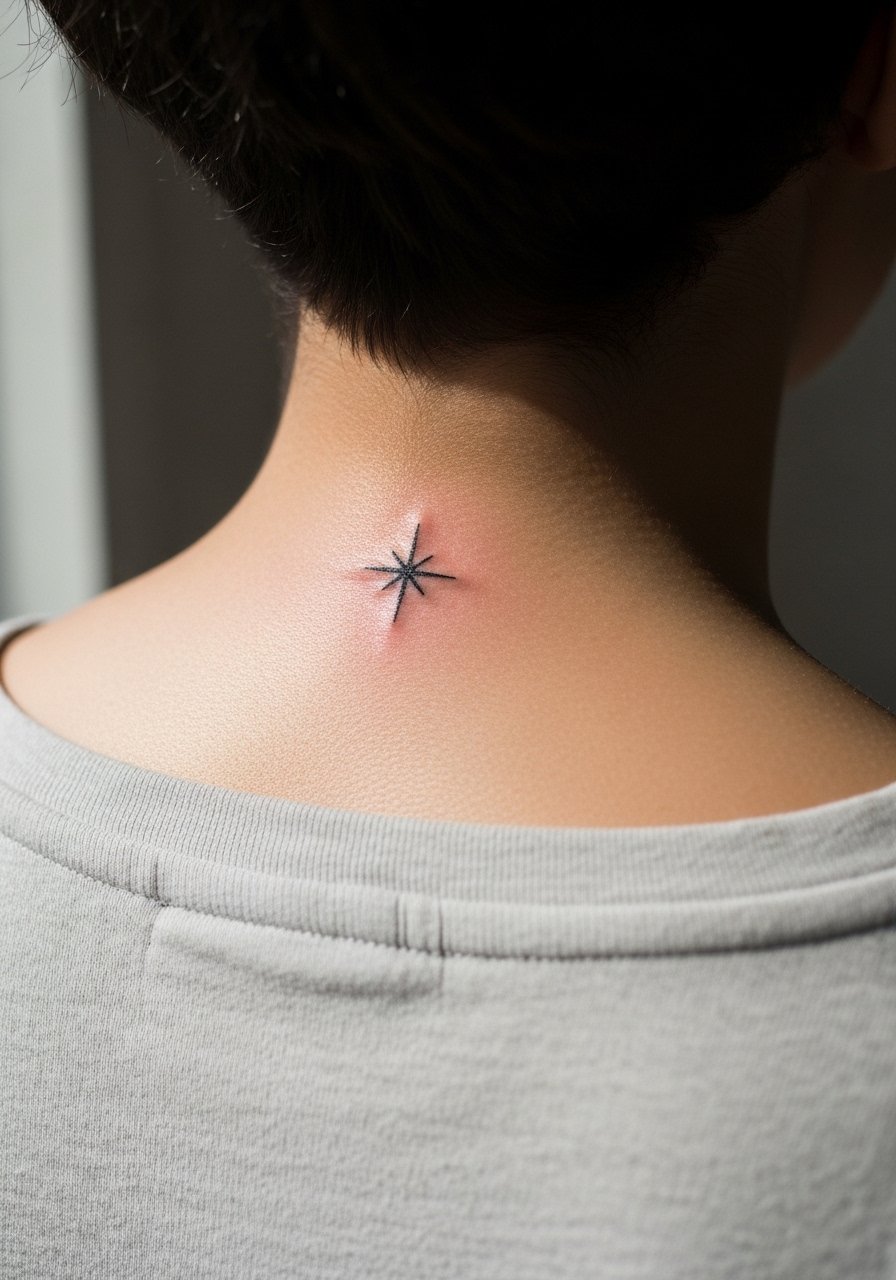
A nape star is subtle and can be hidden by hair or shown with an updo. The skin here is stable and lines can last if the initial placement avoids direct friction from collars. Sessions are short and pain is moderate. The common error is placing the star where shirt collars rub. For styling, an updo or a low ponytail clip will let it peek out in portraits. If you have long hair, think about how often you want the star visible.
13. Micro North Star on the Inner Forearm
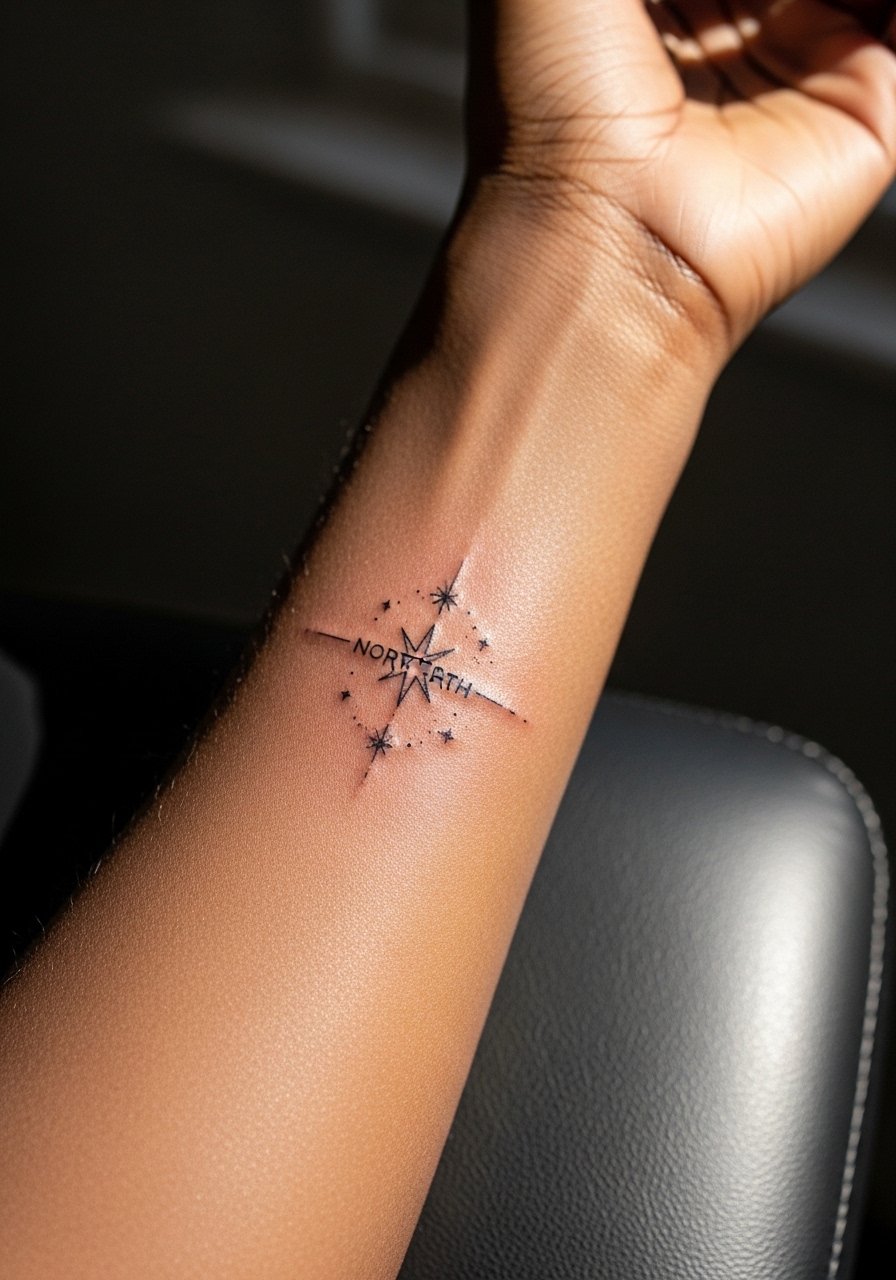
The inner forearm is forgiving for fine detail. I have seen inner forearm lines keep their shape much longer than wrist or finger work because abrasion is lower. Sessions run 30 minutes to an hour depending on size. A common mistake is asking for hairline dots that merge later. During consult, specify exact line weight. To show it off casually, roll up a sleeve or pick a lightweight linen shirt. The area is easy to photograph and ages predictably.
14. Tiny North Star Inside the Elbow Crease
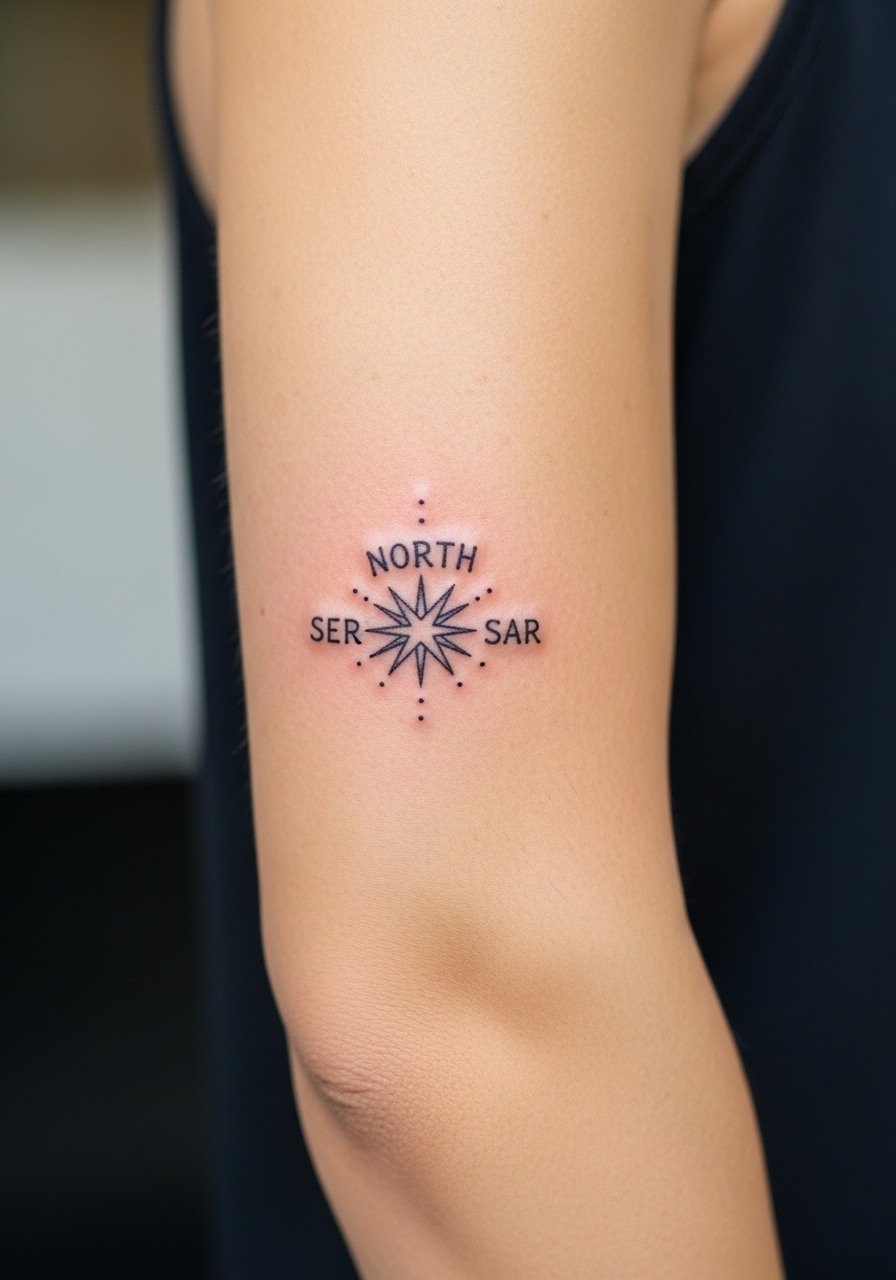
Inside the elbow is overlooked but visually striking when you move your arm. This area experiences constant folding, so fine detail can blur faster. The session is short but uncomfortable for some people. Ask your artist to test a slightly bolder point so the star keeps its shape through movement. A tip for the session is to wear a sleeveless top so the artist can access the area without bunching fabric. Expect a touch-up timeline closer to two years for very fine points.
15. Minimalist North Star on the Back of the Hand
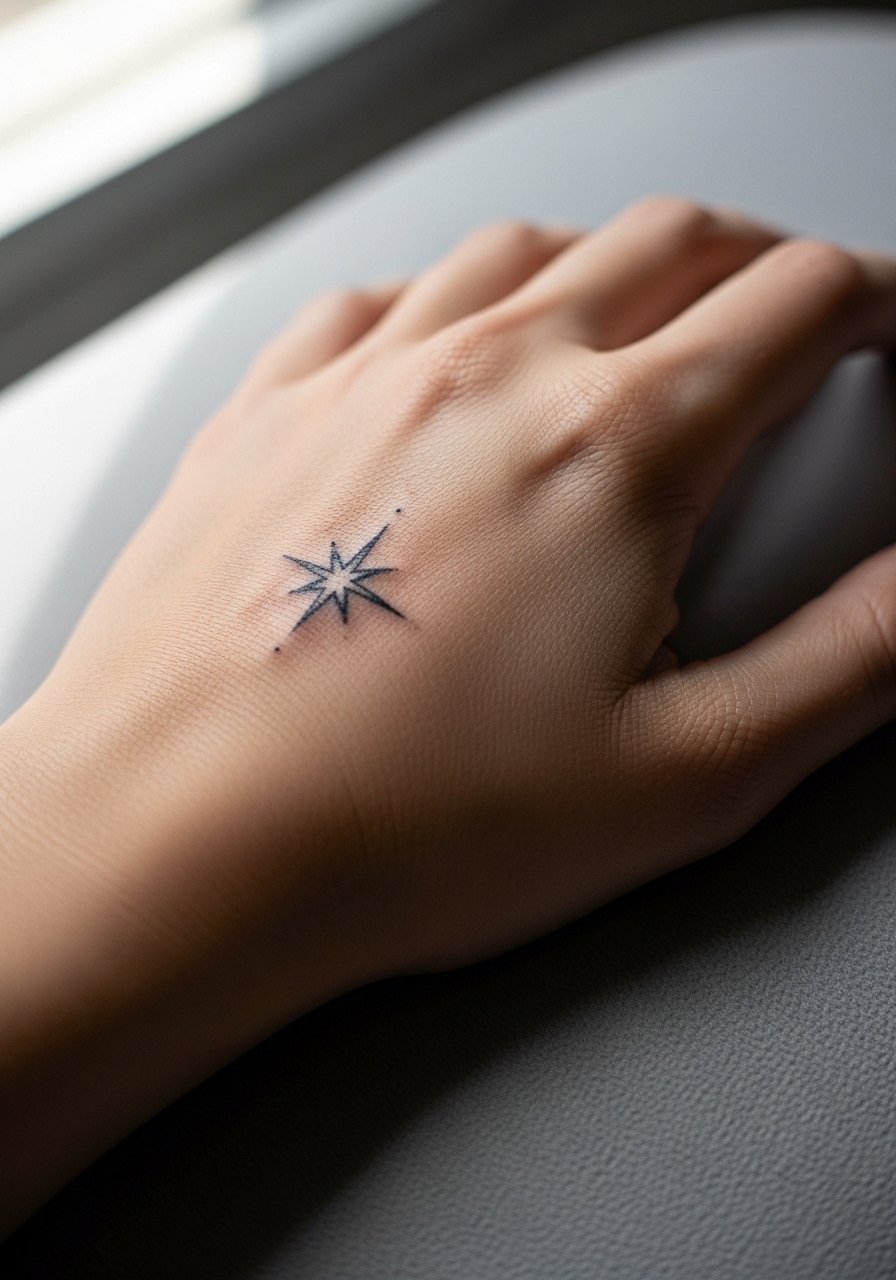
Hand tattoos are visible and age fast because of constant washing and sunlight. If you want a back-of-hand star, accept that touch-ups will be part of ownership. Sessions are quick and discomfort is moderate. The usual mistake is asking for ultra-micro detail that the skin cannot hold. For show-off styling, wear a simple ring that sits on the finger so attention balances between jewelry and ink. Also consider workplace implications, as hand tattoos remain stigmatized in some industries.
16. Tiny North Star on the Hip
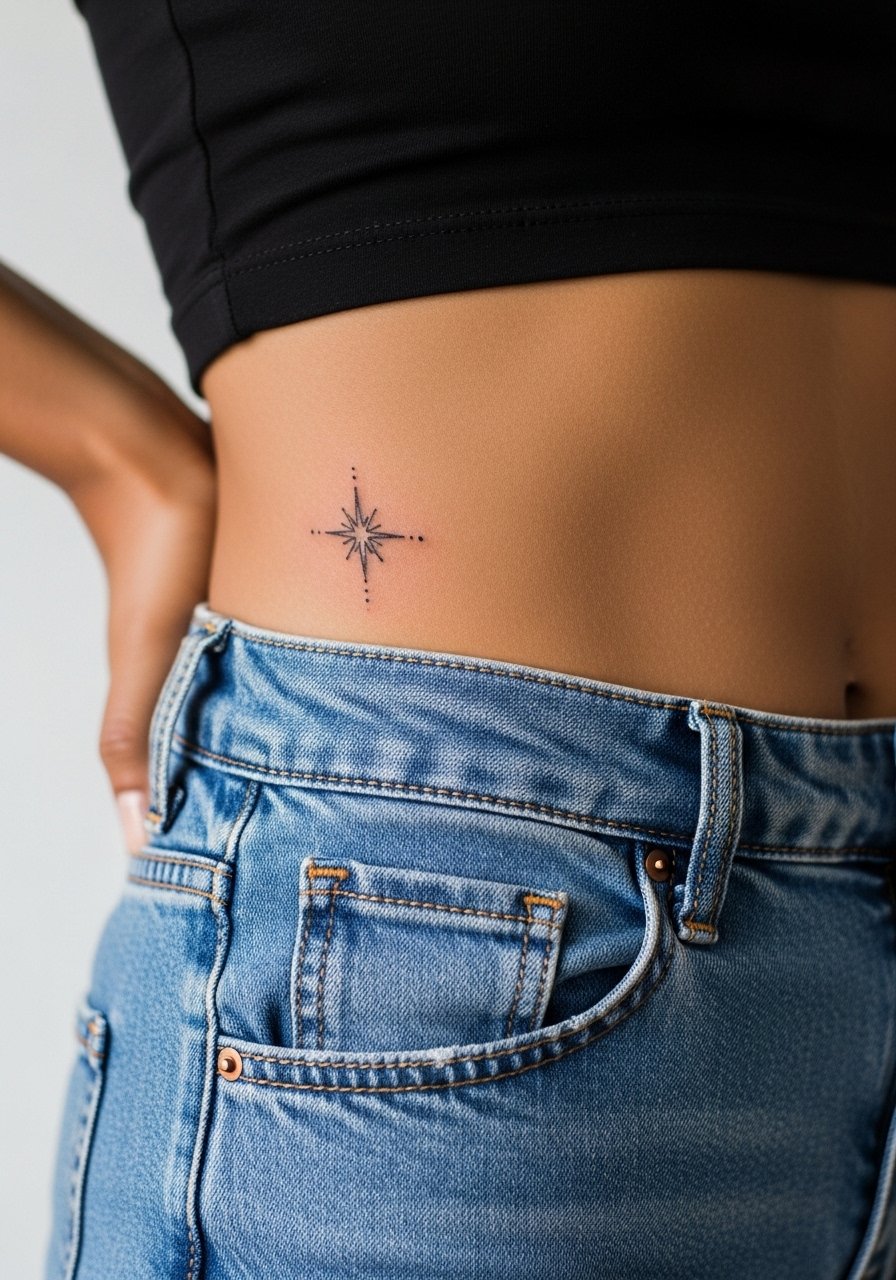
Hip placement hides well and allows for moderate sizing so the star keeps detail. Sessions are low to moderate on pain and usually under an hour. The common error is placing the star where waistbands sit. For the appointment, wear high-waisted bottoms you can lower slightly without full disrobing. For showing off, low-rise swimwear or a high-waisted bikini bottom frames the area. Touch-up needs are average because the area experiences less daily abrasion.
17. North Star Accent Over the Sternum
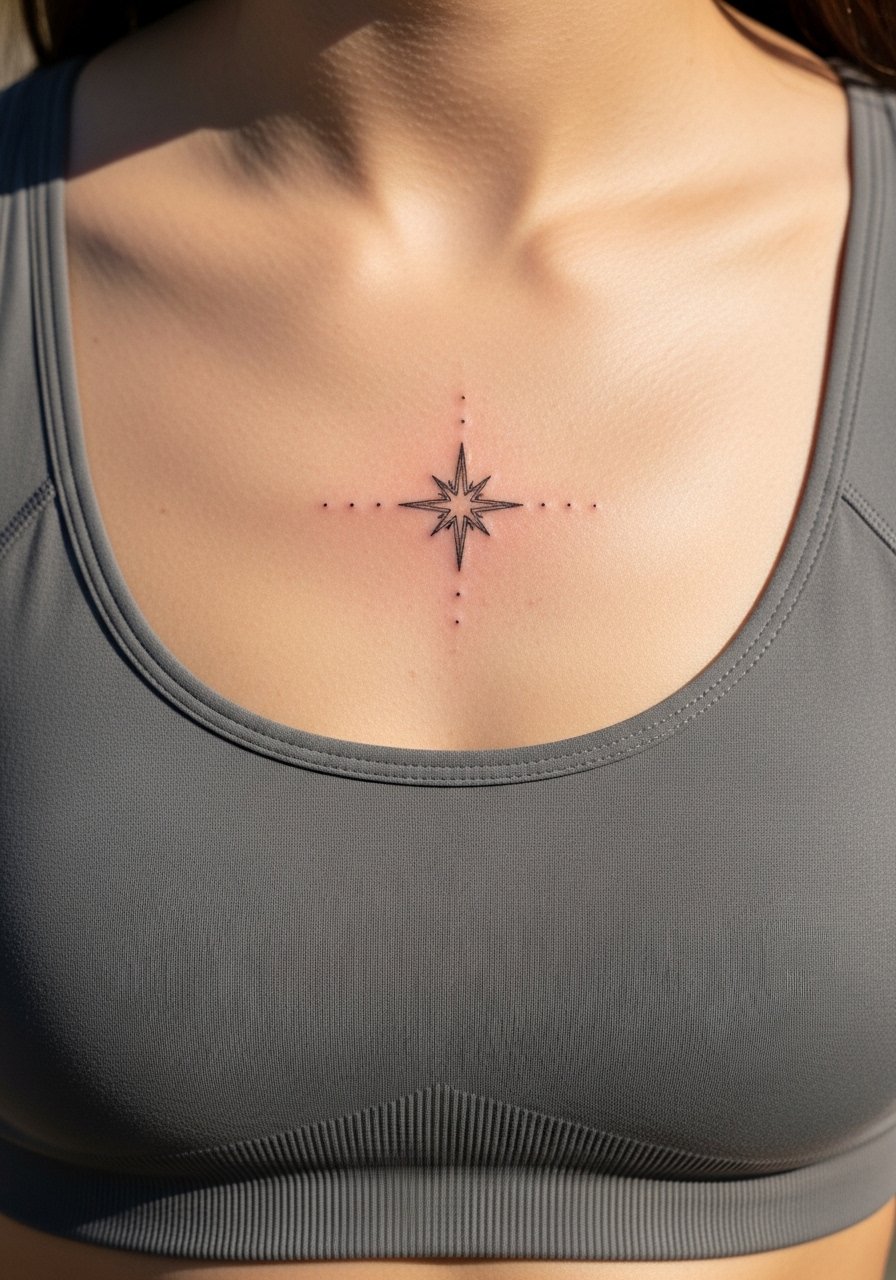
Sternum work is intimate and demands a specialized hand. The skin here can be sensitive and the session is more painful than forearm work. Artists have differing takes on ultra-fine detail on the chest. If you go for a tiny star, ask the artist about needle depth and spacing to avoid blown lines. Wear a fitted sports bra for the appointment. For evenings out, a low-cut top can put the star front and center. Healing is slower in the chest area, so patience is required.
18. North Star with Micro Dotwork Halo on the Shoulder Blade
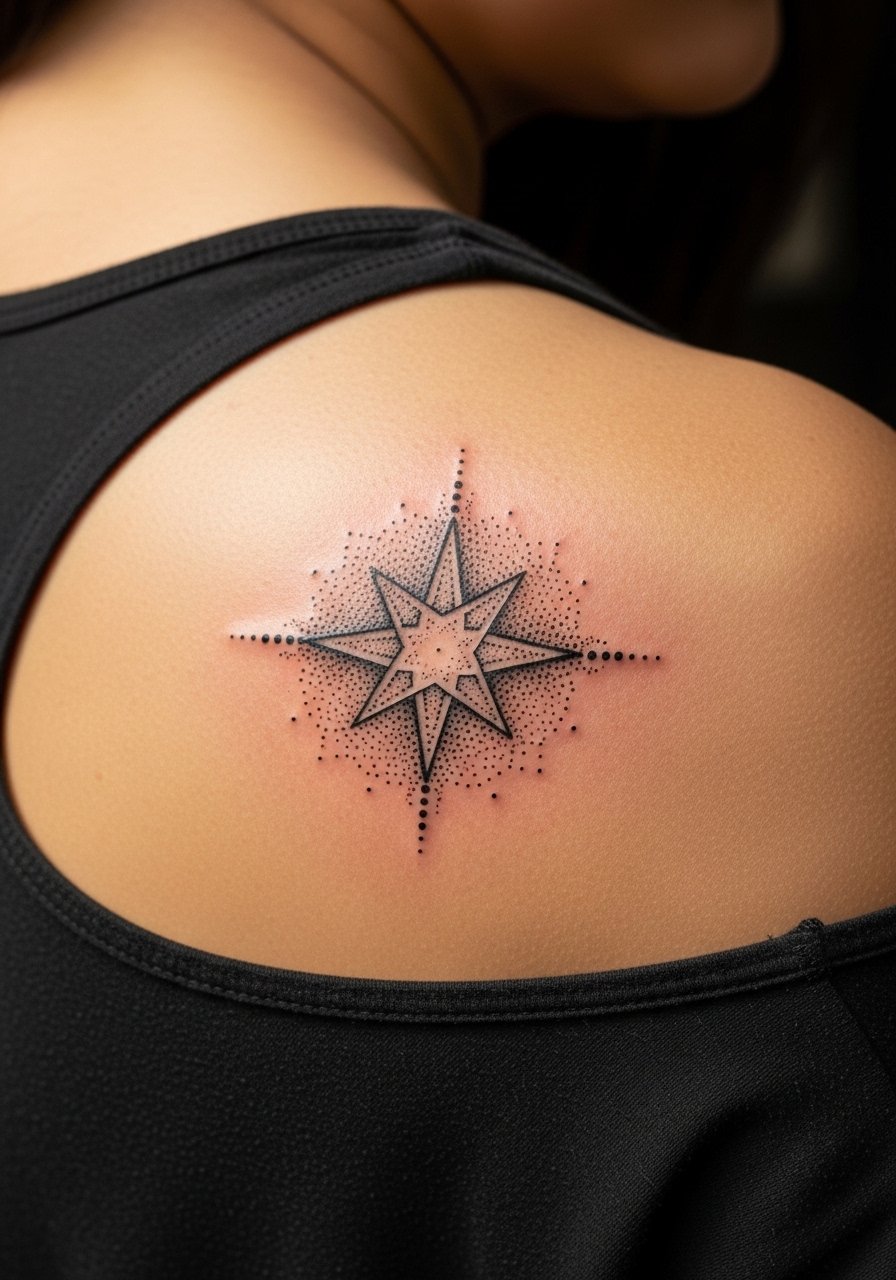
Shoulder blade placement gives space for a delicate dotwork halo around the star, which adds depth without heavy ink. The skin is stable and ages well. Sessions vary from 30 to 90 minutes depending on halo density. A common mistake is overdoing dot density. Ask your artist for a lighter touch so the halo breathes. For showing off, low-back or off-shoulder tops work; try an off-shoulder blouse that frames the piece. Touch-ups are usually only needed after several years unless you spend a lot of time in the sun.
19. Tiny North Star as a Ring Tattoo
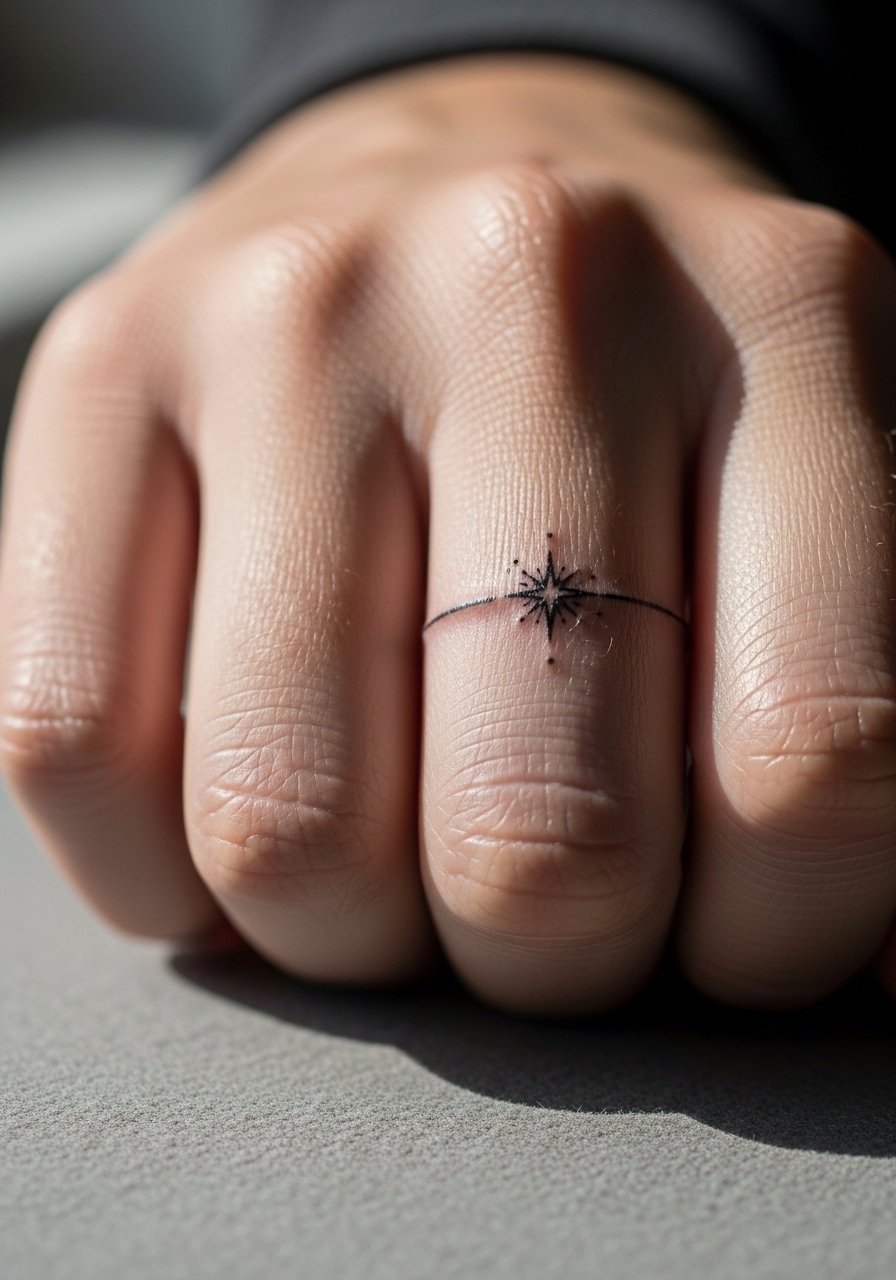
A ring-style star translates well into a tiny circlet or placed near the base of the finger. Placement must avoid knuckle folds where movement destroys detail. Expect frequent touch-ups and fast fading because of hand use. The session is quick and the pain is sharp but short. Tell your artist you want a slightly bolder ring so the negative space survives washing and jewelry. For pairing, try a delicate ring stack that complements without covering the ink.
20. Micro North Star on the Inner Thigh
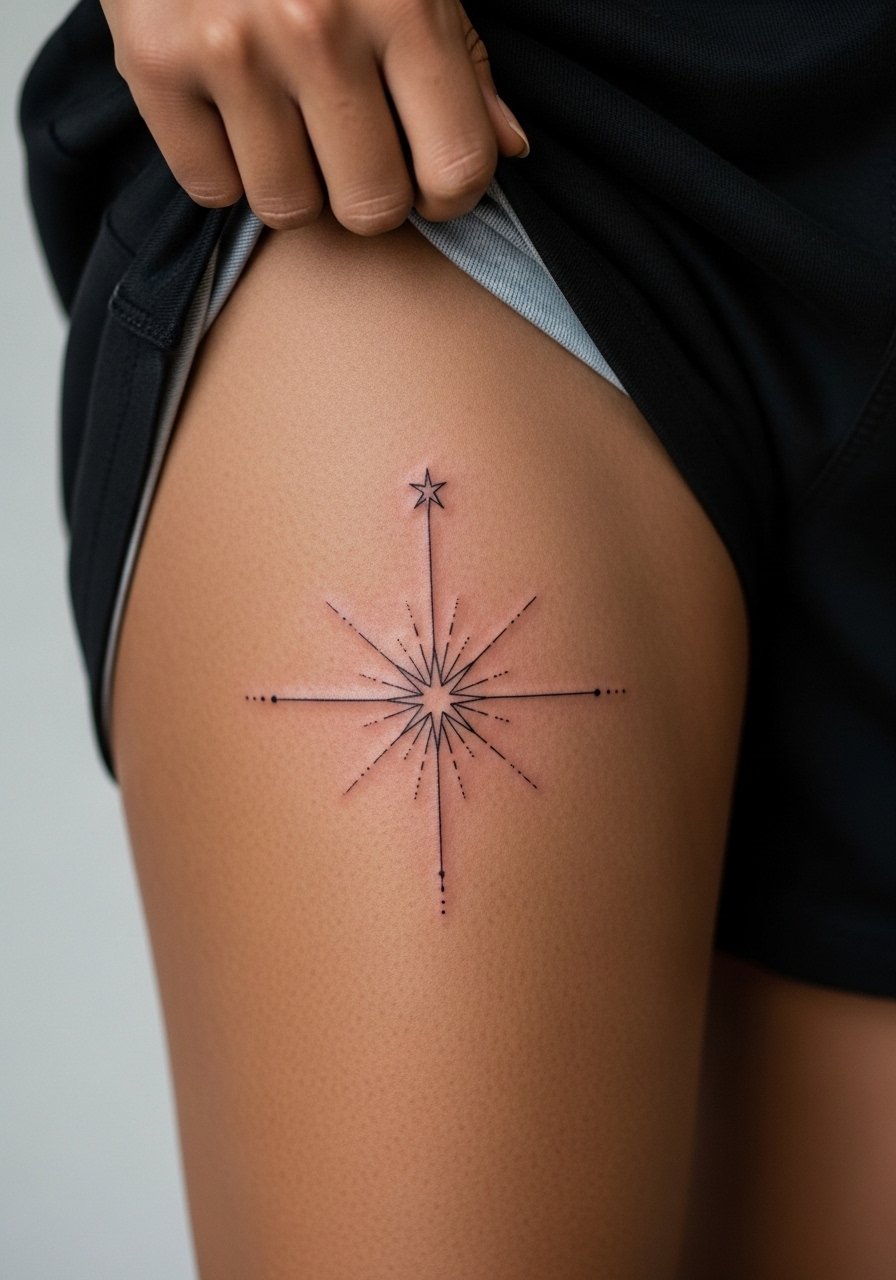
The inner thigh is intimate and protected, which helps delicate work stay crisp longer. Sessions are moderately uncomfortable for some but manageable. The mistake I see is asking for dense clusters that trap moisture during healing. For the appointment, wear loose shorts you can adjust easily. In summer, a flowy skirt shows the piece without tight fabric rubbing it. Expect touch-ups only if you experience weight fluctuation in the area.
21. Minimal North Star on the Calf
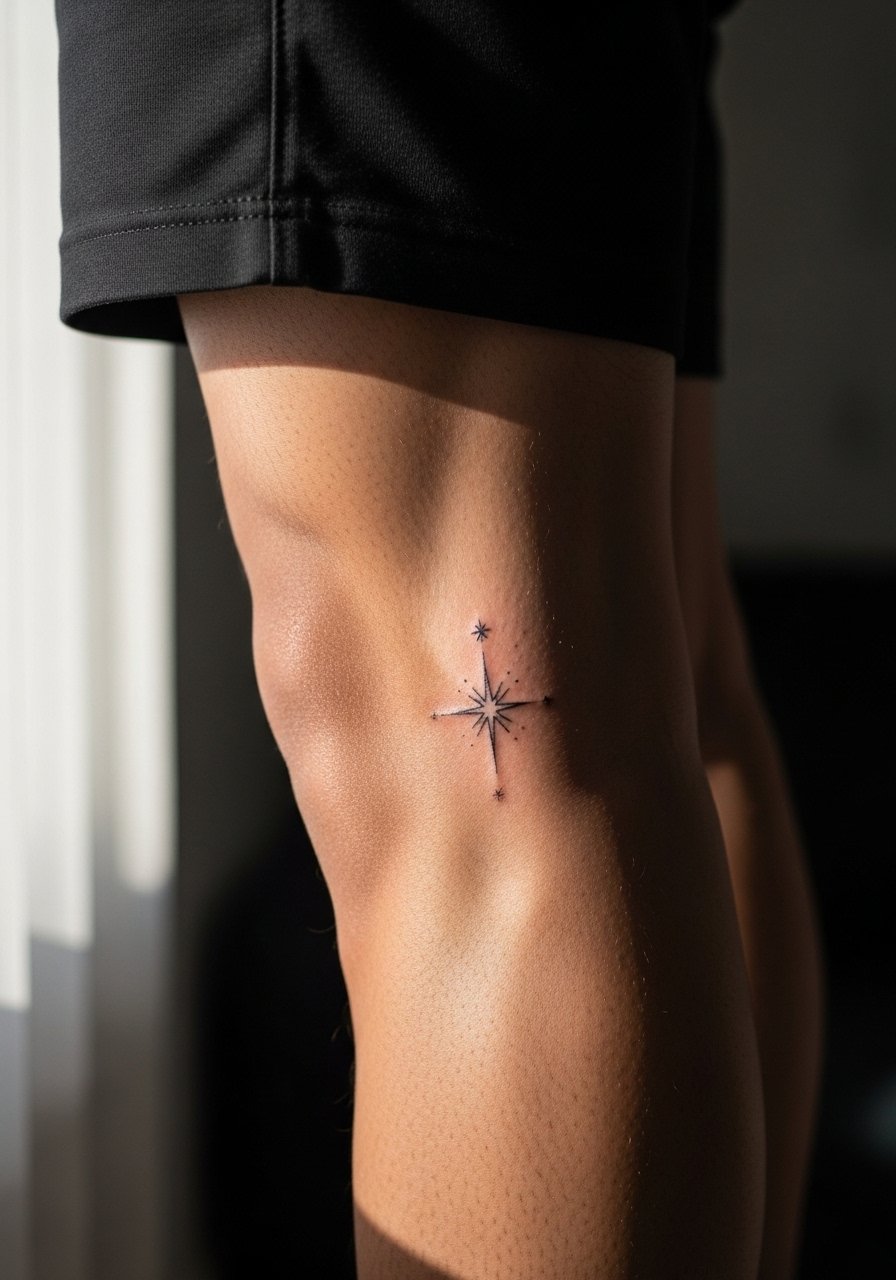
The calf is a practical canvas for delicate pieces. The skin is forgiving and lines can remain crisp for several years if the star is not tiny to begin with. Sessions are low on pain and often quick. Common mistakes are placing the star where pant seams rub. For showing off, wear mid-length shorts or cropped dresses so the ink is visible without constant friction. Touch-ups are uncommon unless you spend a lot of time in the sun.
Frequently Asked Questions
Q: Will a delicate North Star on my wrist need a touch-up sooner than one on my forearm?
A: Yes, the wrist sees more movement and abrasion, so touch-ups are more likely. If you want fewer touch-ups, ask for slightly heavier linework and avoid placing the star exactly where bracelets or watchbacks rub.
Q: Is fine line North Star work safe on the ribs or sternum given the controversy among artists?
A: Artists divide into two camps. One says ribs and sternum blur faster because of skin stretch and movement. The other says precise spacing and depth make fine line viable. Ask your chosen artist where they stand and request a stencil preview and a subtle increase in line weight if they recommend it.
Q: What should I wear to a session for a collarbone or upper chest North Star tattoo?
A: Wear a wide-neck shirt or a fitted sports bra you can pull aside. That keeps access clean while maintaining modesty. A loose button-down also works if you prefer more coverage.
Q: How do I style a tiny North Star so it reads intentional and not like an afterthought?
A: Frame it with minimal jewelry or clothing that leaves negative space around the tattoo. For collarbone stars, a thin chain pendant above the ink draws attention without competing.
Q: Are hand and finger North Star tattoos professional-friendly?
A: Hand and finger placements remain visible and may affect professional perceptions in some fields. If you have career concerns, consider a less visible placement like the inner forearm or calf, or plan for concealing during work hours.
Q: How long is a typical session for a delicate North Star cluster on the upper back versus a single point on the ankle?
A: A single ankle star is a short session, often under 30 minutes. A cluster on the upper back can take 30 to 90 minutes depending on number and spacing. Discuss expected session length in the consultation so you can plan clothing and aftercare.