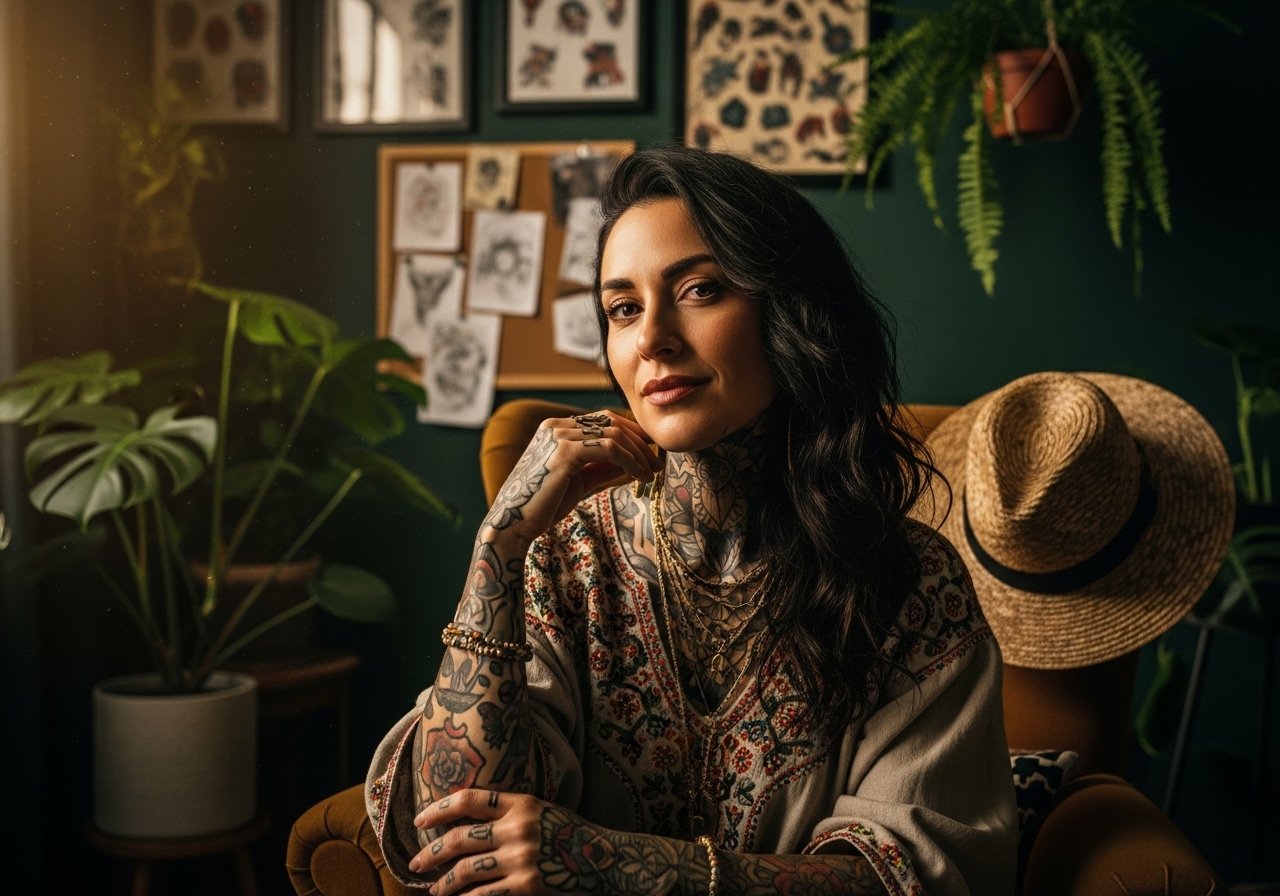
The trend pictures you saved probably look flawless on an iPhone. The reality in the chair is different. Fine line pieces that photograph like lace can soften fast. Big black wings hold up better, but they cost more and need multiple sessions. Dark skin and delicate linework pose visibility questions too. Read the sketches below with an eye for longevity, placement, and what to ask at your consultation.
1. Dark Angel with Black Wings Spread on the Back
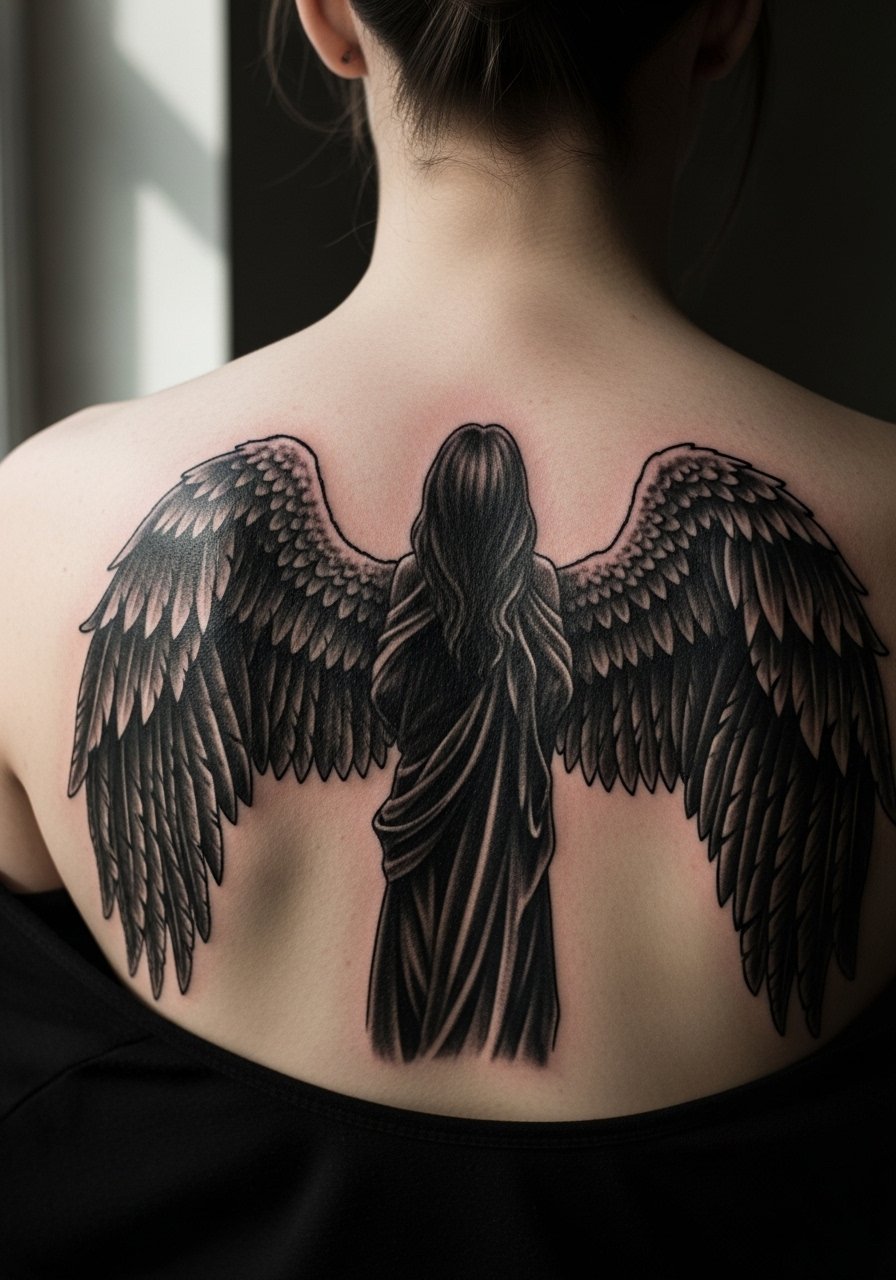
The back is where wings read like architecture. I recommend broad, bold feather linework and layered shadow work so the wings keep structure as they age. Tell your artist you want heavier primary feathers and softer secondary shading so the design does not blur into a single dark mass over years. Expect multi-session work and higher saturation to preserve depth at year five. For the session wear bring a loose button-down shirt you can remove without pulling fabric over your head.
2. Fallen Angel Standing in Shadows on the Thigh
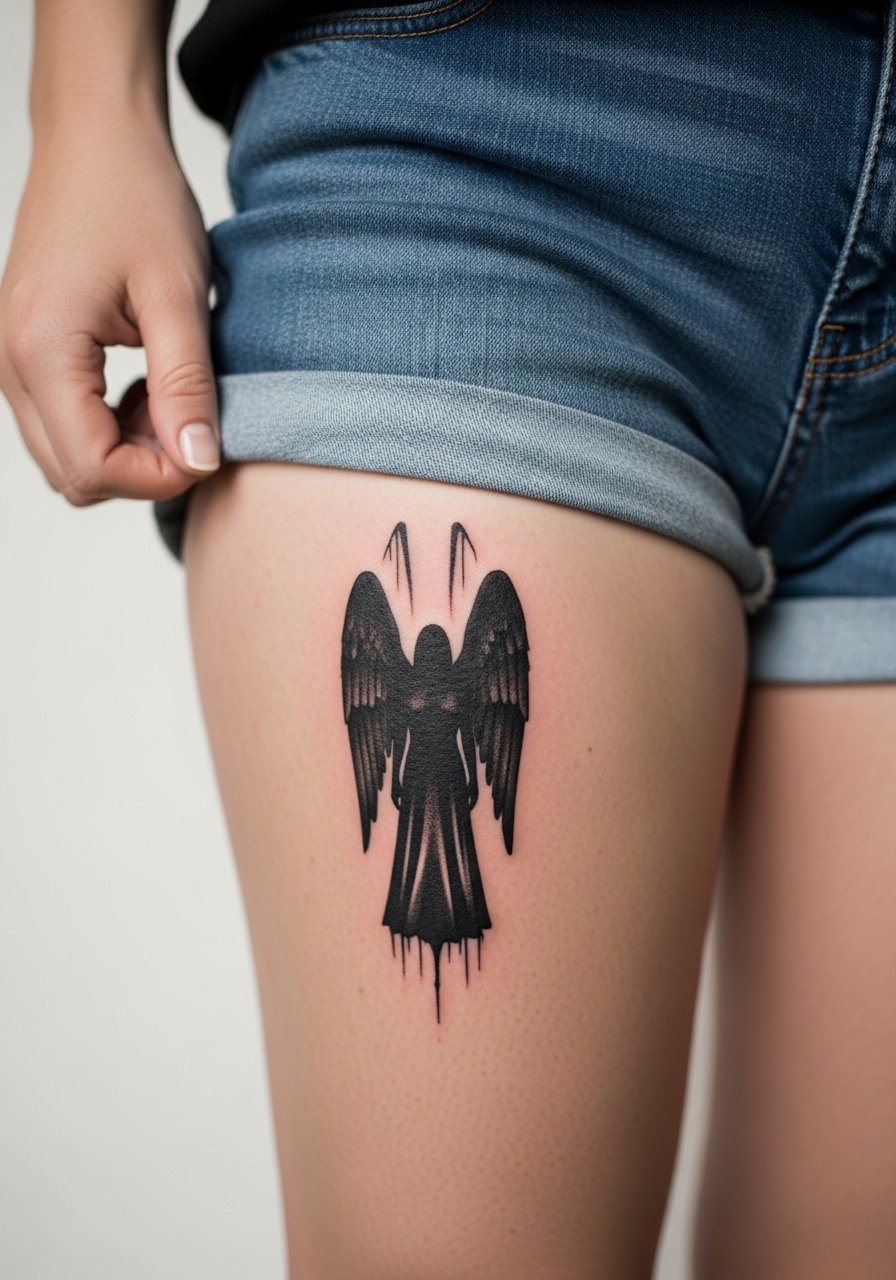
Fair warning, thigh pieces let you push scale and motion without crowding the lines. For a fallen-angel silhouette lean into strong negative space and dense shadow blocks. Ask your artist to map the shadows so the figure reads at arm's length and up close. A common mistake is making the silhouette too thin for the thigh curve which causes distortion when you sit. The session will feel less painful than ribs but expect long stretches sitting upright. Pair this with high-waisted shorts or a denim short for summer reveal.
3. Hooded Dark Angel Silhouette on the Inner Forearm
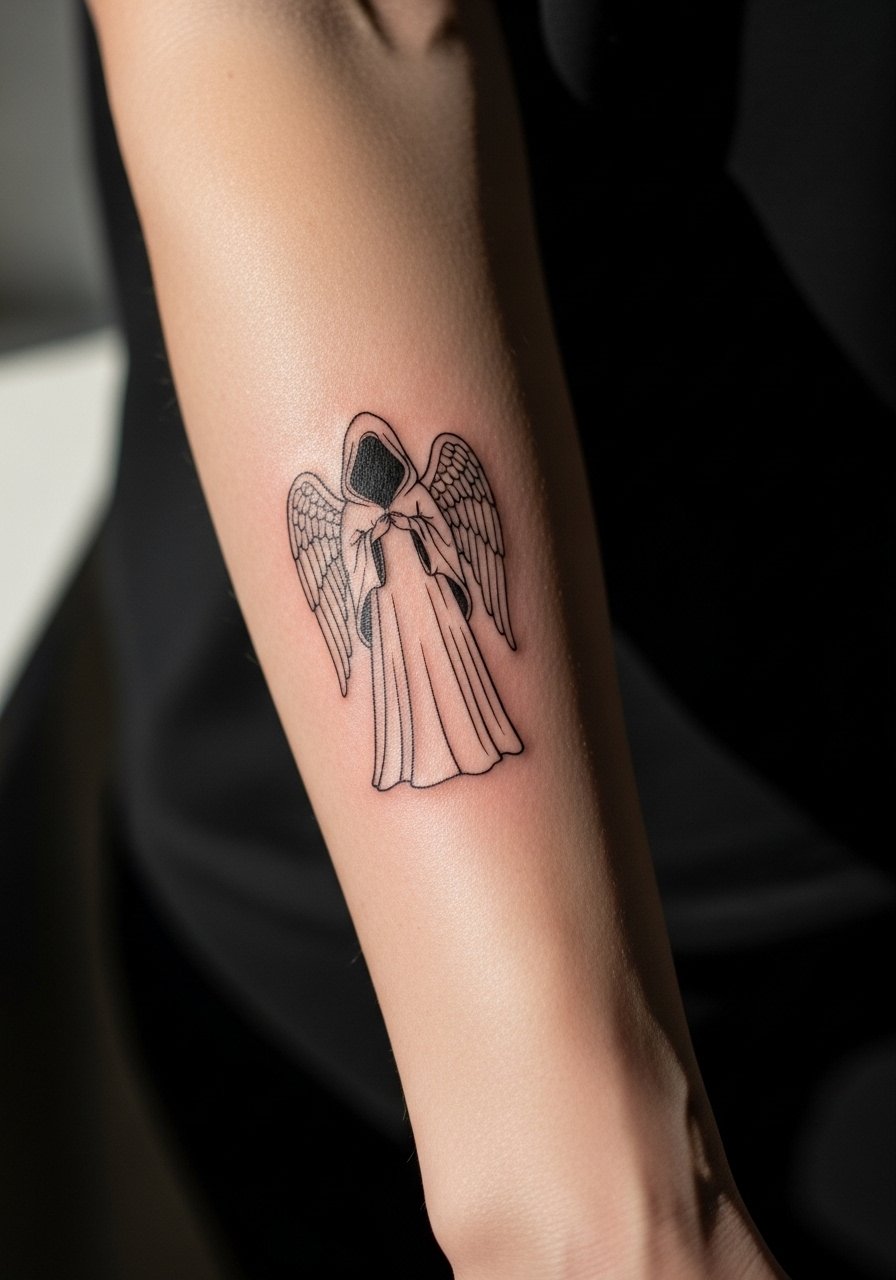
When you want mystery without a full figure, a hooded silhouette works as a small to medium forearm piece. I always tell clients to bring reference showing the exact hood shape and eye detail you want visible or obscured. The inner forearm tolerates fine line better than the wrist, but avoid ultra-thin single-needle strokes on darker skin tones because visibility drops. During the session wear a short sleeve shirt so the artist has clear access and you stay comfortable.
4. Dark Angel with Burning Wings on the Chest
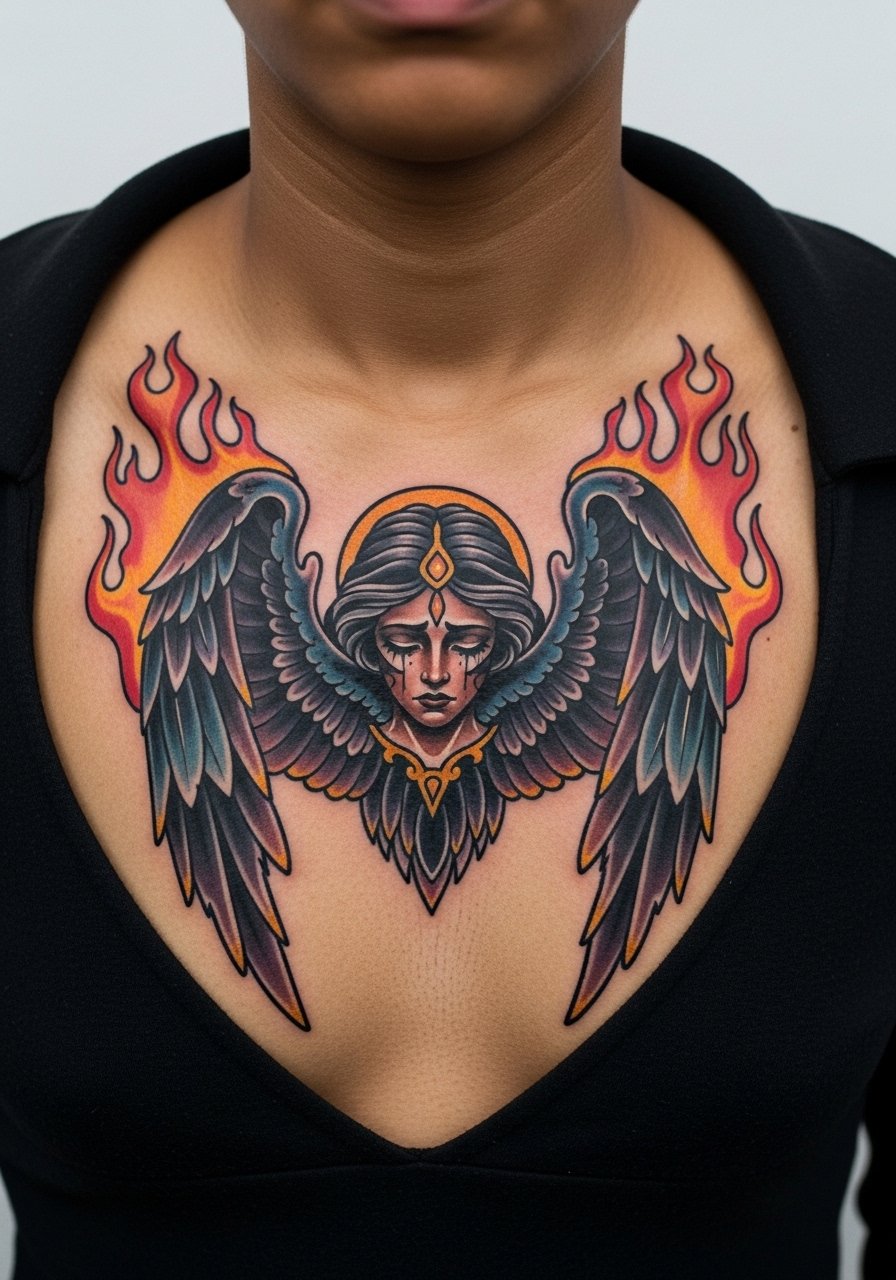
Fire around wings reads as motion and transformation when done with saturated color or high-contrast black and grey. For chest placement, ask your artist about color placement that avoids the sternum center where skin moves the most. A mistake I see is small flames packed too close to the breastbone. For the session wear a wide-neck shirt you can pull aside easily so the artist can tattoo without you being fully undressed. Expect deeper saturation and a touch-up within a couple of years if you choose color.
5. Ethereal Dark Angel with Intricate Wings on the Thigh
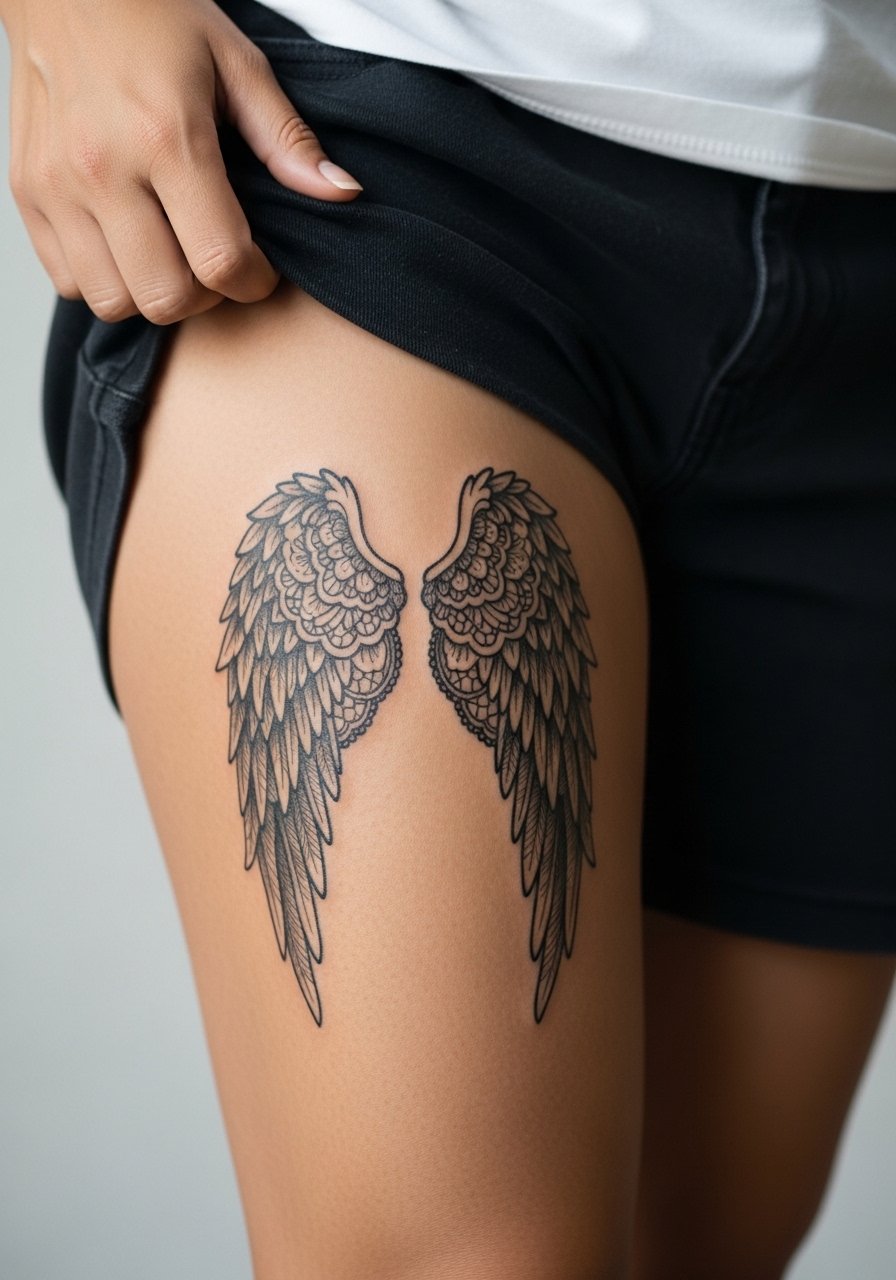
Intricate wingwork is gorgeous on the thigh because you get the canvas to show feather texture and ornamental filigree. The main risk is going too small. Tell your artist you want the filigree scaled so negative space remains at least a few millimeters between lines. If you have darker skin consider slightly bolder secondary lines to preserve contrast. For showing it off, pair with high-waisted shorts. The session often runs long, so bring a cushion and expect multiple appointments.
6. Dark Angel Silhouette with Symbolic Elements on the Outer Forearm
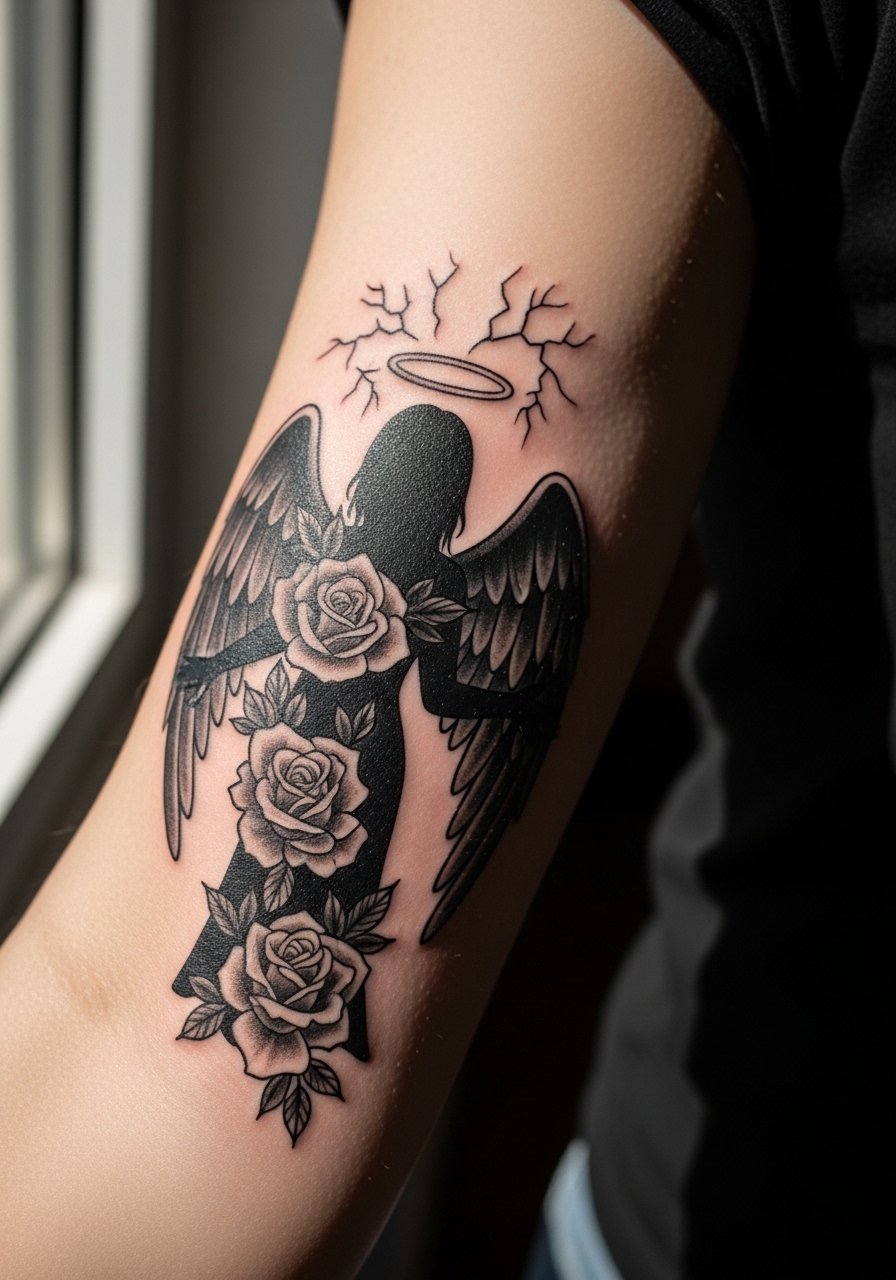
Artists split on how much secondary symbolism to pack into a forearm piece. One camp says keep silhouettes simple so the figure reads from a distance. The other camp argues that roses, skulls, or a cracked halo give narrative depth and photo interest. Both are valid. If you want the symbolism, ask for larger secondary elements and clear spacing so the halo or rose does not merge into the wing shadow. Wear a short sleeve henley for the session so the artist can position the arm flat. I include this section because the forearm is popular and easy to show off.
Pre-Session Essentials
The forearm and thigh ideas above have different prep needs, and a few compact items smooth the session and the first week.
-
Thin protective film roll. Useful for small areas that rub against clothing during the first two days.
-
Topical numbing cream. Applied as your artist recommends to take the edge off sensitive spots like ribs or sternum without affecting linework.
-
Fragrance free gentle body wash. Cleans the area during showers without stripping fresh ink, especially helpful for chest and thigh work.
-
Thin cotton compression bandage pack. Keeps pressure even on long sessions and reduces swelling for large back or thigh pieces.
-
Healing ointment sample set. Small tubes to test what your skin tolerates in the first week before committing to a full-size product.
7. Dark Angel Messenger (Celestial Realism) on the Upper Arm
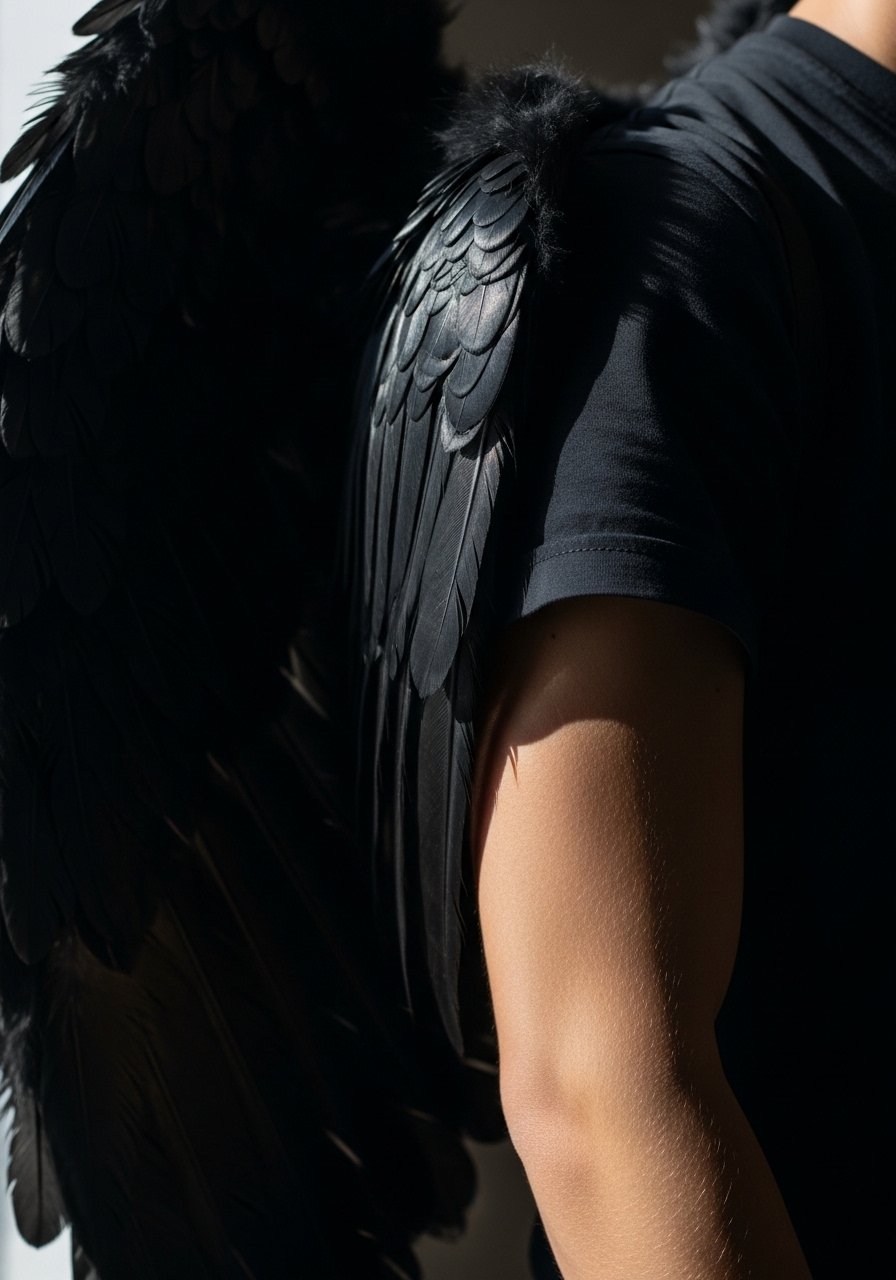
There is a real difference between portraiture on a flat reference and a portrait on muscle that moves. For a celestial messenger with facial detail, pick an artist with healed realism photos in their portfolio. During consultation say whether you want eyes defined or softened by shadow. The upper arm gives you good space for mid-range realism and ages predictably. For after-session comfort bring a sleeveless tank so the artist can work the shoulder without a sleeve in the way.
8. Guardian Angel in Black & Grey on the Calf
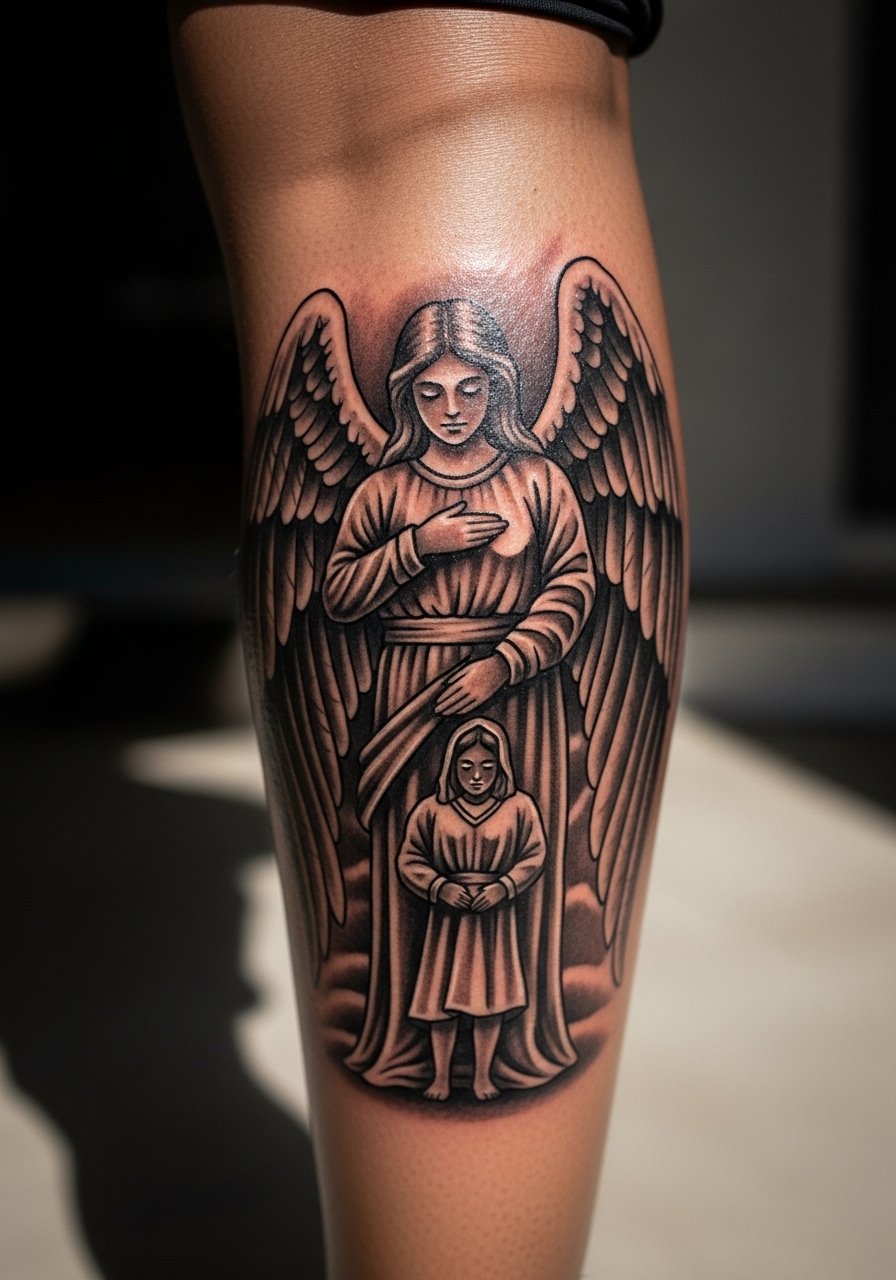
Calf placement works well for protective postures where the wings curve around a central figure. Black and grey keeps the piece readable and reduces the need for frequent color touch-ups. A common mistake is too much fine stipple in high-motion areas which can blur. Tell your artist you prefer more defined linework on outer edges and softer stipple inside the wings to keep contrast. The session may be easier than ribs but expect a day of walking soreness.
9. Minimalist Angel Symbol Behind the Ear
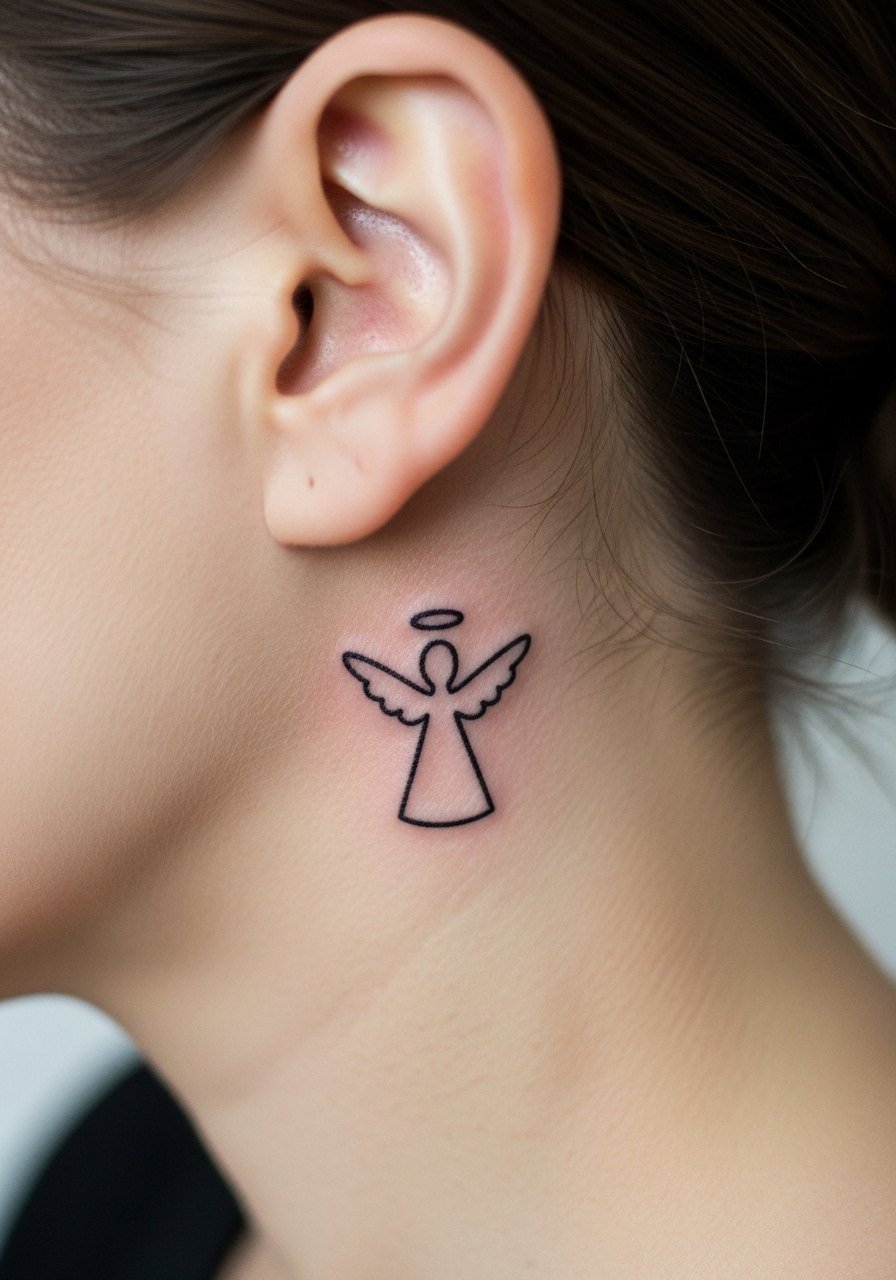
Tiny symbols behind the ear read delicate when healed but are high-maintenance for visibility. The area is prone to fading and rubbing from hair or collars. If you want this, ask for slightly bolder basic forms rather than single-needle filigree. For the appointment have your hair up and wear a loose button-down top so the artist can position you comfortably. Note that healed visibility on darker skin tones may require thicker linework.
10. Dark Angel with Halos on the Collarbone
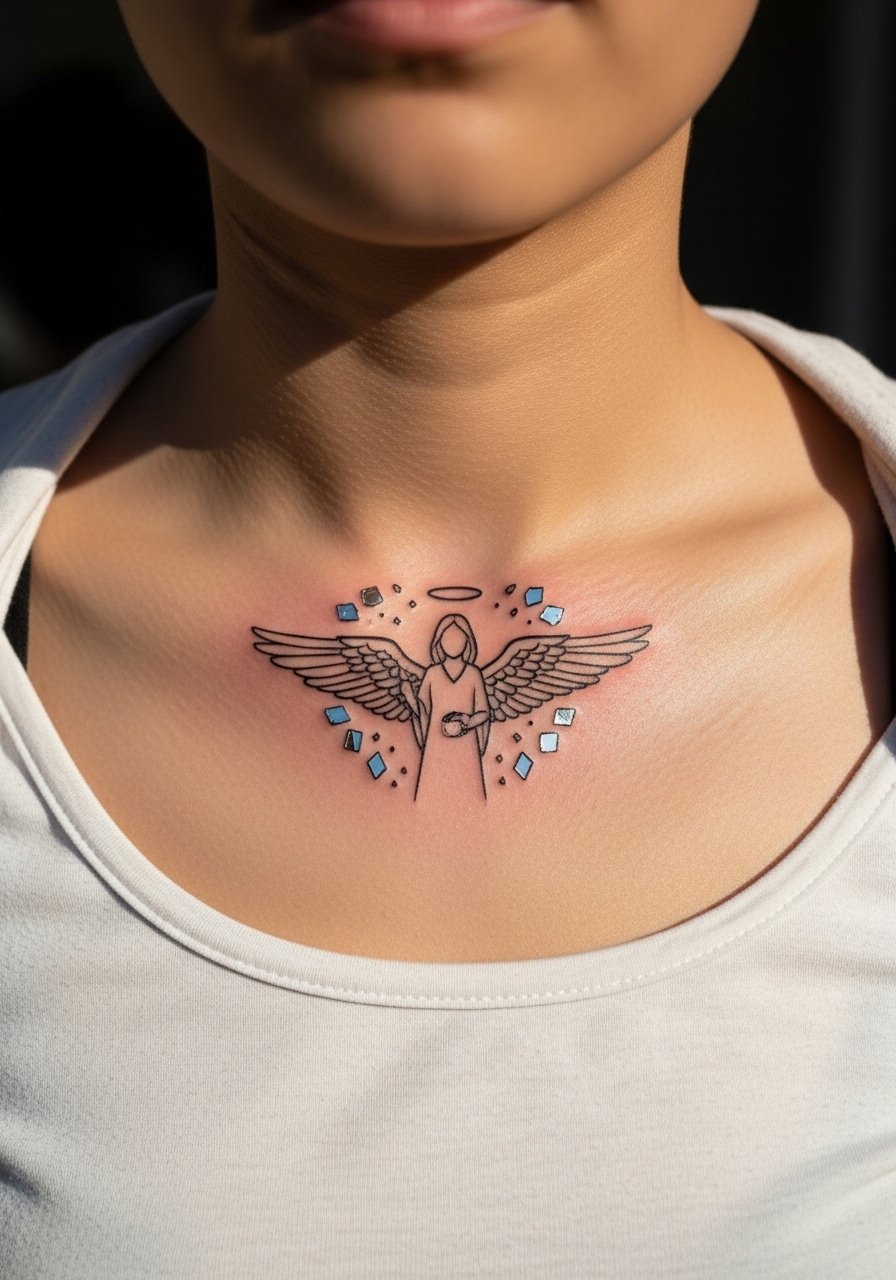
Collarbone tattoos photograph with striking negative space but the skin there moves differently than flat areas. For halos choose clean geometry and avoid tiny dots that can blur into skin texture. Ask the artist to preview how the halo sits with your collarbone shape during consultation. Wear a scoop neck top so you can easily reveal the area without feeling exposed. Expect the session to be sharp but short.
11. Patchwork Dark Angel Sleeve Element near the Elbow
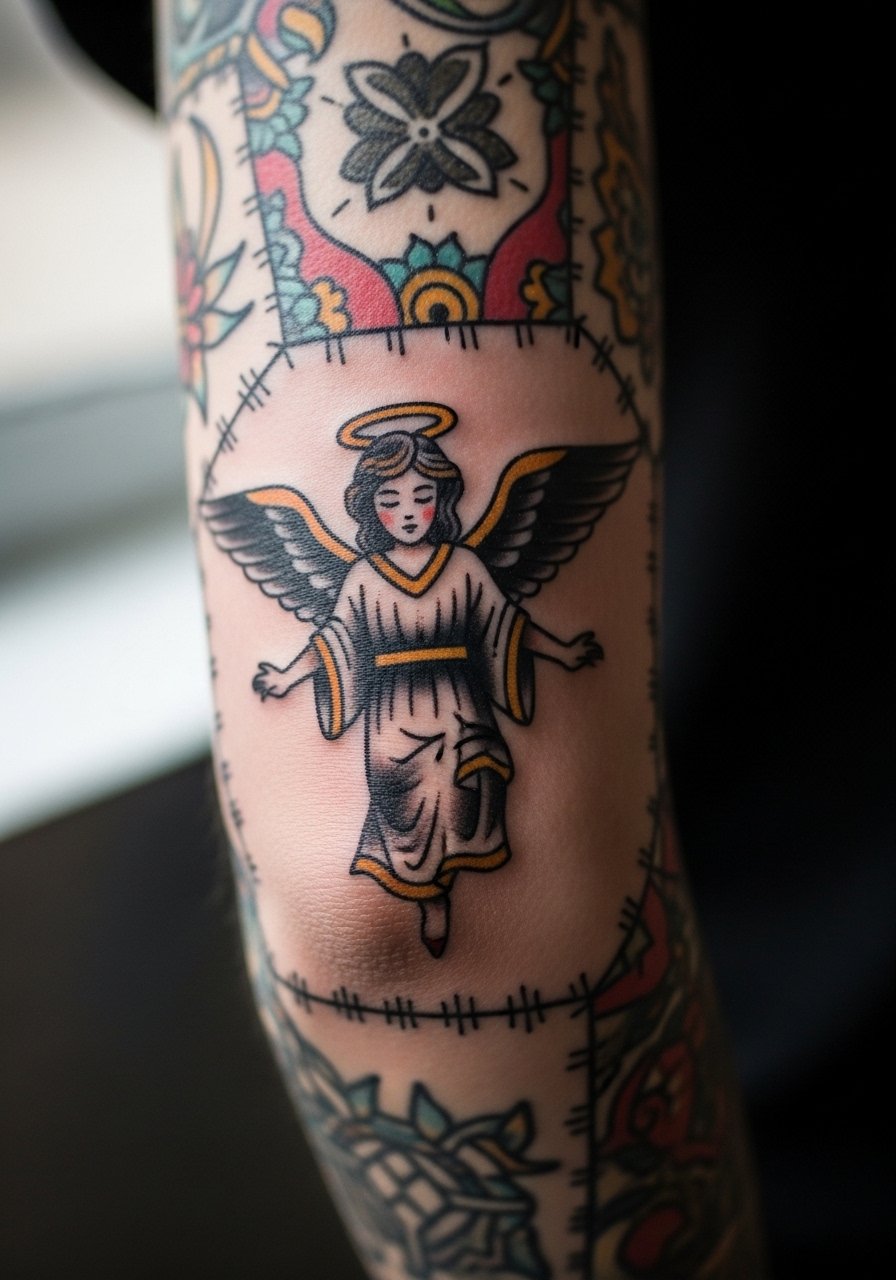
A dark angel can anchor a sleeve as a central motif or recurring element. The elbow is a tricky canvas because it wrinkles and fades faster. My advice is to use bolder outlines crossing the elbow joint and softer shading around it. When planning a patchwork sleeve, map each element so the angel motif repeats at different scales for cohesion. For showing work in progress wear short sleeve crew neck shirts that frame the arm without covering it.
12. Dark Angel Back Piece with Full Wingspan
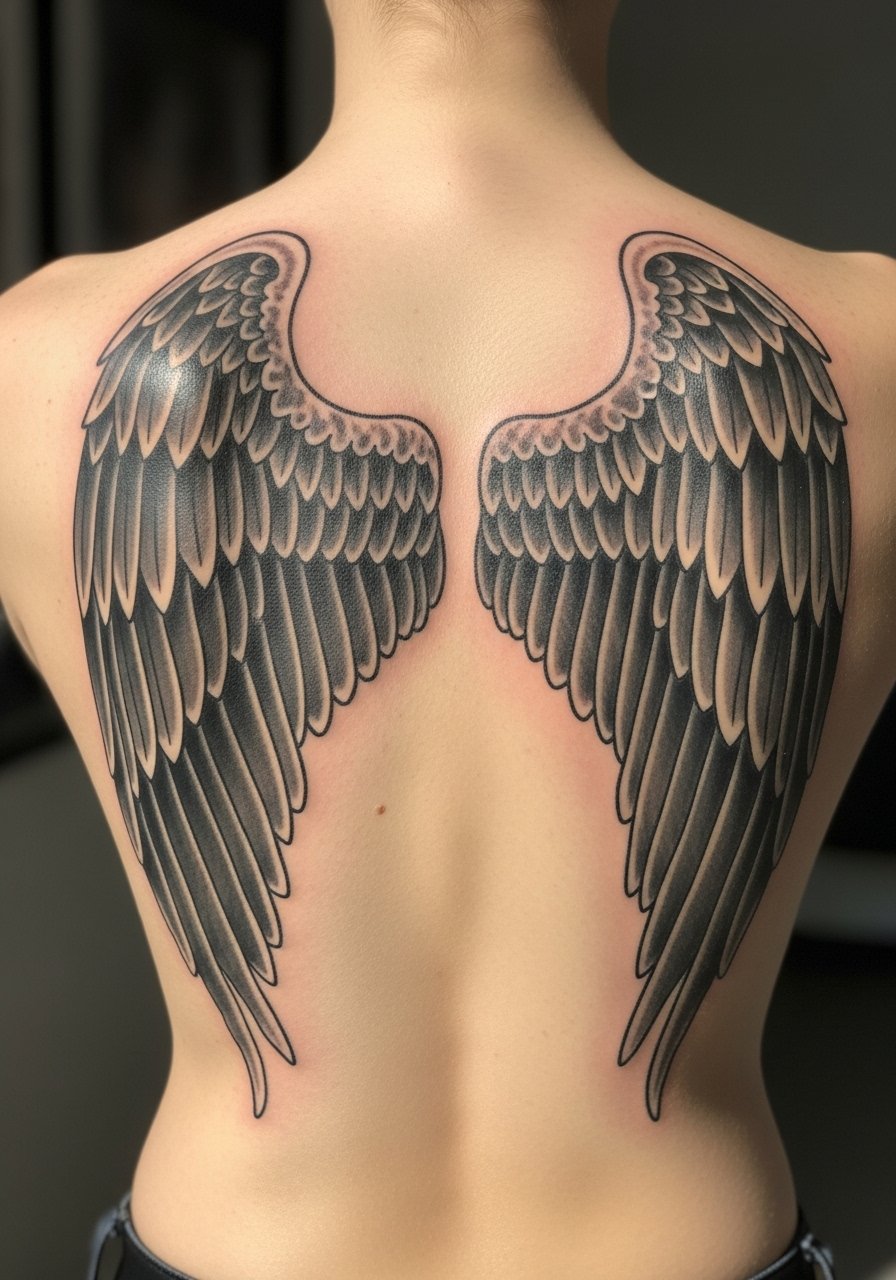
Large back pieces let you treat wings like landscapes with feather topography. The main planning detail is how the wings connect to spine musculature. Ask for templates photographed on your back in standing and bent positions to see how the wings curve. Multi-session schedules help you judge saturation and proportion. For session comfort bring a long button-front shirt you can remove quickly. Recovery is easier if you avoid pressure from tight clothing for two weeks.
13. Dark Angel Portrait Focused on Eyes on the Inner Forearm
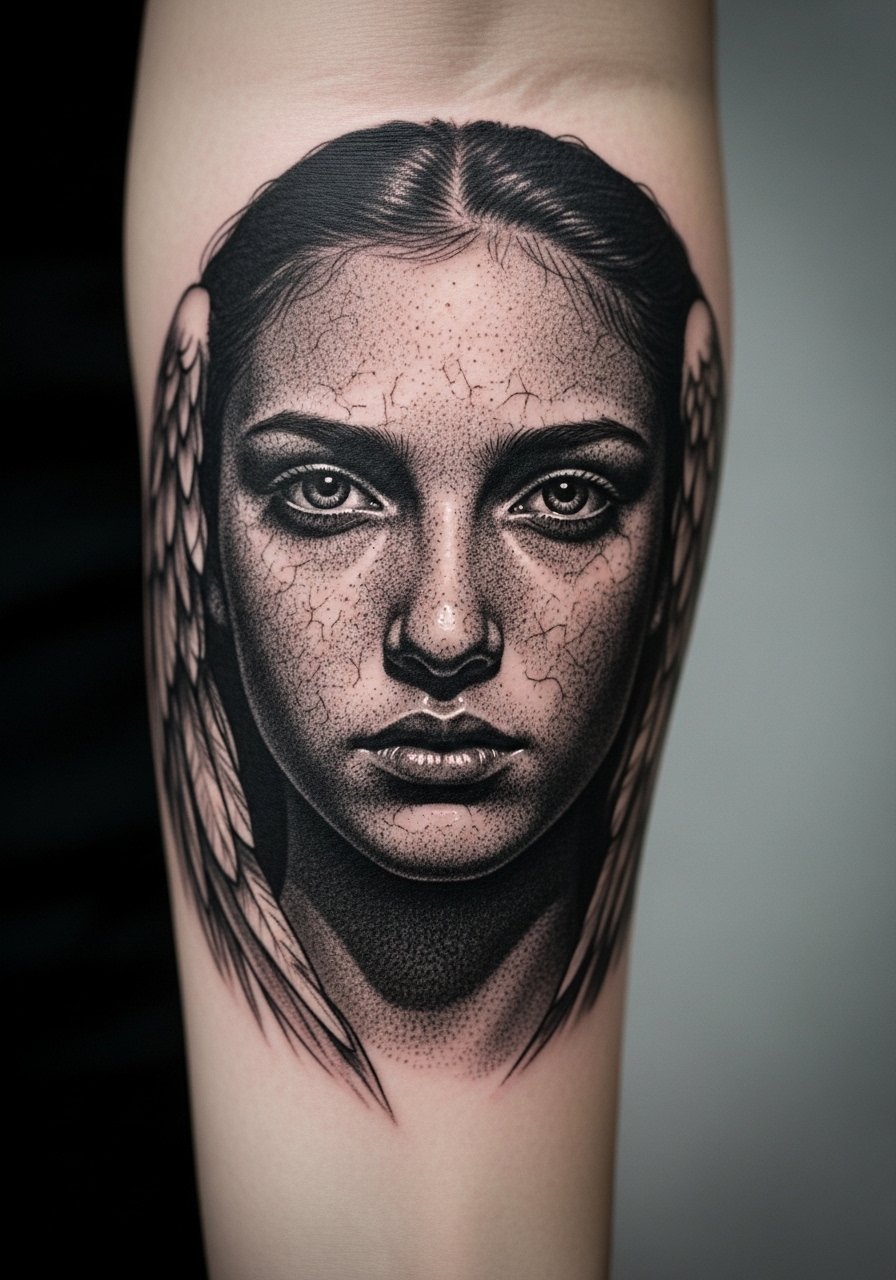
Portraits that focus on eyes are emotionally arresting but demand a high-skill micro-realism approach. For inner forearm portraits tell your artist how close you expect people to view the piece and whether you want glare or matte shading in the irises. A common regret is too-small eyes that lose detail after healing. If you plan to display this often, pair the piece with rolled-up sleeves or a linen button-up to frame the forearm.
14. Watercolor Dark Angel with Bleeding Color on the Thigh
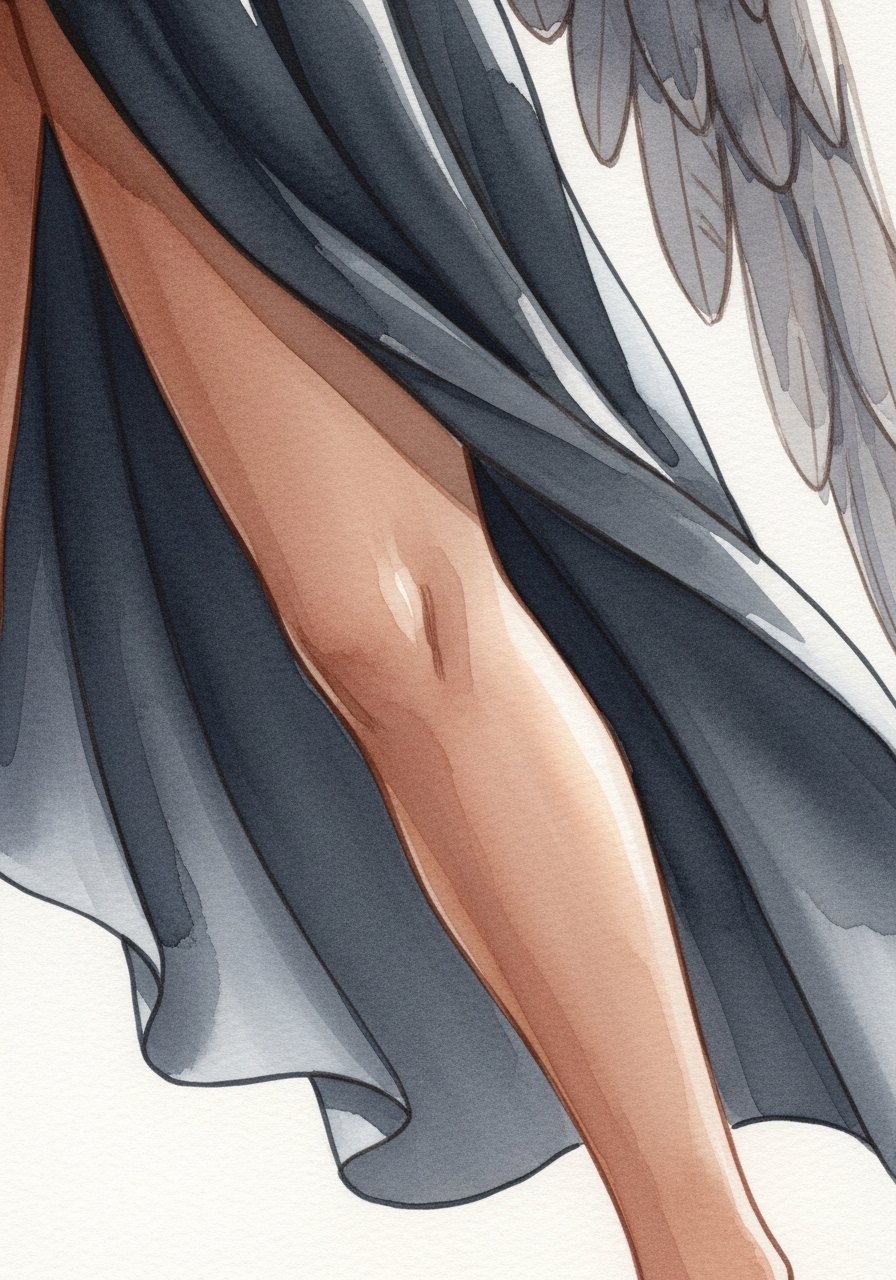
Watercolor techniques create motion and dreamlike edges but they age differently than black and grey. Some artists see the fade as part of the aesthetic. Other artists argue it loses clarity fast. If you choose watercolor, pick placements with less sun exposure like the inner thigh and budget for periodic refresh. During consultation ask about pigment layering and planned touch-up timelines. For showing off choose high-cut swimwear or bikini bottoms.
15. Dark Angel Mandala Fusion on the Upper Thigh
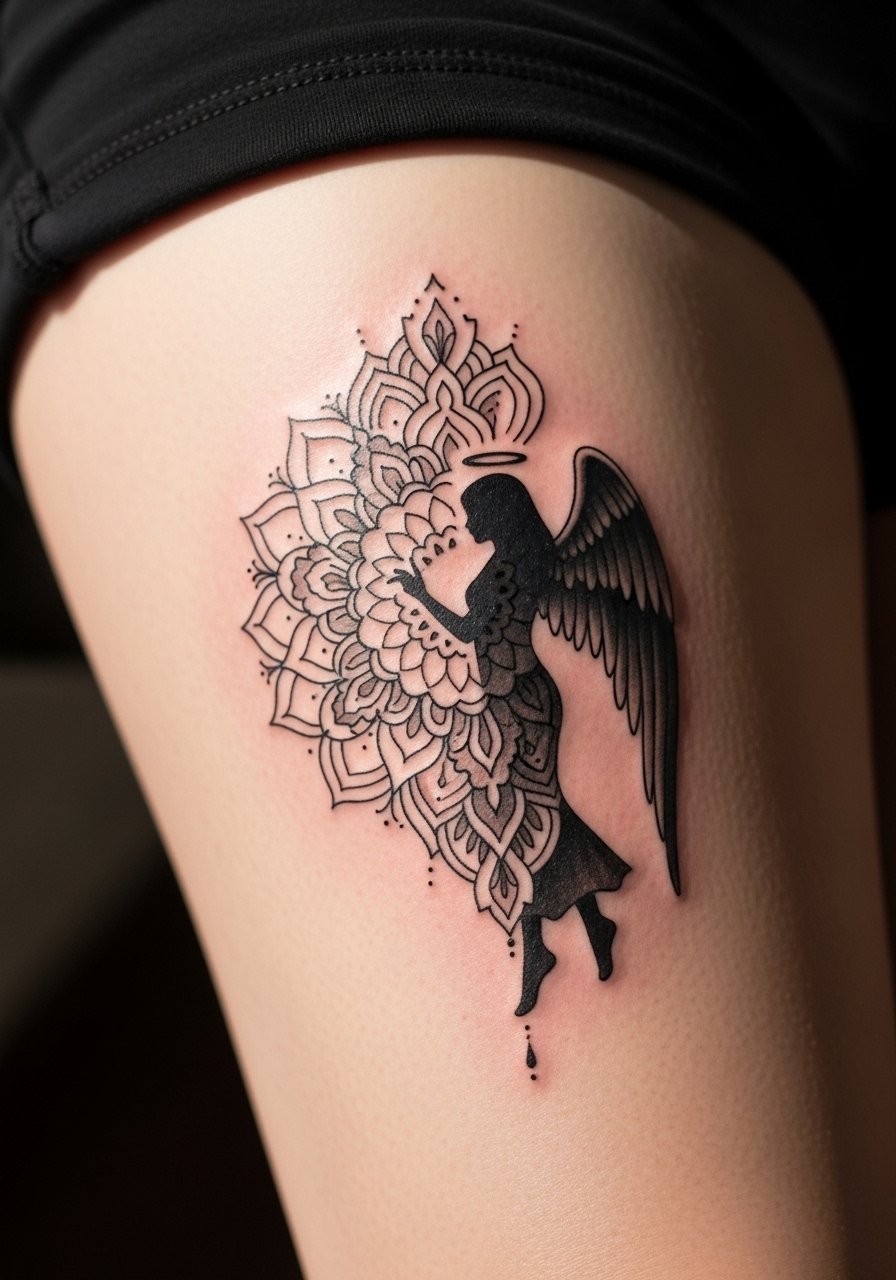
A mandala fusion blends ornamental symmetry with wing silhouette for a decorative, spiritual look that photographs well. The key is scale. Mandala details need space to avoid merging over time. I tell clients to enlarge mandala segments slightly beyond what looks perfect on a flat screen. The thigh is forgiving for scale, and the piece pairs well with skirts or A-line skirts that reveal the design when you move. Be mindful of body changes that affect symmetry.
16. Dark Angel as a Cover-Up on the Upper Arm
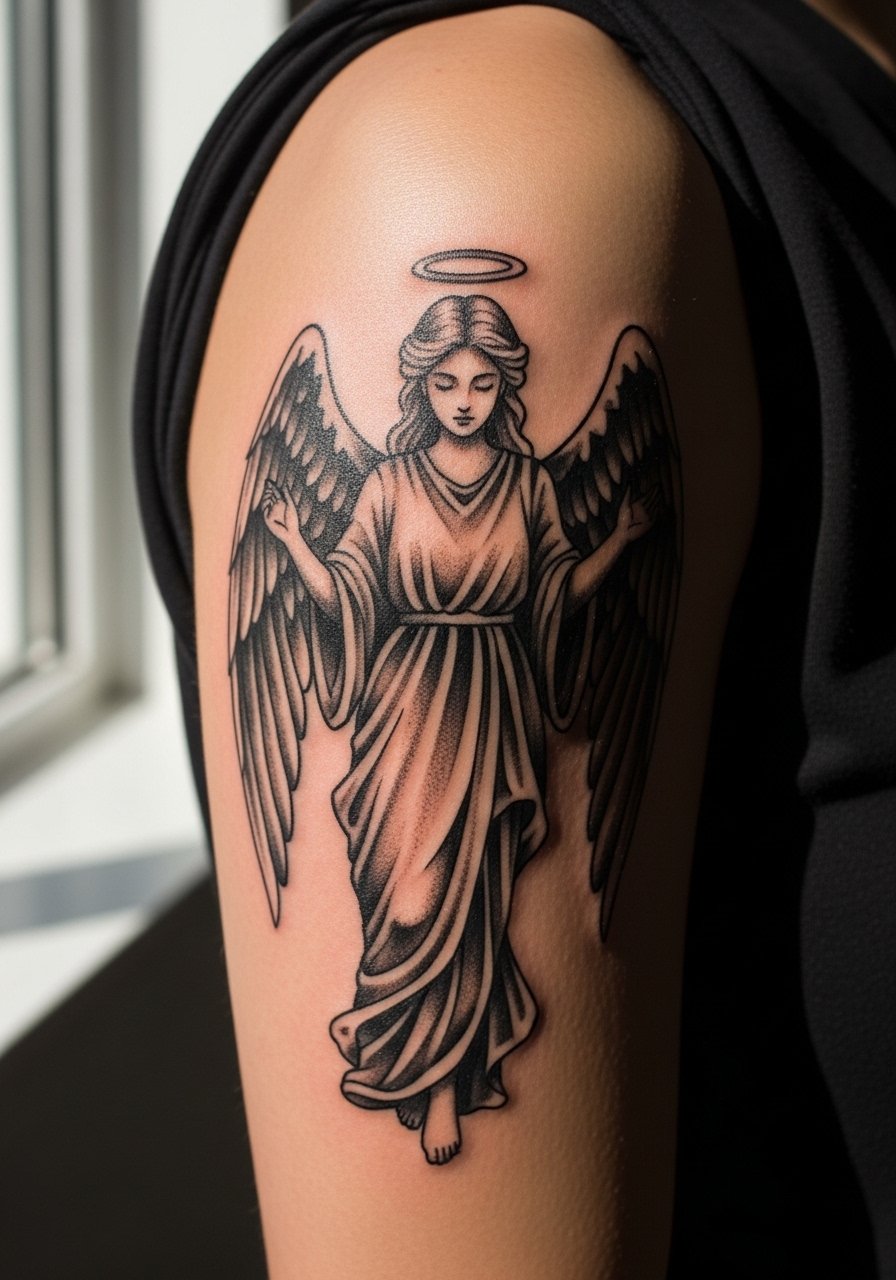
Dark angels are excellent for cover-ups because shadow work and layered wings mask old lines effectively. The crucial factor is the existing tattoo's color and saturation. Lighter, older ink hides more easily than deep blacks. Tell your artist the full history of the old piece and bring photos. They will likely ups the scale and density. Expect at least one test session to see how much coverage is realistic. For session comfort wear a loose tank top that allows easy arm positioning.
17. Minimalist Micro Angel on the Wrist
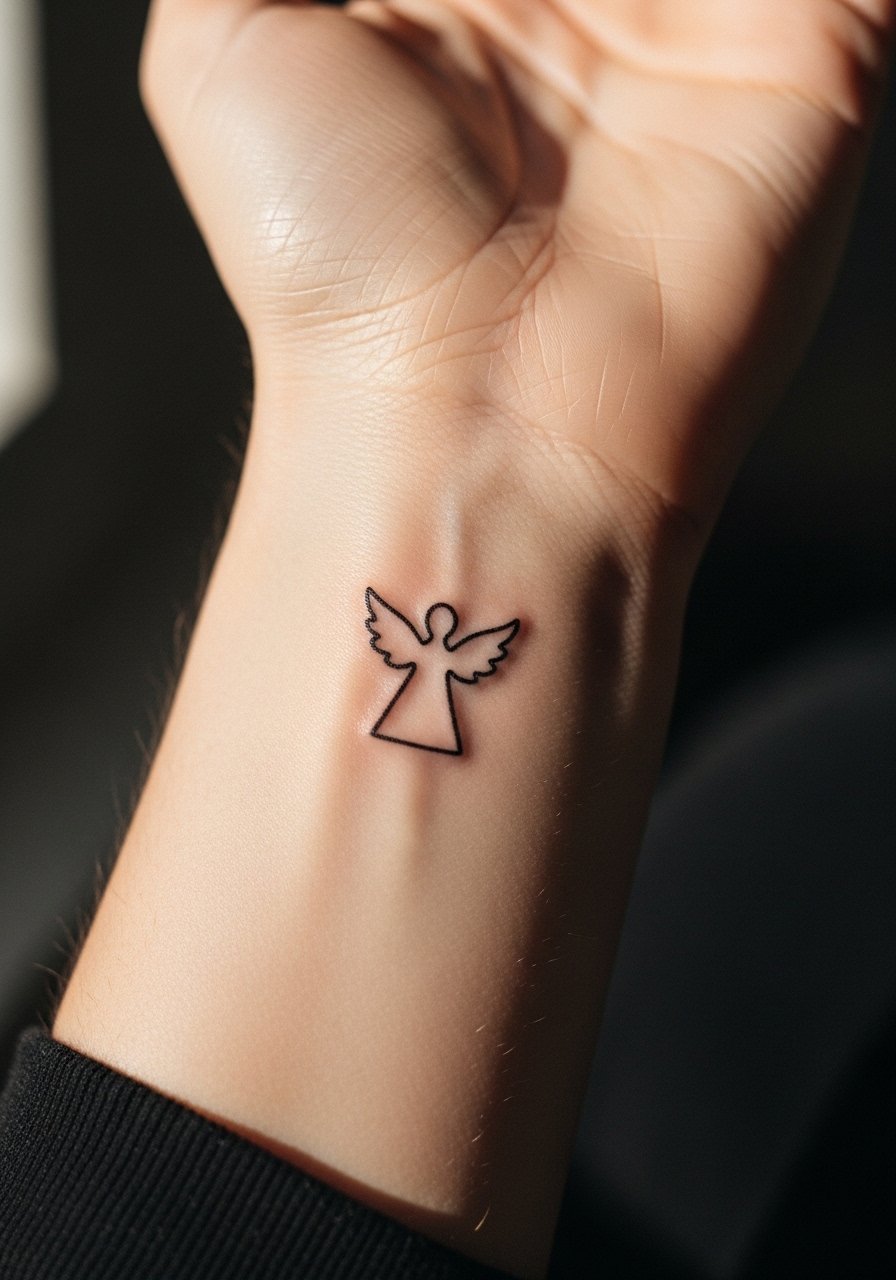
Wrist tattoos are visible and social, but they face more daily wear. Micro minimalist angels need a balance between thin aesthetics and durable lineweight. I advise slightly thicker single-line designs rather than hairline work for better longevity. For the appointment avoid wearing watches on the tattoo wrist and bring a dainty bracelet set to style the opposite wrist if you want asymmetry after healing. Expect touch-ups earlier than for larger, low-friction placements.
18. Sternum Dark Angel Script and Linework
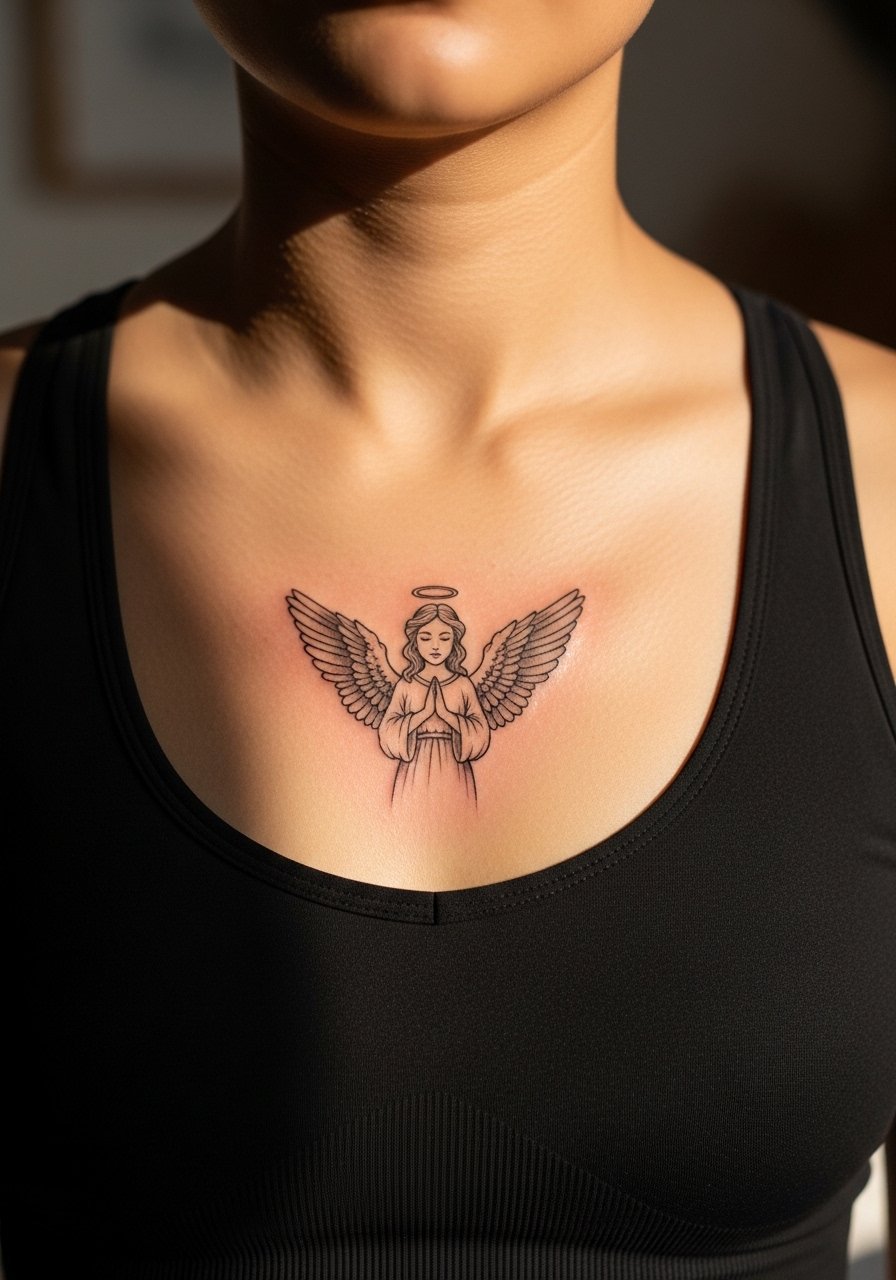
Sternum work is intimate and demands careful conversation about exposure and healing. For centered script or a small angel figure above the sternum, choose bold anchor lines that age into the motion of the chest. Ask your artist about how the design will look when you inhale and exhale because skin stretches. For the session wear a fitted sports bra you can easily open or remove. Be aware that professional settings may make this placement less practical for some people.
19. Ribcage Fallen Angel with Shadow Work
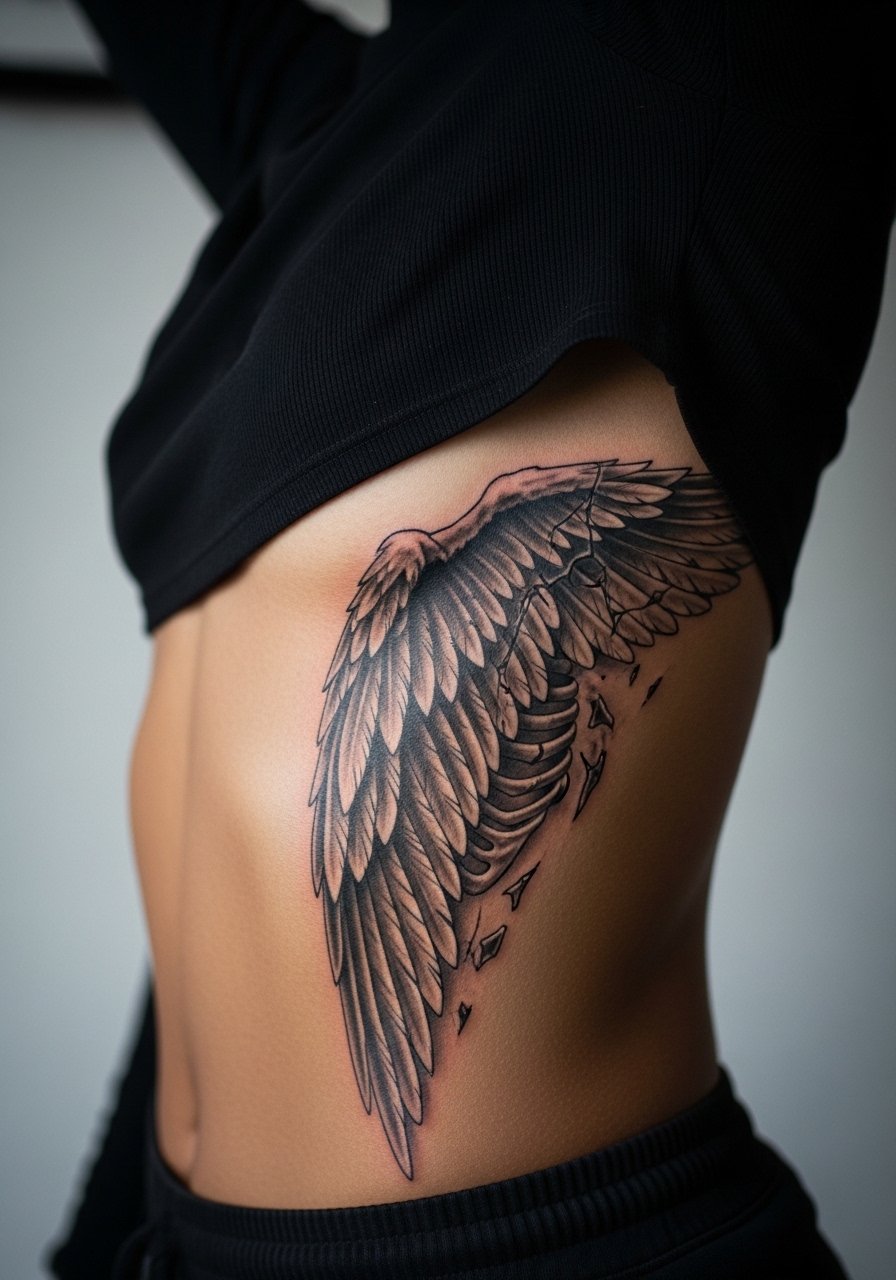
Ribcage tattoos are notorious for pain and movement, but they can be spectacular when planned with proper spacing. Shadow work needs room to breathe so thin lines do not merge with deep shading. One camp of artists says fine line on ribs blurs quickly. The other camp says precise depth and spacing make ribs viable. Before booking, ask which camp your artist follows and request healed portfolio examples. For the session wear a cropped top you can lift slightly so the artist can work without you disrobing completely.
20. Spine-Aligned Dark Angel Wings
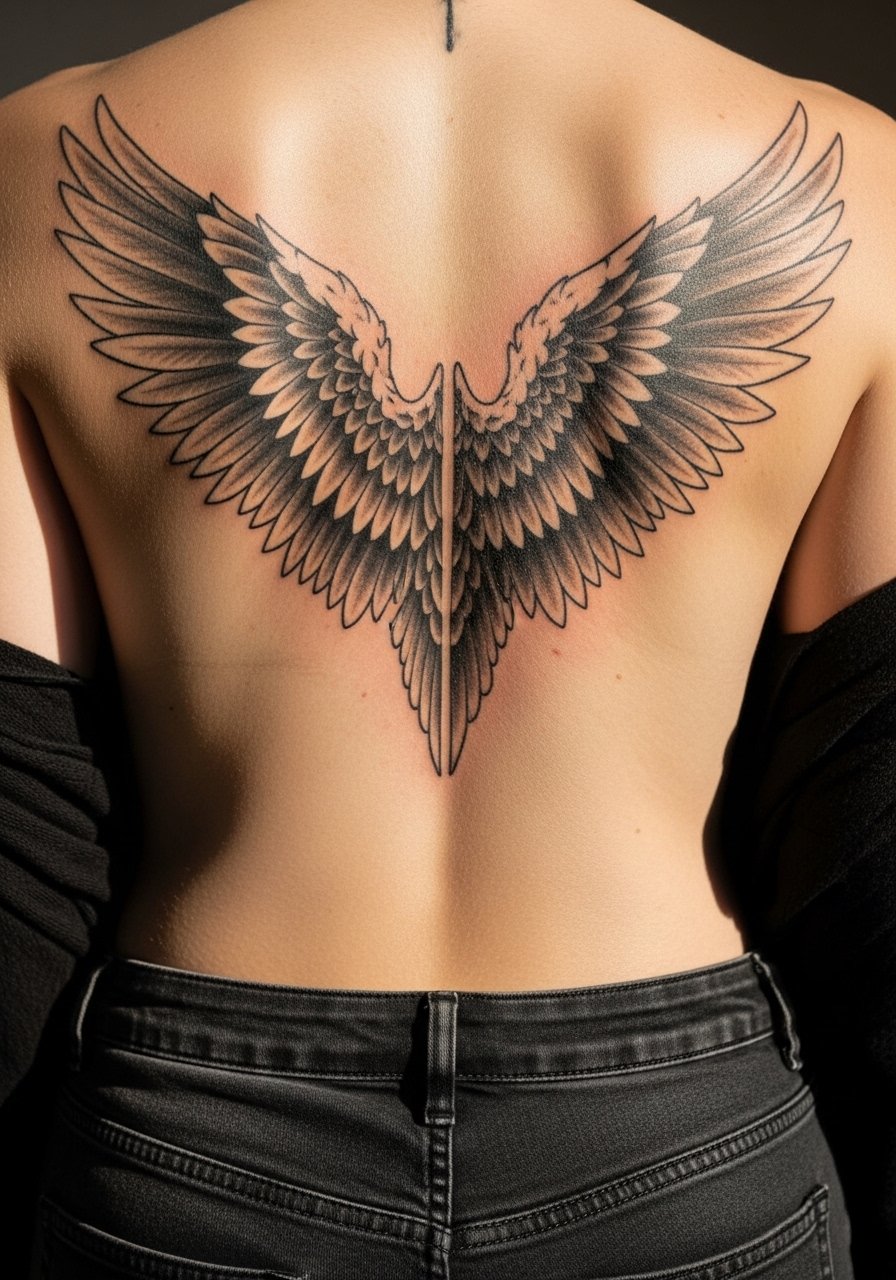
Spine-aligned wings are architectural and read beautifully with symmetrical feather detail. The spine area needs balanced composition so one wing does not visually dominate the other after posture changes. I suggest photographing your back in several poses during the consult so the artist can tweak curvature. Session wear that allows full back access without dragging fabric over your head is best. Long-term, keep sun protection in mind because UV hits the shoulders frequently.
21. Dark Angel Portrait with Multi-Eye Motif on the Thigh
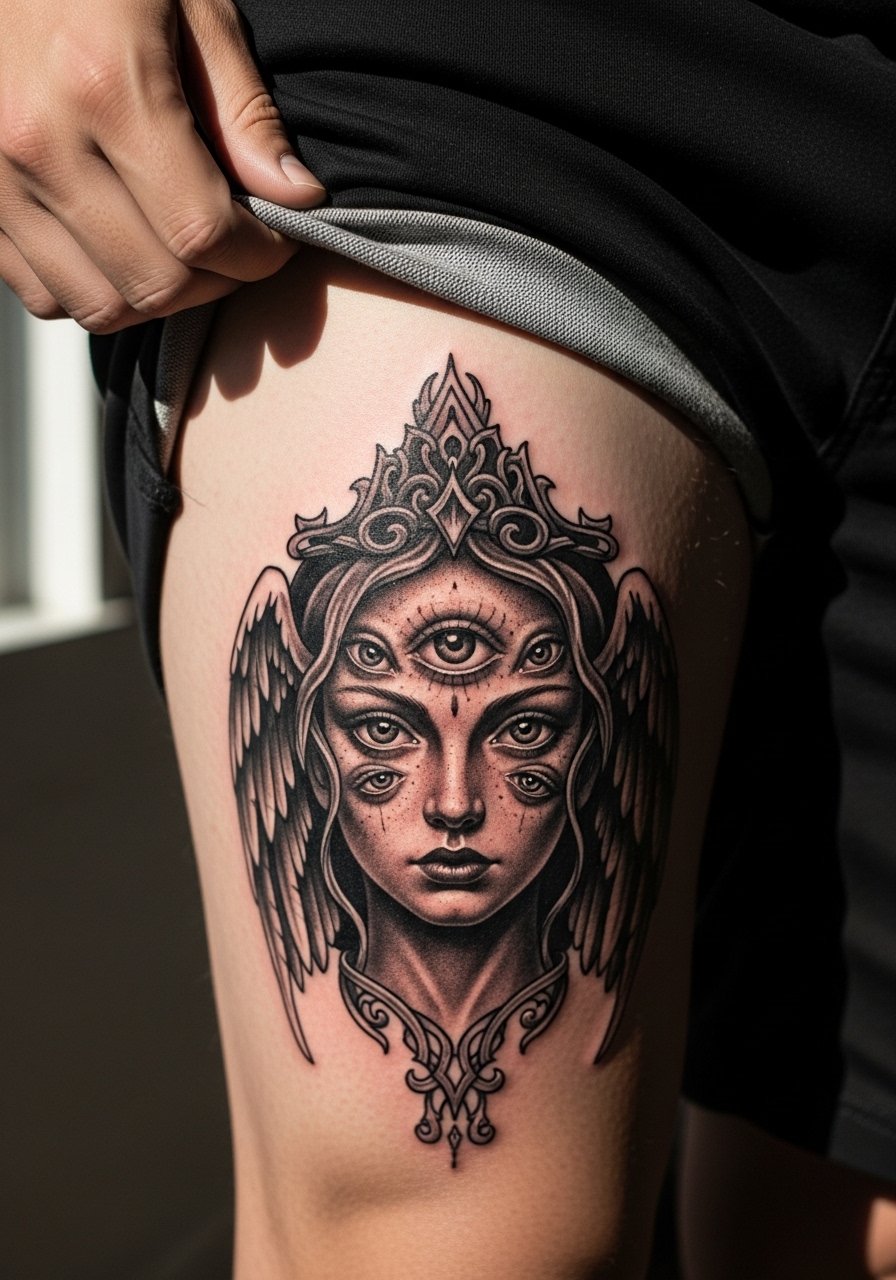
Adding surreal elements like extra eyes ups the narrative intensity and the technical demand. For thigh portraits, detail retention is better than on hands or fingers, but the motif still needs size. Tell your artist how much surrealism you want versus realism so proportions match. For showing it off, shorts and skirts are great choices. Consider pairing with a high-waisted skirt that occasionally reveals the image.
22. Watercolor Halo Accents Around a Black Angel on the Shoulder
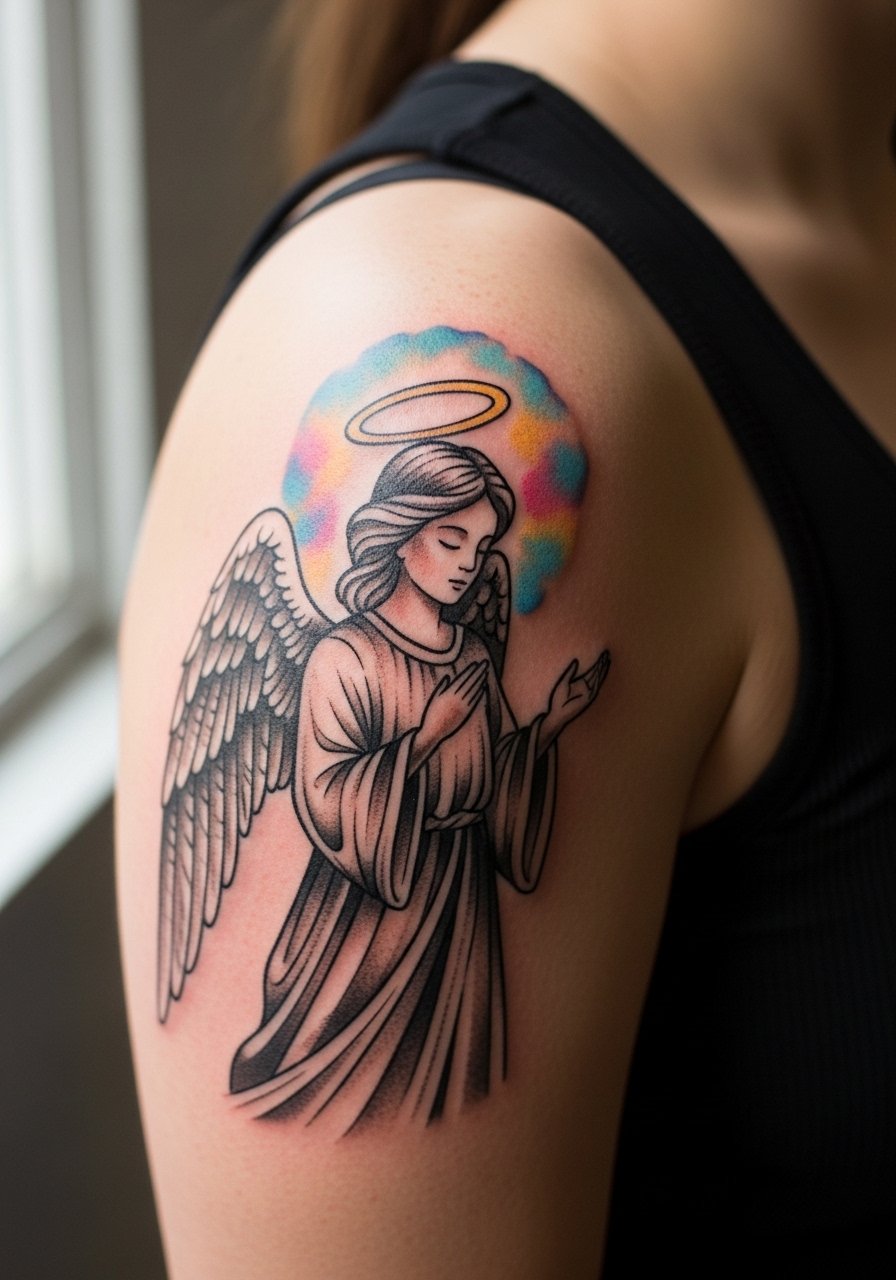
Shoulders take watercolor nicely because they get less friction than hands. If you want color accents, make the blackwork the structural anchor and use watercolor as halo glow rather than core form. That way the design keeps its outline as pigments shift. Ask the artist about pigment choices that hold pigment in your skin tone. For the appointment wear a tank top that gives full shoulder access.
23. Ornamental Dark Angel Sleeve Panel on the Upper Arm
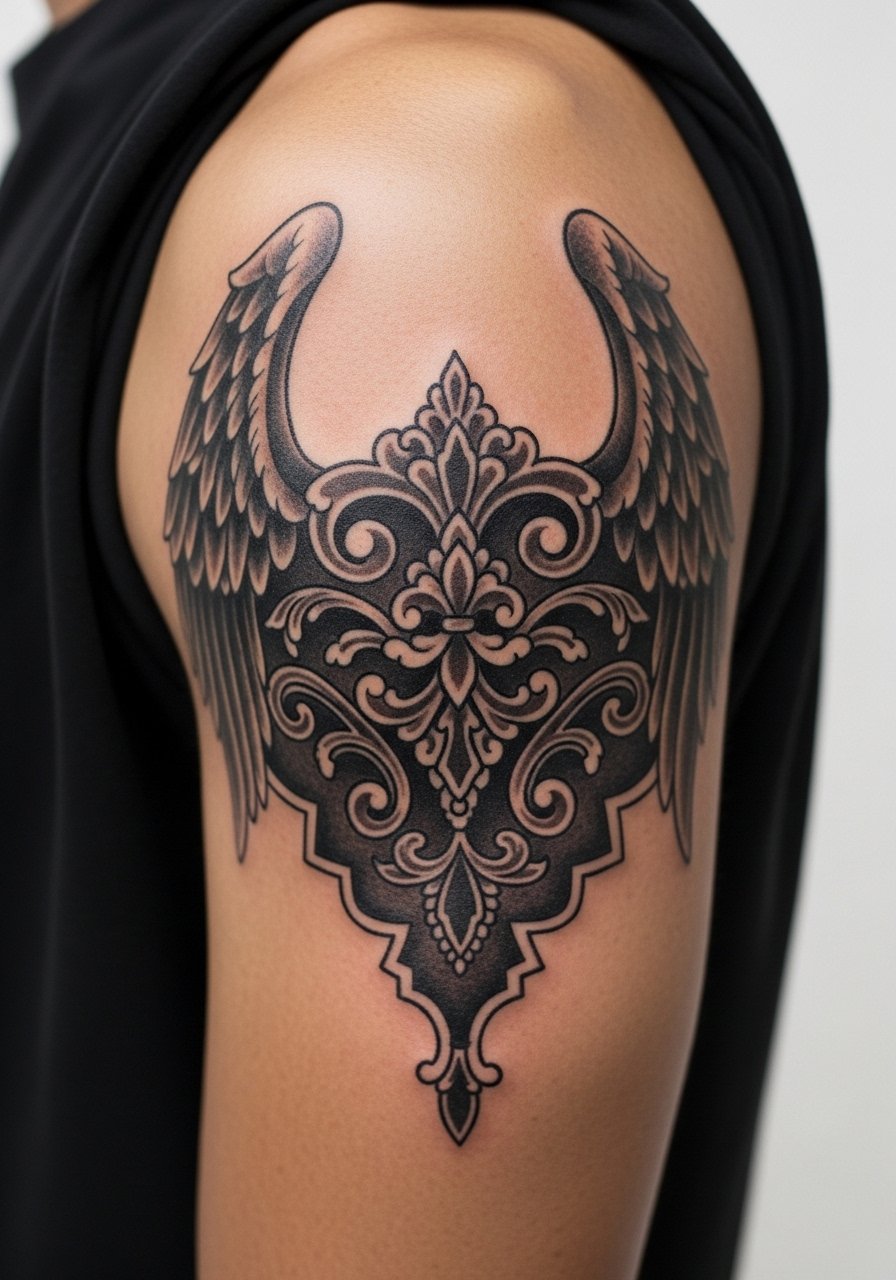
Ornamental panels anchor sleeves without demanding full-arm saturation. The upper arm tolerates tight ornamentation, but avoid cramming too many tiny dots into narrow bands. Instead space filigree to let the negative space show. When planning a panel, think about how nearby elements will sit. For session comfort choose a short sleeve fitted shirt so you can roll sleeves up easily between appointments.
24. Small Dark Angel on the Ankle
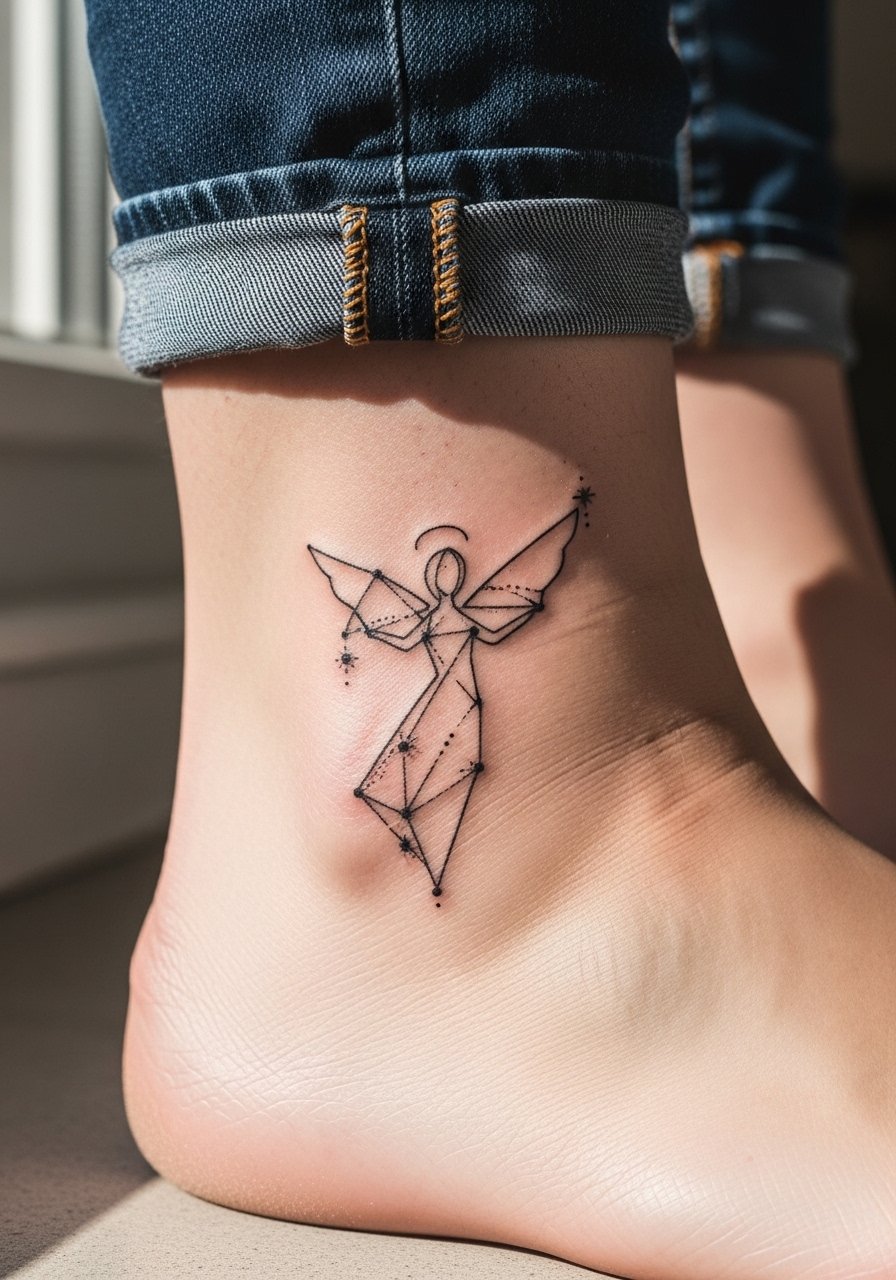
Ankle tattoos are charming but take knocks from socks and shoes. For small dark angels on the ankle use slightly bolder outlines or add a small filled element to keep the design visible after healing. The session is quick but plan for a week of careful shoe choices. For showing it off pick sandals or cropped pants and consider an ankle bracelet on the opposite foot to balance the look.
25. Dark Angel Sleeve Focal Piece on the Inner Bicep
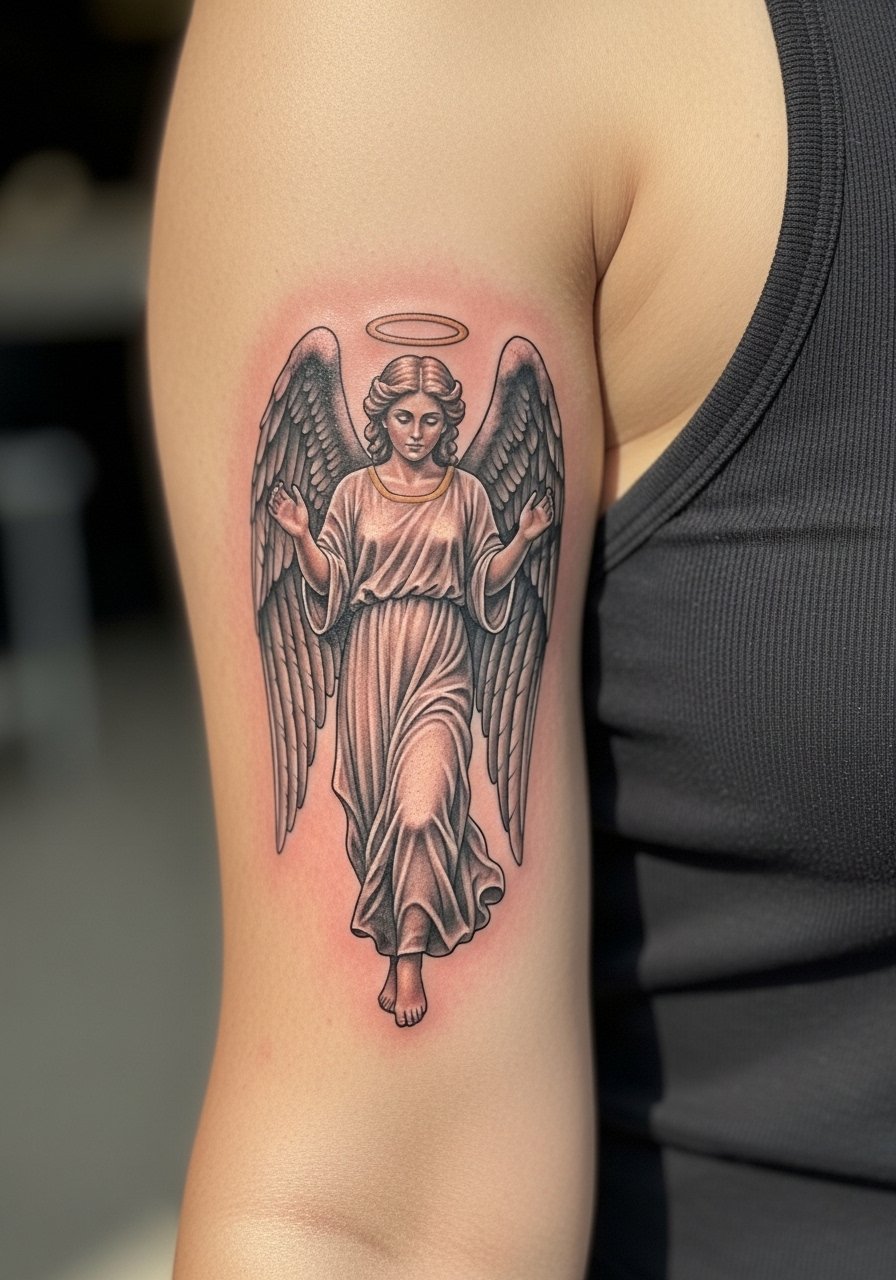
Inner bicep pieces are private and revealable, which makes them popular for personal motifs. The area can swell during sessions so plan for moderate line weight. Ask your artist about softer shading to avoid dense black blocks in the inner arm where blowout risk rises. For sessions wear a tank top so you can raise your arm comfortably. This placement ages well if spaced thoughtfully.
26. Dark Angel Ribcage Minimalist Line Script
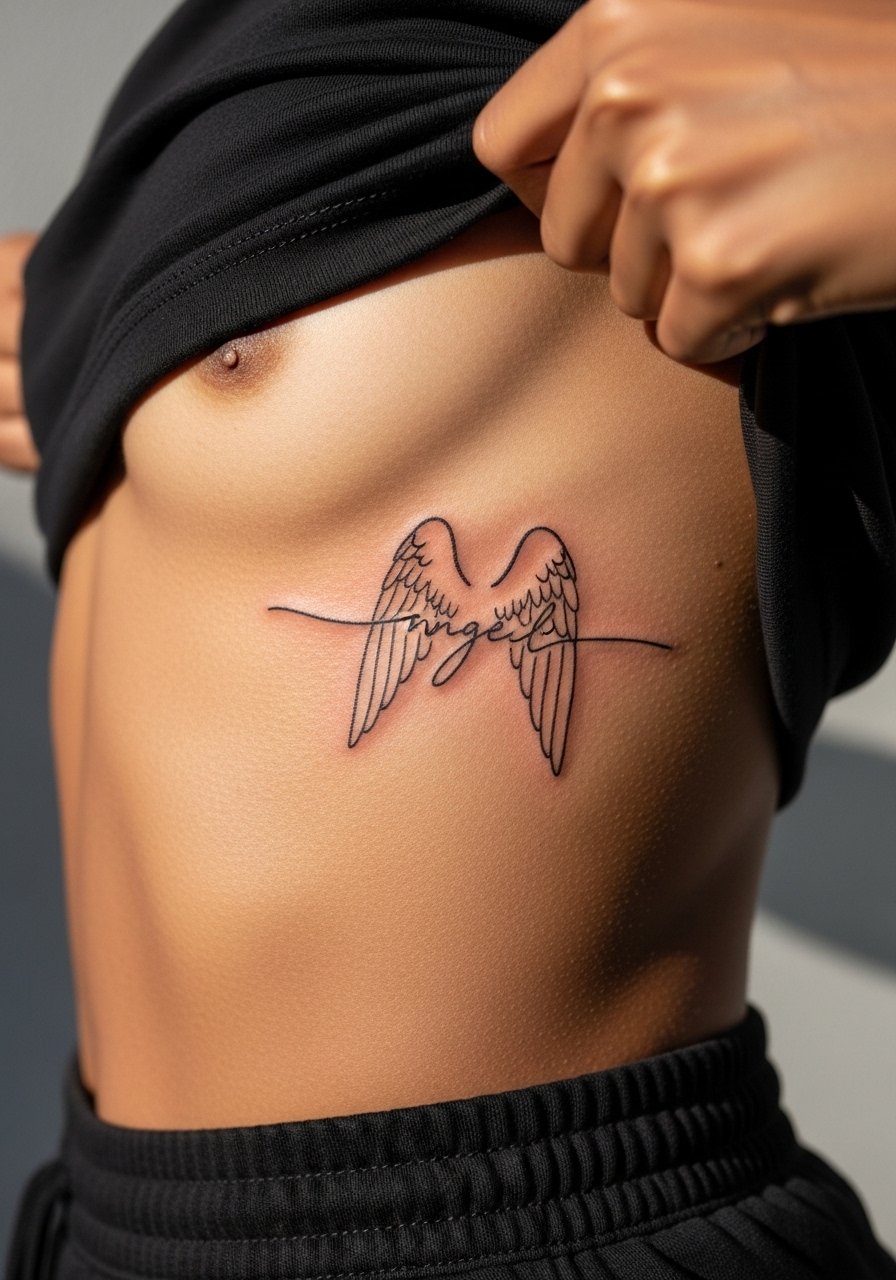
Ribcage script needs extra spacing and strong anchors. Tiny script can blur in the stretch-prone skin there. If you prefer minimalism, ask for slightly larger letter forms and steady baseline spacing so words stay legible. The session is painful for many, so topical numbing and short breaks are advisable. Wear a cropped top you can lift rather than removing clothing. Discuss healed examples with your artist beforehand.
27. Hooded Dark Angel Silhouette as a Small Finger Tattoo
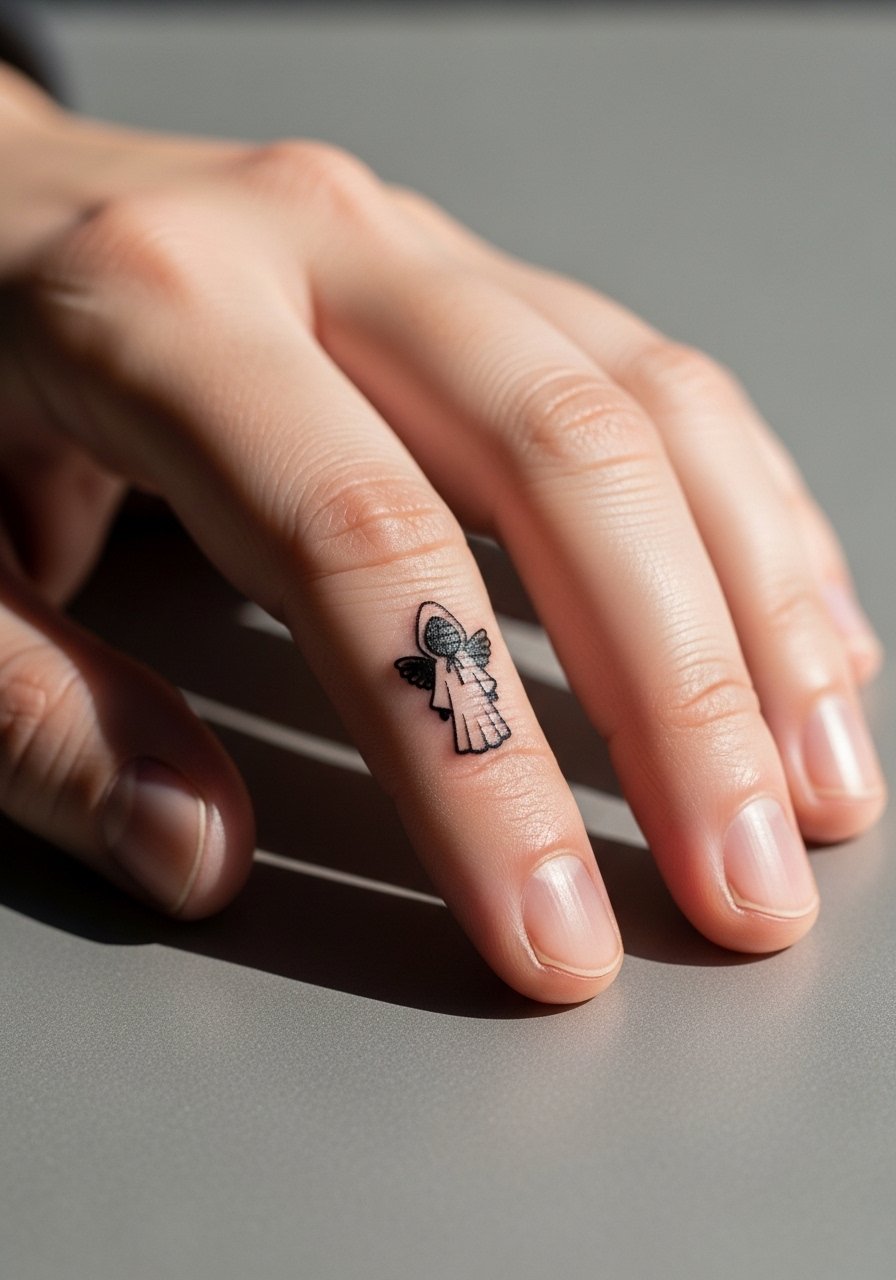
Finger tattoos are intimate and high-maintenance. Tiny silhouettes need crisper, slightly bolder edges than a wrist micro. The daily friction and washing accelerate fading, so expect touch-ups sooner. A common mistake is asking for extreme detail in a space that cannot hold it. For the session plan for a very short appointment and think about placement on the finger face that rubs less. After you get it done consider minimal jewelry to frame it rather than crowd it.
Frequently Asked Questions
Q: Will fine line dark angel tattoos show up on darker skin tones?
A: Fine line can be visible on darker skin, but it often needs slightly heavier line weight or selective bolder anchors to maintain contrast. Ask your artist for healed examples on similar skin tones and request a mock stencil photo before the needle starts.
Q: How often will a watercolor dark angel need touch-ups compared with black and grey realism?
A: Watercolor styles typically require touch-ups sooner because pigments sit more subtly in the skin. Black and grey realism holds contrast longer. Plan on occasional refresh sessions for color work and expect realism to need fewer, though scheduled touch-ups every few years are normal.
Q: What should I budget for a mid-sized dark angel back piece or thigh portrait?
A: Expect multi-session projects that fall within a mid-to-high range depending on artist skill and location. Budget ranges are common. Think in terms of session counts and per-session rates rather than a single number so you can plan financially without surprises.
Q: How do I find an artist who specializes in dark angel realism without relying on follower counts?
A: Use style-specific searches on artist directories, check healed photos in portfolios rather than just fresh shots, and read community threads for healed examples. Attend conventions or guest spots to see work in person where possible.
Q: Are hand and finger dark angel tattoos worth it if I want longevity?
A: They are worth it if you accept the maintenance trade-off. Hands and fingers weather quickly, so plan for touch-ups and choose bolder, simplified motifs for better longevity.