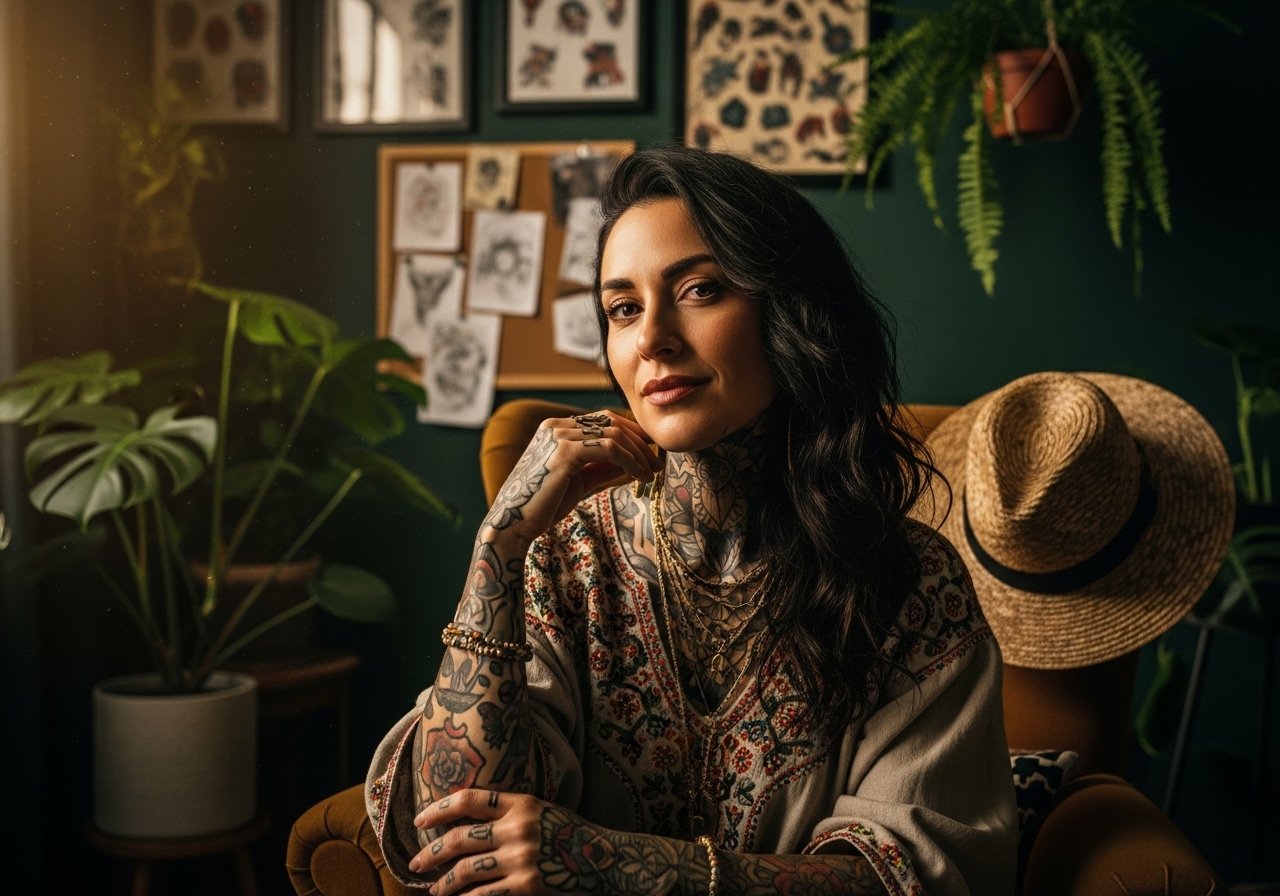
Fine line paw prints are everywhere on saved boards right now, but what holds up and what washes out fast are two different conversations. Trends favor featherlight linework and tiny color pops, yet placement, skin type, and aftercare decide if that sweet little print still reads as ink in two years. Read the first idea and you will see a practical option that keeps its shape over time.
1. Fine Line Single Paw on the Wrist
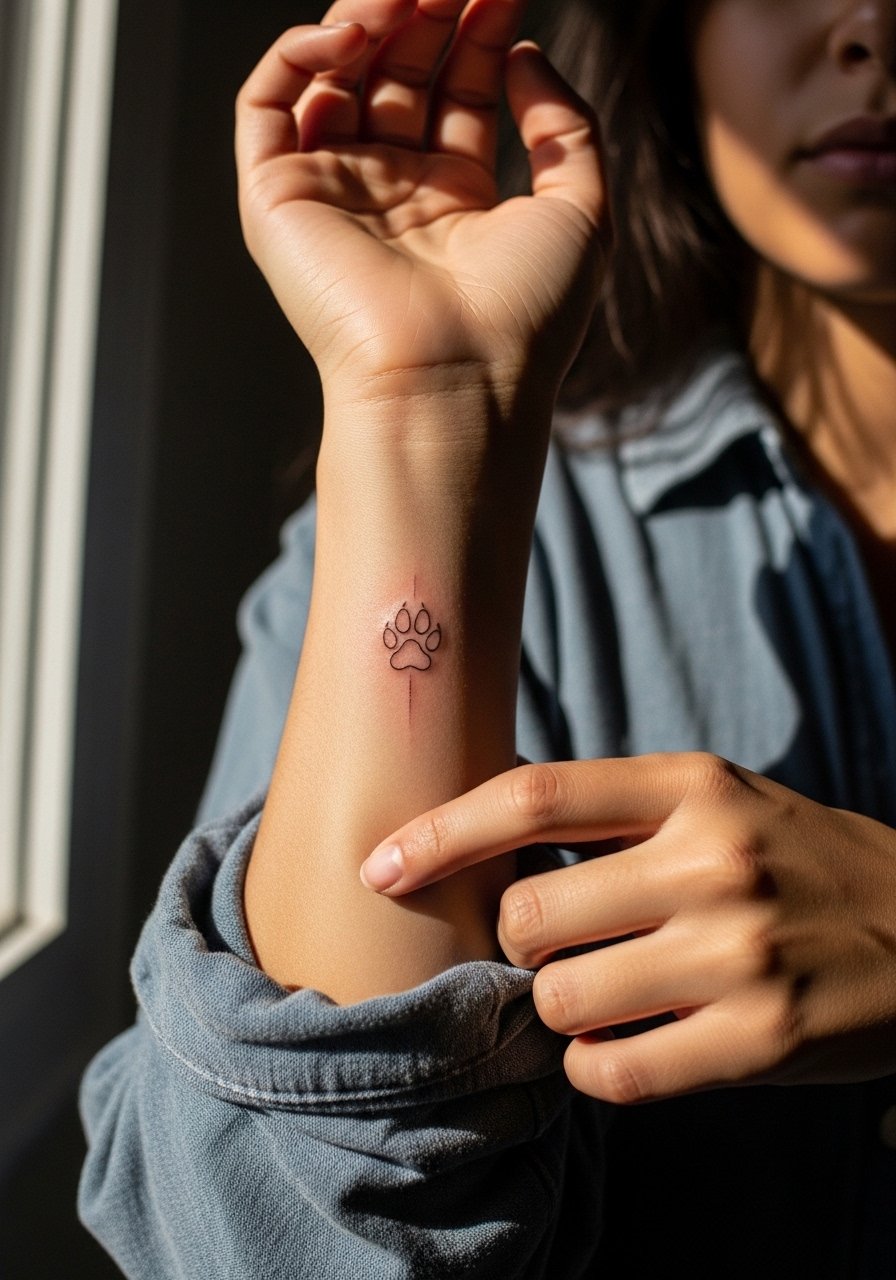
A single fine line paw on the inner wrist reads low-key and personal, and I usually recommend it for someone who wants a daily reminder without loud color. Fair warning, wrists see a lot of washing and wrist tattoos can soften faster than forearm pieces. In consultation ask for slightly heavier linework than a one-needle flash if you want longevity and plan a touch-up at year two if lines blur. For the session wear a sleeveless top so the artist has full access, and for showing it off try a thin chain bracelet like thin gold chain bracelet on the opposite wrist.
2. Micro Paw with Heart Detail Behind the Ear
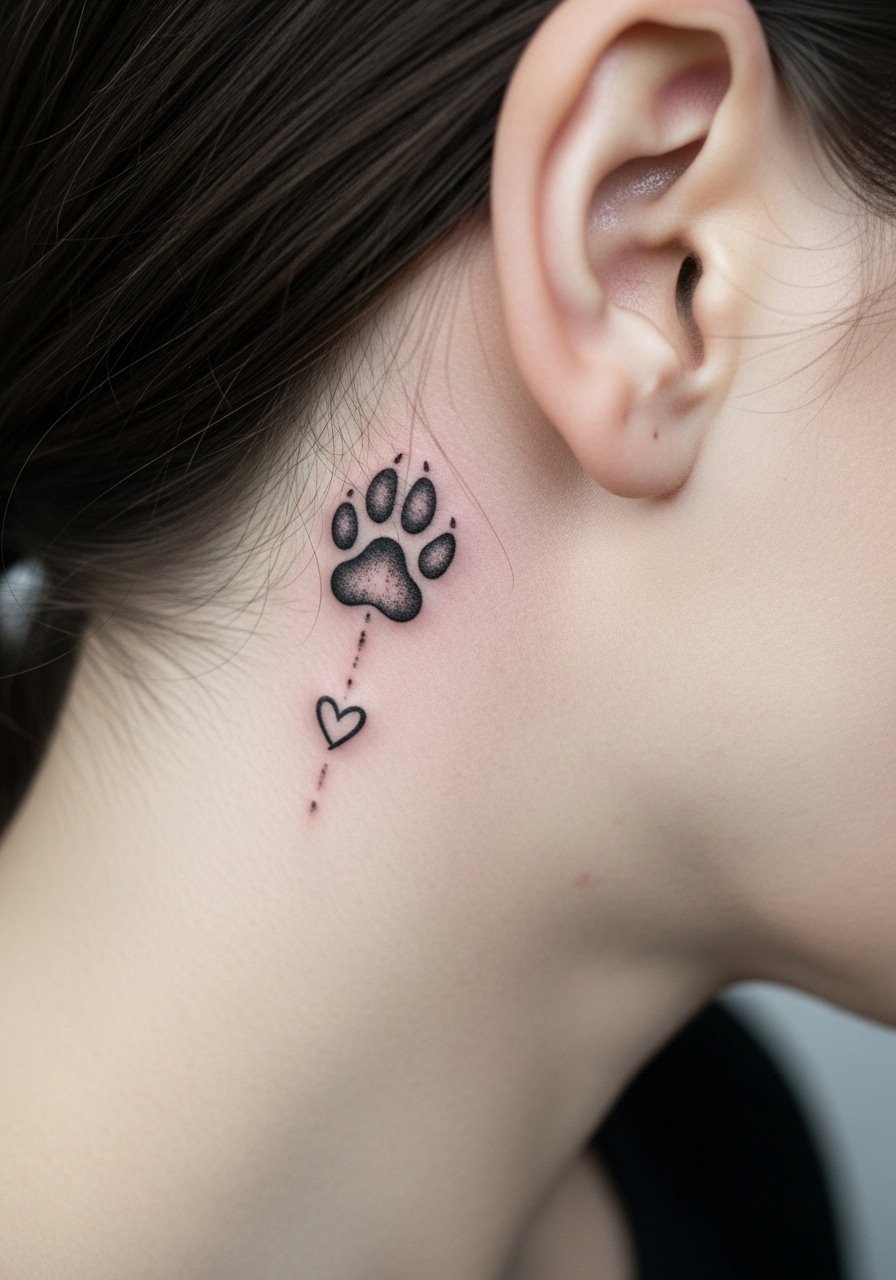
The micro paw with a tiny heart tucked behind the ear is discreet and sentimental. The spot is easy to cover with hair, so it works for someone who wants a private nod rather than a public piece. Session time is short and pain is low, but you should mention exact placement during consult because millimeters matter there. For healing, avoid heavy perfumes on hair that could irritate the area. A common mistake is asking for ultra-thin lines without considering touch-up needs. If you want wardrobe advice for reveal moments, a low ponytail and a thin chain pendant necklace sit nicely with the tiny design.
3. Dainty Paw Outline with Lace Accents on the Collarbone
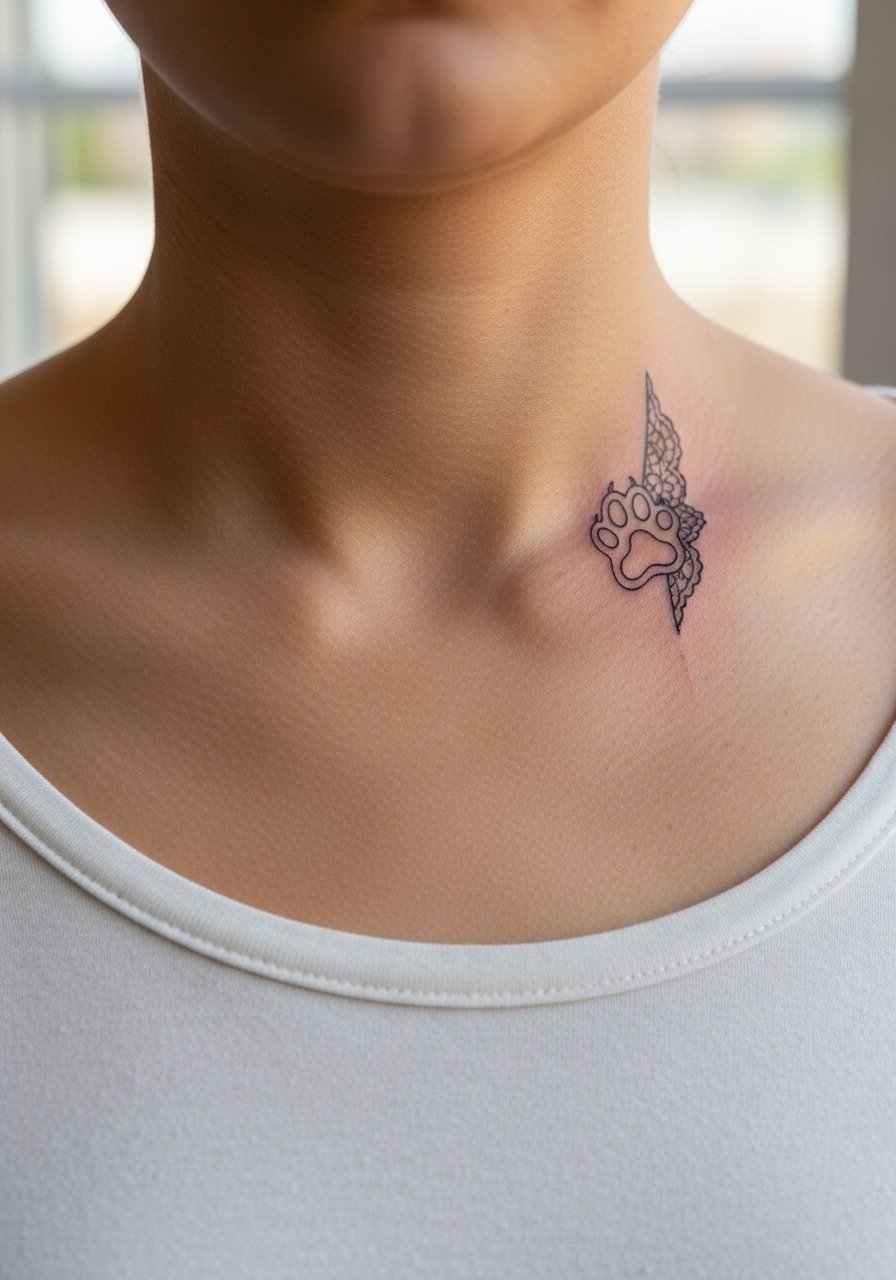
A lace-accented paw at the collarbone reads feminine without being overly ornate, and it plays well with neckline outfits. The collarbone is a moderate pain zone, but small pieces usually finish in under an hour. Ask your artist for leafing or lace that breathes around the paw rather than dense fill, which tends to blur with time. When booking, come in strapless or in a wide-neck top you can easily pull aside. Pair the finished piece with an off shoulder blouse silk for low-key reveals.
4. Neon Pad Pop on the Forearm
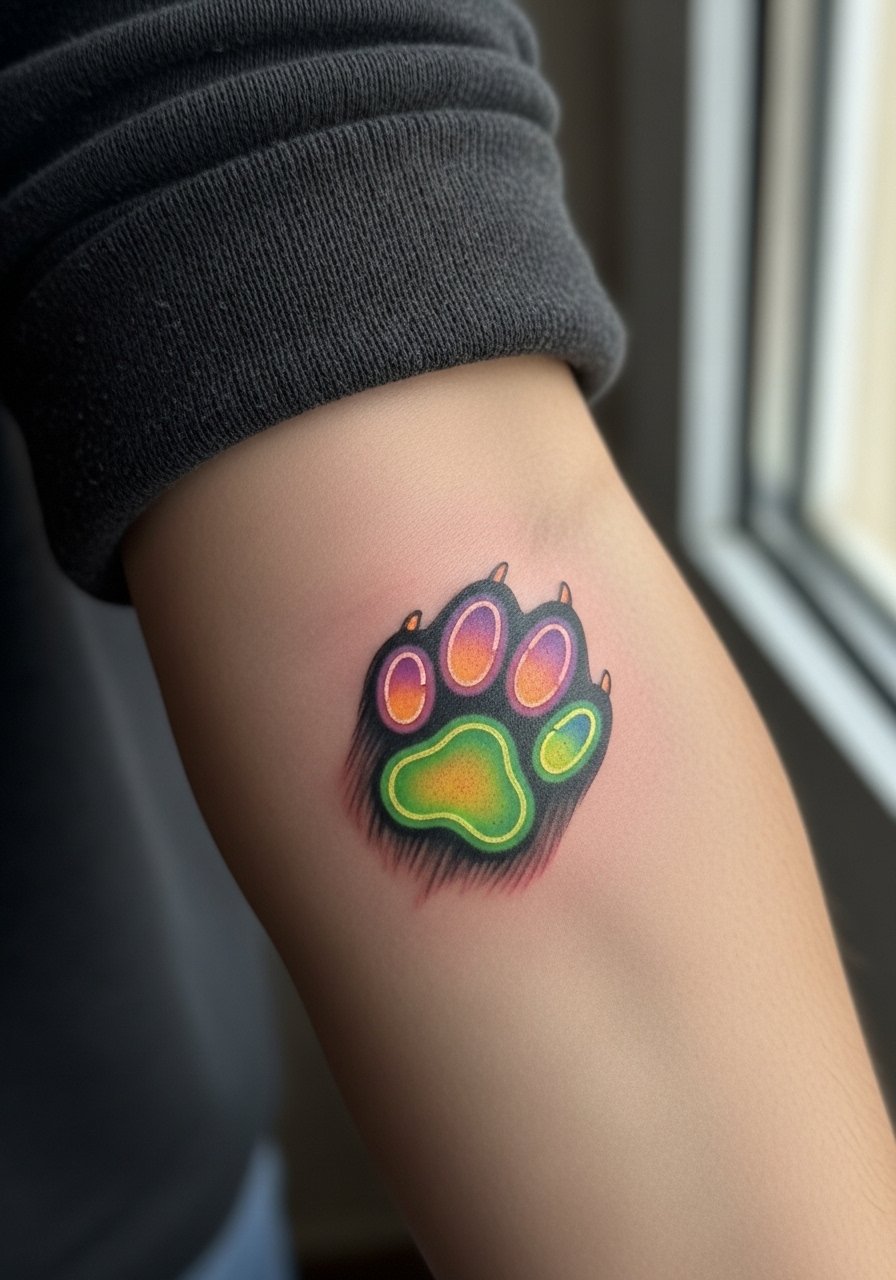
A neon pad pop is playful and vivid on pale to medium skin tones, and it works best when the neon is a small accent rather than full color saturation. The forearm gives space for the color to sit cleanly and sunlight helps it read bright. Artists split on long-term color stability, so ask about pigment brand and UV protection advice during consult. For session comfort, wear a short sleeve or loose button-down that you can roll. Show-off styling pairs well with high low hem dress looks that keep the arm visible in summer.
5. Rainbow Spectrum Paw on the Calf
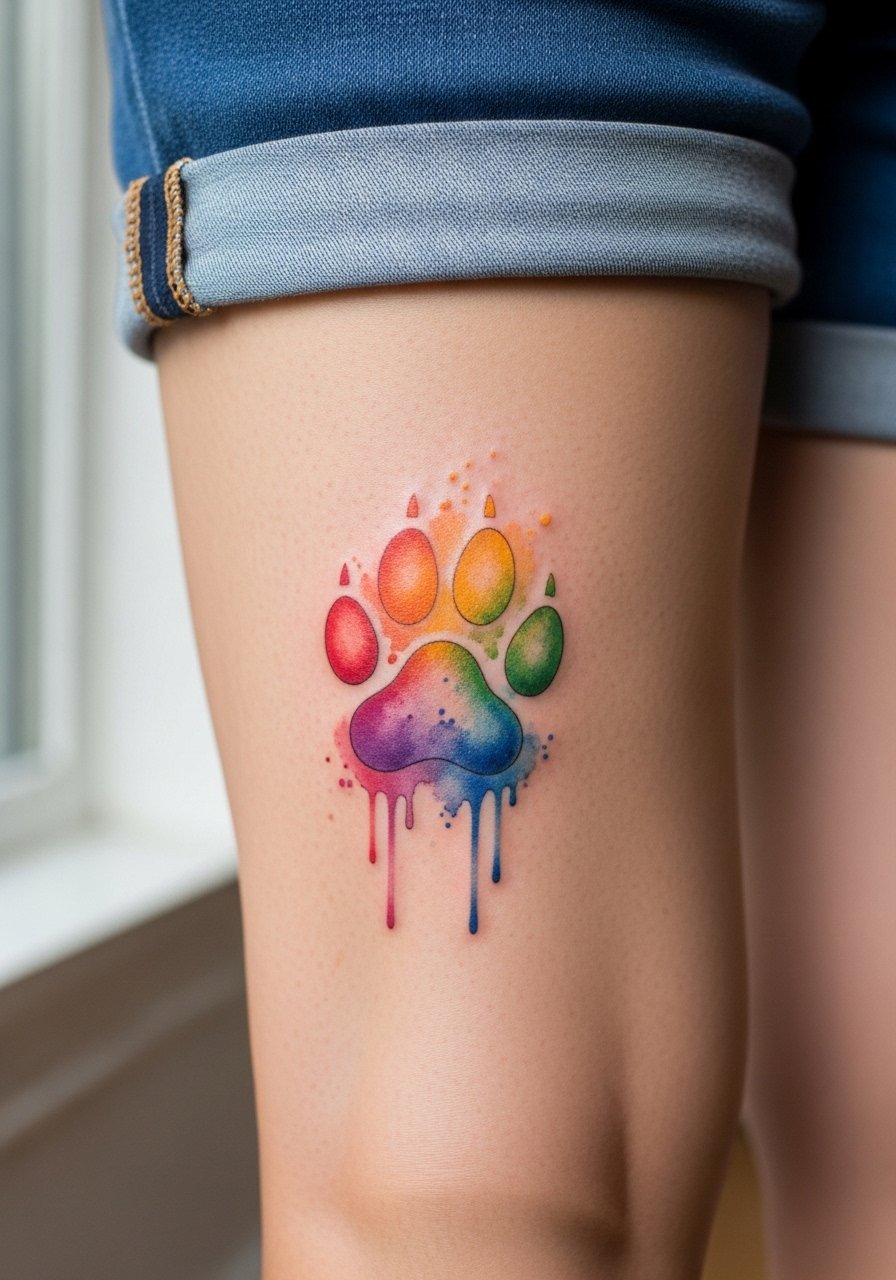
A rainbow spectrum paw suits someone who wants color and movement in a small piece. Calf placement gives room for a 2-inch gradient and color transitions that age more gracefully than micro watercolor on hands. The trade-off is that colors can shift faster in areas that see friction from jeans. During consult ask for higher saturation near the pad and softer wash toward edges to avoid muddying. For session wear loose shorts so the artist can work comfortably, and when you style it out try a solid denim shorts look to make colors pop.
6. Paw with Pet Name Script on the Inner Wrist
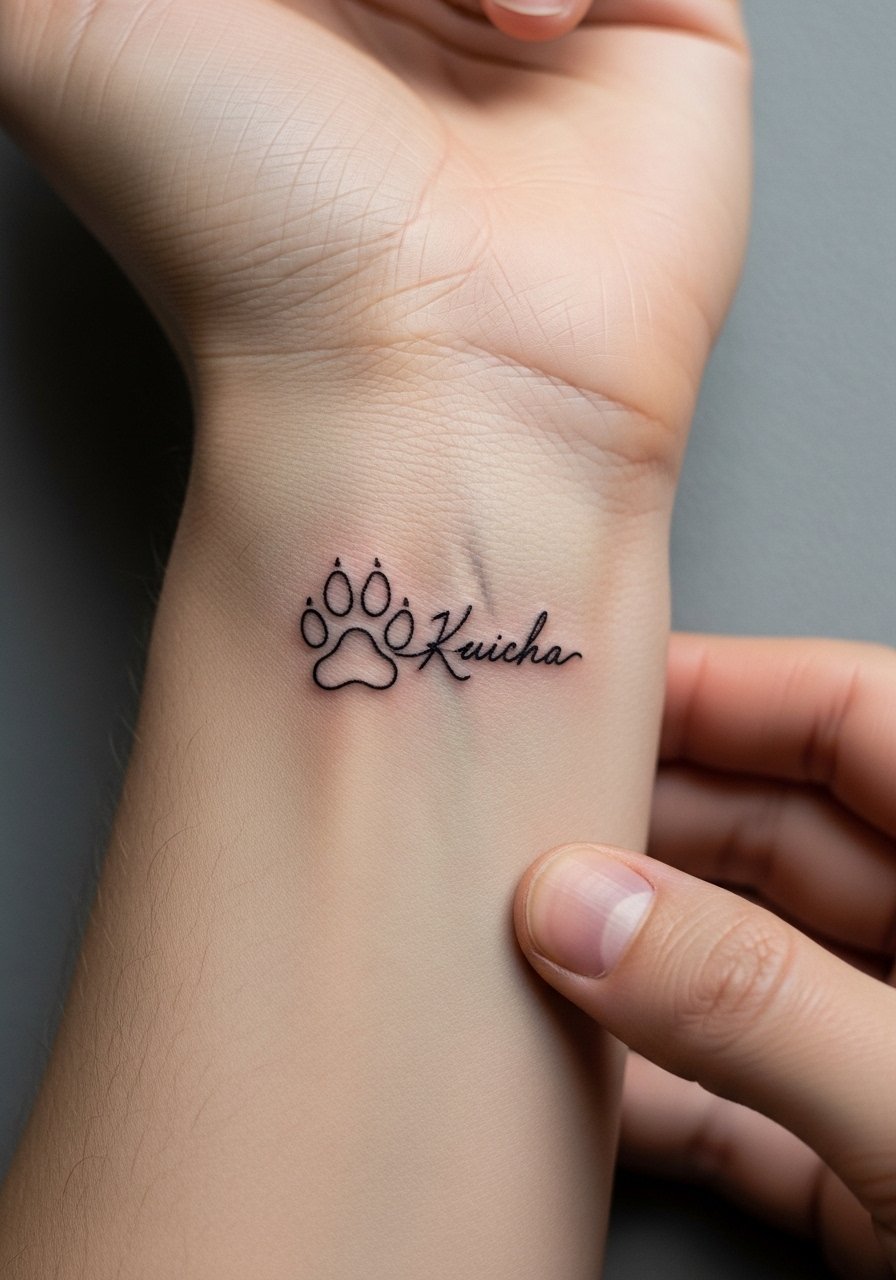
Pairing a paw with a short name in fine script creates a clear narrative without crowding small real estate. The inner wrist is highly visible so consider keeping the script under an inch to avoid blurring. The controversy around fine line durability matters here. One camp says fine line softens beautifully and can look elegant as it ages. The other camp warns that lines on hands and wrists often need touch-ups within two years. Ask your artist where they stand, show them the exact script size, and plan for a possible touch-up at year two. For reveal outfits, a thin chain bracelet opposite the tattoo keeps focus balanced.
Pack Smart
The pieces above include wrist, forearm, and calf placements that heal very differently, so a small kit covers session prep and the first week.
-
Frida Aftercare Spray. A light mist that many people prefer over heavy ointments for fingers and wrists because it does not leave a thick residue on delicate lines.
-
Indie Ink Balm. Breathable balm noted for working well in humid climates and keeping fine line pieces visible without a glossy finish.
-
Tattoo Goo. A matte-finish option some collectors use when they want minimal shine on small healed micros.
-
Australian Tea Tree Salve. Gentle anti-itch support for colorful paws that can flare as they settle, especially in warm months.
-
Aquaphor Healing Ointment. Thin layer application for the initial days helps lock moisture in on dense linework while you follow your artist's timing for removal.
7. Curly-Cue Outline on the Shoulder
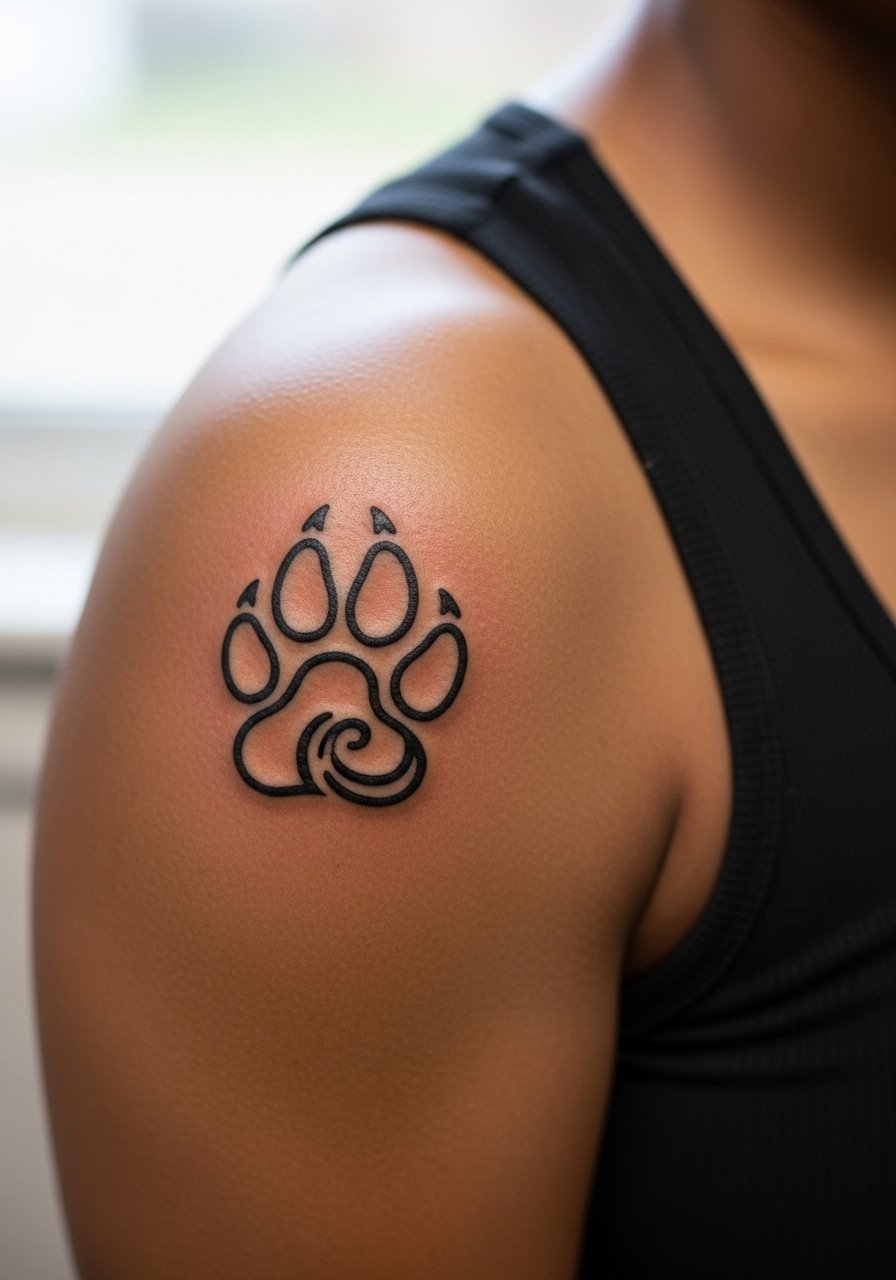
A curly-cue outline gives a whimsical silhouette that reads larger than its actual size. Shoulders are forgiving for fine line because the skin there does not see as much friction as hands or ankles. Tell your artist you want the curls to sit spaced rather than packed so the design breathes for long-term clarity. For the session wear a sleeveless tank you can move aside, and when you show it off try a sleeveless halter top to highlight the curve.
8. Dog-Human Hybrid Paw on the Side of the Hand
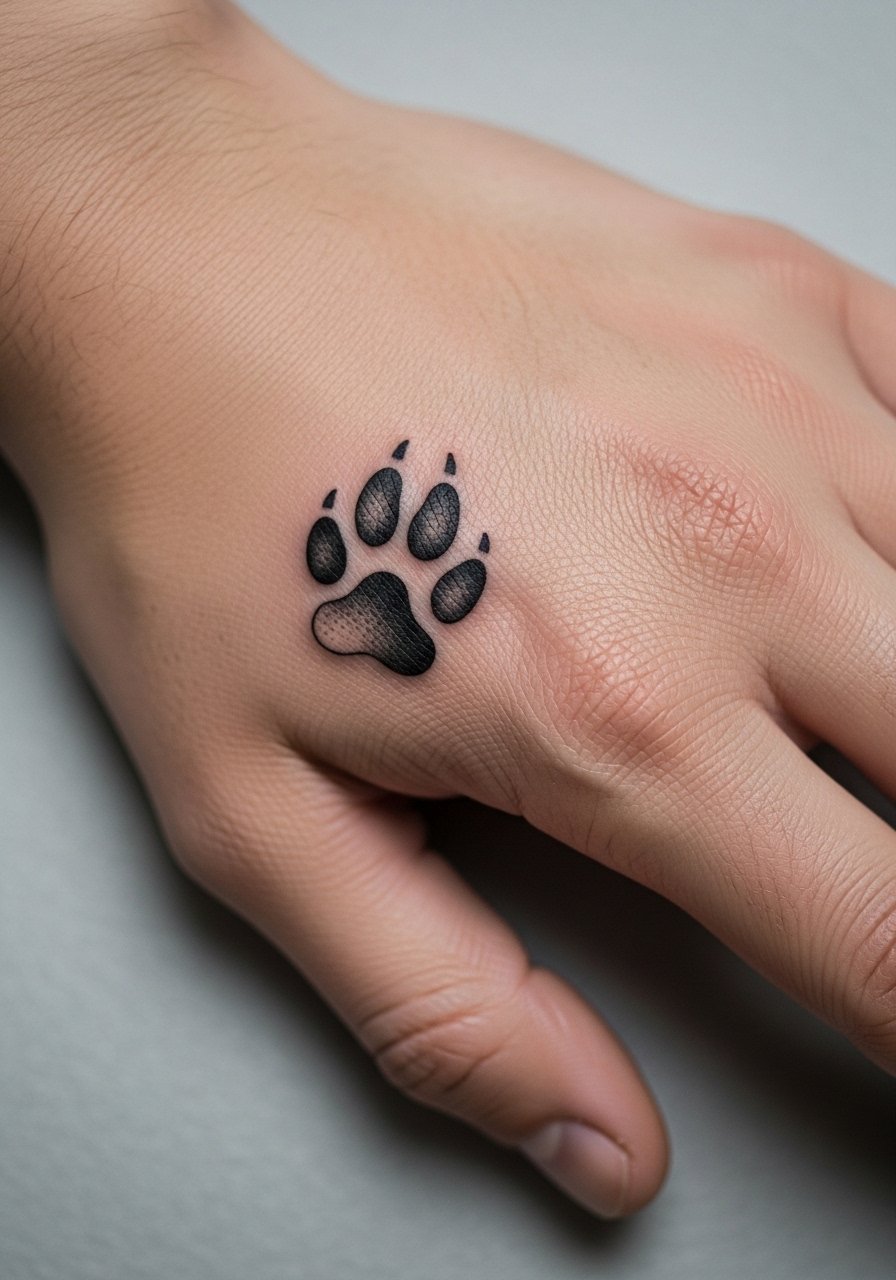
Hybrid overlays that merge a human fingerprint pattern into a paw create thoughtful symbolism in a small package. Hands are high-friction zones and sometimes clash with workplace norms, so consider placement on the side of the hand or lower finger. Artists vary on the acceptability of hand work and may ask for a higher deposit. A common mistake is requesting ultra-fine stippling there; choose bolder lines to avoid early blurring. For session wear keep hands bare and nails short, and consider a dainty ring stack set that complements without crowding.
9. Cotton Candy Cluster on the Outer Calf
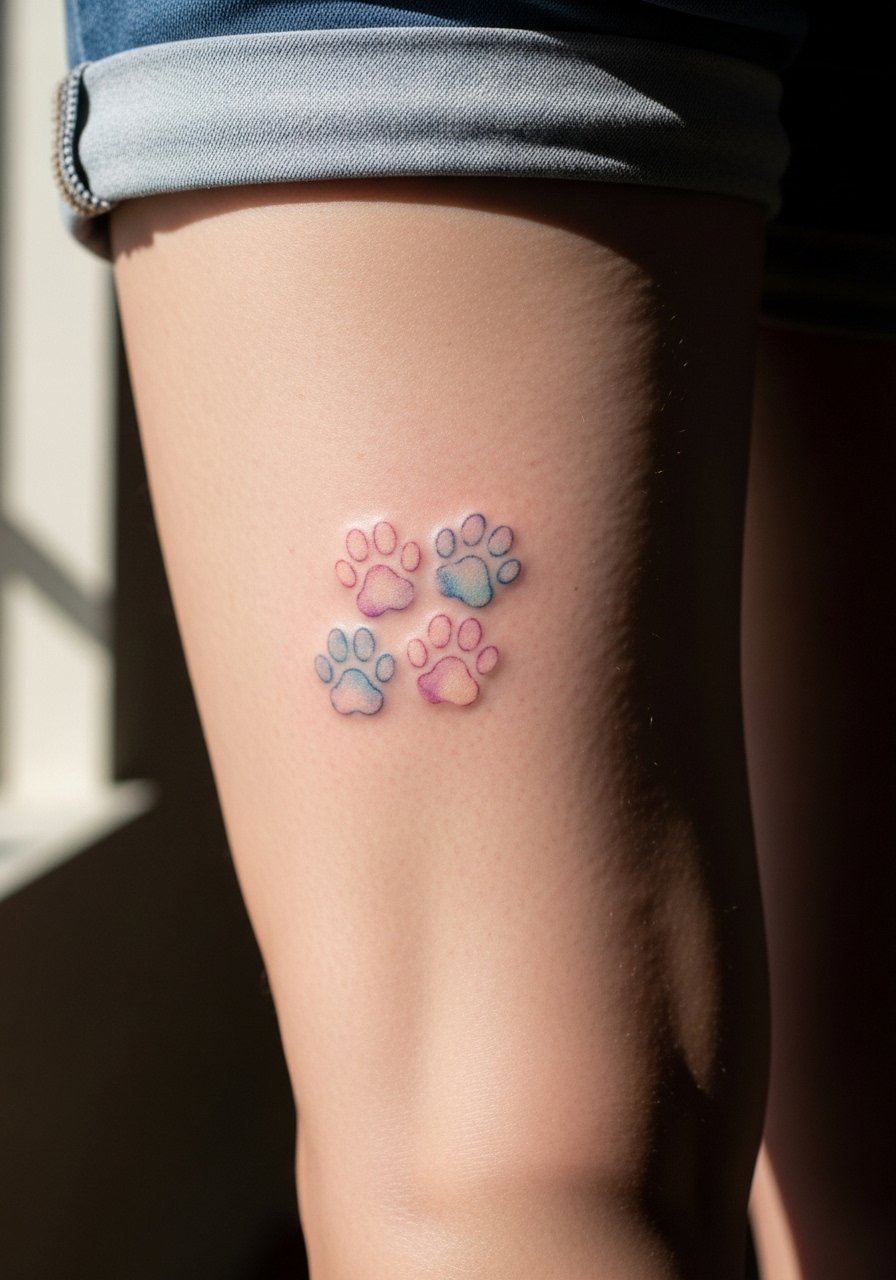
A pastel cluster of paws gives nostalgic color without demanding large real estate. The outer calf handles color saturation well, and clusters let you represent multiple pets or moments in a compact vertical. For longevity ask for color gradation instead of sheer wash, because pastel washes can fade into each other. Wear loose shorts to the session so the artist can access the calf easily. Finished pieces look great with a rolled jogger pants casual look when you want to keep the tattoo visible.
10. Simple Black Paw on the Side of a Finger
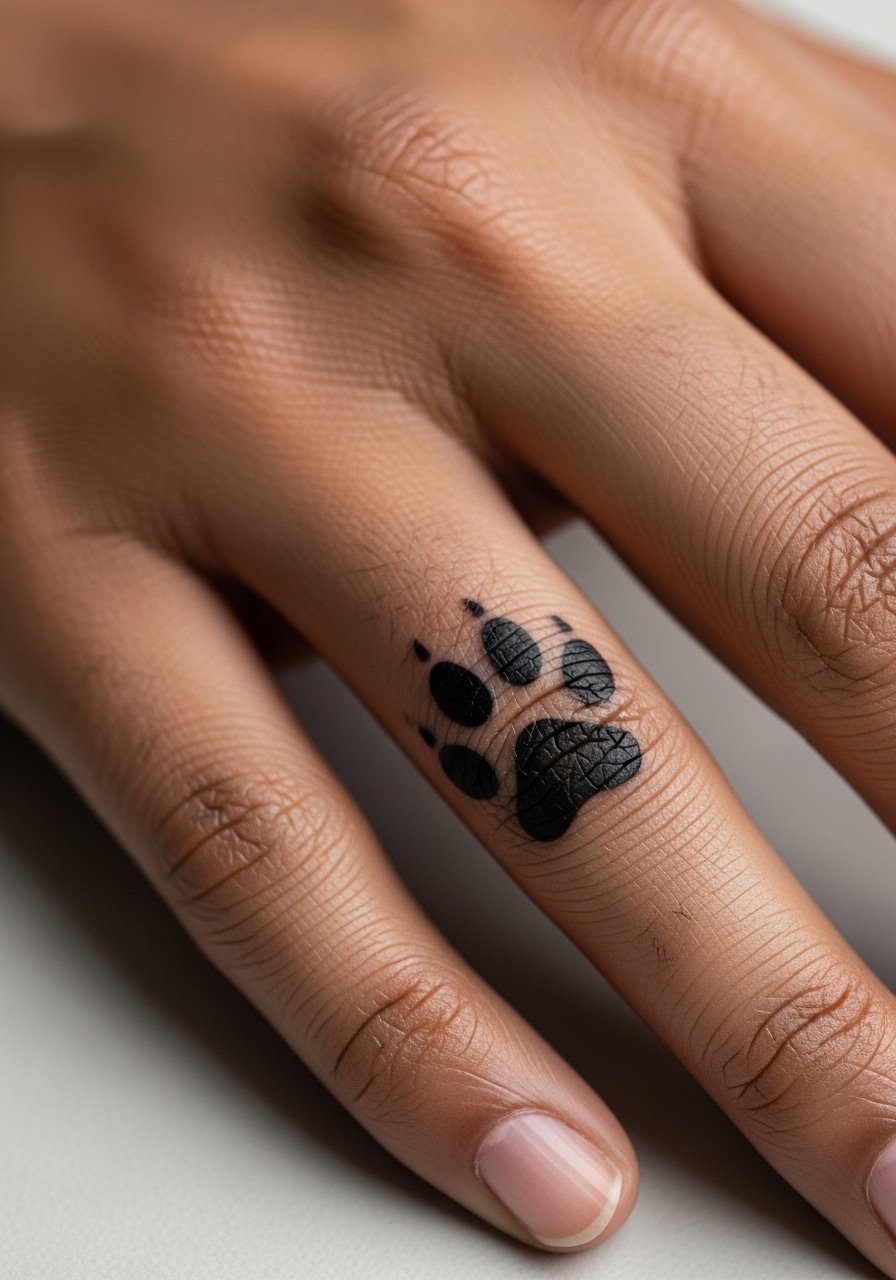
Finger paws are a classic first-tattoo move because the silhouette is readable and the session is very short. Expect faster fading and potential need for touch-ups; the skin there is thin and regenerates quickly. One real mistake is asking for micro script near a finger paw; small lettering blurs faster than simple glyphs. If you want daily wearability, go for bold pad and toe shapes rather than micro stippling. Pair with neutral nail colors and consider a neutral nail polish that keeps attention on the tiny print.
11. Tiny Paw Stack on the Inner Arm
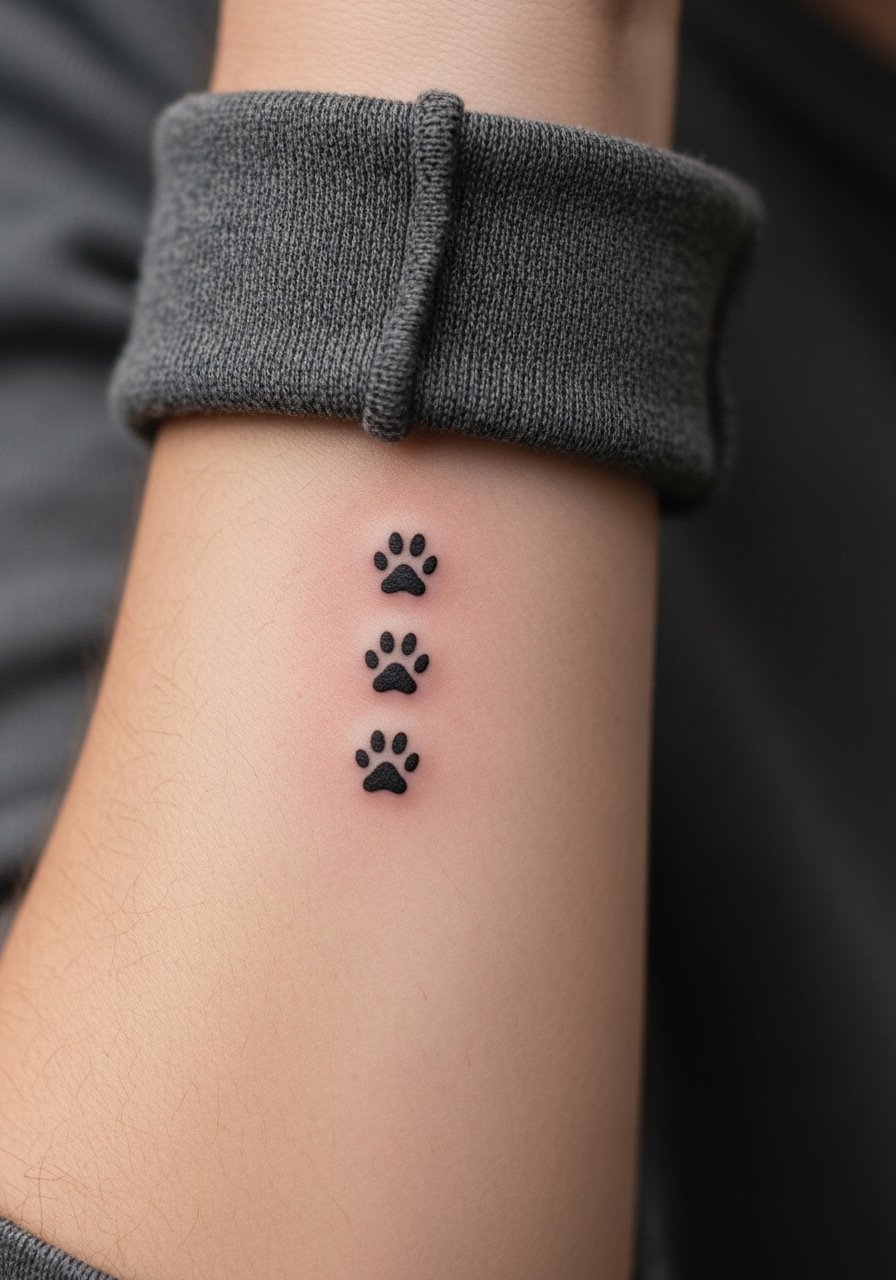
A vertical paw stack is an elegant way to list multiple pets or moments without sprawling across skin. Inner forearm placement offers good longevity and low friction, which helps fine lines hold. Tell your artist whether the order is chronological so spacing can reflect that story. A common aging issue is stacking prints too close; give each print 6-8 millimeters breathing room to reduce merging. Wear a linen rolled sleeve shirt to the session and style the healed work with a linen rolled sleeve shirt for an editorial vibe.
12. Paw with Floral Vine Wrap Around the Ankle
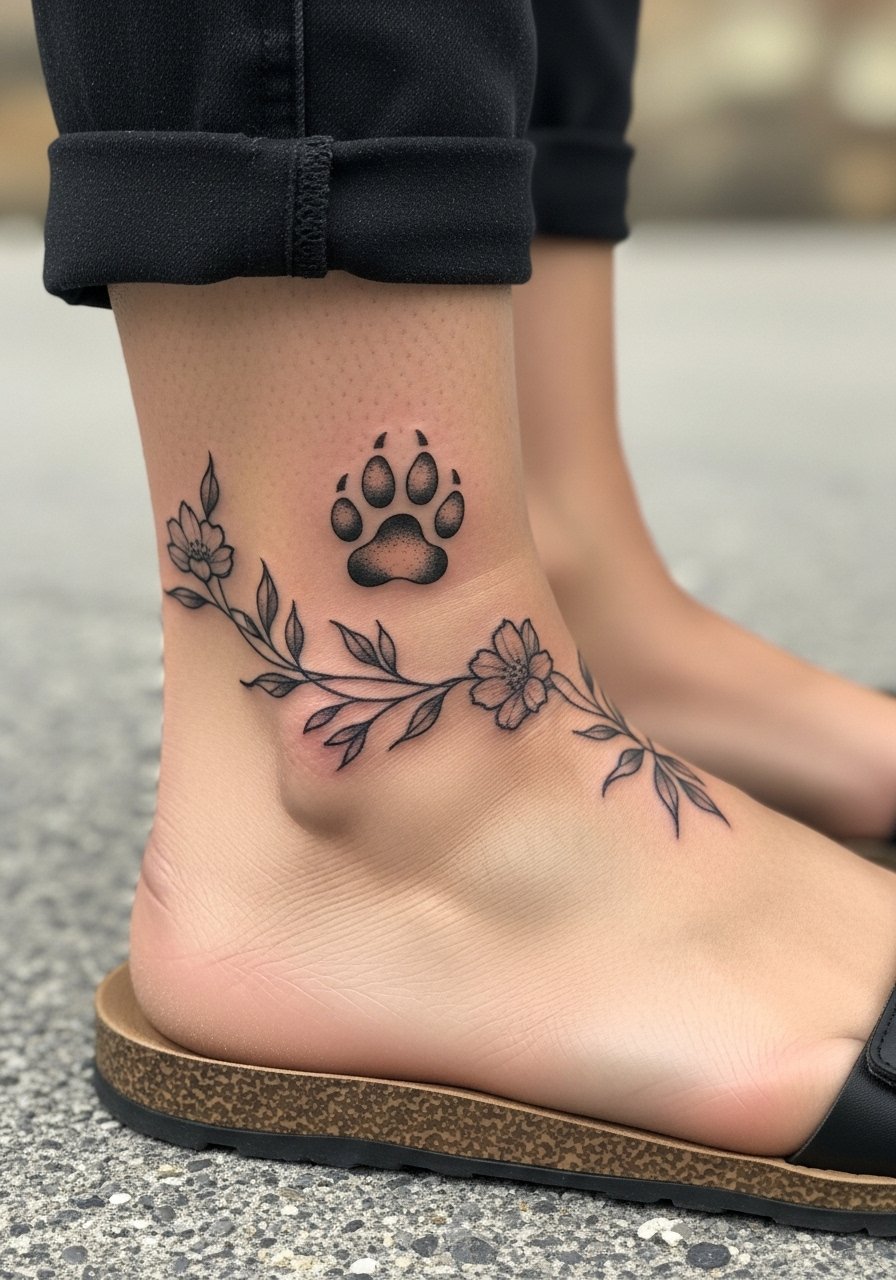
A vine-wrapped paw at the ankle softens the silhouette and moves the eye along the leg. Ankles are visible and fashionable, but they also rub against shoes and socks which can speed fading. If you have darker skin, consider bolder outlines rather than ultra-fine lines to preserve contrast in photos. During consult ask for slightly heavier node points in the vine so it holds through seasons. Come to the session with cropped pants or sandals, and when styling, a pair of strappy flat sandals shows the piece without covering it.
13. Mud-Print Texture for Authenticity on the Thigh
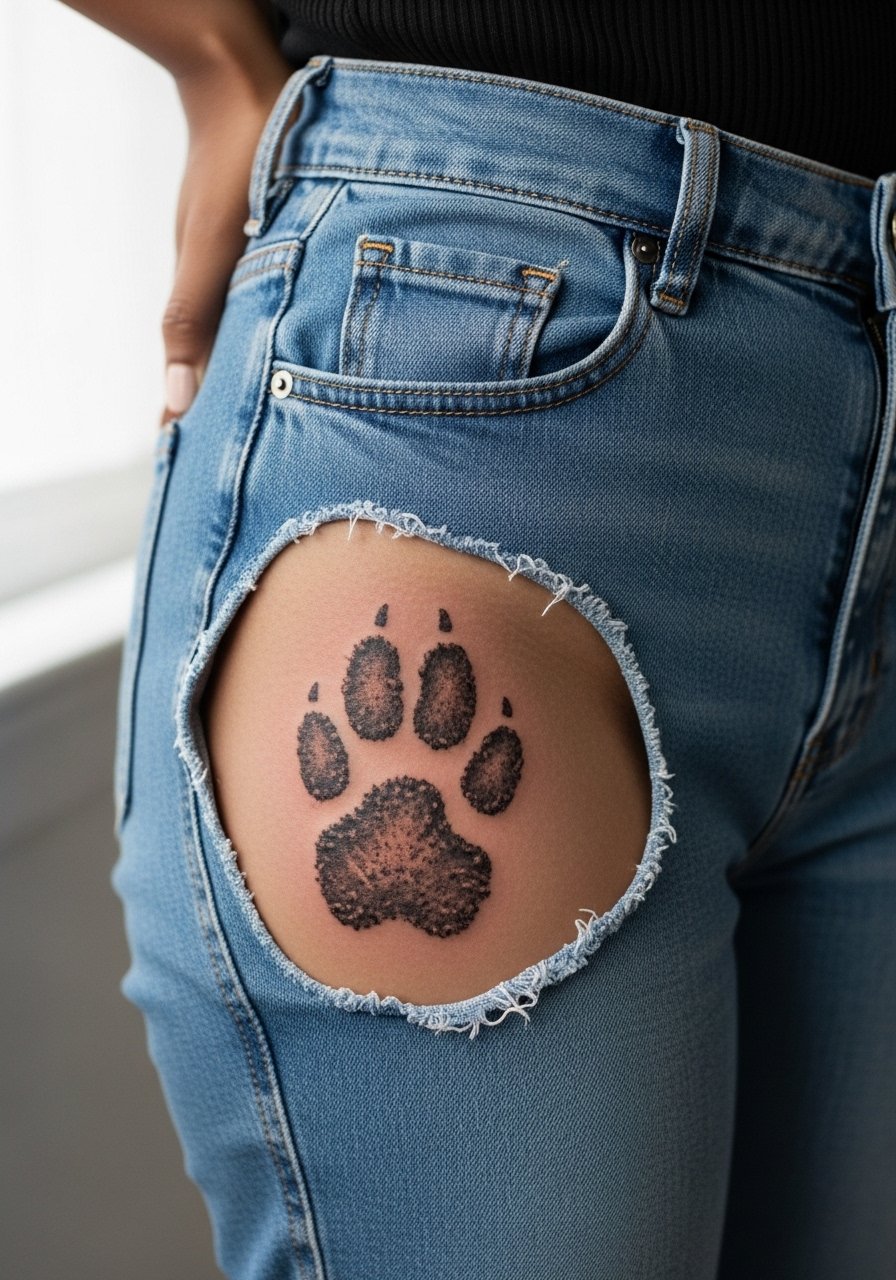
A mud-print textured paw mimics an actual paw impression and reads highly personal. The thigh gives enough canvas for texture without losing detail. This is one of the under-covered ideas that brings authenticity rather than a simple glyph. Ask for contrast in the pad texture to keep the imprint language legible after healing. Thigh tattoos sit well under clothing during recovery, so show up in loose shorts or a skirt. When you style it out, high-waisted denim and cropped tops give a nostalgic summer vibe.
14. Neon UV Paw for Nightlife Pop on the Calf
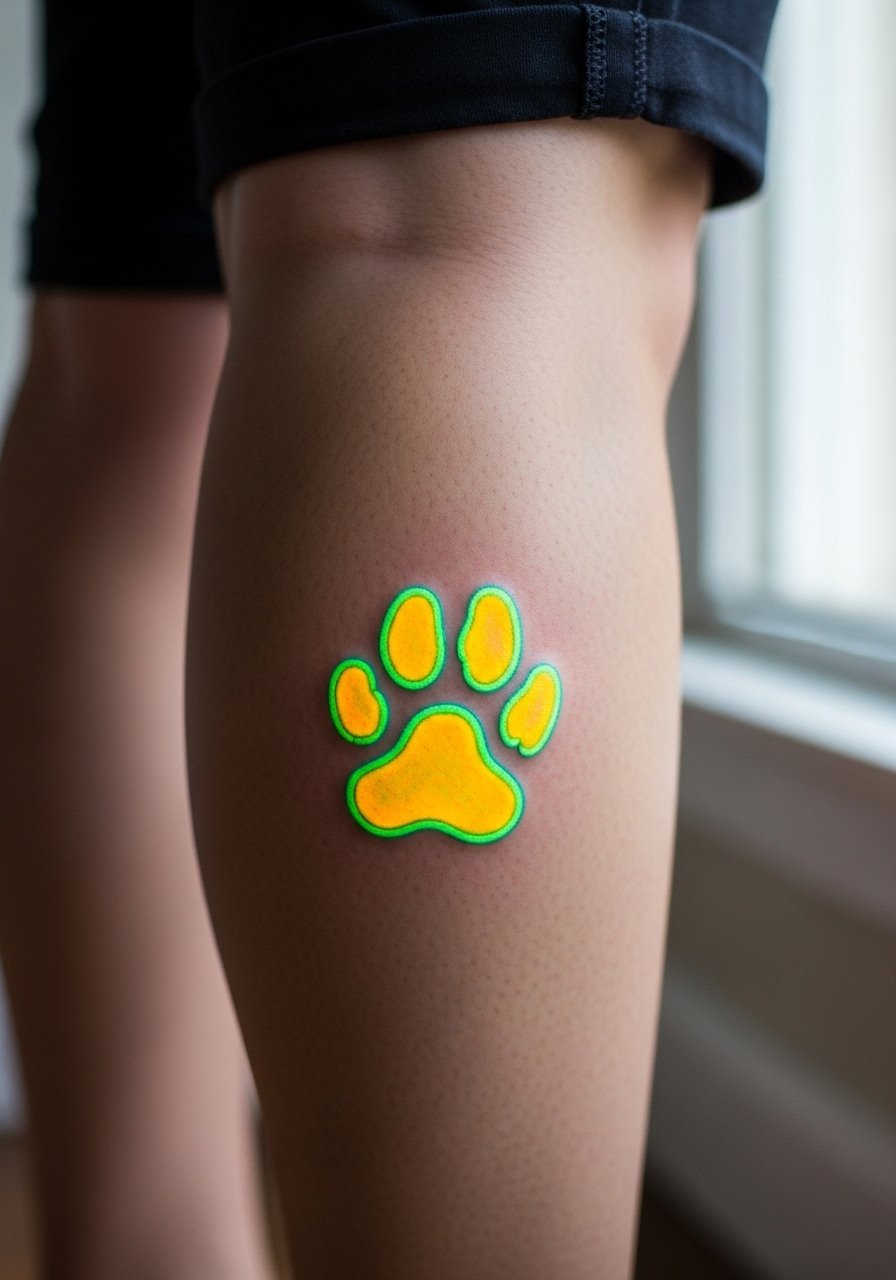
A UV-reactive neon paw is a niche idea that shows up in nightlife and festival settings. It looks subtle by day and intense under blacklight, which is the point for people who want seasonal show-off ink. Ask your artist about pigment choices and whether they use UV-reactive inks they trust. The calf is a safe placement for demoing this because it is not subject to the same friction as hands. Plan sessions in loose shorts and keep sun exposure regulated to protect vibrancy. For summer wear, a high low hem dress or shorts makes the neon pop.
15. Paw with Tiny Star Constellation Above It on the Inner Forearm
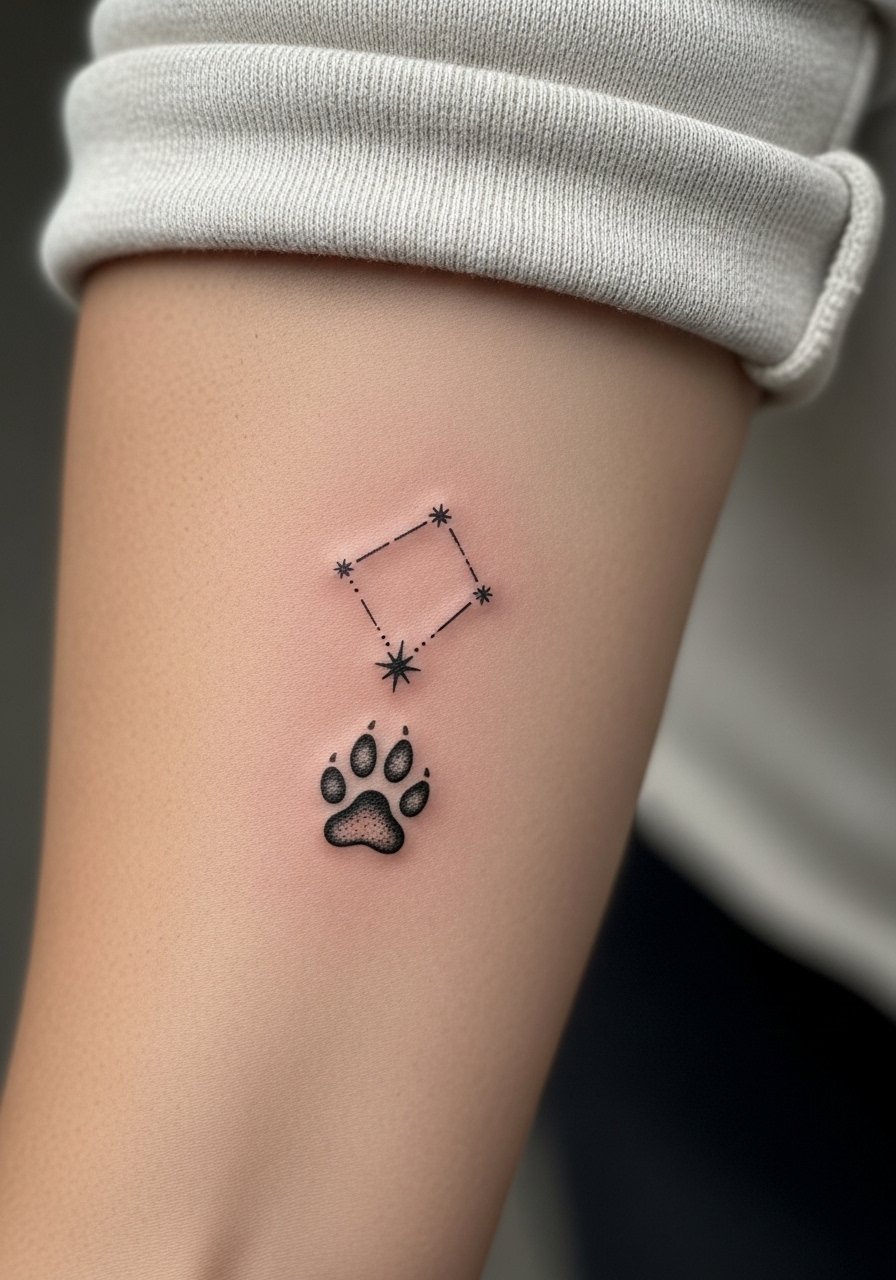
Adding a small constellation above a paw gives celestial context without increasing size dramatically. Inner forearm placement keeps the design readable and gives room for slight spacing between elements so the stars do not merge into the paw. The mistake I see most often is cramming more stars than the area can handle. Mention exact star placement and spacing in your consult. For showing it off try a rolled sleeve button-up and a olive button up shirt for a simple editorial frame.
16. Human-Dog Paw Overlay on the Foot Arch
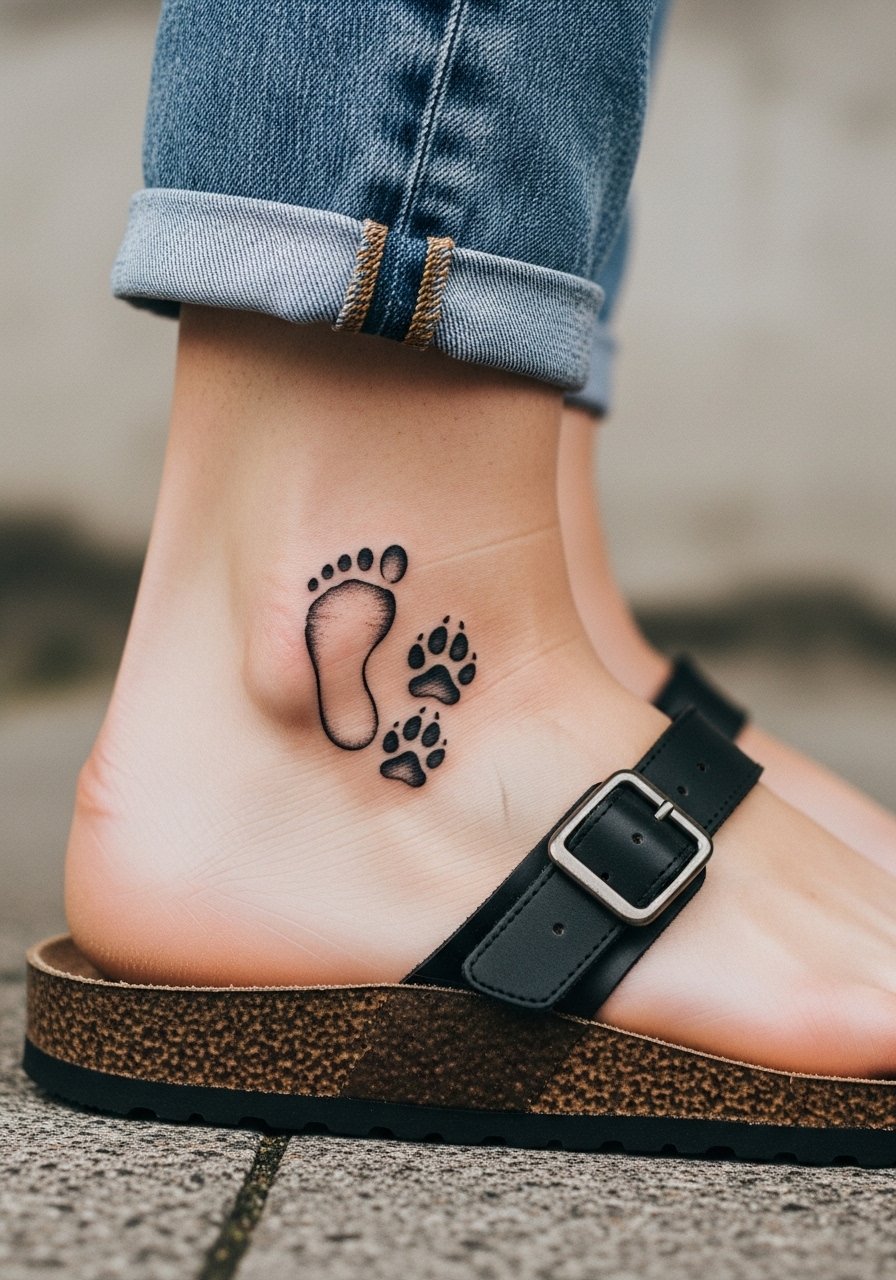
An overlay blending a human fingerprint with a paw shape on the foot arch nails the bond idea without huge space. Foot tattoos are notorious for longer healing and higher risk of patchy settling because of friction from shoes. If you choose this zone, plan for longer aftercare and keep shoes loose for the first week. The common mistake is underestimating downtime. For session wear bring sandals and consider styling with a simple strappy flat sandals when showing it off.
17. Cotton Candy Paw Cluster as a Litter Memorial on the Outer Calf
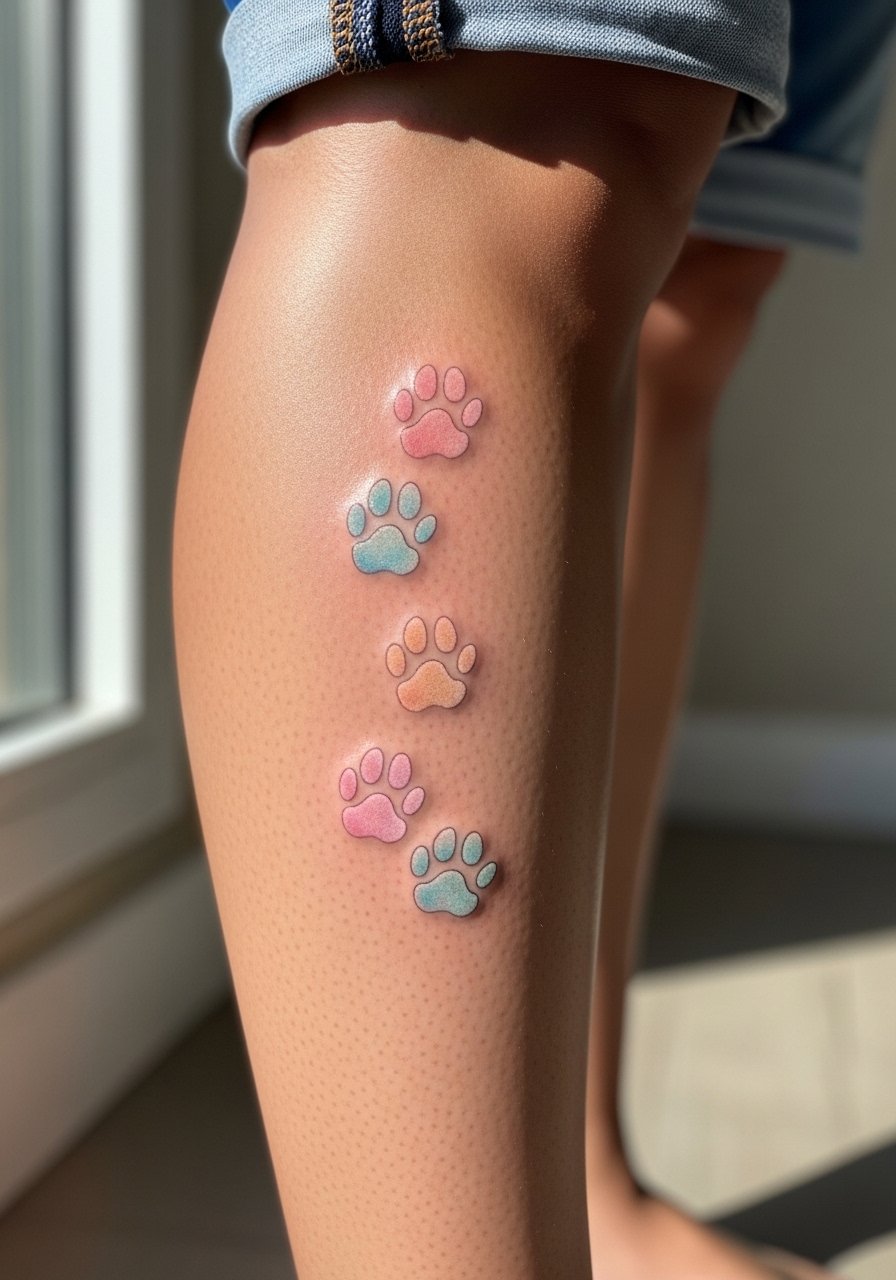
Using a cluster of pastel paws as a litter memorial is a playful alternative to script lists. Calf placement provides enough height for spacing and color distinction between paw prints. The risk is color blending if the artist uses overly wet watercolor techniques. Ask for defined edges between pads and a small gap between each print for separation. Session wear is loose shorts and the piece pairs well with rolled joggers or a summer skirt. Try rolled jogger pants for casual days when you want to keep the piece visible without full sun.
18. Minimalist Paw with Dotted Birth-Order Markers on the Inner Arm
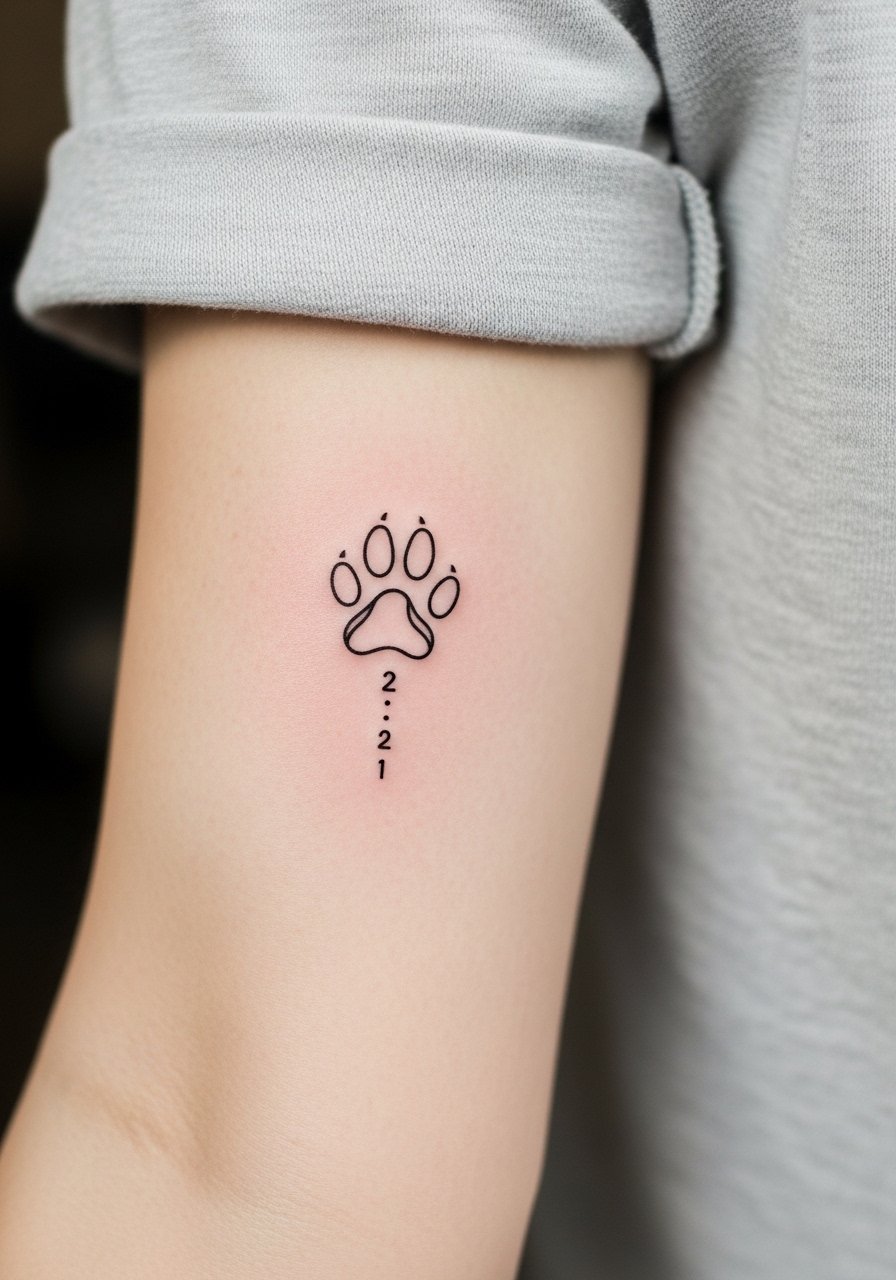
Paw with tiny dotted markers is a clever way to encode birth order for multi-pet families. The inner arm is forgiving and makes the dots and paw easy to read. A mistake people make is placing dots too close to the paw; they need separation to avoid merging. Tell your artist the exact spacing and dot sizes you want so they stencil to scale. For session wear, a short sleeve tee is fine. This kind of lineup pairs nicely with thin arm cuffs when you want a slightly editorial look, such as a thin arm cuff gold.
19. Lace-Filled Paw Silhouette on the Back of the Neck
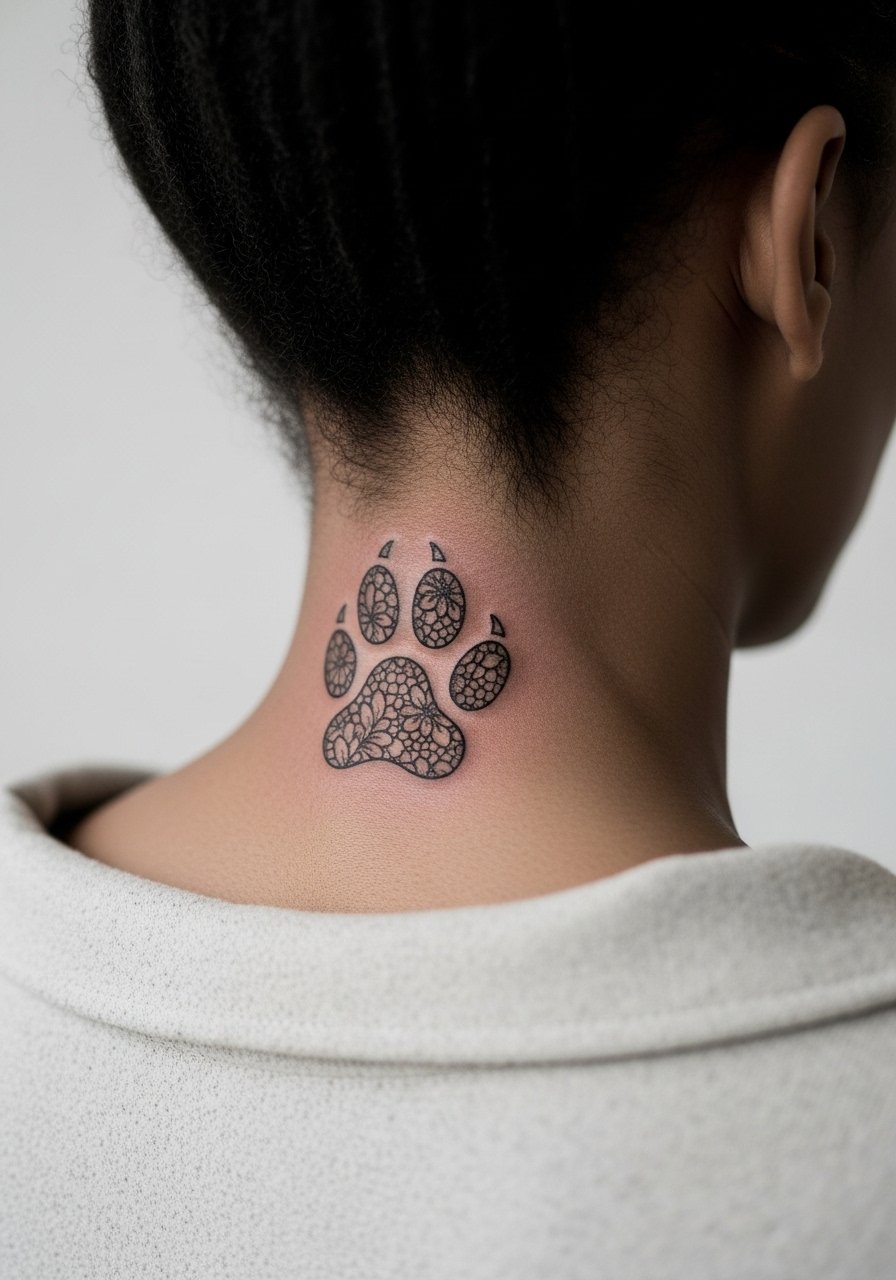
A lace-filled silhouette at the nape makes for a chic secret that shows with updos and open collars. Neck work requires trust because the area is thin and visible. For sensitive placements the conversation about healing techniques matters. One camp prefers adhesive bandaging for the first day while the other argues dry healing reduces trapped moisture risk. Ask your artist which method they recommend for neck work and why. For styling, a wide-neck shirt or a loose button-down shirt makes revealing the nape effortless.
20. Realistic Paw Imprint on the Side Rib
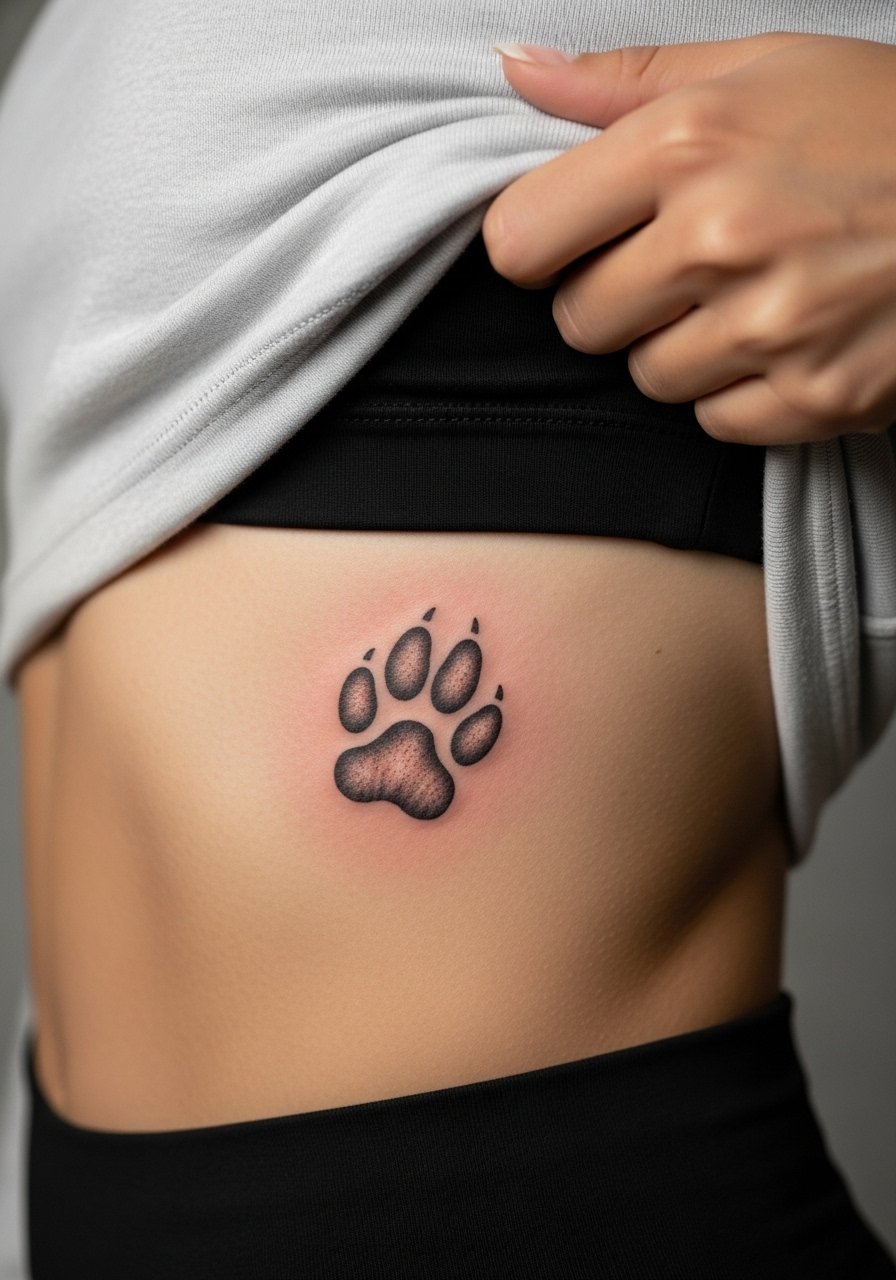
A realistic imprint on the ribs carries strong authenticity but it is also a placement that stretches with breath and body changes. Artists are split on fine detail there. One group says rib stretch blurs delicate texture within two years. The other group says careful depth and spacing keeps micro-realism legible if the design is sized correctly. If you choose ribs, ask for a slightly larger imprint and schedule a follow-up touch-up window. Expect higher pain and bring a zip-up hoodie to the session so you can adjust access easily.
21. Tiny Paw with Script Wrap Above the Collarbone
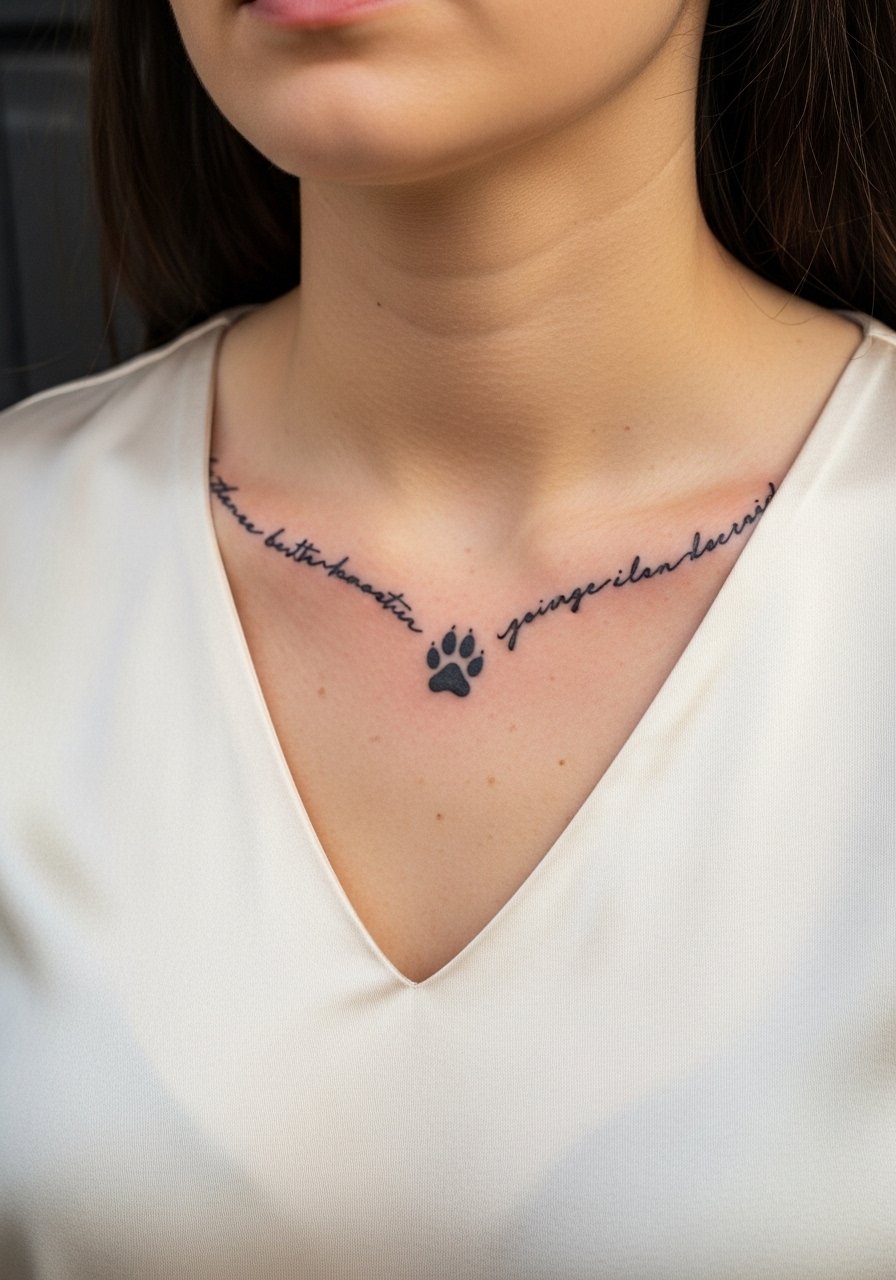
A small paw with a short phrase arcing above the collarbone combines image and word cleanly in a visible place. The collarbone shows detail well, but if you request very thin script it may need a touch-up sooner than a bolder script. Avoid long phrases; keep the arc to one to three words so the letters retain shape. For the session come in strapless or in a V-neck you can pull aside, and for showing it off try a V neck silk top so the script reads as part of your neckline.
Frequently Asked Questions
Q: Will a fine line paw on the wrist blur faster than a bold black paw?
A: Yes, fine line designs on high-motion areas like the wrist tend to soften sooner than bold black pieces. One camp of artists says fine line softens into a pleasing patina, while another insists bold work keeps the symbol readable for longer. Expect a possible touch-up around year two for wrists if you choose ultra-fine work.
Q: Are watercolor or pastel paw clusters a bad idea for dark skin tones?
A: Pastels can lose contrast faster on darker skin unless the artist uses higher saturation and strategic negative space. If you are darker skinned ask for bolder pad edges and slightly larger color blocks. That keeps the aesthetic without washing out in photos.
Q: How should I dress to a rib or sternum paw session?
A: Wear a cropped top or fitted sports bra that the artist can lift slightly to expose only the area being tattooed. Comfort and easy access matter because repositioning during the session slows everything down.
Q: Do neon and UV-reactive inks last through many summers?
A: Neon and UV inks fade faster under sunlight unless you strictly follow UV protection guidance. If you get neon, expect to protect it with sunscreen after healing and understand a color refresh might be part of the long-term plan.
Q: What should I ask my artist when booking a micro-realism paw imprint?
A: Ask about healed examples on similar skin tones, inquire about expected session time and a touch-up window, and request that they stencil the size exactly on you. Bring a clear photo of the pad shape you want so the imprint matches the pet's mark.
Q: Is aftercare different for a finger paw versus an ankle paw?
A: Yes, hands and fingers face more washing and friction so light, regular aftercare with minimal occlusion works best. Ankles deal with shoe rub and may need protective clothing choices while healing. Follow the specific aftercare plan your artist provides and plan footwear around the ankle work for the first week.