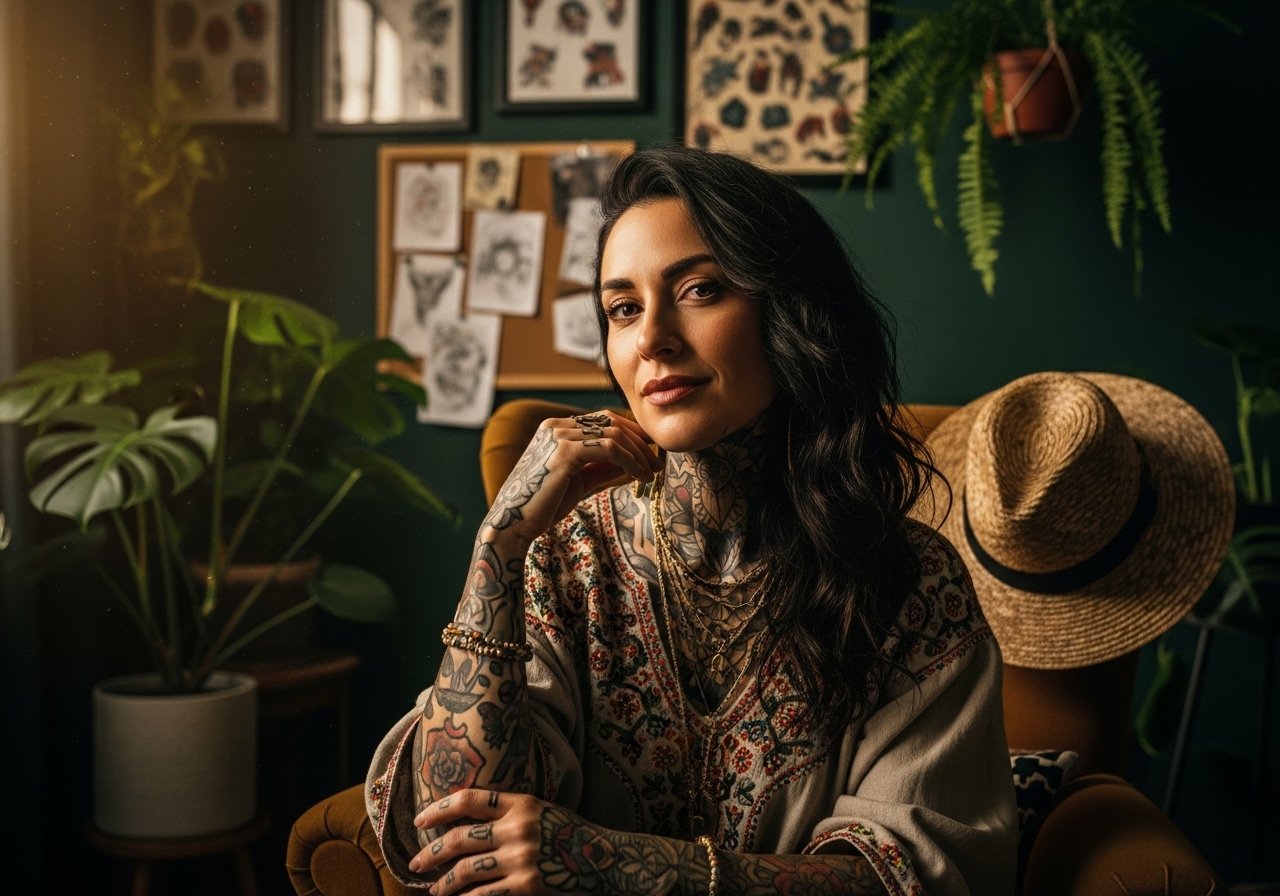
Fine line florals are everywhere on saved boards, but trends and real-life wear rarely line up. Fine single-needle bouquets photograph beautifully fresh, yet many people find them softened by year two on high-friction spots. Pricing has risen while temporary tests have become smarter, and visibility on darker skin is still hit or miss unless you test first. Read on for 27 dainty flower bouquet tattoo ideas that balance trend appeal with realistic aging, placement thinking, and what to tell your artist in the consultation.
1. Fine Line Daisy Bouquet on Inner Wrist
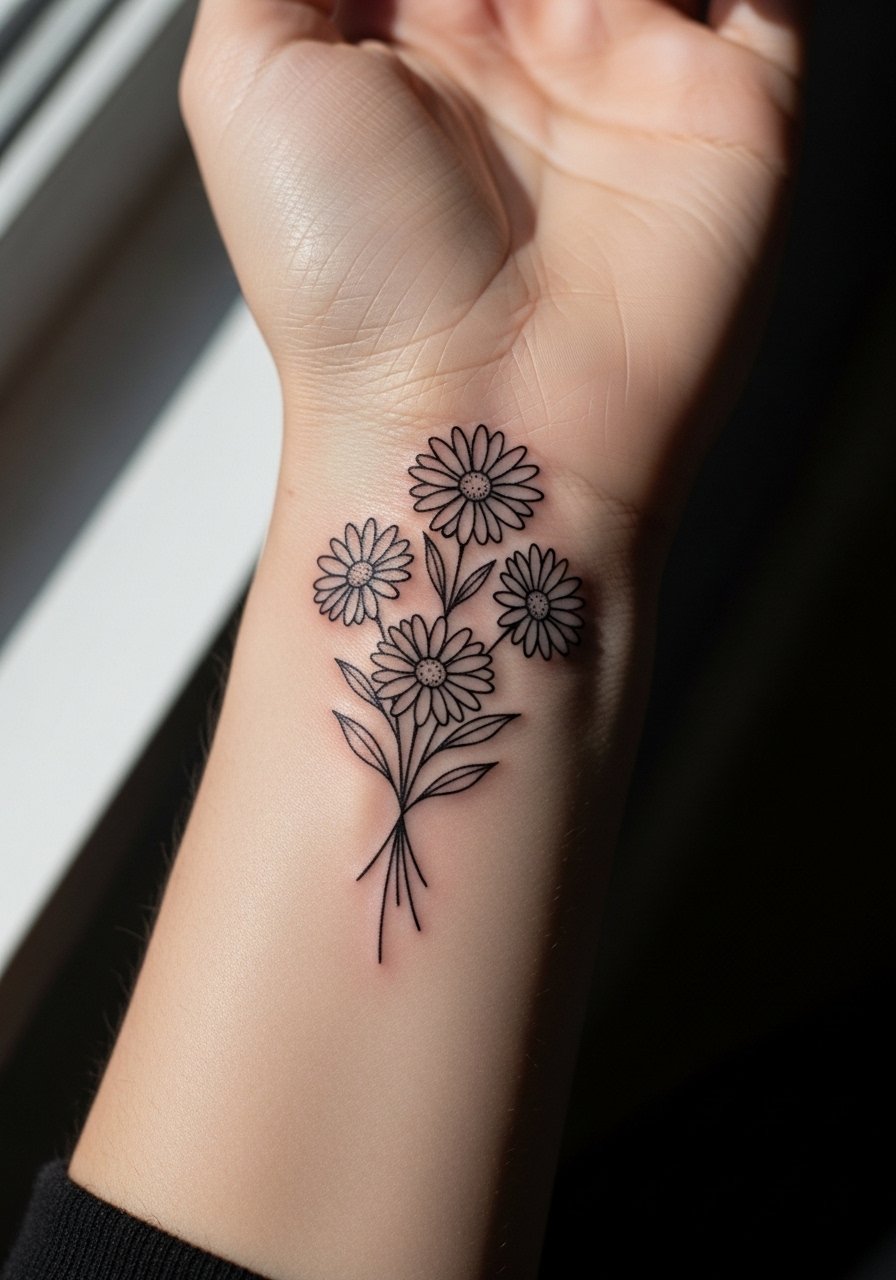
I recommend this one when you want a clear symbol that reads from a short distance. Fair warning, the inner wrist is a high-motion zone and very fine single-needle work can soften faster there. Ask your artist for slightly bolder linework than your saved reference, and request light spacing between petals so the design keeps shape at two years and five years healed. The session feels short but sensitive, more like a persistent buzzing than sharp jabs. For showing the piece, roll up a sleeve and wear a rolled cuff blouse women so the wrist sits exposed without competing prints.
2. Watercolor Wildflower Bunch on Collarbone
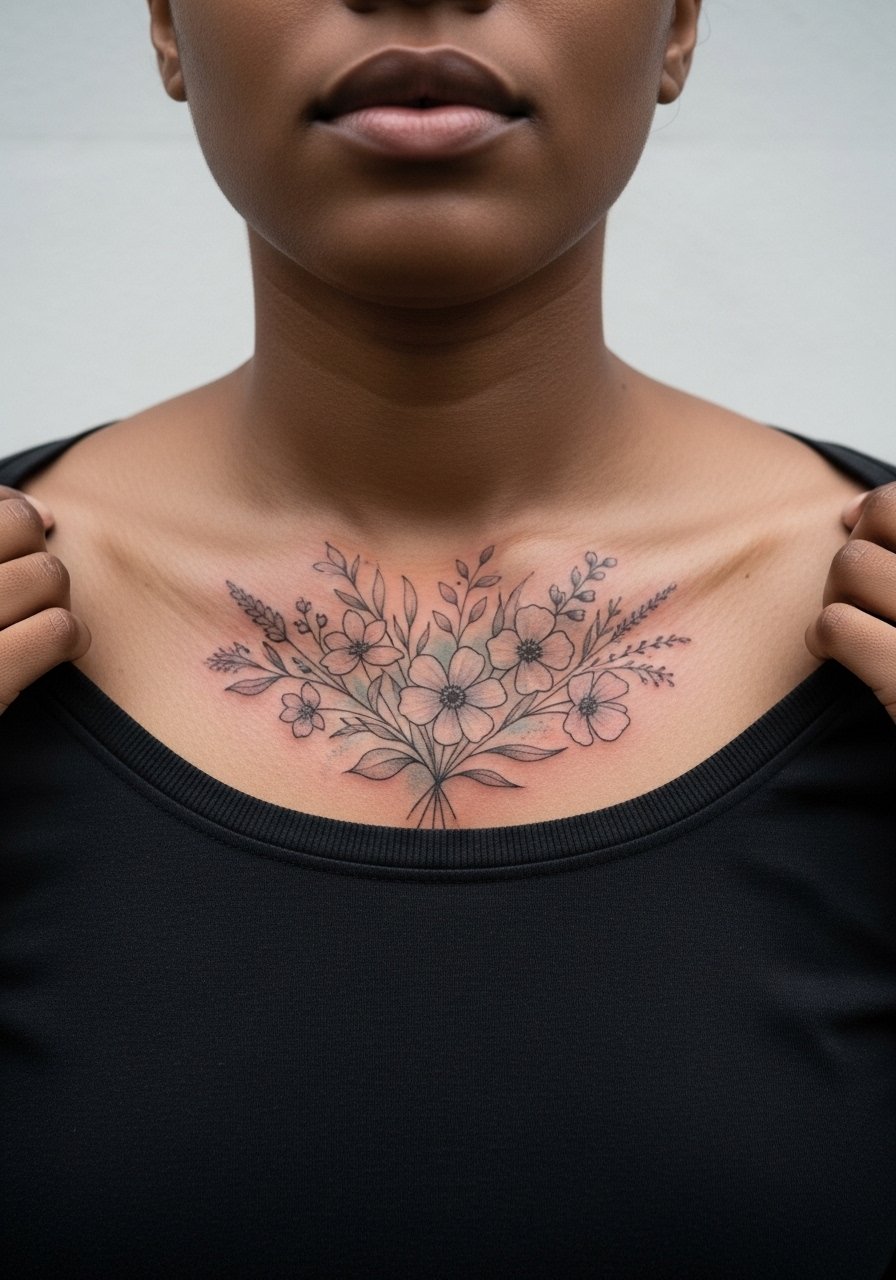
Most watercolor pieces lose some vibrancy over time, but when paired with anchoring linework this collarbone bouquet keeps its painterly feel longer. Start the consultation with reference photos that show color balance and ask for black or dark gray outlines to protect edges. The collarbone area is very flattering with off-shoulder tops and delicate necklaces, so pair it with an off shoulder sweater when you want to show it off. During the session wear a strapless bra so the artist can place the stencil cleanly.
3. Minimalist Rose Stem Bouquet on Ankle
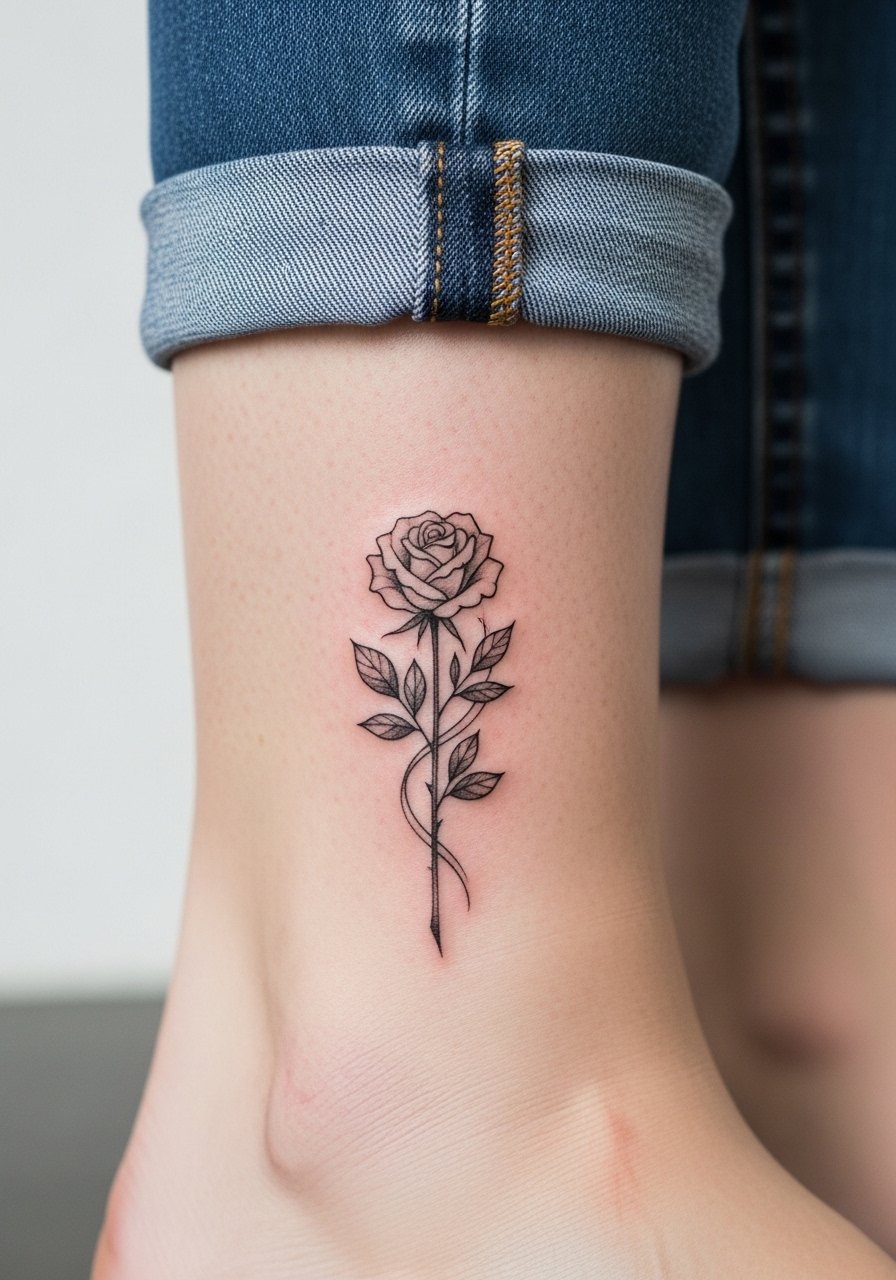
Ankle tattoos are discreet and flirt with peek-a-boo reveal in summer shoes. The biggest mistake I see is going too tiny on the twists and thorns, which blurs under socks and shoes. Tell your artist you want the stems to wrap with slight spacing so the silhouette survives friction from boots. The session is quick but the ankle can be bony and sting more than the forearm. Pair this design with cuffed jeans and strappy sandals flat for seasonal show-off looks, and wear loose pants you can roll up to the appointment.
4. Neo-Traditional Peony Cluster on Outer Forearm
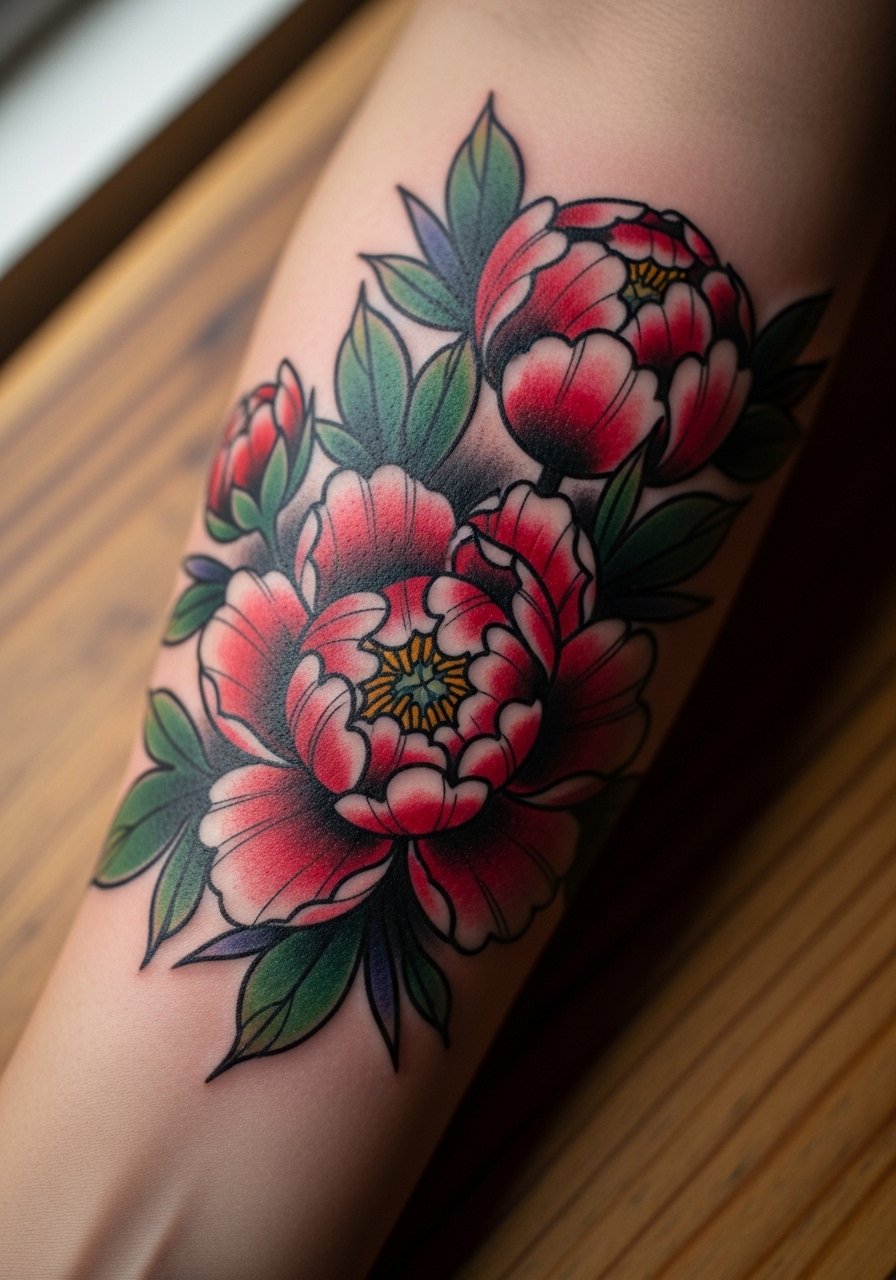
There is something about saturated color locked by strong linework that holds up well. The forearm lets the peony breathe at about three to four inches, so ask for thicker outlines than a fine-line piece. Most people find this placement comfortable, a steady area with moderate pain and predictable touch-up timelines. Avoid asking for overly tight shading near the edges. For easy access to the artist and comfort during the session, roll sleeves to the elbow and wear a chambray button down with sleeves you can push up.
5. Blackwork Botanical Posy on Ribcage
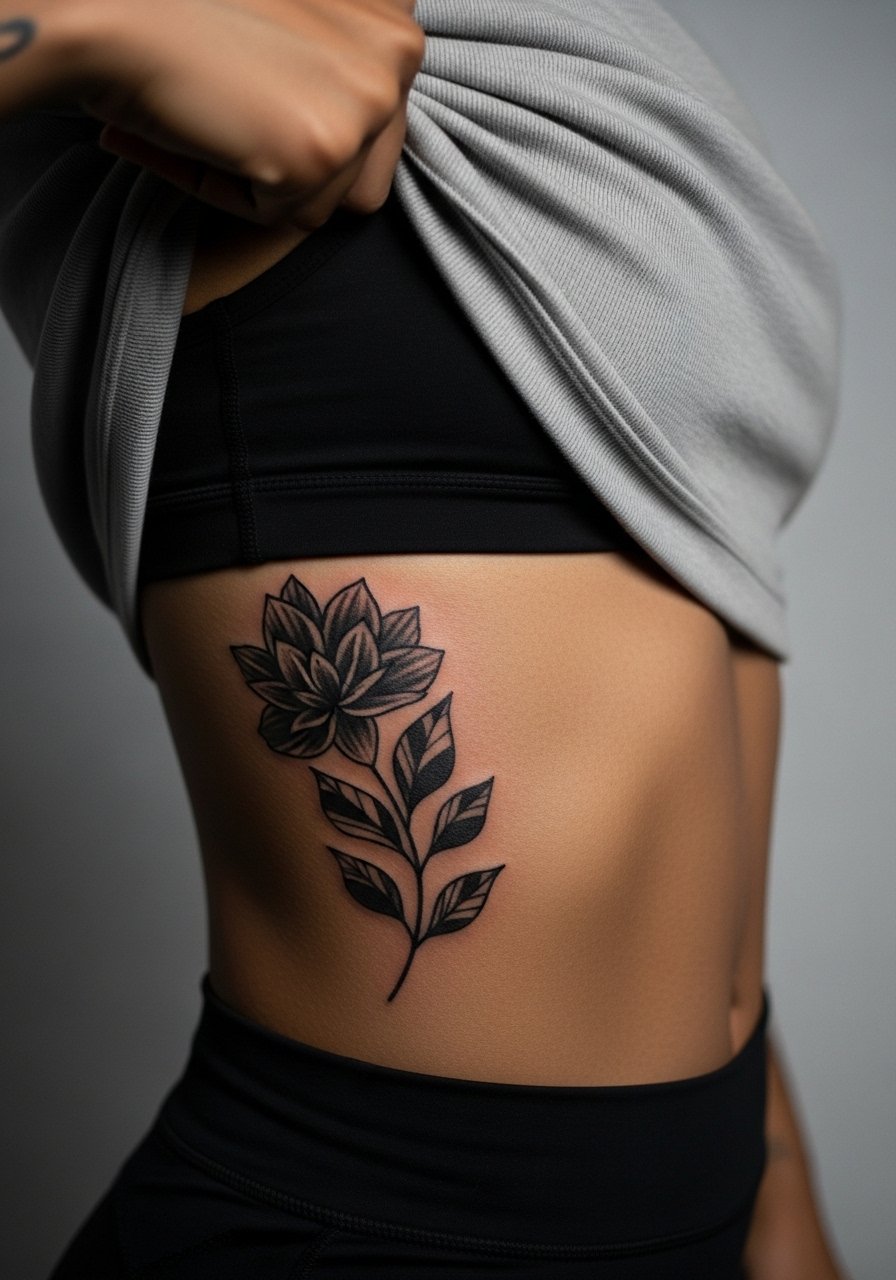
Fair warning, ribs are a higher pain zone and sessions can be stop-and-start. Artists also split into two camps on fine line there. One camp says the stretching and thin skin blur single-needle lines within two years. The other camp says with proper depth and spacing, fine line can settle fine. Name both camps in your consultation and ask where your artist stands before booking. Blackwork reduces the need for ultra-fine detail, so if you want longevity here, opt for defined shapes and negative-space petals. Bring a loose cropped top so the artist can expose only the working area.
6. Micro-Realism Lavender Bouquet on Shoulder Blade
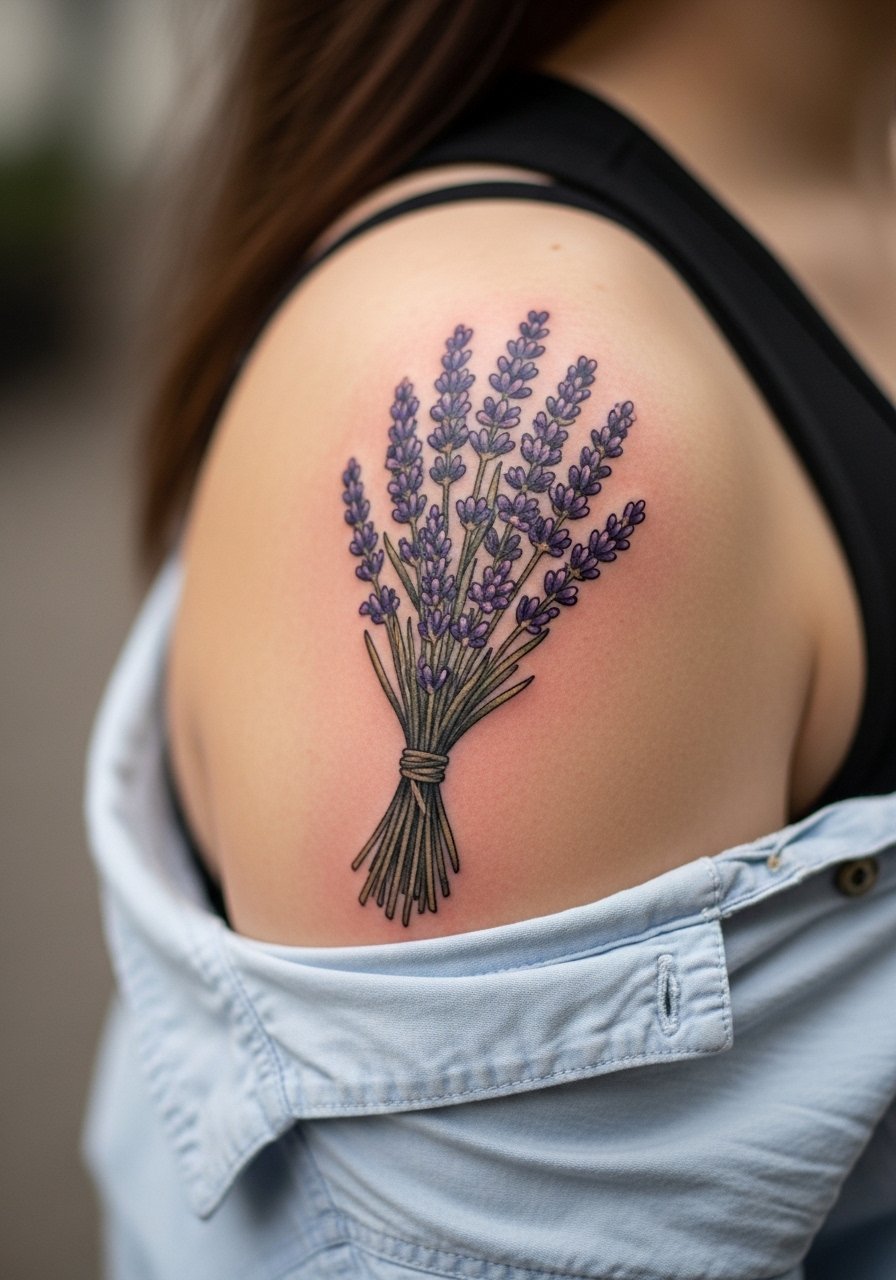
I have seen tiny micro-realism pieces read like pressed flowers when done with careful dot shading and soft gradients. The shoulder blade is forgiving for texture, and this area ages well with minimal touch-ups. During consultation show close-up references of healed ink, and ask for stipple shading over heavy whip shading to preserve petal edges. For the session wear a loose tank top that you can pull aside easily and pair the final look with a sleeveless tank white for summer outfits.
Studio Day Picks
The wrist, collarbone, ankle, forearm, and ribcage pieces above each ask for different prep. These items smooth out the session and the first week for small bouquet work.
-
Stencil transfer paper kit. Lets you preview the line placement on skin before the needle hits, which is especially helpful for the inner wrist and ankle wraps in the ideas above.
-
Topical numbing cream. Applied according to instructions about 45 minutes before eases the ribcage and ankle sensitivity for first-time sitters.
-
Thin protective film roll. Protects wrist and finger pieces from constant washing and rubbing during the first days.
-
Fragrance free gentle body wash. Cleanses healing areas without stripping fragile ink on fine-line floral work.
-
Aquaphor healing ointment. Thin application helps maintain moisture for fine line and micro-realism pieces without clogging delicate needle channels.
7. Ornamental Forget-Me-Not Bunch with Geometric Frame on Thigh
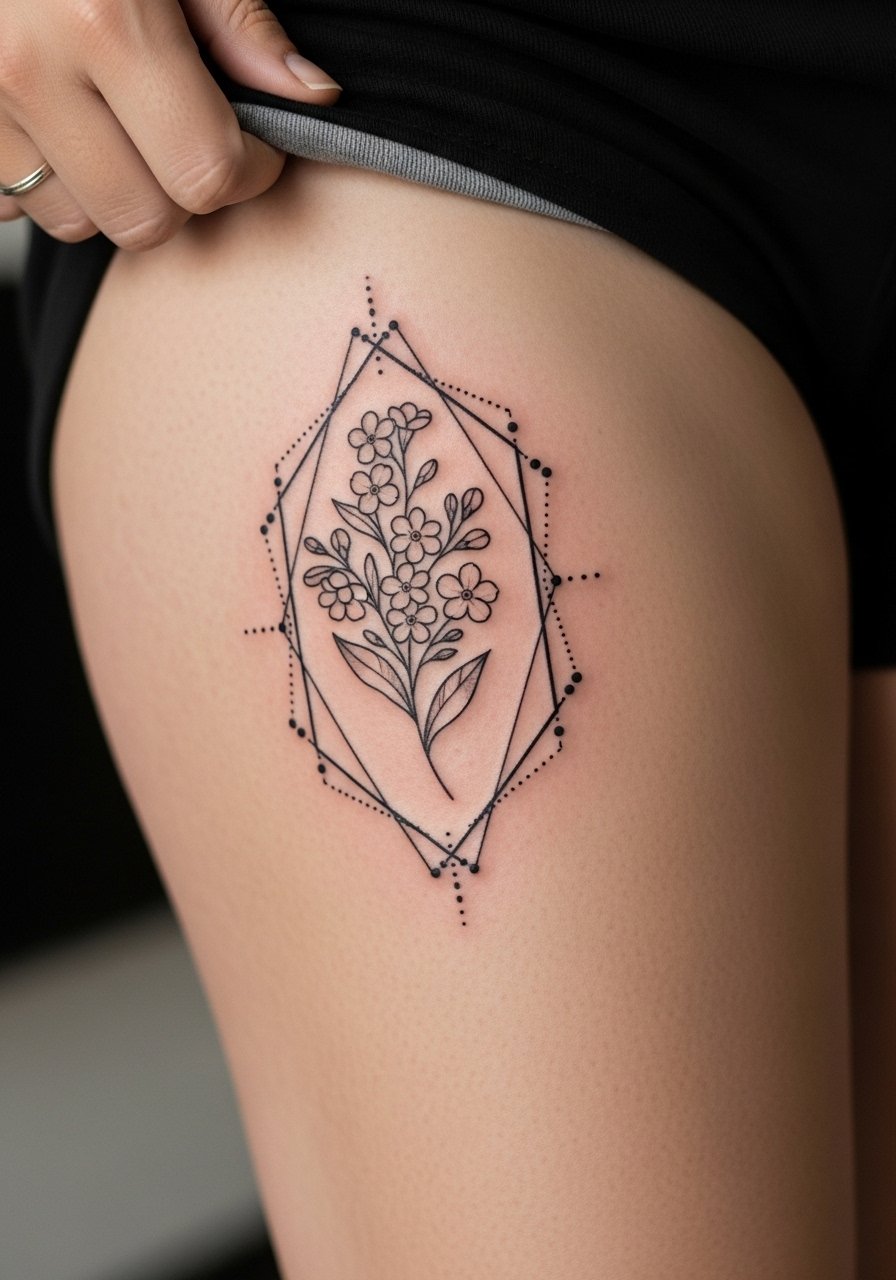
Thigh work gives room to play with ornamental borders and dot work without crowding. The inner thigh hides the piece during daily life, so it is a good spot for more experimental framing. Expect two sessions for crisp dotwork and shading. A common mistake is over-detailing the frame, which can merge over time if too tight. For the appointment wear loose shorts you can shift up slightly so the artist only sees the working area. For showing this off later, high-waisted shorts and side-slit dresses create flattering glimpses.
8. Ignorant Style Poppy Bouquet on Upper Back
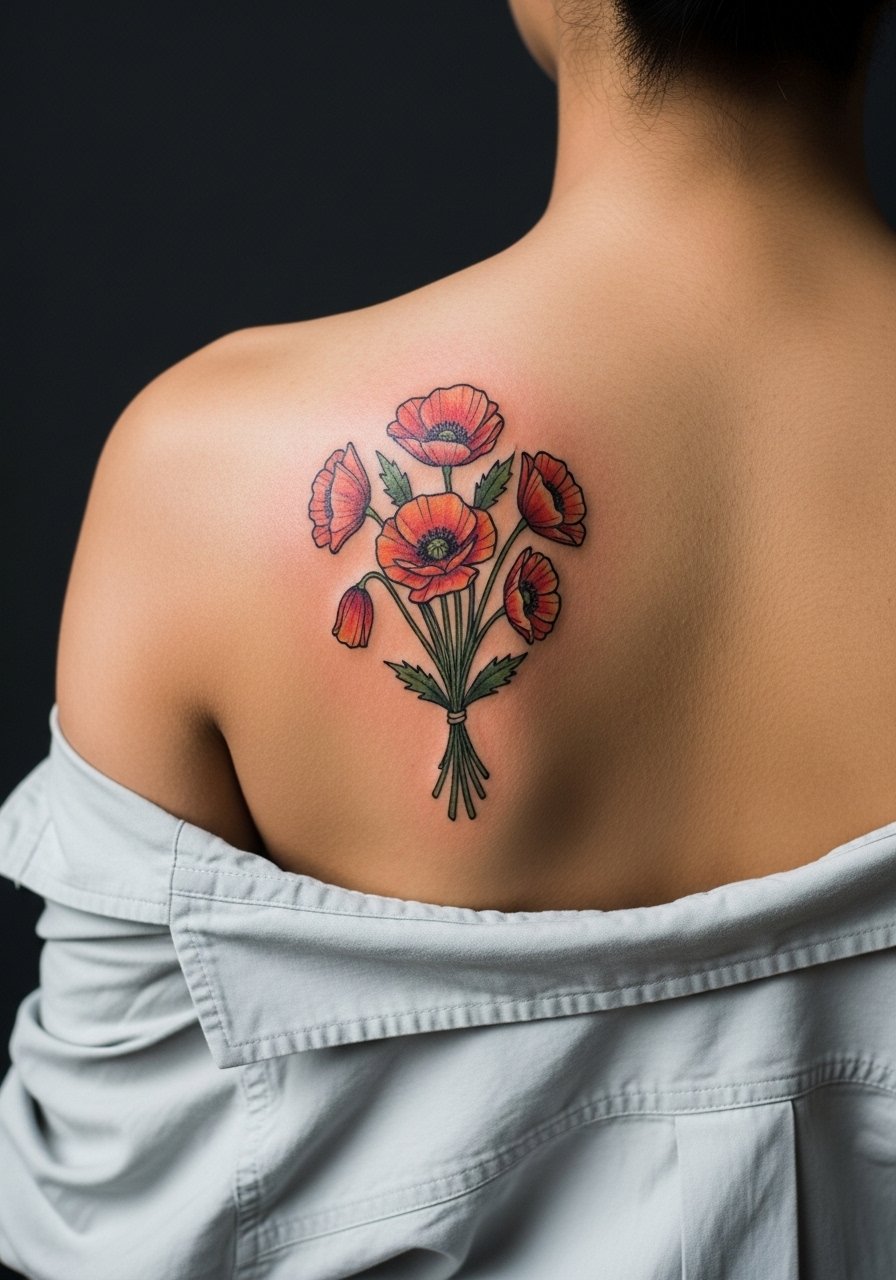
This playful, naive aesthetic reads well on larger canvases like the upper back. The session is relaxed because the area can be worked from multiple angles. The main mistake is asking for too-small shapes that lose their hand-drawn charm when shrunk. If you want a light-hearted feel, ask the artist to keep imperfect edges and selective color splashes. Wear a button-up you can pull aside at the back for easy stencil placement. This type of piece is forgiving if you later want to expand into more custom back work.
9. Fine Line Mixed Bloom Wristlet
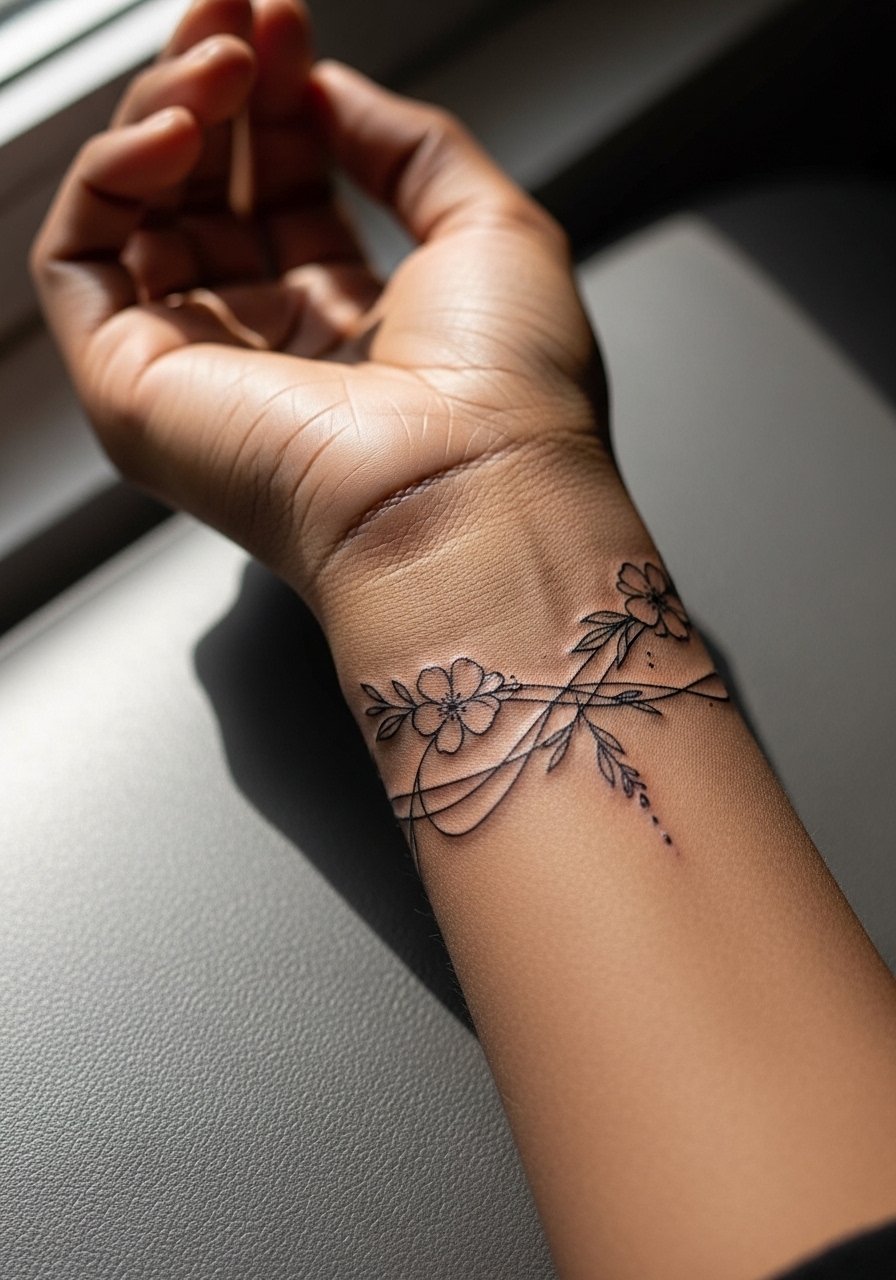
I've noticed wristlet wraps age differently depending on scale. Small, stacked motifs can read as a bracelet for years if the artist spaces each bloom and uses slightly stronger lineweight. A mistake is packing too many tiny elements into a narrow band. Ask for a clear rhythm of negative space between flowers and request a single-needle outline only where the designer wants delicate detail. Pain is mild, and sessions are short. Style it with thin bangles on the opposite wrist and a thin silver bangle set when you want a layered look.
10. Traditional American Floral Bouquet on Calf
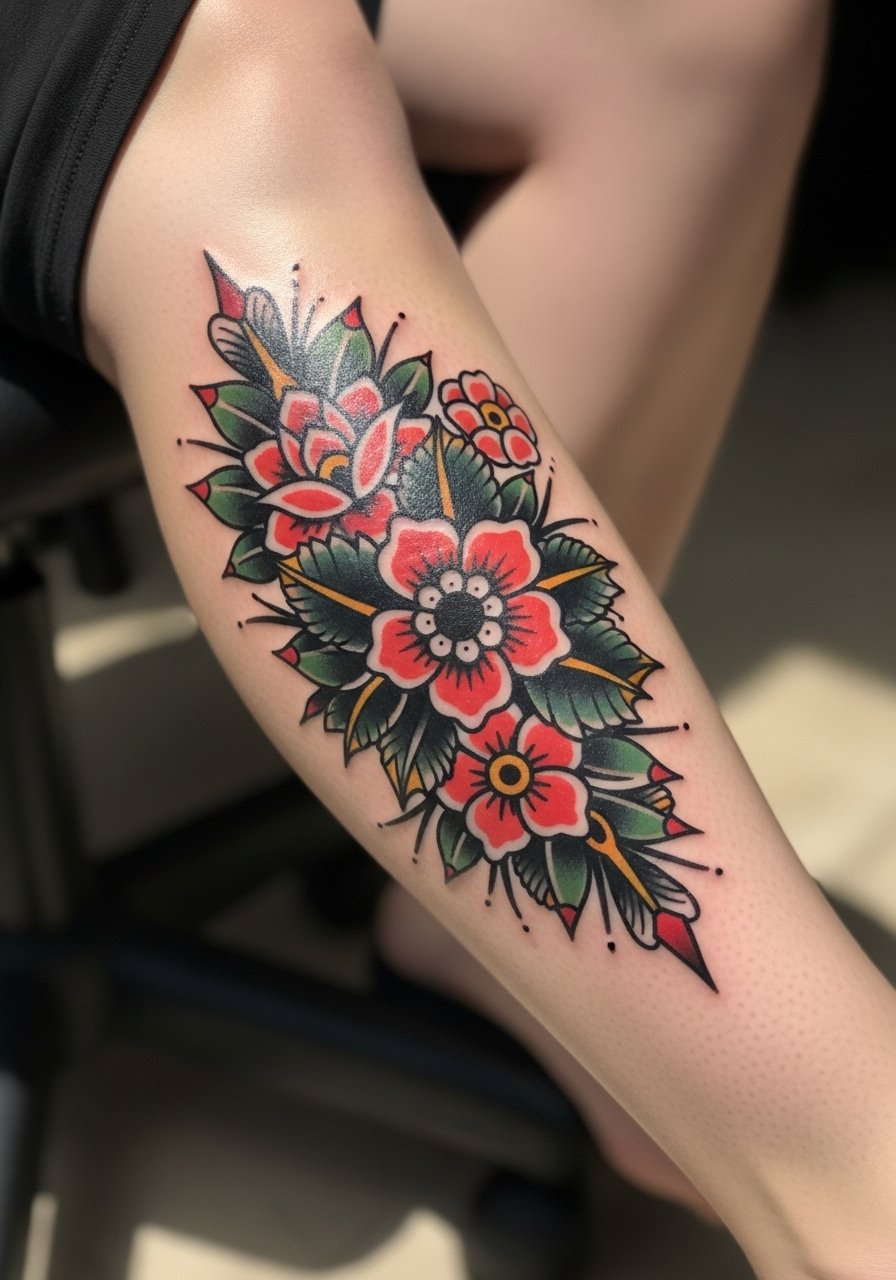
Traditional saturation and bold linework are forgiving as they age, which is why many people pick the calf for summer-ready pieces. The calf offers a stable surface for two-session color work and the pain is typically moderate. Avoid asking for too many fine internal details. If you want longevity, request crisp black outlines and saturated fills. For session comfort, wear loose pants you can roll up or a skirt. Calf bouquets look great paired with midi skirts and linen midi skirt choices in warm months.
11. Tiny Birth-Flower Bunch Behind the Ear
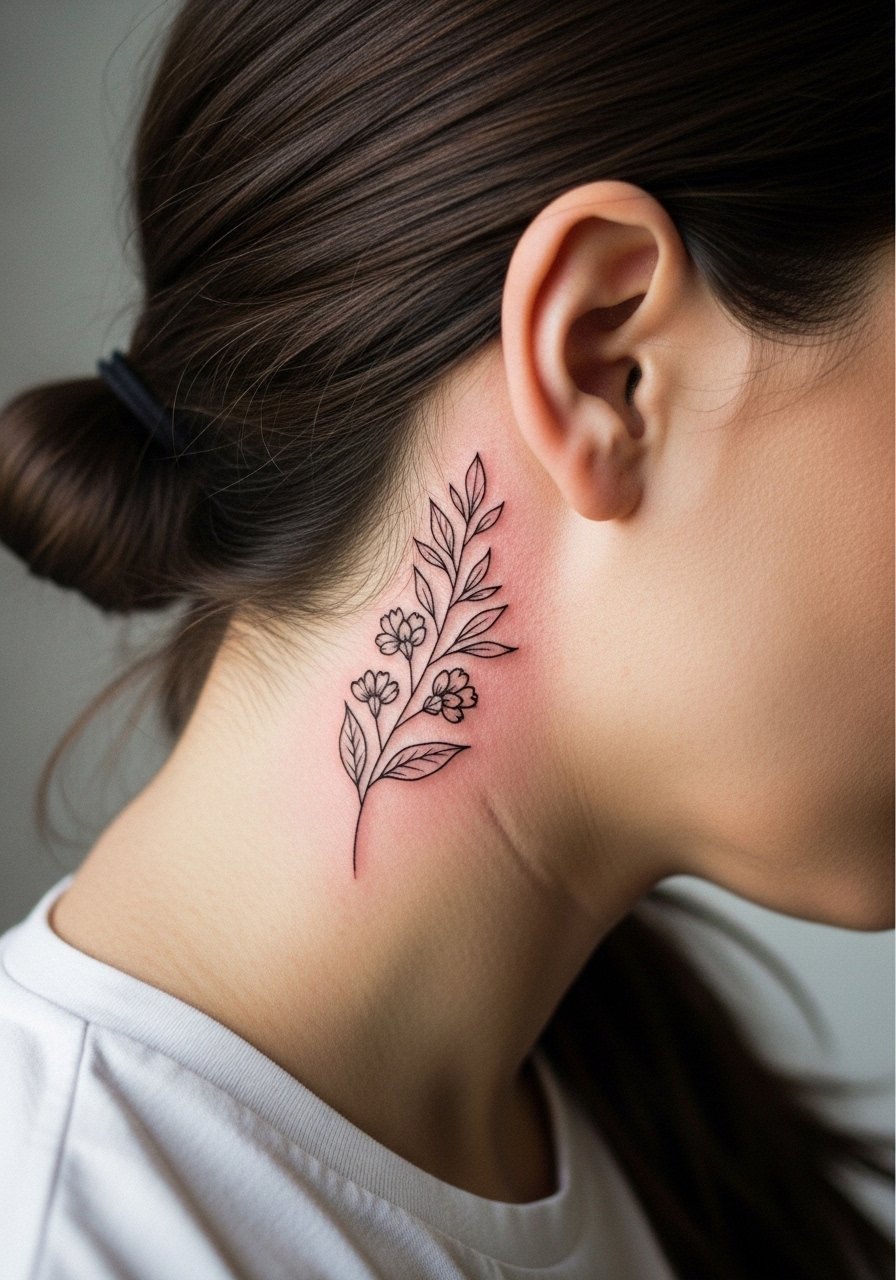
Behind-the-ear placements require specific framing so the tattoo remains discreet or surprising depending on your preference. The area is sensitive and has small skin contours, so simplicity is key. Artists sometimes debate whether the scale should be micro or small. A common error is too much detail in too small a space. During the consultation ask to test the stencil while your hair is pulled back. This spot pairs easily with short haircuts or tucked styles and looks elegant with delicate ear jewelry.
12. Bouquet with Ribbon Banner on Sternum
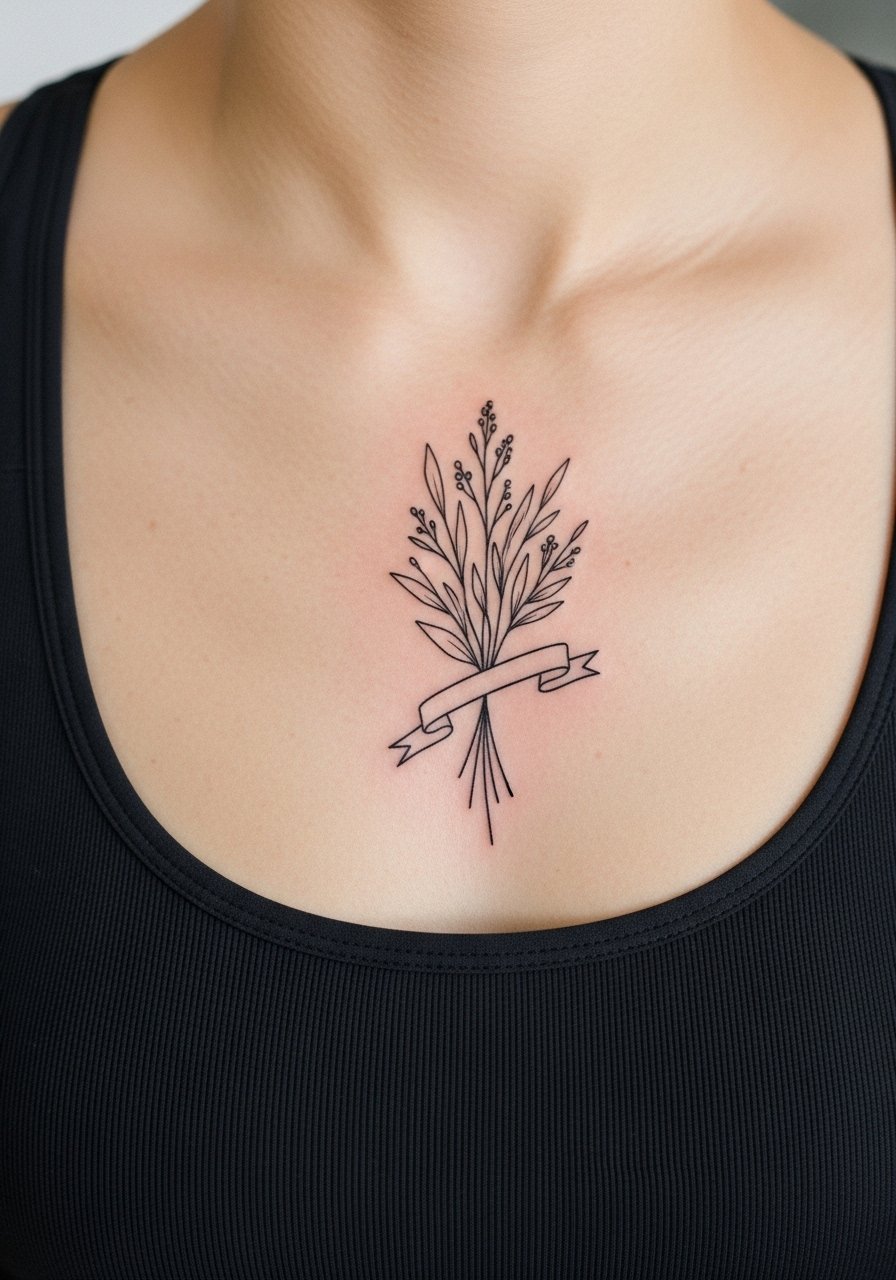
Sternum tattoos sit in a high-mobility area and are commonly covered during the week. Pain can be moderate to strong depending on chest sensitivity. The main mistake is centering too small a banner, which can blur as skin stretches. Ask for clear spacing around the lettering and for the artist to show a preview of the size on your body. For the session wear a supportive strapless or sports bra so the artist can access the area cleanly and you stay comfortable.
13. Bouquet in a Tiny Glass Jar on Forearm
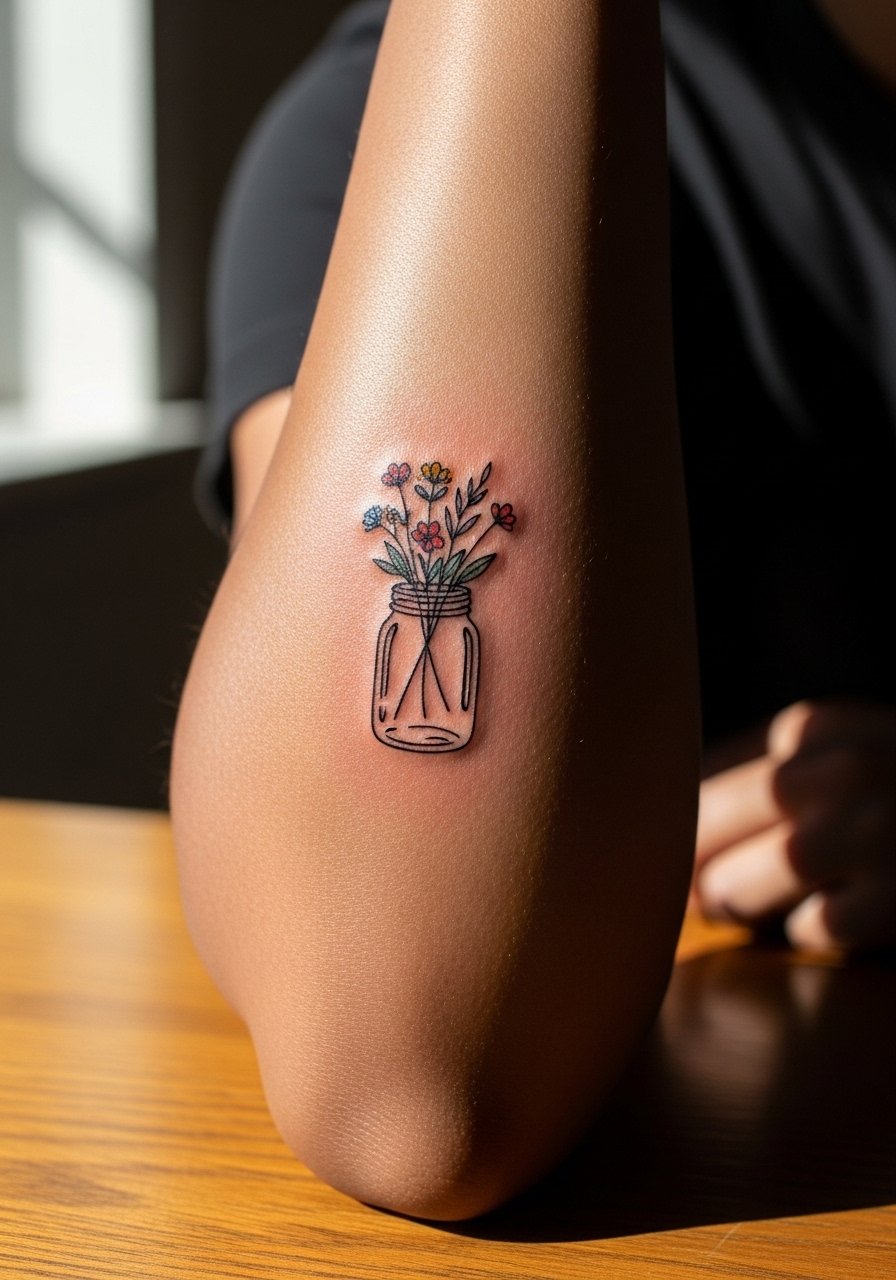
There is real charm in a small object anchoring a bouquet, and forearm space lets the jar read clearly at modest scale. The usual mistake is asking for glass reflections that are too detailed, which can muddy when healed. Tell your artist you want simplified highlights and defined linework for the jar edges. The forearm is comfortable to tattoo and shows movement well. Pair this design with rolled-up sleeves and a short sleeve tee women during the session and for casual reveal.
14. Tiny Posy on the Side of the Finger
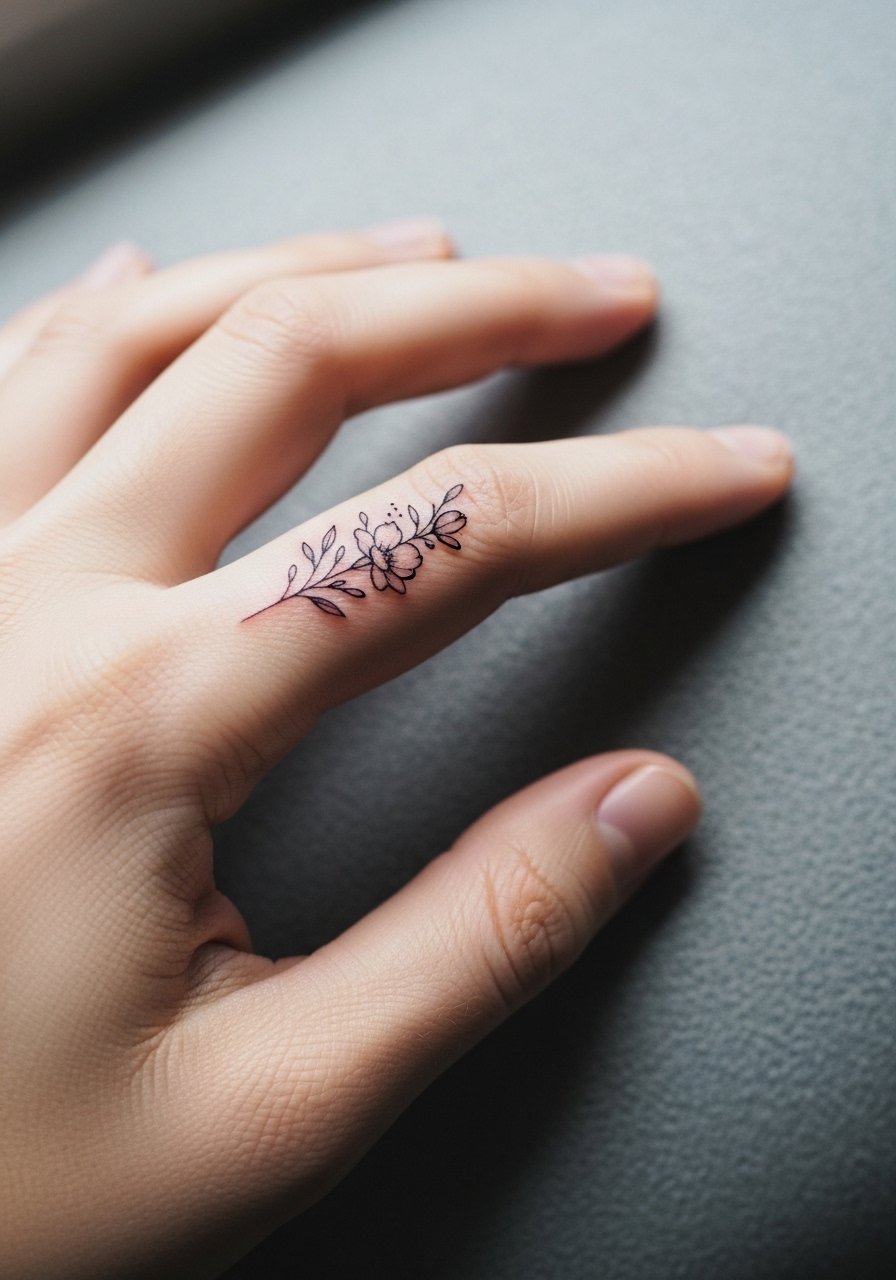
Finger placements are notoriously prone to fade and blur because of constant hand washing and motion. One camp says avoid fine single-needle work on fingers entirely, and another says with aggressive touch-up planning it can be worth it. If you still want a finger posy, keep the design minimal, accept likely annual touch-ups, and request bolder outline points. Sessions are quick but painful in spots. Keep expectations realistic and ask your artist about maintenance before booking.
15. Bouquet with Bee Accent Near the Wrist
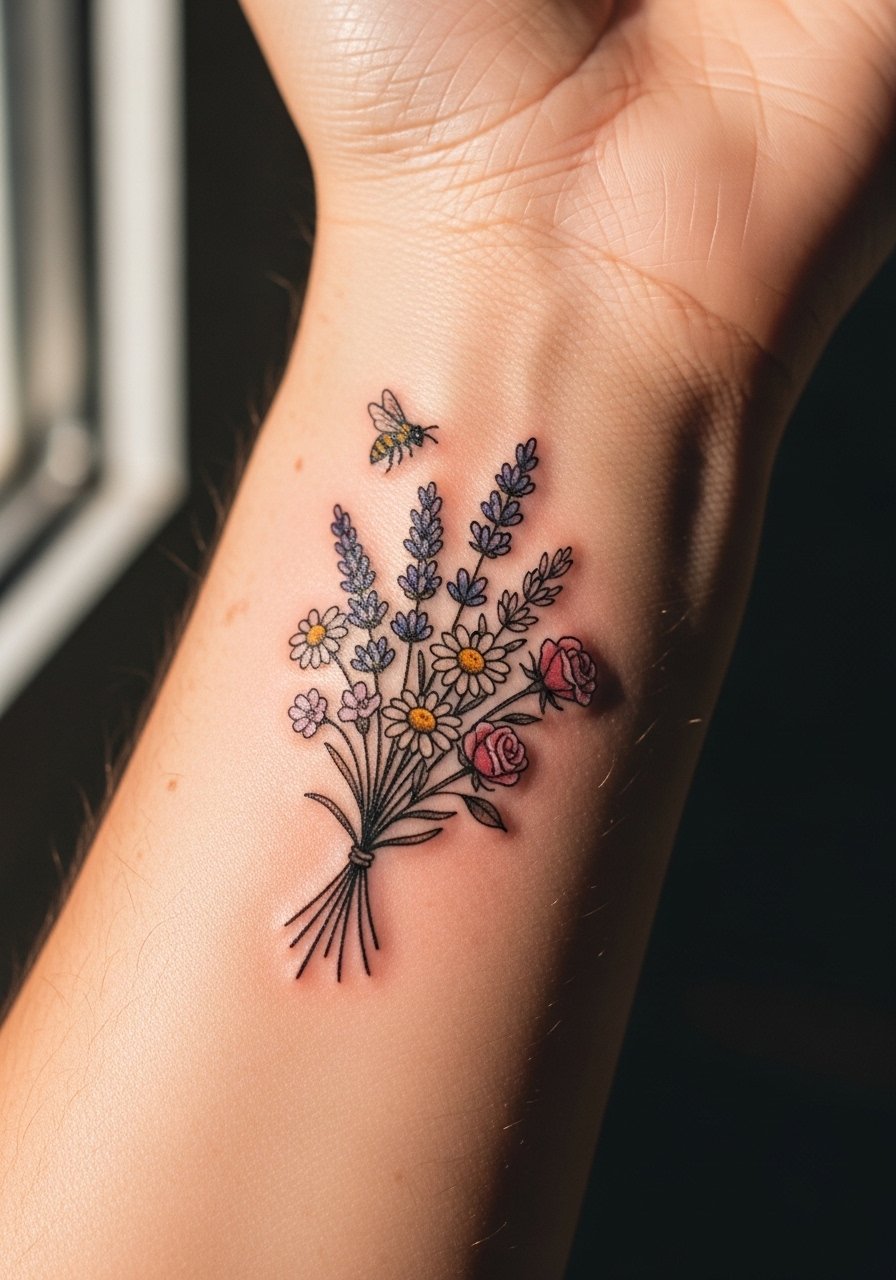
A little fauna companion changes the narrative of a bouquet. Placement near the wrist keeps the focus compact and lets the bee read as an accent. The mistake is asking for too much micro-detail on the insect. Ask for simple wings and contrast so the bee keeps shape at one and three years. This placement is similar to other wrist pieces, so roll sleeves and bring references. Wear a rolled cuff blouse women or minimal watch when you want the bee to peek out.
16. Mixed Bloom Calf Band with Negative Space
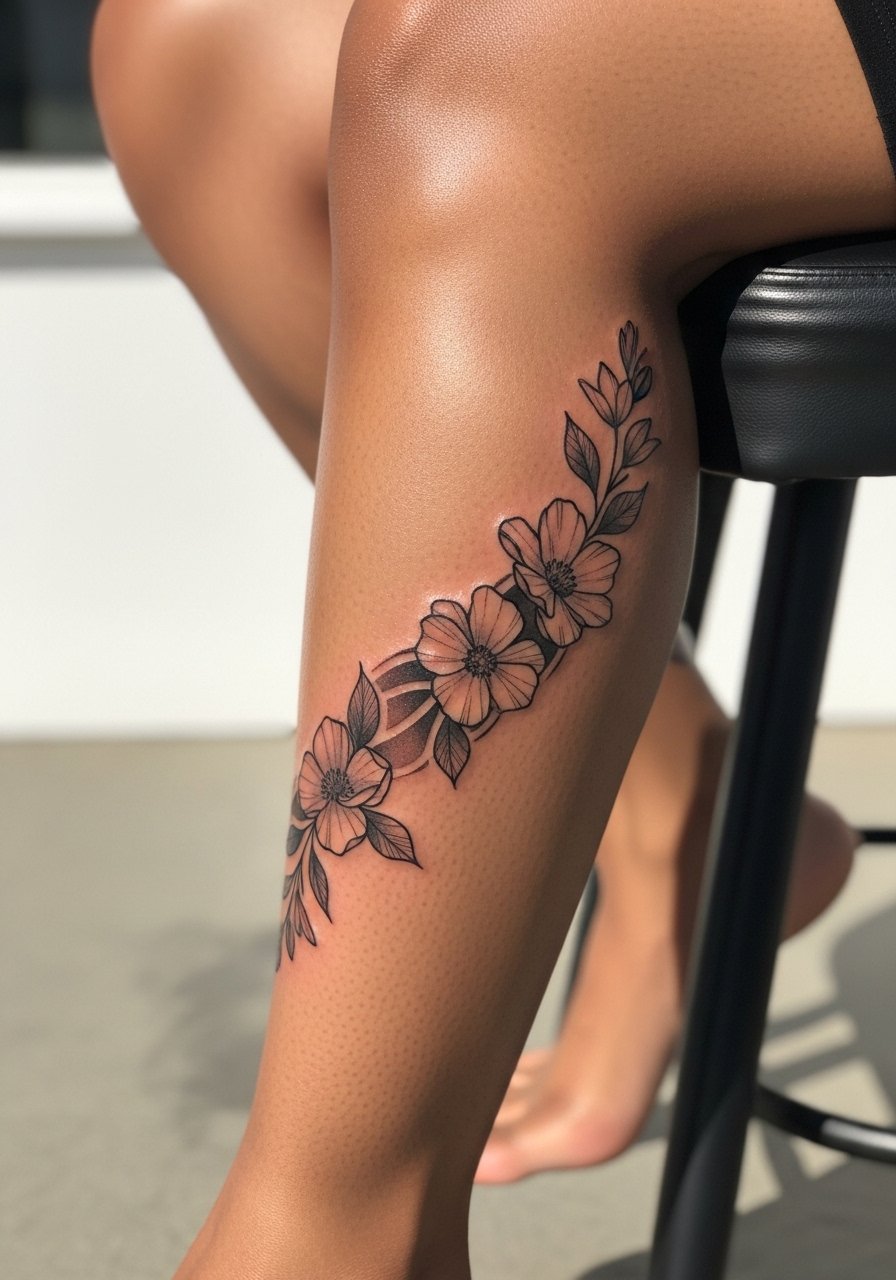
A band around the calf can act like a botanical anklet at a larger scale. The benefit here is room for breathing negative spaces, which keeps the composition from merging as it ages. Overcrowding is the frequent mistake. Tell your artist to plan 20 to 30 percent negative space so petals and leaves age independently. Sessions are comfortable and often do not require multiple passes. Pair with mid-length skirts and high waist denim shorts when you want to show the band in summer.
17. Single Stem Rose on the Side of the Neck
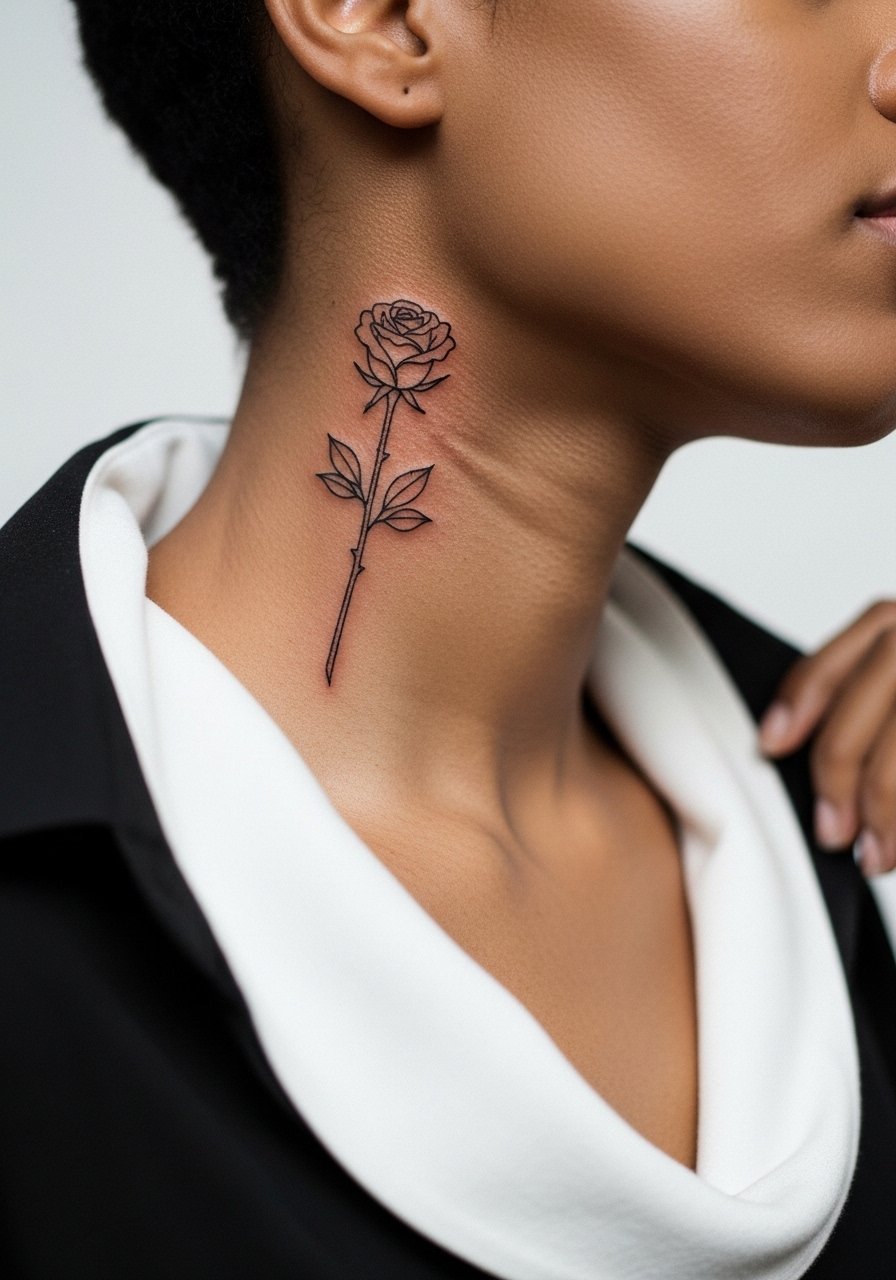
Neck placements are visible and carry professional visibility considerations for some work environments. The biggest mistake is sizing the stem too thin so it blends into skin texture. Ask for slightly stronger lineweight and a vertical composition that follows the neck. Pain varies but this area can be sensitive. Wear a wide-neck shirt for the appointment so the artist alternates access easily. If career visibility is a concern, consider a placement lower on the collarbone or behind the ear instead.
18. Tiny Bouquet Tattooed Like a Bracelet on the Ankle Wrap
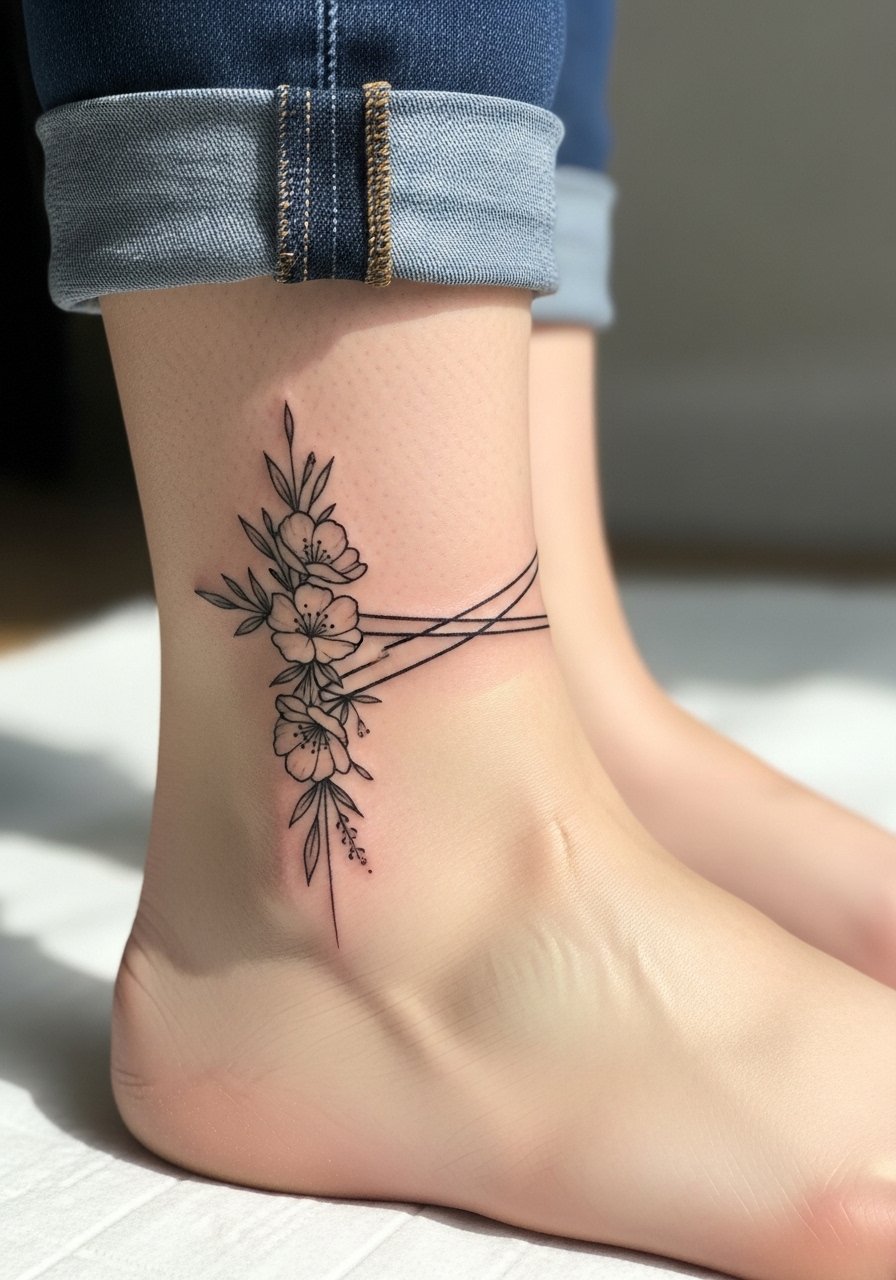
This variation of the ankle bouquet adds movement around the ankle bone for a boot-friendly peek. The common error is trying to pack in too many stems which then merge under socks. Ask for a rhythmic wrap with small gaps so each bloom reads on its own. Sessions are short and the area can be tender over bone. Style it with cuffed jeans or a linen midi skirt and strappy sandals to let the wrap reveal itself.
19. Bouquet with Moon Phases and Tiny Stars on Sternum Edge
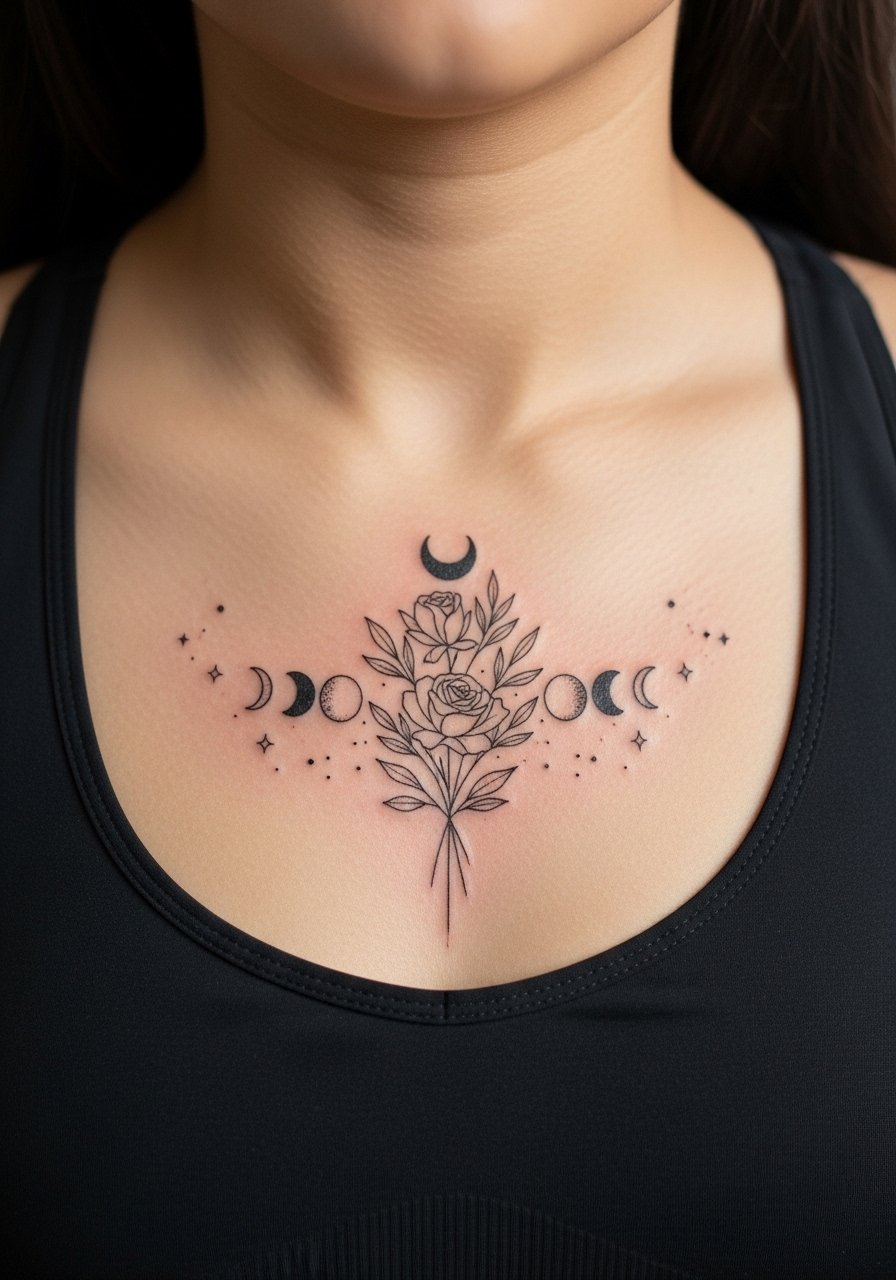
Combining celestial elements with flowers creates a personal emblem. The sternum edge can be an awkward curvature for dense graphics, so ask for simplified moons and spaced stars. A common mistake is adding tiny dots too close to lines, leading to dot loss. During the session wear a sports bra and bring a few size variations for the stencil. This spot invites symmetric compositions and looks great under open necklines.
20. Bouquet Held by a Little Hand on the Inner Forearm
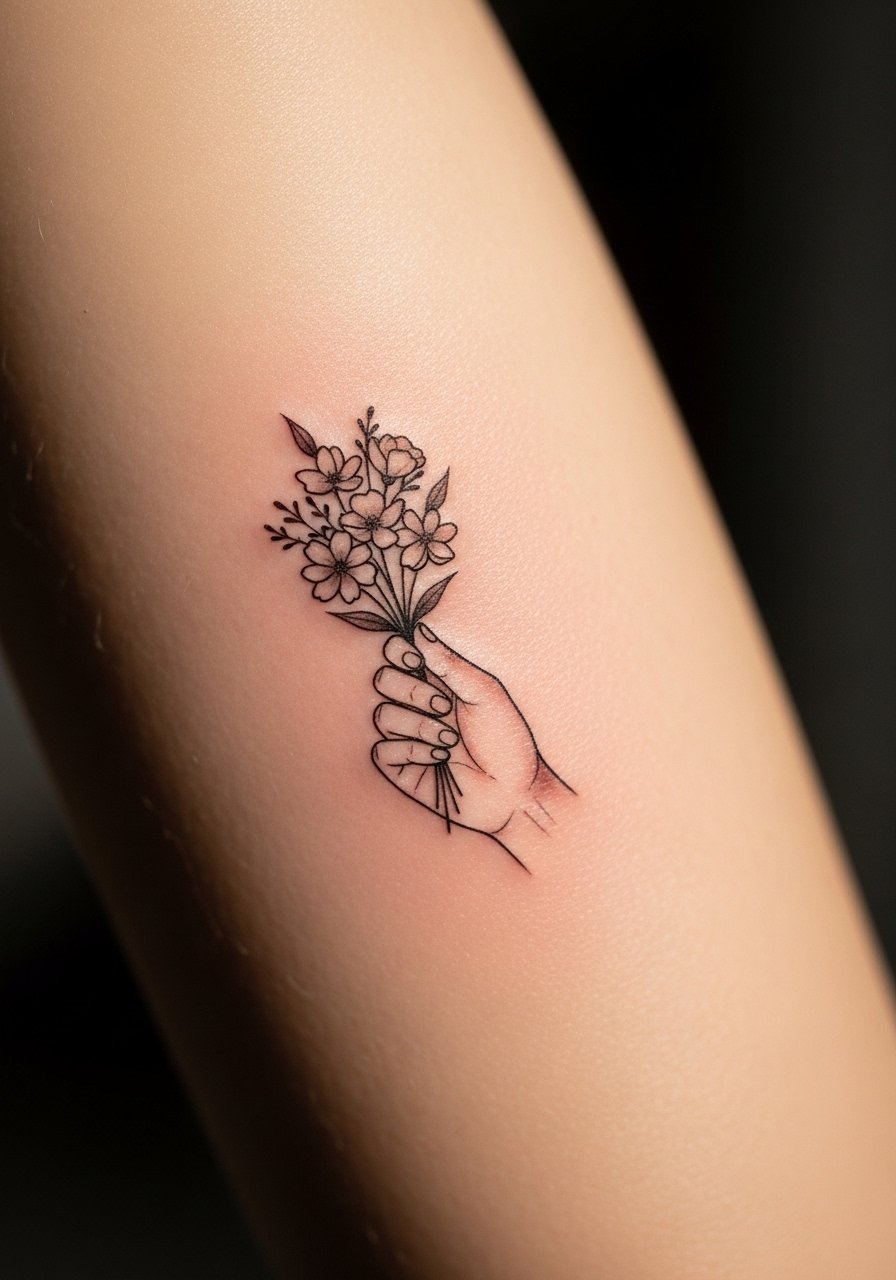
Narrative touches like a small hand holding a bouquet add story without increasing scale. The inner forearm is forgiving for this. Avoid asking for extremely fine cross-hatching in the hand which can fade into smudge. Ask for clear contour lines around the hand and a bit of stipple to suggest shadow. The session is comfortable and short. Pair with rolled sleeves and a chambray button down to show or hide the piece.
21. Tiny Garden of Cornflowers Above the Ankle
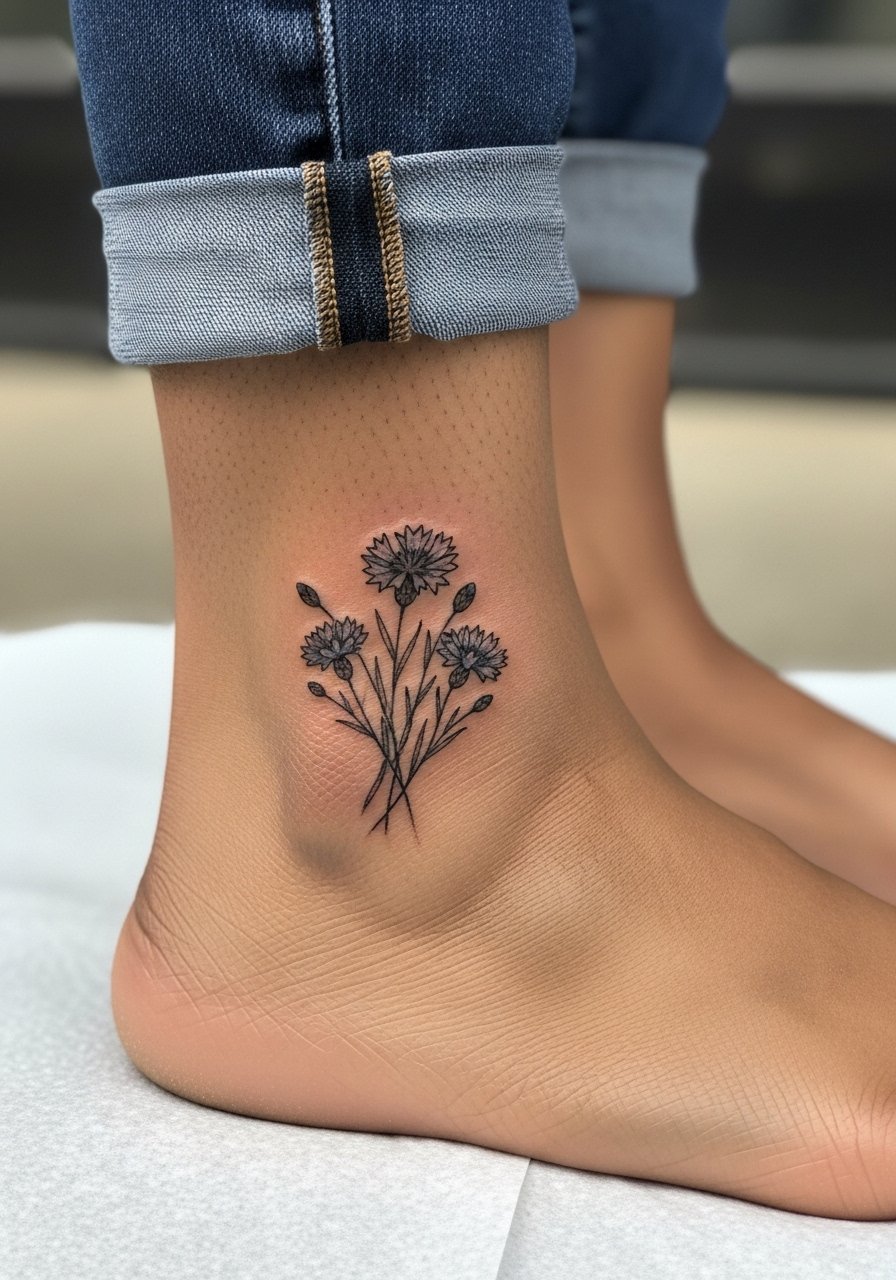
A low ankle cluster like this plays well with sandals and summer styles. The area sees a lot of rubbing, so keep petals simple and request slightly bolder centers so the flowers read over time. A mistake is insisting on micro-petals with no outline. Bring footwear examples so your artist can place blooms out of constant shoe friction. Style the look with rolled pants and strappy sandals flat when you want it visible.
22. Bouquet in a Vintage Ribbon Vase on the Outer Thigh
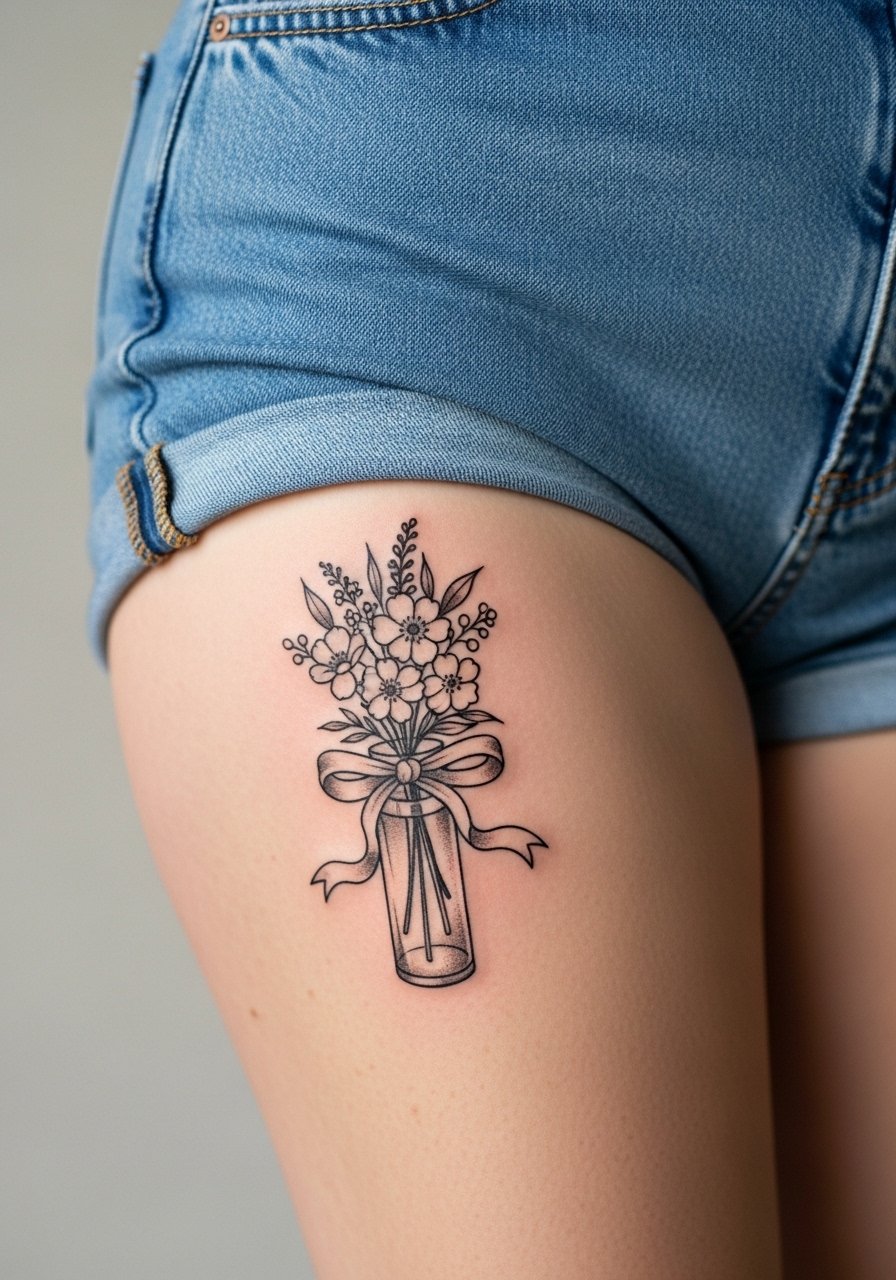
Outer thigh pieces let you combine ornate elements and still hide them during day-to-day activities. The primary mistake is too much tiny dot framing, which can blend. Ask for clean negative space around the vase and for anchors where the piece will age. For sessions wear loose shorts or a skirt that you can shift slightly. If you like peek-a-boo styling, this pairs well with high-waisted shorts or swim bottoms.
23. Minimal Line Bouquet on the Side of the Hand
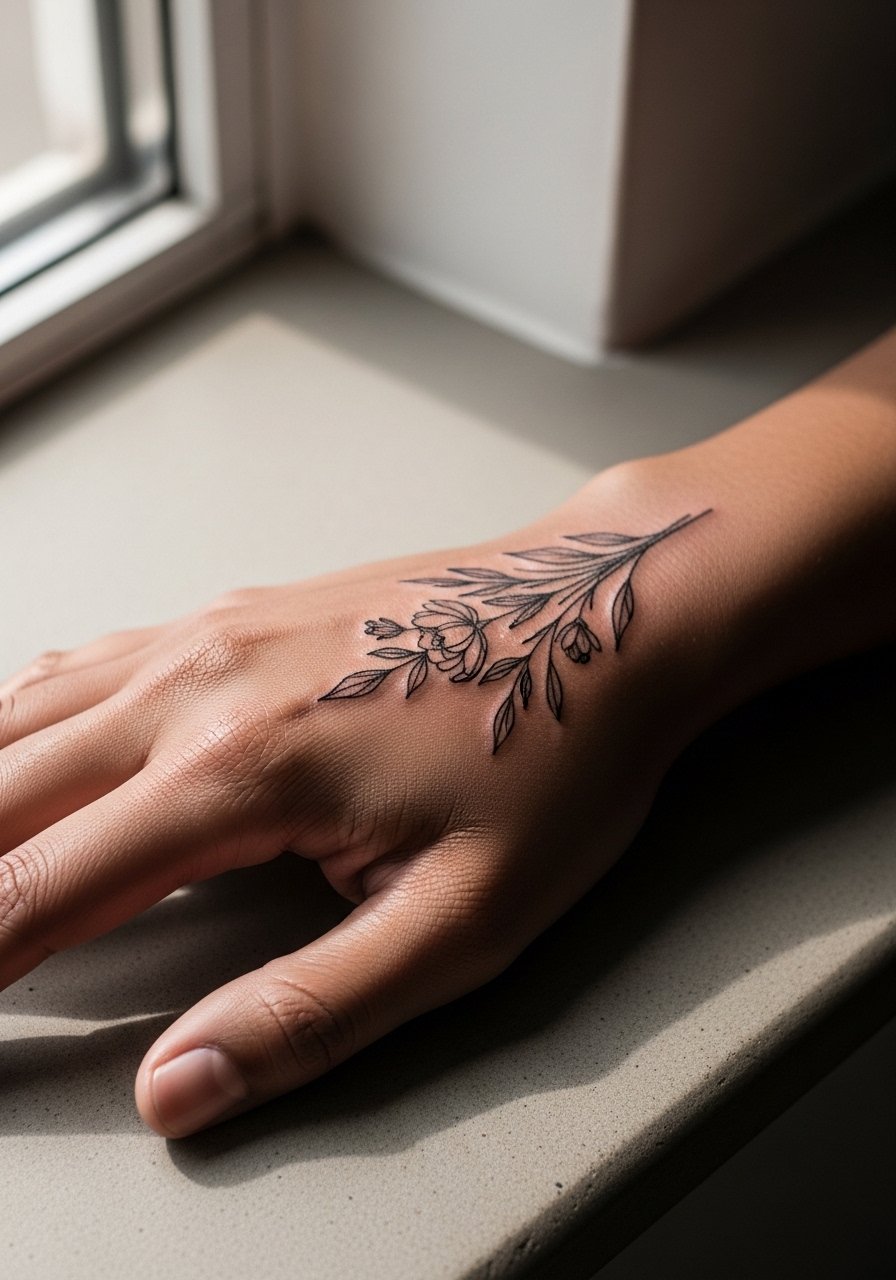
Side-of-hand tattoos are high-visibility and fade fastest of all placements. One camp argues hand placements are not worth fine single-needle detail because of constant washing and sun exposure. If you proceed, plan for touch-ups and keep the design extremely simple. The session is quick but sharp in spots. Avoid asking for dense shading and accept that annual maintenance is likely. Keep in mind some employers have policies about visible hand tattoos.
24. Bouquet with Lace Frame for the Inner Thigh
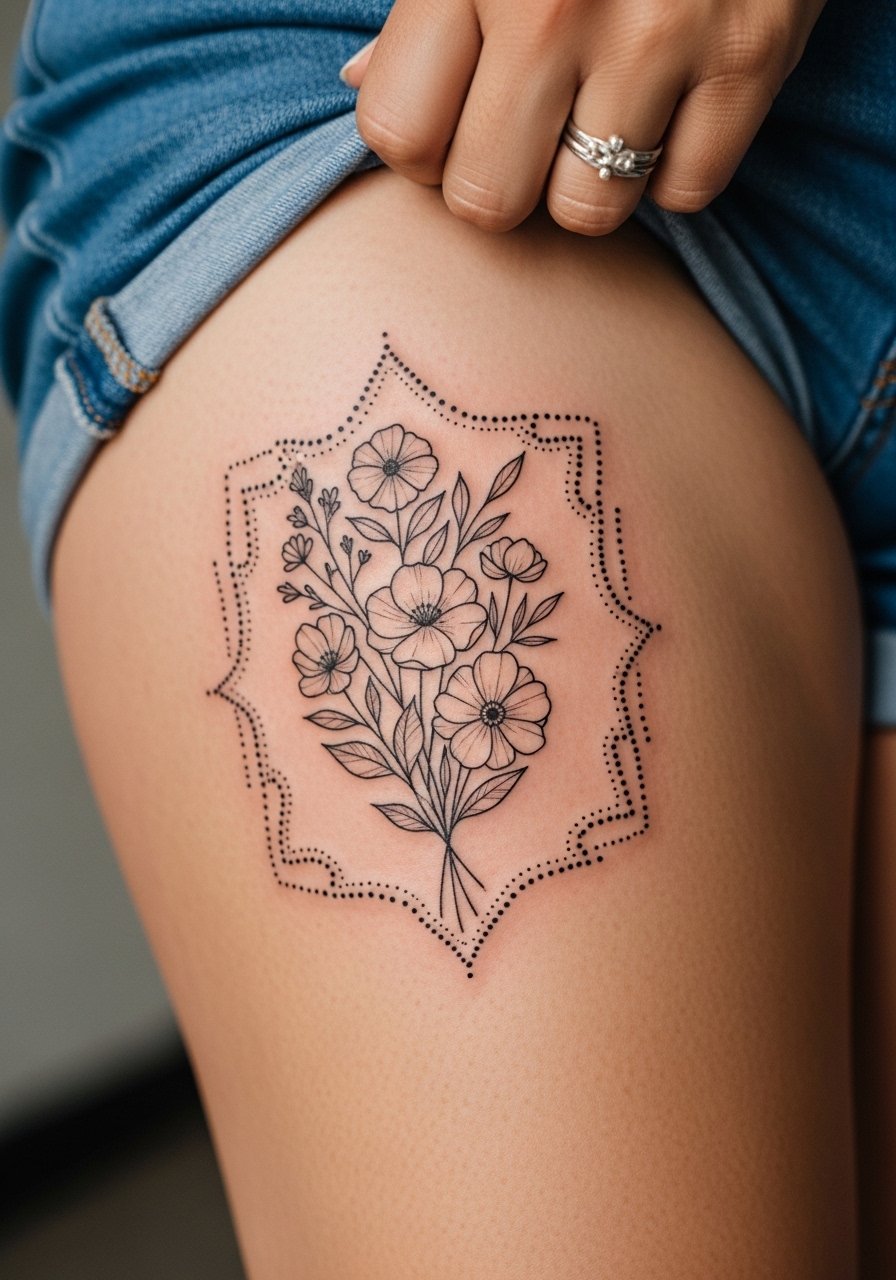
Inner thigh pieces benefit from lace-like framing that reads like lingerie when revealed. The mistake is making the lace too intricate, which can blur under skin movement. Ask for larger lace elements and less dense dot fills so the pattern preserves its texture. Sessions can be intimate and require trust with the artist, so choose someone experienced and comfortable with the placement. Wear shorts you can comfortably shift for the stencil.
25. Wildflower Bouquet with Tiny Script beneath on Lower Rib
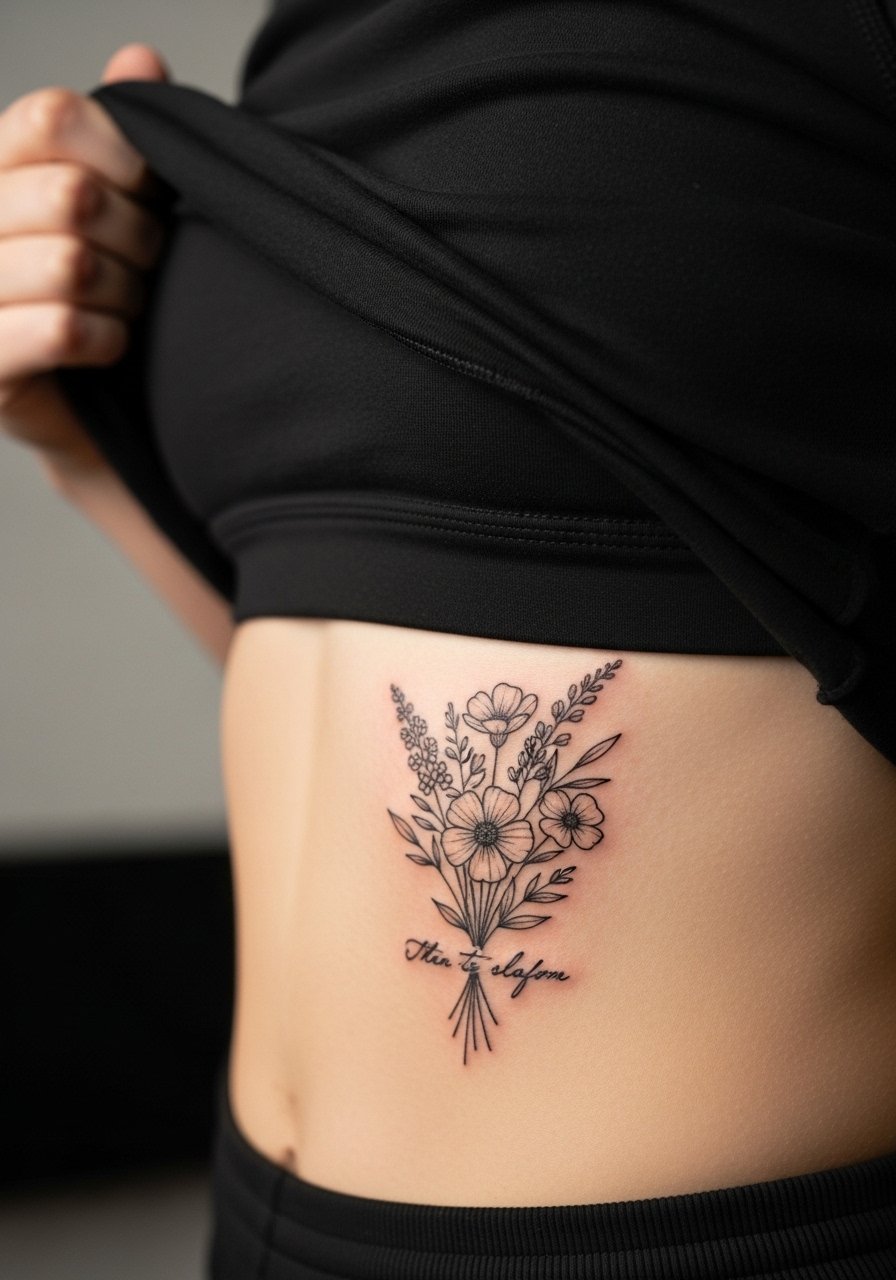
Adding a short word under a bouquet makes it read like a caption, but tiny script on the rib can age poorly if crowded by stems. Name both camps on fine line there when you consult. Ask your artist to test both font size and kerning on your skin before committing. Sessions on the rib are often stop-and-go due to sensitivity. Wear a cropped top or supportive bralette for clean access during the appointment.
26. Tiny Bouquet Pop-Up on the Shoulder Cap
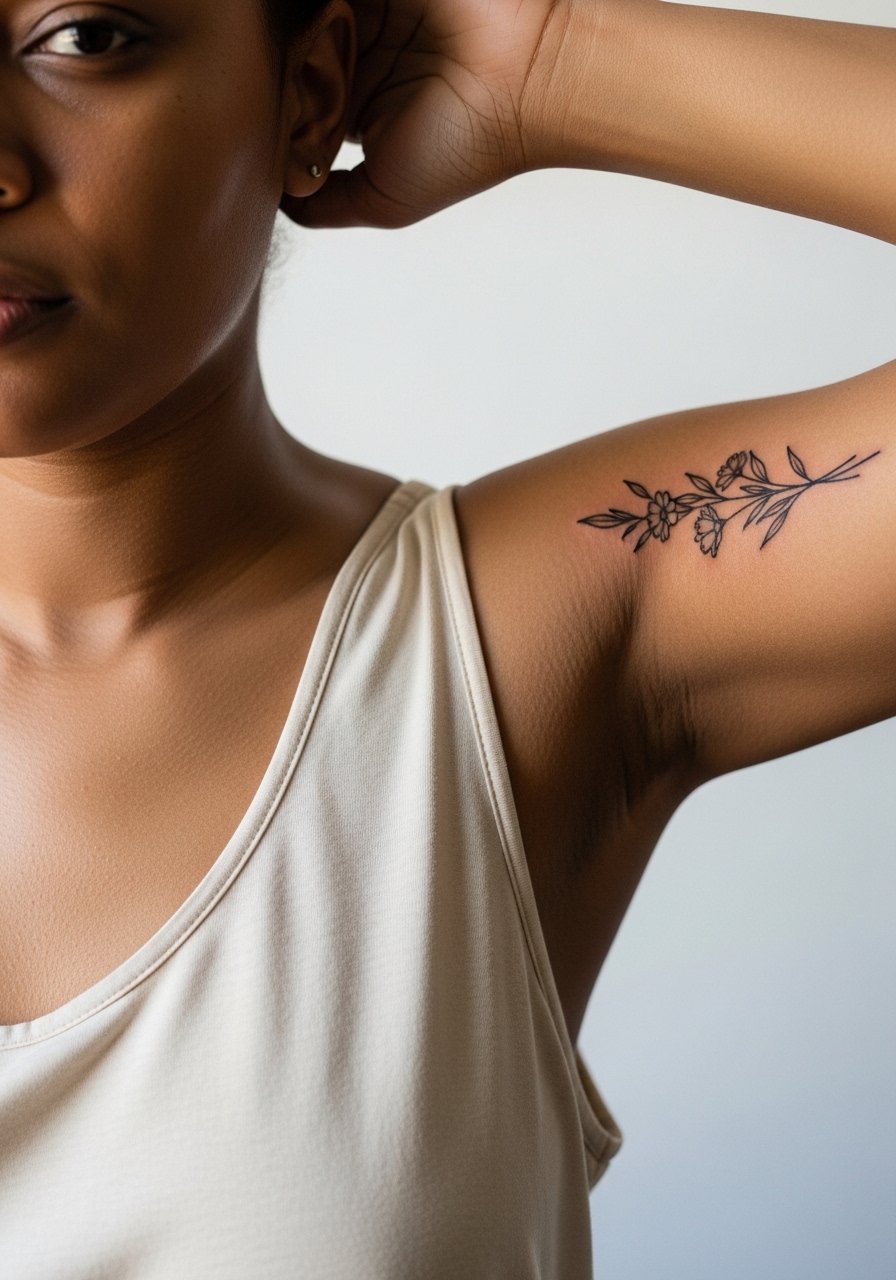
The shoulder cap is an excellent spot for small, visible bouquets that catch sun in summer. The area tolerates fine detail and ages predictably. Avoid asking for very tight stipple in the center, which can pool. Ask for a blend of linework and light shading. For the session wear a loose tank top so the artist can lift or shift fabric easily. For showing it off, dainty shoulder earrings or open-back tanks highlight the area.
27. Tiny Pressed-Flower Style Bouquet on the Collarbone Edge
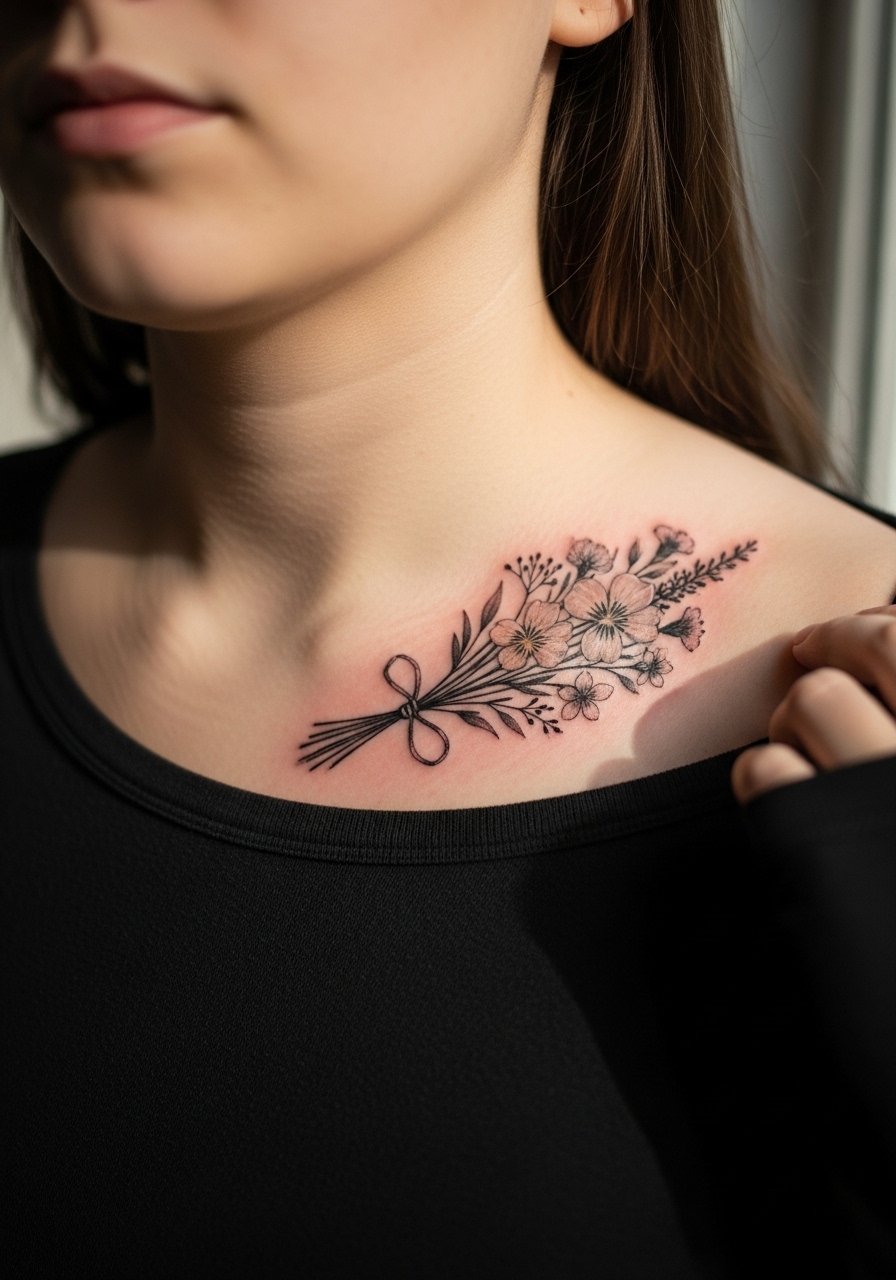
Ending with a pressed-flower look gives you that botanical, archival feel in a small area. The collarbone edge offers a natural line for a cluster that reads like a keepsake. The main mistake is over-detailing petals to a micro scale that does not survive years of wear. Ask for slightly simplified textures and for the artist to emulate the flattened look with thin stippling. Wear a wide-neck shirt for the session and pair with a dainty chain necklace when you want the piece to sit in an intimate frame.
Frequently Asked Questions
Q: Will fine line daisy or bouquet tattoos on the wrist blur faster than other placements?
A: It depends on your daily routine and skin. Wrist pieces live in a high-motion, high-wash zone, so incredibly thin single-needle work can soften faster. Many people choose slightly bolder lineweight or plan for a touch-up around year two or three. Consider testing with temporary designs first to check visibility on your skin tone.
Q: Are watercolor-style collarbone bouquets harder to maintain than black line bouquets?
A: Watercolor shading can fade more quickly because it relies on soft color fields. Anchoring the watercolor with fine outlines or darker contrast helps preserve the shape. Sunscreen on exposed collarbones and avoiding heavy friction from straps are practical ways to slow fading.
Q: I have darker skin. How can I tell if a tiny bouquet design will show up well?
A: Try a temporary tattoo in the exact placement and take photos in natural light across a few days. If the temporary reads clearly, discuss slightly stronger linework with your artist so the contrast holds on healed skin. Also ask to see healed portfolio pieces on similar tones.
Q: What should I wear to a session for ankle, thigh, and collarbone placements?
A: For ankle wear loose pants you can roll up or shorts you can shift, for thigh wear loose shorts that you can pull aside, and for collarbone bring a wide-neck shirt you can pull slightly aside or a strapless bra. If you want options, bring a button-up you can wear and remove easily for different access needs. If you plan outfits after the session, think breathable fabrics.
Q: How do I decide between blackwork and neo-traditional color for longevity?
A: Blackwork and bold traditional color both age predictably when the composition is spacious and outlines are solid. Micro-realism and watercolor are beautiful fresh choices but need careful placement and possible touch-ups. Consider the body area, how much sun exposure it will get, and whether you are okay with a maintenance plan.
Q: Should I use a temporary tattoo from Etsy to test a bouquet design before committing?
A: Yes, many people use temporary designs to test scale, placement, and visibility on their skin tone. It is an easy way to see if the bouquet fits the way you imagined before booking a session.
Q: Are there hashtag or discovery paths that help me find the right style and artist?
A: Search hashtags like #DaintyFlowerTattoo and #FineLineFloral for visual matches, browse Etsy for temporary mockups, and use local searches like your city plus "fine line floral studio" to find artists who post healed photos. Book a consult with samples of healed work rather than only fresh photos to get a realistic sense of how the style ages.