
Bold linework is having a moment, and the tattoos that still look crisp after a few years are rarely the same designs that got the most double taps when they were fresh. I spent time in five shops across Brooklyn and a convention booth in my notes, and what repeats is simple. These trio ideas lean into contrast, placement, and practical sizing so the pieces read bold now and hold up later.
1. Fine Line Arrow on Inner Forearm
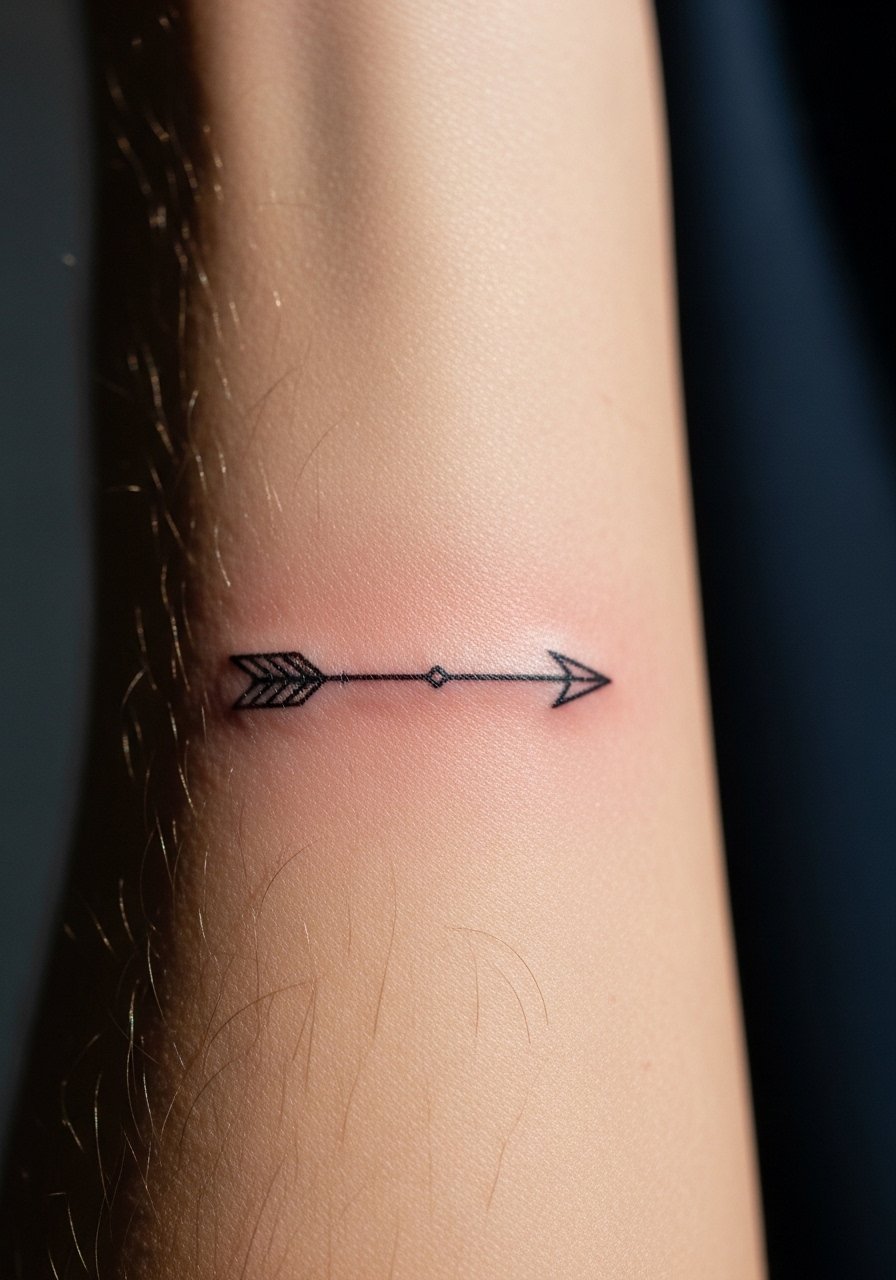
I recommend a single fine line arrow for someone who wants clean geometry without a sleeve commitment. Tell your artist you want slightly heavier linework than micro-fine so the point holds after two years. Common mistakes are making the shaft too thin or packing tiny decorative details that blur together. Pain sits low on the forearm scale and sessions are short, often under an hour. For showing it off, roll up sleeves and pair the arm with a rolled linen shirt to let the linework read against soft neutrals.
2. Bold Trio of Little Birds Behind the Ear
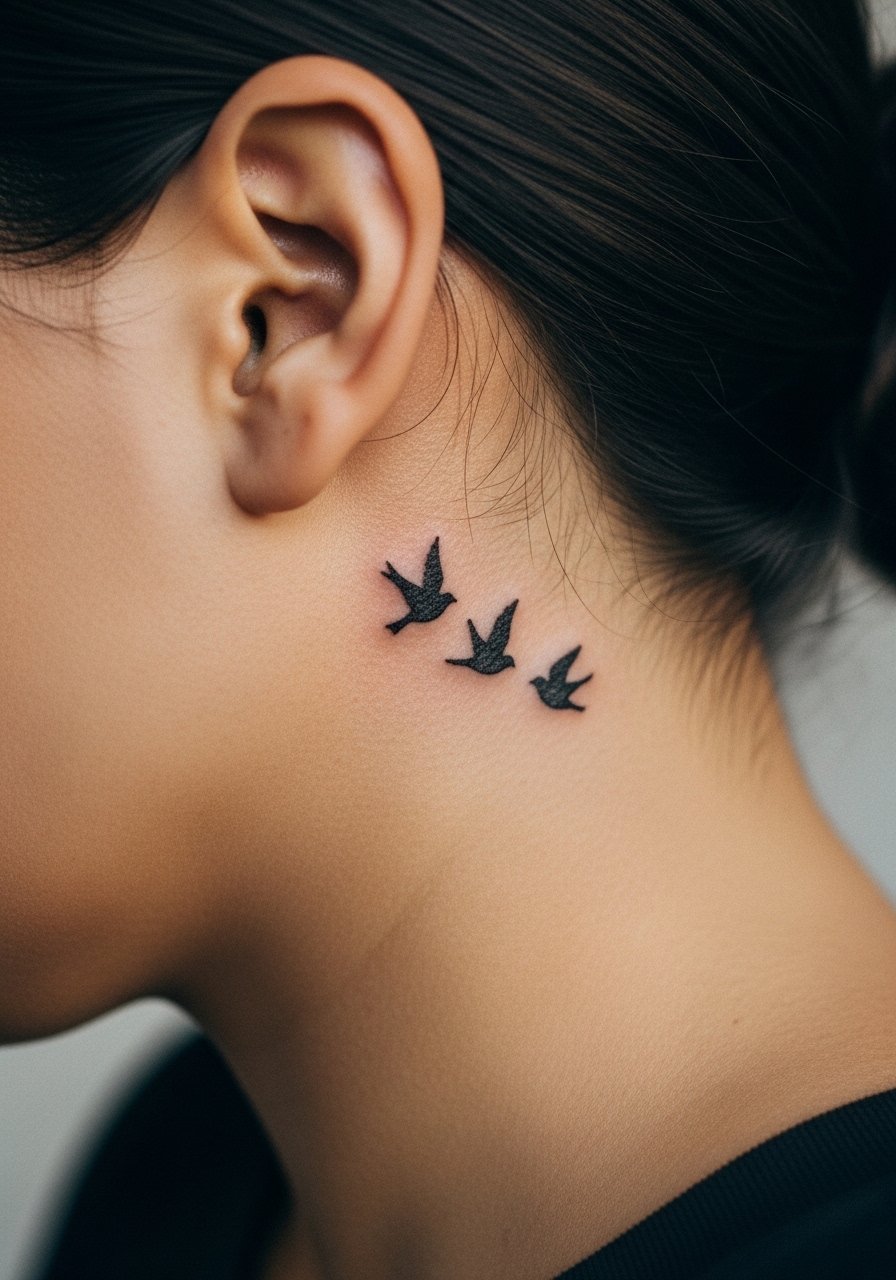
Three small bird silhouettes read as a set and travel well across placements. Behind the ear is delicate, so ask for slightly bolder silhouettes than your saved photos show. Sessions are quick but expect twinges of discomfort from the thin skin. A common aging issue is lost separation when the birds are too close, so space them evenly. For the appointment wear a low ponytail or a wide-headband so the artist has clear access without tugging at hair.
3. Ribcage Trio: Fine Line Florals with Negative Space
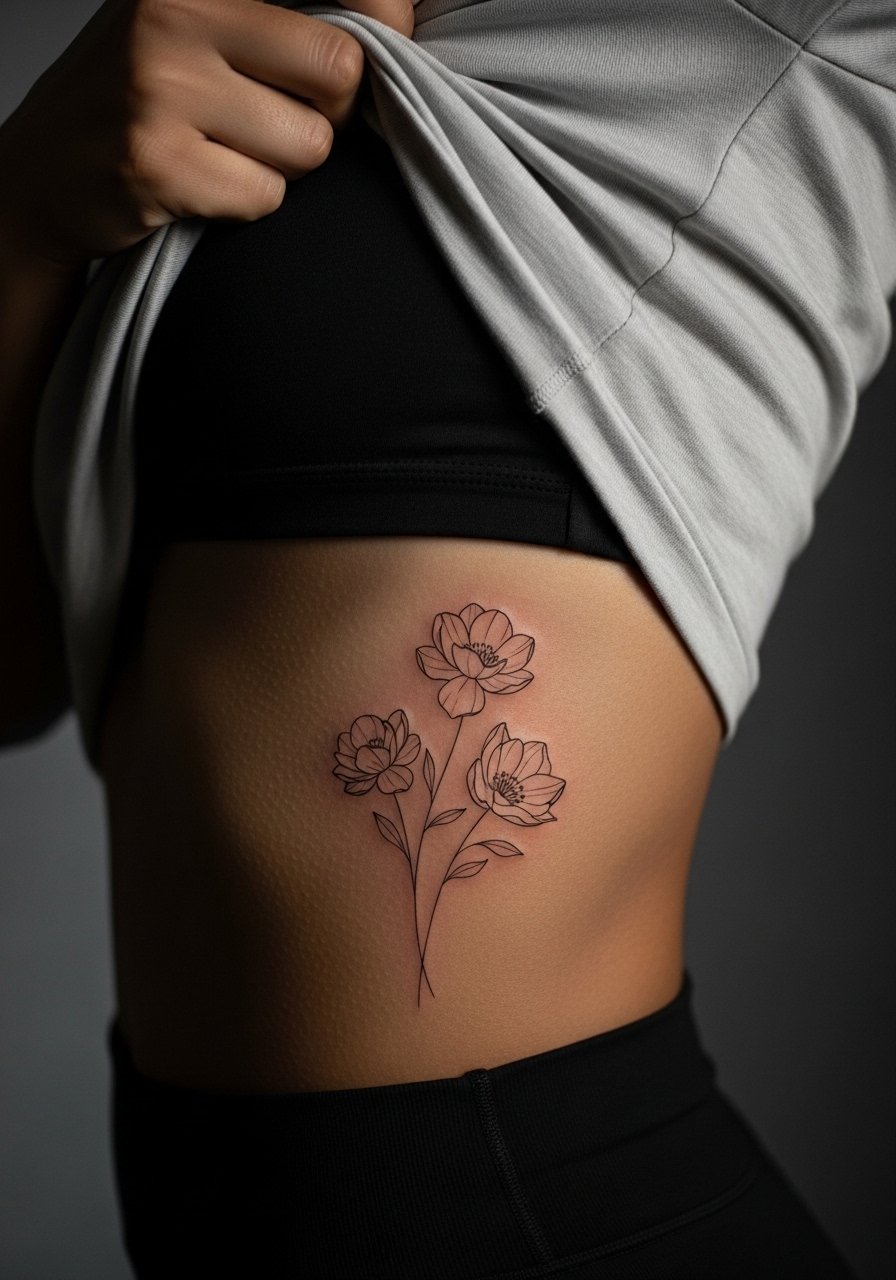
Fair warning, ribs are a high sensitivity spot and a design made too small loses detail fast. Artists split into two camps on fine line here. One camp says the skin movement and stretch blur lines within two years. The other camp says with proper spacing and depth it settles fine. Ask your artist which side they sit on and why. Choose negative space between blooms so the composition ages with breathing and activity. Session time can stretch into multiple sittings, and expect a touch-up within three years for tight contour work.
4. Blackwork Crescent Moon Trio on Upper Arm
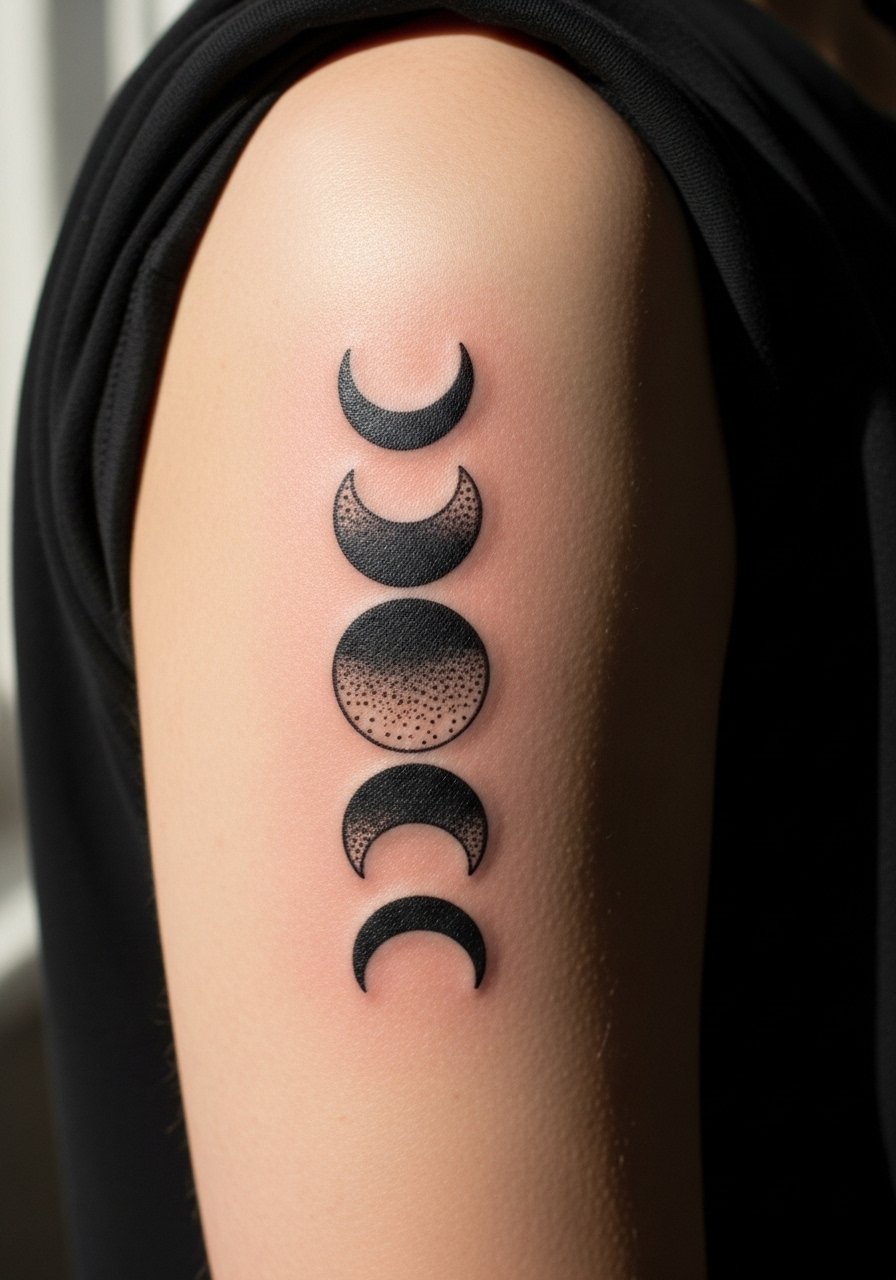
There is visual presence in saturated crescents that reads from across a room. Tell your artist you want dense saturation and smooth edges so the crescents do not feather later. This placement is forgiving because the upper arm sees less friction. Sessions are medium length and usually done in a single visit. For casual wear, short sleeves or a boxy tee frames the moons without hiding them. Expect excellent longevity with standard sun protection.
5. Sternum Trio: Dot-Work Constellation Cluster
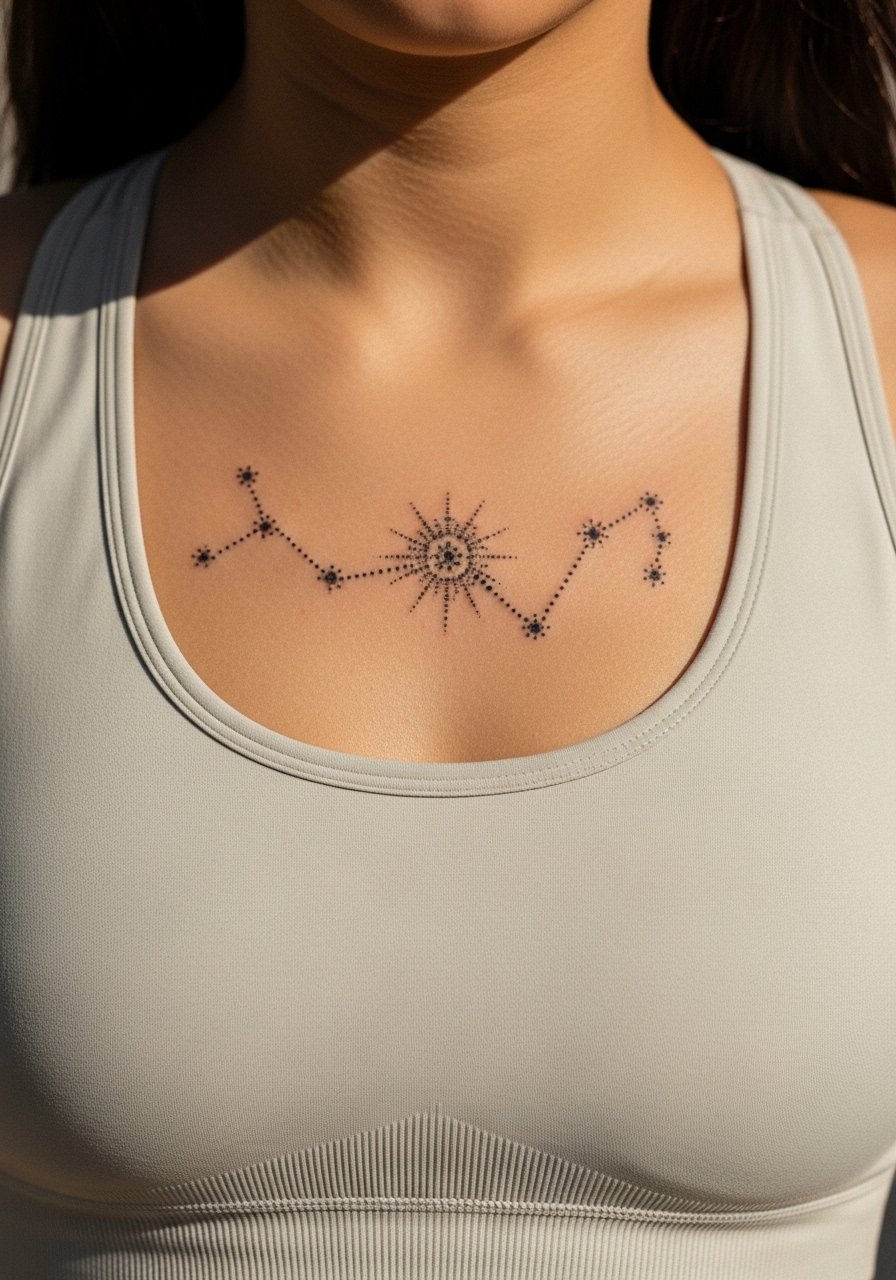
Sternum work reads intimate and ornate when done with stipple shading and careful spacing. During consultation, ask for a mock placement with stencil to check symmetry against your rib curve. Pain is higher here and session times vary with detail. A common error is packing dots too tightly, which merges into patchy shading after healing. For the appointment wear a zip-up or a sports bra you can easily slide without overexposing the torso. Consider touch-up plans because central chest areas see more stretching with weight changes.
6. Geometric Triangle Trio on the Calf
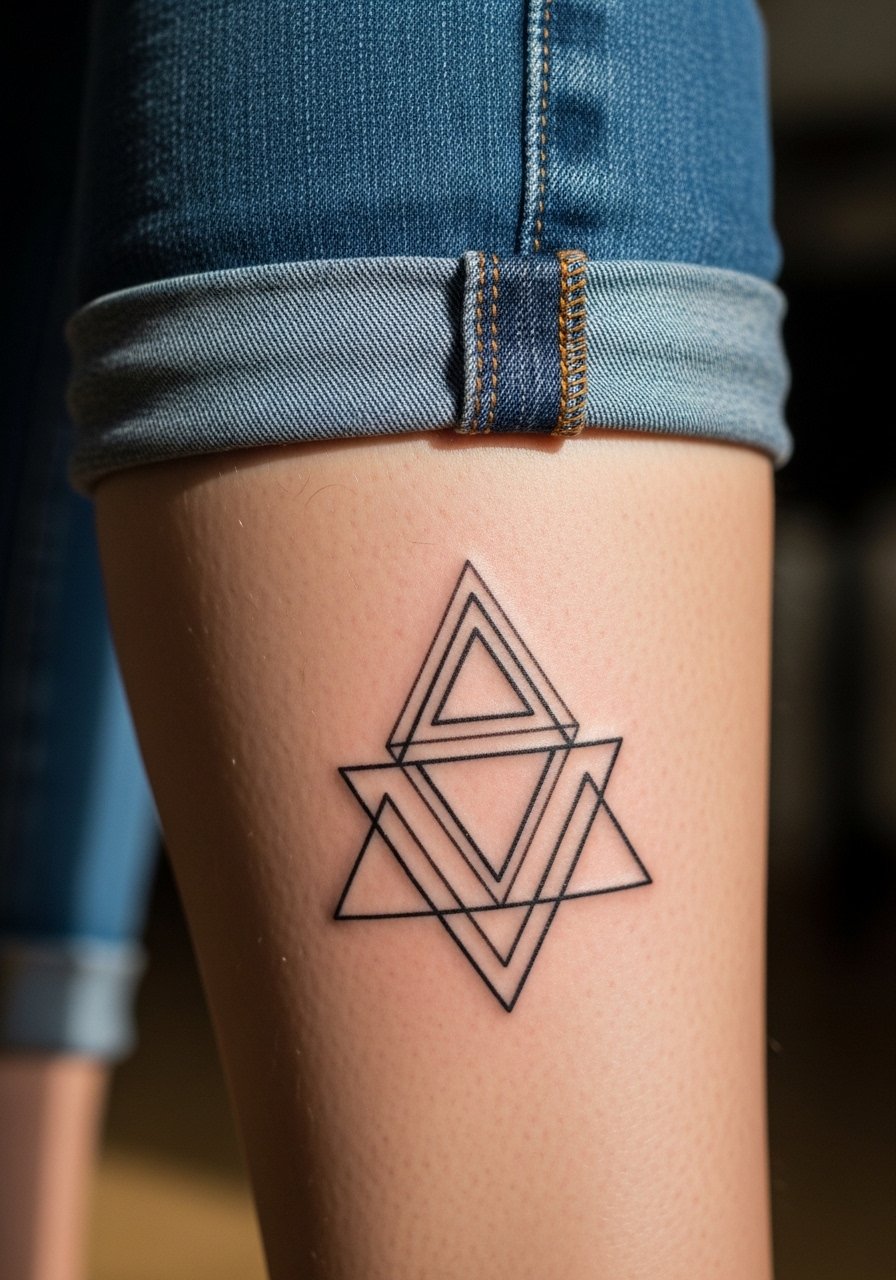
Calf pieces take ink well and look great with crisp geometry. Tell your artist you want enough scale for the negative space to breathe between triangles. Pain is moderate and you can often finish in one session unless you add stipple shading. A common mistake is making the triangles too small, which invites future crowding. For showing it off in summer, a linen short or rolled pants let the calf read without looking staged.
Studio Day Picks
These first six placements include high-friction zones and chest work, so a little prep and the right small items smooth the day.
- Stencil transfer paper kit. Lets you preview placement, which is crucial for asymmetrical calf and forearm work.
- Topical numbing cream. Applied as directed about 45 minutes before can ease rib and sternum sessions without altering linework.
- Thin protective film roll. Useful for finger and wrist pieces that face constant washing and wear during the first week.
- Fragrance-free body wash. Gentle cleansing helps keep stipple and fine line areas from getting irritated during showers.
- Aquaphor healing ointment. A thin layer in the initial days locks in moisture for delicate linework without clogging.
7. Minimalist Script Trio Along the Collarbone
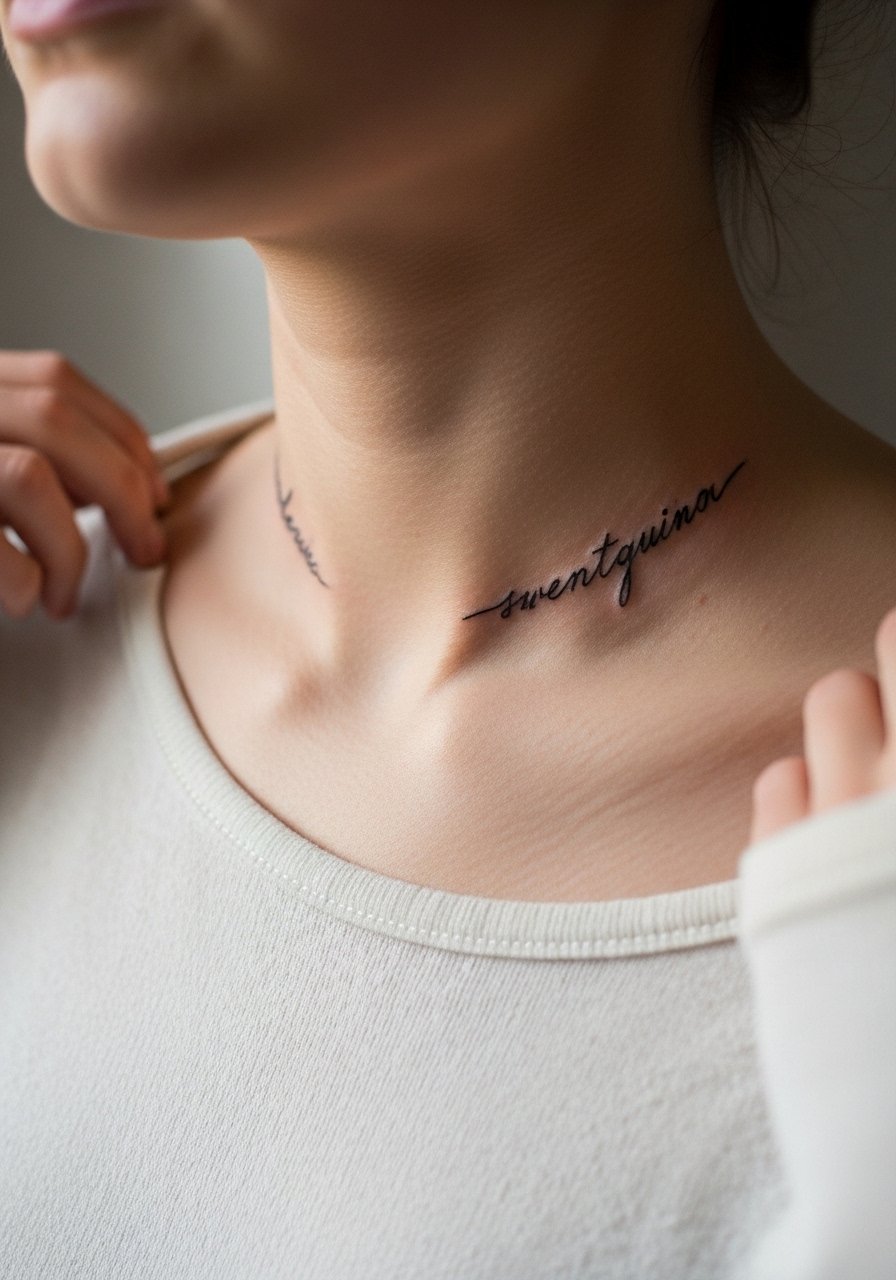
Script along the collarbone has an elegant read when letter spacing is generous. Bring exact font references and specify letter height so letters do not compress over time. Expect moderate pain and a short session for minimal lines. Many mistakes come from choosing tiny type that loses legibility after the first year. For evening wear, an open-back blouse or scoop-neck sweater frames the script without competing with its negative space.
8. Traditional Rose Trio on the Thigh
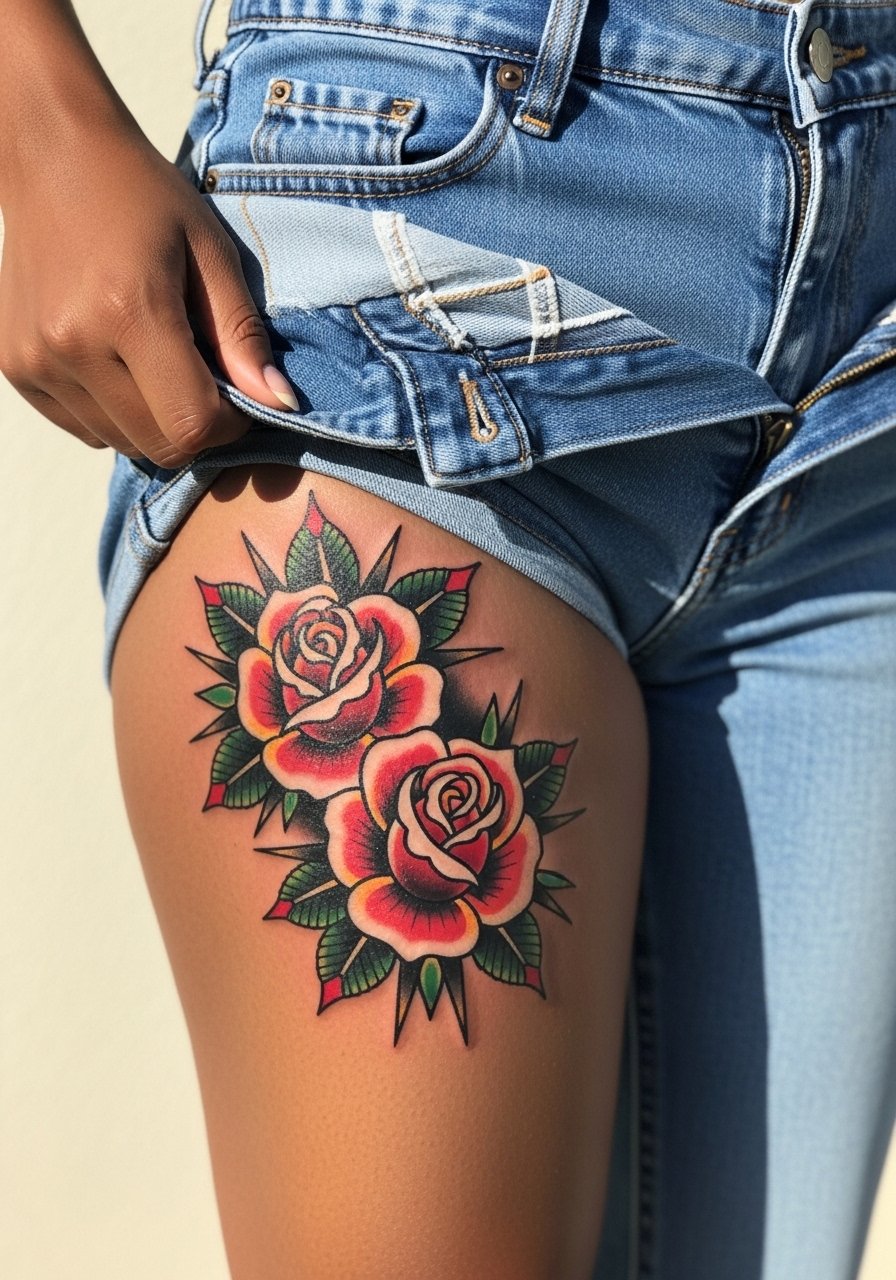
Thighs are forgiving with saturation and hold color well. Ask for bold outlines and solid color fills if you want a look that softens into a warm patina rather than a muddy blur. Sessions for three roses often fit into one to two sittings. A common mistake is tiny petals and overly intricate leaves that age into indistinct blobs. For the session, slip into high-waisted shorts so the artist can access the top of the thigh without discomfort.
9. Micro-Realism Trio on the Inner Wrist
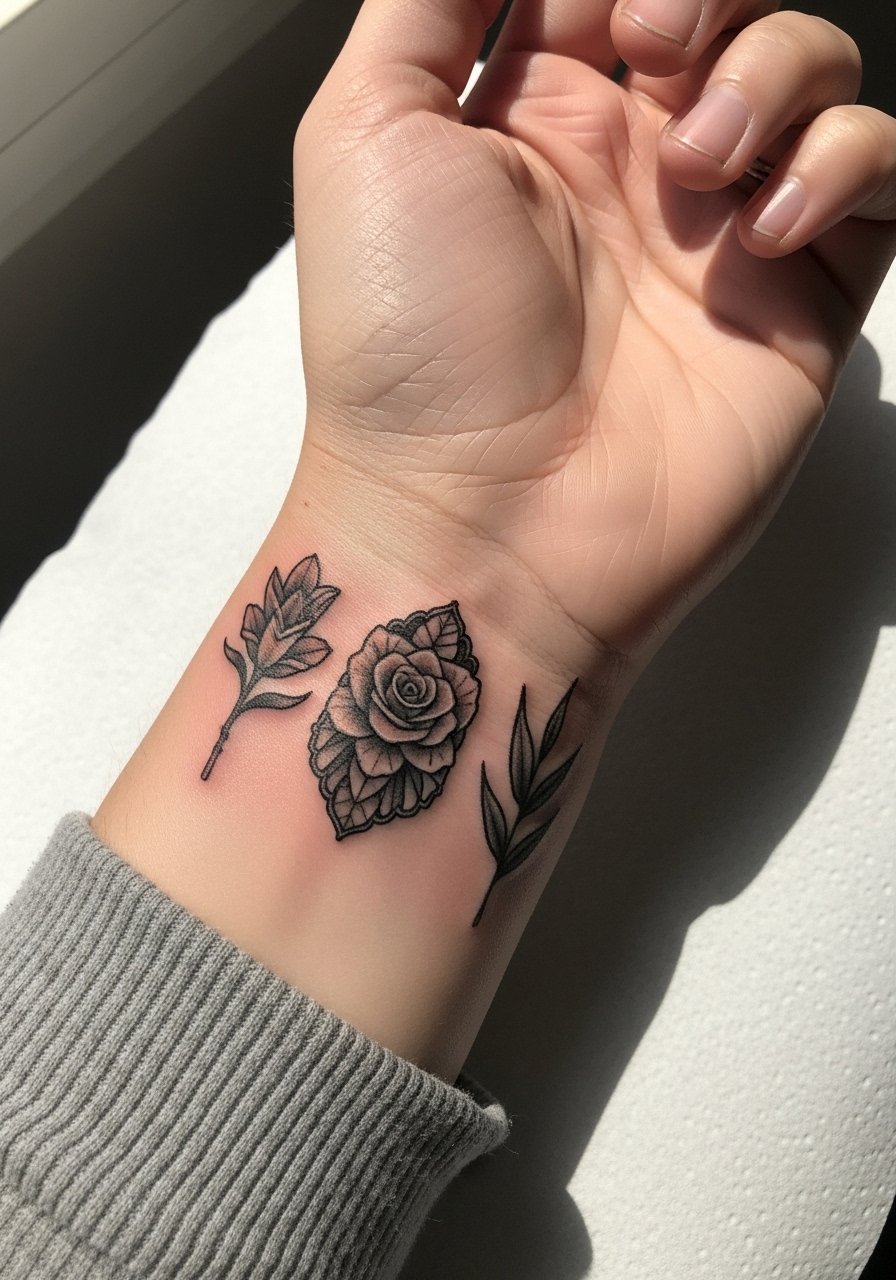
Inner wrist micro-realism looks intimate and refined but needs breathing room. Tell your artist to enlarge reference details slightly so texture stays legible at six months. This area is prone to friction from watches and bracelets, which makes touch-ups more common. Sessions are brief but the healing window is sensitive to soap and motion. Wear a loose bracelet or minimalist watch after healing to frame the piece without rubbing the ink.
10. Bold Linework Trio Along the Spine
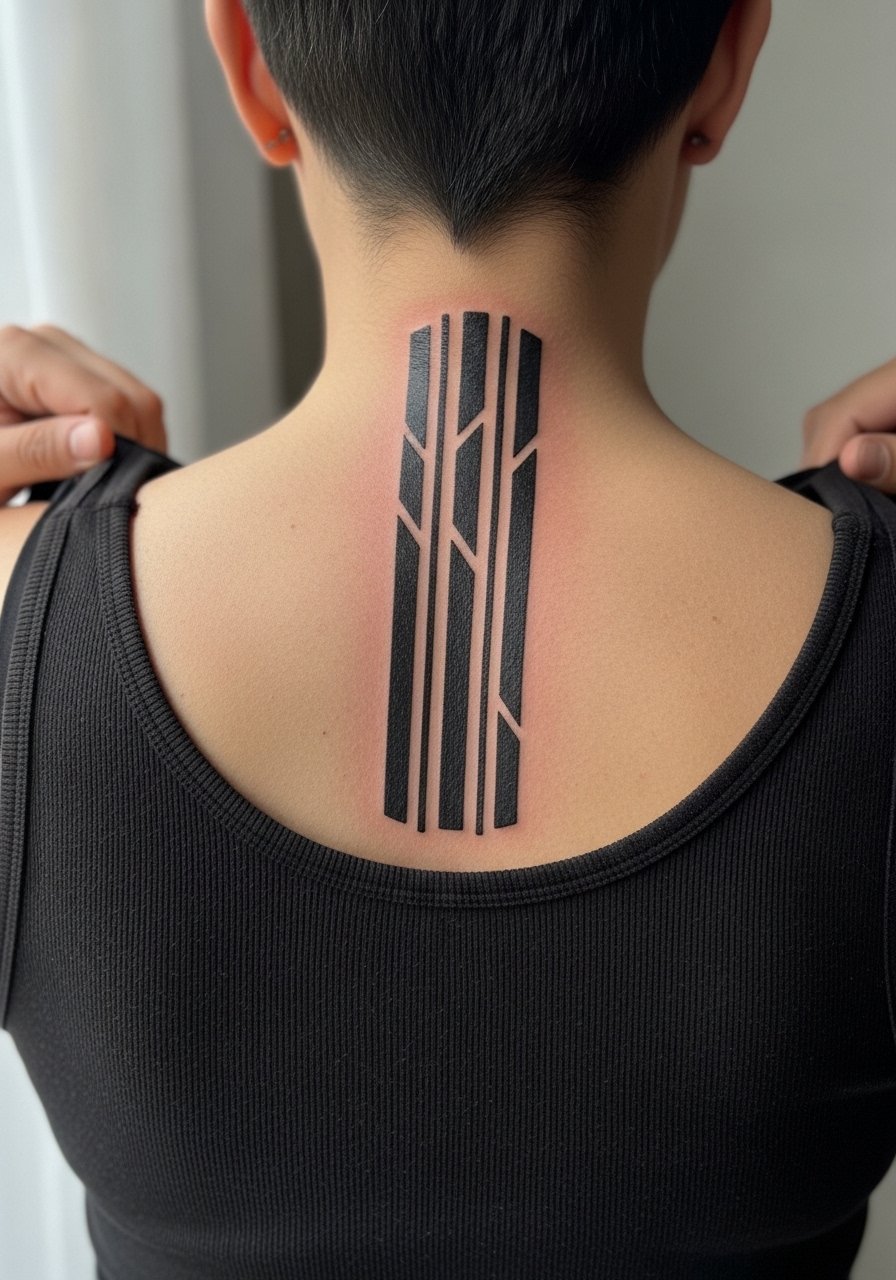
Spine pieces have a strong vertical presence and age well when lines are bold and spaced. Mention you want consistent lineweight and ask about needle approach so the artist keeps depth even. Pain can be high near the vertebrae and sessions vary by length. A mistake is compacting multiple thin motifs into a narrow column; wider spacing preserves clarity. For show-off styling, an open-back dress showcases the vertical rhythm without covering the lines.
11. Small Traditional Anchors on the Ankles
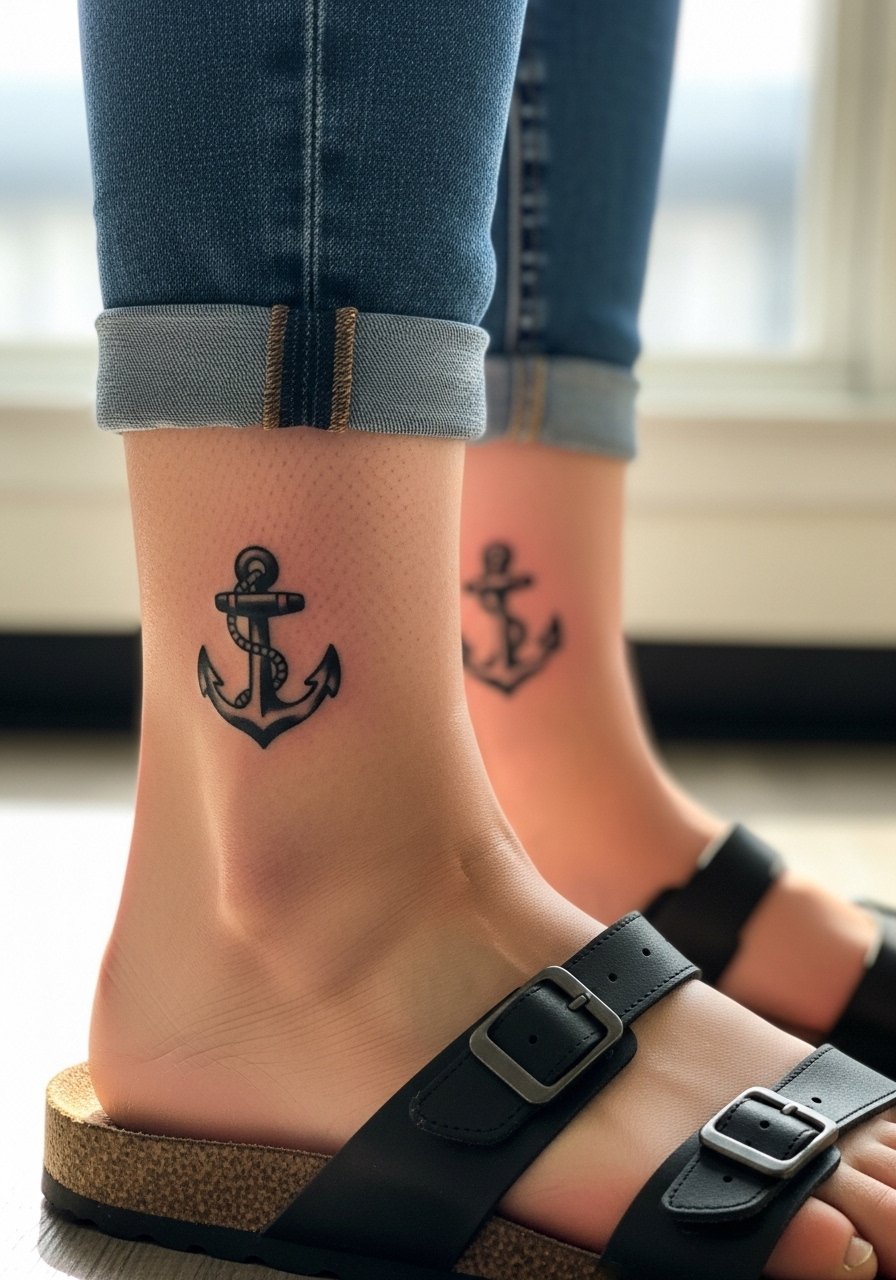
Ankle anchors are low-cost in time and make classic visible trio placements when mirrored. Ask for stout anchors with clean black outlines and modest shading so the shapes remain recognizable after seasonal wear. The ankle sees more friction from socks and shoes, so plan your footwear in the week after. Sessions are short and pain is moderate. A simple styling trick is to wear slide sandals after healing to keep the area visible without irritation.
12. Watercolor Trio on the Shoulder Blade
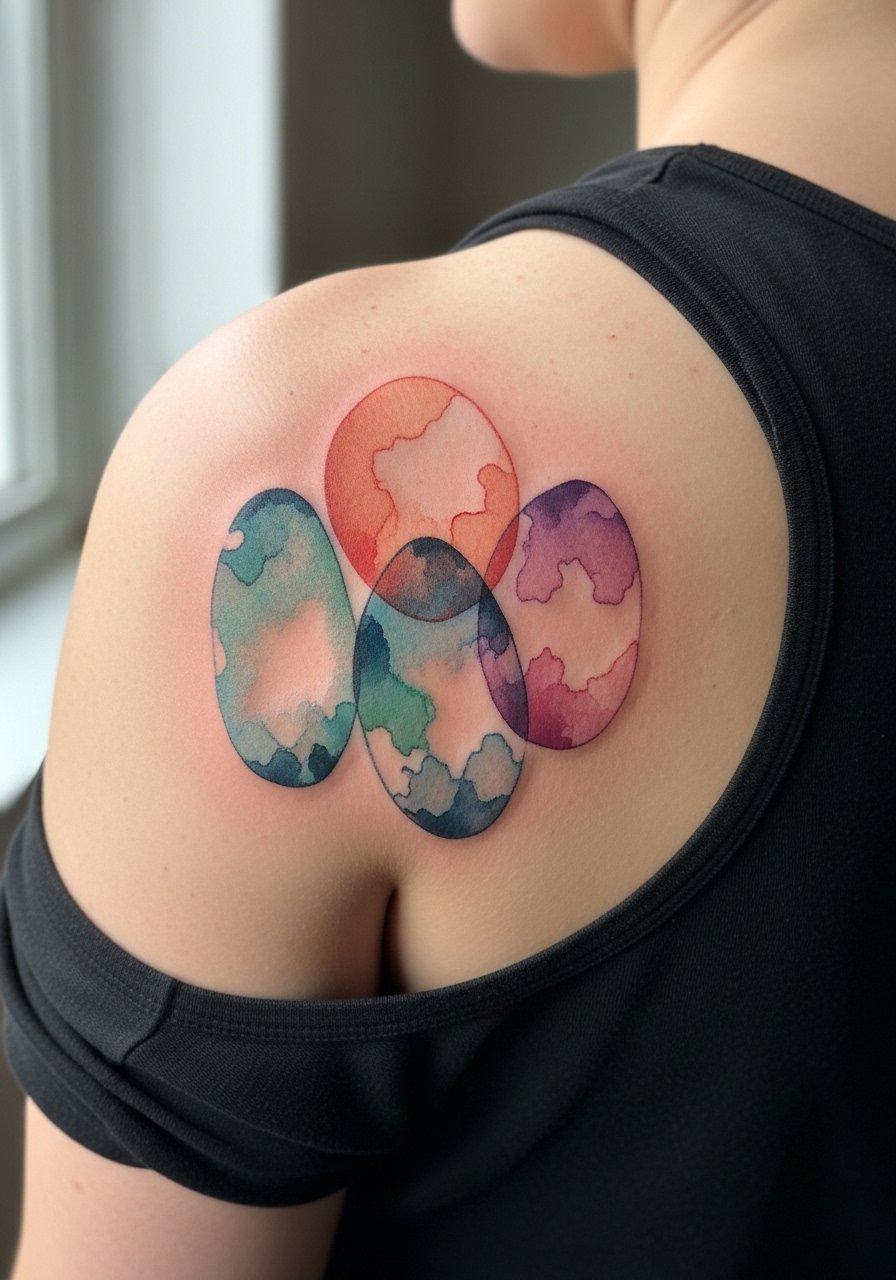
Watercolor effects look soft and painterly but they age differently from saturated blackwork. One camp of artists says watercolor fades into a bruise without black anchors. Another camp adapts with subtle outlines to keep form. Name both views during your consultation and ask which approach your chosen artist uses. Shoulder blades move with posture so choose slightly denser color spots so they do not vanish. For the session, wear a button-down shirt you can slide off one shoulder to give access while staying covered.
13. Tiny Tri-Icon Trio on the Side Hip
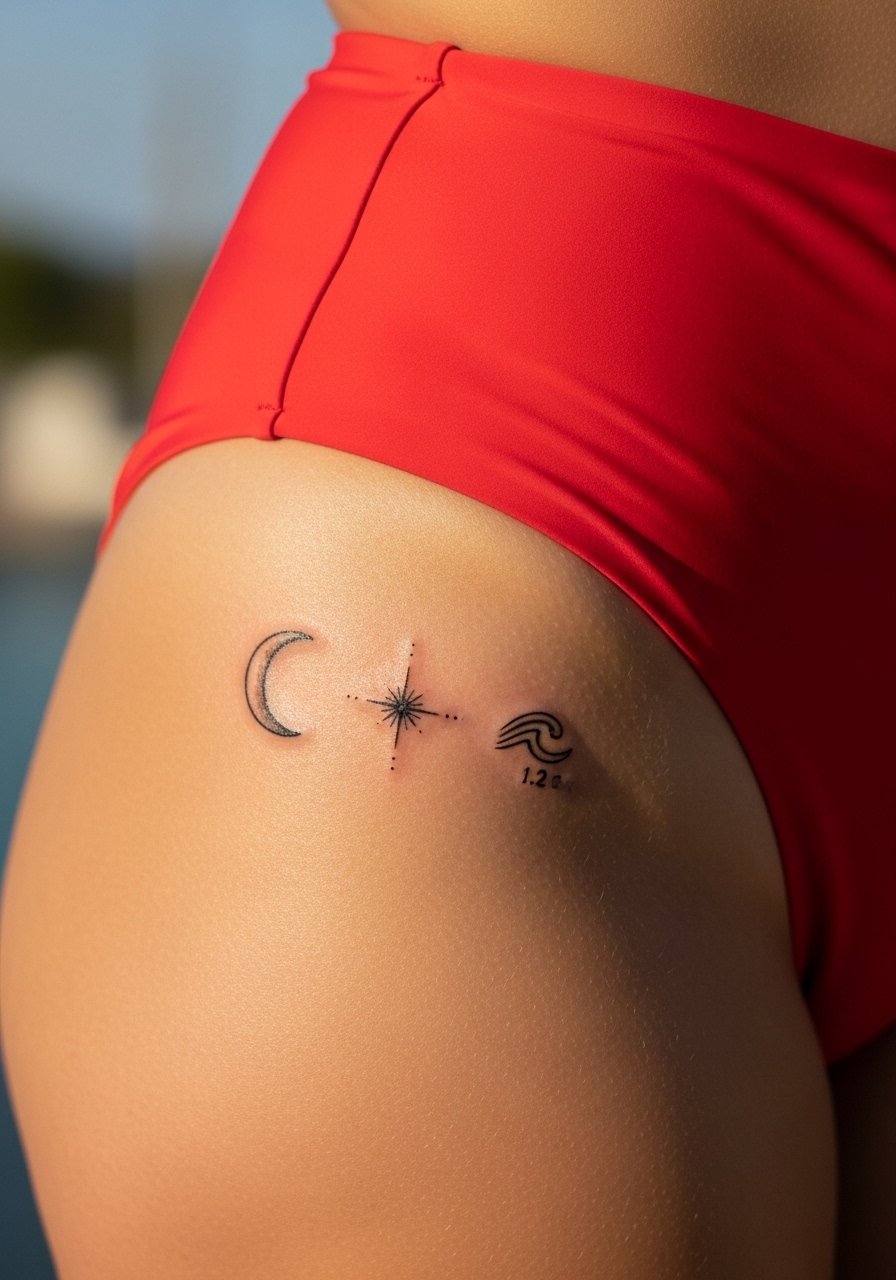
Hip icons read as a private trio that peeks out with low-rise or high-cut garments. Discuss scale with your artist because the hip stretches differently than the flank. Pain is moderate and sessions are usually short. A frequent error is placing the icons too close to the waistband where friction and clothing changes accelerate fading. For beach season, a high-cut swimsuit frames the trio without rubbing the ink.
14. Geometric Mandala Trio on the Back of the Neck
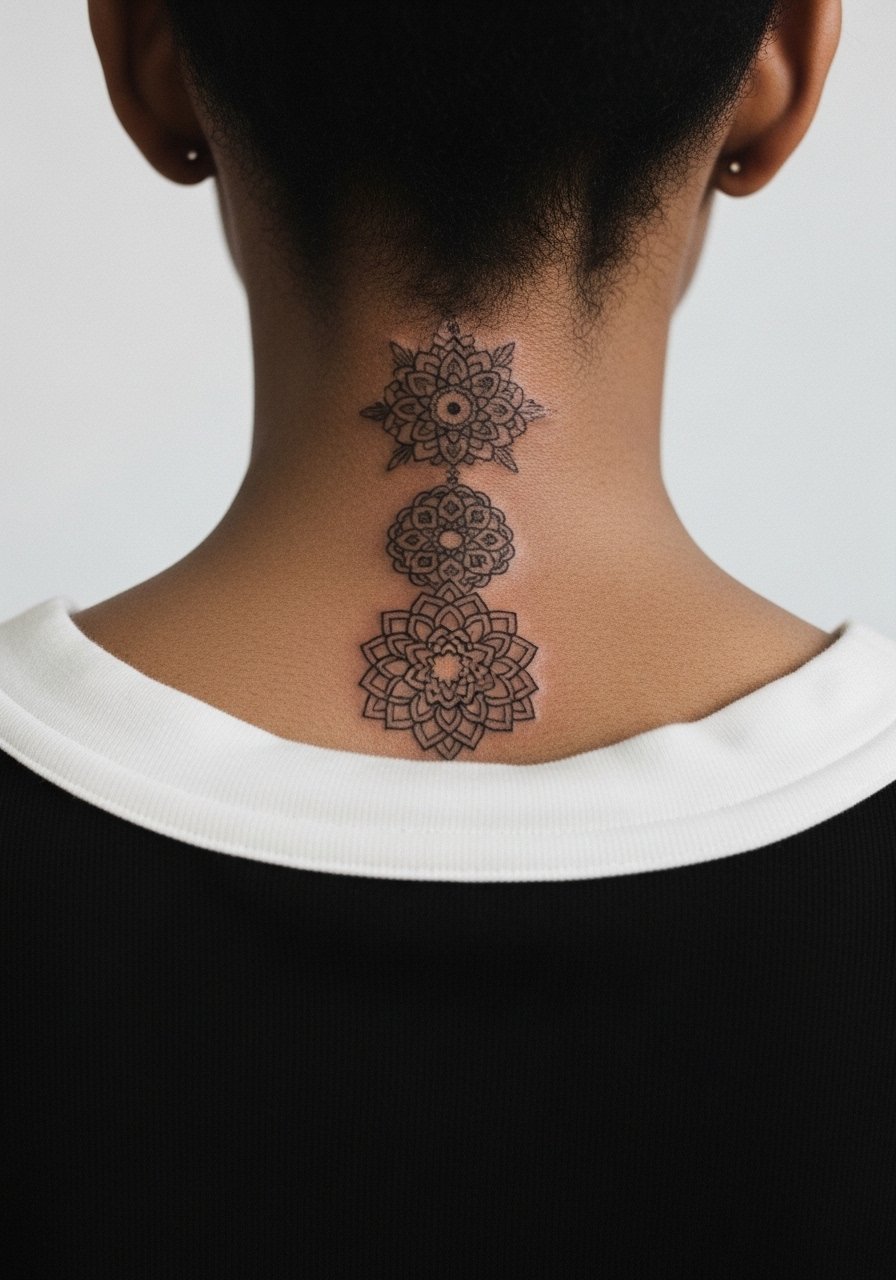
Back of neck tattoos show when hair is up and settle based on line spacing. Ask for bolder middle circles and clear spacing in radial lines so the mandalas do not densify into a single blob. Pain is low to moderate and sessions are brief. A common mistake is compacting too many lines into a small circle. For daily wear, a coil hair tie and half-up hairstyle highlight the art without constant friction.
15. Stomach Trio: Minimalist Line Blossoms
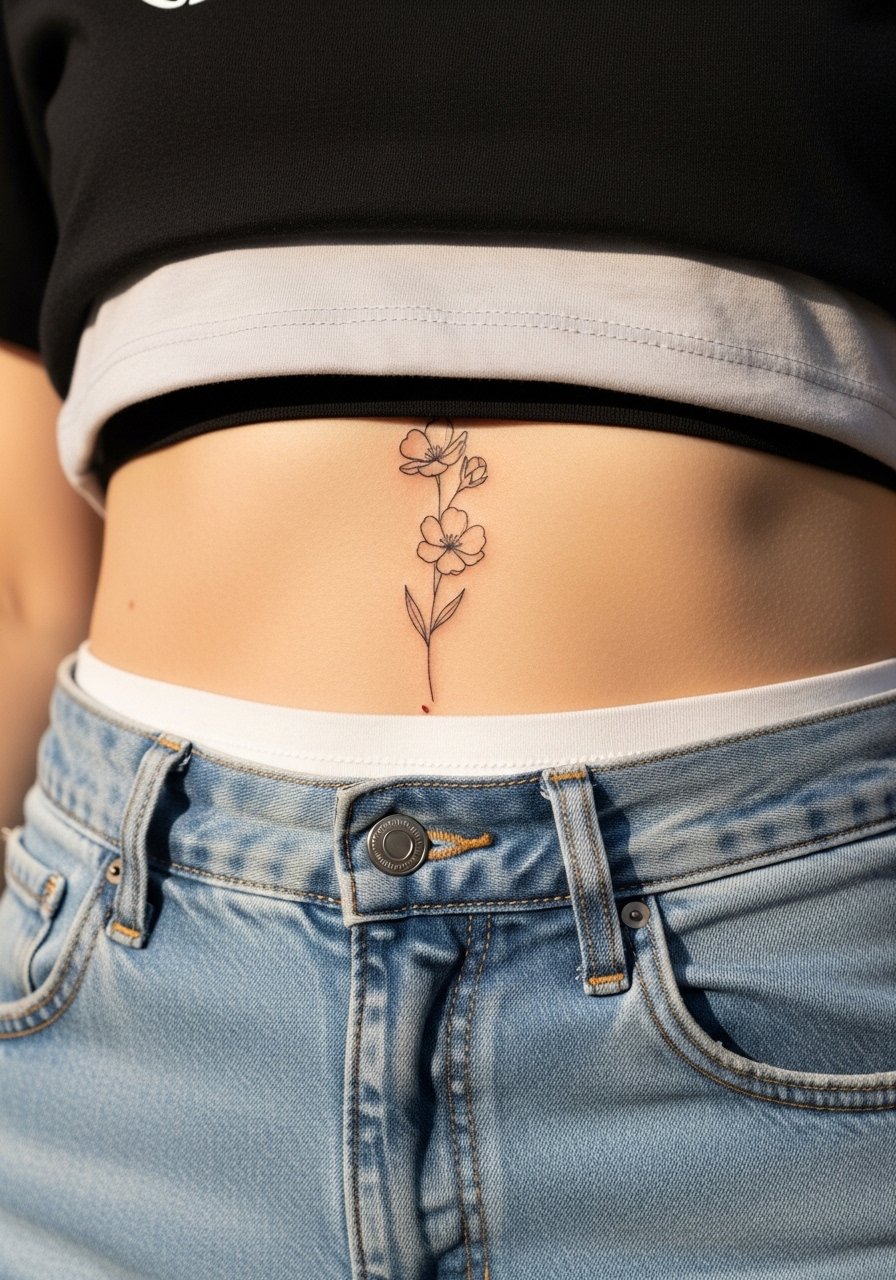
Abdomen tattoos have to account for weight fluctuations and pregnancy. Keep designs slightly larger and choose flowing lines that can stretch without losing readability. Sessions vary with size and pain can be moderate to high near the sternum. A mistake is treating the stomach like an unchanging canvas. For the appointment wear high-waisted pants and a cropped tee so you can expose only the tattoo zone easily.
16. Matching Finger Trio of Tiny Symbols
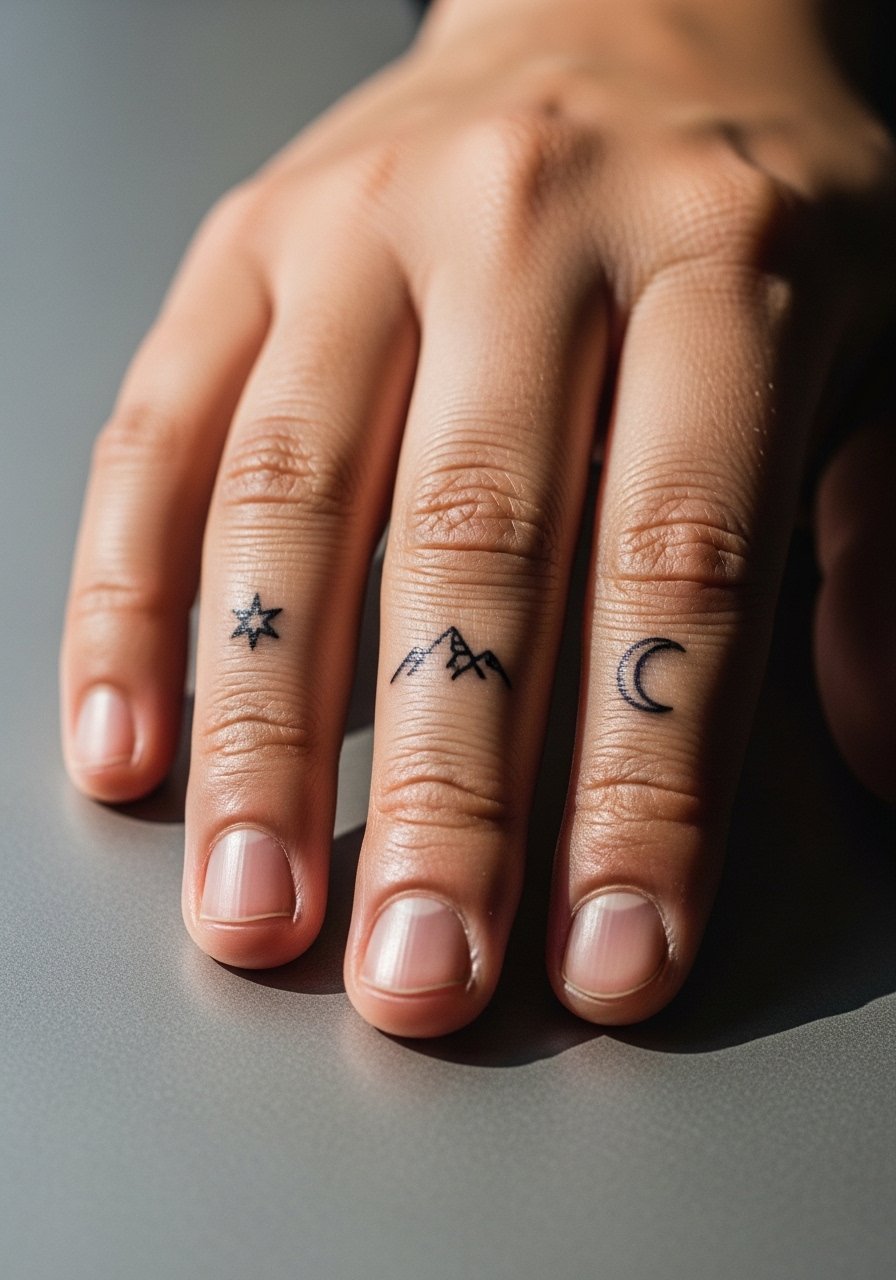
Finger tattoos are visible and fragile, so scale and simplicity are everything. Ask for slightly thicker outlines than your reference to offset the skin's natural abrasion. Expect quicker touch-ups than other placements because washing and movement wear the ink. Sessions are short but the first week requires careful protection. After healing, a stack of thin stacking rings can accent the symbols without rubbing them constantly.
17. Calf-to-Ankle Trio: Flowing Vine That Connects
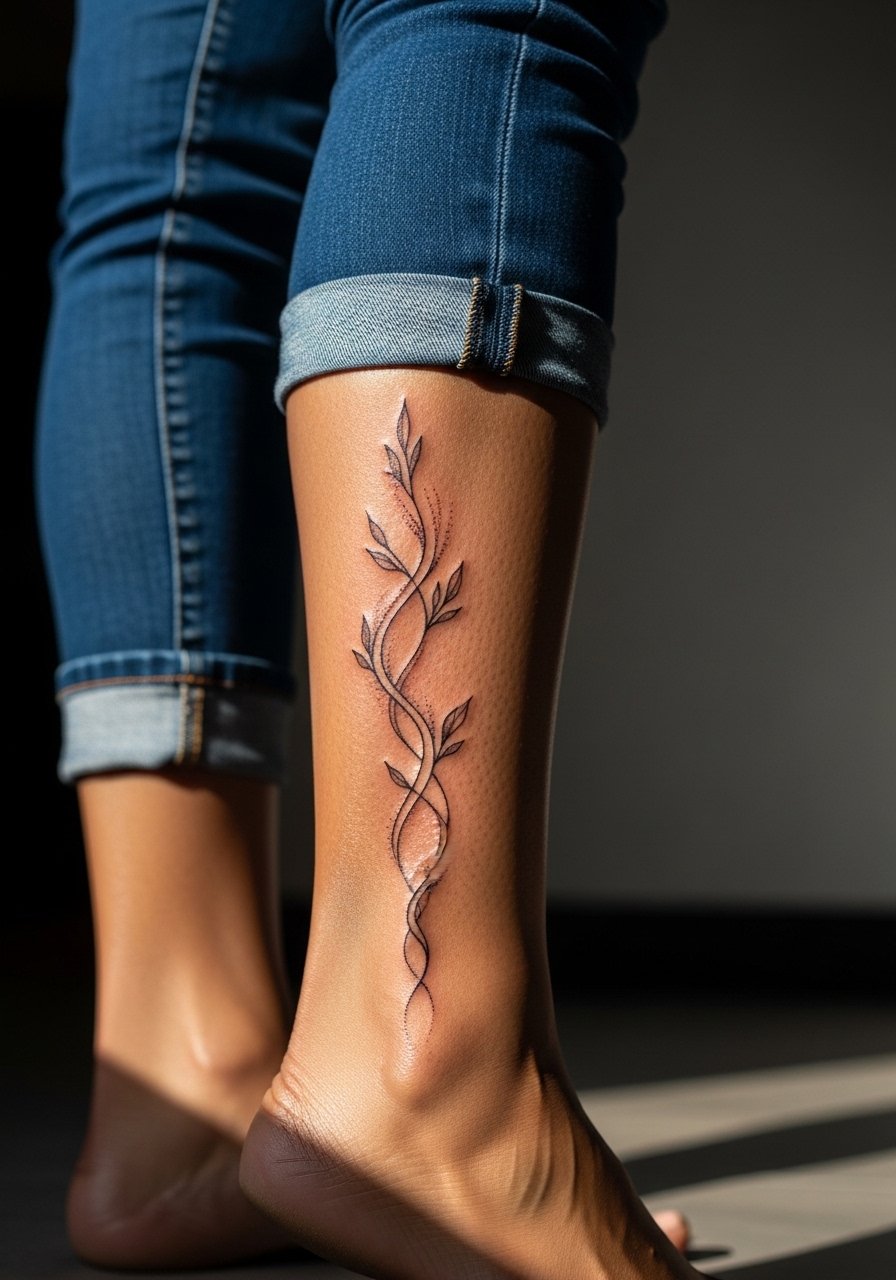
A connected vine works well as a trio concept when the elements maintain breathing room. Ask your artist to map the flow while standing so the composition moves with muscle shape. The calf tolerates density but the ankle area is a friction zone so avoid packing detail at the joint. Sessions are longer if you want shading. For show, rolled denim and a slip-on sneaker keep the design visible and comfortable.
Frequently Asked Questions
Q: Will fine line pieces on the forearm and wrist need touch-ups more often than bold blackwork?
A: From what I've seen, fine line on high-movement areas like the wrist often needs a touch-up sooner than saturated blackwork because thin lines blur with constant washing and friction. Ask your artist about slightly heavier lineweight and plan for a possible touch-up around year two to three depending on sun exposure and skin type.
Q: Do watercolor tattoos require different placement rules compared to traditional saturated pieces?
A: Yes, watercolor-style work usually needs larger areas and more blending room so color has space to breathe. Many artists prefer shoulder blades or thighs for watercolor because those spots handle softer edges better. During your consult, ask whether the artist uses black anchors under the watercolor to preserve form over time.
Q: Are sternum and ribcage pieces riskier for fine line work?
A: Sternum and ribs are tricky because the skin flexes and pain can make clients tense, which affects depth control. Artists split into two camps on fine line here. One side advises against very thin lines because skin movement blurs them. The other side uses spacing and consistent depth to make fine line last. Have a clear conversation about expectations before you book.
Q: How should I dress on appointment day for a shoulder blade or back-of-neck piece?
A: Wear something easy to remove and re-dress without pulling over the head, like a button-down shirt or a tank top you can slide aside. That keeps access clean and avoids irritating the fresh ink during undressing.
Q: Do finger and ankle tattoos affect daily life more than thigh or upper-arm tattoos?
A: Yes, fingers and ankles face more washing, friction, and sun that speed fading, so they demand more frequent touch-ups. Thigh and upper arm pieces usually age more quietly if you protect them from UV and avoid abrasive clothing during the initial healing window.