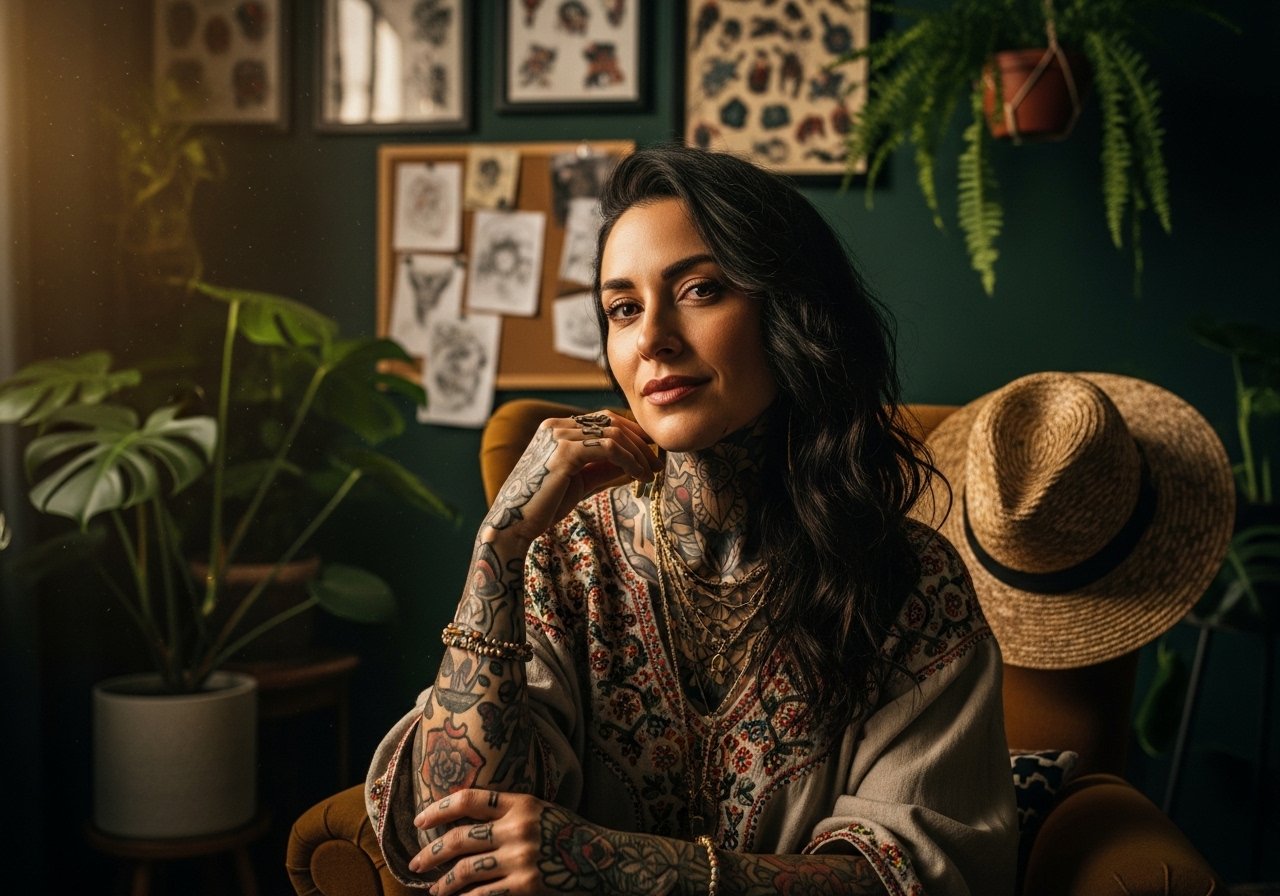
Bold blackwork and saturated neo-trad pieces tend to hold their shape far longer than the skinny, hyper-detailed tattoos that rack up likes on day one. I say that after seeing the same forearms around town for years, and after talking to artists at five shops across Brooklyn who book bold work for longevity. This list focuses on forearm designs that read clean over time, what to ask for at consult, and how to wear them so the ink always looks intentional.
1. Bold Traditional Skull with Dagger on Outer Forearm
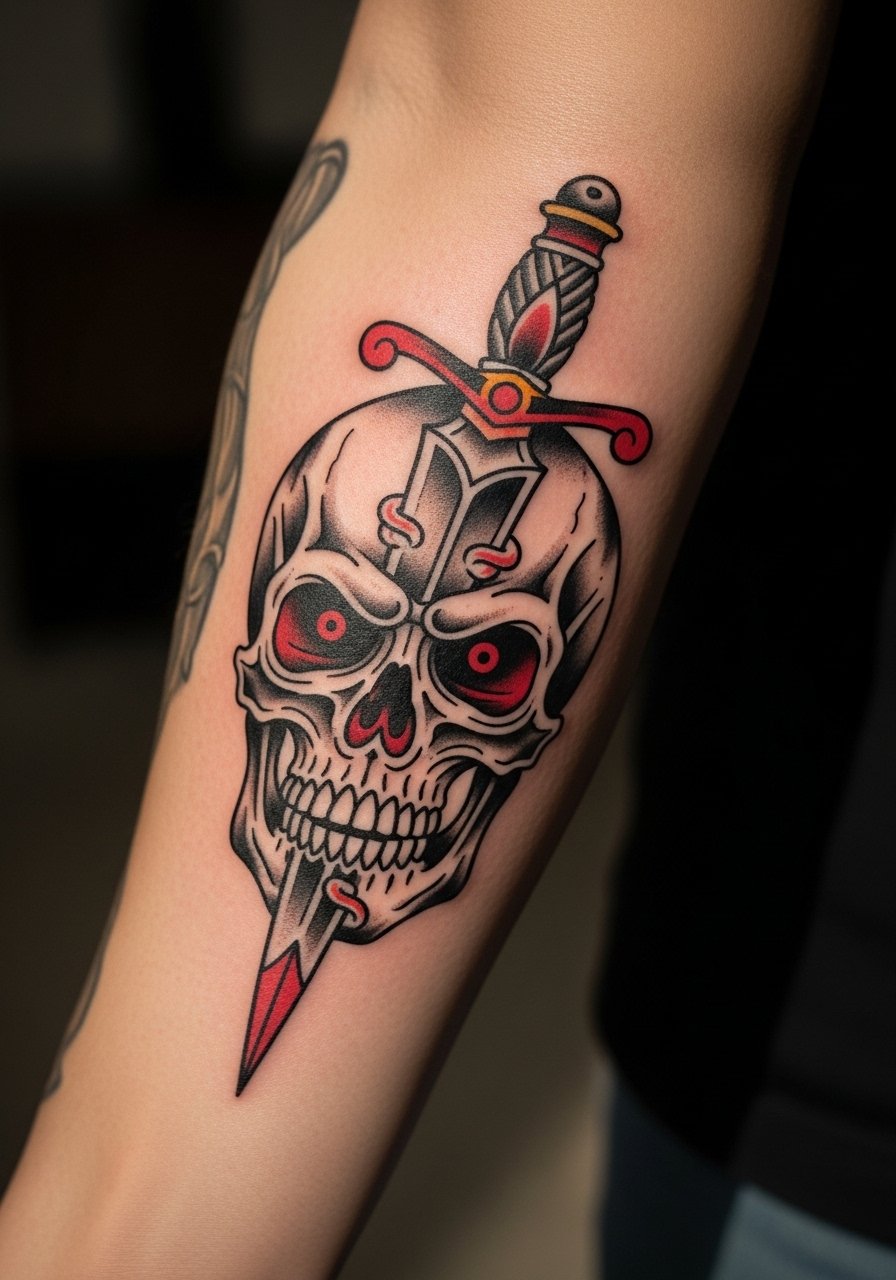
I recommend this when you want a compact piece that reads from across a room. Tell your artist you want thick outlines and solid saturation, not tiny teeth details that blur when you flex. Pain is moderate on the outer forearm and most sessions finish in one to two hours for a 4–6 inch design. Common mistakes are undersized skulls and thin lines that look sharp fresh and soft after a year. For showing it off, pair the piece with a rolled sleeve henley in dark navy so the color pops against simple fabric. Plan a touch-up at year one if any red or black gaps appear.
2. Neo-Traditional Eagle in Flight, Outer Forearm Wrap
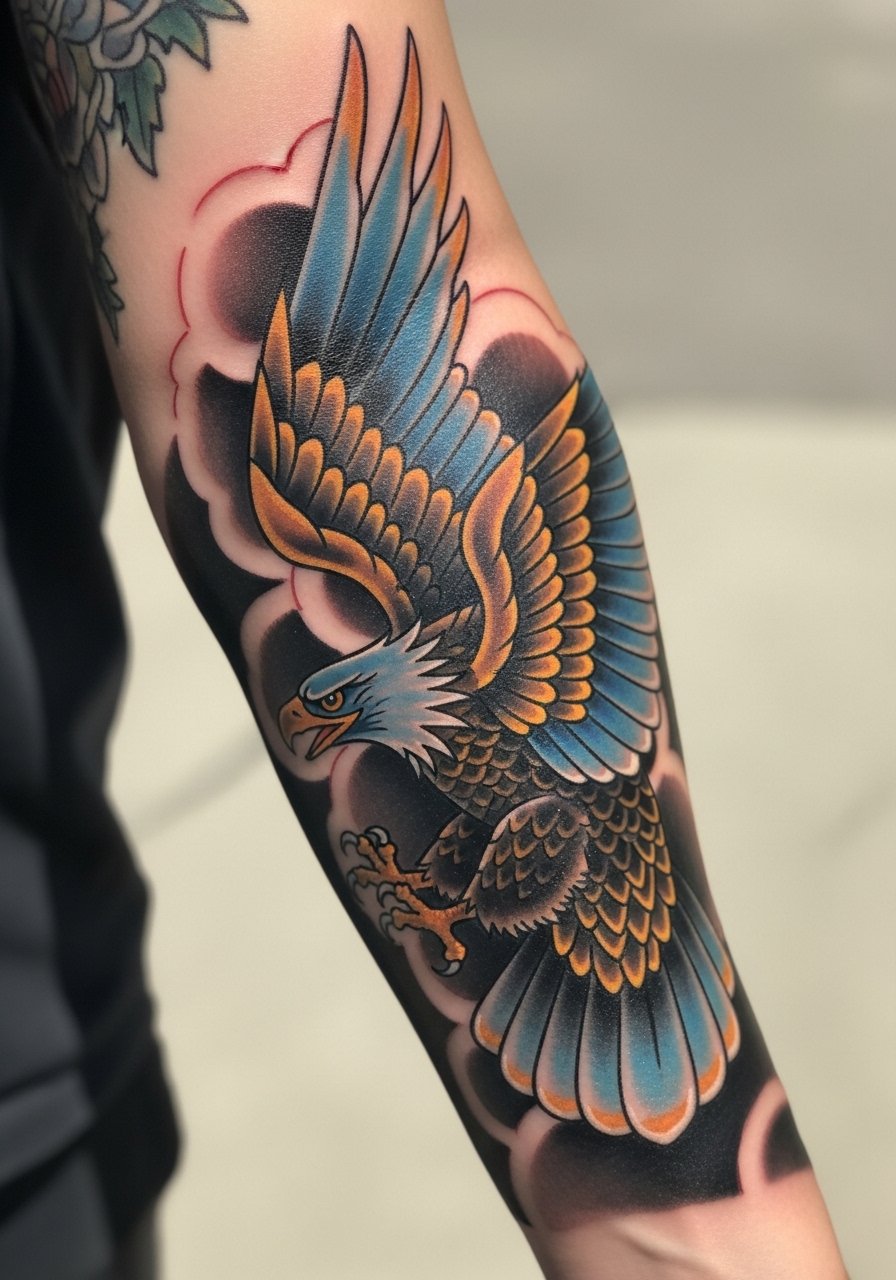
I've seen this one on guys expanding into sleeves because it links well around the arm. Ask for bold wing outlines and blocky color fields rather than tiny feather lines. Session time is usually two to three hours given the wrap and color packing. Artists sometimes cancel guest spots for complex color work, so use trusted booking apps and confirm travel dates before you commit. For weekend wear, a navy short sleeve tee keeps the focus on the wing stretch. Expect strong initial saturation that will soften into a more uniform tone by year two.
3. Black and Grey Realism Lion Head on Front Forearm
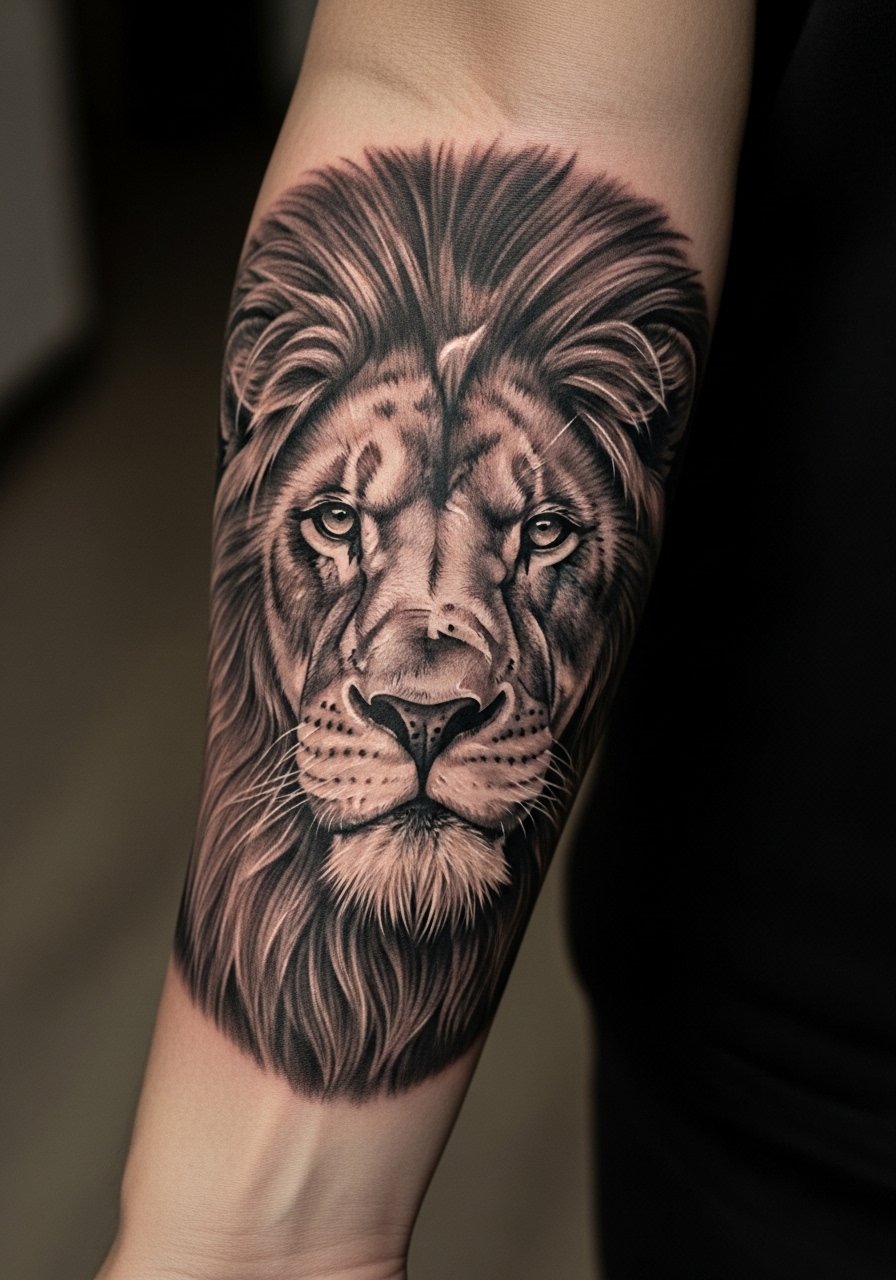
Personal observation: this proportion looks best when sized around five inches so the facial details have room to breathe. During consultation, request stipple and whip shading for texture and ask the artist to avoid micro-contrast that collapses over time. The front forearm is forgiving for realism but you should expect two sessions for depth and contrast. Common aging pattern is loss of micro-hair detail by year three while the core shadow remains. Pair it with a fitted crew neck tee in charcoal to frame the portrait without visual noise. Schedule a one-year touch-up if midtones look patchy.
4. Tribal Polynesian Half-Sleeve Flowing Around Elbow
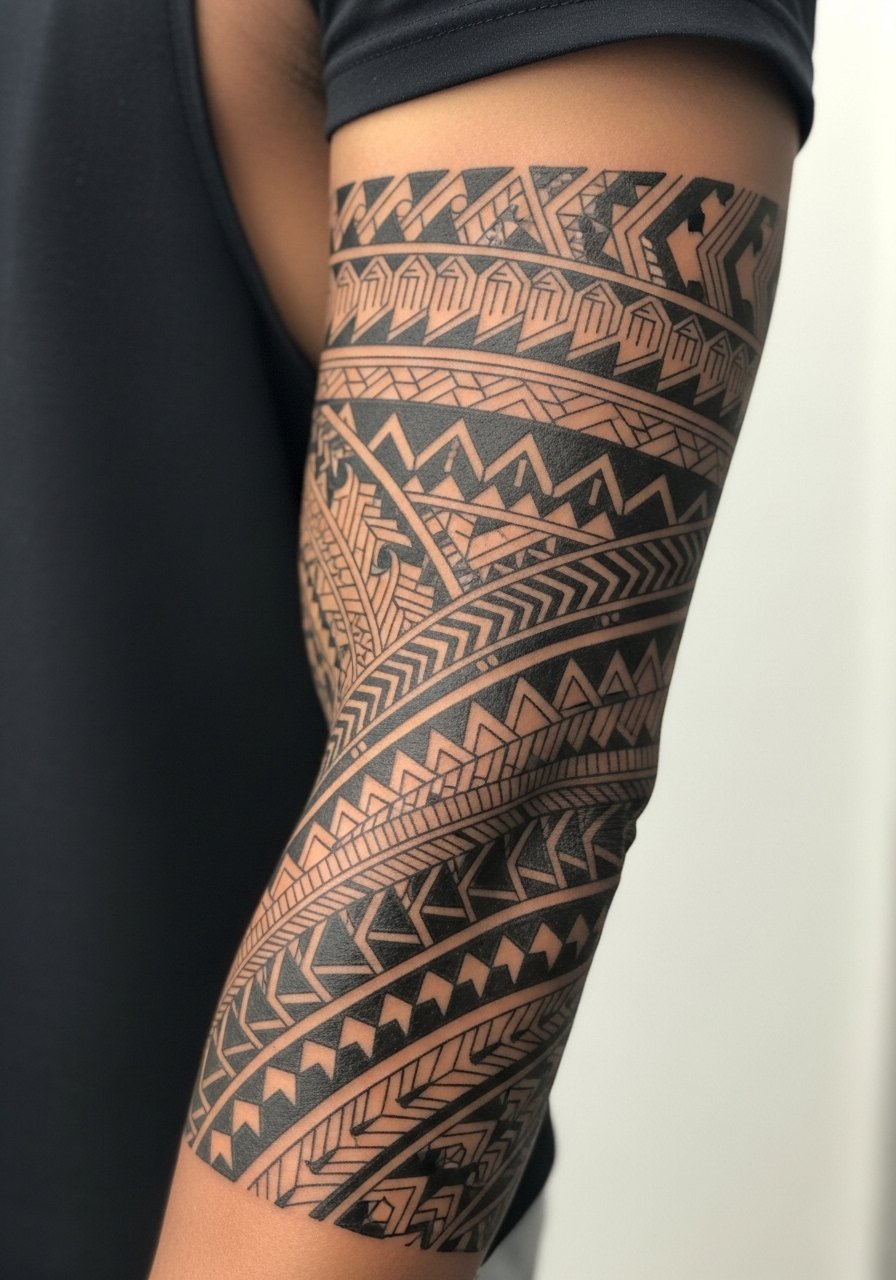
When heritage patterns matter, be explicit about which motifs you want and why. For elbow-adjacent work, ask the artist to design flow elements so the pattern bends with movement instead of pinching at the joint. Expect three to four sessions for a full wrap and heavy saturation for the solid blacks. There is also a guest spot scheduling risk with large tribal pieces, so confirm availability early. For layering on cooler days, an open flannel shirt over a plain tee shows off wrap flow without crowding the arm. Respect cultural origin and consider slight variations rather than direct replication.
5. Geometric Mandala Band on Inner Forearm
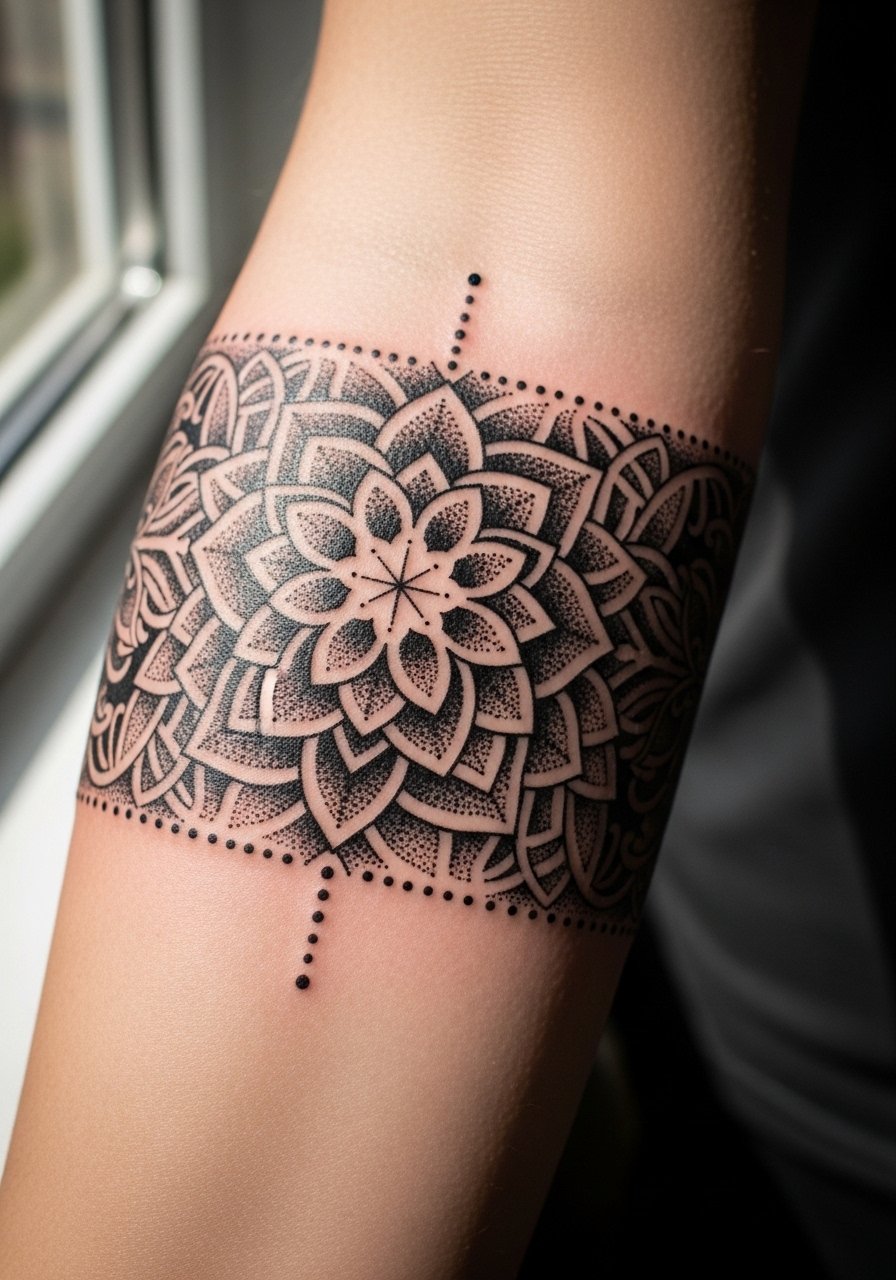
Most people underestimate inner forearm pain but love the visibility when healed. The biggest mistake with mandalas is going too small; dense lines need spacing to avoid merging. During consult, ask for dot work spacing and stipple shading that gives breathing room. Expect a single focused session for a 3–4 inch band and a possible touch-up at six to twelve months. Artists are split on healing methods for this placement. One camp prefers protective film for a fast, clean heal. The other camp warns it can trap moisture and prefers dry healing followed by light moisturizing. Ask your artist which method they use and why before booking. For show-off looks, pair the band with a slim oxford shirt with sleeves rolled twice.
Studio Day Picks
The first six forearm pieces above range from small inner bands to heavy outer wraps, so a few targeted products smooth session day and the first week of healing.
-
Tattoo Goo healing balm. A thinner formula that many people prefer over heavy ointments for outer arm sweat and early mobility.
-
Hustle Butter Deluxe mini tin. Handy for travel to guest spots and praised for not clogging pores during humid sessions.
-
Kobaya Shi non-greasy balm. Recommended by some forum users for humid climates where greasy products tend to matt and trap sweat.
-
Ink Fix touch-up spray. Useful for minor color refreshes on blackwork starters without a full studio trip.
-
Topical numbing cream. Cut the edge for longer sessions on wrists and inner arms while avoiding the heavy gels that can blur linework.
7. Blackwork Wolf Pack Along the Back of Forearm
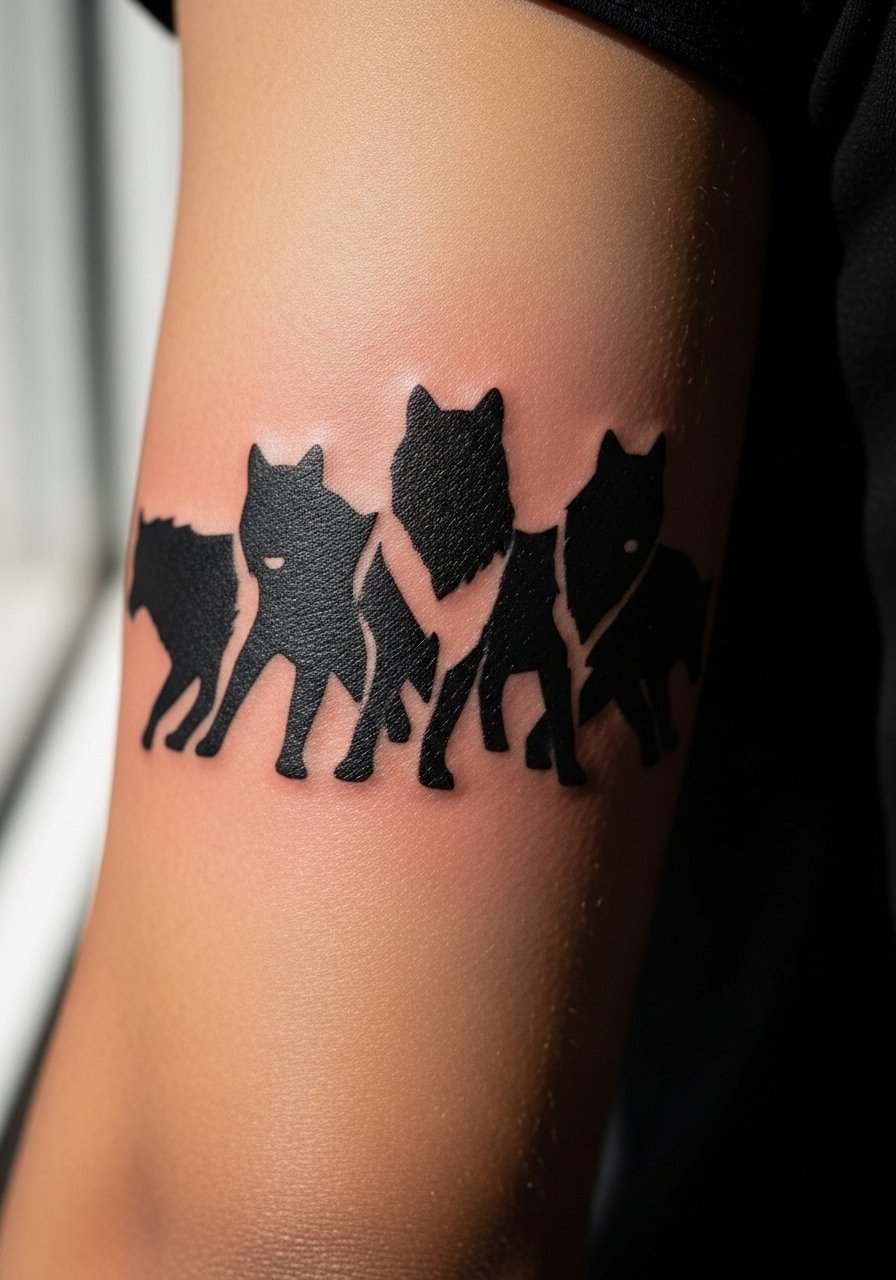
Visual impact lead: high-contrast silhouettes read clean even after years because they rely on shape over micro detail. Back of forearm placement moves with the sleeve when you want subtle visibility. Ask your artist for solid blocks of ink and crisp negative space to separate wolves. Two sessions often secure consistent saturation. Blowout risk exists if lines are too close together on thin skin so leave breathing room. Style it with a vintage band tee that has arm slits to echo the pack aesthetics. This approach makes future sleeve connections straightforward.
8. Illustrative High-Contrast Dragon on Front Forearm
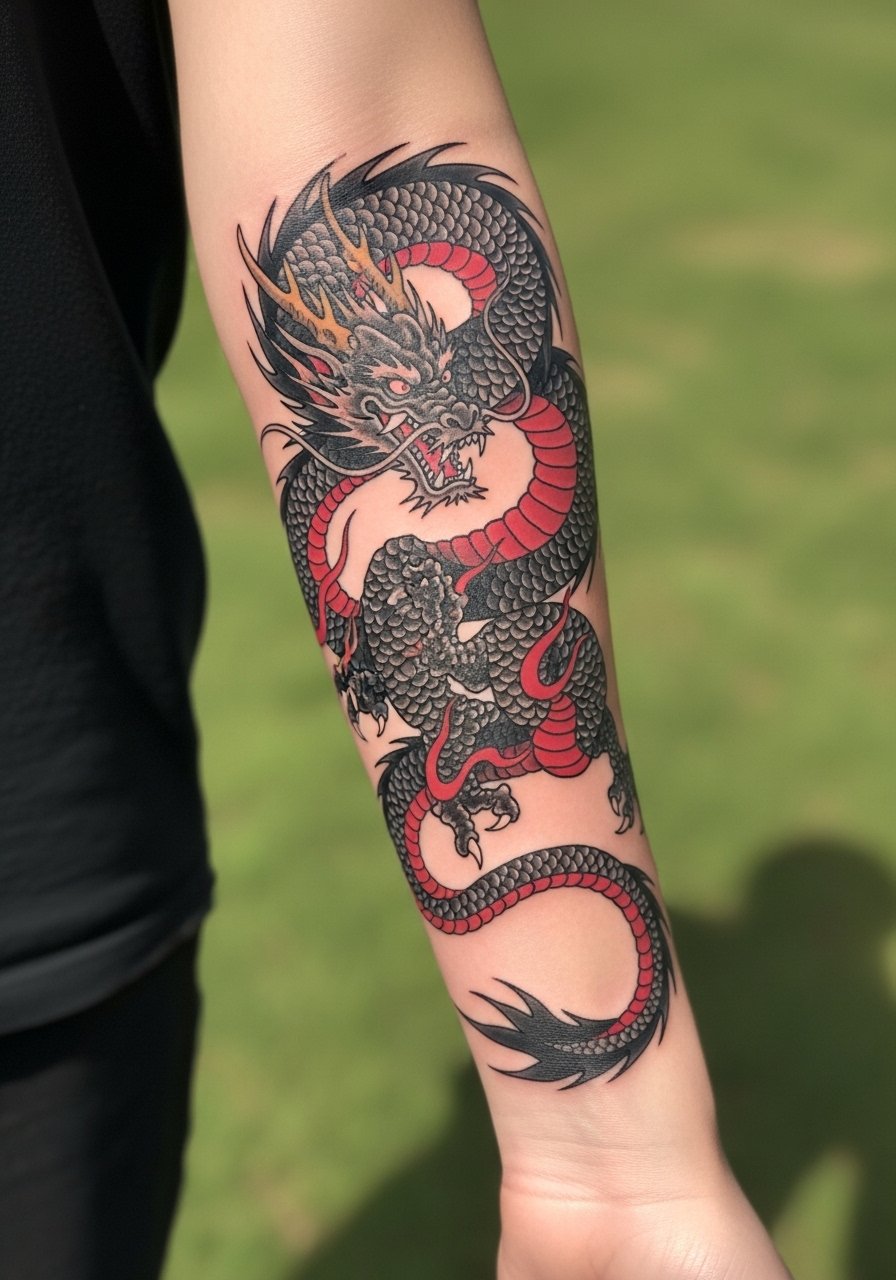
Visual note: dragons that curve with the arm look dynamic whether you flex or relax. During consultation, ask for selective color pops rather than full saturation so the black base ages more predictably. Expect two to three sessions for a 7 inch span that wraps slightly. The common error is packing tiny scales that lose definition when the skin stretches. For show-off days, a fitted crew neck tee in white or charcoal keeps attention on the dragon without competing patterns. Plan touch-ups at two to three years if the selective colors fade unevenly.
9. Neo-Traditional Rose with Skull on Inner Forearm
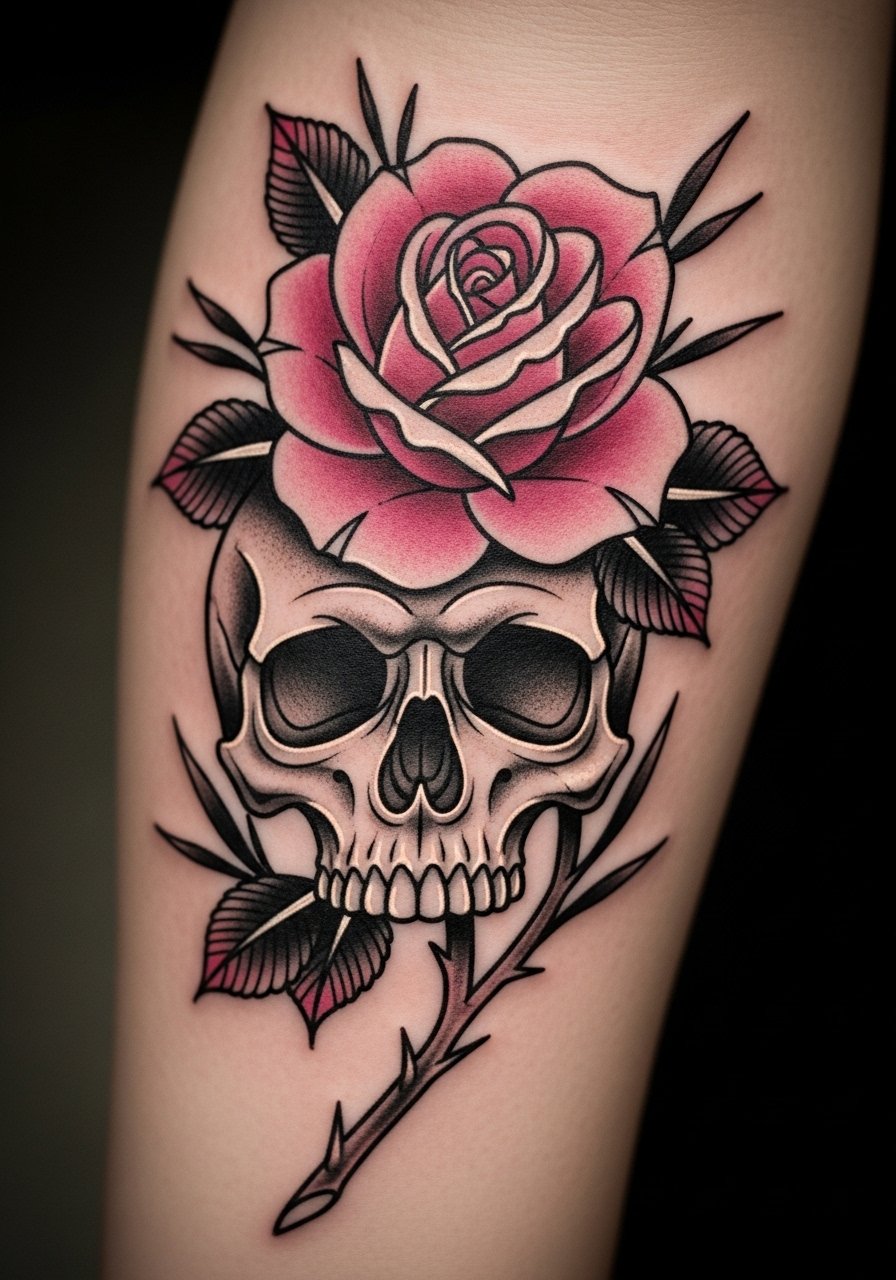
Mistake lead: inner forearm pieces often get underscaled because clients fear the pain. The reality is inner work hurts more but shows more. Tell the artist you prefer strong petal saturation and bold shadow blocks so the rose keeps contrast in photos. Expect two sessions and a sharper pain profile near the wrist. For session wear, a muscle tank gives full access without tugging on the area. Inner forearm heals differently from the outer surface so plan a light touch-up at year one if edges soften.
10. Sacred Geometry Arrow Running Wrist to Elbow
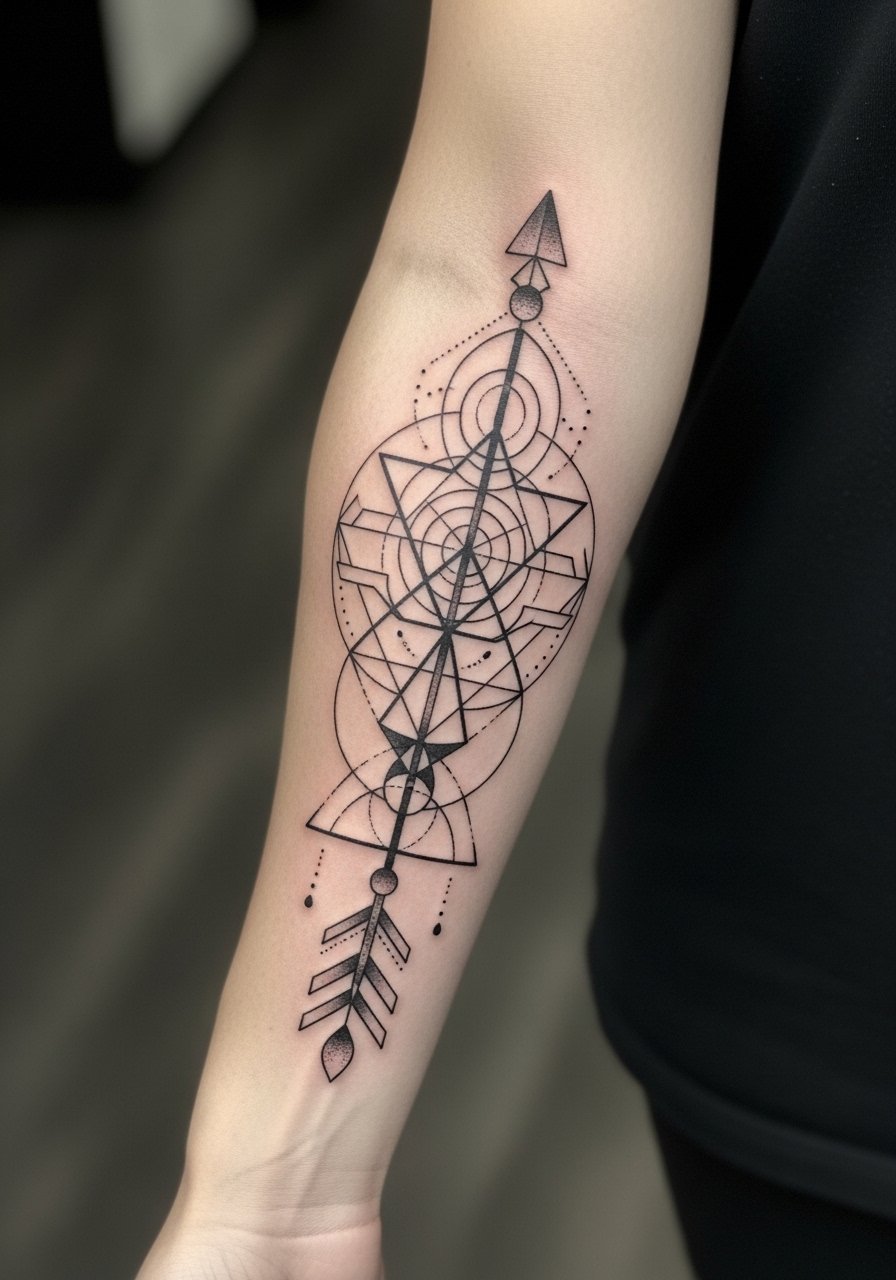
Consultation lead: this piece needs exact placement so the arrow points where you want it when the arm is relaxed. The biggest mistake is uneven spacing in repeated geometric elements that becomes obvious over time. One session is common for a 4 inch run, but request slightly thicker linework than a typical fine-line piece to guard against early blur. Expect a two out of ten on pain in most cases. Pair it with a fitted crew neck tee for clean presentation that does not distract from the geometry. Touch-ups at year two keep crispness intact.
11. Bold Compass Rose Centered on Outer Forearm
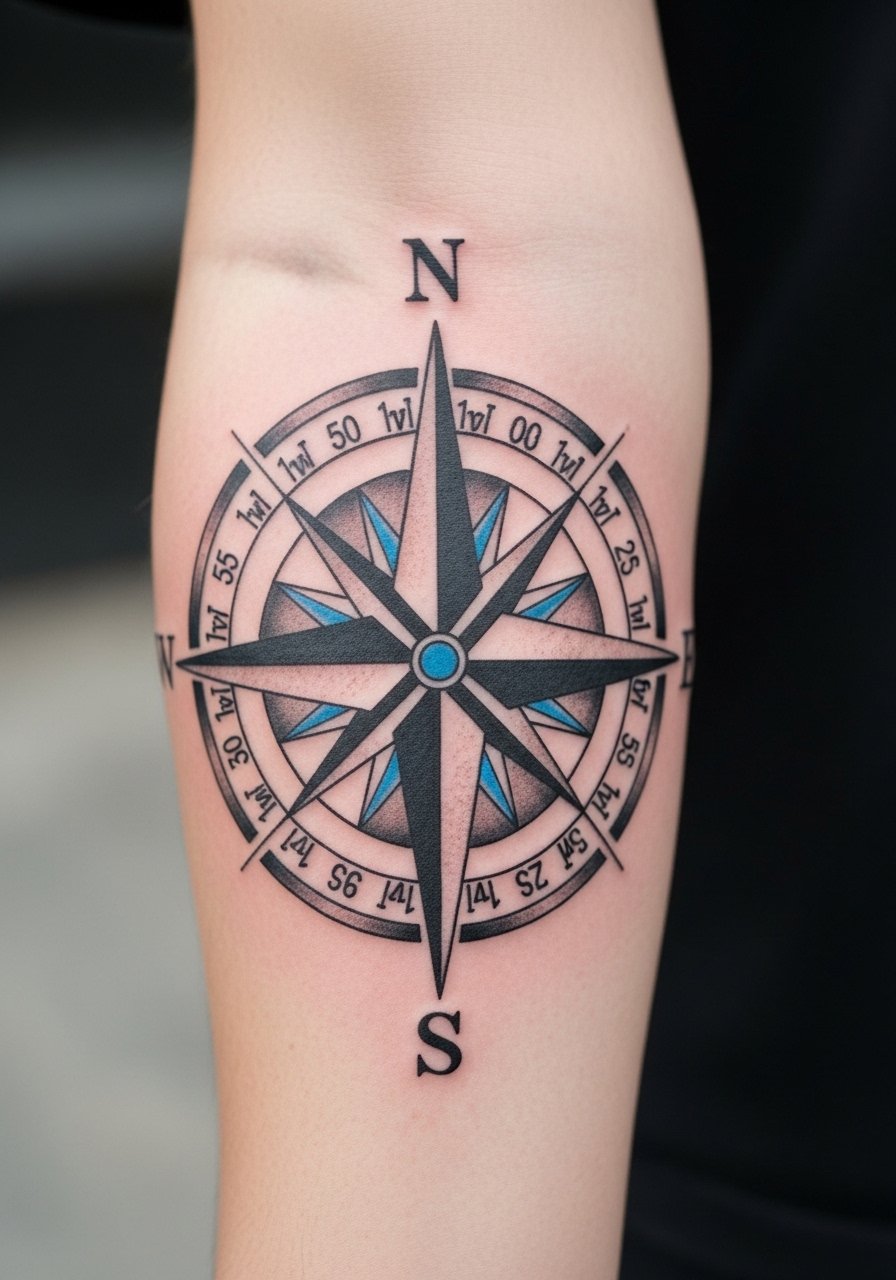
Visual impact lead: a centered compass reads like an anchor on the arm and scales well into sleeve work. Tell your artist to keep the primary points thick and shadowed rather than tiny decorative flourishes that vanish when the skin ages. One to two sessions suffice for a five inch compass. Common aging pattern is color softening in the accents while the black remains strong. For casual wear, try a navy short sleeve tee so the blue accents sit right next to a neutral backdrop. Expect to schedule a touch-up around year two for color refresh.
12. Blackwork Sleeve Starter Bear Paw Wrap
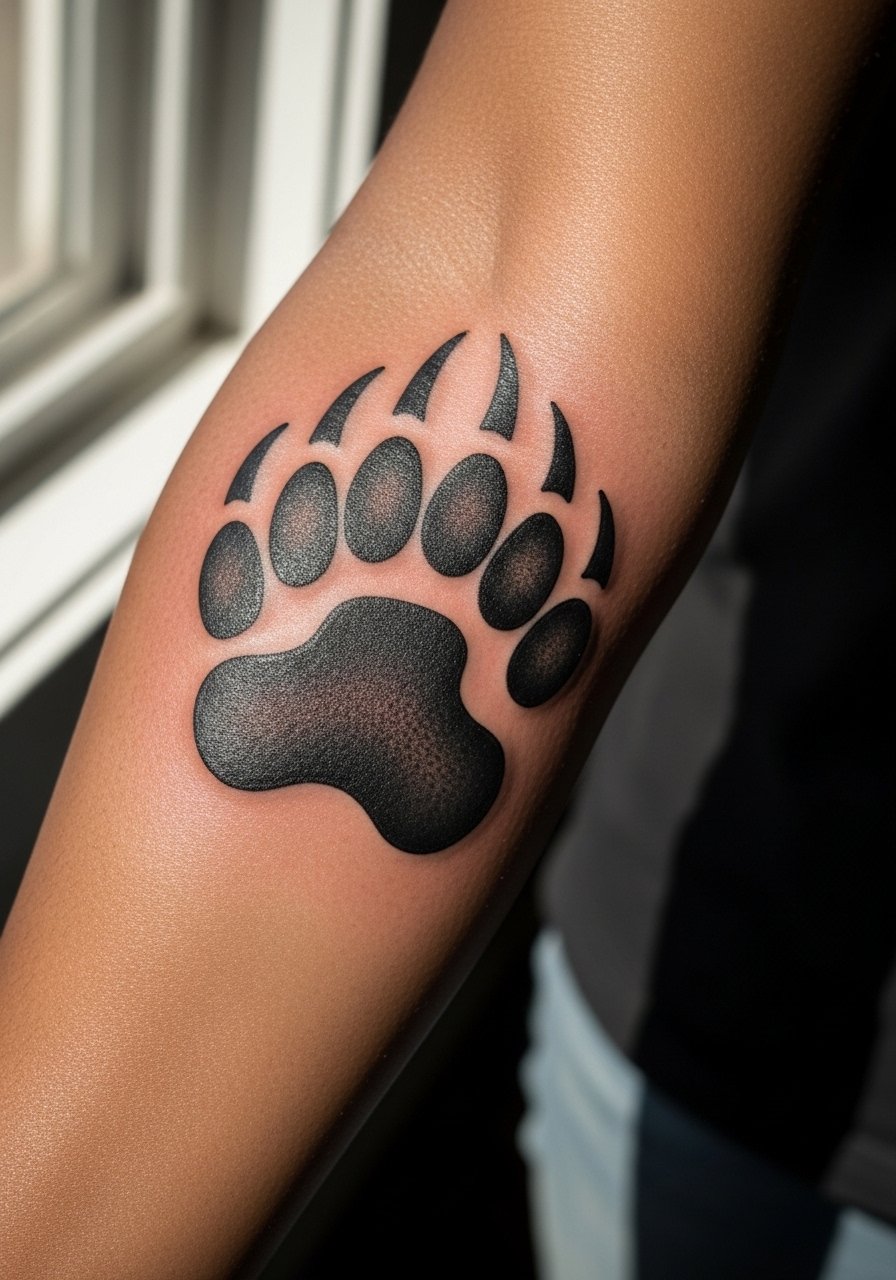
Consultation lead: this is a modular starter that builds into a half or full sleeve, so tell your artist where you plan future fills. Sessions run multiple hours across three sittings for a dense, even block. There is a debate in the community about numbing creams for long blackwork sessions. One group argues numbing cream is a helpful tool that reduces pain and keeps clients still. The other group cautions that numbing can interfere with the artist's feel and client feedback during shading. Ask your artist where they stand on topical numbing and follow their guidance. For session comfort, a sleeveless hoodie gives easy access and keeps your torso warm between sittings.
13. Hybrid Bold Typography Wrapping Around Muscles
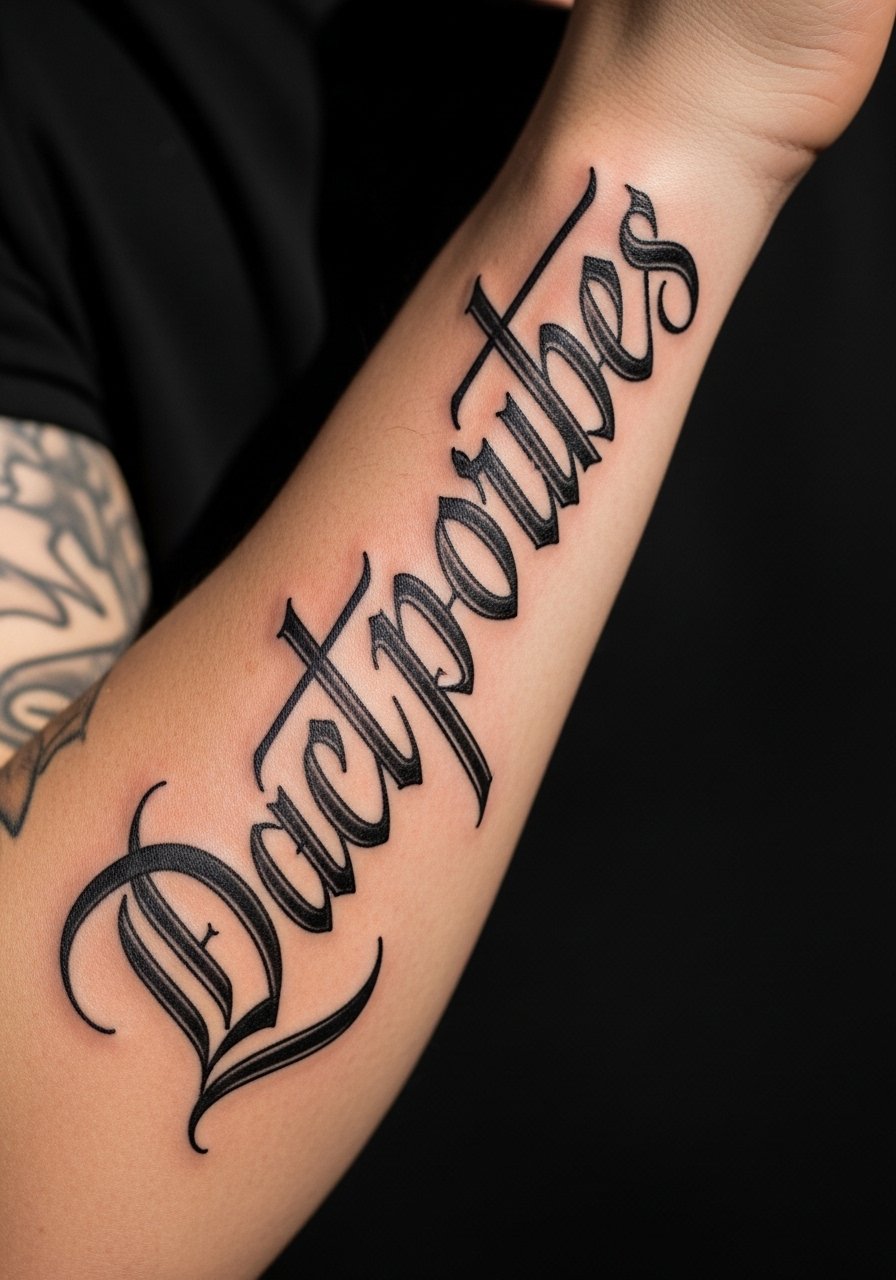
Consultation lead: typography that wraps a flexing forearm should be mocked up in both relaxed and flexed positions so the final text reads correctly while you move. The common mistake is requesting tiny letterforms that collapse into a block when the muscle contracts. Tell the artist to space letters for movement and favor heavier stroke weight. Session time varies with length but plan for a focused two hour block for medium word counts. Pair this with a leather cuff bracelet on the opposite wrist to balance the visual weight when you show it off. Expect to revisit the lines at year two if spacing shifts.
14. Elbow-Flow Smoke Transitions for Future Sleeves
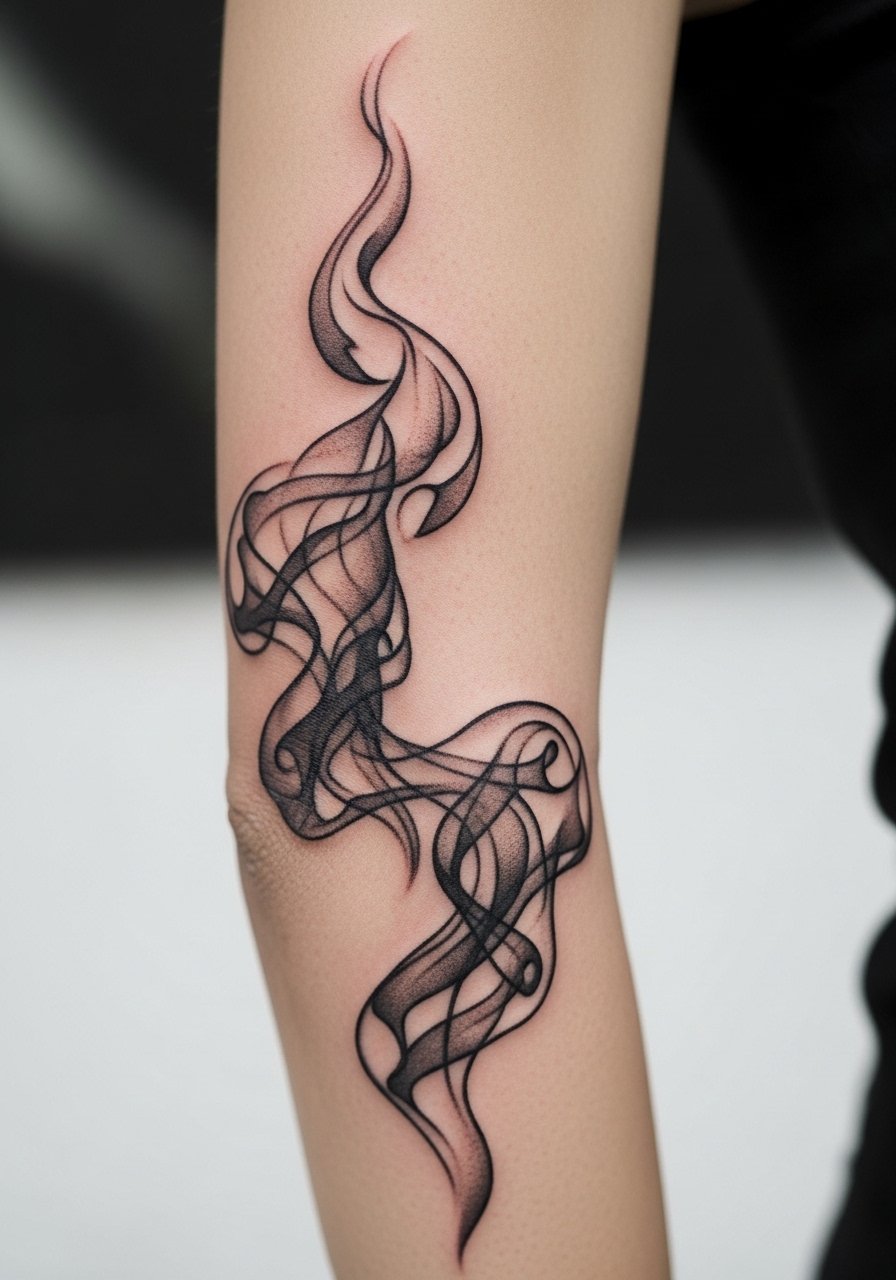
Aging/healing lead: designs that touch joints need deliberate transitions or they break visually when you flex. For smoke or fade elements near the elbow, ask the artist to map how the pattern will read while bending and stretching. Session feels rougher because the needle may cross thinner, more mobile skin. Expect multiple short sittings rather than one marathon. For session day, a sleeveless hoodie or loose tank makes access easy and keeps your back warm while the forearm is worked on. This approach future-proofs the piece for seamless sleeve integration.
15. Patchwork Bold Starters Linked by Negative Space
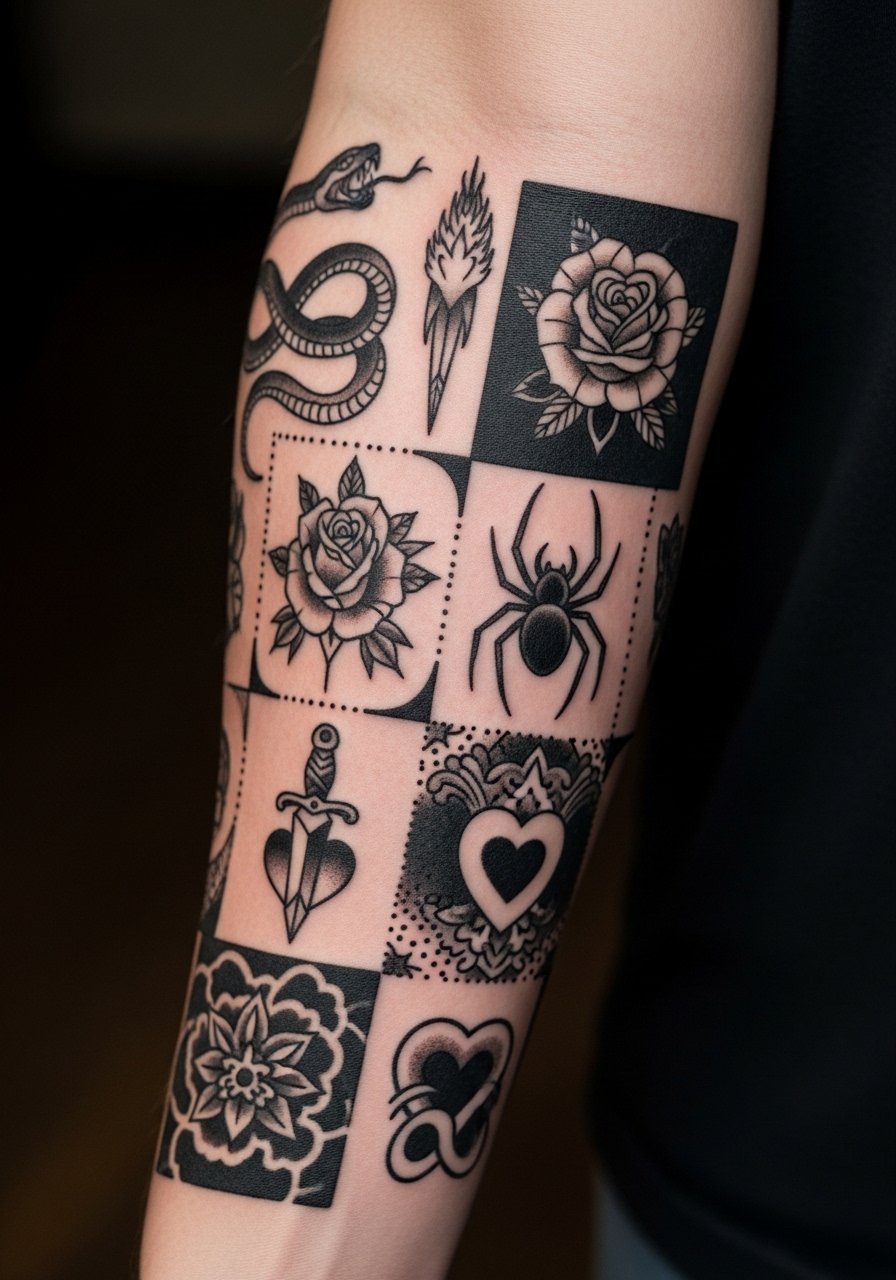
Mistake lead: people often try to force a single motif into a starter design and end up with bulky gaps. Instead, design multiple bold patches with deliberate negative space that read like a plan rather than a half-finished sleeve. Sessions vary by patch size but most starters are two to three hour blocks each. Negative space makes future fills easier and reduces blowout risk by avoiding overly dense ink in one sitting. For casual styling, an open flannel shirt layered over a plain tee highlights the patchwork flow without covering too much.
16. High-Contrast Blackwork with White Ink Accents for Darker Skin
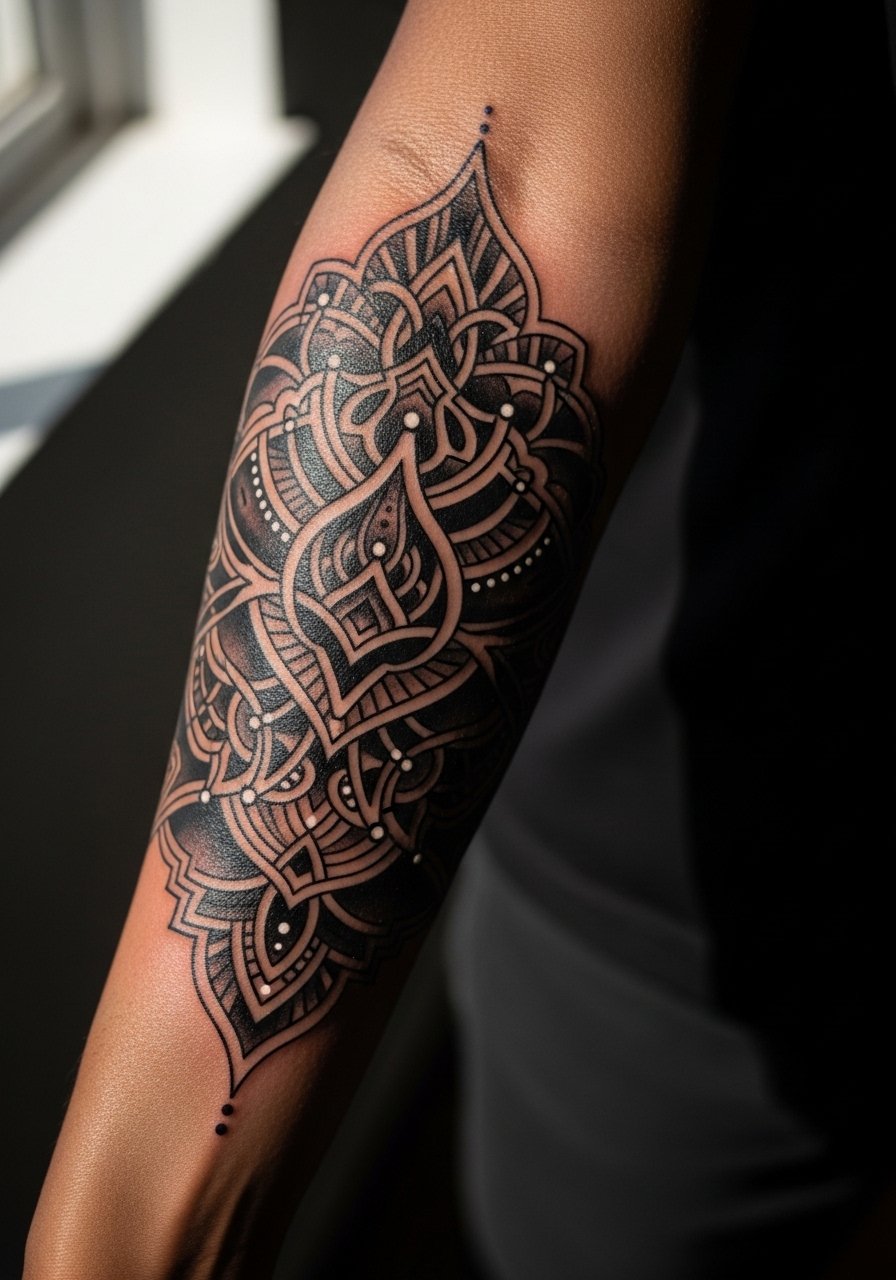
Controversy lead: darker skin tones need a different approach to contrast. One camp recommends heavy saturated blackwork and occasional white highlights to lift photos. The other cautions that white ink can fade or turn yellow on some skin types and suggests contrast through negative space instead. Both approaches are valid depending on skin response and ink choice. Have a test patch and ask for a healed photo sample on similar skin tones. Expect bold black to hold longest while white accents may require touch-ups. For showing it off, try a rolled sleeve henley in deep color to make blacks read denser in photos.
17. Flex-Tested Forearm Designs for Weight Fluctuation
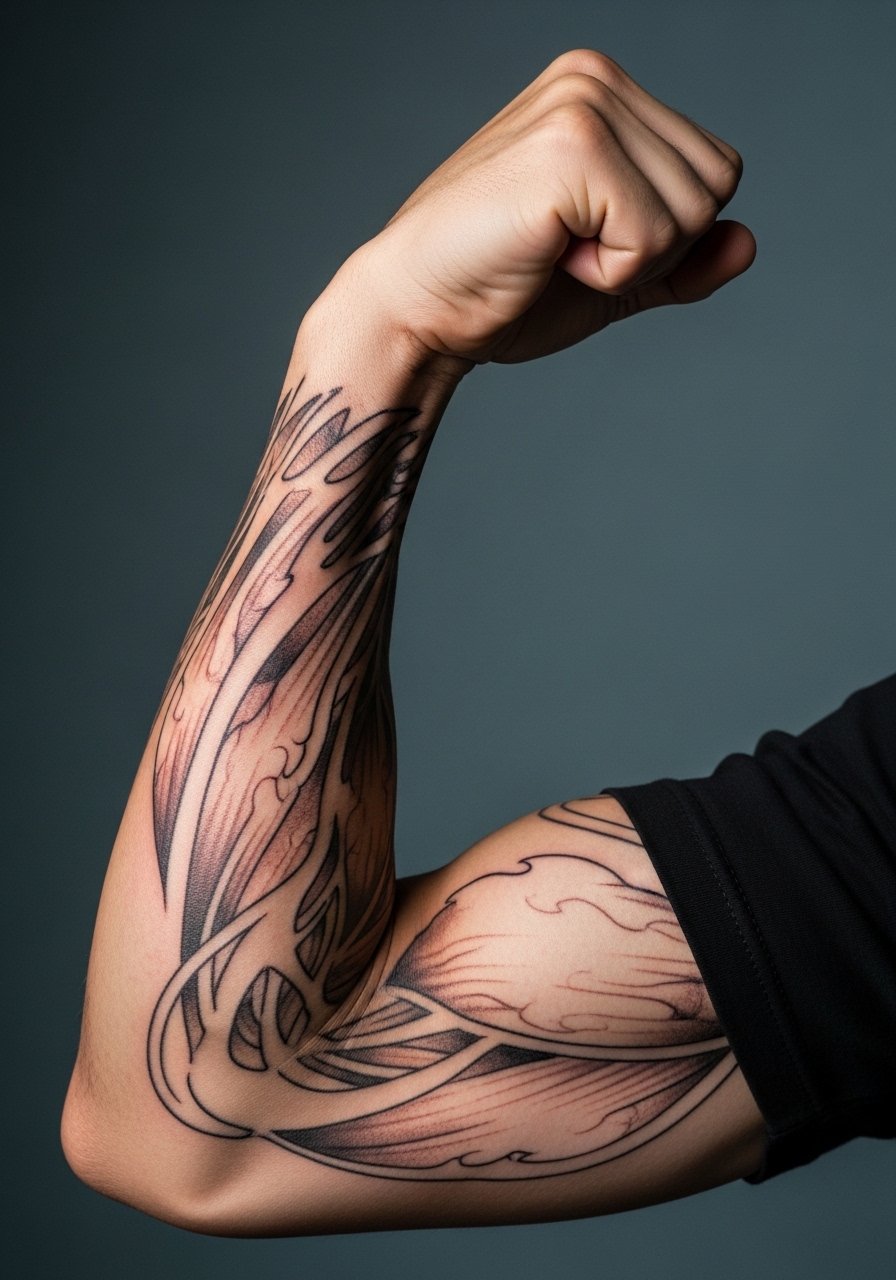
Consultation lead: if you lift or plan significant size changes, ask the artist to mock up the design on a flexing arm so you can see distortion before ink. A common mistake is accepting a flat stencil that looks great relaxed but warps while pumping. Sessions are similar to other bold forearm work but involve more positioning time as the artist tests the layout. For the appointment, wear a muscle tank so you can flex and the artist can adjust the stencil. Plan touch-ups at year one to realign edges if your body composition changes.
Frequently Asked Questions
Q: Will a bold blackwork forearm tattoo blur if I gain muscle?
A: It depends on how the design follows muscle lines. Outer forearm placements distort less than pieces centered over a bulging muscle. Ask for a flex-tested mockup during consult and favor thicker outlines so the silhouette holds up as you gain size.
Q: How painful is inner forearm work compared with outer?
A: Inner forearm tends to be more sensitive, especially near the wrist. Expect sharper sensation and shorter breaks. Consider a topical numbing cream if your session will be long but check with the artist first since opinions vary on numbing usage.
Q: Should I get protective film or dry heal for a forearm tattoo?
A: Artists split into two camps here. One group favors protective film early to reduce scabbing. The other prefers dry healing to avoid trapping bacteria. Ask your artist about their preferred protocol and follow their timeline for moisturizing and sun avoidance.
Q: How often do bold forearm pieces need touch-ups?
A: Plan for a check at one year and then every two to five years depending on sun exposure and friction. Bold blackwork often fares better than fine-line work, which commonly needs earlier refreshes.
Q: Where can I find reputable bold forearm artists without named recommendations?
A: Search hashtags like #BoldForearmTattoo and #BlackworkMen on Instagram. Use apps such as Booksy or tattoodo filters by zip code and review recent healed photos. Conventions and local forum threads are good for finding guest spots.
Q: What should I wear to an outer forearm session for comfort and access?
A: Wear something you can roll or pull up easily like a loose short sleeve tee. Loose sleeves let the artist position the arm without tugging the fabric and keep you comfortable between passes.