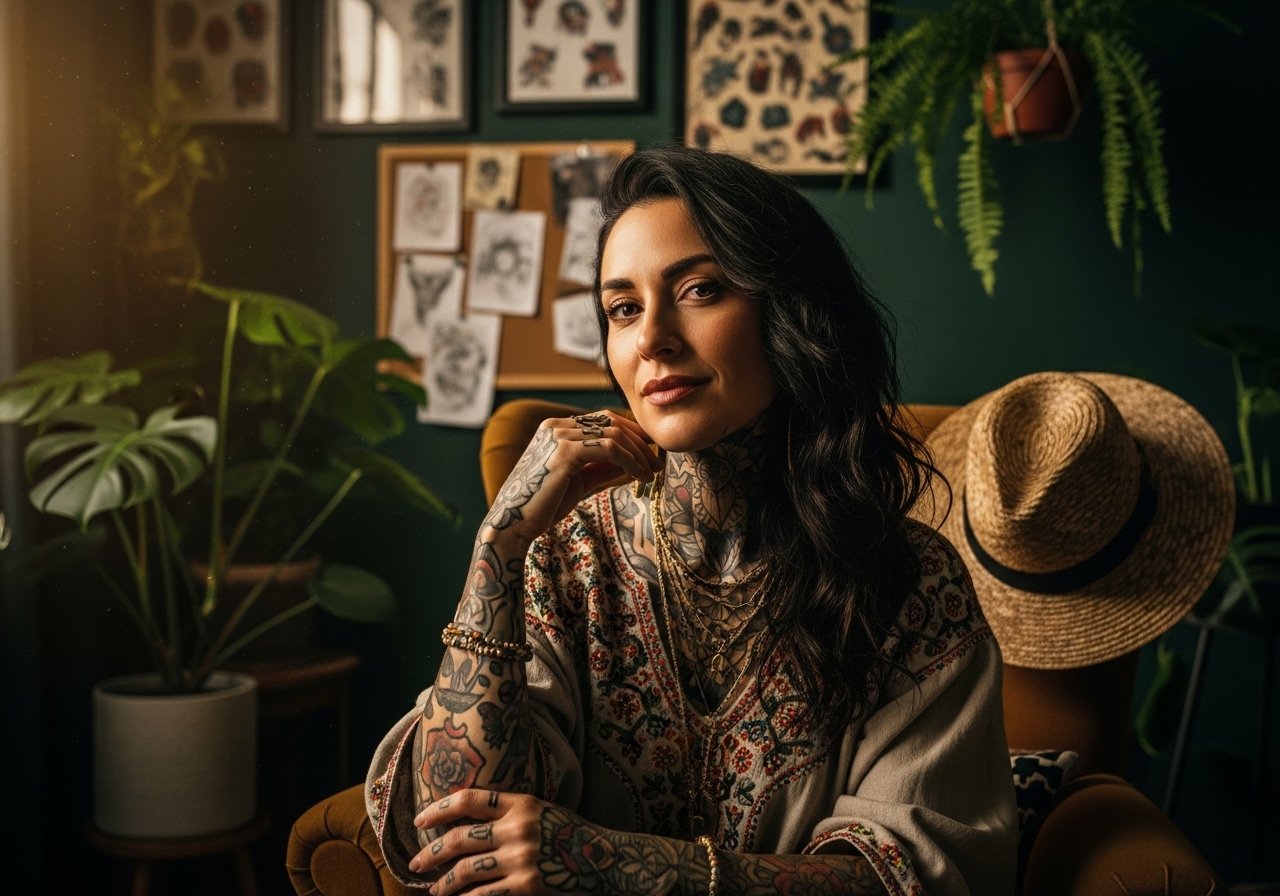
Blackwork sun and moon pieces read clean in photos and in real life when they are designed with balance in mind. The trick is not just contrast but spacing, weight, and placement that let the two symbols play off each other without fighting for attention. Below are 21 blackwork sun moon designs that respect scale, skin movement, and long-term wear so you get a piece that still looks intentional years from now.
1. Crescent Moon Cradling a Minimal Sun on the Inner Forearm
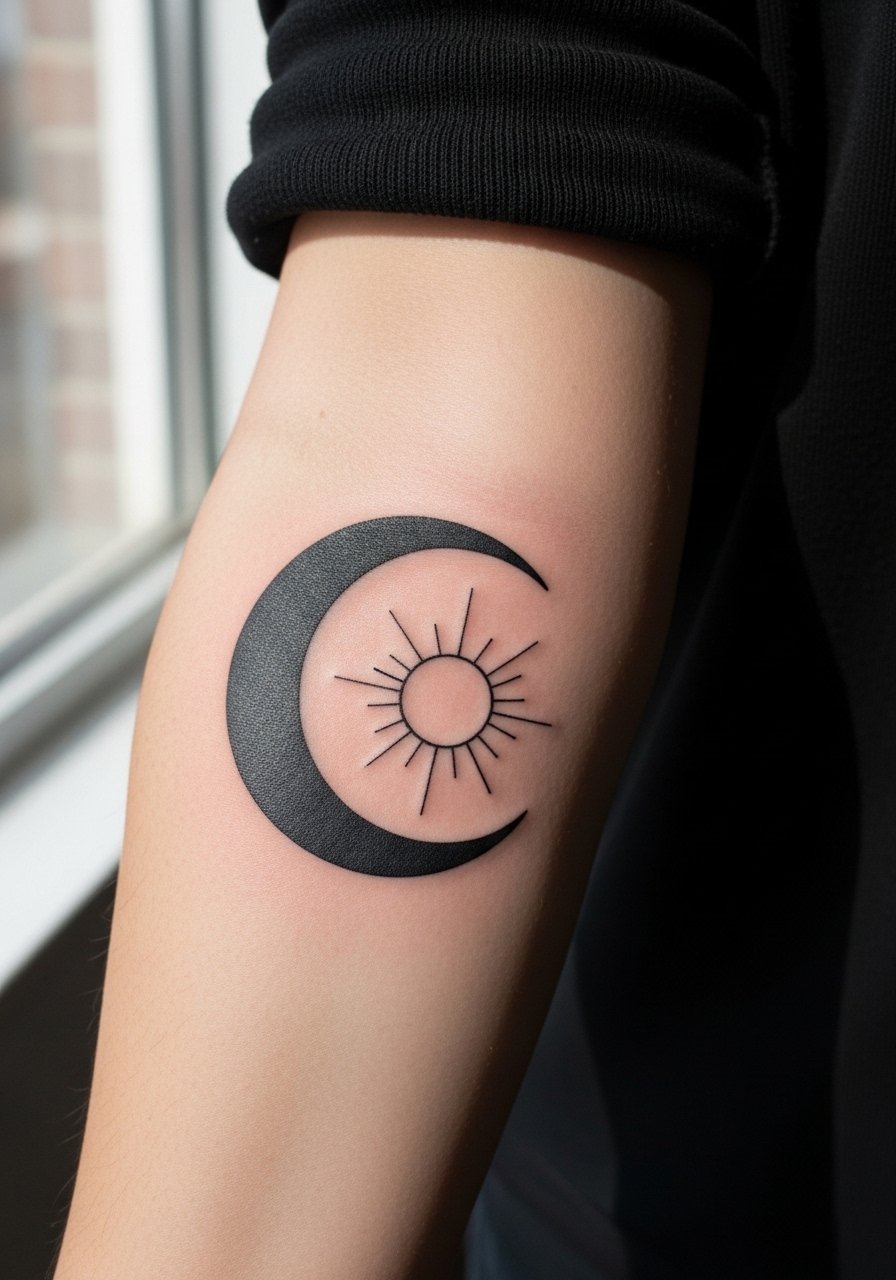
I've seen this composition work repeatedly because the forearm gives enough flat canvas for solid fills and fine gaps. Tell your artist you want the sun and moon to read as two distinct shapes at arm's length, not a merged silhouette. Most mistakes are making the moon too thin against a saturated sun, which causes the moon to disappear as the ink settles. Expect moderate pain, a one- to three-hour session depending on size, and a likely touch-up at year two for edge crispness. For showing it off pair it with a rolled-cuff linen shirt that keeps the forearm visible without glare.
2. Half-Sun, Half-Moon Compass on the Outer Bicep
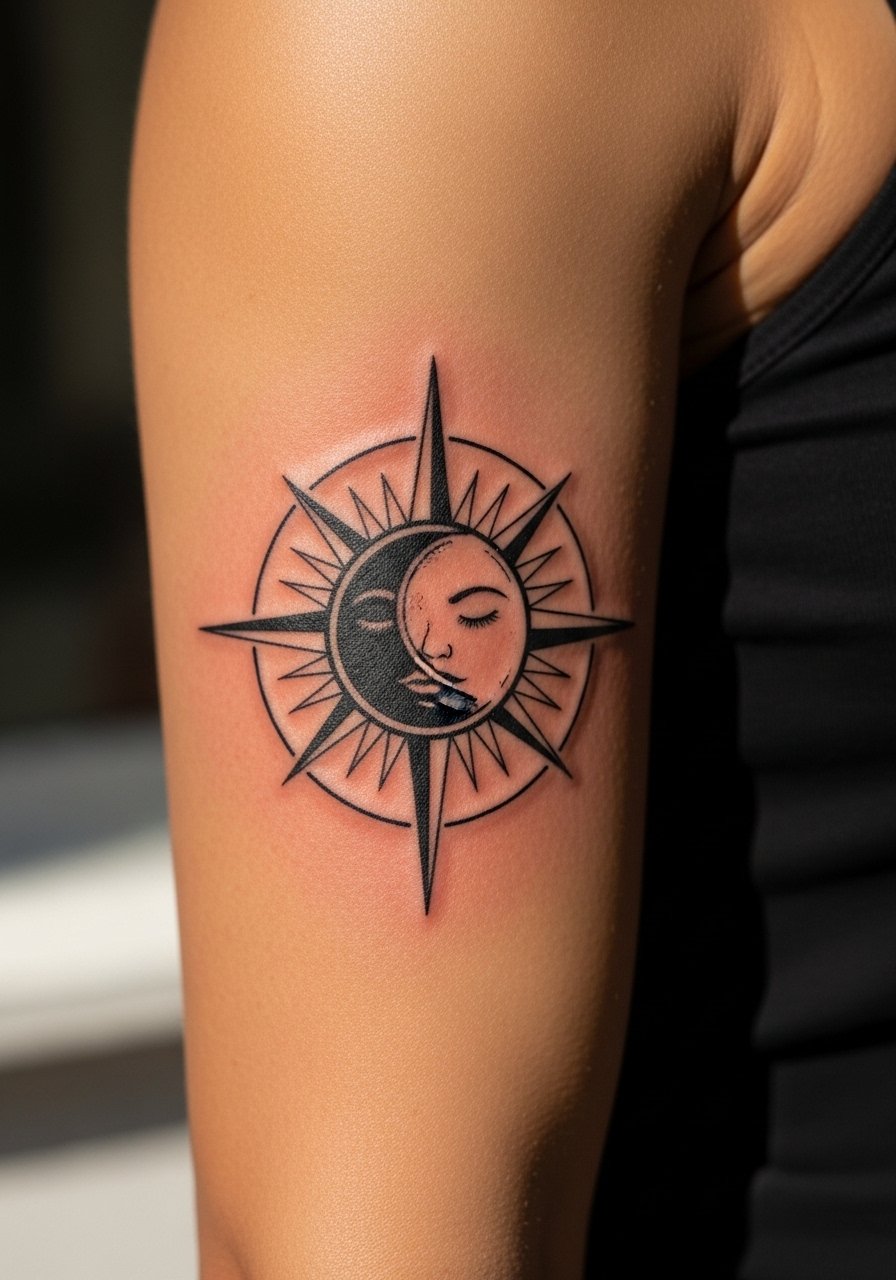
When a piece doubles as a directional motif, the outer bicep gives curved form and low blowout risk. In consultation ask for slightly thicker outer rings so the compass still reads at a glance. A common error is over-detailing the inner rays, which blur over time on active skin. Session time is usually one to two hours. Pain is low to moderate. Wear a sleeveless button-down to the appointment so the artist can access the area without tugging.
3. Micro Dotwork Sun and Stipple Moon on the Ribcage
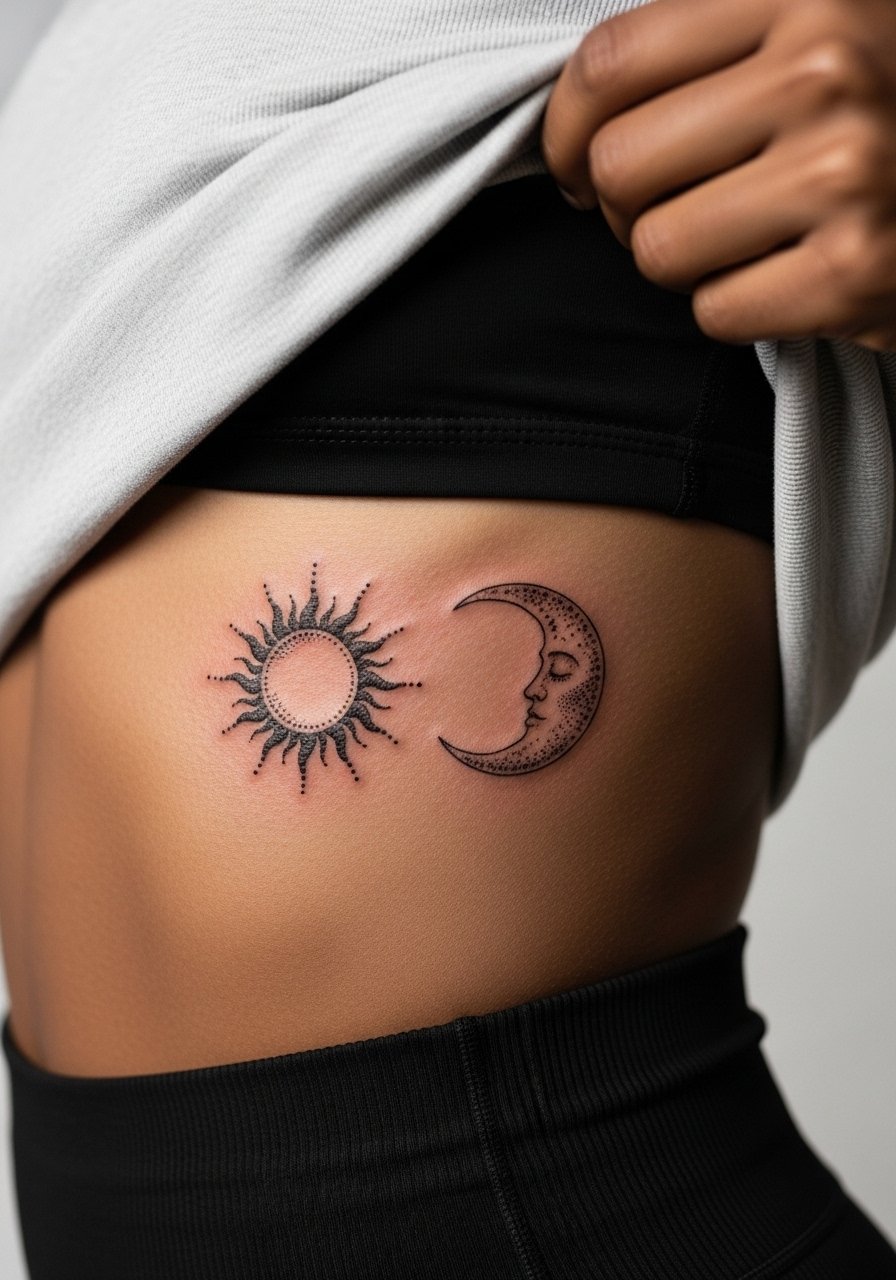
Fair warning, ribs are a high-pain area. The payoff is fine dotwork that breathes with the torso. Artists are split on fine line and ribs. One camp says the stretch and movement blur delicate dots quickly. The other camp insists that deeper, spaced stippling settles better. Ask which approach your artist prefers. Mistakes happen when people request ultra-fine dot density too close together. Expect a long session and a likely touch-up at year two for density restoration. For the session wear a sports bra you can lift without removing.
4. Geometric Sun-Moon Mandala at the Center Back
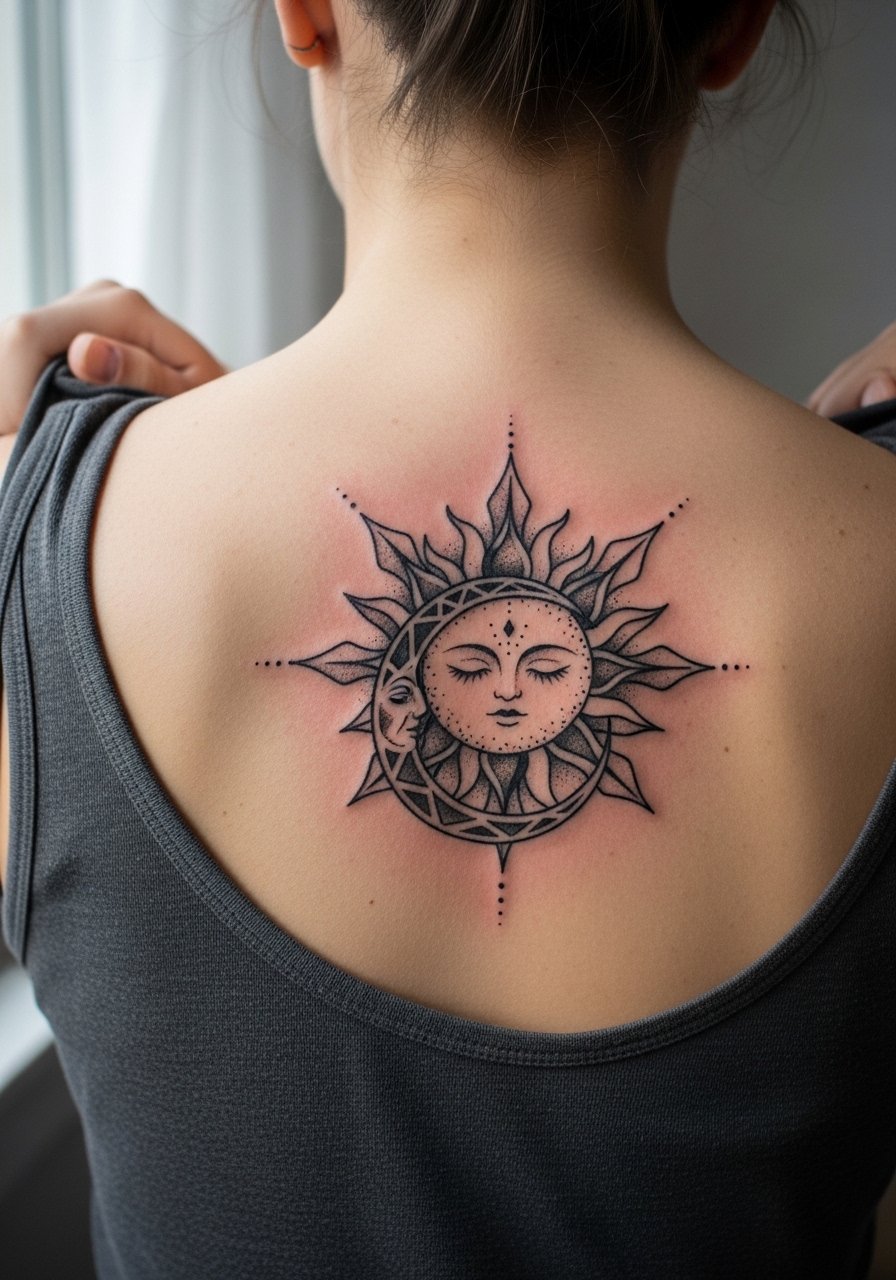
Center back lets a mandala breathe and keeps symmetry aligned with the spine. I recommend larger negative spaces between spokes so the blackwork does not merge after a few years. A common mistake is scaling the mandala too small for the curvature of the back. Session time can be two to four hours depending on saturation. Pain is moderate. For showing it off a backless dress frames the mandala without distracting fabric.
5. Tiny Sun and Moon on the Side of the Wrist
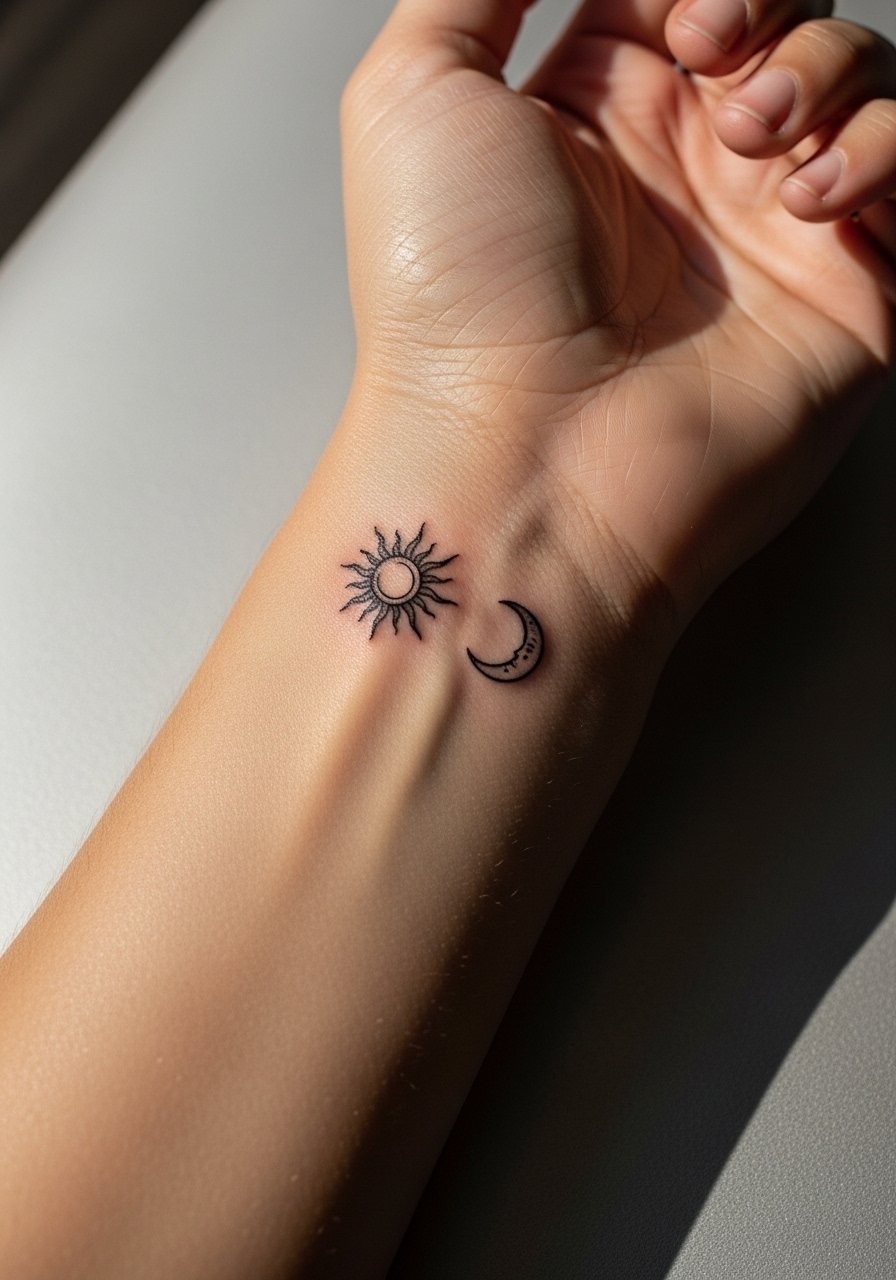
Wrist and hand areas have high friction from daily washing. The biggest mistake is asking for micro detail too close to the edge of the wrist. For longevity request slightly bolder linework and minimal internal detail. Expect a short session under an hour. Pain is noticeable but brief. A thin chain bracelet sits well under this placement. For the appointment wear a loose button-down shirt so sleeves can be rolled without tugging.
6. Solar Face and Lunar Profile on the Collarbone
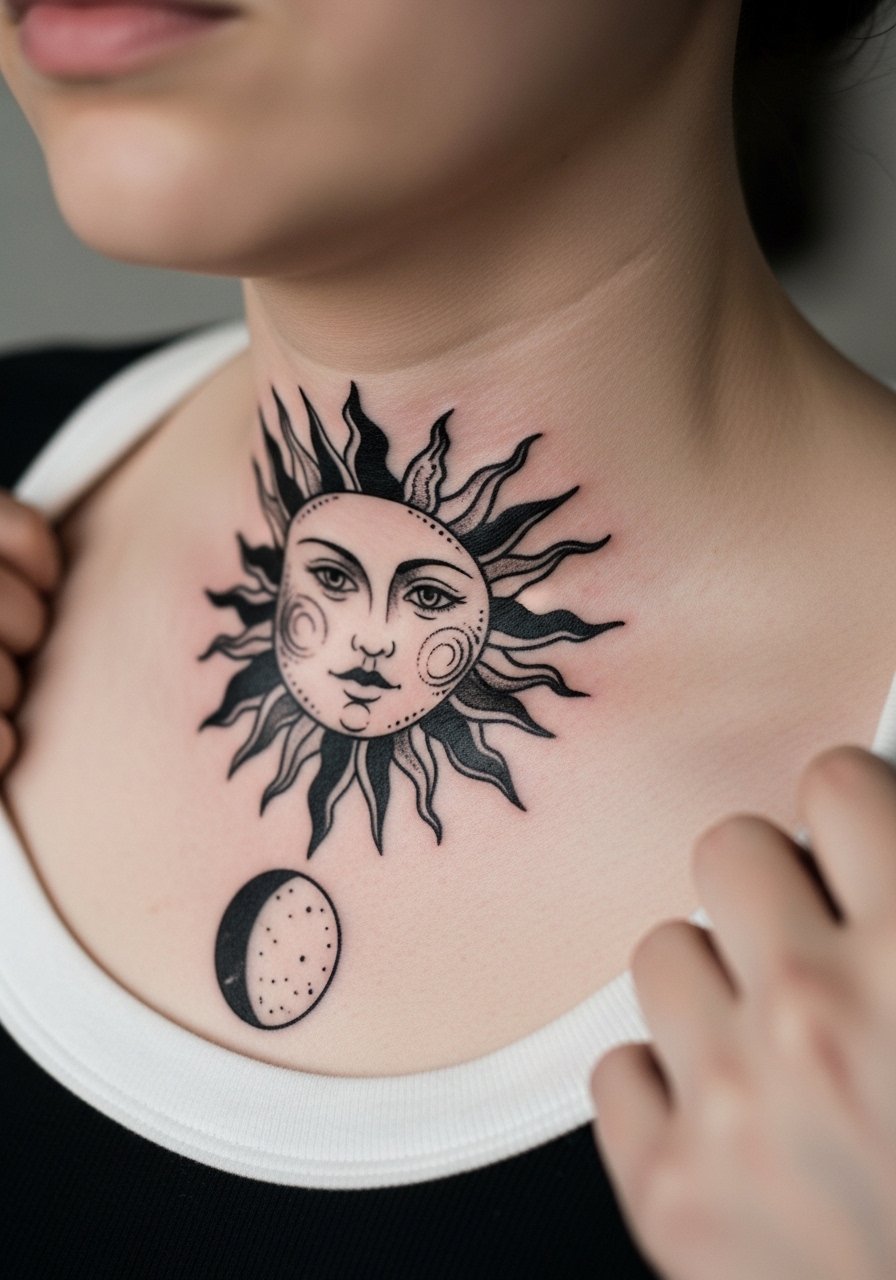
Collarbone tattoos shift with posture, so spacing matters. Tell your artist you want the sun heavier and the moon lighter so both keep identity when the shirt moves. A common issue is placing dense black too close to the clavicle bone, which raises discomfort and swelling. Session time is around one to two hours. Pain ranges from moderate to high. Pairing the piece with a thin chain pendant necklace helps the area read as intentional styling rather than an isolated mark.
Pack Smart
The small placements and chest work above have different prep needs, so a few targeted items smooth out the session and the first week.
-
Stencil transfer paper kit. Lets you preview placement on skin, which is useful for wrist and collarbone work where scale reads differently than on a screen.
-
Topical numbing cream. Applied according to the product directions it can take the edge off rib and sternum sessions without affecting the artist's ability to work.
-
Thin protective film roll. Protects wrist and finger tattoos from constant rubbing and water exposure during the initial healing days.
-
Fragrance-free gentle body wash. Mild cleansers reduce irritation around densely saturated blackwork and help preserve crisp edges.
-
Aquaphor healing ointment. A thin layer during the very first days keeps small black lines from scabbing excessively while you avoid heavy creams.
7. Stacked Solar Phases Along the Spine
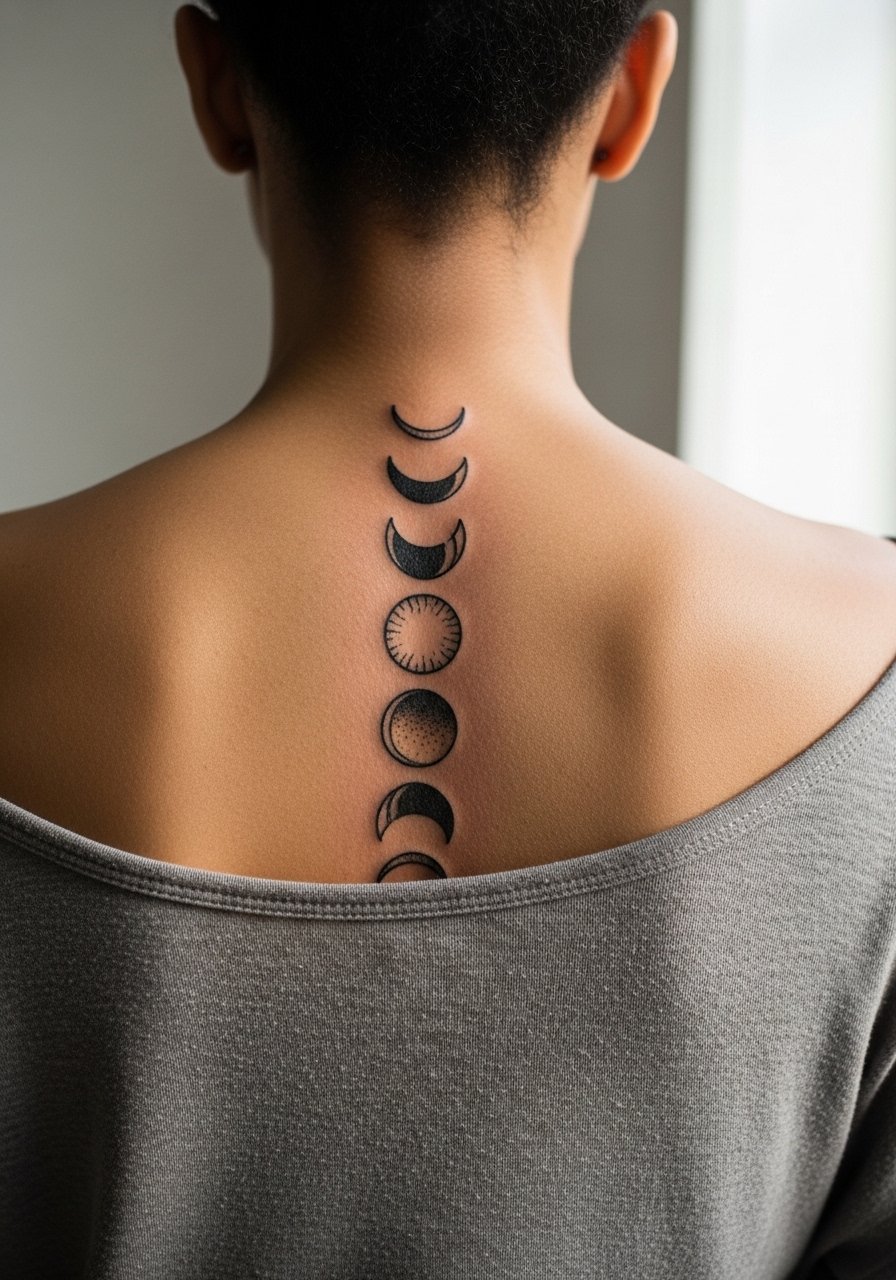
Spine pieces show movement and need rhythm. The error I see often is uneven spacing that becomes obvious when the back flexes. Ask for consistent negative space between phases so each stage reads on its own. Sessions for a vertical strip like this run two to three hours. Pain is high near vertebrae. For show-off outfits, open-back tops work best. Try an open-back blouse for evenings when you want the stack visible.
8. Sunburst Finger Band with Tiny Moon Accent
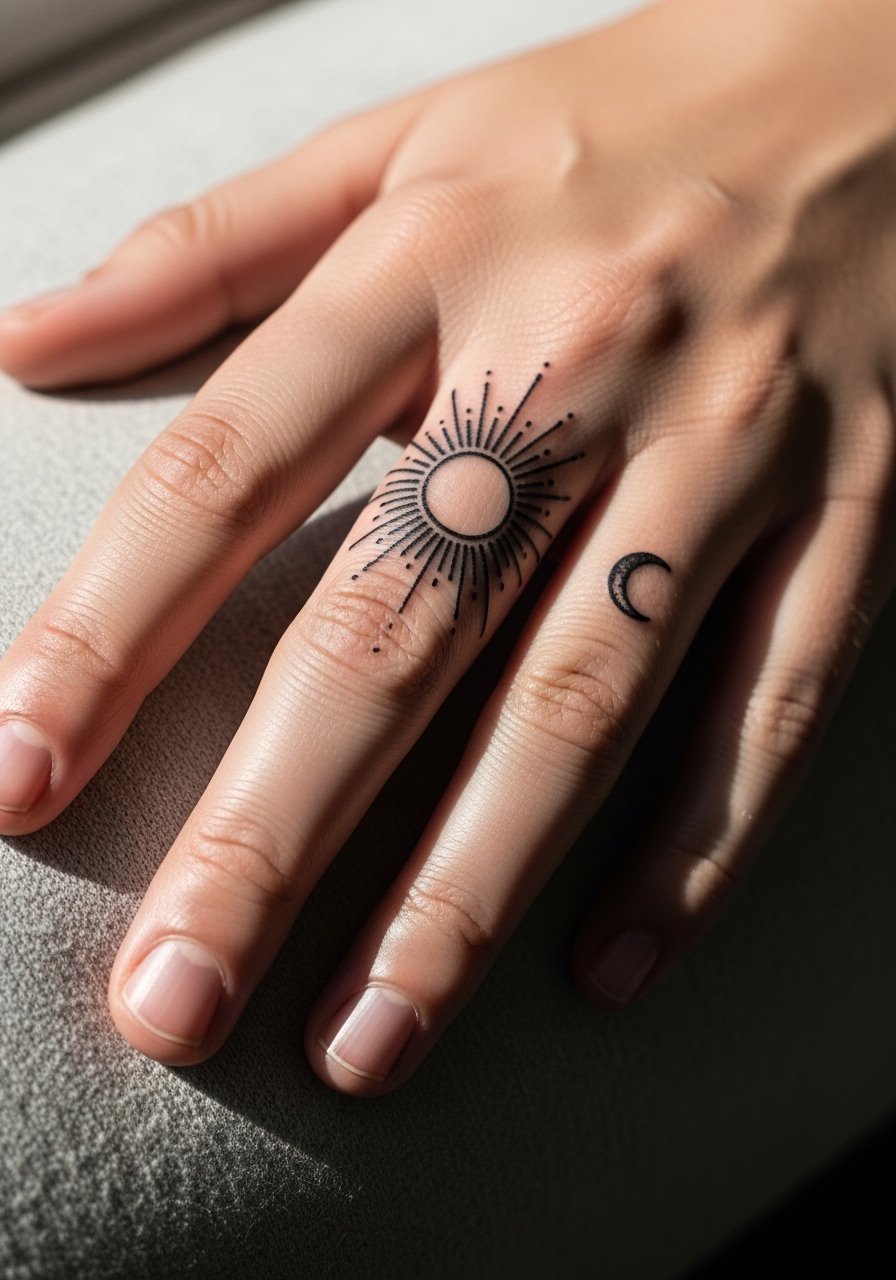
Finger tattoos age fastest due to skin turnover and constant washing. The worst requests put dense black on the pad or across knuckles. For durability pick a band style with open negative spaces and avoid filling the entire circumference. Sessions are short but may need touch-ups within one year. Be aware some workplaces still frown on visible hand tattoos. Stack with thin midi rings rather than chunky rings so the art stays readable.
9. Blackwork Sun and Moon Sleeve Accent on Outer Forearm

Forearm sleeves handle high contrast well. When combining a sun and moon into sleeve art, keep the sun elements larger and let the moon recede with stipple shading. A common mistake is cramming too many micro elements in a narrow strip. Sessions will be multiple hours across visits. Expect touch-ups for edge saturation at year two. For the appointment wear a rolled-cuff linen shirt so the artist can access the entire forearm comfortably.
10. Sun-Moon Anklet Around the Ankle Bone
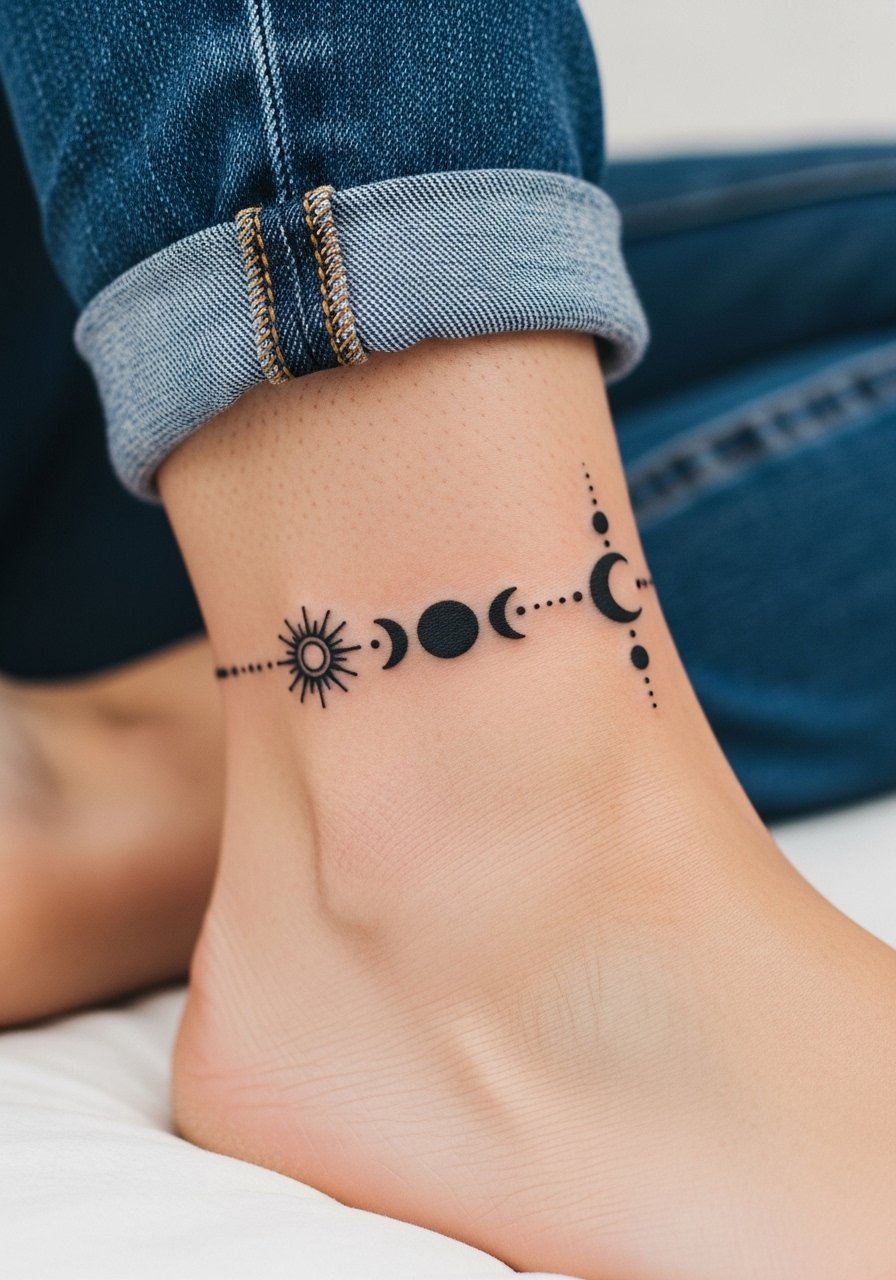
Ankle skin is thin and moves with footwear. The biggest mistake is placing heavy black too close to where shoes rub. Ask for the design to sit slightly higher on the bone and request thinner rays so the circle does not turn into a blob. Sessions are usually under an hour. Pain is low to moderate. For wearing comfort after the session try sandals or loose sneakers and for show-off pair with a delicate anklet bracelet.
11. Interlocking Celestial Faces on the Hip
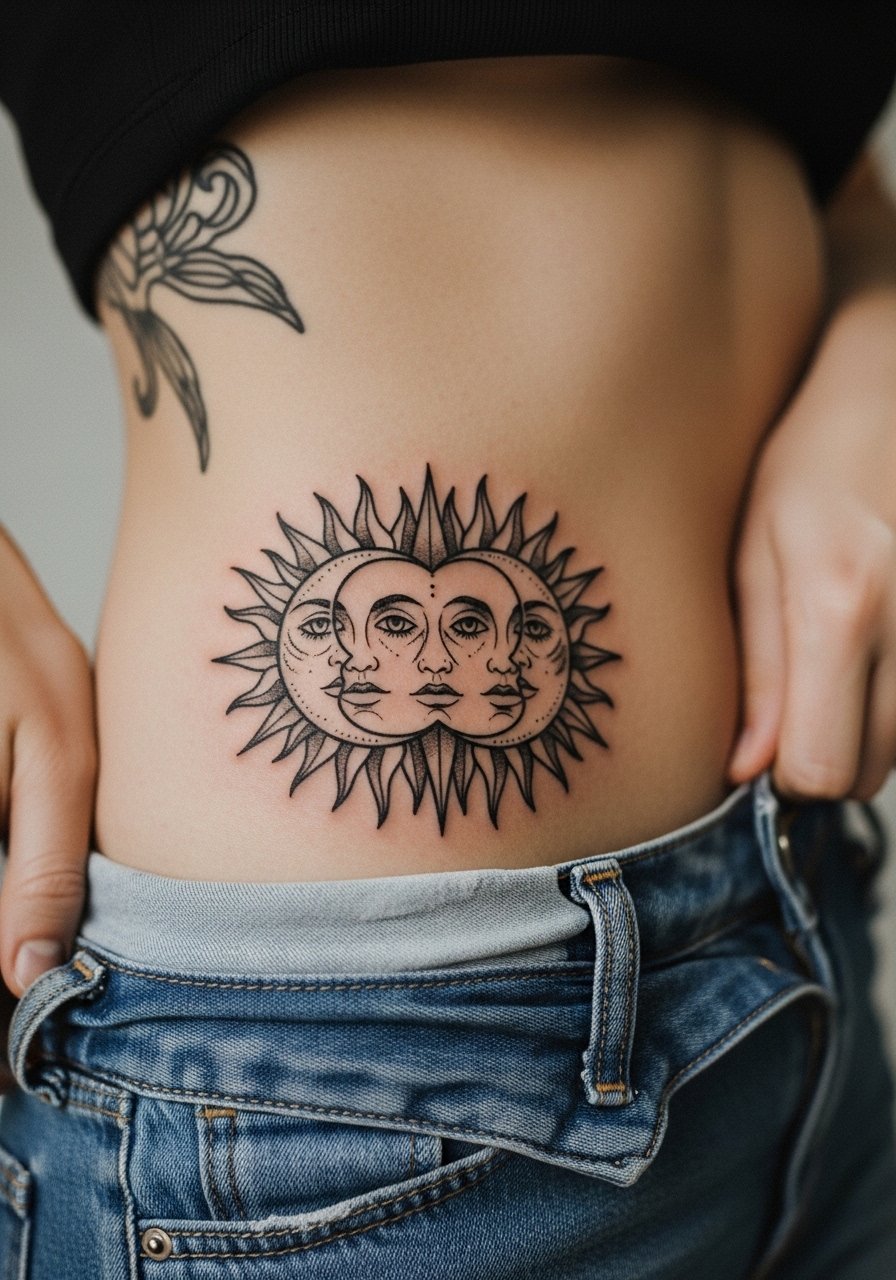
Hip pieces sit on flexible tissue and shift with clothing. The common error is choosing too much interior detail for an area that will stretch. Ask for bold outlines with selective interior texture. Session time depends on size, often one to two hours. Pain is variable. Wear high-waisted bottoms to the appointment so the artist can access the area without full undressing.
12. Negative Space Sun with Black Crescent on the Calf
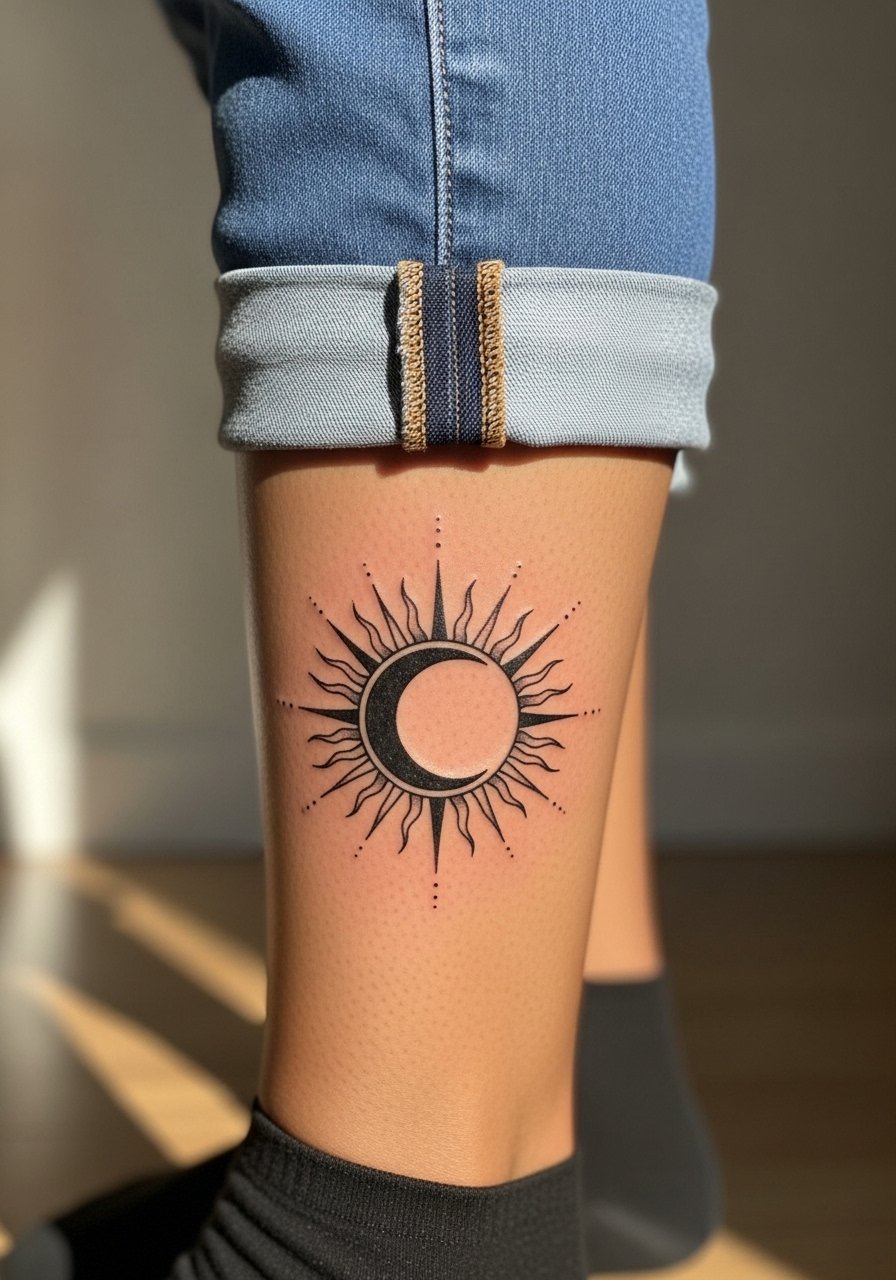
Calf pieces age well because the skin is stable. Negative space designs let the shape breathe without heavy touch-ups. The mistake is over-saturating the negative areas, which eliminates the desired contrast. Sessions often run one to two hours. Pain level is generally low. For post-session comfort wear loose pants and consider a drawstring linen pant so the cuff can be rolled without pressure.
13. Symmetric Chest Pair: Sun Left, Moon Right
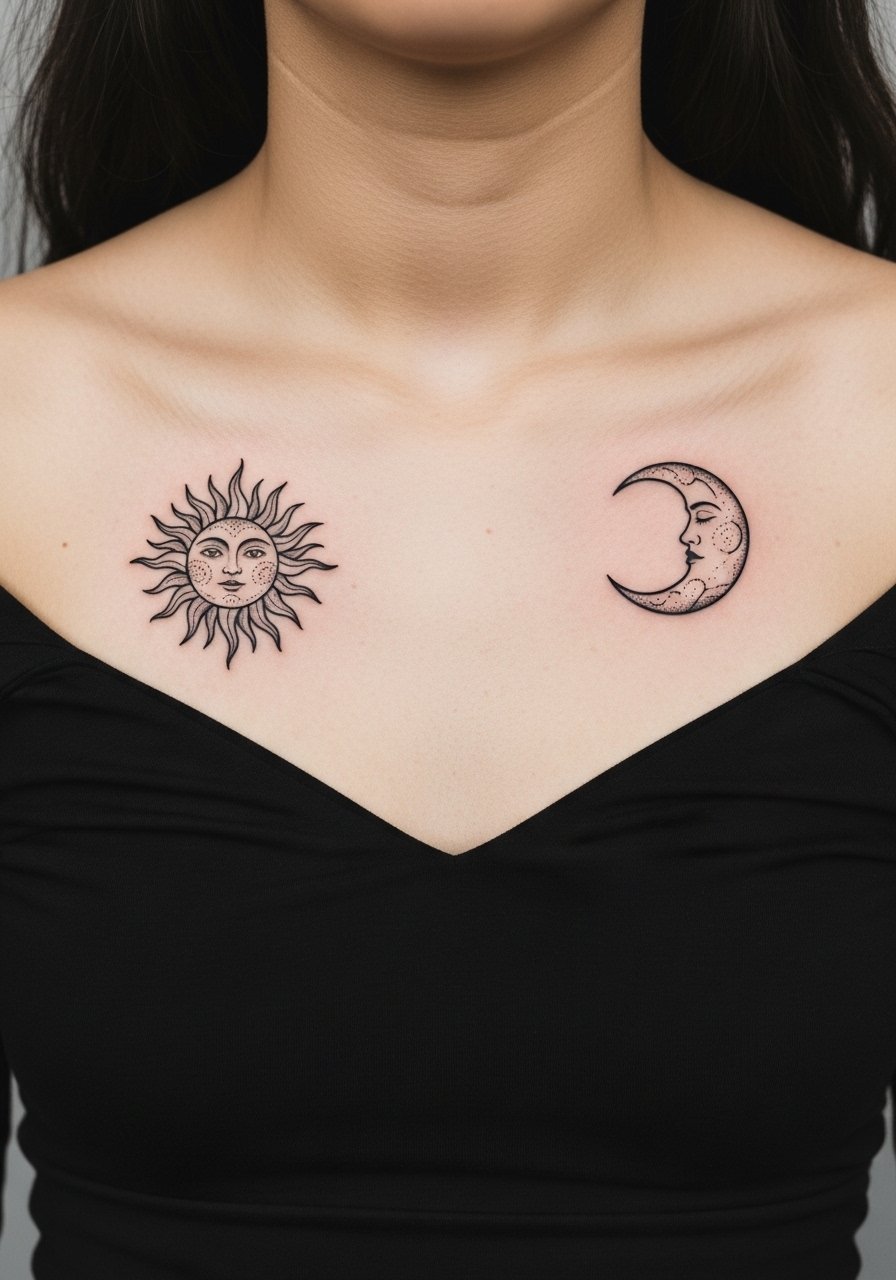
Symmetry across the chest looks powerful, but the chest moves with breathing. I recommend slightly asymmetric sizing so the eye reads intended balance rather than mirror copying. Artists disagree about chest symmetry. One camp favors exact mirror work for visual harmony. The other camp prefers subtle size shifts to accommodate muscle tone. Ask your artist which approach they use. Sessions are likely split across two sittings. Pain can be moderate to high. Pair this with a button-down shirt you can unbutton to expose either side for the session.
14. Tiny Sun Under the Clavicle, Moon Near the Trapezius
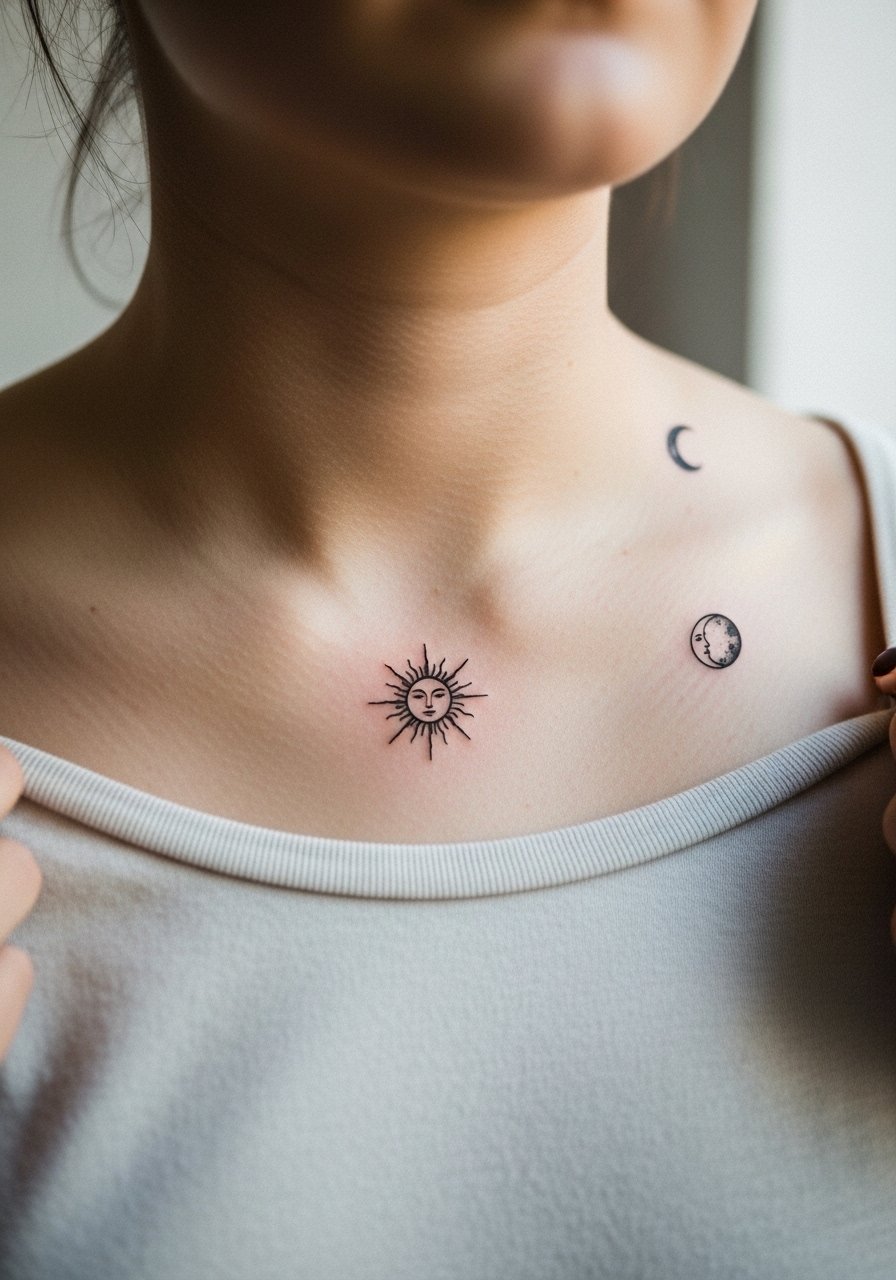
Small near-collarbone placements call for simplicity. The mistake people make is asking for tiny internal features that vanish within a year. Keep silhouettes bold and the internal marks minimal. Sessions are short. Pain is moderate because of bone proximity. For showing it off pair with a v-neck top that draws the eye without covering the area.
15. Solar Halo Over a Sternum Crescent
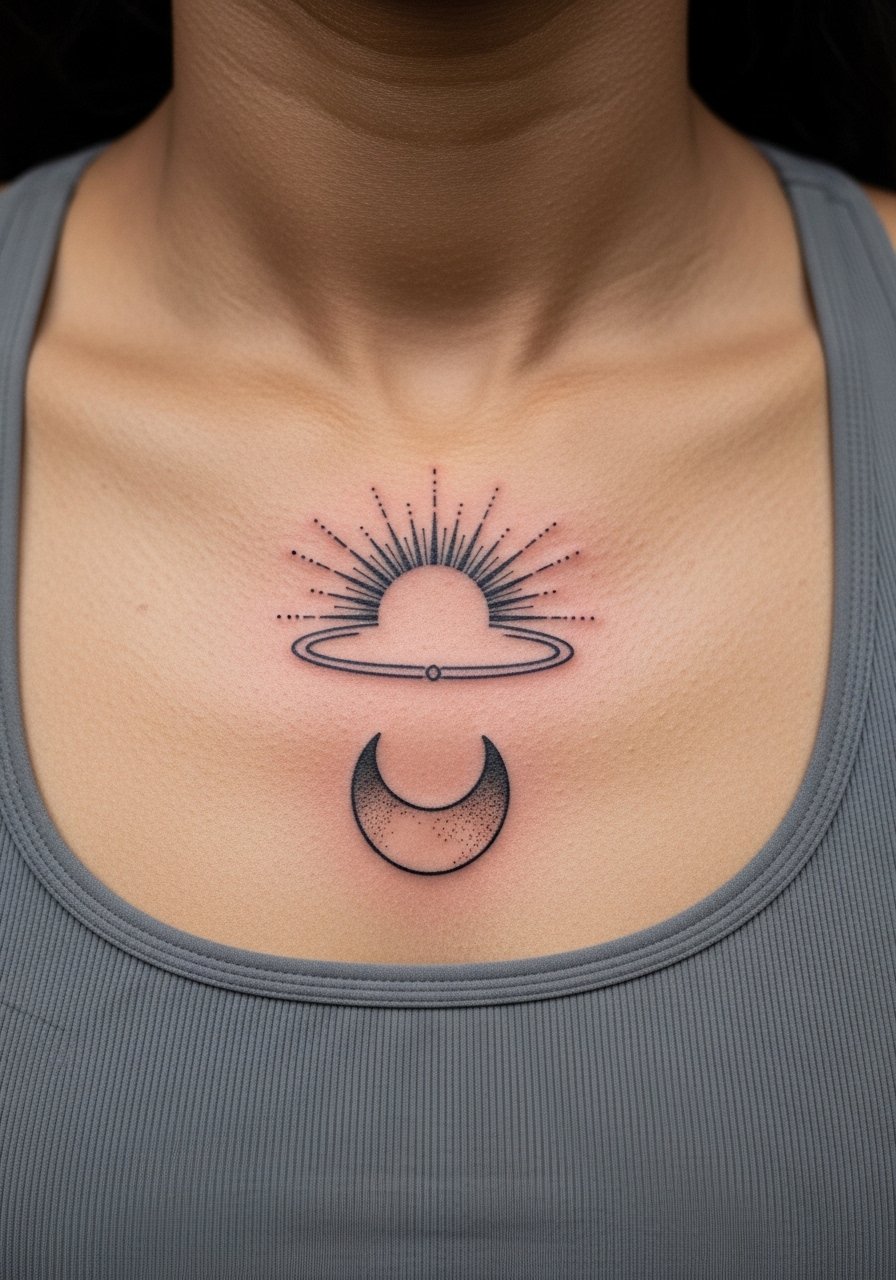
Sternum work requires restraint because the skin there can kink during healing. The common mistake is using dense solid black across the sternum. Ask for segmented fills and spacing so the halo and crescent remain readable. Sessions can be intense and may involve breaks. Pain is high. For the appointment wear a supportive, removable top like a fitted sports bra so you can expose the area without discomfort.
16. Sun-Moon Pocket on the Upper Thigh
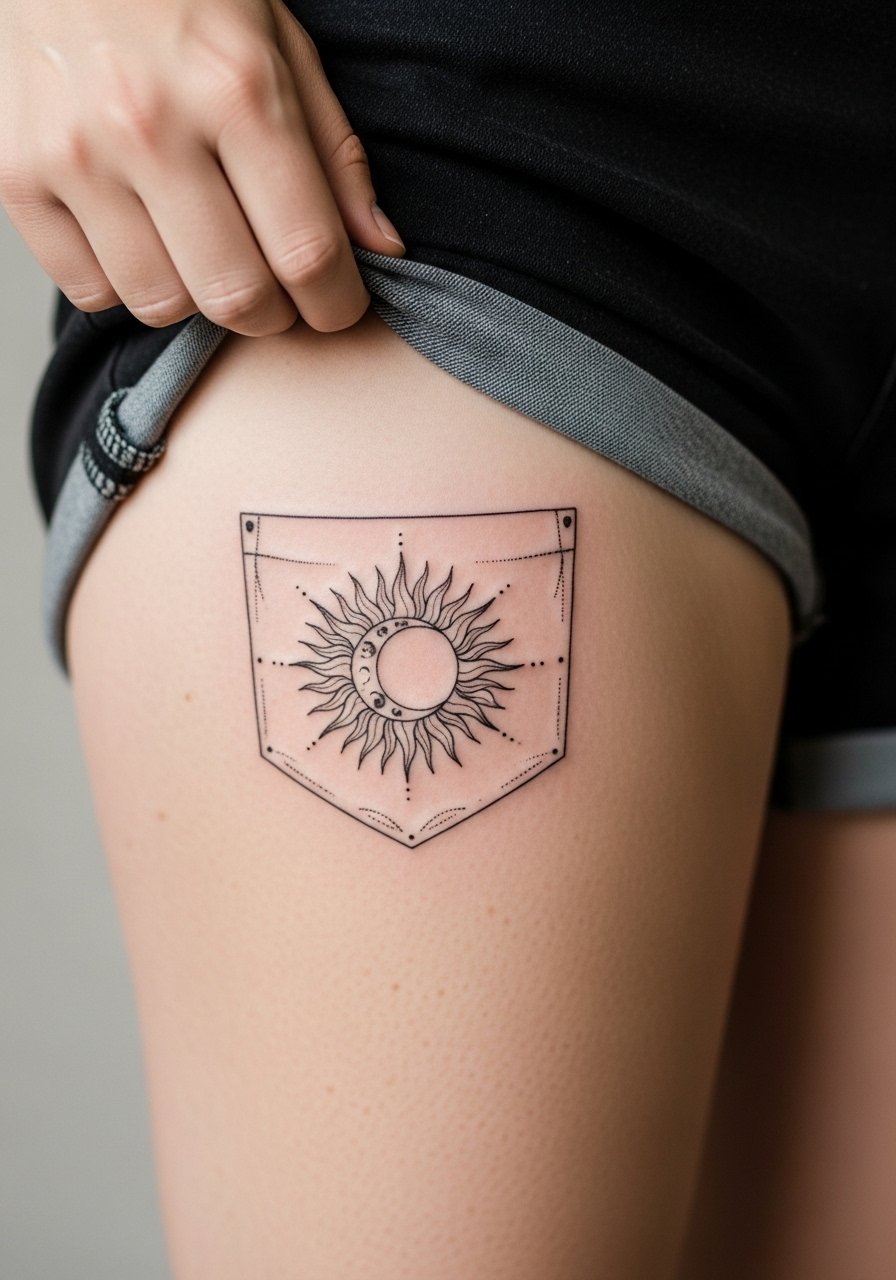
Upper thigh offers privacy and room for scale. The mistake is choosing heavy saturation that never heals smoothly in a friction area. Ask for mid-weight linework and set the design where clothes will not constantly rub it. Session time varies from 45 minutes to two hours. Pain is moderate. Wear loose shorts to the appointment like soft drawstring shorts for easy access.
17. Crescent Moon Cradle With Solar Rays on the Shoulder Blade
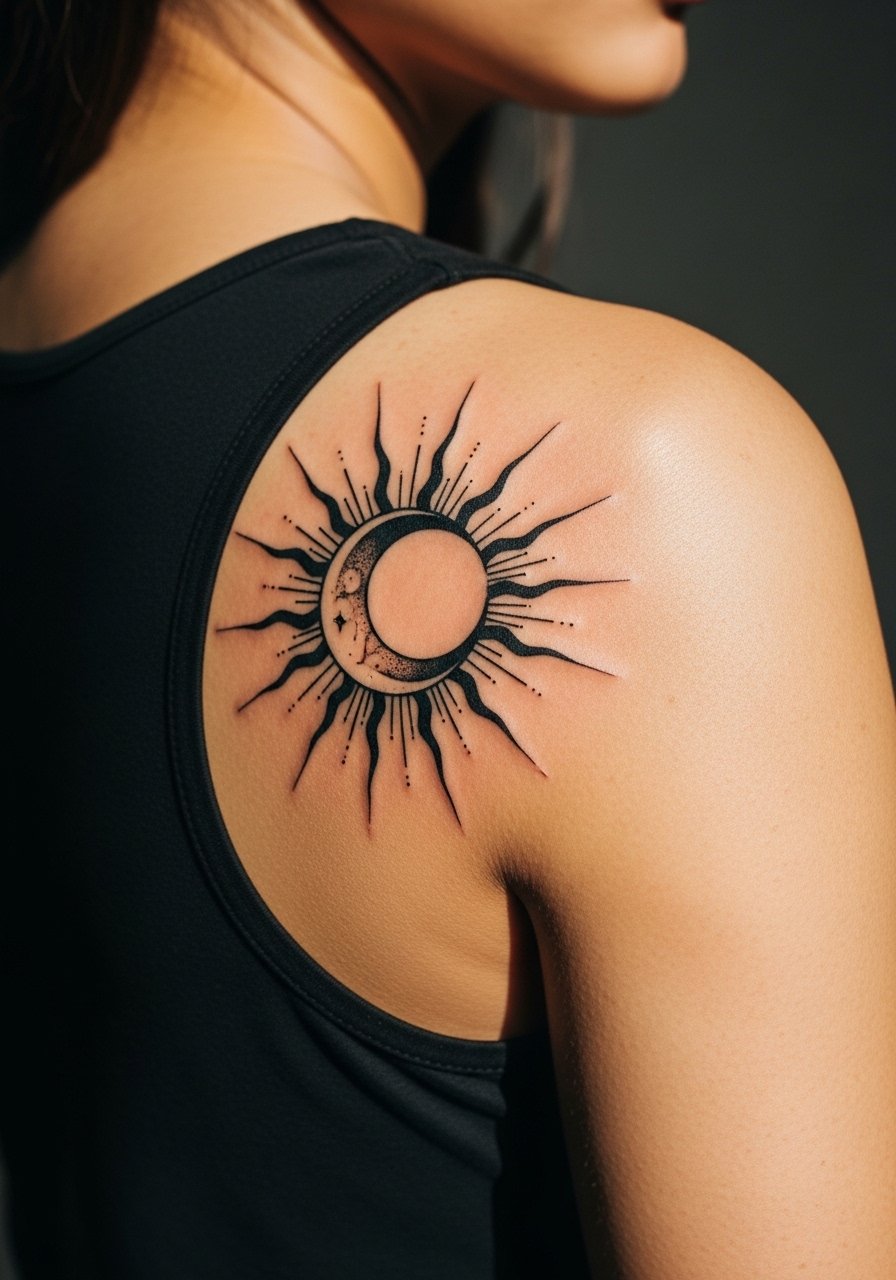
Shoulder blade pieces age gracefully because movement is minimal. The error I see is packing too much internal dotwork into the crescent, which softens with time. Request open negative areas and a strong outer contour. Sessions are one to two hours. Pain is low to moderate. For showing it off wear a tank top that exposes the shoulder blade without distracting prints.
18. Arm Wrap: Sun Bands With Tiny Moons
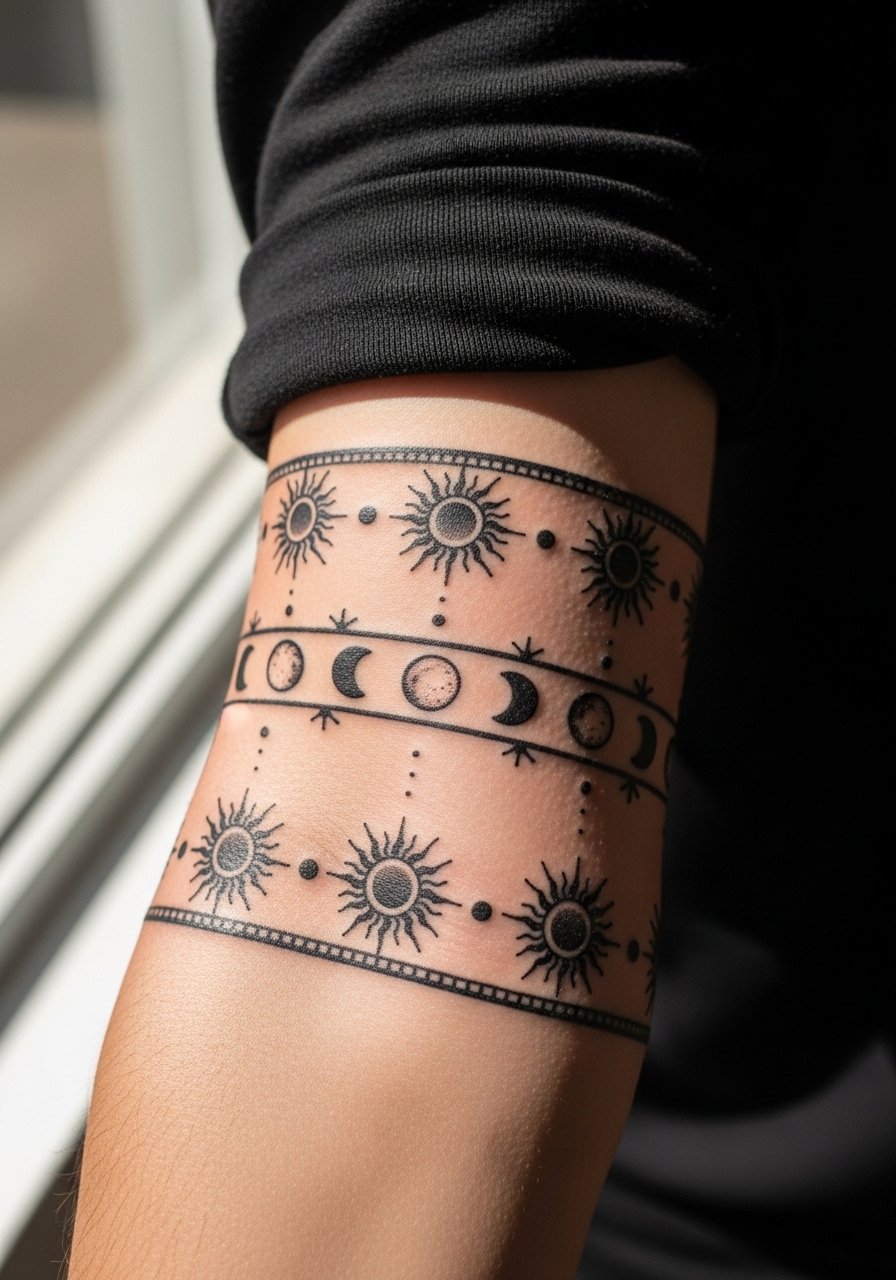
Wraps need consistent interval spacing so each band remains legible. The common mistake is irregular spacing and uneven band thickness. Ask for mockup measurements during consultation to preview scale. Session time is variable and may require multiple passes for saturation. Pain is low to moderate. Pair with a minimalist watch rather than chunky bracelets to keep attention on the wrap.
19. Micro-Realism Sun Portrait Paired With a Graphic Moon on the Inner Bicep
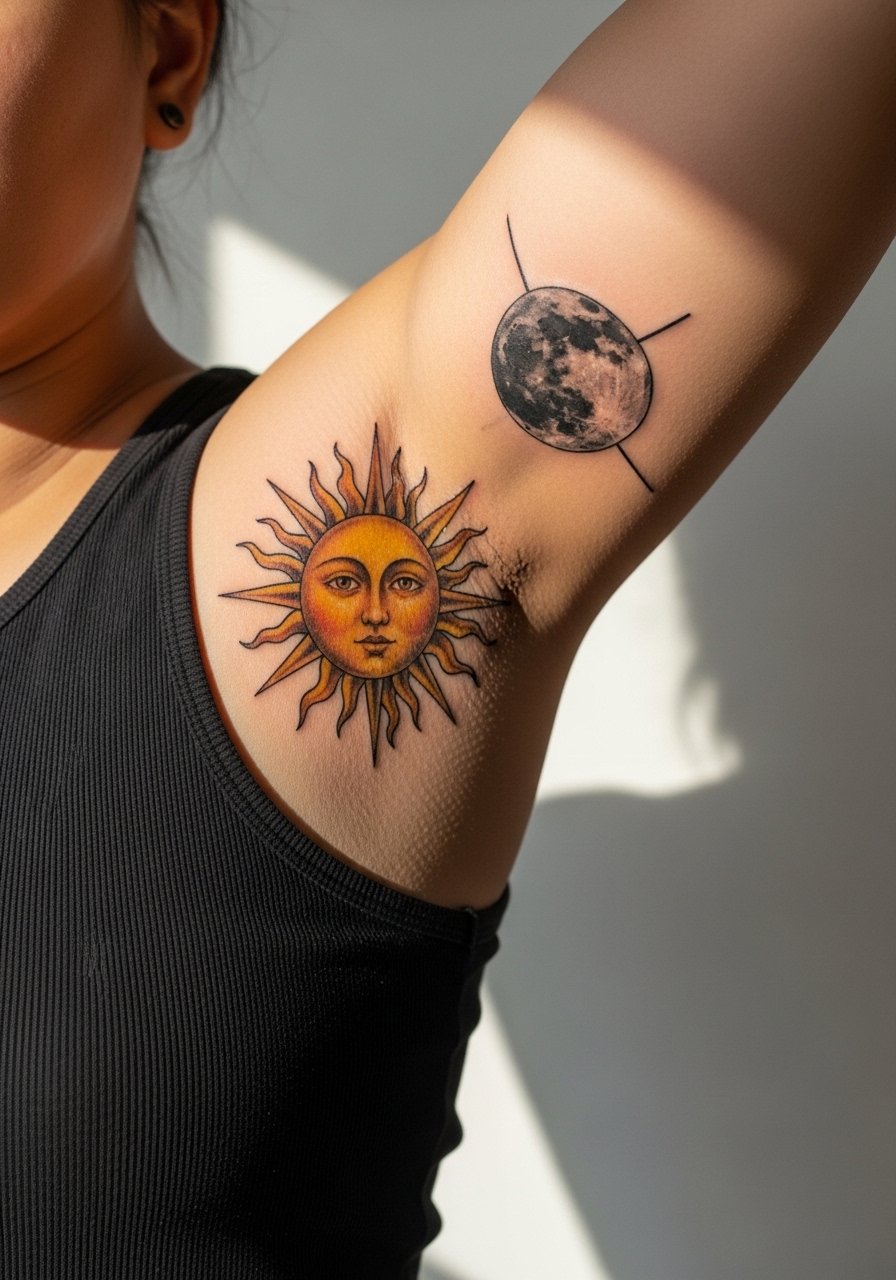
Inner biceps are a tricky canvas because sweating and friction affect healing. Fine micro-realism here should be larger than you think to avoid early blur. The mistake is asking for portrait-level detail in a very small patch. Pain is moderate. Sessions can be longer due to positioning. For the appointment wear a sleeveless shirt you can easily raise without pinching the skin.
20. Small Sun at the Nape with Moon Along the Hairline
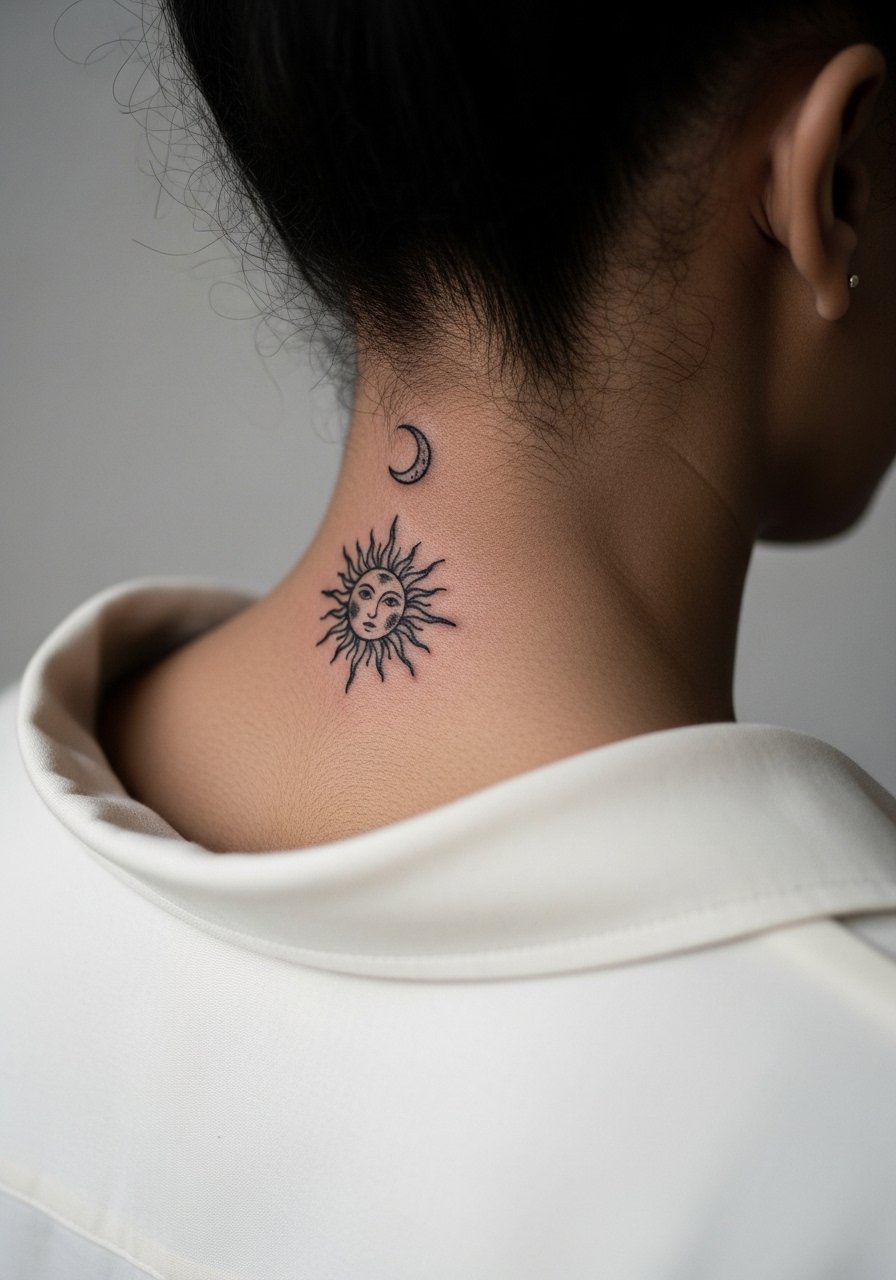
Neck placements require careful career consideration because visibility is high. The common error is choosing dense black in areas that show through short haircuts. If you want subtlety, request smaller scale and strategic placement along the hairline. Session time is usually under an hour. Pain is moderate. For the appointment wear a wide-neck shirt to keep the neck exposed without removing layers.
21. Sun Ring Behind the Ear with Tiny Moon Accent
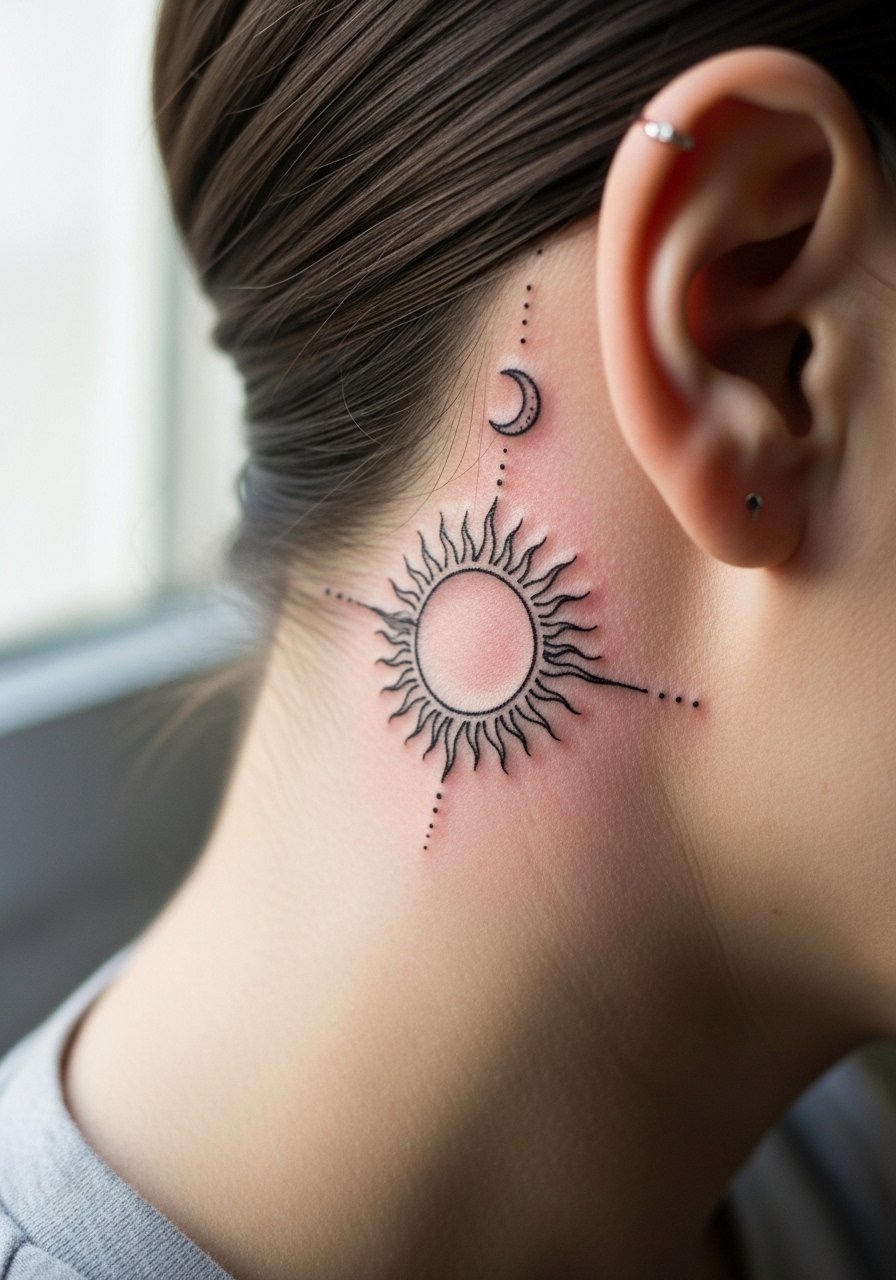
Behind-the-ear work is small and intimate and needs a discreet approach. Avoid asking for heavy fill that shows through hair or rubs against collars. The mistake is not specifying the exact visible area below the hairline. This requires an artist comfortable with small, precise work. Sessions are short but often need touch-ups. Pain is low to moderate. Because placement is sensitive, expect the artist to discuss aftercare specifics before starting.
Frequently Asked Questions
Q: Will bold blackwork hold up better than fine black line in sun and moon pieces?
A: From what I have seen, saturated blackwork tends to maintain readable shapes longer than micro fine lines. Fine black line can look elegant fresh but often blurs first in high-movement areas. If longevity is a priority, ask for slightly increased line weight and more negative space so the shapes remain distinct as they age.
Q: How badly do sun and moon designs on the ribs fade compared with forearm placements?
A: Ribs see more stretching and friction from clothing, so dotwork and ultra-fine lines on the ribs often need touch-ups sooner than forearm work. If you love rib placement, plan for a possible touch-up around year two and choose stippling or spaced shading rather than dense micro detail.
Q: Are hand and finger sun-moon tattoos still risky for workplaces?
A: Yes, hand and finger placements remain the most visible and can affect certain job options. If career flexibility matters, consider the inner wrist, ankle, or thigh instead. For subtle visibility, choose placements that can be covered by sleeves or accessories.
Q: How should I describe a balanced sun and moon composition to an artist in my consultation?
A: Bring clear reference images showing the scale relationship you want, and say explicitly whether you want the sun to dominate the contrast or the moon to read lighter with stipple. Ask to preview a stencil on your body and request slight adjustments before the first needle if proportion feels off.
Q: Which clothing should I wear to a sternum or chest session to make the appointment easier?
A: Wear a fitted, removable top like a fitted sports bra or a wide-neck shirt you can pull aside. That lets the artist access the area without you fully disrobing and reduces discomfort during long sessions.