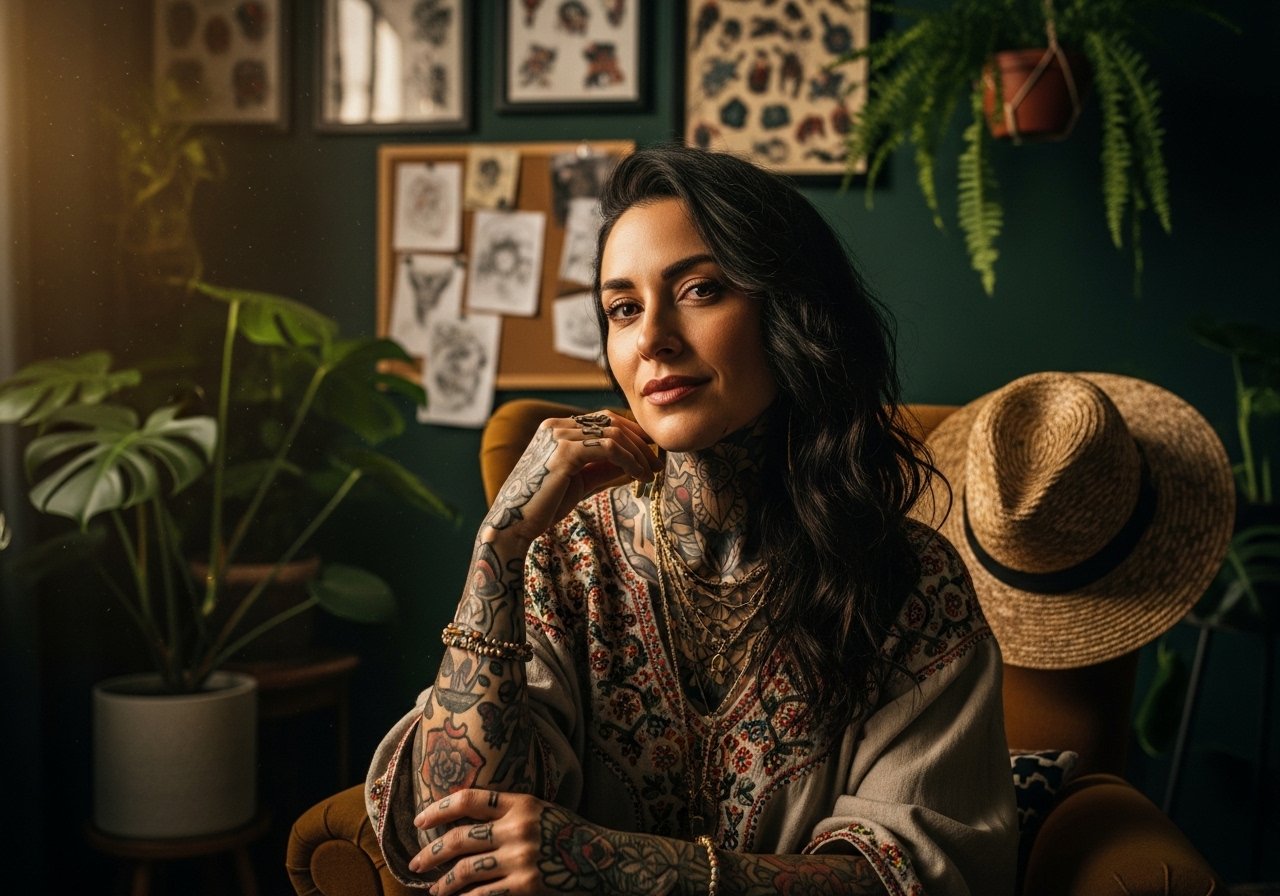
Fine line and heavy blackwork are both trending for chest pieces right now, and the gap between what looks great fresh and what ages well shows up fast once the swelling settles. Expect three real headaches people mention most: chest ink that warps with weight gain, black and gray losing contrast on darker skin, and sternum sessions that bite harder than you think. Read the ideas below with those trade offs in mind and a simple checklist for the consult.
1. Realistic Lion Portrait over Sternum
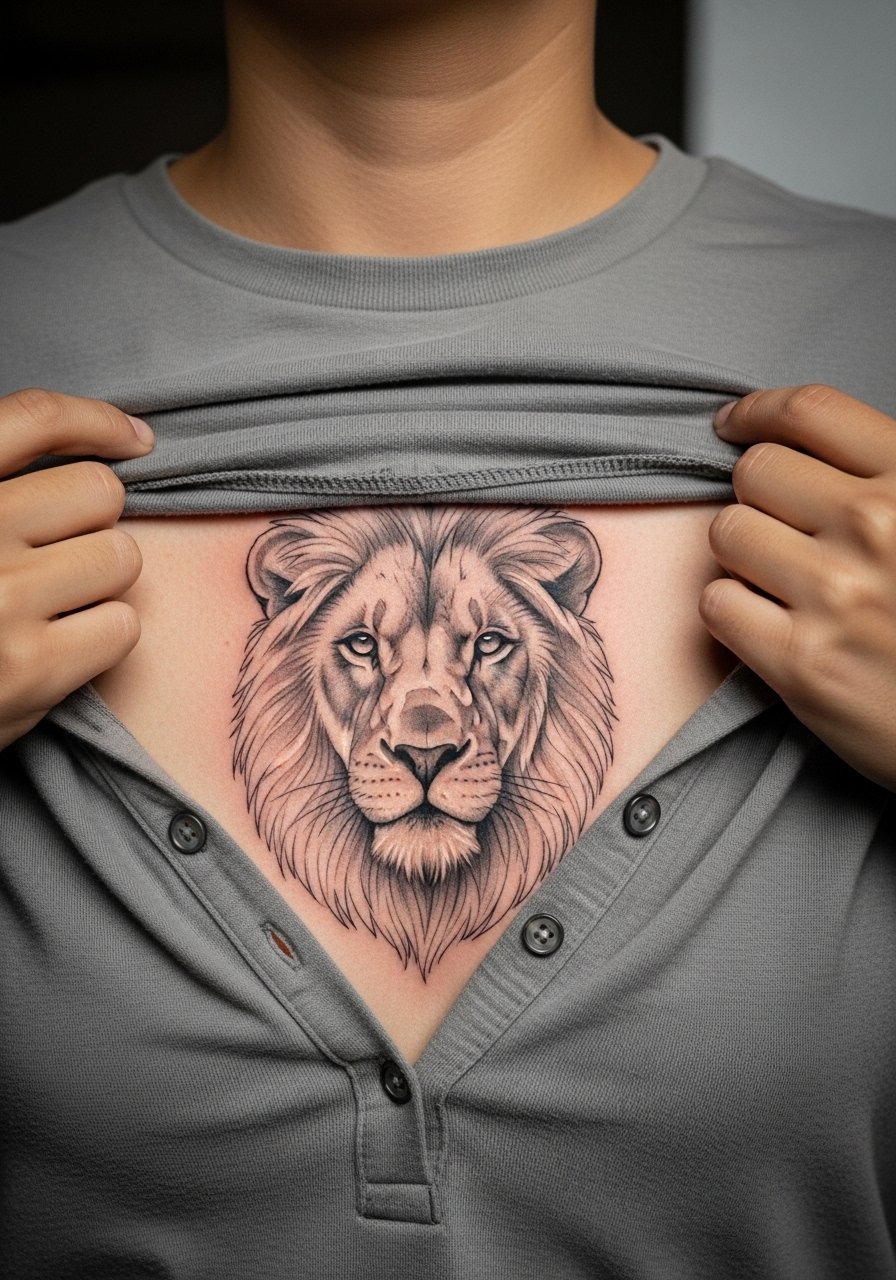
Start with a warning about scale. A 6 to 10 inch lion looks like a single iconic element when placed over the sternum, but shrink it to save session time and the whisker details will blur by year three. For this one tell your artist you want slightly heavier contrast in the mane and a bit more saturation under the jaw. That reduces the washed-out look on darker tones and keeps facial features readable in photos. Pain near the sternum can spike, so expect shorter breakable passes and deep breathing between layers. For showing it off, an unbuttoned mens henley shirt black frames the chest without overpowering the portrait. This placement needs an artist who has experience with micro-realism on the sternum. Consider touch-up plans at year two.
2. Skull with Mechanical Gears Full Chest Piece
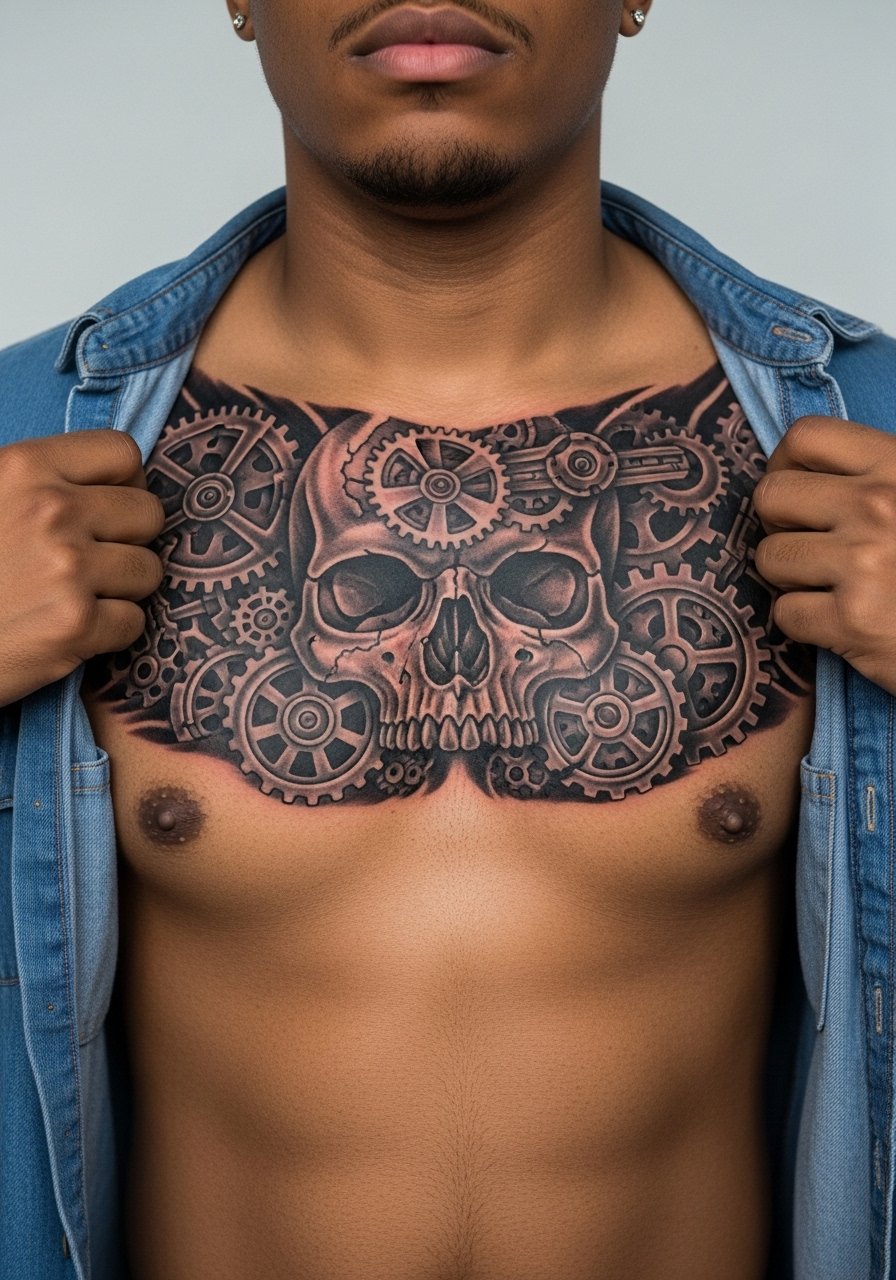
If you want gritty industrial energy across both pecs, this full plate approach reads from across a room. Expect longer sessions with heavy shading and multiple passes to load saturation into dense fills. A common mistake is compressing too much detail into small gears which ends up muddy after healing. During consult say you want negative space around the main gear elements so the mechanical parts stay legible at six months. For the gym-ready reveal, a fitted white tee or men's muscle tank gray keeps lines visible under regular shirts. Anticipate touch-ups on the deepest blacks after the first year to maintain contrast.
3. Portrait of a Deceased Relative Centered on Chest
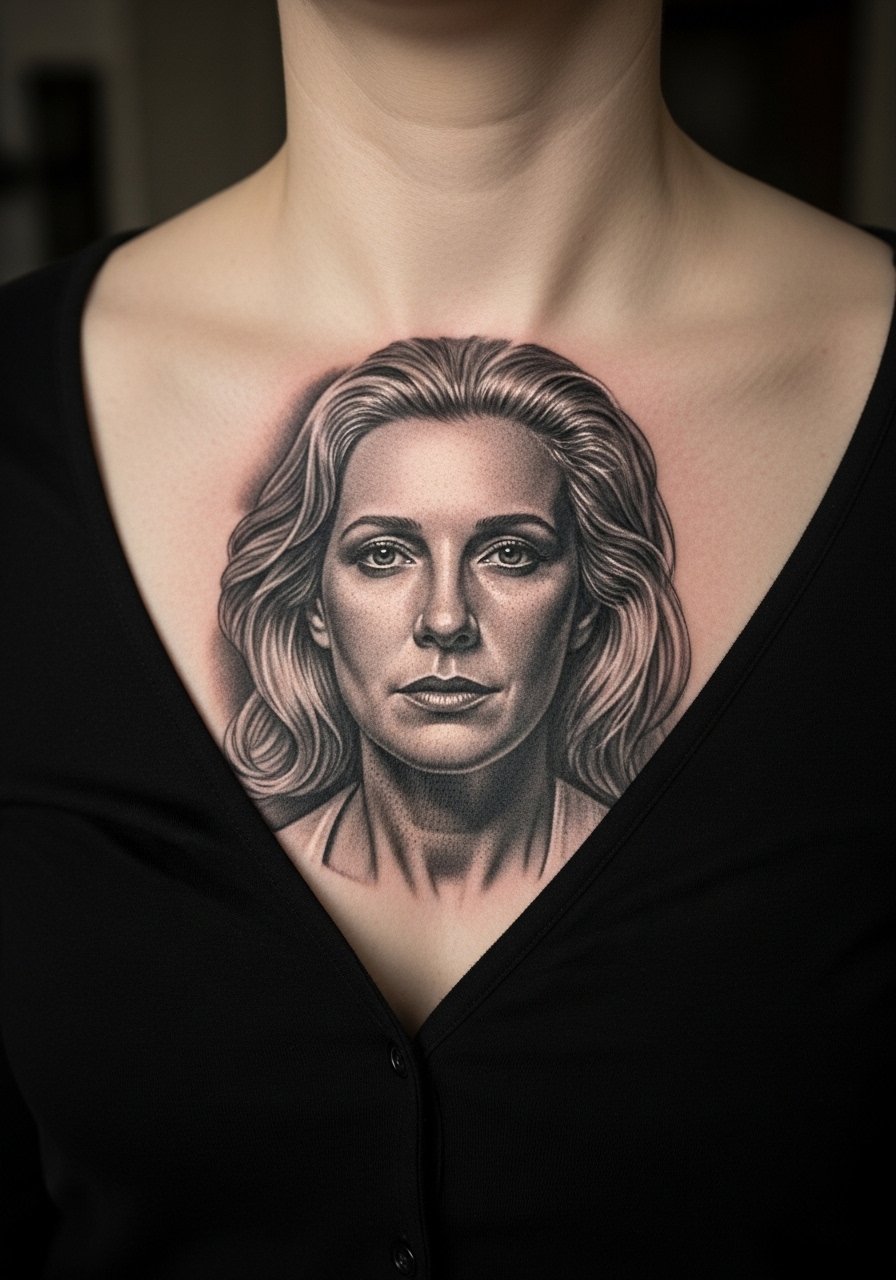
Memorial portraits belong in the center where the body reads symmetry, but the emotional side does not erase technical needs. Bring a high resolution photo and ask the artist to translate the key facial planes rather than copy every shadow. A frequent regret is choosing a tiny size to save money. Tiny portrait detail fades quickly so aim for at least a medium size and plan for touch-up timelines. Expect sternum tenderness during the session. For session day wear, pull on a loose tank top cotton so the artist can lay stencils without underwire or pressure. Professionals who do photorealism will discuss reference lighting during the consult.
4. Symmetrical Mandala Pattern Across Pecs
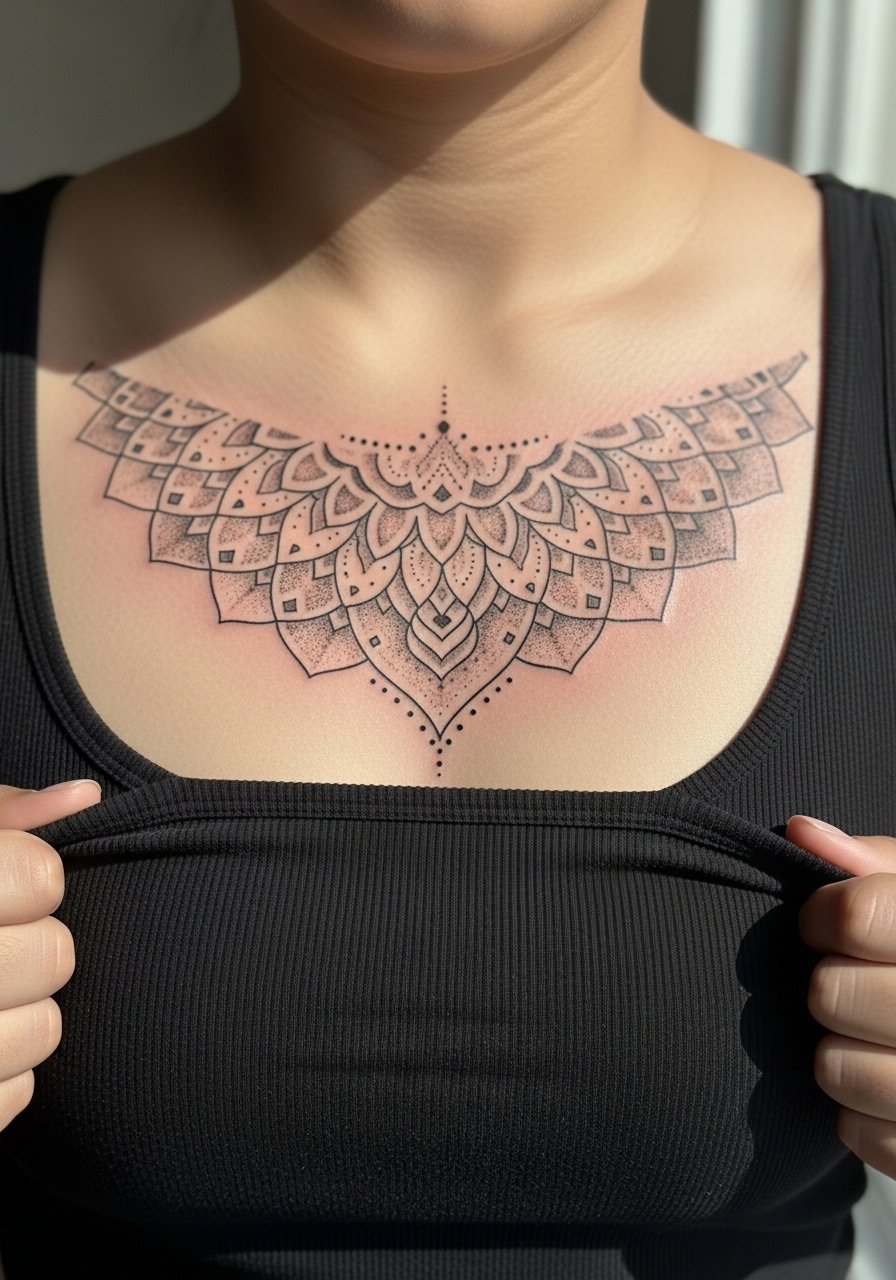
Artists split on whether very fine line mandalas hold up on the chest. One camp says dense fine work in tight spaces blurs into shaded blocks within a few years. The other camp argues that with spacing and proper depth the stipple holds. For this design choose more breathing room between radial lines and ask the artist for slight increases in lineweight toward the outer rings. The biggest mistake is making the mandala too small for the pec curve. For showing it off try cream crewneck tees with a slightly widened collar and a minimalist cuff bracelet on the opposite arm to balance the symmetry. Expect a touch-up window at year two to maintain crisp radial edges.
5. Chicano-Style Sacred Heart with Banner
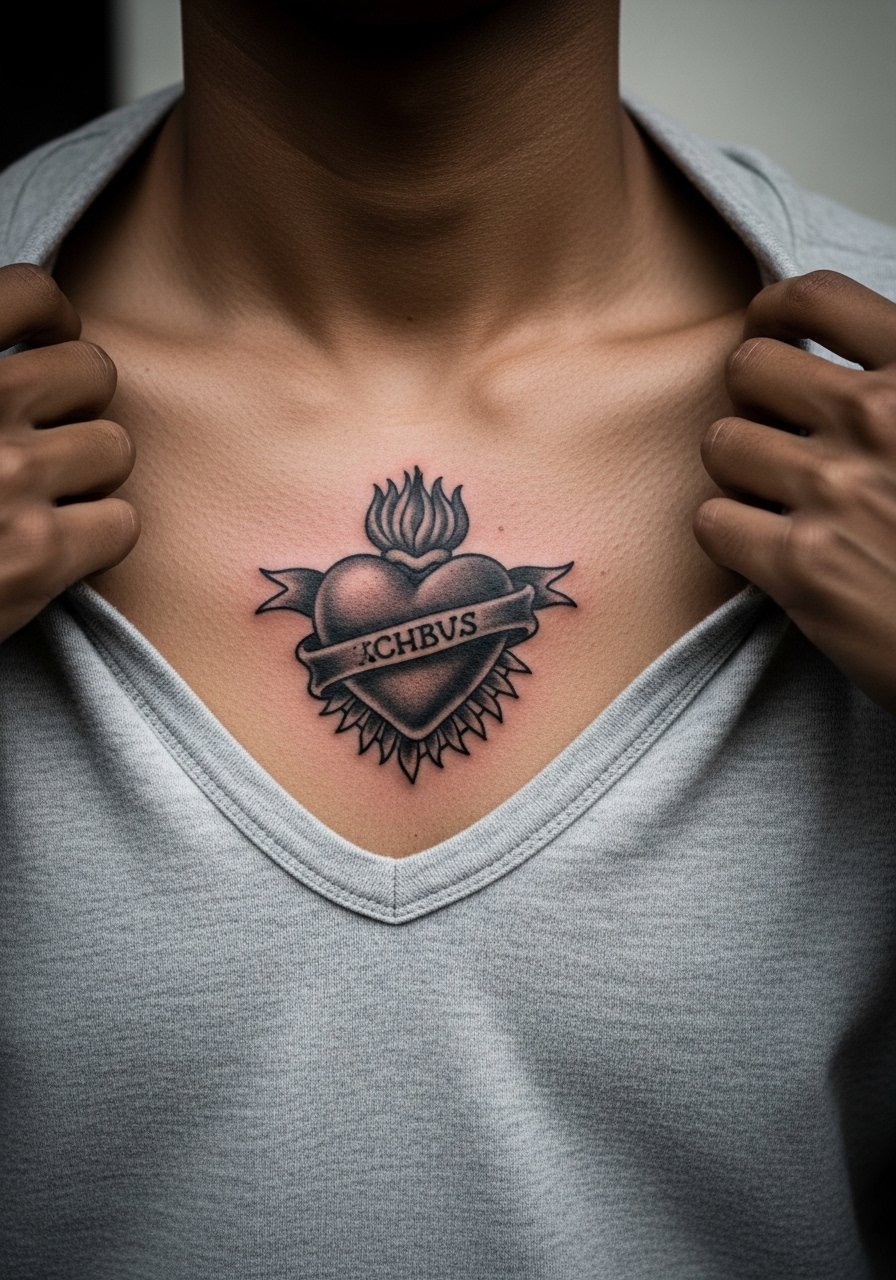
The Chicano black and gray gradient looks timeless when shaded with smooth layers. There is a heated debate about Saniderm versus dry healing for chest pieces. One camp says Saniderm speeds clean healing and protects heavy gradients. The other camp warns it traps sweat on the chest and can cause odd peeling. Decide before booking which route your artist prefers and follow their protocol. For session comfort wear a loose short sleeve tee so you can lower the collar without tugging. Expect stronger initial bleed on this style because of dense shading, and plan a follow-up to check contrast after the first healing cycle.
6. Hyper-Realistic Eagle Wings Spanning Chest
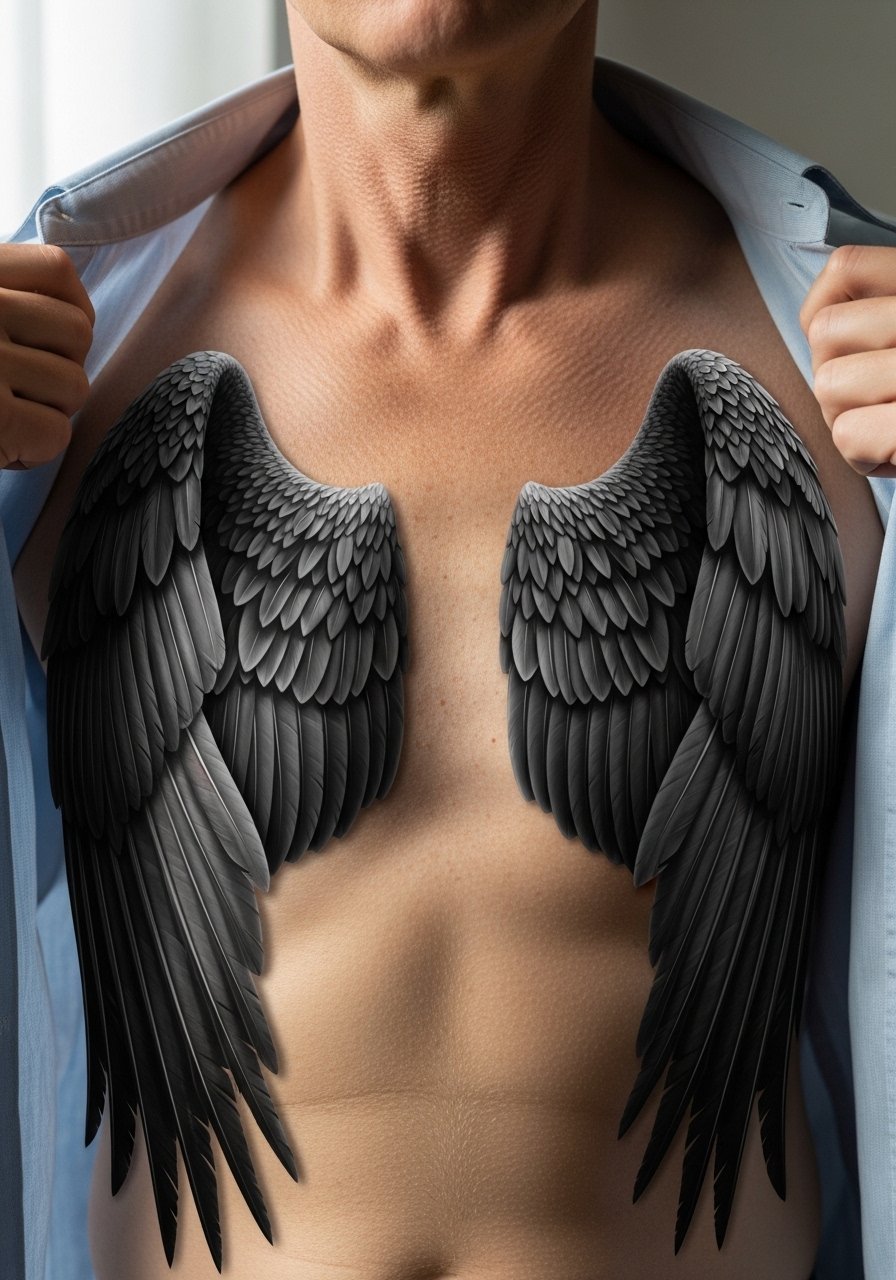
A wingspan across the chest reads as motion when the pectorals flex, but athletes should consider pectoral flex distortion. If you lift heavy, tell the artist you want feathers aligned with natural muscle flow so the design bends with movement. A common error is forcing symmetrical mirror images without accounting for left-right muscle differences. Sessions are long and require multiple stretches, so wear a fitted white t-shirt slim you can remove easily. Expect saturation maintenance visits after two to three years to keep feather detail dark and crisp.
Studio Day Picks
The core chest pieces above demand different prep than small forearm or hand work, so these picks smooth session day and the first healed month.
-
Ink-Ich ban balm. Lightweight, non-greasy balm that users report reduces chest itch without heavy shine, helpful for hairy pecs where gels can trap sweat.
-
Australian tea tree ink balm. Breathable salve for areas that rub against clothing during healing, good for lower-chest wraps and hip transitions.
-
Bad Ink Salve. Reported to help scab-free recovery on high-friction zones, useful after large pectoral shading sessions.
-
Hatenashi Aftercare. Subtle finish balm for preserving gray transitions in photoreal and portrait pieces.
-
Hustle Butter. Thinner than heavy ointments so it breathes better on sweaty chests during summer healing.
7. Abstract Geometric Chest Plate
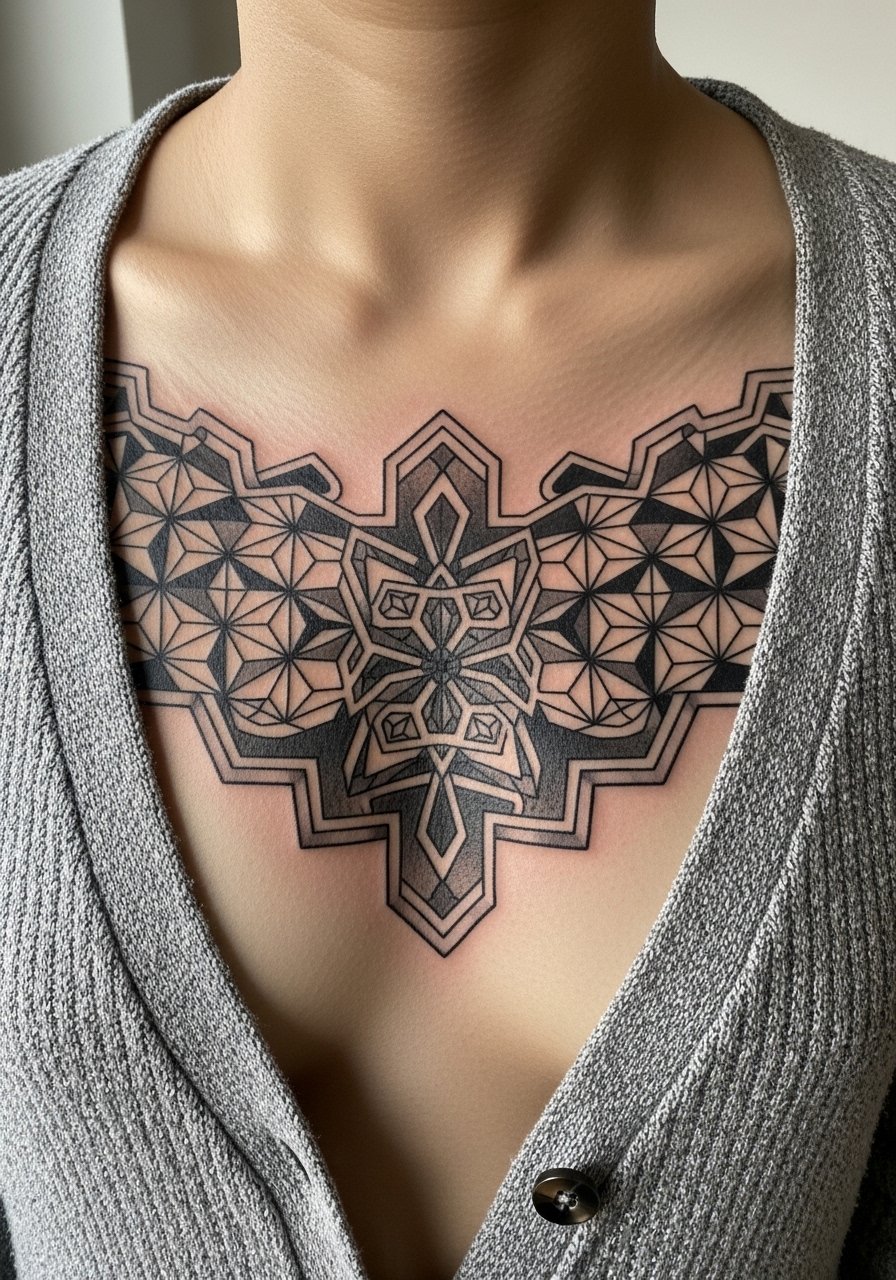
Geometric plates solve the visibility problem in professional settings because they conform to the shirt line. The main mistake is packing too many thin lines into a dense area. Ask for larger modules and blocky solid fills that age into readable shapes. For the session, a front-open cardigan or robe makes long shading sessions easier. Try pairing the finished plate with fitted white t-shirt slim to let the geometry show without competing patterns. Expect the black fills to need touch-ups sooner if you sweat a lot during workouts.
8. Lady Head with Floral Crown Upper Chest
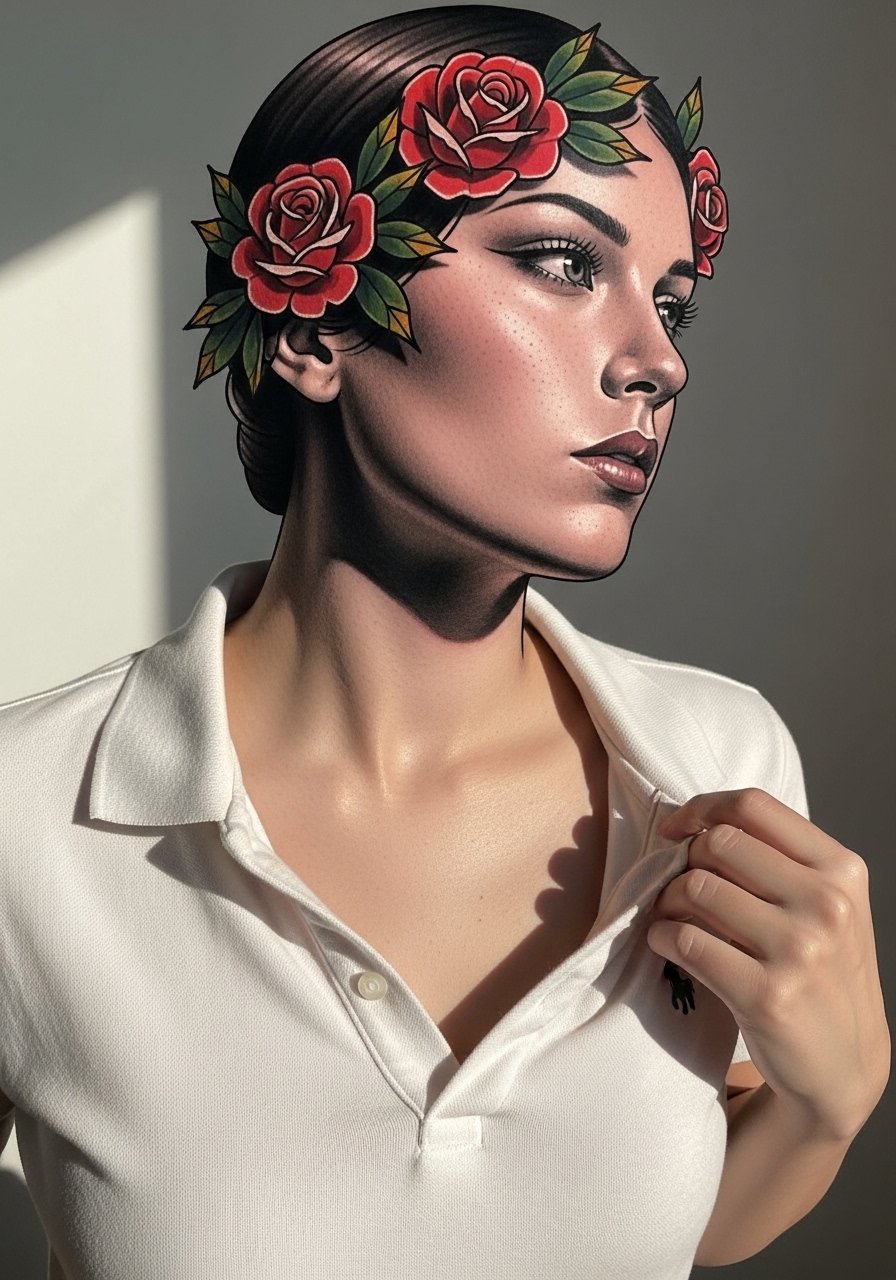
This neo-traditional take contrasts a soft feminine portrait with masculine anatomy for a striking upper-chest piece. The usual error is placing it too close to the collarbone where bone proximity makes shading spotty. Ask the artist to sit the portrait slightly below the collarbone so the shading can sit in softer tissue. For show-off outfits pair it with a men's v-neck polo navy so the neckline frames the upper-chest portrait. Sessions are moderate in length and you may want a short break after detailed facial passes.
9. Compass Rose with Nautical Elements Sternum
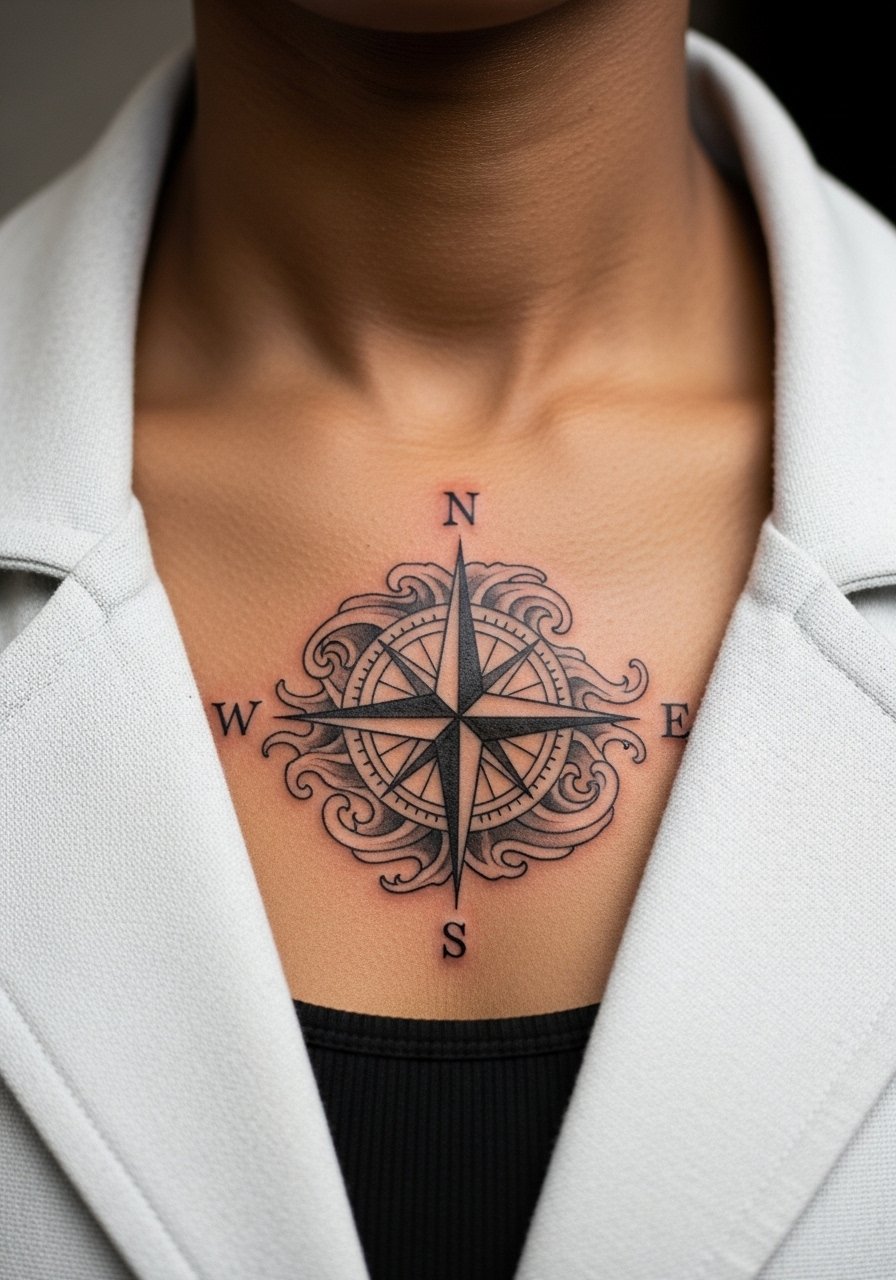
Simple centered compass roses are compact and tell a story without sprawling across pecs. They are forgiving in small sizes if you keep lineweight slightly stronger than a single-needle script. Sternum placement increases pain and blowout risk if needles sit too shallow. A frequent tip is to ask for a small border of negative space to protect the compass points from merging. For session wear go with a loose tank top cotton that allows easy access and avoids chafing. Expect clear, readable results after the first healing window.
10. Dragon Coiled Across Chest
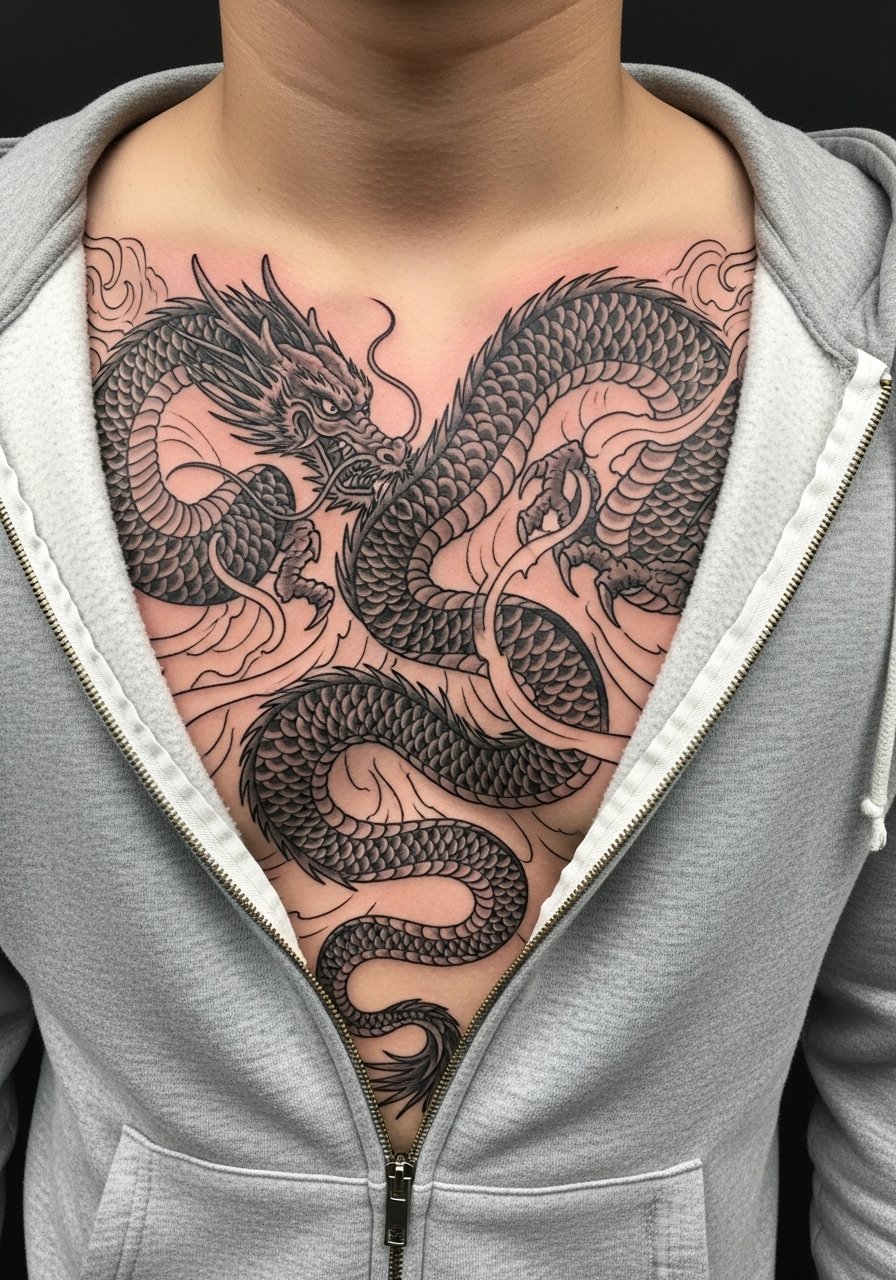
A long coiled dragon uses body curves to sell motion. The biggest mistake is forcing the coil to be perfectly symmetrical. Natural asymmetry follows muscle lines and ends up looking more dynamic. For athletes consider how the design will flex across the pecs and ask the artist to map out the coil while you tense and relax the muscle. Session wear like a men's half zip hoodie black keeps you warm between passes and is easy to remove for long sessions. Expect multiple sessions with scale detailing and at least one touch-up for the high-contrast areas.
11. Quote Script in Ribbons over Heart
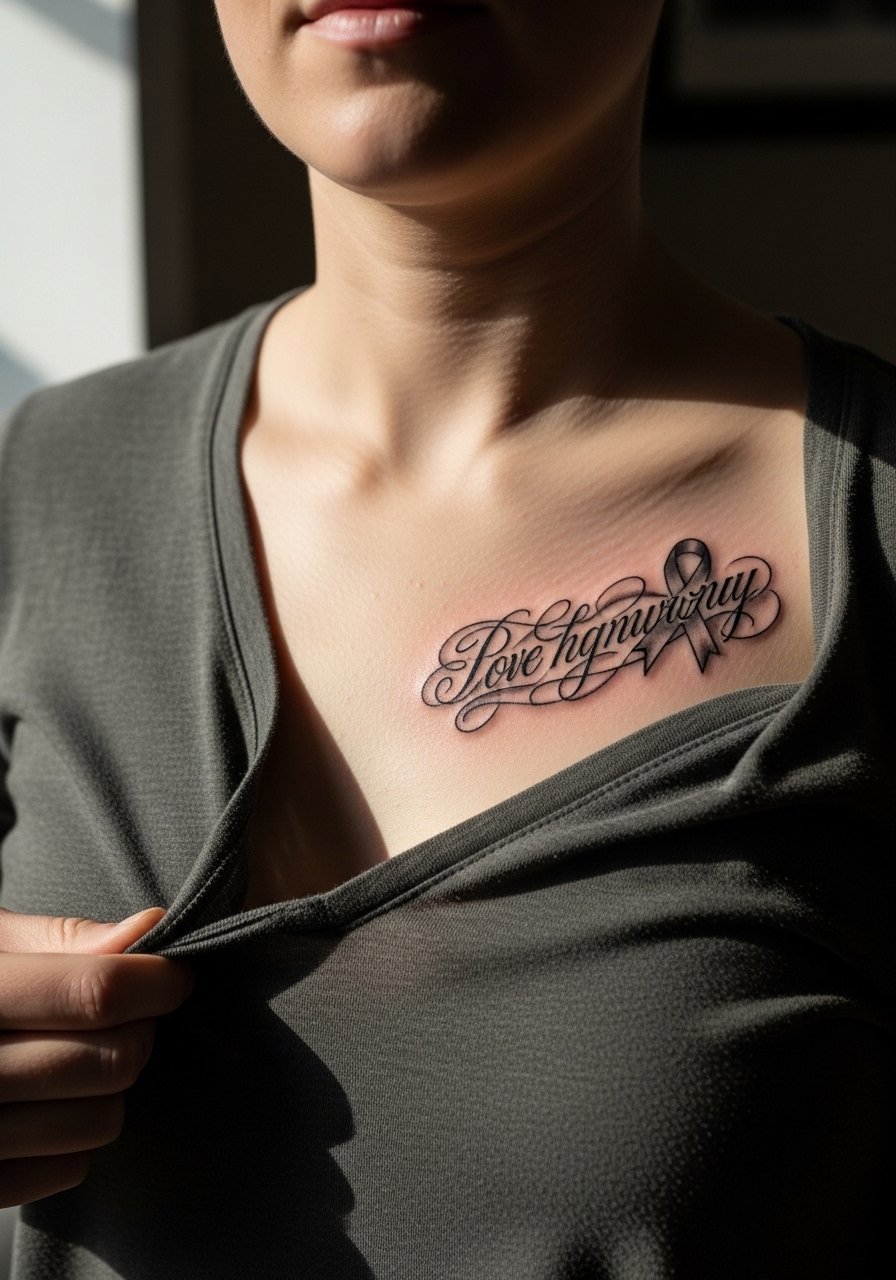
Small script banners solve the text problem when you want a date or short line. The mistake is choosing ornate lettering too small for the body. Pick a font with open counters and ask for slightly thicker strokes so the letters do not collapse. For the session wear a loose button down shirt you can pull aside rather than tugging over the head. Expect this to be a short single session and plan a brief check-in at three months to make sure the edges settled cleanly.
12. Wolf Head with Tribal Elements Lower Chest
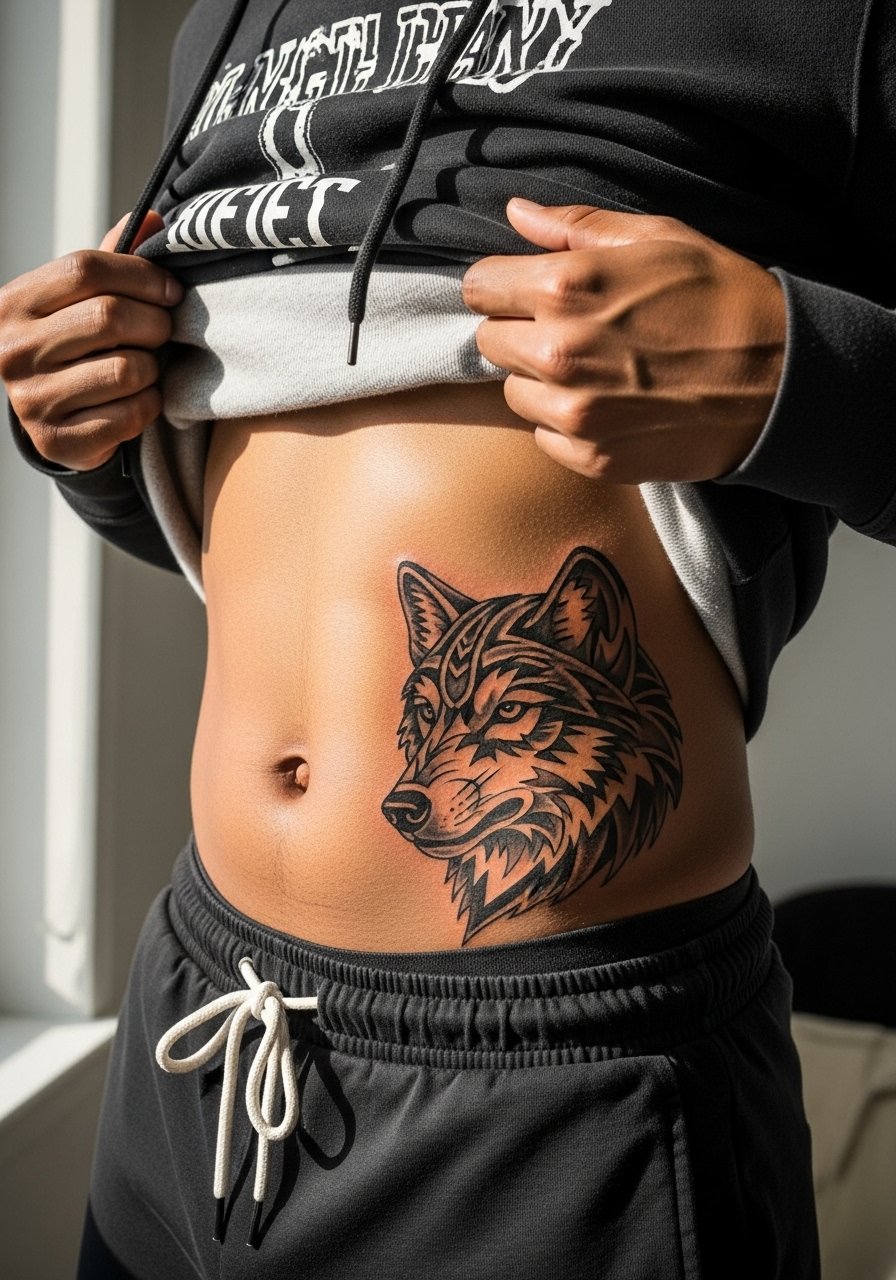
Lower chest placements cross into the abdominal border so friction from waistbands matters during healing. Bold black outlines with moderate gray fills keep the wolf readable as hair regrows. A common error is using too many tiny inner tribal lines that disappear with movement. For session comfort wear drawstring sweatshorts so you can adjust the waistband without pressure on the fresh work. Expect touch-ups on the bold areas after heavy workouts resume.
13. Ornate Cross with Thorns Full Chest
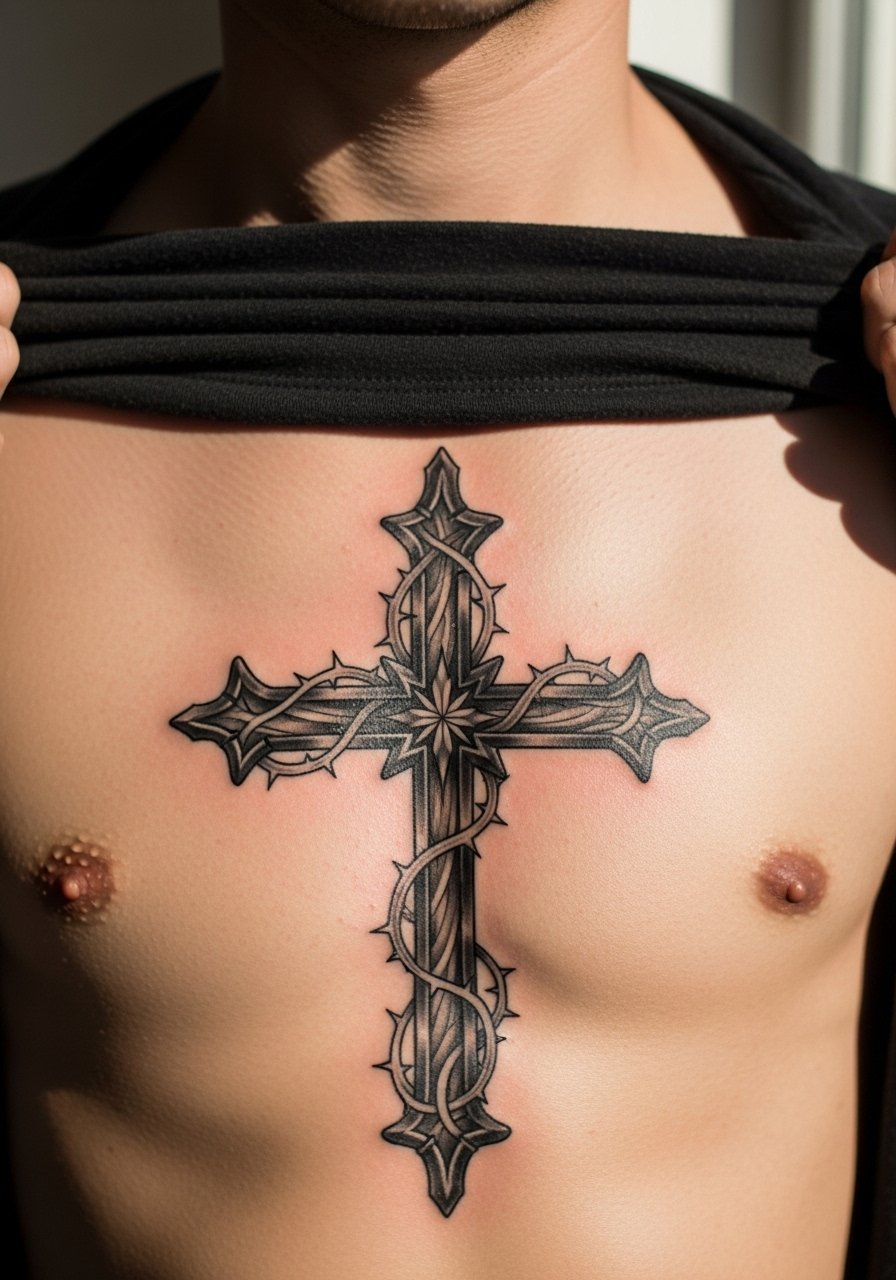
Religious iconography needs visual breathing room so the thorn elements do not read as noise over time. The frequent mistake is stacking too many thin filigree details near the sternum where skin tension is high. Ask the artist to prioritize the cross silhouette and keep vine details slightly looser. This design can be heavier on the pain scale when the needle crosses the centerline. For a framed look wear an open collar shirt and a slim silver chain necklace that sits above the top of the cross. Expect an inaugural touch-up to deepen the darkest shadows.
14. Chest Tattoo Wrapping to Collarbone for Shirt-Peek Visibility
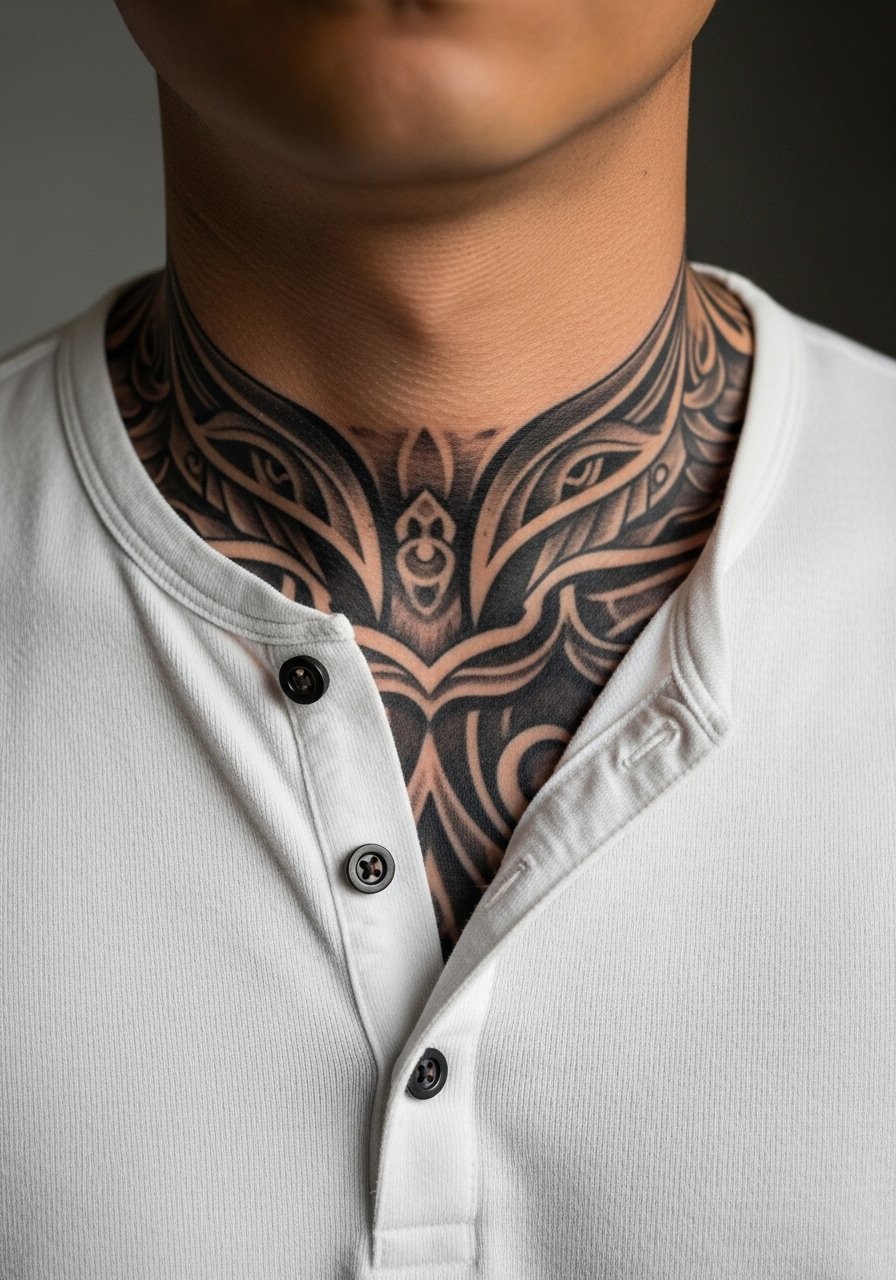
This is one of the under-covered ideas people ask for because it balances concealability with intentional reveals. The challenge is designing the wrap so it looks deliberate when partially shown. Tell your artist which shirts you wear most so they can map the peek line. A mistake is assuming a single shirt type will always frame the piece. For showing it off use an unbuttoned henley shirt black that centers the reveal. Expect subtle fading where the edge rubs against collars and plan an annual check.
15. Black and Gray on Hairy Chests: Pre-Shave Protocols
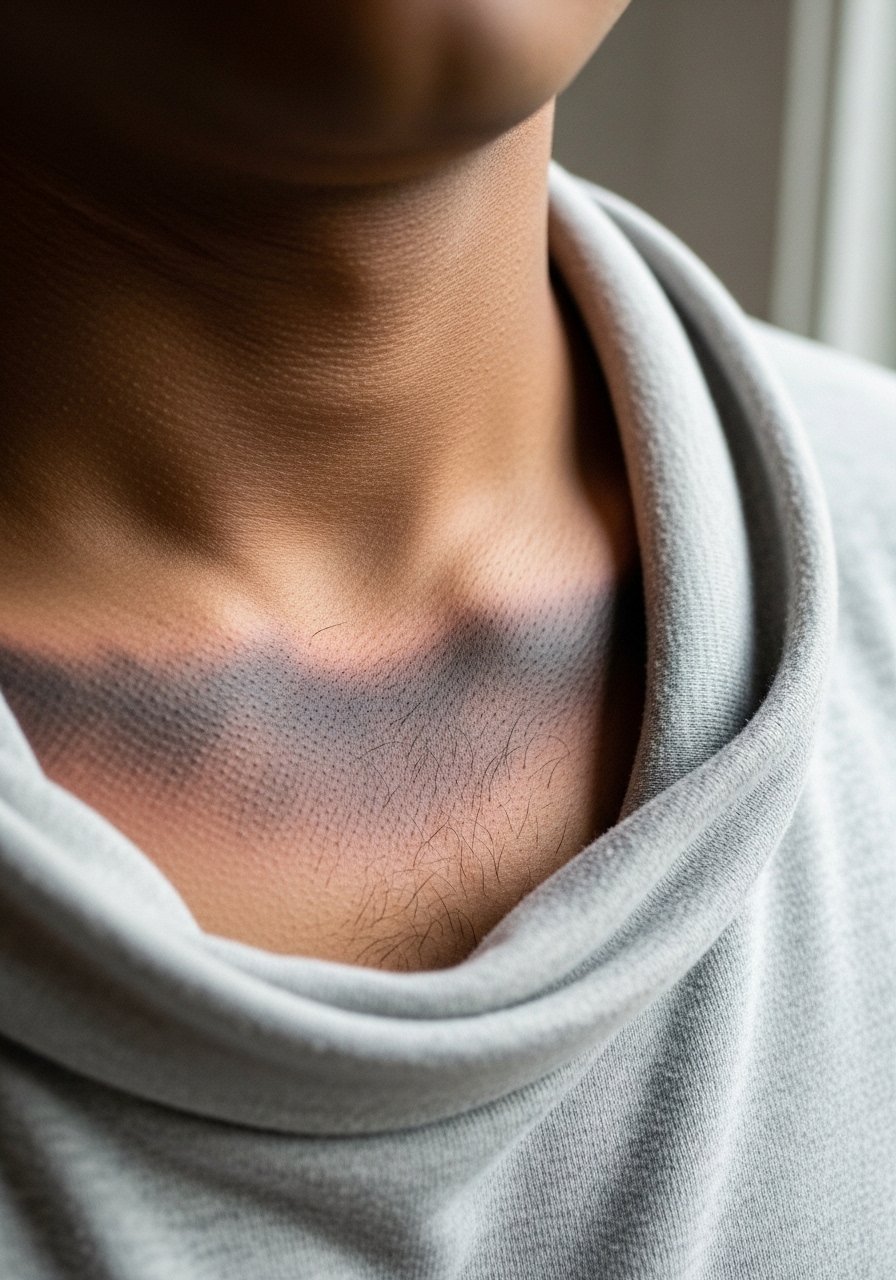
This idea focuses on how hair density affects contrast and photography. The practical mistake is skipping pre-shave and letting a heavy stubble trap ink-laden scabs. Talk with your artist about pre-shave timing and whether you should clip daily versus full shave the morning of the session. For session wear choose a loose tank top cotton that avoids rubbing the freshly shaved area. Darker tones can benefit from stronger contrast choices in the shading when hair regrowth is expected.
16. Pectoral Flex-Aware Geometric Plate
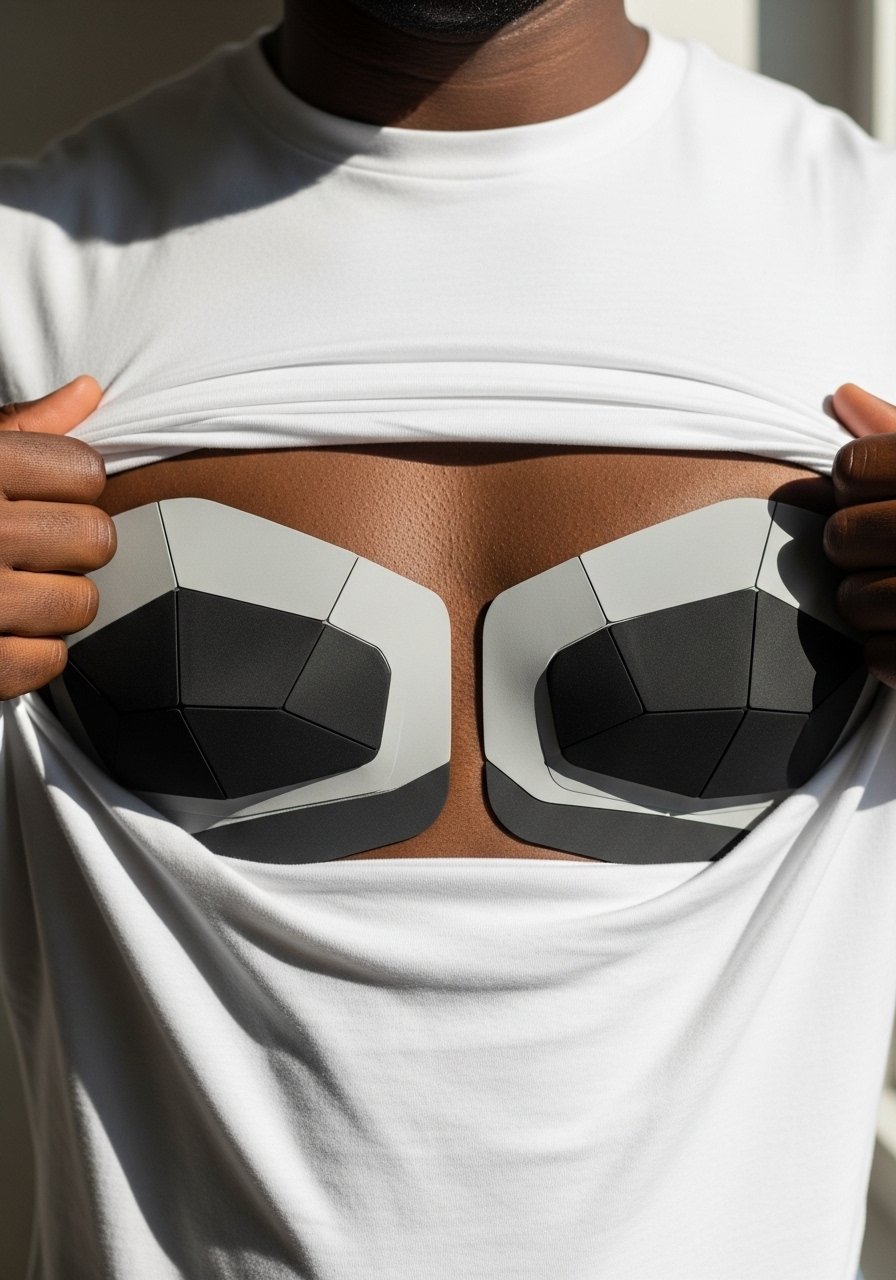
Athletic bodies pose a unique design question. When you flex the pectoral the geometry should read as intended rather than warp into odd angles. The common failure is ignoring how the design sits during muscle contraction. Ask for mockups while you flex and relax so the artist can adjust node placement. For sessions wear a fitted white t-shirt slim you can remove without tugging. Expect that high-motion edges may need a touch-up sooner than static centers.
17. Sternum Centered Heartbeat Line for Memorials
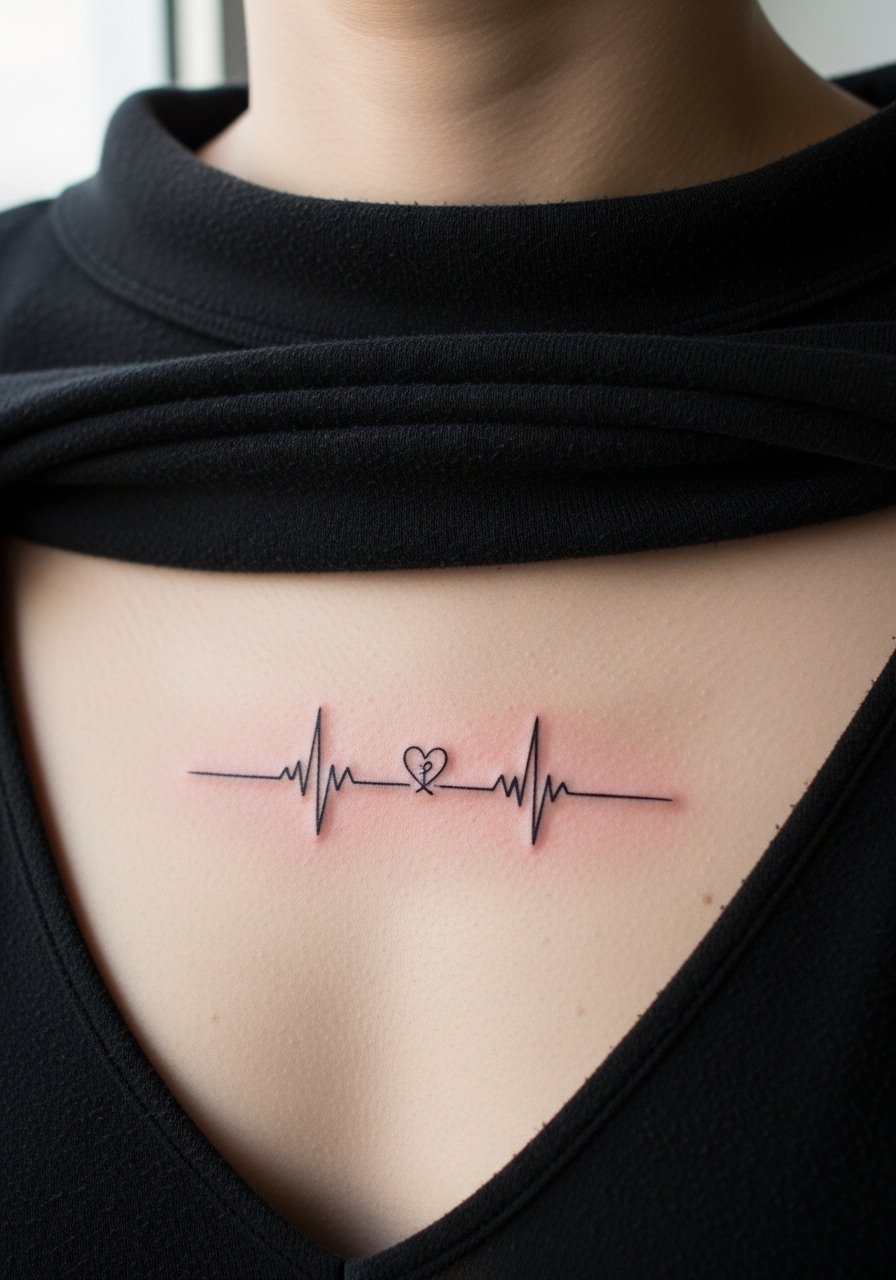
A small heartbeat or waveform keeps memorial symbolism simple and readable. The biggest mistake is making the line too hairline thin. Ask for a modest increase in lineweight and a tiny bold point at the center to anchor the motif. Sternum placement means higher pain and more sensitivity to touch-ups. For session comfort wear a loose tank top cotton so the artist can access the area without pressure. Plan a short check at three months to confirm the waveform remained crisp.
Frequently Asked Questions
Q: How should I talk to an artist about contrast if I have dark skin?
A: Say you want higher contrast and ask to see healed work on similar skin tones. Mention areas where photos tend to wash out so the artist can adjust saturation and gray ramps. If you want a wardrobe test, bring a shirt similar to what you normally wear so the artist sees how the piece will photograph under everyday lighting.
Q: Will a chest mandala stretch if I gain muscle or weight?
A: Yes, dense mandalas on the pecs can warp with large size changes. Ask the artist for mockups that simulate a flexed and relaxed pose. Downsizing the central density and leaving peripheral breathing room helps the pattern age more predictably.
Q: Is Saniderm or dry healing better for chest tattoos?
A: Artists and healers are split. One group says Saniderm protects heavy shading and cuts down friction scabbing. The other group warns that trapped sweat on the chest can cause odd peeling. Talk with your artist, follow their preferred protocol, and prepare to adapt if your body reacts strongly.
Q: How painful is sternum work compared with the upper chest?
A: Sternum hits a higher pain level because there is less soft tissue over bone. Upper chest and collarbone zones feel less sharp. Plan shorter passes, bring snacks and water, and expect breaks between sessions for deeper shading. Breath control helps more than numbing in many cases.
Q: How often will black and gray chest pieces need touch-ups?
A: Expect the first touch-up within one to three years depending on sun exposure, sweat, and body changes. Fine line work generally needs maintenance sooner than saturated blackwork. Keeping the area out of direct sun and scheduling a quick check the first year helps you track when a touch-up is wise.