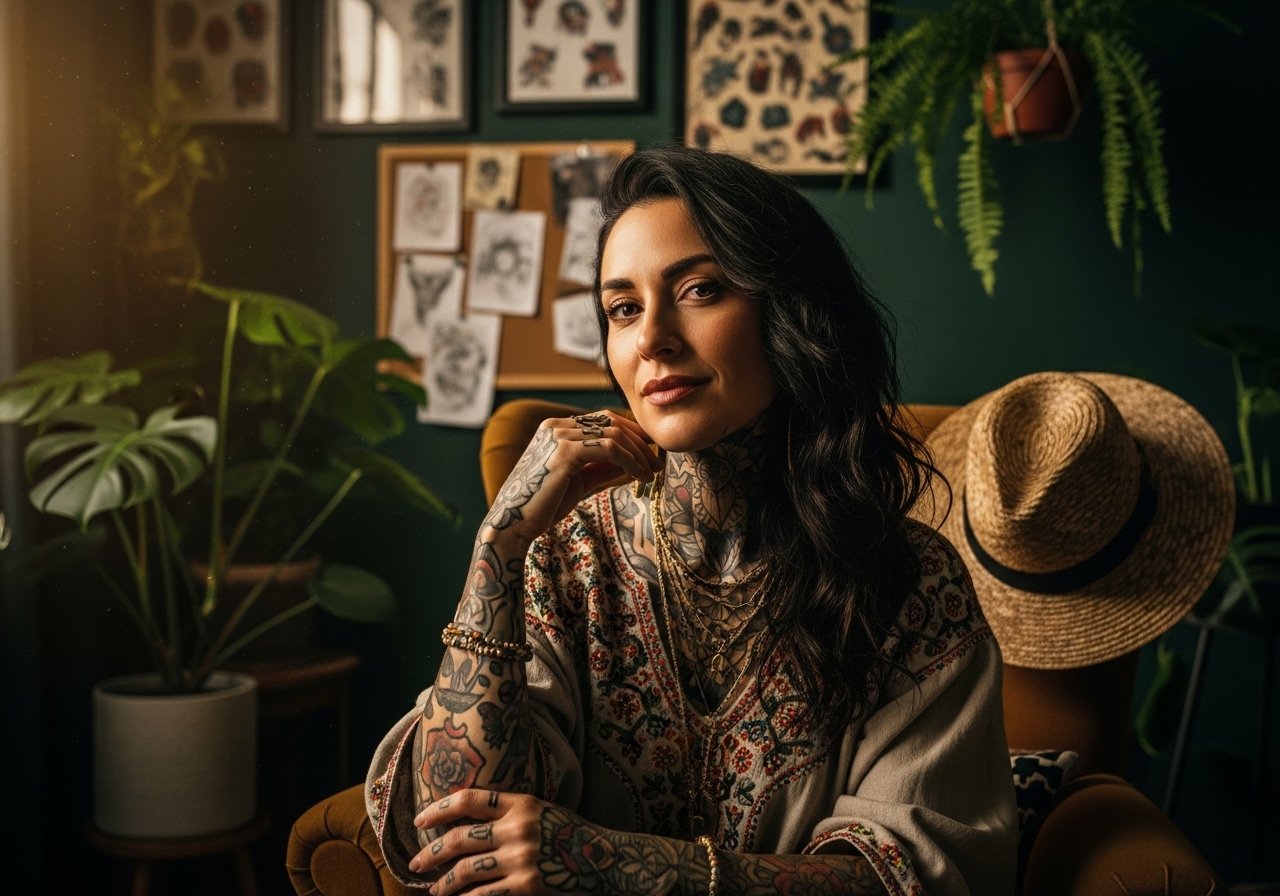
Fine line is everywhere on boards right now, but the chest is its own animal. Some trends look incredible fresh and then blur with muscle movement. Sternum work can hurt more than you expect, and finding an artist who understands chest anatomy matters more than the design you pin. Below are 27 chest ideas with practical notes on consultation, how each one ages, and what to wear to show it off.
1. Symmetrical Wings Across Pecs
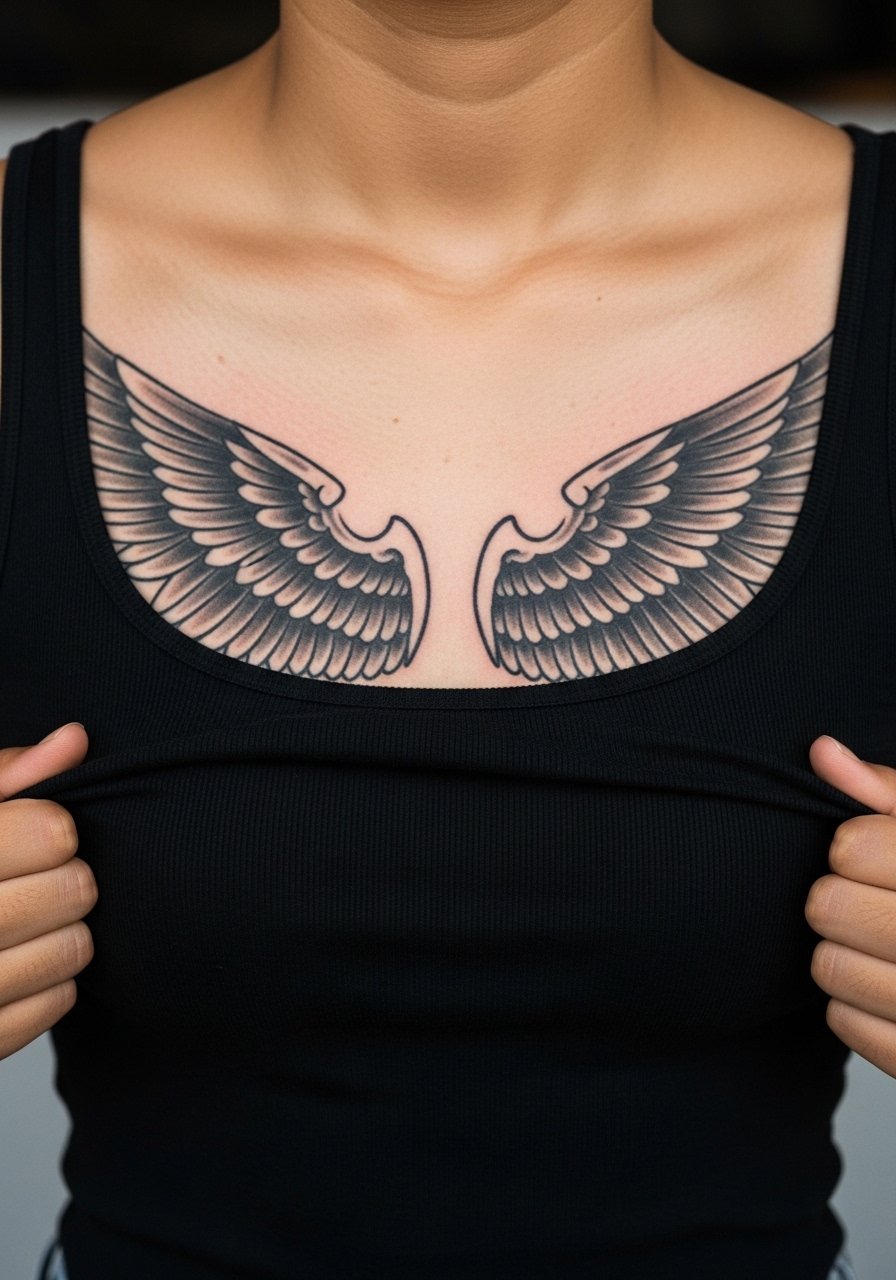
There is a reason wings keep coming up in saved folders. They read balanced across the muscular plane of the pecs and photograph well when the shirt comes off. Tell your artist you want the wing tips to curve with your clavicle, not against it. A common mistake is forcing feather detail too close to the sternum where movement makes thin lines blur. Expect two to four sessions for a full pec-span and plan touch-up talk at year two. For showing it off, a men's fitted tank top black frames the symmetry without competing.
2. Tribal Armor Wrapping Pec to Shoulder
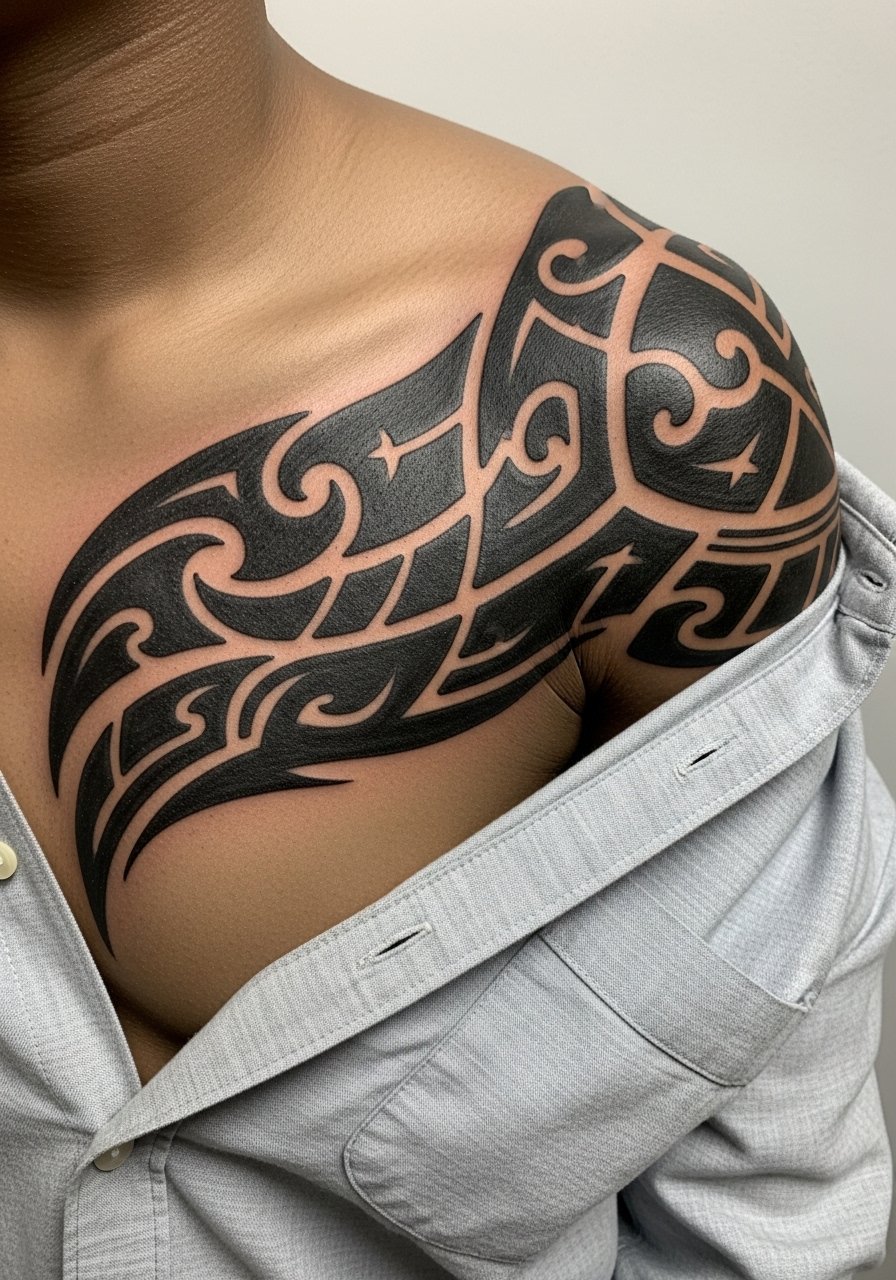
This style relies on bold fills and clean negative space. Fair warning, the wrap should follow muscle lines or it will look stiff when you move. When consulting, bring photos that show the flow you want over the deltoid and pec separation. The biggest mistake is tiny repetitive elements that get lost in dense black. For most muscular builds, a single longer session works. It ages well on darker skin because saturation stays visible, but expect solid touch-ups after heavy sun exposure. For studio day wear, a loose button-down shirt makes access easy.
3. Cross Over Heart, Small Sternum Piece
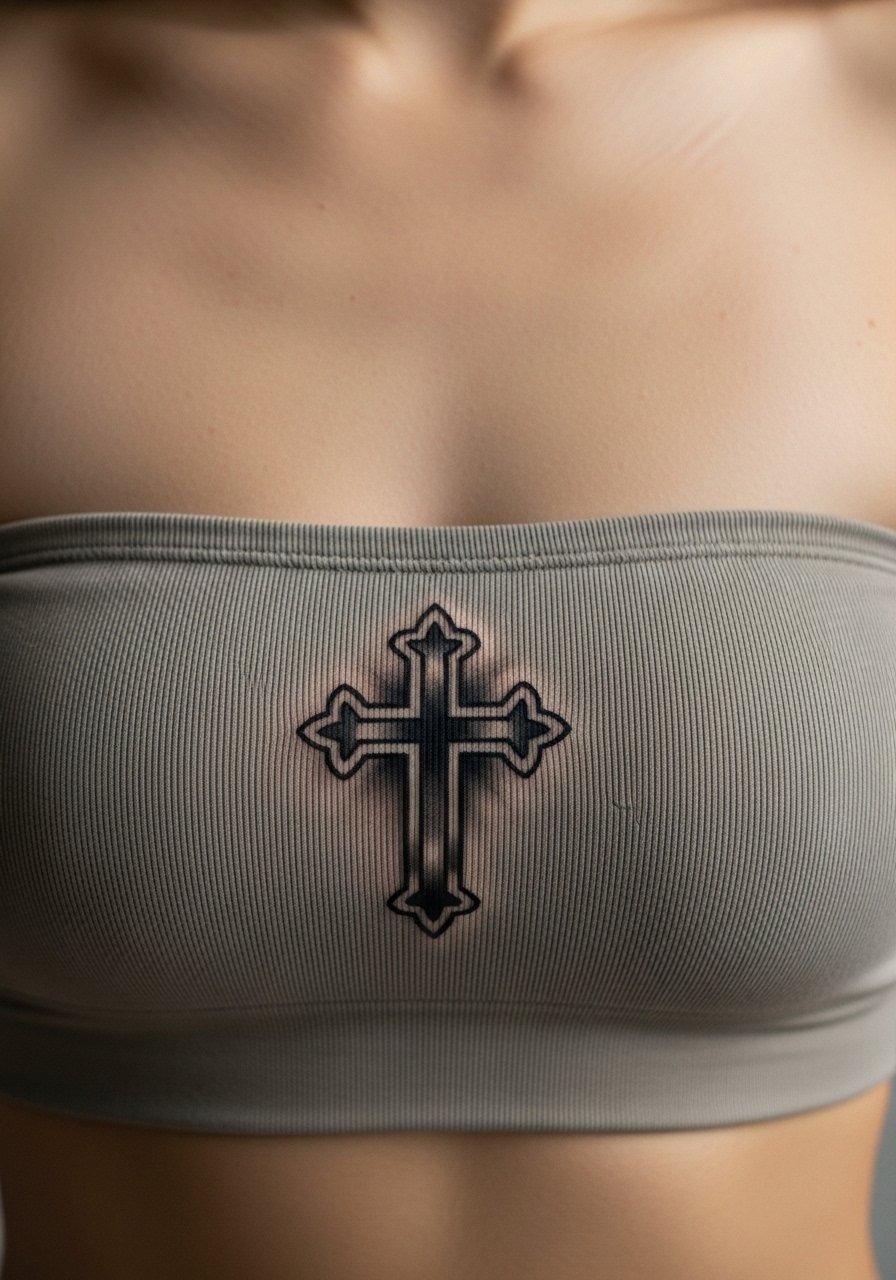
Sternum pieces hit harder than you expect. Pain is usually higher on bone and low on fatty tissue. If you want a small cross, ask for slightly thicker linework than a neck script so the ink holds over time. A mistake is asking for ultra-fine detail in that zone. Book one or two short sessions and discuss numbing options if you are anxious. For healing, the fabric edge can rub, so wear a loose zip-up robe home from the shop. Keep in mind some artists divide on whether to use Saniderm or dry healing for sternum work. One camp likes the protective film for sweat control, the other prefers natural scab formation.
4. Full Symmetrical Mechanical Armor Chest Plate
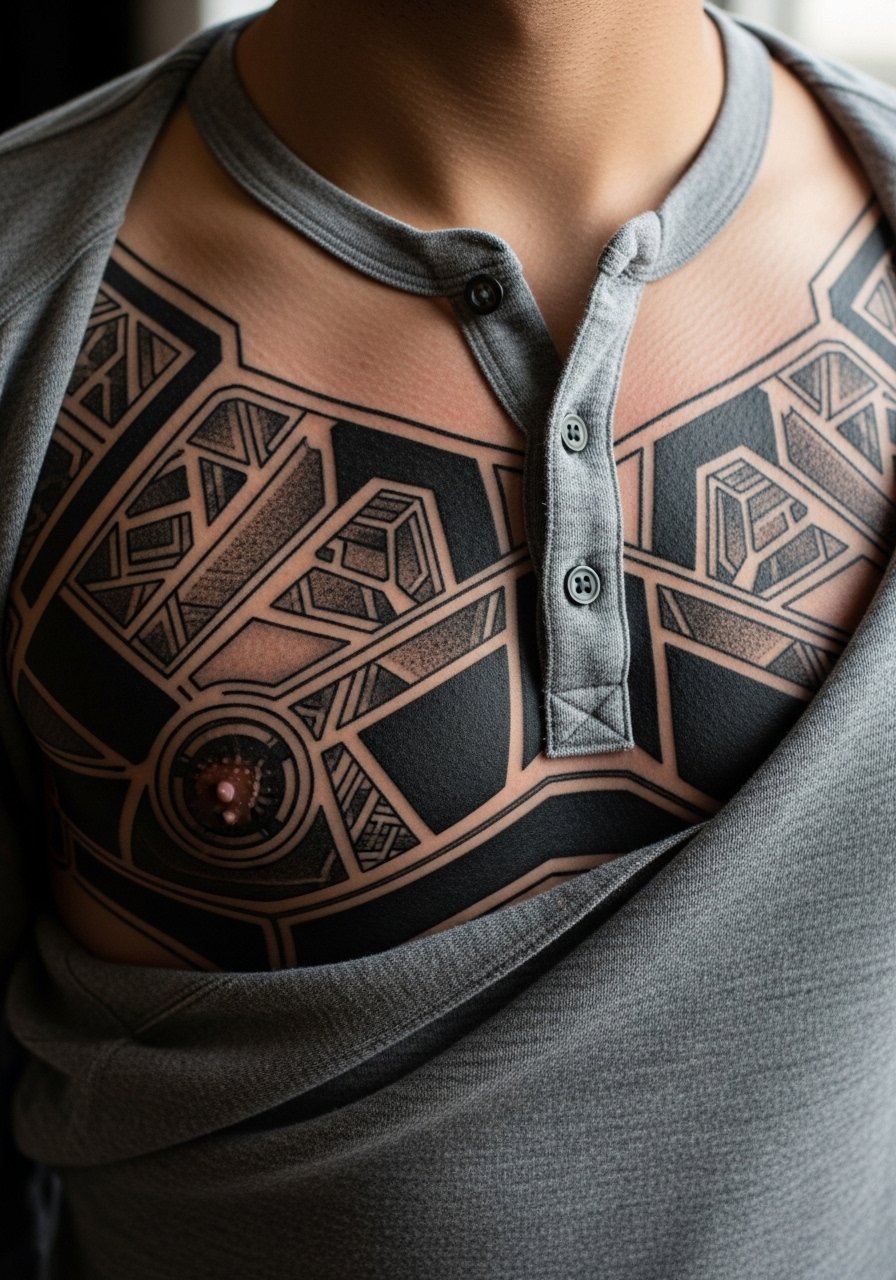
This is for someone ready to commit to a multi-session project. The key consultation note is how the panels will extend into the arm if you plan a sleeve later. A common error is overly tight geometry without breathing space. That causes lines to merge at year three. Sessions are long and often require four or more appointments. Expect heavier saturation to age into a solid black look rather than crisp micro detail. For post-session comfort, bring a soft, open-front henley so the chest can breathe without shifting a tight collar.
5. Tiger Head Centered on Chest
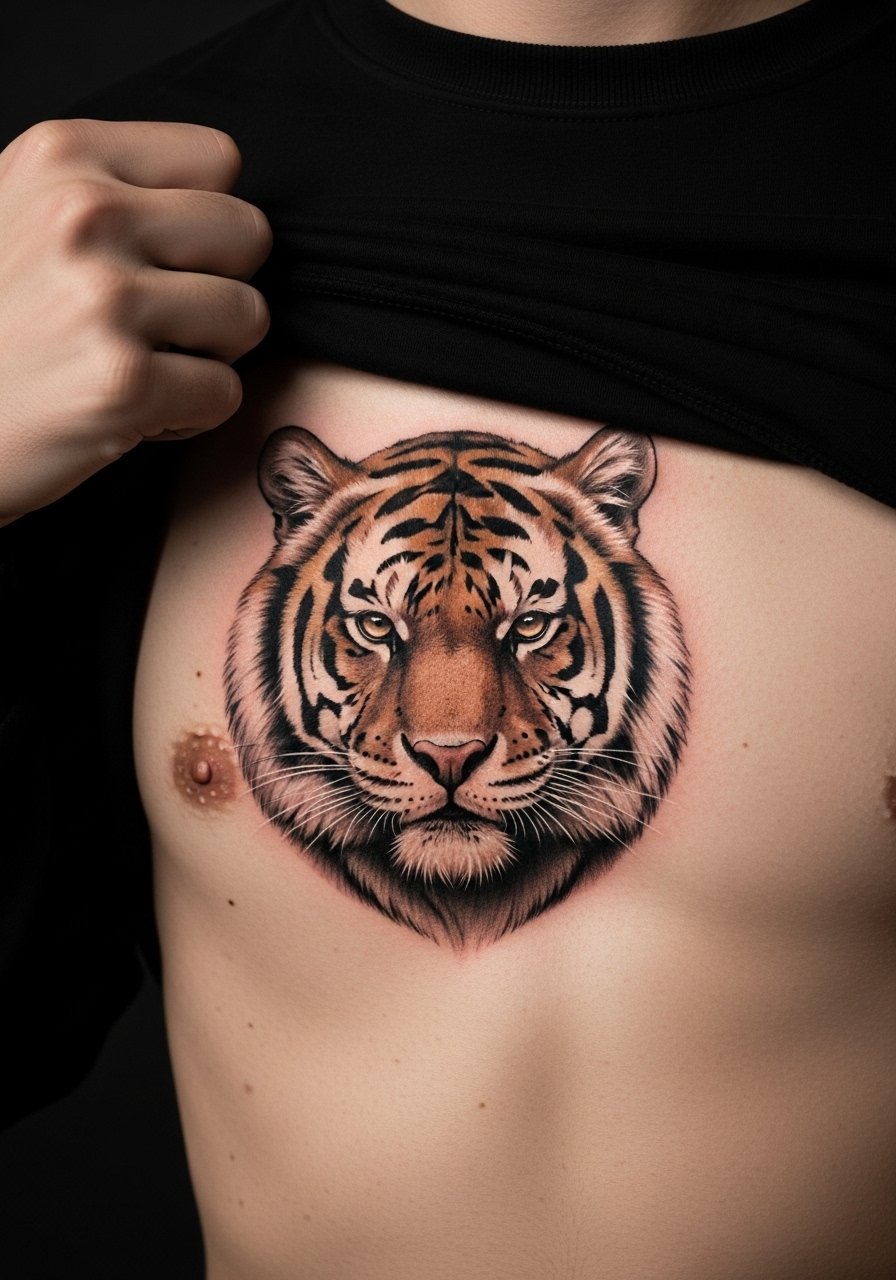
Realism on the sternum can look dramatic because the face sits right above the heart line. Tell your artist you want clear contrast between fur texture and shadow planes so the face keeps definition as you age and as the skin moves. A frequent mistake is scaling the portrait too small for the sternum. That loses facial detail after a few years. Two to three sessions are common. Pain varies from moderate to high on the bone areas. For wearing after the session, a loose button shirt helps avoid fabric pressure across fresh shading.
6. Geometric Pattern Symmetry Chest Plate
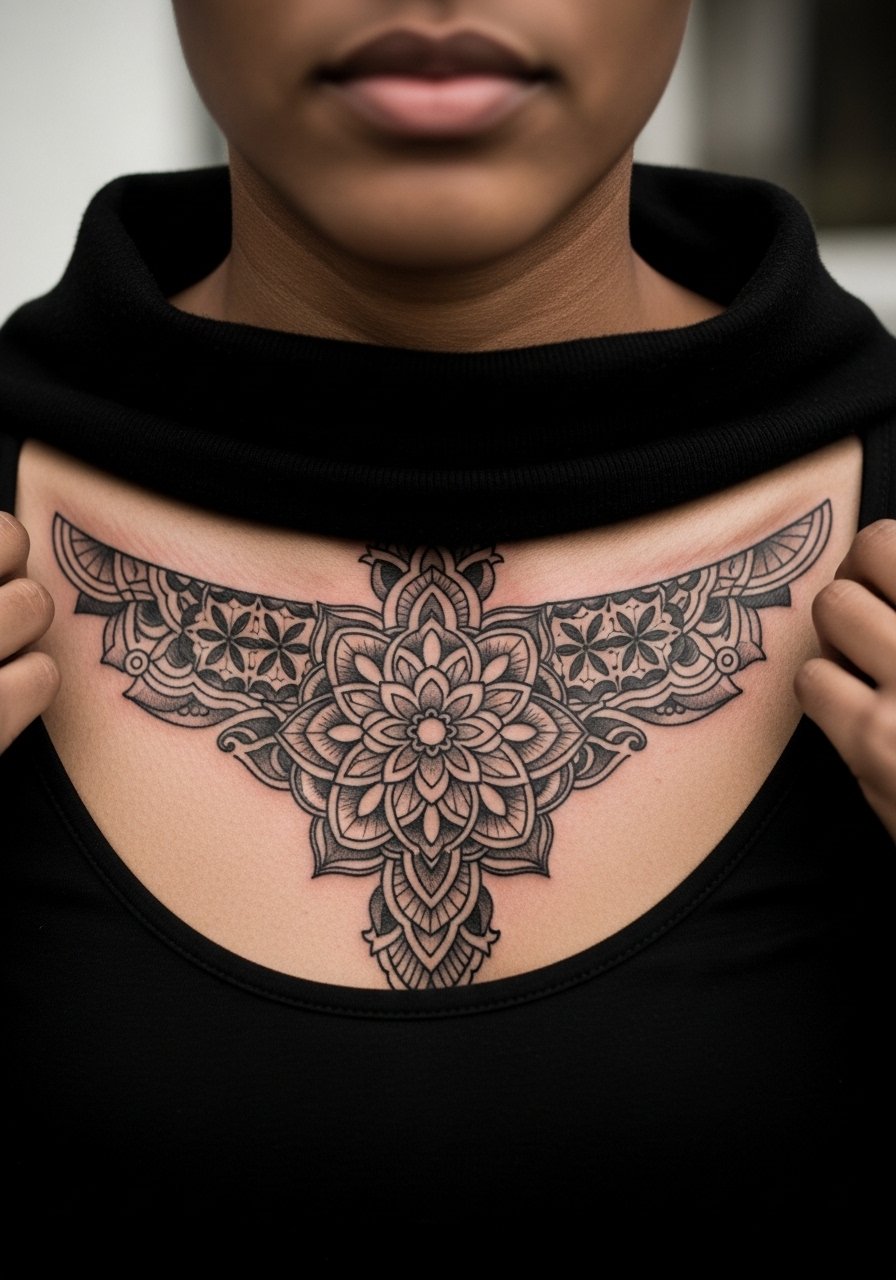
Geometric mandalas demand spacing discipline. The mistake I see most is cramming too many lines into a small field. Ask for more negative space than you think you need. The artist should sketch the pattern on the chest so you can move and check how it flows with muscle flex. These pieces usually take two sessions and need careful touch-up discussion for tiny linework. For photos, a slightly open collared shirt or crewneck sweatshirt with the collar pulled aside flatly frames the geometry.
Studio Day Picks
The chest and sternum pieces above demand different prep than small forearm work, and these items smooth out the session and the first week.
-
Stencil transfer paper kit. Lets you preview symmetry and line placement on the chest before the first pass, helpful for wings and geometric plates.
-
Topical numbing cream. Applied as your artist recommends it eases sternum sensitivity for cross and tiger pieces.
-
Thin protective film roll. Useful for keeping chest areas clean when shirts rub during the first days of healing.
-
Fragrance-free body wash. Gentle cleansing reduces irritation for dense blackwork and realism shading.
-
Aquaphor healing ointment. Thin layers protect fine line and shaded areas while the initial scab phase settles.
7. Patchwork American Traditional Pieces
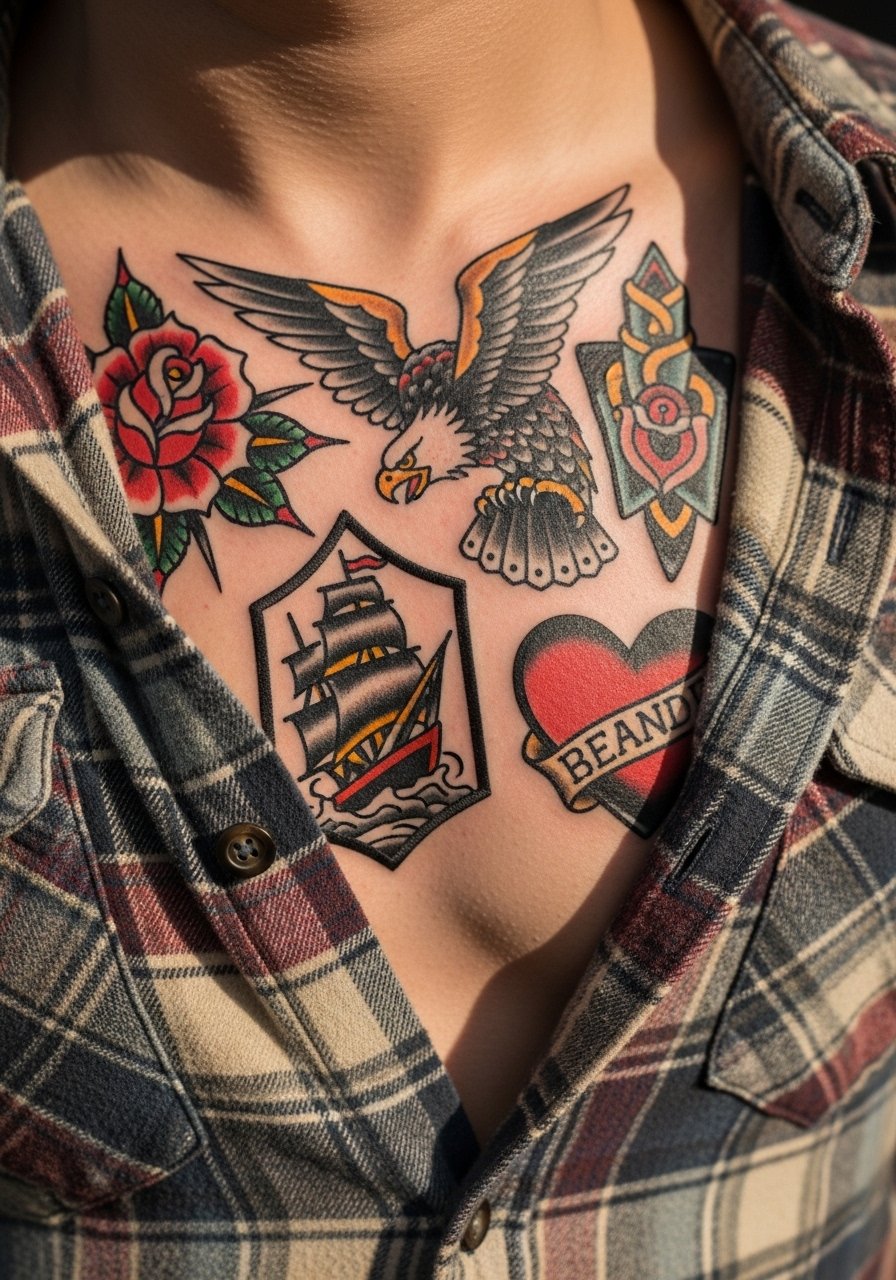
Patchwork is perfect if you want to build over years rather than committing to one plate. The planning tip is to ask your artist for a loose map so future pieces have room. A common issue is overlapping bold outlines that compete rather than complement. One per-session approach keeps cost manageable and lets you test color aging. Patch pieces age predictably because thick outlines hold. For showing them, open flannels or a men's open flannel shirt layer well and give each patch breathing room.
8. Sternum-Centered Religious Symbol, Minimal
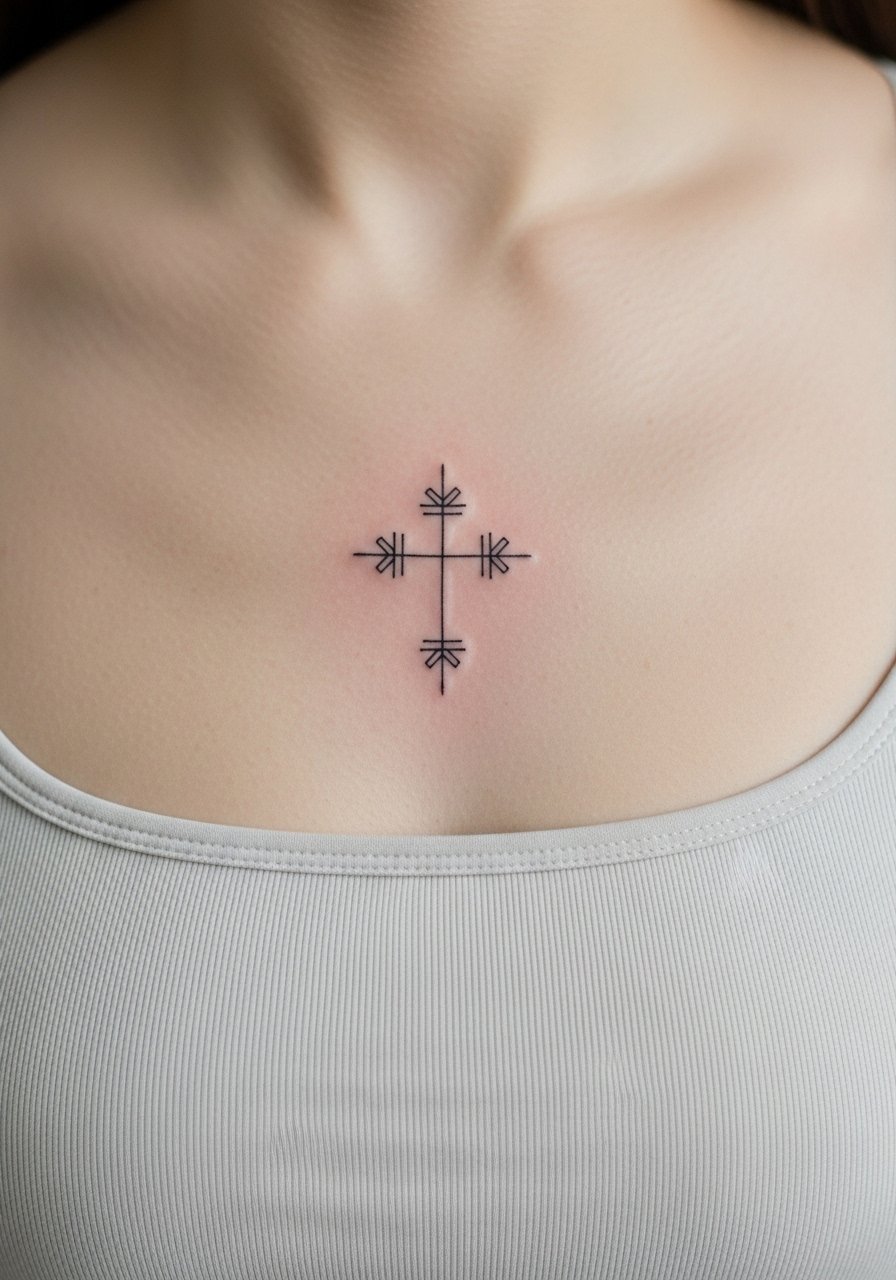
Minimal icons over the sternum can be discreet and intentional, but they need a different treatment than neck scripts. Ask for slightly bolder single lines than you might request for a finger script. The big mistake is expecting micro detail in the sternum zone to stay sharp over time. One session is often enough for a small design. Pain and friction from clothing make the early days tricky. For the appointment, wear a front-open shirt so the artist can work without you being fully exposed.
9. Mirrored Mythological Symbols Across Pecs
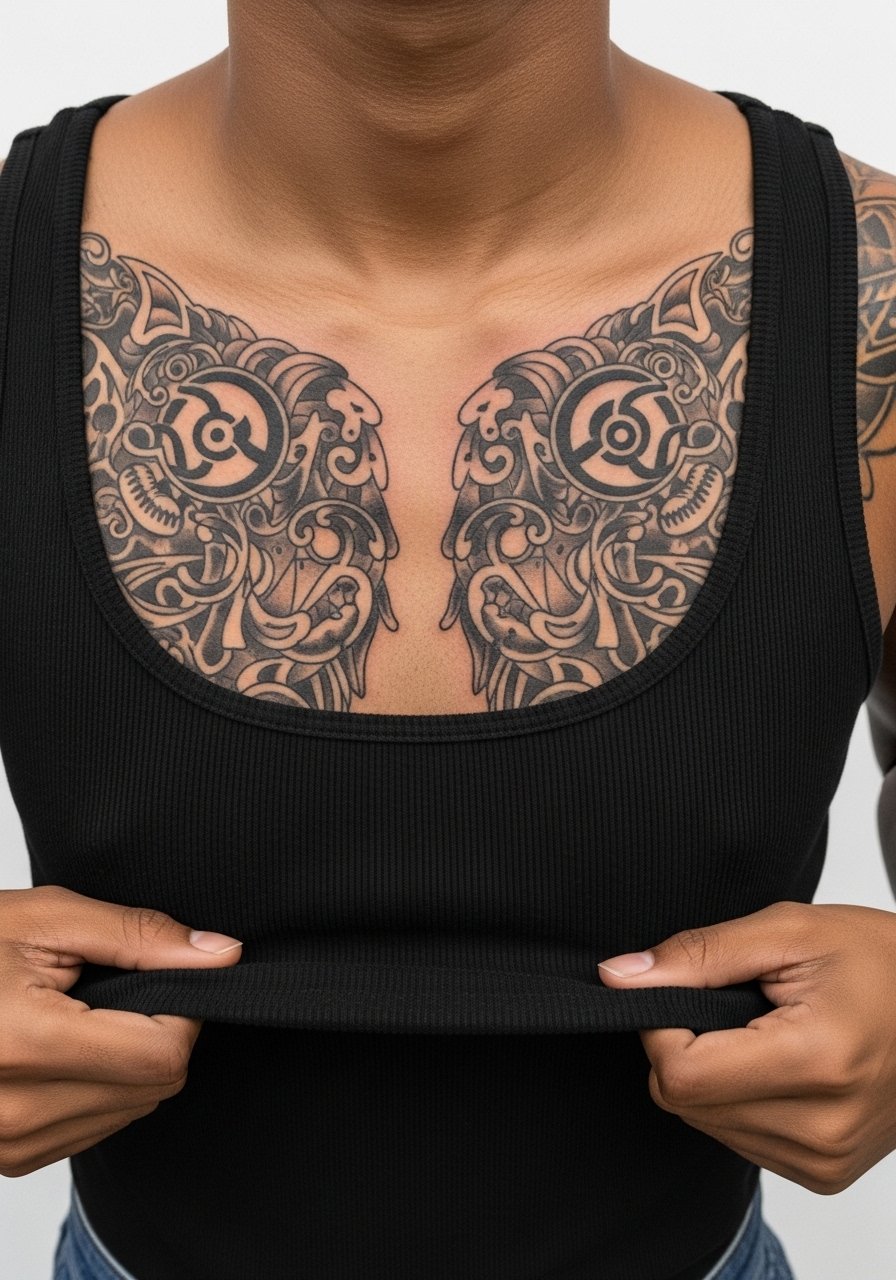
Mirrored myth designs need a precise centerline. In consults, have reference images that show bilateral balance. Artists split on fine detail at the center where motion is highest. One camp prefers deeper line weight, the other uses more negative space to avoid merging. Name the symmetry you want and ask to see a mock stencil before ink. Plan three or more sessions for complex myths with shading. For showing off, a fitted tank emphasizes the bilateral flow and keeps focus on the art.
10. Eagle Across Upper Chest
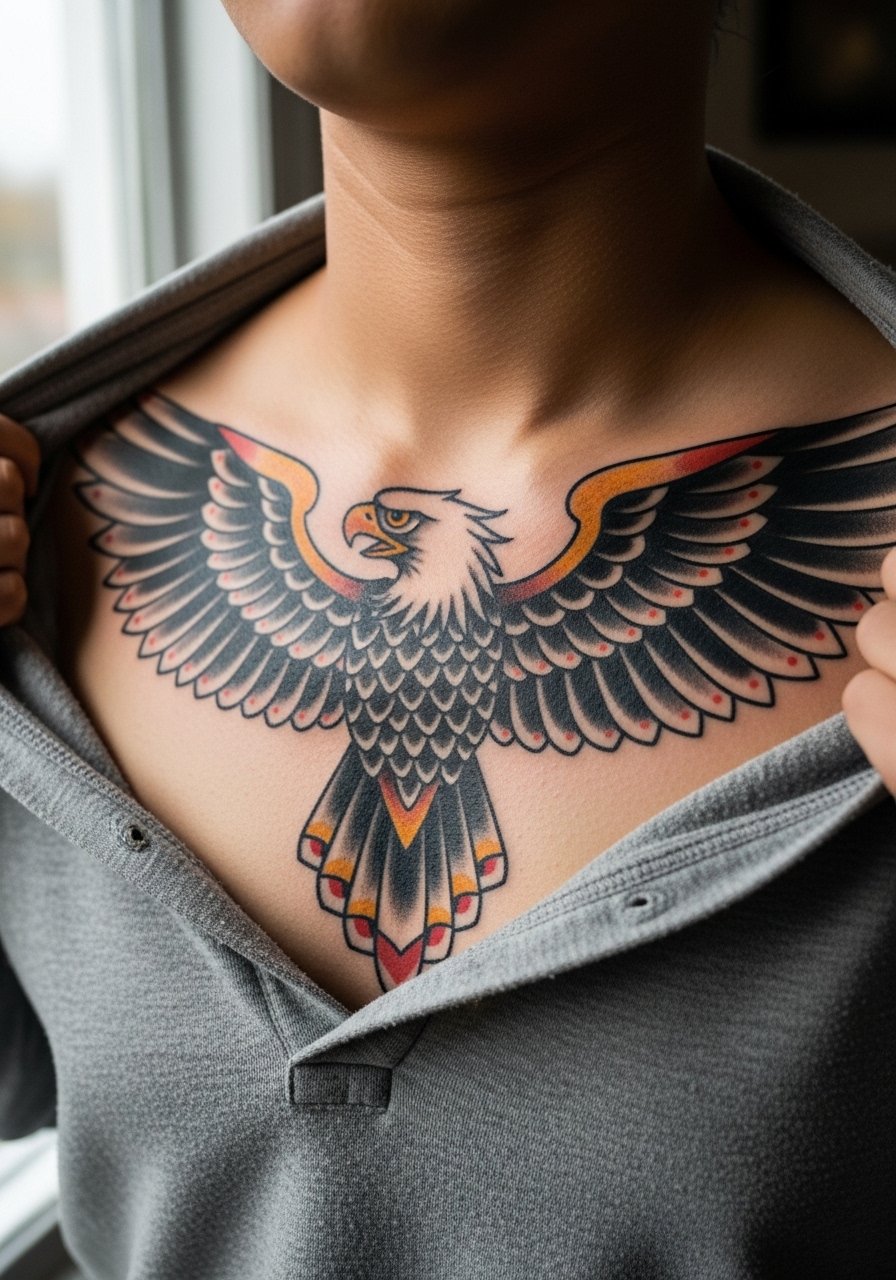
Large bird work benefits from collarbone anchoring. Tell the artist whether you want wing tips to tuck under the clavicle or peak above it. Mistakes include feather detail placed too thinly near the shoulder where it will blur. Three sessions commonly cover linework, color, and saturating passes. Color wings need UV protection to stay vibrant. When you plan photos, a slight V-neck tee in navy or white helps the wings pop without cramming the chest.
11. Custom Life Experience Mandala Plate
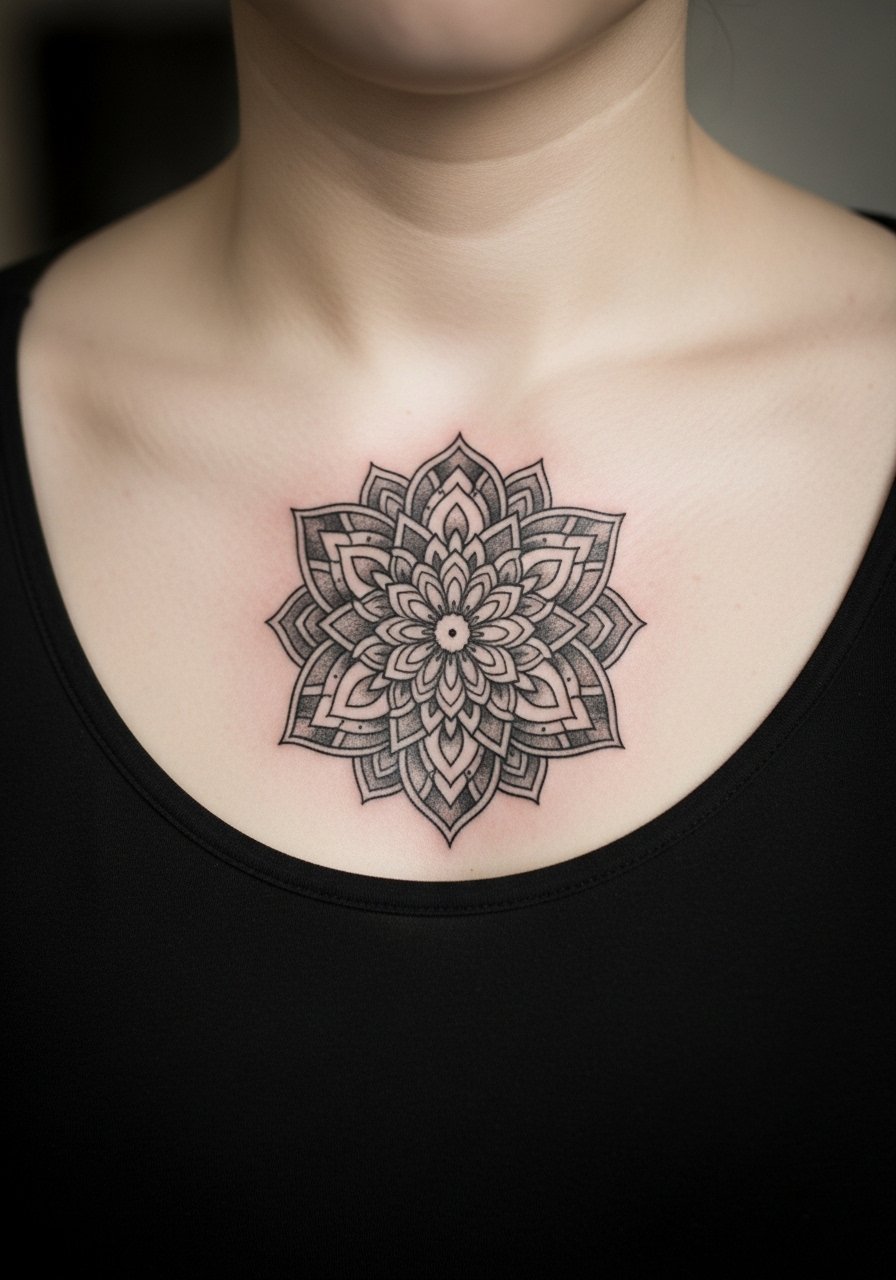
Mandala work on the chest is an opportunity to fold in dates or symbols. Tell the artist which life markers to hide in negative space so the design reads as ornament first and code second. The common error is insisting on too many micro-embellishments that do not age well on moving skin. Expect lengthy sessions and plan for touch-ups in the first two years to keep crisp points. For a low-key reveal, an unzipped hoodie or a zip hoodie men frames the mandala without overwhelming it.
12. Blackwork Tiger with Geometric Elements
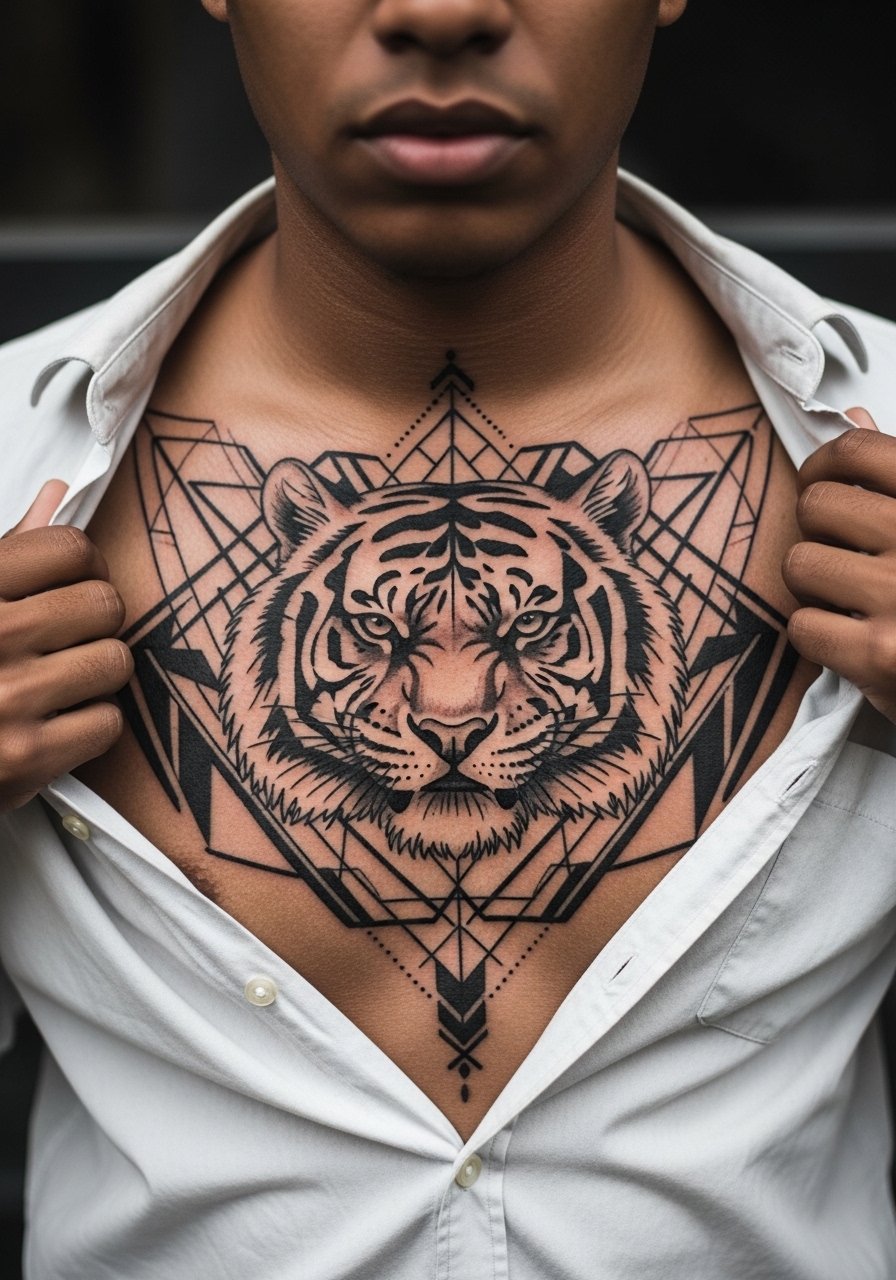
Combining heavy black fills with geometry requires careful negative space planning. Tell the artist where you want solid black and where you want pattern so the tiger's face maintains readability. People often overuse dot gradients too close to solid blocks and see texture loss over time. These jobs usually need three sessions and heavy saturation to avoid patchy healing. For the session, a loose button-down keeps pressure off the chest while allowing access to the whole design.
13. Collarbone Floral Frames with Chest Fill
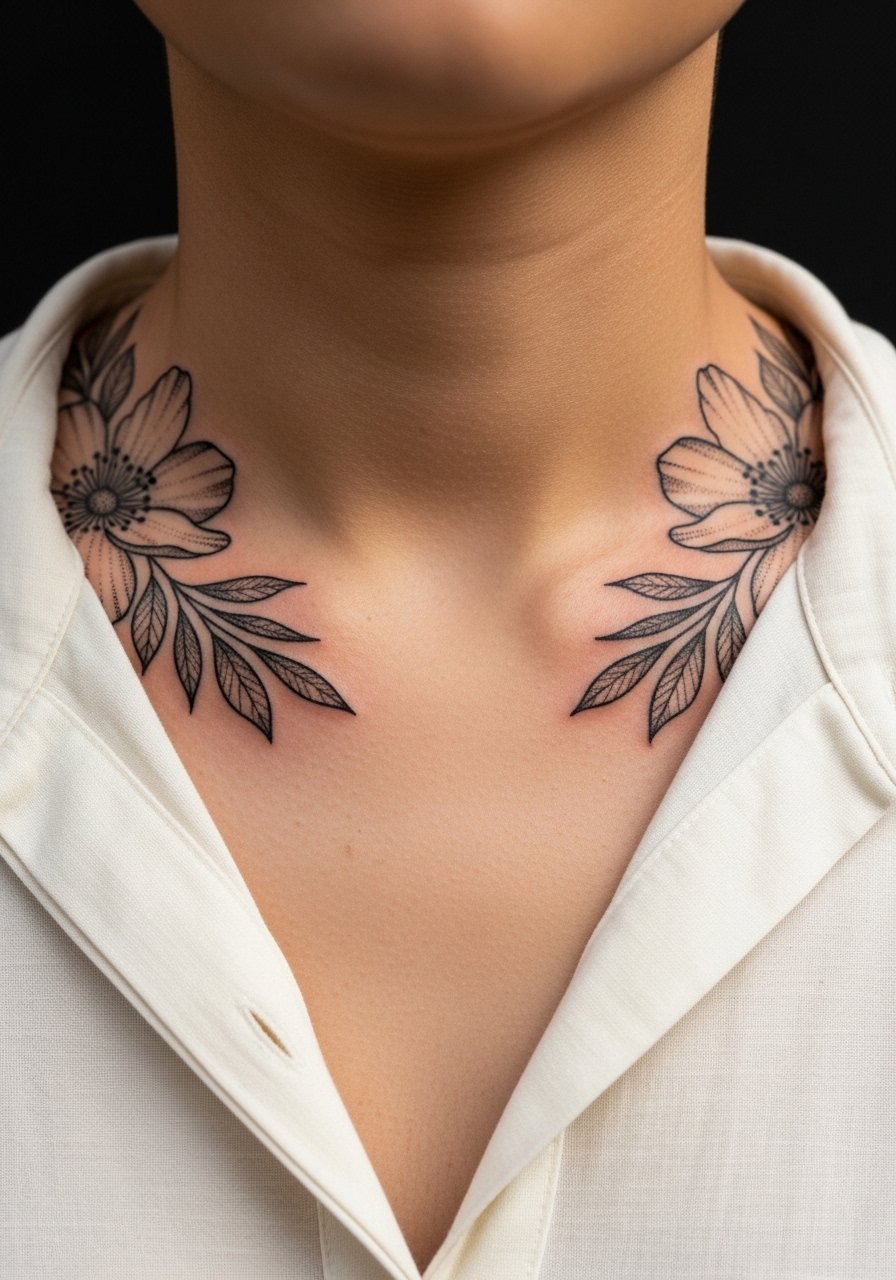
Flowers across the collarbone call for soft stipple shading to keep the petals readable. The mistake is demanding ultra-fine veins in petals that blur when you move. Ask for slightly heavier anchors at the base of stems so the composition stays defined. These pieces are moderate pain and often fit into one to two sessions. For styling, a crewneck sweatshirt with the neckline pulled sideways gives a casual reveal without baring too much chest.
14. Minimal Script Under the Collarbone
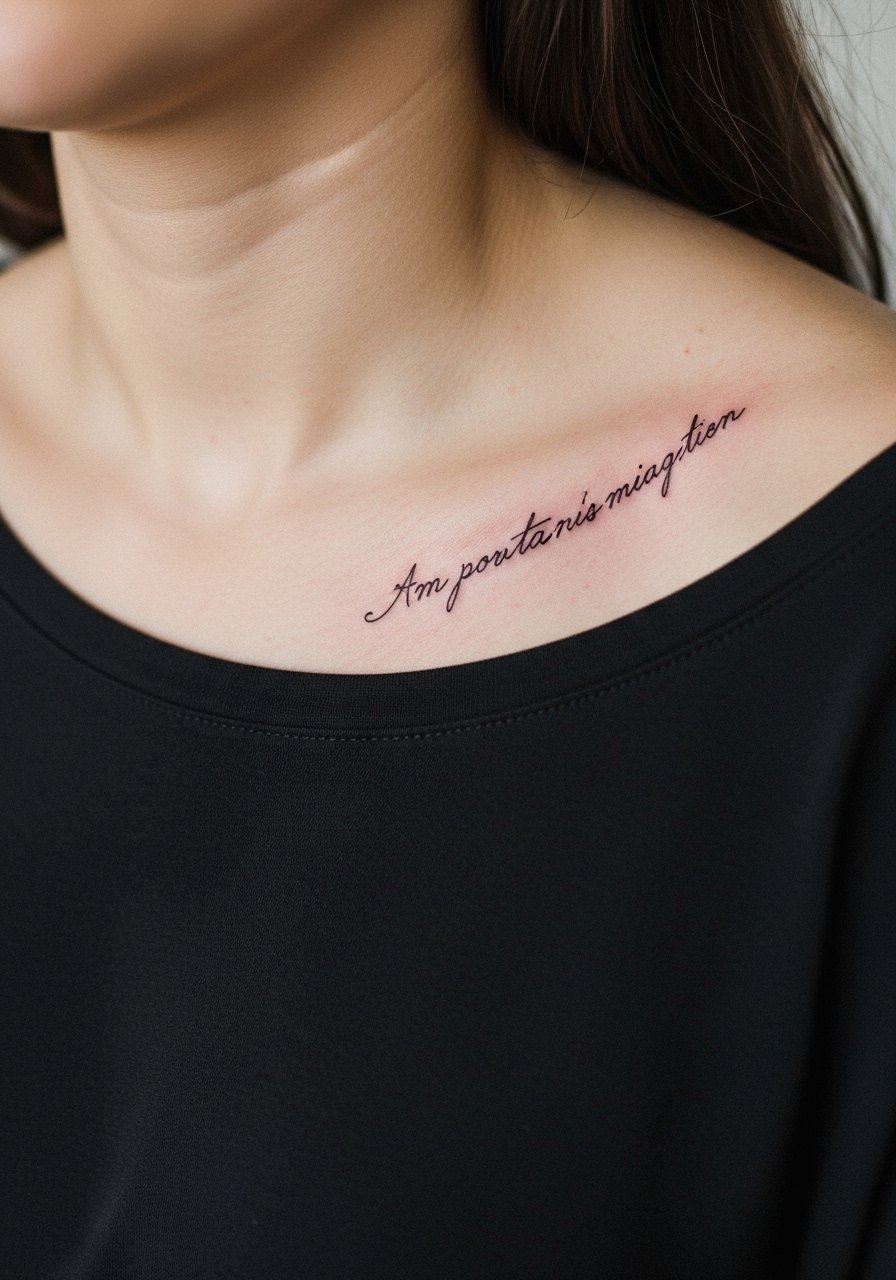
Scripts across the collarbone look best when spaced for skin movement. A mistake is choosing tiny cursive that vanishes after two years. Ask the artist to show the letter spacing on the skin while you move your shoulder. Expect one short session and a likely touch-up at year two for thin scripts. For outfits, a slightly open button shirt or a men's v-neck t-shirt white lets the script peek out cleanly.
15. Armor-Inspired Geometry Flowing to Shoulder
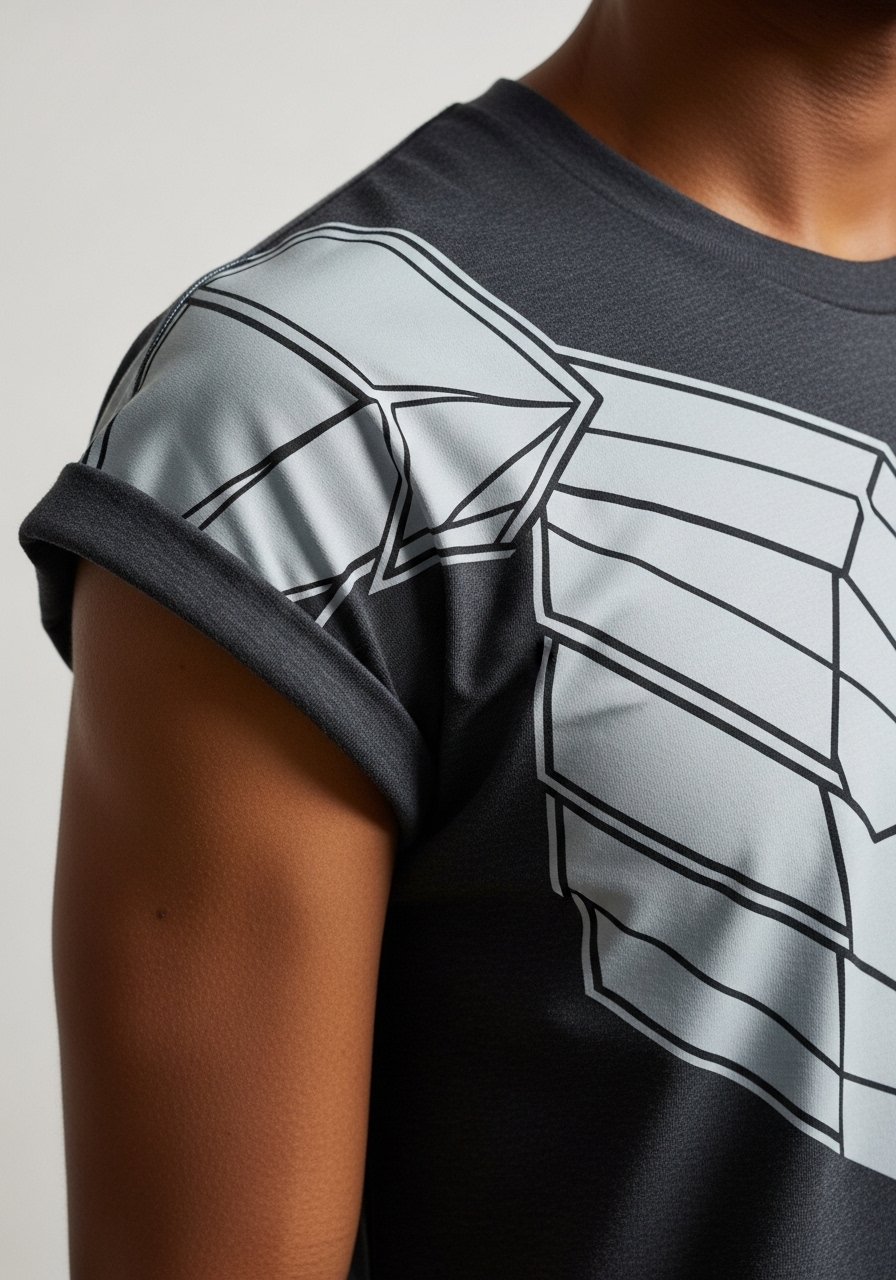
This hybrid is a great starter for someone considering a half sleeve later. When planning, ask your artist how the plates will sit when you lift your arm. The error is stopping the pattern at a hard edge that pulls visually when you move. These pieces age gracefully if the geometry has spacing and contrast. Session time varies by coverage but expect multi-visit work. For showing it off, a rolled sleeve muscle tee highlights the flow.
16. Constellation and Coordinates Over Upper Chest
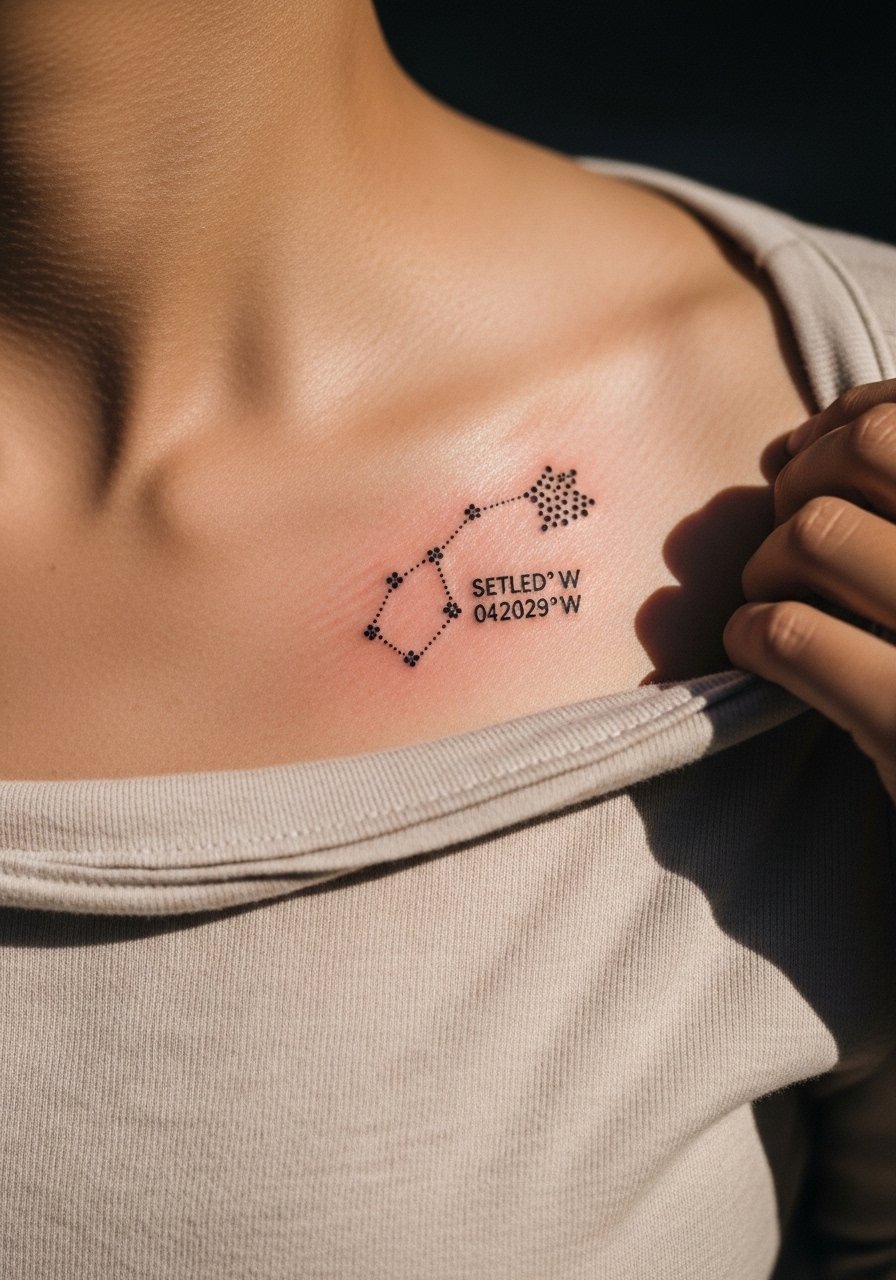
Small dot work and coordinates play well on the upper chest if you want something low-commitment. The common mistake is putting the dots too close together. That causes merging over time. Ask for slightly larger spacing and for the numbers to be bold enough to survive mild fading. One session usually does it. For low-key wear, a men's v-neck t-shirt white gives a subtle peek without overwhelming the delicate ink.
17. Sternum Floral Cluster
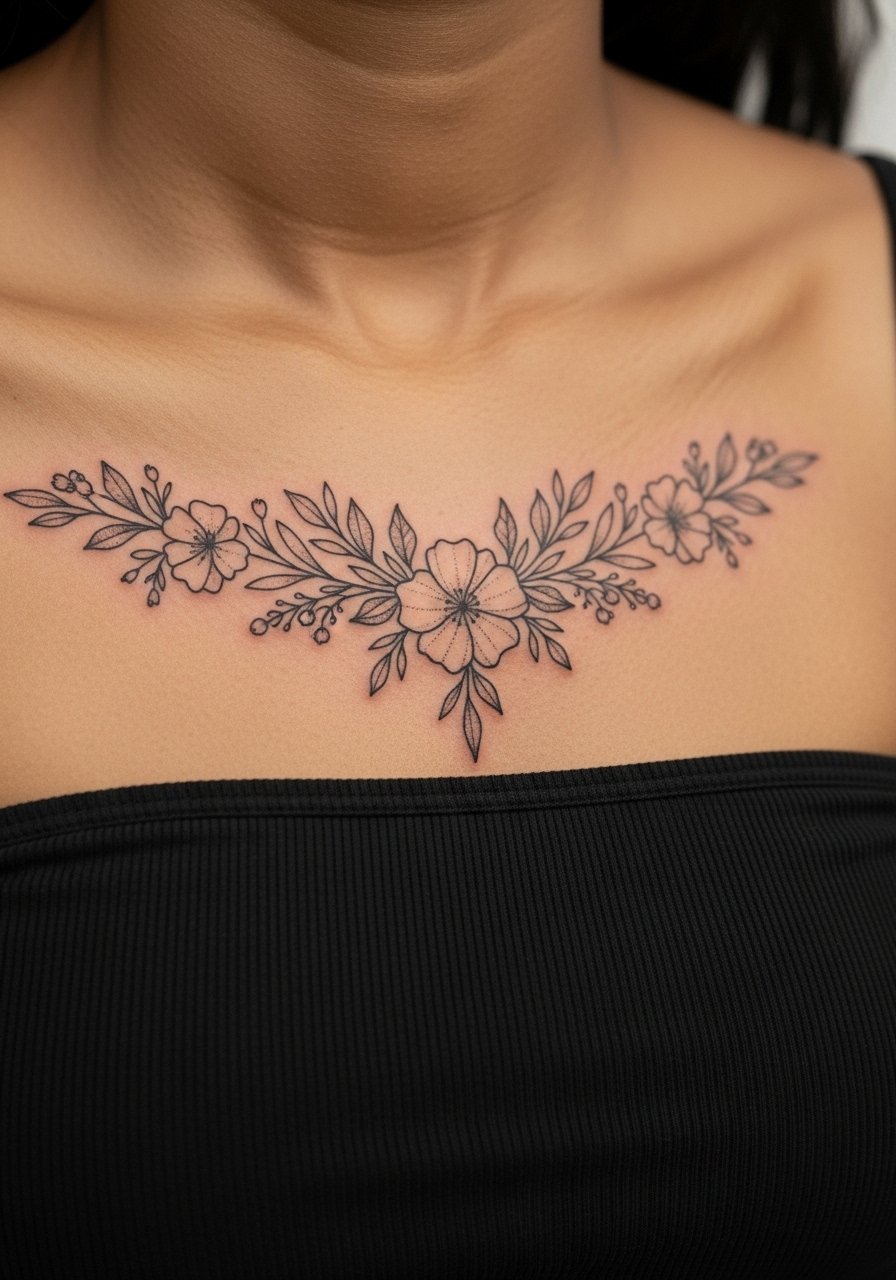
Sternum florals are intimate and the pain reflects that. When you consult, make sure your artist maps the petals so the pattern sits flat against the breastbone. Avoid ultra-intricate lace patterns in that zone because motion and contact will soften them. One or two shorter sessions keep the experience more manageable. Also keep in mind the Saniderm versus dry-heal debate applies here. One camp uses protective film to limit friction from clothing and sweat. The other camp prefers open-air healing to let scabs form naturally.
18. Half-Chest Wave or Ocean Scene
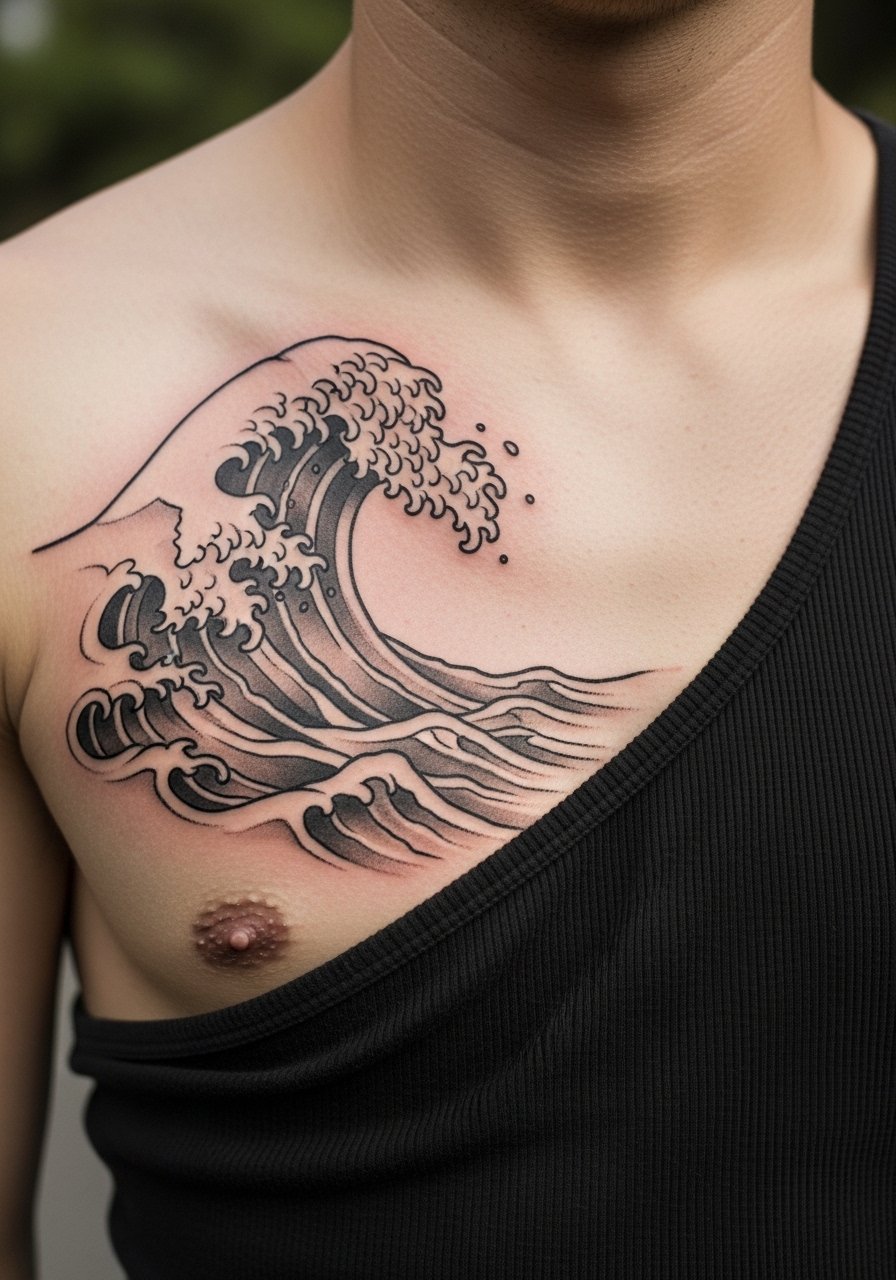
Asymmetrical scenes like a single-sided wave can look dynamic with the body shape. Tell the artist whether you want the horizon to sit level with the collarbone or drop toward the sternum. The main mistake is overloading the scene with tiny details that blur in waves of movement. One to two sessions usually cover line and shading. For studio comfort, a men's fitted tank top black keeps the shoulder free and shows the design well when healed.
19. Shield Motif With Family Dates
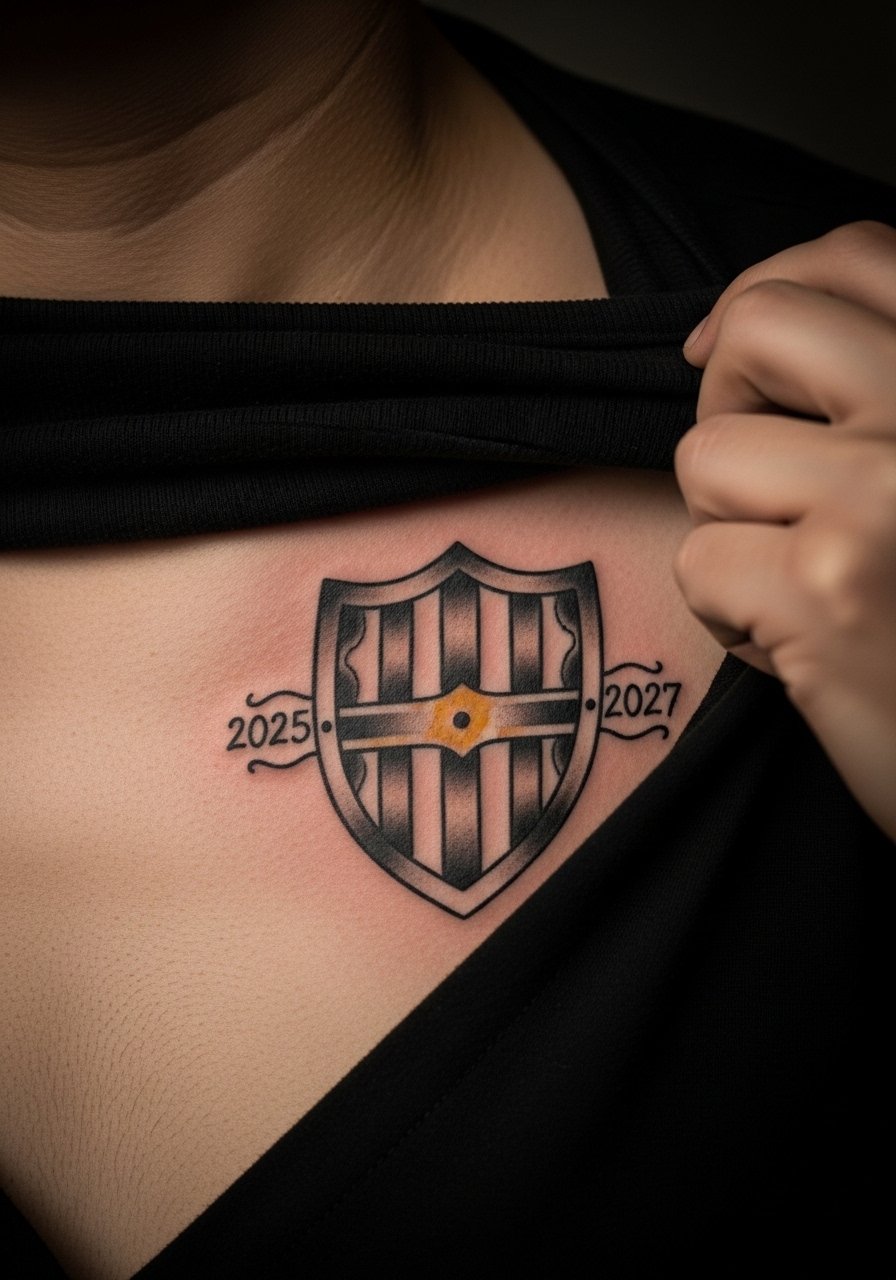
Shield emblems pair symbolism with clean bold outlines. If you want dates incorporated, request roman numerals or bold numeric type so they read after a few years. The mistake is choosing a hairline font for numbers in a high-movement zone. One session for the outline and a second for fill typically works. For dressier reveals, an open collared shirt with a thin chain pendant necklace sits above the shield without stealing focus.
20. Micro-Realism Eye or Portrait Fragment
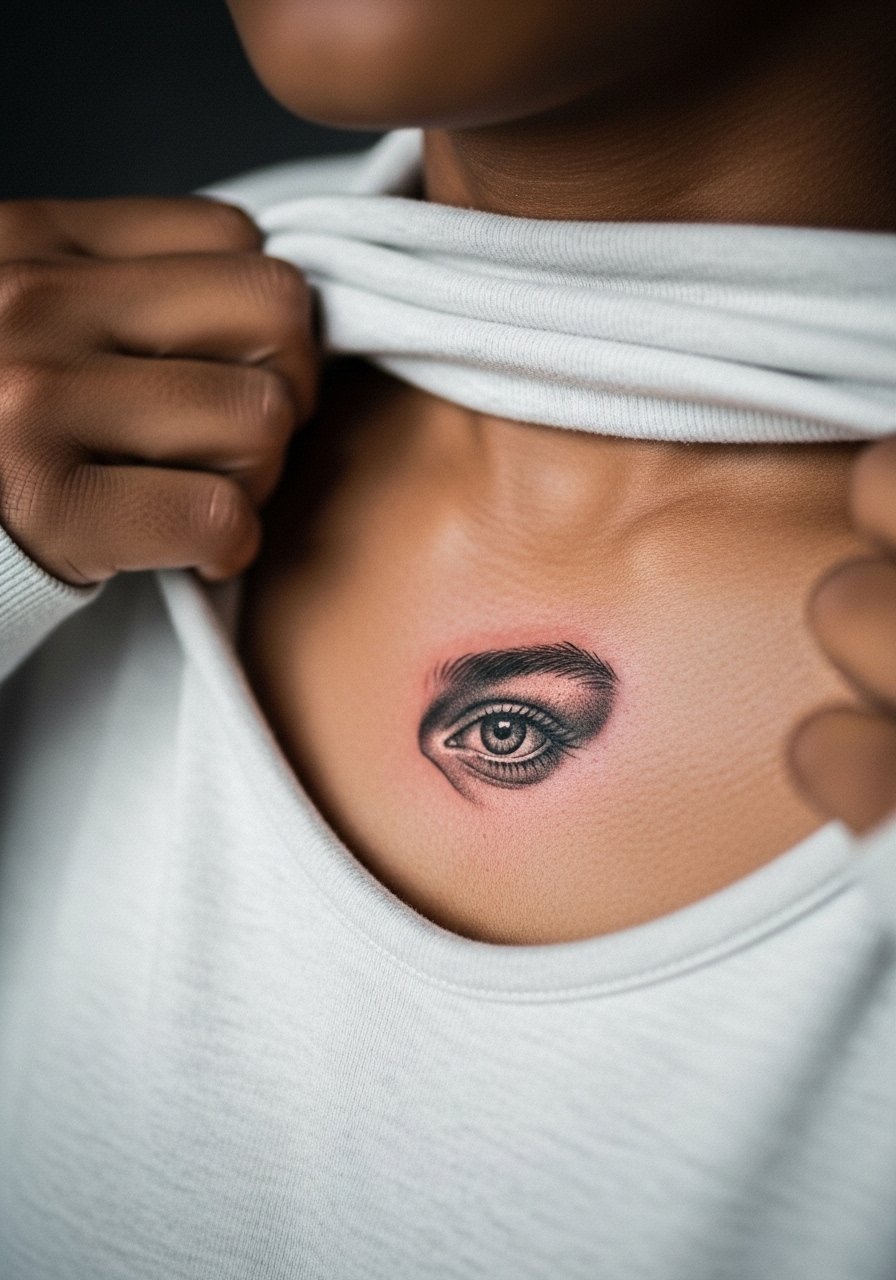
Micro-realism on the chest requires high contrast to read over time. Tell your artist you want strong shadow edges to keep the feature defined as skin shifts. The common mistake is asking for ultra-soft shading without anchoring contrast. These pieces usually need careful placement and two sessions for depth work. Discuss how future body changes might distort the face. For the session, a loose button-down makes access easy and reduces fabric friction post-ink.
21. Neo-Traditional Compass and Map Fragments
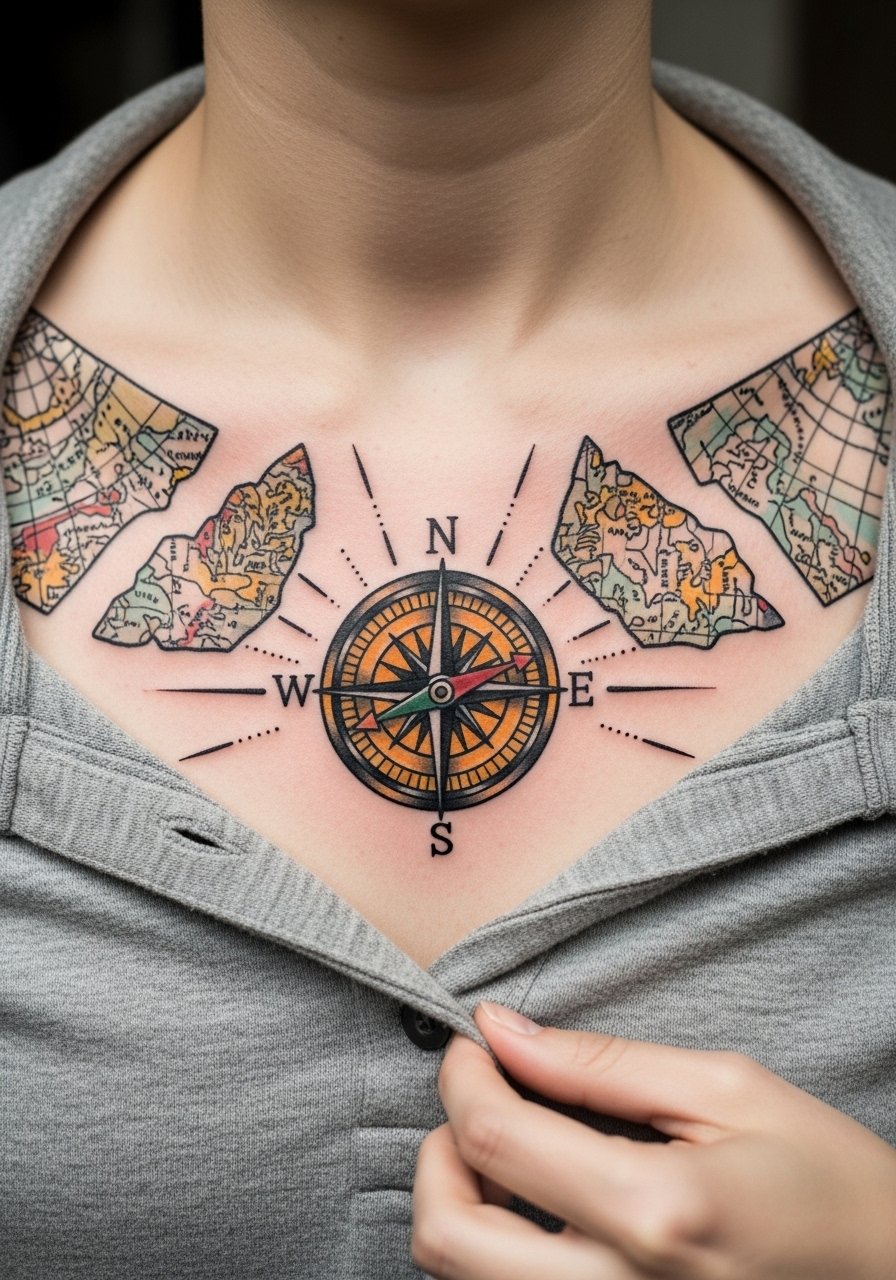
Compasses play well on the chest because the radial lines match natural anatomy. Ask for bold anchors where the cardinal points sit so they do not blur into the map texture later. The mistake is over-detailed map text in small fonts. Expect two sessions for line and color. When you want to show it, a men's open flannel shirt unbuttoned frames the center art without crowding it.
22. Framed Portrait Over the Heart
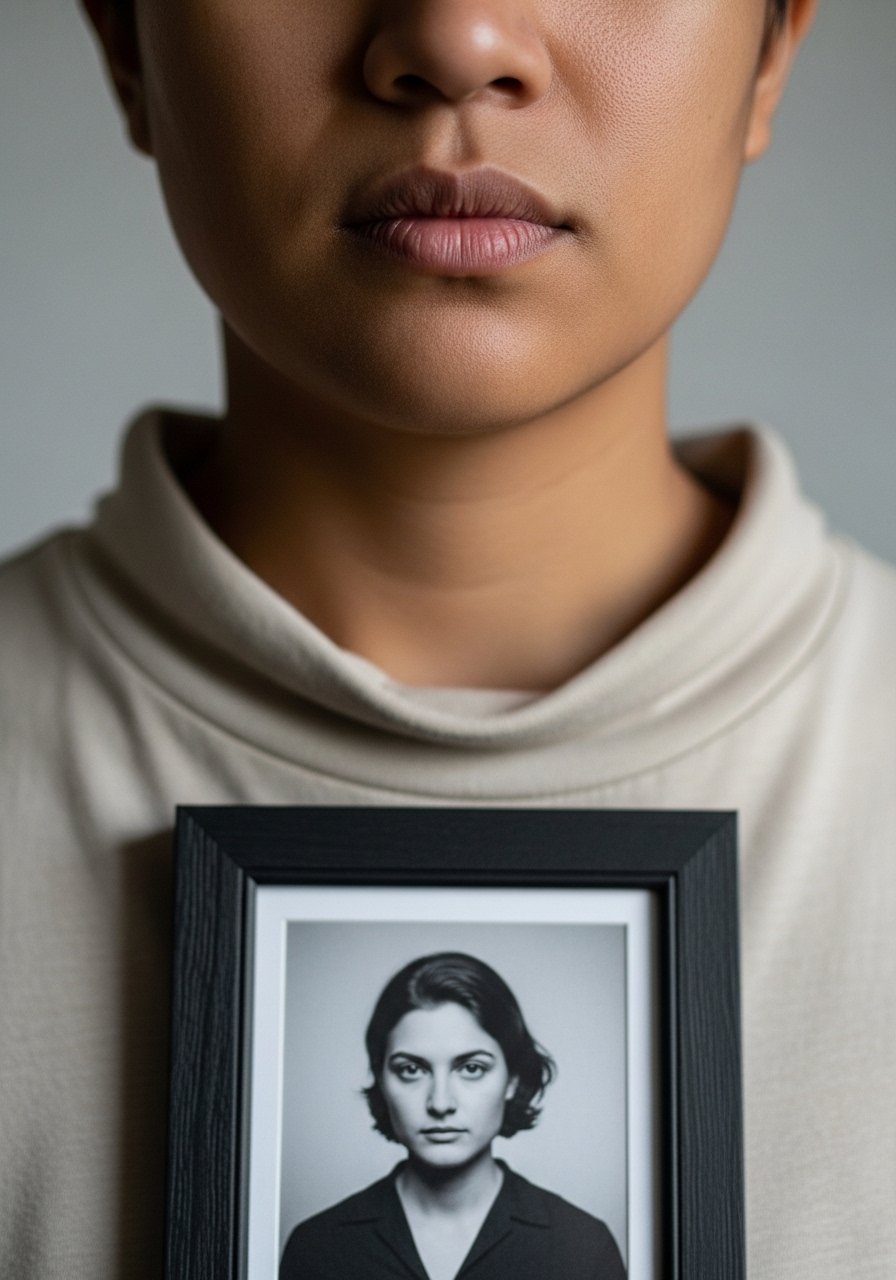
Portraits over the left chest need scale to stay readable. The mistake is shrinking a face to fit an awkward frame. Ask for a proof of how the portrait looks with motion and breathing. Two to three sessions are normal for depth, and the artist should walk you through reference choices for lighting in the photo. For the ride home wear a loose layer that will not press the portrait, such as an open-front shirt.
23. Mandala With Negative Space Pectoral Accents
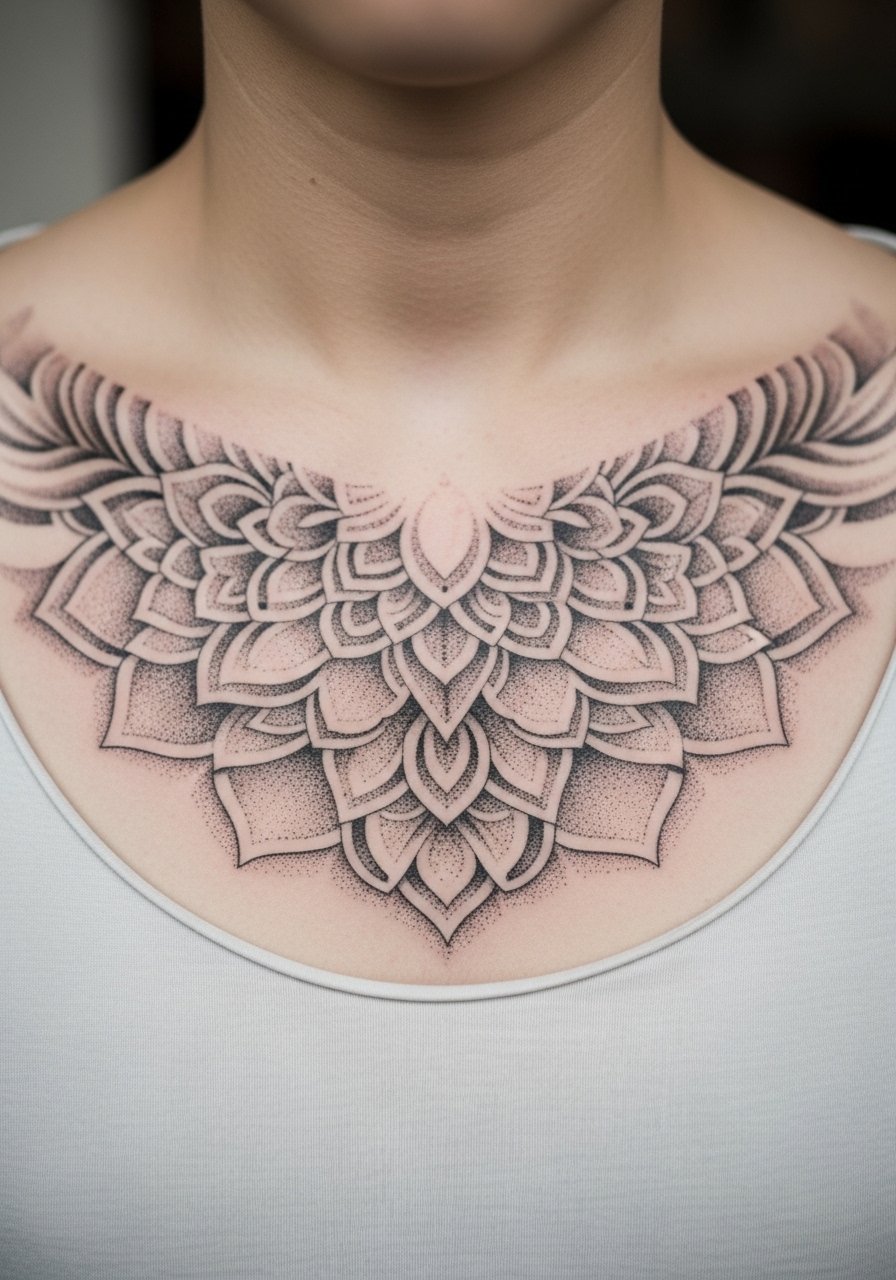
Negative space does more work than people expect. When you ask for a mandala with pectoral accents, make sure the artist tests negative zones on your skin so they hold as you move. A common error is tiny lattice work in zones that stretch and then merge. These jobs need precise stenciling and two to four sessions for full effect. For subtle photos, a slightly unzipped hoodie or crewneck works well without hiding the pattern.
24. Block Letter Chest Script Across Upper Pecs
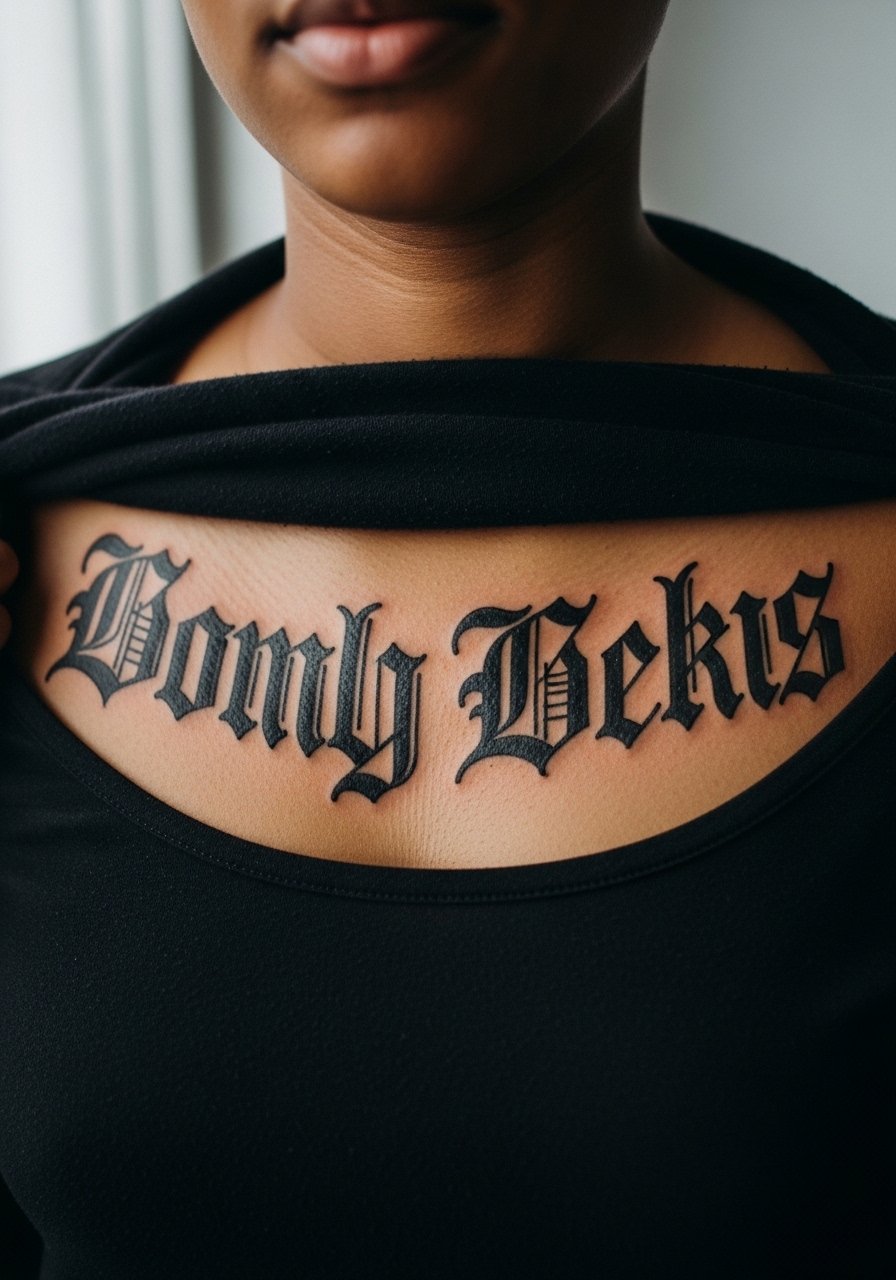
Block letters age differently than cursive. They hold up better when each letter has breathing space. The mistake is cramming words across the pecs with tight kerning. Ask your artist to stencil the phrase at full size and check legibility while you flex. One session often suffices for bold script. For daily wear, a V-neck tee or open button shirt gives just enough exposure to let the letters read cleanly.
25. Collarbone-to-Sternum Geometric Anchor
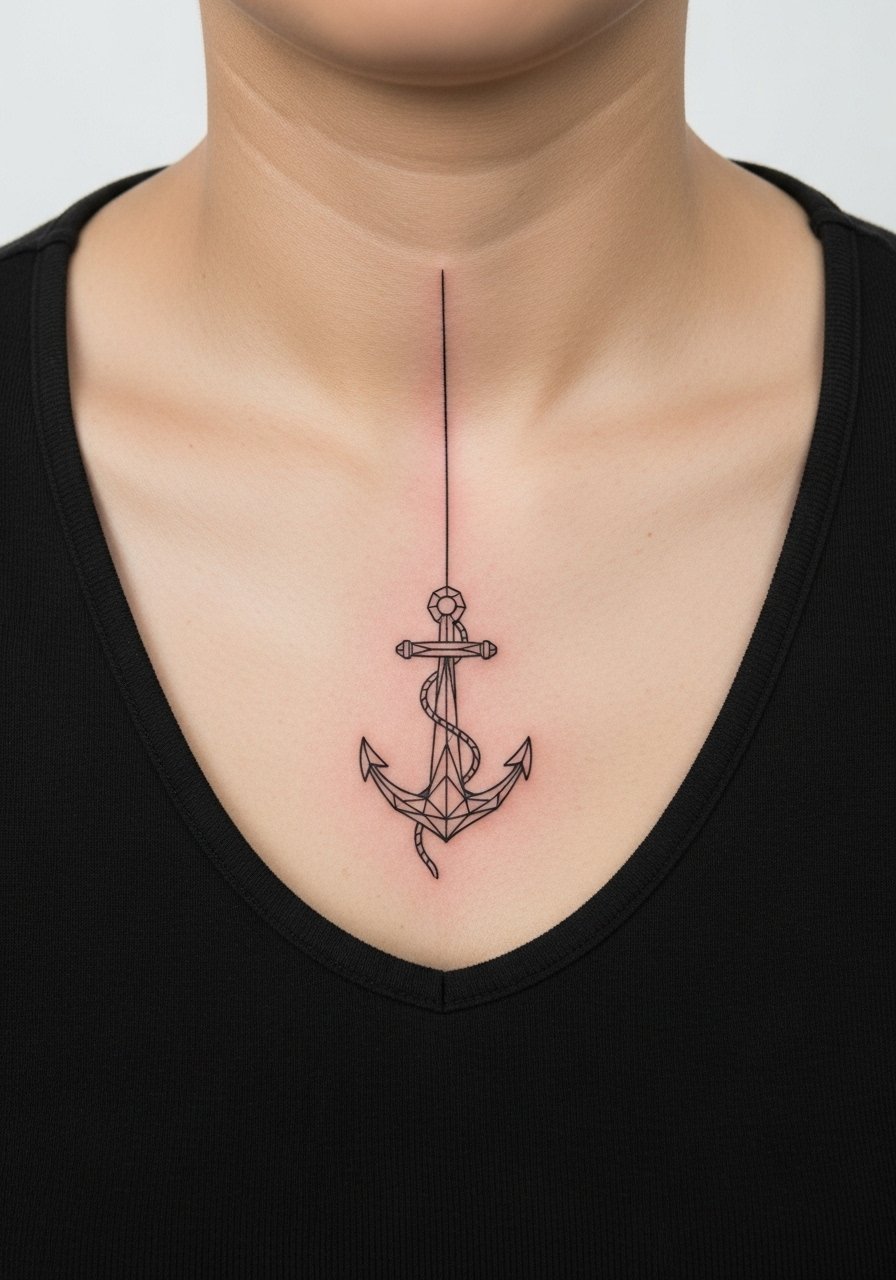
Vertical anchors need consistent spacing so the eye travels evenly. A common mistake is making the line too thin near the sternum where it may fade into shadow. Ask for slightly stronger line weight at the lower end. These pieces are moderate pain and fit into a single longer session for line and shading. For showing it off, an unbuttoned shirt or a zip hoodie opened halfway keeps the vertical flow visible without exposing the torso.
26. Sunburst Over the Upper Chest
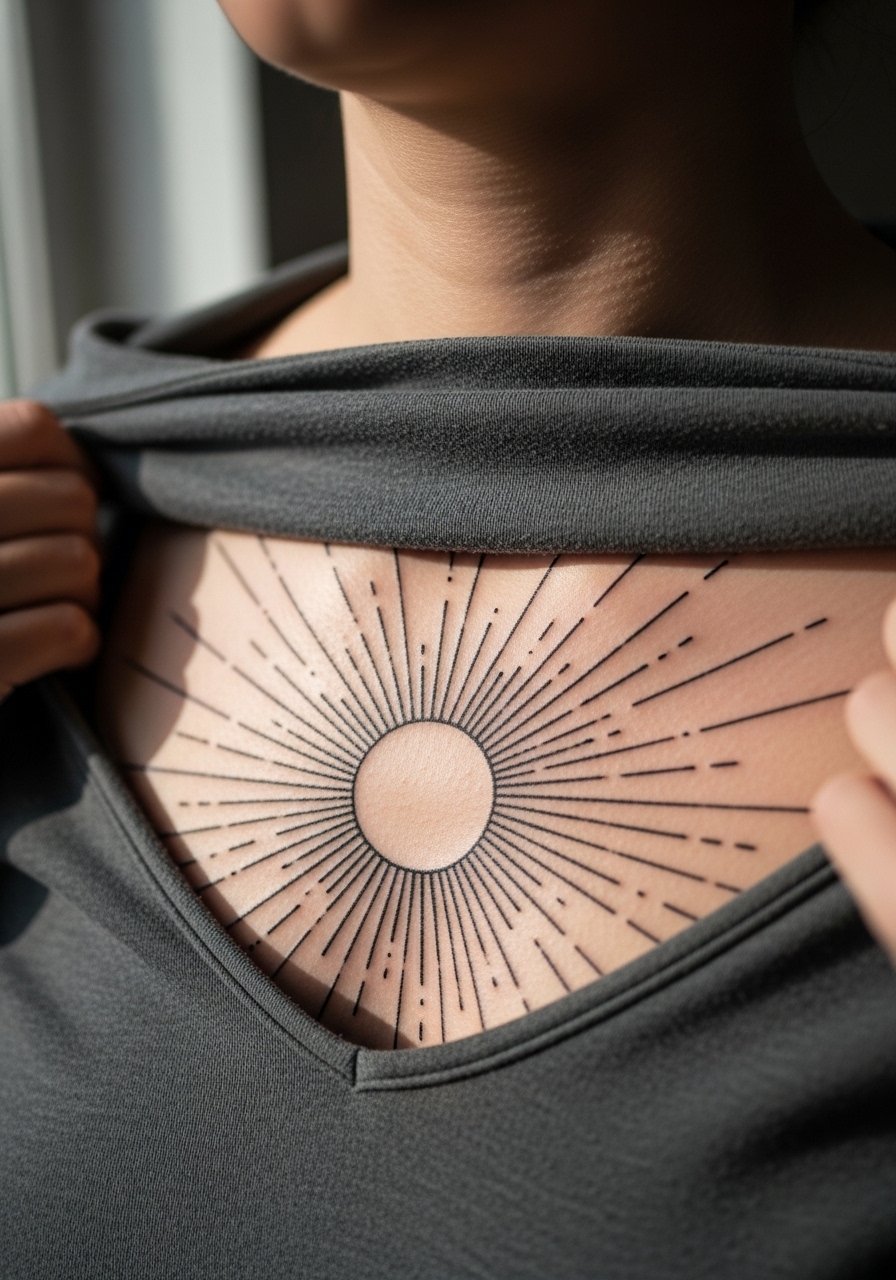
Sunbursts create natural focal points and photograph well near the sternum. The common error is placing too many thin rays into a tight center, which merges over time. Ask for fewer, stronger rays and for the center to have anchor shading. One to two sessions generally cover linework and shading. For studio comfort, bring a loose, open shirt to avoid pressure on the freshly inked center.
27. Chest-to-Shoulder Winged Script Hybrid
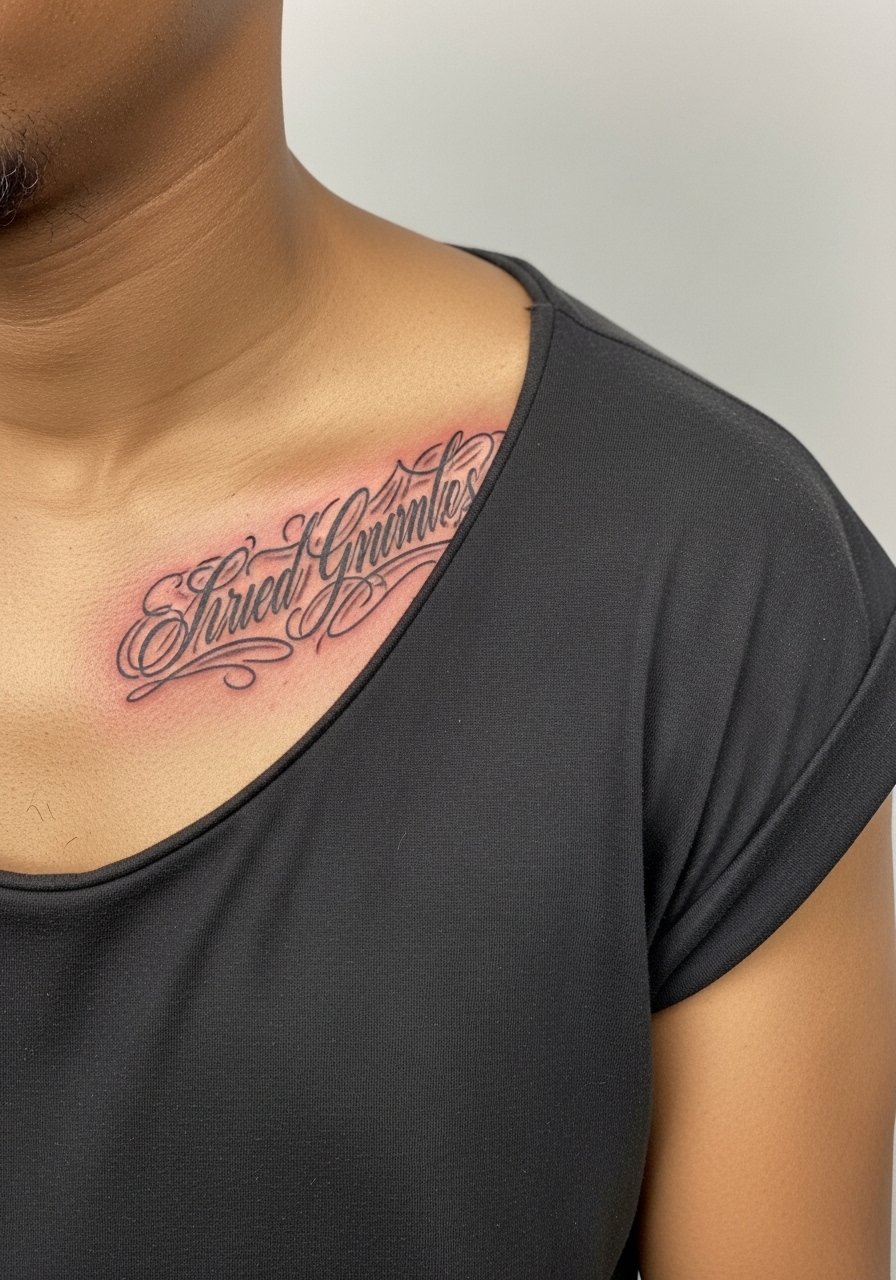
This hybrid mixes readable text with winged accents that flow onto the shoulder. When you consult, discuss where the script ends and the wing begins so neither element competes. The mistake is trying to cram a long phrase into the curve, which shortens letterforms and ruins legibility. Expect at least two sessions for scripted line and wing shading. For casual display, a rolled sleeve muscle tee shows the shoulder transition without visual clutter.
Frequently Asked Questions
Q: How much does a chest tattoo cost and how do session lengths vary by design?
A: Costs vary by size and complexity, but expect sessions to range from a single two-hour visit for small sternum pieces to four or more longer sessions for full chest plates. Small scripts and icons are usually one session. Complex realism or full armor pieces typically need multiple passes for saturation and depth.
Q: Will fine line mandalas or scripts blur on the chest faster than bold blackwork?
A: In my experience fine line on moving chest areas tends to soften sooner than saturated black. Bold fills hold contrast longer. The fix is to allow more spacing and slightly heavier anchors in fine line work, or plan a touch-up at year two to three.
Q: What healing method should I use for sternum and chest work, Saniderm or dry healing?
A: Artists split into two camps. One group favors Saniderm or protective film to keep sweat and friction off the area, especially on chests that sweat a lot. The other group prefers dry healing to let natural scabs form. Discuss your lifestyle and the artist's preference before the session.
Q: How do I find an artist who will do detailed chest realism without blur?
A: Look for chest-specific portfolio shots, not just arm pieces. Search hashtags like #ChestTattooMen and check shop location searches with style filters. Ask the artist for healed photos of chest work and a conservatively spaced stencil before booking.
Q: Do I need special clothes for the appointment and the first week of healing?
A: Yes. For upper chest work wear a wide-neck or button-down shirt you can pull aside. For sternum pieces bring a zip-up or loose top that will not press on the area. For showing healed work, fitted tanks or V-necks often frame the design best.