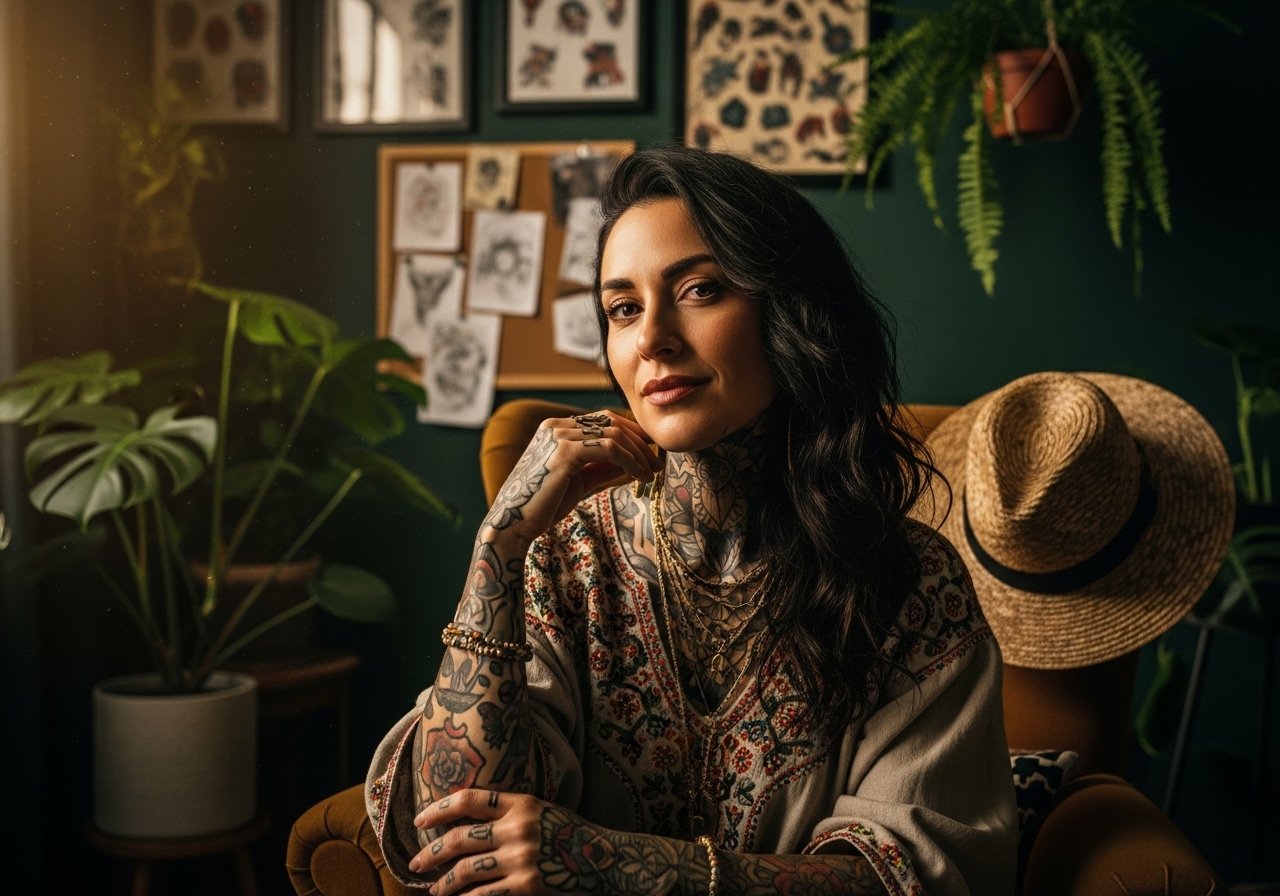
Fine line violet blooms have been everywhere lately, but what holds up is rarely the flashiest option. I’ve watched delicate petals that looked amazing fresh lose crisp edges by year three when placed over high-movement areas. This list pairs abstract violet flower concepts with placement, aging notes, and what to tell your artist so the design still reads like art after a few summers in the sun.
1. Single Abstract Violet Stem on Inner Forearm
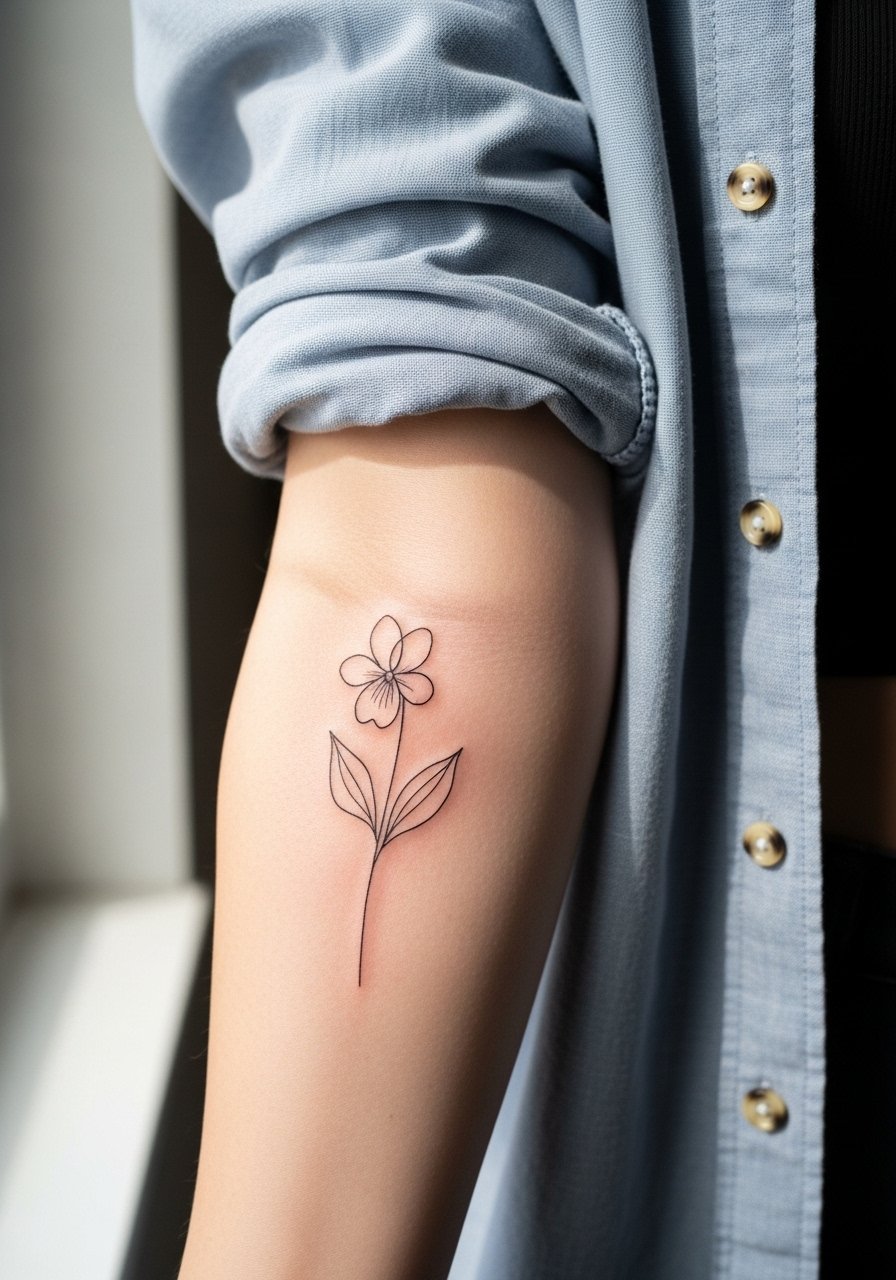
I’ve seen this placement hold its clarity when the design gives breathing room around stems. Pain is low to moderate and most sessions run 30 to 60 minutes. Tell your artist you want slightly heavier linework where the stem meets the petals so the central contour stays readable at year three. Common mistakes are making the petals too tiny or packing too much stipple shading into a small area. For showing this off, roll sleeves and pair with a loose button-down shirt that frames the forearm without crowding the tattoo.
2. Tiny Violet Cluster on the Side of the Wrist
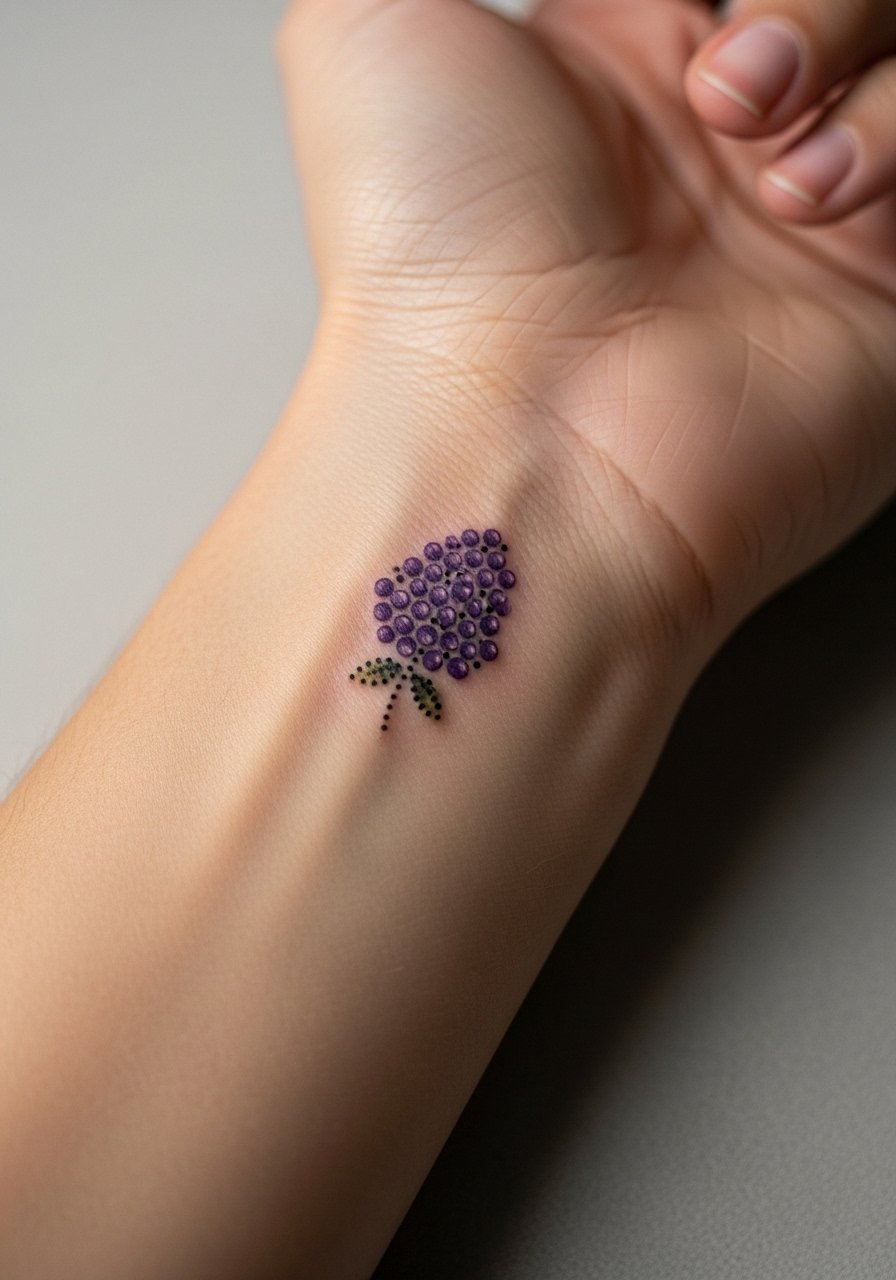
Wrist tattoos are more exposed to sun and friction, so expect a faster fade and a likely touch-up at year two. Session time is short, often under 45 minutes, but pain is higher than the forearm. Ask the artist for slightly bolder outline anchors in the cluster to prevent early blurring. A common error is packing a wide composition into the narrow wrist space. For a simple way to highlight the piece, stack it next to a thin chain bracelet which draws attention without covering the tattoo.
3. Abstract Violet Collarbone Accent with Stipple Shading
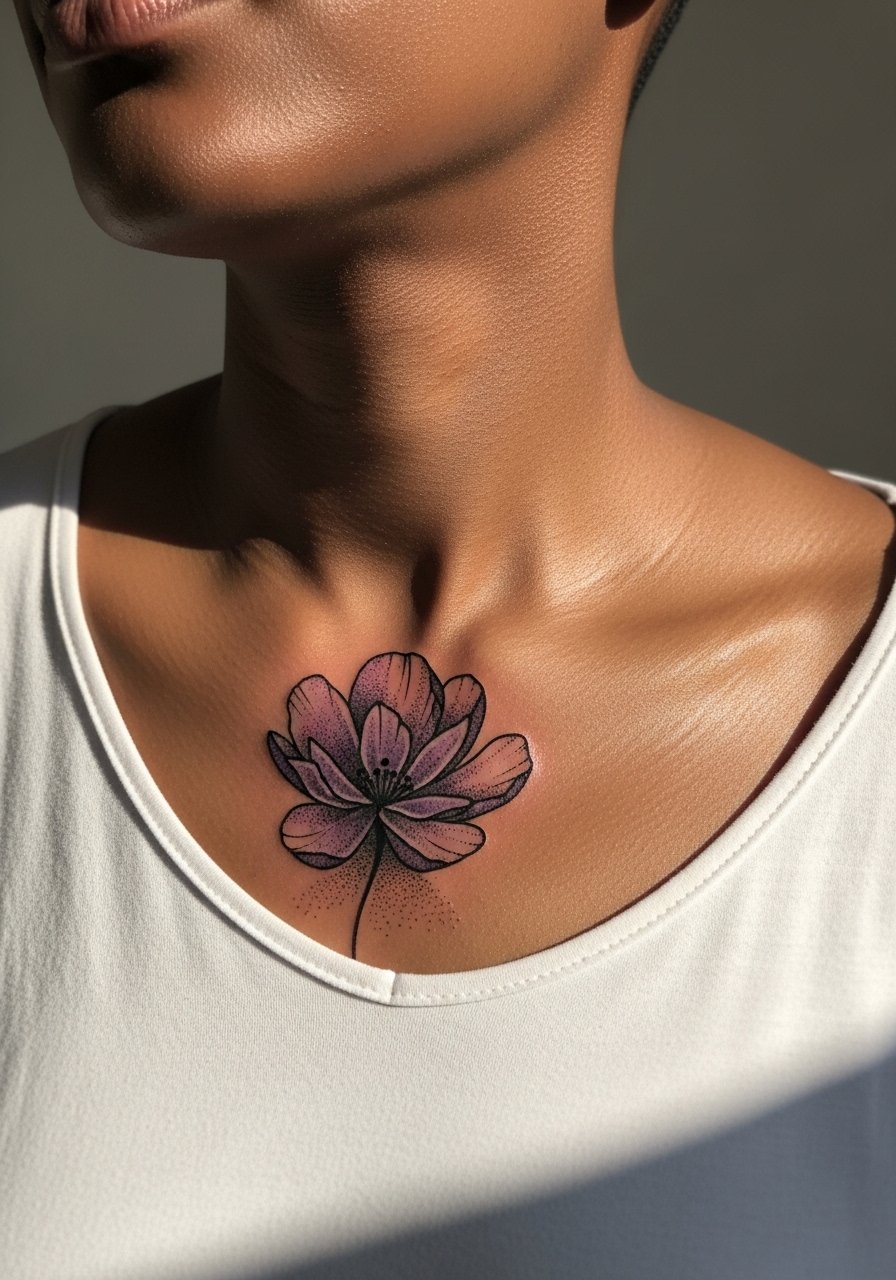
Collarbones move with breathing and clothing, so pain can be moderate and sessions often take 60 to 90 minutes. I recommend stipple shading over heavy saturation to keep the texture readable as it ages. Mistake to avoid is compressing too many overlapping petals at the neckline. If you want it visible for evening wear, pair the tattoo with an open-neck blouse to show the piece without pulling focus from its negative space.
4. Watercolor Violet Burst on Outer Thigh
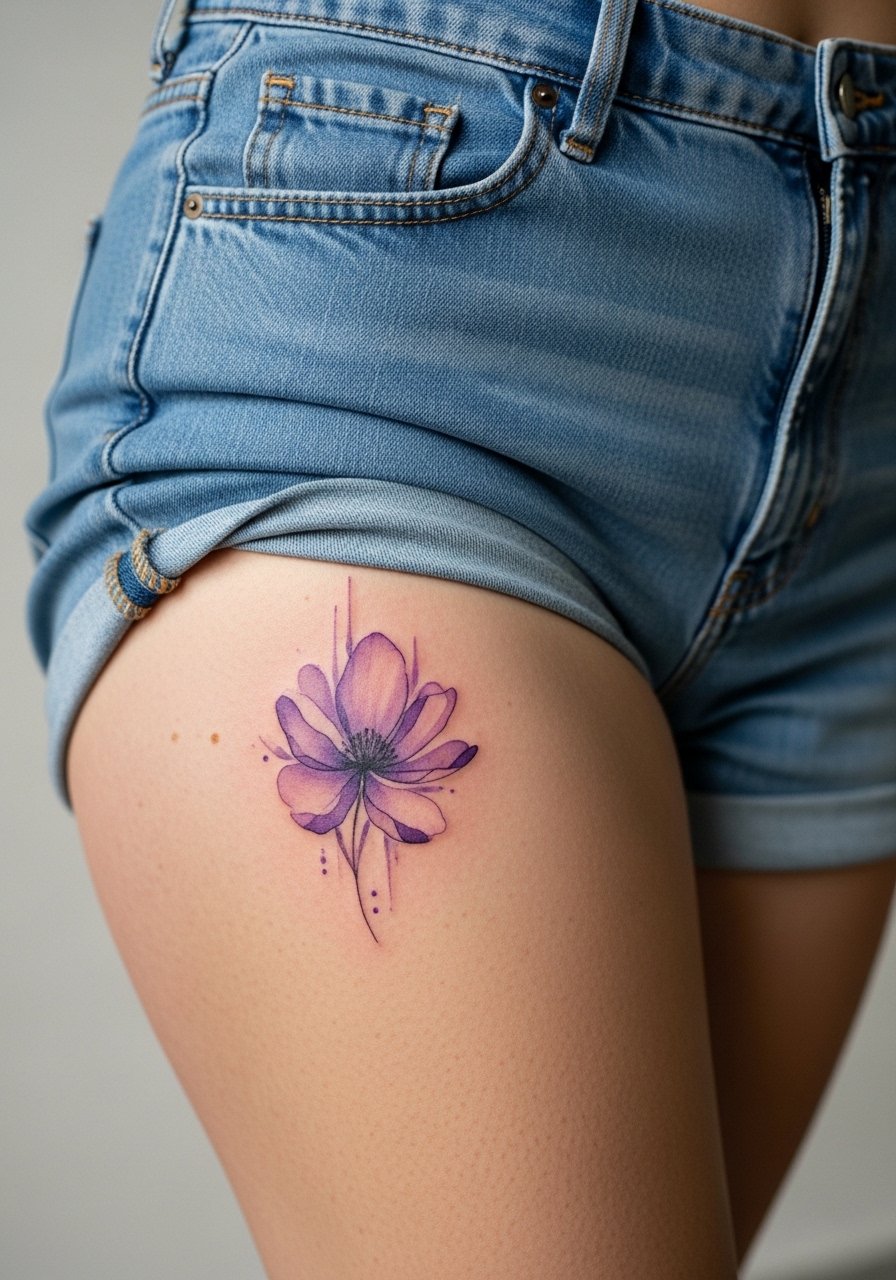
Outer thigh is forgiving for color and size, so session times run 90 to 180 minutes depending on detail. This placement tolerates softer washes, and I recommend slightly increased saturation in the core petals to prevent muddying after a few sun-exposed summers. A common issue is asking for watercolor edges too close to the leg crease where friction speeds fading. For the session, wear high-waisted shorts you can shift without rubbing the fresh ink.
5. Minimal Violet Ankle Band, Abstract Leaves
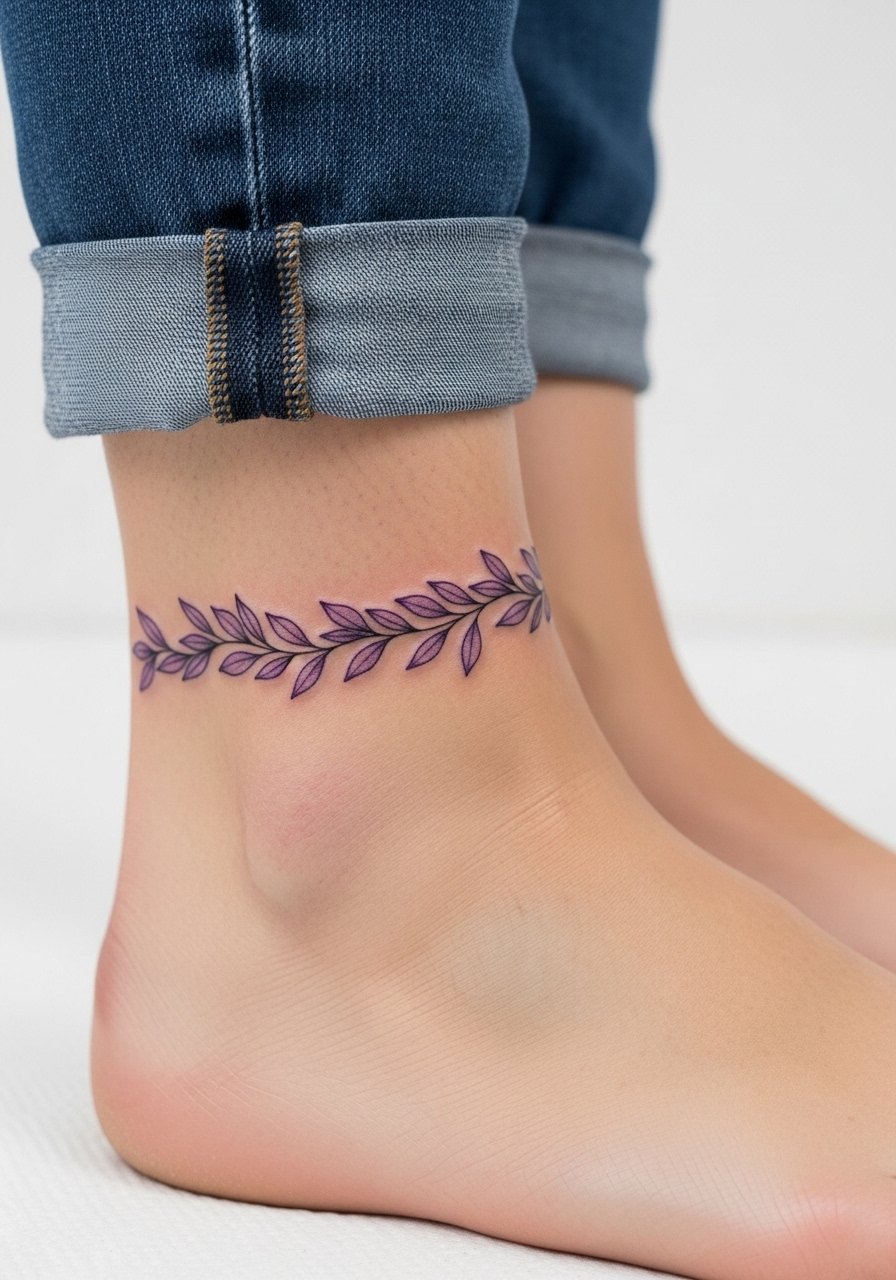
Ankle work is sensitive and sees a lot of daily abrasion from socks and shoes. Expect pain to be moderate and sessions of 45 to 90 minutes. Tell your artist to avoid ultra-fine lines on the bottom edge since that area suffers the most friction. People often forget the shoe rub, which is why lighter placement on the outer ankle holds up better than a full wrap. When you want to show it off, pair the band with simple strappy sandals or roll jeans to keep attention on the ankle zone.
6. Delicate Violet on the Ribcage with Negative Space Petals
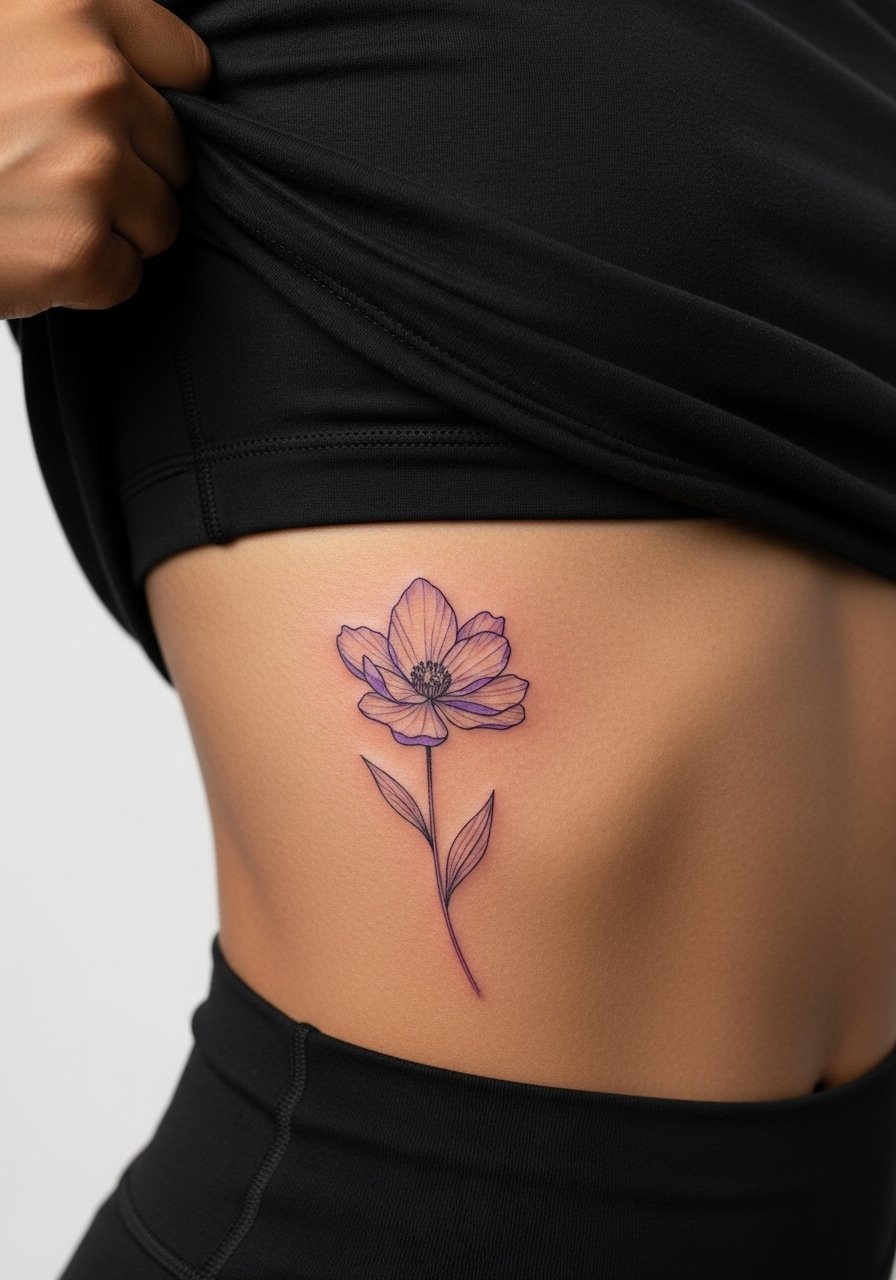
Fair warning, the ribcage rates high on pain scales and healing can be tricky because breathing moves the canvas. Sessions often need 60 to 150 minutes with breaks. Artists split on fine line on ribs. One camp says the constant stretch blurs delicate lines within two years. The other camp argues that with controlled depth and spacing it settles fine. Ask where your artist stands and plan for a touch-up around year two if lines are ultra-fine. Wear a supportive fitted top you can shift easily when you come in for the session.
Studio Day Picks
The chest, ankle, and ribcage pieces above demand different prep than wrist work, so these small items smooth the session and the first week.
-
Stencil transfer paper kit. Lets you preview the design placement on skin so the ribcage and collarbone pieces land where you expect them.
-
Topical numbing cream. Applied under a light wrap 45 minutes before helps with sensitive ribs and inner thigh sessions.
-
Thin protective film roll. Keeps ankle and wrist tattoos cleaner during the first week of daily friction.
-
Fragrance free gentle body wash. Use during showers to avoid irritation on fresh linework in exposed areas like the forearm.
-
Aquaphor healing ointment. Thin application for the first few days locks in moisture for fine line work without clogging the channels in tight needle areas.
7. Abstract Violet Sleeve Accent Near the Elbow
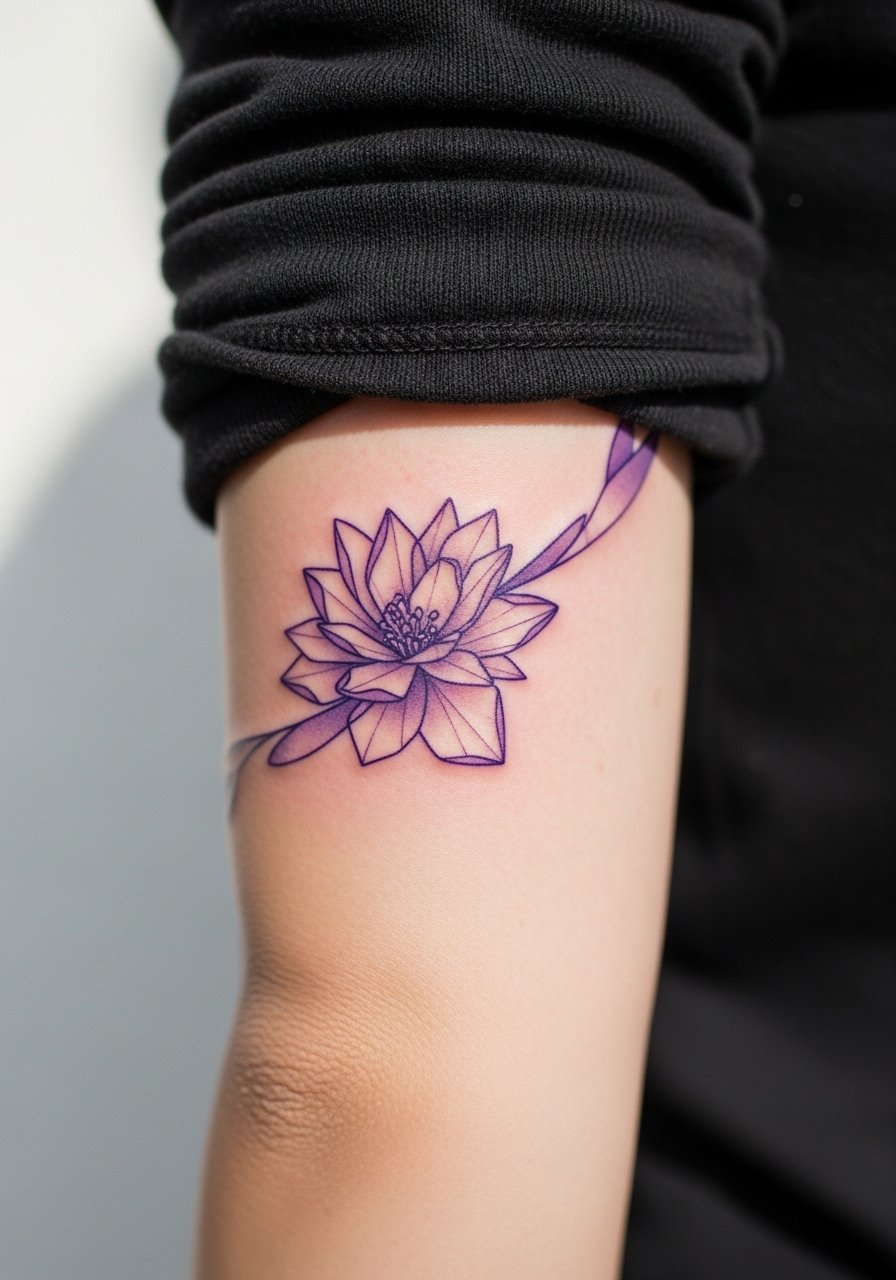
Elbow-adjacent work takes more planning because the skin folds and stretches. Pain spikes near the joint and sessions often come in two shorter bookings. I usually suggest leaving negative space where the elbow crease hits so the design does not turn into an indistinct blot over time. Common mistakes include forcing continuous linework through the crease. For showing this off casually, roll sleeves to mid-forearm and pair the piece with a minimalist watch that sits below the tattoo without crowding it.
8. Abstract Violet Micro-Realism Behind the Ear
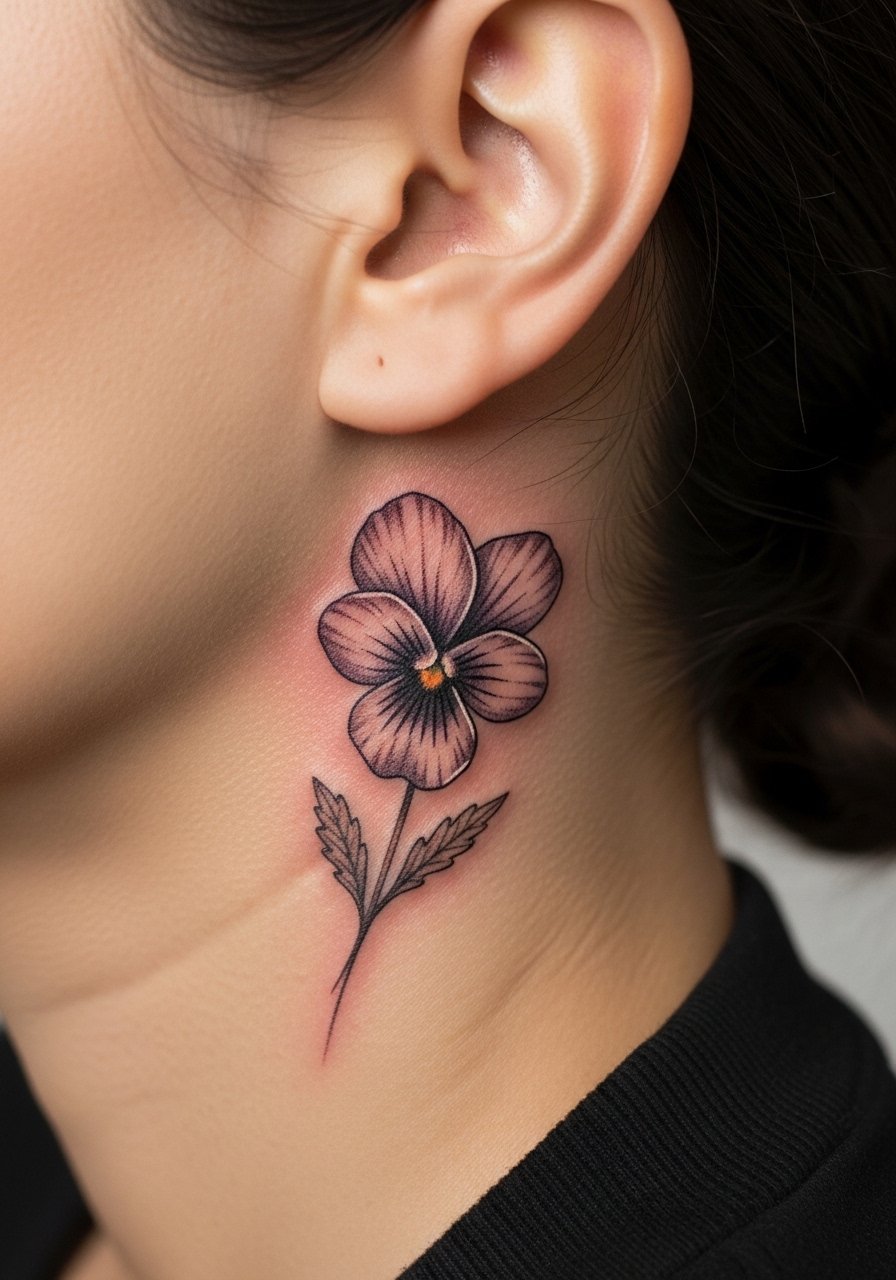
Behind-the-ear tattoos are subtle and usually quick, often 20 to 40 minutes. The skin is thin and the area heals fast but can be sensitive to touch during recovery. Because the spot is so small, avoid ultra-dense shading that will muddle as skin recovers. Note that behind-the-ear pieces require careful placement because hairlines and growth vary. If you work in conservative settings, consider visibility since this area can peek out when hair is up.
9. Violet Linework Cluster on the Upper Back
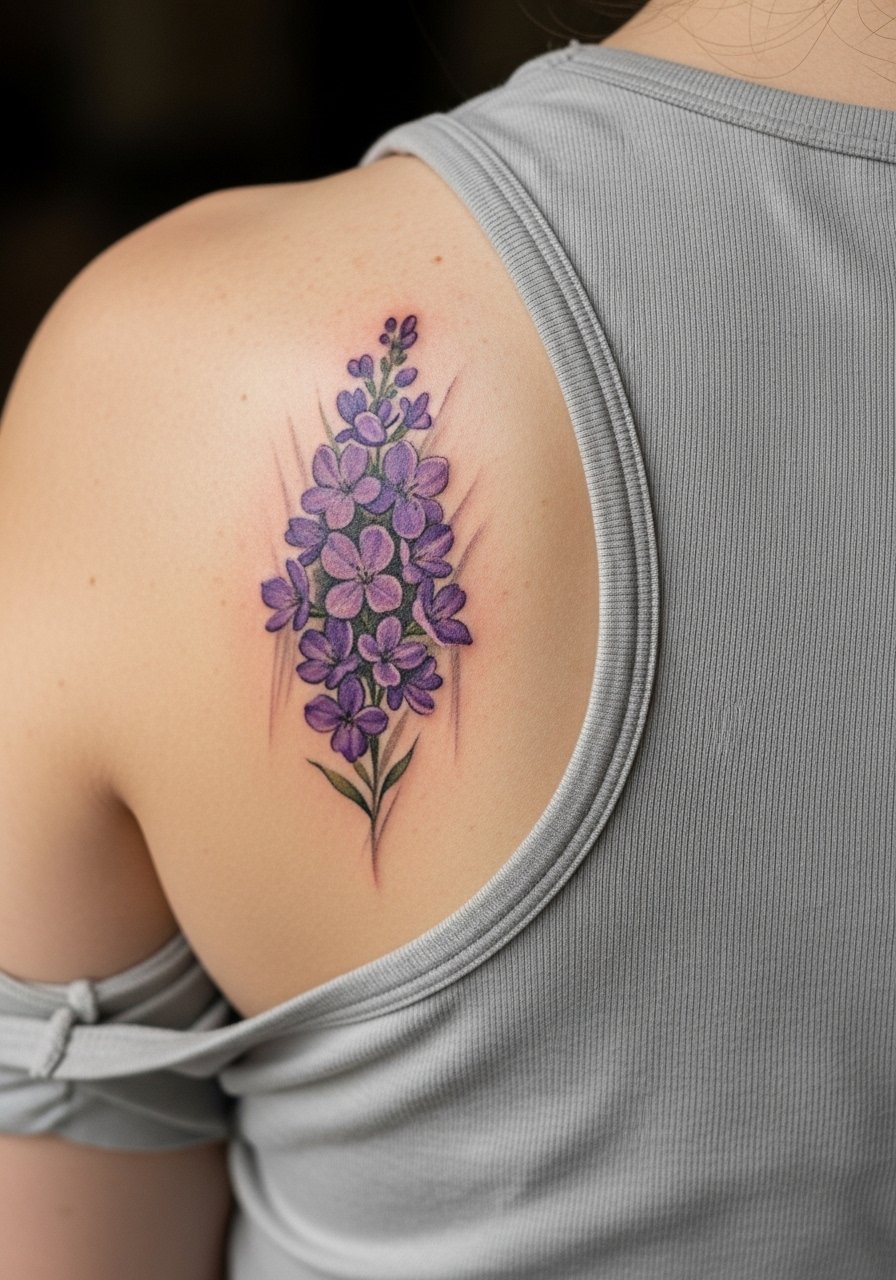
The upper back is friendly for larger compositions and tolerates heavier saturation. Sessions can reach multiple hours depending on coverage. Tell your artist if you want the cluster to read from a distance or only in close view. A frequent misstep is over-detailing a piece that will mostly be seen under a shirt. For evenings when you want to show the design, wear an open-back dress to frame the shoulder blades and negative space without exposing the entire back.
10. Abstract Violet Tiny Script with Floral Accent on the Side Neck
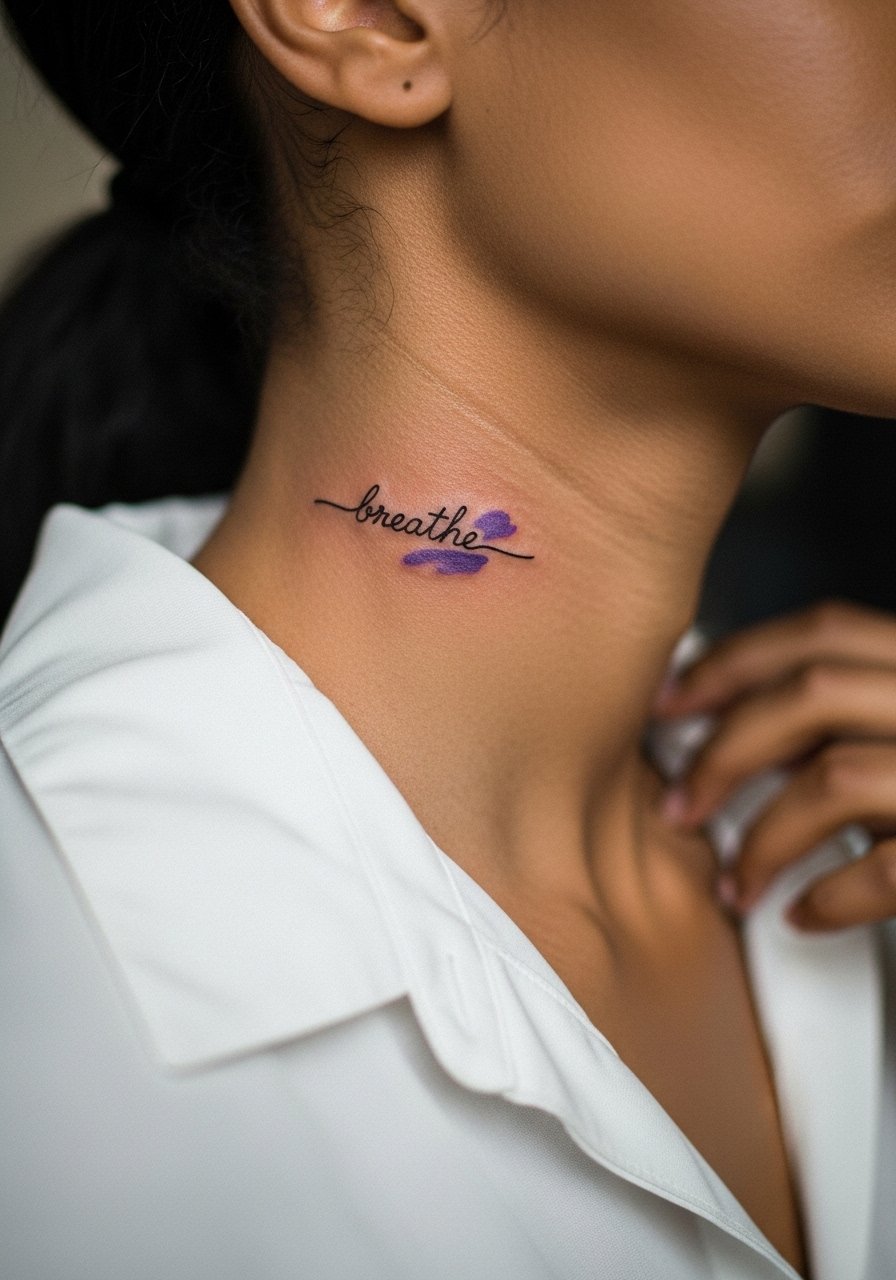
Neck placements are visible and sometimes politically charged in certain professions. Sessions are short but the area is sensitive. When including text, specify the exact word and font you want since generators often garble letters. A common mistake is underestimating visibility; choose placement slightly toward the side so collars can cover it if needed. If you want it easy to conceal at work, pick a higher collar or scarf for the first few weeks while it heals.
11. Violet Geometric Petals Along the Spine
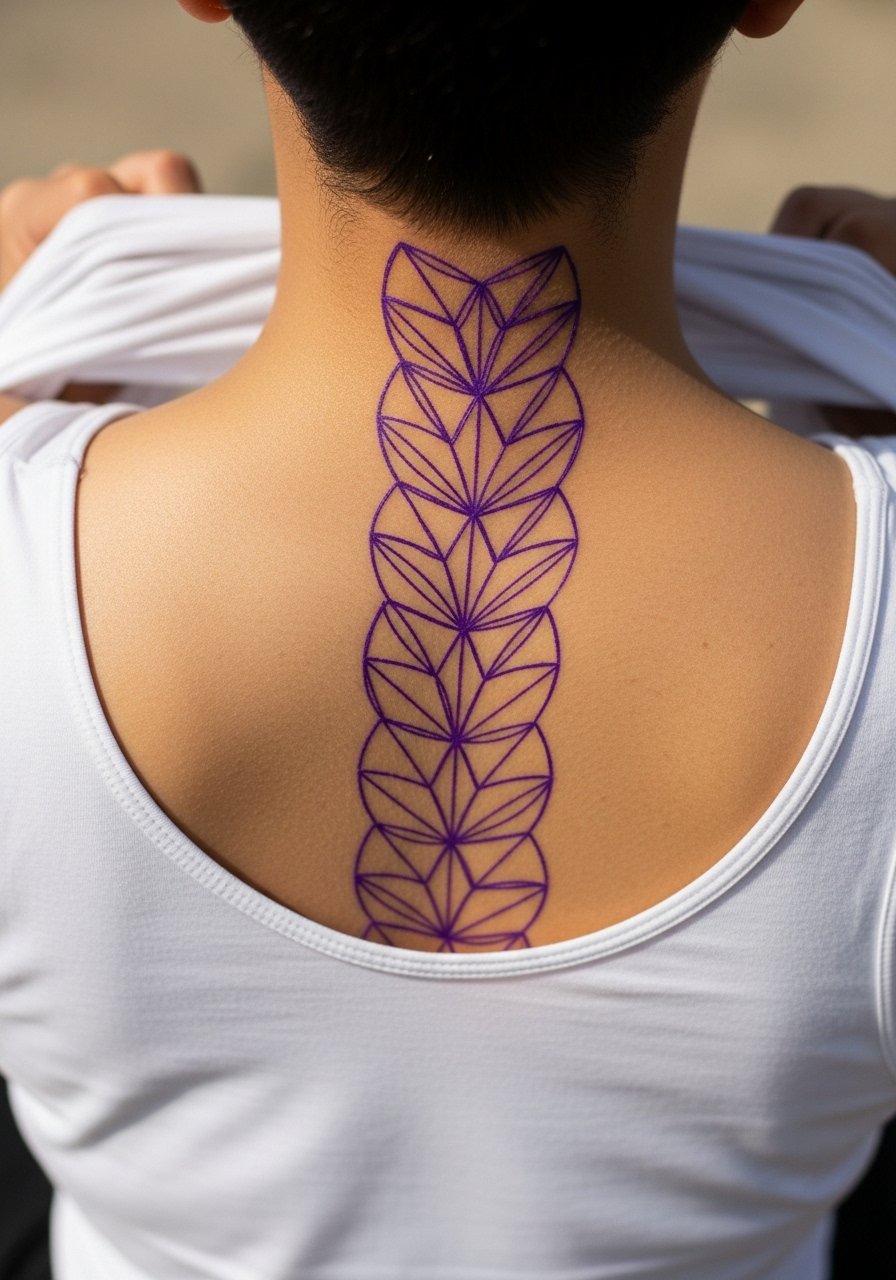
Spine pieces age differently because the skin moves with posture. Pain can be high along the vertebrae and sessions may require multiple appointments. Ask for slightly bolder anchors at the top and bottom of the sequence so the composition still reads if the midlines soften. One real mistake is asking for dense dot work right over the spinous processes where healing is slower. To highlight the vertical flow, pair the design with a thin pendant necklace that stops above the upper petal.
12. Abstract Violet Throat-Side Accent Near the Jawline
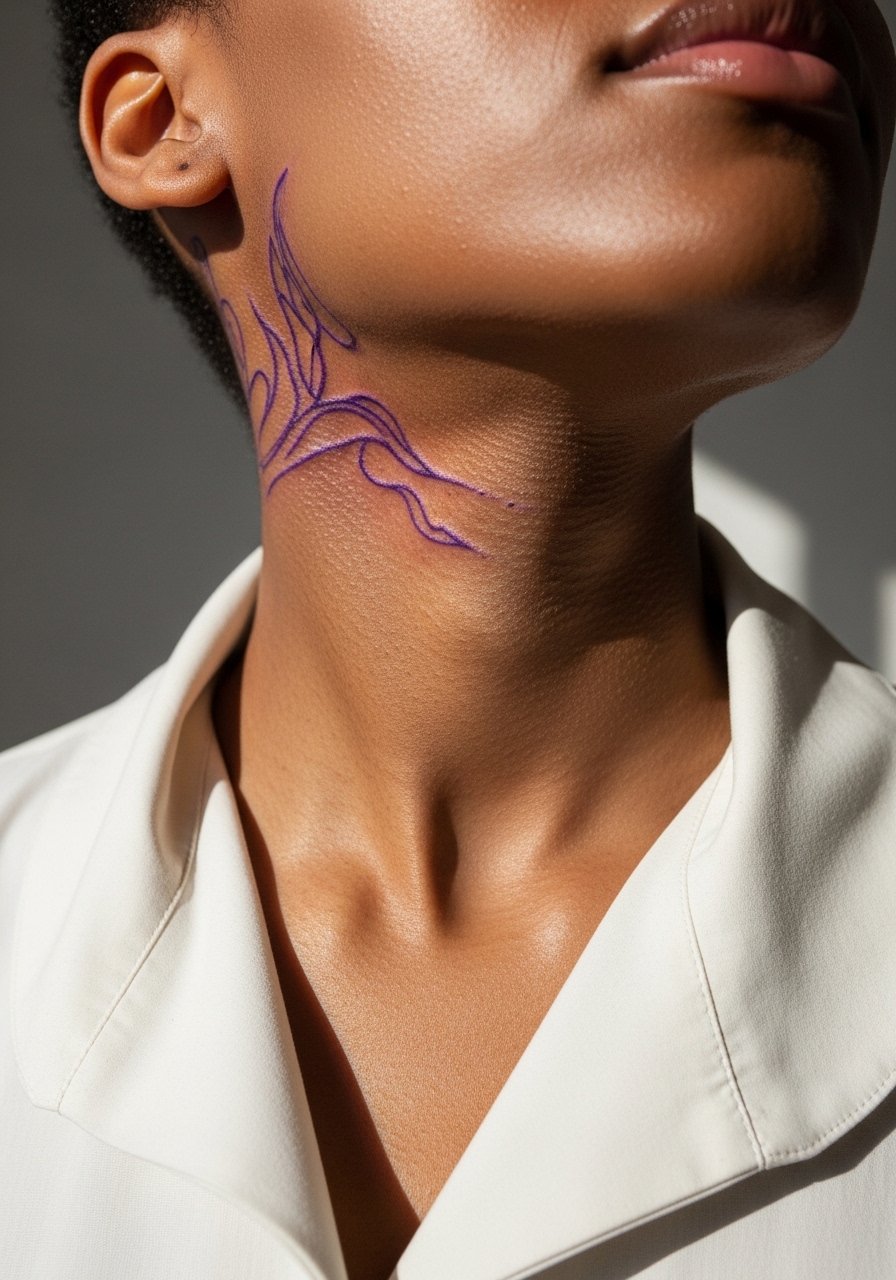
Facial-adjacent placements require careful career consideration and a specialist touch. The area is sensitive and shows small irregularities quickly. Sessions are short but the healing period can be noticeable. If you choose this placement, find an artist who regularly works near the face and ask to see healed examples. Many opt for a subtle placement that tucks behind a strand of hair so it is not constantly on display.
13. Abstract Violet Ankle Gem with Negative Space Stars
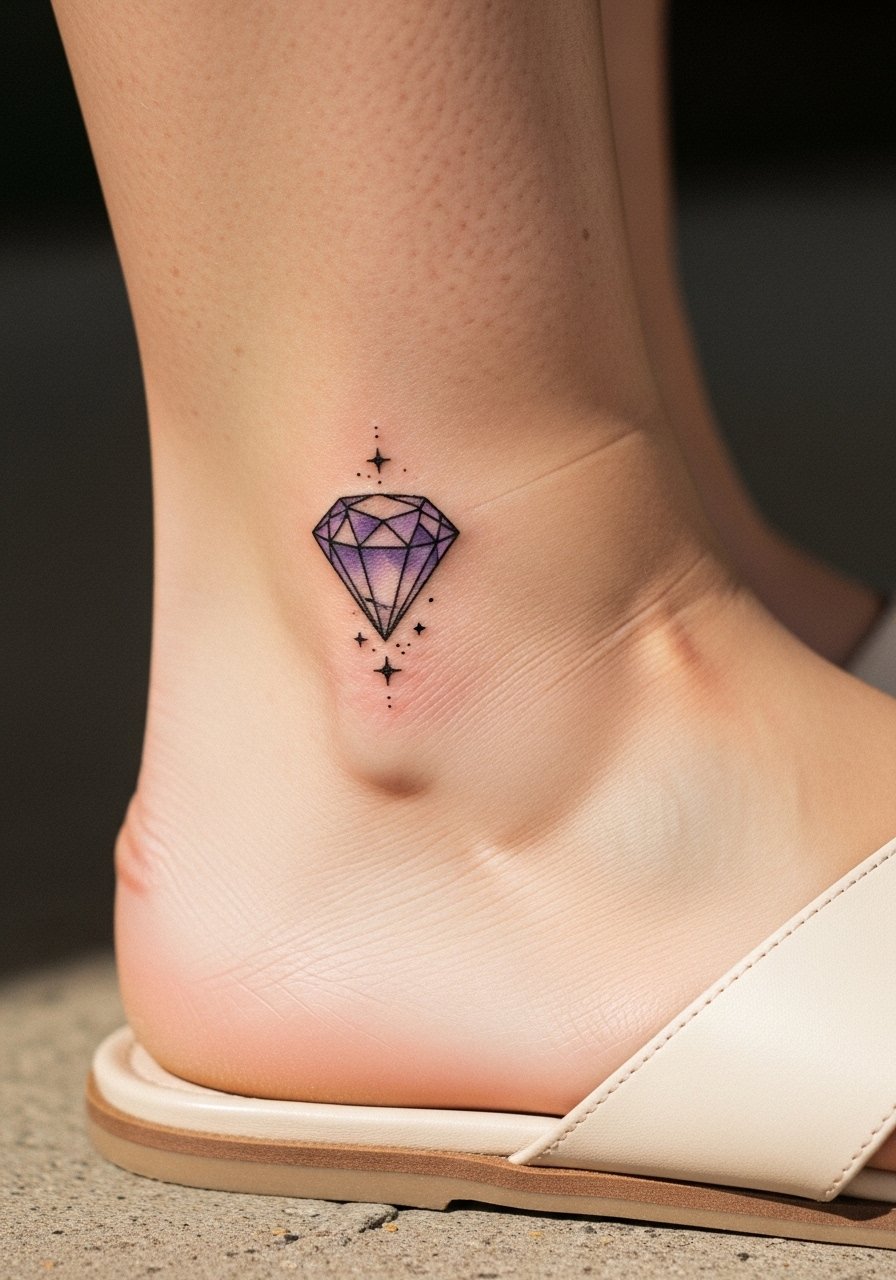
The inner ankle gets a lot of bending and rubbing, so expect a touch-up more often than for a thigh piece. Pain is moderate and sessions typically take 30 to 60 minutes. Avoid tiny dots on the sole edge where friction is constant. For outings I like pairing this low-key piece with dainty ankle chain bracelets or sandals that let it peek without rubbing.
14. Single Violet Petal on the Thumb Side
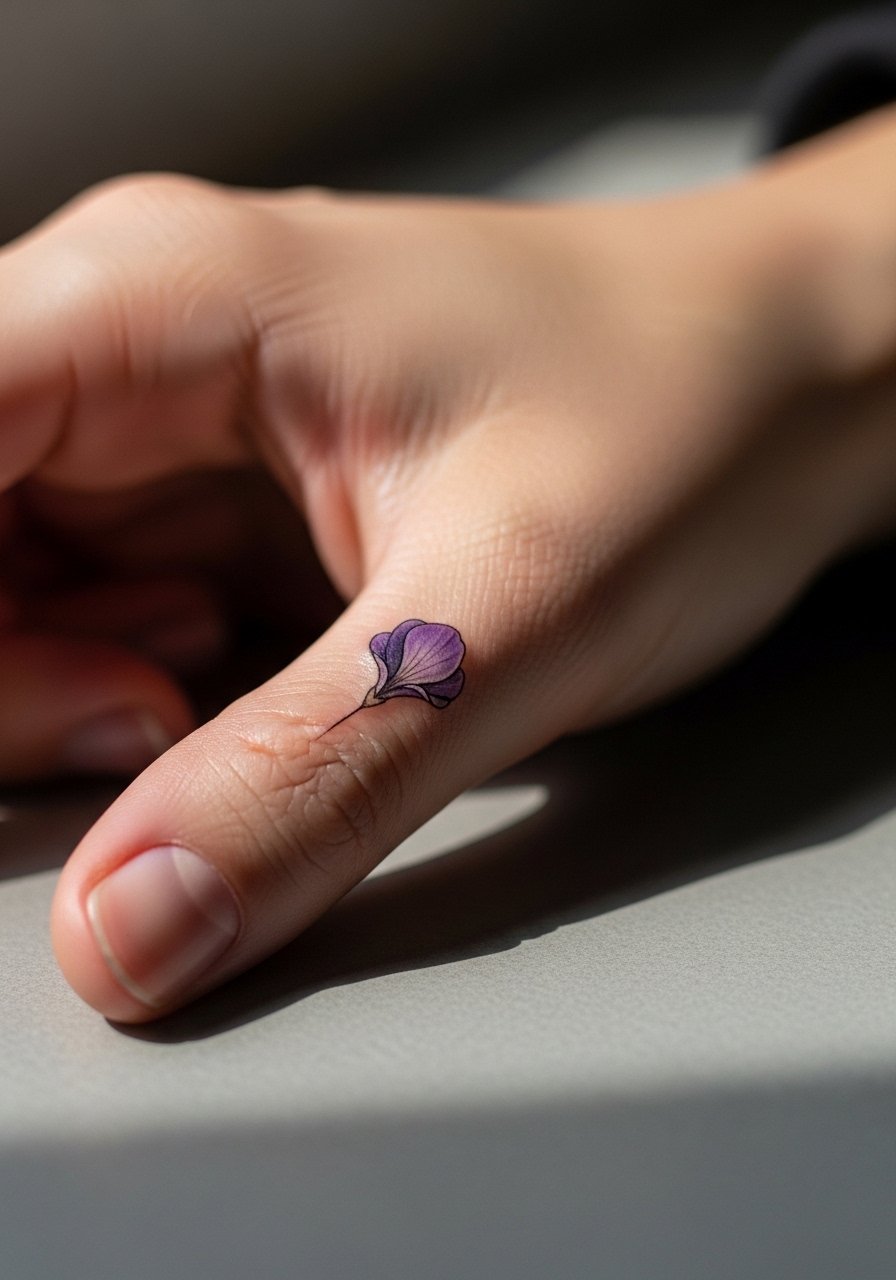
Hand and thumb tattoos face faster wear because of frequent washing and UV exposure. Pain is notable and sessions are usually quick. If you want longevity, ask for slightly stronger line anchors and expect a touch-up window at year one to two. Many people regret small hand pieces because of the maintenance, so think of this as an accessory that needs periodic attention. Also check workplace policies since hands are still visible in many professional settings.
15. Violet Cluster Over the Sternum with Open Petals
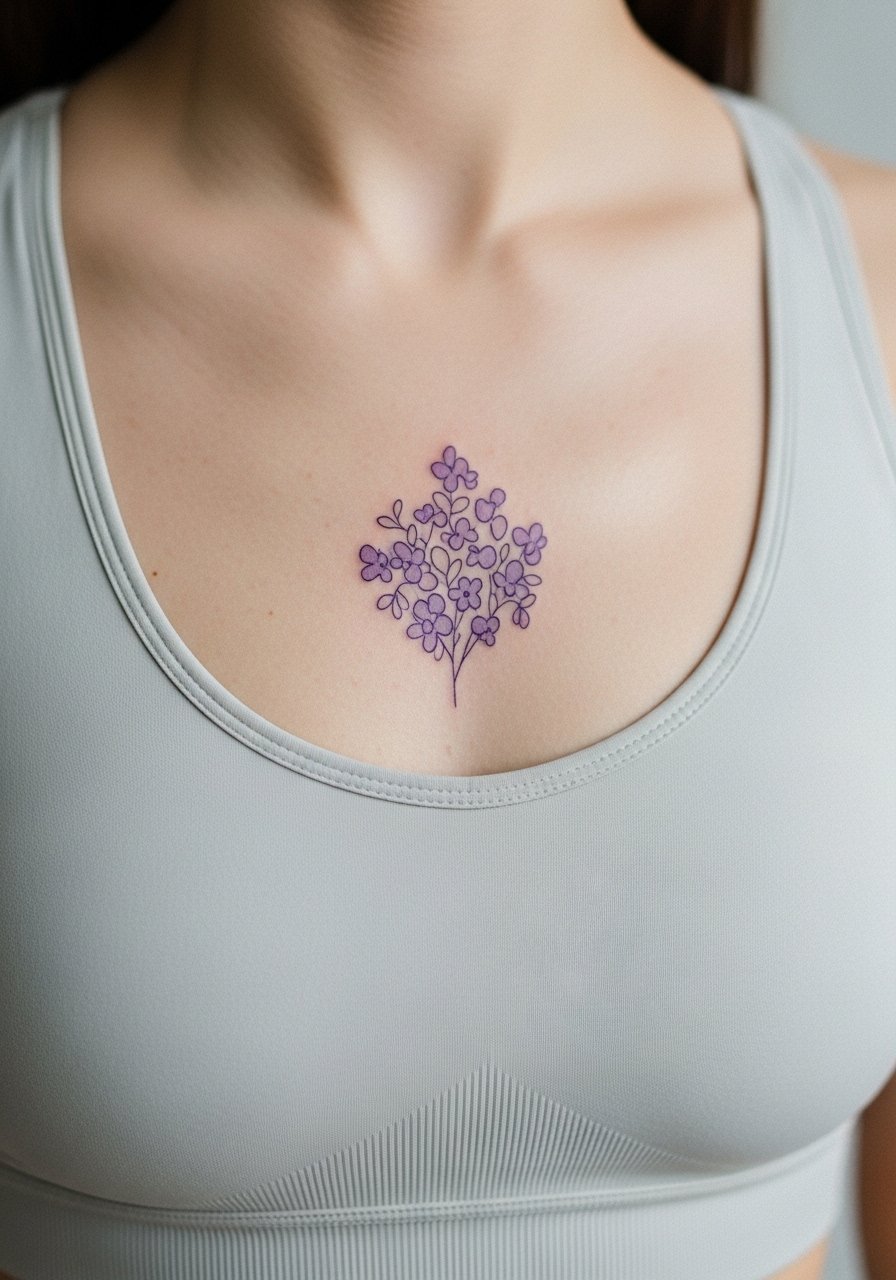
Sternum work is intimate and can be painful where the bone sits close to the skin. Sessions range from 60 to 180 minutes for larger clusters. The risk is lines migrating where the skin stretches with breathing and weight changes. Artists divide on how small to go here. One group cautions against ultra-fine work because of early blurring. The other group says with controlled depth and spacing it can last well. If you plan to show it during evenings out, an open-back or plunging top frames the area without excessive exposure.
16. Violet Linework on the Outer Calf
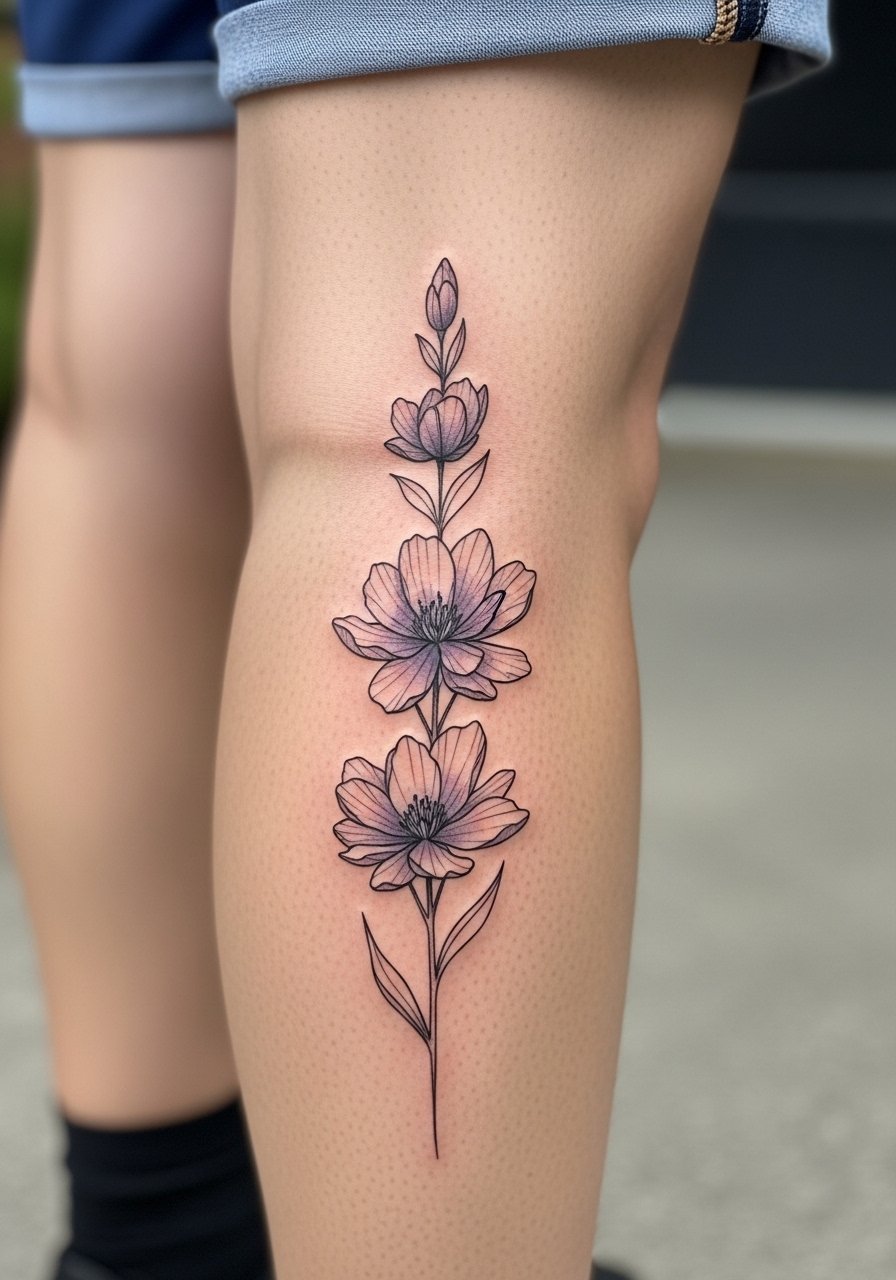
Calf tattoos heal well and tolerate more saturation, making them great for longer vertical motifs. Pain is low to moderate, and sessions can span one to three hours depending on size. Common mistakes include cramming too many petals into a narrow vertical area which reduces negative space. For athletic people, note the muscle changes with training and weight shifts. Calf pieces pair well with mid-length skirts or shorts to reveal the flow.
17. Violet Minimalist Finger Dot Bouquet
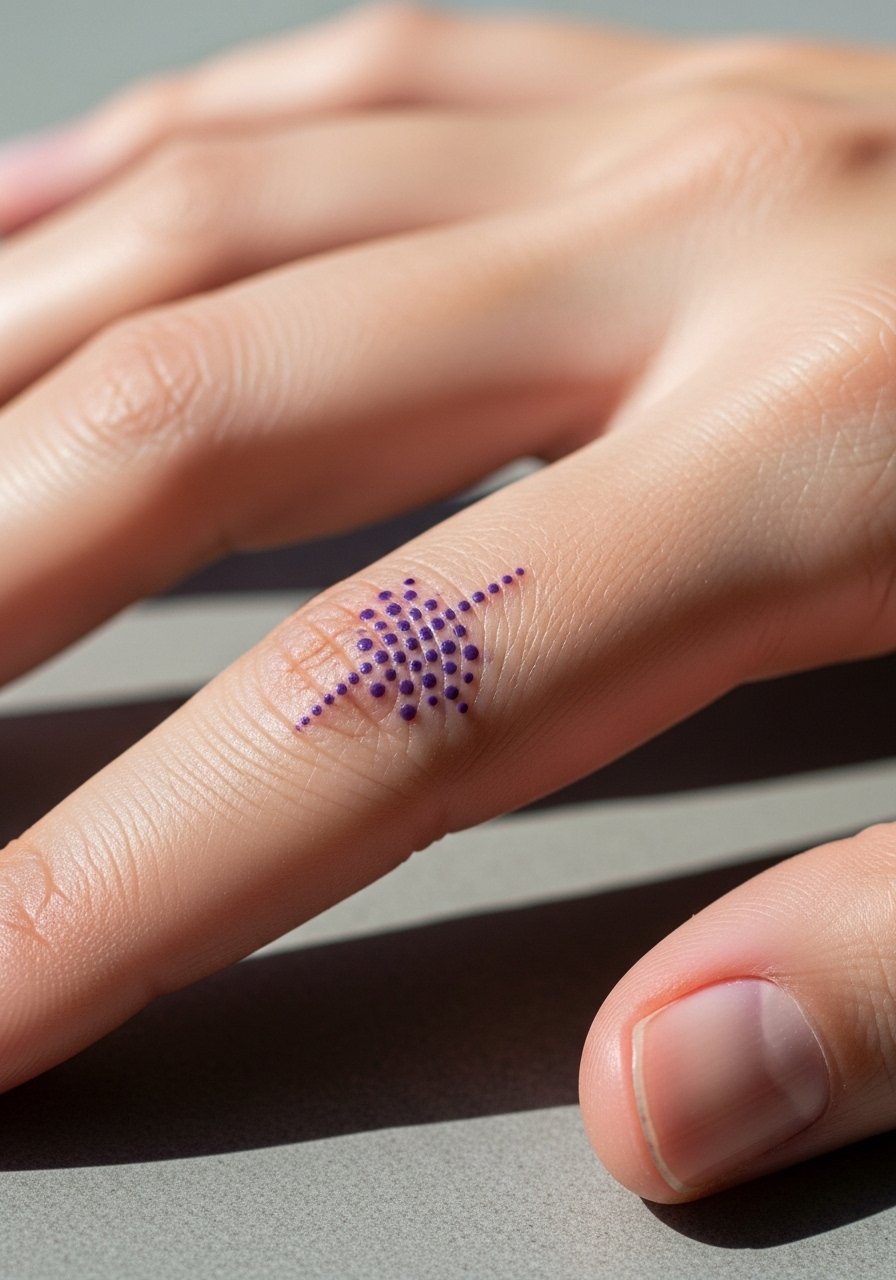
Finger tattoos are high maintenance because of constant washing and rubbing. Expect a faster fade and a likely follow-up touch-up at year one. Pain is sharp and sessions are short. Ask for slightly thicker dots and spaced composition to avoid merging. A common error is requesting dense detail which simply does not survive daily hand use. When showing off hand pieces, consider stacking thin dainty rings that echo the tattoo without covering it.
18. Violet Brooch-Style Piece on the Upper Arm
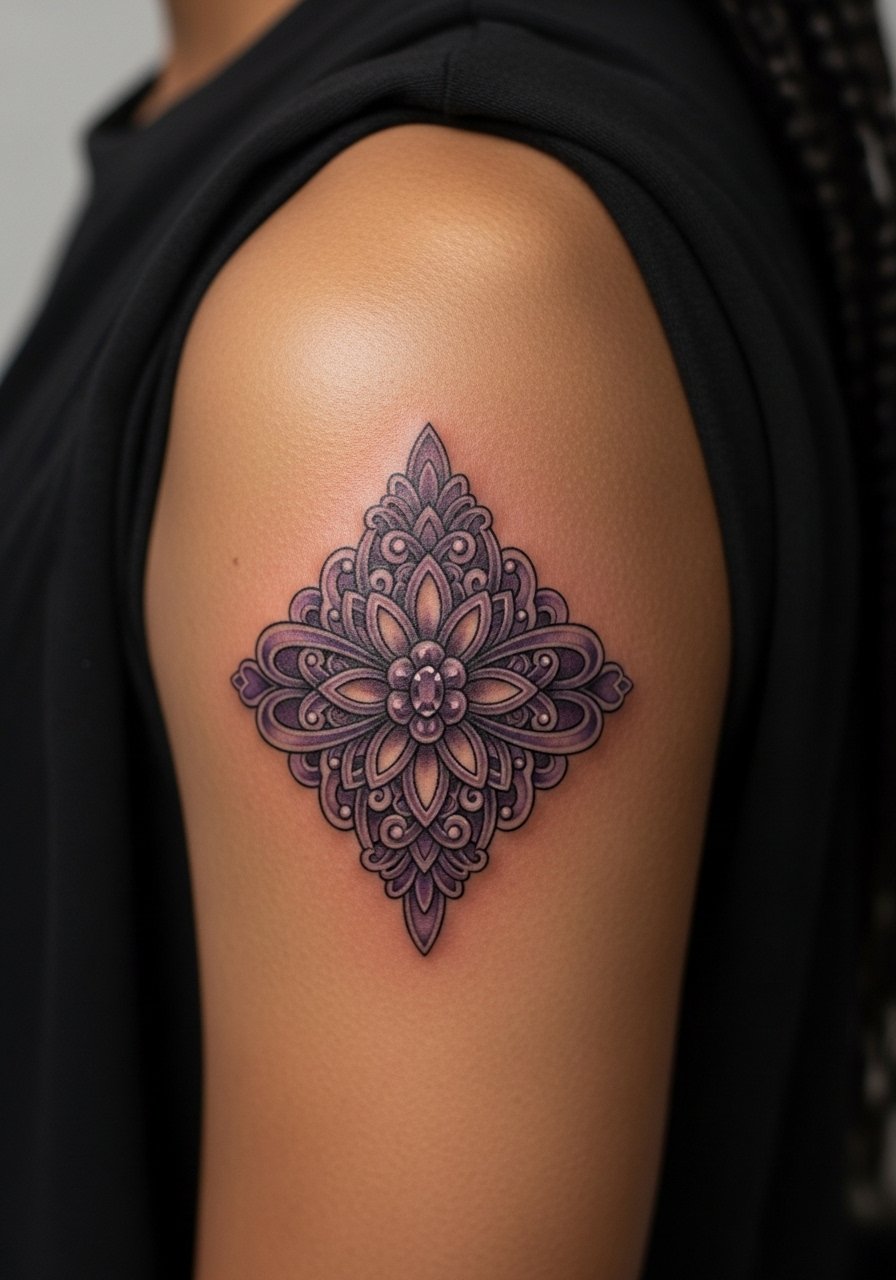
Upper arm tattoos are forgiving and age relatively well if you avoid very fine interior detail. Pain is moderate and sessions range 60 to 120 minutes based on complexity. For a brooch aesthetic, ask for strong outline anchors and mid-level saturation so it photographs cleanly over time. The frequent mistake is asking for thin inner filigree that disappears. For daytime wear, a sleeveless linen top shows the upper arm without constricting healing.
19. Abstract Violet Nape Motif Between the Shoulder Blades
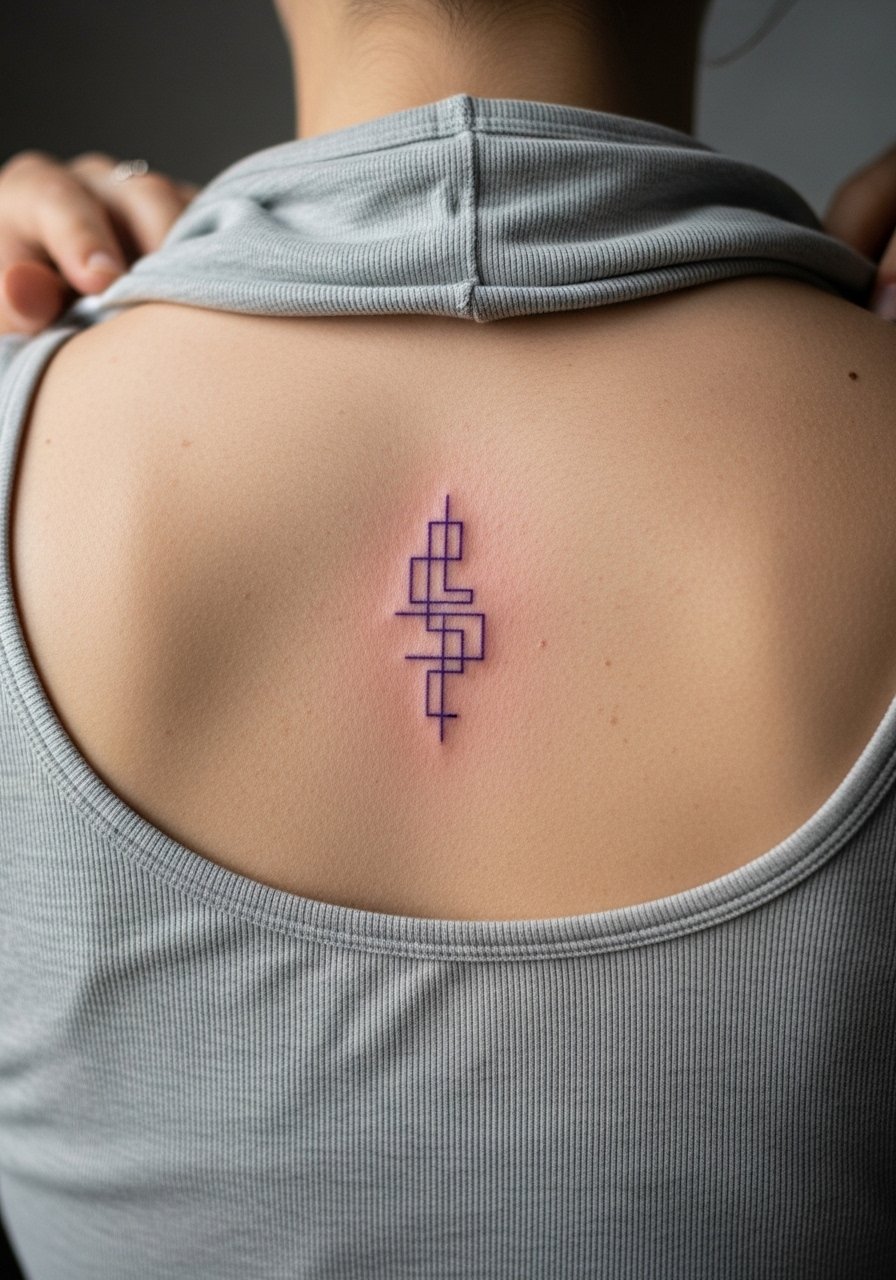
This placement is subtle and often covered by hair or clothing. Pain is moderate and sessions are usually short. A key recommendation is to keep the central motif compact so it maintains shape when the shoulders move. A common mistake is overextending the design into the shoulder blades where motion blurs detail. For nights out try an open-back top that frames the nape motif without exposing the whole back.
20. Violet Petal Cluster for the Hip Crease
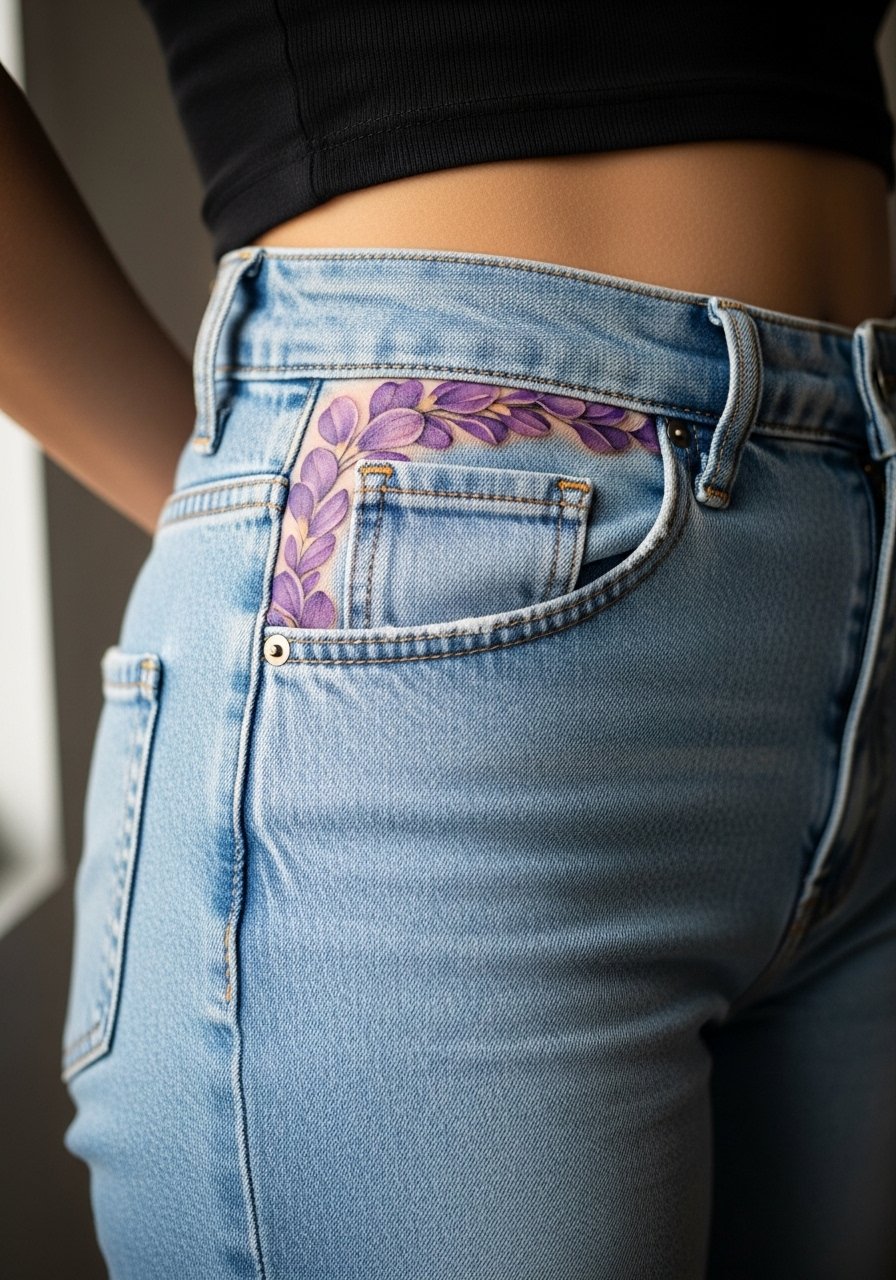
Hip tattoos sit in a movement-heavy zone and often require careful mapping. Pain ranges moderate to high and sessions can be split to manage tenderness. The most common mistake is compressing detail into the curve where stretch and clothing pressure live. Consider slightly bolder anchors and leave airy negative space to preserve form. For the appointment wear high-waisted jeans you can lower a touch without affecting the rest of your clothing.
21. Violet Single Bloom on the Upper Thigh
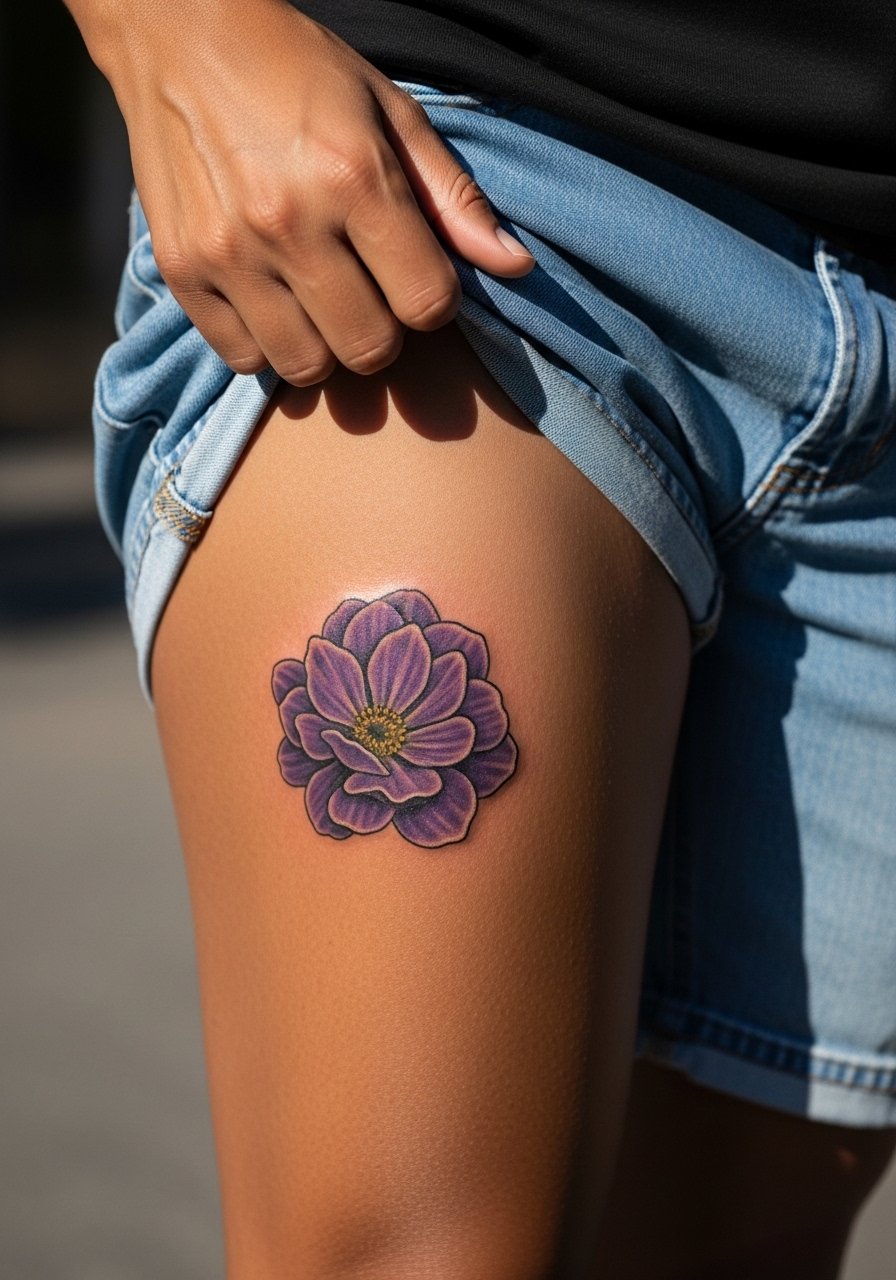
Upper thigh is ideal for larger pieces and tolerates saturated color well. Pain is lower than hip or ribs and sessions may run multiple hours. Tell your artist if you want the piece to be visible when wearing swimsuits or strictly for private viewing. A typical mistake is underestimating how the piece sits when pants are pulled down slightly. For the session pick loose bottoms like drawstring linen pants that you can shift comfortably.
22. Violet Tiny Mandala Petal on the Heel Edge
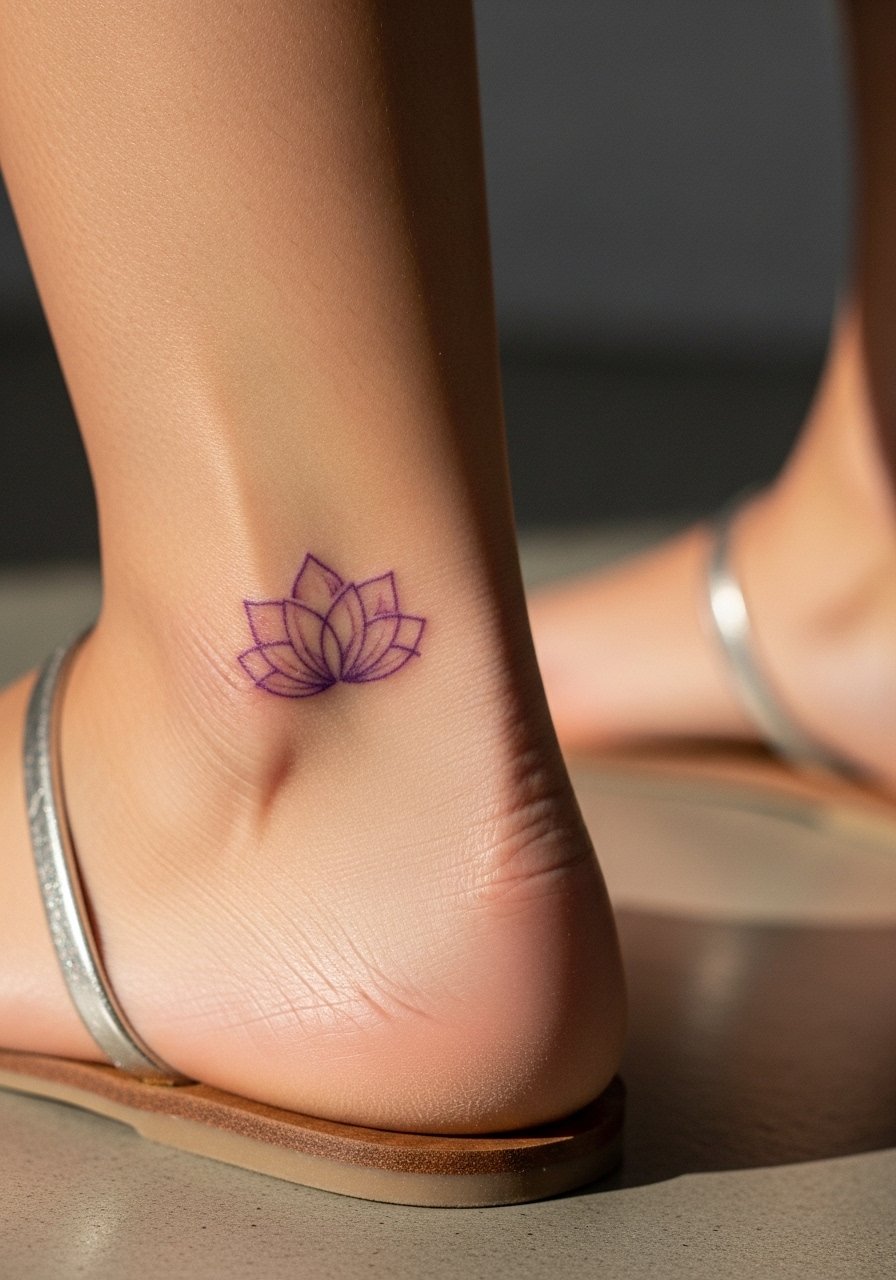
Foot and heel placements face heavy wear and slow healing due to walking and socks. Expect potential fading and a likely touch-up. Pain can be high because of thin skin and proximity to bone. A common error is choosing dense detail that the foot simply cannot hold long-term. If you want a durable result, opt for bolder anchors and plan for a follow-up. For beach days a simple sandal keeps the area cool and reduces rubbing.
23. Violet Fine-Line Hoop Around the Upper Arm Bicep
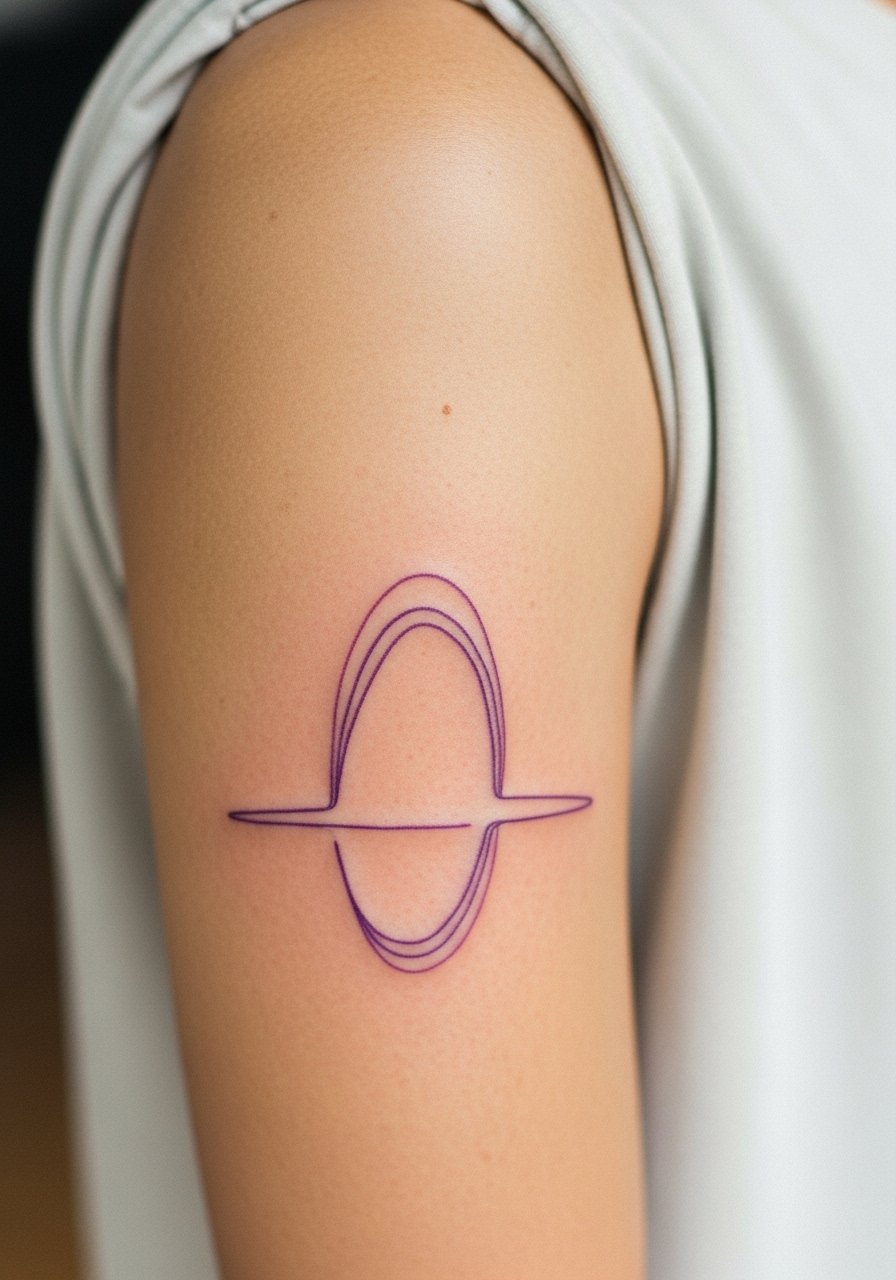
An upper bicep hoop benefits from the muscle's lower movement and usually heals cleanly. Pain is low to moderate and sessions are often 45 to 90 minutes. The mistake I see is making the hoop too thin for the skin type, leading to quicker fading. Recommend slightly stronger line anchors and ask about touch-up timelines. Show it off with a sleeveless summer tee that keeps attention on the circular flow without competing prints.
24. Violet Abstract Spray Across the Lower Back

Lower back ink has to contend with clothing pressure and sitting. Pain is moderate and sessions depend on the spray area, often one to three hours. People often forget that waistbands sit right over this zone which can cause irritation during early healing. Ask for a slightly tapered lower edge so seams do not hit the most detailed areas. For outings a low-rise skirt or high-waisted trousers can help the piece peek out without constant contact.
25. Violet Single Long Stem Along the Forearm Inner Edge
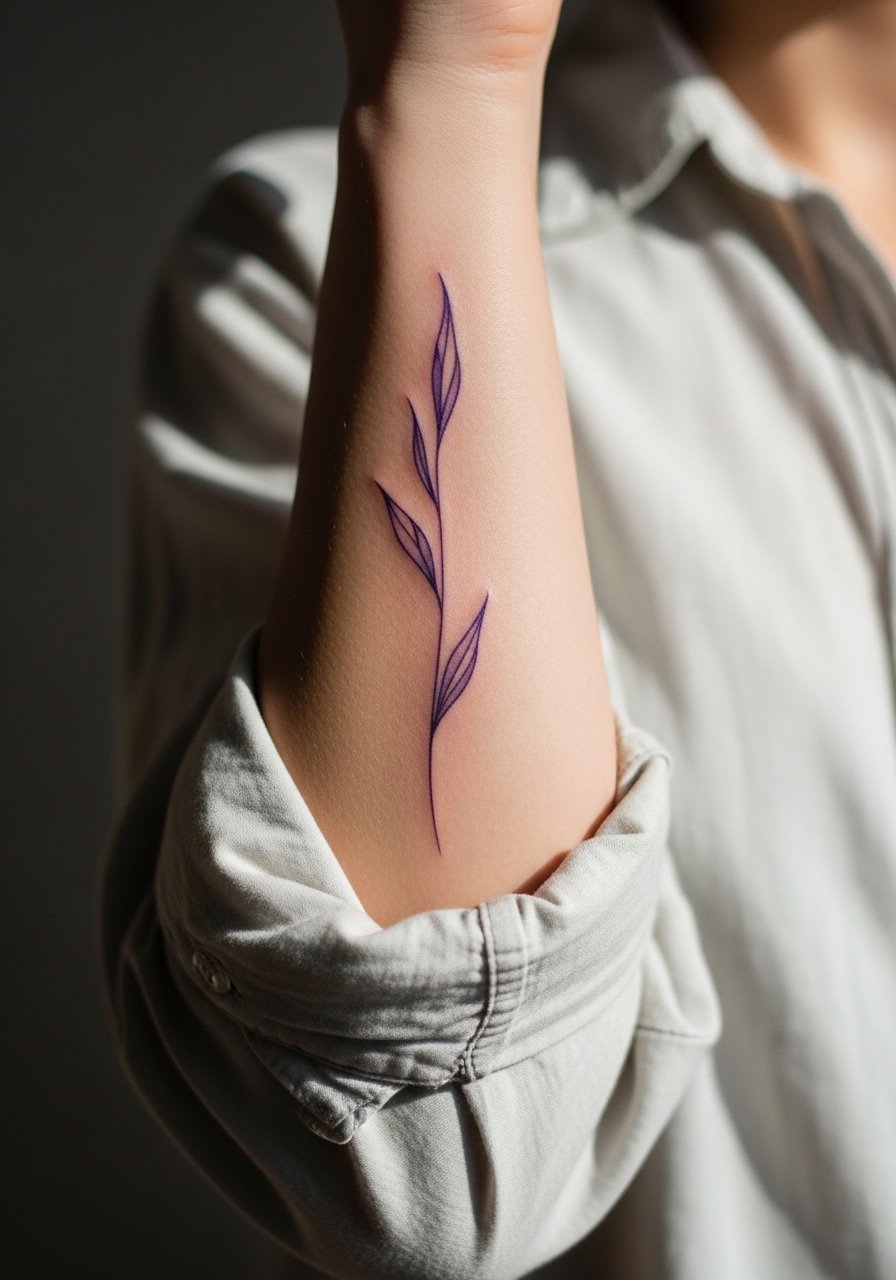
Inner forearm is one of the most reliable spots for line clarity and longevity. Pain is lower and sessions are often 45 to 90 minutes. The key is to ask for consistent line depth rather than micro-variations that disappear as skin ages. A common mistake is piling tiny cross-hatching into the stem which clouds simple linework. For an everyday look pair the stem with a rolled-sleeve linen shirt that frames the inner forearm naturally.
26. Violet Micro-Realism Seed Head Near the Clavicle
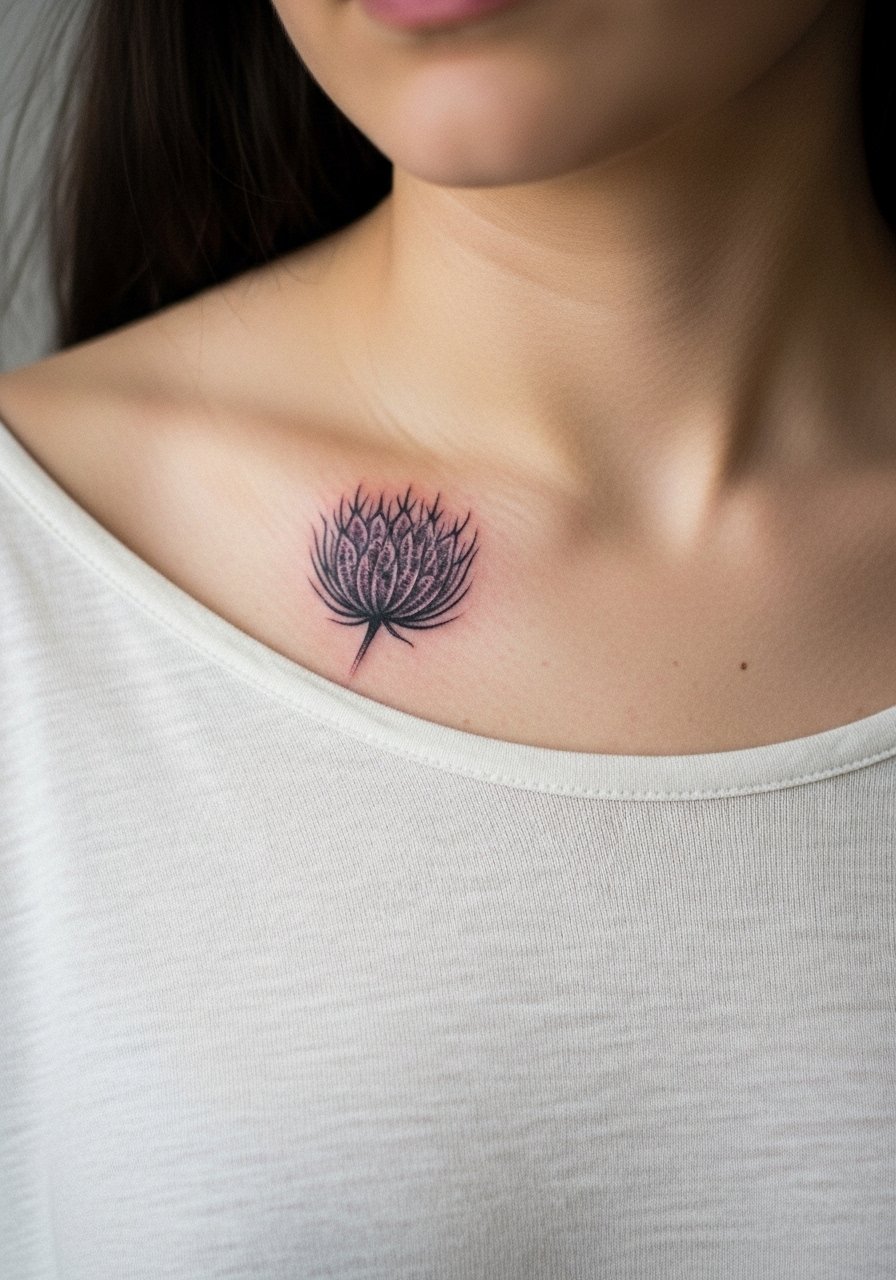
Clavicle placements can show sharply but are influenced by collarbones and clothing. Pain is moderate and sessions often under 90 minutes. Ask for slightly heavier anchors at the base of the seed head to prevent early softening. People sometimes pick too much internal texture which blends after a year of sun exposure. A thin chain pendant in the collar area complements this placement without covering it.
27. Violet Abstract Bouquet Along the Side Rib to Hip Line
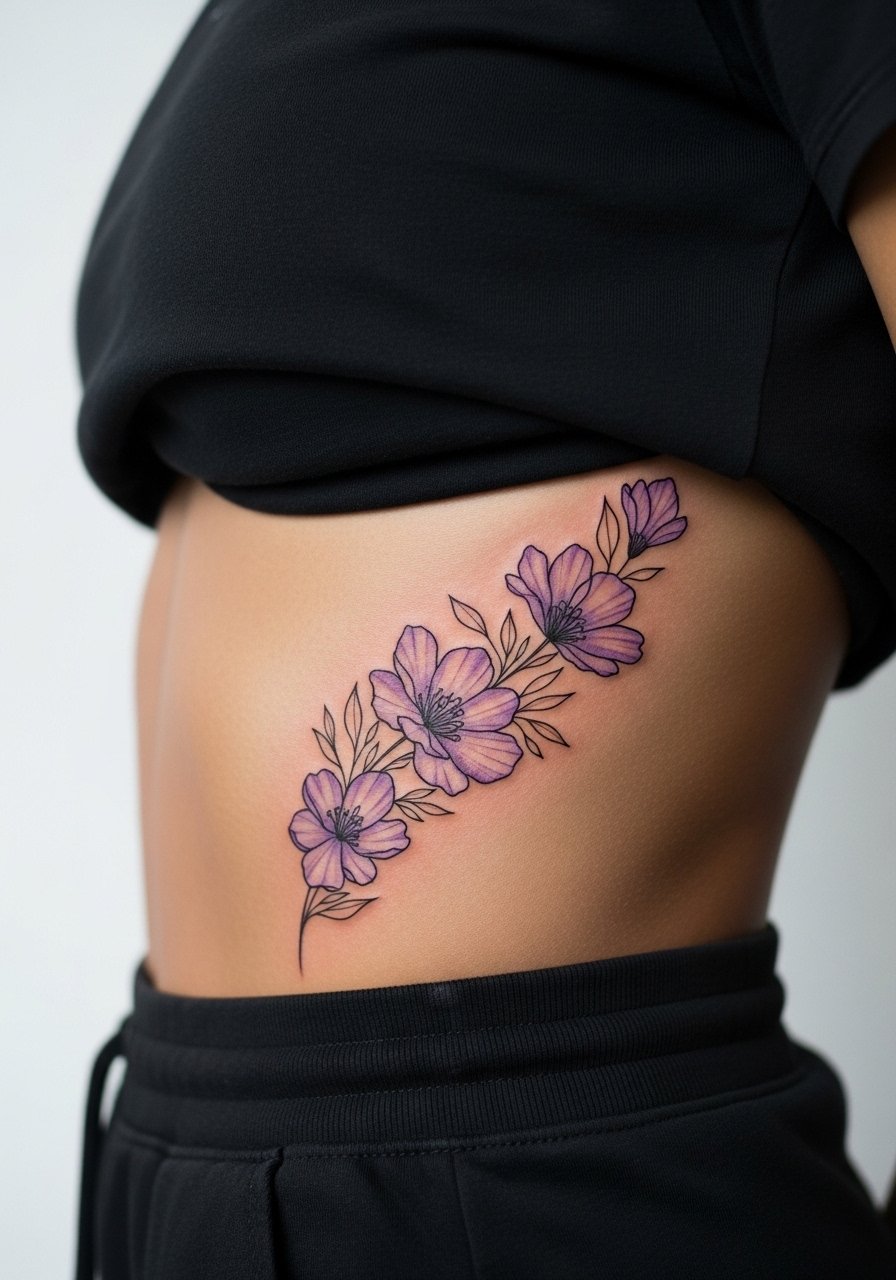
Side torso work reads beautifully when scaled to skin movement, but it ranks high on pain and may take multiple sessions. Expect touch-ups in a couple of years for ultra-fine details. The main mistake is compressing too many petals so that the piece loses its silhouette when you move. Artists split on whether very fine lines on ribs hold long-term. One group cautions about skin stretch and recommends bolder anchors. The other group says careful spacing solves the issue. For the session pick a cropped tee you can lift without rubbing the area.
Frequently Asked Questions
Q: Will fine line abstract violet pieces on wrists and fingers need touch-ups sooner than those on the forearm?
A: Yes, from what I have seen the high-friction, high-wash zones like wrists and fingers tend to fade faster than forearms. Expect a touch-up at year one to two for finger work and possibly year two to three for wrist pieces, depending on sun exposure and how often the area is scrubbed.
Q: How should I dress to make a ribcage or sternum session easier for both me and the artist?
A: Wear a fitted sports bra or a cropped top you can shift that does not slide over the tattoo zone. It helps to bring loose bottoms you can lower slightly. If you want a specific suggestion bring a fitted sports bra you are comfortable moving in.
Q: Are watercolor-style violet tattoos a bad idea for places like the ankle or hand?
A: Watercolor edges need space and low friction to keep their soft look. On ankles and hands the thin washes often break up into uneven patches. If you want the watercolor effect in those spots, ask your artist to translate it into slightly more defined washes with anchor points so it reads as intended after healing.
Q: Do rib and sternum tattoos age differently and should I choose a different style for longevity?
A: They do behave differently because of stretch and proximity to bone. For longevity, avoid ultra-fine dense detail on sternum and ribs. Slightly stronger line anchors and open negative space help these areas stay readable longer. Expect to discuss trade-offs with your artist and plan for a touch-up window.
Q: Can I get a violet tattoo that looks good across different skin tones?
A: Yes, violet translates well but saturation choices matter. On darker skin tones slightly deeper saturation and stronger anchors help the petals read. On lighter skin tones softer stipple and pale washes can work. Ask an artist who has healed examples on similar skin tones.
Q: If I want a subtle back piece that is easy to conceal, what should I pick?
A: A compact motif centered between the shoulder blades or a small upper spine sequence stays easy to hide under T-shirts. For show-off options pick open-back garments. A lightweight open-back top is a simple wardrobe piece that lets the tattoo peek out when you want it to.