
Fine line florals are the look everyone saves and talks about on appointment nights, but they do not all age the same on the hand. Hands move constantly and live through water, soap, sunlight, and friction. Picking the right size, spacing, and needle rhythm from the start makes the difference between a piece that needs yearly touch-ups and one that still reads clean after three years. Below are 27 small flower hand ideas with what to ask for, what to avoid, and how to style each placement.
1. Tiny Micro-Rose on the Side of the Index Finger
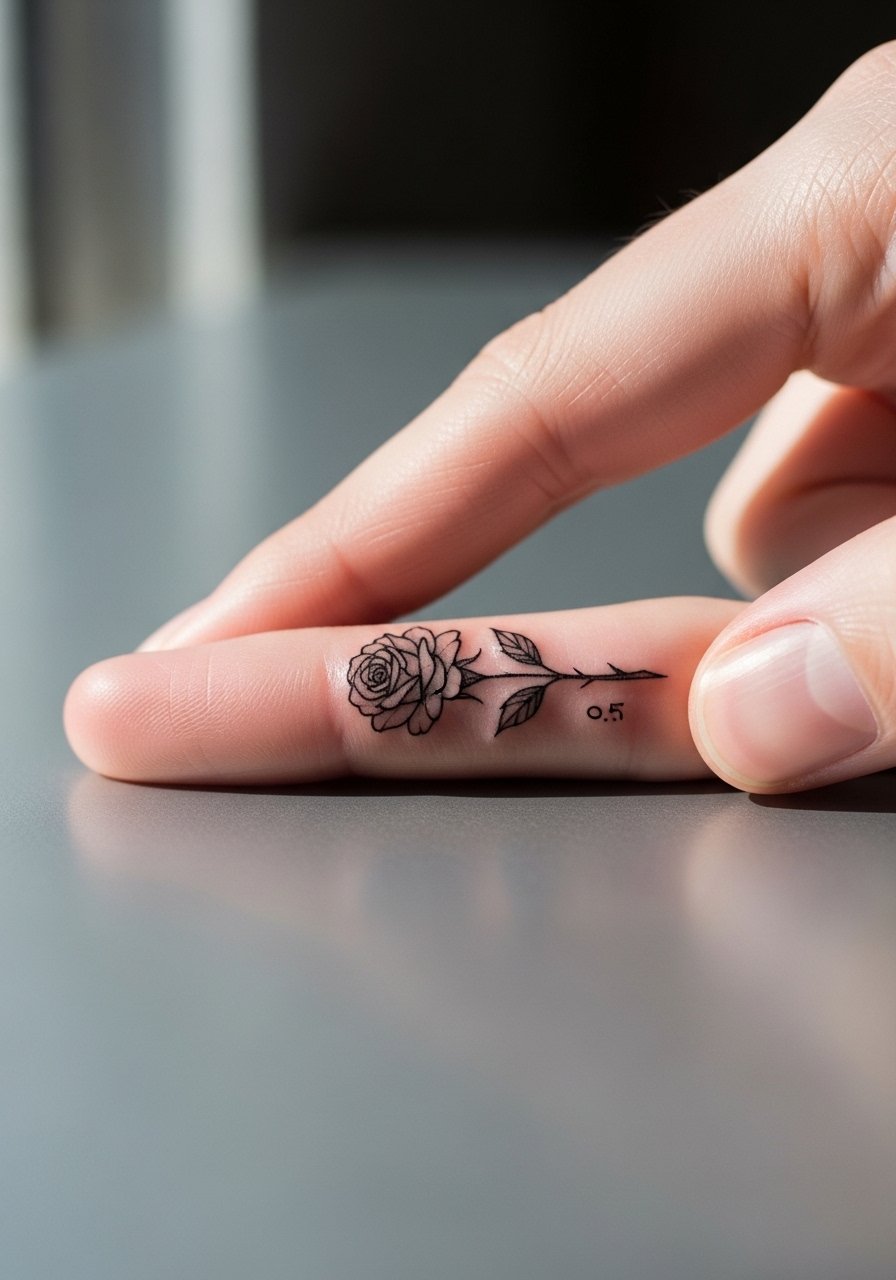
I recommend this when you want a flower that reads private in most hand positions. Expect a short session under 30 minutes and a fair amount of sting because the side of the finger is thin. Ask your artist for slightly bolder linework than your tablet photo shows so it retains shape once healed. Common mistake is asking for ultra-thin lines that turn patchy by year two. Blowout risk is elevated on fingers, so spacing and slightly heavier lineweight prevent ink spread. For showing it off, stack with a thin chain ring on nearby fingers to guide the eye without crowding the tattoo. Hand tattoos can influence workplace reactions, so consider your job before booking.
2. Single Daisy Above the Knuckle
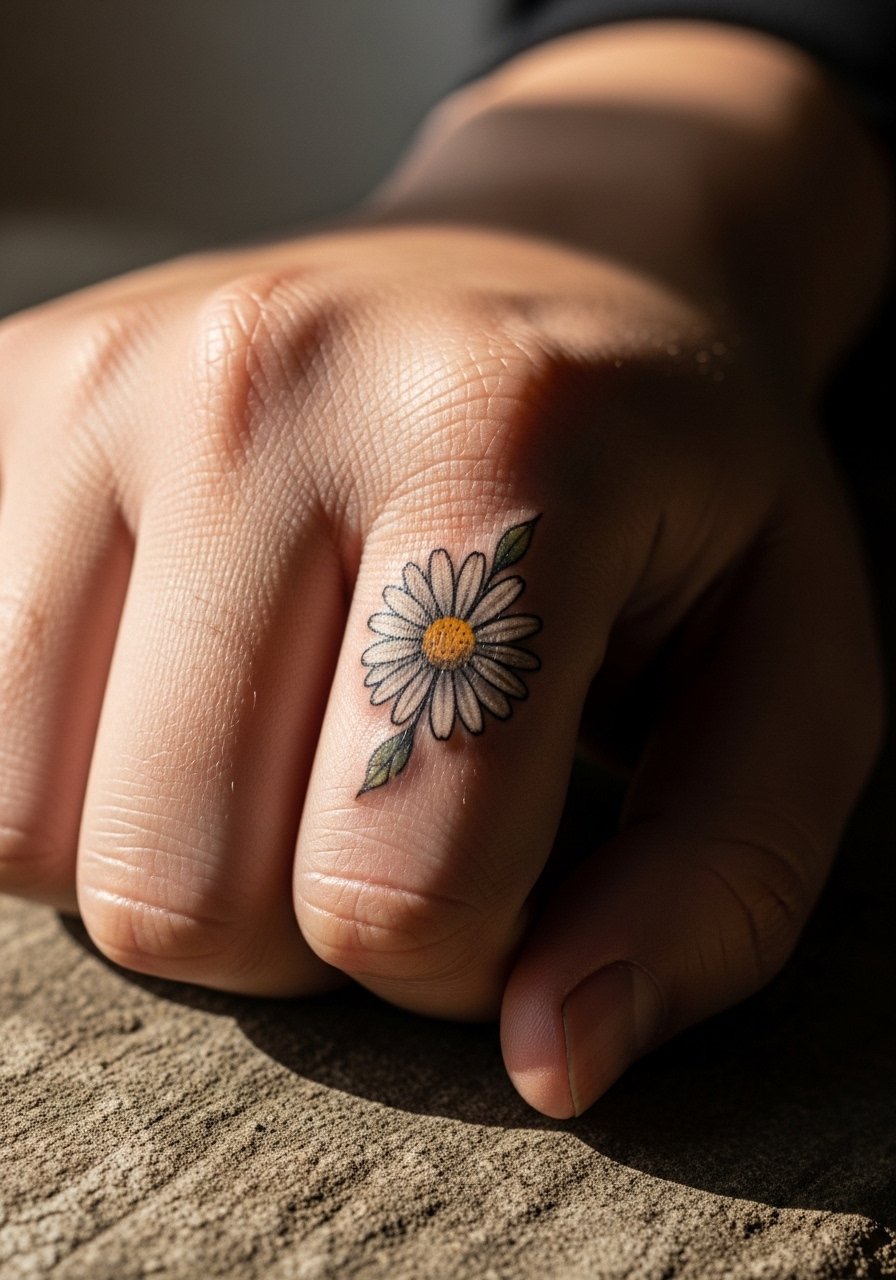
This placement is bold for its visibility, and the knuckle area takes more touch-ups than flat hand skin. The session is quick, often one pass with spot shading. Tell the artist you want negative space between petals so the daisy does not merge into a blur as it migrates outward. A common error is cramming too many petals into a tiny spot. Healing at six months will still show crisp contrast, but expect softening by year two. Wear a light cotton glove on travel days to reduce scabbing snagging during the first week. Knuckle work ages fast, and many artists split on recommending it for full-time professionals. Name both camps and ask where your artist stands.
3. Minimalist Tulip on the Thumb Side
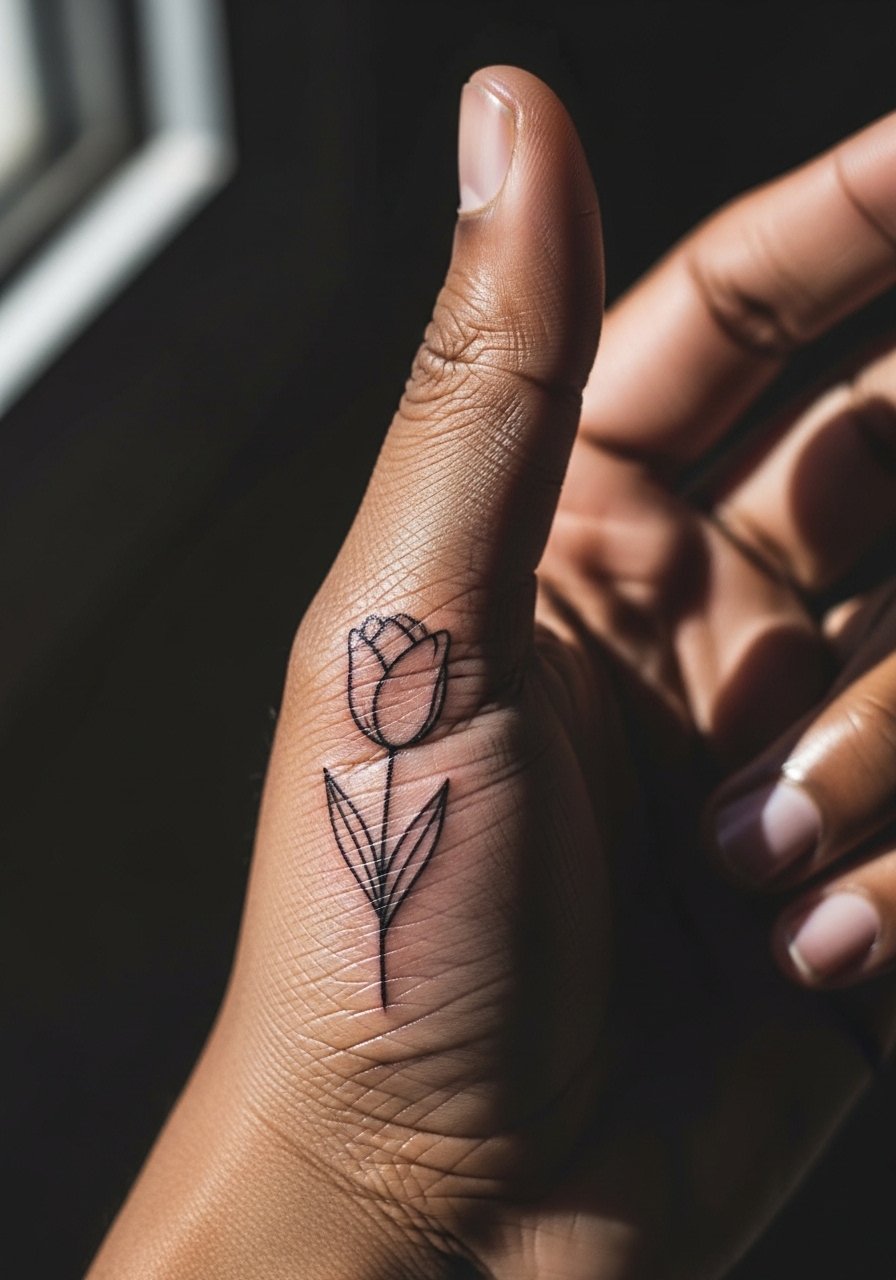
The base of the thumb sees a lot of movement, so this is a good spot for a small motif that follows natural lines. Pain is moderate and the session usually runs 30 to 45 minutes. During consultation, show the silhouette of the tulip you like and ask for clean negative-space leaves so the shape holds as the skin flexes. A frequent mistake is requesting tiny script next to the bloom, which blurs faster than linework. Expect more frequent touch-ups than forearm pieces because of repeated washing and friction. For shows, pair with a minimalist leather bracelet that sits below the tattoo and frames the thumb without covering it.
4. Lateral Vine Along the Side of the Hand
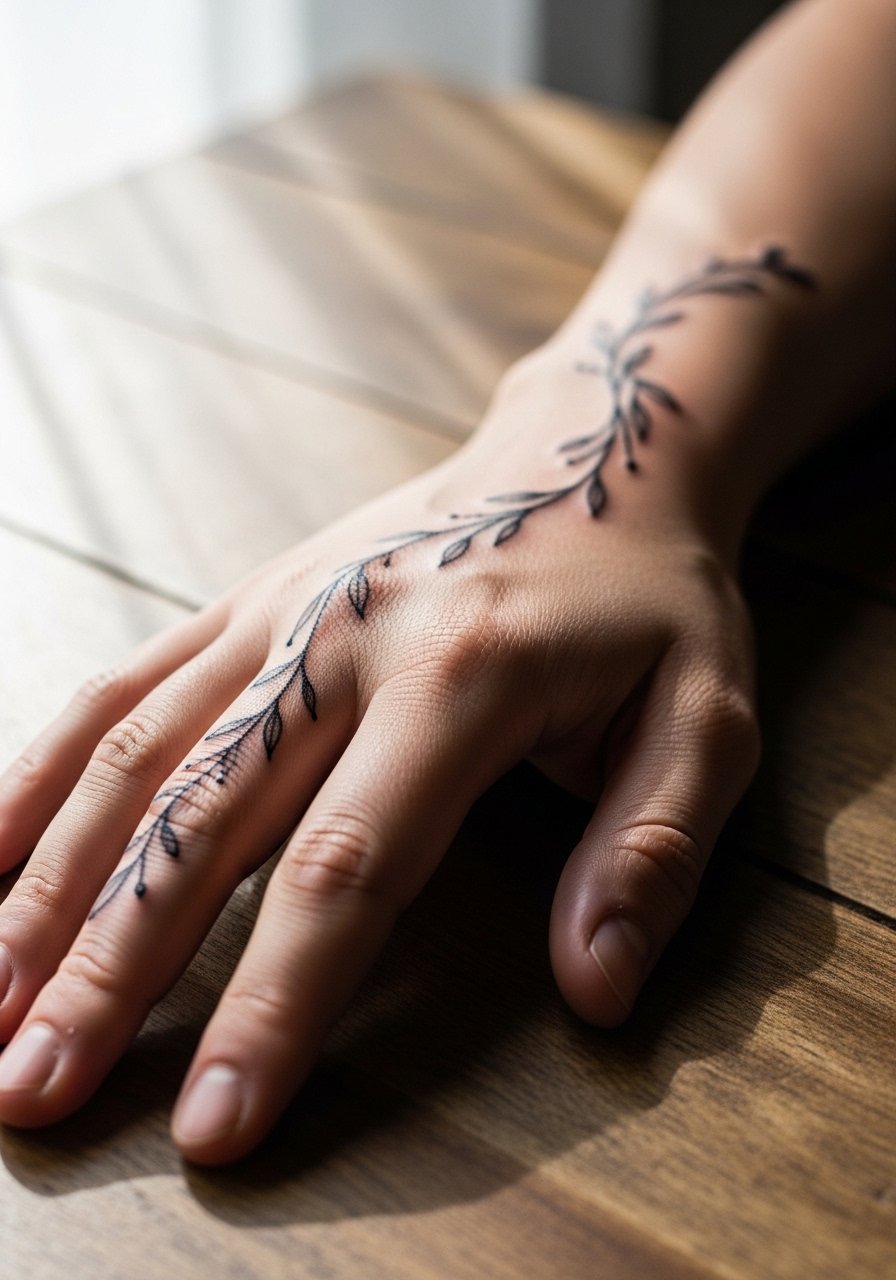
This elongated layout is flattering on narrow hands and reads like jewelry when inked with thin linework and tiny leaves. Expect a one-hour session with stipple shading in the joints for texture. Tell your artist you want spacing between leaf clusters so the design can age without merging. The mistake I see is compressing detail into the wrist joint, which smooths into a dark patch. At six months the vine should keep crisp stems, though small leaves will soften at year three. For showing it off, roll your sleeve and wear a short-sleeve linen top to let the vine read as part of your outfit.
5. Micro-Lotus on the Web Between Thumb and Index
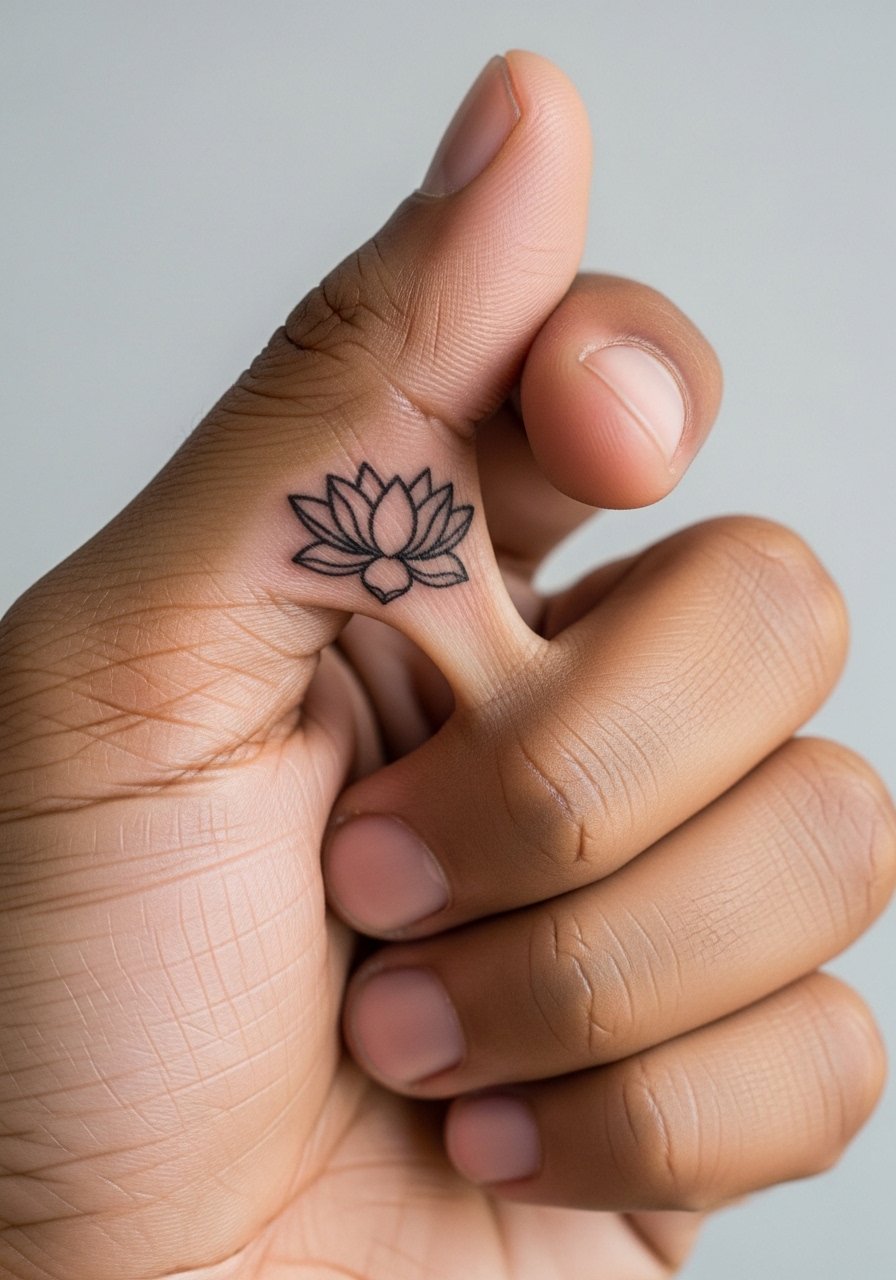
Web tattoos take extra care because the skin there is thin and mobile. The session can be uncomfortable and may involve short breaks. Ask for slightly simplified petals so the design does not lose definition as fluids settle. A common mistake is asking for heavy shading in the web, which becomes muddy. Expect touch-ups within the first two years because of constant stretching. For the appointment, throw on a short-sleeve button-down you can move around the shoulder so the artist has clean access. Hand placements like this spark debate about longevity. One camp says the web heals unpredictably. The other camp says deliberate spacing and controlled saturation handle it well. Ask your artist which approach they prefer.
6. Tiny Forget-Me-Not Cluster on the Back of the Hand
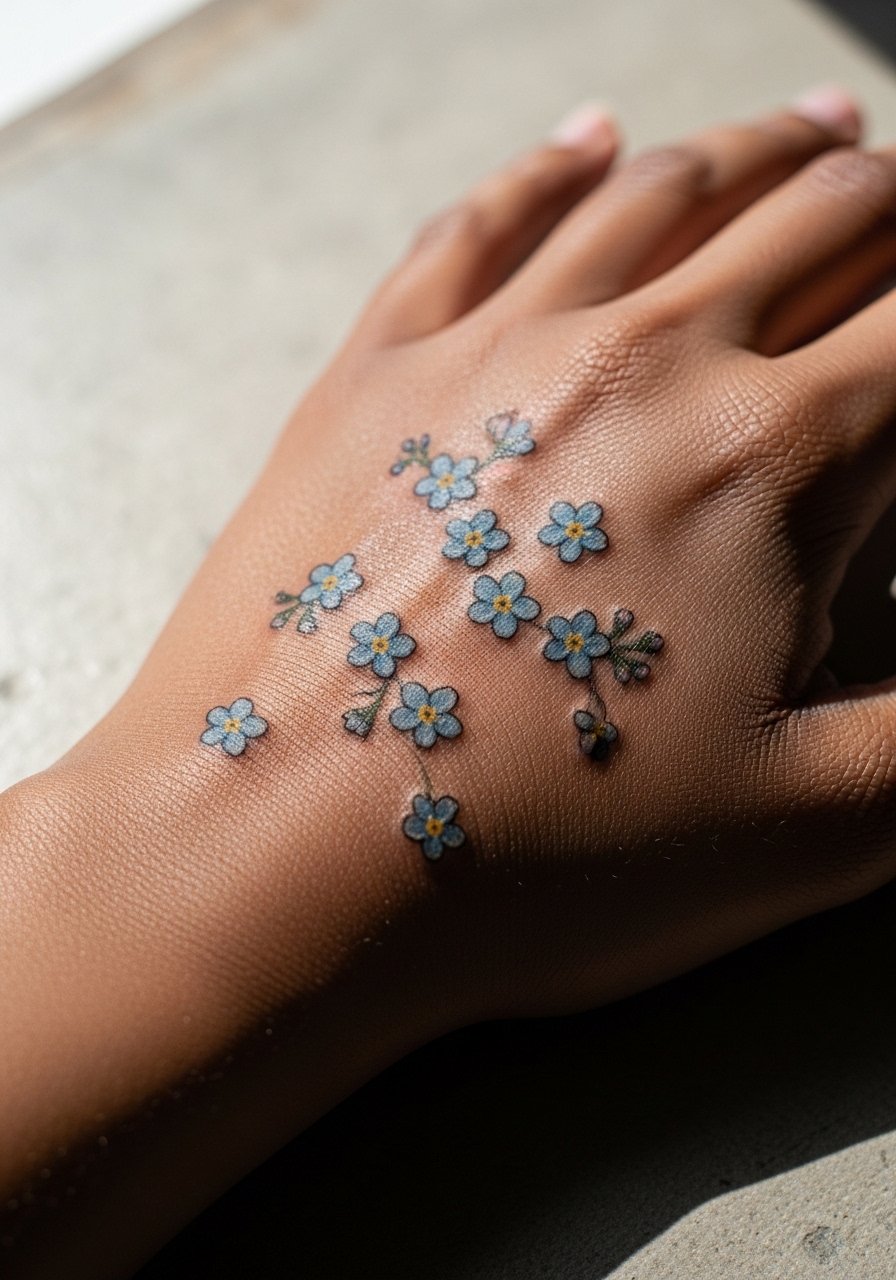
A small cluster reads soft and feminine without dominating the hand. Sessions run 30 to 50 minutes depending on dot work density. Tell your artist you want light stipple shading and small gaps between blooms to reduce blur over time. Many people request ultra-fine petals that disappear in two years, which is the main mistake for this placement. At six months you should see crisp micro dots. At two years expect gentle fading that can be refreshed with a touch-up. Pair this with stacked dainty bracelets to balance attention across the back of the hand.
Pre-Session Essentials
Those small hand pieces above demand tight prep and first-week care, and a few targeted items smooth both the session and the initial healing.
-
Disposable stencil transfer sheets. Lets you preview how the floral placement sits on your hand before the needle starts, which matters for micro work.
-
Topical numbing cream. Applied per directions before a thumb or web session takes the edge off during those thin-skin passes.
-
Thin protective film roll. Works well on hands to shield delicate linework from rubbing while you wash and type.
-
Fragrance-free gentle body wash. Cleans the area without stripping natural oils the tiny lines depend on.
-
Aquaphor healing ointment. A thin layer in the first 48 hours helps prevent crusts from pulling at fine linework on fingers.
7. Petite Camellia Centered on the Lower Thumb Pad
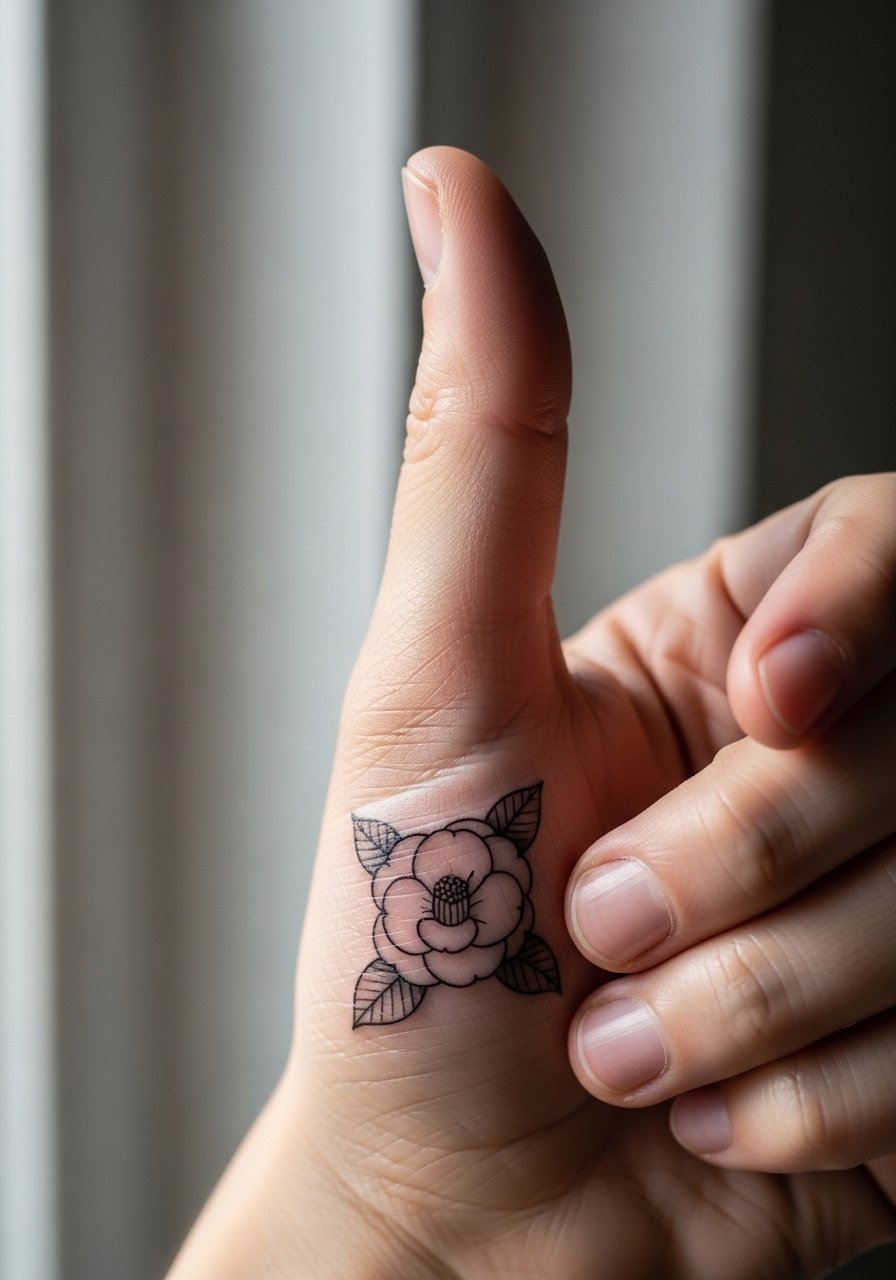
This spot sits near constant movement and gripping surfaces. Expect a briefer but more intense session. During consultation, request a slightly broader petal outline so the bloom keeps its silhouette as the skin thickens over time. A frequent mistake is adding tiny color fills that fade patchily on the thumb pad. By six months the outline should have softened gently. Plan for touch-ups earlier than wrist tattoos. For in-session comfort, bring a small pillow to rest your arm on so the hand stays steady and the needle work is cleaner.
8. Single Tiny Peony Behind the First Knuckle
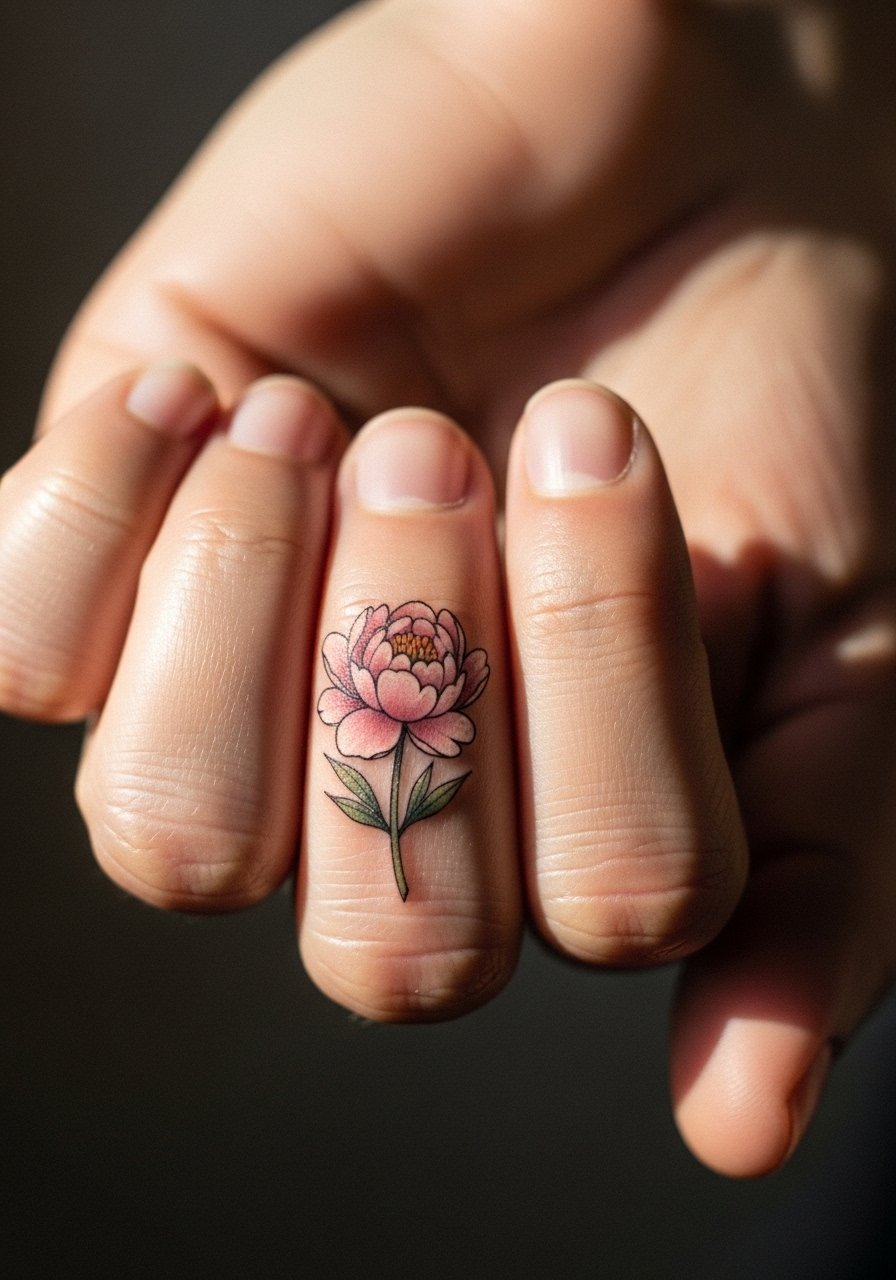
Knuckle-adjacent placements see active stretching, so the peony should be simplified with open petal spaces. The session is short but can feel sharp on knuckle pads. Tell the artist you want light stipple shading rather than heavy saturation. A common mistake is compressing heavy detail into a small knuckle circle which later blurs. At two years you will notice softening, and many people schedule touch-ups at year two for that crisp petal definition. For wearing, a thin chain ring set keeps attention flowing across the hand without covering the knuckled bloom.
9. Micro Sunflower on the Index Finger Pad
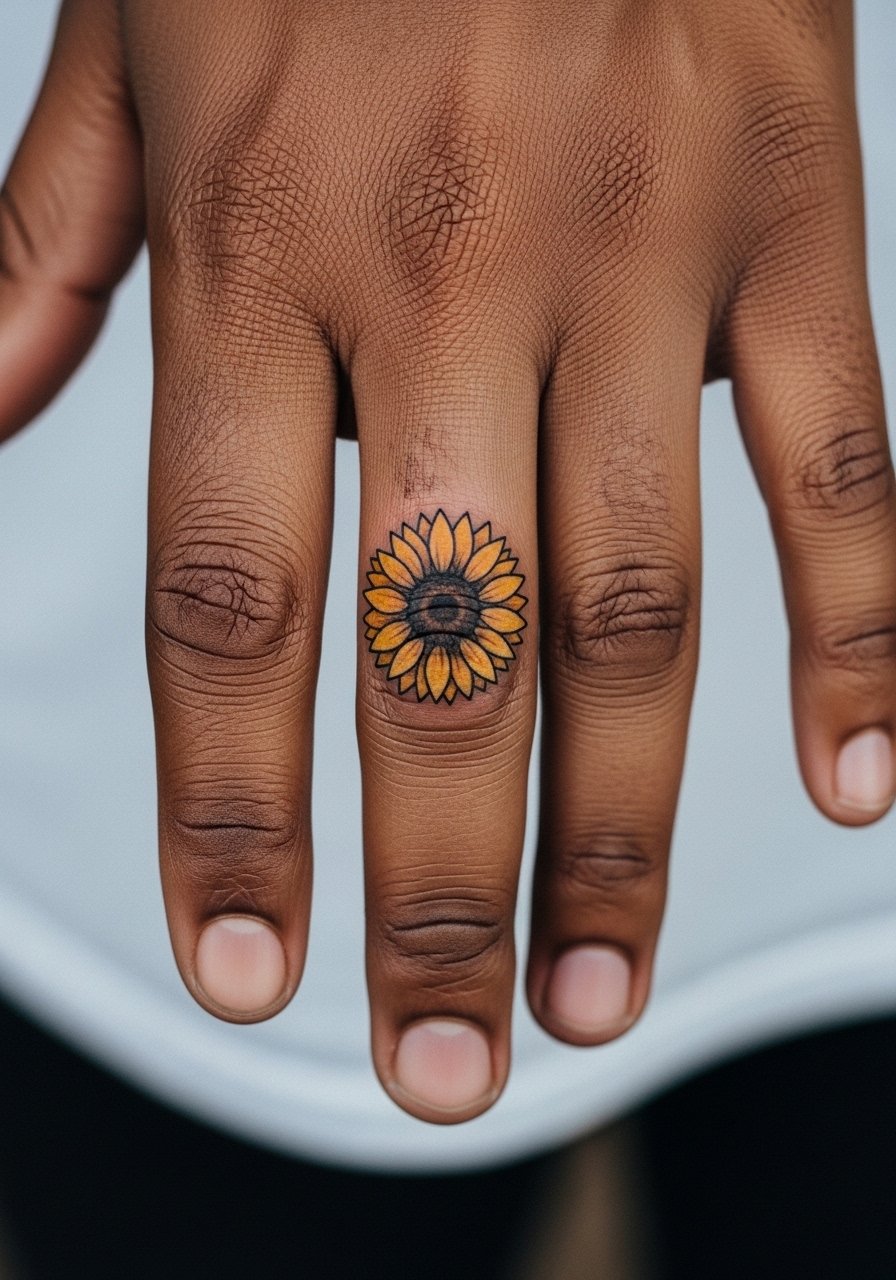
Finger pads are high-friction and shed ink quickly. This piece is best if you want a cheerful motif that can be touched up. Expect stinging and a short session. Ask for contrast between the disc center and the ray petals so the flower stays readable as it fades. The mistake is asking for a large filled center that turns into a dark blob. At six months you will see clear form, but anticipate a need for refreshes by year one or two. For showing it off in summer, wear a simple adjustable ring on the same finger to frame the tattoo.
10. Single Stem Blossom Along the Wrist Crease
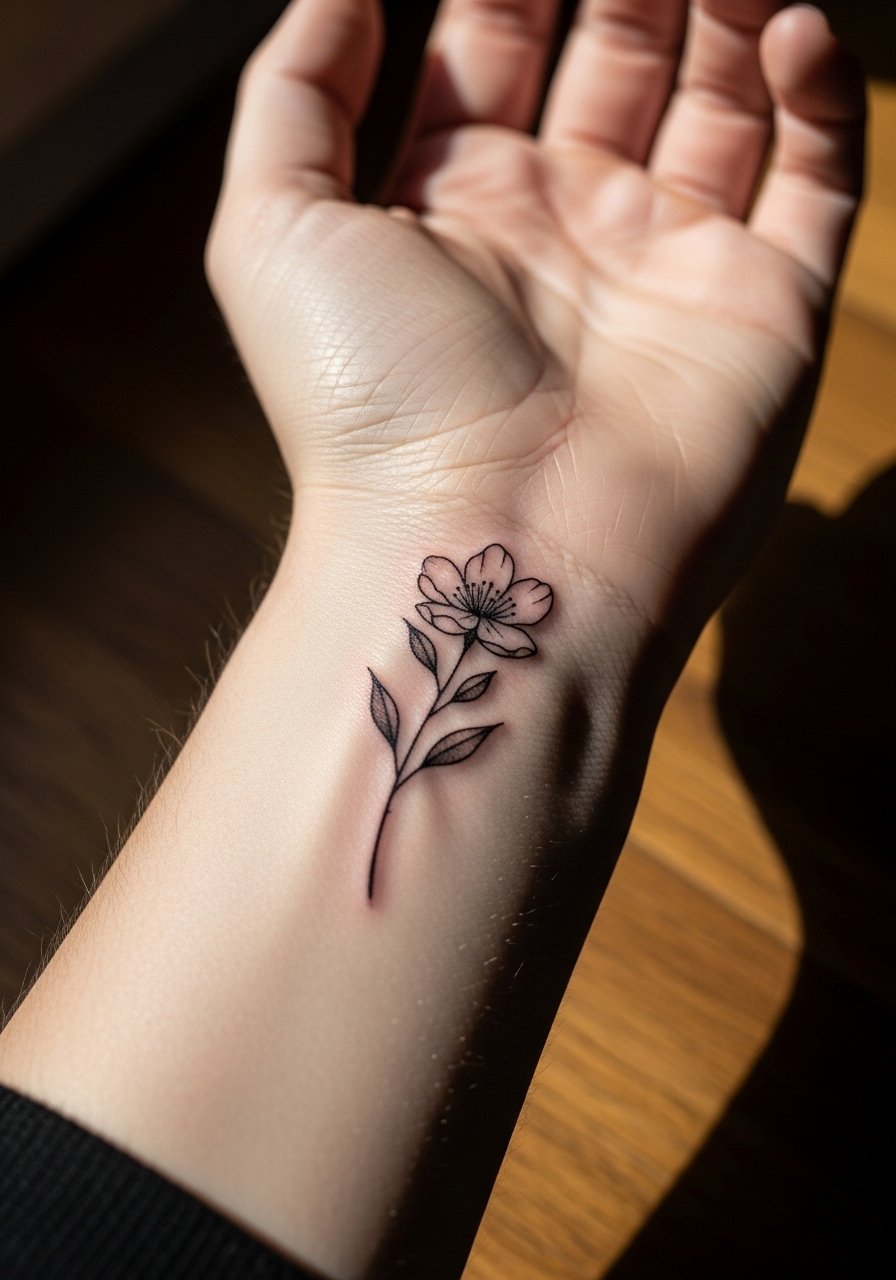
The wrist is forgiving for fine work if you leave breathing room between stem and joint. This usually takes 30 to 45 minutes. Tell the artist you want the stem to curve with wrist movement so the blossom reads natural when the hand flexes. A mistake is crowding the crease with dense shading which ages into a small patch. At two years the linework should still be legible with light softening. Pair the wrist bloom with a minimalist watch or a mesh bracelet that sits below and does not rub the tattoo.
11. Clustered Tiny Blossoms Across the Back of the Hand
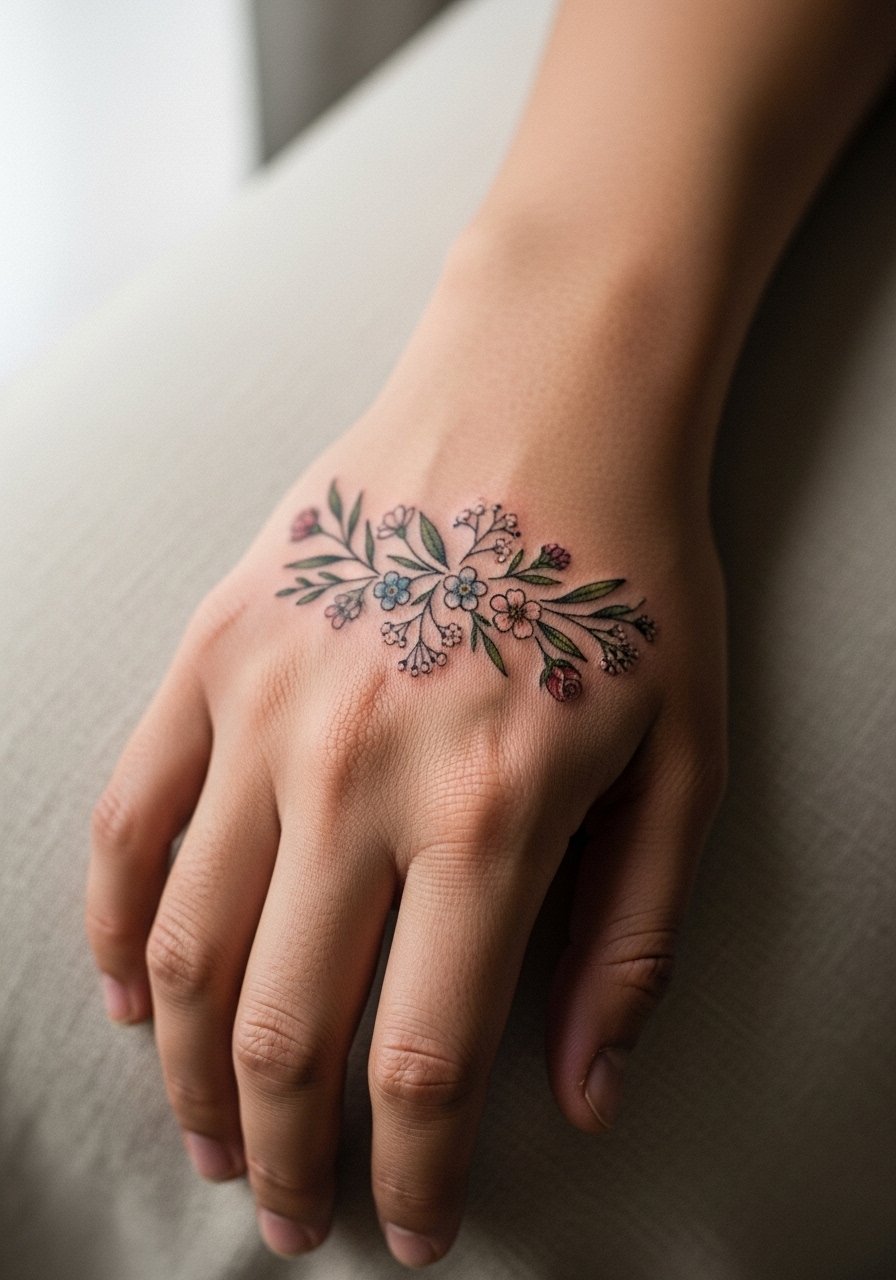
A scattered cluster gives the impression of a cuff without covering the whole hand. Sessions vary from 45 to 90 minutes depending on dot work. Ask for consistent negative space so each blossom keeps its own identity as the ink migrates. A common mistake is placing too many elements into a small area, which leads to merging. Expect touch-ups at year two to refresh contrast. For outfits, cuff sleeves or a rolled shirt let the cluster read like an accessory. I like pairing this with a delicate stack bracelet.
12. Single Line Anemone Along the Middle Finger
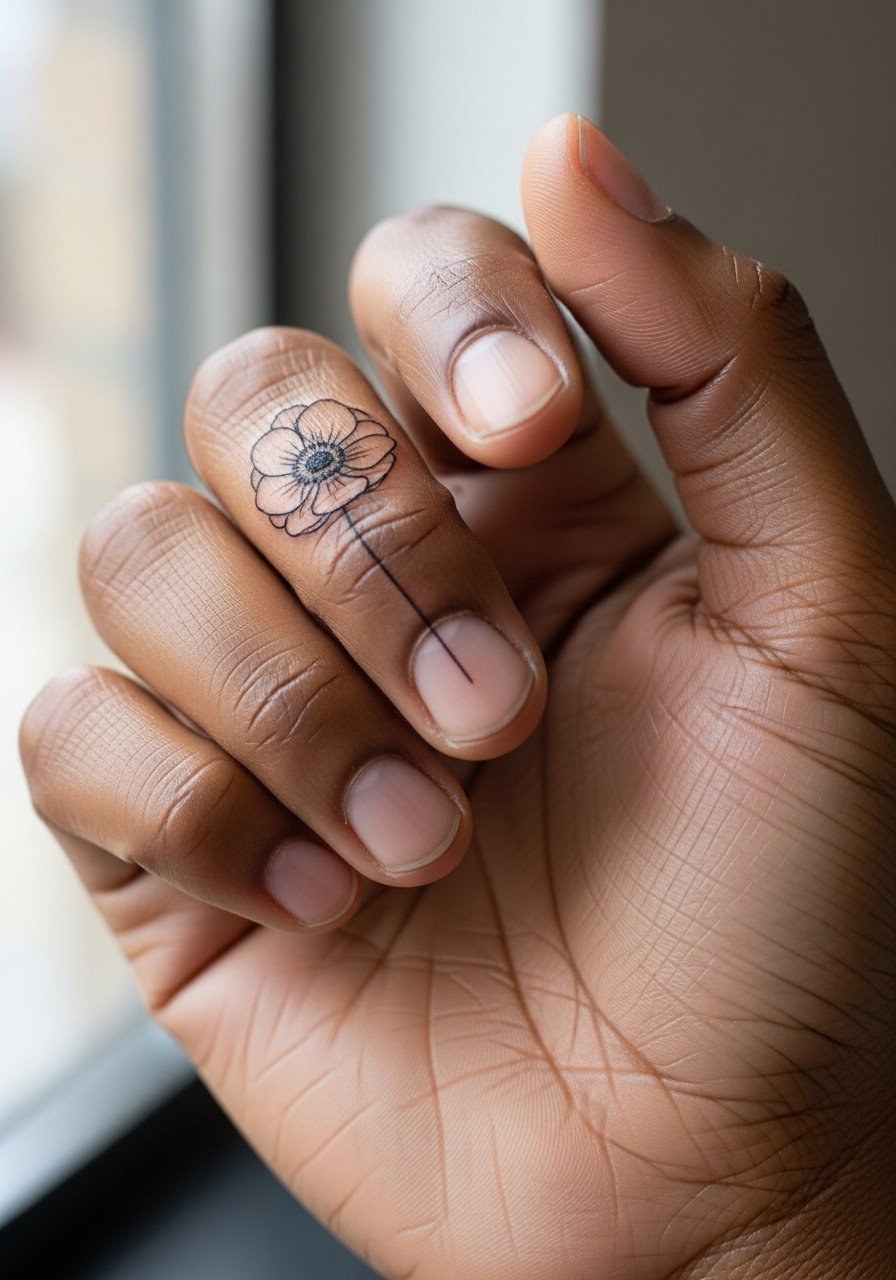
Top-of-finger placements are visible and subject to knock abrasion. Sessions are often quick. During consultation, say you want single-line petals with measured gaps so the anemone stays distinct. The mistake is asking for filled black petals that quickly become indistinct on fingers. After one year the lines will soften and small pigment loss is common. For showing it off, a simple stacked ring set on adjacent fingers complements the floral line without obscuring it.
13. Tiny Wildflower Sprig Along the Thumb Knuckle
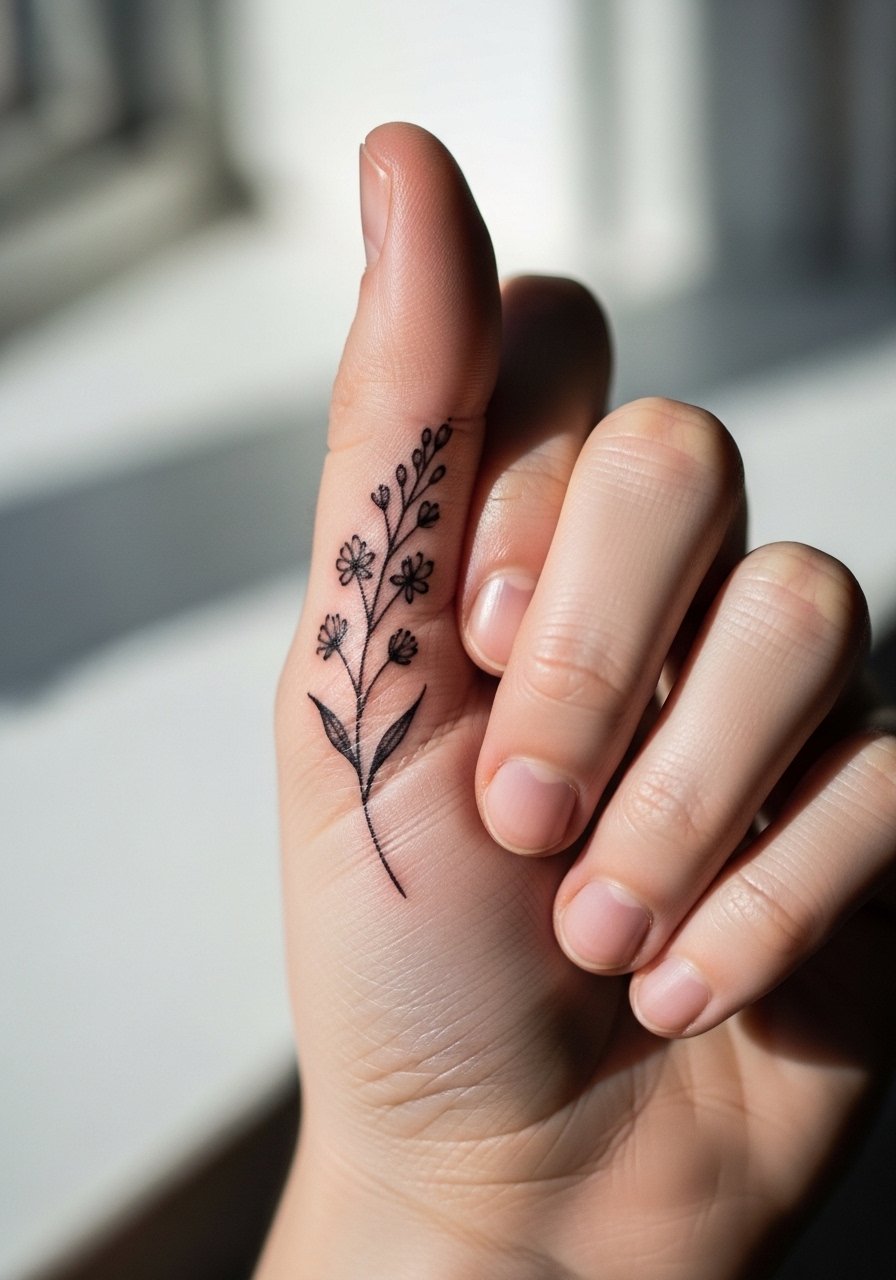
Knuckle crossings require experience to avoid blowout along joints. The session is short and the pain is sharp. Ask for spaced leaves and a tapered stem so the sprig moves with the knuckle. The common error is dense dot shading over joints which smudges into darkness. Expect softer edges by year two and plan light touch-ups. For the session, wear a short-sleeve tee you can roll up comfortably to give the artist steady access to the hand.
14. Tiny Hibiscus on the Side of the Ring Finger
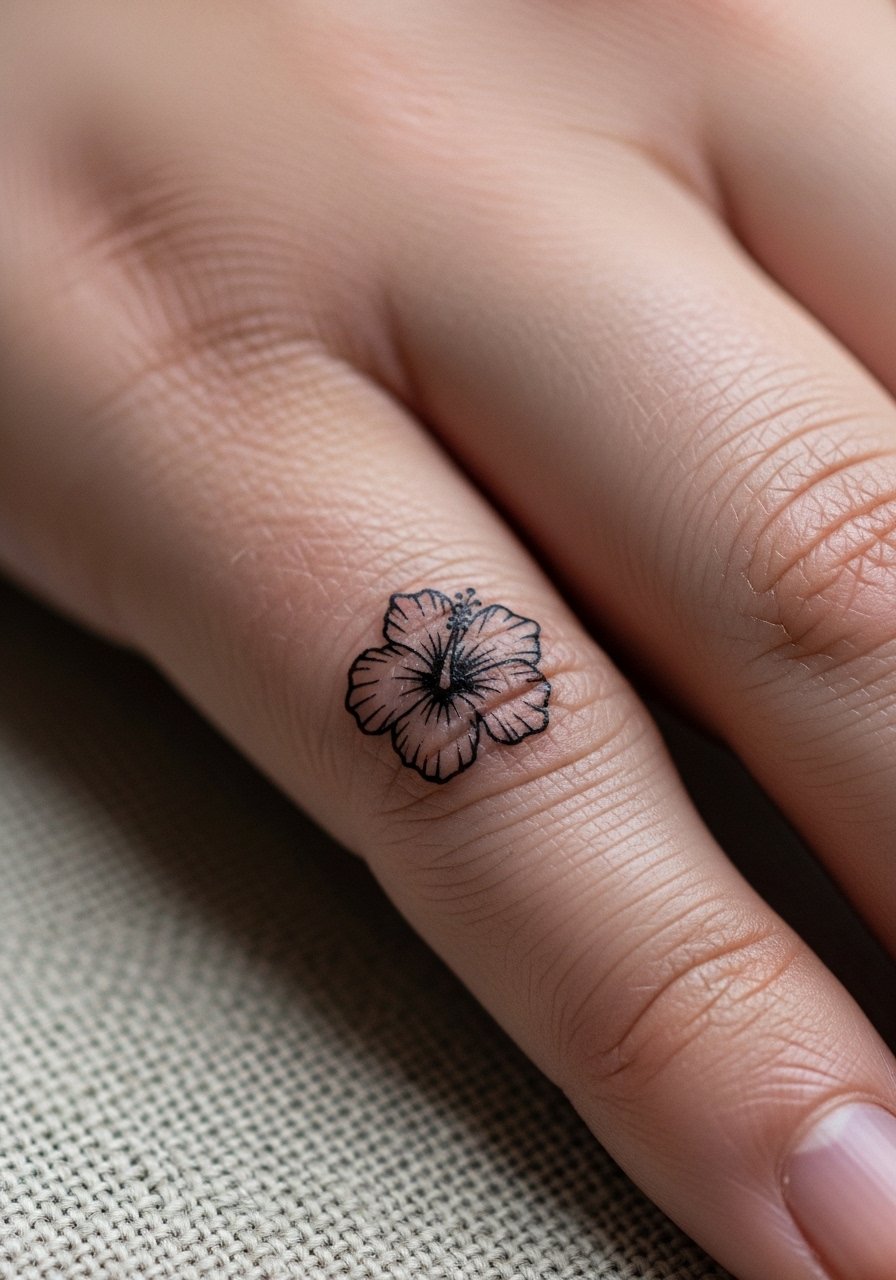
Edge-of-finger tattoos lean into organic curvature, which makes regular linework choices critical. Expect a 30-minute session. Tell the artist you want petal gaps and a slightly thicker outline to maintain silhouette. Mistakes include adding fine internal details that wash out. At six months the shape should be intact, with gentle blur over years. For evenings out, a dainty midi ring on the same finger helps the hibiscus feel intentional.
15. Micro Lavender Spray Near the Wrist Extensor
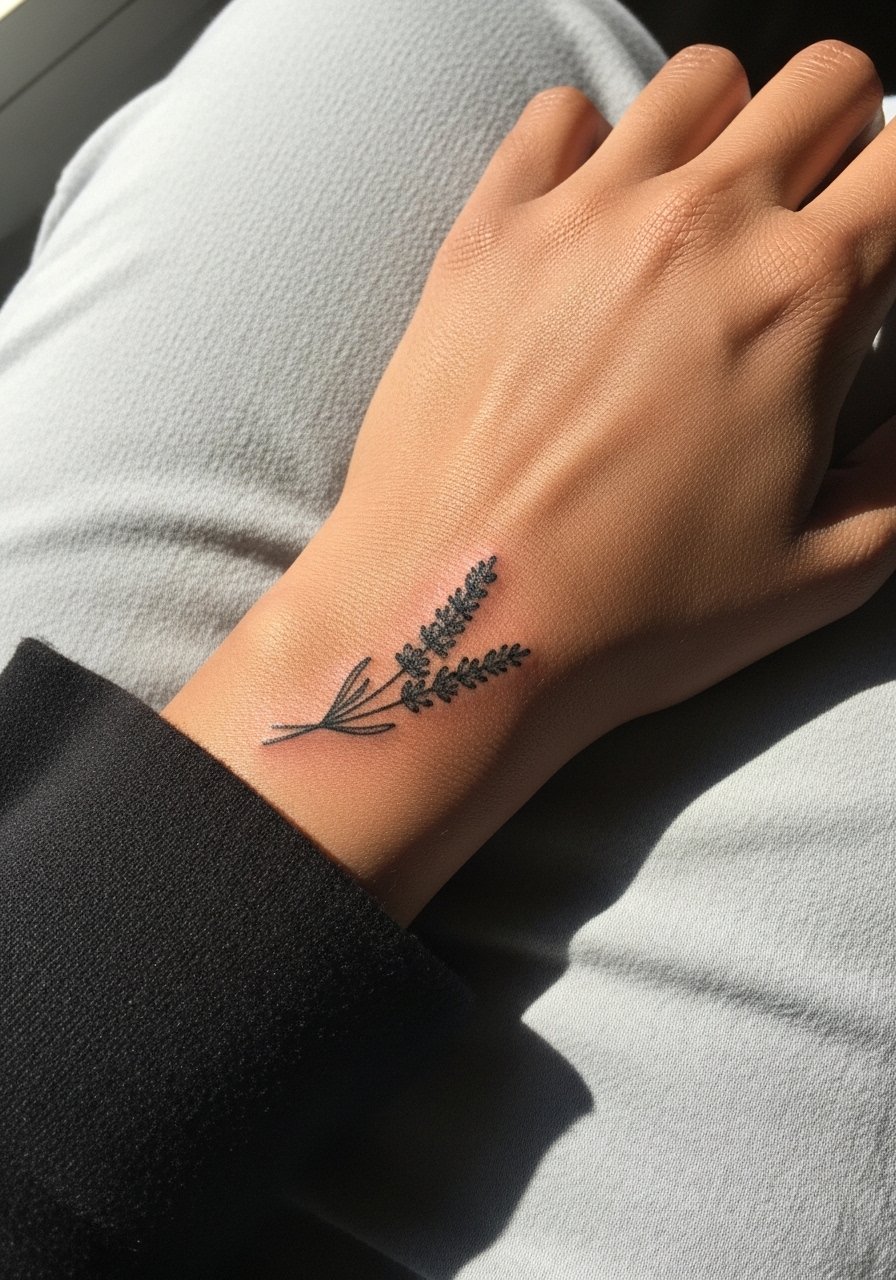
This narrow vertical design complements wrist movement and reads like a small accessory. Sessions are comfortable and fast. During consultation, ask for delicate stipple shading and narrow petal spacing to avoid merging. The typical mistake is over-saturating the buds which then look heavy. At two years expect mild fading. For showing it off, roll up a sleeve and pair with a simple leather wrap bracelet that sits below the tattoo and keeps the visual focus upward.
16. Tiny Cherry Blossom Over the Metacarpal Space
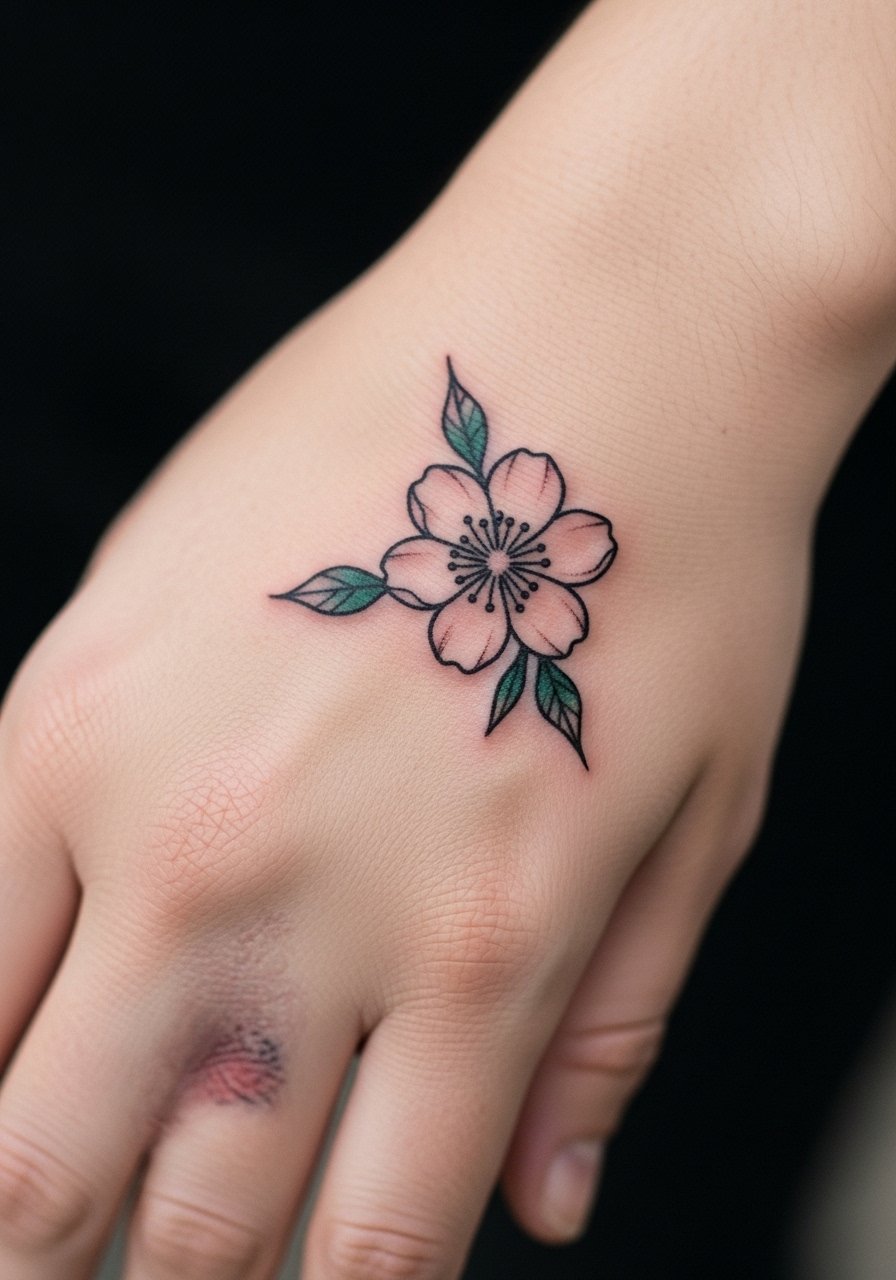
Placing flowers over metacarpal spaces gives a generous flat canvas and helps avoid some joint friction. Session time is moderate. Ask your artist for soft stipple shading and open petal centers to keep the blossom readable. A common mistake is packing dense color into small centers which ages into mottled spots. At five years the piece should retain form with minimal touch-up. Pair with a minimalist ring that echoes the blossom without covering it.
17. Daisy Chain Along the Thumb Side Seam
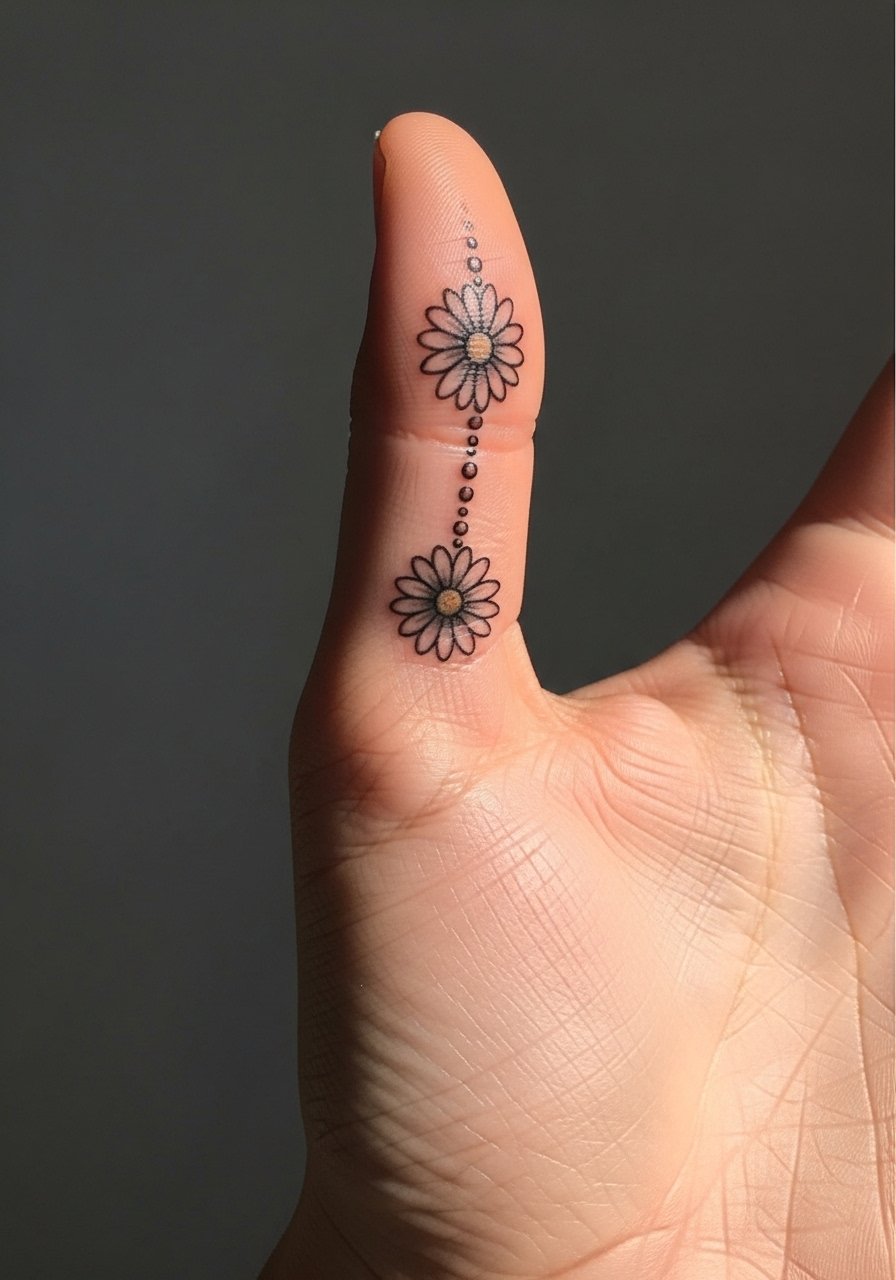
This runs along a high-movement seam and asks for careful spacing. Sessions vary by length. Tell the artist you want each daisy separated by tiny gaps to avoid future merging. Mistakes happen when people request tiny connected stems which collapse into a single line after healing. Expect the chain to soften by year three. For the appointment, wear a loose button-down shirt you can adjust so the artist has clean, steady access to the hand.
18. Micro Bouquet Behind the Thumb Base
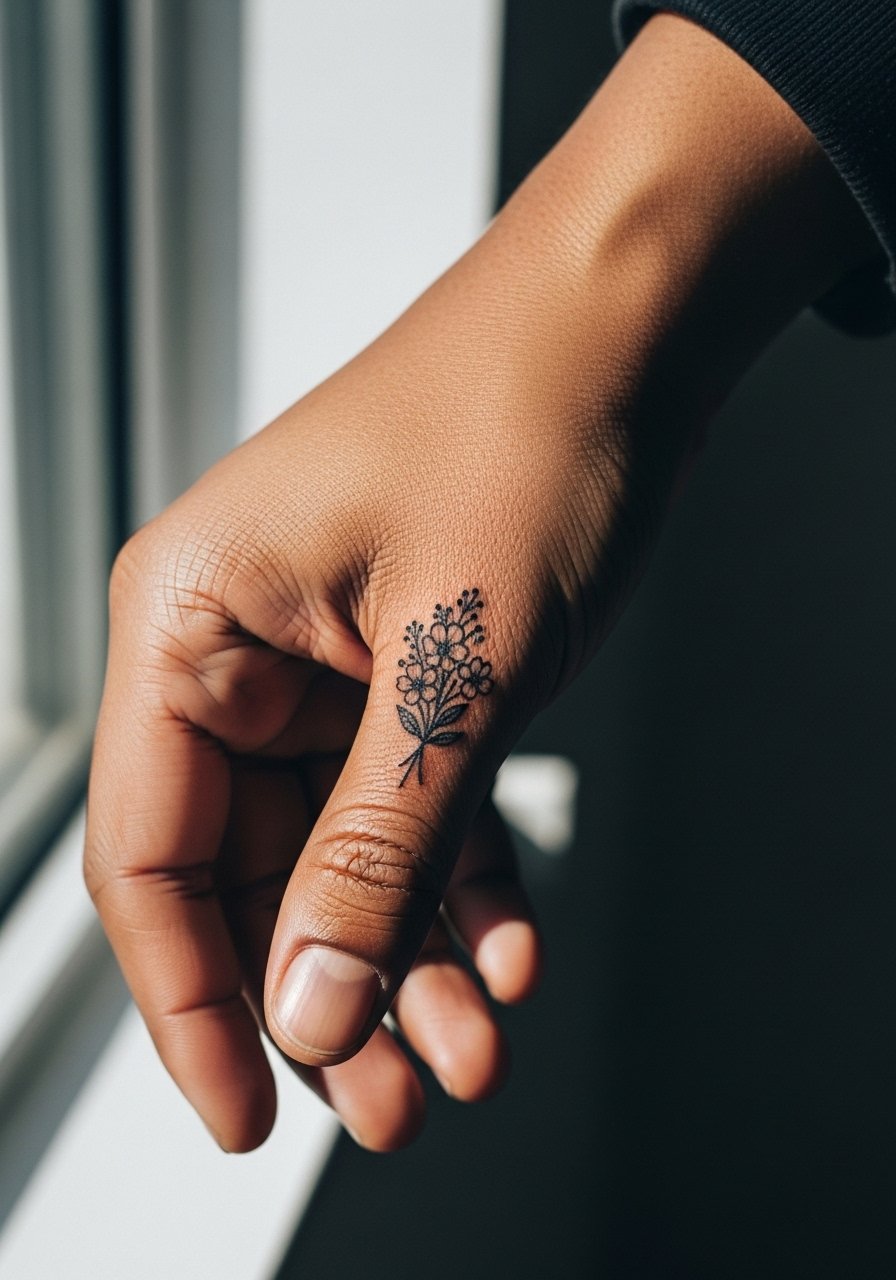
This tucked placement benefits from modest scale and tight composition. Session time is typically under an hour. Ask for simplified flower heads and minimal shading to keep the bouquet distinct. A frequent mistake is combining too many species into a cramped bouquet which later reads as a smudge. At two years you will see softening around edges. For show, a simple bangle bracelet worn lower on the wrist keeps focus on the bouquet.
19. Tiny Orchid at the Base of the Ring Finger
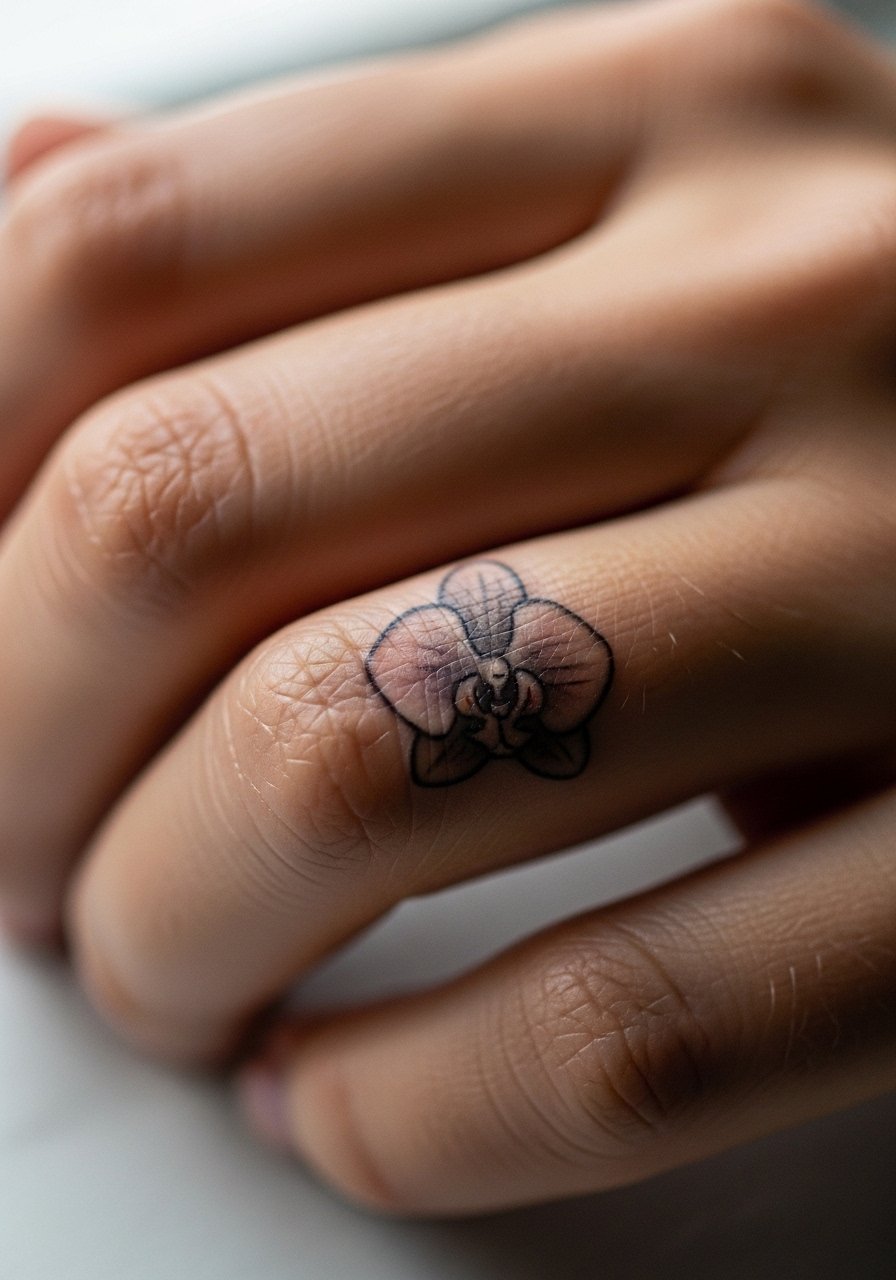
Base-of-finger placements are subject to frequent contact, which shortens pigment life. The session is quick. Ask for clear negative space inside petals and a modest outline thickness. The error people make is opting for heavy interior shading that fades unevenly. At one year the orchid will likely have softened and may need a touch-up. Pair with a simple wedding band style ring if you want the finger to read intentionally adorned.
20. Tiny Poppy on the Side of the Little Finger
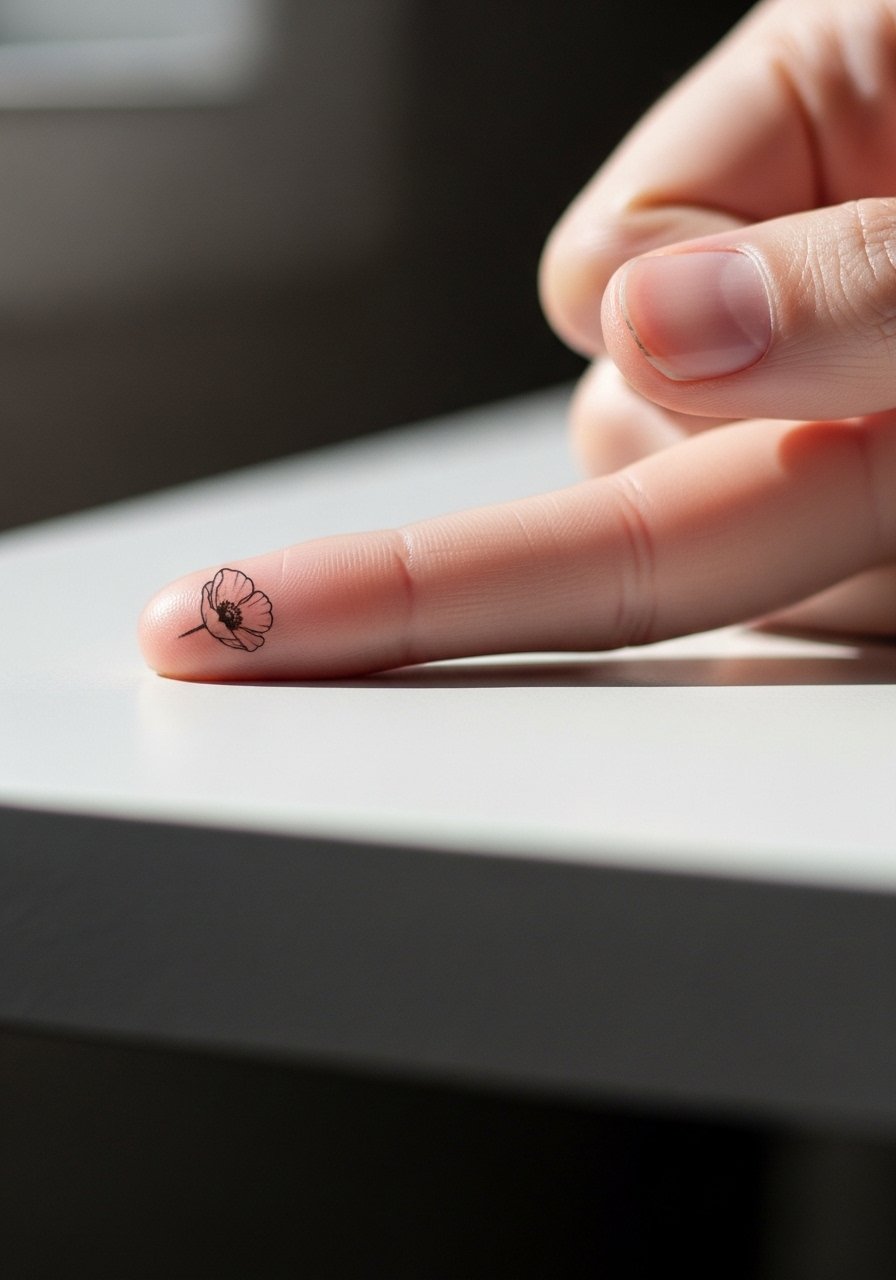
The outer pinky edge sees constant abrasion, so keep the poppy silhouette simple. Sessions are short and sharp. Tell the artist you want a compact bloom with thin negative-space lines. A common mistake is asking for detailed interior lines which disappear. Expect more frequent touch-ups than on the hand back. For casual wear, a slim pinky ring helps the poppy read as part of your jewelry aesthetic.
21. Micro Bloom Near the Wrist Tendon Line
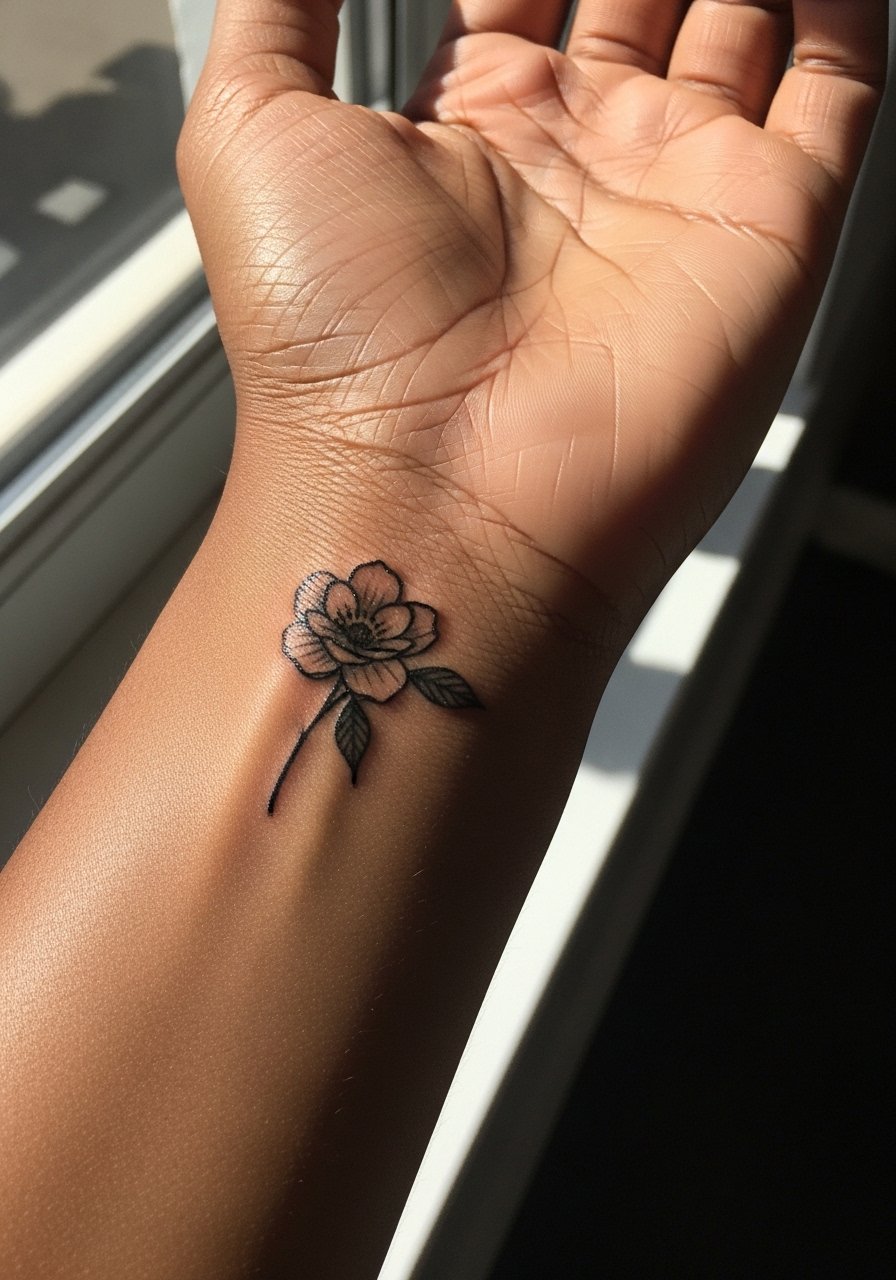
Tendon-line placements emphasize motion and look elegant with a single bloom. Sessions are usually 30 to 45 minutes. Ask for a slightly curved stem that follows the tendon to reduce visual distortion as your hand moves. The mistake is crowding shading into the tendon area which can look blotchy as skin settles. At two years expect gentle softening. For shows, roll sleeves or wear a delicate cuff bracelet just below the bloom to anchor the eye.
22. Micro Floral Crescent Along the Outer Hand Edge
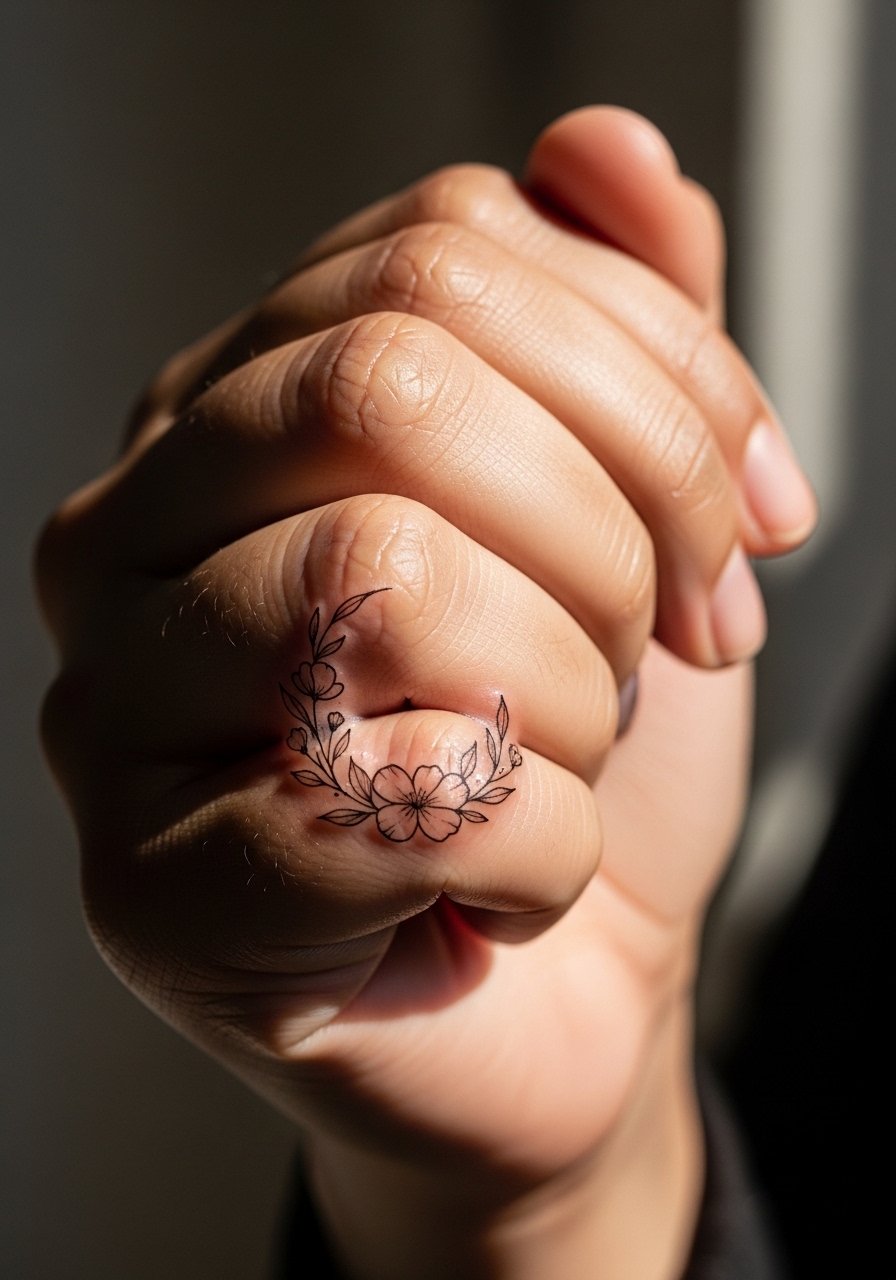
A crescent of tiny flowers wraps naturally and reads as a decorative trim. The session takes about 45 minutes. During consultation, request balanced negative space so the crescent keeps rhythm as the skin moves. A widespread error is adding heavy fill to the crescent's center which loses detail fast. At three years the crescent should still read as a motif with moderate softening. Pair with a stacked bracelet set that sits lower on the wrist to avoid friction.
23. Single Tiny Marigold at the Base of the Middle Finger
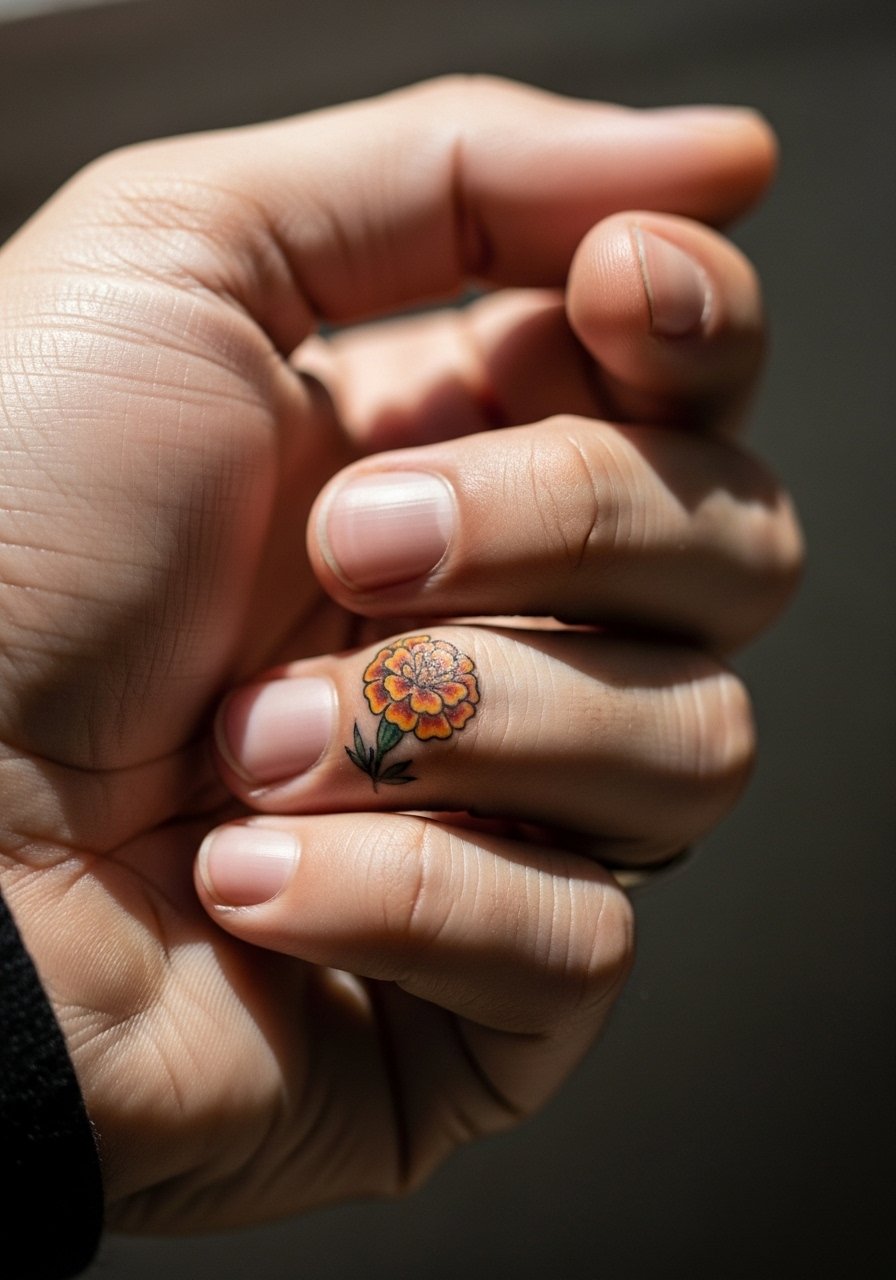
This base location sees frequent contact but provides a clean surface for small motifs. Sessions are brief. Ask for spaced petals and a circular negative space in the center to maintain readability. A common mistake is compressing heavy texture into the flower center which ages into a dark spot. Expect mild fading at year two. For the session, wear a short sleeve top you can roll up easily so the artist has full access to your hand.
24. Micro Blossom Cluster Near the Thumb Web Edge
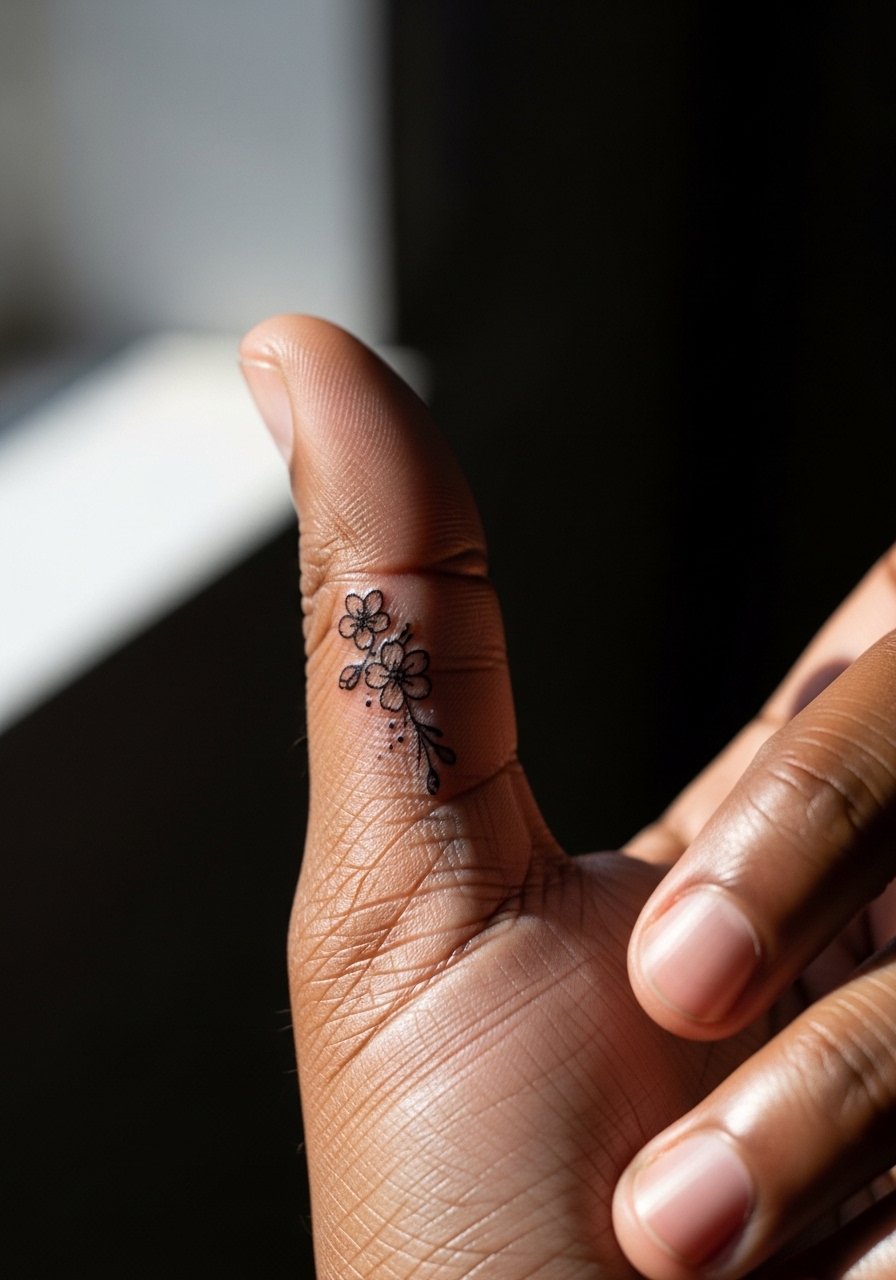
This tucked cluster fits the curve of the hand and plays well with movement. Sessions vary but are typically under an hour. Tell your artist that you want the cluster to breathe with open spaces between blooms to avoid merging. The mistake is clustering too many dots into a small area. At two years the cluster will soften and might need refresh work. For outfits, a slim wristband bracelet worn lower keeps the floral area visible.
25. Single Tiny Blossom Near the Nail Bed of the Ring Finger
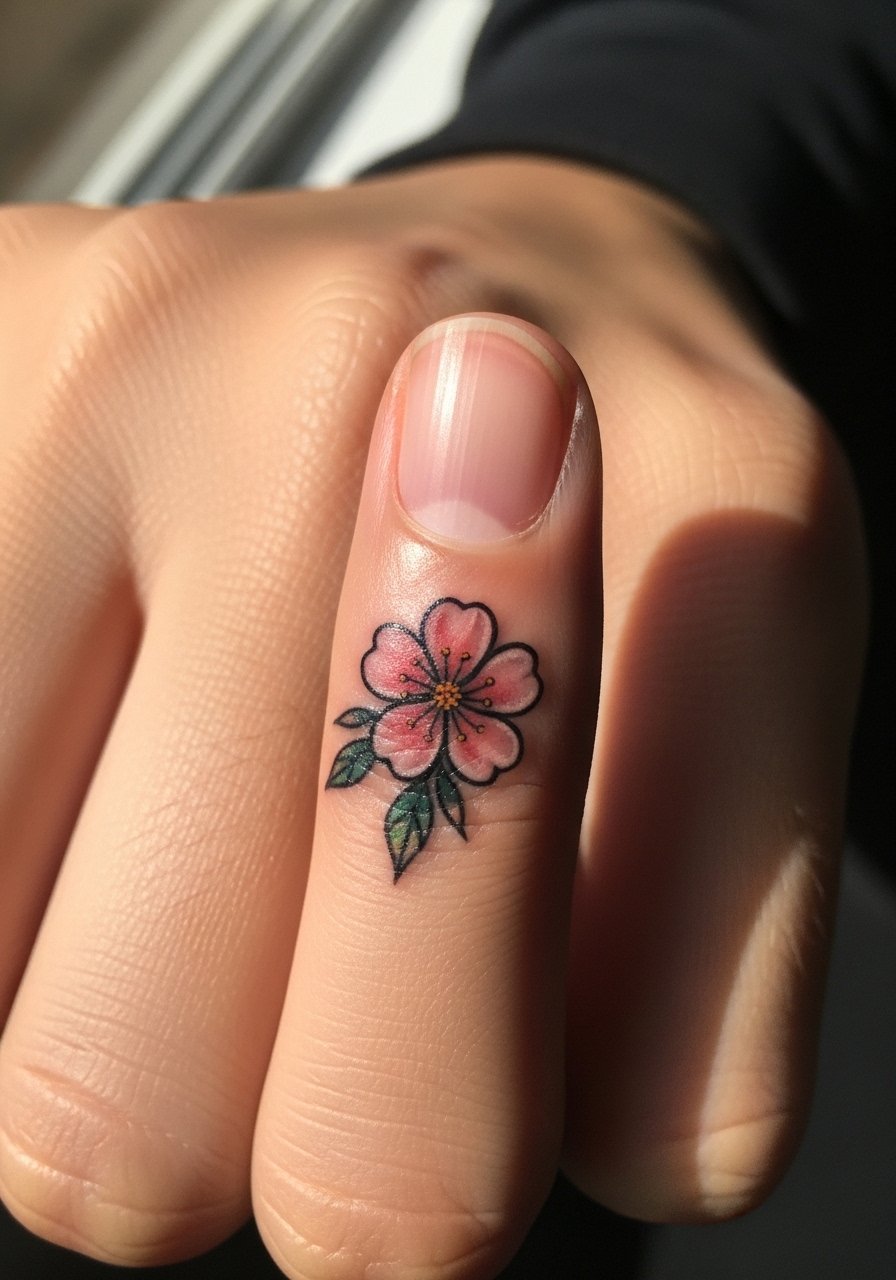
Nail-bed-adjacent tattoos are very visible and subject to knocks. Sessions are short but the pain is noticeable. During consultation, choose simplified petals and avoid heavy color that will rub off. A common mistake is requesting shading that fills the tiny area and then fades unevenly. Expect touch-ups sooner than for larger hand pieces. For showing it off, a simple manicure-friendly ring keeps attention on your nail line and the small blossom.
26. Petite Floral Line Along the Thumb Metacarpal
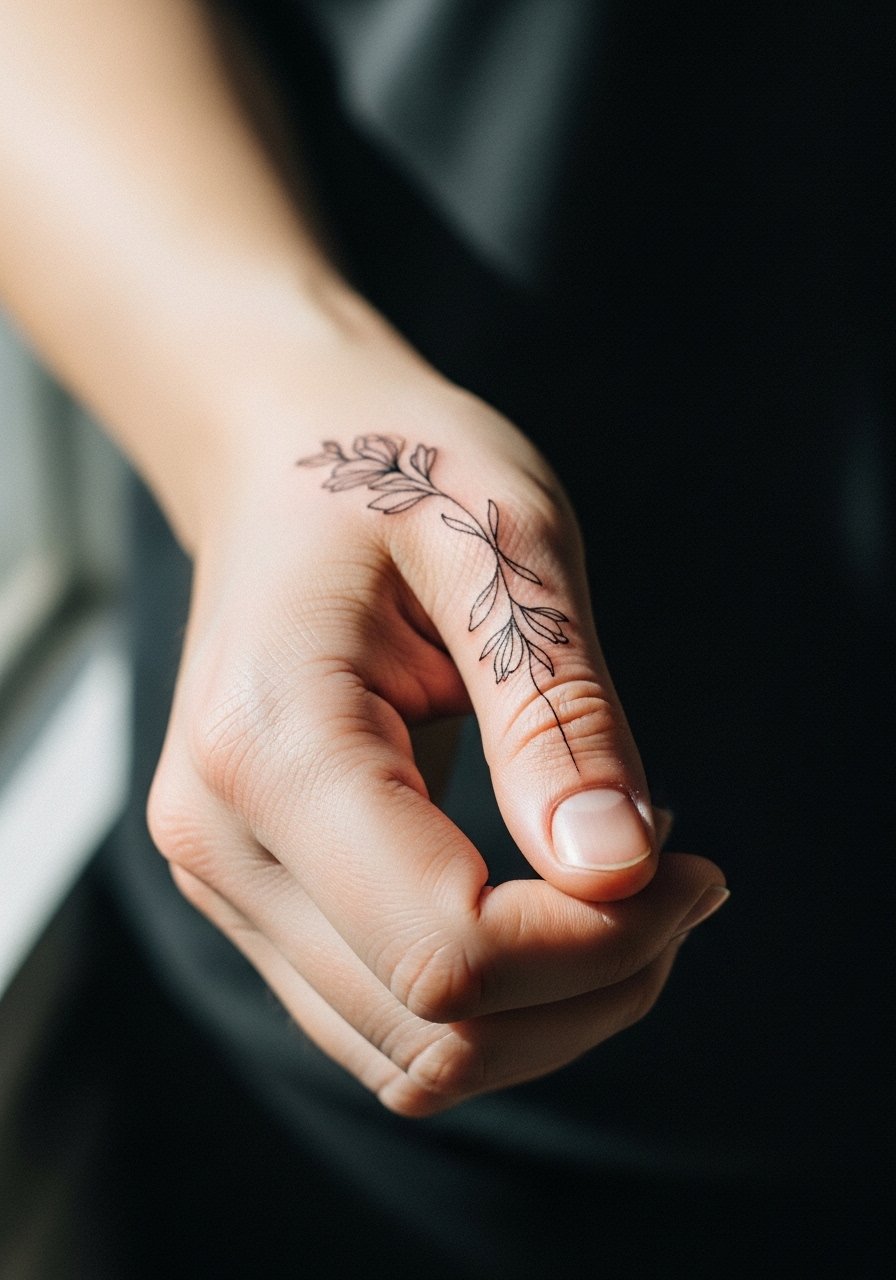
This linear layout follows bone structure and resists some friction by staying slightly off the most rubbed surfaces. Sessions are moderate length. Ask for intentional spacing and slight stem taper so each flower reads on its own. The common error is crowding the line with overlapping leaves which merge. At three years the layout should keep its rhythm with occasional softening. For evening wear, a minimalist leather bracelet worn lower anchors the thumb line as part of a cohesive look.
27. Tiny Bloom Cluster Near the Wrist Pivot
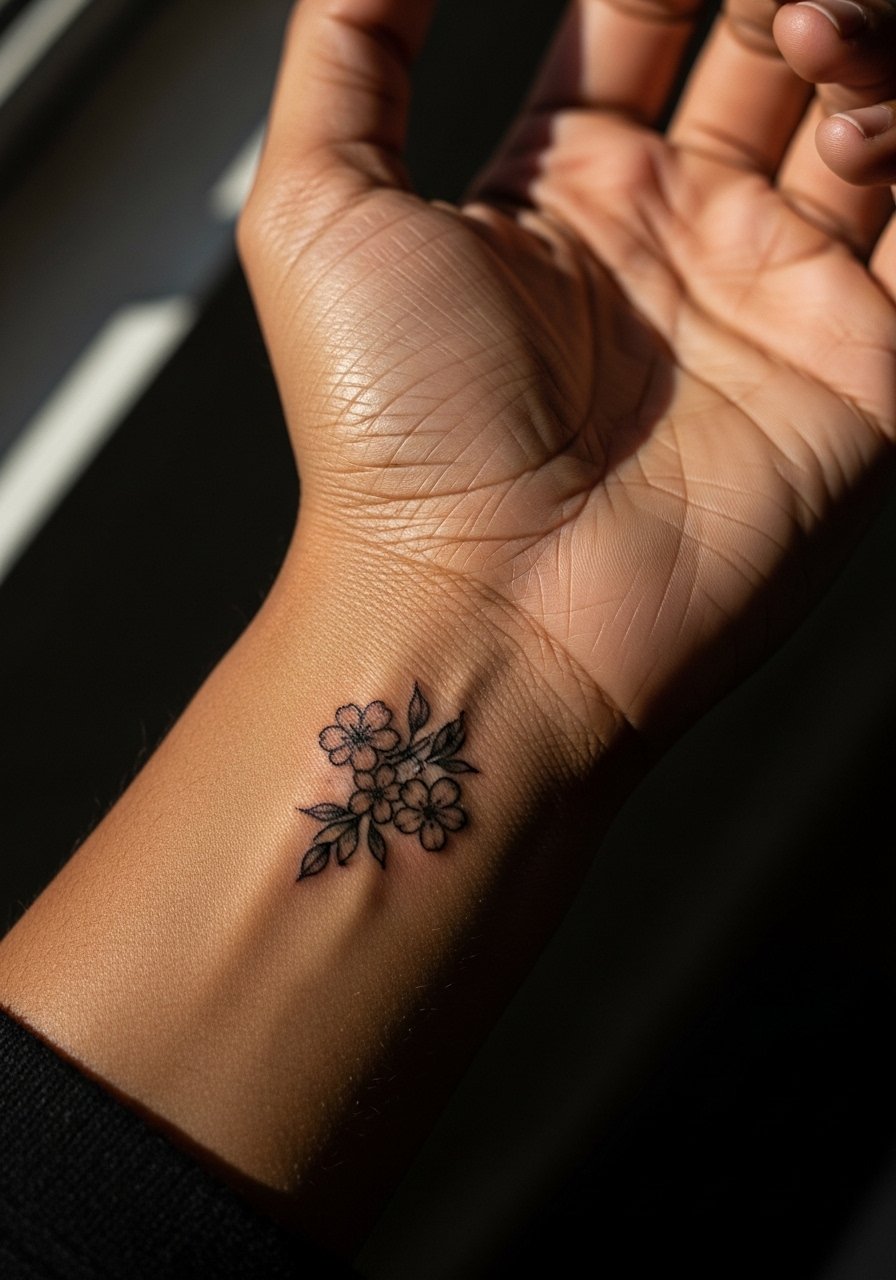
This spot balances visibility with protection because it sits at the wrist pivot and can be partially covered by sleeves. Sessions are typically 45 minutes. Tell the artist you want soft stipple and open centers so the cluster keeps its shape through movement. A mistake is cramming heavy fills into the cluster which can soften into an indistinct mass. Expect touch-ups around year three. For styling, cuff your sleeve and wear a delicate watch that sits above the cluster so the tattoo reads as part of your arm styling.
Frequently Asked Questions
Q: How long do tiny hand flowers actually last before needing a touch-up?
A: It depends on placement, sun exposure, and daily wear. Finger pads and knuckles often need touch-ups within one to two years. Back-of-hand and metacarpal placements usually hold color longer, commonly two to three years before a noticeable refresh is helpful.
Q: Should I pick heavier linework for a hand flower to make it last longer?
A: Yes, slight increases in line weight help small motifs keep their shape as skin shifts and pigment spreads. Ask for intentional spacing and a controlled line weight in consultation so the piece ages predictably.
Q: Are there dress choices that help protect or showcase a new hand tattoo during healing?
A: For protection, wear loose sleeves that keep fabric off the healing area. To show a healed small hand flower, thin bracelets or simple rings frame the design without rubbing it. A delicate chain bracelet is one subtle option that complements tiny florals.
Q: Will hand flowers blow out more often than forearm work?
A: Hands are a higher blowout risk area because the skin is thin and experiences frequent movement. Proper spacing and conservative saturation reduce that risk. If an artist argues that micro detail will hold forever on hands, get a second opinion.
Q: Can I get color in such small hand flowers and have it stick?
A: Color in micro hand pieces can stick but it tends to fade faster than black linework. Lighter pigments fade quicker. If you want color, consider restrained accents rather than full fills and plan for touch-ups.
Q: Do hand tattoos affect professional opportunities long term?
A: Some workplaces still treat visible hand tattoos cautiously. If you expect conservative employer interactions, consider placements that can be easily concealed by sleeves or jewelry. Talking this through before booking helps avoid later regret.