
Fine line and hyper-detailed eagle pics float everywhere online right now, and trends can fool you into picking something that looks glorious on a phone but softens fast on skin. The trick is to choose a style that fits the body area you want, then ask the right questions in consultation so the piece still reads at year three. Below are 17 concrete eagle ideas, with placement notes, common mistakes to avoid, and wardrobe tips that actually help you show the work off.
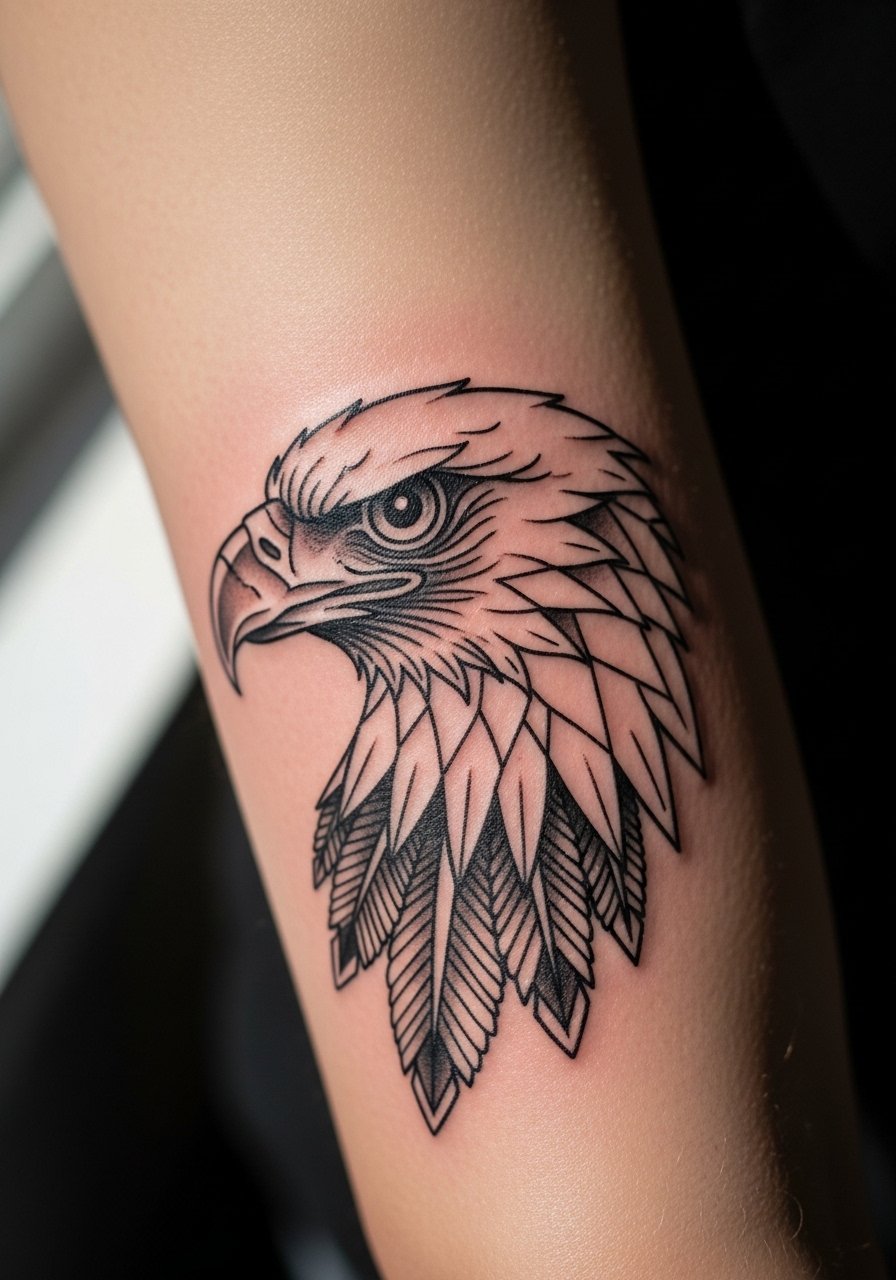
1. Neo-traditional Eagle Head with Geometric Feathers on the Outer Forearm
I've seen this version hold up well when artists avoid tiny in-fill dots and keep the geometry breathing. Ask your artist for thicker outer linework around the beak and feather intersection so the shapes stay crisp as skin moves. Fair warning, the forearm sees a lot of flex and gym wear, so line saturation matters more than tiny color gradients. For the session wear something you can roll up easily and that lets the artist angle your arm without resistance, like a mens rolled sleeve henley. Common mistake is shrinking the geometric elements too small, which blurs into a gray mass after a couple of years. Expect one to two short sessions and a touch-up around year two if you want punchy color retention.
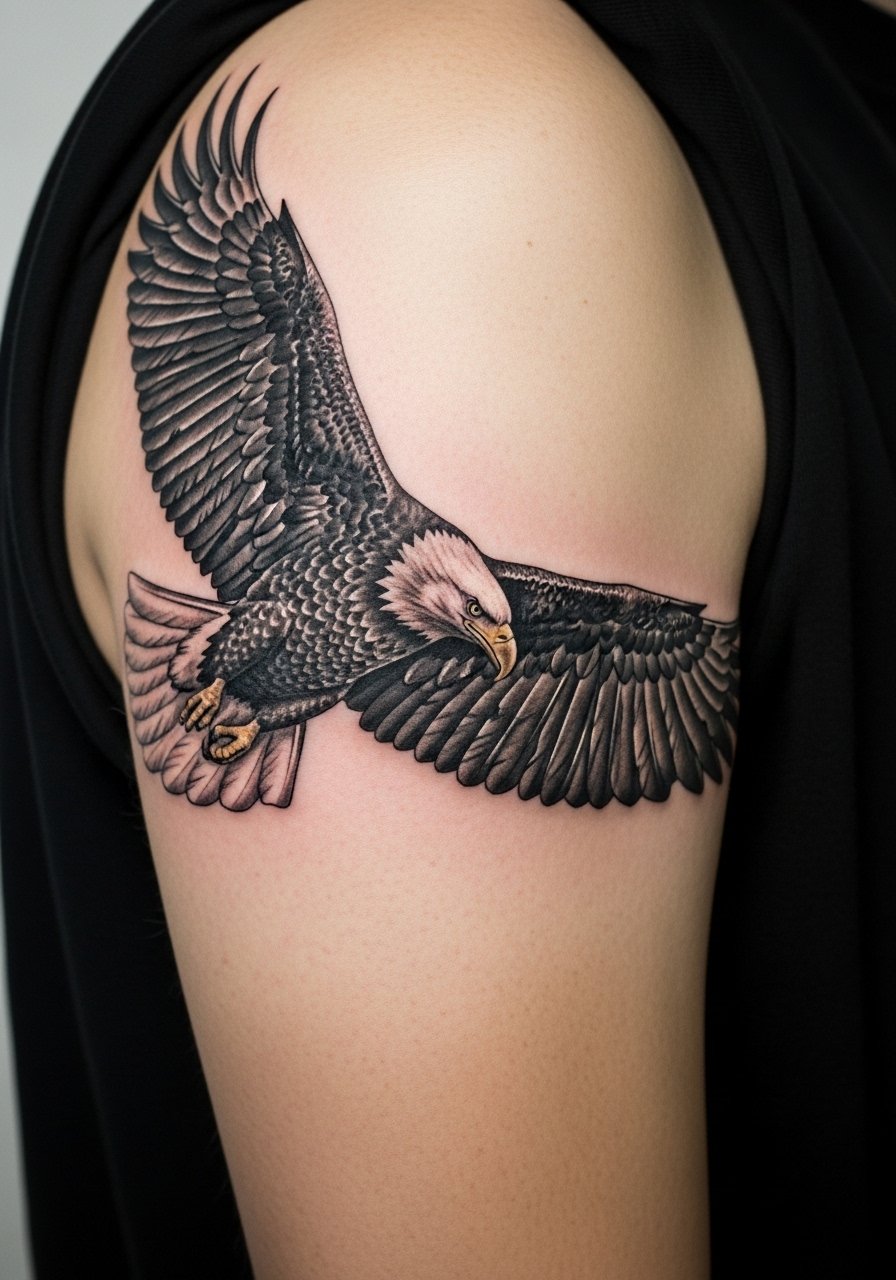
2. Realistic Bald Eagle in Flight Over Mountains on the Upper Arm
Visual impact lead: a full-flight eagle across the upper arm reads cinematic from across a room, especially with sky and mountain blocking behind it. Tell your artist you want layered contrast rather than micro-detail in every feather. That lets you keep realism without turning the midtones into muddle as it heals. For showing this off, a mens v-neck fitted tee frames the shoulder and upper arm, and for the session wear a loose tank so the shoulder sits exposed without straps digging. This piece usually needs multiple sessions for refined shading and a realistic eye, and the blowout risk drops if the artist stages the feathers with breathing space. A common mistake is requesting ultra-fine feather tips at a small scale, which soften into gray by year three.
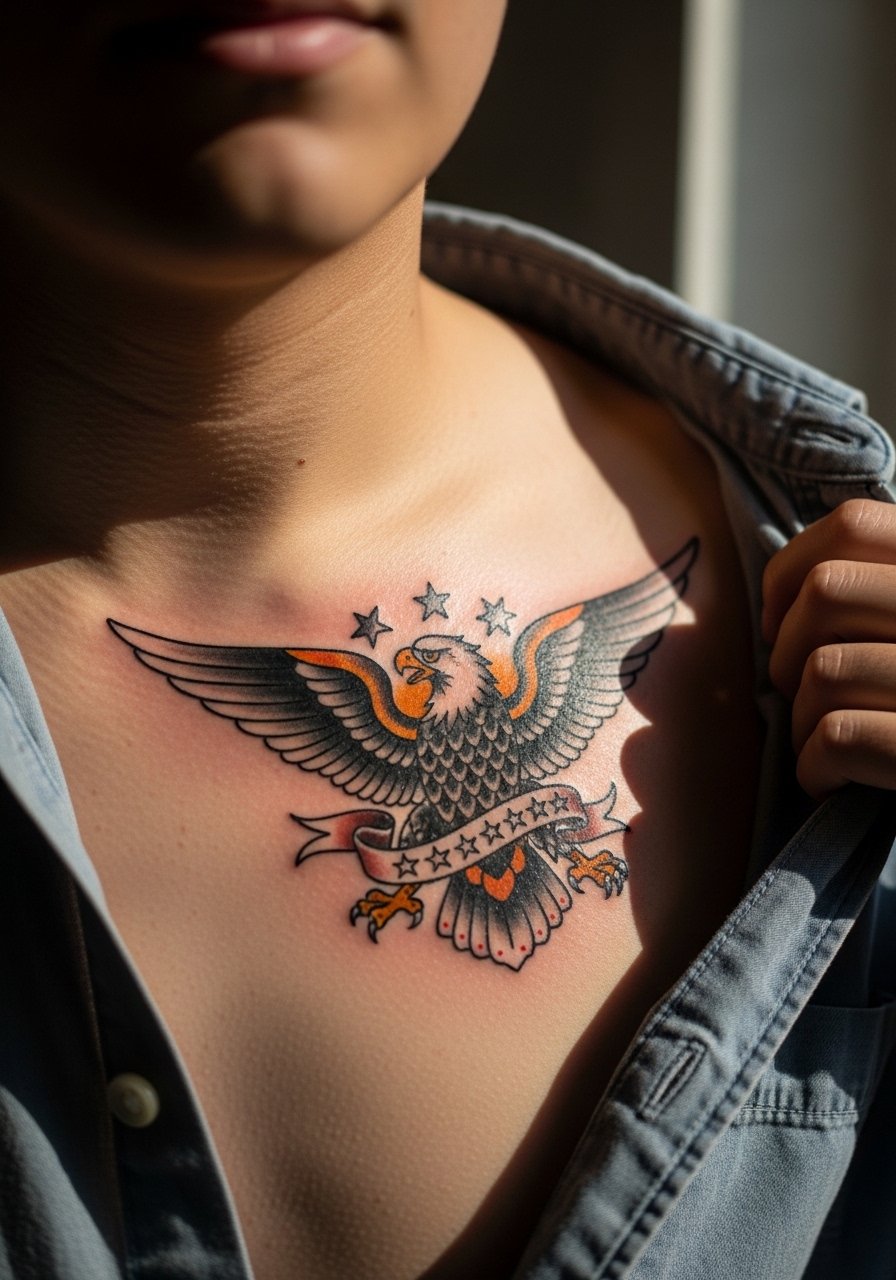
3. Traditional American Eagle with Banner and Stars on the Chest
Visual impact lead: the chest gives the signature traditional eagle room to breathe so the bold outline and saturated fills age into clear shapes. During consultation say you want heavier outer lines, a simple banner with one clear word, and saturated fills that will scuff but remain readable. For easy showing, wear an mens chambray shirt unbuttoned over a white tank, the open collar frames the chest motif without covering color. Most people get this in one or two sessions. The main error is cramming too many small stars or thin script into the banner, which can blur after sun exposure. Remember to ask about how the design sits with your clavicle and sternum so the eagle's wings follow natural muscle flow.
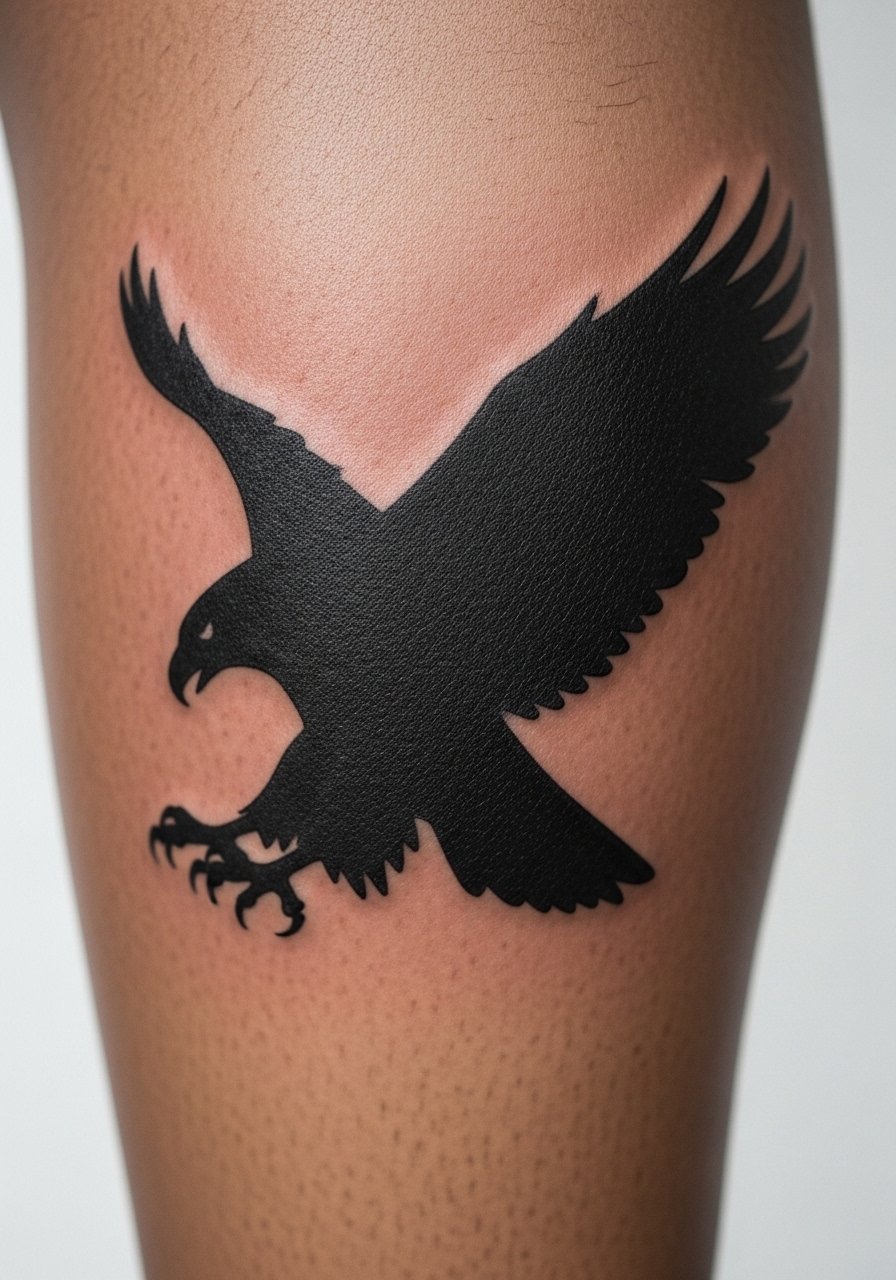
4. Blackwork Eagle Silhouette with Tribal Claws on the Calf
Mistake lead: putting this much solid black on the ankle or shin without considering movement is a common error. On the calf the piece anchors well because the area has enough flat surface and less constant friction. Ask for crisp edges and check healed photos on similar skin tones to avoid a patchy fill. Pain-wise the calf is moderate, and sessions are usually quick because the artist can block in large areas fast. Expect solid black to age into a dense silhouette that still reads from distance, with touch-ups possible if the fill softens in high-friction pants. Image-wise, this style benefits from negative-space detailing in the claws to stop the mass from feeling one-note.
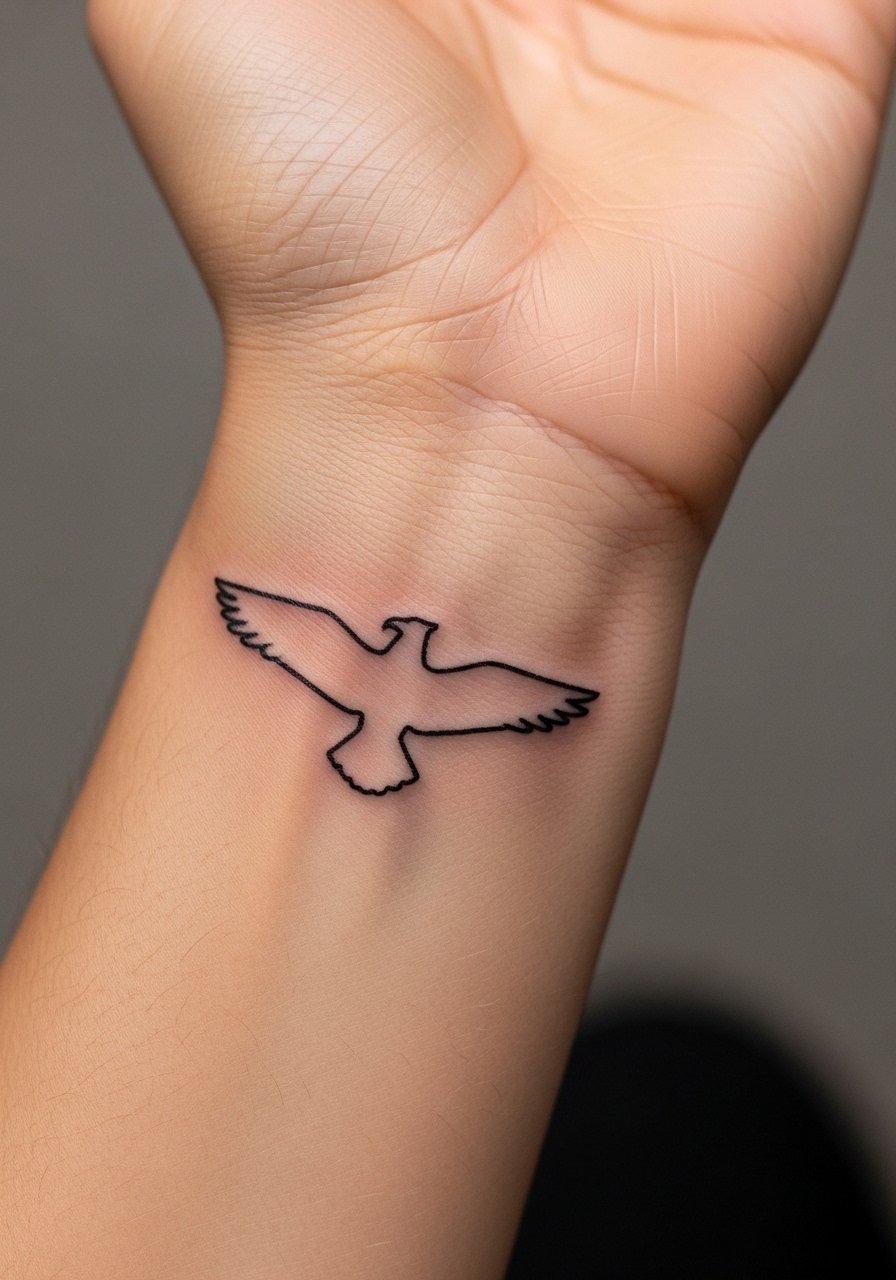
5. Minimalist Single-Line Eagle Outline on the Inner Wrist
Mistake lead: the wrist is unforgiving for tiny single-line work that sits tight to the joint. If you want a minimalist outline, scale it for the wrist and keep the single-line loops slightly thicker than you think. The pain here is low, and the session is quick, but fine-line wrist pieces often need touch-ups sooner because of washing and friction. Wear a sleeveless top for the session and plan to keep wrist jewelry minimal during healing. A common error is asking for extrafine single-needle strokes that the skin on the wrist cannot hold past year two. If you want discrete intensity, place the line just above the inner wrist crease where the skin is a bit less mobile.
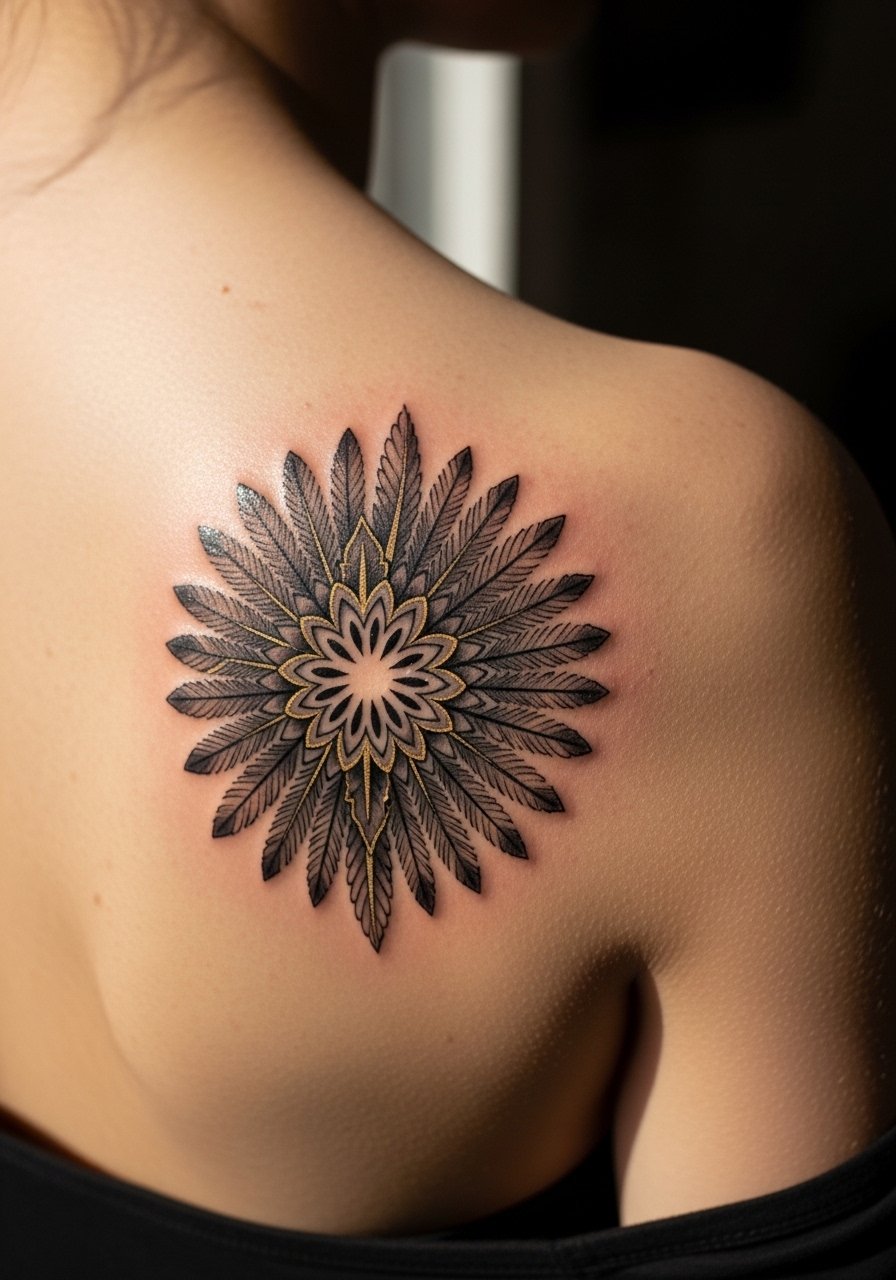
6. Ornamental Eagle Mandala on the Shoulder Blade
Aging lead: ornamental mandalas ask for spacing and symmetry, not overly dense micro-shading, if you want them to survive years of tanning and gym wear. On the shoulder blade the artist has room to expand feather mandalas outward so the design keeps its negative space. For session access wear a loose tank top so the artist can work the entire shoulder blade without fabric pulling. This piece usually runs to three sessions if you add gold or color accents. A frequent mistake is packing too much stipple into the center, which can merge into a darker blob as the dots knit together. Consider how the mandala will read under a backpack strap if you carry gear daily.
Before You Book
The first six ideas above include a range of small placements and larger panels, and each needs slightly different prep for the session and the first week of healing.
-
Stencil transfer paper kit. Lets you preview placement and lineweight on your skin before the needle goes down, which is crucial for forearm and chest designs.
-
Topical numbing cream. Useful for dense shading sessions on the ribs or upper arm when you want to manage pain without compromising the linework.
-
Thin protective film roll. Helps protect wrist and finger pieces during the first few days of frequent washing and contact.
-
Fragrance-free body wash. Gentle cleansers keep fresh ink from drying into scab-heavy flakes, especially around large blackwork fills.
-
Aquaphor healing ointment. A thin layer in the early healing window can help fine line pieces retain crispness without clogging the skin when used sparingly.
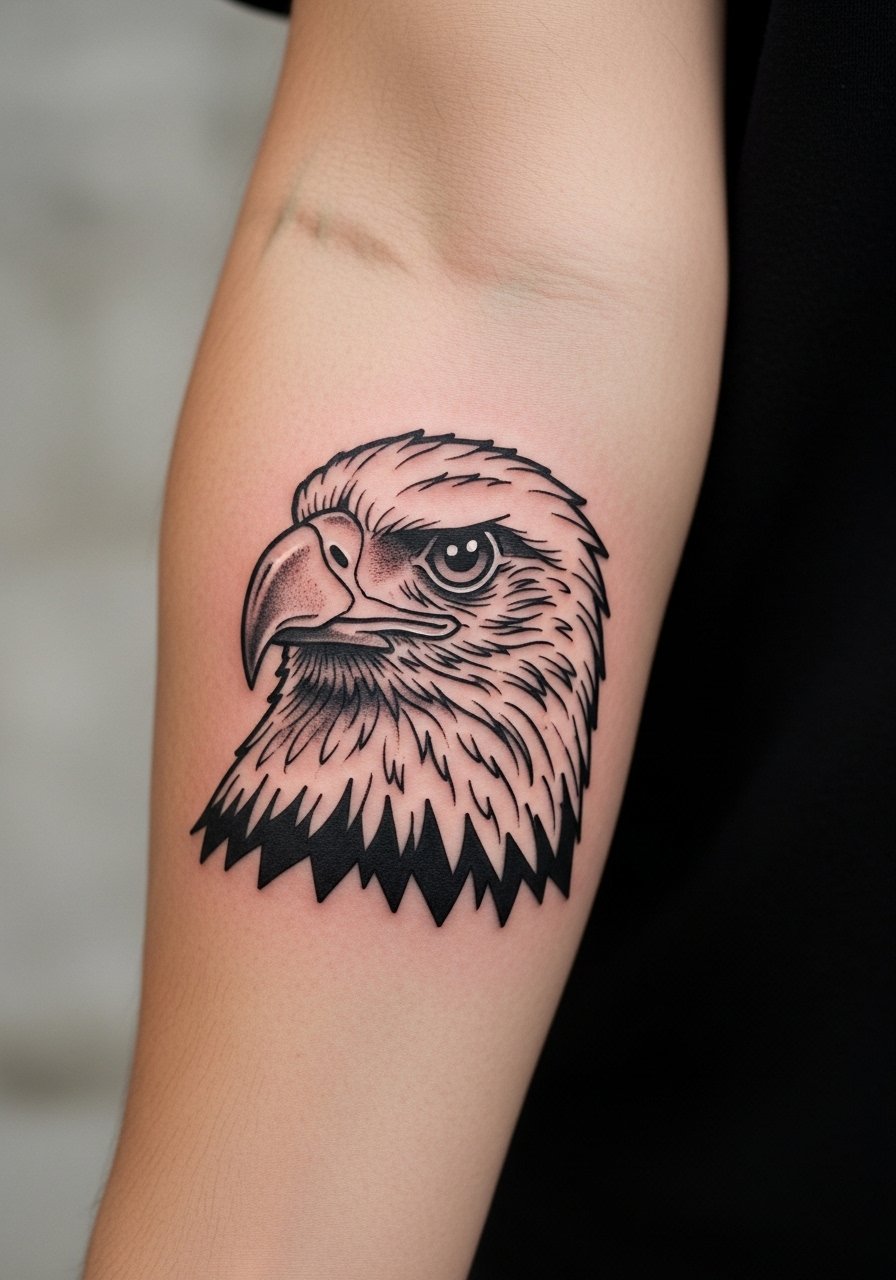
7. Ignorant Style Blocky Eagle Portrait on the Outer Forearm
Consultation lead: tell the artist you want the hand-drawn, naive eye style and specify where to leave negative space so the face reads like a sketch rather than a solid blob. This aesthetic benefits from confident, flat fills and visible marker-like edges. The session feels lively because most of the work is blocking solids rather than micro-shading, so plan for one longer or two shorter sittings depending on size. For showing this off pair rolled sleeves and a leather cuff if you want an edgy, punk-forward vibe. A common mistake is asking for too many tiny decorative elements around the blocky portrait, which distracts from the raw energy that defines the look.
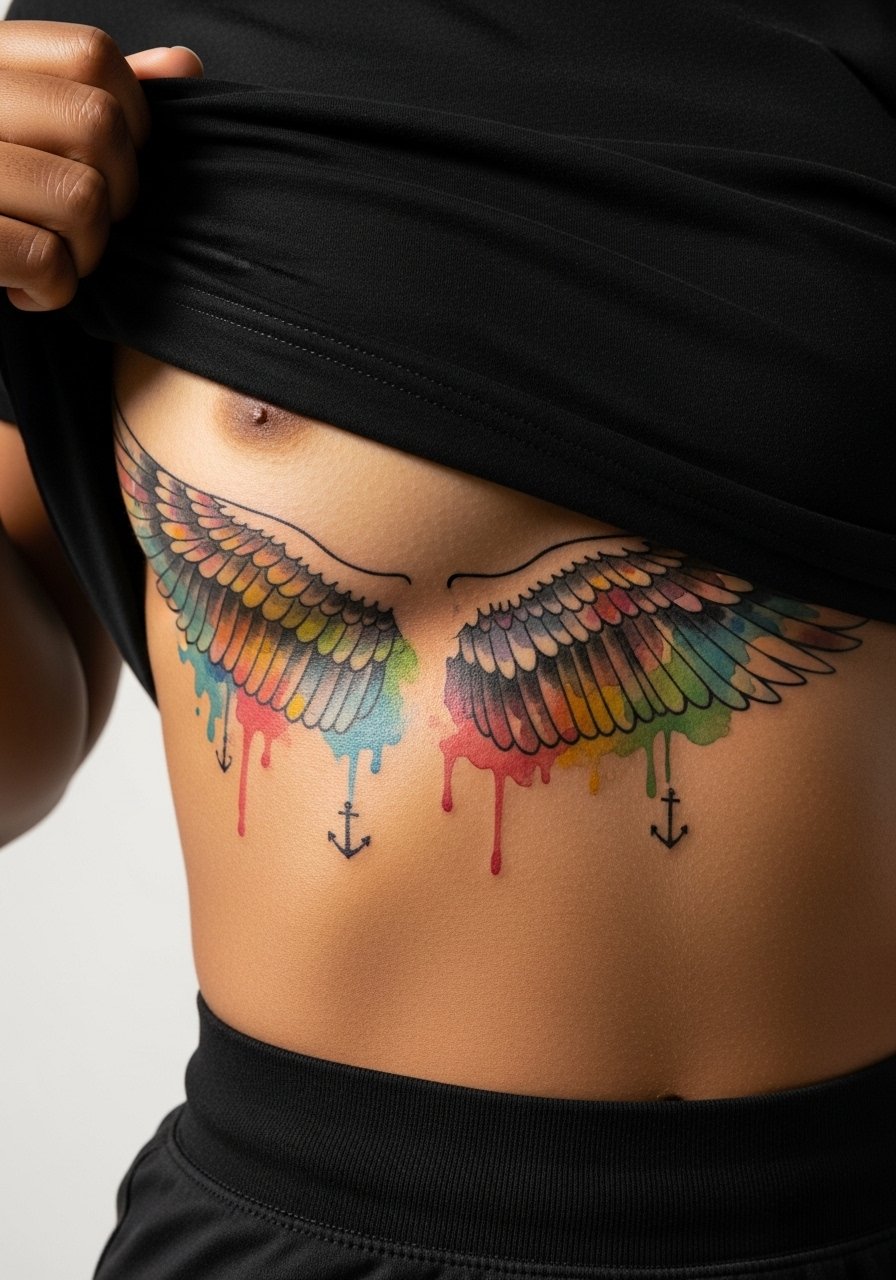
8. Watercolor Eagle Wings Spanning the Ribs
Controversy lead: watercolor lovers point to painterly washes and soft edges, while the longevity camp warns that ribs and watercolor can fade into bruise-like smudges if not planned with anchoring outlines. Both camps have a point. If you want this look on the ribs, ask for subtle black anchors or light stipple outlines under the color so the wings keep shape as they fade. Be realistic about pain, the ribs are a high-pain area and sessions are often split for comfort. For the appointment wear a cropped athletic top so the artist can access the side without exposing the torso beyond the tattoo zone. The main mistake is asking for full watercolor washes without any structural linework, which accelerates loss of definition after a year or two.
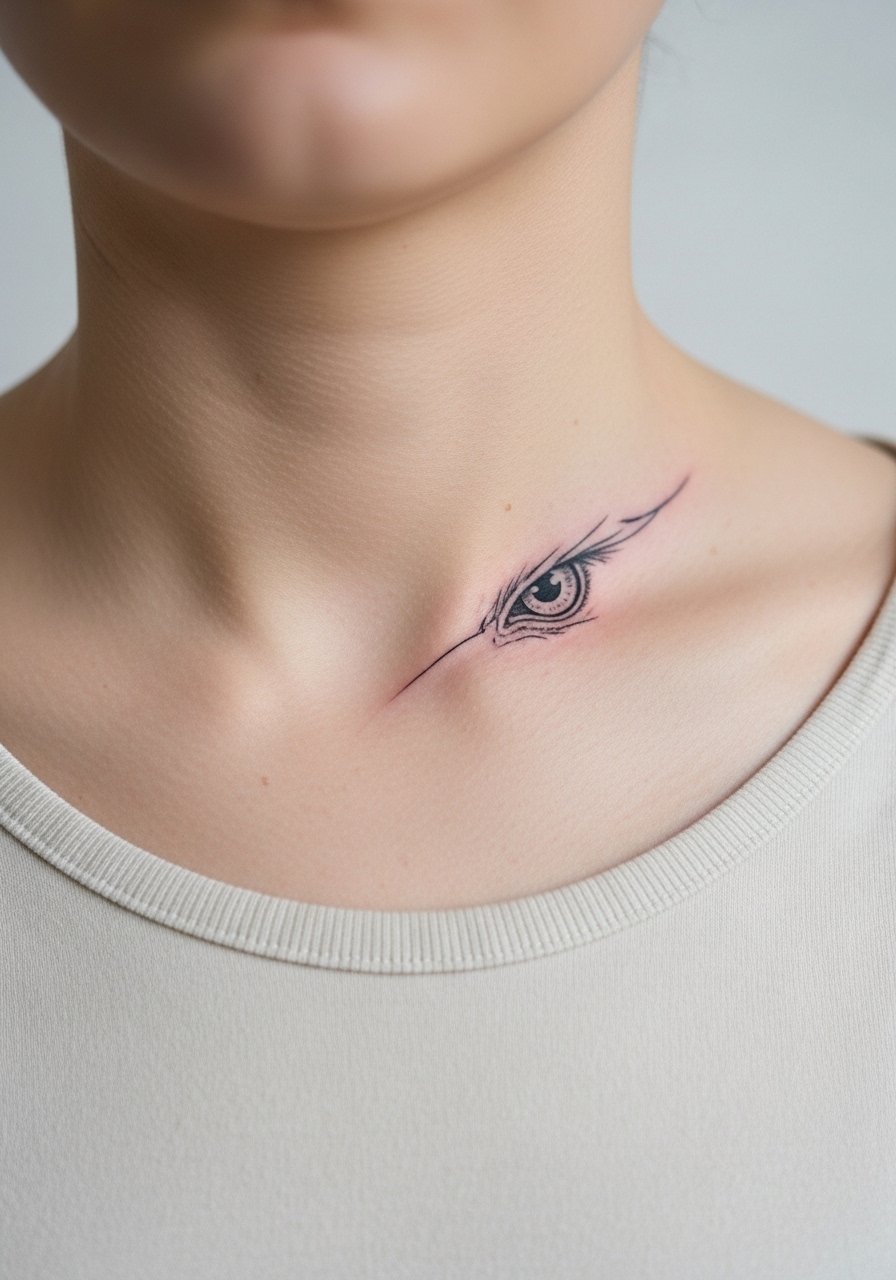
9. Fine Line Eagle Eye Near the Collarbone
Consultation lead: tell your artist you want a single-needle eye with concentrated contrast around the pupil and slightly thicker contour near the top lid. Artists split into two camps on collarbone fine line work. One camp says thin lines blur faster there because of constant motion and clavicle movement. The other camp argues that with measured spacing and correct needle depth the detail settles fine. Ask where your artist stands and request healed photos on similar placements. For showing this off, a silver+chain+necklace+men sits neatly above the image and draws the gaze without crowding the piece. Expect a quick session and possible touch-up at year three for crispness.
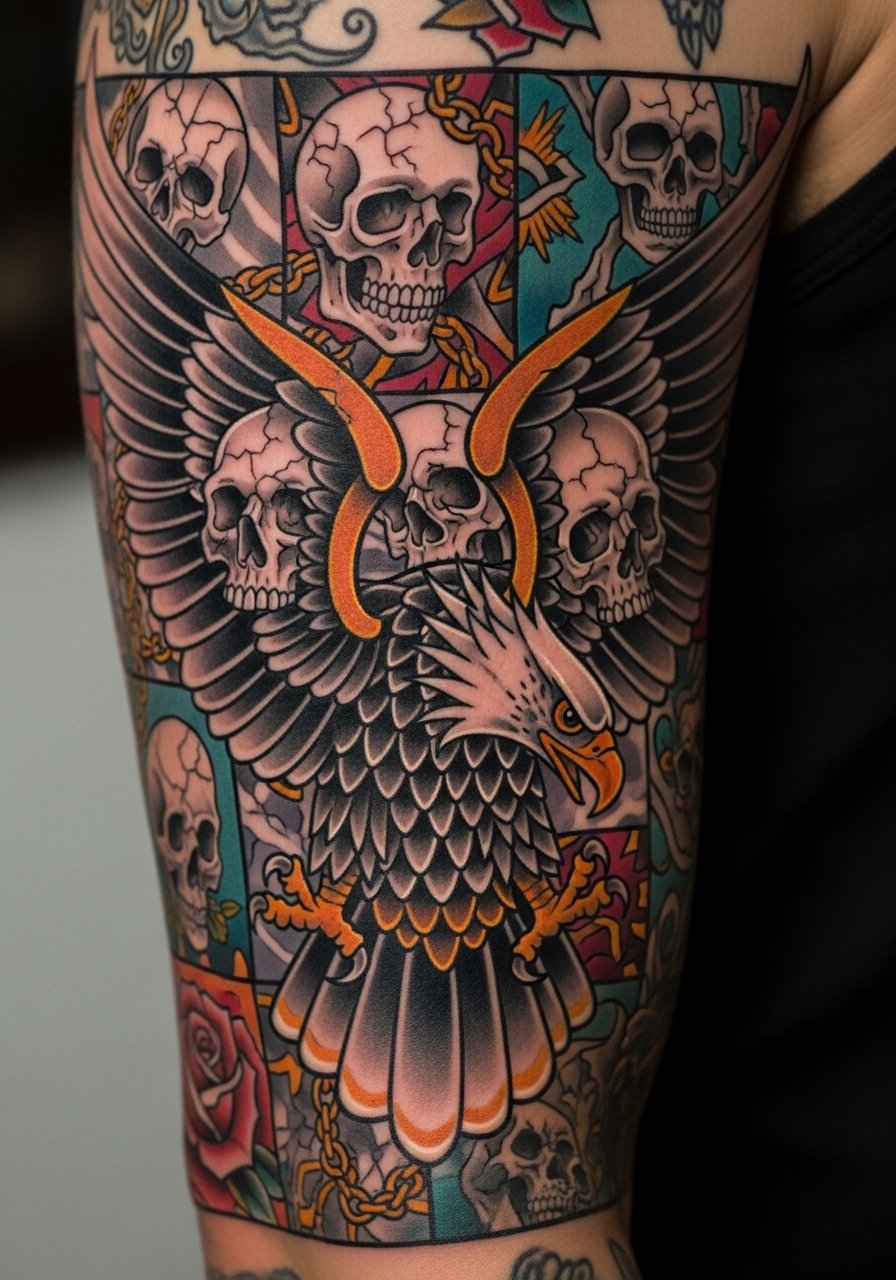
10. Patchwork Eagle Integrated into a Sleeve with Skulls
Personal observation lead: sleeves that use an eagle as an anchor piece tend to work best when the eagle is scaled to dominate one-third of the arm, leaving space for surrounding narrative elements. Ask for the eagle head or wing to act as the compositional anchor, not a mid-sized element lost among skulls. This route is for collectors who plan multiple sessions, often five or more, and the arm will change with each added layer. A real mistake is treating the eagle as an afterthought; start with it and build the rest around its flow. Discuss touch-up timelines up front so color zones that sit over high-motion areas get scheduled checks.
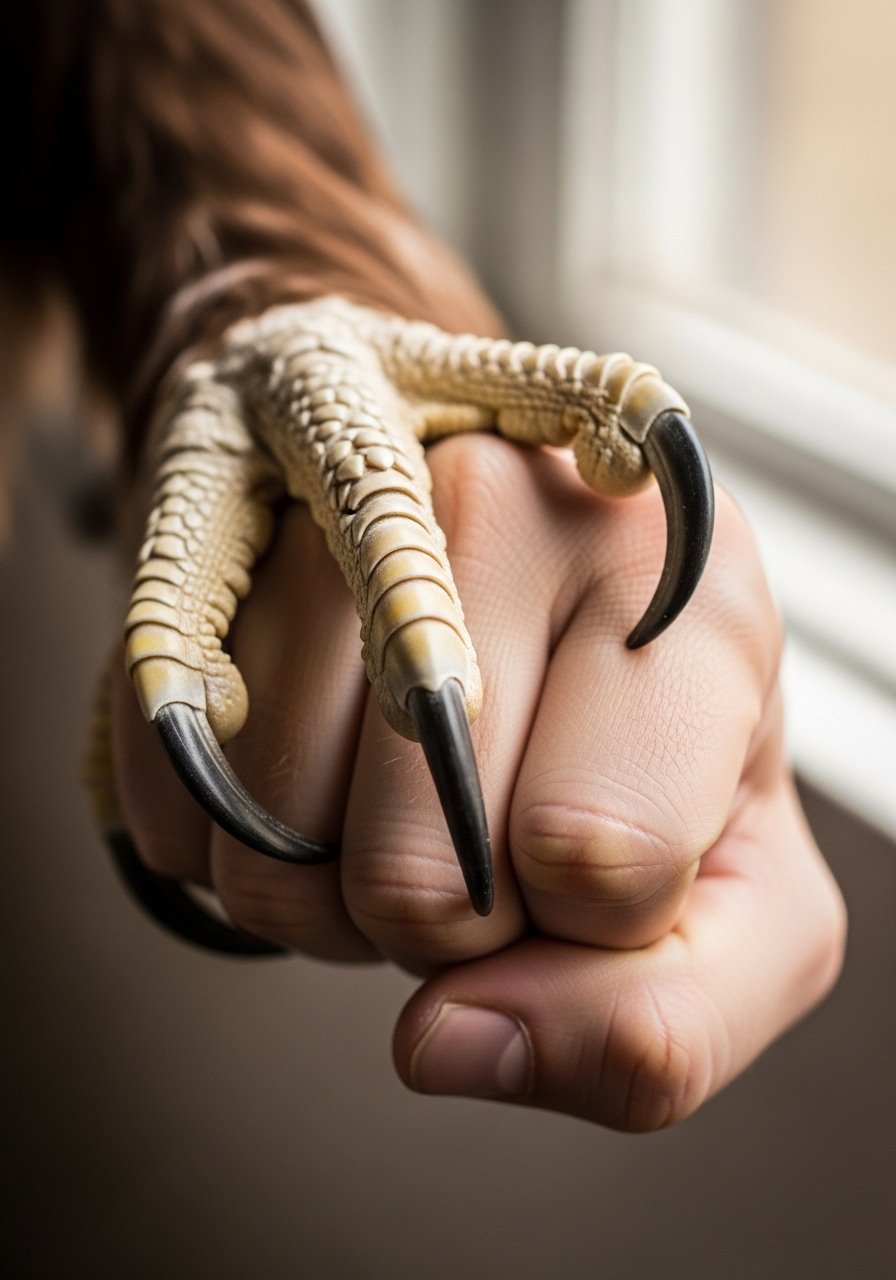
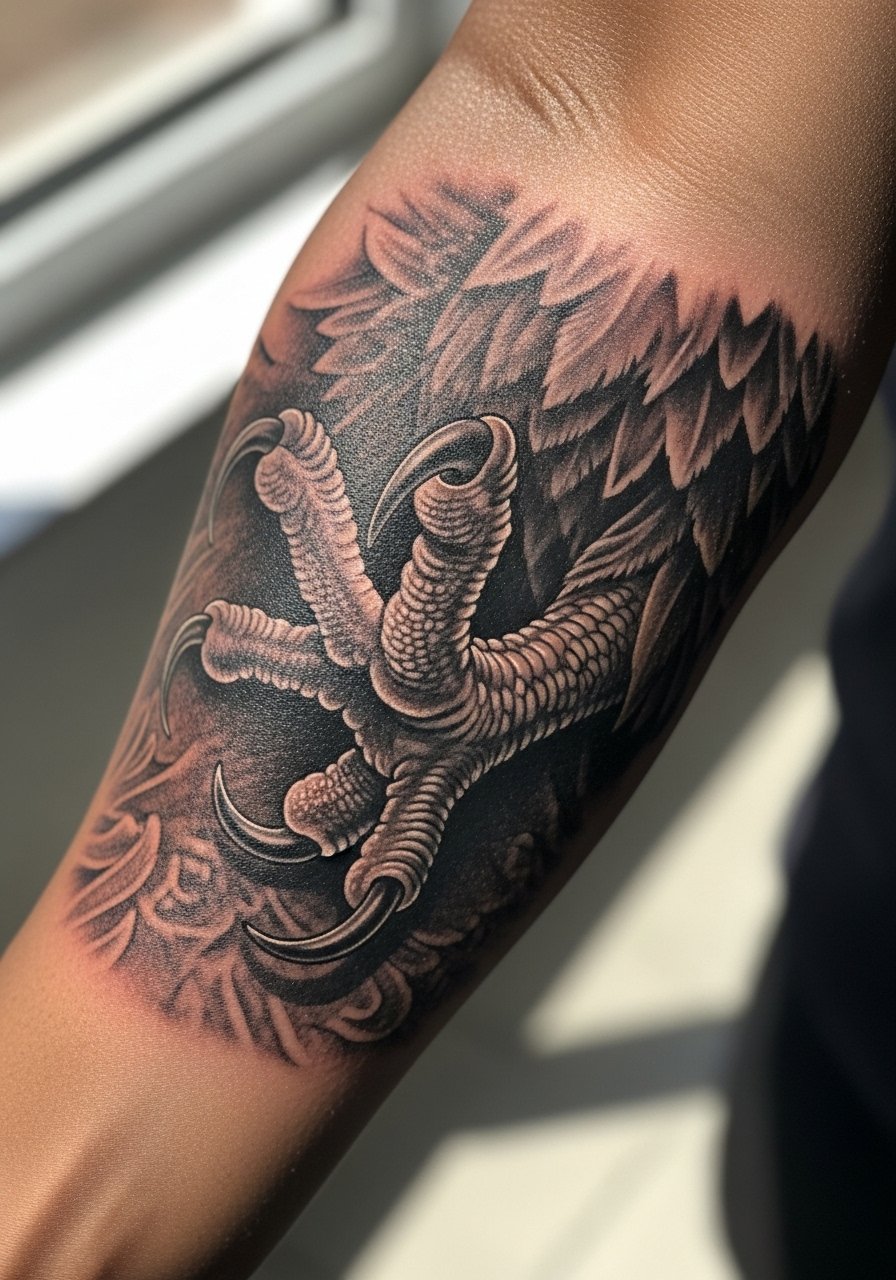
11. Hyper-Realistic Golden Eagle Talon Grip on the Hand and Knuckles
Pain warning lead: hand and knuckle work is high on pain and high on risk for early fade because of constant washing and use. Ask for dense contrast and accept that multiple touch-ups will likely be required. Session-wise expect short, focused passes and long breaks. If you want this piece to pop during the early months, wear a loose short-sleeve shirt to the session so the artist can angle the hand without constriction. The common mistake is requesting ultra-fine feather texture across the knuckles, which blurs quickly. For career concerns, be mindful that hand tattoos remain visible in many professional settings, so weigh placement accordingly.
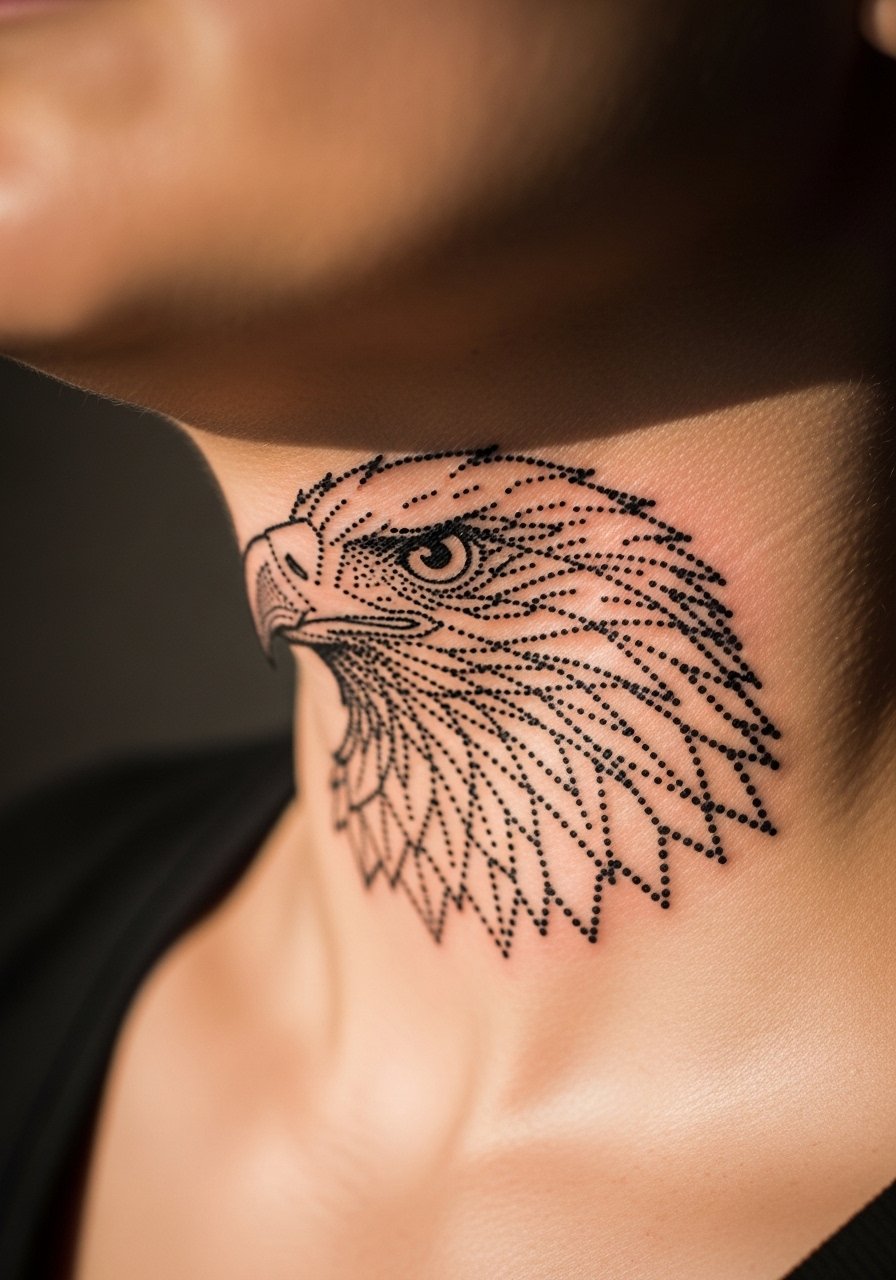
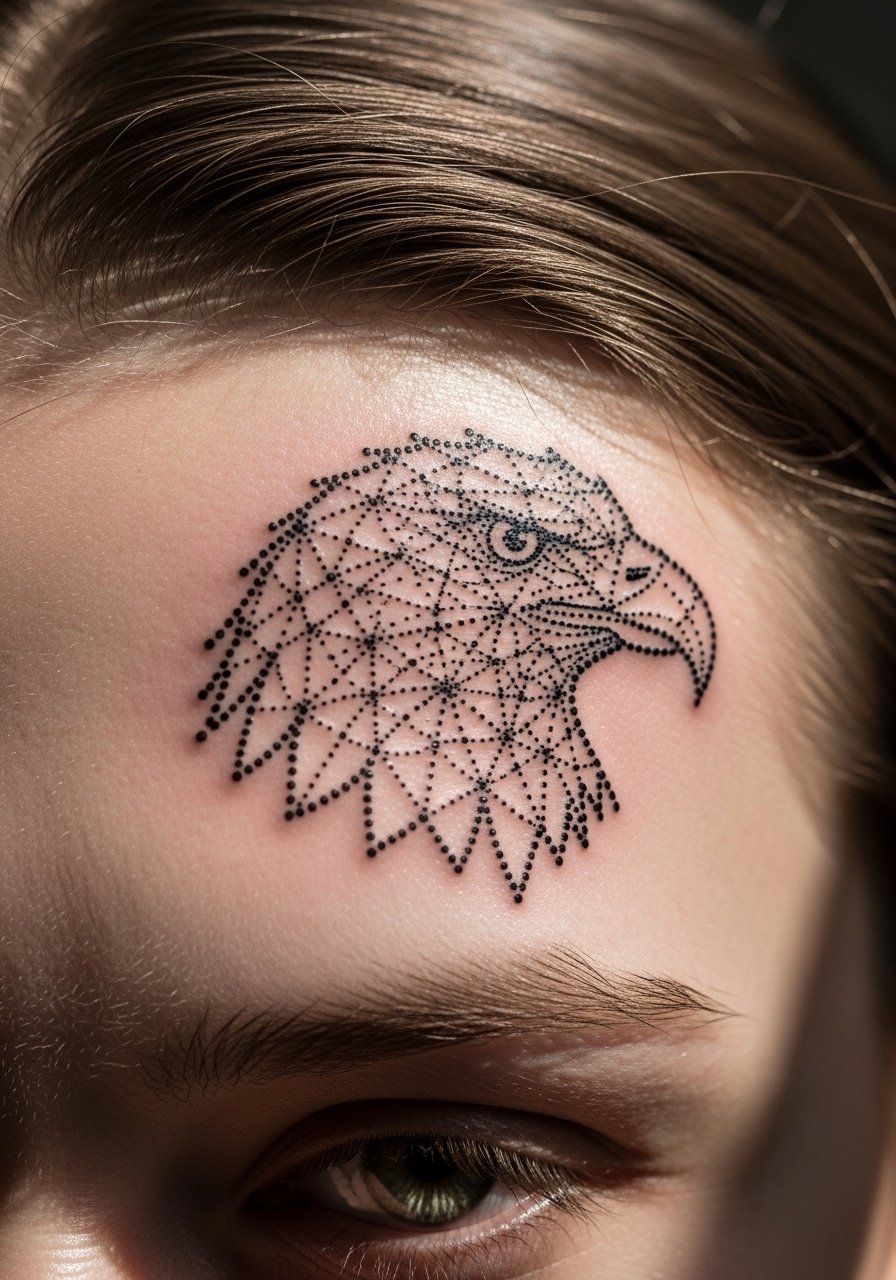
12. Dotwork Geometric Eagle Head at the Temple or Jawline
Mistake lead: geometric dotwork needs room to breathe or the precision gets lost on curved facial planes. At the temple or jawline have the artist mock the piece on your face so you can see flow with hairline and beard. Because the area is sensitive, session time may be shorter and you should plan for tiled dotwork that builds slowly. If the design includes script or coordinates, specify the exact text in consultation so lettering holds up. As the skin on the jaw moves a lot, expect a touch-up option after a year if the dot density softens. Sensitive placement note, book an artist experienced with temple work because the skin there reacts differently than limbs.
13. Eagle Talons Gripping Forearm Veins for Illusionary Depth
Visual impact lead: integrating talons with vascular lines can create a striking illusion of depth, but it needs careful anatomical study by the artist. Tell your artist to map your veins while sitting and while flexing so the placement reads convincingly when your arm moves. This is a good pick if you want dramatic realism without a full sleeve. For the session wear an easy short sleeve like a short sleeve performance tee so your arm is free and the fabric does not rub the new ink. A common error is centering talon detail over a high-motion tendon; that choice speeds fading. Plan for two to three sessions if you want high-detail talon texture.
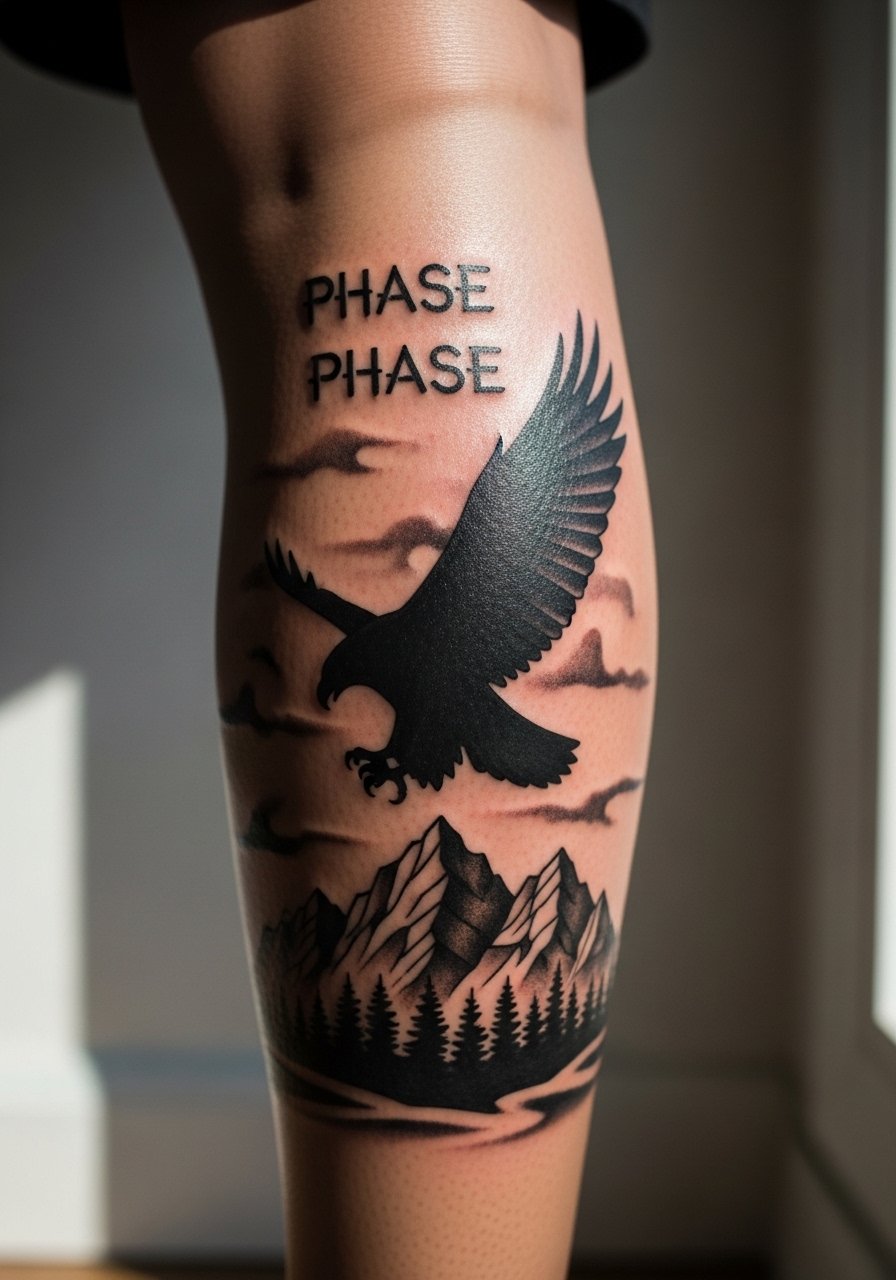
14. Eagles Phased into Mountain Silhouettes on the Calf
Aging lead: landscape elements help realism pieces read across seasons of fading. Folding an eagle into mountain silhouettes on the calf works because the shapes are large and the area gets less friction than feet. During consultation ask for contrast anchors along ridgelines so the eagle form does not wash out when colors soften. Sessions are moderate and usually need two sittings if you include sky gradients. The typical mistake is trying to cram tiny background detail that disappears after a year. Consider calf placement if you want a visible piece with lower weekly abrasion compared to ankle work.
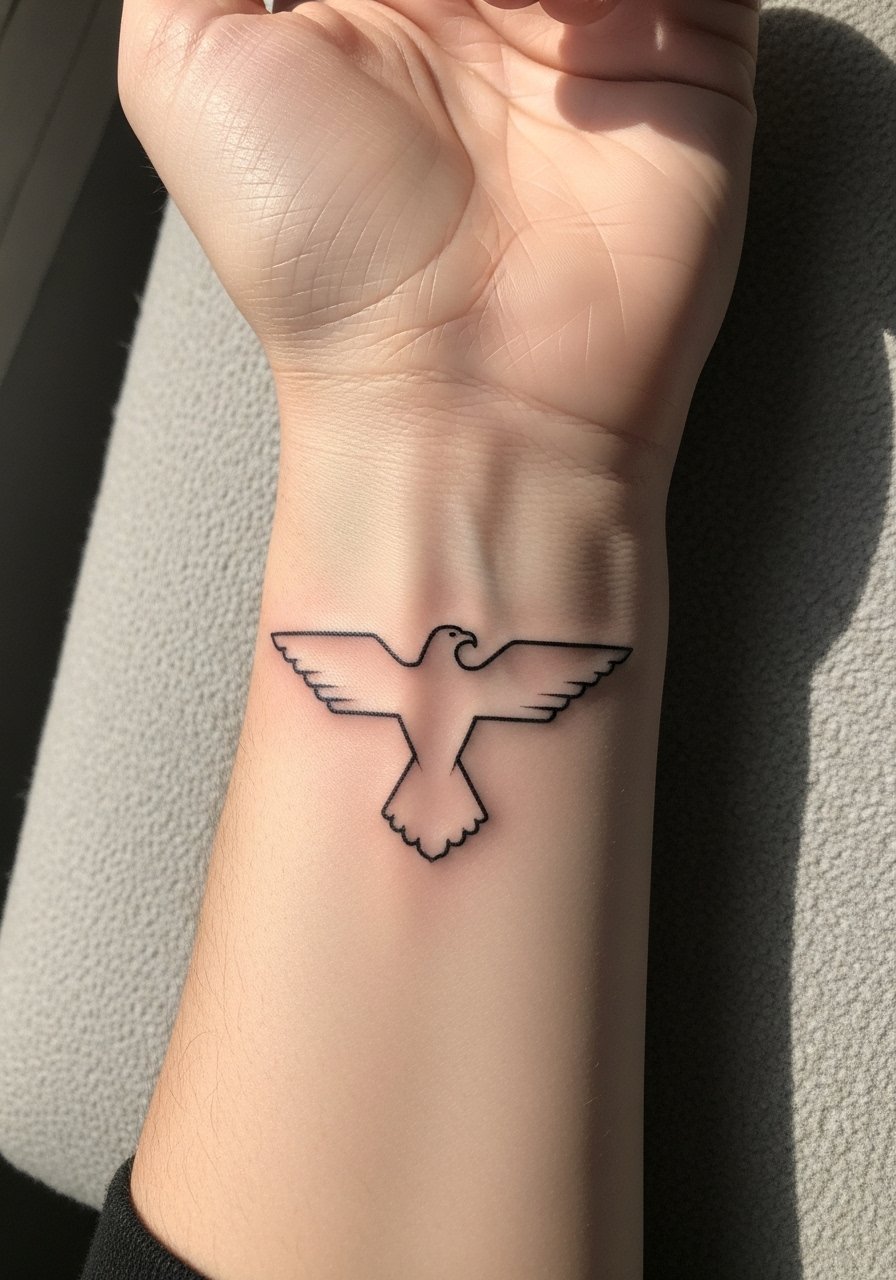
15. Minimalist Linework Eagle at the Wrist with Accessory Pairing
Consultation lead: wrists need slightly thicker single-line work than you might expect, and the piece benefits from being offset from the central crease. Tell the artist to add a whisper of negative space where a watch or bracelet might sit so accessories do not press across new ink. For long-term show-off pair this design with a thin leather watch men on the opposite wrist to balance attention. The usual mistake is placing the line too low into the crease, which promotes extra friction and earlier touch-ups. Expect a quick one-session tattoo and a possible touch-up around year two depending on wear.
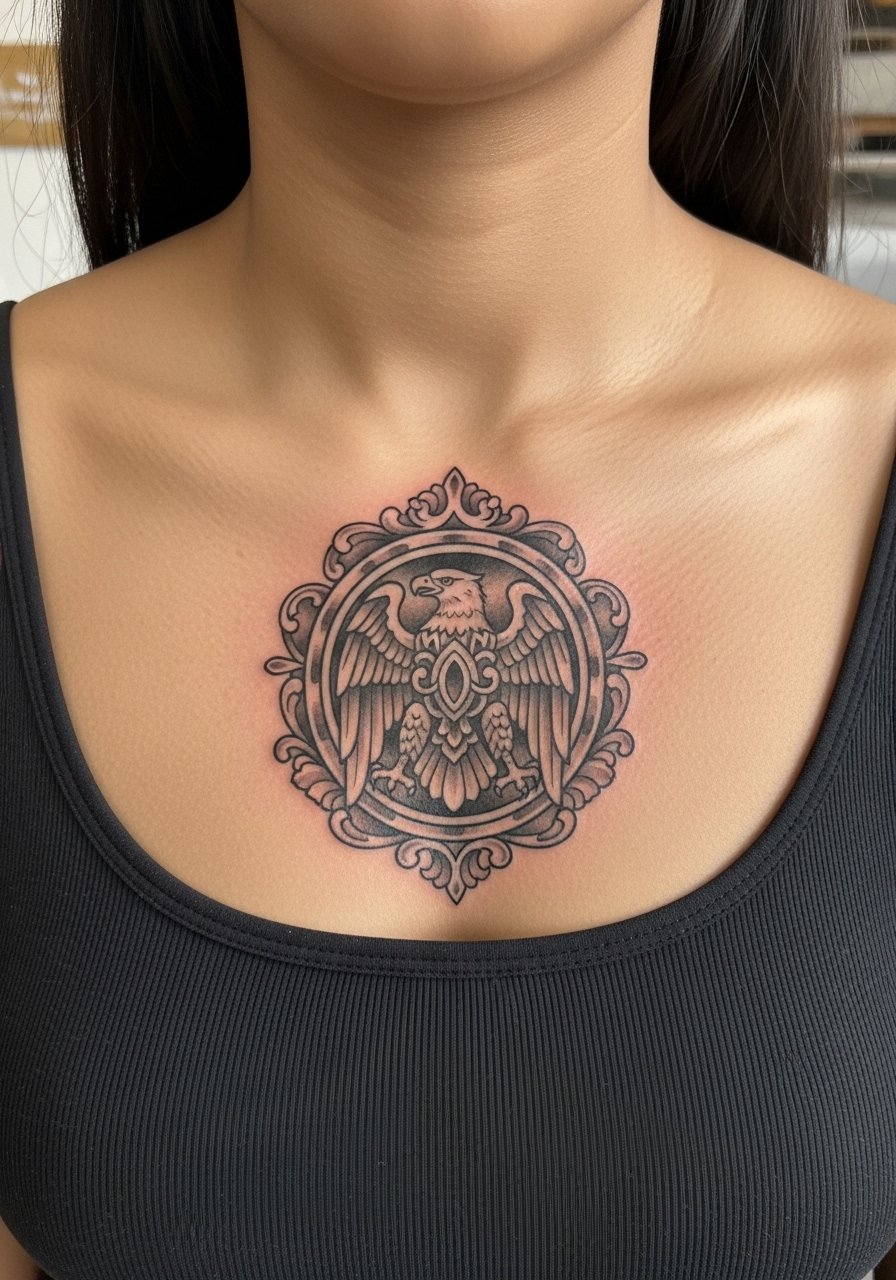
16. Ornamental Chest Medallion With Eagle and Banner
Visual impact lead: a centered chest medallion that uses an eagle motif reads like armor when placed mid-chest above the sternum. Because the chest moves a lot with breathing, avoid tiny inner medallion dots and ask for radial spacing that keeps the emblem readable as skin expands and contracts. Session advice, wear a loose button-down for easy access. A mistake to avoid is compressing script into the banner at very small sizes; the chest is better for broad lettering and clear motifs. For men who lift often, double-check how the design sits when flexed so the eagle's wings still follow natural pectoral lines.
17. Dotwork Geometric Eagle Head on the Temple Edge or Jawline
Mistake lead: dotwork on the temple edge requires the artist to stage the geometry so it reads with your hairline and beard. Ask for a mock stencil while upright so gravity and facial contours are obvious. This placement benefits from slow, deliberate sessions and the dots should start coarser and tighten as you look outward from the focal eye. For session comfort wear a loose tank top cotton so the artist can access the side of the head while keeping exposure minimal. Sensitive placement note, artists often prefer to stage jawline work with shorter passes to manage swelling and skin reaction.
Frequently Asked Questions
Q: Will a fine line collarbone eagle blur faster than a chest traditional eagle?
A: Yes, fine line on the collarbone tends to need touch-ups sooner because of constant clavicle movement and thinner skin. Traditional chest pieces with heavier outlines hold pigment longer. Ask your artist for healed photos on similar placements and plan a touch-up at year two to three for fine-line work.
Q: How should I prepare for a ribcage watercolor eagle session to reduce fading risk?
A: Book the session in stages so the artist can anchor color with subtle outlining or stipple under the washes. Hydrate the skin in the weeks before and avoid sunburn. On session day wear a cropped athletic top so the artist can expose only the rib zone, and plan to split the work into two sittings if the artist recommends it.
Q: Are hand and knuckle eagle tattoos worth it if I want long-term clarity?
A: Hand and knuckle pieces are visible and bold but they also face frequent washing and abrasion, so expect more touch-ups over time. If longevity matters, ask for dense contrast and accept that maintenance is part of the package.
Q: Where can I find good eagle references and guest spots if I want a highly specialized style?
A: Search hashtags like #eagletattoo and #neotraditionaleagle on Instagram, scan YouTube portfolios for realism reels, and use tattoo directories that let you filter by style and city. Book a guest spot through apps that list convention schedules if you want a specific specialist.
Q: Does blackwork hold up better than watercolor for men who spend a lot of time outdoors?
A: In my experience blackwork and bold outlines resist sun fading better than soft watercolor washes. If you spend time outdoors, prioritize stronger outlines and plan on regular sunscreen once healed to keep contrast.