
Fine line marigolds are everywhere online right now, but what readers miss is how these designs actually age on different skin and placements. Trends promise painterly color and hairline stems, and reality delivers either neat heirloom pieces or ghosted lines that need touch-ups. Read these 27 October birth flower ideas with practical notes on aging, consultation prompts, and wardrobe tips so you pick a marigold that still looks intentional two years from now.
1. Fine line single marigold outline on inner wrist
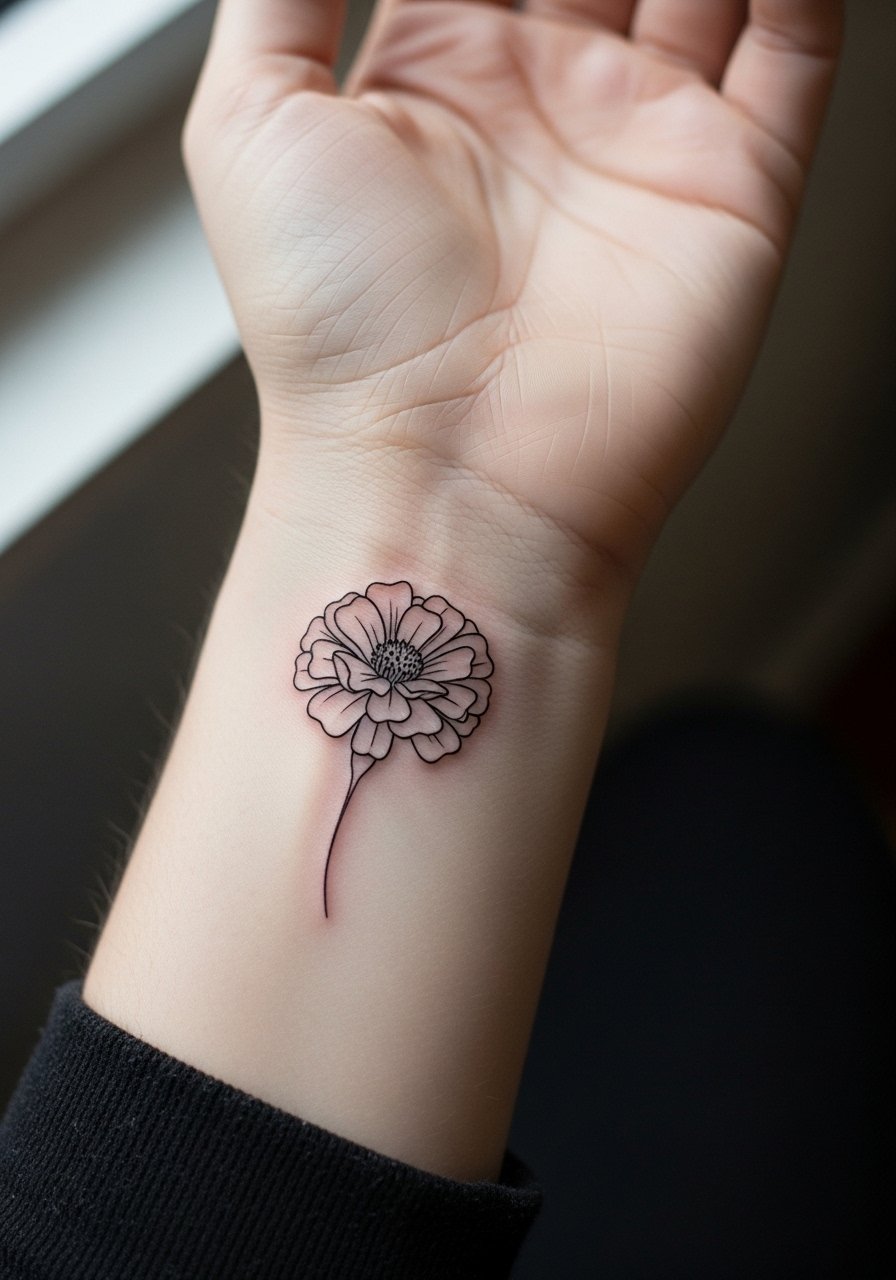
I've seen this one become a daily staple because it reads like an accent rather than a statement. Tell your artist you want single-needle outline with a hairline stem and one thicker anchor line for longevity. The wrist is low pain for most people, and sessions are short. Common mistakes are going too tiny or leaving every line at the same hairline weight, which leads to early softening. Expect a touch-up at 8 to 18 months for true single-needle pieces. For showing it off, stack a thin leather cord bracelet on the opposite wrist so the linework stays the focal point.
2. Watercolor marigold bouquet with dripping petals on outer forearm
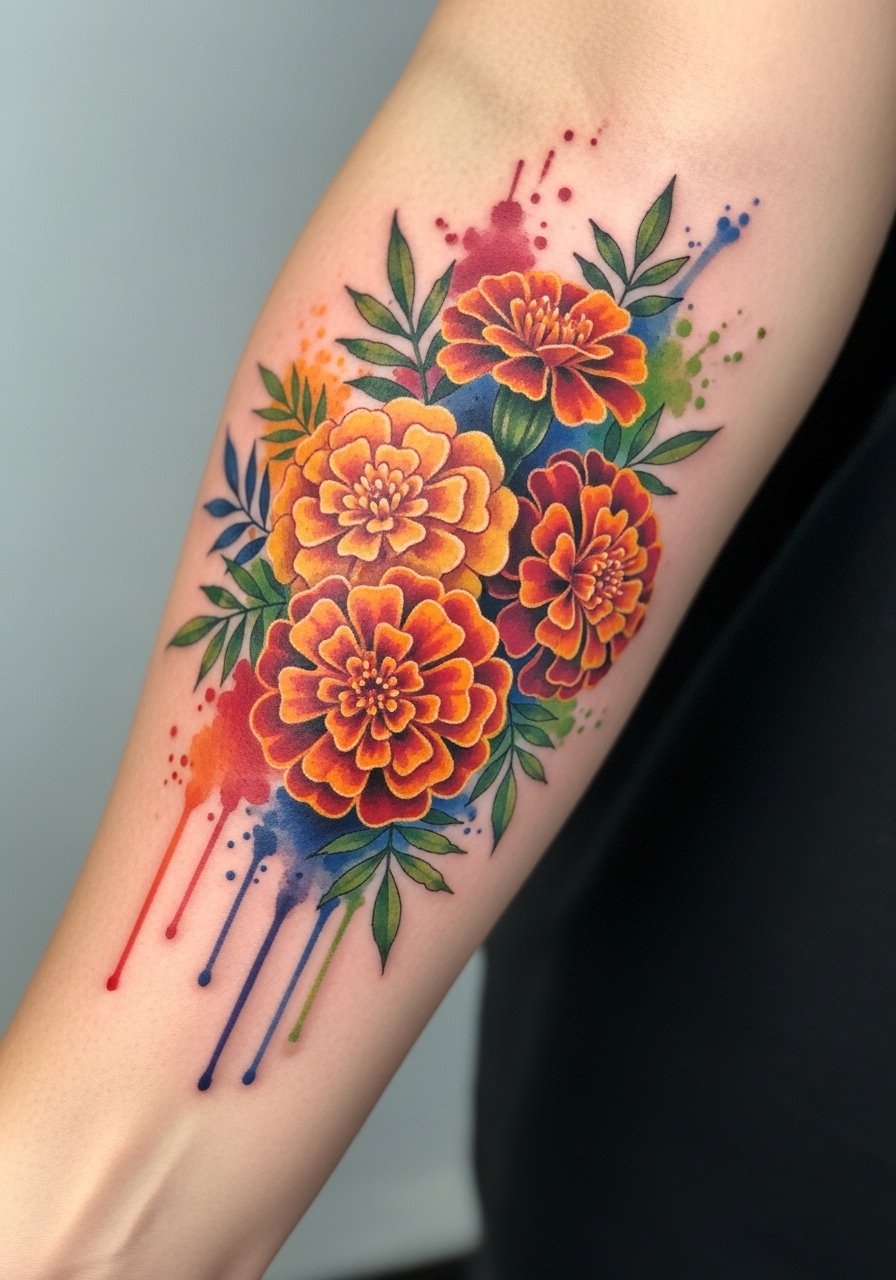
Visual impact leads here. Watercolor gives that painterly drip while the forearm offers room for 4 to 6 inches of saturation. In consultation, ask for softer edges paired with tiny anchor lines so the color has a structural frame. Pain is mild and sessions usually finish in one to two sittings. The risk is color bleed and yellow muddying on deeper skin tones, so request sepia mixes rather than pure lemon yellow. Plan for color refreshes at year two if you want bright petals long term. Wear a chambray shirt rolled cuff to frame the forearm when you want it visible.
3. Minimalist marigold stem with buds on collarbone
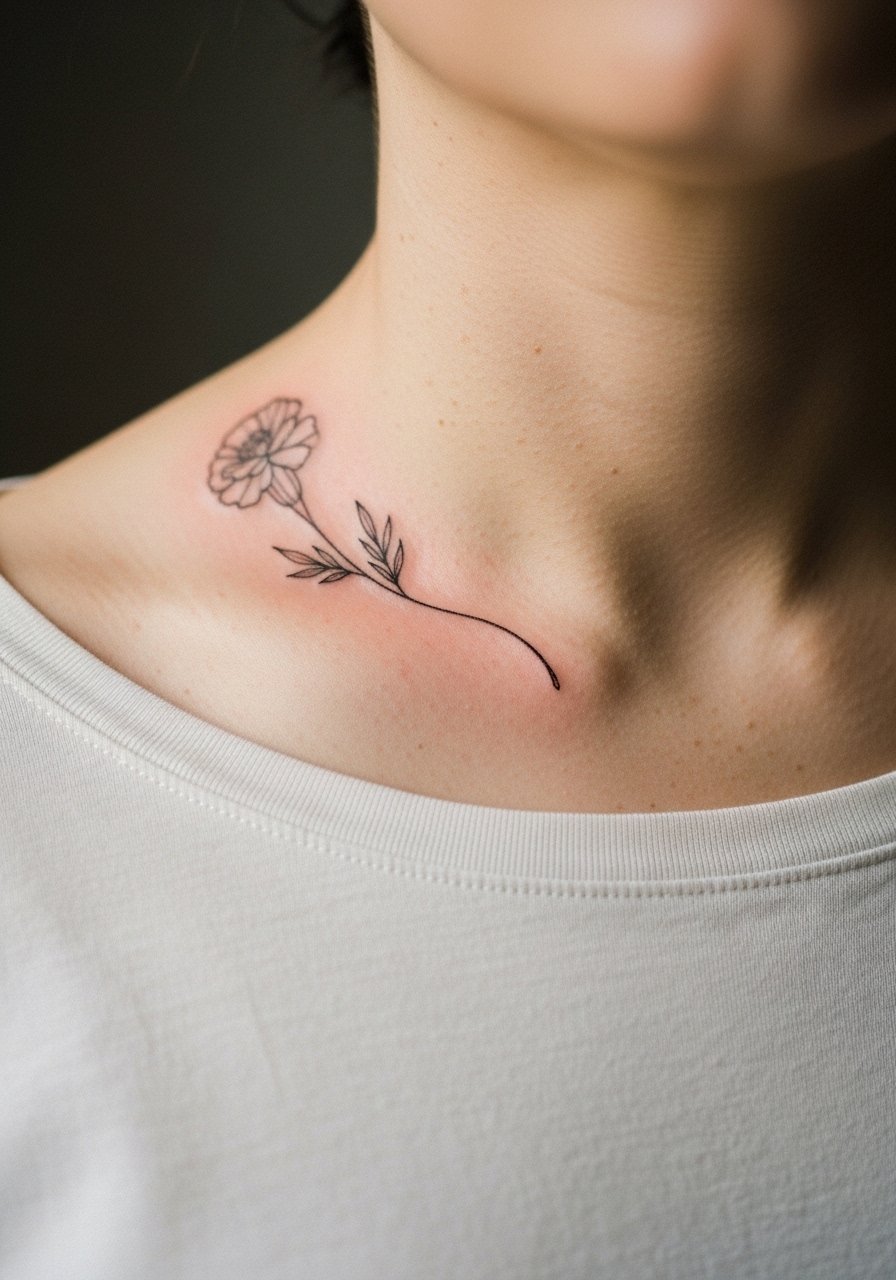
Fair warning, collarbone pieces look delicate but the area moves with breath and wardrobe. I recommend a slightly thicker main stem than what you see on saved boards so the line retains contrast over years. Tell your artist you want black and gray shading only with tight spacing between buds so the design reads vertically. Sessions are quick but expect soreness when your bra strap hits the area for the first week. A common error is asking for ultra-fine stems that fade into patchy lines. Pair the healed collarbone with an off shoulder sweater to let the stem peek without crowding the neckline.
4. Neo-traditional marigold with geometric accents on outer thigh
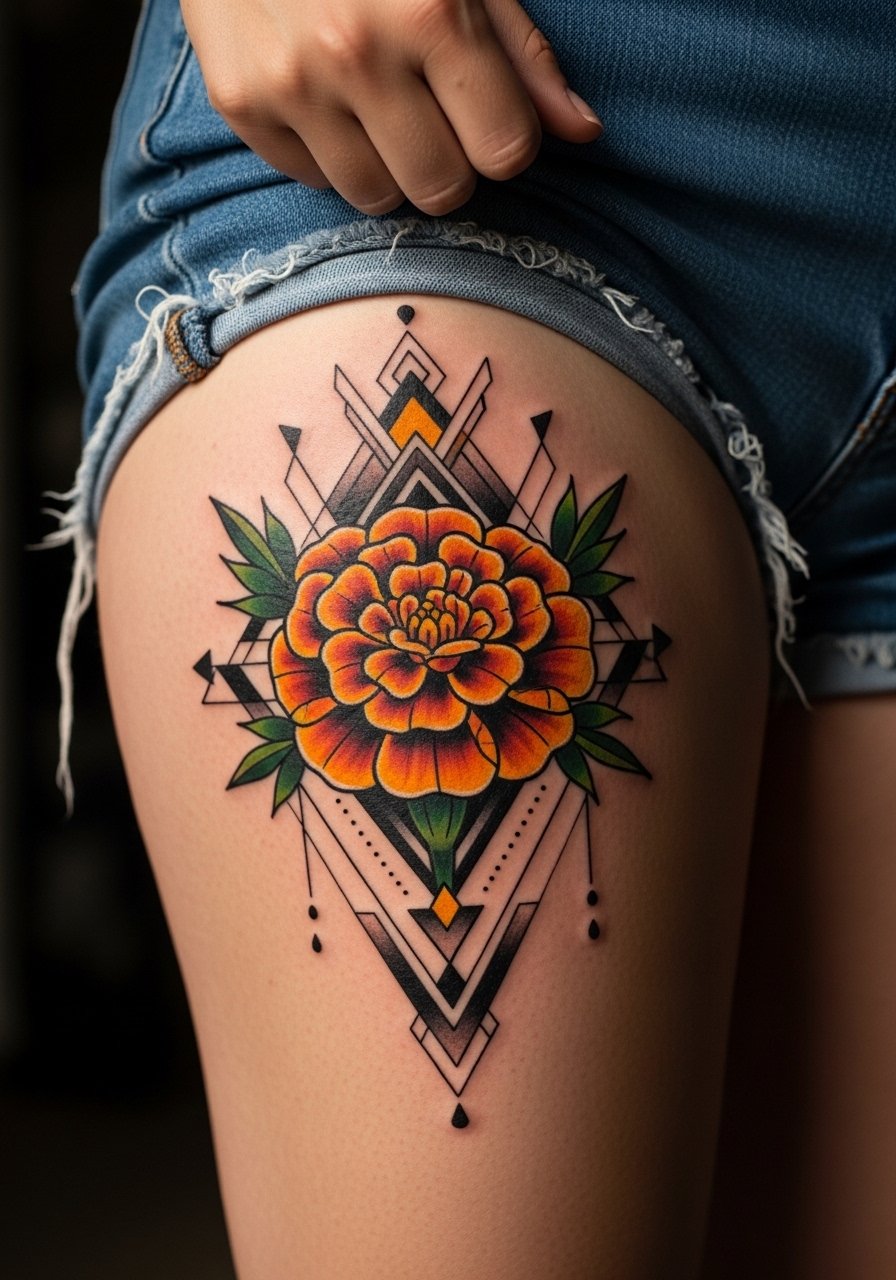
The thigh is forgiving on size and touch-up needs, and neo-trad saturation holds well if the artist packs color with intent. For consultations, bring geometric references that match the bloom scale so the shape does not overpower the flower. Pain is moderate and placement allows longer sessions. If you plan on body changes, note that thigh flesh can change with weight shifts, which affects petal stretch. Big color fills age better than delicate yellows on deeper tones. Show this design with high waisted denim shorts for summer looks, and wear loose shorts to your session for easy access.
5. Blackwork marigold mandala on shoulder blade
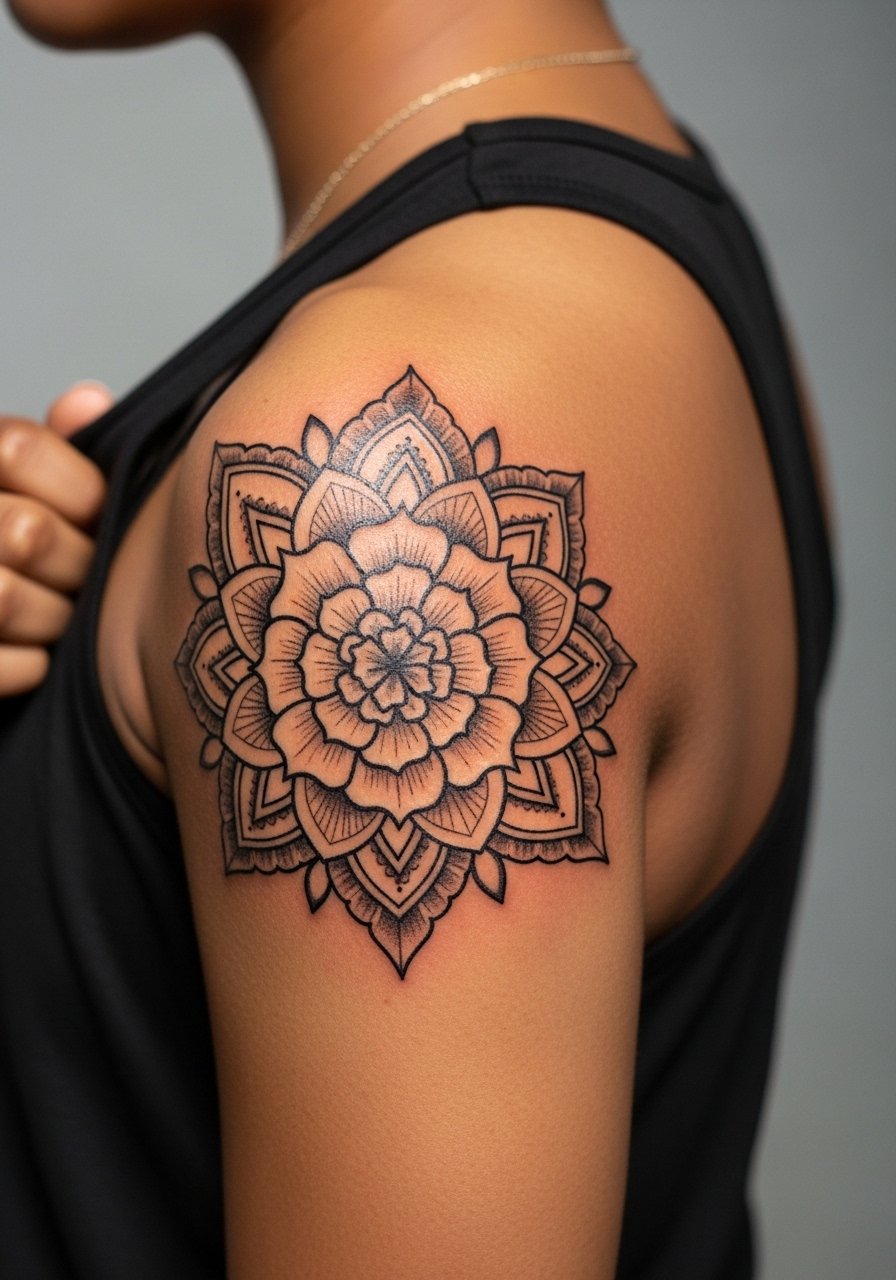
There is something about saturated black outlines that ages predictably on the shoulder blade. The area gets less daily abrasion, so bold linework keeps its contrast. When you book, ask for strong outer linework with stipple or dotwork infill rather than thin cross-hatching. Shoulder blade sessions are single visits for 3 to 4 inch pieces and pain ranges low to moderate. One common mistake is cramming too many tiny details into a compact mandala, which leads to loss of definition later. Pair this with a racerback tank when you want the mandala to dominate your back.
6. Micro-realism marigold petal cluster on ankle
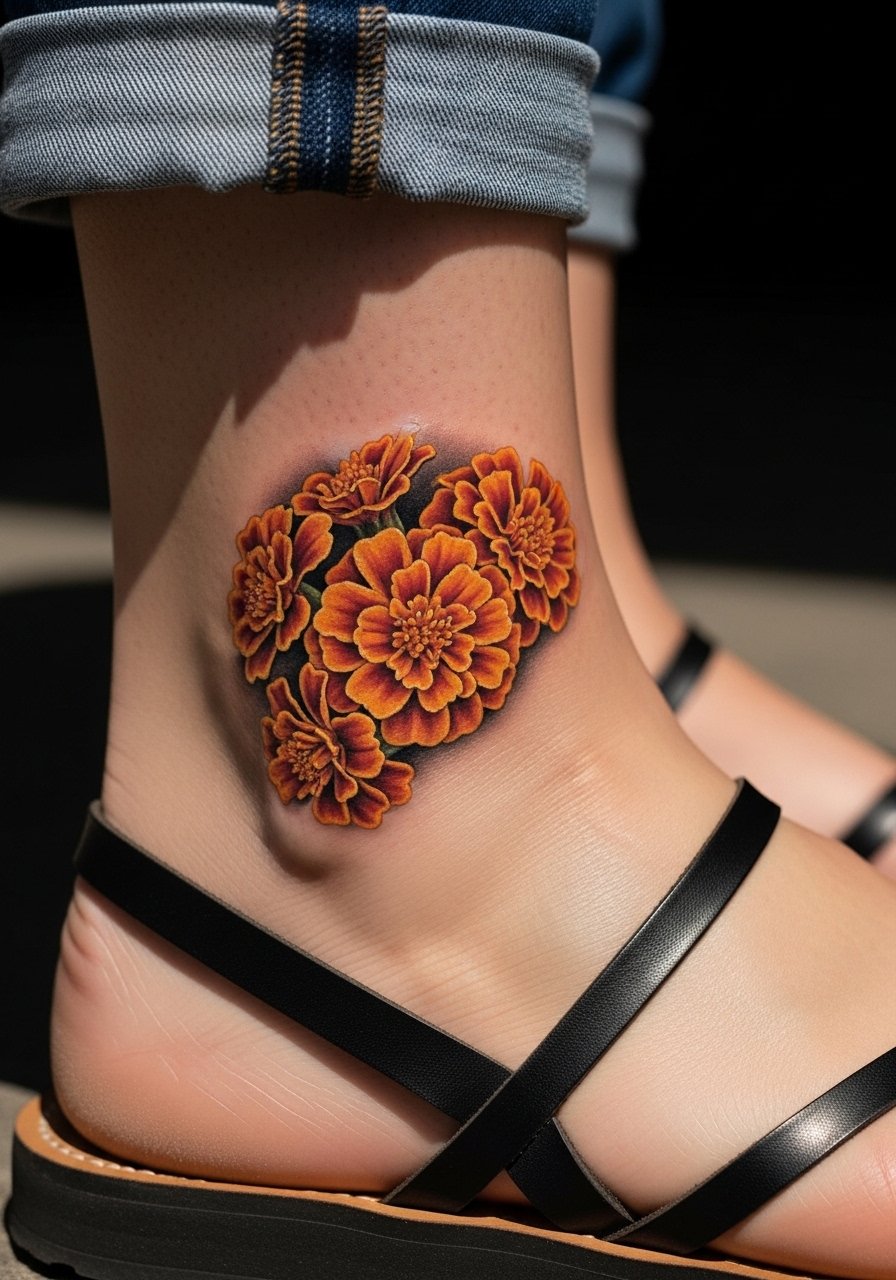
Most micro-realism ankle pieces look beautiful fresh and stay readable if the artist uses contrast instead of tiny single-needle dots. The ankle is a low to moderate pain zone and sessions are short. Tell your artist you want heavier dark grounding tones under the petal highlights so the yellow reads against skin. A typical mistake is favoring pale highlights without a dark base, which makes petals vanish on medium and dark skin tones. Expect potential touch-ups sooner than thigh or back work because ankles see a lot of friction from shoes. For evenings, pair the healed ankle with strappy heeled sandal looks.
Studio Day Picks
The wrist, collarbone, ankle and forearm pieces above each need different prep for healing and session comfort, so a small kit smooths the first week and the chair day.
-
Second Skin protective film. Thin film helps curved wrist and ankle placements stay covered without bubbling, which is handy for the inner wrist outline and ankle cluster above.
-
Ink Fixx balm. A lighter balm that artists mention for color saturation, useful when you choose watercolor forearm fills over pure lemon yellow.
-
CeraVe Healing Ointment. Non-greasy option for larger areas like the shoulder blade mandala where heavy ointments feel uncomfortable.
-
Tattoo Goo green tint product. Mentioned by collectors for keeping yellow tones lively, which matters for marigold yellows on warmer skin tones.
-
Aquaphor Healing Ointment. Thin initial layer for tight-line work that needs moisture without smothering the needle channels.
7. Ornamental marigold vine wrapping the ribcage
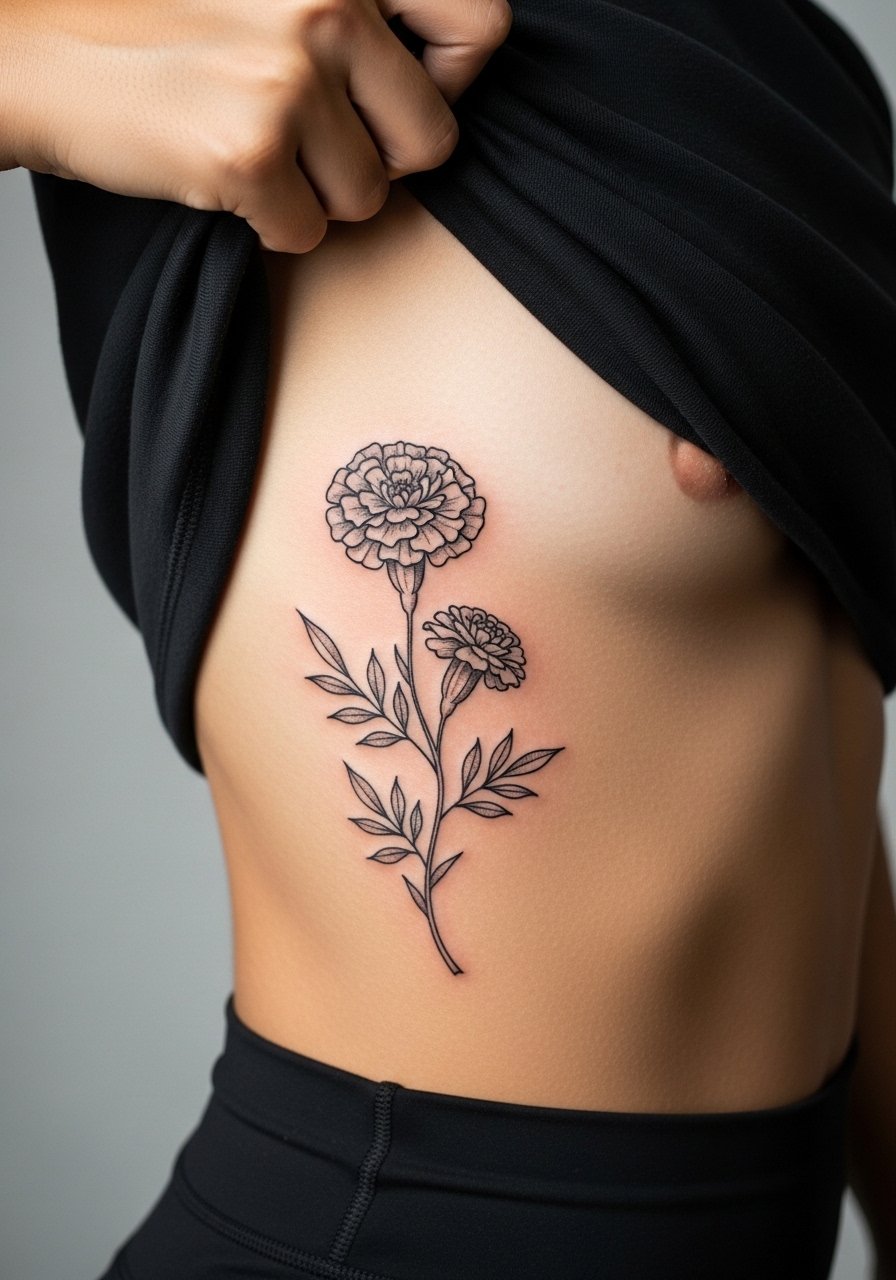
Pain warning: ribs are high on the discomfort scale but the canvas is worth it for long flowing vines. Artists split on this placement. One camp says the torso stretch blurs fine line rapidly. The other camp argues that with slightly deeper single-needle placement and proper spacing, lines can hold for years. Ask your artist where they stand and request spacing that favors open negative areas. Sessions are longer and often split into two visits. Avoid ultra-fine stems hugging the ribs because they tend to blur into shaded patches after weight changes or pregnancy. Wear a strapless bra or zip hoodie to the appointment for easy access.
8. Ignorant style chunky marigold on calf
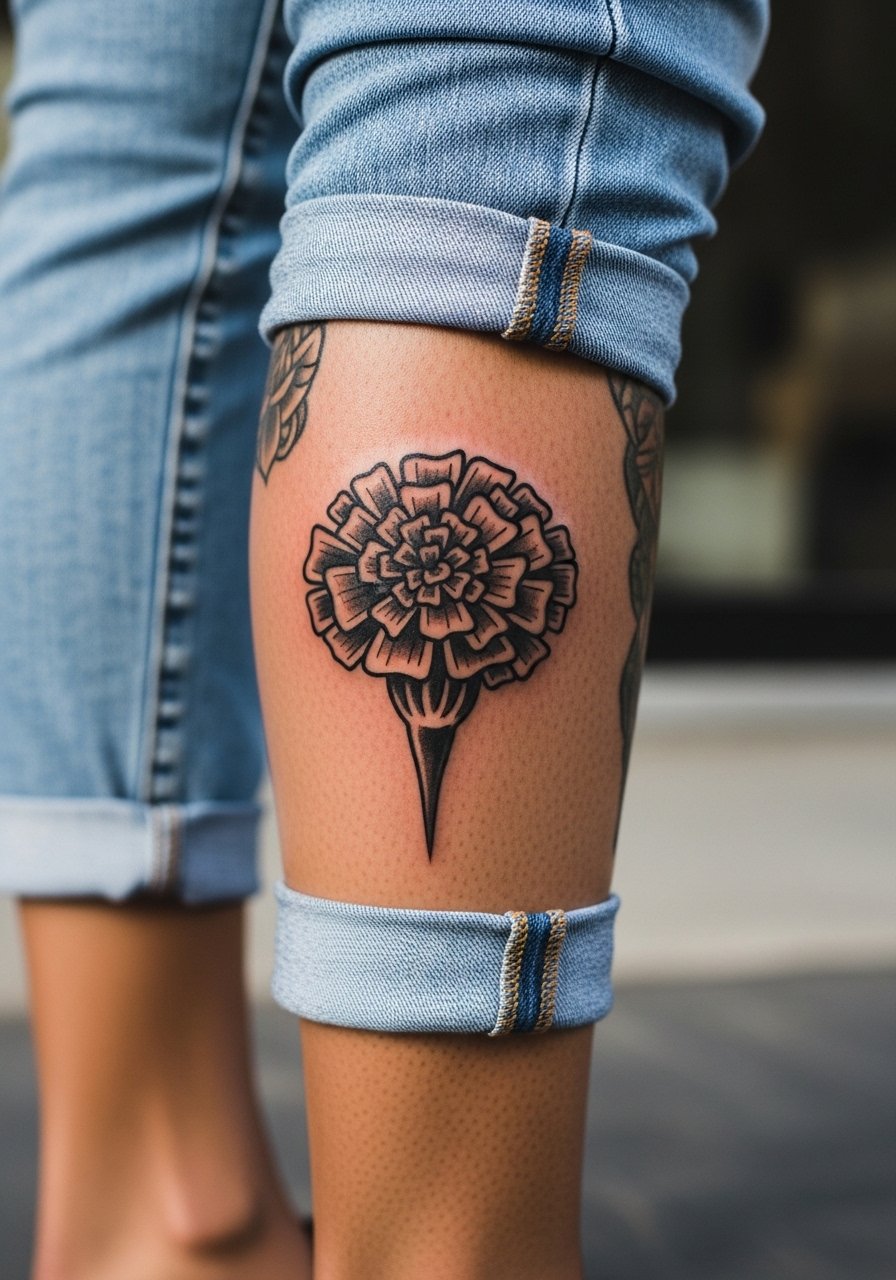
Visual impact lead. Ignorant style thrives when it is unapologetically bold with chunky fills and simple shapes. The calf takes dotwork and solid black well and often heals with better saturation than tiny single-needle pieces. Tell your artist to lean into bold outlines and to avoid micro detail that will get lost. Session time is usually single sitting under two hours. A regular mistake is asking for complex shading in ignorant style, which contradicts the aesthetic and risks muddiness. Cuffed boyfriend jeans or sockless loafers show off the calf in summer. For the appointment, wear sweatpants you can roll up easily.
9. Dotwork marigold with constellation elements on inner bicep
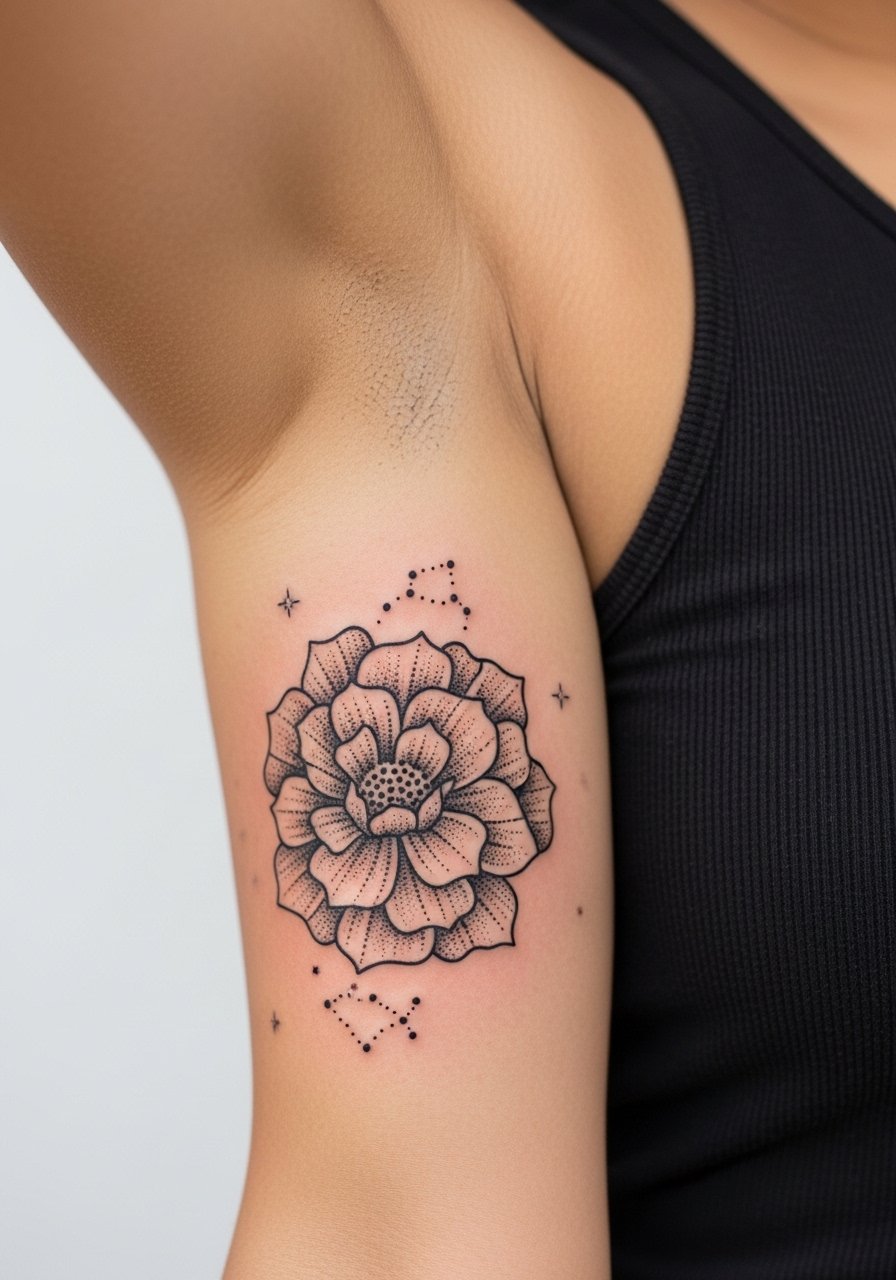
Consultation lead. Ask for stipple shading and a mix of tight dot clusters for petal shadow with small negative space stars threaded into the vine. The inner bicep has moderate pain and benefits from careful placement so the piece flexes with the arm without compressing dense dots. A common error is packing too many dots in tight areas, which can lead to muddiness after healing. Expect a touch-up at year one for dot density if you want the constellation to stay crisp. Pair the revealed inner arm with a sleeveless muscle tank to display the dotwork.
10. Traditional American marigold bloom on upper arm
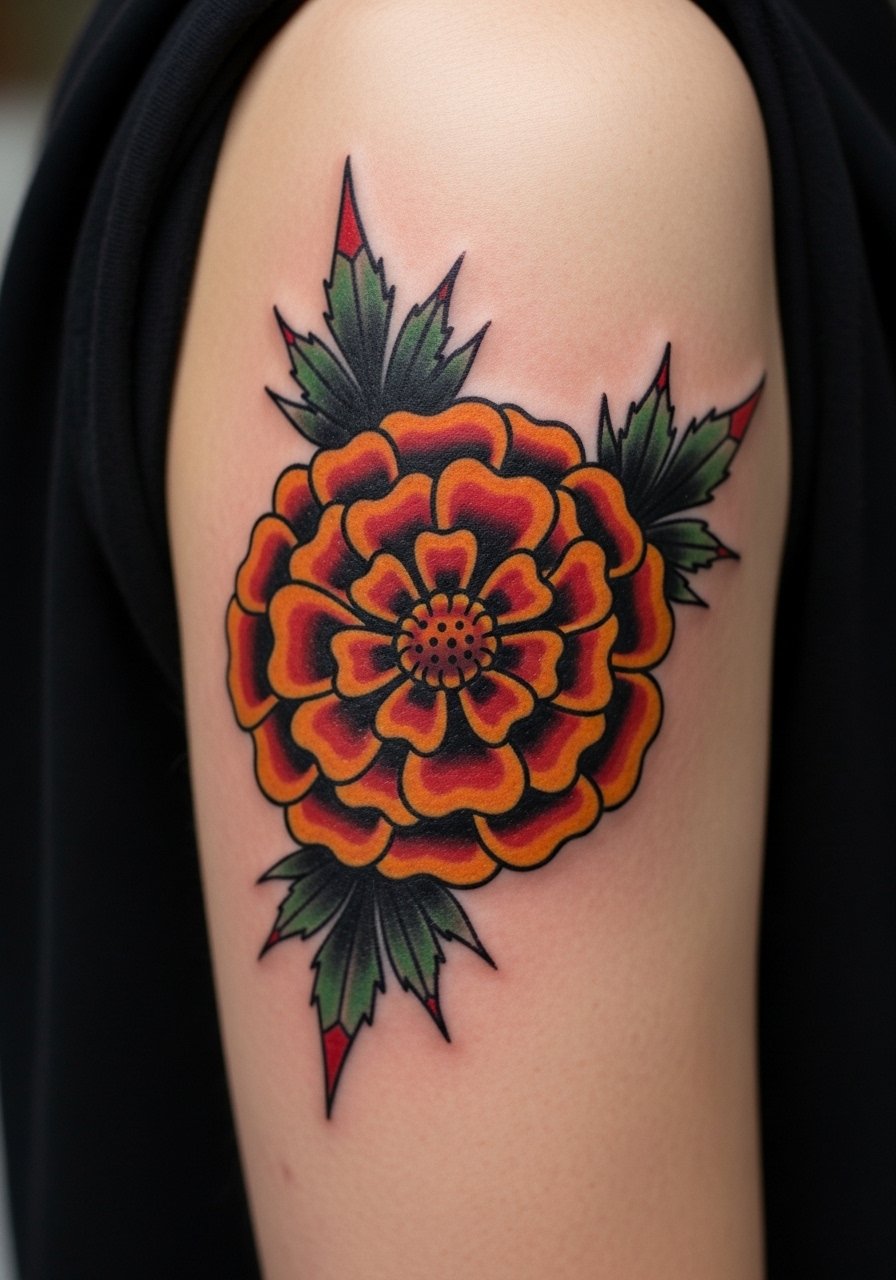
Personal observation lead. Classic bold outlines and saturated fills are what make traditional pieces age well on the upper arm. Ask for clean black anchors and dense color fills instead of thin washes. Sessions are often single appointments for six-inch pieces and pain is low to moderate. The usual mistake is mixing ultra-fine detail into a traditional layout, which confuses the style and weakens long-term readability. Traditional saturation tends to require fewer touch-ups than fine line alternatives. For session wear, a loose tee or button-down you can slide off the shoulder makes setup simple.
11. Fine line marigold and cosmos pairing down the spine
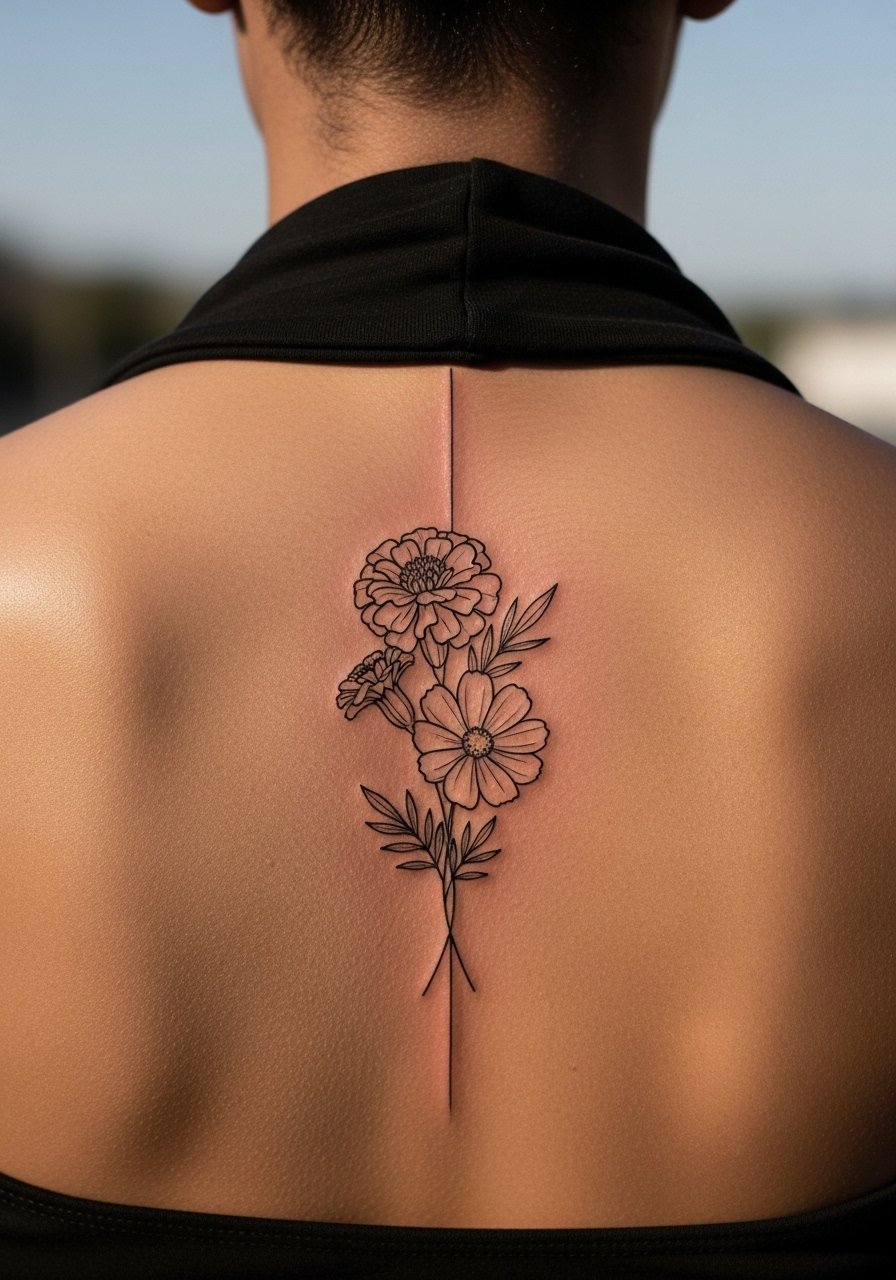
Aging reality lead. Vertical spine pieces read beautifully when they have breathing room between elements. For long-term clarity, ask your artist to stagger the flower centers and leave negative space between stems. Pain varies by person but the spine is more sensitive than the outer arm. The common mistake is compressing everything into a thin strip that then blurs into a single block. Expect touch-ups at 2 to 4 years for fine line spine work. Pair with an open-back dress or halter top to show off the vertical flow.
12. Watercolor marigold wrist cuff
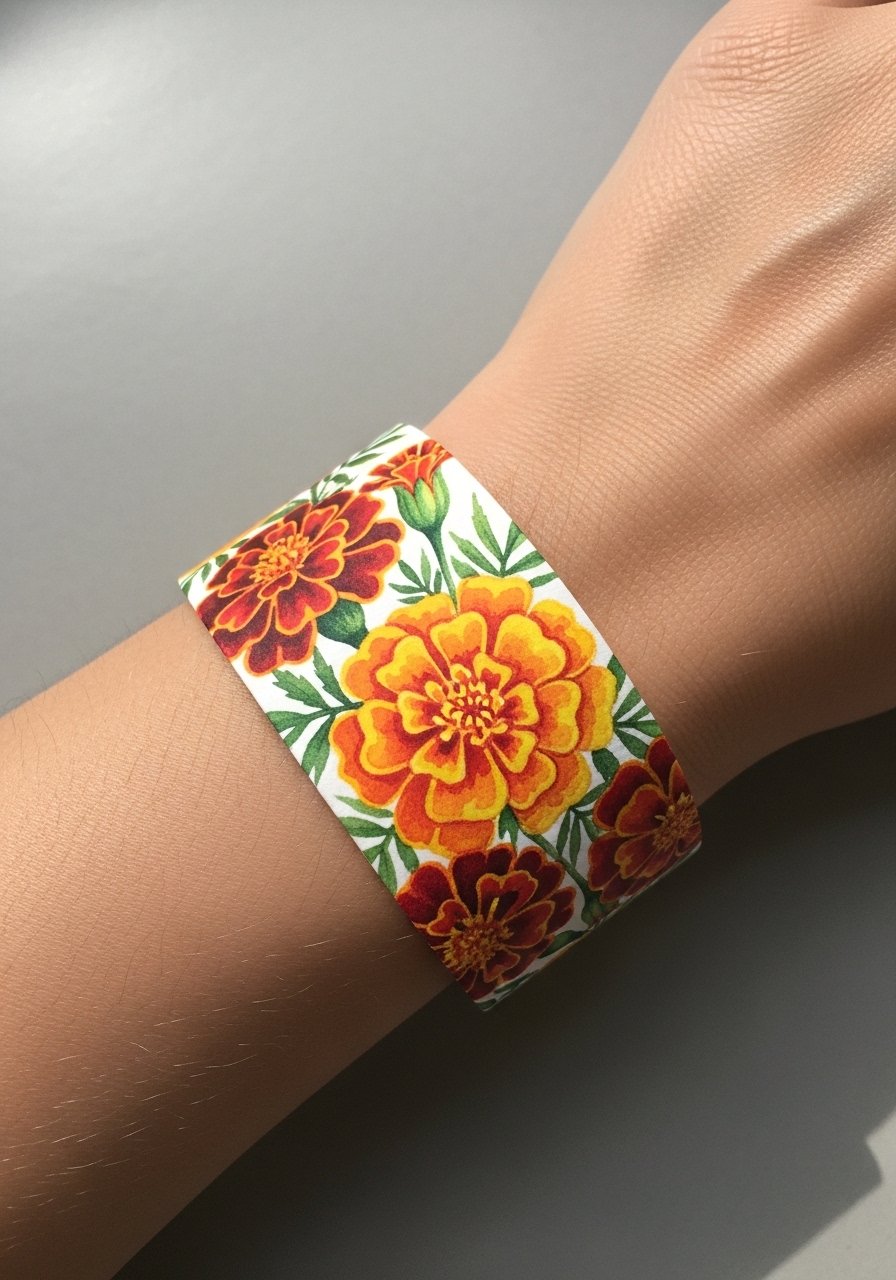
Visual impact lead. Wrist cuffs read like jewelry when the color sits within a thin line frame. Request a watercolor wash bounded by a light black cuff so the pigment has structure. Wrist color can fade faster because of washing and sun exposure. A frequent mistake is asking for bright yellow as a sole color, which can look muddy on certain skin tones after a season. Plan a refresh at year two if you want sustained vibrancy. For session comfort, remove wrist jewelry and wear a sleeveless cotton tee you can roll up easily.
13. Micro marigold stack for the inner forearm
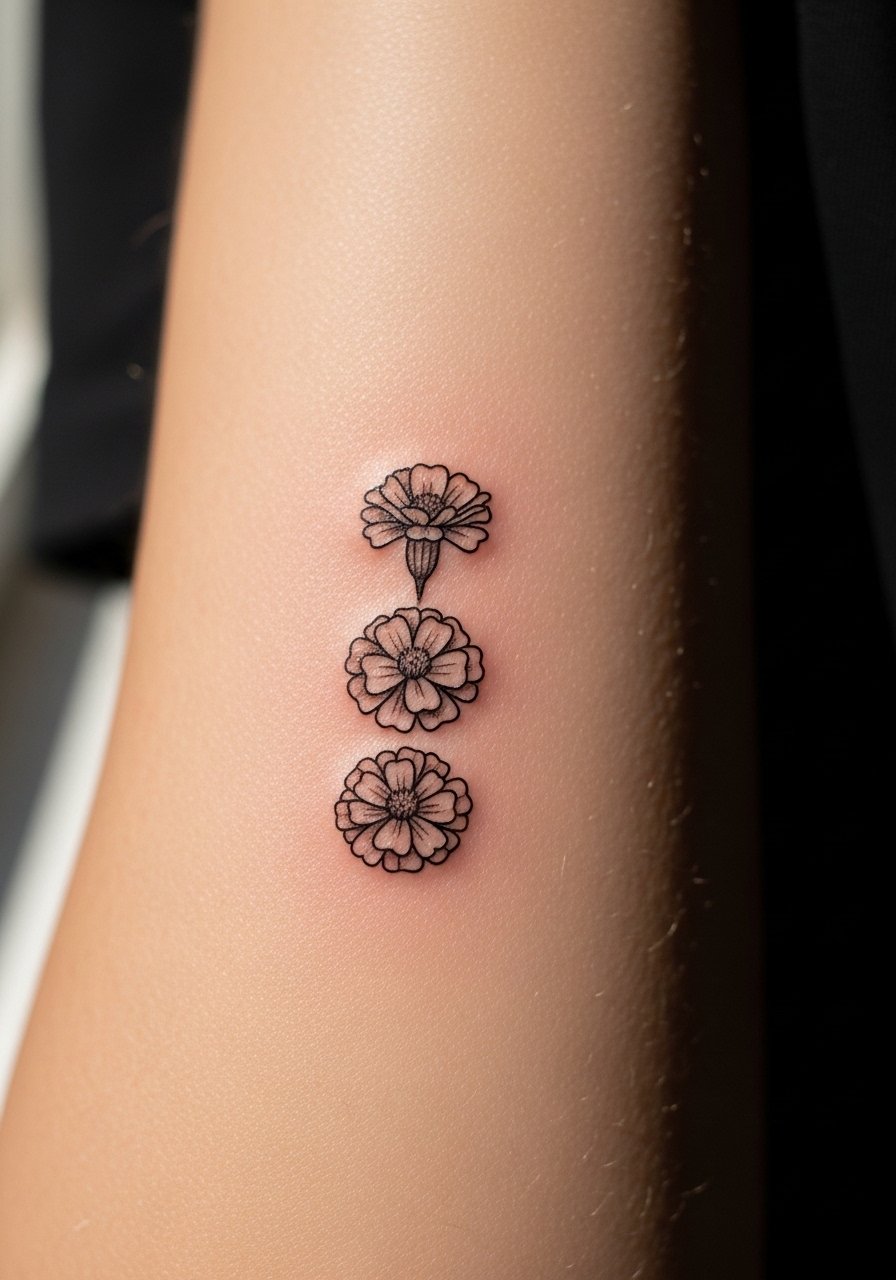
Personal observation lead. Micro stacks let you build over time and they age separately from each other. Tell your artist you intend to add pieces later so they keep consistent spacing and line weight. The inner forearm is forgiving but single-needle microwork will need touch-ups every 12 to 24 months. A common mistake is booking multiple micro pieces at once without planning negative space, creating crowded healed results. For showing off a stack, wear a chambray shirt rolled cuff or a loose button-down pushed up to mid forearm.
14. Marigold paired with Scorpio dotwork for October duality
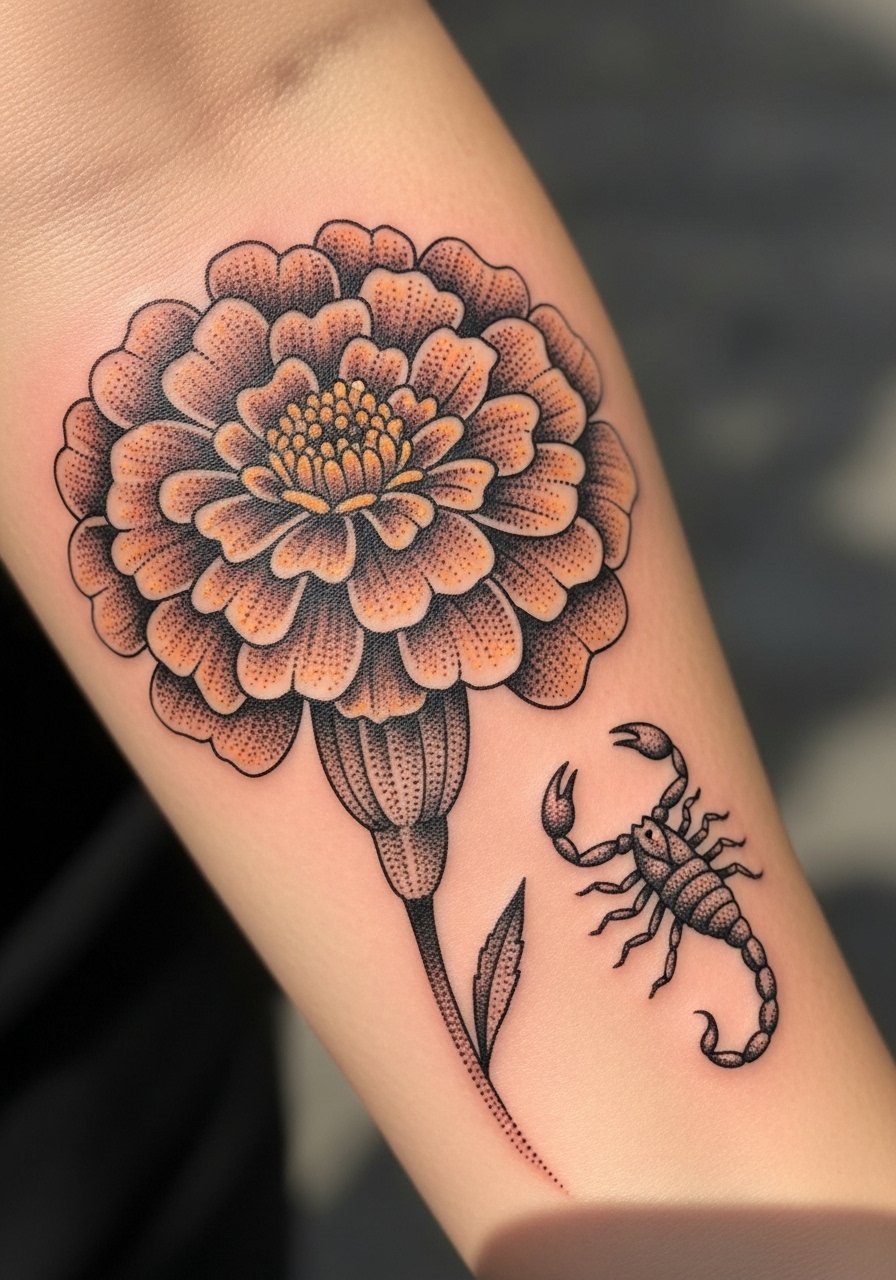
Consultation lead. If you want zodiac integration, show exact glyph references to avoid artist guessing. Dotwork scorpion elements need crisp negatives to stay readable, so specify larger dot spacing than you might for pure floral pieces. Pain is mild on the forearm and sessions can be done in one sitting. A mistake is trying to mash two dense motifs into a single small patch. Instead, space the scorpion and marigold so each breathes. Wearing a loose tank top or button-up with sleeves rolled keeps the area accessible for the artist.
15. Marigold mandala sternum accent
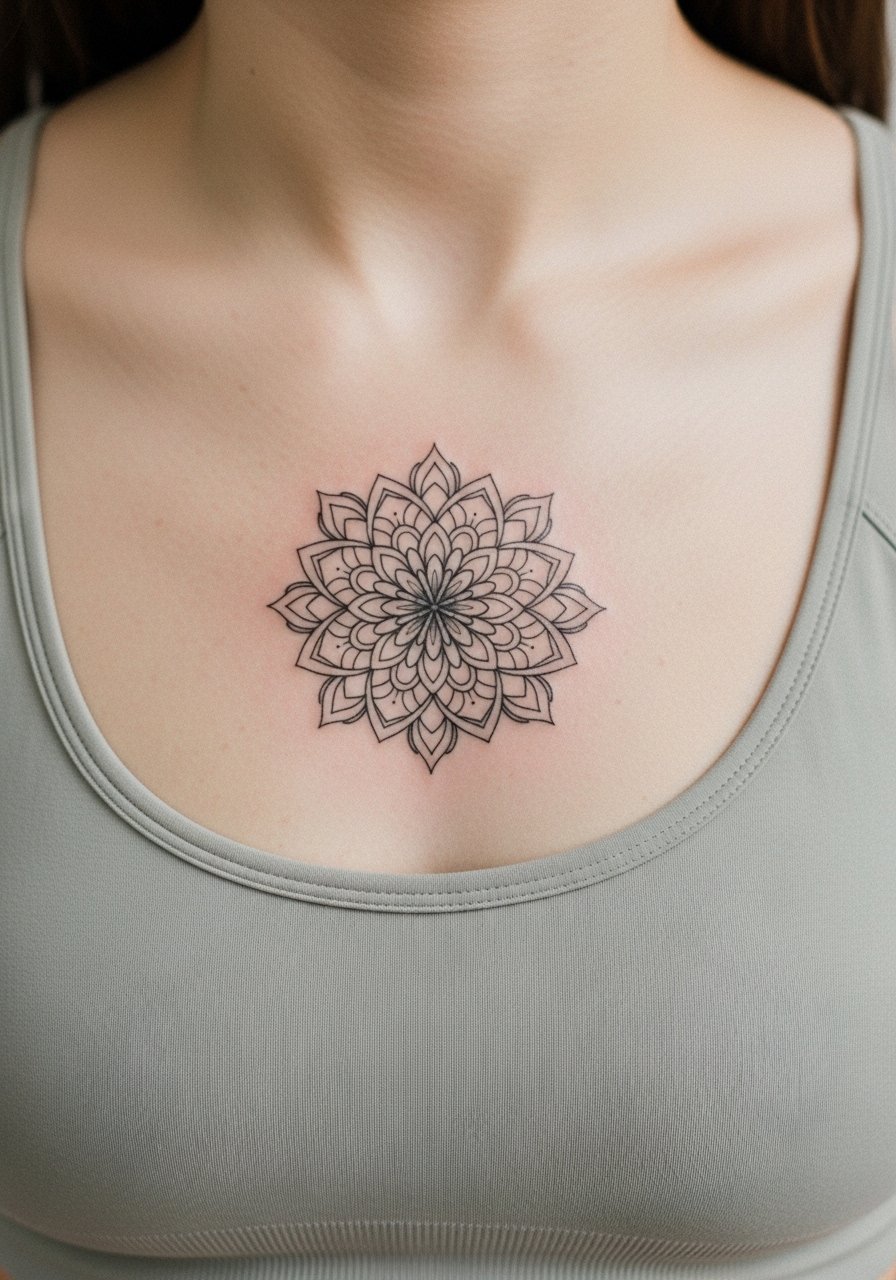
Pain warning lead. Sternum work is sensitive but centers beautifully under a collar or low neckline. Ask for solid outer lines with stipple shading and avoid tiny cross-hatching that can blur. The risk is healing friction from clothing, so wear soft fabrics while it settles. One common mistake is choosing ultra-fine symmetry that needs microscopic precision and then expecting no touch-ups. Schedule sessions with realistic spacing and plan slightly thicker line weight for longevity. For showing off, a fitted sports bra or low-cut top frames the mandala without exposing more than needed.
16. Vertical spine marigold vine for patchwork starters
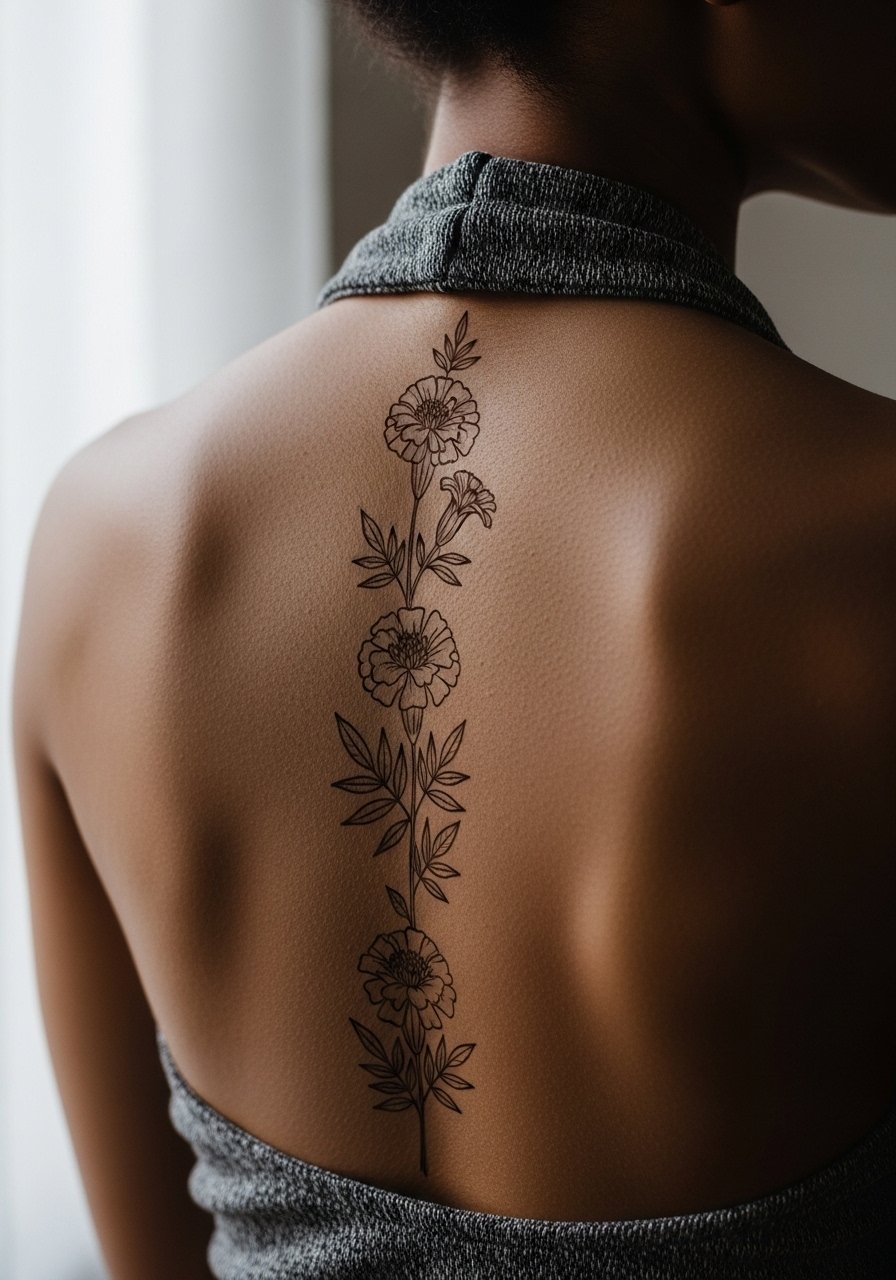
Mistake lead. Many start patchwork on the back and try to cram a dense vertical vine into too narrow a column. Start wider and stagger blooms so future surrounding work can sit naturally. Spine placement is sensitive and benefits from multiple guest sessions rather than one marathon. Blowout risk is higher on very thin lines, so ask your artist about spacing and needle depth. Expect touch-ups at the two to five year mark for fine line vines. Pair the healed vine with open-back tops on nights out.
17. Tiny marigold "earring" behind the ear
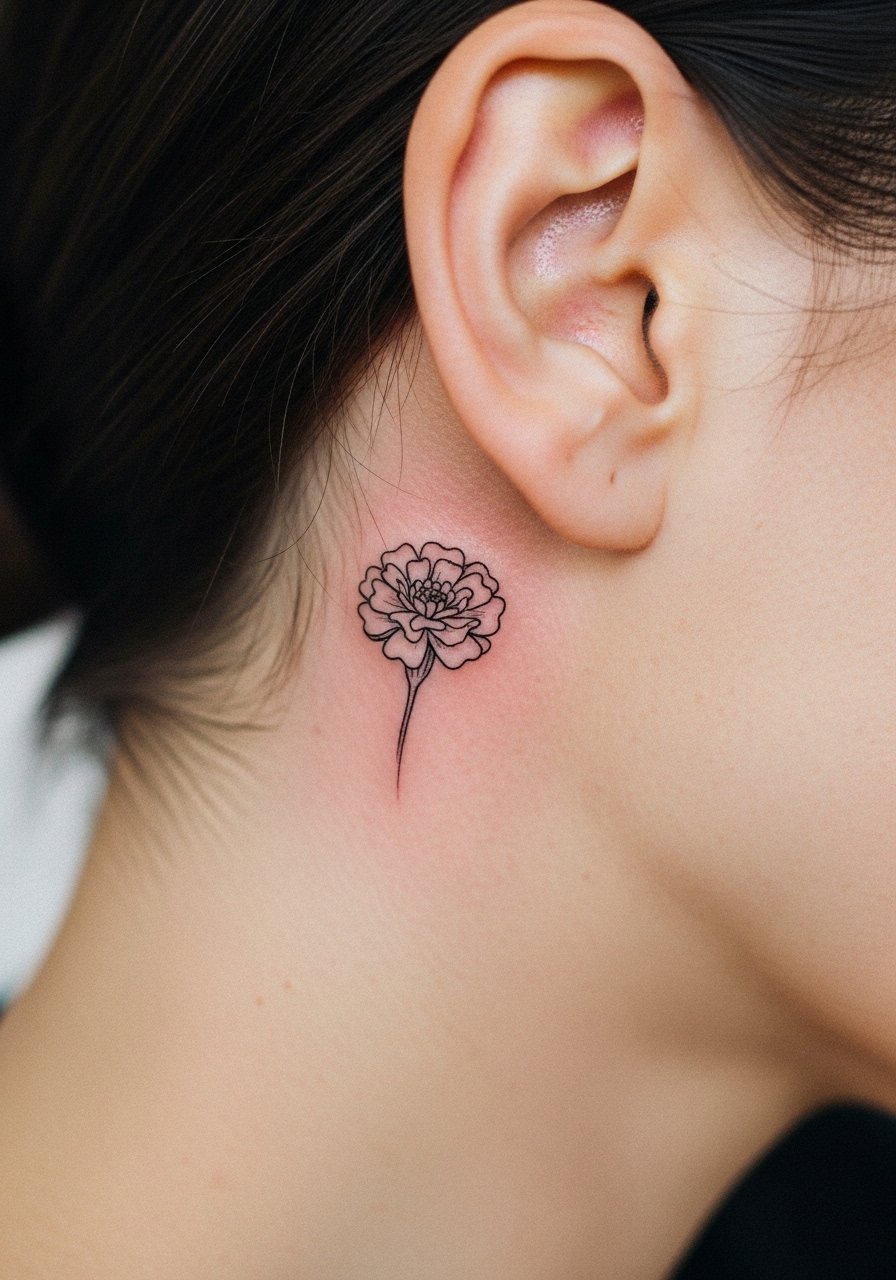
Decision-pressure lead. A behind-the-ear earring-style tattoo reads intimate and small, and the area benefits from a simple outline rather than color. Tell your artist you want the piece placed below the hairline on the neck so hair can help conceal it when desired. Healing is quick but touch-ups may be needed because hair and shampoo contact the site. A common mistake is asking for heavy color here, which rarely holds on that thin skin. This placement needs an artist comfortable with delicate zones. For session wear, pull hair into a high bun or wear a button-up you can slide off the shoulder.
18. Hip marigold with sepia shading for darker skin
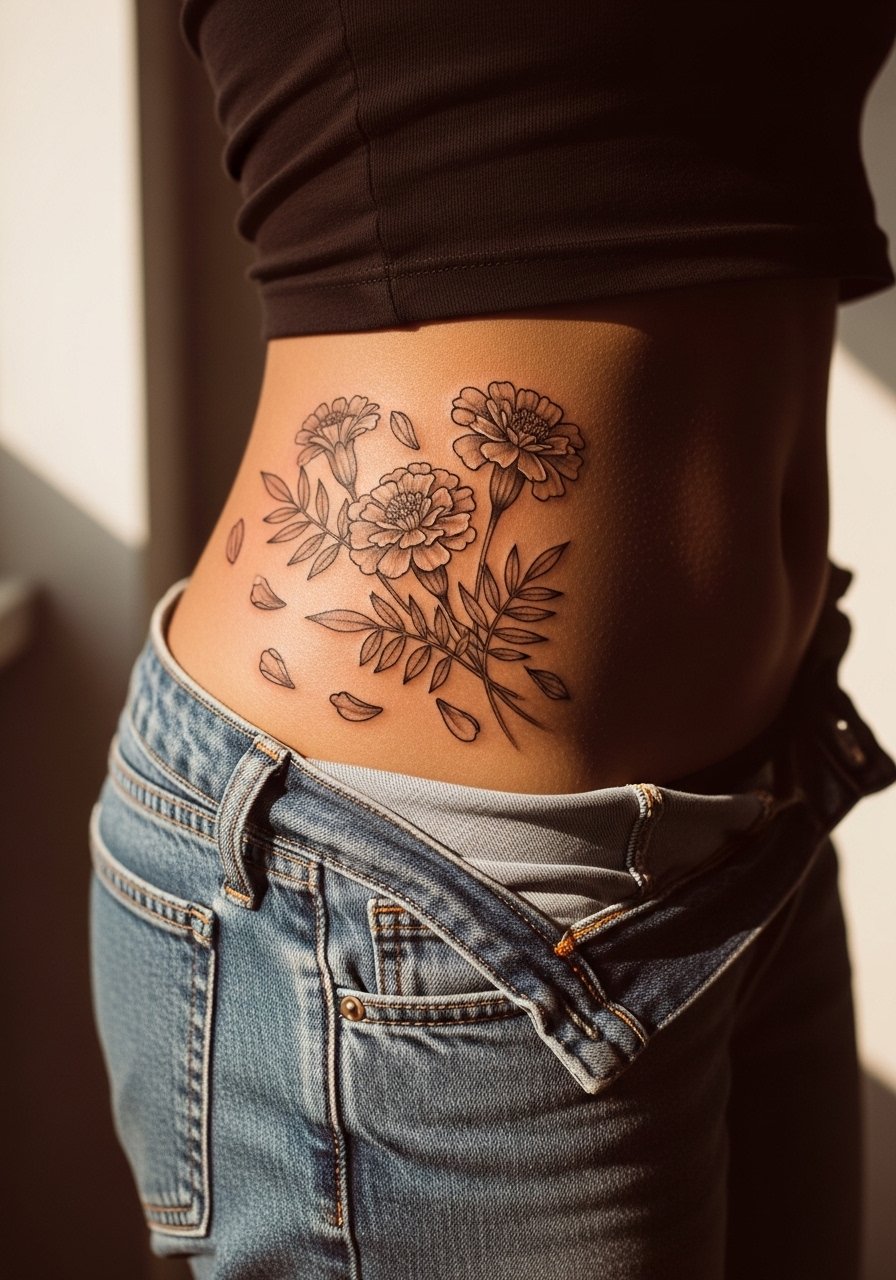
Aging/healing lead. For darker skin tones, sepia and deep umber mixes give marigold warmth without relying on lemon yellow that can gray. Ask an artist who shows healed work on similar skin and request bolder outlines under the sepia wash. The hip tolerates more size and hides well under clothing during healing. A common error is following pale-color palettes that disappear into melanin-rich tones. For session wear, choose high-cut shorts you can shift down a bit so the artist has clean access.
19. Ankle cuff of tiny marigold silhouettes
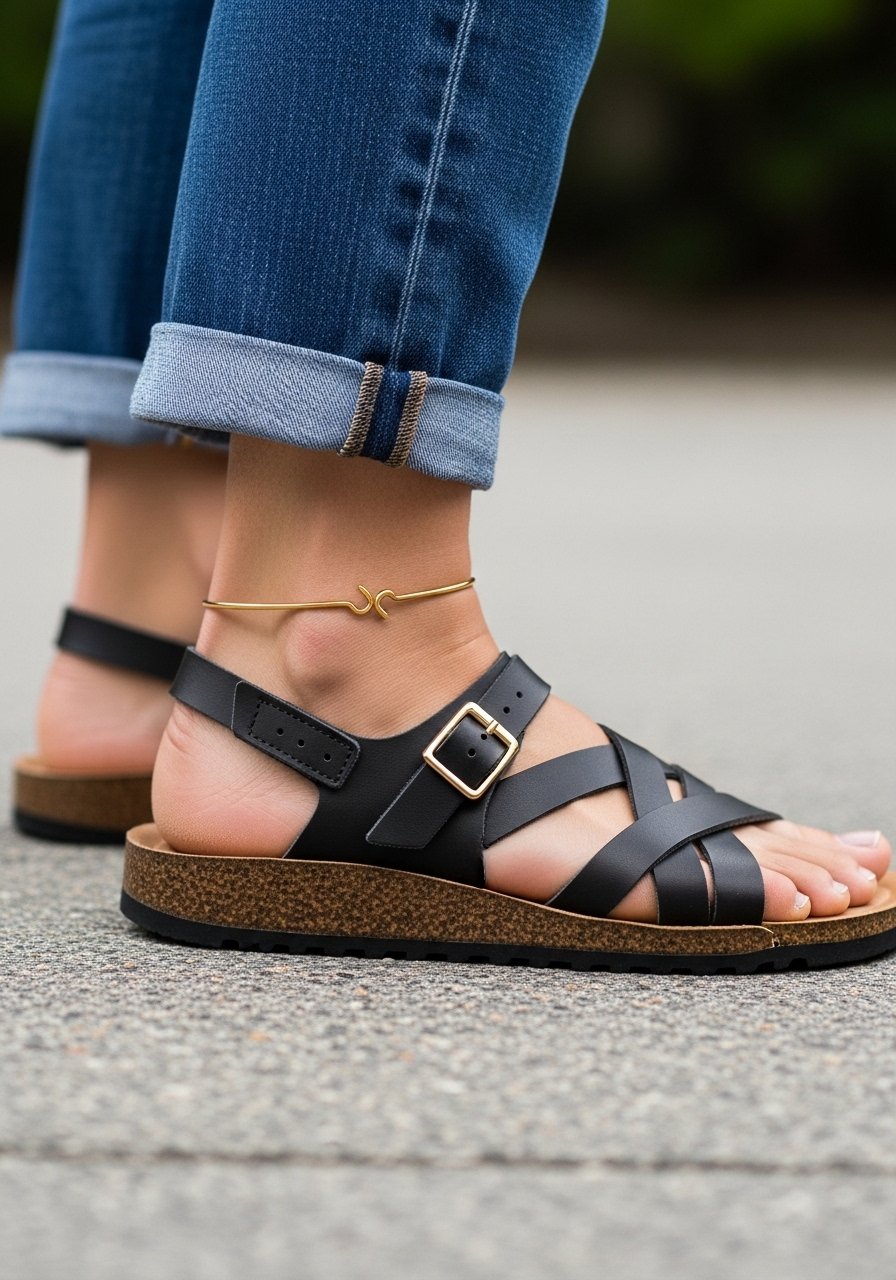
Visual impact lead. An ankle cuff reads like jewelry when silhouettes repeat with consistent spacing. Tell your artist you want slightly thicker silhouettes to resist early fading from shoe friction. The ankle is a low to moderate pain spot and sessions are usually quick. A typical mistake is using very thin single-needle silhouettes that bleed out after a few months. Pair the cuff with cropped ankle pants or strappy heeled sandals to show it off.
20. Hand-side marigold near the thumb
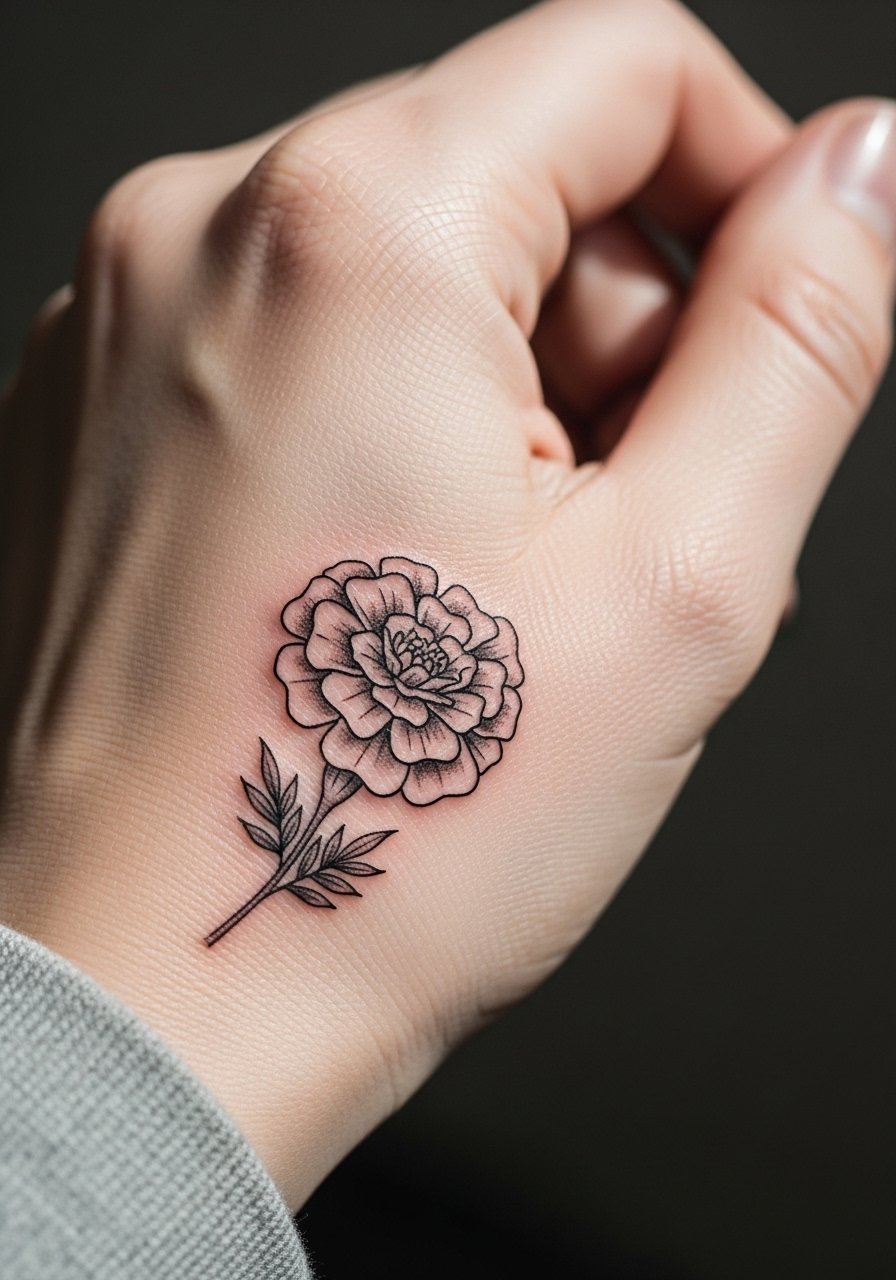
Mistake lead. Hand tattoos are visible and fast to fade because of washing and sun exposure. If you choose the thumb-side, ask for chunkier linework and accept that maintenance will be higher. Sessions are short but expect touch-ups within a year. One common error is requesting ultra-fine stems that vanish under daily friction. Also consider career implications if your work is in a conservative industry. For the appointment, remove rings and wear a simple shirt so the artist can isolate the hand.
21. Lower back marigold panel with dotwork shading
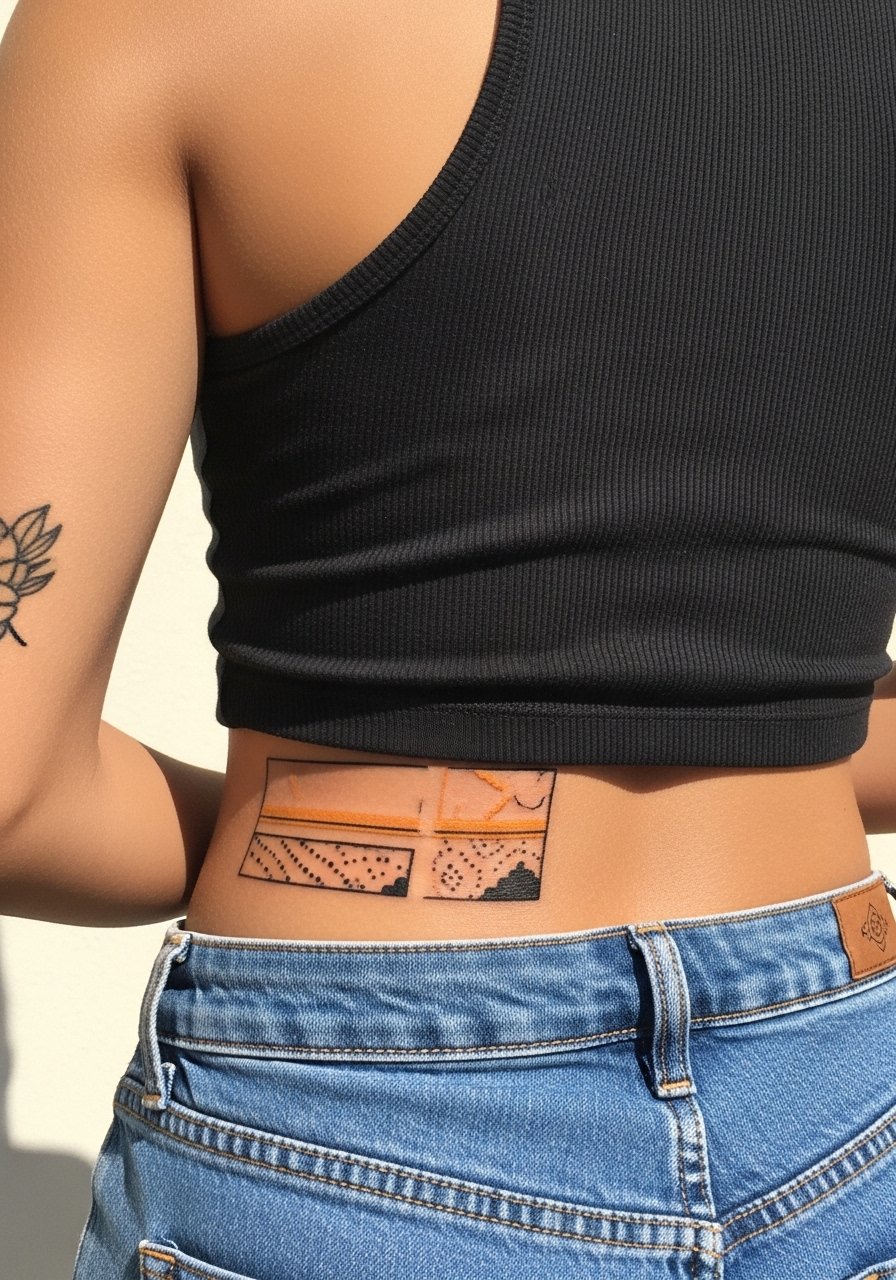
Visual impact lead. Lower back offers a wide canvas that favors panels with dotwork depth. Ask for heavier outer lines and stipple shading that creates a graphic contrast. Pain is low and healing tends to be predictable because clothing friction can be managed with soft fabrics. A mistake is crowding the panel with tiny elements that blur over time. For care, choose high-waisted bottoms that avoid rubbing the center of the piece during early healing. Show it off with low-rise skirts or jeans when you want the panel visible.
22. Inner thigh single marigold bloom
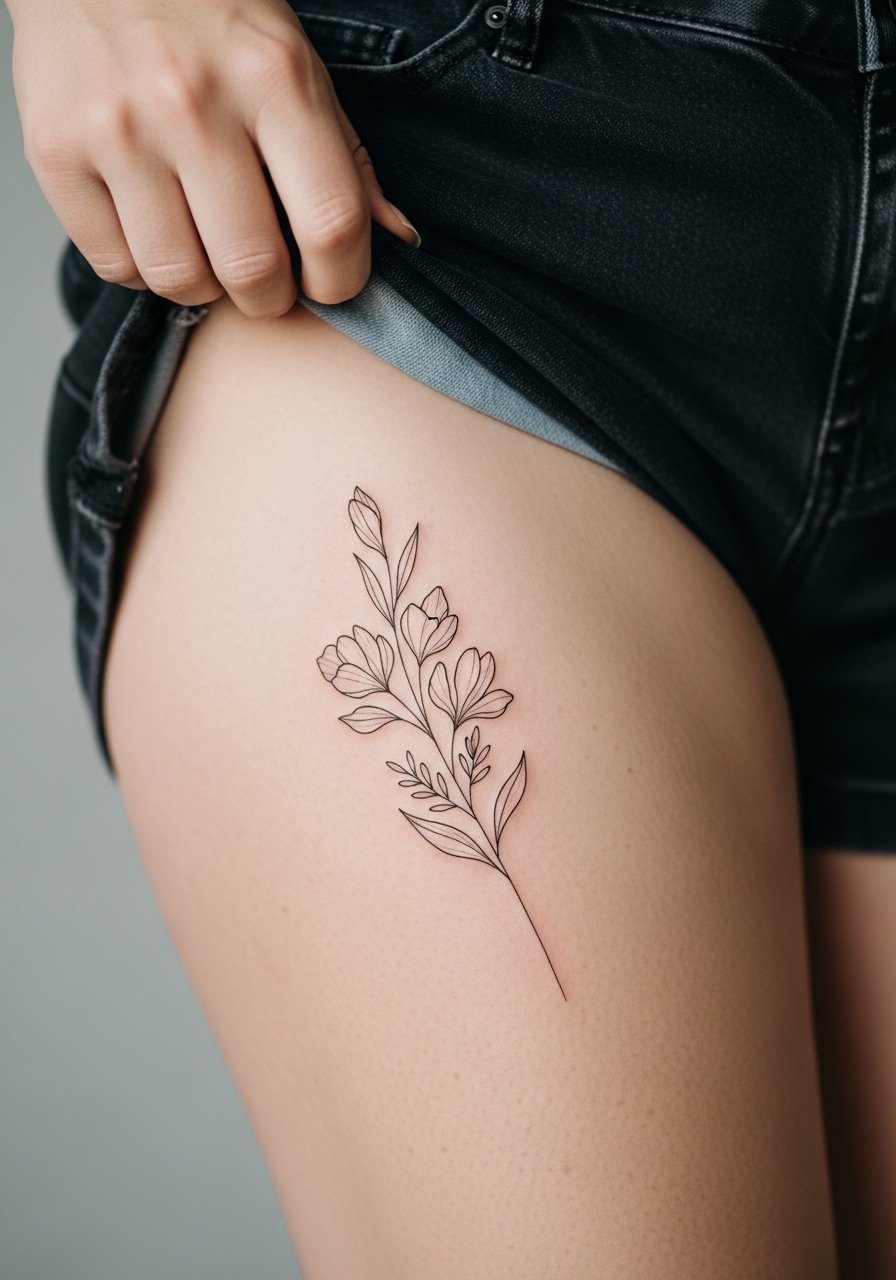
Pain warning lead. Inner thigh work is private and sensitive but holds single-needle lines surprisingly well if the lines have a tiny bit of weight. The biggest mistake is choosing ultra-fine spacing that blurs when skin rubs during healing. Sessions are moderate and the area benefits from loose clothing after the appointment. Tell your artist if you plan to sit or lie a lot post-session so they can plan your aftercare. For session wear, pick shorts you can pull up slightly and a loose top.
23. Tiny marigold finger cluster
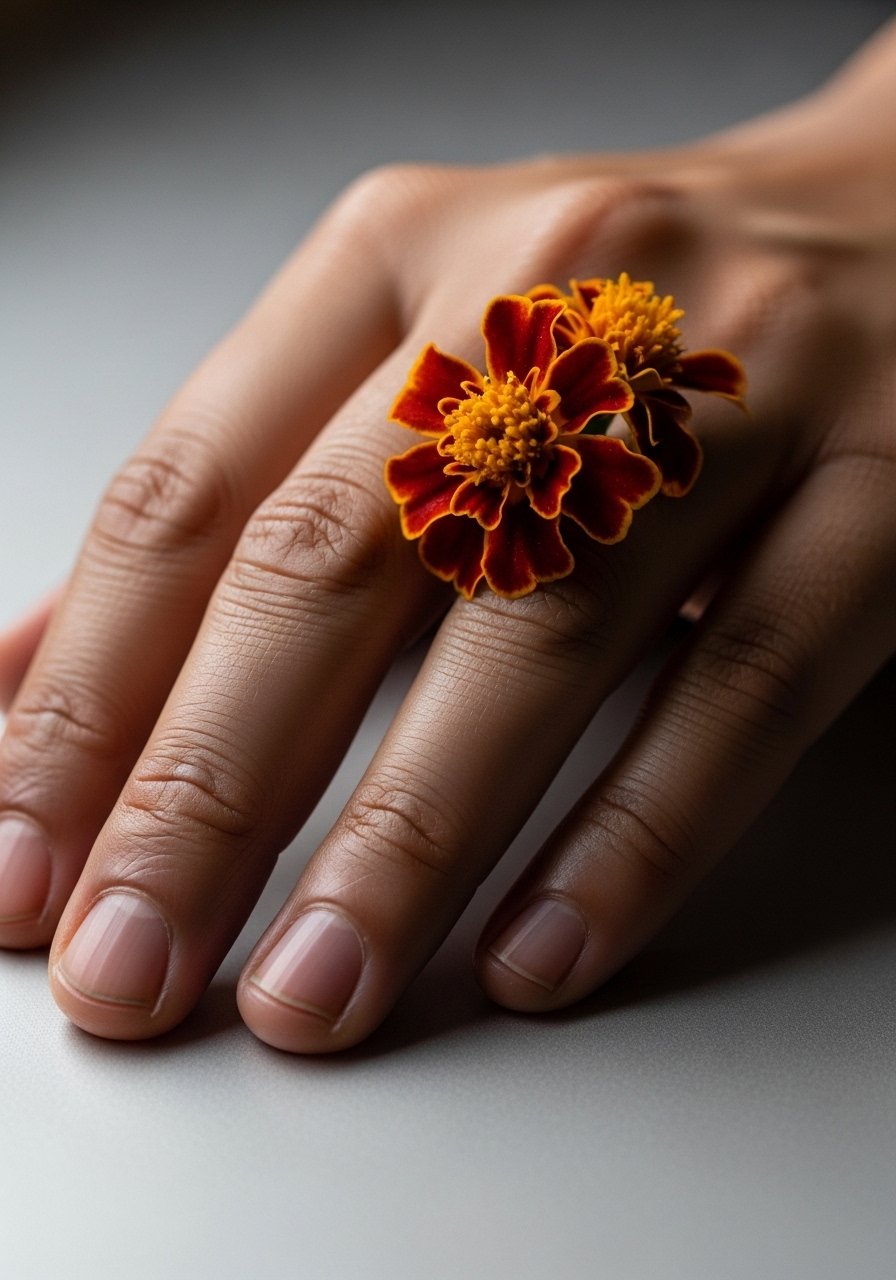
Consultation lead. Finger tattoos are high maintenance. If you want a cluster, ask for simple silhouettes and accept yearly touch-ups as normal. The skin on fingers sheds and the design goes through rapid change. Common mistakes include packing detail into tiny digits and expecting permanence. Sessions are quick but healing can be rough because of constant use. Consider placing the cluster on the side or knuckle for slightly better retention. Keep rings off during healing.
24. Marigold chest-side sprig near the sternum
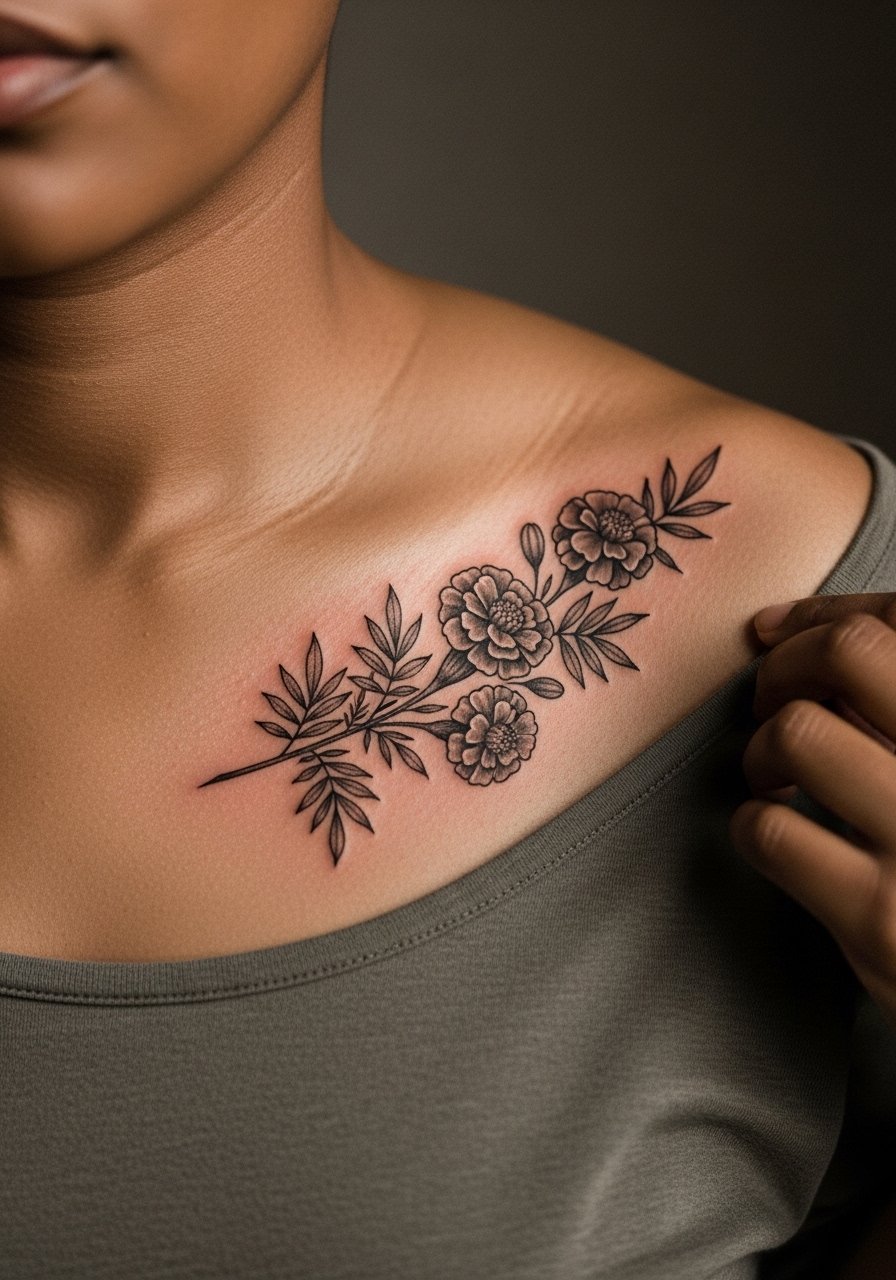
Aging/healing lead. Chest placements can be dramatic but clothing friction is a real factor. Ask the artist to use confident linework and avoid micro shading that sits too close to the neckline. Pain varies and can spike with deeper breaths during the session. A common error is overlooking aftercare clothing choices that rub the fresh piece. For the session wear, a strapless bra or wide-neck shirt that can be adjusted keeps fabric off the area while you heal. Pair the healed sprig with dainty chain necklaces that sit above the design.
25. Marigold sleeve starter with negative space
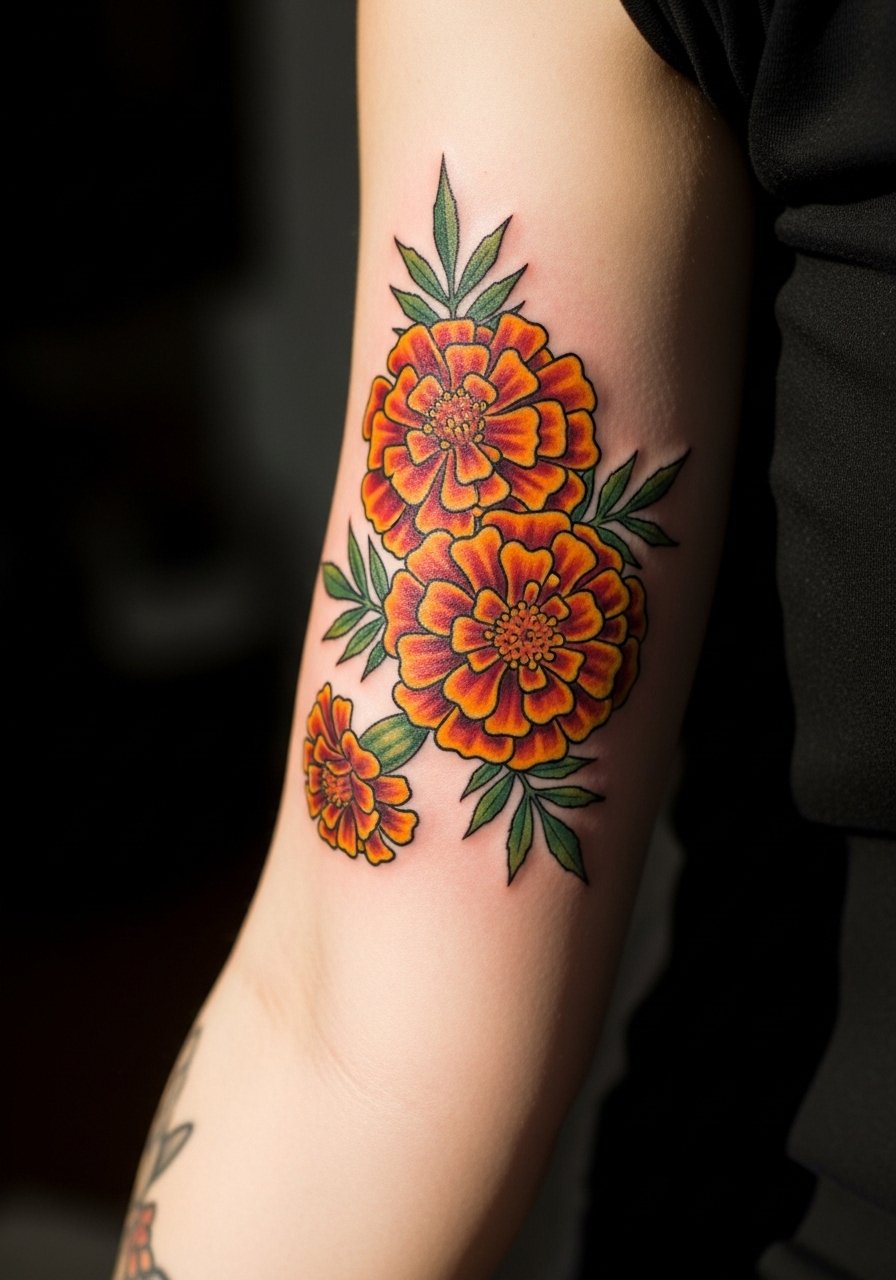
Consultation lead. Sleeve starters need planning for negative space so future elements do not fight. Tell your artist you want several anchor flowers and open spaces for future guest pieces or fillers. Sessions may be multiple and expect moderate pain during long stretches of work. A common mistake is starting with a tightly packed sleeve that limits later expansion. For session comfort, wear a loose button-down or tank that gives the artist full rotation of the arm. For showing off, roll sleeves or wear short-sleeve tops.
26. Marigold hip-to-thigh splash with sepia and blackwork
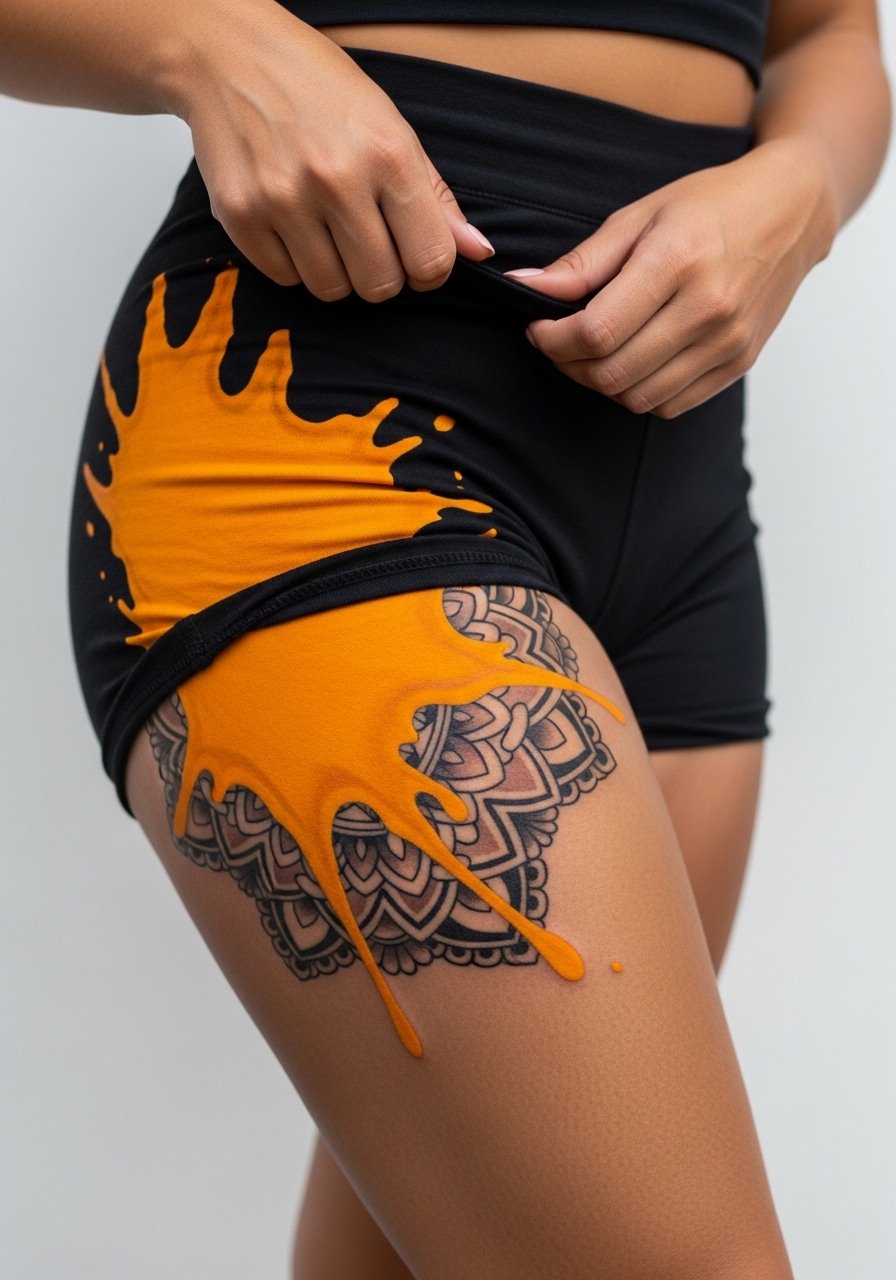
Visual impact lead. This placement pairs size with privacy. Sepia mixes help yellow tones read warmer on medium skin. Ask for heavy outer anchors and graduated sepia fills so the bloom keeps depth without needing neon yellow. Sessions will be multistage and pain ranges depending on proximity to bone. Avoid tiny detail in the bloom center because it can soften after stretch. For your session, loose shorts or skirts make access simple and comfortable.
27. Micro-realism petal study for collectors on the scapula
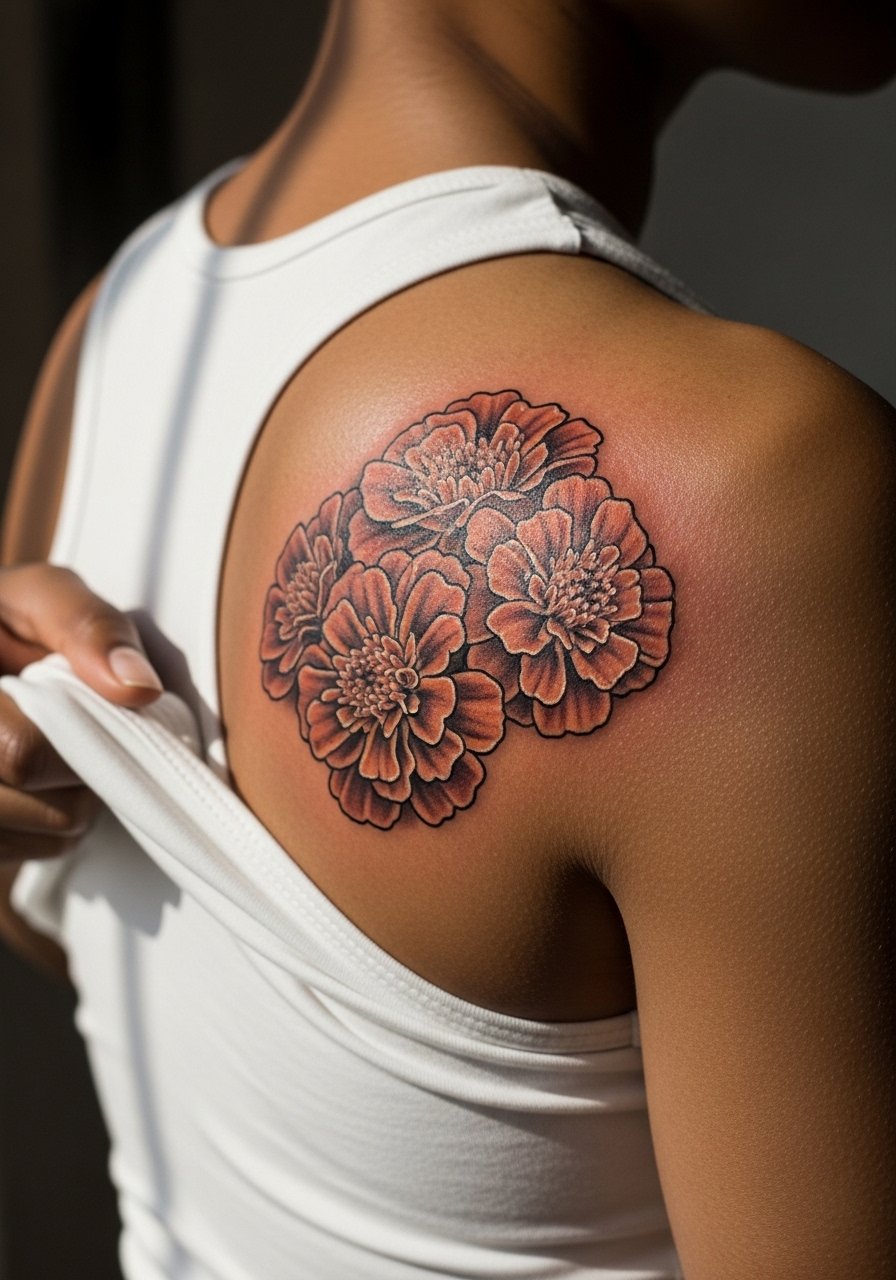
Mistake lead. Collectors use scapula patches to add photoreal detail without the wear of hand or ankle zones. Request a darker base tone to anchor pale petal highlights so the petal edges read over time. Sessions are medium length and pain is usually mild. A common error is choosing ultra-pale yellows for tiny petals that then disappear. For the appointment, wear a racerback or loose top that gives the artist easy access and keeps fabric off the healing area. Scapula placements age well with strong linework and careful saturation.
Frequently Asked Questions
Q: Will fine line marigolds fade faster than blackwork on different skin tones?
A: In my experience fine line needs touch-ups more frequently than bold blackwork, especially on areas exposed to sun or friction. For darker skin, ask for stronger contrast and sepia mixes instead of pale yellows so the bloom reads longer. Plan a touch-up at 8 to 24 months for single-needle pieces depending on placement.
Q: Should I pick a rib or thigh placement if I want long-lasting marigold detail?
A: The thigh will generally preserve color and detail longer because it sees less daily movement and sun. Ribs offer a beautiful vertical canvas but are more sensitive to stretching and breathing motion. If you choose ribs, request slightly thicker linework and plan for a possible touch-up in one to three years.
Q: Does watercolor style need different session prep than traditional or blackwork marigolds?
A: Yes. Watercolor often requires multiple layers and careful saturation, so plan for longer sessions and avoid heavy sweating for a few days post-session. Ask your artist whether they prefer spaced appointments for layering color or a single longer session for immediate blending.
Q: How do I find artists who show healed marigolds on my skin tone without naming anyone?
A: Search hashtags like #marigoldtattoo plus your city and include "healed" in the query on Instagram or TikTok. Use app filters on Tattoodo or Booksy and ask the artist to share healed photos on similar skin tones before booking. Bring examples of healed work to your consultation and ask about their touch-up policy.
Q: What should I wear to a collarbone or sternum session to be comfortable and keep access open?
A: For collarbone and sternum work, a wide-neck shirt, sports bra, or strapless top that can be slightly shifted is easiest. For thigh, bring loose shorts you can pull down a bit. If you want a quick styling pick for after the piece heals, an off shoulder sweater frames collarbone work without rubbing the fresh skin.