
Fine line peony work looks fragile on the screen but it behaves very differently on skin. The dotwork variant gives peonies a lace-like fill that reads soft without relying on color, and that texture hides minor aging better than thin wash shading. Know where your skin stretches, what size keeps the petals readable, and how to show it off. The first idea dives into a simple inner forearm peony that makes the dotwork detail sing.
1. Delicate Peony Sprig on Inner Forearm
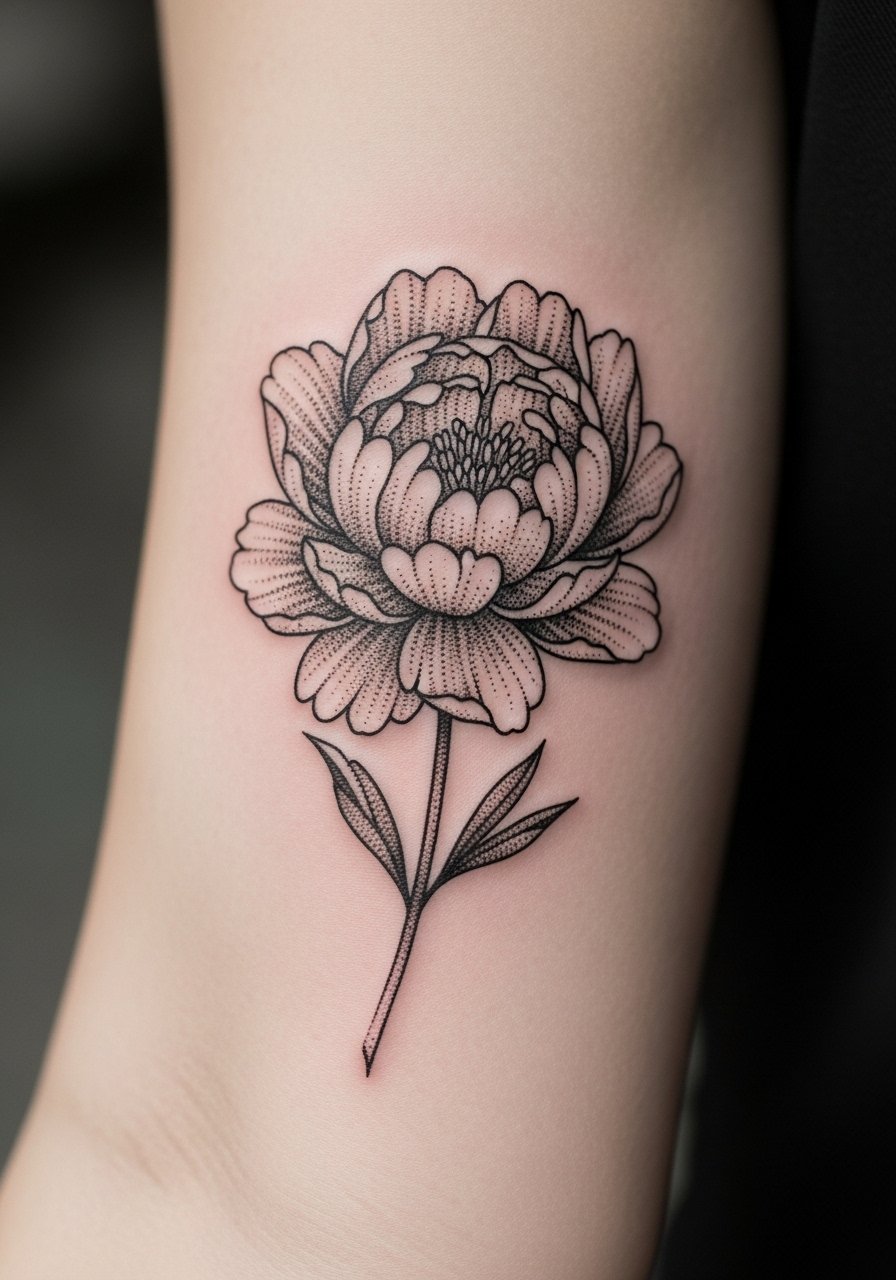
I’ve seen this placement hold the dotwork detail best because the forearm gets less repeated friction than hands. Ask your artist to scale the petals so the negative space between dots stays visible at year three. Session wise, expect moderate discomfort and a one- to two-hour slot for a single bloom. A common mistake is asking for an overly dense stipple fill, which merges into a muddy gray over time. For showing it off, roll sleeves up and pair with a loose button-down shirt that frames the forearm without covering the bloom.
2. Half-Sleeve Peony Cluster on Outer Bicep
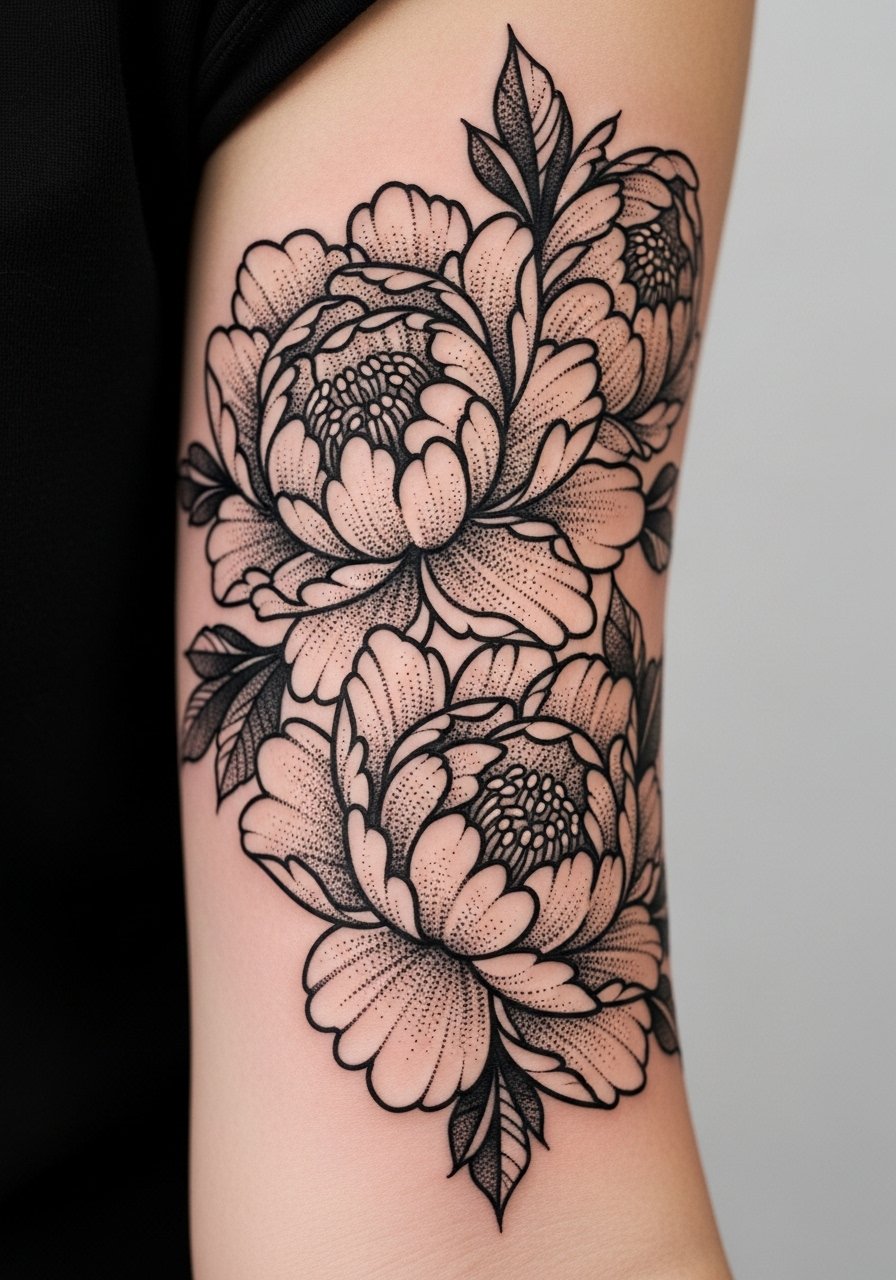
When you want the peony family effect, the outer bicep gives room for composition without constant sun exposure. In consultation, say you want negative space between blooms and ask for stipple density samples on the skin. Aging looks like gentle softening at 2 to 5 years rather than sudden blur, provided the dots are left slightly airy. Expect a two to three hour session and moderate pain. One mistake I see is packing too many small blooms into a narrow band. For wardrobe, the piece reads well with rolled short sleeves and a crew neck tee that keeps the arm visible.
3. Single Peony on the Ankle
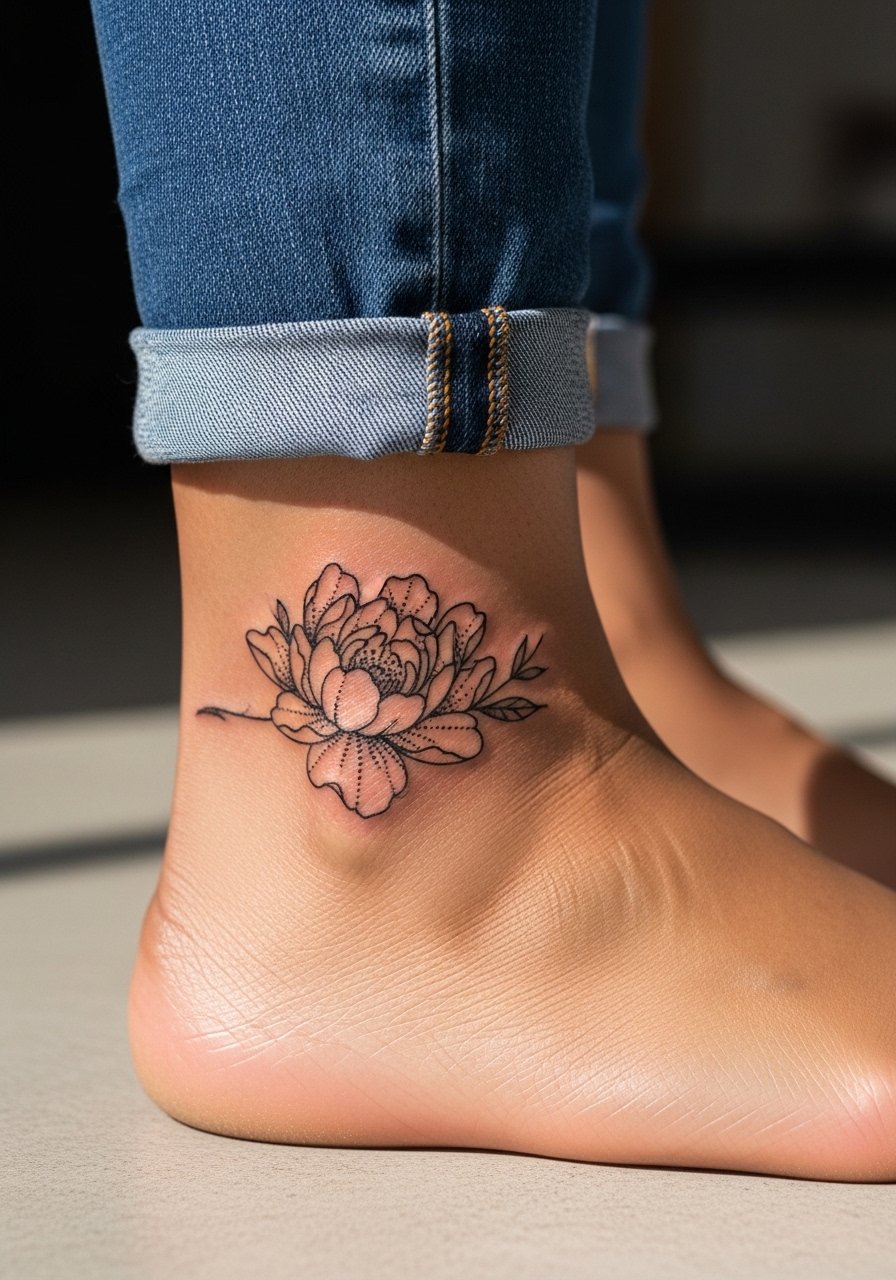
Fair warning: ankles are finicky because the skin is thin and near bone. Dotwork can look delicate here but it also risks slight blowout if the needle sits too deep. Tell your artist you want open dot spacing and light needle depth for the stipple fill. The session is short, under an hour, but the area sees lots of shoe friction during healing. A common mistake is requesting ultra-fine dots without leaving spacing. Show-off pairing works best with rolled jeans or a sandals style that keeps the ankle visible.
4. Peony and Geometric Frame on the Outer Shoulder
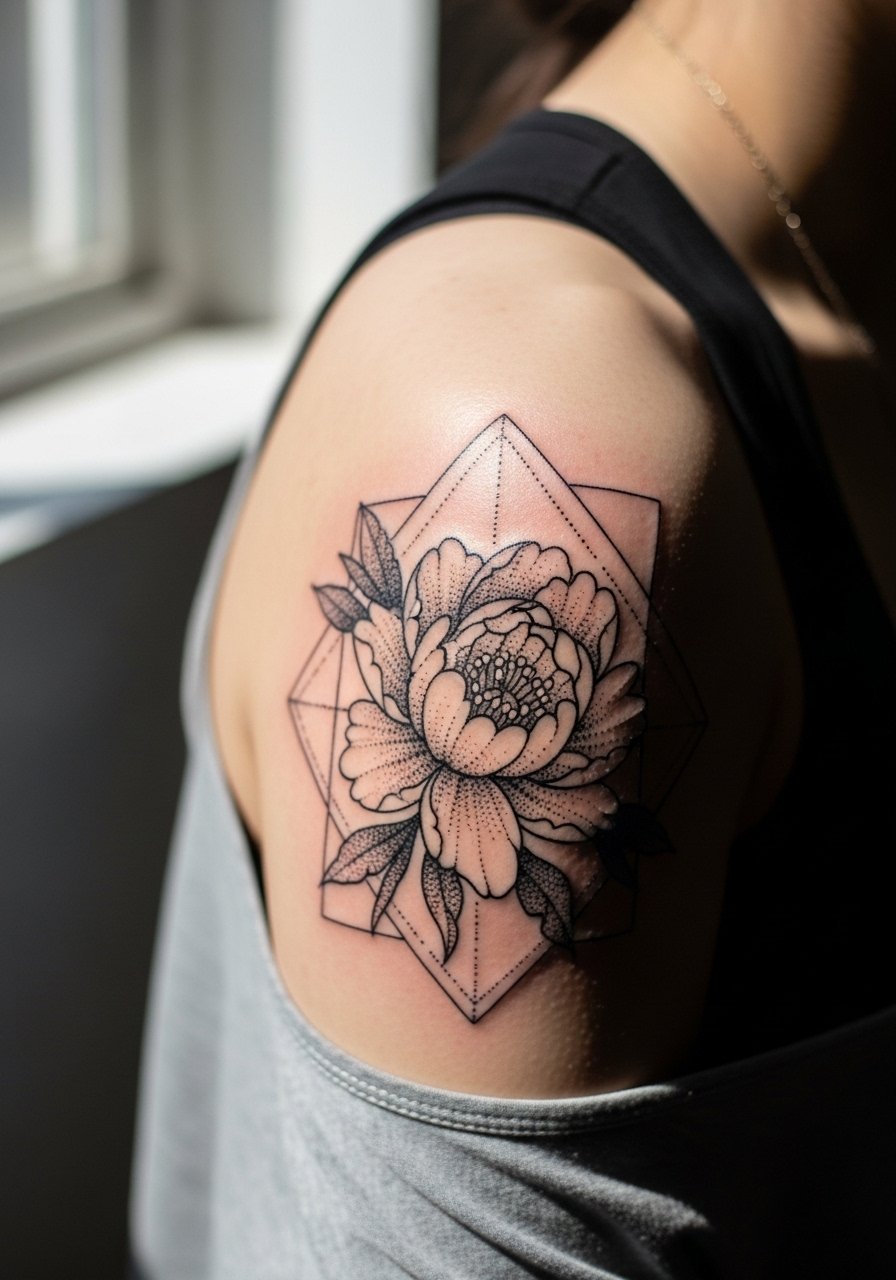
There is a real visual payoff when a peony sits inside a geometric frame. When you book, bring references that show the exact frame thickness you want because geometry demands consistent linework. Outer shoulder sessions are friendly on pain and usually take one to three hours depending on size. Aging is kind here since the area gets less daily abrasion. The main mistake is forcing a dense frame that competes with the flower. For both session access and showing off the tattoo, wear a loose tank top you can slide down on one side.
5. Tiny Peony at the Side of the Ribcage
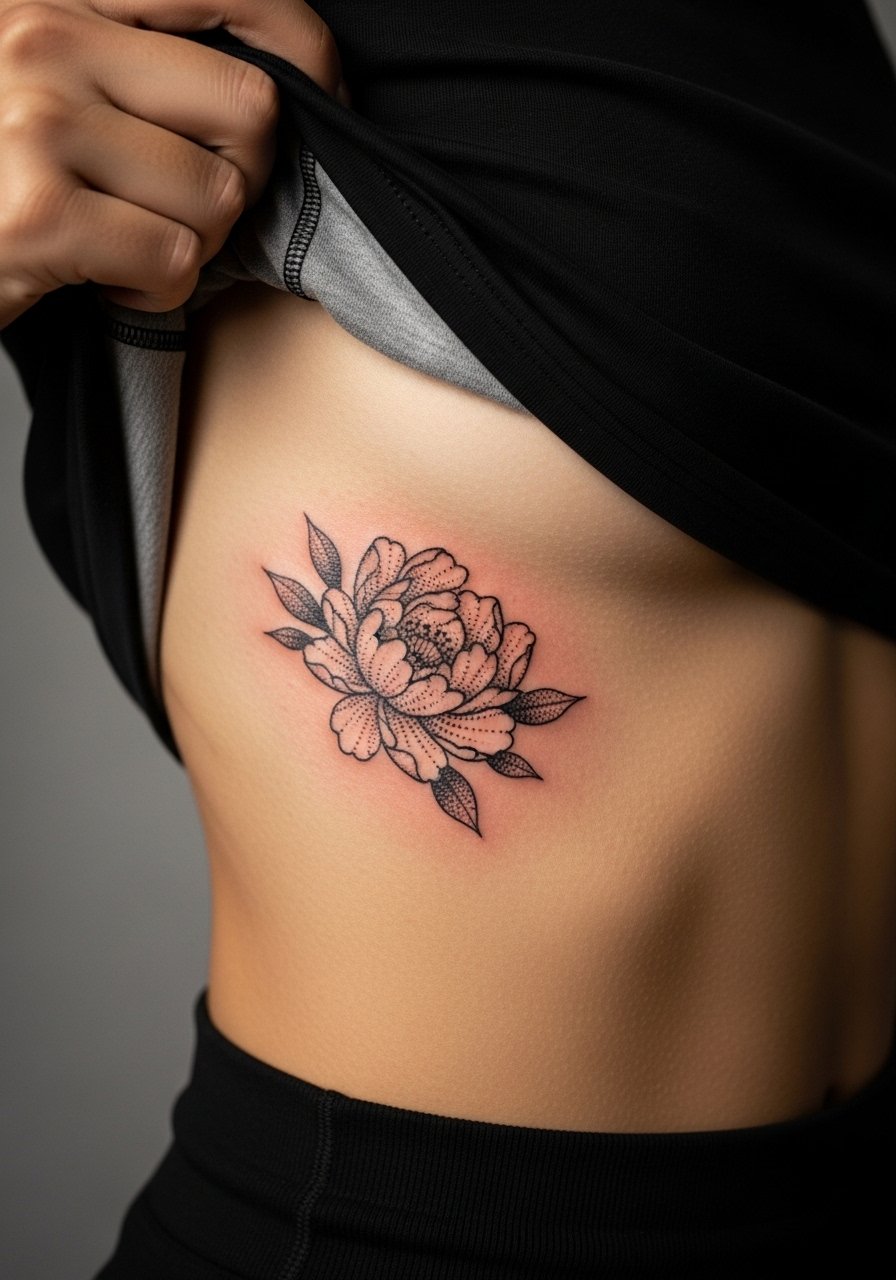
Pain warning: ribcage sessions rank high on discomfort scales and dotwork can feel like repeat tapping. Artists split on whether fine, dense stipple holds on ribs. One camp says the stretch blurs dots within two years. The other camp argues proper needle depth and spacing keep detail intact. Ask your artist which side they sit on and to show healed rib examples. Expect potential touch-up at year two for dense pieces. For the appointment, wear a cropped top or a zip hoodie you can open so access is easy.
6. Peony Half-Moon Above the Elbow
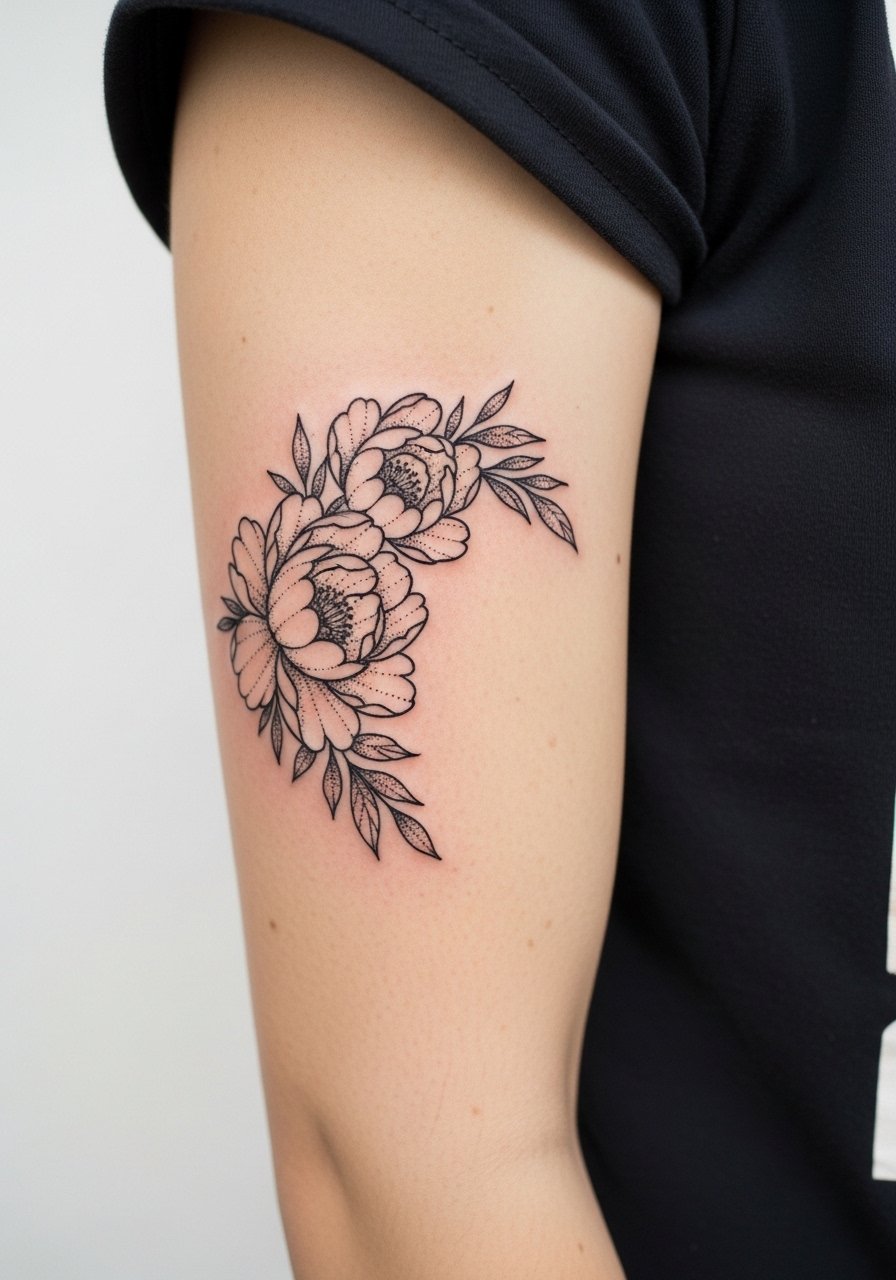
Most clients like this because the half-moon frames the elbow without landing on the joint itself. When you talk to the artist, ask them to keep the stipple lighter near the crease so repeated bending does not smudge the texture. Sessions are usually one to two hours and discomfort is moderate. A mistake is centering the design over the joint. For casual outfits, short sleeves that stop just above the piece let it peek out, and a rolled sleeve linen shirt highlights the placement.
Studio Day Picks
The arm and rib pieces above have different prep needs. A few targeted items smooth the session and protect the dotwork while it begins to settle.
-
Stencil transfer paper kit. Lets you preview how scale and lineweight actually read on your skin, which matters for dotwork spacing.
-
Topical numbing cream. Applied per instructions about 45 minutes before the session can ease rib and ankle sensitivity without ruining the stencil.
-
Thin protective film roll. Useful for high-friction zones like ankles and wrists to keep the first week cleaner.
-
Fragrance-free gentle body wash. A mild cleanser helps during showers without irritating the delicate dotwork areas.
-
Aquaphor healing ointment. A thin layer in the first few days helps lock in moisture for fine stipple work without clogging the area.
7. Single Peony on the Collarbone
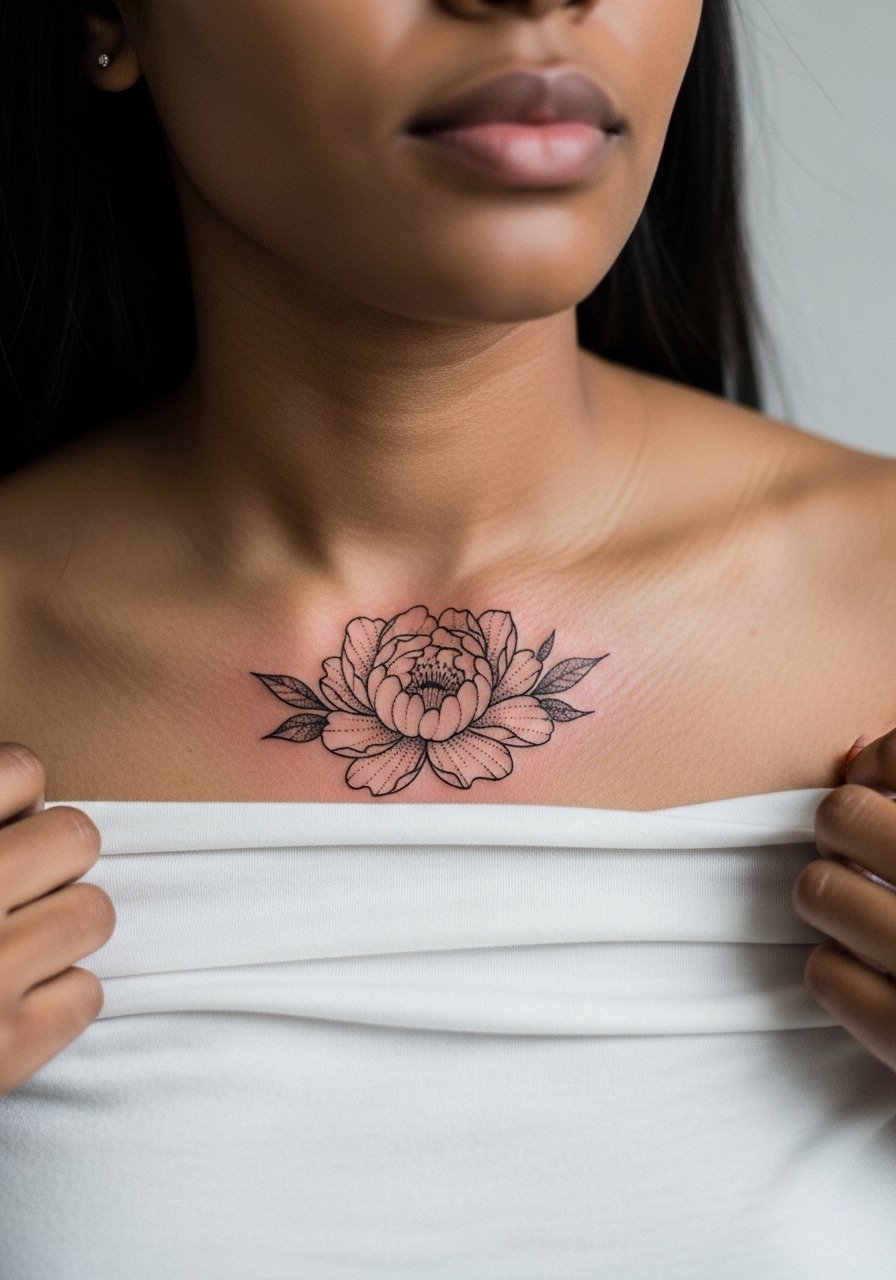
This placement reads intimate and elegant because the collarbone frames the bloom naturally. Tell the artist you want airy stippling toward the petal edges so the piece keeps depth without heavy saturation. The session is low to moderate on pain and usually under two hours. A common mistake is requesting too many tiny details that vanish once the skin moves. For show-off outfits, open-neck tops or a thin chain work well but avoid chunky necklaces that crowd the area.
8. Peony Band Around the Wrist
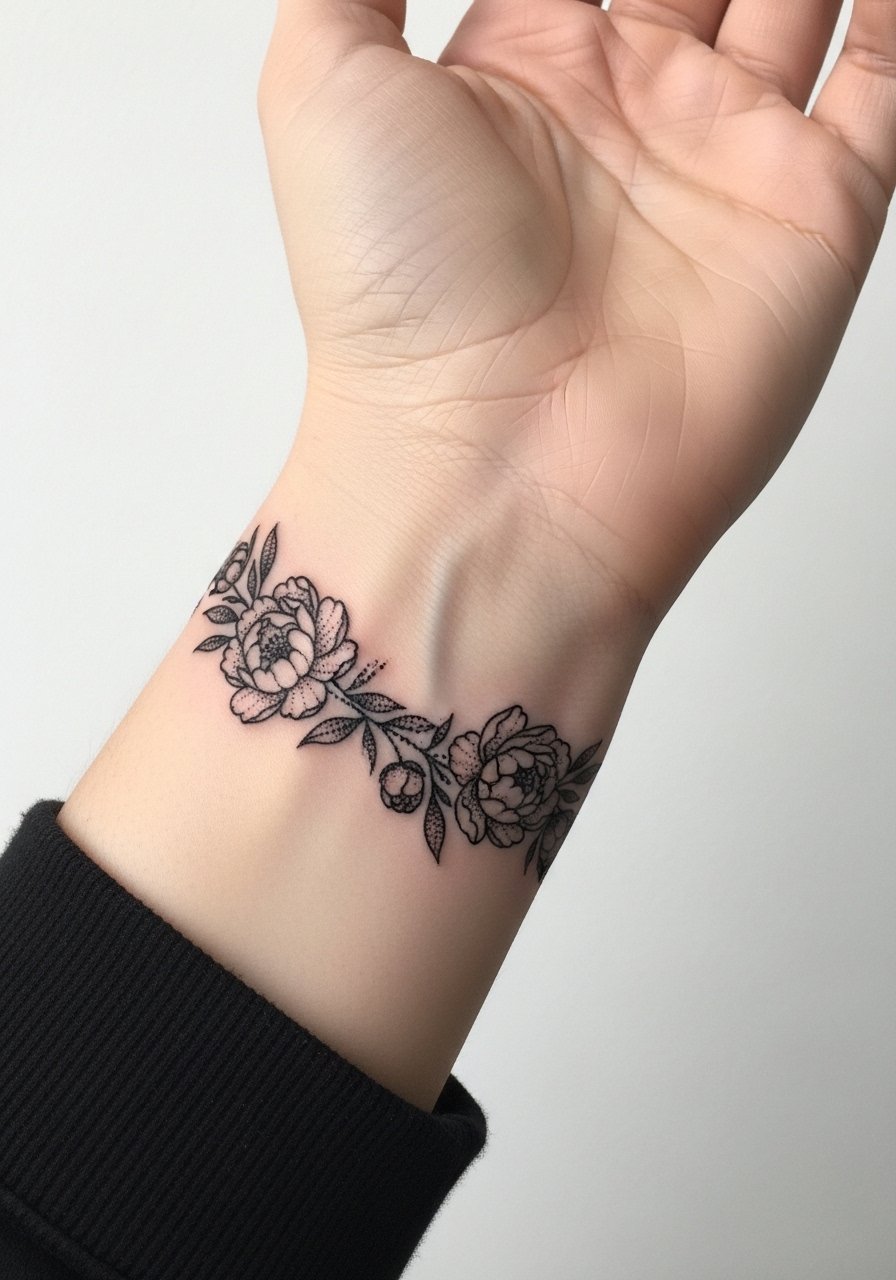
There is a real trade-off with wrist bands. They are visible and age under constant washing and sunlight. If you want longevity, ask for slightly larger dots and a touch-up plan at year two. Expect sharp sensitivity during the session because wrists are thin skinned. People often ask for super-fine detail that dissolves into blur from daily wear. For showing it off without adding friction, consider pairing the band with a thin chain bracelet rather than layered cuffs.
9. Peony Falling Along the Spine

Visual impact lead works here because vertical pieces read striking on a back. Spine placements require an artist comfortable with symmetry and steady depth. Tell them you want more space between stipples near the vertebrae since motion along the spine can soften heavy fills. Sessions are longer and may be split into two appointments. A common mistake is overcomplicating the vine with tiny filler motifs that age inconsistently. For wardrobe, open-back dresses or halter tops let the line breathe without exposing more than you want.
10. Peony and Script on the Ribcage
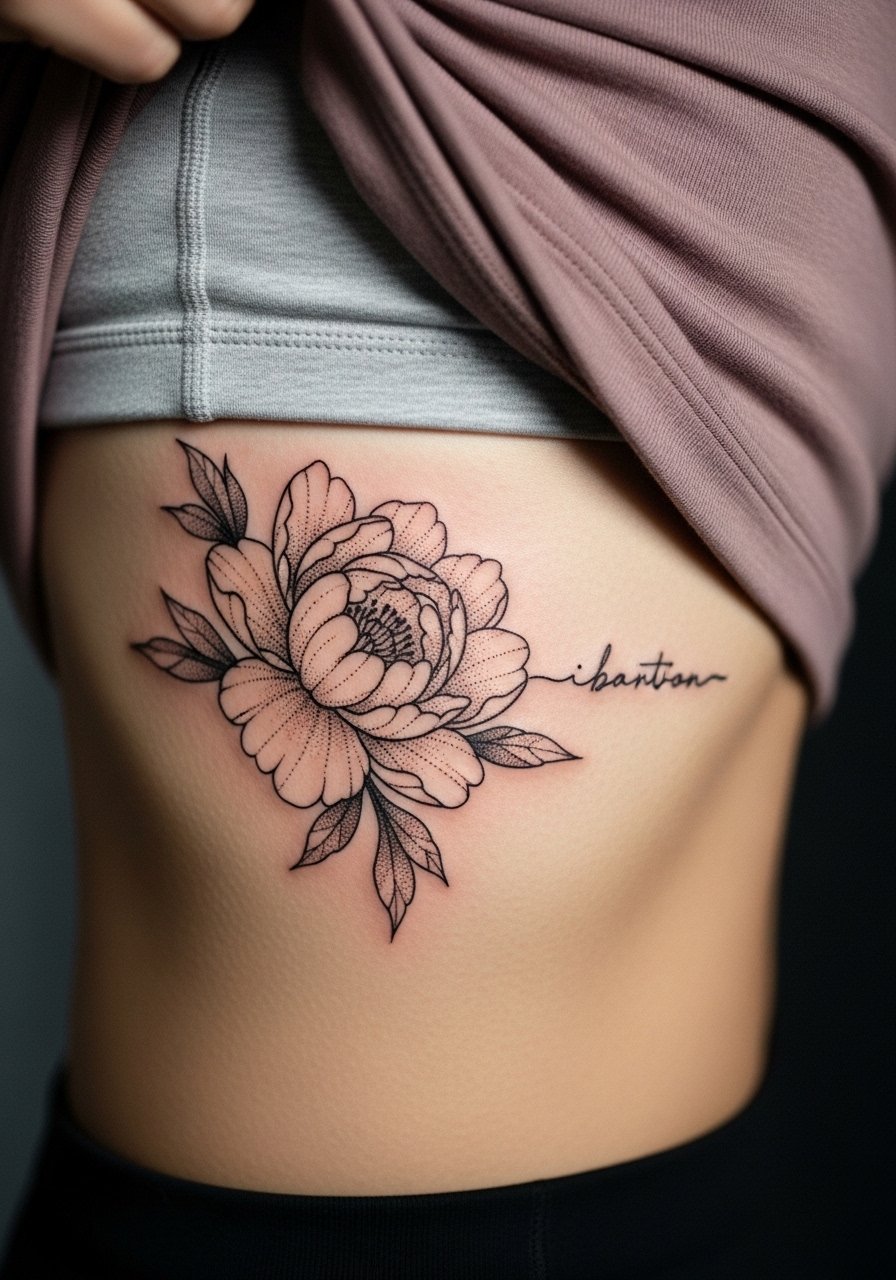
When combining dotwork florals with script on ribs, consultation matters more than usual. Ask your artist to place the wording where the natural breathing motion does not pull on the letters. The controversy about fine detail on ribs applies here too. One camp says script plus dotwork blurs faster because of stretch. The other says proper placement and spacing prevent most issues. Expect higher pain and plan for a shorter session focused on placement, not detail overload.
11. Peony on the Thigh Outer Hip
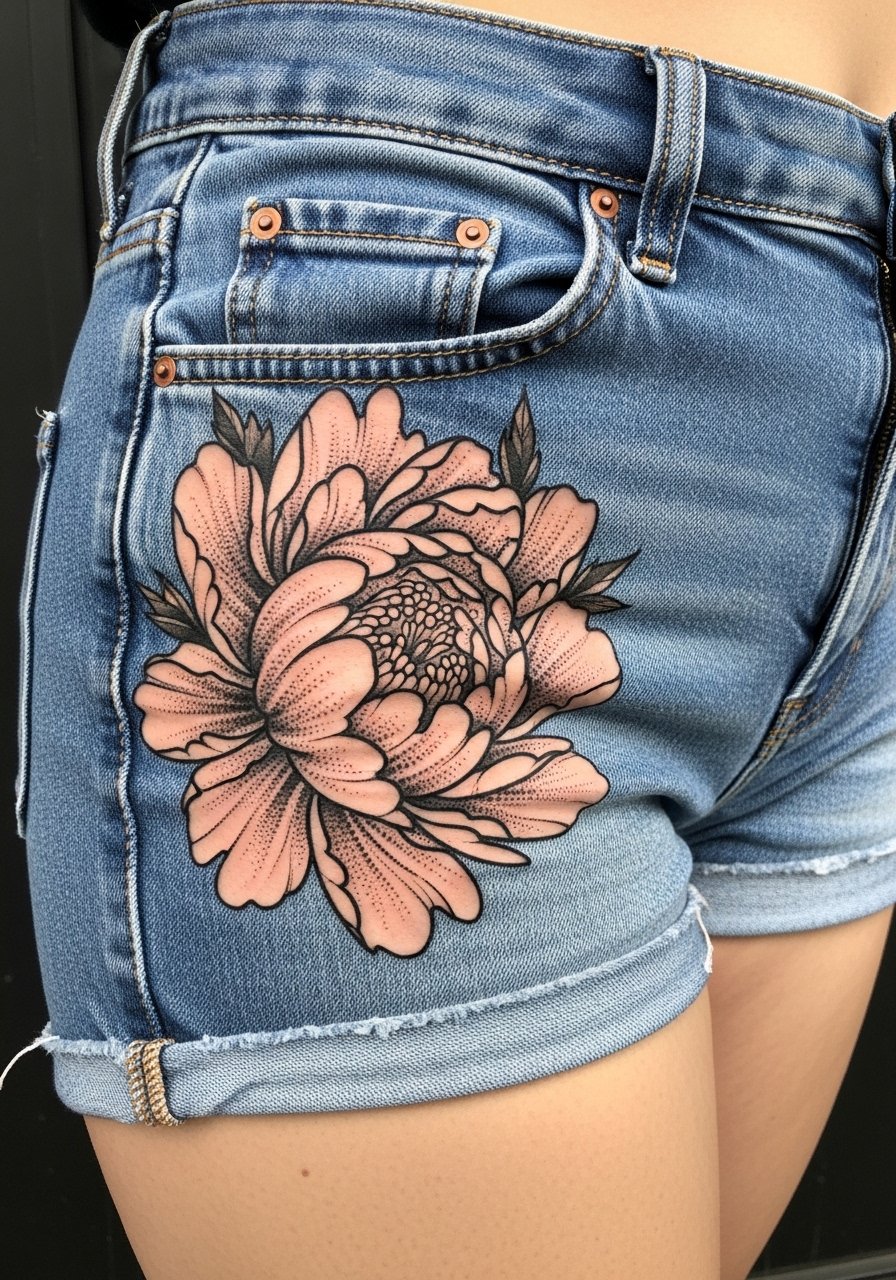
Personal observation: thigh pieces age more gracefully because clothing tends to avoid constant abrasion. When you book, ask for reference photos showing healed thigh stipple so you know the dot density that holds. Sessions are comfortable for most people and can run two to four hours for larger compositions. Mistakes I see include trying to force tiny stipple into dense skirted designs that would be better with airy fills. For the session, loose shorts or a wrap skirt are ideal and a loose drawstring linen pant helps during healing.
12. Tiny Peony Behind the Ear
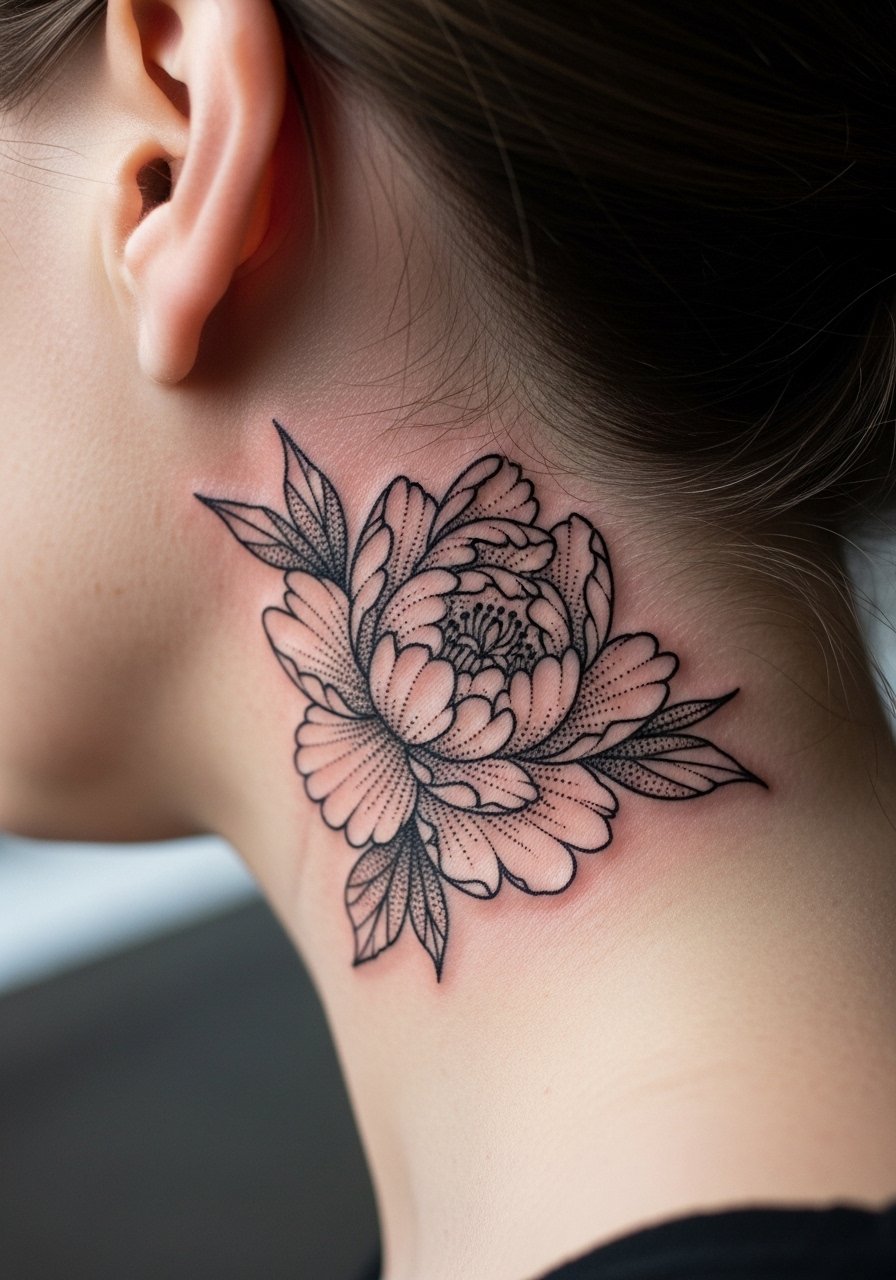
This is a subtle placement that reads private when your hair falls down and playful when it’s tucked behind the ear. Behind-the-ear work needs a confident artist because the skin is thin and the surface curves. Mention that you want the dots laid lightly and to leave breathing room between petals. Sessions are quick and the pain is sharp but brief. A common mistake is asking for too much tiny detail that the canvas cannot hold. Consider short hair clips or a silk scarf for showing it off.
13. Peony on the Back of the Hand
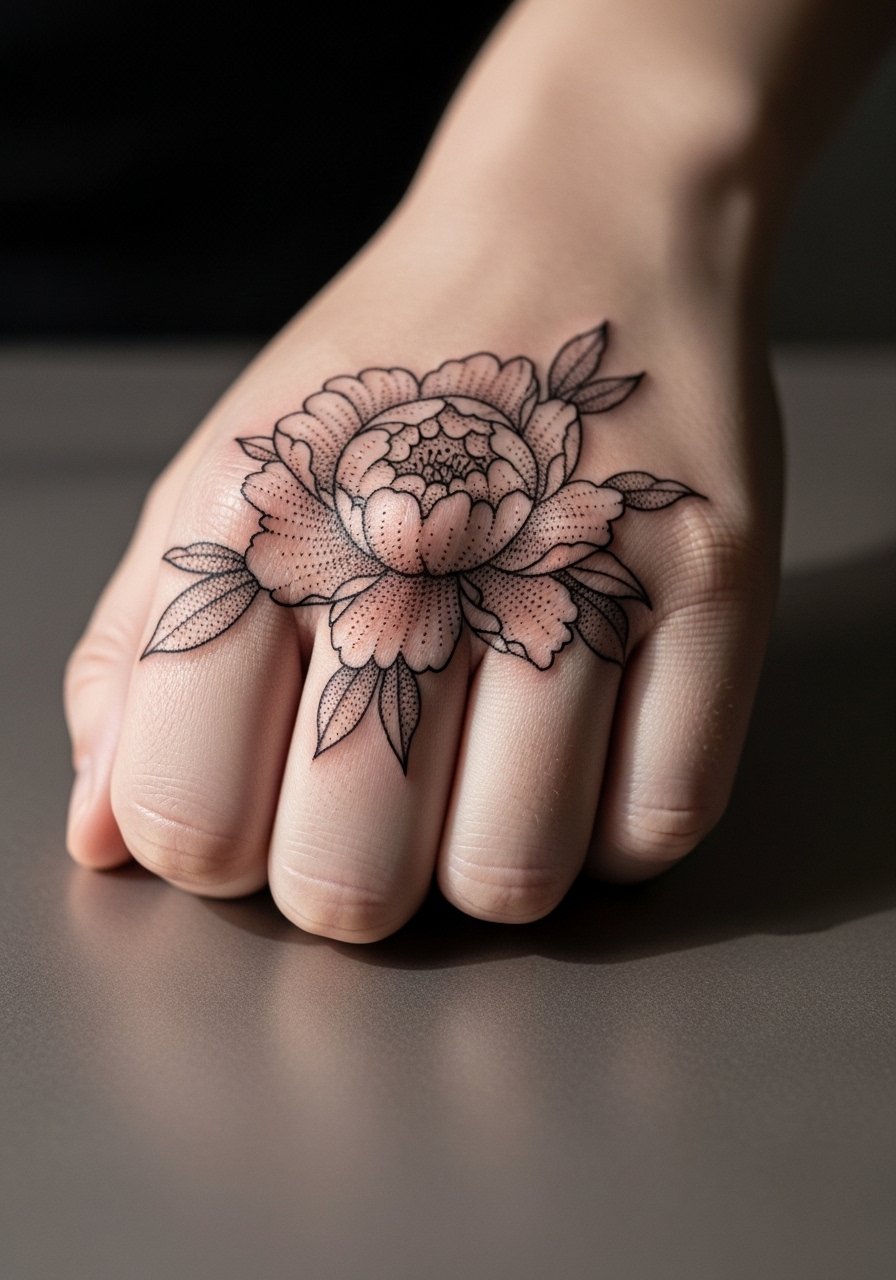
Hands are high-visibility and higher risk. From what I’ve seen, hand tattoos experience more fading and blur, especially fine stipple fills. The two camps here are blunt. One says avoid dotwork on hands unless you accept frequent touch-ups. The other says shallow, open dots and strategic placement can survive reasonable wear. Tell your artist you want open spacing and expect touch-ups within a year. Styling wise, stack a single thin ring and let the tattoo be the small focal point.
14. Peony Cluster on the Calf
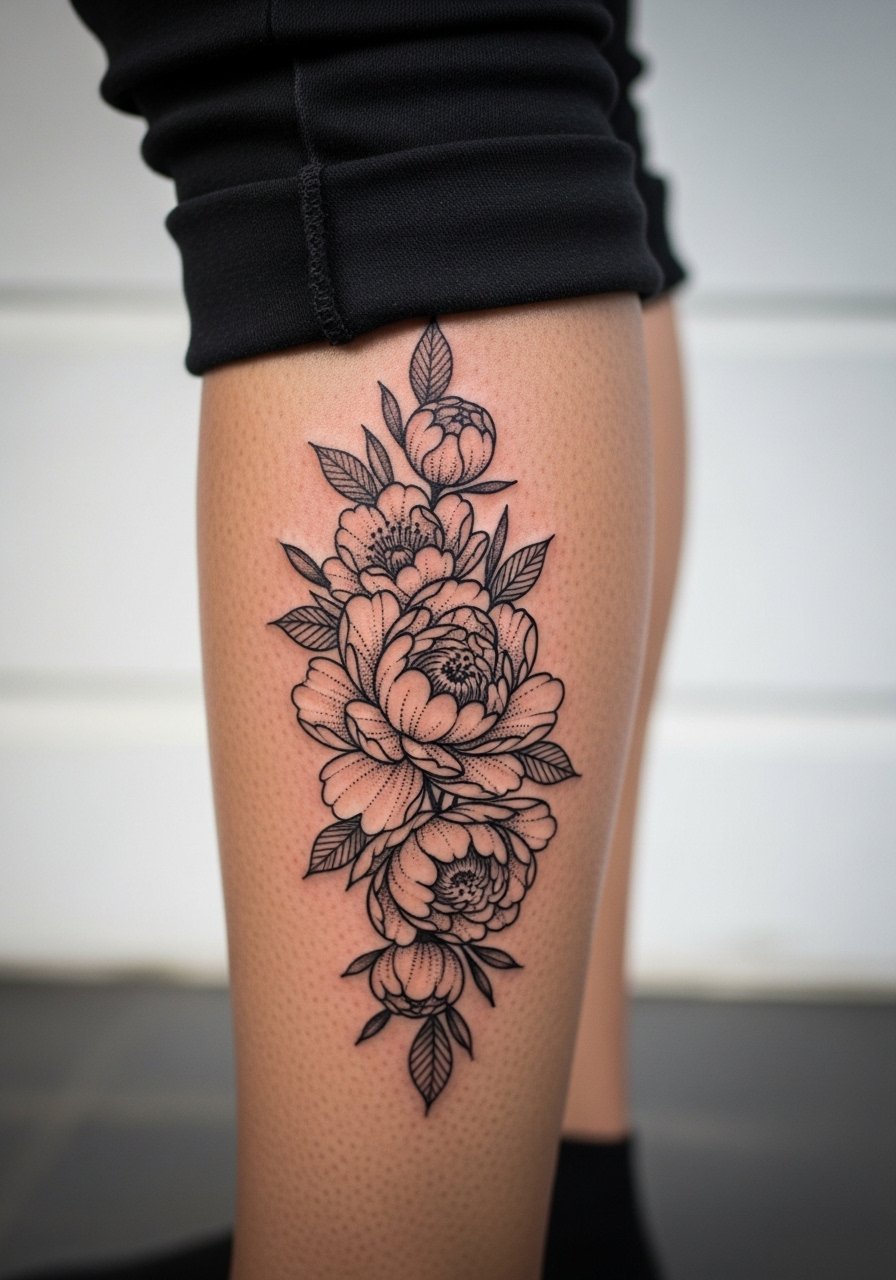
Visual impact lead: the calf gives enough room for a vertical cluster that can be read from a little distance. Ask for varied stipple density so petals near the edges are lighter, and request healed photos from the artist of similar placements. Sessions are moderate in pain and can be longer depending on size. A mistake is packing too many tiny filler dots that age into gray patches. For summer showing off, wear cropped pants or a midi slip skirt.
15. Single Peony on the Wrist Inner Side
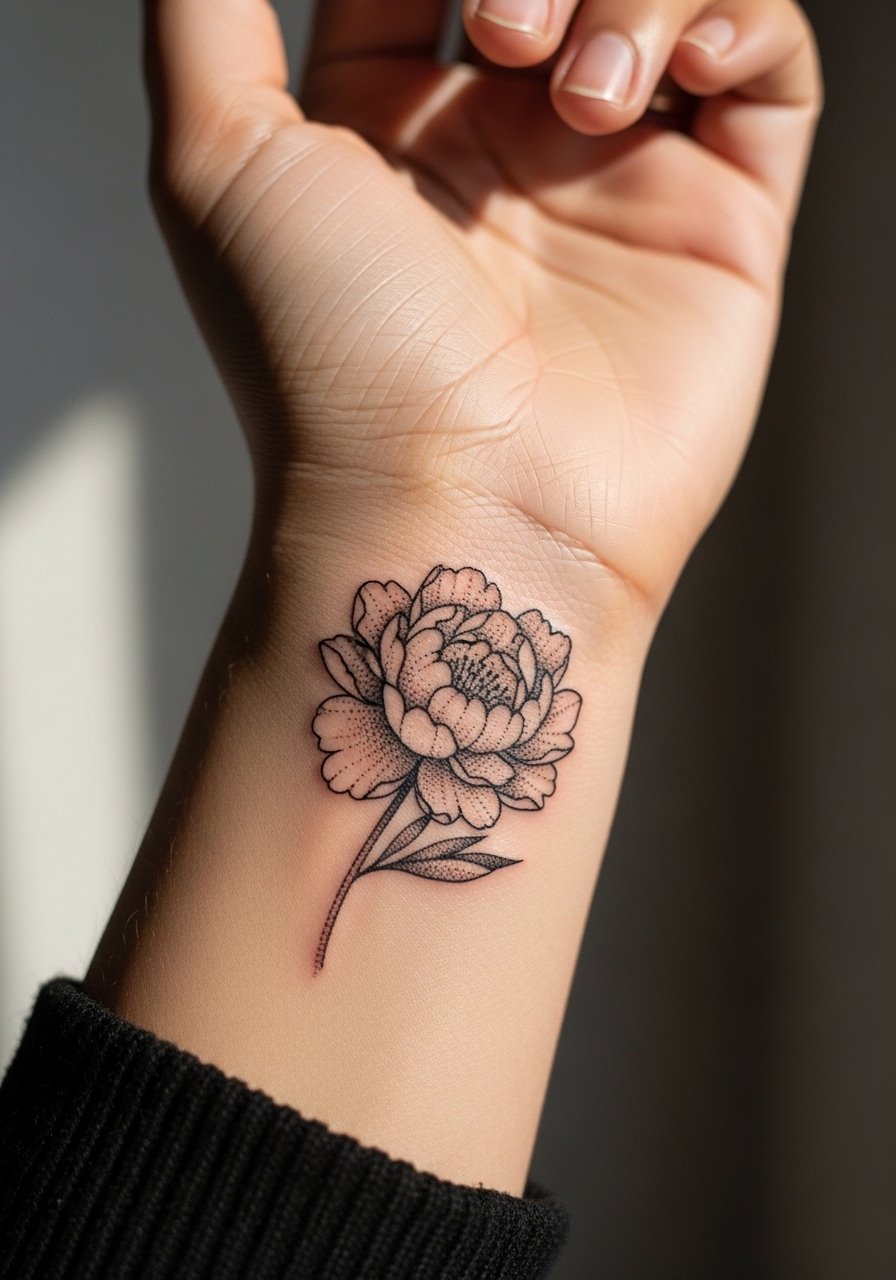
Consultation lead: when you sit with your artist for a wrist piece, tell them you want contrast in the petal edges to keep the bloom readable during everyday motion. The inner wrist sees a lot of hand movement and washing, so dots placed too tightly can blur faster than on other parts. Sessions are short but sensitive. A frequent mistake is mimicking extremely fine detail from photos without adjusting for the wrist’s thin skin. Style it with a thin chain pendant necklace that sits above the wrist area without competing.
16. Peony Wrapped Around the Finger
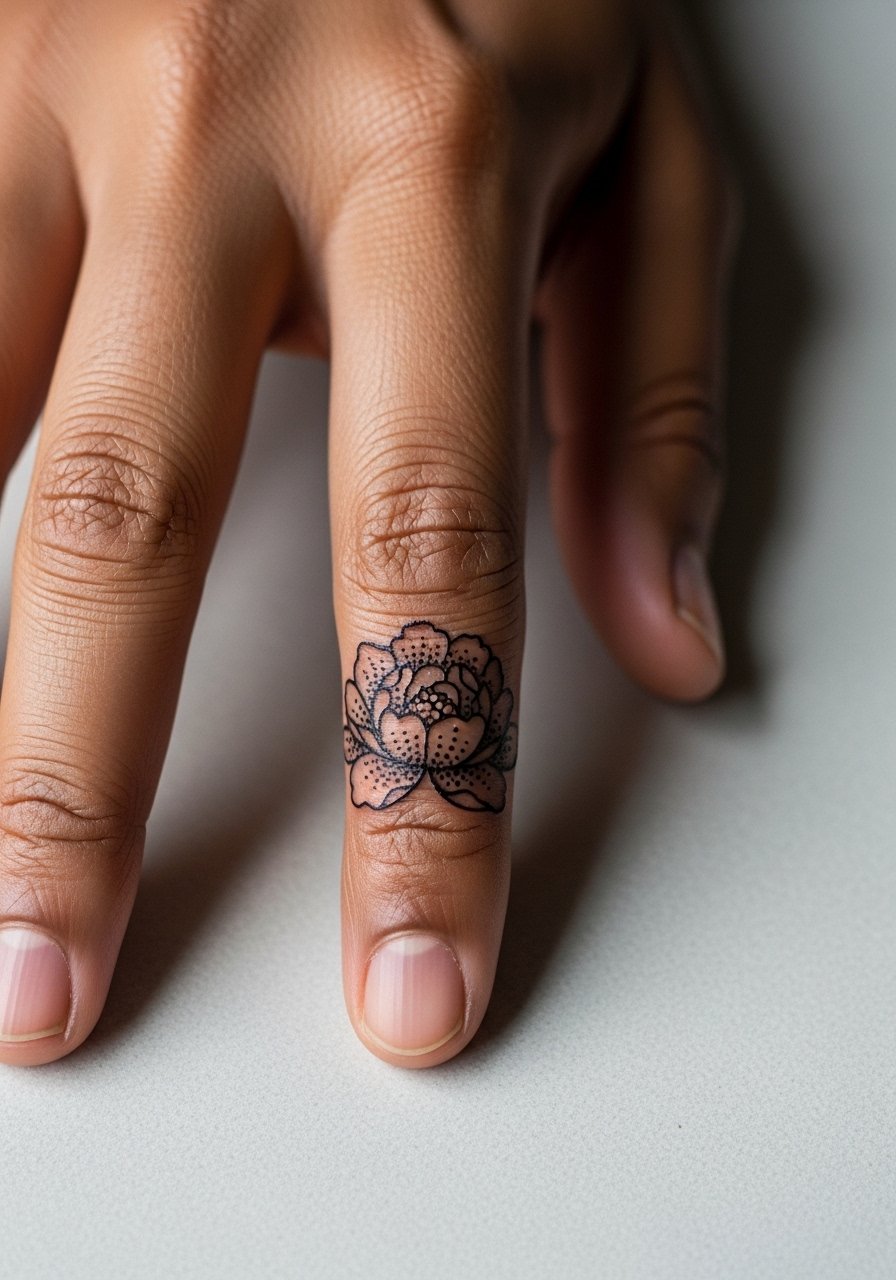
Mistake lead: the biggest error with finger florals is not accepting the maintenance. Fingers are washed constantly and the skin renews quickly, so fine stipple often needs touch-ups. If you love the look, ask for bolder dots and slightly larger petal gaps to increase longevity. Sessions are quick and the pain is sharp due to bone proximity. For accessories, choose thin rings that sit above the band rather than directly on top of it.
17. Peony Centerpiece for a Chest Plate
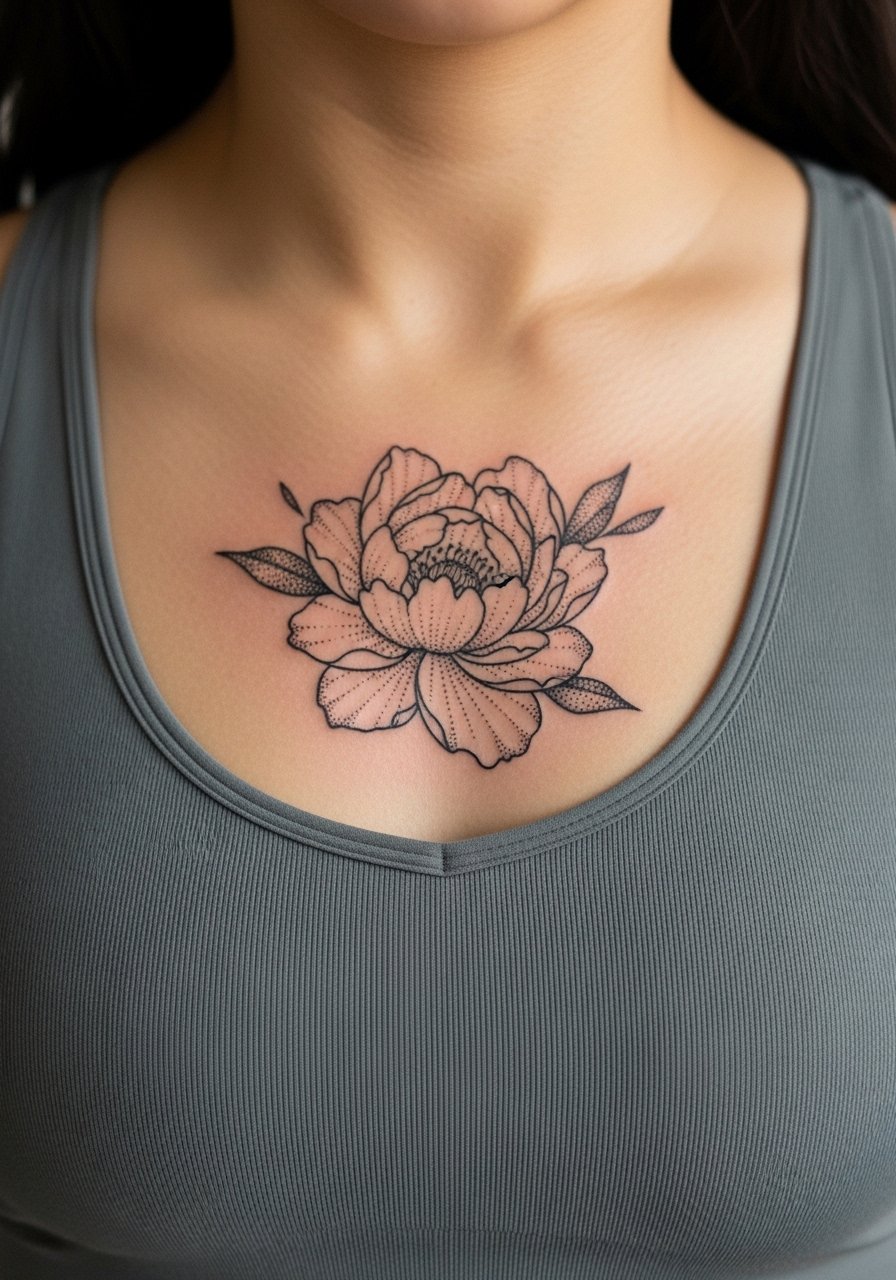
Aging-reality lead applies strongly to chest pieces because sun exposure and clothing contact determine how the dotwork settles. When you plan this, request design breathing room and ask to preview the stencil while standing. Chest skin moves with breathing so the artist should adapt spacing across the bloom. Sessions can be longer and more sensitive near the sternum. A common mistake is cramming dense stipple in the center which may shadow into a blob over time. For the session, wear a sports bra or an open-front top so access is straightforward.
18. Peony with Leaves on the Shoulder Blade
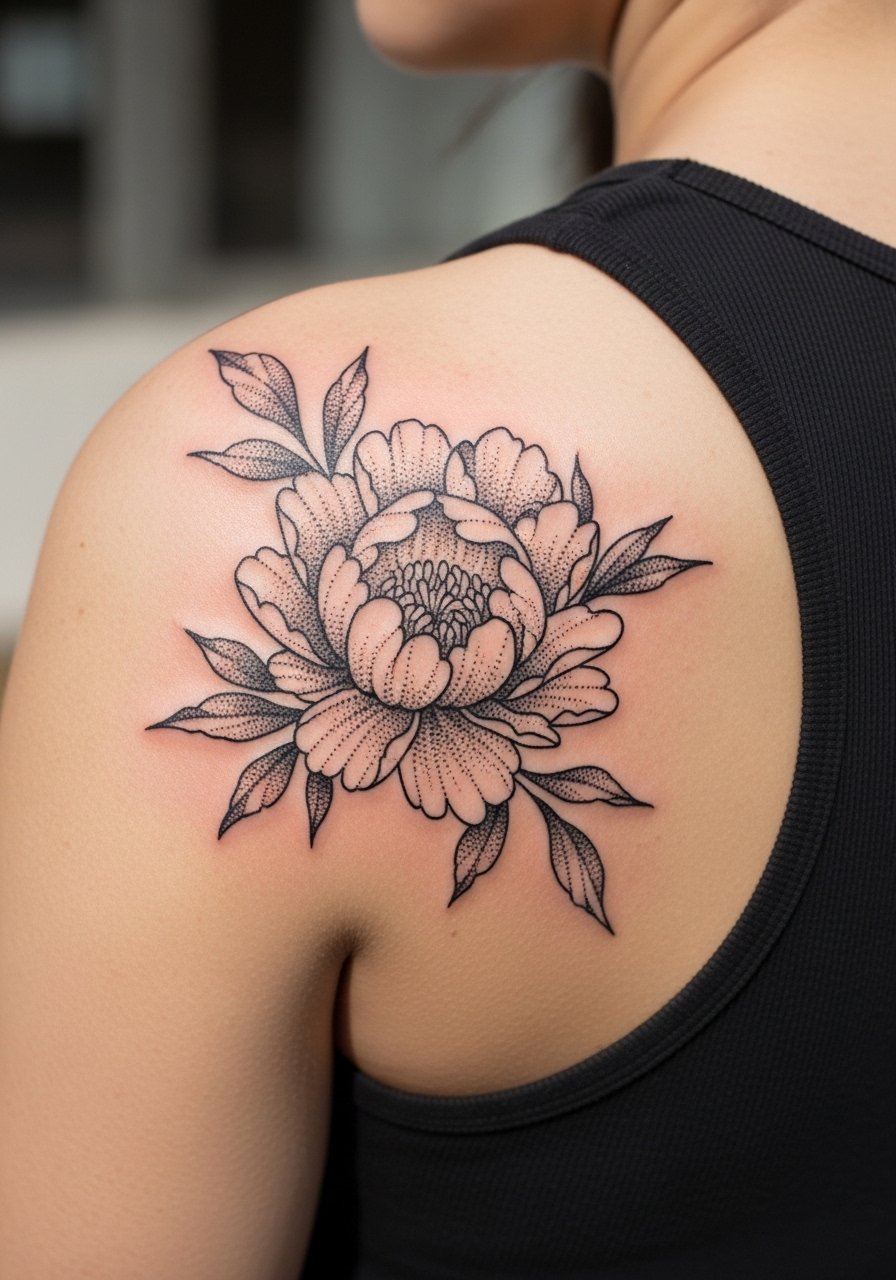
Personal observation: shoulder blade pieces fare well because they are rarely in constant friction and are easy to cover when needed. Tell the artist you want airy leaves and stipple that fades toward the edges so the bloom reads lighter at arm movement. Sessions are moderate and comfortable if you lie on your front. Missteps include dense fills that look heavy when you move. For showing off, open-back tops or a bralette that keeps the area visible work nicely.
19. Peony on the Side of the Neck
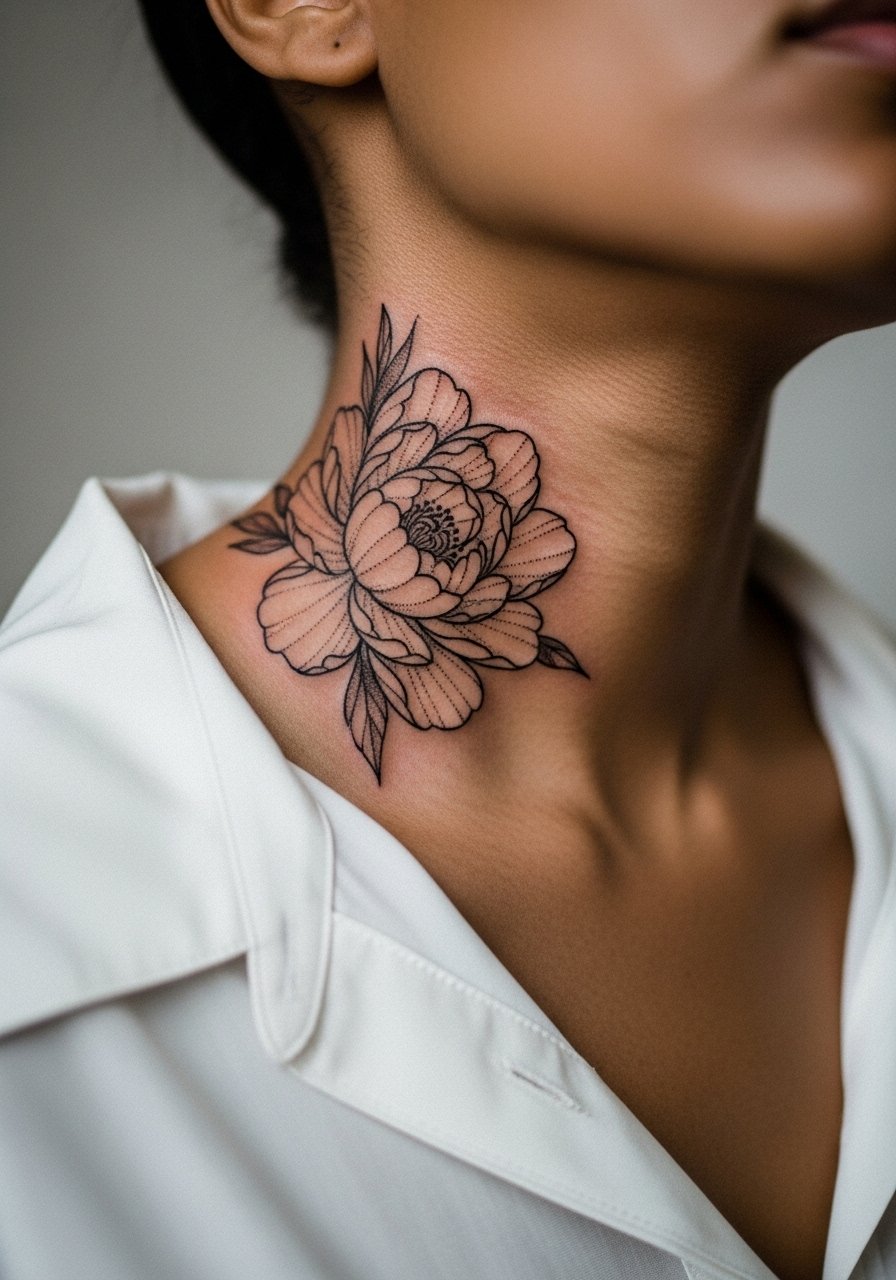
Decision-pressure lead: neck pieces force a practical conversation about visibility and career implications. Dotwork on the side neck can be subtle but it is still visible in many outfits. Ask the artist for placement samples and consider how collars sit over the area. Sessions can be sharp and shorter in duration. A common mistake is underestimating job considerations. For a refined reveal, pair with convertible collars or a wide-neck blouse.
20. Peony Cluster Along the Hip
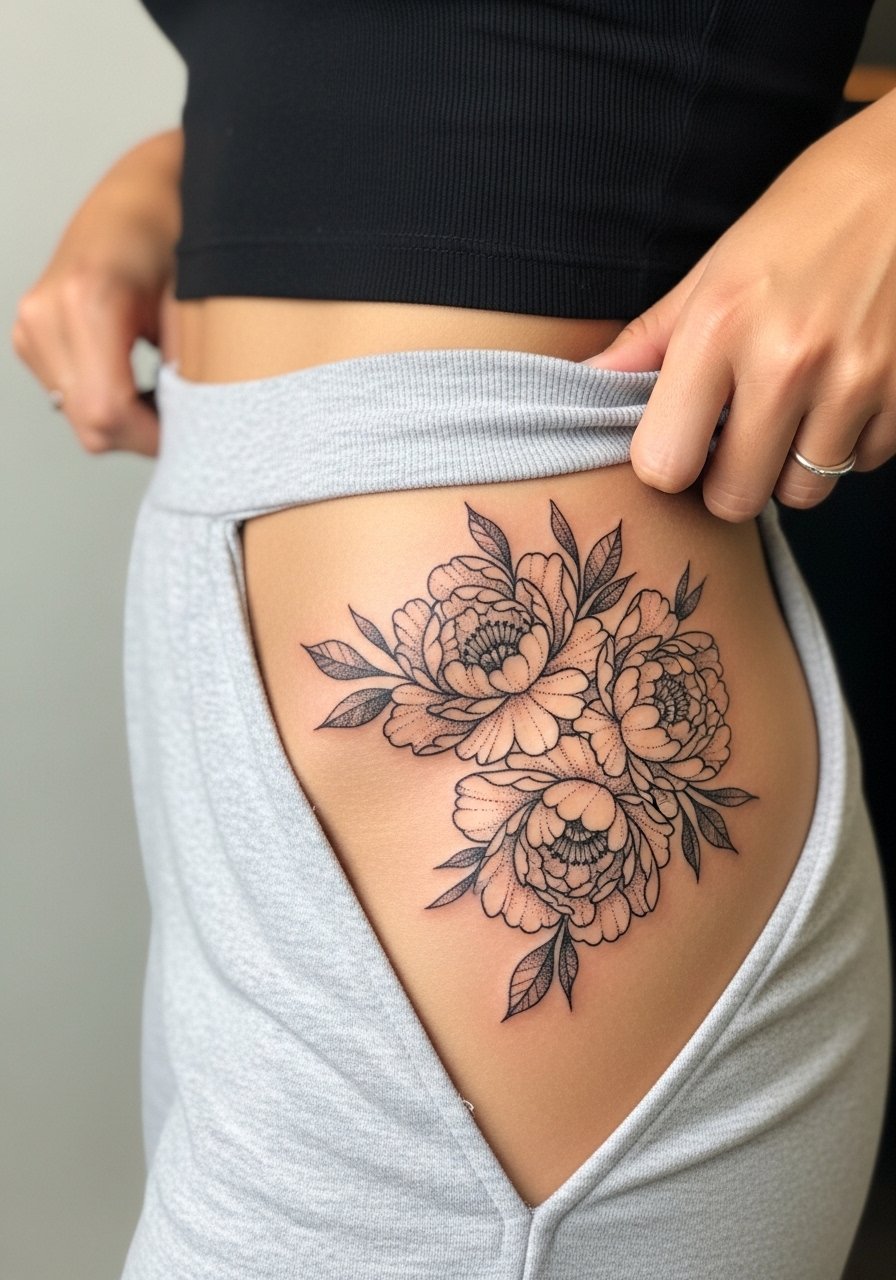
Visual impact lead: hips handle larger peony clusters because skin stretches less often and clothing typically avoids direct friction. In consultation, ask for scale samples so that the smallest petals still have spacing at five years. Sessions are comfortable and can be done in a single long appointment. A mistake I see is overcrowding the area with filler motifs that fight the bloom. For both the session and showing off, high-waisted bottoms or a wrap skirt make access easier and display the piece well.
21. Single Peony on the Calf Outer Edge
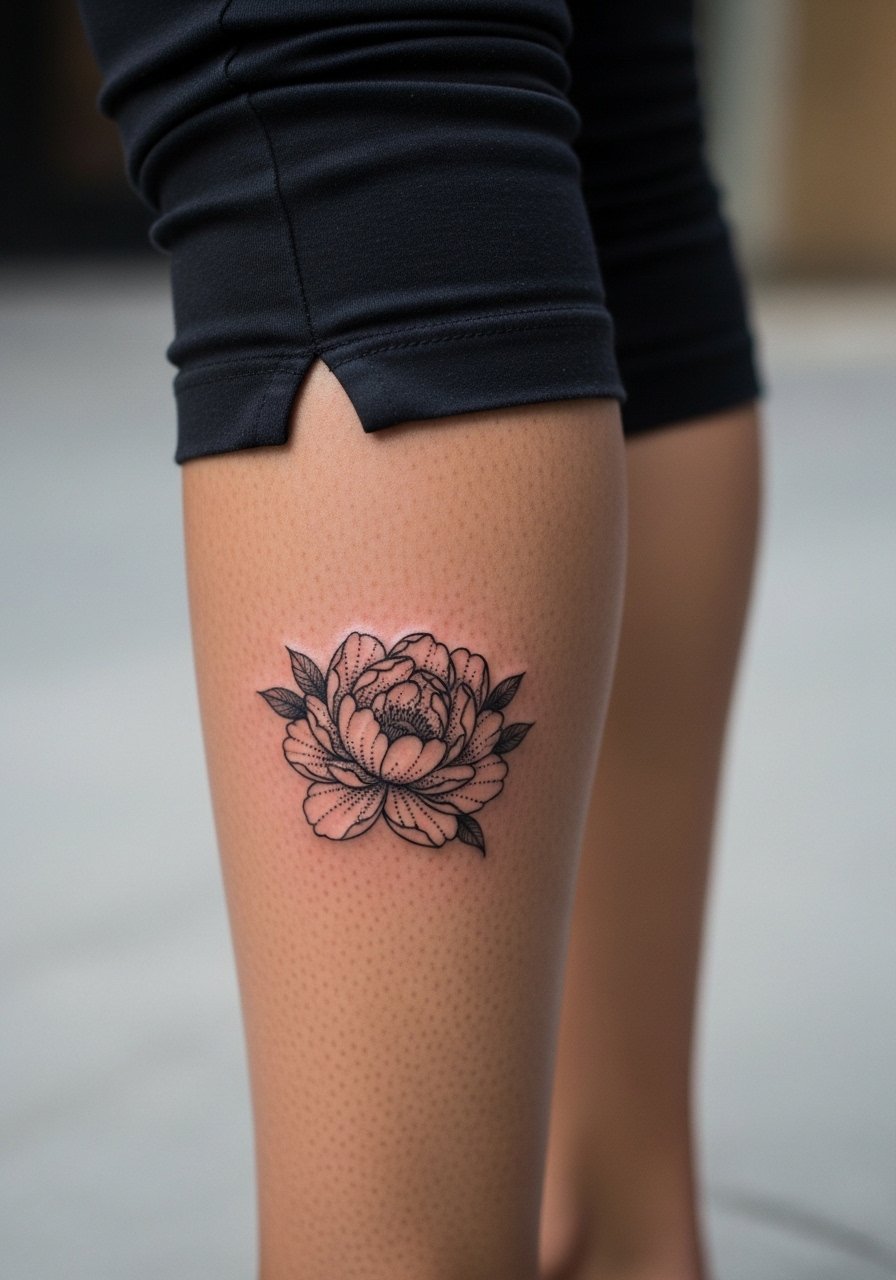
Mistake lead: people sometimes scale this too small because they want discreet art. Tiny stipple on the calf can lose its texture after a couple of years if dots were too close. Ask for slightly larger petal shapes and ask the artist to show healed examples on similar skin. Sessions are low to moderate in pain. For visibility, cropped pants or dresses with a mid-calf hem show the bloom without exposing too much.
Frequently Asked Questions
Q: How long does dotwork hold up compared with solid black peony fills?
A: From what I’ve seen, dotwork can age gracefully if it was laid with intentional spacing. Solid black fills hold their contrast longer, but the dotwork texture gives a softer fade that can still read well at year five. Expect touch-ups for dense pieces sooner than for airy dotwork. The choice depends on whether you prefer long-term contrast or a delicate, evolving texture.
Q: Will a ribcage peony need a touch-up more often than a forearm piece?
A: Yes, ribs usually need more attention because the skin stretches with breathing and clothing can rub. Some artists will do minimal touch-ups at year two if the stipple was dense. Ask your artist for healed rib examples and plan for a possible follow-up appointment.
Q: Can dotwork peonies be combined with color without losing their texture?
A: They can, but you need to plan placement carefully. Small color fills near dense stipple risk muddying. A common approach is to keep the dotwork in the petals and add soft color washes in reserved areas. Discuss with an artist who has healed examples of mixed dotwork and color.
Q: What should I wear to a chest or sternum peony session?
A: Wear a fitted sports bra or a wide-neck top you can pull aside so only the immediate tattoo zone is exposed. A fitted sports bra makes position adjustments easier and keeps the rest of your torso covered.
Q: Are hand and finger peonies worth it given the maintenance?
A: They are worth it if you accept maintenance. Fingers and hands fade faster because of washing and sun. If you want minimal upkeep, choose slightly bolder dots and wider spacing, and expect touch-ups within a year or two.
Q: How do I choose an artist for dotwork peonies if I cannot name one?
A: Use discovery pathways: search hashtags for healed dotwork images, browse local shop portfolios on directory sites, and read forum threads for artist recommendations in your city. Look specifically for healed photos that match the scale you want and ask for references showing work on similar skin tones.