Fine line trends are everywhere, but the geometric Cheshire cat is a design that balances playful mischief and structure. Pick your placement with an eye for line spacing and wear, because tiny geometric elements need room to breathe on skin that moves. Read on for 27 placements and approaches that favor longevity, styling, and realistic touch-up timelines so you walk into your appointment prepared.
1. Fine Line Cheshire on the Inner Forearm
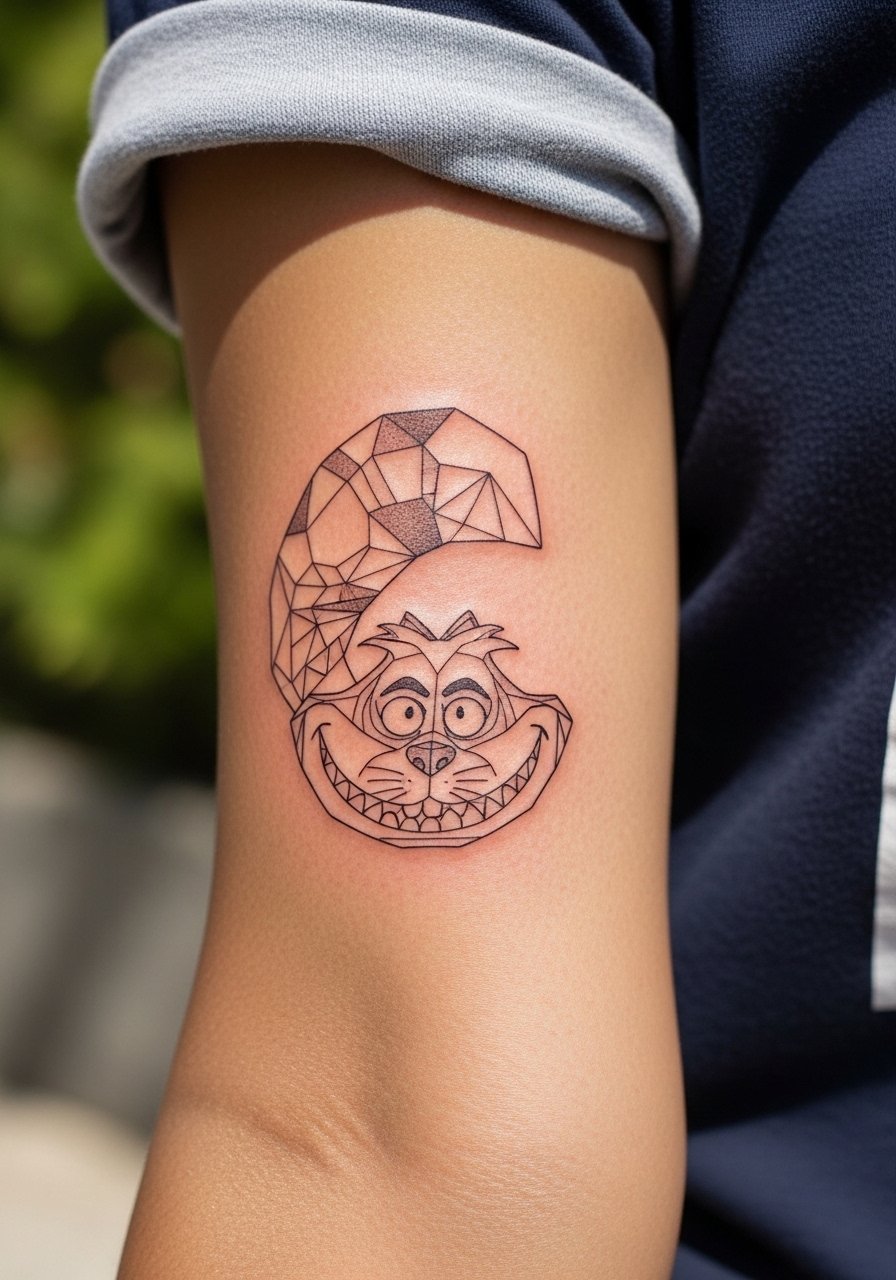
I recommend this spot when you want a design you can see without mirrors. The forearm is forgiving for linework and the surface stays relatively stable as you move. Tell your artist you want slightly heavier line anchors around the grin so the negative-space teeth remain distinct at year two and year five. Fair warning: the biggest mistake is going too small, which causes dense geometry to blur into a gray patch. Expect a two to three hour session for a medium-size piece and a touch-up around year two if you spend a lot of time in the sun. For showing it off, pair with a rolled-sleeve linen shirt to keep attention on the linework.
2. Minimalist Wrist Grin

This is ideal for a person who wants subtle cheekiness in an easy-to-cover spot. Pain is low to moderate because the wrist has bony landmarks. Ask the artist for a narrow, single-needle outline with slightly spaced geometric facets so the pattern does not merge during normal washing and movement. Common mistake: dense shading packed too close to the bone which accelerates blowout. Session time is usually under an hour and you may need a touch-up at year two. Pair this with a thin chain bracelet that sits above the tattoo so the grin remains visible without competing with chunky jewelry.
3. Upper Arm Half-Scale Geometry
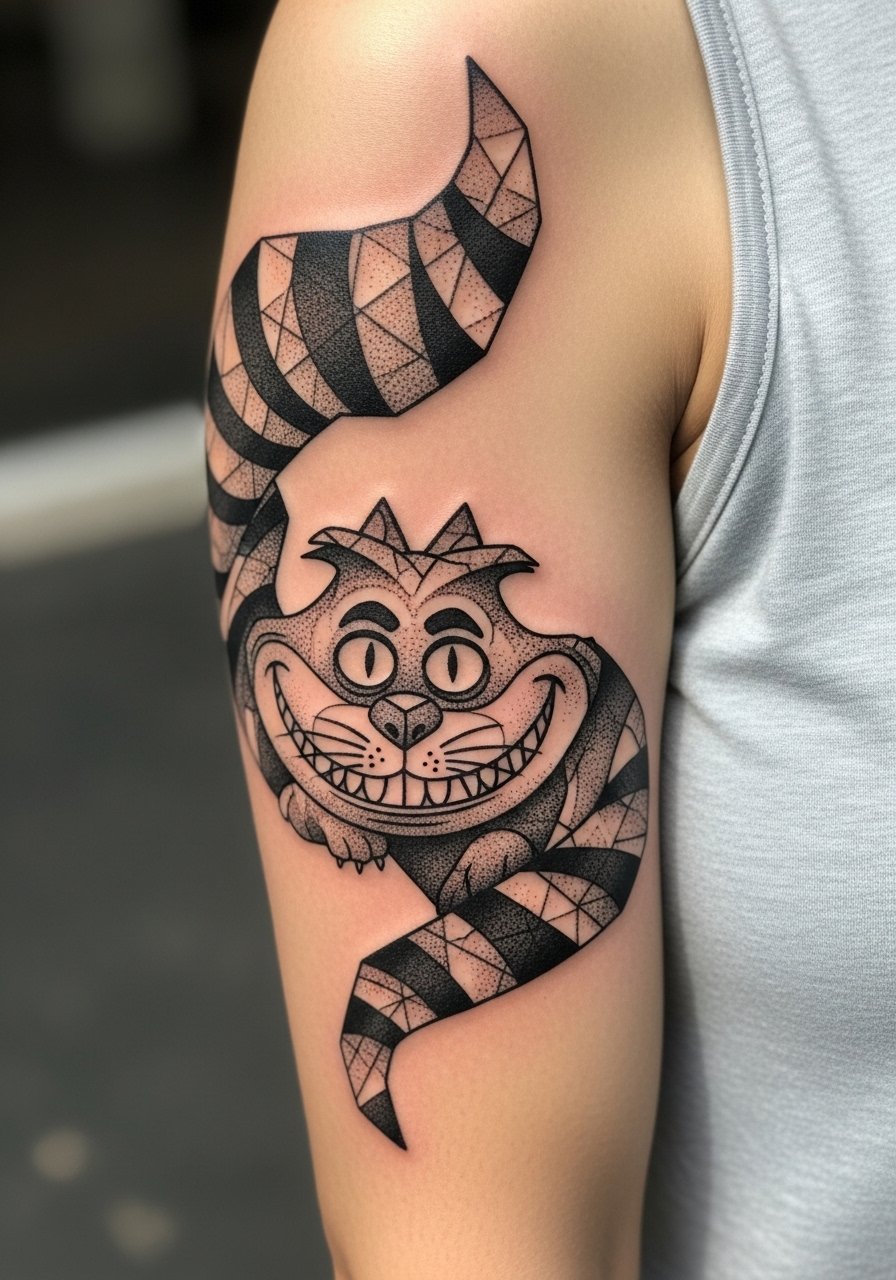
Go here if you want a statement piece that still tucks under sleeves. The upper arm tolerates denser geometry and heavier saturation. In consultation, request varied line weights and stipple shading to separate the facial features from background patterns. Aging is kinder here than on hands or ribs because the skin moves less and has more muscle padding. A common error is asking for full-black fills in tiny shapes which can soften into blobs at year three. Expect three to five hours depending on complexity and a possible touch-up at year three. For casual outfits, an oversized tee with rolled sleeves keeps the cat peeking out.
4. Ribcage Smiling Mandala Cheshire
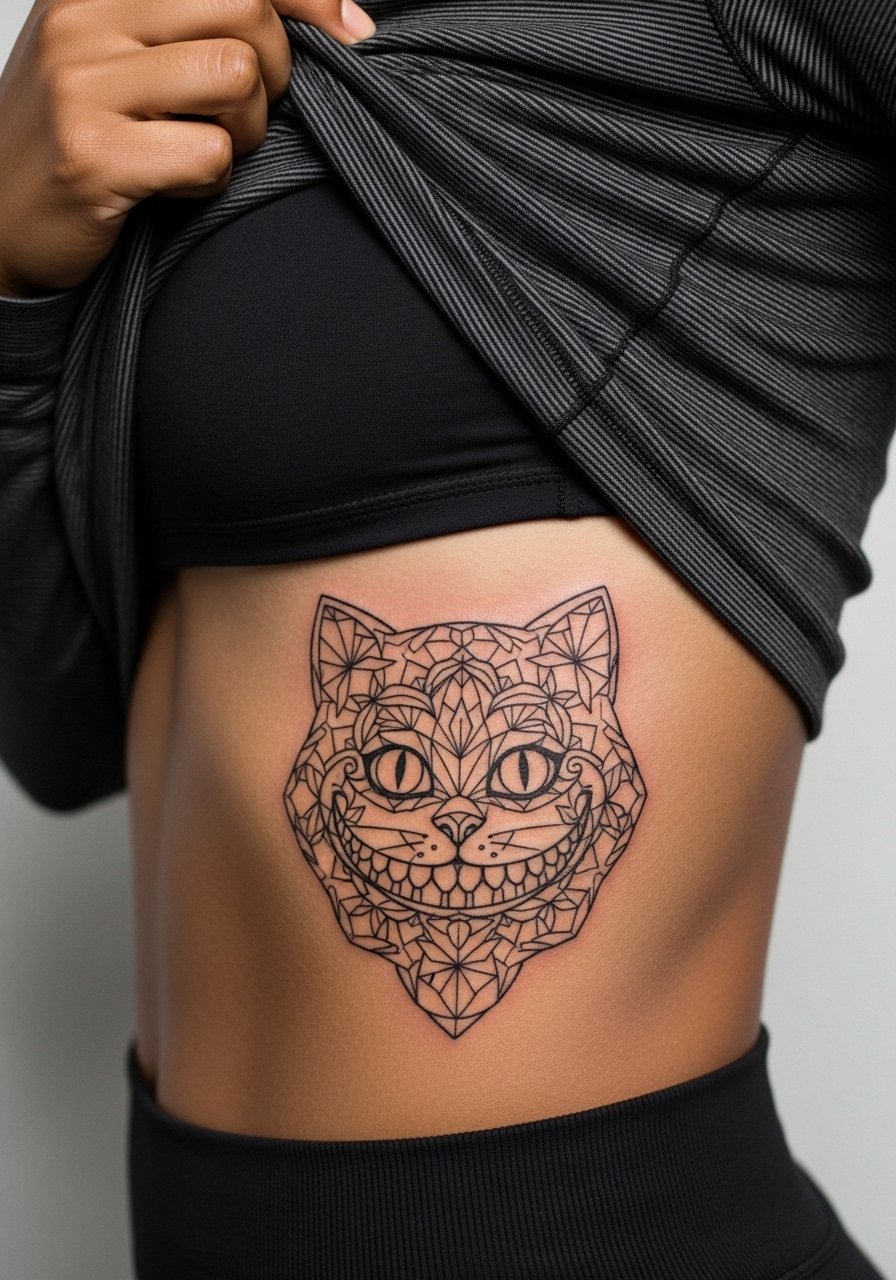
Fair warning: the ribcage is higher on the pain scale. Artists are split on fine line there. One camp says the skin stretch and motion blur lines within two years. The other camp says with proper depth and spacing, fine line settles fine. Ask your artist where they stand before booking. If you want longevity, increase spacing between geometric nodes and avoid tiny interlocking dots. Plan for a longer session with breaks and a touch-up at year two to three. For the session, wear a cropped athletic top you can lift so the artist has clean access without exposing more than necessary.
5. Ankle Tiny Cheshire

Ankle pieces read small and sweet but are at risk from friction. Expect a moderate pain level near bone and short sessions. Tell your artist to avoid ultra-fine density near the ankle bone and to space the geometry so washing and socks do not cause early fading. Common mistake: placing the darkest areas right at the lateral malleolus where rubbing and swelling erase detail. With light activity this can look good at six months, but expect touch-ups at year two if you wear ankle jewelry. Show-off pairing: a pair of low-profile sandals keeps the area visible.
6. Sternum Symmetrical Cheshire Crest
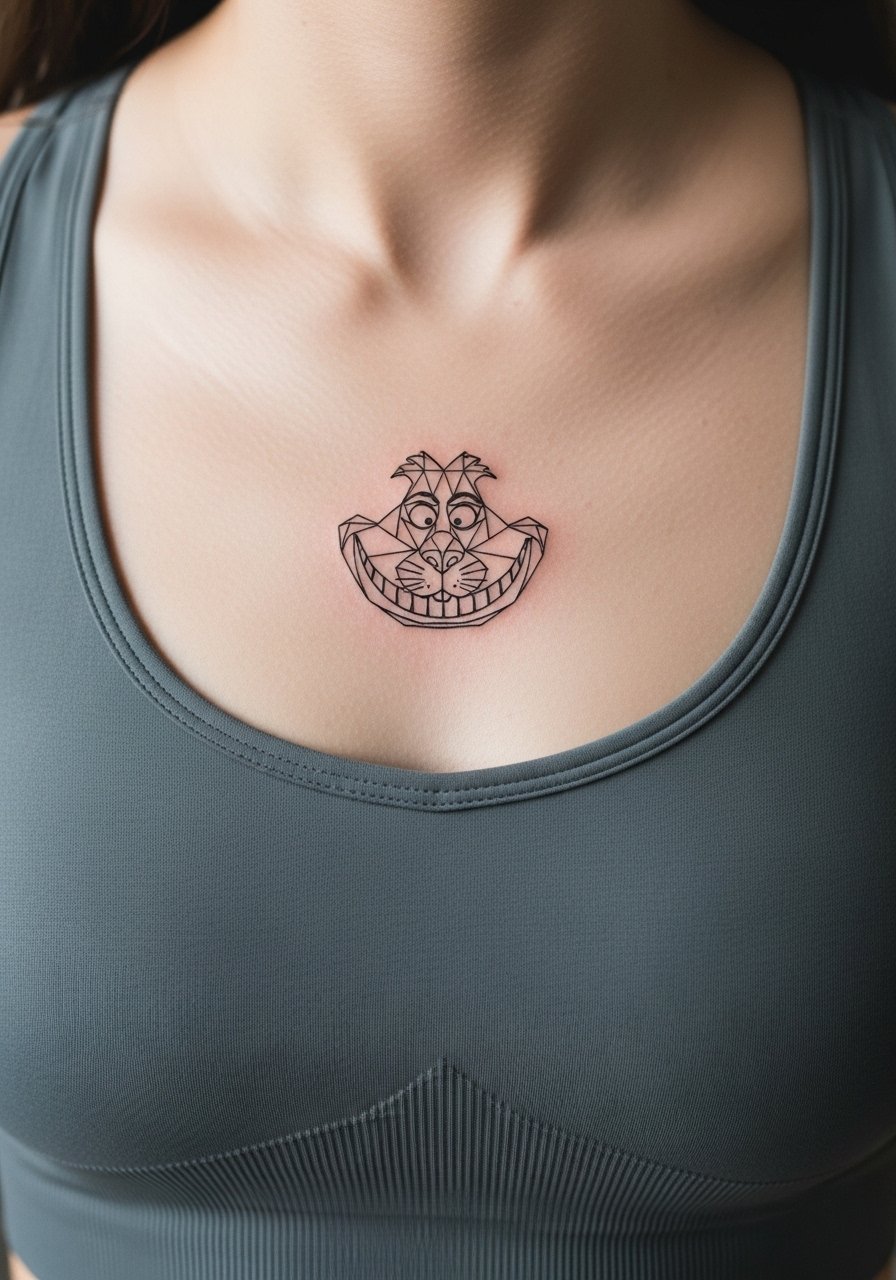
Sternum placement requires an artist comfortable with midline symmetry and variable skin tension. Pain ranges from moderate to high depending on chest sensitivity. Ask for mirror-symmetric guides in the stencil and mention you want reduced detail near the sternum crease so lines do not merge when you breathe. A common mistake is overloading the center with tiny geometry which ages poorly. Expect a multi-hour session with a likely touch-up at year two. For the appointment wear a fitted sports bra that gives the artist access while keeping you comfortable.
Studio Day Picks
The inner forearm, wrist, and sternum pieces above each ask for different prep. These tools help manage session comfort and the first week of healing.
-
Stencil transfer paper kit. Lets you preview how geometric placements line up on curved skin, which is crucial for symmetry on the sternum and ribcage.
-
Topical numbing cream. Applied before a high-pain session like the ribs reduces the initial sting and helps you sit through the detailed geometry.
-
Thin protective film roll. Useful for ankle and wrist pieces that face friction from clothing and shoes during the first days.
-
Fragrance-free gentle body wash. Cleanses without stripping the pigment in fine line areas such as the inner forearm.
-
Aquaphor healing ointment. A thin layer protects tight-line work in the first 48 hours without smothering the stitches or the stencil edges.
7. Geometric Cheshire on the Shoulder Blade
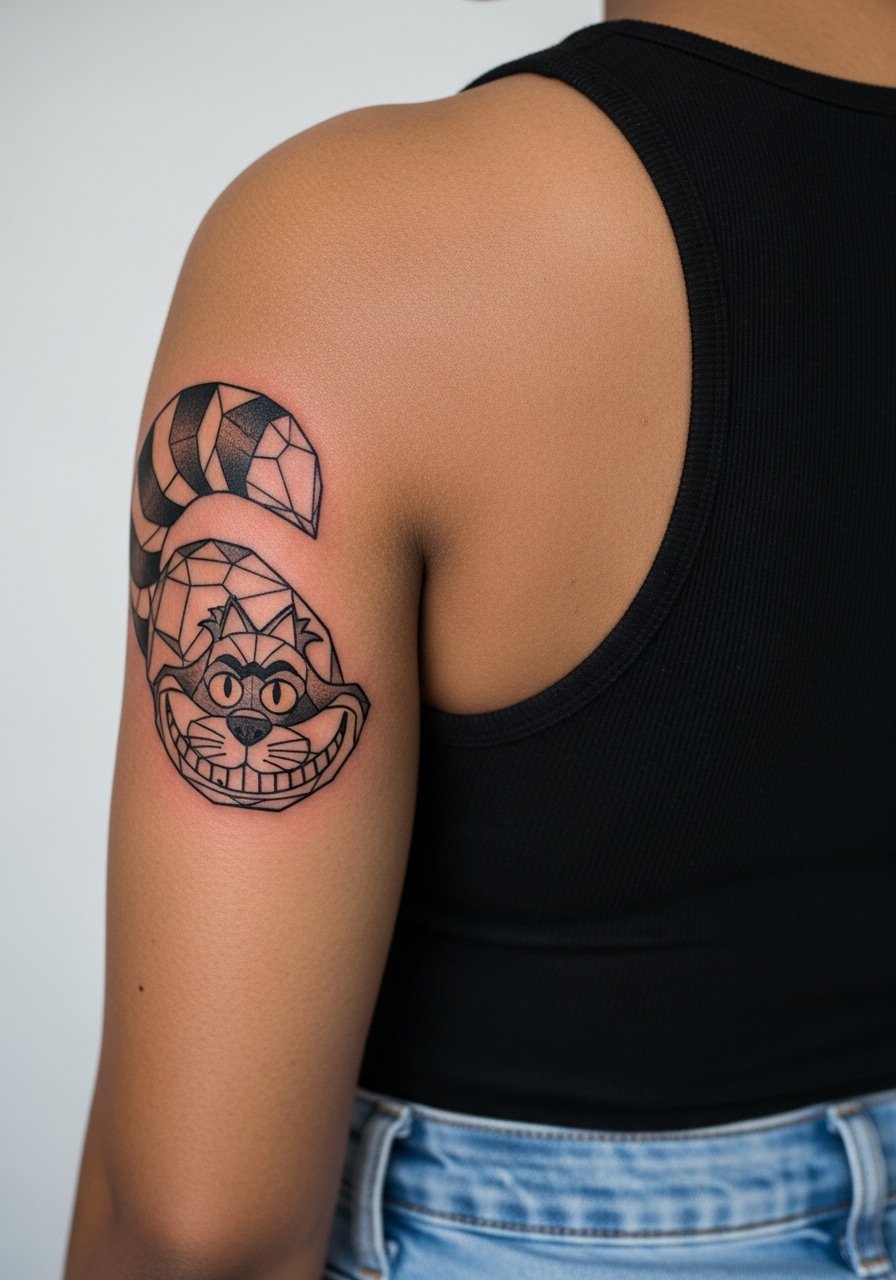
This placement flatters larger compositions and moves well with shoulder motion. The skin here is forgiving for dot work and stipple shading to add depth around the grin. Tell your artist you want a mix of whip shading and dot work instead of solid fills so the piece keeps texture as it ages. A common mistake is asking for too dense black in small shapes which can fill in at year three. Sessions run two to four hours and touch-ups are typically less frequent than on hands. For outfits, an open-back dress showcases the shoulder blade without exposing the rest of your back.
8. Collarbone Cheshire Accent
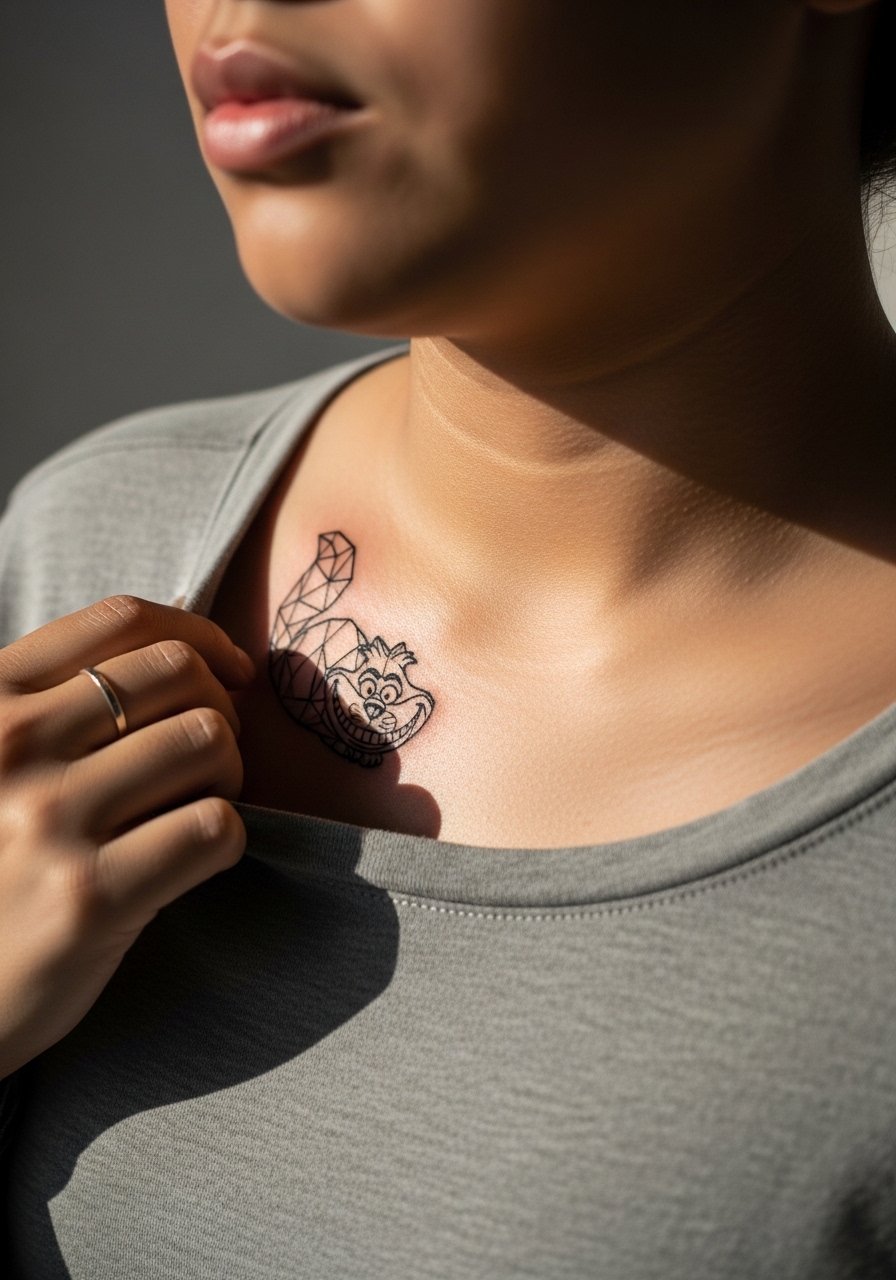
Collarbone pieces can appear delicate but risk blowout along thin skin. I suggest slightly bolder anchor lines around the main features so the grin reads without blur. Pain is moderate because the bone is near the surface. Many people make the mistake of choosing ultra-fine detail that disappears by year two. Session time is short and a small touch-up may be needed at year two. Pair it with a thin pendant necklace that sits above the design and frames the grin without crowding it.
9. Geometric Cat on the Calf
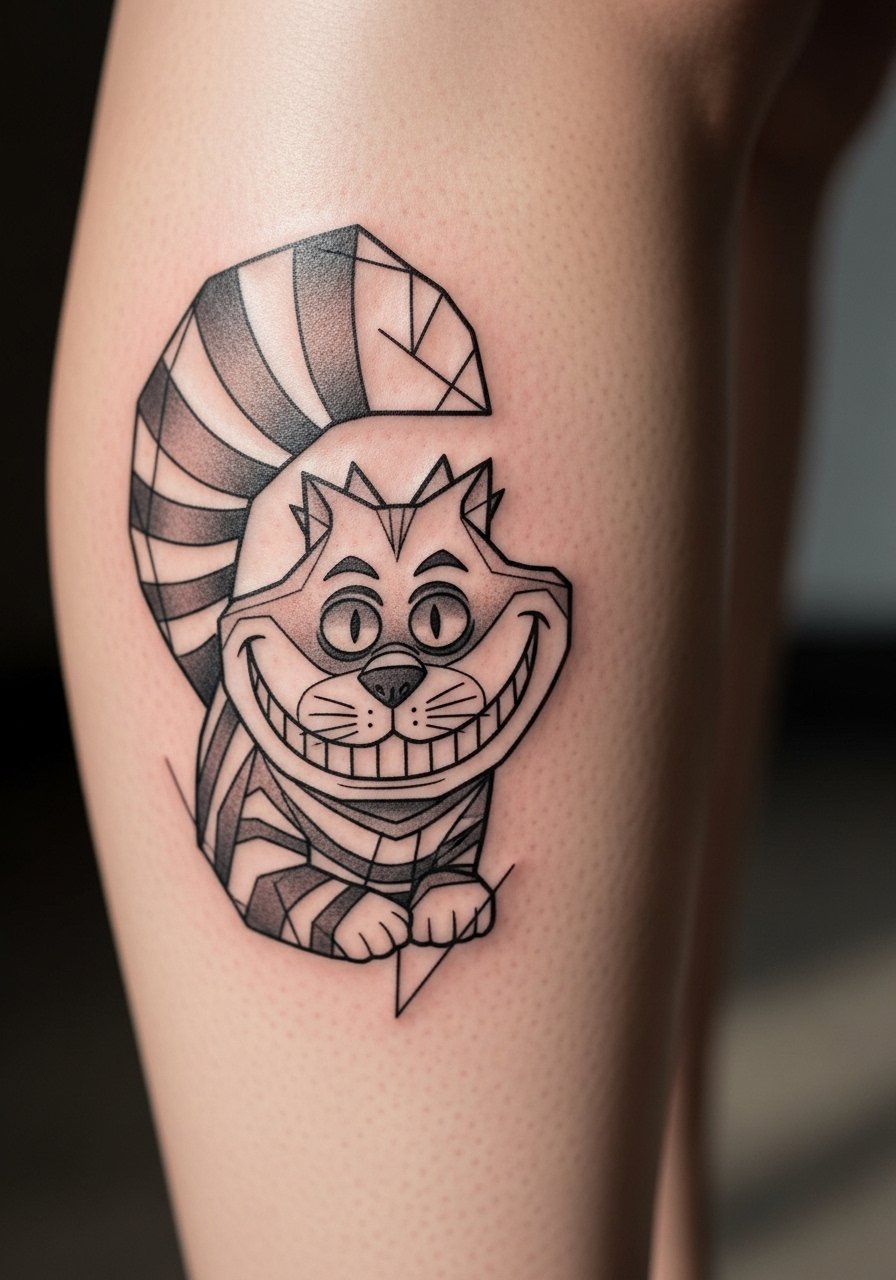
The calf accepts larger geometric fields and looks great in motion. It is less prone to blowout because the skin is thicker. In consultation, ask for graduated saturation so the facial features read at a distance. A common mistake is packing too many tiny geometric modules into a narrow vertical space which ages into a muddy shape. Expect a two to four hour session and a touch-up only if you do heavy sun exposure. For showing off at casual events, a pair of cropped jeans keeps the cat visible.
10. Thigh-Side Cheshire Panel
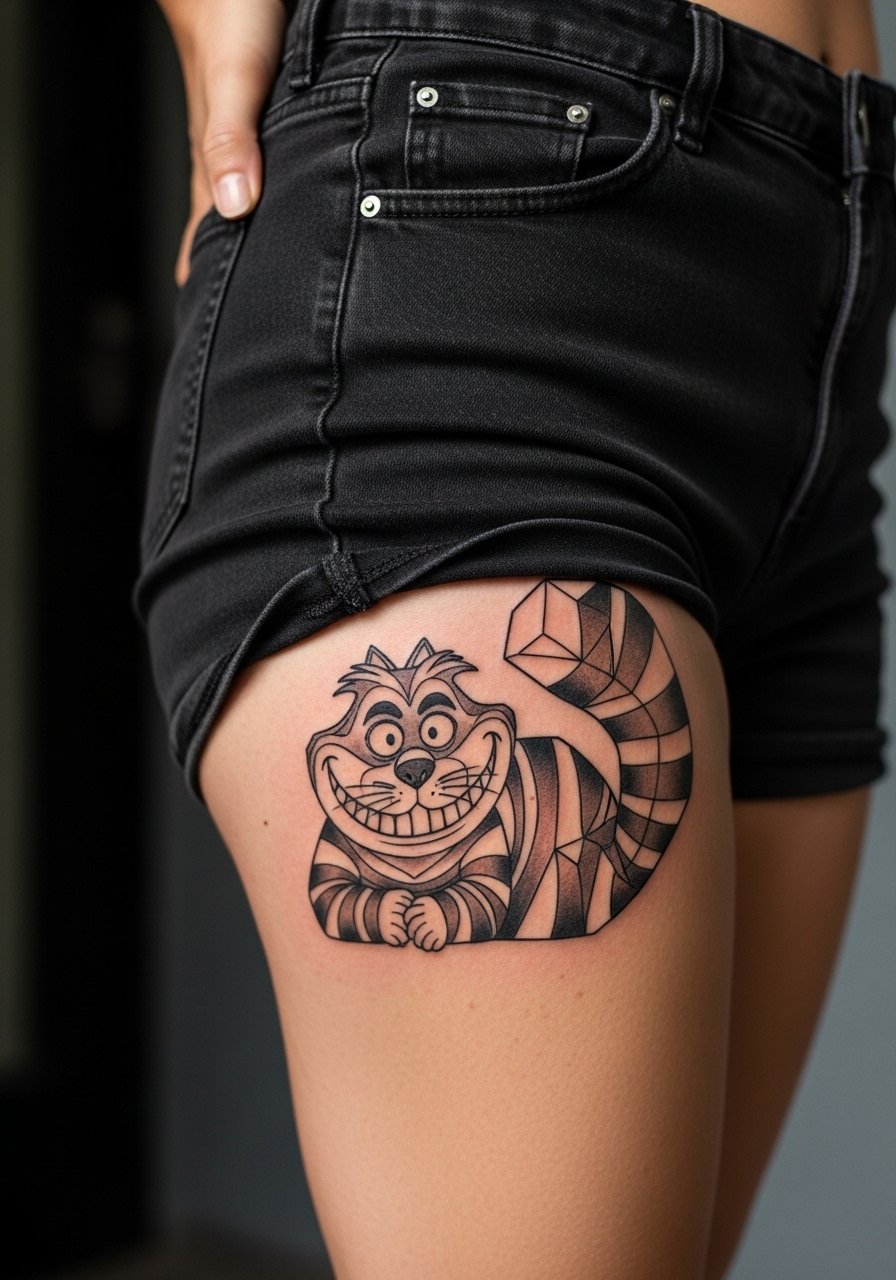
Thigh placements give space for dense geometry while staying private when you want it. The skin here tolerates dot work and stipple shading well. Tell the artist you want negative-space paths to separate the grin from patterned backgrounds so movement does not collapse the shapes. A mistake is positioning tiny shapes where skin folds with sitting, which accelerates smudging. Sessions can be long and may be split into two appointments. For the appointment wear high-waisted shorts you can shift so the artist has clear access without discomfort.
11. Finger Grin Mini
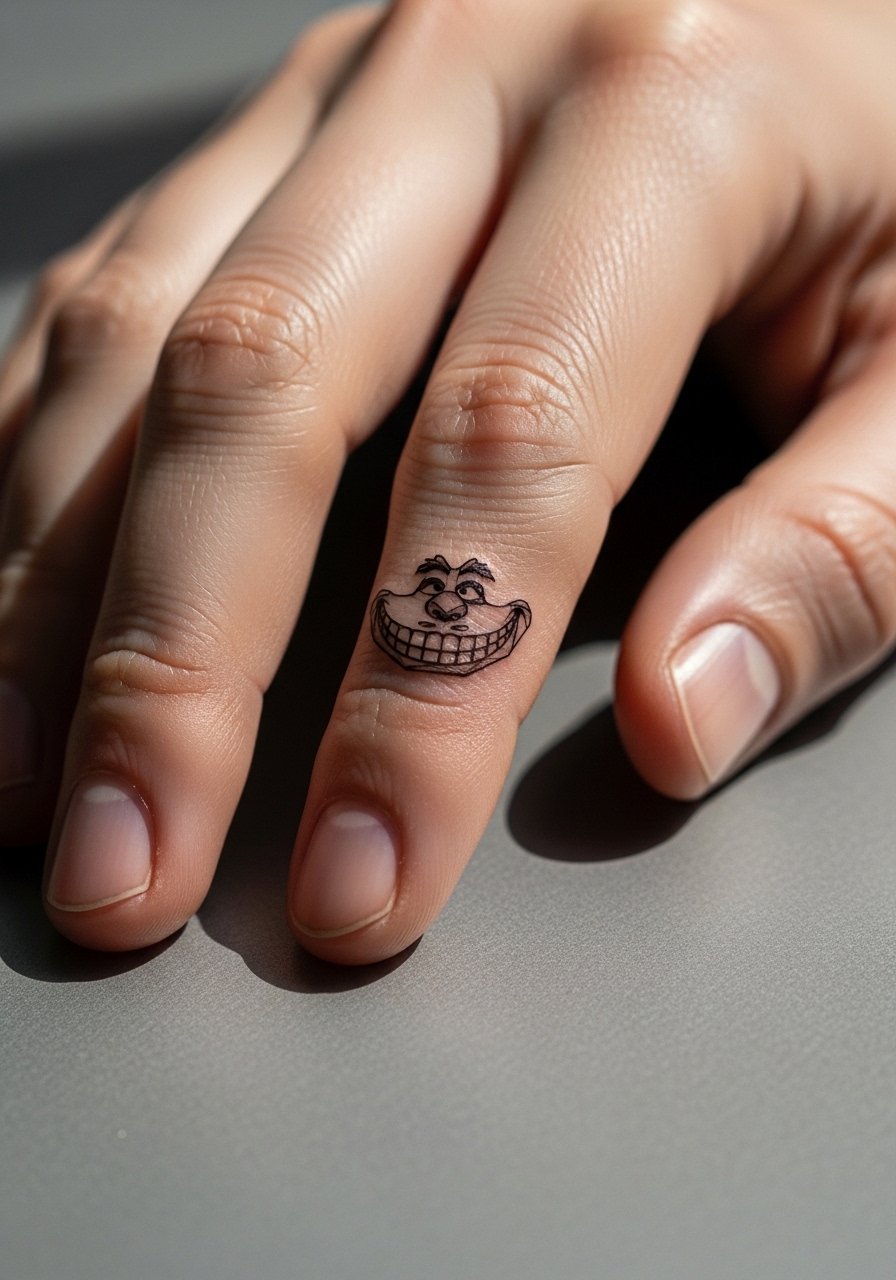
Finger tattoos are charming but notoriously prone to fast fading due to constant washing and friction. If you choose this, ask for bolder anchors and avoid tiny hatch fills within the grin. One camp of artists will refuse detailed work on fingers because of the high touch frequency. The other camp will do it but warn about annual touch-ups. Expect a short session and plan for touch-ups at year one or sooner. Keep jewelry minimal during healing and for showing off add a thin stacking ring that draws the eye without rubbing the ink.
12. Full Back Geometric Cheshire Scene
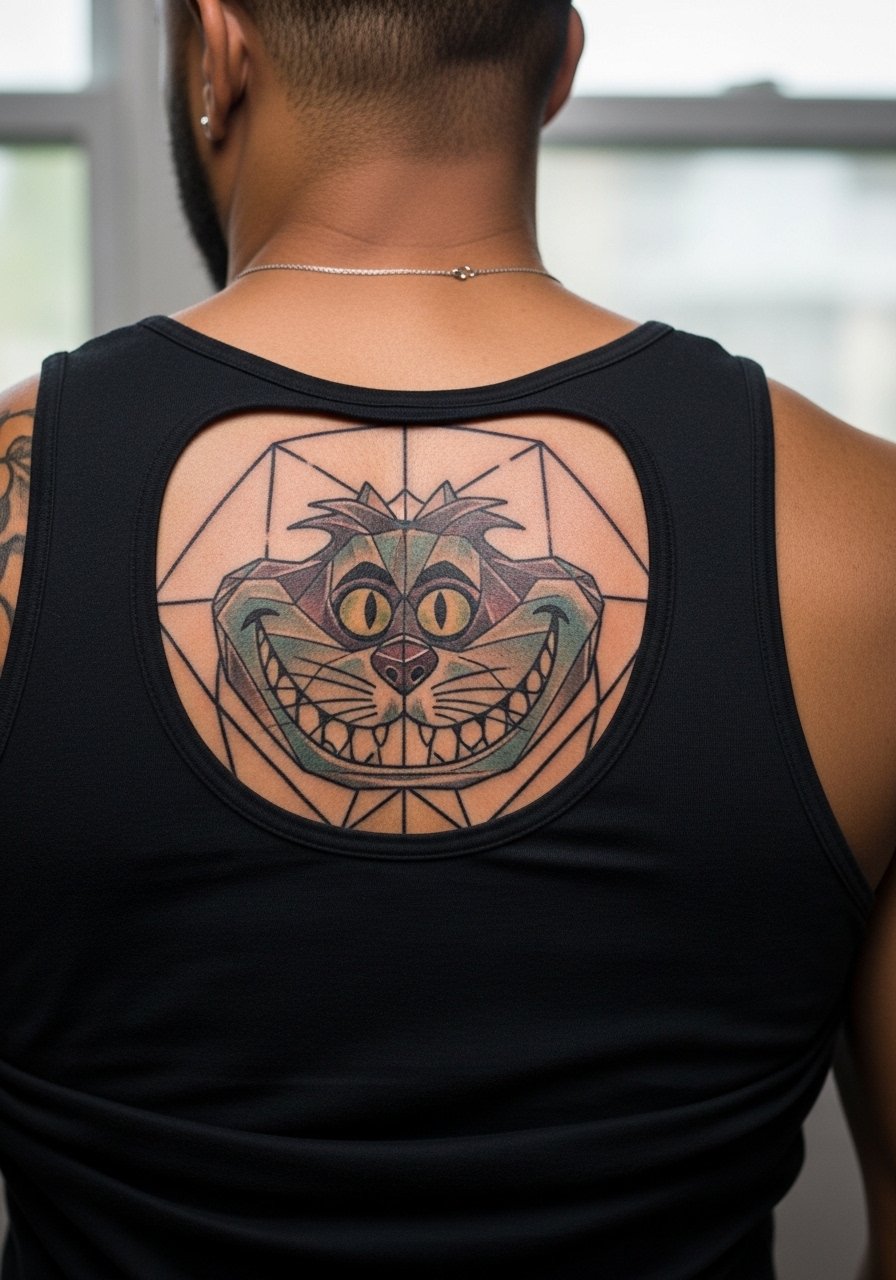
A full back piece allows narrative geometry that plays with negative space. This placement is great for mixed techniques like dot work, whip shading, and heavier linework in key places. In consultation, map where muscle shifts will occur when you twist so the grin stays centered. A typical mistake is over-detailing in a single sitting which causes fatigue in both client and artist and leads to uneven saturation. Sessions are long and often split. Touch-ups are less frequent because the back is low friction. For events, open-back tops reveal the composition well.
13. Behind-the-Ear Micro Smirk
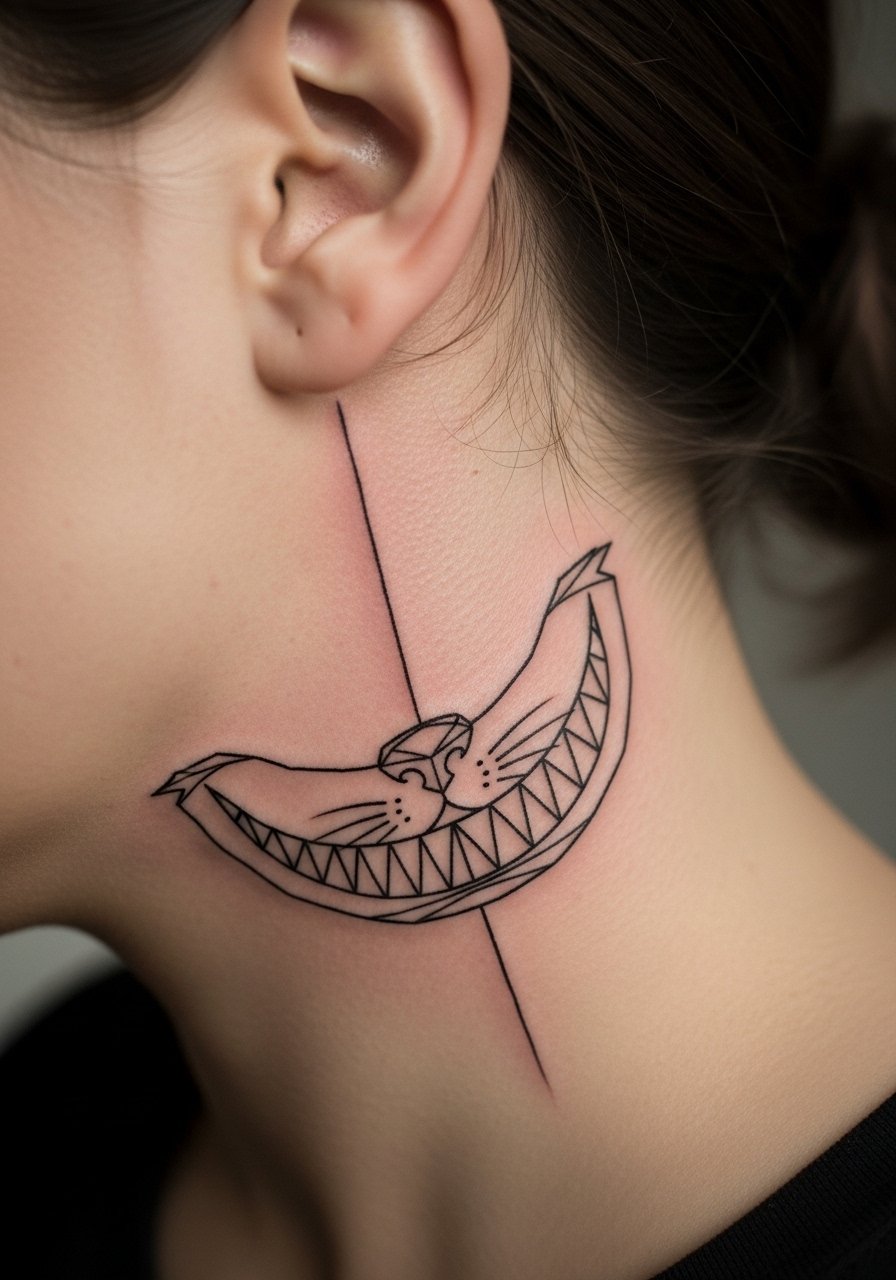
Behind-the-ear pieces are tiny and intimate. The location needs an artist experienced with small single-needle work. One caveat is visibility during job interviews or formal settings, so think about your career path before committing. Because of hair and sweat, this area may need careful aftercare and possible touch-up at year two. Session time is short but the stencil must be perfectly placed. For the appointment style, wear hair that you can clip up so the artist has clear access without pulling.
14. Geometric Cat across the Sternum Side
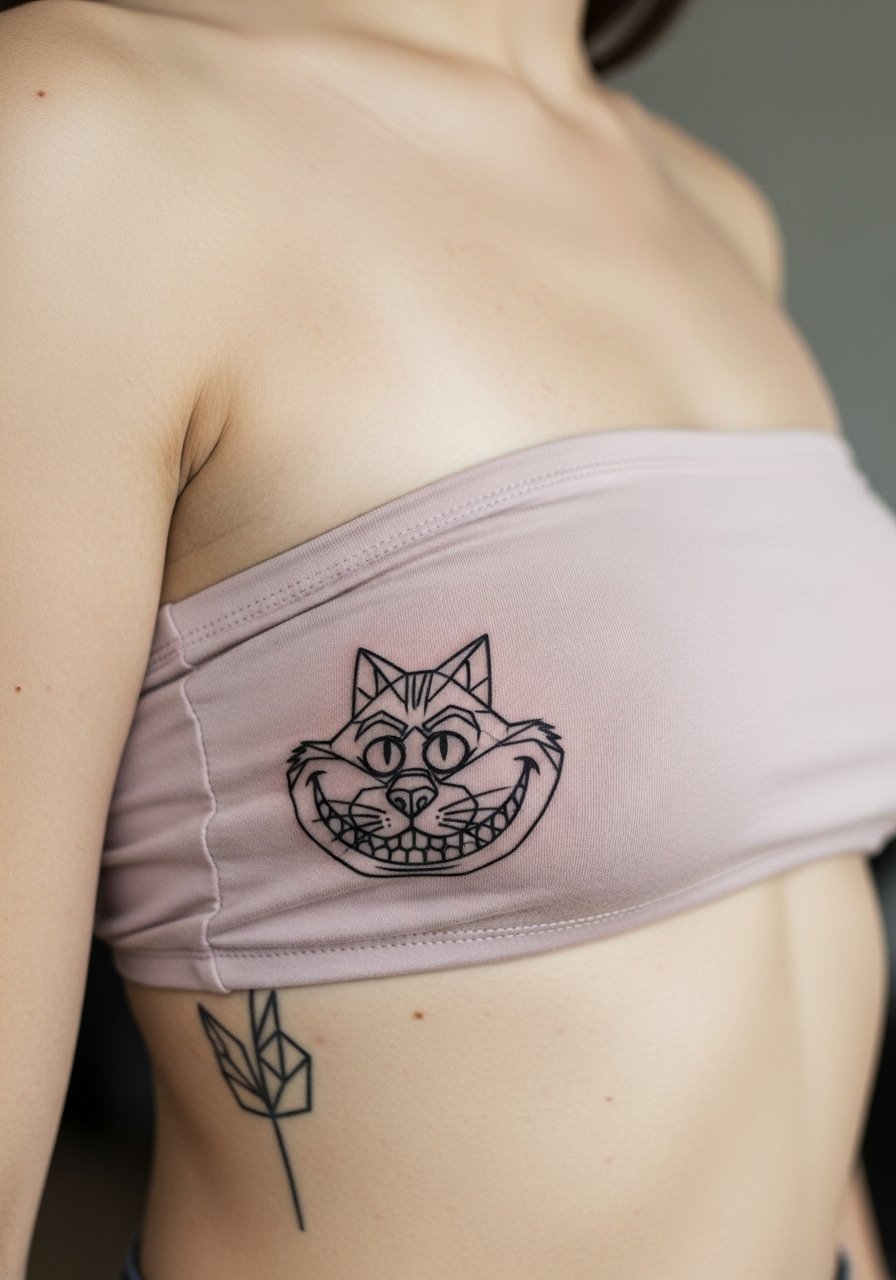
This side-of-sternum variation plays with vertical symmetry across the chest. The skin there moves with breathing and sometimes causes fine lines to blur if placed too close to creases. Ask the artist to step back mid-stencil and confirm spacing. Many people err by packing too much detail near the center where skin shifts are greatest. Expect a multi-hour session and plan a touch-up at year two if you sleep on your stomach often. For the session wear a bandeau top that exposes just the area.
15. Geometric Cheshire on the Lower Back
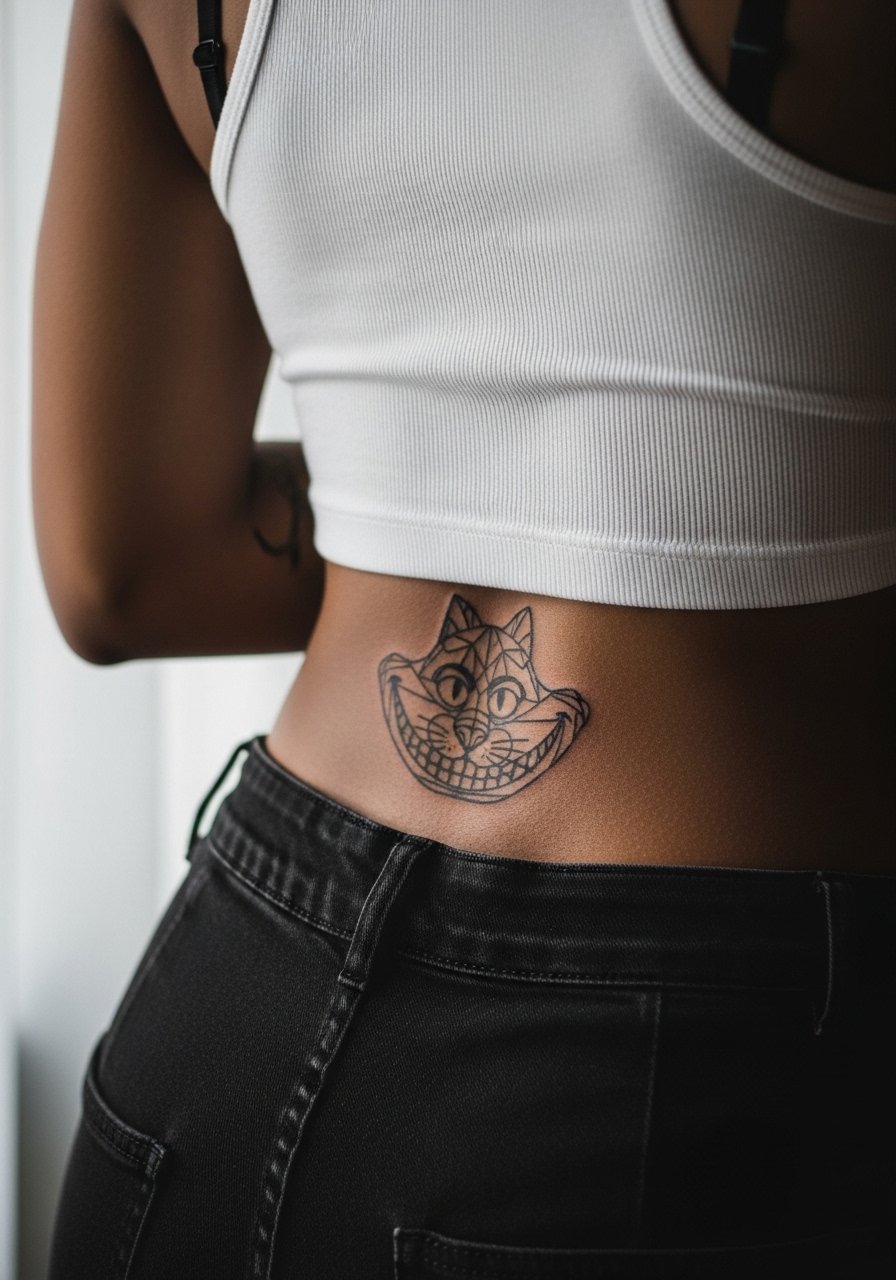
Lower back pieces handle bold shapes and negative space nicely because the skin is flat and rarely sun exposed. The main mistake is choosing a design that fights the natural curve of the spine rather than complementing it. In consultation, map the central axis and ask for anchoring geometry that follows the lumbar curve. Sessions are moderate in length and touch-ups are infrequent unless you wear low-rise clothing that rubs the area constantly. For a subtle reveal, pair with low-rise jeans for nights out.
16. Hip Crescent Cheshire
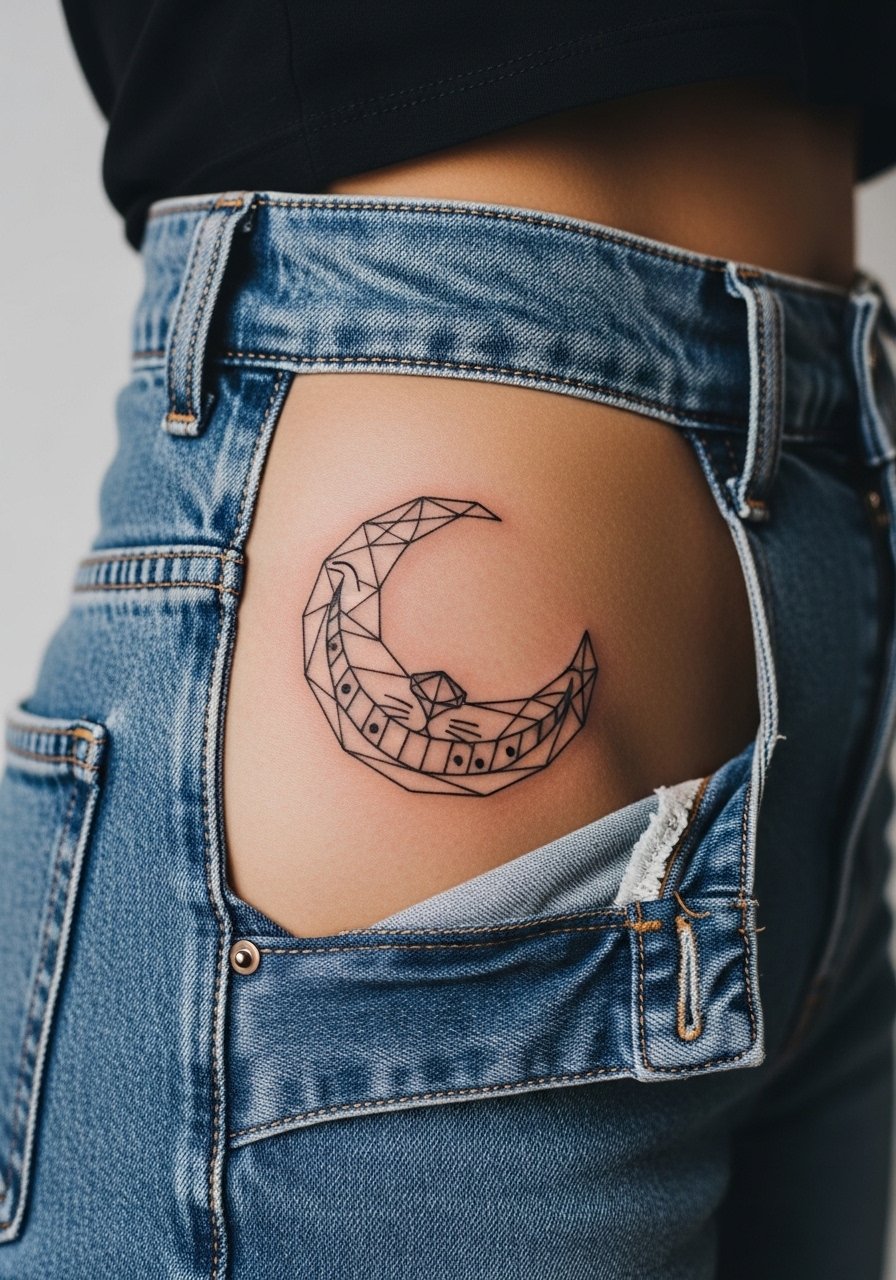
Hips suit curving geometric forms and hold up well under clothing that does not rub the area. Expect moderate pain and a session of one to two hours. The common error is placing dense patterns too close to underwear lines which causes friction during healing. Tell the artist you want negative-space breathing room in the lower arc to preserve the crescent shape. For showing off wear high-waisted denim shorts shifted slightly to reveal the curve.
17. Inner Bicep Secret Cheshire
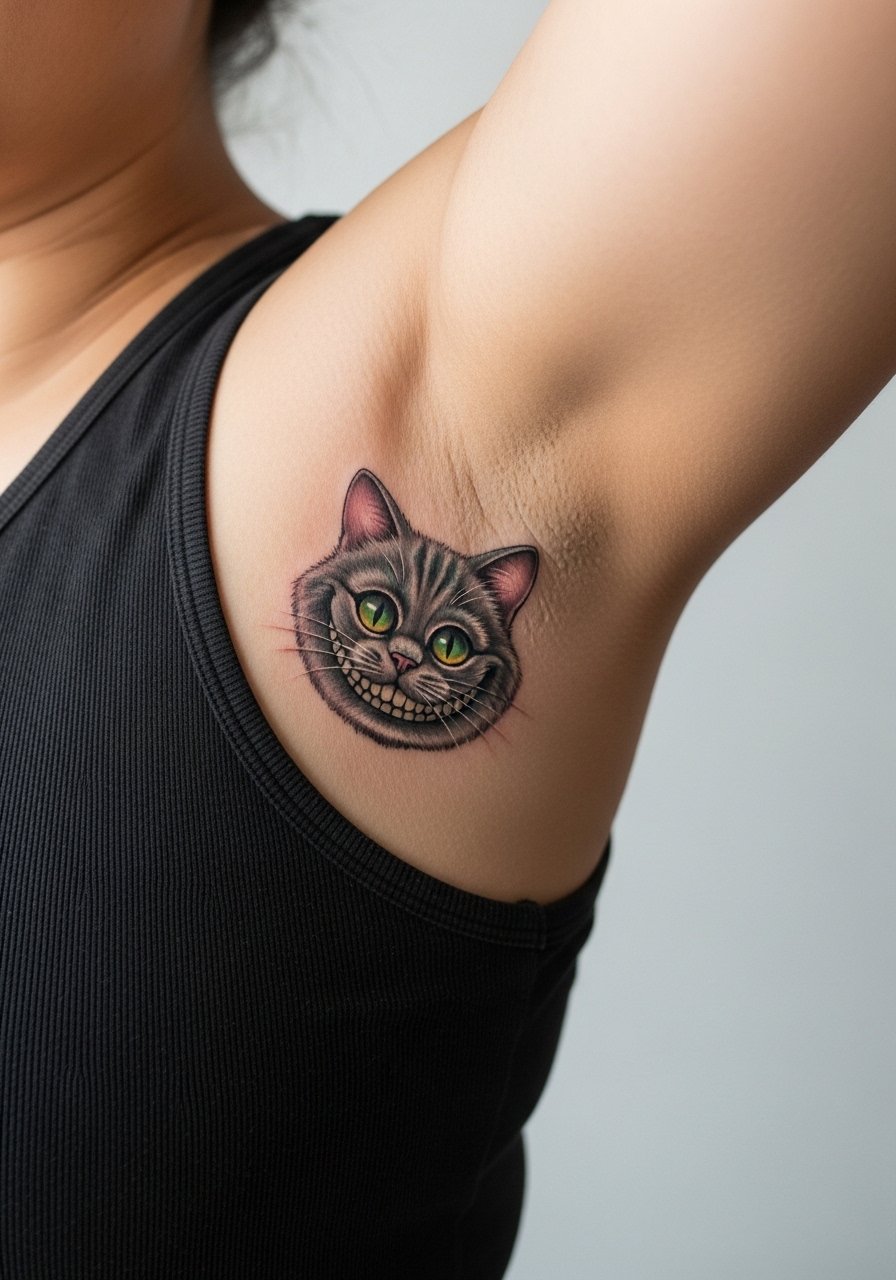
The inner bicep is a private, velvety canvas for delicate dot work around the grin. It tends to suffer less sun and stays softer as it heals. However the area can be tender, so anticipate moderate discomfort. The biggest mistake is overworking the softness with heavy black fills which can look patchy after healing. Sessions are comfortable if you can keep the arm steady. For the session wear a sleeveless tank so the artist has easy access without you needing to remove clothing.
18. Geometric Cheshire on the Calf Inner Curve
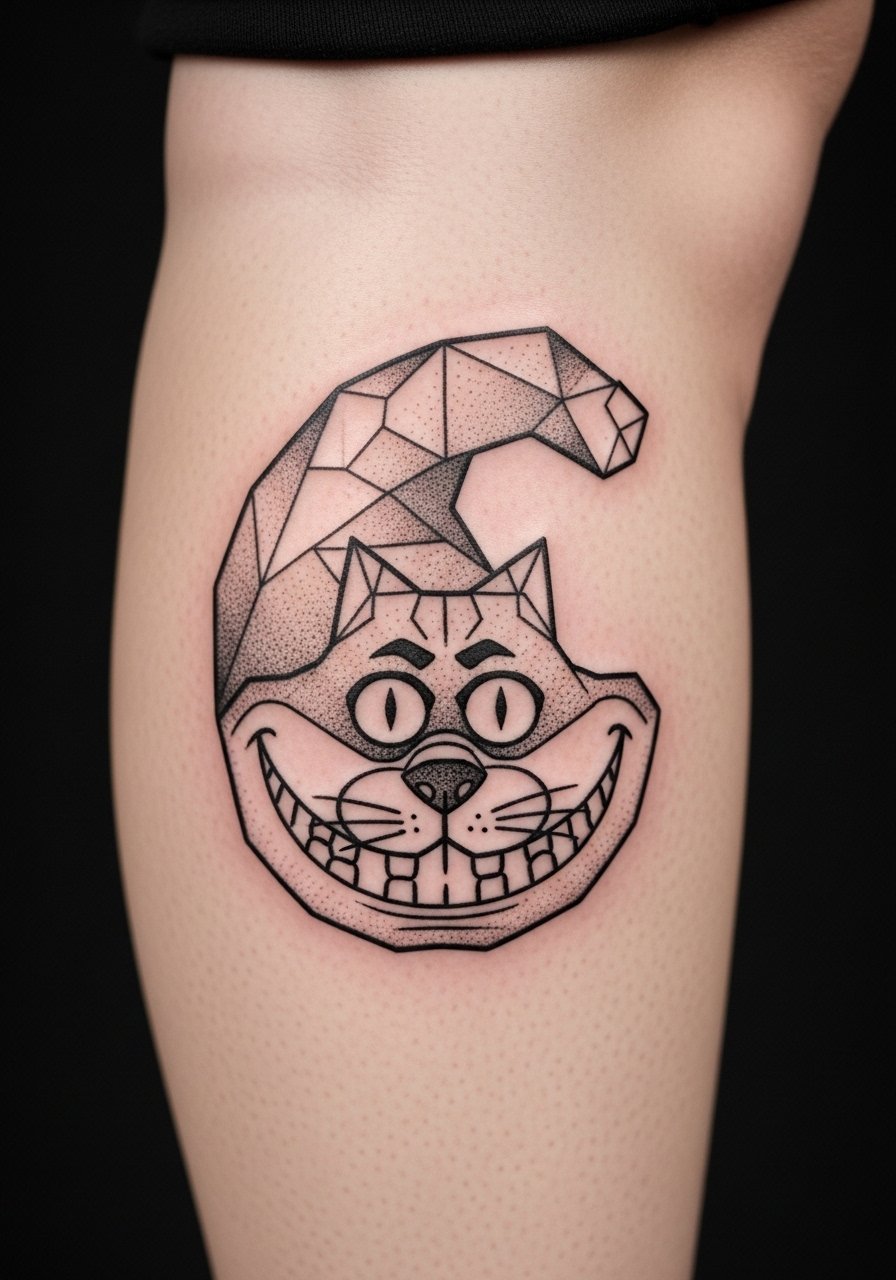
This spot is great for a vertical arrangement of geometry that follows muscle shape. The inner calf gets less sun and less friction than the ankle. Ask the artist for softer shading on the inside edge so the grin reads when you stand. Mistakes include forcing horizontal modules onto a vertical plane which fights the leg's natural fall. Sessions run two to three hours and touch-ups are rare. For weekends try mid-calf boots that frame the design when you want it seen.
19. Geometric Sleeve Accent with Cheshire Panels
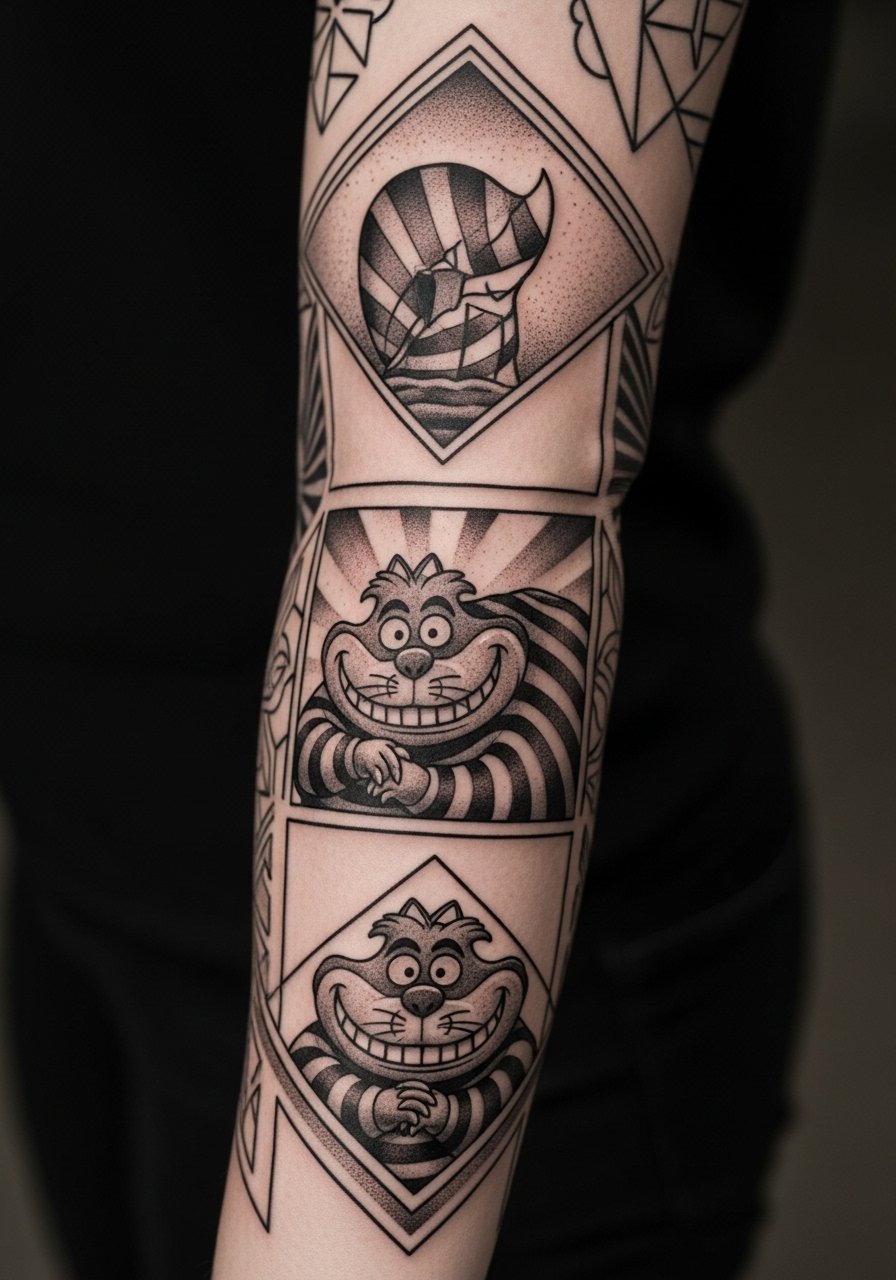
A sleeve allows you to place multiple Cheshire vignettes that interact across the arm. Plan the layout so each panel has breathing room and different textural approaches such as stipple shading and negative-space lattices. A common error is cramming too many panels into a narrow sleeve which makes the narrative muddled after a few years. Expect multiple sessions. For everyday wear, use a three-quarter sleeve shirt that can be rolled to show different panels.
20. Geometric Back of Neck Spot
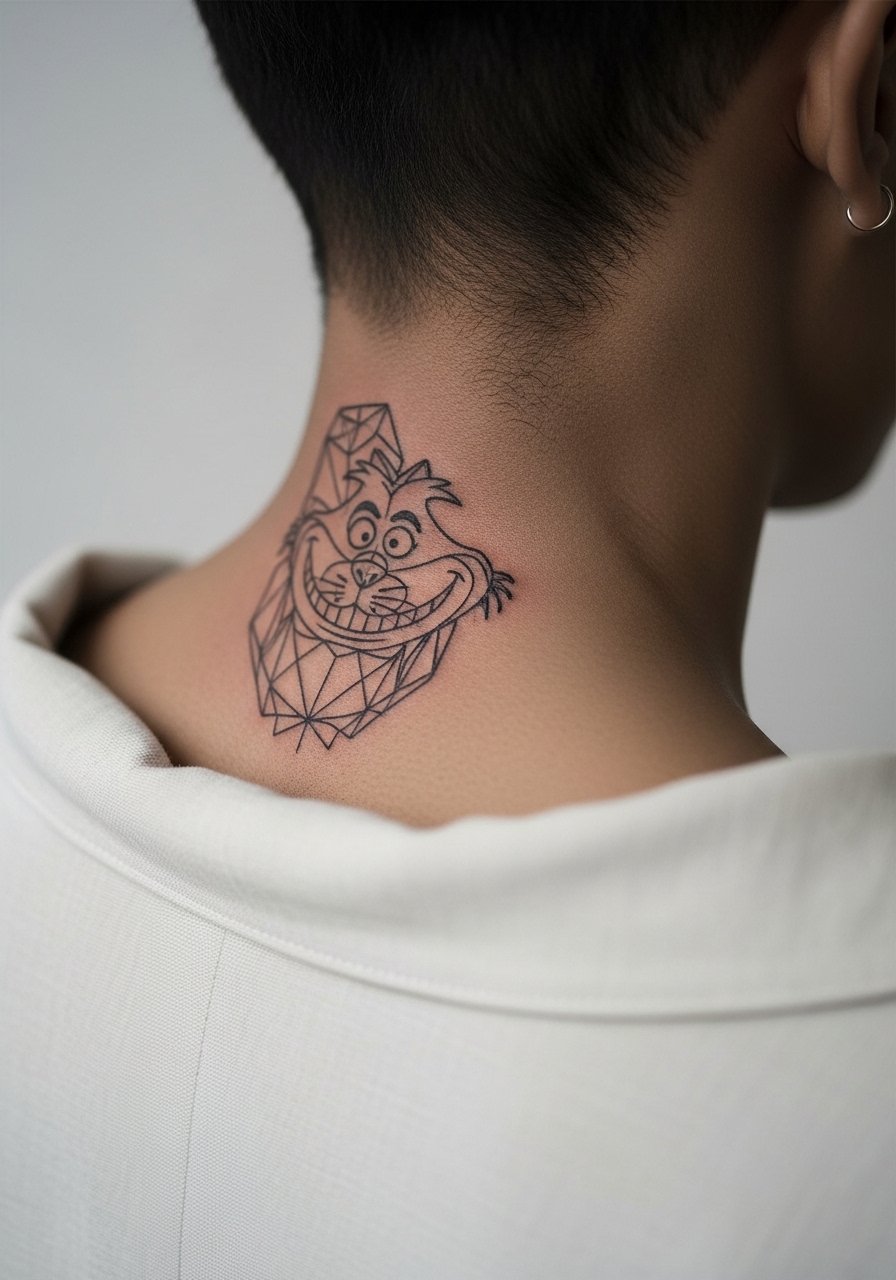
Neck pieces are visible and can impact workplace impressions. Discuss visibility with your artist and employer considerations before committing. The back of the neck takes moderate detail well but can blur with frequent shaving or hair products. One camp says neck ink ages quickly when exposed to sun and hair oils. The other camp suggests careful placement and maintenance extends life. Ask your artist about recommended aftercare routines. For showing it off, wear a wide-neck tee that frames the area without exposing everything.
21. Geometric Chest Panel Near the Clavicle
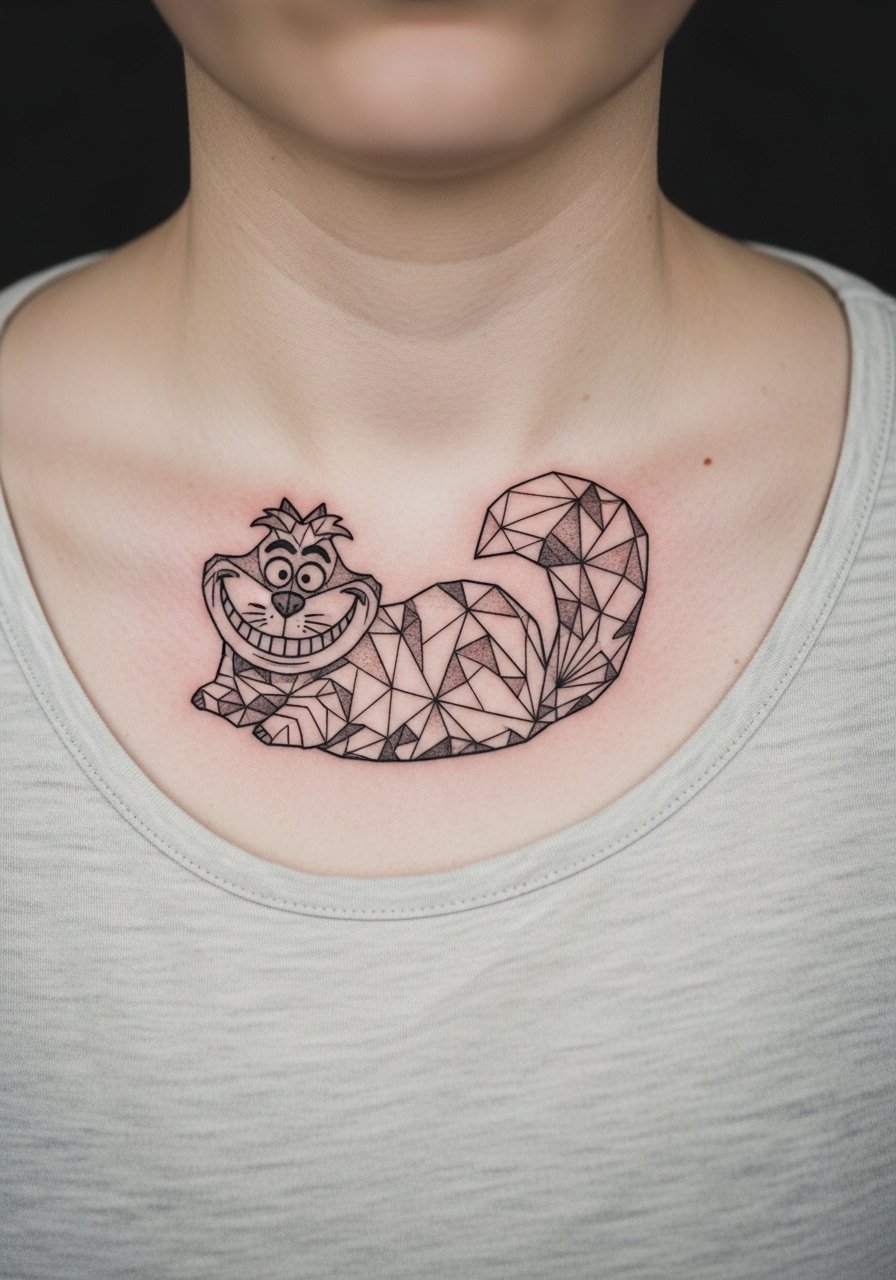
Clavicle areas favor horizontal compositions and demand careful line anchoring near thin skin. Ask the artist to emphasize key contours so the grin reads from a distance and does not wash out into faint lines. A mistake is requesting ultra-fine meshes that fade at year one due to sun exposure. Sessions are short and touch-ups may be needed depending on sun habits. For outfits, a v-neck sweater sets off the design nicely.
22. Geometric Full Chest Spread
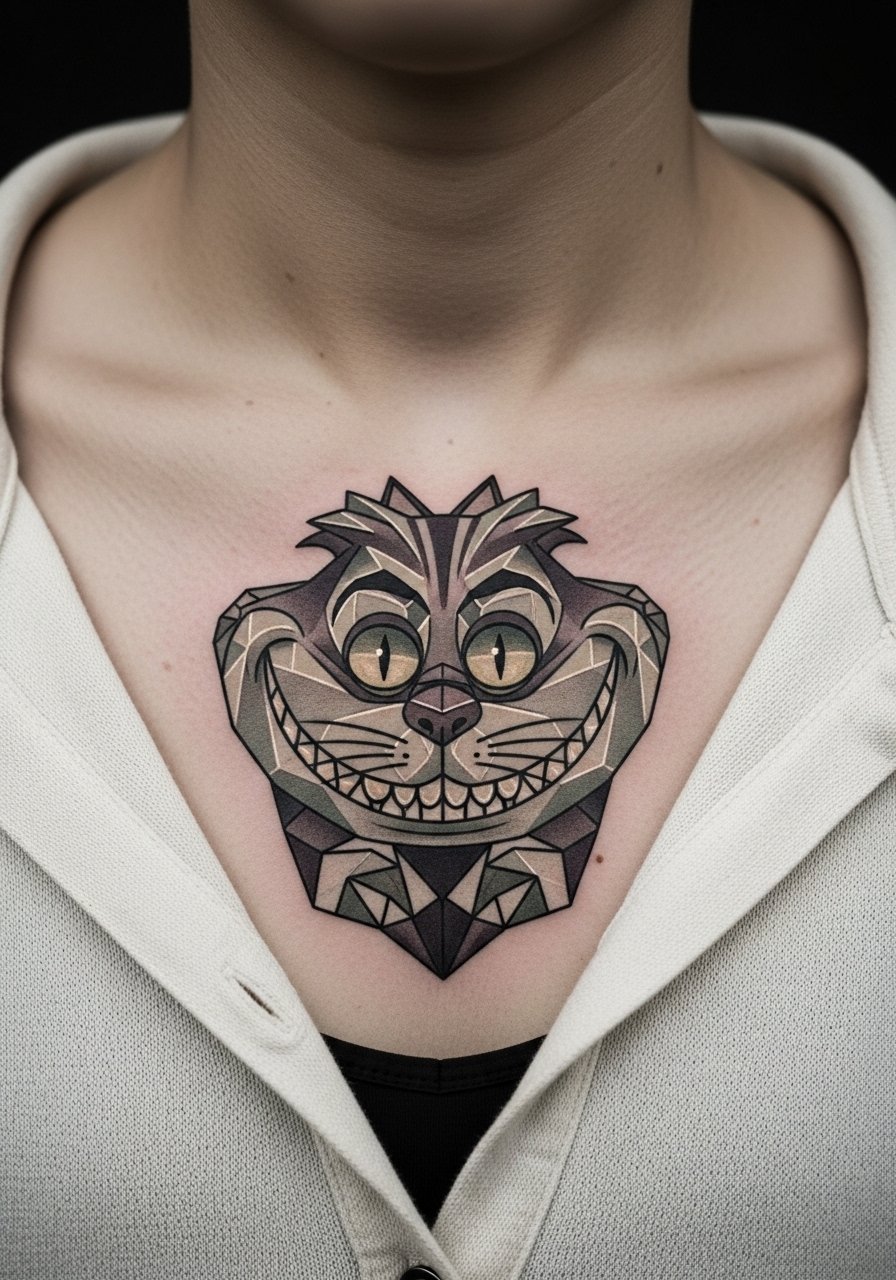
A full chest design is dramatic and sits flat when you stand. The biggest consideration is symmetry and how breathing affects the center line. Ask for larger negative spaces around the nose and mouth so the grin keeps its shape under motion. Some artists caution about placing too much micro detail across the sternum because those areas can soften faster. Sessions are longer and may require multiple sittings. For showing off, pair with a button-down shirt you can open to frame the piece.
23. Low-Visibility Inner Thigh Emblem
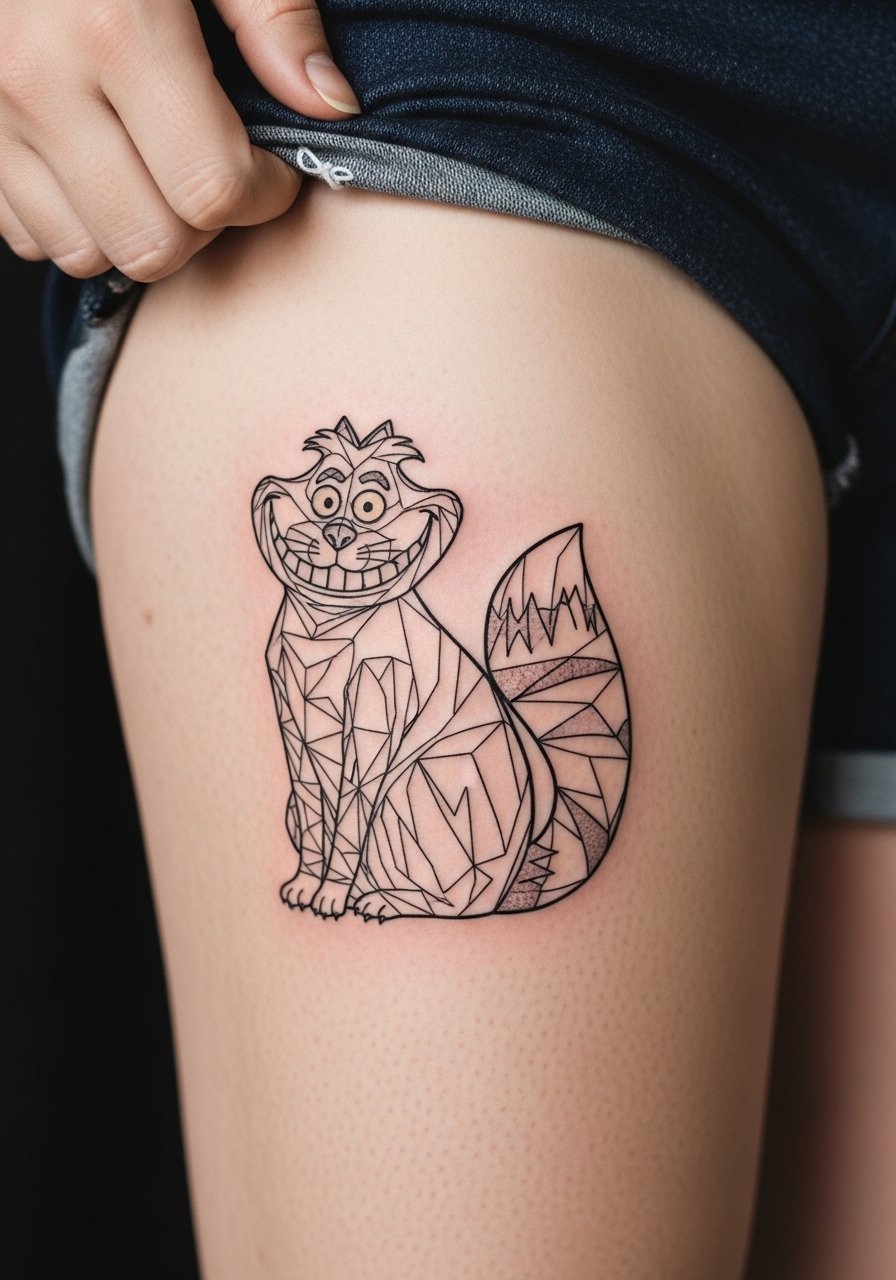
Inner thigh pieces are private and age well if not exposed to sun constantly. The area is soft and tolerates dot work but can swell after sitting, which affects immediate appearance. A common mistake is choosing extremely dense patterns that look sharp fresh but flatten after healing. Sessions can be longer with breaks for comfort. For the appointment, wear loose shorts that allow the artist to shift fabric without compressing the site.
24. Geometric Calf Wrap Around
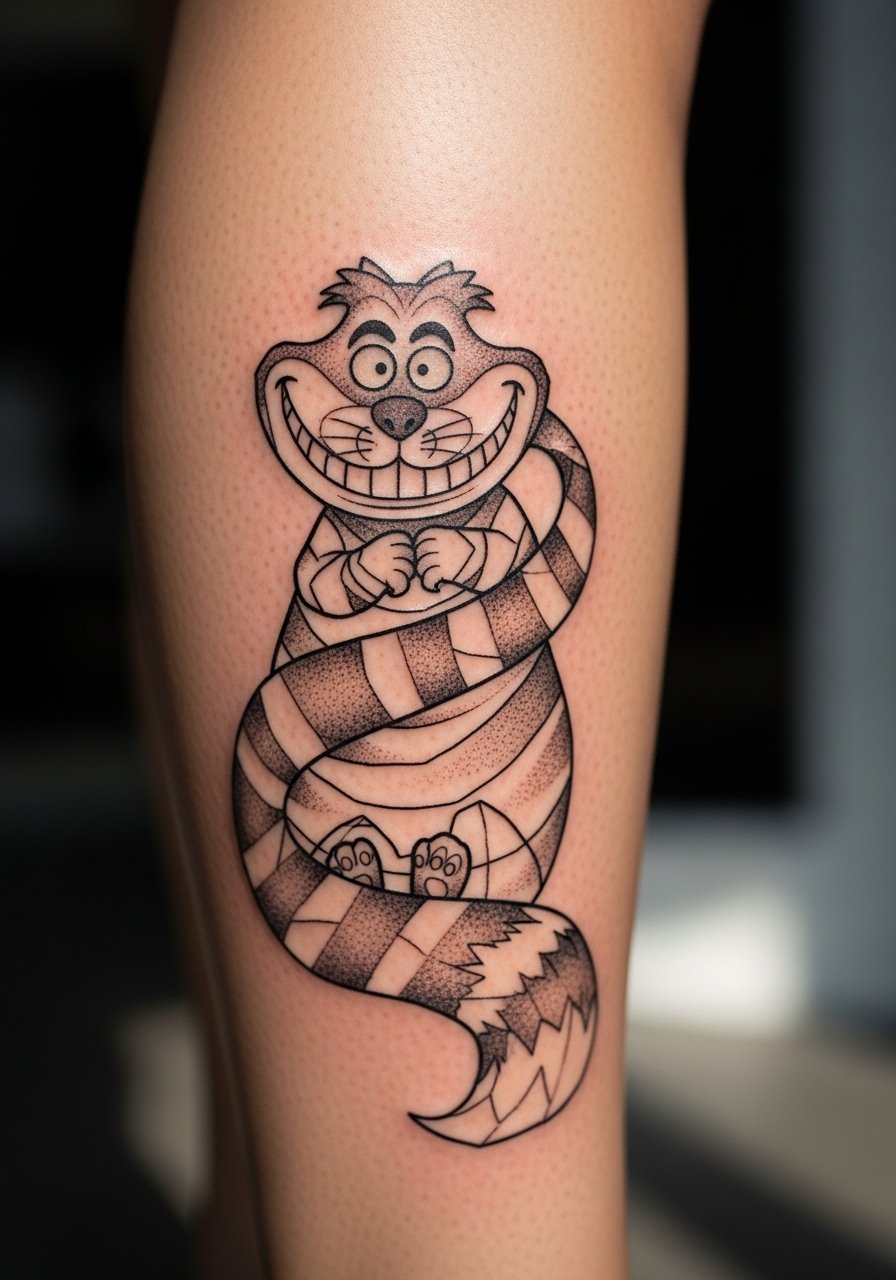
A wrap allows pattern continuity that reads from multiple angles. Plan the wrap so the grin sits on the outer curve to avoid distortion when you flex. A mistake is placing the focal point on a seam line where the pattern breaks when sitting. Sessions are moderate and touch-ups are uncommon. For casual display, choose cropped trousers that show the wrap without full exposure.
25. Geometric Wrist Cuff Cheshire
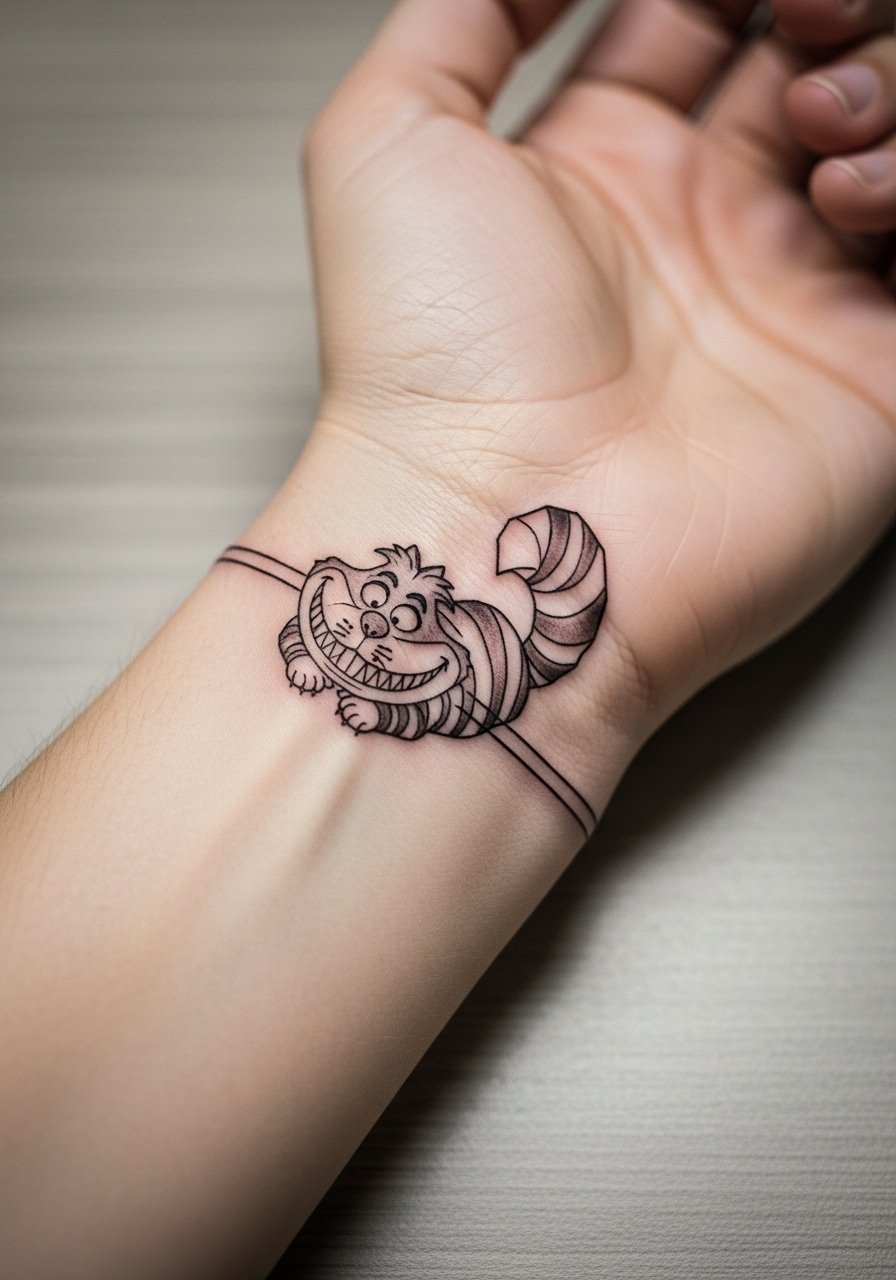
A cuff is stylish but sits in a high-friction zone. Ask for slightly bolder connecting lines and open negative spaces where a bracelet would sit. Many people make the mistake of tiny repeating marks that disappear after heavy handwashing. Expect a short session and plan for a touch-up at year one. For showing it off, use a minimal leather bracelet that complements without smearing.
26. Geometric Shoulder Cap Cheshire
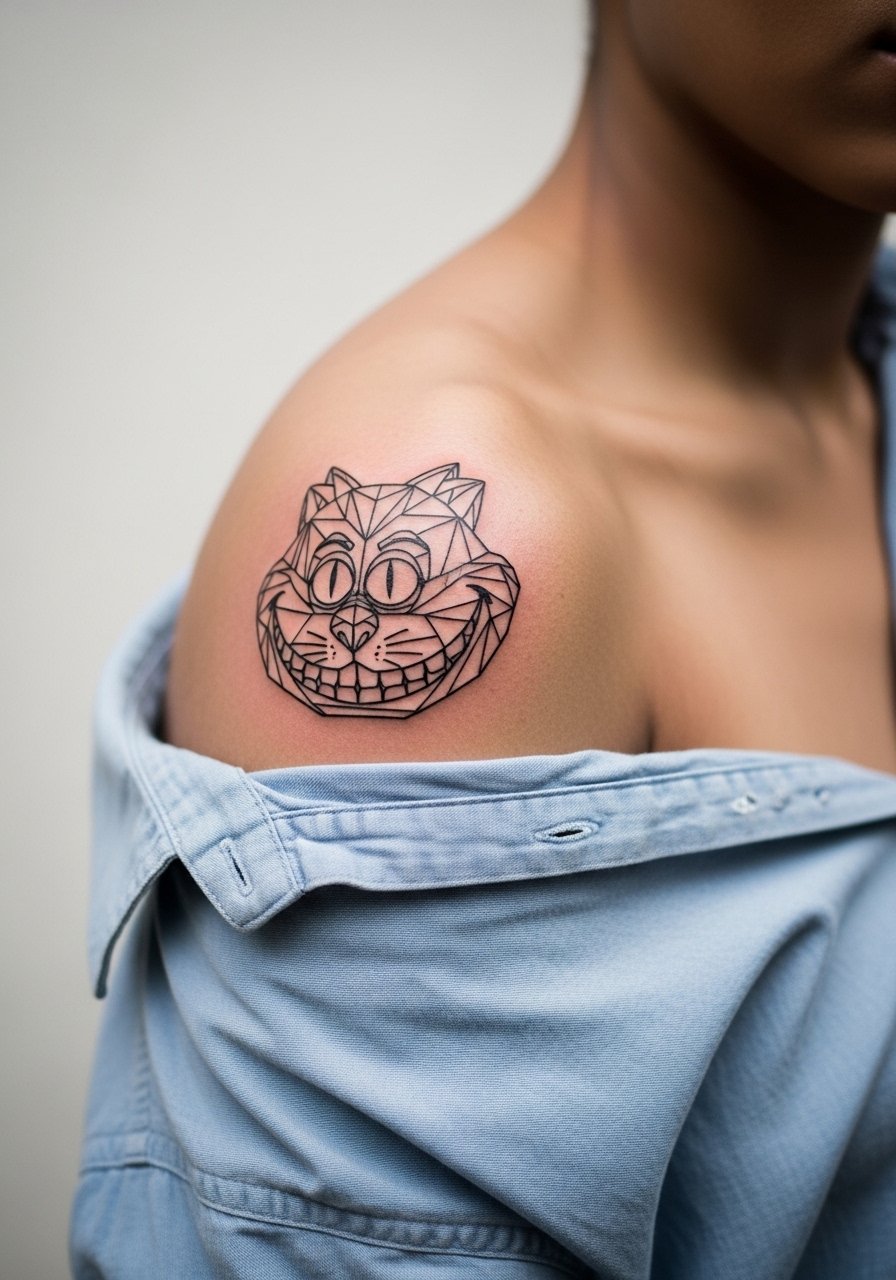
Shoulder caps are durable and age well because the area is seldom rubbed. Ask the artist to anchor major shapes to the bone landmarks so the grin keeps orientation as you move. A mistake is asking for dense cross-hatching in tight spaces which can flatten over time. Sessions are comfortable and touch-ups are rare. For the session wear a loose button-down shirt you can shift to expose the area without being cold.
27. Geometric Chest Pocket Accent
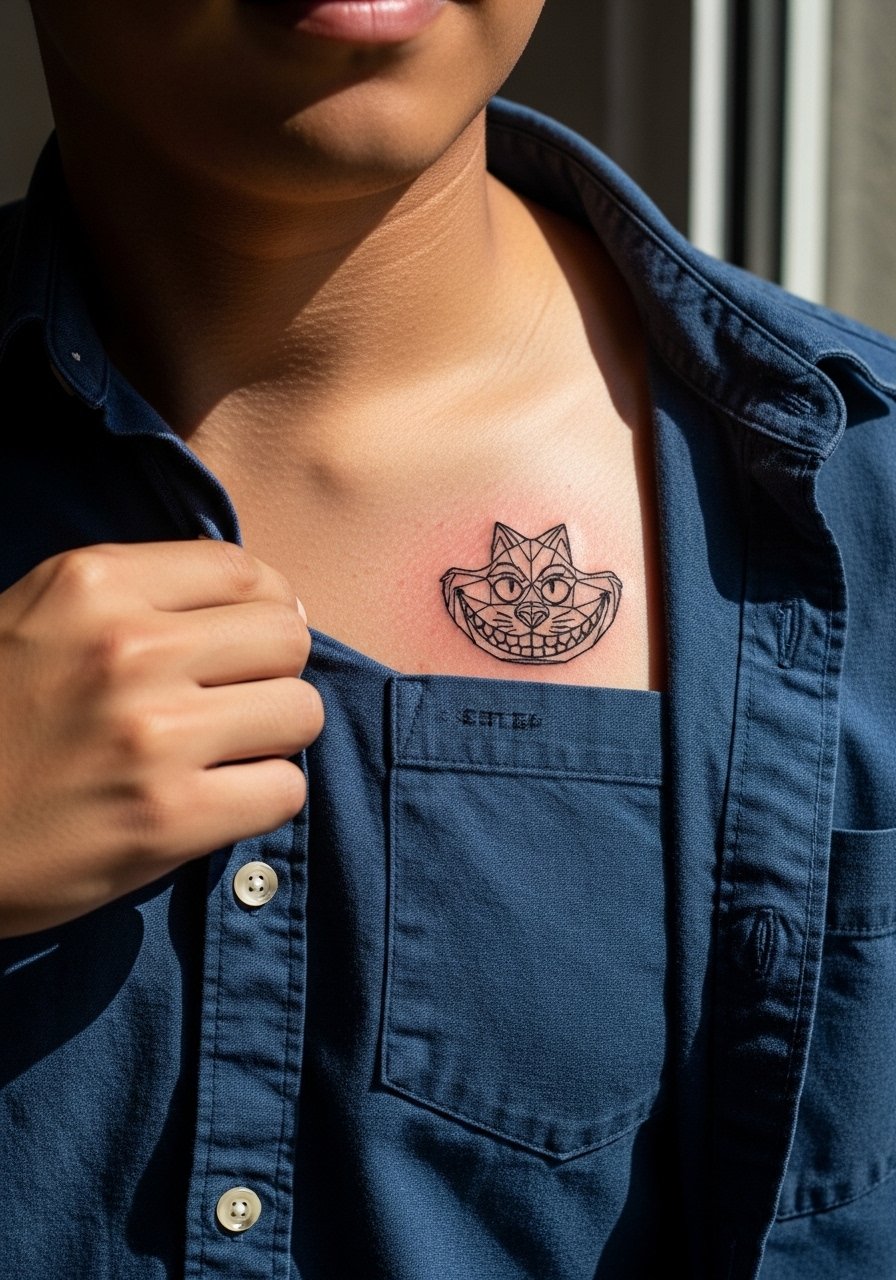
A pocket accent is playful and low-commitment while still visible. Tell your artist you want the design scaled to pocket proportions with clear negative space around the grin so it does not merge into fabric creases with movement. The chest pocket area sees moderate sun, so plan for occasional touch-ups depending on exposure. Sessions are short and pain is moderate. For showing it off, a button-down shirt left slightly open frames the piece without overdoing it.
Frequently Asked Questions
Q: Will a fine line geometric Cheshire cat on my ribs need touch-ups more often than one on my forearm?
A: Yes. From what I've seen ribs move with breathing and the skin there stretches more, so touch-ups are commonly needed sooner than forearm pieces. Ask your artist about spacing and depth during consultation to reduce the frequency of touch-ups.
Q: Can a geometric Cheshire design be adapted for darker skin tones without losing detail?
A: Absolutely. I recommend stronger anchor lines and more negative space so contrast reads clearly on darker skin. Artists often use stipple shading rather than thin hatches for better longevity on deeper tones.
Q: Are hand and finger Cheshire tattoos worth the maintenance?
A: They look great fresh but expect annual or sooner touch-ups because of constant washing and friction. If you want lower maintenance, consider an adjacent placement like the wrist or outer finger side which sees less wear.
Q: How should I dress for a sternum or ribcage session to stay comfortable and give the artist access?
A: Wear a fitted sports bra or a bandeau you can shift, or a shirt that zips or buttons so the artist can expose only the area needed. A fitted sports bra is often the easiest choice for modesty and access.
Q: Do geometric patterns increase the risk of blowout compared with traditional bold work?
A: Geometric pieces with many fine, tightly packed lines have a higher blowout risk if done too small. The safer route is slightly larger modules and varied line weights. Bringing reference photos showing spacing helps your artist plan for longevity.